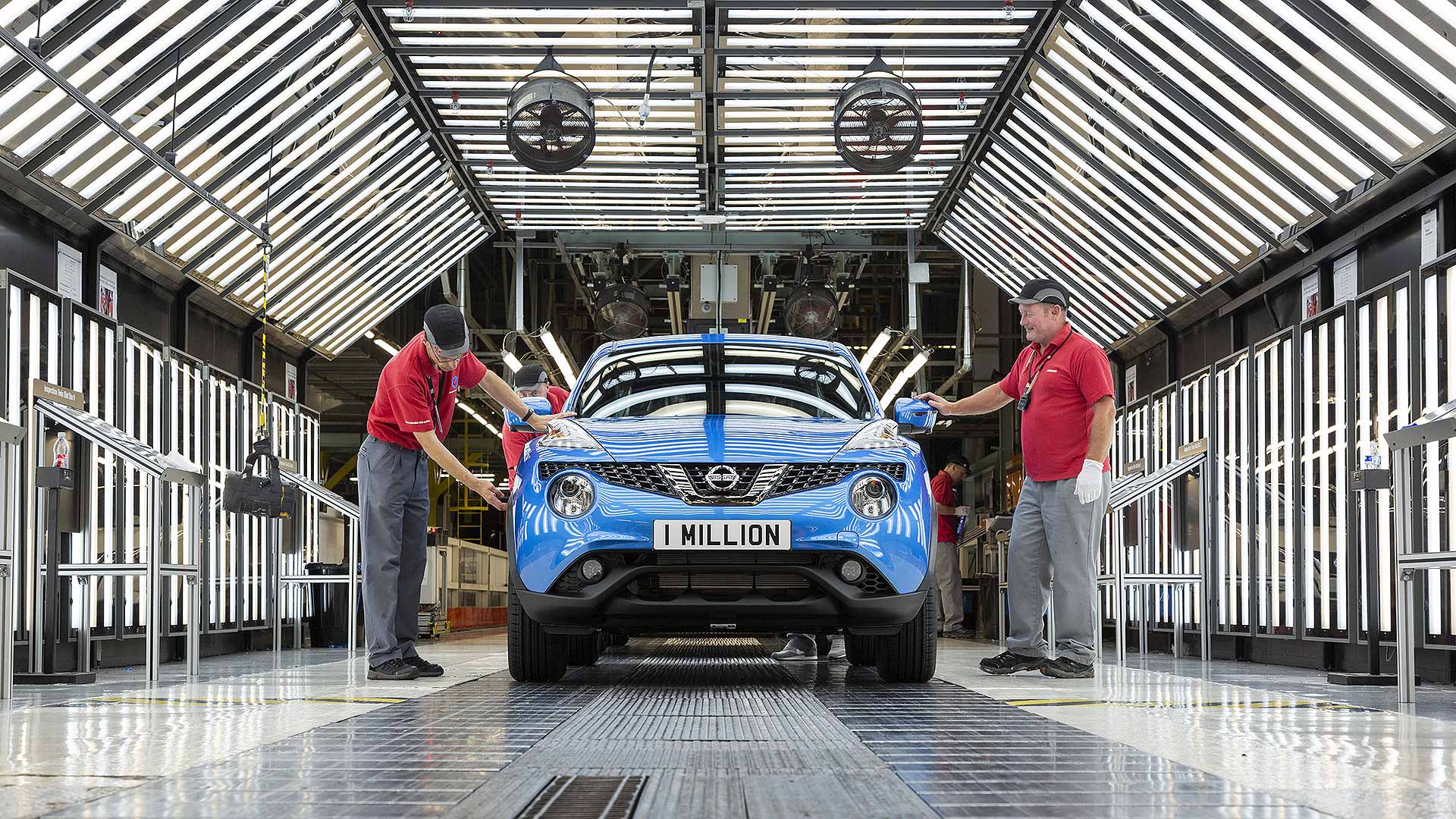
The Society of Motor Manufacturers and Traders (SMMT) has described a huge 44.5 percent fall in UK car production as ‘extraordinary’ evidence of the ‘vast cost and upheaval’ Brexit has already caused the British car industry.
56,999 fewer cars were built in Britain during April 2019 as makers pulled forward and extended summer shutdowns. This was to cope with an expected Brexit date of 29 March.
It was the 11th consecutive decline in UK car production. So far in 2019, over 127,000 fewer cars have been built in Britain, a decline of 22.4 percent compared to 2018.
“Today’s figures are evidence of the vast cost and upheaval Brexit uncertainty has already wrought on UK automotive manufacturing businesses and workers,” said SMMT chief executive Mike Hawes.
“Prolonged instability has done untold damage.”
The SMMT added that the costly and wasted production shutdown cannot now be repeated for an October 31 deadline, exposing the UK car industry to further risk.
‘Take ‘no deal’ off the table’
The fear of ‘no deal’, explained Hawes, has halted progress in the car industry, “causing investment to stall, jobs to be lost and undermining our global reputation.
“This is why ‘no deal’ must be taken off the table immediately and permanently, so industry can get back to the business of delivering for the economy and keeping the UK at the forefront of the global technology race.”
SMMT forecasts suggest that, if the UK leaves with a favourable deal and ‘substantial’ transition period, the decline in British car production could ease by the end of the year.
Despite this, 2019 production will still fall over 10 percent on 2018 levels – “and a ‘no deal’ Brexit could exacerbate this decline, with the threat of border delays, production stoppages and additional costs”.
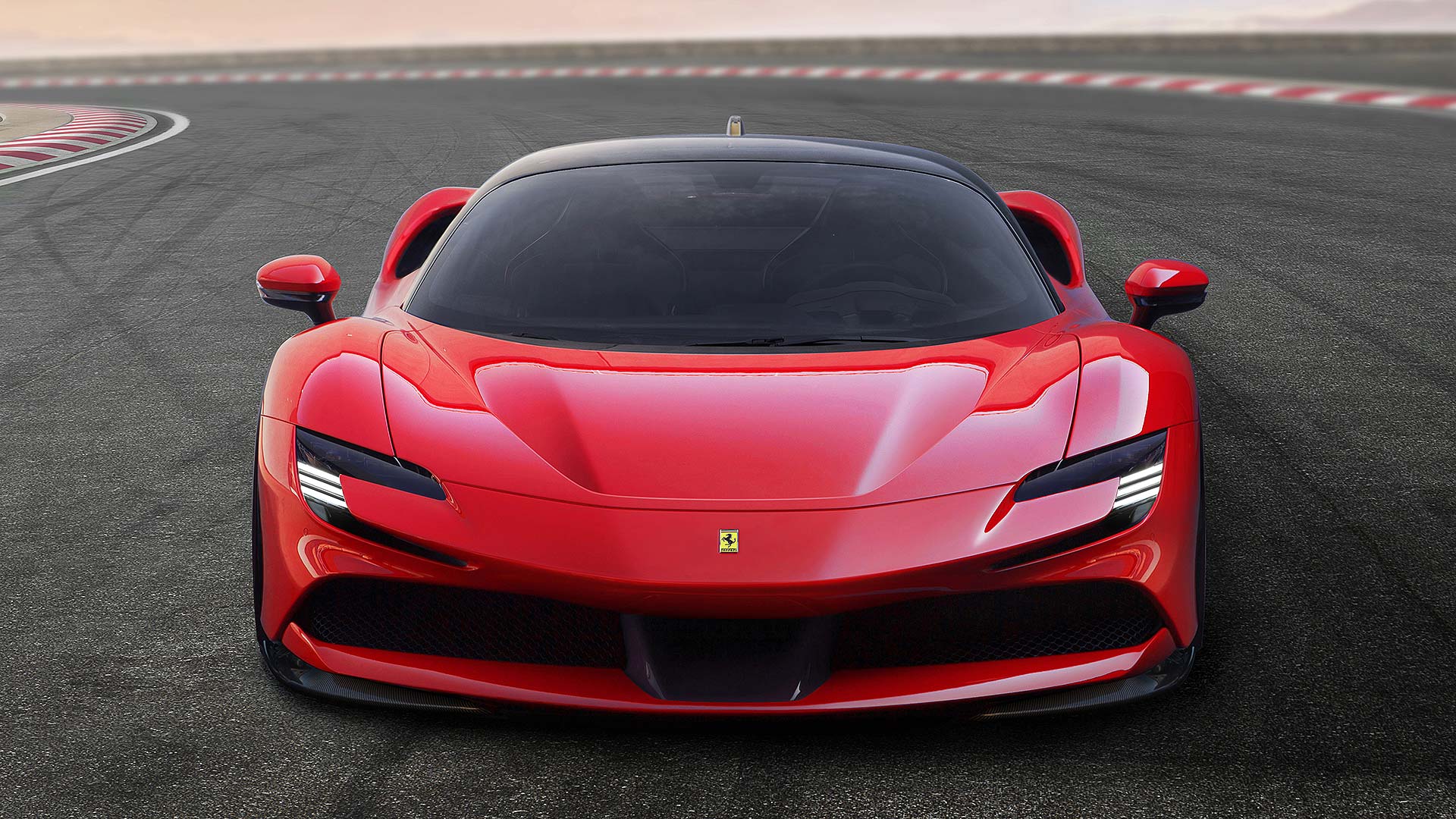
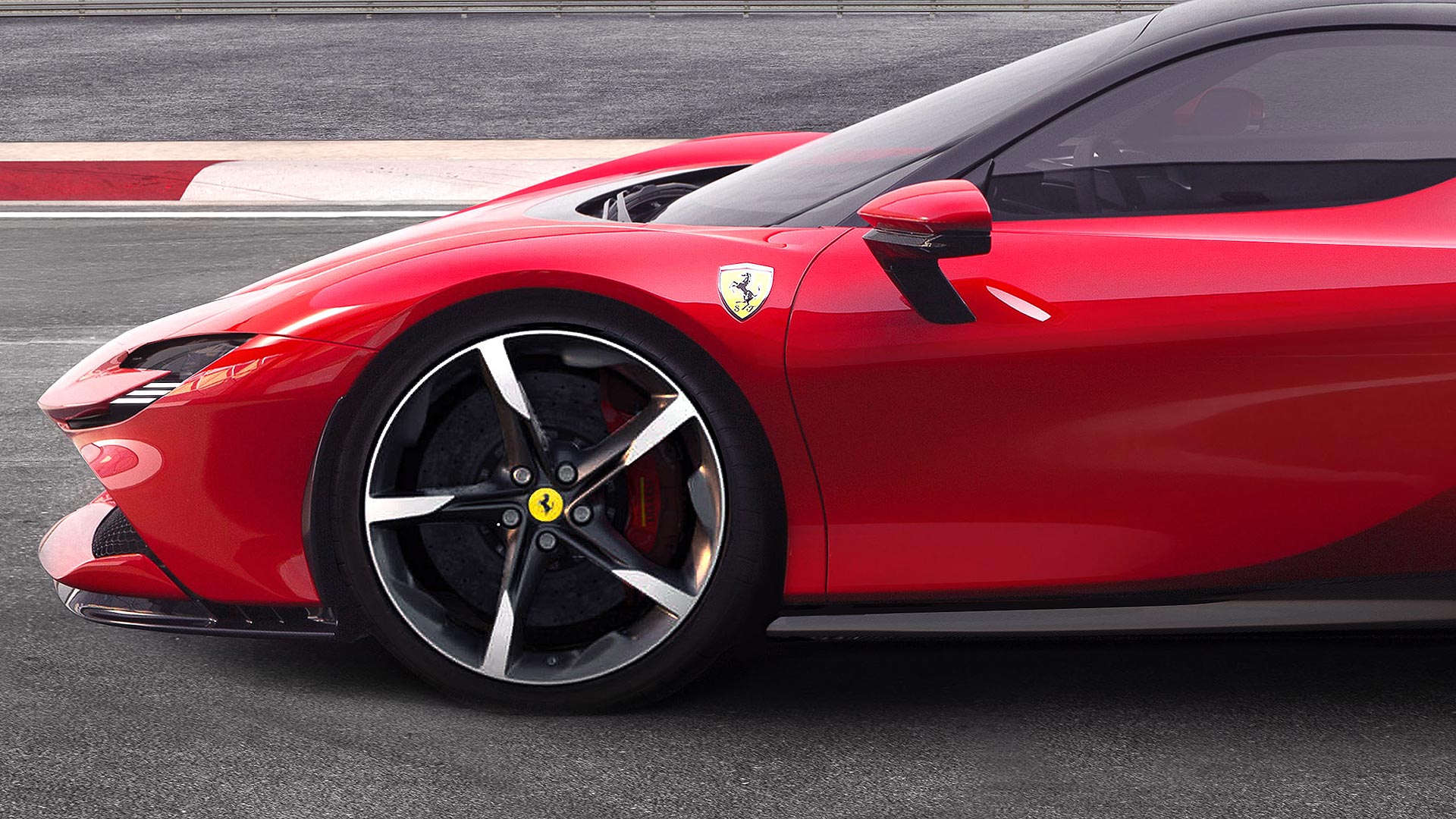
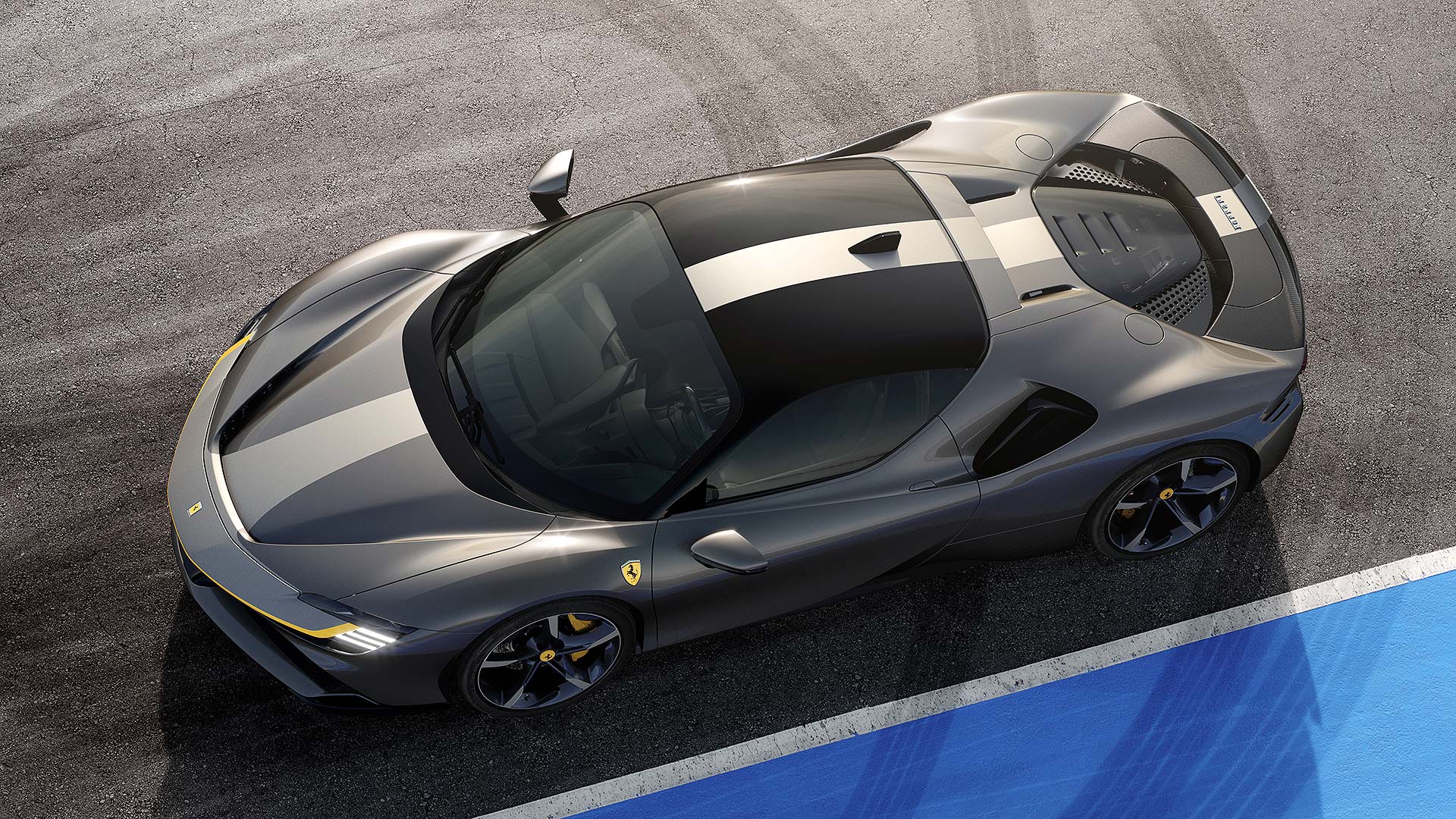
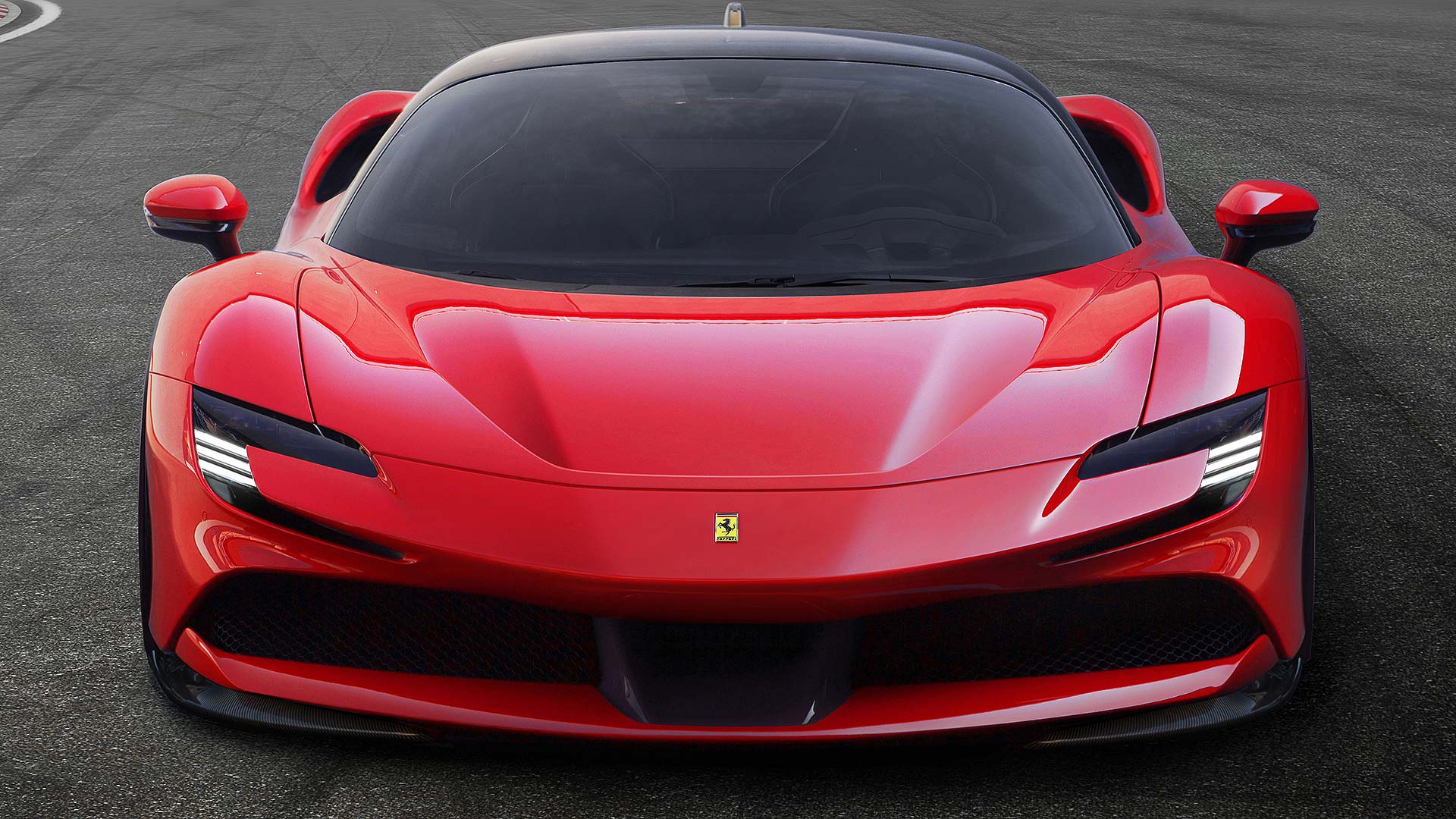
The Ferrari SF90 Stradale is an all-new plug-in hybrid Ferrari that brings extremes of hypercar performance to the Italian brand’s series production range.
It doesn’t replace an existing model, but becomes the new 1,000 horsepower halo car that outguns even the LaFerrari, can drive for miles in zero-emissions electric mode, and is likely to cause furrowed brows at McLaren, Lamborghini, Porsche and Aston Martin when it arrives in early 2020.
Yes, revealed Ferrari, there is already a waiting list…
Ferrari says the SF90 Stradale sets a new level for the market, with unprecedented performance even compared to racetrack specials such as the Ferrari FXX. “It is faster than any other Ferrari, ever” said chief marketing officer Enrico Galliera during the media presentation. “This car is a milestone,” agreed CEO Louis Camilleri.
Price? We’ll learn that soon – but “it will be less than the LaFerrari, but more than the 812 Superfast”. And worth every penny, Ferrari was at pains to point out during a glitzy, confident presentation at Fiorano, Italy.
90 years of Scuderia Ferrari
The SF90 Stradale name has been chosen by Ferrari to underline the link between race and road. ‘SF90’ references 90 years of the Scuderia Ferrari race team, while ‘Stradale’ is Italian for road. Built on an all-new architecture that all future mid-engined models will use, there’s never been a Ferrari road car this extreme – and for the first time since the F40, the top-line Ferrari is a V8, rather than a V12. But it’s not just any V8…
The 780 horsepower 4.0-litre turbo V8 is derived from the F8 Tributo – named International Engine of the Year four times running, Ferrari proudly points out. Here, not only is it enlarged, it is heavily updated with features like new high-pressure fuel injection (giving it the highest output of any Ferrari V8 ever), and paired with a ‘Motor Generator Unit, Kinetic’, or MGU-K.
You’ll recognise this acronym from Formula 1: it’s a super-slim design that sits between engine and all-new 8-speed dual-clutch transmission (which shifts gears 30 percent faster than the standard-setting current unit). The engine also sits extremely low in the chassis: the turbos are positioned either side, just inches from the rear wheels; the exhausts exit overhead.
There are two more electric motors driving the SF90 Stradale’s front wheels – yes, it’s the first 4WD Ferrari sports car – with the three motors producing 220 horsepower combined. Factor in the grip of all-wheel drive and 0-62mph in 2.5 seconds is achieved, which is yet another record for a Ferrari road car. Zero to 124mph? Just 6.7 seconds – faster than a McLaren Senna.
And, thanks to a 7.9 kWh lithium ion battery mounted behind the seats, it can drive nearly 16 miles as a pure EV. Ferrari adds there’s enough battery capacity to produce the full 1,000 horsepower on every racetrack in the world – including the Nürburgring. Challenge accepted, many will say.
As seen on screen
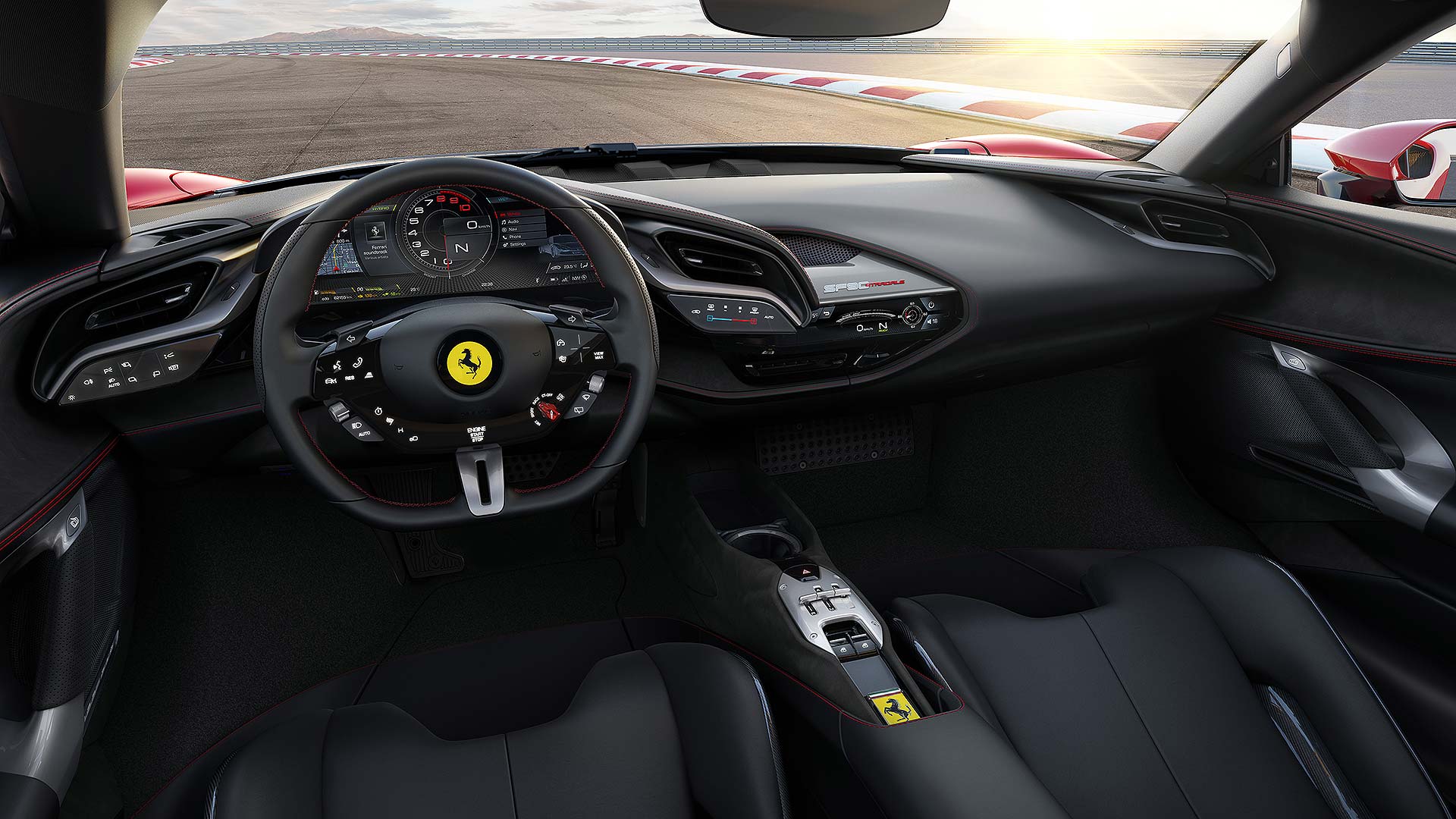
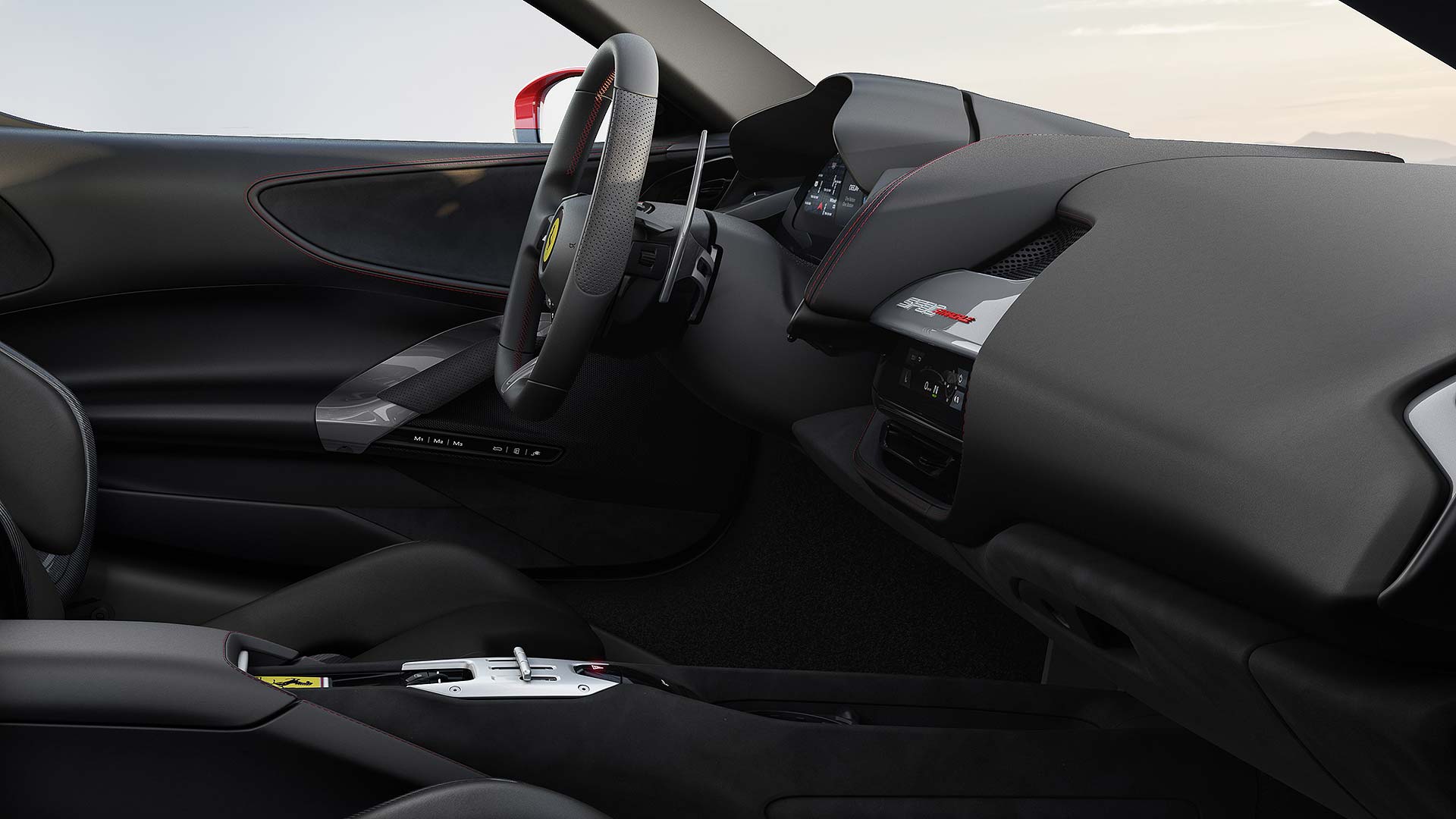
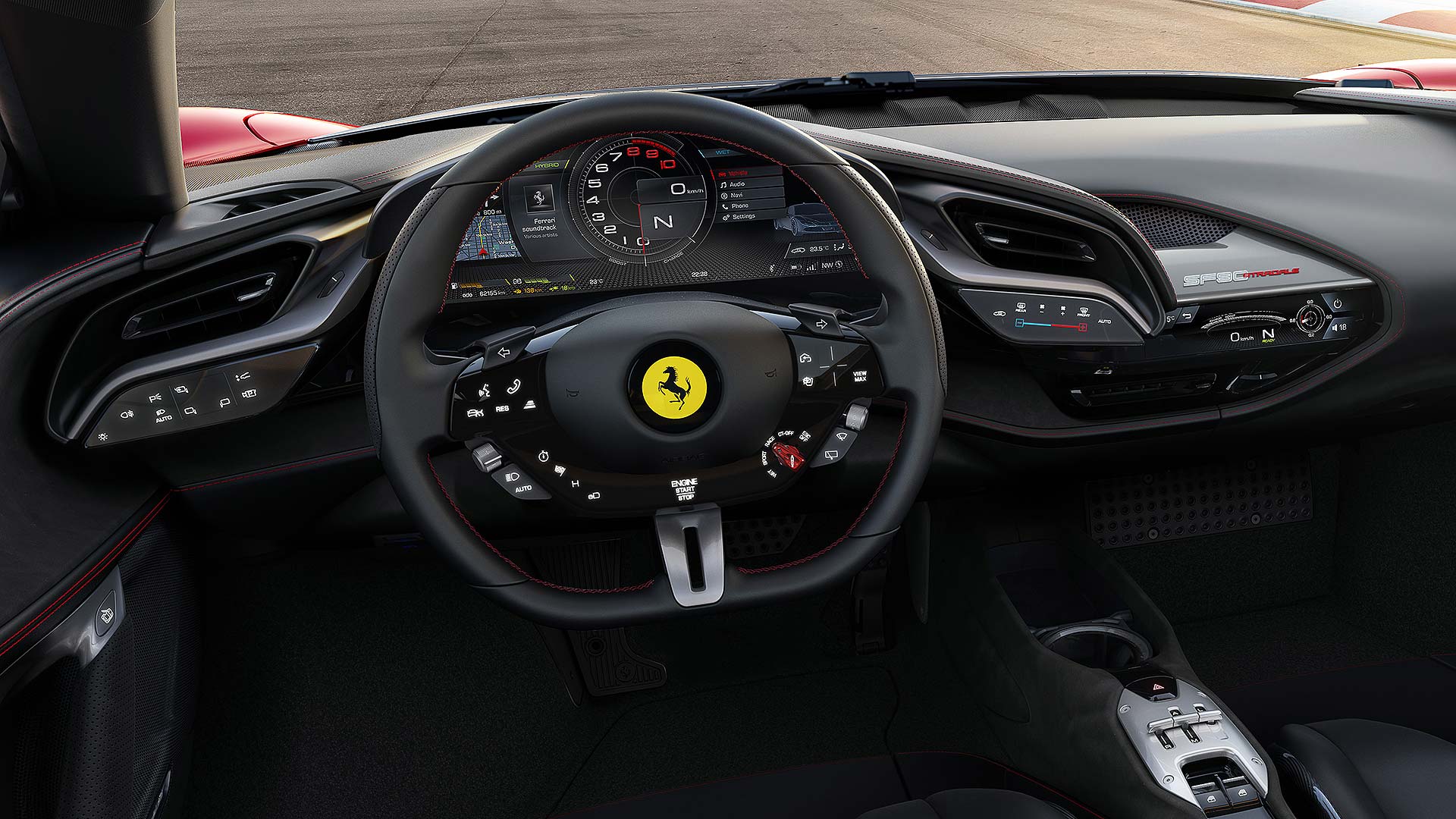
The SF90 Stradale has an all-new interior concept, too. Instead of separate screens, everything is focused on a brand new 16-inch HD cluster. It is a world-first curved, shaped screen, and Ferrari has built in entirely new navigation and infotainment systems. Modern customers are demanding this, said Camilleri; “The speed of change does not frighten us”.
The premium cabin is a step on from every current Ferrari, and this style will be seen in every new model going forward, said Camilleri. “This is the second of five new cars we are revealing in 2019,” he added. “It’s an unprecedented launch cycle that will give us our widest, most complete range ever.”
Organic and futuristic
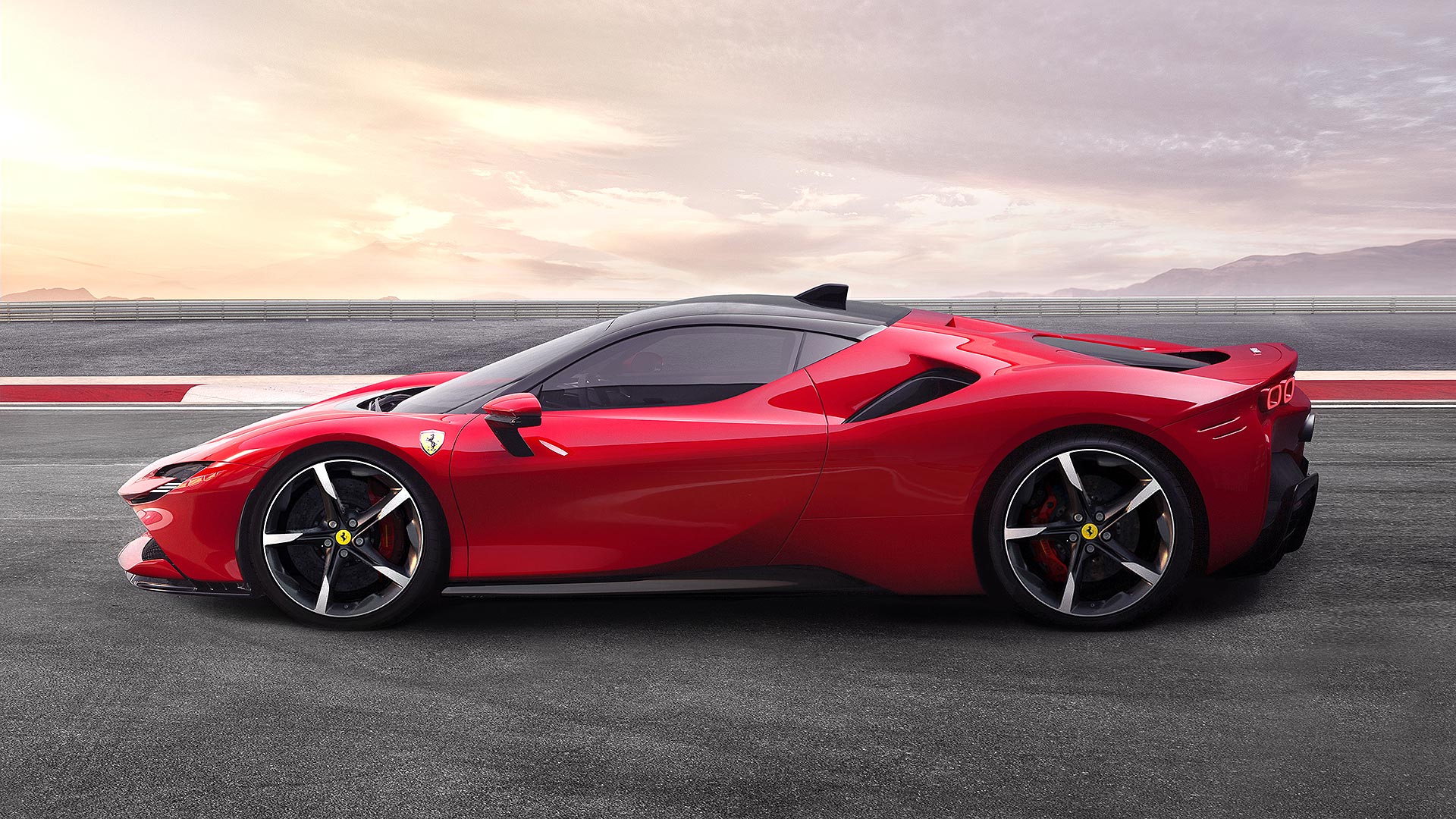
Ferrari design chief Flavio Manzoni’s in-house team at the Ferrari Styling centre has created the new supercar. “It is an organic shape, to portray its top performance and futuristic view. We call it part-race car, part-spaceship.”
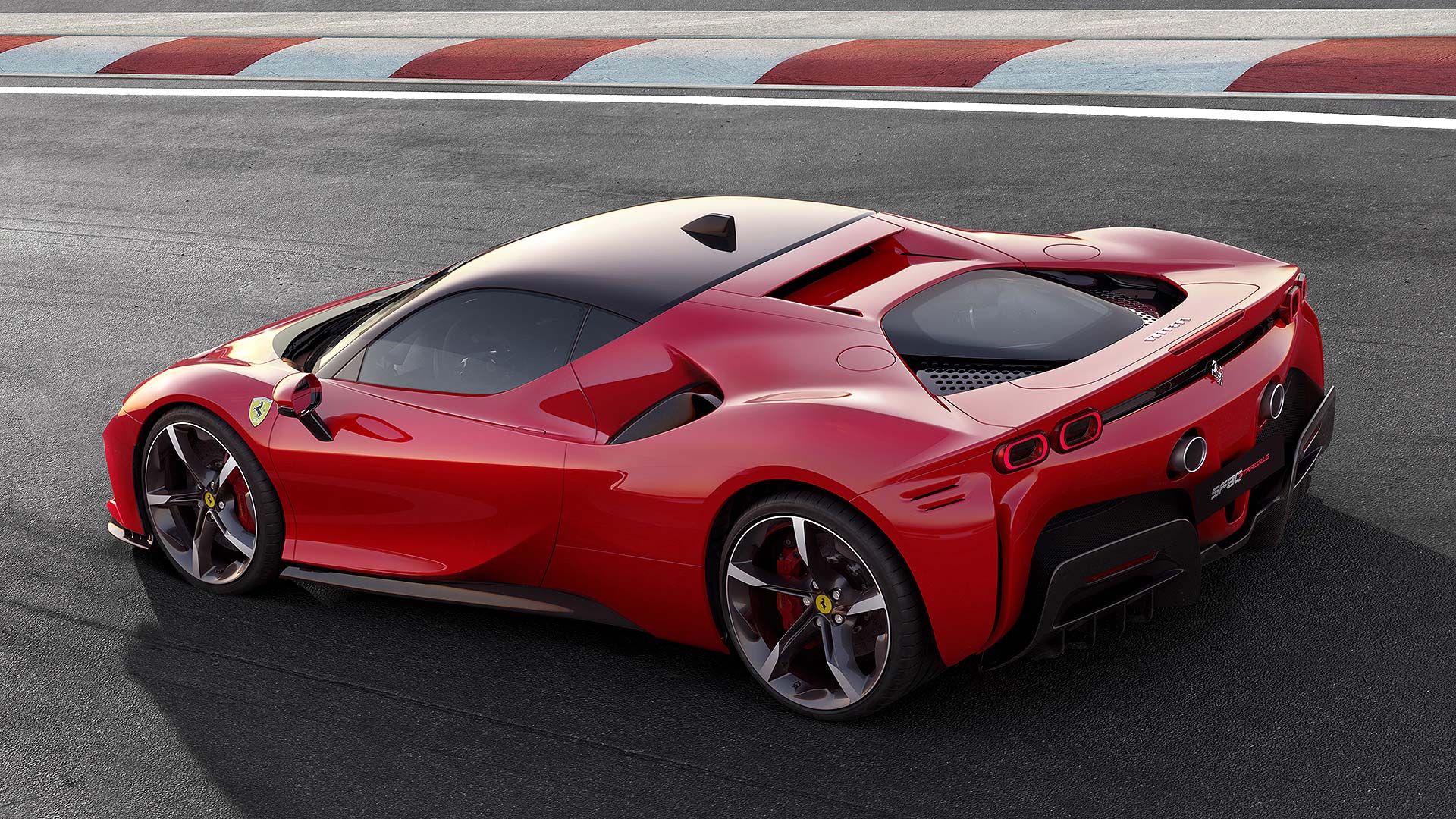
The defining feature is the cabin, designed to look like the canopy of an aircraft. Front and rear wheelarches are “like powerful muscles” and the flying buttresses at the rear “underline the feeling of a spaceship”.
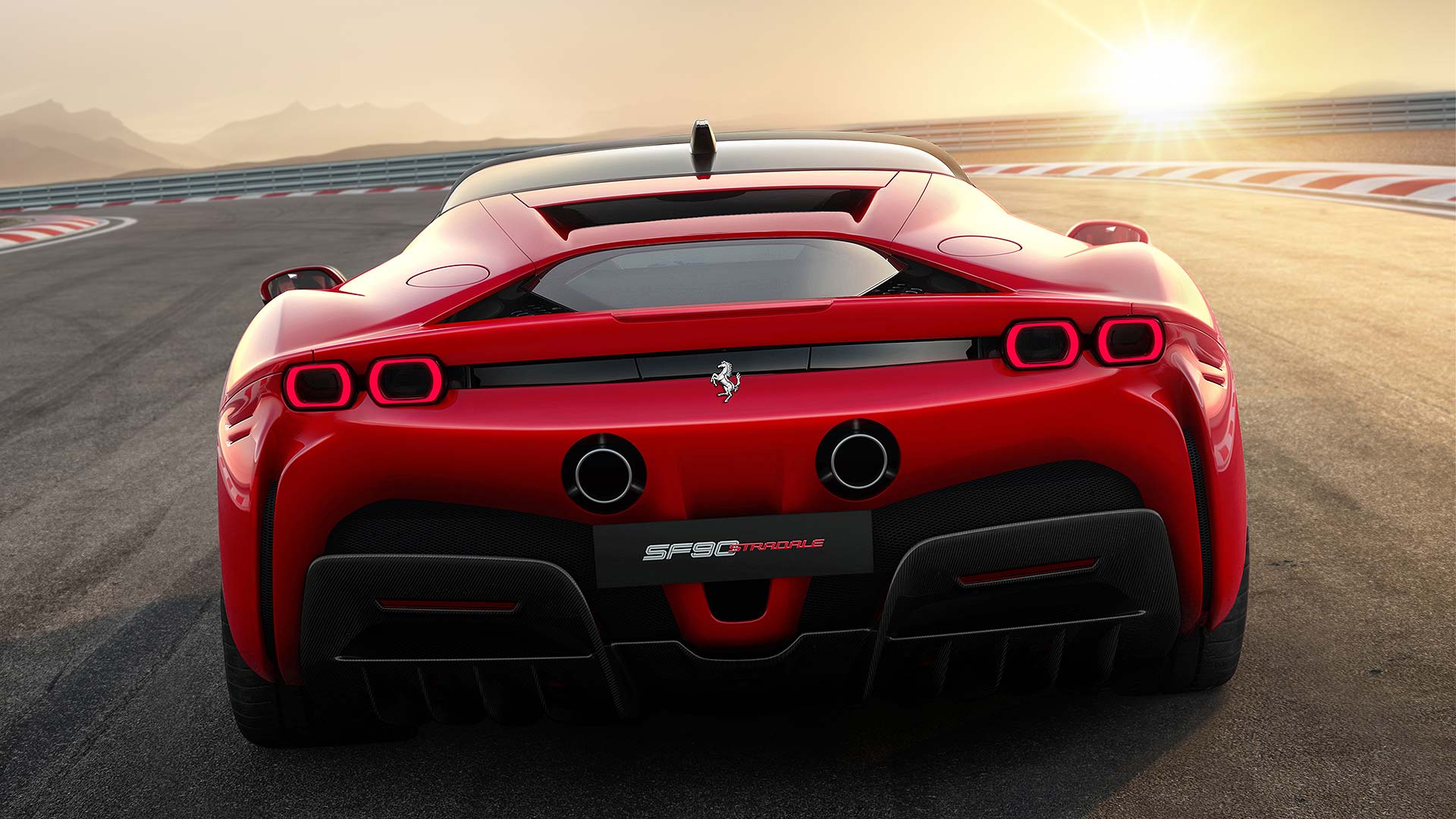
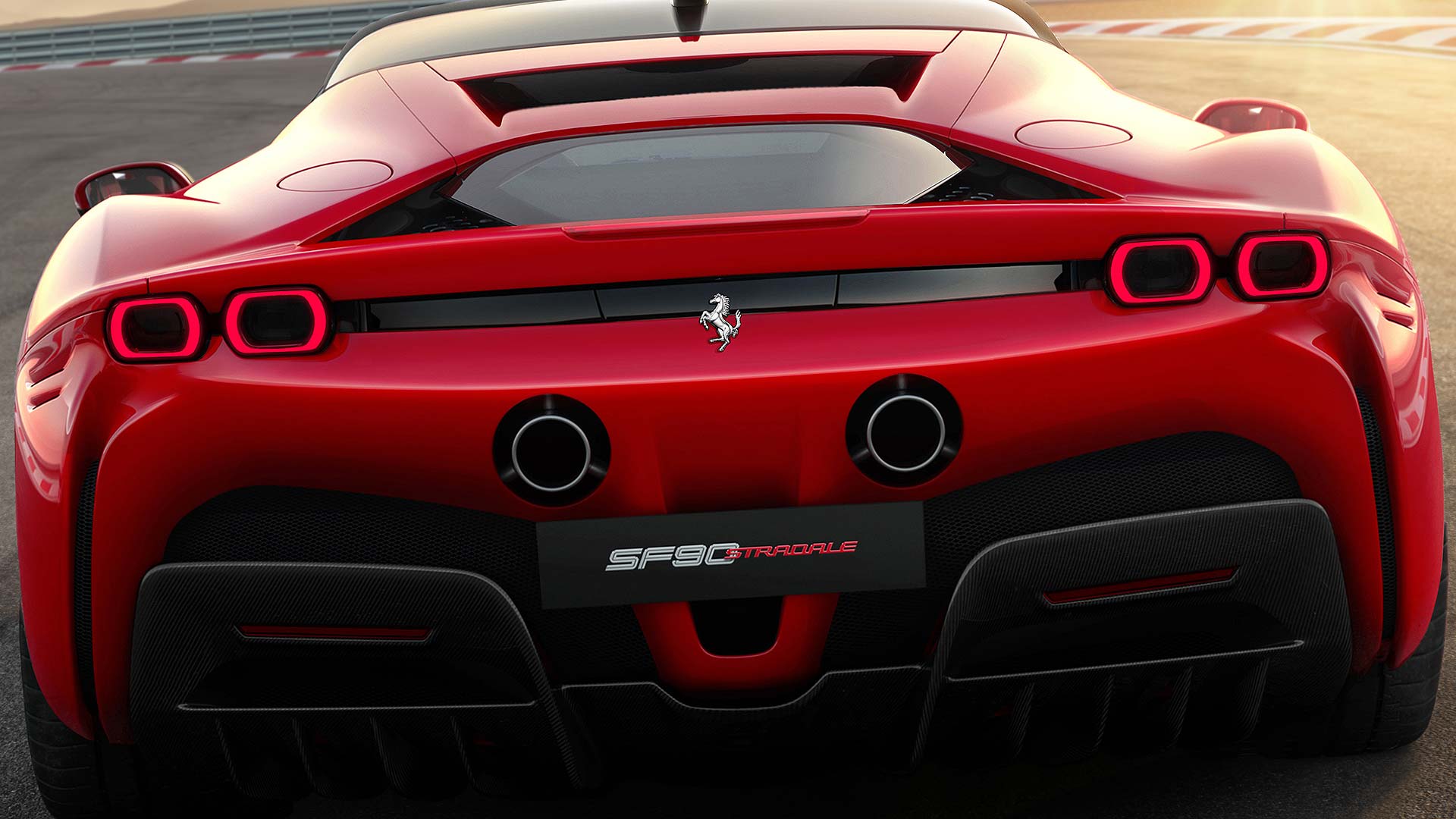
“The rear is the most intriguing aspect,” said Manzoni. “The fender muscles sit on the rear wheels, to give it real stance” which is accentuated by the car’s width and modern cube-shaped tail lamps. The sharply-cut rear has central tailpipes and an incredibly large and complex diffuser below. It is a dramatic, 3D shape that, stresses Manzoni, “really emphasises the car’s architecture”.
A clever feature is the rear ‘shut-off gurney’ which Ferrari is patenting. In normal use, the aero surfaces sit flush – but in high downforce mode, the centre section (the cut-out around the ‘Ferrari’ script here) lowers, creating “a broad load surface topped by a powerful nolder”.
The lines of the new SF90 Stradale are pure and clean. They are elegant, organic and muscular in just the right places. This is not a ‘noisy’ supercar design, but a calm and classical one.
This active aerodynamic functionality is enhanced in the optional Assetto Fiorano pack, pictured here, with a much larger rear gurney. At 155 mph, it generates nearly 400 kg of downforce. SF90 Stradale Assetto Fiorano models have additional carbon fibre features, taking 30 kg out the car’s kerbweight (it weighs just under 1,600 kg) and the central stripe is joined by a painted nose section.
Gate expectations
Ferrari hasn’t forgotten its heritage with the SF90 Stradale: the ‘open gate’ gearshift is back. Well, sort of: instead of buttons, the shift is controlled by three toggles that sit in a metal ‘gate’. Here, you can also just see pictured the ultra-slim new Ferrari key, shaped like a yellow Ferrari bonnet badge. This is something else that’s coming to all future models.
The steering wheel is all-new. It has touch-sensitive controls and 80 percent of the SF90 Stradale’s functionality is operated without hands leaving the wheel. Ferrari also now fits a head-up display, and this new HMI (human-machine interface) has been developed from racetrack logic that Ferrari is calling EOTR-HOTS: Eyes On The Road, Hands On The Steering (wheel).
Blown away
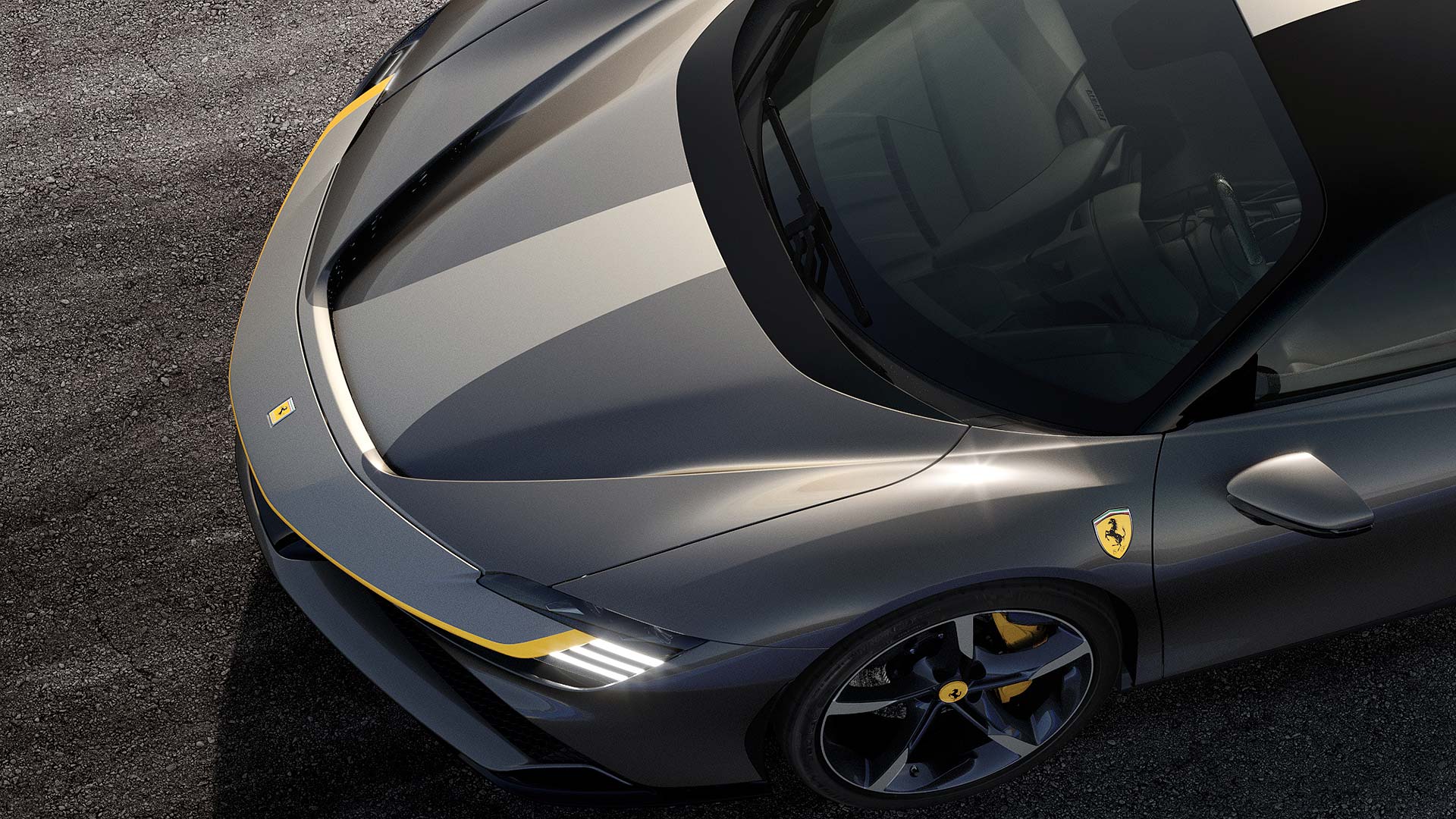
A new LED daylight signature comprises three vertical outboard lines. Also note the bulging fenders, the carefully integrated aerodynamics and intriguing new alloy wheels, which have tiny shaped fins between the spokes that create downforce. The engineers call them ‘blown’ alloys.
Daddy shark
The Ferrari SF90 Stradale has a striking ‘shark nose’ effect at the front. “There’s lots of tension at the front, to create a ‘slingshot effect’” said Manzoni. “The cabin sits centrally within the car, conveying the power of the car.” This aspect also underlines the simplicity of Ferrari’s new range-topping model.
Faster around Fiorano
And how fast is it? Bragging facts will come soon, but Ferrari did reveal one stat – against its benchmark, the LaFerrari, it draws a full 64 metres ahead of the previous halo car after just one single lap of its Fiorano test track. “Standing still is not an option,” said Camilleri.
With the new SF90 Stradale, Ferrari may just have created an entirely new supercar benchmark that rivals may struggle to now match. “We at Ferrari have chosen to face the future by putting ourselves in the driving seat and challenging change our way.” And what a way.
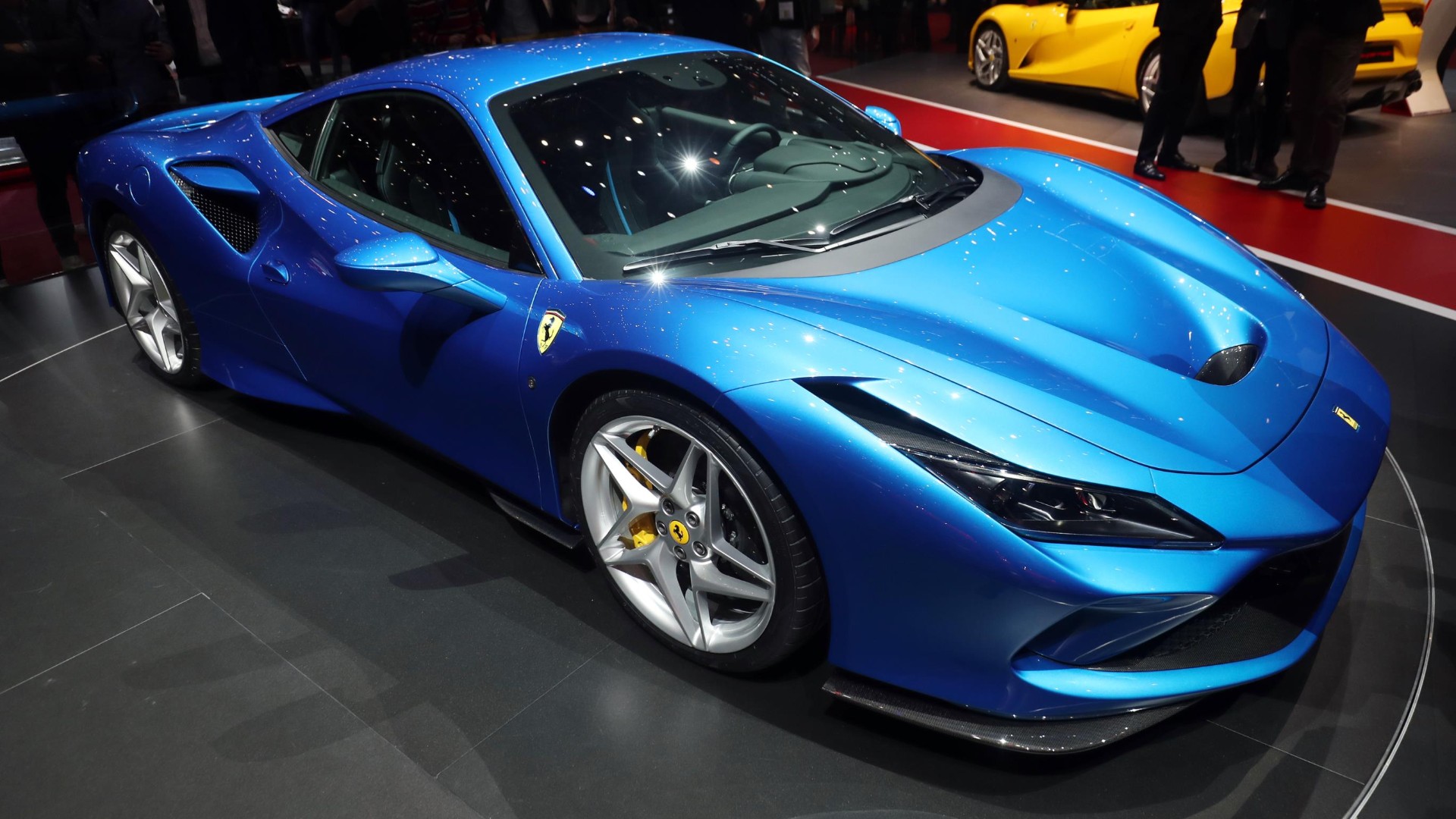
The 1,000hp SF90 Stradale has claimed the title of most powerful road-going Ferrari from the LaFerrari of 2013. To mark the occasion, we’ve rounded up the mightiest production prancing horses, all with 600hp or more. Fasten your seatbelts…
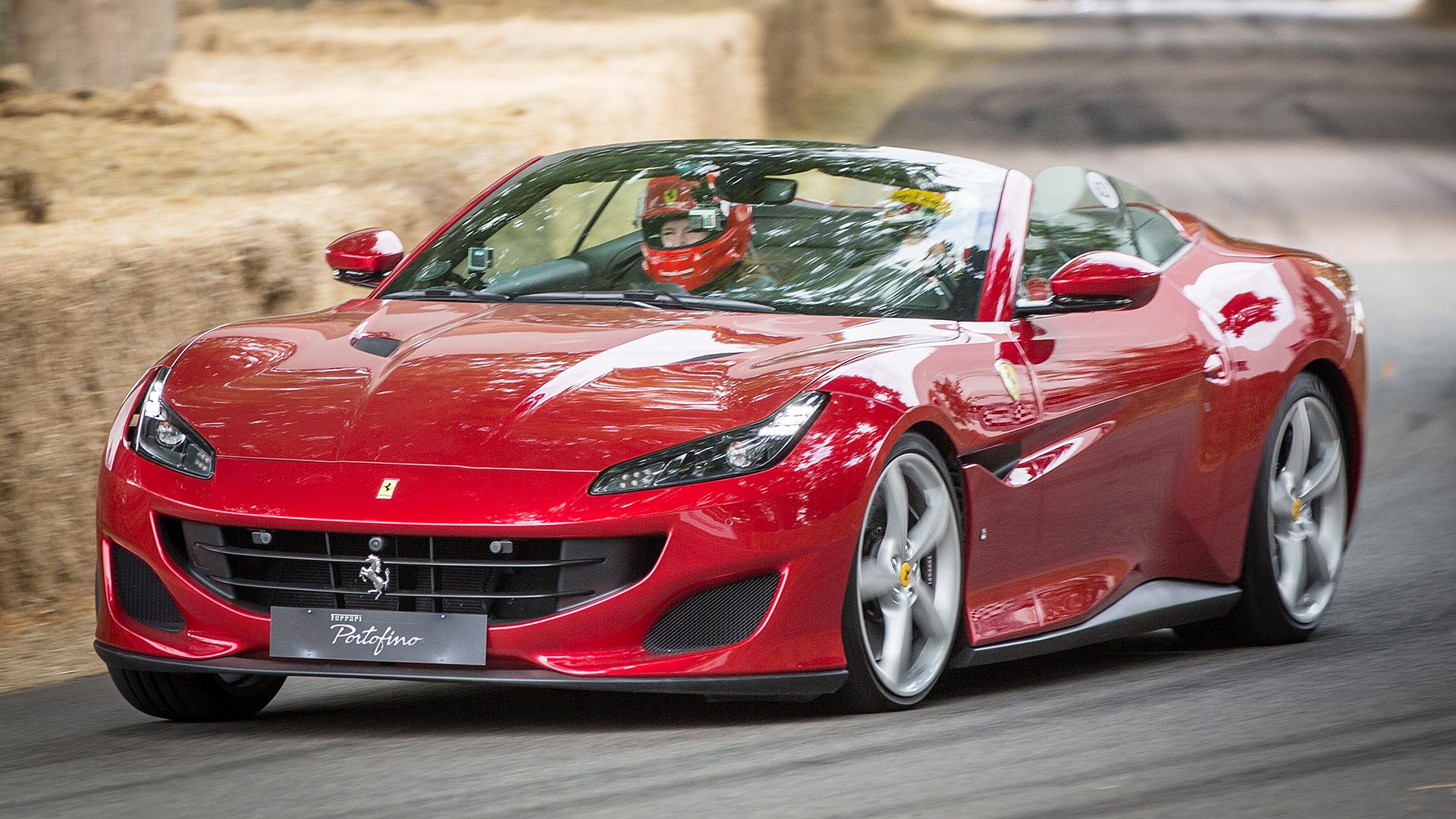
Ferrari Portofino
The drop-top Portofino, which replaced the California T, is an ‘entry-level’ Ferrari that still packs 600hp. The remainder of the range exists in the high-performance hinterland between here and the 1,000hp Ferrari SF90 Stradale.
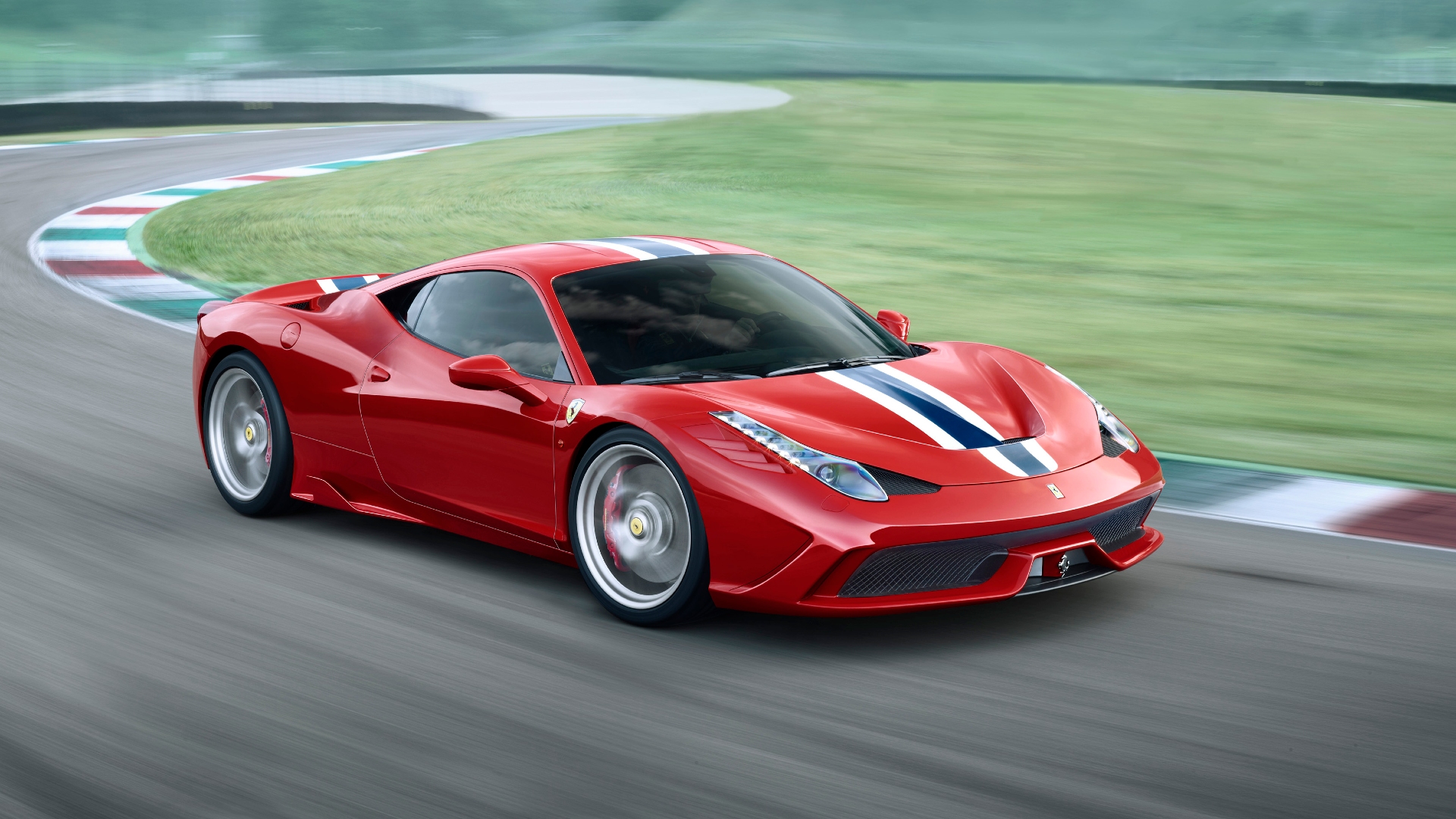
Ferrari 458 Speciale
The 605hp 458 Speciale dragged the mid-engined Berlinetta kicking (and most definitely screaming) into the 600hp club. The last naturally-aspirated Ferrari V8, it was a glorious 9,000rpm send-off – succeeded by the twin-turbo 488 GTB. Just 998 Speciales were produced, including the open Aperta version.
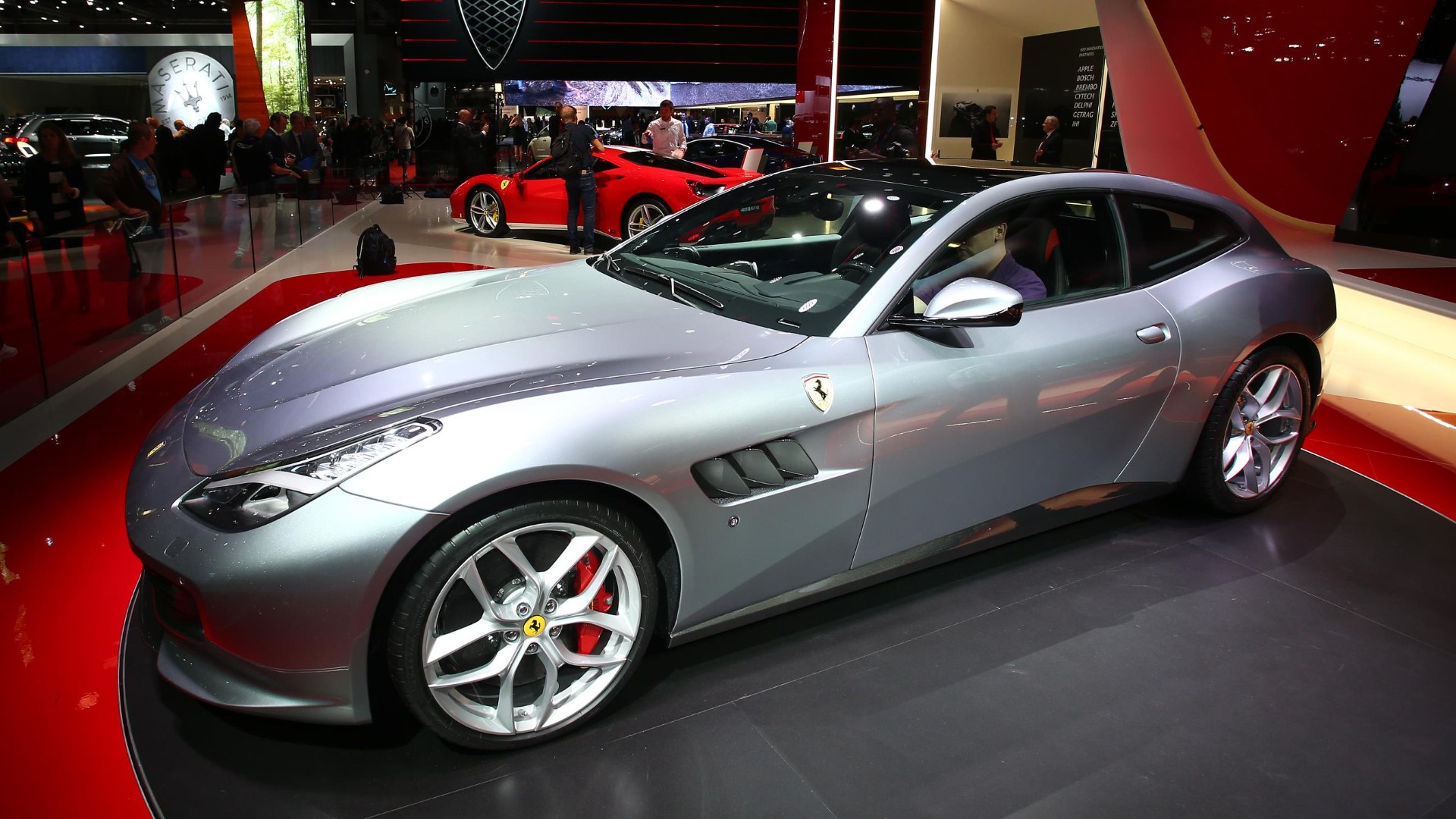
Ferrari GTC4Lusso T
If a V12 feels unnecessary in your family Ferrari, the GTC4Lusso T is the cheaper, slightly softer alternative to the full-fat Lusso further up the list. It’s still no slouch, with 610hp going to the rear wheels.
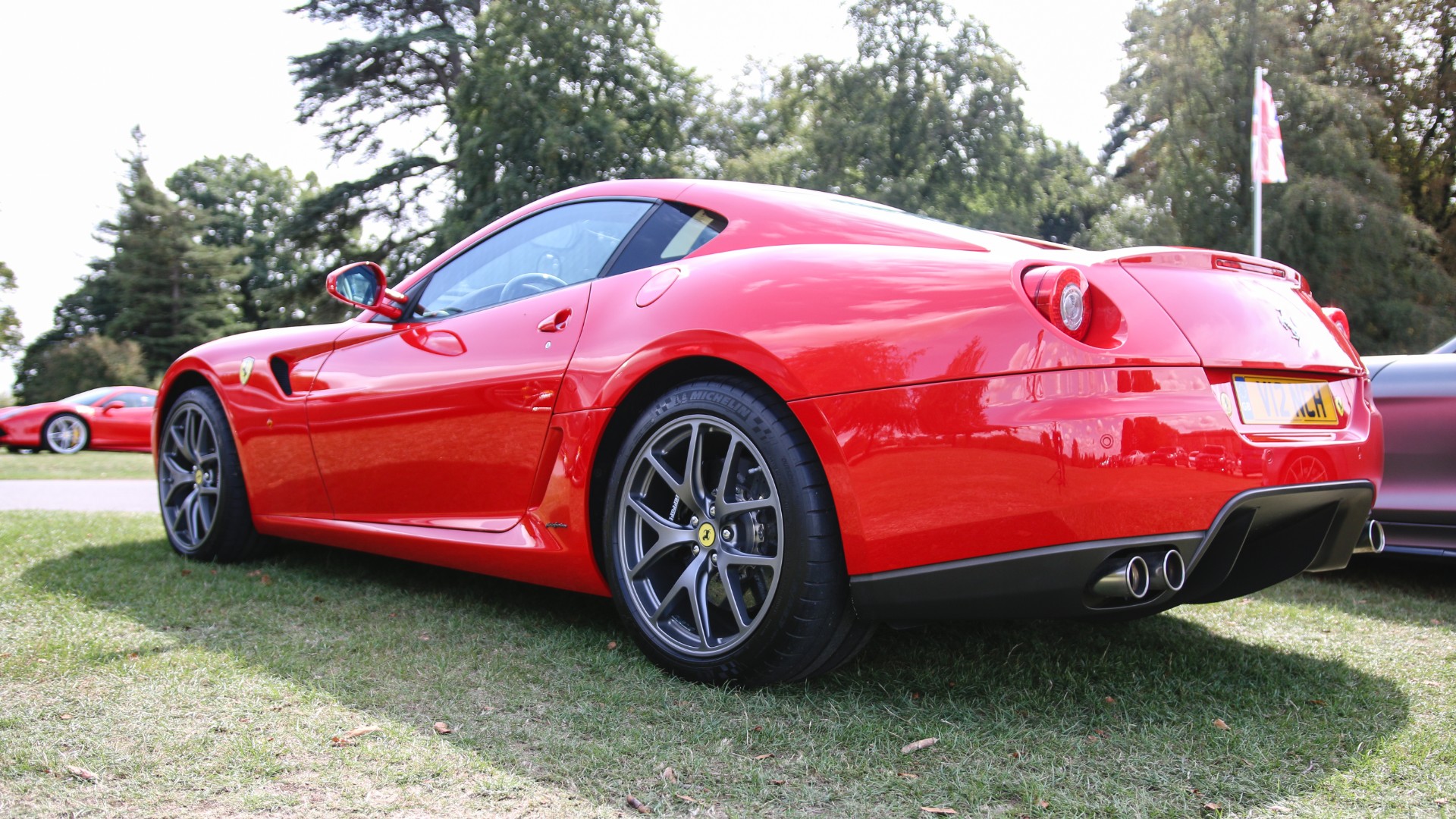
Ferrari 599 GTB
The fruits of the Enzo project (spoiler alert: it’s next in this list) were still being sown four years after its debut. Complete with the same God-summoning soundtrack, the 599 debuted in 2006, with 620hp from its 6.0-litre V12.
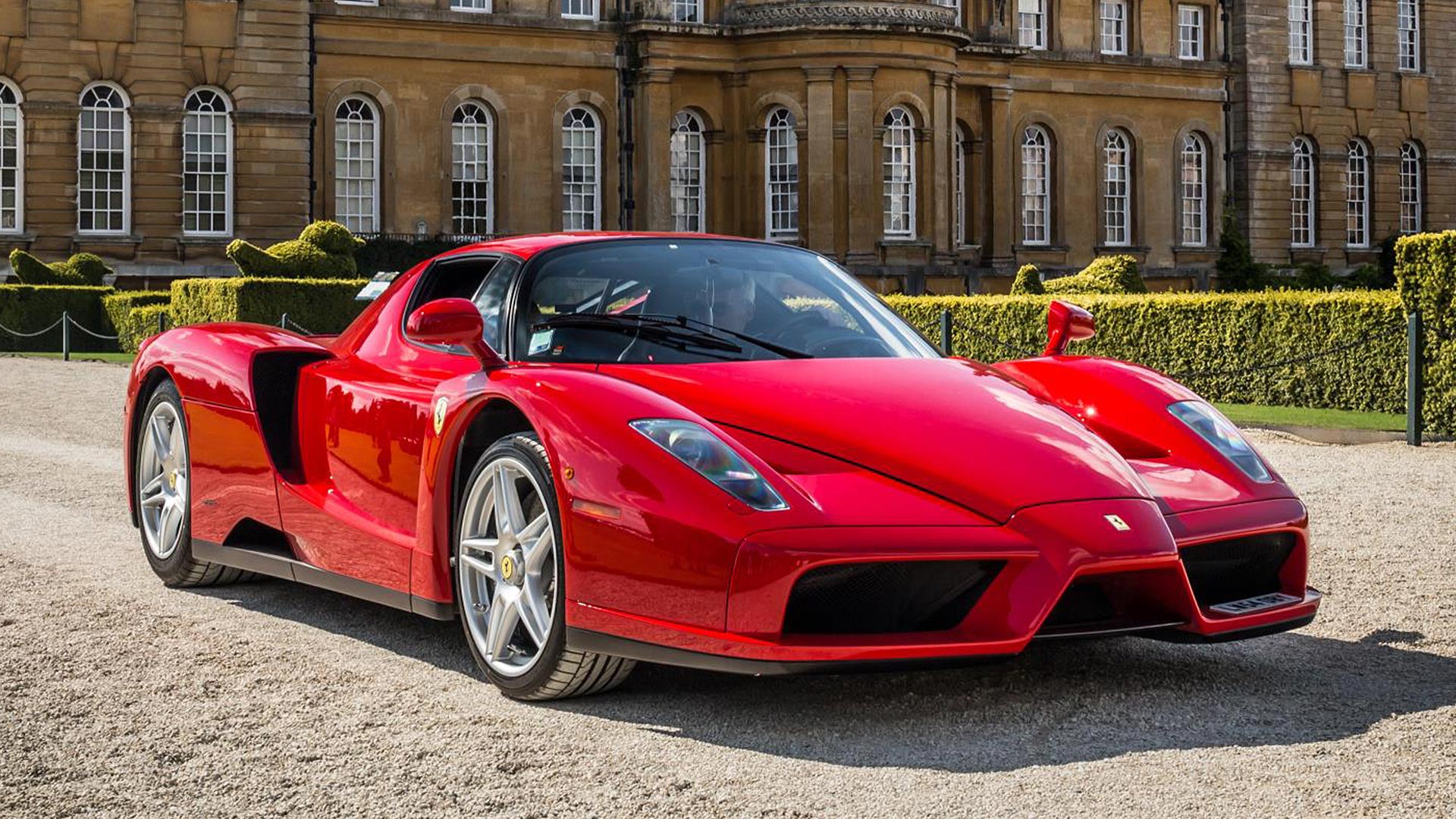
Ferrari Enzo
The fact that the Enzo pre-dates any subsequent car here by eight years or more shows just what a hammer-blow its 660hp V12 was in 2002. Its performance was as dramatic as its angular aesthetic. In the history of Ferrari, the Enzo is doubly significant, as its 6.0-litre F140 (B) engine was the basis for all subsequent Ferrari V12s – including those in the GTC4Lusso and 812 Superfast.
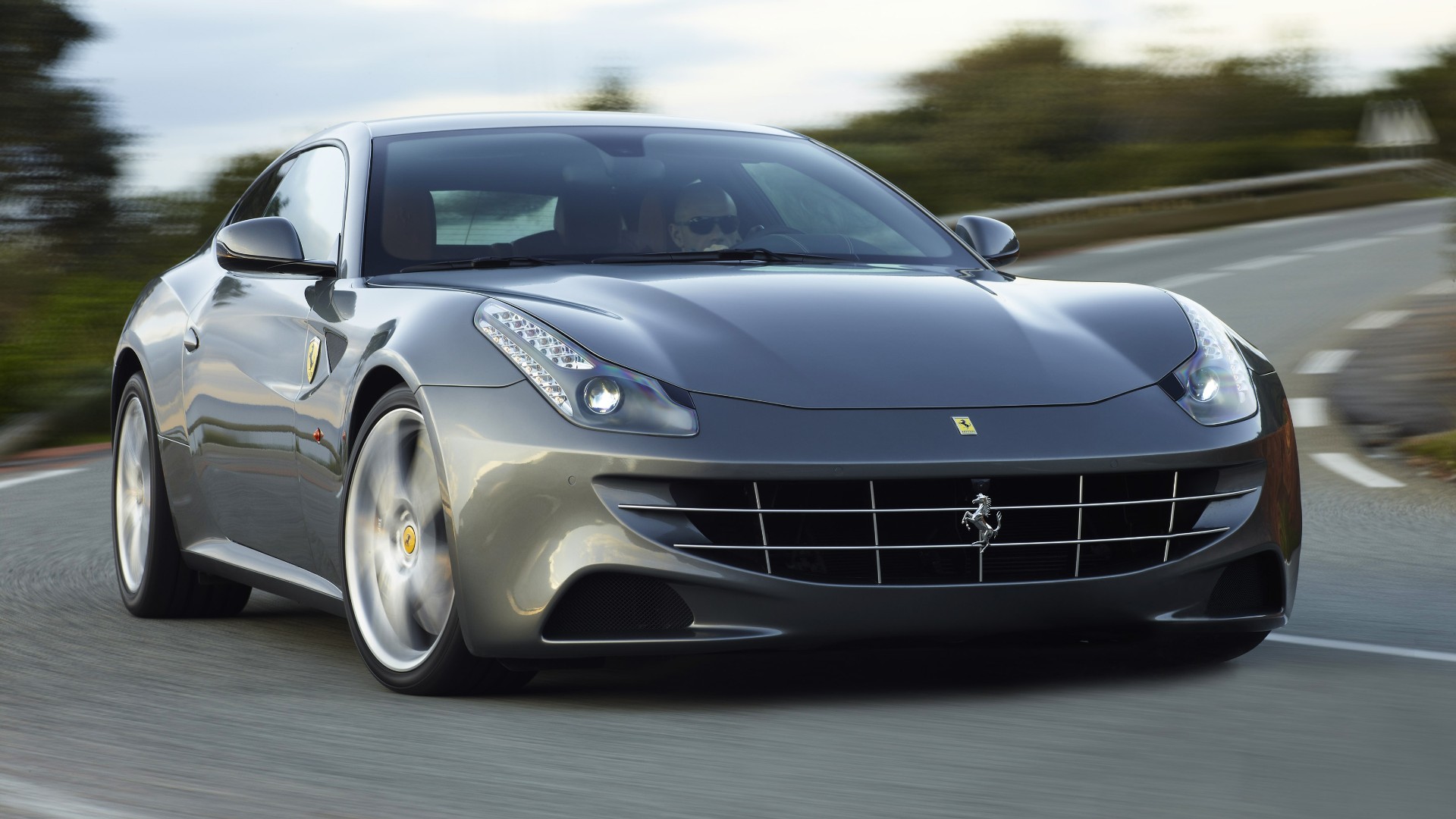
Ferrari FF
The FF was a controversial beast upon its arrival. While the 612 Scaglietti it replaced wasn’t a classic beauty, was a four-wheel-drive shooting brake a step too far? Most concerns were quashed as soon as it fired up. A guttural V12 soundtrack borrowed from the GTO turned those raised eyebrows into slackened jaws. With 660hp, its output matches the Enzo. How’s that for nine years of progress?
Ferrari 488 GTB
When the 488 GTB arrived in 2015, it brought turbos and lots of torque. With 670hp, it matched the 599 GTO of five years before, and with a 3.9-litre engine. A 488 Spider was available, too.
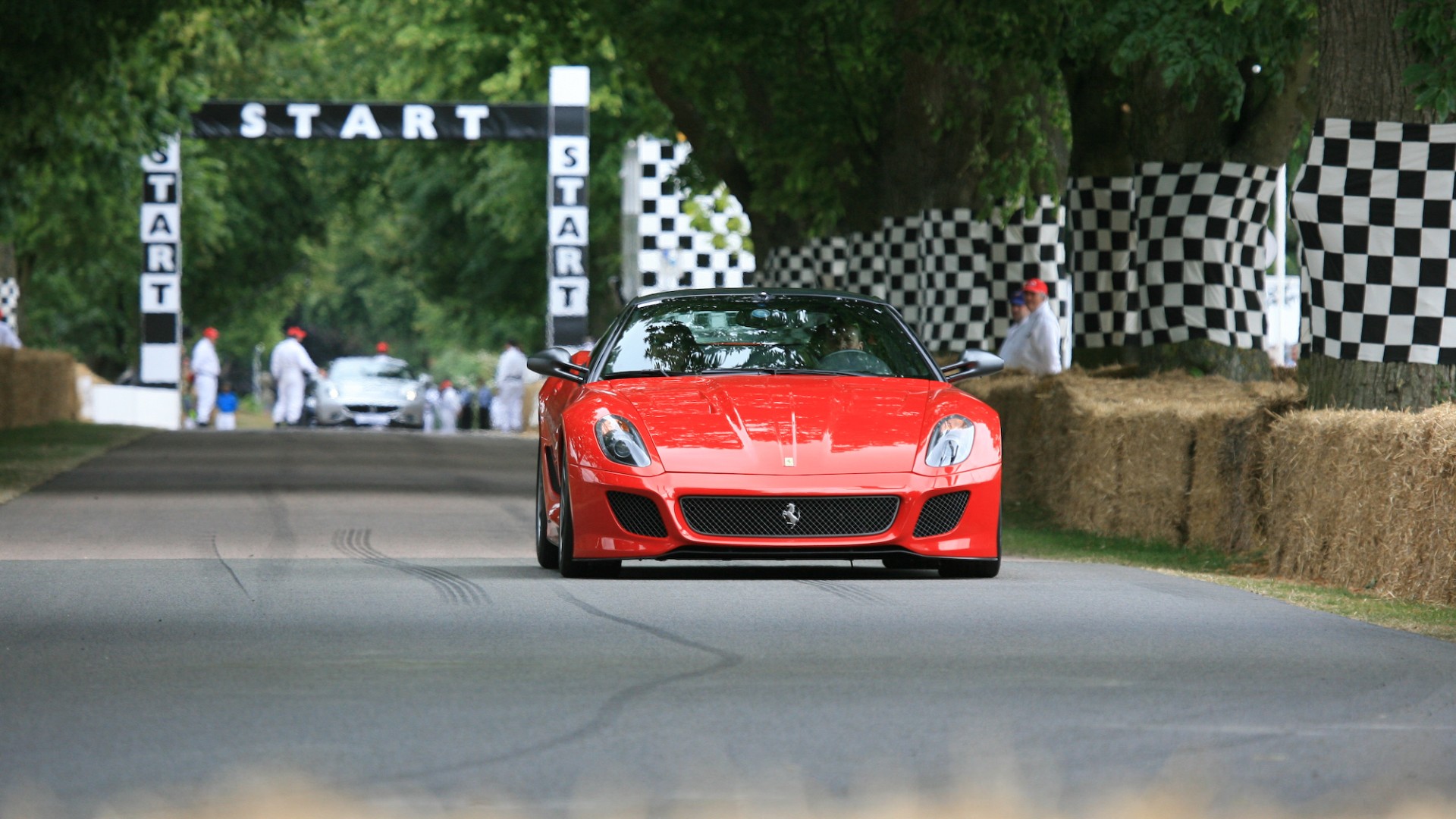
Ferrari 599 GTO
The GTO was a watershed moment for production Ferraris when it arrived in 2010. Away went the gravelly snarl that harked back to the Enzo. In its place came a howl more akin to a 1990s Ferrari F1 car. Little did we know that exotic shriek would become the signature sound of Ferrari V12s.
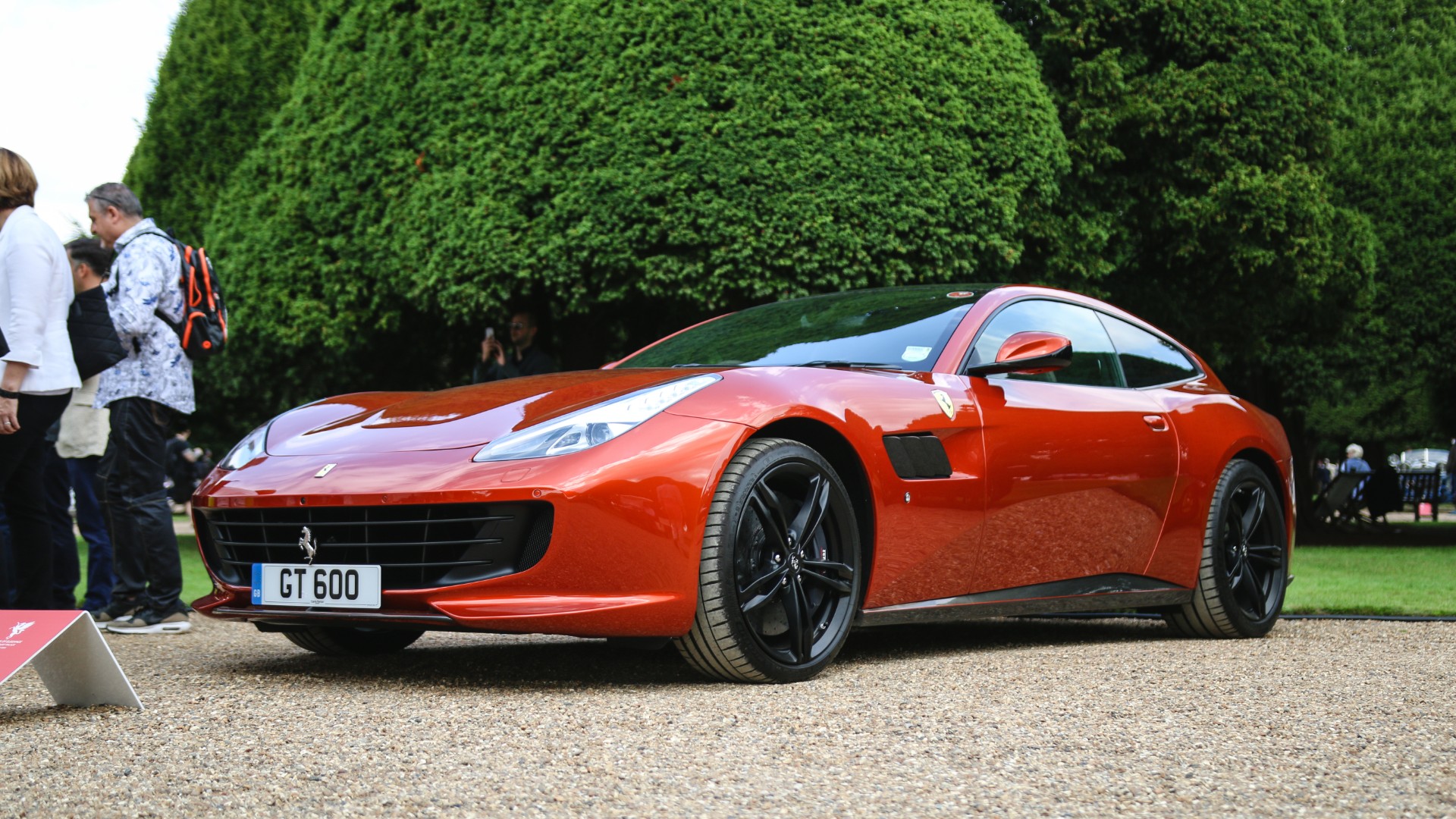
Ferrari GTC4Lusso
Ferrari’s most relaxed product, a four-seat GT car, still has an Enzo-baiting 680hp V12. Even though power goes to all four wheels, it will break traction with ease. A formidable cross-continental tourer.
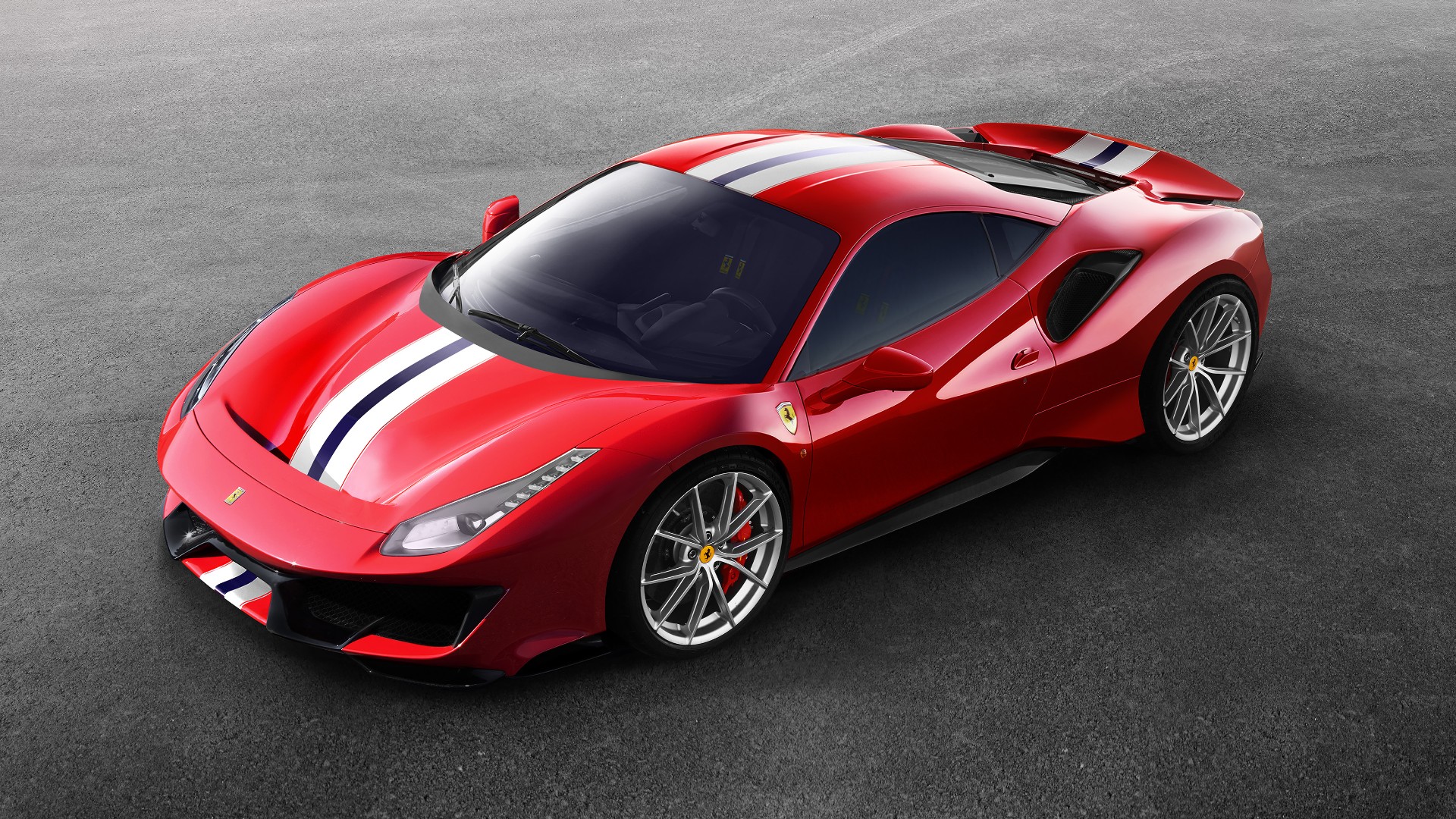
Ferrari 488 Pista
When Ferrari debuted its twin-turbo V8, it claimed there was potential for horsepower figures into the 700s. The track-prepped 488 Pista realised that potential with a McLaren-matching 720hp. The Pista Spider offers open-air thrills to match the Pista’s track-prepped skills.
Ferrari F8 Tributo
With the introduction of the F8 Tributo, the mainstream mid-engined Berlinetta is officially a 700hp+ car. Yes, the Pista wasn’t technically limited, but it’s not exactly a series-production car either. The new F8 offers Pista-level power in standard showroom spec.
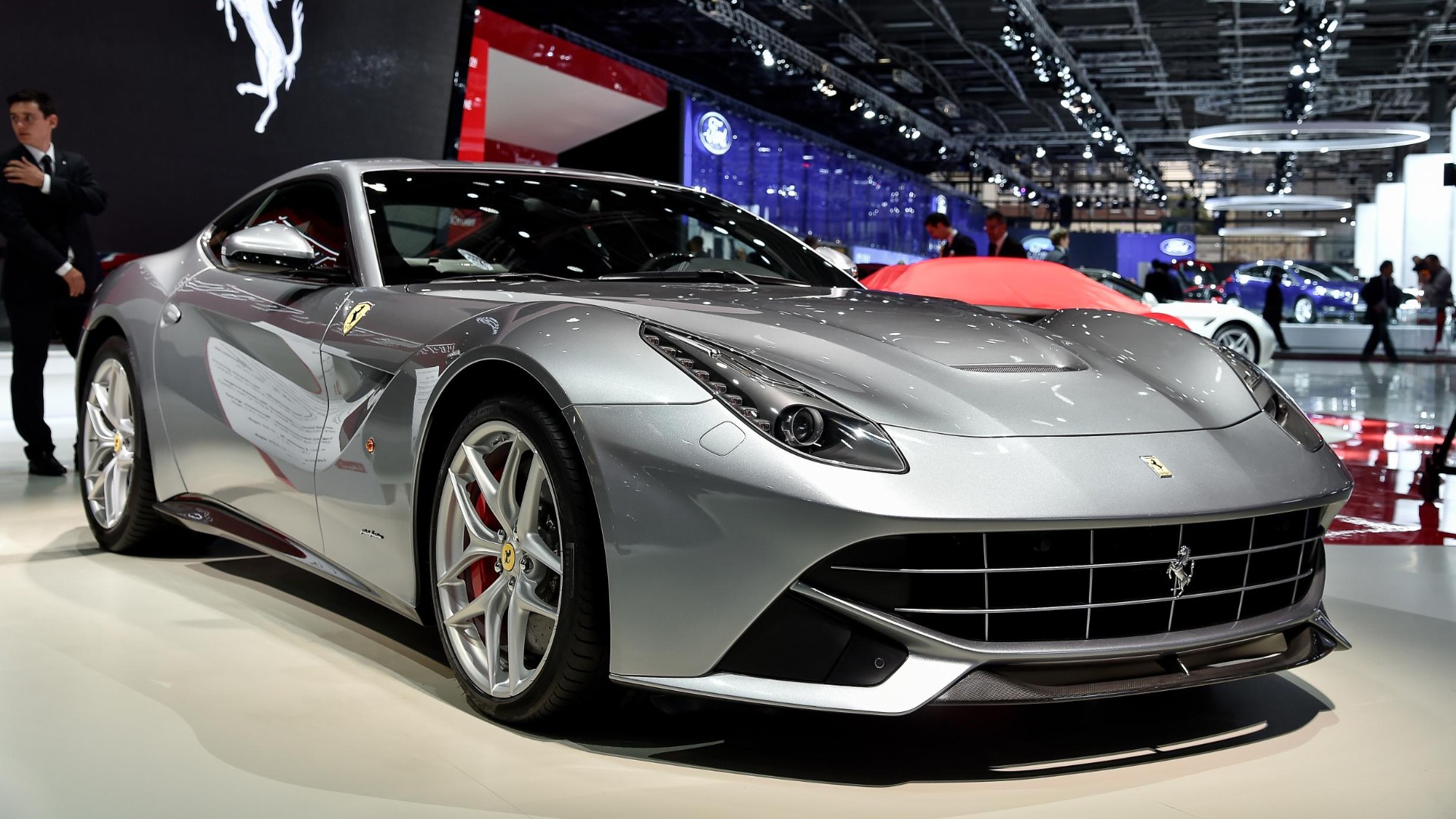
Ferrari F12 Berlinetta
The F12 Berlinetta caused quite a stir when it arrived back in 2012. Here was a car that anyone could buy, that wasn’t limited, that could comfortably trundle down the shops, and that had 740hp on tap. This figure eclipsed the hypercars of just a few years before, trouncing the million-pound Pagani Huayra and carbon-tubbed Lamborghini Aventador. ‘Is this too much?’, we all asked at the time. Ferrari didn’t seem to think so…
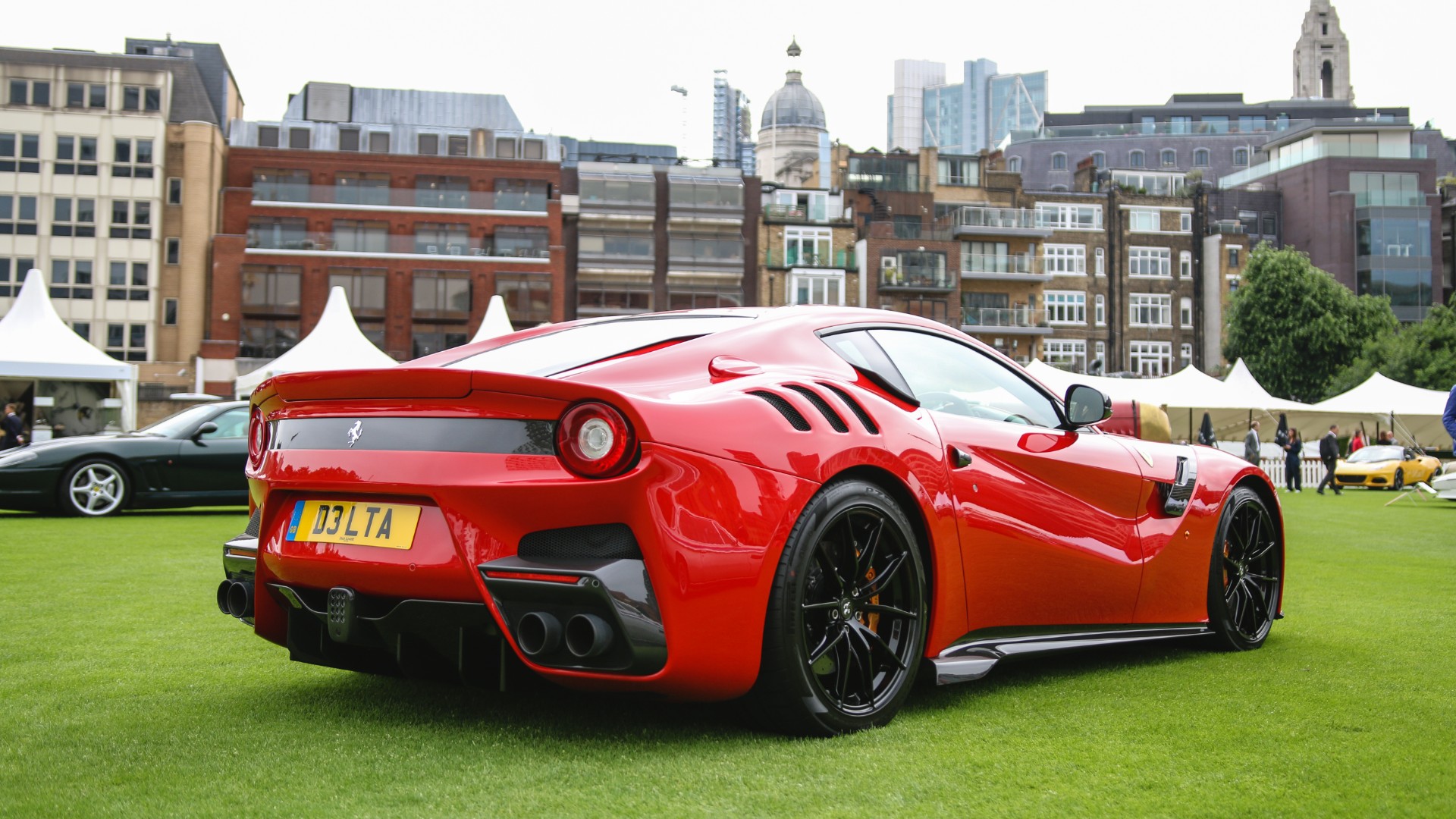
Ferrari F12 TdF
The final F12 was the stupendous TdF. Because what the F12 needed was more power, right? The 780hp TdF had rear-wheel-steering for the first time in a Ferrari, yet it was famously skittish on a damp road.
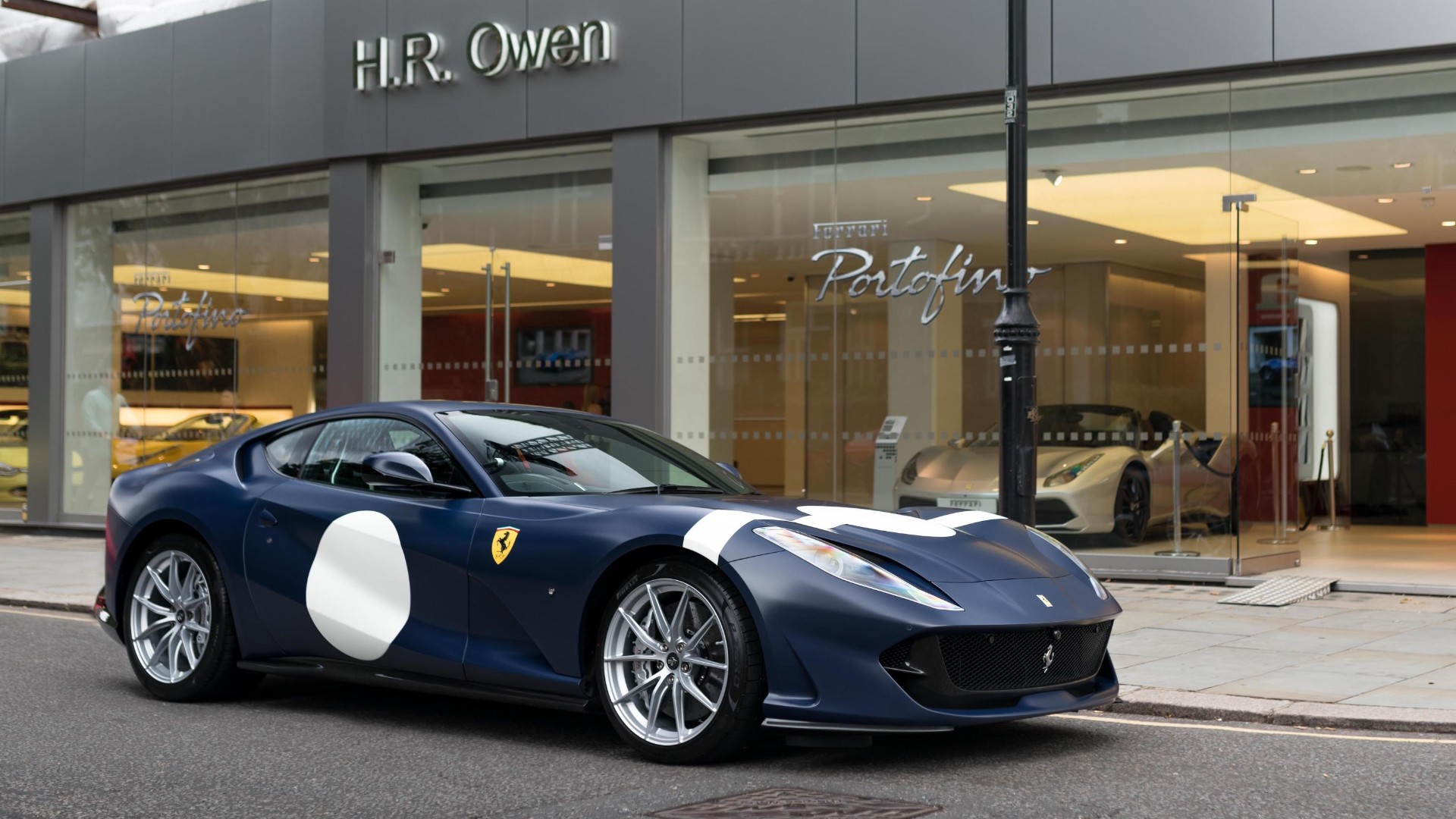
Ferrari 812 Superfast
The Superfast does what it says on the tin; its 6.5-litre V12 makes a round 800hp. It’s a GT at heart, though, so it packs a few more luxuries and a decent boot, weighing a few hundred kilograms more than cars further up this list.
Ferrari LaFerrari
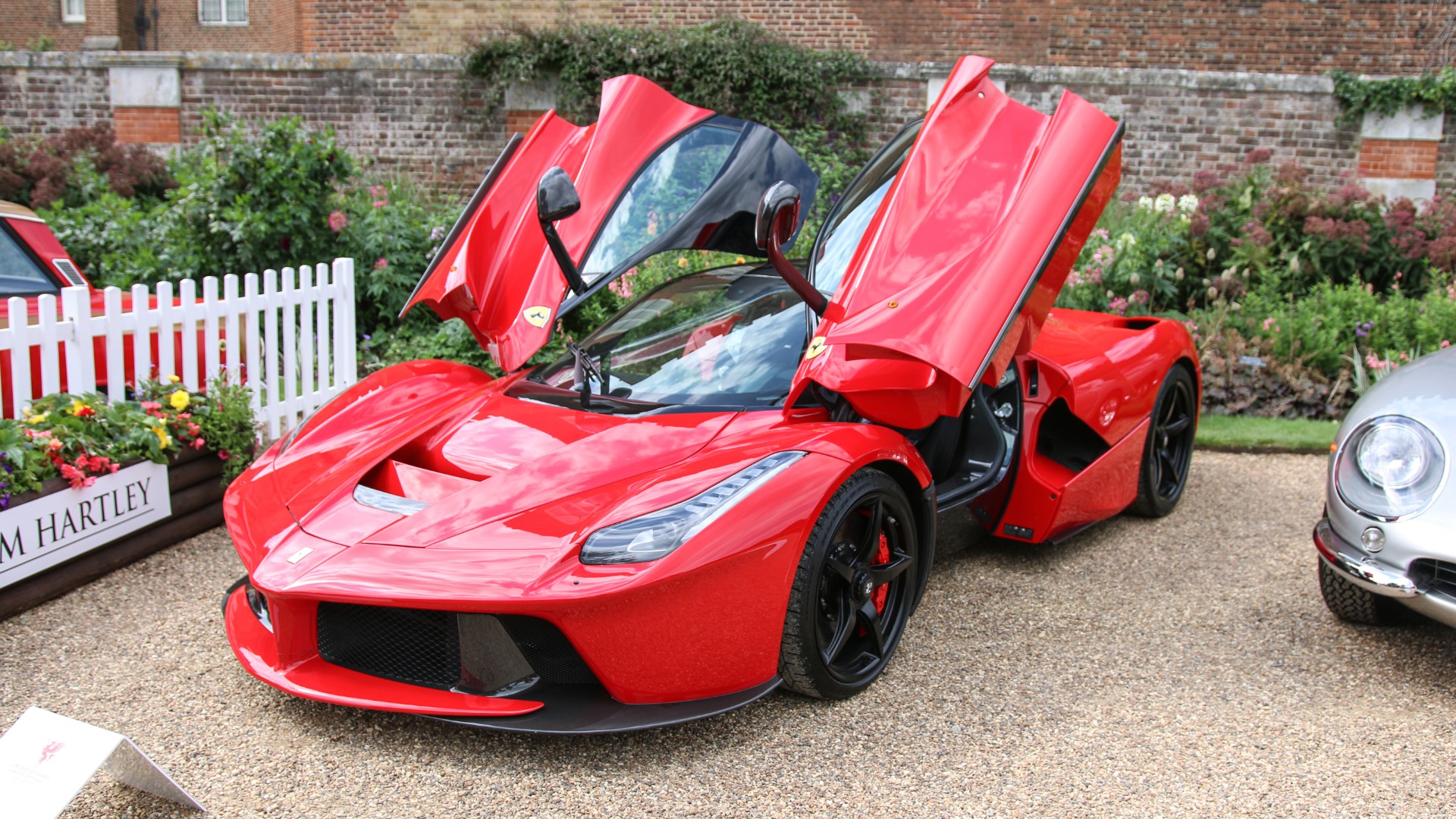
When Ferrari unveils a new flagship, the world stands still. Nothing changed with the near-1,000hp LaFerrari back in 2013, although there were a few giggles at that name. A 2.4-second 0-62mph time was claimed, with a top speed of 217mph. It generates 963hp via a 6.3-litre V12 mated to a hybrid powertrain. It’s this technology that the new car advances still further in the pursuit of power.
Ferrari LaFerrari Aperta
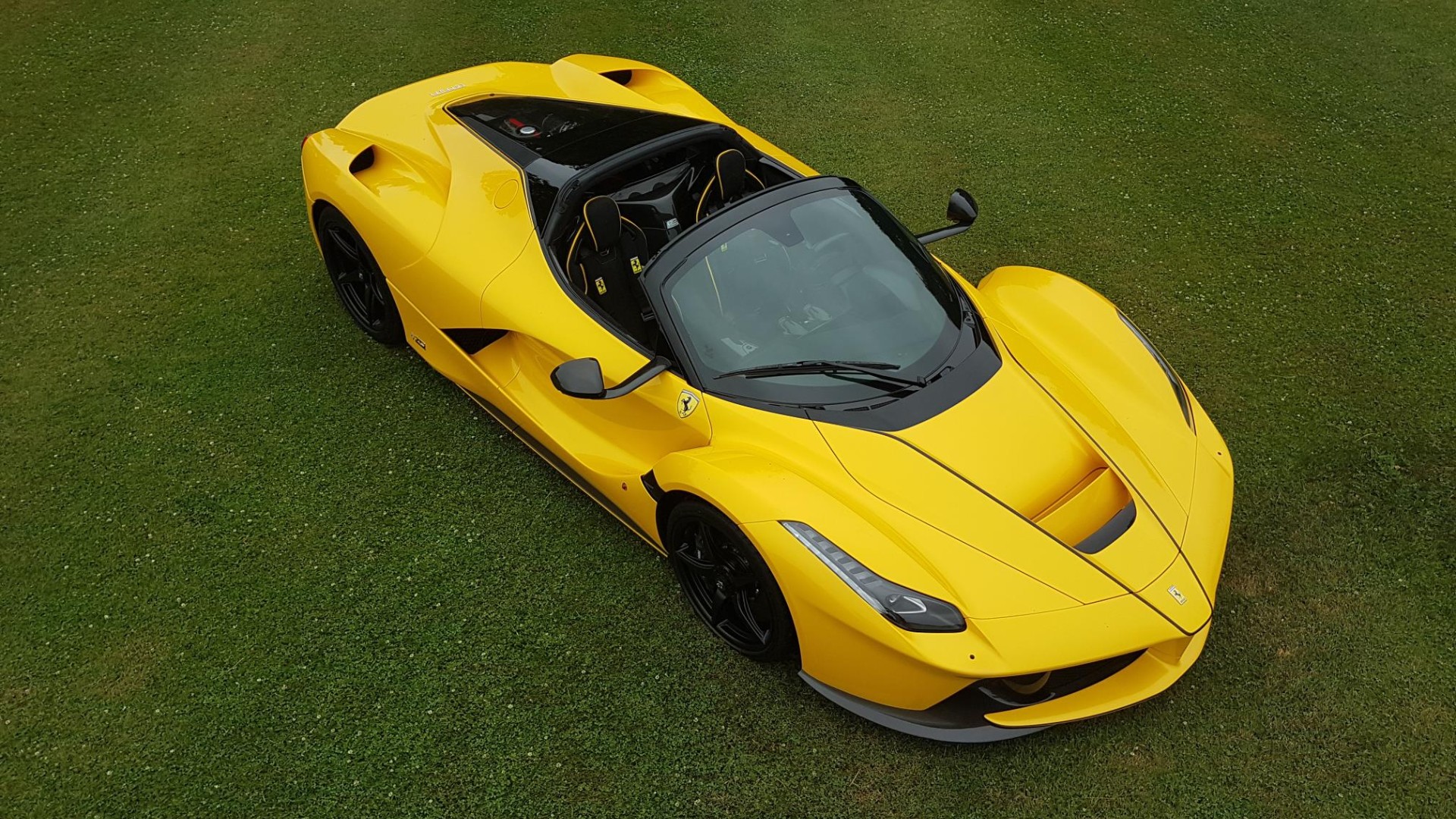
The open-topped version of Ferrari’s flagship for the 2010s, the LaFerrari Aperta was actually rather a late arrival: three years after the coupe in 2016. We can’t argue with wanting to get closer to those 963 horses (of which 800 come from the V12). It’s more than twice as rare as the coupe, too, with just 210 produced.
Ferrari SF90 Stradale
After three generations, Ferrari’s latest hypercar swaps a V12 for a 4.0-litre turbocharged V8 with 780hp. Not since the F40 has the head of the Maranello stable had eight cylinders instead of 12. Nevertheless, the addition of three electric motors makes for 1,000hp in total – and comfortably the most powerful Ferrari on the road. With electric power to the front wheels making it all-wheel-drive, Ferrari’s first 4WD supercar is consummately rapid. Full figures haven’t been published yet, but Ferrari claims 0-62mph in 2.5 seconds and 0-124mph in 6.7 seconds – quicker than a McLaren Senna.
Ferrari SF90 Stradale
The cabin of the SF90 brings a welcome breath of fresh air to Ferrari interiors. A re-designed wheel controls 80 percent of cabin functionality. That, along with the world-first curved, shaped, 16-inch fully digital dashboard joins what is overall a more slick interior design. This sets the precedent for all future Ferrari cabins, so we’re told.
Ferrari SF90 Stradale
It’s not quite a LaFerrari successor, though. Even though it finishes 64 metres ahead of that car over a single lap of Fiorano. The SF90 will cost less than a LaFerrari, but more than an 812 Superfast. We anticipate a six-figure price beginning with a ‘5’ in the UK, for what we reckon is one of Ferrari’s best-looking supercars of the last decade.
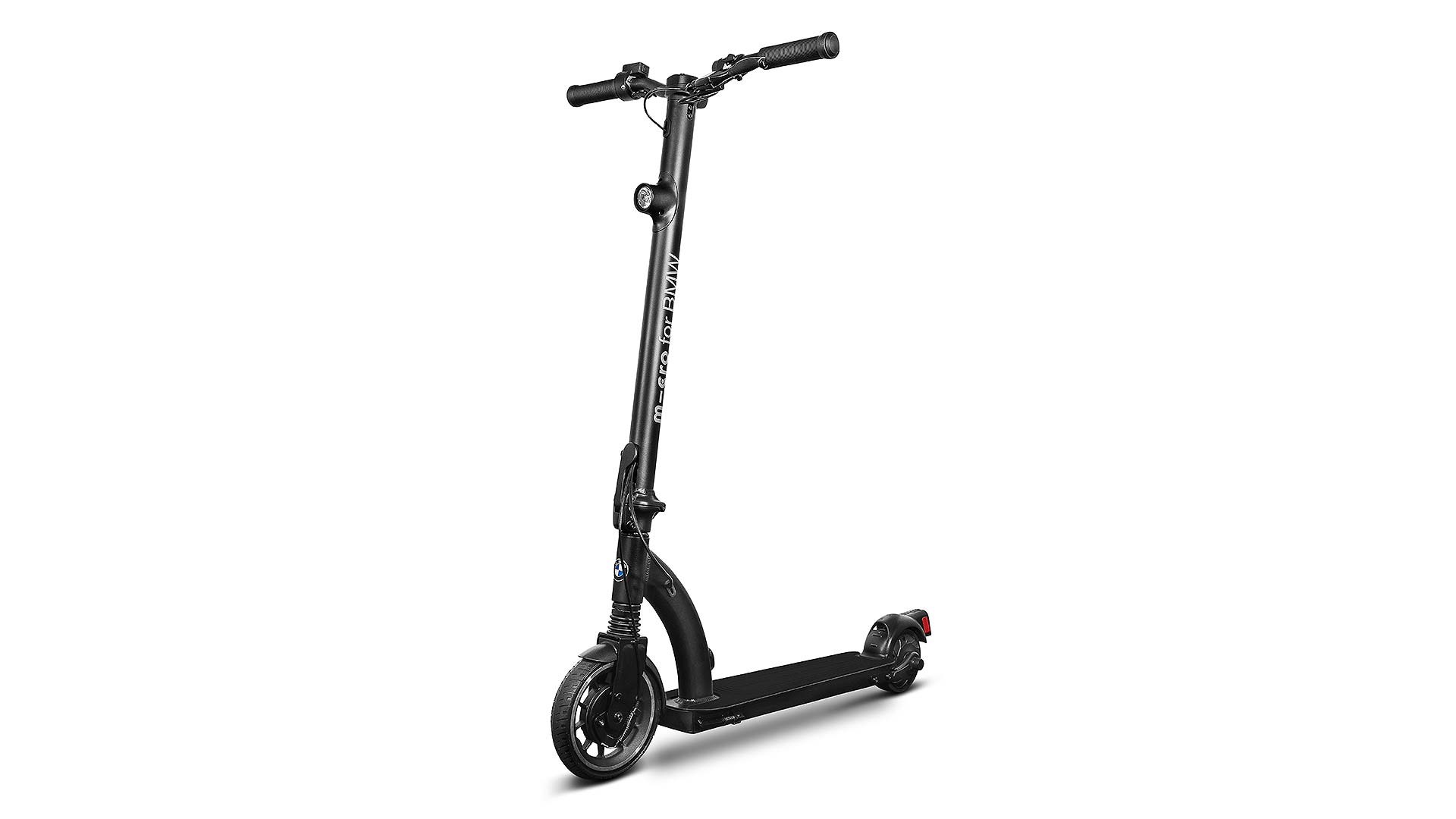
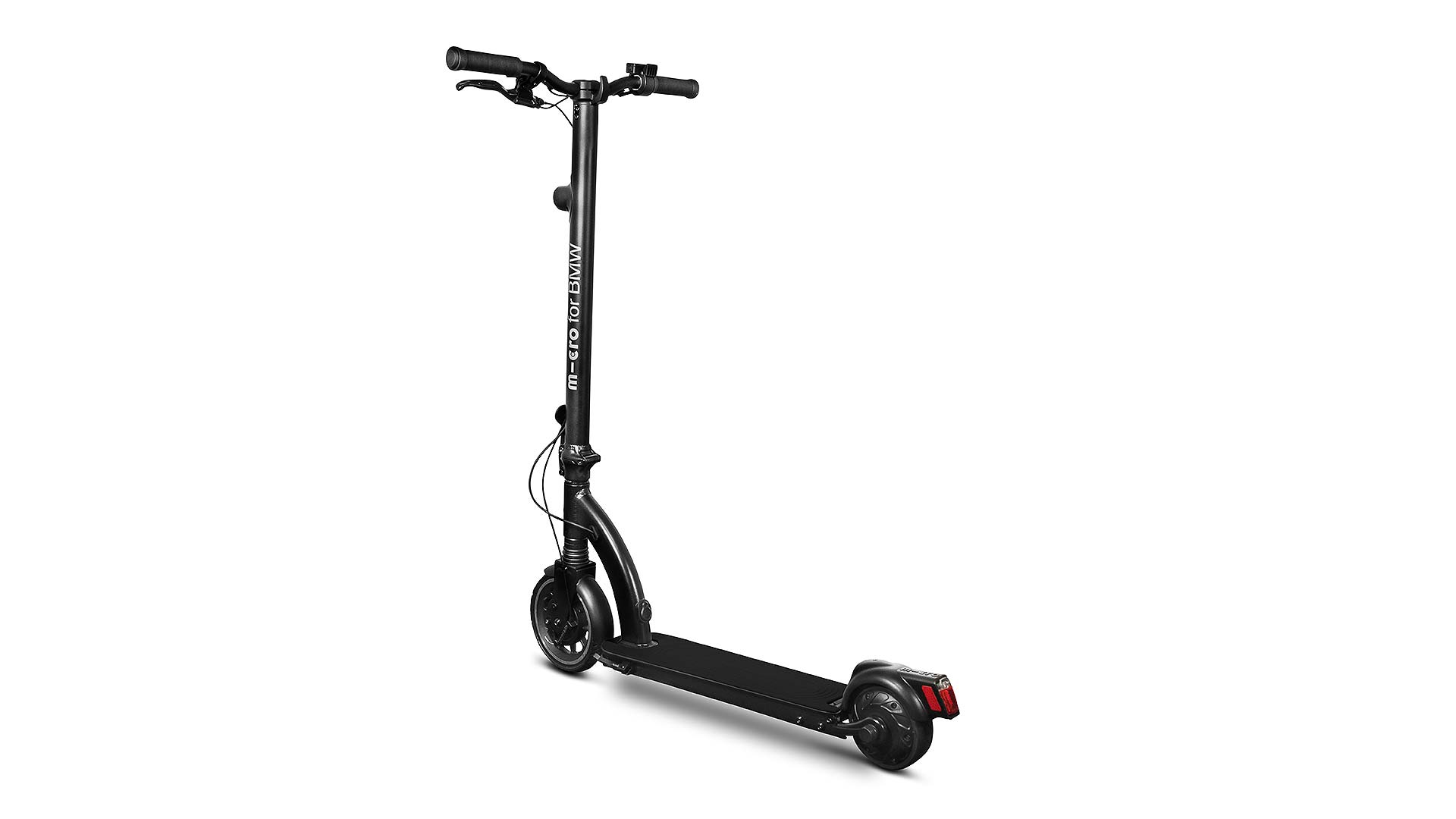
The new model is called the BMW E-Scooter. It has a top speed of 12 mph – four times as fast as walking – and an overall range of 7.5 miles.
Powering a tiny 150-watt motor, the compact lithium ion battery is hidden away from sight, helping keep the E-Scooter light and compact: it weighs 9 kg.
Users can therefore fold it up and tuck it under their desk at work – and charge it back up again from a domestic socket in just two hours’ time.
It comes equipped with front and rear lights, a dual braking system, and is finished in matt black paint. And, yes, there is a sparking blue BMW roundel on the front.
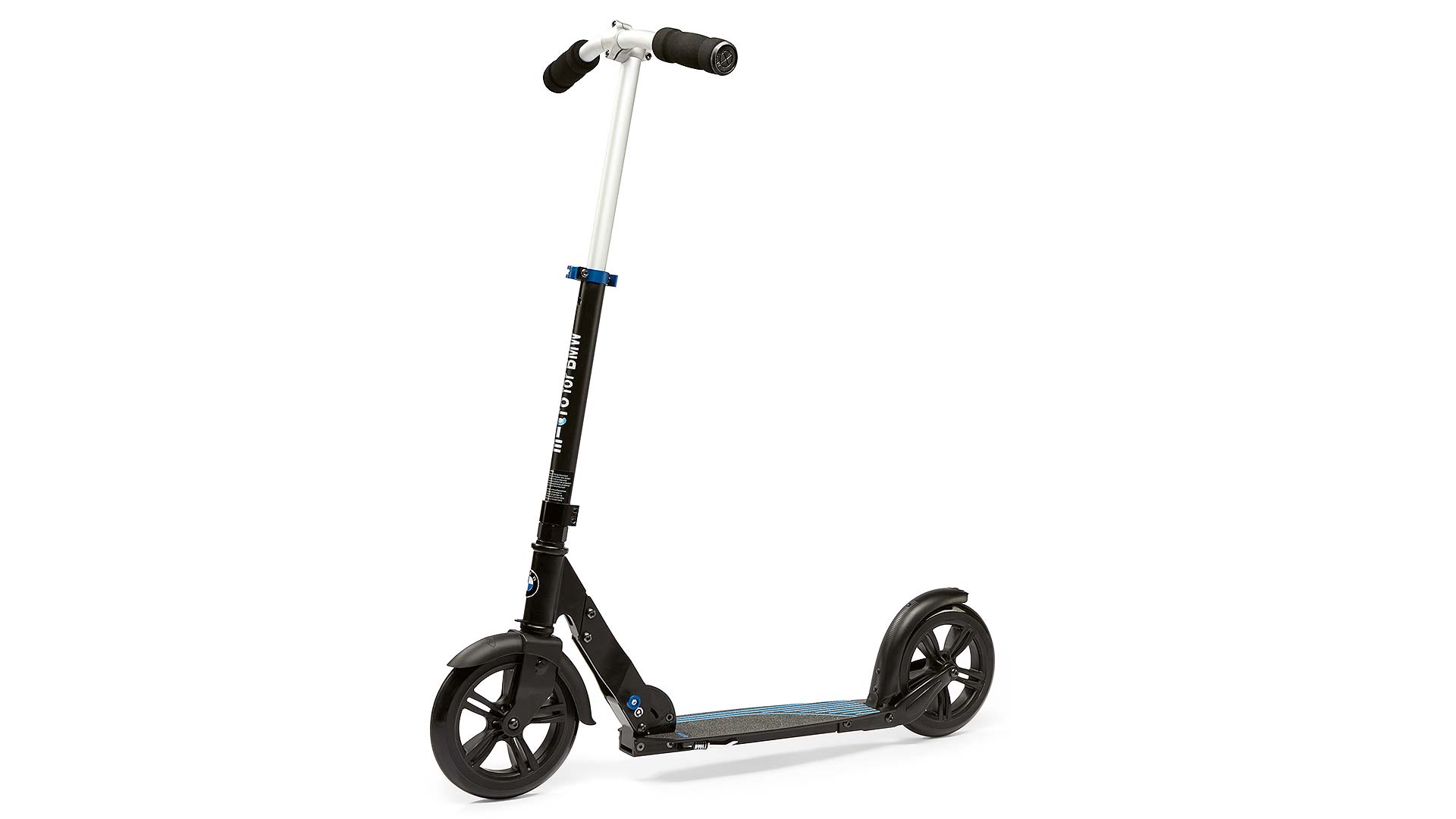
For those who don’t mind a bit of legwork, and don’t want to wait until September deliveries of the E-Scooter, non-powered scooters are also available right now. As with the BMW E-Scooter, these have been developed with Micro, the company that invented the Micro Scooter.
The BMW City Scooter is fully-foldable, so can fit in a desk drawer, never mind just under the desk. It has big wheels and a low footplate, so is comfortable to ride, and it too has a fancy BMW roundel.
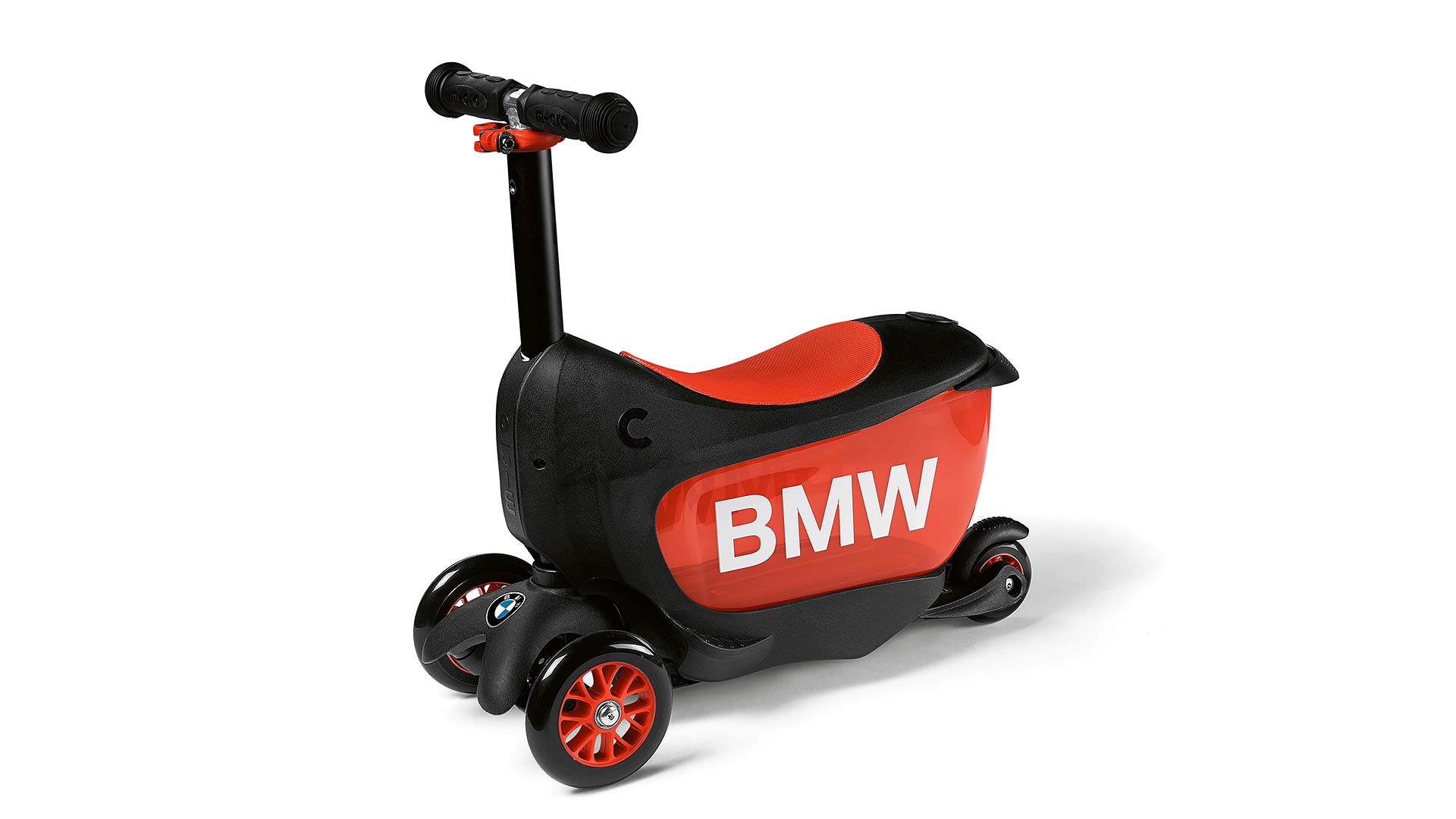
Even kids are catered for, with the BMW Kids Scooter. Children aged from three years old can use it as a balance bike; older kids up to 12 can take off the seat and adjust the handlebar height as they grow.
As with their parents’ new car, the Kids Scooter and City Scooter can be bought from BMW main dealers. The BMW E-Scooter arrives in September; trend-setters, get your order in now.
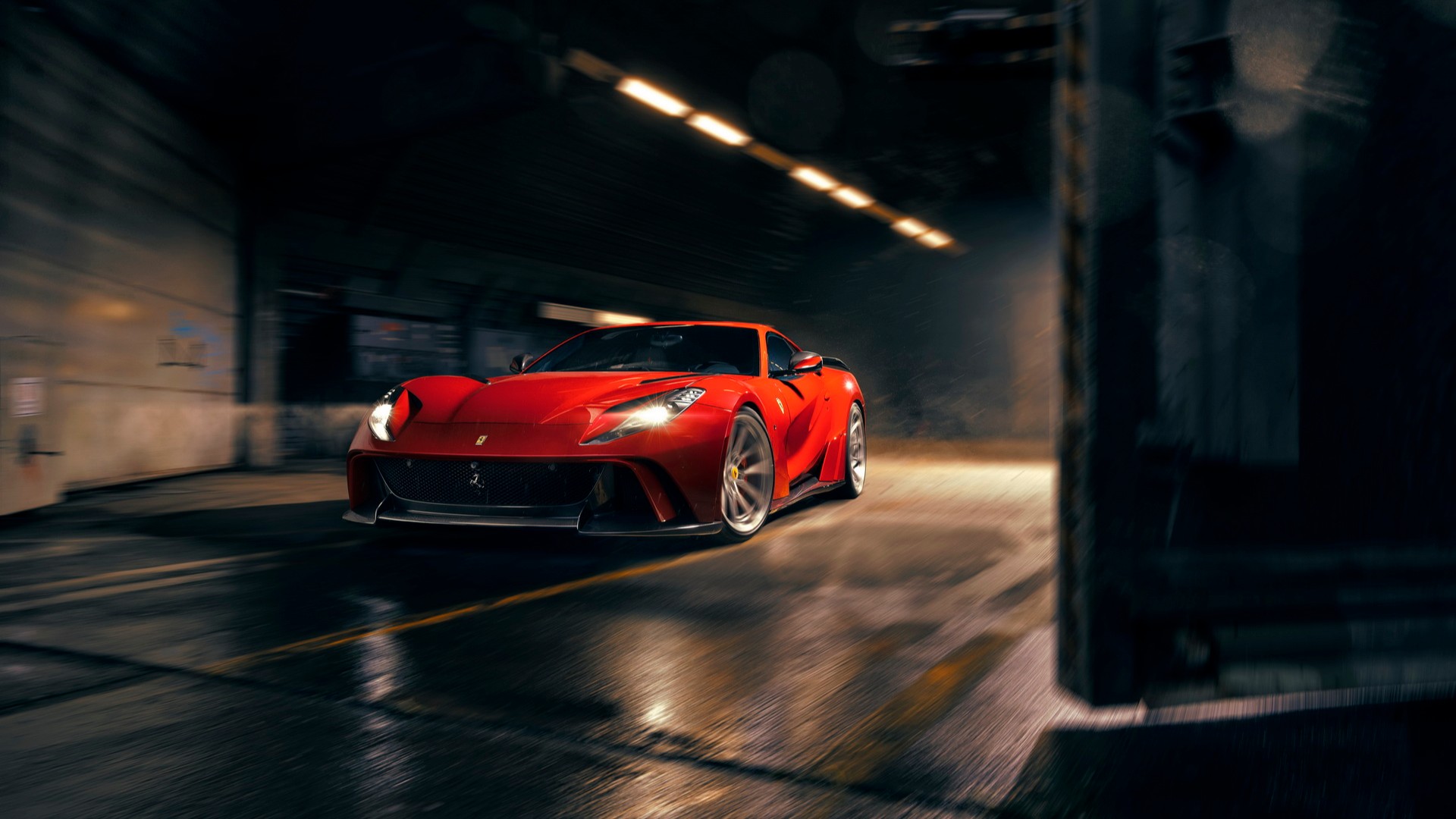
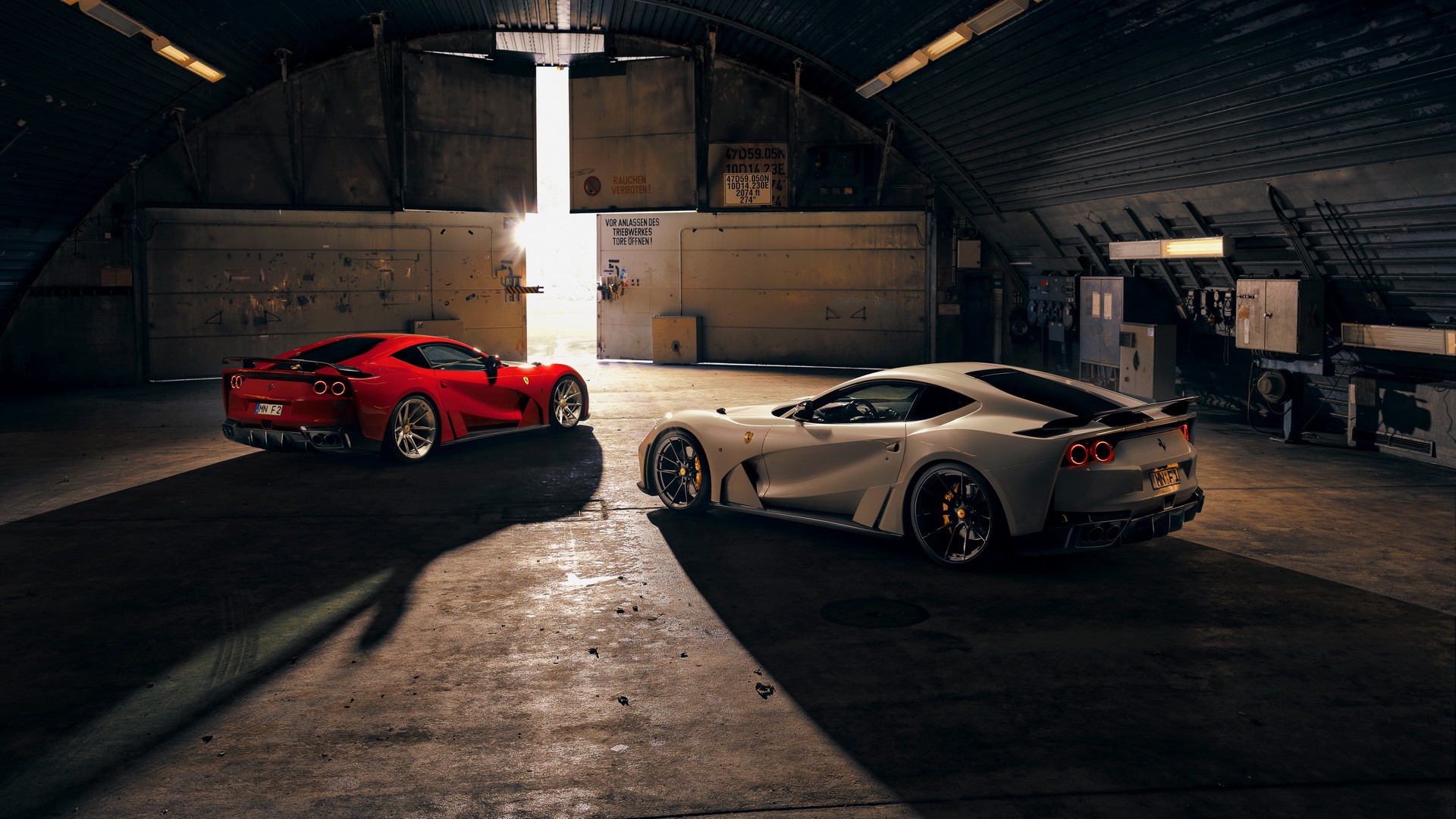
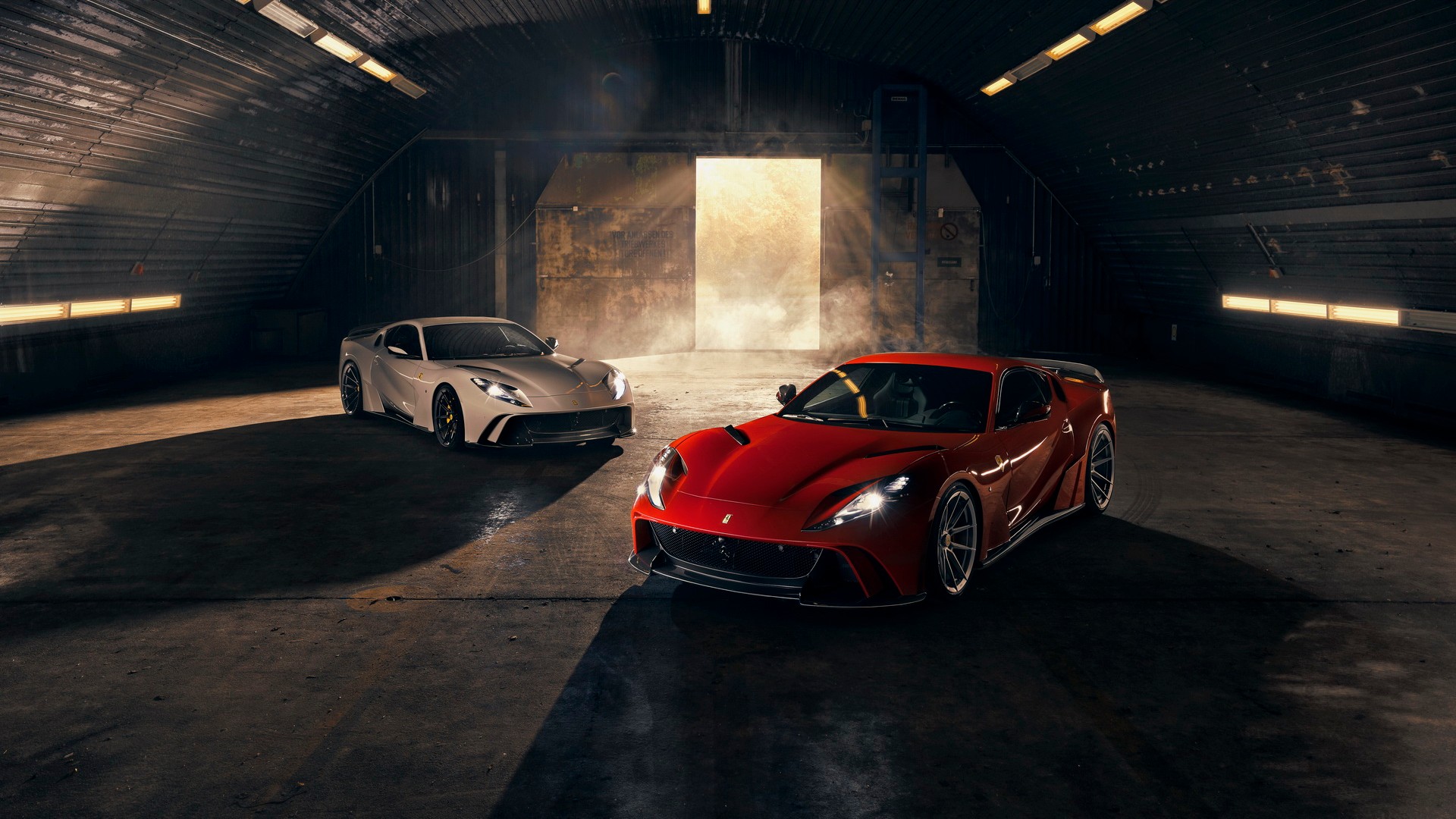
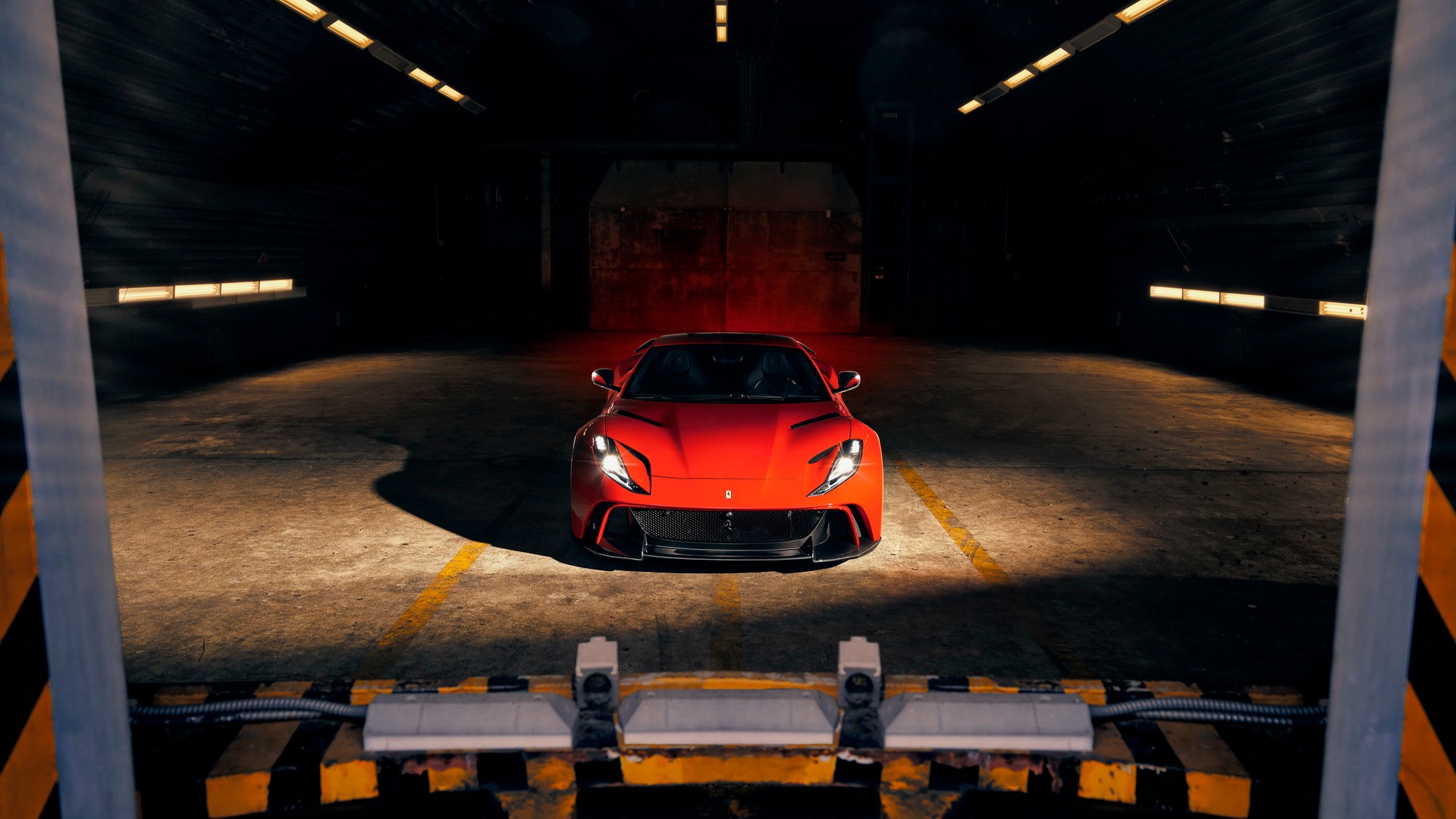
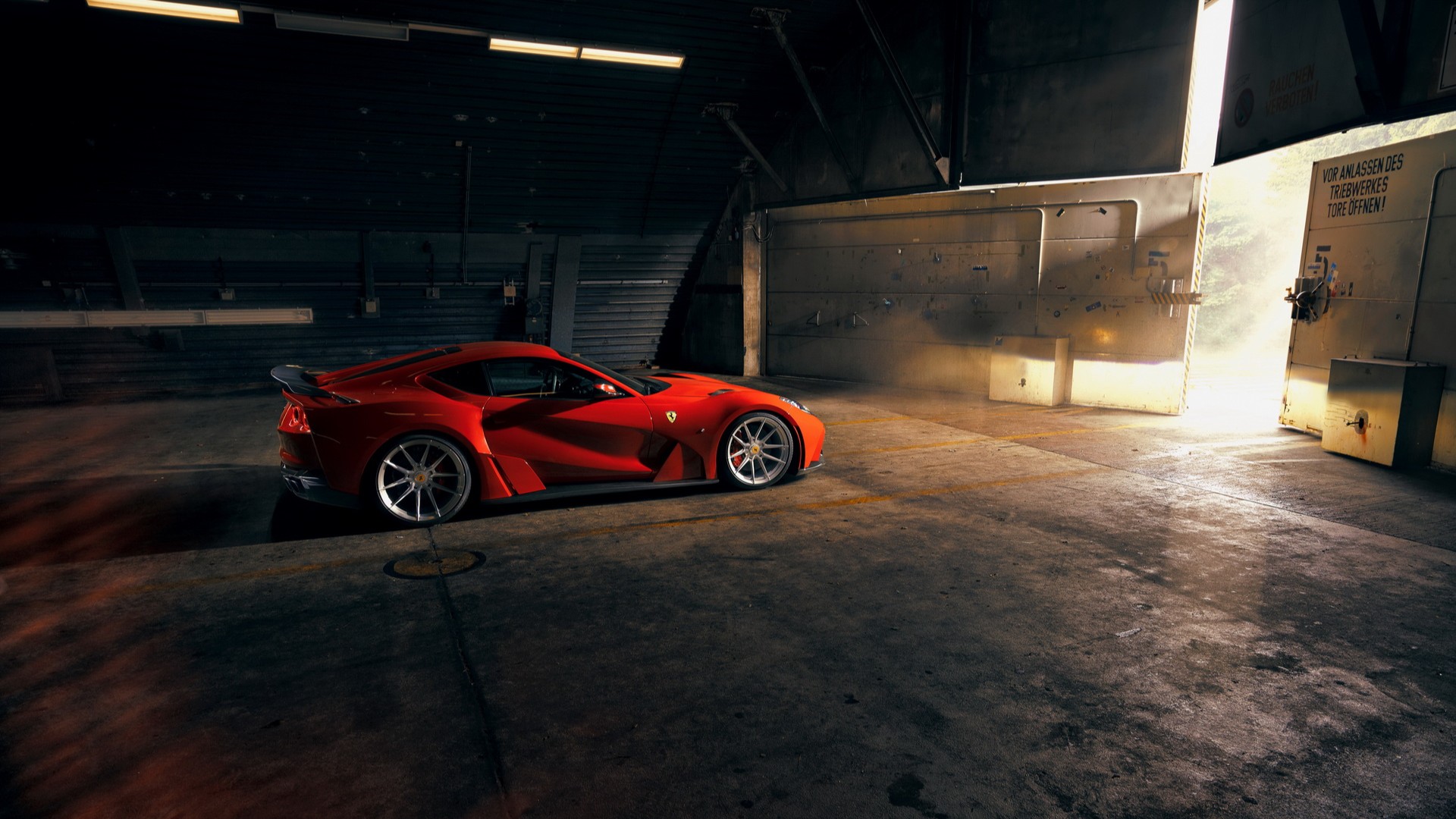
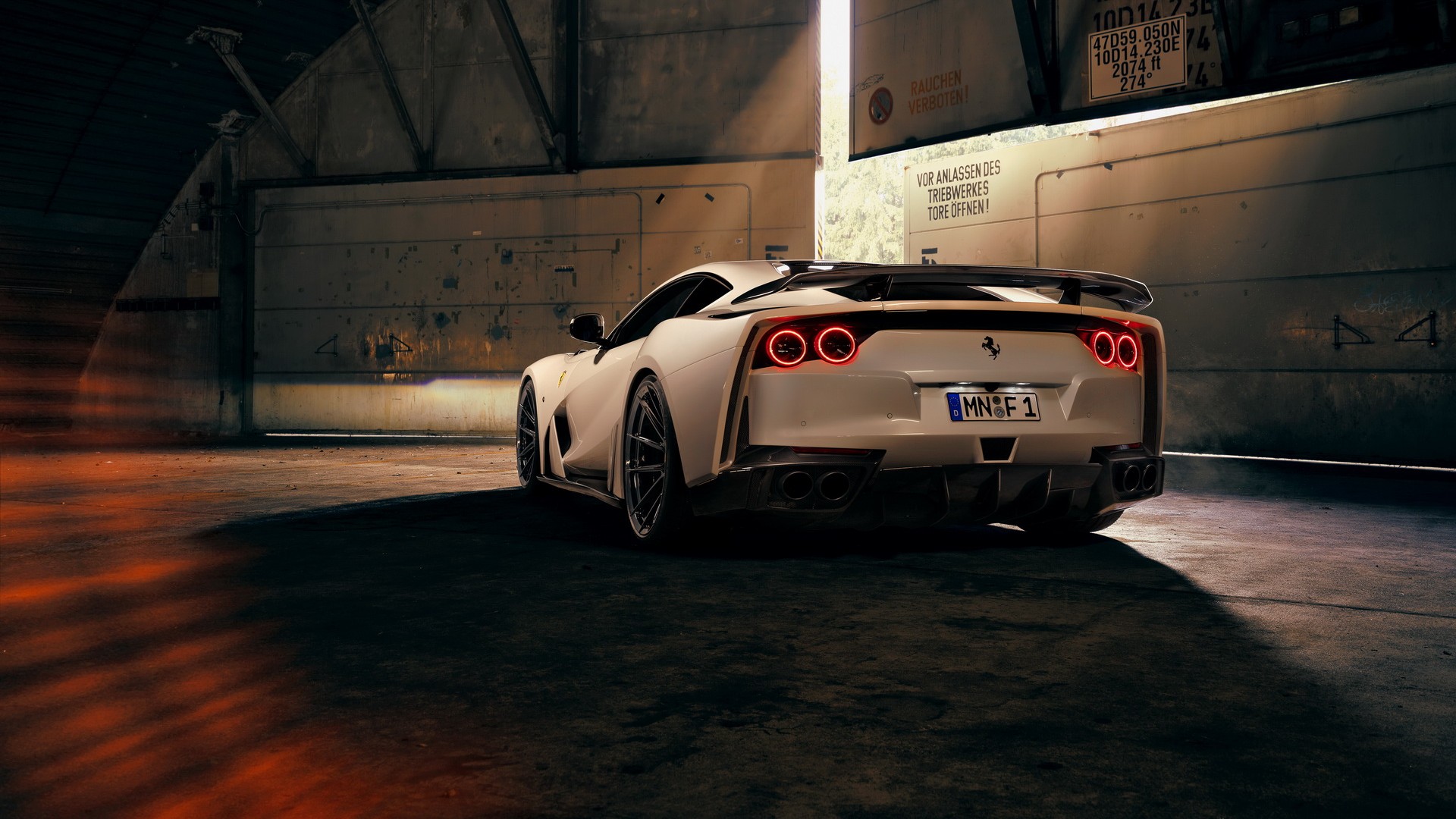
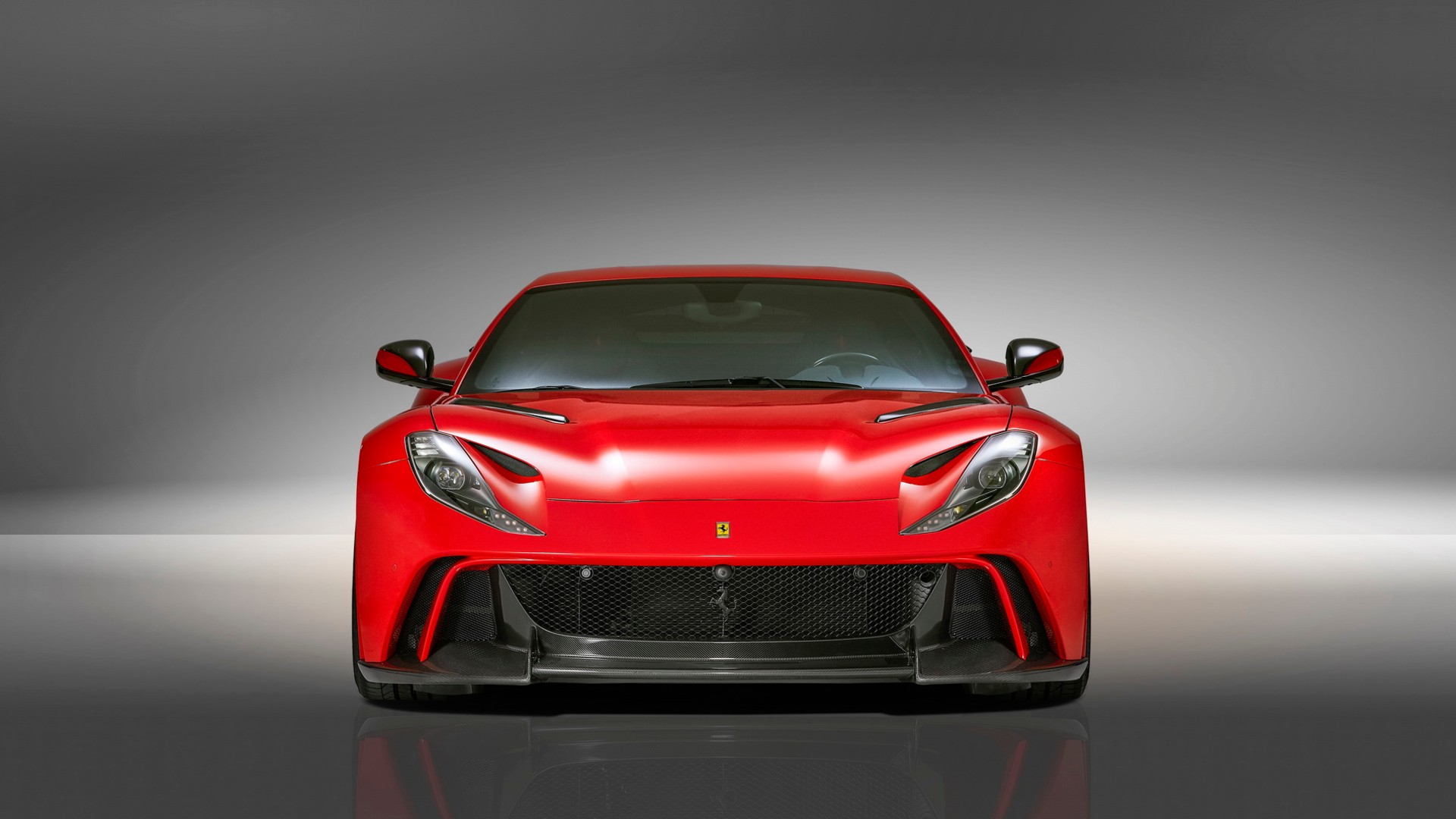
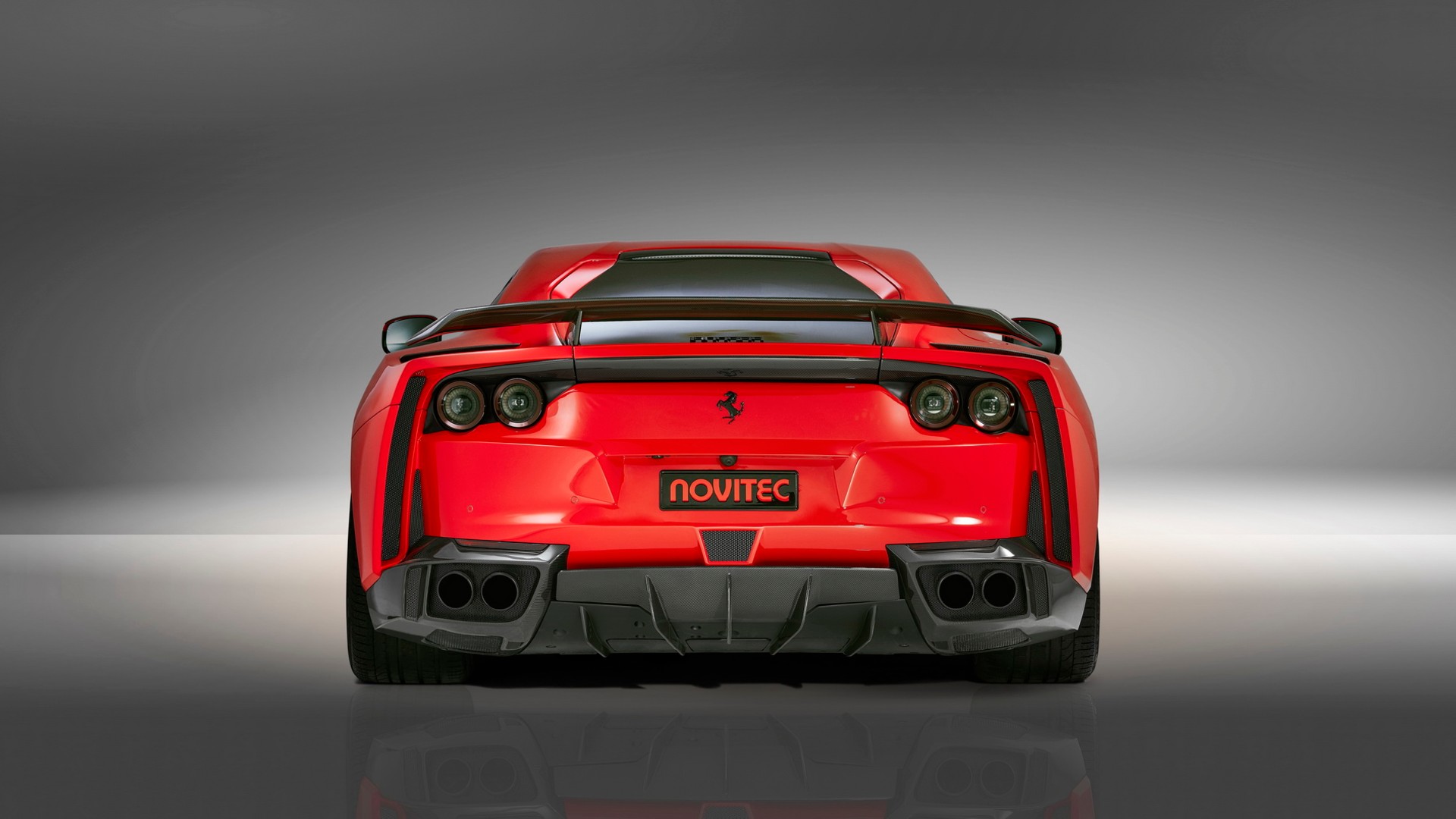
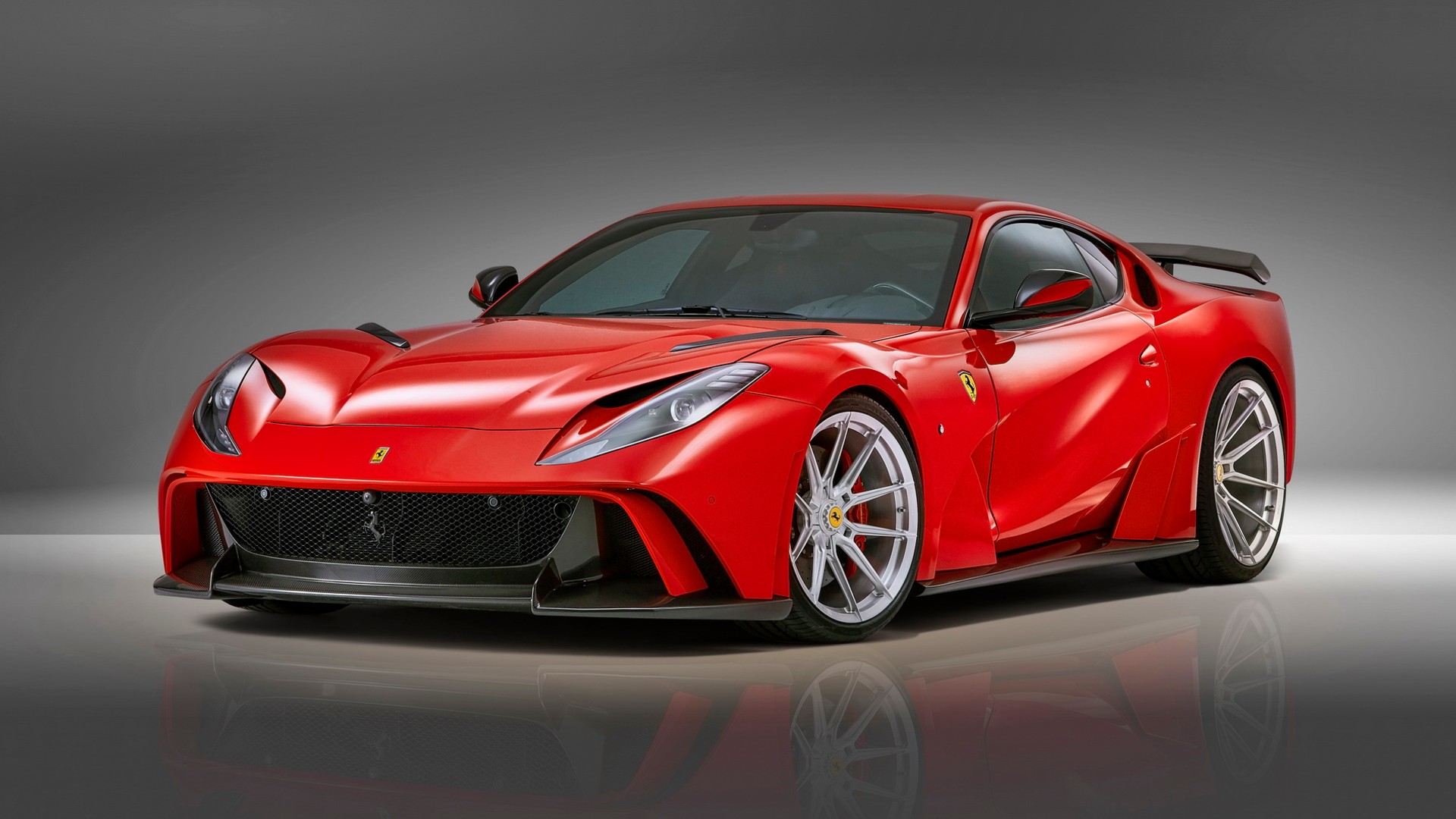
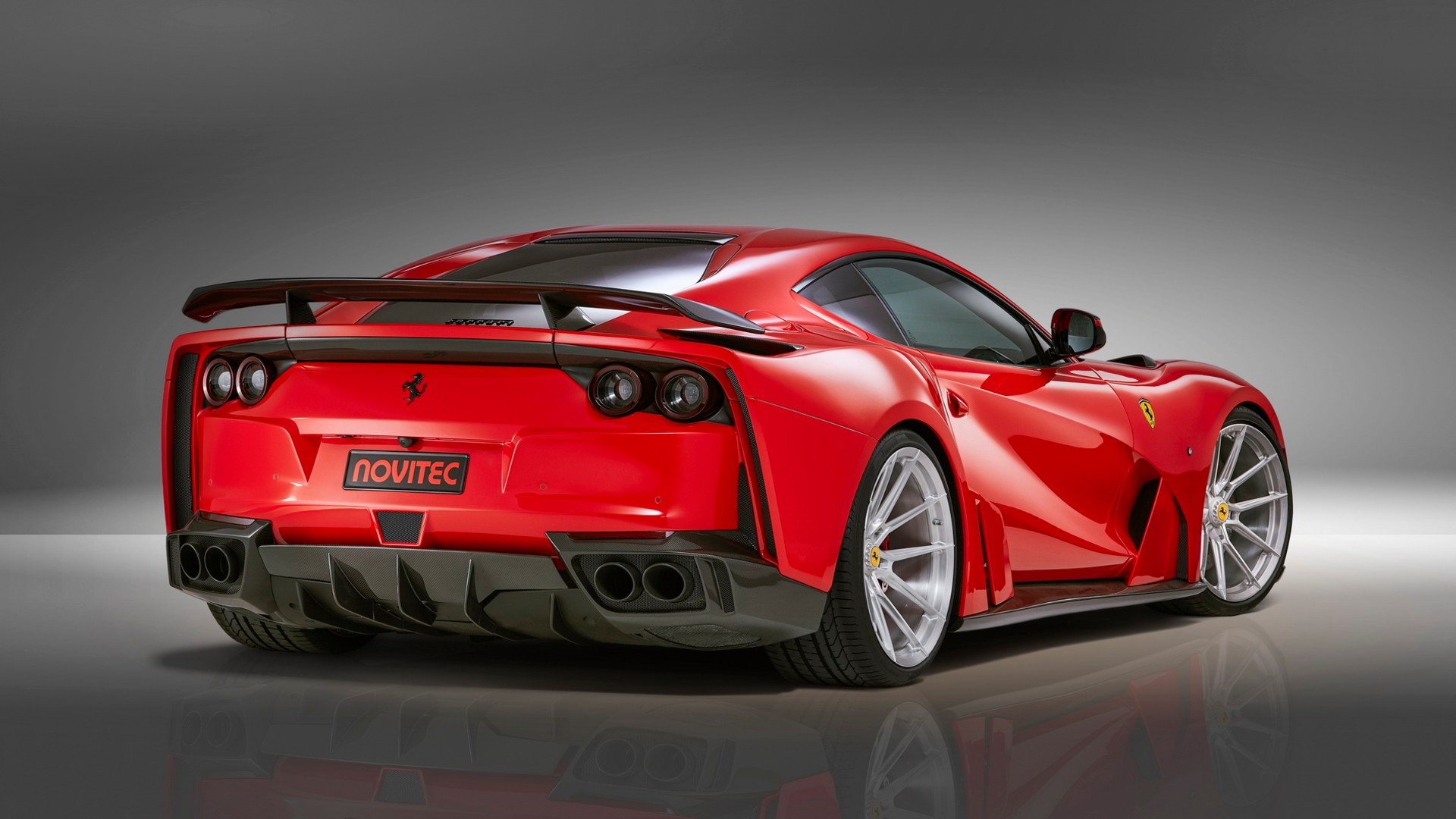
There are very few complaints that can be levied at Ferrari’s 812 Superfast. Barring a sky-high price, it’s pretty much perfect.
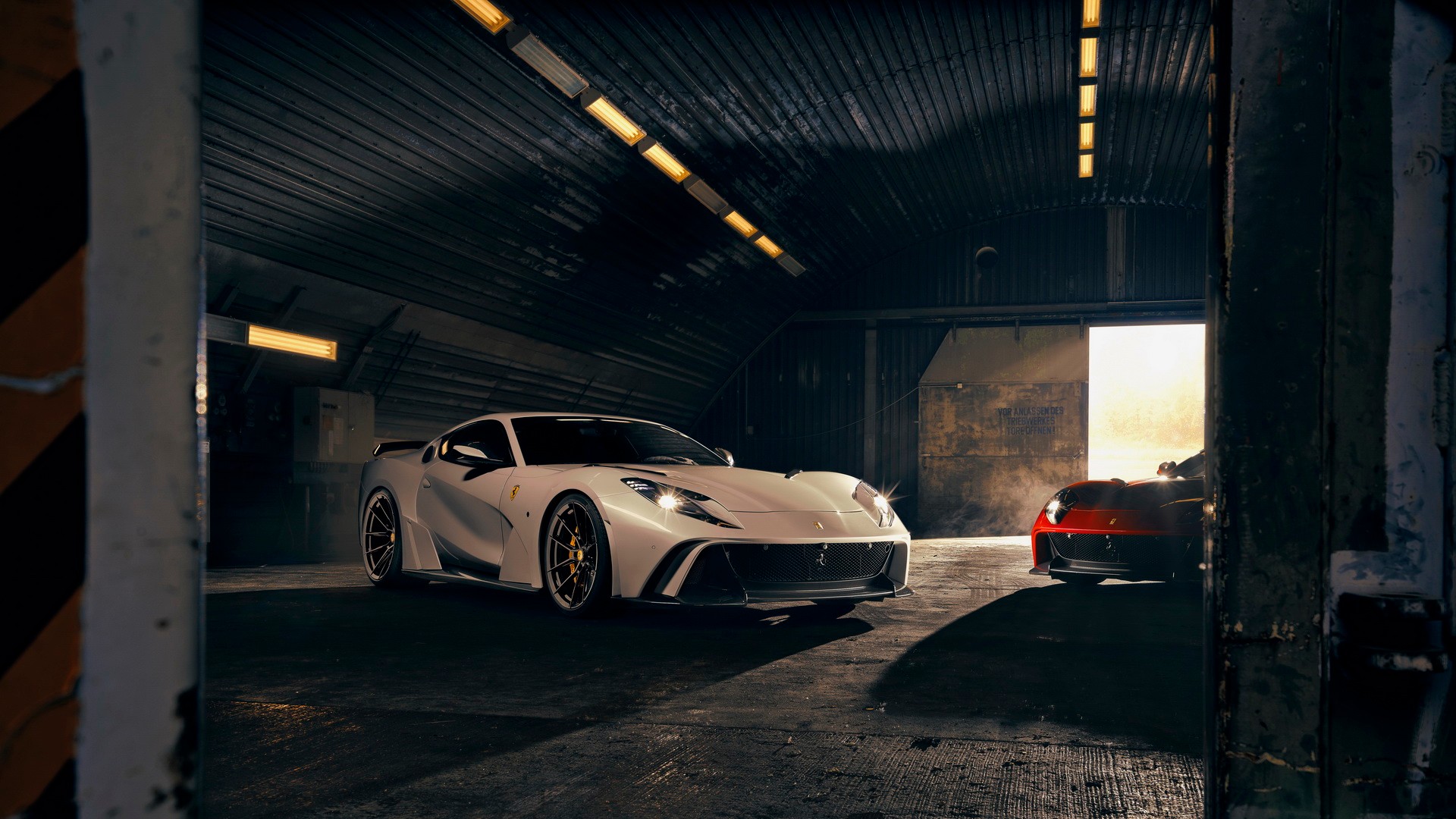
Right near the bottom of the list of things that needed addressing was a lack of power and visual aggression. Still, that hasn’t stopped tuner Novitec from having a go.
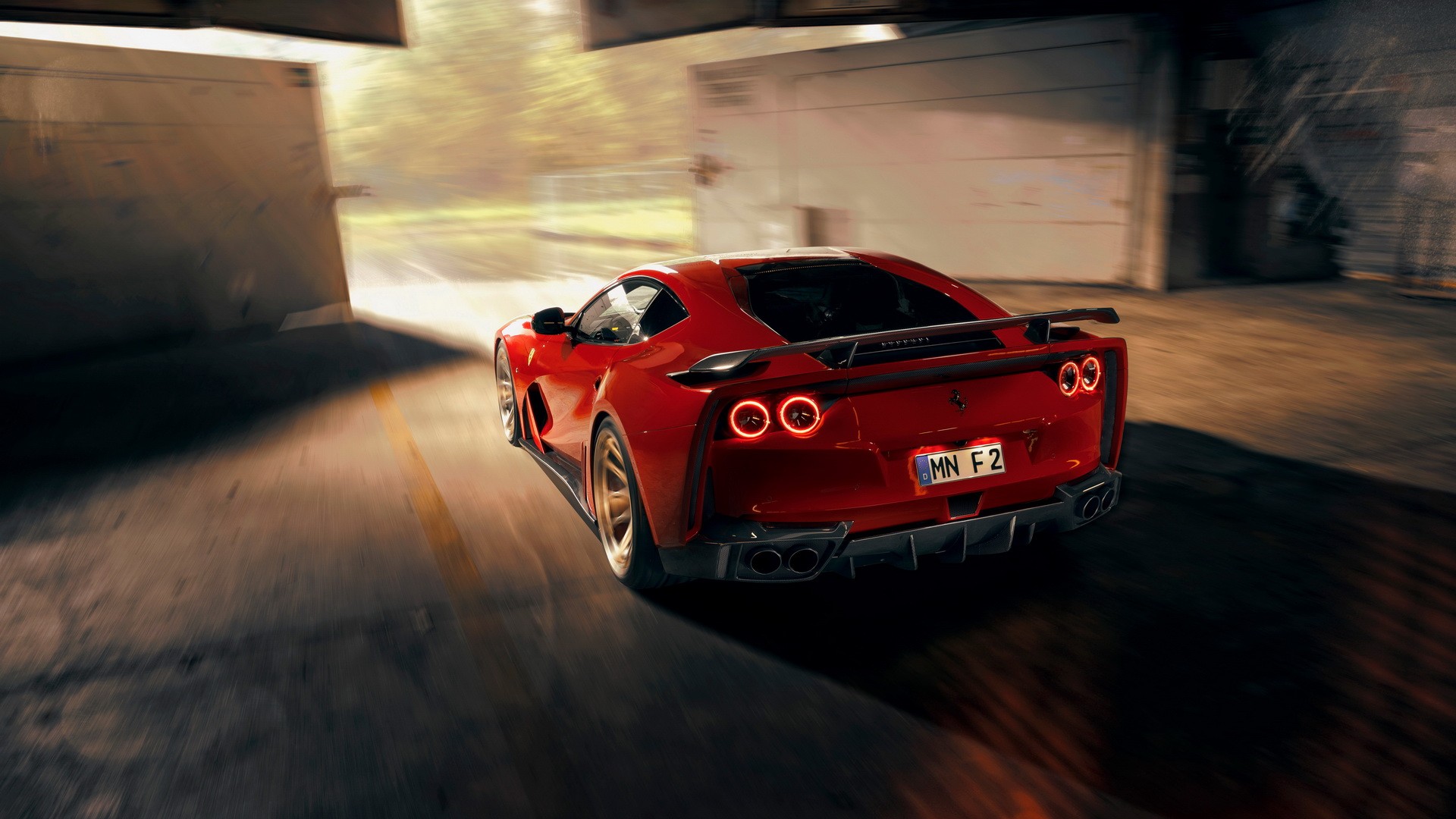
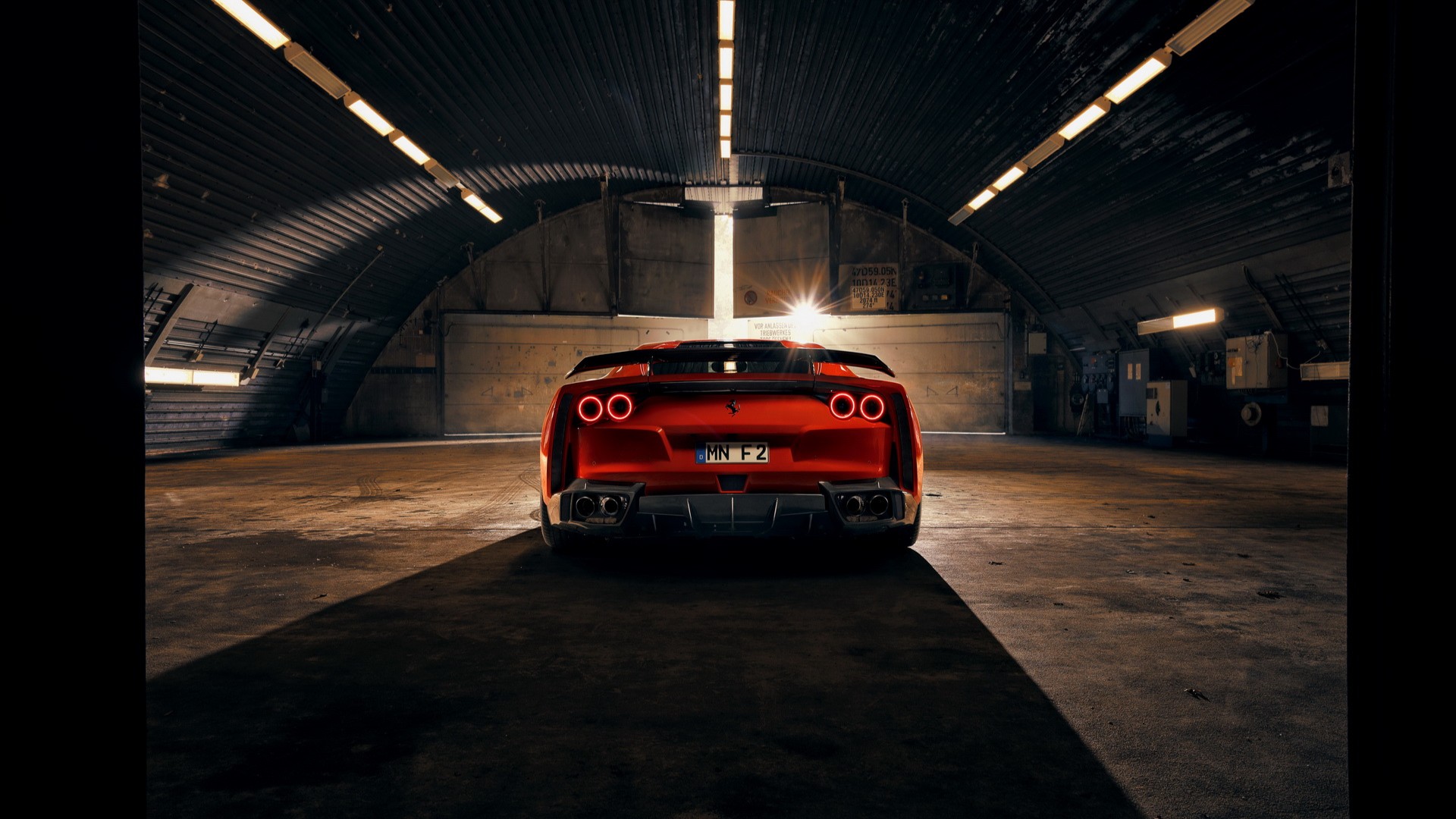
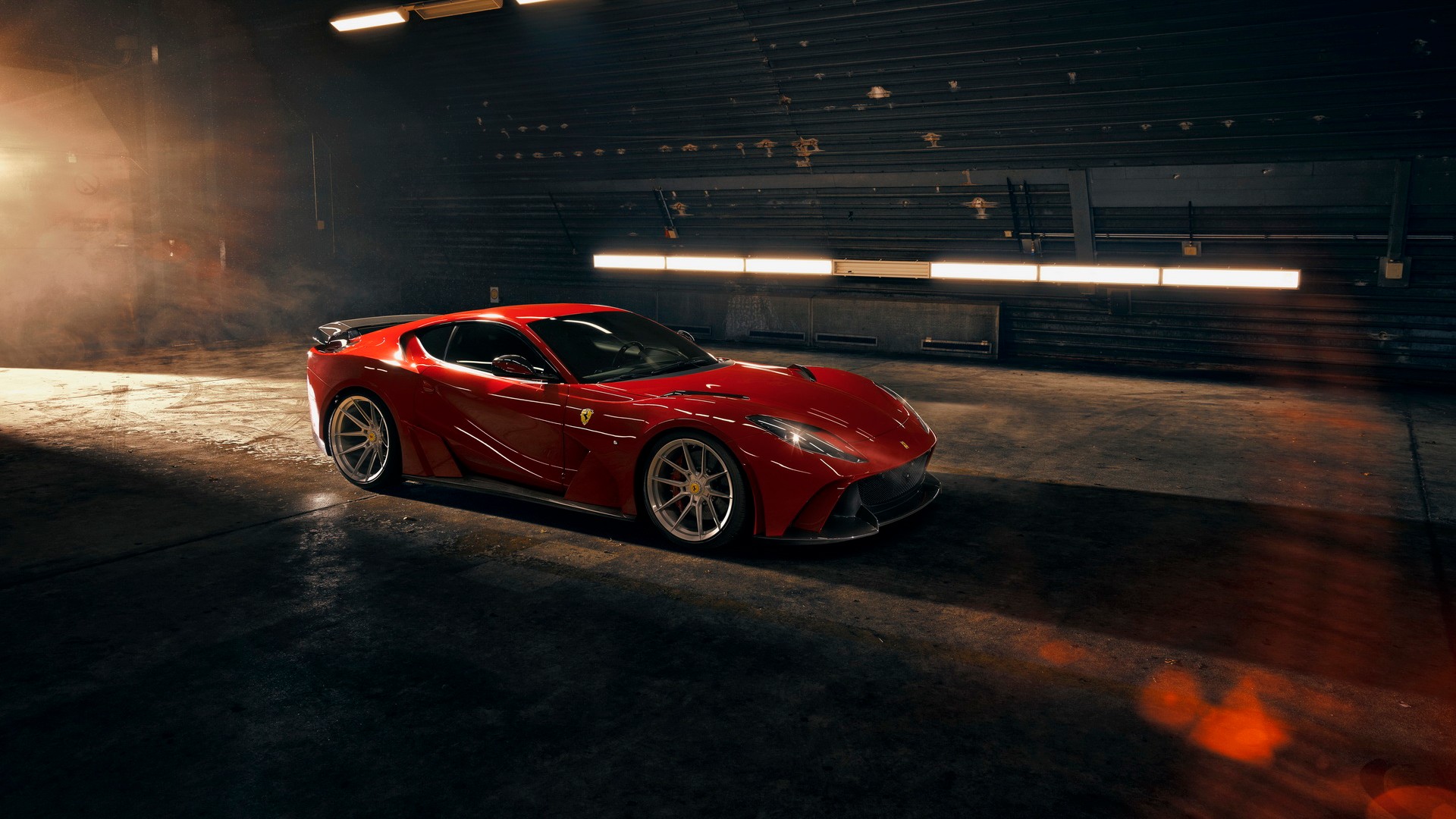
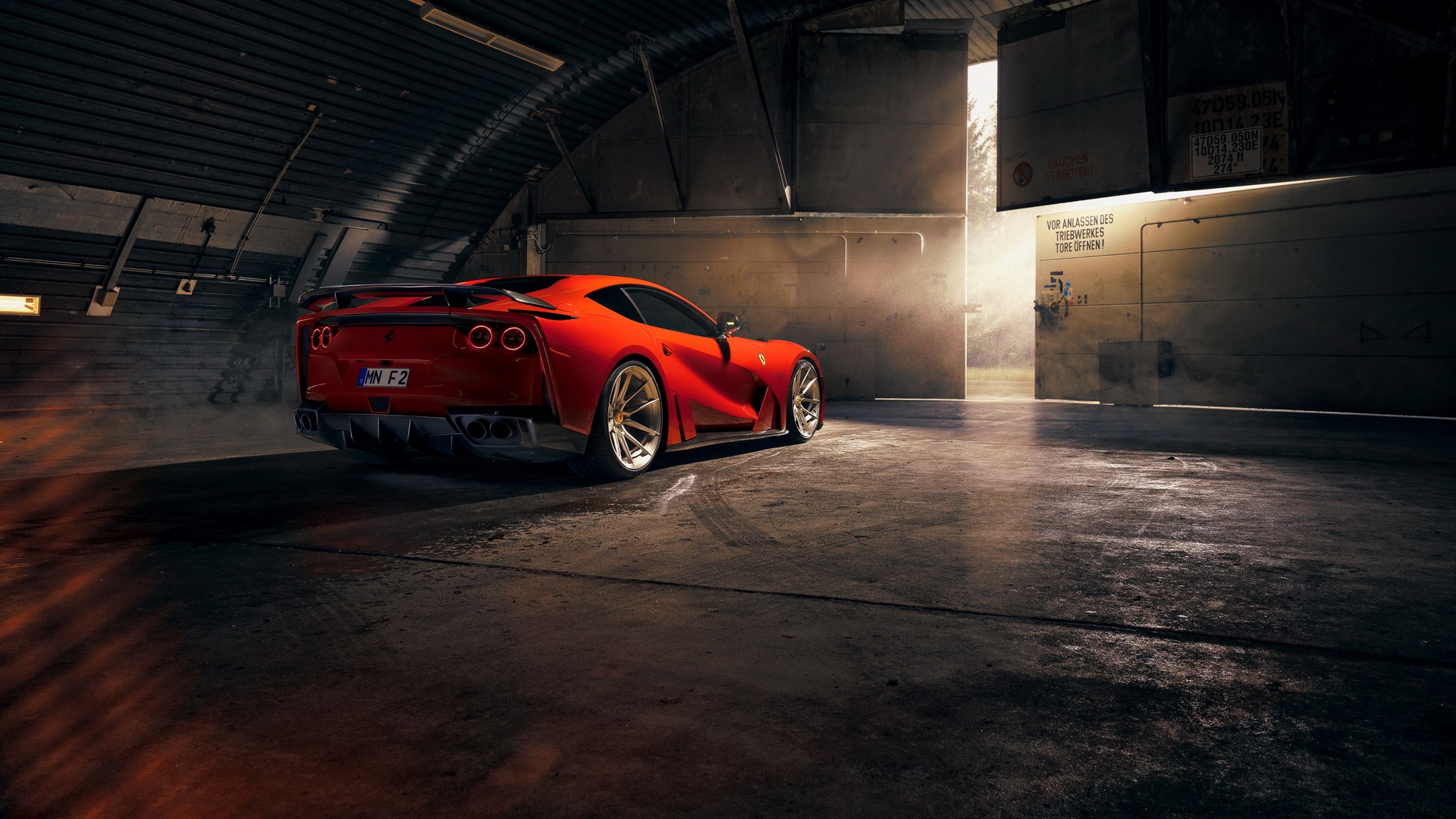
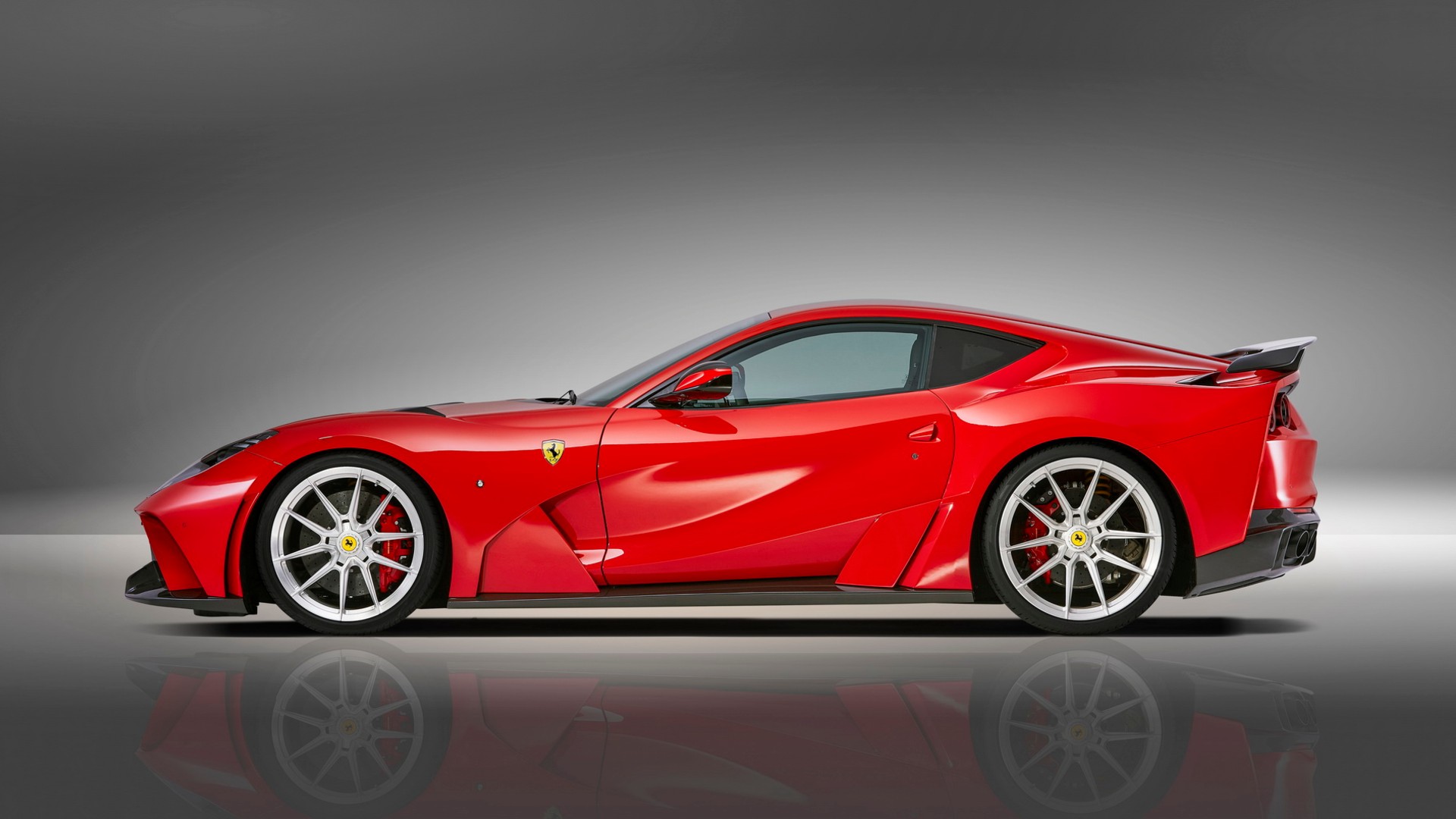
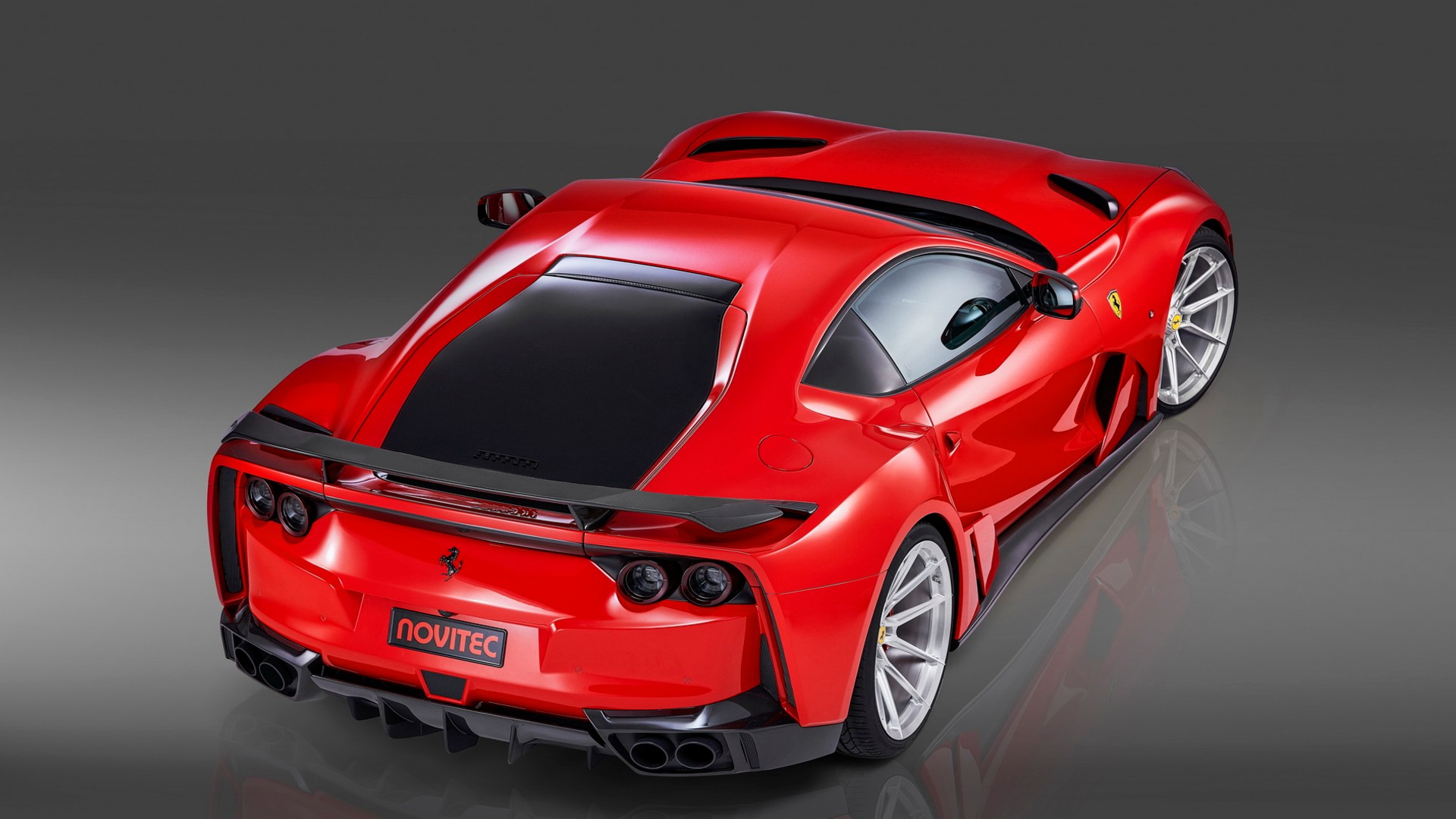
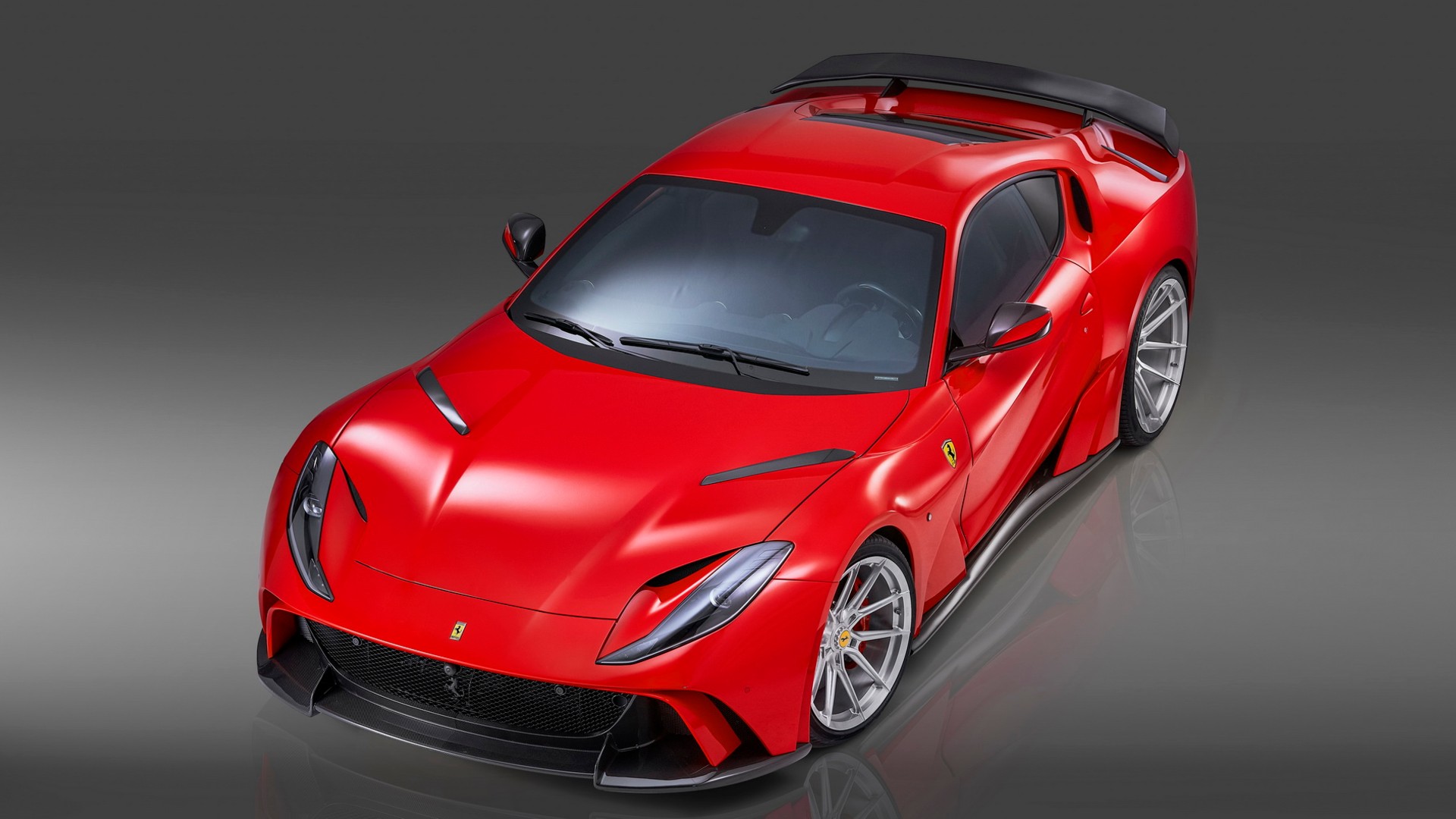
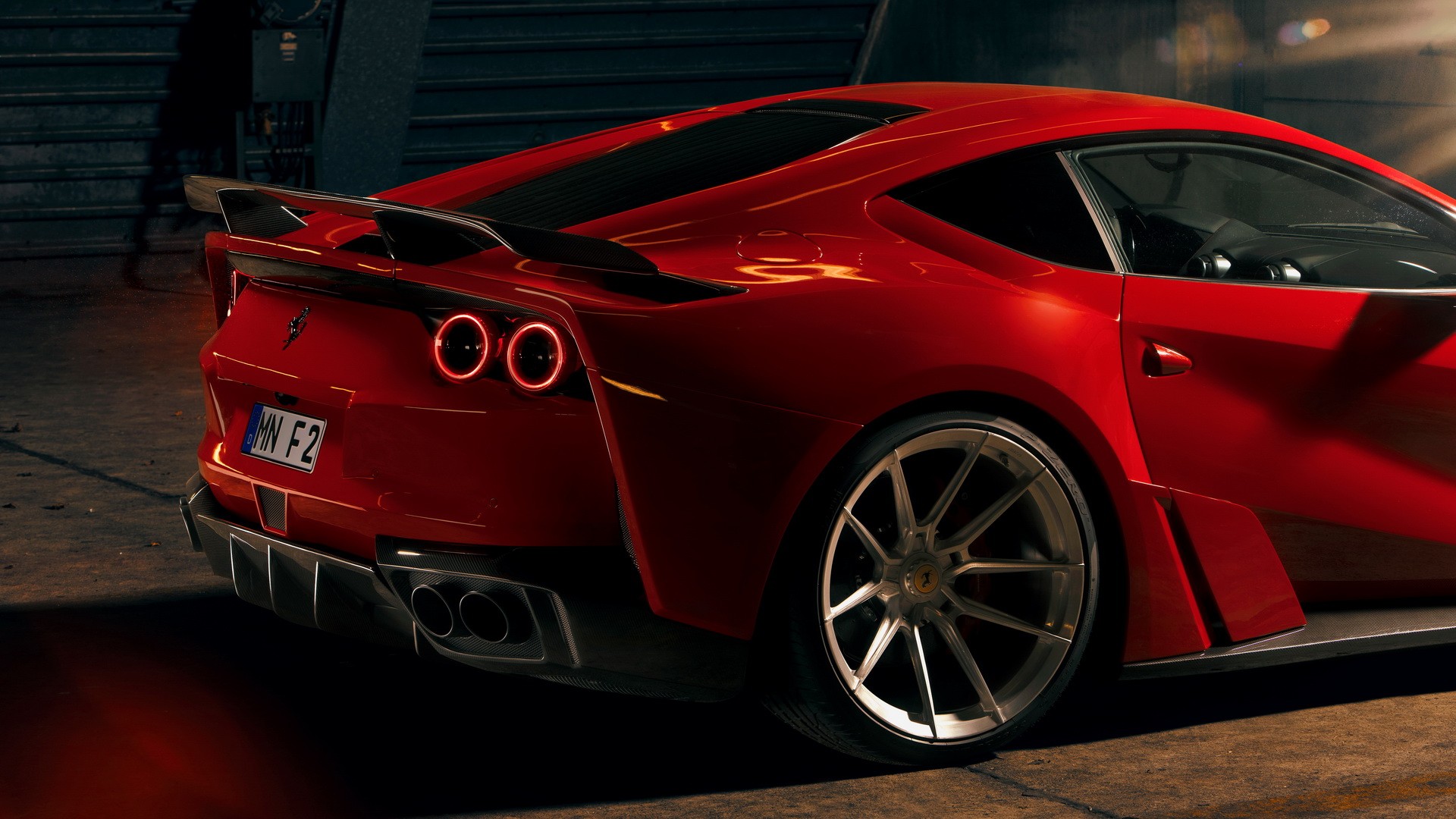
Meet the Novitec N-Largo. It has more sculpted front and rear bumpers, with a total of 14 centimetres added to the already-broad supercar’s width.
The bigger hips are obvious when you look at the rear of the car, including the enormous air vents that have been added.
Larger alloy wheels also lurk within wider arches, 21 inches at the front and 22s at the rear.
The N-Largo also has a distinctive rear spoiler and additional carbon trim. The modifications have been aerodynamically tested and apparently produce real downforce. It all works together in the production of some seriously impressive performance figures.
The 812’s already muscular V12 has been given larger lungs, with the addition of a high-performance exhaust and bespoke engine mapping.
The exhaust is available in stainless steel or inconel, the latter being an exotic material used in Formula One. All in, it’s good for a healthy 840hp at 8,750rpm.
That’s a hefty 40hp bump on the regular 812 super GT. The N-Largo will also crack 62mph in 2.8 seconds, on the way to a 214mph top speed.
Those figures are 0.1 seconds and 3mph up on the unmodified car.
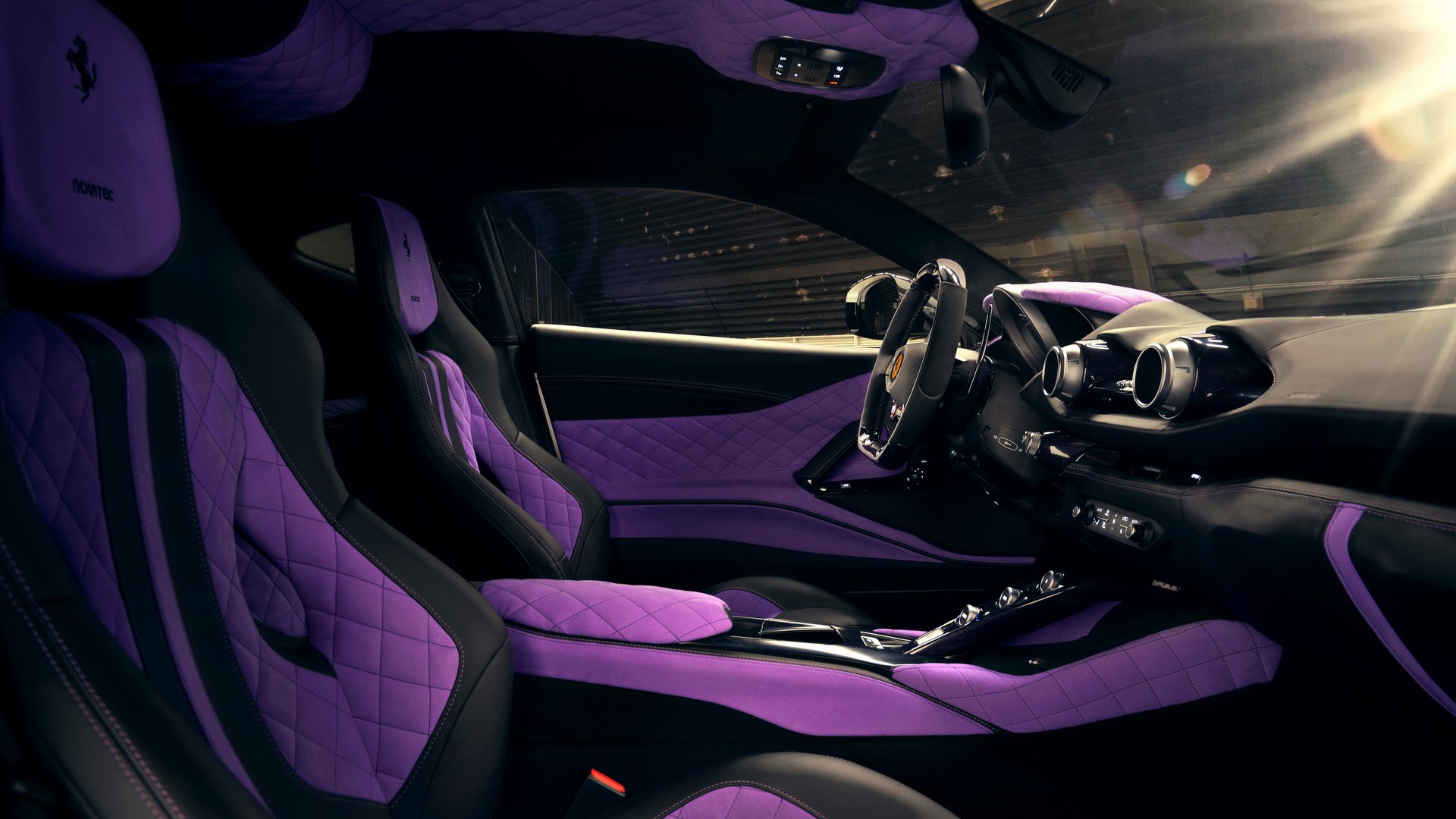
As for other customisation, the sky is the limit. Novitec can trim the cabin of your N-Largo to your exact specification.
Then there’s the matter of price. As with the 812 itself, if you have to ask…
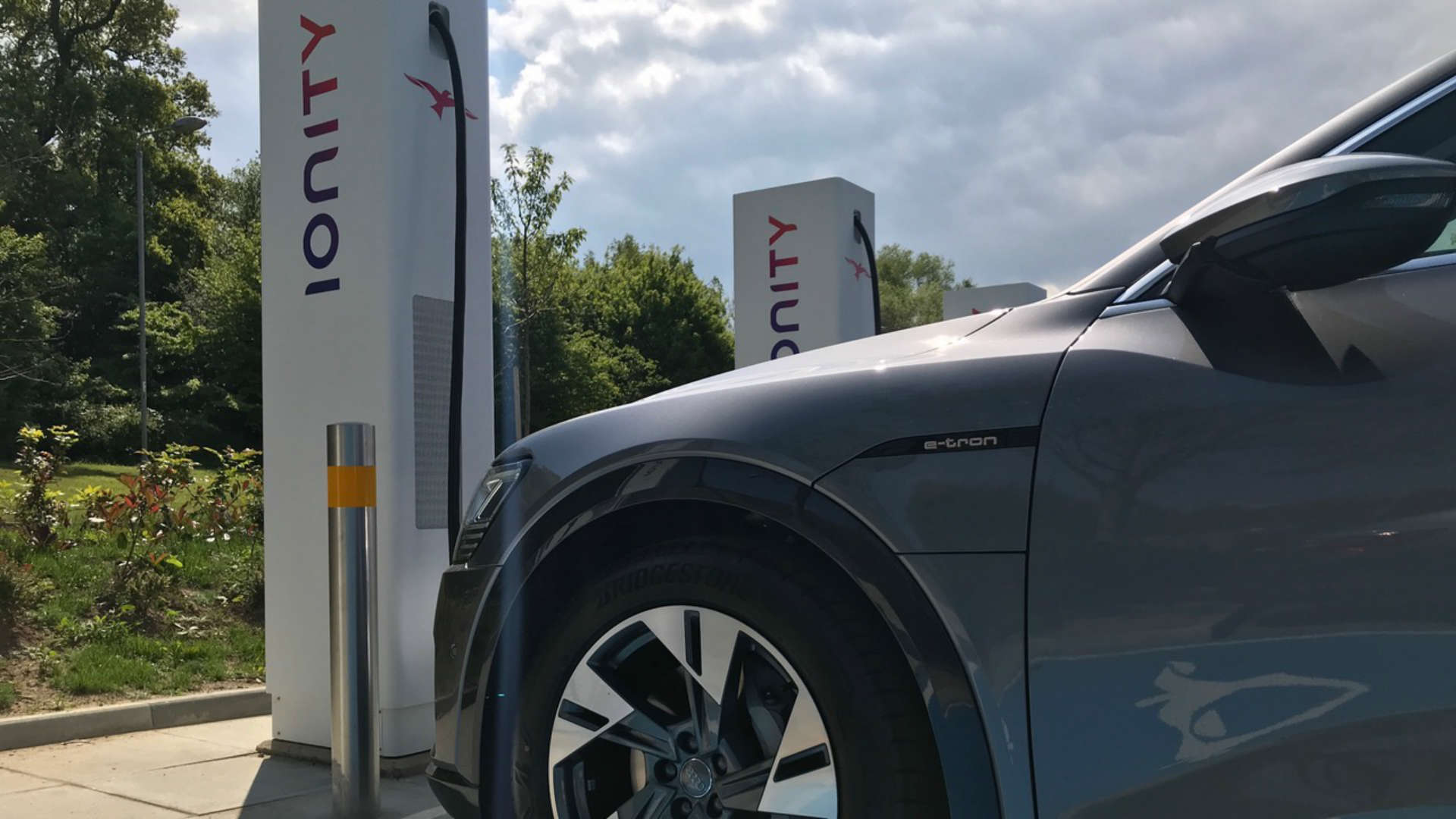
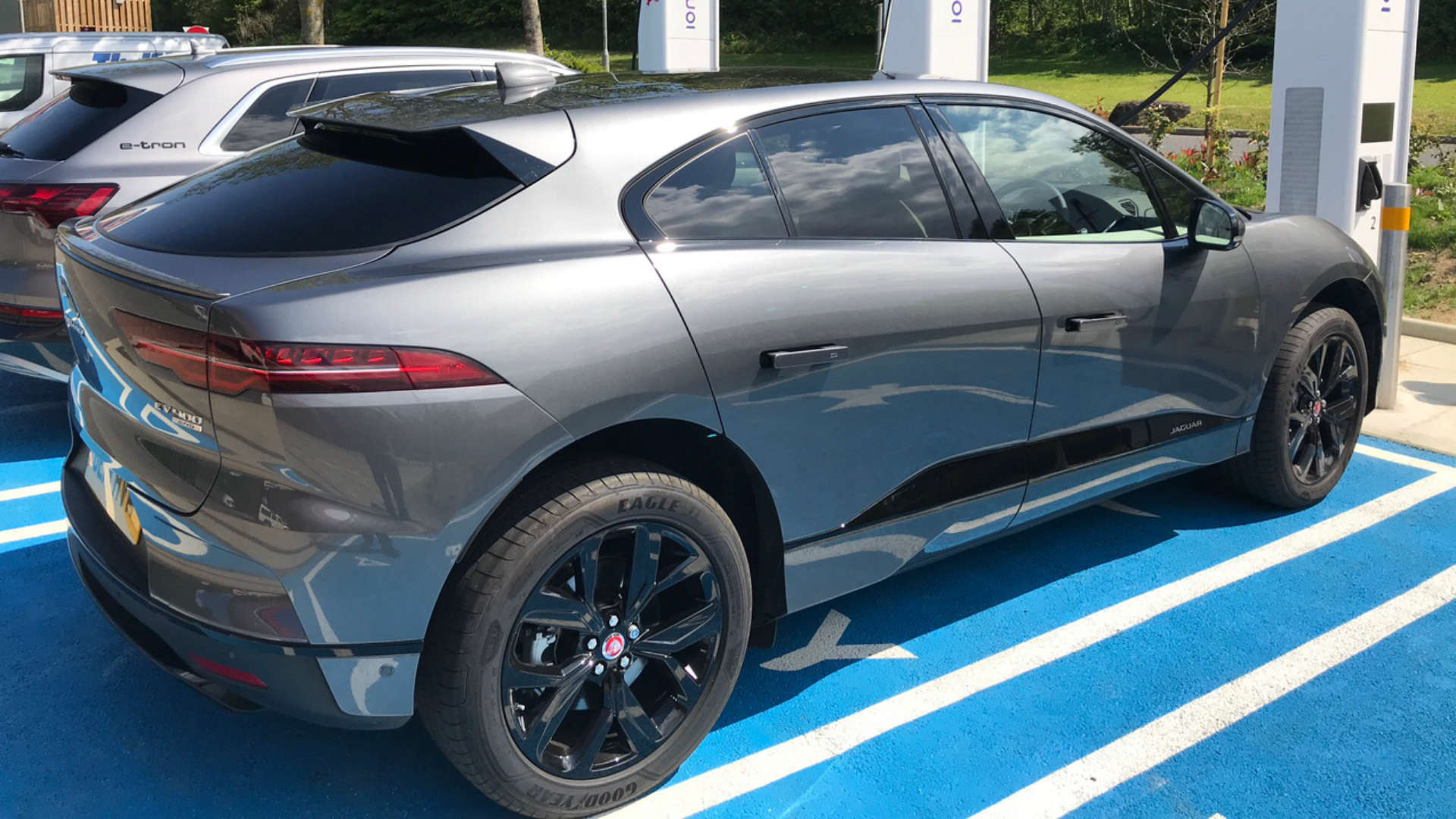
The electric car charging network has been given a massive boost with the opening of the UK’s first 350kW charging station.
The new Ionity site – located in Maidstone, Kent – is the first of 40 to open in the UK, with more to follow in Milton Keynes, Gretna Green and other locations. The company – a joint venture between Daimler, Ford, BMW and the Volkswagen Group – is planning up to 2,400 chargers across Europe by 2020.
Although no electric cars are currently capable of benefiting from the 350kW charge rate, next-generation EVs will take advantage of charging times as low as eight minutes.
In the meantime, current makes and models compatible with CCS chargers will be able to use the Maidstone charging point, which is located at junction eight on the M20.
Ionity’s network has been designed with pan-European travel in mind, hence the location close to the Channel Tunnel and cross-Channel ferry ports. Its UK stations are powered by 100 percent renewable energy.
‘Passionate about making e-mobility a reality’
Michael Hajesch, CEO of Ionity, said, “We are delighted to be launching our network in the UK with our first station in Maidstone. As car manufacturers continue to launch electric vehicles with bigger batteries to provide a longer range, high-power charging is an essential part of the e-mobility transition process, thus making the e-journey a smooth and seamless experience.
“We are passionate about making e-mobility a reality, with drivers already taking advantage of our convenient stations across Europe. We selected Octopus Energy to provide 100% renewable energy for our network of 40 High Power Charging stations in the UK.
“Coupled with the new charging times that 350kW makes possible, this represents an important step towards making the environmentally friendly long distance journey an everyday reality.”
In a separate development, IONITY recently announced the opening of its 100th high-power charging station. The site in Rygge, Norway, offers six charging points with the potential to expand to 18 if required.
The opening of the UK’s first 350kW charging station is likely to bring new customers to the electric car market, as well as future-proofing the network for new EVs, such as the Porsche Taycan.
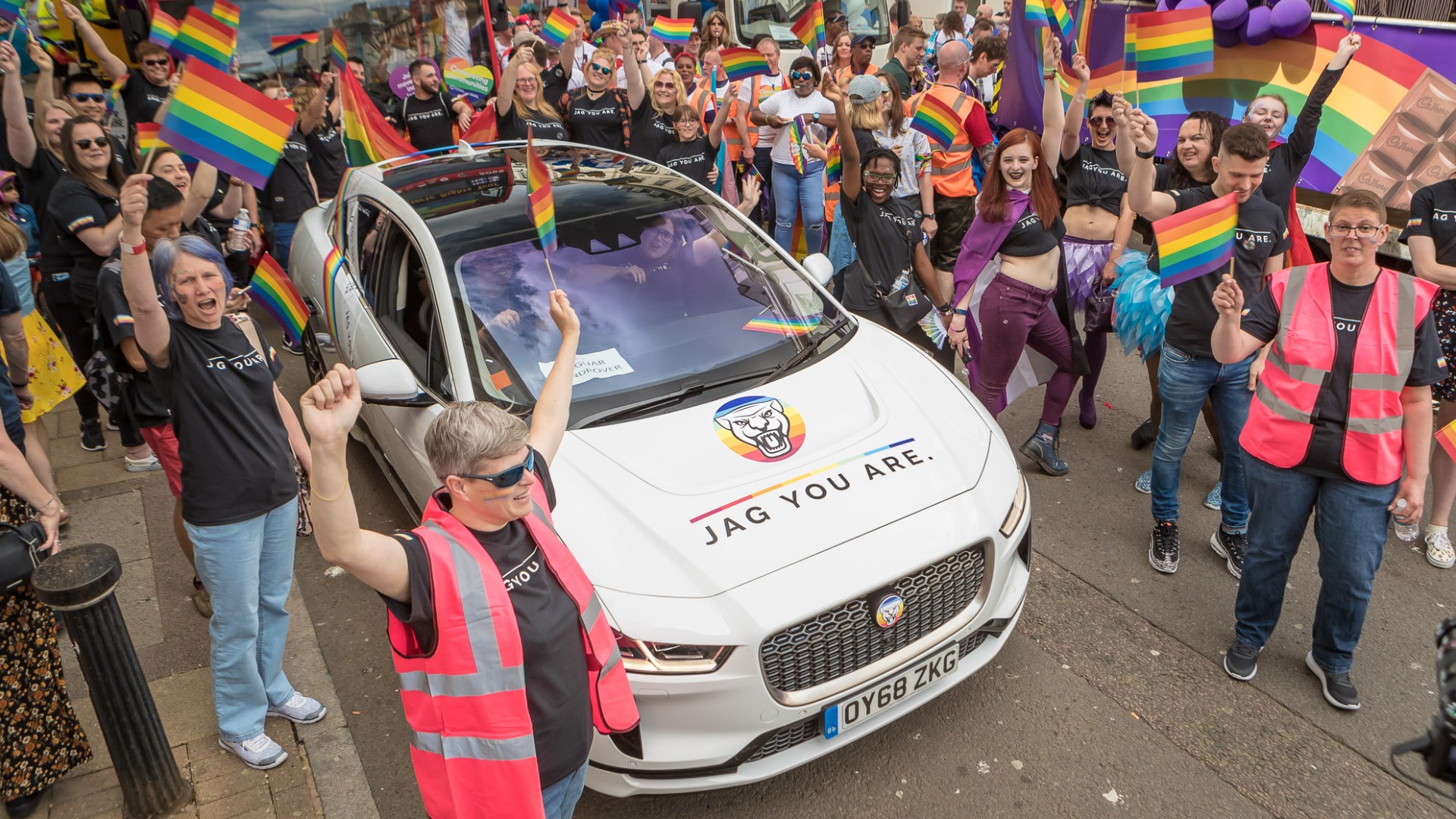
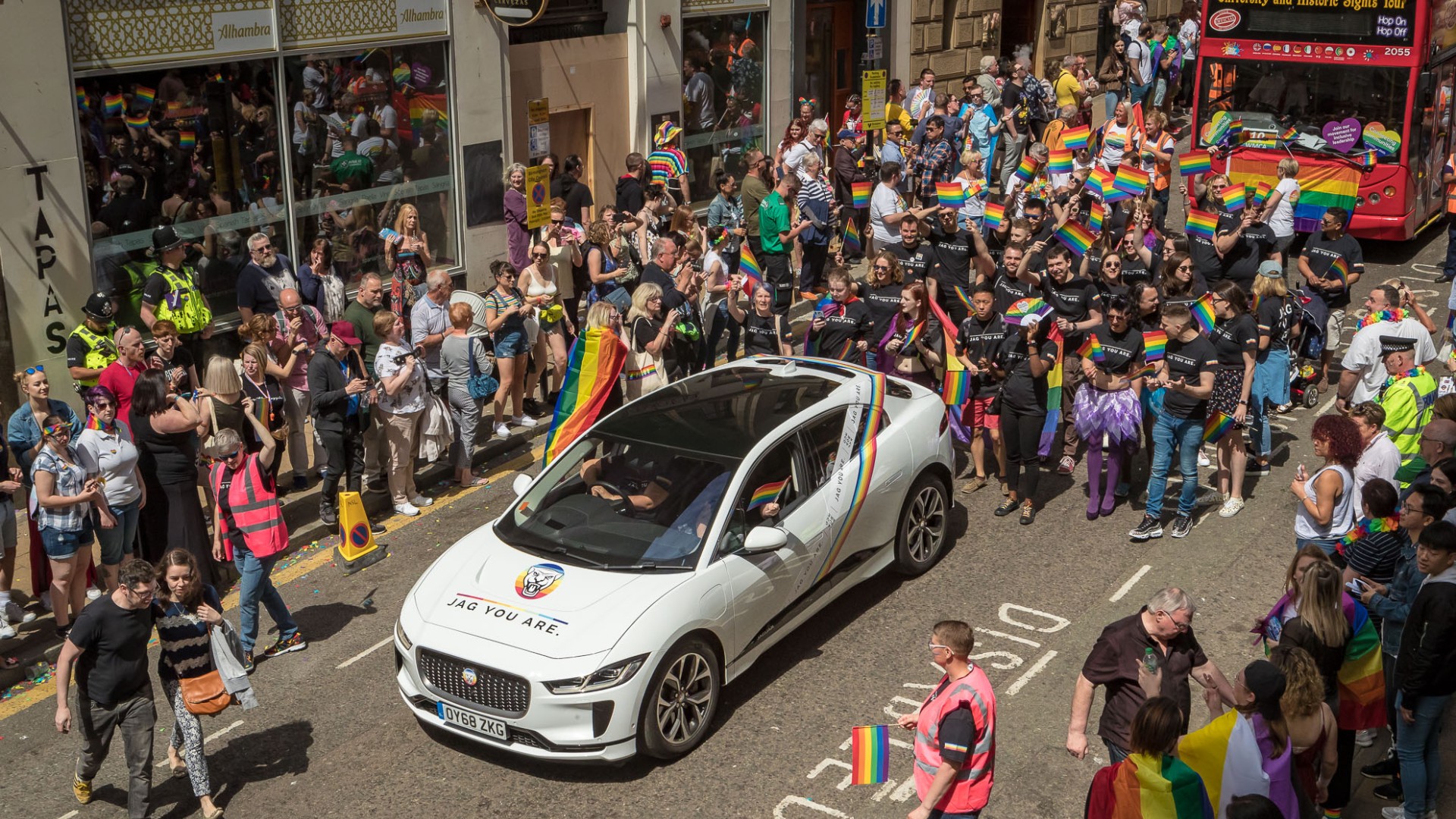
Jaguar I-Pace at Birmingham Pride 2019: CLICK TO SEE MORE
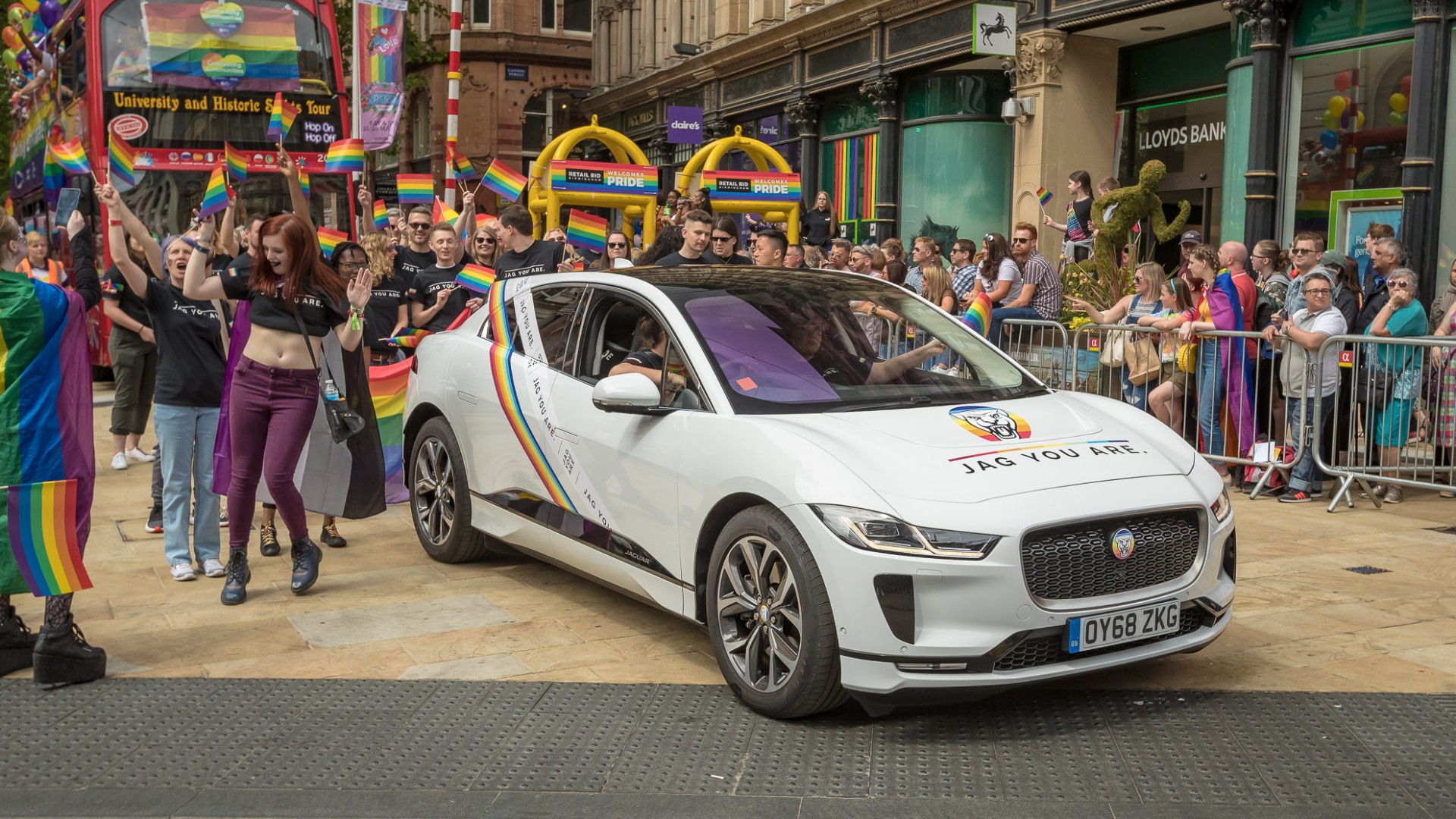
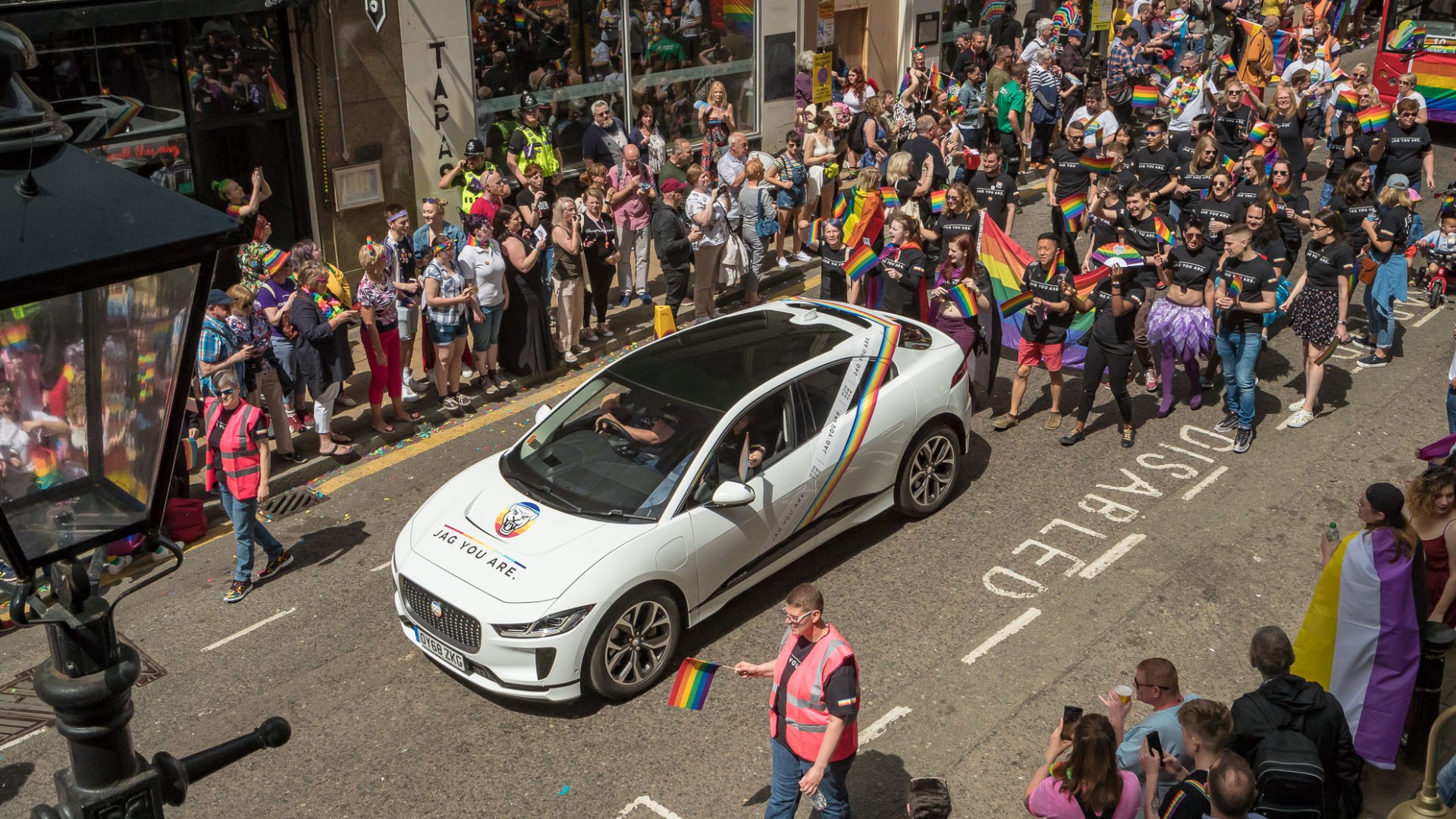
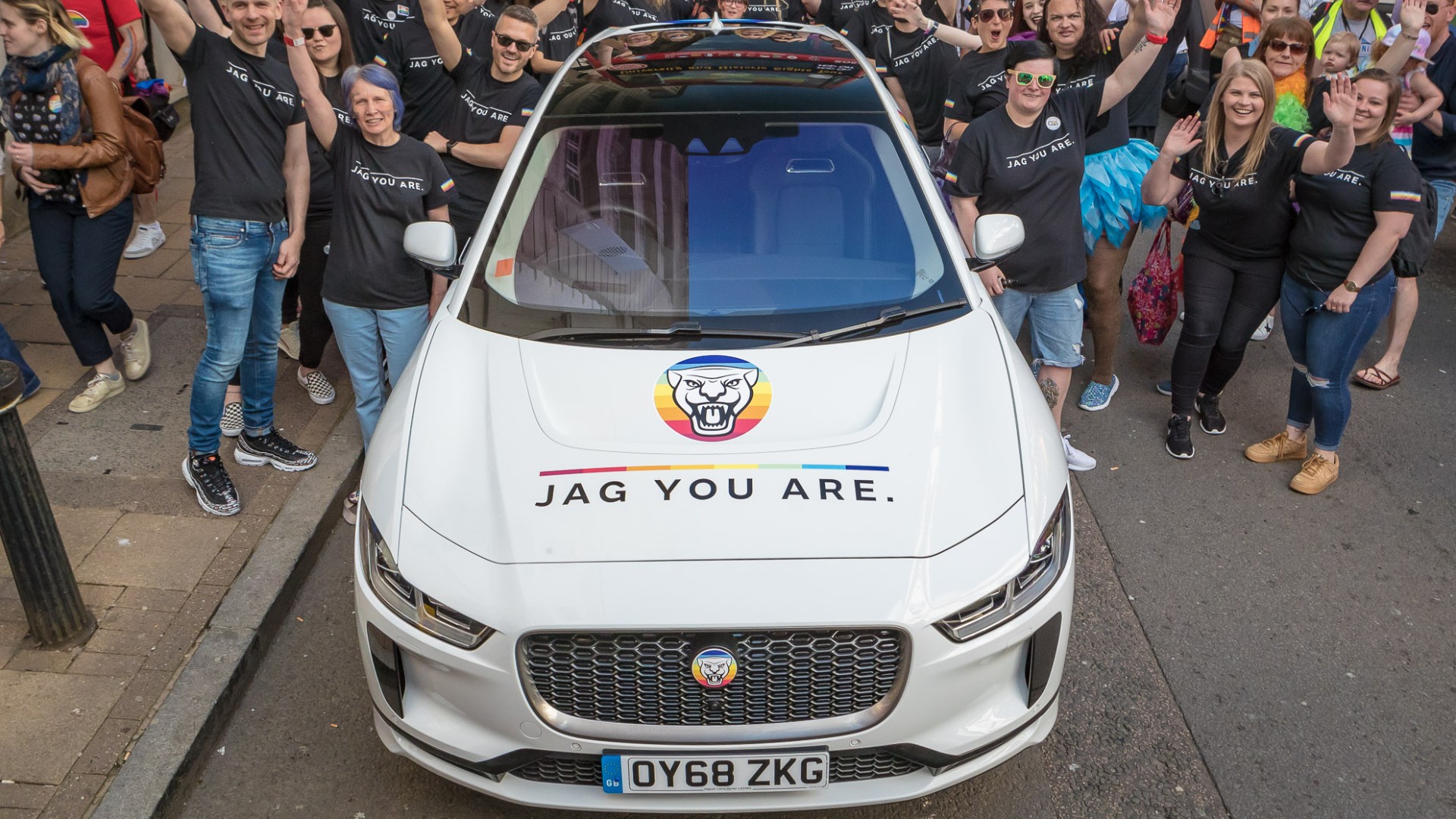
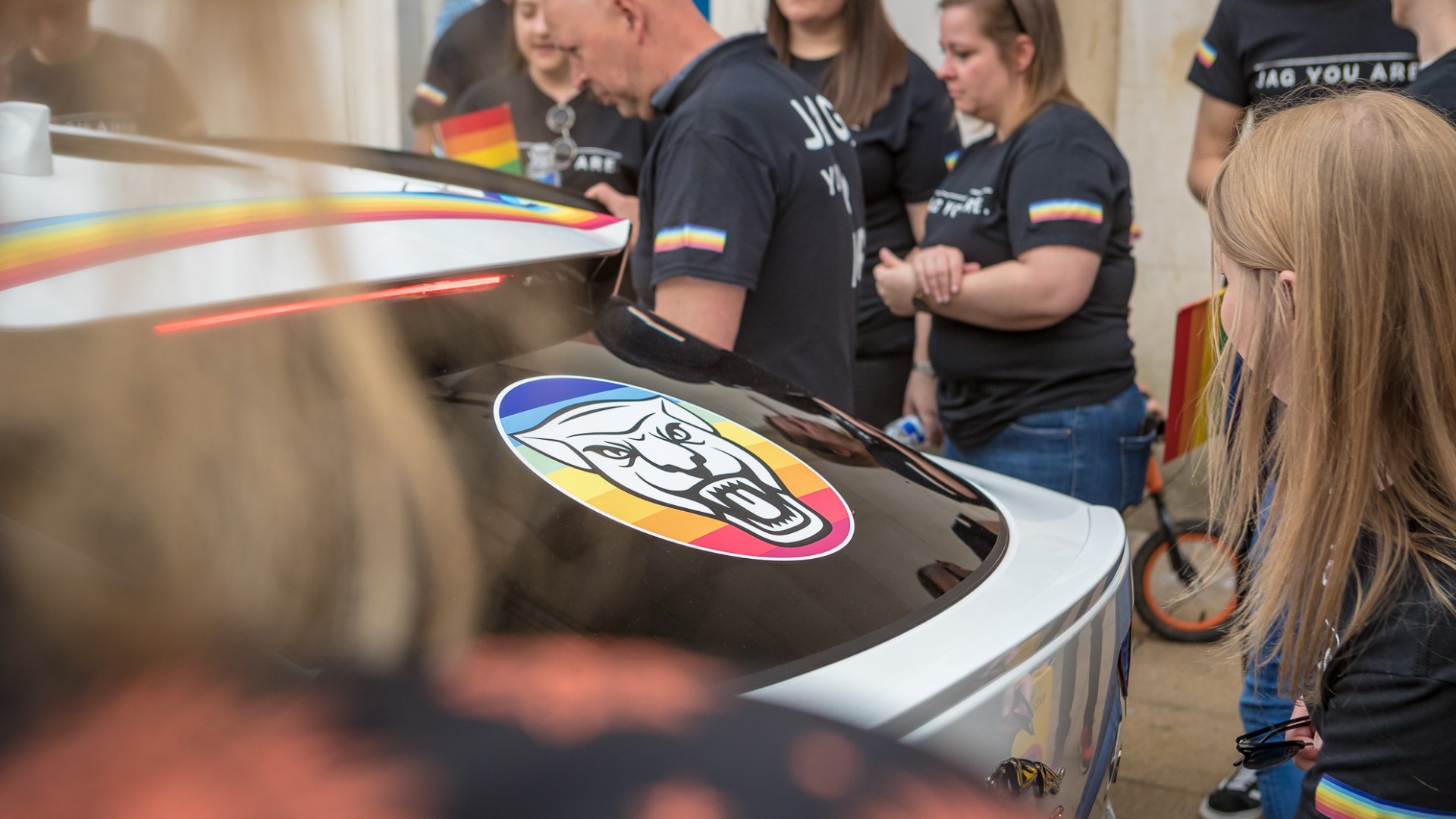
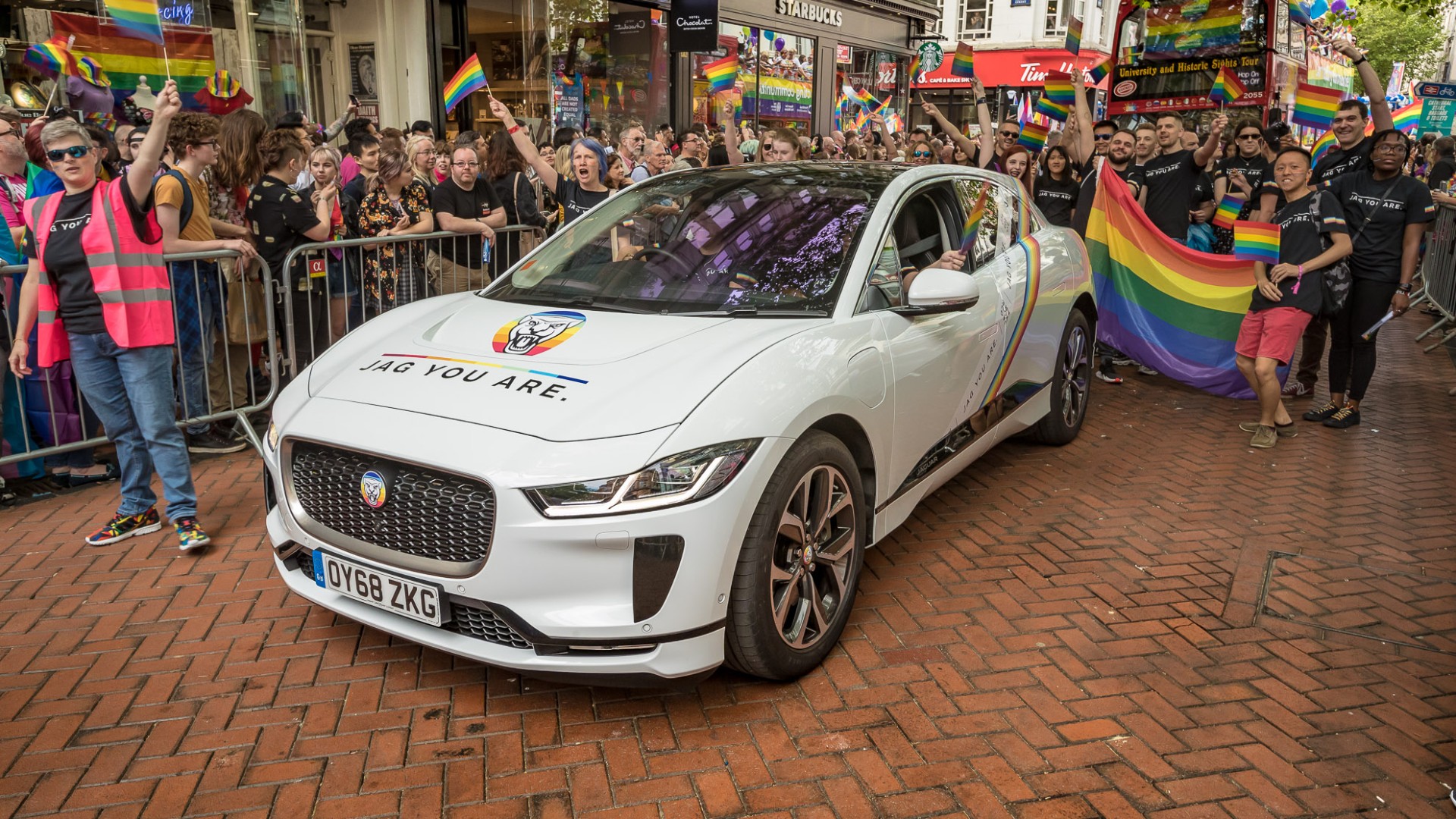
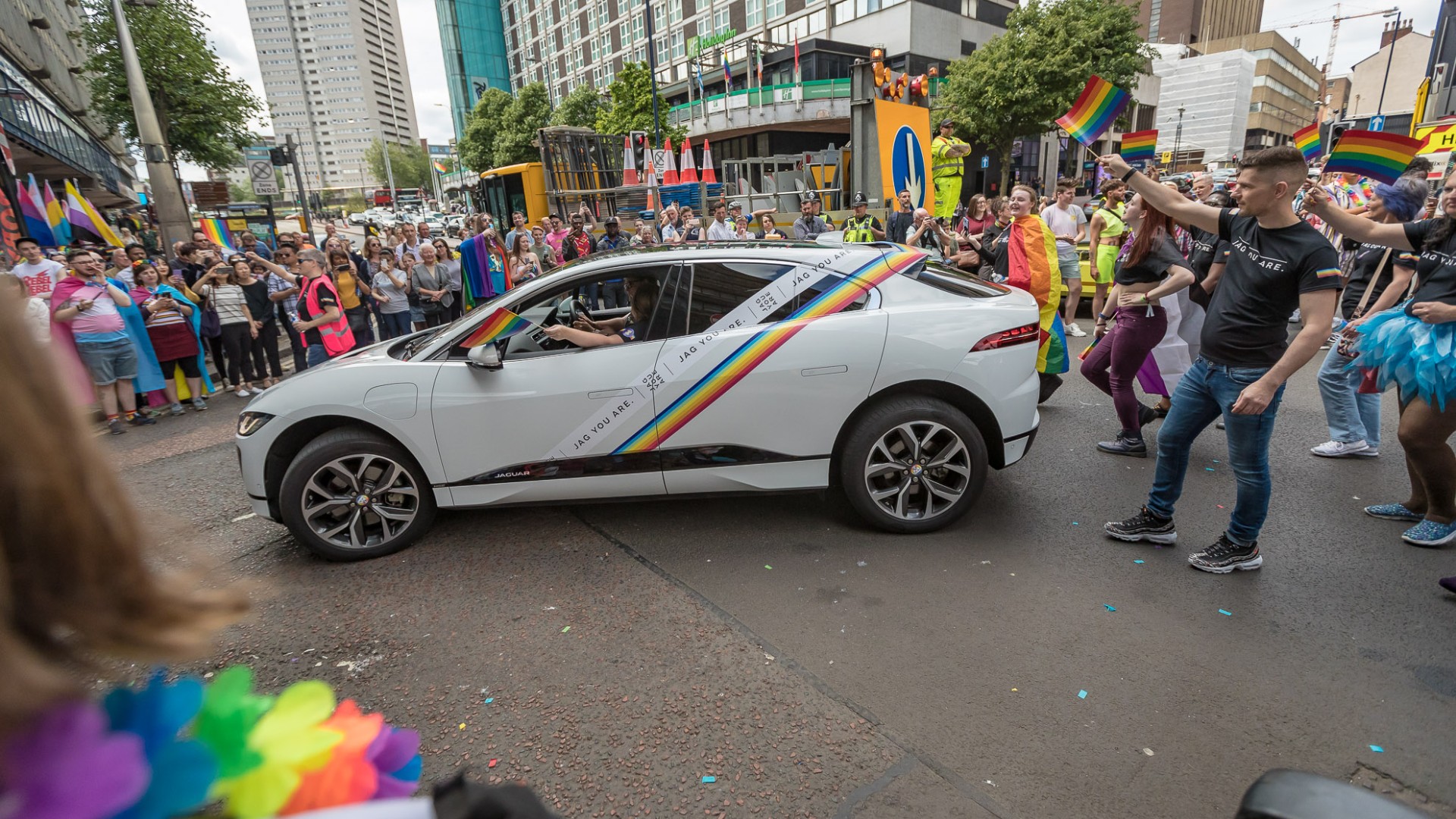
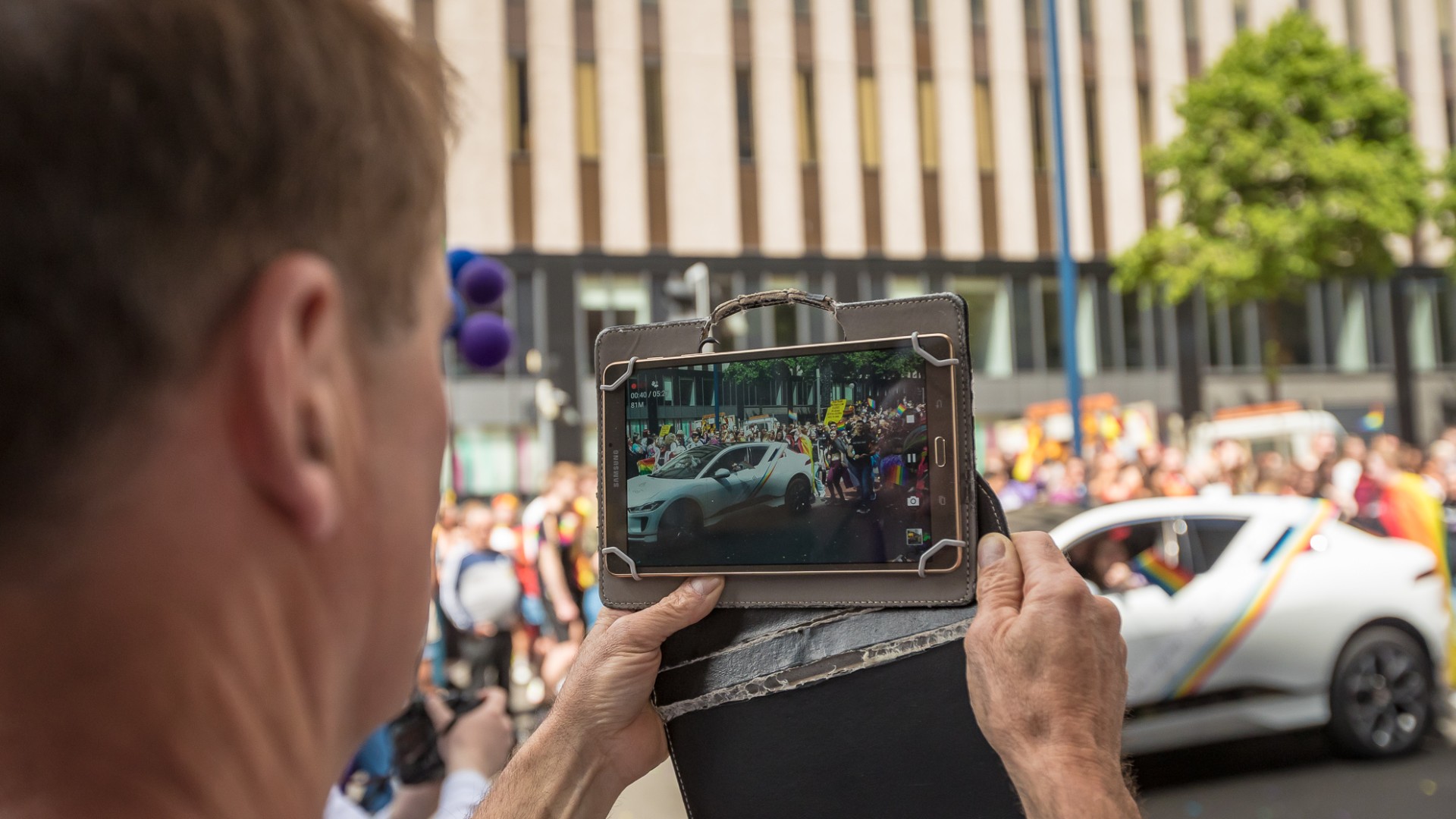
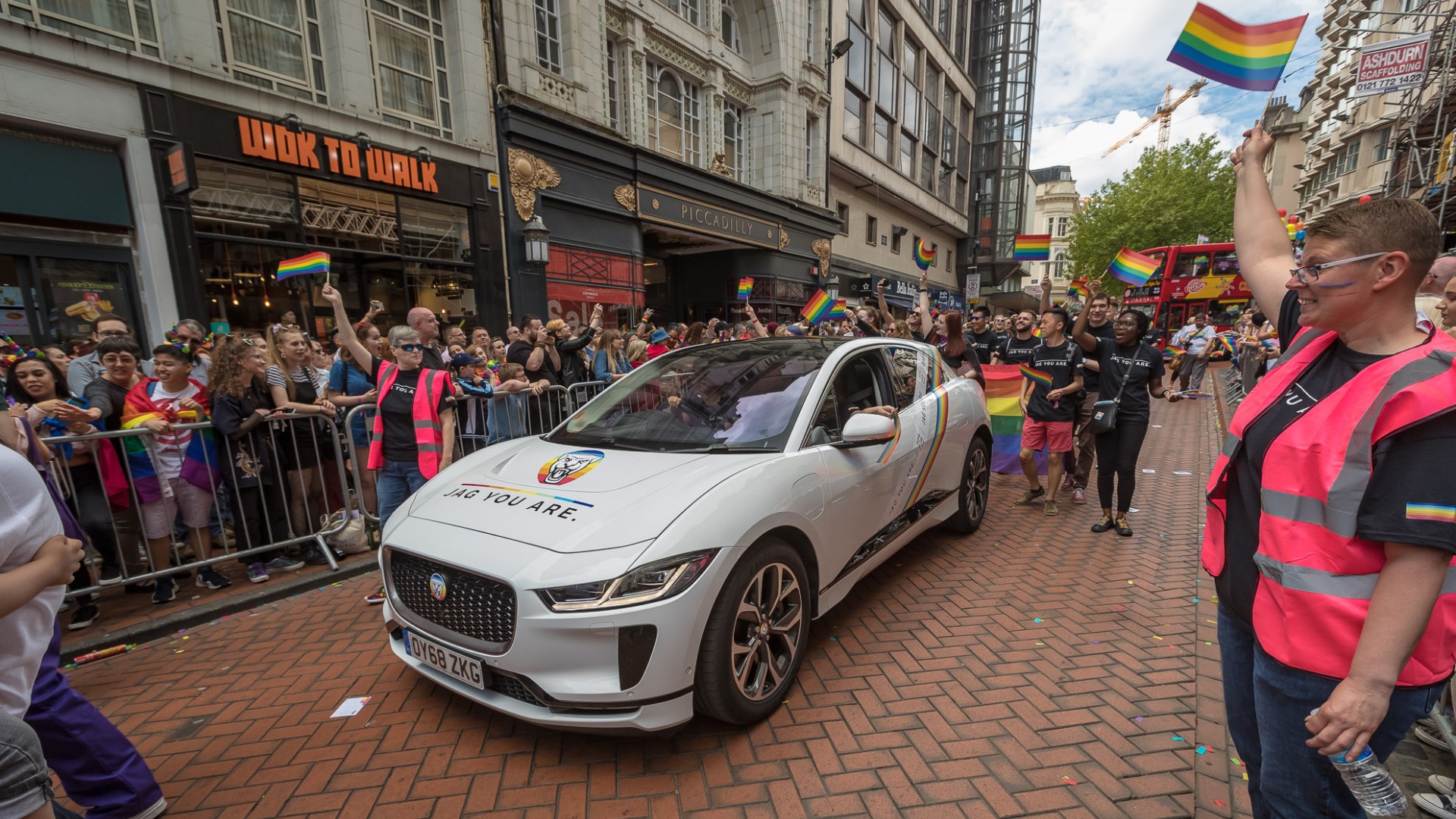
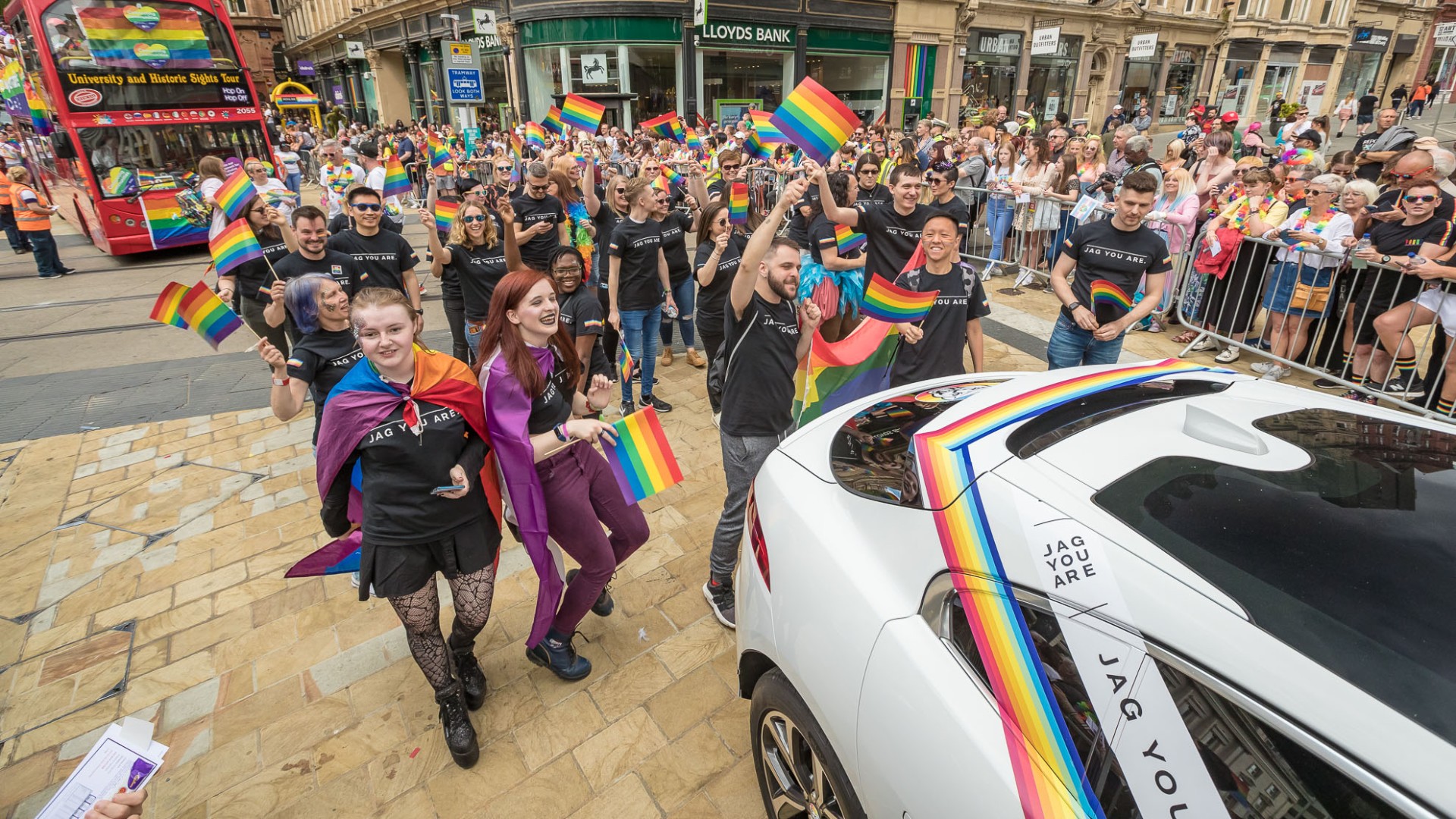
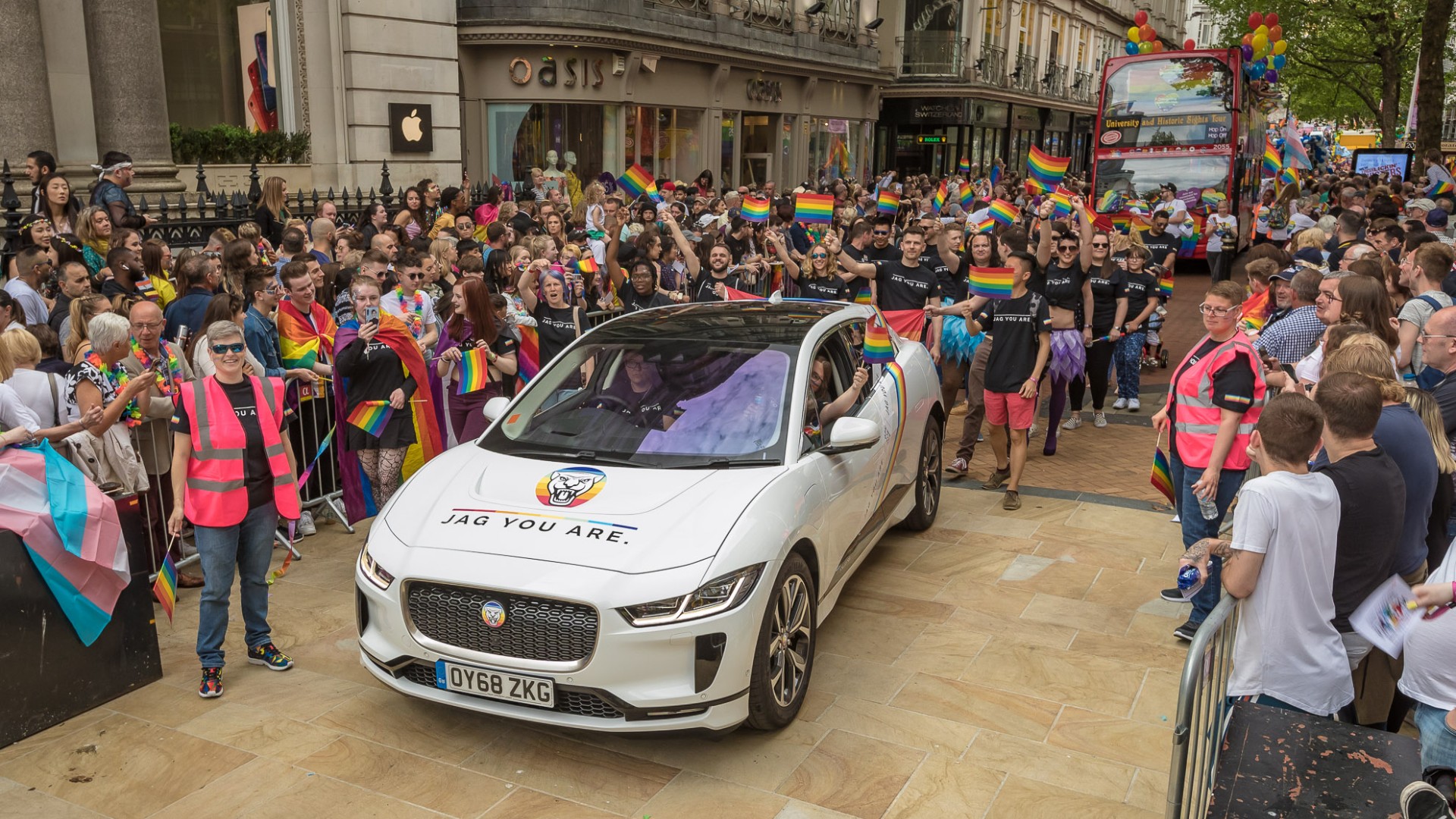
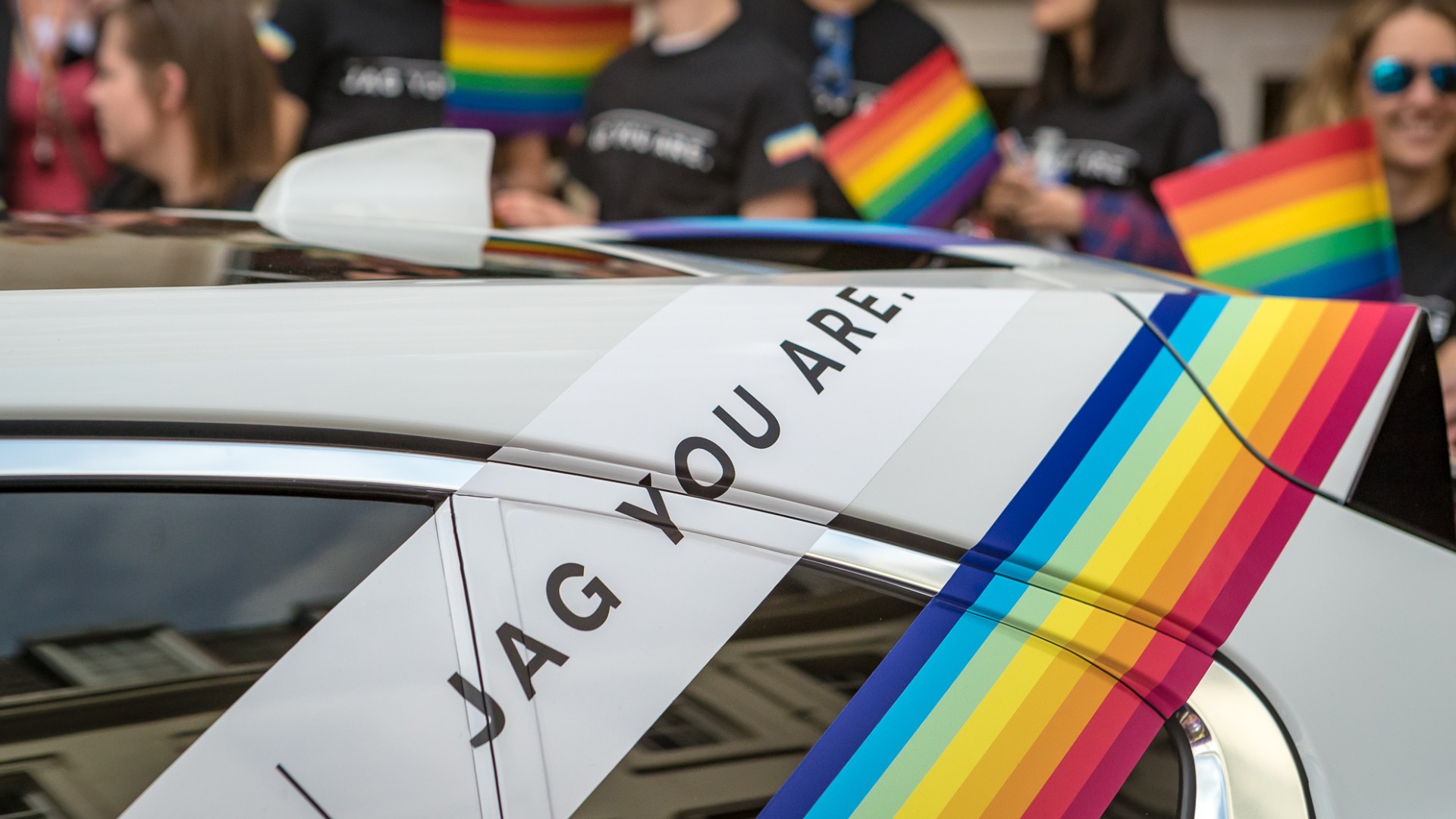
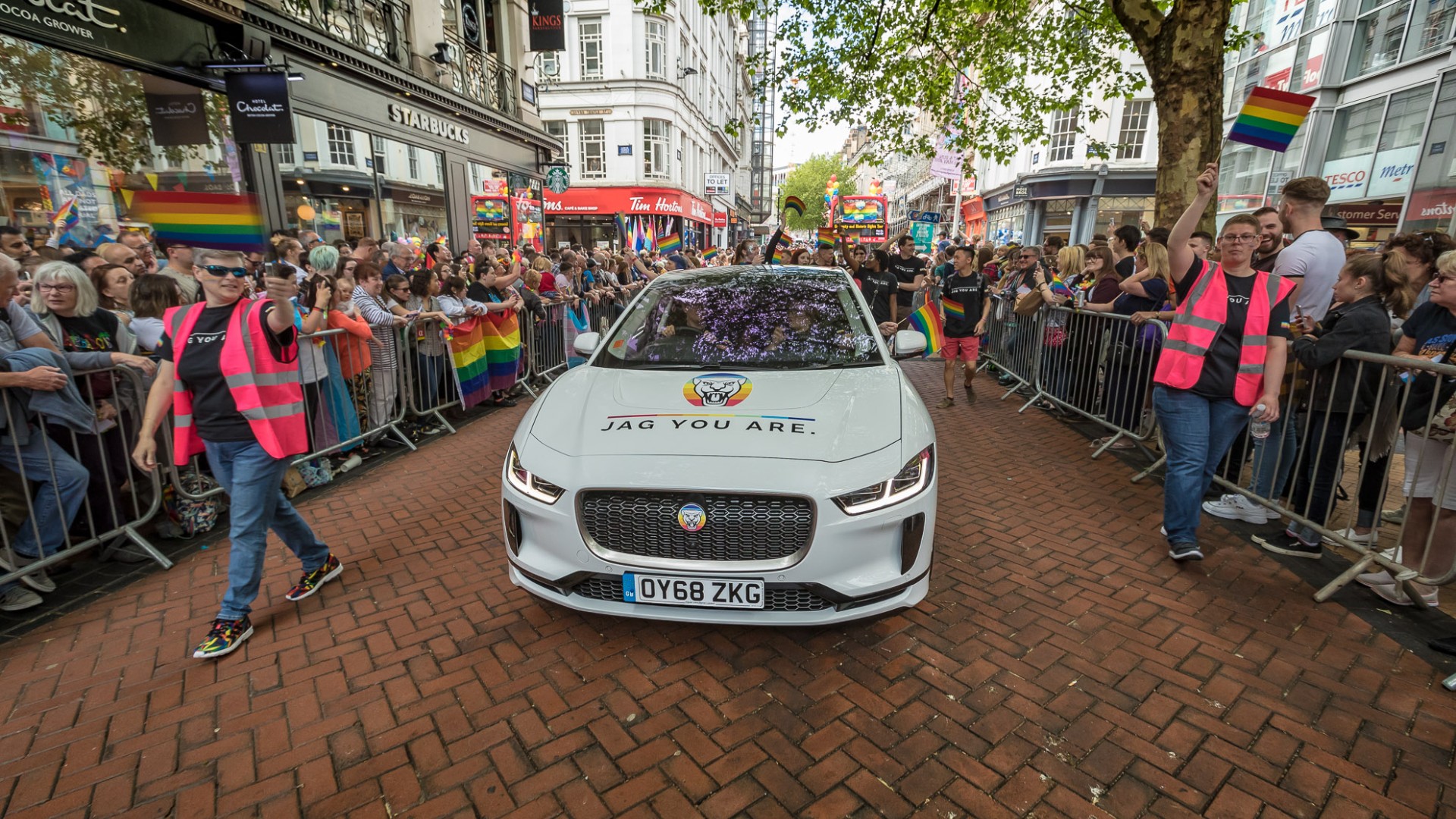
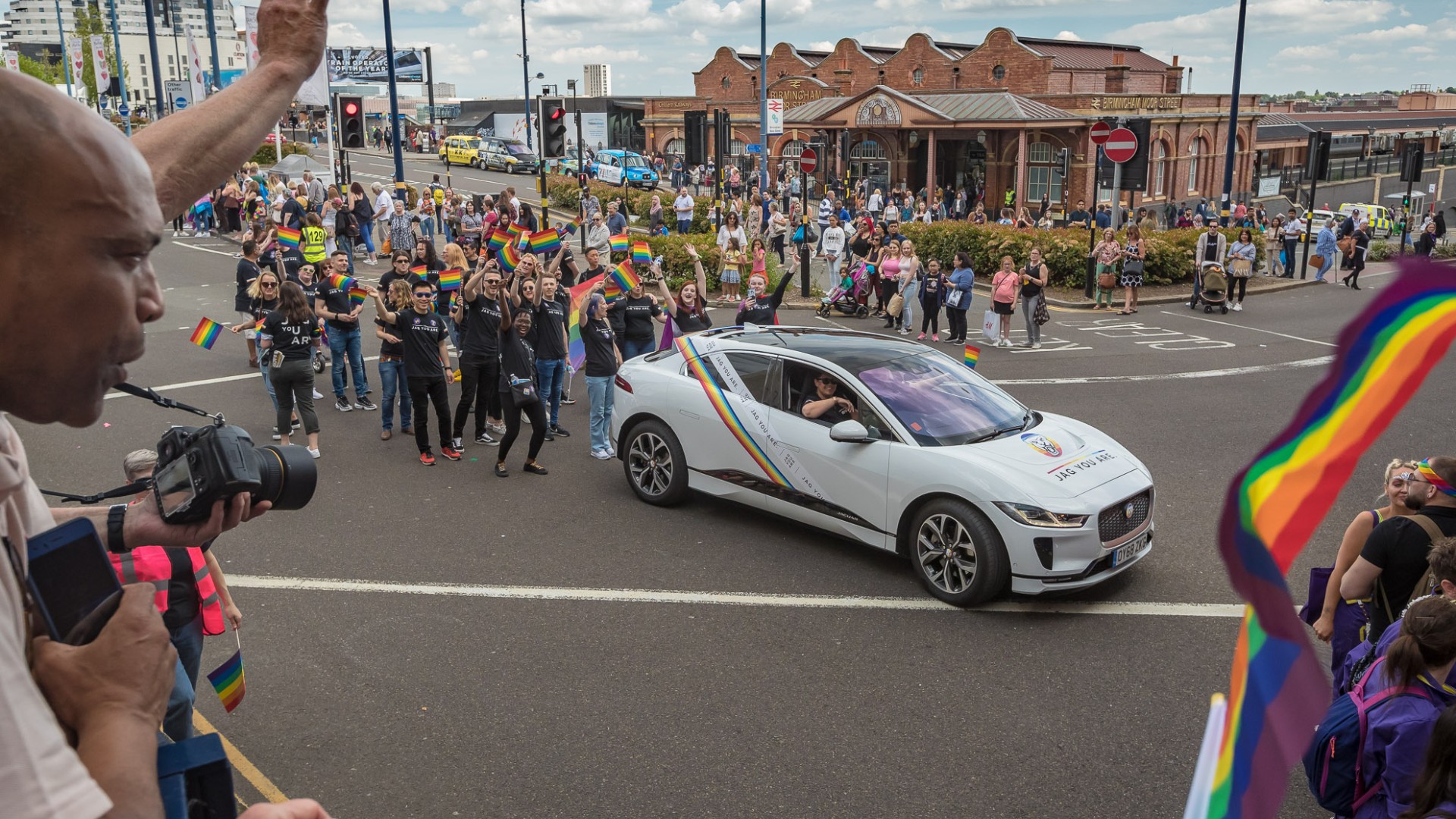
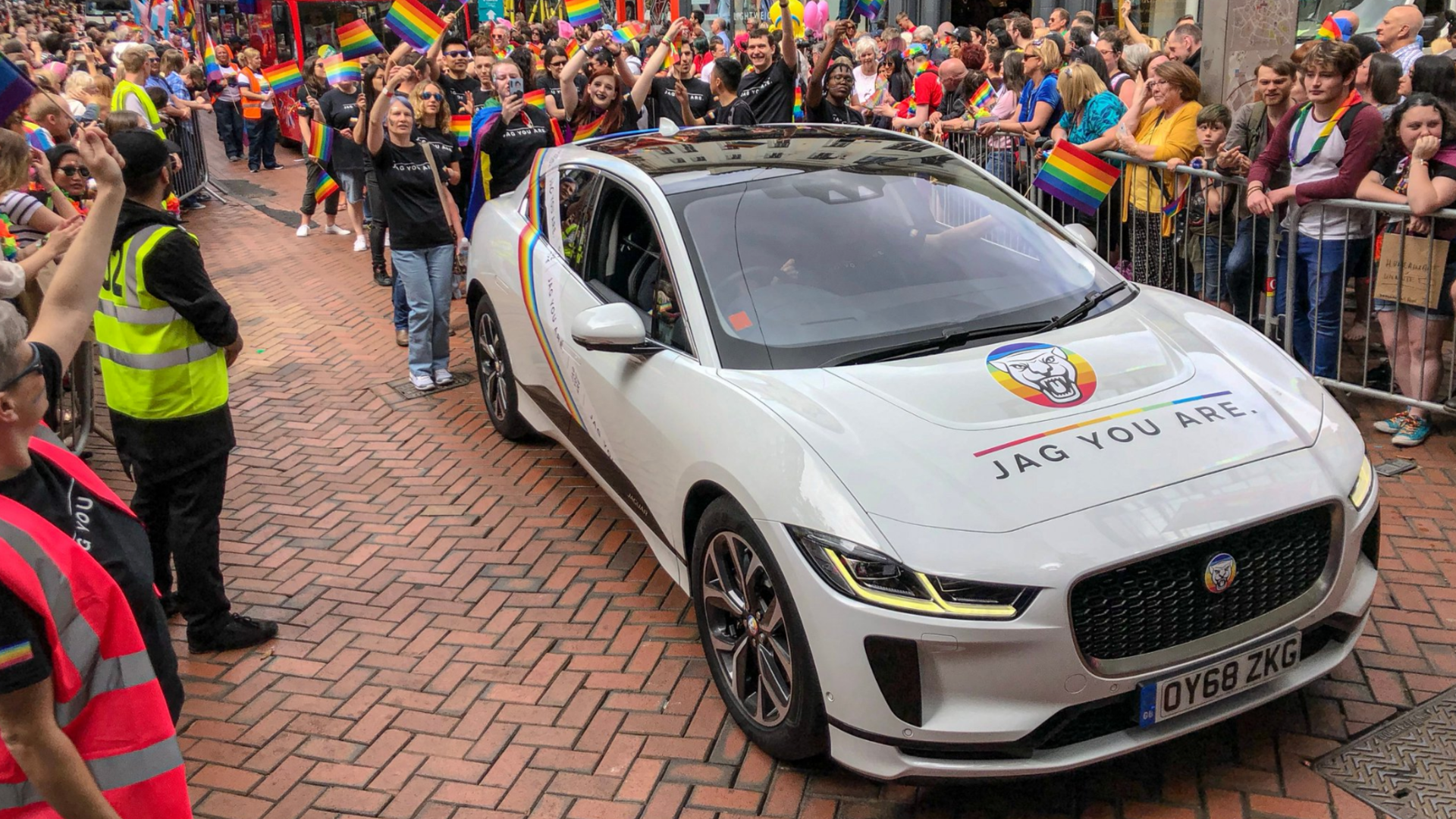
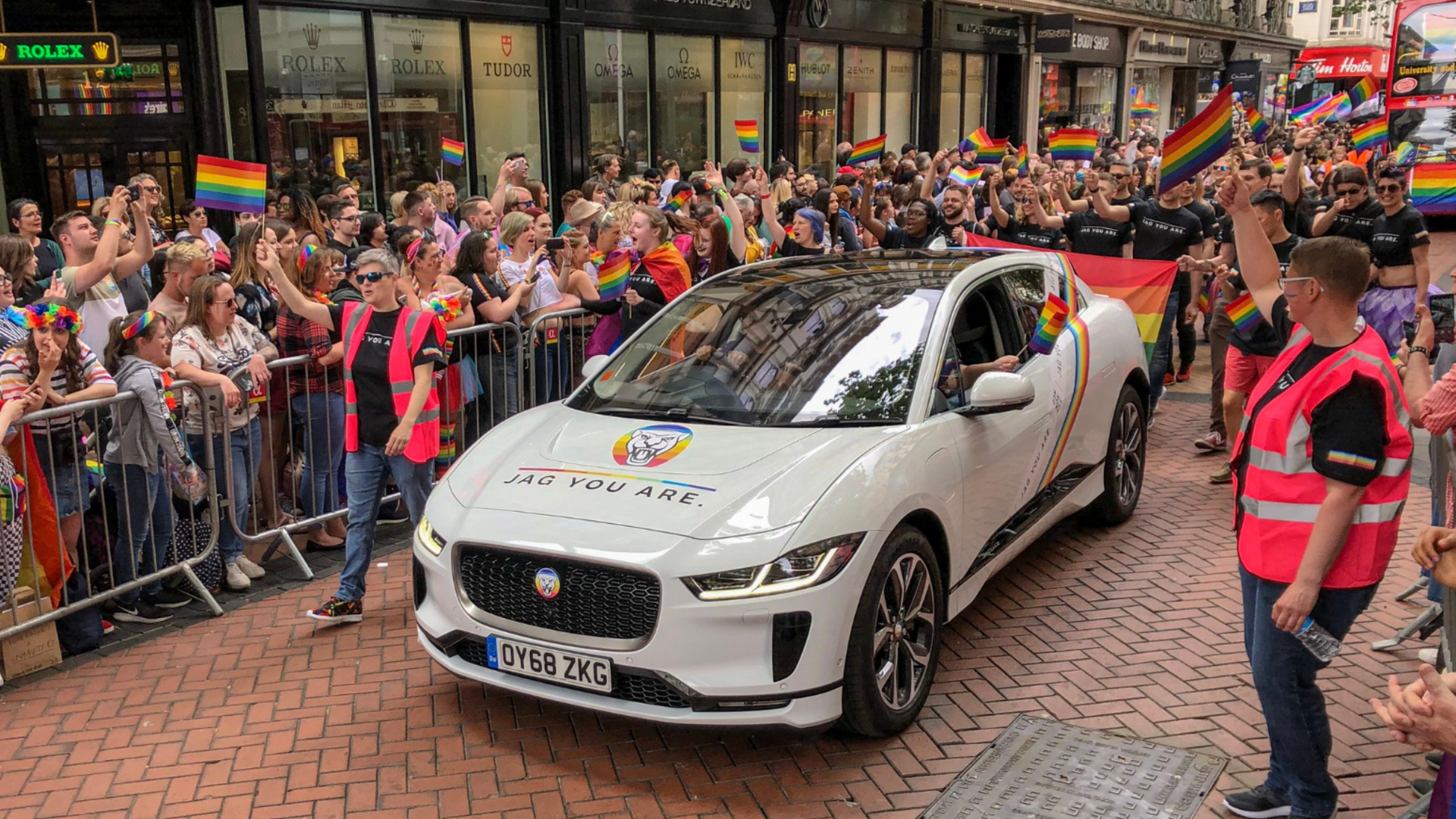
A special edition Jaguar I-Pace joined the fun at Birmingham Pride this weekend – the UK’s biggest two-day LGBTQ festival.
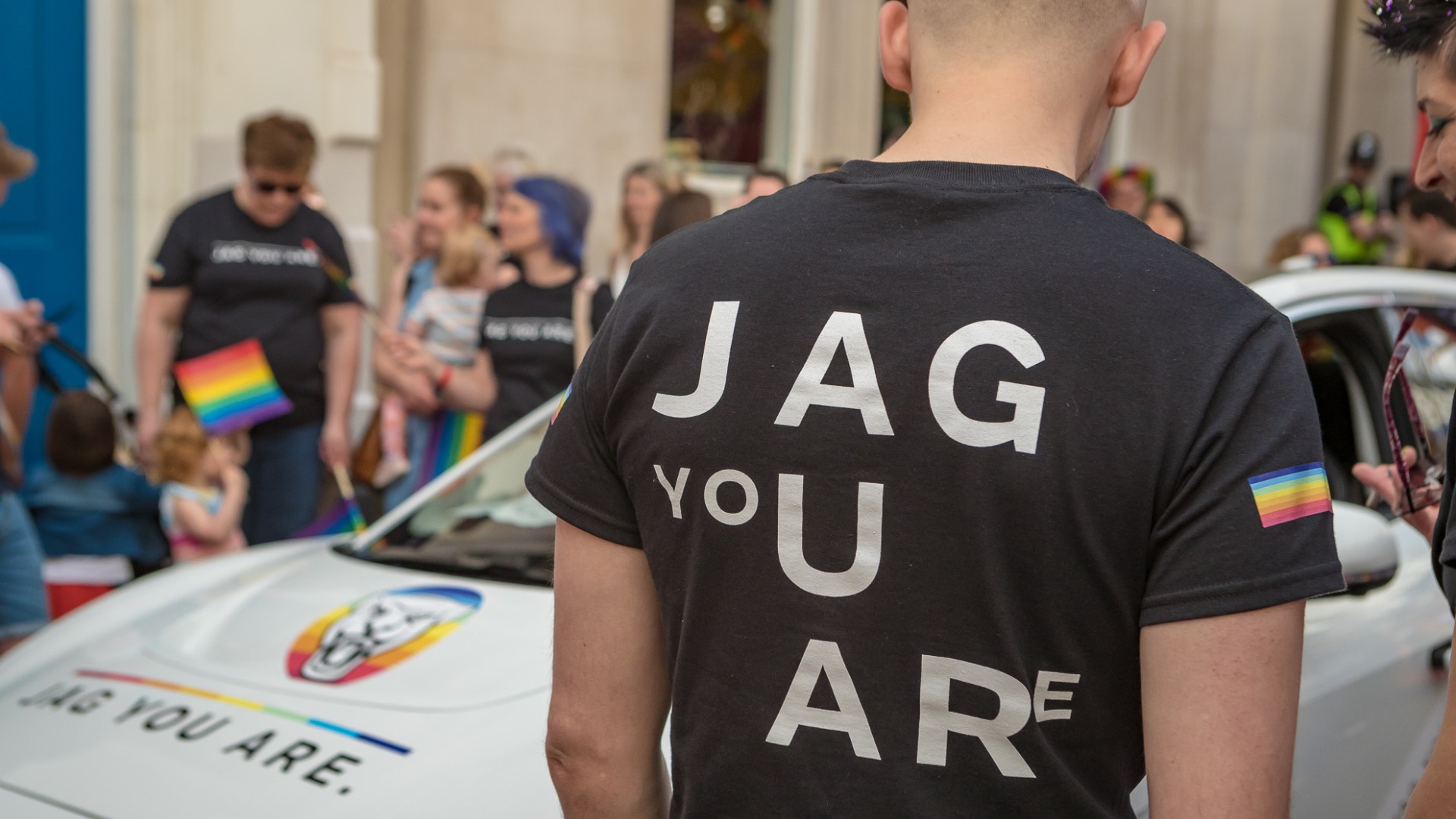
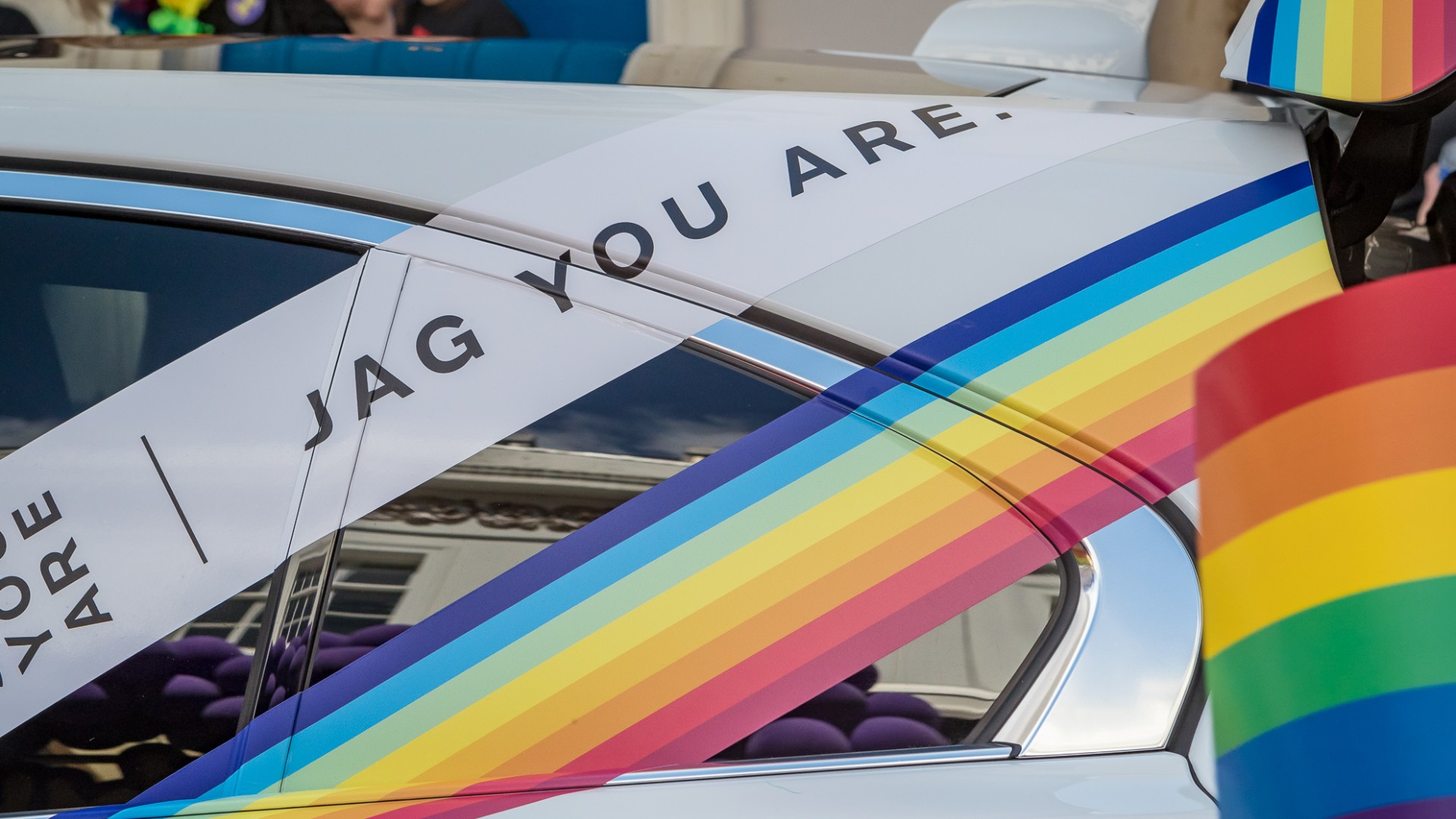
The car wore a unique badge, with Jaguar’s big cat atop rainbow colours. ‘Jag You Are’ is emblazoned on the bonnet and there are more rainbow stripes on the car’s sides.
Local dealers have also been getting involved, with Stratstone and Guy Salmon both showing their support. Guy Salmon had its own black I-Pace on show with the same colour scheme.
In a statement on Twitter, Jaguar UK said ‘We’re proud to be supporting our diverse workforce at Birmingham Pride 2019 this weekend – the UK’s biggest two-day LGBTQ festival – where we joined the parade with a specially designed #JagYouAre #IPACE’.
Birmingham Pride, which celebrates lesbian, gay, bisexual and transgender culture, brought the town centre to a standstill. As many as 75,000 spectators lined the streets for the parade.
Andrea Rosati of Jaguar design said: “With ‘Jag You Are’ and its graphics we talk about individuality and inclusiveness. Going beyond stereotypes – even in the LGBT+ community – we want to celebrate the chance to ‘be your own animal.’
“The artworks – really geometric, not over designed – are a homage to Polaroid: an instantaneous, immediate image of ourselves, showing who we are without filters.”
Last year, Jaguar became a member of Stonewall, a charity that works with employers to improve LGBTQ inclusion and engagement.
Jaguar I-Pace at Birmingham Pride 2019 CLICK TO SEE MORE
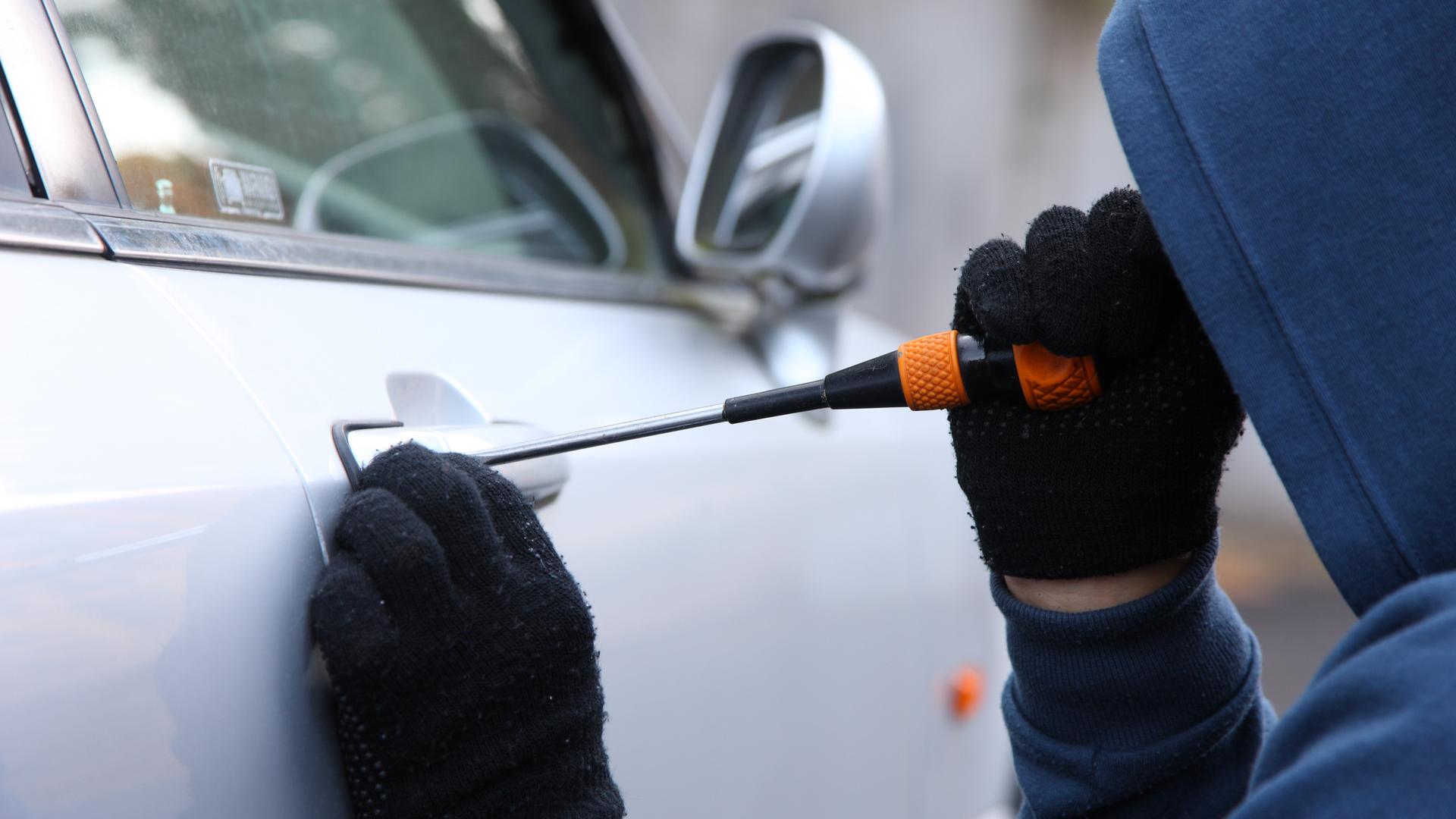
The Ford Focus has been named as Britain’s most frequently stolen car, following a Freedom of Information request sent to police forces.
Data was collected from 17 of the 43 police forces in England and Wales, with the Focus revealed as Britain’s most targeted motor. Last year, a total of 530 Ford Focus models went missing in the regions covered.
Britain’s most popular car, the Ford Fiesta, was next on the list, with 508 cars stolen in 2018. Thieves also targeted the Vauxhall Astra, Volkswagen Golf and Vauxhall Corsa, suggesting that the list of stolen motors, produced by online comparison site GoCompare, mirrors the list of the UK’s best-selling cars.
Earlier this month, we revealed that just seven police forces in England and Wales cut the number of cars stolen in 2018, with vehicle crime on the increase again following a downward trend in the number of thefts.
Keyless car theft – also known as ‘relay attacks’ – is at the centre of the problem, with 96 percent of motorists at risk of having their car stolen using this method.
Staffordshire hotspot
Once again, Staffordshire appears to be the country’s vehicle crime hotspot, with the GoCompare data showing that a high street in the county played host to 55 vehicles theft – more than any other road in England and Wales.
Three streets in Leicestershire, Humberside and Bedfordshire were named as other roads to avoid if you fancy seeing your car again in the morning.
Motorists are advised to invest in a signal blocker pouch (or Faraday bag) to avoid becoming a victim of keyless car theft, but more traditional methods, such as steering wheel locks, are another way to beat car thieves.
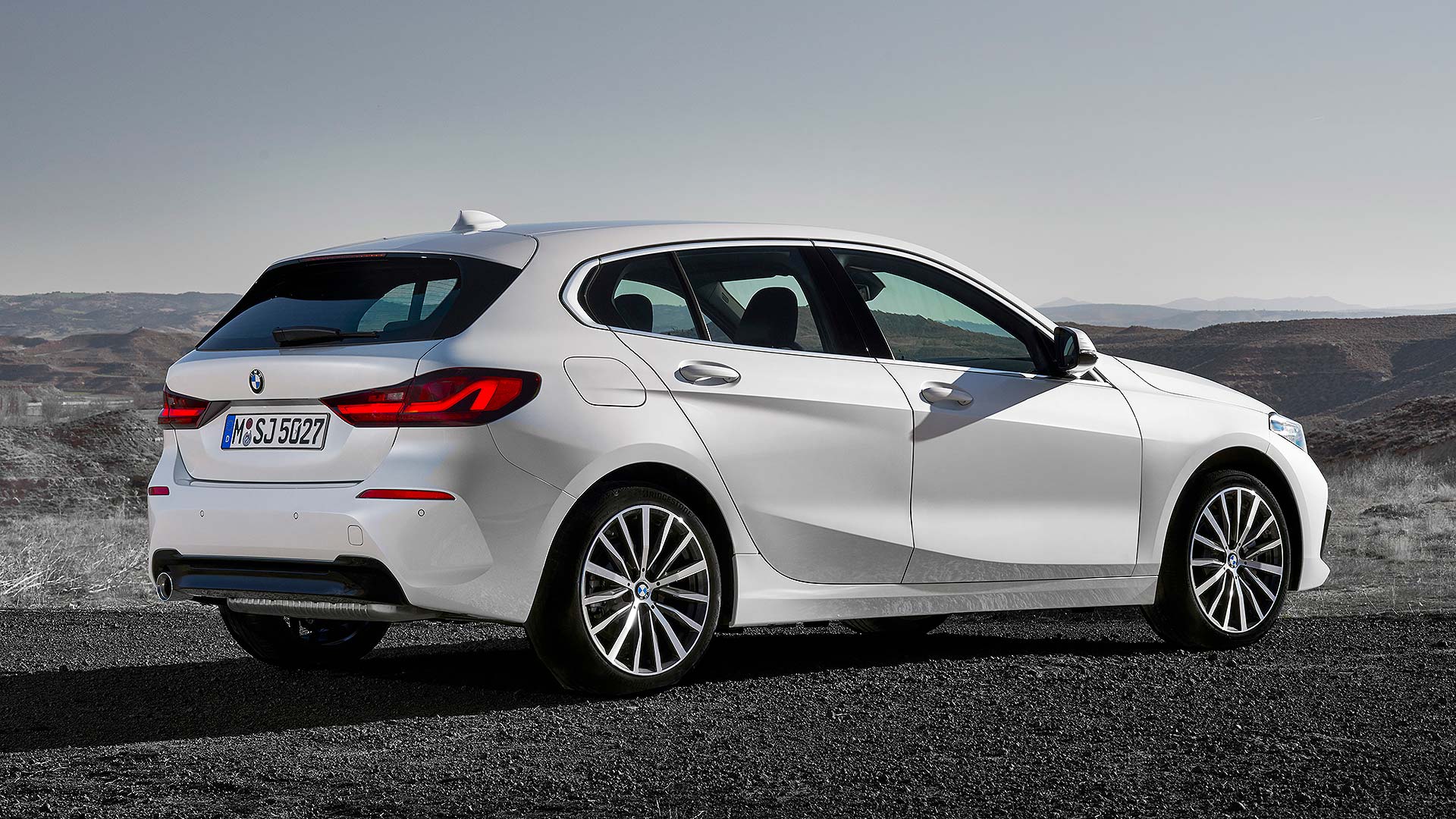
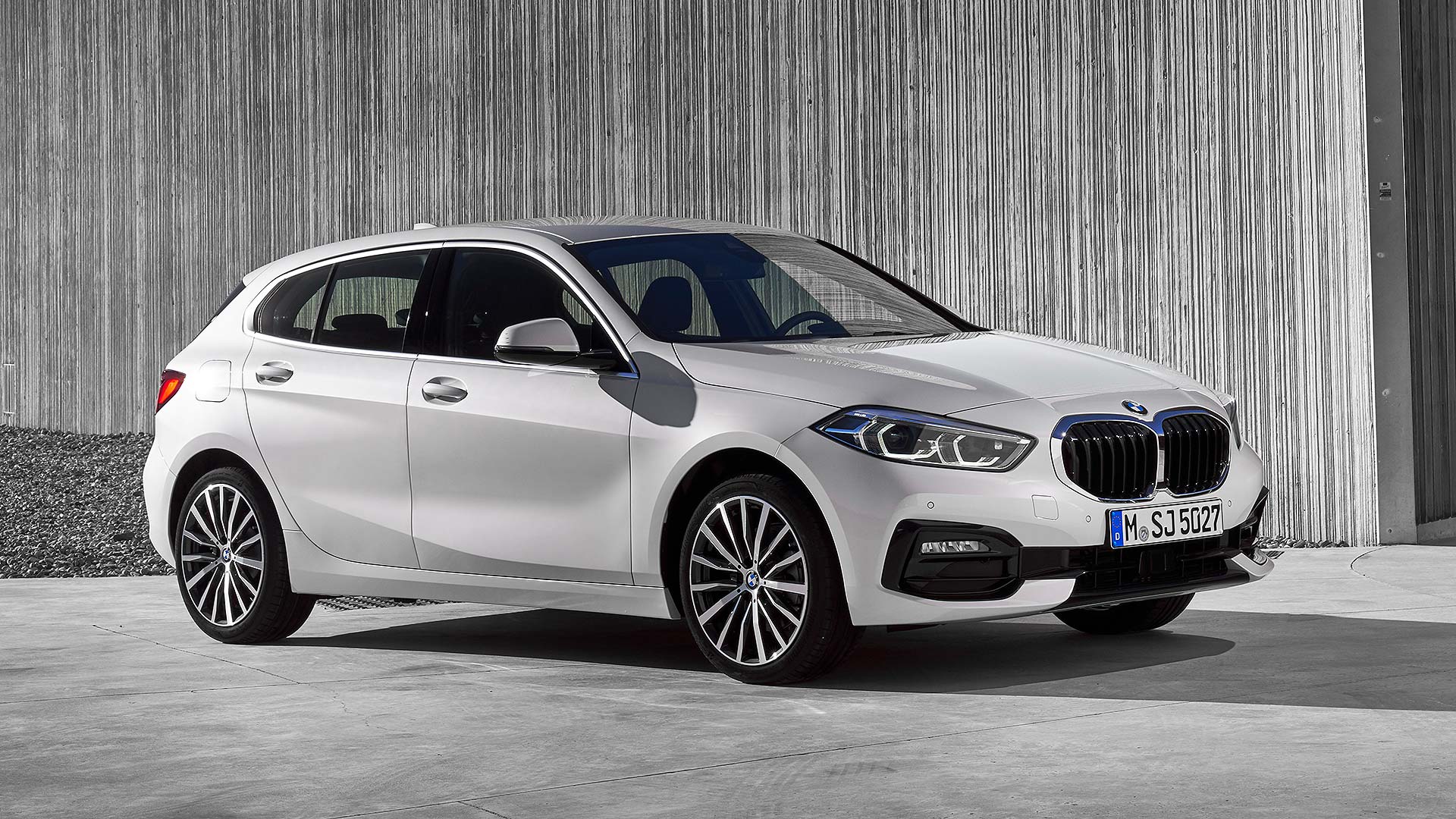
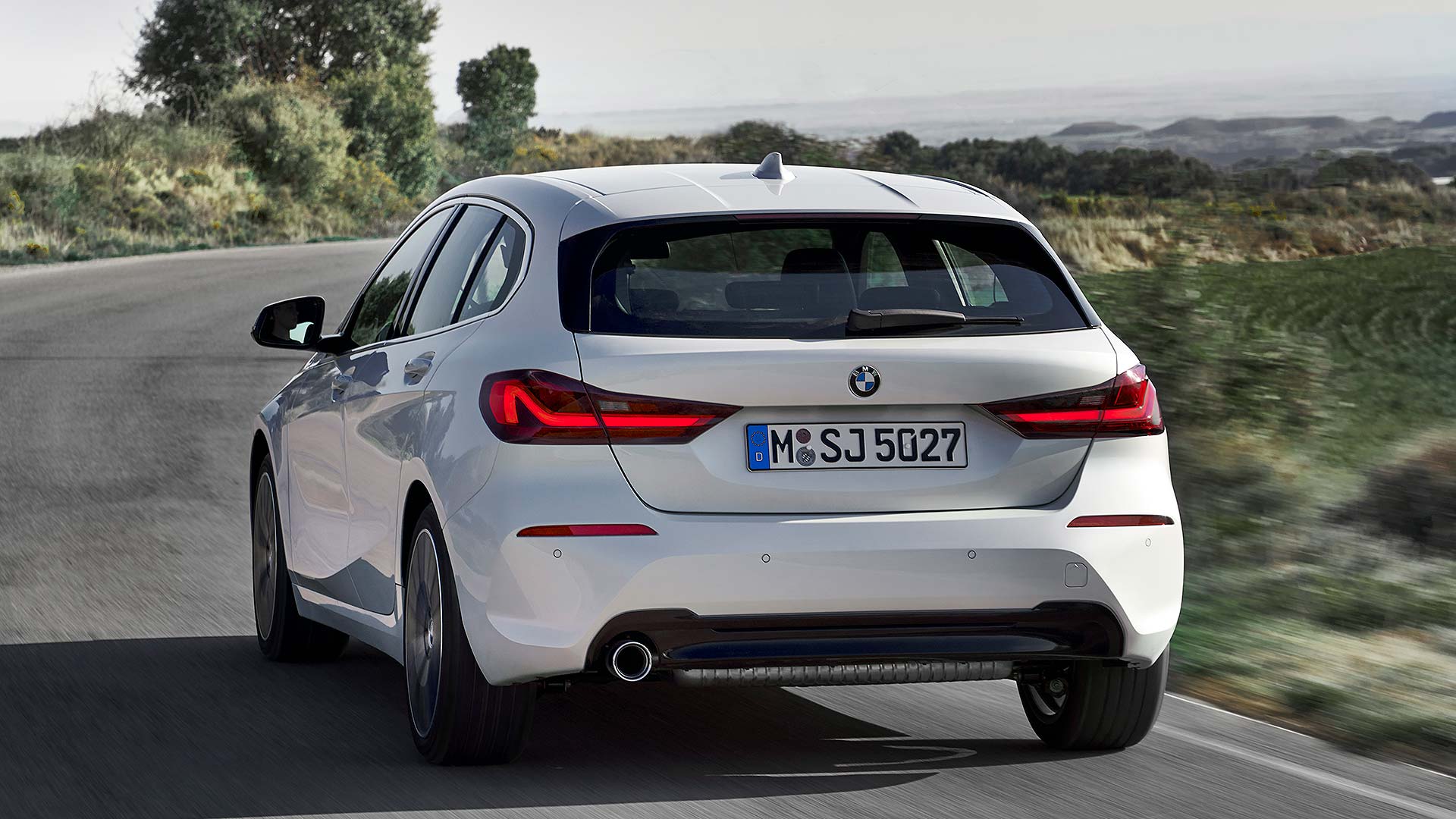
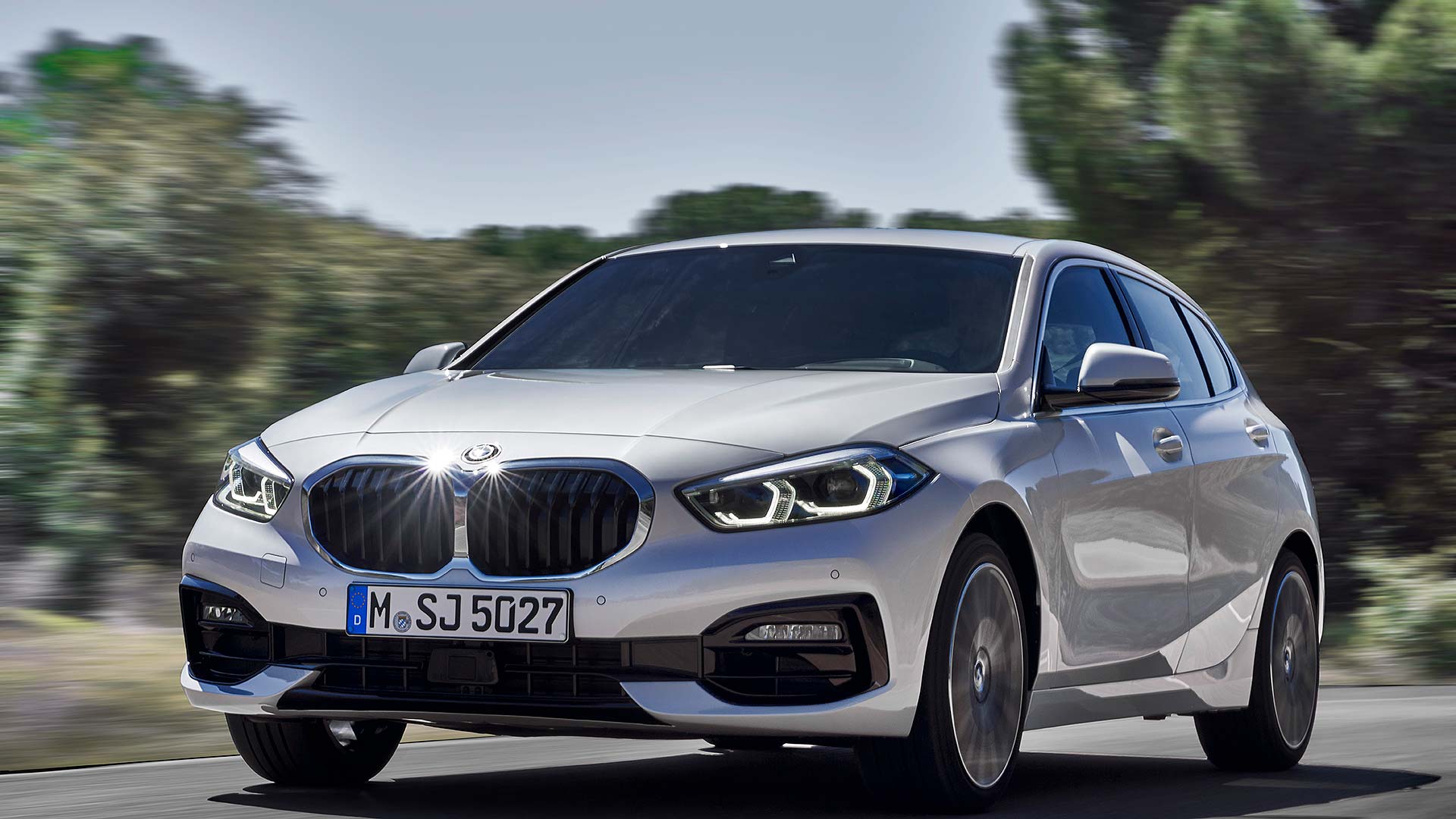
Ordering for the new BMW 1 Series will open this week with prices starting from £24,430. Deliveries of the bigger, bolder BMW 3 Series-inspired front-wheel drive hatchback start in September.
Sensibly, but controversially, BMW has switched to front-wheel drive for this generation of 1 Series, to meet customer demands. Buyers wanted more space, rather than the more engaging handling of rear-wheel drive. For the first time in 15 years, BMW has responded.
The A-Class was a top-10 best seller last year. BMW will want the new 1 Series to do the same.
Bigger new 1 Series
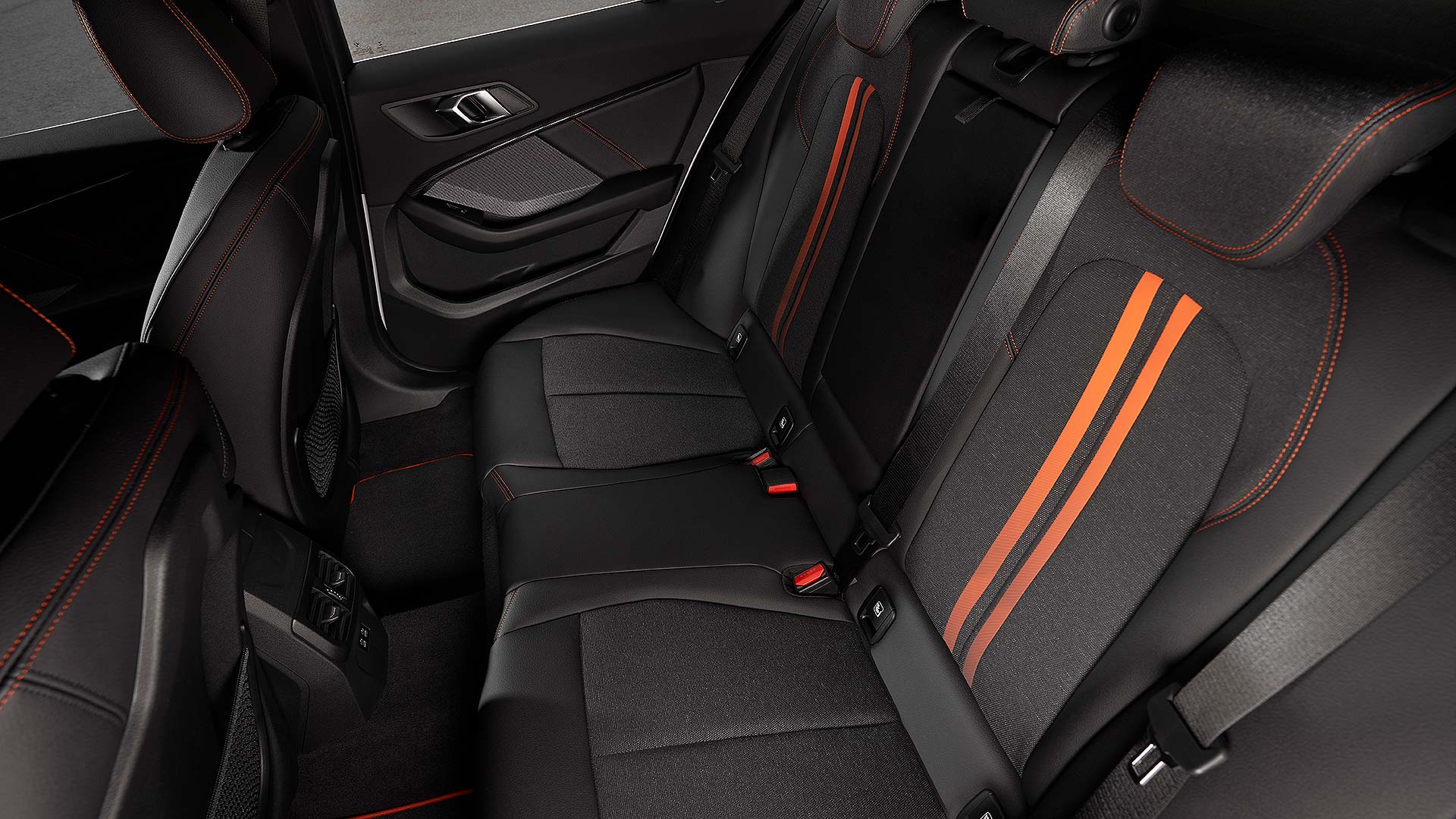
Size-wise, the new 1 Series is actually 5mm shorter than the old car, at 4,319mm. It is 34mm wider and 13mm taller. It has far more interior space; 33mm more rear kneeroom and 19mm more headroom should fix one of the biggest complaints of the current car – its tiny rear seats.
There’s 13mm more elbowroom in the rear, and 42mm more elbowroom in the front will make it feel far roomier.
The boot grows to 380 litres, on a par with a Volkswagen Golf, extending to 1,200 litres with the seats down. It’s 67mm wider and, for the first time, 1 Series buyers can have an electric tailgate.
More tech
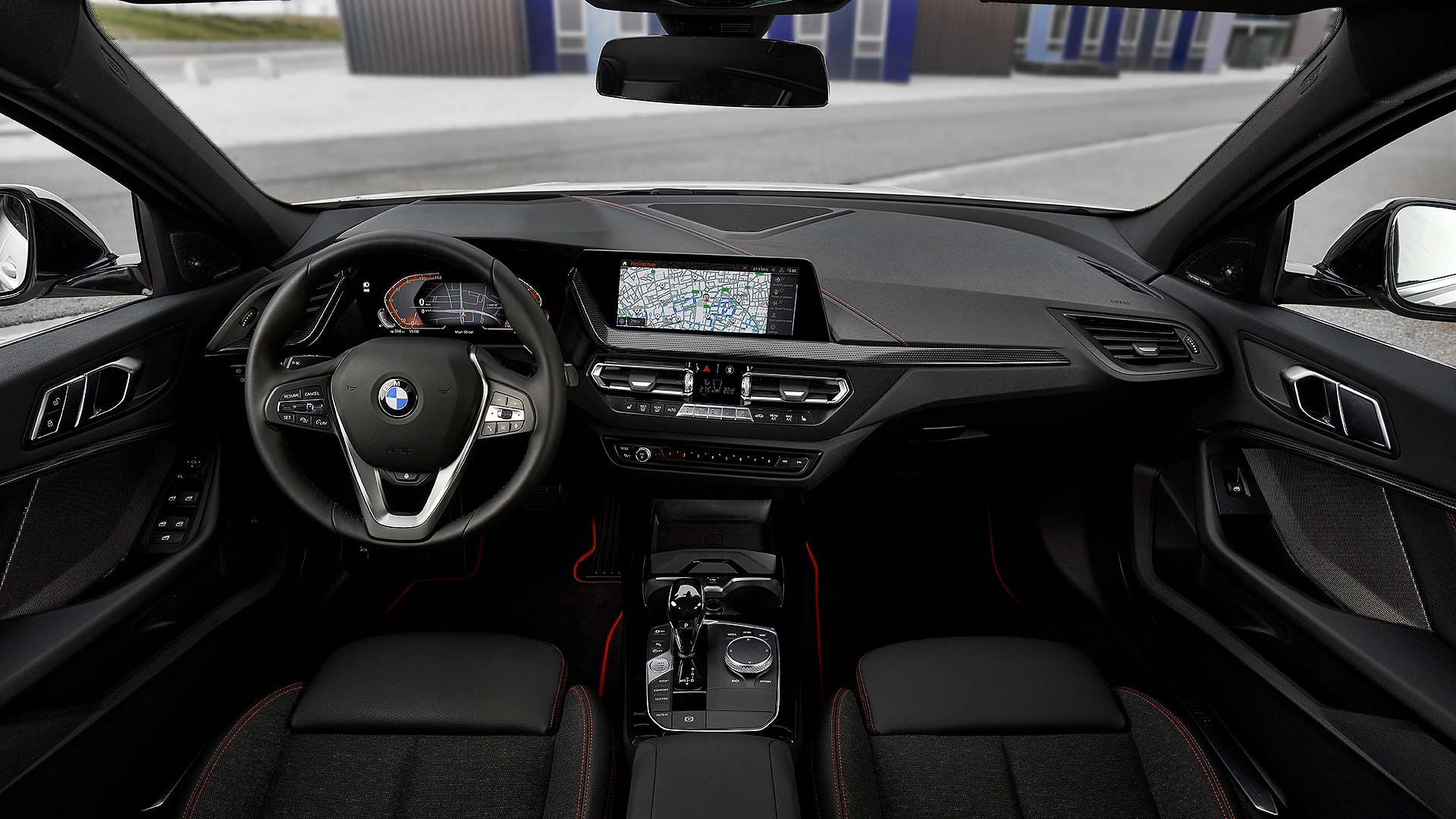
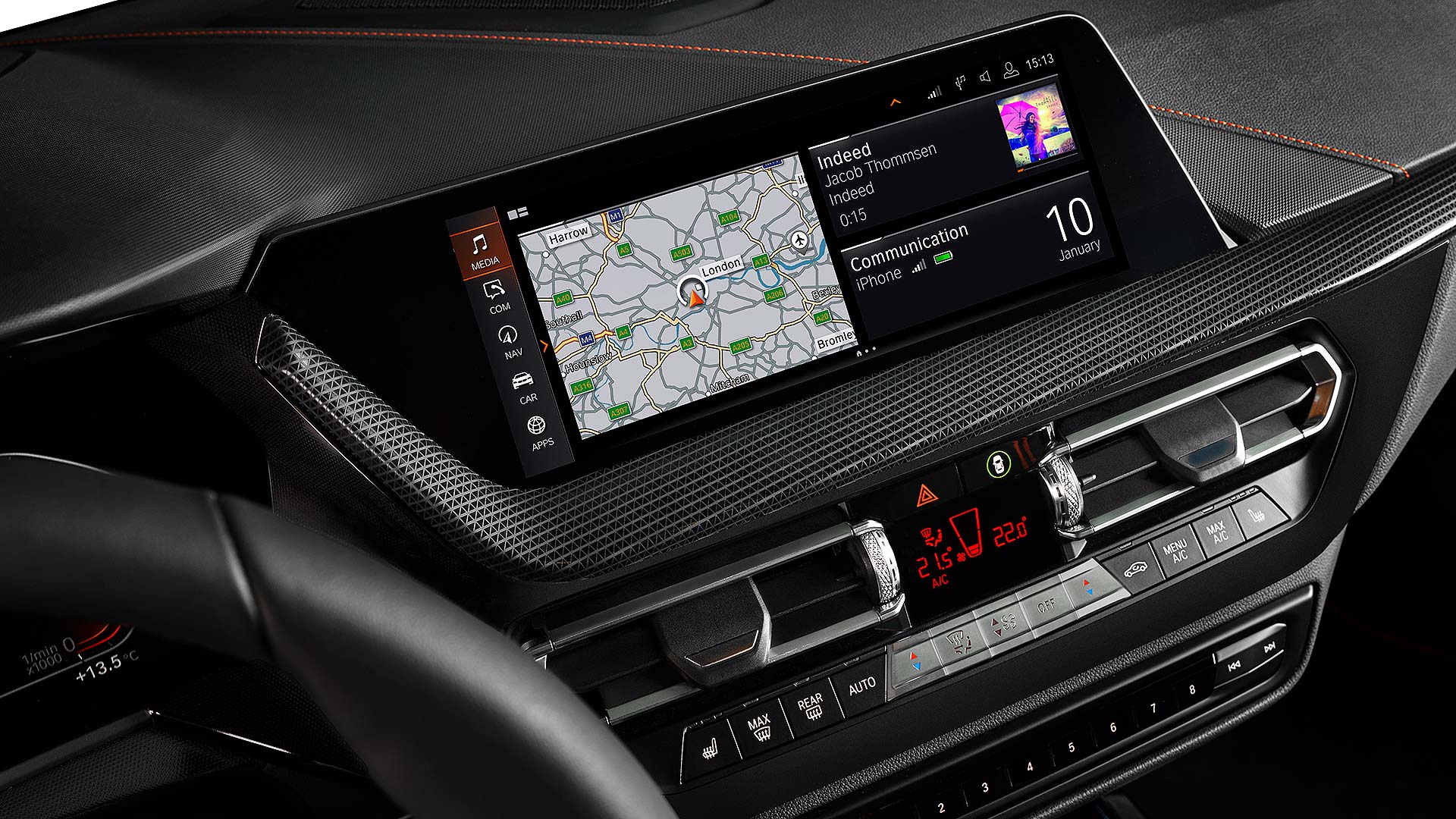
A higher quality interior has features such as touchscreen functionality and wireless smartphone charging. High-end BMW Live Cockpit Professional, as seen in the new 3 Series, is available as an option: it comes with a HD 10.25-inch screen.
The BMW Intelligent Personal Assistant is also now fitted. Say ‘Hey BMW’ to operate various functions and controls. It works in a similar way to a home smart speaker.
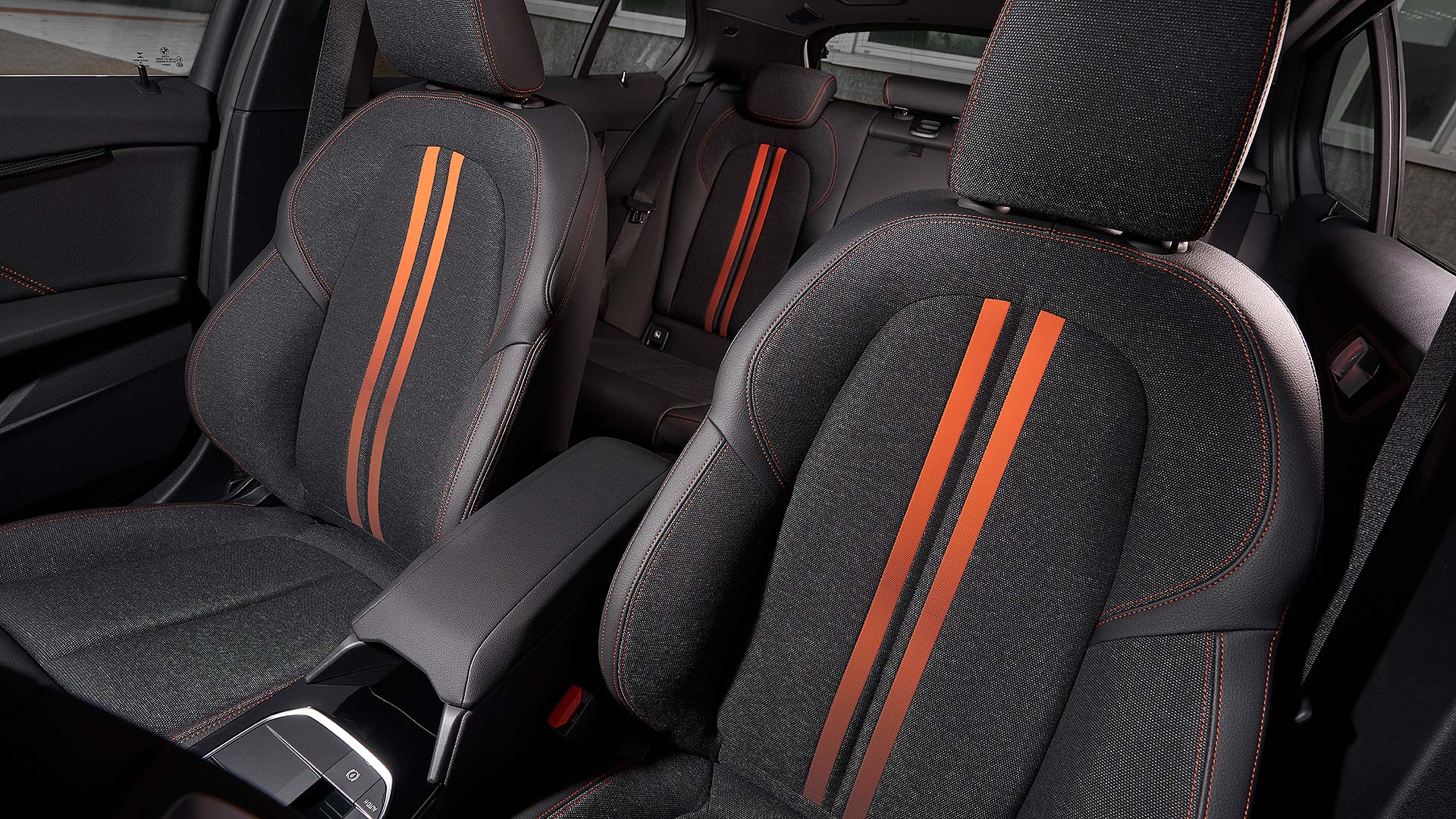
Various trim materials can be chosen and ambient lighting adds theatre at night. For the first time, the 1 Series can be optioned with a panoramic glass roof – which opens.
A head-up display is also offered in a 1 Series for the first time.
Model variants
BMW is selling the new 1 Series in three core trim lines: SE, Sport and M Sport. There will also be a range-topping M135i xDrive.
SE 1 Series have basic matt black air guides in the front bumper. They get high-gloss black paint on Sport models, which also gain a chrome frame kidney grill with high-gloss struts.
M Sport models have additional aero bodystyling, satin aluminium kidney grill struts and, inside, Dakota leather as standard.
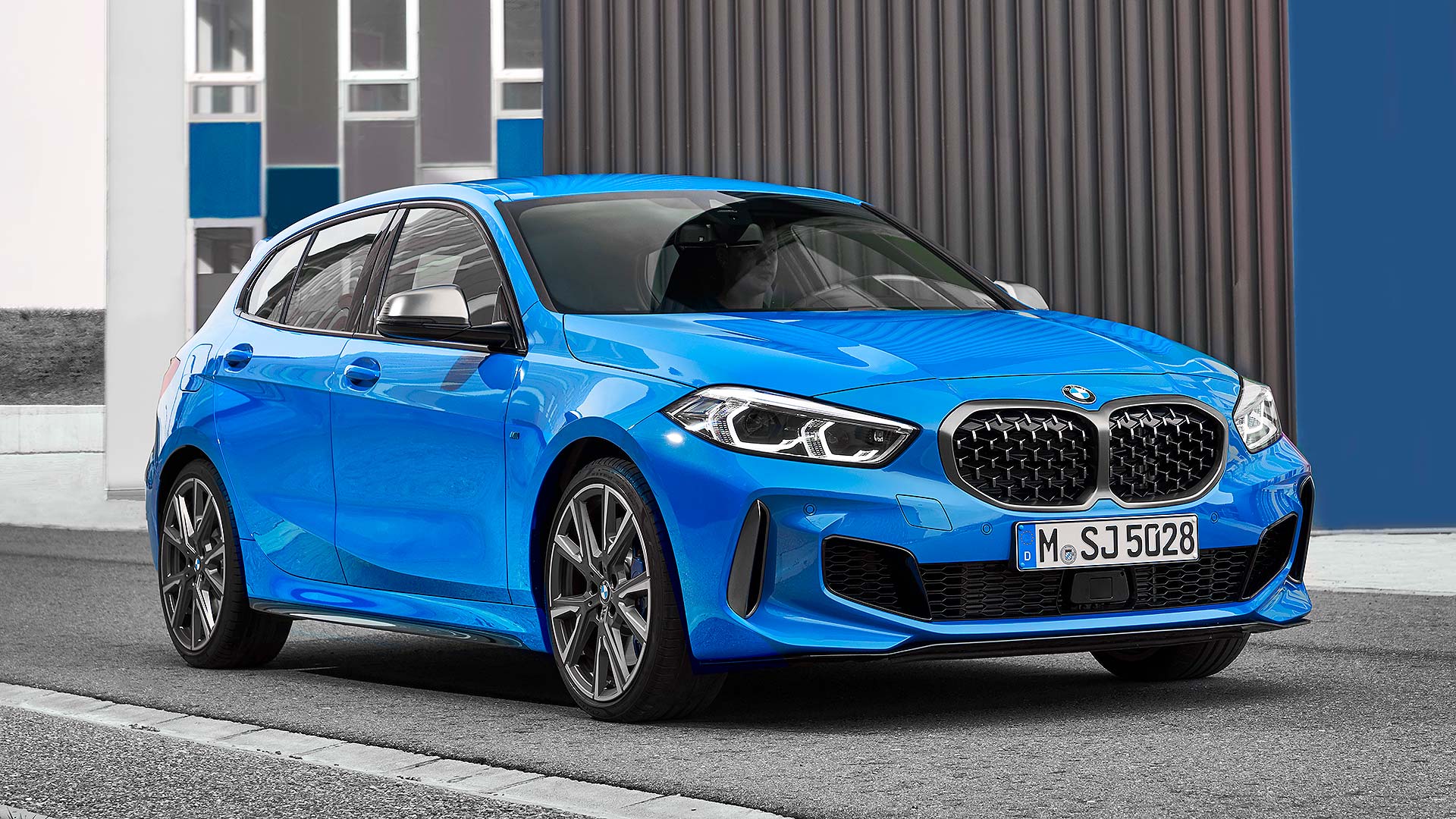
M135i xDrive versions, pictured above, have a mesh kidney grille with the frame finished in Cerium Grey; other details including the door mirrors are also painted Cerium Grey. A high-gloss black rear diffuser and Alcantara M Sport seats with integrated headrests are standard.
How much is the new BMW 1 Series?
The new BMW 1 Series will launch with three diesel and two petrol engines. The entry-level engine, from £24,430, is the 1.5-litre three-cylinder turbo 118i, producing 140hp. It does 0-62mph in 8.5 seconds and CO2 emissions are down a massive 29g/km, to between 114-123g/km.
The only other petrol engine at launch is the M135i xDrive. Sorry, performance fans, the six-cylinder engine has gone: this one is a 2.0-litre four-cylinder turbo, producing 306hp. It does 0-62mph in 4.8 seconds and costs from £36,430.
A 1.5-litre three-cylinder engine powers the 116d, priced from £25,480. CO2 emissions are down 5 percent, to as low as 100g/km, and it will average up to 61.4mpg.
118d (from £26,640) and 120d xDrive (from £32,470) both have 2.0-litre four-cylinder turbodiesels. The 118d produces 150hp and does 0-62mph in 8.5 seconds; the 120d xDrive puts out 190hp and does 0-62mph in 7.0 seconds.
To add slight confusion to the buying process, BMW offers three different types of gearbox with the new 1 Series. 116d, 118d and 118i models have a regular six-speed manual as standard. A seven-speed Steptronic dual-clutch auto is optional on the 116d and 118i.
Standard on the 120d xDrive and M135i xDrive is an eight-speed Steptronic Sport automatic; it is optional on the 118d.
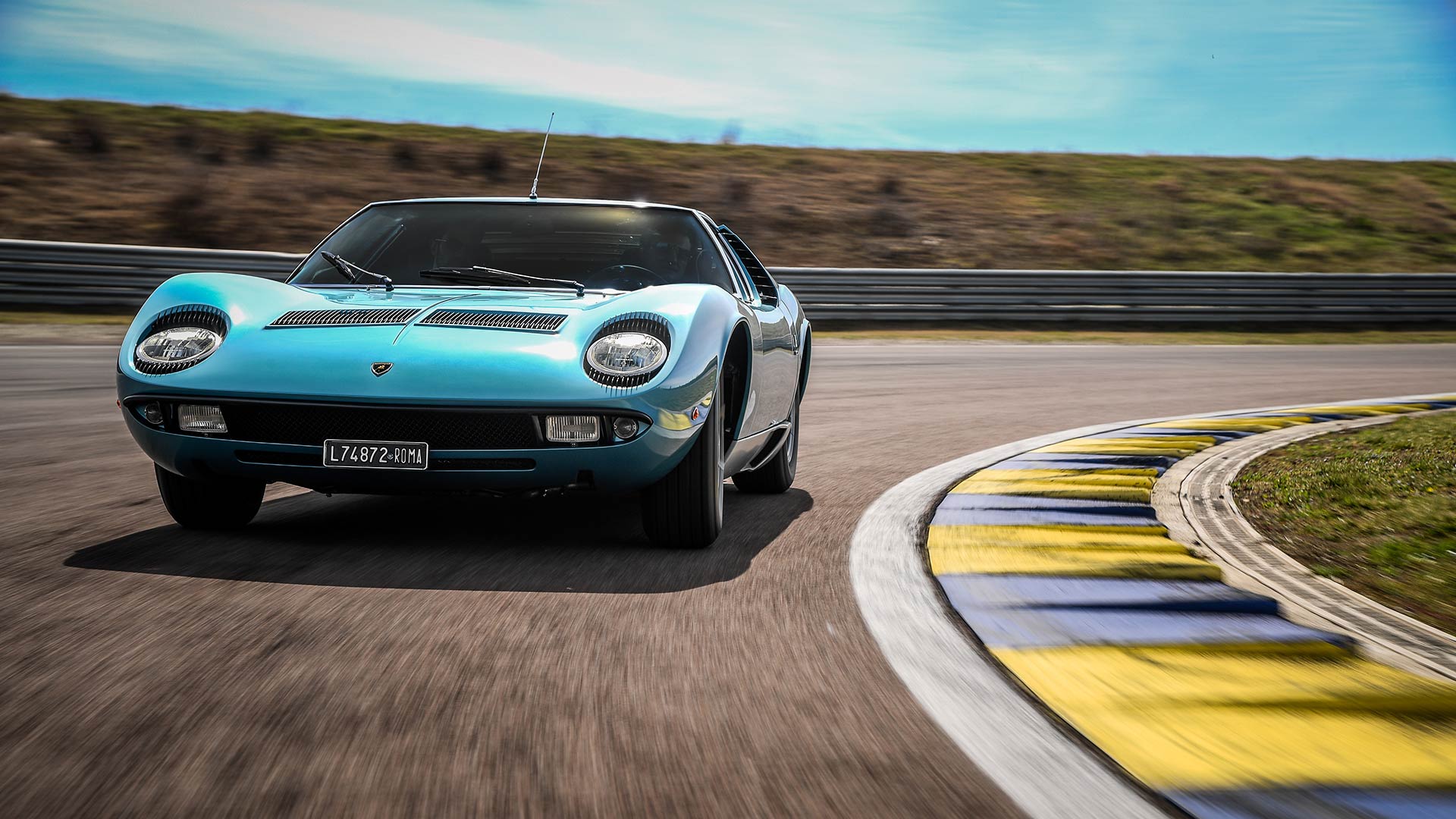
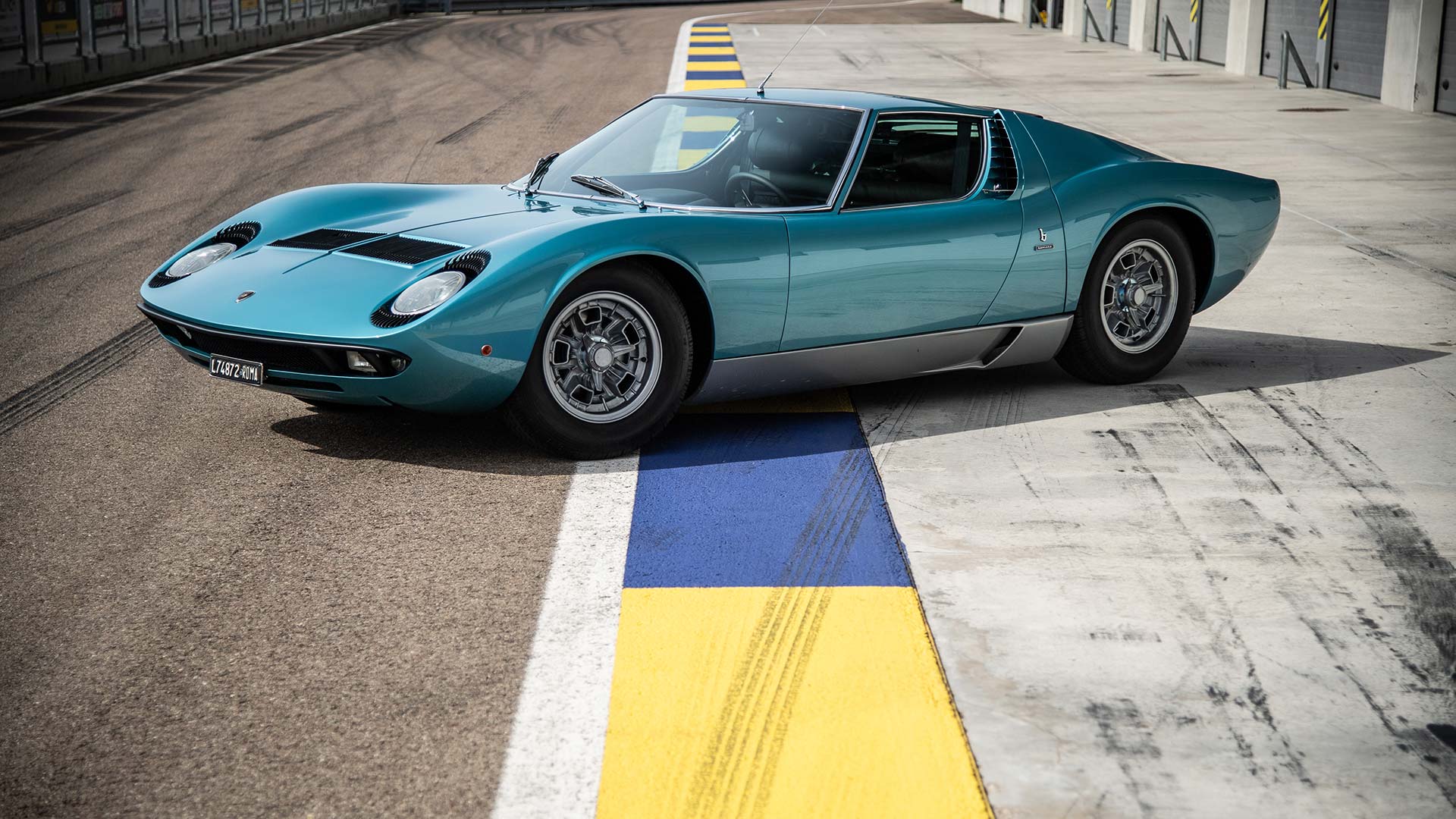
A classic Lamborghini supercar has been restored to former glory, and given important certification by the company’s heritage department.
Following completion of the painstaking work, the car has been on show at the prestigious 2019 Concorso d’Eleganza of Villa d’Este event.
What makes this rare Miura P400 S even more special, is that it previously belonged to one of the most famous Italian singers of the 1950s and early 1960s.
Little Tony took his name, and musical inspiration, from American rock and roll trendsetter Little Richard.
Although born in Tivoli, Italy, Little Tony actually held San Marino citizenship. Whilst he lived most of his life in Italy, he is noted to have never applied to become an Italian citizen.
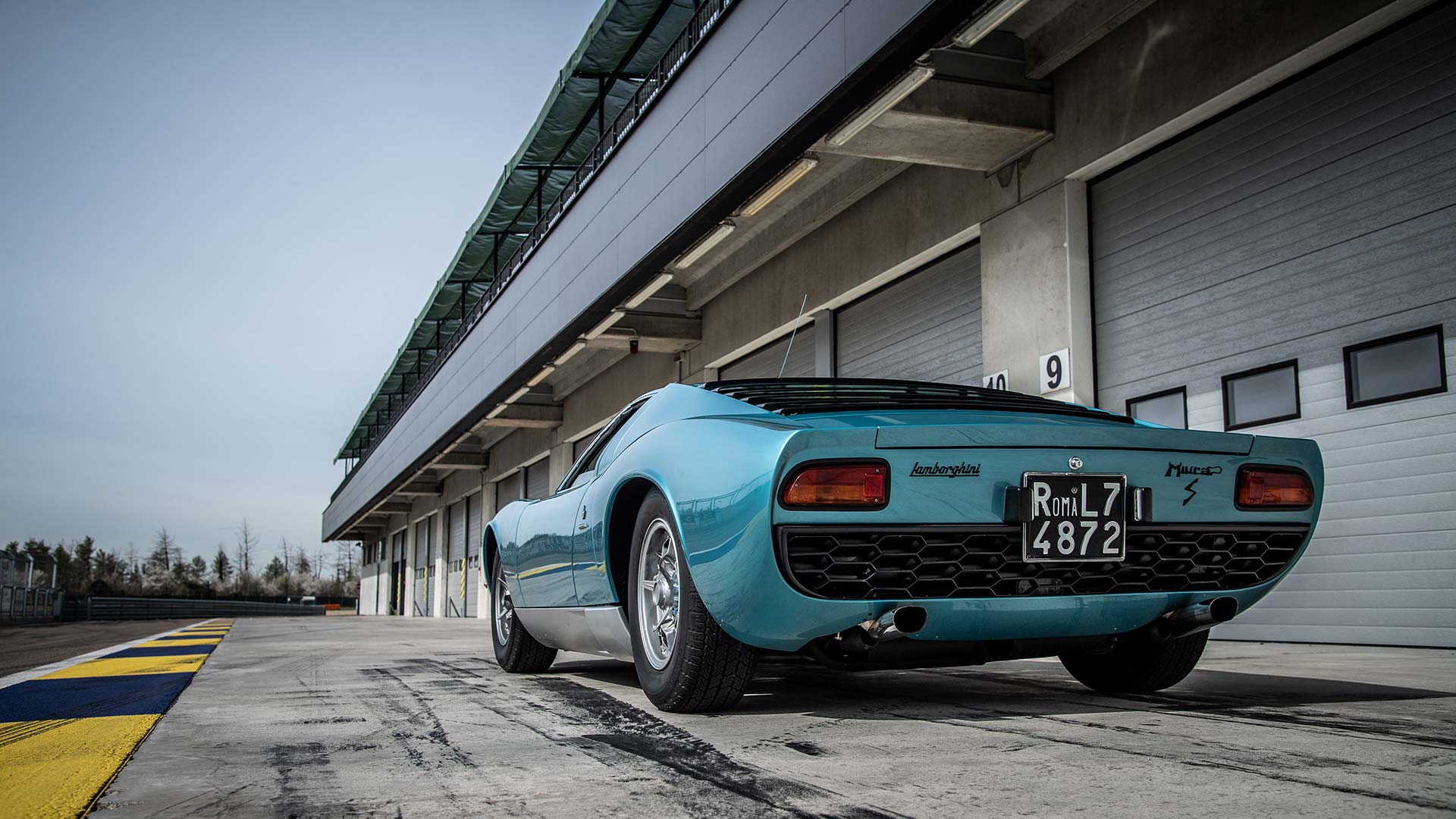
Regardless of his citizenship, Little Tony was a huge fan of Lamborghinis, and owned three Miuras. Finished in Azzuro Mexico blue, this particular 1971 car is one of just six painted in this hue by the factory.
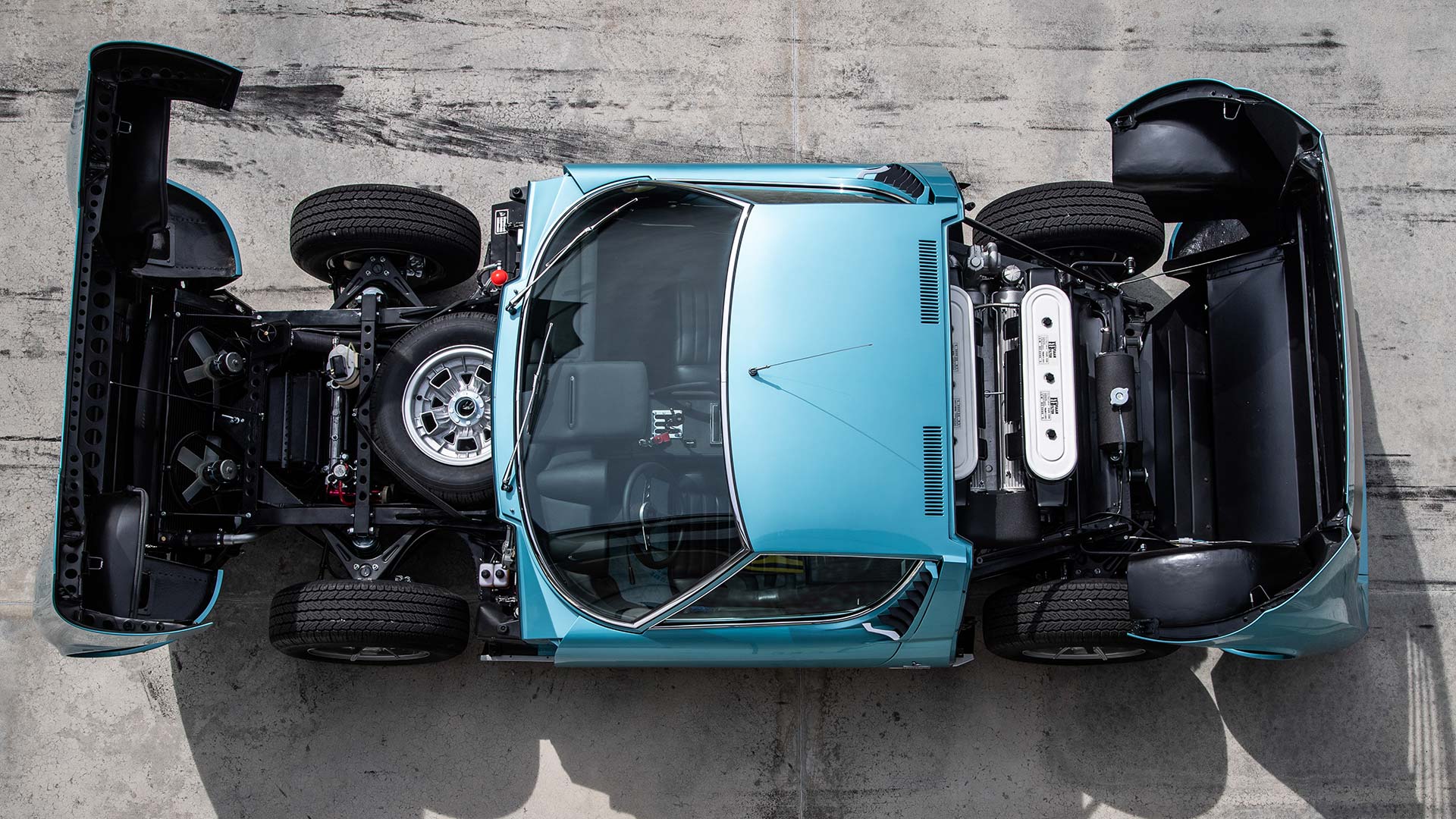
Now owned by an Italian collector, the P400 S underwent a thorough restoration by an official Lamborghini dealership.
The work was carried out under the supervision of Lamborghini’s Polo Storico heritage department. This assistance included supplying original spare parts to ensure period correctness.
Polo Storico were also able to provide details of the original production specification. This meant the car could be rebuilt to exactly how it left the factory, even employing the same methods as used in the 1970s.
With the work completed, Polo Storico was able to certify the authenticity of the car. Doing so means the collectability of the car is now further enhanced, although the rare colour choice and famous first owner already make it desirable.
Held on the shores of Lake Como in Northern Italy, the Concorso d’Eleganza of Villa d’Este brings together a collection of the most beautiful classic cars and motorcycles.
The 2019 event focussed on “The Symphony of Engines”, with cars and bikes being judged not only on looks, but also on the sound they make. Little Tony’s Miura was displayed with a selection of other cars owned by musical celebrities.
 The Society of Motor Manufacturers and Traders (SMMT) has described a huge 44.5 percent fall in UK car production as ‘extraordinary’ evidence of the ‘vast cost and upheaval’ Brexit has already caused the British car industry.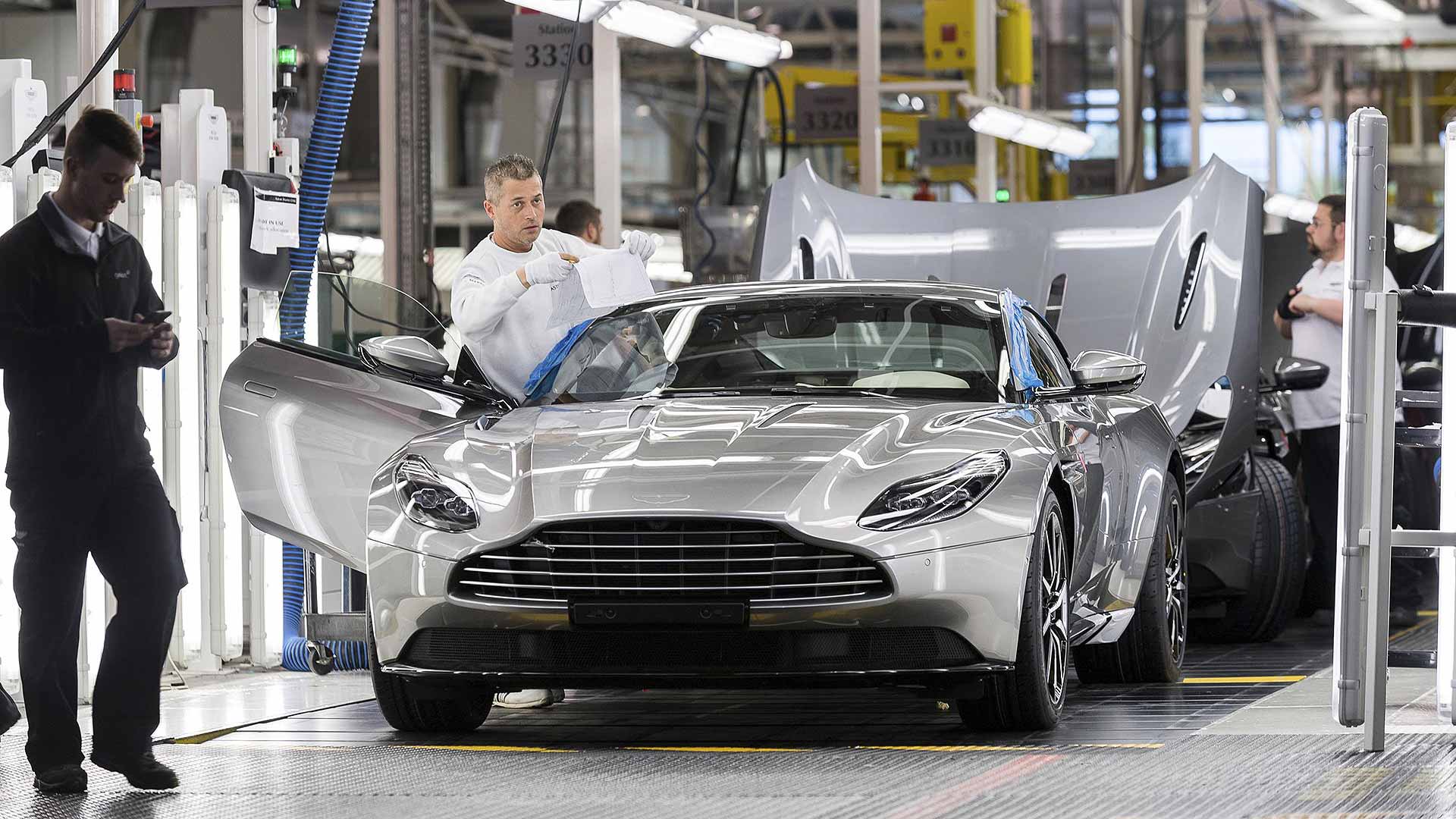



 E-scooters are a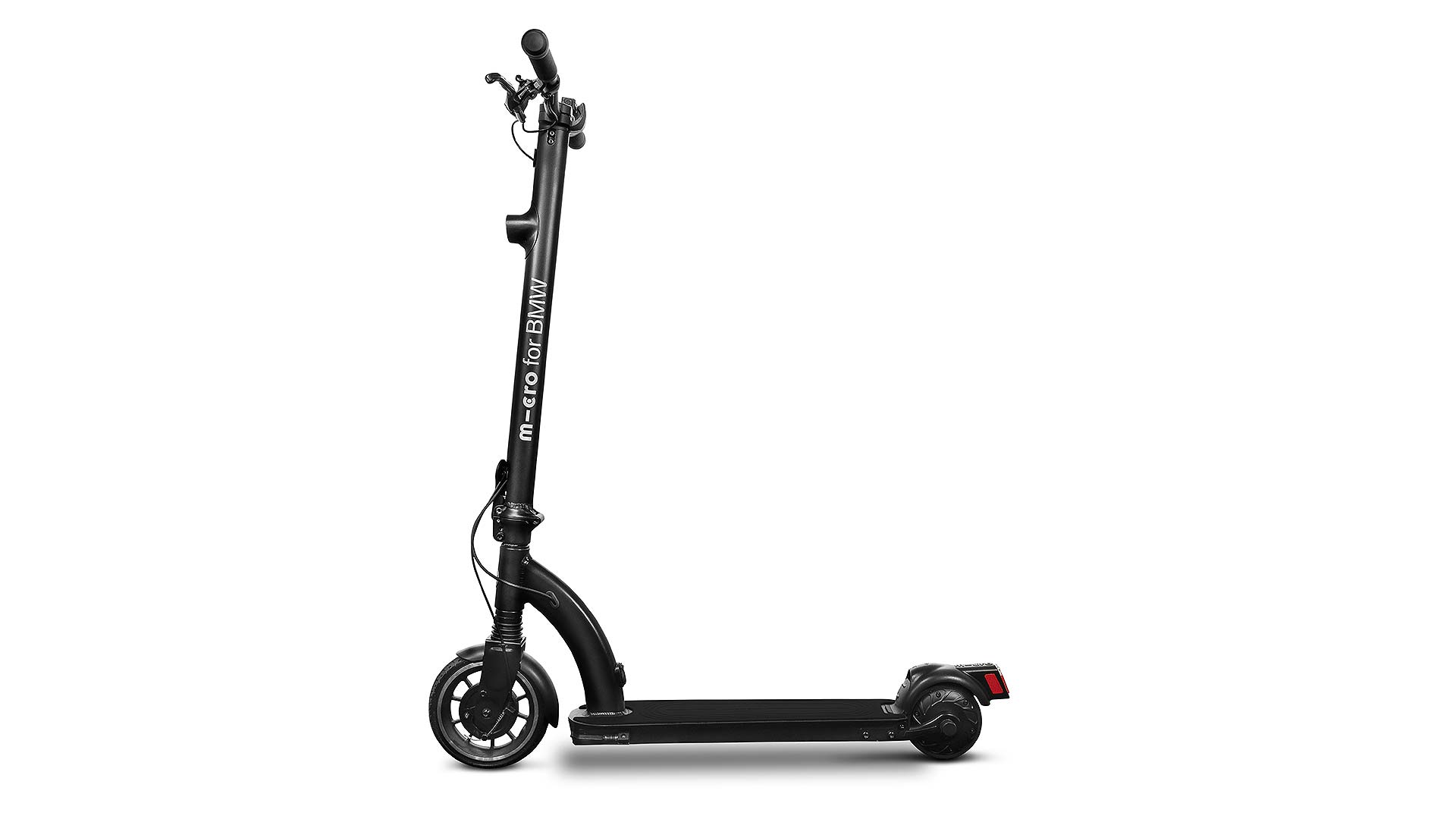





 Ordering for the new