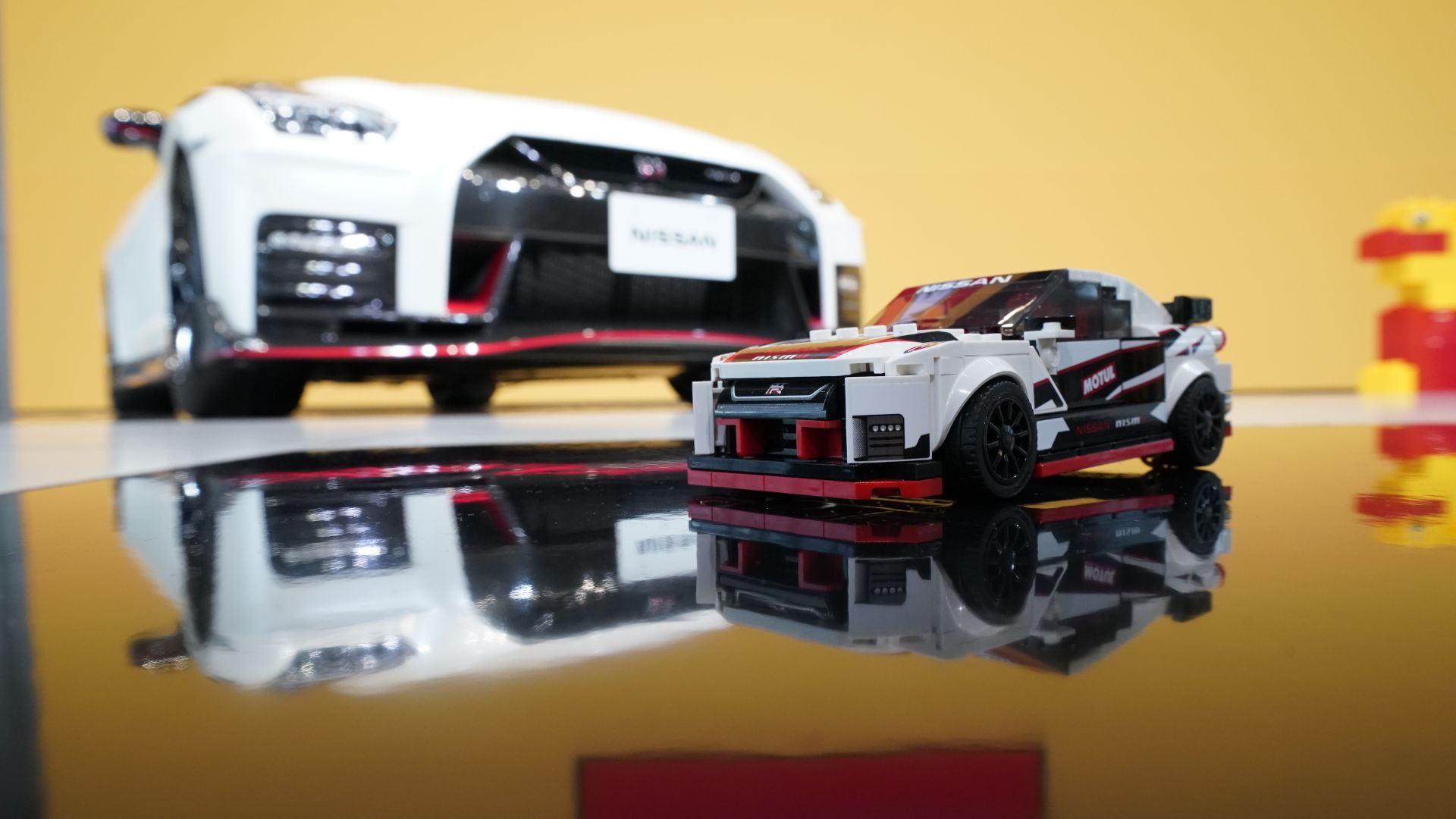
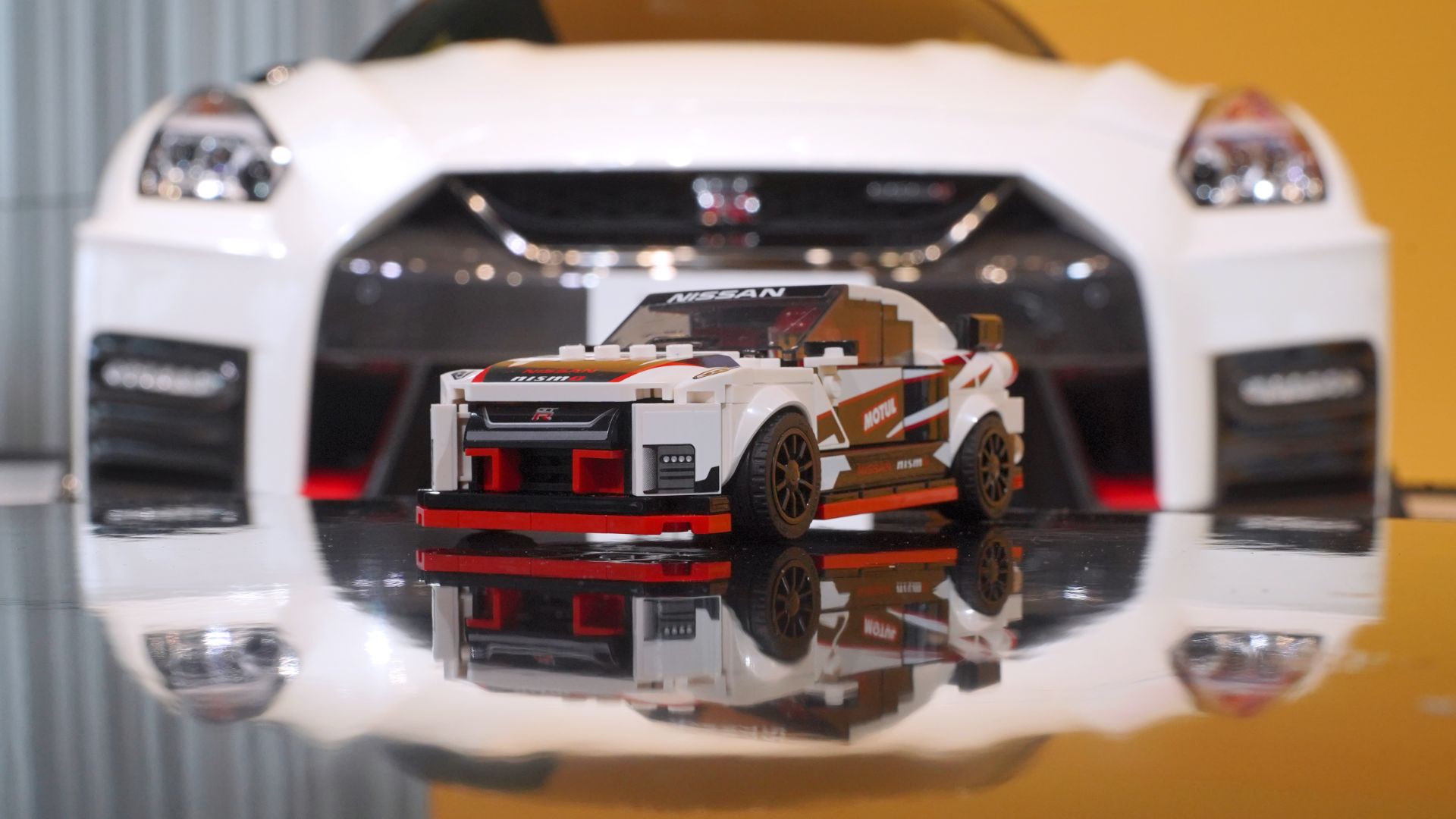
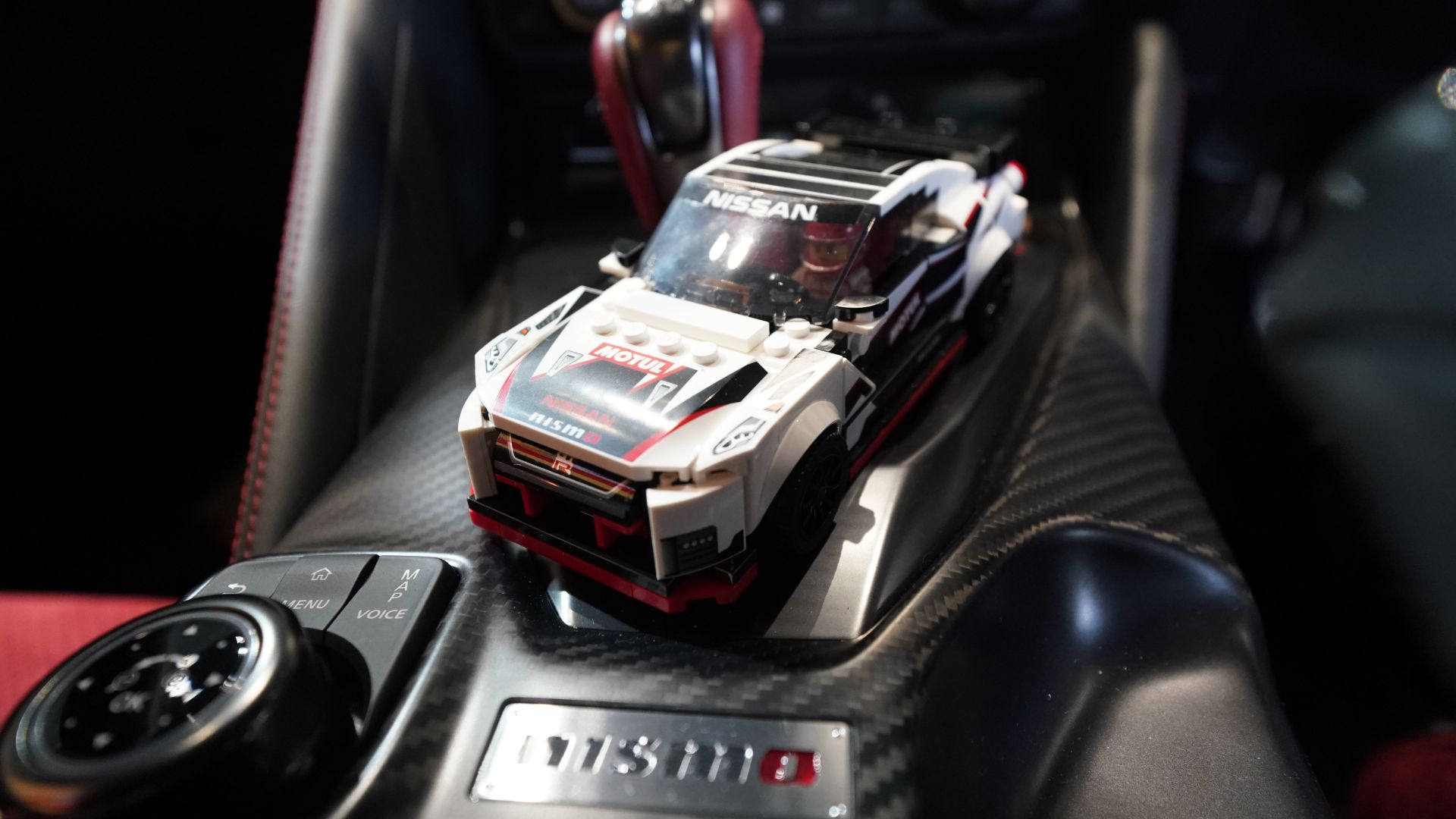
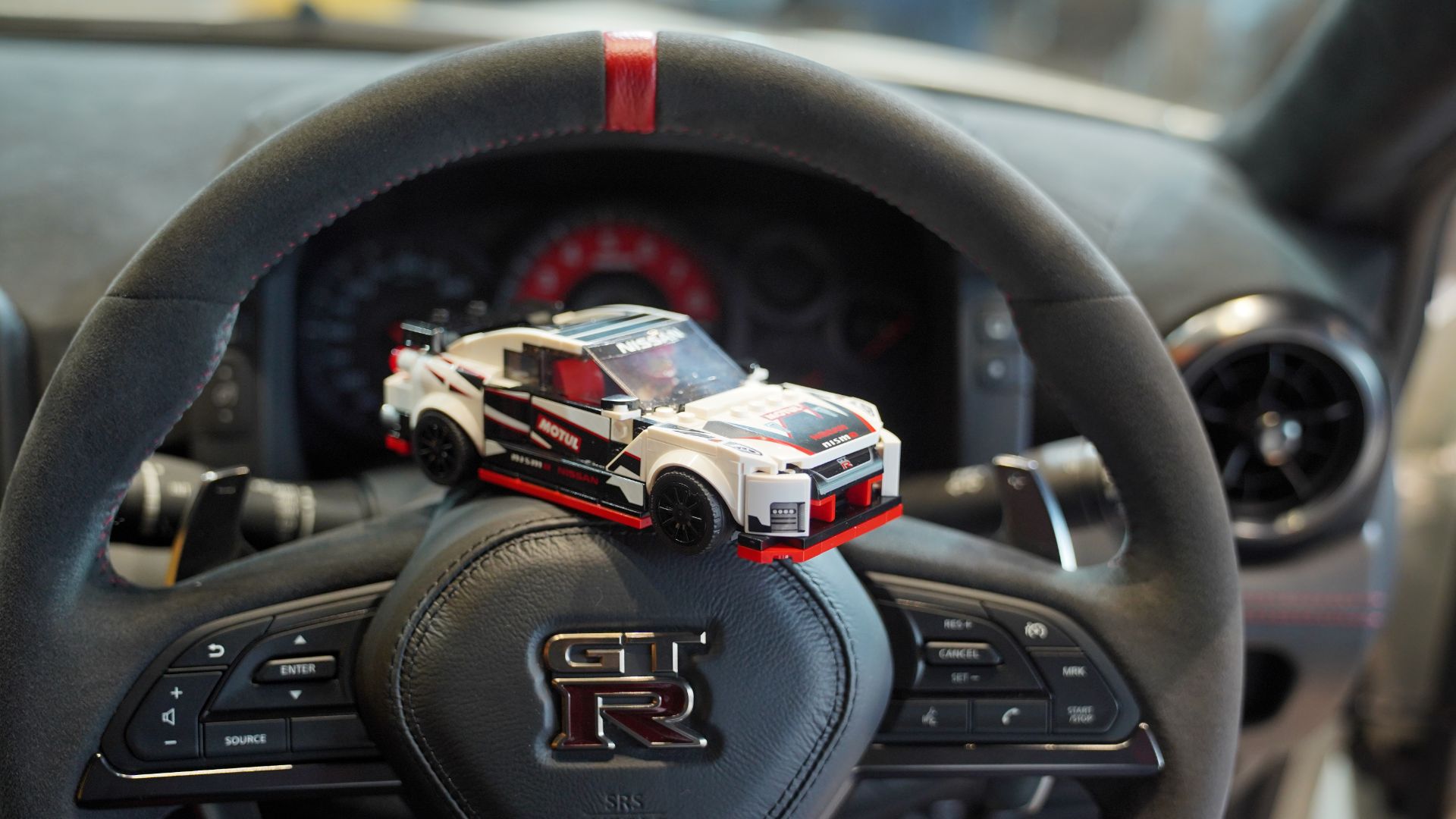
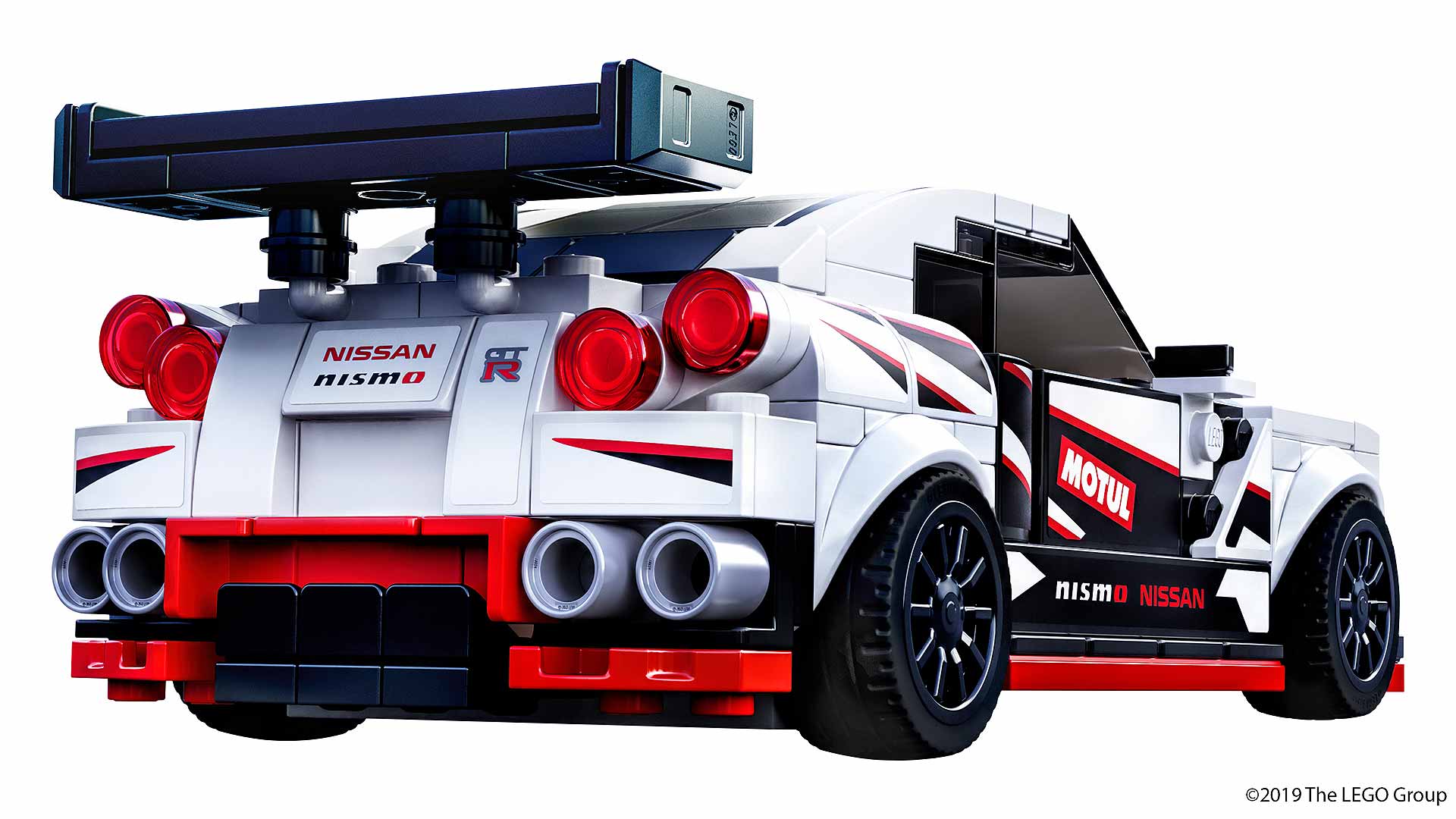
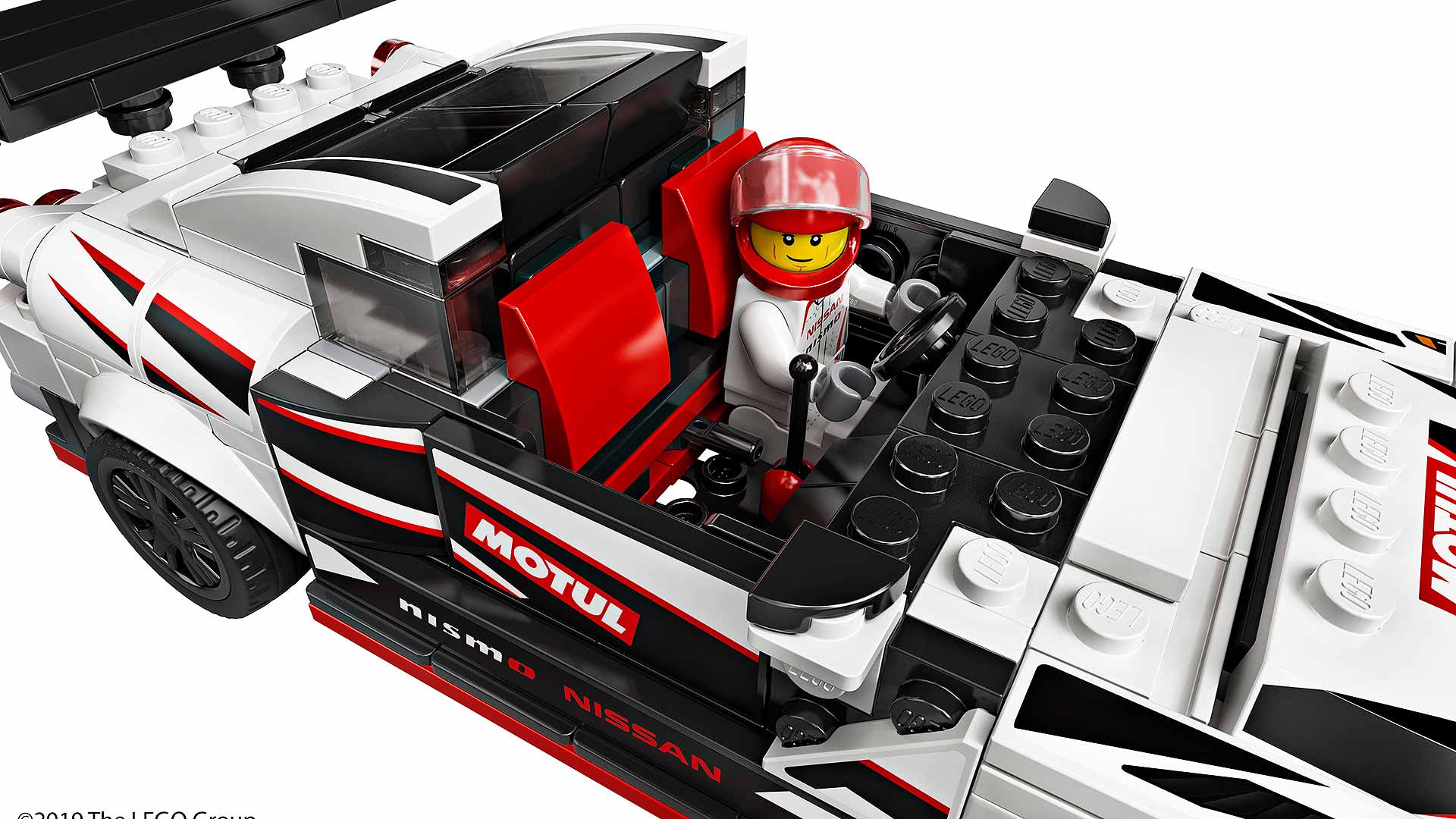
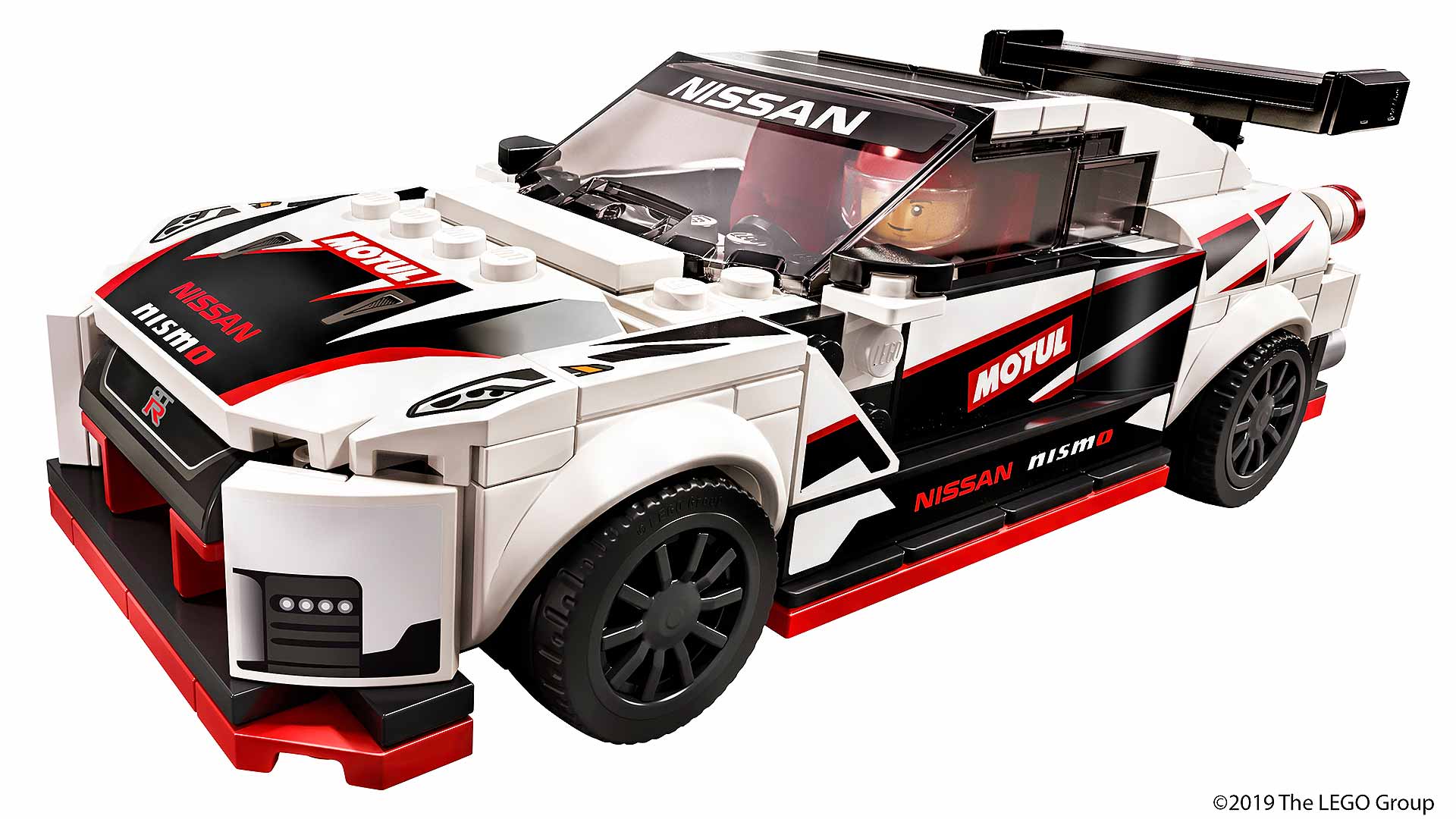
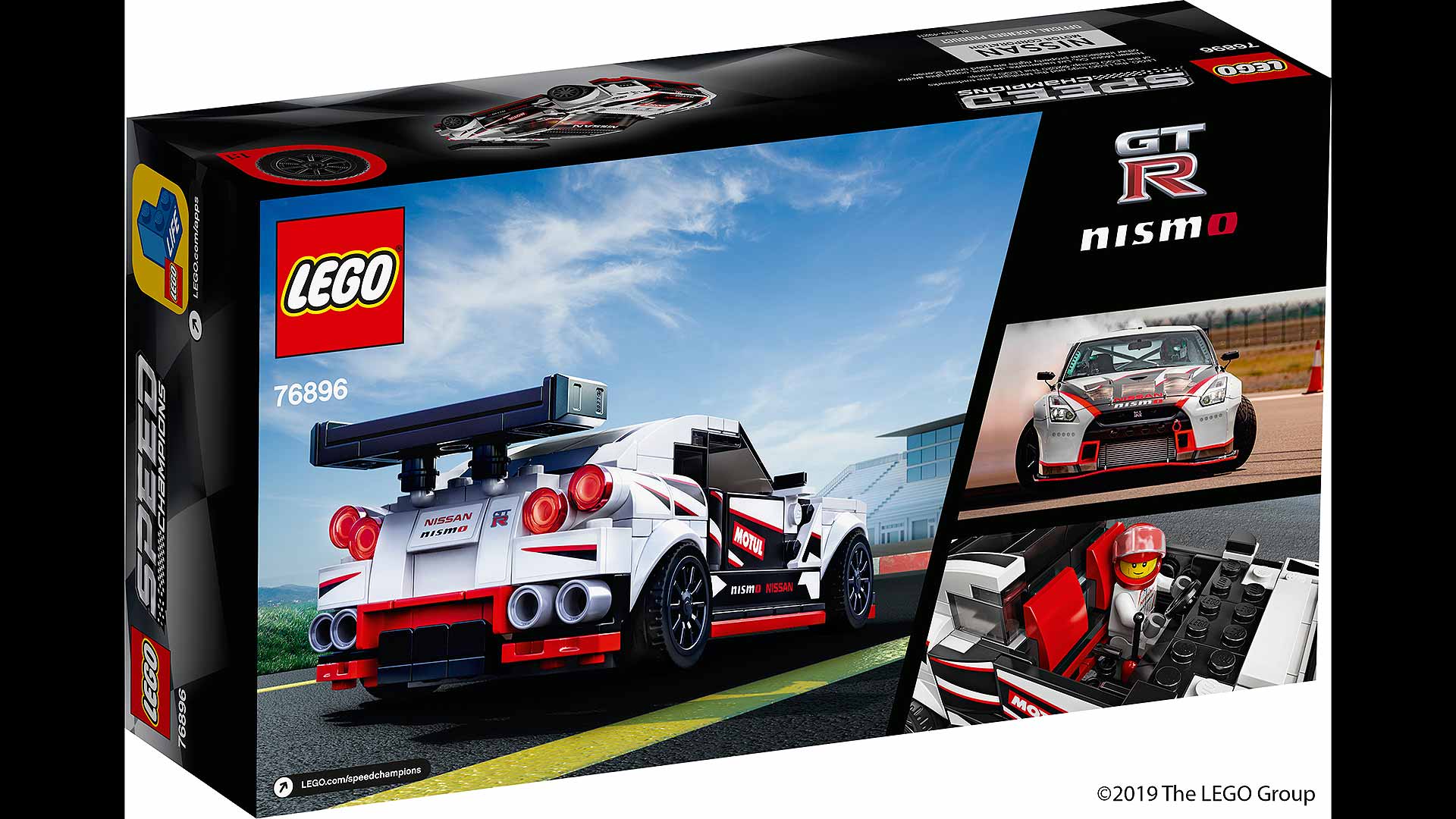
Lego and Nissan have teamed up for the first time to recreate the Nissan GT-R Nismo in brick form. It’s the first time a Japanese manufacturer has team up with the Lego brand. The toy is a recreation of the GT-R Nismo that holds the world record for world’s longest drift.
Being a smaller ‘Speed Champions’ 298-piece set, it’s more difficult to capture the essence of the real thing. However, by recreating crucial elements of the GT-R, this latest addition to the Lego roster couldn’t be mistaken for anything else. Just look at the back of it, with those enormous quad tailpipes, the unmistakable GT-R lighting and that enormous wing.
“The GT-R has been part of my life since I was 10 years old,” said Hiroshi Tamura, Nissan’s chief product specialist for the GT-R – known to many as ‘Mr. GT-R‘.
Full-size LEGO Honda Civic Type R took 1,300 hours to build
“Working with the Lego Group was like awakening my inner 10-year-old self to rediscover what makes the GT-R so special to me. It’s amazing how much the Lego Group’s attention to detail reminds me of our own craftsmen.”
The Speed Champions GT-R took around a year to develop, and will be the first reveal in this line for 2020. Previous entries include the McLaren Senna, which was famously the poster car for the Lego Speed Champions Forza Horizon expansion, and the Porsche 911.
Being part of the smaller Speed Champions line comes with a number of advantages over, say, the several-thousand-piece monsters like the Chiron.
Firstly, it’s cheaper. When it arrives in January 2020, you won’t get buyer’s guilt for picking it up, even if you’re closer to 40 than four… It’s a shame, however, that it won’t be available in time for Christmas.
It’s less intricate, so you’ll have it together in no time, even if some of the build team aren’t quite as disciplined as you. Lego reckons an expert Lego builder can have it together in 20 minutes, but that novices should allow an hour.
It’s also smaller and therefore easier to store once it is together. Due to its relative simplicity, it should be easier to repair if a fellow family member stands on and tries to drift it, too.
“The Nissan GT-R and the Lego brand are both renowned and loved by fans of all ages throughout the world, and we are honored to be the first-ever Japanese car manufacturer to partner with the Lego Group,” said Asako Hoshino, executive vice president at Nissan.
“Many of our Nissan customers can trace their automotive passion back to when they built Lego cars as children. With this partnership, everyone can be a `takumi’ – the specialised craftsmen that build the GT-R. And, it’s the GT-R’s 50th anniversary this year, so what better way to celebrate than to share the GT-R with Nissan and Lego fans around the world!”
The trailer for season four of The Grand Tour is here, previewing the first in a series of feature-length specials. The ‘big three’ ex-Top Gear presenters, Jeremy Clarkson, Richard Hammond and James May, famously abandoned their traditional studio format at the end of the previous series, favouring themed ‘adventure’ episodes.
The first takes place in Cambodia and Vietnam, as the trio cross the Mekong Delta. It’s called The Grand Tour presents: Seamen. As the title suggests, transport will be via boats rather than cars – and we all know how well that usually goes. We fully expect the seamen to become swimmers…
“We are excited to announce the launch date for The Grand Tour presents: Seamen, the first of our epic adventure specials from Prime Video’s much-loved trio, Clarkson, Hammond and May,” said Georgia Brown of Amazon, which streams the series via its Prime service.
Freddie Flintoff crashes jet-powered tricycle while filming Top Gear
“We know fans love to see the guys take on these incredible adventures across exotic locations and The Grand Tour presents: Seamen does just that – this feature length special promises to be a thrilling off-road escapade, full of challenges and jeopardy, climaxing in one of the most dangerous and exciting challenges Jeremy, Richard and James may have ever endured – viewers are in for a rocky ride!”
The boat choices are as you might expect. Clarkson has opted for a military patrol boat, Hammond has gone for a speedboat and May has a relaxed river cruiser. Amazon says the end of the film contains ‘one of the most dangerous and exciting challenges’ the team have ever faced.
Get a taste for what’s to come with the above trailer. The first episode of The Grand Tour season four will be available to watch on Friday 13 December.
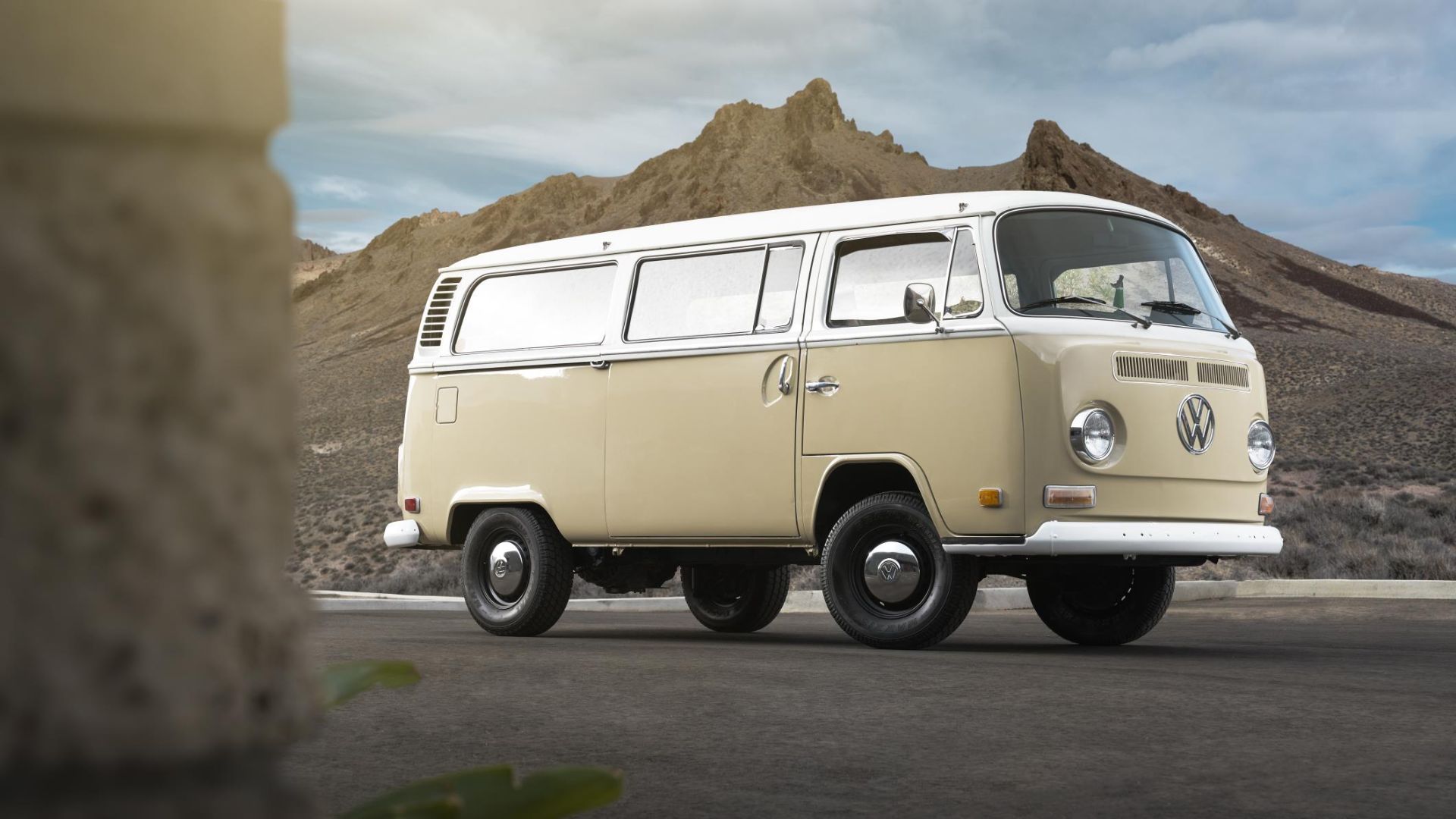
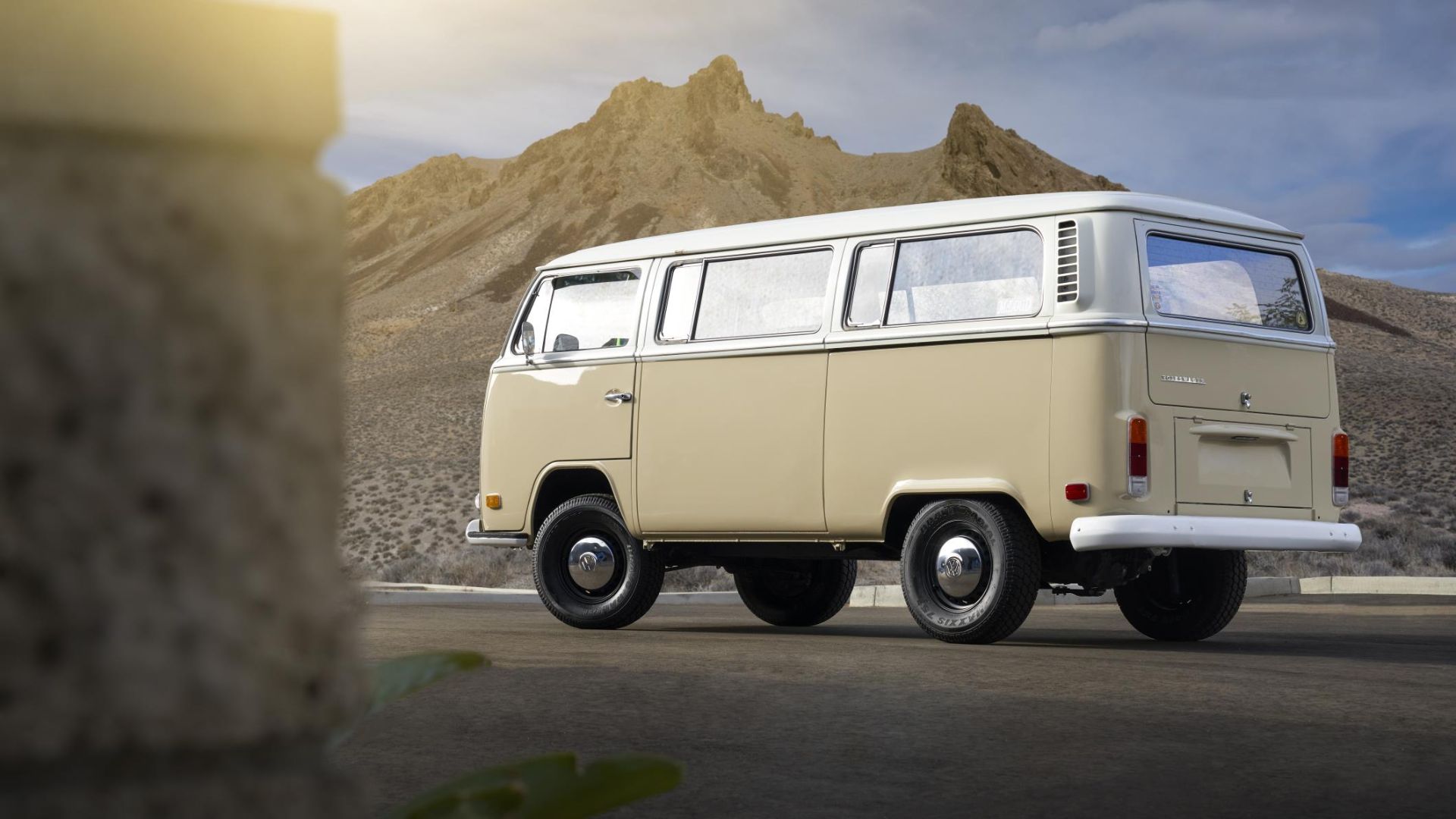
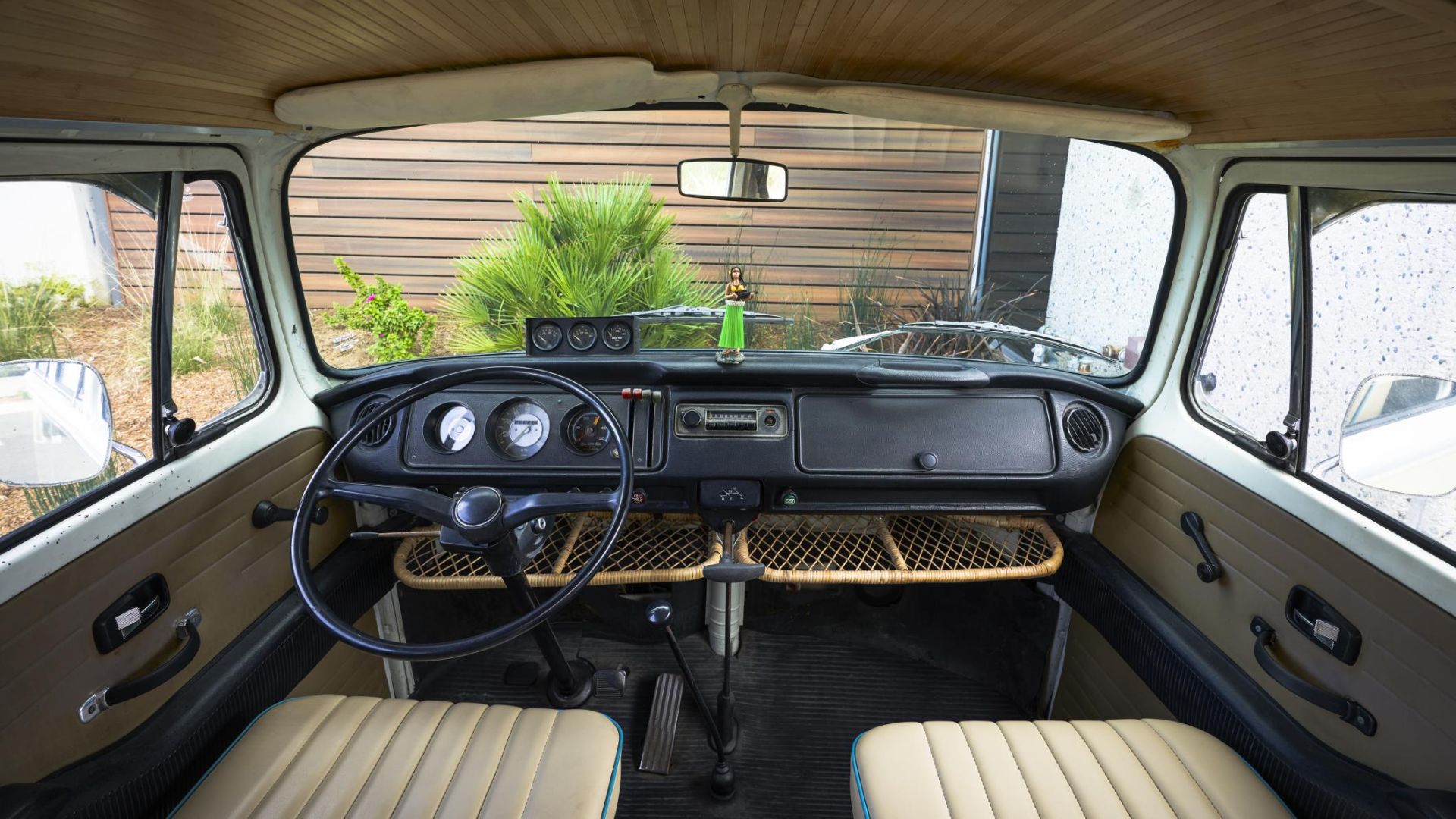
Volkswagen has followed up its electric Beetle with a battery-powered bus. The Type 2 camper uses the running gear from an e-Golf.
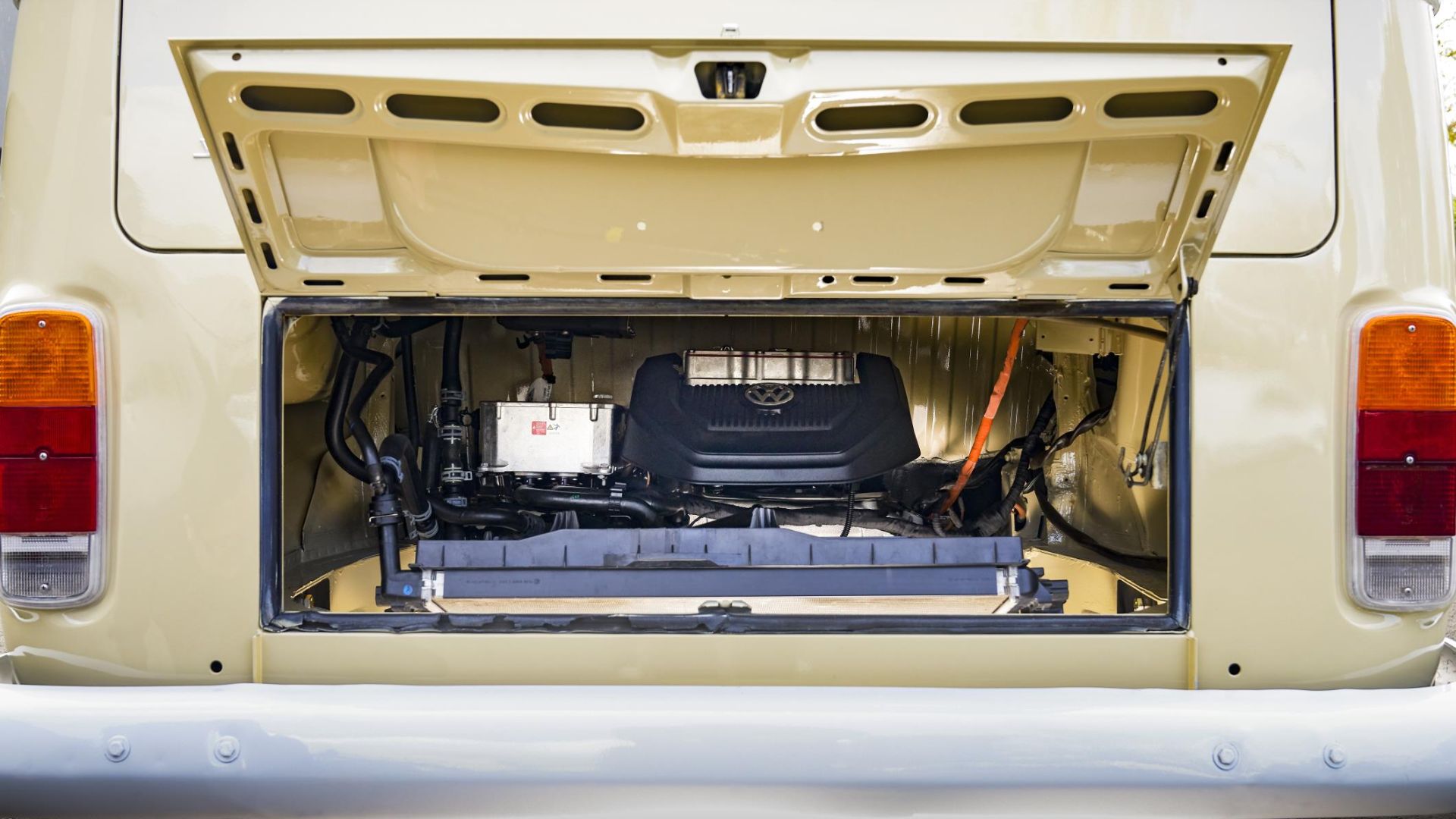
Like the Beetle, the Type 2 swaps out its rear-mounted air-cooled engine for an electric motor and battery pack. It features the Golf’s 35.8 kWh battery and 100 kW synchronous AC permanent magnet electric motor. That gives the ‘e-Bus’ an approximate range of 125 miles.
It also borrows the Golf’s single-speed transmission and charging system. The batteries can be found under the front seats, as well as where the fuel tank used to be.
That is where the changes end, however. As with the Beetle, the aesthetic of the Type 2 Bay Window goes largely unchanged, maintaining its classic appeal.
Even the long-throw gear shifter of the original bus remains, albeit with new park, reverse, neutral, drive and regenerative braking modes. What is different inside is the digital dashboard, but even that is classically-styled.
The project is a collaboration between Volkswagen USA and EV West, an electric vehicle parts and EV conversion company. The latter has plenty of prior experience swapping electric powertrains into everything from classics to track cars.
Nearly half think electric cars should make engine noises
“Their passion for classic-car culture and commitment to renewable energy made EV West the ideal choice for this project,” said Mathew Renna of Volkswagen.
“We thought, who better to see if the e-Golf powertrain would be the perfect fit for our older vehicles? It’s great to see that the spirit of hot-rodding is going to live on into the electric age.”
“We are very excited to be a part of this project,” said Michael Bream, CEO of EV West.
“Merging a historic model from an iconic brand with the technology of today, is just one of many ways that we can step closer to a more sustainable future while continuing to enjoy our rich automotive heritage.”
Even in a week which included the launch of a battery-powered Ford Mustang, the biggest talking point from Los Angeles has been the Tesla Cybertruck.
Revealed with typical Tesla theatrics, the futuristic all-electric pickup truck has generated controversy. This ranges from its looks, to the actual ability of Tesla to even build it.
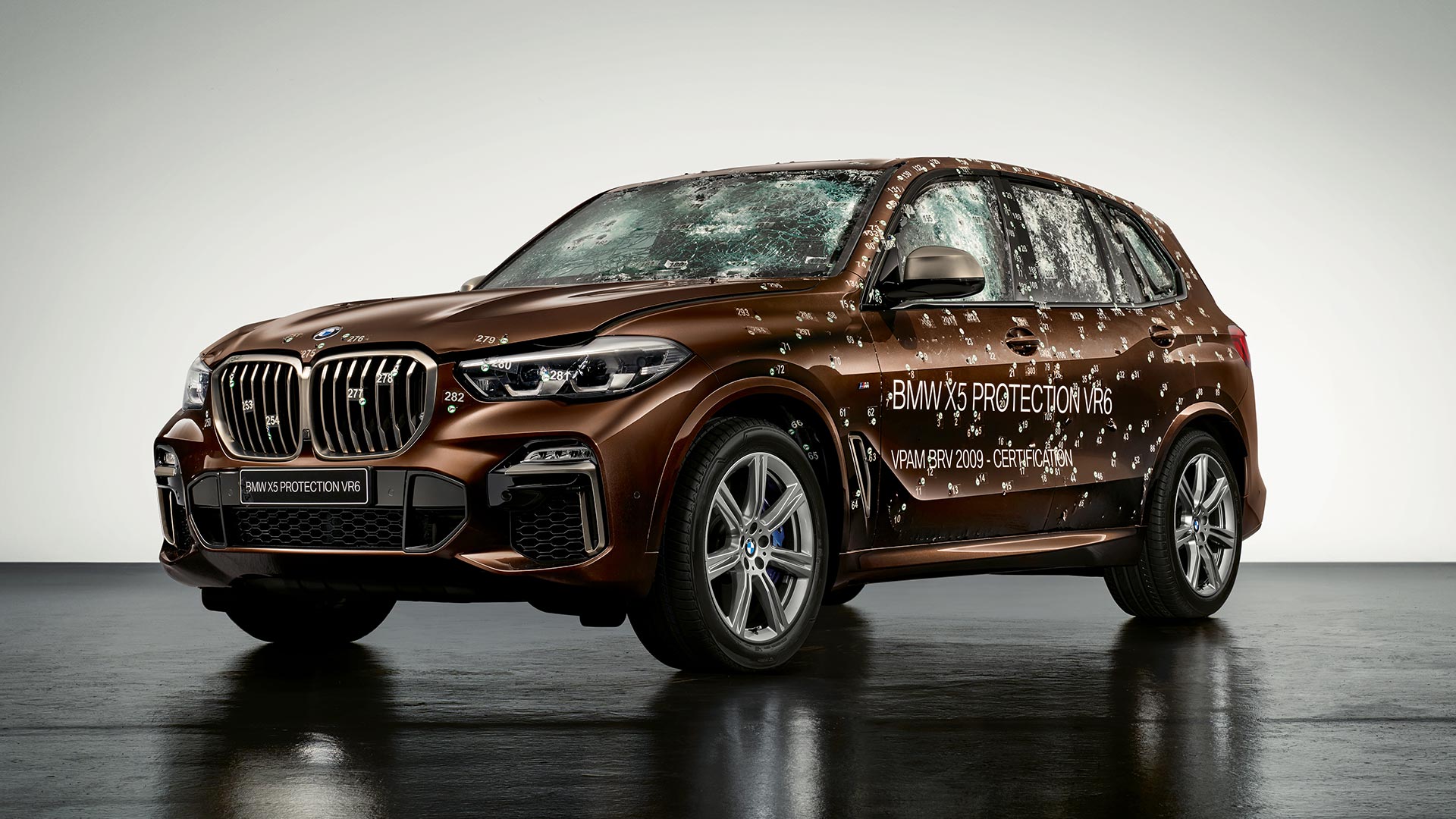
Yet the shattered glass at the launch event, caused by a metal ball, prompted BMW to subtly remind the world that its vehicles already offer bulletproof windows.
Comes with bulletproof windows and offers splinter protection in case it gets hit by a metal ball: The new BMW X5 Protection VR6: https://t.co/XnMPixFvRx
Tesla’s troubles came when design chief Franz von Holzhausen attempted to demonstrate the strength of the glass in the prototype Cybertruck. With Tesla CEO Elon Musk claiming the windows were “bulletproof to a 9mm handgun”, a metal ball should have been no issue.
Instead, the side windows of the Cybertruck shattered when von Holzhausen lugged a metal ball at them, causing splinters and shocked faces in equal measure.
Musk was keen to point out that previous attempts had failed to damage the glass. He added it would be sorted before customers took delivery of production Cybertrucks.
Franz throws steel ball at Cybertruck window right before launch. Guess we have some improvements to make before production haha. pic.twitter.com/eB0o4tlPoz
BMW’s tweet about metal balls and splinters was clearly referencing the Tesla event. But also reminding buyers about the impressive abilities of the armoured X5 Protection VR6.
The X5 VR6 has been certified as resistant to firearms and explosives, with its windows one of the key components. It uses multilayered safety glass capable of withstanding attacks by impact weapons – like metal balls – and comes with an internal polycarbonate layer to stop splinters.
BMW does not disclose prices for the X5 VR6, but the X5 M50i that serves as the base for the armoured version begins at £74,620 ($82,150). This makes it considerably more expensive than the anticipated £31,000 ($39,900) Cybertruck.
Although Tesla may have dominated social media with the reveal of the Cybertruck, the event has financial investors worried. Tesla’s share price fell by 6% on Friday after the launch, with Forbes noting that this would wipe $768 million (£599 million) from Elon Musk’s personal wealth alone.
Tesla’s entry-level Model 3 has found success this year, becoming a UK top-10 best-seller earlier this year. Yet the company is also building up a backlog of models to launch, which the Cybertruck only adds to.
Along with the new pickup for 2021, Tesla is promising to launch the Model Y compact crossover, new Roadster, and its Semi truck during 2020. This pressure to deliver, rather than the Cybertruck launch, may be causing investors to worry.
For those needing an armoured pickup truck right now, there is always the option to try and persuade BMW to build a VR6 version of the X7 Pick-up concept.
It’s not quite the moon landing, the fall of the Berlin Wall or a meal at Pizza Express, but for Tesla fans, it’s another moment in history. A significant date for the memory bank.
Tesla – and more specifically, the Cybertruck – has been trending on Twitter ever since. It’s secured top billing on the BBC homepage, while the Daily Mail has even given it greater prominence than Millie Mackintosh’s ‘bare bump’ and the ‘plunging gown’ of Charli XCX.
Aside from a well-known yeast extract, nothing divides opinion quite like a new Tesla. Everything Elon Musk does appears to usher in an open season for opinions, memes and witty critiques.
This morning, the Tesla Cybertruck was likened to everything from Lara Croft’s ‘enviable assets’ (to use the Mail’s terminology) to a rubber door wedge. Some were witty – a few were even original.
Every day except Wednesday, Motoring Research asks me to write an opinion piece on something topical or newsworthy. I get the day off on Wednesday, presumably because, aside from the bin collection, nothing ever happens on a Wednesday.
As today is Friday, I’m free to write something on the Tesla Cybertruck. But I won’t. Not only has Ethan got there first, but there are literally no opinions left. I’ve shone a torch into the bowels of the opinion-o-generator and there’s nothing there. Zilch. Zero. Nadda.
More news than you can shake a stick at
Instead, allow me to take you on a tour of some of the stories you might have missed. While you were watching the Cybertruck break new ground – and windows – in Los Angeles, here’s what was going on in the real world.
‘Halfords has launched a ONE METRE snow salt stick which quickly removes ice.’ As press release headlines go, this one goes straight to work. Note the emphasis on the size, because in the world of snow salt sticks, size matters.
Forget pointy trucks, what you need is a pointy stick. ‘The monster stick works like shake ‘n’ vac and home-owners and motorists just need to shake their stick and spread the salt over the affected area,’ claims Halfords.
Get out there and shake your stick.
Temperatures aren’t expected to drop below freezing in Keighley over the coming days, but the biggest news in West Yorkshire is the long awaited Keighley News verdict on the new Toyota Corolla.
“Plenty of clever stuff then in arguably the best-looking Corolla so far, that continues to prove that reliable does not have to mean dull,” is the verdict. Rest easy, residents of Keighley.
Meanwhile, shoppers in Milton Keynes are being invited to enter a raffle to win a Volkswagen e-Golf, with all the proceeds going to a local charity.
Dude, where’s my Range Rover?
Literally and metaphorically, MK is a long way from LA, but that’s where we head next for the startling revelation that Hollywood actress Jennifer Garner lost her car.
Garner, who starred in the film Dude, Where’s My Car, was so traumatised by a visit to Build-A-Bear that she spent 25 minutes searching for her Range Rover. Two things: why is this news and how can you lose a Range Rover?
Speaking of parking, the Advertiser & Times reports on a Skoda Karoq driver who, in a blatant attempt to avoid car park charges, headed down to the beach. Either that or it was an unsuccessful attempt to reach the Isle of Wight without paying for a ferry.
“No cold hands scraping anymore and it cleans ya window screen too, the brush bit is ideal.” Still want that Ford Quickclear heated windscreen? “With a salt stick and Dr Beckmann by your side, the winter blues will be a thing of the past,“ said an onlooker. Probably.
Finally, Farmer Tom might not have the social media following of Elon ‘Major Tom’ Musk, but he has come up with a very good way to stem the ‘constant tide of littering’ in the countryside. Printing car registration numbers on takeaway packaging could reduce the amount of litter thrown from car windows.
The technology is available, and as soon as @McDonaldsUK start printing car registration numbers on takeaway packaging, this constant tide of littering will stop. Come on guys – what a Christmas gift to the countryside (and taxpayer) that would be! pic.twitter.com/66NSohL6DY
Discarded McDonald’s wrappers nestled in the roadside verges of Britain is a world away from the glitz, glamour and dry ice of a Tesla launch in Los Angeles, but it’s somehow more authentic and relevant.
More than 800 words later, you’re still here (thank you) and I still don’t have an opinion on the Tesla Cybertruck. I really ought to get my carpet cleaned, mind. Is there a doctor in the house?
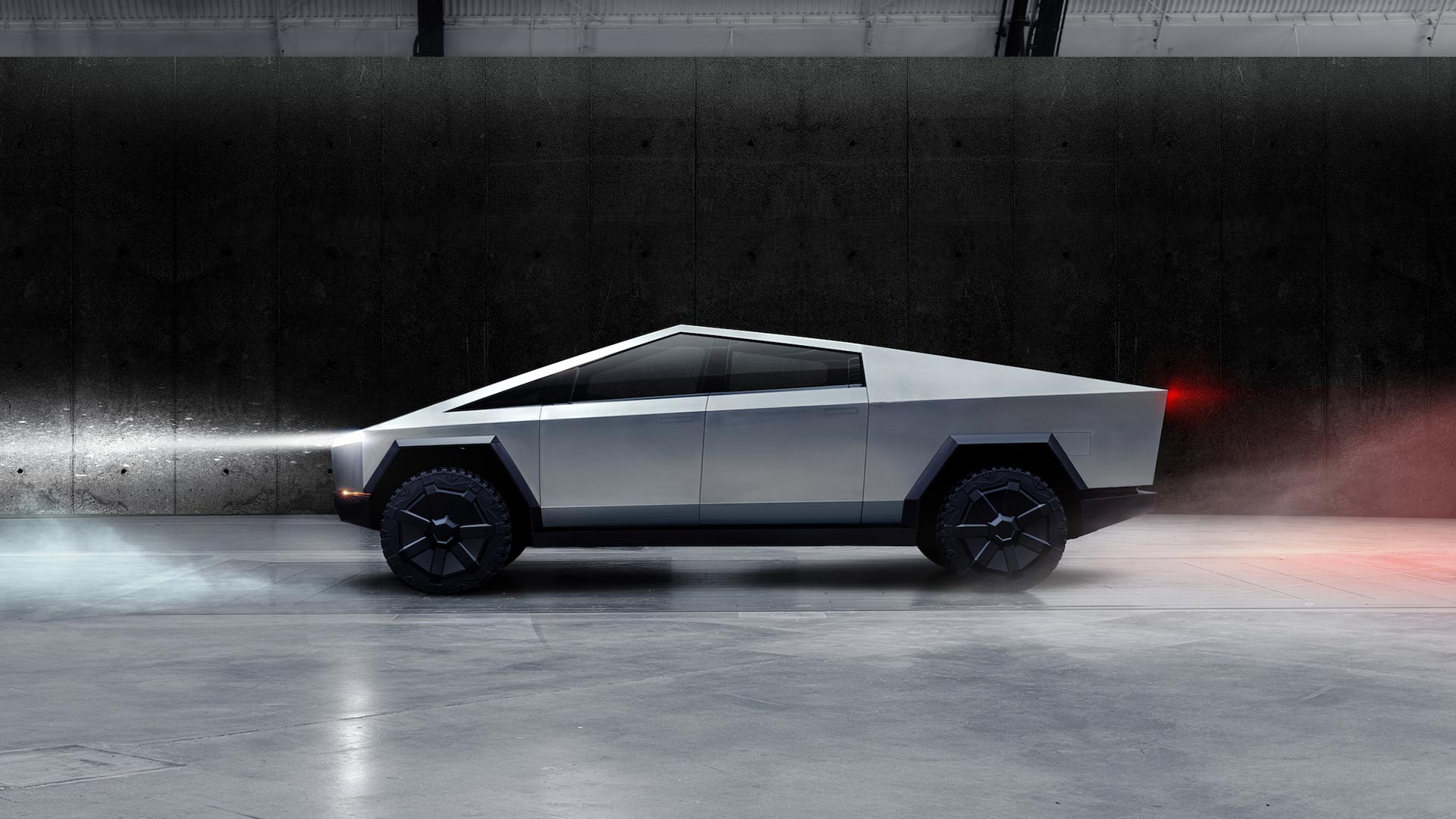
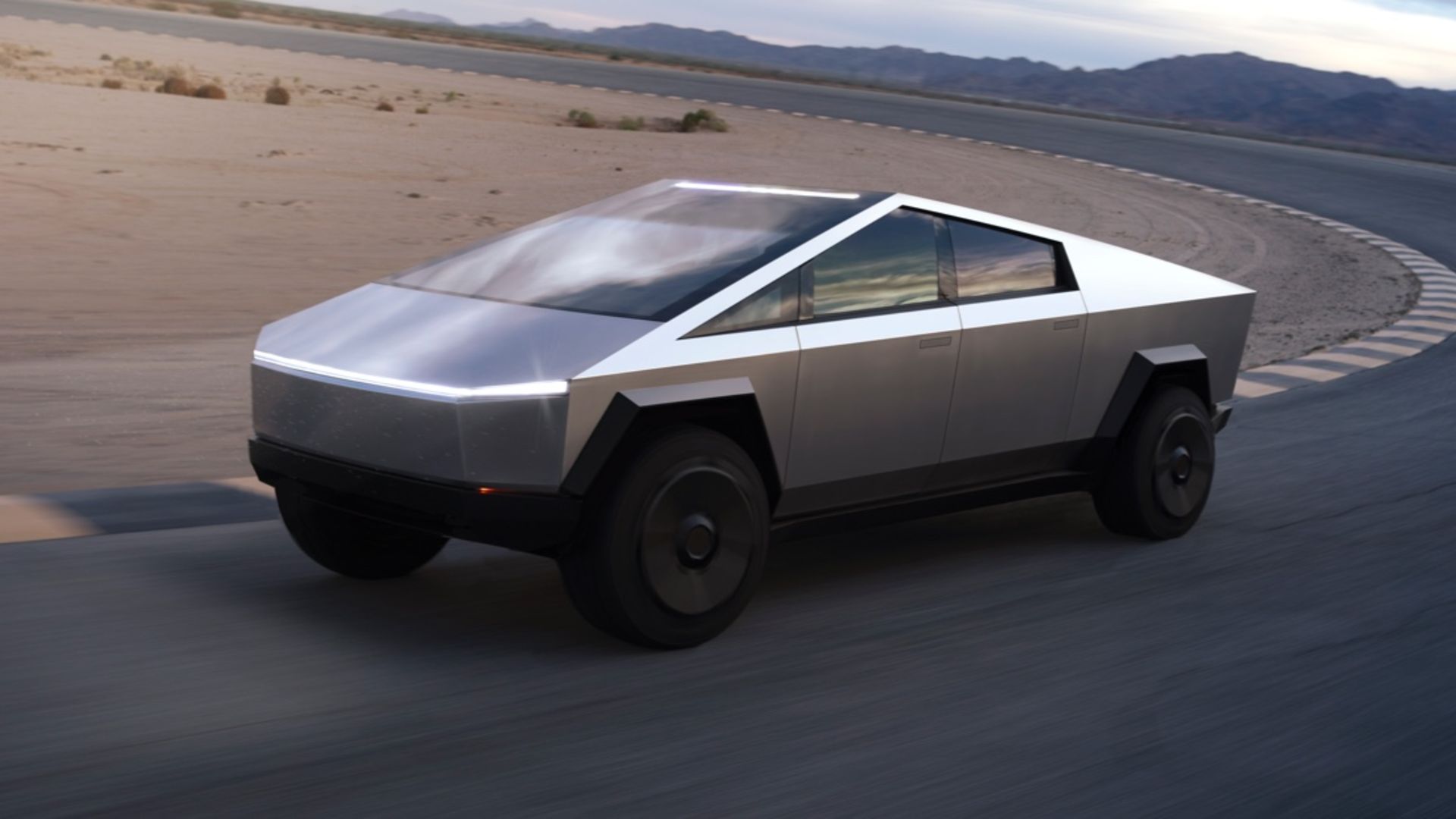
Looking like a vision from a sci-fi future, this is the new Tesla Cybertruck. Far from the Tesla-ified Ford F-150 pick-up we were all expecting, it seems to have been abducted from the set of the next Blade Runner film.
The reveal was genuinely frightening. As company boss Elon Musk exclaimed “So, I present to you: the Cybertruck!” smoke machines billowed and dystopian dubstep played. A YouTube commenter said “I thought four more Elons were going to get out of the truck”. At this point, would that surprise anyone?
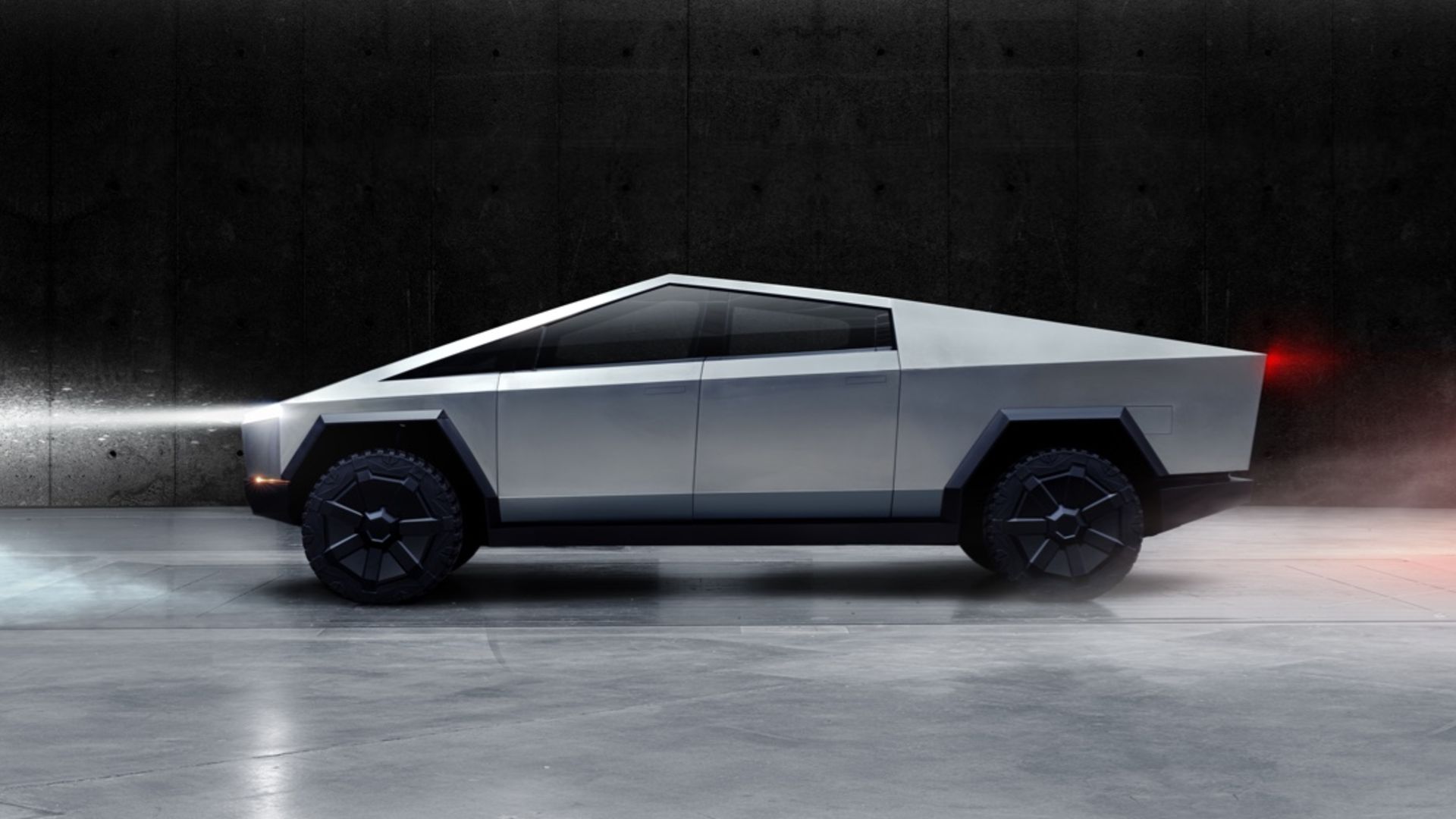
What did surprise everyone was the styling. This jagged, otherworldly machine reminded us of the cuboidal on-board robot TARS from Interstellar. Musk’s claim that “it doesn’t look like anything else”, is certainly true.
Don’t think it isn’t serious, though. There are some very impressive real-world claims Tesla makes about the truck. Let’s first explore the stuff we’re used to talking about.
Tesla Cybertruck: the figures
Range figures start from 250 miles for the single-motor RWD model, rising through the 300-mile dual-motor AWD to a massive 500 miles for the tri-motor AWD. Three motors suggests the top-end variant could be running a version of the PLAID powertrain Tesla has been testing at the Nurburgring in the Model S. However, no specifications for the battery sizes have been revealed thus far.
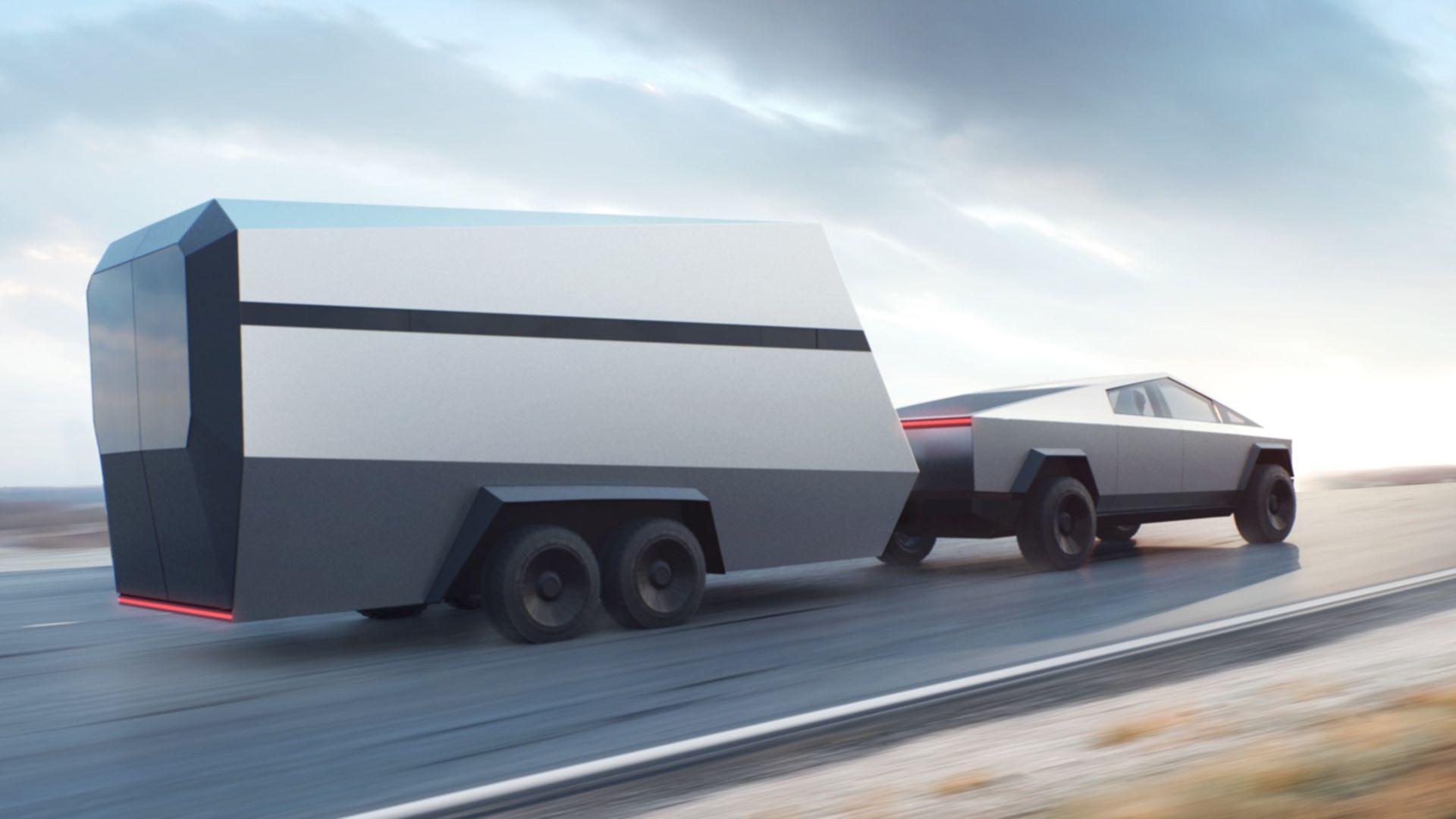
Performance ranges from a 0-60mph time of 6.5 seconds for the single-motor, to a scarcely-believable 2.9 seconds for the tri-motor. Towing capability goes from 3.4 tonnes to a massive 6.3 tonnes. The dual-motor, for the record, will hit 60mph in 4.5 seconds and tow 4.5 tonnes.
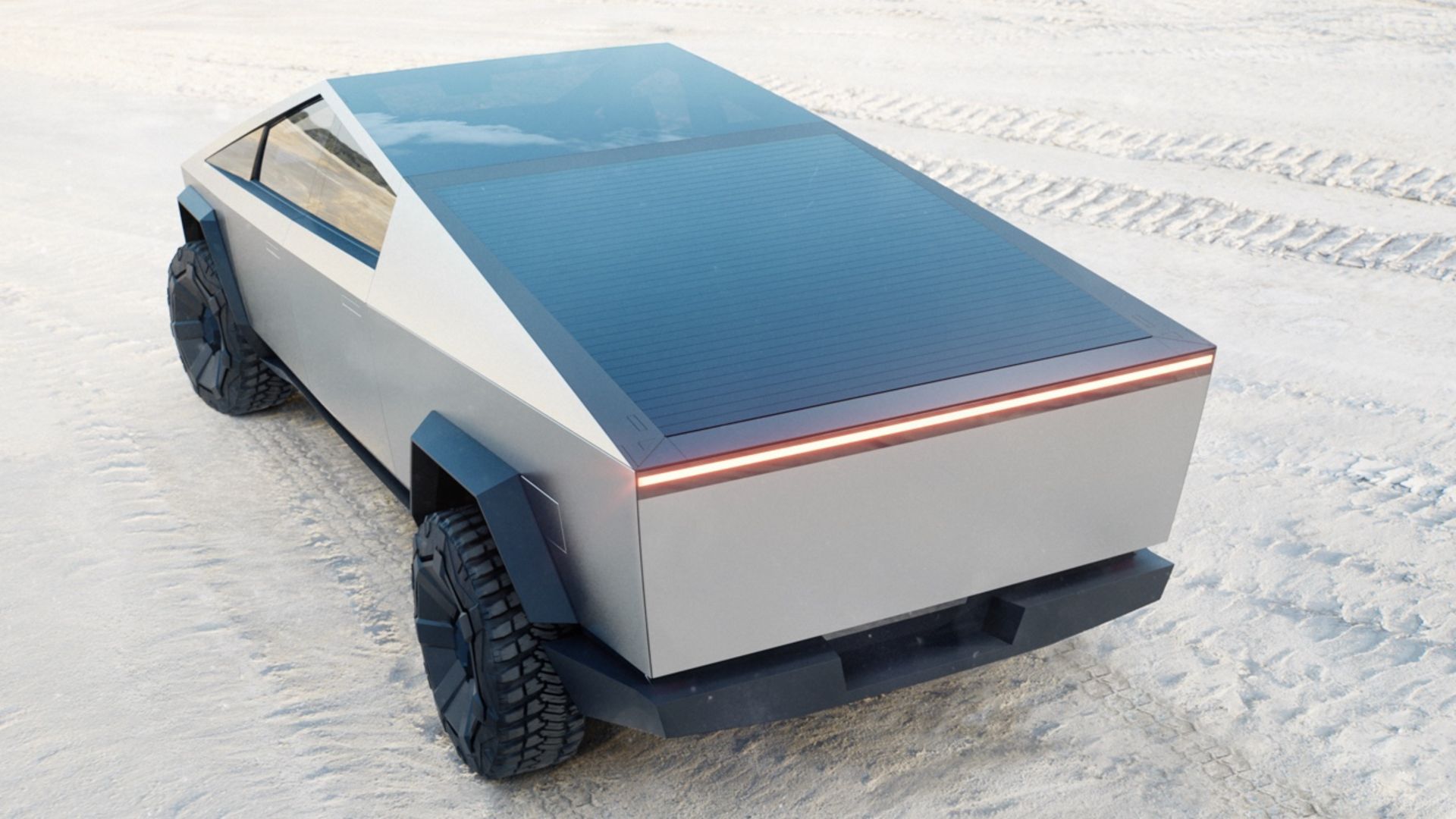
The load rating for the bed in all three models is 1.5 tonnes, with 100 cubic feet of capacity. Tesla claims it’ll be the most capable truck off-road, too, with a 35- and 28-degree approach and departure angles.
Musk also mentioned an adjustable 16 inches of ground clearance, achievable with the full air suspension and the adaptive damper system. It can drop the rear for loading, which he demonstrated with their ATV ‘Cyberquad’, as it drove up a ramp onto the bed. The truck also has an on-board air compressor, giving the air suspension system a second use.
How much will the Cybertruck cost?
This is an area where trailblazing electric cars tend to come unstuck. Not so the Cybertruck. For the single-motor with 250 miles of range, Tesla claims you’ll pay the equivalent of £31,000 before any grants. That rises to £38,700 for the dual-motor, and £55,200 for the tri-motor. These are, of course, dollar prices converted to pounds at the current exchange rate. But you get the idea.
You can reserve one now for a fully-refundable £100 (yes, it’s in pounds on Tesla’s website). Production will ‘near’ in late 2021, while the tri-motor will arrive in late 2022 and into 2023.
The trapezoidal truck
Liberal Democrats will cut VAT on electric cars to 5 percent
Much as the world likes to give Elon grief, and much as he gives it cause to, he raised some interesting points about the current state of pick-up design. Fundamentally, it hasn’t changed for decades. Musk described the body-on-frame and bed-on-frame as “carried cargo, like a sack of potatoes. They don’t do anything useful”.
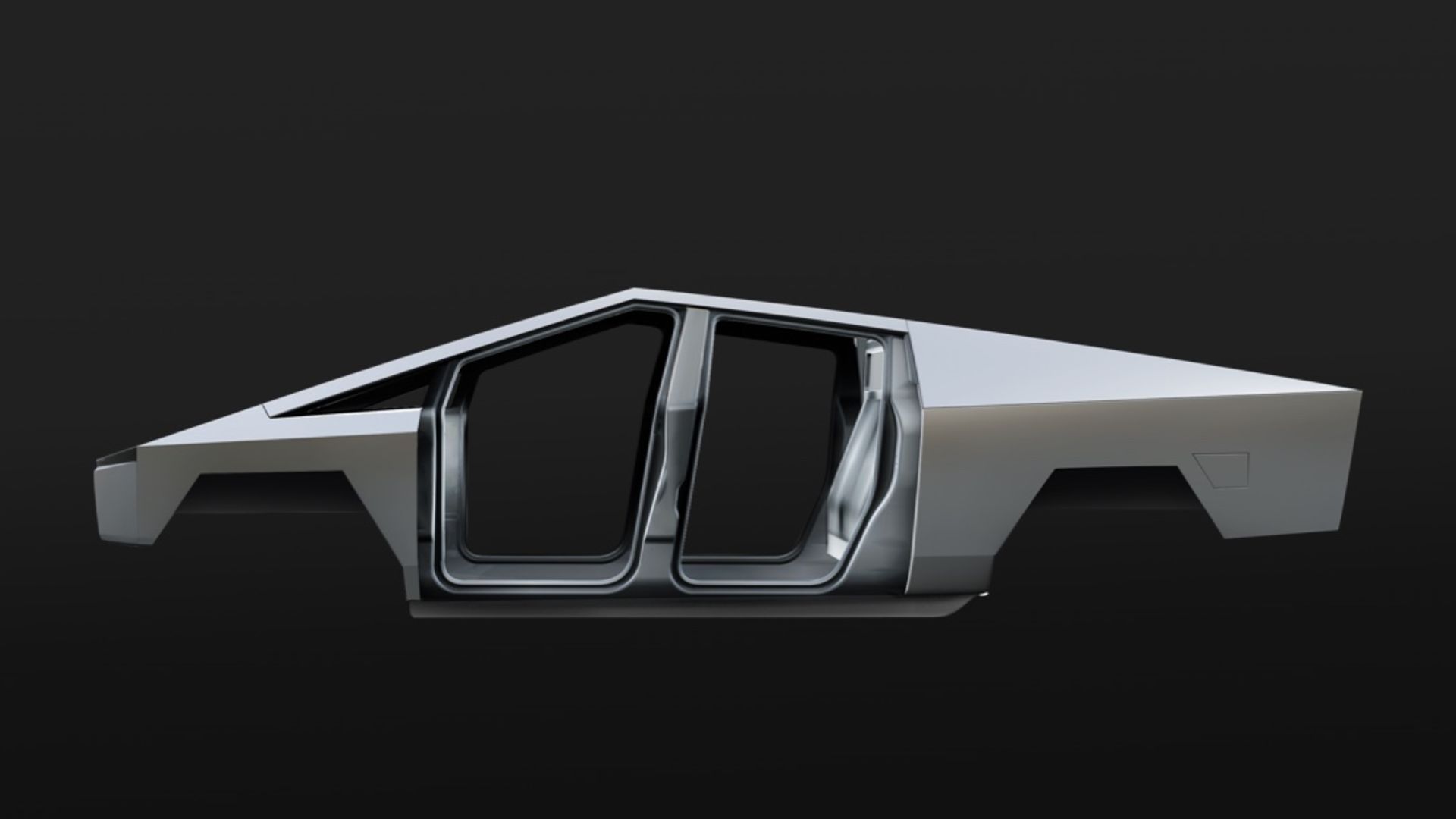
Looking to get away from that, the Cybertruck uses an ultra-hard cold-rolled stainless steel exoskeleton. The mass is on the outside – what you see, most of the bodywork, is also the chassis. A major benefit of this is strength, as Musk spent much of his presentation demonstrating with sledgehammers and shooting videos.
Also new is the Tesla armour glass, referred to by Musk oh-so-humbly as “see-through metal”. Although a sample survived a live drop test very well, the glass on the truck itself didn’t prove so strong. Musk didn’t like the taste of humble pie, shouting expletives as the glass smashed. “There’s room for improvement,” he followed.
Other observations? That slab top that goes from the windscreen to the end of the loadbed appears to roll and fold away like shutters. In the ATV demonstration, it rolls into storage at the point where the bed meets the cabin.
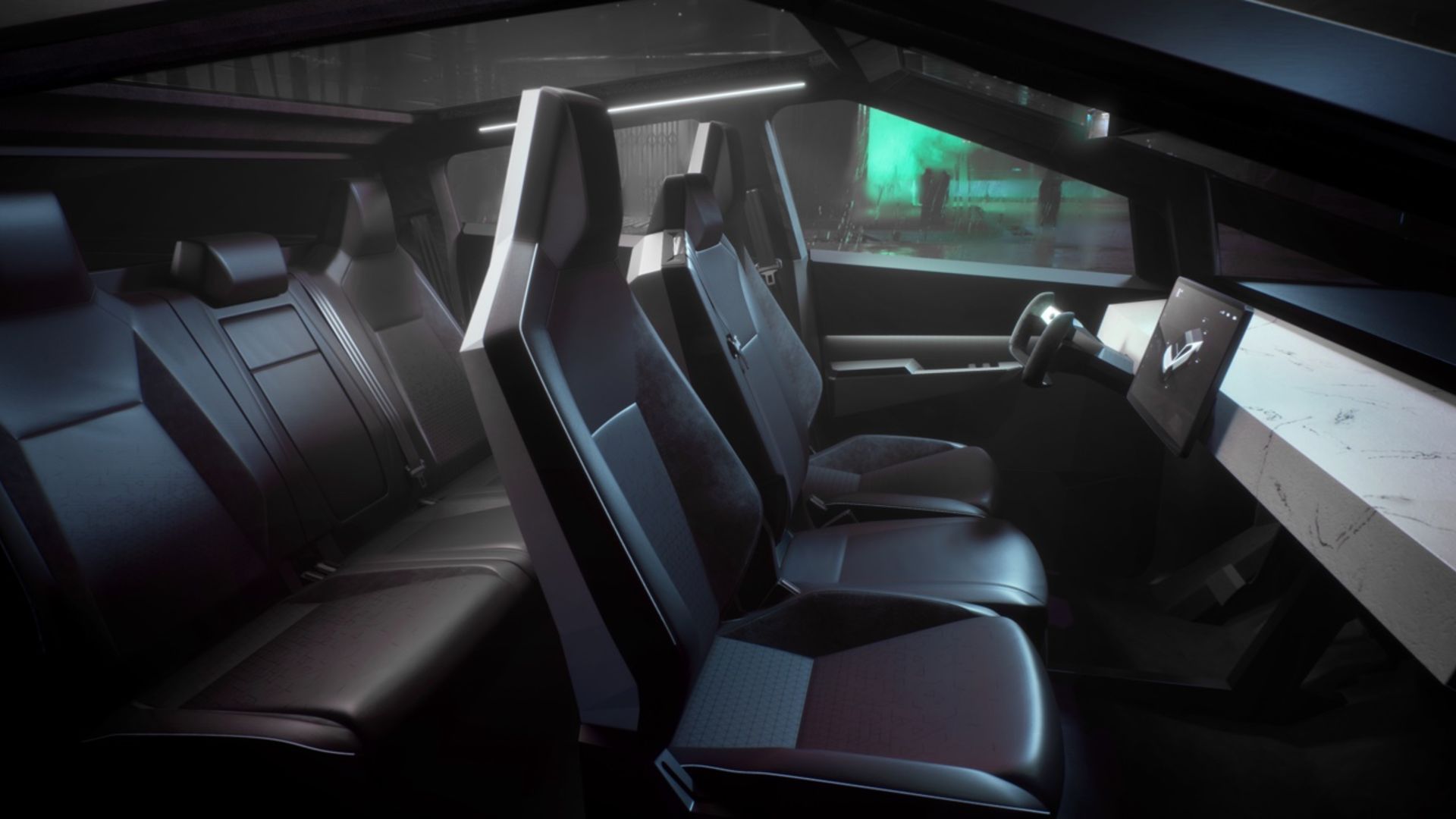
The inside is tame by comparison with the exterior. Seating for six is available, as per pick-up convention. The steering wheel looks to be borrowed from the Roadster supercar (still unreleased) and the 17-inch screen is very much in the style of the Model 3.
Electric car rapid charger network has grown 43 percent in one year
We do have some queries. For one, the design doesn’t look too pedestrian-friendly. We’d love to hear what Euro NCAP thinks of it, and indeed how it performs in a wind tunnel. Also, given the ‘chassis is the body’ design, how much will it cost to repair after an accident? Food for thought. That’s all to come, though.
For now, Tesla has yet again reminded us why it’s so often referred to as a ‘market disruptor’. Mock Musk and his endeavours all you want, but he knows how to grab a headline. He also seems more like a Bond villain with every passing day, and he’d probably take that as a compliment.
“I am a petrolhead. I get goosebumps whenever I hear a V8,” says Mate Rimac. “But this is the future: a whole new level of capability, speed and excitement.”
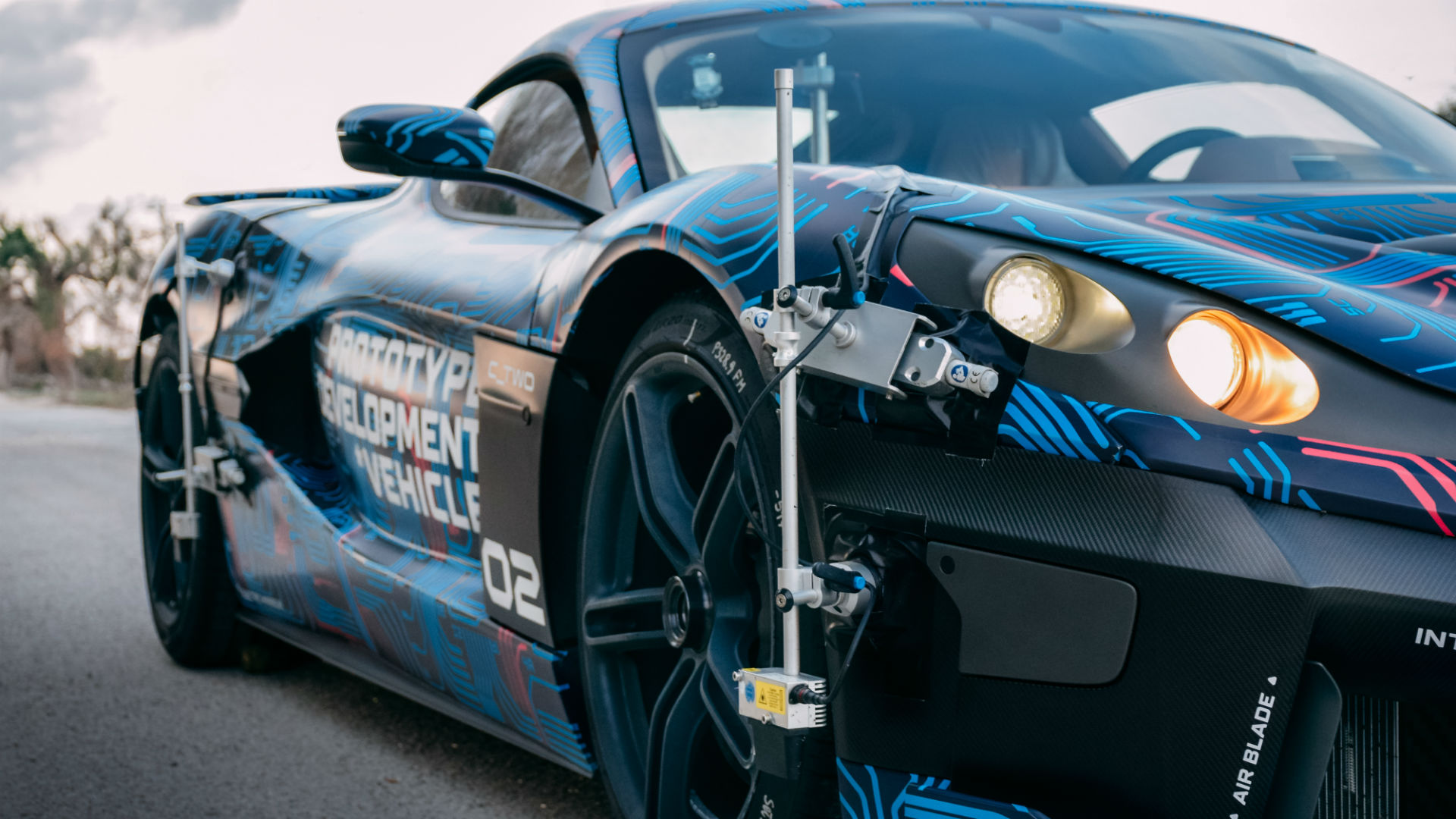
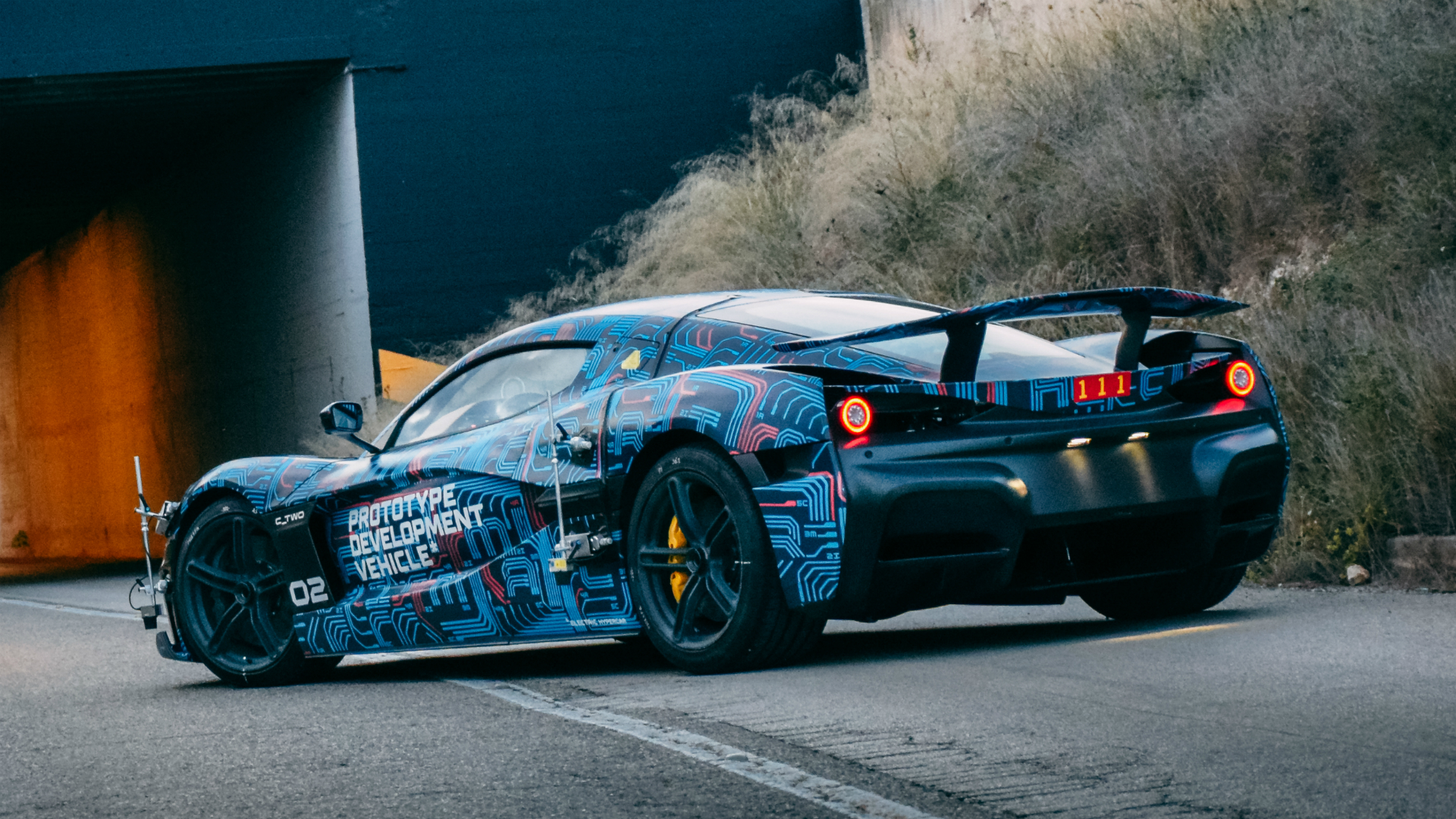
The future isn’t quite ready yet, though. The showroom-ready Rimac C_Two – a Croatian-built electric hypercar – will debut at the Geneva Motor Show in March. For now, all we have is a work-in-progress prototype.
Battle-scarred and wrapped in camouflage, it has arrived in London after a month of intensive track testing at Nardo in Italy. And charismatic Rimac (say it ‘Ri-mats’) founder and CEO Mate (‘Mat-tay’) is giving me a guided tour.
If Top Trumps launches a ‘Supercars’ set for 2020, the £2 million C_Two will be the killer card. But before we delve into its astonishing stats, a word about the company itself.
Mate founded Rimac Automobili in 2009 at just 21 years old. Three years later, he achieved a Guinness World Record when his home-built electric E30 BMW M3 blitzed a quarter mile in 11.85 seconds. “I combined my two passions: electronics and cars,” he explains. “People laughed at first – I was a total nobody. It’s taken a long time to build up our position in the industry.”
A few more of the Rimac C_Two prototype.
Note the huge ‘emergency stop’ button between the seats.
Some serious hardware beneath the rear window, too. An Invidia ECU is ‘pretty much’ the only electronic component not made in-house. pic.twitter.com/1DIkJZnFnB
I’d beg to differ. In 10 years, Mate has gone from his garage to a company employing 600 people. Both Porsche and Hyundai have sizeable stakes in Rimac, and most of the firm’s work involves high-end electrification tech. The forthcoming Hyundai N-branded electric sports car, for example, will lean heavily on Rimac components.
The C_Two is really a shop window for what Rimac does. Even at around £2 million each – and sharing much of its technology with the equally exotic Pininfarina Battista – it seems unlikely that the 150-car production run will make much profit. “We’re approaching this like an OEM [a mainstream car brand], says Rimac PR, Marta Longin, “with 20 prototypes and full crash-testing. That doesn’t come cheap.”
Time for some numbers, then. A 6,960-cell battery pack delivers 1,914hp – a nominal 11hp more than the Battista – and 1,696lb ft of torque, the latter available from standstill. Zero to 60mph takes 1.85 seconds, 186mph arrives in 11.8 seconds and top speed is limited (!) to 256mph. Oh, and a quarter-mile is dispatched in 9.1 seconds: even quicker than Mate’s record-breaking M3.
Apparently, the C-Two can manage two laps of the Nurburgring (about 28 miles) at maximum-attack before performance starts to tail off. But drive it like a G-Wiz and you’ll manage a WLTP-certified 342 miles. Charging to 80 percent capacity takes as little as 30 minutes.
“When the McLaren F1 came out in 1992, people thought nobody will ever go faster,” smiles Mate. “Now a BMW M5 has that kind of power and the C_Two exceeds 1,900hp.” But the control of all that oomph is where Rimac really gets clever.
With one electric motor for each wheel, the Rimac has infinitely variable torque vectoring. This, says the Rimac website, allows for ‘minute calibration of intent and behaviour, from a rear-biased driftable sports car to a vehicle that meters traction perfectly on slippery surfaces’. As Mate rightly points out: “You may have the funds to buy this car, but that doesn’t mean you’ve got the skills to get the best from it.”
The C_Two also boasts Level Four autonomy tech, with eight cameras, a lidar, six radar emitters and 12 ultrasonic sensors. So it can literally show you how to drive. Select Driving Coach mode on selected race tracks and it will whisk you round autonomously – sticking resolutely to the racing line with perfect braking and steering inputs. Rimac claims ‘a near-gaming learning experience, with real-world excitement’.
The raw computing power is mind-melting. The car’s 400 sensors and 72 ECUs process six gigabytes of data every hour. “If there’s a cool situation, like you drift around a corner, the cameras can start recording automatically,” explains Mate. “Then you can share the video on social media later.” What, ahem, could possibly go wrong?
Crucially, some of this technology is already trickling down to more affordable cars, as the market shifts towards an electrified, self-driving future. What you see on a Rimac today could be fitted to a Hyundai in 10 years’ time. Maybe sooner.
We go supercar spotting in a supercar
If all that sounds a bit new-fangled, you’re probably not the target customer. Mate admits that the C_Two will appeal, in part, to “tech guys who don’t care about V12s”. Yet there is a new breed of environmentally-conscious hypercar buyer too: “people whose beliefs don’t fit with a combustion car”.
Either way, I doubt Mate will have trouble shifting all 150 examples of the C_Two. There really is nothing quite like it. The ultimate proof will be in the driving, of course (drops heavy hint to Rimac PR team), but as a showcase for what his still-young company can do, it’s already a startling achievement.
The C_Two will be sold exclusively through H.R. Owen in the UK, which has showrooms in London, Manchester, and Hatfield, among other locations. Start saving now.
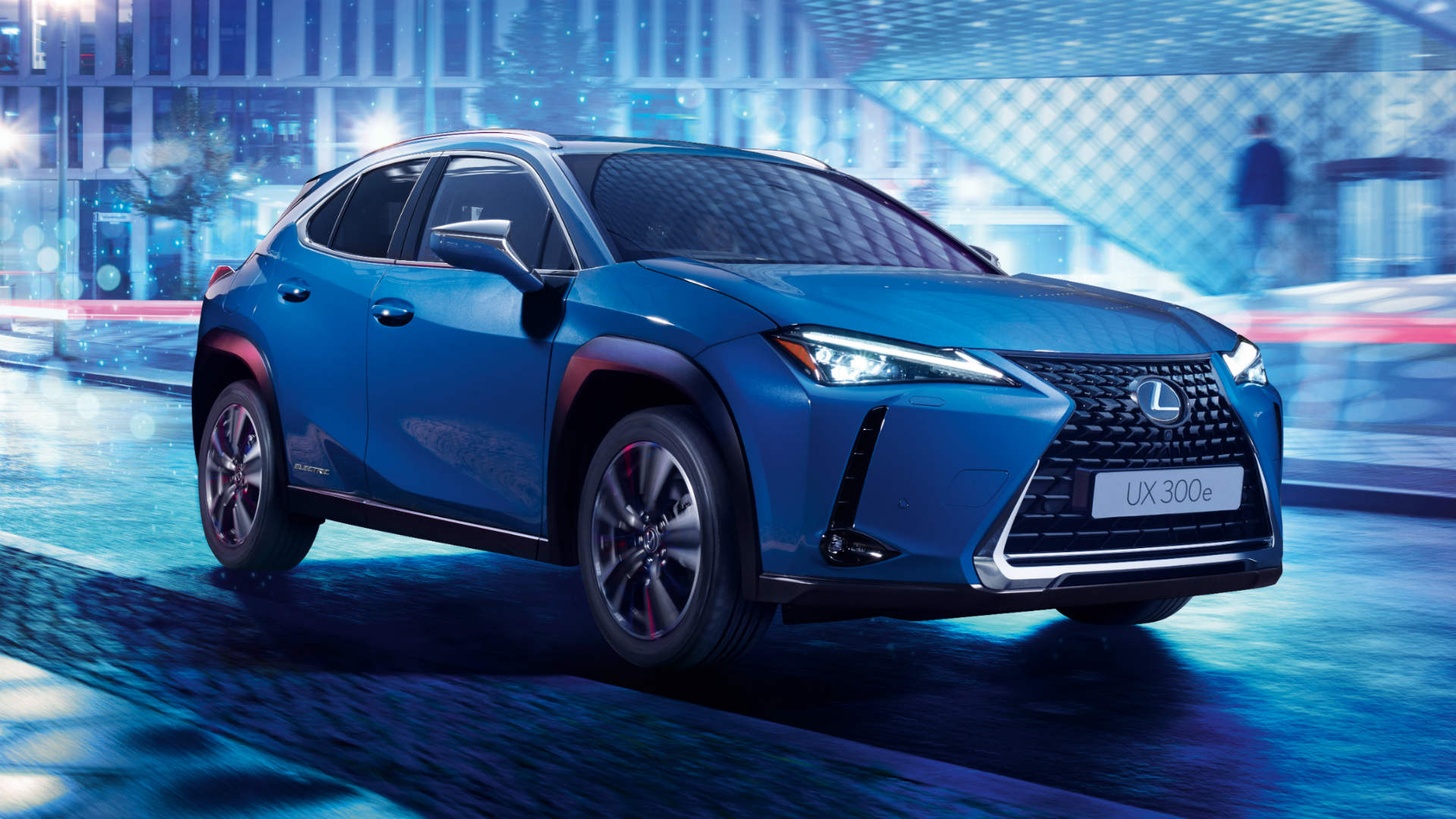
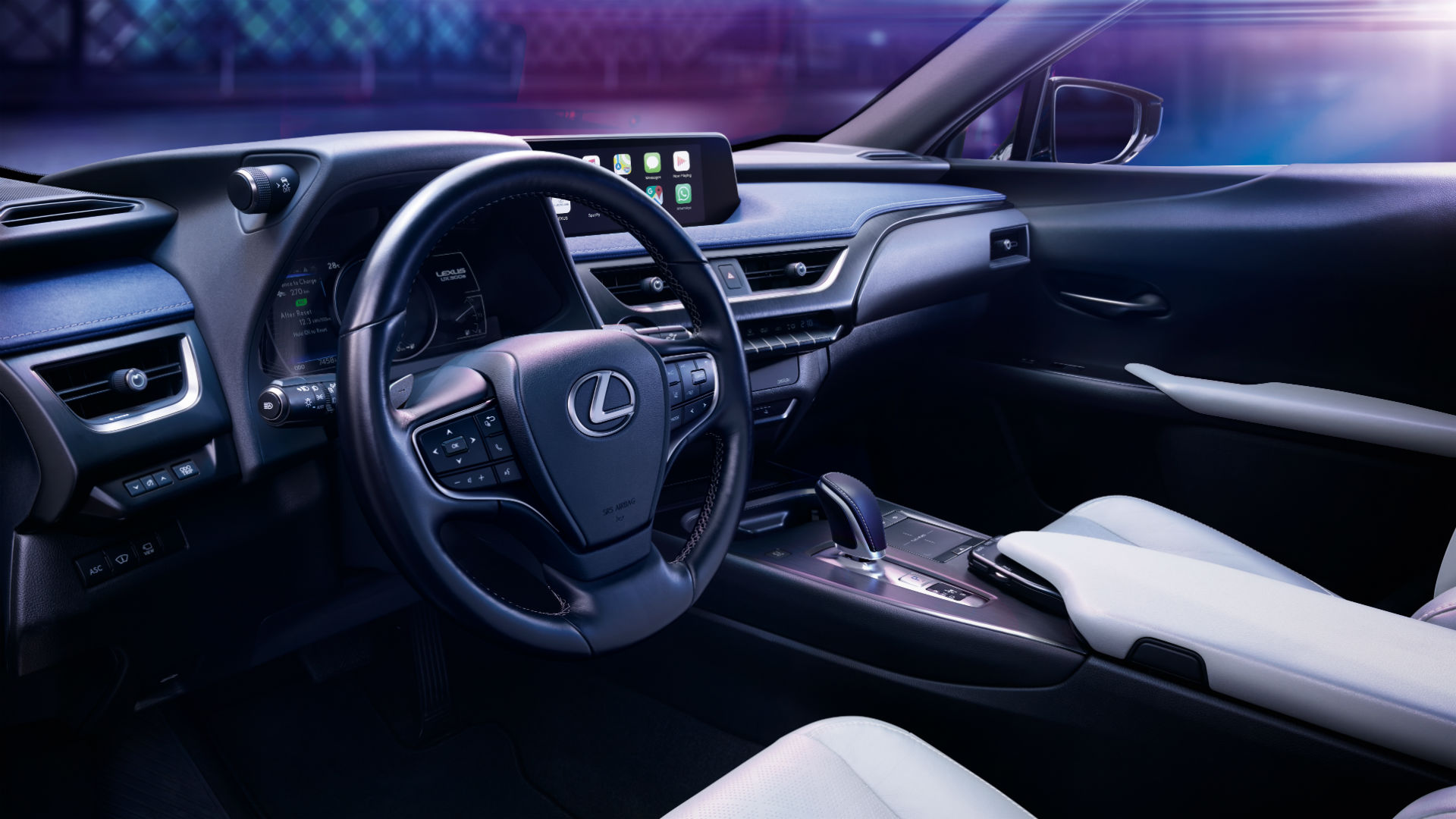
Lexus has unveiled its first battery-electric vehicle in China. The UX 300e will go on sale in the UK in 2021, following a launch in China next year.
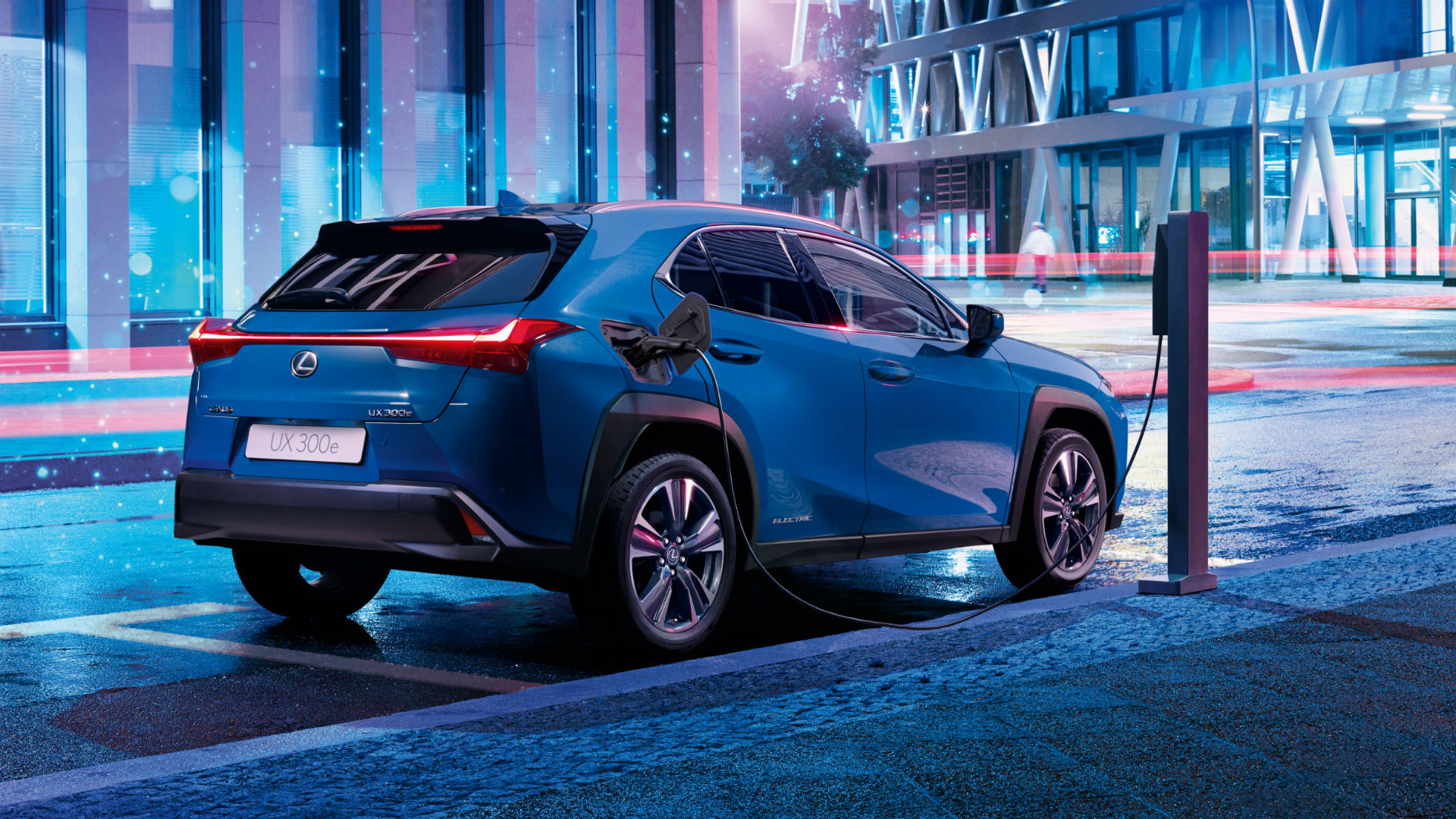
Power is sourced from a 54.3kWh lithium-ion battery, which offers a claimed driving range of 250 miles. The maximum charging speed is 50kW.
The UX 300e looks similar to the standard Lexus UX compact SUV but gains a new grille, more aerodynamic wheels and electric badges. The charging port is located where the fuel filler cap is normally situated.
Lexus says the UX 300e has ‘one of the quietest cabins in its class’, but Active Sound Control (ASC) transmits natural, ambient sounds to communicate the driving conditions to the driver.
Drivers can also link their smartphone to an app to check battery status and driving range. The app will also say when a full charge is reached and when to charge based on low energy prices.
Although performance figures haven’t been released, Lexus says the UX 300e will deliver ‘brisk performance’. A Drive Mode Select function allows the driver to manage smooth acceleration and declaration according to the driving conditions.
There’s no word on price, but the standard Lexus UX costs upwards of £30,000. You can expect to pay a significant premium for the electric version.
It’ll launch under a new Lexus Electrified banner. The company is ‘targeting a fundamental leap in vehicle performance, handling, control and driver enjoyment’.
Not for the United States
Why did Lexus choose to unveil its first electric vehicle at the Guangzhou International Automotive Exhibition and not at the LA Auto Show? Quite simply, because the UX 300e will not be sold in the United States.
China is likely to be a key market for the electric compact SUV, and it’ll launch there ahead of its European debut in 2021.
Visitors to a major U.S. car museum can see how Volkswagen ID. electric cars are designed and assembled.
The ‘Building an Electric Future’ exhibit is in residence at the Petersen Automotive Museum until September 2022.
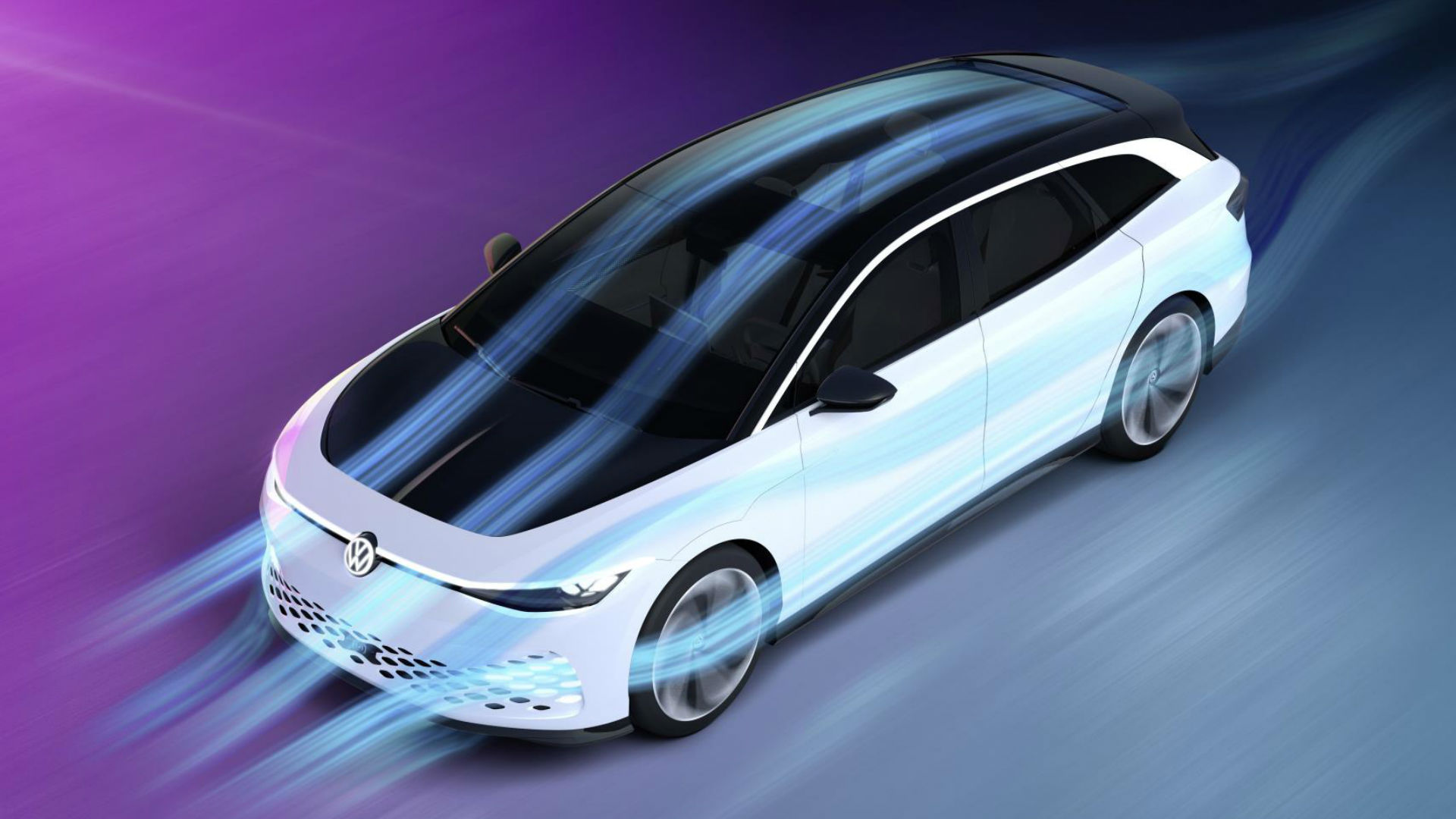
This follows the global reveal of the Volkswagen ID. Space Vizzion at the Petersen. The all-electric concept previews a production estate that will be launched in different variants in Europe, China and North America.
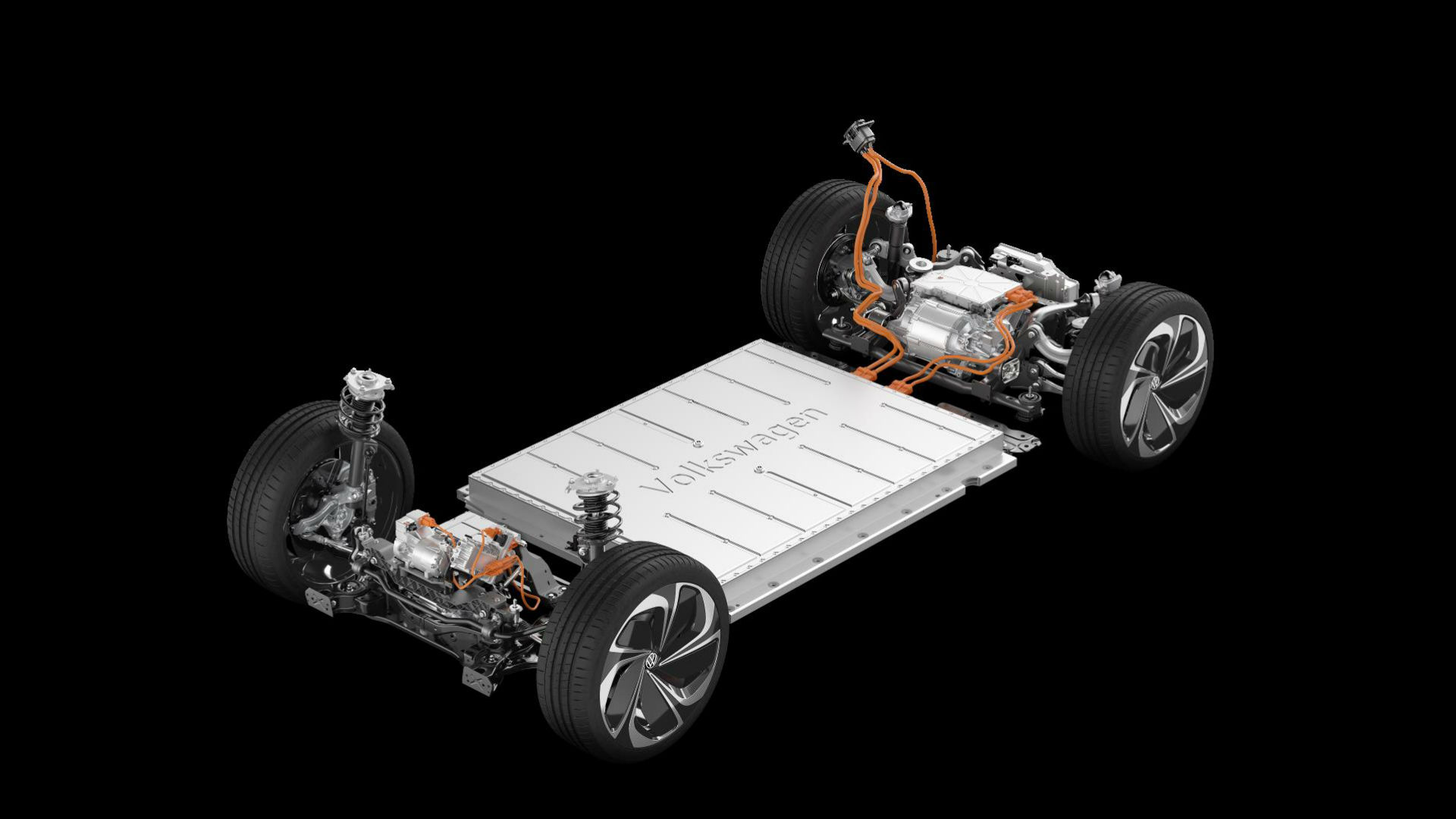
‘Building an Electric Future’ consists of five rooms that incorporate interactive features and showcase how Volkswagen’s MEB modular electric vehicle platform is engineered.
It also shows how ID. electric vehicles are assembled.
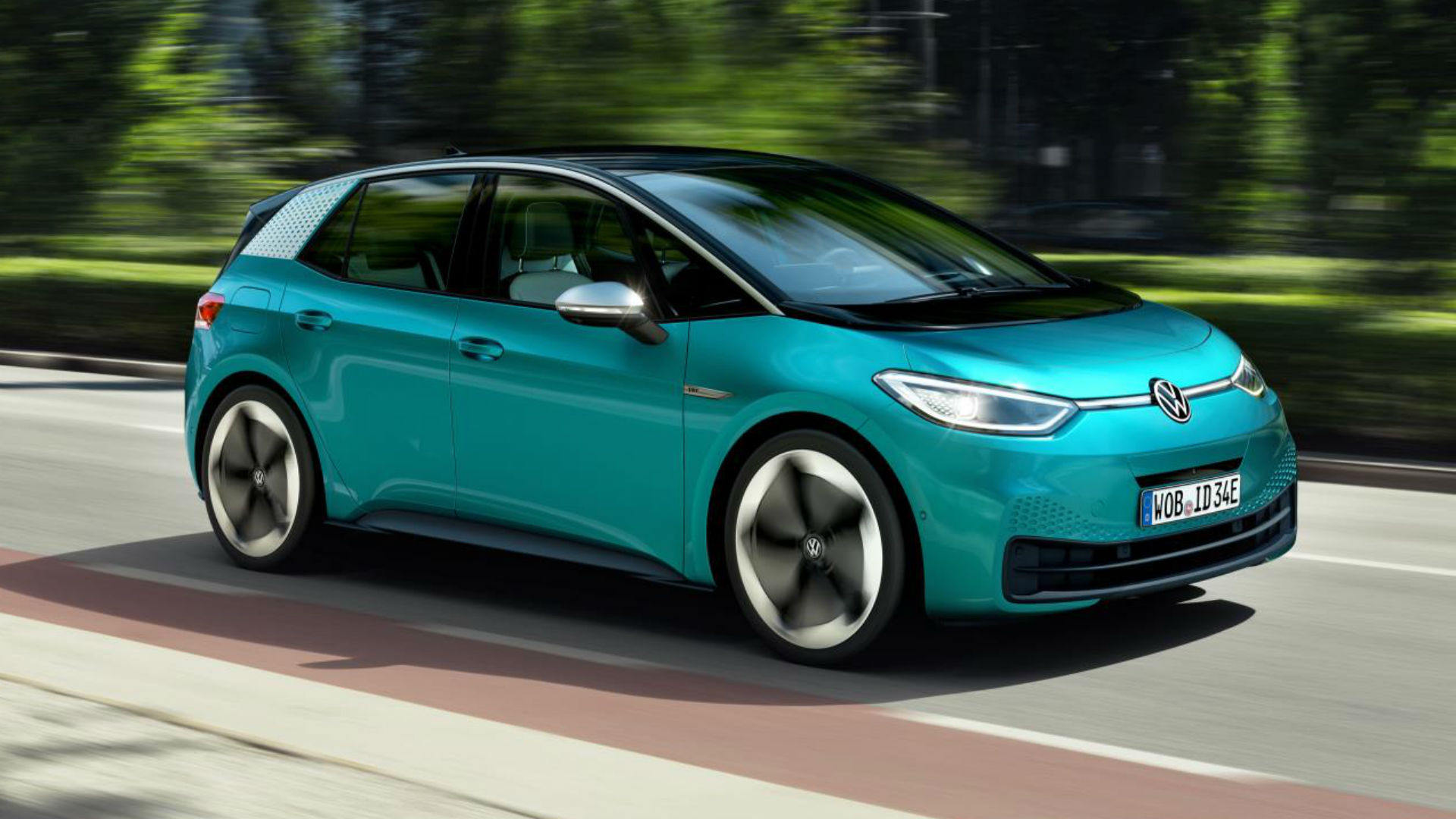
Three battery size options are available, with the entry-level version boasting a 205-mile range from its 45kWh battery. The larger 58kWh and 77kWh batteries are good for 260 and 341 miles of range respectively.
Prices start from around £27,000 for the 205-mile capable car. The top-end First Edition cars are available from £35,000.
‘Paving the way’
Commenting on the exhibition, Terry L. Karges, Petersen executive director, said: “Through our partnership with Volkswagen, we are exploring the impact an electrified future will have on a local and global scale.
“We are thrilled to collaborate with the manufacturer to present ‘Building an Electric Future.’ The exhibit offers visitors an interactive behind-the-scenes look at how the world’s largest automaker is paving the way for the future of mobility.”
The Petersen Automotive Museum Is located on Wilshere Boulevard in Los Angeles. There are more than 250 vehicles on display, including the first Ferrari and King George V’s 1910 Daimler.
Tickets cost $11 for children, $14 for seniors and $16 for adults. For opening times, visit the Petersen website.
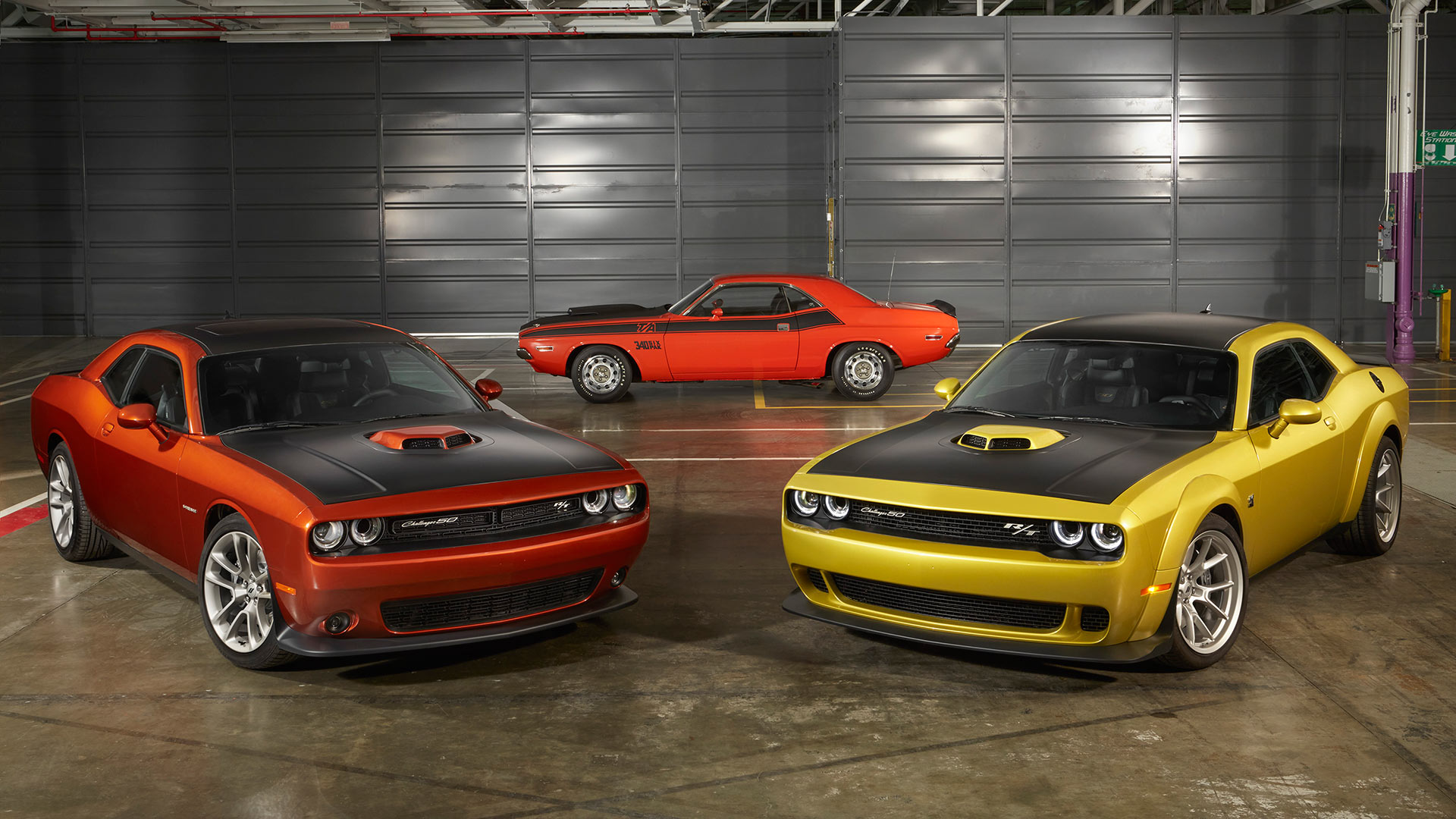
One of the major attractions at the 2019 Los Angeles Auto Show is a celebration of the Dodge Challenger’s 50th anniversary, and a special new version.
To help get in the party mood, we have dived into the archives to see the Challenger go from a young pony car, through to a modern muscle machine. We have even included the awkward teenage years, too.
More on Motoring Research:
Yee-haw! The Dodge Challenger is 2019’s official Car of Texas
Dodge announces 50th Anniversary Editions in Los Angeles
As part of the opening day of the 2019 LA Auto Show, Dodge used a special ‘Power Breakfast’ event to unveil limited edition versions of the 2020 Challenger (more on this later). Special paint and badging are the main attractions, along with neat interior details.
The 50th Anniversary package can be added to any 2020 Challenger model, with the Hellcat and Redeye models also receiving special badging.
However, before we get to them, let us take a look back at how the Dodge Challenger got to being 50 in the first place.
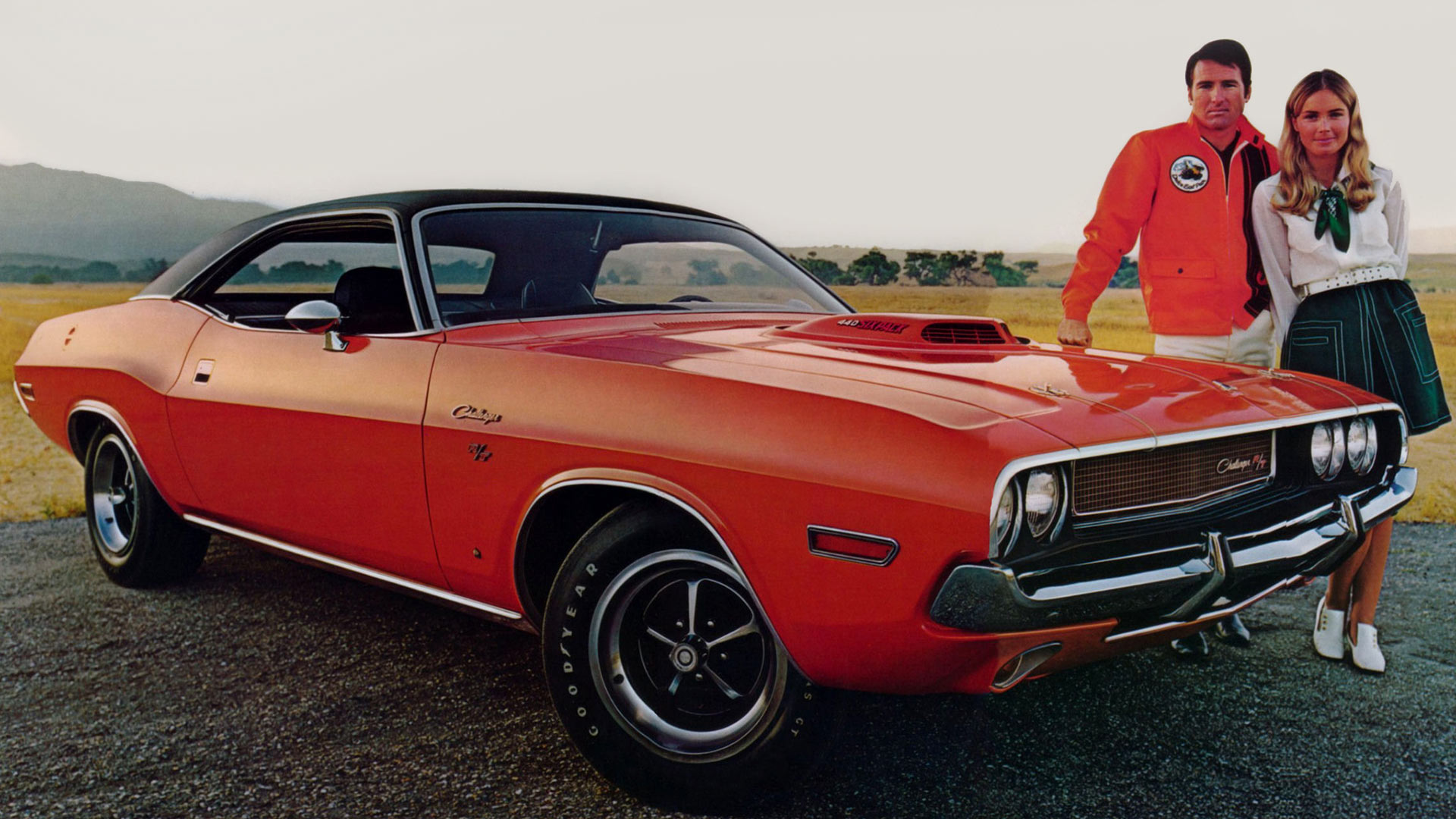
1970 Dodge Challenger RT 440 Six Pack
Despite the Ford Mustang having debuted in 1964, it took Chrysler until late 1969 to finally reveal its own pony car contenders. Built on the Chrysler E-body platform, the Dodge Challenger slotted into the Mopar performance lineup below the larger Charger.
Engine options ranged in size from the entry-level 225-cubic inch slant-six, all the way to the huge 440-cubic inch RB V-8. When fitted with the optional Six Pack carburettor setup, the 440 engine could produce an incredible 390 horsepower and 490 lb-ft of torque.
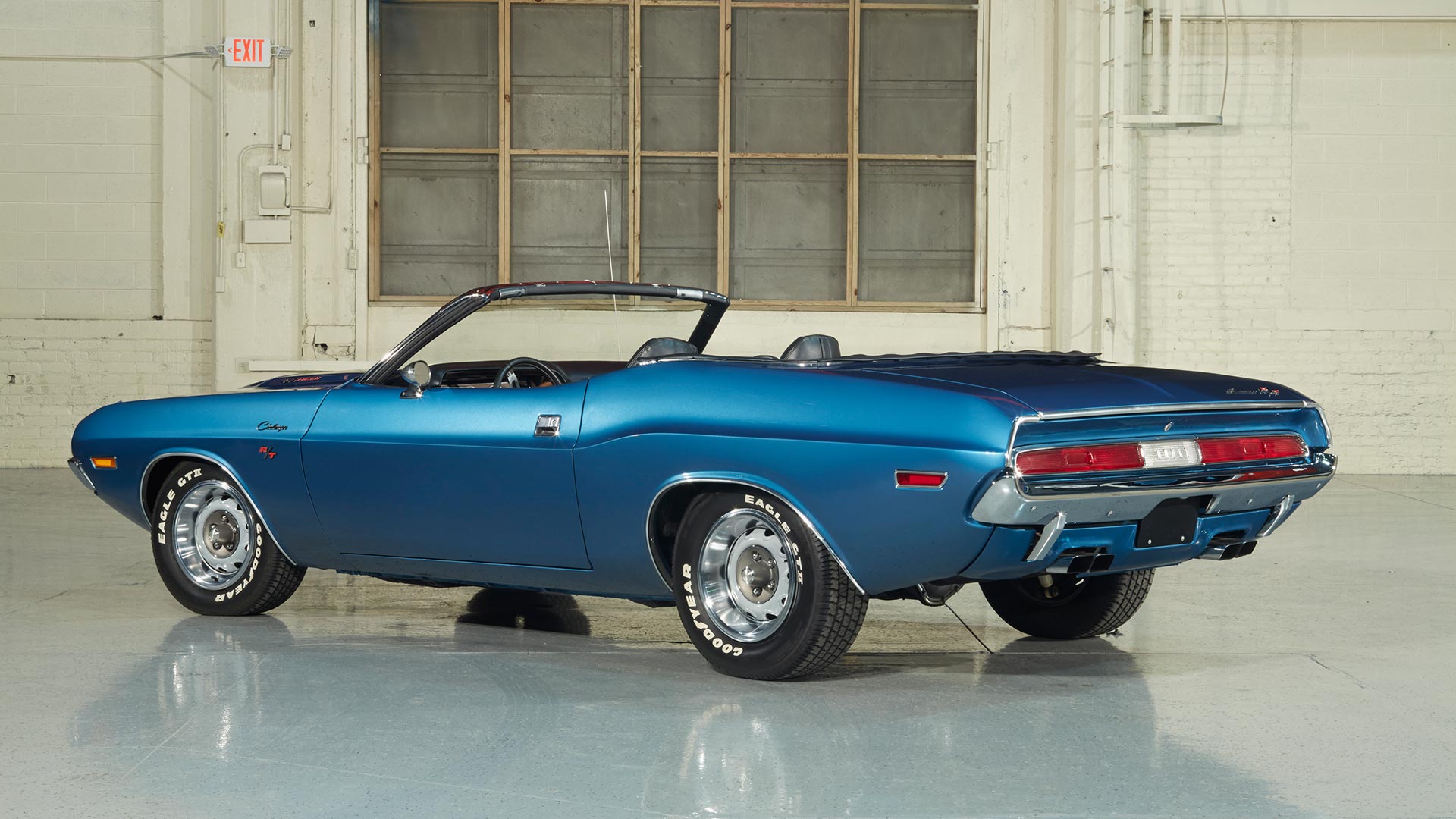
1970 Dodge Challenger RT Convertible
The most impressive engine option of all for the 1970 Challenger was the, now legendary, 426-cubic inch Hemi V-8. This road-going version of an engine intended for use in motorsport offered Challenger buyers serious performance. Officially rated at 425 horsepower and 490 lb-ft of torque, their rarity has made them serious collector items.
Along with the two-door hardtop coupe, Dodge also launched the Challenger as a convertible in 1970. However, the vast majority of customers opted for the coupe version, leaving open-top R/T models to be some of the rarest Challengers produced.
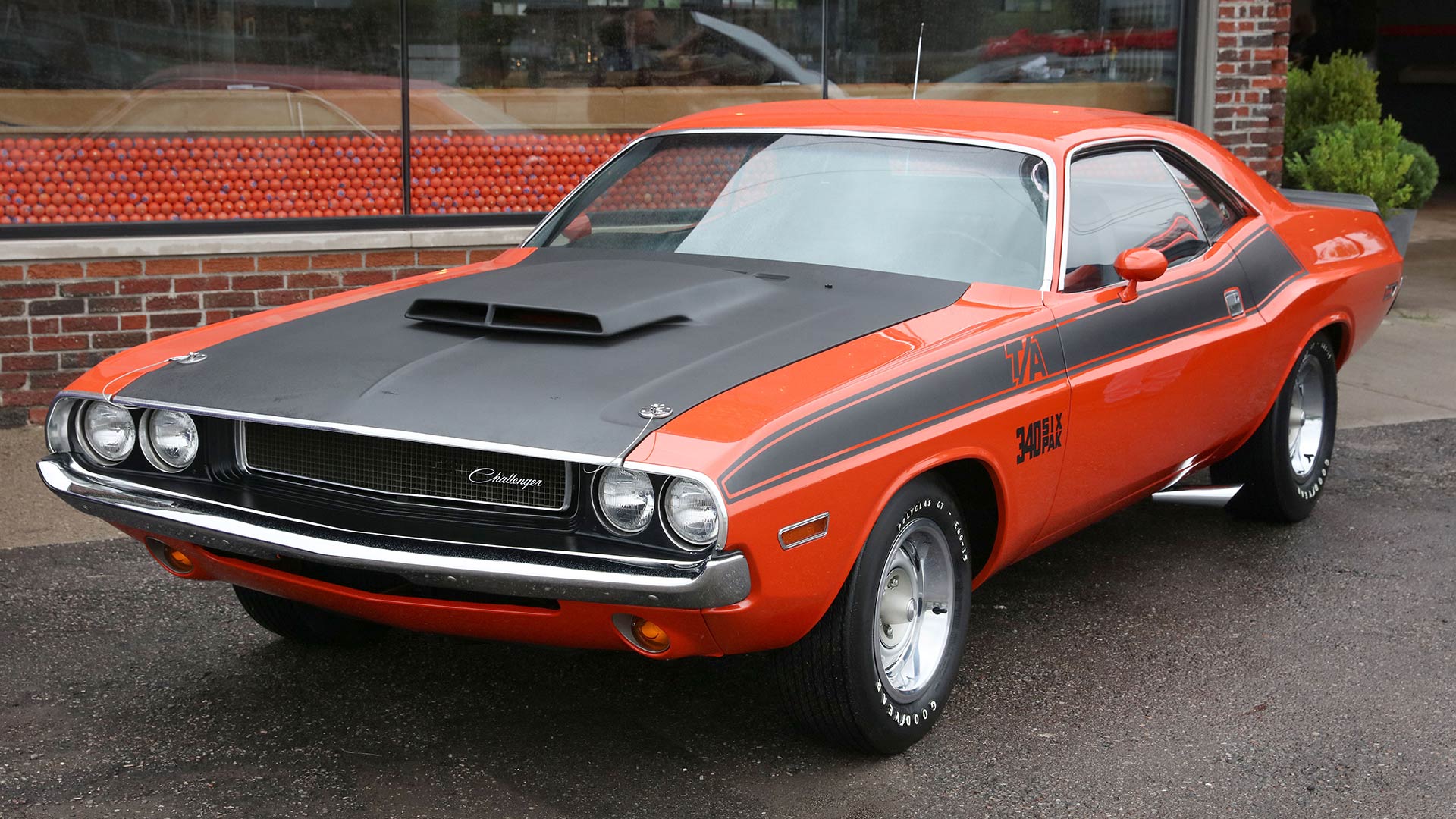
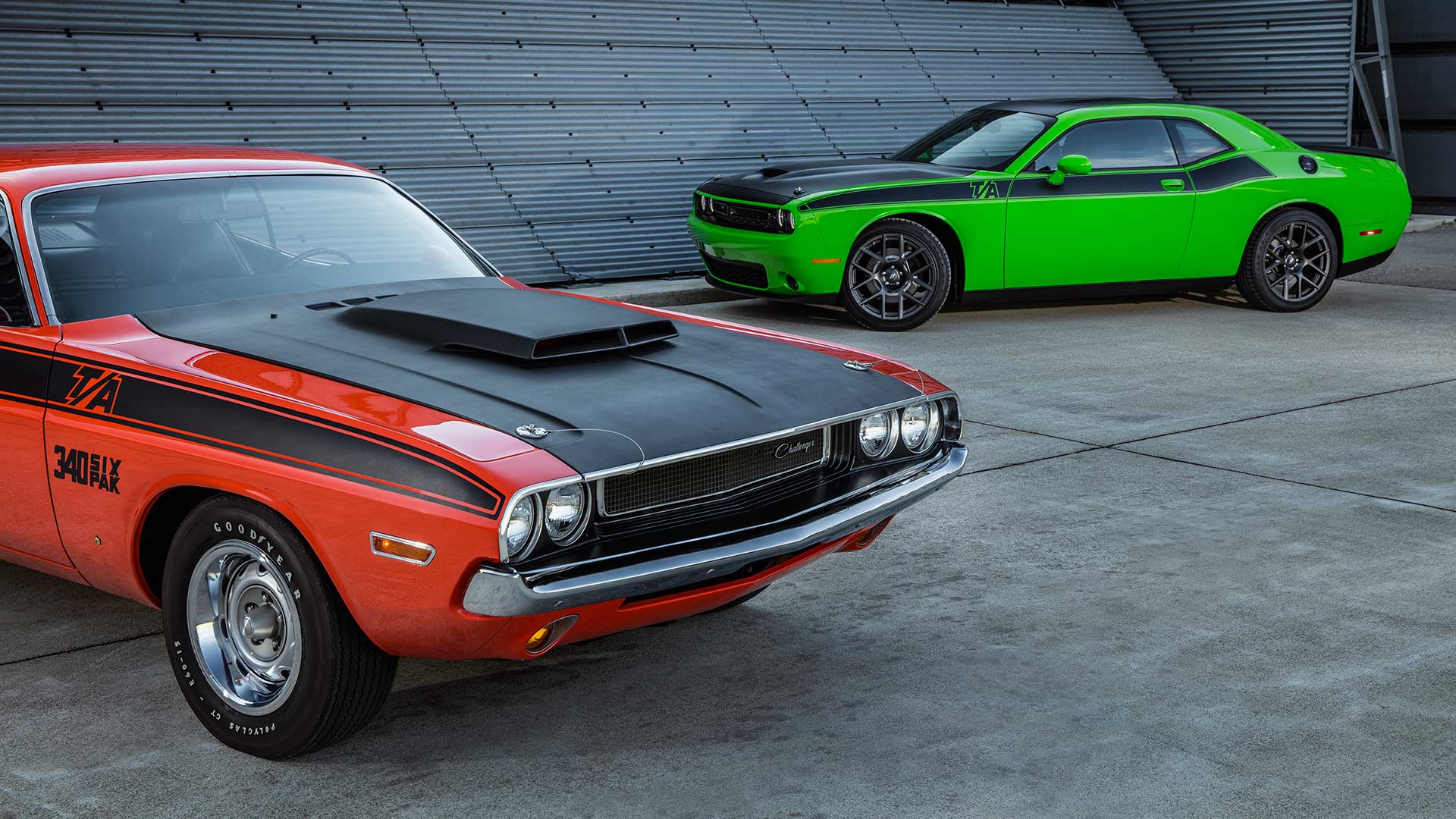
1970 Dodge Challenger TA
Offered solely for the 1970 model year, the Challenger T/A was made to allow Dodge to homologate the Challenger for SCCA Trans Am sports car racing. All road-going units of the T/A featured a 290 horsepower 340-cubic inch V-8 engine, along with a four-speed manual transmission.
The biggest changes were on the outside. A matte black fiberglass hood included a giant ram air intake, whilst the exhaust gases exited through megaphone-style tailpipes ahead of the rear wheels. Only two race cars were completed, and Dodge failed to take any wins during the 1970 Trans Am season.
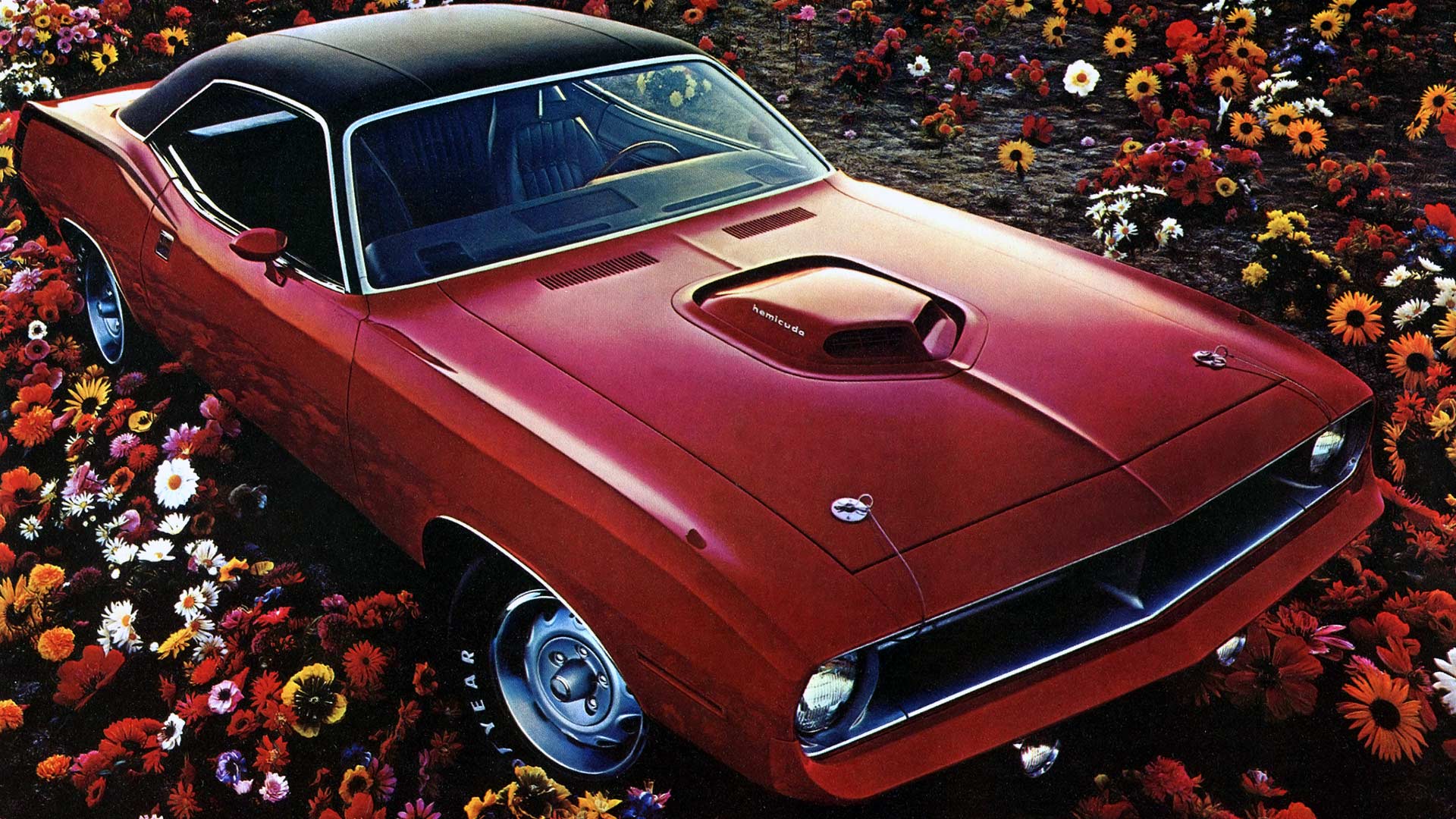
1970 Plymouth Hemi Cuda
Sharing the E-body platform with the Challenger was the third-generation Plymouth Barracuda. The Barracuda shared no body panels with the Challenger, and used a slightly shortened wheelbase.
Plymouth presented the Barracuda as the marginally more affordable version of the Challenger, despite most engines and options being the same. As with the Challenger, the rare ‘Cuda versions using the 426-cubic inch Street Hemi engine remain some of the most valuable muscle cars ever made.
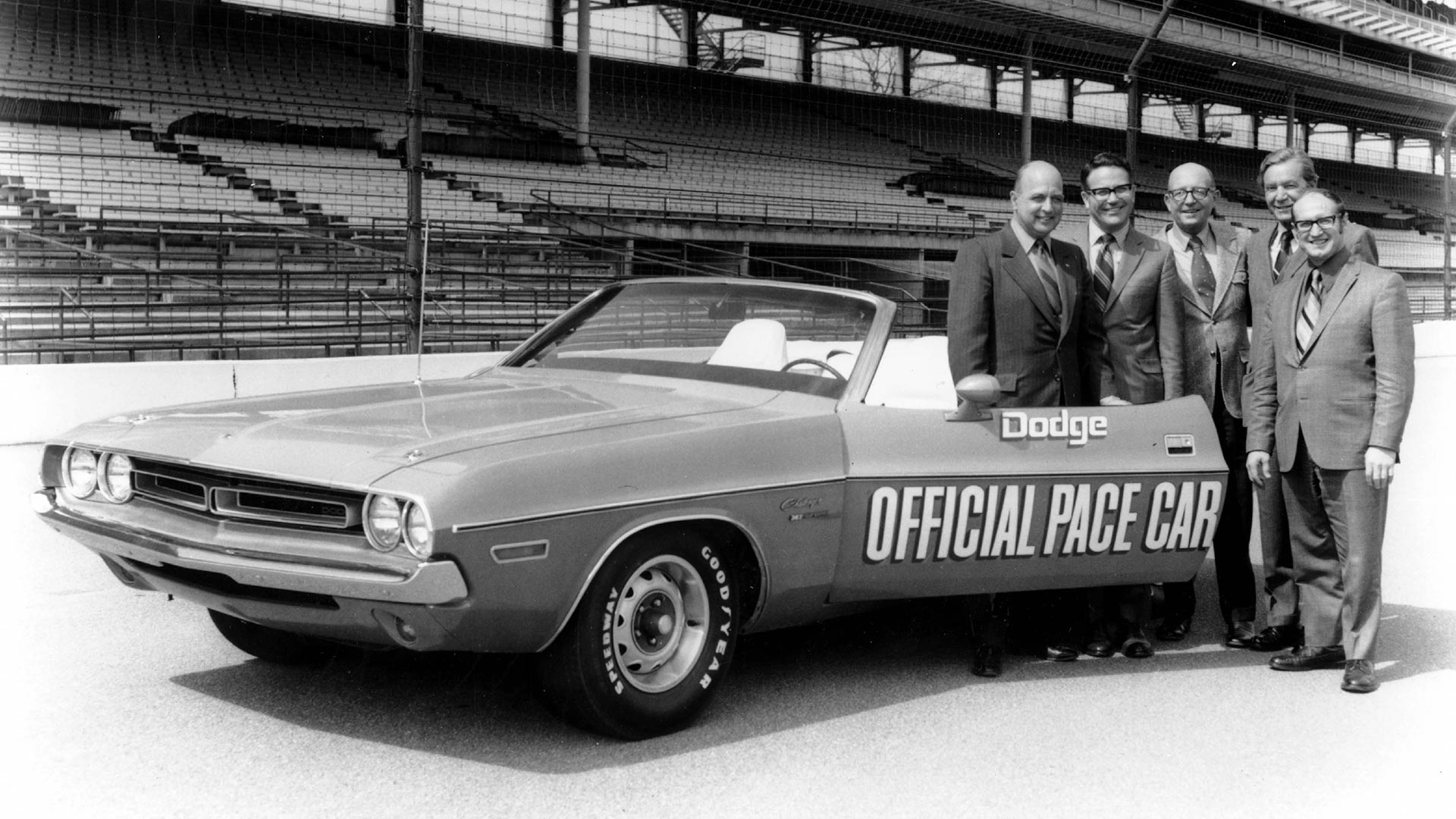
1971 Dodge Challenger Indy 500 Pace Car
For 1971, Dodge left the Challenger mostly unaltered. The most obvious change was a redesigned front grille, whilst the tail lights also gained a new look. Dodge introduced a new ‘Challenger Coupe’ version, intended to be the cheapest model in the range.
During 1971, the Challenger gained notable exposure by being the official pace car of the Indianapolis 500 race. Provided by a collection of local Dodge dealerships, the Challenger was involved in a high-speed collision with a photographers’ stand when pace car driver Eldon Palmer lost control.
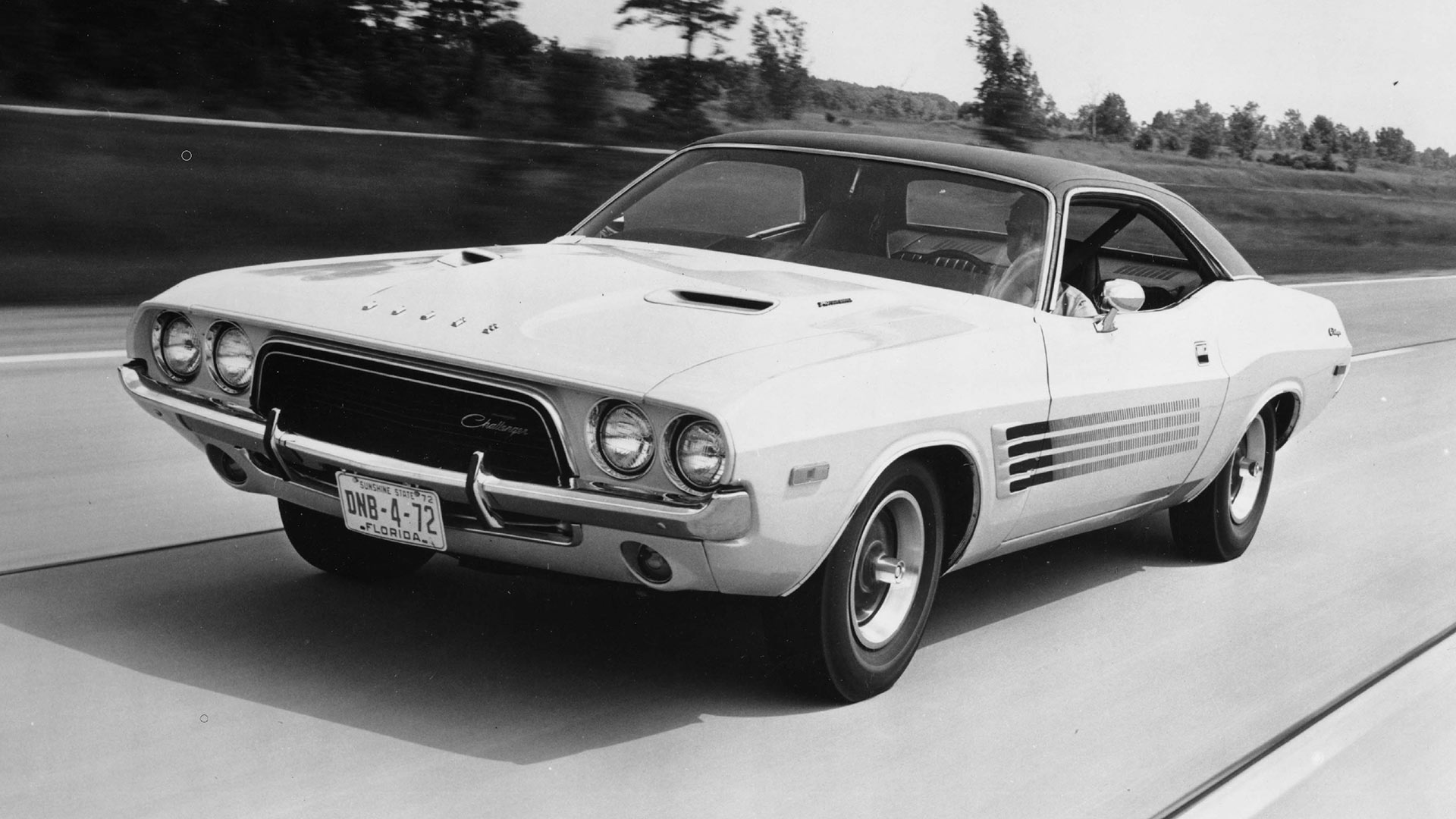
1972 Dodge Challenger Rallye
Another subtle facelift was undertaken for 1972, with the Challenger’s front grille changed yet again. Now extending below the front bumper, it gave the car a mildly unhappy appearance. The convertible Challenger was also dropped, leaving the entire Dodge range of cars without an open-top model.
Pressure from insurance companies, and the need to meet new EPA emissions regulations, saw the engine options reduced and detuned. Dodge also ended the R/T model as the performance variant, replacing it with the Rallye name instead.
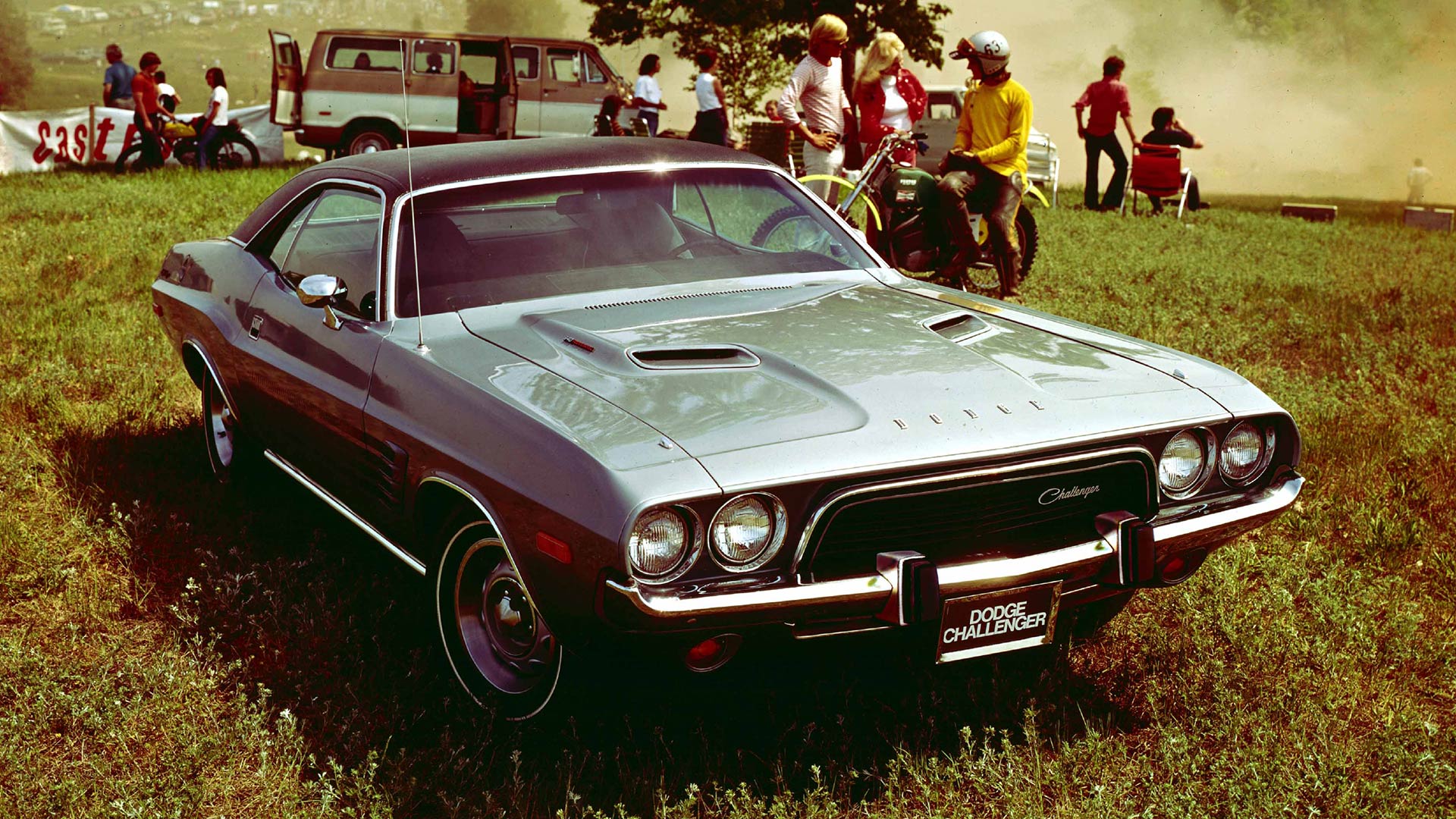
1973 Dodge Challenger Rallye
As the market for muscle cars continued to shrink, Dodge made only minor changes to the Challenger for 1973. Federally mandated bumpers were added, spoiling the previously clean lines of the Challenger.
Engine choices were reduced again, with only the 150 horsepower 318-cubic inch V-8 and 240 horsepower 340-cubic inch V-8 units remaining. That these engines were now rated at net output, not gross, also made them appear even less powerful than before.
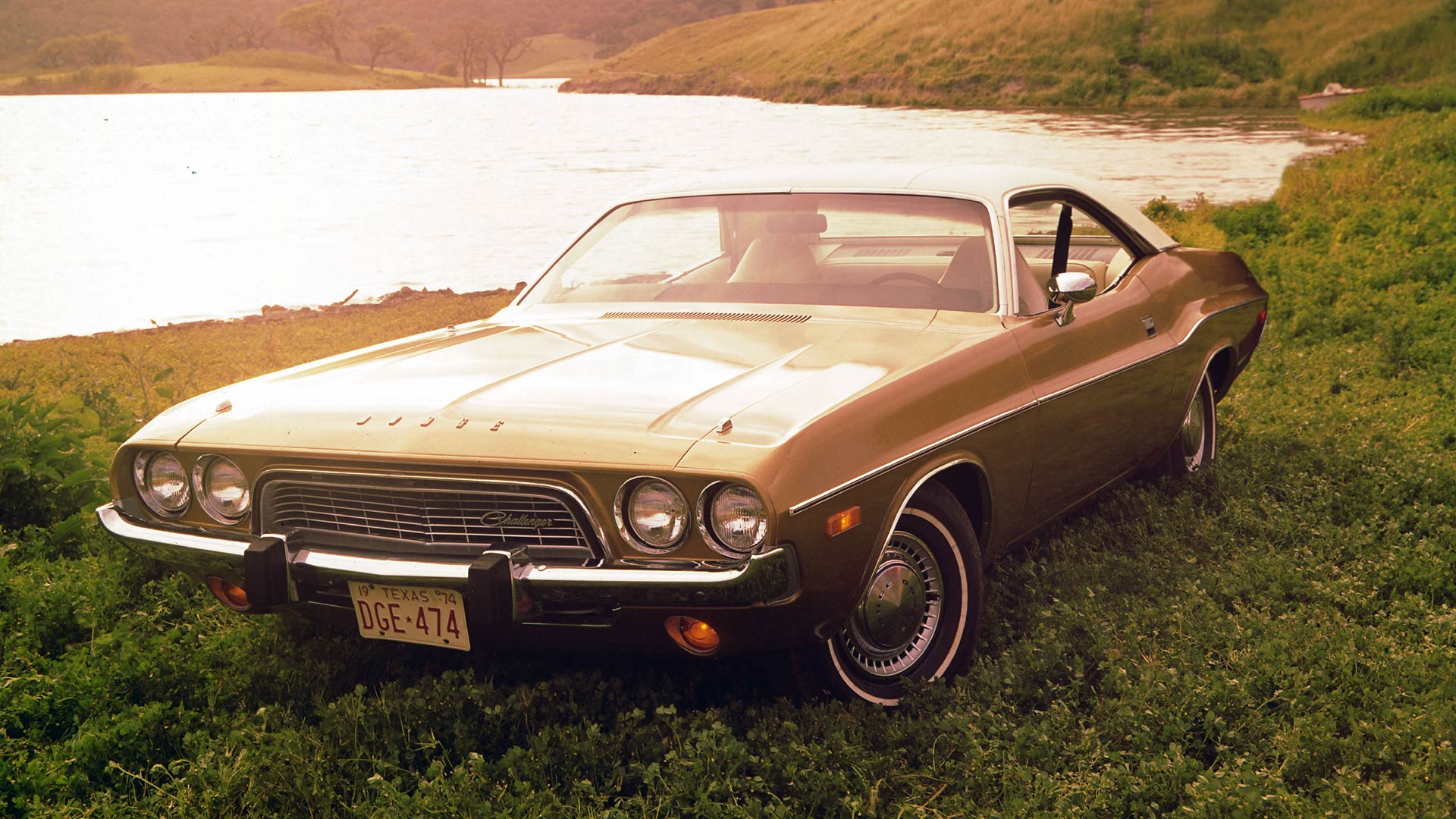
1974 Dodge Challenger
By 1974 the writing was on the wall for the Challenger, with Dodge making no changes other than adding extra safety equipment. This included upgraded seat belts, and a federally mandated ignition lock.
Insurance prices, emissions regulations, and higher fuel prices meant that the first-generation Challenger came to an end in 1974. The motoring public had fallen out of love with monstrous muscle cars, with more fuel efficient offerings were in vogue. In total Dodge produced over 188,000 Challengers during the initial run from 1970 to 1974.
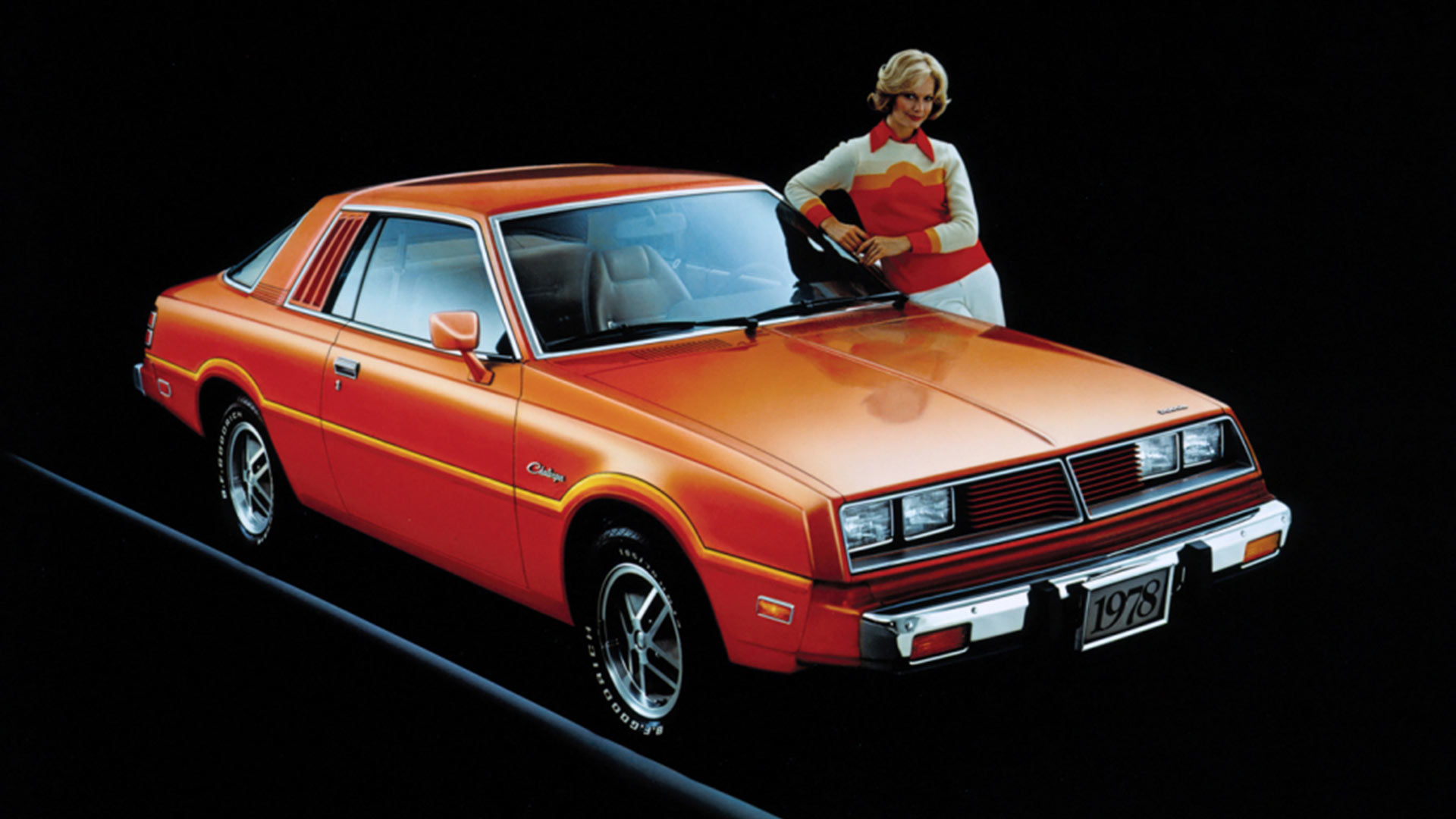
1978 Dodge Colt Challenger
Four years after disappearing, the Challenger name reappeared attached to a Dodge-branded version of the Mitsubishi Galant Lambda coupe. Along with the Plymouth Sapporo, these Japanese-imported vehicles were aimed at helping Chrysler meet the U.S. Corporate Average Fuel Economy requirements.
Whilst the Mitsubishi-derived models were at least rear-wheel drive, there were obviously no large V-8 engines beneath the hood. Instead, a 1.6-liter four-cylinder unit with 77 horsepower was standard with a 2.6-liter 105 horsepower version available as an option.
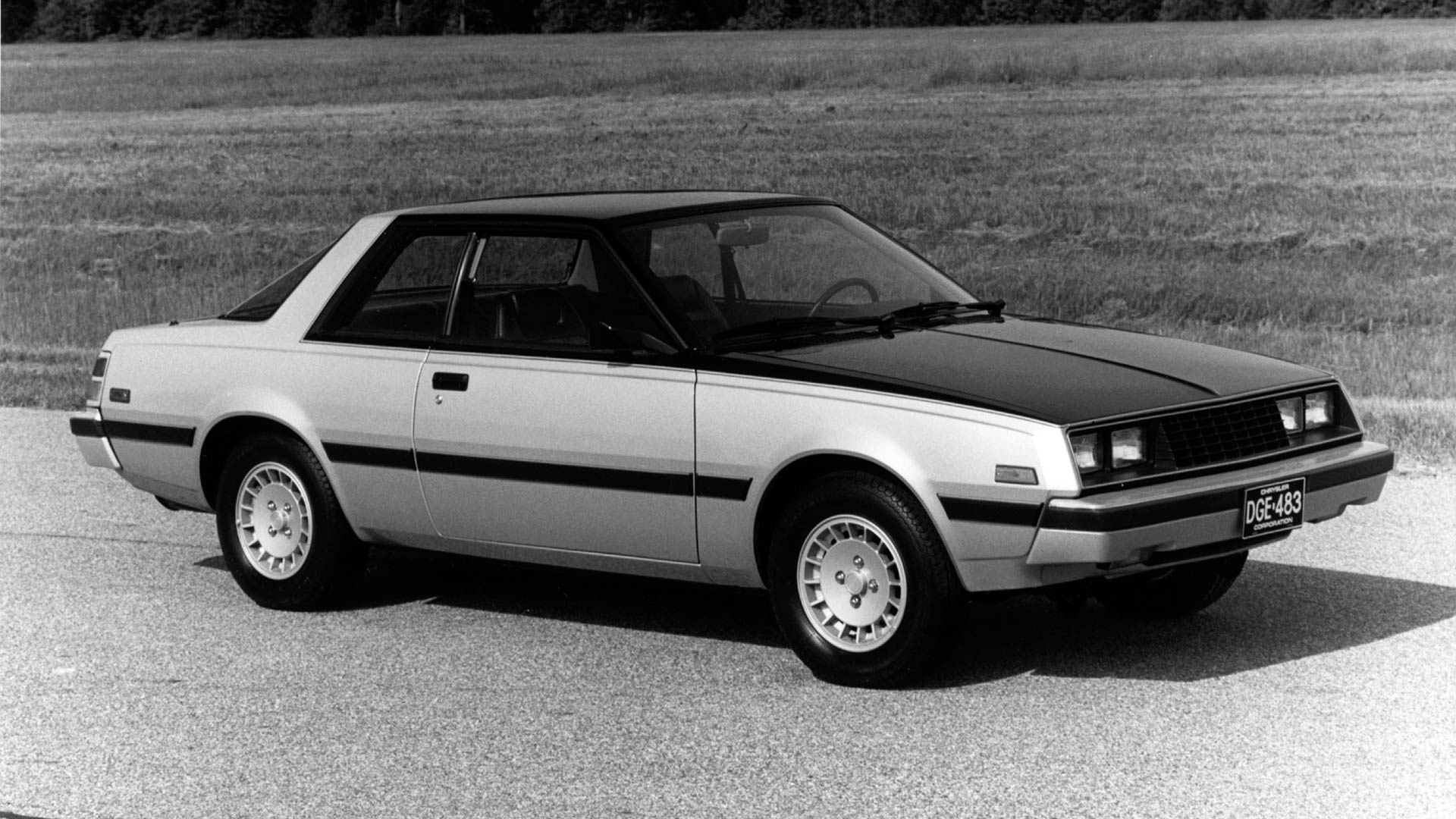
1983 Dodge Challenger
As Chrysler continued to improve its relationship with Mitsubishi, the Challenger gained a mild restyle for the 1981 model year. The car also dropped the ‘Colt’ name, simply being sold as the Dodge Challenger.
Sales of the imported Challenger averaged around 13,000 units each year, until the model was withdrawn in 1983. Chrysler would go on to form Diamond-Star Motors with Mitsubishi, developing bespoke models for production in the United States.
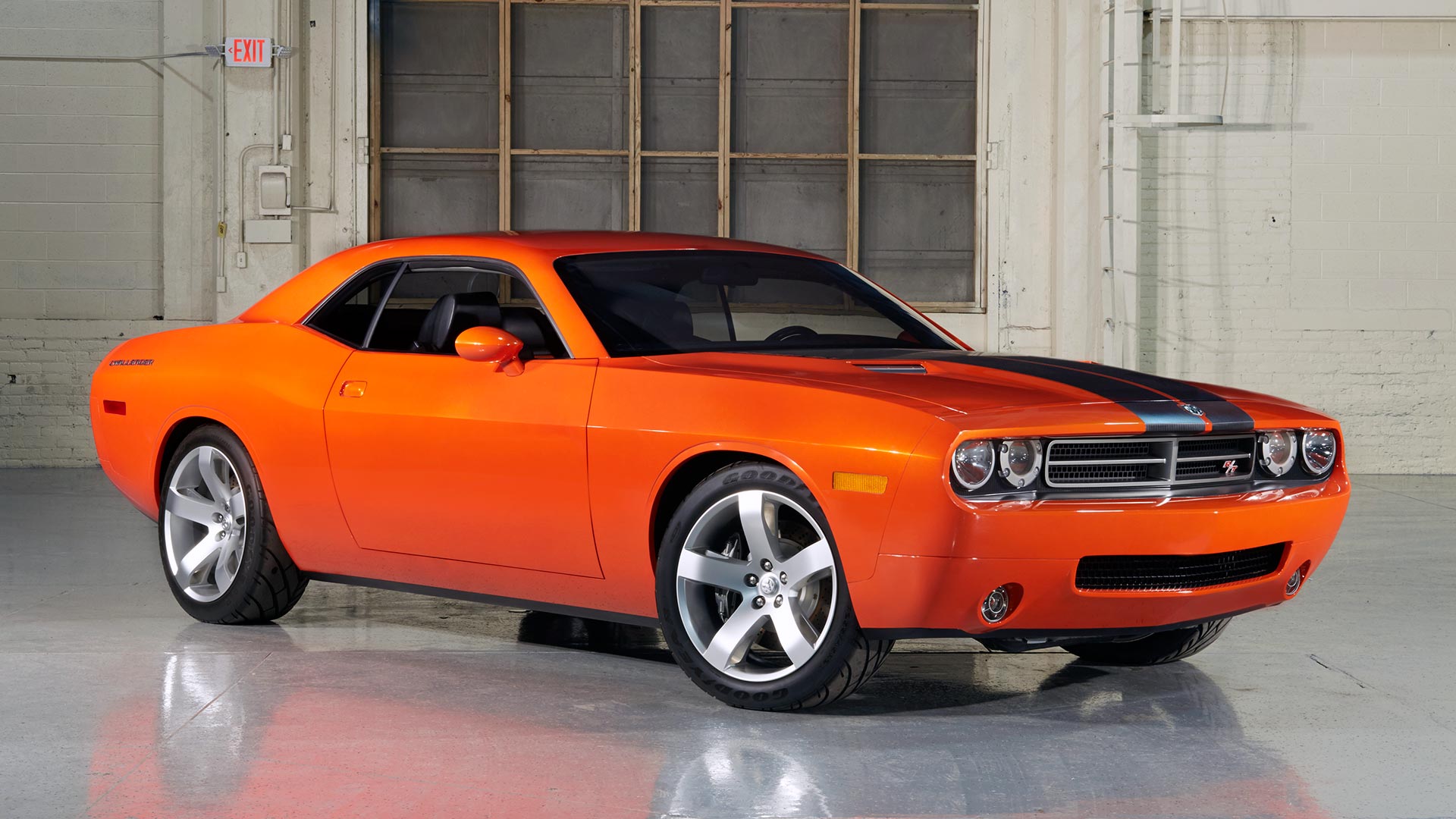
2006 Dodge Challenger Concept
More than 30 years after the first-generation Challenger had disappeared from sale, Dodge presented a new concept version of it at the 2006 Detroit Auto Show. The two-door coupe maintained all the proportions and details of the original Challenger, but updated to meet the requirements of the 21st century. A Hemi engine could be found beneath the hood, and it sent its power to the rear wheels.
The 2005 Ford Mustang had already demonstrated the appeal of retro-styled muscle cars, and the Challenger received substantial attention at the Detroit event. Mopar fans pleaded with Dodge to make it real.
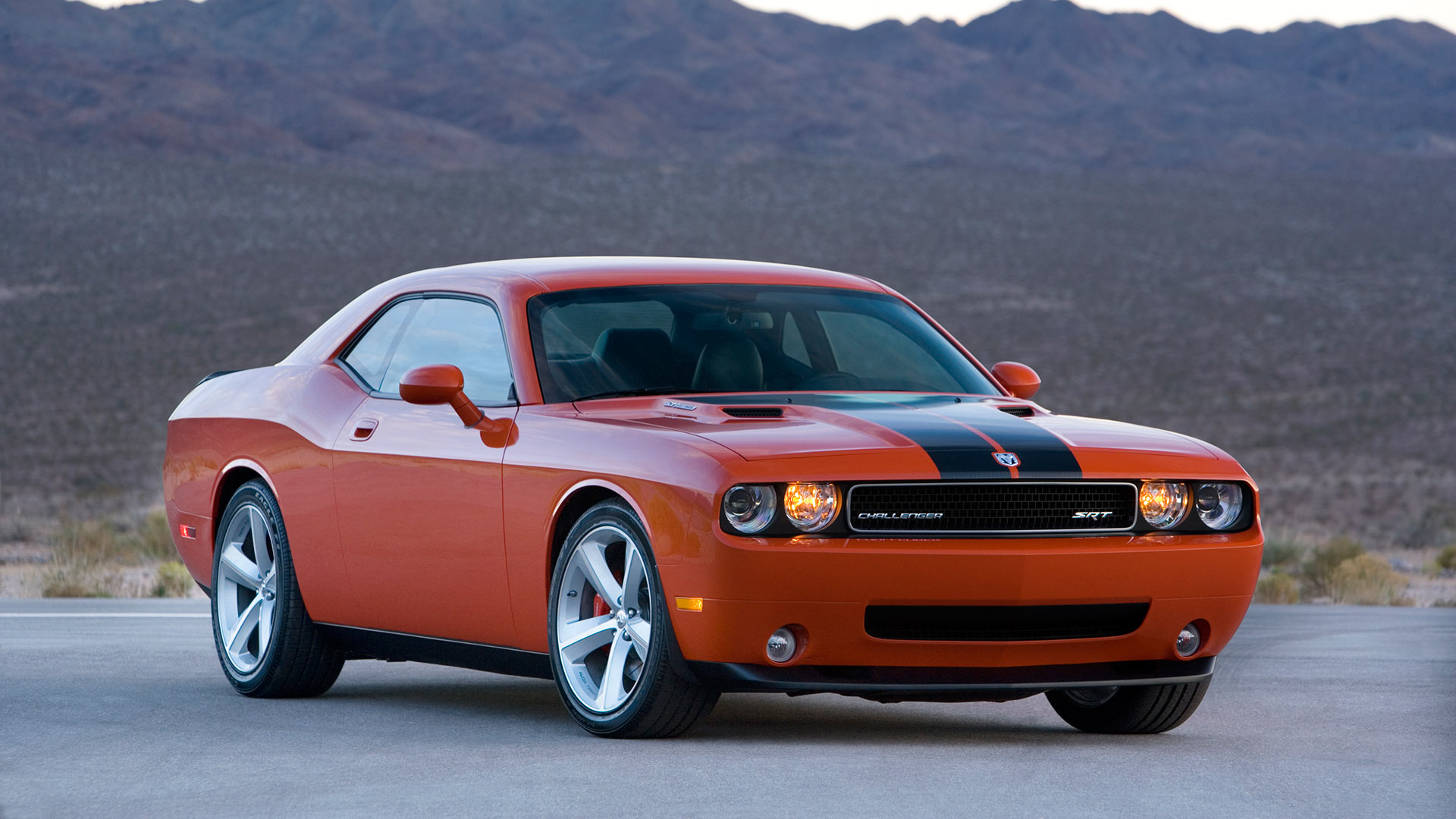
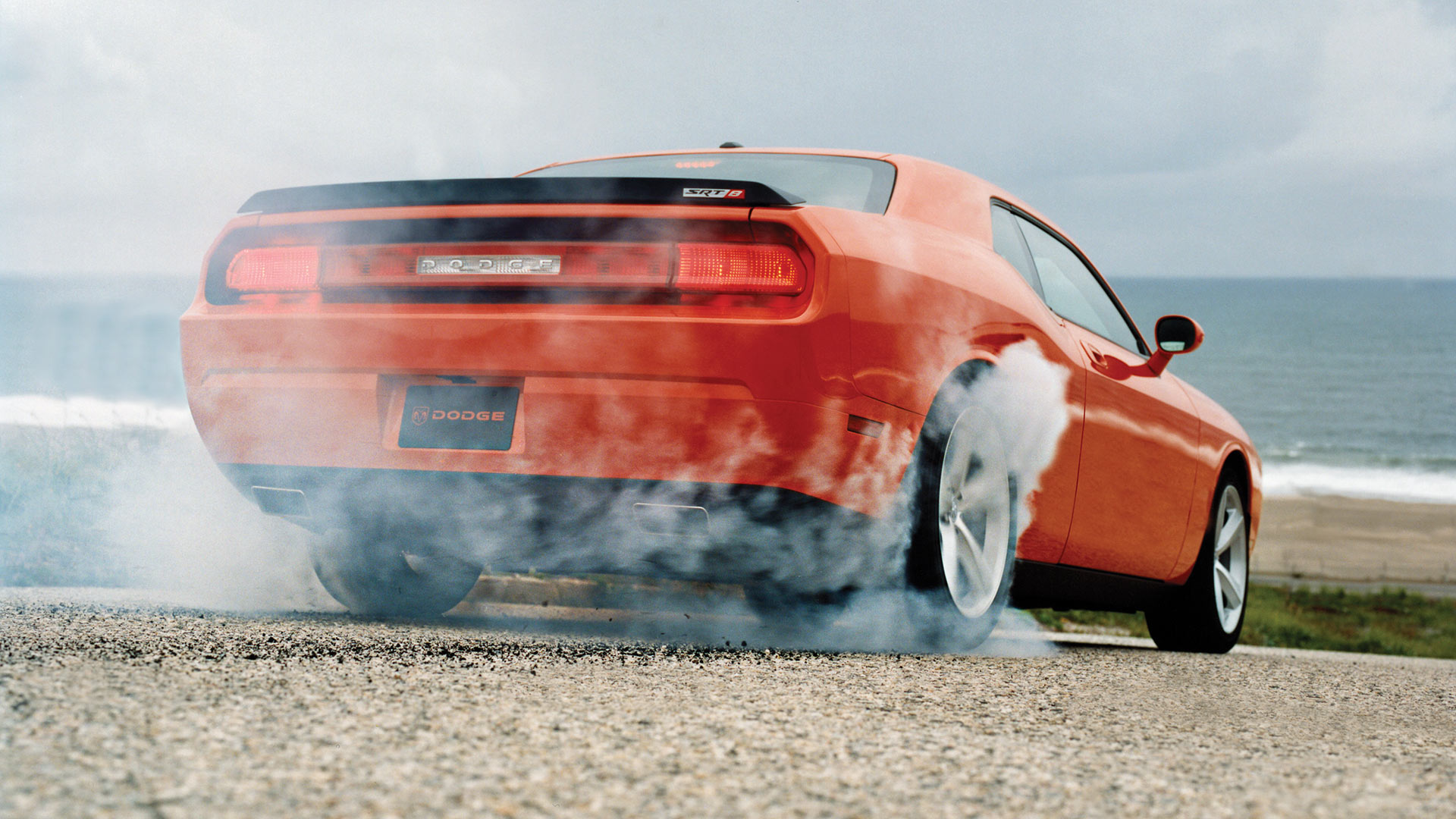
2008 Dodge Challenger SRT8
Less than two years later, Dodge revealed the production-ready version of the third-generation Challenger. Most notable was the fact that the styling had evolved only slightly from the concept version, leaving the finished product still resembling the 1970 original.
Beneath the retro styling was a version of the Chrysler LX platform. Whilst the Challenger used a bespoke shortened version, the basic underpinnings still were shared with the Chrysler 300 sedan and Dodge Charger.
The Challenger SRT8 was the main focus of the launch for the new Challenger. Powered by a 6.1-liter Hemi V-8 engine, the outputs of 425 horsepower and 420 lb-ft of torque meant it was close in spirit to the legendary first-generation Challengers. However, those 1970 cars did without Brembo brakes, or optional Goodyear Eagle F1 tires.
A total of 6,400 units of the new Challenger SRT8 found owners for 2008. The very first production car was sold at the Barrett-Jackson Scottsdale auction, achieving a total of $400,000 for charity.
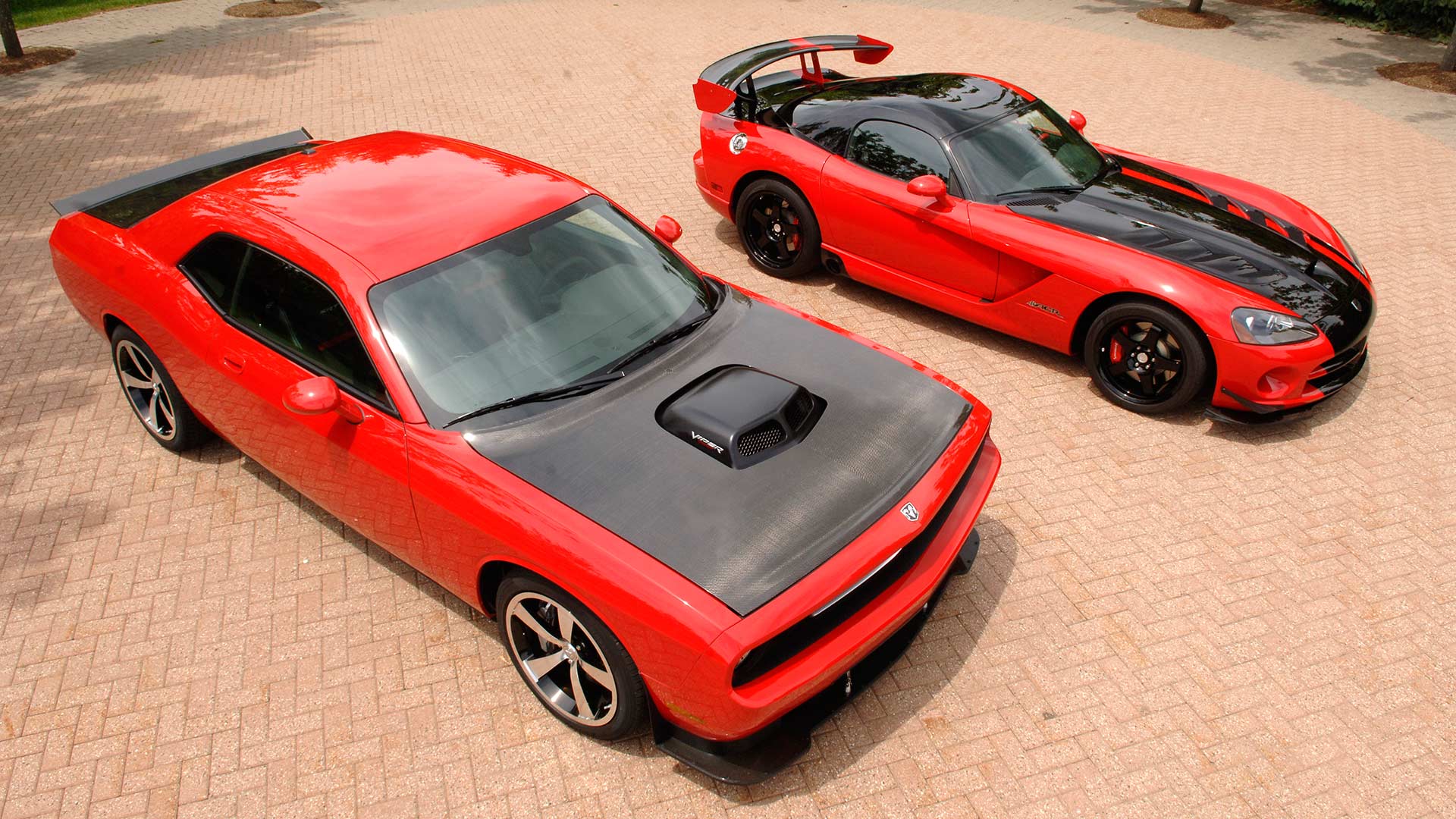
2008 Dodge Challenger SRT10 Concept
Dodge added additional engines to the third-generation Challenger range, including a 3.5-liter V-6 for the SE model, and a 5.7-liter Hemi V-8 for the mid-range R/T version. All of these attempted to capture a broad spectrum of potential buyers, just like the original car from 1970.
2008 also saw Dodge experiment with an extreme Challenger concept. The SRT10 featured the 8.4-liter V-10 engine from the Viper sports car. With 600 horsepower and 560 lb-ft of torque, it endowed the Challenger with serious pace, but sadly, it was only an engineering concept to prove what SRT could do.
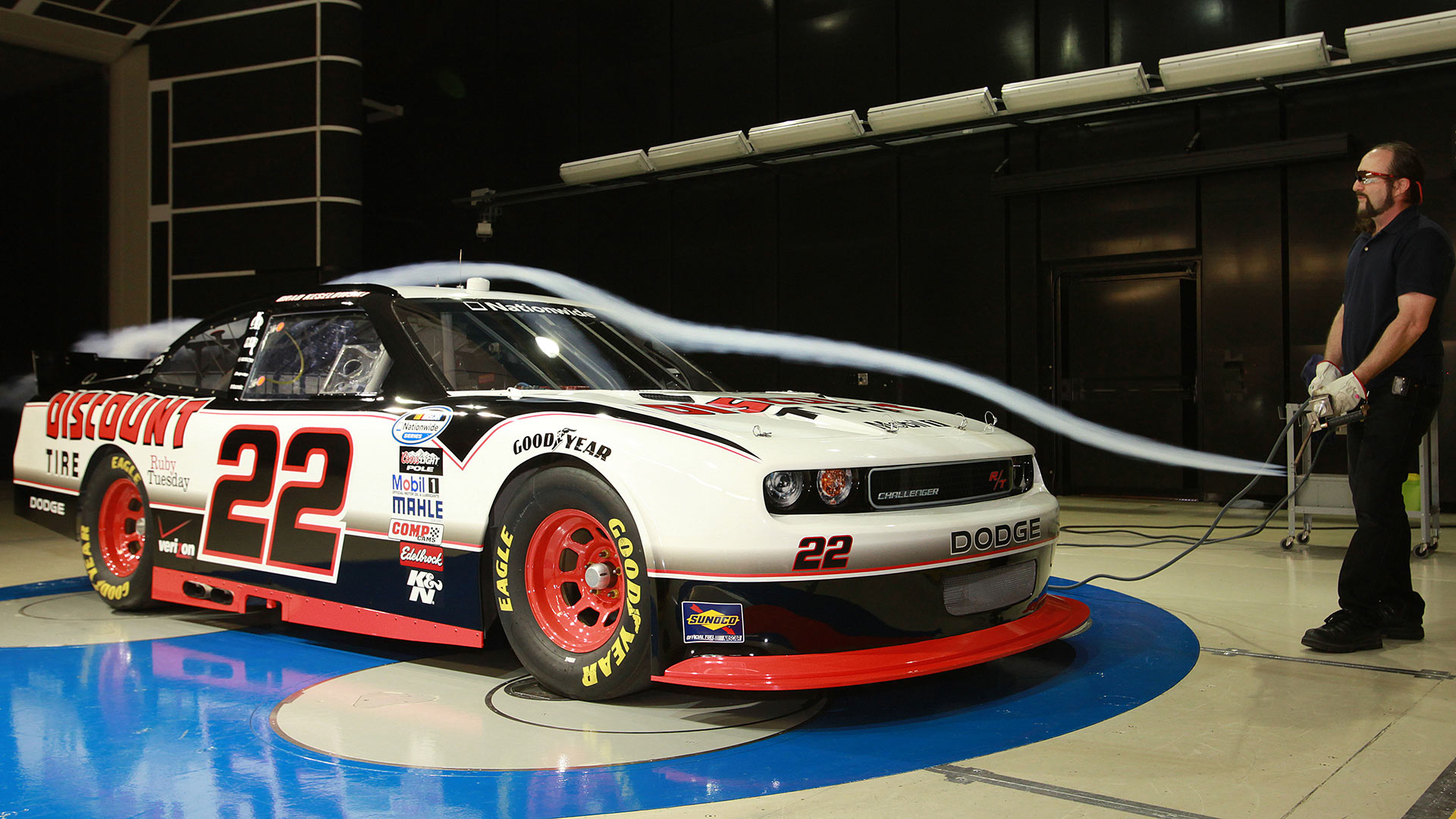
2010 Dodge Challenger NASCAR Nationwide race car
To help promote the new Challenger, Dodge also worked with Penske Racing to develop the car for use in the NASCAR Nationwide Series. This decision was undoubtedly spurred on by the announcement that Ford would use the Mustang as the basis for its Nationwide race programme.
Dodge would ultimately abandon all tiers of NASCAR racing at the end of 2012, leaving the Challenger project unsupported. Privateer teams would continue to use the Challenger, with it continuing in competition until 2018.
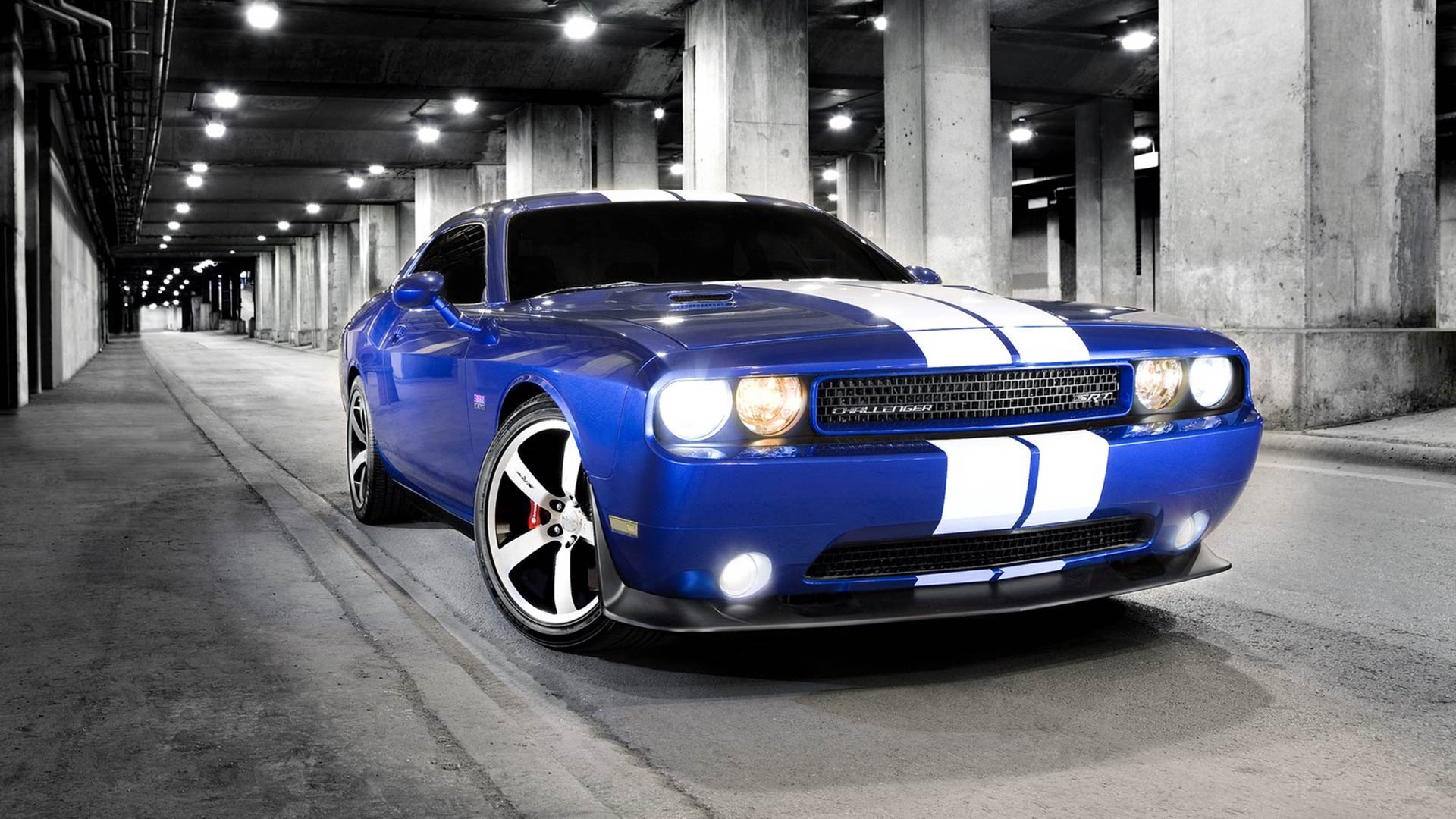
2011 Dodge Challenger SRT8 392
Back on the street, Dodge continued to improve and evolve the Challenger, with a host of changes made for 2011. Whilst the entire range of engines received improvements, it was the introduction of the new 392-cubic inch (6.4-liter) version of the Hemi V-8 for the SRT8 that made the most noise.
Output was increased to 470 horsepower and 470 lb-ft of torque, with the exhaust note enhanced for a deeper bass burble. Dodge promised a 0-60 mph time in under 5 seconds, along with a quarter-mile time in the high 12 second range.
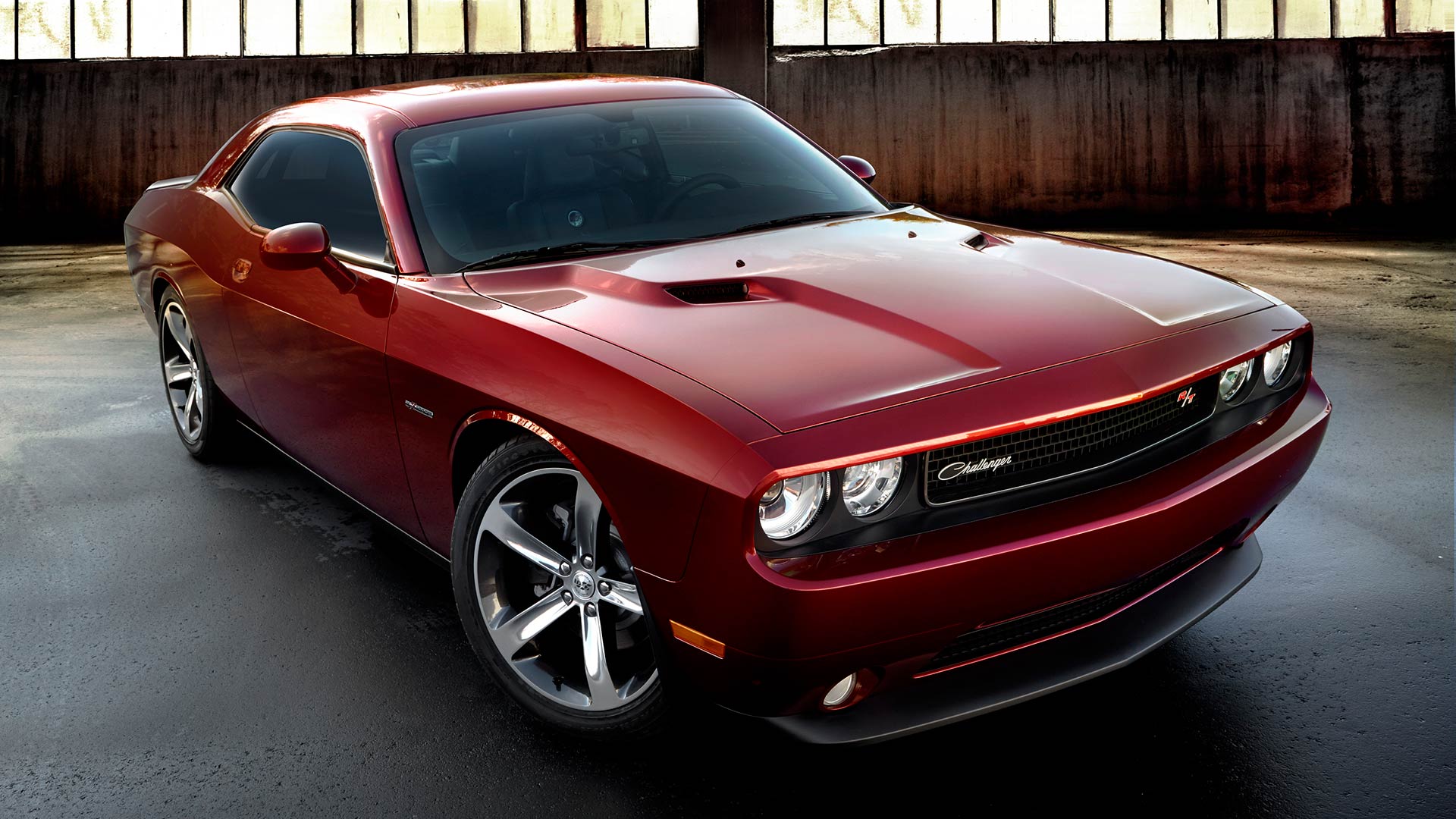
2014 Dodge Challenger 100th Anniversary Edition
Helping mark the centenary of the Dodge brand were a number of special edition models for 2014. Naturally, this included the Challenger, with the 100th Anniversary package offered for the SXT Plus and R/T Plus variants.
A choice of paint colors could be had, but the stand out choice was the unique High Octane Red Pearl Coat. Special exterior badges and wheel center caps were also included, with Nappa leather seats on the inside. Brass-colored accent stitching, and more 100th Anniversary badging, completed the interior makeover.
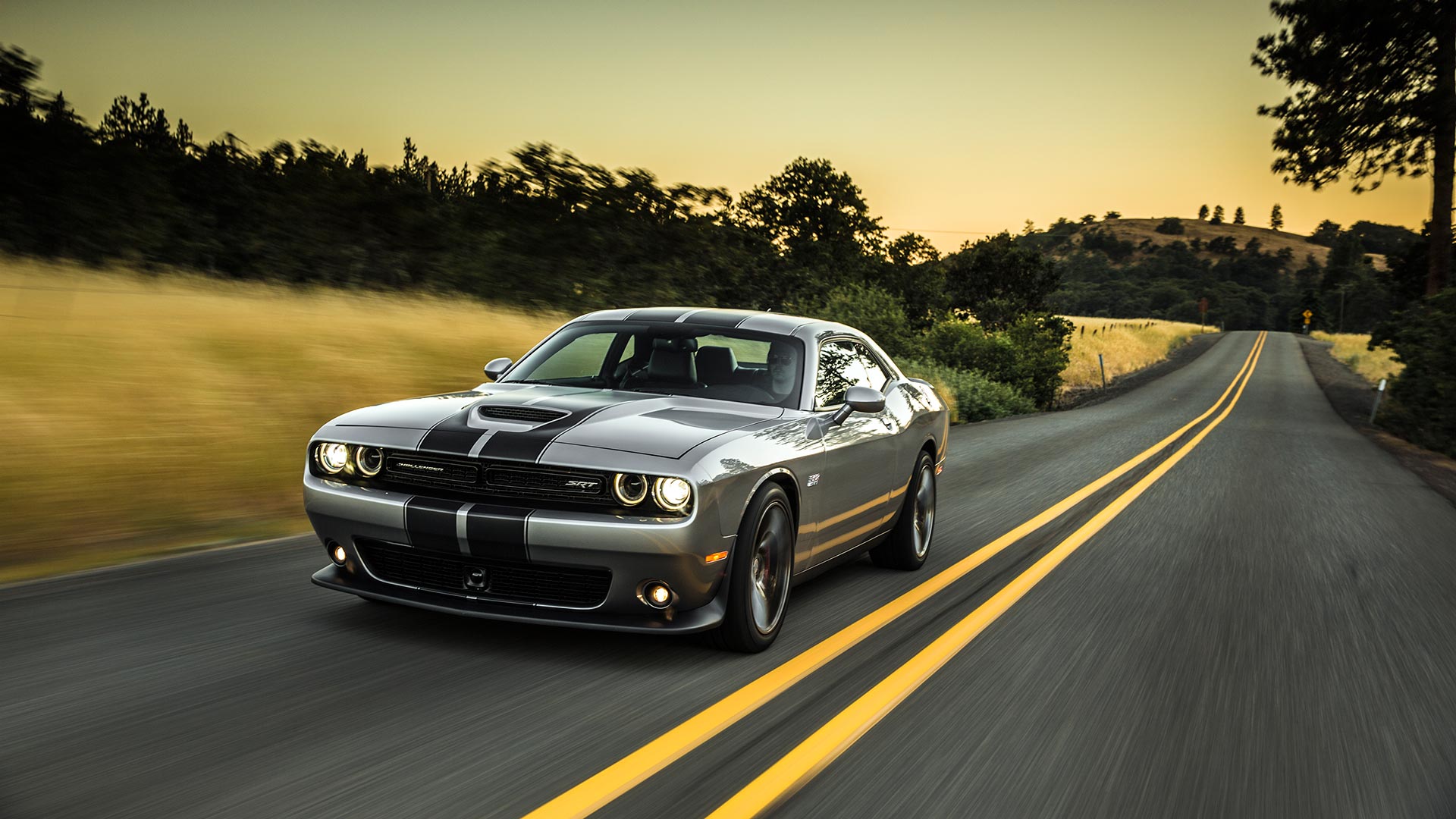
2015 Dodge Challenger SRT 392
After seven years on sale, the time was ripe in 2015 for the Challenger to undergo a more substantial overhaul. This included an updated version of the LX platform, branded as the LA, which allowed the Challenger to use the eight-speed TorqueFlite automatic transmission.
On the outside, the 2015 Challenger gained a front grille which borrowed in style from the 1971 model year version. New split tail lights were also inspired by the 1971 car, whilst tweaks were made to the rear fenders. The SRT8 name was dropped, whilst the interior of the Challenger was also updated to feature a new 7-inch multimedia screen.
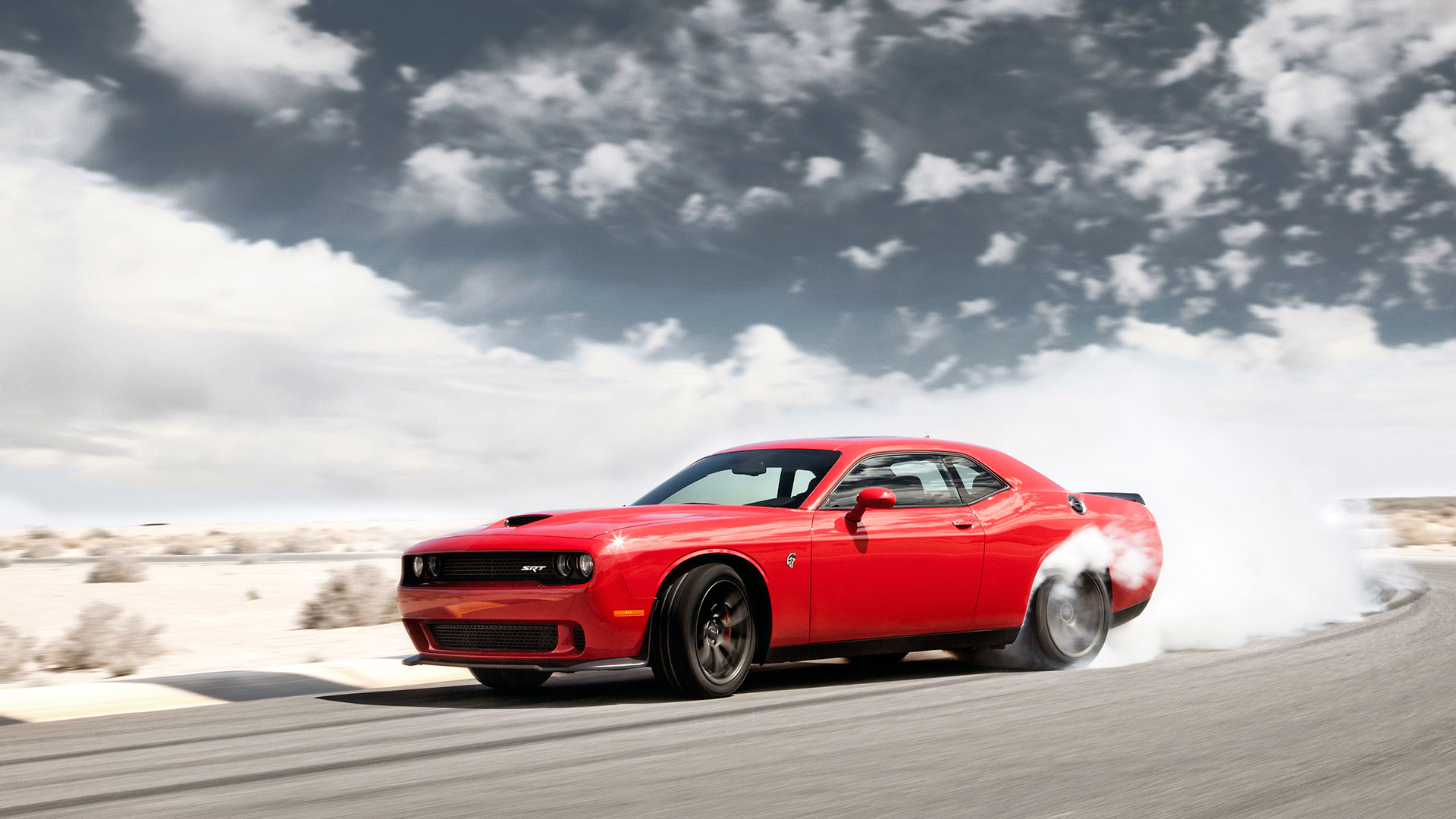
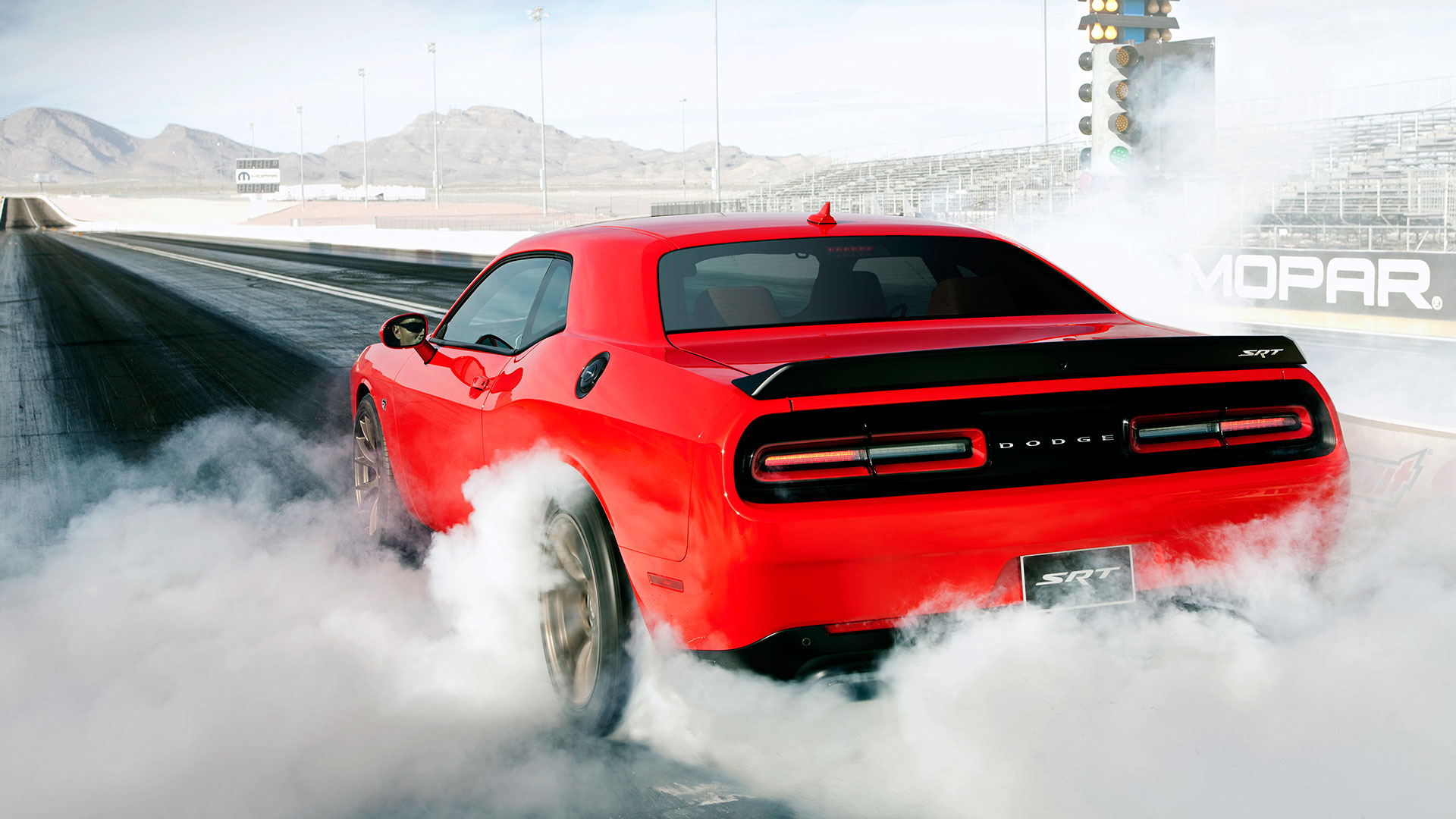
2015 Dodge Challenger SRT Hellcat
The biggest news for the 2015 model year was the announcement of the SRT Hellcat. Proving that the muscle car horsepower war was truly in effect, Dodge announced the new model with a supercharged 6.2-liter Hemi V-8 engine.
Peak power of 707 horsepower, with torque rated at 650 lb-ft, created the most powerful production muscle car made to date. To further emphasis how much power the Hellcat offered, Dodge supplied it with two keys. Drivers needed to use the special red key in order to unlock the full 707 horsepower potential, much like a Bugatti Veyron.
2015 Dodge Challenger SRT Hellcat
Making the Hellcat was not simply Dodge dumping a large engine into the Challenger. The company had worked hard to develop the first supercharged Hemi engine, and included features like the air intake within the driver’s side parking lamp.
Being priced from $59,995, the Hellcat appeared an absolute performance bargain compared to traditional sports cars. The NHRA confirmed it was capable of a quarter-mile sprint in 10.85 seconds, whilst a top speed just shy of 200 mph was also possible.
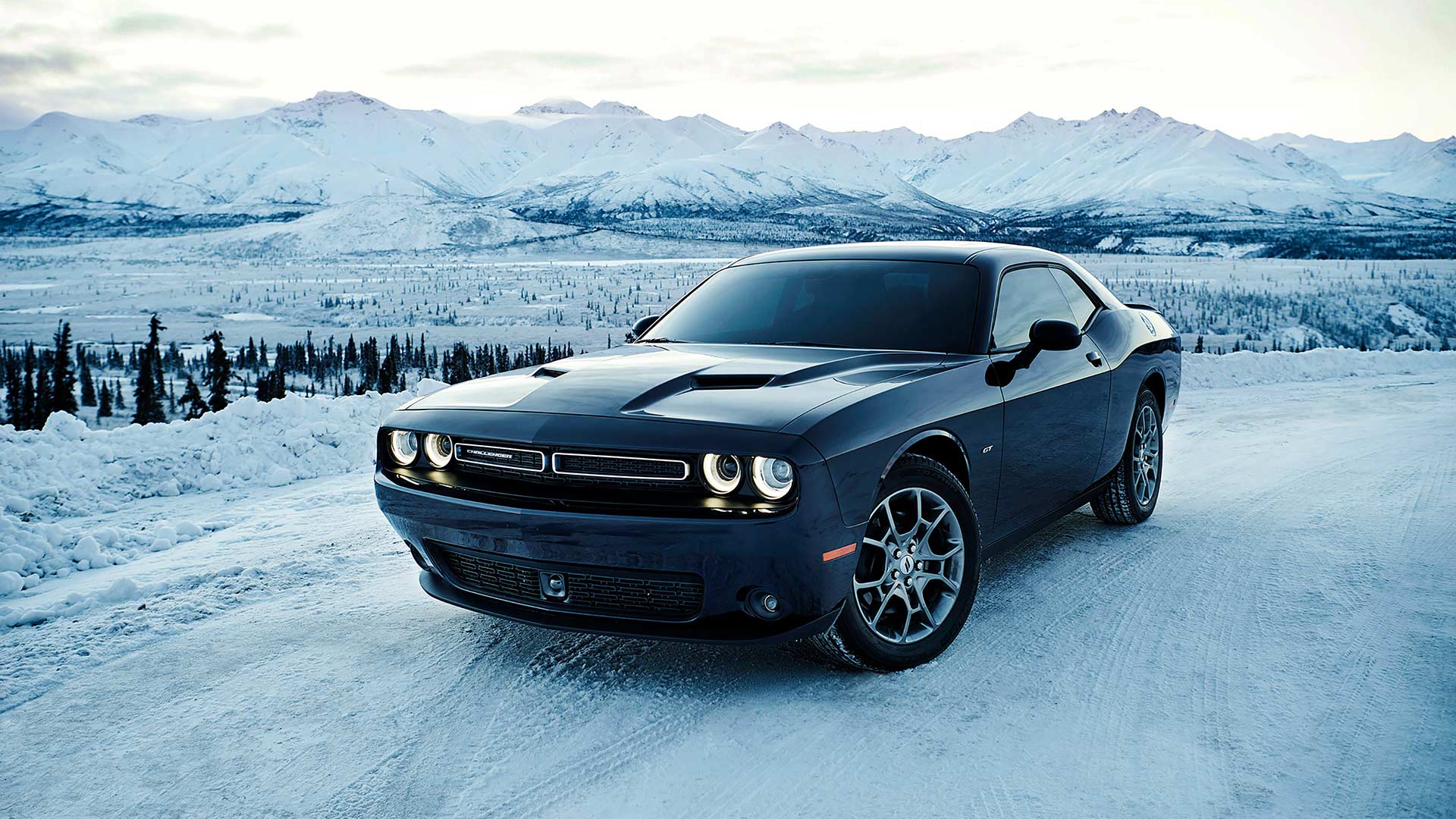
2017 Dodge Challenger GT AWD
New in 2017 was the unveiling of a Challenger with all-wheel drive ability. The new Challenger GT AWD meant that Mopar fans could potentially enjoy their Dodge coupe all year round. Whilst the AWD system was normally biased towards the rear wheels, it could send up to 38% of torque to the front axle.
The GT AWD version of the 2017 Challenger could only be had with the 3.6-liter Pentastar V-6 engine, producing 305 horsepower and 268 lb-ft of torque. Dodge’s eight-speed TorqueFlite automatic transmission is also standard, along with heated leather seats to help in cold climates.
2017 Dodge Challenger TA 392
The first-generation Challenger T/A may have been a short lived offering, with just 2,399 examples built for the road. Yet its legacy amongst Mopar fans made it ripe for a revival in 2017. Offered on three different Challenger models, the T/A package was most potent with the 392 engine with its 485 horsepower.
The satin black hood and body stripes were the most noticeable changes, and were matched with wider 20-inch lightweight alloy wheels. Retro color choices were also on the cards, with buyers even able to specify old-school hood pins. The T/A made use of the Air Catcher headlights from the Hellcat, whilst the 392 version used a special hood design.
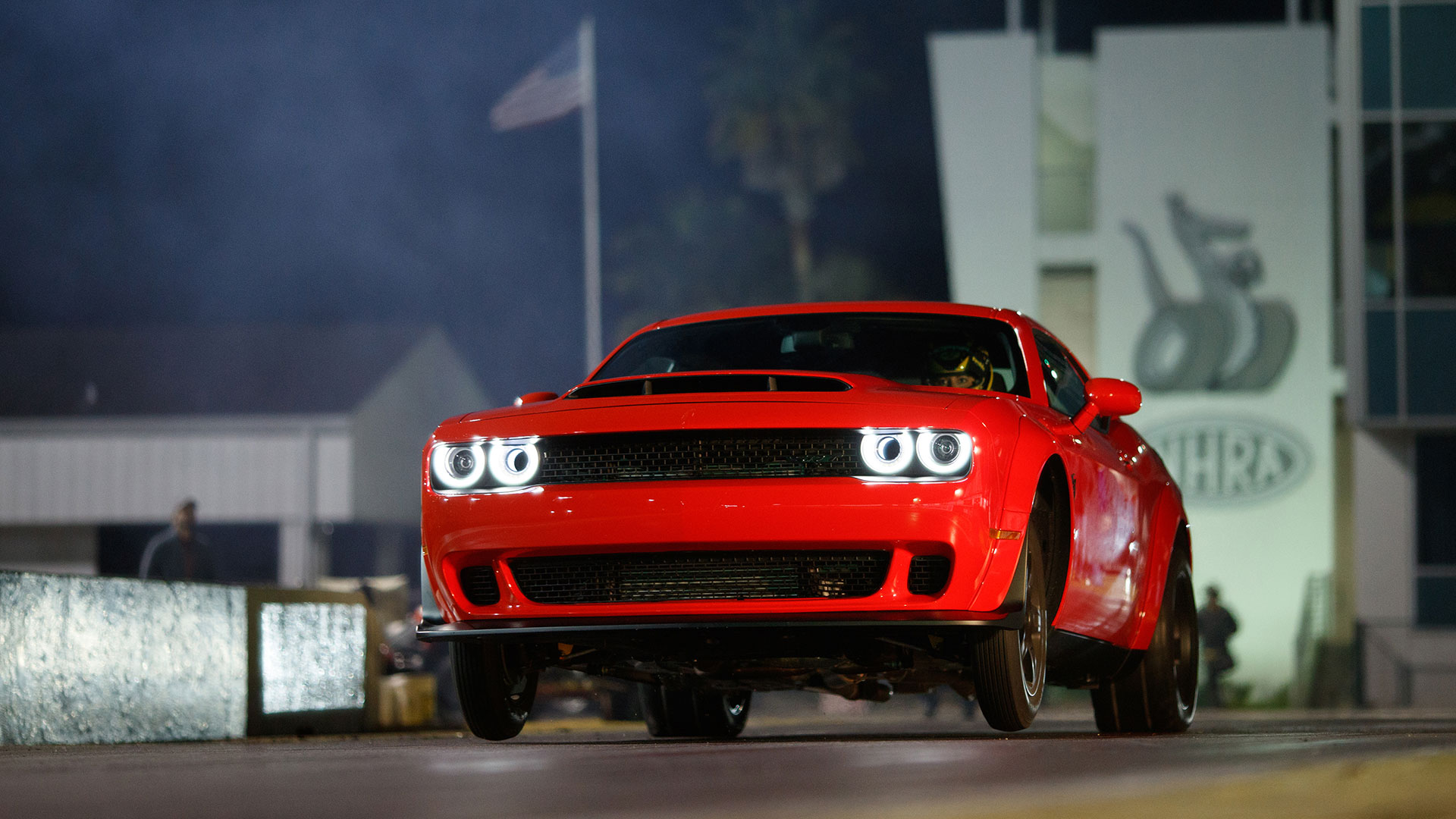
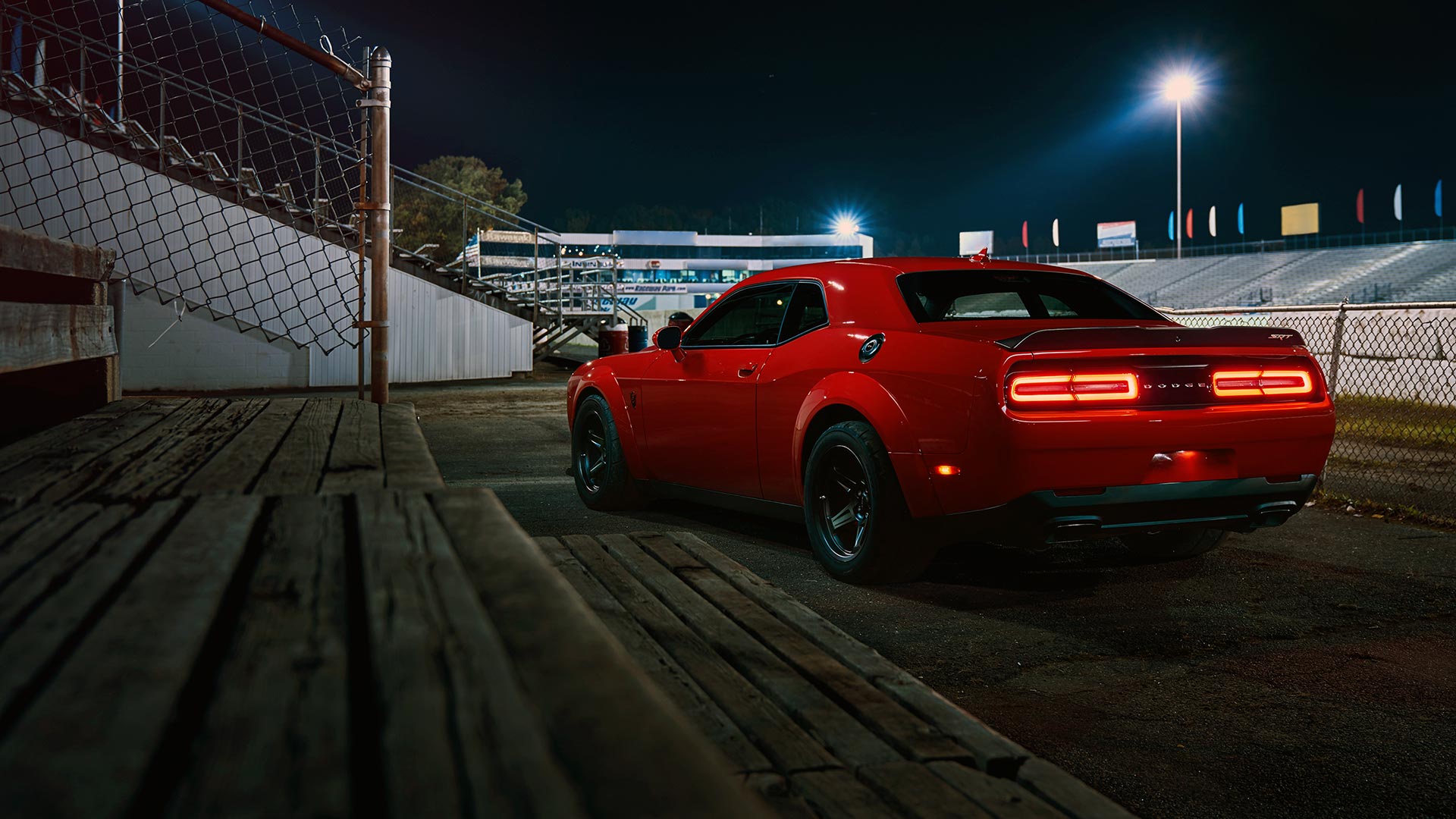
2018 Dodge Challenger SRT Demon
Dodge was clearly on a roll with the Challenger, and opted to push things even further for 2018 with the shocking SRT Demon. Essentially a street-legal dragster, the limited edition Demon set out to capture numerous world records and achievements.
At the heart of the SRT Demon could be found an enhanced version of the 6.2-liter Hemi V-8 from the Hellcat, but with a larger supercharger and the ability to rev higher. A potential for 840 horsepower and 770 lb-ft of torque pushed the Demon into true supercar territory. A special chiller for the air fed into the supercharger, and a transmission brake, were ideas taken from the drag strip.
All the technology, and the weight-savings from having no passengers seats as standard, helped the SRT Demon become the fastest accelerating car from 0-60 mph. This sprint took just 2.3 seconds, and also saw the Demon become the first production car to pull a wheelie.
The NHRA certified that the Demon could cover a quarter-mile in just 9.65 seconds, but then acted to ban it from production-based drag racing due to being too fast. Ultimately, the SRT Demon demonstrated that Dodge had found a particular niche for the modern Challenger, and would stop at nothing to maximise its appeal.
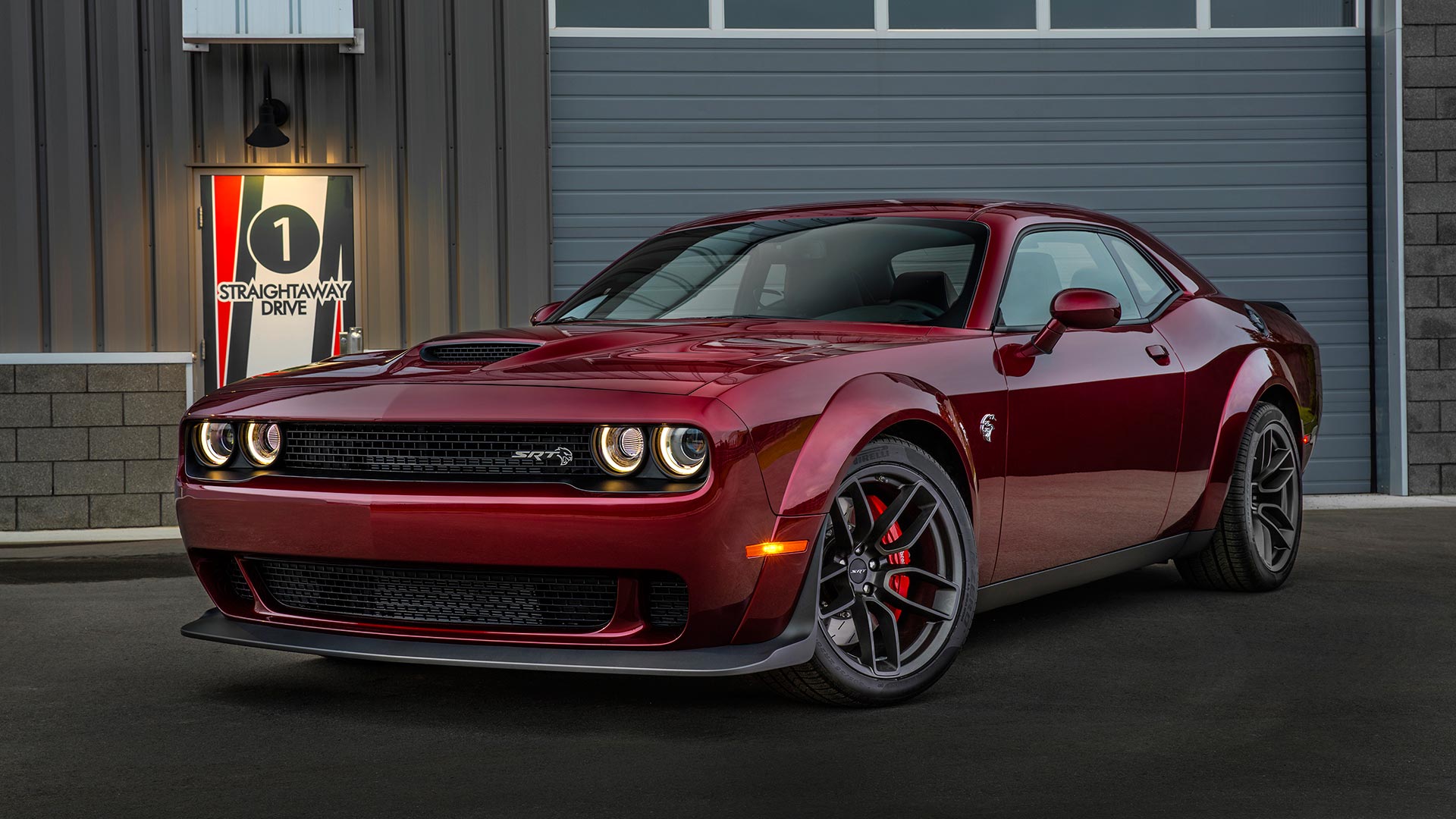
2018 Dodge Challenger SRT Hellcat Widebody
Although the SRT Demon may have been stealing most of the attention for the 2018 model year, Dodge also rolled out updates to other models in the range. Whilst the Demon was all about straight line performance, the SRT Hellcat gained updates to help it go faster around corners.
Central to this was the addition of the stretched Widebody kit, adding an extra 3.5-inches of girth compared to the regular Hellcat. This allowed for wider wheels, along with special Pirelli rubber and retuned power steering. Dodge reported the Hellcat Widebody to both be quicker in acceleration runs, and around a race track, justifying the changes.
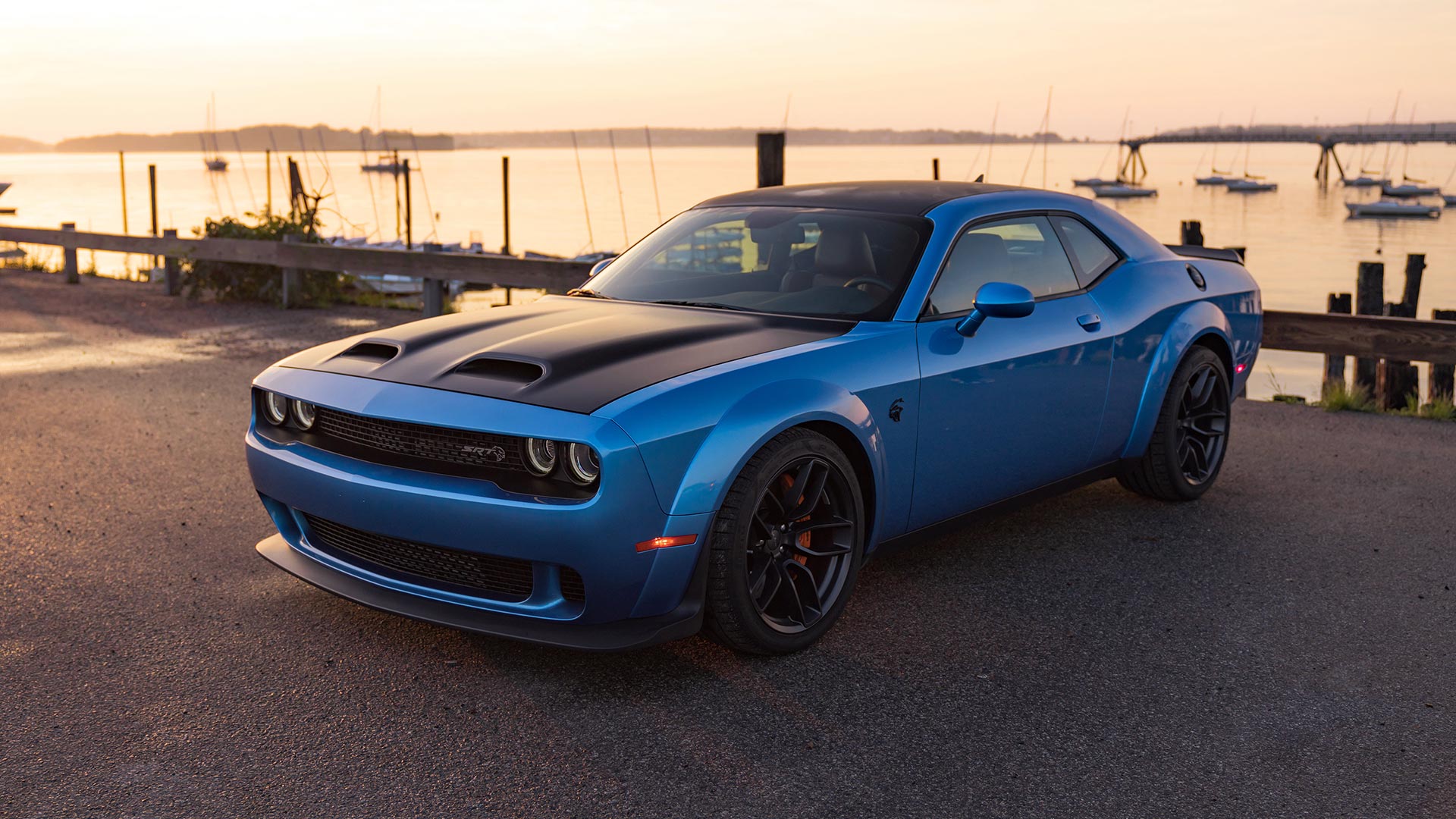
2019 Dodge Challenger SRT Hellcat Redeye
With the SRT Demon only a one-year limited edition offering, Dodge overhauled the Challenger range and offered a more powerful version of the Hellcat. Branded the ‘Redeye’, this Challenger uses a 797 horsepower version of the 6.2-liter supercharged Hemi V-8 found in the Demon.
Other items borrowed from Demon included the special Power Chiller, a torque reserve function, and upgraded drive shafts. Keen Challenger fans could spot the special model thanks to the new hood with its dual snorkels.
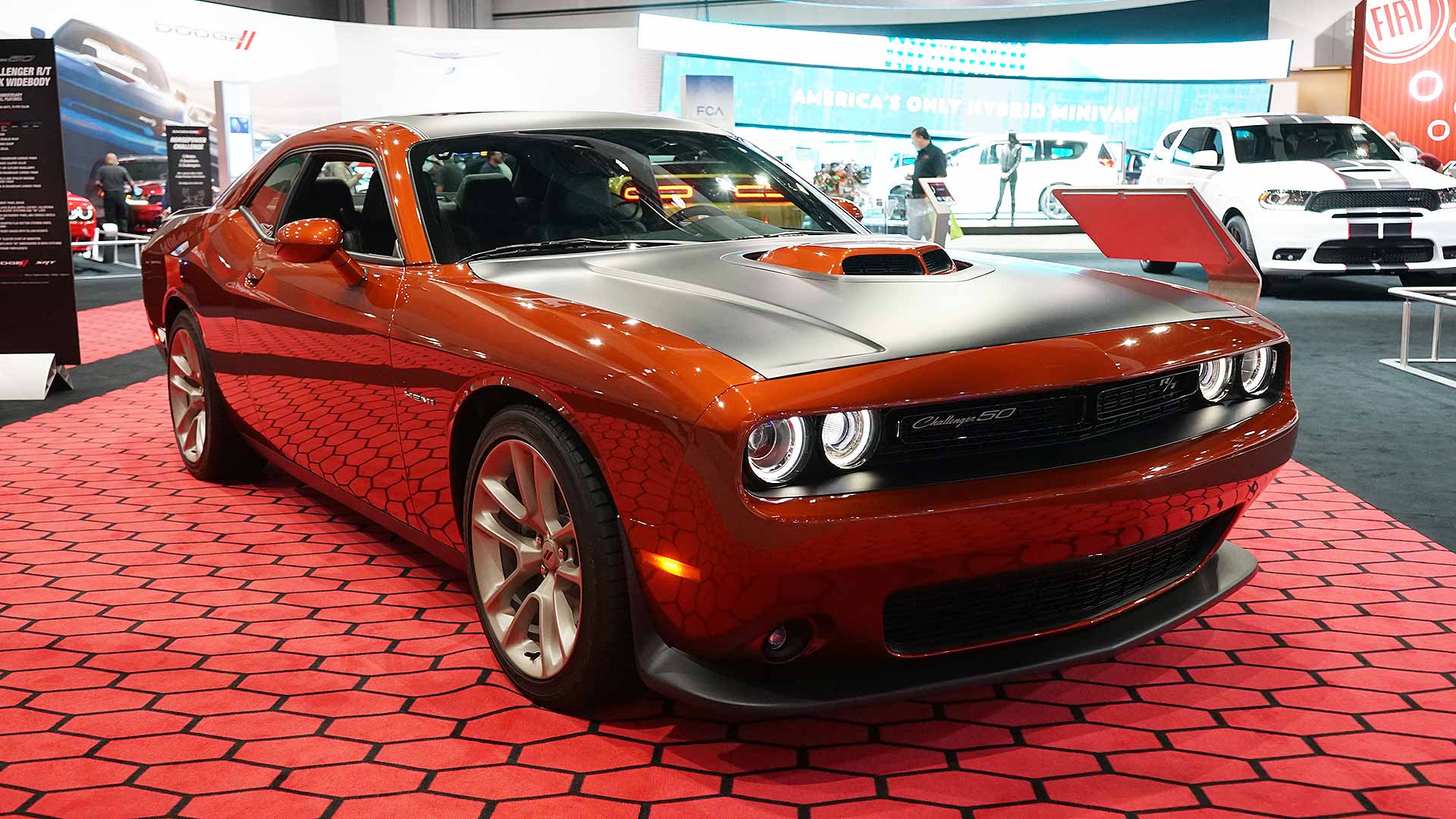
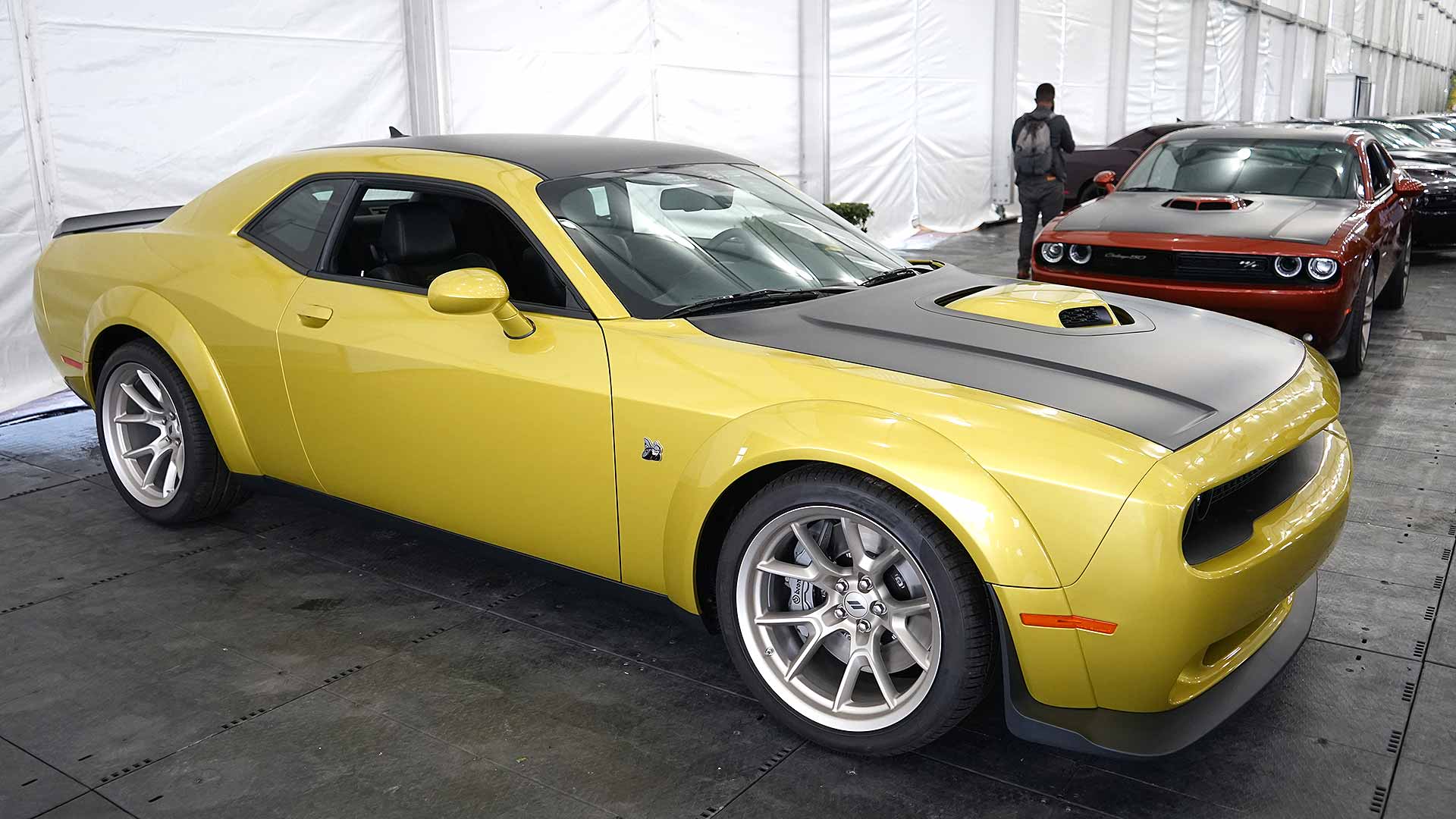
2020 Dodge Challenger RT 50th Anniversary
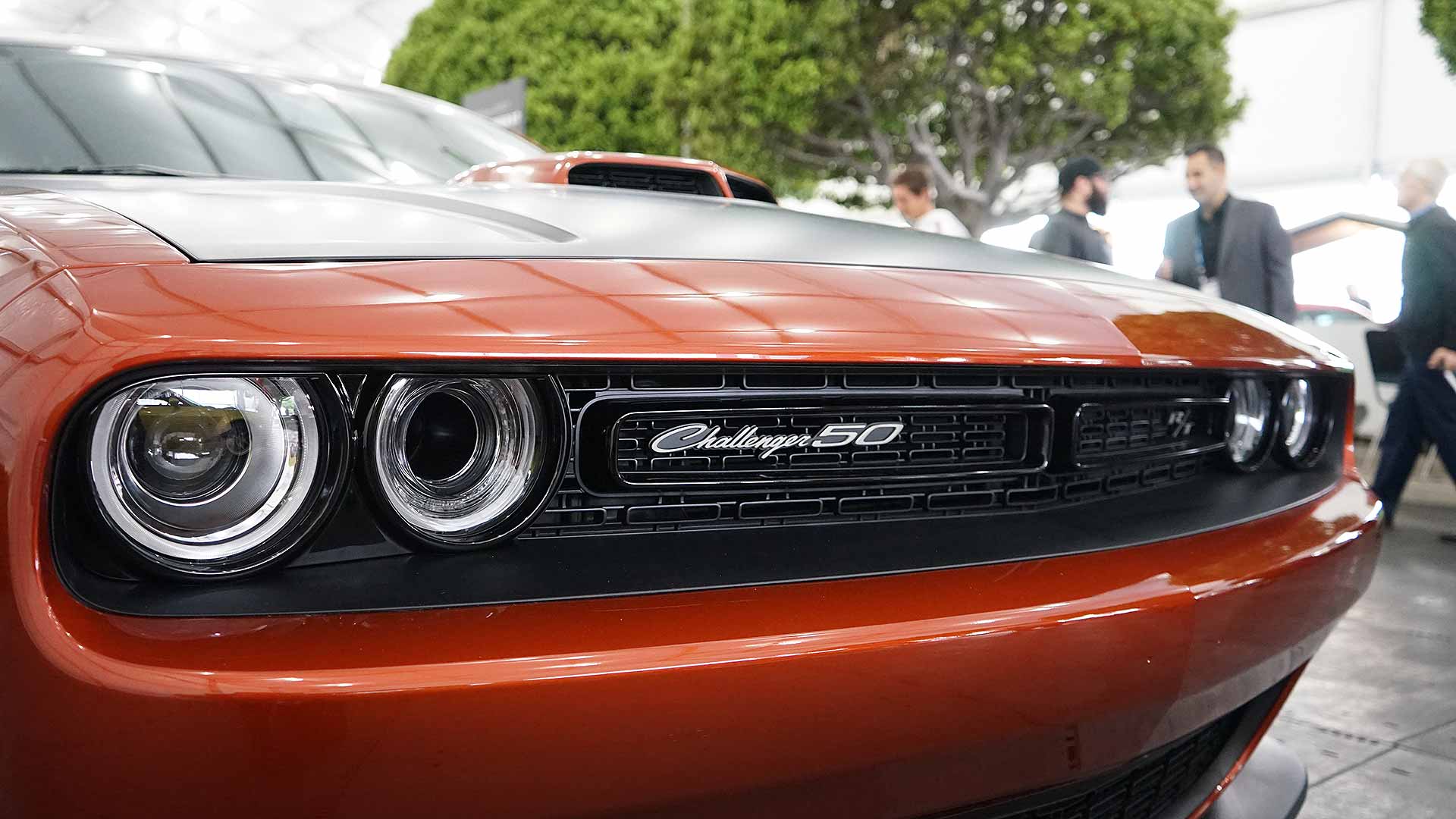
The limited edition Challenger 50th Anniversary package can be added to a number of models, running from the GT through to the R/T Scat Pack versions. Priced from $4,995, the package can be ordered at Dodge dealerships from December 2019. Hellcat models will simply receive the 50th Anniversary badging for the 2020 model year.
Key to 50th Anniversary are a range of classic High Impact Paint Mopar colors, including Go Mango, Tor Red, and F8 Green. A satin black hood and roof are standard, along with special 50th Anniversary badging. Unique 20-inch wheels, branded as ‘Gold School’ are also fitted to all models.
Those opting for the R/T Challenger with the 50th Anniversary package also gain another retro treat. An actual Shaker hood is fitted, directing air into the 5.7-liter or 392-cubic inch Hemi V-8 engines, just like the original 1970 Challenger. Naturally, it does shake with the engine!
Inside, all 50th Anniversary Challengers will have Sepia tones for stitching and trim, along with genuine carbon fiber elements. Most importantly of all will be a color-coded plaque, identifying which one of the 70 examples planned for each paint color and engine configuration you are in.


 Even in a week which included the launch of a battery-powered Ford Mustang, the biggest talking point from Los Angeles has been the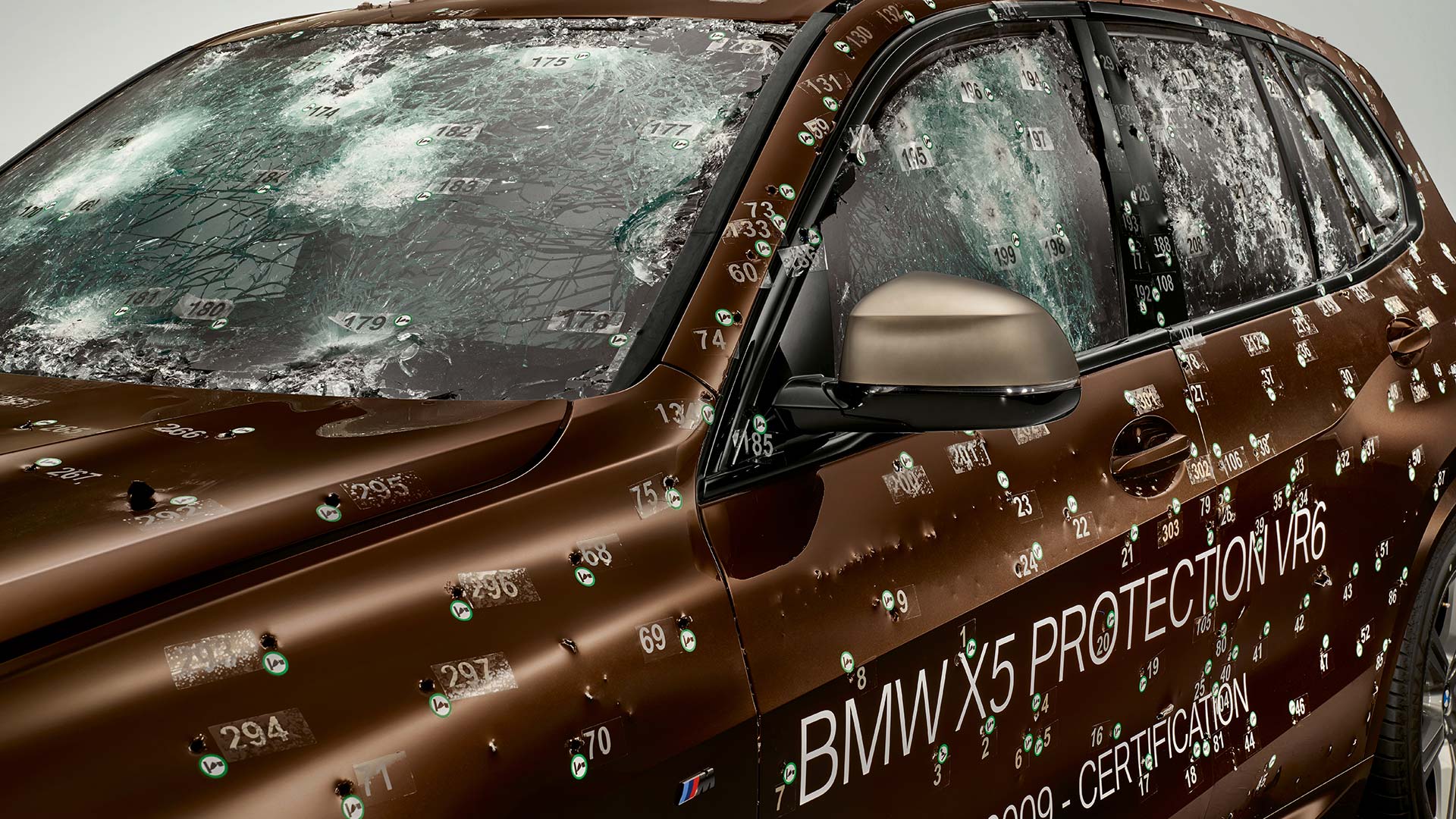



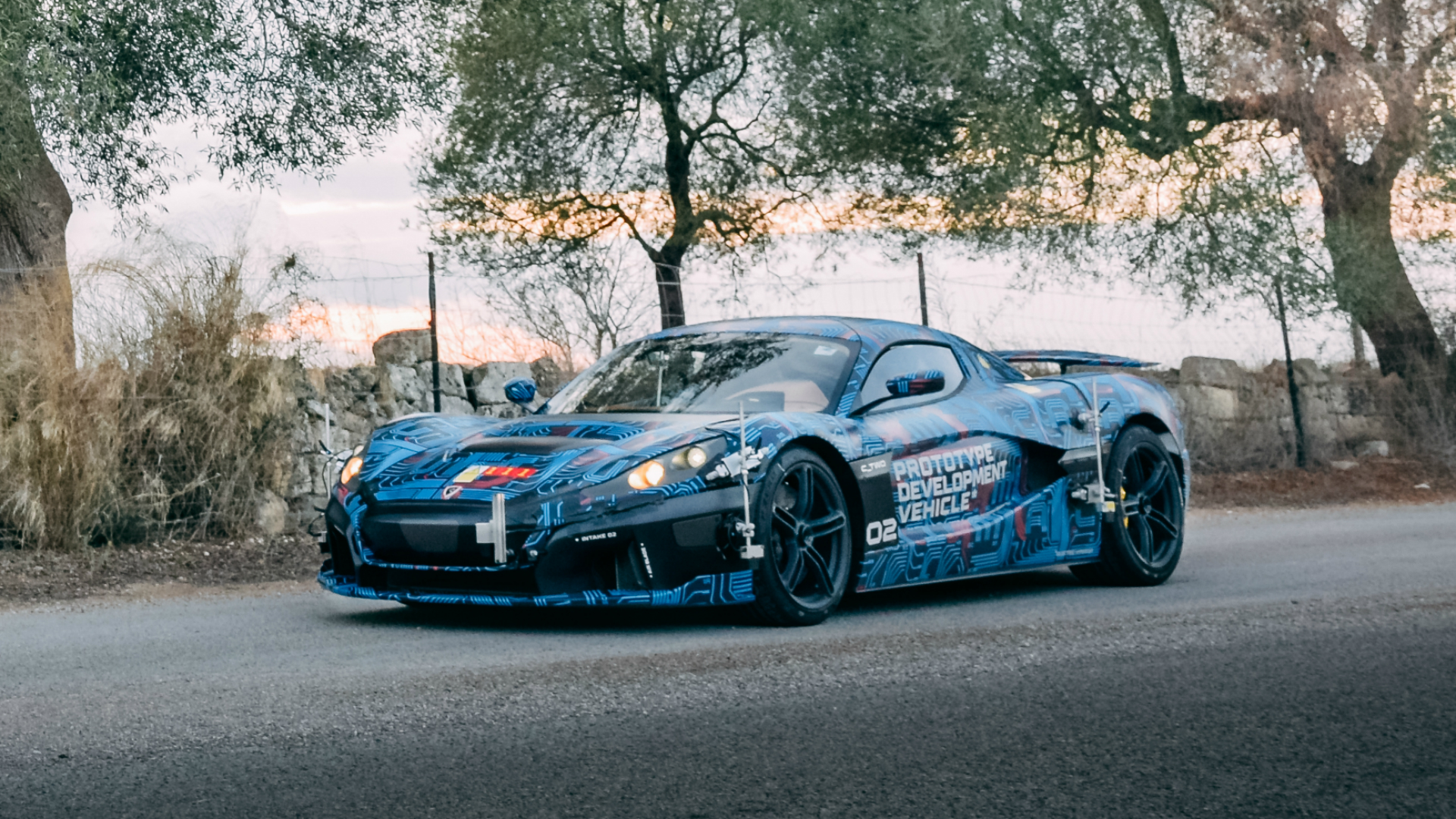
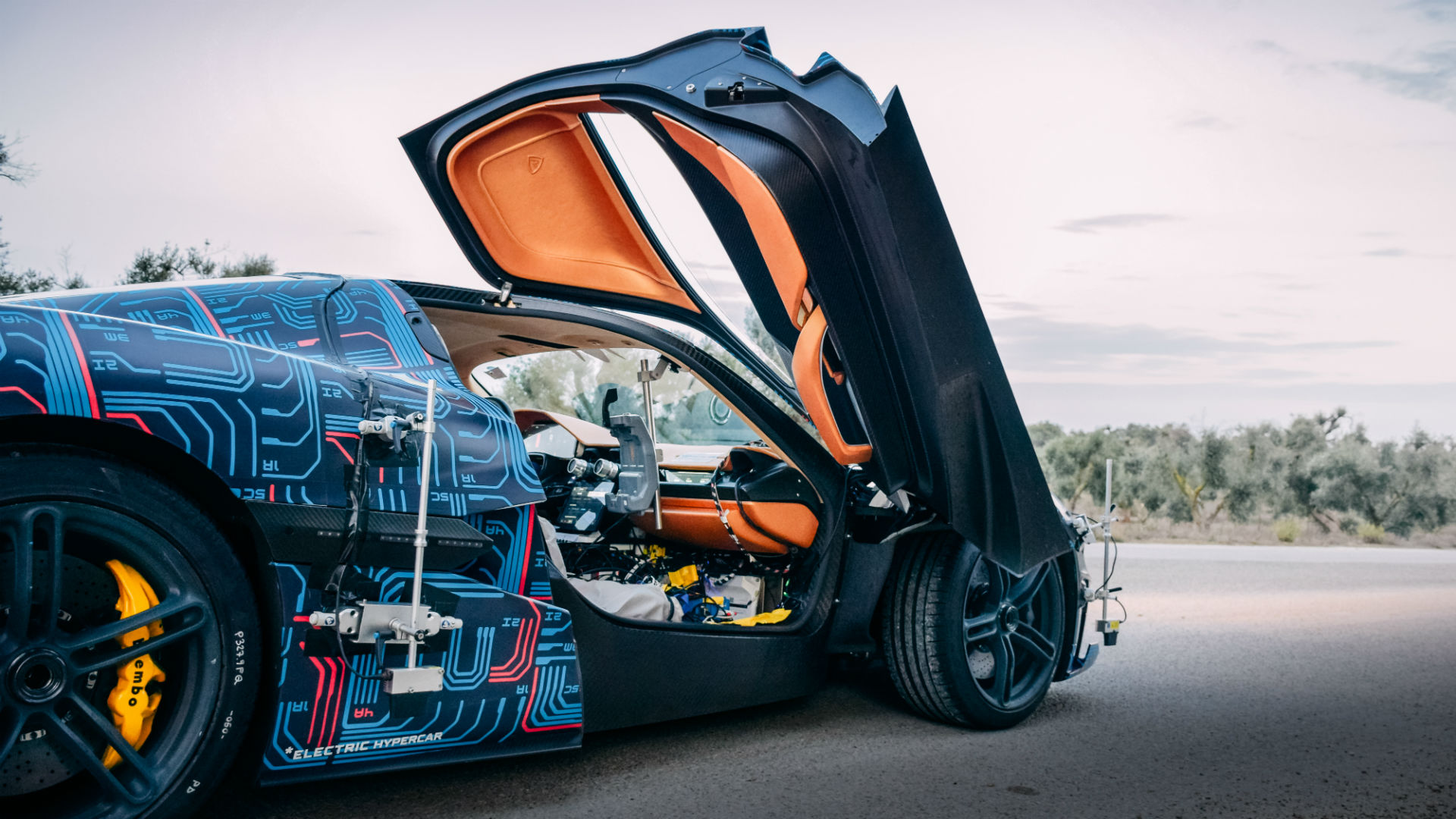
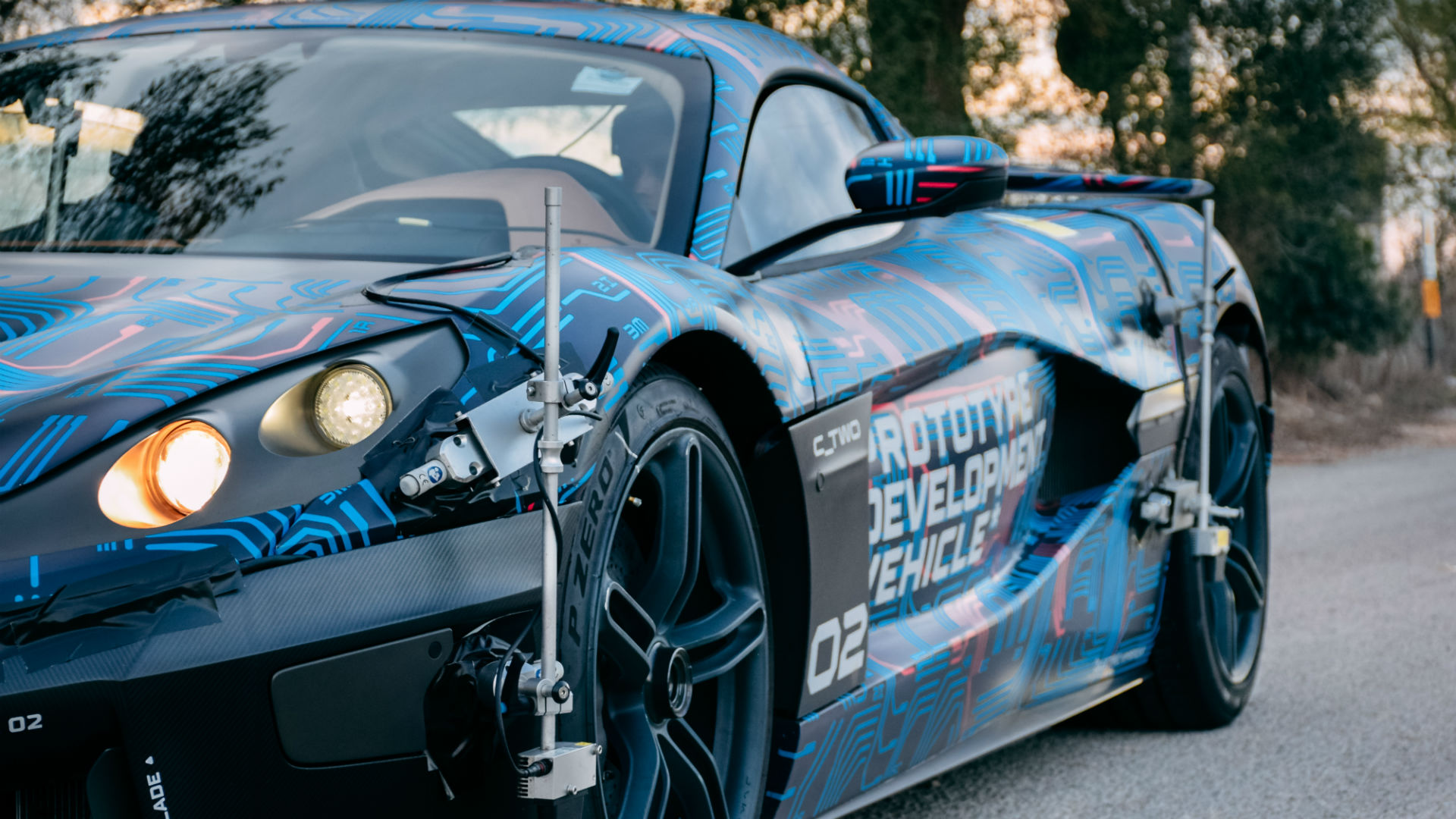 With one electric motor for each wheel, the Rimac has infinitely variable torque vectoring. This, says the Rimac website, allows for ‘minute calibration of intent and behaviour, from a rear-biased driftable sports car to a vehicle that meters traction perfectly on slippery surfaces’. As Mate rightly points out: “You may have the funds to buy this car, but that doesn’t mean you’ve got the skills to get the best from it.”
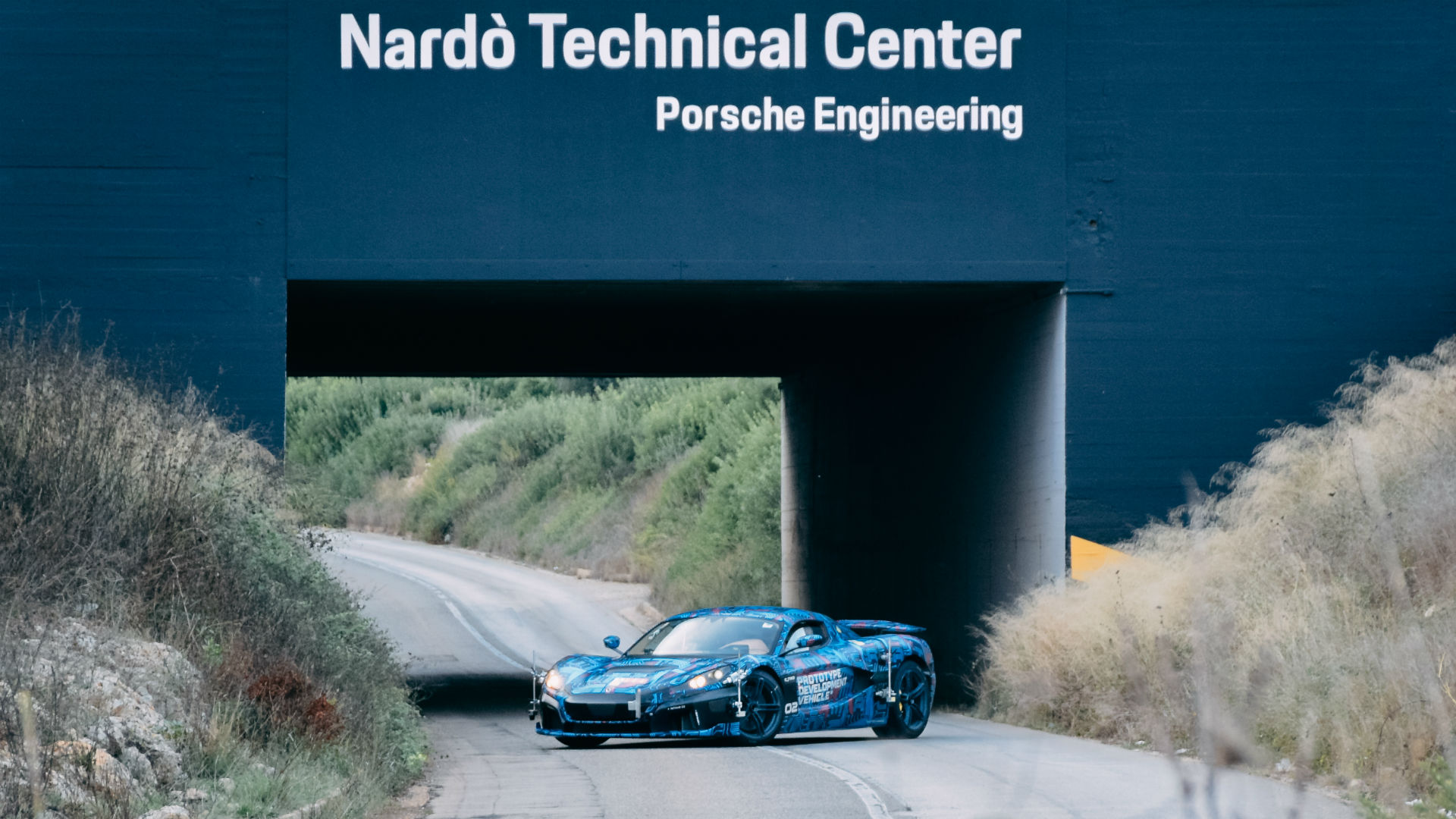 If all that sounds a bit new-fangled, you’re probably not the target customer. Mate admits that the C_Two will appeal, in part, to “tech guys who don’t care about V12s”. Yet there is a new breed of environmentally-conscious hypercar buyer too: “people whose beliefs don’t fit with a combustion car”.