More than 4 in 5 of motorists (85 percent) say they would like to see a halt on the construction of smart motorways “until the safety case is fully proven”, according to a new survey.
The poll of 4,500 drivers by road safety charity IAM RoadSmart also found that 84 percent have little faith in the safety systems’ abilities to detect their car if they were to break down in a running lane and protect them until help arrived.
Additionally, the IAM RoadSmart study found that 81 percent of motorists felt less safe travelling on a smart motorway compared to a traditional motorway, and 81 percent agreed that hard shoulders should be immediately reinstated on smart motorways.
Smart motorways aim to improve journey times by increasing capacity with the hard shoulder used as a normal lane. However, 40 percent of those surveyed said they found no noticeable improvement in their journey time.
Only four percent of the drivers that participated in the poll said they found a very noticeable improvement in journey times, while six percent claimed the introduction of smart motorways increased journey times.
‘Very little confidence in smart motorways’
“Our members include many high mileage, experienced and confident motorway users but the results of this survey are clear to see, with the vast majority having very little, or no confidence, in the safety of smart motorways,” said Neil Greig, IAM RoadSmart’s director of policy and research.
“We would urge the Department for Transport and Highways England to listen to what smart motorway users are saying and to consider our findings, along with other in-depth research, to determine the best approach to developing the smart motorway network.
“Delaying decisions on smart motorways will only lead to more drivers getting stressed.”
Before tackling a long journey for the first time in a while, it’s also important to examine the condition of your car. Here are the top 10 areas to check before you hit the road.
Your car’s oil and coolant play a vital role in keeping your engine running smoothly. If the oil level is half-way between the minimum and maximum markers on the dipstick, you don’t need to add any more. If it’s below this point, pour in some engine oil, adding a small amount at a time.
Check the coolant level
Coolant, or anti-freeze, prevents your engine from overheating in hot weather and freezing in colder weather. It’s stored in a clear plastic container, usually located near the radiator. There will be a mark or sticker on the container to indicate the correct fluid level. You may need to dilute the anti-freeze with distilled water.
Top up the windscreen washer fluid
The reserve is usually close to the top of the engine and is often marked with a windscreen wiper icon. If you can see the fluid level is low, top it up, based on the manufacturer’s recommended dilution (you’ll find this in your handbook).
Check the battery health
If you’ve only been doing short journeys in your car, or haven’t driven for several weeks, your battery may have gone flat as it won’t have been able to recharge over longer trips.
A longer drive – half an hour or more – will ensure the battery has a chance to recharge. If you’re having trouble starting your car for the first time in a while, you may need to jump-start it using another car or battery pack.
Check the tyres
Your car’s tyres could have deflated or even developed cracks due to lack of use. Before you set off, check them all (including the spare) for any splits, holes or tears. Look for glass or nails that could cause a puncture or tear in the future, and also check the depth of tread on each tyre. In the UK and Europe, the legal minimum tread depth for cars is 1.6mm across the entire circumference.
Check tyre pressures
Ensure your tyres are inflated to the recommended pressures by checking the guidelines in your car’s handbook or on the panel inside the driver’s door. You can check tyre pressure using a handheld tyre pressure gauge or, if you don’t have one at home, you can check and top up the air at most petrol stations.
Check the brakes
When a car has been left standing for long periods, as it may have been during lockdown, issues can arise with the brakes.
Sticking brakes are a common problem. Most cars use disc brakes, which include brake pads, rotors and calipers. Over time, particularly if your car has seen little use, parts of the brakes can become rusty. As the surfaces will be covered in a light coating of corrosion, you’ll notice a sticky sensation, plus a grinding or squealing noise.
Check the fuel level
Cars parked for an extended period of time can suffer from moisture gathering in an empty fuel tank. This can cause rust to build up inside. To get around this, simply fill up the tank completely, or add a stabiliser fluid to keep it fresh.
Check the car’s exterior
While sitting on a driveway or on the road, it is likely that leaves or debris might have got stuck on the outside of your car. Before setting off, check the air intakes in the front bumper are clear, as well as the lower part of the windscreen.
Try the car’s doors and handles
While many cars won’t have been used much at all, others might have just had one user in the form of a keyworker. Either way, you should check all of your car’s doors, including the boot, and lubricate locks and moving parts where necessary.
ALSO READ:
How to detail your car: pro tips for a flawless finish
Back in 2019, when driving abroad wasn’t a distant dream, we joined a Honda NSX convoy to France. The road-trip marked 30 years since the Honda NS-X concept (note the hyphen) made its debut at the Chicago Auto Show.
Our route took us past the historic Reims-Gueux circuit, then into the melee of rush-hour Paris, before arriving at Retromobile – France’s finest classic car show. Join us for a celebration of the NSX – plus some of the highlights from Retromobile.
Pop-up perfection
Representing the original NSX were two examples from Honda UK’s heritage fleet. The red car dates from 1989 and was the second NSX imported into the UK. Its 253hp 3.0-litre V6 drives the rear wheels via a four-speed automatic ’box.
The gold car, meanwhile, is a manual version from 2005: the final year of NSX production. The pop-up headlights have been sacrificed to US safety regs, but it gains an extra 200cc of engine capacity – upping output to 294hp.
As seen on Instagram
Heading south on the A26 to Reims, our three-supercar convoy became a rolling social media event. Each time we stopped for more 98 RON refreshment (a frequent occurrence), people took photos and asked about the cars.
Unsurprisingly, it was the newer NSX that arrived in Reims first. With a combined output of 581hp from its V6 engine and electric motor, some might say it has an unfair advantage.
Code red
The original New Sports eXperimental gave the Ferrari 348 a shock when it reached showrooms in 1990. Contemporary reviews praised its superb chassis balance, which was honed by Ayrton Senna (racing for McLaren Honda at the time).
Unlike most of its rivals, the NSX was incredibly user-friendly; it proved that supercars don’t need to be badly built or difficult to drive. That auto transmission is certainly a step too far, though.
Gold leader
As enjoyable as the red car is, this last-of-the-line version – with that all-important six-speed manual gearbox – is in another league. It’s 3.2-litre engine feels absolutely ferocious beyond 6,000rpm, when the VTEC kicks in with a howl so hard-edged it could crack concrete.
Everything about the NSX, from its low-slung driving position to its perfectly-spaced pedals, seems set up for driving enjoyment. It’s utterly analogue, and all the better for that.
Tangled up in blue
The latest NSX is an altogether different beast: a high-powered hybrid with nigh-on hypercar performance (0-62mph in 2.9sec). Its character is very much defined by which mode you select: comfortable and GT-like in Quiet, aggressive and adrenalised in Sport Plus and Track.
Like the original, it’s as straightforward to drive as a Civic or Jazz, yet still inspires reverence on the right road – particularly since the 2020 update.
NSX appeal
After two days of driving, I’m torn between the uncomplicated charms of the original and the eye-popping pace of the current car. Even after 30 years, the NSX still feels like an agitator against the establishment – a leftfield supercar, rather than the default Ferrari or Porsche. Here’s to another three decades.
Keep scrolling for a virtual tour of Retromobile in Paris, including the most exciting cars.
Citroen DS 23
Paris is a rather fitting location for the Citroen DS, given that the ‘Goddess’ was unveiled at the city’s motor show in 1955. Sixty-four years later, this DS 23 was on hand to celebrate 100 years of Citroen, with the French manufacturer putting on a stunning display of production cars, concepts and racers.
The 2.3-litre DS 23 arrived in 1973 and was arguably the best of the breed. Two years later, DS production ended, with 1,445,746 DS and ID models sold.
Citroen GS Camargue
Citroen’s display of concept cars was as wonderfully eccentric as you’d hope. The stunning Citroen Camargue of 1972 was based on the recently launched GS and featured a body penned by Marcello Gandini.
In a parallel universe, the Camargue could have previewed a smaller and less expensive alternative to the SM, but it wasn’t to be.
Citroen ZX Rallye Raid
Back in the 1990s, few challengers could rival Citroen in the field of cross-country racing. The first Rallye Raid concepts made their racing debut at the Baja Aragon in 1990, with Citroen securing a one-two finish. A year later, the ZX Rallye Raid driven by Ari Vatanen and Bruno Berglund won the Paris-Tripoli-Dakar rally.
In seven seasons, the Citroen ZX amassed five world titles from 1991 to 1997. What a legend.
Renault Fuego Turbo
Not be outdone by Citroen’s centenary celebrations, Renault marked the 40th anniversary of its first F1 victory – the first by a turbocharged engine. The legendary RS 10 of 1979 was joined by 10 production cars to show how the turbocharger made the transition from track to road.
This a 1983 Renault Fuego Turbo, which was powered by a tuned version of the 1.6-litre turbocharged engine in the Renault 18. A set of BBS alloy wheels, ‘TURBO’ decals, headlight wipers and yellow fog lights are just a few of the delightfully period details.
Renault 5 Turbo
Aside from the name, the Renault 5 Turbo had very little in common with the regular R5 in the supermarket car park. This homologation hero represented Renault at its bonkers best, but a host of unique parts made the mid-engined Group 4 rally car rather expensive to build.
Renault solved this problem by launching the less specialised – and therefore less expensive to buy – Renault 5 Turbo 2.
Renault 21 Turbo
‘The 21 Turbo is the best sporting saloon Renault has ever built,’ proclaimed Autocar in 1988. High praise for Renault’s answer to the Ford Sierra RS Cosworth which could sprint to 60mph in under eight seconds before hitting a top speed of 137mph.
The 21 Turbo Quadra added four-wheel drive to the mix, which meant you had a fighting chance of handling the explosive power. Sadly, too few of these cars remain on the road.
Lamborghini Miura SV
‘Better than new’ is an overused and often inaccurate description used by car dealers, but in the case of this Lamborghini Miura SV, it’s perfectly apt. This example is owned by motorsport supremo Jean Todt, who had just taken delivery of the car following a 13-month restoration at the hands of Lamborghini’s Polo Storico division.
Although we were delighted to drive home from the show in an NSX, we wouldn’t have minded heading back in this Miura – via the Alps, naturally.
Lamborghini 400 GT
Before the Miura, there was this: the Lamborghini 400 GT. It was essentially a 350 GT with an enlarged engine and a body designed by Carrozzeria Touring.
A Canadian collector has left this 1966 400 GT in the safe hands of Polo Storico, so you can be sure that the restoration will be first-rate. Who knows, the finished article might be on show at Retromobile 2022…
Bugatti EB110 Super Sport
The Bugatti EB110 made its production debut in Paris back in 1991, with the name chosen in honour of Ettore Bugatti’s 110th birthday. A year later, Bugatti unveiled the lighter and more powerful EB110 SS (Super Sport), but just 30 were ever produced.
A 1994 EB110 Super Sport (not pictured) was also part of the RM Sotheby’s Retromobile sale.
BMW Z1
The first BMW Z1 rolled off the production line 32 years ago in 1989. It featured a pair of trick sliding doors, a 170hp straight-six engine from the BMW 325i and a sophisticated ‘Z-axle’. Just 8,093 were built before production ended in 1991.
We’d have to wait four years before its replacement, the American-built BMW Z3, made its debut in the James Bond film Goldeneye.
Jaguar XJ220
It’s easy to get lost in tales of an economic recession, unhappy customers and the ‘wrong’ engine when discussing the Jaguar XJ220, but three decades on from when the big cat was unveiled in Birmingham, the supercar has lost none of its impact.
We’ll never come to terms with how large this thing looks in the metal.
Jaguar XE SV Project 8
Nurburgring car stickers are nothing new, but the Jaguar XE SV Project 8 is truly fit to wear the map. In 2017, Jag’s skunkworks super-saloon completed a lap of the ‘Green Hell’ in 7min 21.23sec – fully 11 seconds faster than the previous four-door saloon record holder.
Jaguar later broke its own record, with a lap of 7min 18.36sec in summer 2019, this time using a different tyre compound.
Ferrari F40
Designed and built to commemorate Ferrari’s 40th anniversary, the F40 remains of the most famous and lusted over supercars on the planet.
We could have spent many hours gawping at this and many of the other cars on display at Retromobile, but the clock was ticking… we had a date with a Japanese supercar.
Heading home in a Honda
With copy filed and the photos uploaded to the web, all that was left was the journey home in a Honda NSX, this time without the detour via Reims. What a glorious couple of days that was.
Insurance company NFU Mutual has predicted there will be at least an 18 per cent increase in the number of road accidents from next week.
From Monday 12 April, self-contained holiday accommodation lets, non-essential retail, personal care, outdoor hospitality and indoor leisure venues are scheduled to reopen, and more motorists are expected to take to the roads.
A spokesperson told Motoring Research the projected figure is based on data gathered when lockdowns were eased in 2020.
Claims to NFU Mutual forcar accidents increased by 22 percent over the late May Bank Holiday last year, shortly after lockdown was eased on 11 May, while car accident claims also increased by 12 percent over the Christmas period compared with previous weeks, the insurance firm said.
The company added that its research indicated one in four drivers are “feeling nervous” about making long journeys once lockdown is eased.
Of 2,000 drivers surveyed, 37 percent said they are planning to drive somewhere to go on holiday in the UK when Covid restrictions allow it. This equates to more than 12 million drivers taking to the roads from next week.
The company added the most nervous driving groups – including two-thirds of those aged 18-34, and more than half of Londoners – are also those taking to the UK’s roads to holiday in the highest numbers.
Nearly two thirds of drivers aged 18-34 (63 percent) and more than half of Londoners who drive (53 percent) will be doing so for a UK getaway this year, NFU Mutual said.
‘Drivers should take care on the roads’
“While uncertainty remains on whether European holidays are on the cards, our research shows that millions will be taking to the UK’s roads for holidays from next week when lockdown eases,” said NFU Mutual motor insurance specialist, Jade Devlin.
“Where easing has happened in 2020 we’ve received sharp surges in reported car accident, with roads getting busier very quickly and drivers taking their first long distance drives for a while.
“We’re sadly expecting the same from 12 April when many venues and holiday lets start opening up, so would urge drivers to take care on the roads.”
Clean energy company Octopus Energy has launched an electric vehicle leasing scheme.
The company has offered EV-specific energy tariffs for consumers and businesses for a number of years to help drivers to save money when recharging. Fiona Howarth, CEO of Octopus Energy’s electric vehicle offshoot, told Motoring Research the addition of a leasing scheme will make Octopus a one-stop shop for electric car drivers.
Howarth explained: “There are benefits in bringing our energy and technology experience to the leasing sector. It enables us to move more quickly and start a different way of thinking. It’s all about working with consumers as they get their car and we have a lot of experience of doing this from the energy side already.”
The intention behind the leasing division – called Electric Dreams – is to make switching to an EV as easy as possible, and Howarth added Octopus would have an advantage over a traditional leasing company when it comes to procuring EVs, too.
“We just focus on this one type of vehicle – EVs – and we can also pull together our knowledge about charging and green energy tariffs.”
As well as providing leasing for private motorists, the company is offering salary sacrifice schemes for businesses. Similar to a cycle-to-work scheme, a salary sacrifice allows employees to pay for an EV out of their gross salary. It can save thousands of pounds on both national insurance and income tax as they take advantage of preferential Benefit-in-Kind rates for EVs compared with petrol or diesel cars.
Huge savings possible
To illustrate its point, Octopus Energy claimed a 20 percent taxpayer can make a saving of £7,104 on a Peugeot e-2008 over four years compared with similar petrol or diesel vehicles. And a 40 percent taxpayer can save £13,920 on a Tesla Model 3 over four years.
Unlike a traditional company car scheme, salary sacrifice is open to all employees, but Howarth said the awareness of such schemes is low at the moment, adding that some firms are overwhelmed by the paperwork. “When businesses do want to put it into practice, they may find it is tricky and complicated, so we’re making it easy.”
If an employee leaves a business at short notice, a company car can be an expensive asset, but Octopus Energy will negate that risk.
“We are giving them [employers] generous terms around early termination. If you leave the business and you return the car before the end of the contract, we will cover businesses, so it is a low-risk scenario,” Howarth explained.
Indeed, the rate of used car price growth is accelerating once again, after a 6.6 percent rise was recorded in February.
Auto Trader points to record levels of consumer demand, something reflected in its new all-time high of 69.7 million site visits in March. This is 27 percent up on March 2019.
The marketplace also says the number of leads sent to retailers has gone up 91 percent in two years – reflecting changing buyer behaviour where customers get in touch with a dealer before visiting.
Demand may even grow further from 12 April when showrooms fully reopen, said Auto Trader director of data Richard Walker.
“With such strong demand in the market, we anticipate prices will remain buoyant for some time to come.”
The price of the average used diesel car is now up to £14,708 – £2k more than the price of the average used petrol.
The rise in diesel prices is partly being driven by falling supply, which was down 14.2 percent last month. The effect of the decline in new diesel popularity is starting to impact used car prices.
Petrol prices also increased, going up 5.8 percent after several months of slipping demand. Demand for petrol cars rocketed 35 percent last month, with diesel demand rising 32.9 percent.
That’s nothing compared to the 131.6 percent rise in demand for pure electric cars though, which far exceeded strong growth in supply of 117.8 percent.
The average price of a used EV therefore went up 9.3 percent last month – edging closer to the £20k mark and showing why the truly affordable secondhand EV may still be some way off.
Five motoring organisations and charities have been awarded government grants to help them to reopen and recover from the coronavirus pandemic.
Funding came from the second round of the Department for Culture, Media and Sport’s Culture Recovery Fund, which offered £400 million to 2,700 arts, culture and heritage organisations.
The Silverstone Experience Museum only officially opened on 6 March 2020, before being forced to close just 12 days later. It was awarded £785,700 from the fund.
Sally Reynolds, chief executive of the museum, told Motoring Research it suffered from “three long periods of closure” as a result of Covid-19 restrictions. These resulted in “a very limited time to welcome customers and build our cash reserves”.
Reynolds added: “We are extremely grateful to the Culture Recovery Fund for recognising the difficulties this has caused and for awarding a grant. We are now focused on getting ready to open our doors to visitors from 17 May and are very much looking forward to a busy and successful summer.”
MotoFest Coventry, which organises motoring-themed events in the city, was awarded £20,000, and James Noble, MotoFest Coventry festival director, told Motoring Research the money will enable the team to “start planning for a Covid-secure event in 2021.”
He added: “We are delighted that the government has recognised the important work that MotoFest Coventry does in protecting and showcasing our mobile heritage. MotoFest Coventry is unique in demonstrating the significant role that automotive heritage plays in providing a context for future transport innovation and we look forward to showcasing that ethos when MotoFest returns in July and August with its new month long programme of events.”
The Heritage Skills Academy, meanwhile, has been given £19,000 by the government.
Owain Johns, development director at Heritage Skills Academy, said that without the grant and support “it would have made things very difficult for us”. The money will enable the organisation to continue to train apprentice engineers.
While the apprentices have continued to learn remotely during the pandemic, Johns said the amount of hands-on experience has been reduced.
“Ultimately, we can catch up the lost learning and maximise the chances of apprentices passing their courses and thriving in the industry and having a career that will make a difference because of the grant. Without the grant, the chances of them falling by the wayside or being disillusioned could have had a really detrimental impact.
“The recognition there are a number of small and niche providers who are part and parcel of a much bigger picture is really powerful. If we – and others – hadn’t had support the future of heritage would look bleak, but it looks a lot brighter as a result.”
Full steam ahead
Alex Masters, chairman of the Robey Trust, a charity that preserves, restores, operates and displays steam vehicles, told Motoring Research that his organisation has cancelled its steam fair for two years in row.
“This is our major source of income and we’re not looking at any steam rallies until September, so we’re getting into 18 months of restricted income,” he noted. The charity has been awarded £9,700 and the money will be used to complete a general overhaul of a steam roller that was bought for the town of Tavistock, Devon (where the charity is based) in 1925 and remains there to this day.
Masters told us that despite the charity “effectively still being in the 2019 winter maintenance period” the lockdowns have enabled trustees to complete important work. “We’re trying to make sure that when we go back to normal, we’re going to go back in better. Instead of seeing this as an impediment, we’re seeing it as a great opportunity to do all the tasks that have been outstanding because in normal times we’re too busy attending rallies or organising steam fairs.”
Dominic Taylor-Lane, founder and managing director of the Association of Heritage Engineers, also welcomed a focus on smaller charities: “It’s nice for the DCMS to turn around and go ‘Look, we haven’t heard of these guys before, they’ve put a reasonable case together and we think they are part of the heritage ecosystem’. It’s one of those things where they are starting to look outside of the box because we have got to present a united plan.”
His company has been awarded £4,400 by the government and he said the money will be used to enhance the firm’s appearance at events: “This particular funding was effectively to get heritage moving again post-Covid. It will enable us to put on an even more professional appearance at shows and to help get the message out there.”
The firm added this problem is further compounded by a long-running decline in the number of driving instructors, claiming there has been a reduction of 2.3 percent in the last year alone, down to 38,778.
Based on these figures, each UK driving instructor is currently working with 30.46 learners each, meaning instructors are over-capacity by 55.81 percent and “incapable of tackling the backlog efficiently”.
Driving lessons are set to restart from 12 April in England and Wales, while learners in Scotland must wait until 26 April at the earliest.
Driving tests in England can resume from 22 April.
‘1 in 5 learners haven’t had a test rebooked’
The insurance company added that of the learners it surveyed in March who have had tests cancelled in the last year:
33 percent reported not having one rebooked until four months later
22.5 percent have seen them postponed for six months
15 percent have a wait of seven months or more
20.4 percent haven’t had a rebooked test at all
“The ongoing lockdown restrictions over the past year has hit so many learners, many of whom are young people who have felt a considerable impact from the pandemic,” said Crispin Moger, CEO of Marmalade.
“An inability to book driving tests and learn, for some, has led to isolation, a loss of opportunities in work, education and a huge blow to finances.
“This backlog and lack of capacity in the industry indicates ongoing challenges to get learners on the road to freedom. My hope is that many learners can find ways around the challenges and the industry can recruit more well-needed instructors.”
ALSO READ:
The cheapest cars for young drivers to insure in 2021
Gloucester and Tebay services have been named the UK’s best motorway service stations, according to a survey conducted by Which?
According to a poll of 2,700 people, the top three services are owned by the Westmorland group, with Gloucester (on the M5), Tebay (on the M6 at the edge of the Lake District) and Cairn Lodge (on the M74 in Lanarkshire) ranking first, second and third in the table.
Gloucester scored a rating of 86 per cent, gaining five stars for cleanliness, range and quality of its shops and food outlets, as well as its range of facilities.
Tebay scored 83 per cent and Cairn Lodge was given a rating of 69 per cent.
At the other end of the table was Bridgwater on theM5, owned byMoto. The service station received just 32 per cent, and was awarded just one star in every category.
According to Which?, recent visitors described it as “dirty” and “depressing”, and others complained of a urine smell and toilet paper strewn on the floor, while another simply said it “should be demolished”.
‘It pays to plan ahead’
“The results of our survey show that it pays to plan ahead to avoid some of the UK’s worst motorway services,” said Rory Boland, Editor of Which? Travel. “It could be the difference between a home-cooked meal in peaceful surroundings, or crowded queues in downright dirty facilities.”
“Whether you’re zipping down the M5 towards the beaches on the south-west coast, or up the M6 towards the Scottish border, make sure your journey isn’t spoiled by a stop at a shoddy service station.”
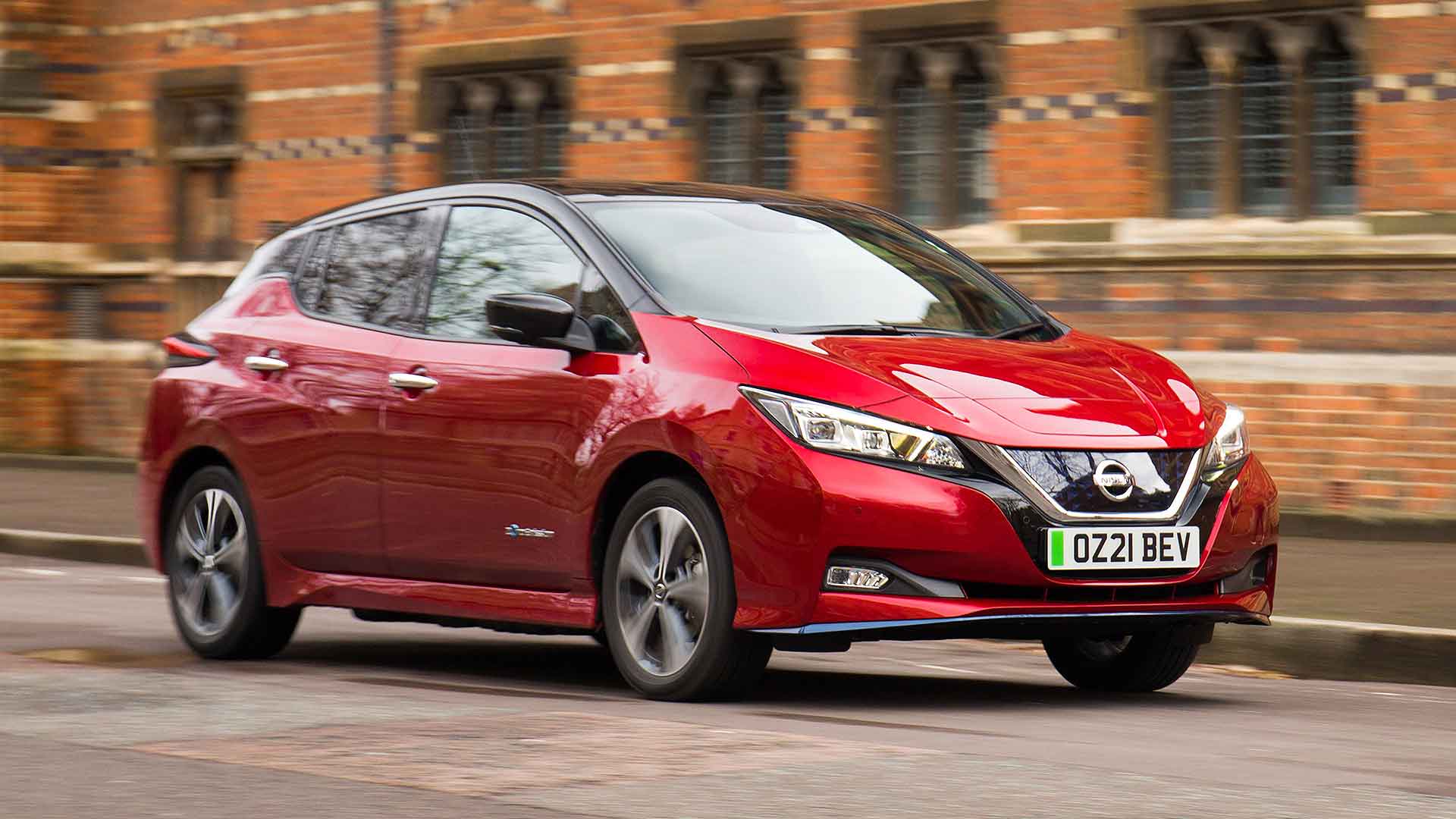
Both battery versions – 40kWh and 62kWh – still qualify for the grant, meaning the most expensive Leaf e+ Tekna version now costs £32,445 once it is taken off.
This compares to a previous range-topping price of well over £37k.