The new Skoda Fabia supermini is now available in the popular Monte Carlo trim level.
Offered on various Skoda models since 2011, Monte Carlo spec is inspired by the Czech brand’s success on the famous rally.
For the 2022 Fabia, it means sporty detailing inside and out, along with a choice of two engine options.
Put it all on red. Or black
Skoda has stuck to a similar theme for the exterior of the Fabia Monte Carlo. Black detailing is used for the front grille, wing mirrors and rear diffuser, along with sections of the front splitter.
Buyers can also specify a black roof as an option, with aerodynamically designed 17-inch alloy wheels fitted as standard. Monte Carlo badges are found on the front wings, along with black Skoda lettering on the boot.
A 110hp 1.0-litre three-cylinder petrol is the default engine, available with a choice of six-speed manual or seven-speed DSG auto transmissions. Alternatively, a 1.5-litre TSI four-cylinder petrol offers 150hp for 0-62mph in 8.0 seconds – and comes with the DSG ‘box as standard. It’s the closest the Fabia gets to a hot hatch.
Rallying the crowds
On the inside, the Monte Carlo benefits from height-adjustable sports seats, a leather-clad three-spoke steering wheel and black roof lining.
Carbon fibre-effect trim is used for the armrests and dashboard, with LED ambient lighting illuminating the interior in red.
Skoda will offer the Monte Carlo with a 10.25-inch multimedia touchscreen as an option. An 8.0-inch unit is standard-fit.
Prices and a UK on-sale date for the Fabia Monte Carlo are yet to be confirmed by Skoda.
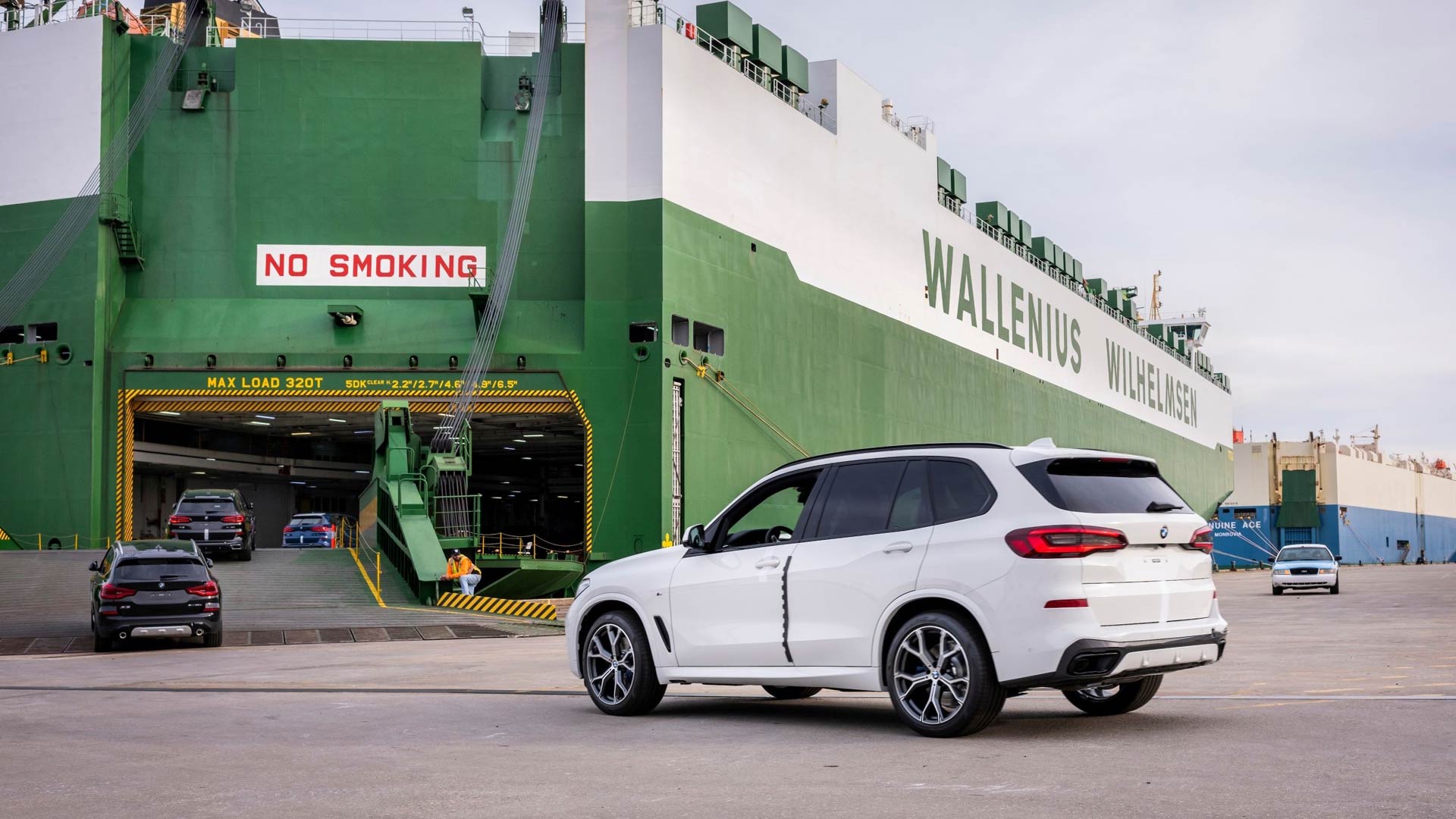
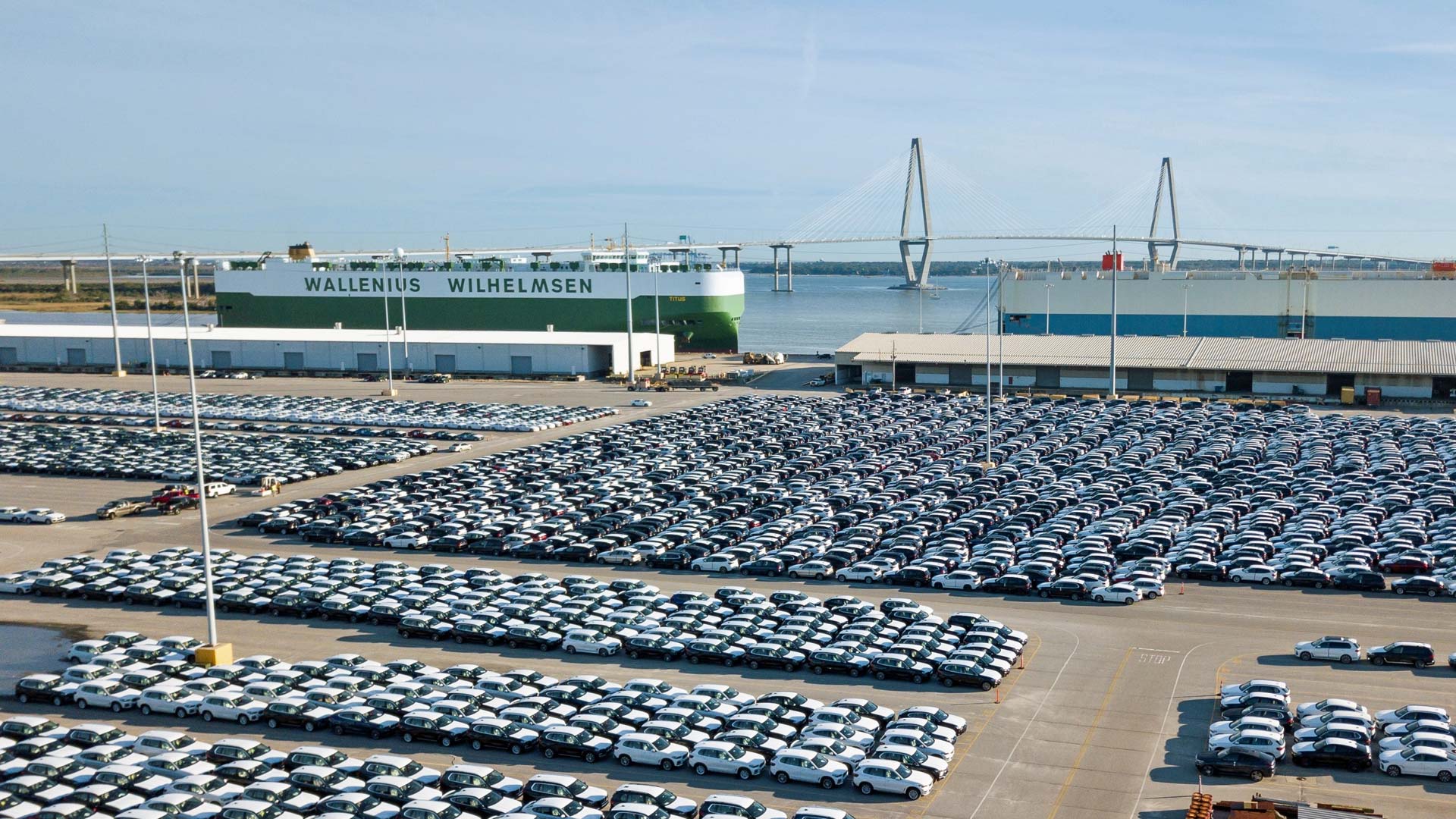
BMW was the largest automotive exporter by value from the United States during 2021.
It marks the eighth time in a row that the company has claimed this accolade, in a year that also saw BMW break production records.
More than 257,000 BMWs produced in Spartanburg, South Carolina, were exported last year. They added up to a total value in excess of $10.1 billion (£7.45 billion).
Electrifying the production process
BMW’s Spartanburg production facility, which is the company’s largest in the world, made 433,810 vehicles in total. All of these were from BMW’s ‘X’ SUV range, with the X5 the single most popular model.
Investment in electrification saw Spartanburg employees build around 70,000 plug-in hybrids. The X5 xDrive45e accounted for close to 40,000 vehicles, along with 30,000 of the smaller X3 xDrive30e.
The radical BMW XM plug-in hybrid, the first electrified model to wear the ‘M’ badge, will enter production at the American factory later this year.
By land and by sea
SUVs made at Spartanburg during 2021 were exported to around 120 countries, using six different American ports. Rail shipments were also used to send vehicles to Canada.
China was the destination for almost a quarter (24.1 percent) of all exports. Germany took second place with 12.3 percent, with South Korea in third (9.4 percent). The United Kingdom received 5.4 percent of all Spartanburg’s exports.
More than $12 billion (£8.86 billion) has been invested in the South Carolina factory by BMW since 1992. It now employs 11,000 people, and can build up to 1,500 vehicles every day.
“Claiming the top spot for U.S. automobile exports by value rounds out a very successful year for Plant Spartanburg. I’m incredibly proud of our associates and the resilience they have shown the past year,” said Dr. Robert Engelhorn, president and CEO of BMW manufacturing. “This achievement demonstrates BMW’s trusted partnership with this state and its continued commitment to the United States.”
ALSO READ:
A secret tour of BMW GB’s incredible car collection
The new Polestar 5, the first clean-sheet model from the Swedish electric car company, is being developed in Britain. The high-performance GT will take shape at a new R&D facility in Coventry.
More than 280 UK-based engineers have created an all-new bonded aluminium platform, using similar technology to that pioneered by Lotus and Aston Martin. The team is now scaling up to over 500 employees, and preparing the four-door, four-seat Polestar 5 for launch.
Polestar engineers have previously worked at Formula 1 teams, sports car manufacturers such as McLaren and Lotus, plus Jaguar Land Rover – and even the LEVC London taxi company. This has created ‘industry leading in-house engineering and R&D capabilities’ from scratch, says Polestar.
Discreetly described by engineers as the firm’s rival to the Porsche Taycan, the Polestar 5 will be a high-performance GT with ‘class-leading’ dynamics, rigidity and safety.
The new 5 is the production version of the Precept concept car (pictured above). Polestar is targeting a 2024 launch for the new EV.
“Our UK R&D team is one of Polestar’s greatest assets,” said Polestar CEO Thomas Ingenlath.
“Their mix of engineering and technological expertise enables us to develop advanced lightweight sports car technology with a creative mindset and a spirit that embraces innovative engineering. This will set Polestar apart in the years to come.”
What is bonded aluminium?
A bonded aluminium platform is an architecture bonded or ‘glued’ together, then baked in an oven. With additional rivets for reinforcement in key areas, it is exceedingly strong, as well as being light.
Polestar says the finished body will weigh half that of cars in segments smaller than this – and it will be torsionally more rigid than even a traditional supercar. The result is a vehicle that will be more efficient and have a longer EV range than a regular GT in this sector – and also be dynamically responsive, while delivering ‘leading safety levels’.
“This architecture delivers outstanding dynamic and safety attributes,” said head of Polestar UK R&D, Pete Allen.
New production techniques
While bonded aluminium technology is ideal for low-volume sports cars such as the Lotus Elise and Aston Martin line-up, this labour-intensive process has been difficult to scale into higher volumes without impacting quality.
Polestar says its UK team has developed an all-new production process ‘that develops both body and platform in unison’. This means the Polestar 5 can come to market faster than ordinarily possible, while maintaining high levels of quality and body rigidity.
The firm isn’t ready to go into specifics yet, but promises its in-house platform will enable further derivatives to be developed quickly once the Polestar 5 is introduced.
The four-door GT car is on-track to be launched in 2024.
Q&A: Polestar in Coventry
Where is Polestar’s UK R&D hub located?
Polestar’s UK base is currently located at the MIRA test facility in Nuneaton (calling it Polestar Coventry clearly offers more international recognition).
The firm chose MIRA because it has an on-site test track, a wind tunnel and myriad other facilities to call upon. It’s also centrally located for all the engineers it has recruited from JLR, McLaren, Lotus, Bentley and elsewhere.
Why did Polestar choose the UK?
There was competition from other countries to house the first standalone Polestar R&D facility, admits Pete Allen. “But the mix of motorsport, large OEM, specialist sports car and engineering consultancy expertise available in the UK is unique in the world.
“We wanted to develop an alternative approach, one that’s faster and more innovative, which can be more nimble and agile in response to market and technological changes. Nowhere else in the world has such a concentration of relevant capability in such a small area.”
How significant is the work done by Polestar UK?
Up to now, Polestar has taken existing Volvo platforms and honed them for its own requirements. That’s why, deep down, the Polestar 2 is essentially a Volvo XC40.
Interestingly, the first running Polestar 5 test mule was actually derived from an XC40, albeit with a unique driving position to mimic the new GT car: “You could just about see over the edge of the door.”
Polestar UK is creating the company’s first bespoke model, unique from the ground up. In doing so, it is accelerating development of the Polestar DNA, and helping the brand become distinct from Volvo.
The work being done is therefore very significant, and will accelerate the evolution of Polestar into a standalone premium electric car brand.
How many people work at Polestar UK?
The initial hand-picked team, formed in May 2019, was tiny. Pete Allen explains how they had to borrow chairs from MIRA to interview people in their empty building.
It’s now approaching 300 people and growing all the time. The goal is to have 800 people working for Polestar UK, based in two locations. For context, McLaren Automotive employs around 2,500 people.
Will the Polestar 5 be similar to the Precept concept?
Polestar UK is aiming for the production 5 to be as close as possible to the Precept. Journalists were briefly shown a computer rendering that suggests differences will be minimal.
It’s been challenging, admits Pete Allen. “The concept is very low, and the battery sits below the passengers. Combustion engine cars have an immediate 150mm advantage here. “It’s a particular challenge for packaging the suspension: we spent a lot of time during the early phase resolving this.”
He is also confident the unique seating position of the Precept, with a large distance between front and rear passengers, will be carried through to the production car. “We’re comparing legroom to a long-wheelbase Volvo S90.”
Almost three-quarters of UK drivers deliberately avoid using the hard shoulder on smart motorways.
A survey of 2,000 adults by Kwik Fit found 73 percent don’t drive on the hard shoulder (inside lane) of a smart motorway, even when signs show it as open for traffic.
This makes for a substantial increase from the 56 percent of drivers who answered the same when surveyed in 2019.
Scrap smart motorways, say drivers
Drivers’ main fear about using the hard shoulder is colliding with a stationary vehicle up ahead. A total of 31 percent cited this as a concern, with 30 percent saying they do not believe smart motorways are safe.
Only five percent of respondents thought smart motorways are safer than traditional motorways. This follows an announcement that the government will pause the introduction of any new smart motorways for five years.
Some 22 percent of motorists believed pausing the rollout is sensible, given the ongoing safety concerns. However, more than a third (36 percent) said that rather than being paused, smart motorways should be scrapped altogether.
Six percent also thought smart motorways were dangerous, but that the reduced congestion justified the risk.
Better understanding, but confusion remains
The Kwik Fit survey did highlight that drivers feel slightly more confident about the signage used on smart motorways.
In 2019, 29 percent of drivers said they were uncertain on the signs that explained how to use a smart motorway. This has now fallen to 22 percent, but around one in five motorists is still unsure.
Roger Griggs, communications director at Kwik Fit, said: “Smart motorways have been a huge topic of debate and it is absolutely correct for the government to pause their development to both gather data and ensure that the UK’s motorways are as safe as possible.
“It is clear that many drivers are yet to be convinced about the safety of smart motorways and therefore there must be clear transparency about all the data being gathered and the evidence on which future decisions are based.”
The 911 was rated as the most dependable car for 2022, making it back-to-back victories for the iconic German sports car.
It adds to a reliability record that has seen the Porsche 911 claim the top spot three times in the past four years.
If only everything in life was a reliable as a 911
The J.D. Power Dependability Study records the number of problems per 100 vehicles (PP100), encountered in the past 12 months. This applies to three-year-old vehicles, meaning 2019 model-year cars and trucks were under the spotlight this time.
A lower PP100 score means better reliability. For 2022, the Porsche 911 achieved a score of 94 PP100.
Porsche also claimed third place in the premium brand rankings, with the Cayenne SUV rated as the most dependable Upper Midsize Premium SUV.
Korean brands win big
Despite the impressive performance by Porsche, it was Korean manufacturers that dominated the overall brand listing.
Kia took the accolade as the most dependable car brand, with an average PP100 score of 145. This represents the first time Kia has led the overall survey, following a third place in 2021.
At the other end of the scale, Land Rover was the worst-rated brand. An average PP100 score of 284 placed it well below second-worst Ram trucks, which scored 257 PP100.
Reliable workhorses for 2022
Other major highlights from the 2022 J.D. Power Dependability Study included the winners in the pickup and van segments.
Given the importance of the pickup truck market in North America, the Chevrolet Silverado HD’s win as the top Large Heavy Duty Pickup is significant. The Silverado HD was the only big truck to rate above the segment average.
The Toyota Tundra was the best-ranked Light Duty Pickup, ahead of the regular Chevrolet Silverado and Ford F-150.
Nissan claimed only one segment win, with the Frontier rated as the most dependable Midsize Pickup for 2022.
Launched last month, the Enyaq Coupe iV vRS will be one of Skoda’s most expensive cars to date, priced from £51,885.
Orders for the performance-oriented electric SUV coupe will open on 17 February. Skoda plans to deliver completed cars in July 2022.
Green credentials, black details
As the range-topping model in the Enyaq Coupe range, the vRS features sporty styling.
Along with bespoke front and rear bumpers, it gains a gloss black surround for the illuminated front grille. Black detailing is also used for the badges, tailgate lettering and air curtain trim.
At the rear, a full-width red reflector is fitted, a design feature shared with other Skoda vRS models.
The Enyaq Coupe vRS comes with 20-inch wheels as standard, with 21-inch ‘Vision’ items on the options list. Like all Enyaq Coupes, the vRS has a panoramic sunroof as standard.
Rapid all-electric performance
Inside, black heated leather sports seats are the main attraction. Carbon fibre trim is used throughout the cabin, alongside LED ambient lighting and an electrically operated boot.
The all-wheel-drive Enyaq Coupe vRS is powered by an 82kWh battery, offering an official WLTP driving range of 309 miles. A twin-motor setup generates an impressive 295hp, combined with 339lb ft of torque.
This allows the vRS to accelerate from 0-62mph in 6.5 seconds, with a top speed limited to 111mph.
Rapid DC capability means the vRS can reach 80 percent charge in 36 minutes. Using a standard 7.2kW home wallbox sees a full charge take 13 hours.
The number of provisional licence-holding drivers caught without insurance rose by 16 percent in 2020.
More than 14,000 drivers were stopped behind the wheel without insurance: a notable increase compared with figures from 2018.
This worrying new data was revealed by RAC Insurance, following a Freedom of Information (FOI) request to the Driver and Vehicle Licensing Agency (DVLA).
Unlicensed and uninsured
Information supplied by the DVLA showed those with provisional licences made up 14 percent of the 105,461 uninsured drivers stopped by police.
Some 15 percent of drivers without insurance were found not to hold any kind of licence at all. The data revealed that 23 drivers were aged just 13 years old, with 121 14-year-olds and 215 15-year-olds also caught.
At the other end of the scale, the oldest uninsured non-licence holders were 70.
The majority of uninsured drivers were at least full licence holders, making up 38 percent of the total. A further 31 percent had expired licences, whilst two percent were non-UK licence holders.
Effects of the pandemic
Despite the substantial amount of people caught, 2020 saw a six percent decrease overall in the number of uninsured drivers. However, as the RAC notes, this can likely be attributed to the pandemic.
RAC Insurance spokesman Simon Williams said: “The fact the number of provisional drivers caught without insurance increased in 2020 may well be a symptom of the onslaught of the pandemic and the impact it had on learning to drive and people’s finances. The shortage of available driving tests due to Covid is also likely to be a significant factor behind the high numbers.
“It’s also the case that younger drivers, who are more likely to have provisional licences, pay a disproportionate amount of tax when they buy car insurance, which makes their already expensive policies even harder to afford. Insurance Premium Tax at the current rate of 12 percent adds a huge £120 to a young driver’s £1,000 annual policy, which may be further reason why so many decide to run the gauntlet of driving with no insurance.”
Fans of the all-new Ford Bronco now have a cheaper option to grab a piece of the off-road action.
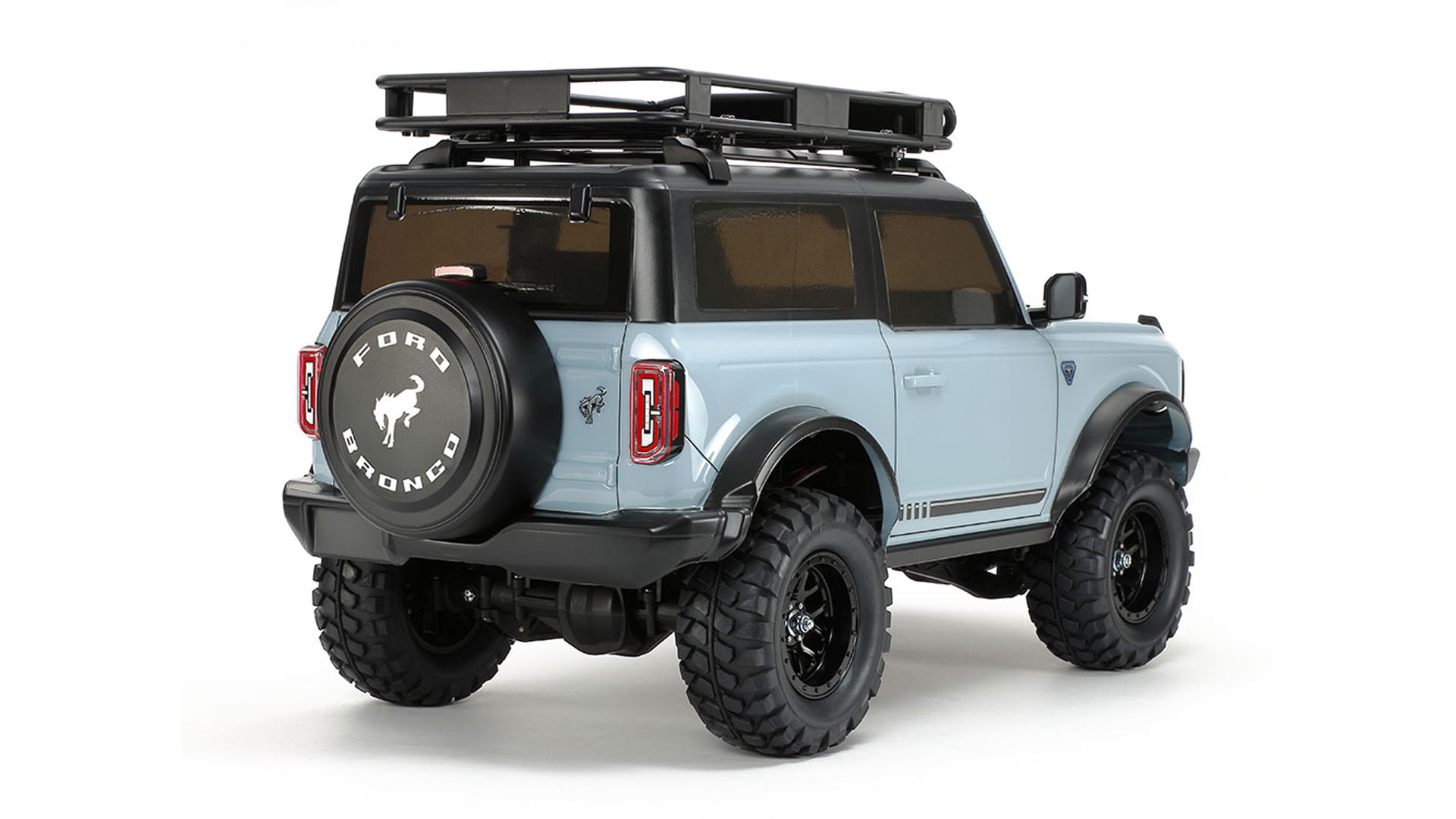
As part of its new line-up for 2022, model maker Tamiya has announced a 1/10-scale radio-controlled Bronco.
With the full-size production car already sold out until 2023, this could be the easiest way for many to experience ‘Bronco Fever’.
Ready for miniature adventures
Based upon the two-door, sixth-generation Bronco, the 1/10 version measures just under 48cm in length.
With a detailed replica bodyshell, Tamiya’s Bronco is an impressive rendition of the real thing. The retro-inspired design has been accurately captured in polycarbonate, helped by a number of extra details.
Making the Tamiya Bronco trail-ready are an expedition roof rack, branded spare wheel cover and twelve-spoke wheels with chunky off-road rubber.
Electric Bronco pioneer
Using Tamiya’s CC02 chassis, the R/C Bronco features all-wheel drive, just like the original. However, there is no miniature EcoBoost turbocharged engine to be found here.
Instead, this Bronco’s horsepower comes from an electric motor. Think of it as an early example of a Bronco EV, if you must.
Deliveries and pricing for the Tamiya Ford Bronco are yet to be confirmed, although it will certainly be much cheaper than the real deal.
For those who prefer their off-roaders with a British badge, Tamiya also offers a 1/10 scale R/C version of the classic Land Rover Defender.
Finalists for the 2022 World Car Awards have been announced following the first round of voting from 102 jurors worldwide – including Motoring Research’s Richard Aucock.
Automotive journalists from 33 countries submitted their votes to KPMG, which has now revealed contenders for each of the six awards.
The big prize is the 2022 World Car of the Year award, which has now been whittled down to 10 cars, from an initial list of 28 vehicles.
The shortlist is diverse, and includes four electric cars – the Audi Q4 e-tron, Ford Mustang Mach-E, Hyundai Ioniq 5 and Kia EV6.
A further three are available in plug-in hybrid guise: the Cupra Formentor, Hyundai Tucson and Lexus NX, while the Genesis G70, Honda Civic and Toyota GR86 (and its Subaru BRZ cousin) round out the top 10.
Reflecting the ever-hastening shift to electric cars, the World Car Awards organisation has introduced a new award for EVs in 2022: the World Electric Vehicle of the Year.
It intends to “recognise, support and celebrate the global transition to electrically-powered vehicles”.
The five finalists are the Audi e-tron GT, BMW iX, Ford Mustang Mach-E, Hyundai Ioniq 5 and Mercedes-Benz EQS.
Recognising a different sort of sustainability, the 2022 World Urban Car honours city-friendly cars which delivery plenty of comfort, safety features and value for money.
The Dacia Sandero will compete with the Renault Kiger, Toyota Yaris Cross, Vauxhall Mokka and Volkswagen Taigun.
Luxury, performance and design
The popular 2022 World Luxury Car will be chosen from a group including the Audi Q5 Sportback, BMW iX, Genesis GV70, Mercedes-Benz EQS and Volvo C40 Recharge.
Meanwhile the exciting 2022 World Performance Car will be either the Audi e-tron GT, BMW M3 and M4, Porsche 911 GT3, Toyota GR86 and Subaru BRZ, or the Volkswagen Golf GTI and R.
Every shortlisted car is also automatically eligible for the 2022 World Car Design of the Year Award.
This year, an expert panel of judges has chosen a shortlist which includes the Audi e-tron GT, Ford Mustang Mach-E, Hyundai Ioniq 5, Kia EV6 and Mercedes-Benz EQS.
The next landmark in the 2022 World Car Awards is 15 March, when the ‘Top Three in the World’ will be announced.
The winners will be declared live from the 2022 New York Auto Show (NYIAS) on Wednesday 13 April.
The Volvo Selekt Direct service allows customers to find and buy a used Volvo without needing to leave their home.
Launching Selekt Direct is part of Volvo’s growing commitment to ecommerce, with plans to have all new vehicle sales online by 2030.
Swipe right to buy
Customers will be able to search for a pre-owned Volvo, pay for it, then arrange nationwide delivery. All cars will be sold directly by Volvo, rather than through the dealer network.
Each car will be subject to 150 separate checks, including software upgrades, before being sold. A 12-month warranty will be included, along with cover for the vehicle’s next MoT test.
Top 10 best-selling used car of 2021
Servicing and aftersales work will be performed by Volvo dealers as normal.
As part of the online transaction, customers will have up to 30 days, or 1,500 miles, to exchange their vehicle if they are unhappy.
Focused on customer needs
Volvo aims to sell all its new electric models via the internet, and move most UK new car sales online by 2025.
Beyond that, Volvo plans to sell exclusively online around the world by 2030. This will coincide with its move to offering only electric new cars.
Kristian Elvefors, MD of Volvo UK, said: “In designing Volvo Selekt Direct, we have focused firmly on the needs of consumers, personalising the service so it works in the way that’s right for them. That means not just the convenience of direct online access, but also peace of mind that the process is secure, robust and delivers a premium experience that fully reflects the qualities of our brand.
“With Volvo Selekt Direct, we are improving our service to consumers and developing a blueprint for our transition to online sales. Strategically, our retail partners will remain central to our business in providing full aftersales support, including servicing, maintenance and repairs.”