Home Blog Page 137

How to save money when buying a new car

0
How to save money on a new car

Buying a new car can be an expensive business. Your mission is to get as much car for as little cash as possible.

Thankfully, there are many ways you can save, meaning you can drive home in a shiny new car for less.

Follow these tips to learn the tricks of the trade – and help you save money on your next car. Good luck!

How to save money on a new car

Downsize what you’re buying

The best way to save money is to ensure the car you want is also the car you need. Is a Mercedes E-Class really necessary, or could you get just as much enjoyment, comfort and convenience from the smaller C-Class? Is a Volkswagen Golf a must-have, or could you live with a Polo and save a mint? 

Smaller cars don’t only have more modest price tags. They also tend to be lighter and use more efficient engines, so you’ll spend fewer pounds at the pumps. If that doesn’t convince you, just think how much easier it’ll be to park if you live in town (or manoeuvre around those country lanes if you don’t).

You won’t necessarily have to forgo luxuries either. A modern Polo can come with pretty much all the toys the big E-Class offers – just tick the right boxes on the order form. Think long and hard about exactly why you want that bigger, more expensive car.

How to save money on a new car

Buy an outgoing model

Look closely at the cars you are considering. Cars at different phases in their life cycles will be subject to different deals.

Could you save money by buying a car that’s near the end of its production life? Absolutely, because dealers will offer the biggest discounts on a model that is set to be replaced, or even just updated. Keep an eye on what cars are due out and when.

Consider a pre-registered car

Another way that car dealers manage to hit sales targets is to buy unsold stock themselves, then register the cars in the dealer’s name. An interested buyer would then effectively become the second owner, which could impact slightly on the future resale price.

You’ll also lose a small portion of your warranty, as the clock starts ticking on the manufacturer’s guarantee the moment the car is registered.

However, if you’re prepared to stomach these minor inconveniences, you could save thousands on the list price of what is technically a used car, but effectively still brand-new – and with just a few miles on the clock.

Car showroom

Don’t be too picky

If you’re hoping to bag a bargain, it’s worth relaxing any wish-list you have about your dream car’s final specification. A pre-registered car, for example, is one you’ll be buying off the shelf, and will therefore already be specified with options by the dealer. Many franchises have car parks full of unregistered stock, which they’ll be keen to shift. 

So while you may have wanted gold metallic paint and a sunroof, would you turn down a blue version without the skylight? You could save serious money – and buying an existing car means you drive away sooner, too.

Car showroom

Haggle over extras

You can also use the absence of equipment as a great haggling point. If it doesn’t have cruise control, could that be a deal-breaker? As far as your salesman is concerned, it should be. Get them to lop money off at the last hurdle, to get the sale over the line.

Similarly, you can barter for service and care packages, as well as dealer-fit extras. A set of floor mats, a boot liner or a European car kit are actually incredibly useful, and their cost can otherwise really add up.

So, ask the dealer to throw a few of these accessories in with the car. It’s an easy concession for them to make, if they want to seal the deal. And it leaves you feeling slightly smug about your negotiation skills.

New cars

Buy at the end of the month

All dealers have sales targets. They’re usually incentivised to sell a certain number of cars each month, and those deadlines tend to come at month-end.

If you’re prepared to time your new-car shopping until a day or two beforehand, staff could be more open to negotiating a discount, in order to get that vital last-minute sale.

Shop around

Don’t assume that all franchised dealers will price their new cars exactly the same. Sometimes it’s worth travelling beyond your local area for a better deal.

For instance, larger, out-of-town forecourts are likely to have a more stock floating around, which makes it easier to save money with a bargain.

Use online car brokers

If you really can’t stand the thought of haggling, let someone else do it for you. Online car brokers are meant to be experts in negotiating on your behalf.

In reality, it’s the promise of attracting lots of new customers to dealers that enables the broker to get rock-bottom rates. But both you and the broker can benefit.

Ferrari 488 Spider

Research the best finance deals

PCP, hire purchase, leasing – the range of car finance options can seem a bit daunting. If you’re not buying your car the old-fashioned way (i.e. outright), it’s a realm of unknowns but potential savings. Pay attention to interest rates. Look at deposit contributions. Is a certain marque offering a good deal on a scrappage scheme?

Play your cards close to your chest and keep your budget to yourself. Give the salesman a ballpark figure and make them work for a rock-bottom price. 

Car showroom

Franchised dealers are likely to offer the lowest PCP rates – many even offer zero percent deals – as the credit is usually supplied by the finance arm of the car manufacturer.

Independent dealers outsource their credit contracts to banks and supermarkets, whose rates tend to be higher. In both cases, the bigger your deposit, and the better your credit rating, the more competitive the finance rate will be.

Don’t forget to compare the PCP cost with a simple bank loan, too. While the rates may be higher, the car is yours from the outset, with no restrictions on mileage or wear and tear to worry about.

Car showroom

Haggle on your trade-in

Sentiment is a great weapon in a car buyer’s arsenal if you are trading a car in. “I can’t let it go for that”. “It’s worth more to me”. Both expressions that could persuade the dealer to give you more for yours, or make you pay less for theirs. Research your car’s value, then push for more.

You could also consider selling your car privately first, as that’s likely to get you the best price. You can then use the extra cash for the deposit on your new car.

ALSO READ:

Read all our new car reviews

The best cars in every class

Find thousands of car leasing deals

Advertisement

Rodin FZero is ‘the fastest car around a track, without exception’

0
Rodin Cars FZERO

New Zealand’s Rodin Cars has unveiled an extreme new hypercar, due to enter production in 2023.

Called the FZero, the 1,176hp V10-engined hybrid is intended to offer unbeatable performance around a race track.

Rodin has no plans to race the FZero, however. With no compromises to make it road-legal, this is the ultimate track-day toy for its owners. We’re promised an ‘intense driving experience… aligned with being behind the wheel of a modern Formula One car’.

Magic from Middle Earth

Rodin Cars FZERO

The FZero certainly looks radical, its aero-sculpted styling somewhere between the Batmobile and a Can-Am racer. A comparison with the latter seems apt, given that New Zealand’s most famous motorsport hero, Bruce McLaren, found fame in the Can-Am series.

The single-seat FZero is built around a carbon fibre monocoque chassis. The use of lightweight materials results in the Kiwi hypercar tipping the scales at less than 700kg. By way of contrast, the gigantic rear wing and flat floor can see it generate 4,000kg of downforce. 

Rodin’s pièce de résistance is the FZero’s engine. This combines a 4.0-litre twin-turbocharged V10 with a hybrid electric motor, resulting in that near-1,200hp output, plus 757lb ft of torque. 

The engine is built in collaboration with UK-based Neil Brown Engineering, and revs to a heady 10,000rpm.

Pushing the laws of physics

Rodin Cars FZERO

A bespoke eight-speed gearbox has been developed by Ricardo UK, and adds just 66kg to the FZero’s weight. Carbon-ceramic brake discs with titanium callipers offer regenerative braking for the hybrid system. 

Only 27 cars will be made, with each customer able to tailor the handling of their FZero to their particular driving style. Rodin owners will gain access to the company’s numerous test-tracks, located on New Zealand’s picturesque South Island. 

David Dicker, founder of Rodin Cars, said: “The Rodin FZero is the physical representation of the ultimate heights in vehicle performance. Without the restrictions of building to a set of rules, we are able to make the car lighter, more powerful, and produce significantly more downforce.

“The only real restrictions we face are the laws of physics, and we have even pushed those to the absolute limit.”

ALSO READ:

Mighty 702hp Ram 1500 TRX truck heads to Australia in right-hand drive

Highway Code gains new section for self-driving vehicles

New F1 22 game: our review and verdict

Advertisement

Lamborghini CEO speaks: “We’ve had our best six months ever”

0
Stephan Winkelmann

Lamborghini has announced record half-year results, with operating profit up 69.6 percent to £356 million on a turnover of £1.12 billion.

The Italian supercar manufacturer earned more profit in the first six months of 2022 than in the whole of 2021.

Speaking exclusively to Motoring Research, Chairman and CEO Stephan Winkelmann hailed the company’s “best six months ever”, attributing its performance to a better product mix, favourable euro-to-dollar exchange rate and the high proportion of Lamborghini customers – more than 50 percent – who opted for extra-cost customisation. 

New models coming soon

Lamborghini Huracan STO

A total of 5,090 cars were delivered by the end of June, an increase of 4.9 percent over the same period last year. The US remained Lamborghini’s biggest market, with 1,521 new cars sold. The UK is in fourth place, behind China and Germany, with 440 raging bulls finding owners.

The Urus “super SUV” accounts for 61 percent of sales, with typical waiting times now at 18 months – longer for the exotic Huracan STO.

On the day we spoke to Winkelmann, Lamborghini’s factory in Sant’Agata Bolognese had just built the final example of its flagship Aventador. That car’s successor – which retains a naturally aspirated V12 engine, but adds plug-in hybrid technology – arrives in 2023.

The CEO also promises two new derivatives of the Urus in the coming months, plus the off-road-ready Huracan Sterrato supercar this December.

Pressing fast-forward

Lamborghini Countach

Despite the success of the ‘reborn’ Countach LPI 800-4 (which sold out all 112 examples at £2 million each), Winkelmann says Lamborghini won’t pursue any further retro-themed remakes: “Our history is very important and you have to have rear-view mirrors, but they should not be too big. In general, we have to look forward and be innovative.”

For Lamborghini, looking forward means a focus on hybridisation, followed by the company’s first fully electric car in 2028.

Winkelmann says this will be a “fourth model line”, sitting alongside the Urus and two supercars (the as-yet-unnamed replacements for the Huracan and Aventador). Fingers crossed for a sleek and luxurious super-GT inspired by the classic Espada…

Future for e-fuels in doubt

Stephan Winkelmann

On the question of synthetic e-fuels, Winkelmann seems more reticent. “I wish this is something we could fulfil, perhaps by going racing first [as Porsche has done with its Supercup series]. But if the EU bans petrol and diesel engines from 2035, and potentially for companies of our size from 2036, it will not be credible. The world’s megacities are making their own, even stricter, rules on emissions, too.” 

Whatever happens next for Lamborghini, it advances from a position of strength. For a company sold to Audi in 1998 for just £90 million, that’s a remarkable turnaround.

ALSO READ:

Old tyres to be banned following fatal coach crash

Electric cars star in 2022 Super Bowl adverts

BMW M4 CSL revealed: lightweight special celebrates 50 years of BMW M cars

Advertisement

Maserati reveals wild track-only version of MC20 supercar

0
Maserati Project24 MC20 Track Car

Maserati has announced a special version of its MC20 mid-engined supercar, designed solely for use on a racetrack.

Codenamed Project24, the car is said to ‘raise the brand’s unlimited performance to a new level of adrenaline’. 

Production of the Project24 will be strictly limited, with Maserati set to build just 62 examples. The cars will not be road-legal.

Less weight, more power

Maserati Project24 MC20 Track Car


The regular Maserati MC20 has a carbon fibre chassis, so is already an effective starting point for an extreme track car. However, Project24 will be much lighter than the road car. 

Maserati predicts it will tip the scales at just 1,250kg: a 250kg reduction versus the MC20. Aiding this will be all-new carbon fibre bodywork, including a huge adjustable rear wing, along with front and side windows made from plastic.

More power from the 3.0-litre twin-turbocharged V6 will ensure the Project24 is notably quicker than the MC20, too. New turbochargers raise its output from 630hp to a mighty 740hp.

A motorsport-spec six-speed sequential gearbox sends power to the rear wheels, with slick tyres fitted for maximum grip. Carbon-ceramic brakes should ensure the track tearaway stops as well as it goes.

Bringing a friend is optional

Maserati Project24 MC20 Track Car

On the inside, the Project24 very much resembles a racing car. A full FIA-standard roll cage is fitted, along with a motorsport fuel tank and fire extinguisher system. 

One racing bucket seat is standard, although buyers can specify an optional passenger seat. Six-point harnesses are included, plus a carbon fibre steering wheel with a built-in display screen. Systems to monitor driver performance and record your lap times can be found on the options list.

Each of the 62 buyers will be invited to take part in a range of bespoke activities. These will include exclusive track-day events, with a focus on helping drivers get the most out of their cars. 

Maserati previously undertook a similar project with the MC12 Versione Corse supercar. Launched in 2006, 12 examples were sold at a cost of €1 million (£840,000) each. Prices for the Project24 have yet to be announced.

ALSO READ:

Maserati MC20 2022 review

New Maserati MC20 Cielo supercar revealed with clever glass roof

Maserati GranTurismo MC (2017-2019) review

Advertisement

What to do if you fill your car with the wrong fuel

0
wrong fuel in car

Filling your car with the wrong type of fuel sounds like a silly mistake – the kind of problem that happens to someone else. According to the RAC, though, it happens every three minutes in the UK – inconveniencing around 150,000 drivers every year.

It’s surprisingly easy to do, especially putting petrol in a diesel car. That’s because a petrol pump nozzle fits into most diesel car filler caps.

It’s not impossible to put diesel in a petrol-engined car. However, the diesel nozzle is larger than the majority of petrol filler necks, making this mistake far less common.

In either case, if you realise you have filled up with the wrong fuel, the main thing to remember is: do not start the engine.

The severity of the problem will depend on how much incorrect fuel you have put in the tank – and whether you’ve put petrol in a diesel car or diesel in a petrol car. Let’s examine each scenario in turn.

Putting petrol in a diesel car

oil price drops should mean petrol savings for motorists says RAC

Around 95 percent of wrong fuel mistakes occur when petrol is poured into a diesel tank. Sadly, running a petrol car with diesel fuel causes more damage, so your wallet is likely to take a hit. Not to mention your pride.

Again, whatever you do, do not start the engine.

Do not even switch on your ignition, as this could kick-start the fuel pump, circulating the mixed fuel around the engine.

In a diesel car, the diesel acts as a lubricant, whereas petrol acts as a solvent, causing damage to the fuel system. Without lubrication, the fuel pump will create internal friction, with the high-pressure injectors also affected.

A replacement common-rail injector system could set you back thousands of pounds – potentially more than the value of the car.

As soon as you notice your mistake, click off the fuel filler pump and stop fuelling. If you’ve added a small amount of petrol to a diesel tank, you could get away with filling the rest of the tank with diesel.

That’s because a mix of five percent petrol and 95 percent diesel is unlikely to damage the fuel system and engine.

Better to be safe than sorry, mind, so inform the staff at the filling station counter, who will either put a cone behind your car to warn other motorists that the pump is closed, or arrange for the car to be pushed away. You might need to turn the ignition key from ‘lock’ to ‘accessory’ to release the steering lock.

petrol station at night

Next, call your breakdown provider or one of the misfuelling companies listed on the internet. Alternatively, if you have taken out misfuelling insurance cover, get in touch with your insurance provider, which will arrange for the draining and removal of the contaminated fuel.

Insurance cover is unlikely to be provided by your standard policy. Research by GoCompare found that just nine percent of comprehensive policies covered the cost of draining and cleaning the tank. A further three percent of the policies would provide cover as an optional extra.

Whether you’ve contacted a breakdown company, a misfuelling expert or your insurance provider, wait with your car for help to arrive. Cleaning and flushing the system should take anything from 30 minutes to an hour, and may set you back around £200.

Once the system has been drained of petrol, the tank will need filling with diesel and priming to remove any air from the system.

In the worst case scenario – say you’ve started the engine or have driven the car before noticing a problem – you may have to be towed to a nearby garage for further investigation and repairs. This could mean a total bill running into thousands of pounds.

Putting diesel in a petrol car

filling up with diesel

Filling a petrol car with diesel is a less serious mistake – and the damage isn’t as severe – but you should follow the same steps.

If you start the engine, the spark plugs and fuel system will be coated in diesel, leading to a misfire and smoke from the exhaust, before the car grinds to a halt. Alternatively, the engine will fail to start or just stop.

Again, don’t start the engine – simply call for help and follow the instructions outlined above.

The good news is that the damage won’t be serious and no lasting damage will be caused.

How to prevent misfuelling

Most misfuelling errors occur after a lapse in concentration or after a motorist has switched from one type of car to another. Always double check the nozzle before filling up.

If you drive a diesel car, consider buying a misfuel prevention device, such as a Fuel Angel. It replaces the existing filler cap and prevents a petrol nozzle from fitting into a diesel filler neck.

They cost £45, which is far cheaper than the cost of flushing the system or more expensive repairs.

ALSO READ:

What does the 2030 petrol and diesel car ban mean for you?

How to save money on fuel

Buying a new car battery: what you need to know

Advertisement

What does the £115 million Mercedes really mean for classic car values?

0
Mercedes-Benz 300 SLR

It isn’t just the staggering sales figure; it’s also the massive price difference between this new record and the previous one. The ‘Uhlenhaut coupe’ hasn’t just moved the needle, it’s broken the pin at the 8,000rpm limiter.  

This 1956 Mercedes-Benz 300 SLR – only two of which were made – sold for a jaw-dropping $142.7 million (£115 million) at auction, more than doubling the old record. The previous champion, a 1964 Ferrari 250 GTO, held the title at £56 million. The Italian marque had been top of the pops for some time with a succession of (mainly) 250 GTOs, but 300 SLR landed a knockout blow that nobody – perhaps not even the Mercedes-Benz Museum, which put the car up for sale – could have predicted.  

While cars like the Uhlenhaut 300 SLR are only accessible to the 0.01 percent, it is a significant moment for the automotive landscape. A sale like this stirs interest, ignites conversations and affects values.  

‘A game-changer for the market’

Mercedes-Benz 300 SLR

RM Sotheby’s, which facilitated the sale, is still basking in the glory. Marketing and comms manager Peter Haynes said: “It is clear that the sale of this car is a game-changer in the collector car market and has, naturally, forced people to re-assess the values that can be attributed to cars that sit amongst the rarest and most historically significant examples in the world. But it may be many years before we see a sale of another car that can compare to this remarkable event.” 

For some time now, classic cars have been considered legitimate investments. In the same way that one might buy a painting by a famous artist, a rare and sought-after car can be fun to own and financially prudent. Whether you’re a member of the world’s financial elite or just someone with a bit of expendable income looking to be smart with your money, buying the right classic is a proven economic strategy. It doesn’t have to be a multi-million-pound Mercedes, either. An early Volkswagen Beetle, for example, bought for £7,000 a decade ago, might be worth twice that amount today.  

The trick is, as with any investment, is finding the right car. In the case of the Uhlenhaut 300 SLR – named after then-head of testing at Mercedes Benz, Rudolph Uhlenhaut – or indeed a Ferrari 250 GTO, the car’s rarity, its motorsport heritage, and the brand’s providence make it an easy pick. But how does one find an affordable car that offers some degree of confidence in its future value?  

Sharp-suited supercars

Concours on Savile Row

The recent Concours on Savile Row, held on that famous, high-end men’s fashion street in London, featured an impressive selection of contemporary and classic cars. Many were limited-production models made even more exclusive by independent design houses. From both a financial and a passion perspective, there is a growing appetite for high-end cars with bespoke modifications – the cost of which can often double the purchase price. These owners – and investors – are confident that the one-off nature of their car will retain or even increase its value.  

When asked about the sale of the 300 SLR, Savile Row co-organiser Geoff Love said: “The price paid for the Mercedes-Benz reflected the unique nature of the individual car. In my view, it will challenge the valuations of the most important classic cars that transcend automotive culture and move them into fine art. It will raise the bar for the absolute very best cars of real provenance, rather than have a general impact on all classic cars. It may move the general value of certain classic Mercedes, but the real winners will be those rare cars that are rolling works of art.”  

There is no doubt that style plays a part in a car’s desirability. And even though beauty is in the eye of the beholder (and sometimes even the beer-holder), there are some cars that the vast majority of people, car lovers or not, agree would look great parked outside their home.

Gold-standard classics

Rudolph Uhlenhaut

Hagerty is a world-renowned classic car insurer and valuations expert. Its Classic Index tracks the values of 50 individual cars to analyse the ‘gold standard’ landscape. It therefore gives a useful insight into future developments within the UK and world markets.  

John Mayhead, editor of the UK Hagerty Price Guide, said, “In general, the old ‘gold standard’ classics have been either flat or reduced in value. Pre-1970s Aston Martins, E-Type Jaguars, Jensen Interceptors, etc, have all slipped back, except very special cars (matching numbers, interesting provenance, originality, good spec and colour). Hagerty believes that if you were of the generation that remembers the impact a DB5 or an E-Type had when new, you’ve either reached the point in your life when you can afford one, or you never will.” 

We asked John about his views on future classic Mercedes-Benz models: “Early AMG Mercedes saloons (C36, C43, E55, and so on) are likely to rise if in good condition. Similarly, any well-maintained Black Series cars are already very collectable. The SLS and SLR McLaren have both been added to the Hagerty Price Guide recently for the same reason.”  

Early SL rising in value

The SL Shop

Mayhead feels that the cars that are growing in value – apart from the ‘unicorns’ – are vehicles relevant to the generation enthusiastic about spending its money today. The baby boomers have perhaps already bought the cars they want. Gen Xers and Millennials now have their faces glued to the windows of today’s digital showrooms. It’s their hero cars that are gaining momentum.  

Mayhead also says: “At the top end, there seems to be a US-led surge in the values of the 300SL Gullwing and Roadster. Values dipped just before the pandemic, but have rallied strongly. We’ve seen a 22 percent increase in average Gullwing values (to £1.131 million) in the last three years.” 

“The original (W121) 190SL has also performed extremely well, with a rise of 18 percent over the same period (the average price is now £119,000). The (W113) ‘Pagoda’ 230SL and 280SL models have been increasing steadily, but feel undervalued. They combine classic styling with a driving practicality that puts them in a very usable category.” 

Find a perfect Pagoda

Mercedes-Benz SL

With the Pagoda set for its 60th anniversary in 2023, now could be the perfect time to snap one up. The 280SL has always been the ‘one to buy’, but both the 250SL and 230SL are now gaining momentum.   

We also asked John for final comments on the sale of the 300 SLR and whether moments like this will impact overall prices: “We think not directly. Industry insiders suggest that this is a strong play by M-B, though – to make the point that their car is the most valuable in the world. Coming so close to the release of the AMG One hypercar, it is a statement of intent to the opposition. This is such a high level of sale that it is unlikely to directly increase other Mercedes-Benz prices, but it will increase interest in the brand. That could signal a rise in values. One dealer we spoke to told us that his phone was ringing off the hook in the weeks following the sale.”  

One wonders then if the 10 people invited to the auction of the ‘Uhlenhaut’ 300 SLR and the timing of the sale were, therefore, part of a carefully structured marketing plan by the Stuttgart-based automotive giant?

Beautiful old cars

Mercedes-Benz SL

UK-based SL Shop has more than 15 years of experience with classic Mercedes-Benz models. Founder Sam Bailey told us: “The sale of Uhlenhaut’s 300 SL certainly marked a new era for the rarer classic cars. It may well be some time before we see a phenomenon like this again and drawing a direct correlation with the broader classic Mercedes-Benz market would be speculation at this stage.

“What this moment does confirm, however, is that the rich stories, experiences and popular culture that underpin a vehicle’s existence are inseparable from a vehicle’s revered style and engineering. That said, the fact that this vehicle was put up for auction by Stuttgart suggests a desire to reignite interest in the SL and the brand in general. Now that 1950s SLs are scarcely available, the knock-on effect is a relentless demand for the very best successors. Where an original 280 SL five years ago would fetch circa £150,000, we are now seeing these same vehicles sell for more than £250,000. And where previously complete originality was favoured, a fully restored W113 280 SL Pagoda is now just as appealing.” 

There is clear daylight between the handful of folks who might consider an ultra-rare crown jewel like the Uhlenhaut 300 SLR, and the rest of the classic car enthusiast community. Most of us are looking for something cool, or something beautiful, for reasonable money. The late-1980s and 1990s SLs are not yet out of reach for Millennials and can be discovered through a whole host of digital platforms, making the transaction a much more fluid process.

There’s always an easy argument to be made among motoring enthusiasts for having a beautiful old car on your driveway. If you can combine that with a sound financial decision, perhaps that search can begin today…  

Kieran Rennie is a contributor to Motoring Research

ALSO READ:

£50 Bugatti coffee comes in a carbon fibre cup

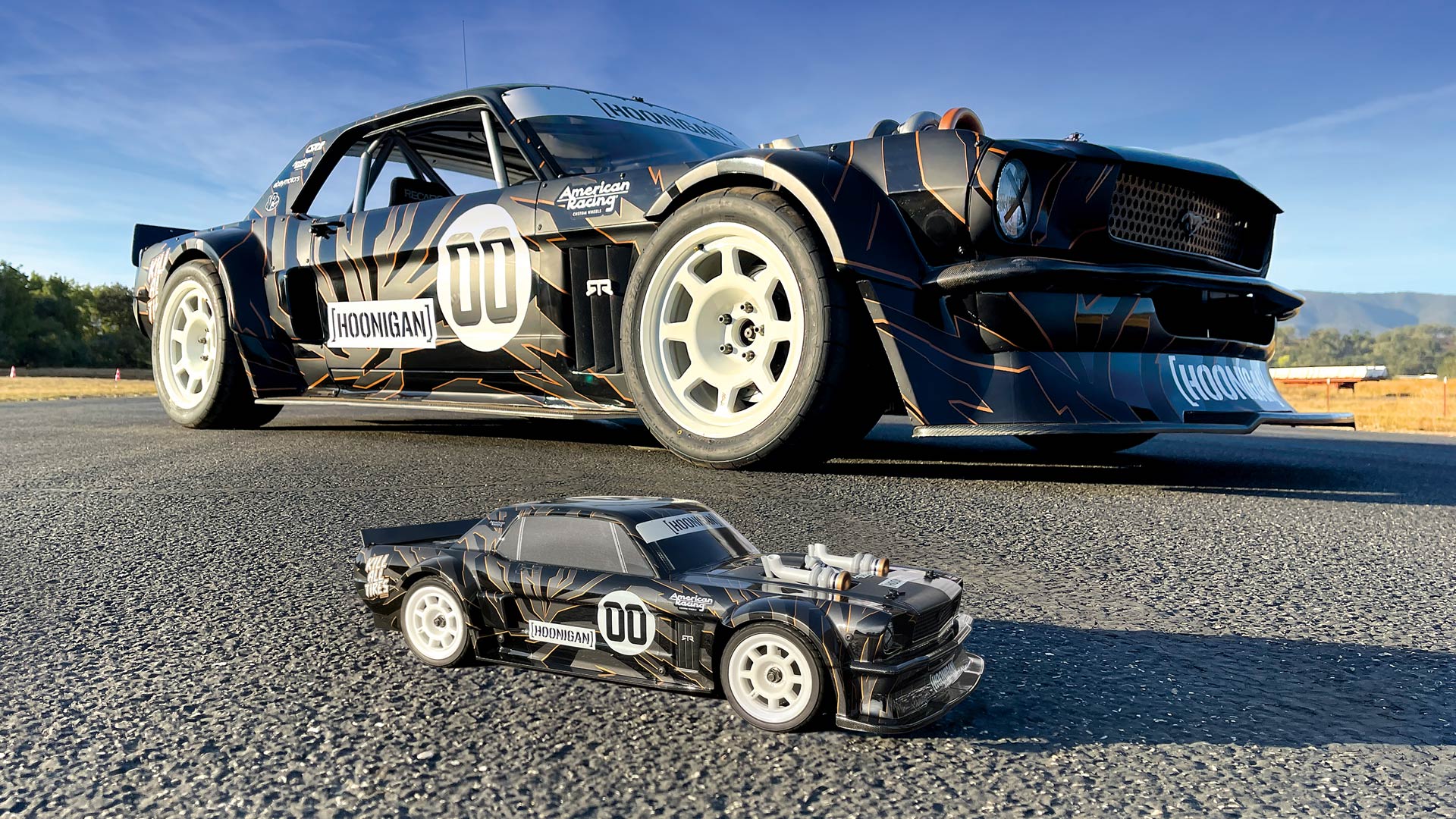
Ken Block’s amazing ‘Hoonicorn’ Ford Mustang is now an RC car

Electric cars star in 2022 Super Bowl adverts

Advertisement

Ken Block’s amazing ‘Hoonicorn’ Ford Mustang is now an RC car

0
Ken Block Hoonicorn RC Car

Fans of Ken Block’s 1965 Ford Mustang ‘Hoonicorn’ now have a chance to drive their very own version.

Responsible for some of Block’s greatest stunts, including the incredible ‘Climbkhana’ video made at Pikes Peak, the Hoonicorn V2 has become an icon.

It’s now available in 1:10 scale radio-controlled form, thanks to an ongoing partnership with Team Associated.

Capturing a mythical beast

Ken Block Hoonicorn RC Car

Unlike the full-size, flame-spitting Hoonicorn V2, the RC version is powered by an electric motor. This is said to be more than powerful enough for ‘tyre-slaying’ action, however, including huge drifts.

It features all-wheel drive, like the real thing, with heavy-duty differentials and adjustable suspension for Hoonigan activities. 

What makes the RC Hoonicorn stand out is a detailed bodyshell. It features replica air intakes, a rear diffuser and turbochargers on top of the 1965 Ford Mustang design.

Replica American Racing VF503 wheels are fitted, with miniature brakes hiding behind them.

Ready to run

Ken Block Hoonicorn RC Car

To make the RC Hoonicorn V2 more accessible, it is supplied assembled, and comes with almost all the equipment you need. This includes a radio transmitter and receiver, along with a printed and decal-covered body.

Buyers simply need to add a compatible battery pack, although this can be purchased as part of a bundle deal.

The scale Hoonicorn is currently available directly from the Hoonigan online store. Prices start from $359.99 (approx. £300), plus the options of extra batteries and a charger.

ALSO READ:

This is Ken Block’s 1,400hp Pikes Peak Porsche

Insane 860 hp Hoonigan Subaru wagon makes Goodwood debut

Ford engineers made history with special part for Ken Block’s Hoonitruck

Advertisement

Taxi! We swap seats to drive London’s electrified black cab

0
LEVC TX eCity

Walking to the office of the London Electric Vehicle Company (LEVC) near Kings Cross, I pass a souvenir shop. There, in the window, among Royal Family tea towels, fluffy British bulldogs and Big Ben bookends, are two toy vehicles: a red bus and a black cab. Because very few things say ‘London’ quite like its traditional taxi.

One way the black cab became so iconic, a cynic might say, was by failing to move with the times. The motorised Hackney Carriage had only seen three significant updates since the Austin FX3 was launched in 1948. The car I’m here to drive changed all that. Behind a familiar face, London finally has a high-tech taxi it deserves.

Going by the snappy title of LEVC TX eCity, the latest cab ditches outdated diesel engines for plug-in electric tech. It’s cleaner, cheaper to run, safer and more socially acceptable. It’s also much nicer for both passengers and drivers, as I’ll discover.

Sent to Coventry

LEVC is owned by Chinese carmaker, Geely, but the TX is built in the UK. A £325 million investment created 1,000 new jobs, plus capacity to build more than 20,000 taxis per year.

Now, with the addition of the mechanically similar LEVC VN5 van and spin-off camper van, the factory in Ansty, near Coventry, is growing further.

Geely also owns Lotus and is best known for bankrolling the rebirth of Volvo. Since the takeover in 2010, Volvo has launched a new range of award-winning cars and SUVs, plus standalone sub-brand Polestar.

The LEVC TX borrows many parts from its Swedish cousin, including an electric motor from the sporty Polestar 1 (which has two of them).

Making the black cab green

LEVC TX eCity

LEVC refers to the TX as ‘electric’ because its 1.5-litre petrol engine is only used to boost the batteries – not drive the wheels. More accurately, it’s a range-extender hybrid, with plug-in points for both CCS- and Chademo-style chargers either side of the front grille.

The batteries can be topped up to 80 percent capacity in 25 minutes, and full charge gives an electric-only range of 80 miles – two thirds of the 120 miles a typical cabbie drives in a day.

Quoted fuel economy is 217.3mpg, although that drops to just 36.7mpg with the batteries depleted. Still, the old diesel-powered TX4 managed 33.2mpg at best.

One stumbling block for LEVC is that only 60 percent of cabbies have off-street parking to charge overnight. For those that do, however, the savings are significant. My driver, Pat, told me his TX cost £2.80 to charge and saved £80 a week in fuel – around £4,000 a year – versus his TX4. With recent rises in the cost of fuel, that advantage will only have increased.

More pleasant for passengers

The plan is for Pat to chauffeur me into central London, then I’ll drive back. Opening the TX’s big, rear-hinged door, there are now six seats rather than five, along with appreciably more space.

Passengers in wheelchairs can also face forwards for the first time: a notable safety gain.

The fabrics and fittings are still very much ‘wipe clean’, but there’s air-conditioning, on-board wi-fi and charging sockets for phones and laptops. A standard-fit panoramic glass sunroof bathes the cabin in light – and offers a great view of London’s loftier landmarks. “Tourists love it,” smiles Pat.

On the move, the TX is smooth and eerily quiet, a calm cocoon amid the bustling streets and a stark contrast to rattling taxis of old. With just me on board, its ride feels on the firm side, although a full complement of six passengers would doubtless dampen it down.

The ‘ultimate driving machine’ for cabbies

Pat pulls over by Regent’s Park and it’s my turn to take the wheel. If you’ve driven any recent Volvo, the TX’s dashboard will feel instantly familiar. There’s a rebranded version of the Sensus touchscreen media system and even the key is the same.

Squared-off styling and a high, SUV-like driving position make the TX easy to place on the road. It’s astonishingly manoeuvrable, too, mainly thanks to front wheels that swivel 63 degrees (versus 38 degrees in a typical car). Three-point turns are a thing of the past.

The instant torque of the electric motor offers brisk acceleration, even if top speed is a modest 80mph. You can also switch into one of two regenerative braking modes, which use friction to slow the car and charge the batteries – allowing one-pedal driving at city speeds.

The new cab is a great way to travel around London – and not only because you can zip along bus lanes. It’s capable and well suited to its environment. Sadly, the same can’t be said of me, and I rely on Pat’s directions to get us home. Sat-nav is optional, but it’s no substitute for three years of learning The Knowledge.

First London, then the world

LEVC TX eCity

LEVC has plans that stretch far beyond the M25. The cab is already carrying passengers in Edinburgh, Amsterdam, Hamburg, Oslo and many other cities.

There was even talk of the TX being sold in New York – in iconic ‘yellow cab’ livery, no less – now the city’s taxi industry has been deregulated. It sure beats the ‘van with windows’ Nissan NV200.

London will remain LEVC’s biggest market, though, and the TX has already become part of the streetscape here. Shame the souvenir industry hasn’t kept pace; it’s still flogging toy TX4s.

READ MORE:

Who is Grant Shapps?

2030 petrol and diesel car ban: what does it mean for you?

Maserati MC20 2022 review

Advertisement

A latte money: £50 Bugatti coffee comes in a carbon fibre cup

0
Bugatti Espresso Bar

The first coffee bar inside a Bugatti dealership has opened in London.

H.R. Owen Bugatti, located on Bruton Street in Mayfair, is the home of Ettore’s Espresso Bar. Its name comes from Ettore Bugatti, the Italian-born French designer and engineer who founded his own car company in 1909.

The coffee bar is themed around Bugatti’s heritage, with a high-end Italian espresso machine and specially trained barista on-hand to make drinks.

Make mine a single shot…

H.R. Owen’s Bugatti showroom was previously off-limits to the public, with access on an invite-only basis. However, the new coffee bar means visitors can see inside the venue, and browse a range of Bugatti merchandise

Those wanting the ultimate coffee experience, however, will need to dig deeper into their pockets. 

For a not-inconsiderable £50, you can buy The Ettore Shot espresso. This is served in a carbon fibre cup, and gives you access to the exclusive Bugatti lounge.

While sipping your espresso (try not to calculate the cost of each sip) you take a seat in a leather and carbon fibre armchair, surrounded by a range of art installations and sculptures.

Caffeine and machines

Bugatti ambassadors will be on-hand to explain the history of the marque to Ettore Shot customers. Most importantly, they will show off the now-sold-out Chiron hypercar.

For those who prefer not to to spend £50 on their morning dose of caffeine, the coffee bar serves more affordable drinks to take away. 

This is not the first time Bugatti has offered money-no-object trinkets. The company previously revealed a £215,000 pool table made from carbon fibre and aluminium.

The first completed pool table was displayed in the Cidade da Cultura Galicia cultural centre in Spain.

ALSO READ:

Maserati MC20 2022 review

Best supercars to buy in 2022

Beyond 225mph: the fastest production cars in the world

Advertisement

Cinch car-buying website: how does it work?

0
New site to simplify car-buying

Cinch is a popular website to find and buy second-hand cars. Part of the same group as British Car Auctions and WeBuyAnyCar, its aim is to offer a ‘faff-free online car service’.

All used cars offered by Cinch are less than seven years old and come with a minimum of six months’ MOT. Each car goes through a 225-point inspection before sale, too.

The site lists around 9,000 used cars and customers can either buy online with free home delivery, or collect from their local branch of WeBuyAnyCar.

What does Cinch do differently?

New site to simplify car-buying

While you can search for a car in the traditional sense, by make, model, mileage and so on, the interesting bit is the new way of finding what you need, with the ‘Help me choose’ option.

‘Help me choose’ assists buyers’ search based on their needs. You can narrow down choices based on statements such as ‘Compact and easy to park’ or ‘Ready for off-road’.

You then get a series of pictures that you have to select from, based on what vehicle types you like (e.g. hatchback or SUV). Last but not least, you can narrow down the list by selecting the car brands you prefer.

Hit the button and you have a list of cars that could suit you. For those not in-the-know, it could certainly help.

A hub for used cars

New site to simplify car-buying

Cinch is primarily a hub for car supermarkets and dealers to show off their stock. Not only are all listed second-hand cars seven years old or younger, they also have less than 70,000 miles on the clock. 

“Every element of Cinch has been built in direct response to what the dealers and consumers have told us they want from the car finding, buying and selling process,” said Jonny Crowe, divisional CEO at Cinch.

New site to simplify car-buying

“Many consumers currently arrive at dealerships without really knowing what they want and dealers get overloaded with undifferentiated enquiries.

“Cinch cuts through this inefficiency, empowering dealers with better-qualified leads that have a higher likelihood of conversion and helping consumers make the right decision.”

ALSO READ:

Buying a new car battery: what you need to know

Driving off without paying for petrol: what does the law say?

How to claim for pothole damage to your car

Advertisement