Home Blog Page 136

Lotus Evija Fittipaldi celebrates 50 years of ‘greatest ever F1 car’

0
Lotus Evija Fittipaldi

Lotus has unveiled the Evija Fittipaldi, a special edition marking 50 years since Emerson Fittipaldi and Team Lotus won the F1 Drivers’ and Constructors’ World Championships.

Driving a Lotus Type 72, Fittipaldi triumphed in five out of 11 races during the 1972 season. Named the greatest ever F1 car by Autosport magazine, the radical Type 72 was the first racing car to incorporate aerodynamics from the outset, including an integrated front splitter and rear wing.

Revealed at Lotus headquarters by Emerson Fittipaldi himself, the new Evija wears the same black and gold colours as its inspiration (albeit without John Player Special cigarette branding) and features a host of unique details.

Black and gold

Lotus Evija Fittipaldi

The world’s most powerful production car, the Lotus Evija develops 2,039hp and 1,257lb ft of torque from four electric motors. Zero to 62mph is quoted as ‘less than three seconds’, with 0-186mph in ‘less than nine seconds’. Top speed is limited to 217mph.

The Evija also has a target driving range of 250 miles, and can fully replenish its 93kWh battery in 18 minutes using a 350kW charging point.

Changes made for the Fittipaldi edition are entirely cosmetic. Along with the JPS-style livery – including decals detailing the Type 72’s race victories on the active rear wing – the Evija has an image of the F1 car etched into its exposed carbon fibre roof, plus Fittipaldi’s signature hand-stitched into the dashboard. It rides on bespoke centre-lock alloy wheels with gold brake calipers.

The interior is swathed in black leather, with yet more gold for the pedals, air vent surrounds and start button. The pièce de résistance, though, is a drive mode switch made from recycled Type 72 aluminium. It means ‘a genuine piece of the F1 racer is part of each Evija Fittipaldi,’ says Lotus.

On the Button

Lotus Evija Fittipaldi

Another former F1 world champion, Jenson Button, also visited the Lotus test track at Hethel to drive the Evija Fittipaldi.

After many laps of the 2.2-mile circuit – and several standing starts to experience the car’s brutal acceleration – Button seemed very much enthused. “It sounds like a jet engine! You think of an EV as quiet but it’s not. The torque is astronomical,” he remarked.

Button continued: “It’s amazing, it puts a big smile on your face. It feels like a spaceship, the drivability and direction in the steering certainly lets you know you are driving a Lotus. I am amazed by the agility of it. It is a Lotus of the future and I can’t wait to drive my own Evija.”

The F1 ace then swapped into Fittipaldi’s 1972 Lotus Type 72, part of the extensive collection owned by Classic Team Lotus. “It’s lovely to get into a bit of racing history,” he said. “There isn’t a lot of space, but everything is in the right position. It was easy to heel and toe. It’s a real privilege to drive such a special car.”

Only eight examples

Lotus Evija Fittipaldi

Production of the Lotus Evija has now started and 130 cars are planned – including eight examples of the Fittipaldi edition. With jaw-dropping performance, an iconic colour scheme and endorsement from an F1 legend, it’s a surefire classic-in-waiting.

The all-electric powertrain means this exotic hypercar is effectively future-proofed, too.

Will Emerson Fittipaldi, like Button, also be getting his own Evija? He didn’t say, but all eight cars have now been spoken for. The price? Also not mentioned, but reckon on at least £2 million.

ALSO READ:

New Lotus Eletre electric SUV revealed in London

Lotus Elise Sport 240 Final Edition review

‘My dad borrowed a Bond car’ – chief engineer on a life at Lotus

Advertisement

How Lamborghini is going green – helped by bees and compost

0
Lamborghini honey

The notion of Lamborghini going green sounds akin to a T-Rex embracing vegetarianism. The Italian marque is famous for its extravagant V10 and V12 engines, not saving the planet one supercar at a time.

The world is changing fast, though, and even the most rarefied carmakers must change with it. The UK plans to outlaw the sale of non-hybrid petrol cars from 2030, with the EU likely to follow suit in 2035.

“We will continue to build dream cars,” Lamborghini CEO Stephan Winkelmann assures me, “but with a clear focus on decarbonisation and sustainability.” His masterplan also includes some 600,000 bees – but we’ll come to them shortly.

Electric dreams

Lamborghini factory

Lamborghini is currently ‘celebrating the internal combustion engine’ with models such as the fabulous Huracan STO and new Urus Performante. However, all its model lines will be electrified by 2024 – starting with the plug-in replacement for the Aventador, due next year.

The company will then begin the transition to fully electric cars, with its first EV – an entirely new fourth model – expected by 2030. Rumours suggest a luxurious four-door GT in the style of the classic Espada or 2008 Estoque concept.

The target is to slash overall fleet CO2 emissions by 50 percent by 2025 (compared to the 2021 figure), then 80 percent by 2030.

On the question of synthetic fuels, Winkelmann is unconvinced: “They might be an opportunity to reduce emissions for existing cars, but they’re not an alternative to electrification.” The biggest challenge, he concedes, will be making a Lamborghini EV sound suitably special.

Bring me sunshine

Lamborghini solar panels

Thus far, the main efforts to make Lamborghini cleaner and greener have focused on the factory, which builds 26 examples of the Urus, 16 Huracans and (until very recently) 4.5 Aventadors a day.

The site at Sant’Agata Bolognese has been certified carbon neutral since 2015, when it measured 80,000 square metres. Today, despite having more than doubled in size to 172,000 square metres – largely thanks to the runaway success of the Urus – it is still CO2 neutral.

Hundreds of solar panels, which cover the office buildings and canopies over the car park, help to produce renewable energy. A photovoltaic plant converts this into 2.5 million kWh of electricity a year – saving 2,000 tons of CO2 in the process.

Sant’Agata also has its own biogas district heating system fuelled by decomposing agricultural waste, with four miles of underground pipes carrying water heated to 85deg C. This eliminates a further 1,800 tons of CO2 emissions every year.

Sting in the tale

Lamborghini honey

The nearby Lamborghini Park, where the company has planted 10,000 oak trees over an area of 17 acres, also plays a part in the sustainability effort.

An innovative biomonitoring project involves 13 beehives, which are studied by entomologists and apicologists to detect pollutants. Because the bees collect nectar and pollen within a two-mile radius of the park, their hives provide a very accurate snapshot of the local environment.

As an added bonus, the bees also produce around 500kg of honey a year, which is shared among Lamborghini employees.

Immortal machines

Lamborghini Huracan Tecnica

Lamborghini also ‘upcycles’ many of its (often brightly-coloured) leather offcuts into accessories such as bags, wallets and phone cases. The project is a collaboration with social enterprise Cartiera, which promotes social inclusion, providing work for migrants, people with disabilities and others who might be disadvantaged in the job market.

Unused carbon fibre is also recycled where possible, or donated to local universities to help young people learn about working with composites.

As for Lamborghinis themselves, they remain treasured possessions. “Eighty percent of all the Lamborghinis ever made still exist,” says Winkelmann, “so recycling cars isn’t really an issue for us”.

ALSO READ:

Lamborghini Aventador Ultimae Roadster review

Highland fling: an incredible Lamborghini road-trip

Best supercars to buy in 2022

Advertisement

Maserati reveals new GranTurismo, including radical Folgore EV

0
2022 Maserati GranTurismo Folgore

Maserati has pulled the virtual wraps off its 2022 GranTurismo coupe, promising a new era for the sporty GT. 

The biggest news is that Maserati will offer an all-electric drivetrain in the ground-breaking Folgore version (the name means ‘lightning’ in English).

The Folgore will be sold alongside conventional petrol-engined Modena and high-performance Trofeo models.

Electrifying performance

2022 Maserati GranTurismo Folgore

The GranTurismo Modena and Trofeo are both powered by a twin-turbocharged 3.0-litre V6, also used in the Maserati MC20 supercar. In detuned formats here, it gives the Modena 490hp, while the hardcore Trofeo delivers 550hp. 

An eight-speed automatic gearbox is used, with a 0-62mph time of 3.9 seconds for the Modena. 

The Trofeo reduces this sprint time to 3.5 seconds, with a top speed of nearly 200mph.

A unique acoustic experience

2022 Maserati GranTurismo Folgore

The most impressive performance, however, is supplied by the electric GranTurismo Folgore. This uses a trio of electric motors, generating a combined output in excess of 1,200hp. 

A total of 761hp makes its way to all four wheels, allowing the Folgore to accelerate from 0-62mph in a startling 2.7 seconds. It boasts the same near-200mph top speed as the Trofeo. 

The GranTurismo Folgore features 800-volt electric architecture, and is powered by a 92.5 kWh battery pack. Rapid-charging up to 270kW is supported, with the ability to add 60 miles of range in just five minutes. 

In the absence of an engine, Maserati says the Folgore will offer a ‘unique acoustic experience’. Maseratis are famed for their searing soundtracks, so we’ll be interested to hear it.

Classic styling, modern cabin

2022 Maserati GranTurismo Folgore

Maserati has stuck with tradition in styling the new GranTurismo. It retains classic GT proportions, including a long clamshell bonnet and short chopped tail. The front grille features a 3D trident emblem, while the LED tail lights have boomerang details – a nod to the classic 3200 GT. 

A ‘clean’ design is used inside, featuring multiple digital displays. Along with a 12.3-inch central multimedia screen, there is also an 8.0-inch ‘comfort’ screen, plus a 12.2-inch driver display. Maserati’s traditional analogue clock has been given a digital makeover, too.

To celebrate the launch of the new GranTurismo, Maserati will offer a special PrimaSerie 75th Anniversary Launch Edition, inspired by the A6 1500 Gran Turismo of 1947.

ALSO READ:

Project Thunderball! Wiesmann blasts back with electric sports car

Snake bite: Shelby Cobra makes official UK comeback

Aston Martin fights back with two V12 drop-top sports cars

Advertisement

Project Thunderball! Wiesmann blasts back with electric sports car

0
Wiesmann Project Thunderball

It looks like a classic British sports car and borrows its name from a Bond film, but the Wiesmann Project Thunderball hails from a small market town in Germany. As the world’s first fully electric roadster, it promises to combine traditional craftsmanship with thoroughly modern performance.

Beneath a curvaceous carbon fibre body, two electric motors deliver up to 680hp and 738lb ft of torque to the rear wheels. With a kerb weight of 1,775kg – relatively light for an EV – that means 0-62mph in 2.9 seconds, plus 0-124mph in just 8.9 seconds.

The car also has a target range of 311 miles from a 92kWh battery (an 83kWh version will be offered), plus the ability to rapid-charge at up to 300kW thanks to its advanced 800V architecture.

Living off the wall

Wiesmann Project Thunderball

Project Thunderball represents a comeback for Wiesmann after the company closed its doors in 2014. Founded by brothers Friedhelm and Martin Wiesmann, its first car was the BMW-powered MF 30 roadster, launched in 1993. The later MF 3 version borrowed its 343hp straight-six from the 2000-2006 (E46) M3.

Wiesmann moved on to building sleek GT coupes with BMW V8 engines in the early 2000s, but a failed attempt to expand into America left the brand in limbo for several years. It’s now owned by entrepreneur and car collector Roheen Berry, who says: “Project Thunderball is the car that will bring Wiesmann into the new electrified era”. 

That said, the company also has another, non-electric sports car in the works. The forthcoming Project Gecko will use a BMW M Power V8 and takes its name from Wiesmann’s gecko logo – chosen because the cars ‘stick to the road like geckos to a wall.’

Rolling Thunder

Wiesmann Project Thunderball

The order book for Project Thunderball is now open, with first deliveries expected in 2024. Prices start at €300,000 (around £267,000), although every car will be bespoke and built to order.

CEO Roheen Berry added: “The car is driving beautifully and our investment in regenerative braking and latest battery technology has paid off.  The Wiesmann brand not only has such a storied and wonderful past and legacy, but a bright and exciting future ahead of it.”   

ALSO READ:

‘A car like no other’ – new Ferrari Purosangue SUV revealed in full

Bizzarrini 5300 GT Corsa Revival review

Paul Stephens Porsche 993R review

Advertisement

‘Coming for Tesla’: first look at radical new Aehra electric SUV

0
Aehra SUV

Aehra has revealed the first images of its futuristic electric SUV. The new Italian car brand says it is ‘coming for customers from Tesla, Lucid, BMW, Mercedes-Benz and Porsche’ with the as-yet-unnamed EV, which is predicted to cost upwards of £140,000.

Established by former oil trader Hazim Nada and based in Milan, Aehra has recruited some strong local talent. Design chief Filippo Perini previously worked at Lamborghini, while Stefano Mazzetti, head of purchasing, comes from Ferrari. Alessandro Serra joins the design team from upcoming Korean brand, Genesis.

Aehra also has a premium electric saloon in the pipeline, due to be revealed in February. First customer deliveries of both cars are expected in 2025.

Gives you wings

Aehra SUV

Technical details of the Aehra SUV are limited so far – look out for a full preview on Motoring Research in late October – but the company promises innovative use of carbon fibre and ‘cutting-edge EV technology’.

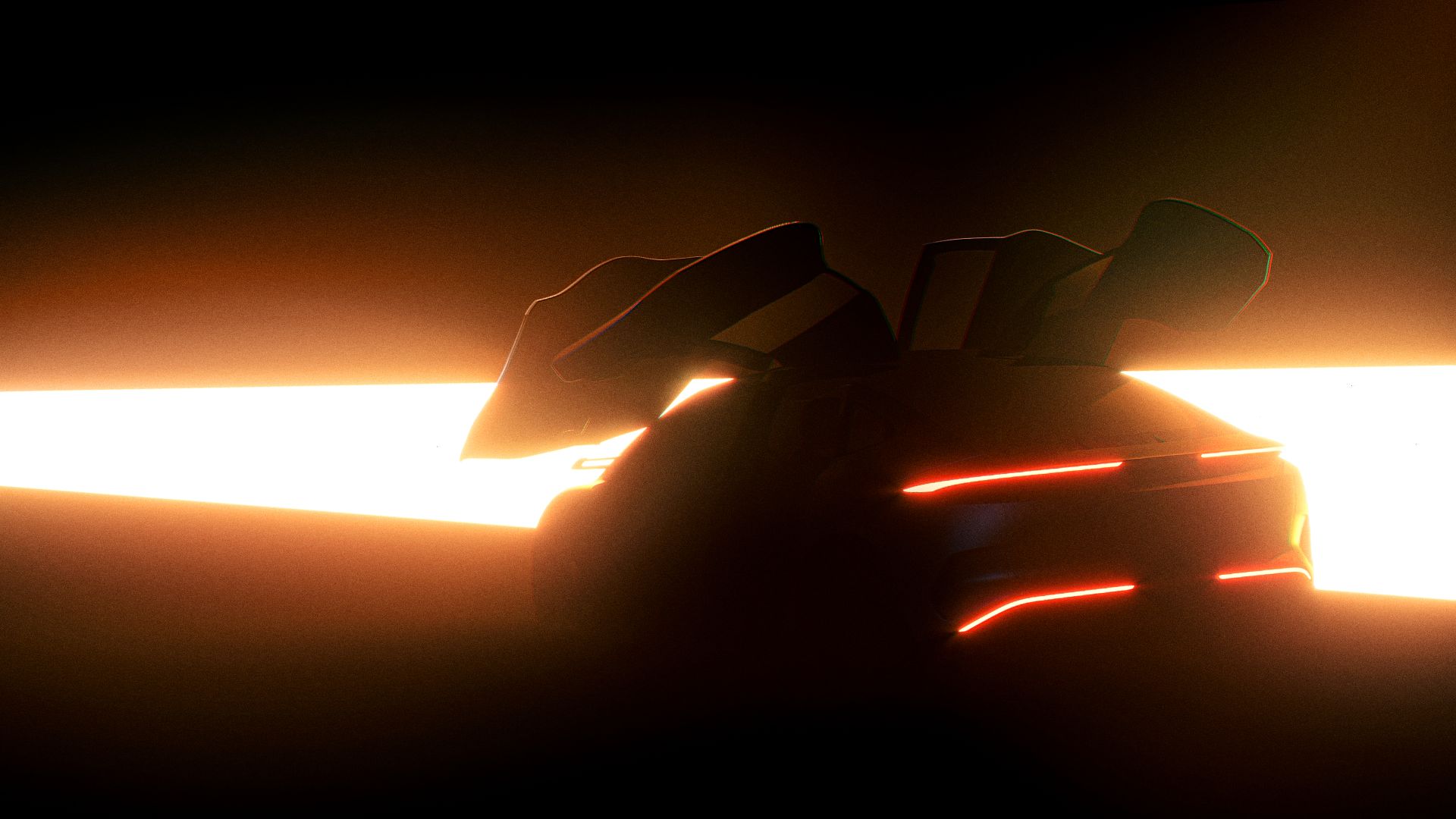
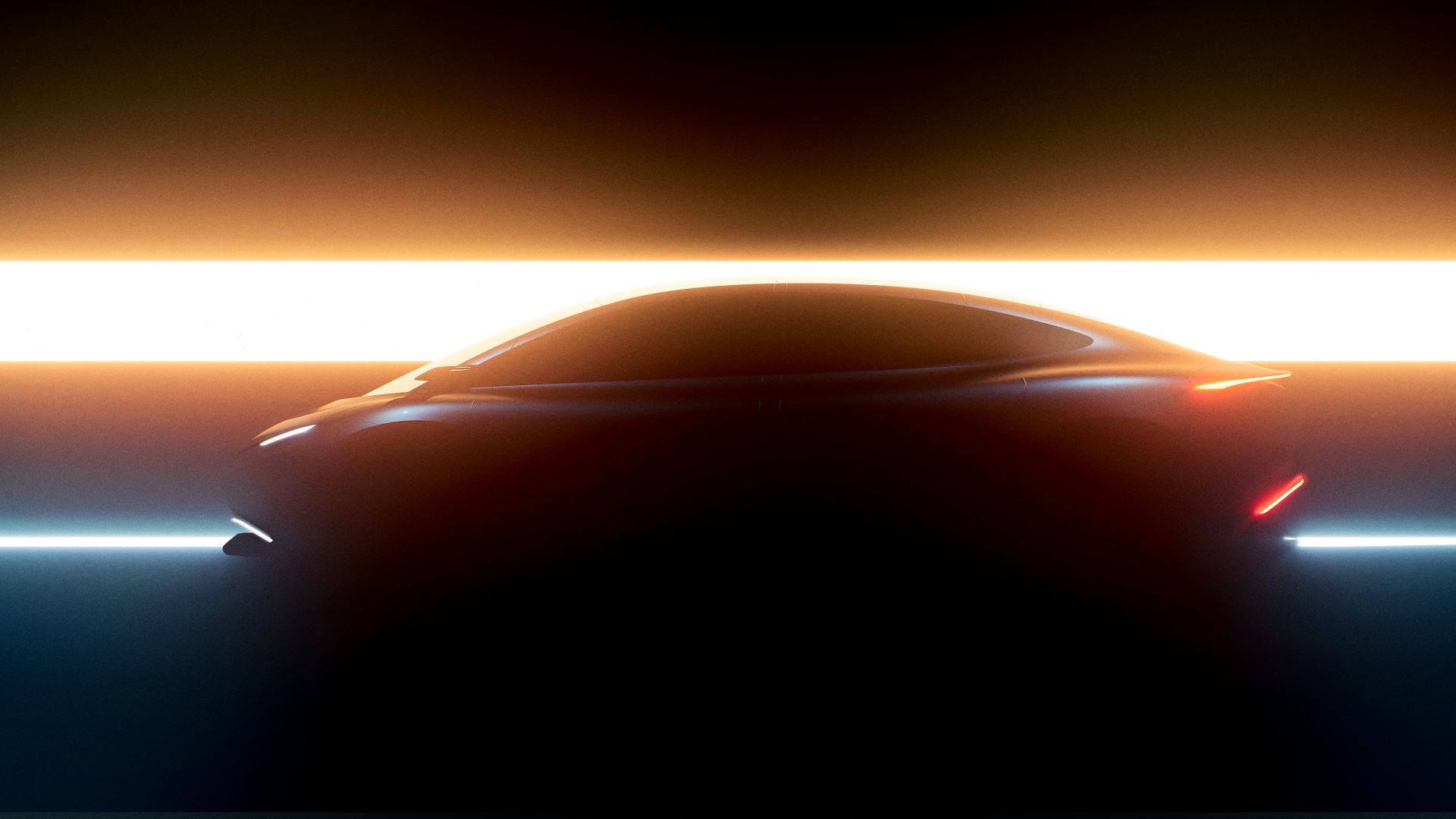
What can be gleaned is the car’s overall design, which is much sleeker than a typical SUV. The roof has an elegant and very aerodynamic profile, flowing from a short nose to an elongated tail. All four doors open upwards, in a dramatic gullwing style, leaving the rear ‘Falcon Wing’ doors of the Tesla Model X looking like a half-measure.

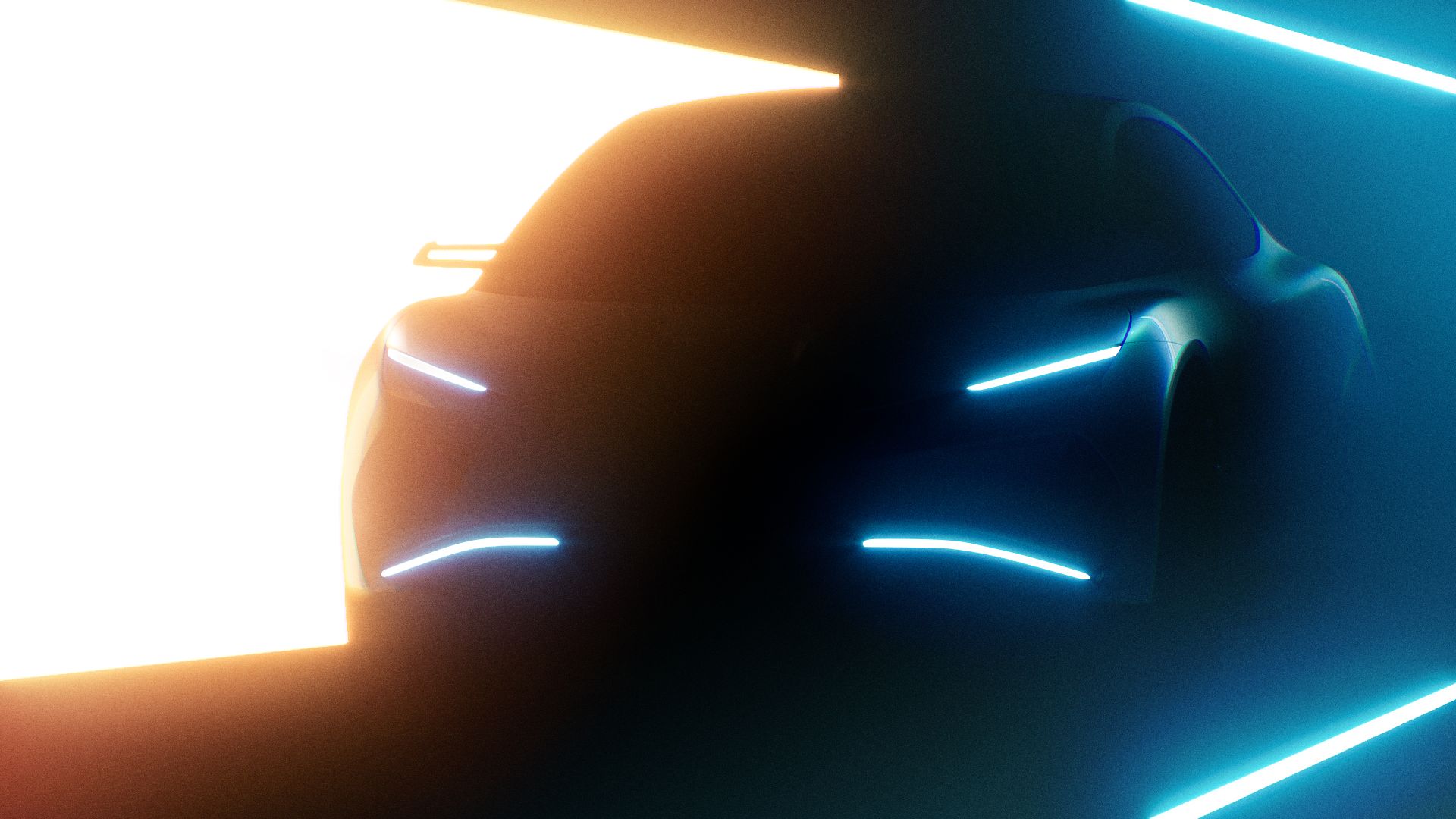
The Aehra SUV also has distinctive LED light signatures front and rear, plus cameras instead of conventional door mirrors. A jutting front spoiler and upswept rear diffuser should further enhance the car’s aero-credentials.

Dreaming big

Aehra SUV

Privately-funded Aehra aims to sell between 15,000 and 25,000 cars in its first full year, focusing on Europe, North America, China and the Middle East. It’s an ambitious target, but CEO Nada seems determined to seize the moment.

“The unveiling of the preview images of the first Aehra model, just four months after the launch of the company, certifies that we remain firmly on track with our ambitious strategy to transform the EV mobility ecosystem with vehicles charged with emotional design and imbued with superior aerodynamic efficiency,” he explained.

As for the company’s name, it’s a combination of the Latin word for ‘epoch’ and the Italian for ‘aerodynamic’. We’ll discover the name of this new SUV very soon.

ALSO READ:

‘A car like no other’ – new Ferrari Purosangue SUV revealed in full

Bizzarrini 5300 GT Corsa Revival 2022 review

Best luxury SUVs to buy in 2022

Advertisement

Retro Honda Civic, Integra and Accord Type R driven: which one wins?

0
Affordable Honda Type-Rs: which should you buy?

Excitement is building for the new Honda Civic Type R. Arriving in early 2023, it boasts a 330hp 2.0-litre turbo engine, a proper manual gearbox and the customary huge rear spoiler. However, as we’ll see, you don’t need the best part of £40,000 – UK prices haven’t been announced yet – to enjoy some Type R magic.

Honda’s red ‘R’ badge first became famous in the early 1990s, when the Japanese company launched a Type R version of its NSX supercar in Japan.

This sold in relatively small numbers, never officially made it to the UK and costs serious money if you can find one. So it’s the later, more affordable models we’ve focused on here.

These Type Rs are tuned-up versions of conventional cars: the Civic hatchback, Accord saloon and Integra coupe. All became performance car icons in their own right, with a cult following among car enthusiasts.

We drive all three hot Hondas back-to-back and come to a (fairly) definitive conclusion about which you should buy. 

What is VTEC?

Before we get to the cars, a quick word about VTEC. You’ve probably heard the term – Honda aficionados refer to VTEC so frequently that it’s become an internet meme. If you’re not familiar, it stands for ‘Variable Valve Timing and Lift Electronic Control’.

Sounds complicated… and it kind of is. The camshaft in a car’s engine turns, pushing lobes (called cams) against valves, causing them to open and close, allowing air into the combustion chambers. Essentially, VTEC means a camshaft has two different sizes of cams: small ones for pottering around with maximum efficiency, and large ones for more air and extra performance.

As the revs climb, oil flows through the rocker shaft, sliding a pin that locks the low-RPM rocker arms to the higher-RPM rocker arms, meaning the valves open further and for a longer period of time. This results in a turbo-like effect for the engine, but only at high revs.

The advantage of VTEC is two distinct characters for the same engine. At low revs, it will drive like an eminently sensible car, providing good fuel economy. Increase the revs, though, and it goes berserk. The disadvantage is you have to work the engine hard to benefit from the best performance. But maybe that’s not such a bad thing…

Honda Civic Type R

The 2001-2005 Honda Civic Type R – internal codename ‘EP3’ – has arguably survived the boy racer stage and matured into a modern classic. Indeed, with prices from around £5,000, it’s already on an upward curve – the best cars are now beyond £10,000.

If you’re looking for a hot hatch that holds its value, the EP3 seems a good bet. And besides, once you’ve experienced the K20A2 naturally-aspirated VTEC engine hitting 8,000rpm, you won’t care about the money.

Honda Civic Type R

Before I get to that stage, I have to battle with London traffic. Yes, although I’m spending a day driving Type Rs, my base is close to the Hertfordshire town of Watford. And in stop-start slog, it’s difficult to see what all the fuss is about. The ride is firm, yet the engine doesn’t feel particularly eager.

I like the dash-mounted gear change, which feels slick and actually makes sense when you get used to it. Moving your hand the short distance from the steering wheel to the lever can save crucial tenths of a second. Ahem.

Eventually I reach countryside – with surprisingly empty B-roads – and pile on the revs. They build, with VTEC kicking in around 6,000rpm, and the car surges forward. It’s fun, admittedly, but not quite the excitement I expected – not helped, of course, by quickly catching up with other cars.

Honda Civic Type R

Part of the problem is the Civic packs ‘just’ 200hp, hitting its peak at 7,400rpm. And in a world of 300hp+ turbocharged hot hatchbacks, having to work hard to eke out two thirds of that doesn’t feel so thrilling.

Sure, the joy of driving a car like this isn’t all about power. But the EP3 doesn’t have a particularly sophisticated chassis, while the steering feels pretty lifeless. Maybe I’m being a bit harsh: its looks are growing on me, and the interior – with its figure-hugging Recaro seats – isn’t as dire as an old Japanese car might be.

Honda is also a byword for reliability, of course, so a Civic Type R should be painless to own. It’s just not the one for me.

Honda Integra Type R

When I was growing up, all the magazines lauded the ‘DC2’ Integra Type-R as the best-handling front-wheel-drive car ever. I was quite excited about finally driving one even if, after a go in the Civic, I was a tad worried about meeting a hero.

Fortunately, right from the start, it feels much more exciting than the EP3. It’s old-school, with a low driving position and a noisy, revvy engine. There’s little in the way of soundproofing here.

Honda Integra Type-R

Sure, driving one every day might get tiring. It’s bumpy and, like the Civic, you have to use all of the rev range to extract the best from the engine. Weighing just 1,200kg, it’s plenty quick enough – hitting 62mph in 6.7 seconds.

Although it wouldn’t hold a candle to modern hot hatches in a straight-line drag race, the Integra Type R will be be more fun (and probably quicker) on twisty roads.

Honda Integra Type-R

The interior is basic, although buoyed by the bright red Recaro seats. Visibility is good, and everything is in the right place; there’s no awkward offset for the pedals, and the gear change is precise and easy to find.

Today, you’ll need to pay north of £15,000 for a good DC2. It sold in small numbers and many have been crashed or modified over the years, while owners are keeping hold of good examples.

Find a good one, though, and you won’t be disappointed. Few cars feel this raw and exciting.

Honda Accord Type R

So we’ve had excitement, time to come down to earth with some nice, sensible family wheels. Right? Not quite.

While the Accord might look rather sensible, with its slightly drab yet well executed cabin, this very definitely isn’t a typical Ford Mondeo rival. As soon as the cam profile shifts, it surges forward eagerly, while sounding better in the process than either the Civic or even the Integra.

Yes, all these cars have the magic of VTEC, but it shines brightest in the 212hp 2.2-litre H22A7 engine that powers the Accord.

Honda Accord Type-R

Maybe it’s the surprise element, but the Accord pips the Integra as the car I most want to take home from this trio. Its hydraulic power steering is a joy, and while the car doesn’t feel as playful as the other Hondas featured here, it’s extremely planted.

Its front limited-slip differential means you can tuck the nose in and pretend you’re not driving a relatively large front-wheel-drive saloon.

Honda Accord Type-R

Not only is the Accord Type R exciting, it’s also half the price of an Integra – and likely to have led an easier life. Budget £10,000 for a minter.

Combine the Accord’s lower price with its everyday usability and this is definitely where my retro Type R money would go.

READ MORE:

Average speed cameras installed on ‘Evo Triangle’

Hiring a supercar ‘as easy as renting a hatchback’ says car hire company

Mini adventure: Yiannimize goes rental for Hertz

Advertisement

‘A car like no other’ – new Ferrari Purosangue SUV revealed in full

0
Ferrari Purosangue

You can put your fingers in your ears, shout ‘LA LA LA’ and pretend it isn’t happening, but Ferrari has finally launched an SUV. What on earth would Enzo say? We’ll come to that, but first let’s go for a guided tour – led by CEO Benedetto Vigna and his team at Ferrari’s Centro Stile design studio in Maranello. One thing quickly becomes clear: this is no ordinary SUV.

Indeed, according to Vigna, the Purosangue isn’t an SUV at all. He describes it as “a car like no other” and a “genuine game-changer” that creates an entirely new market segment. Inevitably, it will invite comparisons with the Lamborghini Urus and Aston Martin DBX, but the Ferrari will be more exclusive and more expensive.

Prices start from €390,000 (circa. £338,000) in Italy, with the first right-hand-drive UK deliveries due in summer 2023.   

Back to the old school

Ferrari Purosangue

If you were expecting a twin-turbo V8 or some kind of plug-in hybrid, prepare for a shock. The Purosangue’s USP is an old-school naturally aspirated 6.5-litre V12. Marketing boss Enrico Galliera says interest in the car “exploded” when the engine was announced: “the level of demand was like for our limited-series cars”.

Serving up 725hp at a heady 7,750rpm, it rockets the Purosangue to 62mph in 3.3 seconds and a top speed of 193mph. 

Importantly for a car of this type (i.e. umm, not an SUV), there’s also a muscular 528lb ft of torque at 6,250rpm, with 80 percent of that oomph available from just 2,100rpm. A dual-clutch transaxle gearbox drives all four wheels via seven “quick-fire” ratios and an overdrive-style eighth gear.

Ready to go FAST

Ferrari Purosangue

Lift the front-hinged bonnet and you see the Purosangue is effectively mid-engined, with its V12 squeezed up against the bulkhead for near-perfect 49:51 percent weight distribution. Even so, with a ride height of 185mm and portly kerb weight of 2,180kg (Ferrari also quotes a minimum dry weight of 2,033kg), the laws of physics must be tackled head-on. And that’s the job of Ferrari Active Suspension Technology – or ‘FAST’ for short. We wonder if they came up with the name or the acronym first…

While most SUV rivals use air suspension to quash pitch, dive and roll, Ferrari’s head of vehicle dynamics, Stefano Varisco, says “air springs are too slow to deliver this kind of performance”. Instead, the Purosangue rides on coilover dampers with 48-volt electric actuators. The system was co-developed with Canadian motorsport specialist Multimatic, which builds the current Ford GT supercar

FAST removes the need for anti-roll bars, explains Varisco, and helps the Ferrari behave “100 percent like a sports car”. It’s backed up by the eighth iteration of Maranello’s drift-tastic Side Slip Control, torque vectoring on the front axle, a rear e-differential and traction control optimised for low-grip surfaces. 

If you really must risk those forged alloy wheels off-road (22 inches at the front and 23s at the rear – the biggest ever fitted to a production Ferrari), an optional lift kit provides 30mm of added ground clearance. 

‘Elegant and sensual curves’

Ferrari Purosangue

We must wait a few months to discover what the Purosangue is like to drive, but chief of product development Gianmaria Fulgenzi promises “an unprecedented range of abilities”. Describing a “sports car with comfort and versatility”, he extols the “never-ending acceleration” of the V12 and “maximum harmonics” from the quad-tailpipe exhaust. “It has a GT soundtrack at low rpm that increases to a pure Ferrari sound.” Could it unseat the Porsche Cayenne Turbo GT as our favourite road-focused SUV? Don’t bet against it.

For now, the Purosangue certainly has an aesthetic advantage over the car from Stuttgart. Design boss Flavio Manzoni admits that styling an entirely new kind of Ferrari was “quite tough”, but the end result, to our eyes, borders on the beautiful.

He walks us around its “elegant and sensual curves”, highlighting how the tapered, berlinetta body has “the feeling of a crouching feline”. When you consider how ostentatious and ugly many coupe-style SUVs look, Manzoni has done an exceptional job.

Four doors, four seats

You climb aboard via what Ferrari calls ‘Welcome Doors’, which part in the middle like those on a Rolls-Royce. The rear-hinged back doors open via a fingertip toggle that recalls the classic 308, while all doors have an electric soft-close function. Even though the Purosangue retains a B-pillar – “We needed to retain it for body rigidity,” says Manzoni – the ‘fully open’ side view looks spectacular. 

Inside, you find a digital-first dashboard inspired by the SF90 Stradale and shaped into two wraparound cockpits for the driver and front passenger. Quality is excellent (the days of Ferrari borrowing parts-bin Fiat switchgear are long gone) and some of the materials are genuinely innovative. The Purosangue we sat in, for instance, had carbon fibre trim inlaid with strands of copper, plus a floor covering made from the same bulletproof fabric as military uniforms.

All four adult-sized seats are individually adjustable and the boot swallows a practical 473 litres of luggage. You can also enjoy Apple CarPlay and Android Auto connectivity, wireless phone charging and a Burmester surround-sound audio system. However, Ferrari stops short of offering a five-seat option or a tow bar – this is a thoroughbred, remember? On that note, spot the long shift paddles and F1-style manettino on the steering wheel, which has five drive modes: Wet, Comfort, Sport, Race and ESC-Off. Leave the labrador at home before you sample the latter…

A new kind of Ferrari

Ferrari Purosangue

So, what would Enzo say? Would the late founder of Ferrari be rolling his eyes behind his trademark dark glasses? I’m not so sure. Enzo was a pragmatist, after all, who saw road cars as a way to fund his racing exploits. And the 1980 Pinin concept proves he certainly considered a Ferrari with four doors.

Whatever the truth, with production limited to 20 percent of Ferrari’s overall sales volume (around 2,220 cars a year), the Purosangue is likely to be a sell-out success. Just don’t call it an SUV.

ALSO READ:

Ferrari Roma review

Ferrari Testa Rossa J driven: All I want for Christmas…

The most exotic Ferrari special editions

Advertisement

Snake bite! Shelby Cobra makes official UK comeback

0
Clive Sutton Shelby Celebration

Fans of fast American cars will be able to celebrate the 100th birthday of motoring legend Carroll Shelby next year.

London-based Clive Sutton is the UK’s only official distributor for Shelby American, and plans to offer the widest ever range of Shelby products for 2023. 

Orders are now being taken for the latest Shelby-tuned vehicles, including GT500 Ford Mustangs, Super Snake Ford F-150 pickup trucks and multiple versions of the iconic Shelby Cobra.

Better than a birthday cake

Clive Sutton Shelby Celebration

The late Carroll Shelby was born on 11 January 1923, and founded his eponymous performance brand in 1963. Fittingly, what would have been Carroll’s 100th birthday is also the 60th anniversary of the Shelby Cobra. 

Clive Sutton will offer CSX7000 and CSX8000 Shelby Cobra Continuation models via its showroom in St John’s Wood. These are exact and official replicas of the MkII Shelby Cobra 289 race cars that won the 1965 FIA World Championship. 

Priced between £270,000 and £400,000, each Cobra Continuation model is entered into the official Shelby vehicle register. 

Superformance replica versions of the Cobra are also available from Clive Sutton. These can be ordered in right- or left-hand drive, and combine ferocious modern performance with classic Cobra styling. Buyers can opt for a fuel-injected 560hp Roush V8 engine, along with a five-speed manual gearbox and disc brakes.

Choose modern or classic

Clive Sutton Shelby Celebration

Prices for the Superformance replicas start at £128,950 for a Mk2 Slab Side model, increasing to £135,000 for a Mk3 Cobra. 

More modern performance can be found in the latest Shelby GT500 Mustang. With a 700hp supercharged 5.2-litre V8, the muscle car accelerates from 0-60mph in less than four seconds. 

For those wanting a pickup truck with extra bite, the Super Snake F-150 offers over 750hp from its supercharged 5.0-litre V8. 

Company founder Clive Sutton said: “Carroll Shelby was an inspiration to me in my youth. The power, performance, and style he brought to racing and motor cars in the 1950s and 1960s captivated me, as it did many of our customers. 

“Offering a spectrum of performance-focused Shelby models from modern-day GT500s to the Continuation Shelby Cobras and Superformance replicas is a privilege that we can’t wait to share with our customers in Shelby’s 100th year.”

ALSO READ:

Hertz to offer 900hp Shelby Mustang GT500-H ‘Rent-a-Racer’ for hire

Morgan Super 3 2022 review

Paul Stephens Porsche 993R 2022 review

Advertisement

Hypercars and high society: Salon Prive show returns this week

0
Salon Prive

The UK’s most high-society car show returns this week. Taking place from Wednesday 31 August to Sunday 4 September, Salon Privé brings together hundreds of blue-chip classics and supercars on the lawns of Blenheim Palace.

If you like your chrome and carbon fibre with a side-order of champagne, it’s the place to be (and be seen). Here are a few of the highlights from the five-day event.

Electric dreams

Deus Vayanne

Among the debuts at Salon Privé 2022 is the Deus Vayanne electric hypercar. Styled by Italdesign and developed by Williams Advanced Engineering, only 99 examples of the 2,200hp twin-motor EV – claimed to offer ‘comfort, practical storage and daily usability’ will be made.

Showgoers will also be first to witness the Engler Desat, a ride-on ‘Superquad’ that ‘delivers the tactility and visceral involvement of a superbike with the raw speed and drama of a hypercar’. With a 5.2-litre V10 engine – presumably sourced from Audi or Lamborghini – it sounds exciting and terrifying in equal measure. 

If you’d prefer something more sedate, Salon Privé also promises an array of rare classics. A highlight is the three-car ‘French Revolution’ from Citroen, which comprises the SM Espace concept, a four-wheel-drive 2CV Sahara and a flagship DS 23 Pallas IE.  

Vive la revolution

Citroen SM Espace

The unique SM was first displayed at the Paris Motor Show in 1971 and has a T-bar roof with slats that retract to allow open-air motoring. Polished alloy wheel covers and a dashboard swathed in green leather enhance its retro-chic appeal.

Bentley is also showing off the family jewels with EXP4, the last of its 3-Litre Experimental cars from the 1920s.

Originally used to prove the viability of four-wheel braking, EXP4 later raced at Brooklands – reaching 92mph on the steep banking of the Surrey circuit. Today, the car has been restored to 1930s racing spec, and is a hot tip for glory in the concours d’elegance.

Live on the drive

Bentley EXP4

After the concours parades and judging on Wednesday and Thursday, Salon Privé hosts a Ladies’ Day on Friday, then a private event for car clubs only event on Saturday.

It concludes with a less formal Classic and Supercar day on Sunday (tickets cost from £50), with rally cars in action ‘live on the drive’ in the hill sprint. 

ALSO READ:

Rodin FZero is ‘the fastest car around a track, without exception’

Morgan Super 3 review

Porsche Cayman GT4 RS review

Advertisement

Aston Martin fights back with two drop-top V12 supercars

0
Aston Martin Monterey 2022

Two Aston Martin roadsters will spearhead the marque’s latest new-model offensive, following a glitzy reveal in California. 

As part of the prestigious Monterey Car Week, Aston launched a new V12 Vantage Roadster and the exotic DBR22. 

First to be announced was the V12 Vantage Roadster, which becomes the first open-top Vantage to use the 5.2-litre twin-turbocharged V12 engine. An output of 700hp also makes it the most powerful Vantage Roadster yet.

Ad-vantage Roadster

Aston Martin Monterey 2022

Aston has worked hard to prevent the Roadster gaining too much weight over the equivalent V12 Vantage coupe. This includes the use of carbon fibre for numerous body panels, and even an exhaust made from 1mm-thick stainless steel.

There are no doubts about performance, with the V12 Vantage Roadster able to accelerate from 0-60mph in just 3.5 seconds. Top speed is bang-on 200mph. 

Only 249 examples will be made and, perhaps inevitably, Aston Martin has already sold them all.

The sky’s the limit

Aston Martin Monterey 2022

The Aston Martin DBR22 will be even rarer, with just 24 cars planned. Inspired by the DBR1 and DB3S racers of the 1950s, the chopped-windscreen DBR22 is a strictly open affair.

The car celebrates the 10th anniversary of Q by Aston Martin, the company’s bespoke division – responsible for creating unique and personalised models. 

Selected Q customers will be invited to purchase a DBR22 and, of course, tailor it to their exact specification. This includes custom paint finishes, bespoke exterior graphics and an endless range of interior finishes.

Purebred Aston Martin

Aston Martin Monterey 2022

Powering the DBR22 is the same 5.2-litre twin-turbocharged V12, this time with 715hp. This allows the car to hit 62mph in 3.4 seconds and reach a top speed of 198mph. 

Aston Martin has used novel production techniques for the car, including 3D-printing the rear subframe. Carbon fibre elements are used inside the front grille, replacing the chrome strakes typically found there. 

Marek Reichman, chief designer at Aston Martin, said: “We set our design systems to ‘hyper-drive’, pushing the exploration of formalism further and endeavouring to express a future in the here today. Where could we go with the surfaces, proportion and form? Combining this approach with advanced process, technology and materials, we’ve effectively modernised our racing bloodline and created a new pedigree. 

“DBR22 is a hot-blooded, purebred Aston Martin sports car full of speed, agility and spirit, and a machine that we think will be the basis of many of tomorrow’s icons”.

ALSO READ:

Aston Martin Vantage F1 Edition review

Morgan Super 3 review

Porsche Cayman GT4 RS review

Advertisement