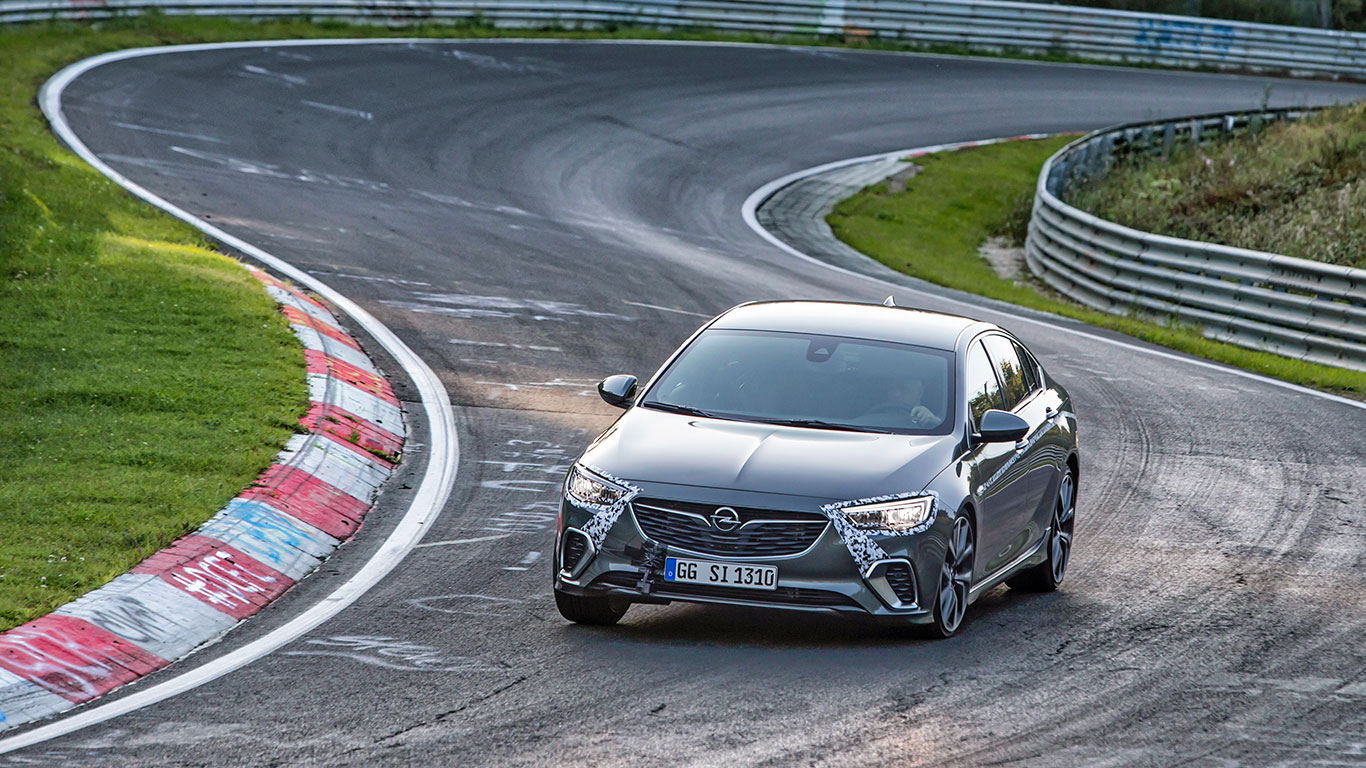
Vauxhall’s hot new Insignia GSi has been tested at the Nurburgring, lapping the infamous ‘Green Hell’ faster than any other production car to wear the Griffin badge.
What makes this really impressive, in Insignia terms, is that the new GSi is down on power by 65hp compared to its fiery VXR predecessor – yet it still managed to lap the Nurburgring a whole 12 seconds quicker. Exactly how fast that is, we don’t know, as Vauxhall is remaining tight lipped about an exact figure.
The new model, which is set to arrive at Vauxhall dealerships next year, sits 10mm lower than the rest of the Insignia range and is 160kg lighter than the previous Insignia VXR. The GSi’s impressive performance at the ‘Ring can be attributed to its four-wheel-drive system, featuring a mechanical twin-clutch differential at the rear and an e-diff divvying up power at the front.
Combine trick four-wheel drive with focused Michelin Pilot Sport tyres and Brembo brakes, and you’ve got a repmobile that makes the Nurburgring look like a pootle around the M25.
“The lightweight architecture, excellent chassis configuration and unique all-wheel drive system, along with the performance tyres make the GSi as precise and sharp as we wanted it to be,” said Vauxhall’s director of performance cars and motor sport, Volker Strycek, who led the development team working on the Insignia GSi.
“The results speak for themselves, and the new Insignia GSi can lap the Nürburgring up to 12 seconds faster than its more powerful VXR predecessor. Where the course becomes more demanding and requires the car to react with more agility and precision, such as in the corners or stretches with low friction, the GSi is definitely faster and easy to control.”
Vauxhall Insignia GSi drivers will be able to choose form three key driving modes: Standard, Tour and Sport, as well as a fourth ‘Competition’ setting developed exclusively for the Insignia GSi. With a double press of the ESP button, this switches off traction control and allows more extreme sideways angles during enthusiastic driving. Yes, this hot new Insignia features its own take on Ford’s Drift Mode.
Power comes from a 2.0-litre four-cylinder turbocharged engine, combining 260hp with 295lb ft torque. Exact performance figures, including a 0-62mph time, as well as pricing details, are yet to be announced.
In a depressed new car market, electric cars are a rare beacon of hope for the carmakers. Year-to-date registrations are down 9.3%, but sales of alternative-fueled vehicles are up 41.0%.
Sales of pure electric cars are a significant factor, with registrations up 37.3% to 11,127 units by the end of September. All of which means electric cars are emerging from the shadows of petrol and diesel cars, switching from niche to mainstream.
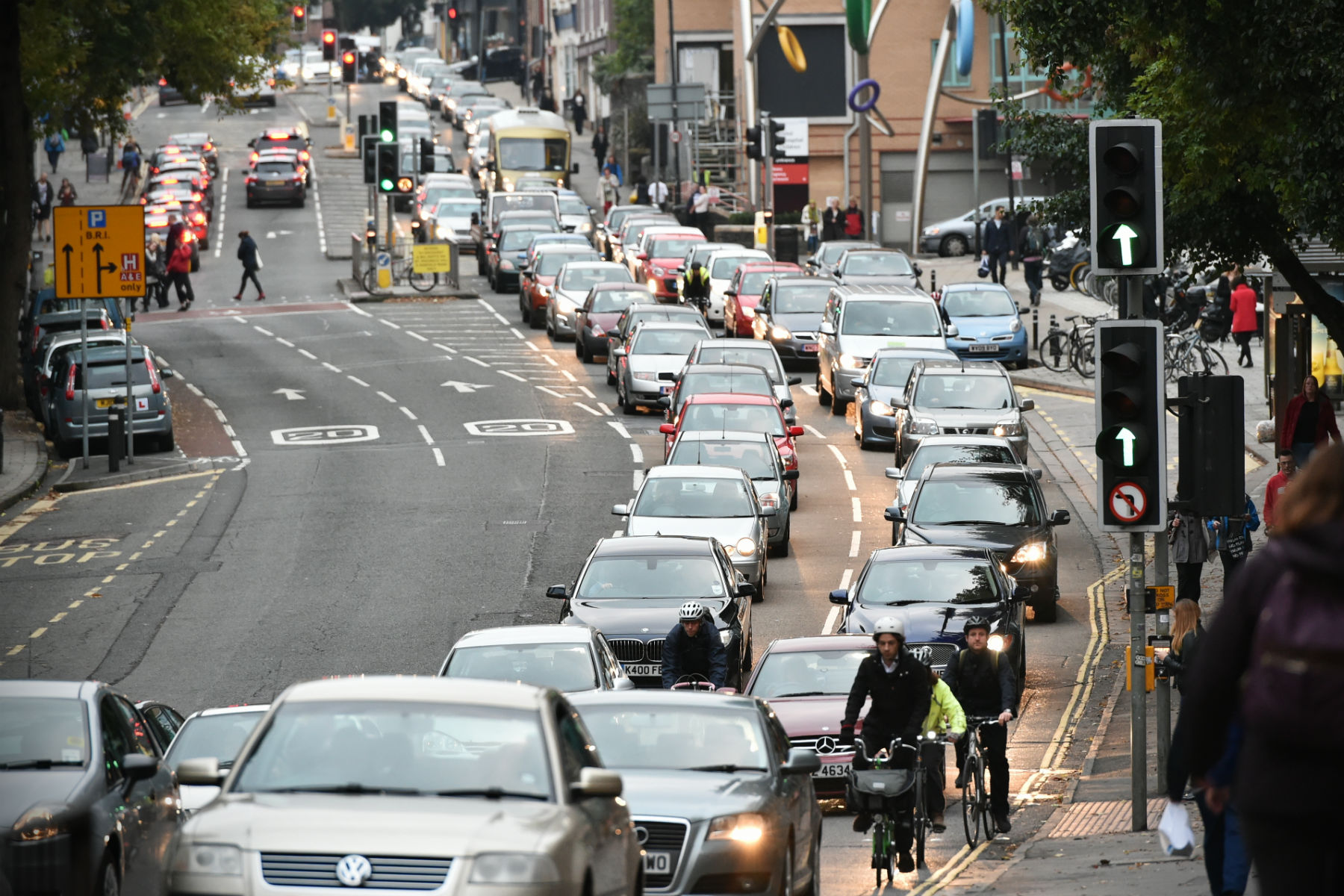
The threat of anti-diesel legislation and concerns over public health have led to a backlash against diesel, which is fuelling a rise in the number of people considering an electric car. With this in mind, what do you need to know if you’re considering making the switch?
The electric vehicle is nothing new. In fact, electric cars date back to the late 19th and early 20th century, and electricity was once the dominant means of propulsion. For many people, the one and only experience of an electric vehicle is the sound of the milk float delivering fresh pints to our doorsteps.
But today’s electric cars are a far cry from the milkman’s chariot. The technology and infrastructure have moved on to such an extent, an EV makes practical sense for a large number of motorists.
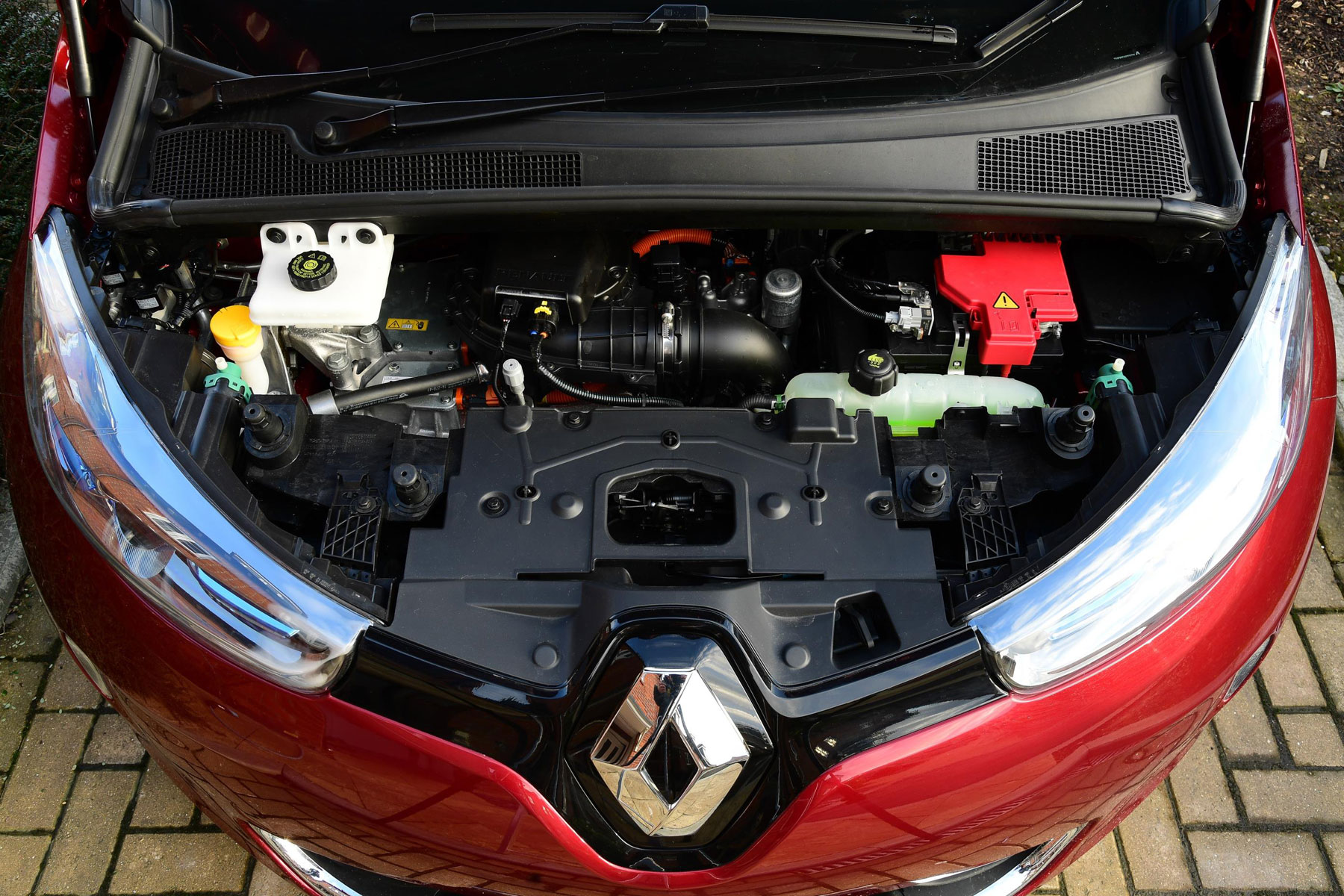
An electric car is just that: a car that runs on electric power. An electric motor sources power from a battery, which can be recharged by plugging the car into a power source.
Is an electric car right for you?
As the technology moves on and the infrastructure continues to grow, there’s no doubt that an electric car is becoming a realistic prospect for a greater number of motorists. But there are some questions to be asked before you take the plunge.
Do you have access to a charging point?
Realistically, you’ll need to install a home charging point if you’re buying an electric car. The good news is that some manufacturers will offer a free charging kit as part of a finance package, while grants are available towards the cost of installing a charge point.
If you haven’t got access to a garage or parking space with access to a plug socket, an electric car will be a non-starter. Trailing a charging cable across a pavement is not a good idea, while carmakers advise against using an extension lead.
Alternatively, you could charge up at work, but if a charging point isn’t available at home or the office, we’d suggest an electric car isn’t for you. Not yet, anyway.
Daily commute
Once upon a time, 100 miles was the maximum range you could expect from an electric car, but cars like the Tesla Model S, and to a lesser extent, new versions of the Renault Zoe and Nissan Leaf are able to travel much further.
Even so, if your daily commute is further than 100 miles, we’d recommend a plug-in hybrid, rather than a pure electric vehicle. An EV is best suited for shorter commutes, trips to the station and predominantly urban use.
Budget
While you can buy a new petrol car for as little as £6,000, you’ll need to fork out at least £15,000 for an electric vehicle, and that’s before factoring in the cost of the battery.
And because EV technology is still relatively new, the used car market isn’t loaded with cheaper alternatives. More on this later.
Costs
Purchase price
Generally speaking, electric cars are more expensive to buy than their petrol or diesel counterparts, but the tide is shifting in favour of EVs. Taking the Renault Twizy quadricycle out of the equation, you’ll need to find at least £15,000 for a brand new electric car.
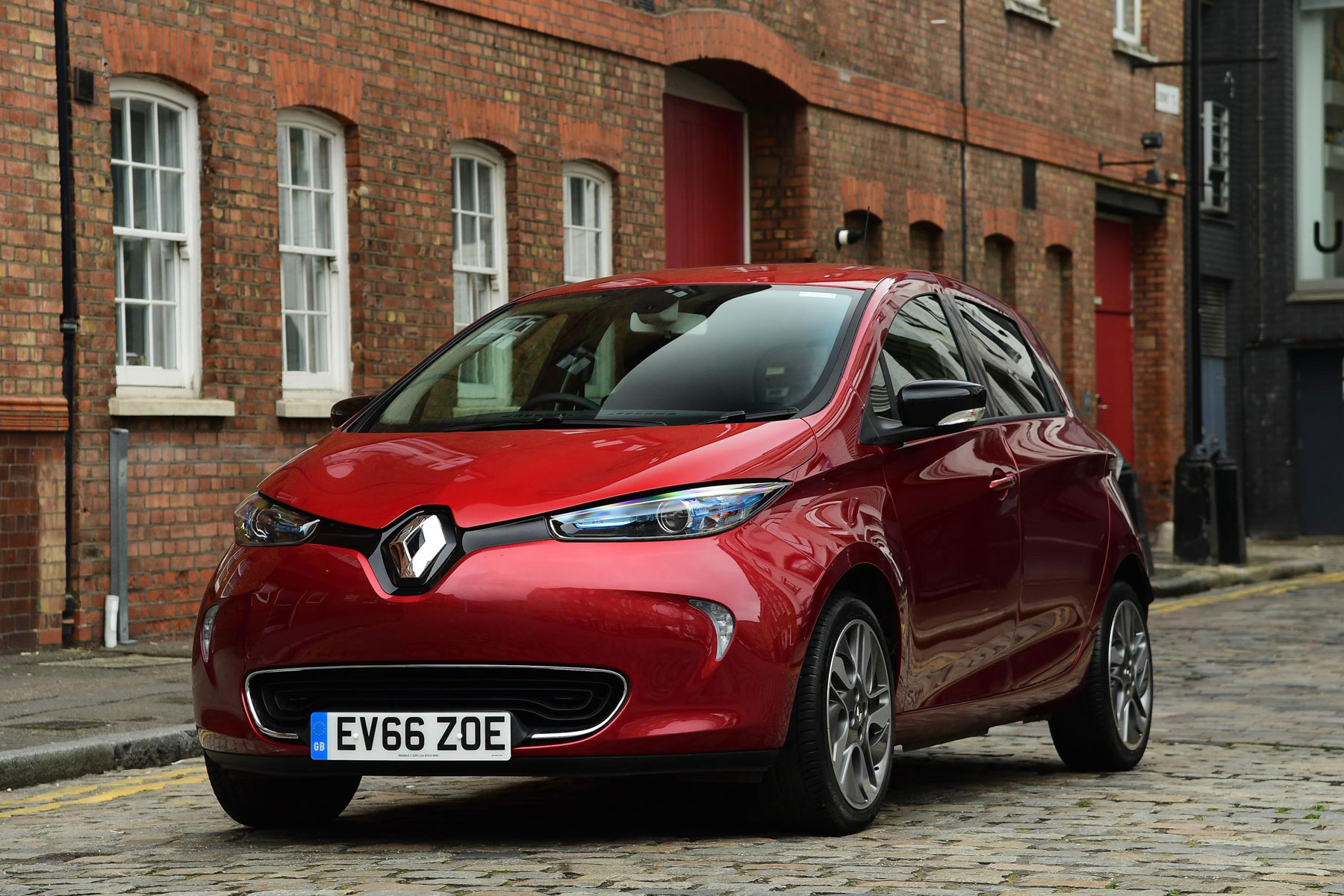
Looks good on paper, but be warned: the purchase price doesn’t necessarily include the battery, which will be leased on a monthly basis. For example, battery rental on the Renault Zoe costs from £49 to £110 per month, depending on spec and mileage. That adds between £588 and £1,320 a year.
You can purchase the battery outright on the Nissan Leaf, but it adds £5,000 to the purchase price, taking the cost of the cheapest Leaf 24kWh to £21,680. There are pros and cons associated with leasing or buying a battery – more on this later.
As a guide, these are the entry-level prices for electric cars on sale in the UK (correct as of October 2017):
Renault Twizy: £6,995
Renault Zoe: £14,245
Peugeot iOn: £15,995
Smart Fortwo Electric Drive: £16,420
Nissan Leaf 24kWh: £16,680
Nissan e-NV200: £19,403
Volkswagen e-Up: £20,780
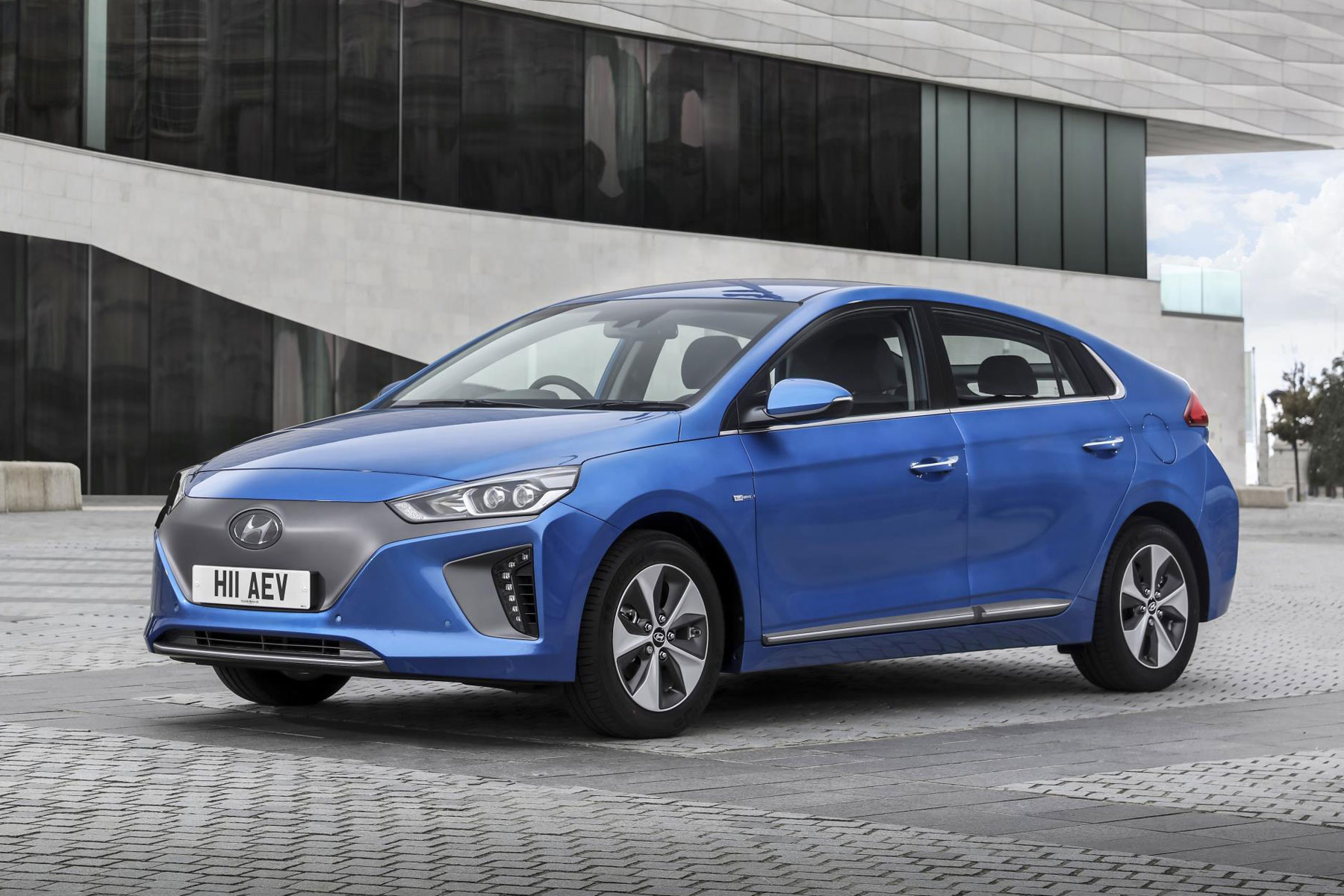
Hyundai Ioniq: £24,995
Kia Soul: £25,495
Volkswagen e-Golf: £27,690
BMW i3: £29,570
Tesla Model 3: $35,000 (estimated)
Tesla Model S: £60,200
Tesla Model X: £66,000
Incentives
Government Plug-in Car Grant (PiCG)
The prices listed above include the government’s Plug-in Car Grant (PiCG), which is currently set at 35% of the purchase price, up to a maximum of £4,500. To qualify for the maximum (Category 1) grant, vehicles must emit less than 50g/km CO2 and be able to travel at least 70 miles on electric power.
Scrappage discounts
The threat of anti-diesel legislation has prompted many carmakers into launching so-called scrappage schemes, designed to encourage the purchase of cleaner vehicles. The deals can be more lucrative on electric and hybrid cars.
For example, Volkswagen is offering £5,500 off the price of an e-Golf when you trade in an old diesel vehicle. The saving is £3,300 on the e-Up and is in addition to the government’s plug-in vehicle grant.
Under Nissan’s ‘Switch Scheme’, owners of cars built before 2010 can claim up to £5,000 on top of the car’s trade-in value if they agree for it to be exchanged. It means that the Nissan Leaf is more affordable than ever.
But there’s more because Nissan is also offering a discount on an approved-used Leaf. Buyers will receive up to £2,000 on top of the trade-in value and a special three-year, 3.9% APR PCP scheme to spread the payment. You could pay as little as £87 a month and receive a free home charging kit worth £279.
Vehicle Excise Duty (VED)
The new Vehicle Excise Duty (VED) tax bands, introduced in April 2017, eliminated the zero-rate of tax for all but the cleanest of vehicles. In fact, only zero-emissions vehicles are exempt from paying any tax.
That said, all cars above £40,000 pay a £310 annual surcharge for five years starting in year two, which affects the rate of tax for the Tesla Model S and Model X.
London Congestion Charge/T-charge
The London Congestion Charge is a £11.50 daily charge for driving a vehicle within the charging zone between 7pm and 6pm, Monday to Friday. This fee can be reduced by £1 a day with Auto Pay, which costs £10 to register per vehicle.
But worse is to come for motorists entering London, with a new Toxicity Charge (T-charge) for older, more polluting vehicles. From 23 October 2017, vehicles that don’t comply with the Euro IV exhaust standard as a minimum will be charged £10 for entering central London.
This means that, in effect, all vehicles registered before 2006 will have to pay to enter central London, with the T-charge on top of the Congestion Charge. Electric cars are exempt from both fees: a potential saving of £21.50 a day.
The T-charge will be in force until the Ultra Low Emission Zone is introduced in 2019.
With politicians and local authorities seeking to clean up our urban areas, you can expect other towns and cities to follow the London lead. Soon, zero- or low-emissions cars might be the only vehicles welcome in city centres.
Buying a used electric car
With the electric car in its infancy, you’re not exactly spoilt for choice when it comes to buying a used EV. At the time of writing, only 744 of the 450,000 or so cars for sale on Auto Trader were electric, of which 696 were used or nearly new.
You’ll also need to factor in the cost of battery leasing, especially if buying a Renault electric vehicle, as 95% of the French firm’s EV product has a leased battery. Conversely, only 5% of Nissan Leaf product featured a battery purchased on a lease.
If the used electric car includes a battery purchased outright, there’s the worry of how well it keeps its charge. If the battery is past its best, the cost of replacement could be enormous, and as the car gets older, more than the vehicle is worth.
Battery: lease or purchase?
For most people, leasing a battery makes more sense, as it removes any concerns about resale value or battery life. The charging infrastructure and limited range mean that many electric cars cover limited miles and the tariffs tend to reflect this.
We’ve provided examples based on two versions of the Renault Zoe.
Renault Zoe 22kWh
Up to 4,500 miles: £49 per month
Up to 6,000 miles: £59 per month
Up to 7,500 miles: £69 per month
Up to 9,000 miles: £79 per month
Up to 10,500 miles: £89 per month
Renault Zoe Z.E 4.0
Up to 4,500 miles: £59 per month
Up to 6,000 miles: £69 per month
Up to 7,500 miles: £79 per month
Up to 9,000 miles: £89 per month
Up to 10,500 miles: £99 per month
Unlimited: £110 per month
Based on a three-year contract at 10,500 miles per annum, a Renault Zoe Expression Nav 22kWh will cost £14,245 to buy and £3,204 in battery hire, providing a total cost of £17,449. Bought outright, the cost would be £19,845.
When leasing, Renault will provide a battery performance guarantee to at least 75% of its original capacity. If it drops below 75%, Renault will repair or replace the battery. When buying outright, Renault will provide a guarantee of eight years or 100,000 miles, as well as guaranteeing the battery to at least 66% of its capacity.
Charging
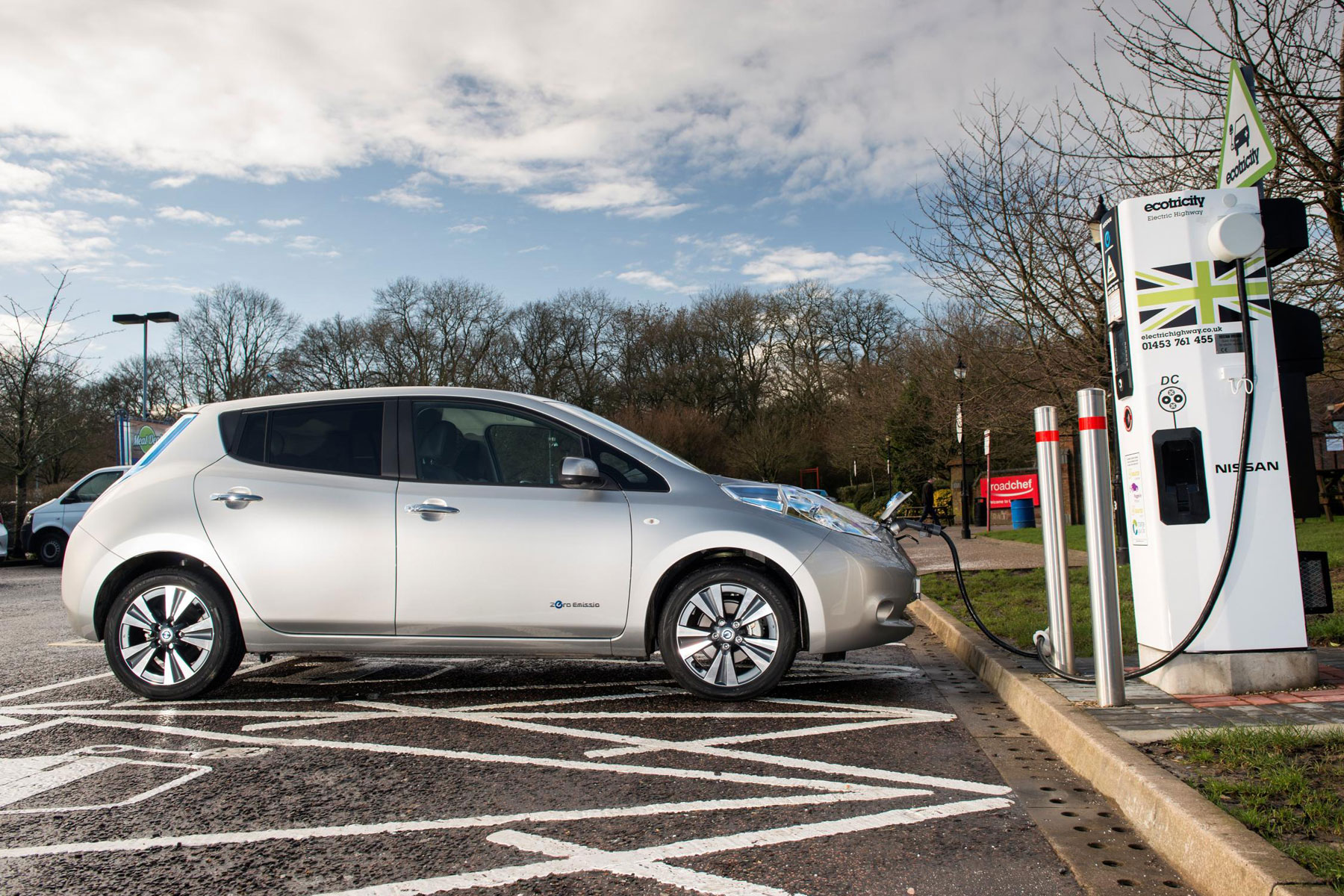
Charging an electric car can be done at home, at work or at a public charging point. According to Zap-Map, there are currently charging points at 4,887 different locations in the UK, providing a total of 7,535 devices and 13,971 connectors.
These figures are up from 4,003 devices and 10,839 connectors in November 2016, which proves that the infrastructure is catching up with demand. But the overall figure tells only half the story: what’s just as important is the type of charger available at any given location.
There are three types of charger available in the UK: Slow, Fast and Rapid. These can be summarised as follows:
Slow chargers (3kw)
As recently as five years ago this was the most common type of charging point in the UK, but today, the slow charger is in the minority. The clue is in the name: a full charge could take anything between six and 12 hours. Most electric cars are supplied with a charger allowing you charge using a standard 13-amp three-pin plug.
A slow charger is best reserved for charging overnight when at home or during the day at the office. A home charging point is recommended, with some carmakers incentivising purchases via a free home installation.
Fast chargers (7-22kw)
You’ll find fast chargers in supermarket car parks and shopping centres, or somewhere an electric car can be left for a more extended period of time. A 7kW charger will recharge an EV in 3-5 hours, while a 22kw charger could complete the job in less than a couple of hours.
Today, the fast charger is the most common charging point in the UK, with 7kW home chargers the norm for electric car households, especially those with 80-100A supplies.
Rapid chargers (43, 50 or 120kW)
A rapid charger can provide up to 80% of charge in just 20-40 minutes, making them ideally suited to motorway service stations.
Chargemaster – the self-proclaimed ‘biggest name in electric vehicle charging’ – could install a charging point at your home within two weeks, with prices starting from £279 for a 3kW charger. Its entry-level Homecharge point is 60% faster than a 13A plug.
A 7kW charger is three times faster than a 13A plug and costs £354, while a 22kW charger – 10 times more rapid than a 13A plug – costs £1,200. The Homecharge points are suitable for indoor and outdoor use and covered by a three-year warranty.
Cost of charging
According to Pod Point, it’ll cost around £3.64 for a full charge when charging an electric car overnight at home. Assuming a typical range of 100 miles, that equates to less than 4p per mile.
Many public charging points remain free, although you’ll have to pay for rapid chargers, such as those found at motorway service stations. Similarly, while Tesla offers free access to its Supercharger network for Model S owners, it will introduce ‘pay per use’ charging on the Model 3.
Ecotricity claims that its electric vehicle charging network is the ‘most comprehensive in Europe’, featuring around 300 electric charging points. Each charging session costs 17p per kWh of electricity used, plus a £3 connection fee.
Polar – the UK’s largest EV charging network – provides access to 5,000 public charging points via a subscription service. The first three months’ membership is free, after which you pay £7.85 per month, which provides access to all charging points, 80% of which are free to use.
Pod Point suggests budgeting £6.50 for a 30-minute rapid charge at a motorway service station.
Range
The range you can expect from an electric car is dependent on the battery, the time of year and the style of driving. For example, the driving range will drop considerably in colder weather. Renault estimates up 186 miles in the summer and 124 miles in the winter for the Zoe Z.E. 40.
As an overview, here are the official New European Driving Cycle (NEDC) figures, as provided by the manufacturers. In all cases, you’re unlikely to achieve the claimed figures.
Peugeot iOn/Citroen C-Zero: 93 miles
Volkswagen e-Up: 93 miles
Smart Fortwo Electric: 96 miles
Nissan e-NV200: 106 miles
Nissan Leaf 24kWh: 124 miles
BMW i3: 124 miles
Kia Soul EV: 132 miles
Renault Zoe 22kWh: 149 miles
Nissan Leaf 30kWh: 155 miles
Hyundai Ioniq: 174 miles
Volkswagen e-Golf: 186 miles
BMW i3 33kWh: 195 miles
Tesla Model 3: 220-310 miles
Renault Zoe Z.E. 40: 250 miles
Tesla Model X 75D: 259 miles
Tesla Model S 75D: 304 miles
Tesla Model X P100D: 336 miles
Tesla Model X 100D: 351 miles
Tesla Model S P100D: 381 miles
Tesla Model S 100D: 393 miles
Servicing and maintenance
A pure electric car has three main components – the motor, the charger and the inverter – which meaning servicing and maintenance is much more straightforward and cheaper than on a petrol or diesel car.
Using data from KeeResources, Go Ultra Low published cost comparison information for electric cars versus their petrol and diesel equivalents. The data – based on four years and 60,000 miles – is quite telling:
BMW i3: £2,264.05 (total maintenance)
BMW 118d: £2,929.94
Cost saving for EV: £665.89
In all cases, the cost-saving needs to be balanced with the initial outlay, which tends to be higher for an electric vehicle, but it proves that maintenance and servicing should be easier to manage.
Warranty
Electric vehicles typically have between five and eight years’ warranty on the electric motor and battery components. For the rest of the car, the length of warranty depends on the manufacturer – ranging from three years and 60,000 miles to seven years and 100,000 miles.
The battery guarantee will also depend on the manufacturer. For example, Renault will guarantee performance to at least 85% of its original capacity, or pay for repair or replacement, when you lease the battery. If you’re buying outright, the battery is covered for eight years or 100,000 miles, along with a performance guarantee to at least 66% of its original charge capacity.
As the technology improves, batteries are becoming more robust. Owners forums are a good place to discover real-world experiences of EV owners. For example, we discovered that a Tesla Model S will retain between 90 and 95% capacity, even after 93 miles. After 150,000 miles, only 15% capacity will have been lost.
Safety
Euro NCAP conducted the first crash test of an EV in 2011 when the Mitsubishi i-MiEV was awarded a four-star rating. Other EVs have since been tested, but it’s worth noting that a Euro NCAP test in 2017 is more rigorous than the equivalent test in 2011.
Here’s a list of pure electric vehicles tested by Euro NCAP, together with the date tested and star rating:
Five stars
Hyundai Ioniq (2016)
Tesla Model S (2014)
Renault Zoe (2013)
Nissan Leaf (2012)
Four stars
BMW i3 (2013)
Kia Soul EV (2014)
Citroen C-Zero (2011)
Peugeot iOn (2011)
Mitsubishi i-MiEV (2011)
Renault Fluence: 4 stars (2011)
Three stars
Nissan e-NV200: 3 stars (2014)
Latest electric car news
In what is seen as a significant step forward for electric cars in the UK, Shell is to install vehicle charging points at its petrol filling stations.
Drivers will be able to recharge 80% of their battery in 30 minutes at forecourts in London, Surrey and Derby, with a further 10 service stations to feature rapid chargers by the end of the year.
“There’s no doubt the electric vehicle market is developing fast. And we want to offer customers choice: it doesn’t really matter what kind of vehicle they’re driving, we want them to drive into a Shell station, refuel in whatever capacity the fuel is,” said Jane Lindsay-Green, future fuels manager at Shell UK.
Meanwhile, the government has introduced a bill to make electric charging points mandatory at large petrol stations and motorway service areas.
The Automated and Electric Vehicles bills will double the number of charging locations in the UK, leading to multiple points at some of the busiest areas.
Transport minister, John Hayes, said: “We want the UK to be the best place in the world to do business and a leading hub for modern transport technology, which is why we are introducing the Automated and Electric Vehicles Bill in Parliament and investing more than £1.2 billion in the industry.
“This bill will aid the construction of greater infrastructure to support the growing demand for automated and electric vehicles as we embrace this technology and move into the future.”
You’re more likely to have an accident on the way home from work than at any other time of the week. That’s according to ClickMechanic, which has analysed figures released by the Department for Transport (DfT).
A perfect storm of more cars on the road and commuters rushing home from work means that the number of car accidents hits a peak between 5pm and 6pm on weekdays. The DfT figures show that 7,150 accidents occurred during this unhappy hour in 2016.
Unsurprisingly, the school run is another contributing factor to the likelihood of having a prang, with 4-5pm (6,612 accidents) and 8-9am (6,024) the other high points during the week.
The likelihood of an accident tumbles at the weekend, especially in the morning, as most incidents tend to occur between 11am and 6pm on Saturday and Sunday. The peak times tend to coincide with shop closing times and sporting events.
Strangely, there appears to be no correlation between the time of year and the chances of an accident. There’s a slight increase in the number of crashes during the winter months (9,276 in January and 9,200 in November), but August produced the second-highest number (9,249 accidents).
Andrew Jervis, co-founder of ClickMechanic, said: “We must take care and stay alert as we drive, particularly during the peak travelling times as there is more traffic and a higher chance of an incident occurring.
“The fact that drivers are having more accidents in the evenings implies that they are tired after a day’s work and are perhaps eager to get home, resulting in them being more careless on the roads.
“With the winter months and the shorter days coming up, all UK drivers must ensure that they make every effort to drive safely and take their time during their commutes.”
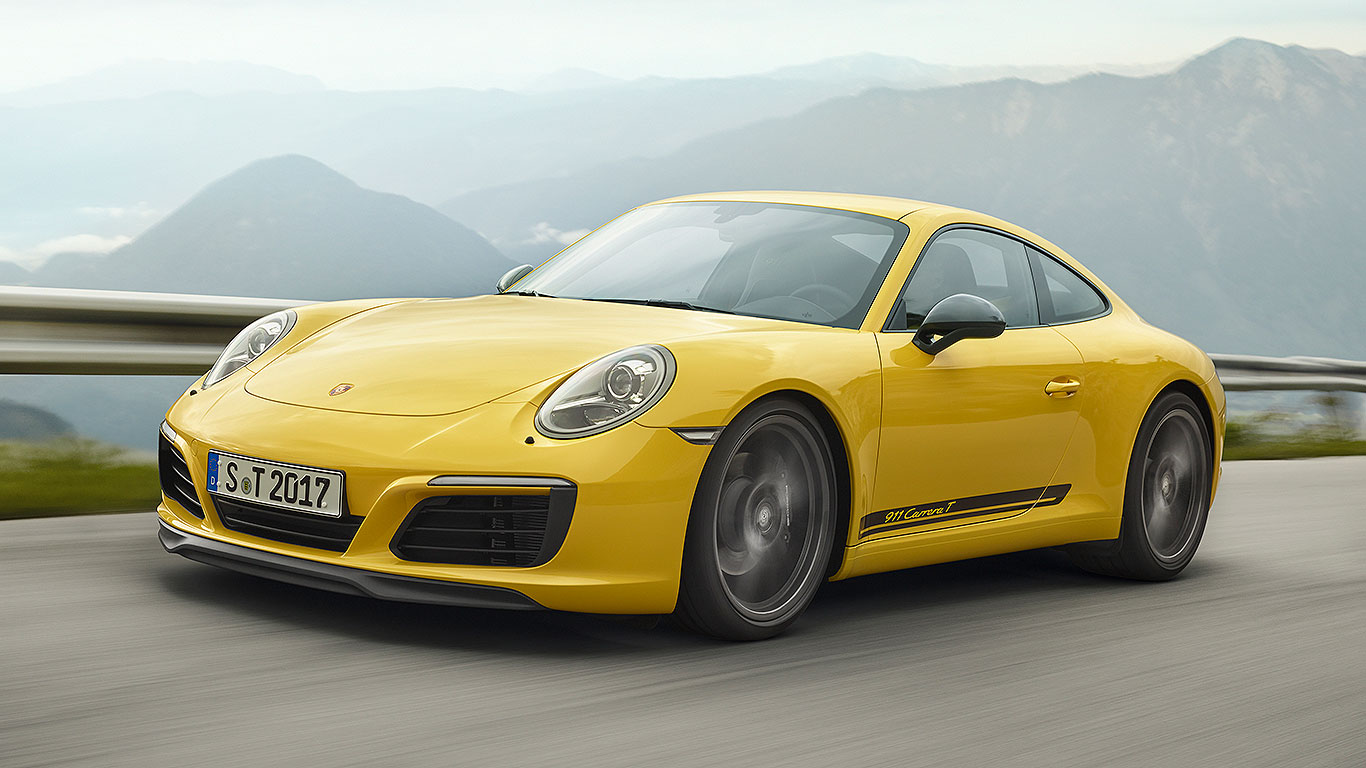
Porsche has revealed a new 911 Carrera T model, a ‘back to basics’ variant where the ‘T’ stands for ‘Touring’ and the emphasis is on simplicity and light weight. It costs from £85,576 and ordering is open now.
Reviving the name of the original 1968 911 T, the new 2018 Carrera T has a focused mechanical specification. It is rear-wheel drive, comes with a manual gearbox and has a sporty rear differential lock as standard. It is also fitted with rear-axle steering, something unavailable on the standard 911 Carrera.
Porsche also fits PASM adaptive suspension as standard, which is lowered by 20mm compared to the regular Carrara, as well as the Sport Chrono Package. This is why the new 911 Carrara T costs £7,685 more than the base 911.
Despite the extra features, it’s 20kg lighter than the 911 Carrera, courtesy of some neat weight-saving features. Porsche has fitted lightweight glass for the rear windows, and replaced the regular doorhandles with fabric opening loops. There are no rear seats and even the PCM infotainment system has been removed.
Both rear seats and infotainment can, however, be added back on – at no extra cost. A genuine ‘base spec’ 911 Carrera T is thus expected to be something of a rarity…
Porsche uses smart Sport-Tex fabric for the seats, in place of the default leather, and fits a shortened gearlever with the seven-speed shift pattern marked out in red. Full bucket seats are offered as an option for the first time in a 911 Carrera, and standard black dash trim can be enhanced by a ‘T’ interior package, bringing either Racing yellow, Guards red or GT silver seatbelts and seat stitching. Those new door opening loops are also colour-keyed.
Exterior colour choice is Black, Lava orange, Guards red, Racing yellow, White or Miami blue, plus metallic Carrera white, Jet black or GT silver. All 911 Carrera T have Agate grey metallic door mirrors, Titan grey 20-inch alloys from the Carrera S and ‘911 Carrara T’ decals on the lower body sides. At the rear, the model designation decals on the engine cover are also finished in Agate grey.
A sports exhaust system is standard, but the 3.0-litre flat-six twin-turbo engine has, at 370hp, no more power than the regular 911 Carrera. Porsche has fitted shortened gear ratios though, which helps it accelerate from 0-62mph in 4.5 seconds, 0.1 seconds faster than the normal model.
The firm will also fit the PDK automatic gearbox for those less fussed by the back-to-basics approach; this cuts the 0-62mph time to 4.2 seconds.
Porsche expects first deliveries for the new 911 Carrera T from January 2018.
London mayor Sadiq Kahn is introducing a so-called ‘T-Charge’ in a bid to cut down on air pollution by discouraging drivers of older, high-polluting vehicles from entering the city. The T-Charge (or ‘toxicity charge’) is being introduced on 23 October 2017 and will apply to all pre-Euro 4 petrol and diesel cars, broadly meaning most vehicles registered before the end of 2004.
How much does the T-Charge cost?
The T-Charge will cost £10 on top of the regular £11.50 congestion charge, meaning motorists with older cars entering the centre of London at peak times will have to pay a total of £21.50. Like the congestion charge, the T-Charge will run five days a week, Monday to Friday, between the hours of 7am and 6pm.
“Londoners overwhelmingly support my plans to introduce this £10 charge because they feel when it comes to battling pollution the time for action is now,” said Sadiq Kahn when the charge was announced earlier this year.
Will I have to pay the T-Charge?
All petrol and diesel cars and vans entering central London during the chargeable hours will have to meet Euro 4 emission standards to avoid having to pay the charge. This was introduced for new models from 1 January 2005, while all new cars registered since 1 January 2006 will have to meet the requirements.
If your car was registered before 2005, it may not meet Euro 4 exhaust emission standards so might be eligible for the T-Charge. Transport for London has launched a handy T-Charge checker to find out if the charge applies to your car.
While motorcycles are exempt from the T-Charge, quadricycles or motorists tricycles have to meet Euro 3 emission standards to avoid paying. Buses, coaches and HGVs, meanwhile, will have to comply with stricter Euro 6 emissions standards.
Where does the T-Charge apply?
The T-Charge will be applied to the same area as the current congestion charge. This covers the area of central London within the city’s inner ring road, including the City and the West End.
How do I pay?
If your vehicle doesn’t meet the required emissions requirements for entering the T-Charge zone without paying a fee, you’ll be able to pay in the same way you’d pay for the congestion charge. You can do this online, over the phone (0343 222 2222) or using Auto Pay if you regularly travel into central London.
If you fail to pay the Charge, Transport for London’s network of automatic number plate recognition (ANPR) cameras will automatically find out your car’s emission level and send you a fine of £135 (reduced to £65 if paid within 14 days).
Can I get a discount?
If you live within the zone and are already registered for the congestion charge’s residents’ discount, you’ll automatically receive a 90 percent discount on the T-Charge. This means you’ll pay £2.05 per day (£1 T-Charge plus £1.05 congestion charge) to drive within the zone during charging hours.
Blue Badge holders are also eligible for a 100 percent discount on the T-Charge.
What’s the future for high-emission vehicles in London?
The T-Charge paves the way for an ultra-low emission zone, which Sadiq Kahn wants to introduce by 2019. This will involve a fixed fee of £12.50 for all cars, vans and motorbikes which don’t meet Euro 6 emission standards, while older HGVs, coaches and buses will pay £100 to enter the city. This will be in addition to the congestion charge and will operate 24 hours a day, seven days a week.
“The T-Charge is a vital step in tackling the dirtiest diesels before I introduce the world’s first Ultra Low Emission Zone as early as 2019,” said Mr Kahn.
“I will continue to do everything in my power to help protect the health of Londoners and clean our filthy air. But now is the time for Government to show real leadership and join me by introducing a diesel scrappage fund and bring in the new Clean Air Act we desperately need.”
Original cars driven by female characters starring alongside 007 have gone on show at London’s Bond in Motion exhibition. Also on display are previously unseen costumes, props and storyboards. Bond in Motion is the largest official collection of James Bond vehicles in the world.
Do you expect us to talk? No, we’ll just show you the pictures.
Land Rover Defender (Skyfall)
The Land Rover Defender Double Cab driven by Eve Moneypenny (Naomie Harris) in Skyfall is one of the star exhibits. Here we see the Defender pictured after Miss Moneypenny decided she didn’t require the use of the door mirrors.
Without wishing to go all QVC on you, Naomie Harris wore a Belstaff jacket, H&M silk vest, and J Brand leather trousers. The Defender wore some Audi black paint, market stall fruit and vegetables, and a few dents, courtesy of a drive through an Istanbul market.
Range Rover Evoque Convertible
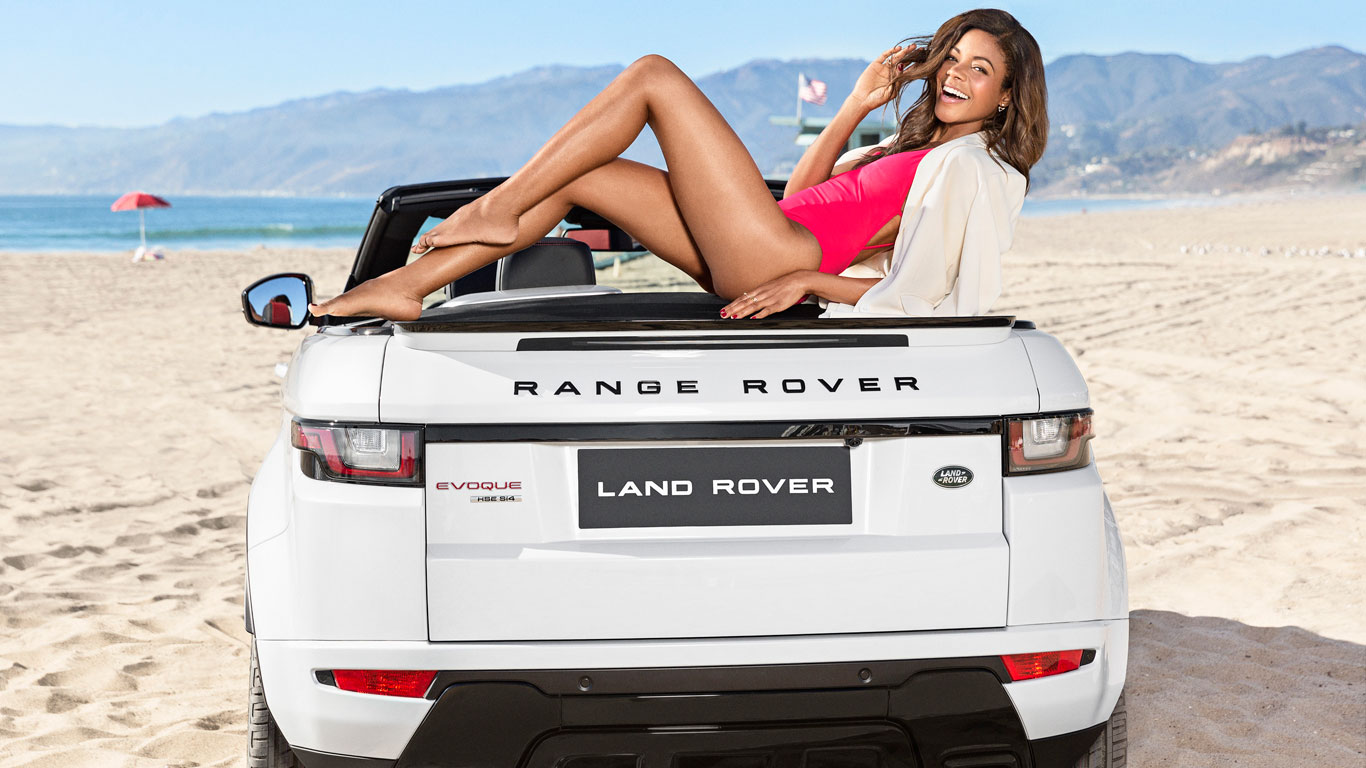
Naomie Harris must have enjoyed her drive in the Defender, because here she is pictured with a Range Rover Evoque Convertible. Notice that the door mirror is still in place. Neither Naomie or the Evoque will be appearing at the exhibition.
Camille and her Ka
Quantum of Solace won’t be remembered as Daniel Craig’s greatest Bond adventure, but the 2008 film was a masterclass in product placement. The metallic gold Ka looked a little out of place in Haiti, but at the time, Ford had a strong relationship with the film franchise.
The role of Camille was played by Ukrainian-born actress, Olga Kurylenko, who went on to star in Oblivion and The Water Diviner.
The Ford Ka went on to become overweight and a shadow of its former effervescent self, before being replaced by the Ka+. It has since handed back its Equity card.
Conran, Jasper Conran
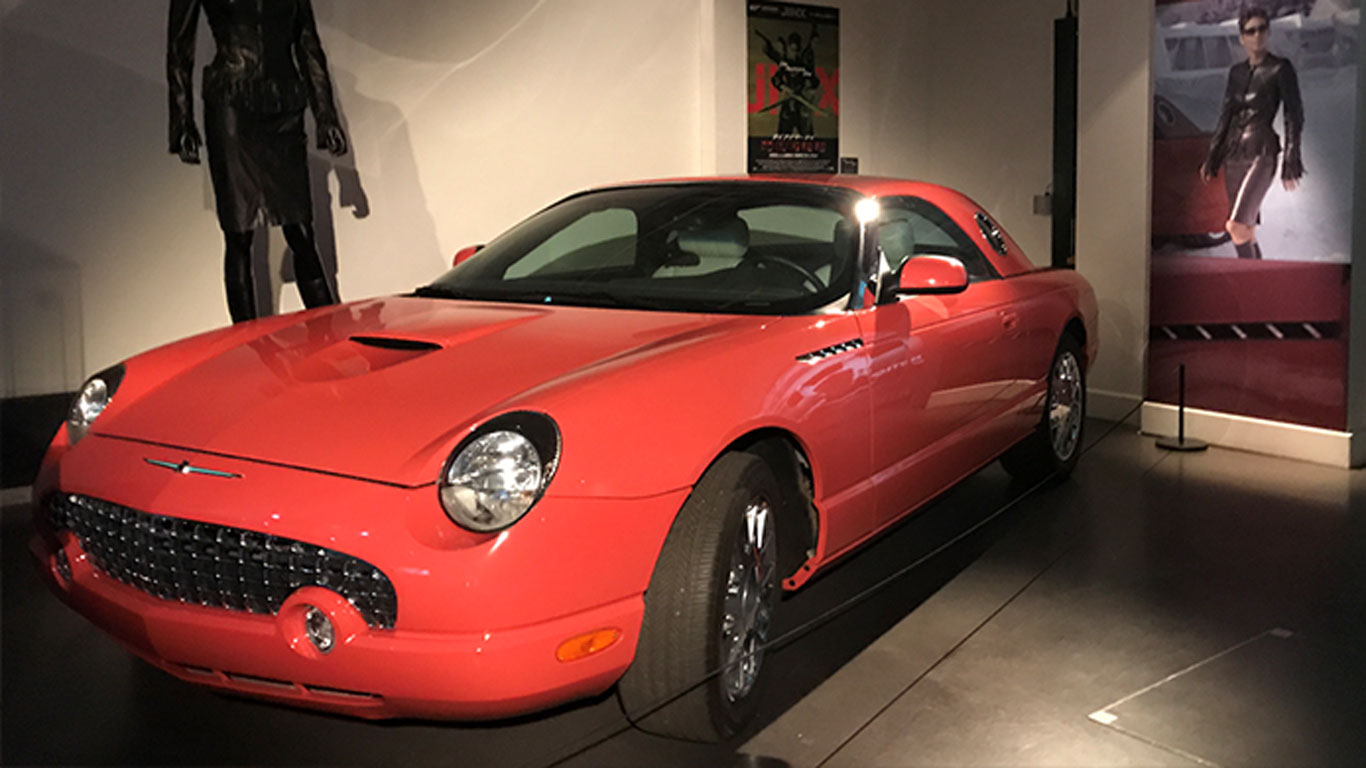
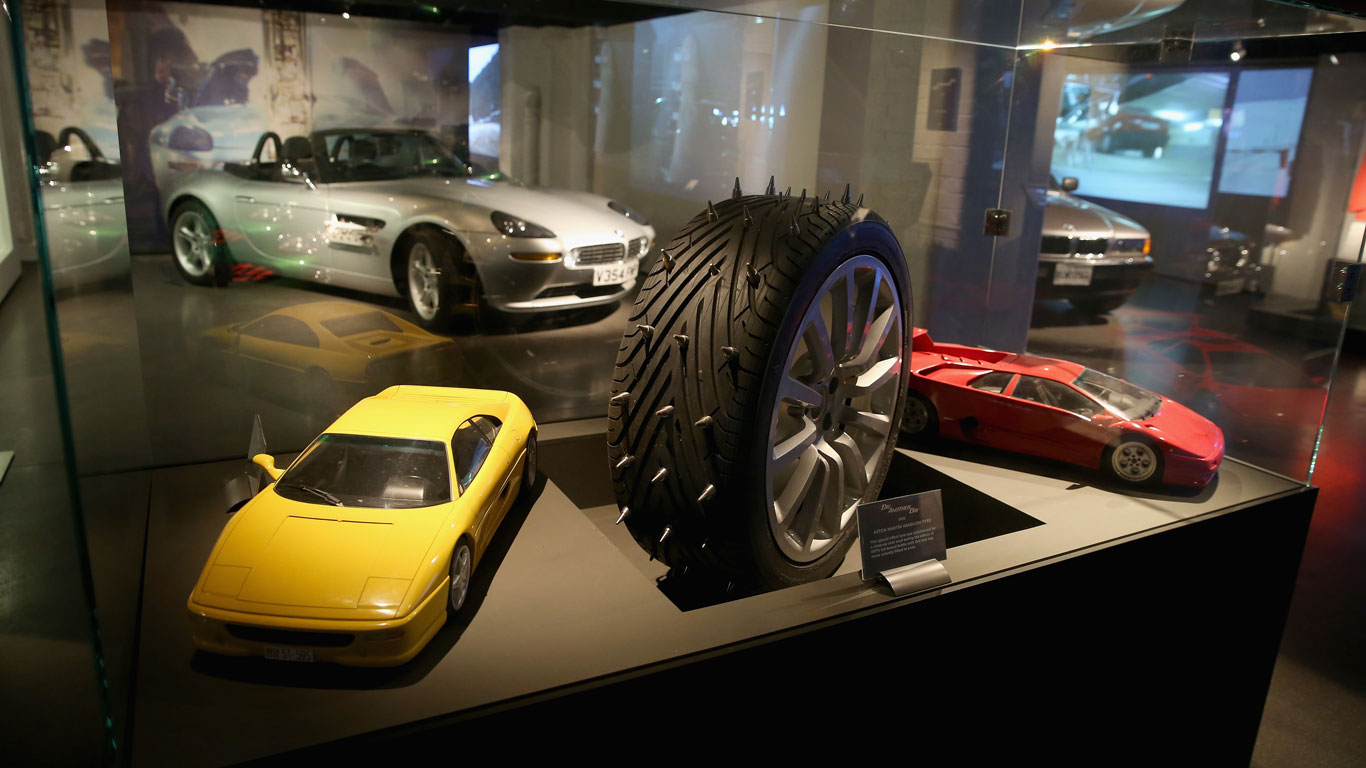
On the left you can see Camille’s Jasper Conran-designed costume from Quantum of Solace, along with the ‘Greene Planet’ Ford Ka. The yellow Citroen 2CV is from For Your Eyes Only, while the Ford Thunderbird was the ‘choice’ of Jinx in Die Another Day.
Halle Berry
Here’s Jinx, played by Halle Berry, at the Ice Palace in the 2002 movie. Ford built 700 limited edition 007 Thunderbirds to commemorate the car’s role in the movie.
Ford claimed this was the first time a Thunderbird had appeared in a Bond film, but 007 aficionados were quick to point to the brief appearance in Goldfinger, when the iconic car was driven by CIA agent, Felix Leiter.
Clapperboard
This is cool. It’s a clapperboard from Skyfall, signed by Sam Mendes, Daniel Craig, Naomie Harris, Berenice Marlohe and Javier Bardem. What, no Judi Dench? We suspect she was still coming to terms with her ‘death’ in a Scottish chapel.
Driving lessons for Tilly
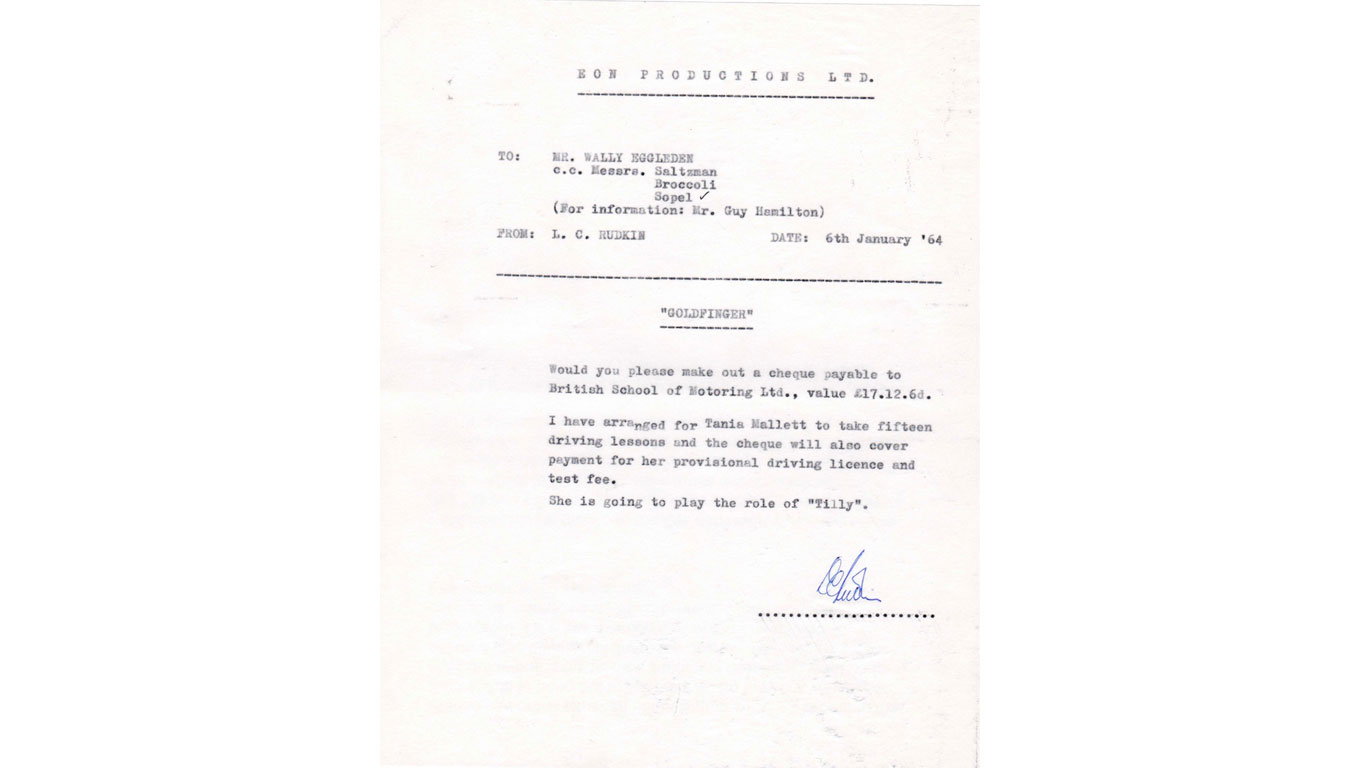
Tilly Masterson, played by Tania Mallet, was the very first Bond actress to drive a car in the film Goldfinger. She drove a pre-production Ford Mustang, acquired for the movie. Here we see a letter from the production department, requesting driving lessons for the actress.
Aston Martin DB5
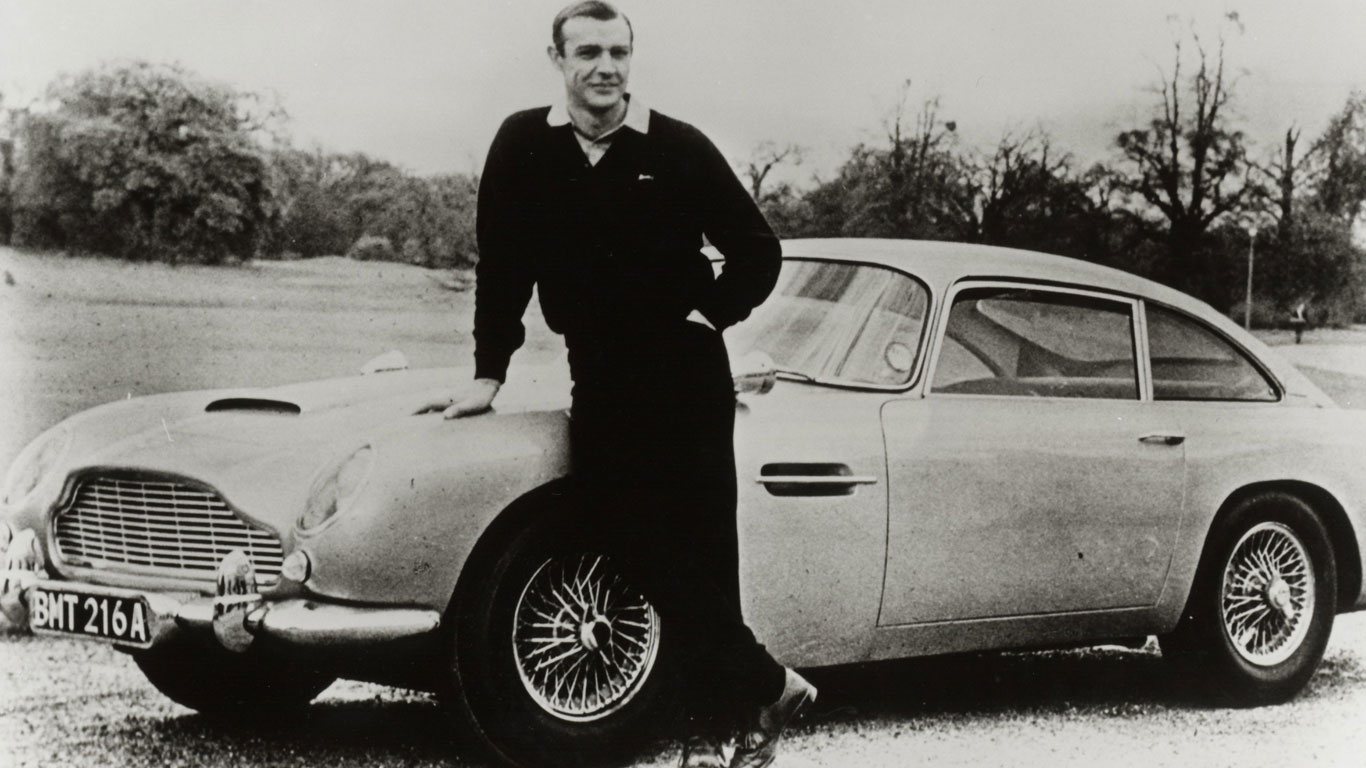
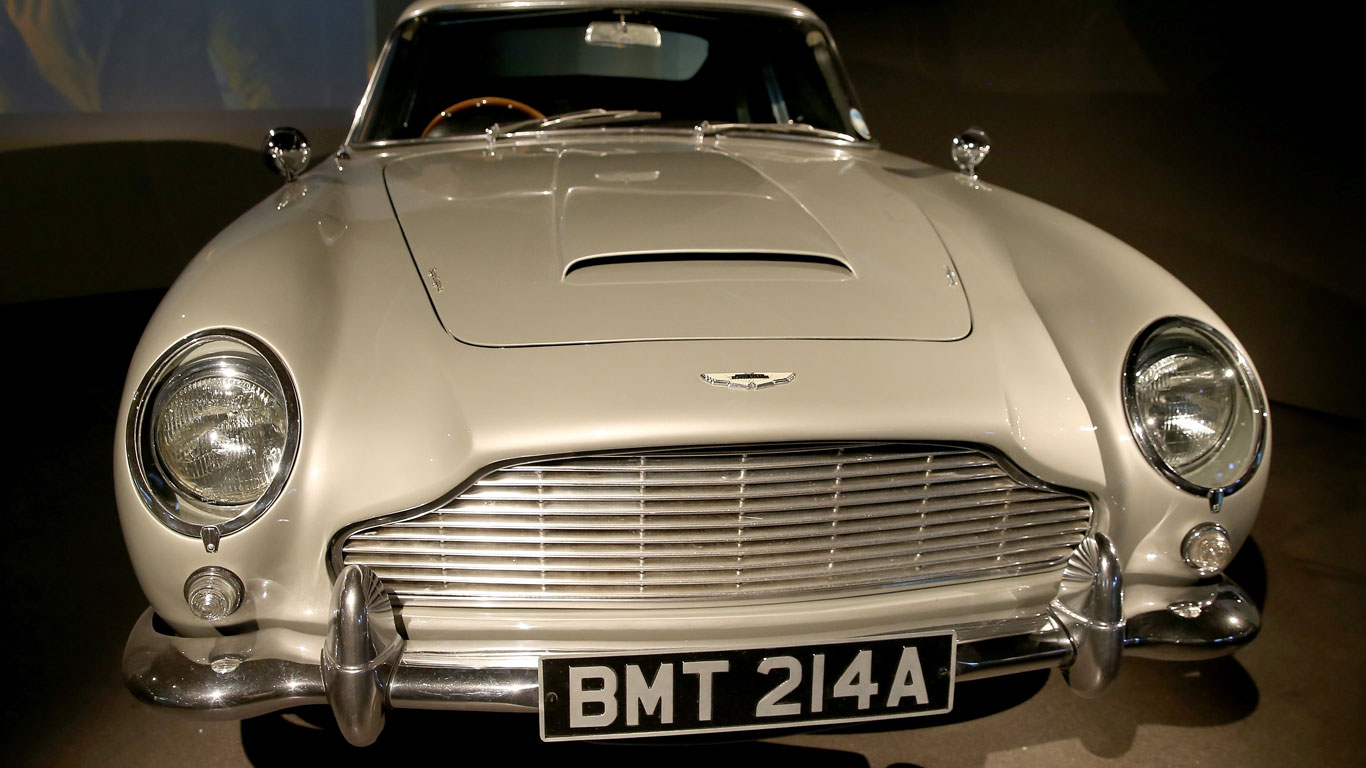
Goldfinger featured what is arguably the most famous and iconic Bond car of all-time: the Aston Martin DB5.
However, the DB5 on display at the Bond in Motion was used in the 1995 film Goldeneye. Note the registration mark BMT 214A, and not BMT 216A.
The Living Daylights
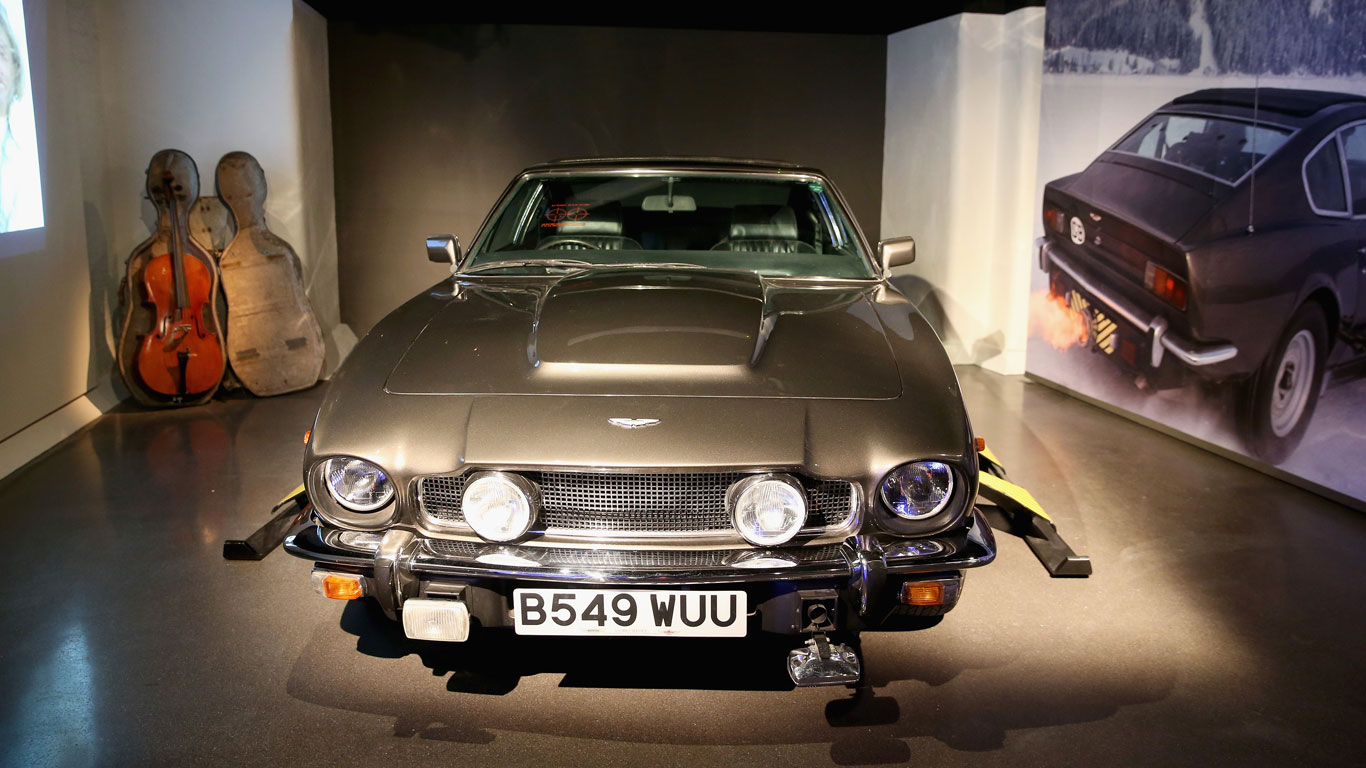
There’s no sign of Kara Milovy, played by Maryam d’Abo, but you can spot her cello case, which doubled up as a makeshift snowboard in the 1987 film, The Living Daylights,
Die Another Day
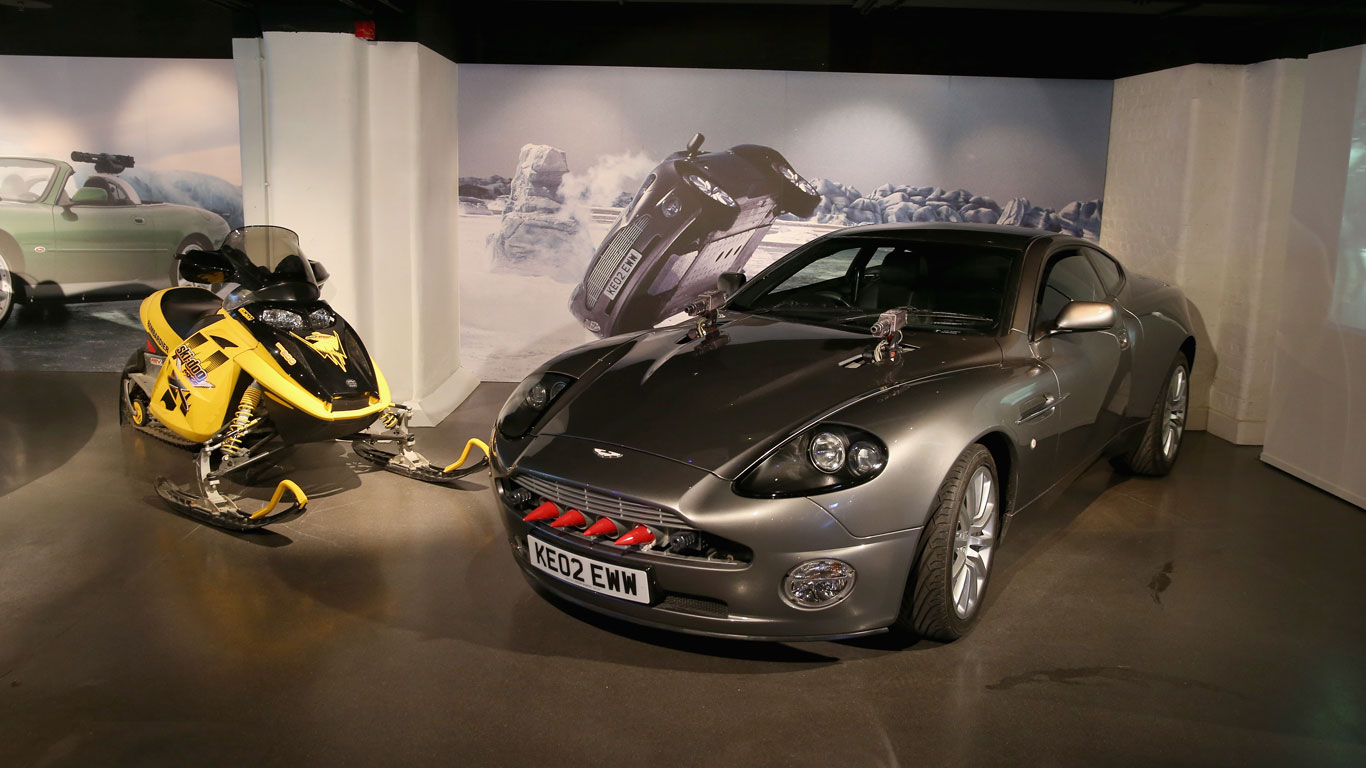
More vehicles from Die Another Day, with the Aston Martin Vanquish and Bombardier MX Z-Rev snowmobile. The female lead roles in the 2002 film were Halle Berry (Jinx Johnson), Rosamund Pike (Miranda Frost) and, of course, Judi Dench (M).
‘Wet Nellie’
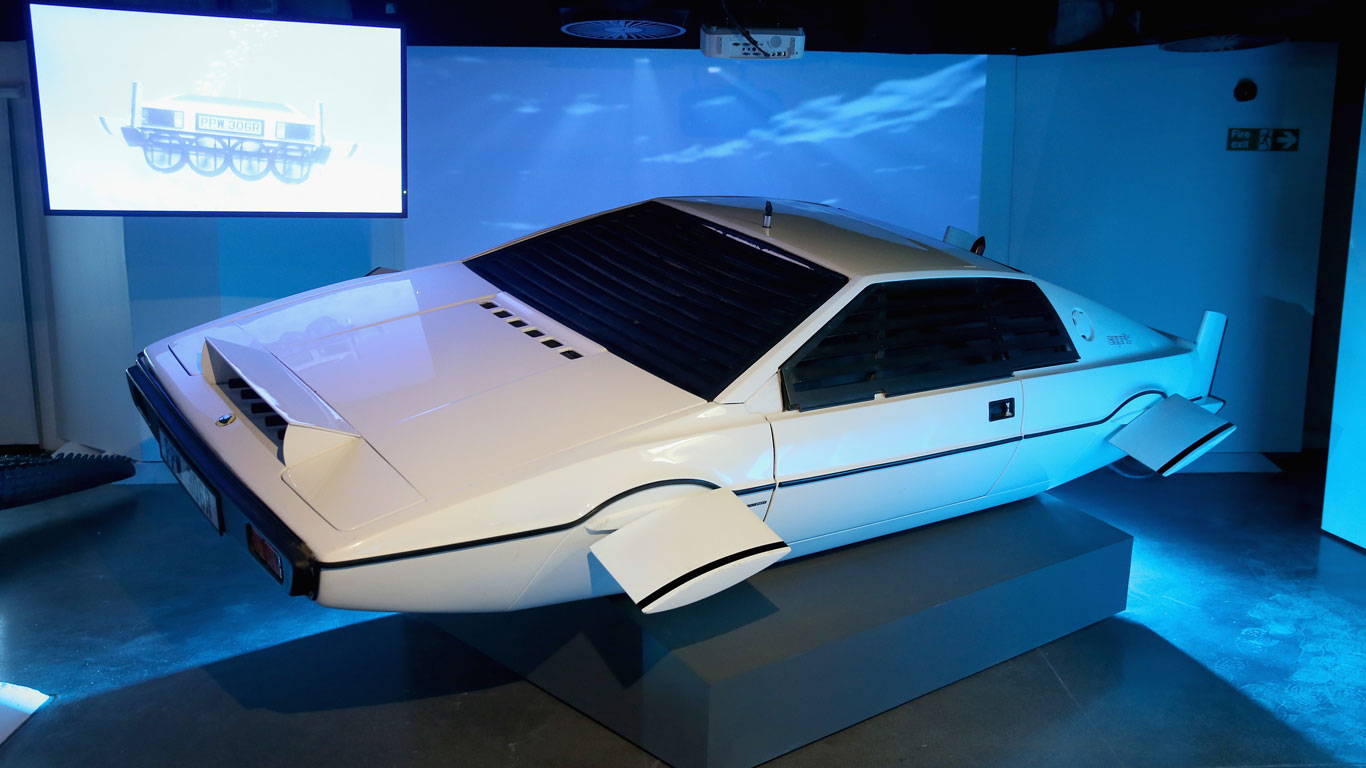
The Lotus Esprit S1, aka ‘Wet Nellie’, is probably the most famous non-Aston to appear in a Bond film. Barbara Bach starred opposite Roger Moore in the 1977 film, The Spy Who Loved Me.
Bond on two wheels
Motorcycles have played a big part in Bond movies. In 2015, Visor Down named its top 10 James Bond bikes, with the Honda CRF205R, Montesa Cota and BMW R1200C appearing in the top three.
Bond in Motion
The Bond in Motion exhibition has more than 100 individual items on display at the London Film Museum, Covent Garden.
To celebrate the new exhibits, Bond in Motion is offering 2-for-1 tickets until the end of 2017, using the code GP001.
‘Little Nellie’
You’ll be able to see ‘Little Nellie’ from You Only Live Twice…
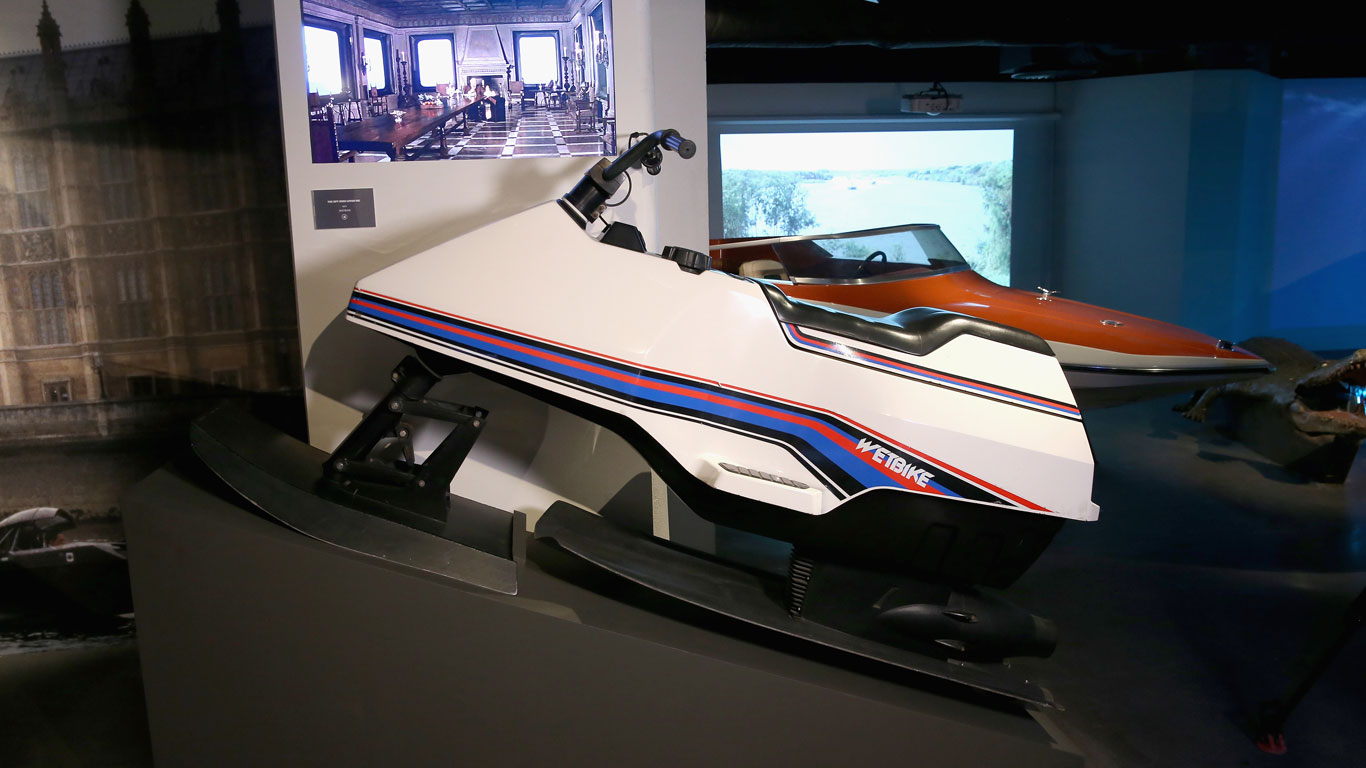
WetBike
And the WetBike, which made its first appearance in The Spy Who Loved Me.
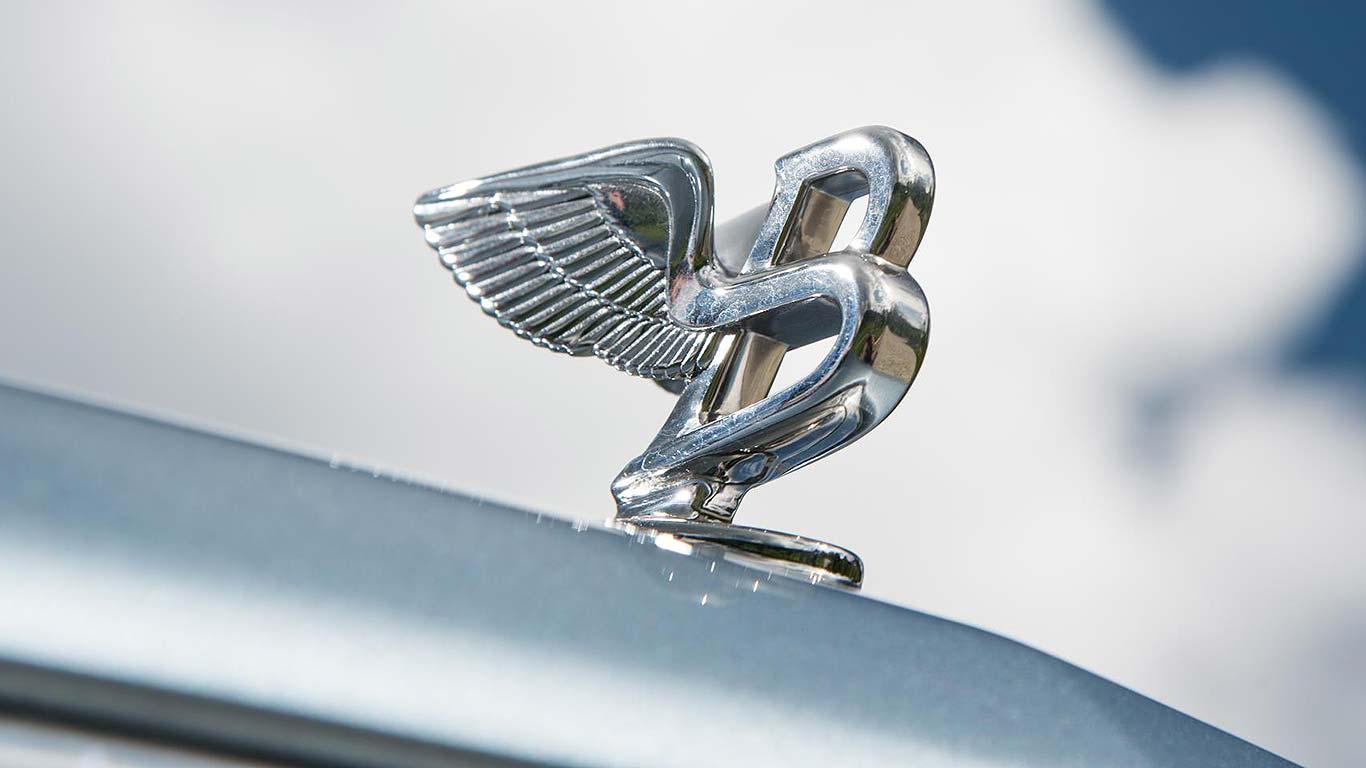
Bentley Motors has announced the appointment of a new CEO – and this time, he’s a Brit. Highly regarded Jaguar Land Rover exec Adrian Hallmark has succeeded the influential German Wolfgang Dürheimer and will start his new role on 1 February 2018.
55-year-old Hallmark has, since 2013, been group strategy director for Jaguar Land Rover, after previously spending three years redefining the strategy for Jaguar as global director of the British sports car brand.
Prior to that, he held senior roles at Saab and Volkswagen both in Germany and North America: Hallmark was also managing director of Porsche Cars GB in the late 1990s.
It’s not his first time at Crewe, either: he was board member for sales and marketing at Bentley Motors between 1999 and 2005
Volkswagen Group CEO Matthias Müller said he was “delighted to welcome Adrian Hallmark back to the Volkswagen Group, and back to Bentley Motors.
“He has a wealth of international automotive experience couples with a deep understanding of the Bentley Brand and I am confident he will lead this extraordinary British company to even greater success.”
Bentley executive shake-up
There have been other moves at the top table within Bentley Motors – with another Brit, Chris Craft, joining Hallmark as sales and marketing director.
58-year-old Craft is another former Porsche GB managing director, and has also led both Volkswagen and Skoda in the UK. He has worked for the Volkswagen Group for 24 years.
Engineering board member Rolf Frech is also to be succeeded by Dr. Werner Tietz, who joins from Porsche after having “played a leading role in the current Panamera and the 911 models”. And Dr. Astrid Fontaine is to succeed Marlies Rogait as board member for people, digitisation and IT.
Dürheimer’s unexpected retirement also sees him vacate his role as head of Bugatti – and in another surprise move, Audi Sport GmbH Stephan Winkelmann has been announced as his successor. Dürheimer’s retirement was at his own request, said Bentley Motors in a statement, but he “will continue to take a key role advising Volkswagen Group motorsport”.
Müller has left us in little doubt as to how significant Dürheimer’s contribution to Bentley Motors and the Volkswagen Group has been. “He has had an outstanding career and has launched some of the most important cars the Group has ever created, including two generations of the Porsche 911, the Porsche Carrera GT, Porsche Panamera, Porsche Cayenne, Bugatti Chiron, the Bentley Bentayga as well as the all-new Bentley Continental GT.
“I am pleased that we will continue to benefit from his extensive motorsport experience as he maintains an advisory role on motorsport to the Volkswagen Group.”
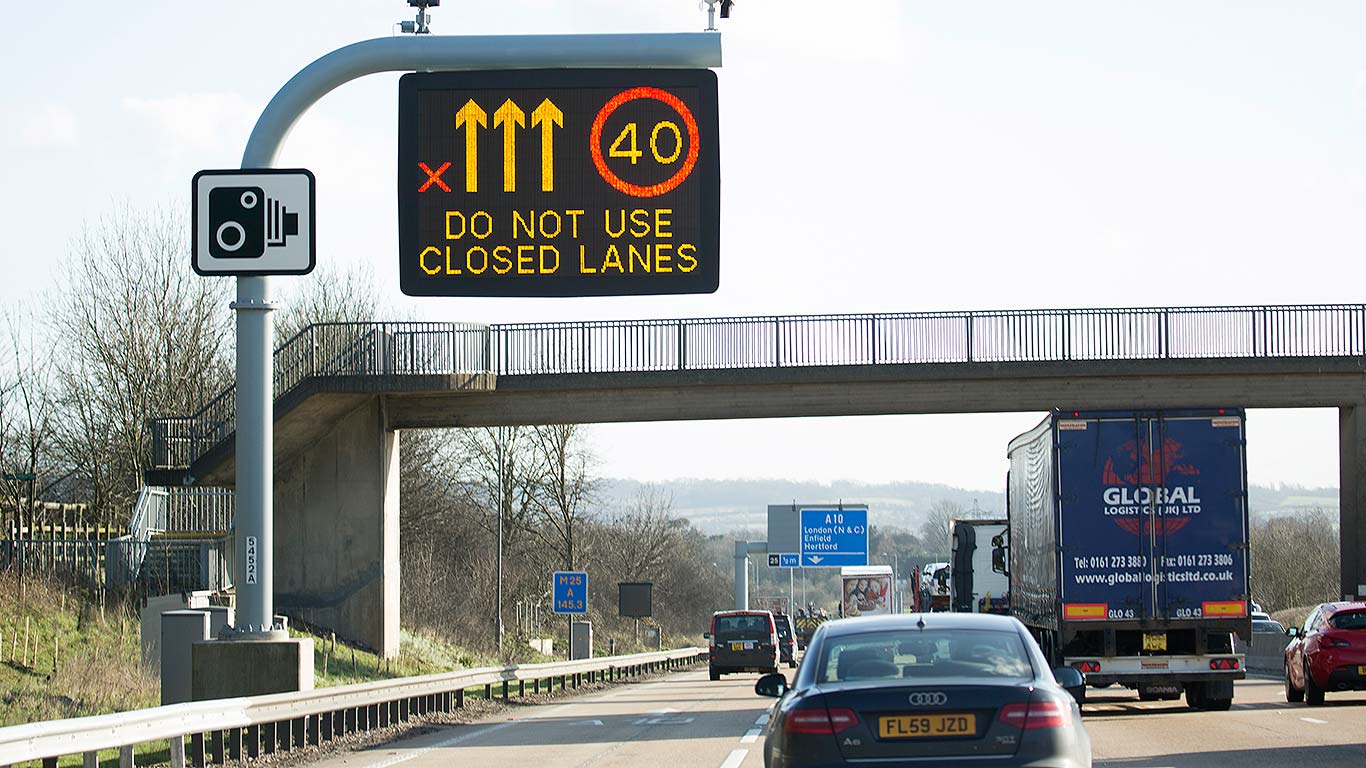
Drivers ignoring red ‘X’ overhead motorway signs when using smart motorways are set to be fined £100 and given penalty points on their licence, The Times has discovered.
The penalties will be imposed on drivers who use the hard shoulder when it is closed for use by the overhead gantries. The move follows an earlier campaign that saw 50,000 motorists receive warning letters from Highways England for flouting smart motorway rules: a third of them were for ignoring red ‘X’ signs.
The RAC has welcomed the news. “Driving on a smart motorway lane that has been closed by a red ‘X’ sign is extremely dangerous. It is incredibly frustrating for law-abiding drivers to see others flouting red ‘X’ signs, and those ignoring them are a danger to themselves and others.
“It is right that offenders are punished with a substantial fine. The sooner the message gets through to motorists, the safer it will become for every motorway user.”
There have been growing concerns about motorists ignoring the rules on smart motorways: many drivers, reports The Times, simply refuse to heed the signs, only moving out of the lane at the very last moment.
This is unacceptable, said Williams. Although many motorists may not have experienced smart motorways in action, “the electronic signage on each section makes it very clear whether a lane is open or closed and what speed limit is applicable.”
The Department for Transport is expected to reveal details of the £100 fines and penalty points soon, prior to their expected introduction in early 2018.
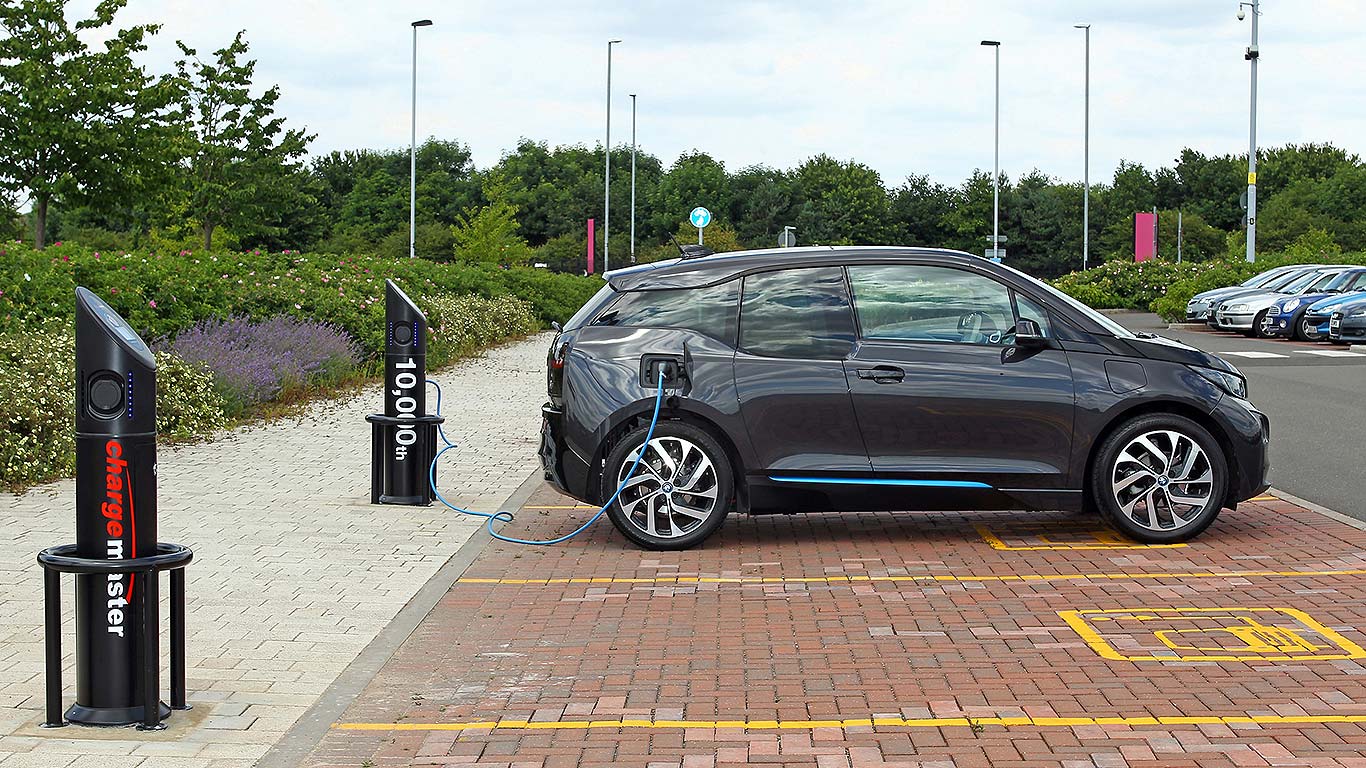
The government has announced a new bill that will require all large filling stations and motorway services to install electric car chargepoints, as part of an effort to step up the development of the UK’s EV sector.
The new Automated and Electric Vehicles Bill, which had its first reading in parliament this week, will make it mandatory for Britain’s network of just over 90 motorway service areas to offer electric car charging facilities – a move aimed at encouraging the use of electric cars for longer journeys.
Large filling stations will also have to install them – and the bill also “gives the government powers to make it compulsory for chargepoints to be installed across the country”.
The aim, said Transport Minister John Hayes, is for “the UK to be the best place in the world to do business and a leading hub for modern transport technology, which is why we are introducing the Automated and Electric Vehicles Bill in Parliament and investing more than £1.2 billion in the industry.”
The bill, added Hayes, also insists all chargepoints must be ‘smart’, so “they can interact with the grid in order to manage demand for electricity across the country.
“Drivers of electric vehicles will be able to easily locate and charge at any chargepoints, using information from sat navs or mobile apps, regardless of the vehicle make or model – making running an electric vehicle even easier.”
There’s going to be more money available to develop suburban electric car recharging networks too. Roads Minister Jesse Norman has announced more funding for local authorities to install chargepoints in residential areas, so cars parked on the street have access to recharge facilities.
“We have already supported the purchase of 115,000 ultra-low emission cars and there are already more than 11,500 publicly available chargepoints,” he said, “but the demand continues to grow as more people purchase electric vehicles to cut fuel costs and boost the environment.”
The Automated and Electric Vehicles Bill will also guarantee drivers of automated cars will be insured on UK roads, part of the government’s support for an industry it believes could be worth £50 billion to the UK economy by 2035.
By making insurance a requirement, any victims of collisions with an automated vehicle “will have quick and easy access to compensation, in line with existing insurance practices”.
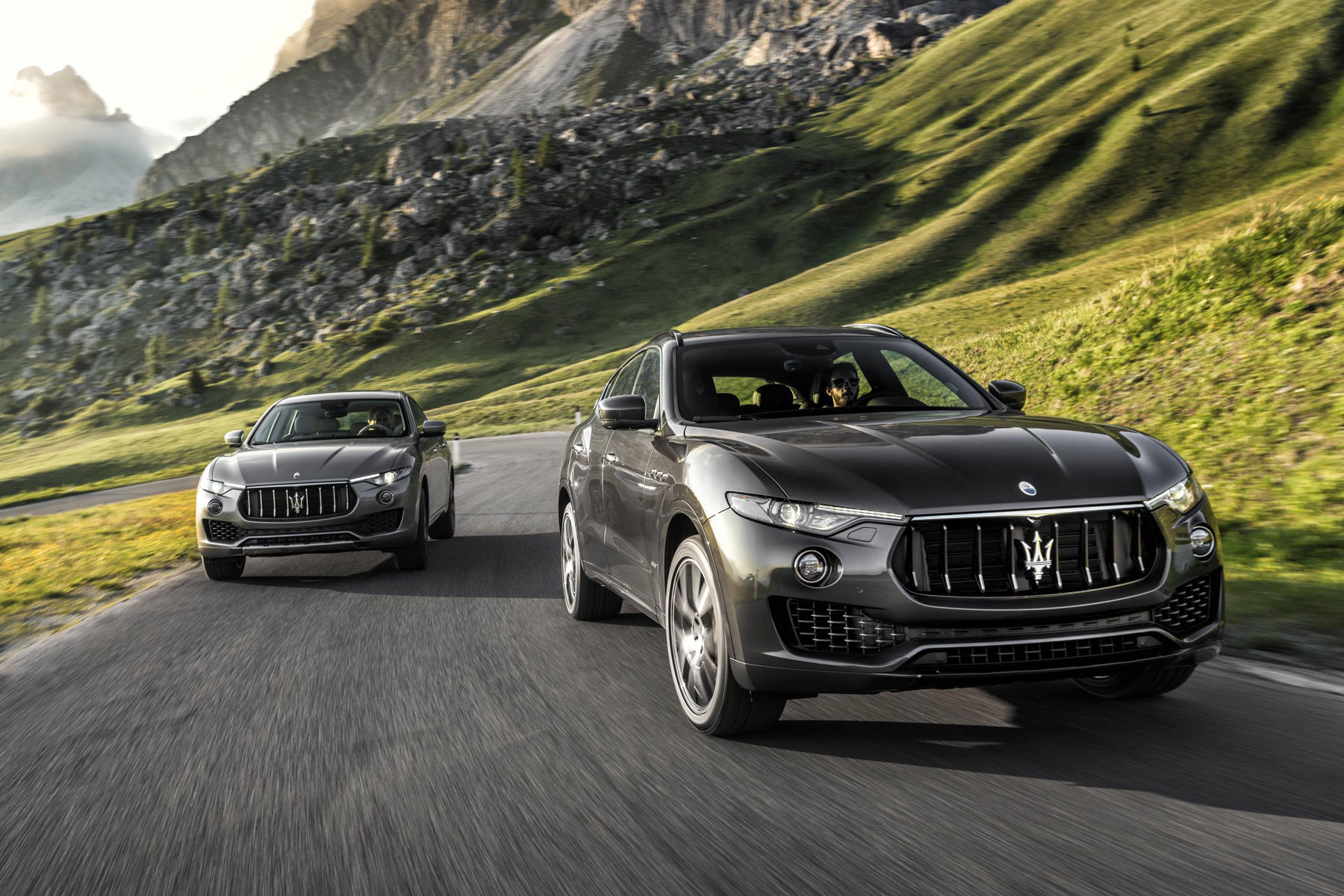
Right now, this is probably the closest you can get to driving a Ferrari SUV. It’s called the Maserati Levante S and it’s packing a Ferrari-built 3.0-litre twin-turbocharged V6 engine.
If you’re still coming to terms with the idea of a Maserati SUV with a diesel engine, the 430hp petrol version might bring some light relief, but it’s unlikely to change your opinion of the styling.
At launch, Maserati claimed the Levante would only be offered to UK buyers with the 275hp turbodiesel unit, so this represents a u-turn of cabinet minister proportions.
We suspect the threat of anti-diesel legislation and the continued growth of the SUV segment is behind Maserati’s decision, as the Levante squares up to a new Porsche Cayenne, waiting in the wings.
The Levante S isn’t cheap: at £70,755, the petrol version is £14,505 more expensive than the Levante diesel and around £4,000 dearer than a Range Rover Sport HSE Dynamic.
For their £70k, Levante buyers will be treated to the Ferrari-built 3.0-litre V6 engine, which produces 430hp, enough for a 164mph top speed and a 0-62mph time of 5.2 seconds.
Air suspension is fitted as standard, along with an eight-speed ZF automatic transmission, four driving modes, all-wheel drive and torque vectoring. Maserati claims this delivers “GT on-road dynamics and surprising off-road capabilities.”
Two trim levels will be available: GranLusso and GranSport. The entry-level GranLusso boasts metallic-finish front skid plates, body-coloured side skirts, black-painted callipers, 19-inch alloy wheels and a choice of leather for the interior.
The GranSport features piano black grille, skid plates and roof rails, red brake callipers, 20-inch alloy wheels, powered leather seats, gearshift paddles and stainless steel sports pedals.

 Porsche has revealed a new 911 Carrera T model, a ‘back to basics’ variant where the ‘T’ stands for ‘Touring’ and the emphasis is on simplicity and light weight. It costs from £85,576 and ordering is open now.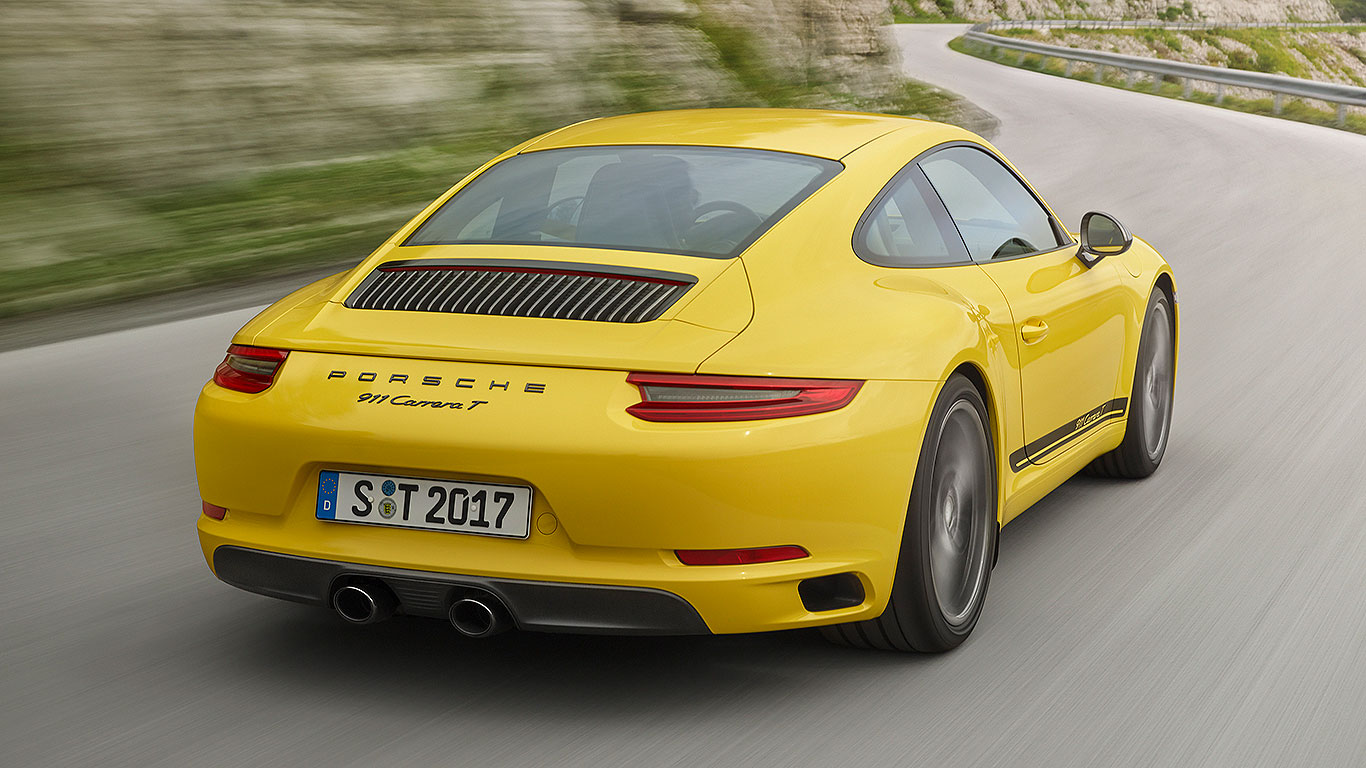

 Original cars driven by female characters starring alongside 007 have gone on show at London’s Bond in Motion exhibition. Also on display are previously unseen costumes, props and storyboards. Bond in Motion is the largest official collection of James Bond vehicles in the world.







 Bentley Motors has announced the appointment of a new CEO – and this time, he’s a Brit. Highly regarded Jaguar Land Rover exec Adrian Hallmark has succeeded the influential German Wolfgang Dürheimer and will start his new role on 1 February 2018.
 Drivers ignoring red ‘X’ overhead motorway signs when using smart motorways are set to be fined £100 and given penalty points on their licence,
  The government has announced a new bill that will require all large filling stations and motorway services to install electric car chargepoints, as part of an effort to step up the development of the UK’s EV sector.