Waze is the navigation app that’s proving a hit with drivers keen to beat the traffic. However, car manufacturers continue to give it the cold shoulder in favour of their own in-built nav systems. Until now.
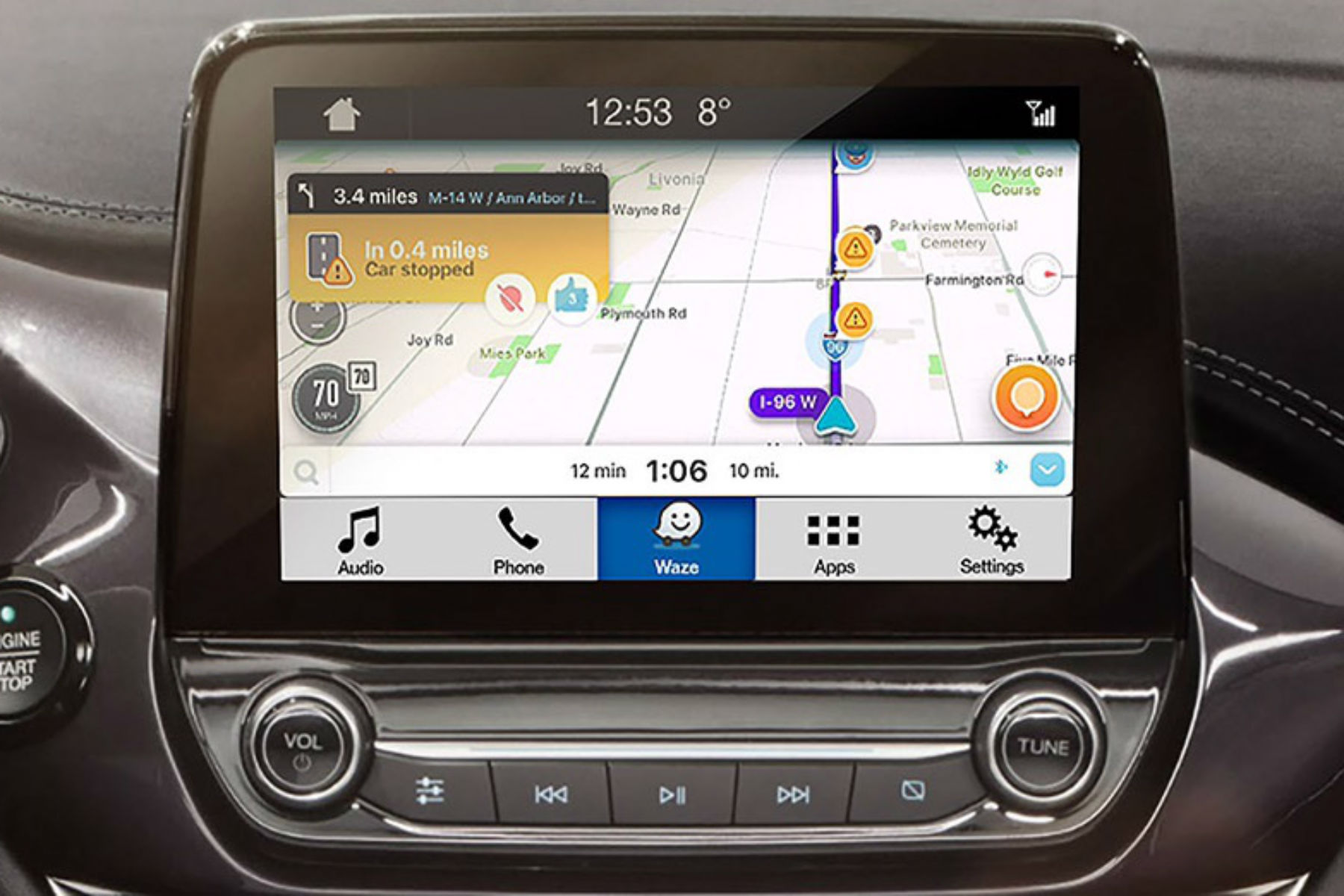
At this week’s CES tech show in Las Vegas, Ford has announced the integration of Waze with Ford’s SYNC AppLink system. That means anyone buying a 2018 Ford equipped with the SYNC 3 infotainment system will be able to view the app through the car’s built-in touchscreen display.
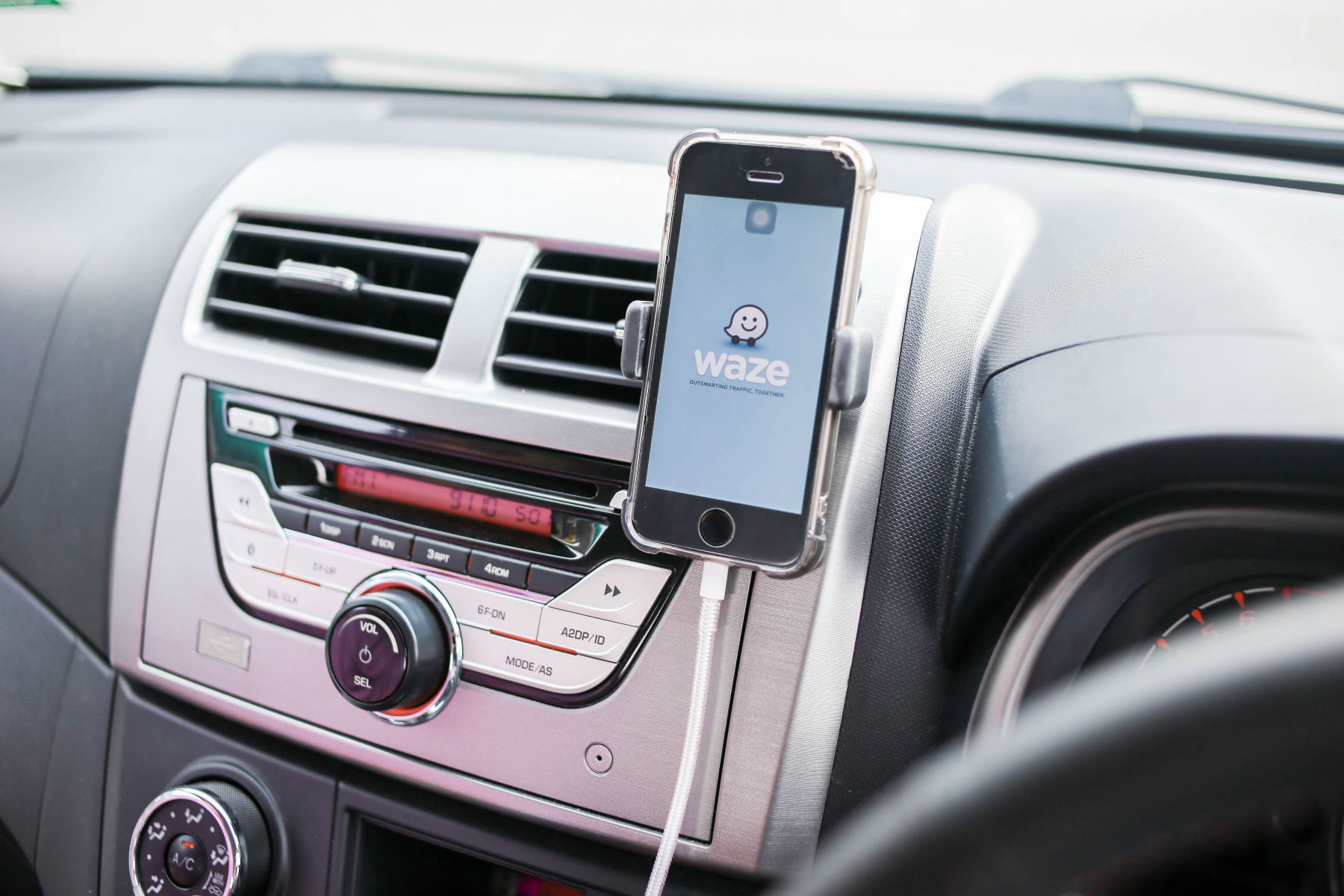
All you’ll need to do is plug your smartphone into the car via its USB socket and Waze will be projected onto the car’s display screen. This will allow you to view real-time traffic information and control the app using voice commands.
Last year, Waze was launched for Android Auto, but iPhone users haven’t been able to use the app through their car’s touchscreen as it isn’t CarPlay compatible.
If you already own a SYNC 3-equipped Ford, you’ll be able to install an over-the-air update to enable Waze compatibility.
“Our goal is to bring a human-centered approach to technology in the vehicle, making it as easy as possible for people to integrate the tools that matter most to them,” said Ford’s executive director, connected vehicle and services, Don Butler. “With the flexibility of our SYNC 3 software and AppLink, customers can easily use Waze to get all the traffic and navigation help they need – on a big screen and without having to fiddle around with their phones while driving.”
How does Waze work?
Waze uses crowd-sourced data to provide optimal driving directions and traffic updates, helping you avoid traffic where possible. Simply input your destination and drive with the app open and you’ll be contributing to Waze’s community of users – and benefit by receiving real-time updates of traffic and incidents ahead, allowing you to alter your route if necessary.
The app provides a realistic arrival time as soon as you plan a route, and keeps this updated throughout the journey. It’s free to download and is compatible with most smartphones, including Android and Apple.
More than 100 million motorists use Waze worldwide, providing information on incidents, closed roads and traffic – helping each other to save time.
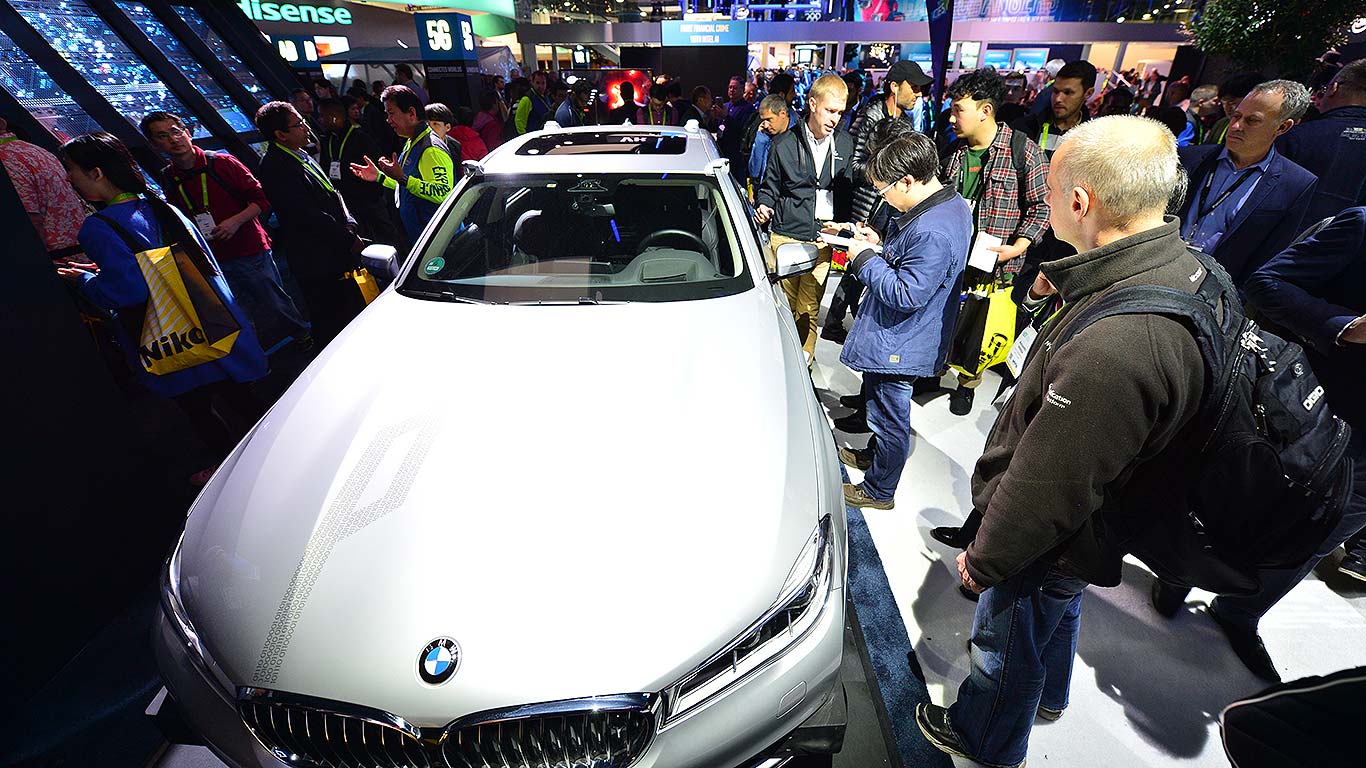
One of the most important auto shows of the world isn’t actually a pure motor show, but try telling that to all the automotive firms and tech suppliers showing their latest at CES 2018 in Las Vegas.
CES is where future trends are first revealed, and where deals to create the high-tech cars of the future are made. Tomorrow’s cars are going to be high-tech showcases on wheels: here’s our first look at the cool car tech coming to showrooms soon.
Level 4 cars by 2021
Big news: the general consensus from CES 2018 is that 2021 will be the year of the Level 4 autonomous car. These will be better than today’s Level 3 cars, which require the driver to be alert and ready to take over at any point. You can’t relax in a Level 3 car. You will be able to sit back and chill in a Level 4 car.
They’ll only be allowed to operate in selected areas and on certain roads, but the cars will then fully run without human input or oversight. The scenario is, say, driving yourself to the motorway, then letting the car take over until you reach your exit junction. Many big brands promised at CES 2018 to commercialize Level 4 cars in key large cities from 2021: in other words, in just three years’ time, the truly autonomous car might, in its earliest form, finally be here.
Instead of filling this review with promises from brands such as Hyundai, Kia, Volkswagen and others about their Level 4 self-driving cars, we’re instead going to look at the cool cars and the tech themselves. Starting with, what else, an electric SUV.
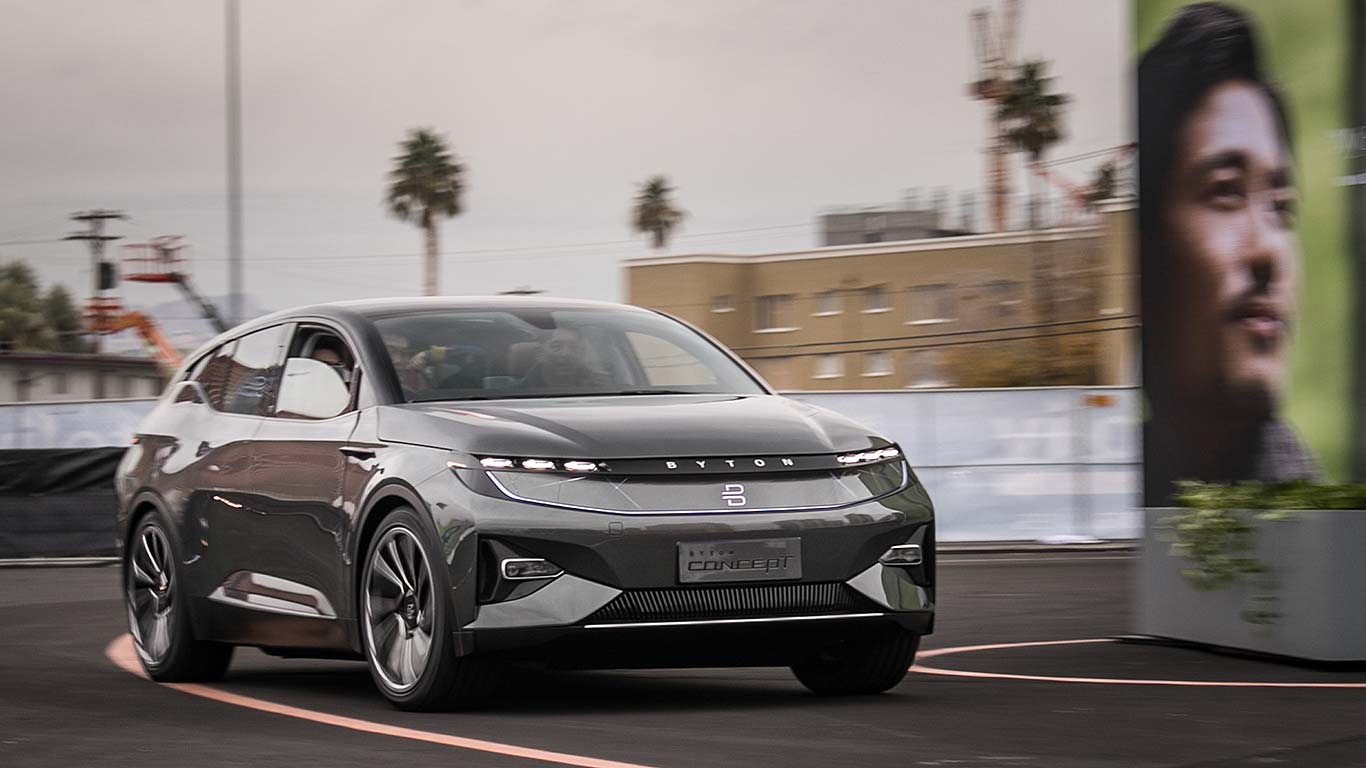
Byton SUV concept
A brand-new car from an all-new automaker was revealed at CES 2018. Chinese startup Byton debuted a new all-electric SUV that it estimates will cost from $45,000 (that’s just over £33,000), will roll out in China in late 2019 and both Europe and the U.S. from 2020, and is promising to ‘redefine’ the SUV in the upcoming era of autonomous cars.
Two models will be offered, a 268 horsepower rear-wheel drive model, and a 469 hp dual-motor all-wheel drive version. Byton is promising a range of over 380 miles on a single charge of the mid-size SUV’s top-spec 95 kWh battery pack (cheaper rear-drive cars offer a 71 kWh battery and a 295-mile range). In time, an SUV and MPV will be derived from the SUV’s flexible platform.
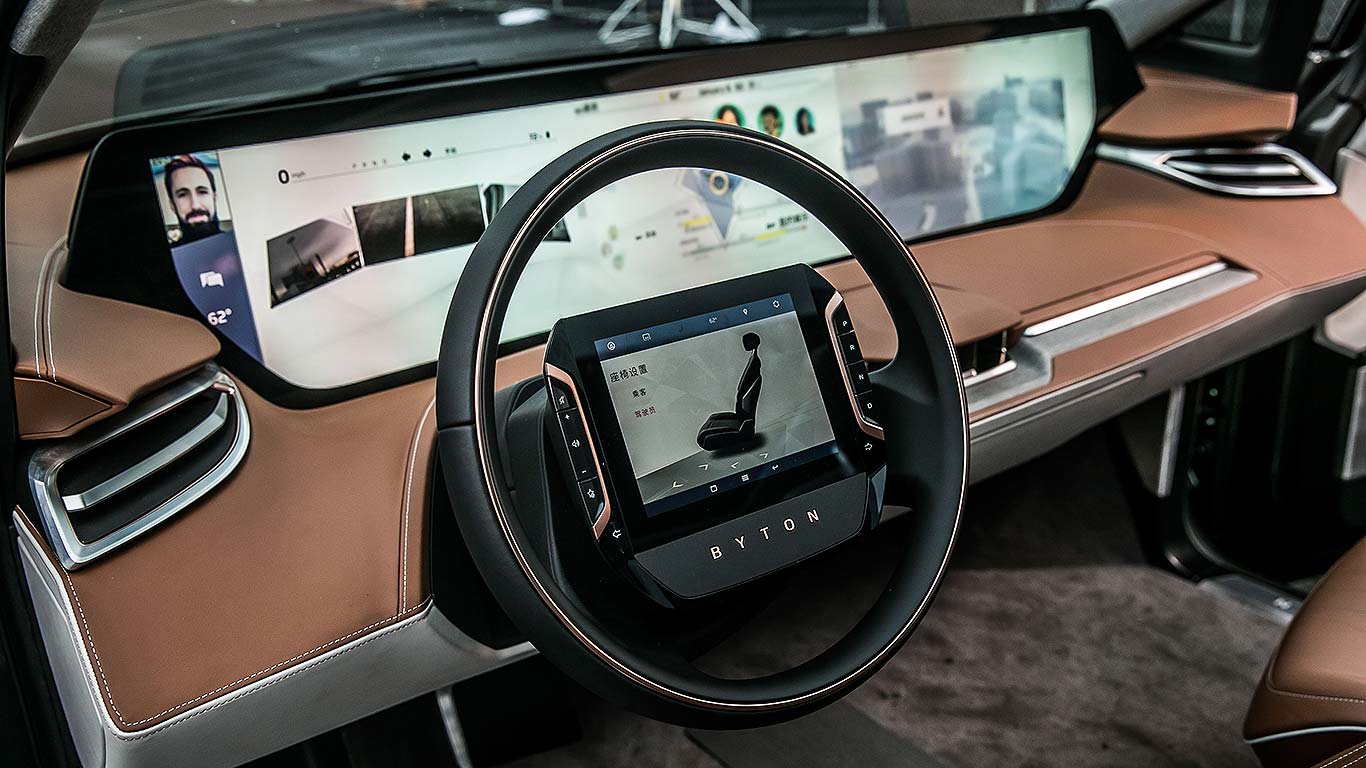
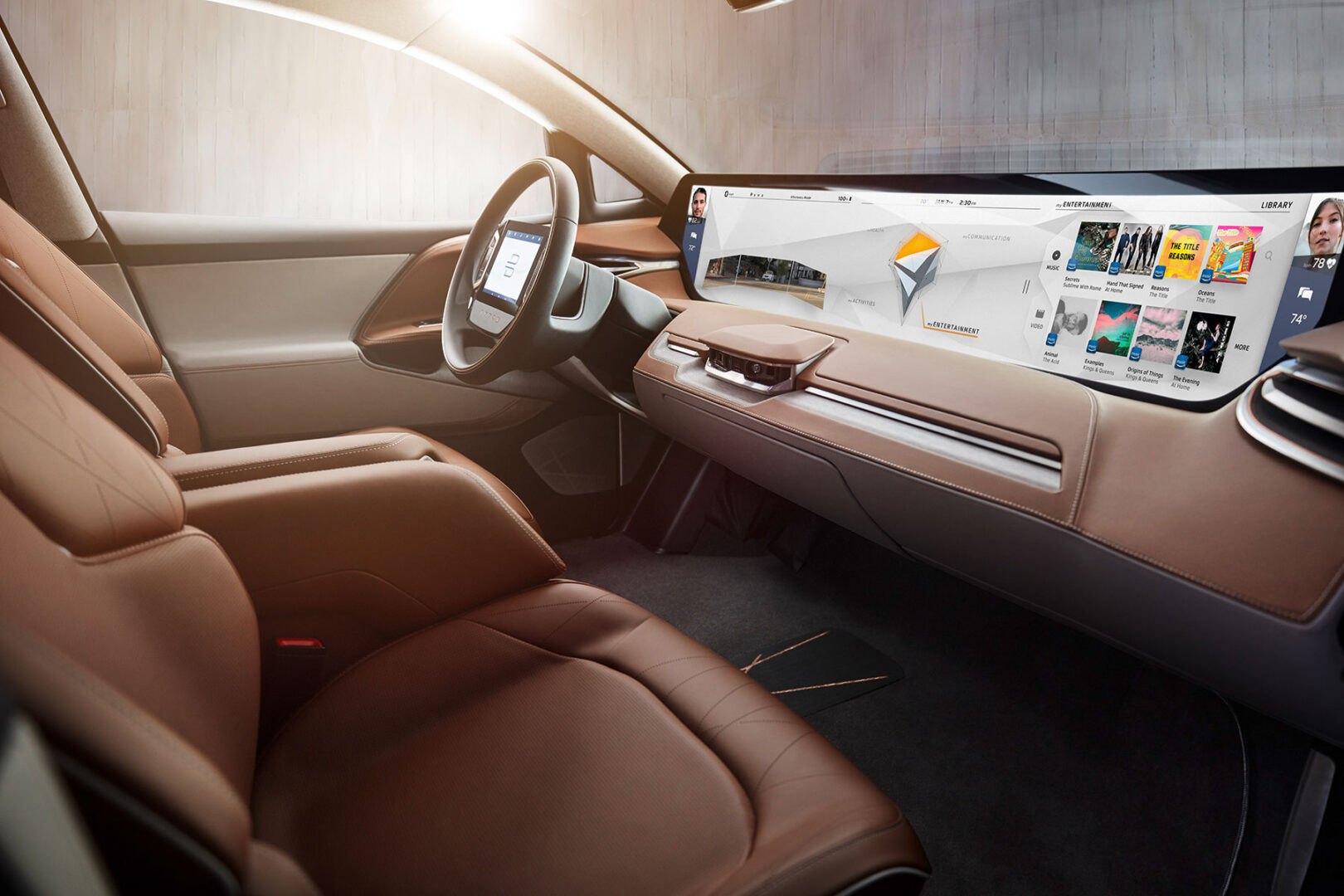
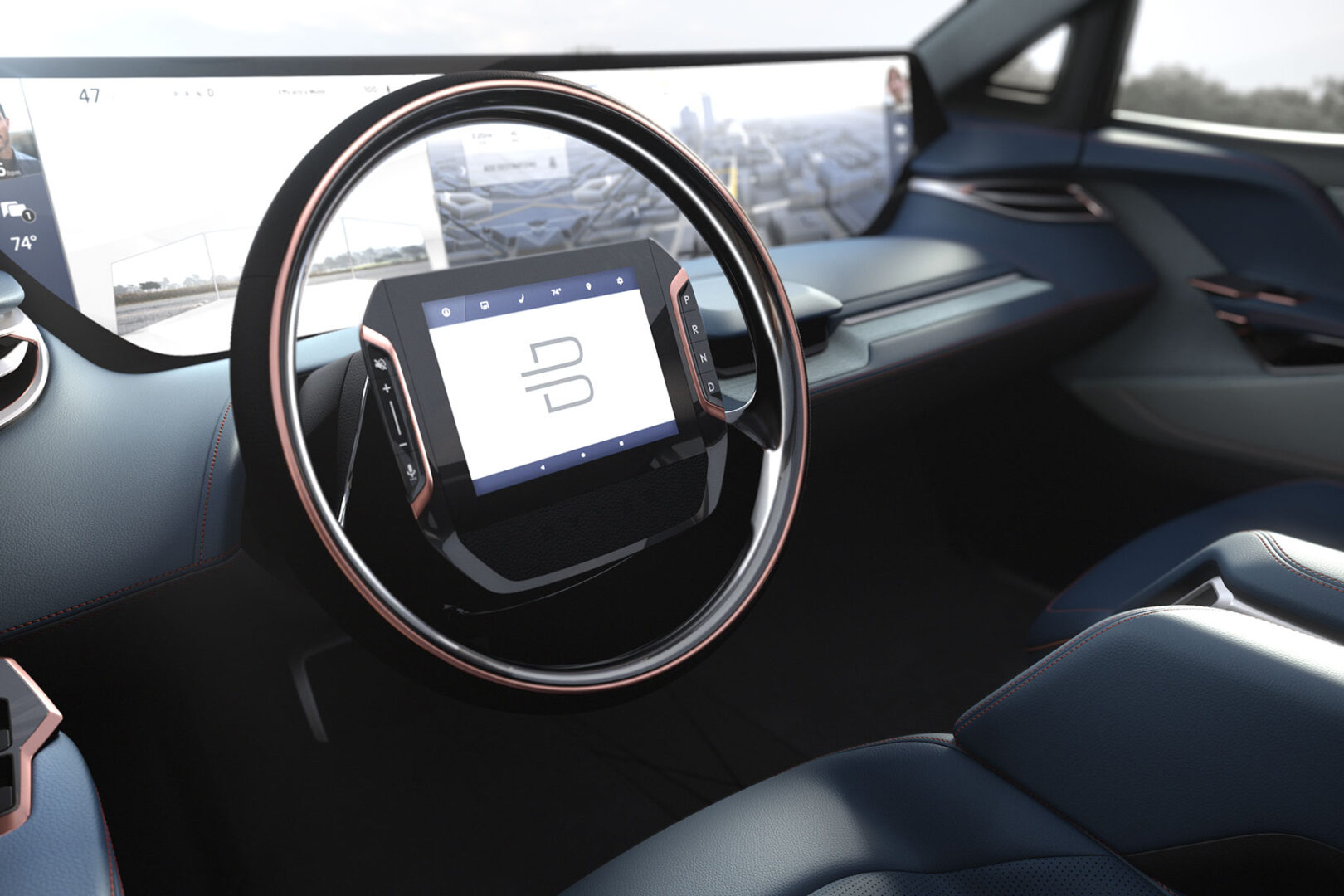
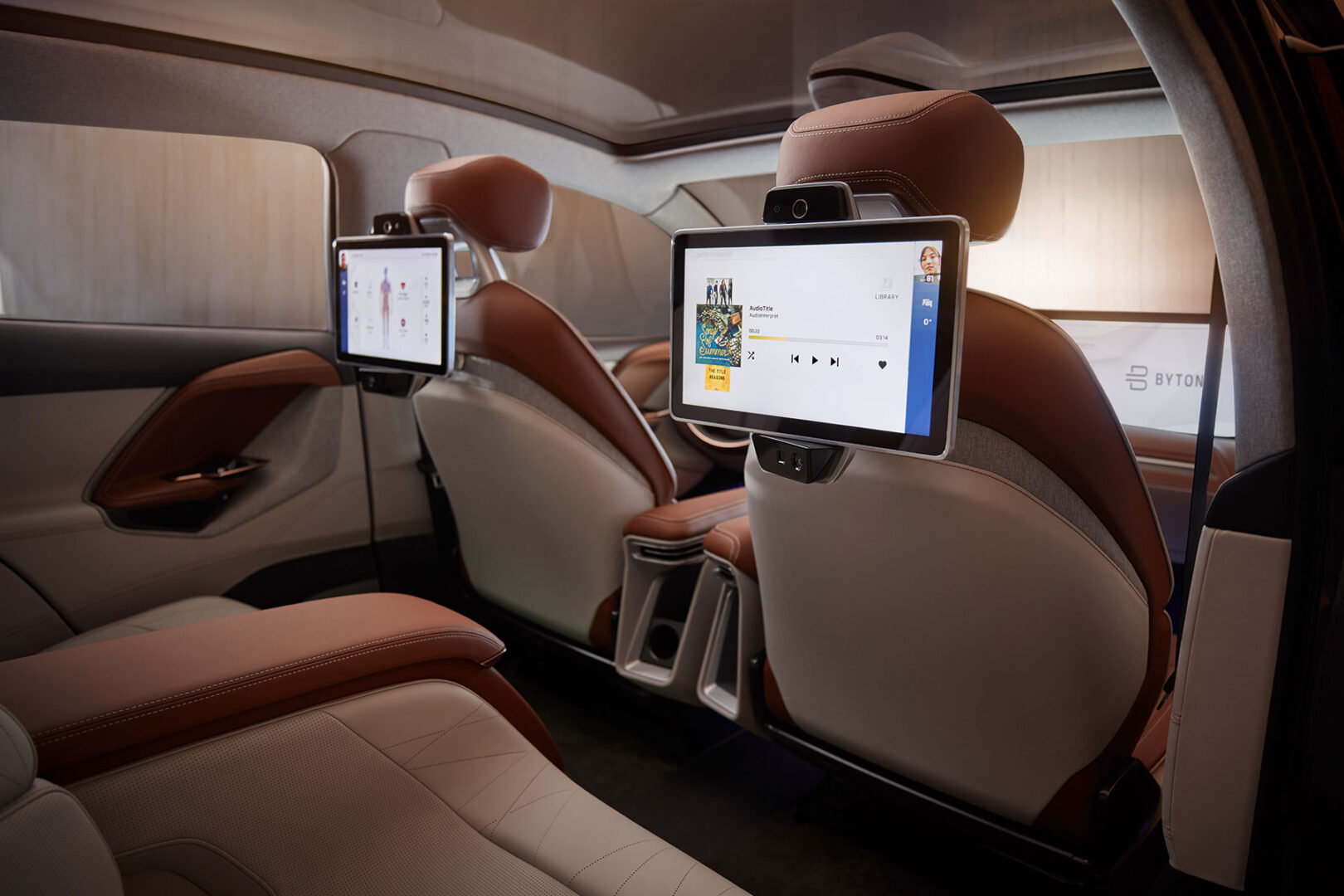
The standout is its massive infotainment screen inside. Measuring 125 cm x 25 cm (that’s 49 inches x 9.8 inches), the whopping screen is called the ‘Shared Experience Display’ and is augmented by a further three additional display screens, one of them mounted in the steering wheel itself.
There are new ways of interacting with it, including biometrics and gesture control, and Byton’s built in Amazon Alexa for intelligent voice control. Other smart details include a facial recognition entry system, 5G-ready onboard hardware, machine learning functionality and multiple user profiles which are automatically downloaded from the cloud. But it’s not all future-focused: we love the optional wooden floor…
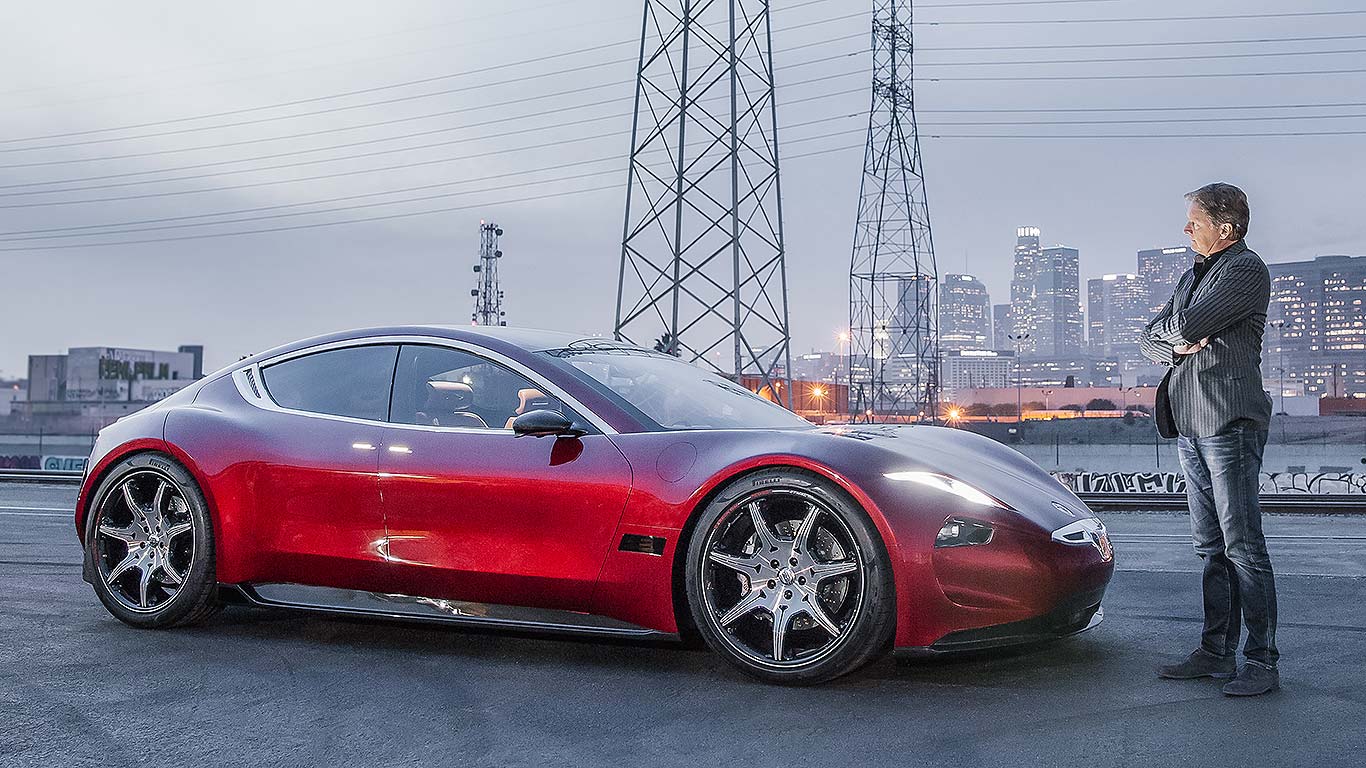
Fisker eMotion
Former Aston Martin designer Henrik Fisker is back, with the latest car from his eponymous auto firm. It’s called eMotion and, as the name suggests, it’s a full EV with groundbreaking (and patent-pending) flexible solid-state batteries.
Considered the holy grail of EVs, solid-state batteries boast 2.5 times the energy density of today’s lithium ion cells, “shattering conventional thought on EV range and charge times”, says Fisker. There’s talk of the 160mph eMotion offering electric drive ranges of over 500 miles on a single charge – with charging times “as low as one minute”. Exciting stuff, which could be ready to go into cars from 2020.
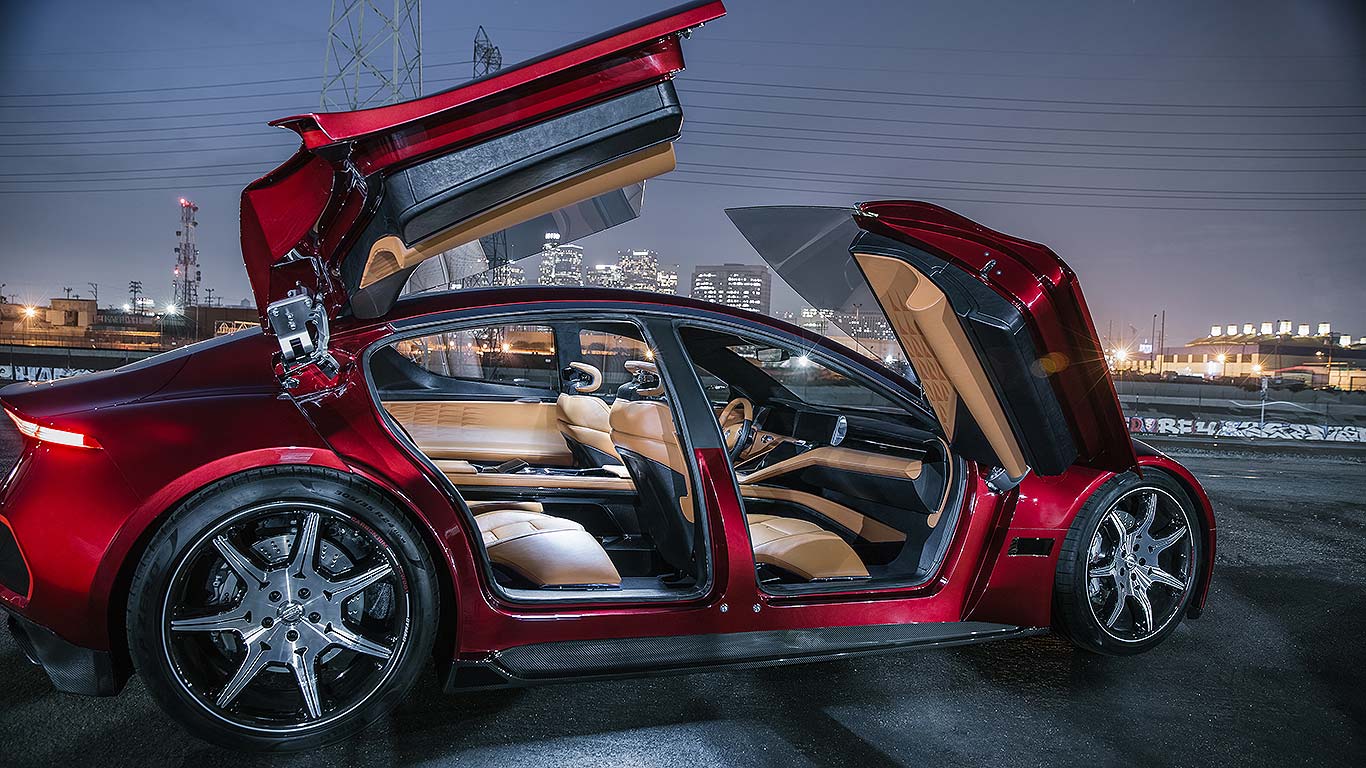
But its batteries are not the only reason to get excited about the eMotion. Just look at it. Svelte and sexy, huh? Hard to believe it’s being pitched as a five-seat alternative to a luxury car, one still offering five seats within those amazing butterfly doors, and a lavish interior fully future-proofed with next-gen tech.
It’s naturally going to be autonomous. Five fully-integrated LIDAR sensors take it up to Level 4 autonomy, and these too are packed with patents. Fisker himself feels the eMotion places the firm “clearly at the forefront” of a revolutionary new era in automobiles. A new era that will be here sooner than we think, too: production of the eMotion is confirmed, will be in the U.S., the location of which will be announced later in 2018. Prices? Yours from $129,000.
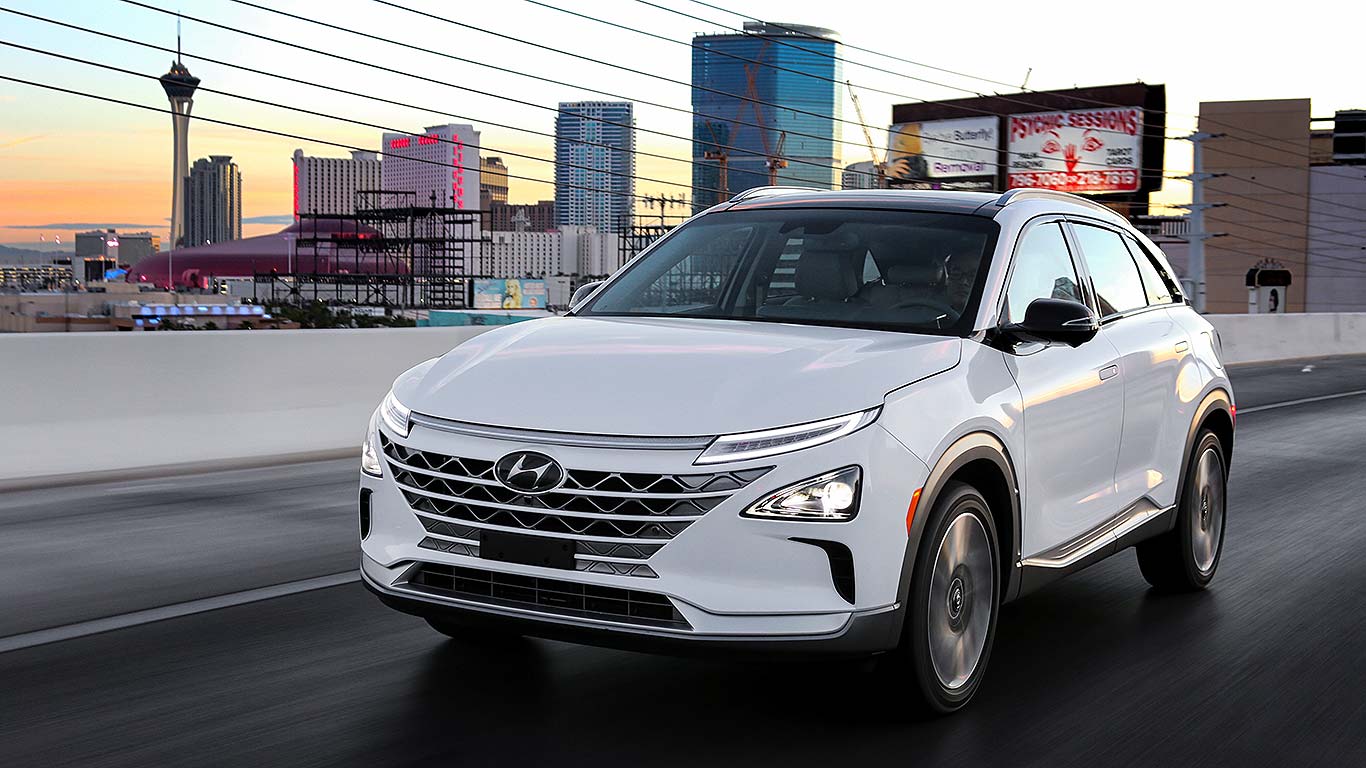
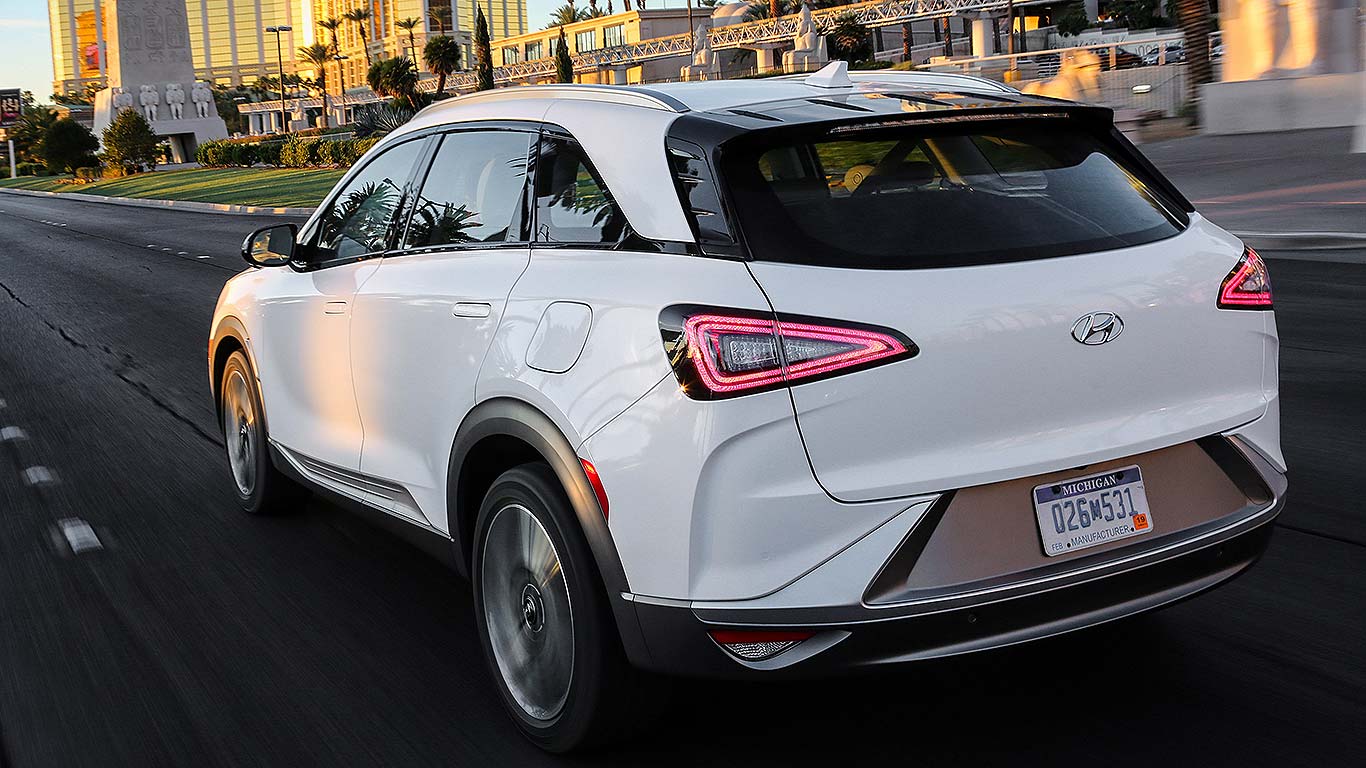
Hyundai FCEV Nexo
Hyundai had a new concept car for CES 2018 too. Called FCEV Nexo, it’s the firm’s latest fuel cell car, and the first bespoke-designed one. We should rightly be rather excited by this one: Hyundai confirmed a production version will be on sale later in 2018. What we see here is thus a thinly-disguised showroom-ready model.
It follows on from Hyundai’s pioneering ix35 hydrogen fuel cell car, of which it has produced several thousand, many of which remain in active service. The lessons learnt from that car have all gone into the new Hyundai Nexo.
A smart, modern-looking SUV, Hyundai’s promising a driving range of 500 miles on a full tank of hydrogen, plus faster acceleration and shorter refuelling times. It will also include autonomous driving functionality and an industry-first blind spot view monitor: it shows the rear and side view when changing lanes, so the driver can keep their eyes forward.
The FCEV will be one of 18 so-called ‘eco-friendly’ vehicles Hyundai is promising to launch by 2025. Along with the Honda Clarity, Hyundai’s leadership in the production-spec hydrogen fuel cell sector continues to stretch ahead of rivals. How valuable may this competitive advantage be in the future, we wonder?
Toyota e-Palette Alliance
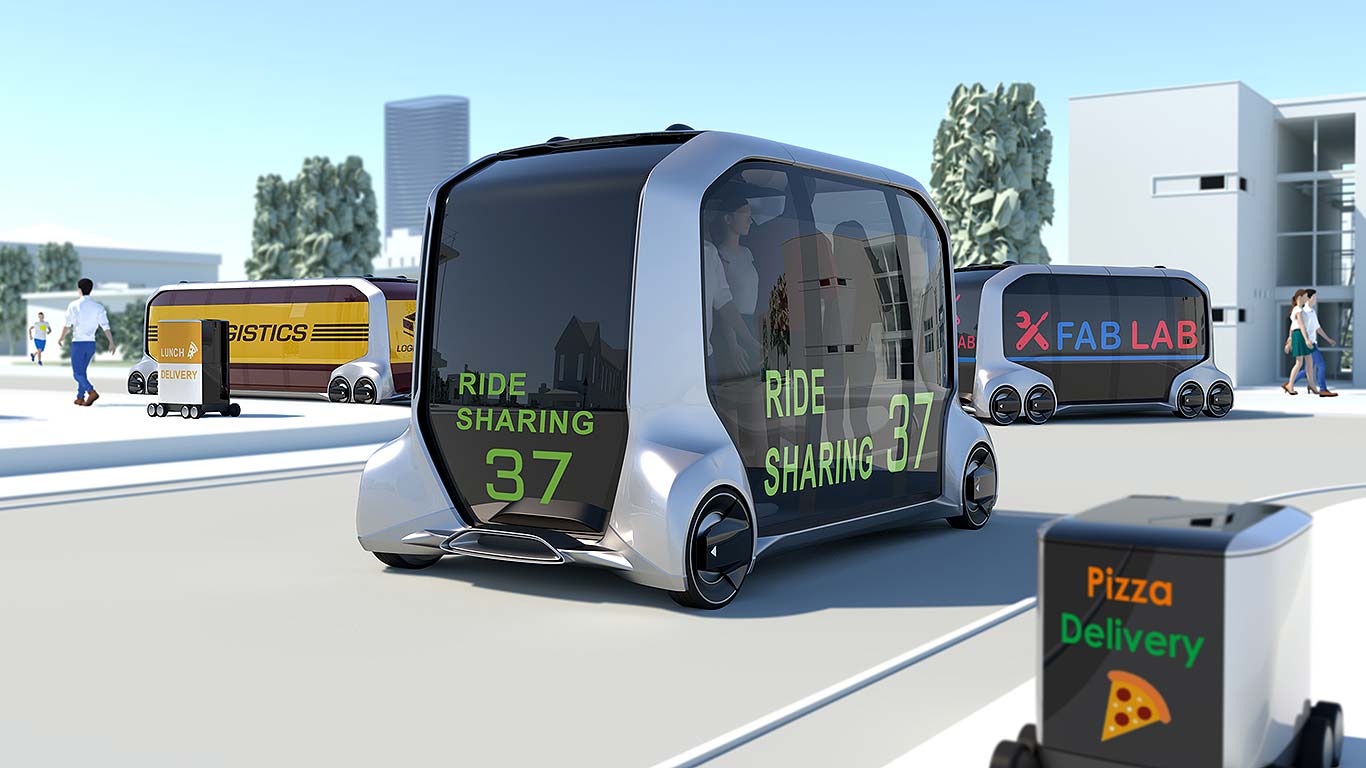
There’s a new automotive term we need to get familiar with: Mobility as a Service, or ‘MaaS’. This is where companies such as Uber, Amazon and even Pizza Hut will transport goods, people or take away pizzas via autonomous cars – and Toyota wants to be a car company offering them a basic vehicle which they can then develop and customise (a bit like a van is today, but far, far more technologically advanced and open).
The e-Palette Concept Vehicle is its idea of a fully-flexible purpose-built autonomous electric vehicle, into which those companies can add their own tech to better serve their customers. Fully scalable and customisable, even down to open source software, Toyota’s offering it as part of a new e-Palette Alliance that will collaborate to make the mobility ecosystem concept a reality.
Suddenly, the idea of an autonomous vehicle delivering your pizza, or your purchases from Amazon, or even picking you up for a ride, seems a little less far-fetched than it was…
Toyota automated driving vehicle 3.0
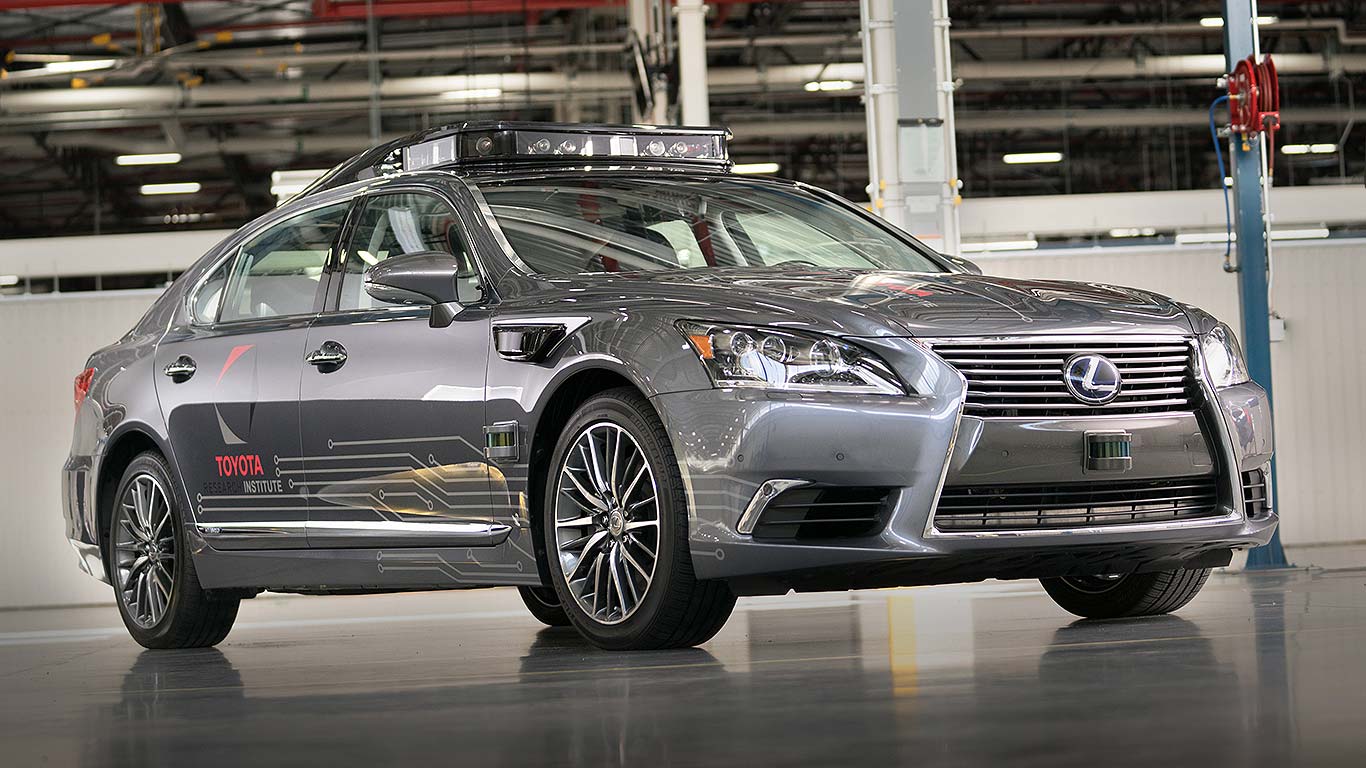
This is the reality of today’s autonomous cars, though. Toyota showed off its latest autonomous driving research vehicle, called Platform 3.0, at CES 2018, based on a Lexus LS 600h L.
It’s a highly accomplished autonomous research vehicle, one that offers ‘pace-setting’ perception capabilities and even better packaging that should allow the firm to easily build a large fleet of autonomous cars. However, the firm also insists the sensing equipment is blended into the vehicle to make it appear “sleek and elegant”. Sure, it’s better than the bolt-on tech and ‘spinning’ LIDAR sensors we’ve seen to date, but it’s still a long way from being smart enough to go onto a production car.
Fisker Orbit
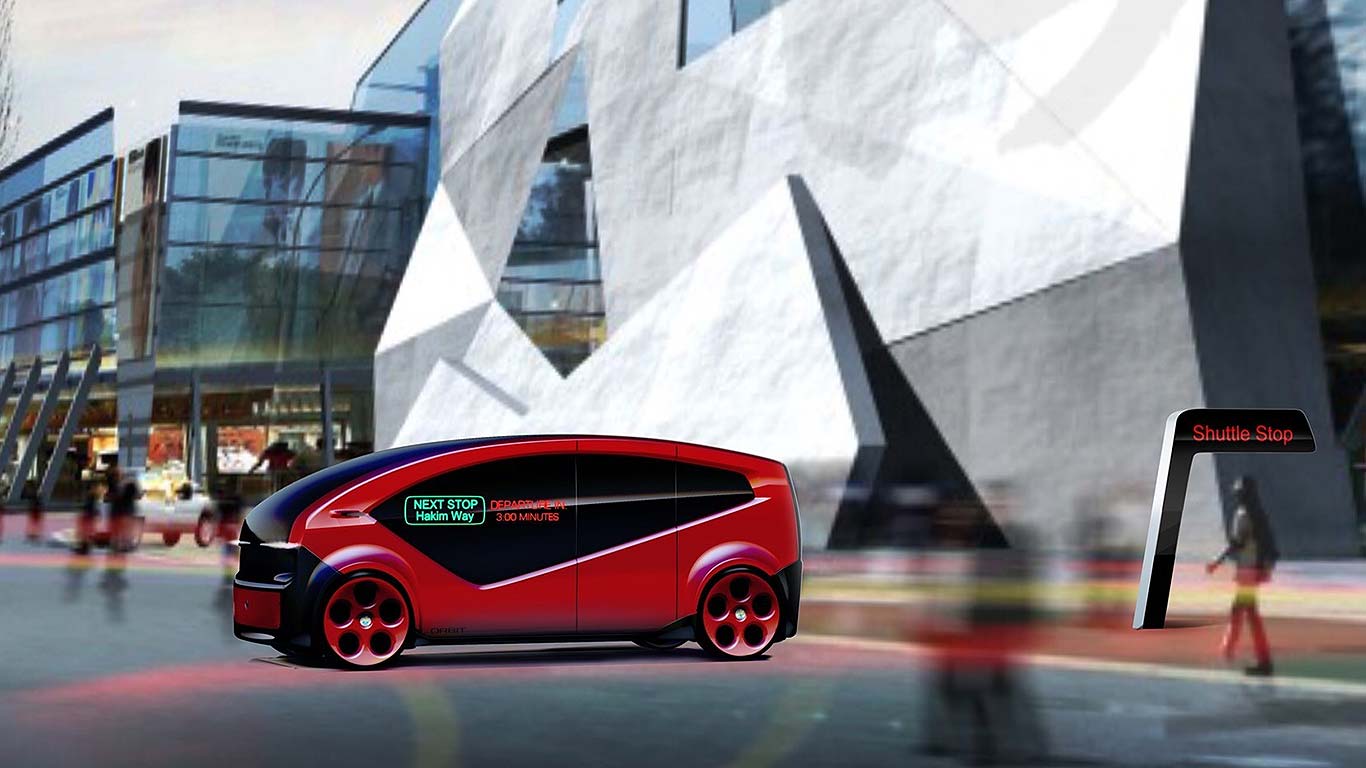
Fisker has a ‘Maas’ autonomous shuttle too – and this one, it says, will be in production by the end of the year. The body, passenger-centric machine shows off departure times and details of the next stop on its side window, and Fisker reckons it’s tailor-made for use on university campuses, business parks and research sites.
It’s being developed in association with Chinese firm Hakim Unique Group and already has its first application confirmed: the giant Chinese city of Hangzhou.
Mercedes-Benz MBUX
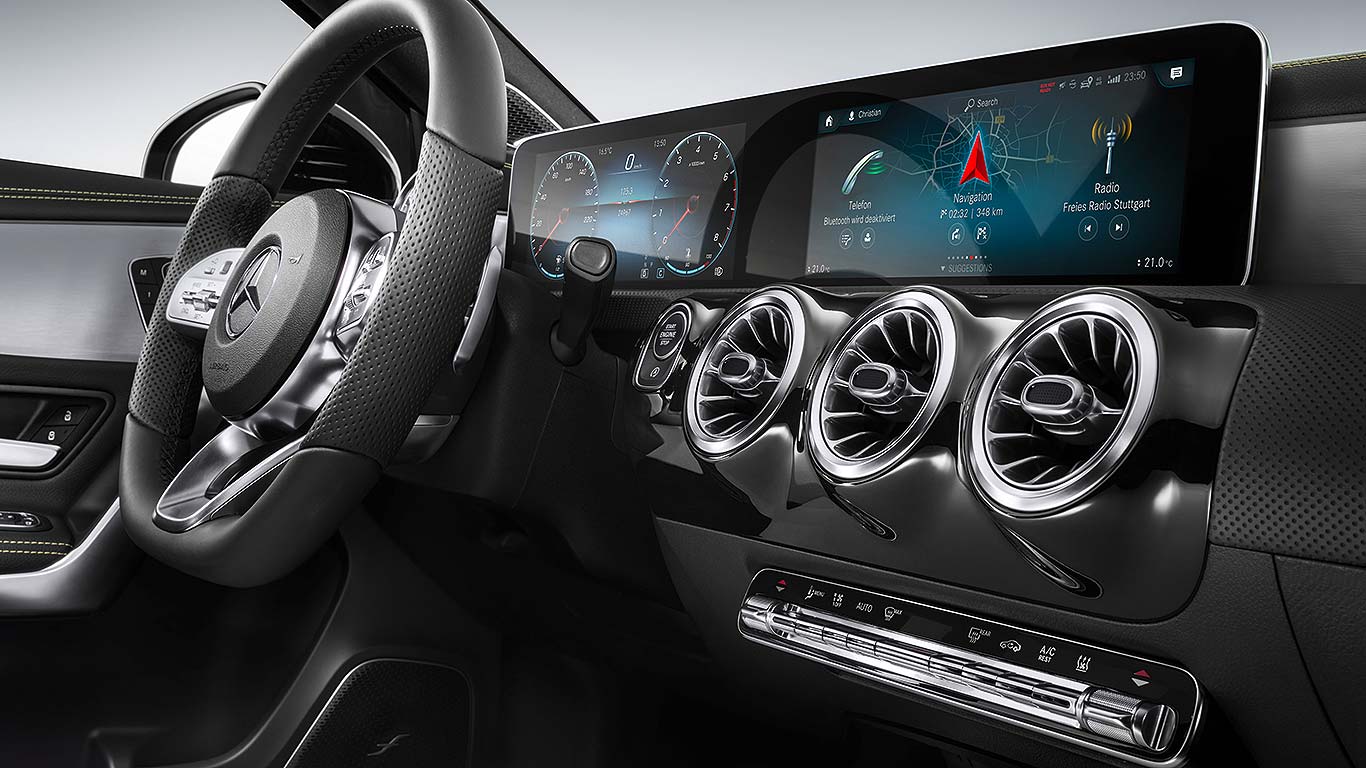
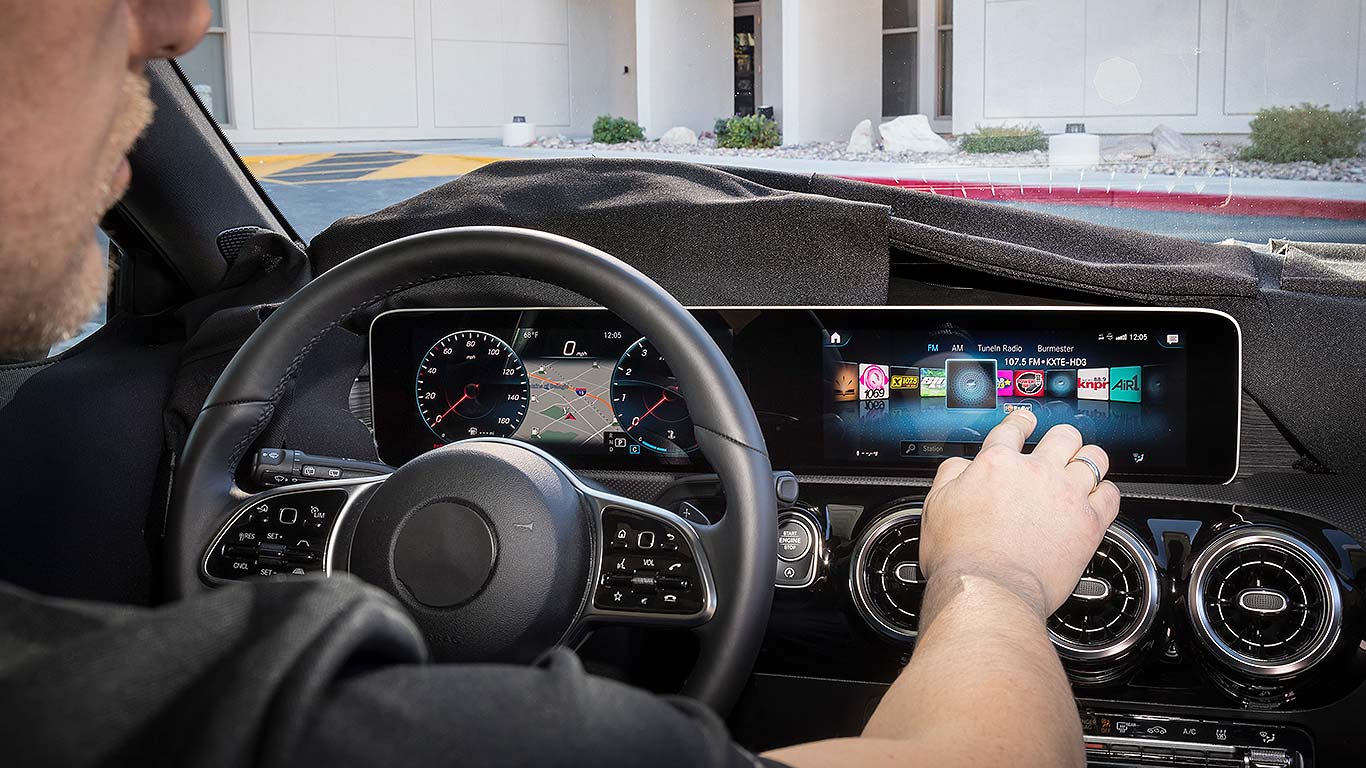
There’s a new Mercedes-Benz A-Class due in 2018, and it’s set to be the first Merc to get the firm’s all-new interior user interface, which it’s calling MBUX – Mercedes-Benz User Experience. This, along with some of the new car’s interior, was revealed at CES 2018.
Dominated by a widescreen cockpit layout, it offers over-the-air updates and artificial intelligence. The navigation has augmented reality functionality and intelligent voice control features natural speech recognition.
How to activate this? Say, “Hey Mercedes”.
Mercedes-Benz engineers are bullish. The new system, powered by NVIDIA chipset and graphics, will turn the new A-Class into a genuine mobile assistant, and its ability to learn “is spectacular, and unique to date in the car industry. We are using artificial intelligence to give the user individual suggestions based on their habits.
“The algorithm we use for this is optimised for on-board use in the vehicle and exploits the opportunities afforded by the latest chip generation.” But it won’t be overwhelming, adds the firm. It offers flexible interaction via touchscreen, rotary controller or voice, and there are three different levels of information density: Homescreen, Basescreen and Submenu. Hopefully proving easier to use than today’s rather complex Merc infotainment system…
BMW drifting and refuelling
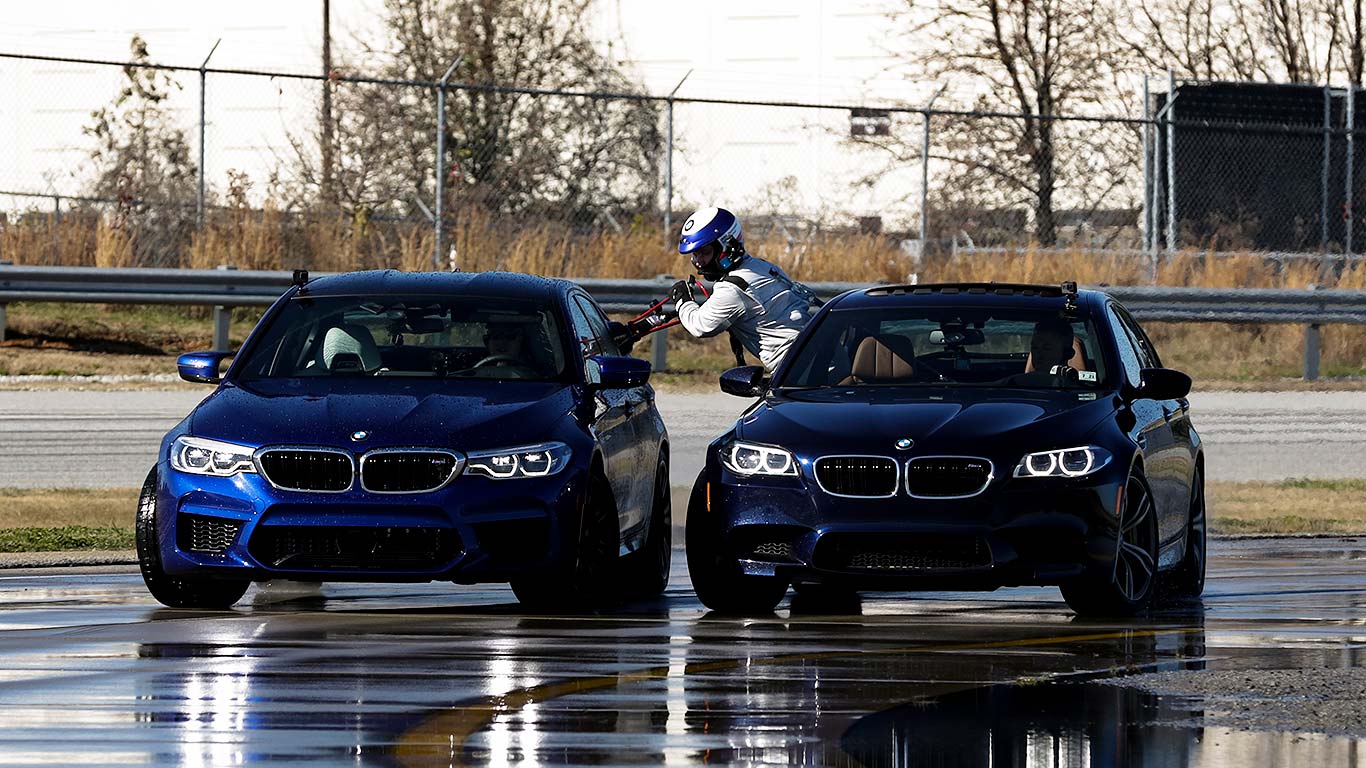
What’s CES got to do with BMW breaking its own Guinness World Records title for longest twin vehicle drift, with a 232.5-mile run in the new BMW M5? Because it was tech that made it possible.
The only way to raise the bar further was to find a way of refuelling the M5 mid-drift – otherwise, you’d simply be limited to the range of the tank. Enter North Carolina’s Detroit Speed, which designed a high-tech dry break fuel system based on the principles of mid-air fighter jet refuelling. Result? One single drift for the entire eight-hour run allocated by Guinness World Records. And, at CES 2018, one title-setting vehicle on display in the Las Vegas Convention Center, plus on-the-hour drifting demos in the parking lot by title holders Johan Schwartz and Matt Mullins.
Nissan brain-to-vehicle technology
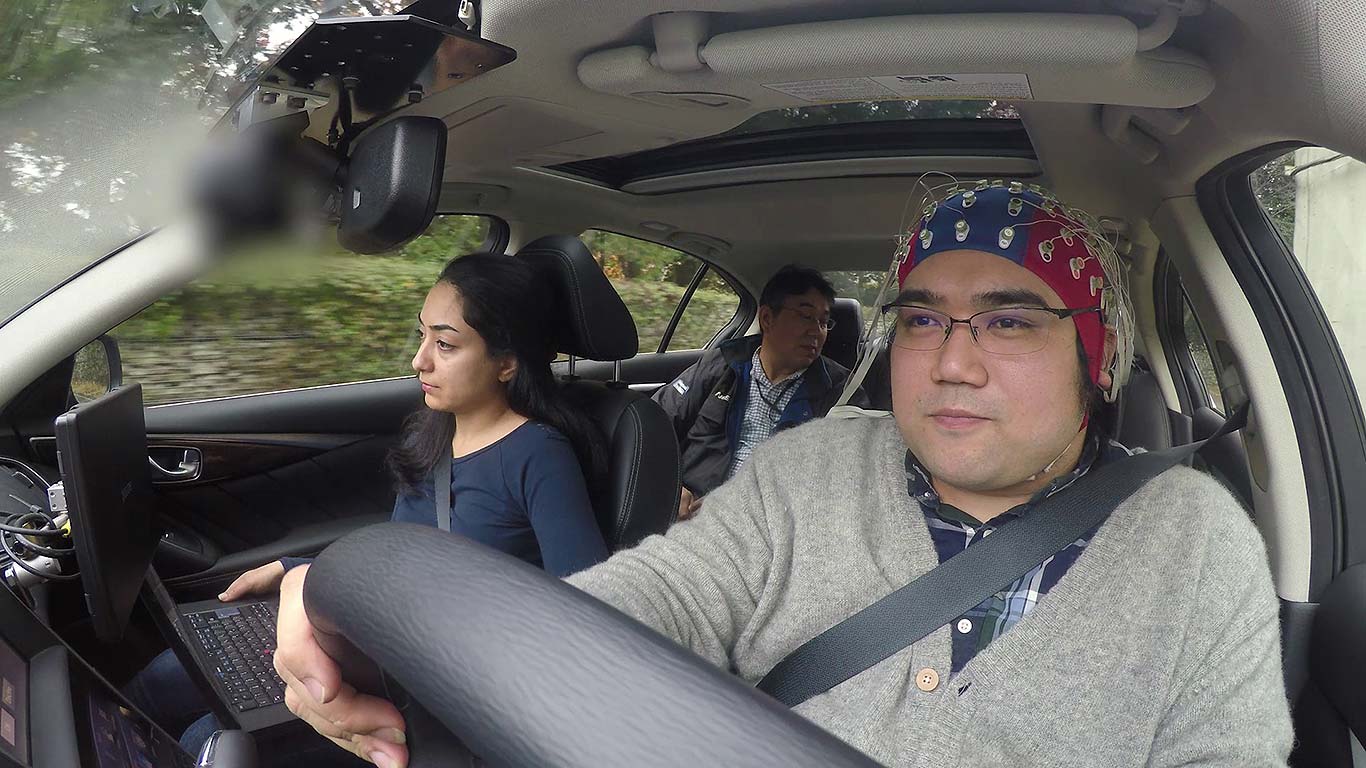
It’s called Brain-to-Vehicle technology, or B2V. Ignore the bizarre contraption this guy’s wearing on his head, and listen to Nissan’s explanation of why it’s developing it: by interpreting signals from the driver’s brain, reaction times will be speeded up (by up to half a second, says the firm) and, in time, cars will even be able to auto-adapt to the driver’s mood, “redefining how people interact with their cars”.
It’s a system that both predicts and adapts: when the car is in autonomous mode, for example, any driver discomfort could be sensed and the vehicle altered accordingly. “The potential applications of the technology are incredible” reckons Nissan. If, that is, it can make the B2V hat a little less scarily sci-fi…
Uber self-driving cars
Uber is quickly stepping up its test fleet of self-driving vehicles, using modified Volvo XC90s. At CES 2018, it announced that NVIDIA technology will now power the crucial Artificial Intelligence computing system. The ever-growing tech supplier is a big name in computing but is increasingly becoming a key automotive supplier. The latest Uber deal is thus significant.
NVIDIA AI tech will allow the Uber self-driving vehicles to “perceived the world, predict what will happen next and quickly choose the best course of action”. The AI tech will complement NVIDIA processors already used in the self-driving Uber Volvo XC90s, which have already autonomously driven more than 2 million miles.
NVIDIA, and Intel, and Qualcomm
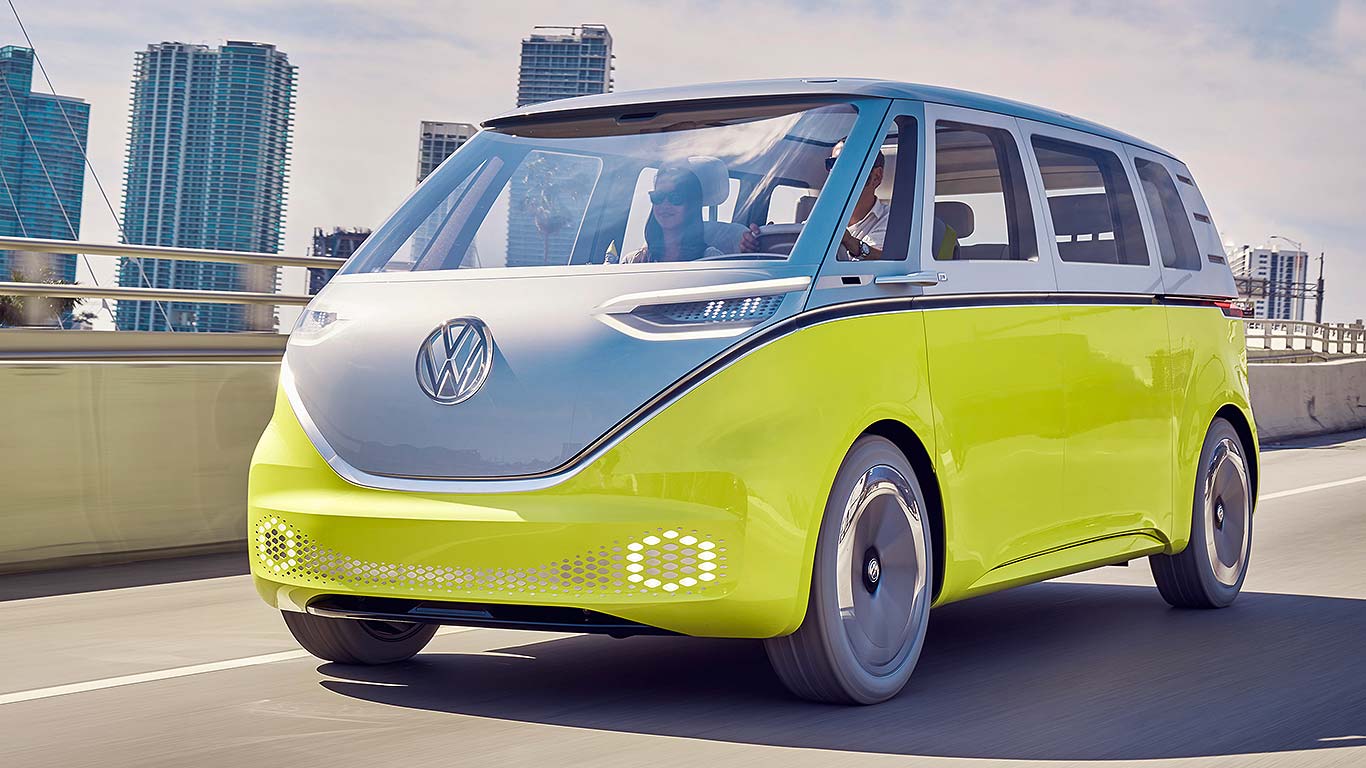
It’s not just Uber. NVIDIA is also supplying AI tech to Volkswagen, for use on its future electric cars including the I.D. Buzz. A combination of AI and deep learning will help power the cars’ self-driving functionality, but also many of the onboard functions such as voice, gesture and facial recognition.
Volkswagen will use the NVIDIA Drive IX Intelligent Experience platform to give the new cars auto-unlock by facial recognition, natural language voice control, gesture control and other neat capabilities it’s dubbing ‘Intelligent Co-Pilot’. “In just a few years, every new vehicle should have AI assistant for voice, gesture and facial recognition as well as augmented reality,” said charismatic NVIDIA founder and CEO Jensen Huang.
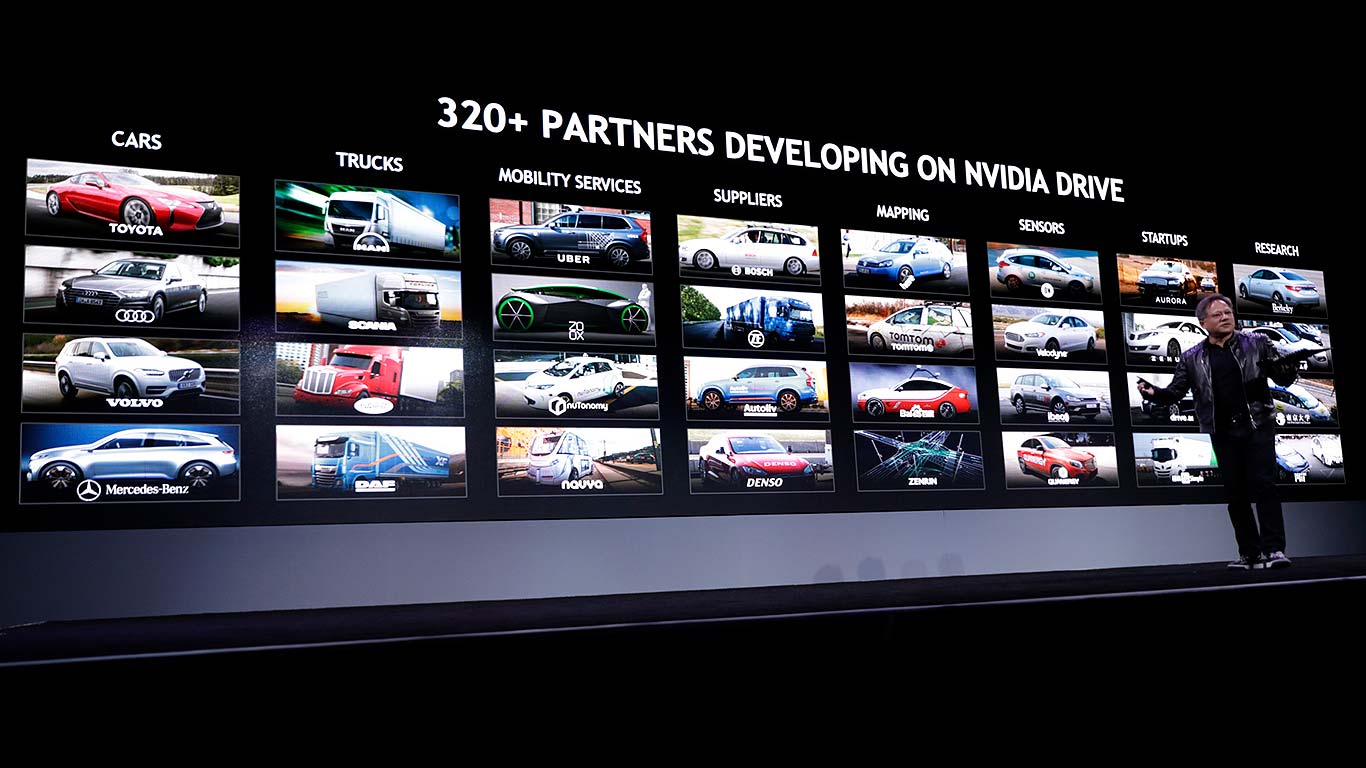
Here, incidentally, are some of the people NVIDIA is currently supplying its latest NVIDIA DRIVE AI car computer tech to. Think of it as the chipset and software equivalent of Bosch, Continental, ZF or GKN.
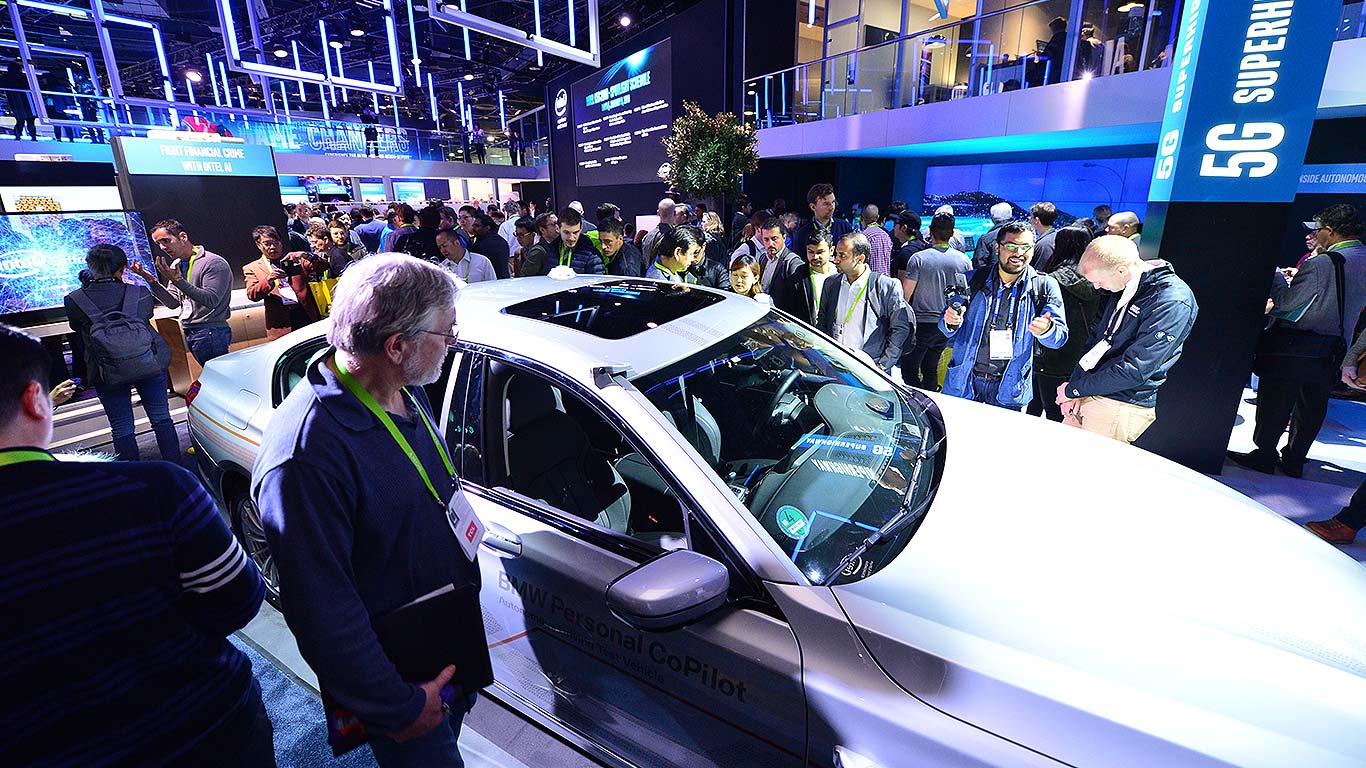
But it’s not just NVIDIA that’s amongst the new wave of automotive suppliers. Intel, for example, is stepping up shipping its Mobileye tech to brands such as BMW, Nissan and Volkswagen. This crowdsources data to rapidly build high-definition maps, of which the accuracy, detail and currency will be absolutely critical to self-driving cars. Already, Mobileye has over 2 million applications, claims Intel.
Qualcomm is yet another automotive tech supplier. Future Jaguar Land Rovers will use its latest Snapdragon 820Am Automotive platform, giving fast connectivity, Tesla-style over-the-air updates and “limitless in-car entertainment”. It will also help bring 5G tech to future models. The new relationship should accelerate the rapid gains JLR’s making with its cars’ infotainment systems, an area in which it for years lagged its premium rivals.
5G telematics in cars
How do you fancy 5G automotive telematics with a whopping bandwidth of 1 Gb per second? Thanks to Harman and Samsung, it may be coming soon: the automotive supplier is the first to produce an automotive-grade 5G-ready telematics system that it says is 100 times faster than today’s 4G solutions.
This is set to deliver faster streaming, fully-immersive virtual- and augmented-reality features, plus reliable cloud-based automotive functionality and storage for tomorrow’s data-hungry autonomous cars. Who will get it first? “A leading European automotive manufacturer” says the firm. Any guesses as to who that will be?
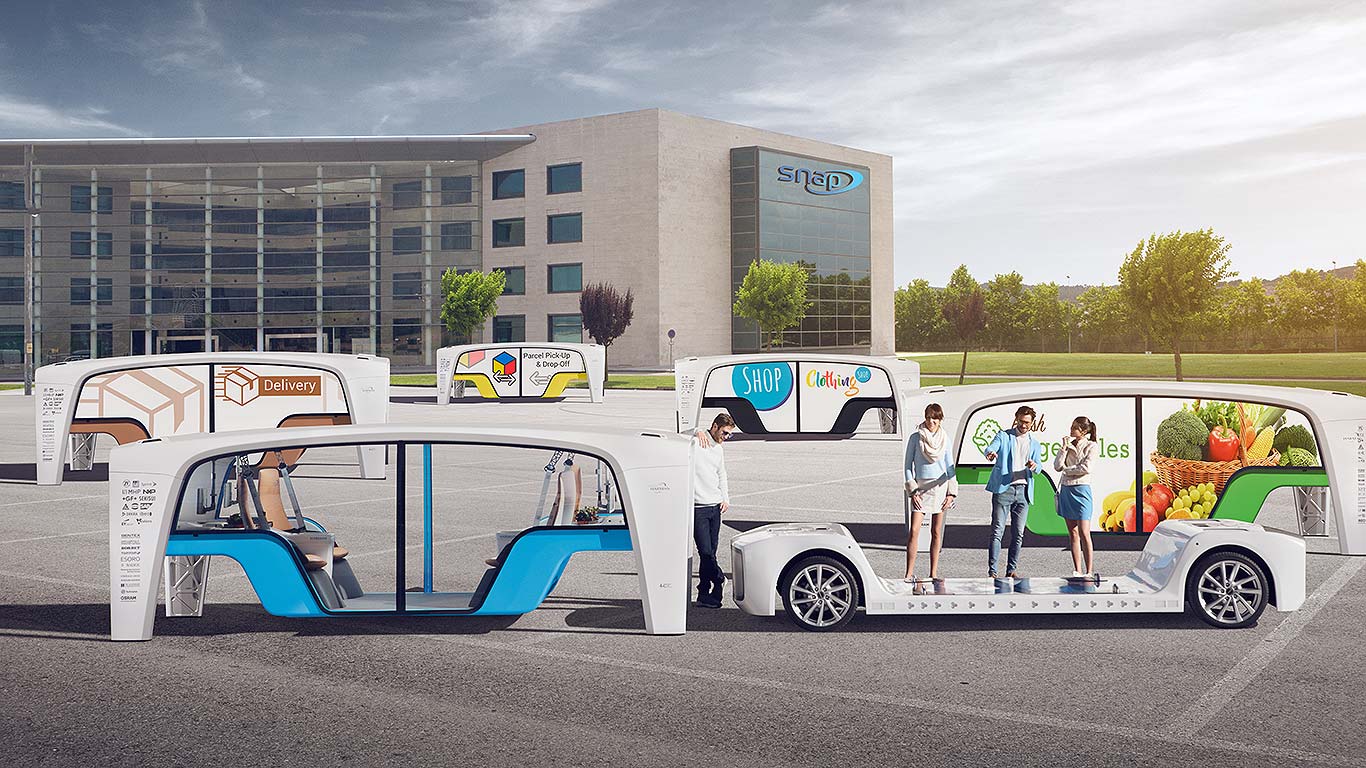
Rinspeed Snap
The car of the future will have expensive hardware and software built into a ‘skateboard’ chassis, upon which a removable passenger ‘pod’ will be mounted. So believes Rinspeed, which says it’s the obvious way to build cars in the future – swap the expensive, fast-dating software when new tech comes along, but keep the flexible passenger pod on top which you can customise as you wish.
The Rinspeed Snap is an attention-grabbing way of demonstrating this. The IT stuff below is recycled after a few years, while the pod on top is kept for much longer. This is greener, enables faster throughput of new technology, and offers the automotive industry an intriguing vision of how to solve the conundrum of different parts of tech-packed cars having different life cycles. If only we could do the same with the infotainment systems of our middle-aged motors today…
Ford ‘Cellular Vehicle-to-Everything’
C-V2X. What does that even mean? Ford and Qualcomm are proud of it, announcing at CES 2018 they’re to collaborate on it, and will launch trials of C-V2X cars in San Diego and Detroit later in 2018.
And what is it? A means of connecting cars to their surroundings: that’s other cars, roadside infrastructure, pedestrian’s devices, even traffic signals. Robust V2X comms are going to be crucial for autonomous cars, helping them ‘see’ things that are out of view, particularly when augmented by ultra-fast 5G cellular data transfer. Ford’s already working hard on autonomous cars: it will be hoping this announcement can help it gain an advantage in smart connected cars as well.
Honda robotics
Automotive technology needn’t just be about self-driving cars and fancy infotainment systems. Honda is a famous champion of robotics and announced its new 3E Robotics Concept as CES 2018.
The three ‘Es’ are Empower, Experience and Empathy. Honda reckons robotics and AI will in the future assist people and “expand their life’s potential”. Helpful, empathetic, friendly robots, that work together as a system. ASIMO’s family is set to grow.
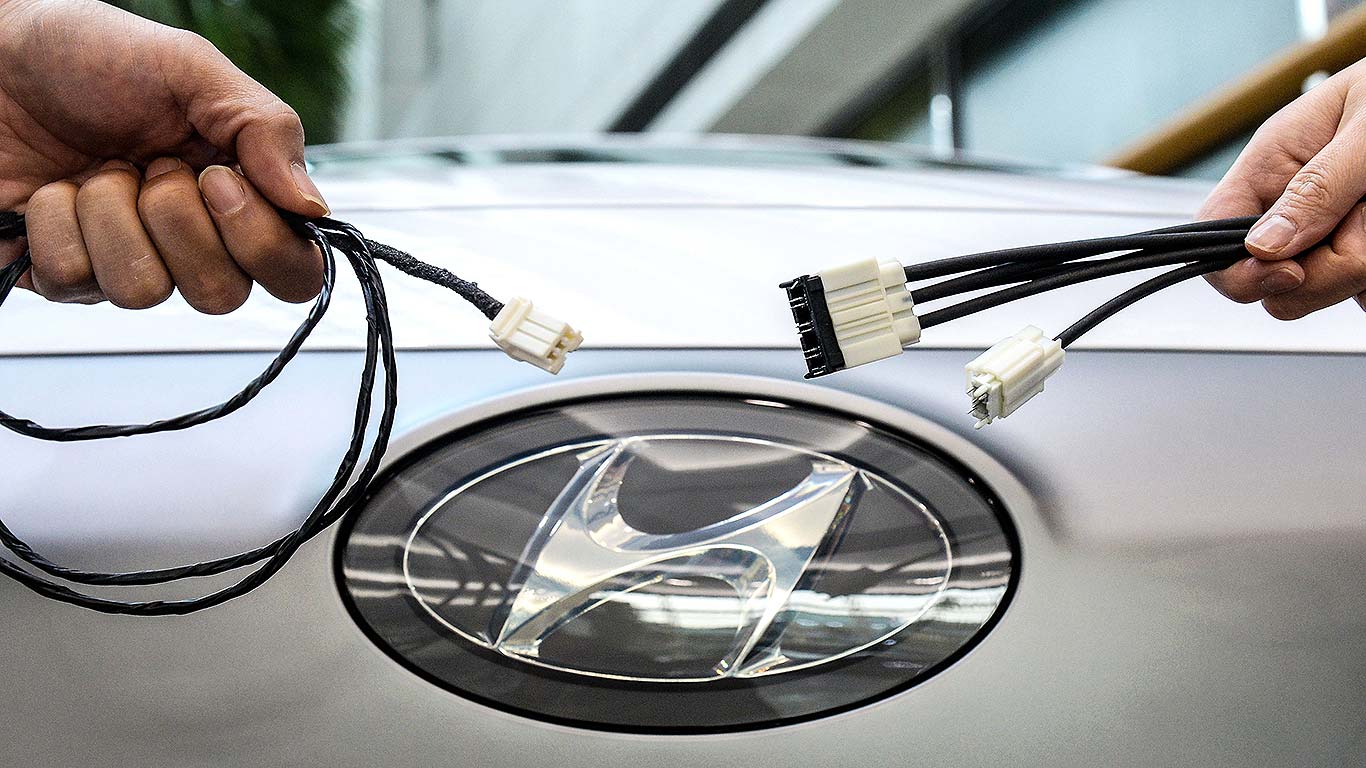
Hyundai ethernet in cars
Isn’t ethernet technology something that’s already been and gone on personal computers? Maybe, but most cars today use even older CAN bus technology, which was hot back in the 1990s, but is alarmingly laggy once you start loading it with today’s data-heavy tech.
The answer is in-car ethernet, and Hyundai is bringing this to production cars from 2019. Capable of processing 1 Gb per second, Hyundai’s teamed up with Cisco to deliver it, giving its future cars the broadest possible bandwidth for the expected ultra-large datasets that will be used in tomorrow’s cars.
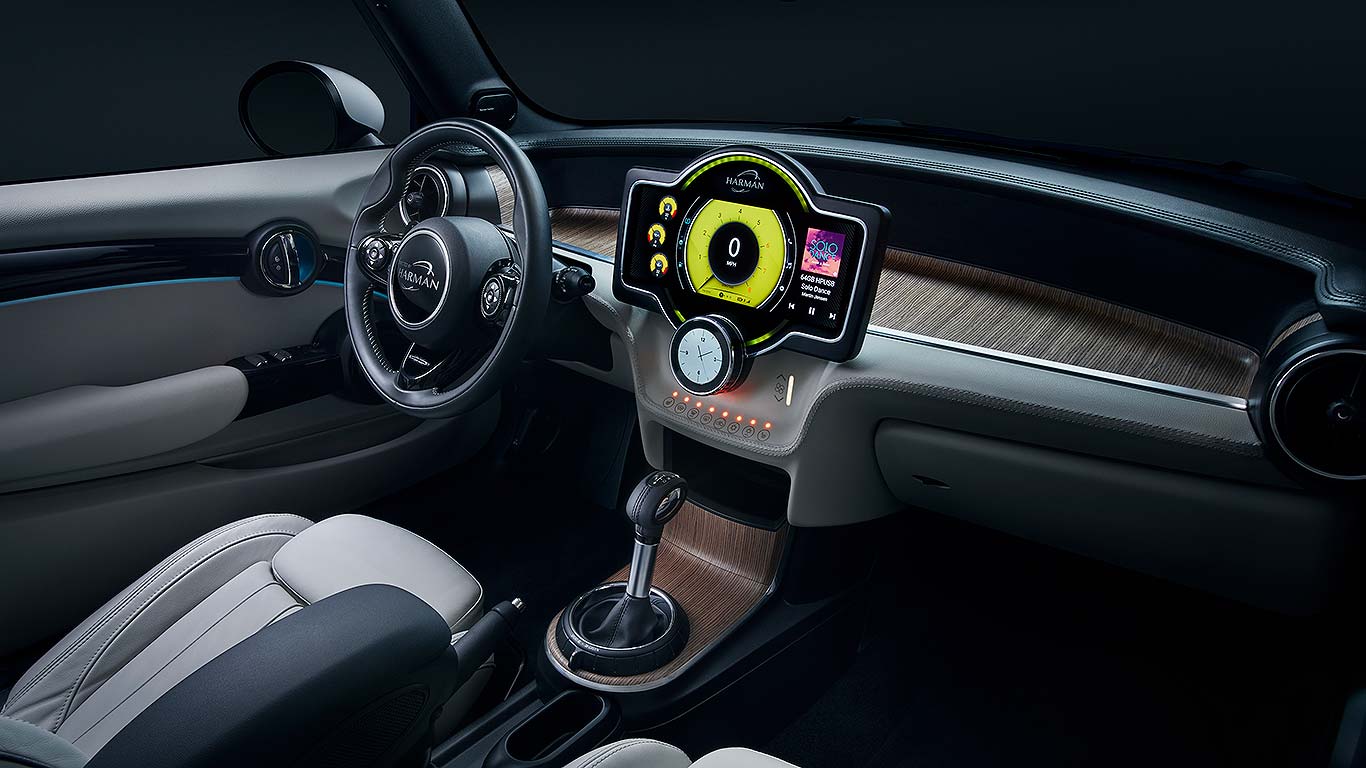
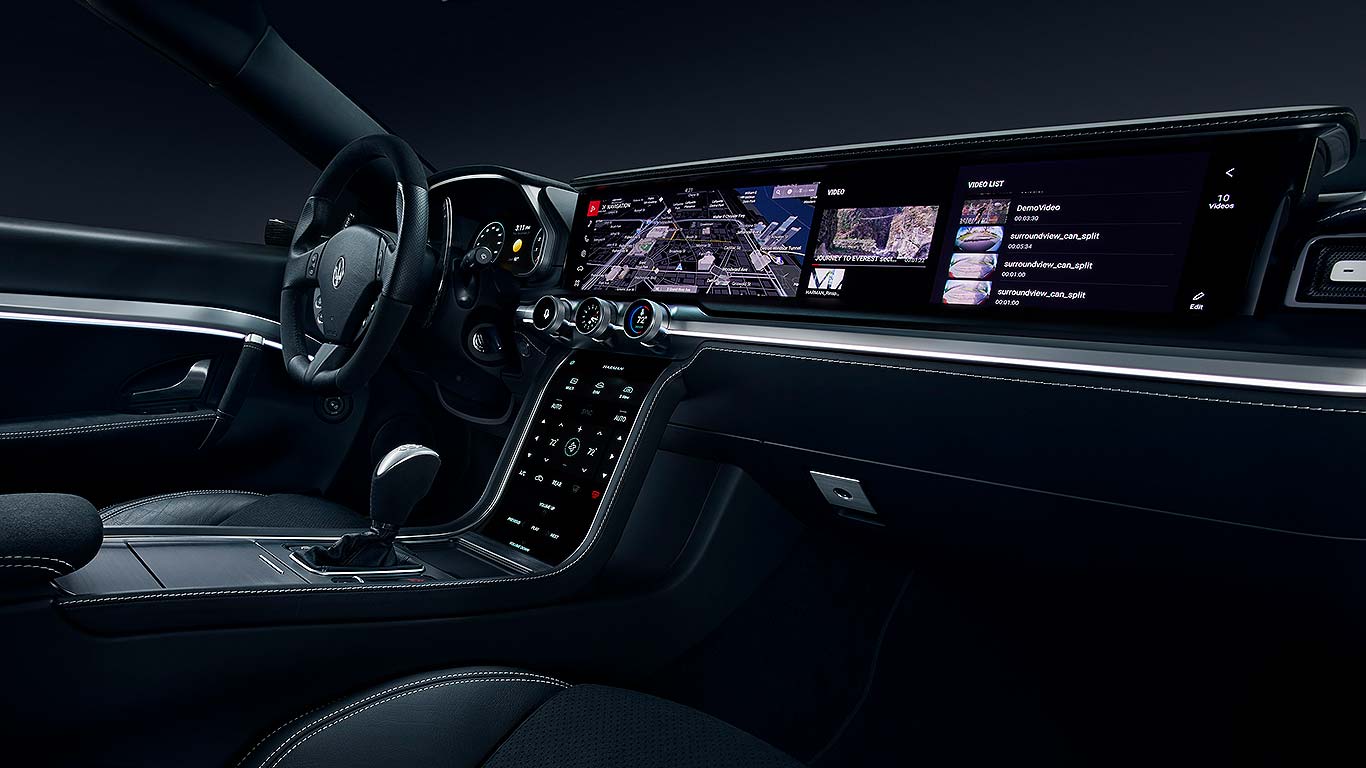
Harman QLED interior display
Feast your eyes on this deliciously rich display. Starring in a converted Maserati Levante, it’s Harman’s world-first automotive-grade QLED display – that stands for Quantum Dot Light-Emitting Diode, and is new tech that’s even better than today’s in-demand Organic Light-Emitting Diode (OLED) displays.
QLED is crisper, sharper, more flexible, more efficient and fully scalable. It’s so advanced, it can produce a range greater than 100 percent colour volume (more than the eye can see, in other words) and is tech that’s fully comparable with the latest, greatest personal electronics. It’s coming soon and will help carmakers integrate even more screens and displays into multiple interior surfaces, without having to charge car buyers a fortune.
Panasonic’s JLR Touch Pro Duo
Panasonic demonstrates the key role tech suppliers play in automotive these days. Remember the buzz around the Range Rover Velar’s amazing Touch Pro Duo infotainment system? Turns out that’s Panasonic technology, using cutting production technologies. The screens comprise multiple layers of touch foils, prints, tint and optical resins, bonded and mounted in flowing polycarbonate.
The lower 2K display even has solid aluminium dials, which use Panasonic Magic Ring Control tech, and both screens are anti–scratch, fingerprint-resistant and display information almost as if it’s floating above the display surface. Just another example of what tech firms are doing to make even the cars of today more alluring.
Harman AudioworX
Premium automotive audio is big business. The latest development is Harman’s AudioworX, a new open audio platform that will make it easier for sound engineers to create innovative new in-car sound experiences. Harman, like many rivals, already does hardware really well: that area, largely, is cracked. Today’s big gains will come in honing the software, and this is what Audioworx allows.
It’s hoping this new platform will “redefine” in-car sound in the future, and also allow carmakers to better differentiate different brands through in-car audio. “In standardizing the audio operating system, Harm is opening up the world of lifestyle autonomous audio to the creativity of all OEMs, audio engineers and enthusiasts alike,” says Harman president Michael Mauser. It will “push the boundaries of what’s possible in vehicles”.
Kia Niro EV Concept
The rather disappointing Kia Niro hybrid is set to become a bit more relevant in the future when it goes all-electric – and the concept version was showcased at CES 2018. It’s Kia’s EV equivalent to the Hyundai Ioniq Electric, and Kia’s talking of a 238-mile range from the 64 kWh battery pack, and decent performance from a 150 kW electric motor.
It’s fitted with a new Active Pedestrian Warning System, which uses front cameras, front speakers and object recognition technology. When it senses, say, a pedestrian or cyclist, it sounds a warning directed at them, and also flashes the light in a “highly intuitive” way so they know what the car’s up to. Just what’s needed, given how silent and surprising electric cars can be…
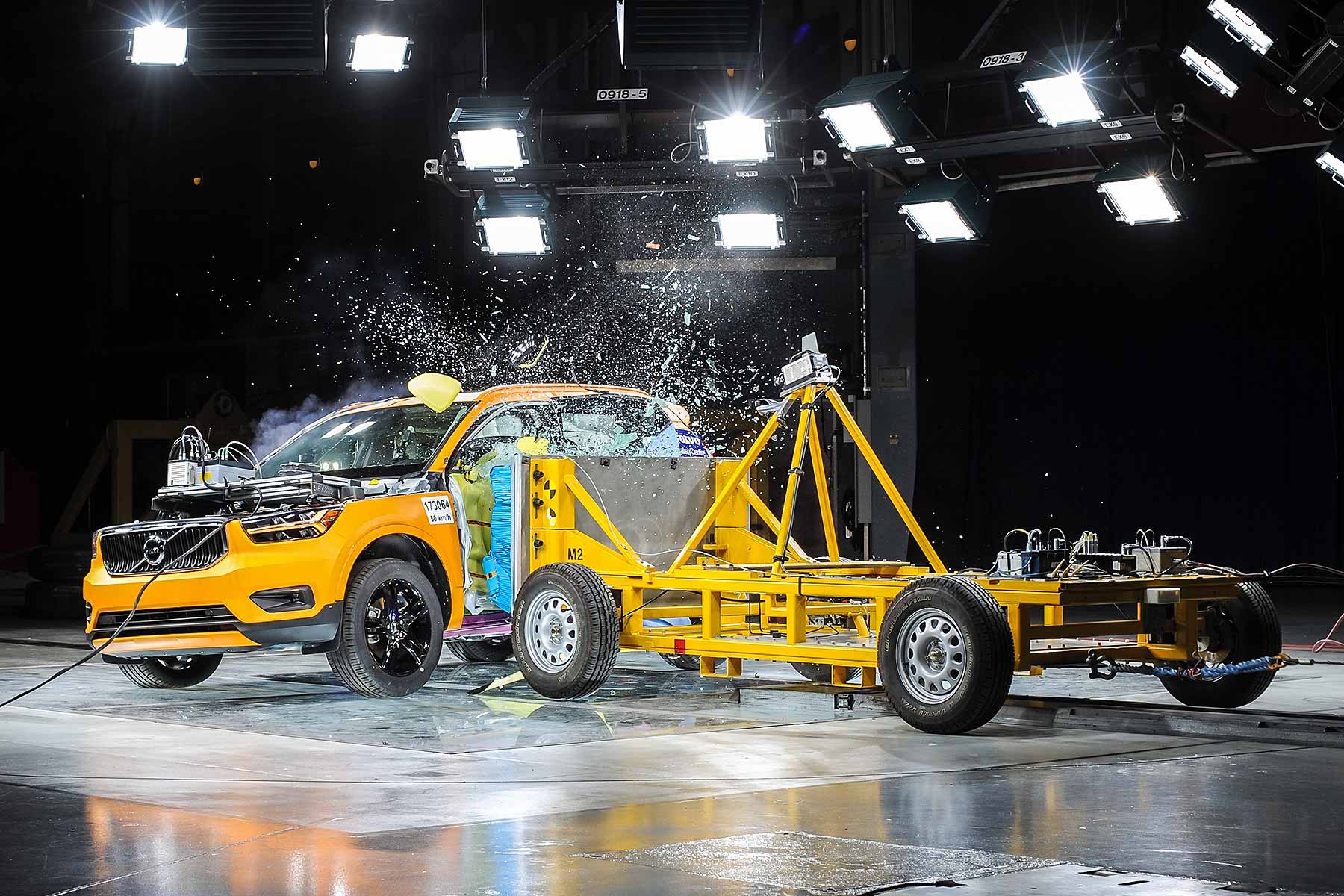
Volkswagen currently produces some of Europe’s safest new cars with its models leading three of Euro NCAP’s six key categories for crash test safety during 2017.
The safety organisation’s annual ‘best in class’ cars lists the Volkswagen Polo as the safest supermini it tested during 2017, the Volkswagen T-Roc as the safest small off-road SUV, and the Volkswagen Arteon as the safest executive car.
Other victors include the Subaru XV and related Subaru Impreza being labelled safest small family cars, the Vauxhall Crossland X emerging as the safest small MPV, and the Volvo XC60 scooping the safest large off-road SUV honour.
The winners come from a haul of nearly 70 models put through the ever-stricter Euro NCAP crash test safety regime. The organisation says 2017 was its busiest-ever year, meaning the victors in each sector are particularly deserving.
Indeed, add officials, not all car categories are listed in the overall safest cars 2017 rankings because not enough models were tested to give a realistic weighted average. This adds further integrity to the cars listed here, it reckons.
Michiel van Ratingen, the secretary general of Euro NCAP, praised Volkswagen. “To win best-in-class in three different categories is a great achievement and underlines the company’s commitment to providing the highest levels of safety to its customers.
“Subaru and Vauxhall-Opel are also offering class-leading products while Volvo continues to underline its reputation for safety. More broadly, though, it is encouraging to see so many new cars performing so well in all areas of safety, and being equipped with greater and greater levels of life-saving technology.”
Assessments are made across four areas: Adult Occupant, Child Occupant, Pedestrian and Safety Assist. There’s no swaying the results with extra safety equipment, either – although some cars come with optional safety kit, only cars in their base guise are eligible for the ‘best in class’ stamp of approval.
Euro NCAP also points out that, despite its tests becoming ever-stricter every year, most of the new cars it tested in 2017 achieved a full five-star rating. To prove just how much car makers have improved vehicle safety in recent years, it adds that older, facelifted models generally performed much less well, particularly in the area of driver assistance tech.
Euro NCAP 2017 safety test: the best-in-class cars
Supermini: Volkswagen Polo
Small family car: Subaru Impreza and Subaru XV
Executive car: Volkswagen Arteon
Small MPV: Vauxhall Crossland X
Small SUV: Volkswagen T-Roc
Large SUV: Volvo XC60
Euro NCAP 2017 crash tests: in numbers
82% of cars were offered with pedestrian-detecting autonomous emergency braking
62% of cars had autonomous emergency braking as standard
92% of cars offered speed assistance
82% of cars had speed assistance as standard
96% of cars had two or more seats compatible with i-Size child restraints
94% of cars had standard rear seat load limiters and belt tensioners
The 2018 motor show season kicks off next week, as Detroit’s Cobo Center hosts the annual North American International Auto Show (NAIAS). Here’s a preview of some of the cars set to star in Motor City, but keep coming back for more reveals as we edge closer to the first press day on January 14.
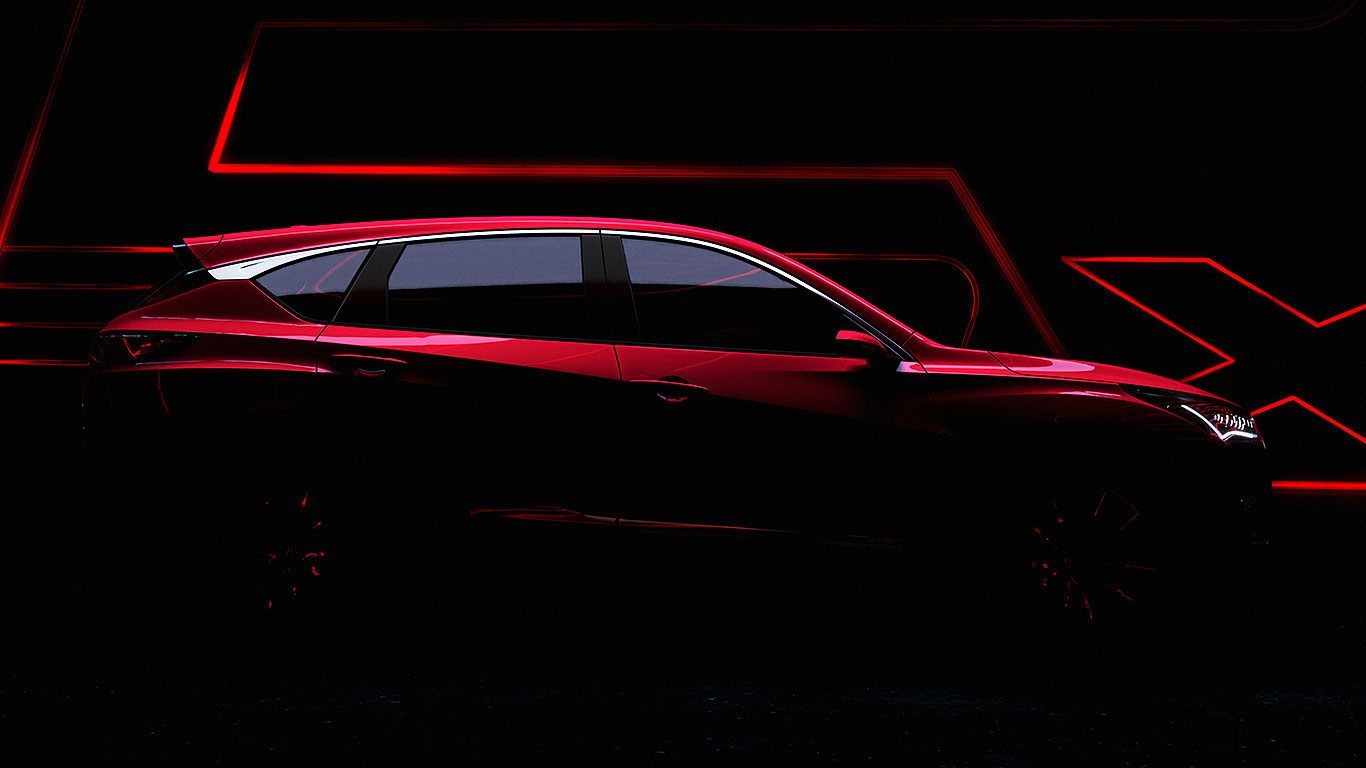
Acura RDX prototype
The RDX badge dates back to 2006, when it made its debut at the New York Auto Show. Twelve years on, the third-generation model will be unveiled in Detroit, with the company promising the “most extensive Acura redesign in more than a decade”. The overhaul comes at a time when the compact crossover is facing renewed competition, most notably from Volvo and Jaguar.
For the first time, the RDX has been designed and developed in America, with the entry-level crossover based on a new Acura-exclusive platform. If this teaser photo is anything to go by, the third-gen model will certainly look more exciting than the outgoing version.
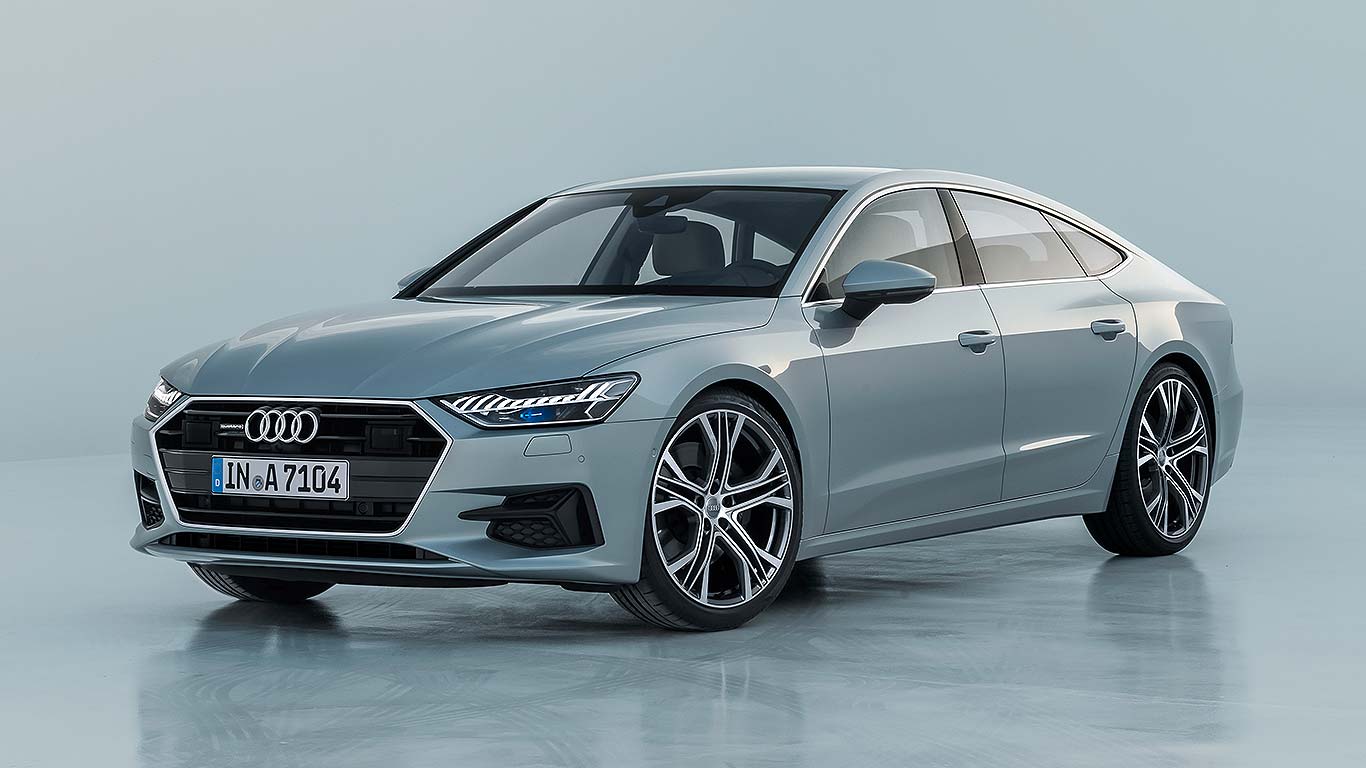
Audi A7 Sportback
The new Audi A7 Sportback was unveiled in October 2017, but will make its North American debut in Detroit. If you think of it as a five-door, five-seat coupe version of the A8 you won’t be too far wide of the mark, and like its more sombre-styled sibling, the A7 features tech that would be more at home at CES in Las Vegas.
Up to seven drivers can store their preferred user profiles, selecting from as many as 400 different personalised options. The A7 also features hazard information Car-to-X services, which utilise the ‘swarm intelligence’ of other suitably-equipped Audis. Remote parking and remote garage pilot will follow later in the year, building on the 39 driver assistance systems. Prices start from £56,000 and you can place your order soon.
BMW i8 Roadster and Coupe
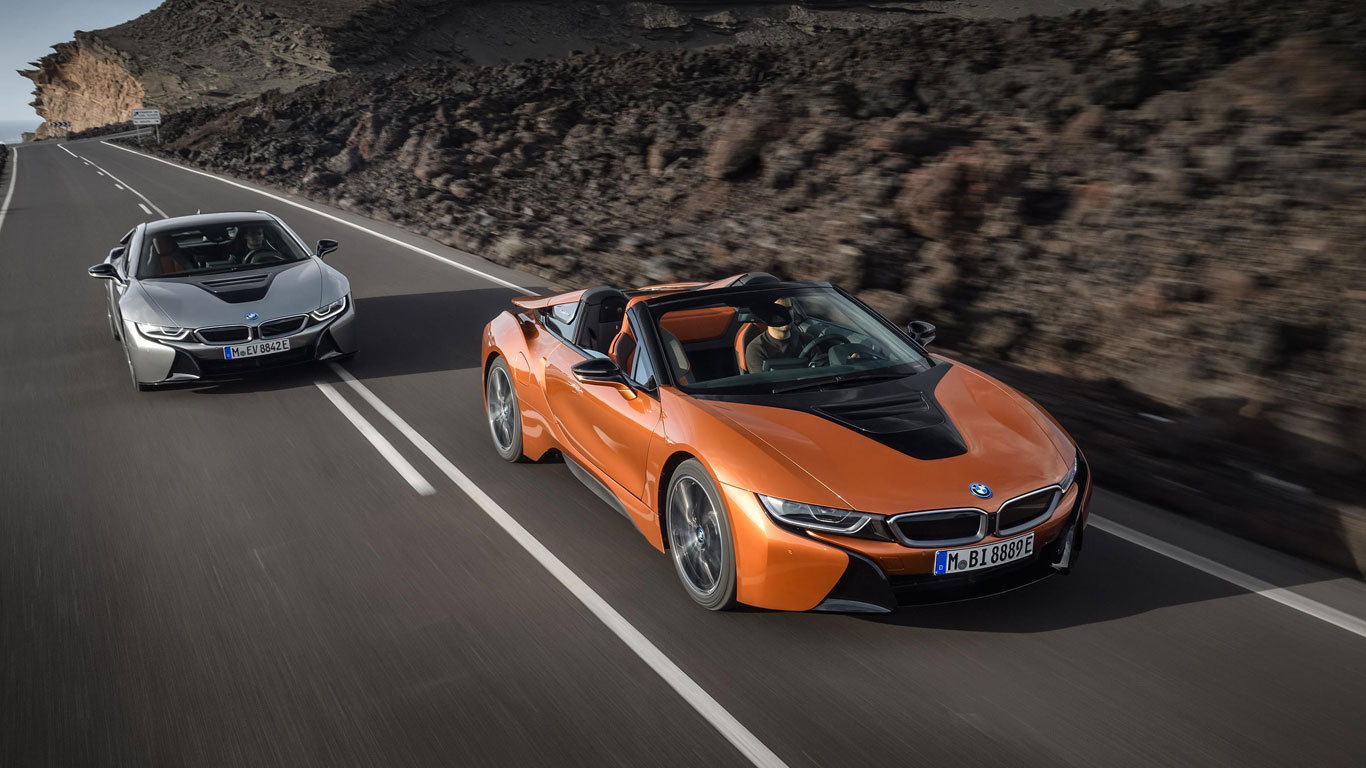
Fresh from its premiere at the Los Angeles Auto Show in December 2017, the BMW i8 Roadster will take a bow in Detroit. The topless i8 features an all-electric fabric roof that opens and closes within 16 seconds while travelling at speeds of up to 31mph. Opening the roof raises the rear window by 30mm, reducing air turbulence in the cabin.
BMW has tweaked the i8’s lithium-ion battery, with its cell capacity increased from 20 to 34Ah. As a result, the motor has more energy at its disposal, increasing the peak output to 143hp. The Roadster can cover up to 33 miles with zero emissions, while the i8 Coupe can, quite literally, go the extra mile, at 34 miles.
BMW X2
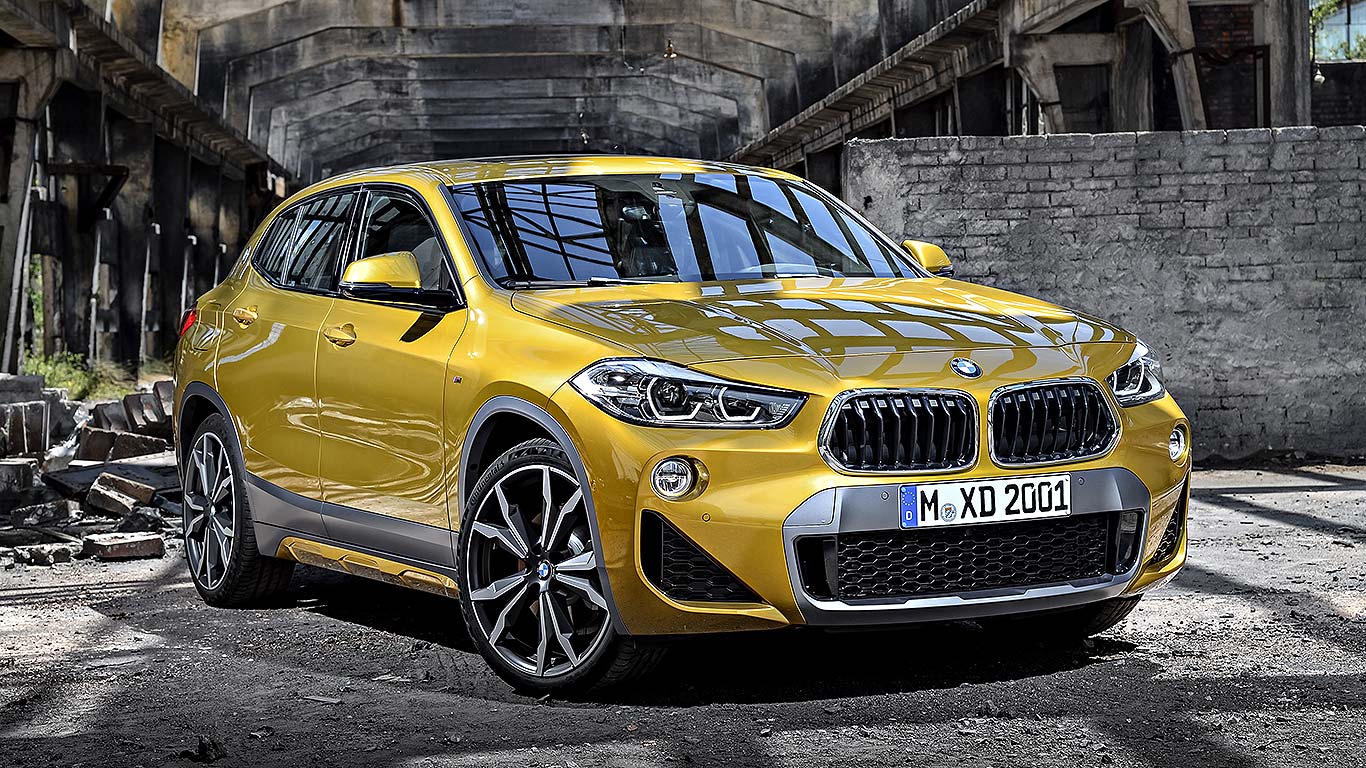
The chances are you might be dreaming of owning a BMW i8, but in reality you’re more likely to drive an X2. This is BMW’s answer to the Range Rover Evoque: a sportier alternative to the X1, with a more exaggerated coupe roofline. It’s also 20mm shorter and over 70mm lower than the X1.
The X2 is already available to order in the UK, with deliveries expected in the first quarter of 2018. Prices start from just shy of £34,000, some £7,000 more than the entry-level X1.
Chevrolet Corvette
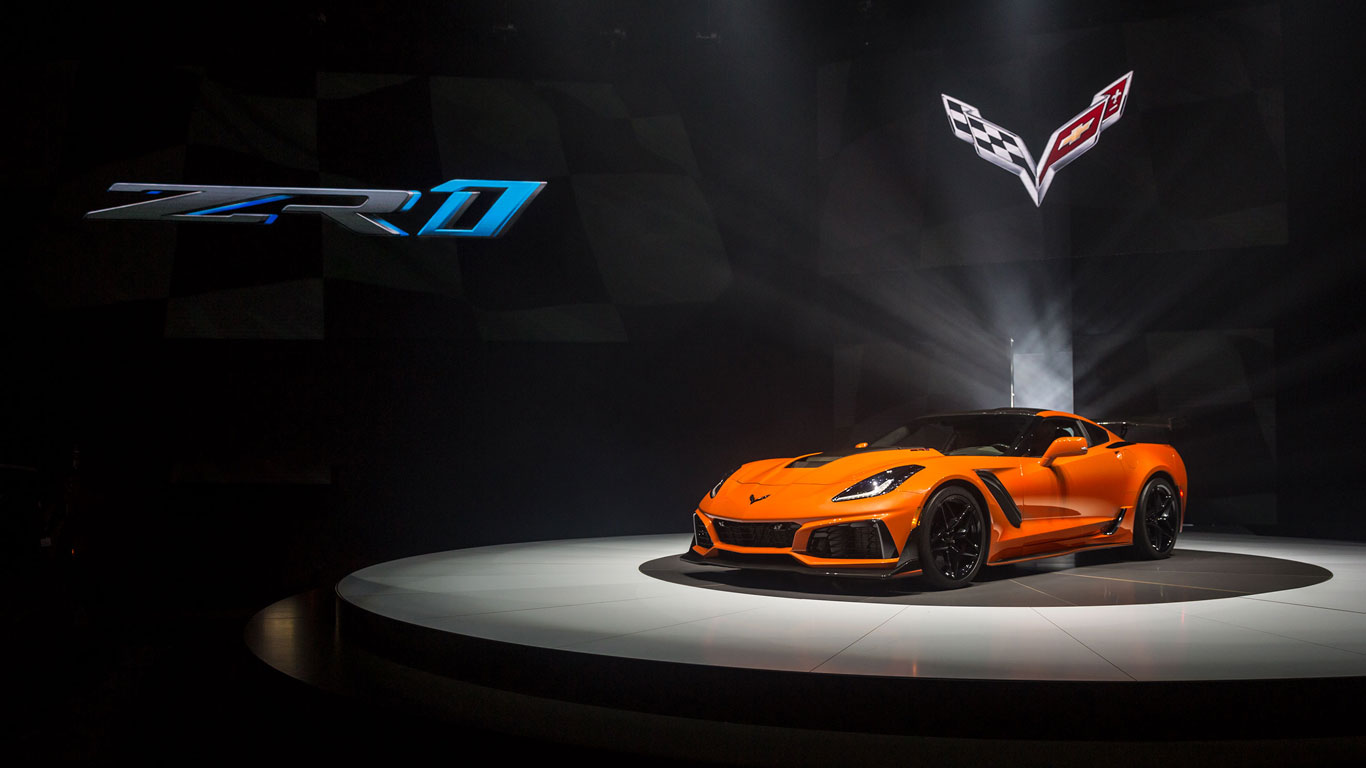
Chevrolet chose Dubai as the venue for the global unveiling of the Corvette ZR1, but it might not be the star of Detroit. That’s because the much-rumoured mid-engine Corvette could be on standby for a show-stopping appearance.
If it fails to materialise, you’ll have to make do with the most bonkers Corvette ever created. The ZR1 delivers 755hp from its supercharged 6.2-litre V8 engine, enough to propel this slice of American lunacy to a 210mph top speed.
Chevrolet Silverado
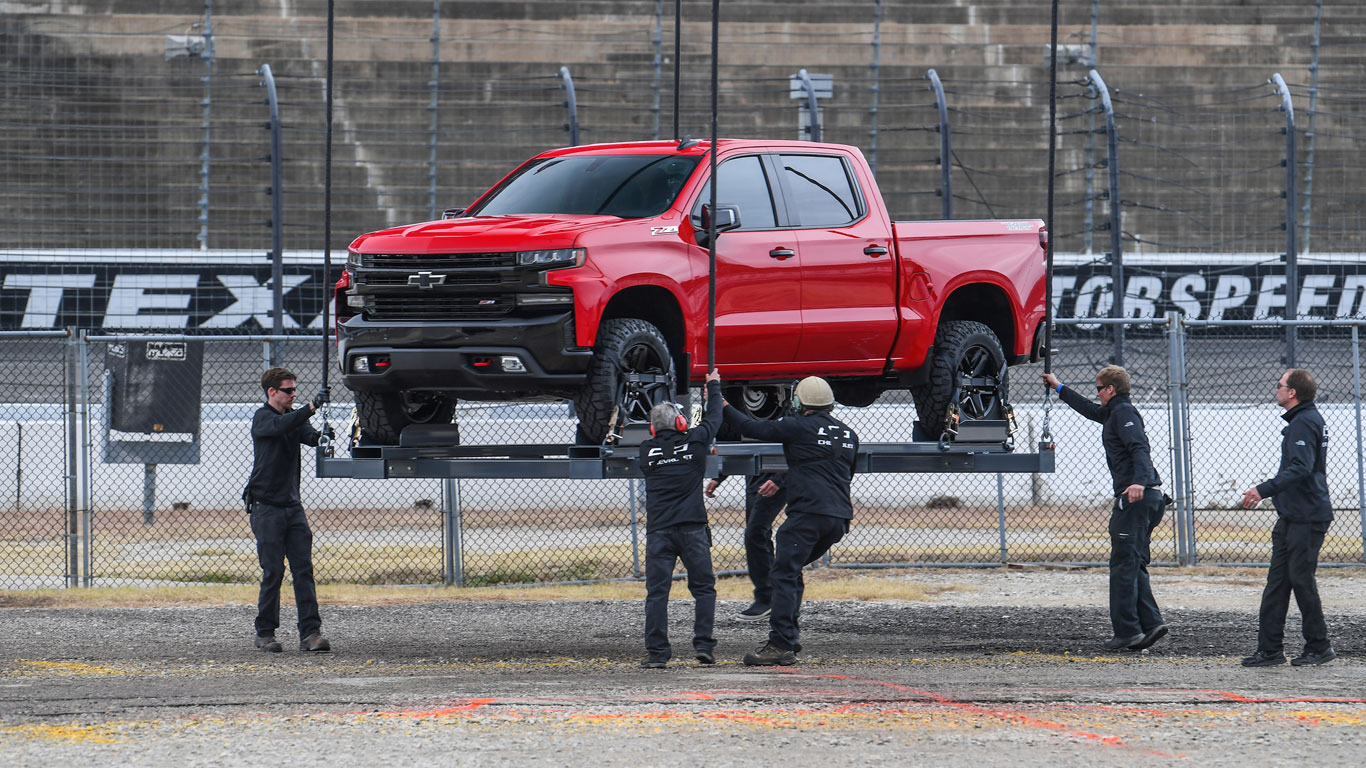
If you happened to be at the Texas Motor Speedway in December for Chevy Truck’s 100th anniversary bash you’ll have slapped eyes on the 2019 Chevrolet Silverado. The big truck was lowered onto stage courtesy of a helicopter, ahead of its proper debut at the Detroit Auto Show.
According to Automotive News, eight Silverado models are planned, with the truck offering more engine and transmission combinations, and additional technology features. “The next-generation Silverado is poised to change, really change, the face of trucks again,” said Alan Batey, president of GM’s North America operations.
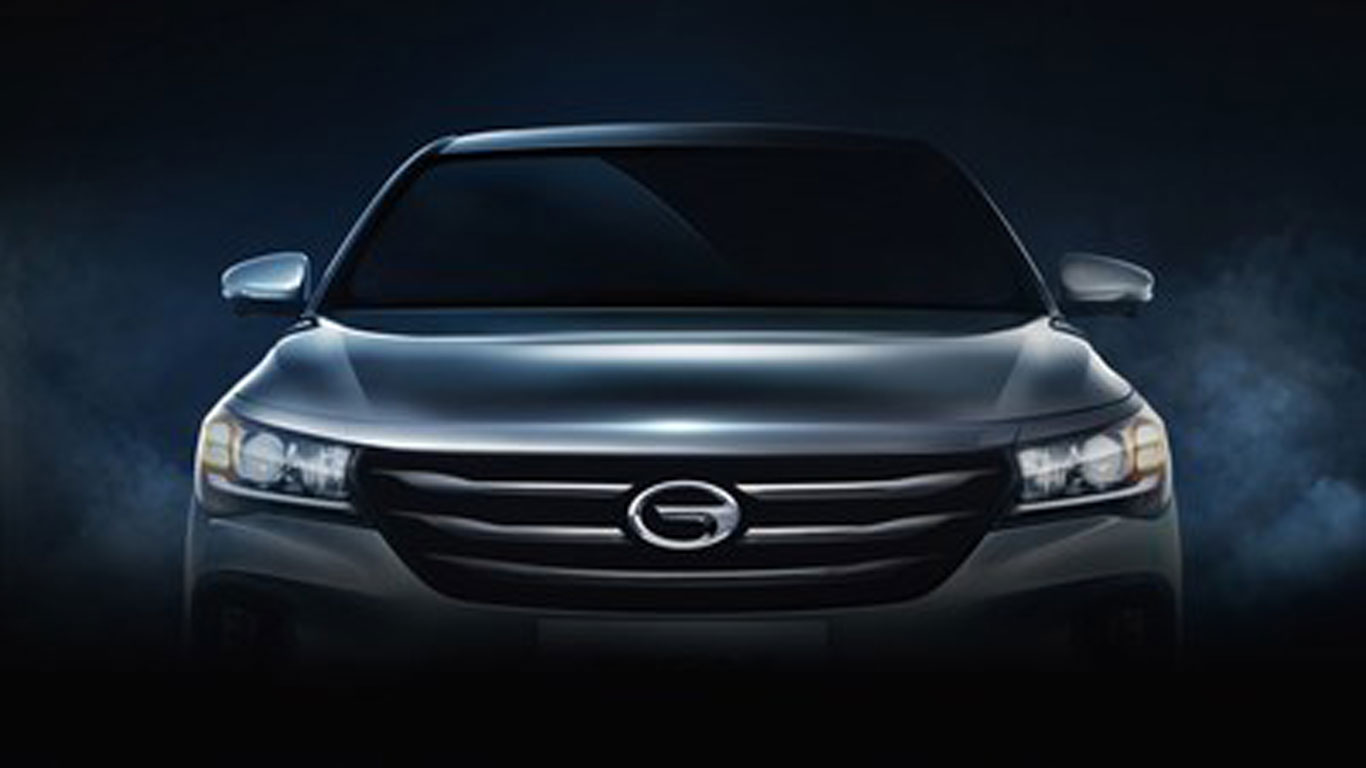
GAC GA4
GAC Motor will unveil a brand new saloon model in Detroit, part of a range of vehicles which, according to the Chinese manufacturer: “demonstrates the brand’s sincerity and determination to enter the North American market”.
Not much is known about the GA4, but it’s built on GAC’s own A-Class saloon platform and is positioned as a “family sedan of quality and charm”, whatever that means. The GA4 will be unveiled alongside the Enverge, the company’s first ‘new-energy’ concept SUV.
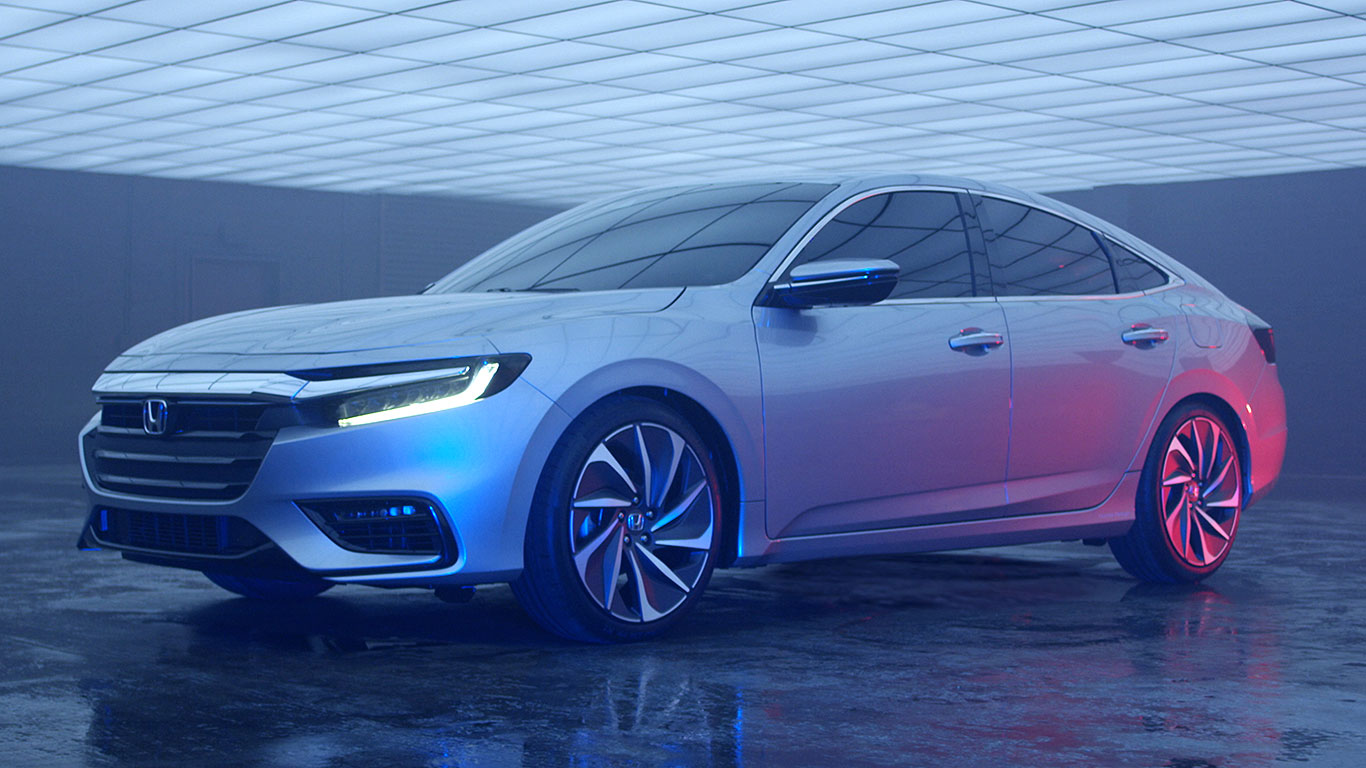
Honda Insight prototype
Remember the original Honda Insight, with its space-age looks and futuristic Integrated Motor Assist (IMA) powertrain? It arrived around the same time as the Prius, but while the Toyota is still around today, the Insight kind of fizzled out, via a rather lacklustre second-generation model.
But now it’s back, with Honda eager to renew its hybrid rivalry with Toyota. Sadly, the new Insight won’t be offered in the UK, but the IMA will appear in future vehicles, most notably the all-new CR-V hybrid.
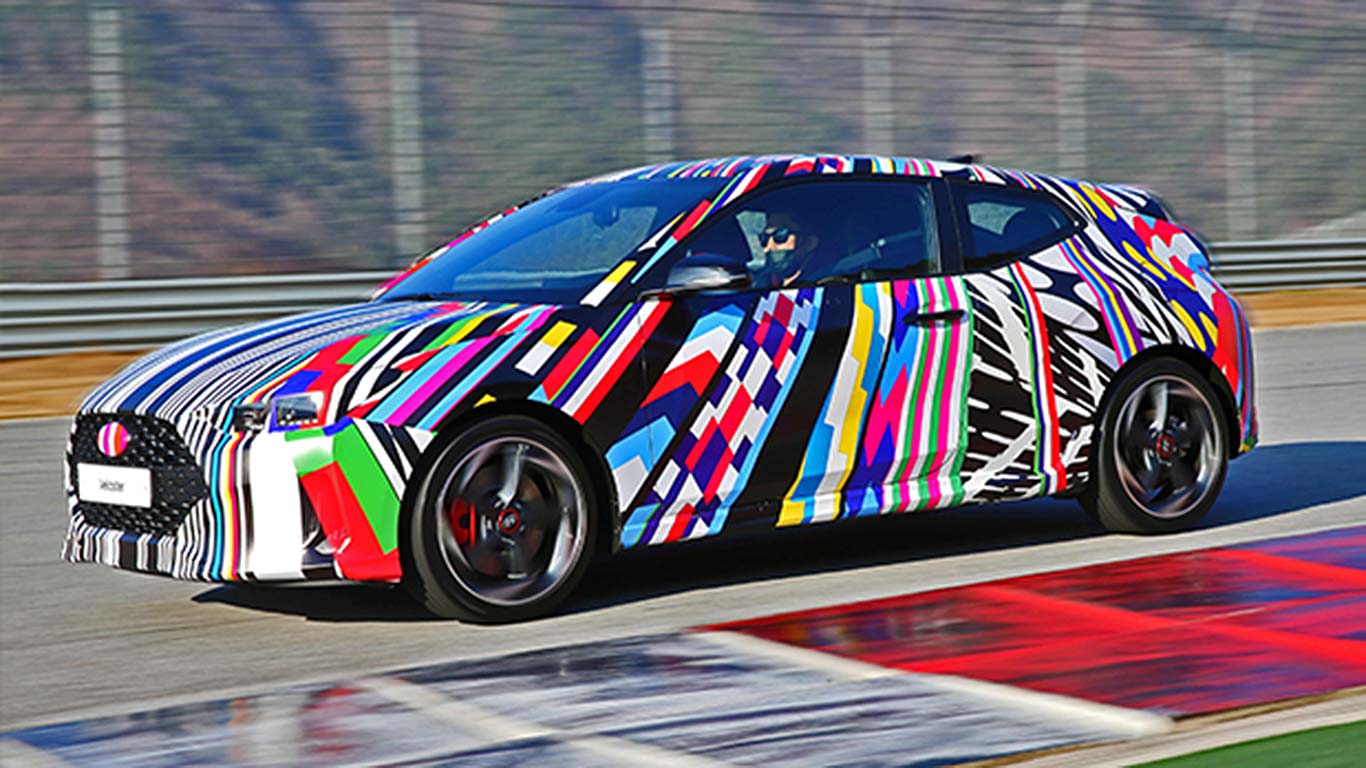
Hyundai Veloster
The UK said goodbye to the Veloster in 2015, as buyers failed to embrace Hyundai’s rather oddball coupe. It didn’t help that the car had two doors on one side and one on the other, but in many ways this rather unconventional approach was part of its charm.
If you liked the asymmetric design, we bring good news: the new Veloster is likely to retain the same format. More good news: we’re expecting a full-fat Veloster N, featuring the same four-cylinder turbocharged engine found in the i30 N. And you thought Hyundai was little more than a five-year warranty and good value for money.
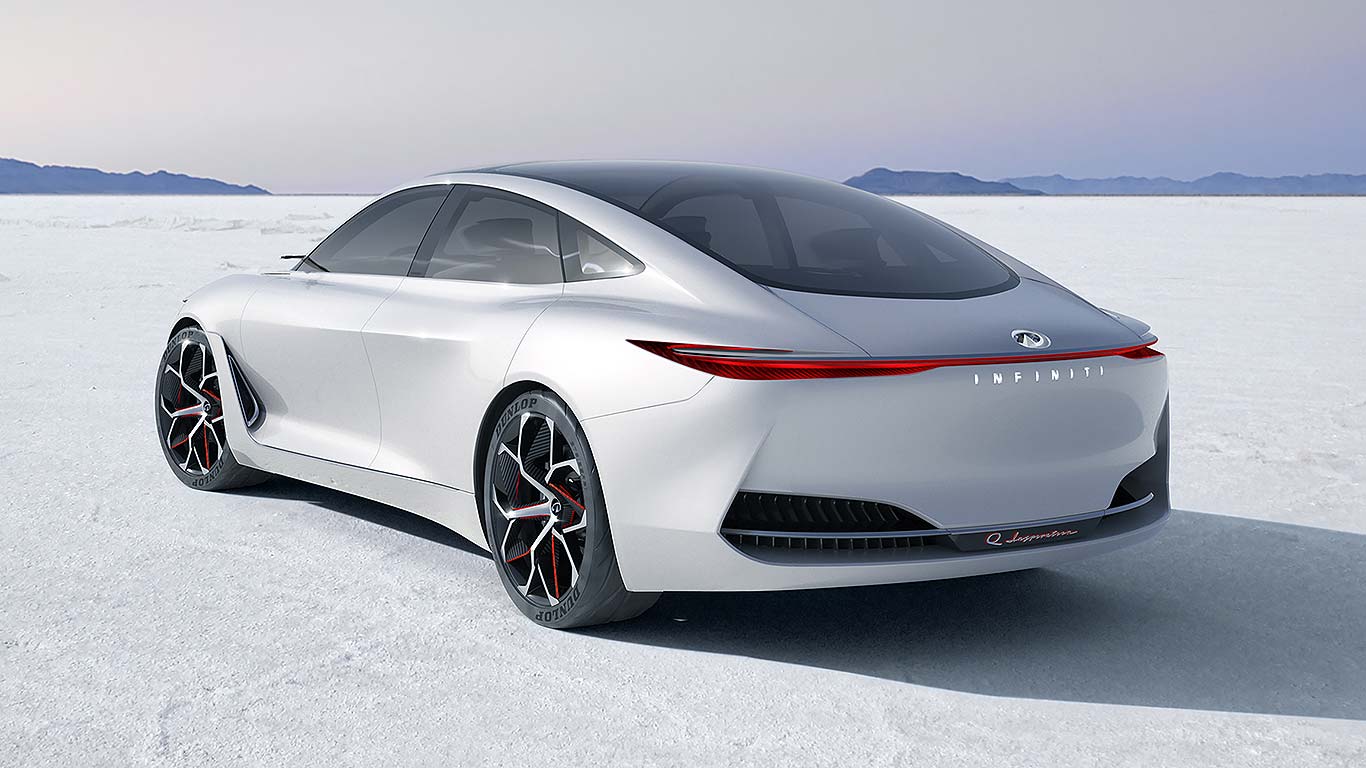
Infiniti Q Inspiration Concept
Infiniti has posted record sales of 153,415 vehicles in the US for 2017, an increase of 11% over 2016. Eager to build on this success, the posh Nissan brand will unveil the Q Inspiration Concept in Detroit.
Pay attention, 007, because Infiniti is promising to “take traditional sedan architecture to its next stage of evolution… [offering] an alternative form; something more flowing in appearance and muscular in stance, with an unusually long and balanced cabin.” We’ll have to wait for the reveal on January 15 for more information.
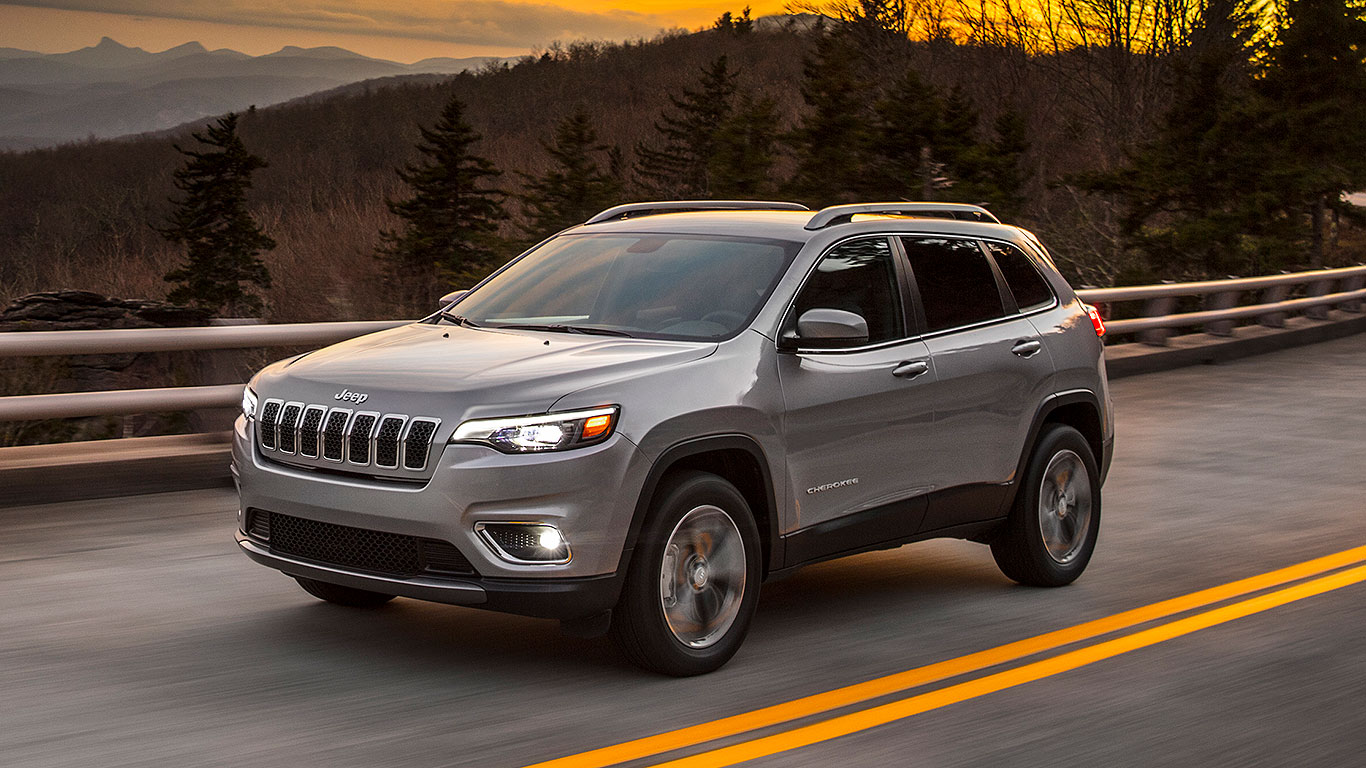
Jeep Cherokee facelift
Jeep is in desperate need of a pick-me-up, with sales down 54.7% in 2017. In a market favourable to crossovers and SUVs, this is little short of a disaster. Can a facelifted Cherokee – which performs well in other countries – reverse Jeep’s fortunes in the UK?
It certainly looks more appealing than the outgoing model, with a face that’s more akin to the all-new Compass and larger Grand Cherokee. Jeep is also promising more fuel-efficient engines for the 2018 update.
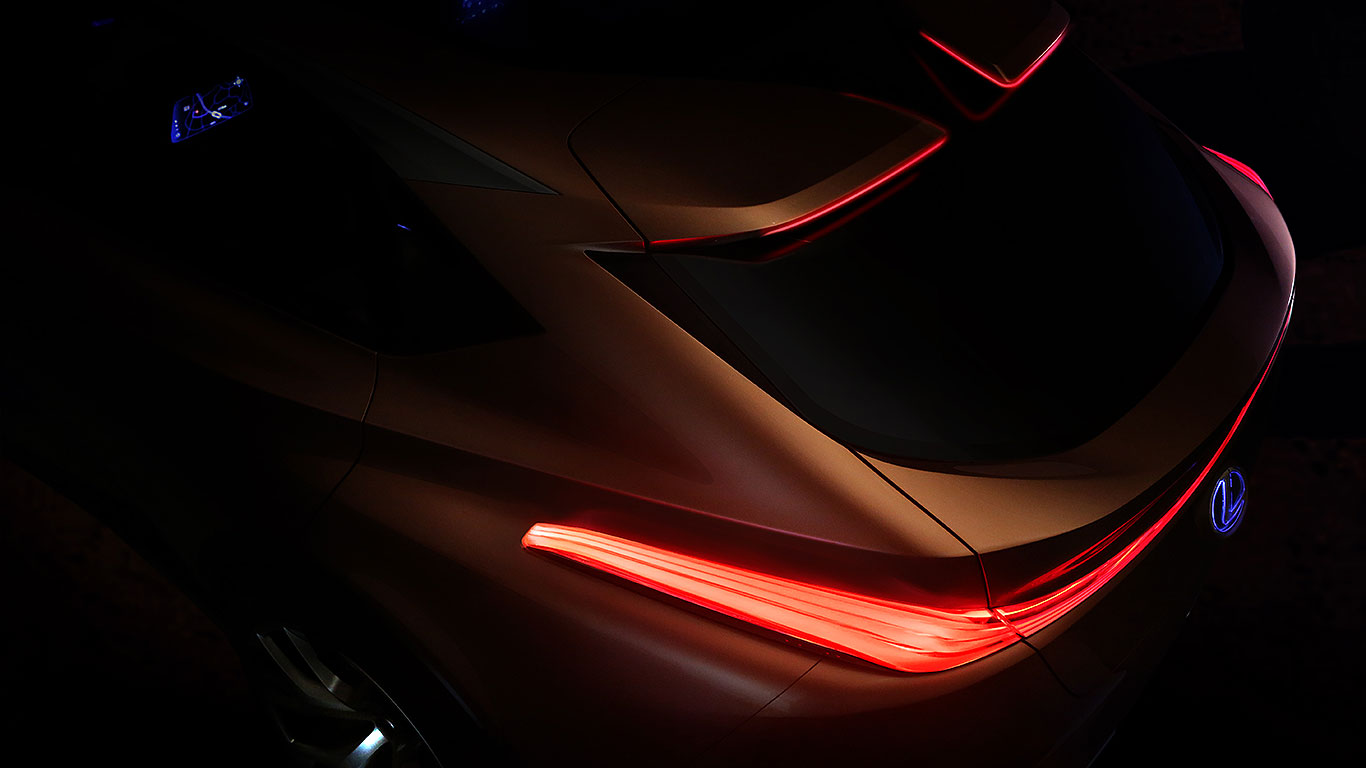
Lexus LF-1 Limitless
Limitless was a 2011 film starring Bradley Cooper and Robert De Niro, in which a struggling writer pops a pill that enables him to utilise 100% of his brain. It’s a brilliant film, but it has little in common with the new Lexus concept, aside from the name.
The LF-1 Limitless is a flagship crossover, but Lexus is giving little else away. “Lexus will reveal a striking new concept that reflects the next genre in luxury crossover vehicles.” Bradley Cooper’s character would know what it looks like before the car is unveiled on January 15.
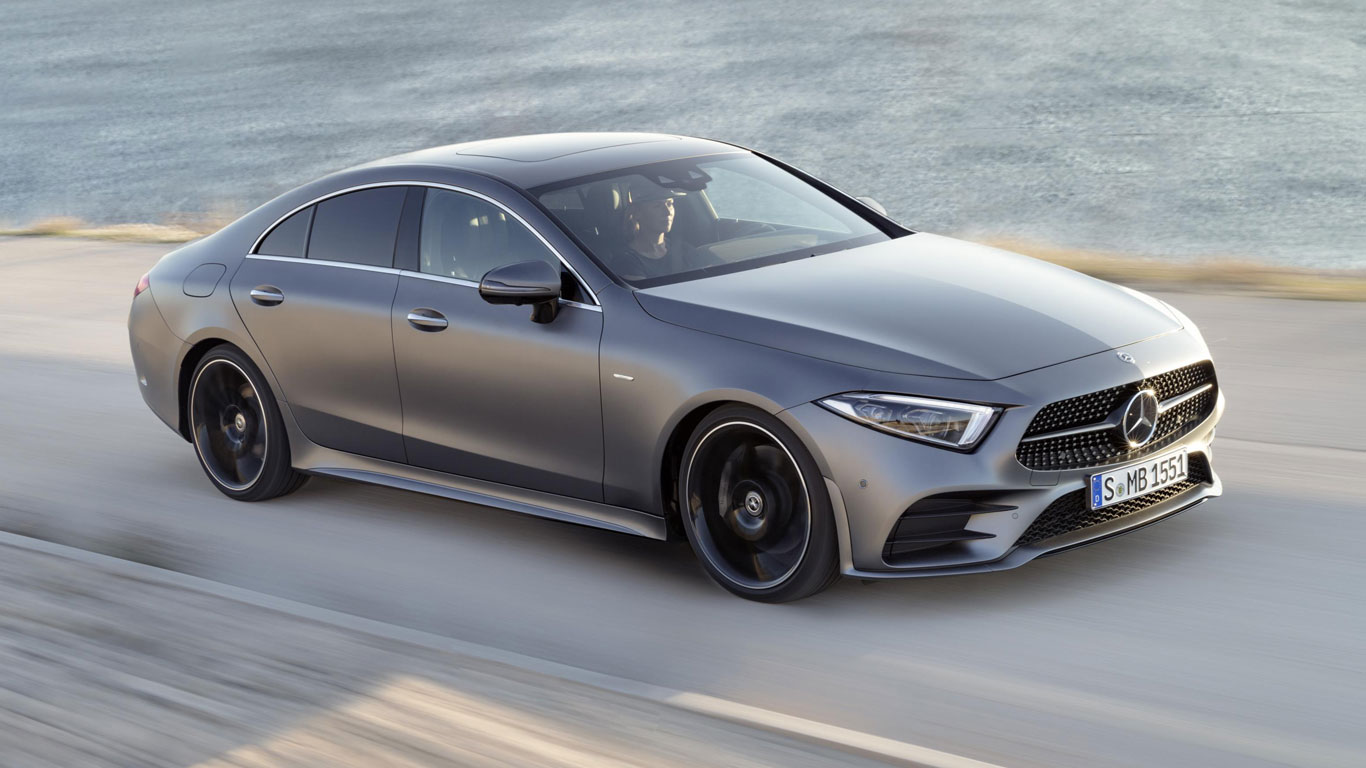
Mercedes-AMG CLS 53
The Mercedes-AMG CLS 53 is a petrol-electric hybrid version of the standard CLS. In common with AMG 43 models, it’s powered by a 3.0-litre straight-six engine, which combines with an electric motor to produce 429hp.
This signals the end for the Mercedes-AMG CLS 63, meaning you can wave goodbye to the 5.5-litre V8 bi-turbo engine in this body. But don’t worry, there’s a four-door AMG GT on the way…
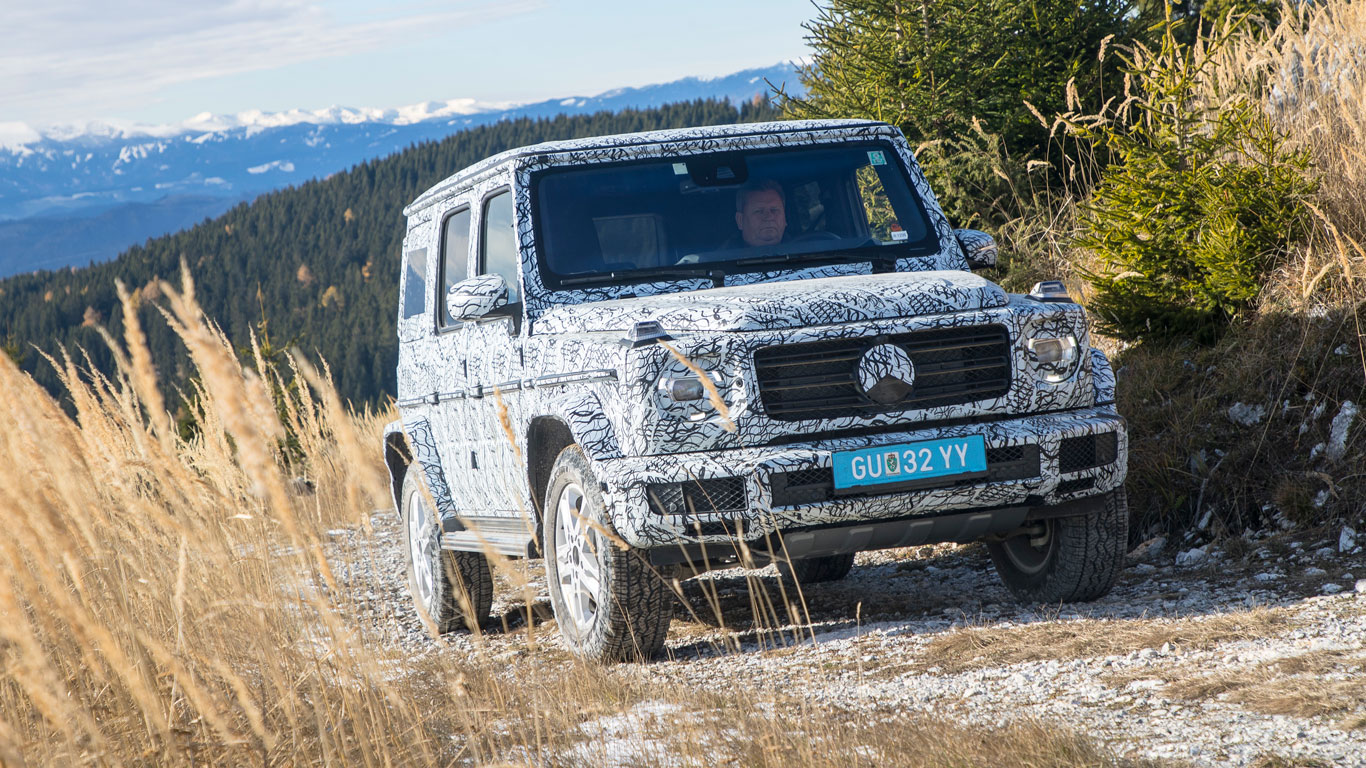
Mercedes-Benz G-Class
“The primary goal of development was to make the new G-Class even more effective off-road,” says Mercedes-Benz. Little surprise, then, that the new G features a ladder-type frame, three 100% differential locks and low range off-road ratio.
A thinly-disguised G-Class has been put through its paces on a 1,445-metre high road in Austria, but we expect it to be hosed down in time for the Detroit show.
Ram 1500
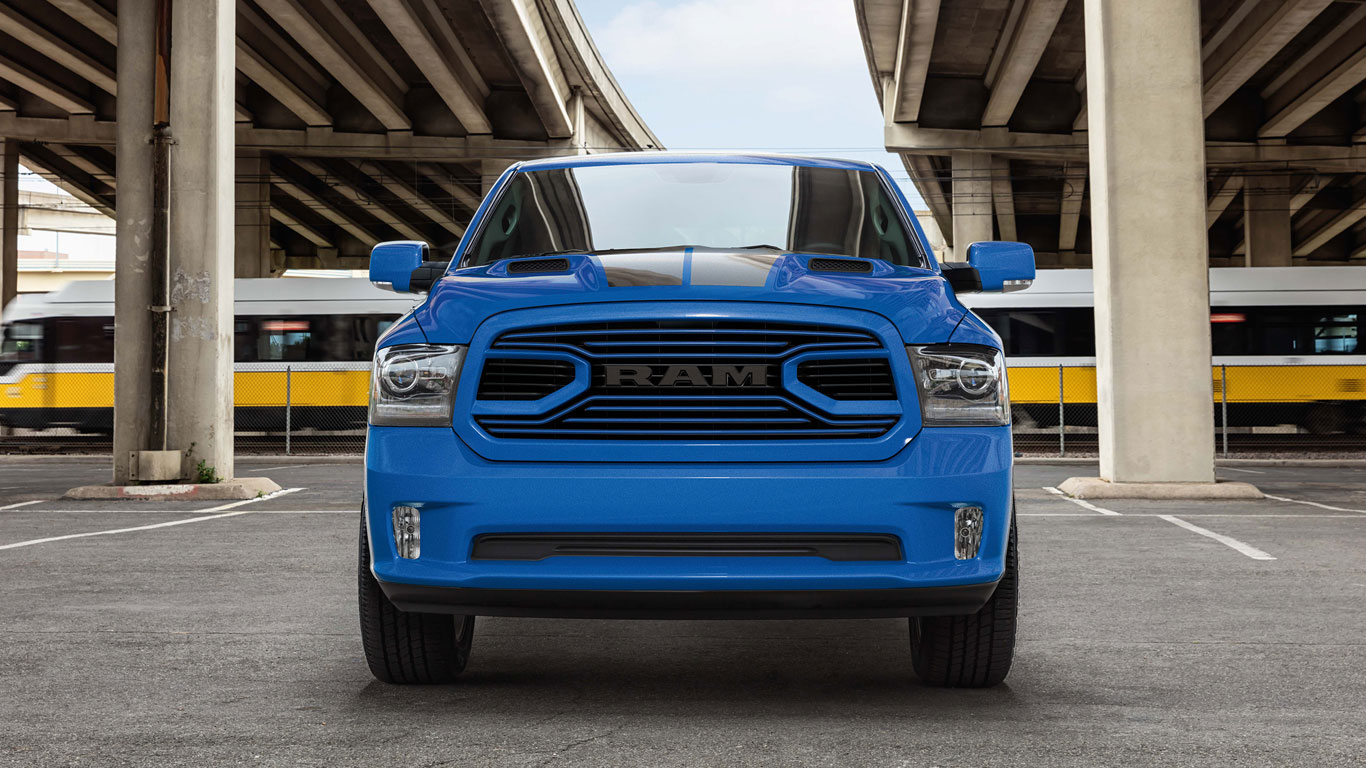
There are a few spy shots of the 2019 Ram 1500 doing the rounds, but for now you’ll have to make do with this photo of the outgoing model. According to Autoblog, the new truck will feature a 5.7-litre V8, which will probably be accompanied by a V6 petrol and possibly a new version of the EcoDiesel V6.
Unlike the Silverado, we’re not expecting the Ram 1500 reveal to feature any helicopters.
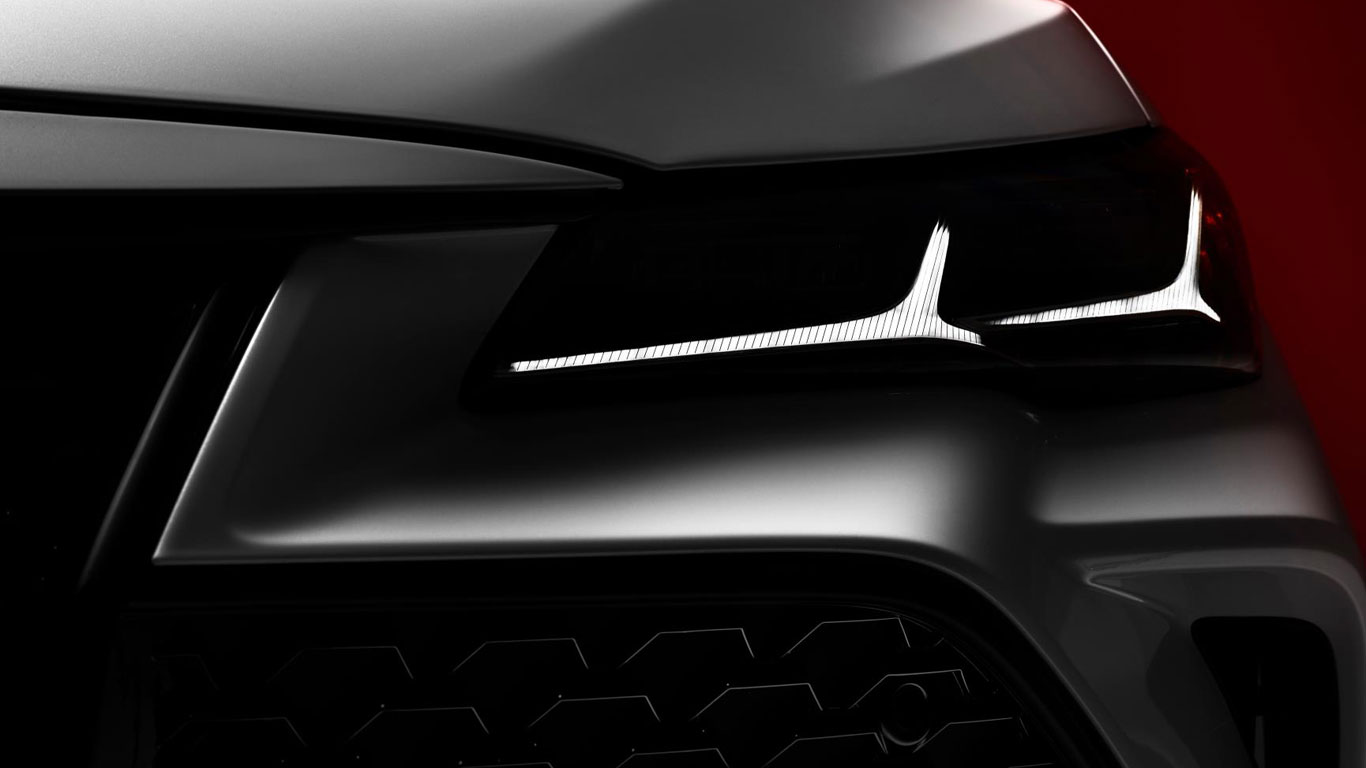
Toyota Avalon
As if to prove the saloon is alive and kicking, Toyota will unveil a new Avalon at the 2018 Detroit Auto Show. If nothing else, Bryan Ferry will be delighted.
The Avalon nameplate dates back to 1994, with the current fourth-generation model introduced in 2012. A video shared on social media reveals that the 2019 Avalon features sequential indicators, like the ones you see on new Audis. We’ll have to wait for the show for more details.
Volkswagen Jetta
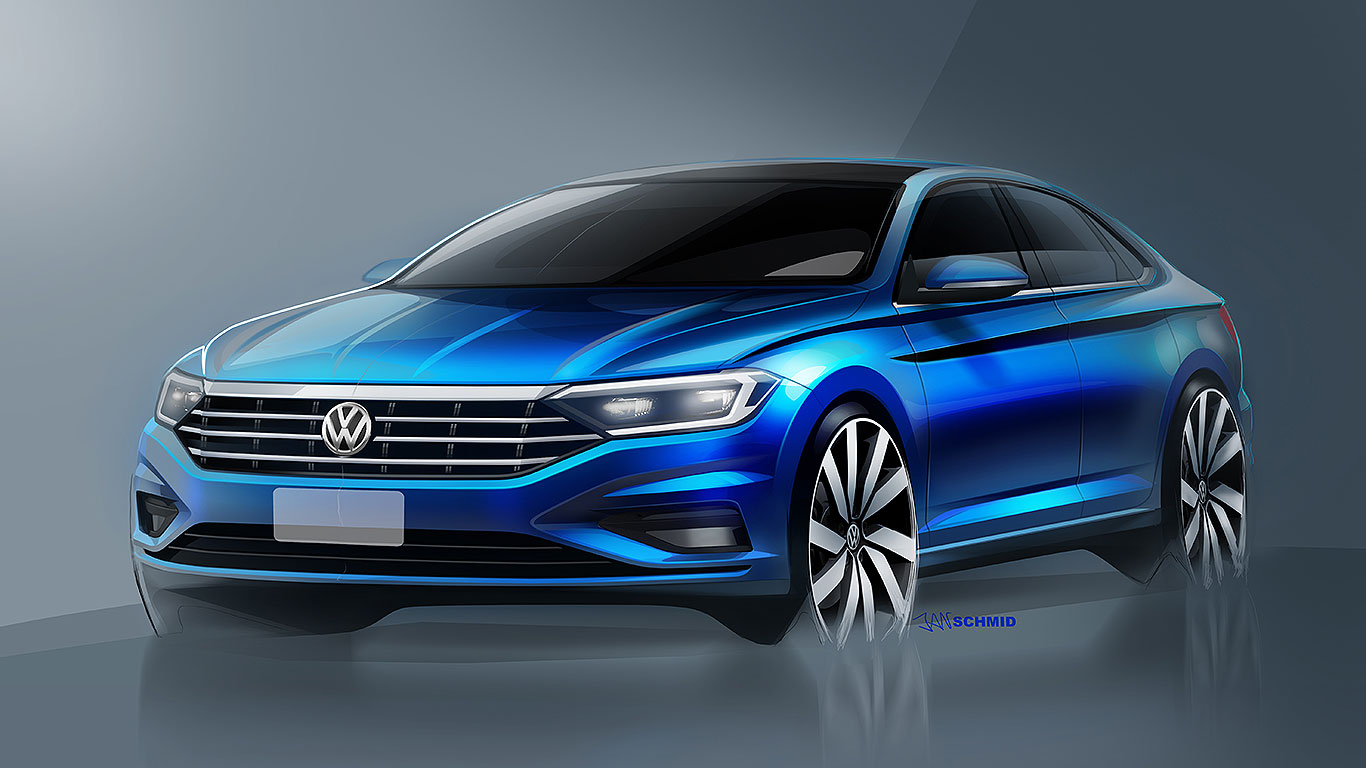
“Volkswagen releases sketches of the all-new 2019 Jetta, ahead of its Detroit Show debut.” As press releases go, this is rather brief, but the Jetta is a big deal in the US, where the compact saloon is hugely popular.
It looks a little like the larger Volkswagen Arteon and is certainly more handsome than the UK-spec Jetta, which was given the chop in 2017. The new Jetta has been designed with the US market in mind, and we’re unlikely to see it in the UK.
Car companies at a tech show? You better believe it. With the Consumer Electronics Show (CES) kicking off in Las Vegas this week, more car firms than ever are showing off the latest in autonomous driving tech and eco powertrains.
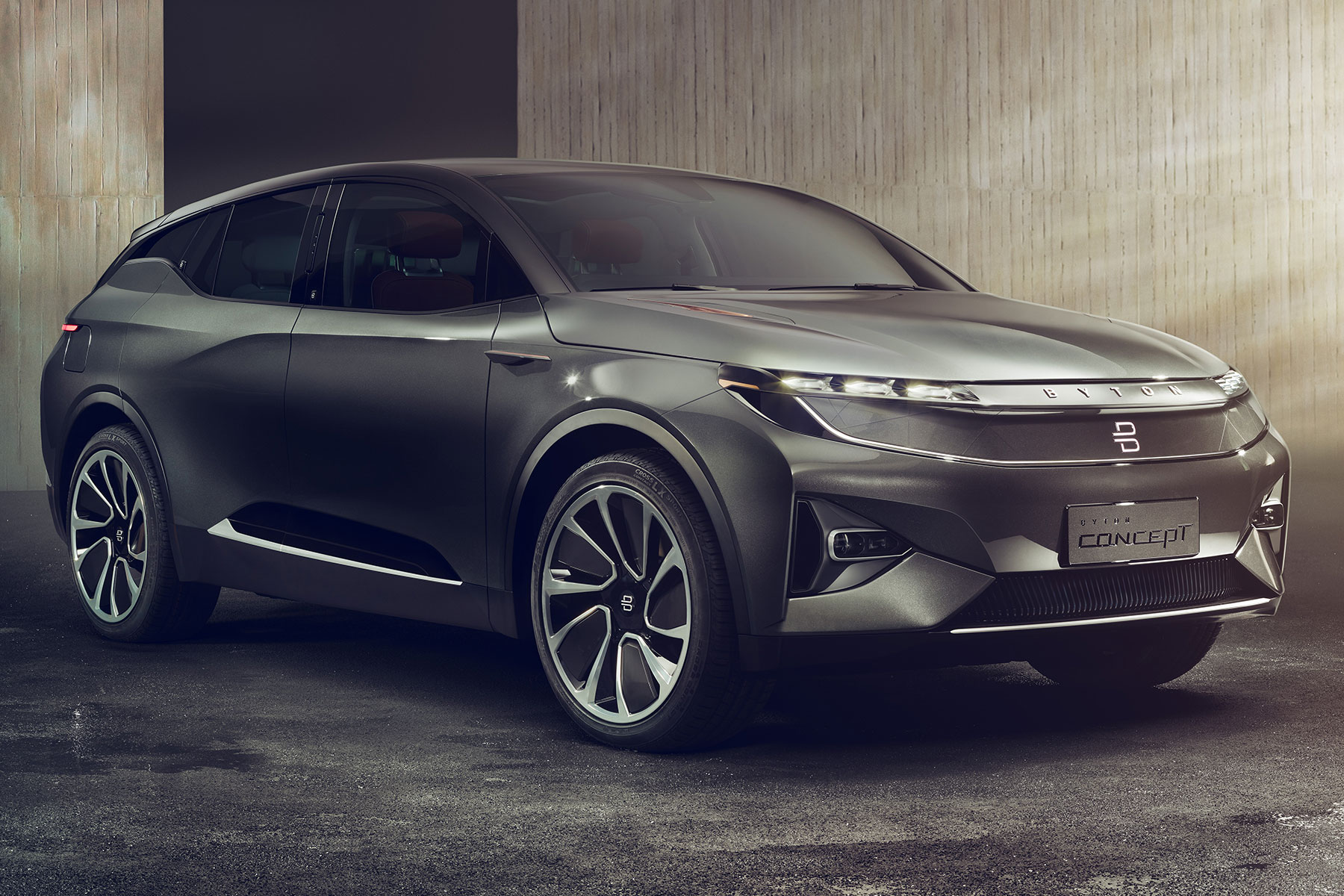
One such manufacturer is Byton. You’ve probably never heard of Byton, but it’s a Chinese start-up with big ambitions to take on Tesla with its electric vehicles of the future.
Its first car, known only as ‘the Concept’ (Byton takes its name from Bytes on Wheels, if you were wondering), looks to us like a Chinese take on the Range Rover Velar (with a bit of DS thrown in). But it’s inside where the Byton really stands out from the crowd.
There’s a huge 48-inch wide display along the dash, while Amazon Alexa provides hands-free voice control. The display, which is intended to be used by passengers as well as the driver, automatically adjusts its brightness to reduce glare during night-time driving. The steering wheel houses a tablet computer, while passengers in the rear also get their own screens.
The entry-level rear-wheel-drive Byton is powered by a 71kWh battery producing 200kW (268hp) and a range of 250 miles. There’s also a more powerful 4×4 version using a 95kWh battery powering two motors providing 350kW (469hp) and a range of 325 miles.
At launch, the SUV will feature Level 3 autonomy with plans to upgrade to Level 4 using a software update in 2020.
The production model will go on sale in 2019, says Byton, while a saloon and MPV will follow using the same platform.
Prices are yet to be confirmed, but $45,000 has been mooted in the US. That’s around £33,000, but expect it to be pricier if it ever makes it to the UK.
We don’t condone speeding, but most drivers are at their most observant barrelling up the motorway at 80-ish. While anyone who really cares about their licence would stick to the 70mph national speed limit, many are happy to exceed that while keeping an eye on the traffic ahead for lurking traffic cops. If they’re in a batternberg-spec Volvo or BMW, they’re fairly easy to spot, but what if they’re driving something a little more discreet?
Covert cars are increasingly being used by police forces, for obvious reasons. They blend into traffic and catch motorists acting naturally – whether that’s speeding, using their phone or driving dangerously. In the early days of unmarked cop cars, they were still fairly easy to spot. A white Vauxhall Omega or BMW 3 Series with lights ‘hidden’ behind the grille stood out a mile off, especially when driven by a someone in a hi-vis jacket and cruising at 68mph in the inside lane.
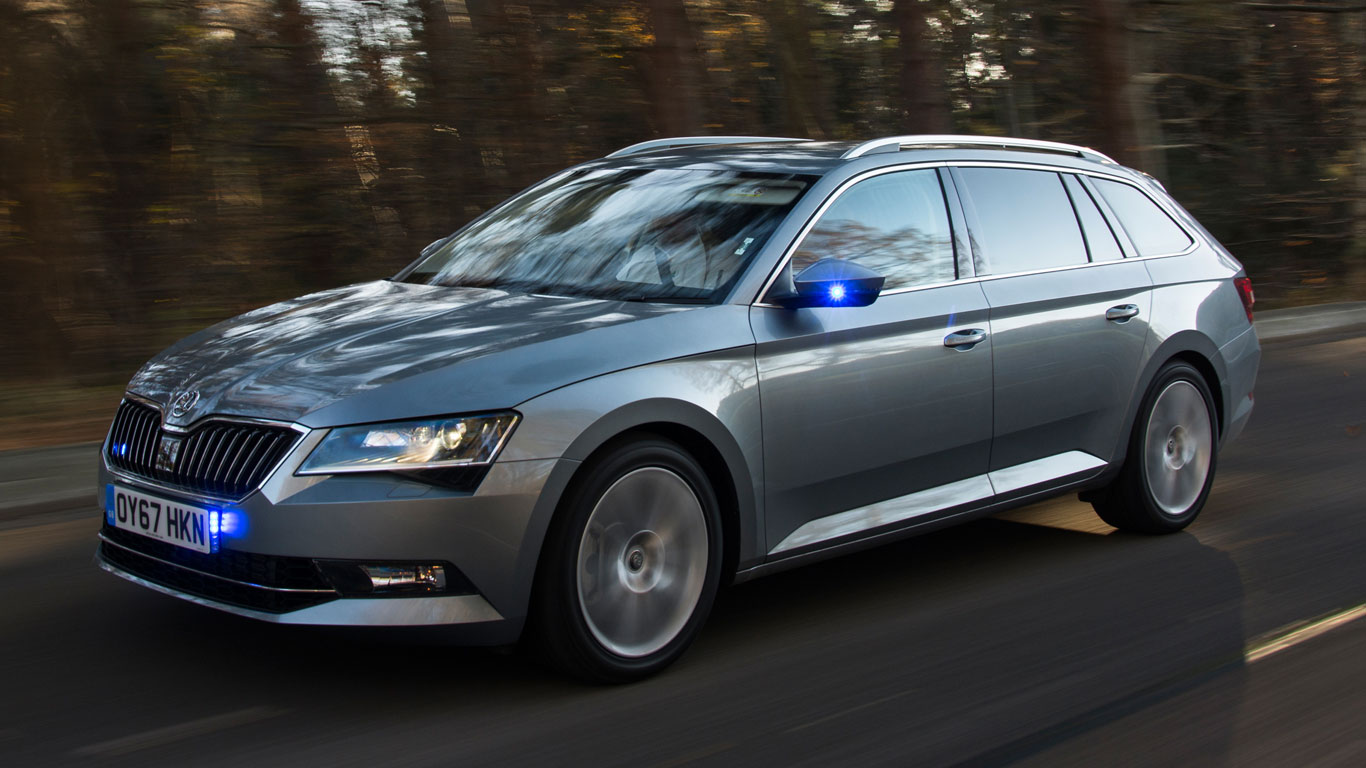
But it’s now getting harder to spot a sneaky unmarked police car. Enter the latest example from Skoda: the Superb 280 estate covert police car. From the outside, it looks like any other sensible Skoda wagon. But it packs a punch – that ‘280’ in the model designation stands for the amount of horsepower produced by its 2.0-litre TSI petrol engine. As such, it’ll reach 62mph in 5.8 seconds and hit the limiter at 155mph. Not bad for a bulky Skoda estate.
Lights, sirens, action
We were invited along to the Longcross test track for a drive in the unmarked Superb 280. It’s extremely competent – four-wheel drive aiding traction as we make a quick getaway, working through the DSG gearbox all the way well into three figure speeds. All the time, it feels stable – despite being kitted out with the extra equipment required to do a traffic officer’s job. It’s largely standard, too, save for upgraded suspension (to cope with said weight, not to mention rough roads and speed bumps) and beefier brakes.
The lights – fitted by a specialist aftermarket firm – are operated by a series of buttons ready to put that horrible sinking feeling in the stomach of any speeding motorist. I should know – as we lapped Longcross at well over three figures, I caught a glimpse of a marked-up Superb cop car and thought I was about to have the book thrown at me. And then I remembered I was on private land with an off-duty traffic cop sat next to me.
Pressing the horn operates the siren, while doing so again changes the tone. And yes, I can confirm, it’s just as much fun to do as you’d expect. If you don’t want to hear the siren yourself, you may want to ease off a touch next time you clock an innocent-looking Skoda on the motorway.
Britain’s favourite new cars of 2017 have been revealed. The sales chart contains an intriguing mix of familiar favourites and newer upstarts, as the changing face of popular motoring in Britain is exposed.
We Brits still love our superminis and family hatchbacks, it seems, but the new car sales charts also reveal our increasing love of crossover SUVs and premium-badged cars – at the surprising expense of some former family favourites…
First, the bad news: overall new car sales fell in 2017, for the first time in six years. Overall, around 2.5 million new cars were sold, a decline of 5.7 percent. A lack of confidence from car buyers is behind it, caused by factors such as Brexit and the general election surprise.
There was also a significant fall in sales of new diesel cars. Buyers are shunning them because of exhaust emissions concerns and worries over possible future anti-diesel car penalties. As a result, petrol cars and, increasingly, electric cars and hybrids are picking up sales as a result.
So without further ado, here’s the countdown to Britain’s top cars in 2017, as revealed by the Society of Motor Manufacturers and Traders (SMMT). And coming in at number 10…
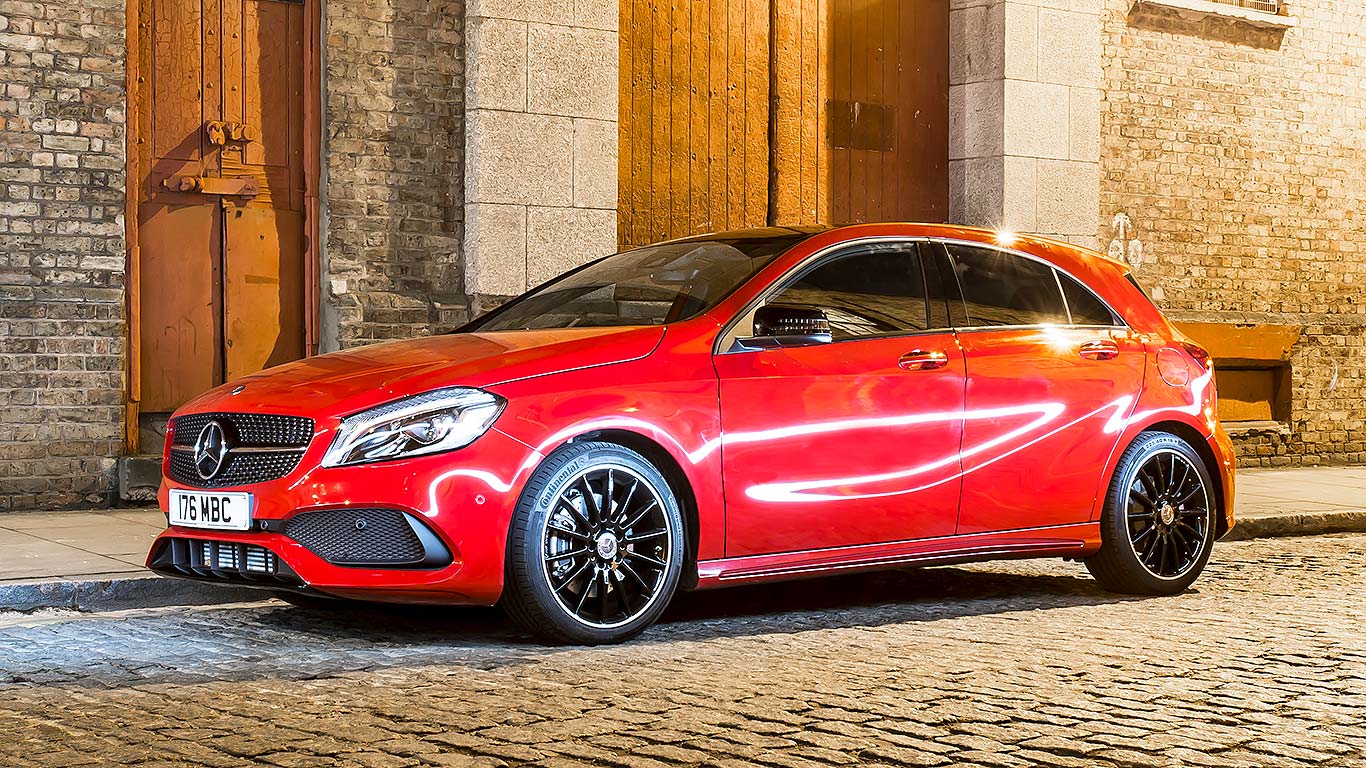
Mercedes-Benz A-Class: 43,717
It’s a Merc double in 2017’s British new car favourites charts. The A-Class will be replaced in 2018, but this didn’t dent its popularity in 2017. Thank both the allure of the brand and some extremely competitive finance and leasing deals for that…
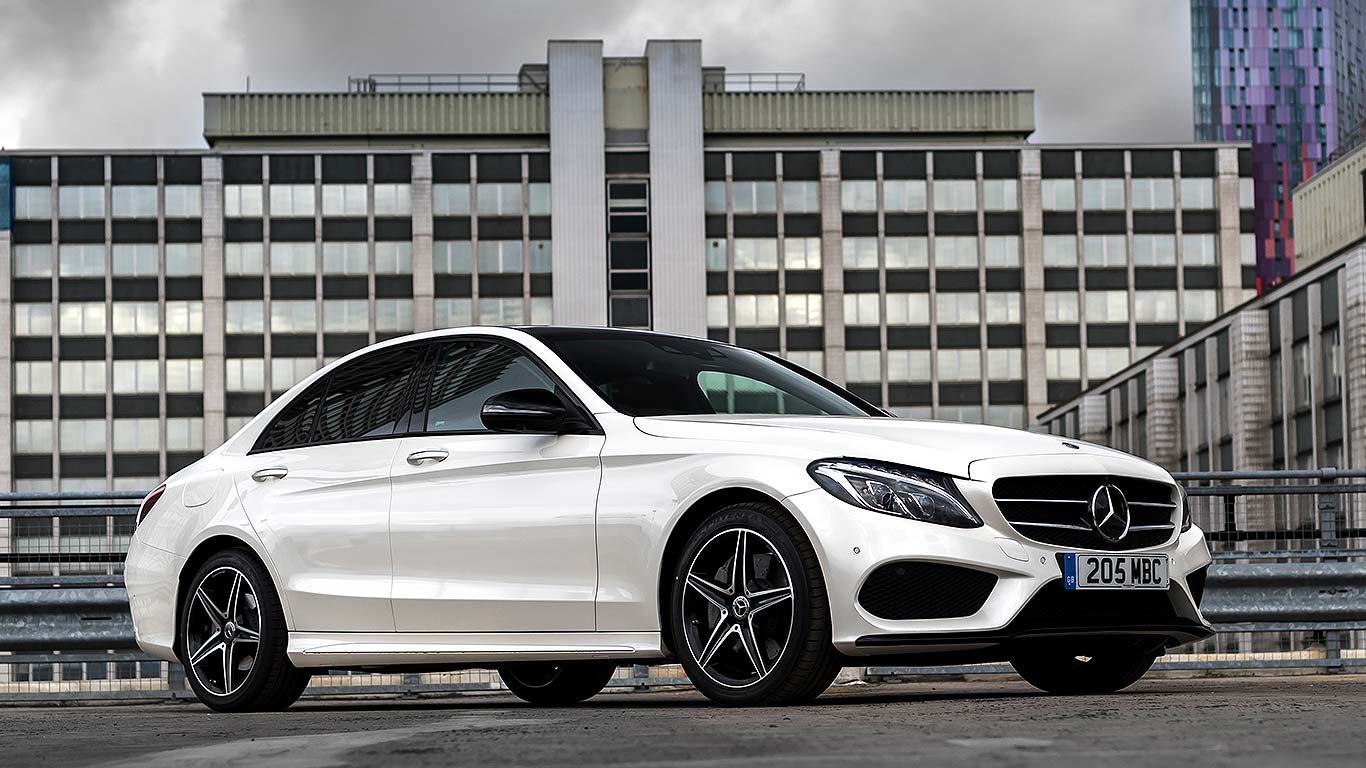
Mercedes-Benz C-Class: 45,912
Oh Lord, won’t you buy me a Mercedes-Benz? For many, there’s no need for divine intervention, because they’re able to get their own – and Britain’s favourite Mercedes-Benz of all last year was the executive-friendly C-Class.
Merc’s BMW 3 Series challenger is a familiar sight on UK roads, particularly amongst company car drivers. There’s a new 3 Series coming in 2018 which will take the fight back to it, though: can the C-Class maintain its place as one of the UK’s 10 favourite new cars?
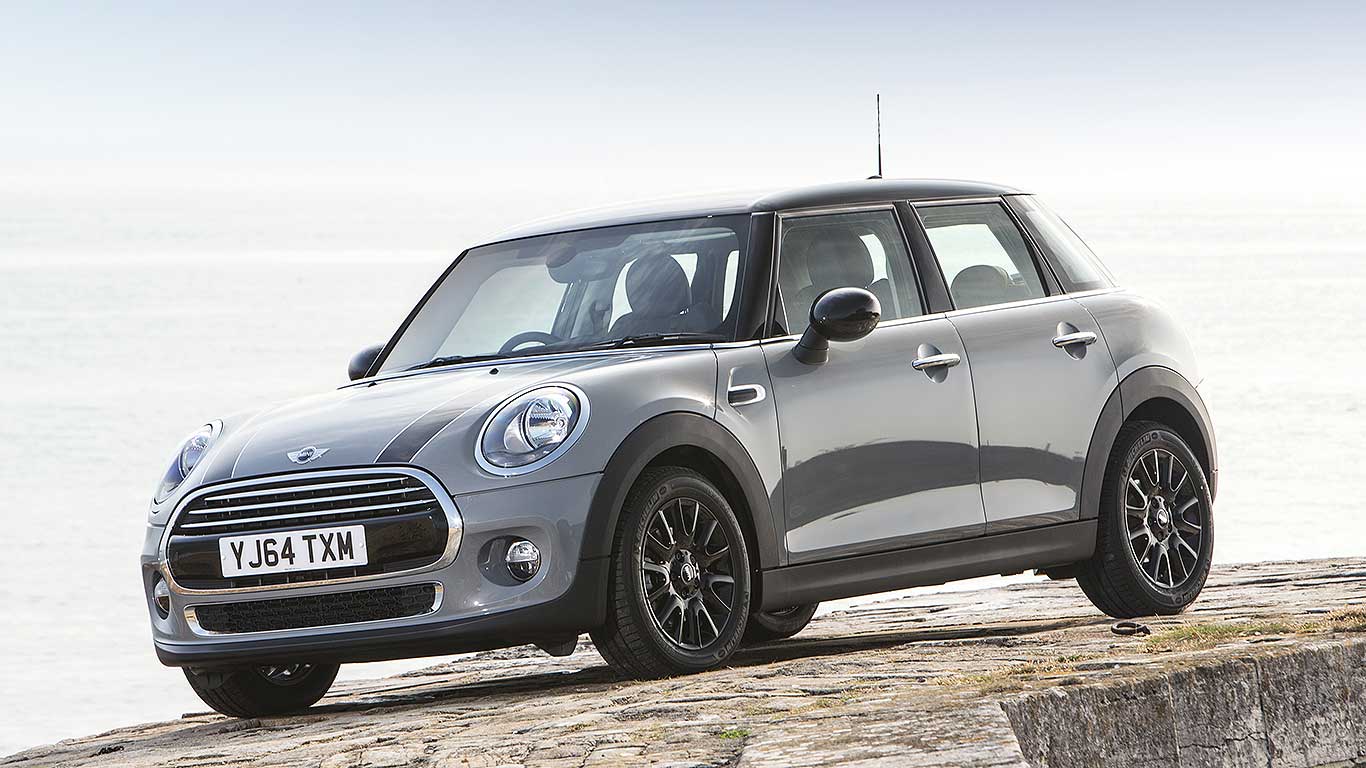
MINI: 47,669
MINI is another regular entrant in the UK’s top 10 best-selling cars chart. Although sales volumes declined slightly overall, it still managed to outperform the market, not least thanks to a strong range of petrol engines such as the potent, economical turbo motor in the MINI Cooper.
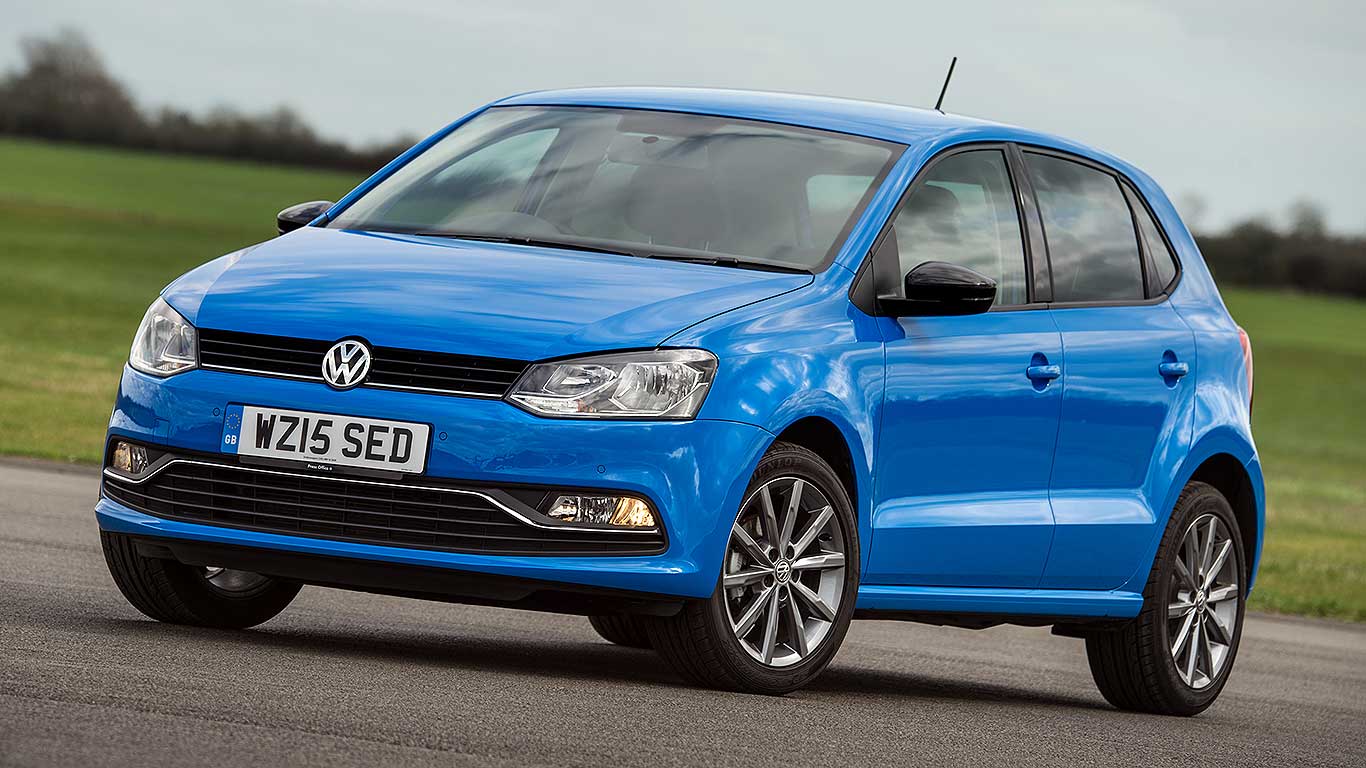
Volkswagen Polo: 47,855
There’s a new Volkswagen Polo coming in early 2018. Normally, this should have seen sales of the old model decline, as buyers hold on for the replacement. Not so here, thanks to judicious use of some strong special offers to maintain sales of the outgoing car.
It will be interesting to see what happens in 2018, as the reportedly very able all-new Polo comes on stream.
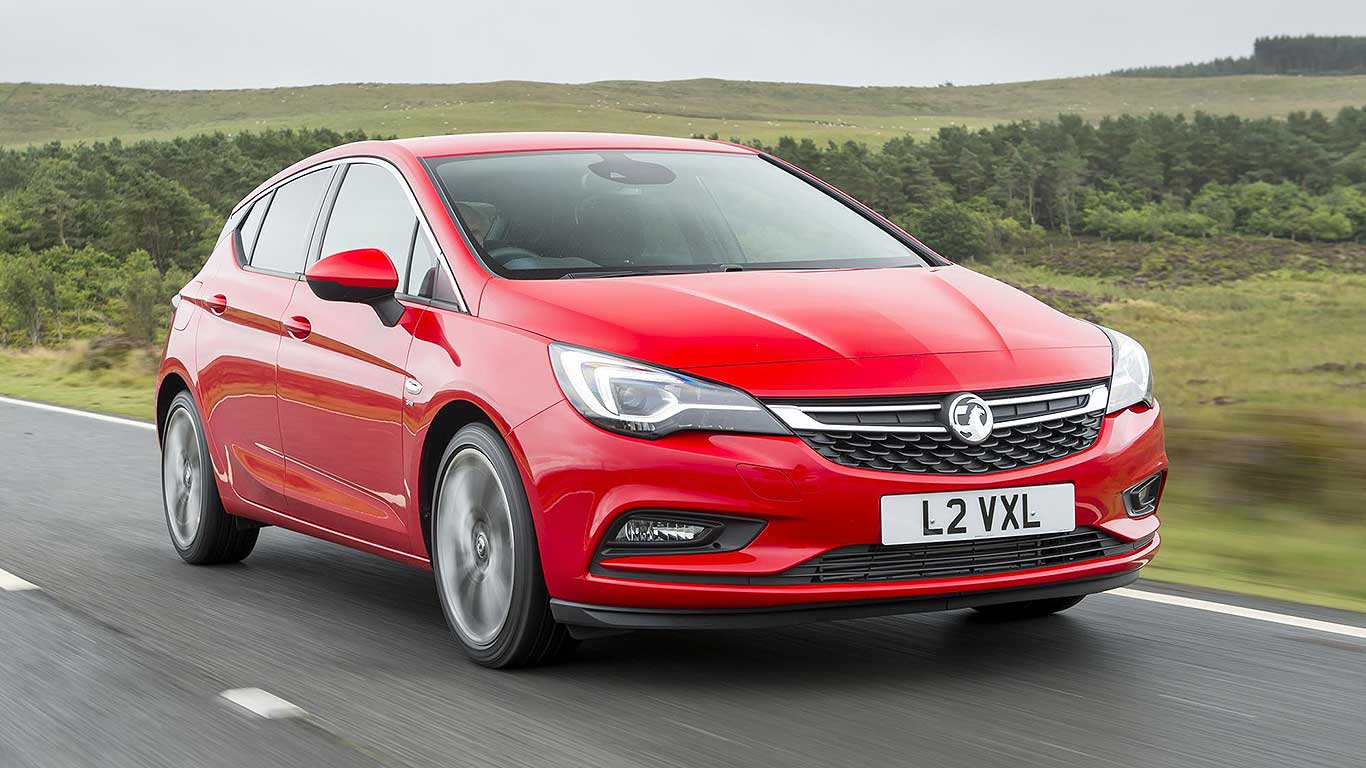
Vauxhall Astra: 49,370
Another Vauxhall surprise is the decline of the Astra. This able family hatchback is even built in Britain, yet still isn’t able to trade blows with its arch-rivals, the Ford Focus and Volkswagen Golf.
Again, says Vauxhall, it’s all part of a plan to boost profitability. We hope they’re right, as losing its position as Britain’s second-favourite new car brand to Volkswagen is certainly not what we were expecting from this popular volume car brand this time last year…
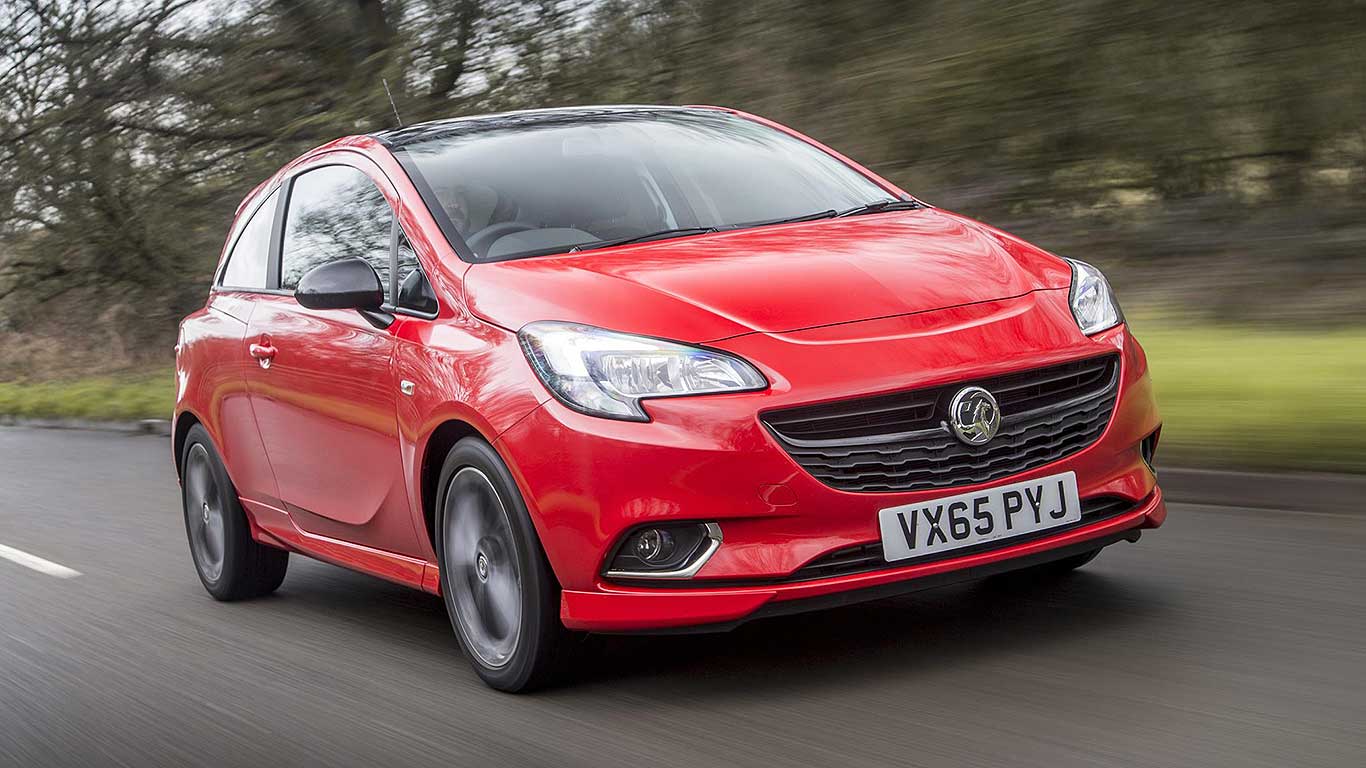
Vauxhall Corsa: 52,772
The decline of the ageing Vauxhall Corsa contrasts starkly with the fortunes of Ford’s fresh-faced Fiesta. Vauxhall insists it’s all part of a plan to chase profitable sales, not new car sales at any cost, but it will still be alarming for some to see the Corsa fall so far down the new car sales charts.
The core age of the car isn’t helping: the Fiesta is brand new, yet the Corsa dates back to the previous decade. A replacement is still some way off, too, so both Vauxhall and its dealer will have their work cut out to maintain even this level of interest in the Corsa through 2018.
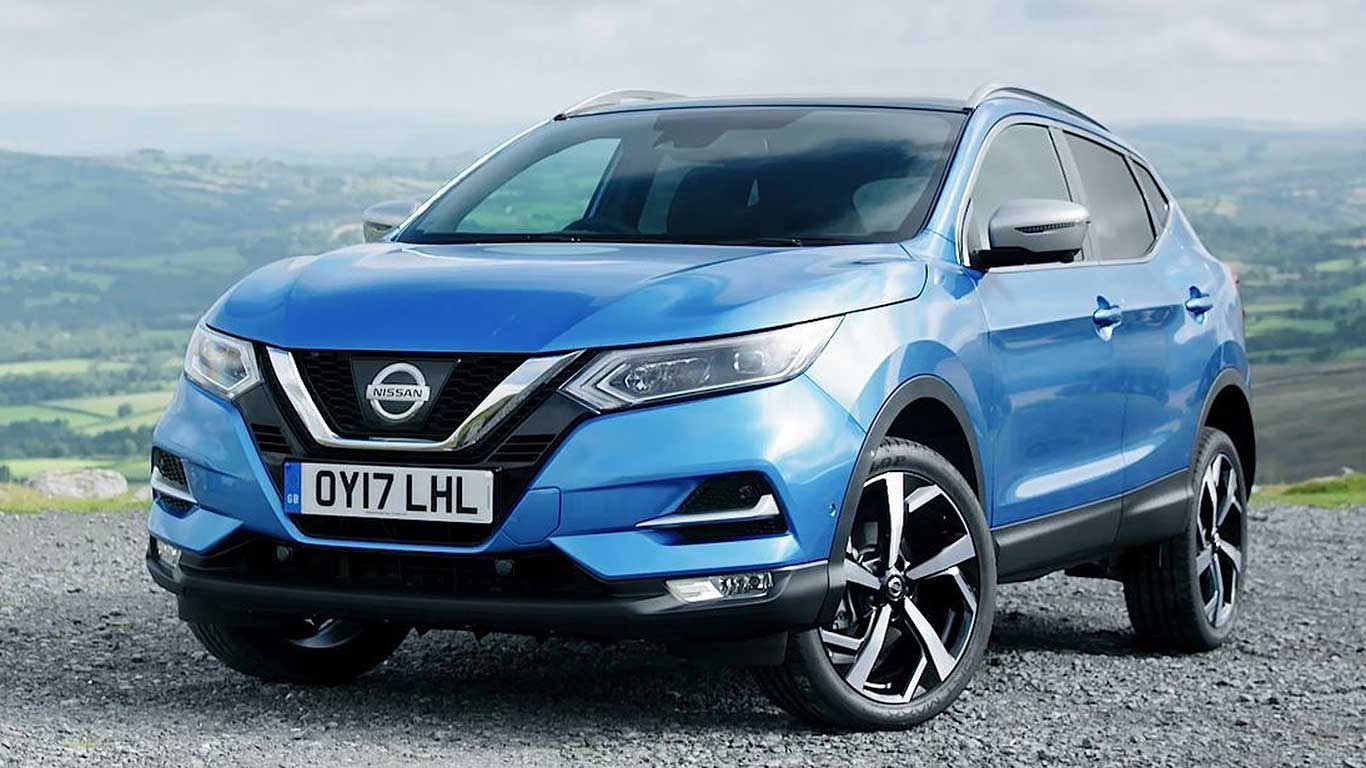
Nissan Qashqai: 64,216
The Nissan Qashqai is built in Britain, is the model that started off the craze for crossover SUVs and, in 2017, was rewarded with a fourth place slot in the UK best-sellers charts.
The competition is growing ever-stronger, and Nissan facelifted the Qashqai last year to help it compete. Successfully so, too: it now seems the Sunderland-built Nissan is now a firm UK favourite.
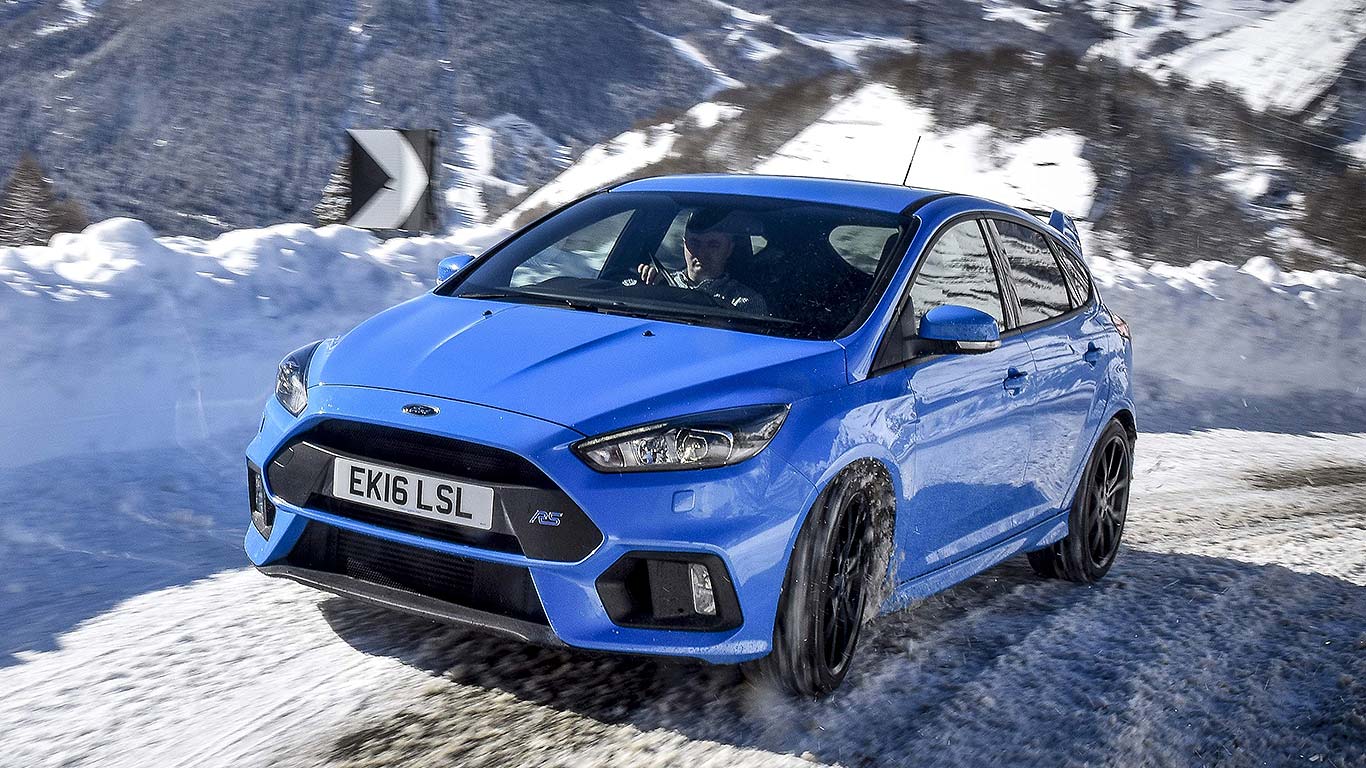
Ford Focus: 69,903
The Ford Focus family hatchback faded a little in 2017, but that’s perhaps to be expected, given its age – an all-new Focus arrives this year. Even so, despite losing a space to the VW Golf, it remained a top-three best-seller in the UK (and Britain’s best-selling car of all back in July 2017).
Even the decline of diesel sales doesn’t seem to have harmed the Focus, thanks to Ford’s excellent Ecoboost 1.0-litre engine range that, on paper, is easily as competitive as the diesel alternatives. Many new Focus sold in Britain are to fleets: Ford’s strong range of engines means switching from diesel to petrol seems to hold little fear.
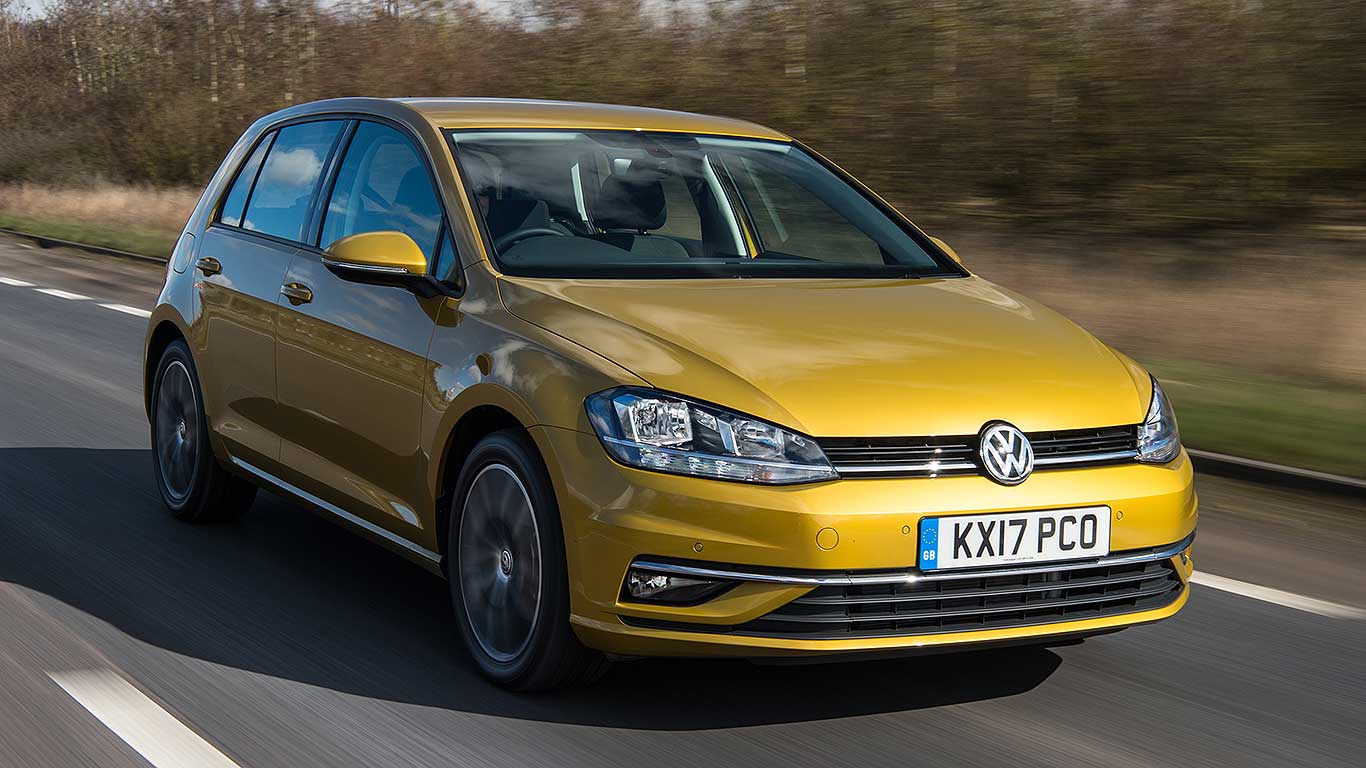
Volkswagen Golf: 74,605
The rise of the Volkswagen Golf in 2017 is one of the big stories of the year. In June 2017, it even became the top-selling new car in Britain overall, unseating the previously unshakeable Ford Fiesta. This was partly due to delivery bottlenecks for the all-new Ford, but it still shouldn’t detract from just how well the Golf performed in 2017.
Ending the year as Britain’s second-favourite new car is an exceptional result for the firm, and is momentum that it will be aiming to take forward into 2018. Volkswagen is now Britain’s second-favourite new car brand; the emissions scandal, it seems, is now long forgotten.
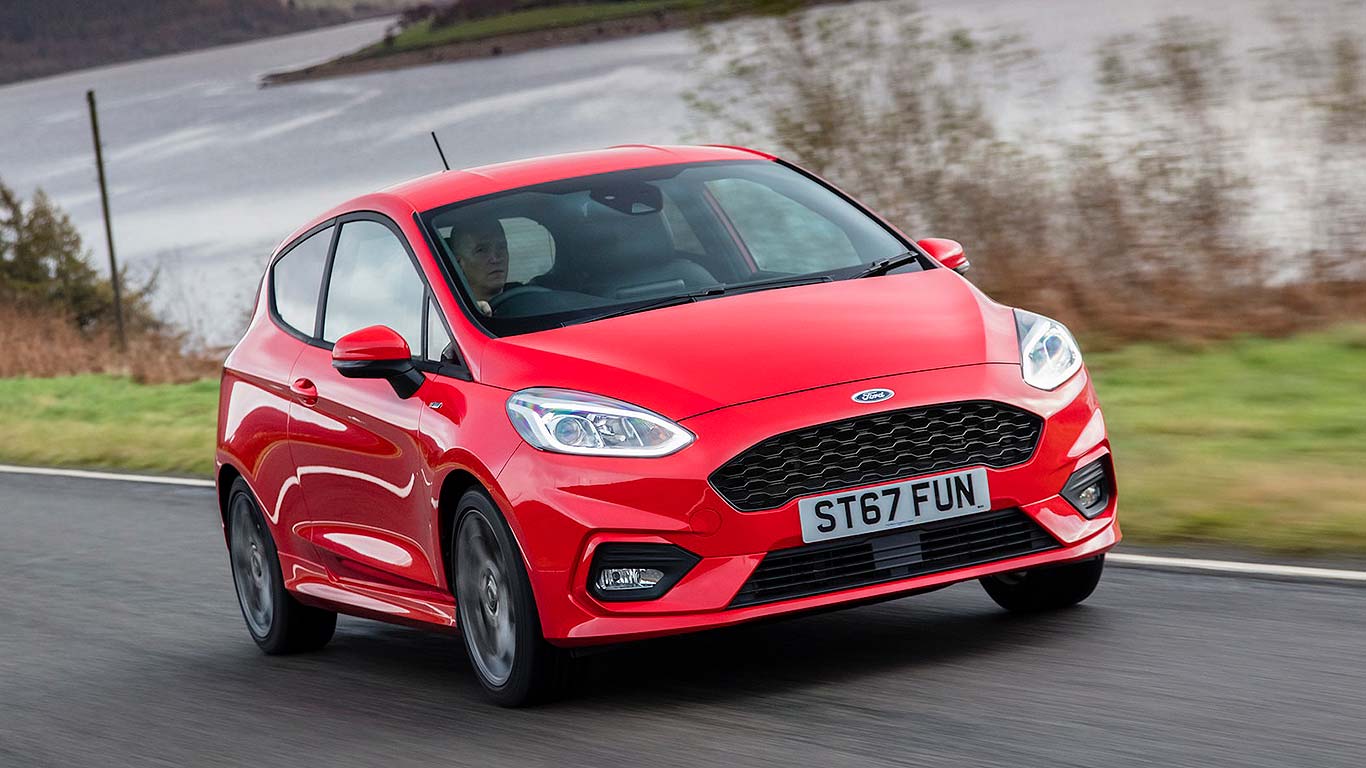
Ford Fiesta: 94,533
The Ford Fiesta has been Britain’s most popular new car for years, and this didn’t change in 2017 – but there was a wobble along the way. Delays in the UK roll-out of the extremely talented new model meant Ford dealers were left in limbo, and the Fiesta surprisingly fell down the sales chart while dealers waited.
Order was restored during the summer though, and the Fiesta’s back to regularly being Britain’s best-selling new car. The all-round strengths of the new car mean we don’t see this changing through 2018, either.
Aside from the overall sales decline, the big news of 2017 was the decline of diesel. New cars buyers are moving away from it in droves – a short-sighted move, says the SMMT, because diesel cars emit less CO2 than petrol models: it’s going to be harder to meet future climate change targets as a result.
UK new car sales 2017: in detail
Here we take a look at some of the other trends in the British new car market during 2017. And we naturally start with the ‘d’ word…
Diesel sales: DOWN
At the moment, new car buyers don’t care. The Volkswagen emissions scandal, threat of charges targeting diesel cars and even the government’s 2017 Budget tax hike aimed at diesel cars have all contributed to the lack of new car buyer confidence. Diesel isn’t dead yet, but it’s certainly declining…
Petrol sales: UP
Instead of diesel, buyers are switching back to petrol cars instead. The market may have fallen overall but sales of petrol cars were UP almost 3 percent. The roll-out of modern downsized turbo petrol engines is helping here, as claimed economy and CO2 emissions are much lower than before – sometimes not far shy of diesel cars themselves.
The longer-term worry is that real-world fuel economy and CO2 emissions won’t deliver the same eco-friendly figures as diesel cars, but at the moment, car buyers aren’t worried about this…
Alternative fuel sales: UP to almost 5 percent of overall sales
In 2017, the government announced that all new cars in 2040 will be either electric or electrified. Growing numbers of new car buyers are delivering on that target today, with sales of electric, hybrid and plug-in hybrid Alternative Fuel Vehicles (AFVs) continuing to rise.
Plug-in hybrids are proving particularly popular, but full EV sales are also growing fast. Expect another big increase in 2018 with the launch of key models such as the new Nissan Leaf (pictured above). For some people, the future is already here…
Private sales: DOWN
Buying a new car is a big commitment. As the UK economy stumbles, so private car buyers are having second thoughts about signing up for a new car. Retail sales to individuals, as opposed to fleets, reflected this with a 15.9 percent decline.
Company car sales: DOWN
The fleet car market is also down in 2017, but not by as much as the private car sector. There’s a big ‘however’ here, though: changes in the autumn Budget severely penalised ALL diesel company cars, to the surprise and befuddlement of the industry. Company car sales have subsequently stumbled – and it remains to be seen what further repercussions there may be in 2018…
2017’s fastest-growing car brand: Aston Martin UP 62.3 percent
The new car brand with the biggest percentage sales increase in 2017 was James Bond’s favourite car maker, Aston Martin. The firm has been transformed in recent years, with gorgeous new models such as the DB11 super-GT making it a bona-fide British luxury alternative to Ferrari.
With more new models due in coming years, expect the sales momentum for the popular British sports car firm to continue.
2017’s fastest-fading car brand: Jeep DOWN 54.7 percent
In contrast, it’ll be glum faces at the UK importer for America’s most famous SUV maker, Jeep. And this is despite Brits’ insatiable appetite for all things SUV, too – how Jeep has stumbled so badly in 2017 is quite baffling.
The firm will be hoping new models such as the transformed Compass (pictured above), plus a new focus on its compact Renegade, can help turn things around in 2018. Because for this historic SUV brand to fail so badly in a new car market so favourable to SUVs really isn’t ideal…
Britain’s favourite car brand in 2017: Ford
For as long as anyone can remember, Brits have bought more new Ford cars than any other brand. Another former favourite, Vauxhall, may have declined in 2017, but there’s no budging Ford from the top spot.
More than 1 in every 10 new cars sold in 2017 was a Ford; add in vans, and Ford’s leadership expands further. We don’t predict any change for 2018, either: the launch of an all-new Fiesta last year and, in 2018, the introduction of an all-new Focus is likely to see its reign as Britain’s favourite new car brand continue.
Car insurance premiums have been rising almost non-stop for the past five years, with one price comparison website putting the increase at 35 percent – that’s almost a £200 rise in the cost of the average annual car insurance premium since 2012.
The average price paid back in winter 2012 was £559, reveals Comparethemarket.com. During the last three months of 2017, this had rocketed to £758 – and there may yet be more increases in store, warns the firm’s director, Stuart McCulloch.
A big factor behind increasing premiums is multiple rises in Insurance Premium Tax, or IPT. In March 2015, it stood at six percent; today, it’s doubled to 12 percent. The so-called ‘Ogden rate’, or Personal Injury Discount Rate, was also altered, resulting in higher costs for personal injury claims.
Immediately following the change in the Ogden rate back in March 2017, premiums rose by £20 in just one month – and by November 2017, the average car insurance premium was £50 dearer than it had been back in the spring.
The one silver lining is an expected further revision (or, following pressure from the car insurance industry, a ‘correction’) in the Ogden rate, which may ease car insurance premium inflation.
Regardless, said McCulloch, British motorists “still face ever increasing premiums”. December 2017’s average price still has to be calculated, but analysts at the firm warn it is likely to be even more expensive, possibly exceeding the £800 mark (others suggest we could see average premiums reach £1,000 in 2018).
McCulloch added the gap between the average and cheapest premiums is now at record levels, averaging £129. It shows the savings that could be made by switching car insurance providers. Admittedly, given his position, he perhaps would say that, but if you’re looking to make some new-year savings, this could still be worth investigating…
Some predicted the dieselgate emissions crisis would be the undoing of Volkswagen. Instead, it’s proving to be the making of it: in 2017 alone, it produced a staggering six million vehicles, setting an all-time new record for the Wolfsburg-based firm.
The world’s favourite Volkswagen-badged cars in 2017 include the Jetta, Golf, Santana, Passat and Polo; these and other cars are built in 50 factories across the globe, in 14 different countries. Last year’s six million vehicles mean total Volkswagen production now exceeds 150 million vehicles since the first Beetle was built 72 years ago.
And on top of this are additional sales from the myriad Volkswagen Group brands such as Audi, Skoda and Seat.
But despite this success, it’s not going to get complacent again, promise Volkswagen bosses. As part of the Transform 2025+ strategy, there are plans to up electric car sales to one million vehicles by 2025 – the first electric Volkswagens will arrive in 2020, and include the I.D., I.D. Cross and I.D. Buzz.
The focus isn’t fully on dieselgate-offsetting EVs, either. Today’s car buyers are clamouring for SUVs and Volkswagen will offer no fewer than 19 of them by 2020, upping the SUV share of its overall product line to 40 percent.
The 2017 launch of the Renault Koleos large five-seat SUV effectively marked the return of the range-topping Renault. Now, for 2018, the firm’s completing the luxury-line emphasis with the roll-out of a decadent range pinnacle called Initiale Paris. Ordering is open now from £36,700.
 One of the most important auto shows of the world isn’t actually a pure motor show, but try telling that to all the automotive firms and tech suppliers showing their latest at CES 2018 in Las Vegas.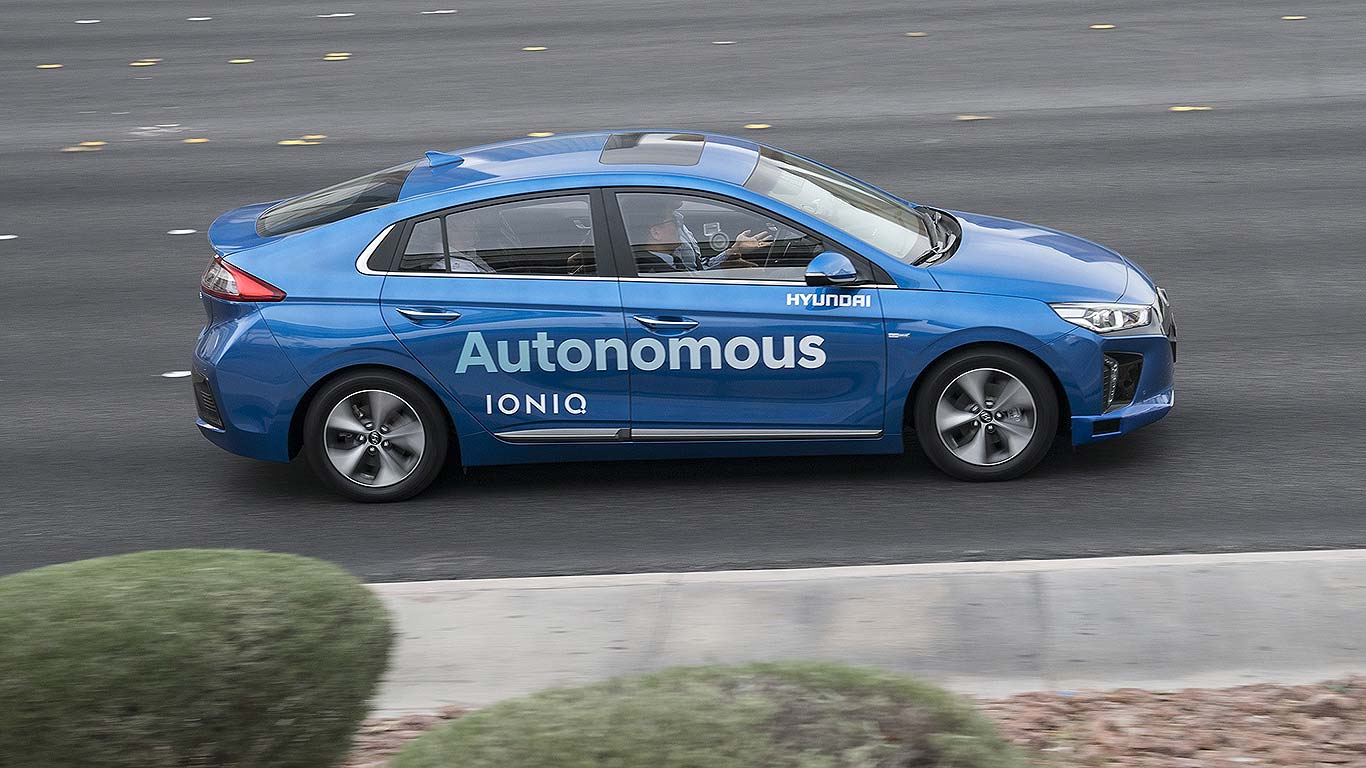
 Volkswagen currently produces some of Europe’s safest new cars with its models leading three of Euro NCAP’s six key categories for crash test safety during 2017.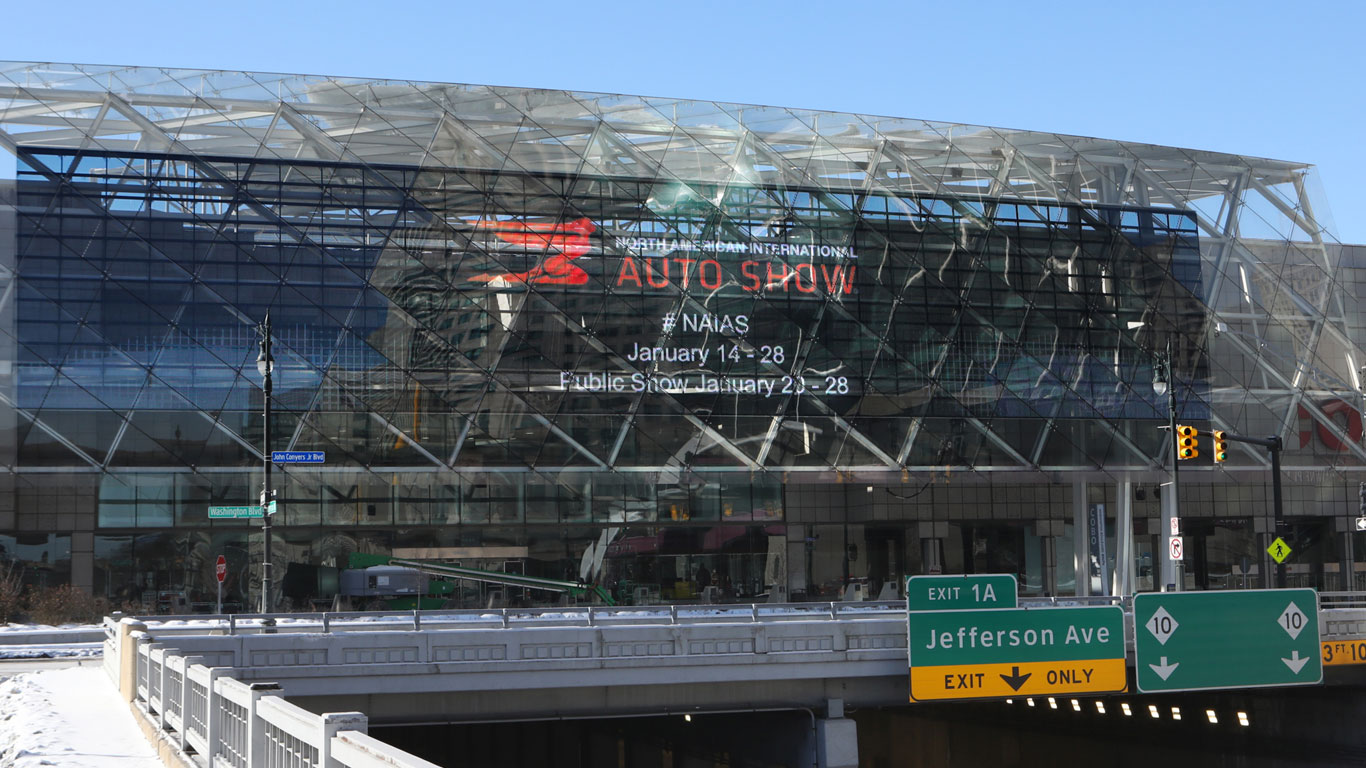
 Britain’s favourite new cars of 2017 have been revealed. The sales chart contains an intriguing mix of familiar favourites and newer upstarts, as the changing face of popular motoring in Britain is exposed.
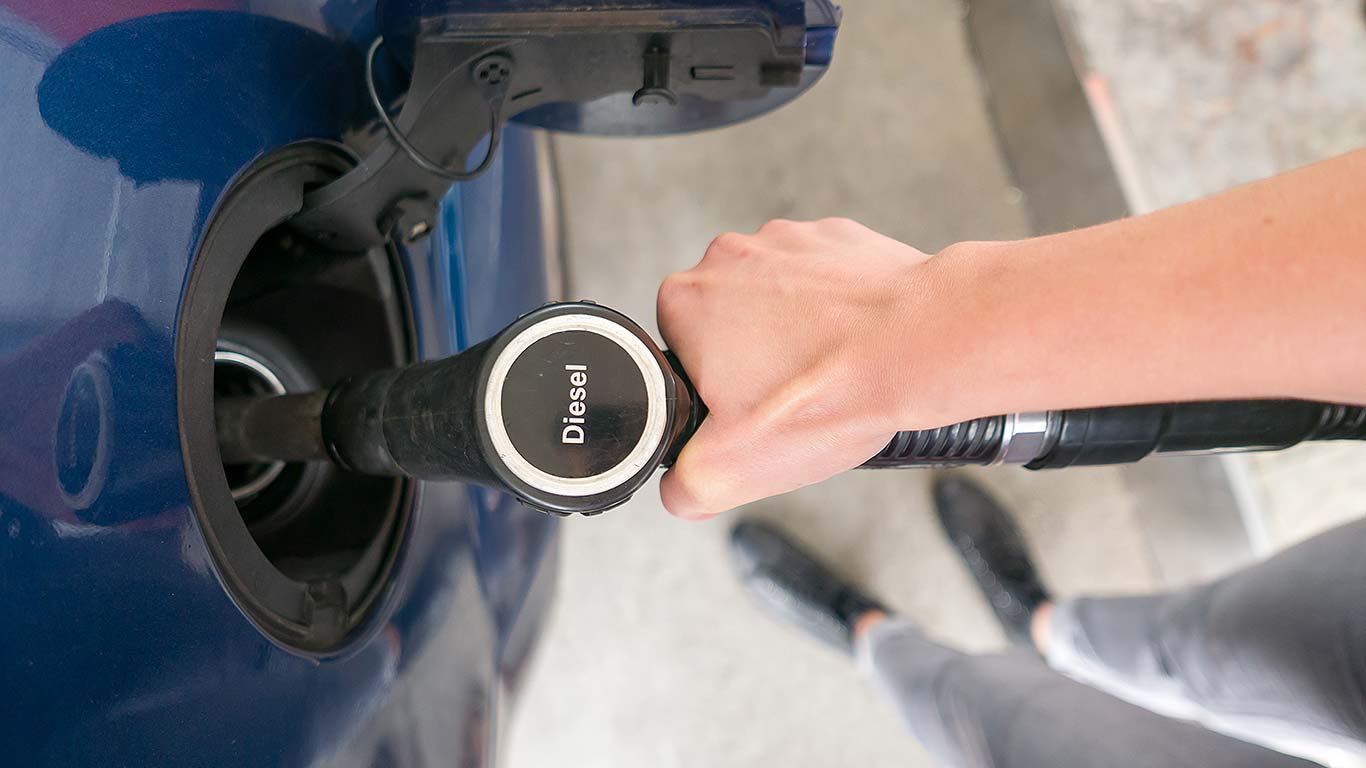
 Car insurance premiums have been rising almost non-stop for the past five years, with one price comparison website putting the increase at 35 percent – that’s almost a £200 rise in the cost of the average annual car insurance premium since 2012.
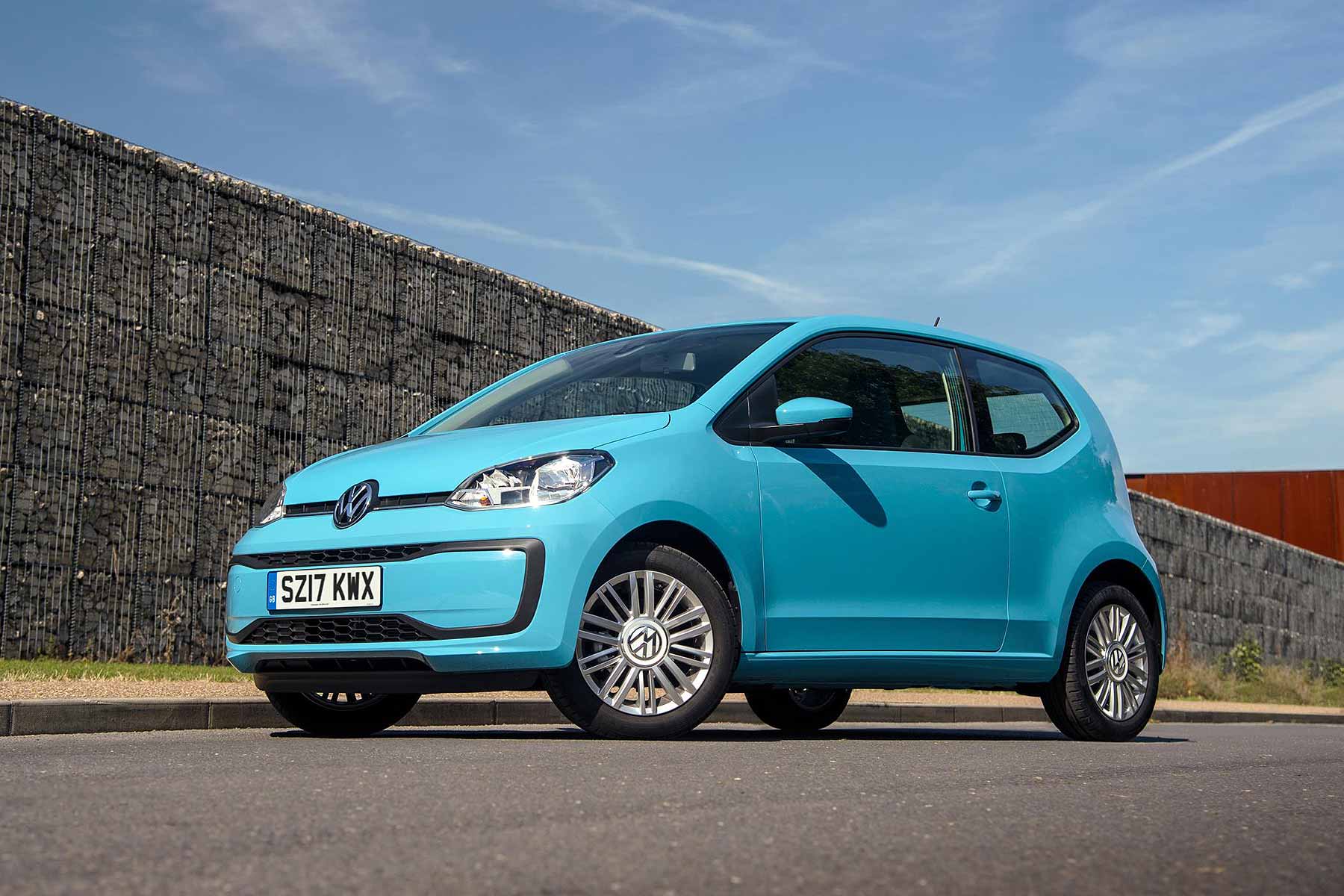 Some predicted the dieselgate emissions crisis would be the undoing of Volkswagen. Instead, it’s proving to be the making of it: in 2017 alone, it produced a staggering six million vehicles, setting an all-time new record for the Wolfsburg-based firm.
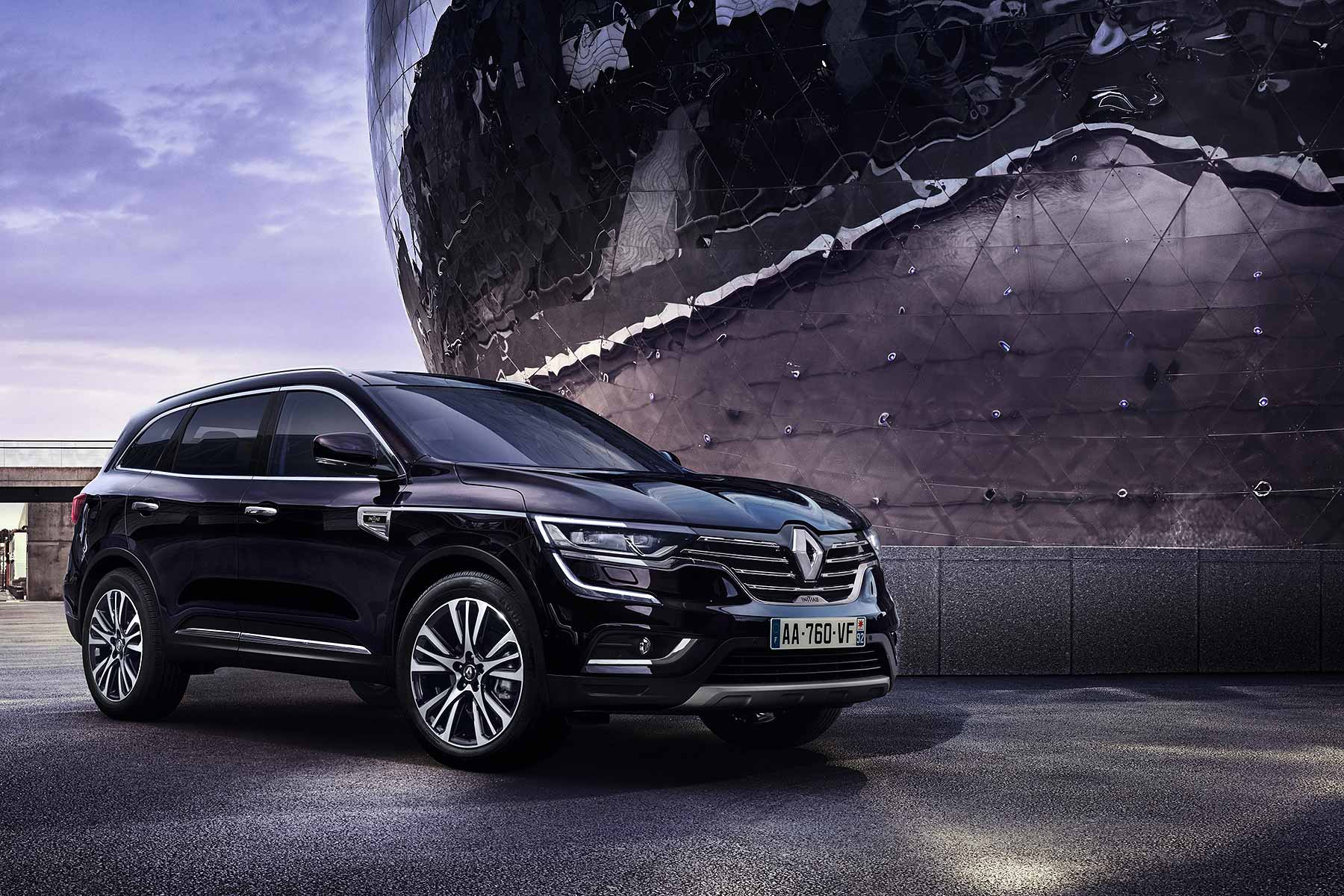 The 2017 launch of the Renault Koleos large five-seat SUV effectively marked the return of the range-topping Renault. Now, for 2018, the firm’s completing the luxury-line emphasis with the roll-out of a decadent range pinnacle called Initiale Paris. Ordering is open now from £36,700.