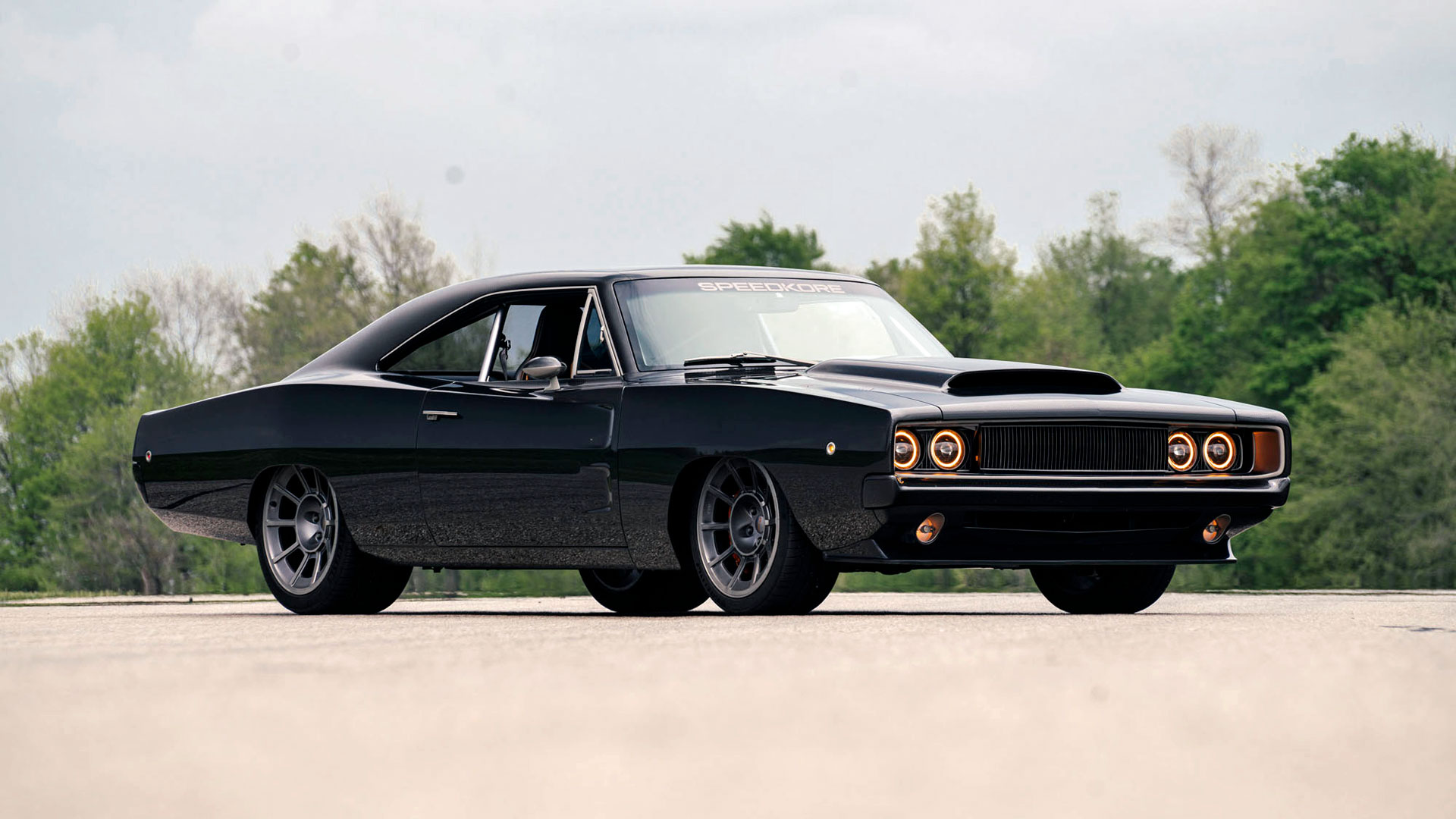
SpeedKore, the Wisconsin-based performance company, has created another amazing classic Dodge Charger with a huge engine.
Branded ‘Hellucination’, the 1968 Charger features a bespoke SpeedKore frame, combined with a lightweight carbon fiber body.
The formidable machine has been built for Ralph Gilles, the current chief design officer for Stellantis. It meant Gilles had a direct hand in working with SpeedKore to perfect the design for Hellucination.
Light on weight, heavy on power
SpeedKore has fitted Hellucination with the supercharged 7.0-liter Hemi V-8 ‘Hellephant’ motor, offering a formidable 1,000 horsepower. This uses a modern eight-speed automatic transmission to send all that power to the rear wheels.
Penske adjustable coilover suspension has been installed, along with huge six-piston Brembo brakes. HRE has supplied custom wheels for Hellucination, with these wrapped in Michelin Pilot Sport 4S rubber.
However, the star of the show is the carbon fiber bodywork, with the lightweight material being used for the floor and wheel tubs.
A front-hinged hood is also made from carbon fiber, with SpeedKore adding bespoke front and rear bumpers, a front splitter, and custom LED lighting.
Sit down and strap in!
All of the carbon fiber exterior trim is left exposed, covered with a BASF clear coat. More carbon can be found on the inside of Hellucination, having been used for the dashboard and door panels.
This classic Charger has been made into a two-seater machine, with a pair of carbon fiber bucket seats fitted with racing harnesses.
New dashboard gauges have been supplied by Classic Instruments, with SpeedKore adding a custom center console. For a touch of luxury, a 2000-watt Kicker audio system has been installed, featuring a dual-subwoofer enclosure.
A study in design detail
Hellucination represents the latest Charger to be built by SpeedKore using the infamous Hellephant engine. Last year, the company unveiled another 1,000 horsepower machine made for Kevin Hart.
Having seen the completed car, Ralph Gilles commented: ”I have thoroughly enjoyed the process with SpeedKore over the last two years, working together and thoughtfully debating the countless details of this build”.
Gilles added: “Growing up watching a certain orange car doing amazing things on TV as a kid started a love affair with the Dodge Charger and Mopar. The ‘68 embodies so many fascinating details and amplifies the Dodge ethos perfectly. We still use it as a spiritual reference to this day as we design the next generation of performance cars.
“The car is as visceral to drive as it is to look at. It has deliciously precise steering and an abundance of lateral grip that allow me to truly put it through its paces.”
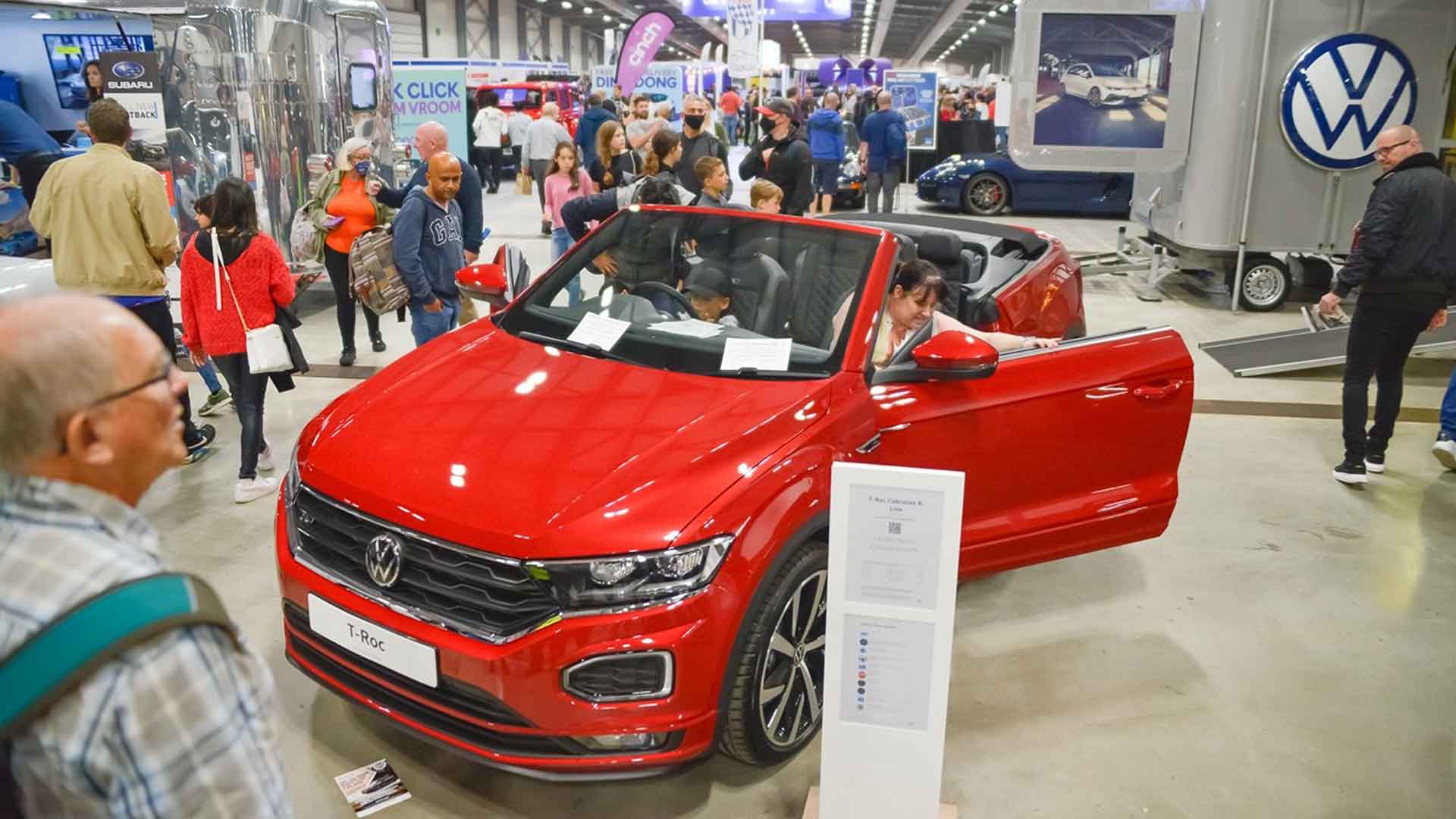
The 2022 British Motor Show aims to be the greenest motor show ever thanks to a series of eco initiatives.
Uniquely, every vehicle associated with the British Motor Show, held at Farnborough International on August 18-21, will be run on sustainable biofuel.
This will include support vehicles, shuttle vehicles and cars used in live events and test drives.
The petrol and diesel will be supplied by fuel provider Coryton: its Sustain brand of sustainable biofuel is made from agricultural waste.
The company produces more than 4,000 unique blends of fuel each year, powering race cars, jet engines and thousands of road vehicles, including retro classics.
Minimal carbon output
“We want to create a show with minimal carbon output and show that ICE-powered vehicles can be environmentally friendly right now,” said show CEO Andy Entwistle.
“It’s especially important for those who cherish their classic cars or cannot yet afford a new EV.”
British Motor Show organisers will also offset the carbon output of every show visitor, further underlining its green credentials.
Electric cars are to feature heavily throughout the show, including a range of electrified classics.
More than 70,000 visitors are expected at the four-day show, with ticket prices starting from £18.50 or £37 for a family of four.
Prices have been held from last year, added Mr Entwistle, making the 2022 British Motor Show an inflation-busting one, as well as an eco-friendly event.
The Caledonian Sleeper is a reminder of the golden age of long-distance travel. A time before cheap flights and high-speed rail lines, when the journey was almost as important as the destination.
It all sounds so delightful, with the operator promising a nightcap in the onboard bar, a menu filled with fine Scottish produce, a cosy cabin and breakfast in bed as the sun rises over the Scottish countryside.
We arrived at the less evocative Euston Station and made our way to the platform where the train was ready for its 23:50 departure. Only we weren’t there to board the train, we were there to race it.
The challenge: to arrive at Edinburgh’s Waverley Station before the Caledonian Sleeper rolled into the platform. Sounds simple, but the photo finish highlights that it was anything but.
The most powerful Rolls-Royce in history
Our choice of wheels for this unlikely race was a Rolls-Royce Wraith, the most powerful Roller in history. We can think of few cars that offer such an enticing blend of pace, comfort and presence. It also meant that we could offer no excuses if we lost. We had the reputation of the motor car in our hands.
Whichever way you look at it, the Rolls-Royce Wraith is a formidable car. It arrived in a sealed lorry in factory-fresh condition, as befits a car with a mere 830 miles on the clock. After a brief handover and introduction to some of the controls, we were left in charge of this £306,438 behemoth.
Yes, that’s right, including taxes and options, this Wraith had a price tag north of £300k. By a considerable margin, this was the most expensive car I had ever driven on a public road. No pressure, then.
Suddenly the thought of weaving this 5,269mm-long sports coupe through London looked like a daunting prospect. I didn’t want to hear what kerbing a 21-inch alloy wheel sounds like. Or the thwack of a Rolls-Royce door mirror on the side of a London bus. Maybe a Volkswagen Up would have been a better option?
Who am I trying to kid? This was to be an epic adventure and I was intent of enjoying every single minute of my time in the Wraith. Opportunities like this don’t come along that often.
Parking restrictions around Euston Station meant that we had to leave the Wraith around the corner and coordinate our departure time accordingly. Having synchronised our watches to match the time of the station clock, we sat waiting in a backroad, engine running, adrenaline pumping.
Seriously, this mattered. We wanted to make this sleepless night count. We simply had to beat the train.
London to Northampton
It’s at this point that we should provide some context. The Caledonian Sleeper would go via Watford, Carlisle and Carstairs, before arriving in Edinburgh at 07:22. That’s a journey time of seven hours and 32 minutes. By mimicking the route of the train, which essentially meant taking the M1, M6, A74 and A702, we could – theoretically – arrive at Waverley Station at 06:53.
Easy victory for the car, then? Throw into the equation a number of stops for coffee, fuel and driver changes, along with the inevitable roadworks and average speed cameras and things start to get more interesting. Throughout the journey, the excellent sat nav predicted an arrival time around the 07:00 mark.
To give us the best chance possible, we brimmed the tank before leaving Euston and loaded the car with snacks and supplies. We knew we couldn’t beat the train to Watford, but we hoped to be in Carlisle by 05:15, the time the train was set to arrive.
Within a couple of miles of departure, we were faced with a road closure and lost time. Even at midnight, London is bustling with people and traffic, making progress slow and frustrating. That said, we considered the 20 minutes it took to reach the M1 to be a minor victory, even if we were 20 miles behind the train.
Worse was to come, as a series of roadworks made for slow progress up the M1. To compound the misery, the sat nav and overhead gantries warned of road closures on the M6 and M42. Having a 6.6-litre V12 producing 623hp at your disposal is pretty pointless when you have the adaptive cruise control set to 50mph, or you’re stuck following a lorry through a diversion.
Never mind, all we could do was enjoy some Haribos under the cover of our optional Starlight headliner.
Northampton to Tebay
At 1am we did our first driver-change at a near-empty Northampton Services, at which point it started raining. An hour later we hit the M6 Toll, still faced with warnings about road closures and diversions. Credit to the BMW-sourced sat nav system, which includes real-time traffic information. On both the journey north and the return leg, it did a brilliant job of predicting congestion and suggesting alternative routes. When a time-saving diversion wasn’t available, it would report that taking an alternative route wasn’t recommended. To say the system would make a difference between success or failure would be to overplay things, but it certainly helped matters.
It felt like we had been travelling at a steady 50mph since Luton, but even after a slow and unexpected crawl along the A5 towards Telford, we had somehow managed to emerge with an ETA of 06:47, around 30 minutes ahead of the train. Curiously, by the time we reached Lancaster Services at 04:15, that arrival time had slipped to 07:02. We didn’t think 20 minutes was sufficient wiggle time to allow for further delays and a struggle to get into Edinburgh.
We reached Cumbria at 04:28, still with some 153 miles to go. Ten miles later, the Rolls-Royce Connect app was displaying a fuel range of 156 miles, presenting us with our first real choice of the night. Do we go for broke and risk not filling up before Edinburgh, or play it safe and give the Wraith a much-needed drink?
Perhaps fearing the embarrassment of breaking down on the outskirts of the city, we opted for the latter and filled up with super unleaded at Tebay Services. The time was 04:50.
Carlisle and the A74(M)
By now it was just starting to get light and by 05:13 we were skirting around Carlisle. About the same time the train, which we had left behind in London, would be preparing to leave the station, before making one last stop at Carstairs. Here it would split in two, one part heading to Glasgow, the other part continuing to Edinburgh, where it would taste victory or suffer defeat. We had hoped to have been further ahead of the train, but everything was now pointing towards a photo finish.
At precisely 05:22 we crossed the border into Scotland and were presented with a glorious and awe-inspiring sunrise. A thin veil of mist sat like a carpet of cotton wool over the lowlands, while the hills and mountains were draped in a sky of pink and orange. We commented that some people would get up very early to witness such a spectacle. Others wouldn’t even go to bed…
This was now the most enjoyable and exciting leg of the journey. Fuelled by caffeine and sugary sweets, the tiredness and fatigue of a few hours earlier had made way for a determination to get the job done. If England’s motorway network had done its level best to give the train an easy victory, Scotland was clearly taking the side of the car. The A74(M) must surely be one of the most remarkable stretches of motorway in the UK, a stark contrast to the misery of the M6 and M1.
We were enjoying playing sling-shot with the Wraith’s comically quick pace, as highlighted by its 0-60mph time of 4.4 seconds. You’d expect a V12 supercar to behave in such a way, but nothing can prepare you for the experience of accelerating in a 2.3-tonne Roller.
As befits a Rolls-Royce, the soundtrack is more muted than other V12s, but there’s enough of a burble to add to the theatre. Assuming you can live with the inevitable impact it has on the fuel economy (and if you’ve paid £300k for the car, you probably can), you’ll never tire of going quickly in a Wraith. It’s nothing short of sensational.
Abington to Edinburgh
Our final driver-change took place at the Abington Services, conveniently positioned at the junction with the A702, our route into the city. After a quick stop and having made the decision not to order one last coffee, we ventured back into the car park to see the Caledonian Sleeper thundering past on its way to Carstairs. If we needed any further motivation to press on, this was it. For the first time we broke into a fast walk and jumped aboard the Wraith. This was going to the wire.
Not that performing a swift launch procedure in the Wraith is particularly easy. We never really came to terms with the huge ’suicide’ doors, as they are too showy for our tastes. A two-tone Wraith is hardly discreet, but opening the doors simply smacks of showing off, especially if you take advantage of the electric door closing. The Wraith won’t move until you’ve put your seat belt on and reversing remains a game of chance, even with the optional camera system.
The A702 presents a delightfully twisty and smooth route into Edinburgh. For the first time on the journey, we were asking the Wraith to break into a sweat. We were still expected to win by around 20 minutes, but the sat nav was warning of roadworks and delays heading into the city. And by now, Scotland was beginning to wake up, meaning we no longer had the roads all to ourselves.
The pair of us were properly fired up now, greeting every 30mph and slow-moving vehicle with disdain. We weren’t about to be beaten on the final 40-mile stretch.
A local bus and a delivery truck were dispatched with consummate ease and fears that the Wraith would be too big to chuck around the bends of the A702 were soon dispelled. The air suspension is little sort of a revelation, seamlessly morphing between supreme motorway comfort and tight cornering prowess. There’s barely a hint of body-roll as you take the bends at some unlikely speeds.
The Wraith also manages to disguise its pace with alarming ease, making it all too easy to enter a corner at a stupid speed. Keeping an eye on your speed using the optional head-up display is highly recommended, if you want to maintain a clean licence.
We’d also prefer to make use of a pair of paddle-shifters, which aren’t available on the Wraith. Given the Wraith is supposed to be the most driver-focused Rolls-Royce in the range, having a greater level of interaction with the overall experience wouldn’t be a bad thing. On a number of occasions we found ourselves reaching for a non-existent left paddle, hoping to use some engine braking before entering a corner.
Of course, Rolls-Royce will point to the Wraith’s ability to use GPS to select the ideal gear in which to be in for each corner and motorway slip road. Truly impressive technology, but it only serves to remove the feeling of control. That said, for the most part you’re unlikely to know which gear you’re in, such is the efficiency of the eight-speed transmission. Up and down changes are – for the most part – impossible to detect.
The A702 was brilliant. A well-driven Seat Mii and the quickest cherry picker in the world worked like a pair of pilot boats, guiding the good ship Wraith into port. Thanks to them, we hit the outskirts of Edinburgh at 06:49 and had a full 30 minutes at our disposal. With just 2.5 miles to go, victory was within our grasp.
But then it struck me. What if the train arrived early? For the entire night, we had been racing the invisible enemy, keeping one eye on the Wraith’s glorious analogue clock and the other on the sat nav’s ETA. But we weren’t racing against the clock, we were racing against the train. I
t would be a hollow victory to arrive before 07:22, only to see the train already sat by the platform. In fact, we couldn’t even class it as a victory. Our stress levels were rising.
Into Edinburgh…
Stress then made way for mild panic as the sat nav led us to the wrong destination. Whether by an input error or by using the wrong information, we were left around a mile from Waverley Station. How on earth would we explain defeat?
Thanks to a passer-by, we were pointed in the general direction of the station, so we set off once again. The relief associated with seeing the station for the first time was palpable, but there was nowhere to park. We had prepared for such a scenario, agreeing that one of us would stay with the car while the other would make a run for it. Apologies to the people of Edinburgh who had to witness the sight of a sleep-deprived zombie frantically searching for the right platform.
My heart sank when a station porter told me the train was already in and sat on platform two. I made a run for it, knowing there were still six minutes before the train was expected to arrive. Panicking, I asked a second porter, who pointed me towards the other end of the station, but did raise my spirits by telling me the train hadn’t arrived yet. By now it was 07:18 and I was running like a madman across the station…
I arrived at the platform out of breath but hopefully not out of luck. I frantically looked around for clues, feeling a tad dazed and confused. Then I looked behind me, to see a train coming into view. Could it be the Caledonian Sleeper? Could it really have been that close?
You bet it was. We had only gone and done it. Even taking into account the train’s early arrival time, we had beaten the train by a matter of seconds. The 413 miles and a night without sleep had been worth it. Rolls-Royce Wraith: one, Caledonian Sleeper: nil.
Victory could have gone either way. Had we ordered a coffee at Abington, we would have lost. Had we been delayed by the blanket of fog we encountered on the journey home, we would have lost. Had we not followed the world’s fastest cherry picker into Edinburgh, we would have lost. Had I not asked the second porter, we would have lost. It was nip and tuck stuff. All of our overnight decisions, no matter how small, had made a difference.
A perfect blend of performance and luxury?
The journey home was a less frantic and in many ways a more enjoyable experience. Free of clock-watching, we were able to revel in the supreme majesty of the Rolls-Royce Wraith.
Sure, for the best part of £235,000 before options, you’d have every right to expect the Wraith to be brilliant, but for the way in which it blends performance with luxury, this thing has no peers. That such a large and heavy thing can be so rewarding to drive on a twisty road is nothing short of a miracle.
The steering is wonderfully accurate, the ride is exceptional and the pace is intoxicating. Rolls-Royce has also done a brilliant job of disguising the inevitable requirements of a digital age in such an analogue and old-school cabin. There’s more than a hint of BMW ownership, notably the iDrive infotainment screen and safety ‘chimes’, but this feels every inch a Rolls-Royce, right down to the thin-rimmed steering wheel, soft leather, proper wood and dashboard dials.
We even managed to achieve a combined 22.2mpg over 1,400 miles of driving, which – while not exactly frugal – is perfectly respectable for a V12-engined car so adept at racing trains across the country.
As for the reaction of other motorists, it was universally positive. People would wander up, ready to congratulate us on such a fine purchase. No fewer than three people described the Wraith as ‘gorgeous’ and, perhaps surprisingly, everyone gave the Starlight roof lining the thumbs up.
Finding faults is an exercise in nitpicking, although a constant door issue, with a rather alarming message advising ’doors not secured against opening whilst the vehicle is in motion’, was a little disappointing, not least because it was accompanied by a sound not too dissimilar to sniper rifle each time we moved off from a standstill.
Smooth braking can be a bit hit and miss, too, making the entry to roundabouts a tad frustrating. It’s also relatively hard to drive slowly, with the throttle seemingly set to nothing…nothing…everything. You need to have your wits about you when tackling tight streets and parking spaces. Thank goodness for parking sensors and 360-degree cameras.
But for pure theatre and a sense of occasion, the Rolls-Royce Wraith nails it. Thanks to its devastating pace and ability to find the quickest route through the Midlands, the reputation of the car is intact.
For all kinds of reasons, this had been a drive to remember. Personally, it was my first drive in a Rolls-Royce and I’ve emerged with a huge amount of admiration for the Wraith, not least because it was the real star of the #WraithTheTrain adventure. Sure, we could have achieved the same result in any car, but few would have done it with such an overwhelming sense of occasion and style.
Epic night, epic drive, epic car. And sleep is so overrated.
Maserati has revealed a convertible version of its flagship MC20 supercar, featuring a glass roof it describes as ‘the epitome of technology’.
The MC20 Cielo takes its name from the Italian word for sky, and is apparently inspired by the limitless view upwards – whether the roof is open or closed.
With minimal weight gain from the conversion to an open-top spyder, Maserati says the Cielo is just as fast as the regular MC20.
The acceptable glass ceiling
The MC20 Cielo’s party piece is its electrically retractable glass roof, which opens or closes in just 12 seconds. Maserati says it has no impact on luggage space, and disappears completely out of view.
Being made from glass means the panel acts as a giant sunroof when in place. However, polymer-dispersed liquid crystal technology can alter its level of transparency.
Pushing a button sees the glass roof shift from transparent to opaque, blocking out the sun’s rays.
With the benefit of a stiff carbon fibre monocoque chassis, the Cielo conversion adds only 65kg to the MC20’s overall weight. The dramatic butterfly doors from the coupe remain, too.
‘Holistic and immersive driving pleasure’
Maserati has left the mid-mounted 3.0-litre twin-turbo V6 ‘Nettuno’ engine untouched. Driving the rear wheels via an eight-speed dual-clutch transmission, it produces 630hp and can accelerate the MC20 to 62mph in 3.0 seconds, with a top speed of around 200mph.
New features for the Cielo include a 360-degree surround-view camera, autonomous emergency braking and an optional Sonus Faber audio system. The latter has 12 speakers and automatically adapts its sound profile depending on whether the roof is open or closed.
A limited-edition of 60 PrimaSerie Launch Edition cars will kick off the Cielo’s production run, featuring new Acquamarina paint and 20-inch alloy wheels with a gold finish. Maserati is yet to confirm UK prices, but don’t expect much change from £230,000.
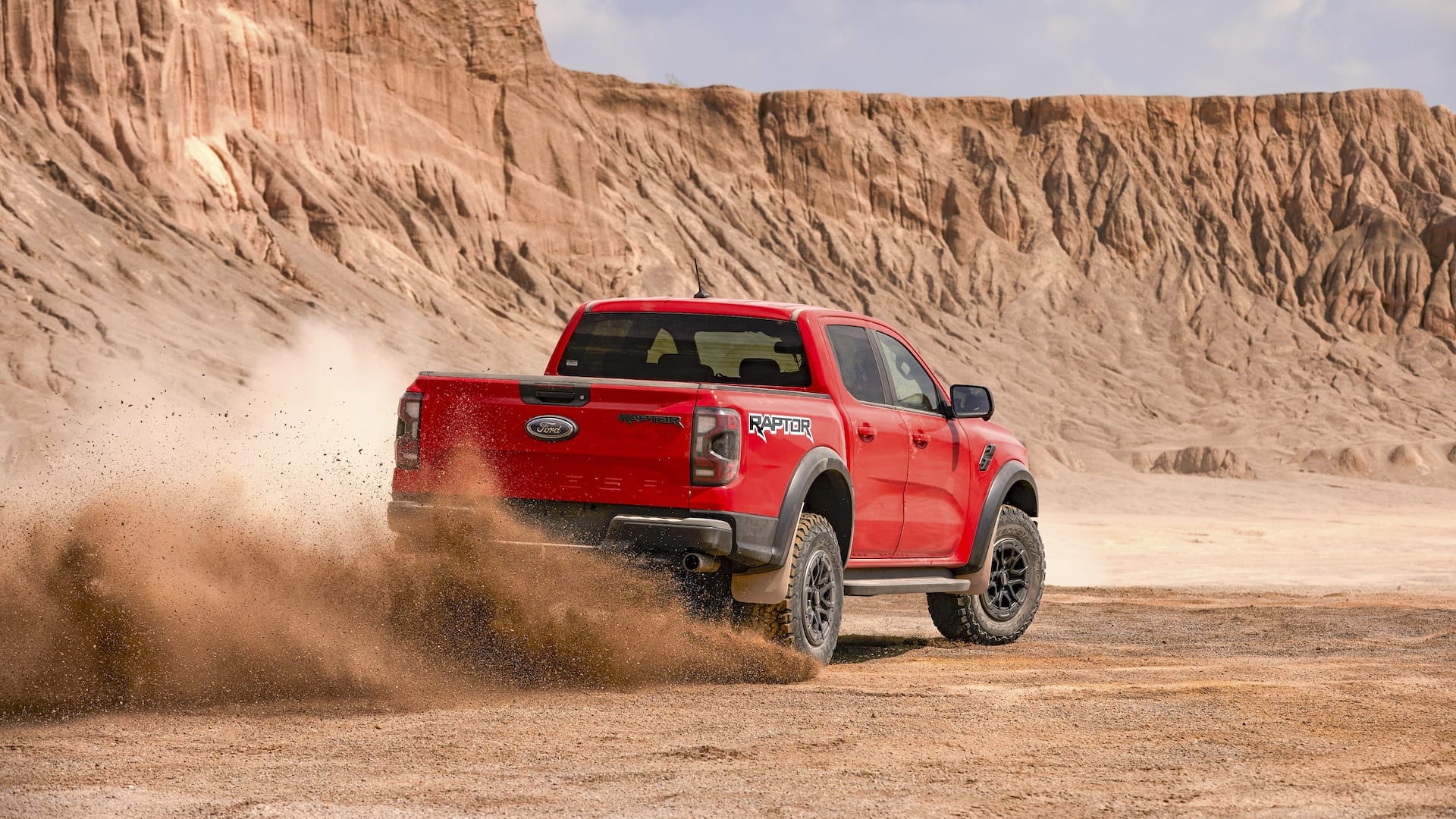
The all-new Ford Ranger Raptor performance pick-up will leap into dealerships later this summer.
With trick off-road suspension and a powerful twin-turbocharged 3.0-litre Ecoboost V6 engine, the Ranger Raptor is designed for the dirt.
Customers can place orders with Ford now, with prices starting at £57,340 (or £47,600 excluding VAT for business buyers).
No lagging behind
The launch version of the Ranger Raptor is available solely with the petrol Ecoboost engine, offering 284hp and 362lb ft of torque. A special motorsport-inspired anti-lag system helps keep the turbos spinning for improved throttle response.
A 10-speed automatic gearbox is standard for the Raptor, with the boost from the turbochargers tailored to each individual gear. Four exhaust modes are offered to control just how loud the Raptor is.
Ford’s all-wheel-drive system includes front and rear locking differentials, with a low-range transfer case that is electronically controlled.
Ford has built the new Raptor with bespoke suspension to survive punishing off-road terrain. Fox shock absorbers are adjusted based on the drive mode selected, and even react to prevent the Raptor squatting down under hard acceleration.
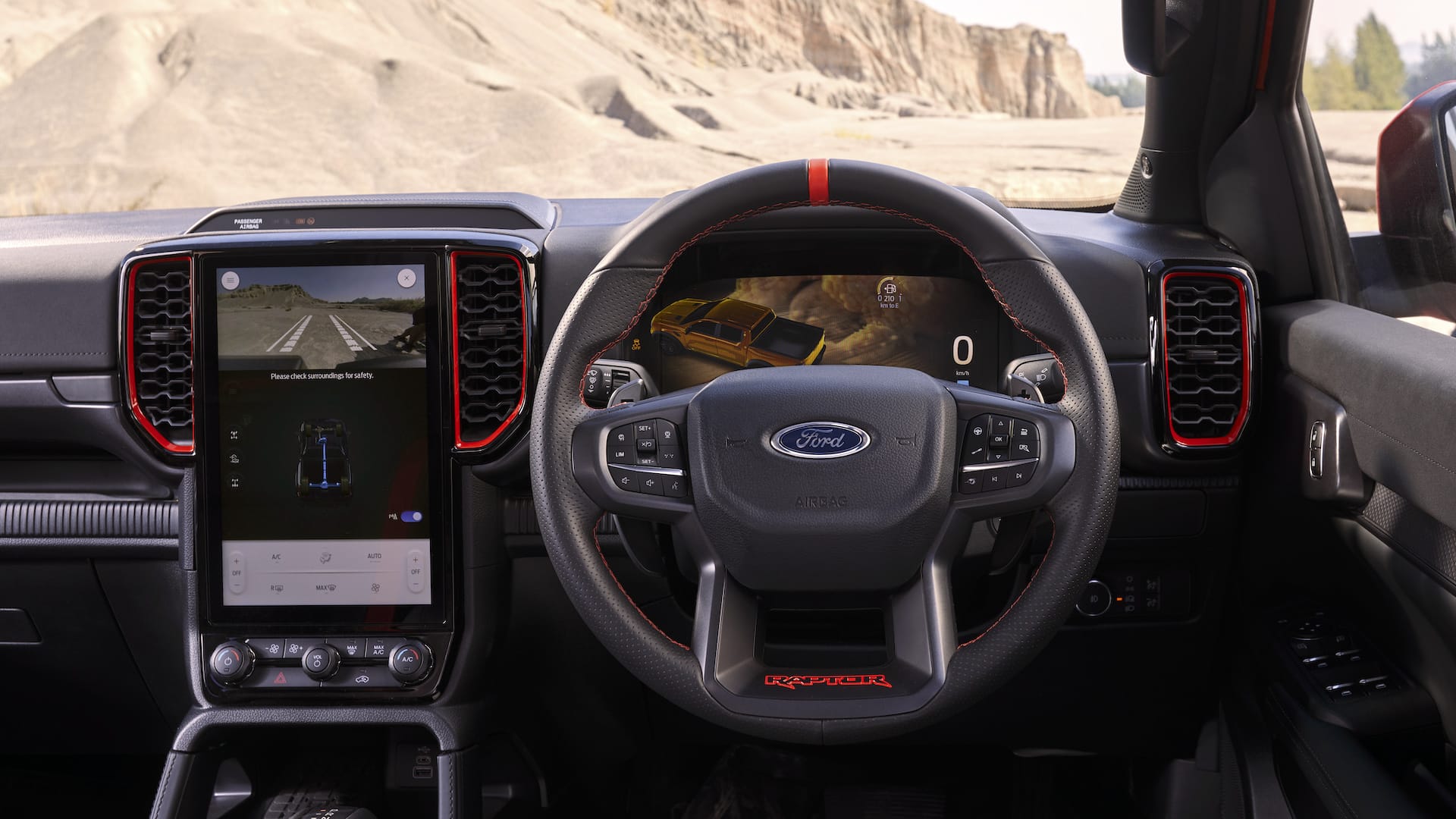
Standard equipment includes matrix LED headlights, 17-inch alloy wheels and sports seats said to be inspired by a jet fighter. Orange accents are used throughout the interior, with the gear shift paddles made from cast magnesium.
Optional extras include a £600 exterior decal package and the £1,860 ‘Raptor Pack’, which adds a roll bar and tonneau cover.
Ford’s online configurator is now available for buyers to create their dream Ranger Raptor, then send the specification directly to a dealership.
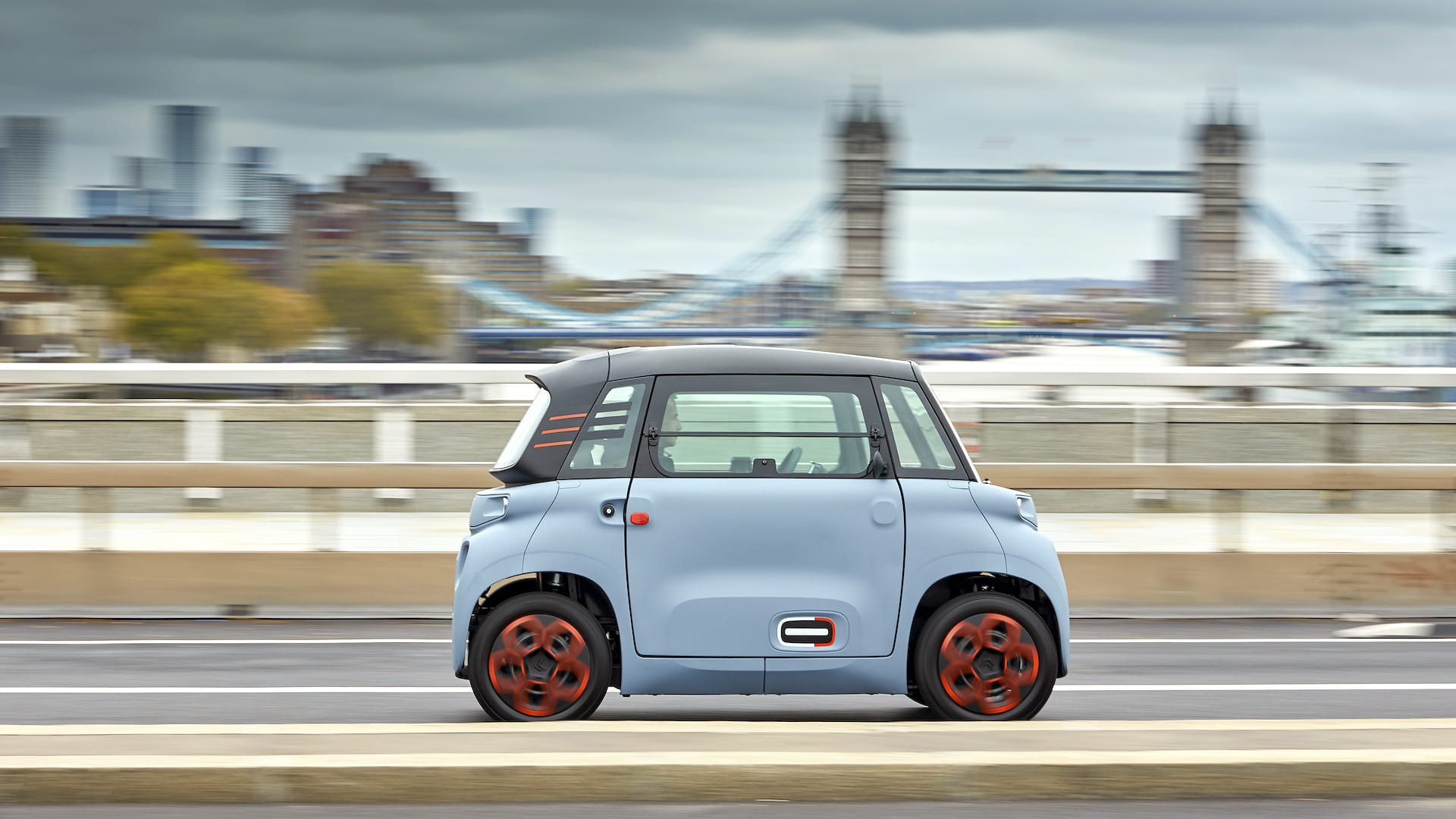
The radical Citroen Ami electric quadricycle will cost from just £7,695 in the UK.
This makes it substantially cheaper than the lowest-priced cars on sale, although the Ami’s appeal will likely be somewhat more limited.
Designed for city use, the tiny two-seat Ami will be sold by Citroen in left-hand-drive form only.
However, its futuristic looks and promise of urban mobility have seen more than 2,000 reservations placed already.
Small EV, small prices
Every Ami sold in the UK will use the same powertrain, consisting of a 6kW electric motor combined with a 5.5kWh battery. This offers a top speed of 27mph, plus an official range of up to 46 miles. Using a wallbox sees a full charge completed in three hours.
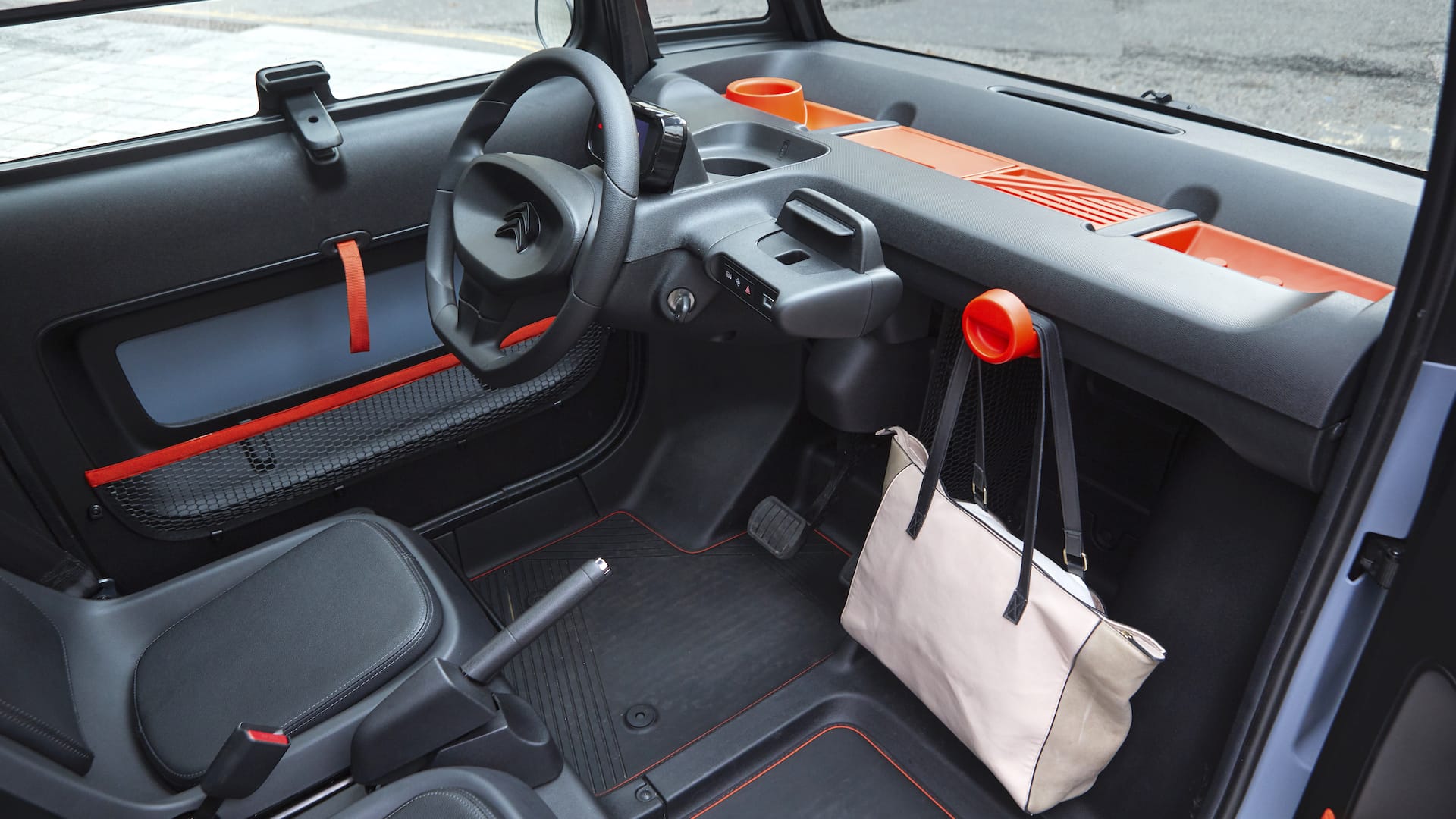
The basic £7,695 Ami comes with a digital speedometer, LED front and rear lights, a panoramic glass sunroof and USB charging as standard.
Optional Colour Packs will cost £400, and are available in Orange, Blue or Grey. Designed to be fitted at home, each comes with colour-coded trim pieces and storage items to be added to the exterior and interior.
Also included are a smartphone cradle and a net to separate the driver and passenger footwells, plus connectivity for the MyCitroen mobile app.
Ready for baguette deliveries
Moving up to the Ami Pop costs £8,495, and combines the Orange Colour Pack with black front trim. A black rear spoiler and orange decals are also included in the makeover.
Topping the range is the £8,895 Ami Vibe, contrasting the Grey Colour Pack against black bumpers and rear light surrounds. Black wheelarches and black roof rails are fitted, with bespoke decals for the doors and front wings.
Businesses wanting an all-electric urban delivery vehicle can pay £7,995 for the Ami Cargo. A modular storage section replaces the passenger seat. This allows for multiple carrying configurations, and gives the Ami a total capacity of 400 litres.
With a sizeable list of reservations already in place, new customers can place a £250 refundable deposit now. Citroen will confirm the full UK launch date for the Ami soon.
The cost of living crisis will have an impact on almost three-quarters of UK car purchases in 2022.
That’s according to new consumer research by eBay Motors Group, which identified that around one in five (19 percent) of buyers are now looking to delay buying a new or used car.
It marks another challenge for the motor industry, having already struggled with the coronavirus pandemic and semiconductor shortages during the past two years.
Downsizing and delays
The survey, undertaken as part of eBay’s ongoing Consumer Insight Panel, addressed 3,000 people who had previously expressed an interest in purchasing a new or used car.
Rising energy bills, following Ofgem’s increased pricing cap, resulted in close to a quarter (23 percent) saying they will now delay buying a car. A further 29 percent said they would choose a cheaper car instead, with 20 percent opting for a smaller model.
A similar number (23 percent) said cost of living price increases have caused them to reconsider buying a car altogether.
The inflation of petrol and diesel prices is also a factor affecting car-buying decisions. Fully 70 percent of respondents said this was an issue to consider.
Money worries have a ‘real impact’
The Government’s increase in National Insurance contributions has led 17 percent to delay their next car purchase. Similarly, higher council tax bills are a factor preventing 18 percent going ahead.
“Our research shows how the cost of living crisis is having a real impact on the decisions made by a significant majority of car buyers,” said Dermot Kelleher, head of marketing and research at eBay Motors Group.
“While for most of these buyers it will mean a pragmatic shift to cheaper and smaller cars, which in itself may be challenging as advertised prices for used cars are still tracking up 20 percent, what is apparent is that one in five buyers will delay their next purchase.”
BMW has unveiled a limited-run CSL version of the M4 Coupe, boasting more power and less weight.
Limited to 1,000 examples (with only 100 destined for the UK), the M4 CSL is part of the celebrations for 50 years of BMW’s M division.
Compared to the existing M4 Competition, the CSL is an altogether more serious driving machine.
Ready for the racetrack
Beneath the carbon fibre bonnet is a twin-turbocharged 3.0-litre straight-six engine, boasting 550hp and 479lb ft of torque. This represents a 40hp boost over the M4 Competition – good for a top speed of 190mph.
Unlike the xDrive-equipped M4 Competition coupe, the CSL is solely rear-wheel drive. An eight-speed M Steptronic transmission is standard, using carbon fibre shift paddles.
Lightweight M Carbon ceramic brakes are fitted, with a choice of two different pedal-feel settings on offer.
Upgraded suspension drops the M4 CSL 8mm closer to the ground, with auxiliary helper springs to improve the car’s handling.
Doing more with less
Along with the bonnet, BMW has used carbon fibre for the M4 CSL’s boot lid and roof, plus its rear diffuser and front splitter – with the latter featuring special red detailing.
The boot lid alone saves 6.7kg in weight, and features an integrated spoiler inspired by the 2003 BMW M3 CSL. Laser headlights are fitted, with a yellow hue designed to emulate GT racing cars.
In total, BMW’s carbon fibre diet has pegged the CSL’s kerb weight to 1,625kg, some 100kg lighter than the M4 Competition coupe.
BMW has tested the M4 CSL around the Nurburgring Nordschleife circuit, recording a time of 7min 15.68sec. This makes it the fastest road-going BMW ever to lap the 12.8-mile track.
Strictly a two-seater
Matt effect Frozen Brooklyn Grey paint is exclusive to the CSL, with Alpine White and Sapphire Black available. Heritage BMW badges can be specified, too.
The inside of the M4 CSL is no less hardcore, with a pair of carbon fibre bucket seats. These save 24kg compared to the standard items, with a fixed backrest and seat height that can only be adjusted in a workshop.
Ditching the rear seats has saved a further 21kg, and provides a space to store racing helmets. Carbon fibre is used for the centre console, offering a further 4kg weight saving.
Although built for the track, the CSL still features a 12.3-inch digital dashboard and 10.25-inch multimedia screen. This includes satellite navigation, wireless smartphone charging and a 10-speaker audio system.
M Drift Analyser rates your slides
BMW fits the M4 CSL with an M Drift Analyser, capable of rating sideways action on a scale from one to five. Clearly, the system is only intended for use on a racetrack…
A titanium exhaust can be adjusted from the centre console, with a button to select a quieter mode when needed.
Production begins at BMW’s Dingolfing plant in July 2022, with the UK allocation strictly limited to 100 cars. Orders can be placed now, with a substantial price tag of £128,820.
If the thought of a private-hire Prius doesn’t appeal, there is a more heart-warming way to travel around the capital. This charming original Mini is awaiting a public carriage licence from Transport for London (TfL), as the city’s first electric classic cab.
Nicknamed ‘Rosie’, the 1994 Mini has received a retro makeover – including leather bonnet straps, rally-style spotlamps and tiny 10-inch wheels – and is available for chauffeur-driven tours. Part of a seven-strong fleet of Minis operated by hire company Small Car Big City, it has also been converted to electric power.
Under the bonnet of Electrogenic’s classic Mini EV.
Up to 120hp is available from the electric motor, but this car will limited to around 45hp – similar to a standard Mini 1000 – to meet TfL private hire licensing rules. pic.twitter.com/isvpyC2MFQ
In place of the traditional A-Series engine, Oxford-based EV conversion specialist Electrogenic has slotted in batteries and a Hyper 9 electric motor. Maximum power is up to 120hp, but has been reined in to just 45hp – similar to a standard Mini 1000 – to meet TfL licensing requirements.
To cope with the additional torque from the electric motor, Electrogenic has fitted the five-speed manual transmission from a Citroen C1 racing car. Yes, that’s right: an EV with a manual ‘box. However, as I discovered, there is so much torque that you rarely need to change gear.
Baby, you can drive my car
A brief stint on the back seat serves as a reminder of the Mini’s sheer packaging genius. Small Car Big City’s tours last anything from 90 minutes up to 10 hours, but most people would be perfectly comfortable. The roll-back panoramic sunroof fitted here helps, too.
Then it’s my turn to drive. My first and second cars were both Minis, so sliding behind the oddly-angled steering wheel feels oddly familiar. At least, it does until you slot second gear and glide away in eerie silence.
A Mini still feels so right-sized for London.
This one is very easy to drive, too. It has a four-speed manual ’box, but you can ignore the clutch and travel everywhere in second gear.
Range is 80 miles, but Small Car Big City’s vehicles typically only cover 35 miles per day. pic.twitter.com/DapYWzjBB3
Although the Mini has a choice of ratios, second gear is all you need around town. Drive it thus and you don’t even need to use the clutch pedal. Acceleration isn’t Tesla-swift – 0-62mph takes around 12.5 seconds – but it feels responsive and quick off the mark. In crowded lunchtime streets around Hatton Garden, I had to be extra-alert: pedestrians can’t hear you coming.
Although it has some degree of regenerative braking to recharge the battery, the Mini can’t be driven with one pedal. Even so, it’s a supremely easy way to duck and dive through urban streets – and explore parts of London that an open-top tourist bus simply can’t reach. You’re always waved out of junctions with a smile, too. Everybody loves a classic Mini.
Blowing the doors off
Small Car Big City now hopes to convert half its Minis to Electrogenic EVs. “We realised London’s air needs something cleaner,” explains co-founder Tony Grant. Rosie isn’t available for self-drive hire yet, but can be booked for tours and corporate events. A cross-London treasure hunt themed around The Italian Job sounds particularly good fun.
Alternatively, if you prefer the rumble of internal combustion, the company also has a V8-engined Rover P5B. “We call that one ‘Big Car Big City,'” jokes Grant.
Audi has announced plans to integrate Apple Music directly into its cars’ infotainment systems.
This will allow Apple Music users to access the streaming service without the need to connect a smartphone through Apple CarPlay.
The update gives Audi drivers direct access to more than 90 million songs, plus 30,000 curated playlists, for a more in-depth audio experience.
Millions of songs on offer
In order to use Apple Music, drivers need an existing subscription for the streaming service. In addition, an in-car internet connection is required.
Opening the Apple Music app via the Audi Multi-Media Interface (MMI) system presents drivers with a login screen. Following the instructions, they can then sign into the Apple ID connected to their account.
A final verification process is completed by sending a code to the user’s smartphone.
Audi drivers still have the option to connect their iOS smartphone via Apple CarPlay. This can be done wirelessly or through a USB cable.
Driving digital music
Audi plans to roll out Apple Music integration to nearly all its cars in Europe, North America and Japan, starting with the latest 2022 models.
Many existing vehicles already on the road will gain Apple Music through an automatic over-the-air update.
“Integrating Apple Music into the audio infotainment system marks the next step in the collaboration between Audi and Apple,” said Christiane Zorn, head of product marketing at Audi.
“For our customers, it means that we are offering them direct access to their own personalised listening experience. This is our understanding of a premium digital in-car experience. At Audi we are systematically driving the digitalisation of the vehicle and we are convinced that the interior is increasingly developing into a third living space”.