
A substantial number of speeding drivers are still being allowed onto UK roads, despite totting up enough penalty points for a ban.
The RAC made a Freedom of Information (FOI) request to the DVLA (Driver and Vehicle Licensing Agency), to investigate the scale of the problem.
Under the ‘totting up disqualification’ process, drivers who accumulate 12 or more penalty points on their driving licence should receive a ban of at least six months.
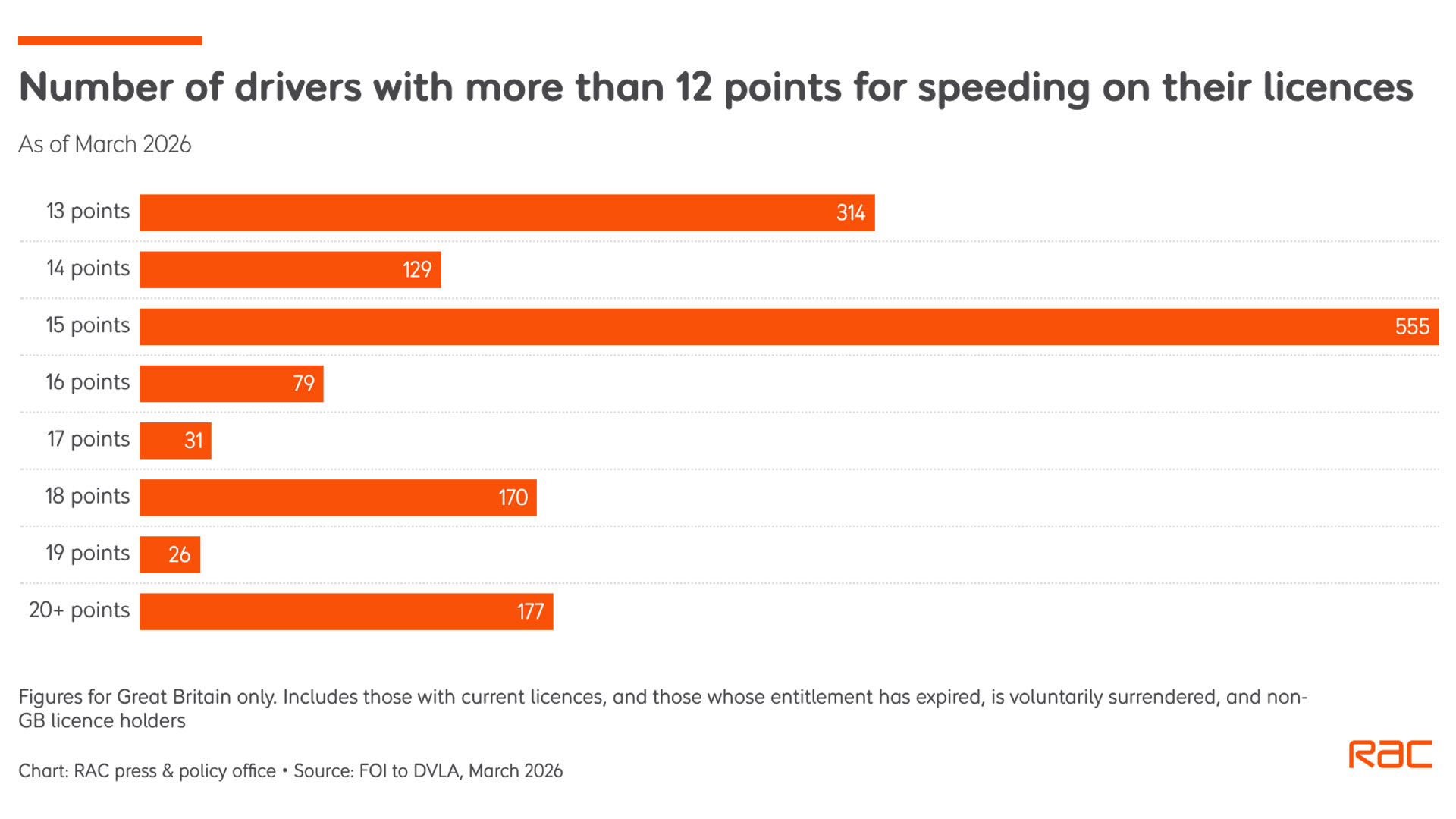
However, some 4,154 motorists currently have 12 or more penalty points on their driving licence due to speeding, but have still escaped a ban.
Incredibly, there are 117 drivers who have amassed more than 20 penalty points for speeding, plus two drivers who have a shocking 43 and 45 points respectively.
Despite seemingly being such habitual speeders, they have been allowed to keep driving as a ban would cause ‘exceptional hardship’.
Public support for stronger speeding action
The RAC is supporting the Stop Excessive Speeders campaign. This calls for courts to be granted powers to force offenders to have speed-limiting technology fitted to their vehicles.
In practice, this could mean the mandatory fitment of Intervening Intelligent Speed Assistance (IISA) to the cars of speeding drivers.
This technology prevents the car from exceeding the speed limit, except in pre-defined emergency override situations. Any instances of this are logged to be reviewed later.
Research by the RAC, ahead of the government’s recently published Road Safety Strategy, found that 86 percent of UK motorists back the idea of new measures to tackle persistent speeders.
This is even higher than the 82 percent of motorists who support the use of mandatory ‘alcolocks’ for convicted drink-drivers.
A need to tackle habitual speeders
RAC head of policy Simon Williams commented: “It’s very concerning that so many repeat speeders have been allowed to carry on driving despite amassing 12 points or more, which would normally lead to them losing their licences. And for very good reason, given that speeding is one of the leading factors in the most serious collisions on our roads.
“A better solution for people like this who have demonstrated a compelling need to the court to be allowed to continue driving would be for them to have devices fitted to their vehicles that prevent them speeding again. Our research also identifies strong support among drivers for those who speed excessively to have to have these devices.”
A spokesperson for the Stop Excessive Speeders campaign added: “Excessive speed remains one of the leading causes of death on our roads, and the public clearly recognises the need for action. What our research shows is that people instinctively understand the link between tackling dangerous driving and saving lives.
“Intervening Intelligent Speed Assistance is a practical, proportionate solution, targeting repeat offenders while allowing the vast majority of drivers to go about their daily lives without disruption.”
ALSO READ:
Car MOT failure costs rocket to record levels