The Callum Skye, the first vehicle developed fully in-house by Ian Callum’s eponymous design consultancy, will make its public debut this week at Concours on Savile Row.
The electric Skye is intended to ‘offer a rewarding driving experience both off- and on-road’ and aimed at ‘discerning adventurers’. Its goal is to travel well beyond the genteel streets of Mayfair.
Revealed online last year, this is a first opportunity to see the Skye in the metal. The compact 4×4 is powered by a 42kWh battery with an anticipated range of 170 miles. An optional ultra-fast charging battery can offer a full top-up in less than 10 minutes.
Skye’s the limit
The Skye itself is rather rapid, too. Callum says it can hit 60mph from a standstill in less than 4.0 seconds, partly thanks to a kerb weight of just 1,150kg.
Order books for the ‘exclusive low-volume production run’ are open now, with prices starting from £80,000. Both on- and off-road variants will be offered, with further information on exact specifications due later this year.
Ian Callum is one of the most celebrated car designers of the modern era. He began his career at Ford before progressing to become Jaguar’s director of design in 1999 – a position he held for 20 years.
Highlights from his career thus far include the Aston Martin DB7, Ford Puma (the original Fiesta-based coupe), Jaguar XF and Jaguar C-X75 hypercar.
Building on Callum’s legacy
Callum the company turns five years old next month. Its first project was to remaster another of its founder’s classic designs – realised as the Aston Martin Vanquish 25 by Callum.
The Vanquish was a British alternative to a high-end restomod Porsche 911. Just 25 examples were made at a cost of £350,000, plus a donor car.
You can ee the Callum Skye at Concours on Savile Row, London, from 22-23 May 2024. The event is free to attend, with no tickets required.
McLaren has become the latest car manufacturer to hop onto two wheels, launching a pair of new mountain bikes.
The Extreme and Sport electric mountain bikes are said to ‘deliver McLaren design DNA and performance’, with input from the company’s Woking-based designers.
They see McLaren join the likes of Audi, Porsche and Lotus by offering an electrically assisted mountain bike.
McLaren carbon construction
The new Extreme and Sport mountain bikes are designed by the same team responsible for creating McLaren cars, including the latest plug-in hybrid Artura.
Both electric bikes use a lightweight carbon fibre frame, just like their supercar siblings. Naturally, this aids their power-to-weight ratio when the electric motor is engaged.
Customers have a choice of two powertrains, with outputs of 250W or 600W. The latter generates a substantial 119lb ft (161Nm) of torque.
Four levels of power assistance are available, with riders able to choose between Eco, Trail, Sport and Race modes, depending on the conditions (and how tired their legs are, presumably).
Engage Race mode
With the 600W bike, engaging Race mode results in a peak power output of 852W, plus the ability to reach a top speed of 20mph.
This makes the McLaren one of the most powerful street-legal mountain bikes in the world. Don’t tell the Deliveroo and Uber Eats riders…
The McLaren Sport comes with a hardtail frame, while the Extreme uses a full suspension setup. Pirelli tyres are fitted to both versions.
Big power, big prices
A full-colour LCD screen is fitted to both the Sport and Extreme mountain bikes. This can show speed, battery charge and the remaining range, along with the choice of power mode.
McLaren only intends to produce bicycles in limited numbers, with those interested able to purchase through a dedicated website. Prices for the Sport 250 model start at £7,200, while the Extreme 250 costs from £9,600.
Sadly, McLaren says the 600W version will only be available to purchase in the United States.
A special edition of the rugged Ineos Grenadier 4×4 has been announced, set to go on sale later this year. The Grenadier 1924 celebrates the 100th anniversary of British clothing brand, Belstaff.
Since the Grenadier was first launched, Ineos and Belstaff have collaborated on trim levels that are based on the latter company’s distinctive outdoor jackets.
The new 1924 edition will sit above the current range-topping Fieldmaster, and be limited to only 1,924 examples.
Mushrooms and ink
The 1924 edition comes in the contrasting colour combination of Magic Mushroom and Inky Black. It rides on 17-inch two-tone alloy wheels, along with a stealthy de-chromed front grille and functional front and rear skid plates in dark grey.
On the inside, there is a dark green finish on the dashboard, overhead console and door cards. Black saddle leather is used for the steering wheel and passenger grab handle, with a dark grey headlining to complete the look.
Each Grenadier 1924 will wear a numbered exterior badge, along with bespoke Belstaff centenary branding.
See it in Stoke-on-Trent
The Grenadier 1924 edition makes its public debut at a special event in Stoke-on-Trent between 24 and 28 May 2024. Taking place where Belstaff was founded, the new vehicle will just be one attraction amongst a weekend of activities.
Ineos hasn’t yet confirmed prices for the 1924 edition, but expect a premium over the £76,000 charged for its current Grenadier Fieldmaster flagship.
Those interested can register their interest in securing the limited-run 4×4 now. Global orders will open from 26 June 2024.
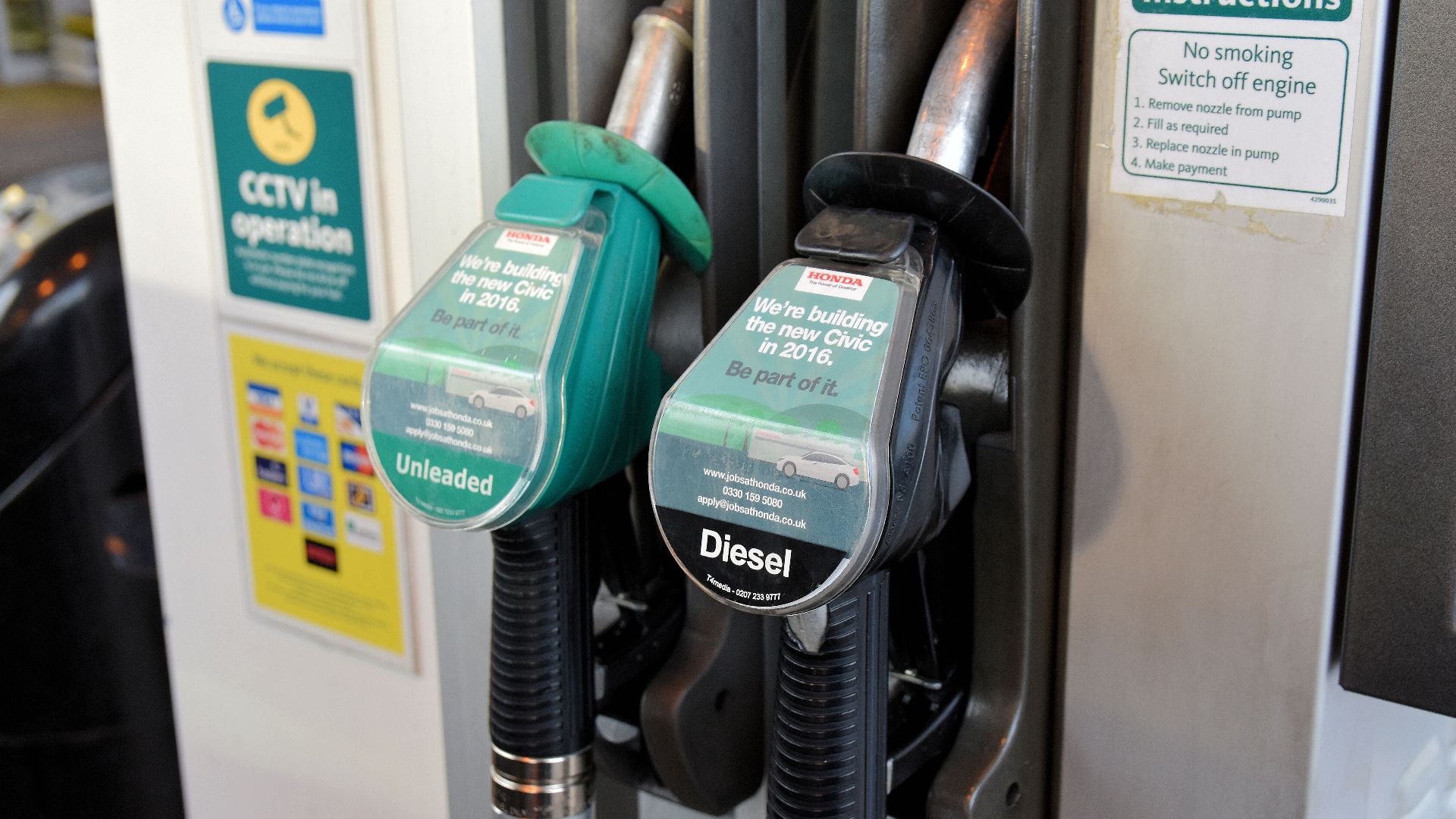
The RAC has claimed petrol stations are profiteering from fuel sales in its latest clash with the fuel industry.
The breakdown organisation said margins made by sellers on diesel have been higher than 15 pence per litre since 22 April 2024, and increased last week to 18p. It added that the margin on petrol is now nearly 12p a litre – and has averaged 10p so far this year.
According to the RAC, the average price of petrol currently stands at 150p per litre, while diesel is at 157p. If margins were reduced, it said petrol and diesel prices at the pump could decrease by 10p per litre. Wholesale oil prices have dropped by $7 (around £5.50) per barrel in the last seven days.
The government has proposed introducing a mandatory Pump Watch tracking scheme and the roll-out of a price-monitoring body. However, in a letter sent to Energy Secretary Claire Coutinho earlier this week, the RAC warned that such an organisation must ‘have teeth’ and ‘hold retailers to account’.
“It’s very concerning to see fuel margins at such high levels, particularly as this is happening under the close eye of the Competition and Markets Authority and while retailers are voluntarily sharing their forecourt prices with the intention of increasing competition,” said Simon Williams, RAC fuel spokesperson.
“If the work of the Department for Energy Security and Net Zero and the CMA has had any effect to date on improving fuel price transparency, we ought to see prices at the pumps reduce significantly in the next week due to a sustained drop in the cost of oil. Sadly, we fear retailers are likely to need a little more encouragement before this happens.”
RAC versus the fuel industry
This is not the first time the RAC has hit out against the fuel industry. Earlier this month, it called on the government to intervene to help lower prices and accused retailers of having ‘unfair margins’.
Responding to that claim, the boss of the fuel retailer lobby group said fuel stations are “operating on razor-thin margins” and are doing “all they can to keep prices low for their customers”.
Gordon Balmer, executive director of the Petrol Retailers Association, also took a veiled swipe at the RAC: “It is disappointing that we are constantly having to devote time and resources to correcting the inaccurate narrative offered by some commentators about pump price increases. We are doing all we can through the appropriate policy channels to address this issue, while others would prefer to offer criticism without taking the time to understand how the industry works.”
At this rate, neither organisation will end up on the other’s Christmas card list.
“We’ve been clear that retailers must pass fuel savings to drivers – and that’s why we are making sure there is no place to hide for anyone found to be unfairly hiking up their pump prices,” a Department for Energy Security and Net Zero spokesperson told Motoring Research.
“Our new Pumpwatch scheme will help drivers find the best deal at the pump, by making real-time price sharing mandatory. We’re also taking action to bring competition back to the forecourts with new powers for the CMA to shine a light on any attempt to overcharge UK drivers.”
How to find the cheapest fuel
Tracking down the cheapest fuel locally can save a considerable amount of money. Although a discount of a few pence per litre doesn’t sound like much, every little helps – as one big retailer would say – especially in the long-run.
It is relatively easy to find and compare real-time prices, with a number of price comparison websites offering advice. Petrolprices.com reckons it can save the average motorist £240 over the course of a year. You can enter a postcode and the filling stations appear on a map within a radius around your chosen start point. There’s also a free mobile app.
Meanwhile, if you’re in a new car with internet connectivity via the infotainment system, your route to the cheapest fuel in your area could be very swift, with many cars now accessing online databases of the cheapest fuel stations.
Finally, as well as showing user-based contributions for speed camera positions and accidents, the Waze navigation app displays fuel stations and current prices.
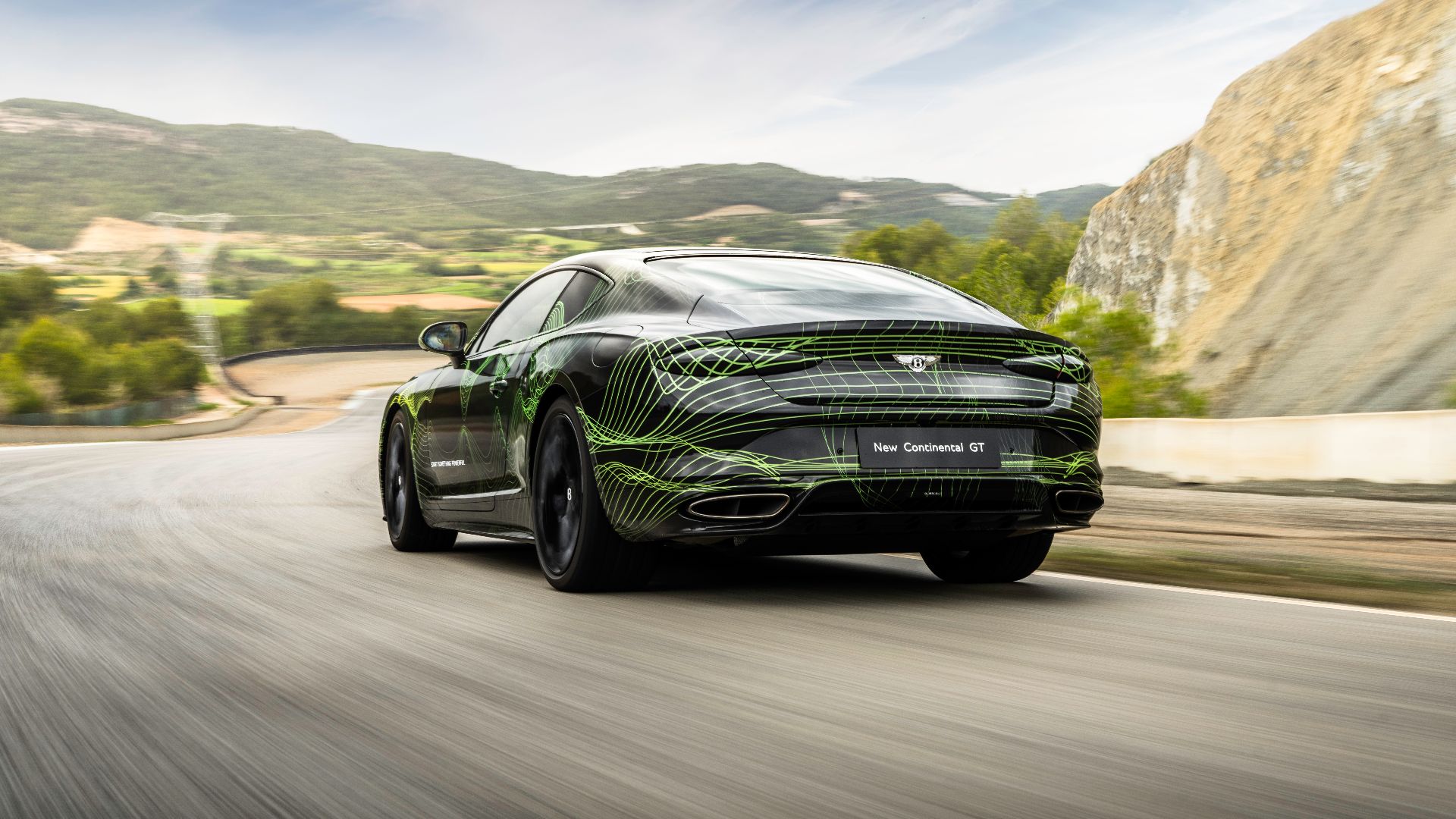
First details of the fourth-generation Bentley Continental GT have been revealed, ahead of the new car making its debut next month.
With a mighty 782hp from an uprated 4.0-litre V8 engine and a single electric motor, the Continental GT will be the most powerful Bentley in the marque’s 105-year history – outgunning even the limited-run 750hp Batur Convertible.
Zero to 62mph will likely be even quicker than the 3.5 seconds posted by the outgoing Continental GT Speed, with a top speed beyond 200mph.
The plug-in hybrid tech also provides an electric-only range of 50 miles, plus an official CO2 figure of less than 50g/km.
The car that redefined Bentley
Bentley says the new Continental GT’s chassis includes active all-wheel drive with torque vectoring, four-wheel steering, an electronic limited slip differential, 48V active anti-roll control and dual-valve dampers.
Although the car in these photos is disguised, its styling has clearly been influenced by the carbon-bodied Batur, with elongated headlights and very muscular haunches.
Launched 22 years ago, the original Continental GT ‘started the rebirth of Bentley’ and was said to ‘redefine’ the company for the modern era. Within four years of it reaching showrooms, the brand’s sales had increased to more than 10,000 units a year.
Today, one in three Bentleys sold is a Continental GT and it is the second most popular model overall – after the Bentayga SUV.
Come back to Motoring Research for a review of the new Bentley Continental GT later this summer.
The latest model in the Renault range to gain a sportier Alpine derivative has been revealed.
Following on from the updated Clio supermini, the new Renault Rafale E-Tech 4×4 has received the Alpine treatment, with styling enhancements and bespoke chassis tuning.
The family-sized SUV coupe promises 300hp, combined with the ability to cover up to 621 miles without filling up – thanks to its plug-in hybrid powertrain.
Plug-in performance
The Rafale E-Tech 4×4 makes use of the same 1.2-litre turbocharged petrol engine as a host of other Renault models. Delivering 150hp by itself, here it joins forces with three electric motors to produce a total output of 300hp.
Adding a motor to the rear axle also results in an electrified all-wheel-drive layout. This can see the Rafale E-Tech 4×4 sprint from 0-62mph in 6.4 seconds, and accelerate from 50-70mph in just 4.0 seconds.
The all-wheel-drive system can shift up to 100 percent of torque between the front and rear axles as required. A 22kWh lithium-ion battery allows the Rafale E-Tech 4×4 to cover up to 62 miles on electric power alone. Charging via a standard domestic wallbox takes just three hours.
Alpine-tuned handling
Alpine’s involvement in the Rafale E-Tech 4×4 has focused on enhancing suspension settings for the range-topping version of this SUV coupe.
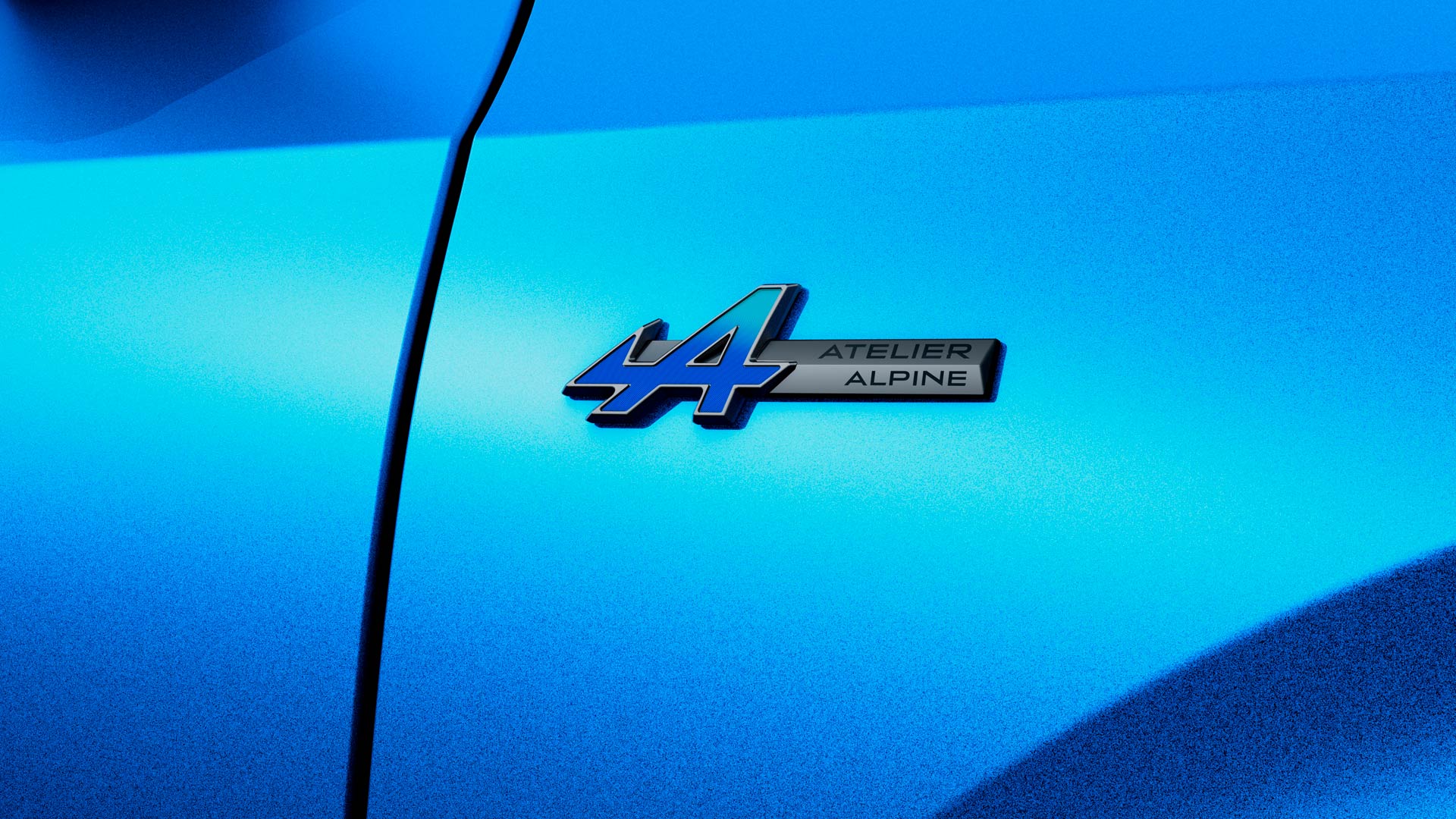
‘Atelier Alpine’ models feature self-adjusting active suspension, along with bespoke springs and dampers. A windscreen-mounted camera is used to continuously adjust the suspension stiffness to suit the road ahead.
Drivers can also select a number of distinct driving modes using a special Chassis Control menu. This alters the damping levels, and how much the rear-wheel steering intervenes to aid agility.
Satin Summit Blue paintwork is available for the Atelier Alpine model, complemented by 21-inch alloy wheels and a Starry Black rear spoiler.
A new flagship Rafale
On the inside, the Rafale E-Tech 4×4 comes with sports seats finished in Alcantara, with the same material also covering the steering wheel.
A full-length panoramic sunroof is fitted as standard, as are a 12.3-inch digital driver display and 12.0-inch central touchscreen.
UK prices for the Rafale E-Tech 4×4 will be announced in June. However, the car will sit above the existing Austral SUV and Arkana SUV coupe in the Renault range. First deliveries of the 300hp Rafale are expected in the autumn.
A pair of special edition Alfa Romeo models have been announced, celebrating the Italian marque’s motorsport heritage.
Based on the high performance Giulia and Stelvio Quadrifoglio, the Super Sport limited editions pay homage to Alfa Romeo’s victory at the 1928 Mille Miglia.
That year saw the Alfa Romeo 6C 1500 cover the exhausting 1,007-mile course, with Giuseppe Campari and Giulio Ramponi taking a dominant win.
A number of design tweaks, both inside and out, will mark out Super Sport models from the regular Quadrifoglio.
Badge engineering
The most significant changes for the Super Sport duo come from Alfa Romeo’s Centro Stilo design department.
For the first time in 100 years, the famous Quadrifoglio (four-leaf clover) has been modified. Its traditional white background is replaced with black for the Super Sport, said to give ‘more boldness and solidity’ to the badge.
Super Sport buyers can choose from triple-coat Etna Red or metallic Vulcano Black paint, with the Giulia saloon also available in Alfa White. Carbon fibre trim is found on the door mirrors and front grille.
Black ‘Teledial’ wheels are fitted as standard, with 19-inch items on the Giulia and 21-inch rims on the Stelvio SUV.
Crimson and clover
Alfa Romeo has left the 2.9-litre V6 powering the Stelvio and Giulia Quadrifoglio unaltered. However, this still means a very respectable 520hp, combined with a mechanical limited-slip differential. An Akrapovic performance exhaust is fitted, too.
The interior benefits from generous helpings of red-tinted carbon fibre trim, which is applied to the dashboard, centre console and door cards.
Red Alfa Romeo and Super Sport logos are stitched into the front headrests, along with recognition of the cars’ limited-edition status. A combination of leather and Alcantara (synthetic suede) is used for the steering wheel.
Time is running out
Alfa Romeo plans to build just 275 examples of the Giulia Quadrifoglio Super Sport. Numbers for the Stelvio are limited to 175 units.
UK prices for the Giulia Quadrifoglio Super Sport will start from £82,815, while the Stelvio Quadrifoglio Super Sport costs from £91,835.
As Alfa Romeo pivots increasingly towards electrification, the Super Sport models will likely be one of the final opportunities to own a V6-powered Quadrifoglio. Grab one while you can…
Made from cast iron and solid oak, the rear wheelarch jig in the Morgan wood shop has been shaping sports cars for around 80 years (nobody knows exactly how long). But a slimmer, sleeker new wood press now sits alongside it, made especially for the Morgan Midsummer.
“The older tool’s shape means the rear wheelarch of any Morgan is never a perfect curve,” explains chief designer Jonathan Wells. “This is the first car we’ve created entirely using 3D digital design software. Its wheelarches are CAD-drawn concentric curves… so we needed a new jig.”
The future has arrived in Malvern, it seems – even if it still looks conspicuously like the past.
A project with Pininfarina
A roofless roadster intended to provide ‘a closeness to your surroundings and a raw connection to your machine’, the Midsummer is a joint project with Pininfarina – the Italian design house that sculpted many of Ferrari’s most beautiful cars.
Its impetus came via another Italian connection: Morgan CEO Massimo Fumarola, previously chief project officer at Lamborghini. He provided the link between Malvern and Turin, resulting in a car that combines two centuries of coachbuilding expertise.
Only 50 examples of the Midsummer will be made – all of them snapped up in advance by Morgan’s most loyal customers. A price hasn’t been disclosed and Wells says it “varied wildly” depending on the spec of each car. However, I’m told the ballpark figure is similar to the limited-run Plus Four CX-T of 2021, which started from £204,000.
‘Elegant and eccentric’
The Midsummer was inspired by traditional Italian barchettas, with swept-back wings and a strong shoulder line created by its wooden door-tops. Its prominent headlights – with integrated indicators – come from the updated Plus Four, while Morgan’s traditional stamped bonnet louvres are replaced by ‘piano key’ vents in front of two tiny aero screens.
Wells says his favourite angle is the rear-three-quarter view, and I’m inclined to agree. The Morgan’s elongated, tapering tail harks back to pre-war designs, and its powerful haunches wrap around 19-inch forged alloy wheels like those of a salt-flats racer. The stainless steel sills are very distinctive, too, visually lowering the car and reflecting the road surface.
Uniquely, where you’d usually find the words ‘Disegno di Pininfarina’, the badges on the Morgan’s front wings say ‘Pininfarina Fuoriserie’. Literally translated as ‘out of series’, the Fuoriserie name reflects the Midsummer’s status as a genuine collaboration between the two companies – not simply a Morgan dressed in Italian couture.
“A Morgan isn’t aggressive, it is elegant. But it’s also eccentric,” affirms Wells. “The Midsummer establishes design foundations to build upon for future Morgan models.”
Softer than a Plus Six
The forthcoming cars Wells hints at start with the updated Plus Six, due soon, which will look more distinct from its (cheaper, less powerful) Plus Four sibling.
The existing Plus Six is the starting point for the Midsummer, which borrows its ‘CX’ bonded aluminium platform, 3.0-litre turbocharged straight-six BMW engine (also found in the Toyota GR Supra) and eight-speed automatic transmission. Morgan hasn’t quoted any performance figures, but with 340hp and a target kerb weight of 1,000kg, it certainly won’t be slow.
As a driving experience, Jonathan Wells says the Midsummer is “totally different”, with “more compliant dampers and plenty of tyre sidewall for a classic GT feel.” A sealed underbody means “much lower drag than a Plus Six” as well.
A Morgan for grand tours
As per standard Morgan practice, the Midsummer’s body panels are supported by an ash wood frame, but its interior uses speedboat-style teak. Rather than single pieces of wood, however, each component is hand-made, with up to 126 layers of laminate to ensure strength and durability.
The car’s dials, with their polished centres, are bespoke and its steering wheel also differs from the Plus Six. There’s no boot, but a storage area behind the seats provides space for a couple of weekend bags – ideally a bespoke leather luggage set from Schedoni, the same Italian brand that supplies Ferrari.
Some customers have specified a luggage rack, says Wells, and a full-width windscreen is available if you’d rather not don flying goggles. Other notable requests have included a polished aluminium finish, instead of paint. Wells says every one of the 50 cars will be unique.
Made for Midsummer
And how about the name? Primarily, Morgan says it’s ‘a celebration of the season that provides optimal weather conditions to experience an open-top barchetta [do they live in England?]’. It also refers to Midsummer Hill, near Malvern, which looks down on the birthplace of company founder HFS Morgan, along with the Pickersleigh Road factory.
Open the Midsummer’s tiny doors and ‘Coachbuilt at Pickersleigh Road’ is stamped into each sill. Wells and the wider Morgan team are clearly proud of this car, and rightly so. Glamorous and gorgeous, it successfully combines quirky British tradition with effortless Italian style. It is unmistakably a Morgan, yet unlike anything the marque has produced in 114 years to date.
Let’s hope the collaboration between Morgan and Pininfarina bears further fruit, and that next time it isn’t only a ‘Fuoriserie’ for the chosen few.
Bugatti and The Little Car Company have unveiled the Baby II Type 35 Centenary Edition, designed to celebrate the 100th anniversary of the vintage racing car.
The electric, 75-percent-scale Baby Bugatti features an aluminium body, brass identification plates inside its cockpit and a Bleu de Lyon paint scheme that pays tribute to the six original Type 35 competition models.
Each car has a unique chassis number to match one of the originals, plus hand-painted race numbers on its bodywork. Potentially, they can be made road-legal.
Scaled-down and special
The Baby II Type 35 Centenary Edition was developed using a 3D scan of the original 1924 Bugatti Grand Prix car.
Oxfordshire-based The Little Car Company already makes a version of the Type 35, along with downsized replicas of the Aston Martin DB5 and Ferrari Testa Rossa.
Despite their playful side, TLCC founder Ben Hedley insists his vehicles aren’t toys: “We take classic cars that are now too valuable to drive, then shrink them down 25 percent,” he told Motoring Research.
The most successful racing car ever?
Introduced in 1924, just five full-size Type 35s were built – plus a prototype. They were raced for a decade and, during that period, the cars achieved some 2,500 wins and podium places.
According to Bugatti, that makes the Type 35 ‘the most successful racing car of all time’ – a claim we’re not about to argue with.
All six examples of the Centenary Edition have already been sold and are destined for ‘private collectors across the globe’. However, the ‘standard’ Type 35 is still available from The Little Car Company, priced from £25,000.
Artificial Intelligence (AI) technology can be used to reduce the emissions from electric car charging by up to 89 percent – while also saving motorists money.
That’s according to leasing company DriveElectric. Its technology charges EVs when the carbon intensity of the National Grid is at its lowest, and provides data about the carbon emissions saved.
The emissions created by electric vehicle charging are dependent on the carbon intensity of the electricity supply, which in turn is influenced by the amount of renewable energy used.
According to National Grid data, the average carbon intensity of electricity supplied so far in 2024 is 129.9g of CO2 per kWh. However, the lowest figure was 19g CO2/kWh, when the grid was mostly powered by renewable energy. The highest total this year was 295g CO2/kWh.
Timing it right to reduce CO2
DriveElectric says the carbon emissions associated with charging an EV also have a ‘huge variance’ depending on when the car is plugged in.
According to UK government figures from 2023, an average electric car has emissions of 81g CO2e (carbon dioxide equivalent) per mile. This is based on the total carbon figure for the generation of the energy, including extracting, refining and transporting it. The equivalent figure for a petrol car is 263g CO2e per mile.
DriveElectric says its technology results in the average EV emissions figure being reduced to less than 40g CO2e per mile – and potentially as low as 9g CO2e per mile.