Last month, Porsche built its millionth 911. Then, just a fortnight later, a 1993 911 sold at auction for £1.7million. Think about that for a moment. One-point-seven million pounds. For a 911. Has the world gone mad?
Before you spill your PG Tips or take to Twitter, I should point out that, yes, the car in question was a rare 964 3.8 RSR. And yes, it was essentially new, with six miles on the clock. Nonetheless, we’re still talking about a 911: a car for which around 700,000 of that one-million production run remain on the road.
Thankfully, you won’t need £1.7million to buy a Porsche at JZM – one of the UK’s leading marque specialists, based at Kings Langley in Hertfordshire. But if you’re looking for an investment-grade Porsche it’s a good place to start; the showroom is packed wall-to-wall with classic 911s, including plenty of RS models. I went along to see what all the fuss is about.
Since we’re talking telephone numbers, it seems fitting to start with the most expensive car on sale. The 997 GT3 RS 4.0 was a limited-run special that Autocar declared: “The finest Porsche ever to wear a number plate”. And, with 4,285 miles under its centre-lock wheels, this hardcore road-racer is advertised at £535,900. Quite incredible for a car that cost ‘just’ £128,466 in 2011.
Next-up in price order is an immaculate Midnight Blue 964 Turbo 3.6: a relative snip at £199,000. The 360hp 3.6 was only produced between 1993 and 1994 (most blown 964s used the 320hp 3.3-litre motor), making it a rare beast today. With wheelarches stretched over polished split-rims and that iconic ‘tea tray’ wing (take note, Porsche geeks: it’s not a ‘whale tail’), this is the brawniest-looking 911 of all.
If anything can wrench my eyes from the visual sucker-punch of a 964 Turbo, it’s a Viper Green Carrera 2.7 RS. Except this isn’t a genuine RS, but a meticulously-built ‘tribute’ based on a 1972 911T. With a 2.7-litre MFI engine, period Recaro seats and chromed Fuchs alloys, it looks fabulous – and a price tag of £129,900 is less than a quarter what you’d pay for the real deal.
The evolution of an icon
Wandering around the JZM showroom, it’s fascinating to see how the 911 has evolved. Over five decades, it has swelled in size, sprouted spoilers and become hugely more luxurious, but that iconic silhouette has stayed the same. Perhaps this is key to the car’s long-lasting appeal; it’s constantly evolving yet curiously timeless. Present-day Porsche’s profits may come from SUVs, but the 911 remains the core of its range.
Even so, it’s one of the oldest 911s here – a 1970 2.2E finished in Light Ivory – that really wins my heart. A ‘California car’ that has never been welded, it still wears all its original body panels, and the delicate chrome trim looks flawless. JZM says the car has ‘been fully prepared for the British climate’, but I’d still be loath to take this £104,900 classic on wet winter roads. One for sunny Sunday mornings (and evenings spent lovingly polishing in the garage), I suspect.
If in doubt, Flat clout
I’ve added the 2.2E to my lottery-win garage and am heading for the door when… whoah! Poking its sharkish snout out of the next-door workshop, I spy a 930 Flachbau. This special-order ‘flatnose’ version of the original 930 Turbo is fast, fearsome and – to a kid who grew up in the excess-all-areas 80s – probably the coolest 911 you can buy. Sadly, it isn’t for sale, or it would have bumped the 2.2E from the top spot on my personal (and, sadly, entirely theoretical) shopping list.
So, if my numbers came up, would I buy a Porsche 911? As a daily-driver, probably not. A Cayman S is all the sports car you really need, especially on congested UK roads. But if I wanted somewhere to put my money, an appreciating asset that I could drive and enjoy, then absolutely yes. The 911 is a car that, like its rear-engined layout, defies logic. Yet if you can afford one, it’s probably the most sensible sports car you can buy.
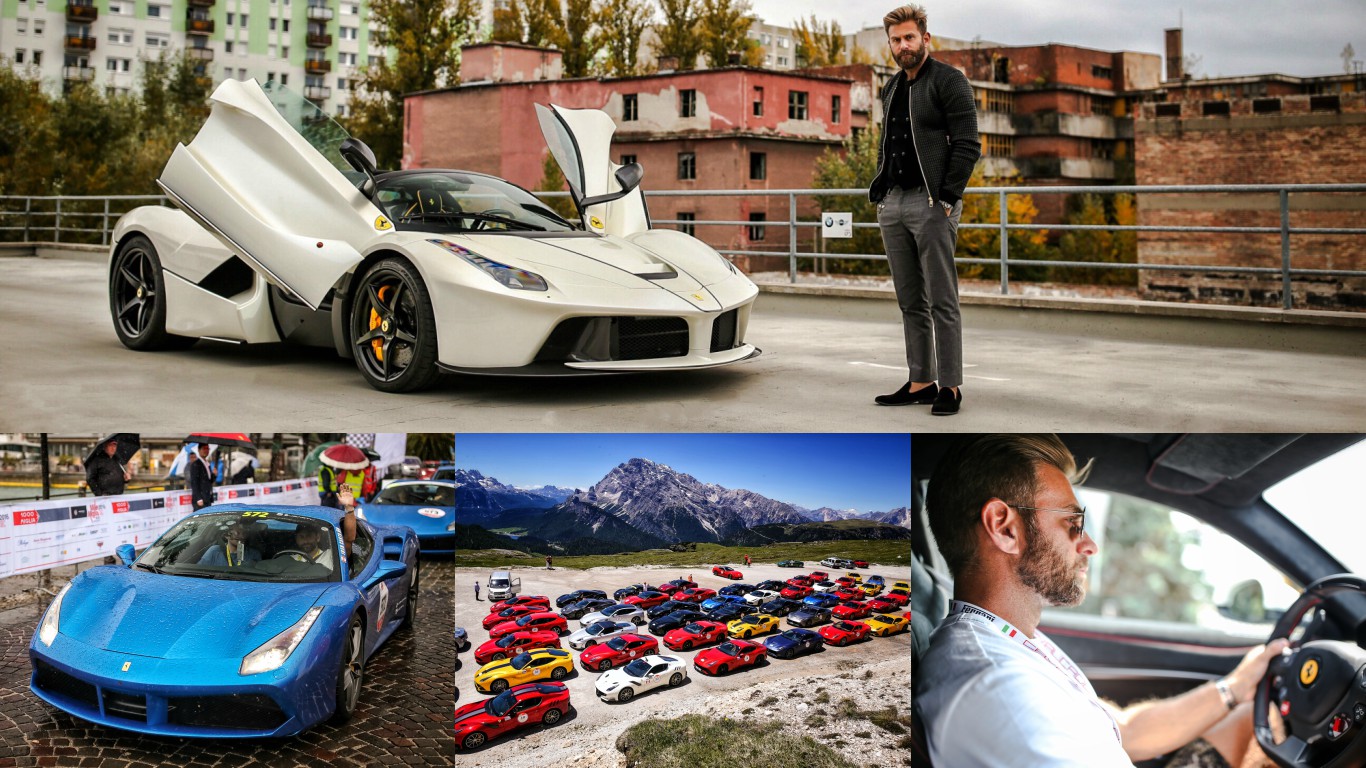
He’s a racing driver, an entrepreneur, an Instagram star, and he also happens to have a rather impressive collection of exotic cars. We delve inside Josh Cartu’s garage.
Born in Canada, but now residing in Hungary, Cartu created several successful media and software companies. This has allowed him to indulge his many hobbies, such as skydiving, rallying, drifting, and most importantly collecting cars. Josh has given us his own words on why he owns the cars he does, and what makes them special to him.
Every car collection needs a mid-engined V8 Ferrari, so what better place to start than with the ultimate version of the 458 sports car? The Speciale was a hardcore limited-edition model, with extra power and a more aggressive bodykit. ‘Aperta’ means ‘open’ in Italian – hence the convertible roof. Just 499 examples were built, all with a 597hp version of the naturally-aspirated 4.5-litre V8.
But what does the man himself think about having the Speciale Aperta in his collection? “This was a very special car because it’s super-limited,” explains Josh, “and it was the first love Ferrari showed me for being a passionate client and racing driver.” He also reckons that they “made an instant classic” and that best part is “that noise!!” Two exclamation marks needed.
With a wealth of cars, and a high-flying lifestyle, Josh has proven to be a hit on Instagram. Over 417,000 followers keep tabs on his latest photos, which cover both his road and race car collection. He’s also amassed over 13,000 followers on Twitter, with updates on his next exploits drawing in a crowd.
Ferrari 488 Spider
What’s better than one open-top, mid-engined Ferrari? Another one, of course. In fact, make that another two, as Cartu has the 488 Spider in duplicate. Replacing the 458 was a hard task, but a turbocharged 3.9-litre V8 with 661hp is the key attraction. The 0-62mph dash takes just 3.0 seconds in the Spider, with a potential top speed of over 200mph.
Describing the 488 Spider as “the best all around Ferrari” is high praise, with Josh reckoning that the folding metal roof allows it to be “two cars in one”. So why did he happen to buy two of them? Simply because he “put too much mileage” on the first car he bought.
Mr Cartu is clearly a fan of open-air motoring, not least because of the Ferraris mentioned already. Josh is also the owner of a BAC Mono – the extreme single-seater road car that owes more to motorsport than it does to street machinery. However, he did have an unfortunate accident while driving his BAC Mono in one of the tunnels beneath Budapest, where he lives.
Ferrari 488 Challenge
If you want to go racing against other gentleman drivers in identical Ferrari racing cars, you need to get yourself into the Ferrari Challenge. Held annually since 1993, this special single-make series gained a race version of Ferrari’s latest mid-engined sports car at the end of 2016. The 488 Challenge has the same turbocharged 3.9-litre V8 engine as the road car, but with a fully stripped-out interior and gigantic rear wing for downforce.
Why buy a 488 Challenge? Josh explains: “There are two options for racing in the Ferrari Challenge: 1) you can rent a car from a serious team like AFCorse or Kessel or 2) you can buy your own. I bought my own because I wanted to develop more of a connection with it and customise it more than I would if it were a regular rental. Most importantly, I don’t like anyone else driving my cars!”
Josh is currently competing in the European Ferrari Challenge series, alongside his brother, and the first round of 2017 was held at the Valencia circuit. In the Pirelli Trophy competition, aimed at professional drivers, Josh placed 6th and 4th respectively in the two races held.
Ferrari F12tdf
It’s not all mid-engined machinery in Cartu’s garage. The F12tdf – standing for Tour de France – features a 6.3-litre V12 mounted in the front of the car. Sending almost 770hp to the rear wheels, the F12tdf can hit 0-62mph in just 2.9 seconds, while top speed is 211mph. Limited to 799 units, the F12tdf cost £339,000 when new, with the price hike going towards the carbon fibre add-ons and lightweight technology.
So what exactly was it that attracted Cartu to the F12tdf? “Power and noise” are the two big things apparently, enough to make the F12tdf currently his “all-time favourite” car. Josh does believe that “if you don’t have the skills” the F12tdf can be something of a handful, but that it can “make mincemeat” out of the old Ferrari 599 GTO.
Being named after a famous road race – the Tour de France, where Ferrari proved successful during the 1960s – it seems right that Josh Cartu would own one. Having entered both the Mille Miglia and Targa Florio races, Cartu is no stranger to road racing, and has used his F12tdf in Ferrari Cavalcade events for owners.
Ferrari GTC4Lusso
Replacing the FF, the GTC4Lusso has a complicated name, which suits the complex mechanics beneath its shooting-brake body. A 6.3-litre V12, making 681hp, is connected to a seven-speed dual-clutch gearbox. Uniquely for a Ferrari, the GTC4Lusso has all-wheel-drive, helping control the power on offer for everyday use.
With a garage full of extreme sports cars, Cartu rates the GTC4Lusso as an “absolute no-brainer” of a choice. The “comfort and convenience” it offers, along with the “ability to drive on ice and snow” clearly make the GTC4Lusso a winner for Josh. He also claims that as “it’s not a Porsche” the rear seats are actually big enough for grown adults.
When he’s not driving around in the luxury of his GTC4Lusso, Cartu likes to engage in more extreme pastimes, such as flying to the edge of space. In 2015, Josh took a flight in a Russian MiG-29, travelling to an altitude of 20km above the earth. That’s high enough to be able to see the curvature of the planet. The flight also included aerobatics, with manoeuvres pulling up to 9G at times. Just a little more than what the GTC4Lusso can manage!
LaFerrari Aperta
How do you make the LaFerrari more extreme? By producing an even more limited edition version, with a removable carbon fibre roof for open-air thrills. It makes hearing the 789hp version of the 6.3-litre V12 engine even easier, whilst the 161hp KERS hybrid system remains unchanged. With only 209 examples produced, for sale to special chosen Ferrari customers only, the LaFerrari Aperta sold out rather rapidly. Such was the lure of 217mph with no roof.
Why would you need to buy a LaFerrari Aperta? To quote Mr Cartu “Need I explain?” given that this is the “best car the human race has ever produced for ANY money”. Strong words indeed. Josh clearly feels quite a connection with the Aperta, stating that he is “honoured and privileged to be the custodian of such an awesome piece of history”.
What makes the LaFerrari Aperta a “piece of history” is that it forms part of the 70th anniversary celebrations planned by Ferrari. To mark seven decades of production, along with the Aperta, the Maranello firm is also releasing a range of special liveries inspired by famous Ferrari colour schemes. We imagine Cartu may well add a 70th anniversary car to his collection.
Rolls-Royce Phantom EWB
Although the previous slides have featured nothing but Maranello’s finest, Cartu’s garage does not only contain Italian machinery. Alongside the Ferraris is a Rolls-Royce Phantom – perhaps the ultimate in automotive luxury. However, this isn’t just any Phantom, it’s the EWB, or Extended Wheelbase. This adds an extra 250mm in length to create more interior space, but keeps the same 454hp 6.7-litre V12 engine.
With a garage full of supercars, what does a gigantic luxury saloon bring to the party? According to Cartu, after 6pm it becomes his “favourite car in the world” as it means he can give the keys to his driver and lounge in the spacious rear. Even though he admits it may appear “somewhat ostentatious” he has racked up “over 100,000km” in his time with the Phantom. He also admits that he “placed an order immediately” for the forthcoming new Phantom, having been given a sneak preview.
Cartu hasn’t only used the Phantom EWB for cruising around town. It has also been part of his Gumball 3000 Rally entry, under the name of Team Wolfpack. Nicknamed the Phantom Menace, it’s certainly makes a statement with this bold livery. Cartu’s Team Wolfpack won the Best Team Award at the 2014 Gumball, which journeyed from Miami to Ibiza.
The new Lotus Elise Cup 250 is the fastest and most focused four-cylinder Lotus sports car ever, providing the revised Elise line-up with a range-topper that the firm says is “punching well above its weight”. Not that its weight is exactly lardy: ongoing mass-reduction measures have taken the dry weight down to a potential 860kg.
That’s still some way above the 723kg kerbweight of the original 1996 Elise, but that was a pretty basic car with just a 118hp Rover K-Series engine. This one has a supercharged 1.8-litre putting out 243hp for 0-62mph in just 4.3 seconds (0-60mph dips below 4.0 seconds). The 154mph top speed isn’t bad either, considering its serious aerodynamic bodykit that delivers 125kg of downforce at 140mph.
Lotus ‘Cup’ models are described as bridges between road and track. They’re extreme, but the package can also be used every day. You’ll get the most from racy componentry such as Eibach springs, Bilstein dampers, AP Racing twin-pot front brakes, forged alloy wheels and Yokohama Advan A048 LTS tyres on the track, but they’ll deliver on the road as well.
And it’s Lotus fans that have directed this car, says Group Lotus CEO Jean-Marc Gales. “We know what existing Lotus enthusiasts demand from our cars and we are also bringing in many new customers who can see clearly that we offer an unrivalled combination of performance, styling, dynamics and value for money.
“A Lotus rewards like no other car.”
Lotus Elise Cup 250: in detail
For the Elise Cup, Lotus took the standard Elise Sport and Sprint suspension, and upped the damper rates both in compression and, by a much greater amount, rebound. 288mm disc brakes are cross-drilled and ventilated, and Lotus offers optional two-piece discs (for £1500) that save 1kg per corner.
Lotus has fitted a T45 steel roll-over hoop, to further stiffen the chassis, and the sticky Yokohama tyres are able both on road and track (and over a broad range of temperatures, promises Lotus – they’re not tyres that only ‘switch on’ when warm).
There’s a standard lightweight lithium ion battery, polycarbonate rear screen, hand-made carbon fibre racing seats, and a rorty exhaust note that can be further spiced up – and another 7kg cut from the kerbweight – thanks to a £4000 titanium exhaust option.
All told, the new Elise Cup 250 is 14kg lighter than its predecessor. The kerbweight is 917kg, the dry mass is 884kg and, if you indulge in all the options (such as a £3400 carbon aero pack that cuts 3.4kg, a carbon hard top that saves 3kg in return for a £3000 outlay and so on), the Cup 250’s lightest possible weight is 860kg. If you then want to spoil it all (but keep cool) by adding on air con, you’ll need to fork out £1250, while a noise insulation kit is £350.
Available to order now, the new Elise Cup 250 costs from £47,000 – and Motoring Research will be driving it soon…
The Dodge La Femme arrived on the scene in 1955, a year when America was thriving with post-war prosperity. The baby boom was in full swing, and more people lived in the growing suburbs than in any other type of community, drawn by elbow room, fresh air, and affordable housing for growing families.
The rise of these new communities also gave rise to commuting; the vast majority of suburban families had at least one parent who drove to work. Groceries, household items, and sundries were generally not available at a convenient mom-and-pop corner store like in the city, but rather down the road at supermarkets and shopping centers with sprawling parking lots. A second family car was needed.
Women were going to work in greater numbers than ever before by the mid-1950s, accounting for about one-third of the workforce and increasing overall household income. They were also taking a greater interest in cars; about one half of all adult women held a driver’s license. The automobile industry recognized that women were a growing presence in the marketplace, and actively sought to court to them.
In 1954, Nash was the first manufacturer to market a car specifically to women with the fresh, petite Metropolitan. That year saw the La Comtesse, the pink feminine half of “his and her” Chrysler show cars. General Motors also wanted a piece of the growing market, and design studio chief Harley Earl hired six women in 1955 to work across the various model lines in an effort to create cars that appealed to women. Those designers pioneered such modern automotive staples as retractable seat belts, child-proof doors, storage consoles, and vanity mirrors. One of those women, Sue Vanderbilt, overcame many obstacles to become a GM studio chief herself.
The birth of the Dodge La Femme
1955 also saw the unveiling of the Dodge La Femme, a trim package available for the Dodge Custom Royal Lancer. The car featured a pink-and-cream paint job and rose-printed upholstery, as well as a matching purse, umbrella, and other fashion accessories. It was marketed as being the first car for the modern American woman.
It can be hard to look back at a car like the La Femme. It is not an oddity; it represents the cultural values idealised by the media and advertising of its time. Today, offering a pink car with matching lipstick exclusively to women might be seen to be just as condescending as filling a car with potatoes and offering it to the Irish. Even in the period advertisement above, it’s not the driver’s door that is opened for her on what is said to be her own personal vehicle.Yet what the La Femme represents, however obtusely, is a recognition by the American automotive industry, and therefore the largest sector of industrial manufacturing on the planet, that women were an rising economic force, and that it was imperative that their specific wants and needs be addressed. So great was this tide that by 1958, GM executives from all over the country came to the unofficially named Feminine Auto Show to see the cars created by its six female designers. Not too many years later, Ford released its own car created to appeal to women: the now world-famous Mustang.
Women now drive the automotive world. Women buy more than half of all new cars and influence up to eighty percent of car buying decisions. More women hold driver’s licenses than men. Women drive more miles and take more car trips than at any time in history, while the number of miles men drive has begun to decline. Car manufacturers now market their wares aggressively to women, and usually with dignity and respect. Yes, there are companies that take spectacular pratfalls and ignite social media firestorms, but overall the trend inspires pride in our societal accomplishments and hope for the future.
The La Femme can be viewed as a cynical design exercise, as Fifties kitsch, as social commentary, and many other things. The machine itself though, made of steel and fabric and devoid of the poisonous influences of humanity, is spectacular, in the strictest sense of the word.
Dodge La Femme: the legacy
Women make or influence a majority of new car purchases today, and manufacturers do everything they can to appeal to them. Marketing is a science, and demographics can target a person by age, gender, region, education level, and myriad more variables. Once a target demographic is acquired, the manufacturers do their best to present a vehicle that has the performance levels, economy, and features that demographic wants. This La Femme ad from 1956 illustrates the difference between a car “designed with the ladies in mind” (as stated in the above ad) and the modern practice of designing a car that offers the attributes a particular demographic wants.
The La Femme was discontinued after 1956. As it was a trim package and not a standalone model, production numbers are undocumented, but most agree about 2,500 were produced. Because it was only a trim package, it was not widely advertised, nor were demonstration models available at most dealerships. It’s demise is generally credited to lack of widespread public awareness of the product.Viewed through today’s standards, the marketing material shouts, “Hey, princess! Pink is for girls!” which hits every wrong nerve in modern psyches. It discolors perception of the La Femme, which is a powerful, well-engineered, and stylish vehicle. It’s designed by Exner, has a wicked Hemi under the hood, and comes with a matching umbrella, just like a new Rolls Royce.
Sadly, the Dodge La Femme may go down in history indistinguishable from the gibbering chauvinism that created it. Hopefully, we can learn to ignore its questionable parentage and let the La Femme be itself, standing proudly on its own four wheels.
The Austrian town of Reifnitz on the side of Lake Worth, or Worthersee, has hosted the ‘GTI Treffen’ festival for 36 years. Originally a small meet of Volkswagen enthusiasts (just 100 cars attended the first event), more than 100,000 fans from all over Europe now head to the Alps at the end of May. We sent a snapper to the event and captured some of the weird and wacky VWs in attendance.
If Mk1 Volkswagen Golf GTIs are your thing, you’ll be well catered for at Worthersee. The event was first created to celebrate the original GTI, and there are still loads in attendance today. From the original example to modified ones like this bright yellow GTI, we can get behind the subtle look.
Mk3 Volkswagen Golf cabriolet
What were we saying about ‘subtle’? This modified third-generation Golf cabriolet is anything but. There really is something for everyone.
Audi A1
Although predominantly a Volkswagen show, there are other VW Group cars in attendance. Such as this interesting Audi A1, which we can barely see thanks to its camo look.
Audi 100
Brown with gold alloys doesn’t sound like a great look, but it works for us on this Audi 100.
Audi 50
The Audi 50 is what became known as the Volkswagen Polo… and the rest, as they say, is history. This fairly standard and incredibly tidy example received many admiring glances at Worthersee.
Volkswagen Passat Coupe
Remember when Passats were cool? This B1 generation Passat Coupe is closely related to the Audi 80 of the same era.
Mk1 Volkswagen Golf
In a town full of modified Vee-dubs, there’s something very refreshing about a pair of properly mint Mk1 Golfs as the factory intended.
Volkswagen campers
Well, if you’re visiting the Alps for a VW festival, is there a better way of doing it than an old-school VW camper?
Volkswagen Beetle
Thanks to their popularity, classic Volkswagen Beetles are still a relatively common sight on the roads. Plenty made it to Worthersee, including this lovely green example complete with skis on the back.
Volkswagen Polo G40
The Polo G40 is the result of what happened when VW bolted a supercharger to the 1.3-litre engine in the GT. Although it wasn’t incredibly powerful (it produced 115hp), it’d beat both the Fiesta XR2i and Peugeot 205 GTi in the 0-62mph run.
Volkswagen Lupo
Ah, the VW Lupo. Pre-dating the popular Up, the Lupo wasn’t quite the sales success of its successor. They’ve got quite a following in Volkswagen circles, though. This was one of a number of modified examples on show at Worthersee.
Volkswagen Polo Harlequin
You can imagine the meeting that led to the creation of the Volkswagen Polo Harlequin. “We need to give the Polo a sales boost. Let’s launch a special edition. But what can we do with it?” The answer, apparently, was to paint every body panel a different colour. Around 3,800 were made (and presumably sold), including this modified example.
Volkswagen Touran
A Volkswagen Touran people carrier doesn’t seem the obvious choice as a base for a modified car. Name the VW, however, and you’ll probably find a modded version at Worthersee.
Mk2 Volkswagen Golf
We spotted this lovely Mk2 Volkswagen Golf in one of the car parks at Worthersee. The decals suggest it’s an Elite special edition… we don’t know much about it, but feel free to tell us more about it in the comments if you do!
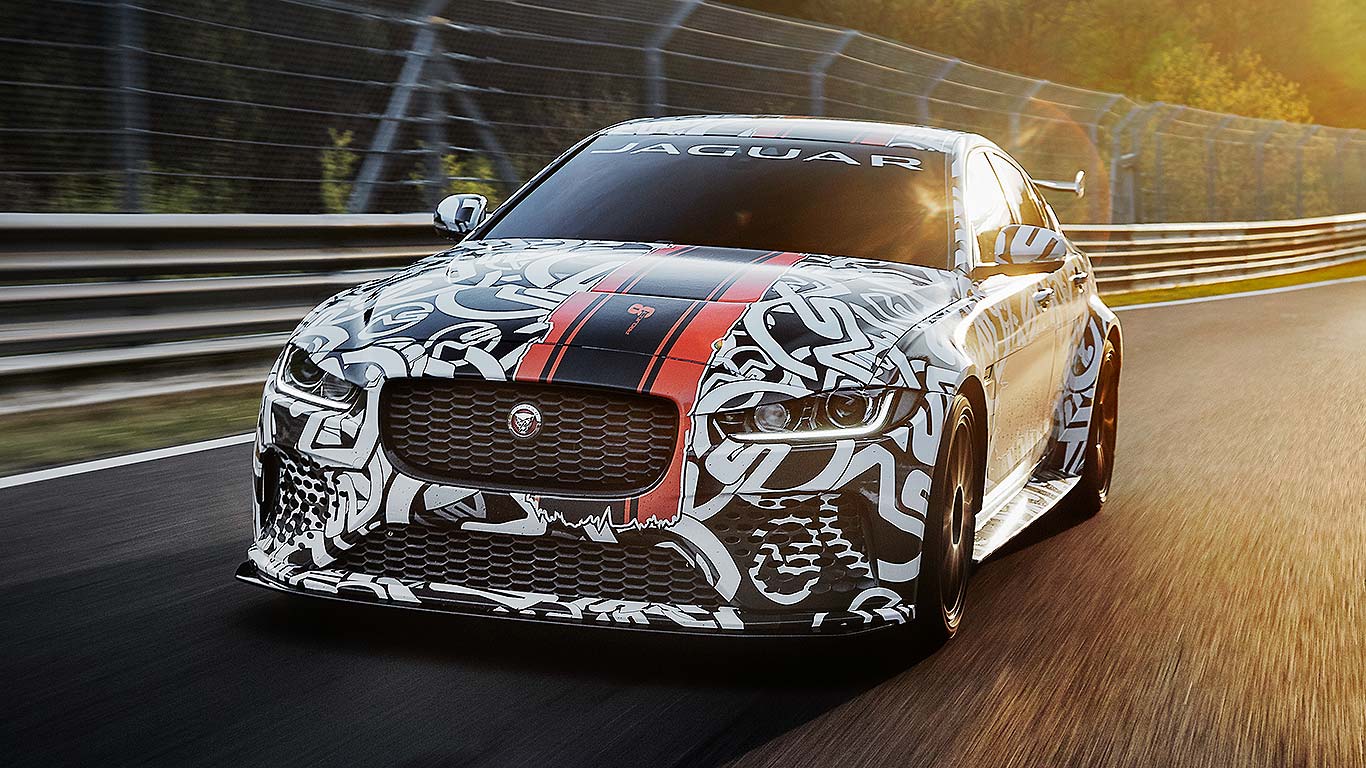
Jaguar has revealed a stunning 600hp 5.0-litre supercharged XE called the XE SV Project 8 – and confirmed it’s actually putting it into production in a limited 300-model run. The car will be the most powerful road legal Jaguar ever.
Revealed here while undergoing testing at the Nürburgring, the new XE V8 will be the next low-volume project from JLR’s crack SVO department. That’s the division that previously created the 2014 F-Type Project 7; this will be only the second showroom-ready car it’s built.
Jaguar F-Type Project 7: in pictures
At the moment, Jaguar’s not revealing too much about the car, ahead of its full debut at the 2017 Goodwood Festival of Speed on 30 June. But JLR SVO MD John Edwards does reckon “the time is right for SVO to produce the most extreme performance car in the history of Jaguar.
“Our clients worldwide were thrilled by the F-Type Project 7. The new XE SV Project 8 takes aerodynamics and performance engineering to another level – it is conceived for enthusiasts and the most discerning collectors. The price for such an extreme performance sports car available in strictly limited numbers will reflect that.”
Making this the first £100,000-plus Jaguar XE?
Jaguar XE SV Project 8: in pictures
From what we can already see of the new super-saloon, it looks like the 600hp XE will pack the styling punch to go with that. Wheelarches are bulging, there’s a massive rear wing and the bonnet also receives a huge central air outlet to help cool that 5.0-litre V8 squeezed in below.
Jaguar’s talking of supercar performance, which these days means a 0-62mph time of around 3.5 seconds, and a top speed, if it’s being bold, of more than 200mph. Suspension, steering and brakes will all be fully upgraded accordingly, and the interior should get an almighty set of sports seats plus the sort of hand-crafted beauty we saw in the F-Type Project 7.
Watch the video to learn more about the new XE SV Project 8, and get an earful of its V8 bellow. And get your order in now, collectors: this car is real, it’s coming to showrooms soon, and demand for it is going to be off the scale…
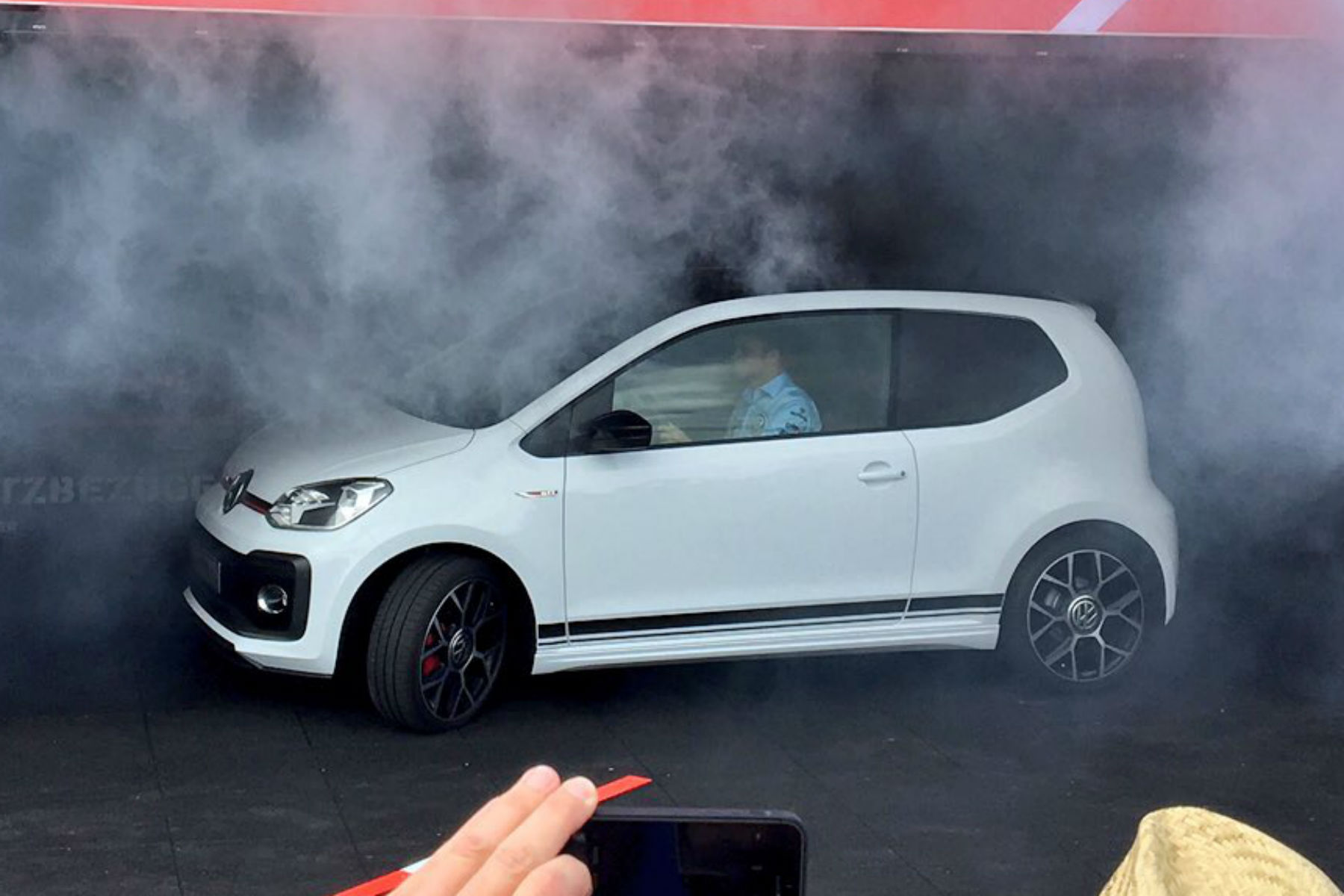
Volkswagen has revealed a near-production concept of its new junior hot hatch, the Up GTI, at the annual GTI festival at Worthersee, Austria.
Producing 115hp from its 1.0-litre three-pot turbo engine, the Up GTI might not sound like the hottest of hatches. VW’s keen to draw links with the original Mk1 Golf GTI, however, which packed 110hp and weighed just 810kg. The Up GTI is set to weigh 997kg.
The new baby GTI will hit 62mph in 8.8 seconds (0.2 seconds quicker than the original Golf GTI) and is good for a top speed of 122mph. Its ride height has been dropped by 15mm, while a spoiler has been fitted to increase downforce (and definitely not just for appearance…).
Cosmetically, it gets all the GTI treatment. So, there’s a red stripe beneath the honeycomb radiator grille, while the door mirrors are finished in black. The Up GTI sits on 17-inch alloys and will be available in a choice of red, white, silver and black colours – as well as a new shade of blue bespoke for the GTI.
Pushing the link with the original GTI, Volkswagen says the Up is similar in size inside to the Mk1 Golf. Indeed, VW’s city car is sharing a stage with a mint example of a Mk1 at Worthersee. The Up’s interior features a leather-trimmed sport steering wheel, a GTI gear knob and the iconic tartan cloth seat pattern.
More Volkswagen Up on Motoring Research:
Volkswagen is now the biggest carmaker in the world
10 cars that will impress on a first date – and 10 that won’t
Buyers will be given a choice between three- and five-door models when the Up GTI goes on sale in 2018. Prices for the production version are yet to be confirmed, but expect it to come in at around £14,000.
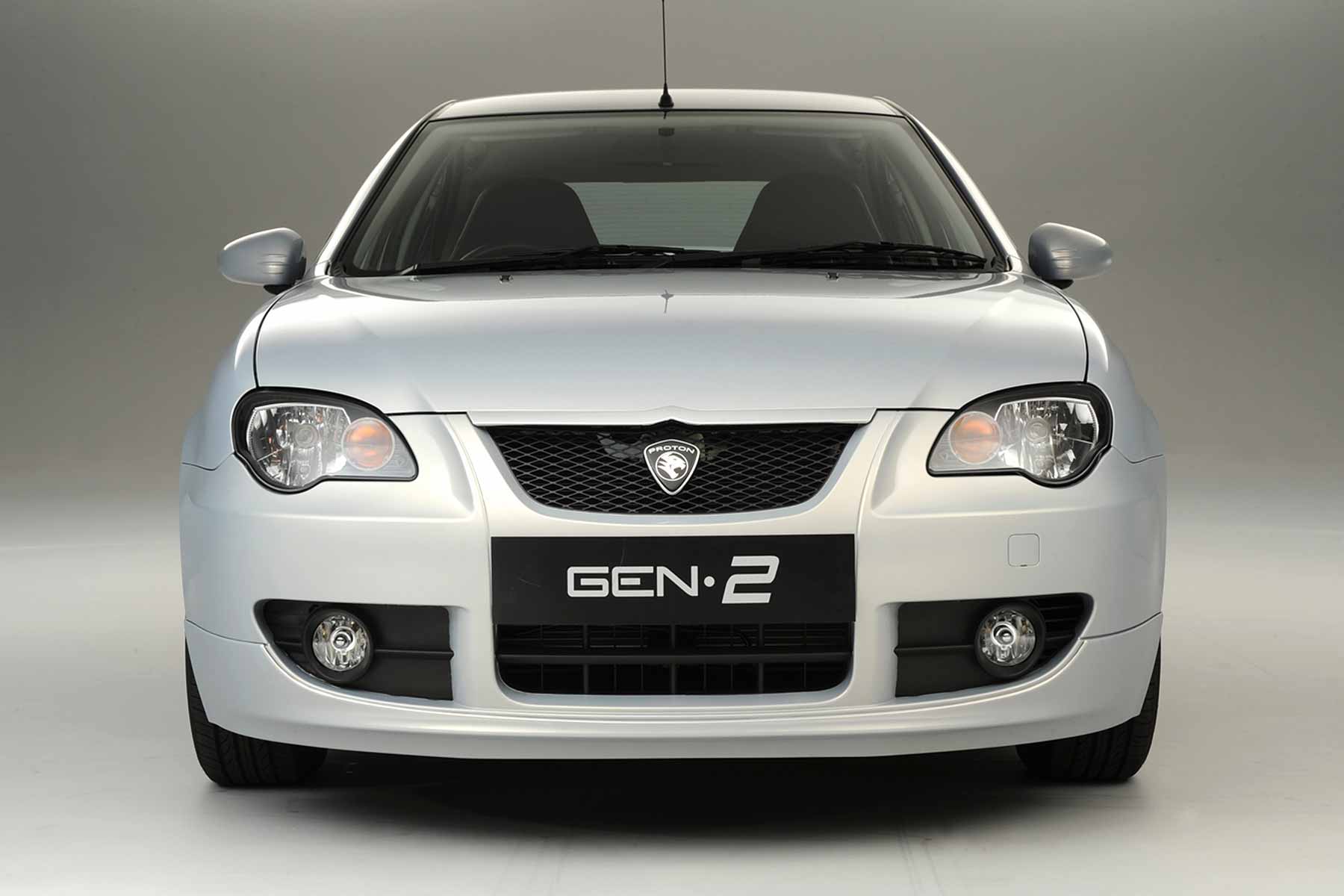
Under-pressure Malaysian car firm Proton’s future has finally been secured after Geely Holding agreed to buy a stake in the firm after pipping PSA Peugeot-Citroen to make the winning bid. The deal is good news for British sports car enthusiasts because Proton owner DRB-Hicom also controls Lotus Cars – and Geely’s completed a full takeover of it.
The deal is expected to be finalised today (Wednesday 24 May); in advance of it, DRB-Hicom shares have been suspended on the Kuala Lumpur stock exchange.
Proton sales have been under pressure for some time and the firm’s two Malaysian factories are currently operating well below their capacity of 400,000 cars. Insiders say Geely’s first priority will be re-establishing Proton in right-hand drive markets such as the UK, Australia, India and its home market of Malaysia. Platform and technology-sharing with Geely cars and SUVs is expected to accelerate this turnaround.
For Lotus, the news will be excellent: the Norfolk firm will be looking positively at what Geely stewardship has done for Volvo Cars. After the downfall of Dany Bahar, current boss Jean-Marc Gales has stabilised the company, returned it to profitability and even begun development of an all-new Lotus Elise for 2020. Extra investment from Geely can only be a good thing here.
Might Lotus finally become the genuine British sports car alternative to Porsche, maybe even Ferrari, that was Bahar’s vision all those years ago? We shall watch with great interest.
Oh, and keep our fingers crossed for a new Volvo-themed Lotus performance special…
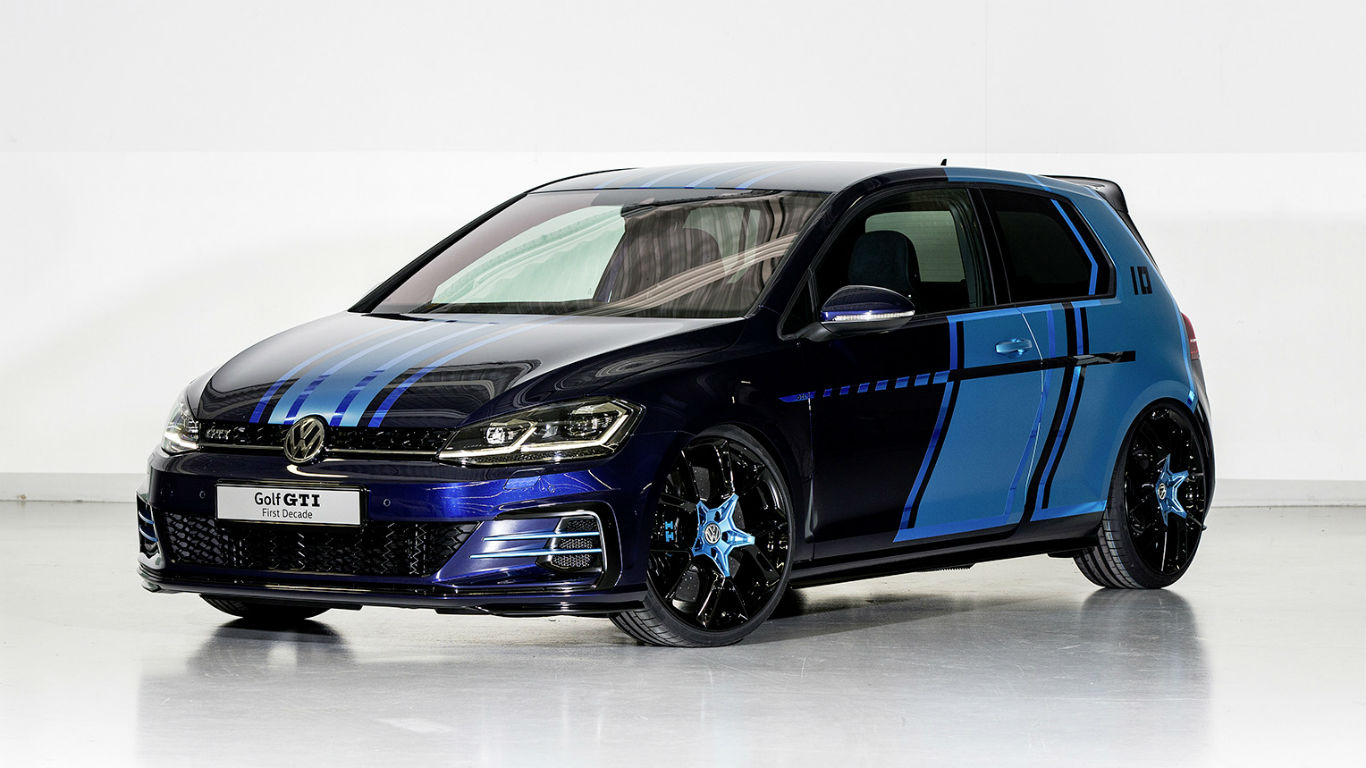
If this hybrid Golf is anything to go by, performance fans needn’t be worried about the future of the GTI brand in an era of post-Dieselgate cost cutting. Making its debut at the GTI fest that is Worthersee 2017, the Golf GTI First Decade combines a 410hp petrol engine with a 12kW electric motor.
It’s the work of 18 to 23-year-old apprentices at Volkswagen and is the latest of 10 show cars revealed at the Austrian lake-side extravaganza since 2008.
The First Decade’s clever hybrid system can be operated in three different ways. Drivers can opt for rear-drive electric-only mode, or switch to front-wheel-drive petrol running. For ultimate traction (and performance), the two powertrains can work together as a four-wheel-drive hybrid. Interestingly, the different modes can be selected remotely using an app or via the car’s infotainment display.
Even by the vee-dub-crazy standards of Worthersee, the First Decade is sure to stand out – with Atlantic Blue paintwork and large patches of dark blue foil. A Clubsport rear spoiler completes the bold look, along with 20-inch alloy wheels.
Inside, there are just two seats. Both of these can be moved using a phone app, along with clever massage functions. Replacing the rear seats is, why, a high-end 1,690-watt 11-speaker sound system.
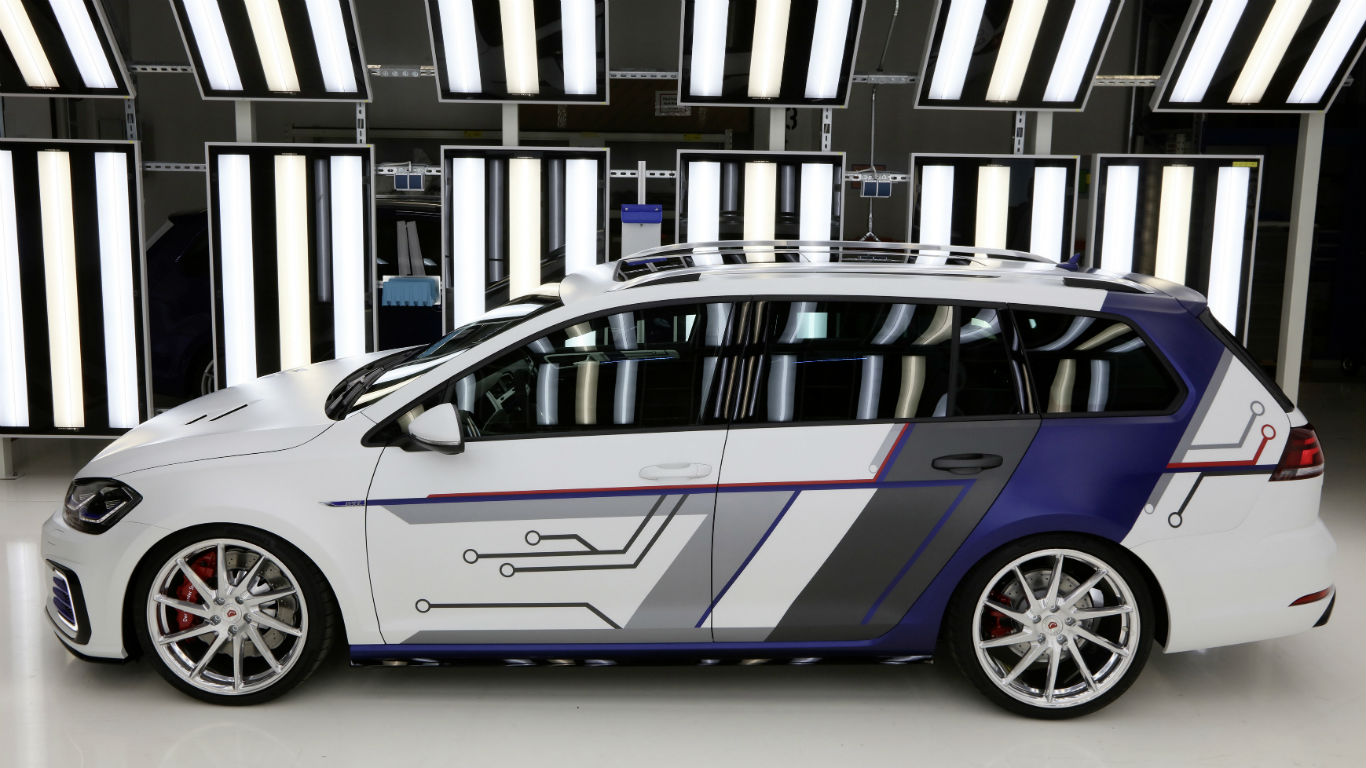
If one quirky concept wasn’t enough for this modified car show, Volkswagen is taking a second concept to Worthersee. The GTE estate Impulse is the work of 14 apprentices from the Zwickau vehicle plant, and uses a prototype battery with an impressive 16.8 kWh capacity.
Competing for attention with the GTI First Decade on VW’s stand, the Impulse features a five-tone matt paint scheme made up of a variety of colours. Inside, animated lighting can be controlled using a mobile phone app.
We’ll be seeing both Volkswagen concepts at Worthersee 2017 over the coming days, where Motoring Research will be reporting live with all the GTI news and latest pictures.
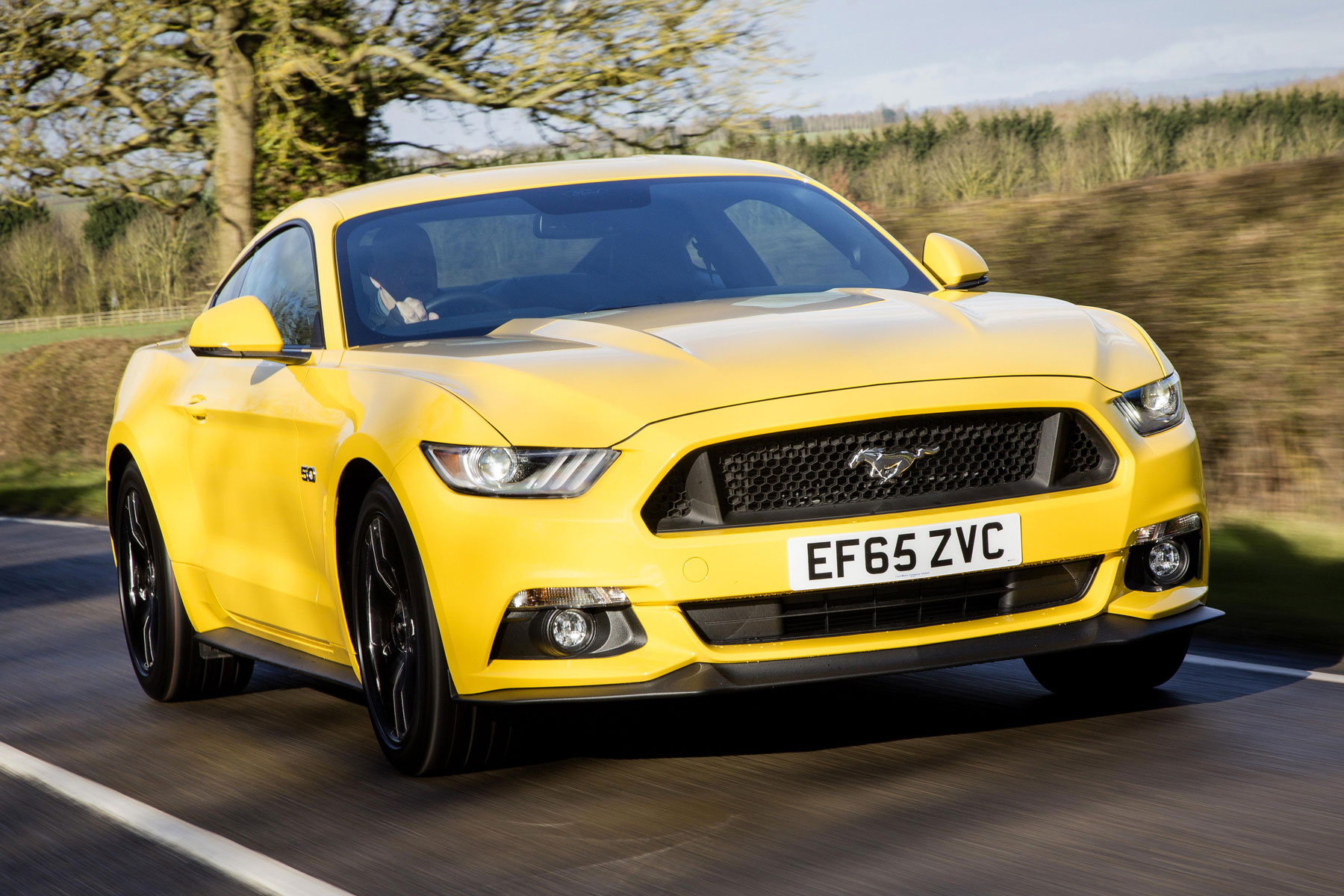
It’s long been North America’s favourite sports car, but the Ford Mustang’s launch in Europe means it’s now the best-selling sports car in the world.
That’s according to analysis of global new vehicle registration data by IHS Market, which revealed that more than 150,000 Mustangs were sold around the world in 2016, putting it in the number one position ahead of the likes of the Mazda MX-5 and Porsche 911. The firm found that global Mustang sales increased by 6% in 2016, with non-US market growth up 101%. Almost 45,000 Mustangs were sold outside of North America last year.
More than 4,500 Mustangs have been sold in the UK since it was launched late in 2015, with 3,250 sold during its first full year on sale. That makes it ‘comfortably’ the most popular sports cars with more than 250hp, says Ford.
“From the Arctic Circle to the Mediterranean, the Ford Mustang has topped the sports car sales charts in markets across Europe,” said Roelant de Waard, Ford of Europe’s vice president, marketing, sales & service. “European customers continue to play a significant role in the global success of Mustang. The iconic sports car’s popularity with drivers of all ages and backgrounds shows no sign of waning – we sold 3,600 Mustangs in the region during the first three months of 2017.”
The firm says outside of the UK, the Mustang is proving popular in new markets such as Germany and China.
European buyers get a choice of a 421hp 5.0-litre V8 or 317hp 2.3‑litre EcoBoost engine, and six-speed manual or automatic transmissions. Soon after the Mustang’s launch, Ford revealed that around 70% of UK sales were the larger V8 engine.


 He’s a racing driver, an entrepreneur, an Instagram star, and he also happens to have a rather impressive collection of exotic cars. We delve inside Josh Cartu’s garage.


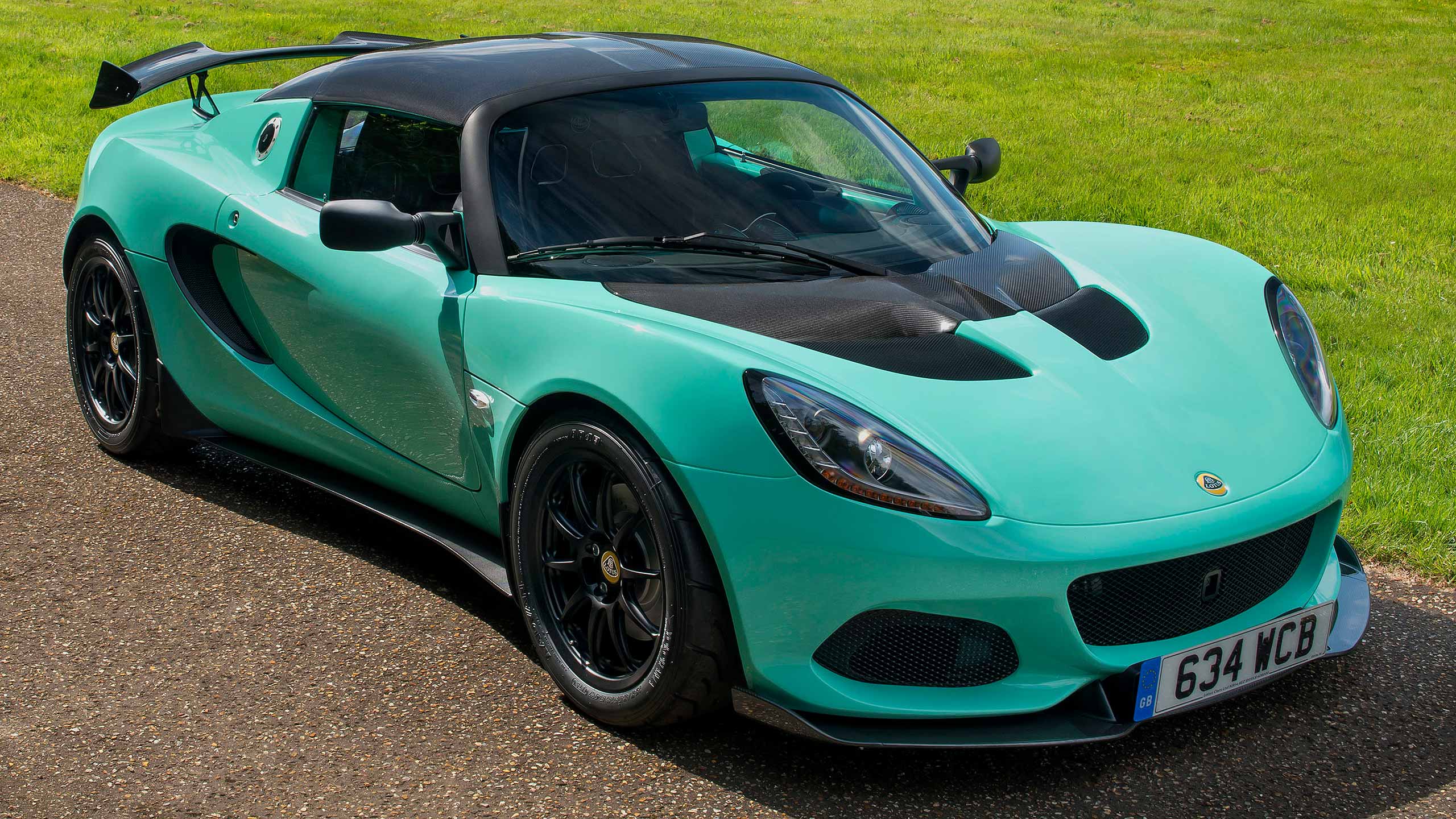 The new Lotus Elise Cup 250 is the fastest and most focused four-cylinder Lotus sports car ever, providing the revised Elise line-up with a range-topper that the firm says is “punching well above its weight”. Not that its weight is exactly lardy: ongoing mass-reduction measures have taken the dry weight down to a potential 860kg.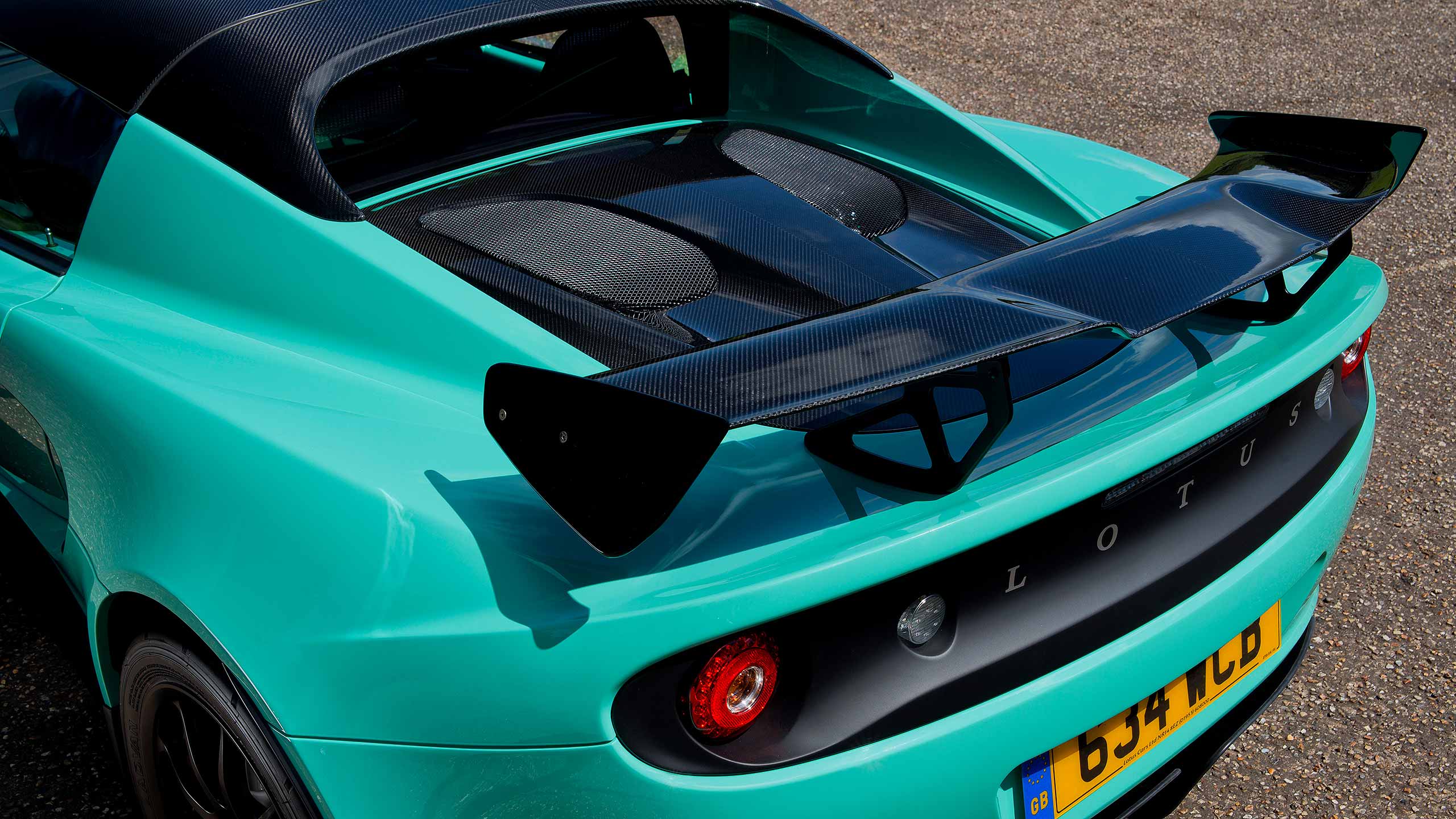
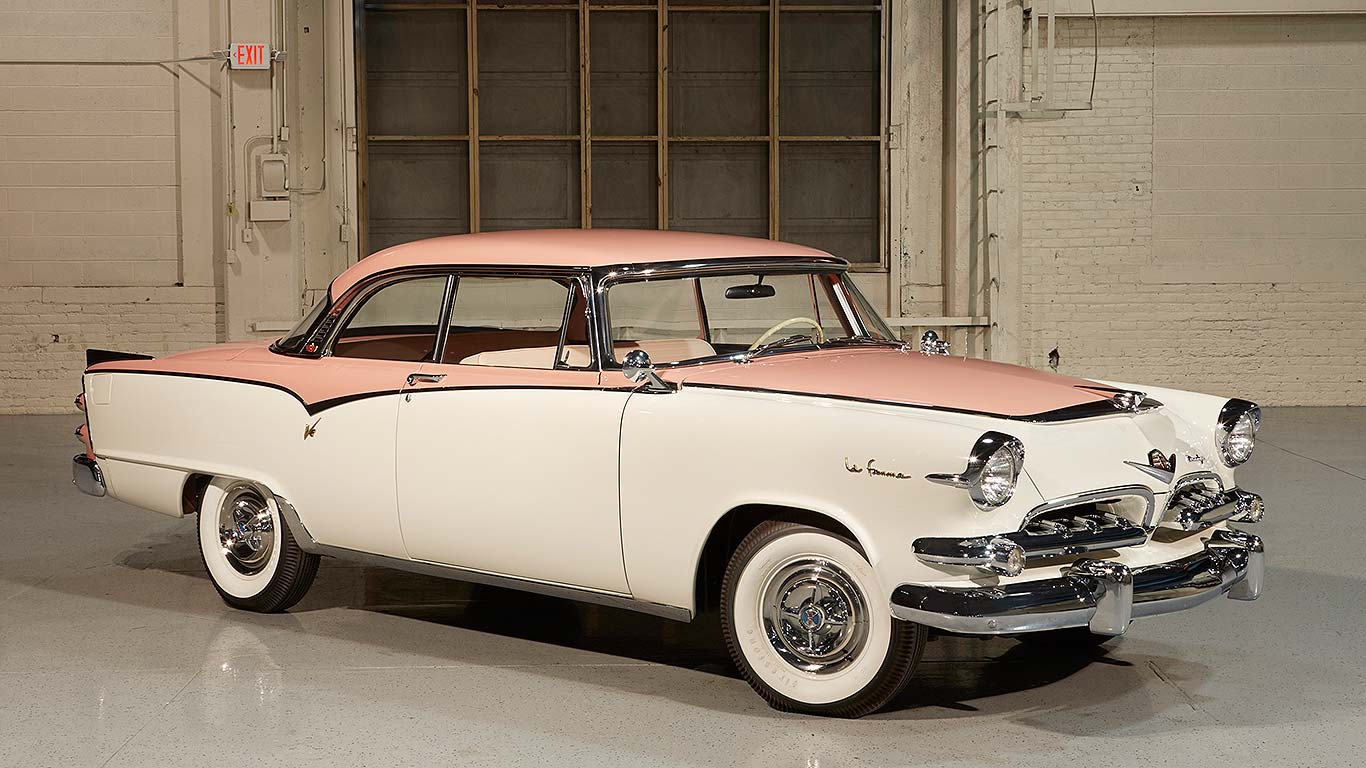 The Dodge La Femme arrived on the scene in 1955, a year when America was thriving with post-war prosperity. The baby boom was in full swing, and more people lived in the growing suburbs than in any other type of community, drawn by elbow room, fresh air, and affordable housing for growing families.
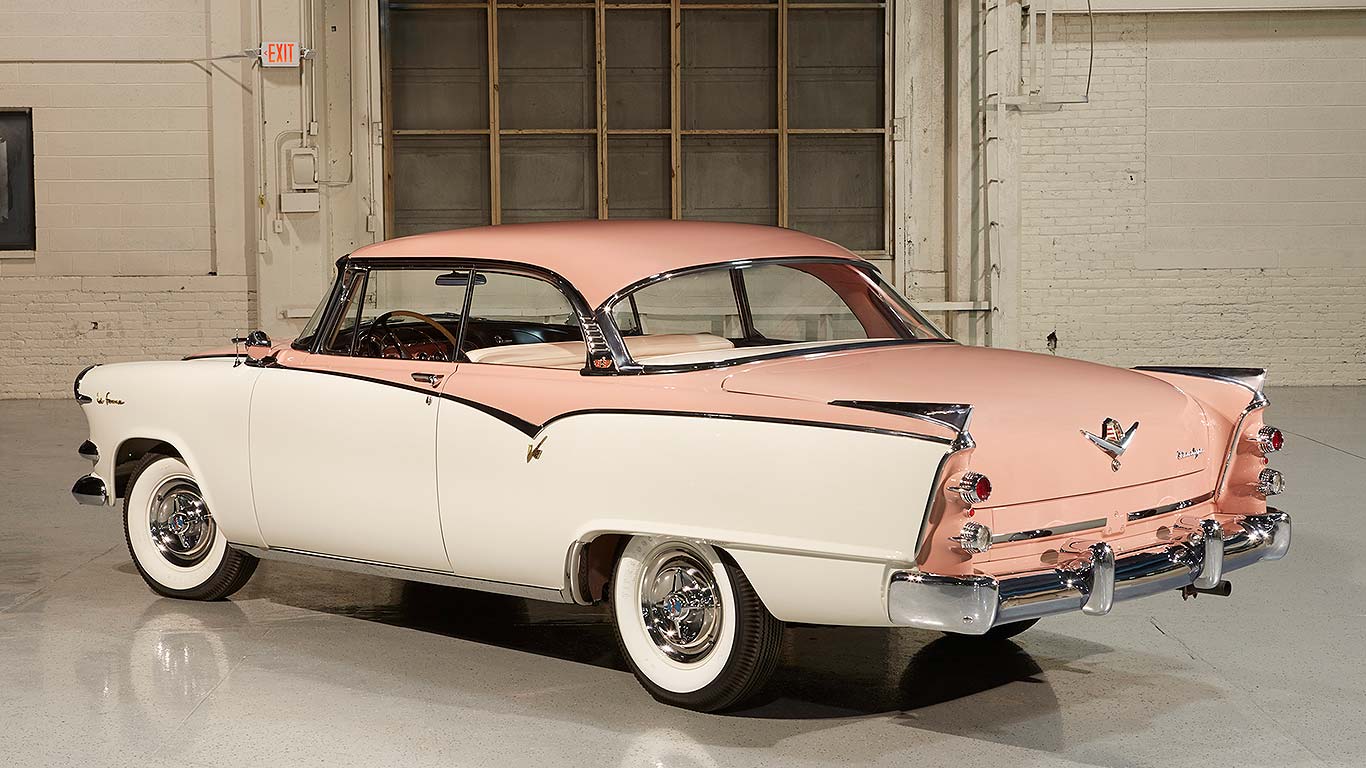 Women were going to work in greater numbers than ever before by the mid-1950s, accounting for about one-third of the workforce and increasing overall household income. They were also taking a greater interest in cars; about one half of all adult women held a driver’s license. The automobile industry recognized that women were a growing presence in the marketplace, and actively sought to court to them.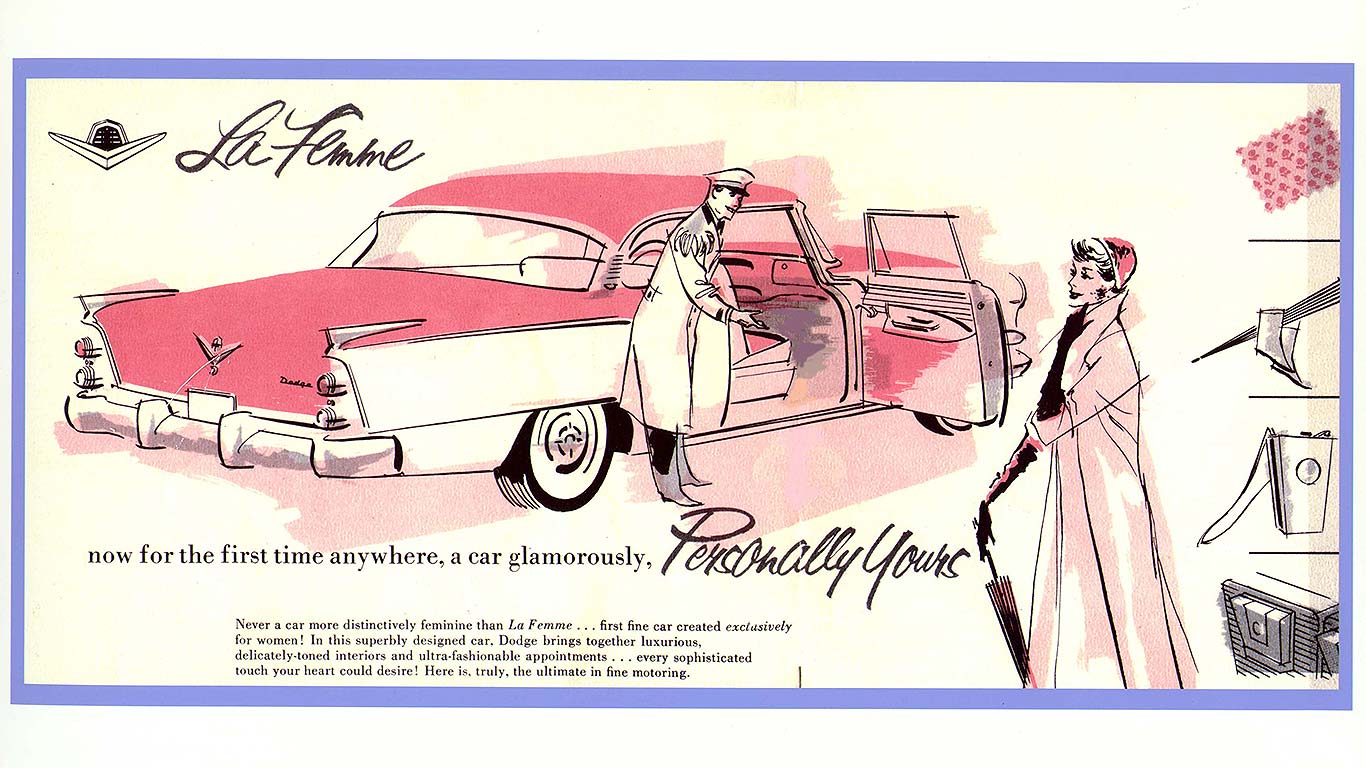
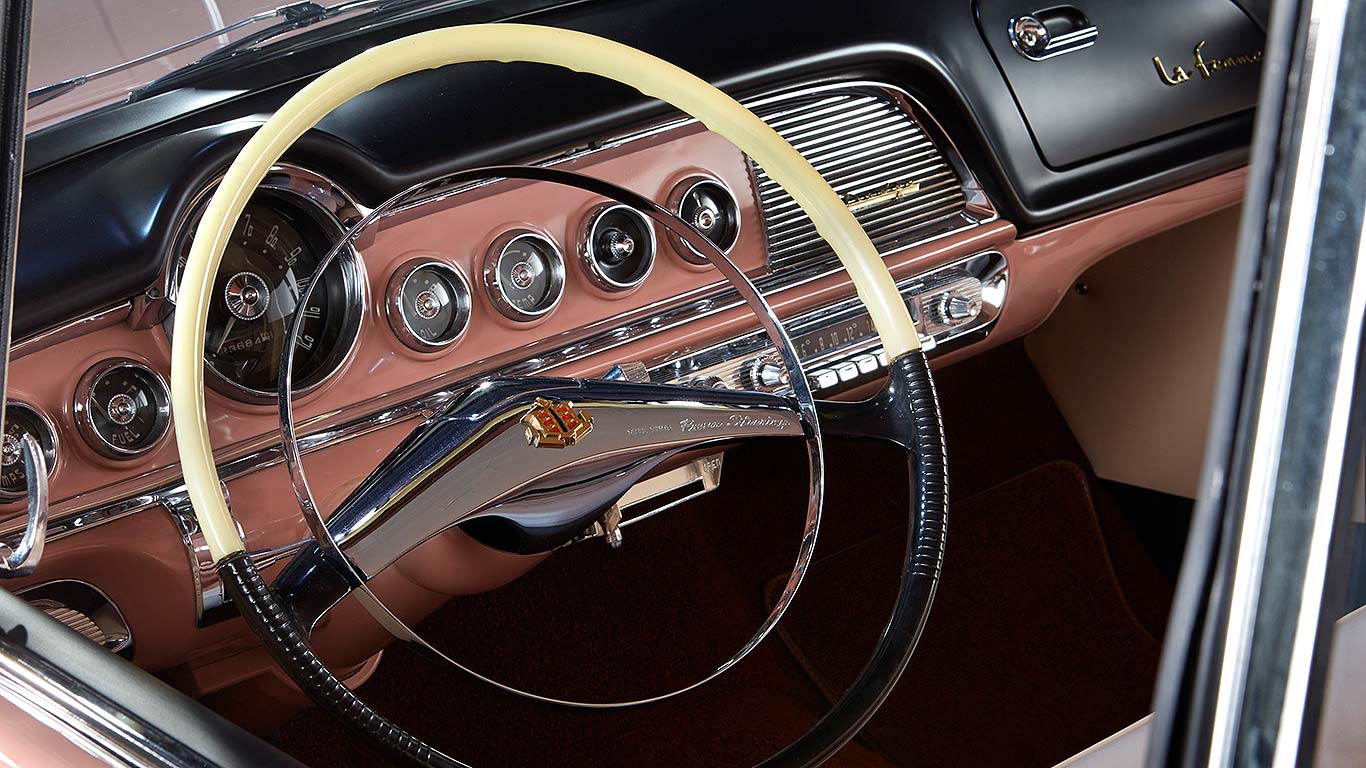 Yet what the La Femme represents, however obtusely, is a recognition by the American automotive industry, and therefore the largest sector of industrial manufacturing on the planet, that women were an rising economic force, and that it was imperative that their specific wants and needs be addressed. So great was this tide that by 1958, GM executives from all over the country came to the unofficially named Feminine Auto Show to see the cars created by its six female designers. Not too many years later, Ford released its own car created to appeal to women: the now world-famous Mustang.
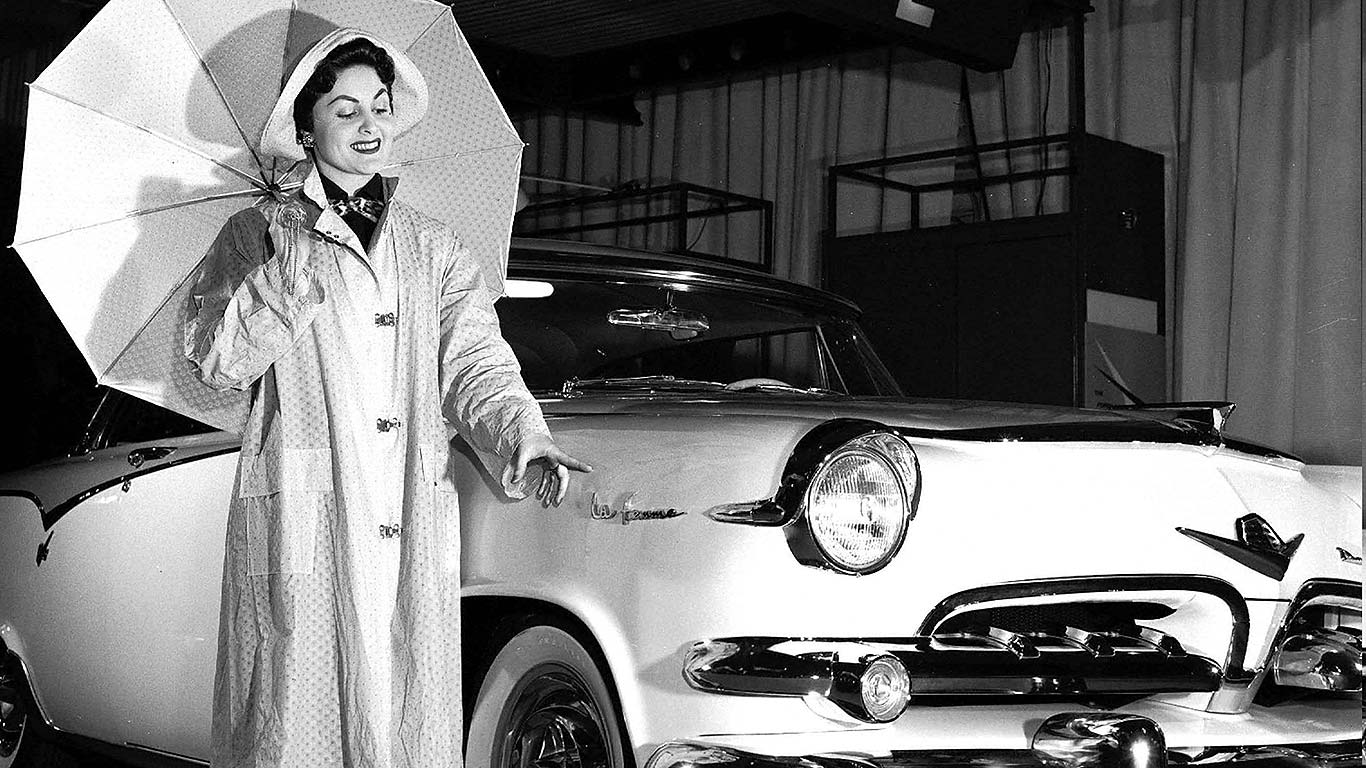 Women make or influence a majority of new car purchases today, and manufacturers do everything they can to appeal to them. Marketing is a science, and demographics can target a person by age, gender, region, education level, and myriad more variables. Once a target demographic is acquired, the manufacturers do their best to present a vehicle that has the performance levels, economy, and features that demographic wants. This La Femme ad from 1956 illustrates the difference between a car “designed with the ladies in mind” (as stated in the above ad) and the modern practice of designing a car that offers the attributes a particular demographic wants.
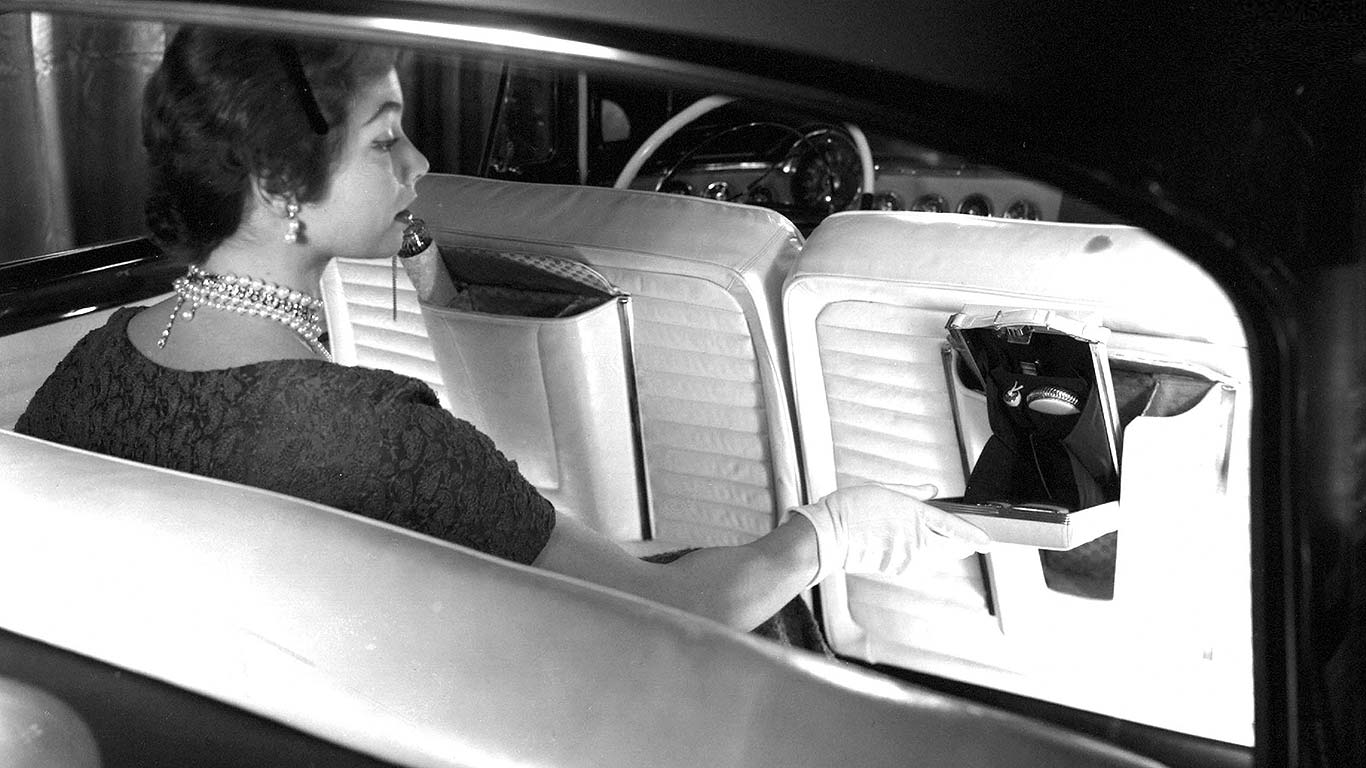 Viewed through today’s standards, the marketing material shouts, “Hey, princess! Pink is for girls!” which hits every wrong nerve in modern psyches. It discolors perception of the La Femme, which is a powerful, well-engineered, and stylish vehicle. It’s designed by Exner, has a wicked Hemi under the hood, and comes with a matching umbrella, just like a new Rolls Royce.
 The Austrian town of Reifnitz on the side of Lake Worth, or Worthersee, has hosted the ‘GTI Treffen’ festival for 36 years. Originally a small meet of Volkswagen enthusiasts (just 100 cars attended the first event), more than 100,000 fans from all over Europe now head to the Alps at the end of May. We sent a snapper to the event and captured some of the weird and wacky VWs in attendance.


 Under-pressure Malaysian car firm Proton’s future has finally been secured after Geely Holding agreed to buy a stake in the firm after pipping PSA Peugeot-Citroen to make the winning bid. The deal is good news for British sports car enthusiasts because Proton owner DRB-Hicom also controls Lotus Cars – and Geely’s completed a full takeover of it.