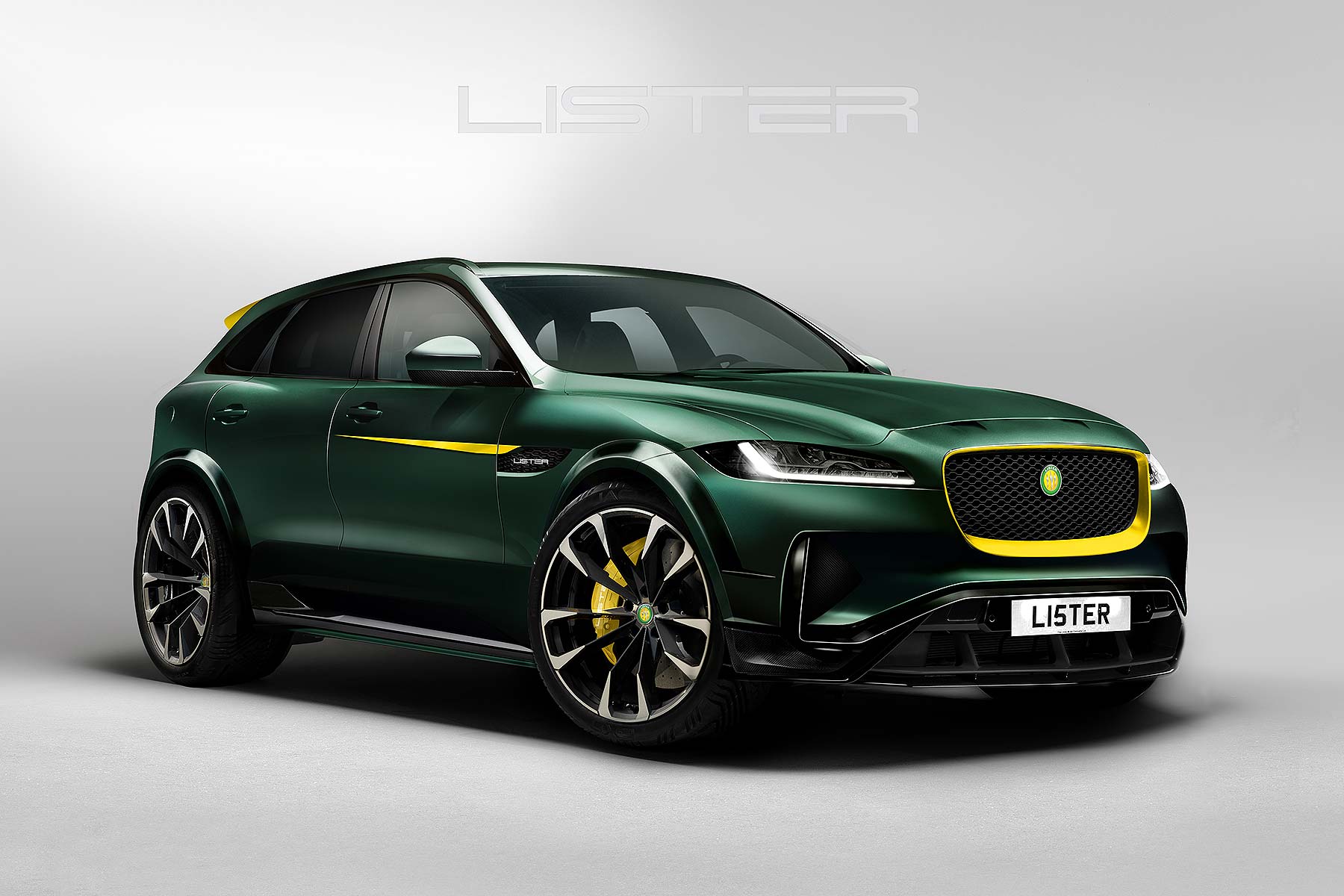
A specialist British sports car company is to turn the Jaguar F-Pace into a 670 horsepower, 200 mph 4×4 that it says will be the fastest SUV in the world.
The Lister Motor Company’s Lister LFP will do 0-60 mph in 3.5 seconds and will cost around £140,000.
The performance “beats the performance of recently-launched SUVs from other well-known car brands with monster killer performance” and is “faster than most supercars, never mind SUVs”.
Developed and built in Lancashire, the new Lister LFP will be fully revealed later in September. Ordering is open now, adds the firm, and deliveries will begin in October.
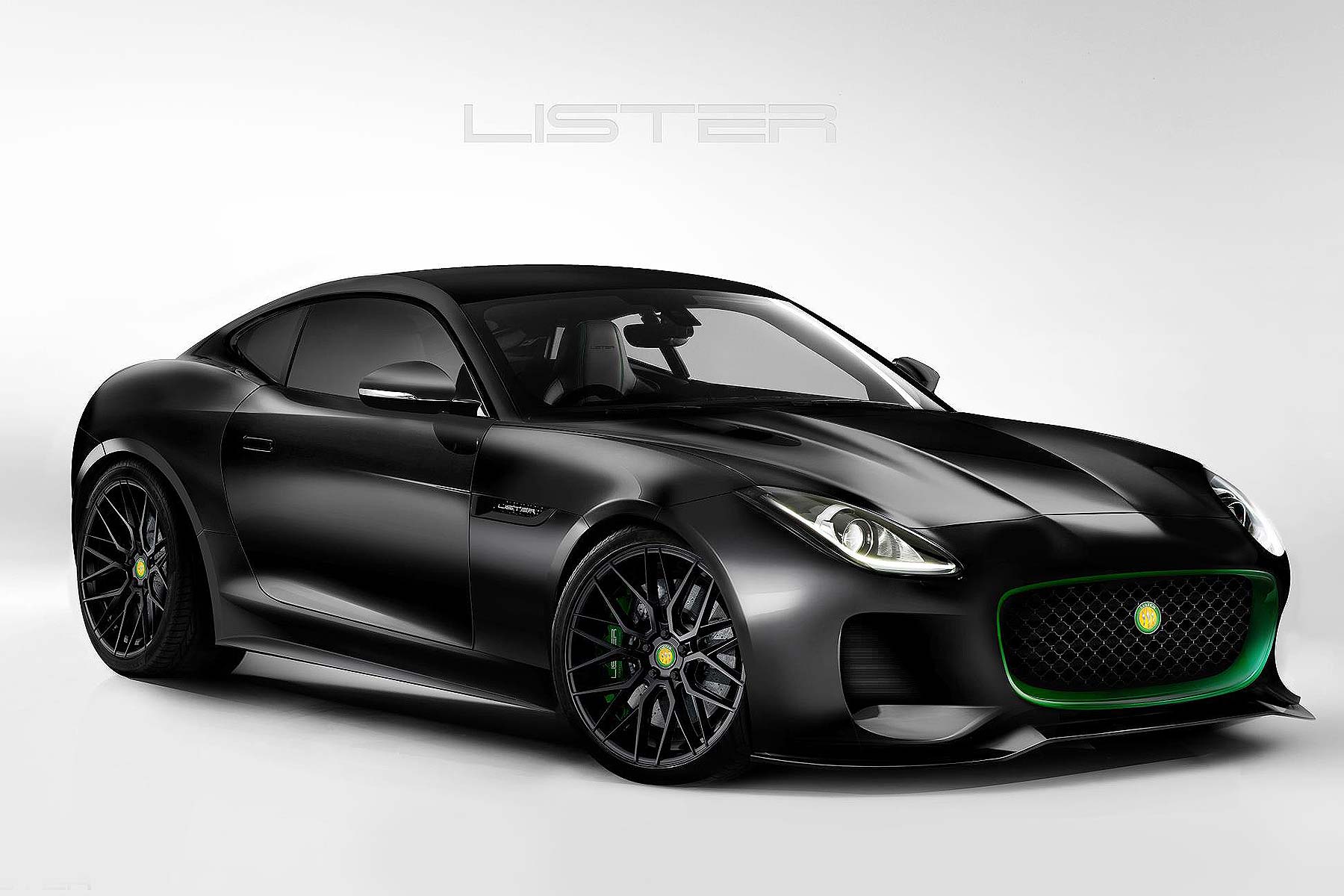
The launch of the 200 mph Lister SUV follows the recent launch of the Lister LFT-666 coupe. This is also Jaguar-derived, drawn from the F-Type SVR.
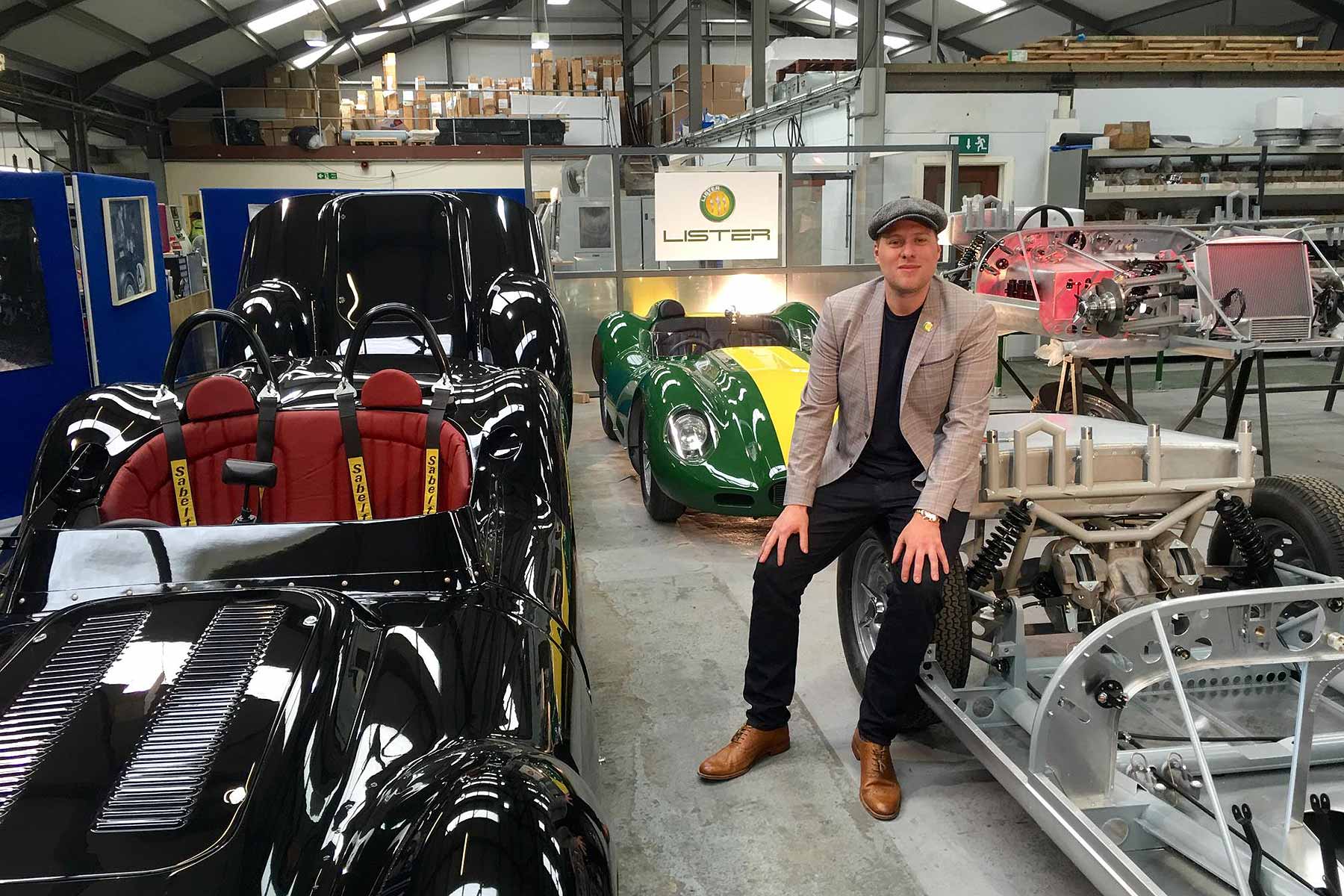
Company CEO Lawrence Whittaker (pictured below) said he was “delighted, overwhelmed and gratified by the huge level of interest, excitement and orders” the car has generated.
“Based on early indications, our new LFP promises to repeat the success of the LFT-666, and I really can’t wait to reveal the world’s fastest SUV quite soon.”
What is Lister?
For those who haven’t heard of Lister, the name goes back decades. It is Britain’s oldest surviving racing company and was bought by the Whittaker family in 2013.
The modern Lister Motor Company started out by developing 10 ‘Jaguar Knobbly’ continuation cars, and has since worked on developing high-performance versions of the firm’s road cars.
Indeed, the tuning division has proven so successful, the company has expanded and is soon to open a new HQ in Lancashire.
Lister has even been identified as the Britain’s fastest growing car company by independent financial analysts Plimsoll.
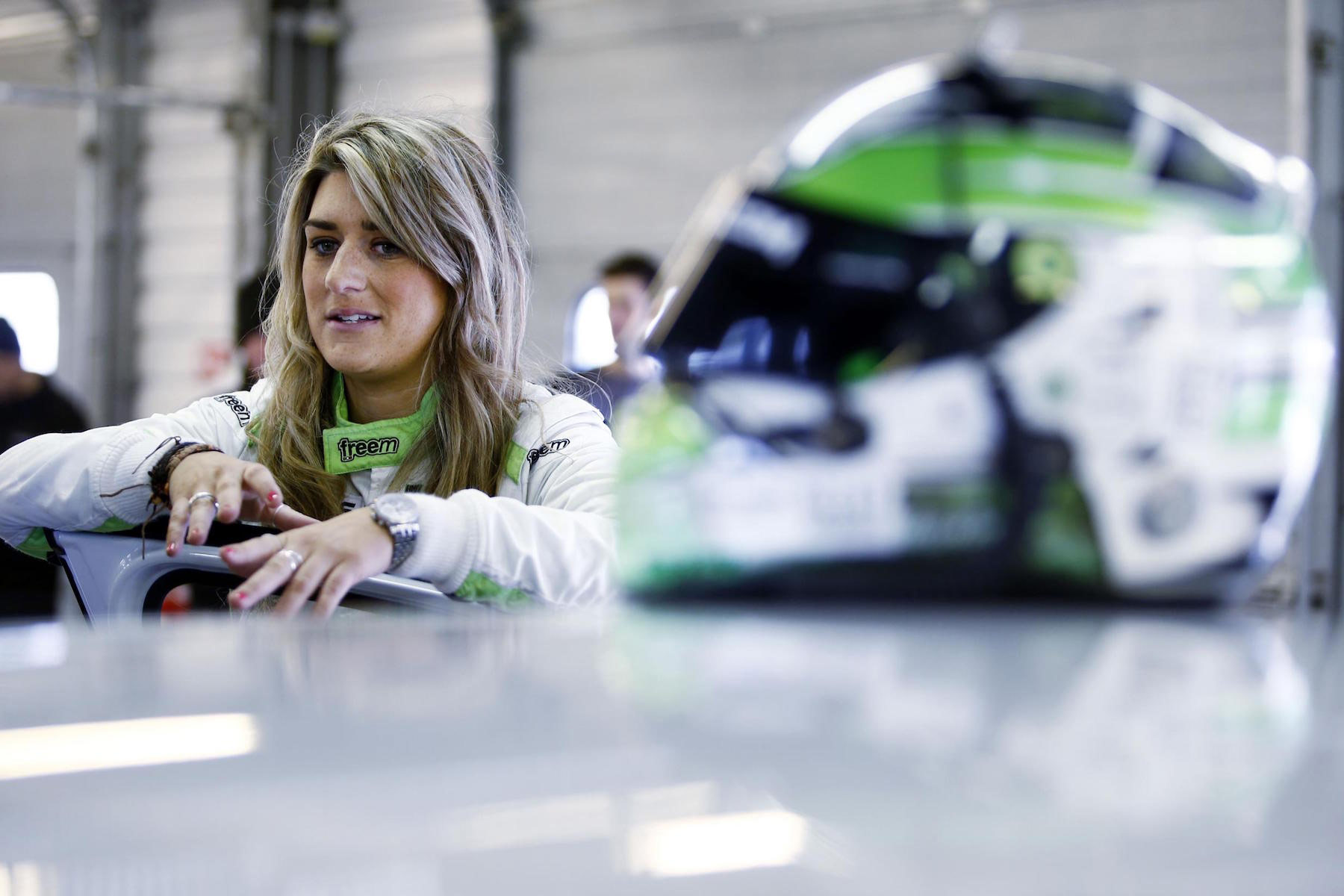
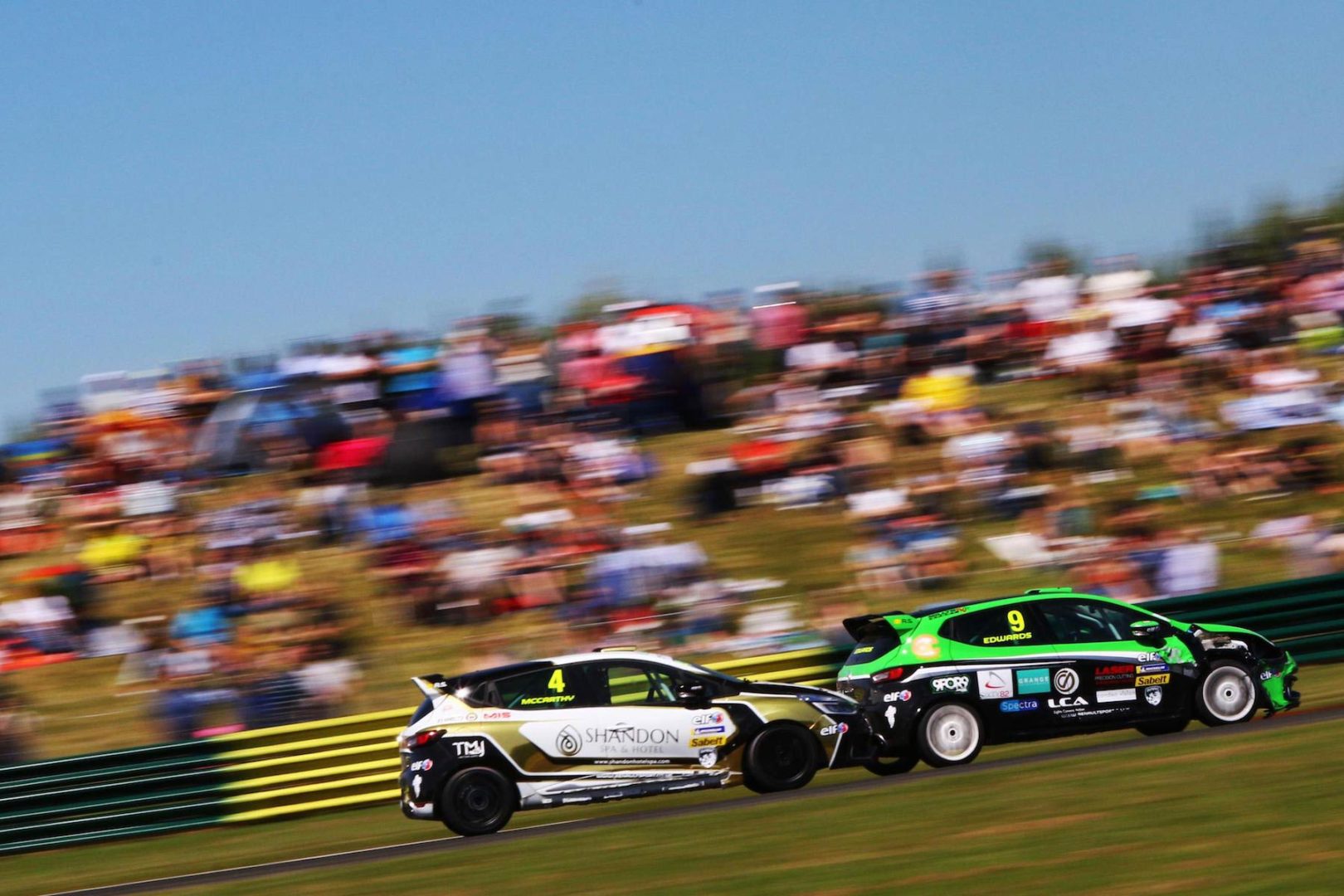
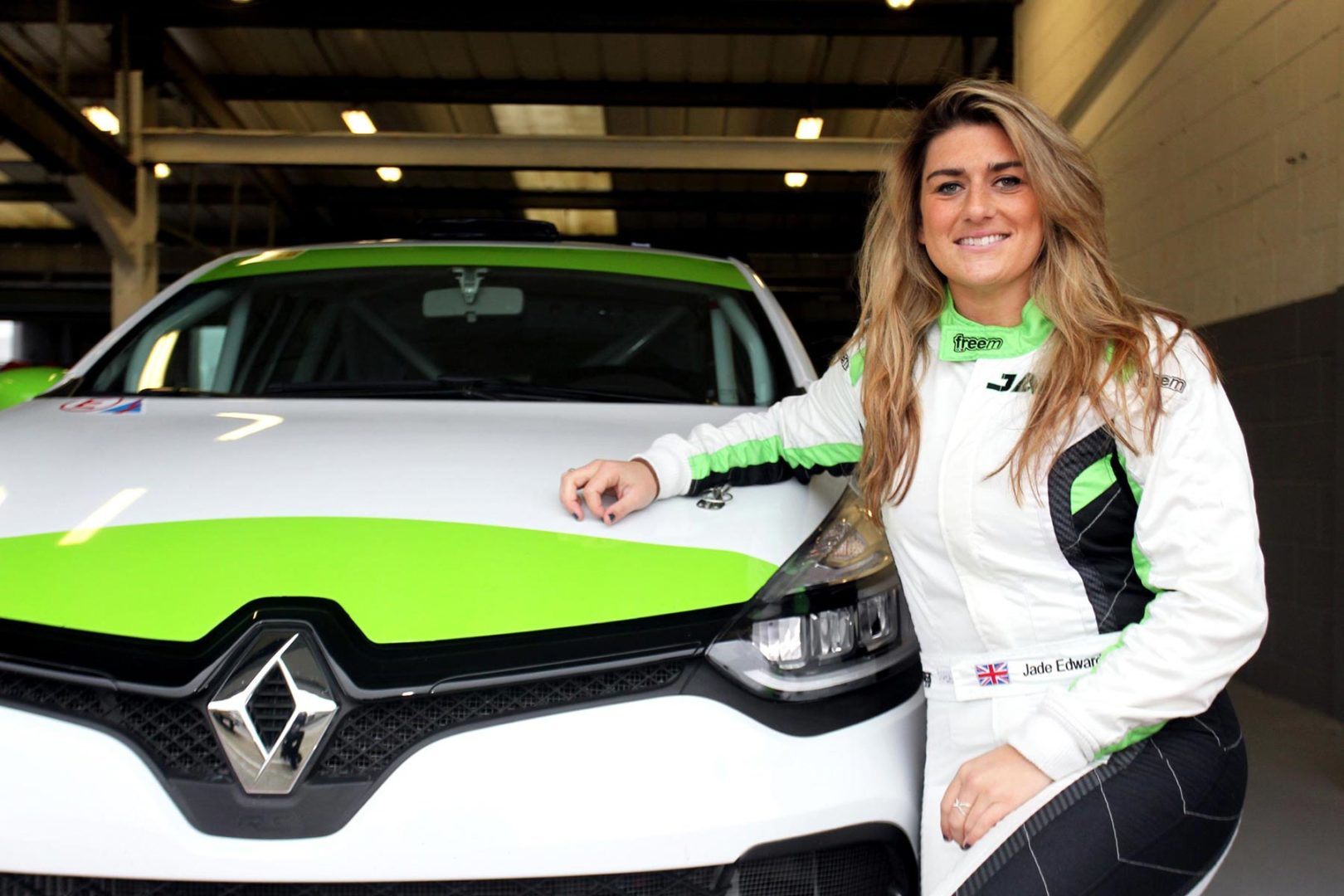
A young racing driver has fallen victim to a sponsorship scam, potentially leaving her unable to compete in the final rounds of the season.
Jade Edwards broke the news on social media that a promised €15,000 sponsorship deal had turned out to be fake.
A series of cancelled meetings, and false phone numbers, alerted the suspicions of Edwards and her father. This was confirmed when the money failed to materialise, derailing her plans for the remainder of the 2018 UK Clio Cup.
A tough Clio Cup update to post…
A sponsorship scam that has taken away the chance to finish the season.
Edwards suffered a dramatic crash at Oulton Park earlier in the season, with her Clio racer rolling violently. Although she escaped unharmed, the damaged car prompted an urgent need for additional sponsorship.
Competing in her second season of the UK Clio Cup, Northamptonshire-based Edwards is currently 14th in the championship standings.
As a qualified ARDC driver coach, Jade previously trained Johnny Vegas on the ITV show DRIVE. She also holds the achievement for being the first female driver to take an outright win in an Aston Martin GT racer.
Costs for competing in the Renault Clio Cup for a full season range from £75,00 to £95,000. The race car itself costs £42,000, or more than twice the value of the road-going Clio on which it is based.
The French brand has held a UK-based one-make championship since 1974. Initially using the Renault 5 hatchback, this was later followed by the original Clio. The series has often been a predictor of success in the top-flight British Touring Car Championship.
Jade’s grandfather, Jim Edwards Sr. won the Renault UK 5 TS Championship in 1979. Whilst. Her father, Jim Edwards Jr. took top honours in the 2000 Clio Renaultsport 172 series.
Edwards has received messages of support from TV and motorsport legend Tiff Needell, plus IndyCar driver Pippa Mann. The next round of the Renault UK Clio Cup takes place at Silverstone, on the 15th and 16th of September, leaving her little time to find new sponsors.
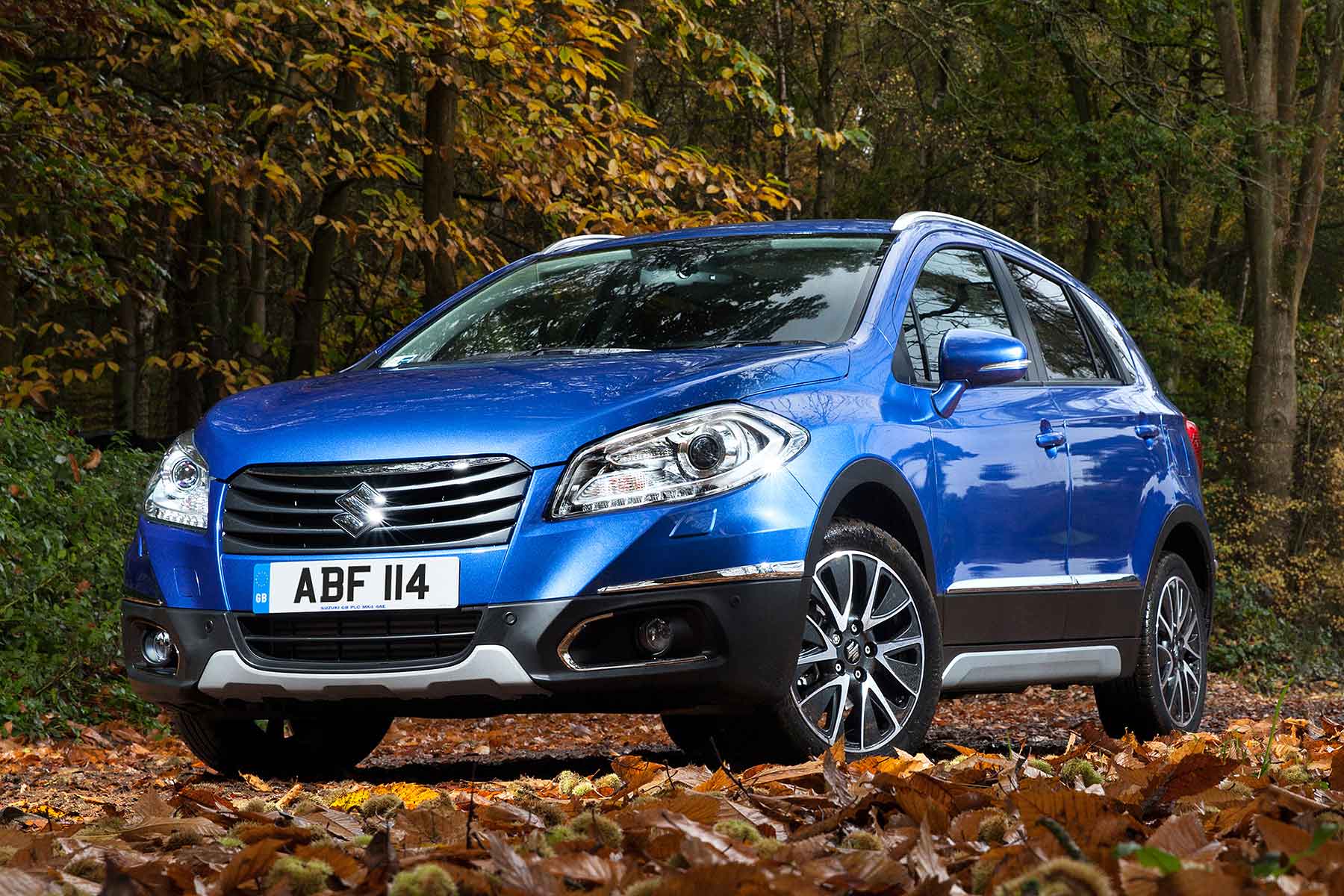
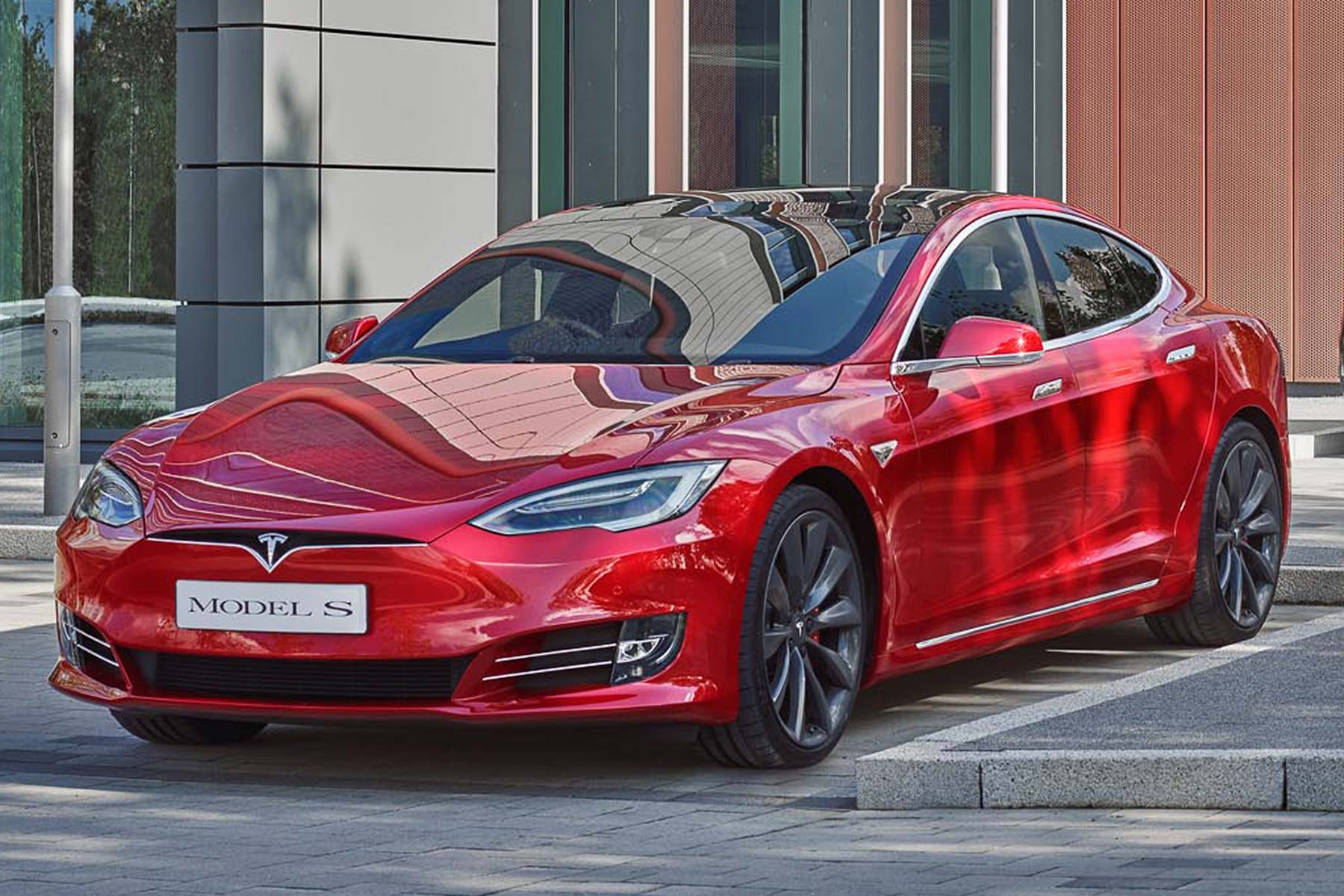
The Suzuki SX-4 S-Cross and Toyota Yaris have both achieved remarkable 100 percent reliability scores in the latest What Car? reader survey – in stark contrast to the Tesla Model S, which barely scored a 50 percent reliability ranking.
The results show that four of the top five cars are from Japanese brands. Of the bottom five, Land Rover makes three of them, with Ford and Tesla joining the worst-ranking makers.
It is the 2013 – present Suzuki SX4 S-Cross and 2011 – present Toyota Yaris that achieved the ‘perfect reliability’ ranking. The all-electric first-generation Nissan Leaf (built between 2011 – 2017) was third, with a 99.7 percent reliability ranking.
Car buyers reveal what they want in 2018
The Leaf showed that it wasn’t the all-electric aspect of the 2013 – present Tesla Model S that was behind its dismal reliability score…
What Car? ranked 159 models from 31 brands for reliability in 2018. “Reliability is a huge consideration for any prospective car buyer,” said editor Steve Huntingford, “as your car is likely to be your second biggest monthly expense after mortgage or rent payments.
“Our annual survey has shown that it is Japanese models that continue to dominate the top of the reliability rankings, both for car model and brand rankings.”
What Car? worked out its reliability ranking from data from over 18,000 motorists. They reported on their car’s reliability over the past 12 months; the magazine then created a unique reliability ranking for reach model – which included aspects such as time off the road and cost of repair.
Volvo wants to bring the first-class flying experience to the road. How? With the new 360c concept.
What is the Volvo 360c?
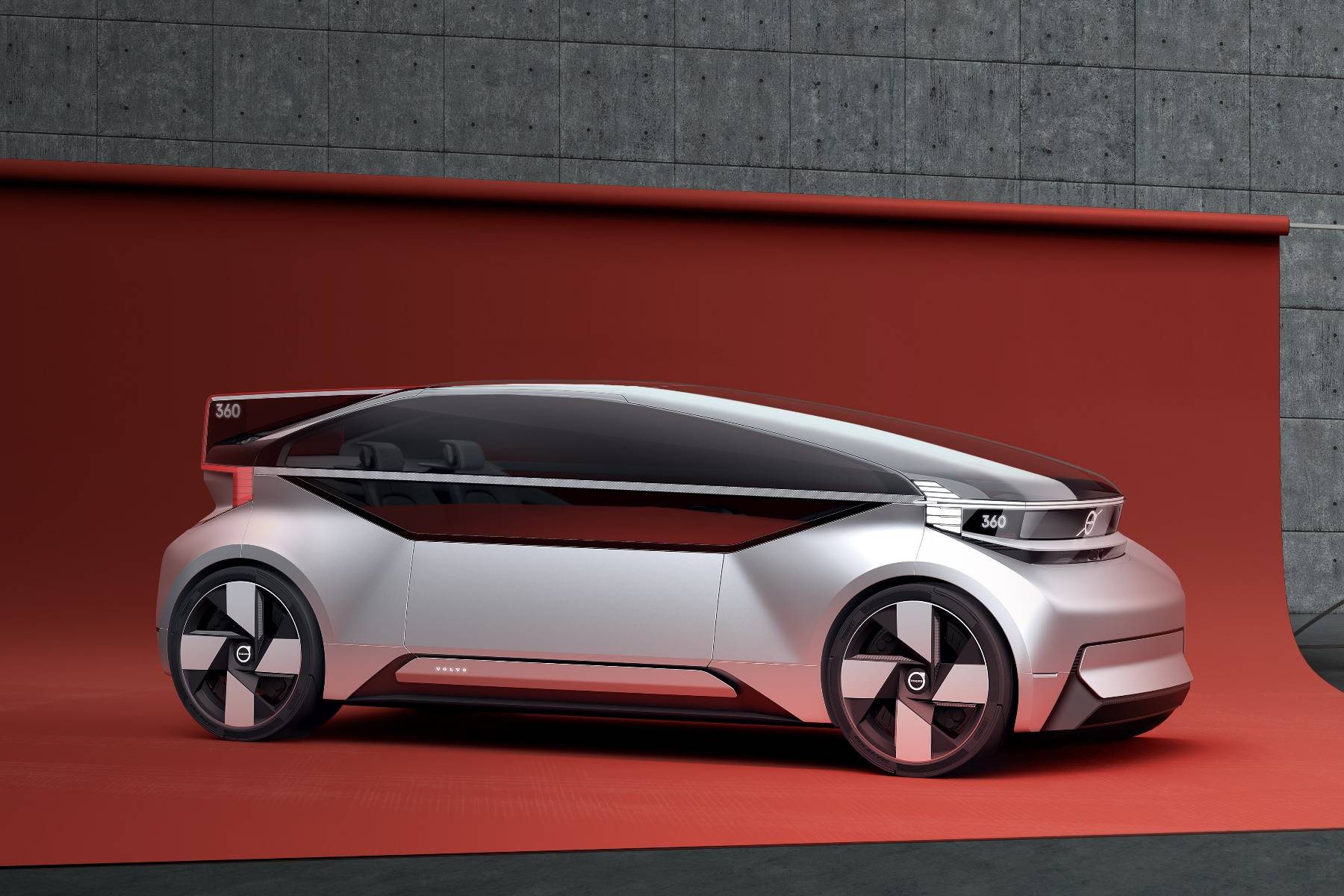
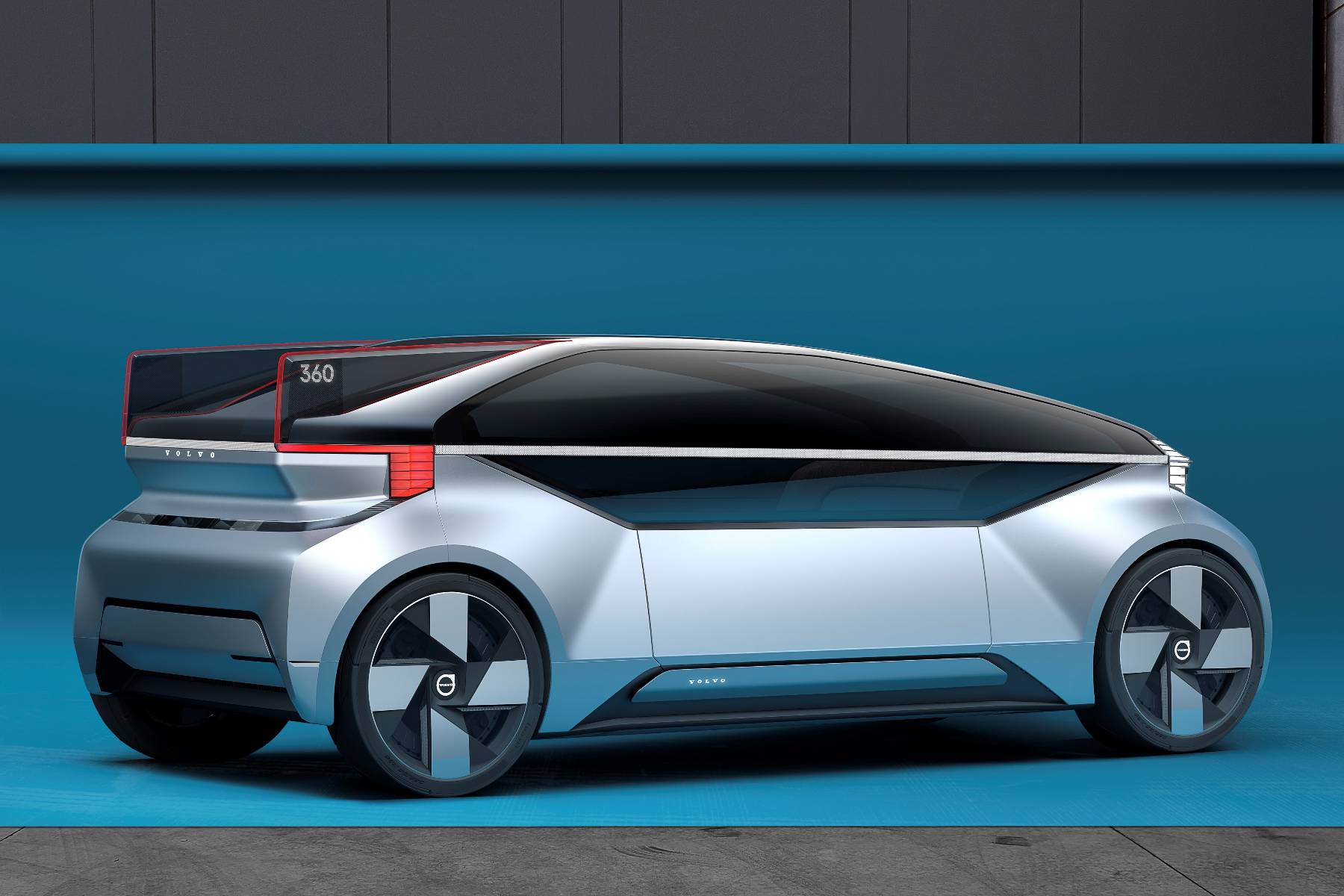
Volvo has revealed a surprise new concept car called 360c, a vehicle it describes it as “a holistic view of a future of travel that is autonomous, electric, connected and safe”. It all sounds both very futuristic, and very Volvo-like.
On the surface, it’s a future-looking concept not unlike any other. It’s not unattractive and it is discernibly a Volvo – a change from most manufacturers’ anonymous visions of the future in a similar mould.
Where the 360c really pushes the boat out is in the attention to detail, given its intended purpose, and the conversations that Volvo wants it to start. More on that in a bit…
What’s inside the Volvo 360c?
This is where it gets interesting. To all appearances, the Volvo 360c is entirely configurable to your personal needs. Indeed there are four potential uses – sleeping environment, mobile office, living room and entertainment space. All are said to “reimagine the way people travel”.
Volvo wants this car to bleed into other areas of your life and in doing so, improve it – transport, work and otherwise. A hotel room-come-cabbie on the go to help you “recapture time while travelling in the cities of the future”.
Pictured are a bed configuration, with the cabin not looking unlike a first-class pitch on a transatlantic flight, an office arrangement, fit to seat four, a party arrangement, complete with champagne, and a standard living room-style setup.
Live 200 miles away from the office? Not to worry, there’s a mobile office on your drive. Got a journey from Seattle to LA? Set off at 10pm, have a night’s kip, be there by 3pm the next day… (Okay, one thing autonomous cars will never be, is as fast as a domestic flight.)
It’s all rather appealing and well thought-out, especially when you consider Volvo’s musings on the future of transport.
“Autonomous vehicle concepts have a tendency to become a technology showcase instead of a vision of how people use it,” said Robin Page, senior vice president of design at Volvo Cars.
“But Volvo is a human-centric brand. We focus on the daily lives of our customers and how we can make them better. The 360c is the next iteration of this approach.”
What’s the point of the Volvo 360c?
The conversations this 360c was built to start, are the point. Volvo are keen to stress the scale of the quantum leap in transportation that the advent of autonomous cars represents. How far-reaching can the remit of the autonomous car be?
Volvo reckons pretty far, citing domestic air travel as a target that it thinks a network of these pods could beat. The apparent inconvenience of domestic flights, as taken by some 740 million of us by Volvo’s maths – security, cramped seating, emissions output and so on, all to be remedied by a comfortable across-country ride in the Volvo 360c.
“Domestic air travel sounds great when you buy your ticket, but it really isn’t. The 360c represents what could be a whole new take on the industry,” said Mårten Levenstam, senior vice president of corporate strategy at Volvo Cars.
“The sleeping cabin allows you to enjoy premium comfort and peaceful travel through the night and wake up refreshed at your destination. It could enable us to compete with the world’s leading aircraft makers.”
“When the Wright brothers took to the skies in 1903, they did not have a clue about what modern air travel would look like.”
“We do not know what the future of autonomous drive will hold, but it will have a profound impact on how people travel, how we design our cities and how we use infrastructure.”
Before we get to that stage though, we need to lock down how an autonomous infrastructure is going to work. To this end, the 360c is intended as a conversation catalyst, and it’s a conversation Volvo is keen to have as soon as possible.
“We regard the 360c as a conversation starter, with more ideas and answers to come as we learn more.”
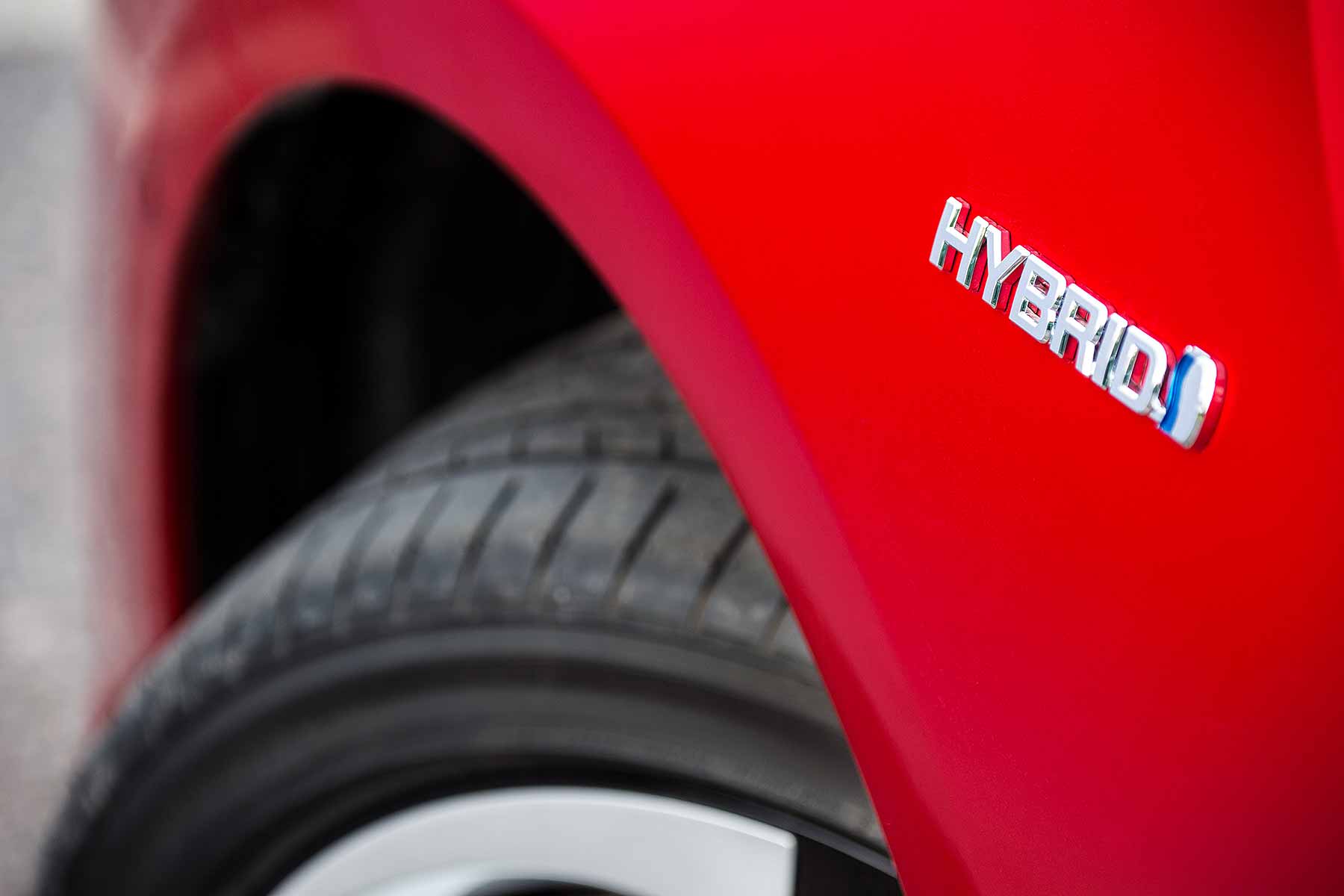
Another week, another recall. This time, it is Toyota, with a fault rising on its famous hybrid-powered models. The issue? A very low risk of fire – but over a million Toyotas in Japan, North America, Europe and more are affected.
Japanese-made Toyotas built between June 2015 and May 2018 are involved the recall. Affecting the plug-in versions of the Prius and the C-HR crossover, the risk is said to originate from the engine wire harness.
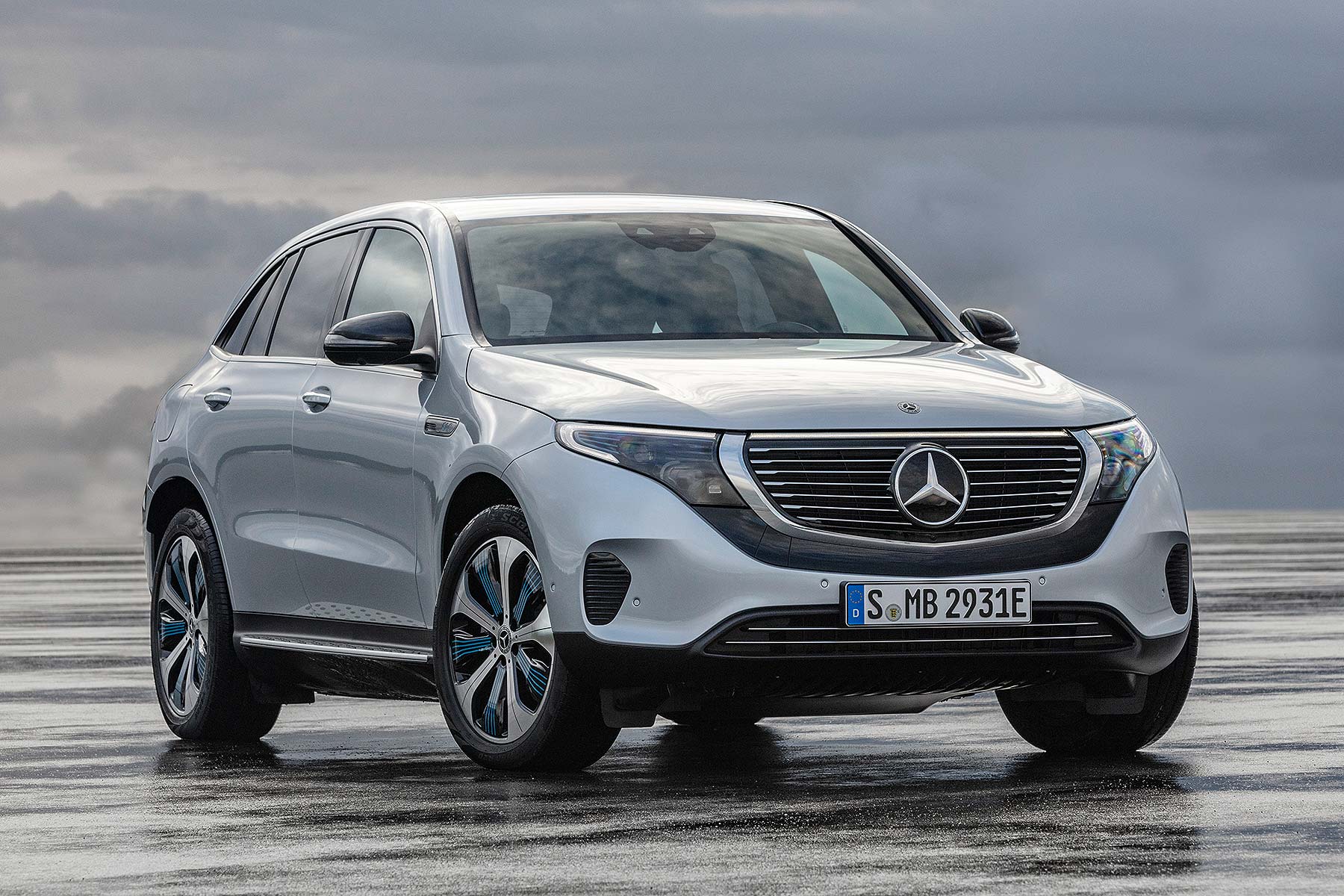
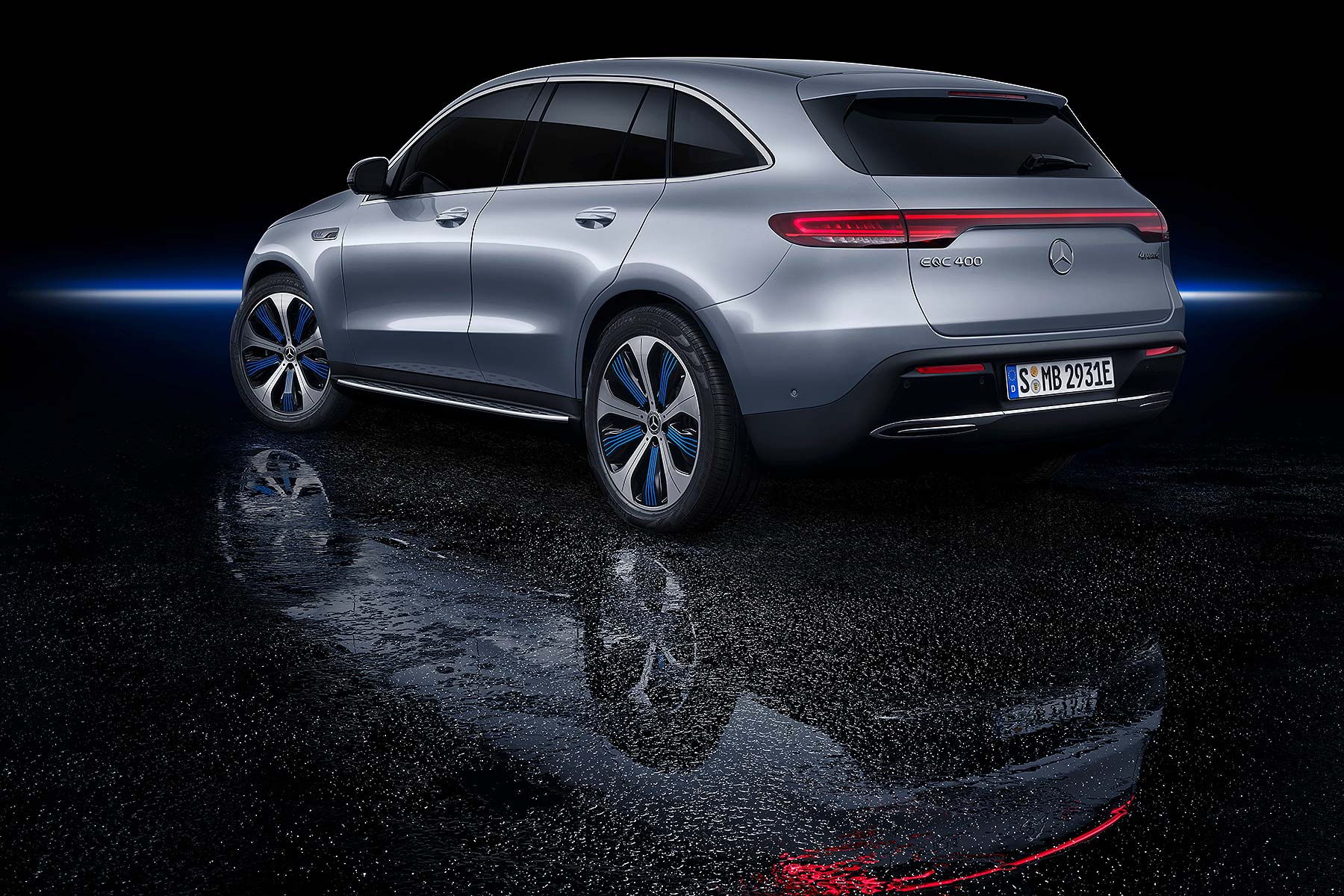
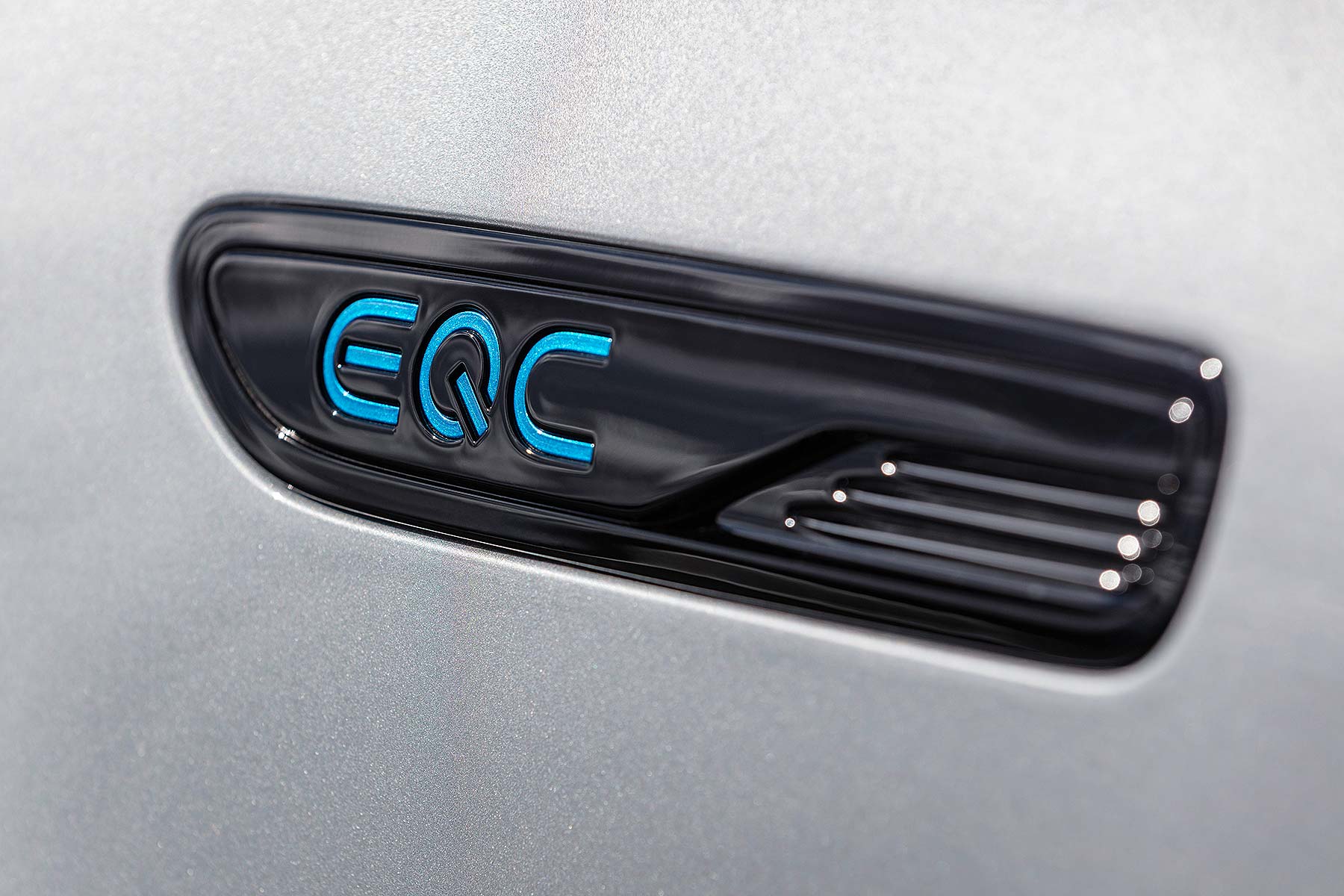
The Mercedes-Benz EQC is an all-electric SUV rival to the Tesla Model X and Jaguar I-Pace. It has an 80kWh lithium-ion battery providing a 280-mile range, and two powerful motors for sporty acceleration and all-wheel drive traction.
Mercedes-Benz’s first EQ ‘Electric Intelligence’ model, the EQC is the firm’s first fully electric SUV – and the first fruits of its multi-billion-pound investment in the EQ line.
It is also the first production-spec German SUV to be revealed, beating the Audi e-tron plus the BMW iX3 and Vision iNext (to, we assume, the delight of Mercedes-Benz bosses).
The EQC is scheduled to go on sale in summer 2019.
EQC: the GLC of EV SUVs
As the name suggests, we should consider the EQC an EV SUV alternative to the existing GLC; part of the Mercedes-Benz mid-size ‘C’ range. In time, presumably, there will be smaller EQA and larger EQE variants.
For now, it’s all eyes on EQC. “It is a genuine Mercedes-Benz,” said Ola Kallenius, board member for R&D and product development. It has “classic attributes such as quality, safety and comfort”.
But the EQC also has “dynamic performance, thanks to two electric motors at the front and rear axles, with a combined output of 300 kW (that’s 408 hp) and an intelligent operating strategy for a superior electric range”.
0-62 mph takes 5.1 seconds and top speed is governed to 111 mph. And although the EQC weighs over 2.4 tonnes, 564 lb ft of pulling power should make light work of it, if you’re not fussed about overall range. The EQC is even rated to tow a 1.8-tonne trailer.
All the key facts about the new #MercedesBenz#EQC in one short video!
Visit https://t.co/QlsdtSz2L8 for more info. #switchtoEQ
What about charging? Mercedes-Benz fits a standard onboard water-cooled charger capable of taking 7.4 kW. A Mercedes-Benz Wallbox will be offered, charging three times as fast as a domestic wall socket.
It will also take CCS DC rapid charging, up to a maximum of 110 kW. And, via the MBUX infotainment system, over-the-air EQ-specific functions allow features such as pre-entry climate control and EQ-optimised navigation: this calculates the fastest route with the shortest charging time.
Design: pioneer
The Mercedes-Benz EQ range is being designed under the idiom of ‘Progressive Luxury’ said design chief Gorden Wagener. The EQC is our first look at “the ‘next big thing’ to come tomorrow”.
The EQC’s lines are seamless and clear, and he describes it as boasting “an avant-garde electric look with trailblazing design details and colour highlights typical of the brand both inside and out”.
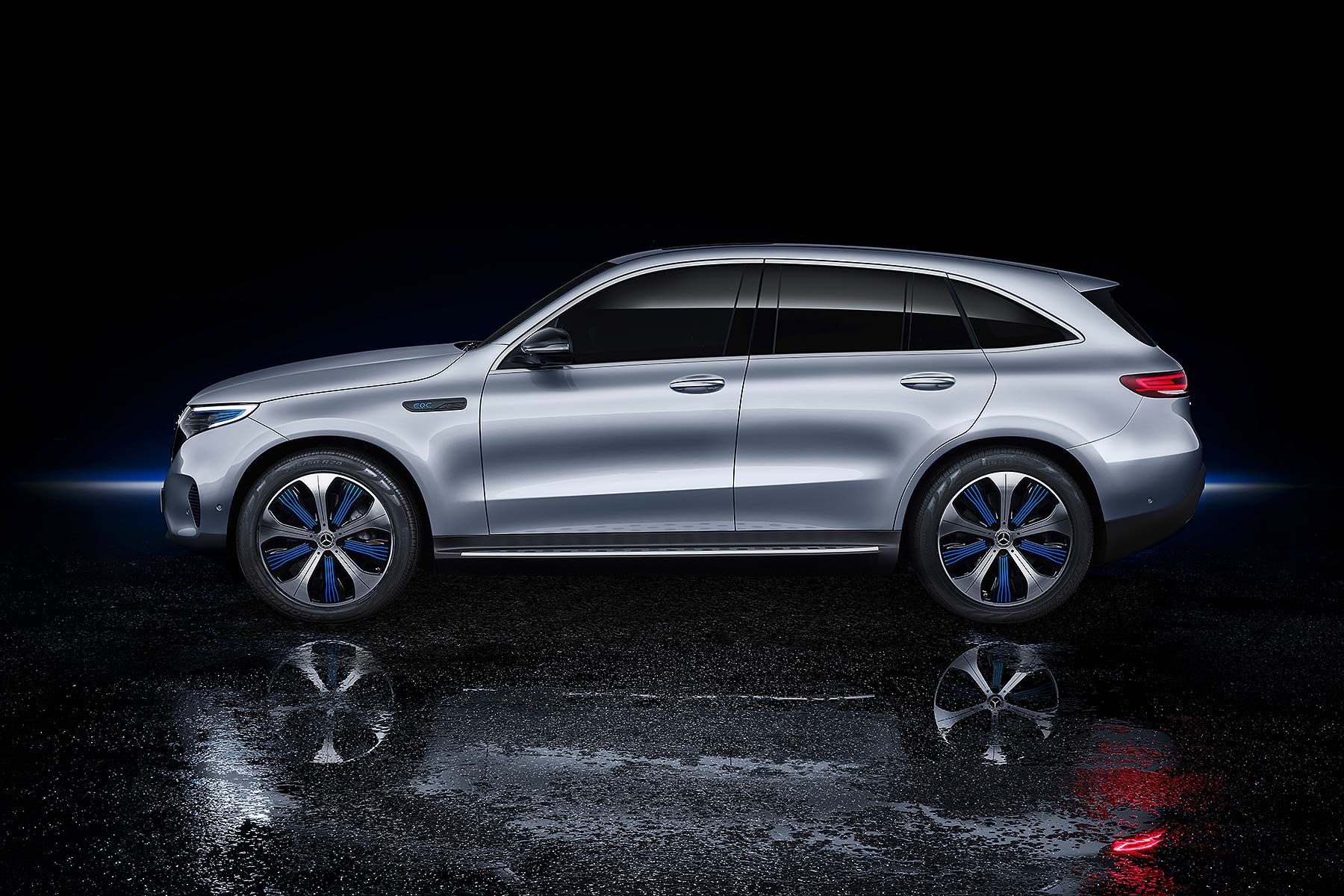
Muscular, stretched proportions are more crossover than SUV; the roofline is extended, the waistline low and the rear end curves place it mid-way between SUV and SUV coupe.
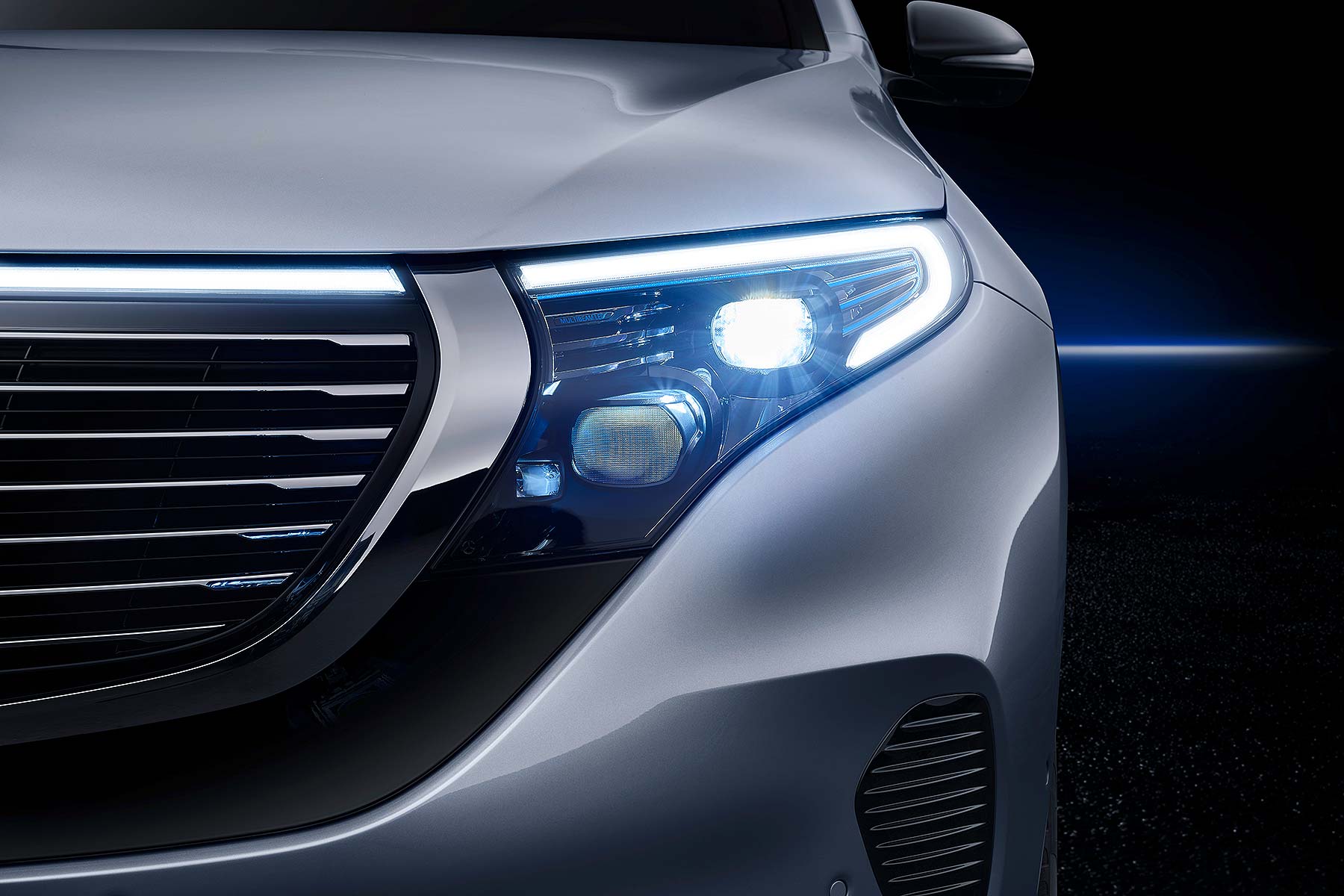
It will be striking at night. That large black panel at the front has an optical fibre border at the top, which creates a horizonal light bad stretching almost the full width of the nose. The headlights also carry the blue stripes and black background that all EQ models will use.
Interior: avant-garde
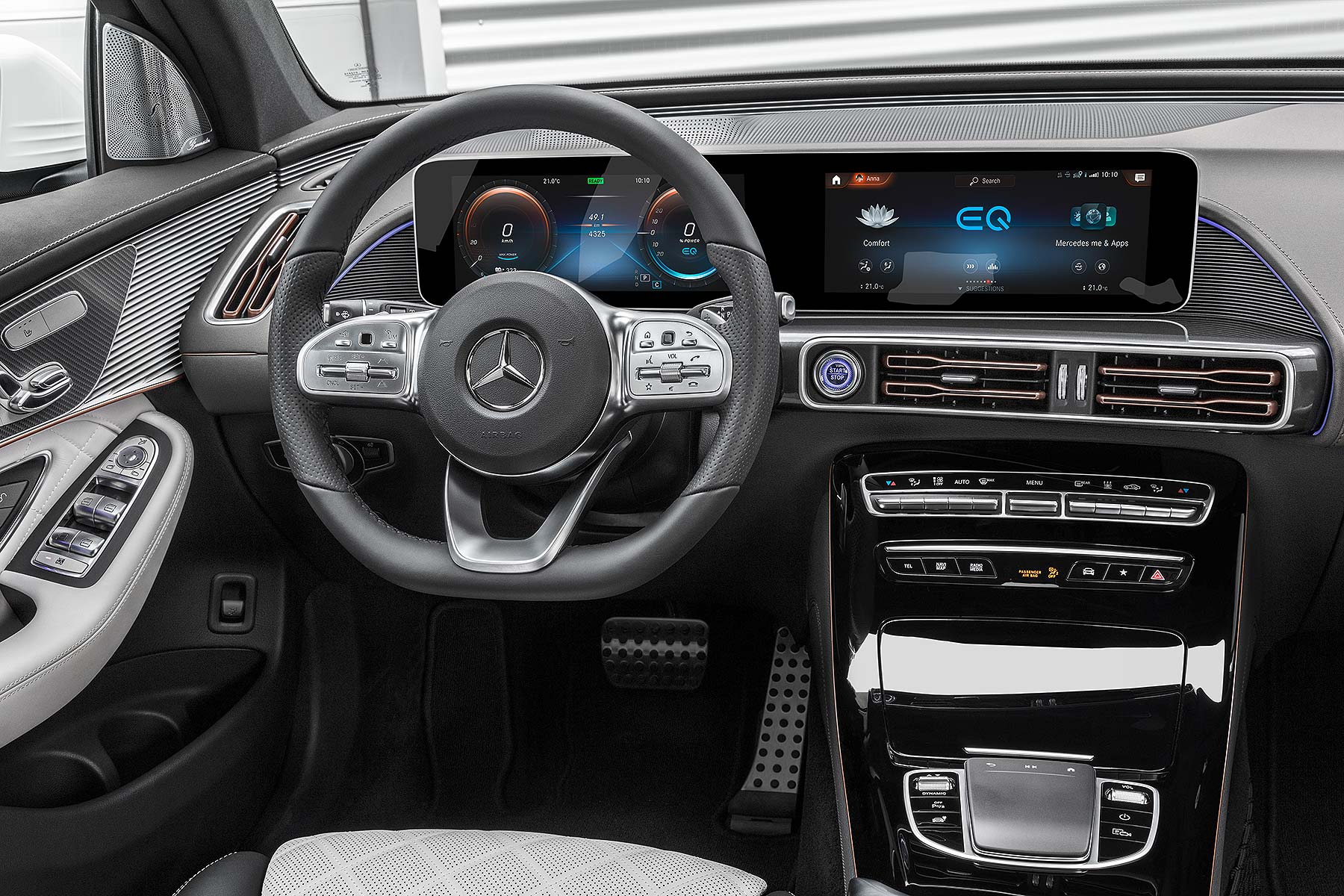
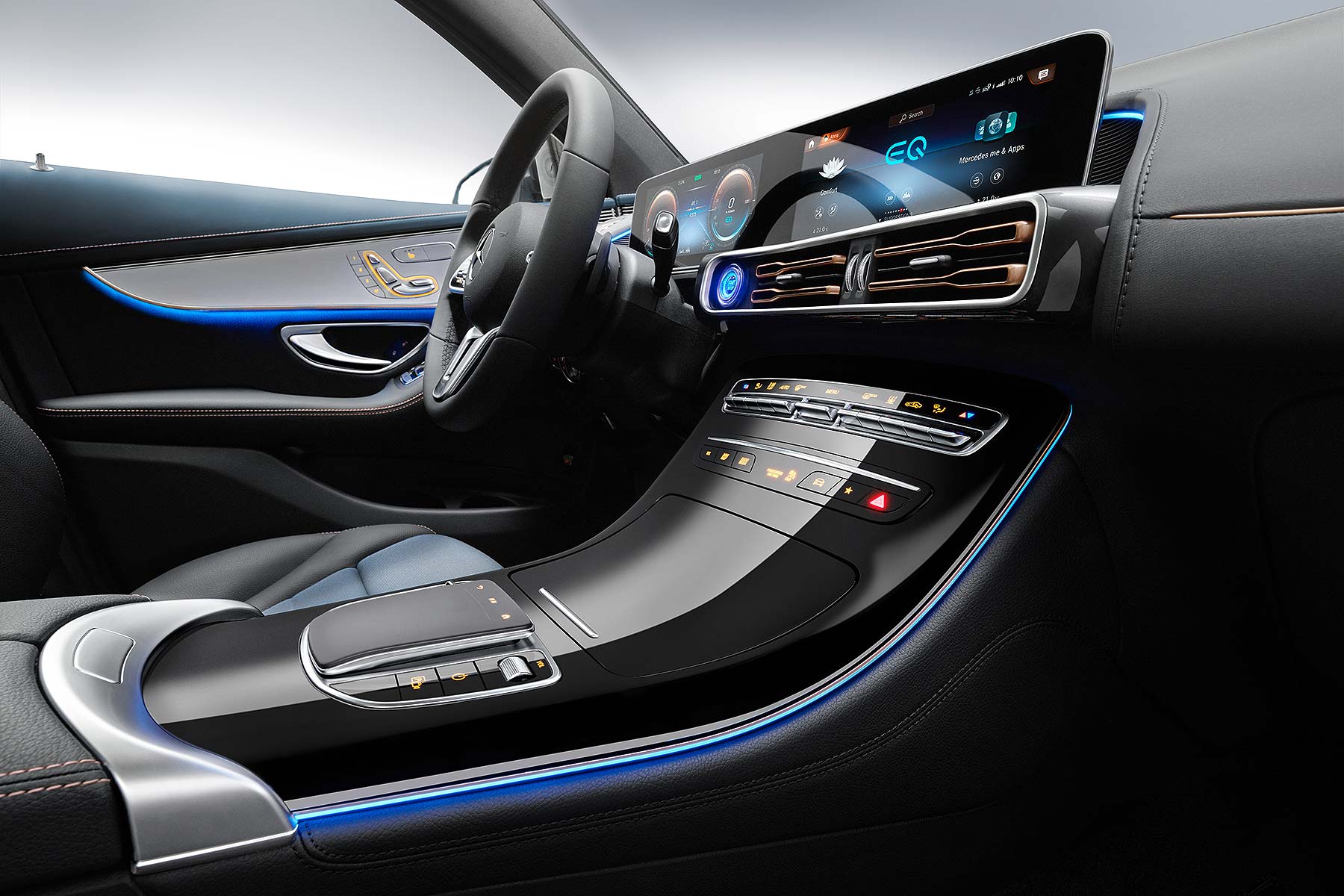
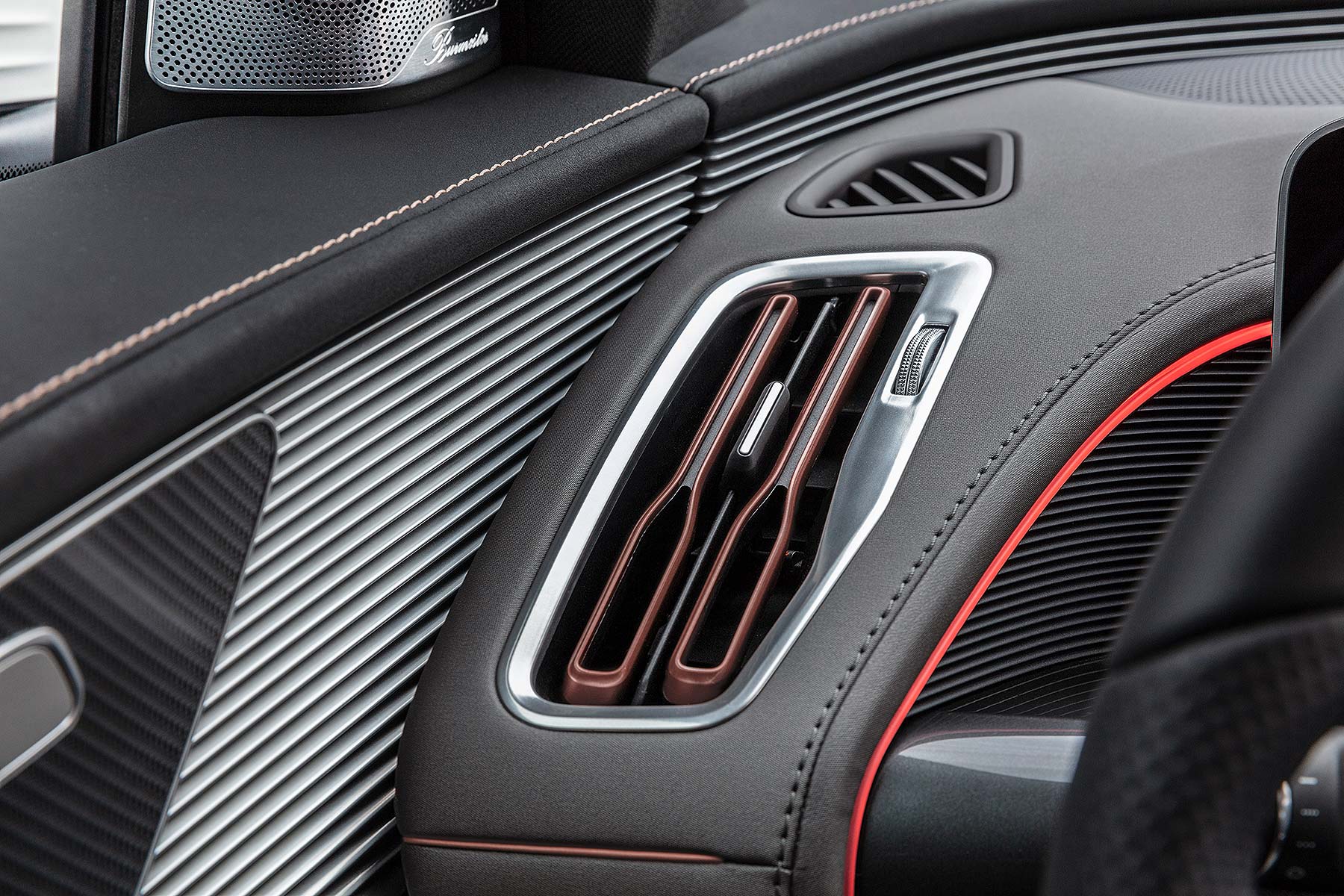
The neat ribbed edges of the instrument panel immediately stand out inside. Mercedes-Benz says they’ve been modelled on the cooling vanes of a hi-fi amp. It’s intended to portray Wagener’s ‘electro-look’, which draws just as strongly from consumer electronics as it does from traditional cars.
An asymmetric design gives a driver-focused cockpit. Mercedes-Benz tells us to particularly focus on the “high-tech, high-gloss cassette housing flat air vents with key-shaped, rose-golf coloured louvres”. Which isn’t something you are generally encouraged to notice on a traditional Merc.
It’s going to be extremely quiet in there as well. EQC powerpacks are mounted on rubber isolators which, along with umpteen other sound isolation measures, means the first Mercedes-Benz electric SUV will be a whisper-quiet ride.
‘Flipping the switch’
“With the EQC – the first fully electric SUV from Mercedes-Benz – we are flipping the switch,” said the firm’s charismatic chairman and CEO Dieter Zetsche. “Electric drive is a major component in the mobility of the future.
“We are therefore investing more than ten billion euros in the expansion of our EQ model portfolio, and more than one billion euros in global battery production.”
The EQC is the first electric Mercedes-Benz. The first answer from the German premium trio to Tesla and Jaguar. The big-brand battle is becoming fully charged at last.
There’s been much buzz around the new black cab as it takes to the streets of London. But what of its predecessor? We’re not in the habit of forgetting a faithful long-serving warrior without at least a bit of fanfare.
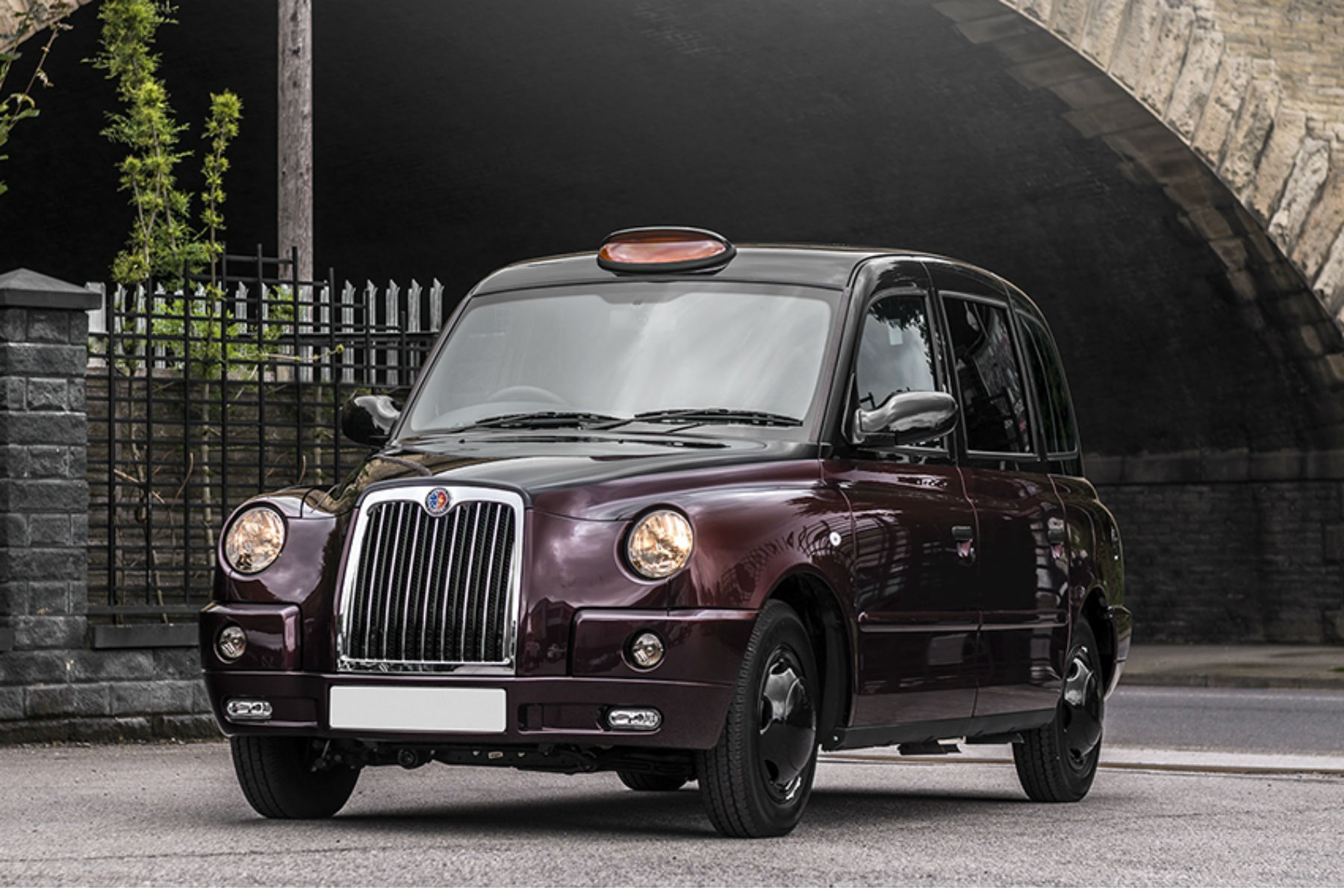
To that end, meet the London Taxi TX4 ‘Last of Line Edition’. Bradford’s Project Kahn is the firm behind it. Yes, the very same that puts big wheels on Defenders and Wranglers, and sells the Aston Martin-based Vengeance.
Think of this one-of-five run-out special as the Vantage V600 of London taxis. Or, indeed, the Rolls-Royce of TX4 cabs. Yes, the new one is out and in service. That doesn’t mean the old one is stripped of its licence to go out with a bang.
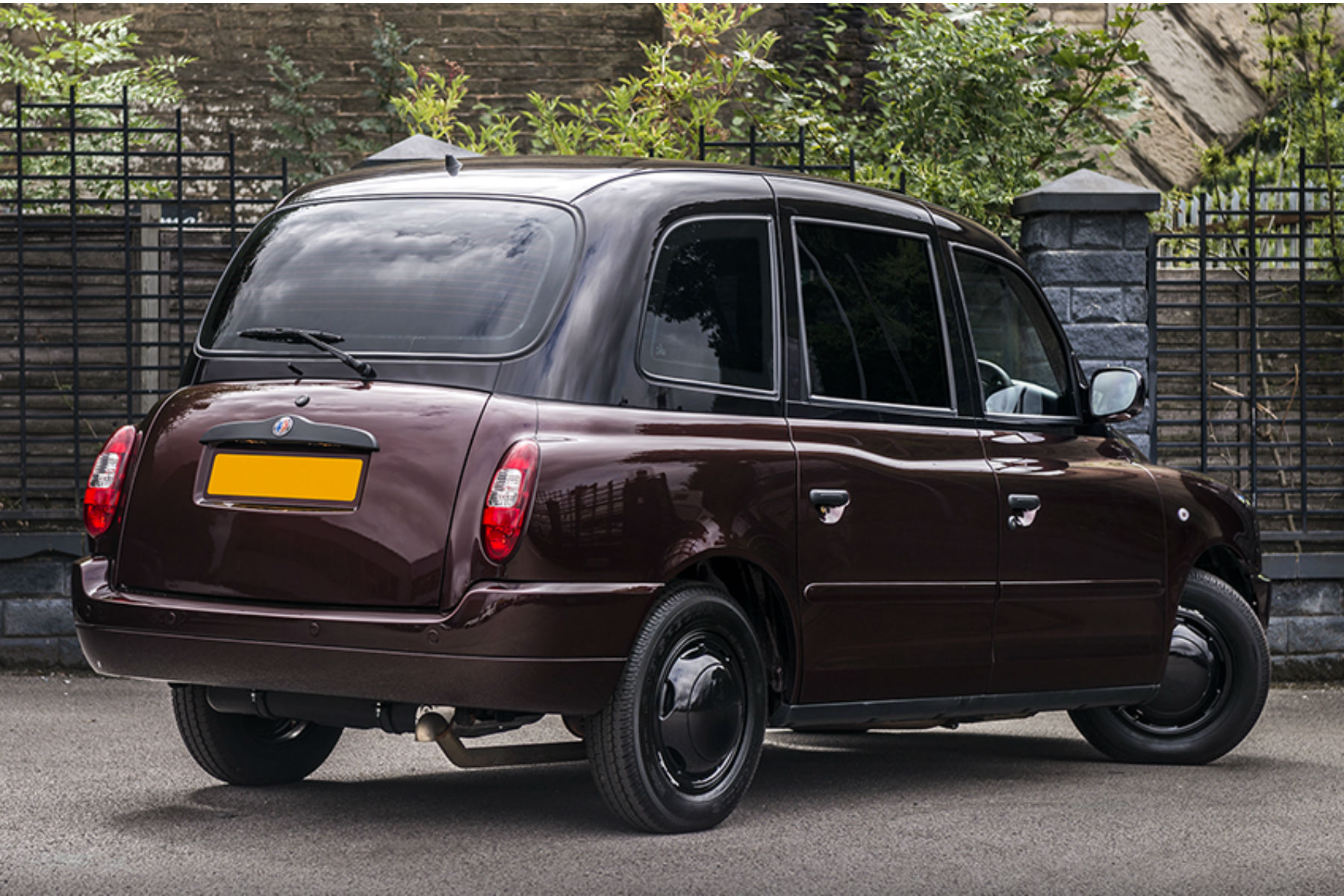
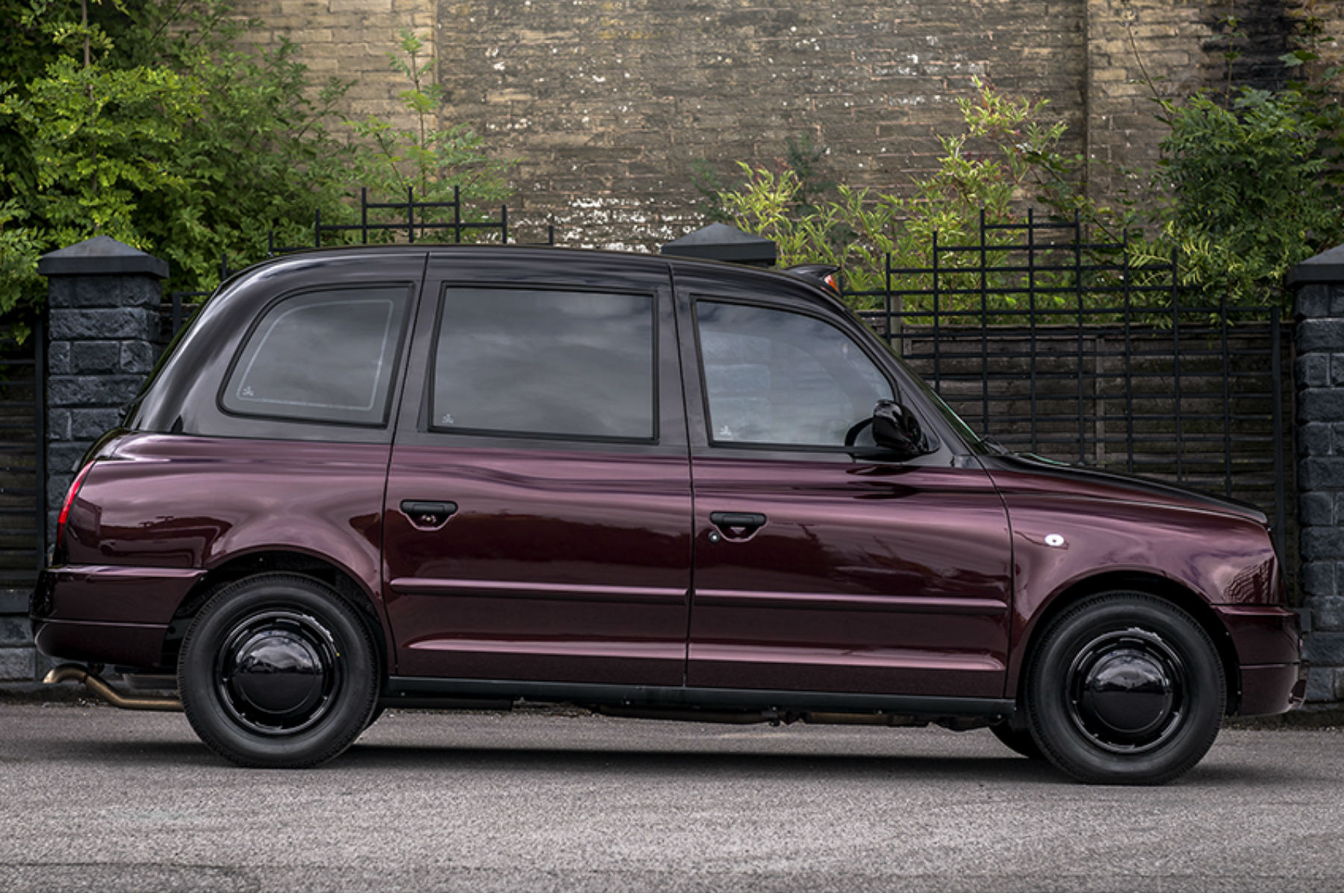
The big change you can note from afar is the colour. No longer the black cab, these Kahn Last of Line Editions come in a choice of five colours from the Rolls-Royce colour palette. Colour coded wheels contrast the body on the outside and a slatted grille complete the exterior package.
On the inside, LED star lighting in the roof adds to the Roller feel, as does the quilted and perforated nappa leather. None of it is visible to passers-by, of course, thanks to the privacy glass.
Piano black trim, a leather-trimmed wheel, colour-coded seat belts and Last of Line door sills complete the Kahn cabin makeover. Each cab comes with its own badge and certificate of authenticity as well as a plaque bearing the names of those who built it.
Don’t think it’s all quite show and no go, either. The 2.5-litre diesel engine gets a (sadly unspecified) power upgrade, completing the Kahn package.
But if this is something you can’t live without, you might be out of luck. Three are spoken for and “the owners of the remaining models will be hand-picked by Mr. Kahn”.
“There was only one person for the job,”said a London Taxi Company spokesperson. “Afzal Kahn is famous for his original designs and willingness to push the boundaries, and we admire his ability to capture the essence of a vehicles’ character”.
“We believe he is the best designer to give this iconic vehicle the send-off it deserves.”
Grand Basel is billed as “the ultimate show for automotive masterpieces that showcases top-of-the-range automobiles from the past, present and future.” A total of 100 cars will be spread over a space of 32,000 sqm, in a show that celebrates the automobile, along with art that is inspired by cars, music that is inspired by cars, and even buildings that are inspired by cars. It’s also the venue for the launch of a ‘reimagined’ Lancia Delta.
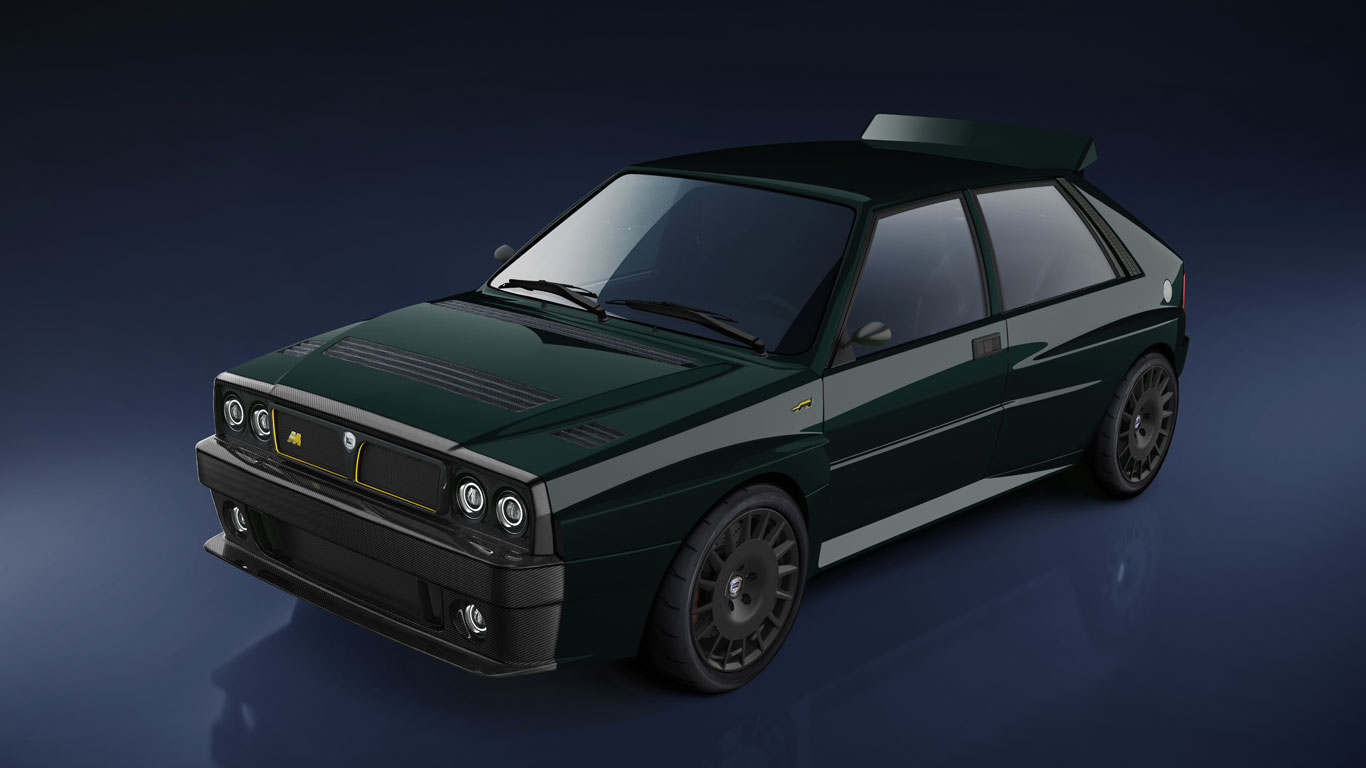
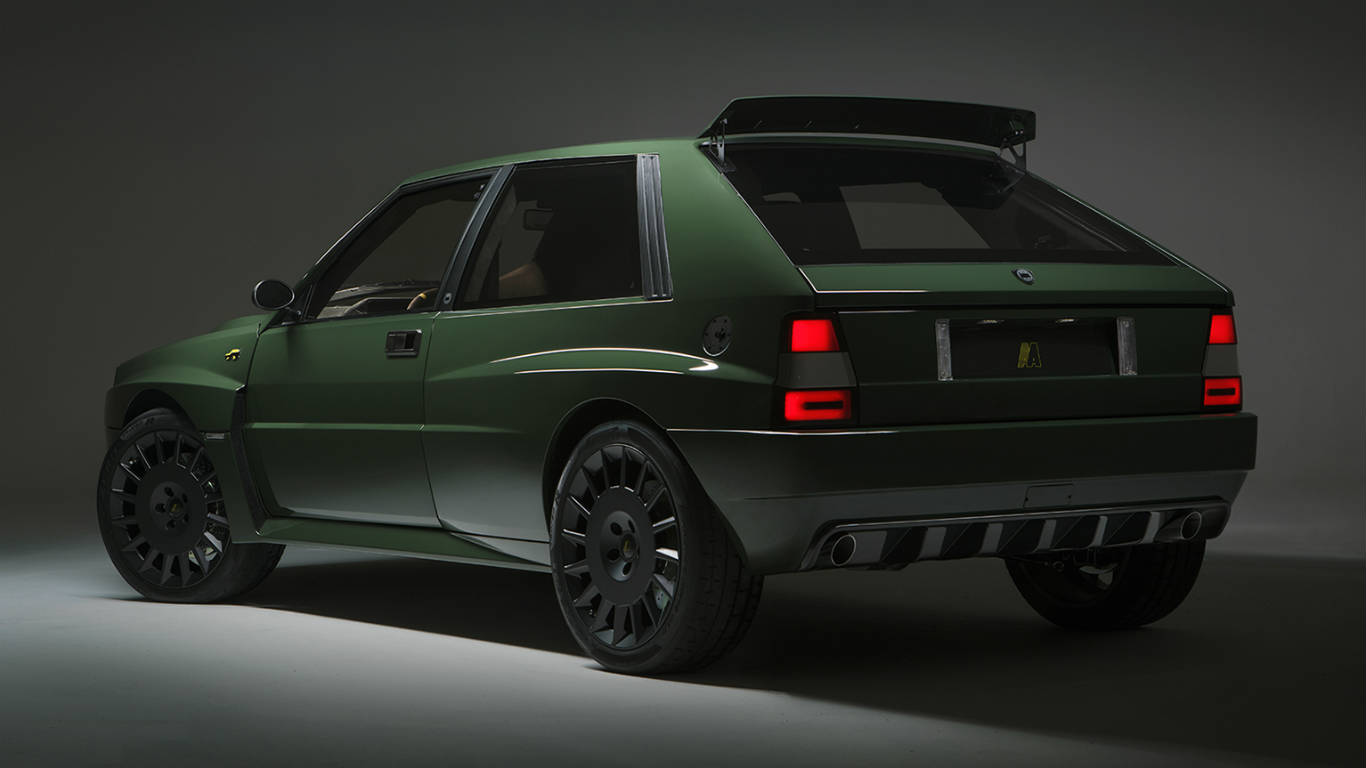
Automobili Amos Lancia Delta Futurista
Is this the restomod we’ve all been waiting for? Automobil Amos is to the Lancia Delta Integrale what Singer is to the Porsche 911 and Eagle is to the Jaguar E-Type – the recreation and reimagining of a cult classic. It’s the brainchild of millionaire racing driver Eugenio Amos, and it’s making its debut at Grand Basel.
The first thing you’ll notice is that this modern interpretation of the 90s classic features three doors, rather than the original’s five. The Lancia Delta Futurista is said to feature more than 1,000 new parts within a wider body constructed from hand-beaten aluminium panels. The front end, while familiar to fans of the Evo 1 and 2, is made from carbon fibre. The car is light – weighing just 1,250kg.
Naturally, the interior is all new, while the Milan-based team has tweaked the powertrain to deliver 330hp, before thrusting the chassis and suspension into the 21st century. Keen not to dilute the purity of the donor car, Automobile Amos claims to have retained “the character and flair of the original”.
Each Delta Futurista will take four months to build and no more than 15 will be built. In an interview with Classic Driver, Eugenio Amos said: “The donor cars are standard Delta Integrale 16Vs because they’re much cheaper than the mythical Evoluzione models. And those need to be preserved, anyway.” Good news for Evo fans, not so good if you had your eyes on a tidy 16-valve. As for the price – bank on spending €300,000 (£270,000) for a back-to-the-future Delta.
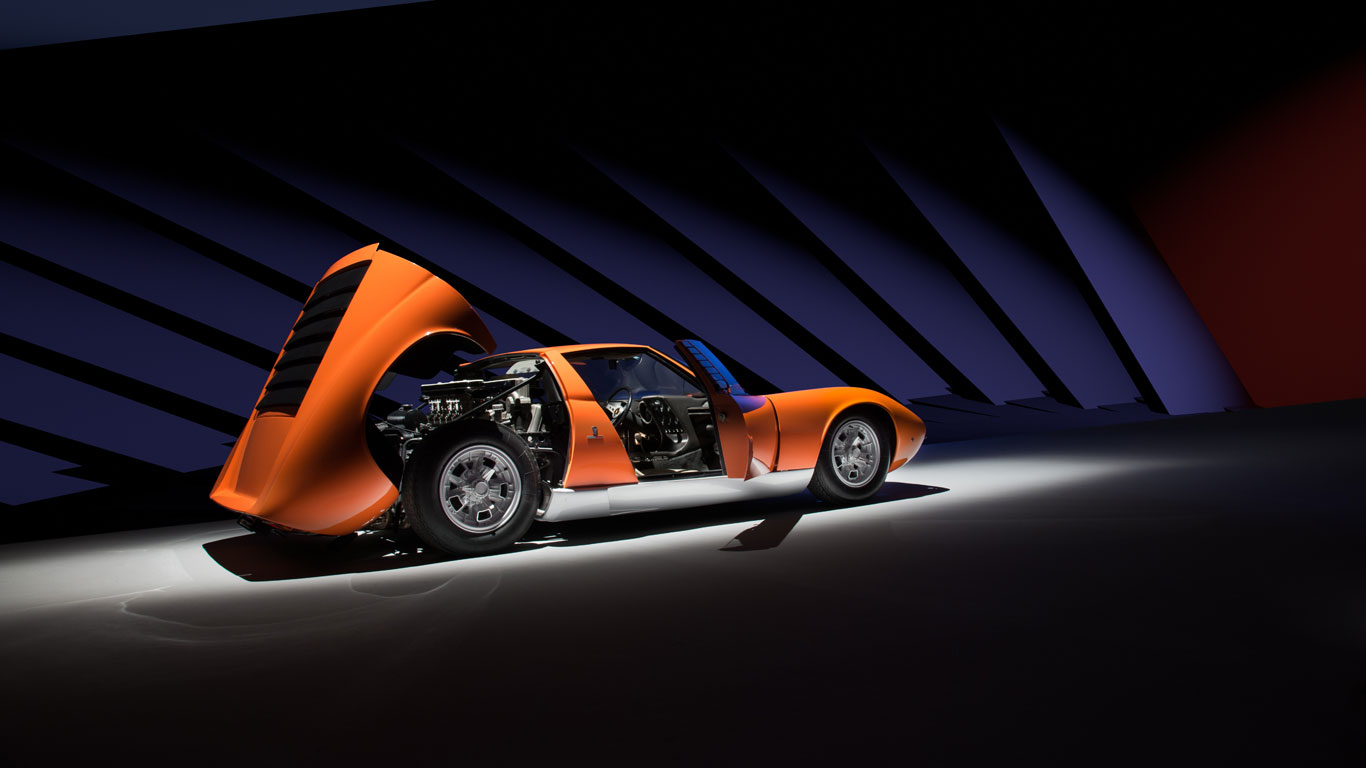
Lamborghini Miura
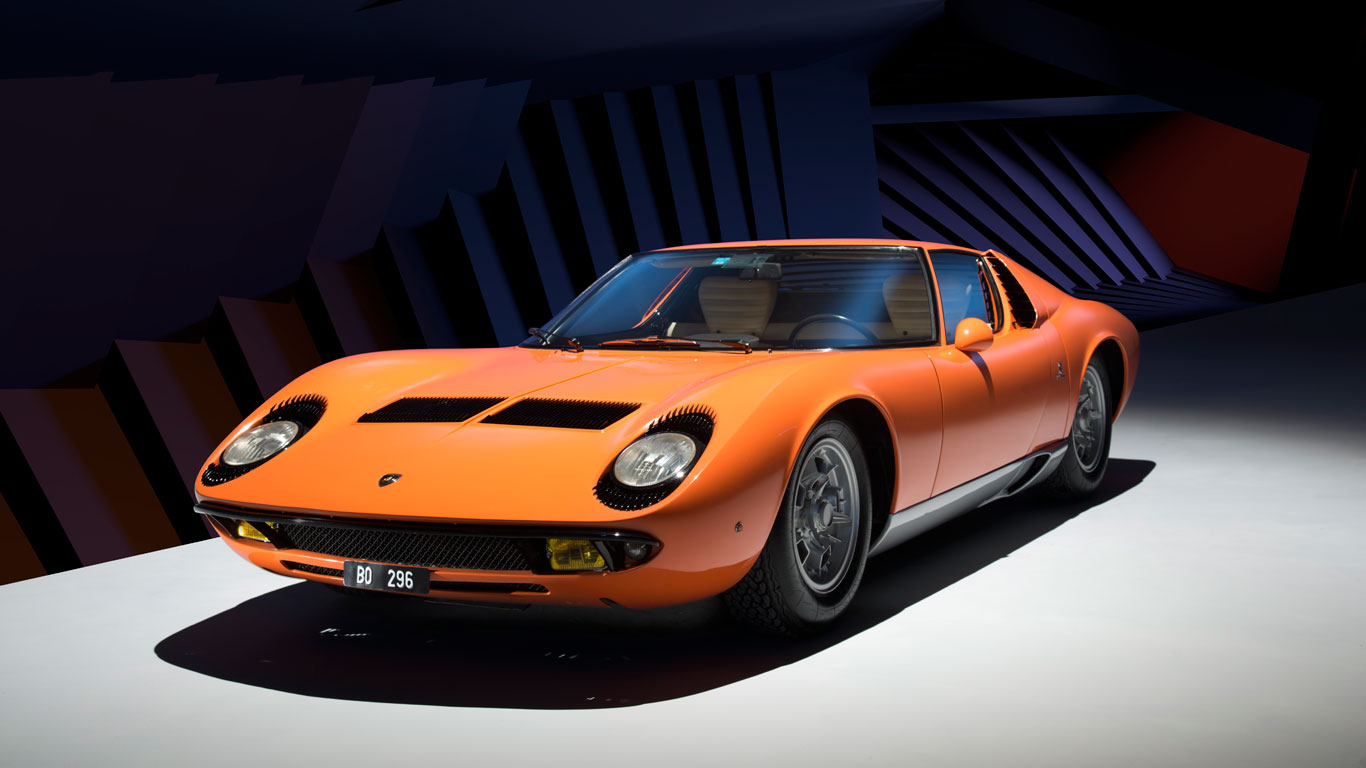
In 2006, Walter de Silva reimagined the iconic Lamborghini Miura, redesigning every aspect of the original while remaining true to its form. It made its official debut in Detroit to commemorate the 40th anniversary of the car’s introduction in 1966. You won’t find the 2006 concept or a 1966 model in Basel, so you’ll have to ‘make do’ with this 1968 Miura.
Marcello Gandini penned one of the most beautiful cars ever to grace this planet and propelled Lamborghini to supercar greatness. The Miura S arrived in 1968, complete with more power and an improved interior, before the Miura SV was launched in 1971. The ‘eyelashes’ were no more, but the SV was the definitive Miura.
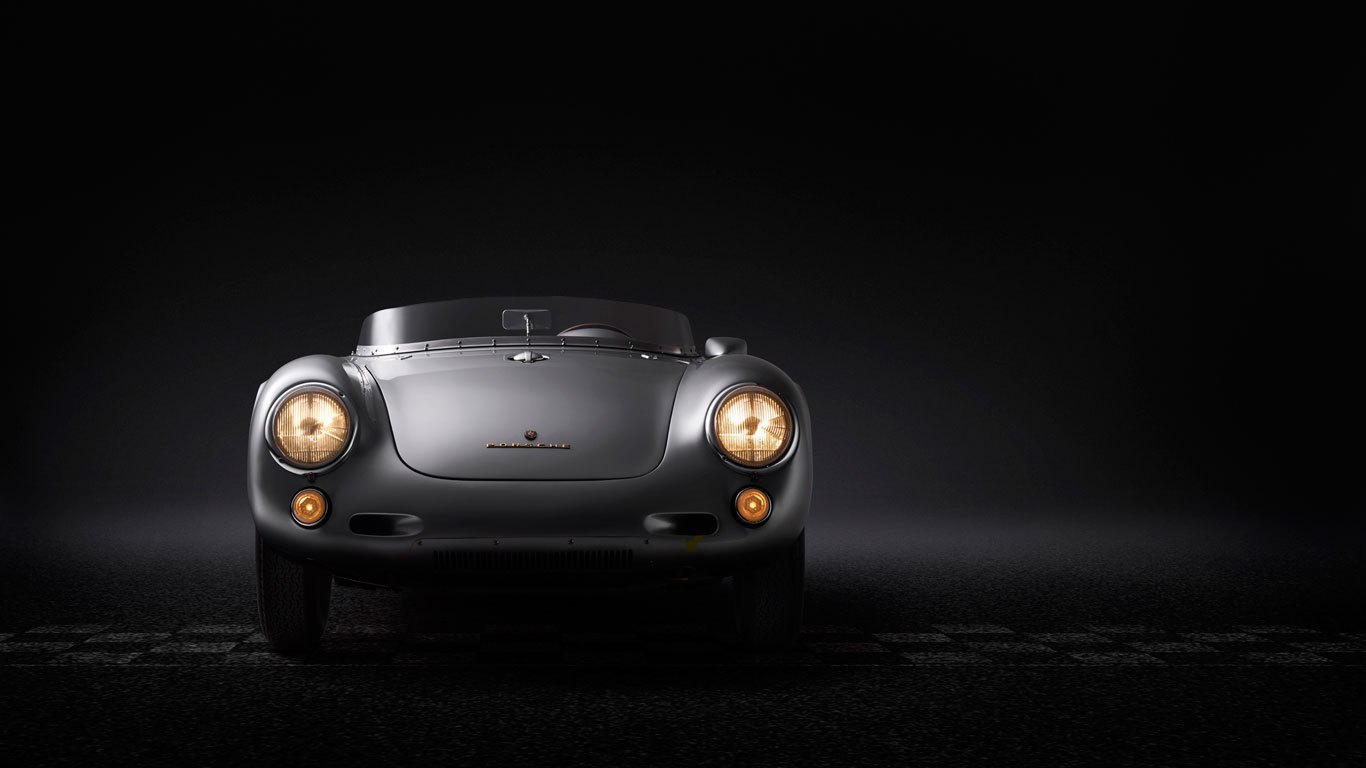
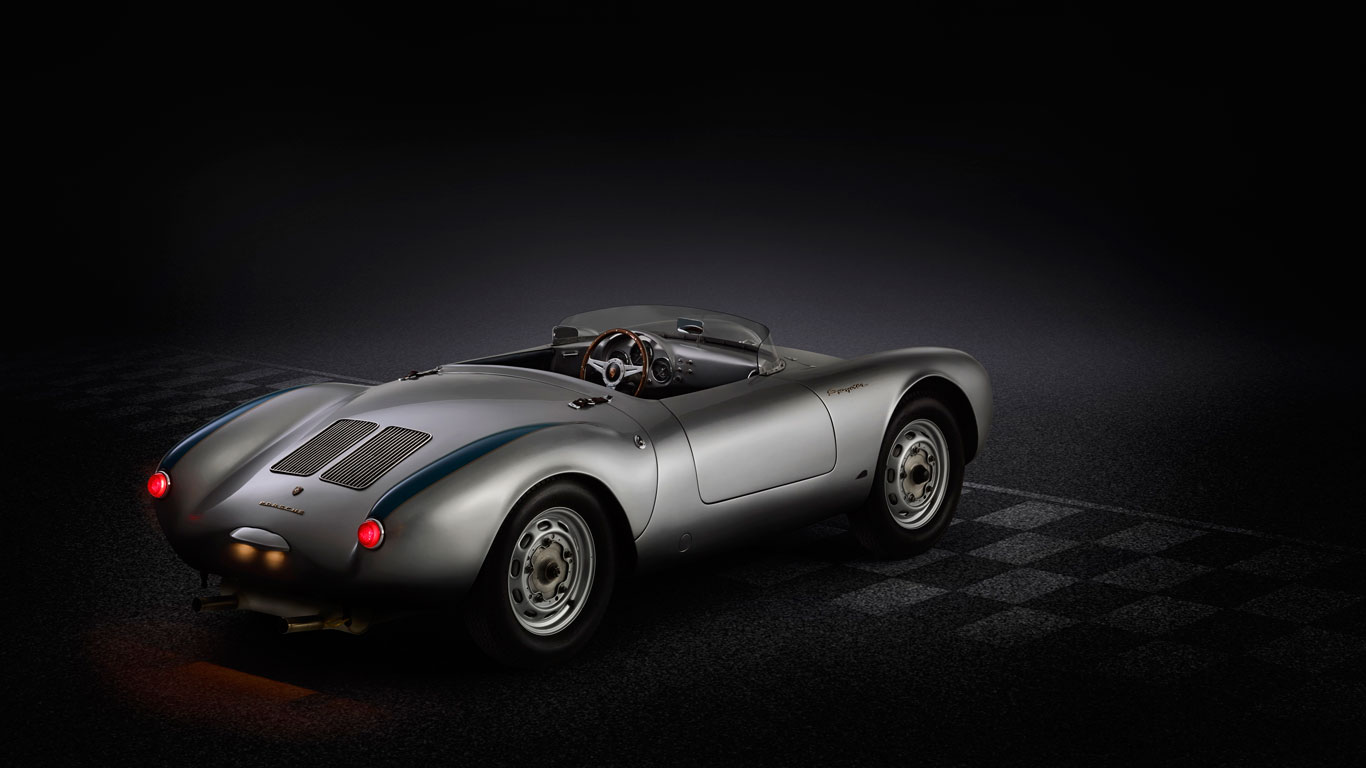
Porsche 550-1500 RS Spyder
If you’re looking for further evidence to support the feeling that Grand Basel isn’t a common or garden motor show, take a look at this Porsche 550-1500 RS Spyder. Introduced at the 1953 Paris Salon, the 550 Spyder featured a four-camshaft engine, a four-speed gearbox and a differential lock.
Inspired by the Porsche 356, but designed with racing in mind, the 550 Spyder featured a light-alloy monocoque body that flowed from the front end, over the wings and to the rear. This aerodynamic and lightweight body combined with the new 117hp engine to create a devastatingly effective racecar.
During the 3,000-km long Carrera Panamericana race across Mexico, a 550 Spyder with the passenger seat covered achieved speeds of more than 124mph. Its low weight was a great leveller, with the Porsche able to snatch victory away from large-displacement rivals.
Away from the track, the Porsche 550 Spyder is perhaps best known for its association with actor James Dean. The film star was driving his ‘Little Bastard’ on his way to a race meeting when he was involved in a fatal crash near Cholame, California.
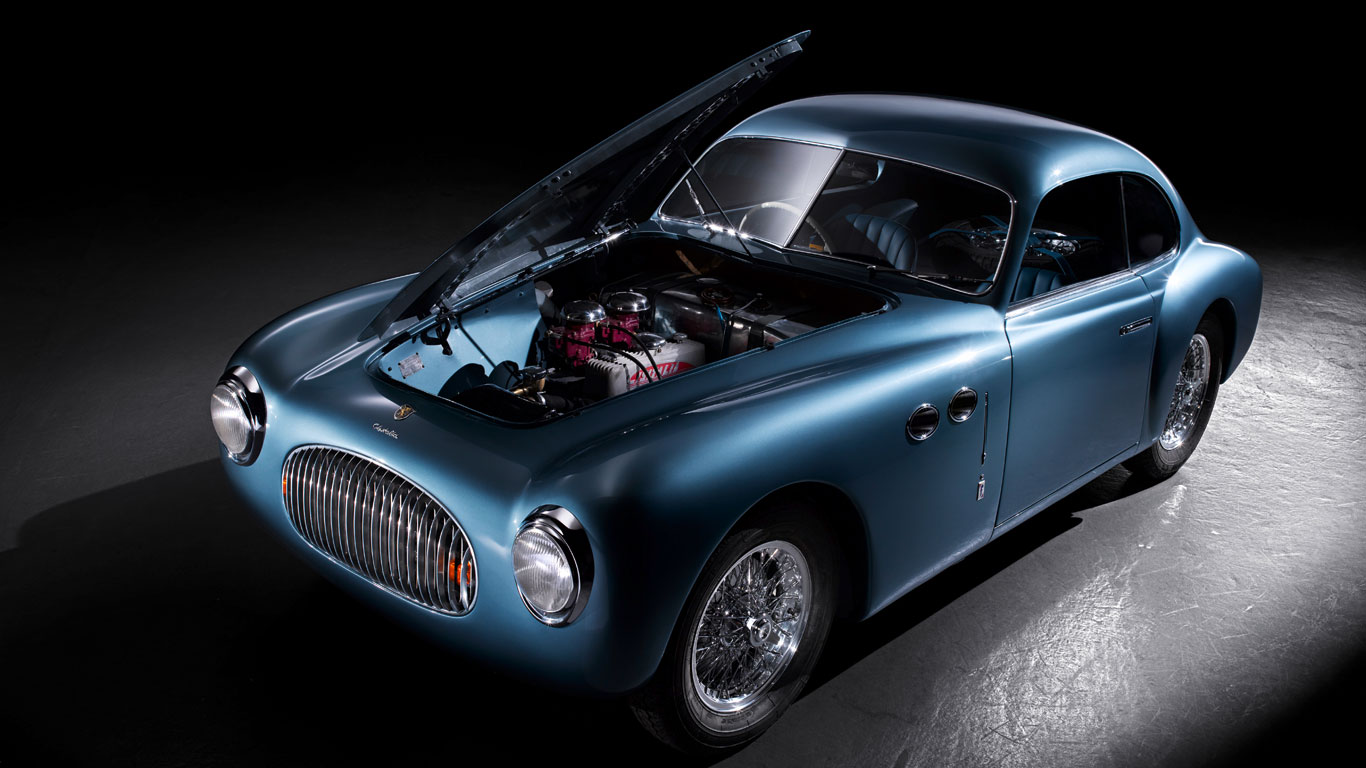
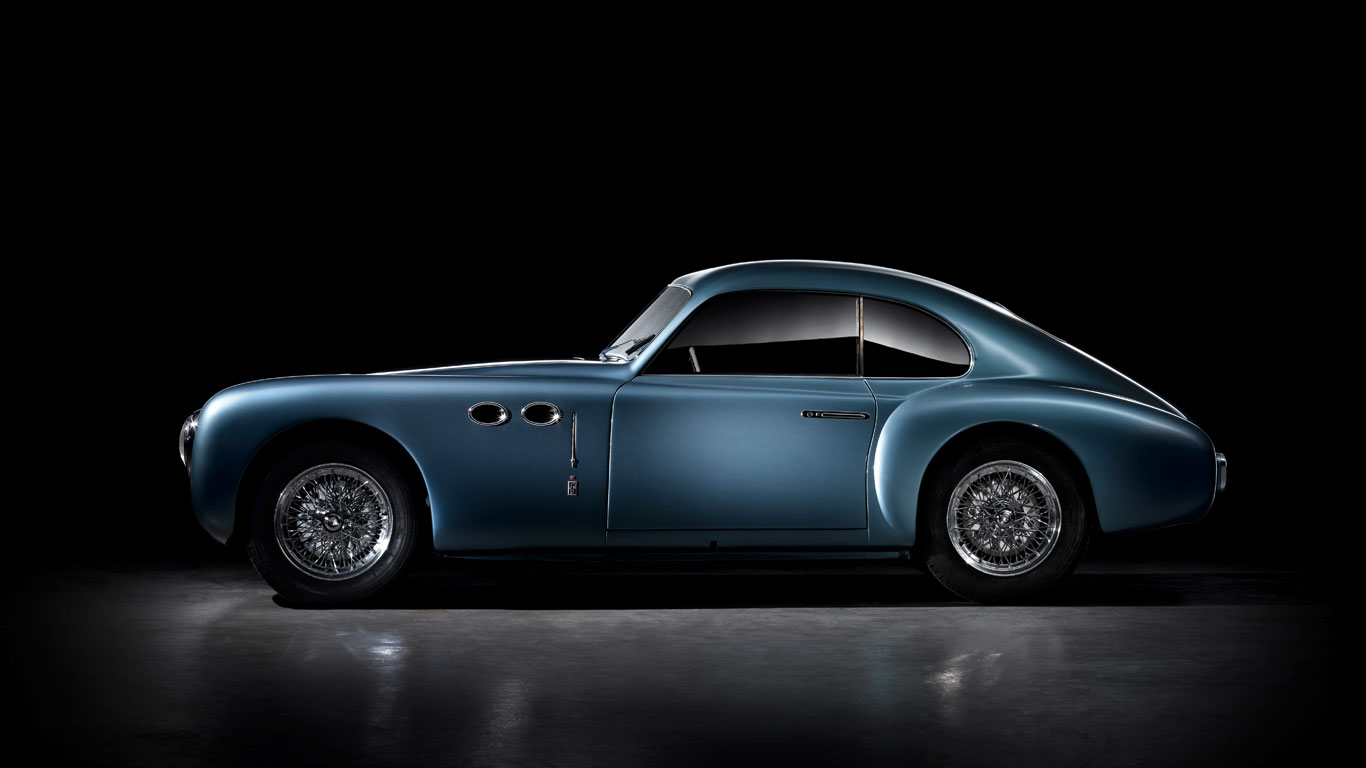
Cisitalia 202 SC
As the first car to go on permanent display at the Museum of Modern Art in New York, the Cisitalia 202 has secured a place in motoring history. For Pininfarina, this was a turning point in car design – an effortlessly elegant car, with no reliance on fins, chrome or excess. The Cisitalia would have looked contemporary in the 1960s, yet it was unveiled in 1947.
“Arguably the first ‘modern’ car,” tweeted motoring journalist Hilton Holloway, a reference to the fact that the Cisitalia was way ahead of its time. It’s no coincidence that Pininfarina continues to cite the Cisitalia as the definitive point in the company’s history, with a design that would influence Italian cars for years to come.
Founded by industrialist and amateur racing driver Piero Dusio, the Cisitalia brand derived its name from his conglomerate – Consorzio Industriale Sportivo Italia. Having proved his ideas on agile, lightweight automobiles with Italy’s first post-war race car, Dusio unveiled the model 202 road car at Villa d’Este in 1947 and the Paris Salon month later.
The car shown at Grand Basel was restored from ‘barn-find’ condition to concours level, and subsequently graced the cover of the 2014 edition of The Classic Cars Book. The interior is a work of art. Little wonder that one is displayed as a ‘moving sculpture’ at the Museum of Modern Art.
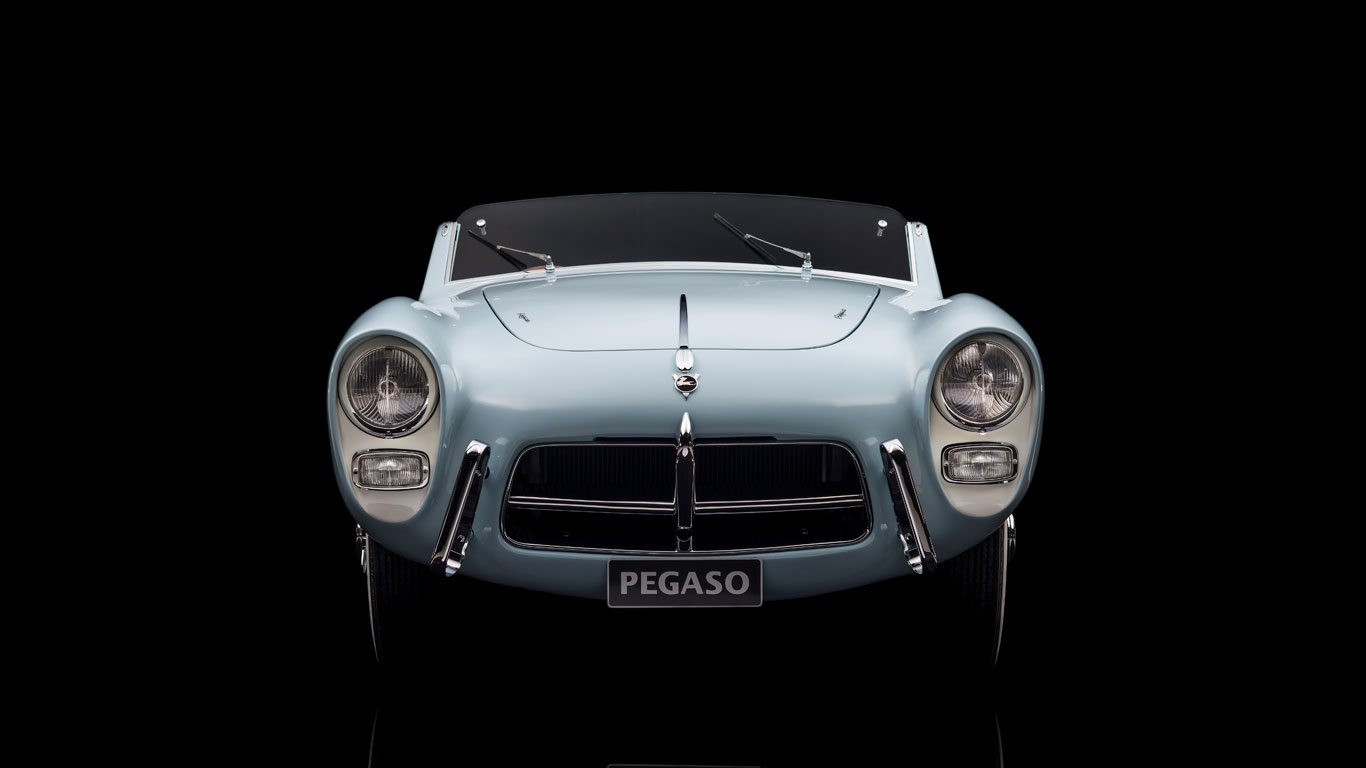
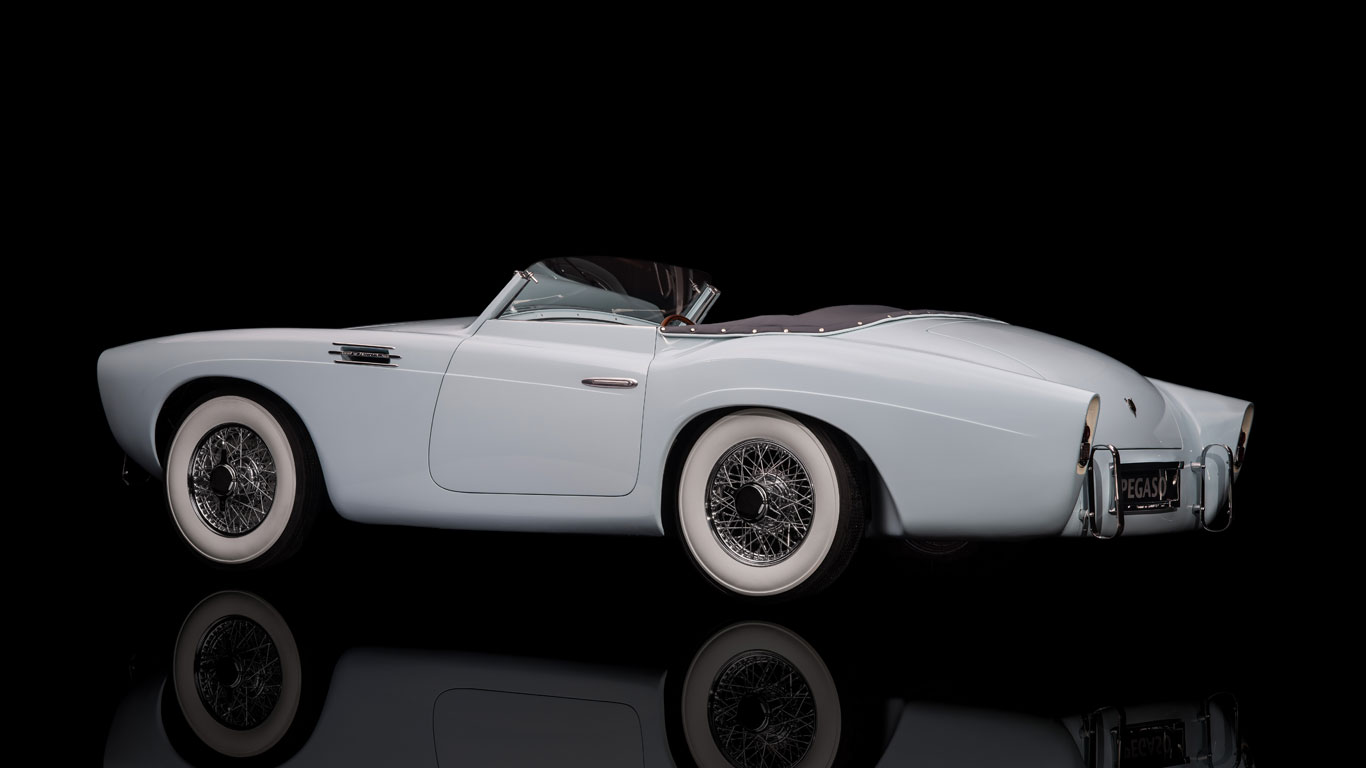
Pegaso Z-102 Series II Saoutchik Cabriolet
Pegaso was a well-established company in the field of trucks and coaches, but the Z-102 was a venture into the unknown. The chief technical manager was Wifredo Ricart, an experienced engineer and designer who could list an association with the Alfa Romeo 512 on his CV.
All of the components were produced in house at Pegaso’s factory in Barcelona, where a rolling chassis would be built, with coachwork carried out by Touring, Serra, Saoutchik or Enasa. Power was sourced from a four-cam, all-alloy V8 engine, mated to a five-speed gearbox.
Two prototypes were built in 1951 – a coupe and a cabriolet – before the Z-102 entered production with a 2.5-litre engine. Other variants were offered, including a supercharged 3.2-litre producing a massive 360hp. The fastest examples could hit a Ferrari-taming 160mph, with even the base models topping 120hp.
The Grand Basel show car is a 1954 Pegaso Z-102 Series II Cabriolet: a one-off example clothed by Saoutchik. It was presented by Pierre Saoutchik at the 1954 San Remo Concours d’Elegance and in the same year at the Paris Salon.
Grand Basel 2018
Grand Basel promises to offer a unique take on the motor show formula, with the ‘reimagined’ Lancia Delta likely to grab most of the headlines. “I chose the Delta because it’s the car that made me fall in love with cars in the first place,” said Eugenio Amos. “I was 7 years old. My father had a beautiful Giallo Ginestra. I don’t know why but it made me feel special. Those memories are made of smells, of that soft Alcantara touch, of confused noises.”
The Grand Basel show, which will take place from 6 to 9 September 2018 in Basel, Switzerland, leads the way for future shows in Miami Beach, from 22 to 24 February 2019, and Hong Kong in May 2019.
The Nissan Juke has been revised for 2018 to help it compete with a slew of more modern rivals, from the top-selling Renault Captur to the upcoming Volkswagen T-Cross.
As it’s getting late in the current Juke’s life, exterior changes are not extensive. They’re limited to a new dark chrome grille, plus dark-tint headlights and door mirror indicators.
Mid-range Acenta models and above get LED fog lights, and there’s a range of new alloy wheel designs. Probably the most striking exterior update is the launch of two bright new colours, Vivid Blue and Chestnut Bronze.
If that’s not enough, higher-grade models can be personalised with coloured body parts, for the front and rear bumpers, side sills and door mirrors.
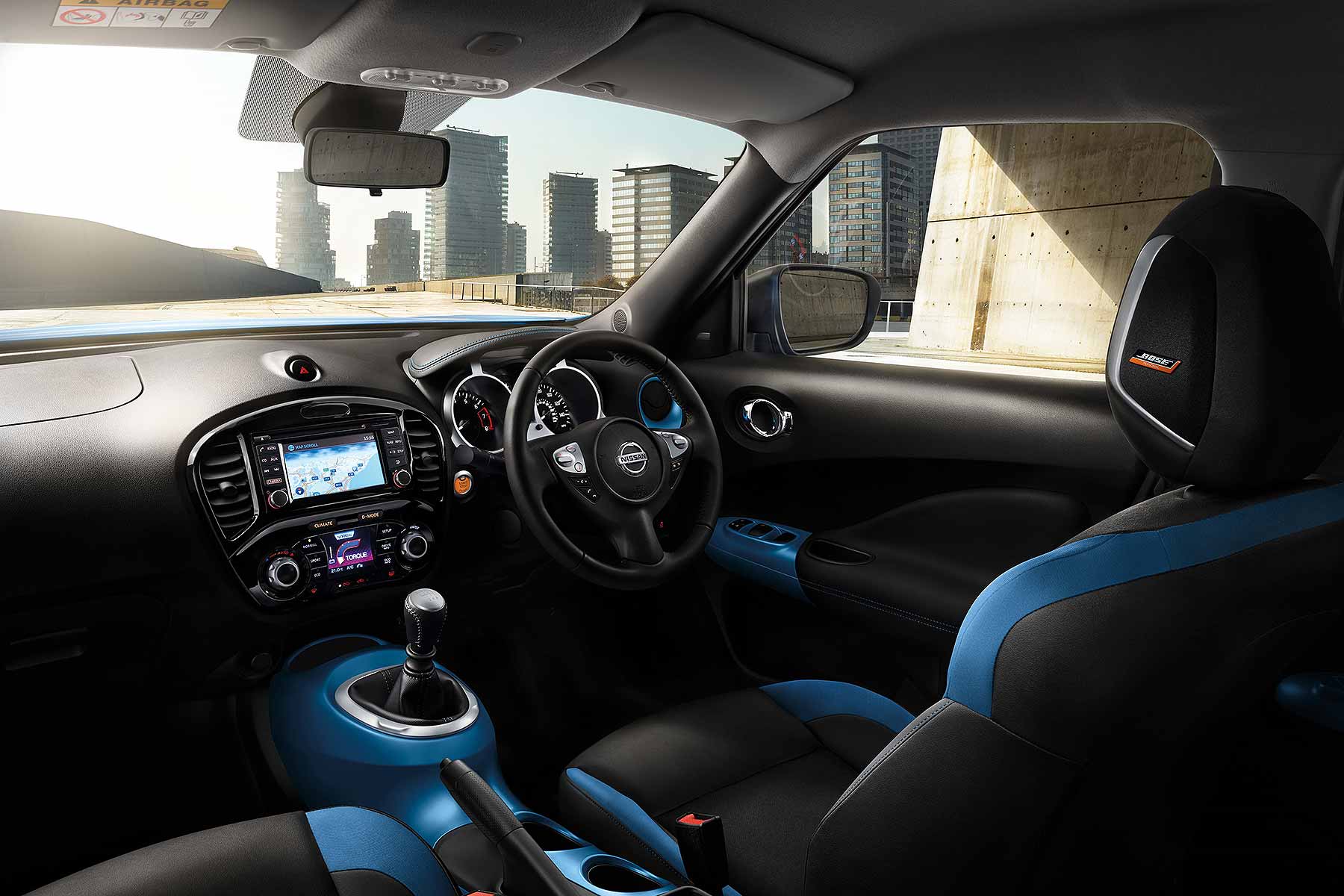
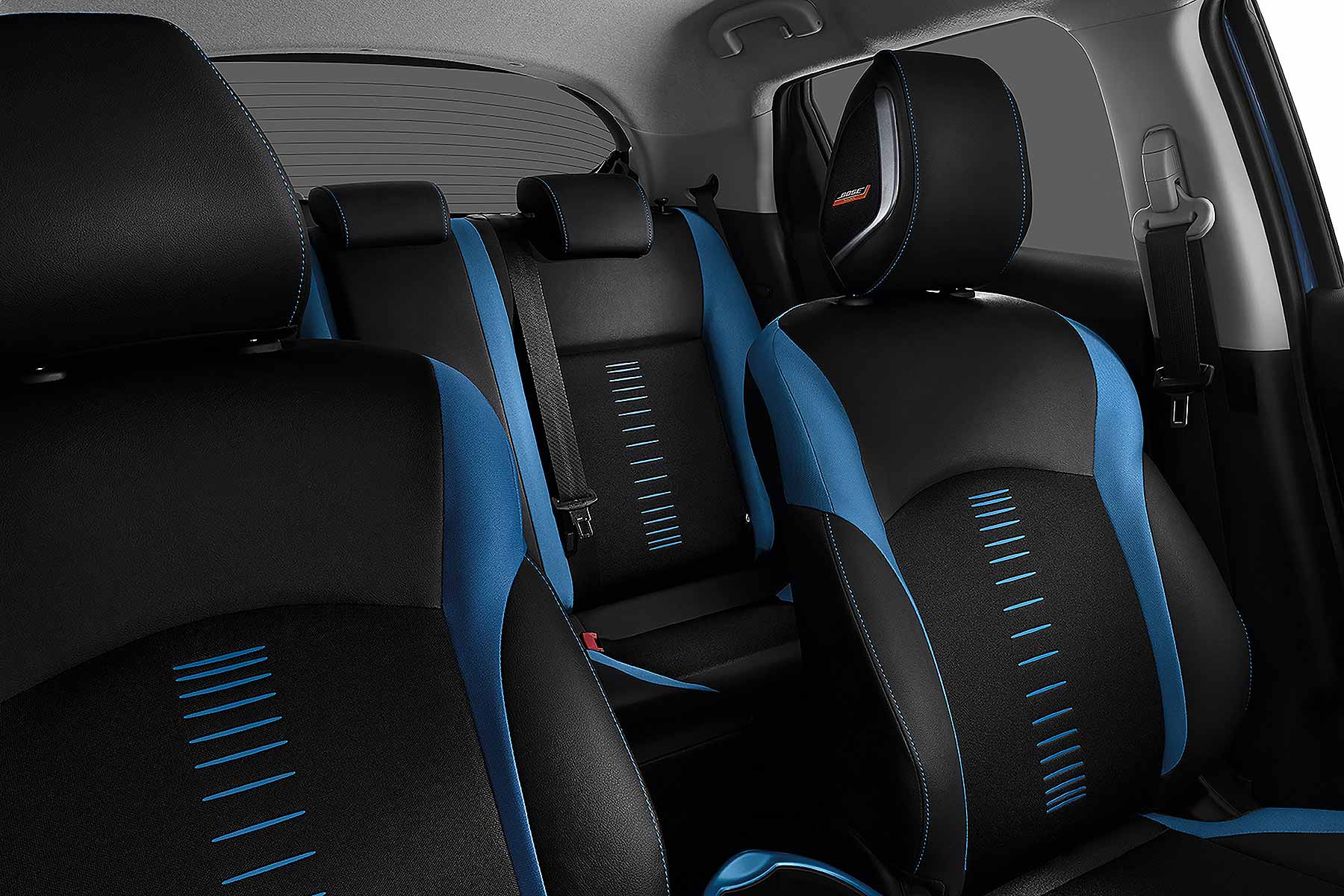
Nissan’s also offering a bit more personalisation inside. Buyers of top-spec Bose Personal Edition and Tekna models can choose to have the centre console, air vents, door inserts and seat upholstery accented in either Energy Orange or Powder Blue.
The details have been sweated as well: the grade of leather used on the steering wheel is richer, and the trip computer display within the instrument binnacle is clearer white-on-black, rather than orange.
But the biggest tech upgrade is fancy new audio tech for the aptly-named Bose Personal Edition variant. This sits just below top-spec Tekna, and comprises a pair of Bose UltraNearfield speakers built into the driver’s seat head rest.
Nissan says this provides “an immersive 360-degree listening experience through Bose digital sound processing”, ably backed up by six more high-end speakers for those not sitting in the driver’s surround sound seat. The tech is, currently, unique to Nissan.
There’s a price to pay, mind: from around £19,000, which is how much the cheapest 1.2 DiG-T 115 Bose Personal Edition costs.
If you’re on more of a budget, the cheapest Juke is the 1.6 94 Visia, priced from £15,505. Like all Juke, even this comes with air con, all-round electric windows and LED running lights.
Saying that, you’re better off spending around £2,000 more, if you can. This gets the 1.2 DiG-T 115 Acenta, which not only adds a turbocharger to the asthmatic base engine, but also includes climate control, USB port, Bluetooth connectivity, cruise control and the Nissan Dynamic Control System.
And if you’re spending that, we’re sure the dealer will suggest, why not go one further with the Bose Personal Edition, which includes NissanConnect infotainment, rear parking camera, keyless go, part-leather seats and folding door mirrors?
Naturally, Nissan has a complementary deal, too. The 1.2 DiG-T 115 Bose Personal Edition is currently on offer from £179 a month, on 0 percent finance, with Nissan chipping in £750 for those simply test-driving it. Rivals may be younger and fresher, but few have deals that sound as good as this…
London’s Concours of Elegance boasted a carefully picked selection of the finest road and racing cars – all tastefully scattered across the grounds of Hampton Court Palace. Here’s our round-up of the best cars at the event.
McLaren F1 LM
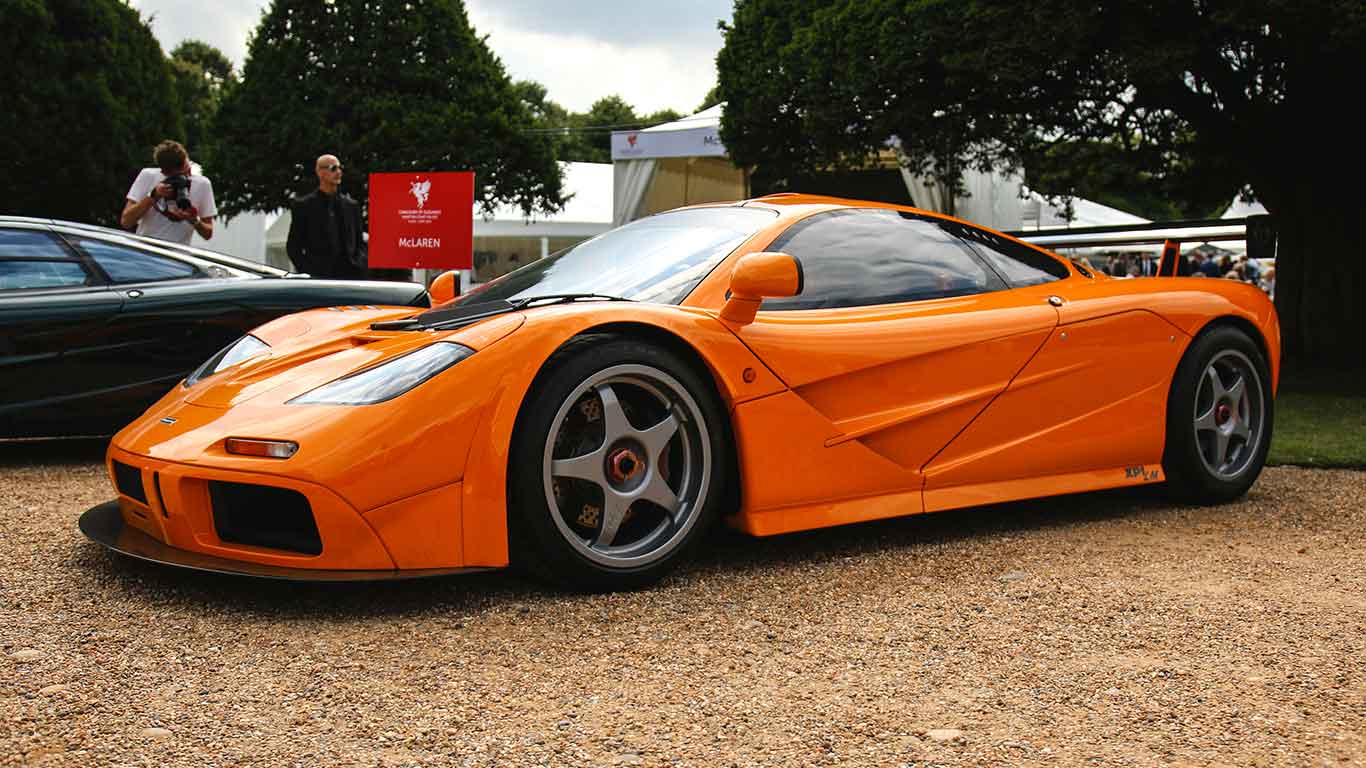
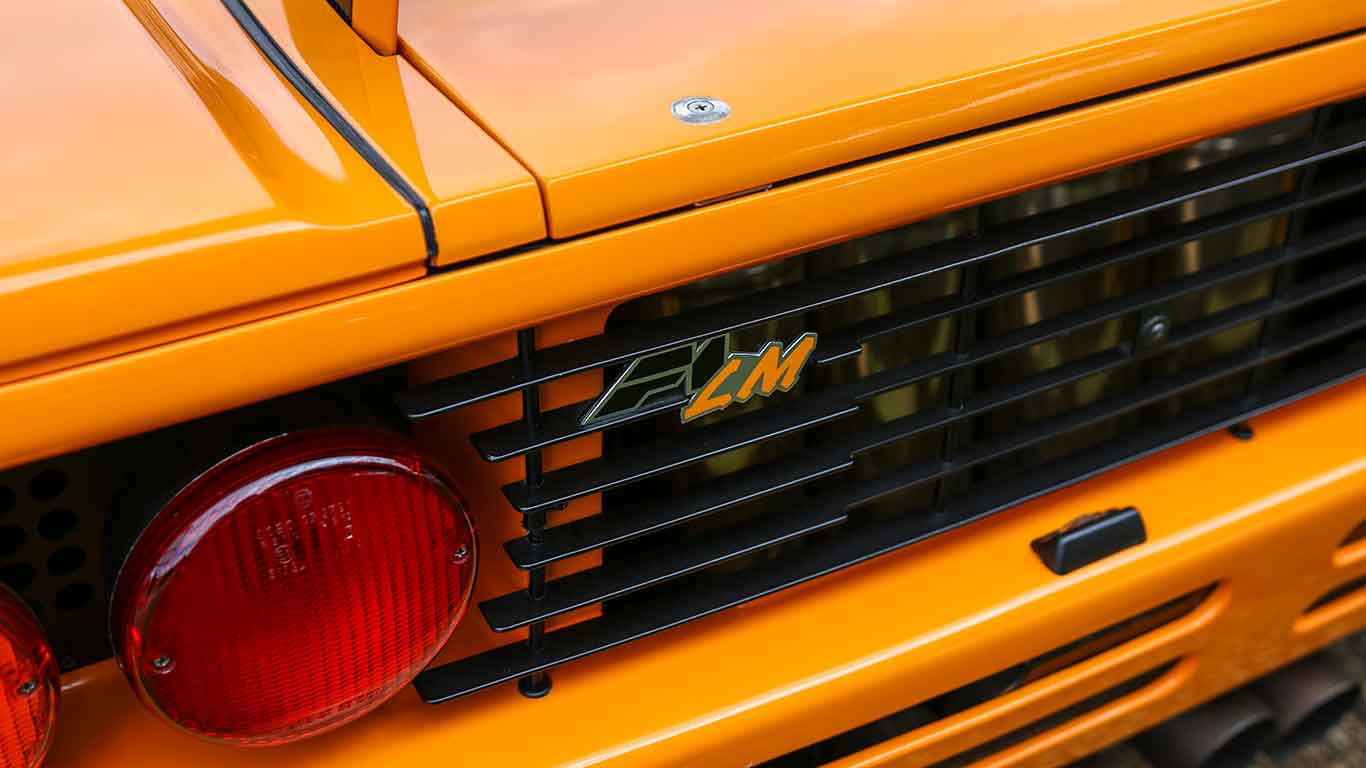
When is a McLaren F1 rendered semi-invisible? When the ultimate ‘LM’ variant of the F1 is parked next to it. Five LMs were made to commemorate the five F1 Le Mans 1995 finishers (including the overall winner). This is the prototype car once promised to Lewis Hamilton.
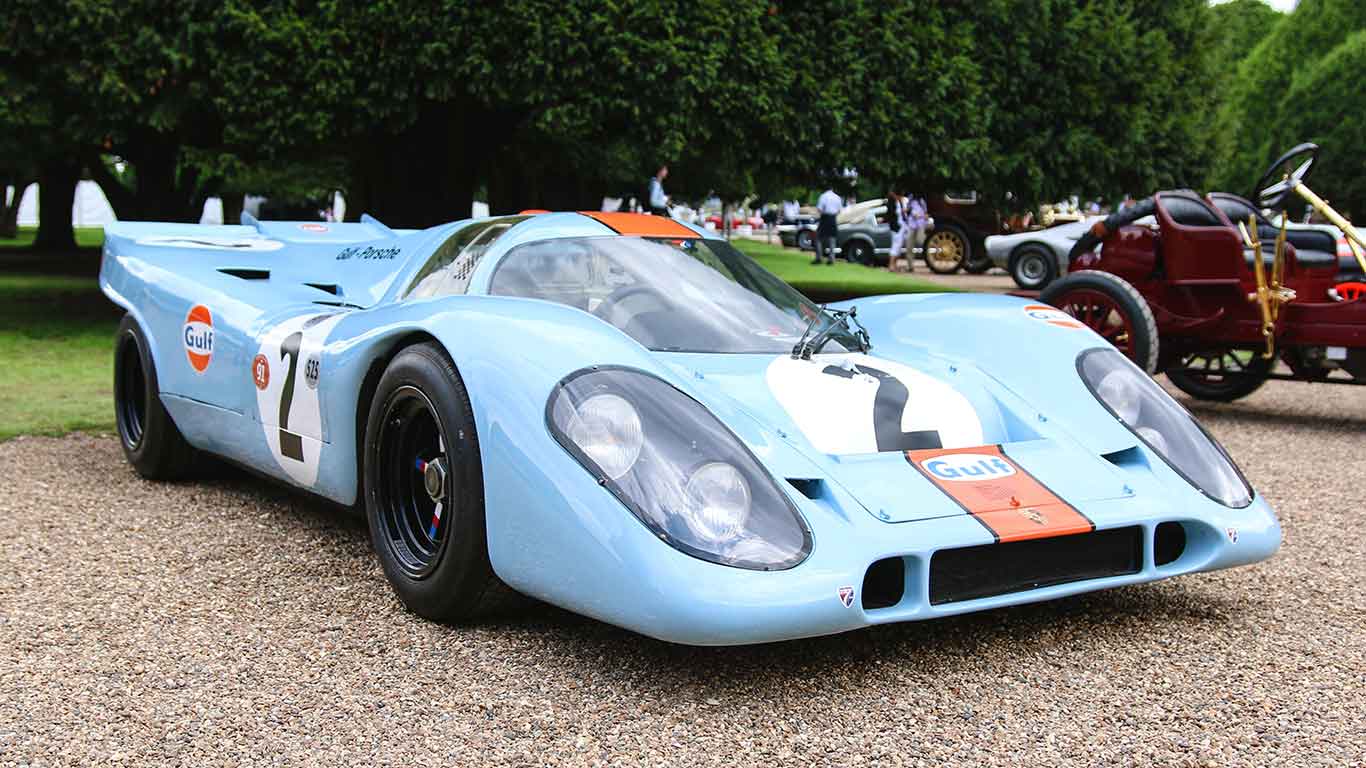
Porsche 917
Perhaps the greatest Porsche racing car of all time won the marque’s first Le Mans 24 Hours in 1970. The car at Concours, chassis no. 013/034, won the 1971 season-opener at Daytona. Since then it’s been a regular at Goodwood and other motoring events the world over.
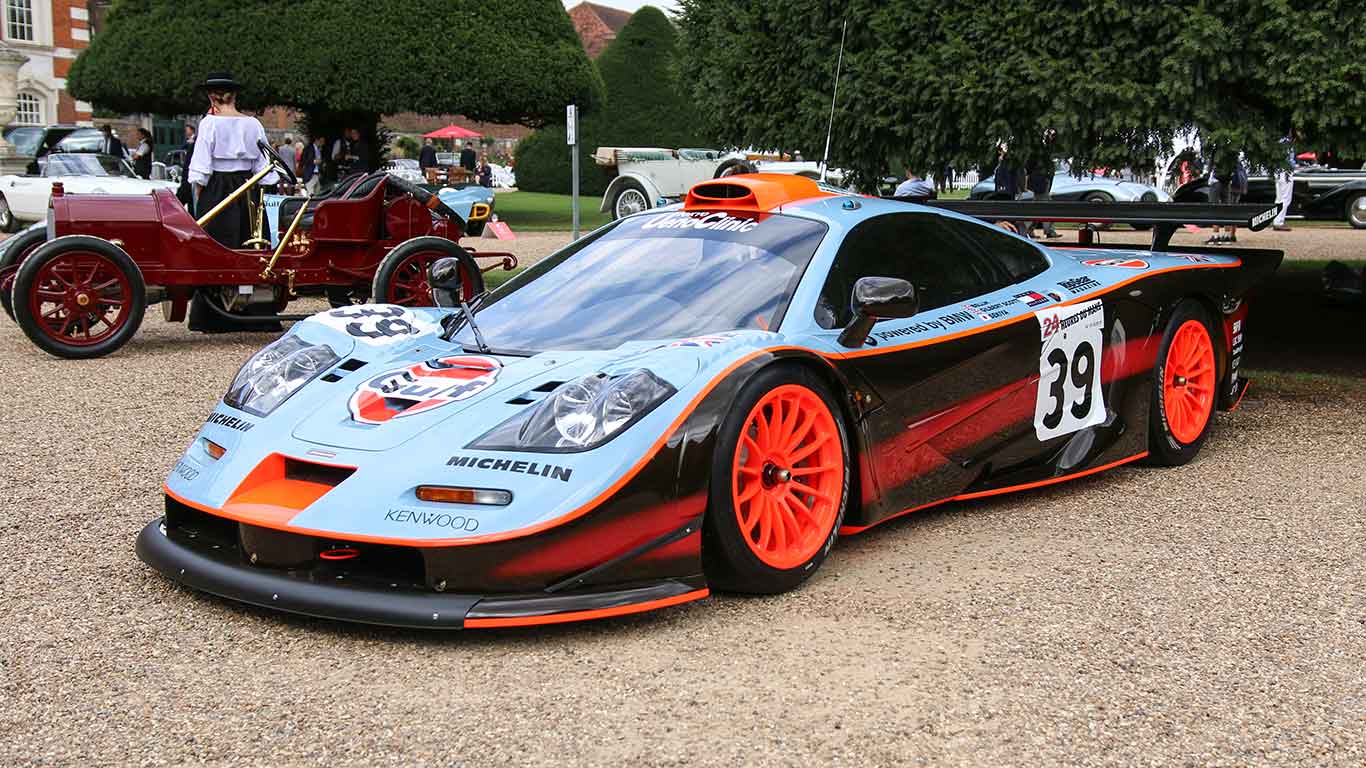
McLaren F1 GTR Longtail
The Longtail was McLaren’s fightback against the monstrous Porsche 911 GT1 and Mercedes-Benz CLK GTR GT1 heavyweights. This car, GTR 25R, has been the guinea pig for McLaren’s ‘F1 Certified’ program and the results are superb. The Le Mans racer was presented in ‘as new’ condition.
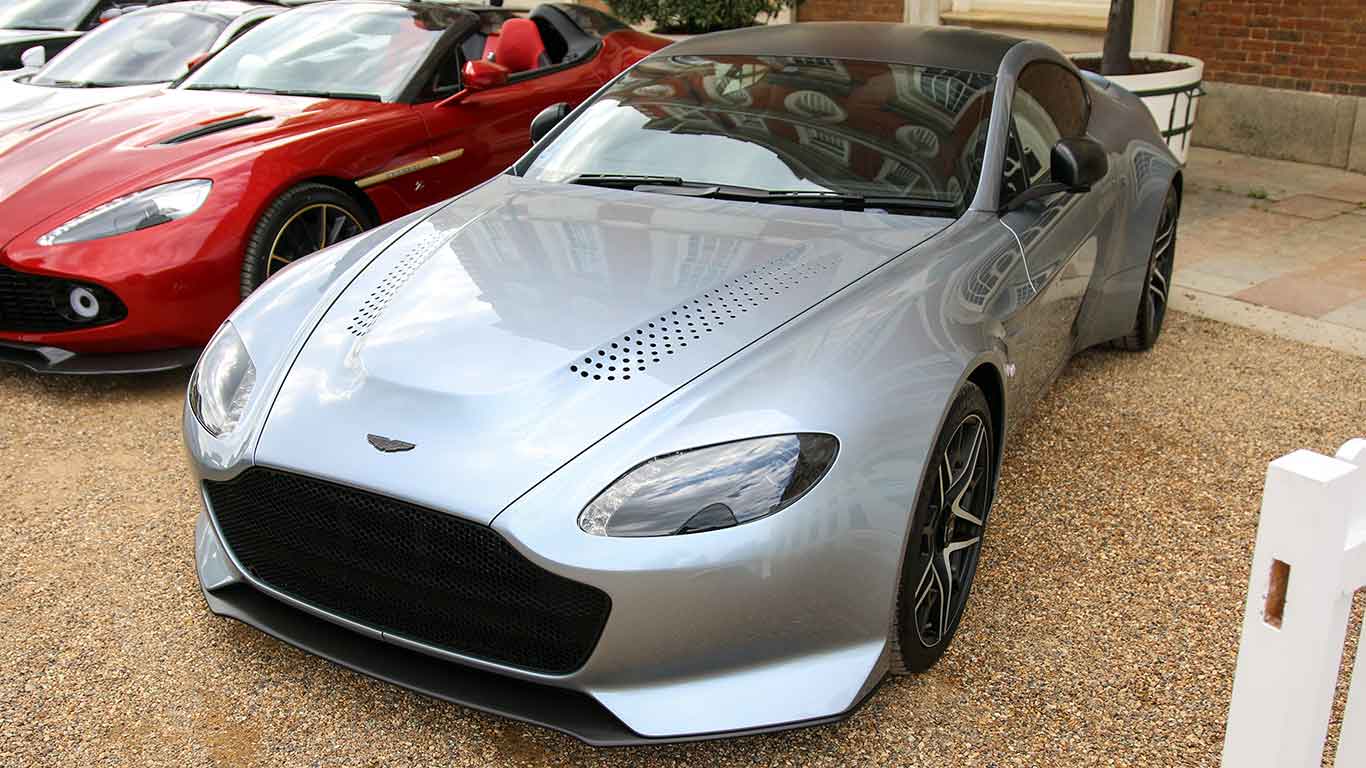
Aston Martin Vantage V600
The very last previous-generation Vantage exits with a bang. A 600hp V12 driving through a manual gearbox, plus a muscular yet tailored body, make this one-of-fourteen £1 million+ supercar a classic upon arrival. What we wouldn’t give for a go…
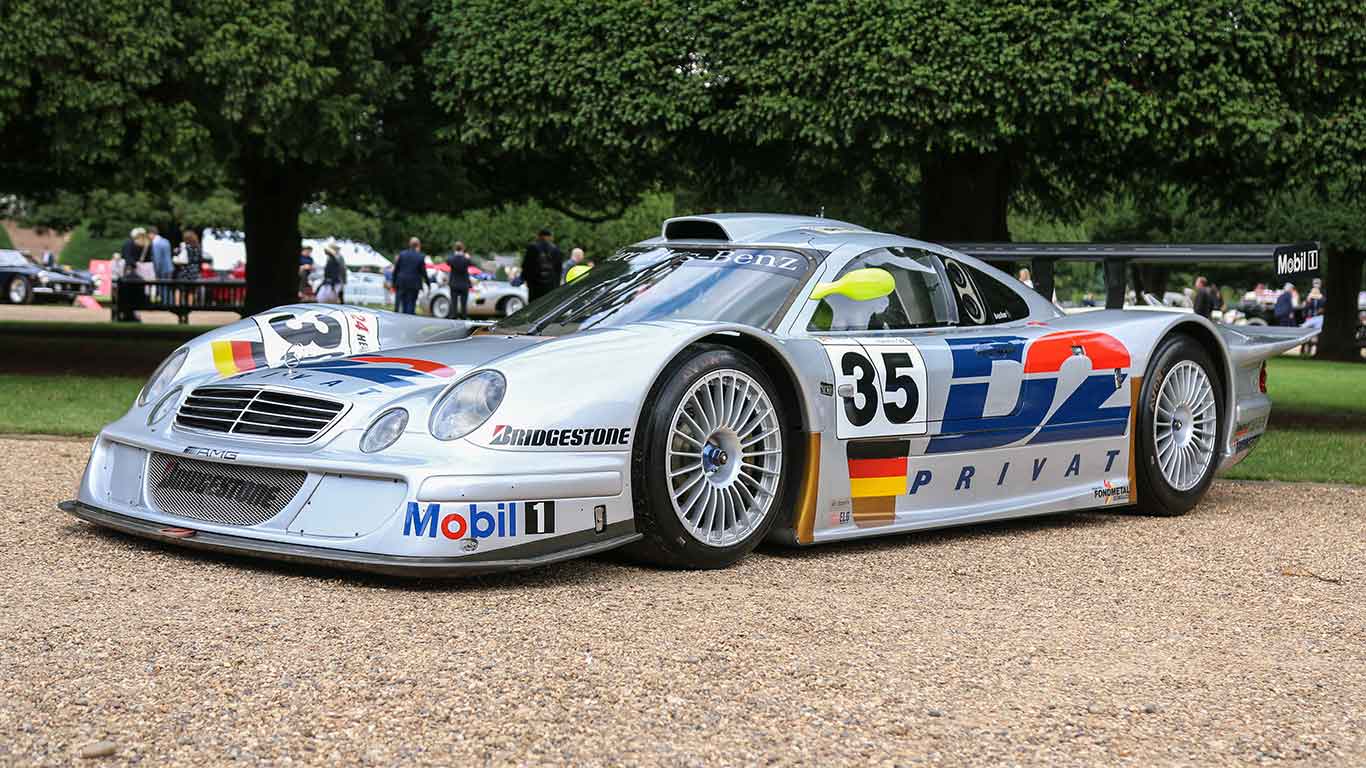
Mercedes CLK LM
The CLK GTR was Mercedes’ answer to the triumphant McLaren F1 in GT1 racing. The LM variant as displayed at Concours packed a Croup C V8 and was Mercedes’ crack at Le Mans following successful seasons in FIA GT. Engine failures plagued both cars come race day, though.
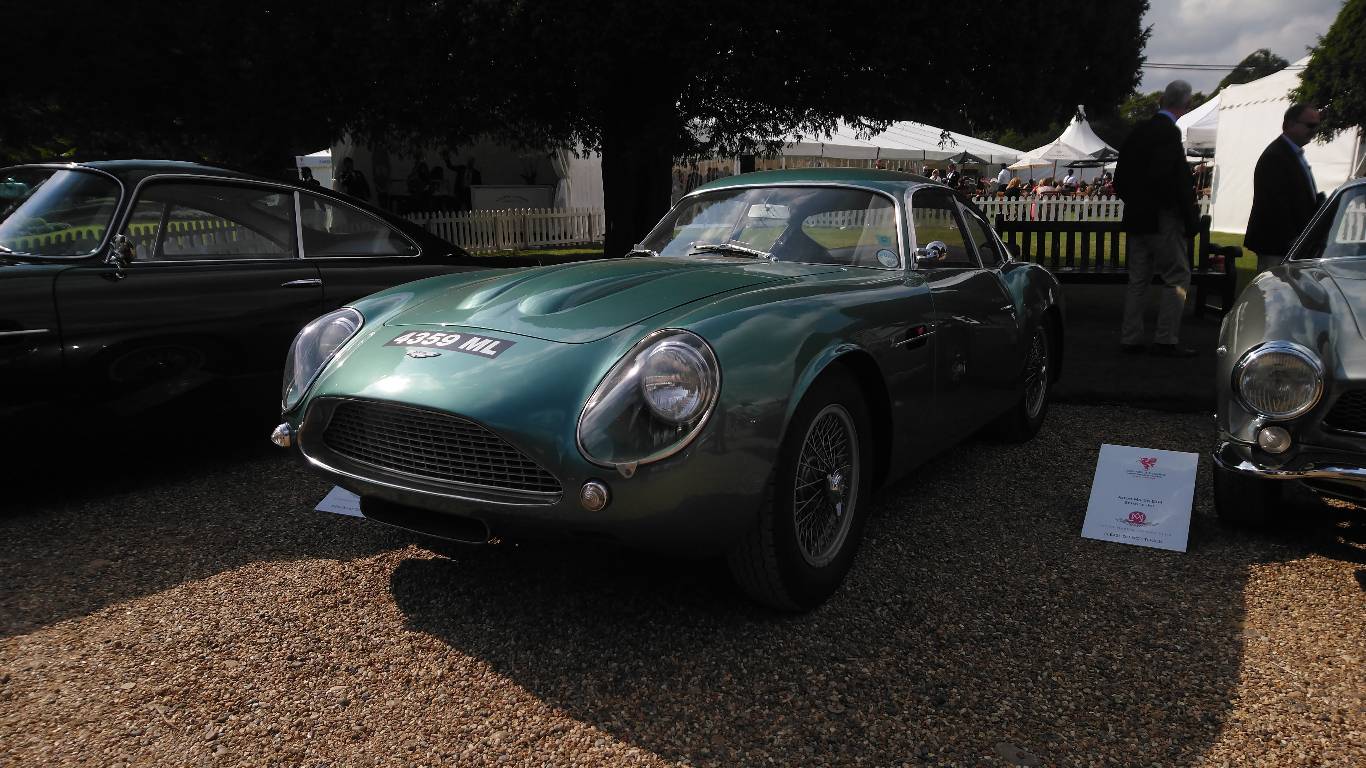
Aston Martin DB4 GT Zagato
If you’re looking at spending as much money as possible on a car, a Zagato-bodied Aston Martin DB4 is the next best thing to a Ferrari 250 GTO. It’s one of the most revered classics on the planet and an absolute catch if you can find one of the 25 built. This one was road-tested by Autocar in 1962.
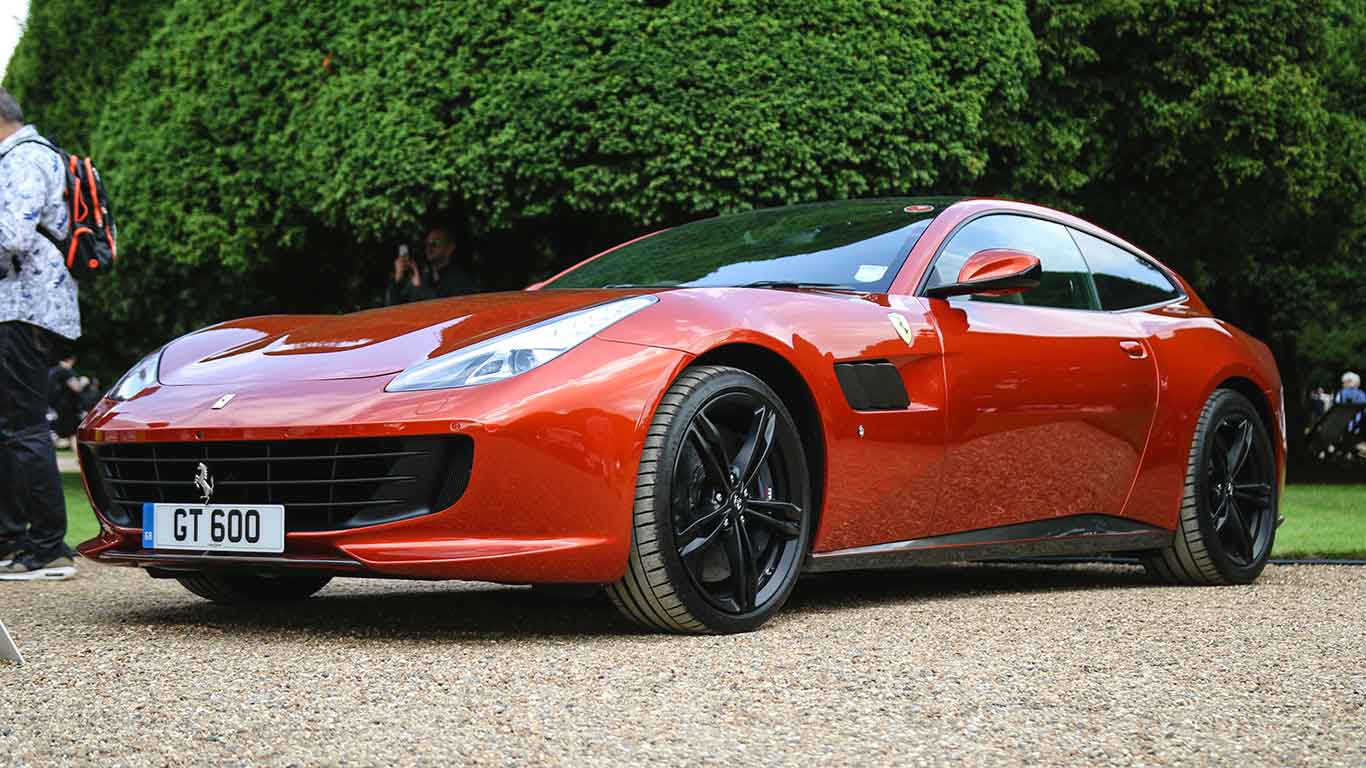
Ferrari GTC4Lusso
In this company, even a Ferrari GTC4Lusso is something of a shrinking violet – but bear with us. This particular Lusso is special for all its own reasons. The colour, named Aranci Rik, is a result of the ‘Tailor Made’ program. Why not make your already stunning V12 GT even more exclusive?
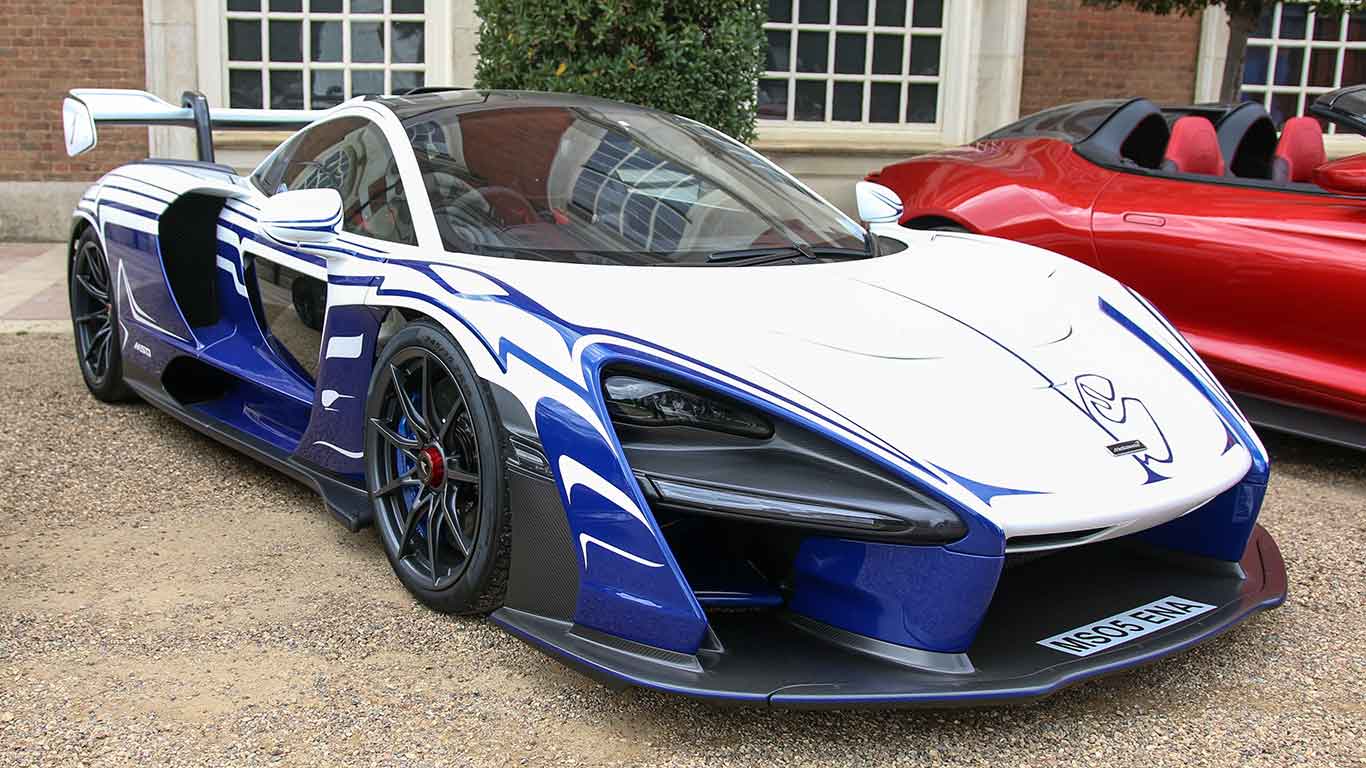
McLaren Senna
Highlights from McLaren included the aforementioned F1 ‘25R’ and ‘XP1’ F1 LM, along with the new Senna. This is the ultimate track toy, named after one of the greatest F1 drivers of all time. A big name to live up to…
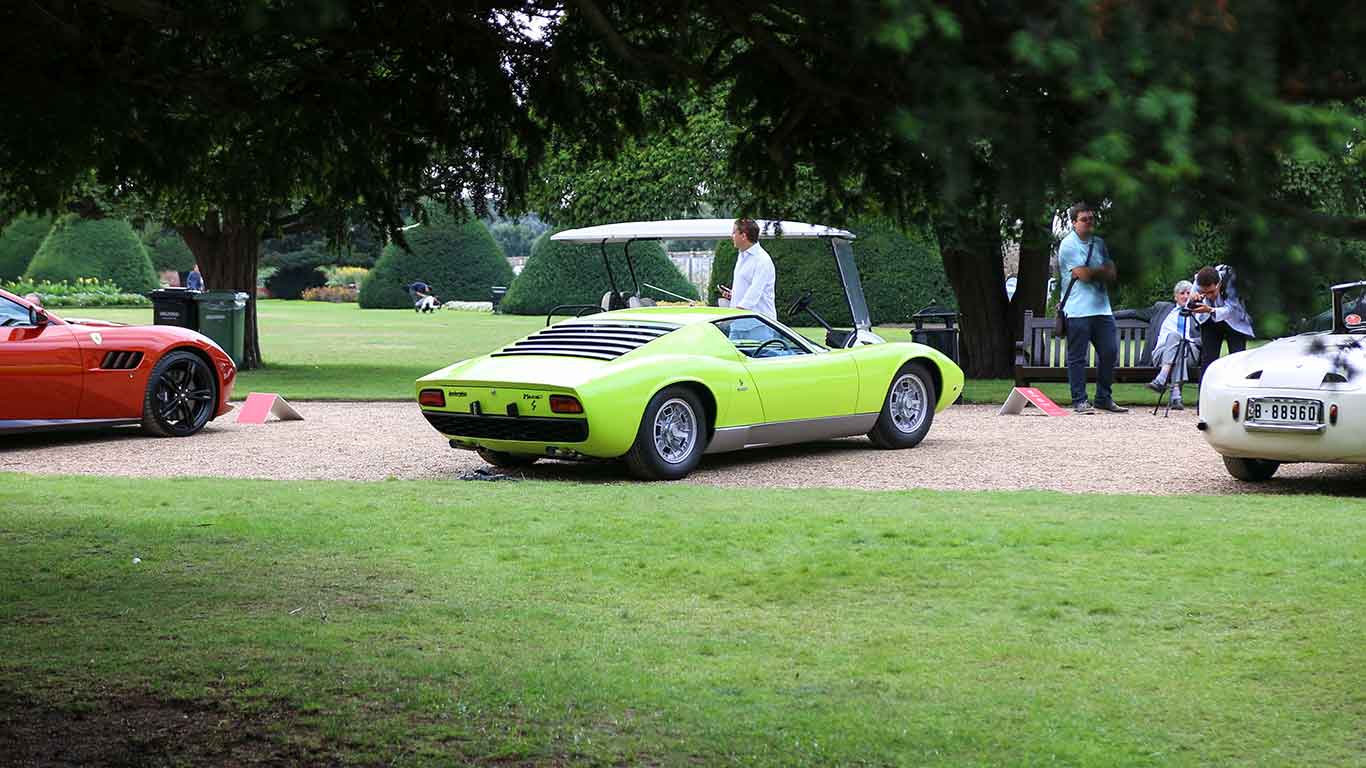
Lamborghini Miura
The original supercar has to be a staple for any concours worth its salt, so of course a stunning P400 was on show at Concours of Elegance. In the imperious setting of Hampton Court Palace, the lurid green Miura contrasts beautifully with the luscious lawns.
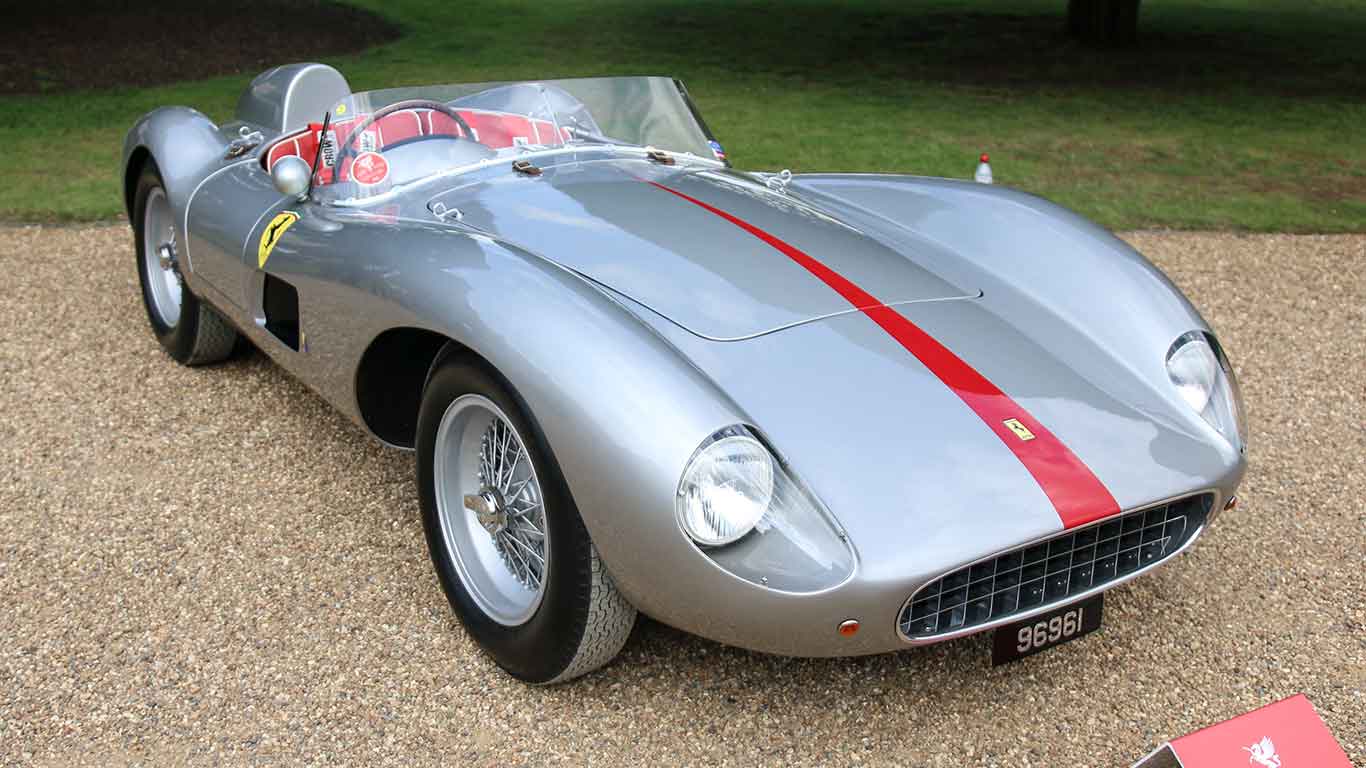
Ferrari 500 TRC
The 500 TRC is a significant car for Ferrari, being one of very few prancing horses to utilise a four-cylinder engine. Still, that doesn’t stop it from being a real Testa Rossa (‘Red Head’). You can thank the red valve covers for that.
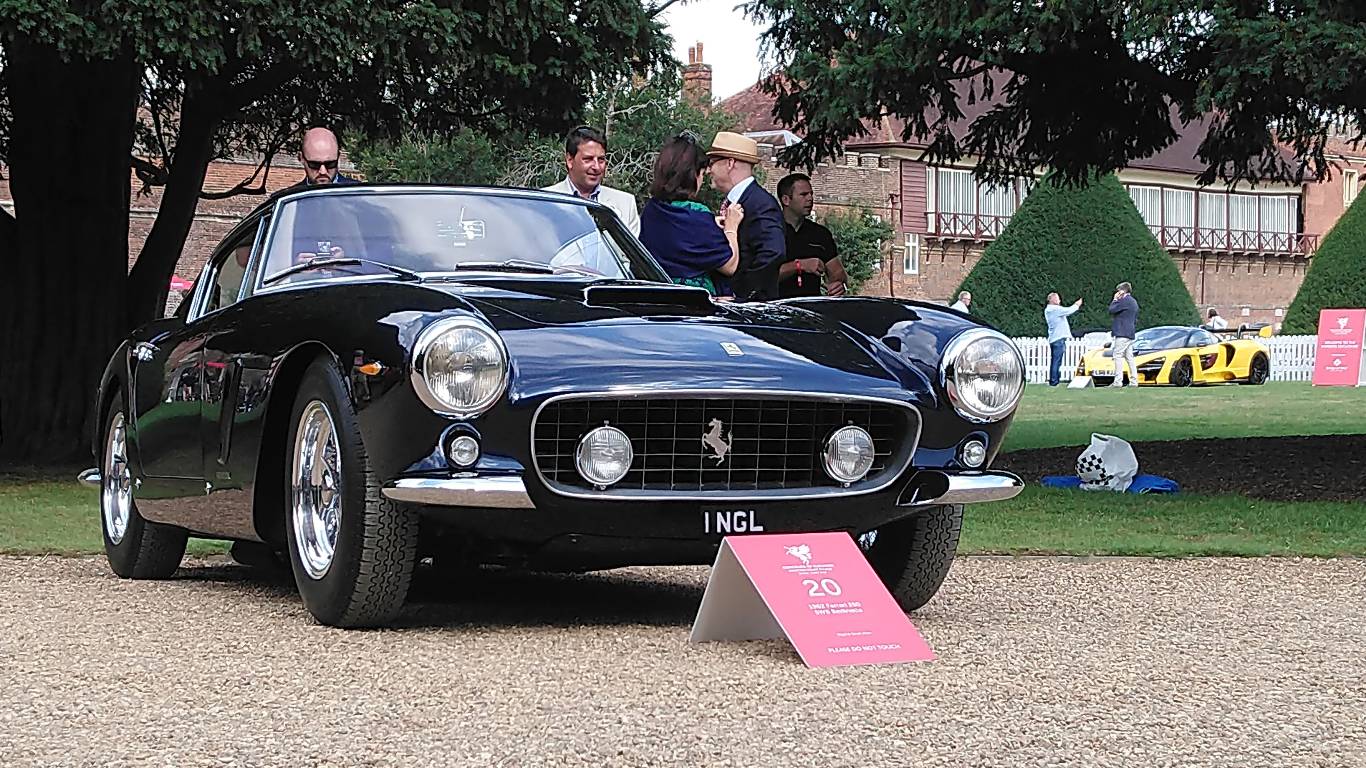
Low-key, and one of the prettiest Ferraris ever made, we reckon this tops the 250 GTO in the looks department. The ‘SWB’ was also a breakout success as a GT racer, winning the 1961 Constructors’ Championship for GTs.
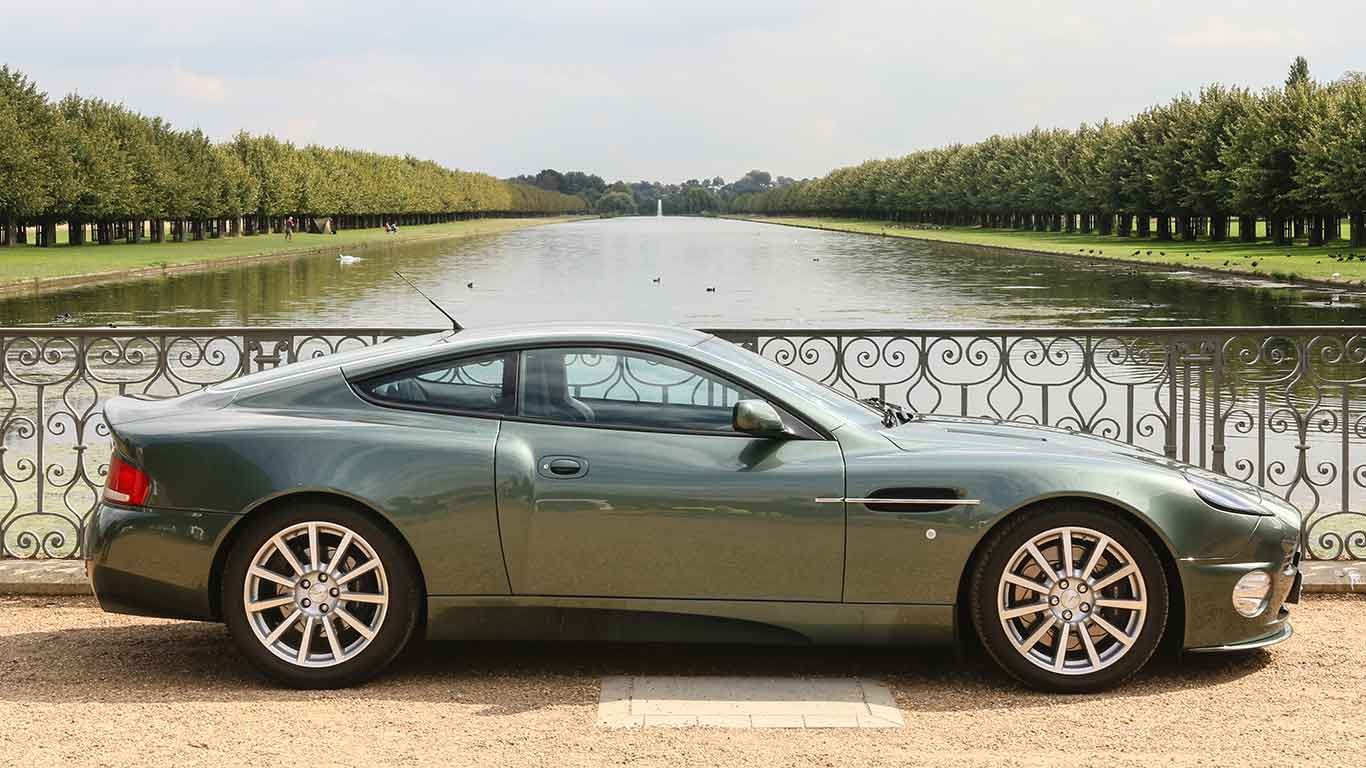
Aston Martin Vanquish S
Aston’s early-2000s gentleman’s express is a significant car in the marque’s history, if perhaps not a must-see exhibit at Concours of Elegance. Nevertheless, it’s drop-dead gorgeous – and we couldn’t miss the lake-side photo opportunity.
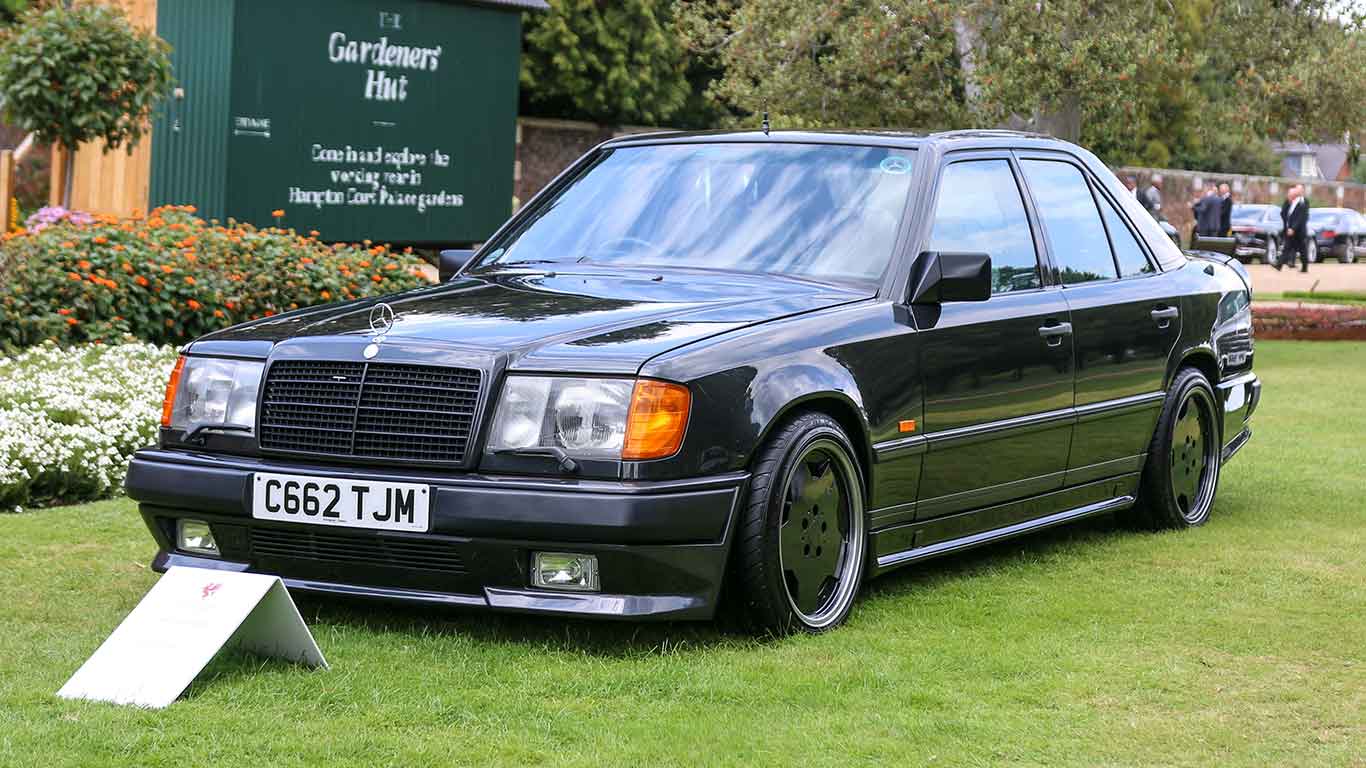
Mercedes-Benz 300E AMG ‘Hammer’
Among the glitterati and race veterans at Concours of Elegance, the big brutish ‘80s Merc would ordinarily seem out of place. In the Harry’s Garage ‘Four-Door Supercar’ display, however, the original AMG super saloon was royalty.
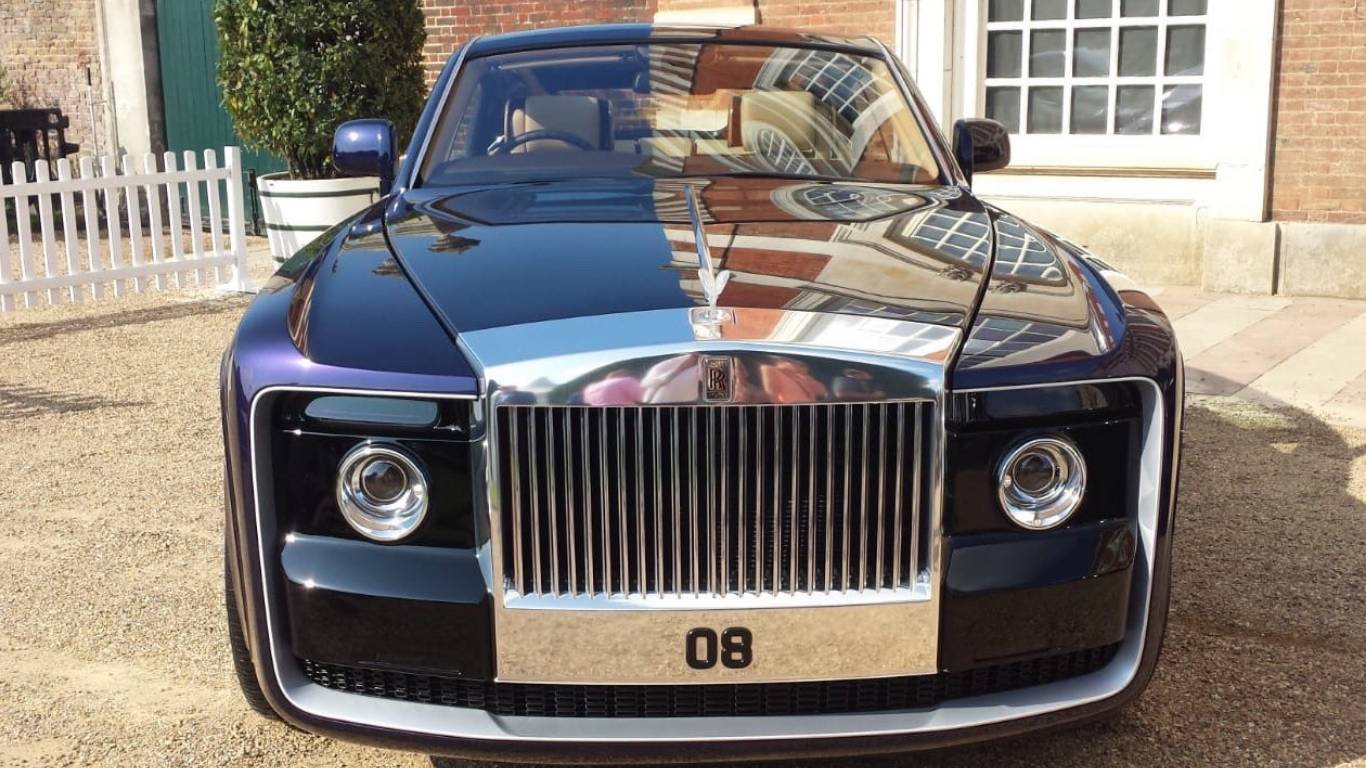
Rolls-Royce Sweptail
This one-off Rolls-Royce commission is a £10 million+ tribute to coachbuilders of the 1920s and 30s. As of its debut just over a year ago, it was the most expensive new car ever sold.
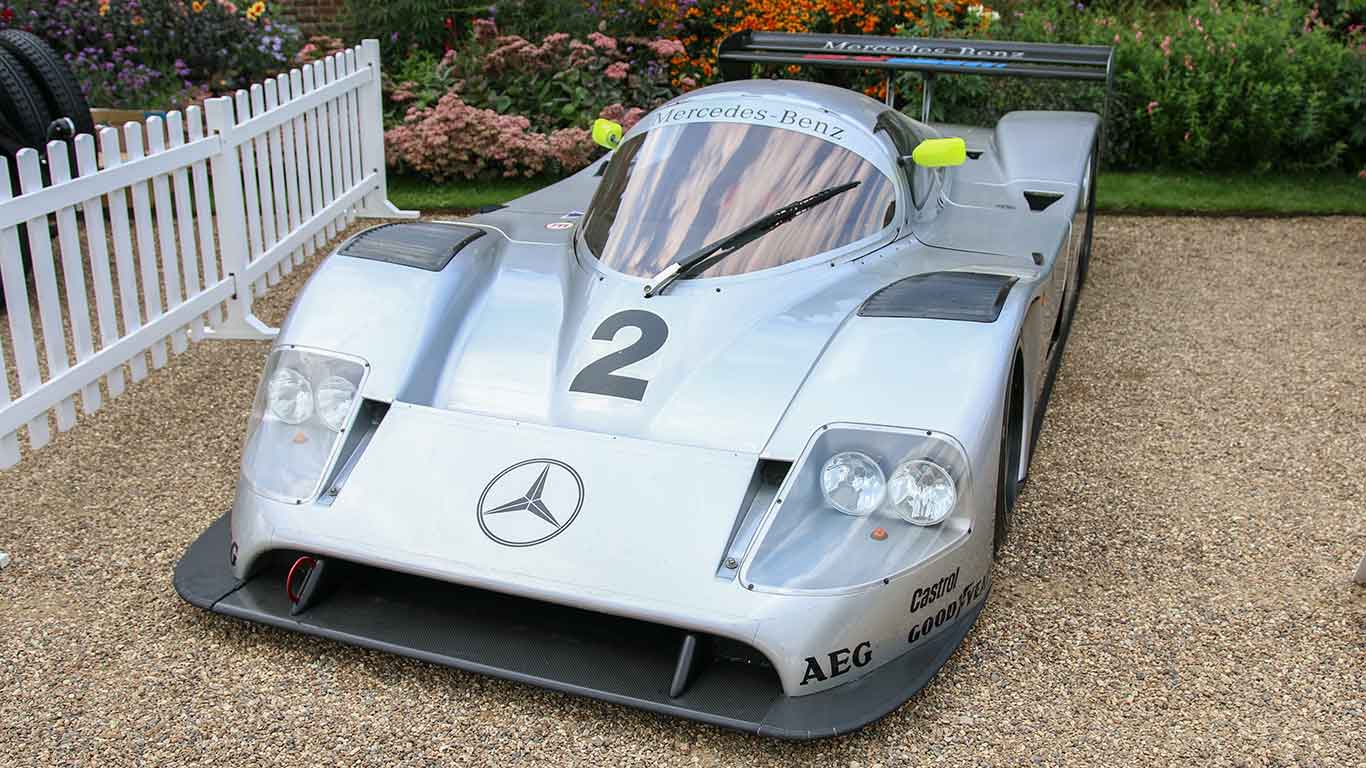
Sauber-Mercedes C11
The Sauber-Mercedes C11 is one of many dominant Silver Arrow racing cars spanning the entirety of the marque’s motorsport history. It dominated the 1990 World Sports Prototype Championship in 1990. The Schumacher/Mass car is seen here at Concours of Elegance.
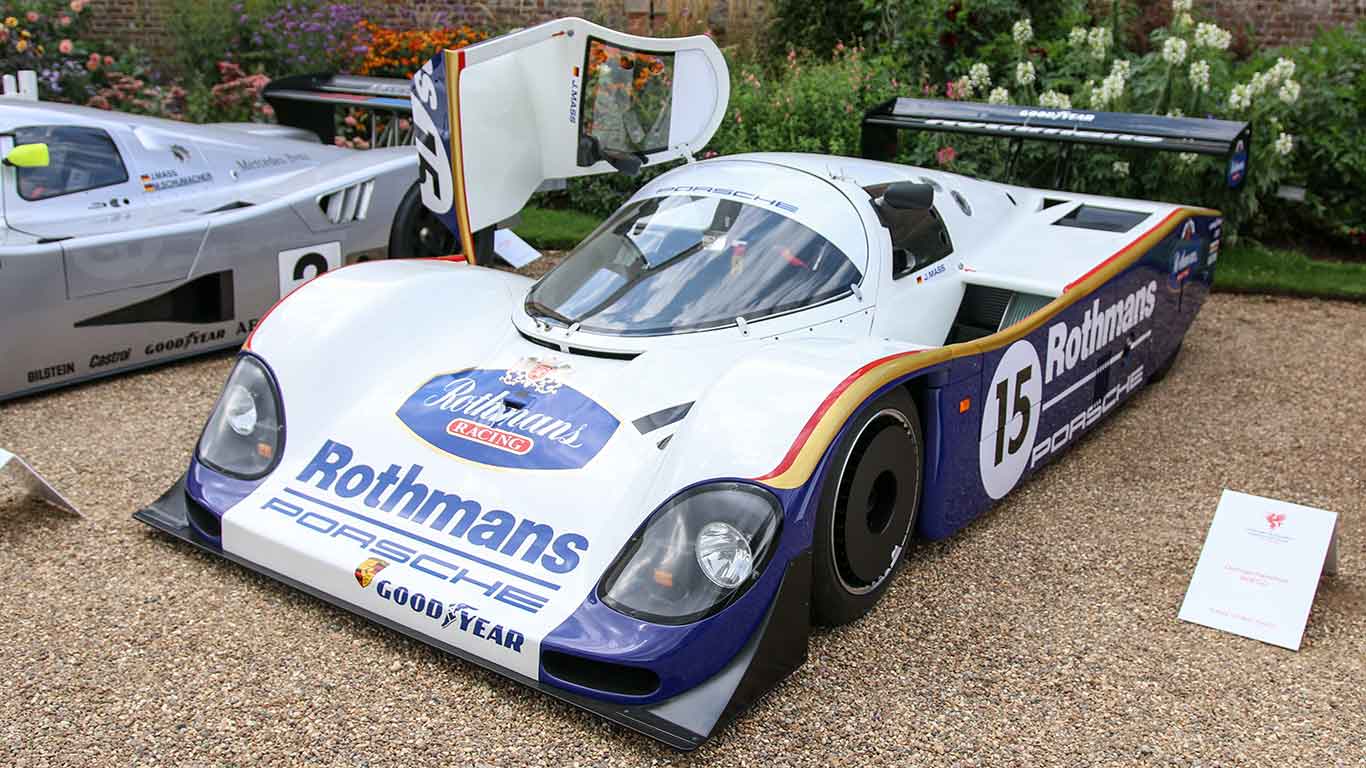
Porsche 962/C
Another ex-Jochen Mass monster comes in the form of this Kyalami-winning 1987 Porsche 962, seen here perfectly restored to the exact spec Mass drove – and won – in at the South African round. The Rothmans livery has to be one of the all-time greats, looking extra special on this svelte 962.
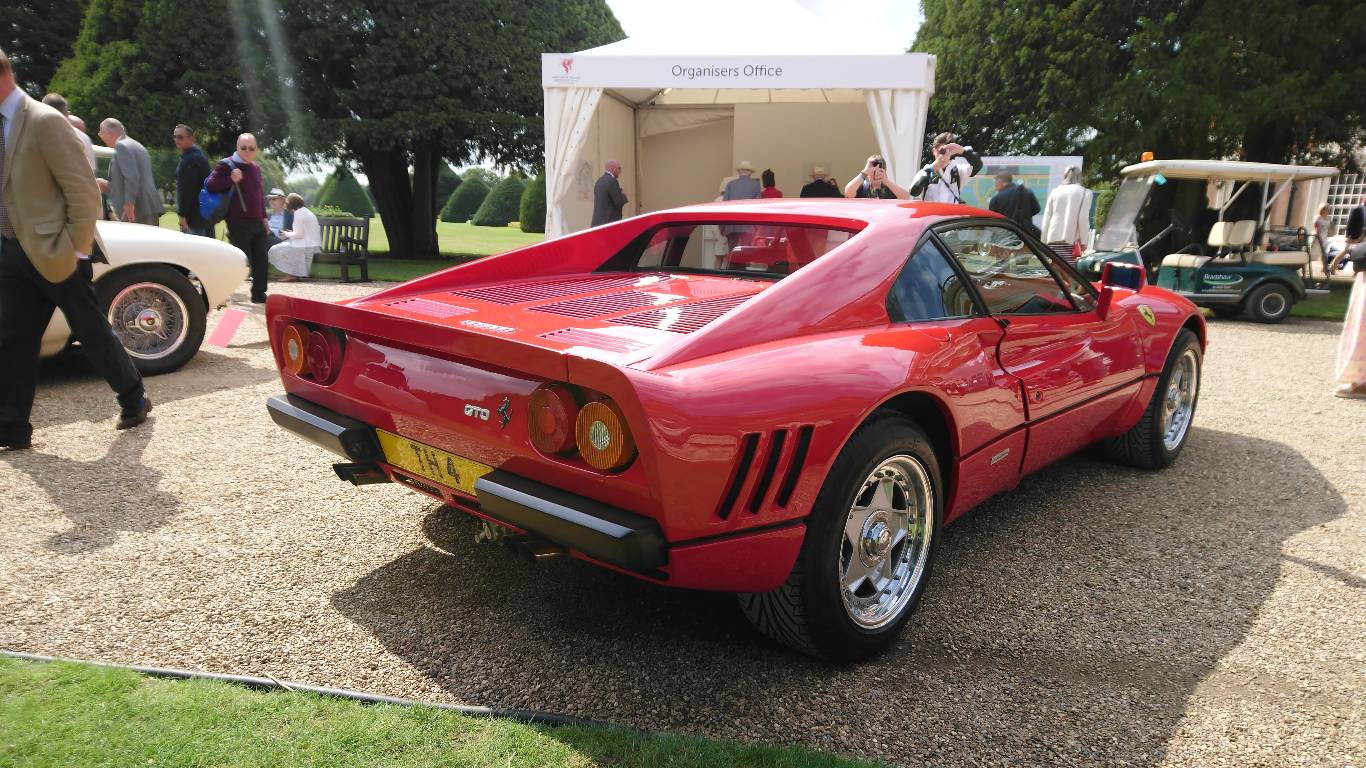
Ferrari 288 GTO
Never mind the F40, the original Ferrari supercar was the 288 GTO. Using a version of the 2.9-litre twin-turbo V8 that found its way into the F40, the GTO was, as its Omologato name suggests, originally a homologation car for a racer. Although it never competed, it remains an all-time Ferrari great.
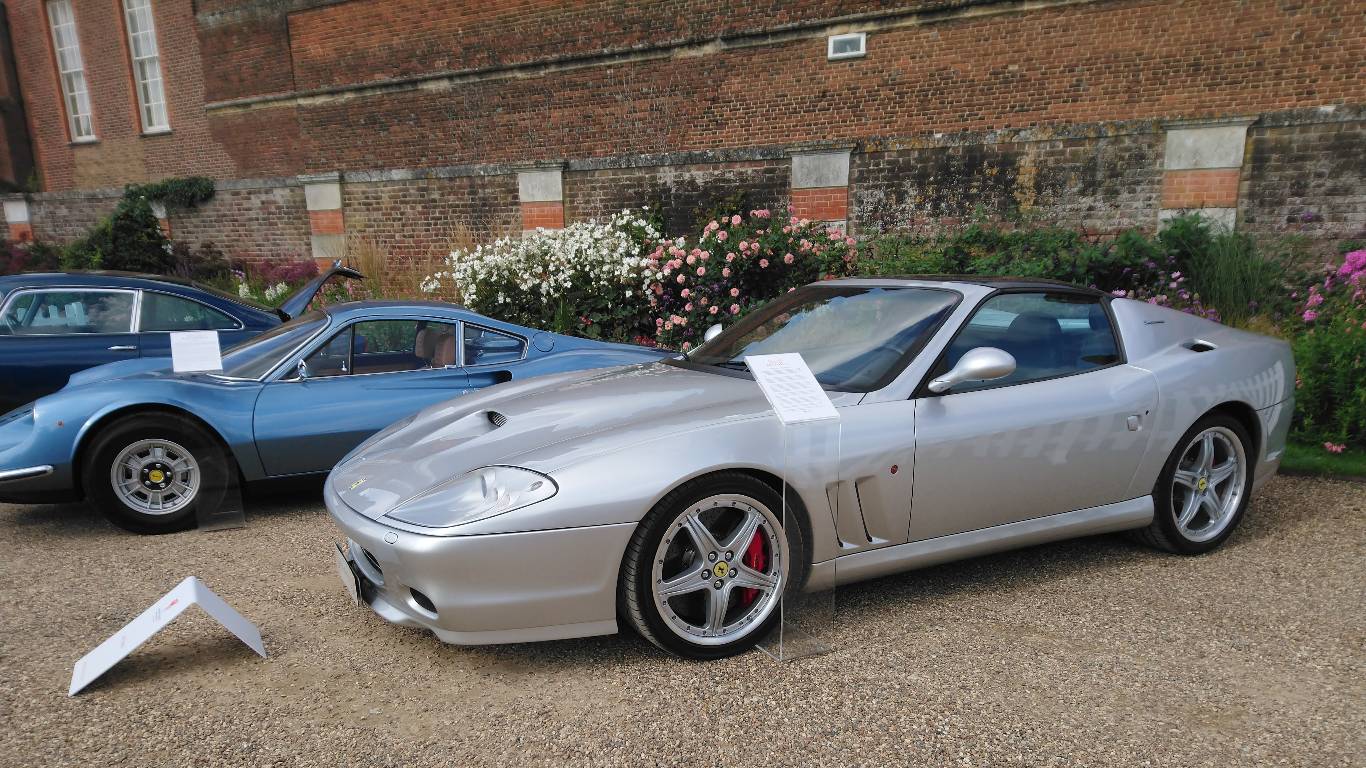
Ferrari 575 Superamerica
The Superamerica was perhaps the ultimate iteration of the long-serving 550/575 breed. Packing a whopping 540hp from its V12 engine, Ferrari claimed it was the fastest convertible in the world at the time. It can’t have been far off, with a top speed of 199mph – a rare beauty at Concours of Elegance.
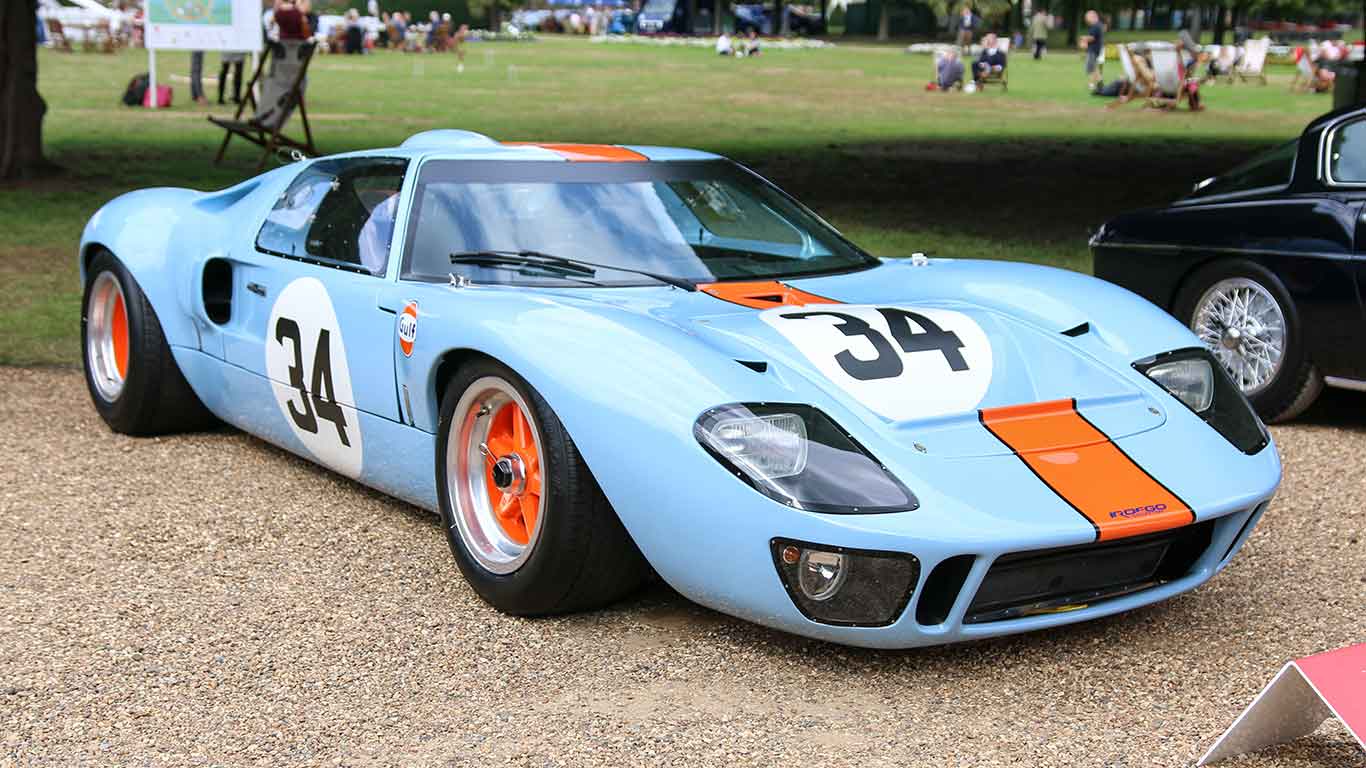
Ford GT40
The Rofgo collection was out in force at Concours of Elegance, with the resplendent Gulf-liveried Ford GT40 being perhaps the most spectacular of the lot. One of the greatest liveries of all time meets one of the most legendary sports racers to have turned a wheel in anger.
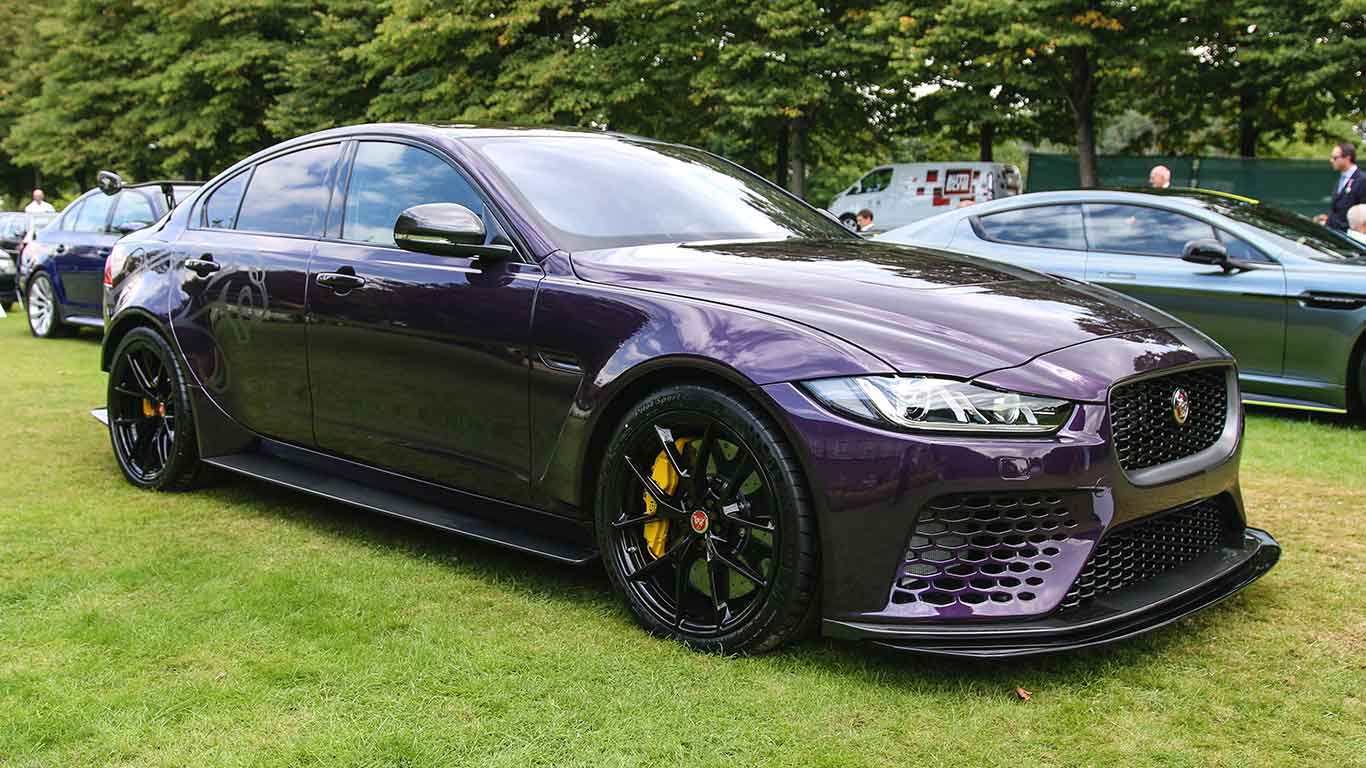
Jaguar XE SV Project 8
Another family hack in amongst the priceless gems? Well, yes – if your idea of a saloon comes with a 600hp supercharged V8, blistered bodywork, Cup 2 tyres and aero addenda worthy of the BTCC. This is the very definition of a four-door supercar.
 A specialist British sports car company is to turn the Jaguar F-Pace into a 670 horsepower, 200 mph 4×4 that it says will be the fastest SUV in the world.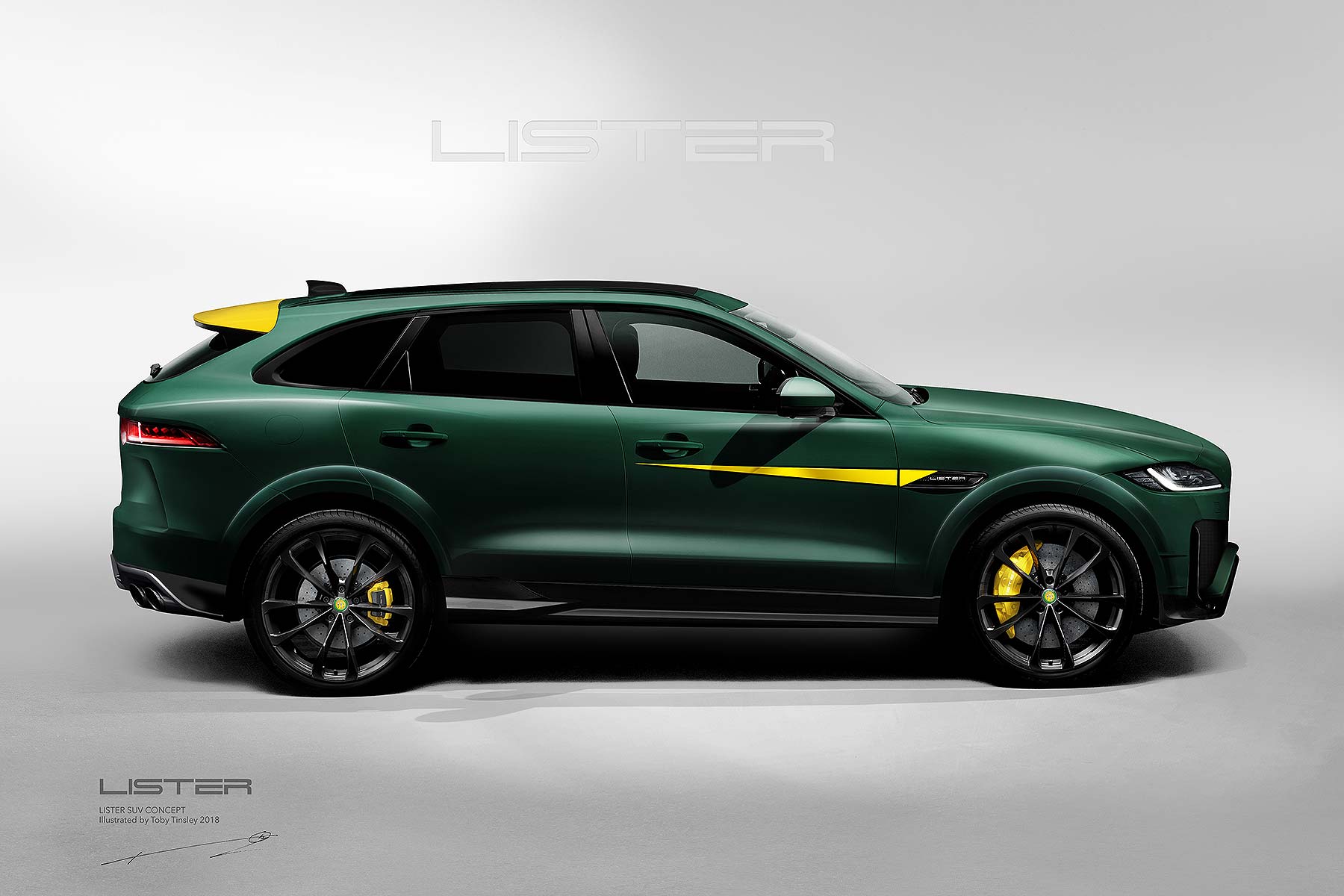
 The Suzuki SX-4 S-Cross and Toyota Yaris have both achieved remarkable 100 percent reliability scores in the latest What Car? reader survey – in stark contrast to the Tesla Model S, which barely scored a 50 percent reliability ranking.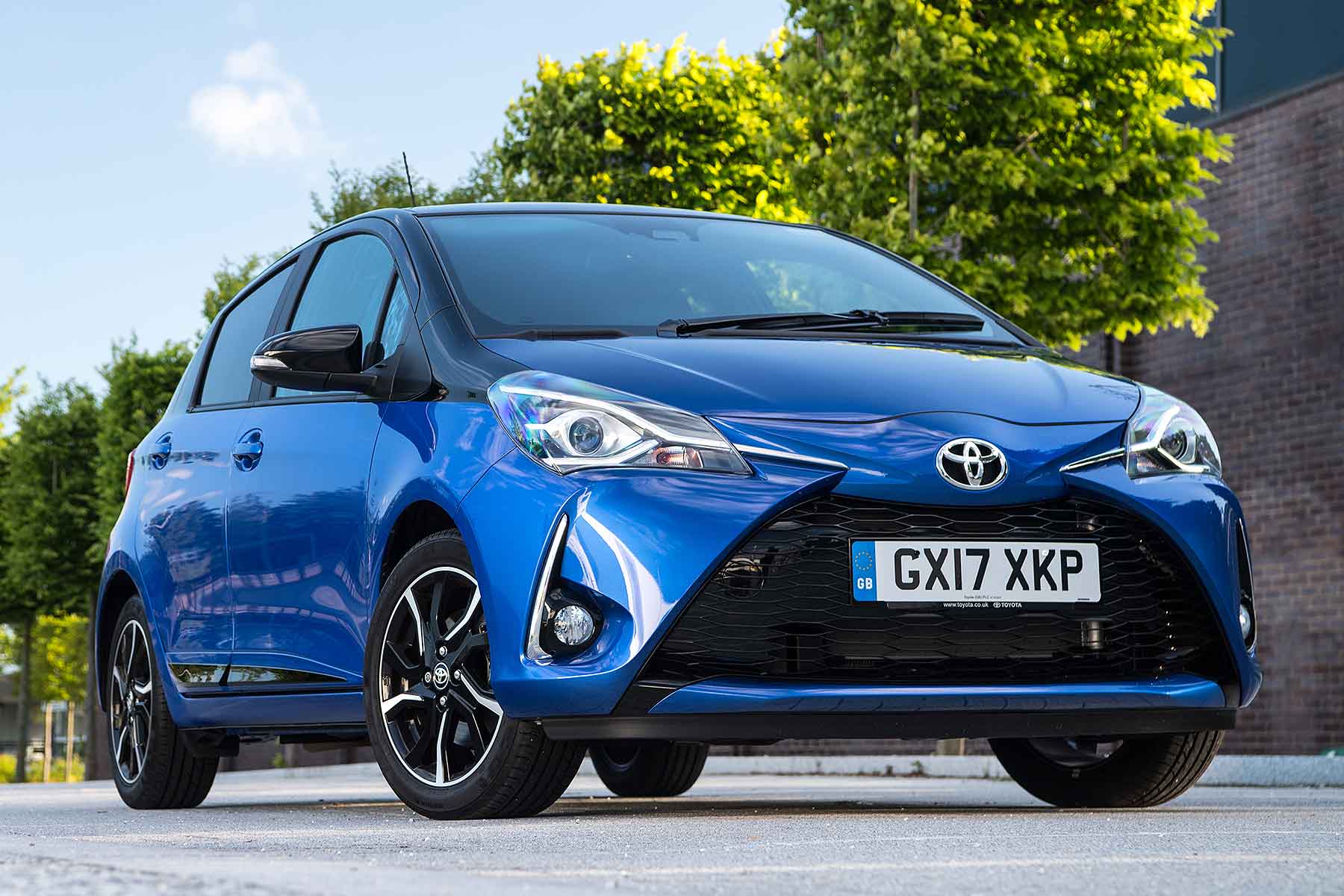


 Another week, another recall. This time, it is Toyota, with a fault rising on its famous hybrid-powered models. The issue? A very low risk of fire – but over a million Toyotas in Japan, North America, Europe and more are affected.
 The Mercedes-Benz EQC is an all-electric SUV rival to the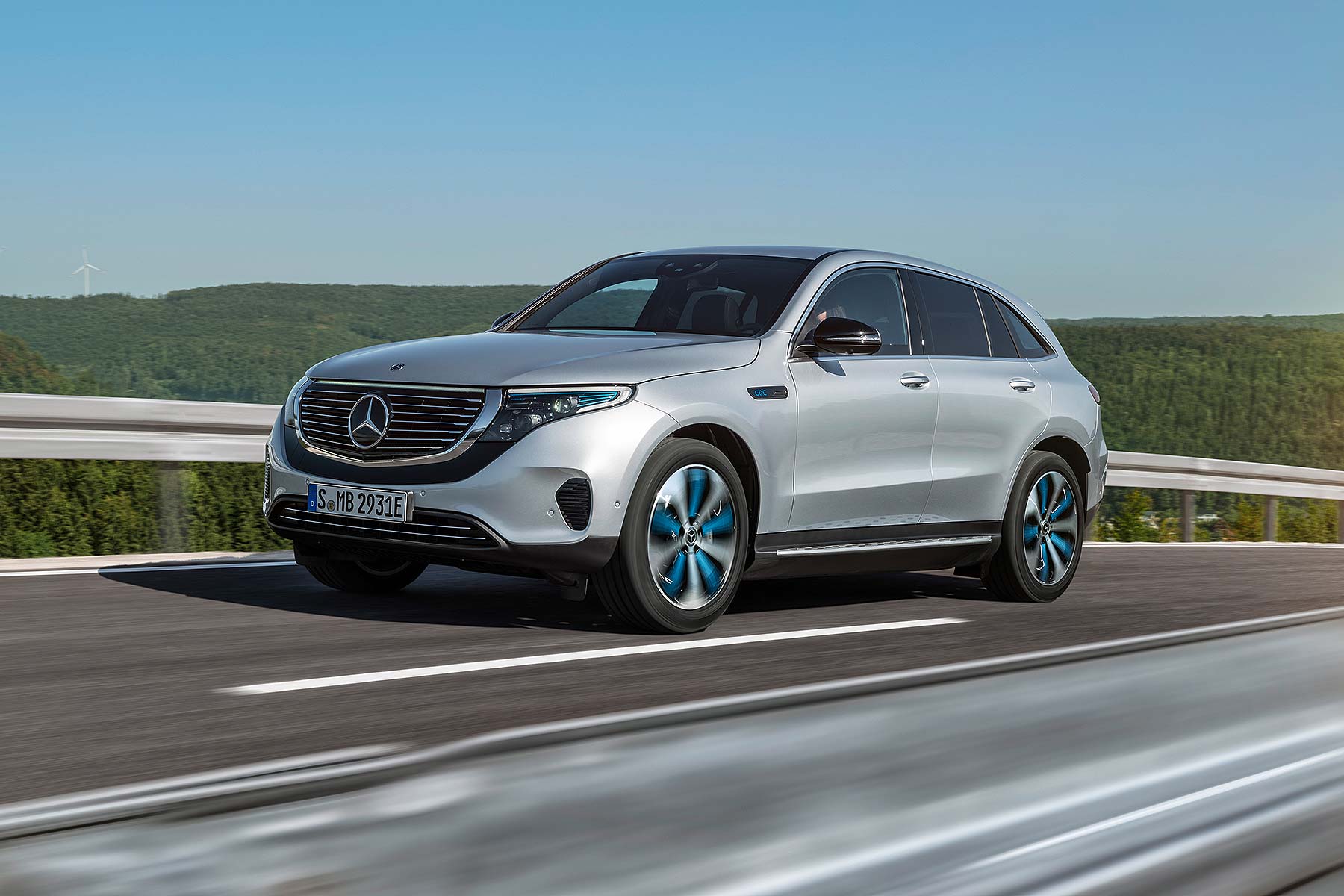


 Grand Basel is billed as “the ultimate show for automotive masterpieces that showcases top-of-the-range automobiles from the past, present and future.” A total of 100 cars will be spread over a space of 32,000 sqm, in a show that celebrates the automobile, along with art that is inspired by cars, music that is inspired by cars, and even buildings that are inspired by cars. It’s also the venue for the launch of a ‘reimagined’ Lancia Delta.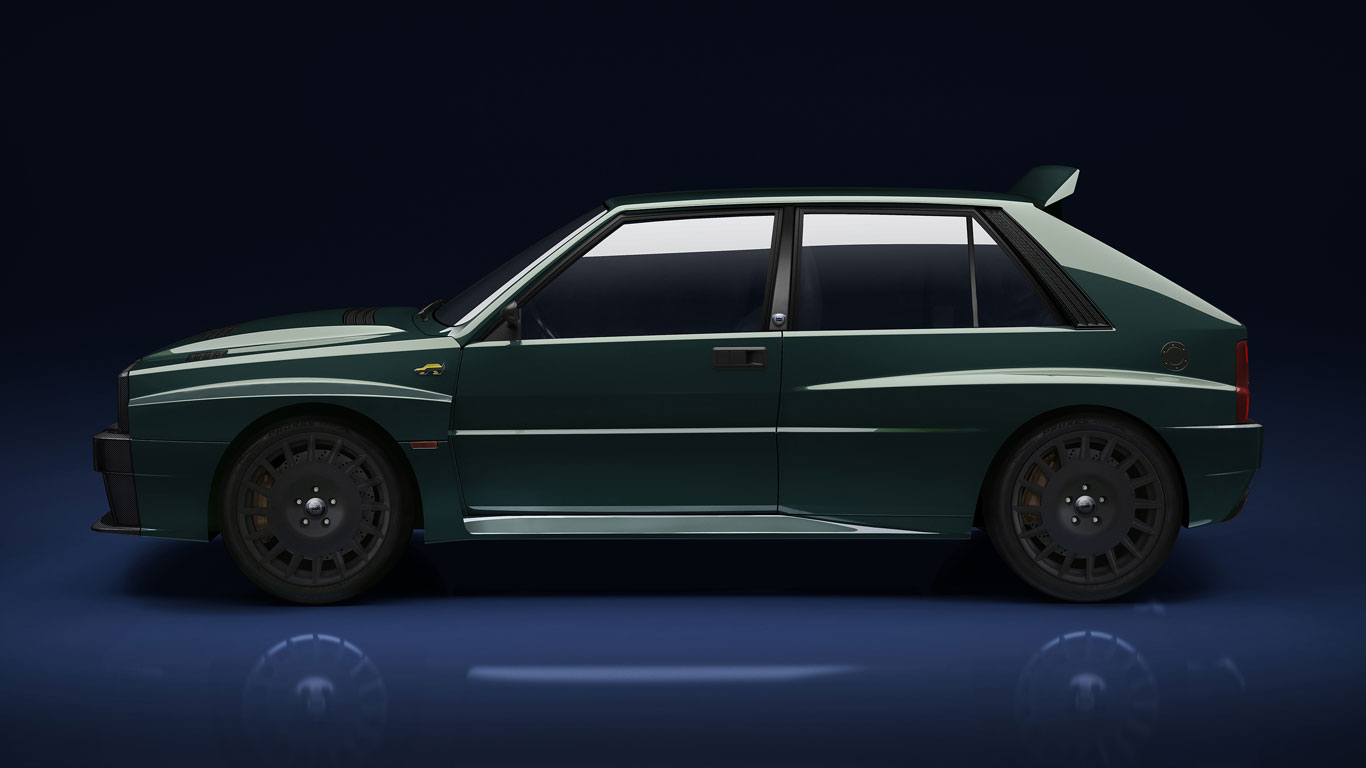
 The Nissan Juke has been revised for 2018 to help it compete with a slew of more modern rivals, from the top-selling