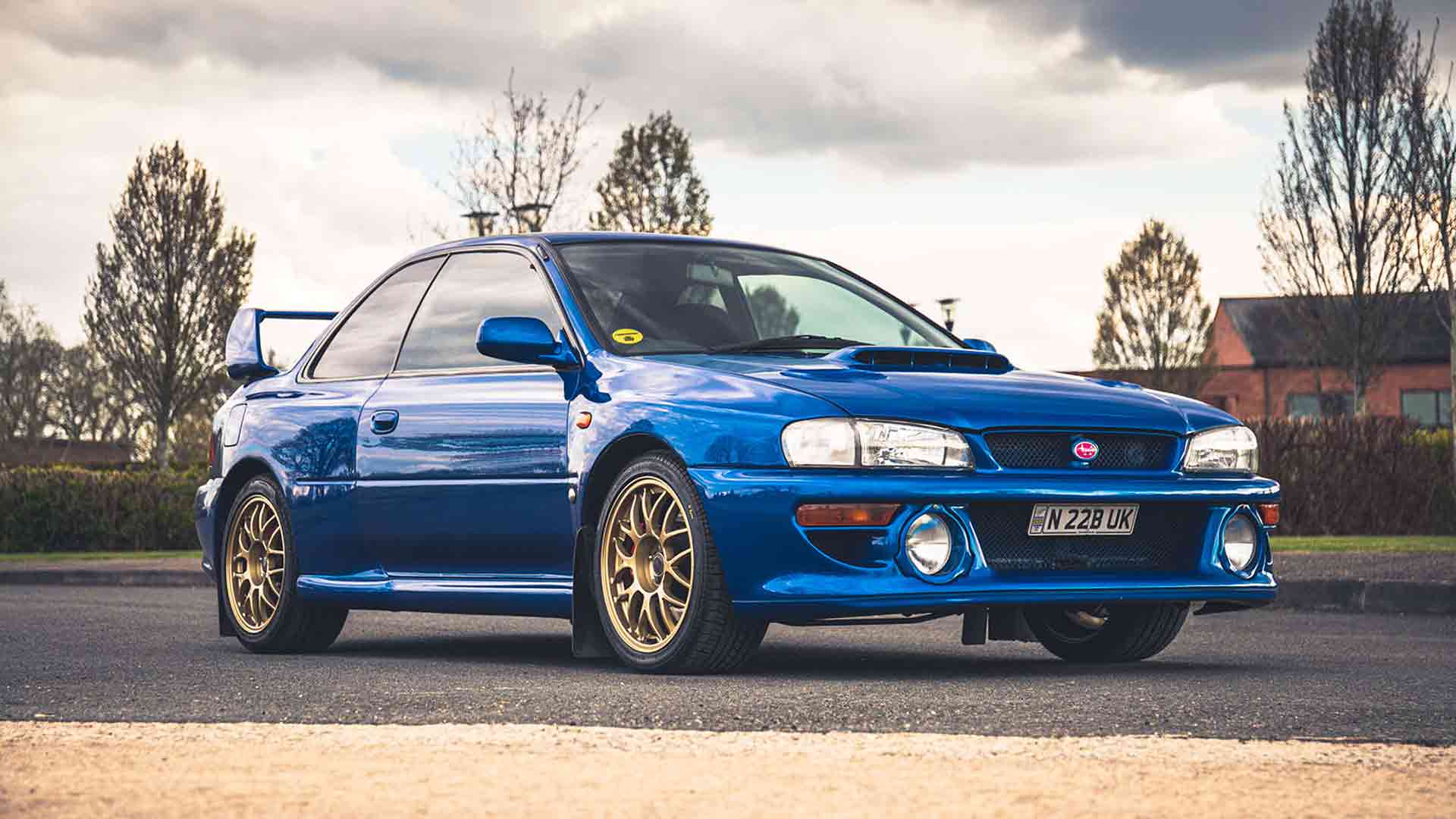
A two-owner Subaru Impreza 22B STI Type UK has sold at auction for an astonishing £171,000, setting a new UK record.
The Silverstone Auctions May Sale saw the ‘ultimate Subaru road car’ entered for the 22 May event, immediately attracting huge interest when bidding opened.
One of just 16 official Subaru UK cars, the record-breaking 22B is believed to be the 16th car, and one of just 10 still remaining.
The vendor had owned the car for the last 18 years, featuring it in magazines and on TV – and winning high-profile awards with it.
This is not a museum-piece car: it has 49,000 miles on the clock and two owners in the logbook.
However, Silverstone Auctions said the 1999 22B is very well regarded within Subaru circles and is a ‘rare, special and hugely coveted’ car.
It still carries the original car-specific aluminium-covered information booklet, hand-signed by the sales director of Subaru UK, plus the ‘special instruction’ booklet and model-specific floor mats.
Also included are the original service booklet, manuals, two original keys and two original Subaru alarm fobs. The registrtion ‘N22BUK’ is also included.
It has a bulging service history and a few choice upgrades such as a special gearbox, upgraded front brakes and bespoke exhaust – with all the original parts included in the sale for originality.
Given how the original sale price in 1999 was £39,950, today’s price of £171,000 represents quite a return for “the absolute ‘Holy Grail’ of these already very special rally cars for the road”.
Google Street View has taken delivery of its first pure electric car, with Jaguar’s I-Pace taking the crown as the landmark Google Maps-mapping EV.
What’s more, the zero-emissions Jaguar will also be used to measure air quality, thanks to a battery of onboard sensors.
It is part of a 12-month ‘Air View Dublin’ project in the Irish capital, with scientists aiming to create detailed maps of street-level air pollution.
“The integration of Google Street View technology with the all-electric Jaguar I-Pace is the perfect solution for measuring air quality,” said JLR’s Elena Allen.
“We are delighted to support this project as it aligns with our own journey to becoming an electric-first business and achieving net zero carbon by 2039.”
The I-Pace’s specialised mobile air sensors will measure NO2, CO2 and fine-particle PM2.5 – while also helping update Google Maps.
The Street View camera is mounted on the roof, and JLR engineers have fitted new rear window glass to incorporate the wiring. The dashboard has also been modified to incorporate the Google Street View controls.
“Air quality is a serious concern, especially for cities, but there is a gap in terms of localised data and insights available to both decision makers and citizens,” said Google’s Paddy Flynn.
“As part of this project, we’re using technology to capture this important data and make it accessible so that, together with Dublin City Council, we can drive solution planning.”
The Historic and Classic Vehicles Alliance said it fears ‘complex new rules’ around exporting and importing cars and parts to and from the EU, plus ‘widespread misunderstanding of the environmental impact of vintage motoring’, are damaging owners’ confidence and enthusiasm.
It has called upon the government to introduce new legislation to help grow the sector.
The group claimed annual turnover, including international trade, is estimated at £18.3 billion. The three-million-strong British classic vehicle fleet is valued at over £12 billion, while annual tax revenue generated for the exchequer is close to £3 billion.
The Historic and Classic Vehicles Alliance says there is a misconception surrounding classic vehicle emissions, which have a ‘relatively modest impact on the environment’ compared with modern cars.
On average, classic vehicles are driven 16 times a year and cover just 1,200 miles during that period, which equates to 20 percent of the CO2 emissions produced by a computer and a mobile phone during the same time.
‘A great British success story’
The organisation says it will aim to ‘educate public, politicians and regulators on environmental issues’.
It adds that while the industry is respectful of the green agenda, it argues that restoration of classic vehicles ‘is in fact the epitome of sustainability’ because it is all about prolonging the life of great pieces of craftsmanship, rather than surrendering to built-in obsolescence.
“Our sector is a great British success story and has been for decades,” said HCVA director – and sales manager at Silverstone Auctions – Harry Whale.
“But it’s in serious jeopardy, and may not survive to continue providing opportunities for future generations if we don’t act now. In a world of mind-boggling bureaucracy, with environmental and other legislation looming, we need to ensure the voice of the industry and owners is heard and understood by regulators and those in power.
“We’ll work hard for the whole sector. We’re taking the initiative now to address current challenges, clear up confusion and grasp opportunities to find solutions. These problems span the world and we’re determined to take a long-term view as we campaign to secure the future.”
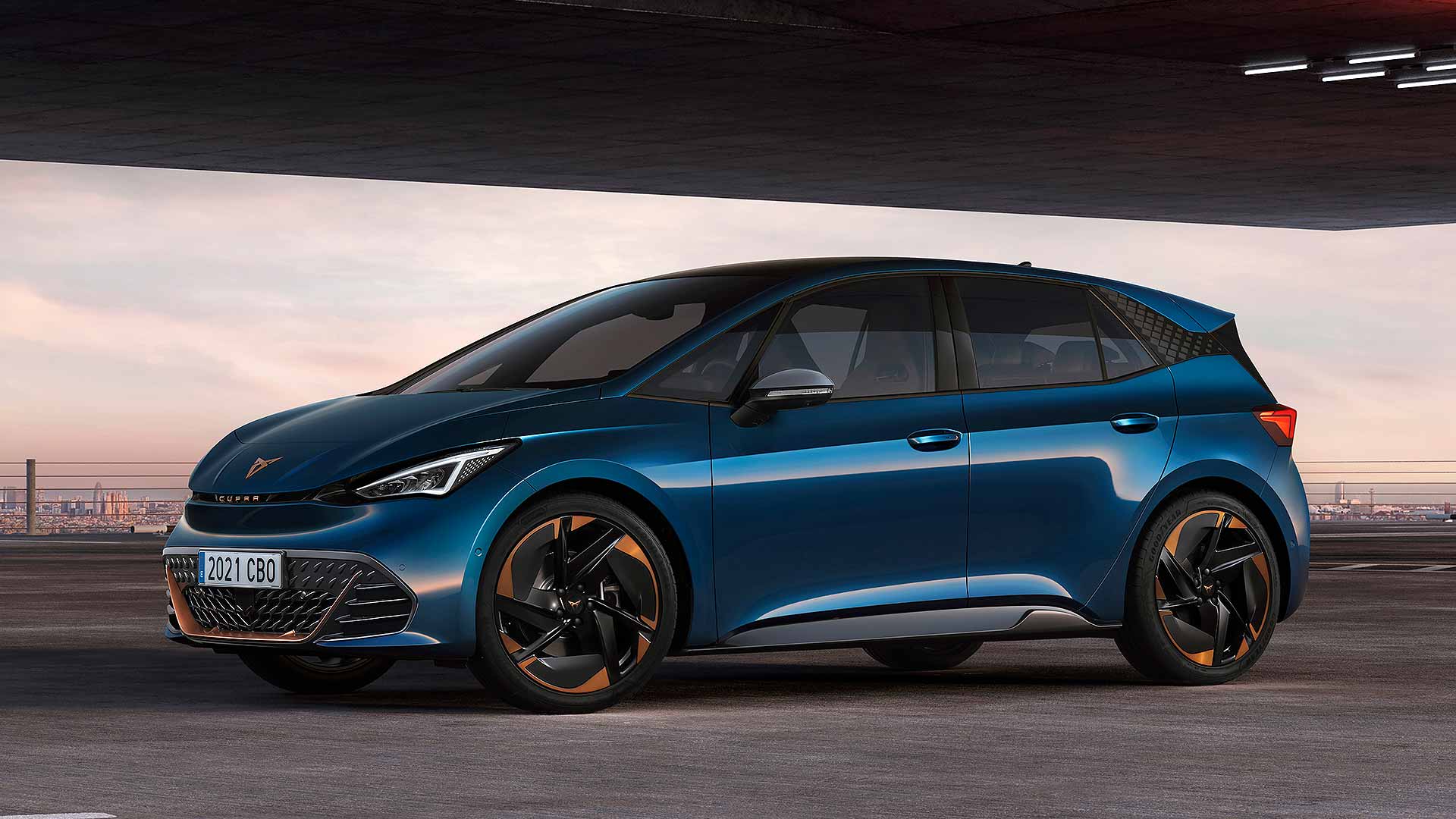
The Born is Cupra’s second standalone car – i.e. not a reworked Seat – and its first pure electric model.
Derived from the Volkswagen Group MEB platform that underpins the VW ID.3, Skoda Enyaq and others, the Cupra is a sportier interpretation of the theme – and capable of 0-62mph in as little as 6.6 seconds.
The biggest of four battery options allows a range of up to 335 miles on a single charge. Even the most affordable version has a range of over 200 miles.
Cupra says the Born will be the first model from its growing range (which now includes the Formentor, Leon and Ateca) delivered to customers as ‘net CO2 neutral’. Renewable energy is used during production and remaining emissions are offset by environmental investments elsewhere.
Described as ‘the perfect match between electrification and performance’, production of the Cupra Born will begin in September, with UK deliveries scheduled for early 2022.
Prices are yet to be confirmed, but think upwards of £30,000…
Cupra Born design
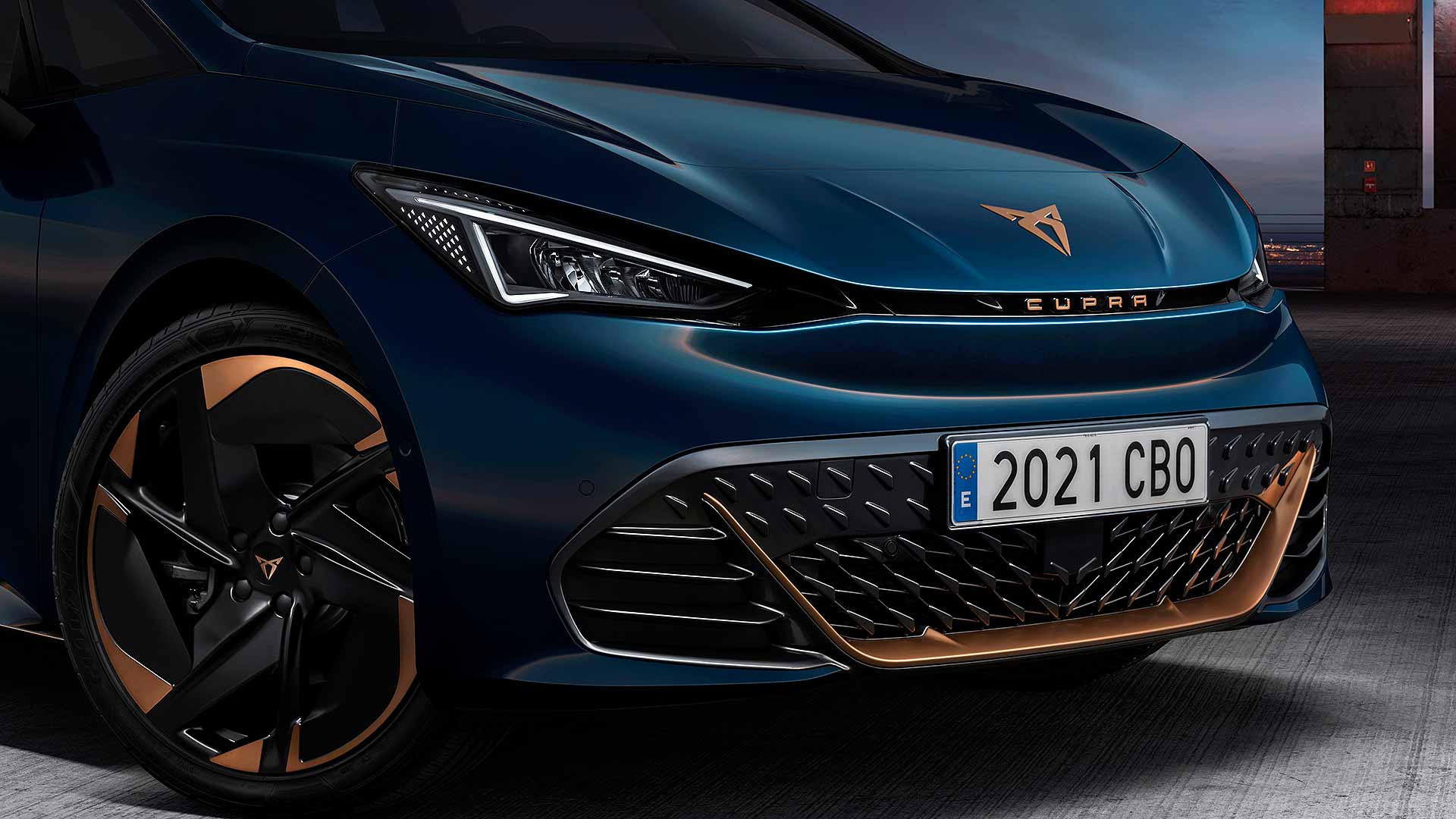
Although the Cupra Born is, ahem, born from the same mould as the Volkswagen ID.3, it has a much more distinctive appearance, in keeping with the well-received new brand’s more expressive design.
This range-topping model features a rich paint colour, plenty of copper detailing, big wheels and a distinctive front end, complete with a sharp ‘beak’ nose.
The Cupra logo is joined by a Cupra script, and although it’s an electric car – so doesn’t need anything like the usual amount of air intakes – it has a very dynamic-looking front bumper, complete with blended-in ‘grille’.
From the side, the Cupra Born has aero-tuned side sills – finished in a contrast colour to the body to ‘reduce the visual mass’. There’s also a 3D textured surface for the C-pillar (giving a floating roof effect) and no fewer than six alloy wheel designs, ranging from 18 to 20 inches.
At the rear, you’ll find a roof spoiler and diffuser combo, plus ‘coast-to-coast’ LED lighting. The Born EV will be offered in six different colours.
Cupra Born interior
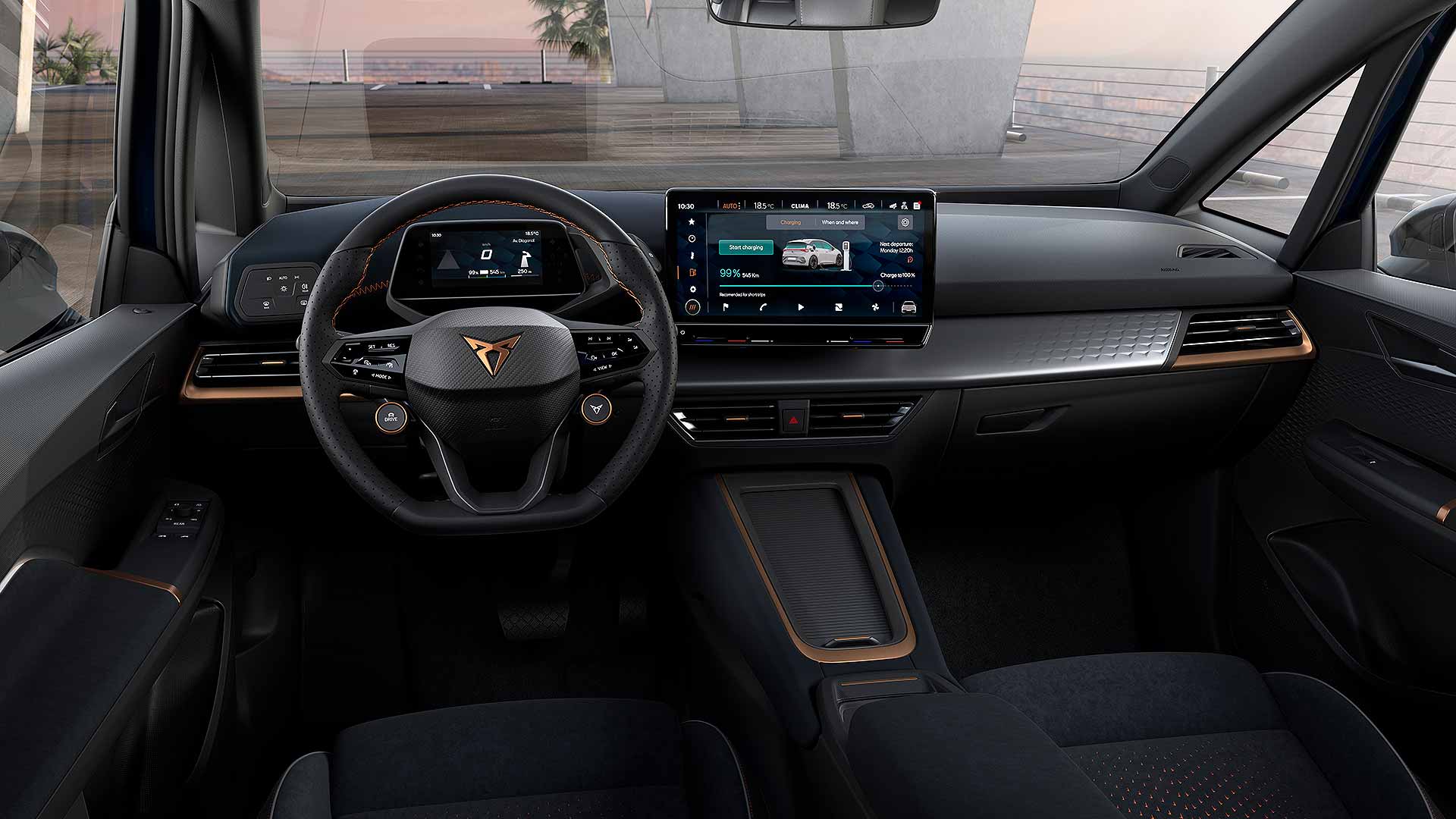
If you’ve seen the inside of a Volkswagen ID.3, you’ll be familiar with the Cupra Born. The same two touchscreens and simple layout feature, and the major controls are familiar – as is the open-plan feel from this roomy, practical platform.
The Cupra Born livens things up with more interesting surfaces, including textured trims and more copper-coloured detailing.
Buyers can choose a special recycled polyester seat trim called Seaqual Yarn, made from upcycled marine plastics. A second recycled material called Dinamica features on the door panels and upholstery: pick from dark blue or grey colours.
As with the Volkswagen ID.3, the Cupra Born will be very spacious inside, and offer a very generous 385-litre boot.
Cupra Born handling
Being a performance brand, Cupra has engineered in a sportier drive than other electric cars in the Volkswagen Group family.
Special tyres have been developed, and even the standard rubber will be a grippy 215mm wide. There will also be a wider 235mm tyre offered for more traction and bite through corners.
The chassis set-up has been given more focus and Dynamic Chassis Control adaptive suspension will be an option. Handling is also enhanced by the car’s low centre of gravity, aided by the heavy batteries being positioned so low in the chassis.
The brakes have been honed, too. Some electric cars can be a bit grabby, as the transition is made between electric motor regeneration and actual use of the brake discs. For the Cupra Born, lots of time has been spent to improve pedal feel during the blend between recuperation and friction braking. This apparently gives the ‘best brake actuation possible’.
Cupra Born performance
Four electric motor and battery combinations will be offered: 150hp with a 45kWh battery, 204hp with a 58kWh battery, and up 231hp with either a 58kWh or long-range 77kWh battery. All versions are rear-wheel drive.
The most potent Cupra Born – the 231hp version with the 58kWh battery – will do 0-62mph in 6.6 seconds, although even the entry-level 150hp model manages 8.9 seconds.
The batteries are water-cooled for efficiency, and the longest-range 77kWh variant will achieve 335 miles between charges – with the entry-level 45kWh battery offering a 211-mile electric range.
The 77kWh Cupra Born has fast-charge capability, which can add 62 miles of range in seven minutes using a 125kWh charger. A five percent to 80 percent charge takes 35 minutes. Customers can buy a Cupra-branded wallbox, too.
Cupra Born sales
The way you buy the Born will be different. Cupra is planning to sell it directly to customers, with car dealers working as agents to facilitate online sales. This ‘disruptive system… will reinforce the brand’s online presence as well as make life easier for customers’.
There will be an innovative subscription model alongside traditional sales, with a monthly fee that includes the use of the vehicle and other related services.
“The Cupra Born is a game-changer, not only for electrification but the wider market too,” said Cupra and Seat president, Wayne Griffiths.
“Through its emotional sportiness, we want the next generation of young challengers to be part of this transformation – that’s why Cupra will use unconventional sales models to reach new people and take the Cupra brand beyond the traditional.”
UK prices will be announced in the winter, with Cupra Born deliveries from the start of 2022.
Classic car buyers are increasingly searching for ‘dream cars’ rather than affordable models.
That’s according to online auction site Car & Classic. Data shows the Porsche 911 is now the most searched-for vehicle on its website – replacing the Ford Capri. Figures are based on analysis of site visits comparing the first quarter of 2021 with Q1 2020.
The second most searched-for car is the Jaguar E-Type, with the 1980s ‘E30’ BMW 3 Series in third place.
Enthusiasts have, however, also warmed to 1980s hot hatches in the past year, with a 25 percent rise in the number of searches for the Ford Fiesta XR2 and 44 percent for the Ford Escort XR3i.
Japanese marques are also increasing in favour, with the Toyota Supra, Mazda RX-7 and Toyota MR2 all featuring in the top 16. The Nissan Skyline has moved up 131 places to 27th.
Classic car world is ‘always changing’
In late 2020, Tom Wood, CEO of Car and Classic, told us visitor numbers had grown by 30 percent, and it appears the trend is continuing. The company attributes this to buyers having more time to search for their dream car during the recent coronavirus lockdown.
“The searches highlight how the pandemic is driving and accelerating change in the classic car field. For some, it has meant more time to start a new project, for others, money saved not going on holiday could mean now buying the dream car they always wanted to own,” said Chris Pollitt, head of editorial at Car & Classic.
“The data also underlines that the classic car world is always changing. Whether that’s a new wave of cars such as 1980s and 1990s modern classics that are increasingly in vogue, or a new generation of enthusiasts coming through with more time looking for some nostalgia.”
The Skoda Octavia Scout has made a comeback. However, sadly, this time only the emergency services can buy one.
The off-road-focused estate has a 2.0-litre diesel engine with two power options: 150hp or 200hp. Both come with four-wheel drive and an automatic gearbox.
A roomy 640 litres of boot space ‘can hold all the equipment that any police force, fire and rescue service or ambulance paramedic team needs’, says Skoda. Interior features unique to the Scout include black ‘Thermoflux’ upholstery with brown stitching, plus Scout logos on the front seats and door sills.
The car is also equipped with a 10.25-inch Virtual Cockpit driver display and 10-inch touchscreen infotainment system, which is compatible with Apple CarPlay, Android Auto and Mirrorlink. There are five USB Type-C ports for phone charging.
Be prepared
Externally, the Scout is differentiated by its chunky front and rear bumpers, black plastic body cladding and badges on the front wings.
Skoda says the model can be fully converted through its ‘one-stop shop’ service centre. The conversion cost, breakdown recovery, service, maintenance and repair requirements are built into one complete package.
The previous Skoda Octavia Scout was on sale from 2014 until 2020 – and was sold to private customers as well as the emergency services.
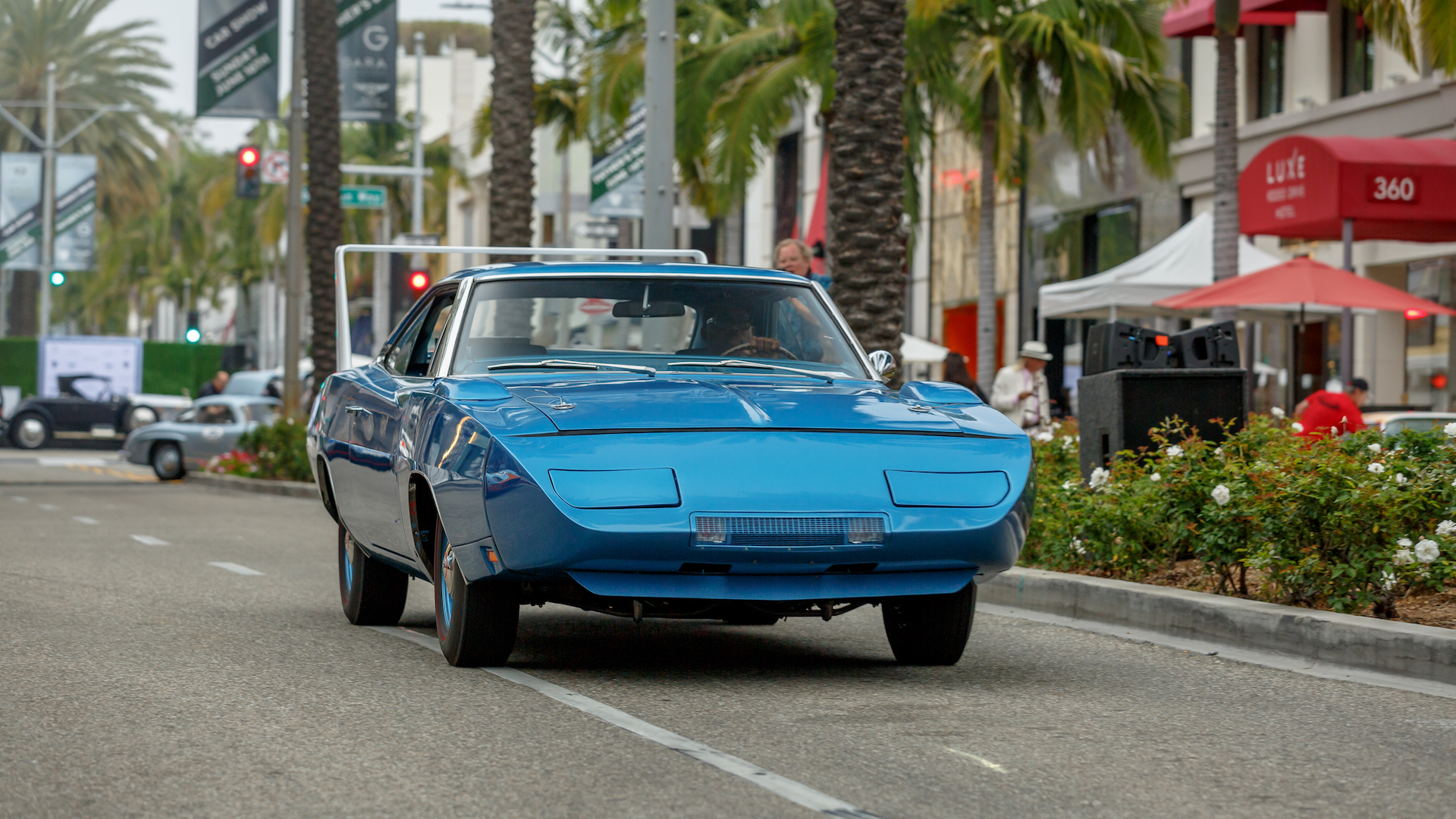
The streets of Beverly Hills will see a cavalcade of supercars and desirable classics on the move for Father’s Day next month.
In place of the static Concours d’Elegance event, the Beverly Hills Tour d’Elegance has been designed to combine rare cars with Covid-safe family fun.
Supported by the Rodeo Drive Committee in conjunction with the City of Beverly Hills, the event will be free for spectators to watch.
A moving cavalcade of classics
The Beverly Hills Concours d’Elegance has become a staple event for West Coast car fans, traditionally taking place on Father’s Day each year. Last year saw the event canceled due to Coronavirus, prompting a rethink for 2021.
The challenge was to ensure spectators could view exotic cars, but in a way that allows for safe social distancing. As a result, organizers have opted for the moving Tour d’Elegance setup.
A selection of fifty of the world’s finest cars will follow a route through the center of Beverly Hills on the morning of Sunday, June 20. Celebrities from the world of TV and films, along with leading car collectors and city officials, will be on driving duty.
Enthusiasts will be able to get a full map of the route nearer the time, with cars departing from the Petersen Automotive Museum.
Giving back to first responders
For 2021, the Tour d’Elegance event will be supporting the Beverly Hills Police Officers Association, and the Beverly Hills Firefighters’ Association. These two non-profit organizations deliver assistance to first responders injured in the line of duty, maintain scholarship funds for their children, and offer other support.
Beverly Hills Fire Department’s own 1928 Ahrens Fox fire engine will be one of the stars of the parade. It will be on the streets with the latest hypercars and priceless classics.
Event founder Bruce Meyer commented that he is: “Thrilled to begin the return to normal with a fun, free, family-friendly event which will support our local first responders. They have supported all of us through the last year and now we have an opportunity to give back.”
New figures suggest Britons are set to take significantly more ‘staycations’ in the UK this summer compared with previous years.
Auto Trader cited data from its website which said page visits for motorhomes have rocketed by 148 percent and searches for caravans have soared by 117 percent in the last year.
The automotive marketplace added results from a poll suggested almost two thirds of Brits – 62 percent – are planning to go on holiday in the UK this year, with breaks in the countryside being the most popular choice (42 percent).
It added that over half (53 percent) of respondents to its poll said they will be holidaying with their family this year and claimed that motorhomes and caravans ‘safely offer the chance to reunite’, as separate households can park over two metres apart ‘and enjoy time outside together’.
“More than two million people enjoy holidays in caravans and motorhomes each year in the UK – a figure that is set to rise this year due to the third wave of COVID-19 across the EU – so it’s no surprise those looking to own their own caravan or motorhome has increased,” said Erin Baker, Auto Trader’s editorial director.
“Holidaymakers will have to be extra savvy though when planning their trips, as sites are set to sell out quickly.
“Heavy congestion is likely when staycationers hit the roads around peak times, particularly the second May and August bank holidays and school summer holidays, so road trips should be planned in advance and scenic detours considered.”
New guidelines have been released to help shape the language used when describing collisions on the roads. It’s claimed the advice could make roads safer.
Coordinated by the University of Westminster and backed by numerous organisations – including the AA and Transport for London – the Road Collision Reporting Guidelines follow on from similar documents advising the media on how to report on suicides and domestic abuse.
It is hoped the guidance ‘will do the same for road collisions, representing an industry standard by consensus that will continue to improve over time,’ said the University of Westminster.
Clauses in the guidance recommend that journalists, among other things, avoid use of the term ‘accident’, say ‘driver’ instead of ‘car’, and provide context to road collisions, rather than presenting them as isolated incidents.
A way with words
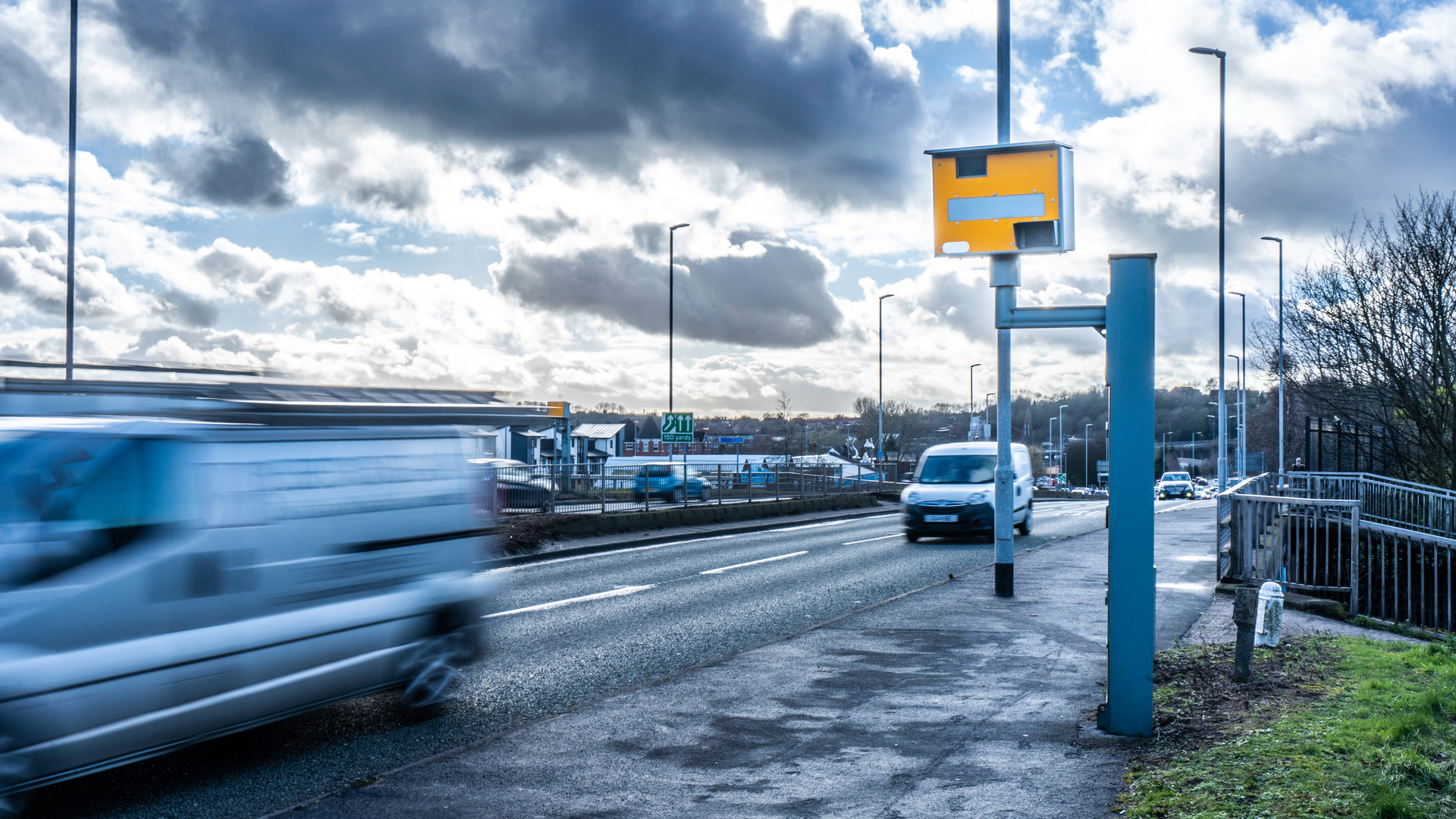
The group also advises journalists not to portray law-breaking or Highway Code contravention as acceptable, or to frame perpetrators as victims. It gives the example that speed cameras aren’t ‘targeting’ road users, or causing danger on the roads.
‘Speed is a major contributory factor in road collisions, serious injury and death on the roads and media attention for targeted enforcement of speeding, distracted driving, and impaired driving can increase awareness of – and support for – those efforts,’ says the report.
“These guidelines are based on research and expert input. We know much good road collision reporting already exists and we hope that the guidelines will help spread this good practice,” said Professor Rachel Aldred.
“The research tells us that language matters, as it helps shape how we see and treat others. So, for instance, referring to drivers rather than only their vehicles helps remind us that behind every vehicle – be it a car, an HGV, a cycle or a motorcycle – is a person making decisions that affect the safety of others.”
The average age of a car registered in Britain is 8.4 years old, a fact that risks stalling the country’s attempt to reduce transport emissions.
A car from 2020 emits over 18 percent less CO2 than one from 2011.
What’s more, there are still almost a million cars in daily use that date back to 2008 and earlier, with average CO2 emissions even higher than today’s levels.
“Fleet renewal is essential if the UK is to reach its net zero target,” said trade body the Society of Motor Manufacturers and Traders.
Mike Hawes, SMMT Chief Executive, added: “Despite massive growth last year, just one in 80 vehicles is a plug-in electric car – while nearly 10 million petrol and diesel cars dating back to before 2008 remain on our roads.
“Encouraging drivers to upgrade to the newest, cleanest lowest emission cars, regardless of fuel source, is essential for the UK to meet its ambitious climate change targets.”
The number of vans in use rose 1.7 percent over the past year, thanks in part to the pandemic, providing support to the NHS and delivering food and goods.
Pure electric cars also grew to a record high of just under 200k vehicles, an increase of 114 percent in a year.
Plug-in hybrid vehicles grew 35 percent to 239k, although they still only represent 1.3 percent of cars in use.
Petrol and diesel cars, despite a small decrease in both, still account for 97.1 percent of cars on British roads – that’s 34 million vehicles.
The SMMT Motorparc data also revealed superminis and family hatchbacks remain Britain’s most popular cars, making up 6 in 10 vehicles in service – almost 21 million cars.
Surprisingly, SUVs are well back in third place on 4.6 million vehicles, although they still account for 13.2 percent of cars on the road, a figure that’s growing all the time.