The Collecting Cars online auction platform has seen a special 2004 Porsche Carrera GT achieve a big sale.
Already a desirable modern classic, being originally owned by a Formula 1 World Champion added to the Porsche’s collectability.
Once belonging to Jenson Button, the mid-engined Porsche supercar sold for a considerable €820,500 (£703,000 or $970,000).
What would a Formula 1 veteran drive?
Competing in more than 300 Formula 1 races between 2000 and 2017, Jenson Button racked up 15 grand prix wins. This included clinching the 2009 Formula 1 World Drivers’ Championship with the Brawn GP team.
However, it was earlier in his career that Button purchased the Porsche Carrera GT. In 2004, the British driver was competing for the British American Racing team.
When your company car is a 3.0-l V10-powered Formula 1 racer, a Carrera GT was perhaps the closest road-going equivalent.
Unadulterated performance
Matching a lightweight chassis with a 5.7-l naturally aspirated V10, Porsche created a hardcore machine with the Carrera GT. With 603 hp, and 435 lb-ft of torque, the mid-engined Porsche could hit a top speed of 205 mph.
A six-speed manual transmission added to the driver appeal, with carbon ceramic brakes standard equipment.
When ordering his Carrera GT, Button opted for Seal Grey paintwork, complemented by a Terracotta leather interior. A Porsche car cover, matching leather luggage, and covers for the removable roof panel were all included.
Extra collector’s item included
Button later sold the Porsche but the car was offered for sale with a letter confirming his tenureship. A special pewter sculpture of the V10 engine, gifted to those who ordered a Carrera GT, features Button’s name engraved on it.
Along with having been owned by a Formula 1 World Champion, the Carrera GT was backed by an extensive service history. This included a recent new ceramic clutch, along with the replacement of all three radiators.
Interest in the Porsche was strong on Collecting Cars, with 37 bids received. This culminated in the winning bid, with a value more than doubling the original price of the Carrera GT.
The new Le Mans Hypercar class has been created to attract more manufacturers to endurance racing. Spiralling costs previously pushed Audi and Porsche to withdraw from the World Endurance Championship.
Along with specialist prototypes, manufacturers can also enter cars based on road-going models. This requires 20 street-legal cars to be made.
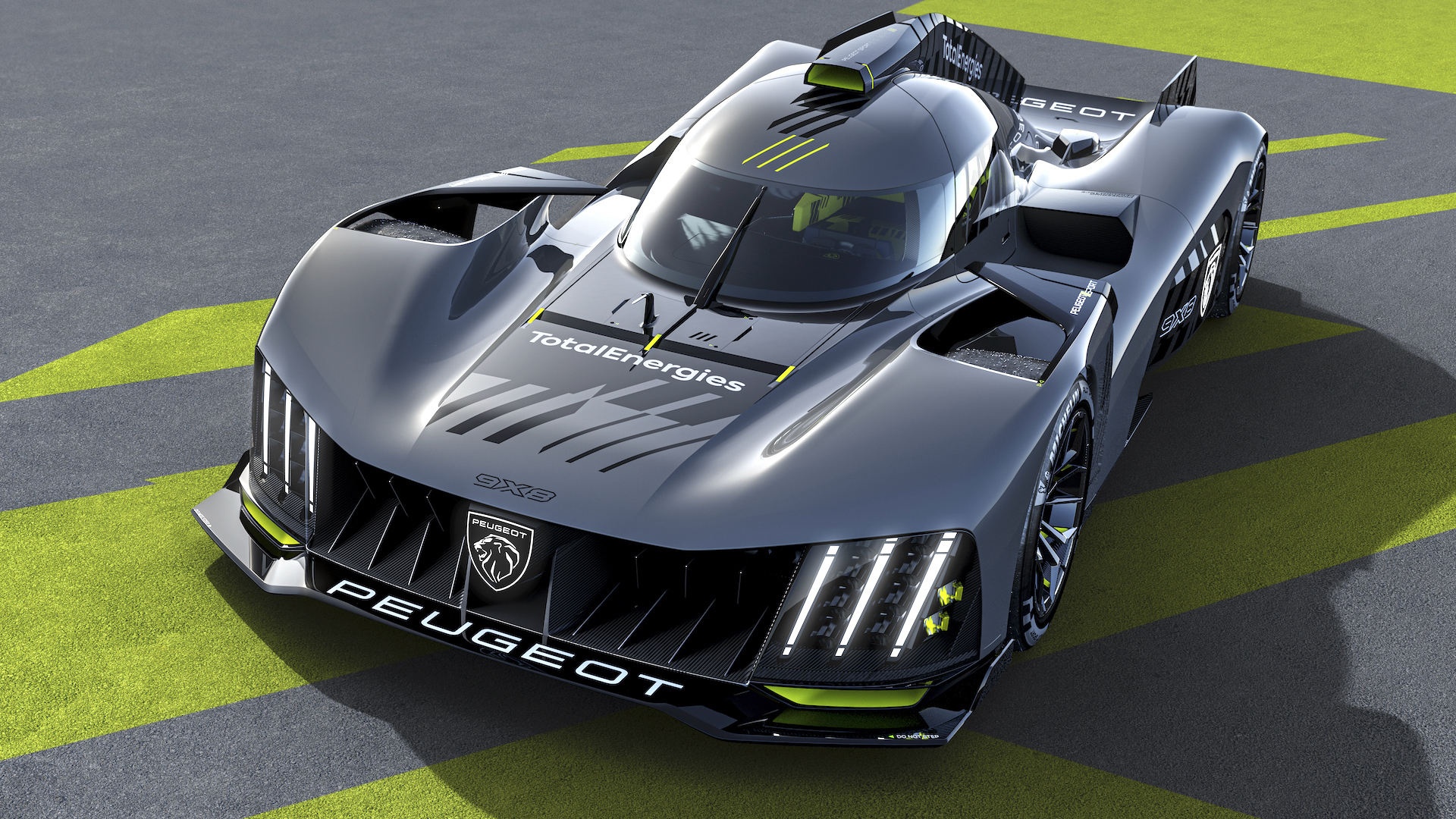
This should allow manufacturers to make the link between road and race cars more tangible. Peugeot itself notes that the 9X8 has “styling excellence, efficiency and technological expertise” that can transfer to its road cars.
Part of the Peugeot family
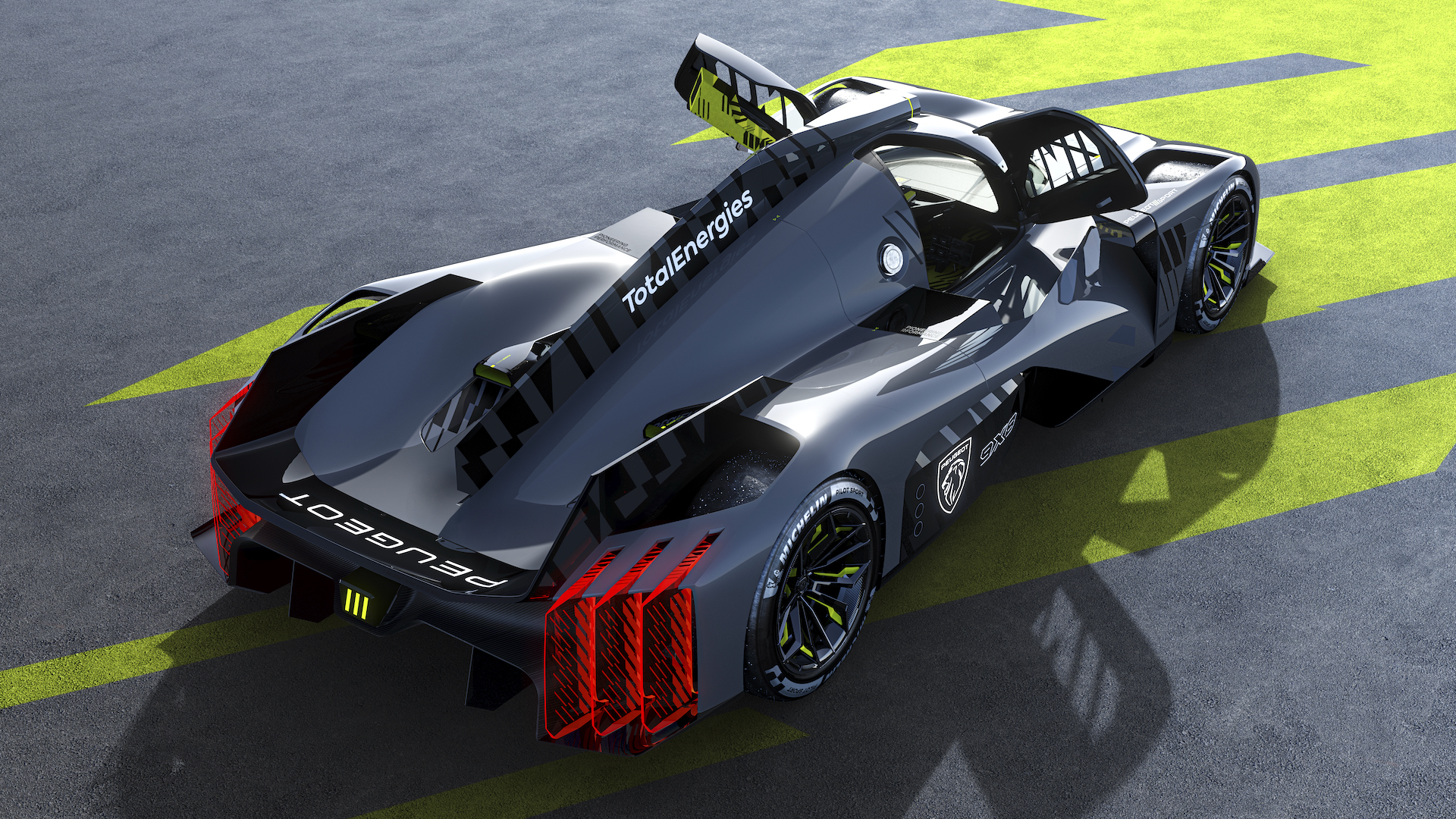
The three “claw-like strokes”, forming the LED lights at the front and rear of the 9X8, are an obvious nod to current Peugeot products. Selenium Grey paint, matched with Kryptonite Green highlights, is similar to that seen on the new Peugeot 508 PSE models.
Choosing to call the new Le Mans Hypercar 9X8 links it to Peugeot models past and present.
Previous Peugeot Le Mans racers have used a “9” branding, whilst the “X” refers to the hybrid all-wheel drive powertrain. Finally, the “8” is a reference to current Peugeots like the 3008 and 508.
Race car interiors are typically spartan affairs. But, Peugeot has made ample use of Kryptonite Green inside the 9X8. It should certainly help keep drivers awake on those lengthy Le Mans stints…
No longer winging it
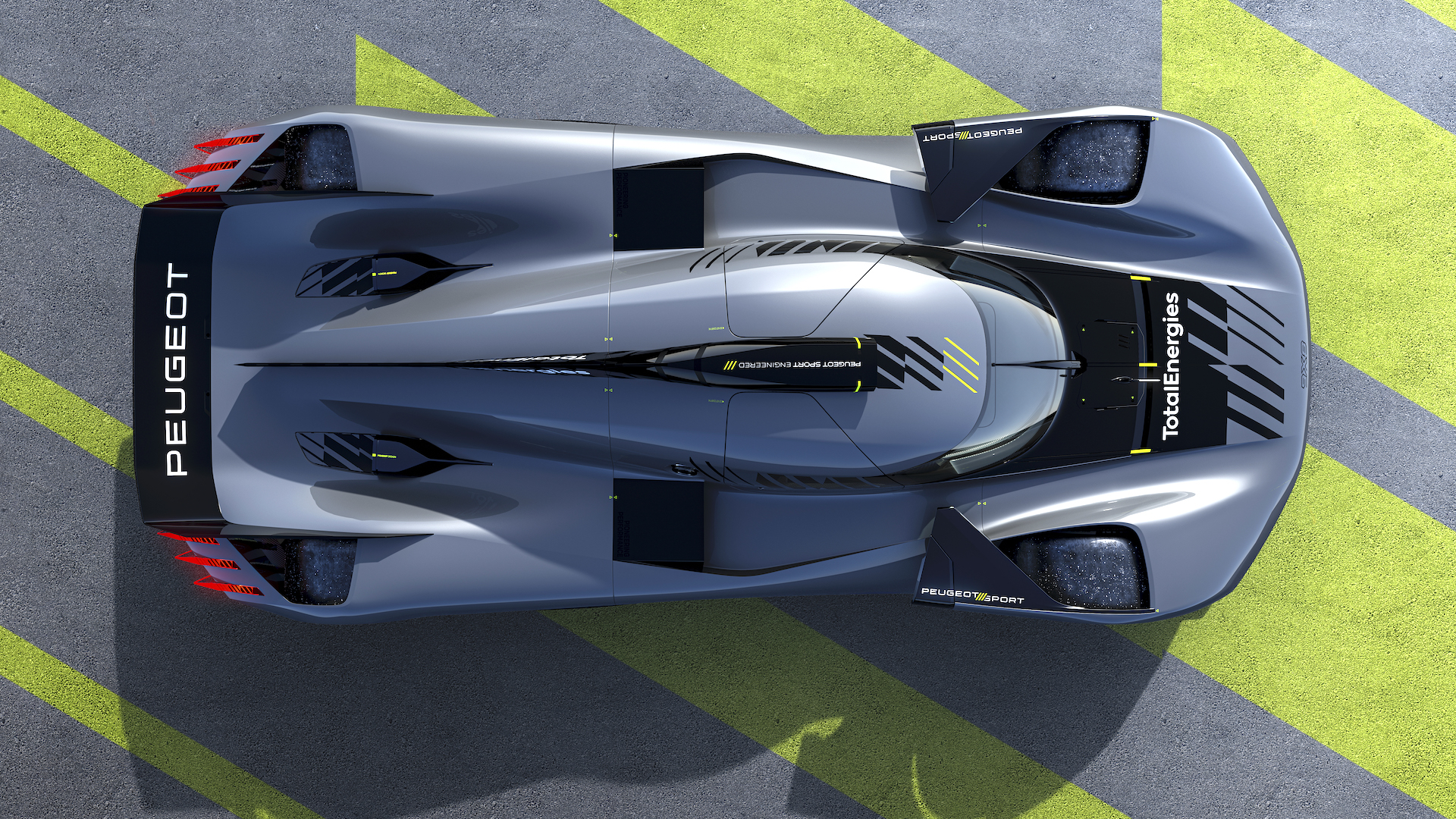
Peugeot has opted to go without a rear wing, typically seen on endurance prototype racers. Instead, Stellantis motorsport director Jean-Marc Finot says the 9X8 has “a degree of aerodynamic efficiency” that allows it to go wingless.
Hybrid powertrains are optional in the Hypercar category, but Peugeot has chosen to use one. A twin-turbocharged 680 hp 2.6-litre V6 will power the rear wheels, with a 200 kW electric motor driving the front axle.
We will have to wait until next year to see if the 9X8 can deliver on track, and continue Peugeot’s previous Le Mans success.
A new series production Lotus doesn’t come along very often; the last was the Evora in 2009. So this already feels like a significant event. The Emira also kick-starts a new era for Lotus under Geely ownership – and will be the marque’s final combustion car. A red-letter day, then.
The two-seat, mid-engined Emira offers a choice of four-cylinder or V6 power, plus manual, auto or dual-clutch transmissions. Power outputs at launch range from 360hp to 400hp.
A starting price of less than £60,000 means the car is pitched directly at the Porsche Cayman, but higher-spec models will edge into 911 territory. Let’s hope the Emira is as good as it looks.
Inspired by the Evija
Low-slung, sculpted and dramatic, the Emira seems to be shrink-wrapped around its bonded aluminium chassis. It looks like the 2,000hp Evija after a boil wash.
The tapered bonnet, vertical LED headlamps and hungry side scoops are clearly influenced by the flagship hypercar, although the Emira does without its huge rear venturis or pop-up spoiler. ‘There are no active aerodynamics as clever engineering means they’re not needed,’ says Lotus.
Look closely and you’ll see the Emira badge on the C-pillar. It’s pronounced ‘Eh-meer-ah’ and translates as ‘commander’ or ‘leader’ in various ancient languages. So now you know.
Pure petrol power
Lotus is already working with Alpine on a fully electric sports car to replace the Elise and there were rumours the Emira would be a hybrid. Not so. New Lotus MD Matt Windle told CAR magazine the technology is “anathema to Lotus’s performance out of light weight philosophy”.
So the Emira has pure petrol power – and we’re quietly thankful for that. Two engines are offered: the familiar 3.5-litre Toyota V6 from the Exige and Evora, plus a new four-cylinder unit from Mercedes-AMG. Said to be ‘Lotus engineered’, we believe the latter unit is closely related to the four-pot firecracker in the A45 S hot hatch.
Performance figures are a bit vague at present, and seem to relate solely to the V6 engine. Power is quoted as 360-400hp and maximum torque as 317lb ft. Zero to 62mph takes ‘less than 4.0 seconds’ and top speed is ‘up to 180mph’.
The decision to offer manual, paddle-shift auto and traditional automatic gearboxes is said to ‘maximise global appeal’. We suspect the latter transmission will mostly be targeted at Asian markets – including Geely’s native China, of course.
McLaren-style steering
Slush ‘box or not, you’d expect a new Lotus to deliver the dynamic goods. And chassis guru Gavan Kershaw assures us it will.
For starters, EU kerb weight (with fluids) has been kept to 1,405kg in the car’s lightest form: around the same as a four-cylinder Cayman, albeit heavier than an Alpine A110.
Like McLaren, Lotus has persisted with hydraulic power steering, rather than a more efficient electric rack, for the superior feedback it offers. The Emira also has a wider track than any recent Lotus road car and rides on 20-inch wheels with Goodyear Eagle F1 Supersport tyres.
Super-sticky Michelin Pilot Sport Cup 2 rubber is a cost option as part of the Lotus Drivers Pack, which also offers a stiffer Sports suspension set-up. The Emira is “a true Lotus sports car that builds on the legacy of the Elise, Exige and Evora,” reckons Kershaw.
Calm like a bomb
Inside the Emira, Lotus promises a step-change in quality, comfort and connectivity. Features to get S1 Elise owners scratching their heads include rain-sensing wipers, parking sensors, cruise control and keyless start.
Behind the squared-off steering wheel is a 12.3-inch TFT driver display, while the 10.25-inch touchscreen alongside offers Apple CarPlay and Android Auto connectivity. A 10-speaker audio system, developed with high-end British audio brand KEF, is on the options list.
It isn’t all about gadgets, though. The high position of the manual gear lever echoes the classic Esprit, and its exposed linkage nods to the Elise and Exige. Incidentally, we still think Lotus should have christened this car ‘Esprit’. Few nameplates are more evocative.
You might spot the red ‘bomb switch’ cover over the start button – an idea nicked wholesale from Lamborghini. We doubt Lotus founder Colin ‘Simplify, then add lightness’ Chapman would have approved.
Deliveries in spring 2022
Like so many Lotus sports cars of the past, the Emira will be built in Hethel, Norfolk. A new £100 million factory has created more than 200 jobs and contains a first-for-Lotus robotic paintshop.
You can place a deposit now, with first deliveries expected in spring 2022. We’re hoping to drive the Emira and bring you our verdict later this year. While doing our best to remain impartial, we desperately want it to be brilliant.
Vauxhall has confirmed its Ellesmere Port plant will become global giant Stellantis’ first dedicated electric van production facility.
Ellesmere Port will produce battery electric vans for Vauxhall, along with partner Stellantis brands Opel, Peugeot and Citroen.
The future of the site, which currently produces the Vauxhall Astra, has been secured with £100m investment from Stellantis and further backing from the UK government.
Stellantis bosses say Ellesmere Port will now become a pivotal factory in further boosting its leading commercial vehicle position in Europe.
The factory, which will become Stellantis’ first pure electric facility, will also produce passenger versions of each brand’s models.
Bosses praised a “collaborative process between the company and the Unite union”, along with the workforce’s “drive to transform their plant”.
Stellantis CEO Carlos Tavares specifically “wanted to thank our highly skilled, dedicated workforce for their patience and contribution; we never let them down.
“Performance is always the trigger for sustainability and this £100million investment demonstrates our commitment to the UK and to Ellesmere Port.
“Producing battery electric vehicles here will support clean, safe and affordable mobility for the citizens. Since 1903, Vauxhall has manufactured vehicles in Britain, and we will continue to do so.”
Ellesmere Port will mark 60 years in 2022; it opened in 1962 and the first car, the Viva, was produced in 1964. Since then, it has produced more than 5.2 million vehicles.
Production of the new electric vans will begin in late 2022.
Carbon neutral
Planned upgrades for Ellesmere Port include a new body shop and upgraded vehicle assembly area. There will also be an on-site battery pack.
The firm will also work to make the site carbon-neutral by 2025 – and intends for it to be 100 percent self-sufficient for electricity with the addition of new wind and solar farms.
Stellantis admits the overall site area will be compressed – but does intend to consult on further investment with the creation of a new UK parts distribution centre.
Business secretary Kwasi Kwarteng said Stellantis’ decision to “double down on their commitment to this site is a clear vote of confidence in the UK as one of the best locations globally for competitive, high-quality automotive production.
“Today’s decision will not only power Ellesmere Port into a clean future, but will secure thousands of jobs across the region.”
Ellesmere Port new EVs
The new EVs will have a 136hp electric motor and 50kWh battery, giving a 174-mile driving range.
Using a 100kW charger, they will recharge from 0 percent to 80 percent in 30 minutes.
The van versions will help support growing demand for zero-emission urban deliveries, while the passenger versions will seat up to seven.
Compared to the pre-pandemic month of June 2019, the number of people searching for used cars on Auto Trader went up by a third. Consumers also spent 25 percent more time looking for second-hand vehicles on the platform than in 2019.
Despite rising prices, cars are selling more quickly, too – an average of 23 days in June 2019. Two years ago, cars took a working week longer to leave retailer forecourts.
‘High demand will continue’
“Whilst supply constraints have compounded the situation, this massive acceleration in used car prices is being driven by record levels of demand in the market,” said Auto Trader data and insight director Richard Walker.
“We’ve barely started to catch back the 1.7 million ‘lost’ transactions in 2020 while retailer showrooms were closed.
Coupled with the strong levels of disposable income and savings, as well as improving consumer confidence and low interest rates, we can expect very high demand to continue for the rest of this year.”
Price rises will eventually begin to ease, added Mr. Walker… but not yet.
“The steep trajectory we’ve been recording will begin to balance out as pressure on supply chains eases and the current levels of demand soften. However, we have every confidence we’ll see strong levels of price growth for a good period of time to come.”
Bavarian-based Elegend wants to build 30 examples of the EL1, which resembles a neo-futuristic version of an Audi Sport Quattro.
It should be noted that the EL1 is not endorsed, or badged, as an Audi.
Currently a design proposition, Elegend aims to have a prototype version assembled by 2022.
Future Nostalgia
Founded by designer Marcus Holzinger, Elegend has a team of motorsport and design experts ready to build the EL1. Investors are still being sought to help move the project along.
Holzinger claims to have been influenced by motorsport legends since he was a child. He adds that he is “fascinated by both race driving and driving at the limit”.
As a result, track usage is at the forefront of the EL1’s design. This includes a carbon fibre monocoque chassis, three-way adjustable suspension, and the ability to engage Sport mode.
A projected kerb weight of 1,680 kg sounds suitably impressive for a modern rally recreation.
Real rally performance
Just like an actual Audi Quattro, the EL1 features an all-wheel drive setup. Electric motors will offer up an impressive 600 kW (805 hp), allowing for 0-62 mph in just 2.8 seconds.
A top speed of 158 mph is on par with internal combustion-powered German sports cars.
Elegend promises that the 90 kWh battery pack will allow for almost 250 miles of range when fully charged. Or, more importantly, two full laps of the Nürburgring Nordschleife race track at high speed.
Standard equipment should include 150 kWh fast charging, a multimedia touchscreen, and rear view cameras.
Even better than the real thing?
Initial production will be limited to 30 examples, all made by hand. Two other series of production, again capped at 30 cars, should follow later.
The price tag for the EL1 will be an eye-watering €890,000 (£763,000)… BEFORE taxes.
In comparison, genuine Audi Sport Quattros have averaged between £300,000 and £400,000 at international auctions. Arguably, those looking to spend close to £1 million on an EL1 are likely to already have a real Quattro in the garage.
Audi previously teased the idea of recreating the Sport Quattro as a 2013 concept. Shown at the Frankfurt Motor Show, Audi’s own hybrid proposition remained as a show car.
Rimac will become the majority owner of famed luxury car brand Bugatti in a new joint venture with Porsche, bringing to an end 23 years of direct Volkswagen Group ownership.
Porsche AG will acquire 45 percent of the new company, to be called Bugatti Rimac LLC. A newly formed Rimac Group parent company will hold the other 55 percent. Rimac’s charismatic founder Mate Rimac will become CEO.
Mr Rimac holds 37 percent of Rimac Group. Porsche already owns 24 percent, Hyundai Motor Group owns 12 percent, and other investors hold the remainder.
Rimac’s EV and battery tech development, production and supply division will be split into a third company, Rimac Technology.
This independent company, sitting alongside Bugatti Rimac LLC, will be 100 percent owned by Rimac Group.
Bugatti’s future secured
Bugatti will remain a standalone brand, keeping its development and production base in Molsheim, France, plus its own distribution channels and dealers.
It will operate independently to Rimac Automobili, which is based in Zagreb, Croatia.
The Bugatti Rimac company has been created to pool R&D resources and expertise to create the new Bugattis and Rimacs of the future.
Bugatti Rimac will, in time, share a global HQ, however – based at the €200m Rimac Campus due to open in 2023. As many as 2,500 people will ultimately work there.
‘Completely new level’
“This is a truly exciting moment in the short, yet rapidly expanding history of Rimac Automobili,” said Mate Rimac.
“We have gone through so much in such a short space of time, but this new venture takes things to a completely new level.
“Rimac and Bugatti are a perfect match… as a young, agile and fast-paced automotive and technology company, we have established ourselves as an industry pioneer in electric technologies.
“Bugatti, with over a century of experience in engineering excellence, also possesses one of the most exceptional heritage of any car company in history.”
Porsche AG chairman Oliver Blume added: “We are combining Bugatti’s strong expertise in the hypercar business with Rimac’s tremendous innovative strength in the highly promising field of electromobility.
“Bugatti is contributing a tradition-rich brand, iconic products, a loyal customer base and a global dealer network to the joint venture. In addition to technology, Rimac is contributing new development and organisational approaches.”
Volkswagen Group took over the Bugatti brand in 1998, launching iconic cars such as the Bugatti Veyron and Chiron.
However, the global giant is now concentrating on electrifying its core VW, Audi, Seat and Skoda models.
Earlier this year, Volkswagen Group received a €7.5bn bid from a consortium to buy the Lamborghini brand. It rejected the offer.
The Ford Transit Custom is the best-selling vehicle in the UK so far in 2021… making it more popular than every other new car on sale.
With 26,978 registrations in the first half of 2021, the mid-sized Ford van stretched well clear of the best-selling passenger car. The Vauxhall Corsa racked up 24,399 registrations, more than 2,500 less than the Transit Custom.
The Transit Custom also outsold the best-selling Ford car, the Fiesta, by over 5,400 vehicles.
It’s a Ford one-two in the new van sector as well, with the larger Ford Transit clocking up 17,644 sales – well clear of the Volkswagen Transporter van in third (and outselling the British-built Nissan Qashqai car).
The Ford Ranger and Ford Transit Connect also appear in the year-to-date top 10 best-selling vans list, underlining Ford’s dominance of the commercial vehicle sector.
In June 2021, almost 35,000 new vans were registered in the UK. This is 14.4 percent up on 2020, but still 13.9 percent down on 2019.
As with the new car market, the Society of Motor Manufacturers and Traders blames the global semiconductor shortage for supply issues tempering sales.
“Semi-conductor supply issues have extended lead times, but business confidence is growing and fleets are embarking on decarbonisation programmes,” said SMMT chief executive Mike Hawes.
“It’s good to see the van market continue to perform well, with pent up demand, online retail and the construction sectors all on the rise.”
Scrapping VAT on the sale of new electric cars would be the most effective policy in boosting EV uptake, a new survey has revealed.
Two in three motorists say cutting 20 percent VAT from the purchase price would be the most helpful move – with particular support amongst low income households.
Indeed, support for scrapping VAT on new EVs has actually grown since the AA last surveyed motorists back in 2019.
Other policies supported by motorists to help move away from petrol and diesel cars include rolling out more rapid charging connectors, free EV parking and a scrappage scheme similar to the one introduced in 2008.
‘Go all in for EVs’
“If the Prime Minister is to meet the nation’s decarbonisation and Net Zero targets, then the government needs to go all-in for electric vehicles,” said AA president Edmund King.
“Many drivers still feel priced out of the electric car market, so more has to be done to encourage their uptake. Scrapping VAT, as happened in Norway, is the best way to accelerate their growth and give consumers confidence.
“As the UK looks to ‘level up’, we urge the Prime Minister and the Chancellor to act positively.”
Separate analysis from trade body the Society of Motor Manufacturers and Traders indicates that scrapping VAT on new EV sales could see them overtake petrol and diesel cars as soon as 2025.
This would be three years earlier than if the government continues with its less generous £2,500 Plug-in Car Grant for cars priced under £35,000.
The Tesla Model 3 ended another quarter topping the UK monthly new car registrations. However, industry analysts are warning the global shortage of semiconductor chips risks squeezing the post-coronavirus recovery.
A total of 186,128 new cars were registered in June 2021, up 28 percent on the Covid-hit 2020 market.
However, this is still 16.4 percent behind the 10-year June average, while year-to-date sales are a whopping 26.8 percent below the decade-long average.
The Society of Motor Manufacturers and Traders says this is due to the ongoing global semiconductor shortage, which is acting as a limiting factor on supply.
Indeed, second-quarter new car registrations actually fell short of industry expectations due to dwindling new car supplies.
Mike Hawes, SMMT chief executive, said: “With the final phases of the UK’s vaccine rollout well underway and confidence increasing, the automotive sector is now battling against a ‘long Covid’ of vehicle supply challenges.
“The semiconductor shortages arising from Covid-constrained output globally are affecting vehicle production, disrupting supply on certain models and restricting the automotive recovery.”
Embracing EV
UK new car buyers continue to embrace electric cars. A combination of battery electric vehicles and plug-in hybrids accounted for 17.2 percent of new car registrations – with pure electric cars alone compromising more than one in 10 sales.
Pure diesel cars took a paltry 8.1 percent market share; add in mild hybrid diesels, and it increases to 14.2 percent – still behind the combination of BEVs and PHEVs.
Every vehicle sector apart from executive cars and MPVs grew in June. The SMMT says the strongest growth was in the city car segment.
Superminis made up 34.1 percent of all new car registrations, followed by family hatchbacks and SUVs.