The European Commission has dropped a requirement for UK motorists driving abroad to carry a car insurance Green Card.
The obligation has been waived and is expected to come into effect within weeks.
A Green Card is an internationally recognised certificate of insurance. It proves a visiting motorist has at least the minimum compulsory third-party liability car insurance.
Green cards are issued by car insurance companies and typically last for 90 days.
The EU required all UK motorists travelling to another EU country – including the Republic of Ireland – to apply for a Green Card.
Experts are keen to remind motorists the requirement has not yet been lifted, however, so motorists planning to travel into Europe this month will still need to apply for a Green Card before doing so.
This includes the Republic of Ireland and all other EU countries, plus the following non-EU countries: Bosnia and Herzegovina, Iceland, Liechtenstein, Norway, Switzerland, Serbia and Andorra.
A pragmatic approach
The Association of British Insurers has praised the ‘pragmatic’ approach by the European Commission.
“UK drivers will no longer need to apply for a Green Card through their insurer which will help reduce bureaucracy for drivers and road hauliers travelling between the UK and EU,” said director general, Huw Evans.
“It will be especially welcomed by motorists in Northern Ireland driving across the border.”
The Motor Insurers’ Bureau of Ireland has also praised the decision after lobbying to remove the requirement.
There are 43 million cross-border trips on the island of Ireland each year and chief executive David Fitzgerald says the situation wasn’t sustainable: “There are approximately 25,000 who live on one side of the border and who regularly commute to the other jurisdiction.”
Admiral car insurance’s Clare Egan said that “although the decision is yet to take effect, it’s a welcome change that will hopefully be rubber stamped by the European Union soon, so that things are a little less complicated for Brits who are still hoping for a getaway this year, but who would prefer to drive to Europe instead of flying there”.
In a normal year, it’s estimated there are around 13 million visits to the EU each year from UK motorists, either via sea ports or the Channel Tunnel.
Volkswagen has revised its ID.3 electric car line-up to boost the number of models eligible for the government’s £2,500 Plug-in Car Grant.
A cut in prices means there are now six ID.3 models eligible for the grant, thanks to being below the £35,000 threshold.
With the Plug-in Car Grant taken off, VW ID.3 prices start from £27,120 – compared to £24,710 for a similarly-powered entry-level Volkswagen Golf.
That’s a price difference of, fittingly, less than £2,500.
The new variants now eligible for the Plug-in Car Grant are the 145hp ID.3 Family Pro and 204hp Family Pro Performance. Both share a 58kWh battery for a range of 262 miles between charges.
“We strive to continue to make e-mobility straightforward and affordable for everyone,” said Volkswagen UK director, Andrew Savvas.
“Our pricing update for the ID.3 demonstrates our commitment to that promise.”
Range-topping Max and Tour prices have both been cut by a whopping £3,800 too. The 77kWh Tour starts from £38,800 and the well-equipped Max costs from £37,730.
ID.3 2022 model year
Volkswagen has also simplified the ordering process for the ID.3 (and the World Car of the Year-winning ID.4 EV SUV).
Instead of being available in pre-configured trim levels, with the only choice being colours and wheels, now customers can choose a trim level and add option packs on top.
Volkswagen says this gives more flexibility to customers when ordering.
For example, a head-up display was previously only available on top-spec models. Now it can be added as an option to any trim level for £2,200.
The firm has also cleaned up the trim names: the recently-introduced City variant has been renamed Life, and both Business and Tech trims have been discontinued.
By 2030, Moto chief executive Ken McMeikan predicts EVs will make up nearly a third of motorway service station visitors, as motorists become reliant on them to charge up their EVs during long journeys.
He says this is proof of how electric car owners will become used to the idea of driving long distances in EVs and grabbing a fast-charge battery boost en route.
To meet expected demand, Moto is investing in 350kW DC ultra-rapid chargers at all its 45 locations across the UK motorway network.
These will add up to 100 miles of range in 10 minutes.
Rugby Services is the first Moto site to benefit from the long-term investment drive. It was officially opened by Secretary of State for Transport Rachel Maclean MP, who unveiled a plaque at the site.
The £40 million site has created 120 jobs – and currently claims to be the UK’s flagship EV site with 24 ultra-rapid charging points: 12 Tesla and 12 Electric Highway.
It is the largest ultra-rapid EV charging site on the UK motorway network.
Three more Moto motorway service areas will be fitted out with 24 ultra-rapid EV charging points by the end of 2021.
All existing 50 kW chargers will be upgraded by the end of this month, and there will be a minimum of six ultra-rapid chargers at all Moto sites by the end of 2022.
Rachel Maclean MP said: “I’m proud to open the largest ultra-rapid charging site on UK motorways.
“As we accelerate towards net zero emissions by 2050, we announced last November that we’re bringing forward the phase-out of new petrol and diesel cars to 2030 – and allowing high-performing hybrids until 2035.
“This zero-emission future will need a world-leading electric vehicle charging network. Rugby Services and Moto’s long-term plan and investment in EV is a perfect example of that in action.”
More than three million people are predicted to use Moto Rugby services annually.
Take a wander along the Kings’s Road in Chelsea and you’ll spot more Ferraris and Lamborghinis than you can shake a Jimmy Choo at. But you’ll never see another Zenvo.
Danish marque Zenvo builds just a handful of cars each year, making each one fabulously exclusive – and fearsomely expensive. If you have seven figures to spare and want the ultimate road-legal rush, they are happy to help.
We spoke to James Bannister, former PR and Marketing Director at Zenvo, to discover what makes this innovative and proudly independent company tick. “These are cars for driving, not parking outside Harrods,” he says. OK, we’re listening…
Where did Zenvo come from?
“Zenvo is based in a beautiful small town called Praesto, near Copenhagen. Think of it as the Danish Henley-on-Thames. That’s where founder Troels Vollertsen grew up. Having done lots of consulting in the car industry, Troels had a vision for a supercar that combined cutting-edge tech with a tactile feel.
“He founded Zenvo in 2004 and our first car, the ST1, debuted in 2009.”
What makes Zenvo different?
“We’re not here to chase numbers in the horsepower race. Equally, we’re not about to weave gold into seat fabric. We just want to create the best supercar possible. Scandinavians talk about the law of Jante, which says it’s good to be humble. Zenvo has that outlook: our cars speak for themselves.
“The other point of difference is exclusivity. Each Zenvo is unique, built to the buyer’s exact specification, and they deal with Troels from day one. How many other car companies can say that?”
There’s more than one Zenvo, right?
“Yes, there are three models at present. The TS1 GT is our high-performance grand tourer, the TS-R is a lightweight, track-focused version of the same car, and the flagship TSR-S offers the best of both worlds.
“All use Zenvo’s twin-supercharged V8, which provides up to 1,194hp. Reckon on £1.1 million for a TS1 GT, up to £1.3 million for a TSR-S.”
Is there a local rivalry with Koenigsegg in Sweden?
“Ha! The two companies are theoretically in the same market, but Koenigsegg’s new direction means we are becoming more diverse.
“Troels has known Christian von Koenigsegg for many years and there has never been any bad blood.”
How would you describe the Zenvo look?
“Our designer, Christian Brandt, was inspired by nature, creating something organic yet predatory. The car has a huge amount of road presence.
“Aerodynamics were obviously important, too. Our patented tilting rear wing is something you won’t see anywhere else.”
Presumably there’s plenty of scope for personalisation?
“We of course have an option list, but truthfully every car is bespoke. So the conversation goes deeper than just paint colours. The work Zenvo craftsmen do with carbon fibre is just amazing – cutting, tinting and layering it to create a truly custom weave.
“Our fragmented carbon wheels are another good example. Each takes a week to hand-build and weighs 15kg less than a typical alloy rim.”
Why build your own engine rather than buying one in?
“The original ST1 used a highly tuned Chevrolet LS7 engine. Now we make our own 5.8-litre V8. It’s part of the cars’ character – the twin superchargers and flat-plane crank offer mind-blowing power and response. I absolutely love the raw engine sound, too.
“Power outputs vary slightly, but the 1,194hp TSR-S launches to 62mph in 2.8 seconds and 124mph in 6.8 seconds. Not slow.”
The Zenvo gearbox is pretty bespoke, too…
“That’s another in-house design: a sequential gearbox with helical-cut dog gears. Without getting too technical, the dog gears offer the instantaneous cog-swaps of a racer, while their helical shape provides the civility you expect in a road car.
“The ’box has a beautiful, mechanical feel, yet is brutally quick when needed. We even developed our own electronics to smooth the shifts.”
Tell us about that wild ‘centripedal’ rear wing
“That’s been a real talking-point. The software looks at factors such as speed and steering angle, then adjusts the wing angle while cornering to push the unloaded rear tyre towards the tarmac. It also flips the wing up to function as an airbrake.
“Essentially, it creates more downforce, more of the time – and we’ve proven that in testing.”
What’s next for Zenvo – will the cars go electric?
“We have a hybrid gearbox and power module coming soon for the TSR-S, plus a new model in development. As for electric power… it’s all up for debate. We’re not trying to jump on trends, but Zenvo has always embraced new technology.
“People are pre-programmed to doubt small car companies, but we have plenty more surprises in store.”
Note: After this piece was published, we interviewed Zenvo founder Troels Vollertsen for a separate piece on Robb Report. In it, he reveals more about the forthcoming hybrid, plus the company’s plans to expand into America. Read the full article here.
Transactions are always safer and more secure through GOV.UK, too.
“We recommend you always double check you’re using GOV.UK when accessing our online services,” said DVLA chief executive Julie Lennard.
Motorists can do this by checking the website URL that it includes ‘GOV.UK’.
“GOV.UK is the only site where customers will find our official services.
“You may be charged a premium when using other websites offering services that are not connected with the DVLA.”
Copycats ‘not illegal’
Moneysavingexpert.com deputy editor Guy Anker said such copycat sites are not illegal, “but they dress up like legitimate websites, and use clever tricks to appear higher on search engines.
“They get you to fill in forms, which requires no more work on your part than if you’d done it yourself via the official site, and then overcharge you for ‘administration’ or ‘services’.”
In reality, this simply involves passing it to the relevant body and actually requires no extra work.
“These services are usually free or much cheaper if you do it yourself, which can leave a very sour taste.”
One of the worst examples spotted by Moneysavingexpert.com is firms offering ‘checking services’ for driving licence renewals at a cost of £60.
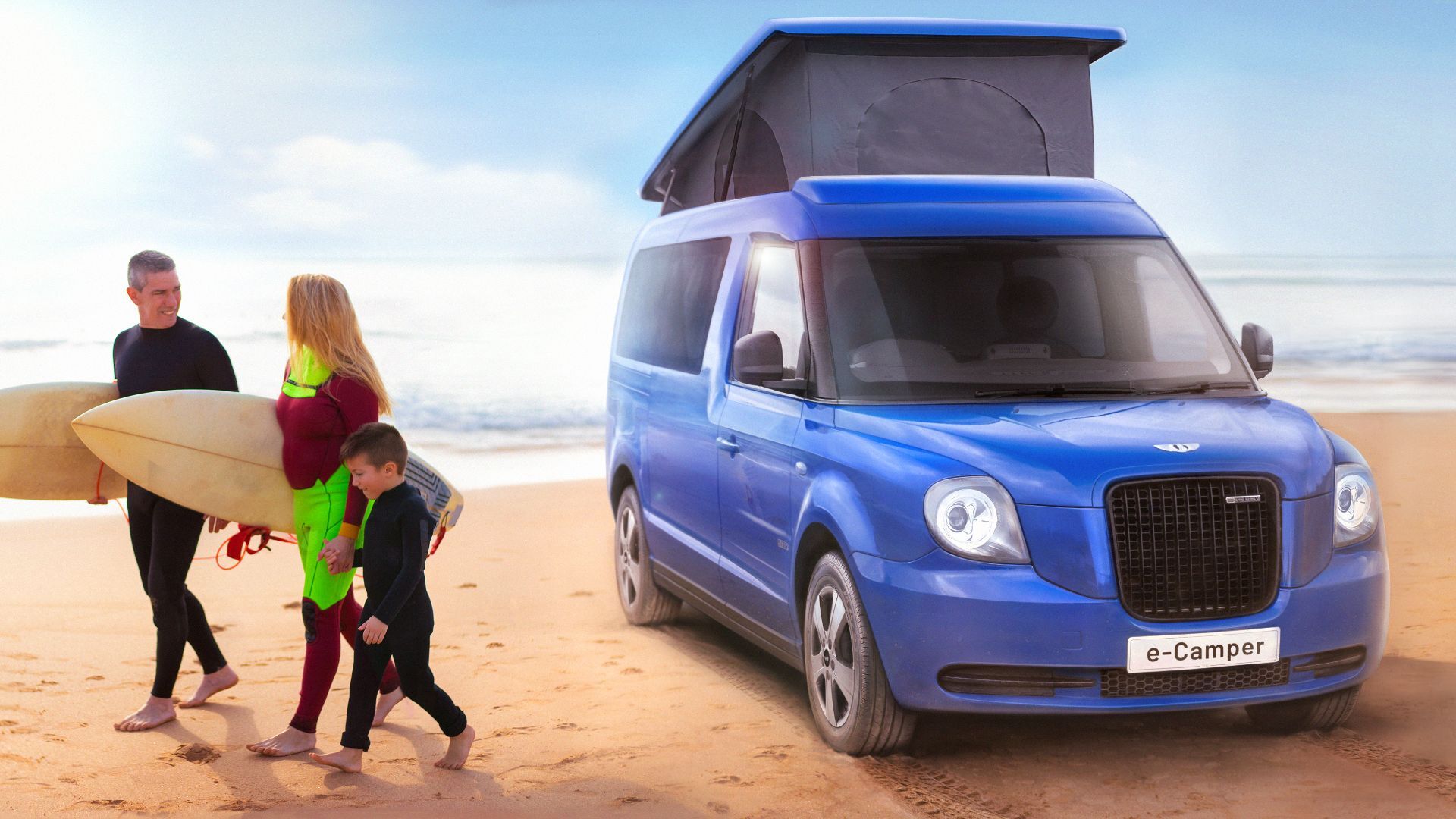
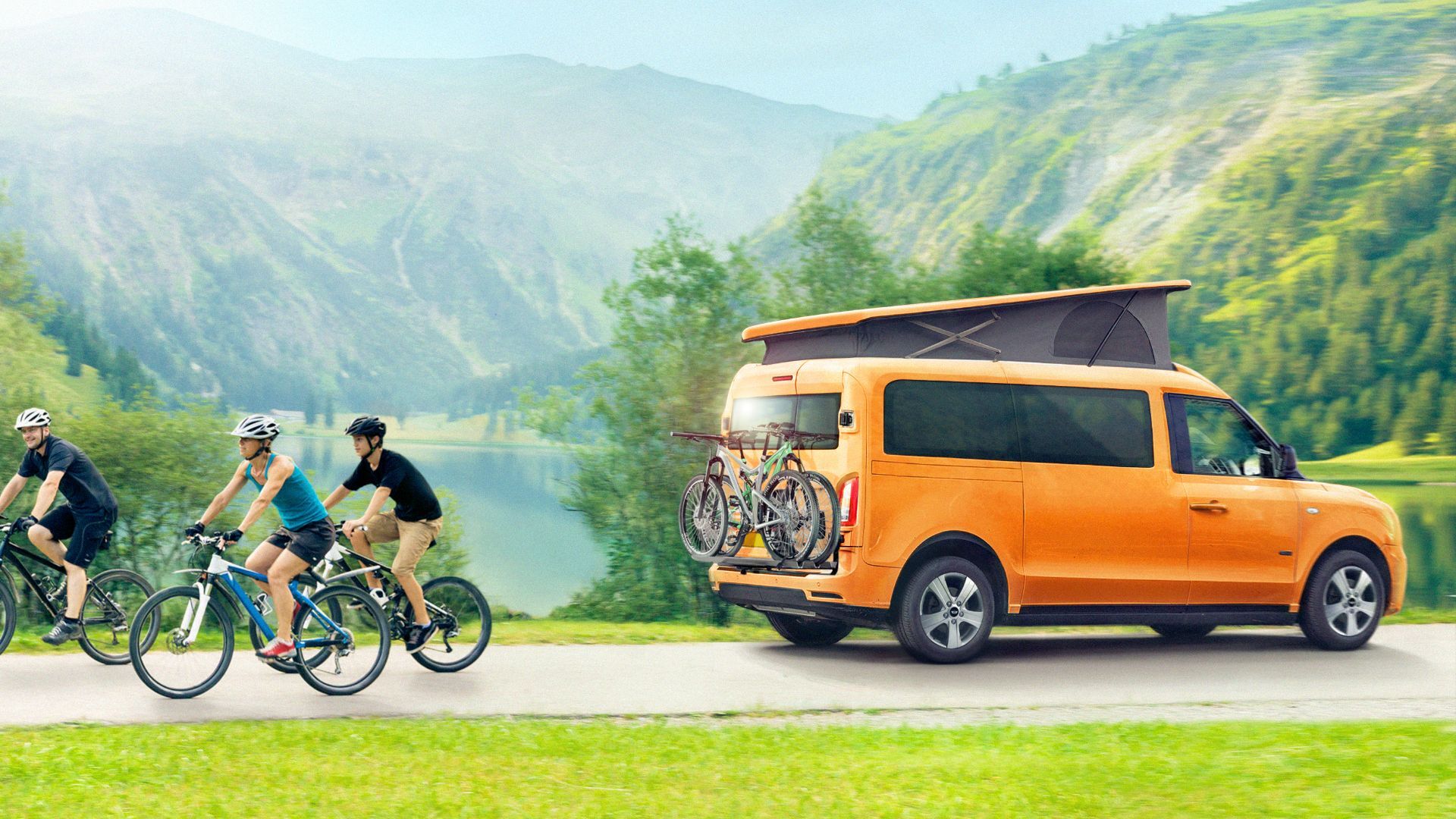
Taxi and van manufacturer LEVC has unveiled a camper conversion based on its VN5 van.
Called the e-Camper, the company claims it is the first electric camper van. However, like the existing TX taxi and van, it uses a range-extending powertrain and offers only 60 miles of electric range before reverting to petrol power. Total range, including the petrol tank, is 304 miles.
Sold by LEVC, the conversion has been devised by camper van specialist Wellhouse Leisure. First deliveries are due to commence in the fourth quarter of 2021, with prices from £62,250 excluding VAT (around £74,400 after tax).
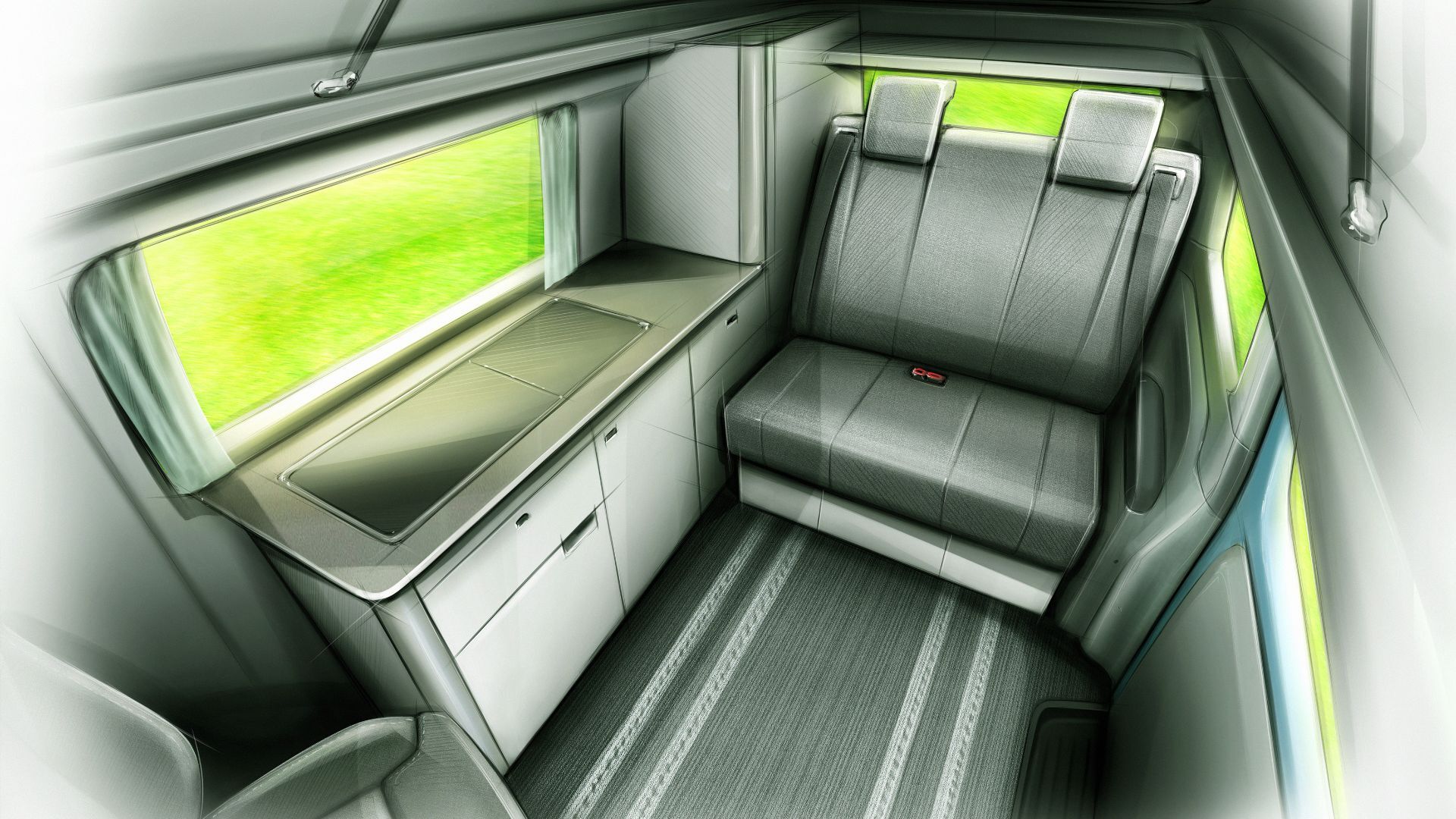
LEVC says the vehicle includes sleeping accommodation for four, an integrated electric kitchenette, a pop-up roof (incorporating sleeping space for two) and a central folding table. There’s also a second-row bench seat, which folds into another double bed.
Meanwhile, the first row of seats can be swivelled 180 degrees and the second row can be slid back, creating enough room to dine and socialise around a table.
A range of accessories for mounting cycles and surfboards is promised, along with some distinctive colours (although we’d be tempted to choose black, for the full TX taxi effect).
“The campervan market is growing rapidly and, despite these vehicles being used for coastal and countryside adventures which often include national parks and protected areas, they are still powered by petrol or diesel engines,” said Joerg Hofmann, CEO of LEVC.
“This is a major conflict; we can see a shift in consumer attitudes, with demand for greener mobility solutions to help to protect and improve air quality. Our new electric, zero-emissions capable e-Camper offers the perfect solution and is well-equipped with high quality features that can be tailored to meet a range of customer requirements.”
A prototype flying car has completed its first inter-city flight, travelling between the cities of Nitra and Bratislava in Slovakia.
The AirCar is powered by a 160hp BMW engine and runs on regular petrol. It completed the flight in 35 minutes and was ‘transformed’ back into a car within three minutes, then driven into the city centre.
The vehicle is equipped with a fixed propeller and a ballistic parachute. Its inventor, Professor Stefan Klein, said it is capable of travelling at 8,200 feet and can reach a cruising speed of 118mph.
The vehicle flown in Slovakia is the first prototype. A second pre-production model is also being trialled, powered by a 300hp engine. This is expected to have a cruising speed of 186mph and a range of 621 miles.
A spokesman for the company behind the project, Klein Vision, told Motoring Research the plan is for the vehicle to be available to customers within the next 12 months. A price is yet to be confirmed.
“This flight starts a new era of dual transportation vehicles. It opens a new category of transportation and returns the freedom originally attributed to cars back to the individual,” said Professor Klein after exiting the AirCar’s cockpit in Bratislava.
“AirCar is no longer just a proof of concept. Fflying at 8,200ft, it has turned science fiction into a reality,” added Anton Zajac, co-founder of Klein Vision.
Nissan will boost car building in Sunderland with a new £1bn gigafactory to make electric car batteries – and has confirmed an all-new electric crossover for UK production.
The new factory, called Nissan EV36Zero and to be constructed in partnership with Chinese battery maker Envision AESC, will have a capacity of 9 GWh, with the potential to generate up to 25 GWh by 2030, and potentially up to 35 GWh.
The SMMT has identified Britain needs at least 60 GWh of electric car battery production capacity by 2030, meaning Nissan’s new factory represents a significant step forward.
The new plant builds on Nissan’s existing 1.7 GWh factory in Sunderland, which supplies batteries for the Nissan Leaf.
The new electric crossover that’s also been confirmed will boast “next-generation vehicle styling, efficiency and battery technology”.
It will be sold in both the UK and Europe, and is designed for global markets too.
PM Boris Johnson has welcomed Nissan’s announcement, calling it “a major vote of confidence in the UK and our highly-skilled workers in the North East.
“This is a pivotal moment in our electric vehicle revolution” which secures Sunderland’s future “for decades to come.
“Commitments like these exemplify our ability to create hundreds of green jobs and boost British industry, whist also allowing people to travel in an affordable and sustainable way so we can eliminate our contributions to climate change.”
‘Great news’
SMMT chief executive Mike Hawes welcomed the announcement, calling it “great news for the sector, the region and all those employed locally.
It also demonstrates the UK automotive industry’s commitment to net zero and that the transition to these new electrified vehicles can be ‘made in Britain’.”
Nissan COO Ashwani Gupta called the announcement “a landmark day for Nissan, our partners, the UK and the automotive industry as a whole”.
UK Business Secretary Kwasi Kwarteng said he was “extremely proud that Nissan has not only reaffirmed its belief in Britain, but is doubling down on its long-standing commitment to our country.
“The cars made in this plant, using batteries made just down the road at the UK’s first at scale gigafactory, will have a huge role to play as we transition away from petrol and diesel cars and kick-start a domestic electric vehicle manufacturing base.”
Nissan EV36Zero: in detail
The Nissan EV36Zero plan will create a “world-first EV manufacturing ecosystem’ in Sunderland.
It consists of three initiatives: electric vehicles, renewable energy and battery production. Nissan calls it a “blueprint for the future of the automotive industry”.
£423m will be invested in the new EV crossover, creating 909 new jobs in Sunderland and 4,500 more in the supply chain.
Envision AESC will invest £450m to build Britain’s first gigafactory next to the Nissan Sunderland plant. It will be powered by renewable energy.
The plant will use new battery cell technology with 30 percent more energy density. They will also be cheaper than today’s batteries, helping make EVs more accessible.
Nissan believes the plans will put the North East “at the heart of a new EV hub in the UK, collaborating on R&D around the whole battery lifecycle, from storage, to second life use, V2G smart charging and closed loop recycling”.
VW had planned to reveal the latest GTI version at the annual Wörthersee meet.
However, the enthusiast extravaganza was cancelled due to COVID-19, leaving Volkswagen to reveal the new Polo GTI virtually instead.
Mature entertainment
Following a limited-edition model in 1995, the GTI has been a part of the Polo range since the turn of the millennium. The Polo GTI has focused on delivering grown-up performance, despite constant comparisons to the Ford Fiesta ST.
Volkswagen says the latest version of its go-fast supermini will set “new benchmarks” in its class.
At the heart of the Polo GTI remains a turbocharged 2.0-litre four-cylinder engine. This should deliver an output of 207 hp and 236 lb-ft of torque, and comes with a new seven-speed DSG transmission as standard.
The suspension is lowered by 15mm, with Volkswagen promising “safe neutrality” and a “high degree of driving comfort”.
Ticking all the GTI boxes
On the outside, new LED matrix headlights with an illuminated front grille are the biggest change. The latter emulates the grille seen on Volkswagen’s electric ID models, and sits above a redesigned front bumper.
Red detailing, now a Volkswagen GTI trademark, can be found inside the headlight units. GTI badges on the front wings, and honeycomb mesh grilles, are also unique to the hot supermini.
At the back, new LED tail lights incorporate animated brake lights and dynamic indicators. A set of 17-inch alloy wheels are standard, with 18-inch items available, too.
Buyers will have a choice of five different paint colours, including the option of a contrasting black roof with certain hues.
Technological upgrades included
On the inside, a 10.25-inch digital dashboard dominates proceedings. Apple CarPlay and Android Auto connectivity is now wireless, with the latest multimedia system offering a host of online services.
Travel Assist, Volkswagen’s semi-autonomous driving system, will also be included on the Polo GTI. Combining adaptive cruise control and lane-keep assist, it functions at up to 130 mph. Drivers still need to keep both hands on the leather sports steering wheel, however.
UK prices and delivery dates for the new 2021 Polo GTI are yet to be confirmed.
Peugeot has confirmed prices for its third-generation 308 will start from £24,000.
Five trim levels are offered: Active Premium, Allure, Allure Premium, GT and GT Premium. The full range of petrol, diesel and plug-in powertrains is available from Allure upwards.
The entry-level Active Premium comes with 16-inch alloy wheels, black rear trim, LED front and rear lights and automatic windscreen wipers. All variants include Peugeot’s i-Cockpit dashboard, with a 10-inch touchscreen and rear parking sensors.
Allure (from £25,850) adds 17-inch wheels, sat-nav and several parking assistance systems. Move up to Allure Premium (from £26,750) and you get stop-start technology and wireless smartphone connectivity.
GT models (from £28,650) gain larger 18-inch alloy wheels, matrix LED headlights, cabin purification technology and a heated steering wheel. The range-topping GT Premium (from £30,250) adds an upgraded sound system and semi-autonomous lane-keeping assistance technology.
Two plug-in hybrids are offered from launch. These combine a petrol four-cylinder engine, which develops either 148hp or 178hp, with a 109hp electric motor. They both use a 12.4kWh lithium-ion battery pack, offering an electric-only range of up to 37 miles, and take just under two hours to recharge using a typical home wallbox.
The petrol line-up consists of a 1.2-litre three-cylinder engine with 108hp or 128hp. The sole diesel is a 1.5-litre four-cylinder unit, which develops 128hp.
“The 308 has been one of Peugeot biggest-selling vehicles and, with the latest edition, buyers now have the power to choose the powertrain that best meets their needs,” said Julie David, MD at Peugeot UK.
“With a bold new design, it is the first model to wear our new-look lion logo and the new 308 arrives at an exciting time for Peugeot, as we continue our commitment to provide electrified variants across our entire model range by 2025.”