Hennessey Performance has announced a major power upgrade for the already formidable Ford F-150 Raptor pickup truck.
As its name suggests, the new 2021 Hennessey VelociRaptor 600 packs a considerable 600 horsepower under the hood.
It marks a 150 horsepower gain over the stock 3.5-liter EcoBoost V-6 engine found in the showroom Raptor.
As the world’s largest producer of modified F-150 Raptors, the Texan company expects the pickup to become one of its best-sellers.
Incoming Raptor attacks
Delivering a 33 percent increase in engine output is no small feat. But Hennessey has been aided by Ford’s continued use of the familiar EcoBoost engine for the third-generation Raptor.
The VelociRaptor 600 upgrades include a new high-flow air induction system, an upgraded front-mounted intercooler, plus improved intercooler pipework. Completing the overhaul is a reprogrammed engine management system.
A dyno test ensures the full 600 horsepower and 622 lb-ft of torque are delivered, along with up to 400 miles of road testing.
Hennessey claims the upgrades should deliver 0-60 mph in 4.2 seconds. The VelociRaptor 600 is also capable of running a quarter-mile sprint in just 12.9 seconds.
More money, more possibilities
Prices for the new VelociRaptor 600 will start at $85,950, although buyers are likely to spend closer to $110,000 with options.
This typically includes bespoke off-road upgrades, such as a Hennessey VelociRaptor front bumper, 20-inch wheels, and a three-inch lift for the suspension.
As James Bond fever engulfs the UK, revealing a car called ‘Spectre’ seems like top-level trolling from Rolls-Royce. However, this is no publicity stunt. The Spectre is the British marque’s first step towards a fully electric future by 2030.
Details are scant at present, but the disguised photos show a two-door coupe with a similar silhouette to the current Wraith. It has Rolls-Royce’s familiar Pantheon grille and rear-hinged ‘coach doors’, plus a strong shoulder line and sleek, turbine-look alloy wheels. It also shares the same aluminium architecture as the latest Phantom, Cullinan and Ghost.
CEO Torsten Müller-Ötvös called the announcement “the most significant day in the history of Rolls-Royce Motor Cars since 4th May 1904,” when the company was founded. “This is not a prototype, it’s the real thing,” he explained. “It will be tested in plain sight and our clients will take first deliveries of the car in the fourth quarter of 2023.”
Global testing will cover 1.5 million miles – equivalent to 400 years of use for a Rolls-Royce, on average.
An electric dream
The Spectre might be Rolls-Royce’s first EV, but the brand has a long history with electricity. Sir Henry Royce started out making dynamos and electric crane motors, and actually patented the bayonet-style light bulb fitting.
His partner, Charles Rolls, also foresaw an electrified future, saying in 1900: “The electric car is perfectly noiseless and clean. There is no smell or vibration, and they should become very useful when fixed charging stations can be arranged. But for now, I do not anticipate that they will be very serviceable – at least for many years to come.”
More recently, Rolls-Royce developed a prototype Phantom Experimental Electric (EE) in 2011, which traded its 6.75-litre V12 for a 290kW electric motor. Maximum torque of 590lb ft exceeded the 531lb ft of the petrol version, and the car was regularly seen ferrying celebrities around London, but a short range and three-year battery life limited its appeal.
Then in 2016, the futuristic Vision Next 100 concept previewed the idea of an electric coupe.
For the very few
Müller-Ötvös added: “The name Spectre perfectly matches the extraordinary Rolls-Royce that we are announcing today – a motor car that makes its presence felt before disappearing into a world inaccessible to all but the very few.”
The proof will be in the driving, but we suspect a combination of traditional British luxury, effortless electric torque and near-silence will leave Spectre customers stirred, not shaken.
Caterham will create the world’s highest car dealership this week as it launches the new, entry-level Seven 170.
To promote the brand’s lightest ever production car, Caterham will take up residence in Brighton’s British Airways i360 observation tower.
The new Seven 170 and other Caterhams will be displayed on Thursday 30 September, some 137 metres (450 feet) in the air.
Seventh heaven
Along with showing off new cars, Caterham staff will also undertake an audacious challenge. Experts from the company will attempt to assemble a Seven 170 in just six hours.
Between 10am and 4pm, a team of six engineers will build the new car with hand tools. To put the time allowed into context, Caterham suggests a one-person build will typically take 100 hours.
Taller than Big Ben, the London Eye or Tower Bridge, the British Airways i360 will offer panoramic views of the English Channel while the Caterham engineers work.
Featherweight superstar
Potential customers wishing to visit the pop-up dealership are advised to contact their local Caterham retailer. Anyone simply wanting to see the Seven 170 being built can purchase a regular ticket for the British Airways i360.
Caterham Cars CEO, Graham Macdonald, said: “This is our lightest ever product so we wanted to launch it in a memorable way. We certainly feel opening the world’s highest car dealership in the British Airways i360 does that while also bringing to life how light the car is.”
The Seven 170 tips the scales at just 440kg. Powered by a turbocharged 660cc Suzuki engine, its 84hp output allows it to accelerate from 0-62mph in 6.9 seconds.
Priced from £22,290 in kit form, the Seven 170 is both ULEZ and Euro 6 emissions compliant.
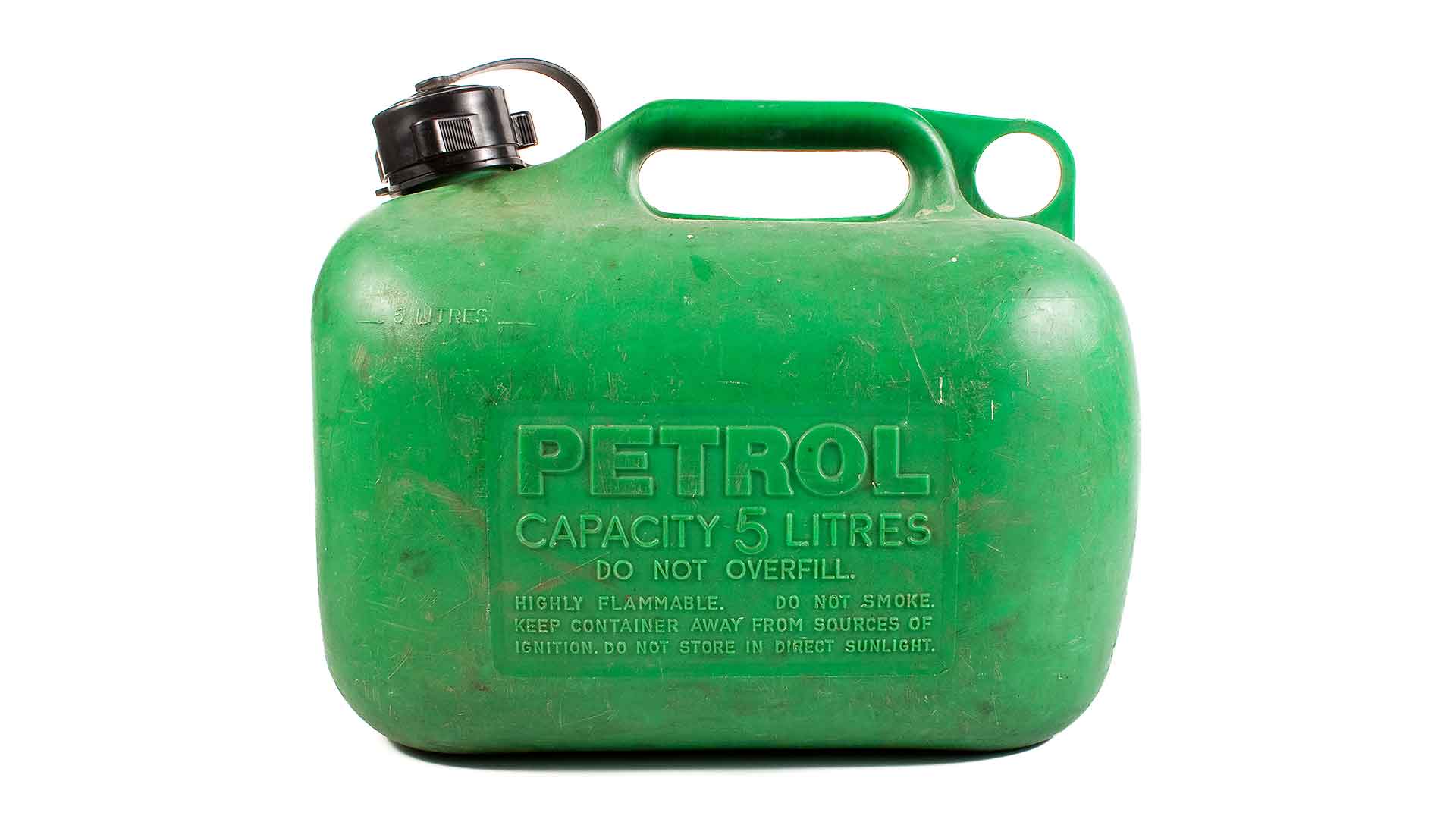
Sales of jerry cans have soared as motorists look to top up on fuel during the current filling station shortages.
Halfords says that sales of jerry cans and plastic fuel containers have rocketed 1,656 percent.
The term ‘jerry can’ is now Halfords’ fourth most popular search term, with searches soaring 1,100 percent in a week.
Despite the AA advising motorists against storing petrol and diesel in their cars, something it says is “incredibly, incredibly dangerous”, many motorists are still seeking to maximise the amount of fuel they purchase during a visit.
There is no specific law forbidding the storage of fuel in containers though; the Health and Safety Executive merely advises not doing so unless you absolutely have to.
However, unless your fuel container is in good condition, the police can still class it as a “dangerous load” or “may be hazardous”.
Halfords says that sales of e-bikes have also gone up, as motorists look to avoid driving entirely during the current fuel shortages.
Orders for electric bikes have more than doubled since the crisis began.
What is the law on filling petrol cans at garages?
It is legal to fill petrol and diesel jerry cans at filling stations – but there are some rules around it.
If it is a metal container – the traditional ‘jerry can’ type – the total motorists can store is capped at 20 litres.
Motorists are allowed to hold no more than a total of 10 litres in plastic cans.
The traditional jerry can typically holds 10 litres and plastic cans hold 5 litres: motorists are allowed to only carry two of each, meaning the maximum they can carry is 30 litres – two 10-litre jerry cans and two 5-litre plastic cans.
All cans must be clearly marked with the words ‘petrol’ and ‘highly flammable’.
The containers must be “robust and not liable to break under the normal conditions of use”. They should also stop the escape of petrol vapour.
Petrol should also be carried in the boot, not in the passenger compartment.
As part of last weekend’s Acura Grand Prix of Long Beach, Motul designed a retro-inspired car livery.
It celebrates the 50th anniversary of the brand’s flagship 300V oil for race cars, and appears on the limited-edition Acura NSX Type S.
Launched in 1971, the 300V formula became the world’s first fully synthetic lubricant to be used in four-stroke engines.
Refined design
Inspiration for the livery on the NSX Type S comes from decades of Motul-sponsored racing cars. The red and white stripes are complemented by a set of gold HRE Vintage FMR 527M two-piece wheels, adding an extra motorsport connection.
Acura will only produce 300 examples of the 600 horsepower Type S for North America. This makes it an even more suitable choice to celebrate 300V oil.
“300V is Motul’s most advanced racing oil,” said Motul USA brand manager, Nolan Browning. “We worked hard to make new 300V even better, using technical data from Motul-sponsored racing teams to develop a product worthy of the historic 300V name.
He added: “We couldn’t be more excited to return to the Acura Grand Prix of Long Beach as an official sponsor for the U.S. preview of new 300V on track.”
Down to the wire
Founded in France in 1853, Motul officially entered the U.S. market in 1989. Today it supplies oil to teams competing in sports car racing, endurance championships and the Le Mans 24 Hour race.
This year’s Grand Prix of Long Beach marked the season finale of the 2021 IndyCar Championship.
Other motorsport action in California over the weekend included the IMSA SportsCar Grand Prix of Long Beach, Formula D Super Drift Challenge and the Historic Formula Atlantic Challenge.
The 2005 Ford GT originally owned by Jeremy Clarkson has appeared for sale again in the UK.
Listed by Essex-based performance car specialists GT 101, this is your opportunity to own the car that broke Clarkson’s heart. The GT caused a stir when it was previously listed for sale in 2017.
Having appeared on Top Gear with its owner when new, whoever buys the GT will get a genuine piece of TV history.
Sounding the alarm
Clarkson tested a pre-production version of the first Ford GT in 2003. He expressed his admiration for the mid-engined supercar on Top Gear, making it clear how much he wanted to own one.
Only 27 cars were allocated to the UK, but Clarkson’s status helped him secure one. This led to a two-year wait, with the list price for the 550hp GT increasing during that time.
Once finally delivered, Clarkson’s car immediately began to cause problems. Faults with the alarm system and engine immobiliser saw the GT returned to Ford for a refund after only a month.
Jezza would later buy the car back, but eventually replaced it with a Lamborghini Gallardo Spyder.
Ready for a power lap?
Following the sale, the car passed into the hands of a new private owner. During their tenure, the majority of the 24,454 miles shown on the odometer were added.
New additions include adjustable KW suspension components, along with an Accufab performance exhaust system. The GT’s original parts have been retained, should a new owner wish to return the car to stock specification.
The rest of the car remains as ordered by Clarkson. This includes the desirable BBS alloy wheels, plus painted white stripes over Midnight Blue paintwork. The Alpine sound system includes Bluetooth connectivity.
Star in a reasonably priced supercar
Service records for the car, and its 5.4-litre supercharged V8 engine, are noted as being comprehensive and up to date. A new battery has recently been added, with the MOT good until June 2022.
The market for first-generation Ford GTs is notably buoyant in the United States. However, it remains something of a blue-collar bargain in the UK.
A sale price of £269,000 ($369,000) has been set by GT 101. For a 205mph supercar previously owned by one of the world’s biggest motoring celebrities, that seems a relatively small price to pay.
It preempts a full transition to using hybrid tech for all cars in the BTCC series from 2022.
A study undertaken by title sponsor Kwik Fit has found touring car fans and other UK motorists are in favour of the switch.
Motorsport leads the way
A total of 2,000 drivers were asked their opinion on the BTCC’s hybrid move. More than half (57 percent) though hybrid or electric racing cars will encourage regular motorists to consider alternative-fuel vehicles.
This positive reception increases to 65 percent amongst motorsport fans, with 54 percent saying it will influence their choice of car.
Some 82 percent of fans believe the next 20 years will see greater restrictions on petrol- and diesel-powered race cars.
And 67 percent of those asked said it was important for championships to make an effort to reduce emissions.
Racing to cut pollution
The hybrid Toyota Corolla will be driven at this weekend’s Silverstone rounds by former BTCC champion, Andrew Jordan.
Although Jordan will not be able to score points, the Corolla will still compete under race conditions. This will give BTCC organisers important feedback ahead of next year’s introduction.
Hybrid power will coincide with the BTCC’s use of sustainable fuel from 2022 onwards. An agreement with Haltermann Carless will introduce E10 race fuel with 20 percent renewable components.
This change will result in an 18 percent reduction in greenhouse gases compared to traditional fuel.
A survey of more than 2,000 drivers discovered more than half (56 percent) think electric vehicles cost too much.
This concern contributed to a fifth (20 percent) of respondents saying that buying an EV is currently too daunting.
A waiting game
Only eight percent of respondents to the survey by InsuretheGap intend their next car to be electric. Men (10 percent) are slightly more likely than women (six percent) to make the move to an EV.
Some 37 percent said they plan to wait several years before considering an electric car.
More than half (54 percent) believe electric vehicle charging points are too scarce at present. And 40 percent have no way of charging an electric car at home.
Concerns about having to wait around at charging stations were an issue for 41 percent of respondents, too.
Barriers to entry
The responses to the survey demonstrate the key challenges to encouraging greater EV ownership.
Just over a fifth (22 percent) were aware of the potentially cheaper running costs for an electric car. But almost half of those asked (44 percent) think EVs do not travel far enough on a single charge.
The same number (44 percent) believe the government needs to improve the UK’s charging infrastructure before they will consider an EV.
Ben Wooltorton, chief operating officer at InsuretheGap, said: “We’re being encouraged to embrace the idea that electric cars are the future, but when only one in five drivers are aware that the running costs of an electric car can be significantly lower than a diesel or petrol car for typical driving patterns, and more than half think charging points are too scarce, it’s clear that there are still a lot of barriers to overcome.”
“Take it easy, motorist,” was the advice given to drivers by Ernest Marples as he officially opened the M1 motorway on 2 November 1959.
“If in doubt, don’t,” he warned, as if to preempt the behaviour of motorists as they took to the motorway for the first time. In those days, of course, the speed limit wasn’t governed by legislation, simply by what a car could manage.
Perhaps more importantly, top speed was limited by the courage and talent of the motorist. Accidents were commonplace, as drivers realised they lacked the skills of Messrs Hawthorn, Hill and Clark.
Less than five years later, Jack Sears hit 185mph in an AC Cobra Coupe GT on the M1, using the motorway to do a test run ahead of the Le Mans 24 Hours. As Sears said in an Autocar article, “many teams were using the motorway for test runs”, including Rootes Group, Jaguar and Aston Martin.
A 70mph speed limit was introduced in July 1967, although the legislation doesn’t appear to have been influenced by the antics of Sears in 1964.
The open road
To mark the 60th anniversary of Britain’s first city-to-city motorway in 2019, the Guardian published an article from October 1959, which is best read with the style of a Pathé newsreader in your head.
The 72 miles from London to Birmingham increased the length of Britain’s motorway network to 80 miles. Today, that figure is around 2,300 miles – still less than one percent of the entire road network.
But the importance of motorways cannot be underestimated. Every year, these roads carry around 70 billion vehicle miles of traffic, including millions of HGV deliveries.
The Ministry of Transport estimated that an average of 14,000 vehicles a day would use the M1 between London and Birmingham in 1960, reducing casualties by 500 and saving 2.7 million hours of driving.
We’ve developed a love-hate relationship with the motorway network, relying on it to reach our destination quickly, efficiently and without fuss. When the network delivers on its promise, we don’t give it a second thought.
But when something goes wrong – accidents, Bank Holiday traffic or congestion – we moan that the network is creaking at the seams and not fit for purpose. Visiting a motorway service area tends to give us something to moan about, too. Still, it makes a change from the weather.
Back in the 1960s, motorways were destinations in themselves. People would visit the three-lane ribbons of adventure that could move cars like a conveyor belt of shopping in a supermarket. Restaurants would cater for the motorway tourists, who’d watch the traffic go by behind huge expanses of glass. Those days are gone.
Cats’ eyes and cold meat pies
Today, the motorway is facing a period of change. Smart motorways are arguably the most controversial thing to hit the network since the 70mph speed limit, while a future of autonomous cars could change the way we use the roads forever.
Old newspaper reports make for fascinating reading. In a separate Guardian article, the editorial slams the ‘slow progress’ of the construction programme and draws a comparison with Victorian railway promoters.
‘No one can say when the M1 will be finished,’ it grumbles, before highlighting the proposed expansion of the network, including, quite interestingly, the M3 stretching all the way to Exeter.
‘In an age of serious contemplation of travel to the moon it seems senseless that no British Government has yet devised means of enabling traffic to move more freely on the ground at home,’ it concludes.
We’ve since been to the moon and back – and have sent a car into space – but moving freely on the motorway seems out of reach to beleaguered commuters on the M25, M1 and M6. Take it easy out there.
Motorists are charged £2.50 to use the Dartford Crossing (Dart Charge), but cyclists aren’t permitted to use the Dartford Tunnel or cross the Queen Elizabeth ll bridge by bicycle.
However, it is possible to use the Dartford Crossing with a bike. And the good news is that it’s free of charge.
A special pick-up service is available at Essex Point or Kent Point, with a vehicle taking you and your bicycle through the Dartford Crossing. If your bike fits on a standard car roof rack, there’s no need to pre-book.
How to use the Dartford Crossing service
Cycle to Essex Point or Kent Point
Follow the signs directing you to a yellow telephone
Use the phone to request the service; there’s no number to dial – it’s a direct line
Wait in the designated area for a vehicle to take you and your bicycle through the Dartford Crossing
If the bicycle doesn’t fit on a roof rack – if it’s a tandem, for example – or you’re travelling in a group of more than three cyclists, you’ll need to contact Connect Plus in advance.
This is done by calling 0203 386 8826 or emailing dartfordsecurity@connectplusm25.co.uk.
How to find the Dartford Crossing points
Essex Point is at 859 London Road, Grays, Essex, RM20 3AT. It’s accessible from the cycleway next to the entry slip-road for junction 31 of the M25 motorway.
Kent Point is at Crossings Offices Roundabout, South Orbital Road, Dartford, Kent, DA1 5PR.
When is the bicycle service available?
The service is available seven days a week and 365 days a year, but it’s not a 24-hour service. Instead, the bicycles can only use the Dartford Crossing at the following times:
3am to 9am
10.30am to 2pm
3pm to 9pm
10.30pm to 2am
It usually takes 15 minutes for the lift to arrive, but it might take a little longer at peak times or if there is traffic congestion.
A short history of the Dartford Crossing by bike
In the 1960s, five buses were pressed into service to carry cyclists under the river at a cost of around £2,550 per month.
The lower deck was converted to carry bicycles of various sizes, while the upstairs was used to ferry the cyclists. Unfortunately, it proved to be financially untenable, so the service was soon reduced to a single bus, before being cancelled altogether in 1965.