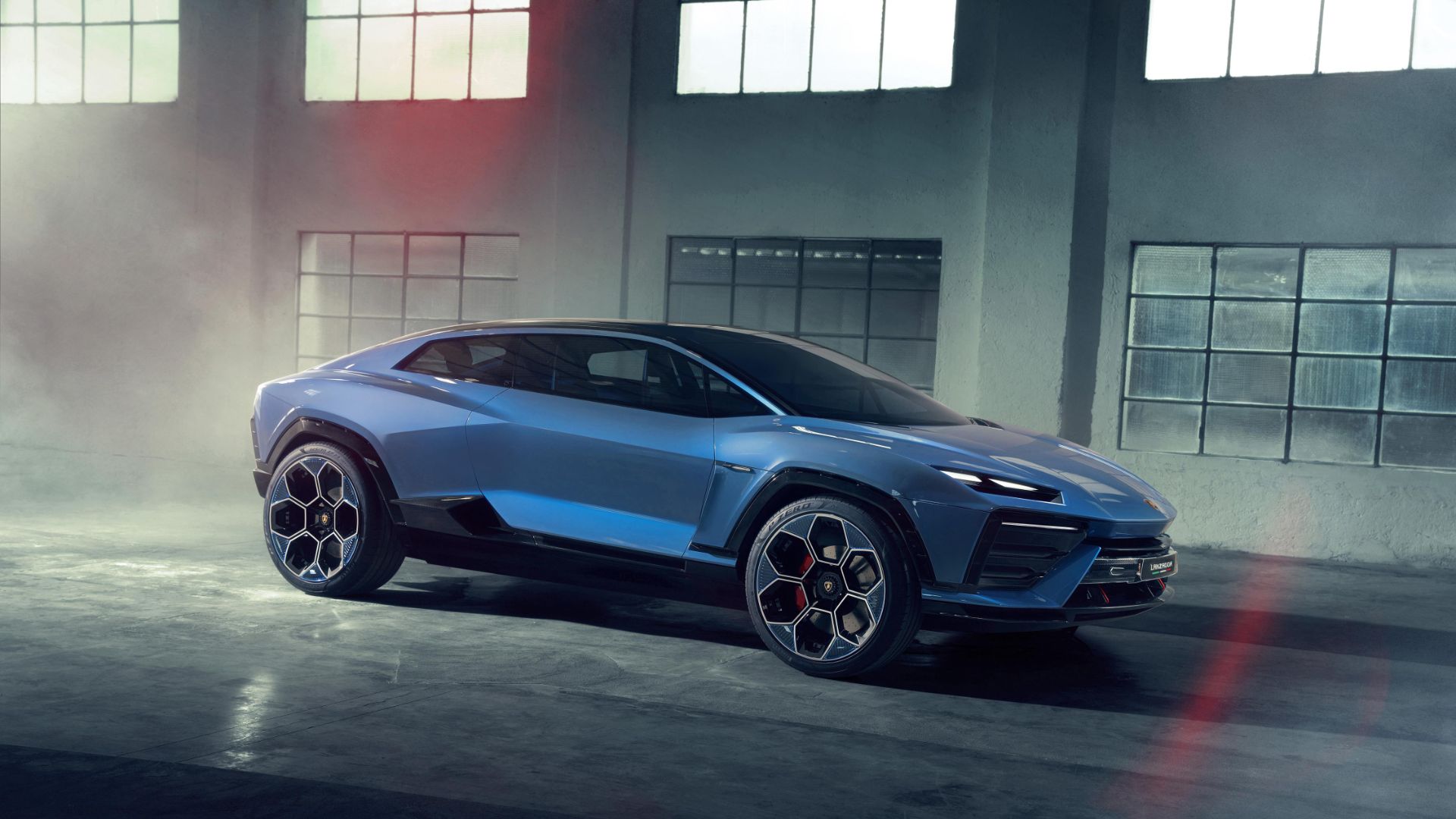
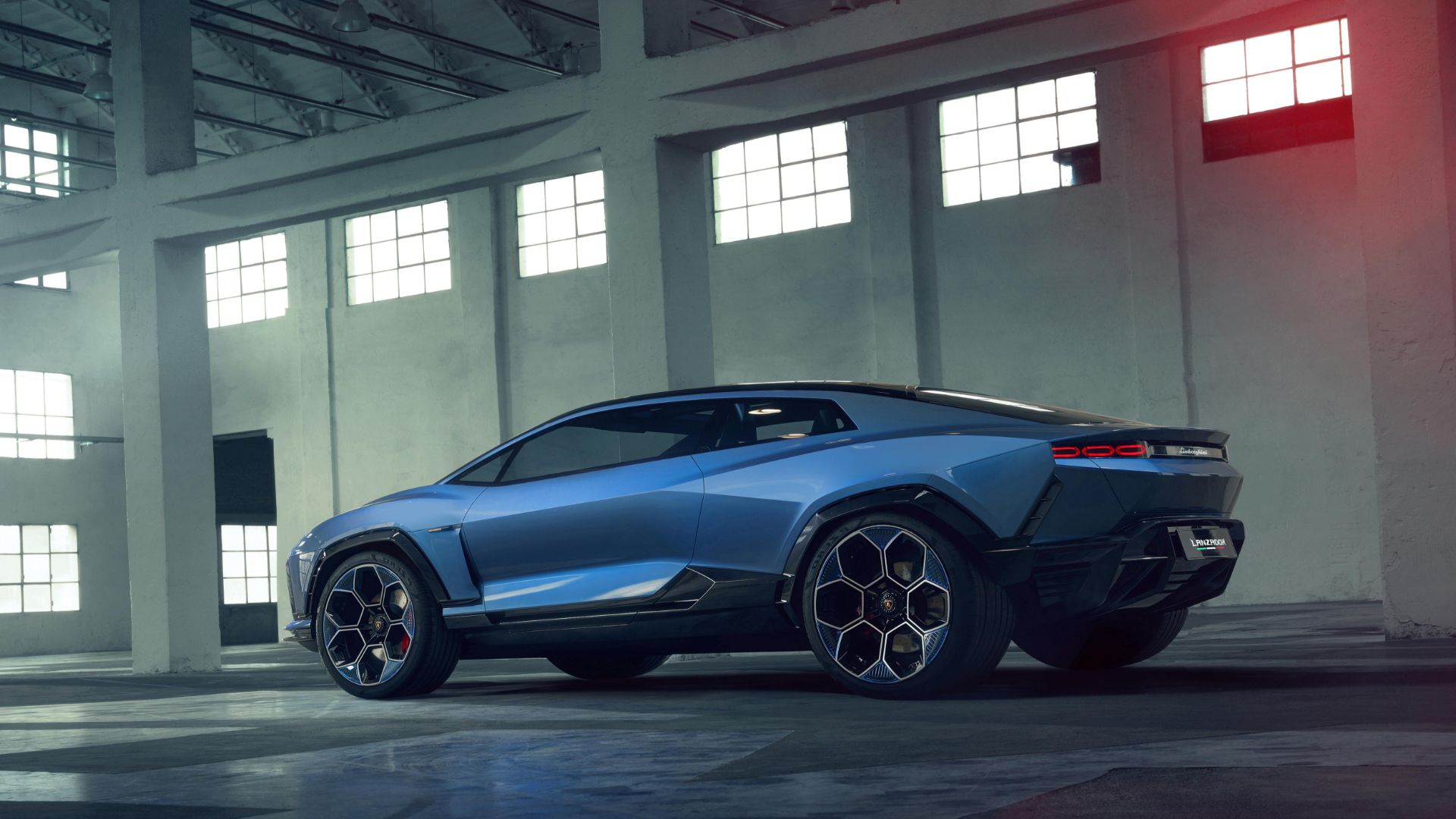
The first electric Lamborghini isn’t due until 2028, but we’re told the Lanzador concept provides ‘a concrete preview of the production vehicle’. For a car company that, perhaps more than any other, has outrageous combustion engines twisted into its DNA, this radical EV suggests the future definitely won’t be dull.
The Lanzador tees up a long-anticipated ‘fourth model line’ for Lamborghini, sitting alongside the Urus SUV and two supercars: the new plug-in hybrid Revuelto and smaller, soon-to-be-replaced Huracan. We’d call it a crossover if that word didn’t instantly invoke images of a Nissan Qashqai on the school run. Lamborghini terms it an ‘Ultra-GT’.
Technical details are a bit sparse, but the Lanzador uses two electric motors – one for each axle – to deliver ‘peak power of over one megawatt’ (circa. 1,360hp). If the showroom version follows suit, that would make it the most powerful production Lamborghini ever. CEO Stephan Winkelmann also suggested a minimum range of 300 miles, although we’d expect that figure to improve by 2028.
Between SUV and supercar
The Lanzador’s wedgy styling was apparently inspired by the Sesto Elemento concept, Murcielago and reborn Countach LPI 800-4. However, as a luxurious GT with two seats and four seats, we’d also draw a direct line to the most glamorous Lamborghini of all: the 1968 Espada.
However you define it, the Lanzador certainly bridges the gap between an SUV and a supercar. Its combination of a raised ride height and low-slung body looks genuinely different. Indeed, at around 1,500mm, the car is no taller than a typical hatchback, despite riding on huge 23-inch wheels.
Underneath all those aggressive angles is an entirely new platform that incorporates tech such as self-levelling air suspension, rear-wheel steering and ‘Wheelspeed Control’ for quicker and more precise cornering. “We are taking Lamborghini integrated driving dynamics control to a whole new level, which has not been possible for production sports cars before,” says chief engineer Rouven Mohr.
Fire up the jet
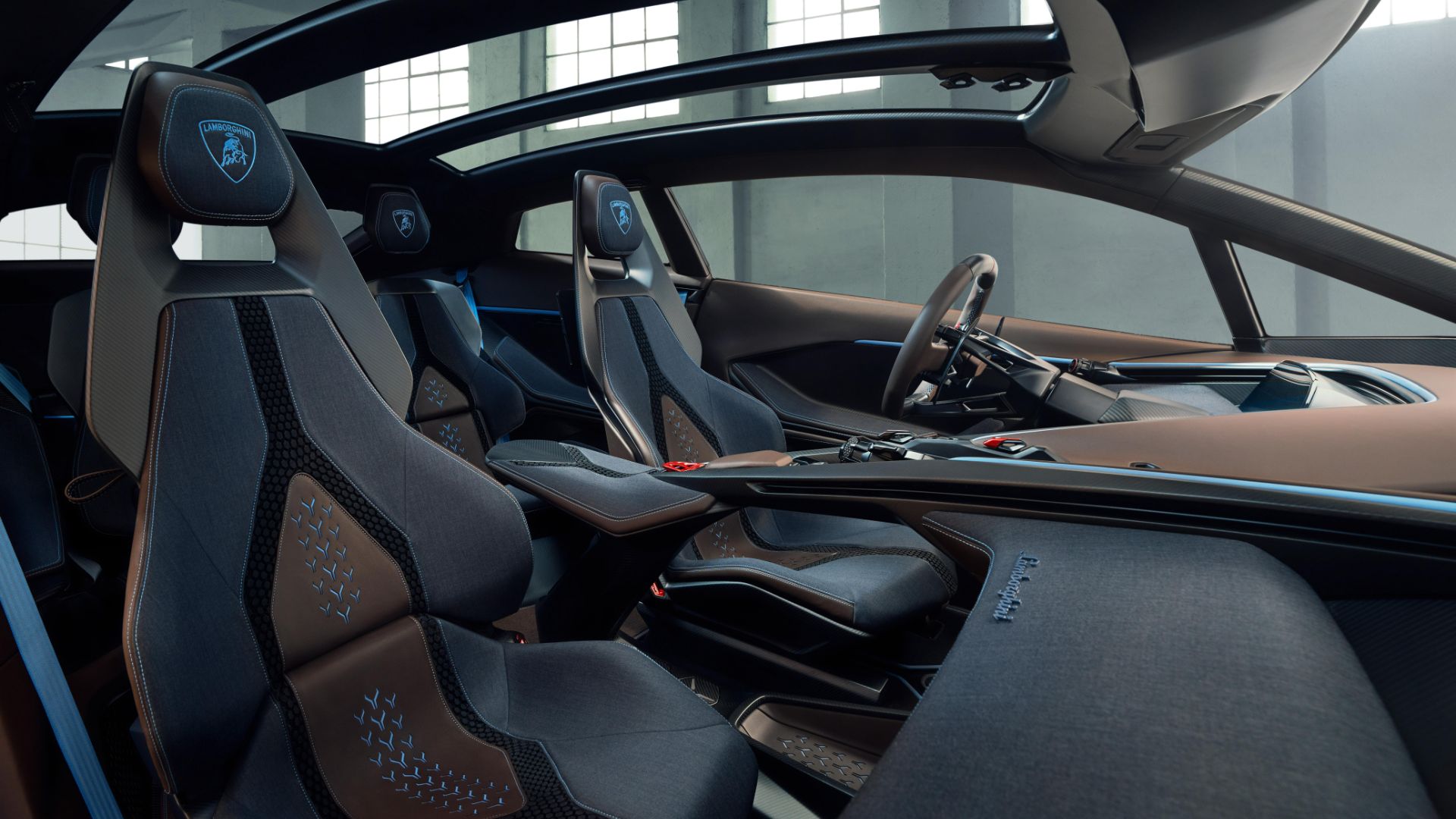
Inside, the Lanzador has four individual seats, acres of glass and a plethora of sustainable materials, including merino wool and 3D-printed recycled foam. ‘The pilot and co-pilot sit low within the cabin as if in a jet,’ says Lamborghini, while the minimalist dashboard features two digital displays that retract when not in use.
Can an electric car possibly recapture the visceral, emotional appeal of a voracious V10 or operatic V12? We’ll have to wait five years to find out, but the Lanzador proves that Lamborghini isn’t afraid to embrace EVs. And that not every SUV needs to be big and box-shaped.
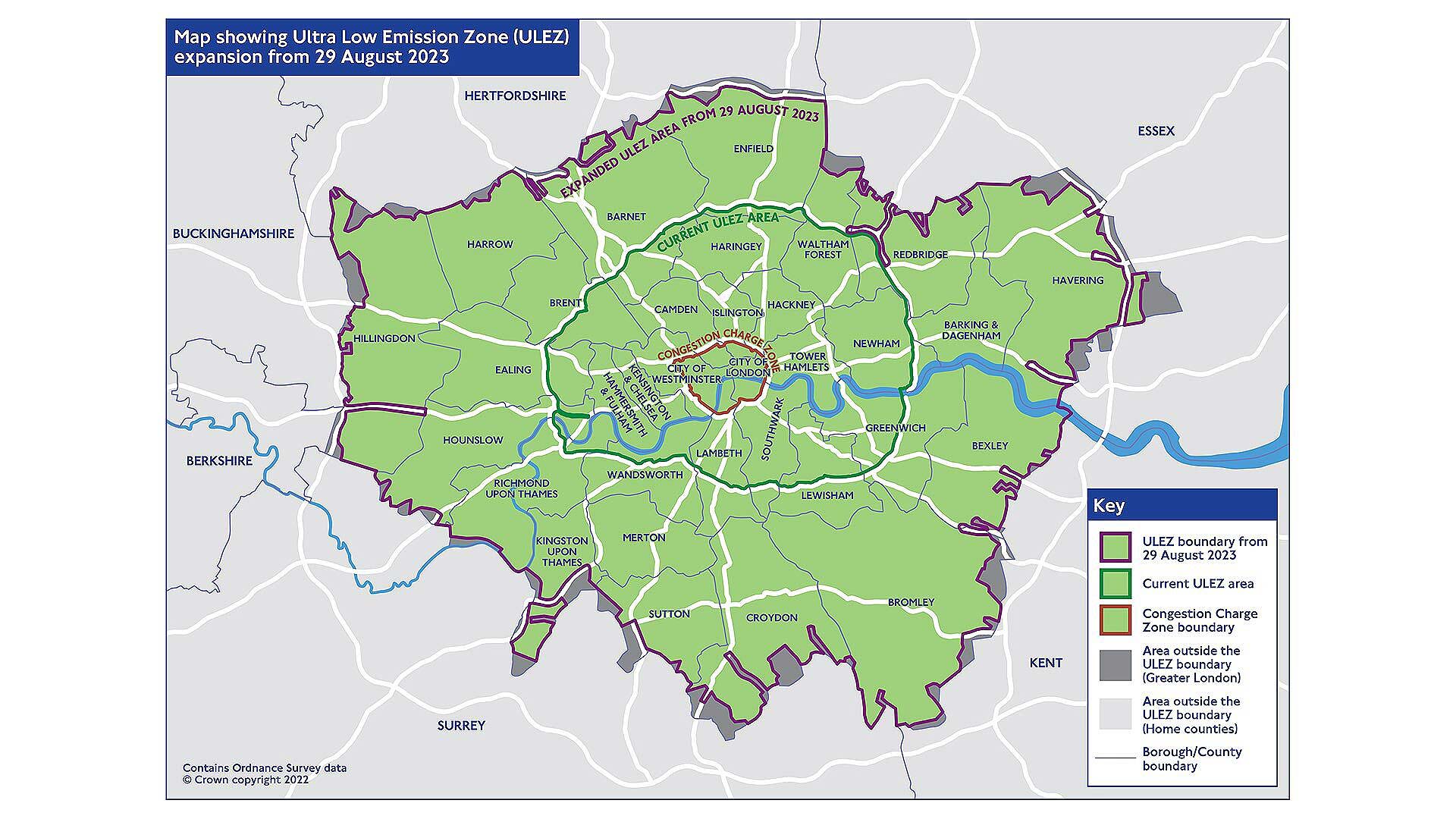
The capital’s Ultra Low Emission Zone has expanded beyond the North and South Circular roads, meaning it now covers nearly all of Greater London. The new ULEZ applies from 29 August 2023.
The growth of the ULEZ has proved controversial and not without problems. Five London councils took legal action over the expansion, citing flawed consultation and a lack of information over a scrappage scheme for older, non-eligible vehicles. However, a High Court judge ruled the scheme is lawful.
More recently, scaffolder Noel Willcox won a ruling that signs for the Low Emissions Zone – sister scheme to the ULEZ – are illegal, as they don’t make the cost of entering the zone clear. And consumer group Which? has warned that copycat websites are ripping off motorists by adding extra charges to Transport for London’s £12.50 daily ULEZ fee.
London mayor Sadiq Kahn said the ULEZ expansion was “one of the toughest decisions I’ve taken”, but claimed “five million more people will be able to breathe cleaner air and live healthier lives” as a result.
So what is the Ultra Low Emissions Zone, what changes are coming and do you need to pay?To provide the answers, here’s our quick guide to the London ULEZ. If you have any other questions, please ask us in the comments below.
What is the London ULEZ?
Like the long-established Congestion Charge Zone, the Ultra Low Emissions Zone is an area of London that some drivers must pay to enter.
If your car doesn’t meet the required standard, driving into the ULEZ costs £12.50 per day. Unlike the London Congestion Charge, the fee applies no matter what time of day you travel.
The ULEZ operates around the clock, and every day of the year except for Christmas day.
London ULEZ: which vehicles are affected?
Only petrol cars meeting the Euro 4 emissions standard and diesel cars meeting the Euro 6 standard are exempt from paying the ULEZ charge of £12.50 per day.
The ULEZ also applies to vans, minibuses, coaches, lorries and other heavy vehicles. For motorcycles, it’s those with Euro 3 emissions or above that are exempt.
The Euro 4 standard became mandatory for all new cars in 2005. Euro 6 was introduced for all cars and light vans from September 2015 (January 2014 for larger vehicles). Euro 3 came into effect for motorcycles in 2007.
Vehicles likely to be liable for the ULEZ charge thus include:
Petrol cars and vans sold before 2006
Diesel cars and vans sold before 2015
Motorbikes sold before 2007
You can check whether your vehicle is compliant by entering its registration number on the TfL website.
Also, don’t forget this fee comes on top of the £15 Congestion Charge if you enter central London.
London ULEZ: the charging zone
The ULEZ originally covered the same area as the London Congestion Charge – i.e. the small central shaded zone above. It then grew outwards to the North and South Circular roads (the darker green area), and now covers the entire green zone pictured here.
This means the Ultra Low Emissions Zone stretches as far as Waltham Abbey in the north, Upminster in the east, West Drayton in the west and Tatsfield in the south, covering most of the area inside the M25 orbital motorway.
The ULEZ fee is £12.50, payable by anyone driving a vehicle that isn’t compliant, whatever time of day they enter the zone. It’s £100 per day to enter for non-compliant vehicles over 3.5 tonnes.
A key point to note: the charge doesn’t buy you 24 hours in the ULEZ. The clock restarts at midnight, so if you drive a car into the zone at 11pm and leave at 3am the next day, you’ll be expected to pay £25 (2 x £12.50).
Inevitably, if the fee isn’t paid, a Penalty Charge Notice will be sent to the registered keeper of the vehicle.
Will you pay ULEZ if you drive to Heathrow airport?
Drivers could now pay up to £17.50 to drop off a friend or relative at Heathrow airport. The charge is mostly due to the Ultra Low Emissions Zone fee of £12.50 a day, payable for non-compliant cars to enter Greater London.
However, there is also a fixed £5 fee for entering the terminal drop-off areas at Heathrow, bringing the potential cost to £17.50.
How can I avoid the London ULEZ?
Navigation app Waze allows London residents to enter whether their vehicle is exempt or not. If not, the app can automatically guide you around the zone so you won’t have to pay.
If you’re a London resident on a low income or disability benefits, you may also be eligible for a £2,000 grant towards scrapping your old car and buying a ULEZ-compliant one. Click here for more details of TfL’s scrappage scheme.
Another option is simply to buy a suitable car. Many fun-to-drive modern classics, including the Vauxhall Monaro (pictured above), ‘997’ Porsche 911, Honda S2000 and Aston Martin V8 Vantage are exempt from the charge.
As Tom Wood, CEO of Car & Classic, points out, older classic cars can avoid the ULEZ, too. “The exemption for cars in historical tax status, e.g. any classic vehicle made before 1 January 1983, still stands – so you won’t have to pay,” he explains.
“It could be a great time to buy or even save a classic car and commission it for ULEZ commuting duties. If, however, your classic is not 40 years old, don’t write it off and send it to be scrapped, as this is a rolling scheme. So in 10 years’ time, cars built before 1 January 1993 should be eligible.”
Nearly half of UK homeowners would consider paving over their front garden to make space for charging an electric vehicle.
New research by EO Charging found that 49 percent of the 2,000 respondents surveyed would remove gardens and lawns to make EV charging at home easier.
Despite this, more than half (53 percent) of those asked believe the trend for turning front gardens into parking spaces needs to be addressed.
Home charging concerns
In further findings from the survey, 13 percent of respondents said they already have an electric car. Londoners were most likely to be EV owners, with 29 percent of those from the capital having taken the plunge.
Among those who own an EV, 70 percent said they’d already made changes to the front of their homes to aid charging. And 22 percent had reduced green space to benefit their electric car.
However, some 28 percent of respondents are also concerned that an increase in EV charging will have a negative effect on their neighbourhood.
Worries about charging cables running across the pavement (42 percent), and a lack of off-road parking for EV charging (39 percent), are the biggest issues.
Living the suburban dream?
Respondents believed the loss of front gardens for parking is a concern, with 55 percent recognising that preserving garden greenery allows rainwater to soak away, helping reduce flood risks.
Charlie Jardine, CEO at EO Charging, said: “With the expansion of ULEZ around London and other cities likely to follow a similar path with congestion charging, more people living in the suburbs will benefit from choosing to drive EVs.
“This means the desire for home charging facilities will grow, putting more pressure on front gardens and neighbourhood green spaces.”
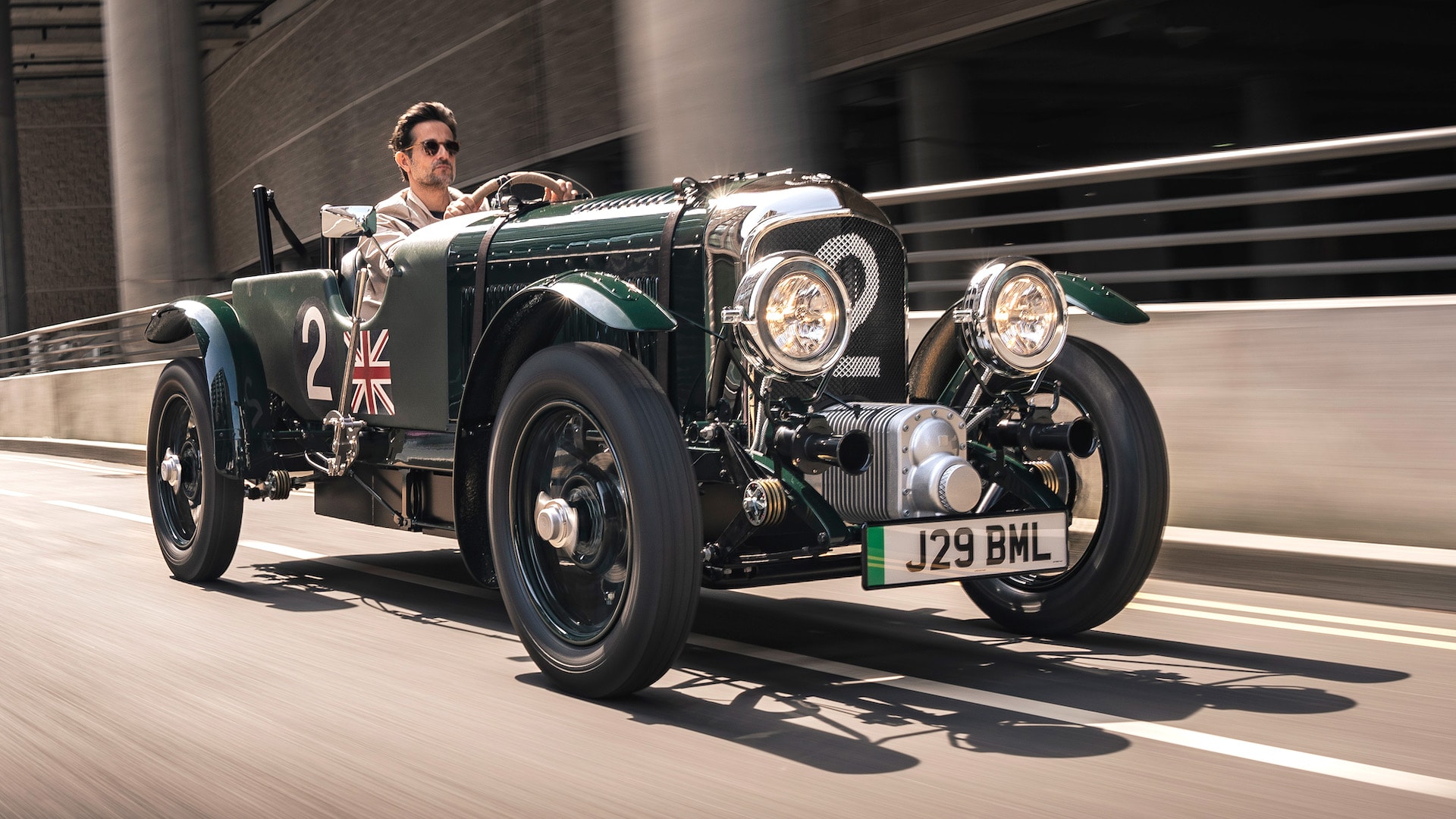
The 1929 Bentley 4½-litre supercharged Bentley Blower is an icon of British motorsport, thanks to its success at the Le Mans 24 Hours.
Now, a collaboration between Bentley and The Little Car Company has resulted in the creation of an 85-percent scale replica of the original.
Unlike previous vehicles from The Little Car Company, the appropriately named ‘Blower Jnr’ will be road legal in the UK, EU, and the USA.
Swapping supercharging for battery charging
There is no pint-sized supercharged petrol engine here, though. Instead, the Blower Jnr is powered by a 15kW electric motor, creating the potential for a top speed of up to 45mph.
An imitation ‘supercharger’ acts as the charging port, with the Blower Jnr’s batteries allowing a 60-mile range when fully charged.
The construction is a mixture of modern and traditional, with carbon fibre matched with impregnated fabric. Leaf springs and scale-down friction dampers replicate the original car’s suspension, but modern Brembo brakes are fitted.
British racing green reborn
Owing to the Blower Jnr’s 3.7-metre length, two adults can sit inside, with room for luggage behind them. Engine-turned aluminium has been used for the dashboard, just like the full-size car, with period-style magneto switches.
A dual-function display is used for both the Garmin satellite navigation system, and the reversing camera.
The first 99 examples of the Blower Jnr will be First Edition models, finished in classic Blower Green with a colour-coded chassis and wheels. A Union flag is painted on the side, with the seats upholstered in Dark Green Lustrana leather. Even the steering wheel is rope-bound, like the original Blower.
A Monterey Car Week debut
As for how much, the initial 99 First Edition examples of the Blower Jnr will cost £108,000 in the UK.
That may seem a lot for such a small car, but it is far cheaper than the £1.8 million charged by Bentley for one of the full-size Blower Continuation cars.
Following a public debut at Monterey Car Week, with the car on show at multiple events, production of the Blower Jnr is expected to commence in the second quarter of 2024.
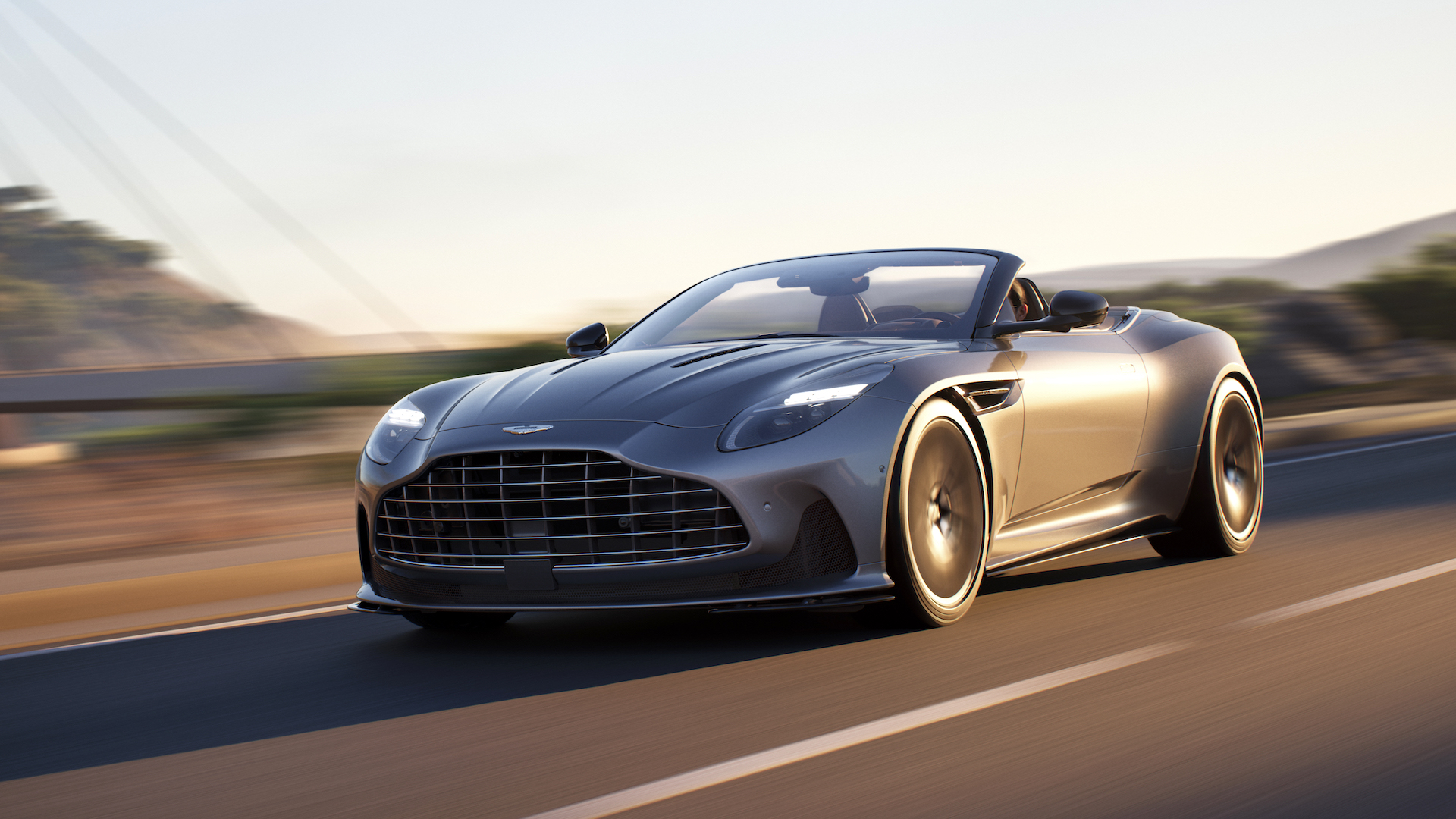
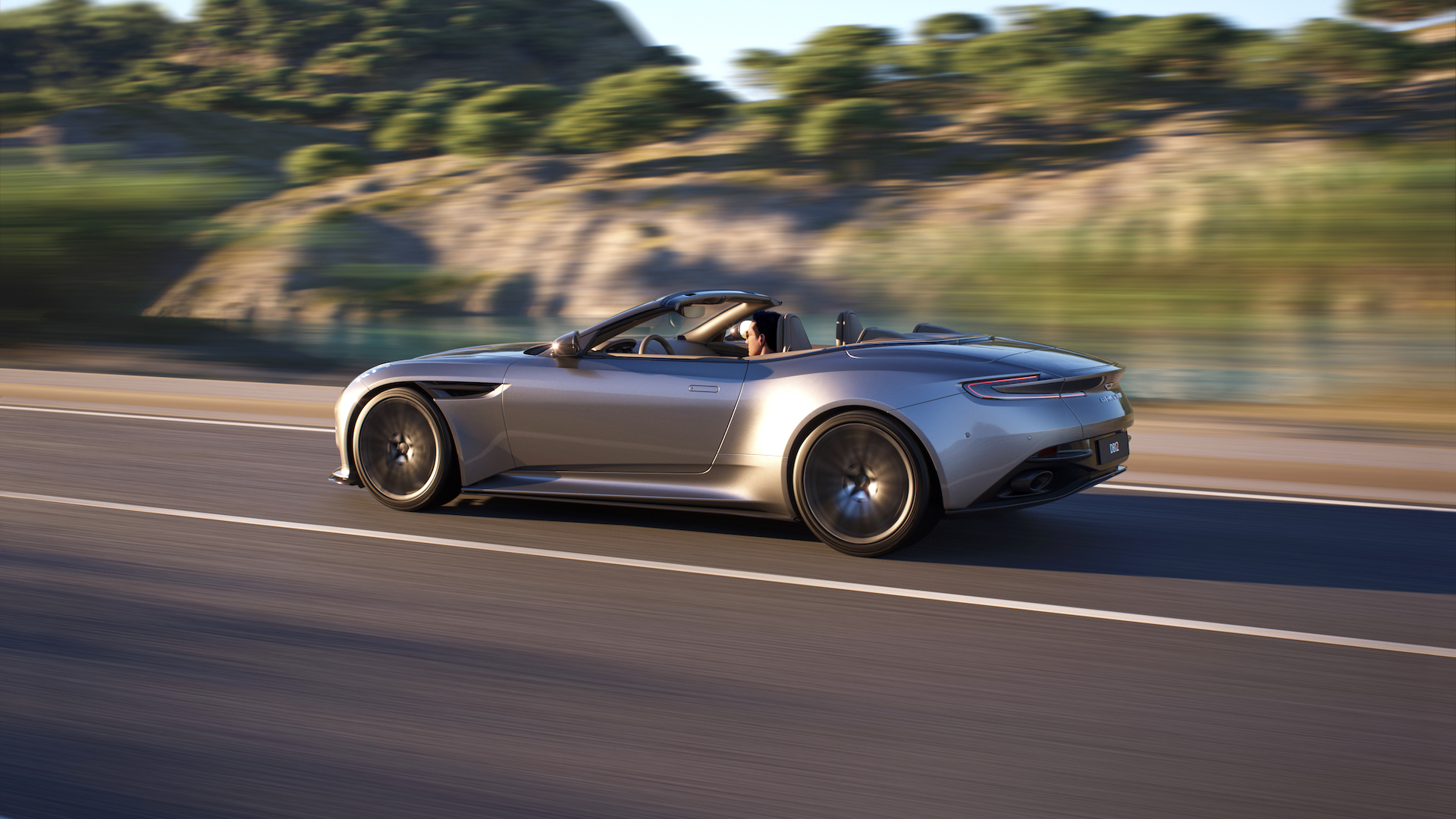
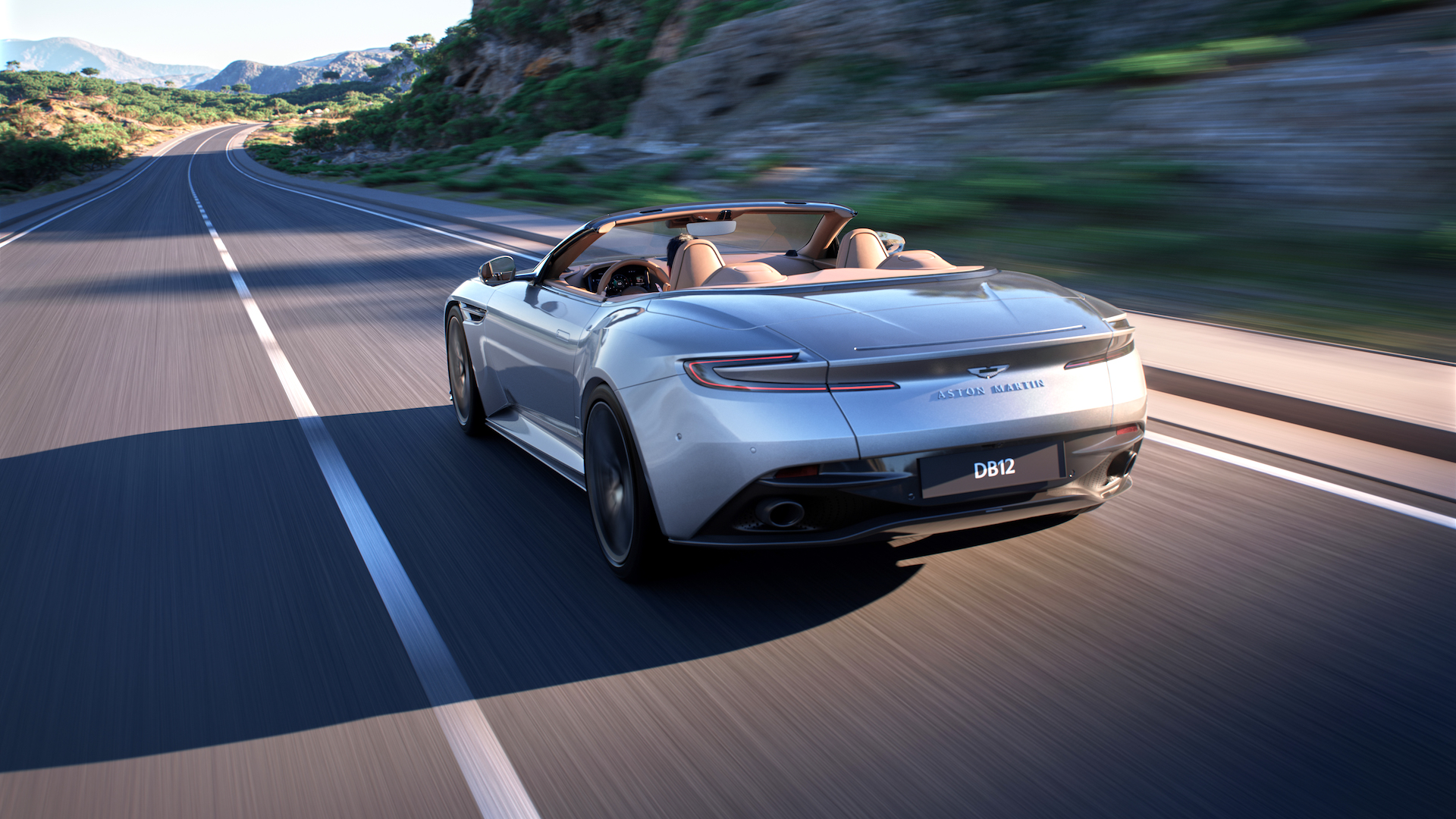
The first details of the new Aston Martin DB12 Volante have been released, before a public debut later this week.
Building upon the considerable changes brought to the DB12 Coupe, the new convertible version is said to combine performance with ‘the irresistible sensory thrills of roof-down driving’.
The open-top version of the DB12 has been developed by Aston Martin alongside its Coupe sibling. As such, Aston Martin states that the engineering improvements found in the DB12’s aluminium structure were intended not only to make the Coupe better, but the Volante as well.
‘The ultimate open-top Super Tourer’
Aston Martin Chief Executive Officer, Amedeo Felisa, said: “For many of our customers, roof down driving is the greatest pleasure.
“Aston Martin Volantes have captured that emotion and expressed it in unique style for more than six decades. With the new DB12 Volante we have changed the rules, creating a car that intensifies those feelings by preserving all the purity and exceptional sporting capabilities of the DB12 Coupe”.
Power for the Volante comes from the same 4.0 twin-turbo V8 engine as found in the DB12, producing 680hp and 590lb ft of torque. Combined with an eight-speed ZF automatic transmission, the DB12 Volante can accelerate from 0-62mph in 3.7 seconds – 0.4 seconds slower than the Coupe.
Top speed is the same 202mph, though.
Intelligent adaptive dampers, and upgraded electronic power-assisted steering, having been tuned to make the DB12 Volante just as potent in the corners. As Aston Martin Chief Technical Officer Roberto Fedeli says, the Volante is “no longer the soft option”.
Rapid car, rapid roof
Key to the appeal of the new DB12 Volante is the ‘K-Fold’ convertible roof. Featuring eight layers of insulation, the fabric roof is able to squeeze itself into a stack height of just 260mm. Aston says this boosts luggage capacity, and allows the Volante to have a low-level tonneau cover.
Offered in a choice of four colours, the hood takes 14 seconds to open, and can be operated when moving at speeds of up to 31mph.
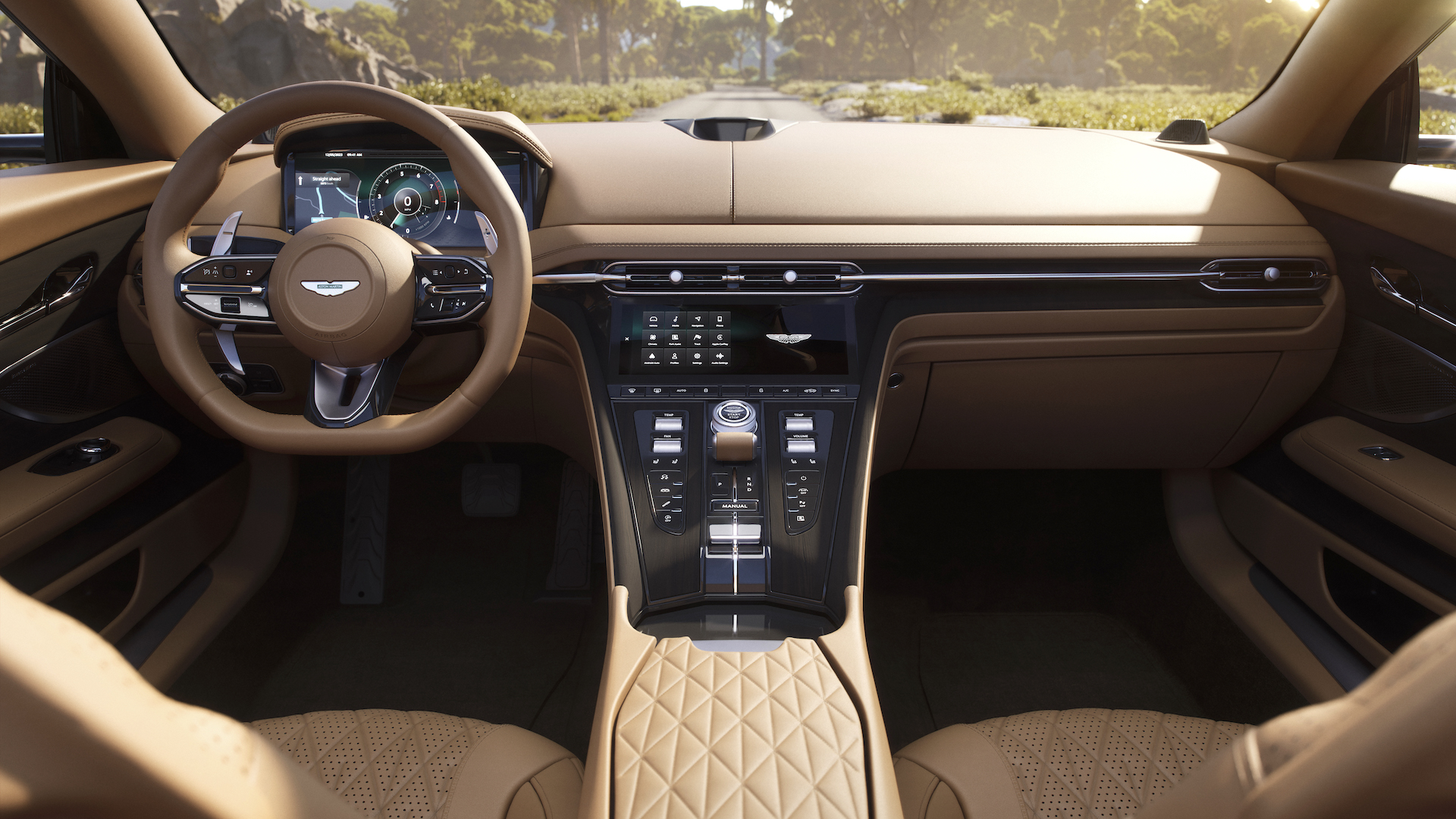
Like the DB12 Coupe, the Volante benefits from a significantly upgraded interior in comparison to the DB11. The Mercedes-Benz infotainment system has been ditched, with an all-new bespoke user interface included.
Wireless Apple CarPlay and Android Auto are included, whilst a 1,170W Bowers & Wilkins surround sound system with 15 speakers can be found on the options list.
A global debut in California
To celebrate the launch of the new DB12 Volante, Aston Martin will display its latest open-top creation during Monterey Car Week.
The DB12 Volante will be on show at The Quail: A Motorsports Gathering this Friday 18 August, and then at the exclusive clubhouse Aston Martin Club 1913 at Pebble Beach Concours D’Elegance over the weekend.
Production of the DB12 Volante is due to commence in the third-quarter of 2023, with delivery of the first completed examples planned for the fourth-quarter.
The average price hike for motorists renewing their car insurance was £36, taking the quarterly average up to £471, while the average premium for a new policy rose £21 to £566.
The analysis is robust, with the ABI surveying 28 million car insurance policies. It says the upward trend is due to sustained cost pressures including a 33% rise in vehicle repair costs.
The figures come after international consultants EY noted the UK motor insurance market “experienced its worst performing year in a decade in 2022”.
For every £1 car insurers received in premiums, they paid out £1.10 in claims and costs.
Rising costs
“These continue to be tough times for many motorists and motor insurers alike,” said ABI director of general insurance policy Mervyn Skeet.
“With many families facing higher cost of living bills, no-one wants to see the cost of their motor insurance rise.
“Insurers remain determined to ensure that motor insurance remains as competitively priced as possible, but this has become increasingly challenging, given the continued rising costs that they are facing.”
Car insurers paid out £2.4 billion to settle claims in Q1 2023. This figure, which includes theft, repairs and personal injury, rose 14% in a year.
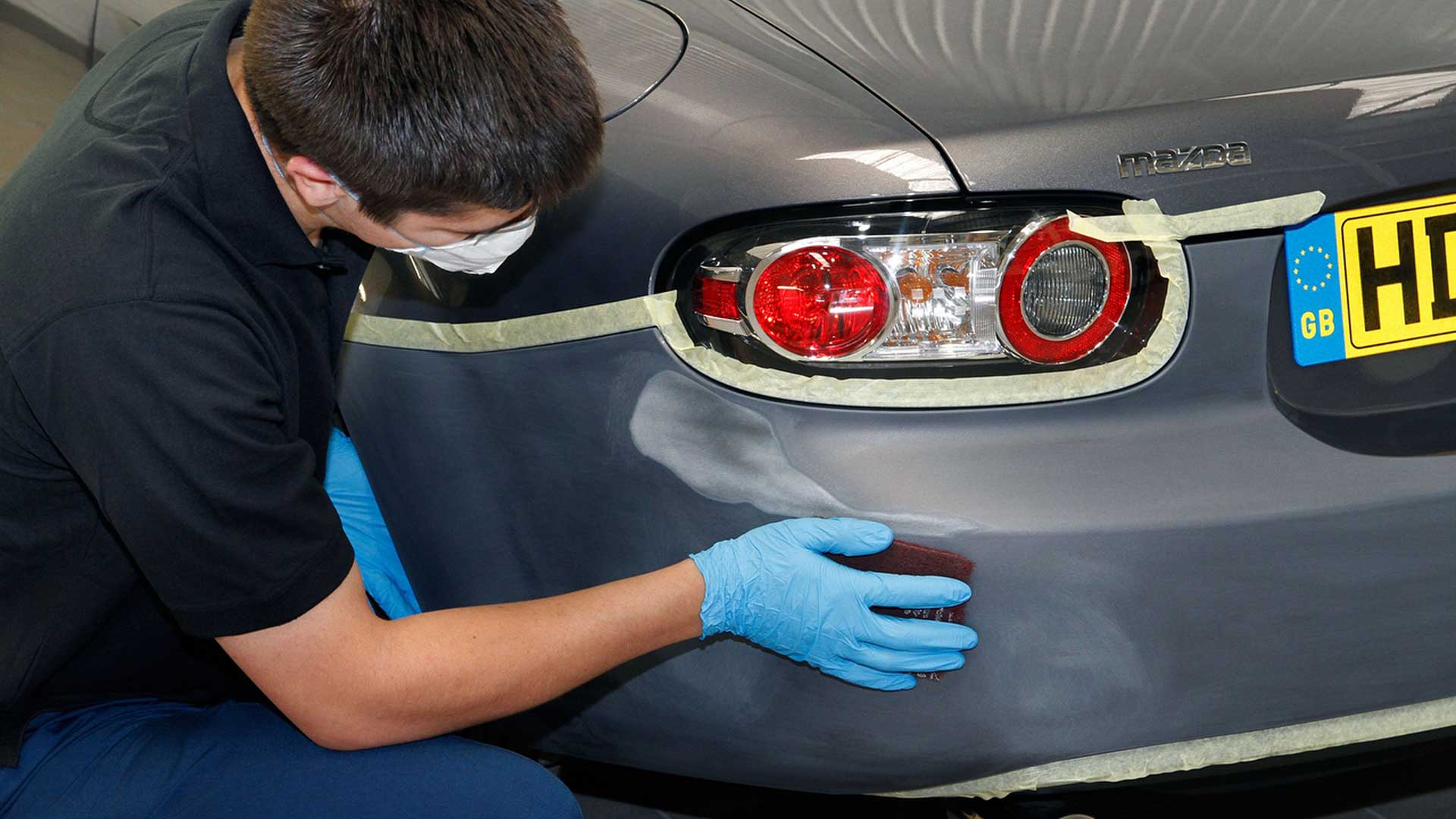
The 33% increase in vehicle repair cots takes the figure up to £1.5 billion. It reflects rising costs that include energy inflation and more expensive repairs, says the ABI.
Indeed, one car insurer quoted a 40% rise in labour rates between June 2022 and January 2023. Meanwhile the cost of replacement parts for the UK’s most popular cars has gone up by between 12% and 21% in a year.
The ABI advises motorists struggling with the cost of car insurance to speak with their current insurer – and be sure to shop around.
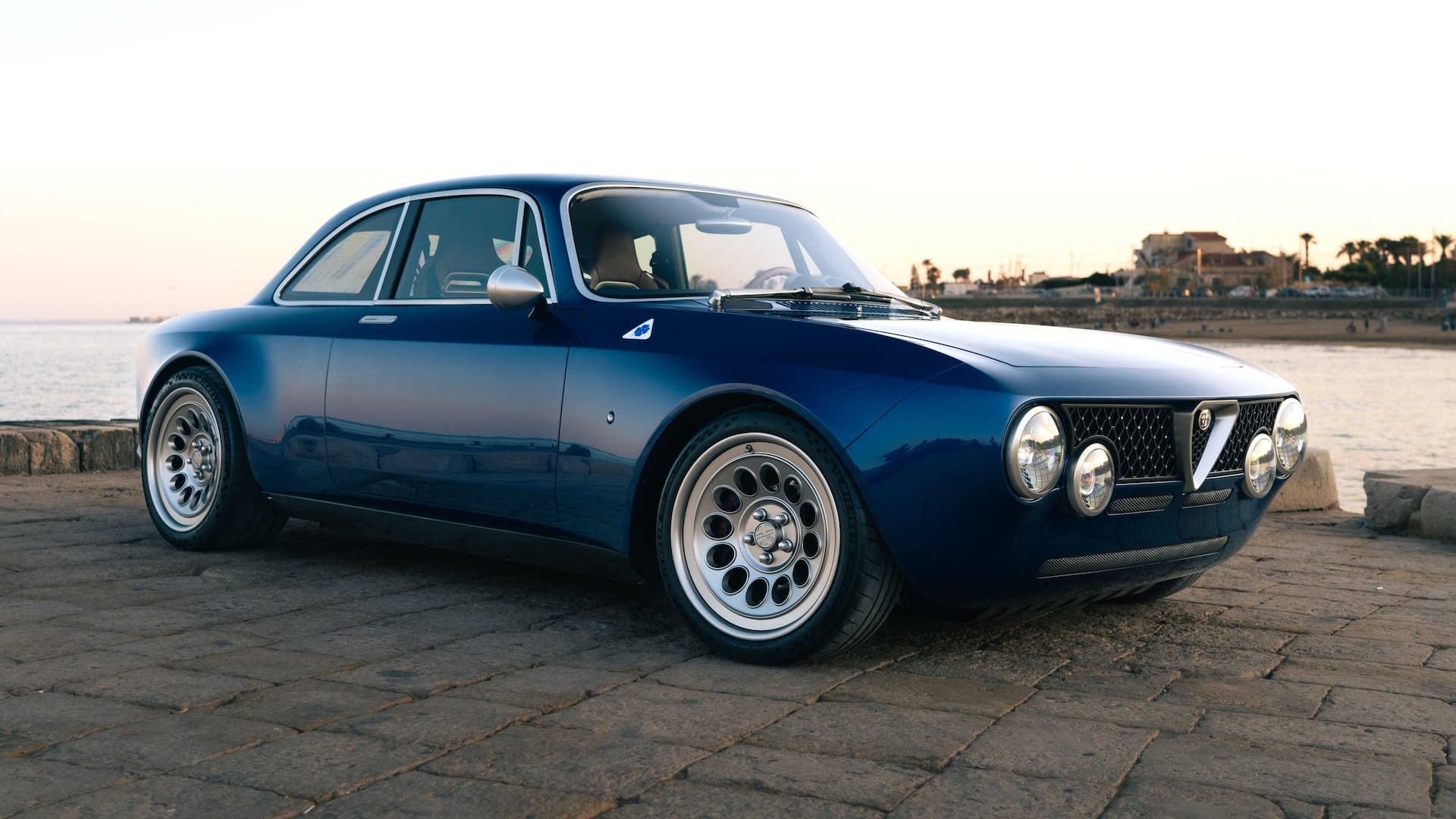
The Totem GT restomod makes its UK debut this month at Salon Privé, the high-end classic and supercar show hosted in the grounds of Blenheim Palace. Taking inspiration from the iconic Alfa Romeo Giulia GTA, the Totem GT marries classic styling with ultra-modern technology.
Totem Automobili was founded in 2018 by automotive designer Riccardo Quaggio, following a career at Honda and Alfa Romeo. He describes the Totem GT as being the car he dreamed of as a child.
Several years have been spent refining the design of the Totem GT, which comprehensively updates the classic Giulia coupe shape.
Crafted from carbon fibre
Each Totem GT is based on a 1970s Alfa Romeo GT Junior 1300 or 1600. This is stripped down to leave just the firewall from the donor car.
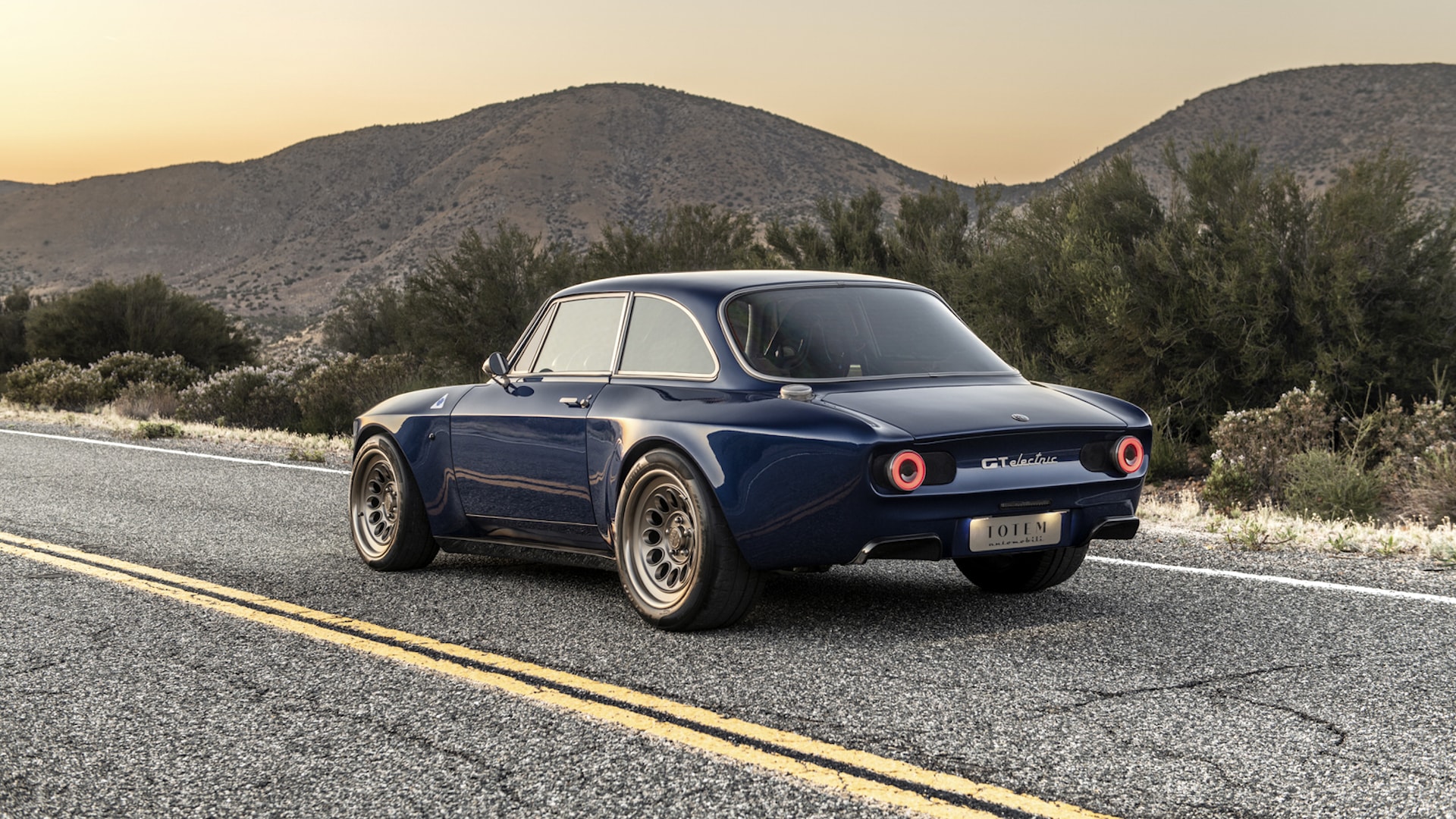
Totem then adds its own bespoke carbon fibre monocoque chassis, and clothes the car in carbon bodywork. The panels take 8,000 hours to produce, and weigh just 95kg.
The Totem GT Super comes with a twin-turbocharged 2.8-litre V6 engine that produces 600hp in standard tune, or a supercar-rivalling 750hp in Stage 2 guise.
Alternatively, buyers can opt for the Totem GT Electric, with a 500hp electric motor and 81kWh battery. The restomod EV can sprint to 62mph in just 2.9 seconds, and offers a potential range of nearly 300 miles.
Electric heart, classic soul
The Totem GT Electric uses a 13-speaker 125dB external sound system to recreate the noise of a conventional, petrol-powered car.
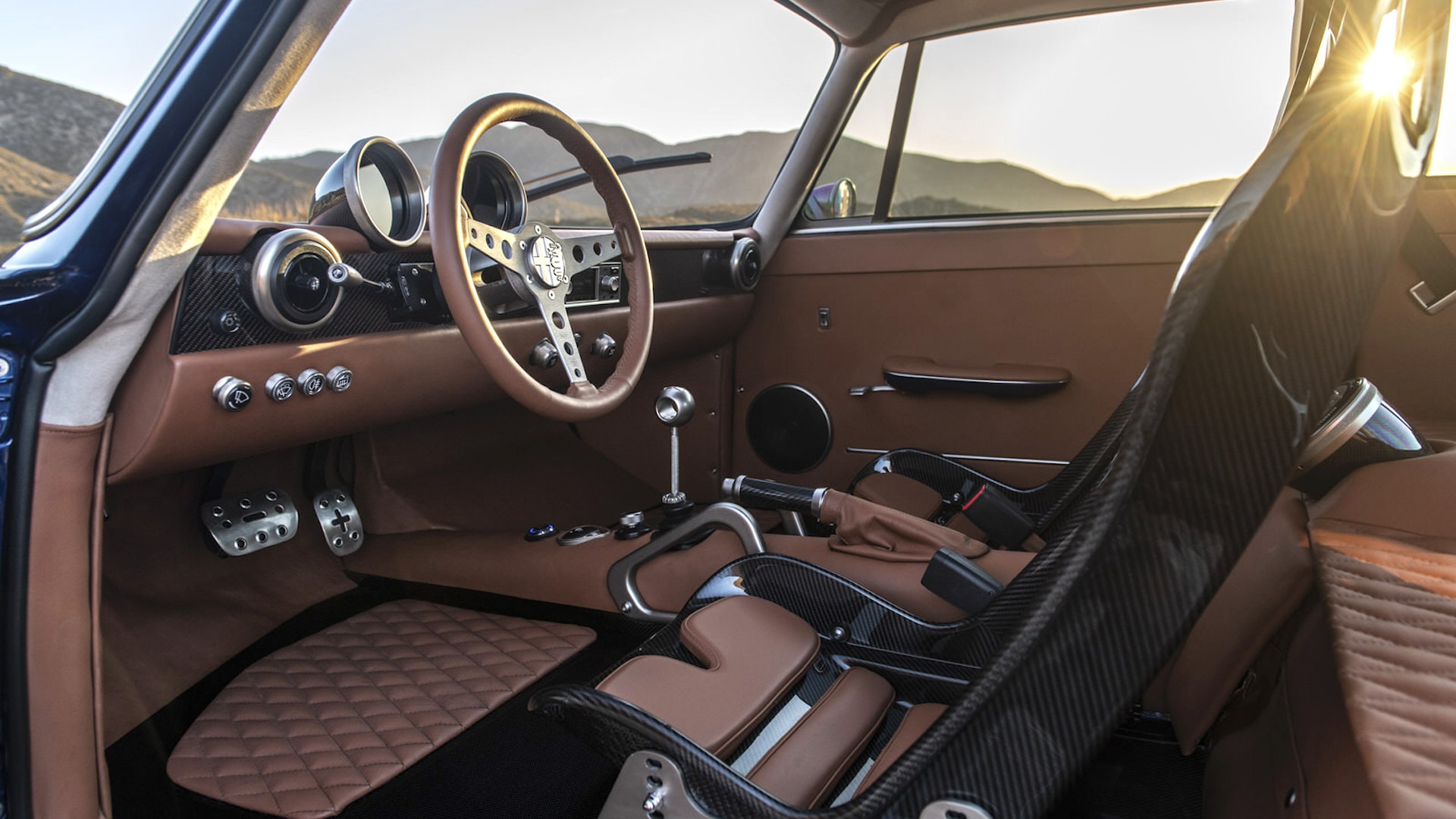
Carbon fibre seats based on those in the original Alfa Romeo 1750 Giulia GT are fitted, each one individually moulded to the customer’s body shape. The bespoke pedals are also aligned to the driver’s shoe size.
Totem Automobili will display the new Totem GT at Salon Privé, Blenheim Palace, between 30 August and 2 September 2023. Tickets for the event are available to buy now.
The term ‘connected car’ is often used, but what does it actually mean? Well, in basic terms, a connected car is one that has the ability to communicate wirelessly with other devices.
It might be a relatively simple interface like a smartphone connection to allow music playback. It could also link to the car manufacturer, so the vehicle’s software can be updated over-the-air without a service appointment. Increasingly, it might also involve a remote connection to the owner’s smart home system.
The current Volkswagen Golf helped bring connected car technology to the mainstream. It was the first vehicle in Europe with Car2X technology as standard, which uses a type of wi-fi tailored to local communication between cars. It does not use the mobile phone network, which means blanket coverage with a radius of up to 800 metres.
Thanks to a traffic hazard alert function, the Golf can alert its driver within a matter of milliseconds. In one scenario, the ‘emergency services vehicle’ icon will appear on the digital instrument panel, with an arrow indicating the direction from which the police car, ambulance or fire engine is coming. It will also indicate the approximate distance and sound an acoustic warning.
Cars can be connected to each other and the road infrastructure around them. They can be programmed to travel safely in tight groups at high speed, anticipating traffic signs and signals, reacting to changing road conditions, and avoiding collisions by ‘seeing’ hazards half a mile or more down the road.
All these connected technologies together add up to nothing short of a revolution. The connected car is arguably the most significant safety advance since the seat belt, and will be the biggest change to the way we drive since the horse was put out to pasture.
So, what is the car connecting to?
There are two basic categories of car connectivity. The first is via a mobile phone network such as 4G or 5G, which includes communication, internet and/or cloud services. Cloud services are the ones we use every day on our smartphones.
Want to hear a music track? Your device sends a request to a server that sends the coded music back to it, allowing the song to be played. Need directions? Your connected device searches for GPS satellites, mobile phone masts, wireless connections, or a combination thereof to position itself, then requests map data from a server, perhaps with a few restaurant recommendations from the internet thrown in for good measure.
This kind of connectivity also allows for the Internet of Things (IoT) to be accessed. The IoT is anything that has an on/off connection to the internet, from a toaster, to a heating system, to various components in a car. The toaster can access the latest time and temperature recipes for various breads. A heating system can be turned on while the homeowner is sitting in traffic, ensuring a comfortable house at dinner time. A car’s main computer can receive an updated operating system.
The second kind of car connectivity is dedicated short-range communications (DSRC). DSRC allows cars to securely and privately talk to each other, as well as the infrastructure around them: a collective system called vehicle-to-everything (V2X). It has extremely low latency (it’s fast, in other words) and enables the high data transmission rates necessary to manage multiple vehicles in traffic.
In the the future, DSRC will work in sync with mobile phone technology to keep cars connected.
Connected car features available now
Most car manufacturers today offer some level of connectivity, whether it be in the form of an dashboard system that connects the car to existing apps and services, or more involved experience that allows drivers such features as scheduling service appointments, having the car refueled, or controlling a smart home system.
A quick sampling of available services demonstrates the breadth of today’s connected car ecosystem. There are, of course, dozens more applications available, and the list is growing every day.
Apple CarPlay and Android Auto
Apple CarPlay and Android Auto can display selected apps from your smartphone on the car’s built-in screen. The interfaces are very similar to those found on your phone, so are familiar and easy to use.
Streaming music, directions, text messaging, and phone calls are all available, and can be accessed in a way that doesn’t distract the driver. You can also access content, such as music tracks or podcasts, that are downloaded onto your phone.
Amazon Alexa
Many manufacturers are linking their infotainment systems to home automation services like Amazon Alexa, allowing consumers to control lights and thermostats from the car. While at home, the system interacts with the car, so it can be warmed up, unlocked or ready to go on cold days. Driving the vehicle requires a proximity key, discouraging theft.
The tech is especially beneficial for electric cars, which can be heated or cooled in advance, using your home electricity supply, without depleting the vehicle’s batteries.
Alexa also offers a broad range of additional voice-activated services, such as a location search that transfers your destination to the car’s navigation system, audiobook search and play, and shopping.
But what about hacking?
There are dozens of processors on a vehicle and they are wired into everything: engine and transmission, brake actuators, seat belt pre-tensioners, automatic bonnet closers, and much more. These electronics and their predecessors have been in vehicles for generations now, and the software that runs them has built up year after year, layer after layer.
There are tens of millions of lines of computer code necessary to make all these components work properly, and that number will only go up in the future. This older, less secure software is everywhere and could be vulnerable to attack.
Stories of vehicles being taken over by hackers exposing security flaws in those systems have made headlines. The transmission, braking, acceleration and steering were all controlled remotely and the driver was placed in a dangerous and terrifying situation.
What was a bit underreported at the time, however, was that the hackers involved were researchers, not criminals, and that it took them about a year to gain control of the vehicle. They also used a hard connection, a cable plugged into the subject vehicle, in order to understand and break into the system
The flaws those researchers exposed have made cars more secure by highlighting the need to separate the control side of the vehicle from internet-connected systems.
Researchers in Belgium discovered they could hack and steal a Tesla Model X in a few minutes using a Bluetooth-connected key fob. The equipment used to hack into the Tesla cost no more than a few hundred pounds. Tesla responded by issuing an over-the-air software update.
Smartphone hacks are another problem. Without security protocols in place, malicious software can unknowingly be downloaded from the internet or even hidden inside a totally unrelated app. This software looks for an automotive control app and launches invisibly alongside it. The vehicle’s credentials and passwords are recorded and transmitted, allowing the car can to be located, unlocked and sometimes even started for a brief time. However, because of the previous research work, the control systems in most cars are disconnected from the smartphone app. Simple two-factor authentication, fingerprint recognition or proximity key requirements would also avoid the hack entirely.
Hacking is indeed a concern, but manufacturers and suppliers are working hard to keep connected cars safe, and to make them more so in the future.
What comes next for connected cars?
Connected cars might seem like little more than the latest gadget, but the advances those gadgets pioneered will soon make driving safer and more efficient than ever.
As semi-autonomous car components, such as automatic emergency braking systems, become mandated by law, connectivity has more of a pivotal role than ever in near-future vehicles.
What about V2X technology?
Cars use DSRC to connect to each other and the road around them. Vehicle-to-everything (V2X) is two short-range, wireless-based technologies designed from the ground up to be both private and secure: vehicle-to-vehicle (V2V) and vehicle-to-infrastructure (V2I). Their main function is to prevent accidents and save lives.
V2V works by transmitting and receiving key data such as vehicle position, speed, direction of travel, braking and steering input. Additional systems spot pedestrians, road hazards, emergency vehicles, potentially unsafe drivers and more. V2I sends information about things like traffic lights, construction projects, bridge height, weather reports and pedestrian crossing locations. Working as one system, V2X creates a complete picture of the driving conditions surrounding the vehicles.
A future group of V2V-enabled vehicles, such as the Chinese-market Buicks in the image above, will travel together in a convoy that acts like a school of fish or flock of birds, one group made of myriad individual movements and fluctuations.
If a pothole is detected in one lane, the impacted car will swerve slightly to avoid it, but other vehicles may not have to. Drivers can join or leave the convoy; there is no leader. The cars can be tightly packed together at high speed, taking advantage of group aerodynamics to improve fuel economy.
In city traffic, speed is adjusted so that red lights and other stops are avoided. Pedestrian crossings broadcast their occupants, and the vehicles avoid impacts. Emergency vehicles are automatically given the right of way, improving public safety. The position of empty parking spaces is broadcast, putting an end to circling the block. No one gets rear-ended at traffic lights by somebody who can’t put down their mobile phone, because both vehicles are paying attention.
The next steps
The individual technologies that create the connected car are advancing at breakneck speed. Manufacturers are now working together with suppliers and lawmakers to bring all the pieces together as a whole. Companies such as General Motors, Qualcomm and Microsoft have invested heavily in the technologies, and face stiff competition from competitors.
As the mobile phone market reaches full saturation and therefore declining growth, companies are looking to the connected car to increase revenues. Qualcomm released Snapdragon processors and modems specifically for the automotive market, including data collection, analytics, parking assistance and wireless electric vehicle charging, as well as infotainment.
Microsoft launched its Connected Vehicle Platform to speed up connected car development, built on the Azure cloud platform. Unlike car manufacturers, Microsoft already has and continually develops a living, agile, cloud-based platform. The software giant is working with several manufacturers and developing telematics, predictive services, in-car productivity, advanced navigation, advanced driver assistance systems and autonomous vehicle tech.
People spend a huge amount of time in their vehicles. Connected cars offer a plethora of safety, comfort and convenience advantages, with only a slight increase in cost. All the manufacturers are on board, the communications and information companies are on board, and even lawmakers around the world are moving to embrace the benefits of connectivity. The connected car is here to stay.
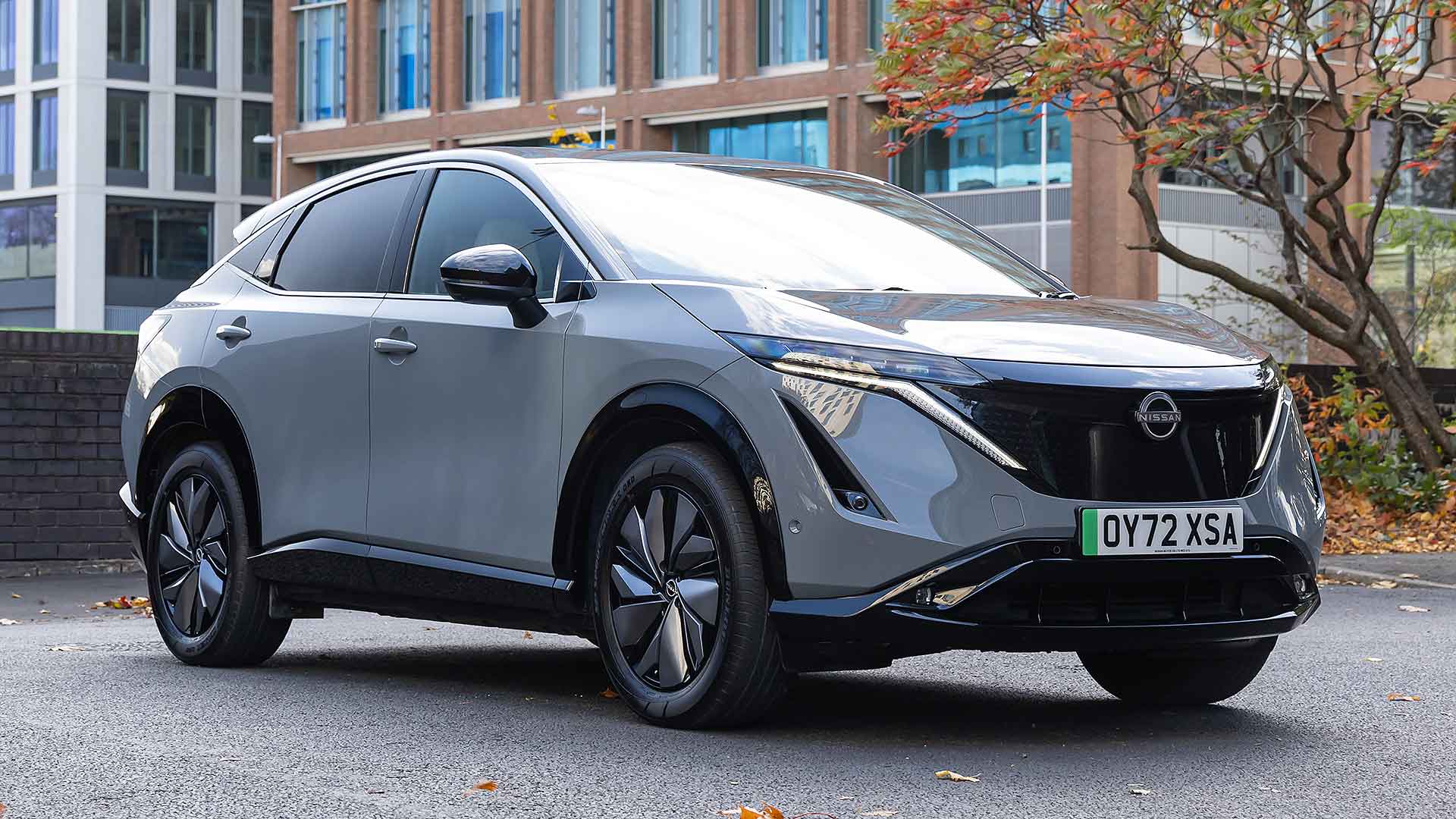
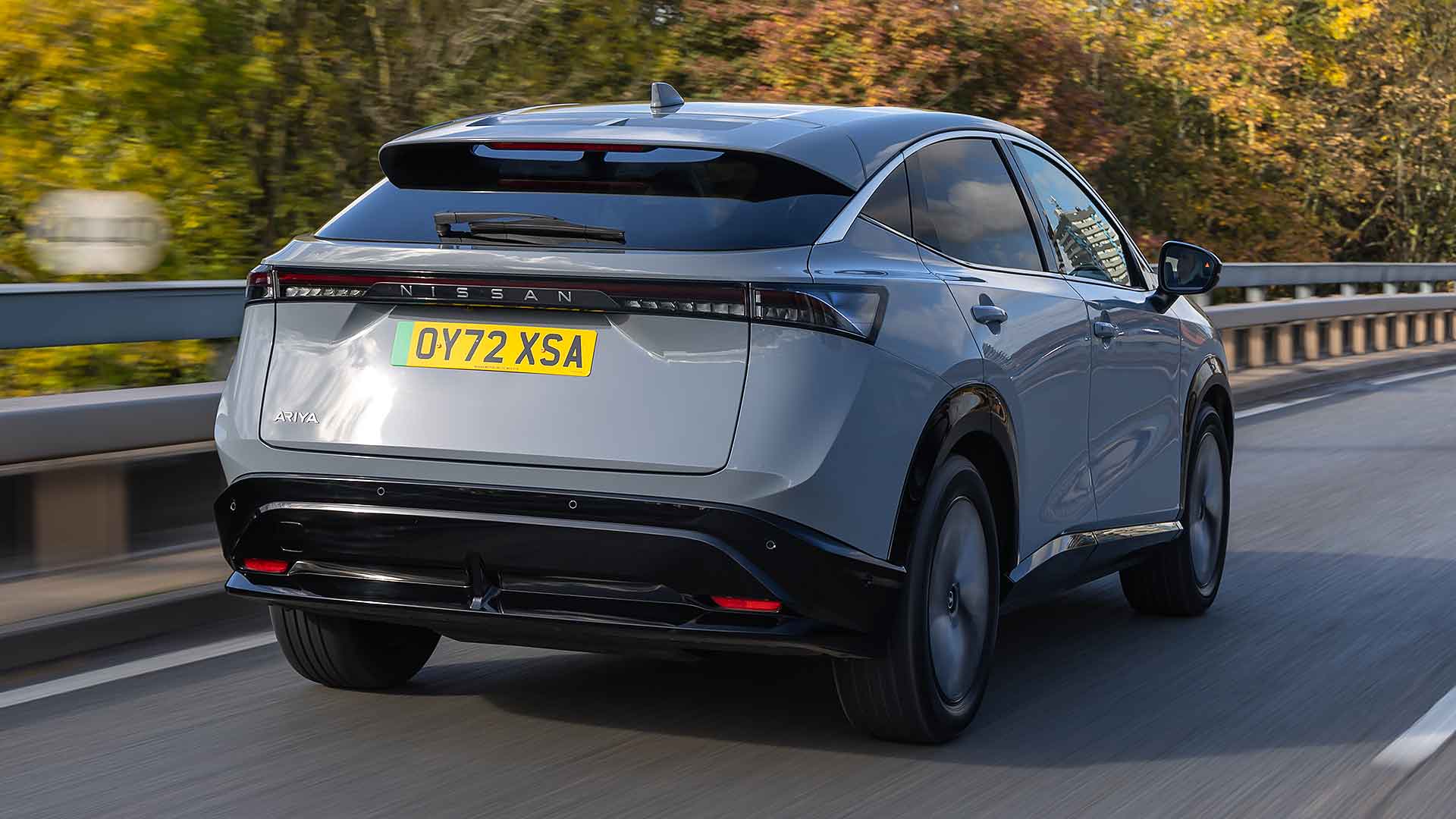
Nissan Ariya electric SUV prices have been cut by up to £3,750 as the firm looks to offer “a more competitive customer proposition”.
The new Nissan Ariya now starts from less than £40,000 – undercutting the price of an entry-level Tesla Model Y by more than £5,000.
The Nissan Ariya is offered with a choice of two batteries, either 63kWh or 87kWh.
Prices of all existing 63kWh Nissan Ariya have been reduced by £3,000.
All 87kWh versions are reduced by £3,750 – which cuts the price difference between the two batteries to £5,000.
Nissan Ariya Engage-s
The new entry-level Nissan Ariya is called the Engage 2WD. Prices start from £39,645.
A new model grade, it features 19-inch alloys with aero covers, LED headlights, LED rear fog lamps and folding door mirrors as standard.
The new Nissan Ariya Engage also has dual 12.0-inch TFT screens and an energy-saving heat pump as standard.
Nissan GB marketing manager Nic Thomas said the new Nissan Ariya Engage entry grade helps make the model more accessible and enticing to a wider audience.
At the other end of the range, Nissan has also introduced a new top-spec Ariya version, the Evolve+.
This has 394ps and all-wheel drive, for 0-62mph in just over 5.0 seconds, “perfect for customers who seek a more exciting driving experience”.
Exciting indeed: but it will be the Nissan Ariya price cuts that resonate with more customers, we’re sure…
Automobili Pininfarina has unveiled a new design concept to inspire its next generation of electric vehicles. Named the Pura Vision, it envisages what the Italian company calls a ‘Luxury Utility Vehicle’.
CEO Paolo Dellachà said: “Pura Vision is the bridge from our present to an exciting new chapter in the history of Automobili Pininfarina.
“In our fifth year, we have already celebrated our unique heritage with the introduction of the Battista Edizione Nino Farina [revealed last month at the Goodwood Festival of Speed]. Pura Vision previews an exciting future and shows what can be achieved if we apply our Pura design principles to an entirely new kind of vehicle.”
A sustainable future
Dave Amantea, chief design officer at Automobili Pininfarina, added: “Pura Vision embraces the DNA of iconic vehicles from Pininfarina’s past to shape the future, with sharp lines and a modern aesthetic. It is distinctive from every angle and showcases our Pura design philosophy on a new kind of vehicle.”
The design incorporates hidden headlights and ultra-slim nanofibre lighting, along with imposing 23-inch alloy wheels, a wraparound beltline and powerful rear haunches.
Sustainability is a key aim for the Pura Vision, which features a new herringbone textile trim made from 30 percent Nativa wool and 70 percent recycled polyester. The interior’s exposed carbon fibre and anodised aluminium mirror the materials used outside the car, while the door sill covers are created from leftover alloy wheel material.
Classic design updated
Large ‘Lounge Doors’ are said to be inspired by the pillarless Lancia Florida saloon, designed by ‘Battista’ Farina in the 1950s. The car’s floating front seats resemble the foil of a sailing boat, and its large central display can be retracted to minimise distractions. Speakers mounted in the four individual seats give each occupant their own ‘sound zone’. Passengers even get an integrated wine cooler.
As this is solely a styling exercise, Pininfarina has not released any powertrain or performance details for the Pura Vision concept. If it reaches production, it could be a rival for the forthcoming Aehra electric SUV – also designed in Italy.
Automobili Pininfarina will display the Pura Vision at the forthcoming Monterey Car Week in California, including at The Quail concours in Carmel.