Unless you’re Greenpeace, it won’t have gone unnoticed that electrification was a big part of the 2017 Frankfurt Motor Show. From Volkswagen’s commitment to become a new leader in electric vehicles, to concept offerings from Mercedes-Benz and BMW, battery and hybrid power was everywhere.
The fallout from dieselgate, plus the recent announcement of plans to ban the sale of new combustion-engine-only cars in the UK by 2040, has resulted in a big rise in car buyers interested in alternatively-fuelled vehicles. But that doesn’t mean manufacturers haven’t got work to do in promoting their newly electrified products.
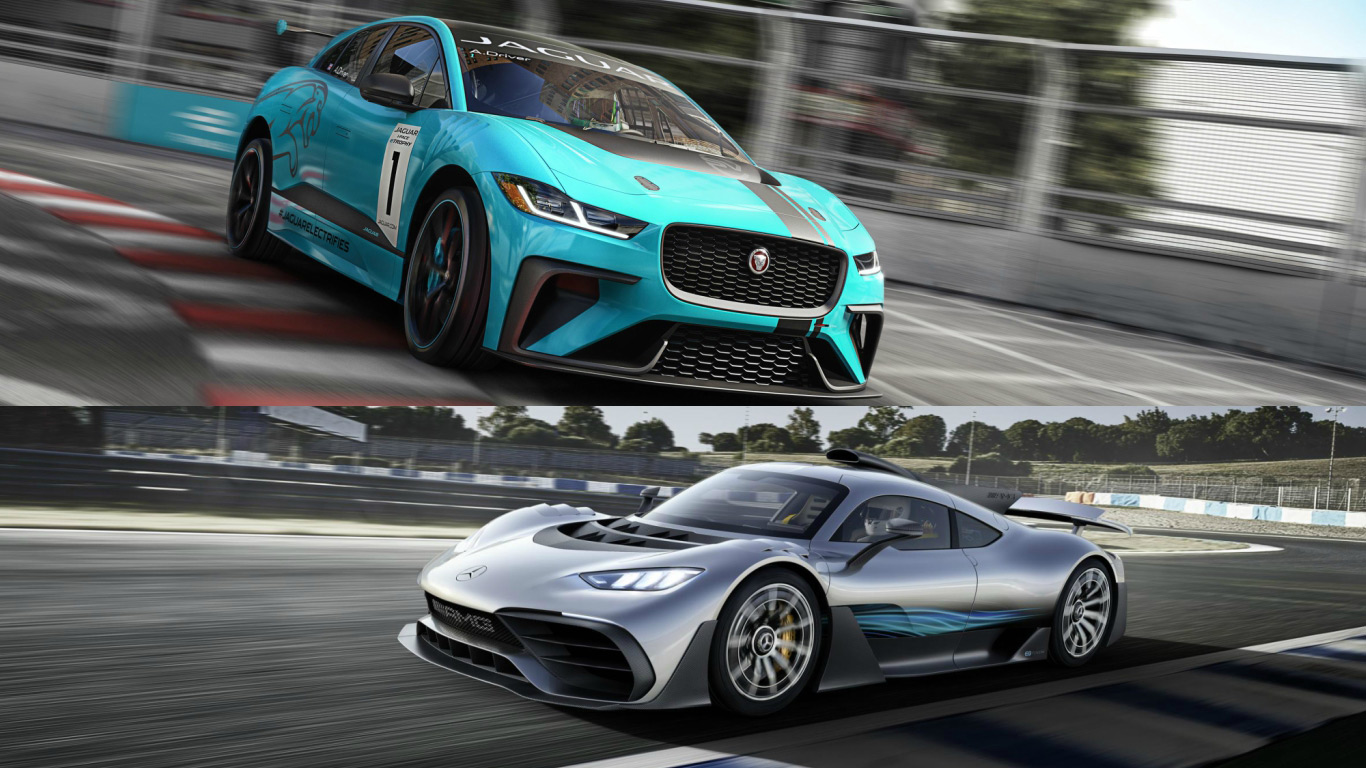
Using motorsport to sell cars is nothing new, but Frankfurt 2017 saw two alternative takes, one from Jaguar and the other from Mercedes-AMG, on pushing the electrification message through the lure of racing.
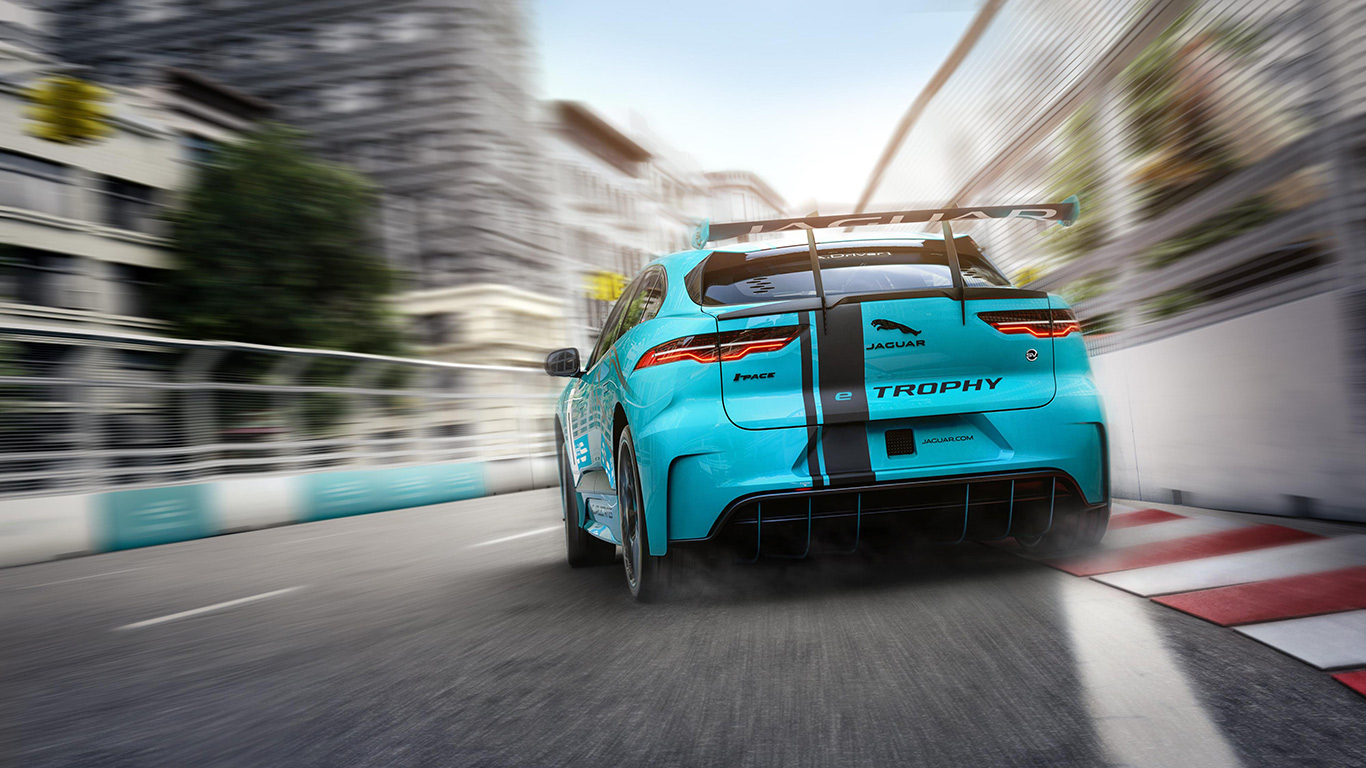
Jaguar announced the creation of the first production-based race series for electric vehicles with the I-Pace eTrophy, set to launch at the end of 2018. Set to support the FIA Formula E Series, the eTrophy will pitch 20 identical I-Paces against each other, with VIP guest drivers thrown into the mix as well.
It’s a bold strategy, especially for a car that won’t make it into the hands of the general public until 2018. The key to the eTrophy is that it seeks to make electrification appear normal. Formula E has tried hard, but issues like needing to change cars mid-race have hardly helped its image.
The eTrophy has the potential to become a battery-powered BTCC. For Jaguar it creates a very simple link between the race car people can watch on TV, and one they can head to their local dealership and buy.
Casserole of complexity
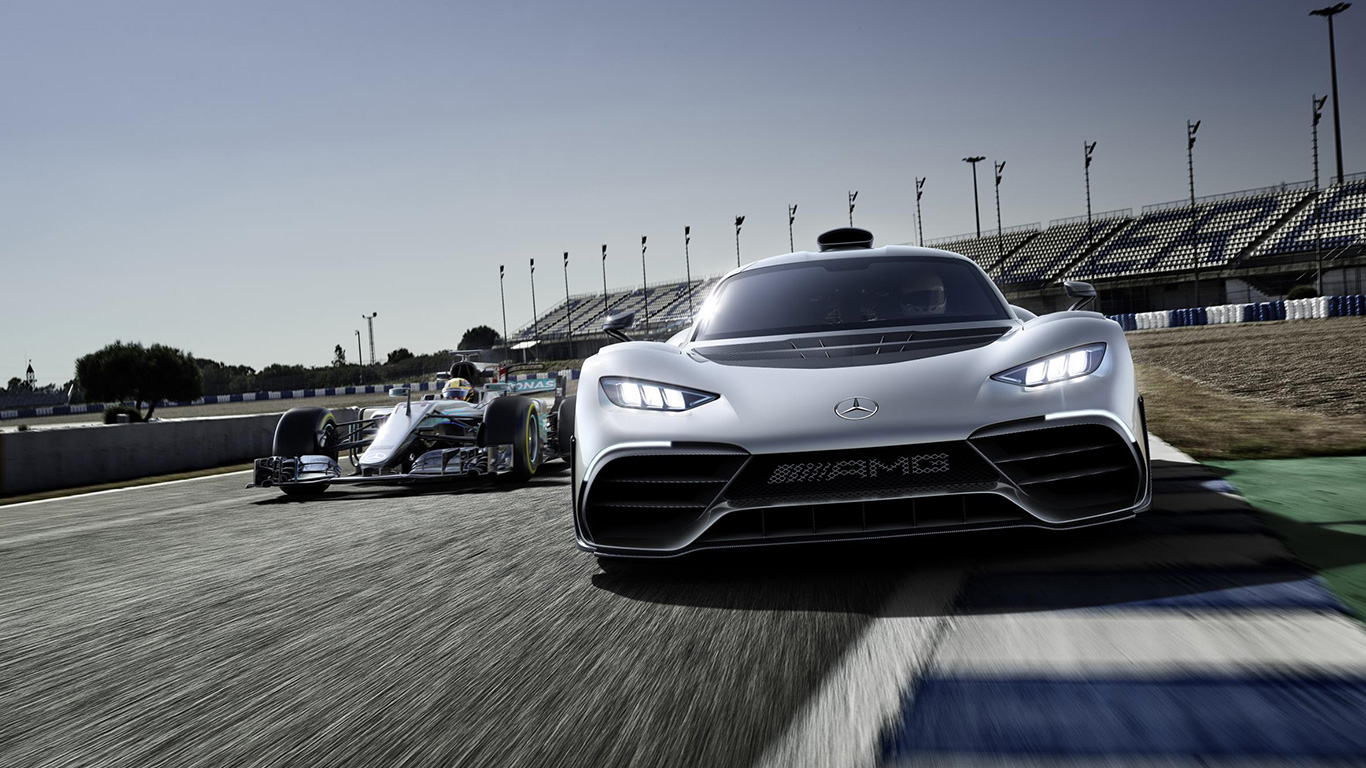
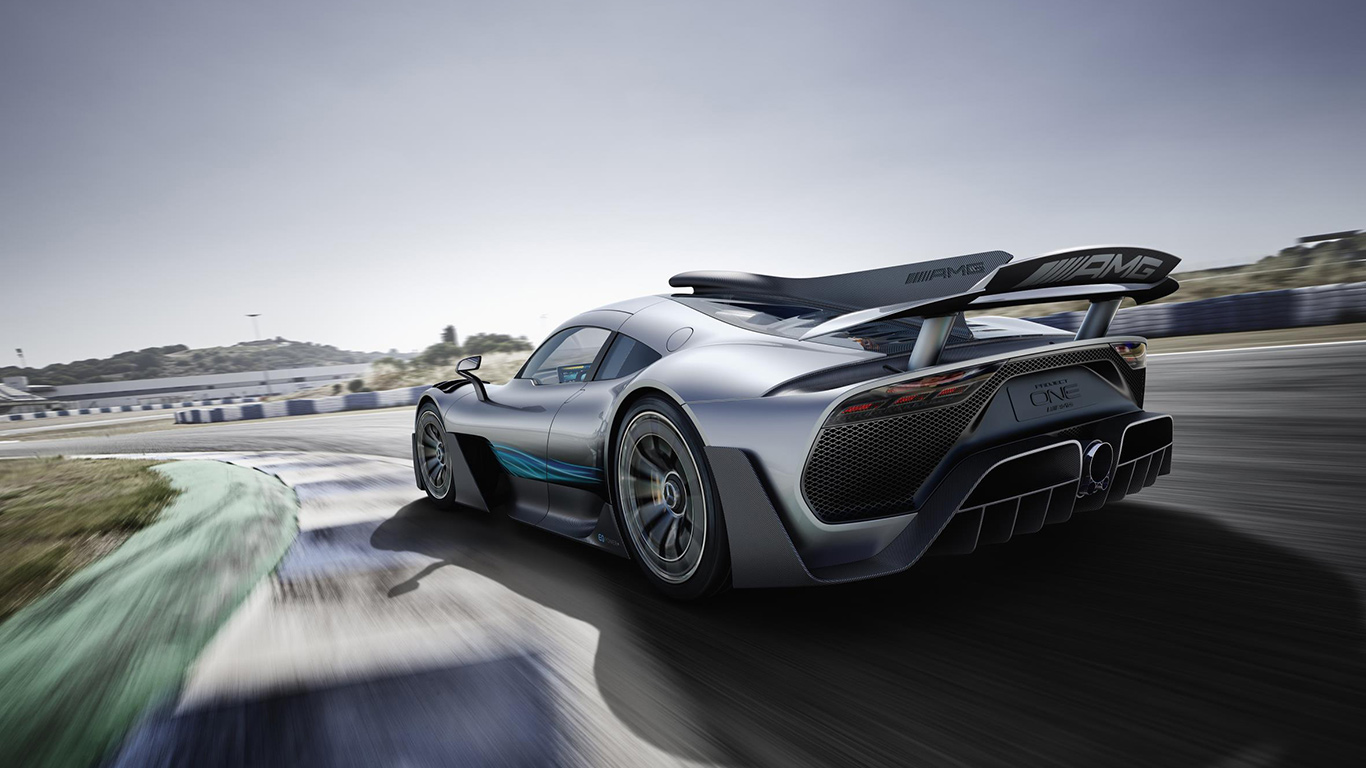
In contrast, Mercedes-AMG has used the hybrid powertrain from a contemporary Formula 1 racer to create the Project One: possibly the biggest talking point of the Frankfurt show. The headline-grabbing 1,000hp peak power figure is imposing, but wading through the details of how it achieves that output is a challenge in itself.
Four electric motors, including an electrically-assisted turbocharger, and an 11,000rpm rev limit for the petrol engine sound impressive and intricate in equal measure. It’s less the fault of Mercedes, and more the issue with the current Formula 1 engine regulations that have created such a casserole of complexity.
The right formula?
The grid-place penalty debacle at the Italian Grand Prix highlighted the mess the current engine situation in F1 has become, one not helped by the reliability woes affecting Renault and Honda. Putting a current Formula 1 car engine into a road-going machine is a brave move, even for the manufacturer dominating the sport at present.
Mercedes-AMG promises that the lessons learned from the development of the Project One will translate into better road car technology, which forms part of the company’s commitment to increased electrification. This may be so, but trying to forge the links between race and road seem a lot harder with the Project One, despite the fact it has an actual motorsport-derived power unit.
Increased electrification is an unstoppable reality, and motorsport can play a key part in showing that it doesn’t have to be hair-shirted and dull. Car manufacturers just need to ensure that buyers can make and understand the connection between road and track.
The Frankfurt Motor Show might be chiefly focused on modern machinery, but retro cars haven’t been forgotten. The questionable creations of the 1970s and 80s have their own display for 2017, so dig out your chest wig and flares. Here we go!
The original Fiesta might be a genuine classic, first launched in 1976, but that doesn’t excuse the extremely ‘1970s’ paintwork here. This shade of green appeared on a number of Ford products during the decade and certainly made the Fiesta stand out in the Frankfurt show hall.
Questionable colour aside, the Mk1 Fiesta was a hit for Ford, taking less than five years for production to exceed two million cars. In the UK, the Fiesta raced to the top of the charts as the best-selling supermini.
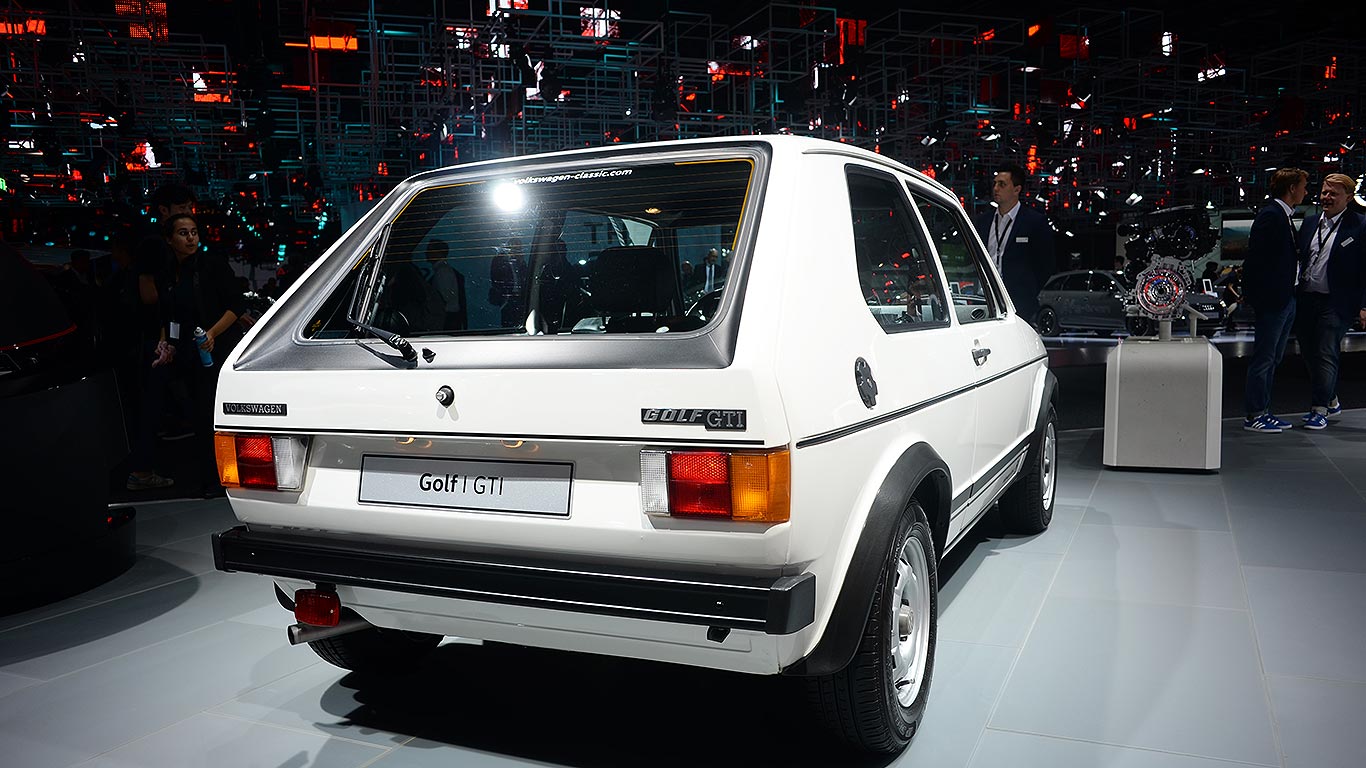
Volkswagen Golf GTI Mk1
Although it might not have been the very first hot hatch on the market, the original Golf GTI is the one associated with defining the genre. Its power output isn’t even ‘warm hatch’ standard today, but modern cars like the Golf R and Ford Focus RS owe a lot to it.
Compared to current hot hatches, the exterior changes to the Mk1 GTI were minimal. A thin red stripe around the grille was the most obvious sign that this wasn’t a regular 1.1-litre version. Inside, the tartan-trimmed seats certainly made a statement, and continue to be copied to this day in hot Volkswagens. Proof that not everything retro has to be tacky.
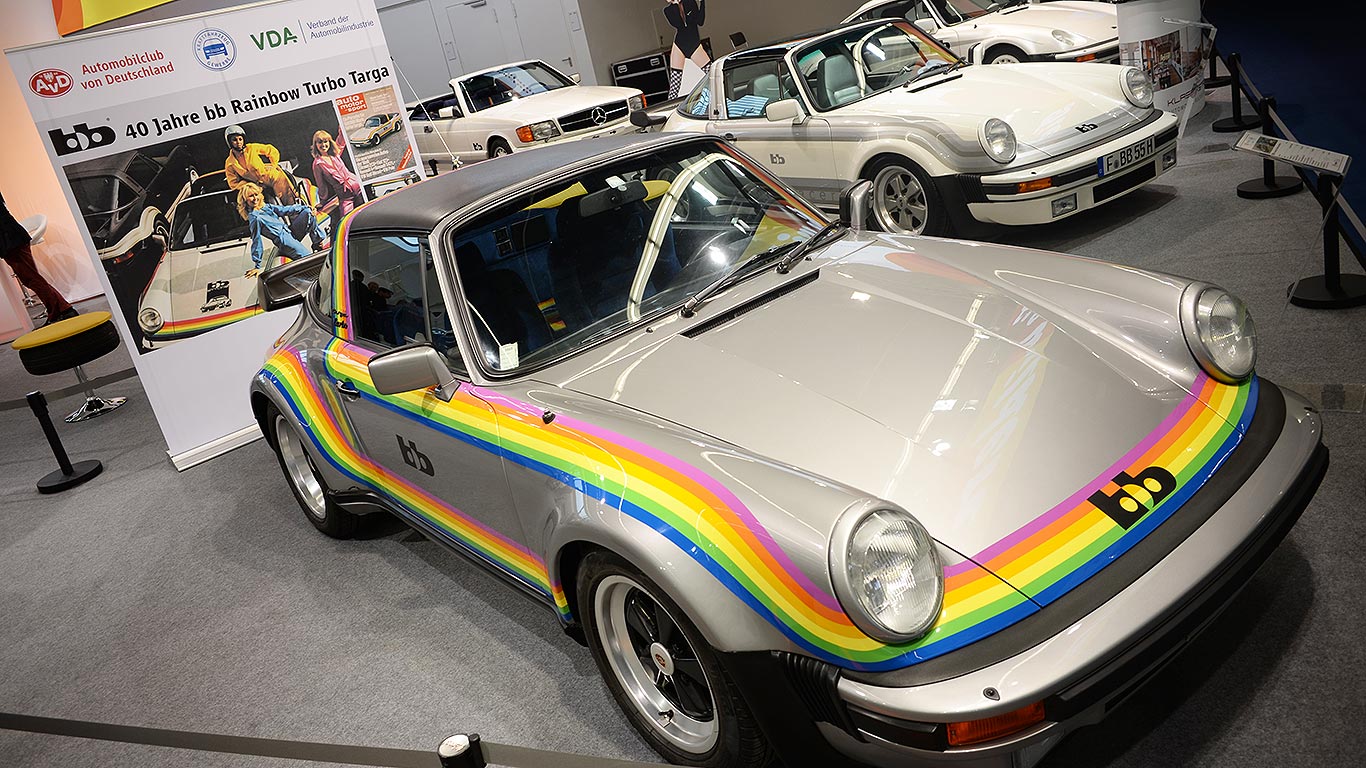
B&B Porsche 930 Turbo Targa Rainbow
It doesn’t get much more 1970s than this. Rainer Buchmann built a reputation during the decade for tuning and customising Porsches. The Turbo Targa Rainbow was built in 1976, and used to promote the Polaroid camera brand, hence the colourful livery.
With some 300hp, the B&B 930 Turbo had more than enough power for the late 1970s, but matched that with equally outlandish options. Bright velour upholstery was a favourite of the company, while big speakers and CB radios were also on the options list. Imagine Pimp My Ride, but set in West Germany four decades ago.
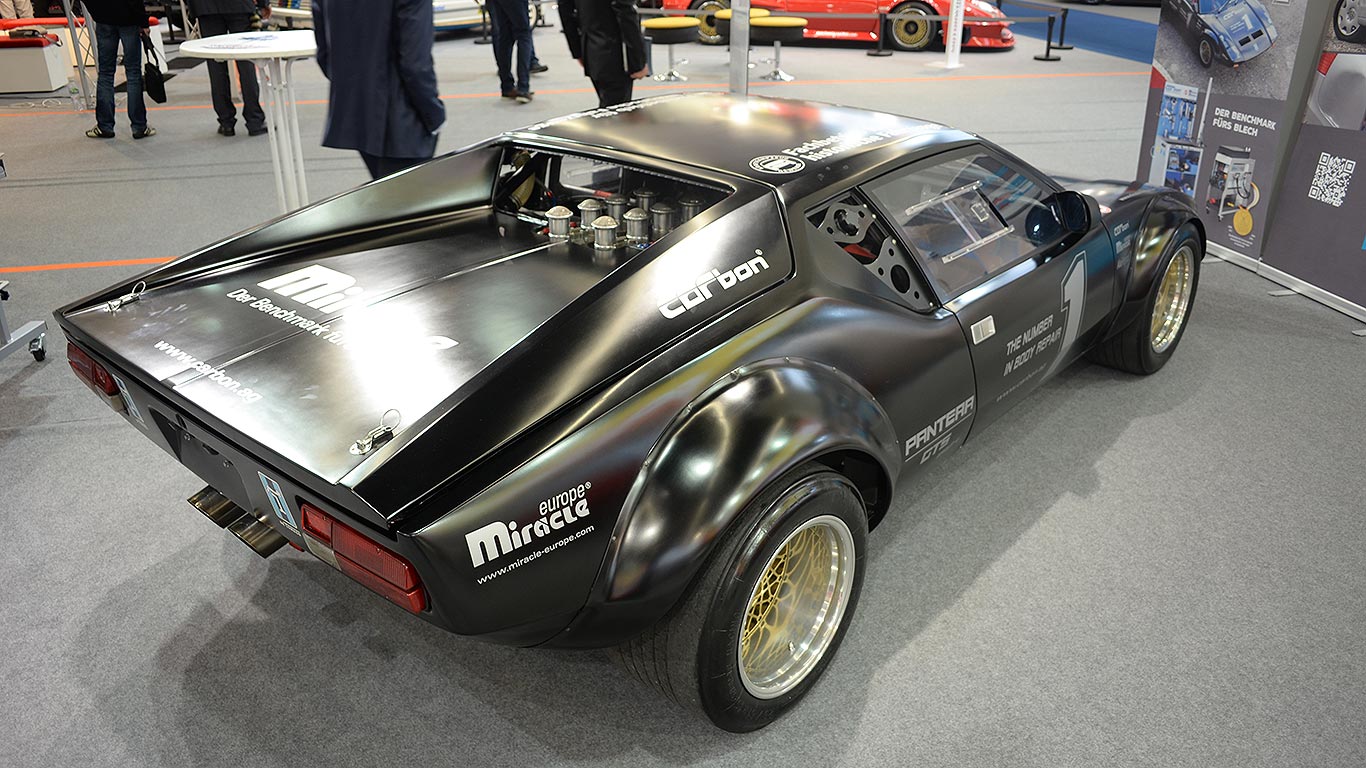
De Tomaso Pantera
If it’s good enough for Kenny Loggins to sing about in his 1979 song ‘Mr Night’ then it’s surely good enough to be included in any retro collection. First shown at the 1970 New York Auto Show, and put into production the following year, the Pantera was powered by a 5.8-litre Ford V8 engine with 330hp.
Ford was heavily invested in the Pantera project, and even imported the car to be sold alongside Lincolns and Mercurys in US dealerships. The Blue Oval dropped the Pantera in 1975, but the car carried on being produced until the early 1990s, having endured multiple facelifts and modifications.
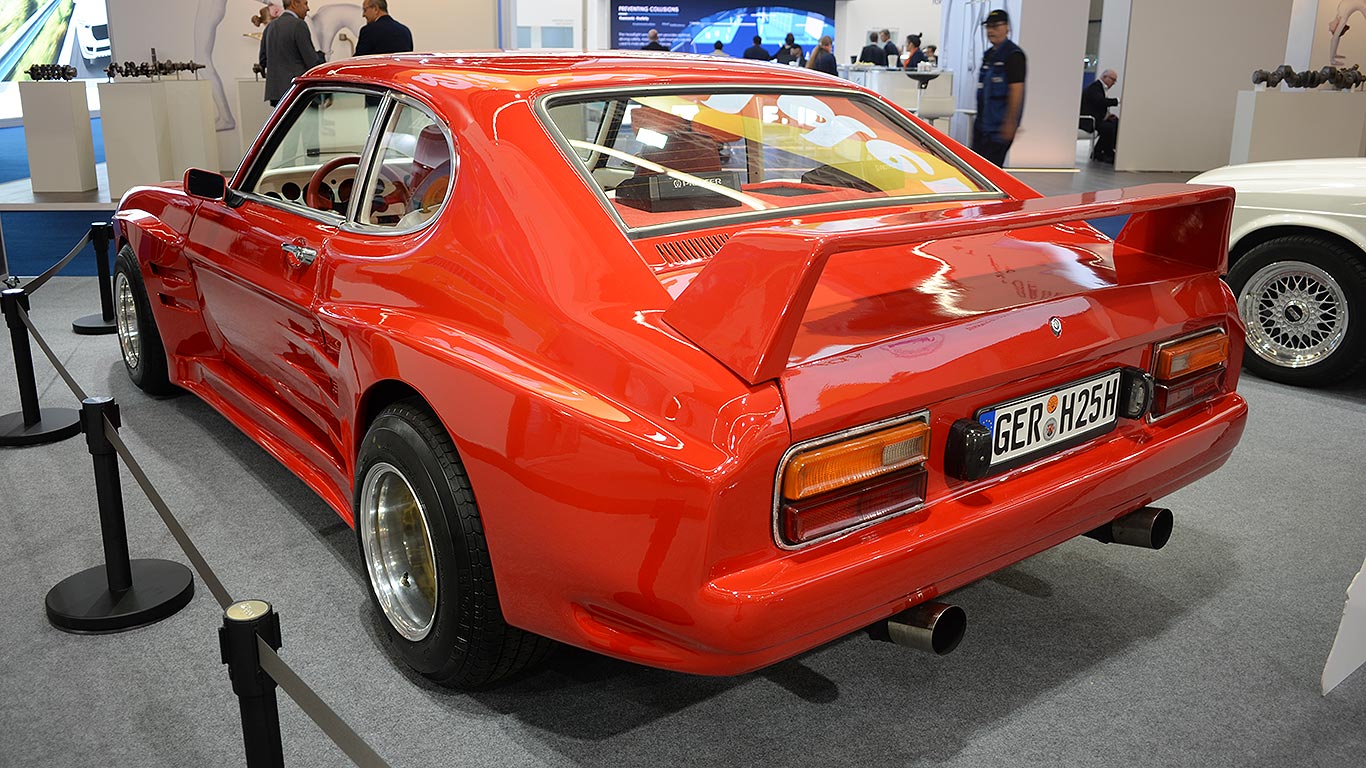
Ford Capri
It may have been introduced in 1969, but nothing embodies the idea of European motoring in the 1970s more than a Ford Capri. The rear-wheel-drive coupe was as close as buyers on this side of the Atlantic could get to American muscle, and the blue collar two-door attracted modifications aplenty.
From the furry dice and white leather upholstery inside, to the widened wheel arches and boot spoiler outside, this is clearly not a regular Capri. It might not be as extreme as some of the racing Capris of the time, but it still looks muscular today.
Mercedes-Benz C111-2
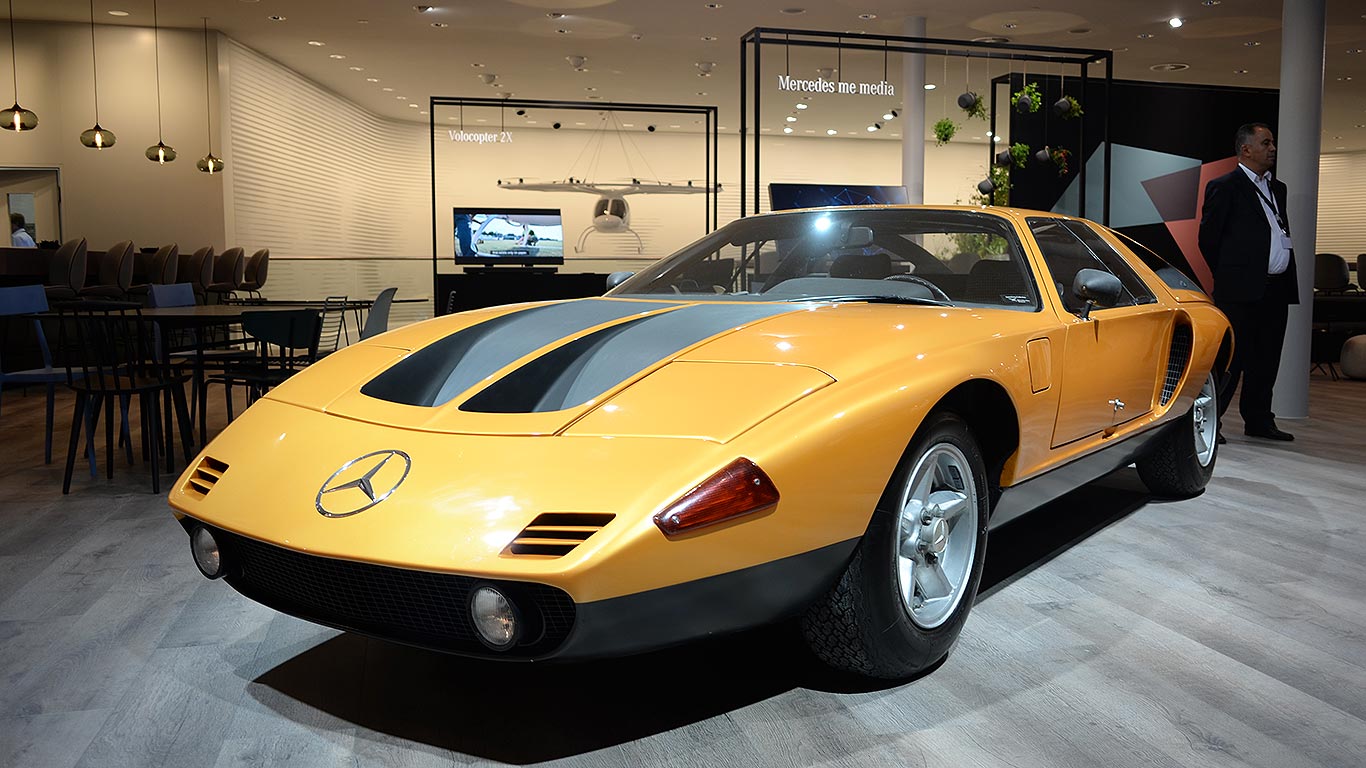
In many ways, the Mercedes-Benz C111-2 was the AMG Project One of its day. The original C111-1 of 1969 used a three-rotor Wankel engine developing 280hp, while the four-rotor C111-2 upped the ante with 350hp. This thing could reach speeds of 217mph, which, in its day, was as eye-opening as the Project One’s performance figures are now.
Ford Gran Torino
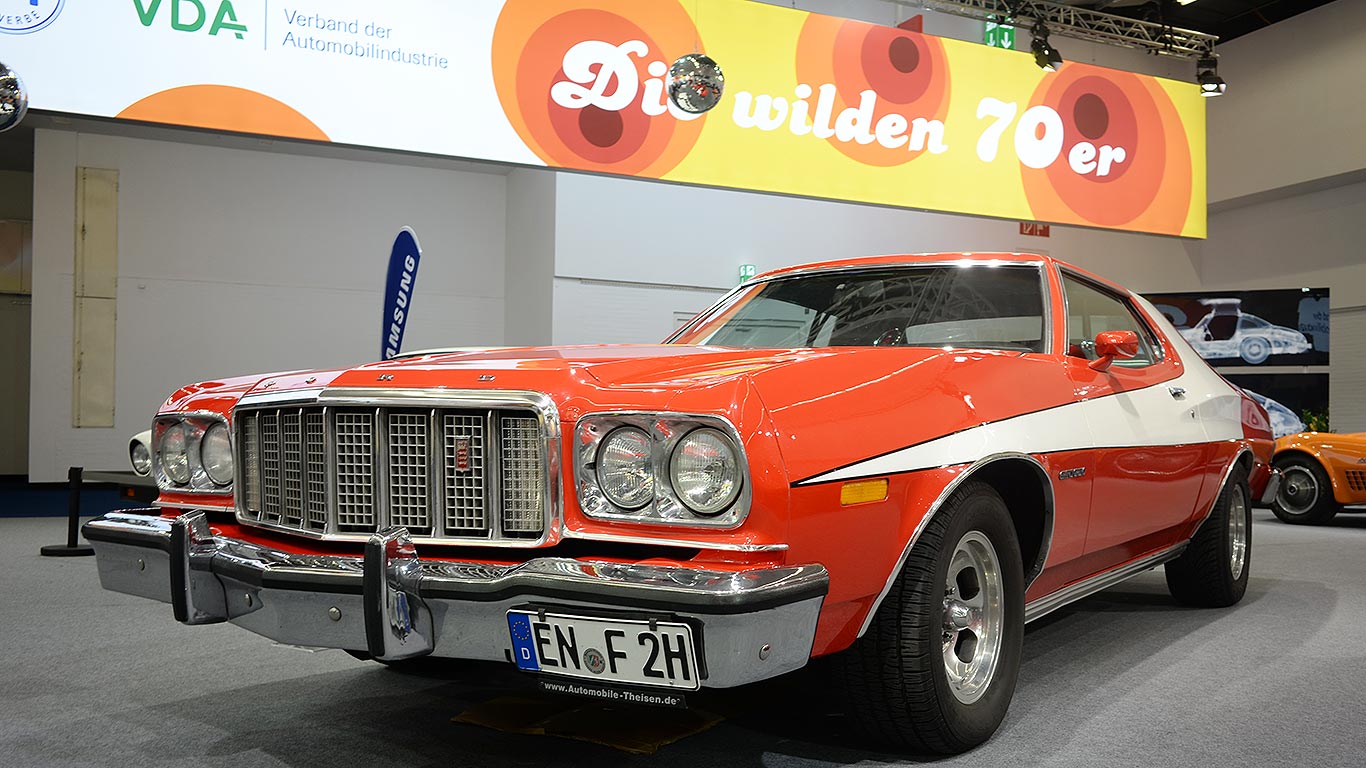
When it comes to iconic TV vehicles, the Ford Gran Torino is up there with the General Lee and the A-Team van. The famous red Ford with the distinctive white stripe was driven by David Starsky and given the nickname ‘Striped Tomato’ by his partner in anti-crime, Kenneth Hutchinson.
A number of cars were used during the filming of the hit 70s cop TV show, but – much to Starsky’s disgust – damage during the call of duty was a regular problem. Often, repairs would take place between filming, to varying degrees of success. Watch episodes filmed towards the end of the first series and it’s not hard to spot the low-rent repair jobs.
Opel Manta A
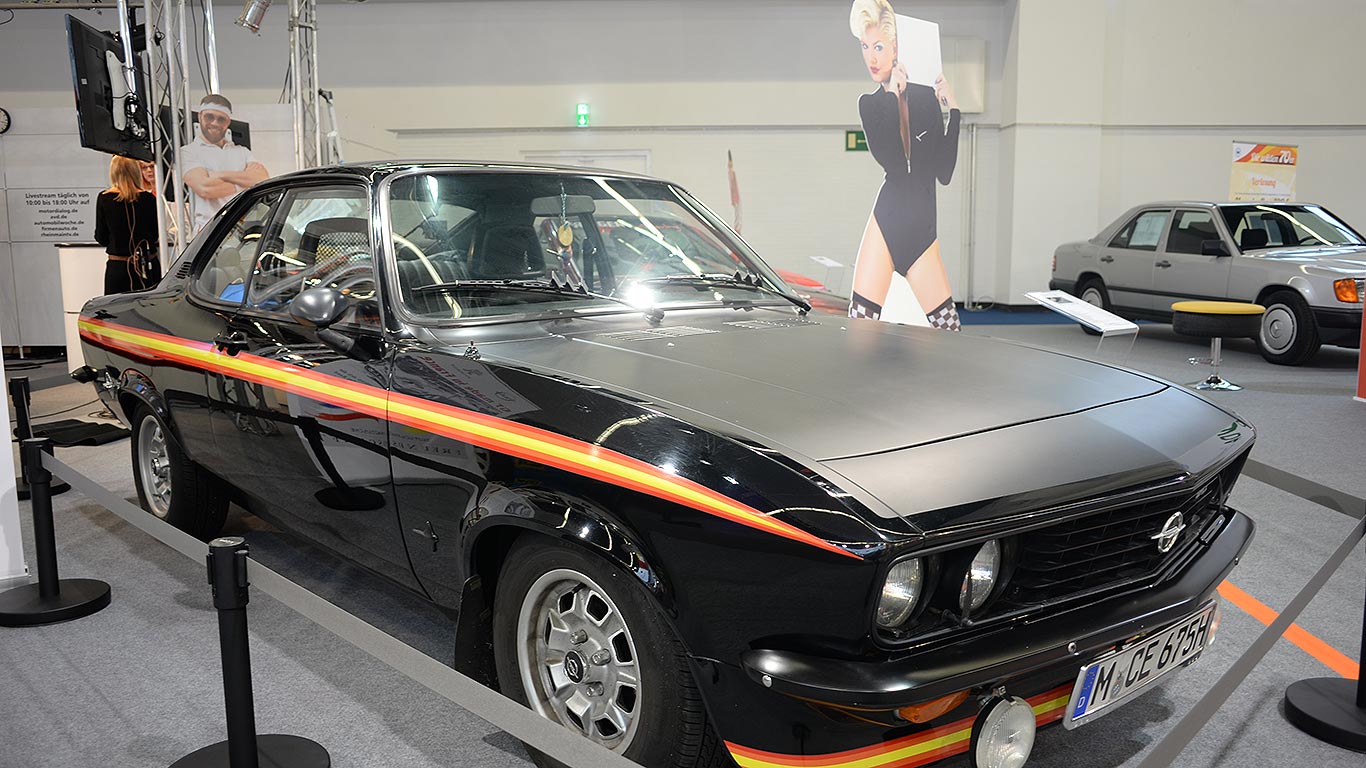
The Manta was Opel’s answer to the Capri, launched a year after its Ford a rival and two months ahead of the Ascona upon which it was based. Like the Capri, it was a two-door coupe with space for four adults, and some 500,000 units were built before it made way for the more familiar Manta B in 1975.
Opel Manta B
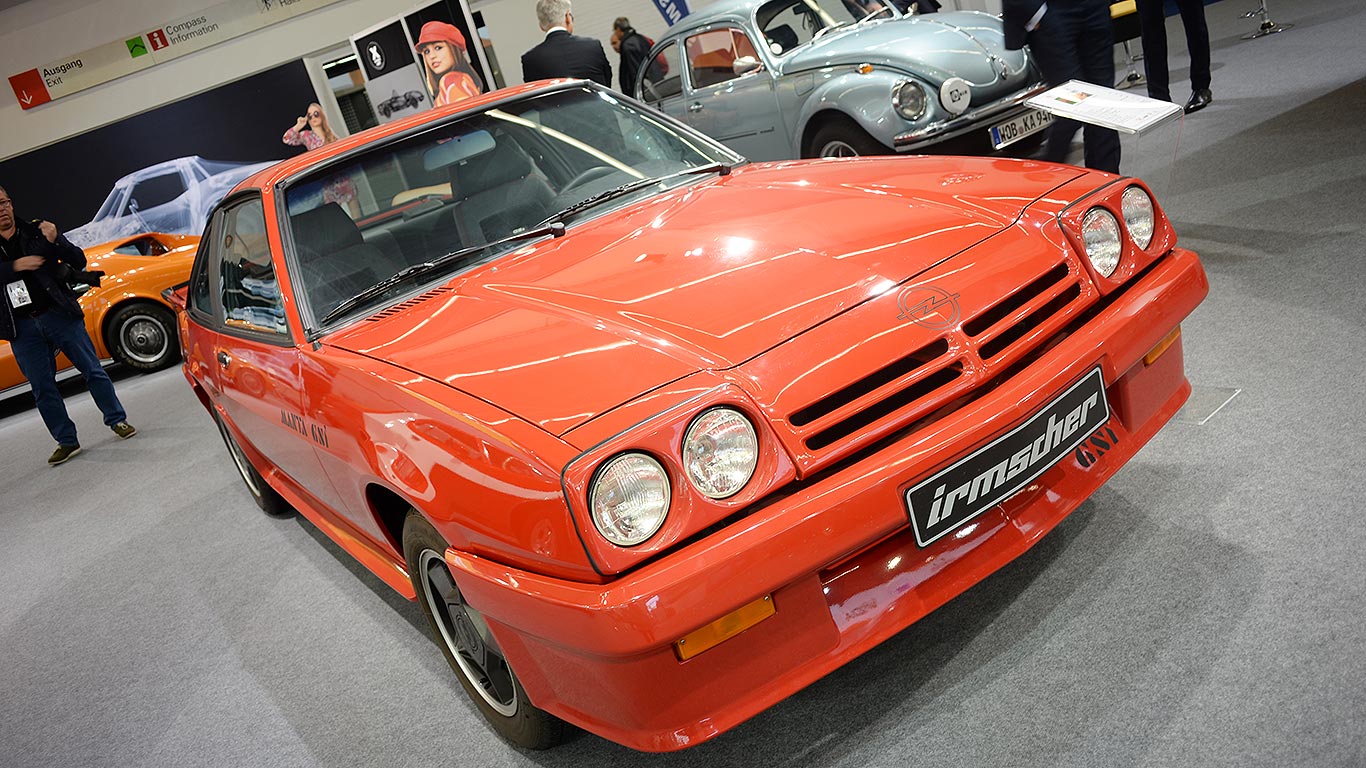
Although the Manta B was launched in the mid 70s, it morphed into something perfectly in-tune with the 1980s. In fact, nothing screams 80s quite like a red Opel Manta GSi with a body kit supplied by in-house tuning arm, Irmscher.
While the Ford Capri developed an unfortunate image crisis in its later life, the Opel Manta largely escaped the gold medallion and hairy chest tag. At least it did in the UK, but the role was reversed in Germany, where the Manta became a little low-rent, especially when viewed alongside the emerging hot hatches of the day.
Koenig Specials Berlinetta Boxer
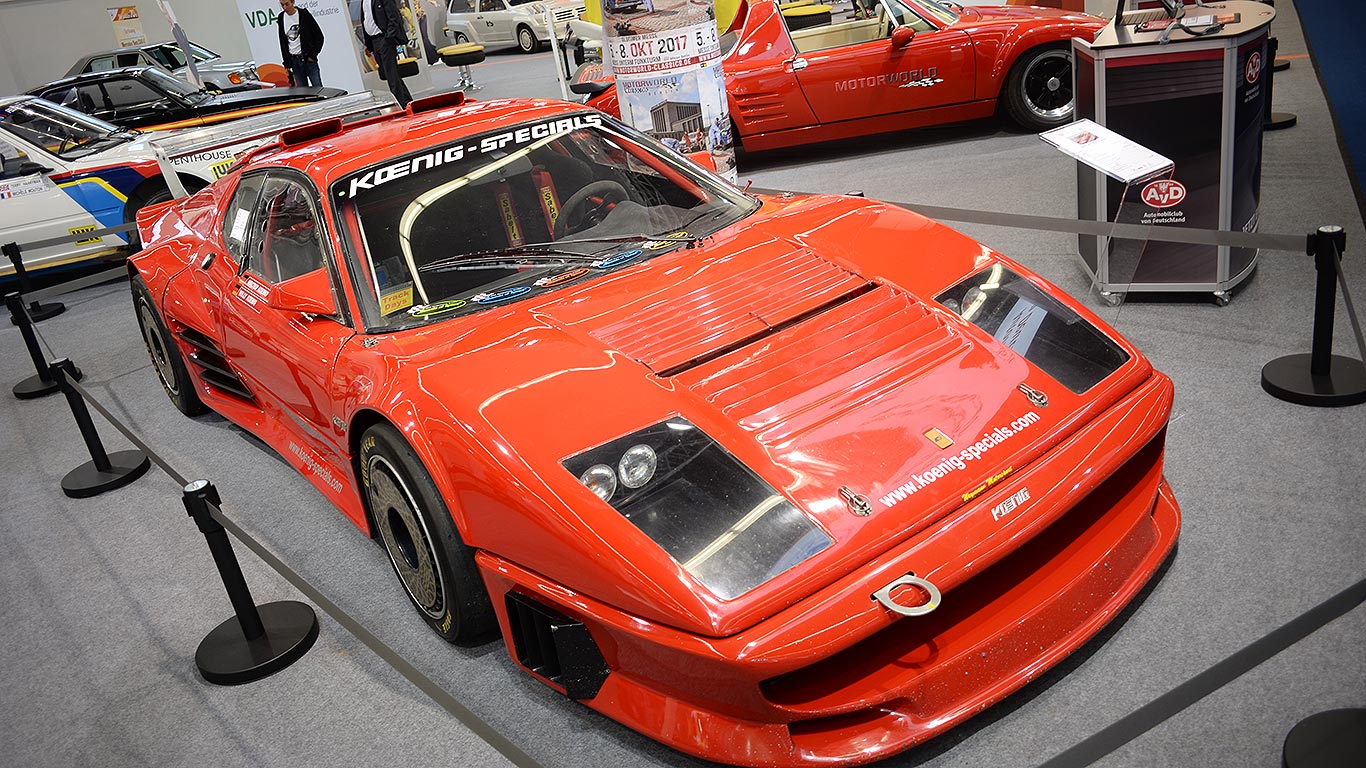
Koenig created some of the wildest modified supercars throughout the 1970s and 80s. Unhappy with the flat-12 engine fitted to the Ferrari Berlinetta Boxer, Koenig added performance parts culminating in a 600hp+ twin-turbo conversion. Fibreglass widebody kits and spoilers were part of the deal, too.
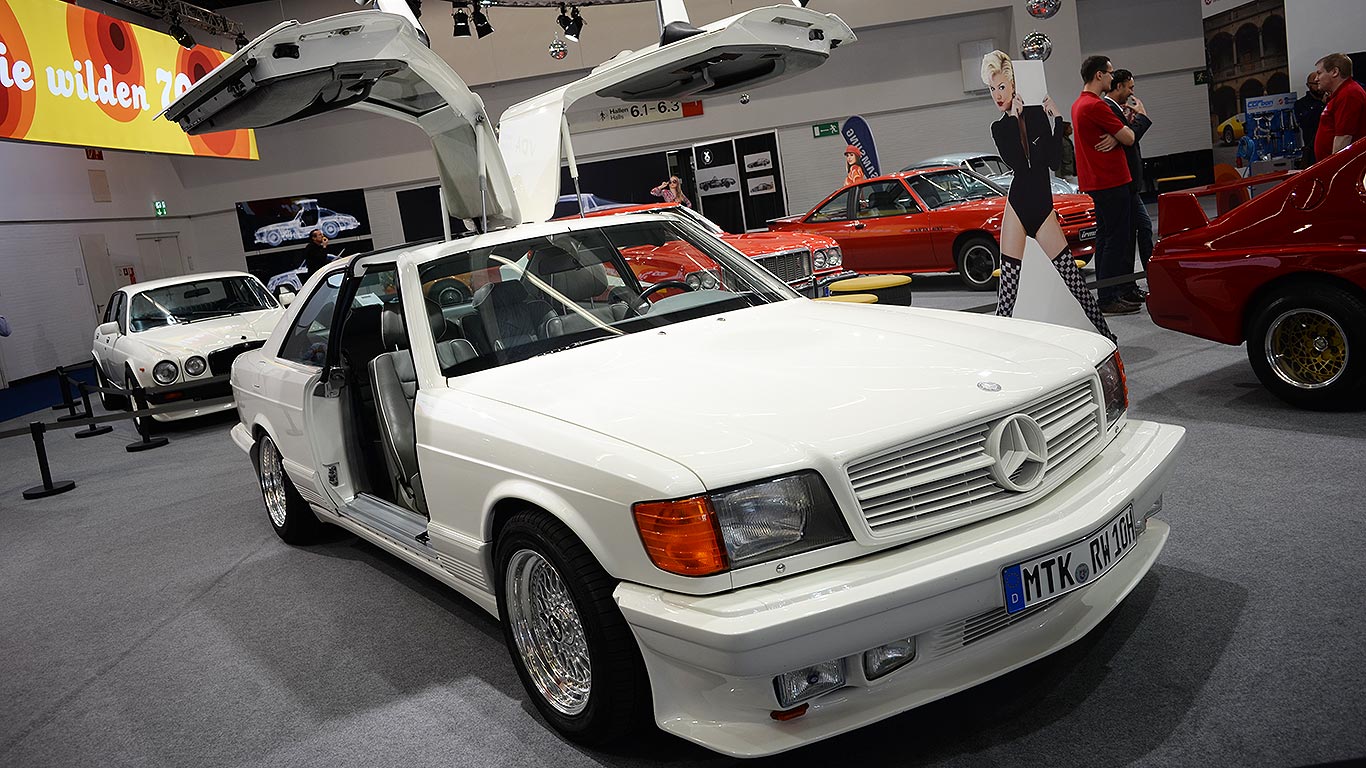
Mercedes-Benz 500 SEC Gullwing
To truly be down with the kids in the early 1980s, you needed to fit your already expensive Mercedes 500 SEC with a set of gullwing doors. Numerous tuning companies offered the conversion, with only the mildest of resemblance to the 300 SL from the 1950s. The only rule was that it needed to be white, to get the full 1980s effect.
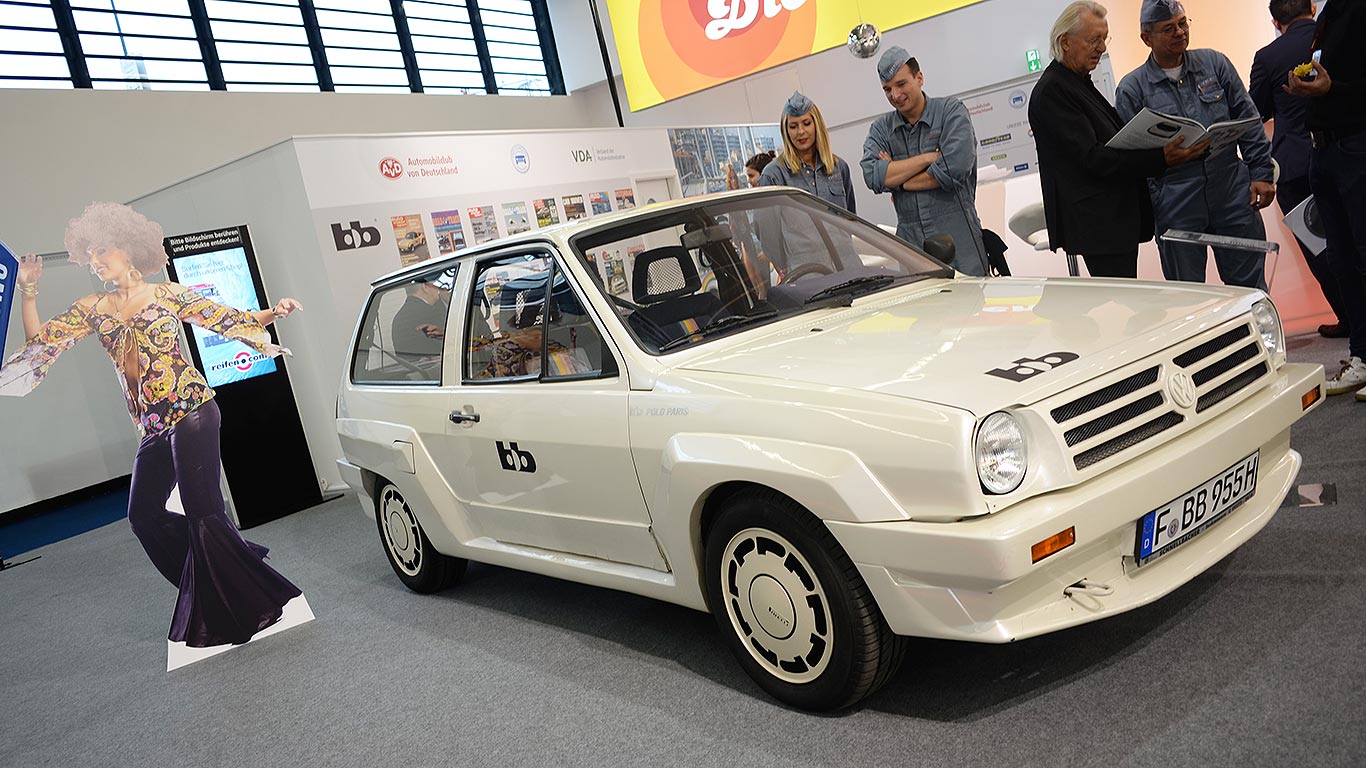
B&B Volkswagen Polo Paris
Rainer Buchmann didn’t just modify Porsches: even the humble Volkswagen Polo came under the spotlight of the B&B team. The Polo Paris was, according to the company, designed to show off feminine elegance and understatement. Apparently that translates into a boxy bodykit, Alcantara interior and 16 speakers for the Blaupunkt stereo system.
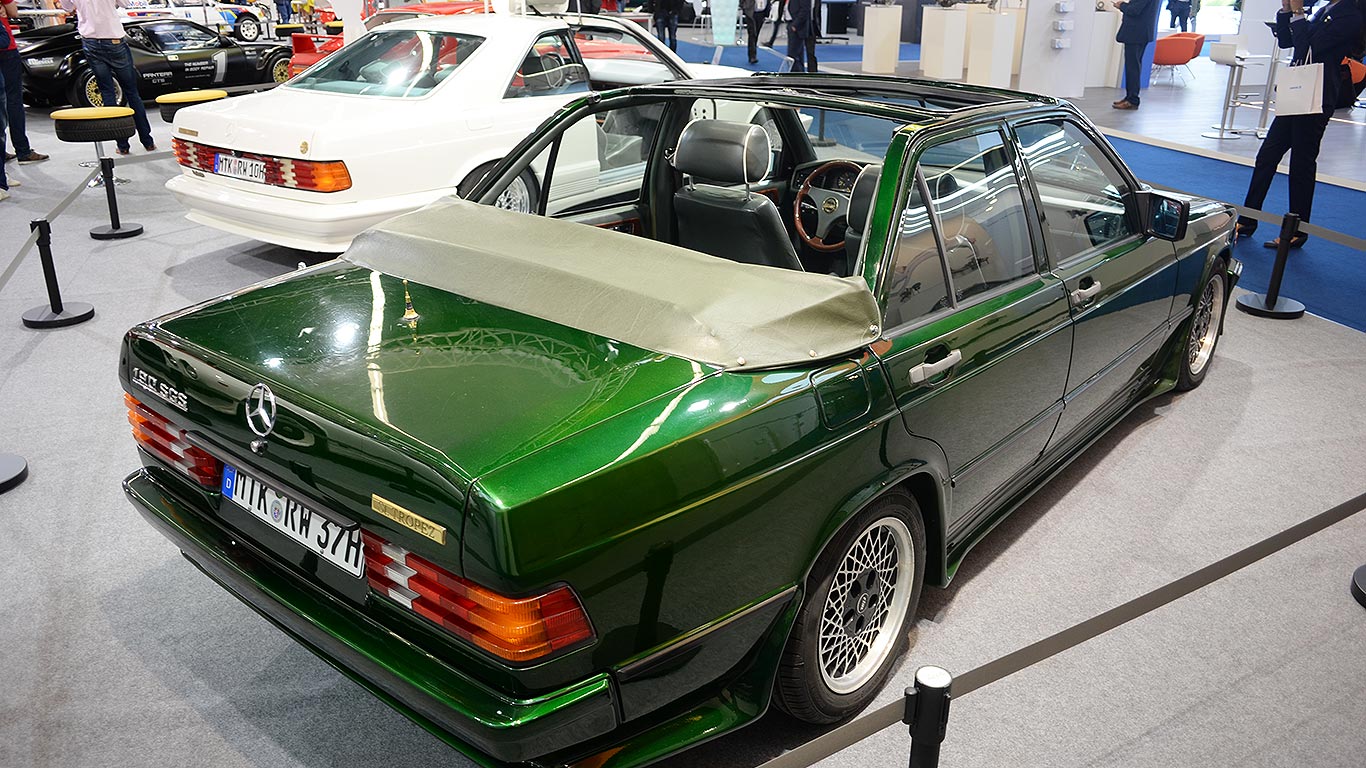
Mercedes-Benz 190 SGS St Tropez
Here’s something you don’t see everyday: a Mercedes-Benz 190E ‘St Tropez’ built by German tuners Styling Garage, or SGS. A quick internet search suggests only five were ever built and two, possibly three, remain in existence. You know when you shouldn’t like something, but you can’t help but nod in approval. Yeah, that.
In 2014, one was sold in Hamburg for £15,000, and the chances are it’s the one on show in Frankfurt. SGS began life as a workshop, before expanding into coachbuilding, with clients in the Middle East. Sadly, in 1986, the company was declared bankrupt. It’s fair to say that nobody at Mercedes-Benz shed a tear, with Stuttgart seemingly unimpressed with the firm’s creations.
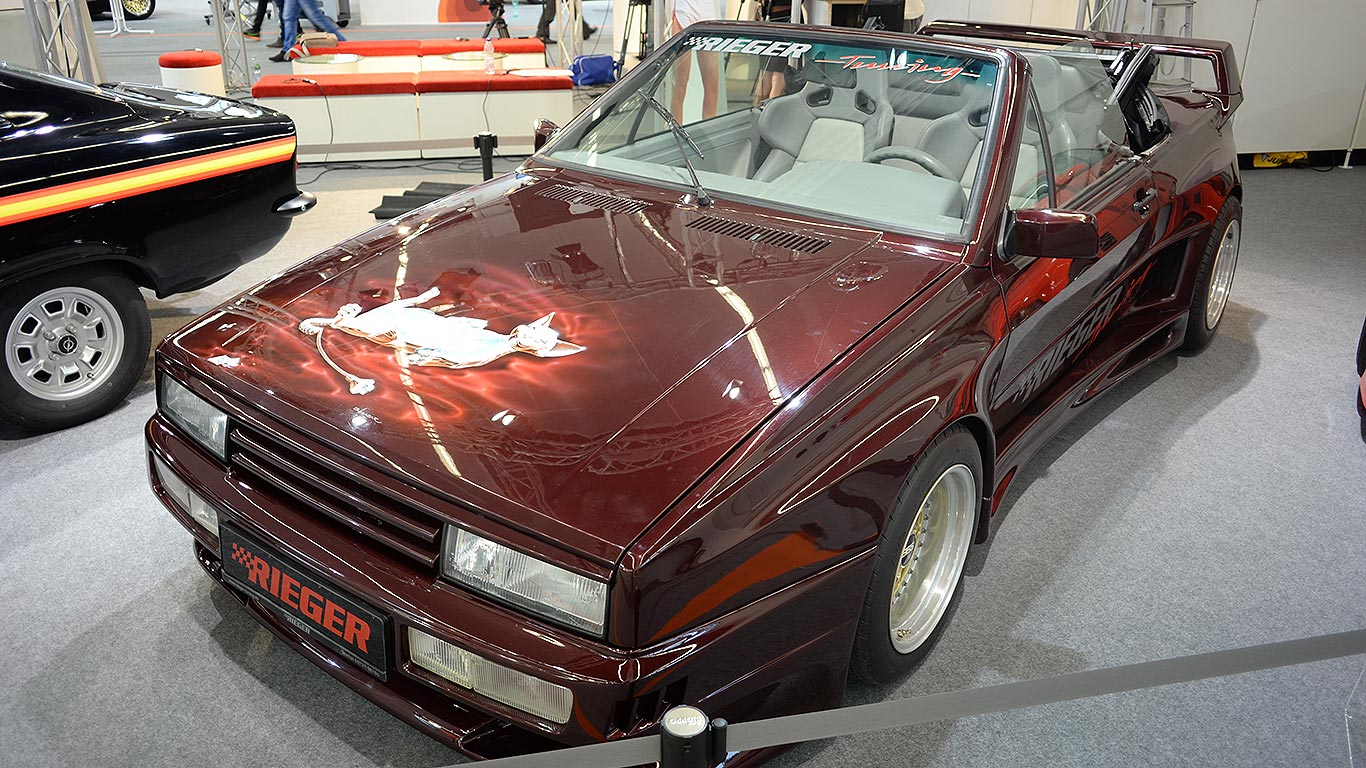
Rieger Volkswagen Corrado
Some things, like the Volkswagen Corrado, are best left alone. Two decades on from the end of production, the Corrado remains one of the best looking cars ever to wear the VW badge, but that doesn’t stop people from messing with it. This Rieger conversion is an acquired taste, as is the bonnet detailing.
Mercedes-Benz A-Class
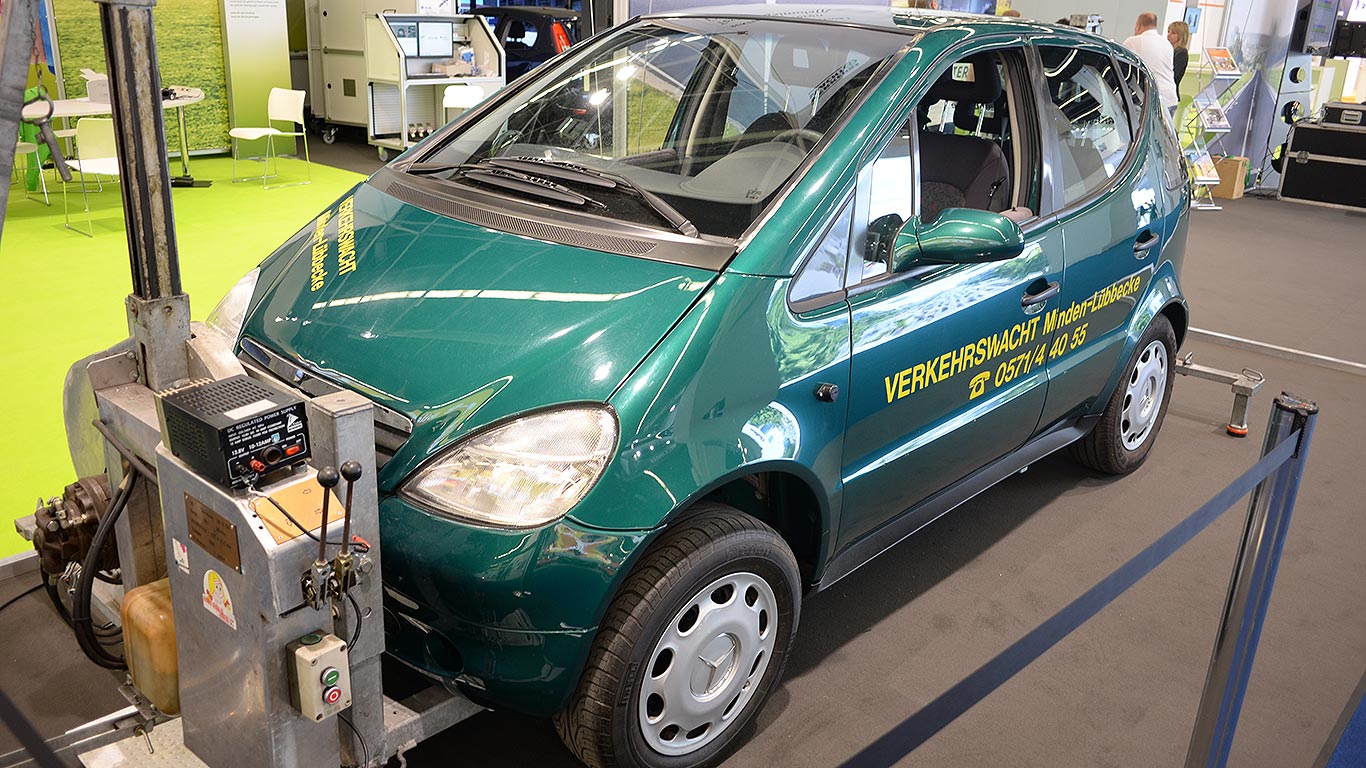
Too soon to class the Mercedes-Benz A-Class as ‘retro’? It might surprise to learn that the baby Merc, the company’s first front-wheel-drive car, turns 20 in 1997. It’s fair to say Stuttgart won’t have fond memories of the A-Class, with the car famously failing the Swedish ‘Elk’ test, highlighting a severe stability problem. Worse was to come, with development costs resulting in losses of around €1.7 billion.
As day two of the Frankfurt Motor Show kicks off, join us for a moment of reflection as we look back over the highlights, lowlights, and biggest discussion points from the show floor. Is the Suzuki Swift Sport the car we want more than any other from Frankfurt? And was Greenpeace justified in protesting against all the petrol and diesel models being revealed? Join the discussion by commenting below.
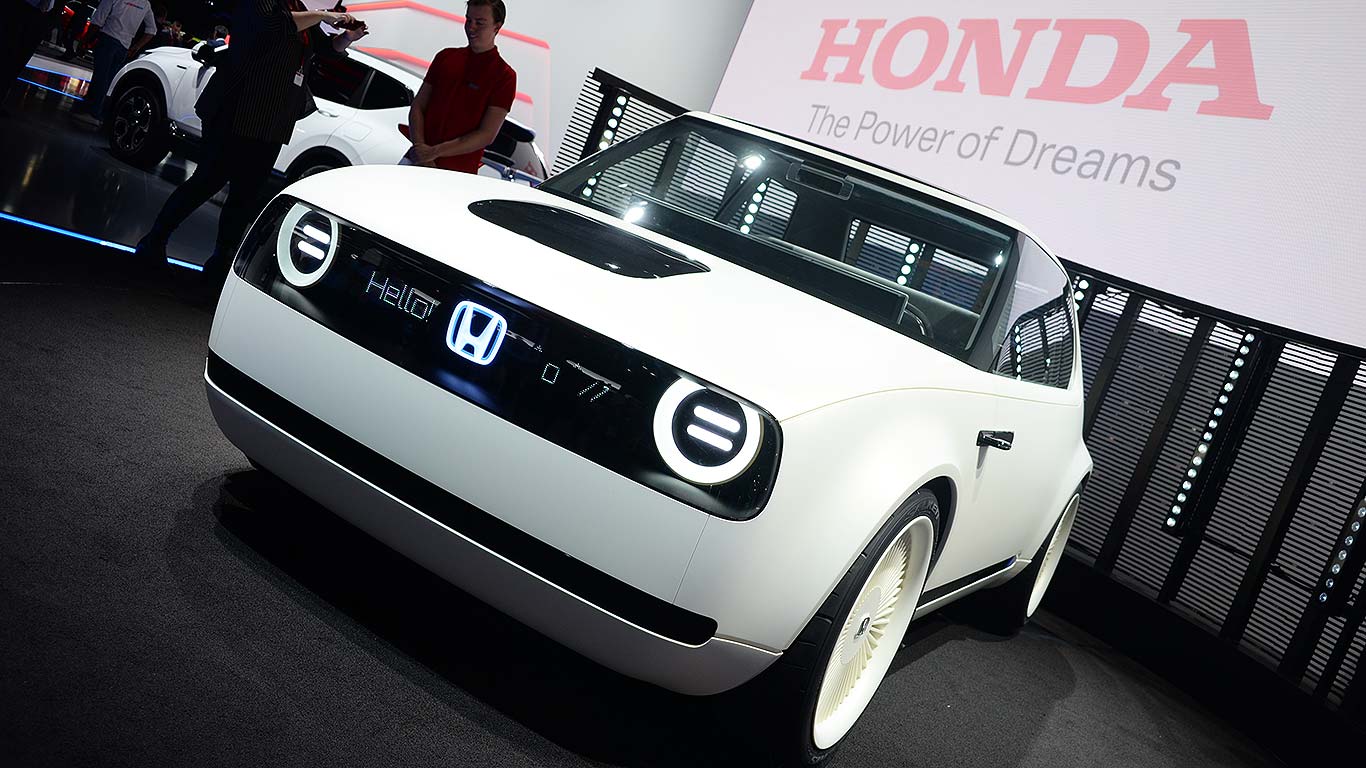
Watch out Fiat 500: Honda has revealed a retro remake of its original Civic and it really isn’t as sh*te as that sounds. The Urban EV Concept is an electric concept car that looks like a 2017 take on the Mk1 Civic, crossed with a 205 GTI and an element of Mk1 Golf thrown in for good measure. And, what’s more exciting, Honda bosses have hinted that it previews an actual new car, due out in 2019.
There are some cool features, such as a blue backlit Honda badge and interactive messages displayed where you’d find the grille on a conventional car. Of course, we’d like to know more about the important bits, though. Honda hasn’t mentioned the range or any performance figures, and there’s plenty of time to mess it up before the production model arrives in two years’ time. But, for many people, this is looking like the star of Frankfurt.
Audi ditches Quattro for RWD
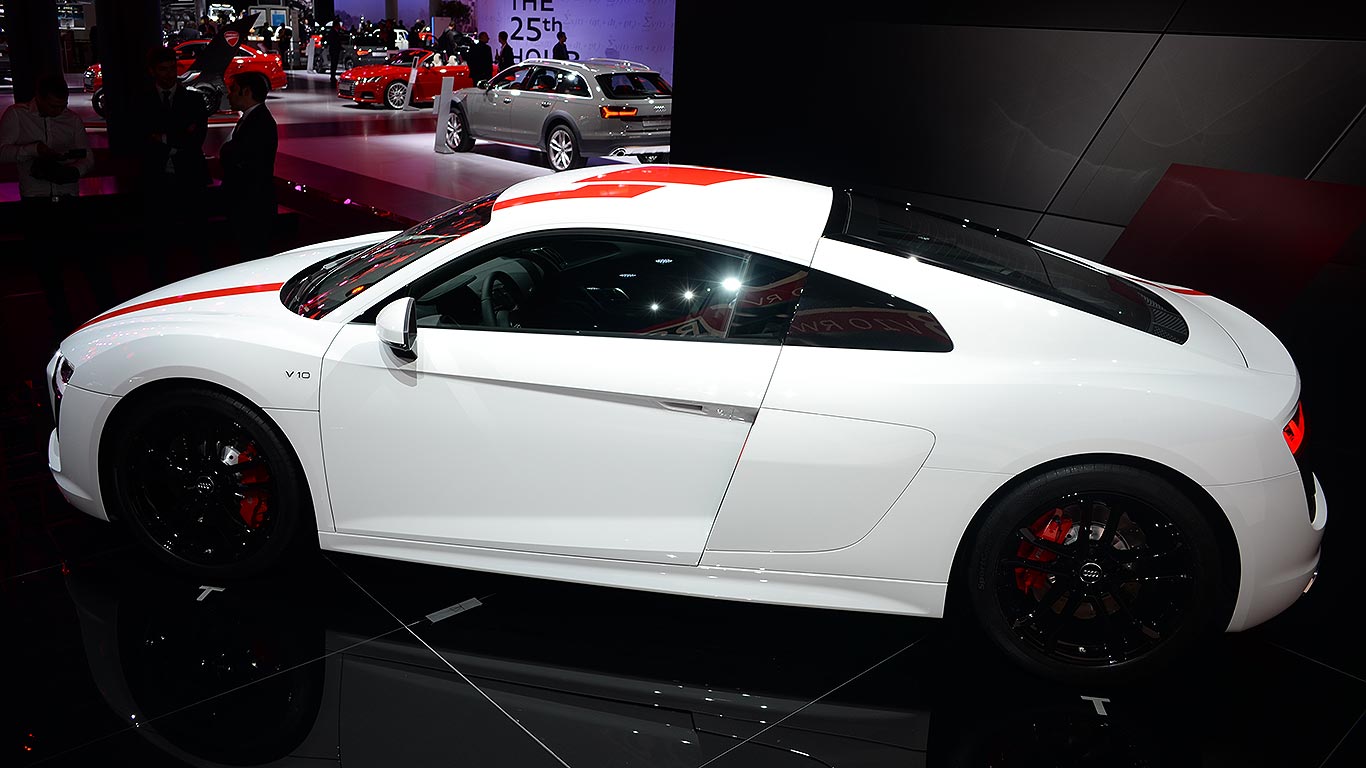
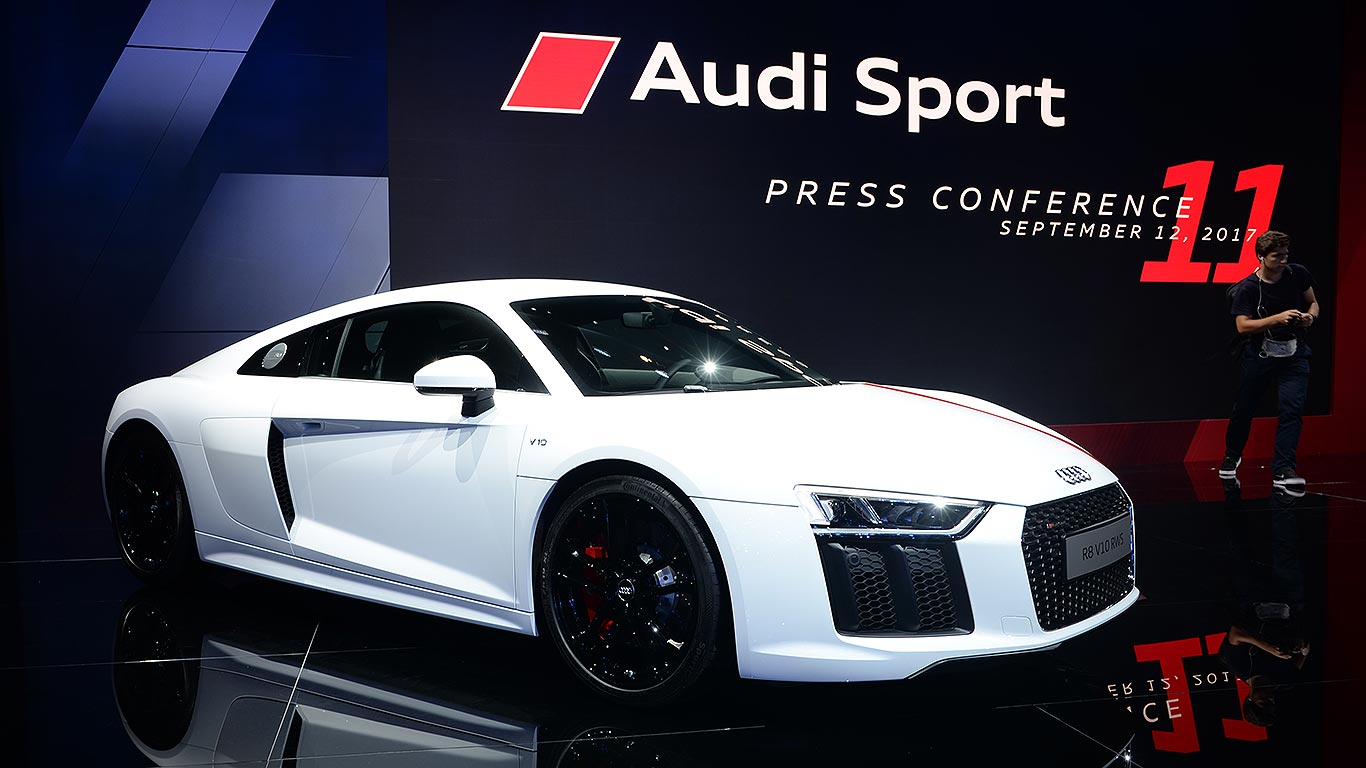
We reckon Audi Sport boss Stephan Winkelmann is a fan of skids. Not only did he change the sub-brand’s name from ‘Quattro’ soon after he arrived last year, it has subsequently revealed a rear-drive R8 at Frankfurt.
The R8 V10 RWS (Rear Wheel Series) is based on the regular R8 V10 in coupe or Spyder form. Only 999 will be built, with deliveries starting later this year and price tags of €140,000 and €153,000 respectively. UK prices are yet to be confirmed, but it’s expected a handful will make it across the channel.
While removing the propshaft and centre diff has been beneficial for the R8’s weight (down 50kg in the coupe and 40kg in the Spyder), a loss of traction has added a few tenths of a second to its 0-62mph times (3.7 seconds and 3.8 seconds). Not that anyone seems bothered: talk on the show floor suggests this is one of the highlights of Frankfurt.
Why is Greenpeace protesting when even the supercars are hybrids?
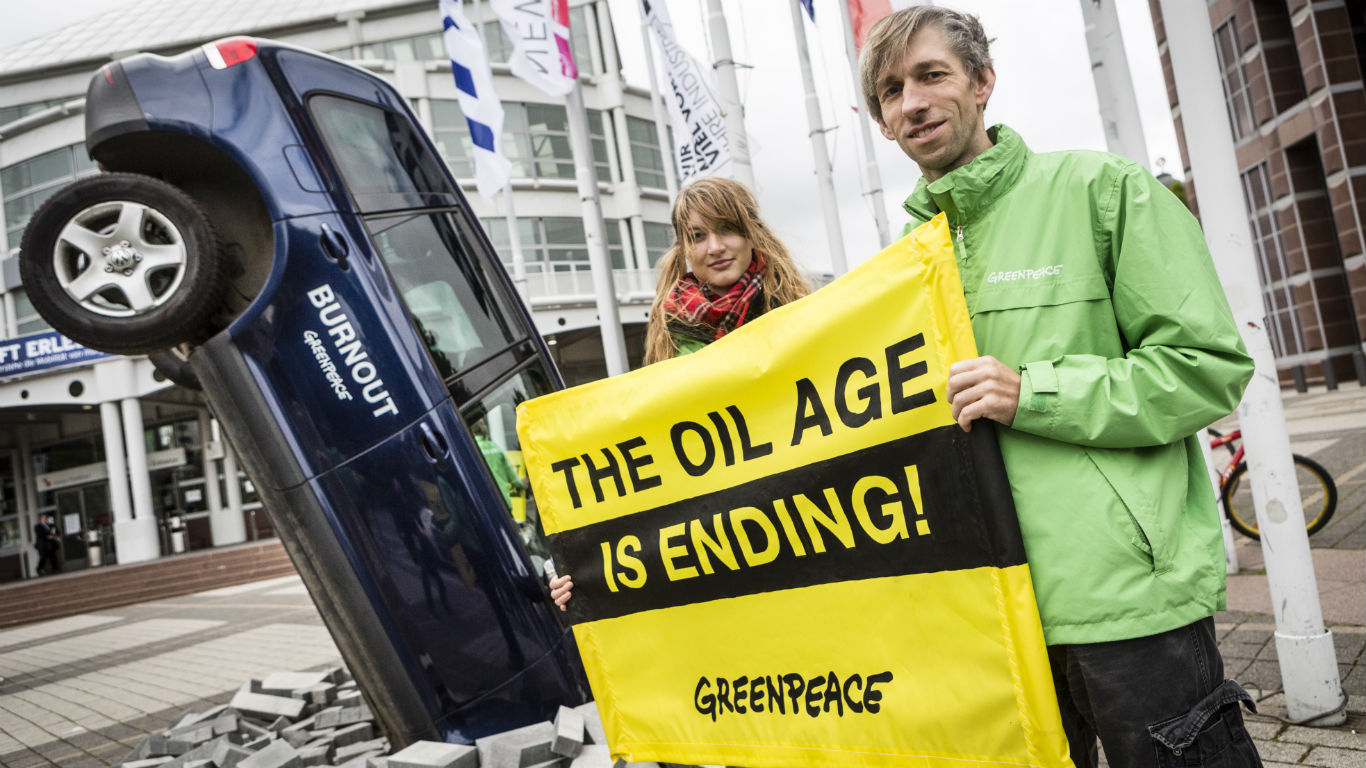
Visitors to the IAA may have been surprised to find Greenpeace supporters outside with a Volkswagen Touareg sticking into the ground and banners saying “the oil age is ending”. The environmentalist group is angry at carmakers for continuing to launch petrol and diesel cars at Frankfurt, signalling “the wrong direction that the industry is headed.”
Of course, they seem to have overlooked the plethora of electrified models making their debut at Frankfurt. Or maybe Greenpeace just doesn’t enjoy skids as much as Mr Winkelmann.
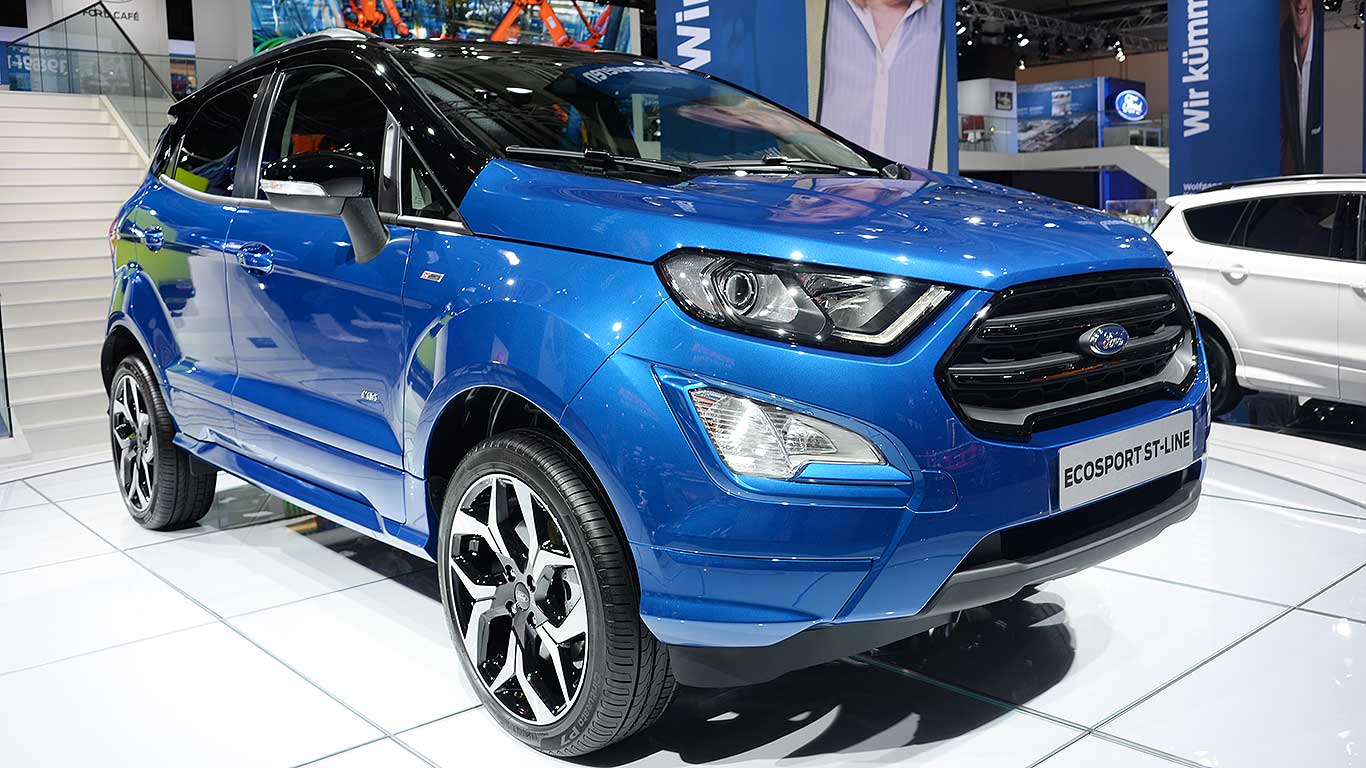
Ford makes the Ecosport even uglier
Developed in South America and brought to Europe under the ‘One Ford’ philosophy, the Ecosport has always lagged behind the likes of the Nissan Juke and Renault Captur in the UK. From the off, its stunted looks, cheap interior and below-par driving experience held it back. It’s had no shortage of tweaks, however – as one Twitter user put it, “that thing’s had more facelifts than the population of Beverly Hills.”
It’s been revised again for Frankfurt 2017 and, well, look at it. It’s never been an attractive car but, on appearance alone, we’d suggest it’s still a long way off troubling the Nissan Juke for UK sales. “Wait until you have driven it,” a Ford spokesperson optimistically told us. We can’t wait.
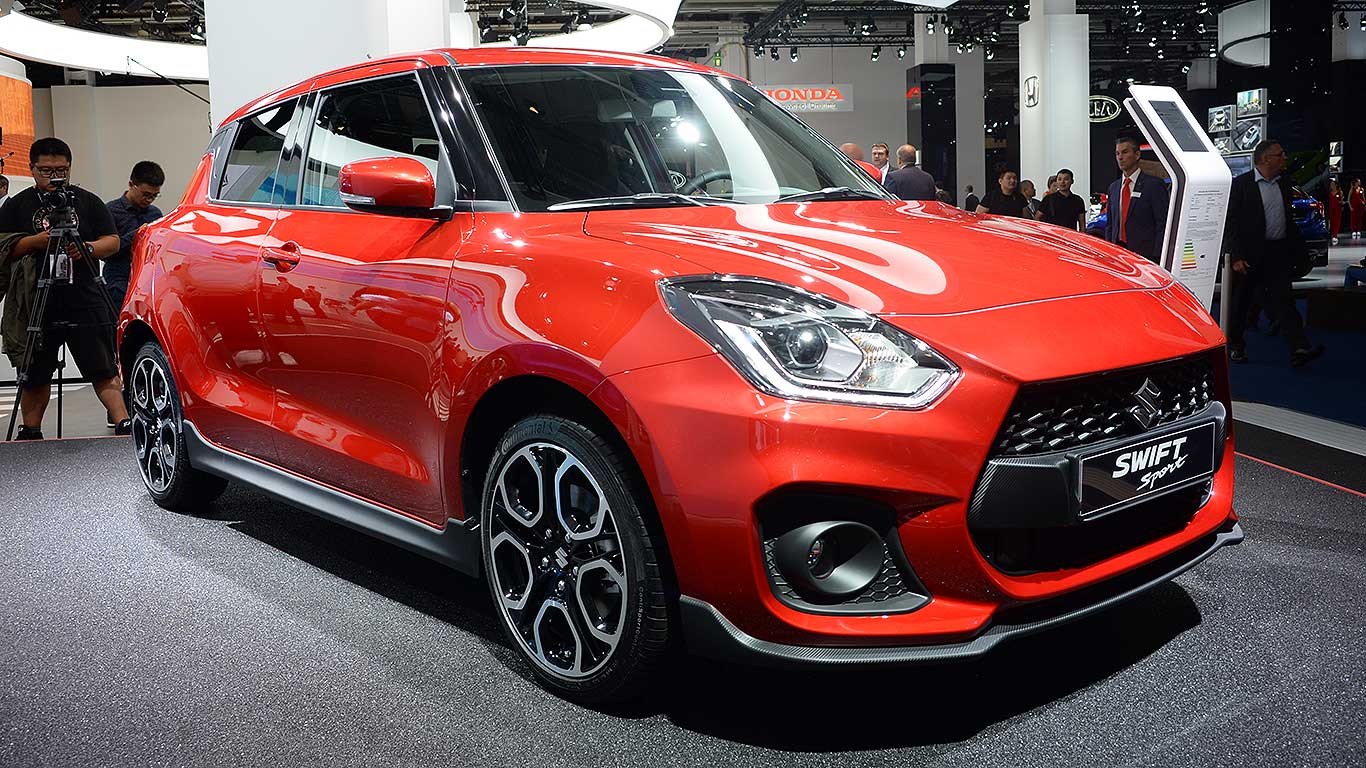
Suzuki Swift Sport resists mega power
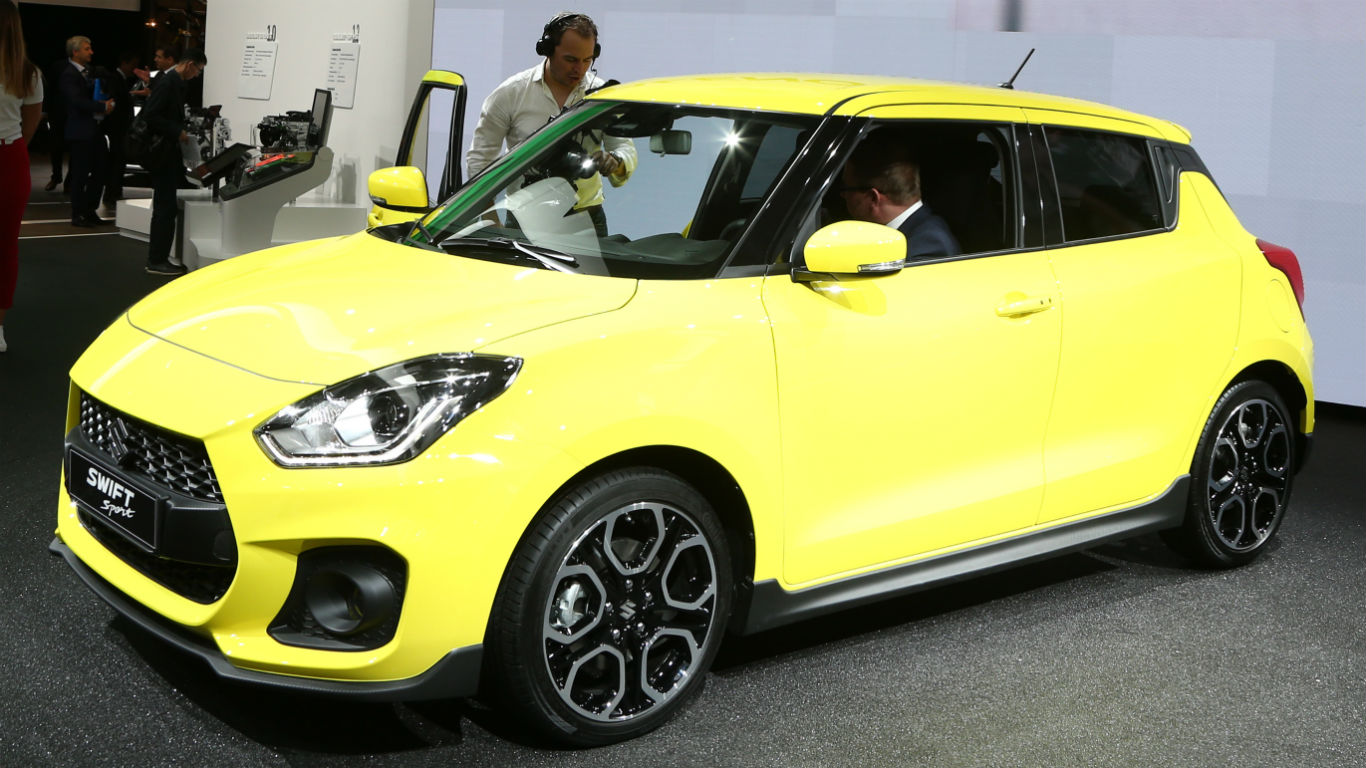
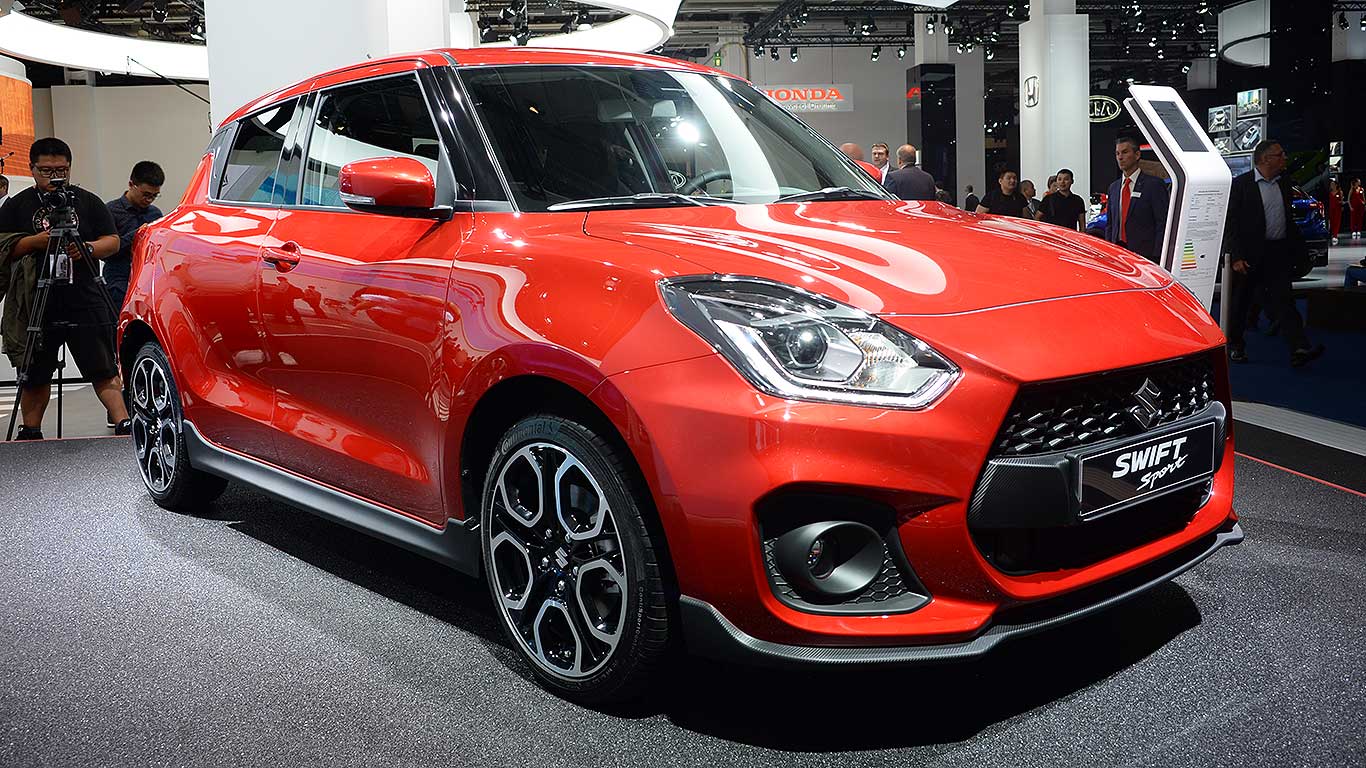
Suzuki’s Swift Sport has always been one of the purest hot hatches on sale. We say ‘hot’… in fact, ‘warm’ would be more appropriate, as outright power and performance have never been what the Swift Sport’s about. It would have been all too easy for Suzuki to go chasing after the Fiesta ST with a moderate power increase for the new Swift Sport, but it appears to have resisted.
While its high-revving naturally-aspirated 1.6-litre engine has been replaced by a 1.4-litre turbo (boo!), power has been increased to 138hp – up by just 2hp over its predecessor (136hp). It’s slightly bigger than its predecessor, unfortunately, but not massively so – and it’s actually 80kg lighter than before, bringing it below a tonne.
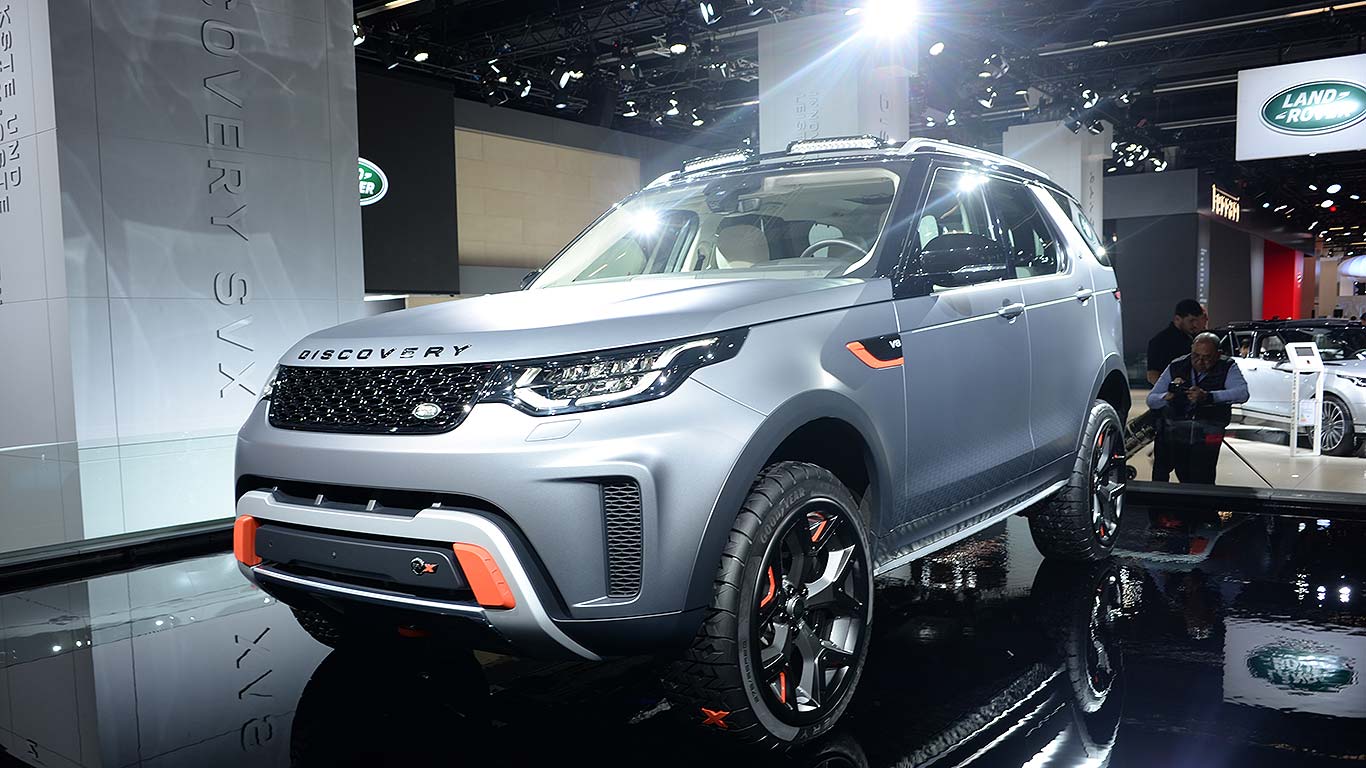
Land Rover makes the Discovery more like a Defender
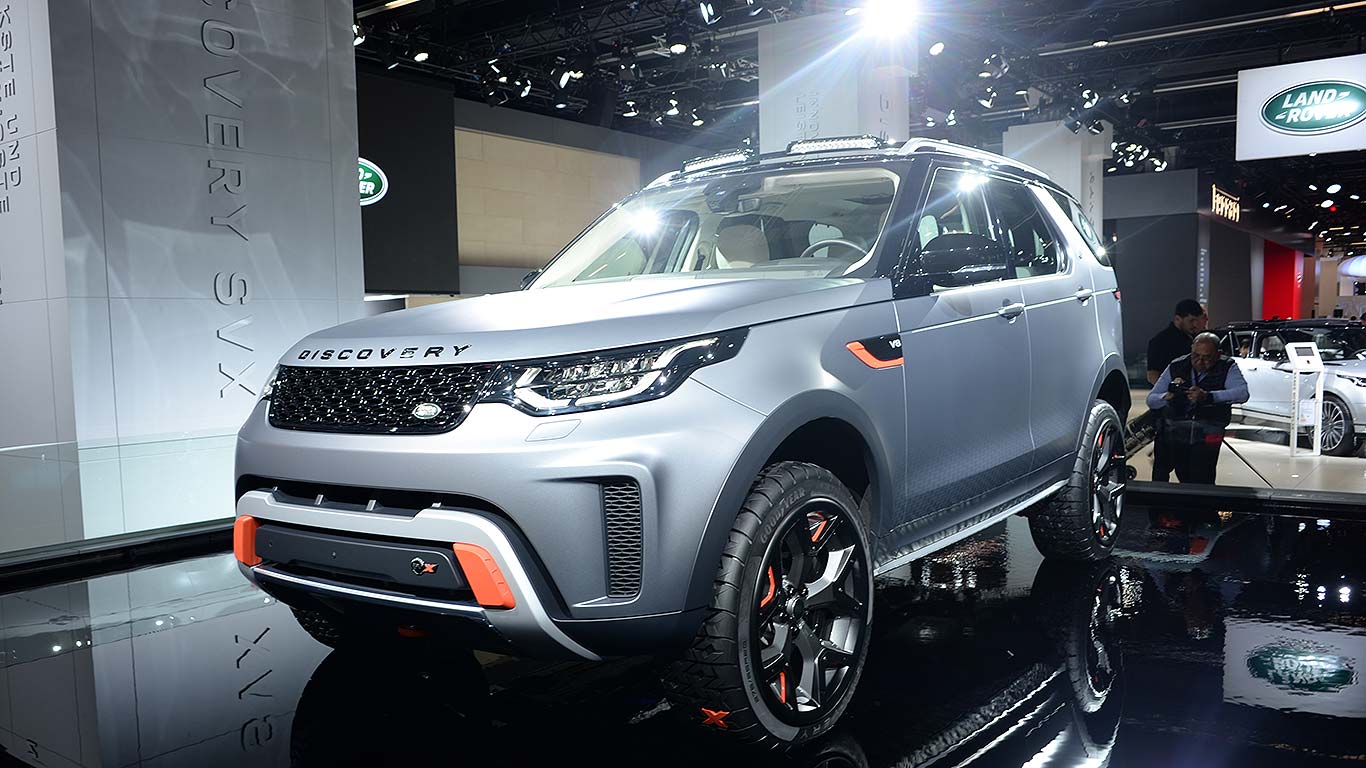
Nope, Land Rover hasn’t revealed a new Defender at Frankfurt. But, in a bid to prevent its stand looking like the double yellows outside a Kensington school at 3.15pm, the firm’s Special Vehicle Operations division has been working on something special. It’s the Land Rover Discovery SVX, with increased ride height, all-terrain tyres and two electronic locking differentials to make it invincible off-road.
Things are also a bit special under the bonnet. JLR’s squeezed its 5.0-litre supercharged V8 engine into the Discovery’s engine bay, producing a whopping 525hp and 461lb ft of torque. Performance figures haven’t been discussed, but it does seem to conflict with the off-road focussed rubber fitted to the forged aluminium alloy wheels.
Production of the Discovery SVX will start at the SVO’s technical centre in Coventry early in 2018. If you want to get your hands on one, rumours suggest you may need close to £100,000.
Porsche upsets 911 R owners
To many, last year’s Porsche 911 R was the ultimate 911. Based on the GT3, with the engine from the GT3 RS and no unsightly rear wing, all 991 911 Rs soon sold out despite their £137,000 price tag – with some specialist dealers suggesting that buyers were happy to pay close to £1 million to get their hands on an example.
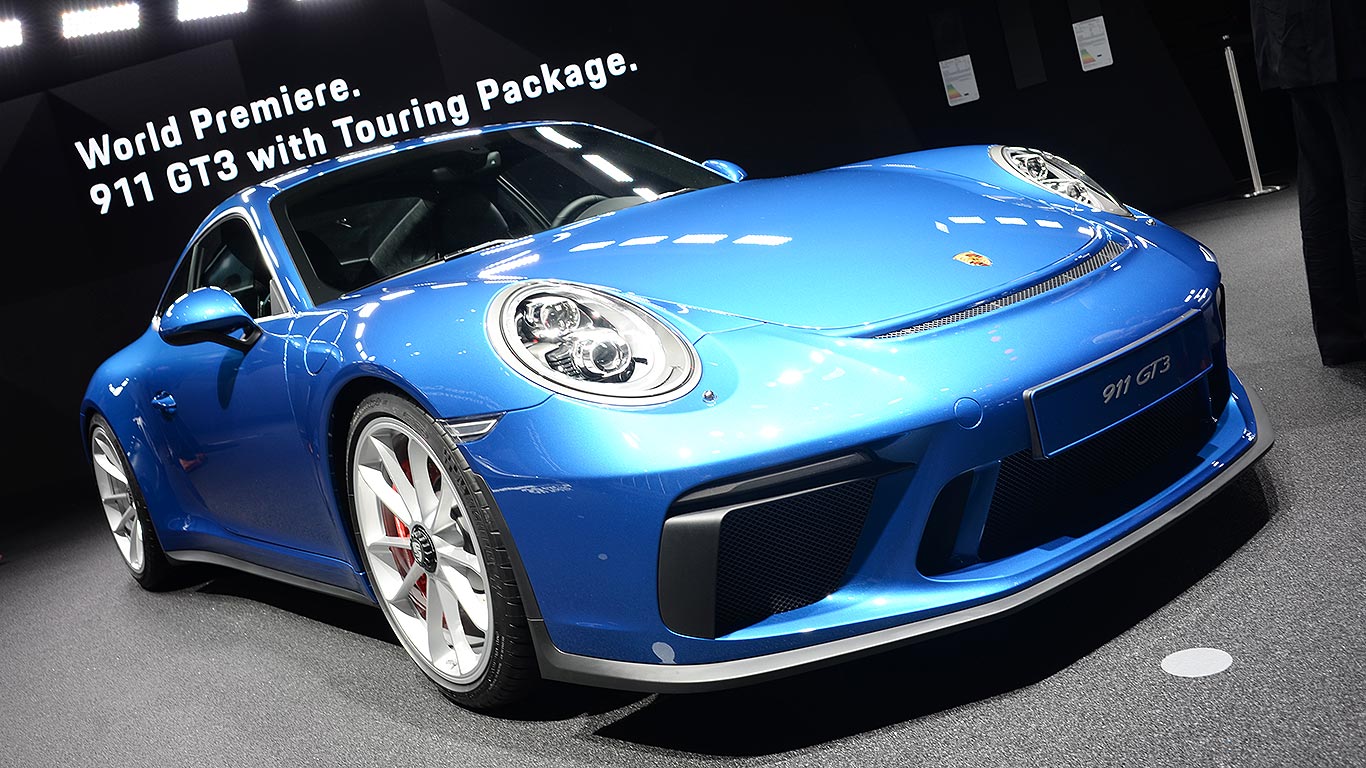
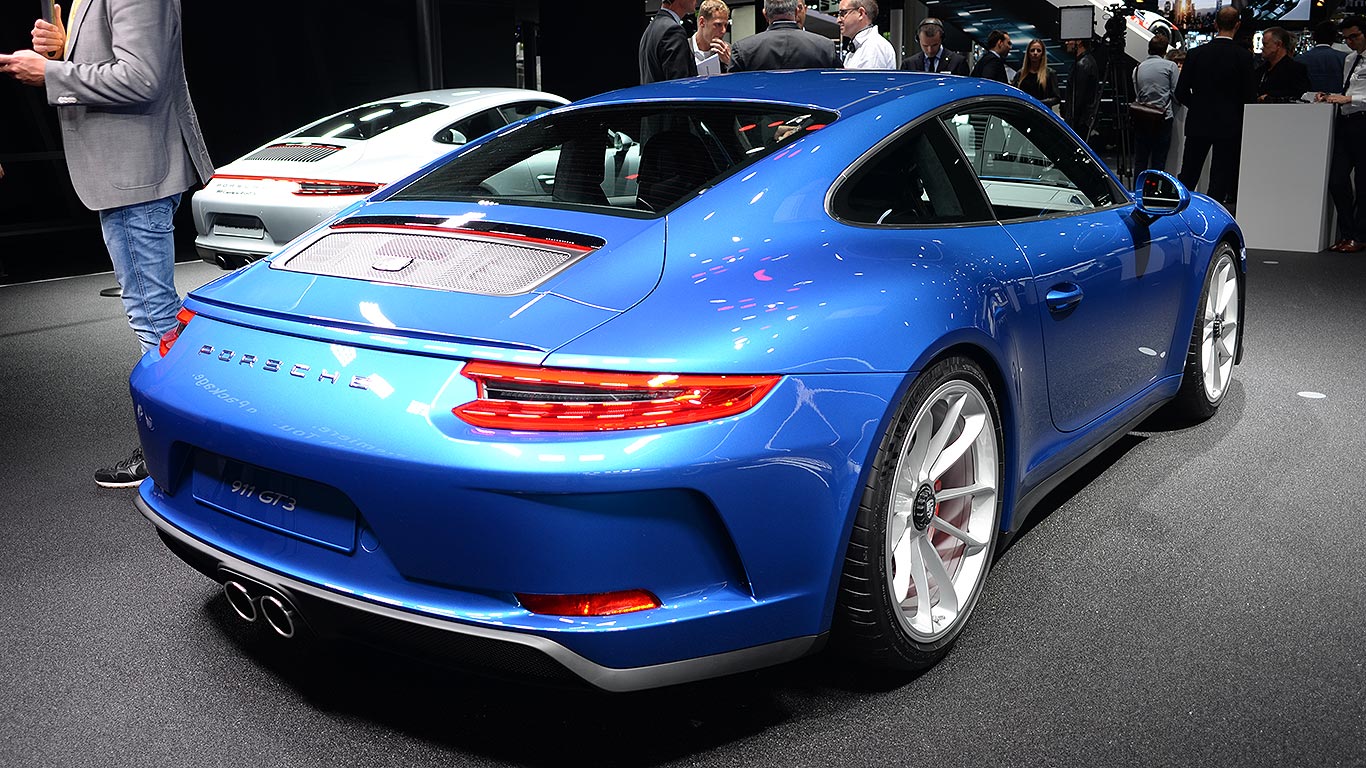
Anyone who has paid a fortune for a 911 R might be a tad annoyed, however, as Porsche has just revealed the very similar 911 GT3 with Touring Package (let’s call it the GT3 Touring). It has the same 4.0-litre naturally-aspirated engine as the GT3, but gone are garish styling features – including the rear wing. And, the best thing about it is the price: it’ll set you back £111,802. That’s the same as a standard GT3.
Mercedes-AMG manages to make even a 1,000hp supercar look bland
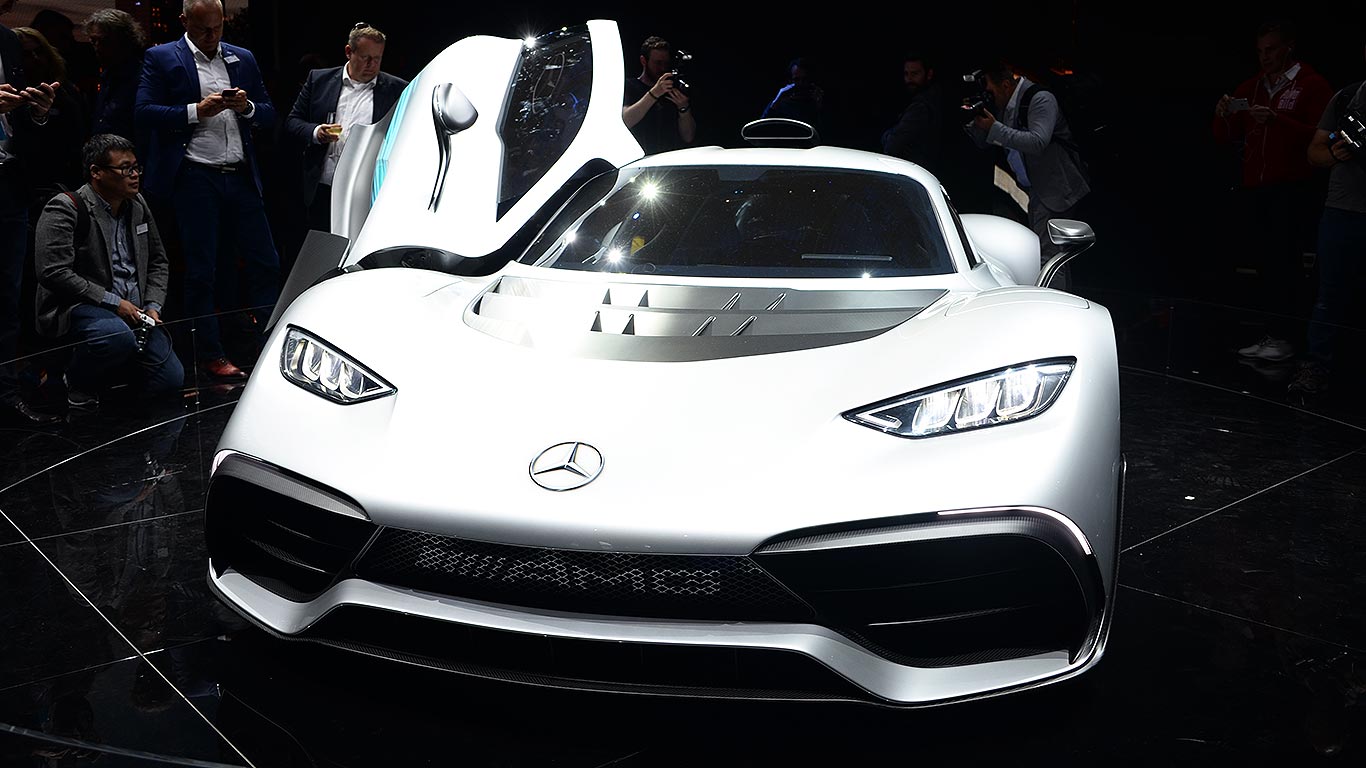
This is the Mercedes-AMG Project One. It’s powered by the same turbocharged 1.6-litre V6 engine as the manufacturer’s F1 car, able to rev to 11,000rpm and, combined with no fewer than four electric motors, exceed 1,000hp. As a result it’ll hit 124mph in less than 6.0 seconds – faster than a Bugatti Chiron.
It all sounds very exciting, doesn’t it? But, well, look at it. It’s just not as dramatic as you’d hope for a Bugatti Chiron-beating hypercar. It looks a bit like the Saleen S7 off the 90s, with a dose of McLaren F1 thrown in. And that’s being kind. Yawn.
Is the BMW X7 the ghastliest car of Frankfurt?
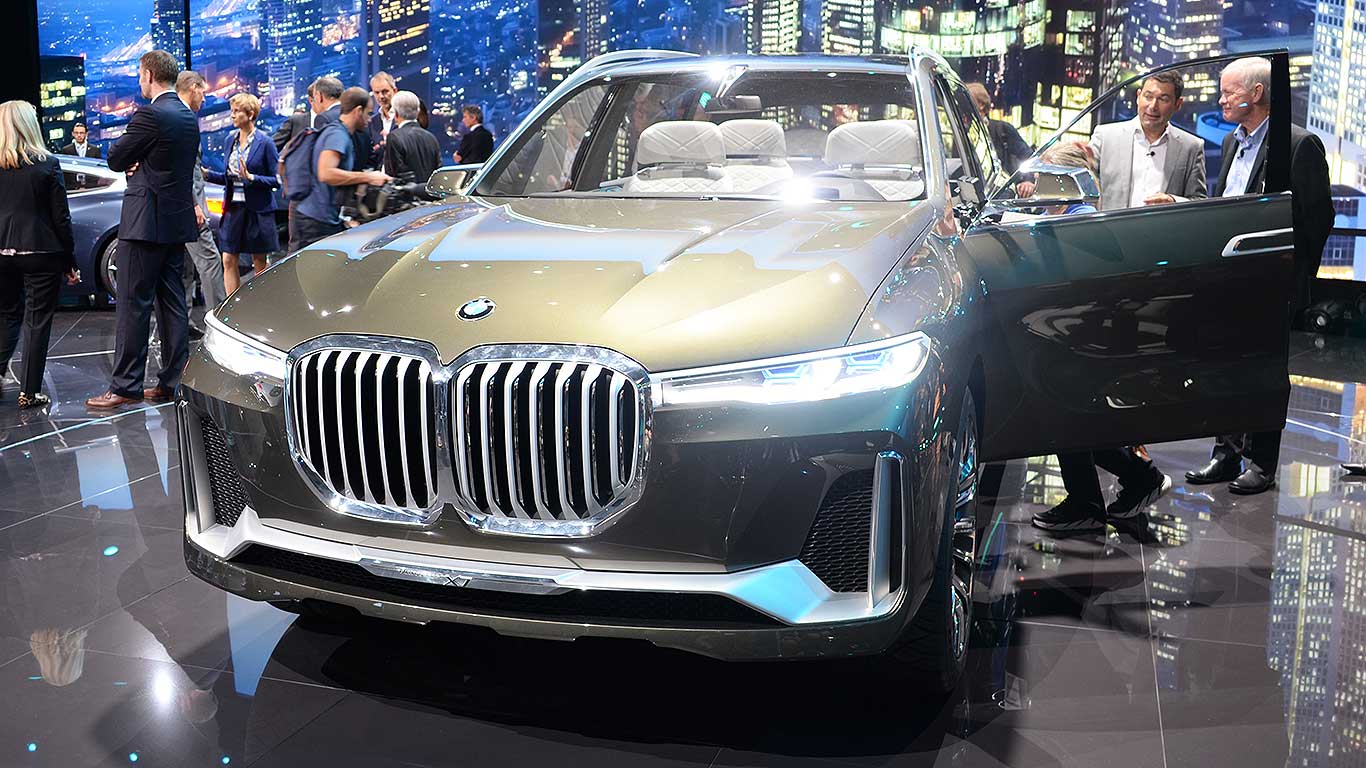
It’d be easy to mistake the BMW X7 for one of the modified monstrosities that usually fill the tuner halls at motor shows. Sharing a platform with the 7 Series, the Range Rover rival has an unmissable kidney grille and masses of chrome. It really is quite something. Oh, and it’s massive.
We can see two positives about the BMW X7. Firstly, you can’t see the exterior when you’re inside it, and the interior is actually rather lovely. There’s lots of space, obviously, along with crystal glass switches and numerous touchscreen monitors. The second bit of good news it that it’s just a concept, for now, and the production version is expected to be heavily toned down when it arrives next year. Phew.
Kia’s Proceed shooting brake is one of the sexiest cars of the show
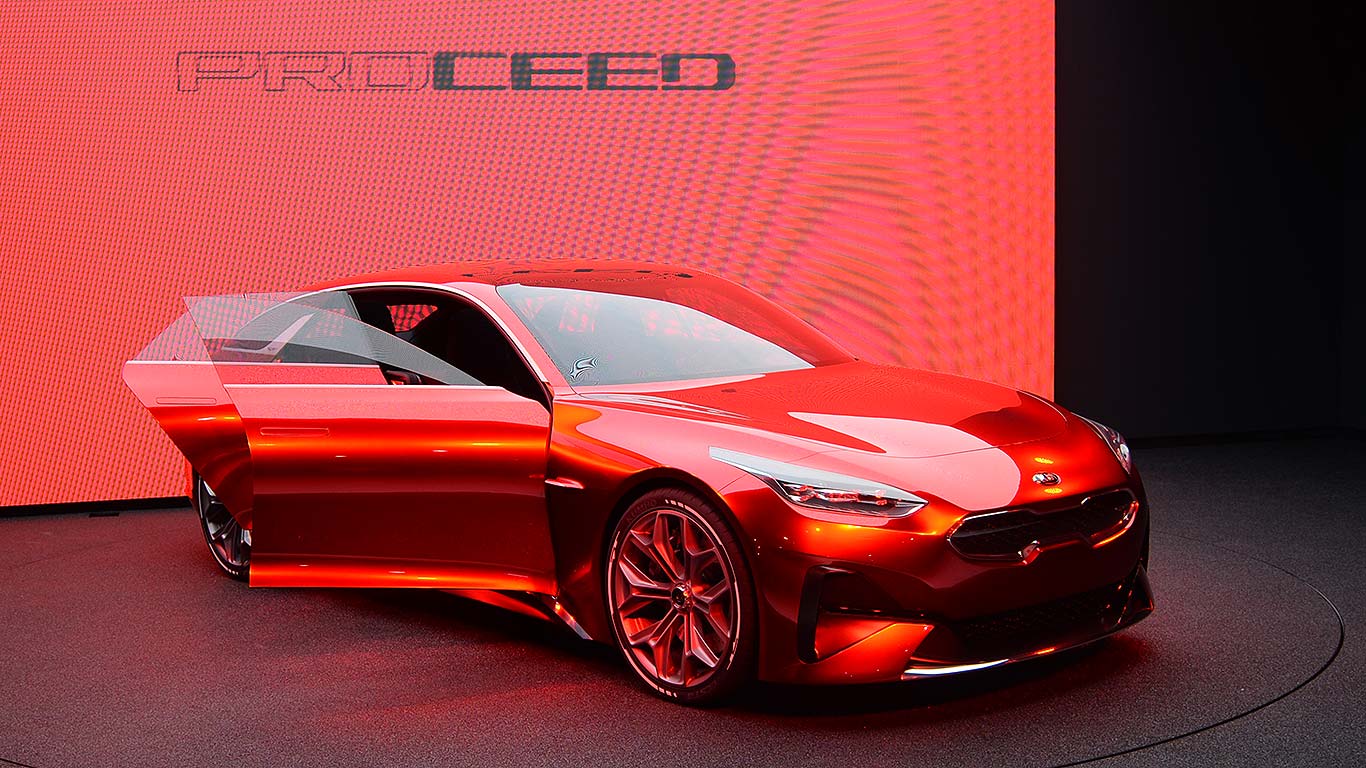
“If Kia makes this, everyone else selling cars in the C-segment might as well give up now,” said one Twitter user about the Proceed shooting brake. We can’t disagree, really. As attractive as the BMW X7 is ugly, the Proceed concept previews the next-generation Kia Cee’d. Although we call it a shooting brake, Kia calls it an ‘extended hatch’ and has hinted that it could preview a new bodystyle for the Cee’d when it arrives.
Naturally, we doubt the 20-inch alloys or hand-finished ‘rippled black fabric’ interior will make it into production. If the car that arrives at dealers looks anything like the Proceed concept, though, it’s going to be the most attractive Ford Focus rival on the market.
While the attention at Frankfurt may seem geared to an electrified future, that hasn’t stopped manufacturers from showing off new performance hardware. From F1-inspired hypercars to American muscle, there is horsepower for every budget at this year’s IAA show.
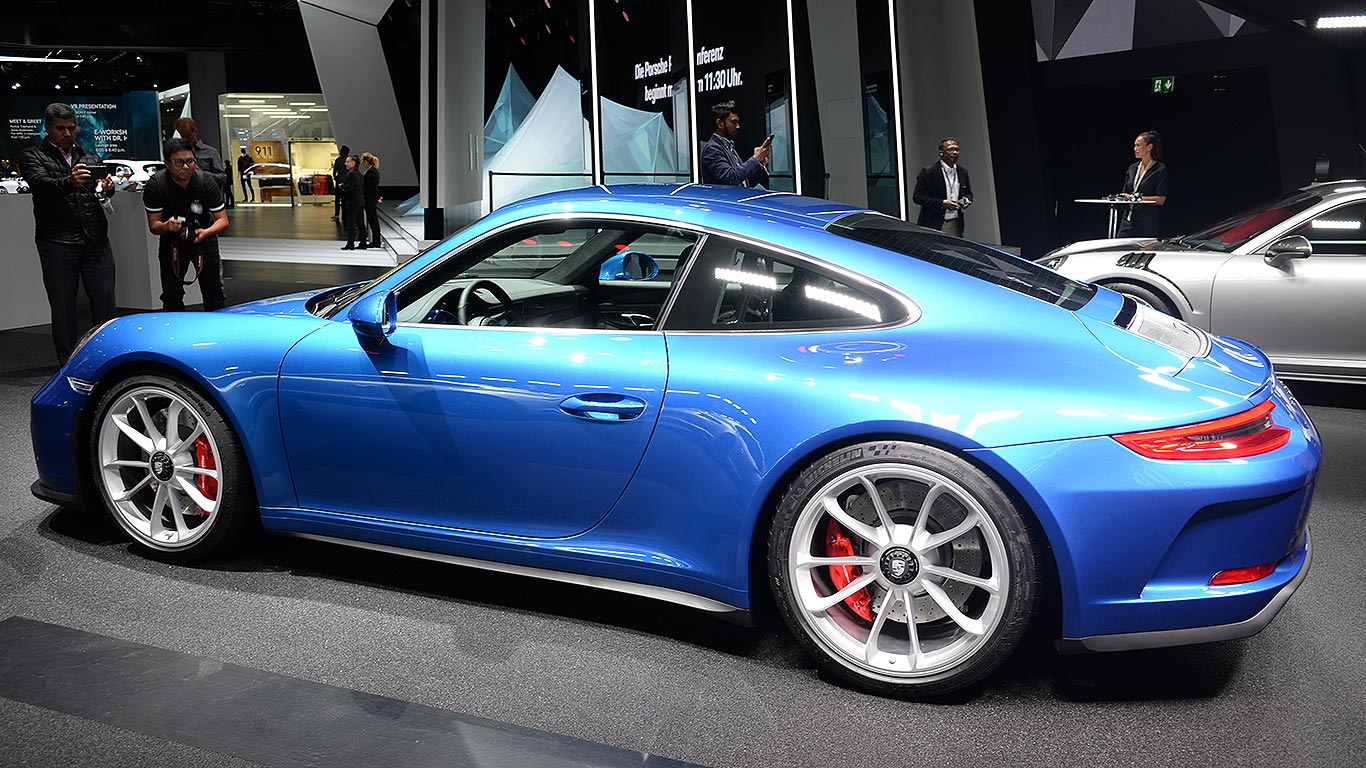
Porsche knows its buyers want the performance of the hardcore 911 GT3, but without the extravagant aerodynamic appendages. The limited-edition 911 R also proved just how keen enthusiasts were for a manual GT3, with Porsche combining the two ideas into one special Touring Package option. Unlike the 911 R, there are no limits on numbers here – thus enabling as many Porsche purists as possible to buy one.
Out goes the giant rear wing, and in comes a tiny Gurney flap to provide downforce instead. Although the front bumper from the regular GT3 remains, the overall effect is a far subtler-looking 911. Inside is luxurious leather in place of Alcantara, but the heart of the GT3 stays the same, with the 4.0-litre flat-six engine still producing 500hp.
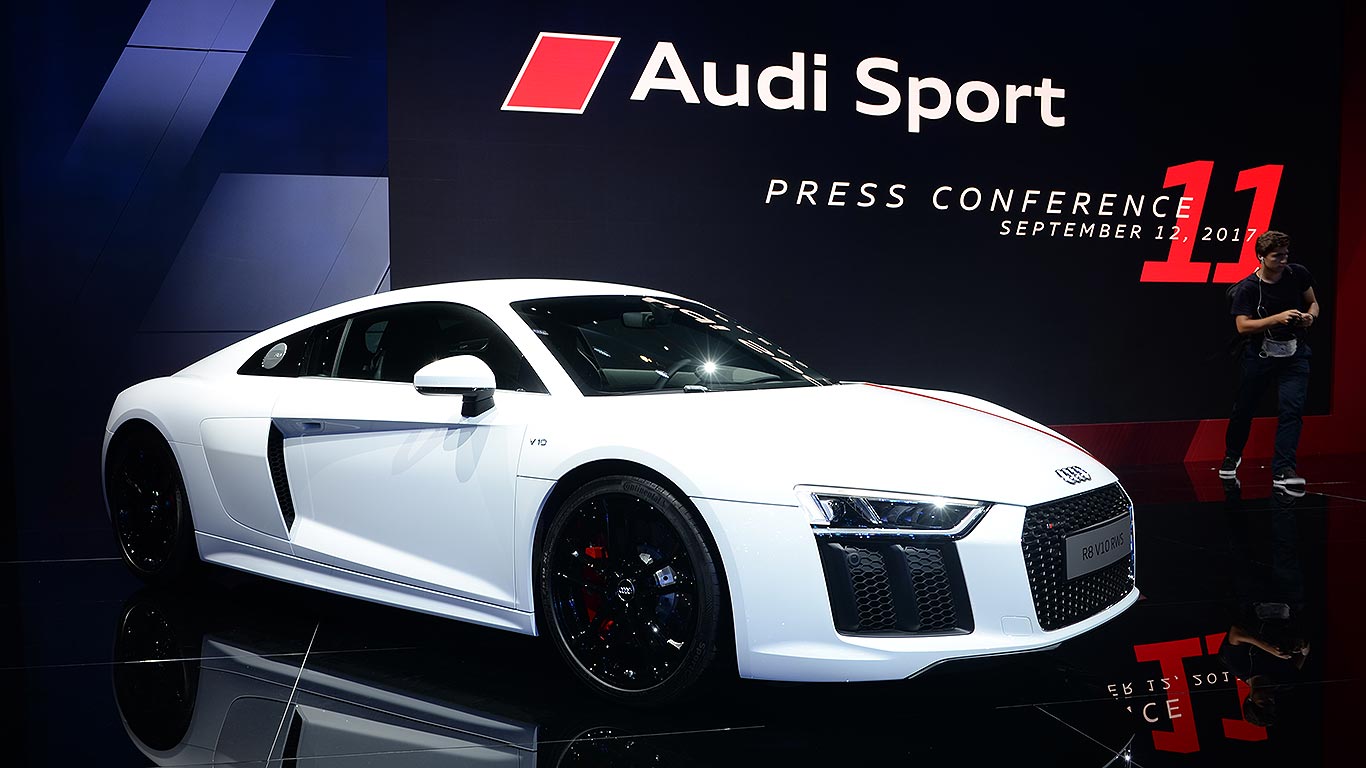
Audi R8 V10 RWS
Whilst Porsche is making cars for purists available to all, Audi is doing the opposite with special limited-edition version of the R8 V10 supercar. Despite being known for Quattro all-wheel drive, Audi has ditched the front differential for the R8 Rear Wheel Series, mirroring the drivetrain used by the successful R8 LMS racing cars. Audi also argues that the steering is purer in the RWS without power being sent to the front wheels.
Shifting to just rear-wheel drive helps save up to 50kg of weight from the R8, while the same 540hp 5.2-litre V10 engine used in the normal car remains. Set to be limited to just 999 units, and covering both coupe and Spyder versions, the R8 RWS can be ordered from Friday, with a starting price of £110,000 in the UK.
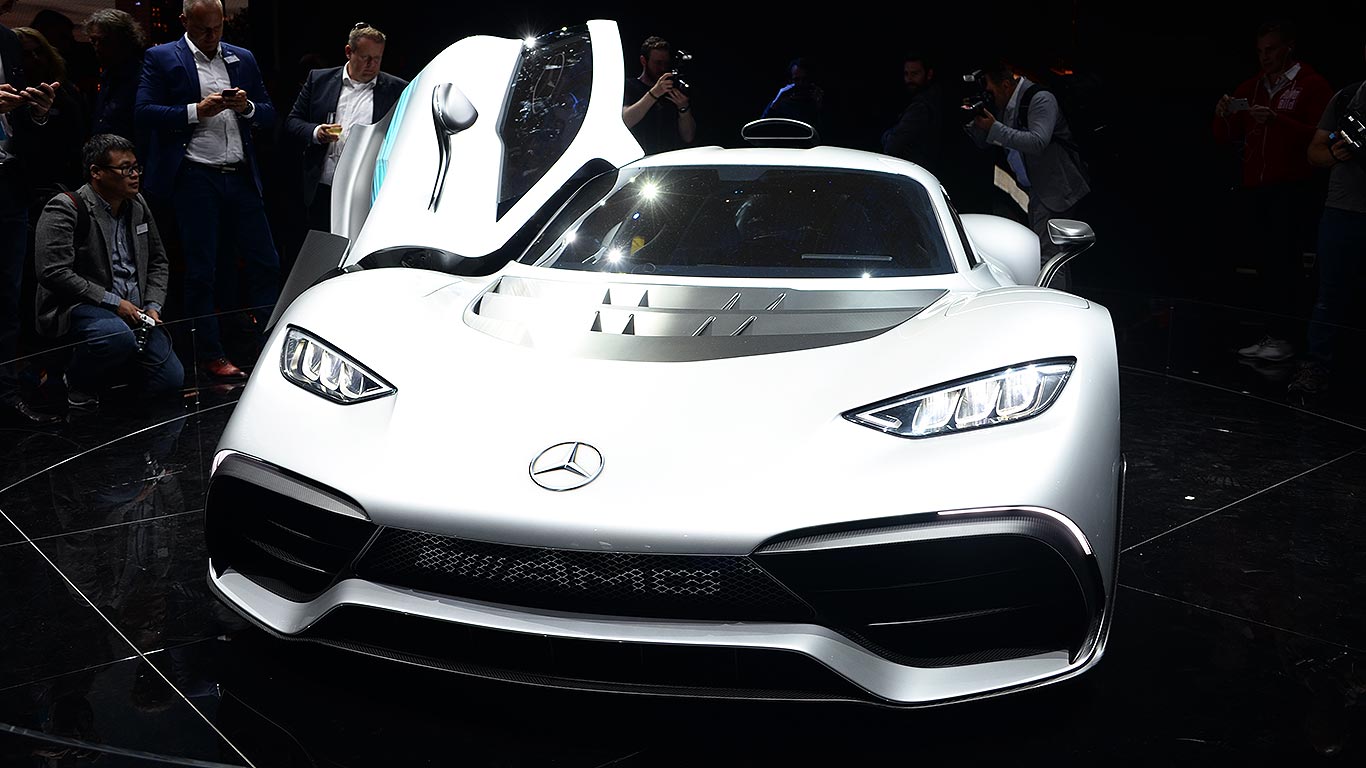
Mercedes-AMG Project One
As a showstopper, the Mercedes-AMG Project One might just take the crown at Frankfurt 2017. Its the closest thing yet to a road-going Formula 1 car: extreme to the max. Powered by a 1.6-litre V6 turbocharged engine from an actual F1 racer, combined with four electric motors, the mid-engined Project One has a peak power output in excess of 1,000hp.
Top speed is estimated at around 220mph, with 0-124mph taking less than six seconds. A giant two-stage extending rear wing should provide substantial levels of downforce, while torque vectoring and ESP should help keep all that power under control. Although the interior is minimalist, there’s still room for air conditioning and an infotainment system. The Project One is currently pegged as a concept, but production looks guaranteed for 2019.
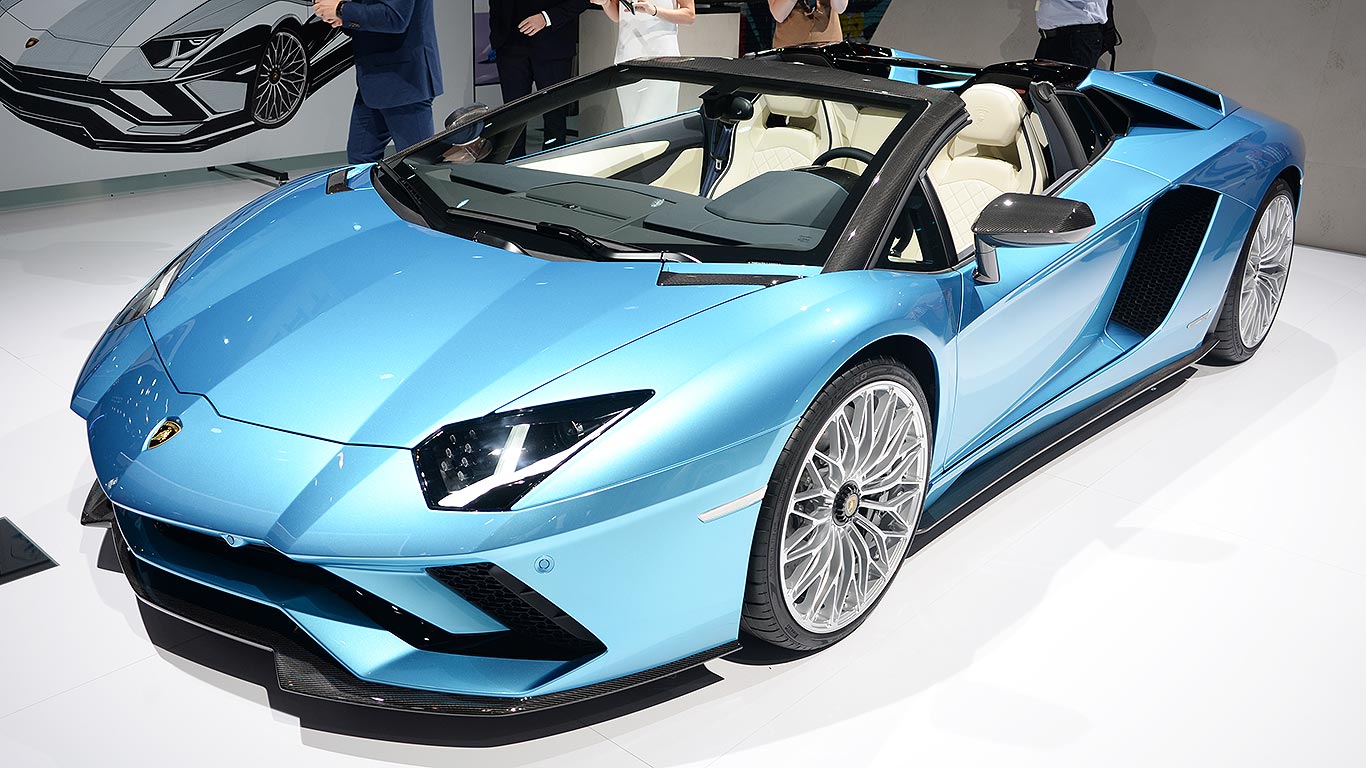
Lamborghini Aventador S Roadster
After making revisions to the coupe version, Lamborghini has extended its enhancements to the open-top Aventador as well. ‘S’ specification brings more power for the naturally aspirated 6.5-litre V12 engine, with peak output now boosted to a faintly ridiculous 730hp, with 507lb ft of torque. Hitting 62mph in 3.0 seconds is a rapid way to mess up your hair, while a top speed of 217mph is also a big deal.
The Aventador S isn’t just about performance in a straight line, with changes to the chassis as well. The suspension is completely overhauled for greater focus, while a new four-wheel steering system is taken from the coupe version. Also added is the ability to customise the Aventador S to the owner’s exacting standards with the Ad Personam programme, which includes a range of special colours and interior trims developed just for the Roadster
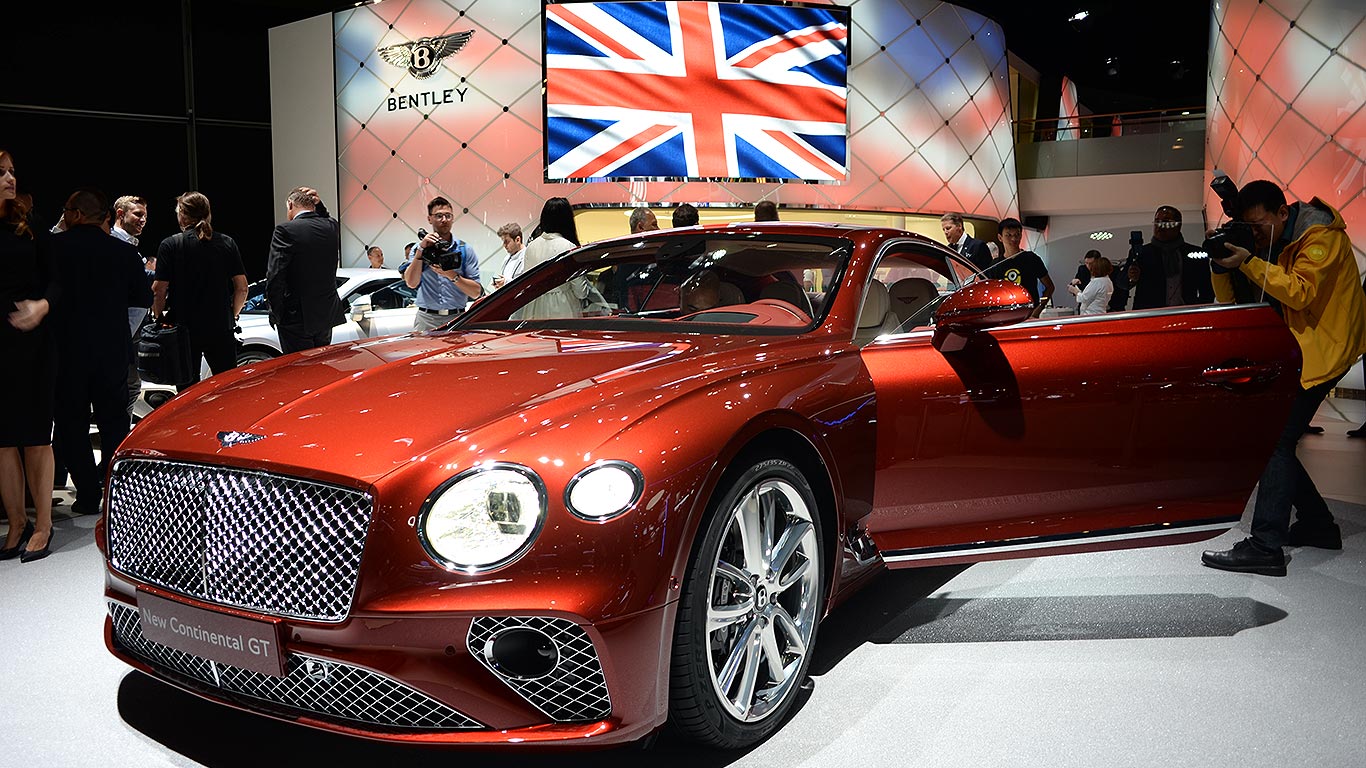
Bentley Continental GT
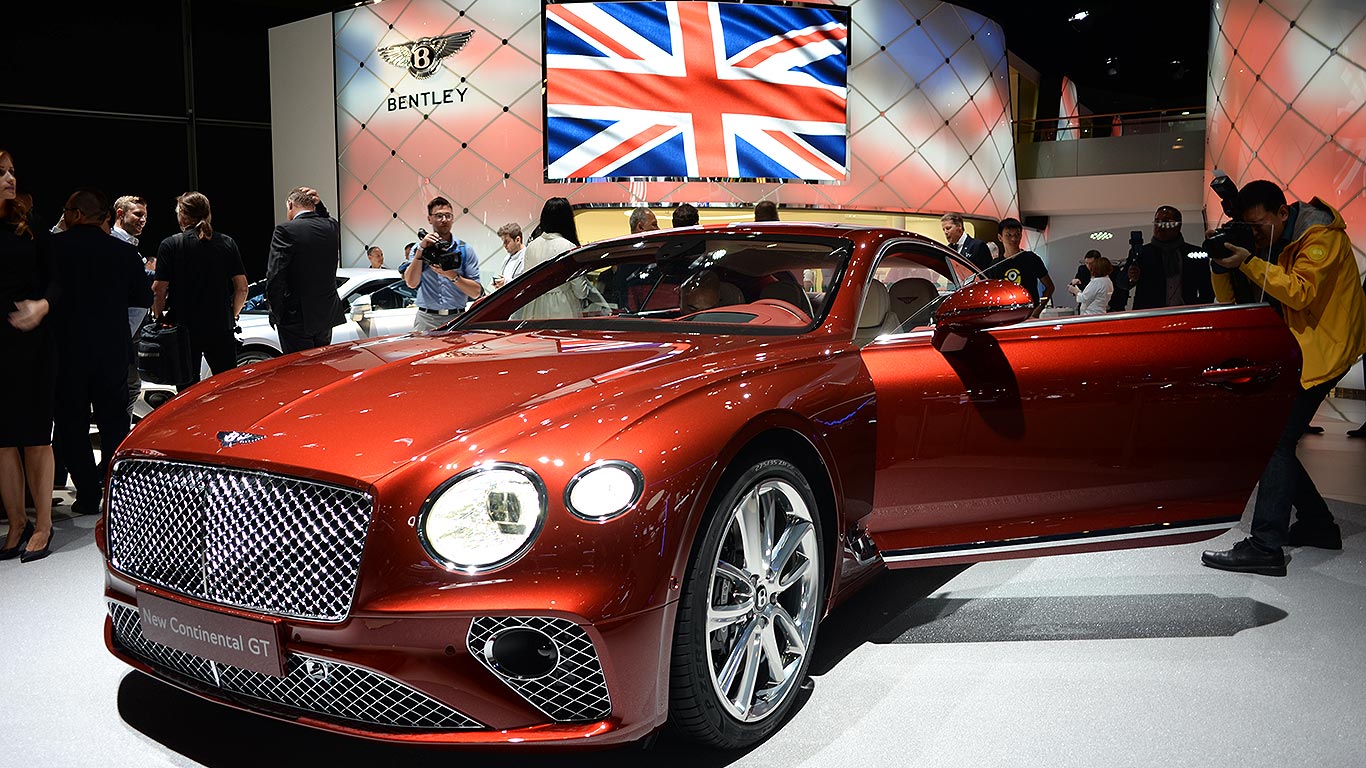
Thoroughly updated for a third-generation, the all-new Continental GT matches a sleeker design with even greater luxury. The looks are inspired by the EXP 10 Speed 6 concept car shown at the 2015 Geneva Motor Show, with a new aluminium forming technique used to create the complex shapes. It also helps save some 80kg in weight compared to the outgoing second-generation machine.
Under the bonnet is an updated version of the turbocharged 6.0-litre W12 engine, with some 626hp and 664lb ft of torque. With all-wheel drive, and an eight-speed dual-clutch gearbox, all that power is enough for 0-62mph in 3.7 seconds, plus a top speed of 207 mph. The main party piece is an optional rotating display, which hides a 12.3-inch touchscreen behind a veneer panel in the dashboard until the car is started.
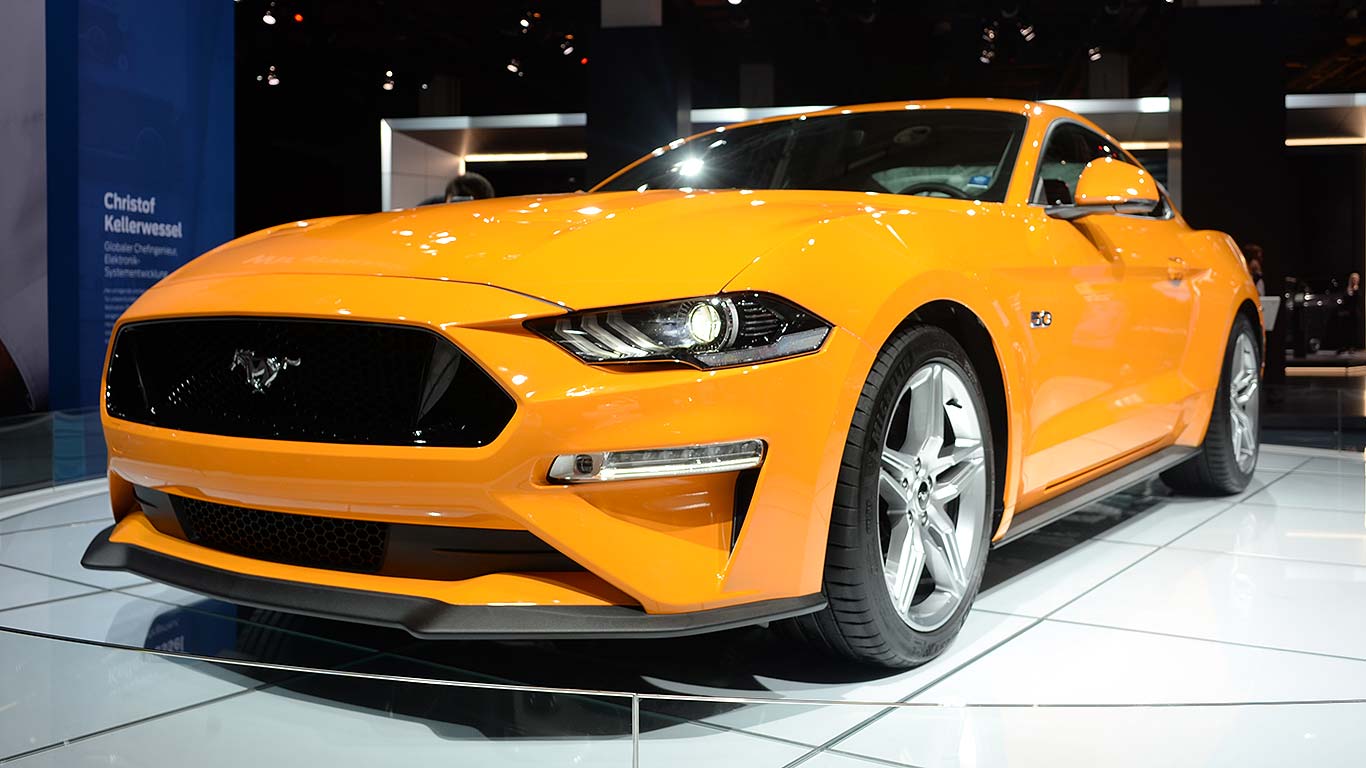
Ford Mustang V8
It might seem like the Mustang has only been on sale in Europe for a short period of time, but progress doesn’t stop. As part of the 2018 model year update, the revised 5.0-litre V8 Mustang gets more power with 450hp, and the option of a 10-speed automatic gearbox. The styling has also been updated, with a longer, drooping nose and V8-powered versions gaining four exhaust tailpipes as standard. New colour choices include the extravagant Orange Fury, with polished aluminium and nickel colour options offered for the alloy wheels.
Underneath the revised body is an updated interior, which now gives UK customers the option to specify Recaro bucket seats for the first time. Magnetic suspension dampers are also on the options list, while a novel ‘Good Neighbour Mode’ allows the exhaust system to be quietened down to avoid annoying everyone around you. A 12-inch touchscreen is also new, with the possibility of replacing the conventional instrument dials with an LCD screen also on the cards. European deliveries will begin in 2018.
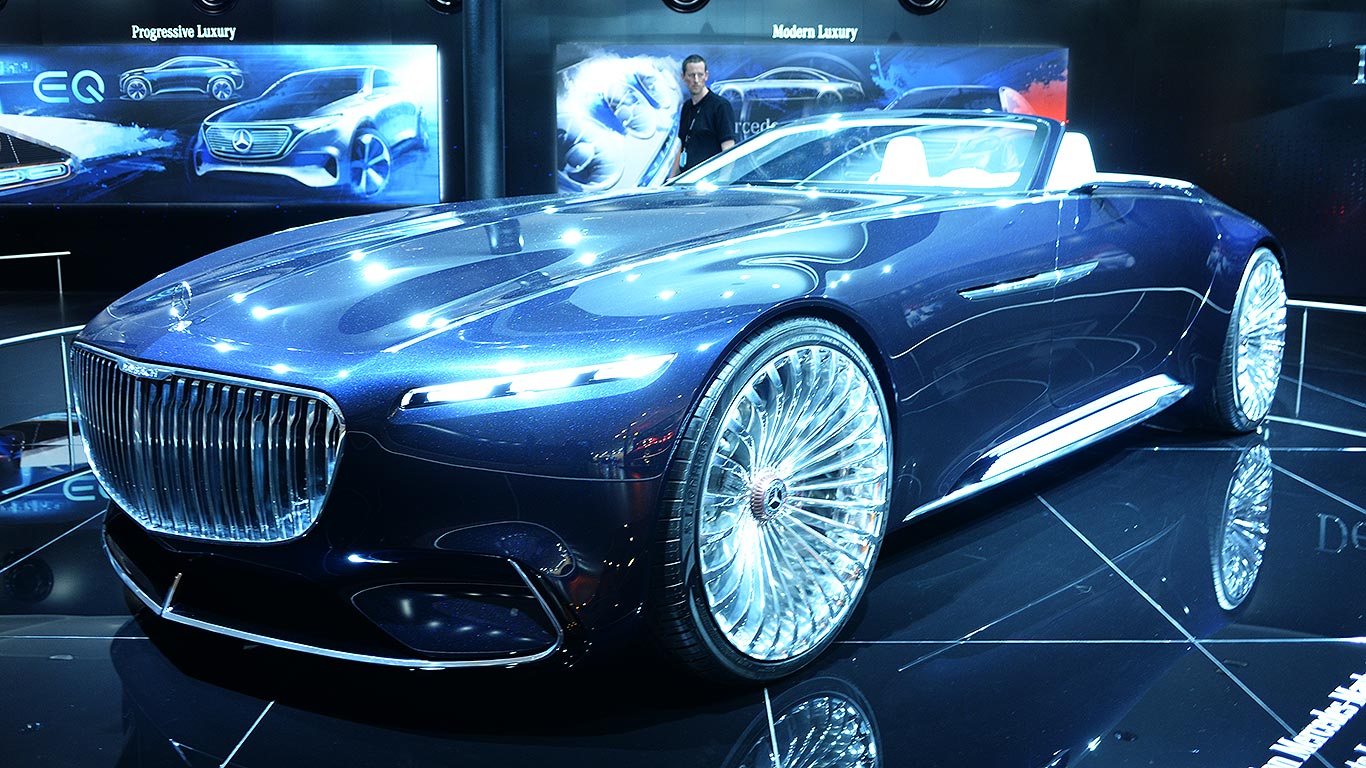
Mercedes-Maybach 6 Cabriolet
Excess all areas, baby. Maybach’s yacht-like 6 Cabriolet ‘Vision’ (Mercedes-speak for a concept) is 5.7 metres long and only has two seats. Those fabulous 24-inch alloys have an electric motor each, with a combined total of 750hp. Claimed NEDC range is 310 miles.
We’re unlikely to see a production version of the 6 Cabriolet anytime soon. But it’s a fabulous mission statement for the relaunched Maybach sub-brand – and one that could inspire, for example, ultra-luxurious versions of the SL and S-Class Cabriolet. Watch this space.
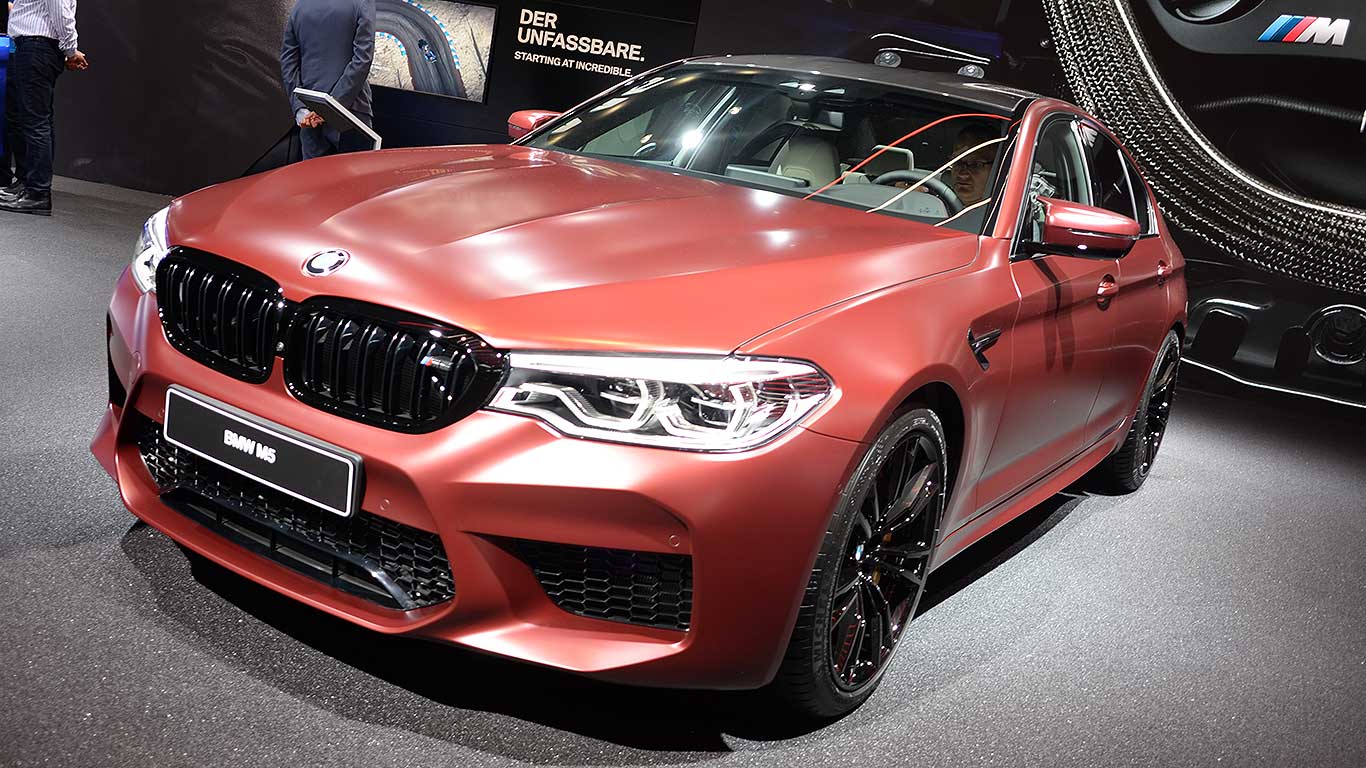
BMW M5
The BMW M5 is a supercar in a suit. It packs a 600hp 4.4-litre V8 and four-wheel drive for 0-62mph in 3.4 seconds. It also, like the Mustang, has a button to make the exhaust quieter. Yep, this is a Porsche-slayer with a social conscience.
You can spot the M5 by its more aggressive bumpers, bespoke alloys and quad exhausts. Inside, you’ll find electric sports seats and an eight-speed semi-automatic gearbox (there’s no manual option). Prices for the new M5 start from £89,640 – almost £40,000 more than the current top-of-the-range 5 Series.
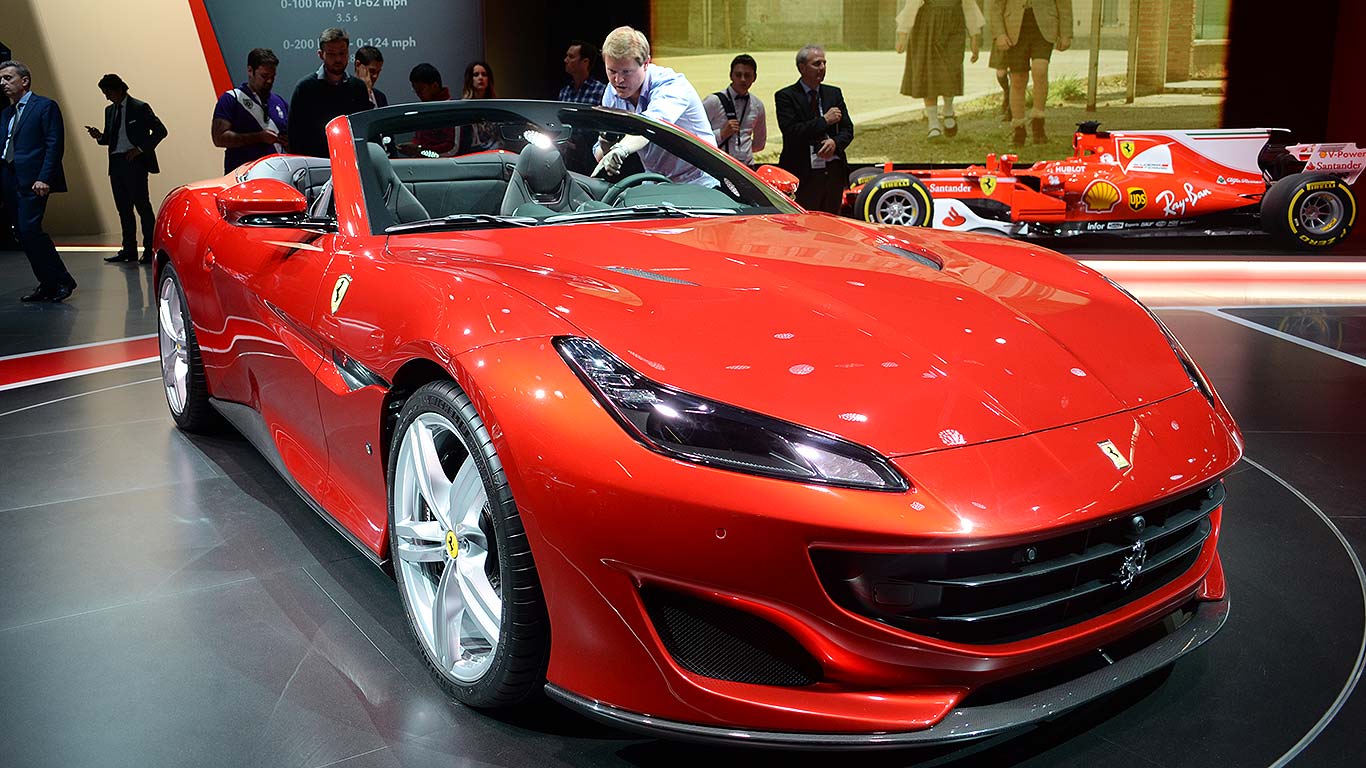
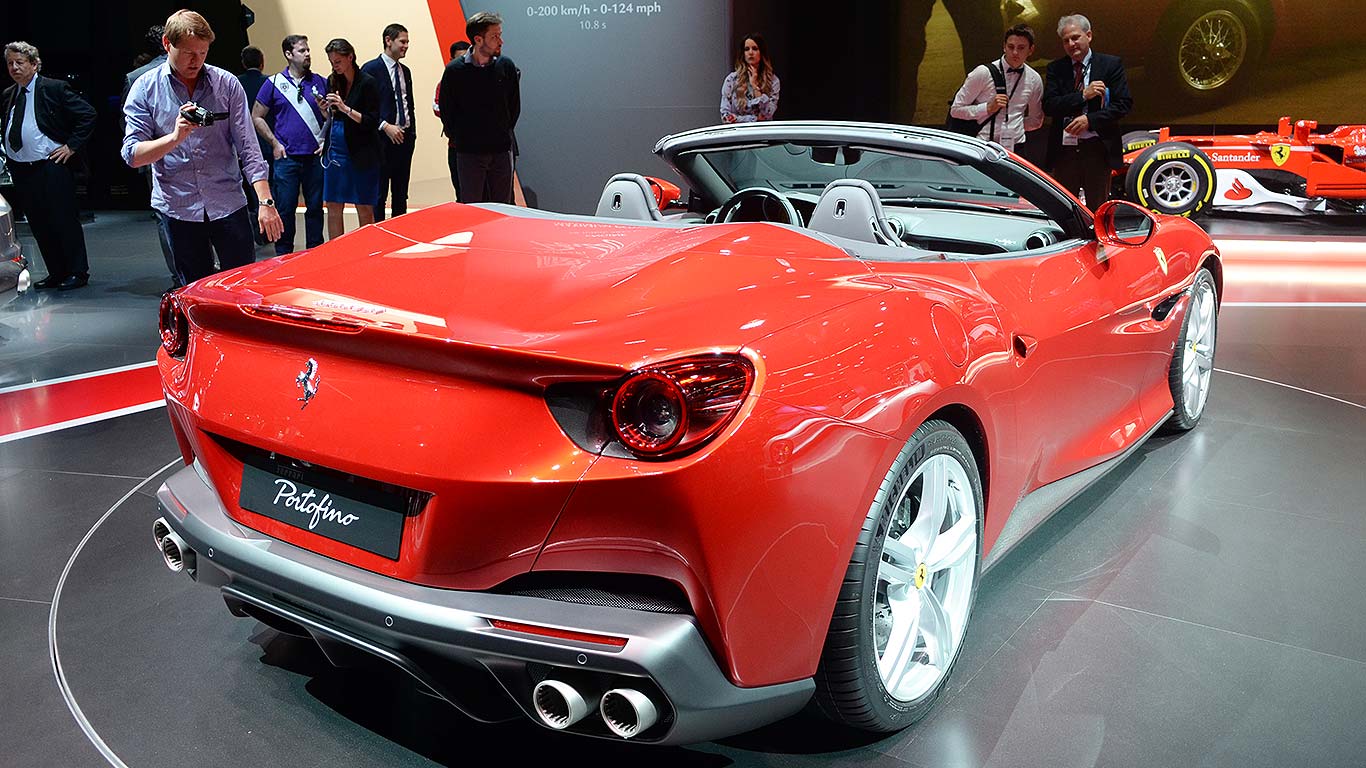
Ferrari Portofino
Say goodbye to the California T, and hello to the brand-new Ferrari Portofino. As the new entry-level offering in the Ferrari range, the biggest news is an updated aluminium chassis, and styling that has been influenced by the GTC4Lusso. It’s a more resolved and cohesive design, both with the folding metal roof up and down.
Beneath the lengthy bonnet is the same 3.9-litre turbocharged V8 as before, but now with more power to take the total output to 600hp. That’s more than sufficient for a 0-62mph time of 3.5 seconds, and a 199mph top speed. Ferrari also claims to have tuned the exhaust for more aural excitement, but if you somehow get bored of engine noise, a new 10.2-inch touchscreen is on hand to control the multimedia system.
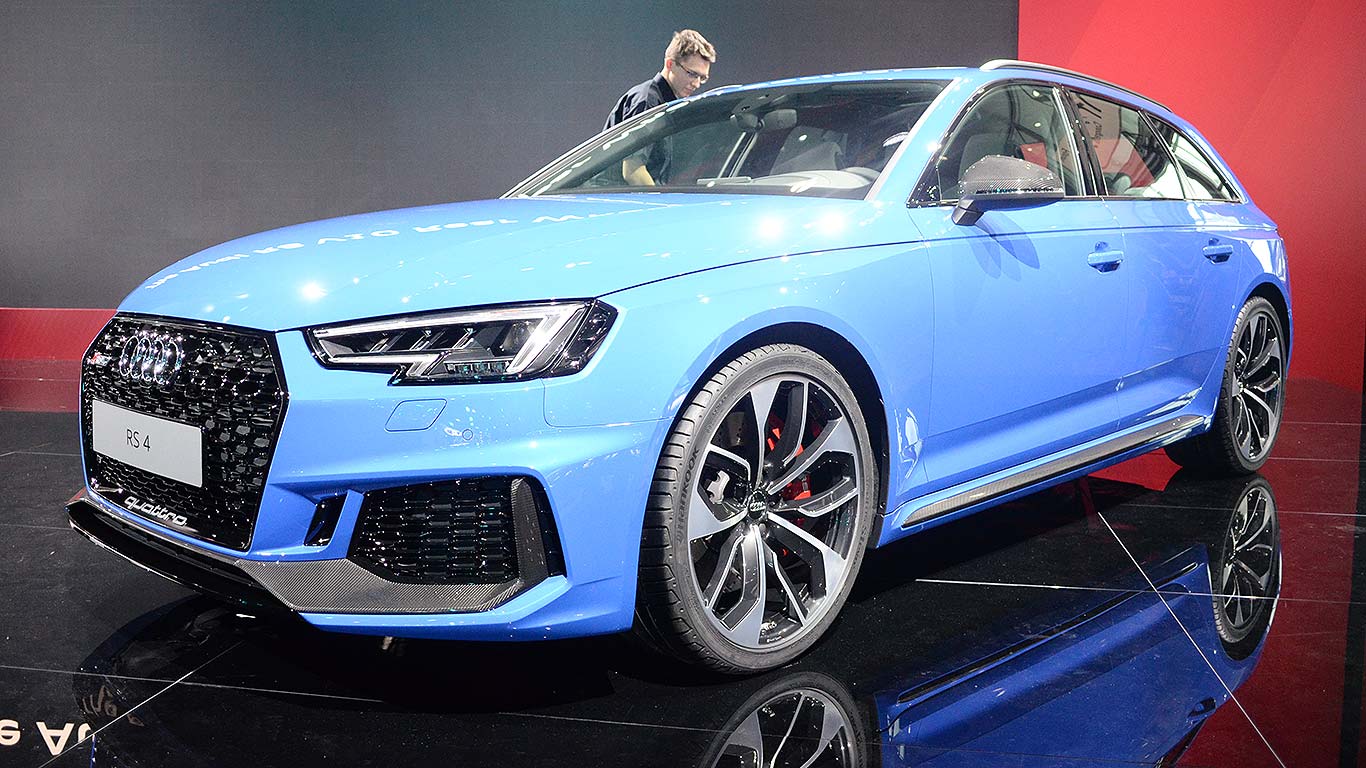
Audi RS4 Avant
Set to reclaim the motoring journalism cliche of “all the car you’ll ever need” is the latest generation of Audi’s compact performance estate. Things have gone completely full-circle, with a return to a turbocharged V6 engine – just the like the original launched in 1999. Unlike that car, the new RS4 has 444hp and an impressive 443lb ft of torque, which represents an increase of some 125lb ft over the previous V8 version. Performance improves, with 0-62mph in just 4.1 seconds, while top speed is limited to 155mph.
Despite the extra performance on offer, the 2.9-litre twin-turbo V6 is said to be some 17% more efficient than the old V8-powered car. New sports suspension lowers the RS4 by 7mm, while Dynamic Ride Control and carbon ceramic brakes are on the options list. Iconic Nogaro Blue paintwork will be available from the outset when orders begin later in the autumn, with first customer deliveries expected in early 2018.
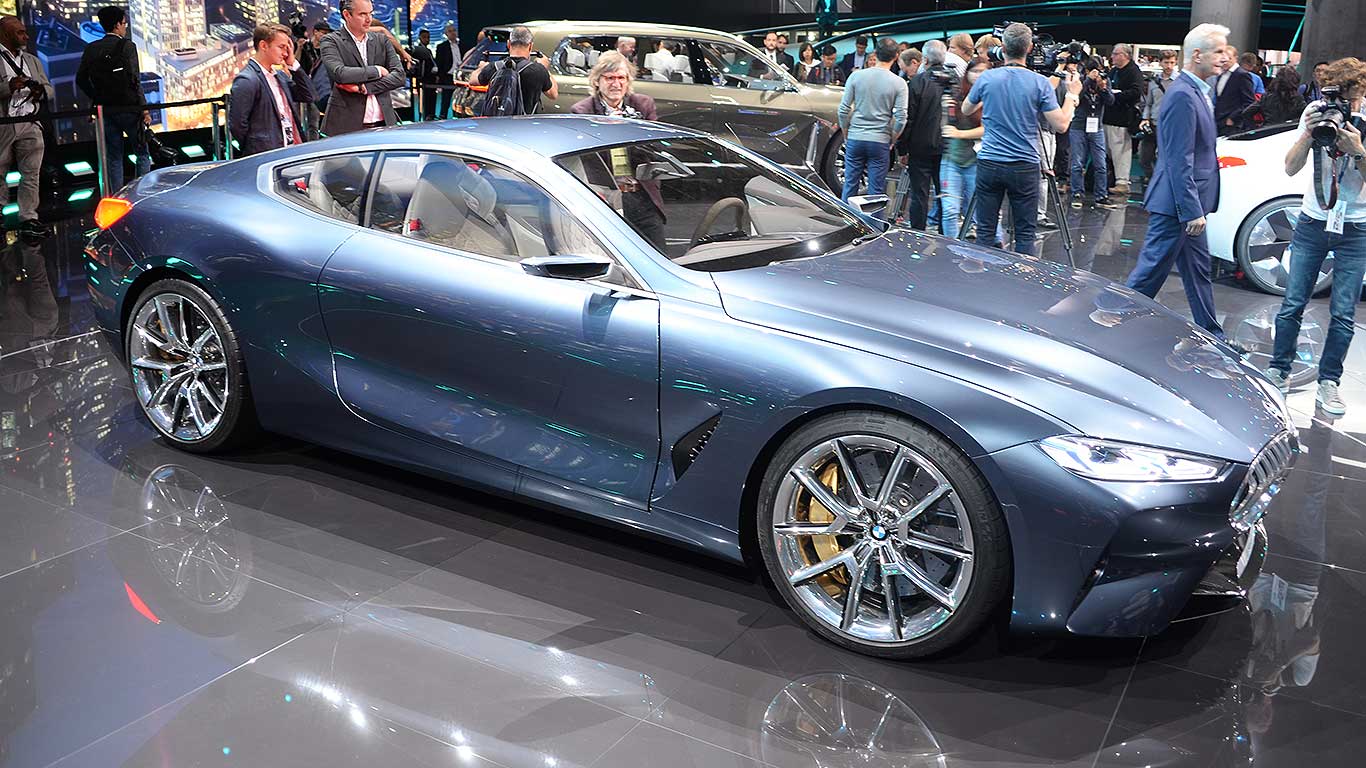
BMW 8 Series
The 8 Series concept is a stylish and not-very-subtle hint about how BMW’s forthcoming flagship coupe will look. And the answer is: ‘a lot like an Aston Martin’, especially from the rear. But that’s no bad thing. Saloon (Gran Coupe?) and convertible versions are mooted, too.
There’s no word yet on powertrains, but a plug-in hybrid looks likely – and buyers will be offered a choice of rear- or four-wheel drive. Don’t expect to see the finished article until 2019, though. We can’t wait.
Some big name carmakers might be absent from this year’s Frankfurt Motor Show, but that doesn’t mean it’s short on big-name reveals. Join us as we take you through the best cars of IAA 2017.
Its looks are dividing opinion, but almost everyone in Frankfurt has been bowled over by the Mercedes-AMG Project One. Sure, we knew AMG would be unveiling a ‘F1 car for the road’, but nothing can prepare you for the tech, the performance figures and the prospect of getting behind the wheel of “the first Formula 1 car with MOT approval.” A total of 275 units will be built, but the 1,000hp Project One’s bigger role is to showcase an electrified future for AMG’s next generation vehicles. The star of the show? We think so.
Bentley Continental GT
Brexit negotiations might be in full swing, but the Bentley Continental GT ensures there’s a huge slab of Great Britain nestled in the heart of Germany’s financial district. Evolution is the name of the game, with the new Conti GT a subtle development of the outgoing model, although not everyone is a fan of the rear styling. The 6.0-litre W12 turbocharged engine – now with dual-clutch eight-speed transmission – is perfect for a European breakaway. Top speed is 207mph.
Suzuki Swift Sport
Please don’t be rubbish. Please don’t be rubbish. Please don’t be rubbish. We’re huge fans of the Suzuki Swift Sport, loving its old-school junior hot hatch feel and giant-killing antics. There’s a worry that turbocharging will rid the Swift Sport of some of its charm, but we’re hopeful that Suzuki’s engineers will ensure the third generation model is fit to wear the badge. Its 1.4-litre Boosterjet engine might offer a mere 138hp, but the Swift Sport weighs a featherlight 970kg. Coming to a B-road near you, soon.
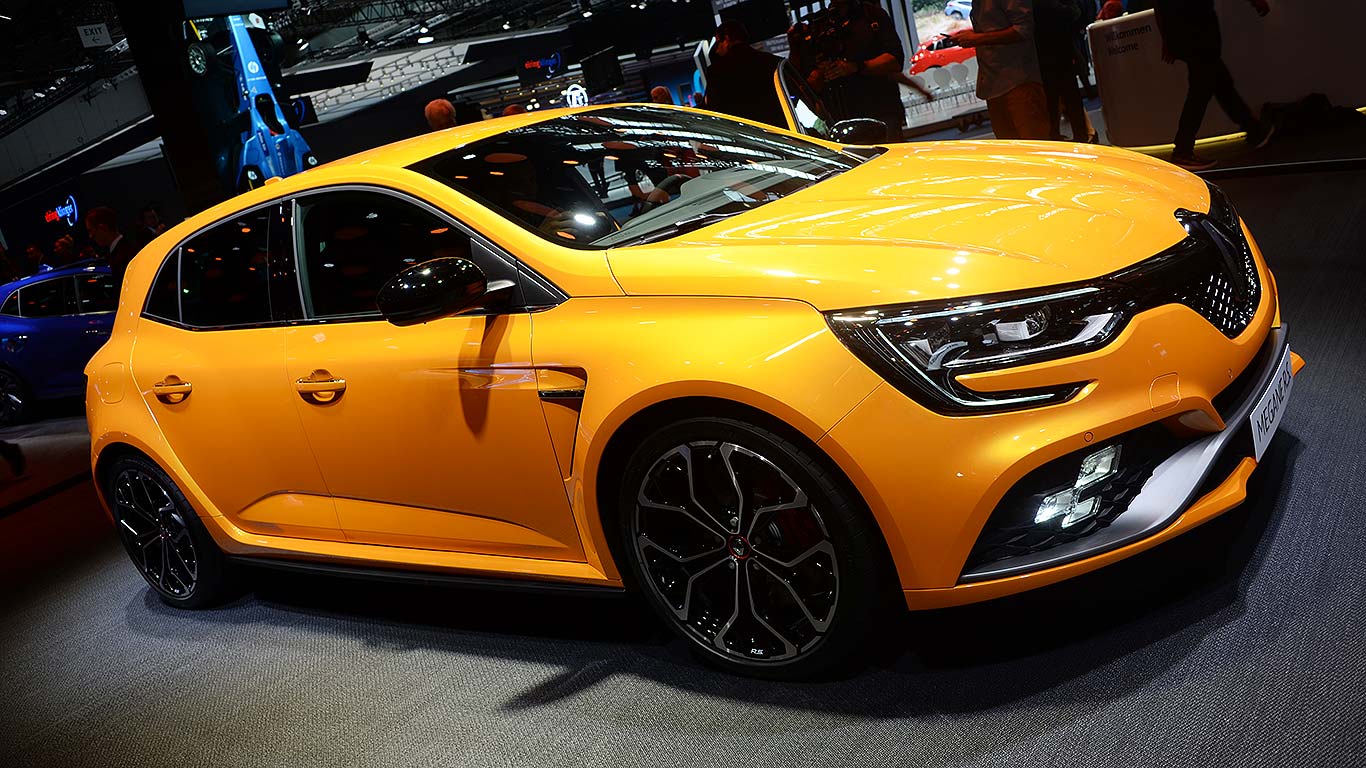
Renault Sport Megane
Remember when Renault Sport was responsible for building the greatest hot hatches? The current Clio RS is OK, but it fails to capture the magic of the previous models, which means there’s a lot resting on the shoulders of the hot Megane. A meagre 280hp from its turbocharged 1.8-litre four-cylinder engine might not seem like a great deal in an age of the 400hp hot hatch, but if the chassis is perfect, who cares? Two transmissions are available, with four-wheel steering fitted as standard.
Audi R8 V10 RWS
It’s enough to make your head hurt: first the BMW M5 goes all-wheel drive and then Audi unveils a rear-wheel-drive R8. The limited-edition R8 V10 RWS is Audi’s first production rear-wheel-drive car and is available to order from this Friday. A total of 999 Coupe and Spyder variants will be built, priced from £110,000. Sadly, the 610hp Plus remains a strictly all-wheel drive affair, so you’re limited to the ‘standard’ 540hp V10.
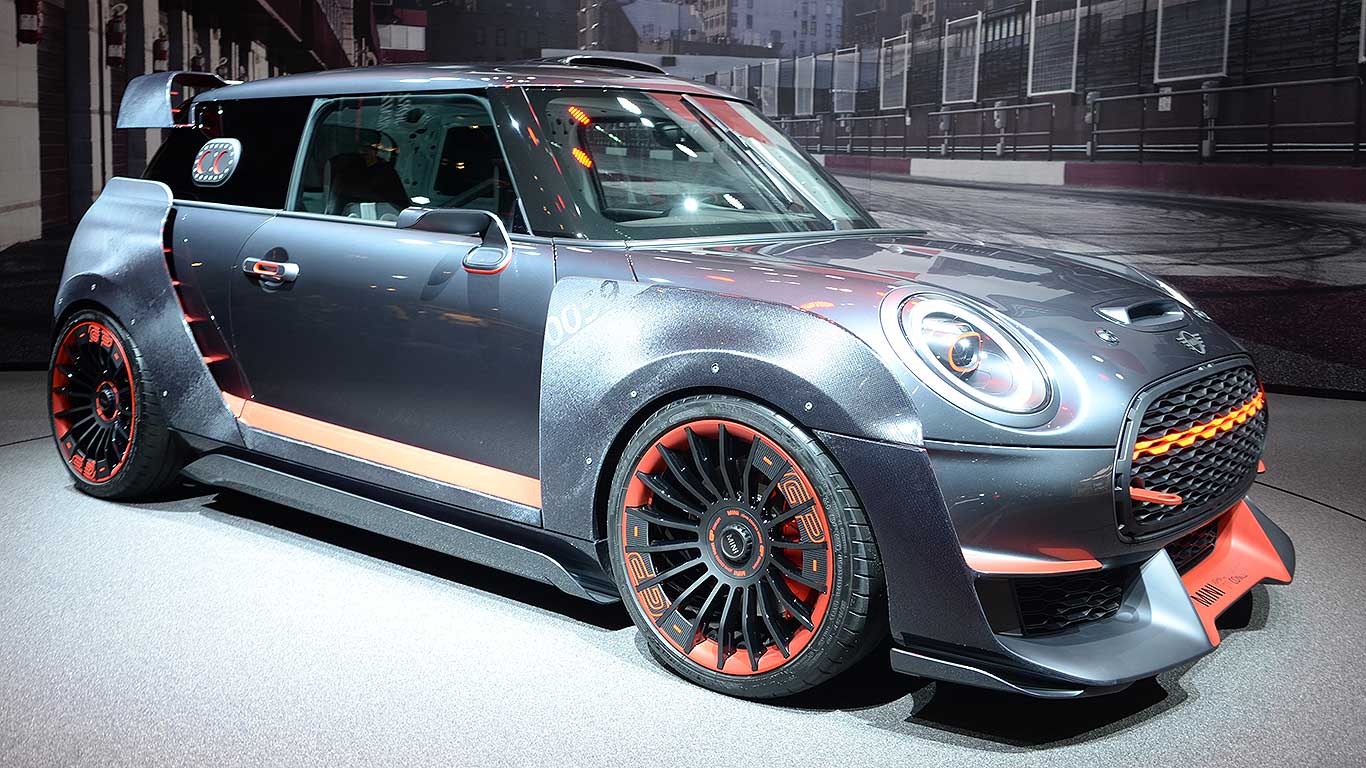
MINI John Cooper Works GP Concept
This is a pretty neat way to celebrate the Mini’s success at the Monte Carlo Rally in 1967. While Mini purists will point to the fact that the BMW MINI can take zero credit for the car’s giant-killing exploits, it’s impossible not to be excited about the prospect of an extreme Works GP Concept. The car wears the number 0059: a reference to the Mini’s date of birth. Just something else to upset the purists.
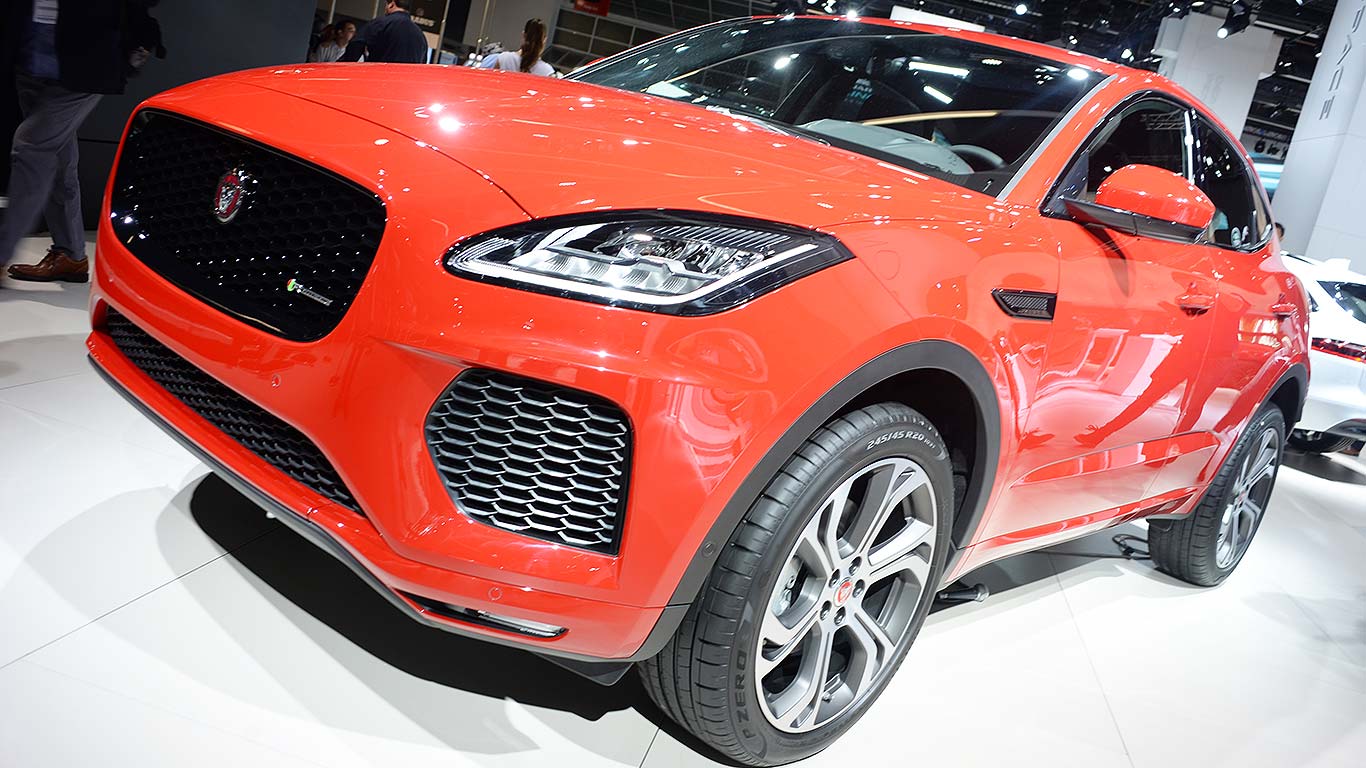
Jaguar E-Pace
Don’t let the E-Pace name fool you, because this isn’t the new electric Jag. That would be the larger i-Pace. Confused? Don’t be, because the E-Pace is destined to become a familiar sight on Britain’s roads. The compact SUV was unveiled in the summer and is available to order now. Prices start from £28,500.
Audi Aicon
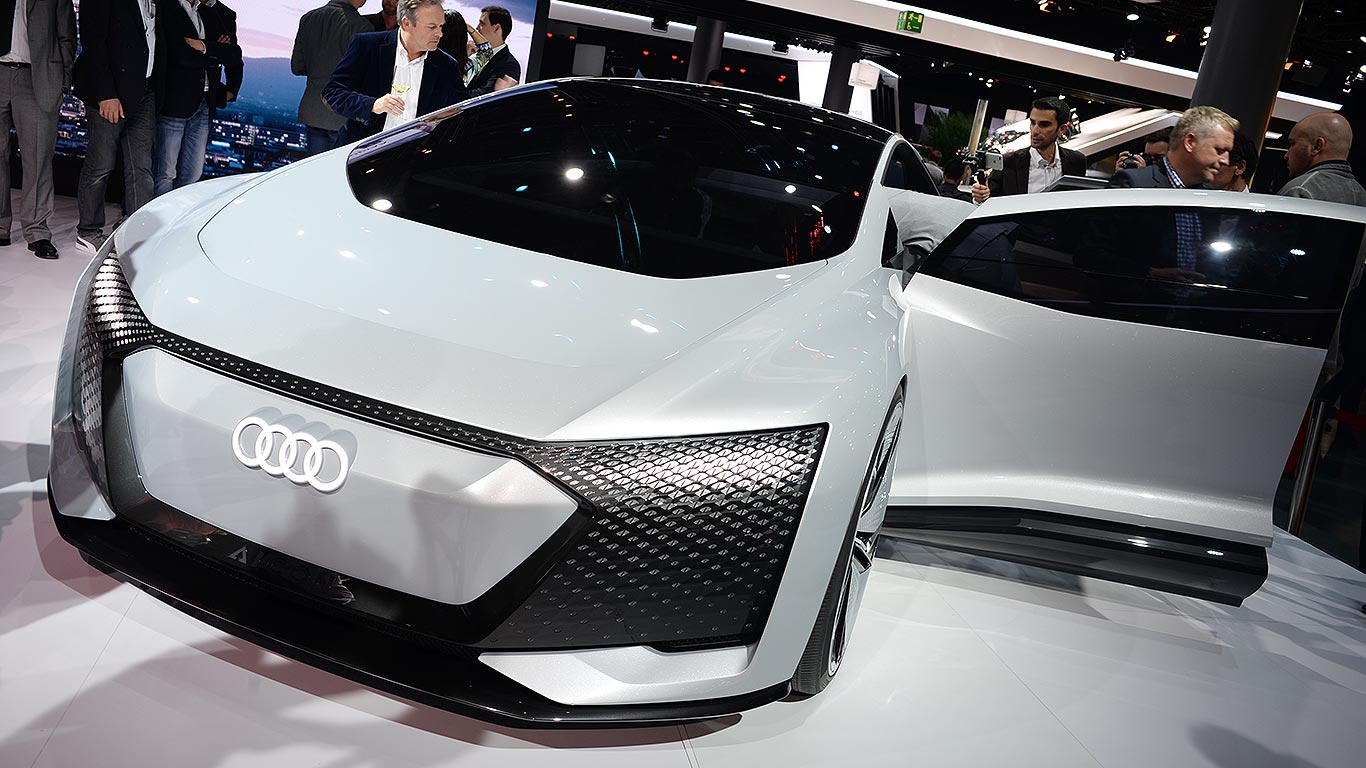
What might not be obvious from our photo is the sheer scale of the Aicon concept. At 5,444mm long, 2,100mm wide and 1,506mm tall, is significantly larger than Audi’s flagship, the A8. And yet, this vision of an autonomous future is a 2+2, designed to showcase what can be done when there’s no need for an engine, steering wheel or pedals. In case you were wondering, those wheels are 26-inch.
Porsche 911 GT3 Touring Package
A hardcore Porsche 911 for introverts: that’ll be the new GT3 Touring Package unveiled in Frankfurt. Gone is the rear wing, replaced by an automatic extending rear spoiler with an airflow ‘tear-off edge’. Meanwhile, the 4.0-litre naturally-aspirated engine produces 500hp, enabling the 911 to sprint from 0-62mph in 3.9 seconds to reach a top speed of 196mph. Porsche purists rejoice, because the GT3 Touring Package is available exclusively with a manual six-speed gearbox. Order a 911 GT3 for £111,802 and the Touring Package is a no cost option.
Land Rover Discovery SVX
How do you solve a problem like a cosmetically challenged SUV? You fit a 525hp 5.0-litre supercharged V8 engine, of course. This is the first Land Rover Discovery to wear the SVX badge, and while it can’t disguise the styling issues, it brings a lump hammer to the SUV sector. Highlights include Hydraulic Active Roll Control, for increased wheel articulation and improved body control, along four-corner air suspension, active centre and electronic rear locking diffs, and a pistol shifter in place of the rotary shift found in less well-endowed Discos. Cool thing, this.
BMW Concept Z4
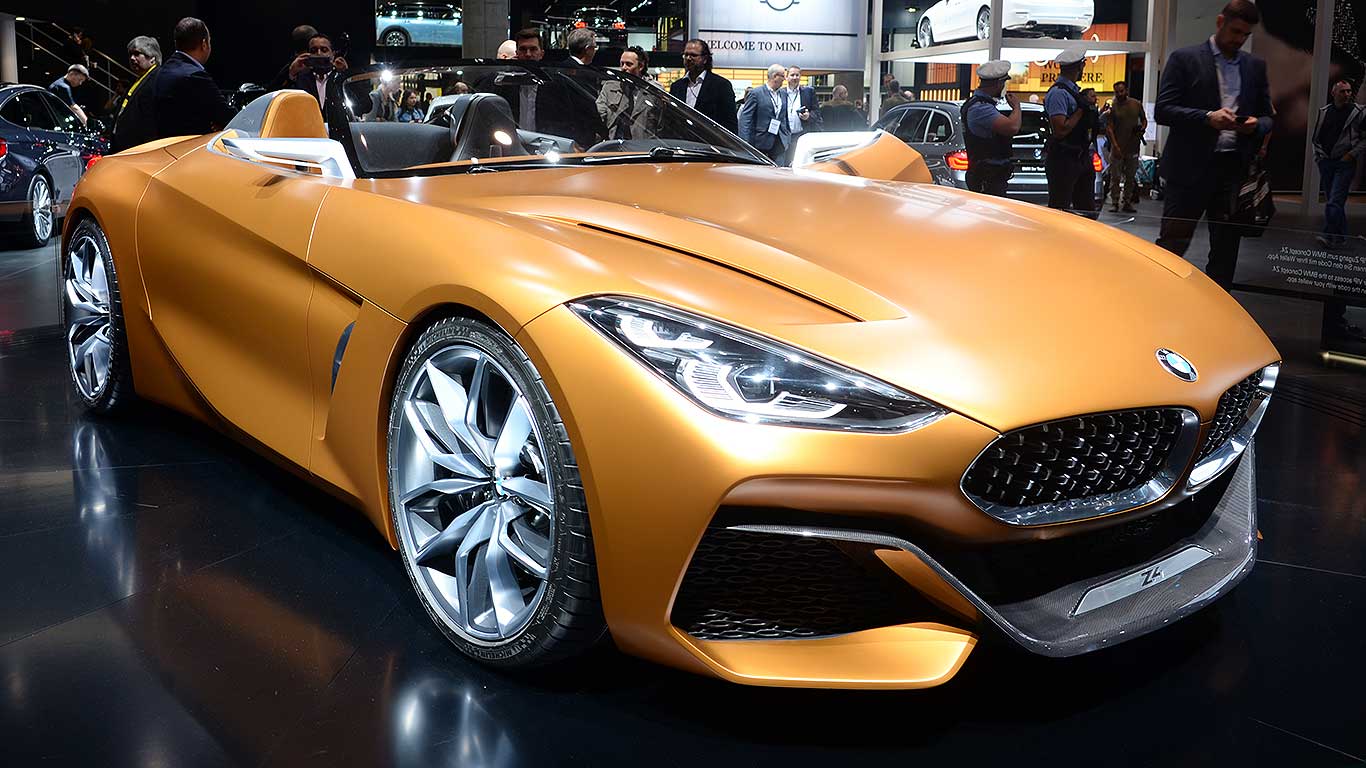
It may have been unveiled at Pebble Beach, but for most people this is the first chance to see the new BMW Z4 Roadster, scheduled to hit the streets in 2018. It’s the result of a partnership between Toyota and BMW, with the platform also used as the basis for the new Supra, which will make its debut later this year. While the production version will be toned down a little, this looks almost showroom-ready to us.
If you’ve had a busy day at work, spare a thought for Team Motoring Research who have been pounding the floors of the Messe Frankfurt show halls all day.
You can catch all the highlights of their hard work with our special gallery, showcasing all the best cars from the show:
We’ll have more analysis, bigger galleries and exclusive video to follow shortly.
16:00: Hot hatch showdown
SEAT has resurrected the Cupra R name for a special limited-edition version of the current Leon. It makes for the most powerful road-going SEAT model to date, but does without the bright colours of previous hot Leons. In case you’re wondering, the bright detailing is copper:
Along with the Leon Cupra R, there is also another hot hatch favourite making a Frankfurt debut, with the revised Suzuki Swift Sport on show. It’s no longer a high-revving naturally aspirated machine, but the 1.4-litre turbocharged engine from the Vitara S should still make for fun:
Every major motor show creates opportunities for spotting design trends amongst manufacturers. This year’s Frankfurt show sticks to the format, with grey paint and bright red/orange accents apparently the colour scheme to have. We’ve spotted it first on the Toyota C-HR Hy-Power concept. It uses a grey and orange theme inspired by the way carbon is turned into diamonds by natural forces. It also points the way to performance hybrid version of the C-HR:
Mini is also making use of the grey and bright red colour scheme, with the dramatic John Cooper Works GP concept. The livery only seems to make it appear even more aggressive than it already looks:
Not a fan of Minis and their contrived cuteness, but this JCW GP concept looks ace. Kudos for that DTM-style centrally parked wiper, too. pic.twitter.com/gMsvZK1F3r
Keeping consistent with the theme of most recent motor shows, SUVs are hot property at Frankfurt in 2017. That includes performance versions of existing SUVs, like the new impressive new Land Rover Discovery SVX. Built by Land Rover’s SVO team, there’s a 525hp supercharged 5.0-litre V8 beneath the bonnet, whilst ground clearance and wheel articulation are increased for better ability off-road:
At the other end of the performance SUV spectrum, Porsche has given the new third-generation Cayenne a public airing. It might look a lot like the outgoing version, but beneath the surface things are very new. Turbocharged petrol engines abound, with very little talk of diesel. There’s also a new 550hp Cayenne Turbo, too:
In case you hadn’t noticed, electrification is big news in the motoring industry this year. From mild hybridisation, through to full EVs, battery power is important. Yet eco-mindedness doesn’t have to be dull, and Jaguar is set to create a new one-make race series using the forthcoming I-Pace electric car. Supporting the FIA Formula E series from the end of 2018, up to 20 cars will be offered on a ‘arrive and drive’ basis for the I-Pace eTrophy:
Volkswagen is displaying a number of concept electric vehicles, including a revised version of the I.D. Crozz concept previously shown in Shanghai. This all-electric SUV is planned for production in 2020, and will push Volkswagen towards the goal of selling 100,000 EV Volkswagens per year:
Honda might be able to claim the prize for coolest-looking electric concept in Frankfurt, however. The Urban EV Concept is said to integrate seamlessly with your life, but the big draw is styling inspired by the original Civic:
Meet the Honda Urban EV Concept, a pure-electric vehicle featuring technology that seamlessly integrates with your life. #HondaIAA2017pic.twitter.com/yn6VCs8hJ3
Frankfurt has something for everyone in 2017, with new products launched at both the top and bottom of the automotive food chain. With over 1 million Dacia Dusters sold across Europe since being introduced in 2010, the second-generation of the bargain SUV is a big deal. Needless to say, Dacia has taken an evolutionary approach to styling changes:
Substantially more expensive, and less capable off-road, Frankfurt also sees the official launch of the new Lamborghini Aventador S Roadster. Luggage space is also less than the Duster, but then that doesn’t have to carry a 6.5-litre V12 with 730hp:
Our forward-thinking attitude is reflected in the special vehicles we create: a perfect combination of tradition and innovation. #IAA2017pic.twitter.com/JrgdCHlNXm
Lamborghini has also confirmed it will show off the production version of the Urus SUV on the 4th of December. Until then, there is always the Duster.
10:00: Doing it all again
With something as dramatic as the Mercedes-AMG Project One on offer, it’s no surprise to see it get a second unveiling in Frankfurt. Still with in excess of 1,000hp from an engine borrowed from Lewis Hamilton’s company car, this is one concept which isn’t getting old anytime soon. The man himself also turned up to lend a hand:
Slightly more affordable, but no less in terms of constant teasing for several months, the finished Renault Megane Renault Sport finally got a public airing in Frankfurt. Forget that they have the Singapore Grand Prix to prepare for – a Formula 1 driver seems to be the thing to have on stage this year. The new Megane Renault Sport is also F1-inspired, but has to make do with just 280hp from a 1.8-litre turbocharged engine. Purists will be pleased to know that a six-speed manual gearbox is on offer:
Renault also revealed the futuristic Symbioz concept car, which is said to offer a vision of how personal transport will work in 2030. Renault predicts the car becoming an extension of the home when travelling, and actually integrating itself as an extra room on your return:
The Frankfurt show is now in full swing, with announcements and product launches galore. Mercedes-Benz had so much fun last night, they’re doing it all again this morning, including a full-scale musical number to reveal the Smart Vision ForTwo. However, the biggest news this morning is the Concept EQA, set to be the mainstream EV offering from the brand:
There is no escaping the electric future. BMW’s important Frankfurt concept is the i Vision Dynamic, which previews the next model in the BMWi range. Slotting between the i3 and i8, the Vision Dynamic will squarely challenge Tesla, as BMW looks to have 25 electrified models by 2025:
Kia also revealed the stylish Proceed Concept – along with more conventional offerings – that previews the design of the next C-segment hatchback. Kia may also consider adding the shooting brake design of the concept car to the model range:
Kia unveils Proceed Concept at Frankfurt Motor Show alongside new Stonic, Picanto X-Line and Sorento. pic.twitter.com/eaJq3VwNG4
You might just be waking up in the UK, but over in Germany the 2017 Frankfurt Motor Show is already in full swing. We’ll have live coverage throughout the day with this live blog, bringing you the action from the heart of the show floor.
Thing also went down last night, with Mercedes-Benz and Volkswagen all holding special preview events. For Volkswagen this involved moving on from dieselgate, and plotting out a future as a leader in electric cars:
All eyes were keenly focussed on Mercedes-AMG, with the Project One hypercar garnering so much attention that even usual crowd-pulling attractions were overlooked:
Volkswagen believes it is set to deliver a genuine global electric car breakthrough with its promise to be the world’s largest electric car manufacturer by 2025 – and its move to e-mobility will be far more significant than the efforts of other smaller car companies.
“With Roadmap E,” said Volkswagen Group CEO Matthias Müller on the eve of the 2017 Frankfurt Motor Show, we are setting the scene for the final breakthrough for e-mobility”.
“This breakthrough will not come from the self-styled pioneers. It will come from those who can get a new technology up and running on a truly relevant scale. We are not talking about a company with annual sales of 200,000 or 300,000 cars. We are talking about a Group that puts more than 10 million vehicles on the road per year… in all segments… almost anywhere in the world.”
Müller said that by 2025, one in every four new Volkswagen Group cars could be a pure EV. “We are talking about up to 3 million electric cars each year… this figure alone show what it means when a Group like ours focuses all its energy on one goal.”
For comparison, last year, Tesla sold around 84,000 cars. It plans to sell 500,000 cars in 2018, and 1 million by 2020, although analysts are less sure.
Müller’s barely-concealed reference to Tesla during the Roadmap E presentation seemed deliberately punchy, showing that Volkswagen is now ready to fight back after spending the past few years apologising for the diesel emissions cheating scandal. Indeed, Müller made the claim after again referencing dieselgate: “We have got the message. And we will deliver!”.
Another big VW breakthrough announced at the show is the target of offering at least one electrified version of every single car the Volkswagen Group sells. That’s around 300 individual models, wearing Volkswagen, Audi, Bentley, Bugatti, Seat, Skoda and various other badges.
In other words, “Volkswagen will have electrified its entire model portfolio by 2030” – from the VW Up city car to the Porsche Mission E electric sports car.
Volkswagen will also bring over 80 electric models to market by 2025, with Müller happy to reveal the split: 50 full EVS and 30 plug-in hybrids.
VW Group is even working on future solid-state batteries, he added, which could have a range of 1,000km (620 miles) or more. “We plan to develop this future technology together with partners to market maturity.”
Safety groups are putting pressure on mobile phone firms to include ‘driving modes’ to prevent motorists using the phone behind the wheel.
Road safety charity Brake and the RAC’s Be Phone Smart campaign have written to Android and Microsoft, requesting them to roll out a driving mode feature across their phones. It comes ahead of Apple’s iOS 11 system update, expected this week, which includes a ‘Do Not Disturb While Driving’ mode.
The organisations have suggested such a feature should automatically blank out the phone’s screen when it detects the user is driving, as well as block any push notifications.
“Illegal handheld phone use is one of the biggest in-car problems of our time and it will take a concerted effort to get the message across to drivers that it’s simply not okay,” said RAC’s Be Phone Smart spokesman Pete Williams.
“We need organisations to work together and to come up with creative ways of helping drivers realise that no text or tweet while driving is worth the risk.
“Apple’s imminent iOS update is a major step forward and will mean that handsets used by millions of people will, for the first time, include in-built software that can reduce the distraction risk posed by handheld phones. Now we need the other major operating systems – Google’s Android and Microsoft’s Windows Mobile – to follow suit.”
How does Apple’s ‘Do Not Disturb While Driving’ feature work?
Apple’s ‘Do Not Disturb While Driving’ mode is an extension to its ‘Do Not Disturb’ feature, which can be enabled for certain times, turning off notifications when, for example, you’re asleep or at work. The driving mode can be turned on manually, or can be triggered by connecting to a car’s Bluetooth. There’s even an automatic setting, which disables notifications when it detects the movement of a vehicle. You can manually turn this off, though, for those occasions when you’re a passenger in a moving car.
While active, Do Not Disturb While Driving will disable any notifications: such as incoming calls and text messages. Your iPhone screen will stay dark, and there’s an option to turn an automatic response to texts – telling contacts that you’re currently driving. This can be customised for certain contacts.
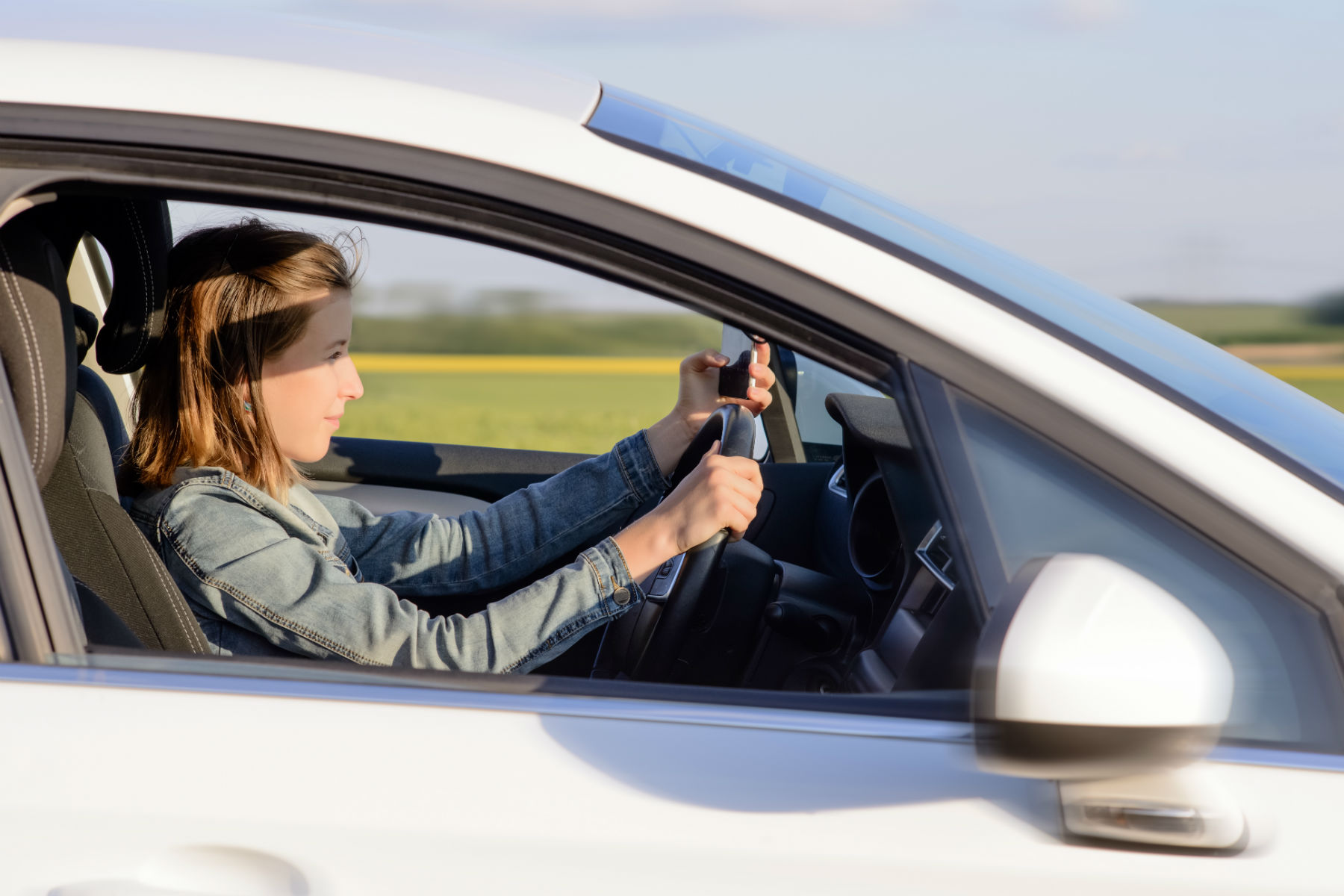
An estimated 11 million UK motorists admit to having made or received a call while driving – while five million say they’ve taken photos or videos while driving. Department for Transport statistics from 2015 reveal that 22 people were killed and 99 seriously injured when a driver was using their handheld phone at the wheel.
Brake’s Director of Campaigns, Jason Wakeford, said: “The illegal use of handheld mobile phones when driving is a growing menace and a major threat to road safety. Research shows that using a phone at the wheel affects reaction times as much as drink driving, increasing the chances of a crash.
“As a society, we have become addicted to our mobile phones, but a split-second distraction caused by a call, text or notification behind the wheel can be deadly. The industry must play its part and include technology as standard which helps keep drivers’ attention on the road, saving lives and preventing serious injuries.”
A campaign has been launched to reduce the number of cyclists killed or seriously injured by car drivers and passengers carelessly opening their doors.
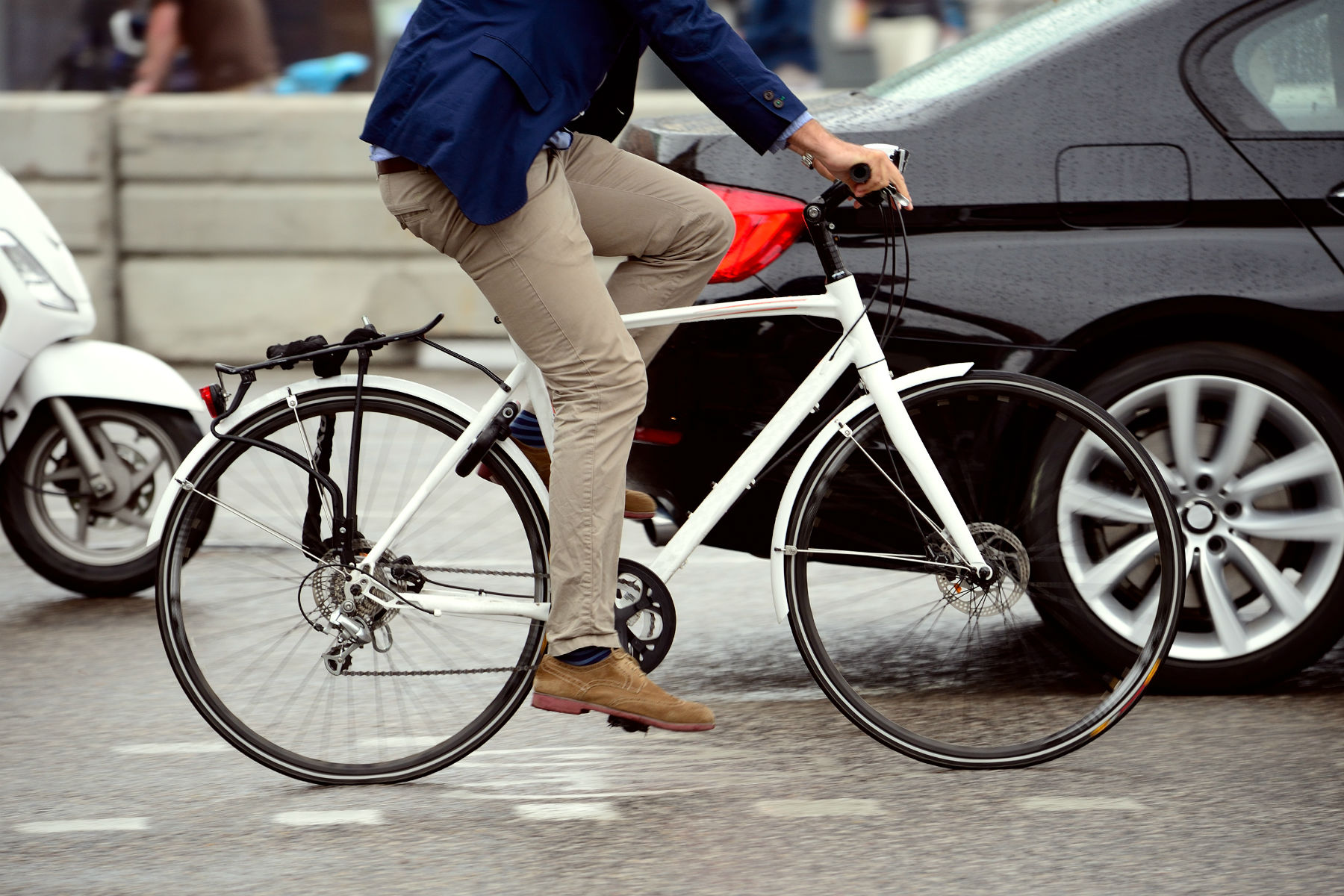
Cycling UK has written to transport minister, Jesse Norman MP, calling for the so-called ‘Dutch reach’ to be taught in UK driving tests. This is involves drivers using their left hand to open their door, forcing them to turn and see if any cyclists are approaching. It’s already a mandatory part of driving tests in the Netherlands.
Government figures show that eight people died from carelessly opened car doors between 2011 and 2015. Out of those, five were cyclists knocked off their bikes. The rest were car passengers.
More than 3,000 cyclists reported being injured from colliding with car doors during the same period, but Cycling UK says the true figure is likely to be a lot higher.
As well as calling for the Dutch reach to become a mandatory part of driving tests, the cycling group is calling on the Department for Transport to launch an information campaign and introduce larger fines for car drivers and passengers who open their doors without looking.
The current offence of car dooring currently carries a maximum £1,000 penalty, even if someone dies or is seriously injured as a result of the incident. The organisation says this is to low.
Cycling UK’s Chief Executive Paul Tuohy said: “Some people seem to see car dooring as a bit of a joke, but it’s not and can have serious consequences.
“Cycling UK wants to see greater awareness made about the dangers of opening your car door negligently, and people to be encouraged to look before they open.”
Sam Boulton, a school teacher, recently died when he was knocked into the path of a van after being hit by a taxi passenger door while cycling. This case is expected to bring car-dooring into the spotlight after an appeal over Boulton’s death is heard by Leicester Crown Court later this month.
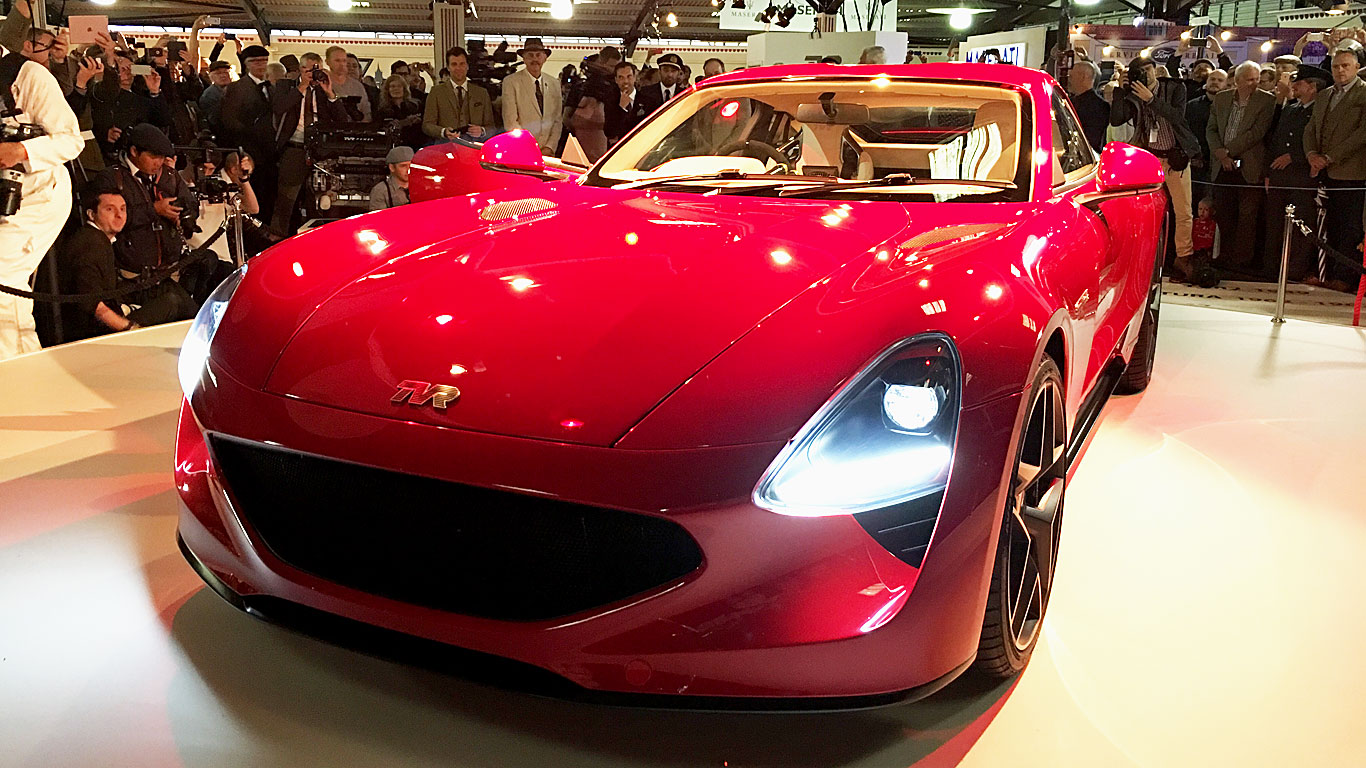
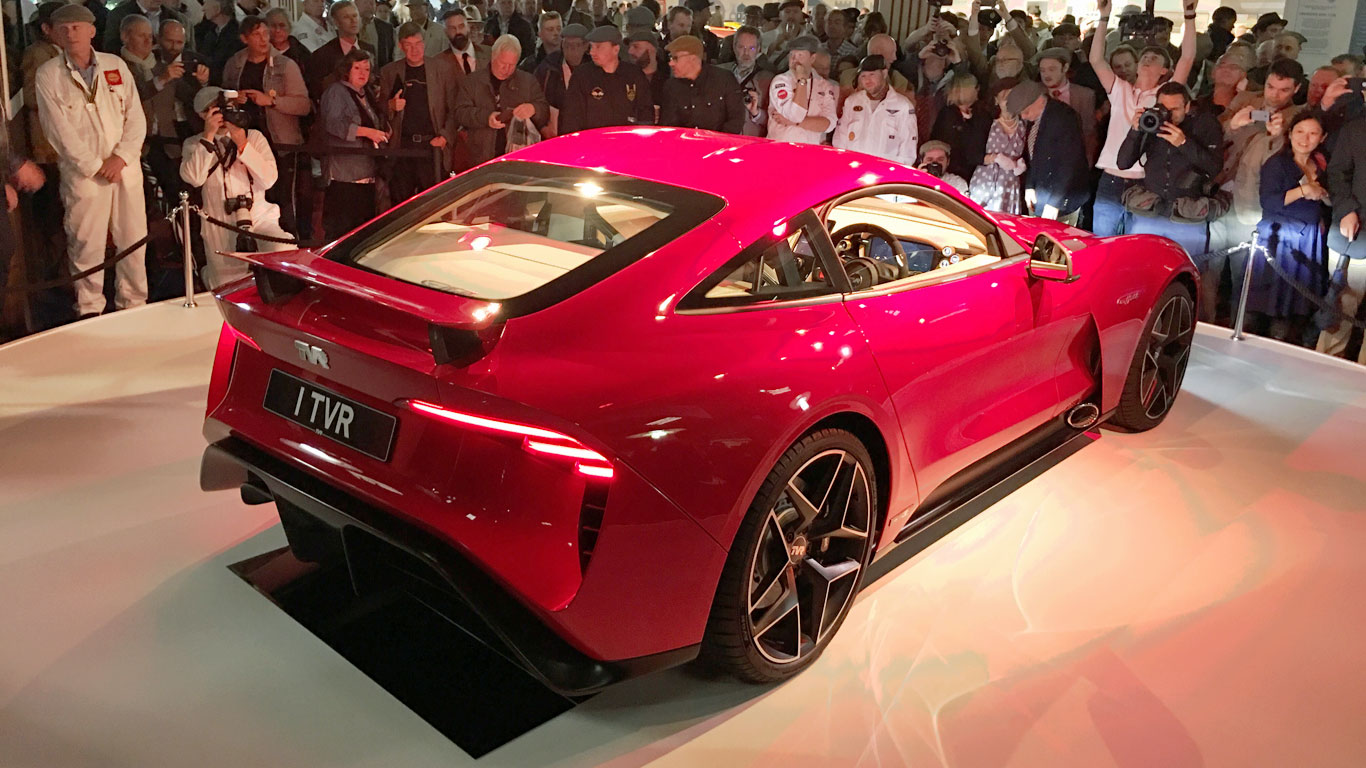
The new TVR Griffith has been revealed at the 2017 Goodwood Revival meeting. The revived firm, once again under British control, plans to start producing the new 200mph V8 sports car in 2018, with prices starting from £90,000.
TVR chairman Les Edgar said: “Today’s unveiling is the culmination of nearly three years of tireless work by the team, and we’re all proud to be able to show the new TVR Griffith to the world.
“This is unmistakably a TVR, a British muscle car that’s as awesome and brutal as it is charismatic and refined.” It will also be an entirely new type of TVR, he added: “The new TVR offers levels of technical sophistication, comfort, reliability and practicality never seen by the brand before.”
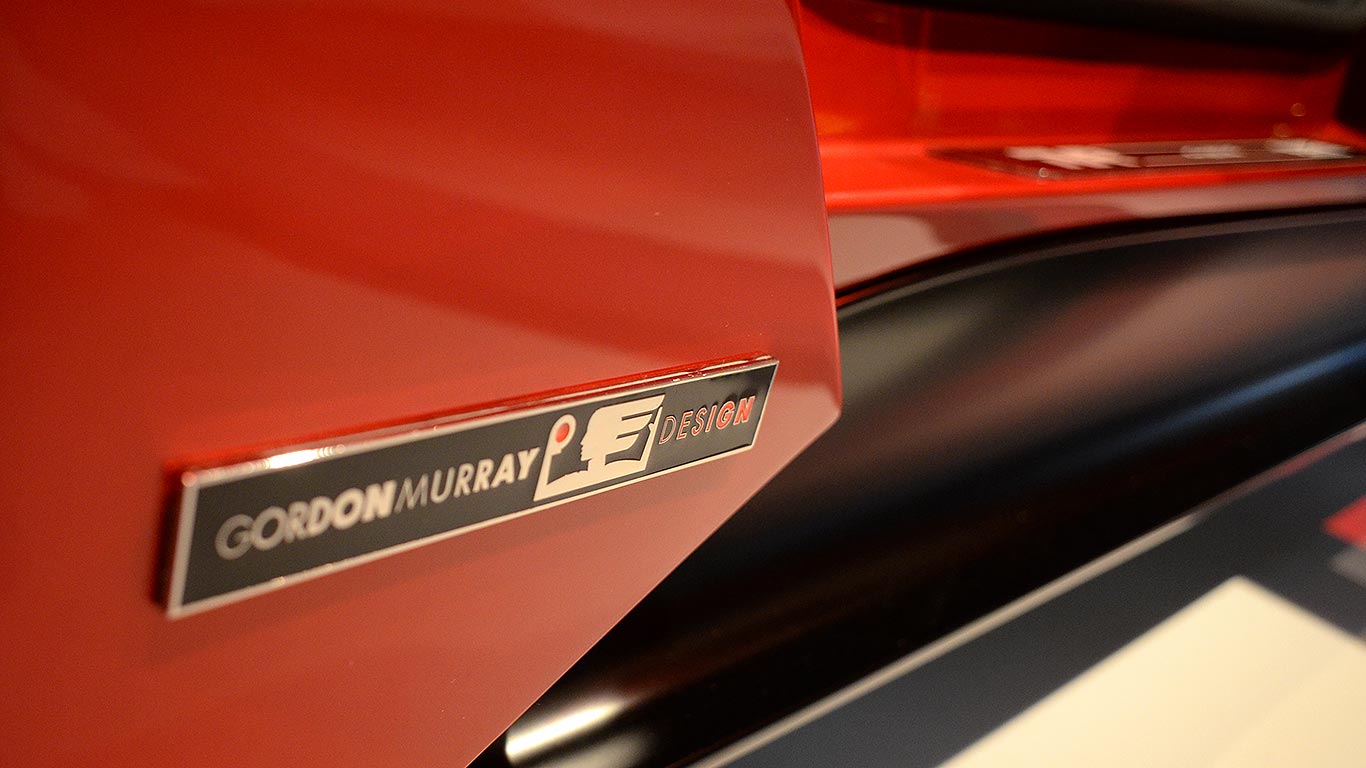
A modern but still classically TVR design, the new two-seater boasts advanced construction using the Gordon Murray iStream architecture, which makes the new car rigid and light: kerbweight is under 1,250kg. That’s 85kg less than even a basic Porsche 718 Boxster.
TVR Griffith Goodwood launch: in pictures
TVR has combined low weight with a powerful Cosworth-developed 5.0-litre V8 engine. Derived from the motor in the Ford Mustang GT, the engine produces more than 400hp per tonne, or around 500hp in total (final figures have not yet been revealed). This is good for a top speed of over 200mph, and a 0-62mph time of under 4.0 seconds.
Excitingly, the new Griffith features dual side exit exhausts, which are sure to sound dramatic.
The six-speed Tremec manual gearbox can handle 700lb ft of pulling power and engine revs of 7,500rpm, adds TVR – suggesting this launch engine may only be the start of things. Indeed, the firm is already saying it plans to take the new Griffith racing, and could even mark the return of the famous brand to the Le Mans 24 Hours. Naturally, the new TVR Griffith will be rear-wheel drive.
Video: new TVR Griffith revealed at Goodwood
The new TVR is a compact car as well: length of 4,314mm makes it shorter overall than a 718 Boxster. It’s lower than the Porsche as well, but a longer wheelbase should back up the firm’s claims of the two-seater offering plenty of space even for taller people inside.
The interior is driver-focused and includes a contemporary-look central infotainment system with Tesla-style portrait-mounted screen. Its uncluttered layout embodies the revived firm’s motto: ‘Spirit of Driving’.
2018 TVR Griffith: interior
Speaking of which, TVR has fitted double wishbone suspension with adjustable coilover dampers, which should please enthusiasts. Less welcome news may be the use of electric power steering, although the firm promises us steering feel is uncompromised.
Nicking a trick from Porsche, the rear wheels are bigger than the fronts: 20-inch wheels with 275/30 tyres at the back, 19-inch wheels with narrower 235/35 tyres up front. TVR says this is to ensure maximum traction without spoiling steering feel. Traction control will, however, also be standard.
Tyre make Avon has developed a bespoke version of its high performance ZZ5 tyre, with unique sidewall graphics that include a Union Flag graphic. Meanwhile, big six-piston front brakes grab 370mm calipers, and the TVR also has ABS as standard.
TVR Griffith Launch Edition
The £90,000 TVR Griffith Launch Edition will start the ball rolling with new TVR production from late 2018. Specific Launch Edition colours will be offered within a broad range of hues, and owners will also be able to pay extra for custom paint jobs.
A set of unique Launch Edition wheels will be fitted, and the interior will have full leather as standard, again in a limited number of bespoke colours.
Only 500 Griffith Launch Editions will be built: many have already been ordered, and the firm says there are just “a small number of allocations still available”.
 Unless you’re Greenpeace, it won’t have gone unnoticed that electrification was a big part of the 2017 Frankfurt Motor Show. From Volkswagen’s commitment to become a new leader in electric vehicles, to concept offerings from Mercedes-Benz and BMW, battery and hybrid power was everywhere.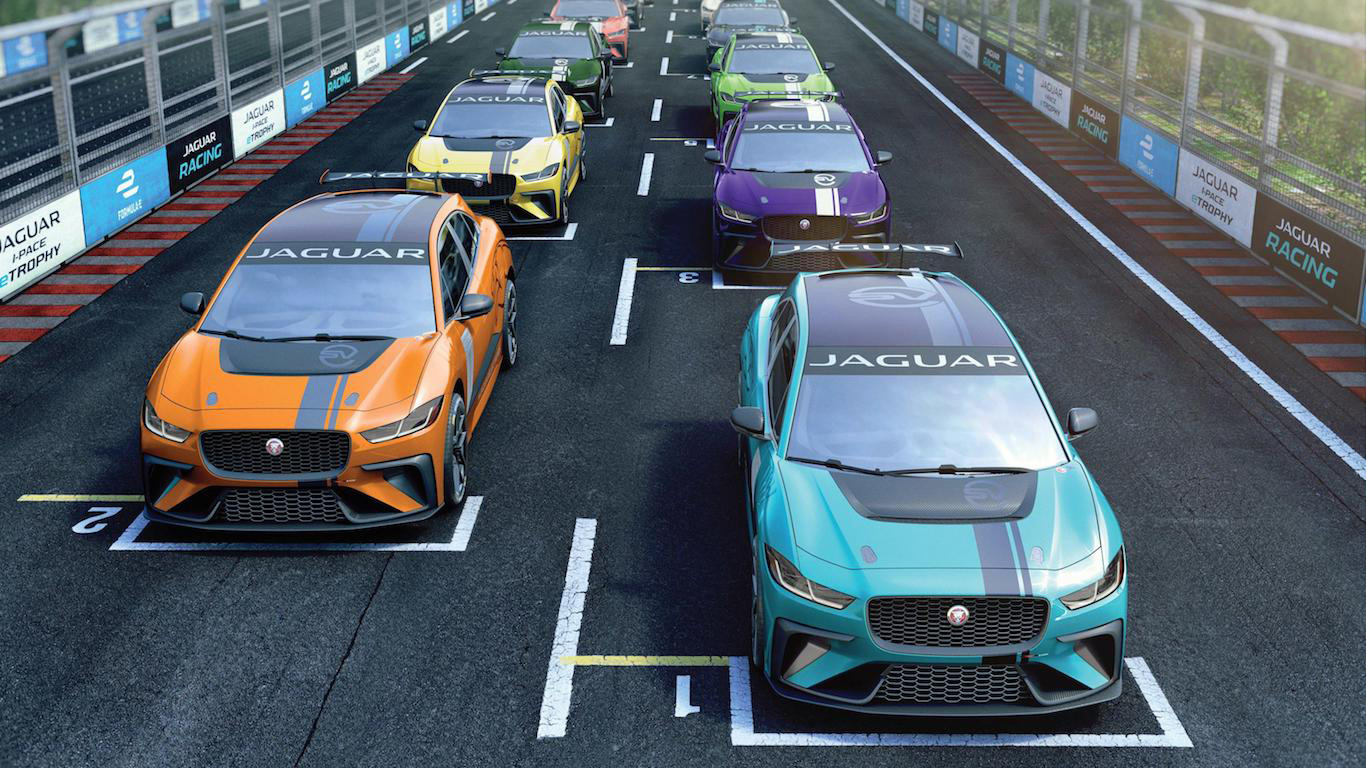
 The Frankfurt Motor Show might be chiefly focused on modern machinery, but retro cars haven’t been forgotten. The questionable creations of the 1970s and 80s have their own display for 2017, so dig out your chest wig and flares. Here we go!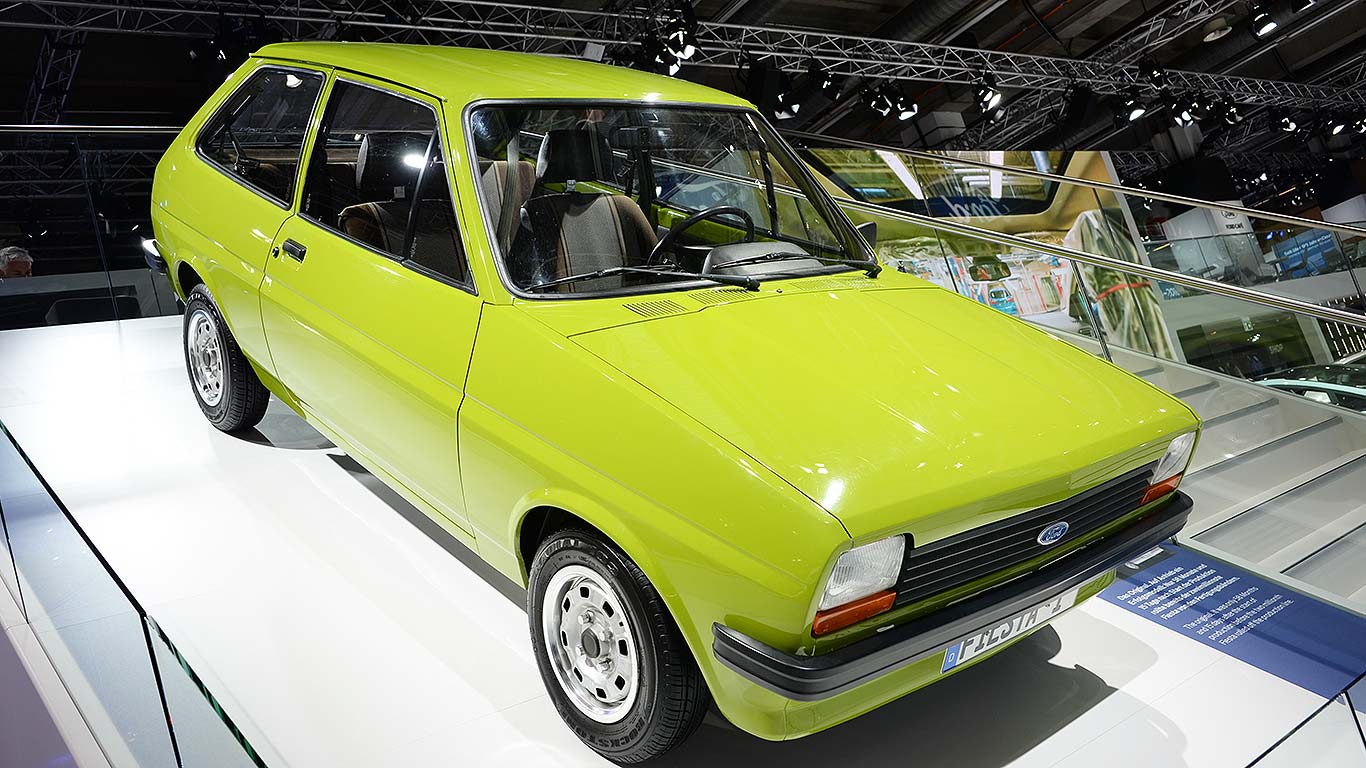
 While the attention at Frankfurt may seem geared to an electrified future, that hasn’t stopped manufacturers from showing off new performance hardware. From F1-inspired hypercars to American muscle, there is horsepower for every budget at this year’s IAA show.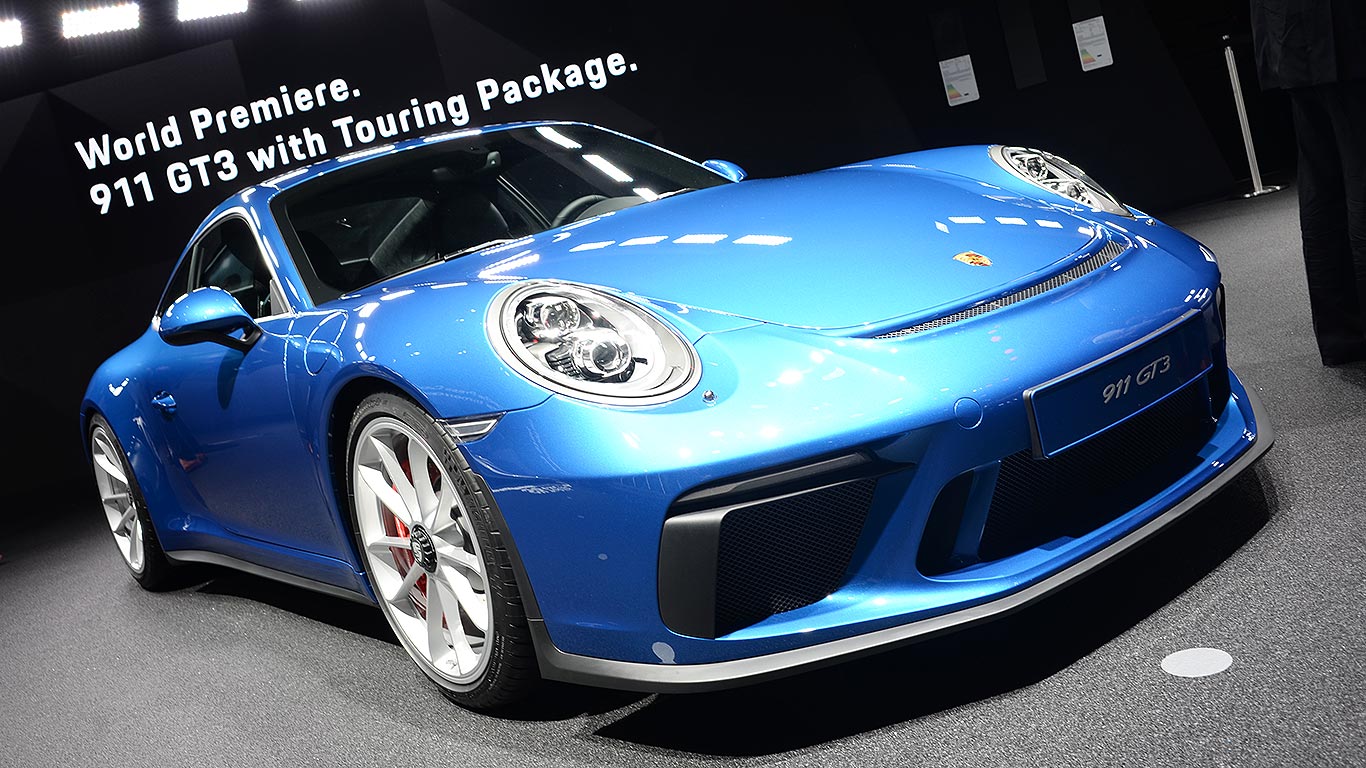
 Some big name carmakers might be absent from this year’s Frankfurt Motor Show, but that doesn’t mean it’s short on big-name reveals. Join us as we take you through the best cars of IAA 2017.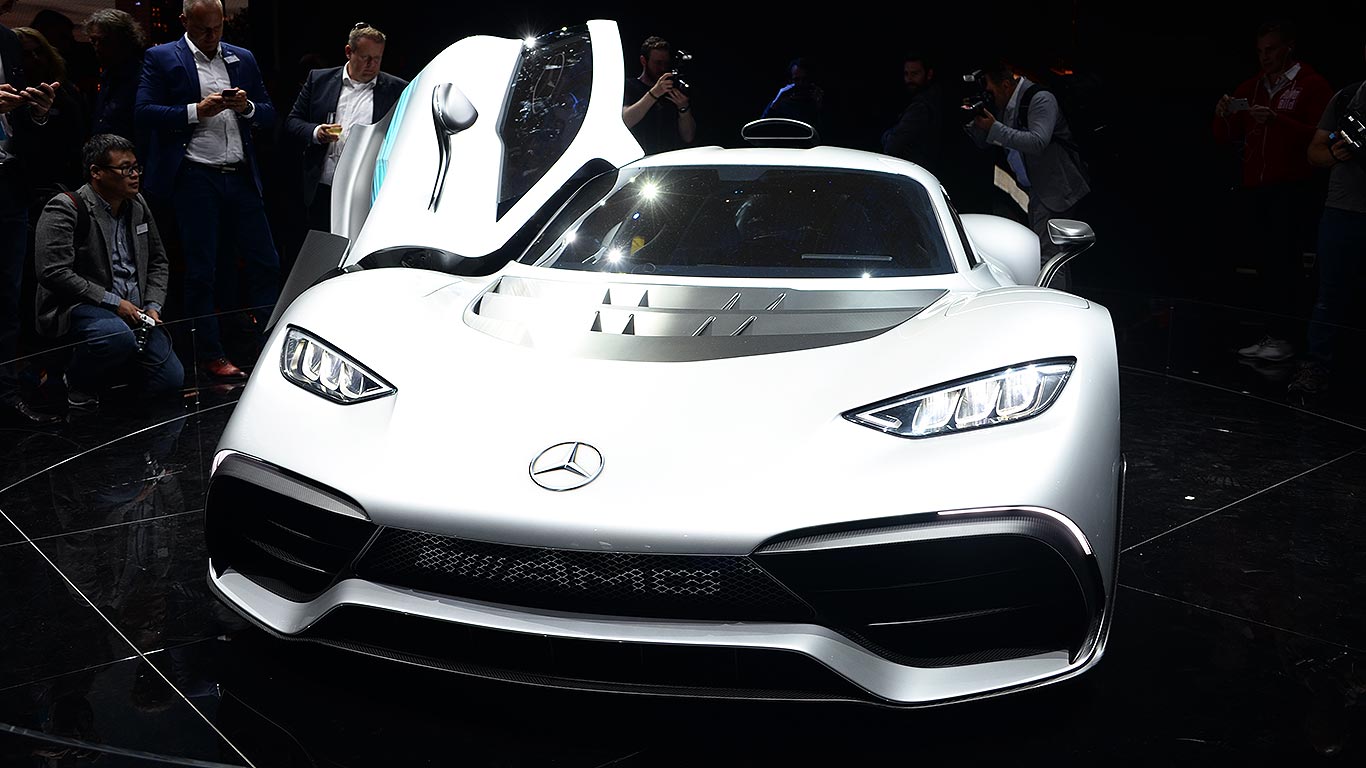
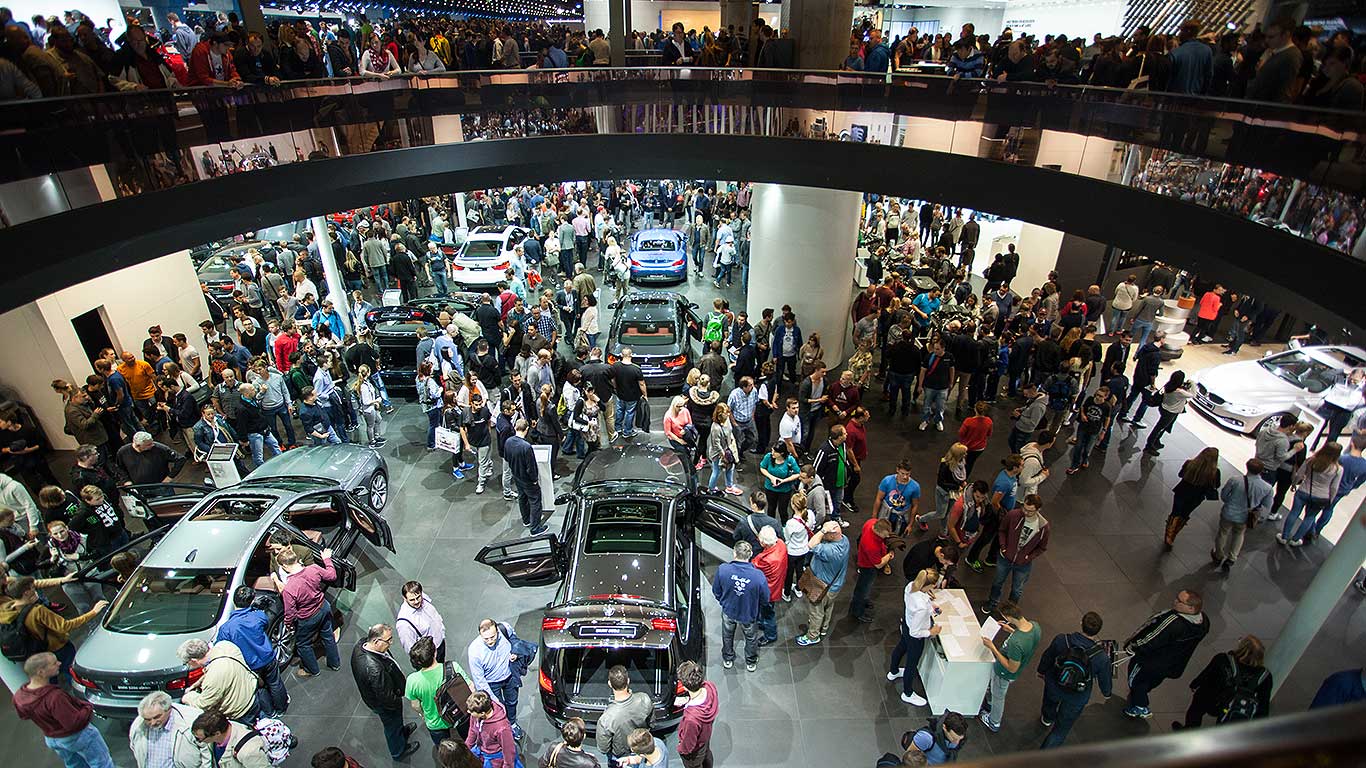 The Frankfurt Motor Show is a biannual showcase of German car industry muscle. Here’s our guide to what is being shown at the 2017 Frankfurt IAA.
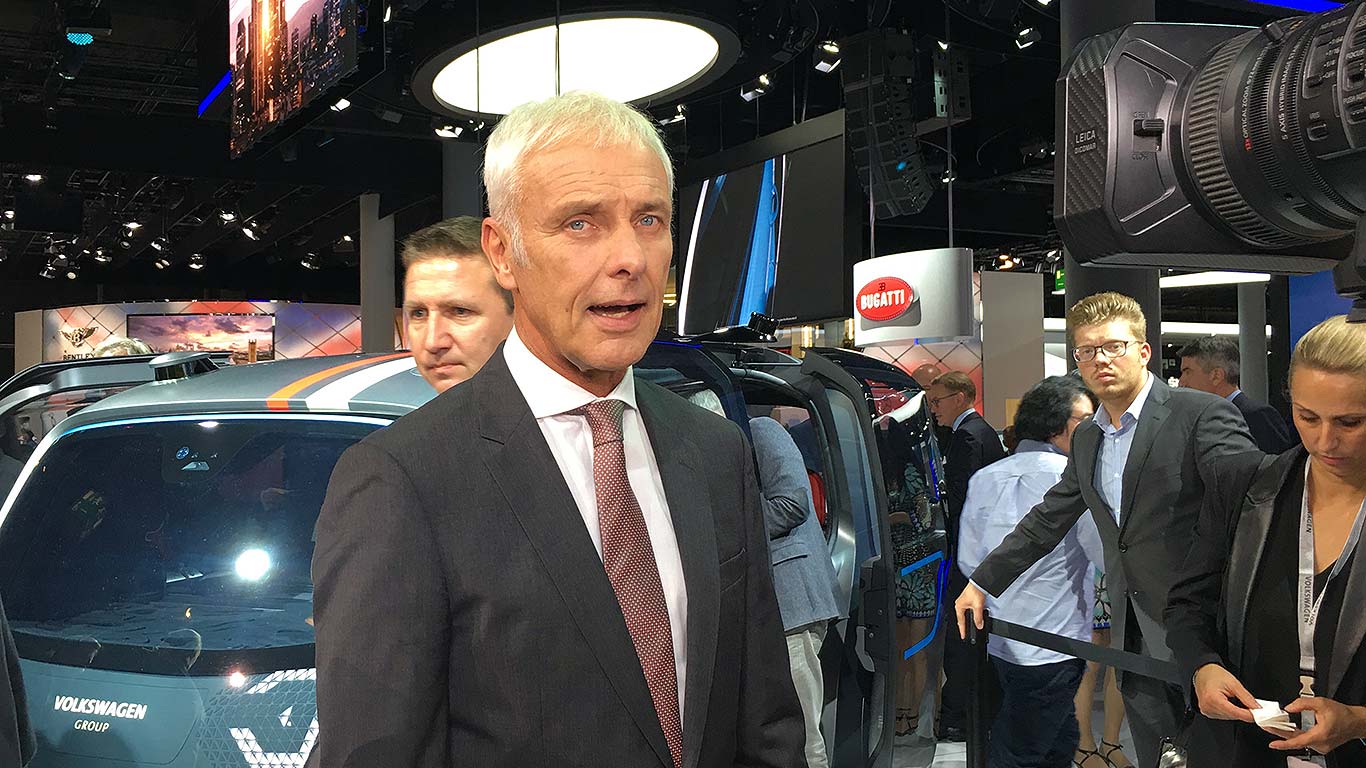 Volkswagen believes it is set to deliver a genuine global electric car breakthrough with its promise to be the world’s largest electric car manufacturer by 2025 – and its move to e-mobility will be far more significant than the efforts of other smaller car companies.