PSA Group has told General Motors that it wants a 50 percent refund after it discovered that it had been misled over the emissions strategy of Vauxhall and sister brand Opel.
That’s according to a report by Reuters, which claims that PSA Group is seeking more than half a billion Euros from Opel/Vauxhall’s previous owner. The original deal reportedly cost the French carmaker €1.3 billion.
While neither side is commenting on the matter, PSA CEO Carlos Tavares said last month: “We became aware a few weeks after we finalised the closing that the company was going to the wall on CO2 emissions.
“We put our teams to work to completely rebuild the product and technology strategies. If you fail to comply, the weight of fines you are hit with can threaten the company’s existence.”
EU regulations mandate that manufacturers meet a fleet average of 95g/km CO2 by 2021, down from the current 130g/km. Carmakers could be fined €95 (roughly £84) per car for every gram over the limit, leading to carmakers desperately trying to reduce carbon emissions ahead of the deadline – not helped by a decline in diesel car sales as buyers switch to less frugal petrol cars.
Initially, PSA said it believed Opel and Vauxhall would exceed the 2021 limit by 3.7g/km. That’s now been increased to 10g/km, which could cost hundreds of millions in fines.
According to the Reuters report, GM’s “unrealistically high” sales projections for the electric Ampera-e (which won’t be marketed in the UK) and diesel-powered cars led to the miscalculation.
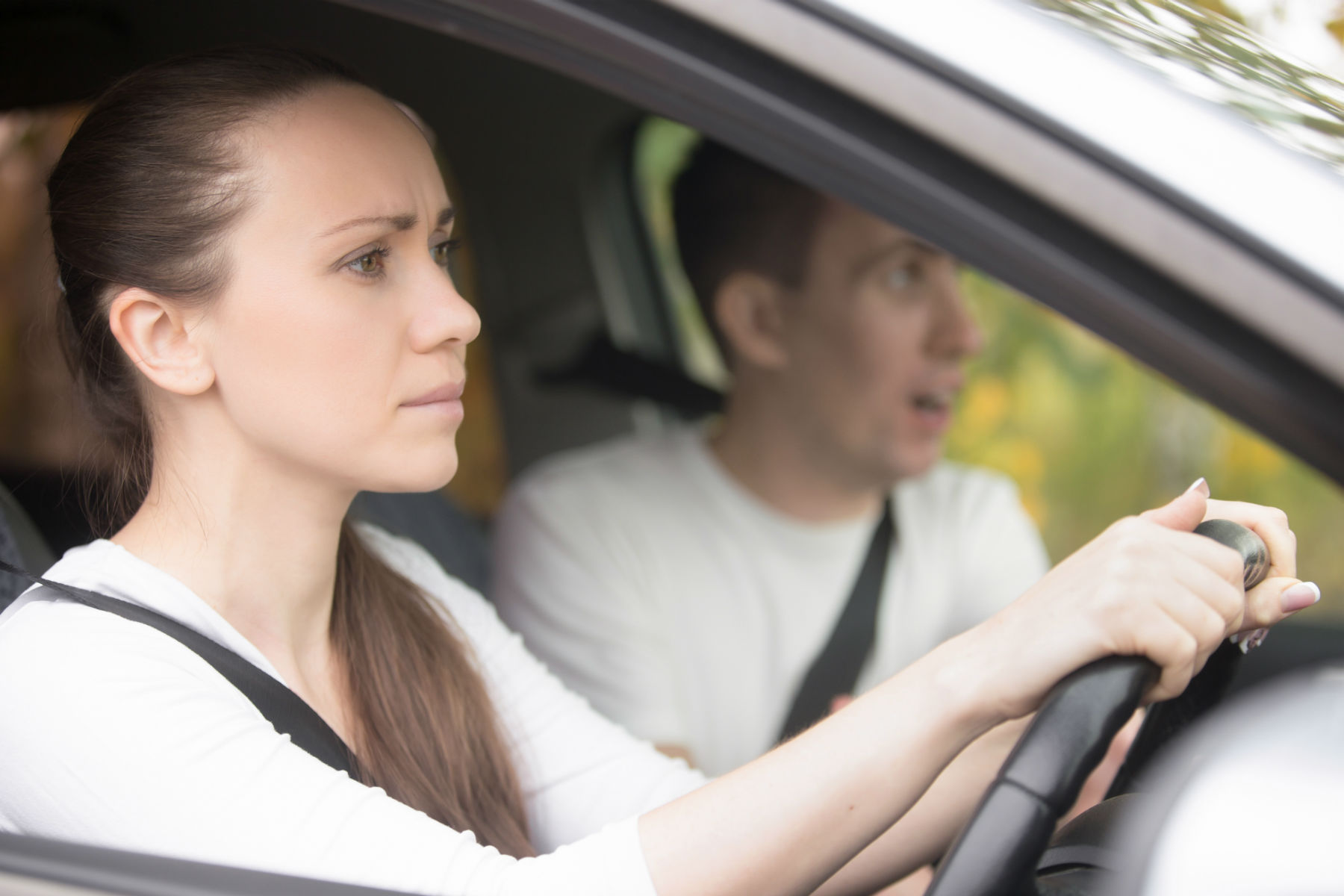
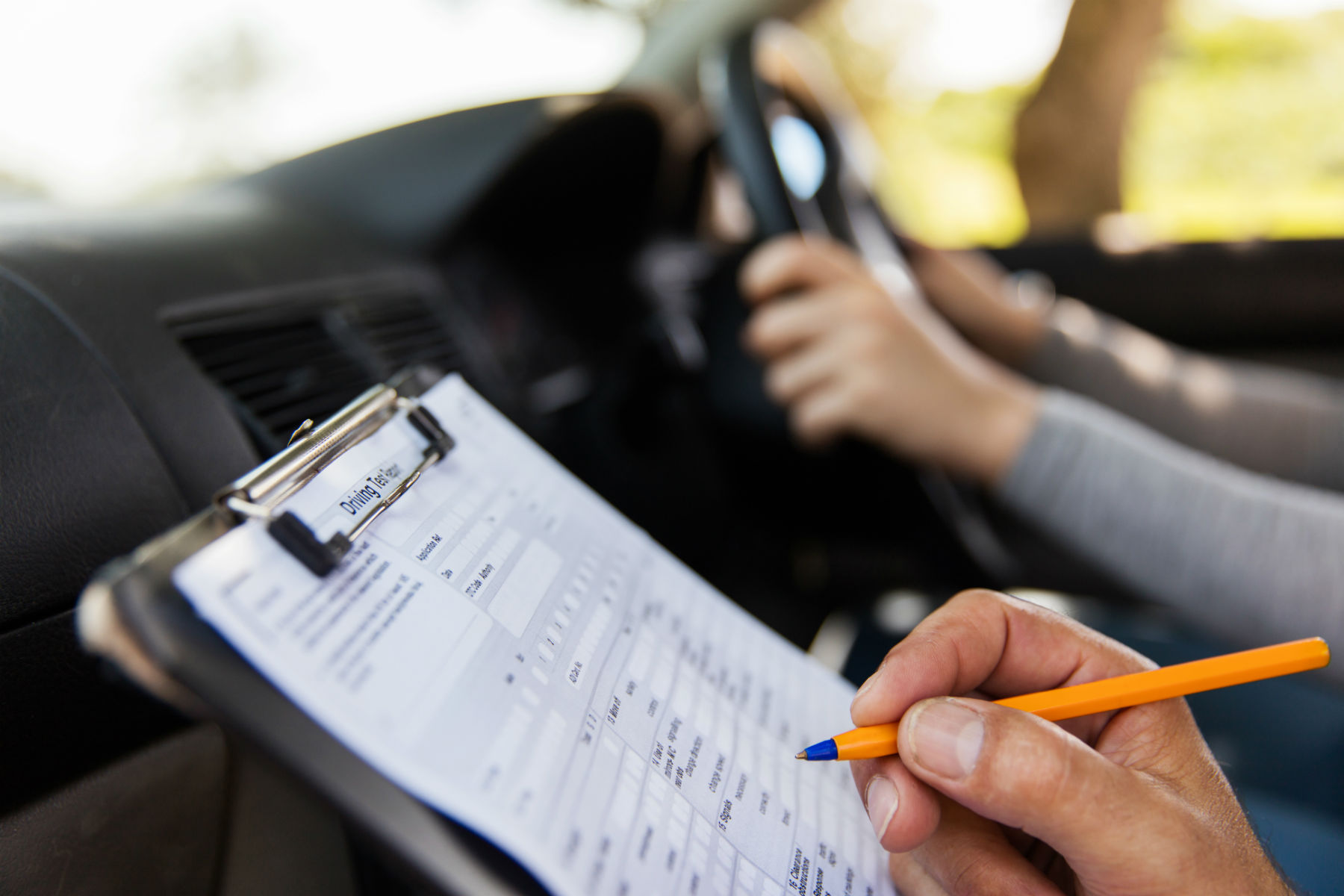
All UK practical driving tests from today will follow a new format, set to reduce the number of crashes involving young drivers by reflecting real-life driving conditions.
Road collisions account for more than a quarter of all deaths of young people aged between 15 and 19, and the Driver and Vehicle Standards Agency says it needs to make the driving test a greater representation of real-life driving conditions.
The driving test will incorporate more high-speed roads (not including motorways), where the majority of fatal collisions occur. With more than half (52 percent) of car drivers using sat-nav, the DVSA says it wants to teach new drivers how to use it responsibly.
“DVSA’s priority is to help you through a lifetime of safe driving,” said DVSA’s chief executive, Gareth Llewellyn. “Making sure the driving test better assesses a driver’s ability to drive safely and independently is part of our strategy to help you stay safe on Britain’s roads.
“It’s vital that the driving test keeps up to date with new vehicle technology and the areas where new drivers face the greatest risk once they’ve passed their test.”
What are the changes?
Independent driving
The ‘independent driving’ section of the driving test was introduced in 2010. Learner drivers were asked to spend 10 minutes of their test navigating from one area to another using their own knowledge and road signs. This is now being extended to 20 minutes – half of the test – and incorporates another change in the test…
Using a sat nav
For the first time, driving test candidates will have to follow directions from a sat-nav rather than turn-by-turn instructions from the examiner during the independent driving part of the test. The examiner will provide and operate the sat-nav device, a TomTom Start 52, meaning all the driver has to do is follow the instructions.
You can’t use your own sat-nav for the test, but you are allowed to ask the examiner for advice if you get confused. You will not be penalised for making a wrong turn unless you make a fault while doing so. One in five learner drivers will be chosen at random, having to rely on road signs rather than a sat-nav to reach their destination.
New reversing manoeuvres
The traditional ‘reverse around the corner’ and ‘turn-in-the-road’ manoeuvres are being scrapped from the test, although the DVSA says driving instructors should still teach them ahead of the test. Instead, candidates will be asked to perform one of the follow reversing manoeuvres:
Parallel park at the side of the road
Park in a bay (your examiner will tell you whether to drive in and reverse out or the other way round)
Pull up on the right-hand side of the road, reverse for two car lengths and rejoin the traffic
Some driving instructors are questioning how safe the last manoeuvre is, especially as the Highway Code states that you must not park against the traffic flow. The DVSA says that, in reality, many drivers do perform this manoeuvre, and it’s better to practise it with a qualified instructor.
’Show me, tell me’ questions
While learners will continue to be asked a ‘tell me’ safety question at the start of the test (such as how to check the tyre pressures), the examiner will now ask a ‘show me’ question during the driving part of the test. An example is how to operate the horn.
Why are driving test examiners striking?
As the new test comes in, driving test examiners are staging a 48-hour strike in a dispute over pay and work hours.
The Public and Commercial Services Union says examiners will be required to work for longer and harder in exchange for no extra pay as part of the new testing regime.
“PCS members in the DVSA have tried to negotiate around their concerns but the door has been slammed shut in their face,” said PCS general secretary Mark Serwotka.
“They now feel they have no alternative but to take industrial action to bring home to the public how damaging the DVSA proposals are.”
However, the DVSA has responded describing the claims as ‘desperate’ and ‘simply not true’.
“In the last year we’ve recruited more than 320 extra driving examiners – reducing waiting times to an average of seven weeks across the country,” said the DVSA’s director of people, communications and engagement, Adrian Long. “It’s also significantly reduced the number of times we ask examiners to work at other centres – 1.5 days on average in the last four months.
“This means that we are not asking examiners to travel an extra day each week as PCS claim.
“DVSA has met with PCS more than 40 times to try to solve this dispute but, despite our best efforts – including an offer of mediation – PCS has stuck to its unreasonable demands.
“The possibility of constructive discussions has been made even harder by their strike action.”
What does the public think of the changes?
The changes follow a public consultation that over 3,900 people took part in, while a trial of the changes involved more than 4,300 learner drivers and 860 driving instructors.
The proposals were widely supported by the public, with more than 88 percent agreeing with the proposed increase in the length of the independent driving part of the test.
Transport Minister, Andrew Jones, said: “Our roads are among the safest in the world. However, road collisions are the biggest killer of young people.
“These changes will help us to reduce the number of people killed or seriously injured on our roads and equip new drivers with the skill they need to use our roads safely.”
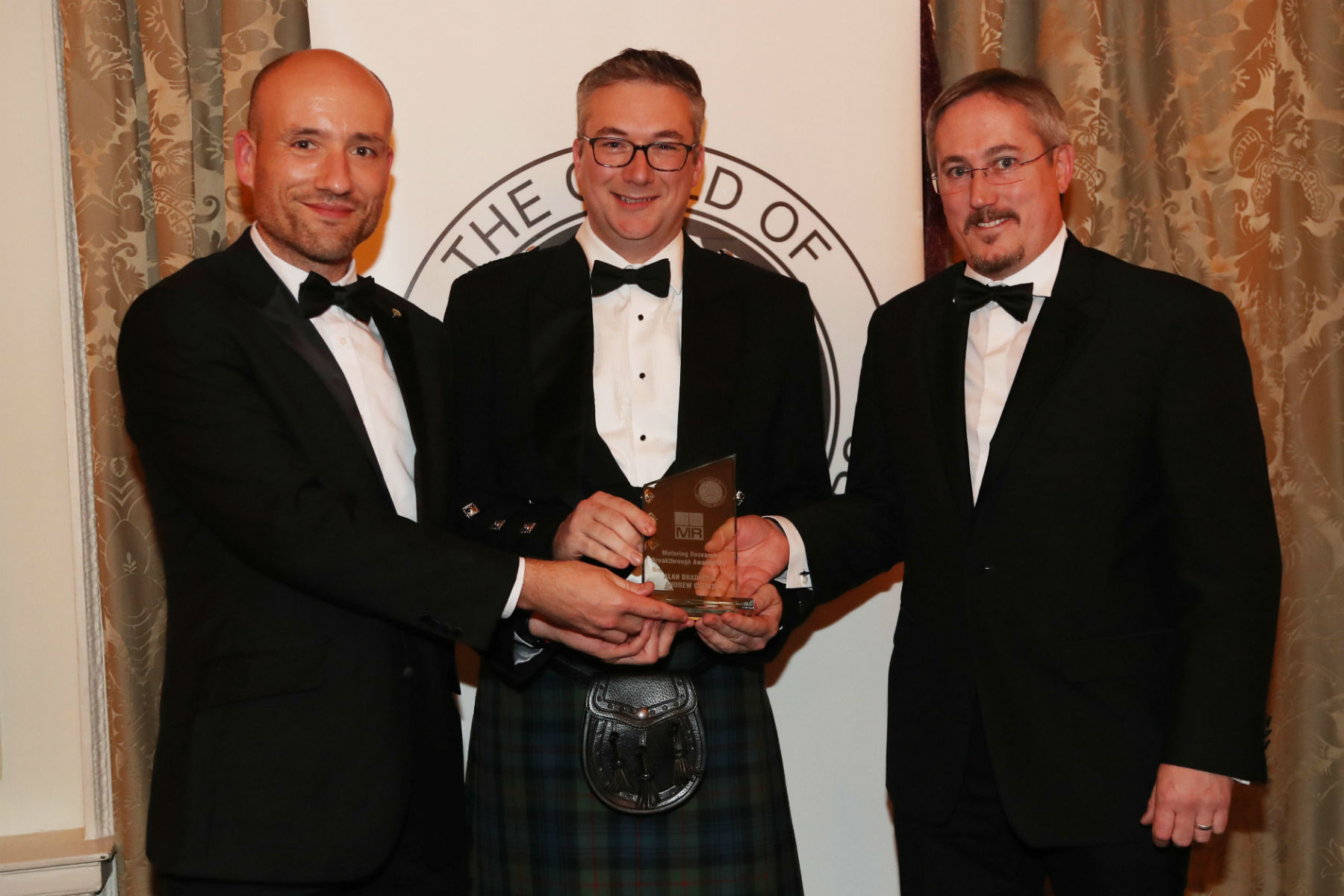
Formerly known as the Breakthrough Blogger award, it was refocused for 2017 in a bid to reward talent across a wider range of platforms. As such, it attracted entries from videographers, social media influencers, bloggers and podcasters. It was the latter that impressed the judges the most, with the award presented to The Motoring Podcast hosts Andrew Clews and Alan Bradley at the Guild of Motoring Writers annual dinner.
“We chose The Motoring Podcast as a great example of two knowledgeable enthusiasts using their experience and petolheaded passion to create highly engaging and innovative new media,” said Motoring Research managing director, Richard Aucock.
“They clearly commit a lot of time to it each week, consistently creating high-quality broadcasts, and we think this deserves to fully break through and reach a broader audience – and for Alan and Andrew to hopefully then take the next steps in professional automotive journalism.”
As part of the prize, the podcast hosts will win a paid work experience package with Motoring Research, as well as two years’ provisional membership of the Guild.
“Podcasting is still such a fledgling outlet and we’re both surprised and honoured that Motoring Research and the Guild of Motoring Writers have recognised that it has a place in the spectrum of content available today,” said Alan.
Former winners of the award include MR’s newsletter editor, John Redfern, as well as Keith Jones, continuity editor at Parkers. Other winners include Driving Spirit’s Chris Auty and Fun Rover’s Ben Gribbin.
The LA Auto Show is a feel-good show. Local hotels and restaurants are putting out the Christmas decorations, despite the sunshine and 25-degree temperatures outside, and the just-right size and just-so layout of the stands means it’s a show it feels churlish to gripe about.
Manufacturers reward it by showing some interesting cars, and bringing along Grade-A execs to present them. Sure, the list of genuine world-firsts is slight, but this doesn’t stop LA having its own share of surprises – this year, there were certainly some prominent ones on the roster that proved its status as serious car show. Such as? Let us be your guide…
America is back in love with Alfa Romeo. The Giulia was the warm-up: now, the Stelvio SUV is the car winning over hearts, few more so than the potent-looking QV version. Its V6 turbo engine produces 510hp and has, literally, more than a whiff of Ferrari about it, while the gorgeous Alfa red paint of the show stand car couldn’t help but draw onlookers. Your writer remembers when Alfa was relegated to a corridor at LA, merely in the way of the other big brands. Not anymore.
Aston Martin Vantage
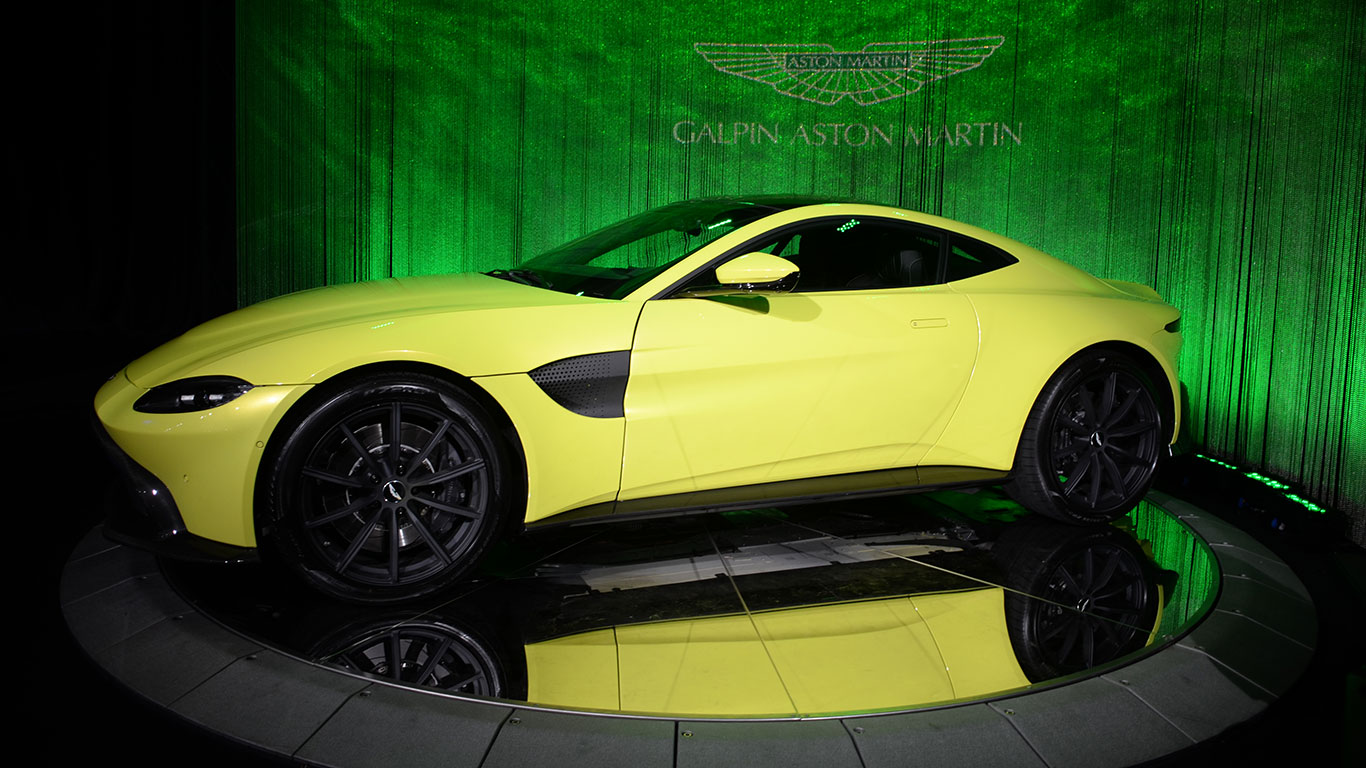
Aston Martin wasn’t there in person, probably because it was still giving itself high fives over the successful UK launch of the new Vantage. That didn’t stop massive local dealer Galpin Motors convincing the firm to ship over one of the first models for it to display on its incredible hall-of-its-own stand. In what other colour, but vivid lime green? Perfect.
BMW i8 Roadster
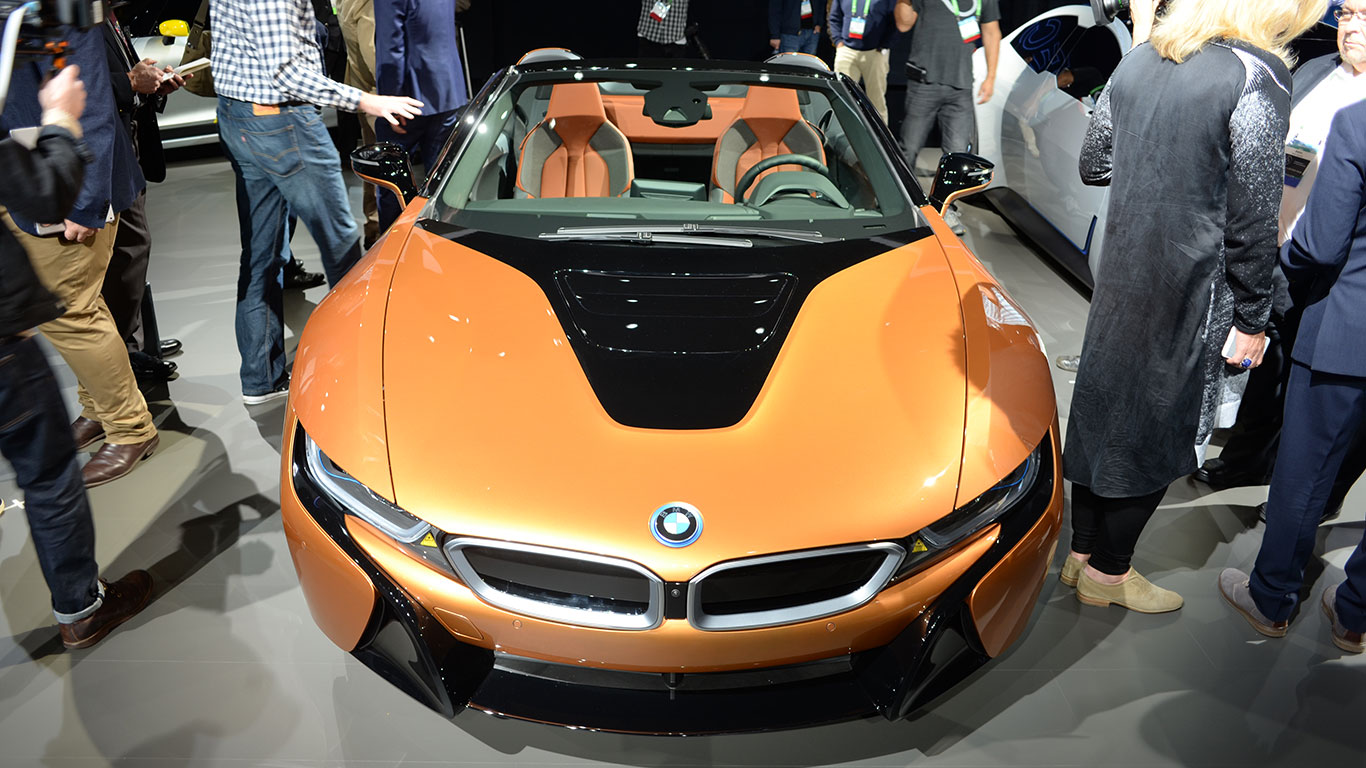
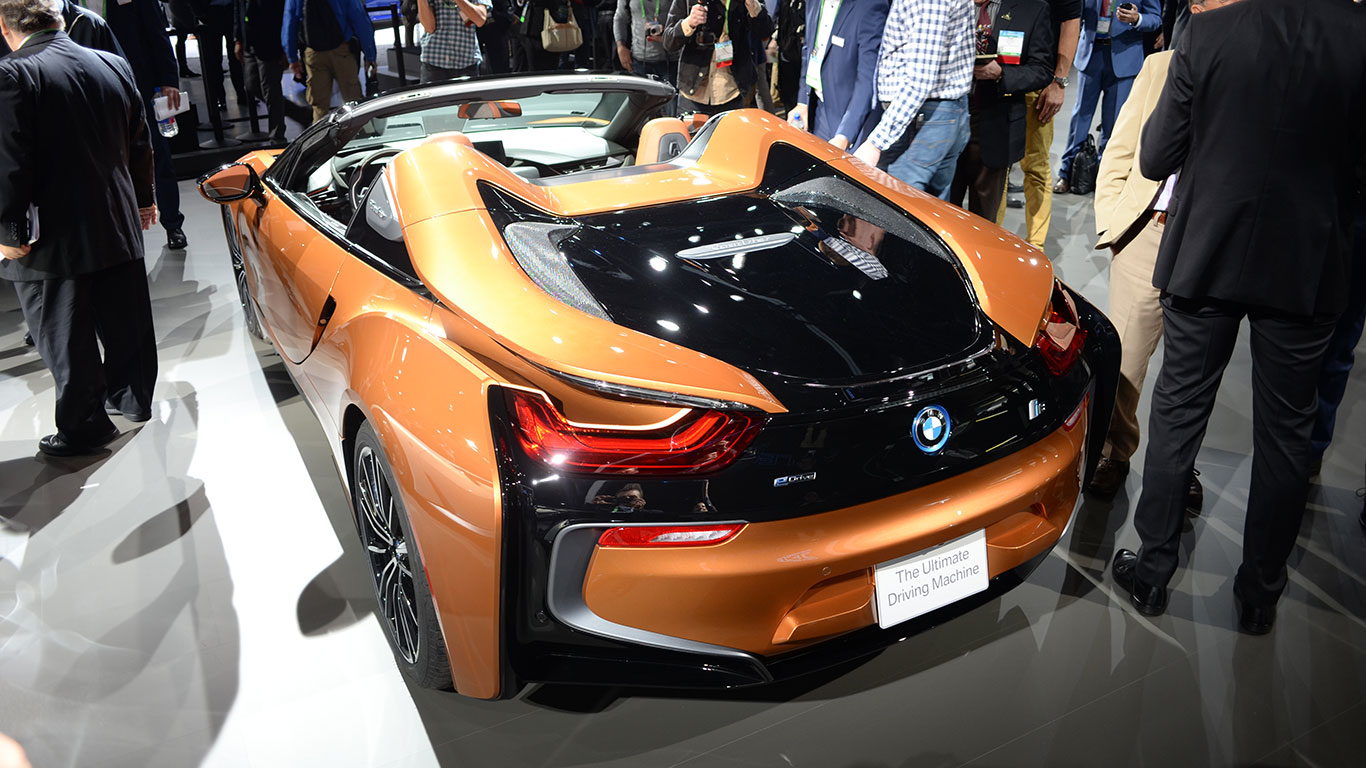
BMW has been chopping the roof off the i8 almost as long as it’s been making the i8. But only now is it an official production car, as opposed to a concept. And it looks even better than we ever imagined. The i8 Coupe, as it’s now called, is a cool car, but don’t be surprised if the majority of buyers choose the i8 Roadster instead.
Corvette ZR1
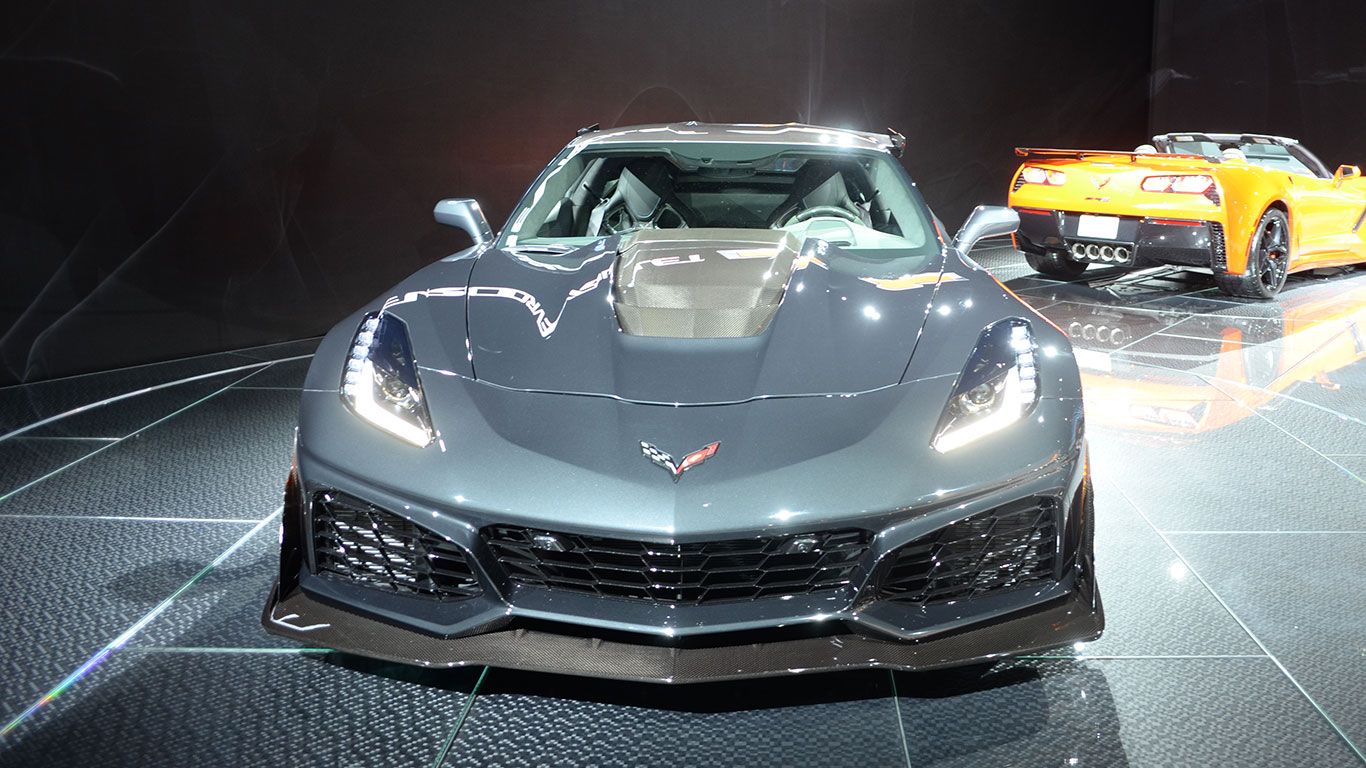
Monster power from a monster Corvette. But also a dinosaur. This is a last hurrah for the front-engined Corvette: its replacement will have an engine in the middle, one producing even more power than this ludicrous powerhouse. If that’s progress, hang the history: we’re all for it.
Infiniti QX50
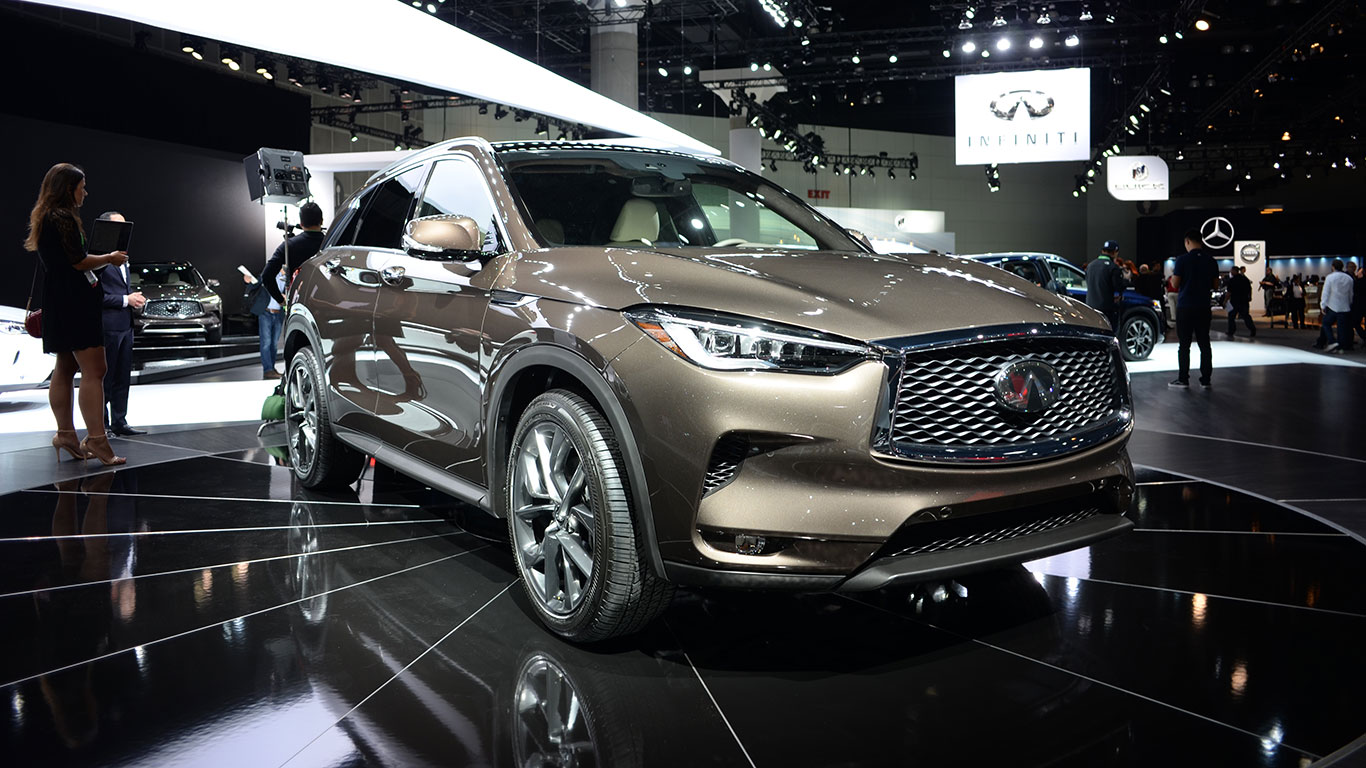
This is the most important Infiniti there’s ever been. Sure, it’s an SUV; god knows, how could it not be? It replaces a similarly-sized SUV that was forgettable. This one won’t be, though. Because it’s powered by the first production-ready variable compression engine in the world. A colossal breakthrough two decades in the making, that means it’s as economical as a diesel but as powerful as a V6. Infiniti’s so confident in the merits of this engine, it’s not offering the pretty new QX50 with any other motor. How rival makers must be stomping their corporate feet at the Japanese premium brand’s potential engineering-led big break into the big time.
Jaguar Project 8
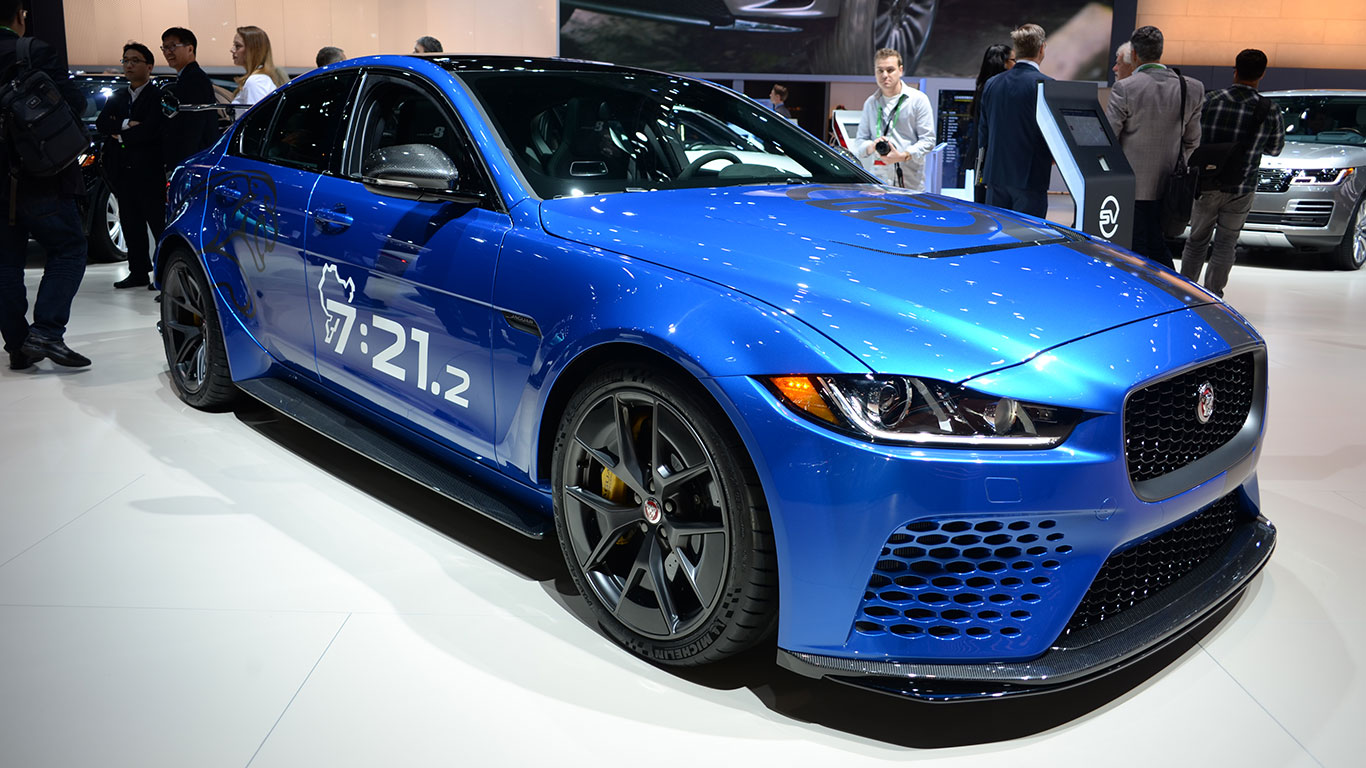
It costs £150k, but for good reason. Very little of a regular XE is actually left. And the reward for Jaguar indulging its SVO engineers with this wild flight of fantasy? A record-breaking Nürburgring lap time. No four-door production-spec car has lapped the Green Hell more quickly than this. It’s 11 seconds faster than the previous record holder, the Alfa Romeo Giulia QV. Dammit, it’s even faster than a Ferrari Enzo. £150k, you say? Bargain.
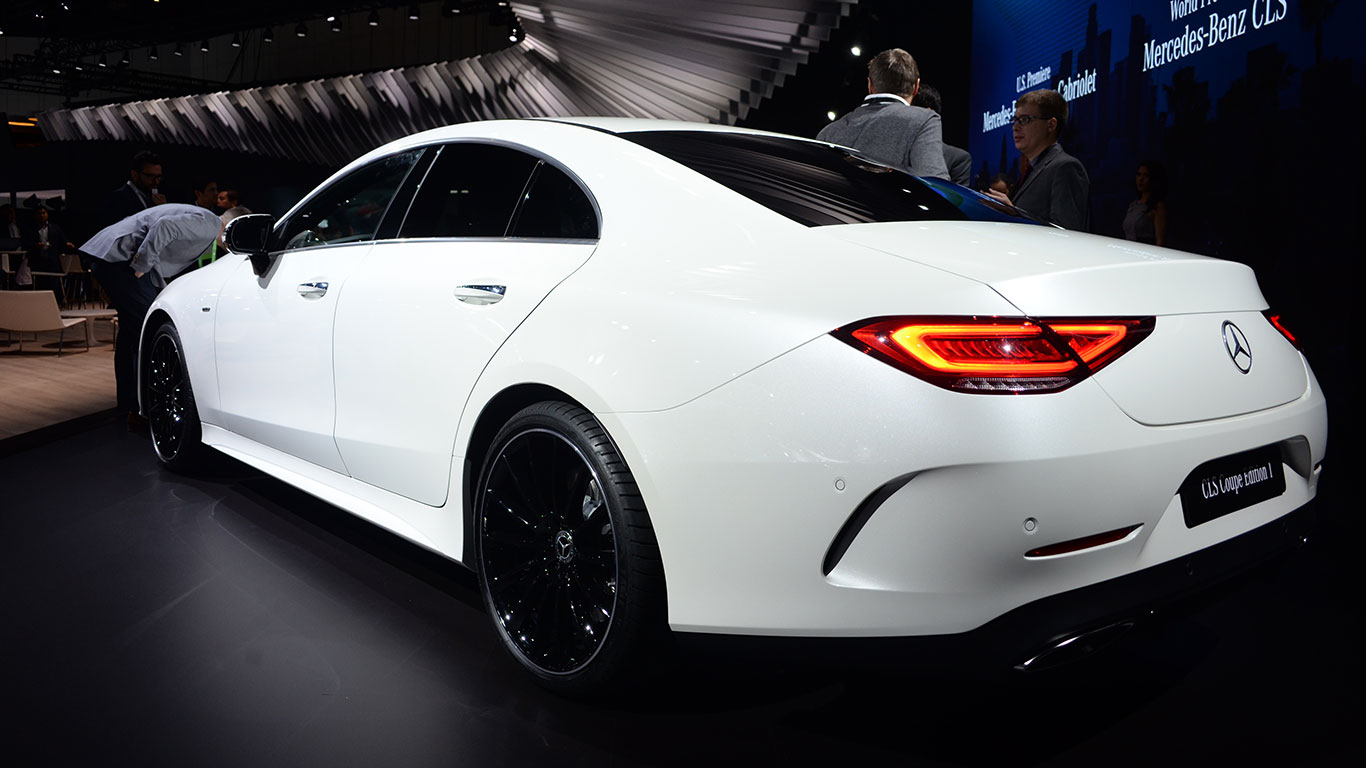
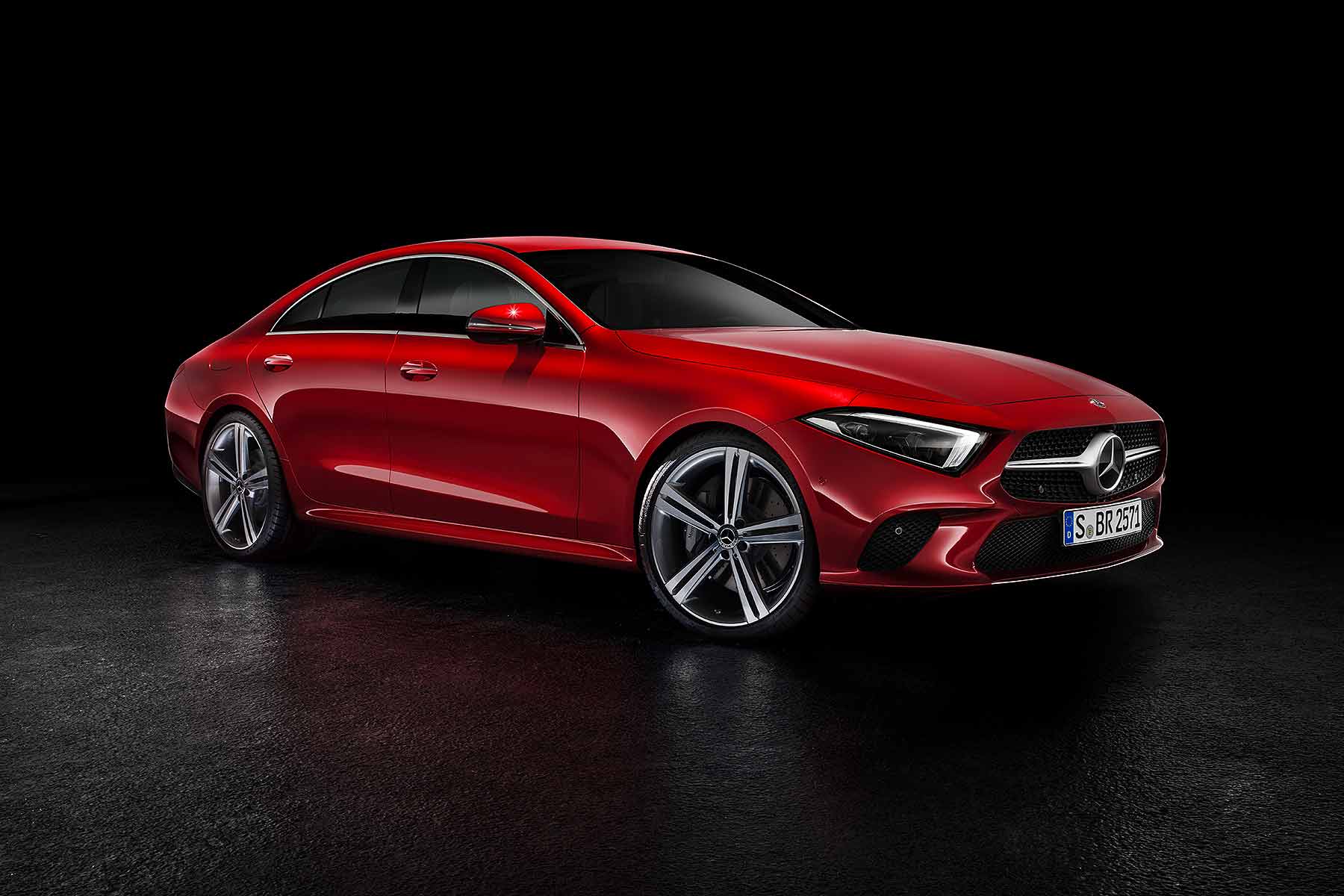
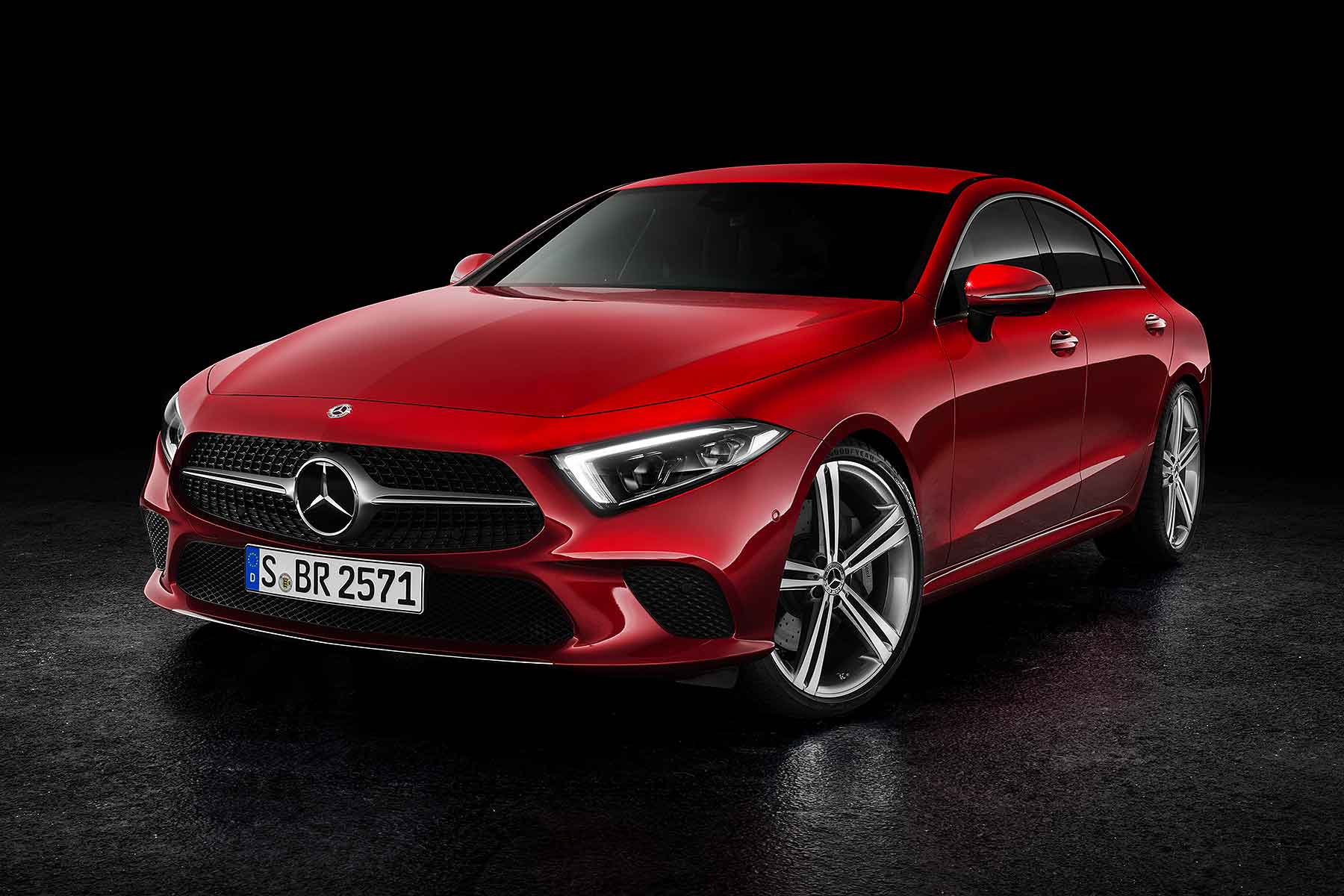
Mercedes-Benz CLS
The Mercedes-Benz CLS. First one, great. Second one, not so. Here’s that tricky third album, make or break for the CLS. The initial signs are good, with a sexy body shape drawing back to the reason why people loved the original, and steered clear of the ham-fisted second one. Will it sell, for upwards of £55k at a minimum? We’ll see. But we hope so. Not everything needs to be SUV-shaped these days. There’s still room for a bit of beauty.
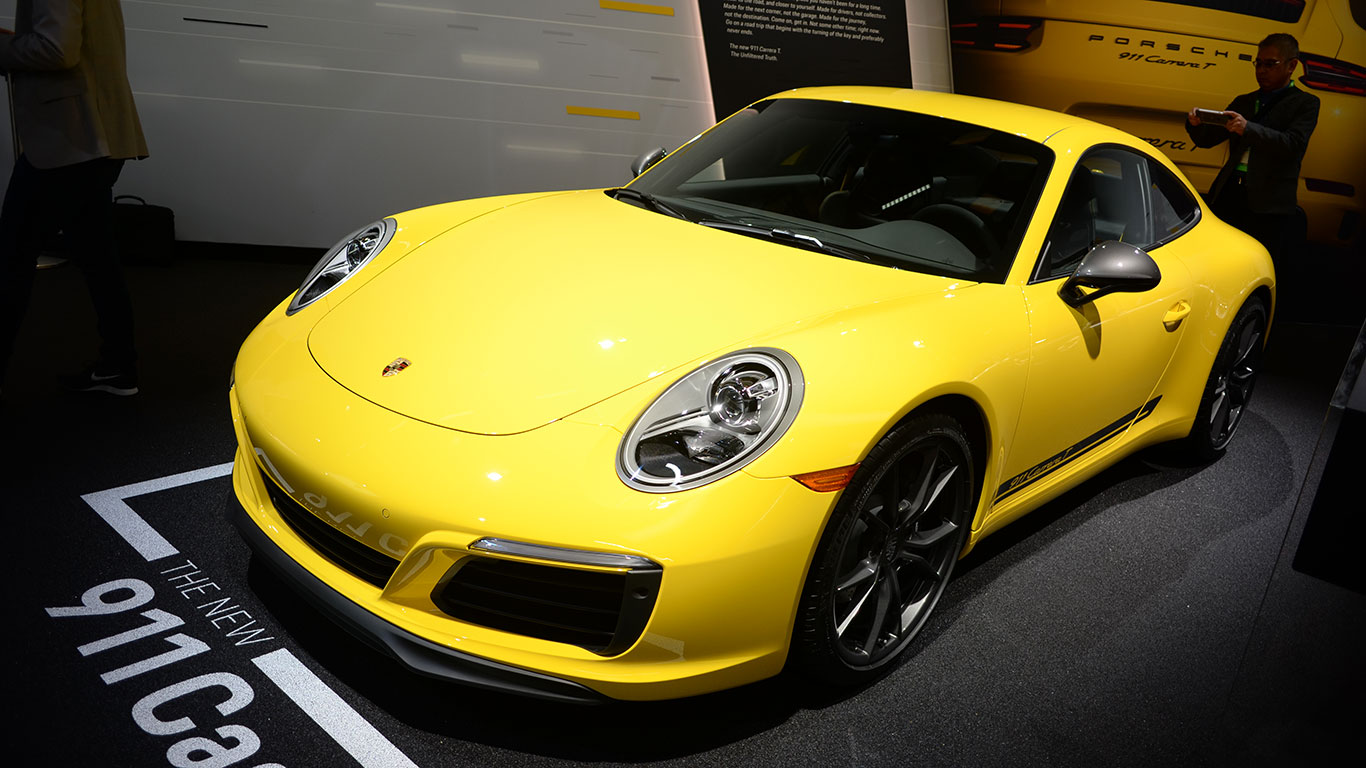
Porsche 911 Carrera T
The Porsche 911 Carrera T has already gone on sale in the UK, and if you’re one of the people who have placed a deposit on the £85,576 stripped-back 911, you can expect to take delivery in January. That’s one way to chase away the new year blues. Speaking of which, we’d take ours in optional Miami Blue, a snip at £1,877.
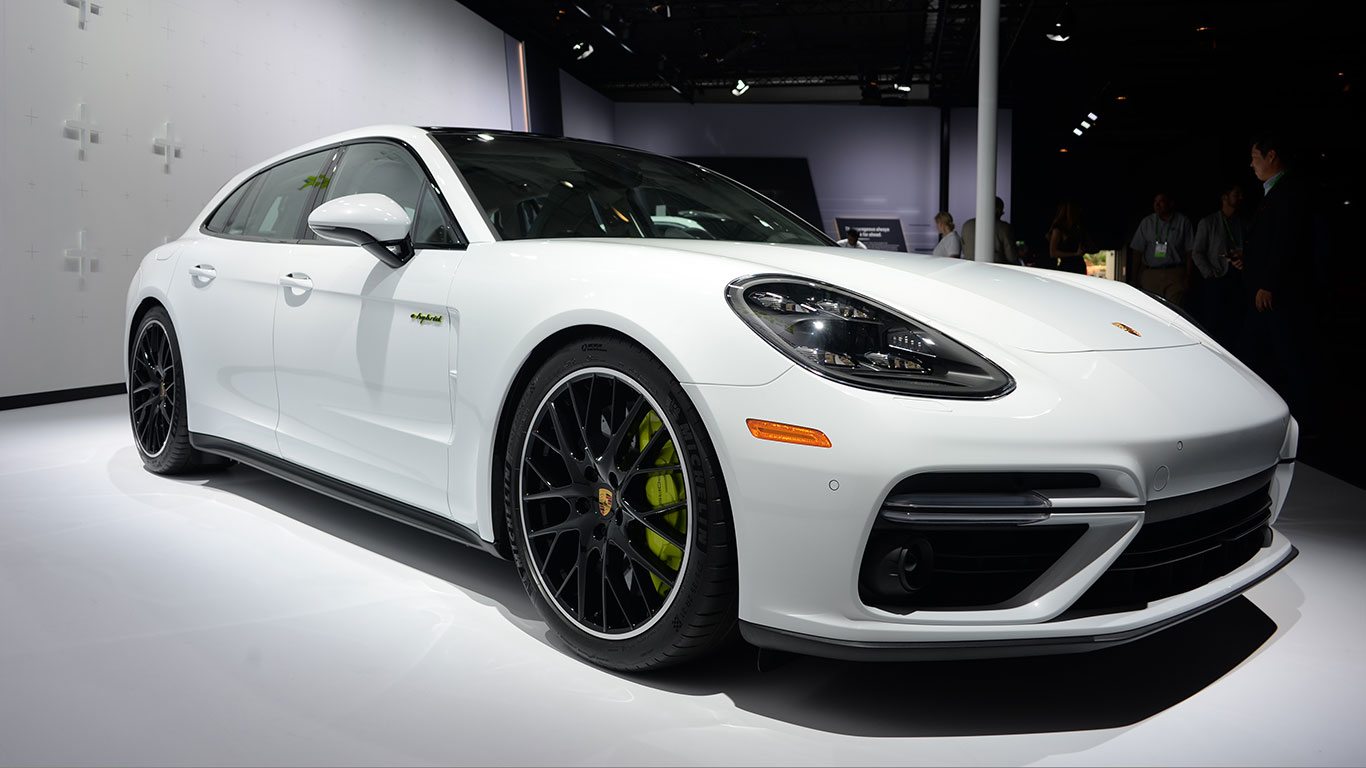
Porsche Panamera Turbo S E-Hybrid Sport Turismo
This is a formidable machine. With a combined output of 680hp, the all-wheel drive Panamera Turbo S E-Hybrid Sport Turismo will sprint to 62mph in just 3.4 seconds, before reaching a top speed of 192mph. Driven carefully – some chance – you can expect an electric range of 15 to 30 miles. The price: £139,287, before options.
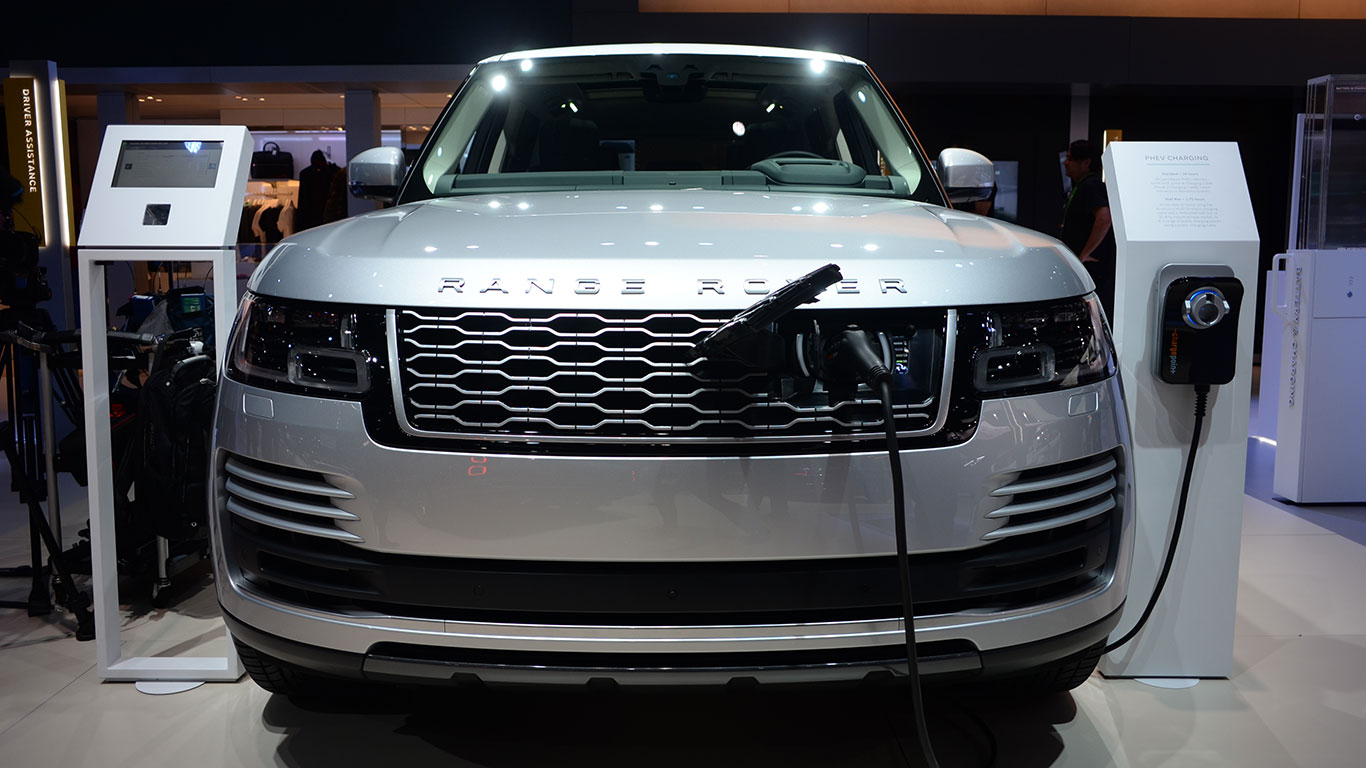
Range Rover facelift
The Range Rover’s facelift is subtle, but the big changes lie under the skin, most notably the arrival of a new plug-in hybrid version. The P400e boasts a 31-mile electric range, 101mpg NEDC fuel economy and total power output of 404hp. Prices start from £86,965, but you’ll pay £105,865 for the Autobiography.
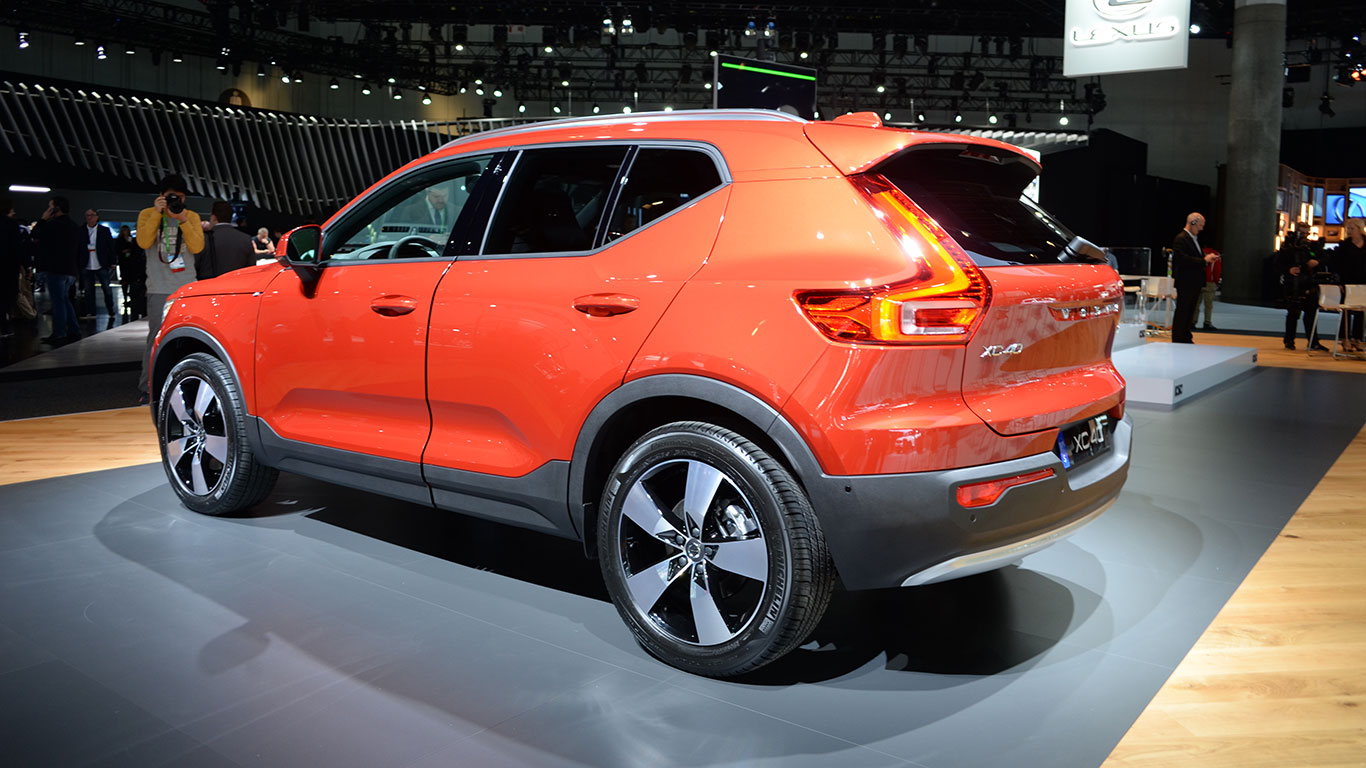
Volvo XC40
The original XC90 and XC60 were hugely successful in North America, and we expect the XC40 to follow suit. We’ve driven the compact SUV and can confirm that it’s every bit as good as it looks. We had no hesitation in giving it a maximum five-star rating, and the word on the floor in LA is that Volvo has another hit on its hands.
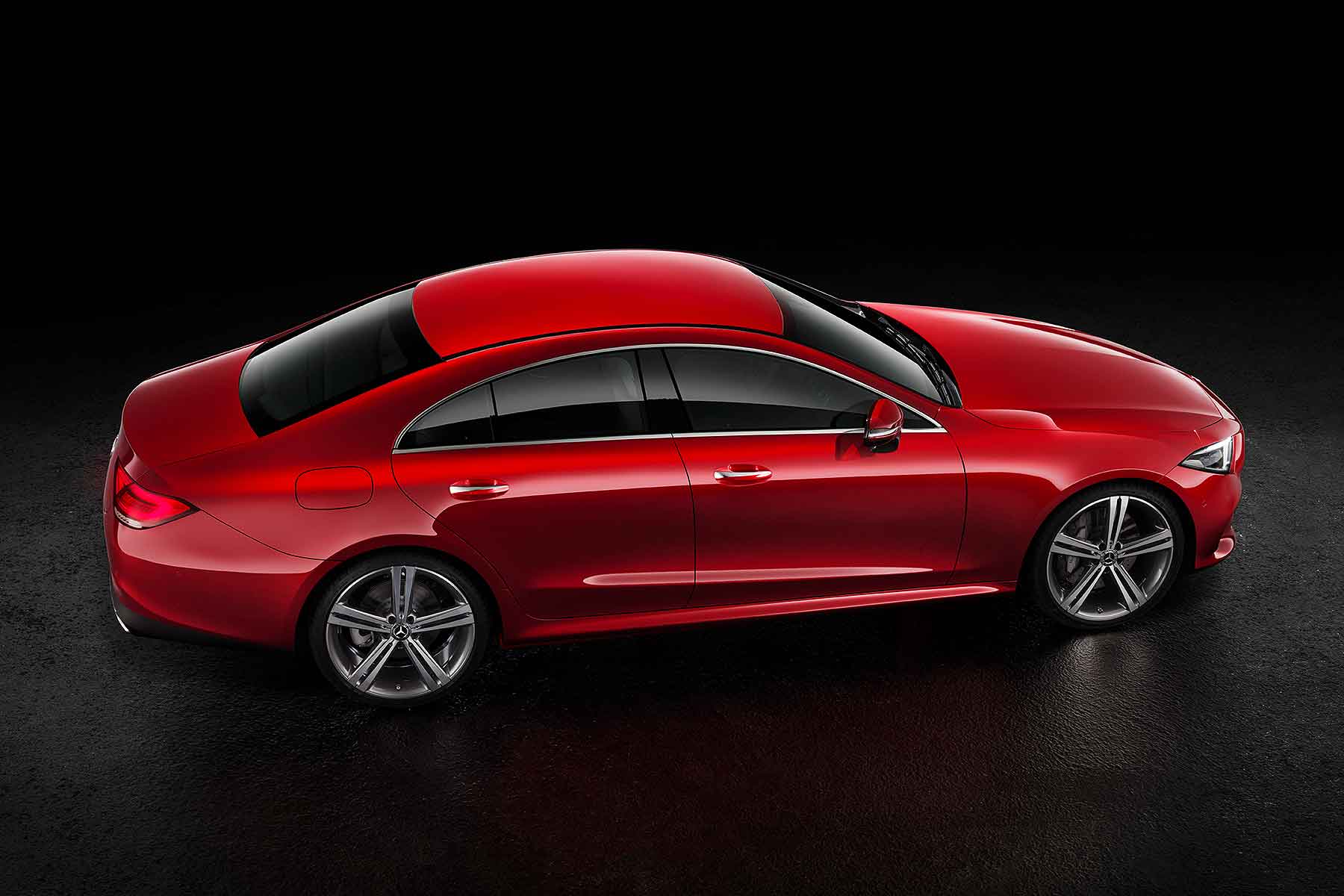
A pioneer is now part of the establishment. Back in 2003, the idea of an executive-sized four-door coupe was beautifully novel. Today, no self-respecting premium car brand can do without one. The Mercedes-Benz CLS was a trend-setter – and now, it’s been revealed at the 2017 LA Auto Show in third-generation guise, ahead of going on sale in March 2018.
The original was lovely. The outgoing second-generation model, a bit more ‘meh’. This all-new one looks to be a return to the first car’s elegance, all clean and flowing lines, simple surfaces and lack of fuss. The roof is low, the waistline arches gracefully, the side windows are flat and, with a Cd of 0.26, it’s extremely aero-efficient for one so large.
Mercedes-Benz goes further, saying the new CLS debuts its latest ‘design idiom’, apparently focused on clear reductionism. The front end slants forward, the grille gets wider towards its base (like on the Mercedes-AMG GT), headlights are wide and low, while the designers are also chuffed with the two-section tail lamps.
‘Erotic’
“The new CLS is a design icon as the archetype of the four-door coupe,” says Daimler AG chief design officer Gorden Wagener. “In line with our ‘hot & cool’ design philosophy, we have reduced its DNA to an extremely puristic level while emotionally charging it with an almost erotic beauty.”
The bonnet is fully inset, which apparently accentuates the forward-leaning shark-nose effect. And at the rear, Mercedes-Benz coupe cues abound: reflectors and registration plate in the rear bumper, plus a Mercedes star slap-bang in the middle of the bootlid.
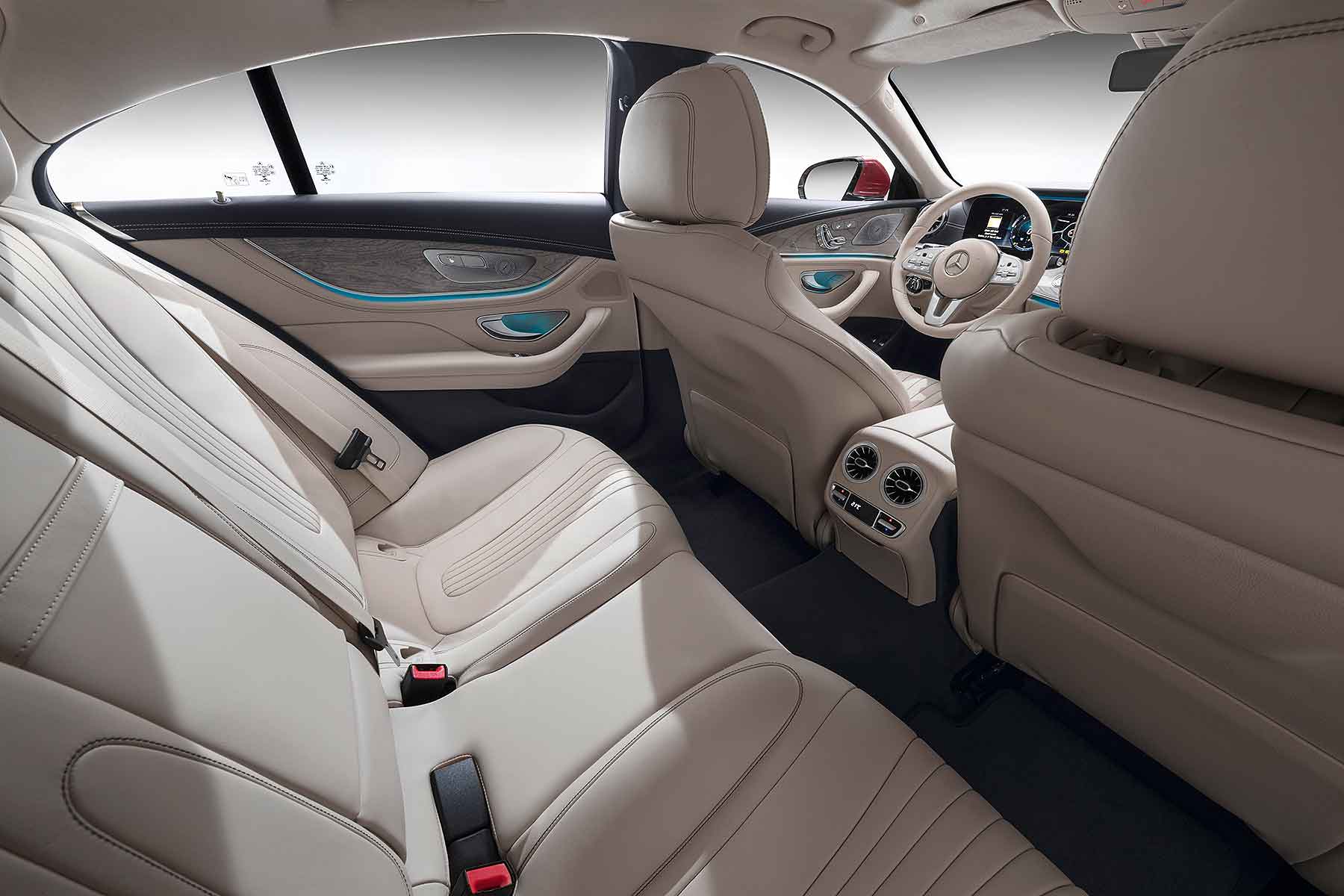
Inside, the interior is derived from the E-Class saloon, but that’s no bad thing, as it’s still very rich and striking. Sixty-four-colour ambient lighting reaches new levels of intricacy and, in CLS tradition, there’s a choice of open-pored or high-gloss wood. You can have two 12.3-inch TFT displays as well, plus a load of S-Class-grade optional active safety tech and autonomous driver aids.
Four doors, five seats
Mercedes says the seats are bespoke CLS chairs, with the two outer ones in the rear looking just like those in the front – but with a fifth pew in between them for the first time in a CLS.
Behind, there’s a 520-litre boot that can extend further by folding the rear seatbacks 40:20:40. With every passing generation, the svelte CLS discovers newfound practicality to broaden its appeal (and take away excuses for E-Class owners not to consider one).
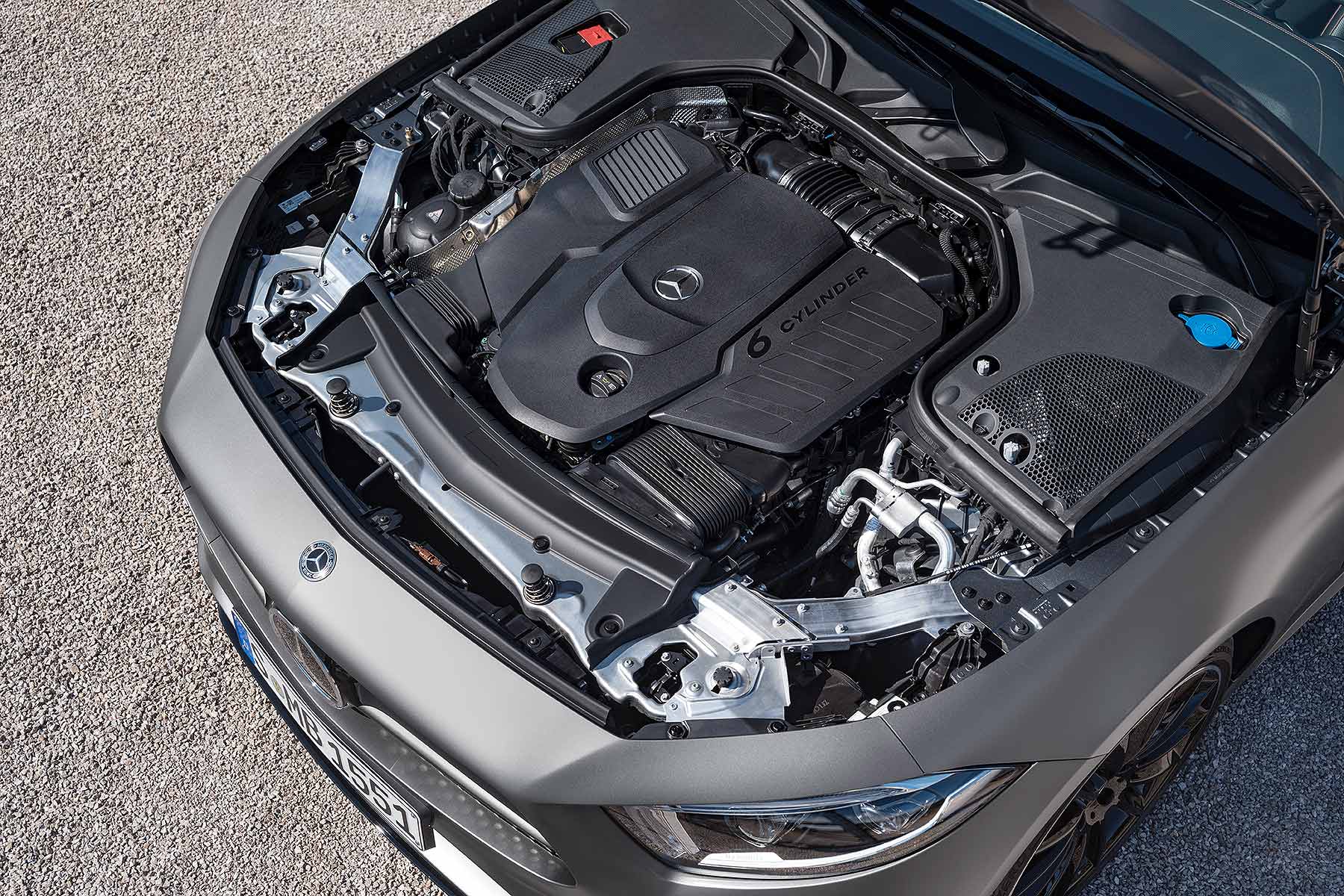
Even the engines are all-new: in-line six-cylinder and in-line four-cylinder, both offered in diesel or petrol guise. The four-pots will come later – it’s launching with six cylinders, with a 286hp CLS 350 d 4Matic, a 340hp CLS 400 d 4Matic, and a 367hp CLS 450 4Matic. The latter is the one we have our eye on: an in-line six-cylinder petrol, like the ones Mercedes-Benz used to do so well in the 1980s.
A special mention for the headlights, too. The Multibeam LED units produce, literally, “the maximum light intensity permitted by law” – you can’t legally buy headlights brighter than this. Such brightness extends over 0.4 miles ahead and, just for good measure, Mercedes-Benz chucks in the fact the new CLS is all set for ‘Car-to-X’ communications, too.
We’re currently checking it out LIVE at the 2017 LA Auto Show. Come back later for first impressions of Merc’s new third-gen four-door coupe.
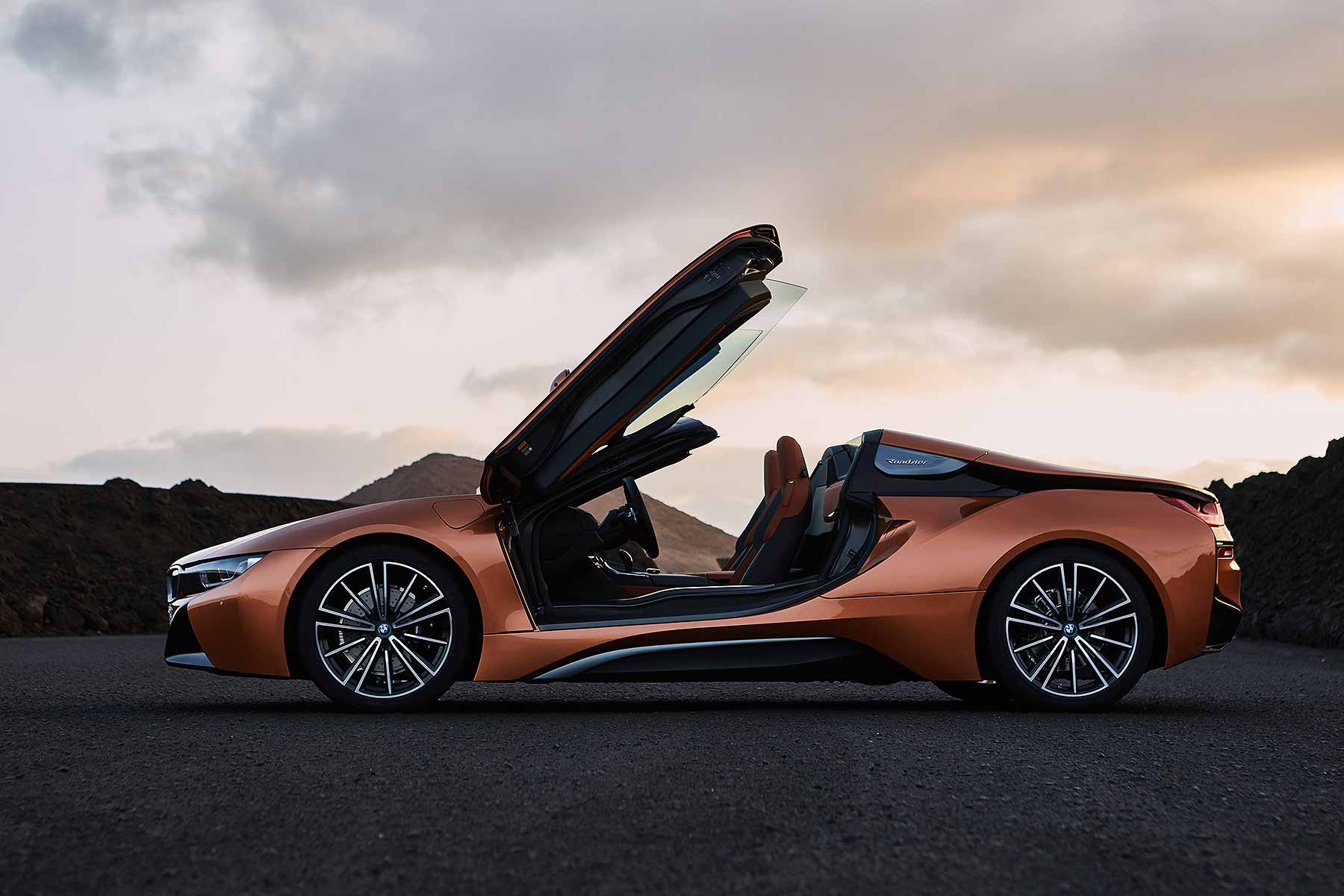
After years of teasing us with the i8 Spyder concept, BMW has at last introduced open-top i8 Roadster at the 2017 LA Auto Show. It joins the range as part of the facelifted 2018 i8 line with prices for the i8 Coupe starting from £112,730 and the new i8 Roadster priced from £124,730.
A fact we didn’t know: the i8 has been the world’s best-selling hybrid sports car since it was launched in 2014, something BMW aims to continue with the 2018 revisions. Something that benefits both Coupe and Roadster buyers is a boost to the battery; cell capacity is up, taking cross emergency capacity from 7.1kWh to 11.6kWh. This gives more energy to the motor and boosting EV power by 12hp to 143hp.
It’s thus faster, with system total power going up to 374hp for 0-62mph in 4.4 seconds with the Coupe, 4.6 seconds for the Roadster. But the EV range is greater too – now 34 miles for the i8 Coupe and 33 miles for the i8 Roadster. That’s a hefty 50 percent boost for the Coupe.
Economy? Take the official figures with a pinch of salt – 149.8mpg for the Coupe and 134.5mpg for the Roadster, with respective CO2 emissions of 42g/km and 46g/km. Instead, note BMW’s claim that fuel economy is typically 50 percent better than other sports cars with similar power…
There’s a new headlights option – ‘non-dazzling laser headlights’ with a high-beam range of 600 metres, double that of the LED headlights fitted as standard to the i8. And there’s a new pedestrian warning system: at speeds of up to 18mph, the i8 is so quiet, BMW’s been encouraged to fit an acoustic system to alert those whose heads have not already been turned.
Other upgrades include fresh infotainment systems with touchscreen functionality, BMW ConnectedDrive tech and upgrades to the electric battery’s charging tech.
BMW i8 Roadster: in detail
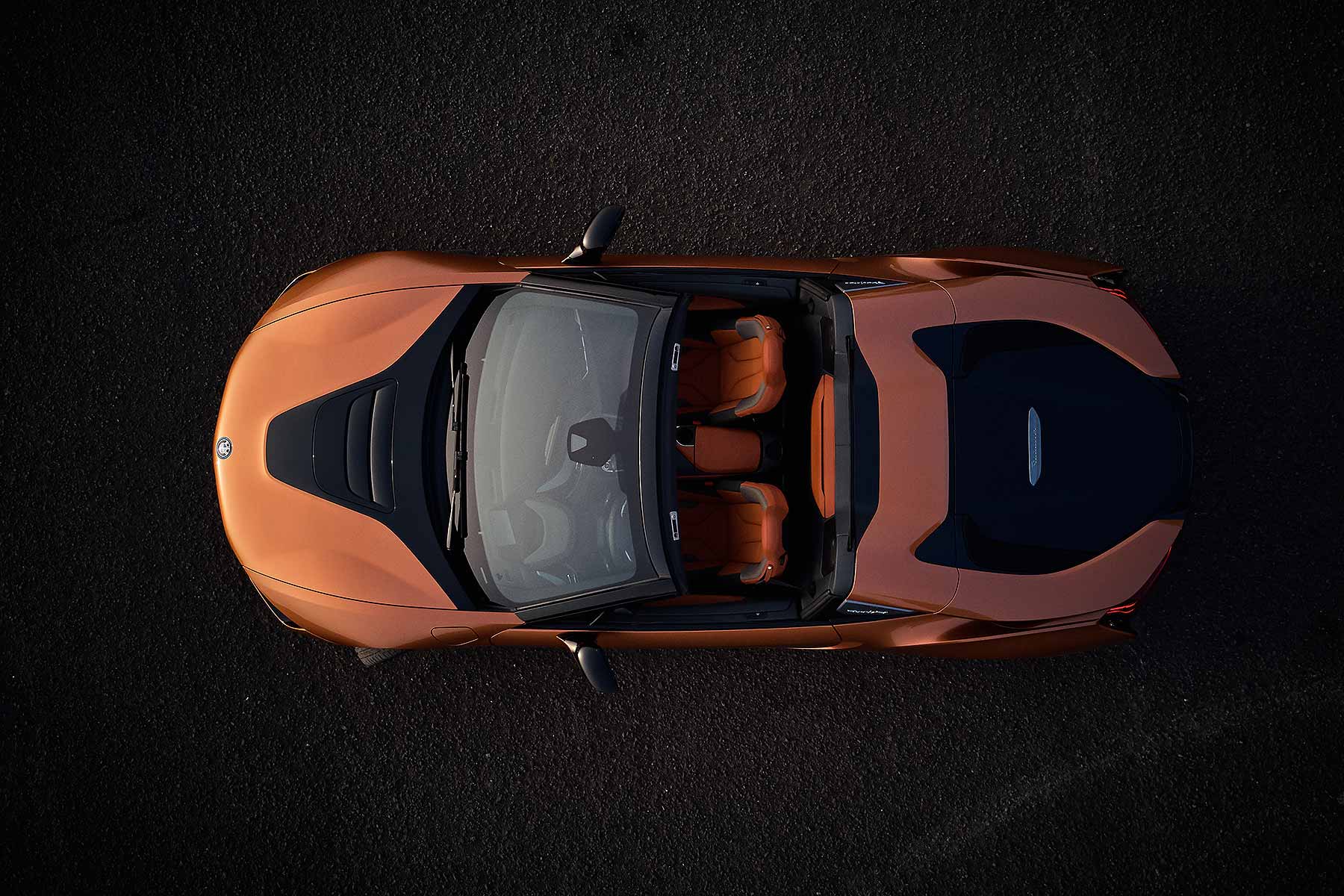
The fabric soft-top roof on the i8 Roadster is fully electric and folds down in 16 seconds, at speeds of up to 31mph. It ingeniously stows perpendicular, so doesn’t take up much space: BMW says this leaves an extra 100 litres between the roof box and seats, enhancing the tiny 88-litre rearmost boot.
Cleverly, the ‘gullwing’ doors of the i8 Coupe remain, and the rear deck is a work of sculptural art. There’s a rear window that doubles up as a windbreak and the C-pillars gain ‘Roadster’ badges: the Coupe thus gets its own badges too.
As if the design of the car wasn’t enough, BMW’s introduced some flashy new colours – E-Copper metallic and Donington Grey metallic (nice to see the East Midlands racetrack getting a namecheck by BMW there). And there are some new ultra-lightweight alloys, each weighing 1kg less than the outgoing car’s rims.
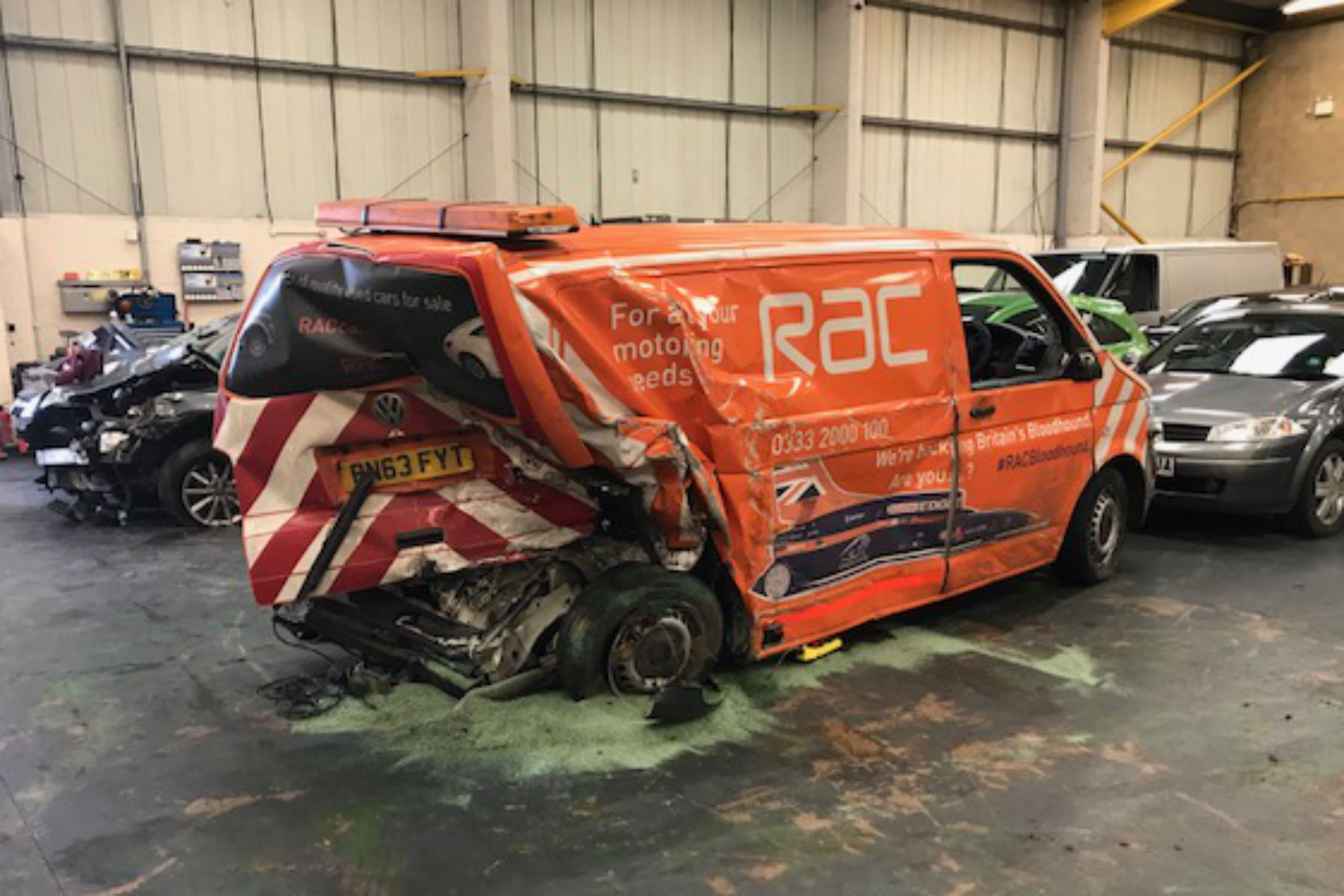
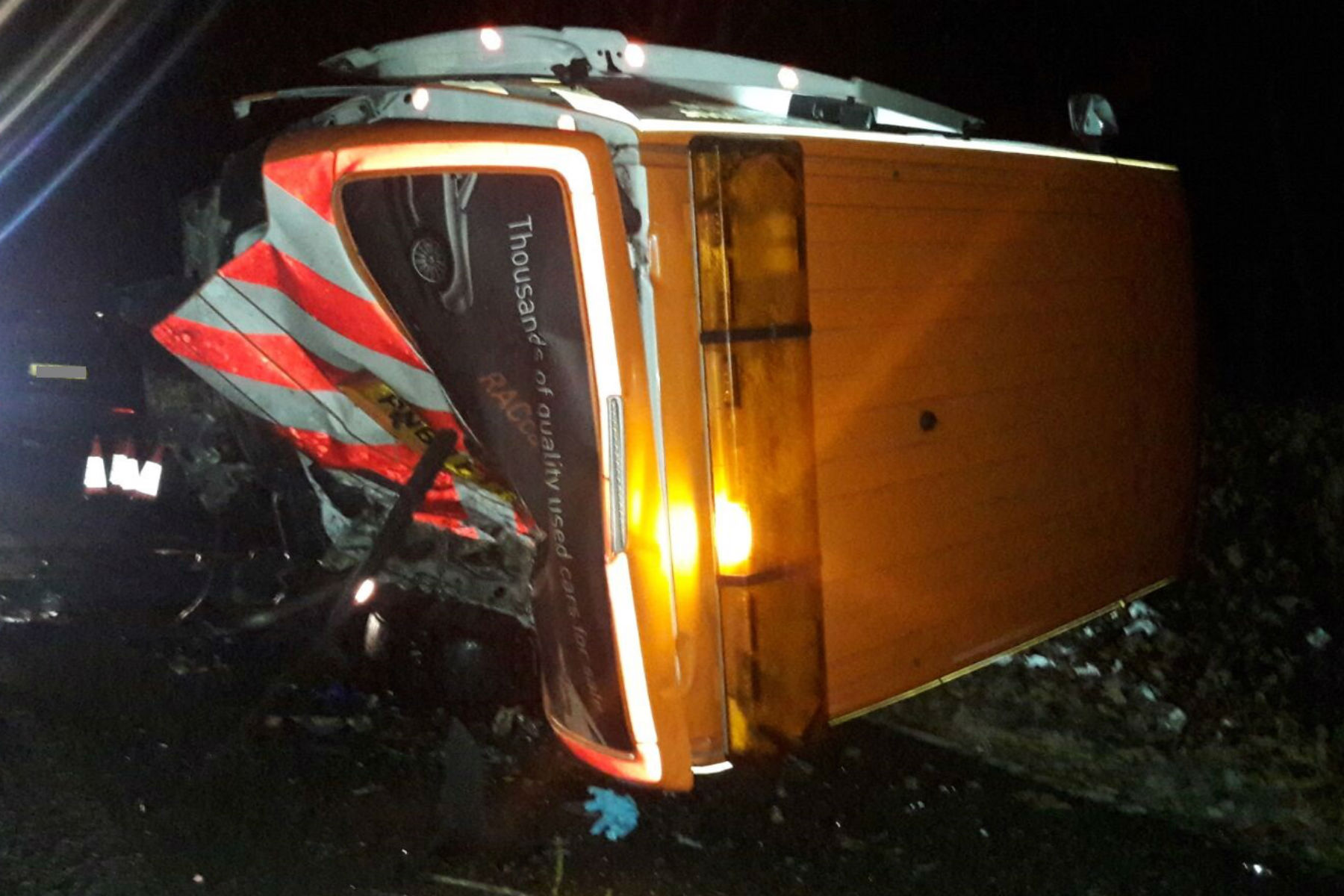
The RAC has released these horrifying pictures showing the aftermath of a crash involving one of its vans on the hard shoulder.
RAC patrol Andrew Barrett was changing the wheel on a member’s car on the M4 motorway last Thursday evening when a vehicle struck his van at around 70mph.
No one was seriously injured in the incident, although the RAC says that two roadside operators have been killed so far this year – one on the M25, and one on the M69.
It’s led to the motoring organisation launching a campaign to encourage drivers to reduce their speed and increase their gap between their car and any vehicle on the hard shoulder.
“The RAC is calling on drivers to ‘slow down, make space and move on’ when passing motorway breakdowns leaving plenty of space between their car and any vehicles and people on the hard shoulder,” said the RAC’s health and safety consultant, Steve Robinson.
“With traffic volumes rising and several recent serious accidents involving roadside assistance patrols and breakdown contractors we need motorists to consider a new approach to how they drive past stricken vehicles, drivers and passengers, and those working in vulnerable locations.
“By following this simple message we can significantly reduce the risk of a collision and, importantly, the fear factor for those standing or working at the side of the motorway.”
The RAC’s top tips for passing a motorway breakdown
Slow down – take care when passing any vehicle and people on the side of the motorway, reduce your speed and reduce the risk
Make space – widen the gap between your car and the broken-down vehicle and roadside workers. Use all of your lane by moving over to the right, only change lane if it is safe to do so
Move on – get safely past the breakdown situation and avoid ‘rubber-necking’, or the temptation to stare at someone’s else’s misfortune – it’s an unnecessary distraction from your focus on the road ahead
Speaking about the latest incident, Andrew Barrett, who’s been a patrolman for 14 years, said: “It was horrific. One minute I was changing the customer’s front wheel, the next I heard an almighty crunch and looked up to see my van rolling over towards us and the car spinning into the live lane. It was not an experience I want to repeat and it certainly shows you can never be complacent when attending a motorway breakdown.
“I want to thank all those who assisted from the off-duty nurse who was first on the scene and swiftly joined by two off-duty paramedics and to the fire brigade, police, highways and the ambulance crew who were all brilliant.”
The crash caused the three-tonne RAC patrol van to be rolled as it was pushed along the hard shoulder. The RAC member struck his head and was knocked unconscious as he moved out of the way. The driver of the car which struck the patrol van, although injured, was able to climb out of his vehicle.
The westbound carriageway of the M4 was closed for approximately an hour and a half while police, fire and ambulance crews attended the scene.
Robinson added: “It is a wonder that nobody was killed. This incident serves to show how dangerous it can be for anyone who has to stop on the hard shoulder of a busy motorway. We have released these shocking photographs of the RAC patrol van as they clearly demonstrate the need for a new way of thinking when drivers encounter stricken motorists and breakdown operators at the roadside.
“Until you find yourself stood or working on the hard shoulder it’s impossible to comprehend just how frightening it can be and what it feels like when cars and lorries are passing you at high speeds. Anyone who has experienced it will understand how vulnerable it can feel and why it makes sense to slow down and move over when passing anyone – whether broken down or working at the side of a live lane.”
You’re a traffic officer dealing with the nasty job of sweeping up a crash when a member of the public approaches and asks – what you perceive to be – a stupid question. It takes a great deal of restraint not to tell said member of the public to, let’s be frank, do one.
But you’re a police officer. You smile, answer their query and get on with doing your job – no matter how challenging that job is.
Or that’s how it should be. But today, there’s the temptation of using social media to vent your frustrations. Doing so would be extremely unprofessional, right? Especially using an official police Twitter account do to so.
“can I just pop through, cos I work up there” No you can’t!? the road is closed for a reason! pic.twitter.com/404wUUbklB
Oh. You might think that @roadpoliceBCH (the account of the Bedfordshire, Cambridgeshire and Hertfordshire Road Policing Unit) makes a good point here. Call me old fashioned, though – I think it’s part of a police officer’s job to help the public when there’s a road closure. The circumstances around the tweet aren’t clear, and if the police officer was desperately trying to deal with life or death injuries, I fully understand their frustration. I would still politely suggest that it’s unprofessional to vent their annoyance on Twitter.
I raised my concerns and whoever is behind the Twitter account took the time to respond back.
The problem here Andrew is that there isn’t a police officer enforcing the closure, there is a clear sign and equipment doing that. The police officer is trying to deal with and manage the situation unfolding. Being distracted to answer unnecessary questions stops us. Simple.
Fine. That clarifies the situation. But… and feel free to call me a snowflake: am I right to expect conversations with my local traffic policing unit to be a little less, well, sarcastic?
This isn’t the only occasion when I’ve seen things posted by the police that I don’t think have a place on Twitter. I posted an opinion piece last year saying that I didn’t want to see pictures of car crashes on Twitter. Long story short: I know someone who was seriously injured in a crash. Before the police could notify the family, they’d seen pictures of the incident on Twitter. These weren’t posted by rubbernecking members of the public, either. They were posted on official police Twitter accounts and picked up by the local newspaper. They thought it’d be OK because the number plate of my mate’s distinctive yellow car had been blurred out.
And then there’s tweets like this, posted by Greater Manchester Police’s traffic division.
Would they have posted a similar picture had the incident involved a Fiat Punto? Probably not. Should they be encouraging ‘trial by Twitter’? I don’t think so. Should they be doing their best to reduce the congestion by stopping the rubbernecking that’s clearly happening in the background? Yes.
Incidentally, it later emerged that the Ferrari driver tested positive for cannabis – but not until after the sarcastic tweet suggesting the driver was speeding. I’d rather the police didn’t publicly jump to conclusions before being in possession of all the facts.
None of us get it right all of the time, and I can’t stress enough that I’m very appreciative of the job that the police do. But Twitter shows an ugly insight into a police service that should be setting an example – and that includes thinking twice before tweeting live from crash scenes.
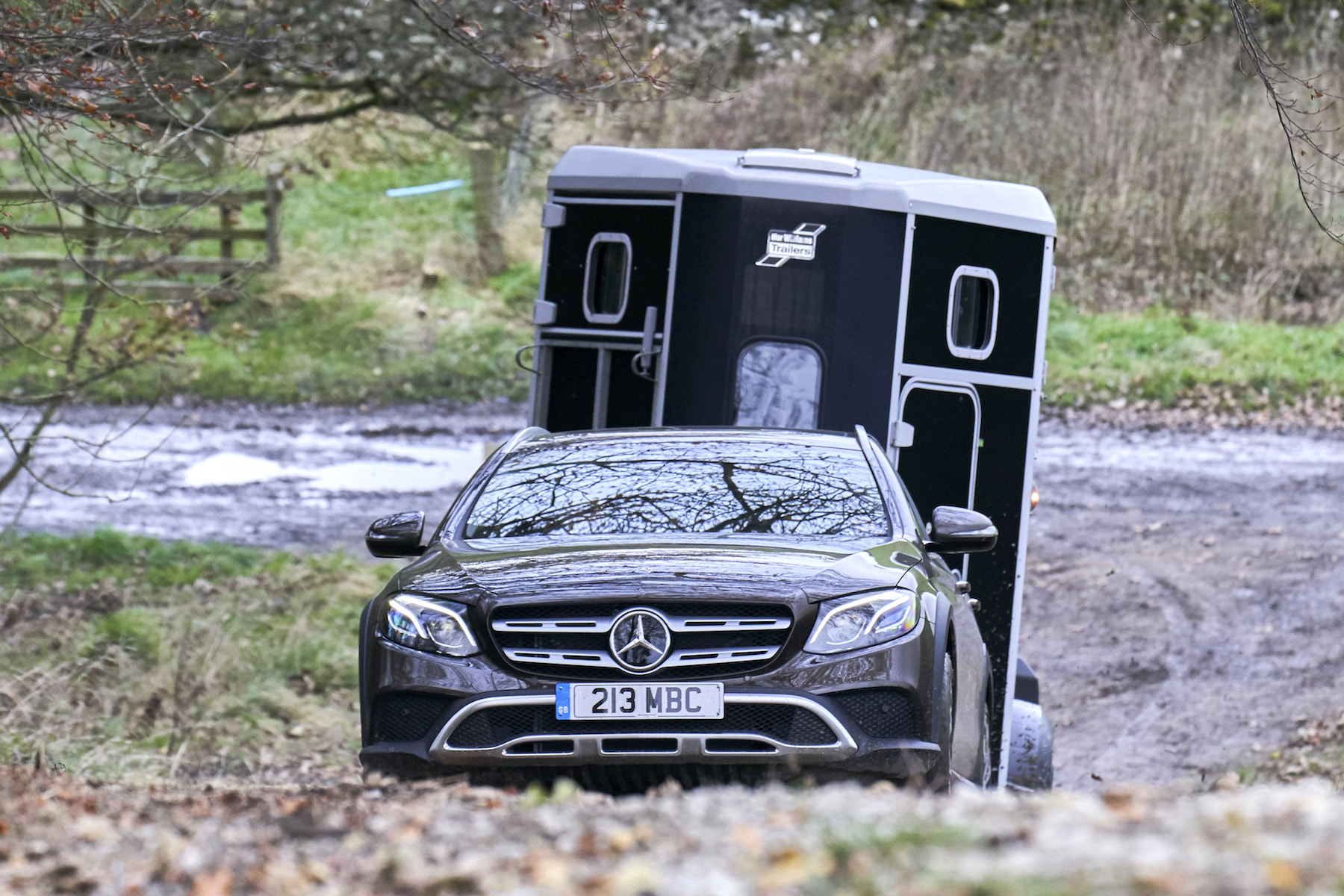
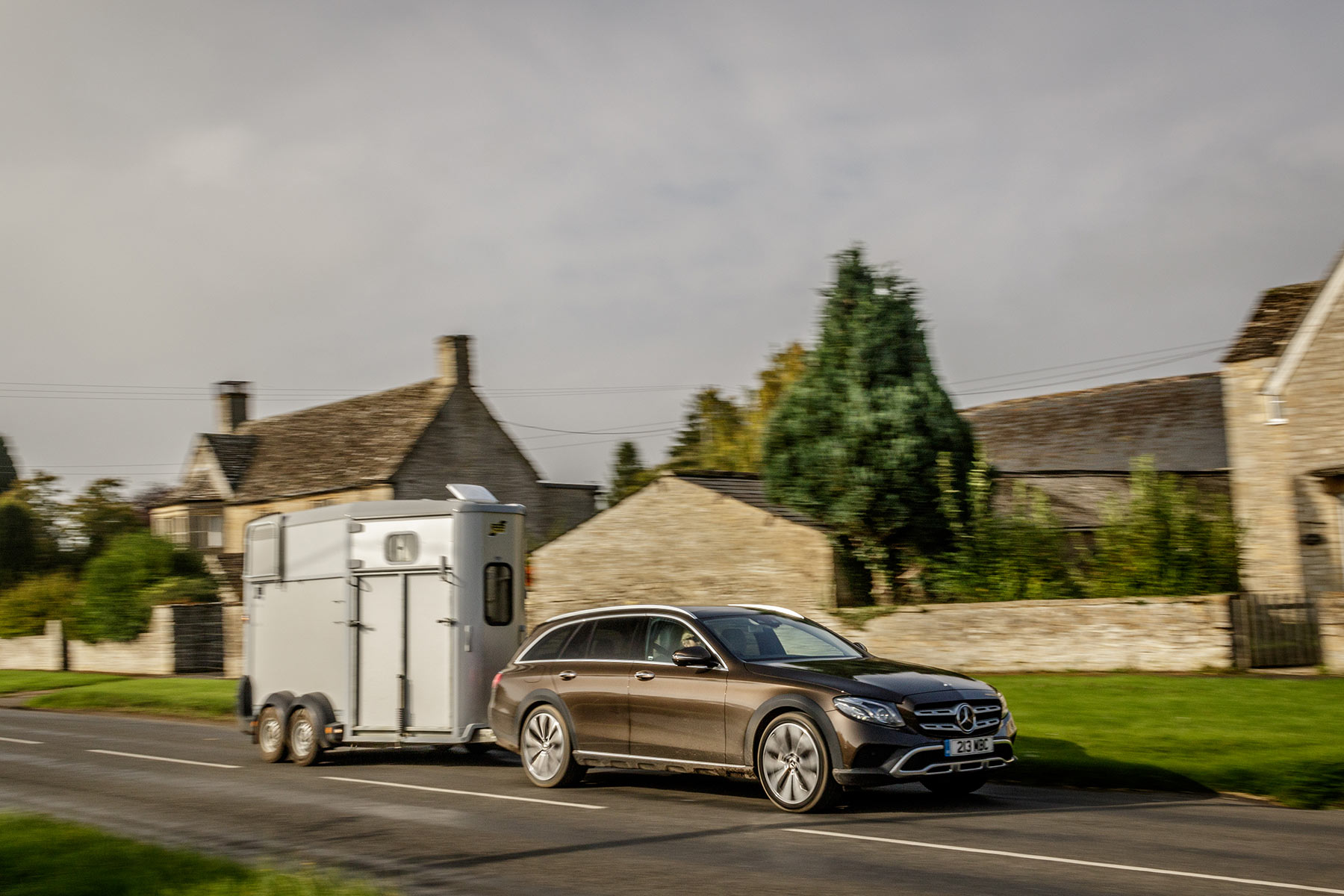
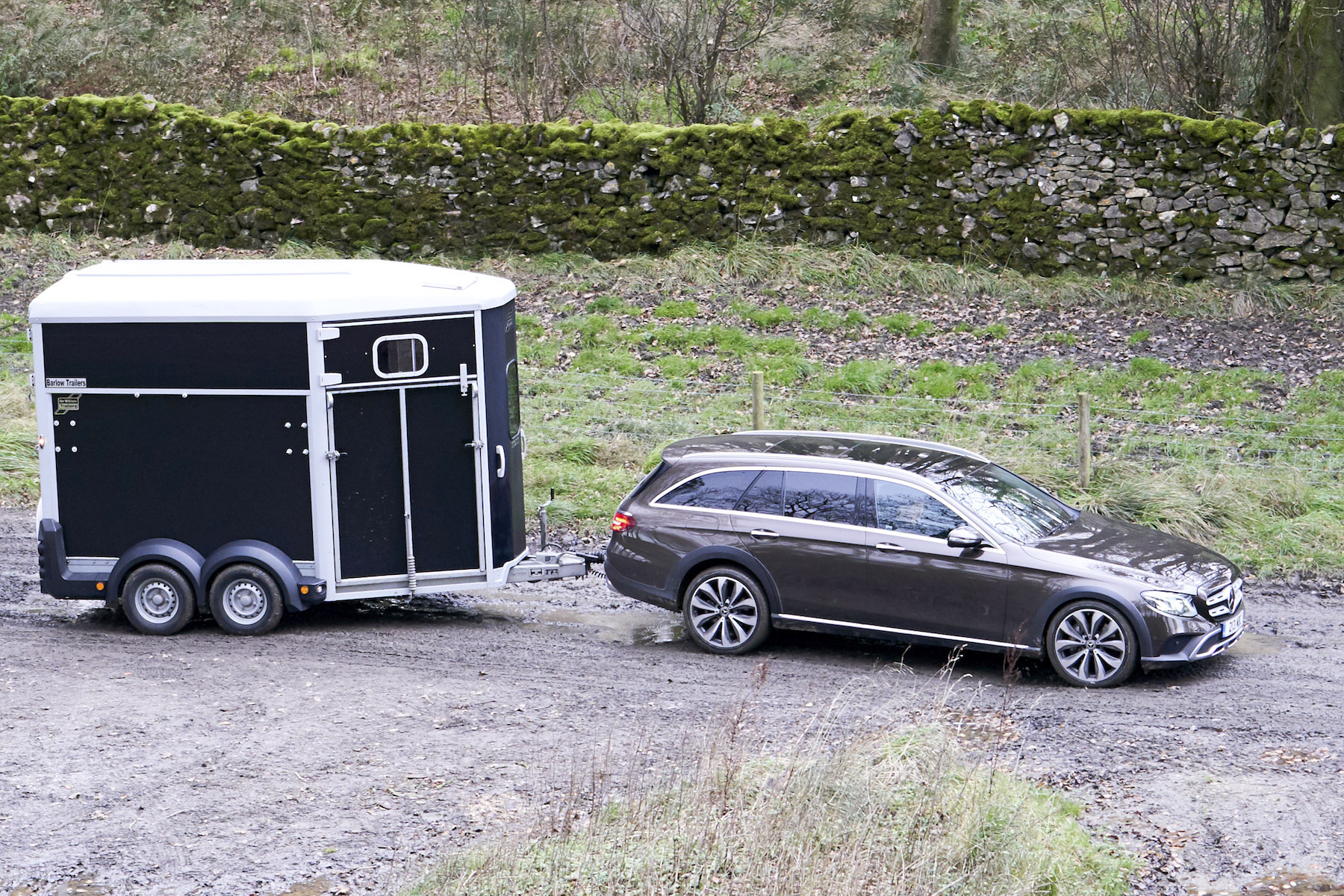
I’m sitting in a £60,000 Mercedes-Benz E-Class All-Terrain, with an imposing twin-axle horse trailer attached to the tow bar. Facing me, on a narrow muddy track, is an identical E-Class All-Terrain with a matching horse trailer. The only good news is that our trailers don’t contain real horses, just ballast to replicate their weight. One of us needs to move to sort the gridlock.
I try to reverse, and the horse box decides it doesn’t want to play ball. No amount of steering wheel-twirling, or the calm reassurance of Dave the instructor, is going to fix this.
Instead, Dave suggests we tackle the daunting track to our left, climbing up a hill and with trees lining the deeply-rutted route.
This turns out to be less intimidating than it might sound. The E-Class All-Terrain isn’t fazed by the slippery hill, despite the trailer and hefty imitation pony inside it, and hauls itself up with ease. It’s the same coming back down, with the E-Class surefooted despite the weight pushing behind it.
The Mercedes certainly helped flatter my abilities, with a host of cameras and sensors making towing far easier. Having a qualified instructor alongside was perhaps the biggest advantage, saving us and the hypothetical horse from any danger.
First-time dramatics aside, towing doesn’t need to be difficult or challenging, and offers up a range of options. Be it holidaying with a caravan, moving horses around, or even lugging a race car to the track, there are plenty of reasons to start to tow.
Before you think about hitching up something extra to the rear of your car, there are a few things to consider first. Nobody likes a baptism of fire, especially when it might actually involve your own expensive trailer or caravan.
Towing tips
Licenses
Possibly the most important thing to check before towing is your driving licence, with a range of restrictions based on when you passed your driving test.
For those who gained their licence before the 1st January 1997, a Category B licence will entitle you to tow any combination of car and trailer/caravan up to a maximum authorised mass (MAM) of 8,250kg.
Obtaining a licence after the 1st January 1997 restricts drivers to a vehicle with a MAM of 3,500kg, towing a trailer of up to 750kg. Drivers can also tow a trailer or caravan in excess of 750kg, providing the overall MAM of the combined outfit does not exceed 3,500kg, or have the trailer weigh more than the unladen weight of the towing vehicle.
To tow anything above these weights will require taking additional driving tests, with the GOV.UK website having more information, along with guidance on how to determine the relevant vehicle weights.
Lessons
Regardless of what it says on your driving licence, investing in a training course designed to teach the basics of towing is money well spent.
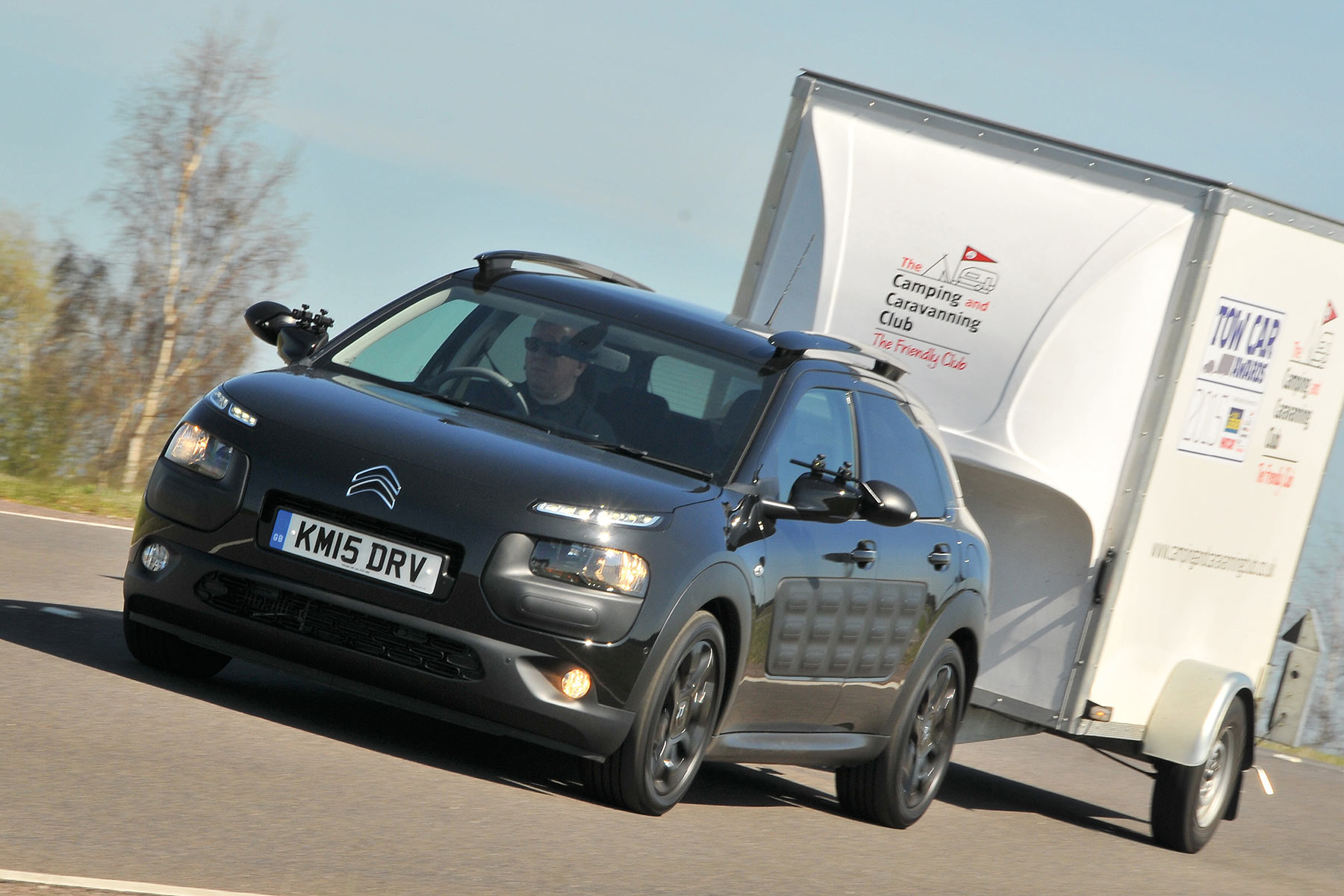
Both the Caravan and Motorhome Club and The Camping and Caravanning Club offer bespoke courses, tailored to varying levels of caravanning experience. These cover the basics of health and safety, along with lessons in the art of reversing with a caravan attached.
If you’re looking to tow a trailer, the National Trailer and Towing Association will be able to help you find local driving schools offering lessons and coaching.
Speed
Going fast with a hefty caravan attached to the back of your car might be the least of your concerns, but powerful modern machinery can making towing seem relatively effortless.
As such, it’s important to remember that when towing a maximum speed limit of 60mph applies on dual carriageways and motorways, with 50mph on single carriageway routes. Towing also prevents you from using the furthest right-hand lane of a three-lane motorway.
Try to be courteous to other road users if you develop a queue of traffic behind while towing. Finding a safe place to pull over and let others pass is good practice.
Car considerations
Distilling the best car to tow with requires considering a number of different factors. From matching the permitted towing weight with your intended caravan or trailer, to ensuring that it’ll have enough power and torque to enable the whole outfit to move at a reasonable pace.
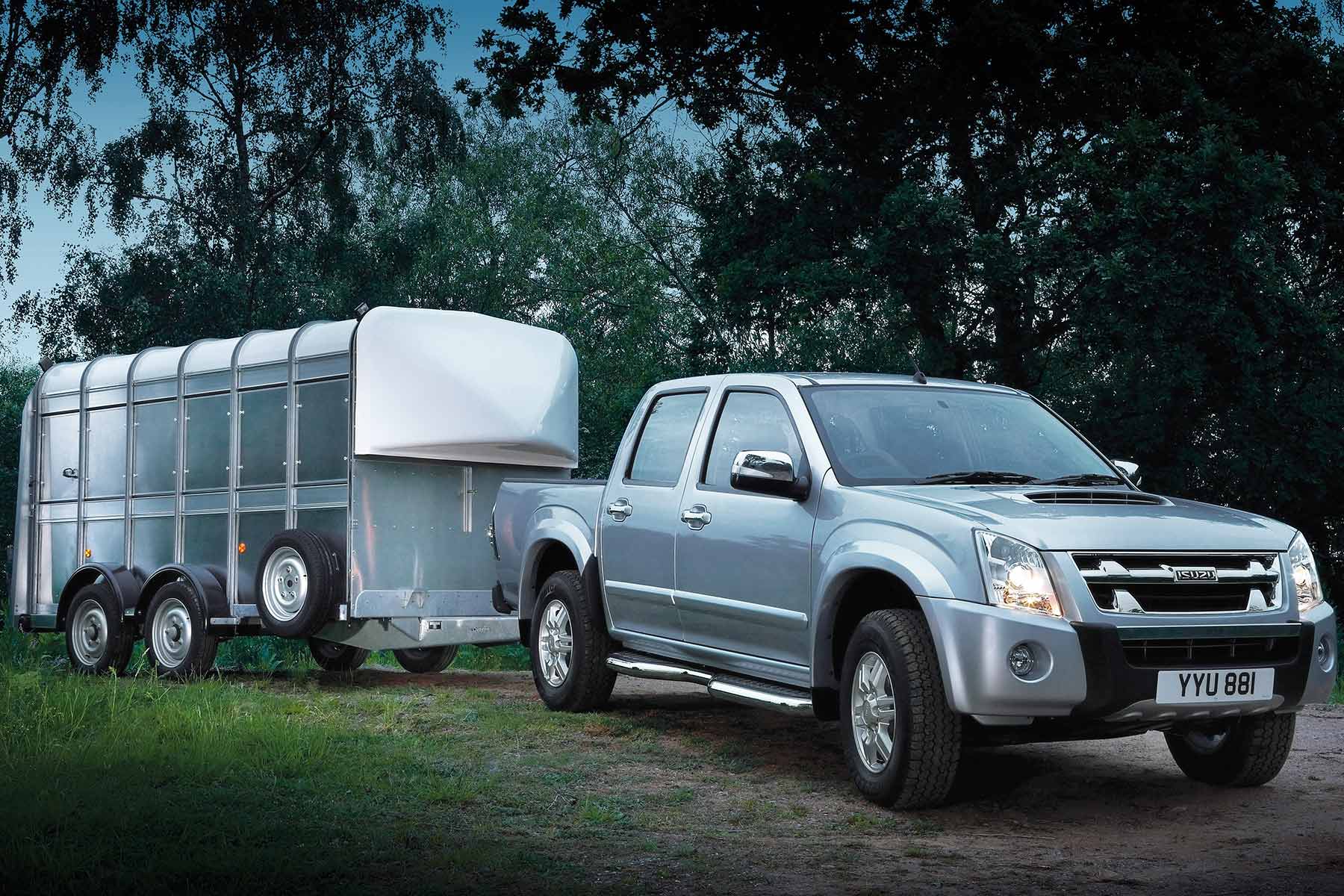
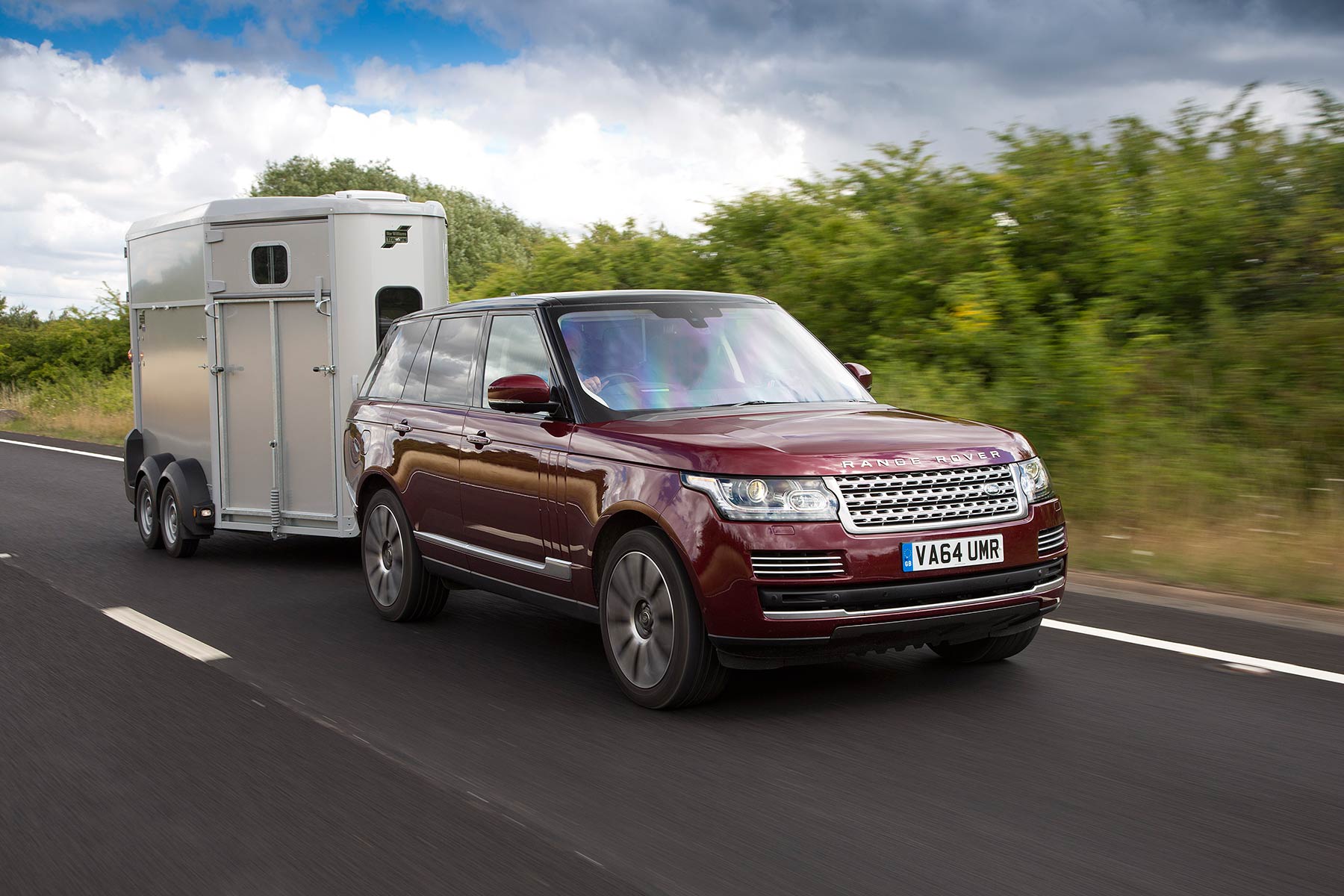
Diesel-engined 4×4 SUVs have become the preferred choice for caravanning in recent years, matching sizeable towing capacity with the ability to escape from a muddy campsite. It might explain why SUVs took almost every prize in the latest Towcar of the Year Awards, with the Skoda Kodiaq taking the top prize.
If you’re concerned about buying a diesel, however, there are alternative options. Both the plug-in hybrid Mitsubishi Outlander PHEV and electric Tesla Model X are capable of towing a caravan.
Buying a car with a reversing camera, especially one with bespoke modes for helping hitch a trailer, may also influence your decision making. A number of manufacturers, such as Volkswagen and Land Rover, also offer ‘Trailer Assist’ features that use semi-autonomous tech to make reversing easier.
Adding a tow bar
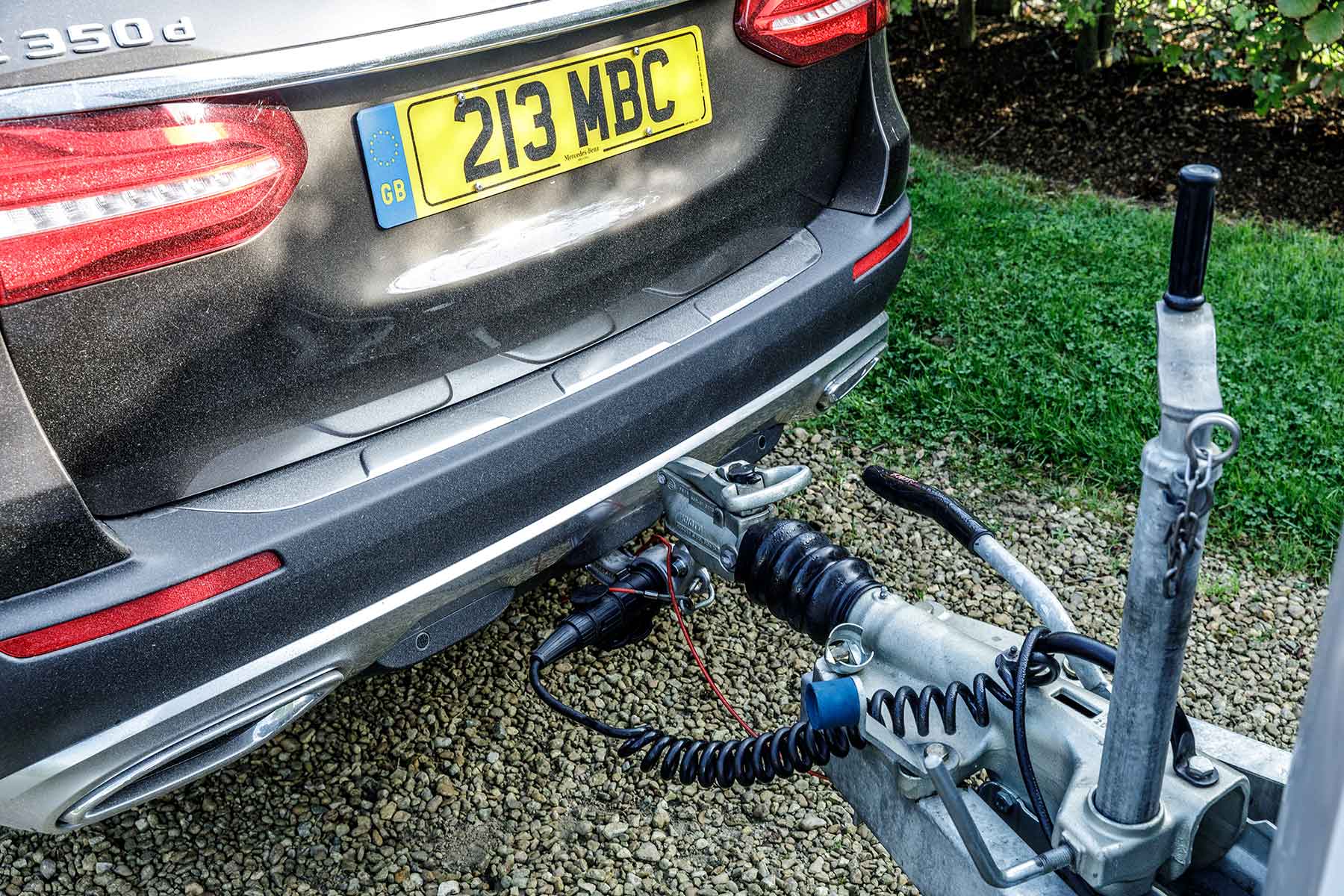
With so much technology loaded into modern cars, adding a tow bar is not a simple case of bolting on the first one you find. There is also legislation to take into account at present if you own a vehicle registered after the 1st August 1998, which must use an EC type-approved tow bar.
Most car manufacturers offer tow bars to fit their own specific models, and can even offer factory-fitted versions if ordering a car from new. Retractable or removable tow bars are popular, leaving a neater appearance to the rear of the car when not being used. A wealth of aftermarket suppliers also exist for those wanting to avoid dealership pricing.
Security and insurance
Thefts of trailers, particularly in rural areas, are endemic and often combined with the theft of plant and construction machinery. The fact they can be easily attached to the back of a car and driven away makes them an easy target. Caravans are also desirable, with estimates suggesting up to 3,000 are stolen every year in the UK.
All new caravans produced since 1992 have been registered with the CRiS database, making it easier to track and trace them if stolen. RFID tags are also used to allow easier identification by the police, even if criminals alter visible chassis numbers.
Heavy-duty wheel clamps, hitchlocks, and anchor posts can all be used to make it harder to steal your caravan or trailer. Just like with a car, alarms and tracking devices can also be fitted.
Most importantly, don’t forget to insure your trailer or caravan, even though it is not a legal requirement. Cover is recommended for protection should your latest purchase be stolen, or damaged whilst being towed. Most car policies do not automatically cover either trailers or caravans when being towed, or will have restrictions on cover. Check with your insurer, or speak to a specialist broker.
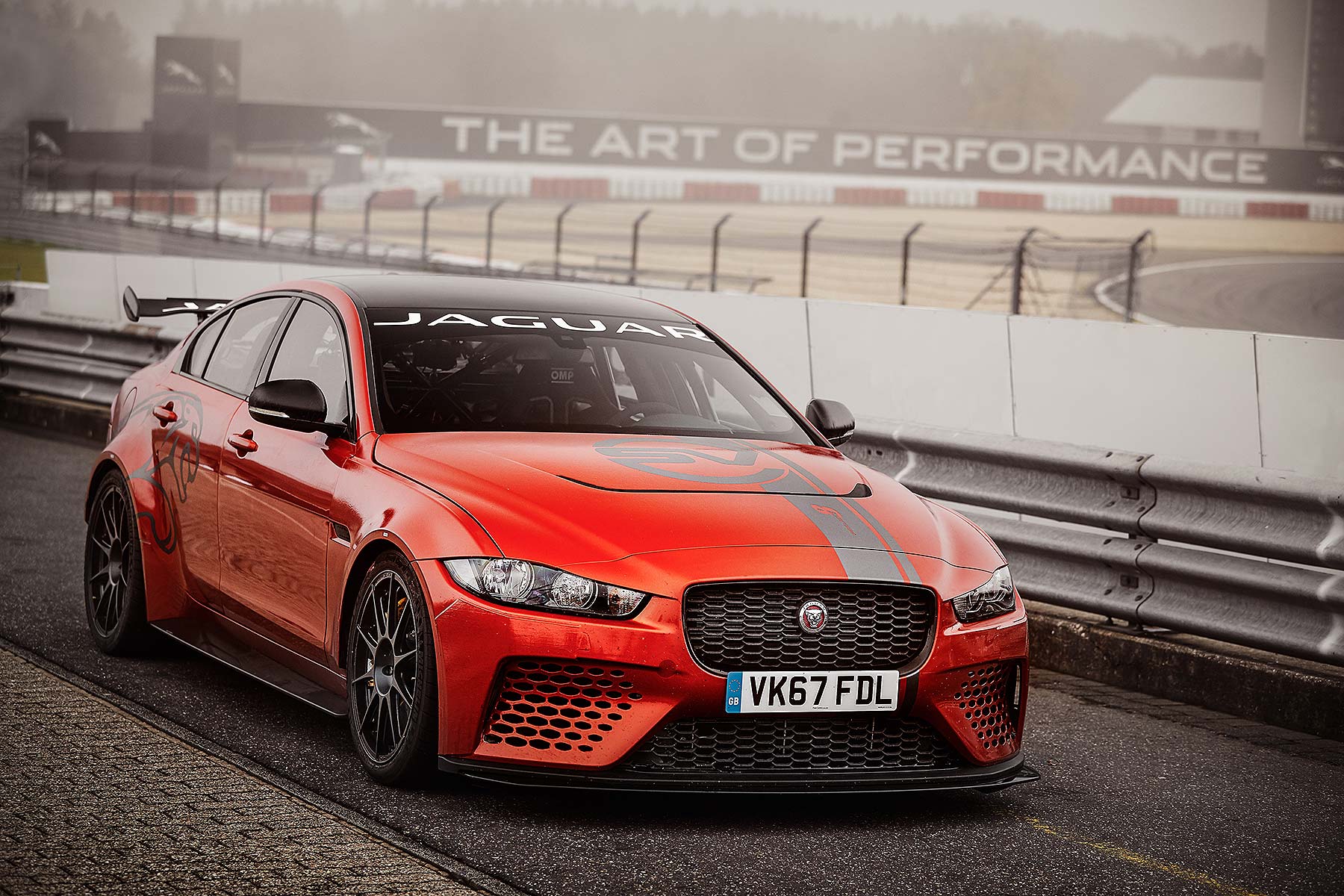
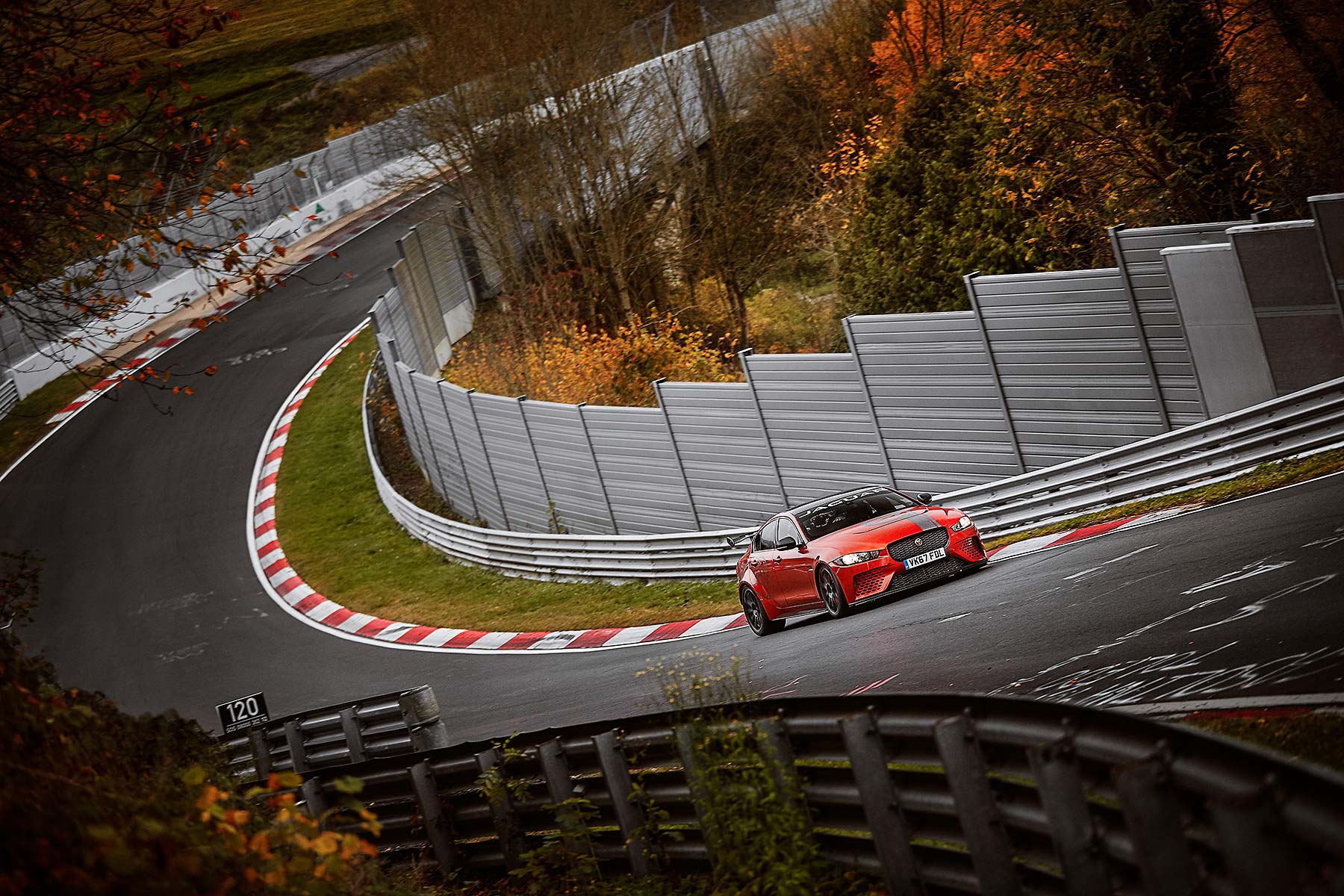
Just how quick is the new 600hp, £149,995 Jaguar XE SV Project 8 supersaloon, we’ve long been waiting to discover. Very quick, it seems: it’s officially been revealed as – literally – the fastest four-door production-spec saloon ever to lap the Nürburgring Nordschleife.
The time? Seven minutes 21.23 seconds, fully 11 seconds faster than the previous four-door saloon record holder. Jaguar points out with relish it’s also faster than many famed supercars and even the odd hypercar. Here are five cars the new XE SV Project 8 will beat around the Nürburgring:
Ferrari 488 GTB
Ferrari Enzo
Pagani Zonda F Clubsport
Porsche Carrera GT
Mercedes-Benz SLS AMG Black Series
The Alfa Romeo Giulia Quadrifoglio is the car Jaguar’s snared the record from, which set a 7min 32sec time in 2015. The Project 8 betters its top speed and acceleration times too, with a cool 3.3sec 0-60mph time, and a claimed 200mph top speed.
SVO director Mark Stanton has led the design and engineering of the mighty new XE Project 8. His team’s mission was “to create the most track-focused road-legal Jaguar in history – not only the fastest, but also the most agile.”
There’s thus not much left from a standard XE once the SVO team had finished with it: “only the roof and front door skins of Project 8’s body are carried-over unaltered from XE and 75 per cent of its mechanical hardware is new. This astonishing Nürburgring Nordschleife record validates the success of such extensive changes.”
SVO MD John Edwards added: The Nürburgring Nordschleife record underlines our commitment to deliver the most extreme Jaguar ever to Project 8 clients, who will soon experience this sensational sedan for themselves.”
Fancy one? Be quick, because Jaguar’s only making 300 – and all of them will be sold in left-hand-drive. If neither that, nor the £150k price, isn’t a barrier to UK buyers, register your interest at a special Project 8 hub, and cross your fingers you’re among the lucky few.
 The LA Auto Show is a feel-good show. Local hotels and restaurants are putting out the Christmas decorations, despite the sunshine and 25-degree temperatures outside, and the just-right size and just-so layout of the stands means it’s a show it feels churlish to gripe about.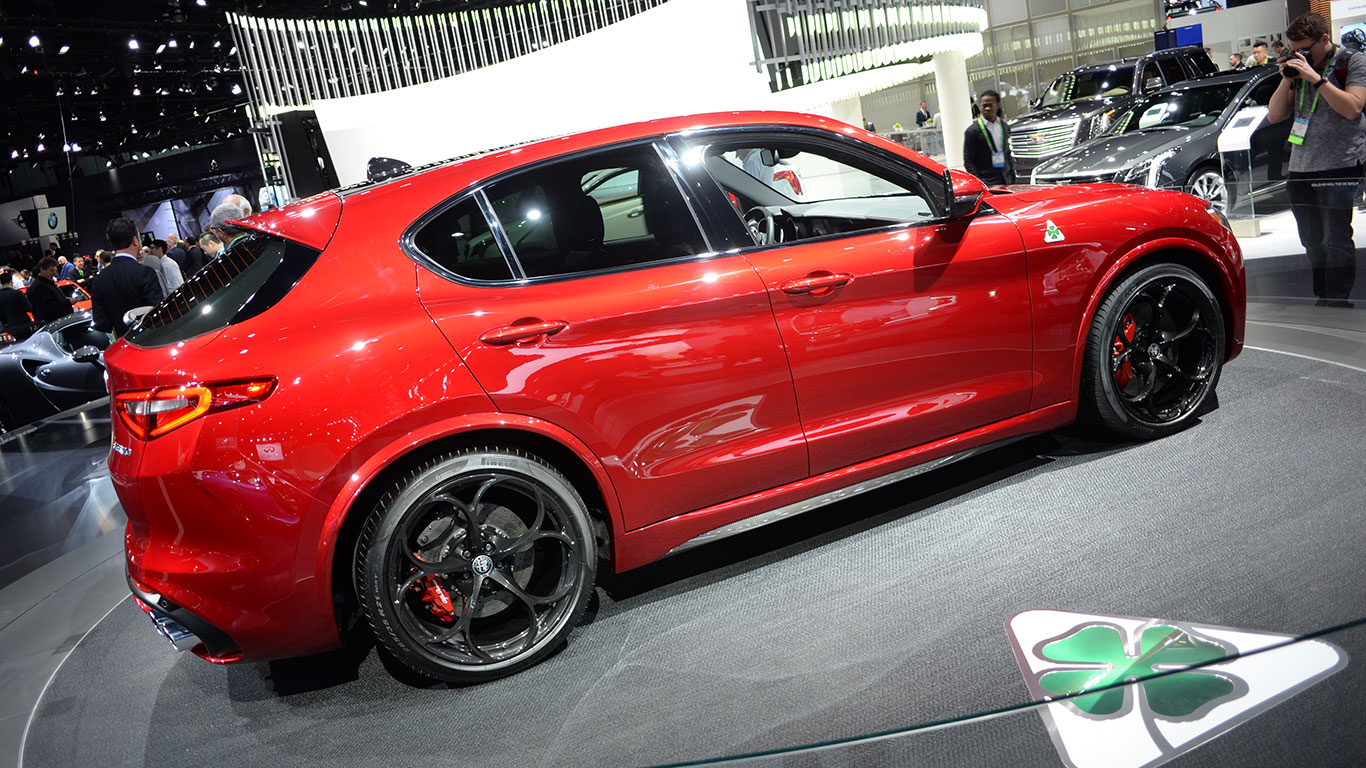
 A pioneer is now part of the establishment. Back in 2003, the idea of an executive-sized four-door coupe was beautifully novel. Today, no self-respecting premium car brand can do without one. The Mercedes-Benz CLS was a trend-setter – and now, it’s been revealed at the 2017 LA Auto Show in third-generation guise, ahead of going on sale in March 2018.
 After years of teasing us with the i8 Spyder concept, BMW has at last introduced open-top i8 Roadster at the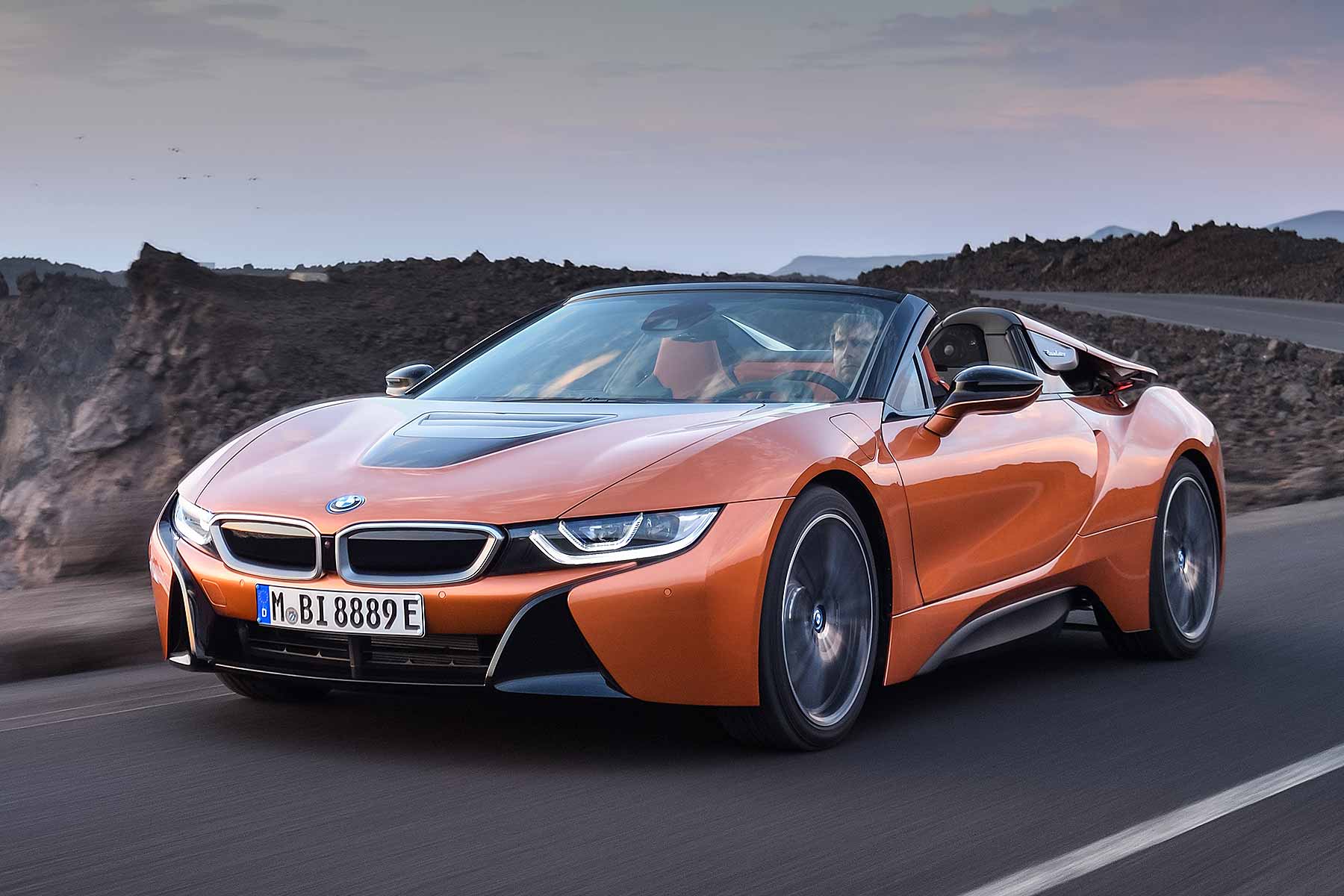
 Just how quick is the new 600hp, £149,995 Jaguar XE SV Project 8 supersaloon, we’ve long been waiting to discover. Very quick, it seems: it’s officially been revealed as – literally – the fastest four-door production-spec saloon ever to lap the Nürburgring Nordschleife.