London is reportedly the only city in the United Kingdom that’s on or above target on the roadmap toward EV adoption. This according to the Institute of the Motor Industry (IMI).
The inescapable truth is that we’re on our way to a mostly electrified motoring future. Like it or lump it, that’s the way it is. The IMI, however, is here to deliver some concerning news for EV evangelists and roadmap writers alike.
The UK, by and large, is behind in electric car adoption, on the way to 2040 and (Scottish) 2032 targets. The reason? The capability of the UK’s infrastructure is being called into question.
The ability of both the UK’s charging infrastructure and indeed the capabilities of the business charged with the care of cars is well below what is required for the moment. It will continue to lag behind as electric vehicle uptake continues to rise, too, in turn slowing that uptake.
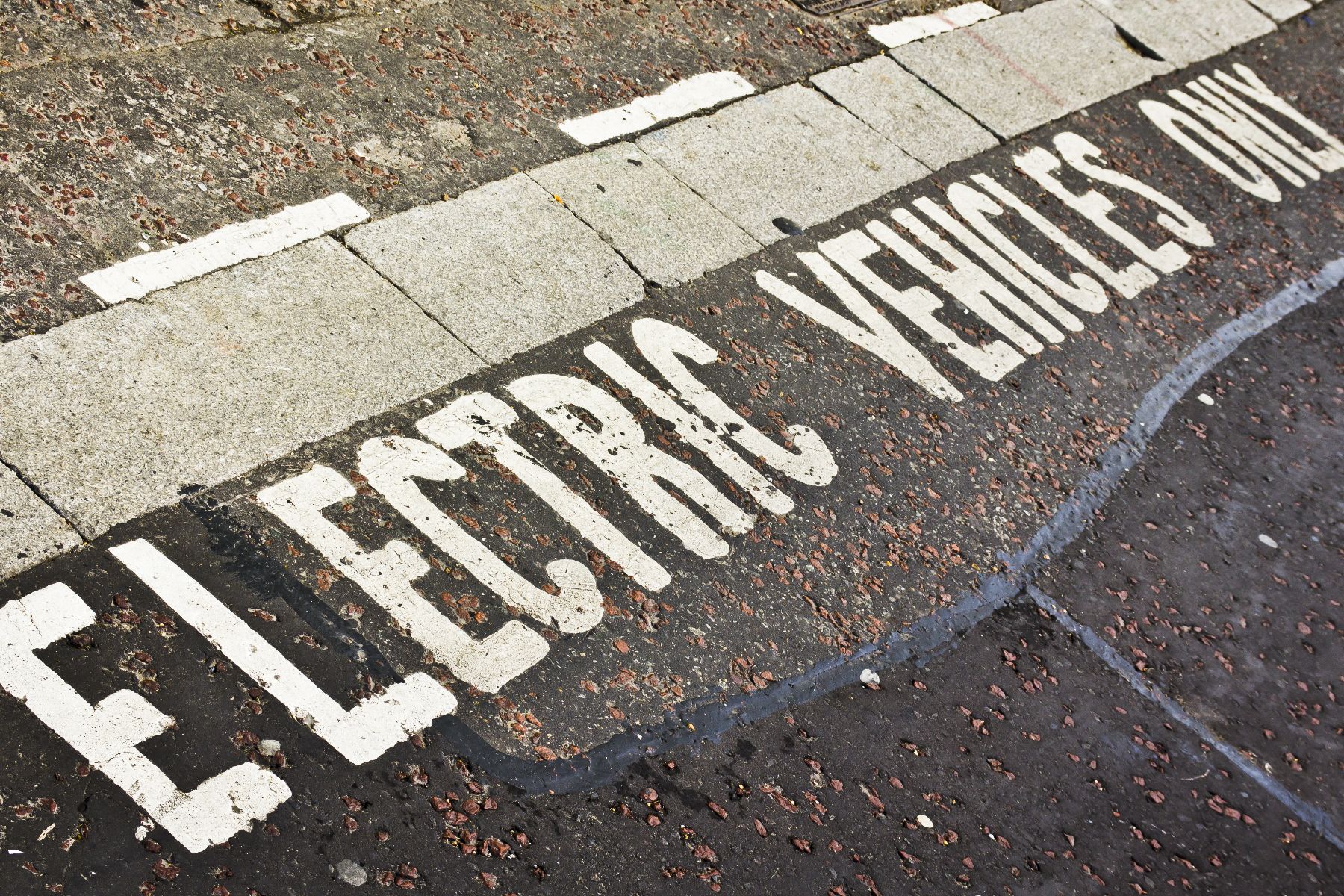
Full electric and plug-in hybrid vehicle sales are estimated by the IMI to exceed a million by 2020. At present, there are only 18,000 charging points across 6,500 locations. There is an average of eight electric cars per charging point across the UK at the moment.
Furthermore, around 3 percent of all vehicle technicians in the UK are currently qualified to work on EVs. Most of those work with manufacturers. To be ready for a population-wide uptake of electric cars, proficiency needs to span manufacturer shops, specialists, all the way to backwater chop shops.
At the moment, we’re evidently nowhere near. Given that EVs have been more or less mainstream for nearly ten years, second-hand buyers will be curious about maintaining their cars away from traditionally more expensive manufacturer facilities.
“The recently published sales figures for electric and hybrid vehicles demonstrate that drivers are rapidly making the transition away from pure petrol/diesel engines,” said Steve Nash, chief executive at the IMI.
“It’s vital that the government recognises the new skills requirements needed to underpin the successful move to this new technology.”
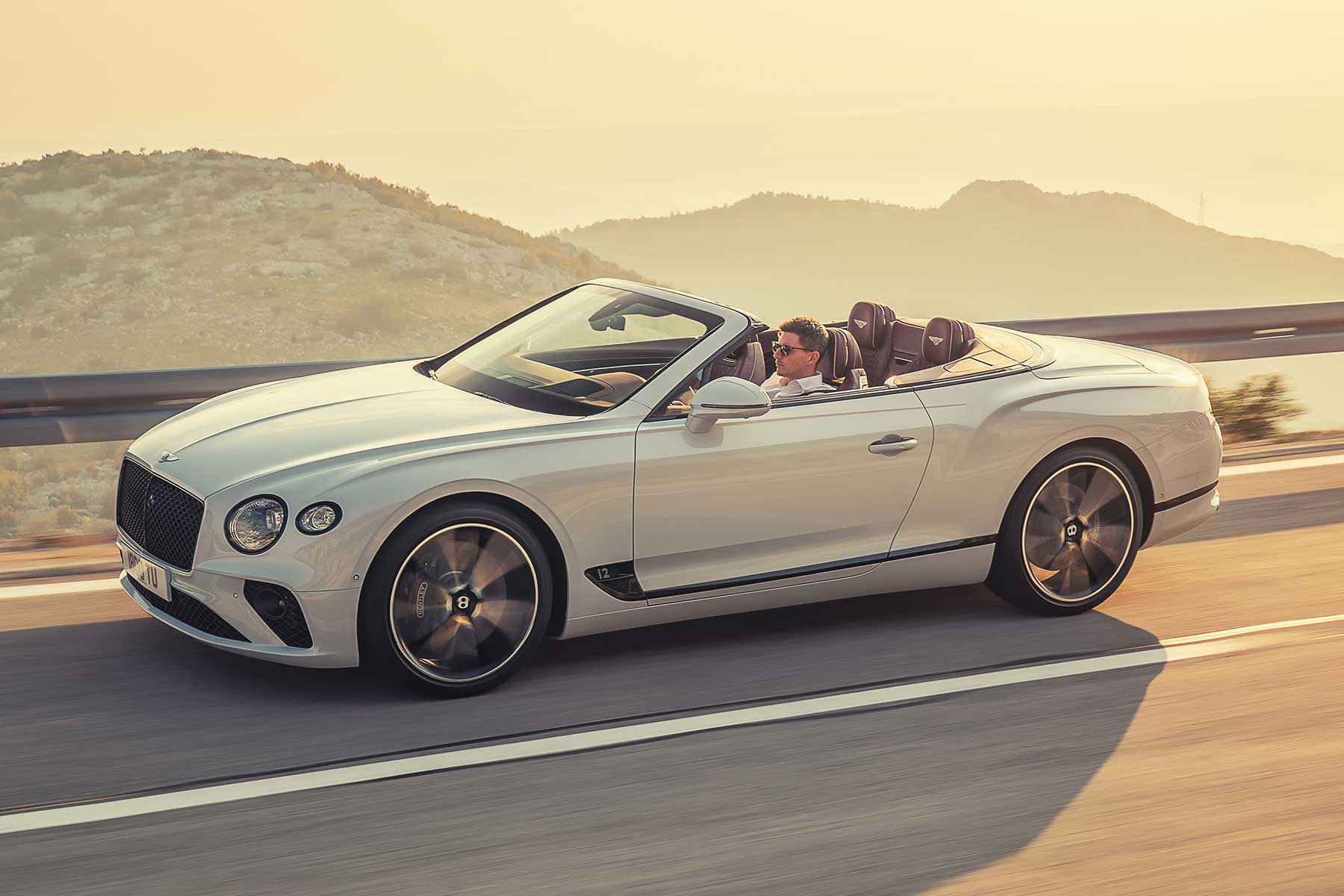
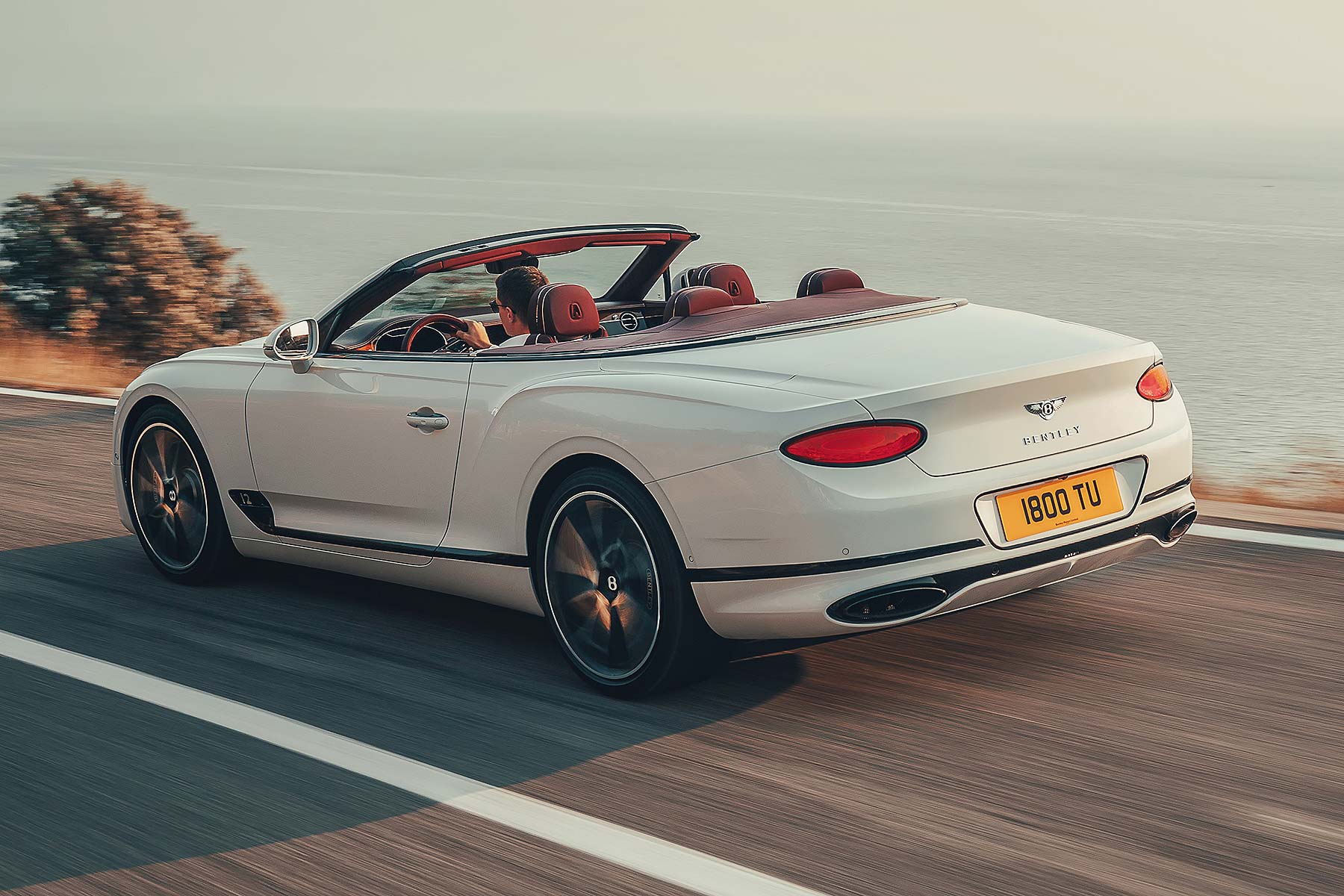
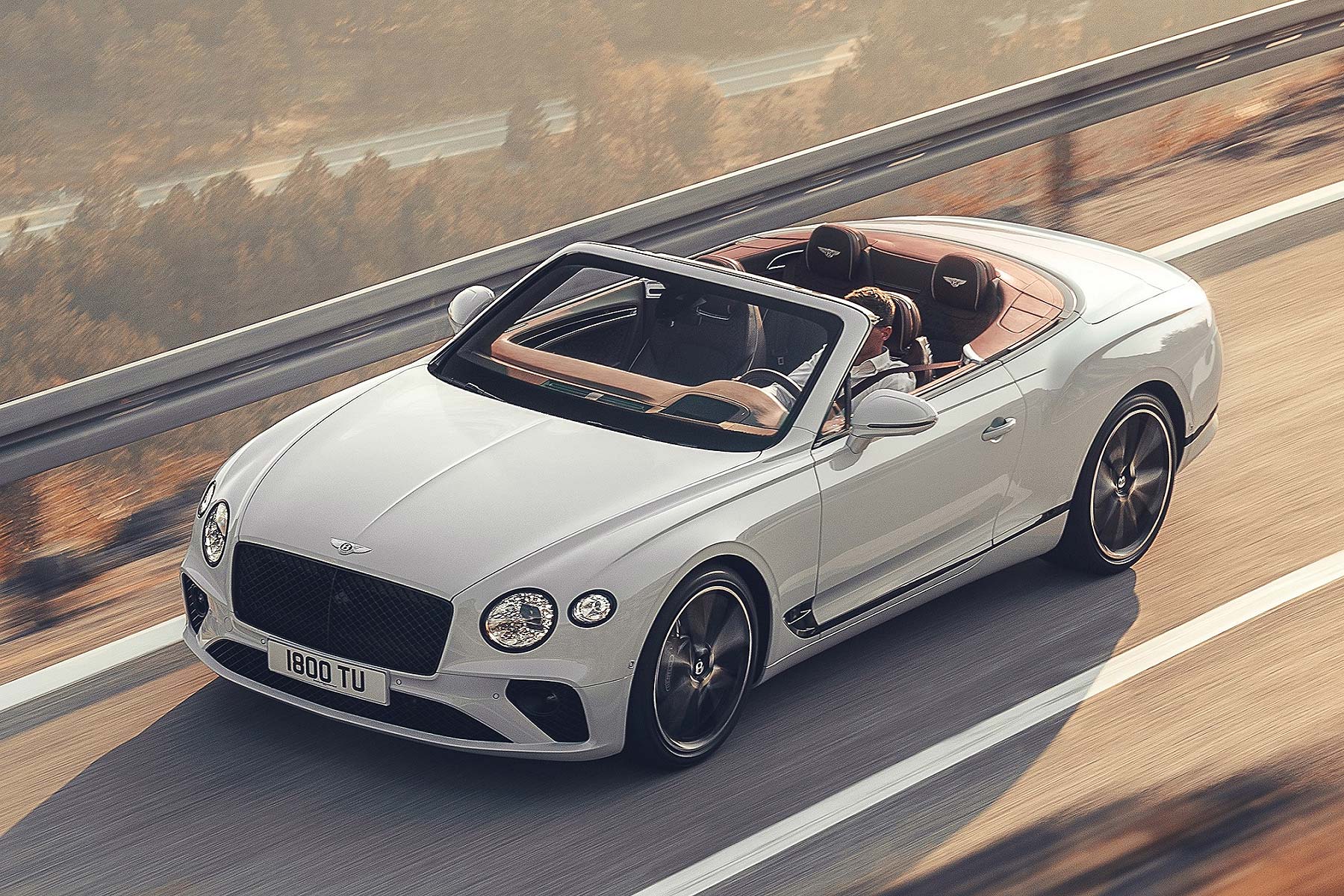
The new Bentley Continental GT Convertible is an open-top car that’s so refined, Bentley says it’s as quiet inside as the coupe version of the old Conti GT. It’s also a 207mph drop-top four-seater that comes with a tweed fabric roof.
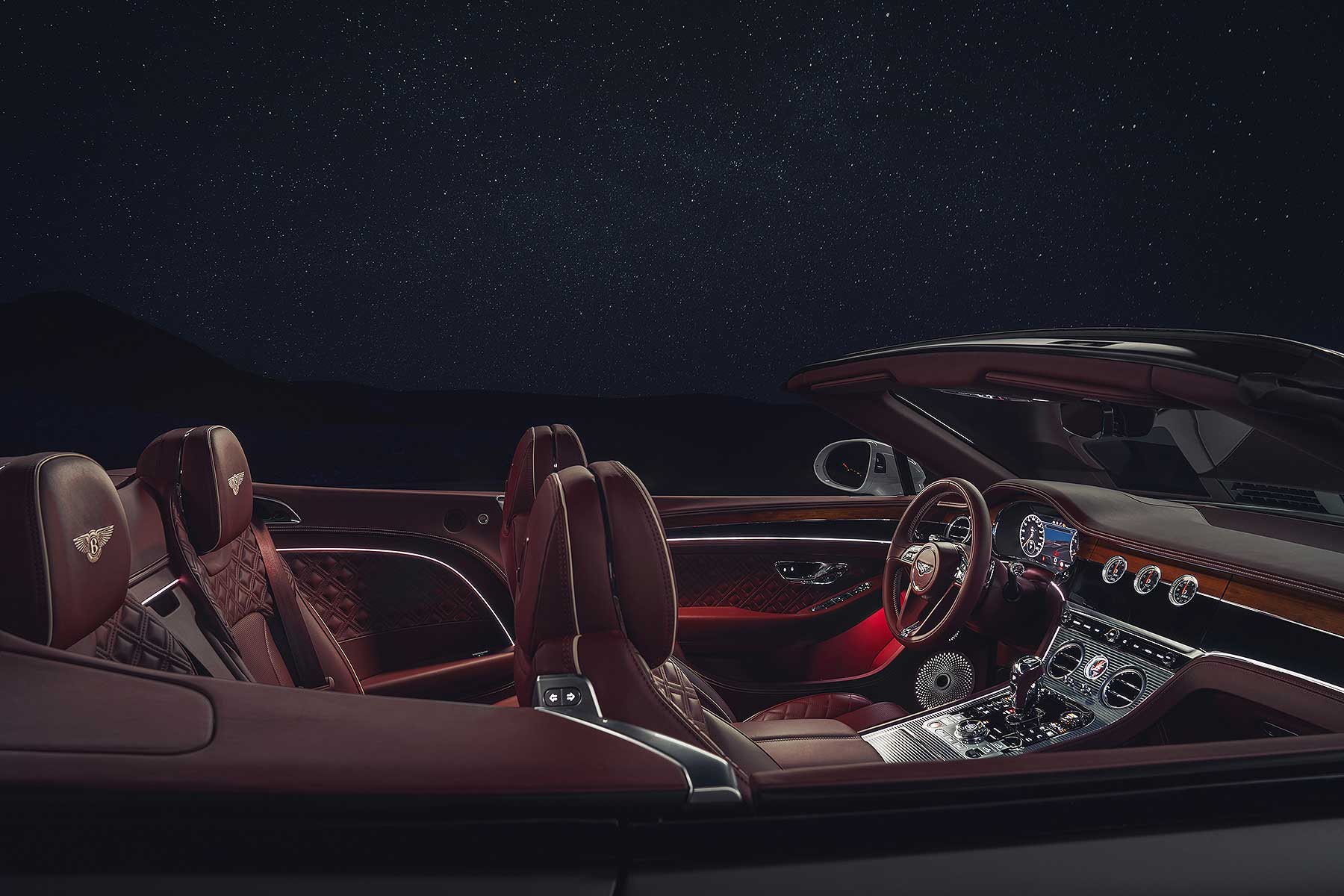
The luxury GT convertible sector is an exalted one, where cars are luxury goods considered alongside, say, works of art or jewellery. The new Continental GT Convertible thus has 10 square meters of (sustainable) wood veneer inside; 15 different choices of carpet; eight interior roof colour options (and seven outside); pillow knurling of the metal controls instead of machine knurling because it’s softer to hands.
It also has heated seats, heated armrests and a new neck warmer system that’s warmer and quieter than before. The air outlets are built into the seats and have a chrome centre vane that’s styled to look like Bentley’s famous dash air vents.
The roof opens in 19 seconds and a Z-shape fold mechanism doesn’t only look sportier, it’s also 3dB quieter.
Even the standard audio system has 10 speakers and 650 watts of power. A 16-speaker 1,500-watt B&O system is optional, as is Bentley’s trademark 18-speaker Naim audio with an astonishing 2,200 watts.
The dashboard design, says Bentley, ‘flows, like the Bentley badge’. The centre console is offered with a new type of mechanical finish that’s like the one used inside posh Swiss watches. Called Cotes de Genève, a 0.6mm-thick piece of aluminium is machined to create a 3D pattern.
The engine doesn’t really matter in this sort of car so long as it’s big and powerful enough. It is: the 6.0-litre W12 puts out 635hp, for 0-62mph in 3.8 seconds and a 207mph top speed. Also irrelevant is its 22.8mpg fuel economy and 284g/km CO2 emissions.
Bentley has fitted extended stop-start, which turns the engine off as the Continental GT Convertible comes to a halt, rather than when it’s completely stopped. The engine also has variable displacement – six of the 12 cylinders will turn off when demand is low, to save fuel. It’s undetectable, says Bentley.
It’s still a very heavy car, but the body is 20 percent lighter as well as 5 percent stiffer. Upgraded air suspension with 60 percent more air volume should give a plusher ride, and a 48-volt ‘Bentley Dynamic Ride’ roll control should make it more agile.
21-inch wheels are standard, 22-inches are optional and the Pirelli P Zero tyres are mixed: the rears are bigger than the fronts. They are noise-cancelling tyres, with a special filling in the sidewall to help refinement.
Behind them are ‘the most powerful brakes ever on a Bentley’. 420mm front discs are grabbed by 10 pistons (normal cars have one or two pistons in their calipers) and 380mm rear discs have four pistons each.
What does it look like? Sharper and more defined. The front wheels have moved 135mm forwards, and the bonnet is longer and lower, as is the car itself. Both headlights and tail lamps have cut diamond-style internals, ‘like an illuminated gem’.
Perfectly fitting for the new luxury good elite enthusiast will want to cross continents in next summer: for them, the new Bentley Continental GT Convertible is priced from £175,100.
Despite a headline-worthy 40 percent rise in car theft over the past five years, nearly 1 in 2 motorists admit they still leave their cars running unattended on frosty mornings to warm them up.
Car security firm Tracker, which uncovered the shock statistic, is thus warning motorists to be extra vigilant and keep their wits about them this winter.
“December and January are peak months for thefts, as it’s when we typically experience harsh frosty mornings,” says Clive Wain, Head of Police Liaison at Tracker.
“Whilst it is tempting to leave your car running with the keys in the ignition on frosty cold mornings, experience tells us it’s not a wise move.
“Not only does it make your car an easy target for opportunistic thieves, few insurers will pay out if you haven’t taken reasonable care to prevent your car from being stolen.”
This latter point is worth underlining. It may seem convenient to leave your car running unattended, but you could be left seriously out of pocket if thieves pounce.
The company has outlined some measures to protect yourself from winter car theft and other crimes. While the obvious one of not leaving your car running unattended to defrost is very winter-specific, many are relevant year-round.
Firstly, don’t keep your keys in a place where they can be easily accessed. A key in plain sight is a broken house window away from being in the ignition.
While Wain references Christmas shopping, it’s general all-year-round good practice to not leave any belongings on show. The more expensive the item sat on your dash or in view, the higher the temptation is for thieves to bust in and make merry.
Be selective with your choice of parking spots. A well-lit, well-used multi-storey is probably better than Carjack Alley. If you have a garage, clear the clutter and use it for its purpose – safely storing your car.
Should the worst happen and thieves do get behind the wheel of your car, their life will be made much easier if you’ve left your car’s registration documents and spare keys in the glovebox. Therefore, be sure to store it all away in a safe and memorable place at home.
Back on-message, though. The winter months are a hot spot for car crime so it’s worth getting into good habits.
“Drivers should therefore never leave their cars vulnerable, but especially now when thieves are looking to exploit the change in weather. Taking simple but effective precautions will reduce the risk of your car or its contents from being stolen this Christmas.”
It was only a matter of time. Even before the new Suzuki Jimny has hit the streets, aftermarket firms are already preparing their own take on next year’s must-have fun-size 4×4. Now it’s the turn of Kahn Design.
Afzal Kahn, famed for his lavish and outlandish creations, is evidently a fan of Suzuki’s half-pint off-roader, taking to Instagram to outline his plans for an upmarket Jimny. A ‘friendly vehicle’ for a sixth of the price of a Mercedes G-Wagen, he claims.
That’s around £25,000, in case you were wondering. Pretty good value, we think, especially when you consider the likely specification.
The inside would be treated to quilted and perforated leather seats, along with branded sill plates and vented foot pedals. We suspect the Chelsea Truck Company (CTC) would also upgrade the audio system and add a subtle tint to the windows.
On the outside, the Jimny would wear 19-inch G6 wheels shod in chunky off-road tyres, with the styling enhanced by vented bumpers, wider arches, LED headlights and a performance quad exhaust system.
According to Khan, the CTC Jimny would be a mini Land Rover Defender or Mercedes-Benz G-Class, but there’s no guarantee that it will get beyond the planning stage. Much will depend on the feedback on social media, which, so far, at least, has been overwhelmingly positive.
Are we allowed to say that we like it? Although it’s little more than a first sketch, the CTC Jimny retains its charm and manages to stay the right side of chintzy. It even looks good value at £25k. We also like the timing of the announcement, coming on the same day Land Rover invited the great and the good of the press to see the new Evoque.
Get it built, Kahn. It’s cheaper and more appealing than a new Range Rover Evoque, right?
Driving an SUV in the snow doesn’t turn you into Clacket Lane’s answer to Stig Blomqvist. That’s the underlining message of a press release issued by fleet management company, Arval UK.
It says that company car drivers may need to be warned of the limitations of their vehicles during the winter, pointing to the SUV as a ‘prime example’.
In other words, while some drivers think their hatchback on stilts gives them WRC-like levels of talent, they end up looking more like Todd Carty on Dancing on Ice.
The best car options for winter; in pictures
If you’ve ever wondered why the Met Office and Highways Agency are very quick to warn drivers to stay at home when the weather outside is so frightful, it’s because they don’t want to see the road network littered with stranded SUVs and crossovers.
Arval says that the glut of relatively lightweight, two-wheel-drive SUVs offer no real advantage over a ‘normal’ car.
Indeed, drivers would do well to explore the benefits of winter tyres, which would be cheaper than getting locked into a lengthy PCP contract, and could mean that they get home for Christmas before Chris Rea.
Closing the perceptual gap
“The fact is that SUVs of this kind can get stuck in poor weather as easily as any other vehicle, potentially creating a hazardous situation for the driver who needs to be rescued. There is very much a gap between the driver’s perception of their vehicle and the reality,” said Shaun Sadlier, head of consulting at Arval.
“Driving in poor conditions is a very definite skill and not something to be attempted without the right vehicle and the right training,” he continued.
Save big this winter by buying pre-owned
“Our advice to fleets would be to ensure that drivers have a clear understanding of the kind of weather in which they are expected to drive, to know about the limitations of their particular vehicle and stay well within them, and to seek advice if they have any doubts.”
The best advice? Buy an old Saab 9000 for a few hundred quid, order a set of winter tyres, then spend the snowy days dodging the stricken SUVs left abandoned at the roadside. You know it makes sense.
Read more:
PCP finance means Brits are not owning cars for as long
The new 2019 Range Rover Evoque is priced from £31,600, but the effective entry-level price for most buyers will be £35,100, Land Rover has confirmed at the launch of the new British-built luxury compact SUV.
The lowest-priced car is a 150hp D150 turbodiesel manual – but the vast majority of Evoques (more than 9 in 10, predict bosses) will be sold with an automatic gearbox, which is standard on every other variant.
The £35,100 D150 turbodiesel entry-level automatic also gets four-wheel drive as standard: the basic car is also the only front-driven Evoque you can buy.
Open for ordering now, the new Range Rover Evoque is offered in S, SE, HSE and launch First Edition variants. Every version apart from the launch special will offer an R-Dynamic upgrade pack (£1,500). Full prices are listed below.
New Range Rover Evoque specs look comprehensive. Every car comes with automatic LED headlights, climate control, 10-inch Touch Pro infotainment, heated front seats, rear camera, all-round parking sensors and autonomous emergency braking.
The £1,500 R-Dynamic upgrade pack comprises an exterior styling kit, ‘RANGE ROVER’ script in Shadow Atlas finish and, inside, a dark roofliner, perforated leather stering wheel, bright metal pedals and dark aluminium trim.
S spec adds electric leather seats, sat nav, Apple CarPlay and Android Auto smartphone connectivity, plus traffic sign recognition and an adaptive speed limiter. Also, the 17-inch alloys grow to 18 inches.
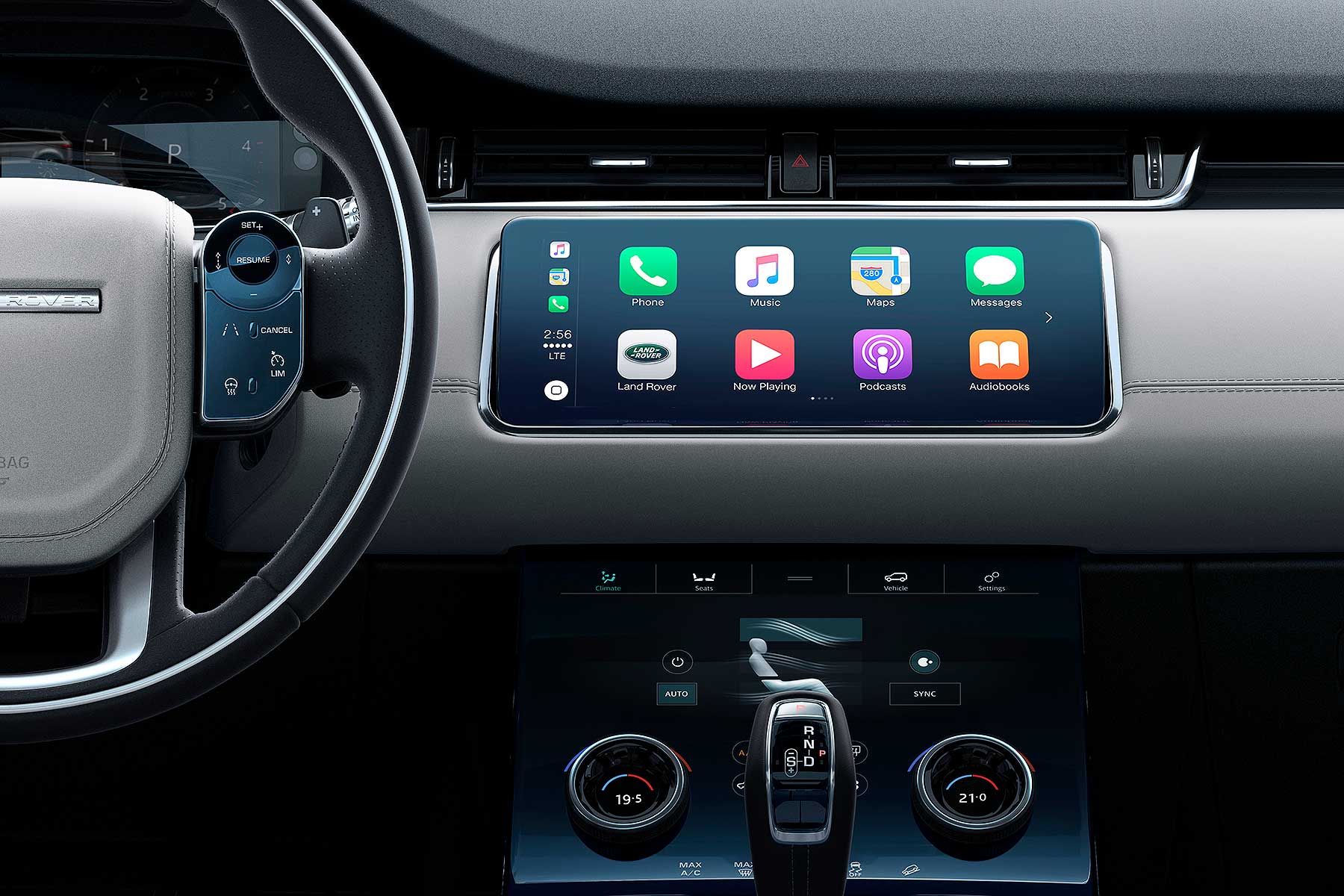
SE spec improves the LED headlights to premium LEDs, wheels grow to 20 inches, the electric seats get more adjustability and the tailgate is powered. The two-touchscreen Touch Pro Duo from the Range Rover Velar is also fitted, which replaces ‘hard’ climate controls.
HSE gets perforated Windsor leather seats, a 380W Meridian sound system and the clever Clearsight rear-view mirror that overcomes the Evoque’s poor rear visibility with a high-res camera display on the mirror itself.
First Edition models have even fancier Matrix LED headlights, privacy glass, panoramic sunroof, head-up display and a comprehensive interior luxury pack.
Three petrol and four diesel engines are offered in the new Range Rover Evoque. All are 2.0-litre motors.
The base D150 diesel produces 150hp, and comes in FWD manual or 4WD automatic with an MHEV 48V mild hybrid system. Indeed, every Evoque apart from the base manual has the 48V system, which extends in-town stop-start functionality, thus saving fuel.
D180 and D240 diesels are also offered. The slowest Evoque is the D150 AWD auto, which does 0-62mph in 10.4 seconds (the manual D150 FWD is half a second faster). The D180 takes 8.8 seconds and the D240 7.2 seconds.
The petrol range comprises P200, P250 and P300 engines. Even the P200 does 0-62mph in 8.0 seconds the P300 cuts this to a swift 6.3 seconds.
2019 Range Rover Evoque prices
D150 FWD manual: from £31,600
D150 AWD auto: from £35,100
D180 AWD auto: from £35,850
D240 AWD auto: from £38,600
P200 AWD auto: from £35,950
P250 AWD auto: from £37.150
P300 AWD auto: from £40,350
2019 Range Rover Evoque specs
Evoque
S: + £3,150 over Evoque
SE: + £3,500 over S
HSE: + £3,000 over SE
First Edition: + £5,500 over R-Dynamic SE
R-Dynamic pack is a £1,500 option for every spec apart from First Edition
Read more:
Vauxhall GTX Xperimental Concept review: driving the future
How far does a £50 fill-up get you in different countries around the world?
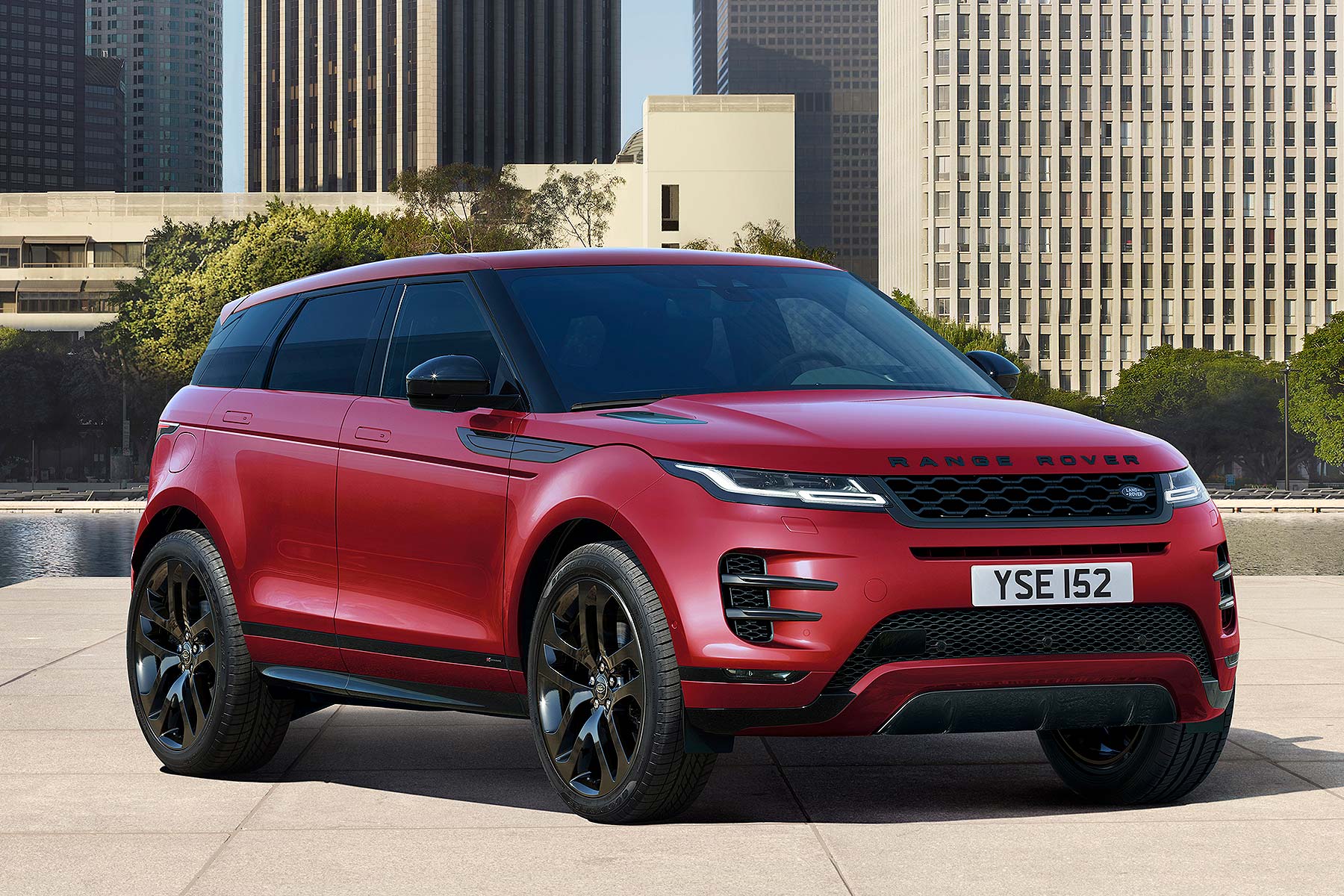
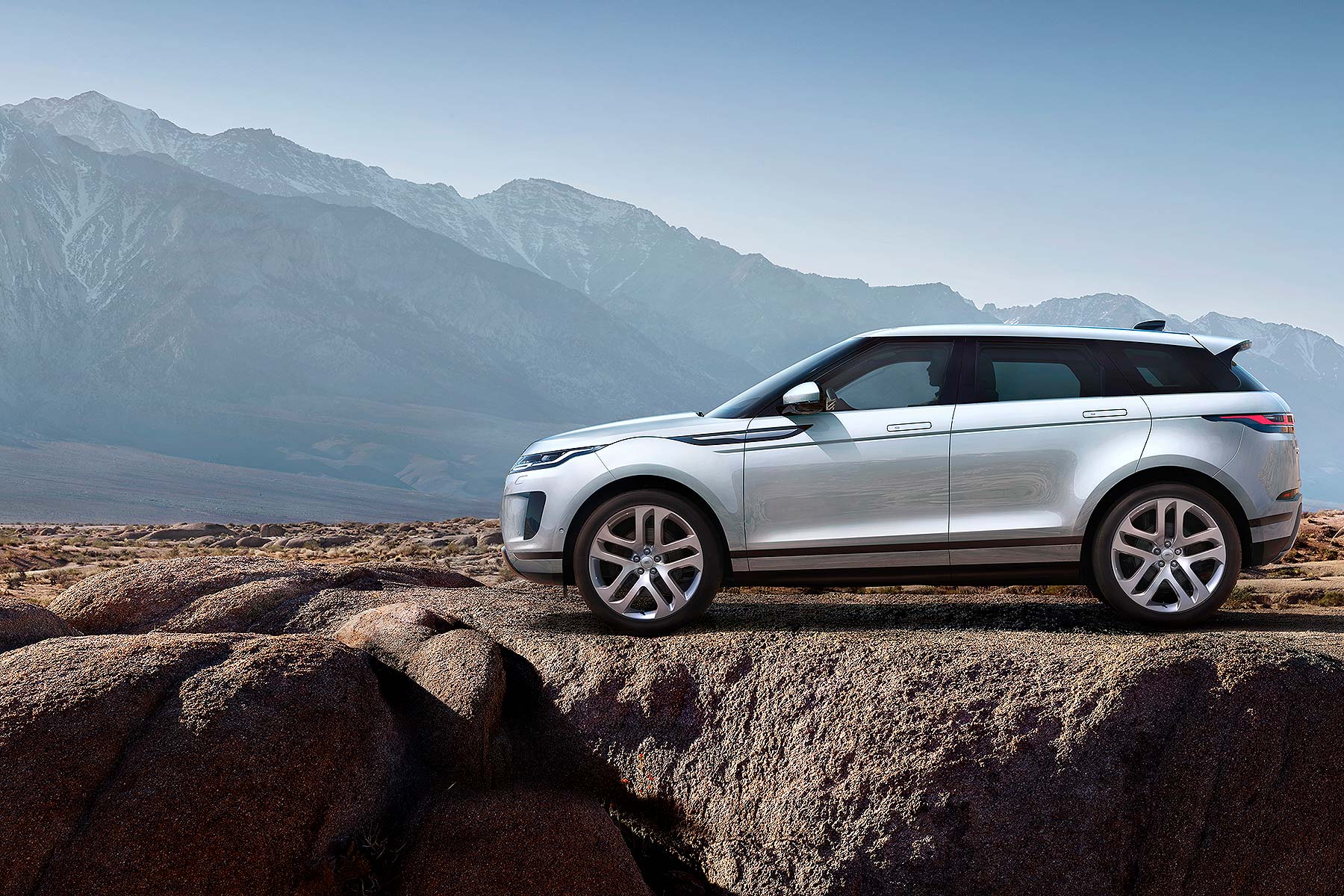
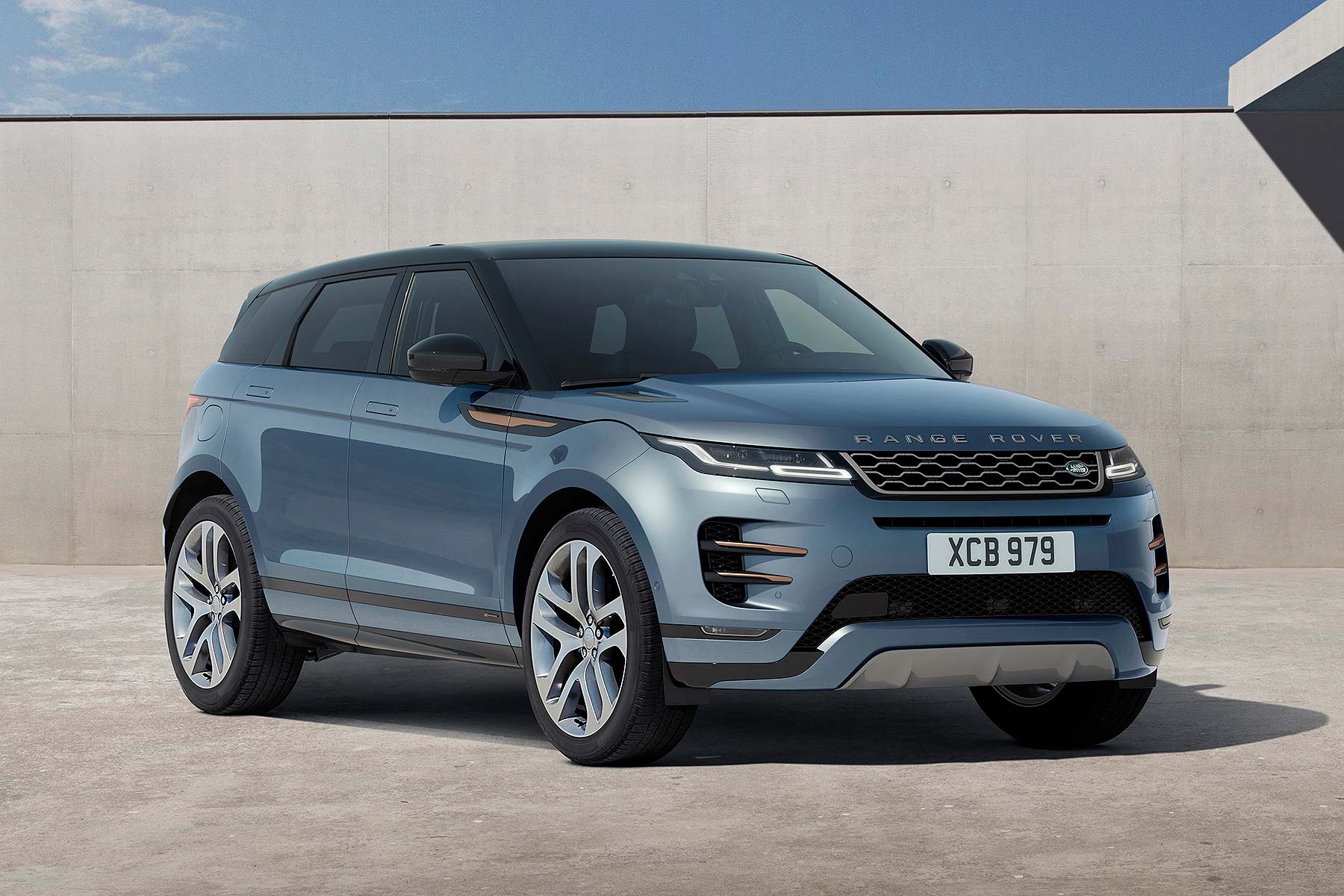
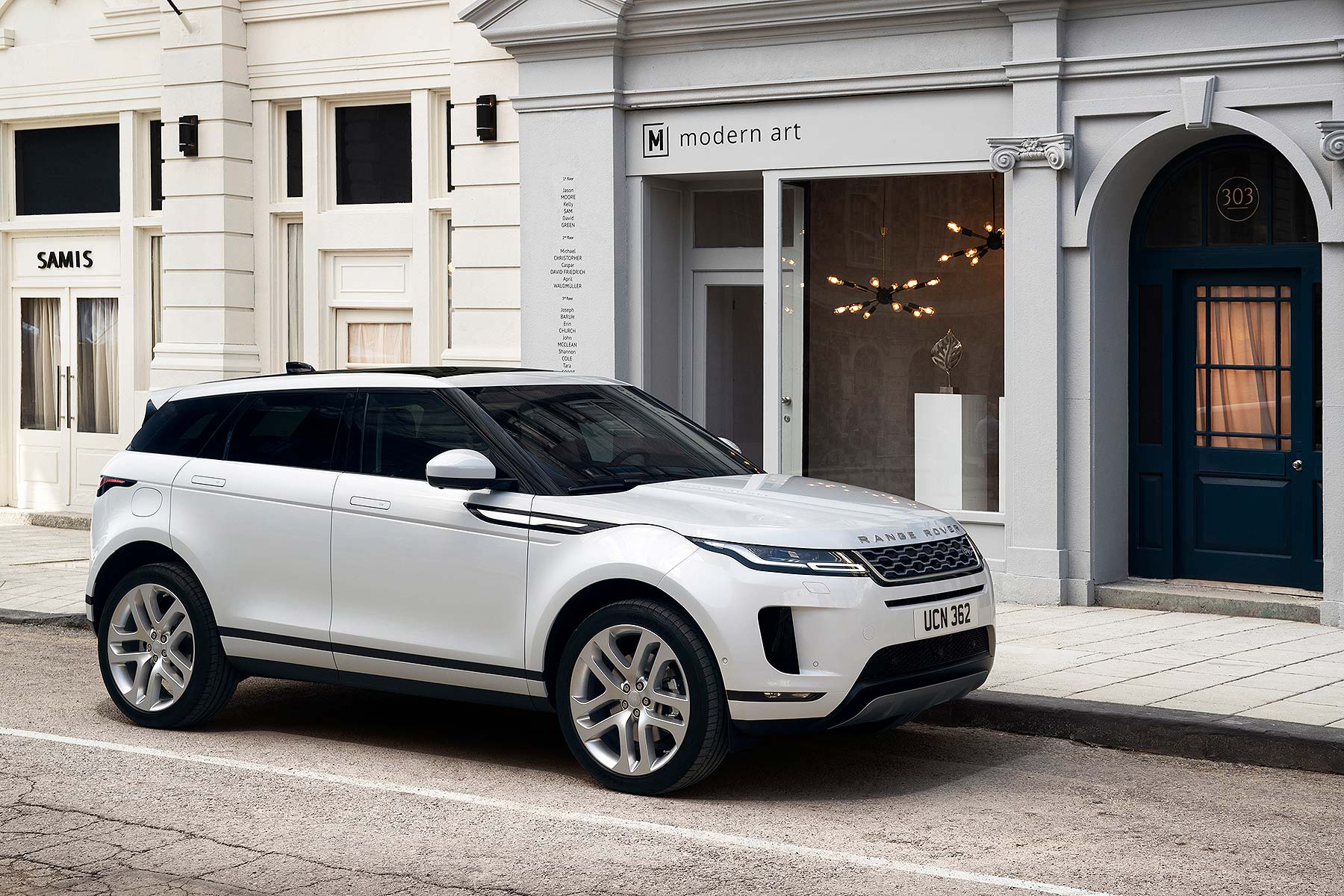
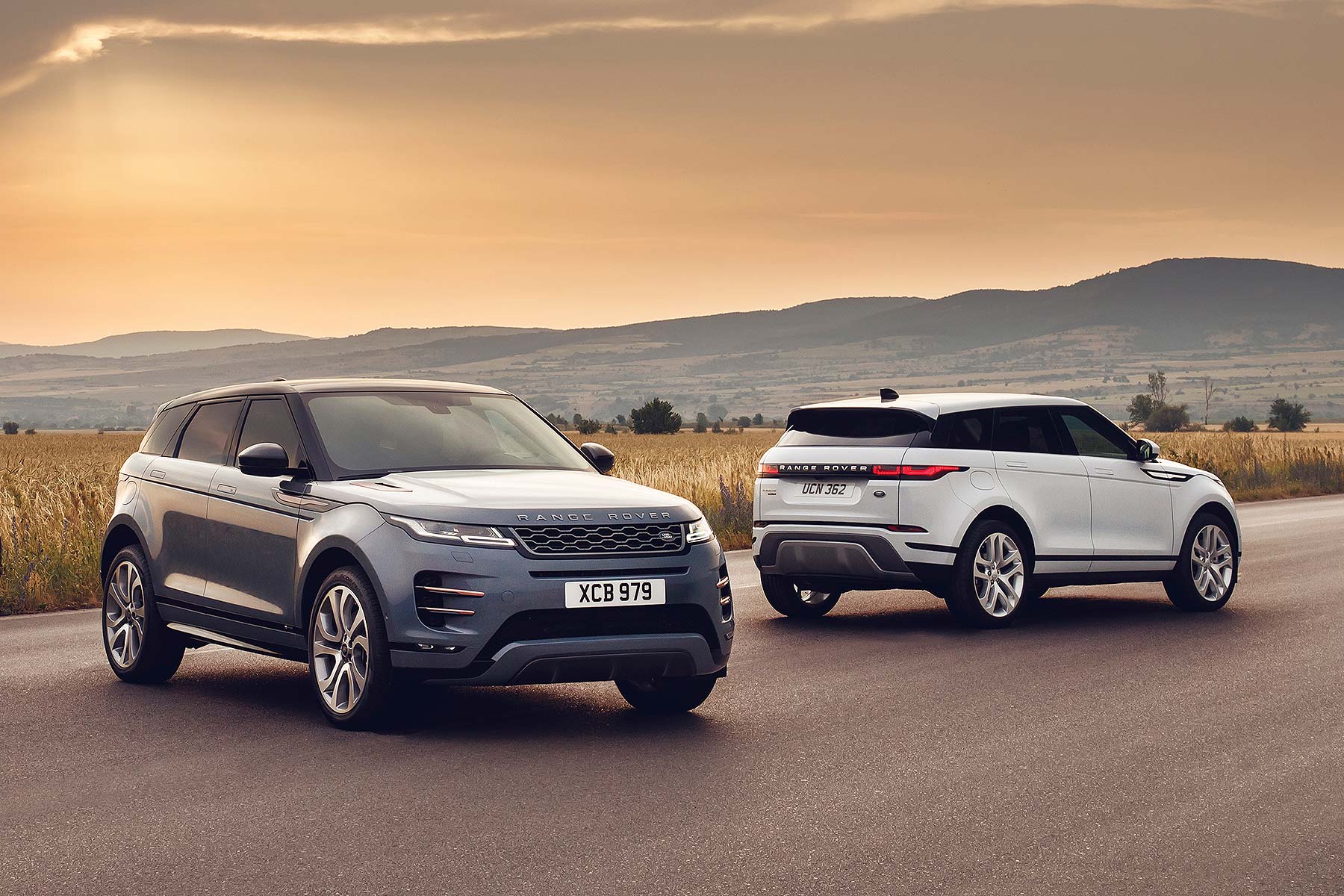
The all-new Range Rover Evoque has been revealed at a glitzy launch event in East London. A careful evolution of the original car, Land Rover says it delivers exactly what customers asked for: make it like the original, only better.
Priced from £31,600, ordering is open now, with first deliveries expected from spring 2019.
The original Range Rover Evoque was launched in 2011 and more than 770,000 have been sold since (150,000 of them in the UK). It’s a hard act to follow, and Land Rover has done so by following the lead of the Porsche 911 – and not altering the formula.
Jaguar Land Rover MD Rawdon Glover says it is “a great second album, taking the Evoque to a new level of refinement, luxury and sustainability, while preserving all the charm of the first model”.
Overseen by design chief Gerry McGovern, the new Evoque is built on an all-new platform called Premium Transverse Architecture. The body is stiffer, the wheelbase longer, but exterior dimensions are largely unchanged (it remains less than 4.4 metres long).
The new Evoque will launch with mild hybrid petrol and diesel engines, with plug-in hybrids following in 2019. Only the basic entry-level manual will be a conventional non-hybrid engine; all other launch cars will have 48V ‘micro hybrid’ tech.
New Range Rover Evoque: design
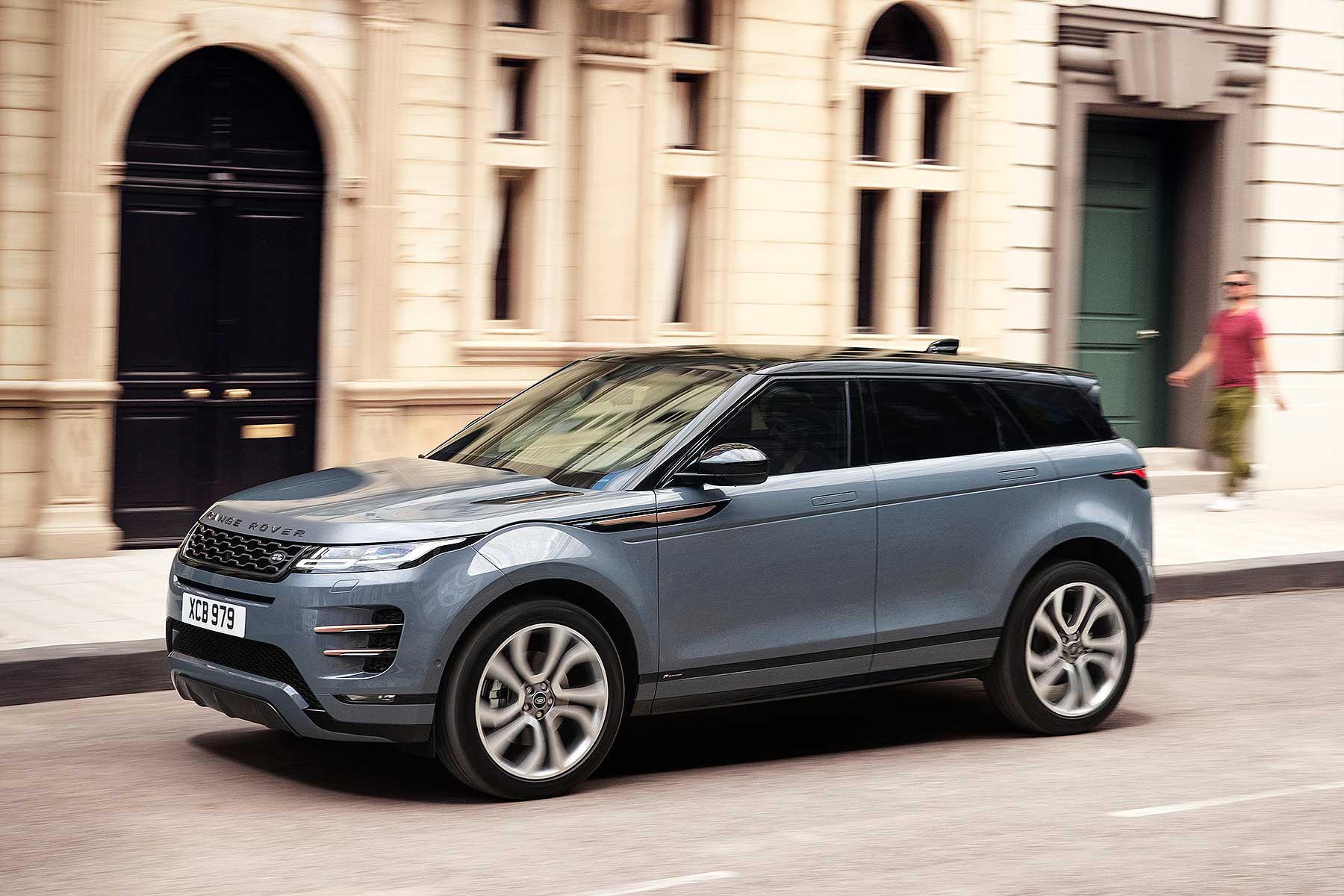
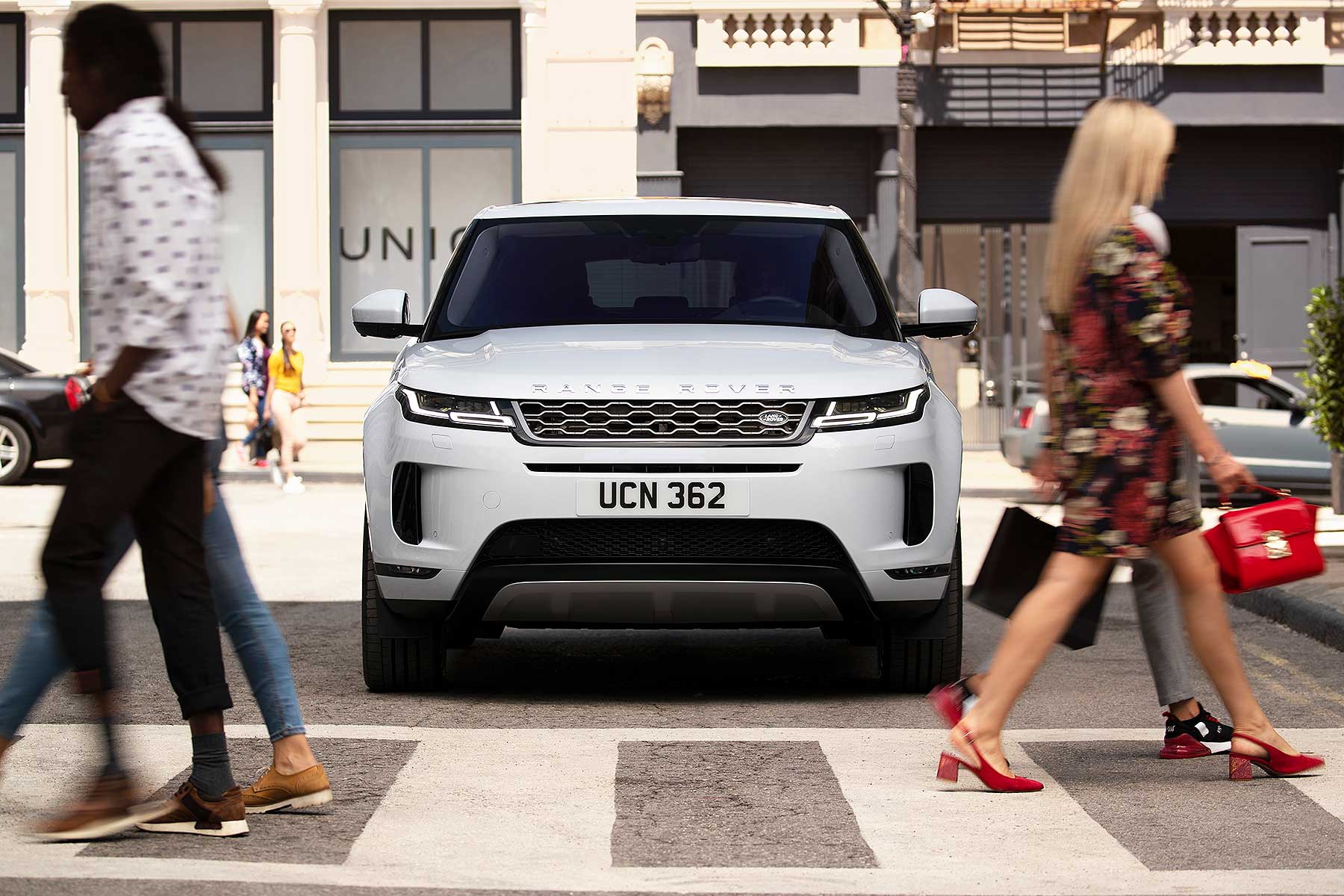
Visually, the new Evoque follows McGovern’s new ‘reductionism’ mantra. The lines and creases of the original have been minimised, following the lead of the Range Rover Velar, the reigning World Car Design of the Year.
Yet it’s still an Evoque, he insists, thanks to the coupe-like silhouette, ‘fast roofline’ and rising waist.
The new car thus still has the same poor rear visibility of the original – which Land Rover has solved with a clever ‘Clearsight’ rear-view mirror that turns the conventional glass into a high-definition widescreen display (the camera is dirt-proof and water-repellent).
The new car has a more premium appearance, too, thanks as much to richer paint and tighter panel gaps as the cleaner lines. The roof is laser-welded, so there’s no need for an add-on roof rail, the rubber window strips are minimised, glazing is flush and use of contrast plastics is minimised. It even gets the retractible doorhandles from the Velar. It’s less ‘noisy’ and posher-looking as a result.
And, yes, it’s familiar, but this is intentional, says McGovern. “People loved it, so we’ve retained its unique character… there’s always a desire for radical change but sometimes it’s just as important not to change.
“We make no apologies for that: there’s nothing wrong with clear progressions – look at the Porsche 911, look at the Range Rover itself.”
New Range Rover Evoque: interior
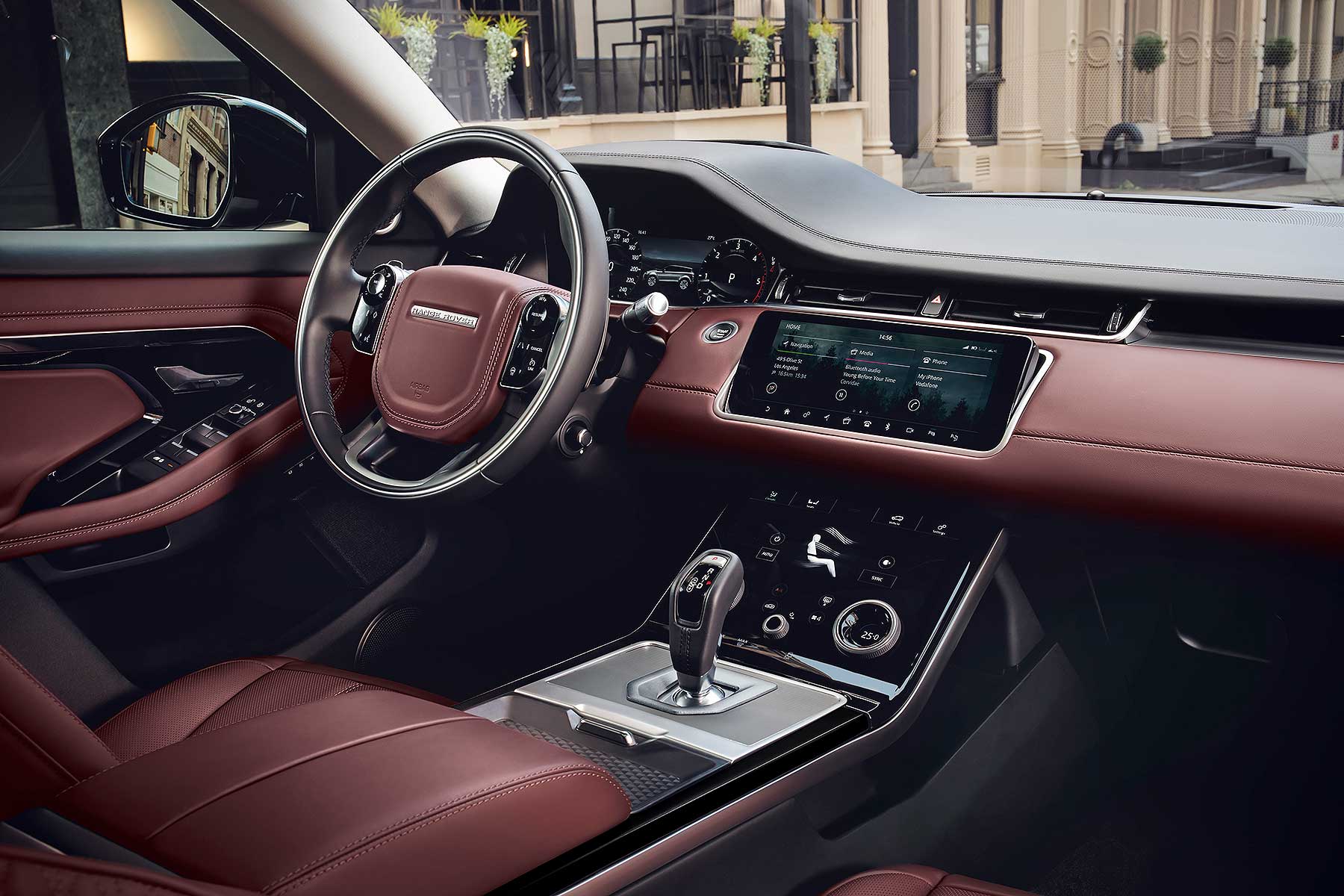
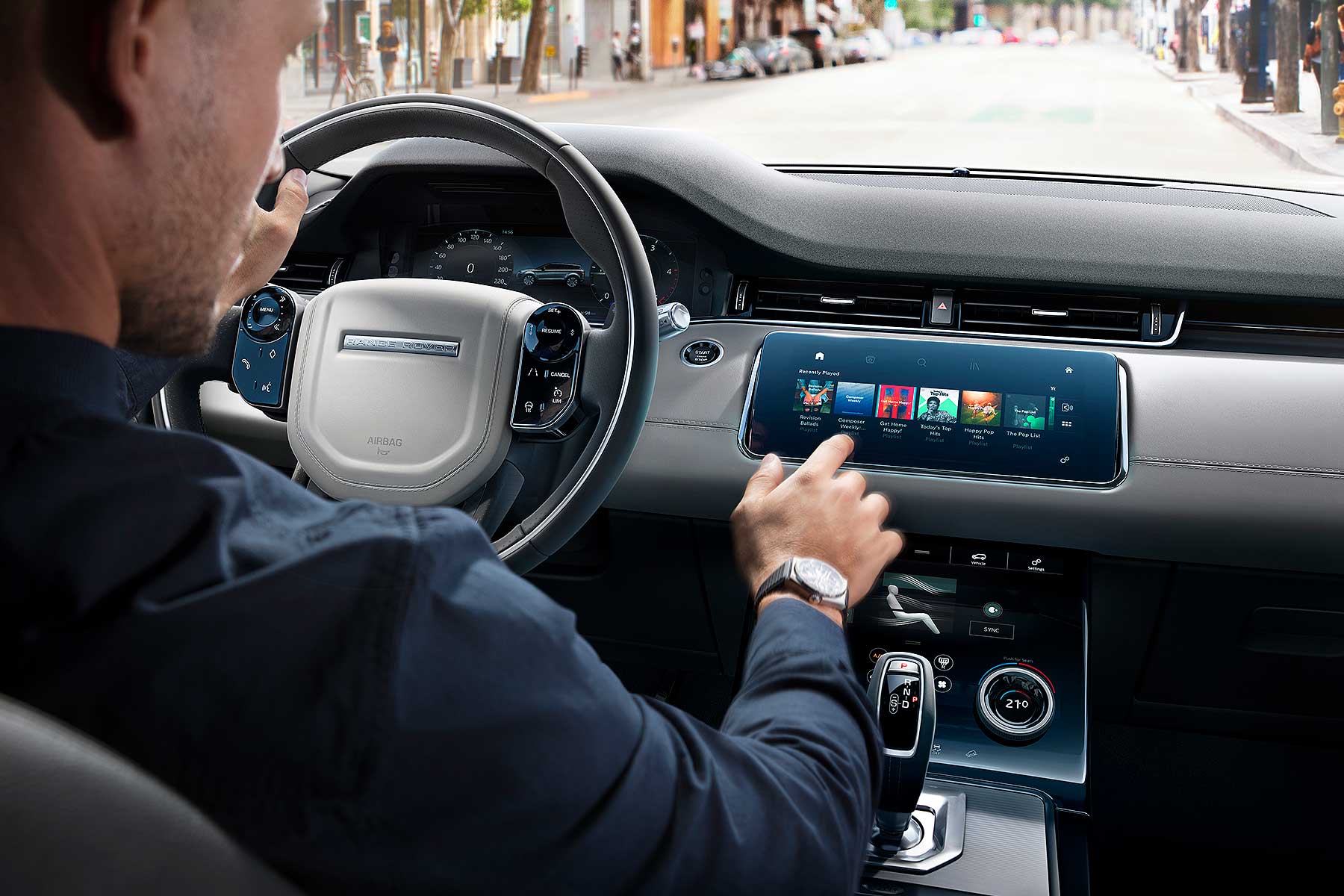
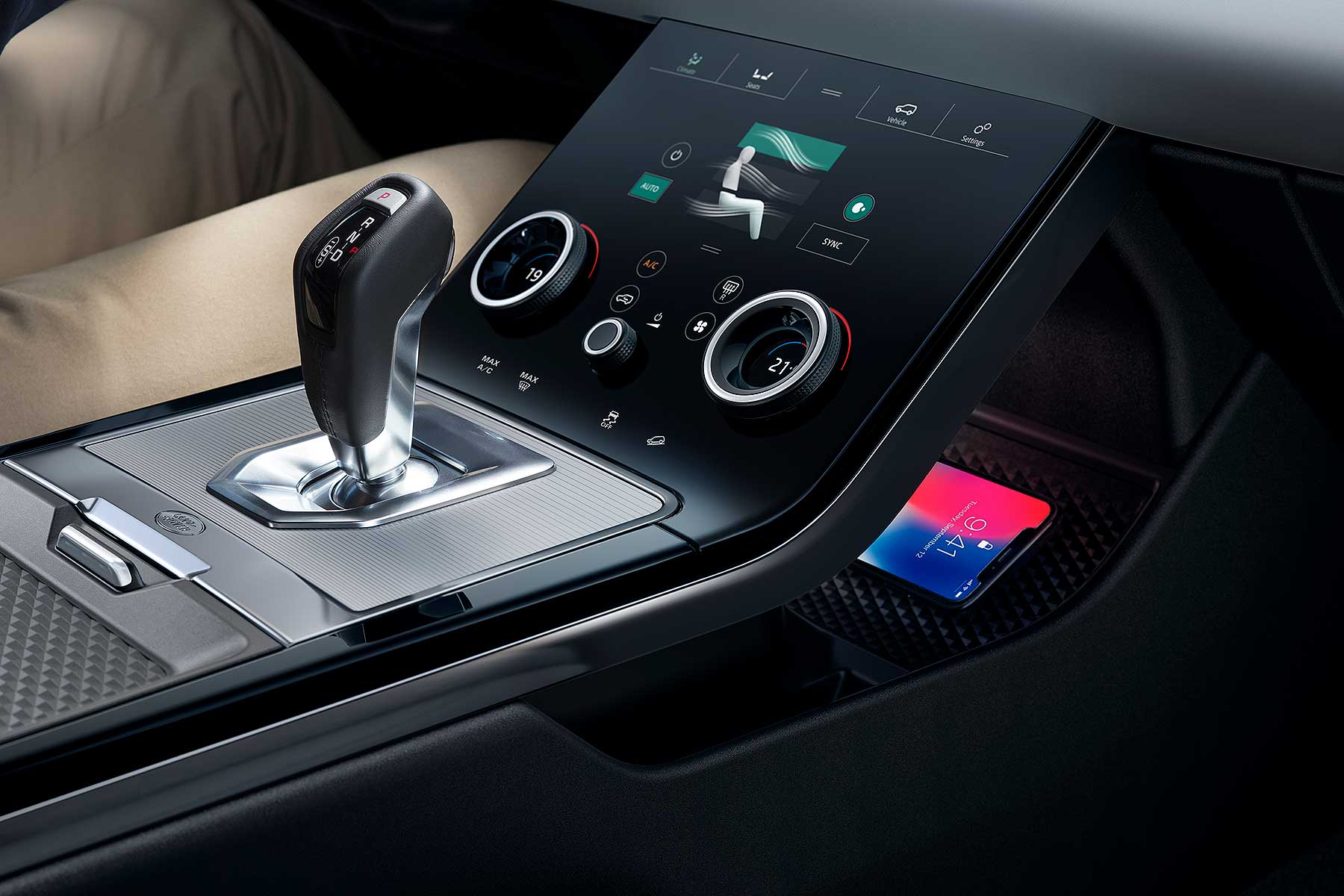
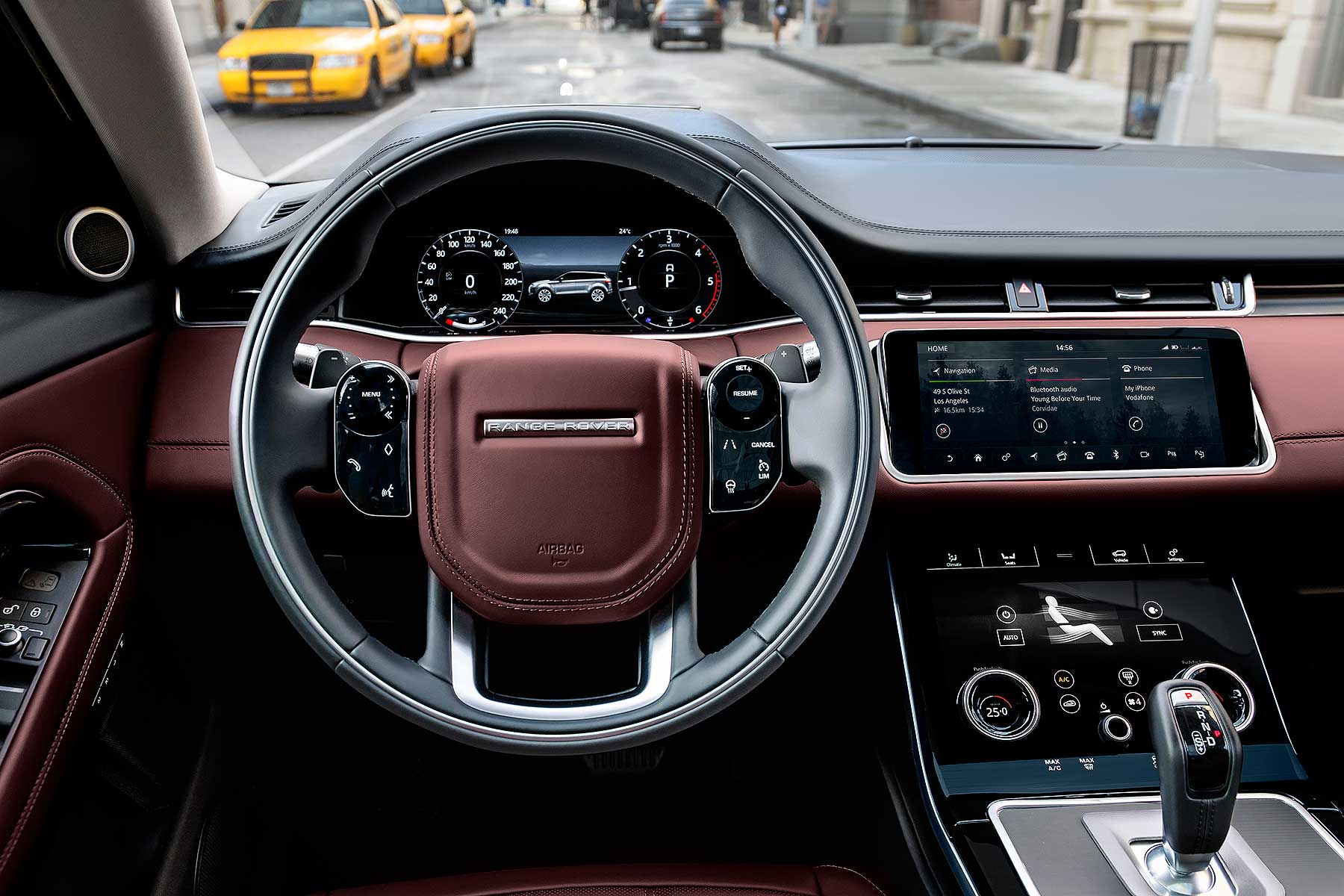
The interior is more of a radical step on. “We’ve retained the DNA but applied the reductive theme here, too,” said McGovern, who described it as a “revelation.” It’s simpler, cleaner, has more technology and is significantly better quality.
There’s less switchgear, and what there is boasts a classier look and feel: “It’s all about getting a premium, luxury level pf precision and quality”. The central touchscreen is large and high-definition, while the additional Touch Pro Duo screen first seen in the Velar features on higher-grade variants.
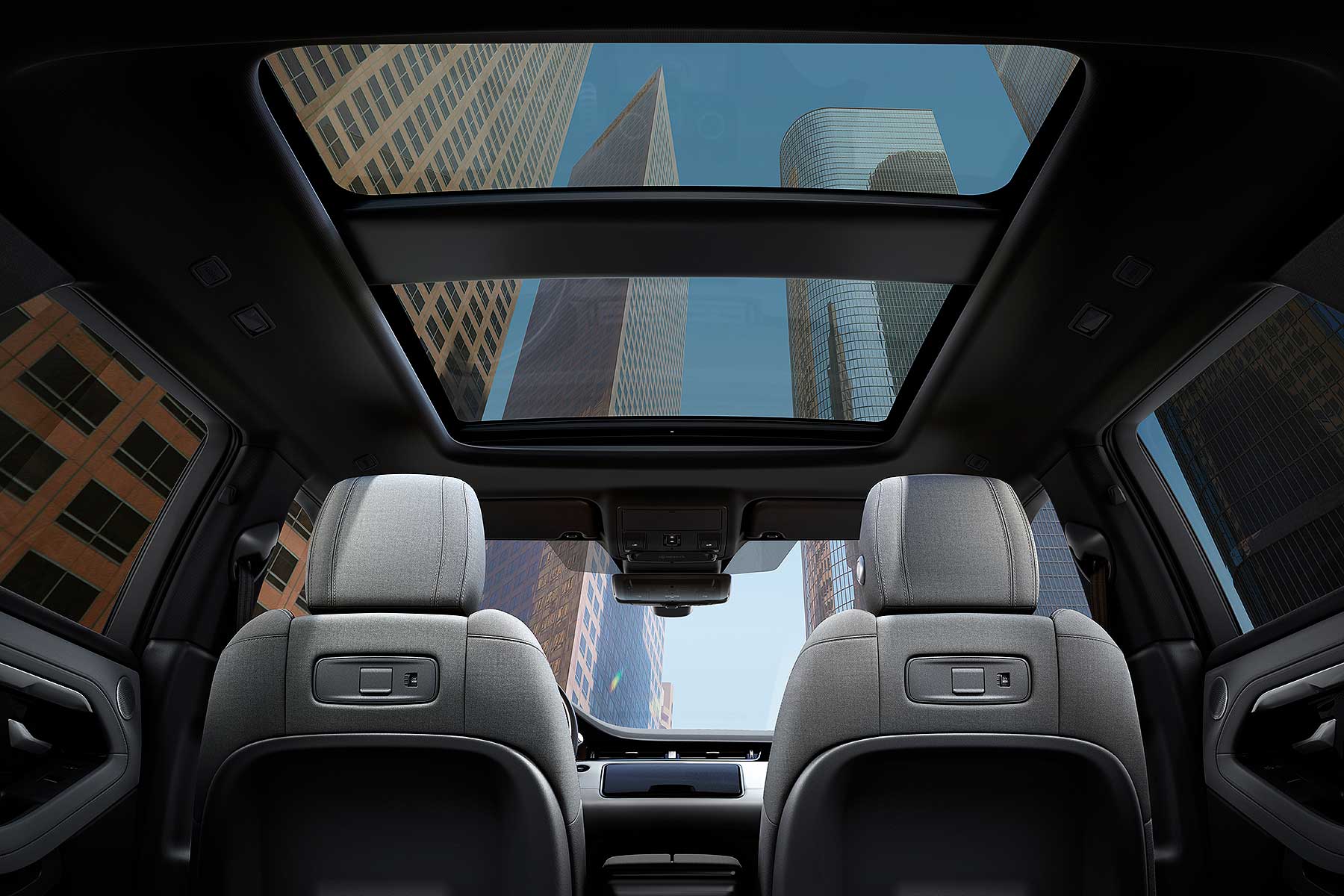
It’s roomier, too. One of the biggest grumbles from current Evoque owners concerns the lack of rear-seat space. All the room created by the longer wheelbase has therefore gone into the rear cabin. The boot is 10 percent bigger (and nearly 200mm wider), benefiting both the young families and golfers who complained before. The panoramic glass roof is also bigger. For the first time, it opens.
Land Rover chief designer for colour and trim Amy Frascella says there are two sustainable fabrics offered in the Evoque. The Kvadrat wool blend with recycled microfibre suedecloth has already been seen in the Velar, and there’s a new Eucalyptus Melange textile, which gives a contemporary, high-tech feel. I
It comprises 30 percent Eucalyptus bark and 70 percent polyester, and the Eucalyptus is sourced from certified forests. “It’s also quick to grow
“Sustainability is a big deal these days. We want to show Evoque buyers they can do the right thing.”
New Range Rover Evoque: tech
At last, Apple CarPlay and Android Auto feature in the Evoque; they’re standard in every model (and all cars get a widescreen 10-inch Touch Pro screen).
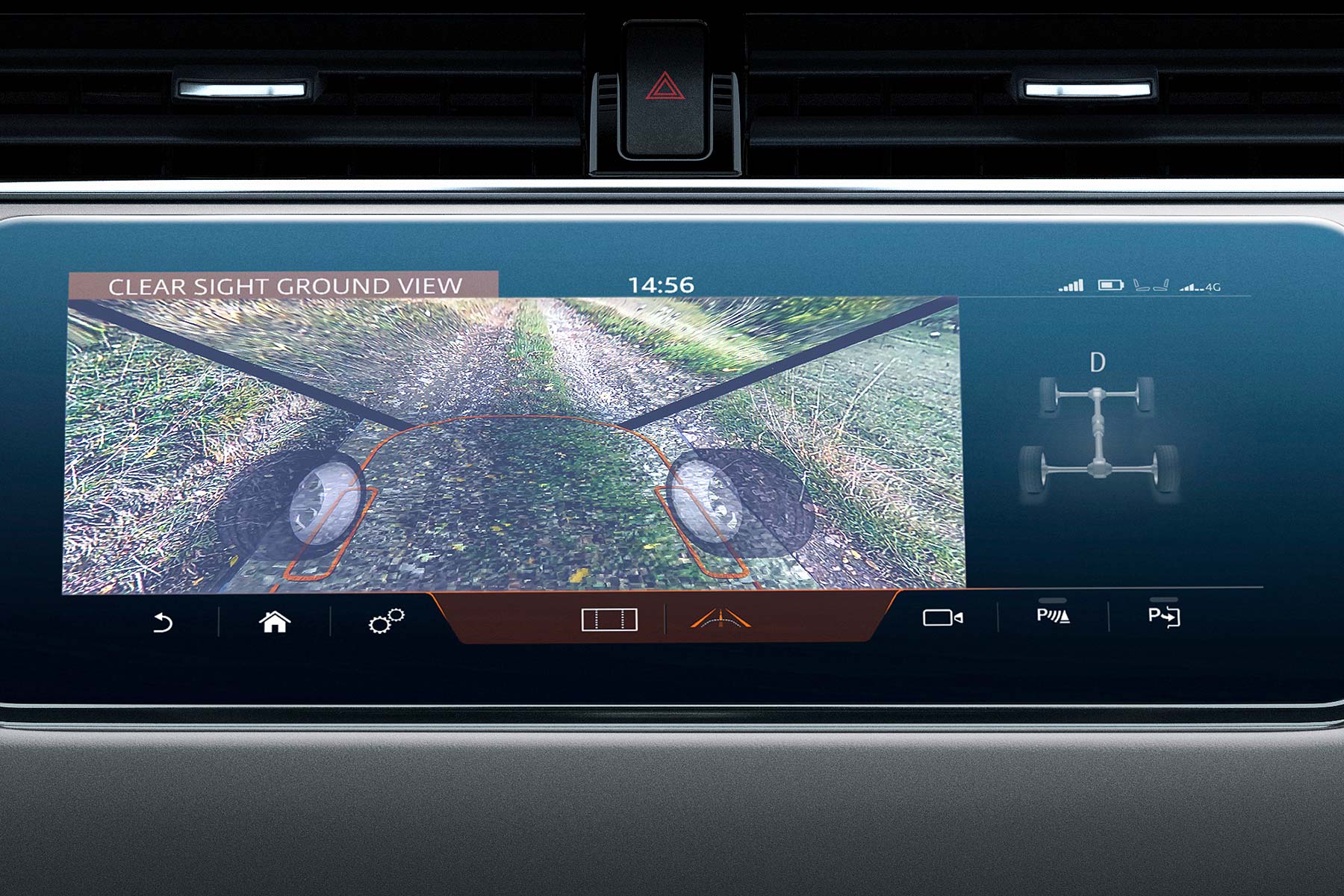
Land Rover is also leading on technology. Ground View effectively makes the bonnet invisible, by projecting camera feeds onto the upper touchscreen. It’s technology Land Rover first showed in concept guise back in 2014. We tested it on the launch, driving along a railway track with pinpoint accuracy: we could see exactly where to place the wheels, and even see a ‘Hello Evoque’ graphic beneat the car.
The Clearsight rear view mirror does the same looking backwards. The camera is mounted in the ‘shark fin’ on the roof. It is a 1.7 megapixel camera with HDR and the display itself is three times brighter than a smartphone for clarity.
The new Evoque has ‘Smart Settings’ tech, which uses artificial intelligence (AI) to ‘learn’ driver habits such as favourite seating position, temperature settings and the numbers you most commonly dial at a particular time of day.
Wireless over-the-air updates are built in, like a Tesla, and Incontrol Remote means owners can access it via their smartphone. The climate control system also now has cabin air ionisation functionality, which removes as much city smog as possible.
New Range Rover Evoque: engines
At launch, the new Range Rover Evoque comes with a 2.0-litre petrol or 2.0 diesel, in varying power outputs. For diesel, it’s 150hp, 180hp and 240hp; for petrol, it’s 200hp, 250hp and 300hp. Each, apart from the base model, is a nine-speed automatic, and all but the base front-drive car are four-wheel drive.
The old car’s rotary gearshifter is no more: all new Evoque get a Jaguar-style pistol-grip shifter.
Every model except the front-driver also has the 48V MHEV micro-hybrid system. This is a form of extended stop-start, which increases ‘engine-off’ time in town, and instantly restarts the engine when the driver is ready to go. Land Rover reckons most people won’t notice the engine cutting in and out, and thus will be less likely to disable stop-start entirely.
The MHEV system also delivers an electric ‘boost’ – this fills in the turbo gap when the driver goes on the throttle. It makes the car more seamless and luxurious-feeling to drive, and engineers say it should help give a small fuel economy gain, as there will be less load on the engine.
Fuel economy? The best Evoque emits 149g/km CO2 and the 180hp D180 diesel, which is expected to be the best seller, emits 150g/km CO2 and averages 48.7mpg via the tougher new WLTP fuel economy test.
Coming in 2019: Range Rover Evoque plug-in hybrid
Land Rover teased details of the new Range Rover Evoque plug-in hybrid, which is expected to go on sale in a year’s time. It will use a 1.5-litre three-cylinder turbo petrol engine paired with a 30kW starter-generator electric motor. Power will be provided from an 11.3kWh lithium ion battery.
The Evoque plug-in hybrid will have intelligent all-wheel drive; the engine drives the front wheels and the electric motor drives the rears. It can run in petrol-only, electric-only or a combination of both. Total power output is 200hp.
Because the new architecture has been designed so it’s hybrid-ready, there’s no compromise on interior space, as the batteries and motor are fully integrated into the bodyshell.
Land Rover isn’t ready to tell us fuel economy or CO2 yet, though – nor how long its electric-only range will be. That’s news for next year, it says…
New Range Rover Evoque: off-road
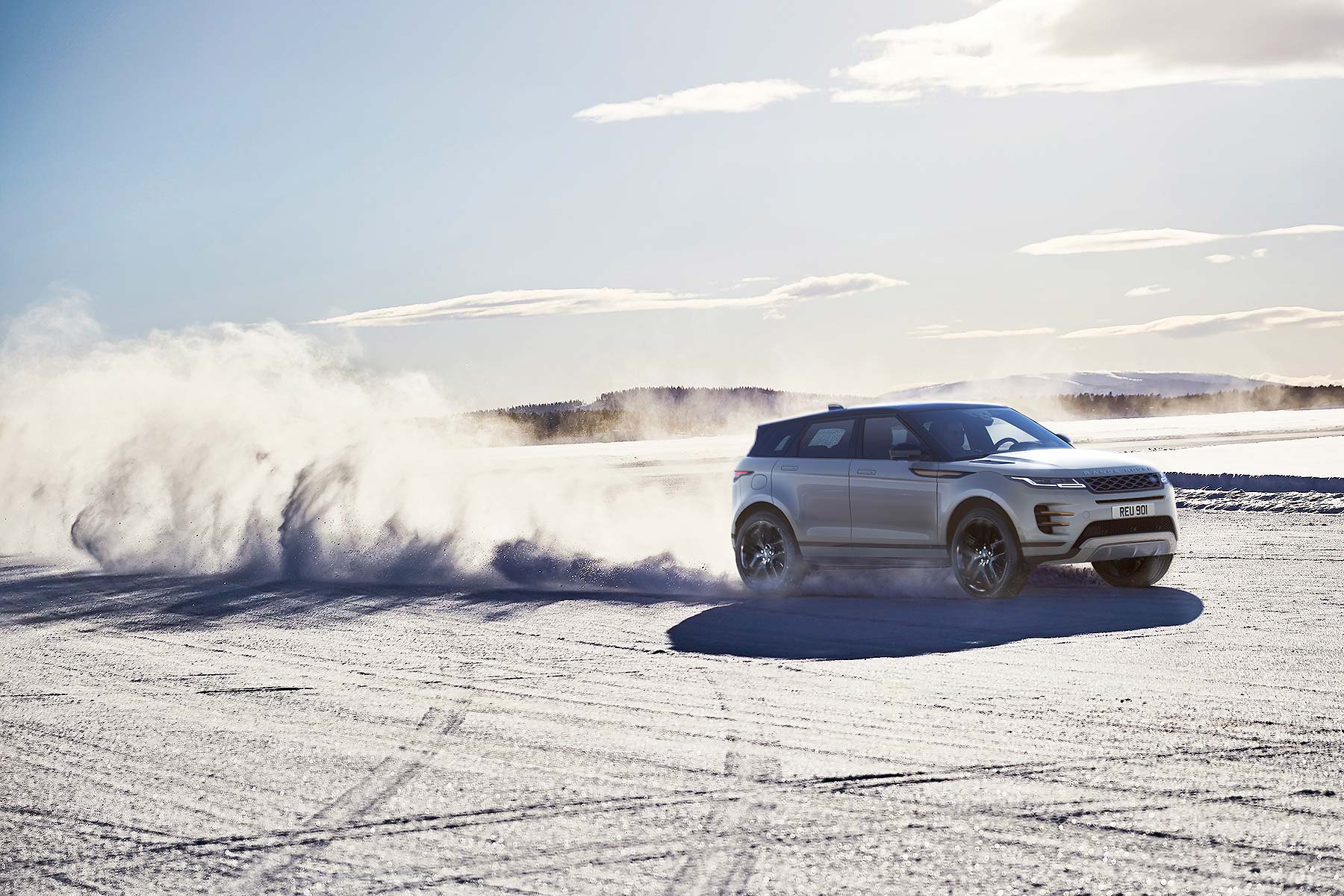
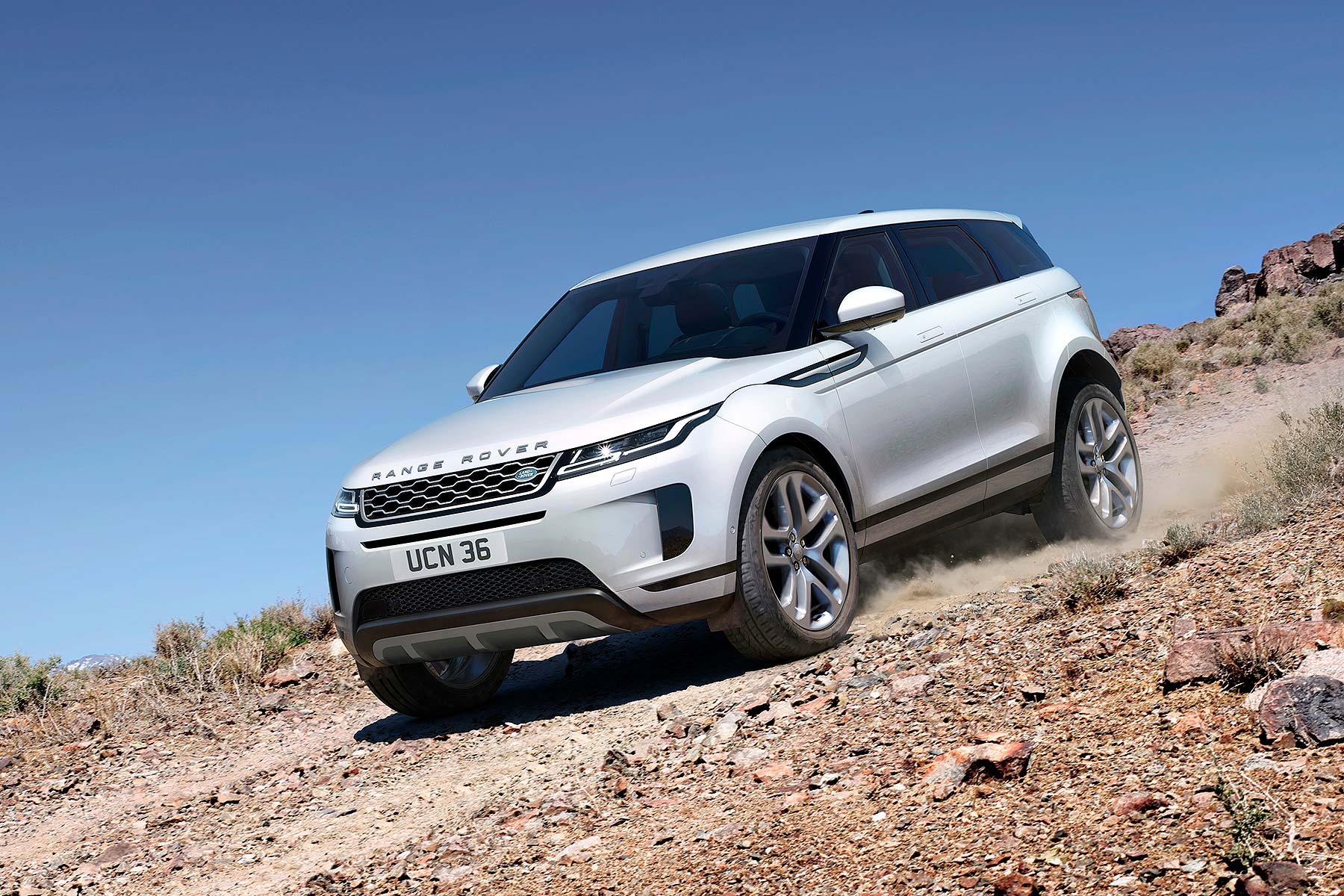
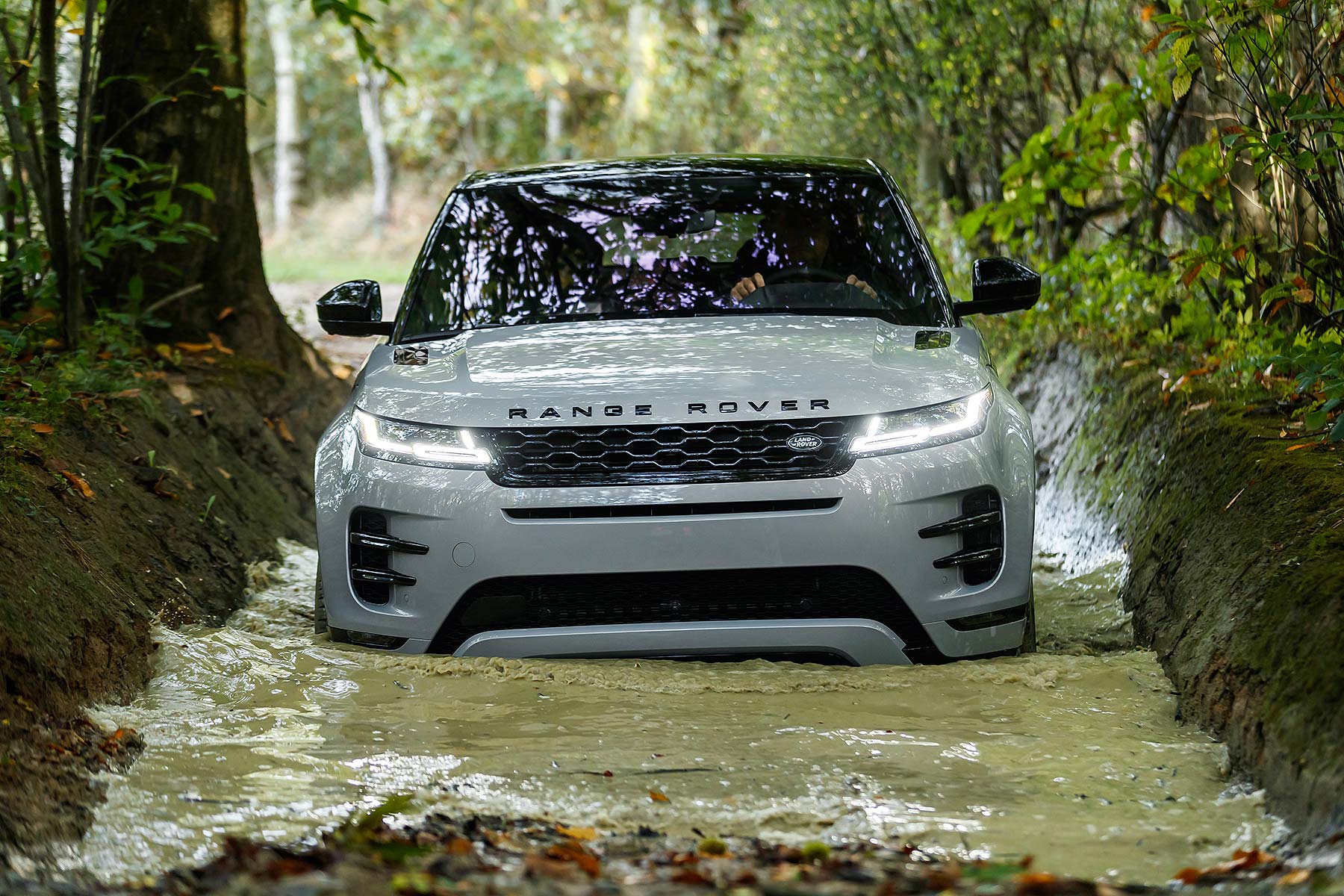
A Land Rover’s not a Land Rover if it can’t off road better than anything in its class. The Range Rover Evoque will stand out from its myriad rivals by being the king of the mud (and, with 100mm of wading depth meaning it can now drive through 0.6 metres of water, king of the river too). Wade Sensing is optional and can tell how deep the water up ahead is before you drive into it.
It has 212mm of ground clearance, Land Rover’s clever ‘surface-sensing’ Terrain Response 2, and Active Driveline which precisely distributes drive between all four wheels. Driveline Disconnect means that although most are all-wheel drive, the rear wheels can be disconnected automatically on straight roads to lessen drag and improve economy.
Every new Evoque also features Hill Descent Control, All Terrain Progress Control (Land Rover’s novel off-road cruise control), Low Traction Launch (to maximise pull-away grip when it’s slippery) and Hill Launch Assist that will stop you rolling back when driving up the side of a mountain.
New Range Rover Evoque: first impressions
We were given an excusive preview of the new Range Rover Evoque, with a briefing by Gerry McGovern himself. As the covers were pulled off, what emerged was… clearly an Evoque. There are no big surprises here, certainly not at first glance.
The surprises will come when you spend time with it. It’s clearly a much higher quality machine for starters, with a far more premium appearance. It will now sit perfectly happily along the full-size, £100,000 Range Rover. There’s no discernible difference in quality.
Land Rover has sweated on the details, narrowing the panel gaps, decluttering the design and giving the surfaces a rich, lush appearance. With some clever new metallic colours (a ‘solid metallic’ called Nolita Grey that changes appearance three ways, anyone?), it will ooze showroom lustre.
The interior is a massive step on. It feels more upmarket and is much nicer to look at. High-definition, black-panel infotainment displays are consumer electronics quality, and the materials have, in places, watch-like detailing. Land Rover poached an interior designer from Bentley to make the new Evoque feel like a luxury product. It shows.
We even got behind the wheel for a brief drive. You can’t tell much from these things, of course, but the more open-plan interior felt roomier and more airy. The engine didn’t vibrate like the current diesel Evoque does, and it seems a lot quieter in there.
The objective was to show off the ClearSight gadgetry, and the Evoque’s obstacle course-crossing ability. We barely got above 5mph, but did prove its genuine Land Rover credentials.
More driving will reveal more. But we already think it’s safe bet to say the new Evoque might well have one of the nicest interiors in the small premium SUV sector…
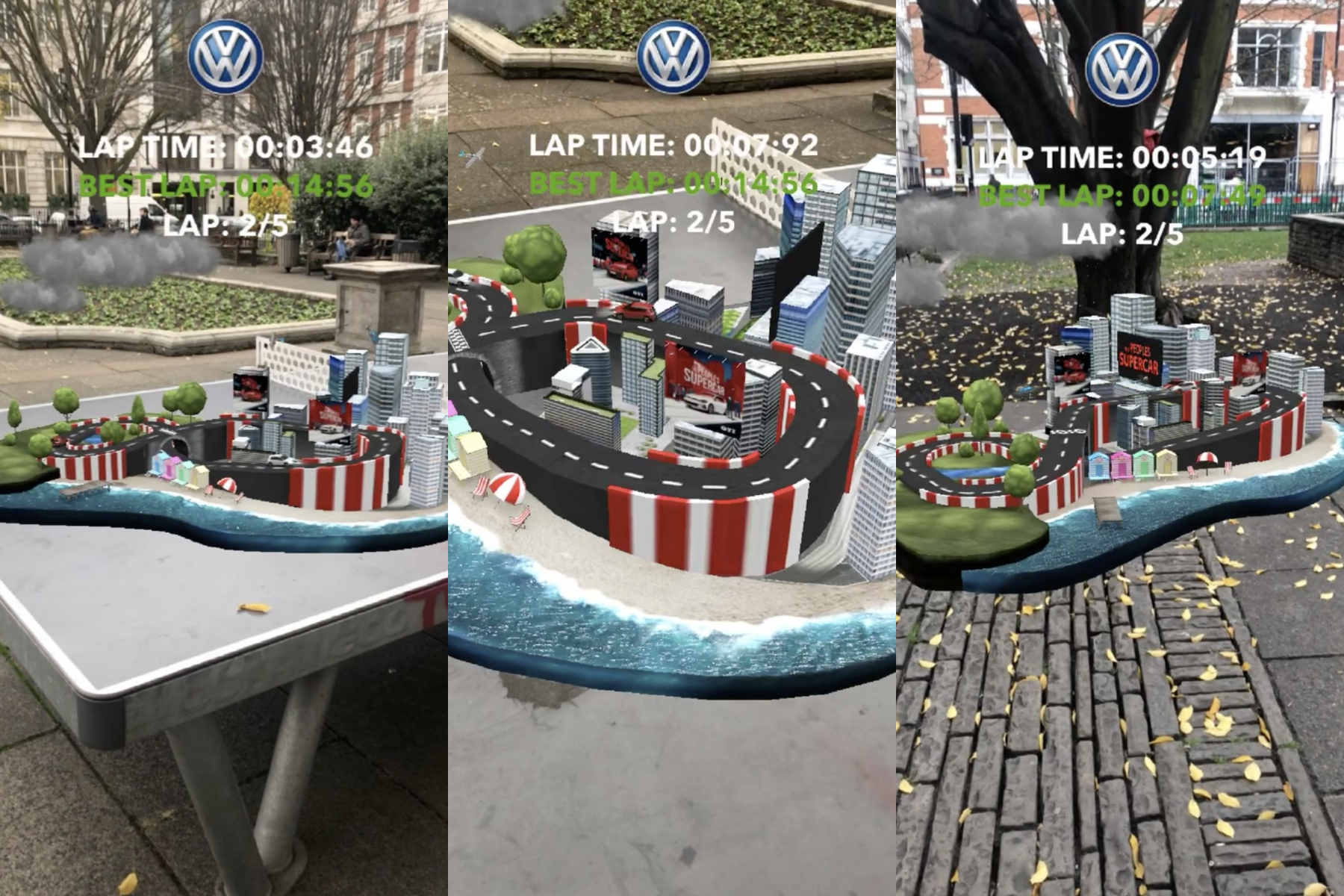
Volkswagen UK has partnered with Snapchat to create an augmented reality GTI racing game via a Snapchat lens.
The game features an island with a track on it, plonked onto whatever is in your viewfinder – hence the reality is augmented rather than virtual. It’s clever tech that sees little GTIs scooting around the virtual circuit.
The track itself is very Outrun, with beaches, forests and cities populating the scenery. The ‘driver’ makes their car go quicker by holding his or her finger on the screen. The longer they hold, the quicker it goes, although that won’t work so well on some of the circuit’s tighter bends. After the race, you can share your results with friends and compete for the best lap times.
This social media campaign is designed to appeal to everyone from normal drivers to petrolheads and is a part of VW’s GTI ‘People’s Supercar’ program. The creative agency behind the campaign apparently decided Snapchat was the best platform. Well, anything’s better than the dog ears and tongue, right? The GTI snap lens should be available from today, for the next month.
“We’re very excited to see how popular this innovative and fun project proves to be,” said Geraldine Ingham, head of marketing at Volkswagen UK.
“We know GTI is a much-loved part of Volkswagen’s appeal, and with this great new race track application we can bring the cars to a new generation of fans via their smartphones.”
Visitors to the 2018 LA Auto Show who love Volvo, at ease: you will be able to check out the firm’s latest cars at the final big motor show of the year after all.
It seems the company’s claim it is “to show nothing” is not all it seems. Yes, Volvo will indeed not have a single car on its stand during the LA Auto Show’s Automobility LA event.
But Automobility LA is actually a four-day trade and press gathering, held before the LA Auto Show.
When the doors open to the public on 30 November, Volvo cars and SUVs will be there, a spokesperson has confirmed to Motoring Research and will remain so until it closes on 9 December.
“Volvo Cars to show nothing at Automobility LA” is correct, therefore… but the cars will be on show in all their glory for the 2018 LA Auto Show itself.
Confused? You’re certainly not alone.
Besides, Volvo has past form for PR campaign red herrings. Many took its 2017 claim that every new car it launches from 2019 would be electric to mean it was going all-electric. In fact, it included plug-in hybrids in the mix (that’s electrified, rather than fully electric…).
And so its world-first boast to attend a motor show with “not a single car on the stand” is not quite as headline-grabbing as many think.
Bosses have still hyped up the event, which is admittedly a bold statement to make. “By calling the trade show Automobility LA, the organisers have recognised the disruption affecting our industry,” said Mårten Levenstam, responsible for product strategy at Volvo Cars. “We want to demonstrate that we got the memo and start a conversation about the future of automobility.
“So instead of bringing a concept car, we talk about the concept of a car. We will not win the ‘car of the show’ award this year, but we are comfortable with that. Because this is not a car show.”
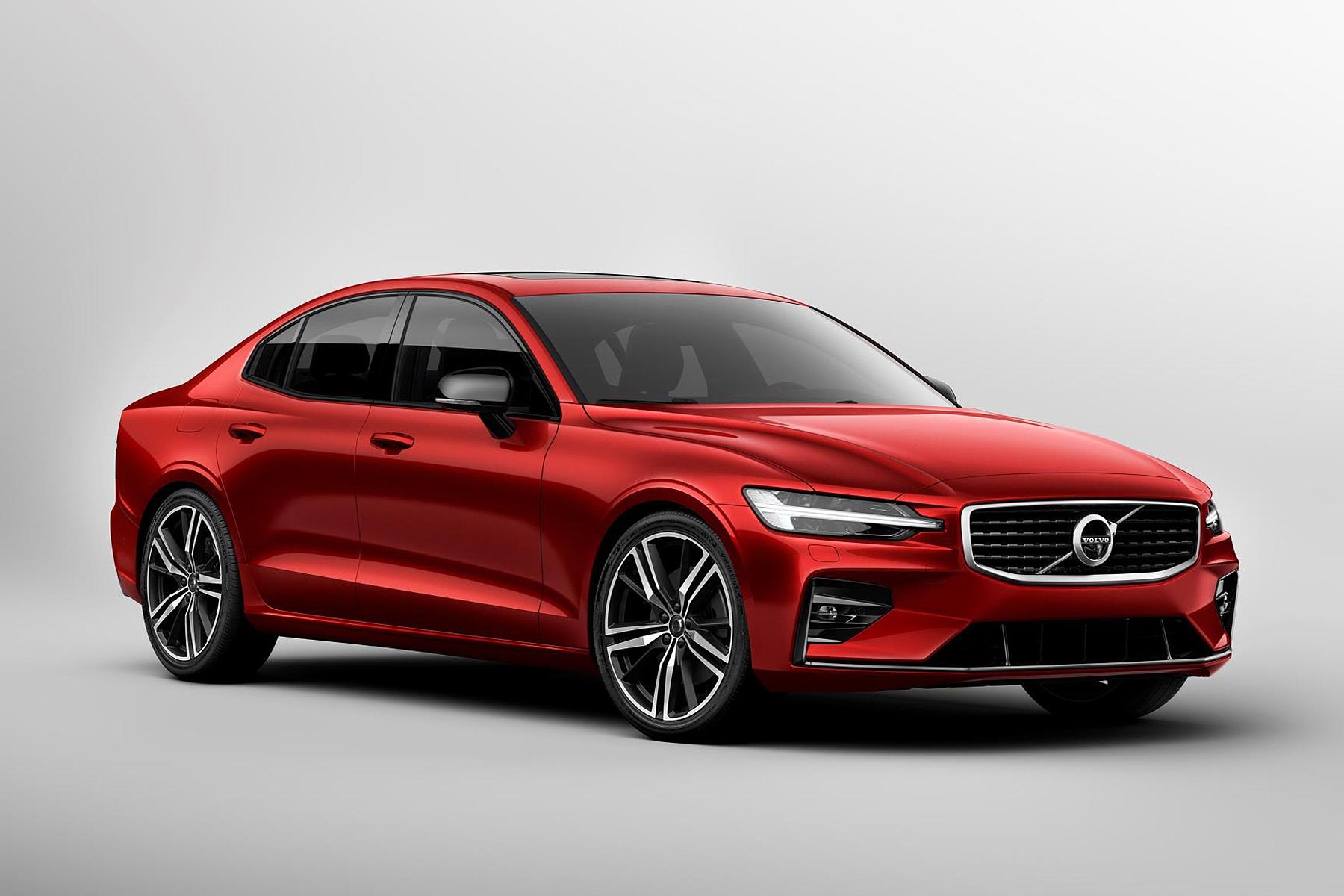
Volvo is expected to show the new S60 saloon at the LA Auto Show, fresh from its market launch in the summer. This is the first Volvo to be built at the firm’s brand new US factory in Charleston, South Carolina.
There’s another good reason to show cars at the 2018 LA Auto Show: Volvo confirmed earlier this year it will not be at the 2019 Geneva Motor Show next March.
The Lamborghini Aventador SVJ made its debut during Monterey Car Week in California and is the latest version of Sant’Agata’s flagship V12 supercar.
Production of the SVJ – or Superveloce Jota – is limited to 900 units, with power increased to 770hp, enough for it to accelerate to 62mph in just 2.8 seconds. Meanwhile, the SVJ 63 pays homage to Lamborghini’s founding year and just 63 will be built.
They’re the latest in a long line of extreme Lamborghinis and the headline act of our celebration of 30 of the best.
Lamborghini Huracan Performante
First, some housekeeping – this gallery is focused on road-going Lamborghinis rather than the wild concepts and crazy motorsport creations. In fairness, the Huracan Performante is at home on the road and the track, featuring active aerodynamics, forged carbon-fibre and a 640hp 5.2-litre V10 engine.
Little wonder it had set eight track records within a year of its official debut.
Lamborghini Terzo Millennio
We said we’d be steering clear of concepts, but we must make an exception for the Terzo Millennio. When Lamborghini has to ditch the internal combustion engine, it’ll need to embrace electrification, which is where this concept comes in.
We applaud the electric drivetrain and many of the systems, but the ‘Piloted Driving’ simulation is a tad concerning. Do you really want to be driven around Imola by a so-called ‘virtual expert’? Hmmm.
Lamborghini Veneno
Lamborghini called it a ‘racing prototype for the road’, although we see it more as otherworldly. How else could you describe the styling and the 220mph top speed? What a way to celebrate a 50th birthday.
Only five were ever made: two for Lamborghini and three for some seriously loaded customers.
Lamborghini Murcielago LP 670-4 SuperVeloce
Lamborghini dusted off the fabled SV moniker for the extreme Murcielago LP 670-4 SuperVeloce. Its 6.5-litre V12 developed 30 extra horsepower and Lamborghini put the SV on a weight-loss diet, saving 100kg. The 0-62mph time was 3.2 seconds and it would go on to reach a top speed of 212mph.
Lamborghini Egoista
You wouldn’t be surprised to see this roaming another planet in some outrageously over-the-top science fiction movie. Either that, or it would be driven by a laser-gun-wielding Will Smith as he attempts to save the planet from impending doom. The Water de Silva-designed Egoista isn’t exactly attractive, but it doesn’t lack presence either.
Lamborghini Huracan LP 620-2 Super Trofeo
As soon as Lamborghini launched the hardcore and rear-wheel-drive Huracan LP 620-2 Super Trofeo racer, we knew there’d be a road-going version driven through the rear wheels. The super-light race car weighs a mere 1,270kg and its V10 engine develops a magnificent 620hp. It also looks superb.
Lamborghini Sesto Elemento
The Sesto Elemento is Lamborghini at its best – bonkers and brilliant. The figures are astonishing. At 999kg, it weighs less than your average supermini. But your average supermini isn’t powered by a V10 engine developing 570hp. It means this carbon-fibre-enriched supercar will sprint to 62mph in 2.5 seconds.
Lamborghini Gallardo LP 570-4 Superleggera Edizione Tecnica
According to Lamborghini, this is the best Gallardo ever made, while Chris Evans said it was the most exciting and frightening road-legal car he had ever driven. As with most of the cars here, the figures are astonishing. A V10 engine developing 561hp, a top speed of 202mph and a 0-62mph time of 3.4 seconds.
Lamborghini Countach
It needs no introduction. For many children growing up in the 1970s and 1980s, this was the pin-up car of choice. The ultimate Countach was the Quattrovalvole or QV, complete with its 414hp 5.2-litre engine. It’s all about those doors. It’s one of the most famous supercars ever created.
Lamborghini Aventador LP 750-4 SuperVeloce
Launched at the 2015 Geneva Motor Show, the Aventador LP 750-4 SuperVeloce is a stripped back and seriously hardcore race car for the road. Free of soundproofing or needless accessories, the SV isn’t for the faint-hearted. Four-wheel drive just about manages to keep this V12 monster on the road.
Lamborghini Reventon
By today’s standards, the aeronautical-inspired Reventon looks quite tame. Only 20 of these £840,000 ‘fighting bulls’ would be made, although Lamborghini built one extra for its museum. Well, you just would, wouldn’t you?
Lamborghini Aventador LP 700-4 Pirelli Edition
This isn’t the wildest Lamborghini you’ll find here, it’s just that we really like the styling. It was built to celebrate the partnership between Lamborghini and Pirelli. When celebrations involve 700hp and 0-62 times of 2.9 seconds, we’re more than happy to raise a glass.
Lamborghini LM002
Why have a Bentley Bentayga when you can have a Lamborghini LM002? Back in 1986, the ‘Rambo Lambo’ was the first four-wheel drive car the Italian firm had ever built and it was powered by a V12 engine. It was influenced by the equally bonkers Cheetah: a military prototype of 1977.
Lamborghini Gallardo LP 570-4 Spyder Performante Edizione Tecnica
All the benefits of Alcantara and carbon-fibre, without a roof. The usual figures apply: 201mph, 3.9 seconds to 62mph and 561hp.
Lamborghini Aventador J
You won’t need to look too closely to spot the Aventador J has no roof. Or windows. But you won’t be able to see that it doesn’t have air conditioning. Or a radio. Yet despite all this, Lamborghini sold the one-off J for $2,800,000 (£1,840,000). In case you’re wondering, J stands for Jota. And we’ll come to that a little later…
Lamborghini Gallardo LP 550-2 Balboni
The rear-wheel-drive Huracan has something in common with the Gallardo LP 550-2 Balboni, not least because – at the time – it was the first rear-wheel-drive Lamborghini since the Diablo SV. It was built as a tribute to former test driver, Valentino Balboni, who insisted on rear-wheel drive. Good man.
Lamborghini Asterion LPI 910-4
No, the Asterion concept of 2014 isn’t extreme in the Lamborghini sense, but it was unexpected. Thanks to three electric motors and a 5.2-litre V10 engine, the Asterion plug-in hybrid developed a claimed 897hp. The CO2 emissions were quoted at a rather un-Lamborghini-like 98g/km.
Lamborghini Miura Jota
You can thank Bob Wallace, Lamborghini’s legendary chief test driver, for the Miura Jota’s existence. He felt the Miura had unfulfilled potential for the race track, which is how the one-off Jota of 1970 was born. Sadly, the car, quite literally, crashed and burned on the outskirts of Italy, but a selection of enlightened customers ensured a handful of Miura Jotas were actually built.
Lamborghini Diablo GT-R
Just look at it. Surely the GT-R is the best looking Diablo ever built? The road-going Diablo GT arrived in 1999, but the GT-R followed soon after. Only 40 units were built, with each one featuring an integrated roll cage, a huge rear wing and an uprated 6.0-litre V12 engine. Top speed was 216mph.
Lamborghini Marzal
We’re trying to keep this feature free of concepts, but we can’t let the stunning Marzal of 1967 pass us by. Bertone created a four-seat masterpiece, with ‘gullwing’ doors made of glass. Ferruccio Lamborghini wasn’t impressed, saying: “a lady’s leg would be there for all to see”. Quite.
Lamborghini Gallardo LP 570-4 Super Trofeo Stradale
Making its debut at the 2011 Frankfurt Motor Show, only 150 units of the Gallardo LP 570-4 Super Trofeo Stradale were ever made. As a road-going version of the Super Trofeo race car, it was typically hardcore, with an adjustable rear spoiler offering three times the aerodynamic load of the standard LP 560-4.
Lamborghini Veneno Roadster
Wait, haven’t we see the Veneno already? Well yes, but this is the topless version. Thanks to the strengthening required due to the loss of the roof, the Roadster is slightly heavier than the ‘standard’ Veneno, but its performance figures remain the same. A total of nine were built.
Lamborghini Walter Wolf Countach
The Walter Wolf specials are legendary within Countach circles. Walter Wolf was a Canadian who owned his own F1 team and even considered buying Lamborghini. Being a very rich man who had bought several Lamborghinis in his time, Wolf had enough influence to convince the company to build three personal specials. Walter Wolf, we salute you.
Lamborghini Estoque
Sure, it’s not wild. It’s not even extreme. In fact, it’s rather elegant. But the idea of a modern Lamborghini four-door saloon in the style of an Aston Martin Rapide or Porsche Panamera is rather appealing. We can’t decide if the Lamborghini nose works on a four-door super-saloon. What do you think?
Lamborghini Jarama
The Jarama is so 1970s. Whatever your thoughts on the Lamborghini Jarama, you can’t deny it has got bucket-loads of presence. It was one of Ferruccio Lamborghini’s favourites, so who are we to argue? Besides, we have a soft spot for the V12-engined curio.
Lamborghini Pregunta
You didn’t think we’d miss this, did you? The Pregunta was based on the Diablo and was powered by the same V12 engine, giving it a claimed top speed of 207mph. Carrosserie Heuliez of France built the car, which was painted in the same colour as the Dassault Rafale fighter jet.
Lamborghini Miura SVR
According to the good people of Sant’Agata Bolognese, the Miura SVR is “one of the most astonishing Lamborghinis ever built”. It’s a one-off, inspired by the Miura Jota and created by the factory at the behest of German importer, Herbert Hahne. For 40 years, it lived in Japan, before it was restored by the talented folk at Lamborghini Polo Storico.
Lamborghini Urus
While not extreme by Lamborghini’s standards, the Urus is arguably the wildest SUV on the planet. If you’re going to cross a continent with the family and their luggage, what better way than in a Lambo with a 650hp 4.0-litre V8 engine and a 189mph top speed. You might not like it, but it’s thanks to the Urus that Lamborghini will be able to carry on producing extreme supercars.
Lamborghini Diablo SVR
We conclude our gallery with the first Lamborghini officially entered into racing by the factory. The SVR was based on the ‘standard’ Diablo SV and stripped back to race spec, including the removal of the headlights and the fitment of a huge carbon-fibre rear wing. When the racing was over, some SVRs were converted for road use.

 The new Bentley Continental GT Convertible is an open-top car that’s so refined, Bentley says it’s as quiet inside as the coupe version of the old Conti GT. It’s also a 207mph drop-top four-seater that comes with a tweed fabric roof.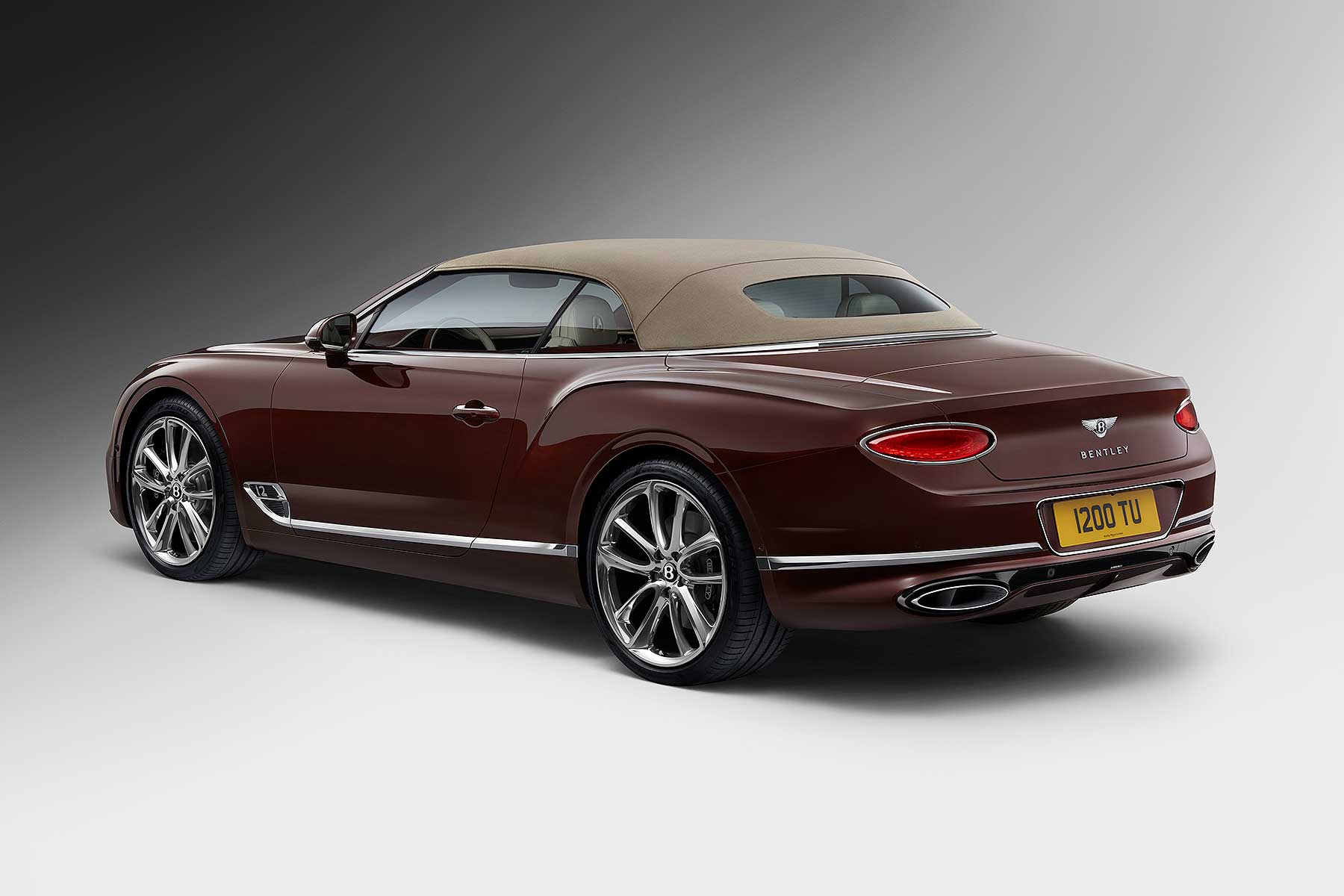








 The
The 
 The all-new Range Rover Evoque has been revealed at a glitzy launch event in East London. A careful evolution of the original car, Land Rover says it delivers exactly what customers asked for: make it like the original, only better.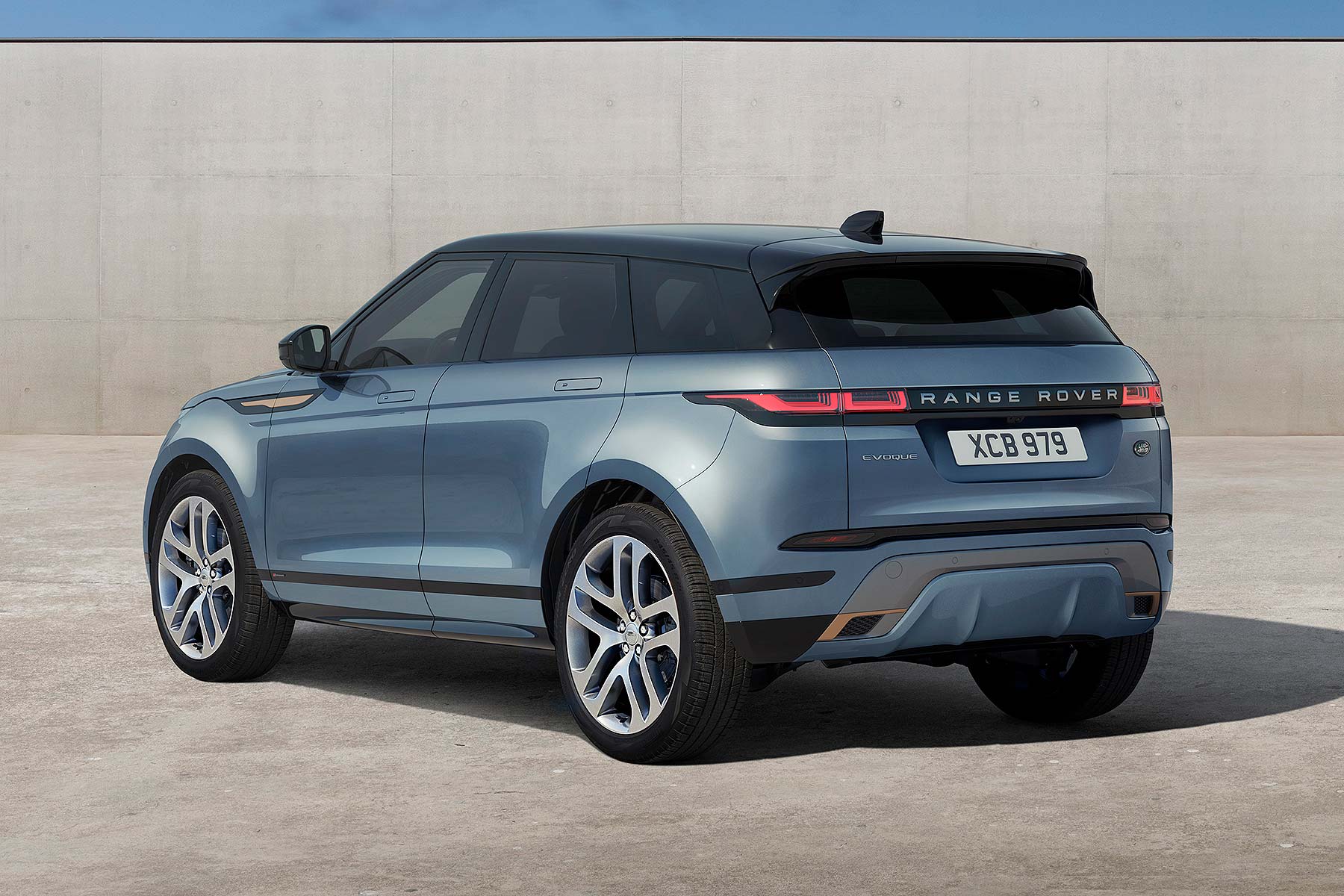

 Visitors to the
 The Lamborghini Aventador SVJ made its debut during Monterey Car Week in California and is the latest version of Sant’Agata’s flagship V12 supercar.


