Transport for London has modified 18 pedestrian crossings to prioritise those on foot over vehicles.
TfL said the crossings have been programmed to show a continuous ‘green person’ signal until a car, van or lorry approaches. The change is part of a plan to ‘help make the capital’s transport network even more sustainable and support a green recovery from the coronavirus pandemic’.
According to TfL, crossings will show the green light until a vehicle is detected, which makes it easier for people to cross the road and enables more walking journeys to be completed.
The number of people walking in London has increased during the pandemic. At one point last year, the number of journeys made on foot increased from 35 percent to almost 50 percent.
Although just 18 pedestrian crossings use the new system, it is likely to be rolled out to other locations in future. A TfL spokesperson told the Telegraph it intends to “increase the number over the coming years”.
‘The world’s most walkable city’
“Walking has so many benefits – it doesn’t just enable us to get from A to B, but also improves our mental and physical health,” said Will Norman, London’s walking and cycling commissioner.
“We know that safety is a key concern for people walking around London, and giving pedestrians priority is a powerful way of putting them first and making it easier to cross London’s roads.
“By combining this with creating extra pavement space and ensuring roadworks are carried out in a way that doesn’t disrupt Londoners, we will make our city the world’s most walkable and eradicate collisions on our streets.”
Nick Owen, TfL’s head of network performance, added:“We know that walking is a brilliant way for people to make local journeys, boosting activity levels while cutting the number of car trips and the associated congestion and pollution they can cause.”
The government is to launch a consultation on proposed changes to car parking charges which it said will ‘help deliver a fair, proportionate and consistent system across the country’.
The government wants to introduce a new Code of Practice for parking operators to make the system fairer for drivers.
At present, private parking charges are capped at £100 by the industry, regardless of how serious the breach of terms and conditions.
However the government is proposing a tiered system for parking charges, based on the severity of the offence.
The consultation will run for four weeks during the summer.
The government said it ‘understands that this will mean some changes for the private parking industry and will carefully consider all consultation responses when making a final decision’.
“This government is making life easier for motorists as we get back to life as usual and build back better from the pandemic,” said Local Government Minister, Luke Hall.
“I encourage motorists and parking operators to share their views on our proposed Parking Code of Practice.
“These changes will bring in a fairer system for drivers, creating a simplified appeals process and curbing excessive charges for millions of motorists.”
Getting your hands on a second-generation Ford GT is no easy feat, but being a successful racing driver is likely to help.
Ford famously announced that initial customers for the GT would be hand-selected by the company. Those who were deemed to be the best ambassadors for the brand were allowed to buy a GT.
Being an experienced IndyCar racer, and the son of a former Indy 500 winner, meant Graham Rahal clearly met Ford’s criteria.
The car he bought is currently advertised for sale on the Bring a Trailer auction website.
Shades of Deep Purple
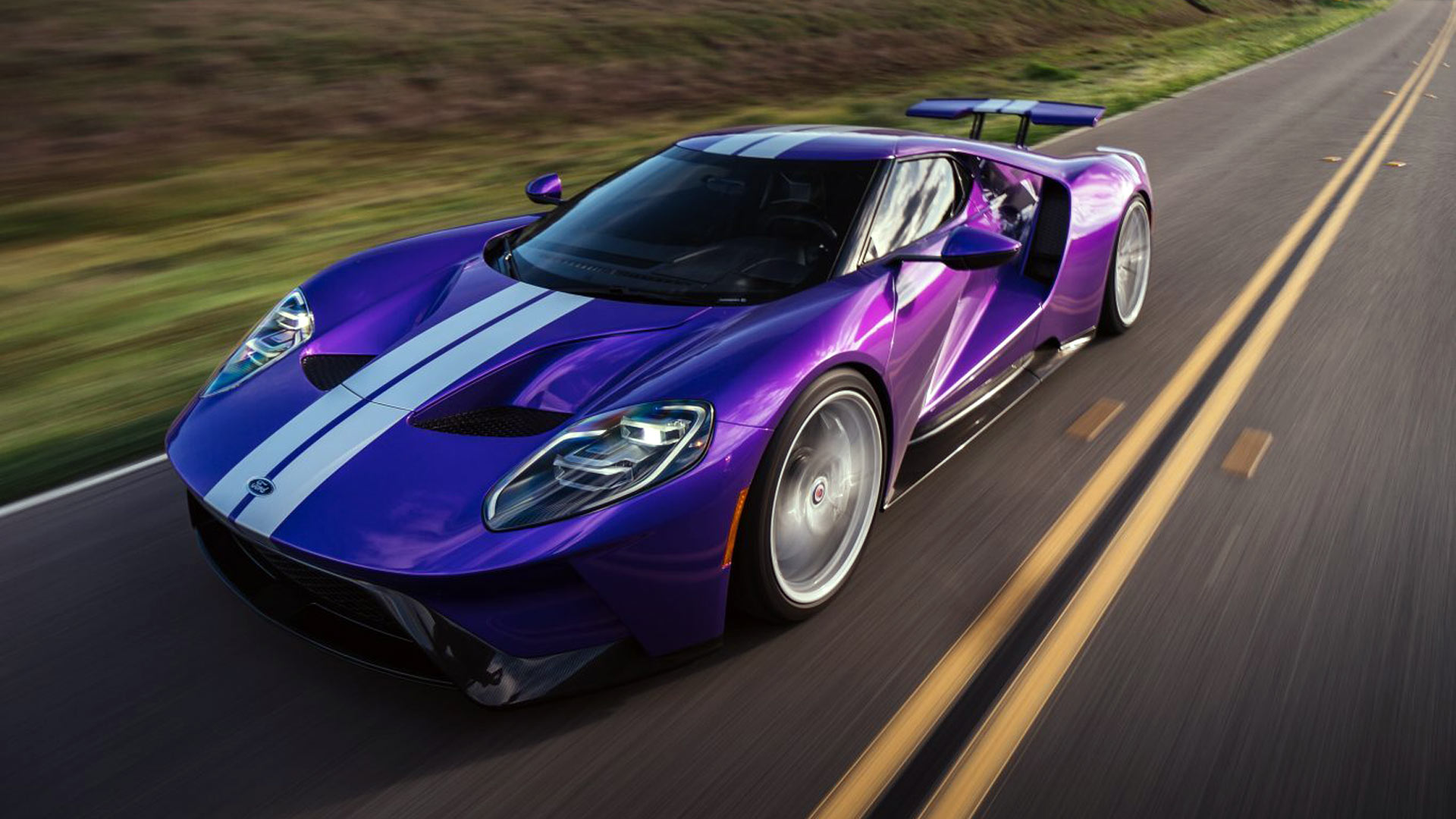
Rahal did not hold back when ordering his 2018 Ford GT. From a standard list price of $450,200, the 2011 24 Hours of Daytona winner spent an additional $131,500 on optional extras.
Accounting for $45,000 of that total is the special paint color. The custom order Deep Purple metallic hue is said to be derived from the Viola Parsifae color, used by Lamborghini.
A further $10,000 was spent on the Ingot Silver stripes, while the exposed gloss carbon fiber exterior trim added $15,000.
Highway Star
The 3.5-liter EcoBoost V-6’s 647 hp and 550 lb-ft of torque are a little down on Rahal’s usual weekend ride, but still allow a top speed in excess of 215 mph.
A titanium exhaust system, adding a further $10,000 to the price, was picked to save weight and add more aural drama.
Carbon ceramic Brembo brakes, with silver-painted calipers were fitted at the factory. Rahal has installed a set of staggered HRE alloys, although the original $15,000 carbon fiber wheels will be supplied.
Machine Head
Compared to the exterior, the cabin of the GT is slightly subtler, but no less expensive. The Dark Energy interior finish cost $30,000, and sees ebony leather wrapped around carbon fiber bucket seats. Mounts for racing harnesses were a relative bargain at just $600.
Even more affordable was the $250 spent to wrap the two-spoke steering wheel in leather. Much like an IndyCar, the GT’s steering wheel is responsible for controlling numerous car functions. It also has black aluminum paddles for the seven-speed dual-clutch transmission.
Purchased by Rahal in October 2018, the car was sold to a new owner in September 2020. The GT was then reacquired by the Indiana-based Graham Rahal Performance dealership in 2021.
Speed King
Compared to some second-generation Ford GTs, this particular car has clocked up more miles than usual. The odometer currently shows 1,500 miles, with recent servicing work undertaken in September 2020.
Opportunities to own a Ford GT are still relatively rare, and buying one in this specification is likely to be a unique chance. This has helped push bidding on the car to already deep into six figures, with more to follow.
The auction for the GT closes on Friday, 28 May, coinciding with Carb Day for the 2021 Indy 500. We imagine Graham Rahal will be focussing on this final practice runs, rather than checking the bids, though.
Ahead of the start of a new season in June, the all-female W Series has confirmed it will be broadcast live on Channel 4 throughout 2021.
The announcement ensures that the groundbreaking single-seater championship will remain free-to-air for UK fans.
During the inaugural 2019 season the W Series was, after football, the most-watched women’s sport in the UK. The 2020 season was cancelled due to the Coronavirus pandemic.
Continuing to break down barriers
For the 2021 season, the presenting and commentary team for the W Series has been expanded. With an eye on equality, the team is made up of women and men in equal numbers.
Lee McKenzie, David Coulthard, and Ted Kravitz all return from the inaugural 2019 W Series.
They are joined by Anna Woolhouse as presenter, Amy Reynolds as a pitlane reporter, and Naomi Schiff as an analyst. Schiff competed in the inaugural W Series, and has represented the championship as Diversity and Inclusion Ambassador.
Alex Jacques, will be the lead commentator. This is an extension of his lead commentary role on Channel 4’s Formula 1 coverage. He will be joined by Billy Monger, who was a race pundit for the W Series Esports League in 2020.
Creating ‘more visible role models‘
Such a substantial TV lineup reflects the growing importance of the W Series. The 2021 season will see all eight rounds featured as support races for the Formula 1 World Championship.
Channel 4 will air all qualifying sessions and races for the W Series live, with on-demand access through the All 4 service.
The 2021 W Series starts on 26 June, with the opening round at the Red Bull Ring in Austria
W Series CEO, Catherine Bond Muir, commented that: “I am delighted that W Series’ founding broadcast partner, Channel 4, has reinforced its commitment to showcasing women’s sport and our talented racing drivers.”
Muir added: “Live free-to-air motorsport coverage is rare, but our partnership with Channel 4 is a key part of W Series’ plan to create more visible role models to inspire girls and women to be a part of motorsport, whether that is on track, on screen or behind the scenes, and the expertise and insight provided by our brilliant commentary team will be instrumental to our efforts.”
A cross-party group of MPs has launched a survey to determine what is important to motorists when purchasing an electric car.
It forms part of an inquiry by the Transport Committee looking into zero-emission vehicles and road pricing, including the infrastructure that will be needed to make the transition to zero-emission vehicles viable.
The survey could also guide the government with finding ways to replace the income lost from fuel and excise duty, such as the introduction of road pricing.
It includes questions on issues such as finance, charge points and electric car range, plus there’s also an opportunity to submit a question about electric vehicles to the Department for Transport.
The Committee will choose questions to put directly to the minister during the final evidence session of the inquiry.
The survey will run until 2 June 2021 and can be found here.
Both cars also get top scores for child occupant protection and ‘provide a full array of driver assistance systems to help prevent accidents in the first place’.
Euro NCAP did add that the GV80’s pedestrian protection is ‘some way behind that of the G80’. However it was still enough to secure a five-star rating.
Elsewhere, the third-generation Citroen C4 scored four stars, with Euro NCAP saying its performance in adult occupant protection, pedestrian protection and safety assistance failed to break the five-star threshold.
Euro NCAP also performed tests on the BMW 4 Series coupe and convertible models, wawarding them a five-star rating. The cars are largely based on the BMW 3 Series and Euro NCAP said some results were carried over, while in other areas extra tests had to be completed ‘to ensure that the safety is at the same 2019 five-star level’.
“These remain difficult times for the car industry, with the pandemic and semiconductor shortage presenting big challenges,” said Michiel van Ratingen, secretary general of Euro NCAP.
“Still, Genesis has managed to bring two cars to the market that offer excellent all-round robust safety performance. Citroen chalked up a respectable four-star rating for the new C4 models, but still left us with the impression that with some more careful engineering it could have been much better.”
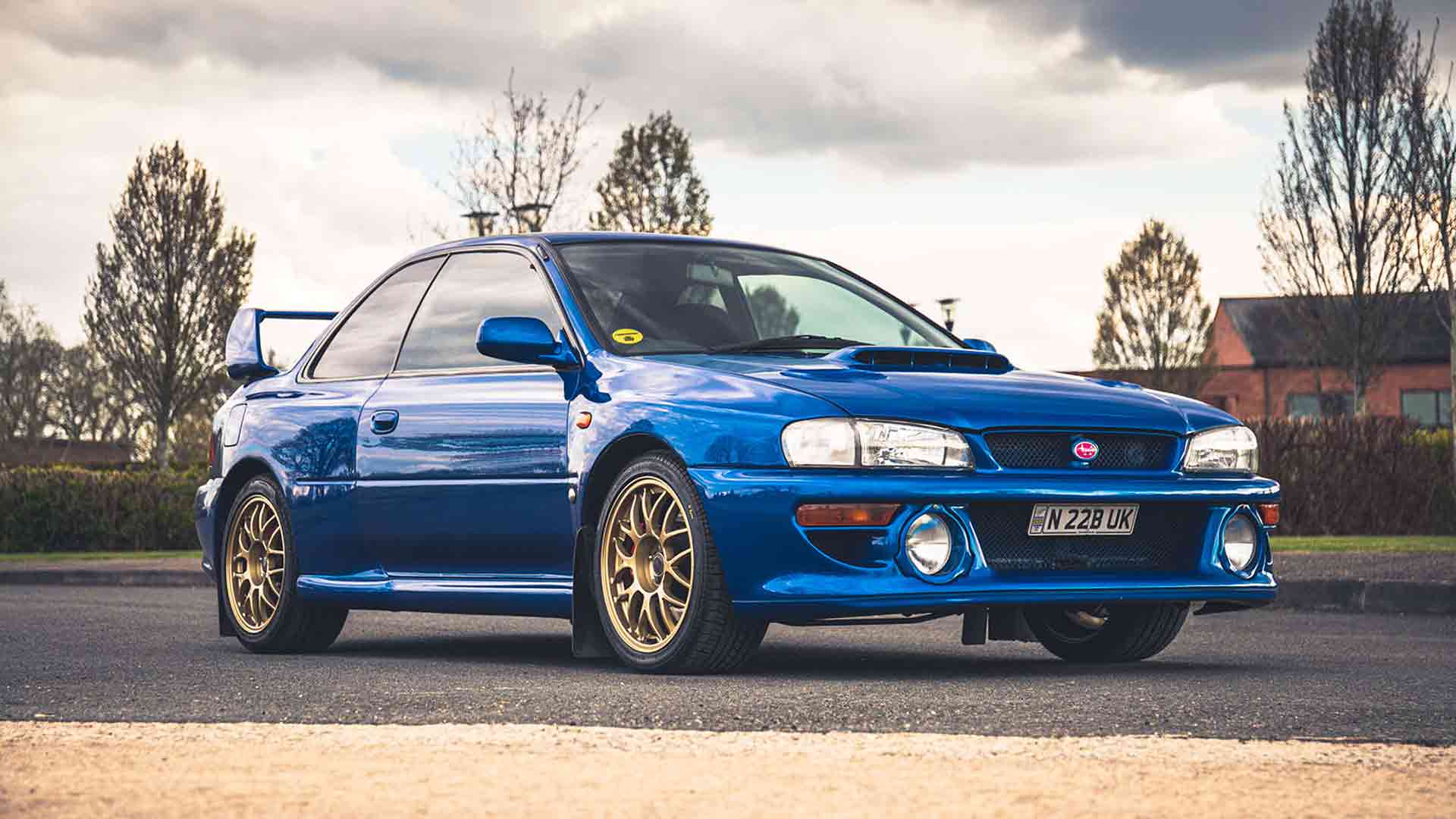
A two-owner Subaru Impreza 22B STI Type UK has sold at auction for an astonishing £171,000, setting a new UK record.
The Silverstone Auctions May Sale saw the ‘ultimate Subaru road car’ entered for the 22 May event, immediately attracting huge interest when bidding opened.
One of just 16 official Subaru UK cars, the record-breaking 22B is believed to be the 16th car, and one of just 10 still remaining.
The vendor had owned the car for the last 18 years, featuring it in magazines and on TV – and winning high-profile awards with it.
This is not a museum-piece car: it has 49,000 miles on the clock and two owners in the logbook.
However, Silverstone Auctions said the 1999 22B is very well regarded within Subaru circles and is a ‘rare, special and hugely coveted’ car.
It still carries the original car-specific aluminium-covered information booklet, hand-signed by the sales director of Subaru UK, plus the ‘special instruction’ booklet and model-specific floor mats.
Also included are the original service booklet, manuals, two original keys and two original Subaru alarm fobs. The registrtion ‘N22BUK’ is also included.
It has a bulging service history and a few choice upgrades such as a special gearbox, upgraded front brakes and bespoke exhaust – with all the original parts included in the sale for originality.
Given how the original sale price in 1999 was £39,950, today’s price of £171,000 represents quite a return for “the absolute ‘Holy Grail’ of these already very special rally cars for the road”.
Google Street View has taken delivery of its first pure electric car, with Jaguar’s I-Pace taking the crown as the landmark Google Maps-mapping EV.
What’s more, the zero-emissions Jaguar will also be used to measure air quality, thanks to a battery of onboard sensors.
It is part of a 12-month ‘Air View Dublin’ project in the Irish capital, with scientists aiming to create detailed maps of street-level air pollution.
“The integration of Google Street View technology with the all-electric Jaguar I-Pace is the perfect solution for measuring air quality,” said JLR’s Elena Allen.
“We are delighted to support this project as it aligns with our own journey to becoming an electric-first business and achieving net zero carbon by 2039.”
The I-Pace’s specialised mobile air sensors will measure NO2, CO2 and fine-particle PM2.5 – while also helping update Google Maps.
The Street View camera is mounted on the roof, and JLR engineers have fitted new rear window glass to incorporate the wiring. The dashboard has also been modified to incorporate the Google Street View controls.
“Air quality is a serious concern, especially for cities, but there is a gap in terms of localised data and insights available to both decision makers and citizens,” said Google’s Paddy Flynn.
“As part of this project, we’re using technology to capture this important data and make it accessible so that, together with Dublin City Council, we can drive solution planning.”
The Historic and Classic Vehicles Alliance said it fears ‘complex new rules’ around exporting and importing cars and parts to and from the EU, plus ‘widespread misunderstanding of the environmental impact of vintage motoring’, are damaging owners’ confidence and enthusiasm.
It has called upon the government to introduce new legislation to help grow the sector.
The group claimed annual turnover, including international trade, is estimated at £18.3 billion. The three-million-strong British classic vehicle fleet is valued at over £12 billion, while annual tax revenue generated for the exchequer is close to £3 billion.
The Historic and Classic Vehicles Alliance says there is a misconception surrounding classic vehicle emissions, which have a ‘relatively modest impact on the environment’ compared with modern cars.
On average, classic vehicles are driven 16 times a year and cover just 1,200 miles during that period, which equates to 20 percent of the CO2 emissions produced by a computer and a mobile phone during the same time.
‘A great British success story’
The organisation says it will aim to ‘educate public, politicians and regulators on environmental issues’.
It adds that while the industry is respectful of the green agenda, it argues that restoration of classic vehicles ‘is in fact the epitome of sustainability’ because it is all about prolonging the life of great pieces of craftsmanship, rather than surrendering to built-in obsolescence.
“Our sector is a great British success story and has been for decades,” said HCVA director – and sales manager at Silverstone Auctions – Harry Whale.
“But it’s in serious jeopardy, and may not survive to continue providing opportunities for future generations if we don’t act now. In a world of mind-boggling bureaucracy, with environmental and other legislation looming, we need to ensure the voice of the industry and owners is heard and understood by regulators and those in power.
“We’ll work hard for the whole sector. We’re taking the initiative now to address current challenges, clear up confusion and grasp opportunities to find solutions. These problems span the world and we’re determined to take a long-term view as we campaign to secure the future.”
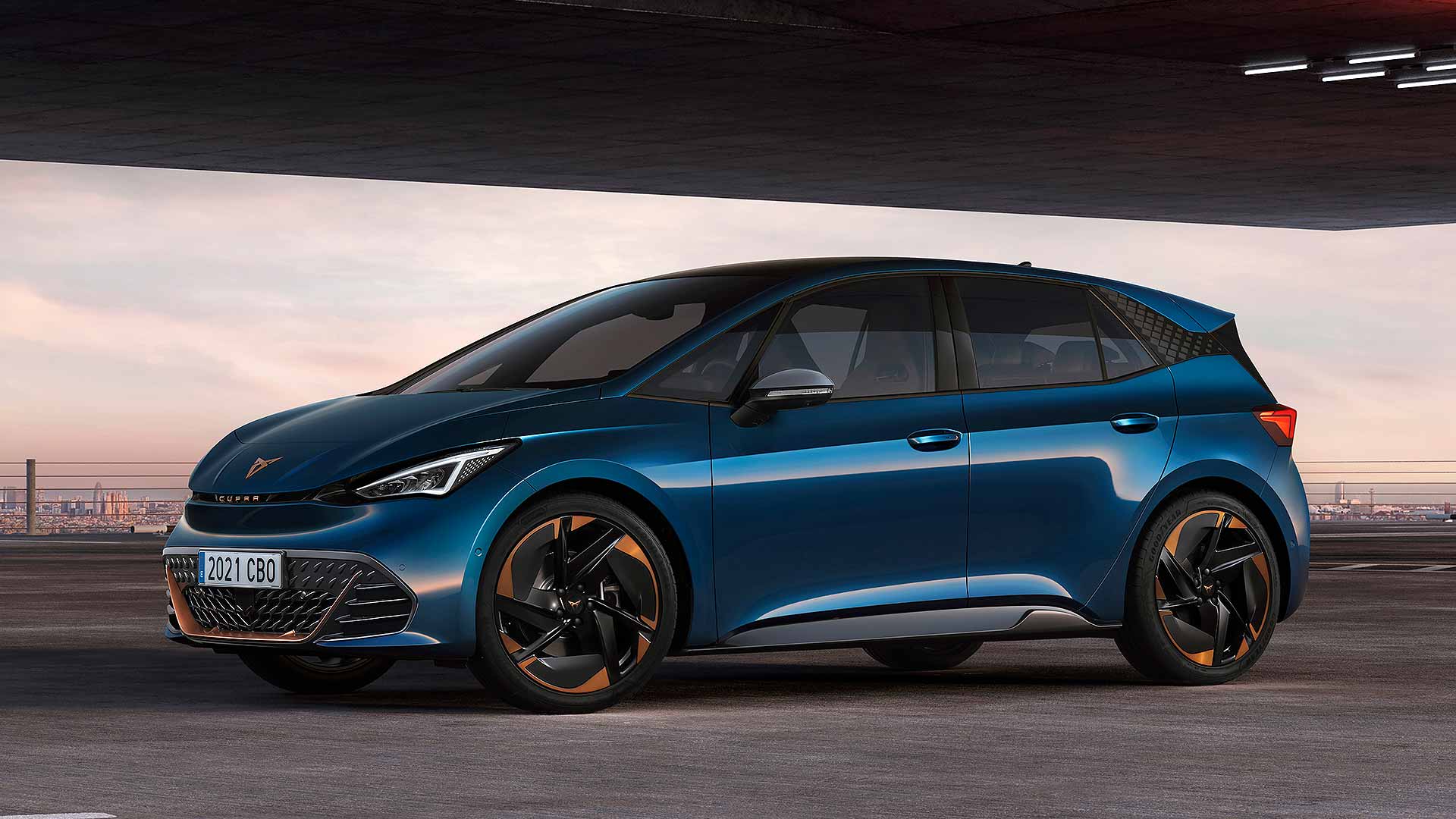
The Born is Cupra’s second standalone car – i.e. not a reworked Seat – and its first pure electric model.
Derived from the Volkswagen Group MEB platform that underpins the VW ID.3, Skoda Enyaq and others, the Cupra is a sportier interpretation of the theme – and capable of 0-62mph in as little as 6.6 seconds.
The biggest of four battery options allows a range of up to 335 miles on a single charge. Even the most affordable version has a range of over 200 miles.
Cupra says the Born will be the first model from its growing range (which now includes the Formentor, Leon and Ateca) delivered to customers as ‘net CO2 neutral’. Renewable energy is used during production and remaining emissions are offset by environmental investments elsewhere.
Described as ‘the perfect match between electrification and performance’, production of the Cupra Born will begin in September, with UK deliveries scheduled for early 2022.
Prices are yet to be confirmed, but think upwards of £30,000…
Cupra Born design
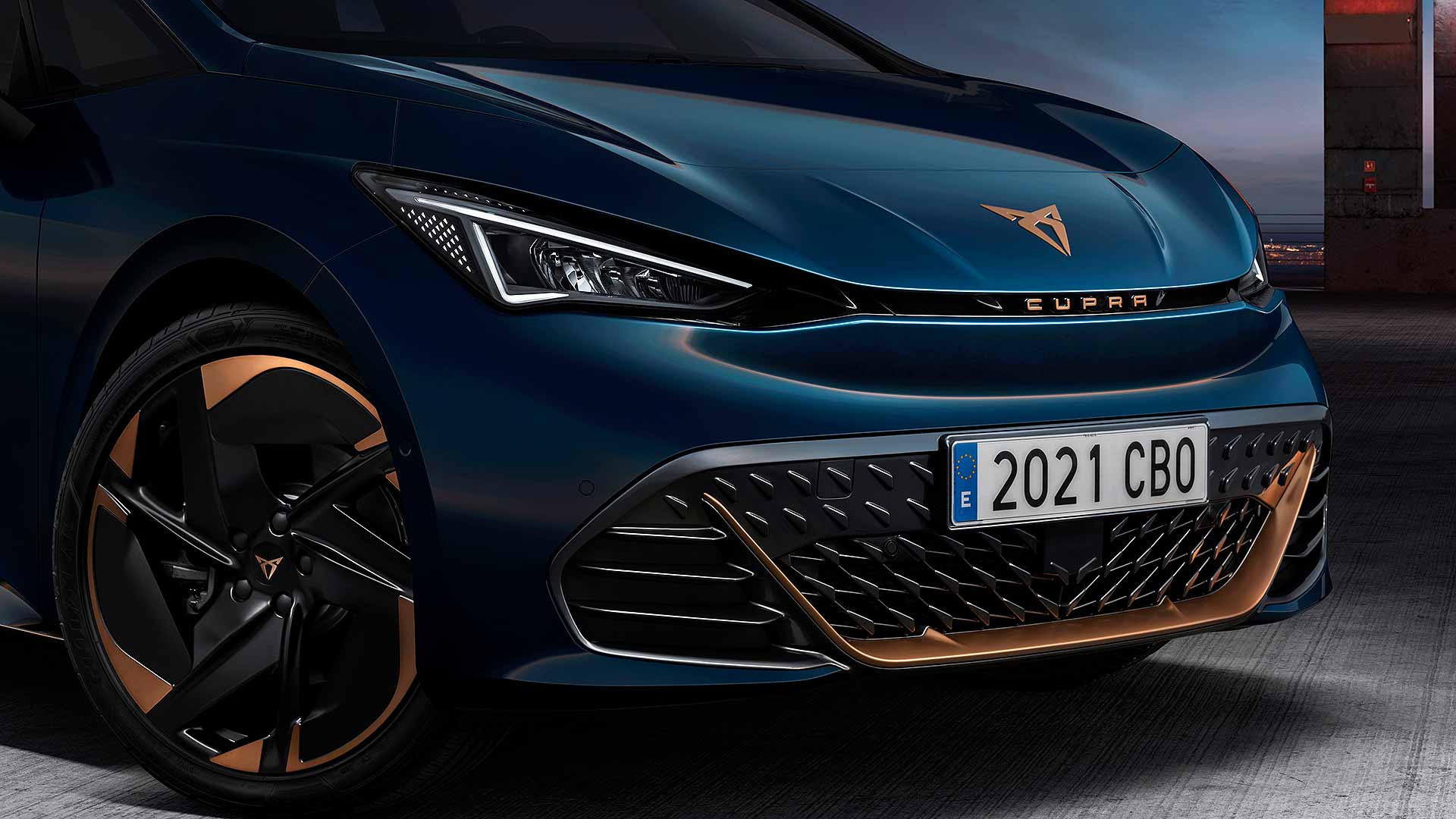
Although the Cupra Born is, ahem, born from the same mould as the Volkswagen ID.3, it has a much more distinctive appearance, in keeping with the well-received new brand’s more expressive design.
This range-topping model features a rich paint colour, plenty of copper detailing, big wheels and a distinctive front end, complete with a sharp ‘beak’ nose.
The Cupra logo is joined by a Cupra script, and although it’s an electric car – so doesn’t need anything like the usual amount of air intakes – it has a very dynamic-looking front bumper, complete with blended-in ‘grille’.
From the side, the Cupra Born has aero-tuned side sills – finished in a contrast colour to the body to ‘reduce the visual mass’. There’s also a 3D textured surface for the C-pillar (giving a floating roof effect) and no fewer than six alloy wheel designs, ranging from 18 to 20 inches.
At the rear, you’ll find a roof spoiler and diffuser combo, plus ‘coast-to-coast’ LED lighting. The Born EV will be offered in six different colours.
Cupra Born interior
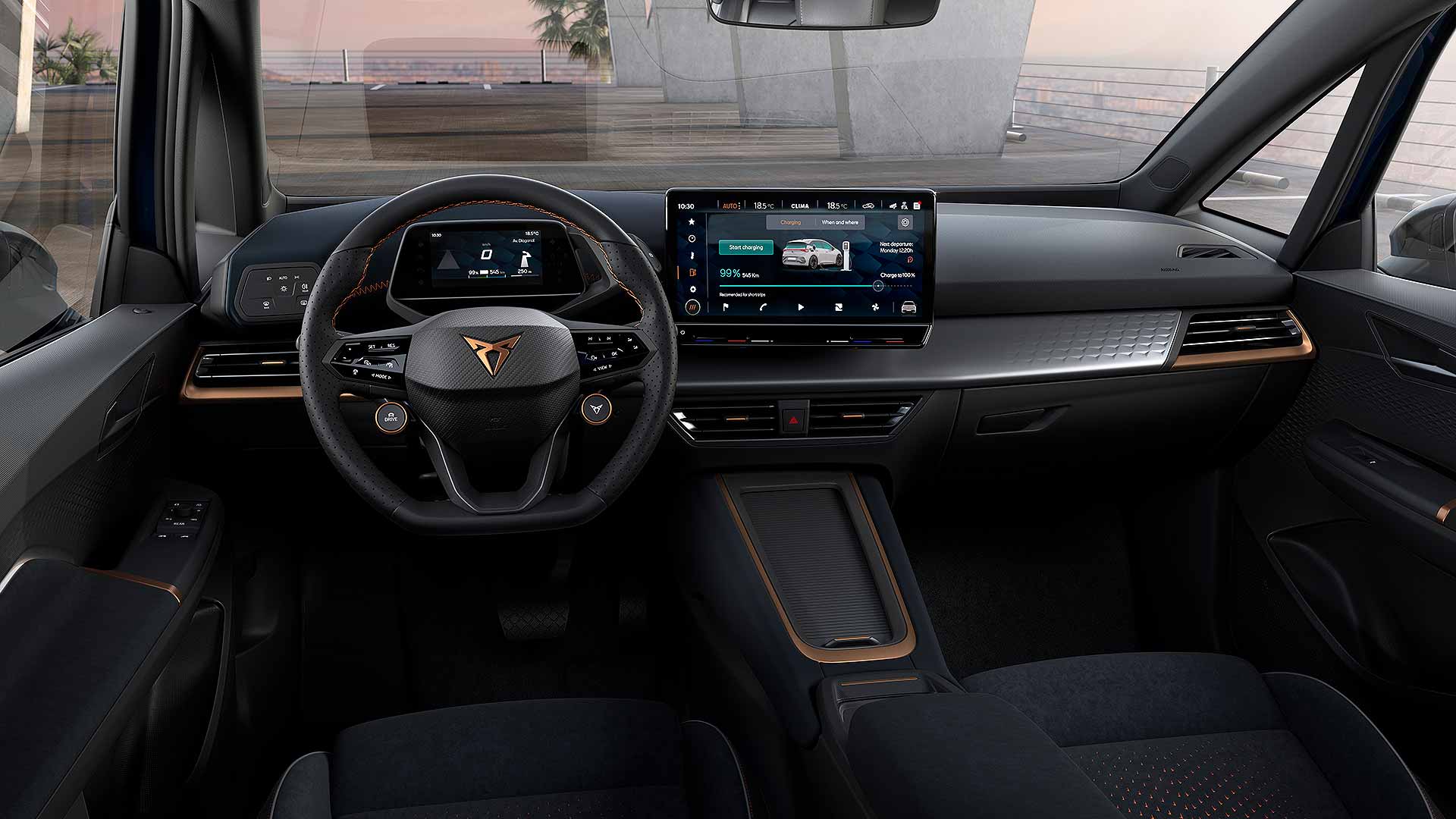
If you’ve seen the inside of a Volkswagen ID.3, you’ll be familiar with the Cupra Born. The same two touchscreens and simple layout feature, and the major controls are familiar – as is the open-plan feel from this roomy, practical platform.
The Cupra Born livens things up with more interesting surfaces, including textured trims and more copper-coloured detailing.
Buyers can choose a special recycled polyester seat trim called Seaqual Yarn, made from upcycled marine plastics. A second recycled material called Dinamica features on the door panels and upholstery: pick from dark blue or grey colours.
As with the Volkswagen ID.3, the Cupra Born will be very spacious inside, and offer a very generous 385-litre boot.
Cupra Born handling
Being a performance brand, Cupra has engineered in a sportier drive than other electric cars in the Volkswagen Group family.
Special tyres have been developed, and even the standard rubber will be a grippy 215mm wide. There will also be a wider 235mm tyre offered for more traction and bite through corners.
The chassis set-up has been given more focus and Dynamic Chassis Control adaptive suspension will be an option. Handling is also enhanced by the car’s low centre of gravity, aided by the heavy batteries being positioned so low in the chassis.
The brakes have been honed, too. Some electric cars can be a bit grabby, as the transition is made between electric motor regeneration and actual use of the brake discs. For the Cupra Born, lots of time has been spent to improve pedal feel during the blend between recuperation and friction braking. This apparently gives the ‘best brake actuation possible’.
Cupra Born performance
Four electric motor and battery combinations will be offered: 150hp with a 45kWh battery, 204hp with a 58kWh battery, and up 231hp with either a 58kWh or long-range 77kWh battery. All versions are rear-wheel drive.
The most potent Cupra Born – the 231hp version with the 58kWh battery – will do 0-62mph in 6.6 seconds, although even the entry-level 150hp model manages 8.9 seconds.
The batteries are water-cooled for efficiency, and the longest-range 77kWh variant will achieve 335 miles between charges – with the entry-level 45kWh battery offering a 211-mile electric range.
The 77kWh Cupra Born has fast-charge capability, which can add 62 miles of range in seven minutes using a 125kWh charger. A five percent to 80 percent charge takes 35 minutes. Customers can buy a Cupra-branded wallbox, too.
Cupra Born sales
The way you buy the Born will be different. Cupra is planning to sell it directly to customers, with car dealers working as agents to facilitate online sales. This ‘disruptive system… will reinforce the brand’s online presence as well as make life easier for customers’.
There will be an innovative subscription model alongside traditional sales, with a monthly fee that includes the use of the vehicle and other related services.
“The Cupra Born is a game-changer, not only for electrification but the wider market too,” said Cupra and Seat president, Wayne Griffiths.
“Through its emotional sportiness, we want the next generation of young challengers to be part of this transformation – that’s why Cupra will use unconventional sales models to reach new people and take the Cupra brand beyond the traditional.”
UK prices will be announced in the winter, with Cupra Born deliveries from the start of 2022.