Ford fans can buy a much faster F-150 pickup, thanks to Hennessey Performance.
The Texas-based tuner has created the limited-edition Venom 775 truck, and it packs serious power.
Hennessey claims its new truck is a rival for the Ram 1500 TRX, and it benefits from a significant weight advantage over the Mopar truck.
Boosted to the max
The 400 hp 5.0-l V8-powered F-150 is used as the base for the Venom 775. Hennessey adds a supercharger, along with a bespoke intercooler and air intake system.
Other modifications include new engine management software, a performance exhaust system, and multiple internal upgrades for the motor.
This results in a substantial output of 775 hp, along with a thumping 685 lb-ft of torque.
Acceleration from 0-60 mph should take just 3.9 seconds, with a quarter-mile sprint dispatched in 12 seconds.
Get low or reach for the sky
Along with the engine changes, Hennessey can also fit the Venom 775 with a host of other performance parts.
A bespoke Venom-branded front bumper includes a new LED light bar. A suspension kit adds six inches to the overall height, providing room for the 35-inch off-road rubber.
Alternatively, buyers can opt for a sport coilover suspension setup, dropping the Venom 775 closer to the road.
Exterior decals and Venom 775-embroidered headrests, plus numbered plaques for the engine and dashboard are also included.
This truck bites back
Hennessey plans to produce only 100 examples of the Venom 775, with trucks tailored to suit the taste of their owners.
Orders from international customers are being encouraged. Depending on the options selected, buying a Venom 775 should cost $90,000 to $100,000 (£65,500 to £72,750).
This includes the price of the new Ford F-150, with Hennessey able to offer a three-year and 36,000-mile warranty, too.
The Lotus Emira V6 First Edition will cost £75,995, with production of the new British sports car starting in spring 2022.
Described as ‘fully loaded’ and featuring a 400hp supercharged 3.5-litre V6 engine, the First Edition comes with four option packs as standard.
Customers can choose from six different colours, and each First Edition has unique badging to ensure future collectability.
Lotus hasn’t forgotten those who hoped the replacement for the long-running Elise was a bit more affordable. A cheaper, four-cylinder First Edition will be revealed in the autumn.
An entry-level ‘base edition’ Emira arrives in 2023, priced from £59,995.
“To celebrate and reward our keenest early customers,” said Lotus MD Matt Windle, “we want to make the first cars extra-special to own.
“The features have been carefully selected by our design team to make for a truly special and distinct First Edition.”
Eager customers can visit the Lotus configurator to place a £2,000 refundable deposit, which guarantees an early delivery slot.
Lotus Emira V6 First Edition
The Emira V6 First Edition comes with a six-speed manual gearbox as standard, including Lotus’ now-familar visible gearchange mechanism. A six-speed paddle-shift automatic is an £1,800 option.
Diamond-cut, ultra-lightweight forged 20-inch alloy wheels are standard, as are two-piece brake discs with Lotus-branded calipers.
The launch colour of Seneca Blue is likely to be popular, but the other no-cost alternatives are Magma Red, Hethel Yellow, Dark Verdant, Shadow Grey and Nimbus Grey. Lotus says more colours will be added in 2022.
There are also seven interior colour options, plus either Nappa leather or Alcantara upholstery with contrast stitching.
First Edition equipment is comprehensive, with features such as climate control, cruise control and a 10.25-inch central touchscreen with Apple CarPlay, Android Auto and navigation. Other niceties include a premium KEF audio system and 12.3-inch TFT driver display.
Four option packs are standard: the Lower Black Pack, Drivers Pack, Design Pack and Convenience Pack. Users of the Lotus configurator will be delighted at all the goodies they bring for free.
For those reading from overseas, Lotus adds that pricing in Germany start from €95,995, with prices for the USA and China due to be announced in the coming weeks.
Research by the Driver and Vehicle Licensing Agency (DVLA) found less than half (45.8 percent) of those asked knew they must be able to read a car number plate from 20 metres away.
As part of National Eye Health Week, the DVLA will launch a campaign to remind drivers to check their eyesight.
Going the distance
The DVLA surveyed 1,623 drivers earlier this year about eyesight standards.
A total of 744 were aware of the need to be able to read a number plate from the 20-metre distance. Almost a fifth (19.8 percent) believed this distance was 15 metres, while 28 percent thought it was 25 metres.
Most concerning were the six percent of drivers asked who could not specify any distance at all.
For the avoidance of doubt, drivers must be able to read a number plate from 20 metres. Where a driver needs glasses or contact lenses, these must be worn for every journey.
A reminder to test yourself
The DVLA will aim to improve awareness of eyesight standards throughout National Eye Health Week.
Lynette Rose, director of strategy, policy and communications at DVLA said: “The number plate test is a simple and effective way for motorists to check their eyesight meets the required standard for driving, which includes reading a number plate clearly from 20 metres.
“Anyone can do the test at any time. Twenty metres is typically around the length of five cars parked next to each other – you can test yourself on whether you can clearly read the number plate of the furthest car.”
With new James Bond film No Time To Die soon to debut in cinemas, we revisit a road-trip inspired by 2012’s Skyfall. Expect stunning scenery and semi-interesting Bond facts ‒ all we’re missing is an Aston Martin…
You could justifiably buy a Volvo S60 on the strength of its looks alone, and I’d salute you for it. Volvo’s compact saloon is, without question, the best looking car in the segment. Heck, it might be one of the best looking new cars on sale.
This chiselled, catwalk styling might be the S60’s strongest attribute, if my drive in Scotland was anything to go by. Behind those supermodel looks lies a car that’s very easy to like, but surprisingly difficult to love.
As soon as I was told I’d be flying to Edinburgh to drive the S60, I had one destination on my mind: Glen Etive. It might be as clichéd as turning up at Scottish-themed fancy dress party wearing a kilt and a Rod Stewart wig, but the area in Scotland where 007 and M went ‘back in time’ has become a popular spot for Bond fans.
Hold your breath and count to 10
I wanted to venture beyond Skyfall; to continue along the road past the point at which the characters played by Daniel Craig and Dame Judi Dench stand in front of the DB5, staring into the middle distance, presumably feeling the effects of spending 500 miles in a classic Aston Martin.
They’d have had no such problems in the S60. Volvo doesn’t build uncomfortable cars; its superb seats, minimalist cabins and clever use of lighting mean driving one of its cars is more relaxing than a foot massage from Enya.
The S60’s biggest problem is familiarity. It arrived five years after the Volvo XC90 debuted in Geneva, and while the interior remains a fabulous example of fit, finish and ergonomics, the wow-factor has diminished with every subsequent new car. You kinda know what to expect.
Not that I was complaining as I made my way out of the airport car park and into the morning commute. My test car was in R-Design Edition spec, which means all but the most opulent and lavish equipment fitted as standard.
The sea of charcoal that swathes the cabin is as bright and cheery as a gentleman’s wash bag, but the gloom is pierced by a metal mesh inlay running across the dashboard.
Predictably, the quality is first-rate, but I don’t remember the air vents feeling this flimsy in Volvo’s larger cars. Probably my memory playing tricks on me.
Stirling work
“Don’t drive tired”, proclaimed the matrix display above the M9 motorway, a stark reminder that I’d been up since 3am and crowbarred into a crevice on a red-eye flight from Bristol. I turned down the Volvo’s seat and steering wheel heating, reduced the temperature of the climate control and changed the sat-nav setting to ‘scenic’. Time to wake up.
The Sensus nine-inch touchscreen remains a visual treat, but too many commands and settings are hidden away. It also requires you to take your eyes off the road for too long. Fortunately, I remembered that Volvo’s voice control is one of the best, so I used that throughout the journey. Try doing that in your DB5, Mr Bond. “Set passenger seat to eject…”
The nav directed me through Stirling, where the S60 seemed to be as eye-catching as the castle sat atop a rugged crag. I caught sight of at least three chaps turning their heads to get a better look, and it’s not hard to see why.
The Volvo looks alluring from any angle: as toned as a marathon runner, curvaceous in all the right places and far better resolved than the larger S90. It takes a lot to upstage the magnificent beauty of Scotland, but the S60 almost manages it. It warrants a closer look, too. Note the voluptuous haunches and the wafer-thin panel gaps.
The R-Design treatment certainly helps, adding high-gloss black trim, dual integrated exhaust pipes and 18-inch diamond-cut alloy wheels. The good news is that my car was running on the standard 18s, which proves you don’t have to upgrade to the probable-ride-ruining 19- or 20-inch rims to achieve maximum glamour.
So far, so good, then. If cars were judged on the strength of their styling and cabin, Volvo would be off to Ikea in search of a trophy cabinet for another ‘winner takes it all’ victory. Other Swedish clichés are available.
Feel the earth move?
It’s at this point that the S60 starts to lose some of its lustre, though. There’s enough here for a terrific first date, but a lasting relationship might be off the cards.
Power is sourced from a 2.0-litre four-cylinder T5 engine producing 250hp and 258lb ft of torque, which sounds great on paper, but is more ‘meh’ in reality. The engine is totally devoid of character, and although the peak power appears at 5,500pm, it sounds strained when you reach the upper reaches of the rev counter. There’s no reward for pushing the S60 hard.
It’s strange, because the engine is far from slow. The 0-62mph time is a not-too-shabby 6.5 seconds, and because the torque is available from 1,800 to 4,800rpm, it makes light work of slow-moving camper vans, mobile libraries and coaches. Yes, I’m speaking from experience here.
Yet it never feels exciting, even in Dynamic mode, when the throttle is at its most responsive and the entire car feels tauter and more focused. It doesn’t help that the eight-speed transmission appears to prefer a slow dance to a waltz, with even the paddles seemingly unable to inject a dose of excitement.
This might be a touch unfair: Volvo isn’t pitching the S60 as a sports car, but when the roads are as good as this, it should be possible to have fun.
Accelerate hard and there’s a touch of torque steer, with the front end feeling detached from the asphalt beneath the wheels. This ‘floating’ sensation is joined by steering that is short on feel and too light in anything other than Dynamic mode. It’s not unpleasant to drive, but it’s far from engaging.
This might not matter in America, where the S60 is built at Volvo’s new plant in South Carolina, because corners haven’t been invented there. But if you’re touring Scotland and fancy some excitement to go with the stunning scenery, look elsewhere.
At Skyfall
Just before noon, I was parked at the precise spot where Craig and Dench stared into the Scottish mist. It’s easy to find – just look for the ‘layby’ created by seven years of location-hunting film fans. This must be the only layby in the world created indirectly by a Dame and a secret agent.
There’s also another worn-out patch of Scotland on the other side of the road, created by folk turning around and heading back to the A82.
But I wasn’t going back. Instead, I continued beyond the famous spot, taking the single track Glen Etive Road to its conclusion. For the benefit of any doubt, Bond didn’t continue along this road – it’s a dead-end – and Skyfall Lodge was built on Hankley Common, Surrey. But you probably knew that already.
It’s just as well Bond didn’t take the Aston too much further. In places, the road resembles Belgian pavé, which would have shaken and stirred the Aston Martin to bits long before Javier Bardem’s helicopter loomed into view.
The Comfort setting is advised if you value your spine – I dread to think what the S60 would be like on 20-inch rims. On 18s, the ride is a little on the firm side, if far from uncomfortable, but given the S60’s lack of precision, I’d have preferred it to be a little softer.
The 12-mile road follows the path of the River Etive, taking in open moorland, forests and small Scottish homesteads as it makes it way through the mountainous landscape.
The further you travel, the more you feel like you’re driving into the unknown, although the feeling of isolation is punctured by the endless stream of black Vauxhall Corsa hire cars. Still, it makes a change from the endless stream of yellow Arnold Clark stickers you see away from the tourist routes in Scotland.
Hear my heart burst again
An hour or so later, not only was the weather on the turn, but the clock was ticking ever closer to my departure from Edinburgh Airport. Bond had a date with Raoul Silva – and M had a date with death. I had little more than an Easyjet booking to look forward to.
The return leg was a frustrating mix of poor weather, coaches, roadworks and intermittent digital radio signal. I tried one last time to extract some enjoyment from the S60, but I reached the conclusion that it’s a little like fast food: quick, but lacking in substance.
Lots of people are posting photos of the new Volvo S60 in scenic locations in Scotland. Here’s one of the S60 parked at the Tesco Express in Callander. pic.twitter.com/aK4X39KDz1
As I said at the beginning, you could buy a Volvo S60 on the strength of its styling and live happily ever after knowing that your car looks a million dollars. And you will enjoy some exclusivity, too. Standing out from the me-too German cars is almost guaranteed.
We will stand tall
Part of me doesn’t want to reach a conclusion, and not just because I’m forever being distracted by the library of S60 images on my desktop.
Please don’t get me wrong: there is so much to love about this car. The seats in the R-Design are fabulous, the cabin is a delight and it’s probably safer than covering yourself in bubble wrap and never leaving the house.
So, like Bond, I’m going to stare into the middle distance and contemplate a more decisive future for the S60. As a trailer for the main feature, the T5 R-Design Edition was a competent teaser. The subsequent Polestar Engineered version is more of a thriller, leaving the Inscription to feel as cossetting and cosy as watching a black and white movie in front of the fire on a wet Sunday afternoon.
Not much of a conclusion, is it? But what did you expect – an exploding pen?
Skoda has confirmed UK prices and specification levels for the new Fabia.
The fourth generation of the popular Czech supermini will continue to offer plenty of car for relatively little money.
Priced from less than £15,000, the Fabia will comfortably undercut the recently updated – and closely related – Volkswagen Polo.
Monte Carlo or bust
At launch, Skoda will offer UK buyers a choice of four trim levels, stretching from the entry-level ‘S’ model to the feature-packed SE L version.
There are also four engines, all of which are three-cylinder petrols. The UK line-up starts with a naturally aspirated 65hp motor, with a 110hp turbocharged unit at the top of the pile.
The £14,905 Fabia S comes with LED headlights, air conditioning, lane assist and pedestrian protection as standard. A 6.5-inch touchscreen, including a DAB radio, provides the infotainment.
The SE Comfort version of the Fabia costs from £16,795. This improves the specification inside and out, with a set of 15-inch ‘Rotare’ alloy wheels, front fog lights and rear parking sensors.
On the inside, the SE Comfort has a two-spoke steering wheel, along with a leather-wrapped handbrake and gear lever. The front seats are adjustable for height and lumbar.
Added colour and luxury
The Fabia Colour Edition kicks off at £17,495, with 16-inch black alloy wheels helping it stand out. The roof and wing mirrors can be painted in contrasting metallic Graphite Grey or pearl-effect Magic Black.
Other standard equipment includes privacy glass, an 8.0-inch multimedia touchscreen, 10.0-inch digital dashboard and keyless entry. An umbrella, hidden inside the door pocket, is a typical Skoda touch.
At the top of the range is the Fabia SE L, starting from £18,980. A set of 16-inch Proxima alloy wheels and chrome window surrounds mark this out as the fanciest Fabia.
Fabia SE L models will get chrome interior trim, Comfort seats, ambient lighting and electric windows front and rear. Dual-zone climate control and a front armrest add an extra degree of luxury.
Amundsen satellite navigation is included on the larger 9.2-inch touchscreen. SE L buyers also get a subscription to Skoda’s online services for a year.
UK orders open from 28 September, with first deliveries expected in the fourth quarter of 2021.
Called the 500X Dolcevita, Fiat hopes the new model will combine open-air motoring with ‘everyday practicality and versatility’.
The large canvas roof can be opened in 15 seconds, and operates at speeds of up to 62mph. Fiat says that it has zero impact on interior space compared with the regular 500X.
Sticking with the tradition of Fiat 500 personalisation, the roof can be ordered in red, grey or black. This can match or contrast with the 10 paint colours available for the 500X.
Living La Dolcevita
Earlier this year, Fiat updated the 500X model range. It now offers three distinct trim levels, with the Dolcevita roof compatible with all.
The Connect version has a 7.0-inch Uconnect multimedia system as standard, with Apple CarPlay and Android Auto connectivity. Tinted windows, 17-inch alloy wheels and black seats are included, too.
Cross trim brings 19-inch wheels, seats with camouflage-patterned centre panels, climate control and parking sensors.
Topping the range is the Sport version. It gains a set of bespoke ‘burnished black’ 19-inch alloy wheels, fabric sports seats, climate control and a matte titanium dashboard.
Deliveries by the end of 2021
The Dolcevita roof option will be available with both petrol engines offered on the 500X.
All trim levels can be chosen with either the 120hp 1.0-litre unit, or the 1.3-litre Firefly engine with 150hp. The latter comes with a DCT automatic gearbox as standard.
Prices for the 500X Dolcevita start at £23,975 for the 1.0 Connect model, rising to £29,775 for the 1.3 Sport.
Orders can be placed now, with first deliveries expected later this year. However, Fiat makes no promises of winter sunshine to enjoy the Dolcevita to the full.
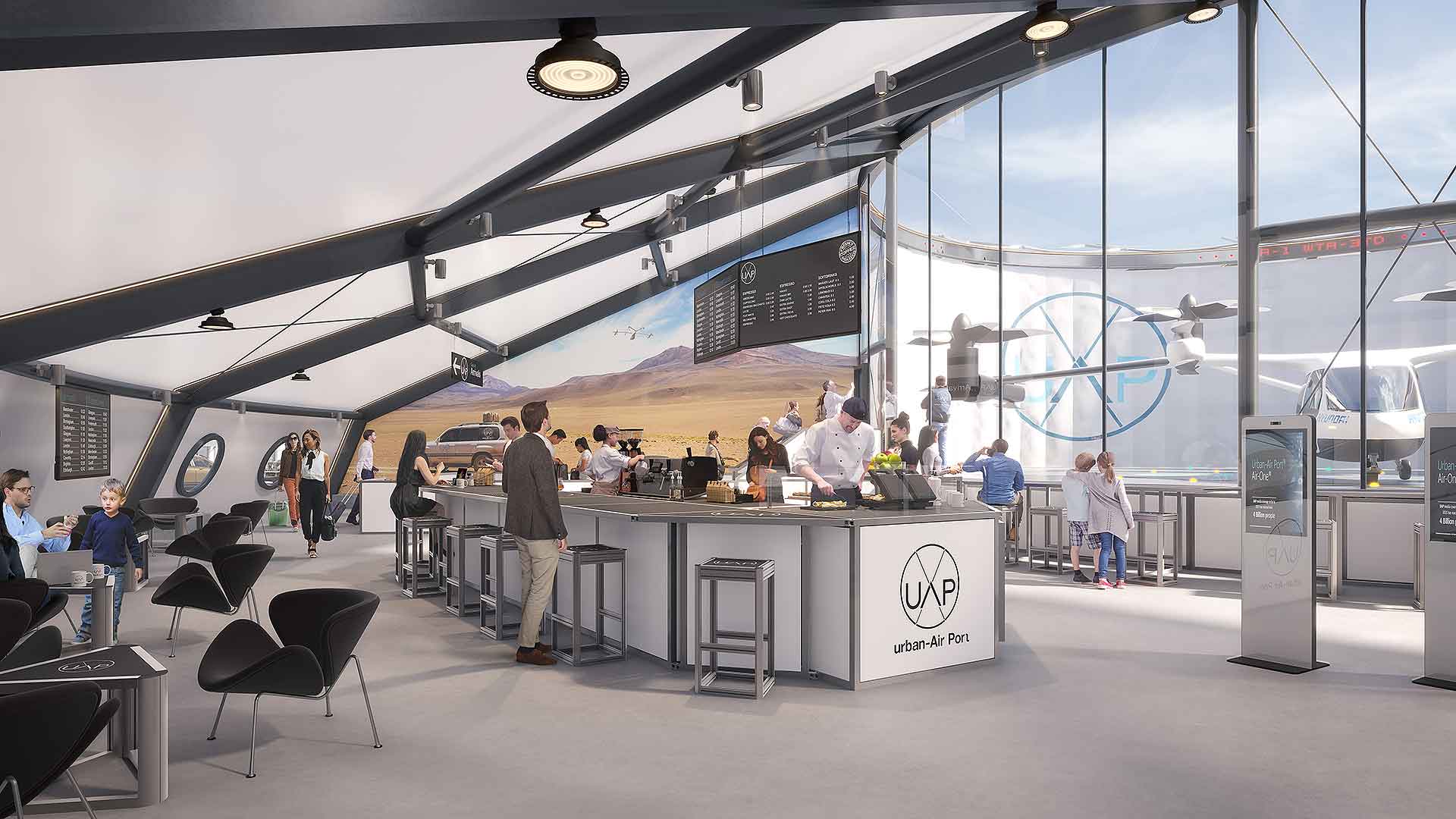
A partnership between Urban-Air Ports and Hyundai Motor Group will see 65 electric urban-air ports created around the world.
Urban-Air Ports are designed to provide the infrastructure for autonomous drones, along with electric vertical take-off and landing (eVTOL) passenger vehicles.
Coventry has been chosen to host ‘Air One’, the world’s very first electric Urban-Air Port. It will open in 2022.
Hyundai’s Urban Air Mobility division began operations in 2019. It recruited former NASA scientist for the Aeronautics Research Mission Directorate, Dr Jaiwon Shin, to lead its work.
Clean and accessible flight
Founded by architect Ricky Sandhu, Urban-Air Ports will service the growing interest in urban air mobility. Investment in development of electric flying vehicles and drones is forecast to exceed more than $1 trillion in the next two decades.
Using modular designs, the Urban-Air Port concept will provide hubs for urban air travel. It allows for maintenance and charging of vehicles, with hydrogen fuel cells able to make each hub self-sufficient.
The company believes this will allow Urban-Air Ports to be used in the event of disasters. Alternatively, a hub can easily be moved to a new location.
Urban air ready for take off
Coventry has been chosen as the first site for an Urban-Air Port due to its location in the heart of the UK. Local links to aerospace and automotive industries also made the city desirable, with a need for skilled workers to support research and development.
Urban-Air Port ‘Air One’ will be unveiled as part of Coventry’s 2021 UK City of Culture celebrations. AFC Energy will provide hydrogen fuel cell technology to bring off-grid power to the first hub.
Ricky Sandhu, Founder and Executive Chairman of Urban-Air Port, said: “The deal with the Urban Air Mobility Division of Hyundai Motor Group is a massive step towards our vision of installing hundreds of Urban-Air Ports worldwide.”
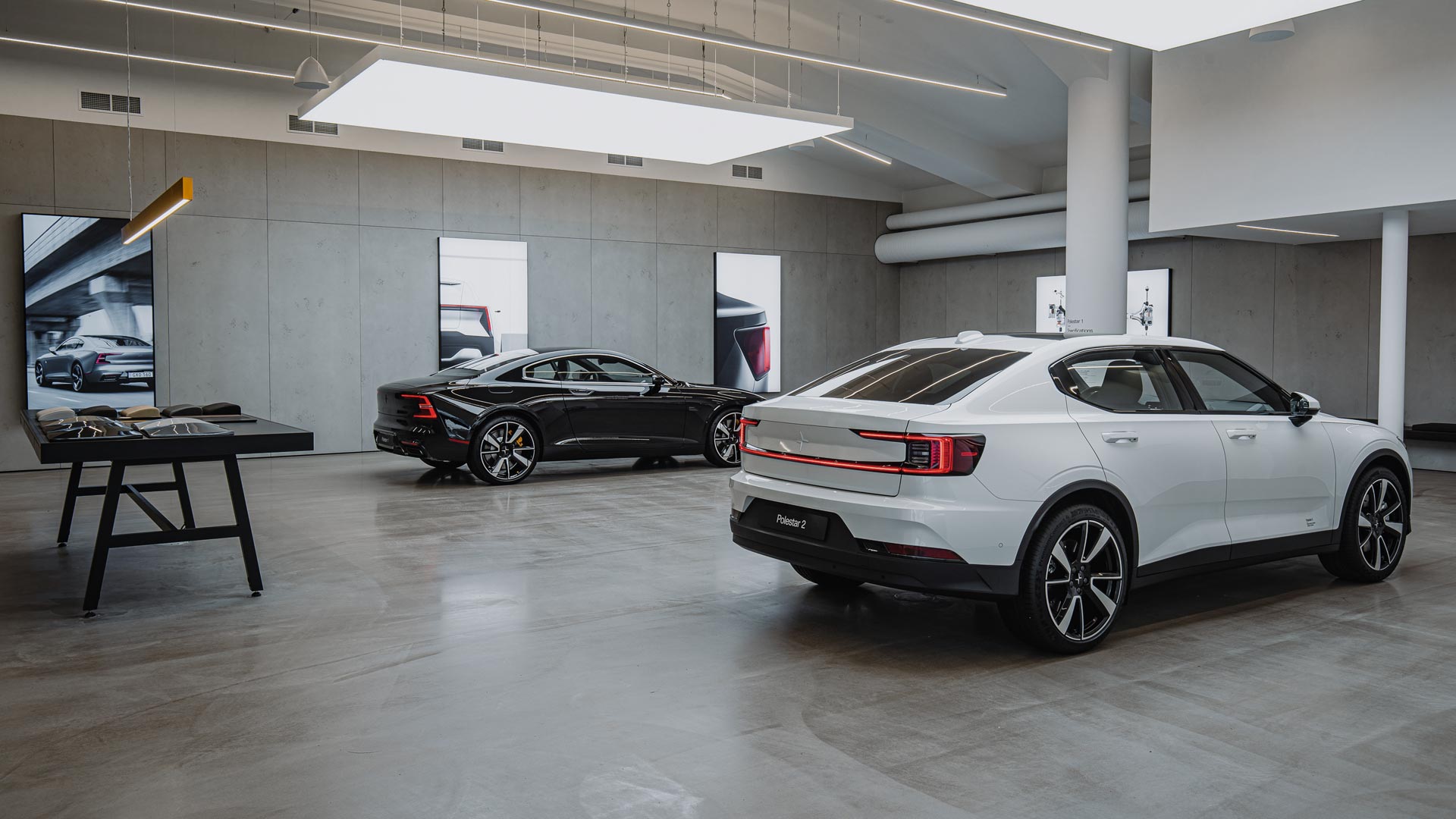
Swedish EV manufacturer Polestar has announced plans to substantially increase its UK engineering operation.
Co-owned by Volvo and Geely Cars, the company is on a rapid path to global expansion – and intends to enter 21 new markets by the end of 2022.
At the heart of Polestar’s plans are new electric cars, with its UK research and development base set to play a major role.
Prime location
Polestar has already doubled its UK R&D team to 250 staff during the past year. New investment will take the headcount beyond 500.
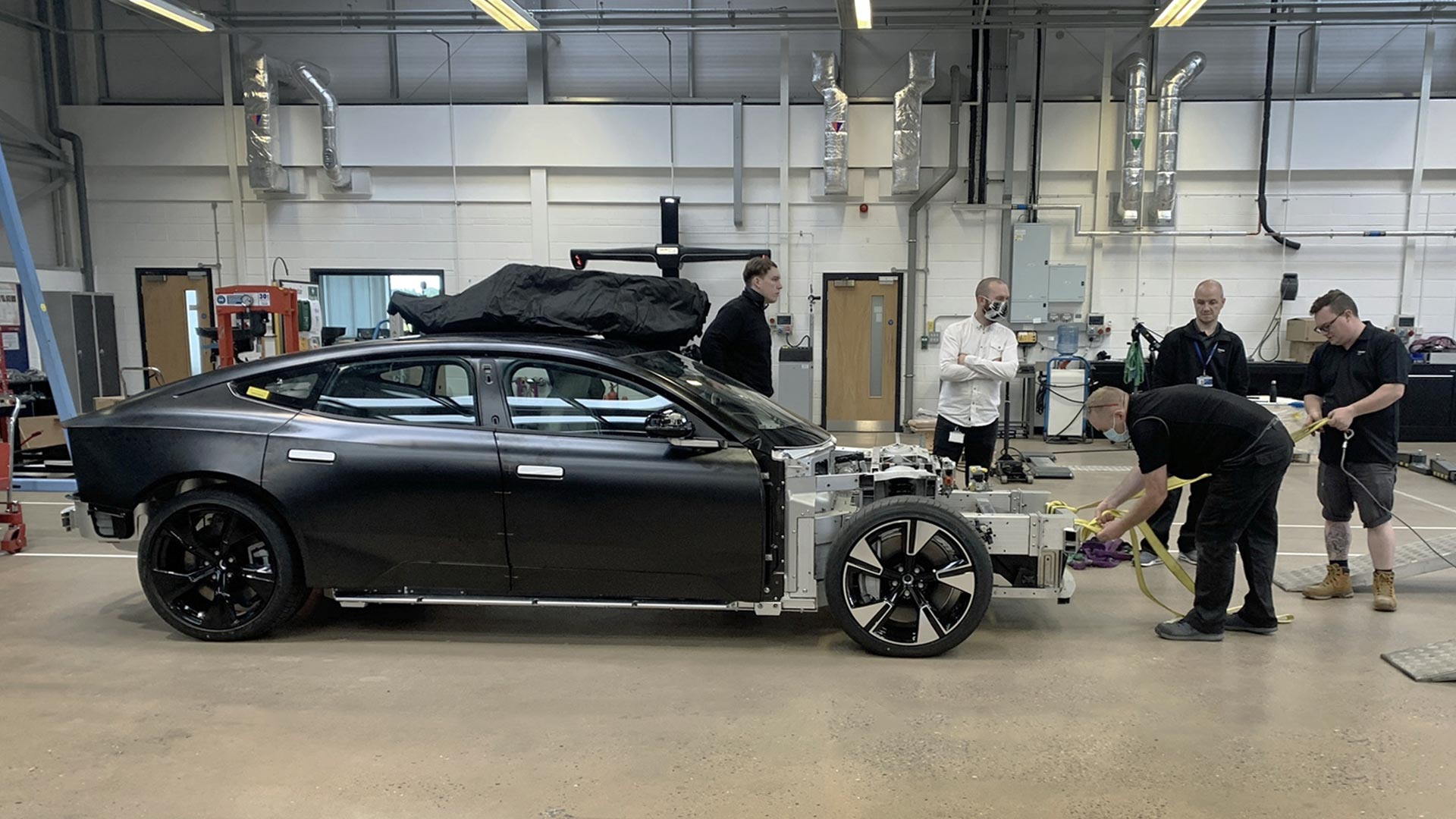
The team is based at MIRA Technology Park in Nuneaton, in the area near Silverstone known as Motorsport Valley. The facility has multiple test tracks and specialist engineering equipment on-site.
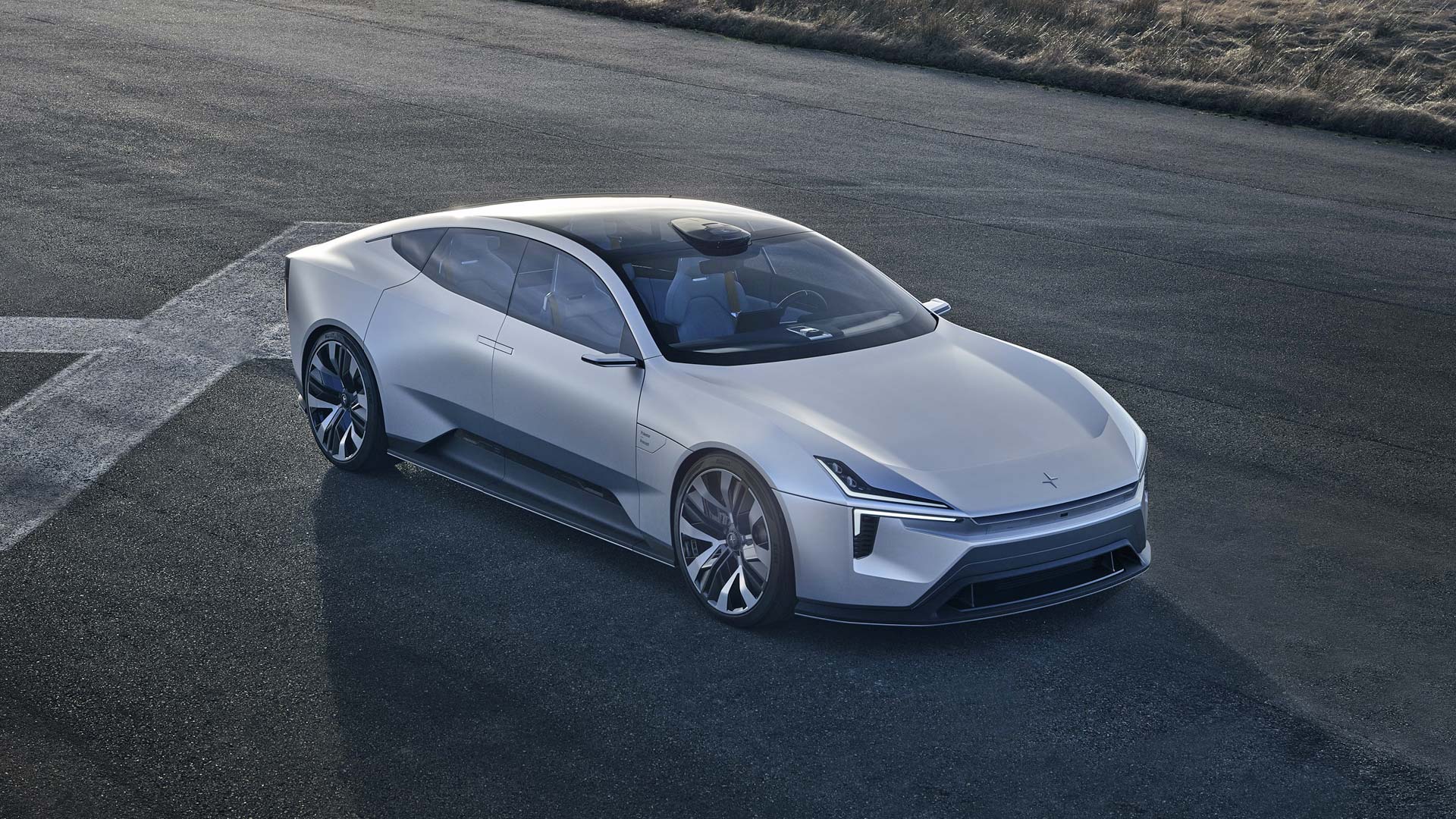
Polestar UK played a significant role in developing the Precept concept car (pictured top). A recent star of the IAA Mobility show in Munich, the all-electric Precept will enter production before 2025.
Performance and sustainability
Other products in the pipeline include the Polestar 3 compact SUV, due to be assembled in both China and the United States.
The firm also has an ambition to produce a 100 percent climate-neutral car by 2030, without the need for carbon offsetting through tree-planting.
Thomas Ingenlath, Polestar CEO, said: “The combination of British engineering talent and Swedish expertise will ensure our cars are among the highest performing and most sustainable on the road.”
New research has found that a clear majority of drivers want an end to controversial all-lane-running on smart motorways.
A substantial 62 percent of those surveyed for the RAC Report on Motoring 2021 wanted a return of the hard shoulder.
This would mean the end of using all lanes for live traffic – although respondents wanted to keep the range of safety measures introduced on them.
Little faith in authorities or technology
Only 24 percent of those asked believed that the current smart motorway setup should be retained. Of the more than 2,600 drivers surveyed, 63 percent did not believe the measures introduced to compensate for a lack of a hard shoulder are adequate.
These include variable speed limits, closed-lane signs, cameras to spot stationary traffic, and refuge areas every 1.6 miles. Just 15 percent believed these features were adequate for safe driving.
Faith in the ability of National Highways (formerly Highways England) to deal with live breakdowns is also low. Less than a third (30 percent) would trust National Highways to spot a stationary vehicle in a live lane – down from 53 percent in 2019.
Almost a quarter of those asked (24 percent) now state smart motorways are one of their top motoring worries. Less than half of all drivers (43 percent) said they felt safe using all-lane-running motorways.
Long-term safety concerns
Smart motorways have had a troubled history. In 2016, a cross-party group of MPs called for further openings of them to be halted.
Last year saw the government finally pause the deployment of all-lane-running options. The House of Commons Transport Committee opened an inquiry into smart motorways earlier this year, with a final report due soon.
RAC head of roads policy Nicholas Lyes said: “We’ve always had safety concerns about all-lane-running motorways and have raised these by giving evidence to two separate Transport Committee inquiries. While the Government published its 18-point action plan in 2020, the RAC has continued to push for new safety features to be introduced as quickly as possible.
“Although much of the plan is on track and the installation of crucial stopped vehicle detection technology is now due to be completed ahead of schedule, it seems the only thing that will truly satisfy most drivers is the reinstatement of the hard shoulder.”
He added that: “The Government is therefore faced with a difficult choice between continuing to roll out unpopular all-lane-running motorways very much against drivers’ wishes or reinstating the hard shoulder, effectively creating three-lane ‘controlled motorways’ which would have the benefit of improved safety features but with less overall capacity.”
An important piece of Chevrolet Corvette history is up for sale on the Bring a Trailer auction website.
The 1955 car is one of the first prototypes built to evaluate a three-speed manual transmission.
Along with a unique backstory, the classic Corvette is presented in stunning condition – and will be a strong draw for Chevrolet fans.
A Corvette origin story
When the first-generation Chevrolet Corvette hit the market in 1953, buyers were restricted to just one powertrain. Under the shapely hood was the Blue Flame 235 cubic-inch straight-six engine.
Without a suitable manual transmission, the Corvette entered production using the two-speed Powerglide automatic.
The performance offered by the engine and transmission combo left buyers feeling underwhelmed, however. To stem the flow of negative customer reactions, Chevrolet needed to act.
The original red rocket
Under the supervision of Zora Arkus-Duntov, Chevrolet fitted the Corvette with its new 265-cubic inch V-8 for 1955. The eight-cylinder option delivered a much more respectable 195 horsepower.
The final piece of the puzzle would be the addition of the three-speed manual gearbox. Testing how the new transmission would work in the Corvette required a prototype to be made, which is how the car up for auction came into existence.
Powered by the V-8 engine, this car was later sold to a Californian buyer in the 1960s. Having moved to Oregon in the late 1980s, it has seen various refurbishments since.
Little Red Corvette
Today, the special Corvette is finished in repainted Gypsy Red, with chrome bumpers and V-8 badging. The 15-inch body-colored wheels have faux knock-off hubs, and are fitted with Firestone Deluxe Champion whitewall bias-ply tires.
Inside, the cabin is finished in light beige, complemented by a red carpet and red dash pad. An AM radio was added during a 2019 rebuild, with the interior also benefiting from a heater and dash-mounted mirror.
Recent maintenance includes an electrical system overhaul, along with new brake shoes and a rebuild of the brake master cylinder.
Record-breaking potential
Combining a special piece of Chevrolet history with the impressive condition of this example makes for a unique proposition.
To set a new Bring a Trailer record for C1 Corvettes, the prototype model will need to surpass $153,000 before the auction closes on Wednesday 15 September.
Bidding on Bring a Trailer has already escalated rapidly, with a final price into six figures on the cards. We’ll have to wait and see whether a new buyer will be brave enough to drive this rare ‘Vette.