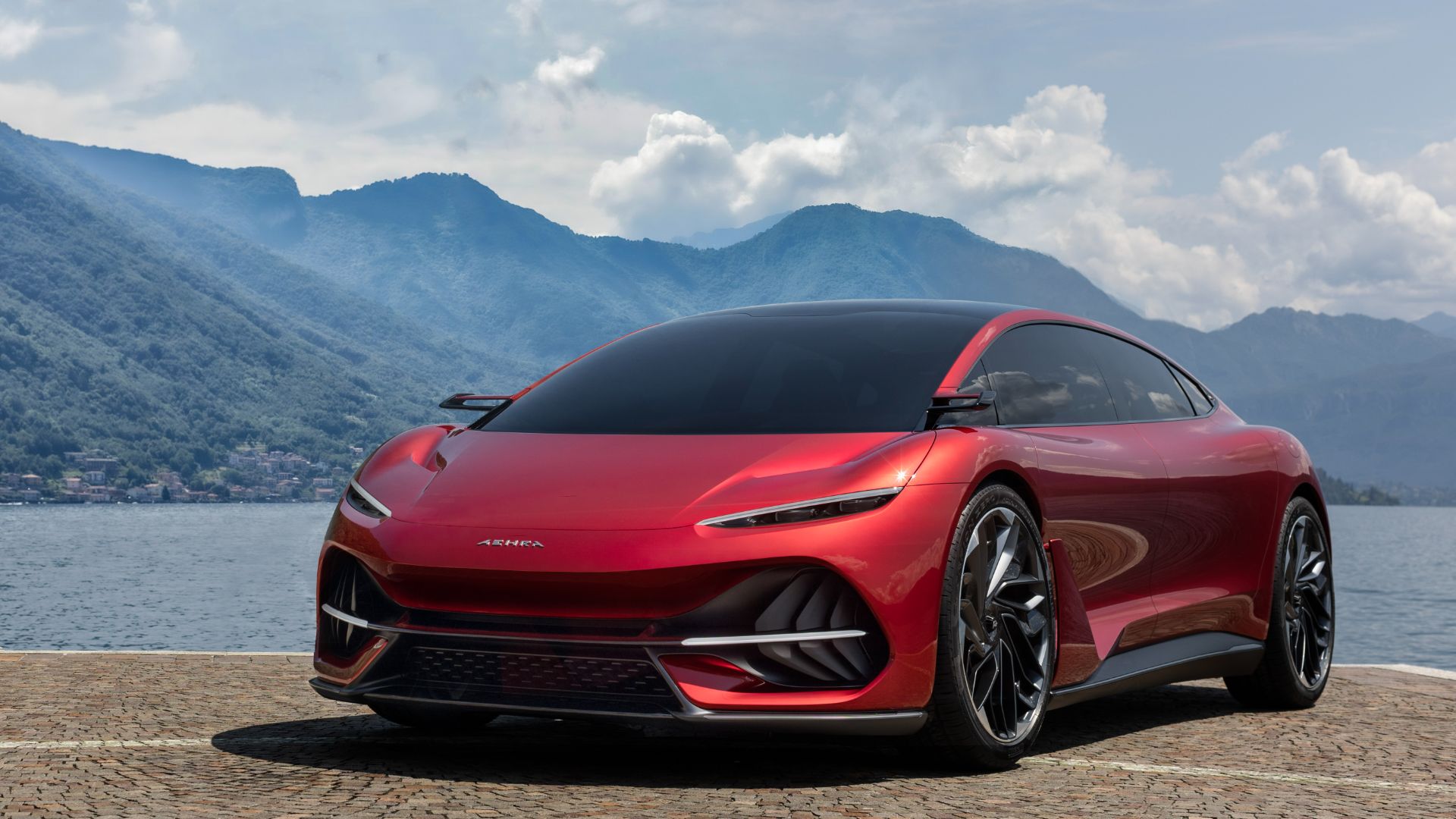
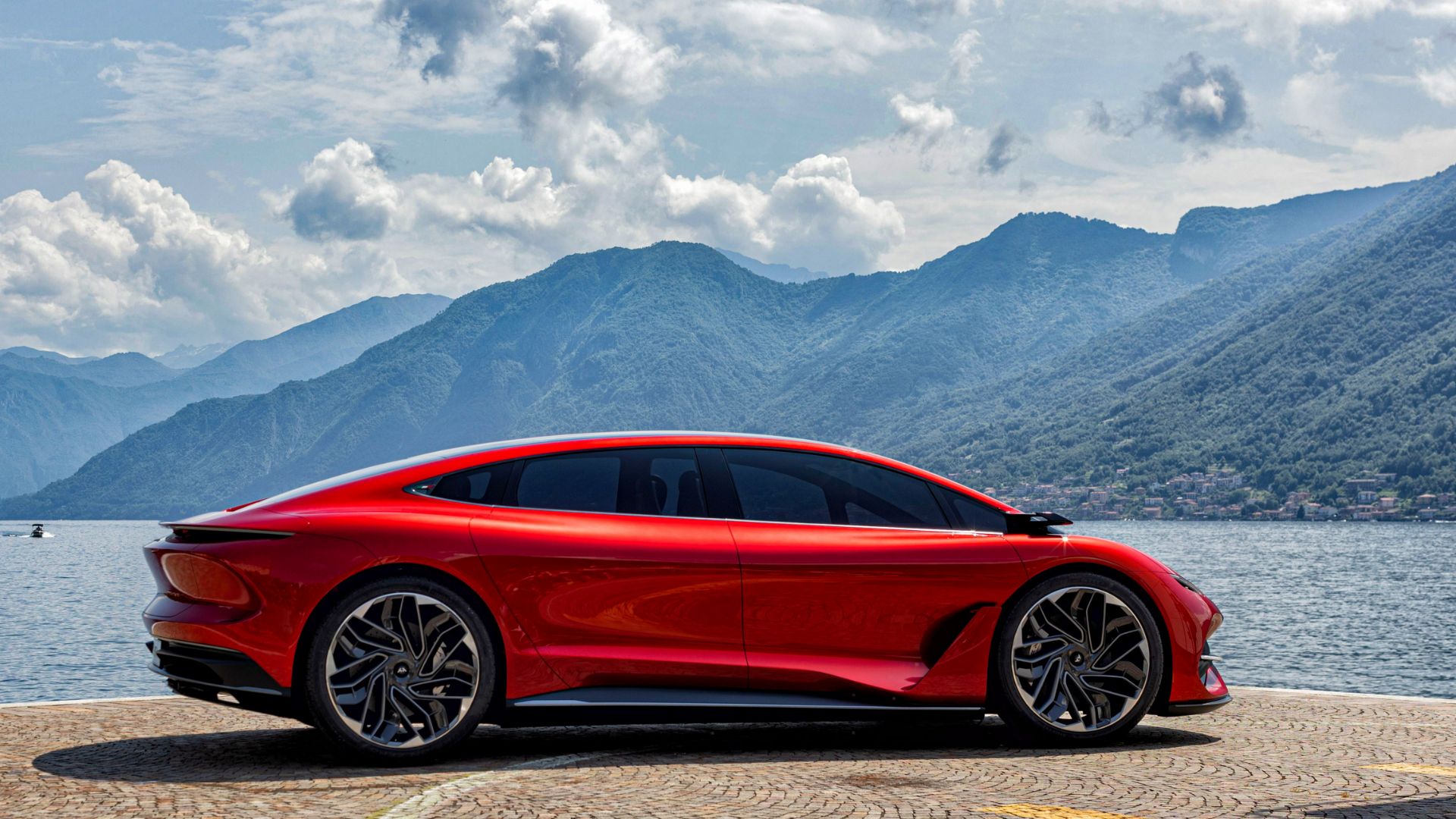
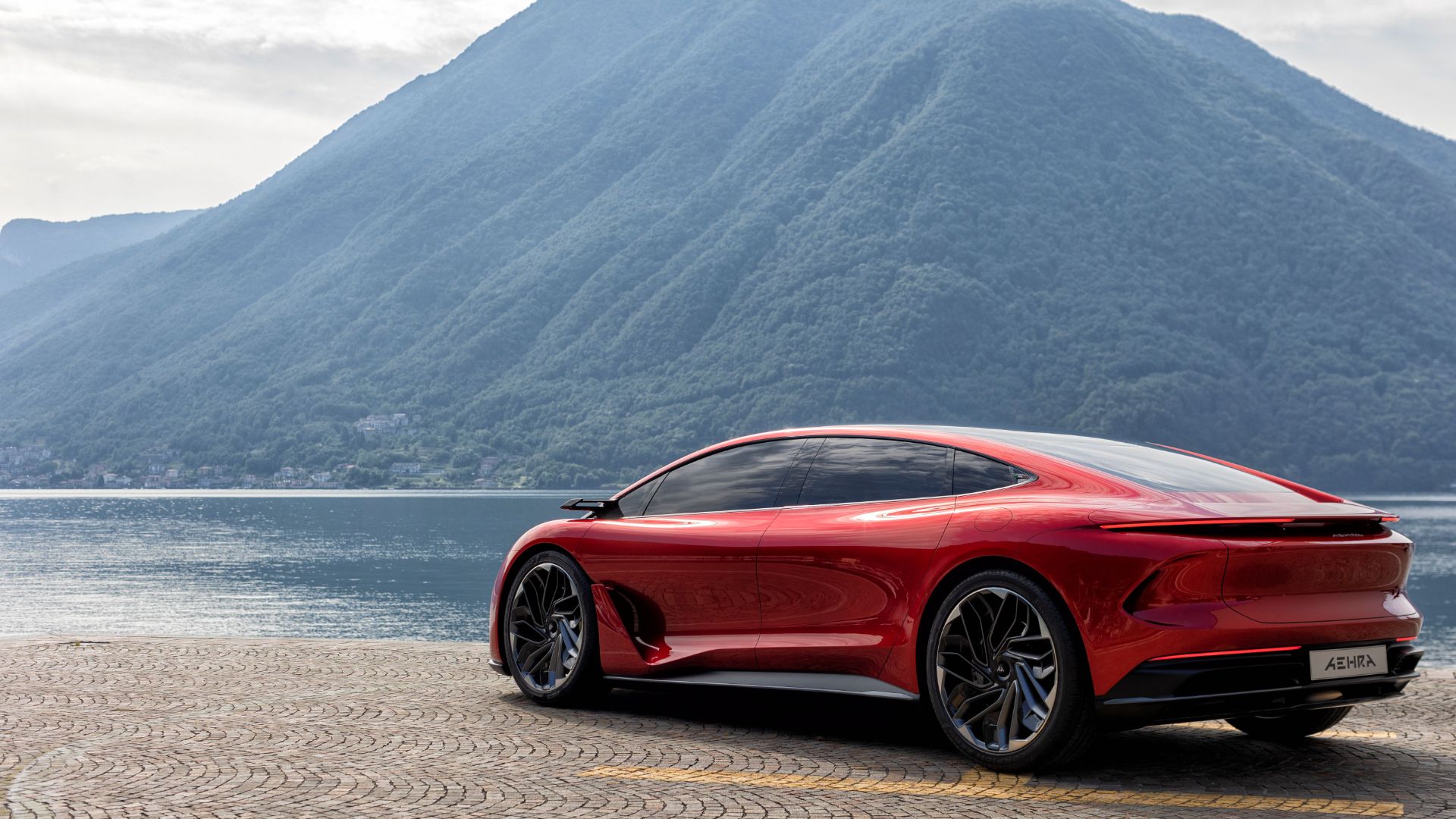
Italian ‘ultra-premium’ EV startup Aehra has pulled the wraps off its second new car, due by 2026. The Aehra Sedan follows the radical SUV revealed last year.
Milan-based Aehra chose its local Monza Motor Show to unveil the Sedan, which shares around 70 percent of its components with the SUV. Along with sleek, very aerodynamic styling, both vehicles feature upwards-opening ‘elytra wing doors’ – similar to the Falcon Wing rear doors on a Tesla Model X.
The Sedan will feature the same electric drivetrain as the SUV, too. That means a 120kWh battery from Austrian company Miba, three motors and a power output somewhere between 750hp and 815hp. Not to mention genuine supercar performance.
A little bit of Lambo
Speaking of supercars, the Sedan’s coupe-like lines are the work of Filippo Perini, the former design boss at Lamborghini, whose credits include the Aventador, Huracan and Urus. “Adhering to Aehra’s doctrine that form must always follow function, the Sedan is the antithesis to baroque design culture,” says Perini. “It is devoid of unnecessary adornments, yet alive with emotion.”
The car’s body is made from recycled composite materials, including forged carbon fibre, with an elegant, flowing profile inspired by aircraft. It uses cameras instead of door mirrors and ‘active aerodynamic and cooling elements’ within a gaping front grille.
We haven’t seen inside the Sedan yet, but expect a similar layout to the SUV, with very few physical controls and a huge, full-width screen that rises out of the dashboard to provide a private cinema experience (although only when the car is parked).
Taking on the Taycan
A 925-volt architecture allows the Sedan to charge at up to 350kW – in line with the fastest public EV chargers installed in the UK. A target range of 800km (497 miles) is more than the 453 miles offered by the Mercedes-Benz EQS, currently the longest-range electric car on sale.
Rivals for the Sedan will include the higher-output versions of the Porsche Taycan, the Tesla Model S and more conventional super saloons such as the BMW M5. Aehra hopes to ramp up Sedan production to 25,000 cars a year, alongside a similar number of sales for the SUV.
There’s no word on prices yet, but a starting figure of around £140,000 looks likely. Watch this space.
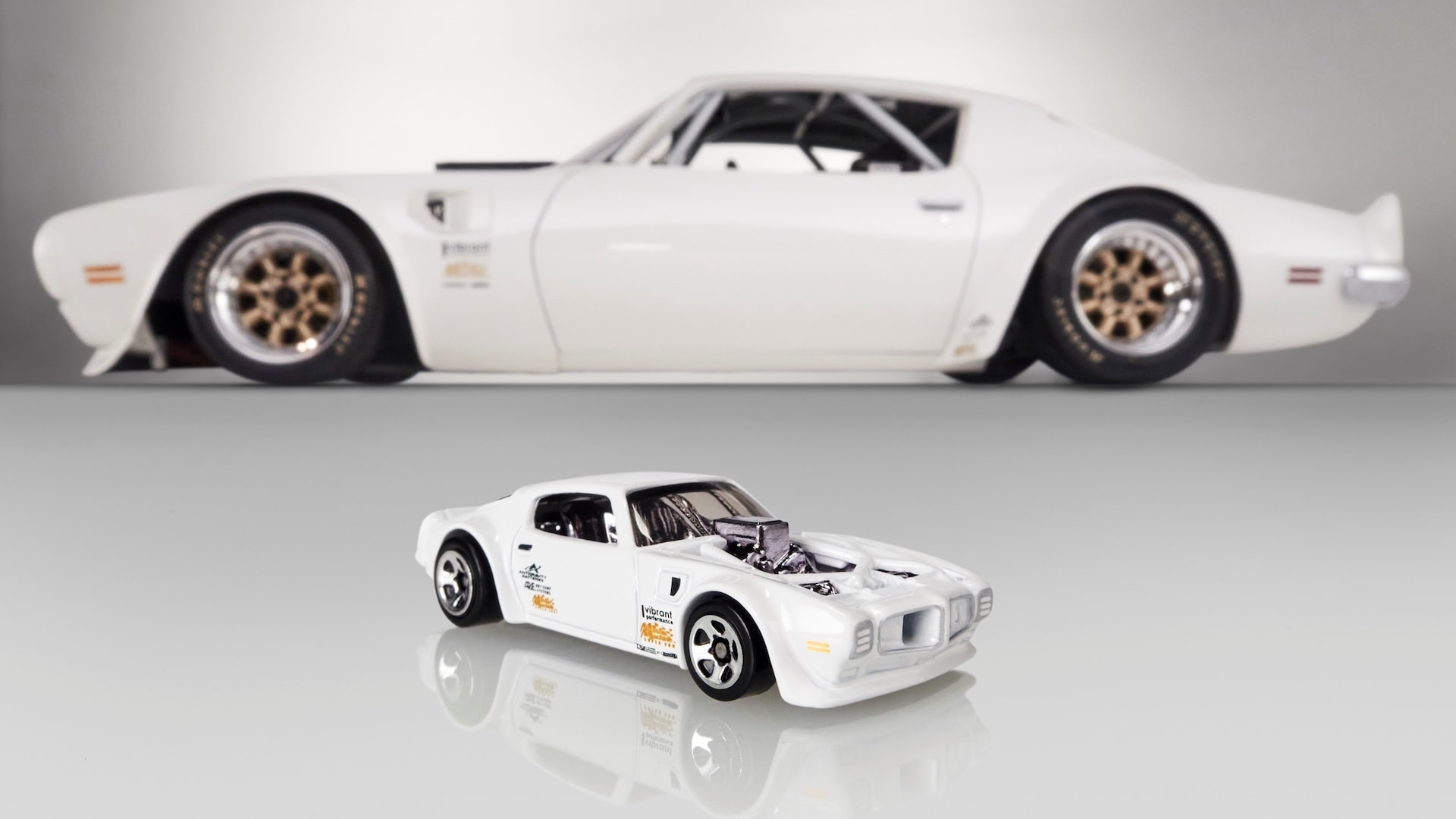
Your own car could be immortalised as a die-cast scale model, with the return of the Hot Wheels Legends Tour.
The search is on to find the coolest cars across the country, with the winner going on to represent Britain in the Legends Tour final.
This lucky winner will then see their car recreated as a 1:64 die-cast model, and sold around the world.
To help kickstart the excitement for the 2023 Legends Tour, Hot Wheels has given us five die-cast car sets to give away. And you could win one of them!
New live UK final event
For the UK round of the 2023 Hot Wheels Legends Tour, a special event will allow the public to watch the judging take place.
The UK final will be part of the RADwood car show, taking place at Bicester Heritage on 2 September. Ten hand-picked Hot Wheels finalists will be on show, with fans able to see the cars up-close before the judges pick an overall winner.
For 2023, the judging panel includes modified car creator and TV presenter Helen Stanley, presenter and avid car collector Paul Cowland, and the Smith and Sniff podcast’s Richard Porter.
All 10 finalists will receive a Castrol Oils merchandise bundle, with the overall UK winner taking home a set of Falken tyres.
Prove your car has ‘garage spirit’
To potentially see their car made into a Hot Wheels model, owners must upload a short video to the Hot Wheels Legends Tour website by 4 August 2023.
Entrants will need to demonstrate why their car has the creativity, authenticity and ‘garage spirit’ to become a Hot Wheels icon.
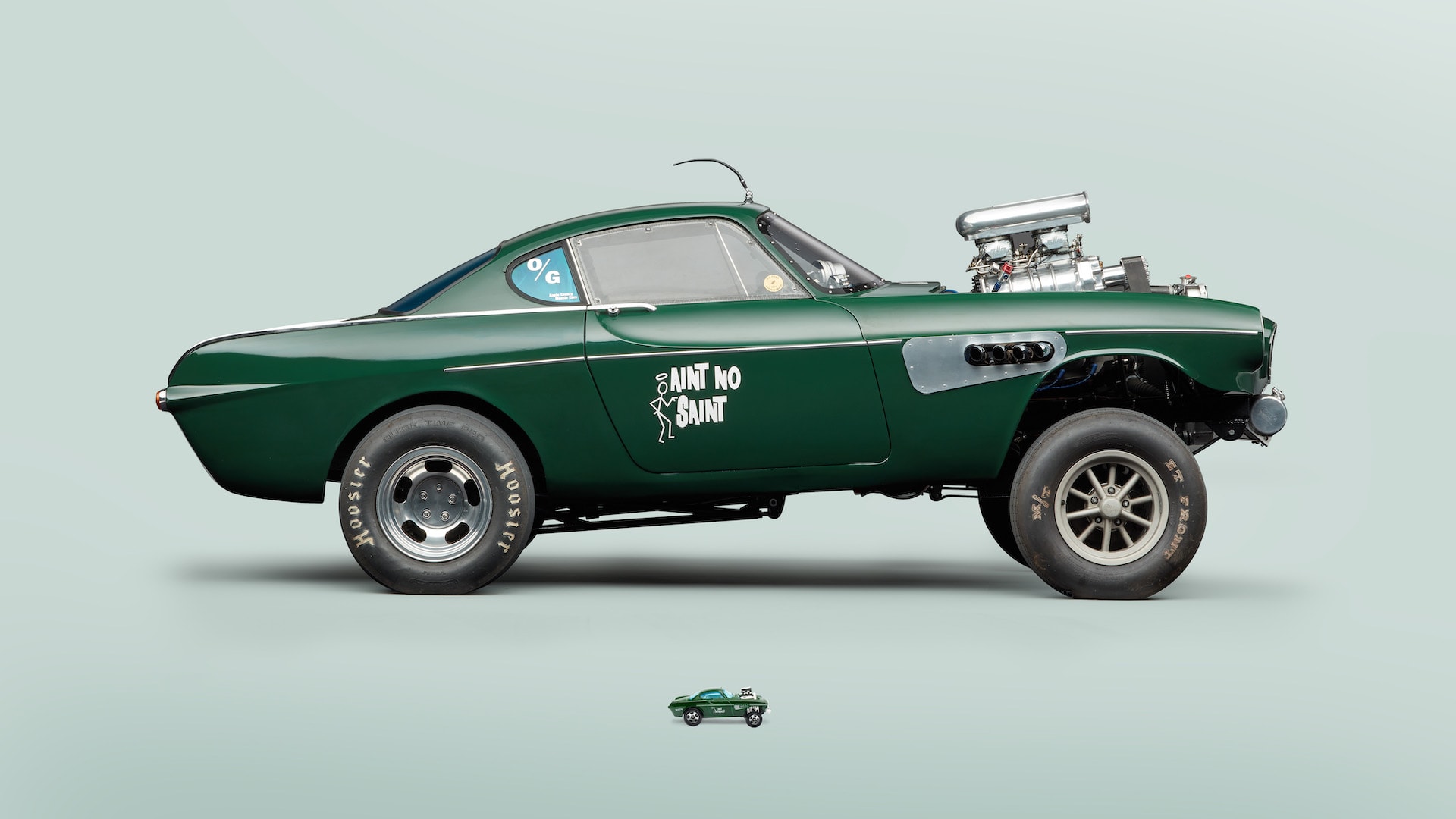
Previous winners have included highly-modified Volvo P1800 Gasser, owned by Somerset-based Lee Johnstone.
The Grand Final for the 2023 Hot Wheels Legends Tour takes place in the United States this November. After the winning car is chosen, it will be turned into a 1:64 scale model.
Win Hot Wheels prizes with Motoring Research
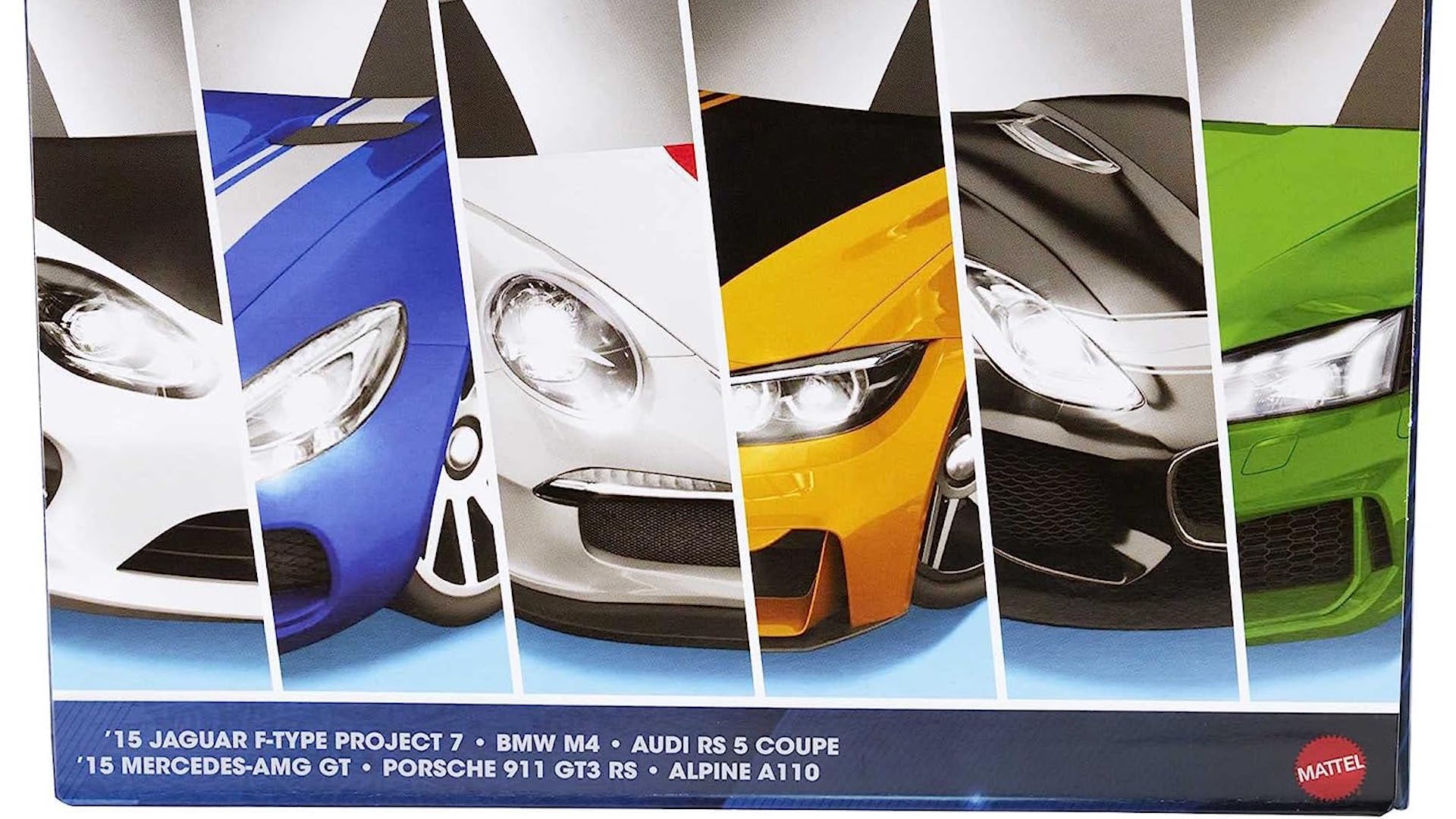
To celebrate the launch of the 2023 Hot Wheels Legends Tour in the UK, we have five special Hot Wheels sets to give away.
The six-car sets feature a host of miniature performance machines, including a Porsche 911 GT3 RS and BMW M4.
In order to win one of the five sets, email contact@motoringresearch.com and tell us what you love about collecting Hot Wheels.
Five entries will be drawn after the closing date of Friday 23 June to receive one of the Hot Wheels sets – and have what they love about collecting Hot Wheels published on Motoring Research!
With Britain basking in hot weather, you may discover a puddle of water beneath your parked car – or indeed water dripping from the engine.
If so, you might assume the radiator has sprung a leak and the car is likely to overheat. However, it’s much more likely to be water dripping from the air conditioning system.
The excess water is caused by the air conditioning compressor working hard in hot conditions. Due to thermodynamics, the unit itself can freeze over as it takes moisture out of the car.
Check the water is clear and odourless
When the car is parked and the air conditioning is switched off, the ice on its surface will melt.
This is what causes the water underneath the car – and the hotter the weather, the larger and more alarming the puddle may be.
RAC spokesperson Rod Dennis revealed the car breakdown organisation receives plenty of calls from drivers worried by pools of water under their cars.
“The advice is to check whether this is simply odourless water, or if it has coolant in, with a definite smell and colour. If it’s the former, there should be no need to worry,” explained Dennis.
Hopefully, that’s panic over. Meaning it’s only the sunshine that will have you breaking a sweat during a heatwave.
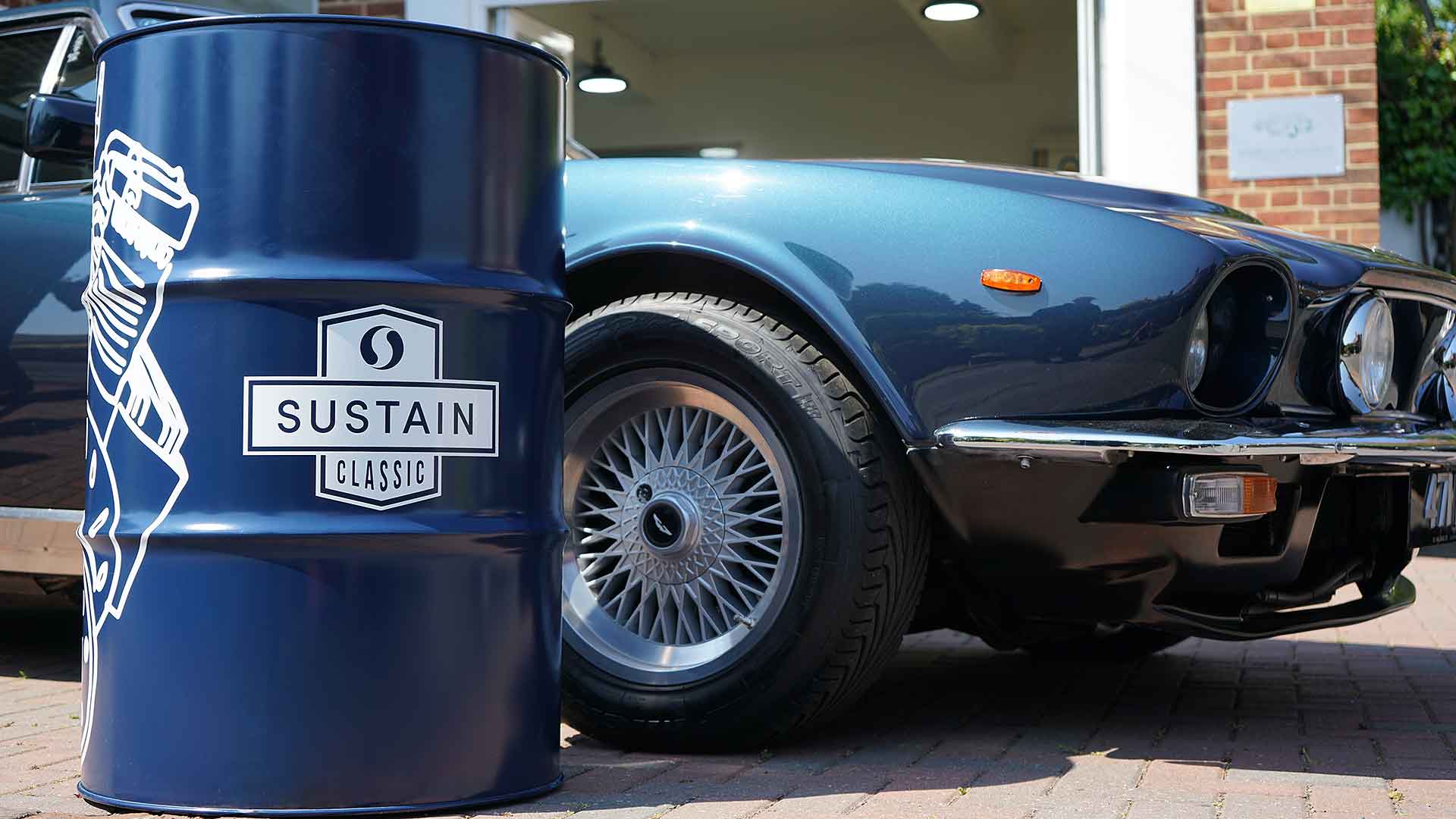
Coryton Sustain Classic fuels allow classic car drivers to power their vehicles with plant-based petrol – with no modifications needed to the cars’ engines.
There are three types of petrol available, with up to 80 percent renewable content. Coryton engineers promise a reduction in greenhouse gases of at least 65 percent, compared with fossil fuels, from the most sustainable product.
The petrol has an octane rating of 98RON – equivalent to super unleaded – but it certainly isn’t cheap. Prices start from £3.80 per litre – that’s more than £17 a gallon…
Biofuel from waste
The Coryton fuels are second-generation biofuels, made from agricultural by-products. These include straw and waste crops that wouldn’t be used for consumption.
The fuels therefore use CO2 that is already in the atmosphere, which has been absorbed by plants as they have grown – rather than releasing additional CO2 locked in underground fossil fuel.
They also have a low, sub-one-percent mix of bioethanol, which has been specifically tailored to protect classic cars.
There are around half-a-million classic cars in the UK, and fuels such as these could bolster their sustainability for the future. However, Coryton adds that the fuel can be used by any vehicle running on standard forecourt fuel, not only classics.
Every little helps
“Every kilogram of CO2 we avoid adding to our atmosphere by replacing fossil fuel with sustainable fuel is a win,” said Coryton business development director, David Richardson.
“We don’t instantly have to go for the full switch to start making a genuine impact. As more feedstocks become available, these fuels will start to contain even higher levels of traceable sustainable elements.”
He added that current availability of truly fossil-free fuel components is limited, but development is underway.
“The industry will get there with the right support – which is why we think it’s important to start getting these products into the hands of consumers so they can see how easy and effective the switch could be.”
Coryton sustainable fuel at Bicester Heritage
Super 80
At least 80 percent renewable content
At least 65 percent greenhouse gas saving compared to fossil fuels
98RON
£4.65 per litre
Super 33
At least 33 percent renewable content
At least 25 percent greenhouse gas saving compared to fossil fuels
98RON
£3.80 per litre
Racing 50
At least 50 percent renewable content
At least 35 percent greenhouse gas saving compared to fossil fuels
Most car storage facilities are just functional and faceless warehouses. Kiklo Spaces is different. This unique venue in Hampshire – an hour away from London and 25 minutes from Goodwood – feels more like a dream garage for your money-no-object car collection.
“Cars are meant to be enjoyed – and this place gives you the ability to enjoy them,” says Luke Rebelo, facility director at Kiklo Spaces. “We don’t see ourselves as a storage company. This is more like a gallery for important automotive art.”
At the time of our visit, those objets d’art included an Aston Martin Valkyrie, Ferrari 250 GT California SWB and three examples of the legendary McLaren F1. Oh, and a Morris Minor. “We’re certainly not elitist,” adds Luke. “The Morris is looked after with exactly the same level of the same level of care as the McLarens.”
Cars and community
From the outside, Kiklo Spaces looks modernist and minimalist, like a beautiful, timber-clad villa you might discover in the hills above Malibu beach. Inside, it’s more like a Bond villain’s lair: expansive and immaculately white, with a huge hydraulic lift connecting two levels of car space.
Up to 50 vehicles are kept here, many of them with seven-figure price tags, and the levels of security and fire prevention are as rigorous as you’d hope – including an on-site reservoir for the sprinkler system.
Rover SD1 on display at Kiklo Spaces.
A successful works Group A touring car, prepped by TWR and driven by René Metge and Jean Louis Schlesser in 1983-84. pic.twitter.com/wklPb1OiBZ
However, Luke is keen to stress that Kiklo Spaces is about more than just the cars. “This is a community for like-minded individuals,” he explains, “allowing owners to meet up, share views and knowledge, see their cars on display, and drive them on local country roads.”
Newey meets Murray
Still, it’s the cars I’m most excited to see – and none more so than the Aston Martin Valkyrie (pictured above). Lurking menacingly in a corner, this 1,160hp V12-engined hypercar looks like a Le Mans prototype with number plates. Its aero-sculpted details are exquisite, its overall form utterly alien.
Parked next to Adrian Newey’s vision of the ultimate road car is a McLaren F1 – a car Gordon Murray designed in the early 1990s with a broadly similar brief. This particular F1, chassis number 43, was bought new by the Japanese founder of Ueno Clinic and remains wonderfully original. If we’re talking automotive art, this is my Mona Lisa.
Two era-defining hypercars here: Aston Martin Valkyrie and McLaren F1.
At the opposite end of the supercar spectrum is a wildly modified ‘Koenig Specials’ version of the Ferrari Testarossa (see top of page). Its twin-turbocharged flat-12 kicks out 1,000hp: good for 0-60 mph in 3.5 seconds and a top speed of 230mph – all without any electronic driver aids. I doubt Gordon Murray would approve, but I certainly do.
The presence of greatness
The facility also houses a number of important racing cars, none more so than Ayrton Senna’s championship-winning McLaren MP4/6 (pictured above). One of the final F1 cars with a V12 engine and a manual transmission, it seems to pulse with barely suppressed energy – even in the silence of this dehumidified, temperature-regulated room.
Lastly, returning to the real world, Luke lifts the cover on a Toyota Land Cruiser FJ40. The 1973 model was briefly used as a snow plough before being retired with less than 400 miles on the clock. Stark and functional, it’s a reminder that cars don’t need huge horsepower or a racing heritage to rouse our emotions.
Luke and I finish with a chat on one of the venue’s rather stylish sofas, drinking great coffee and talking about cars. If you’d like to do the same, or you have a special car to store, check out Kiklo Spaces on Instagram and join the community.
Photo credits: Alex Penfold, Henry Wood and Stephan Bauer.
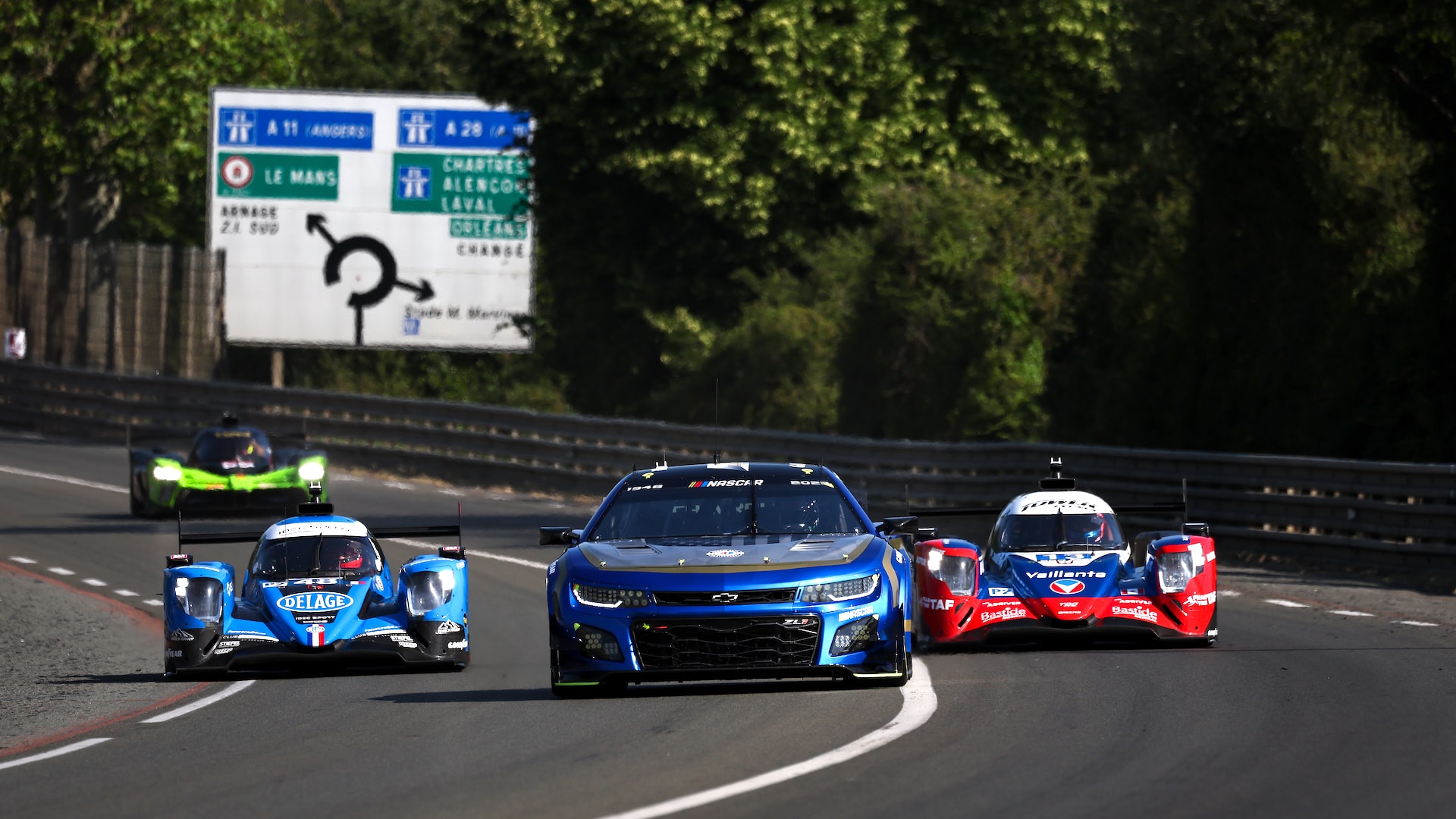
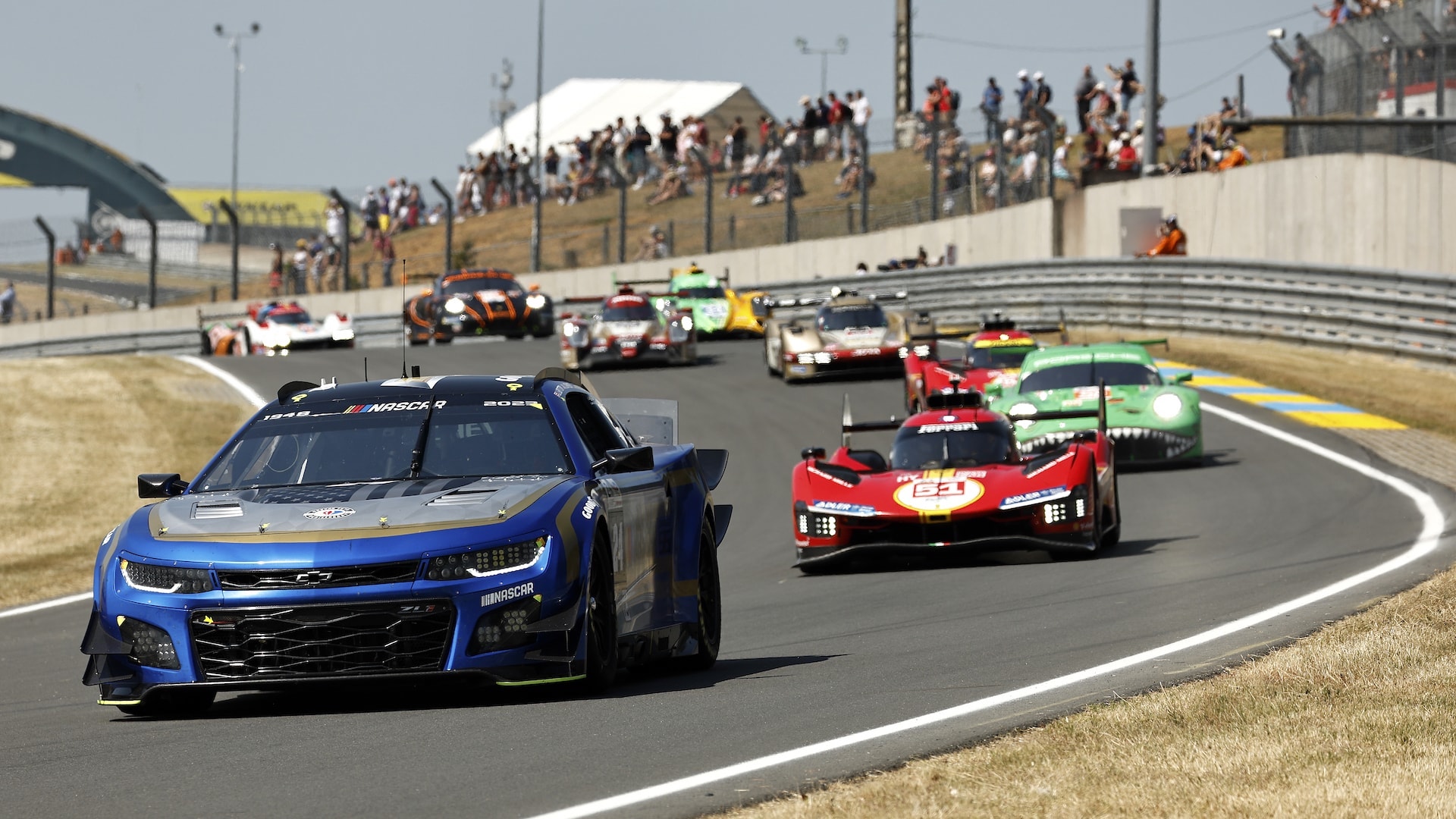
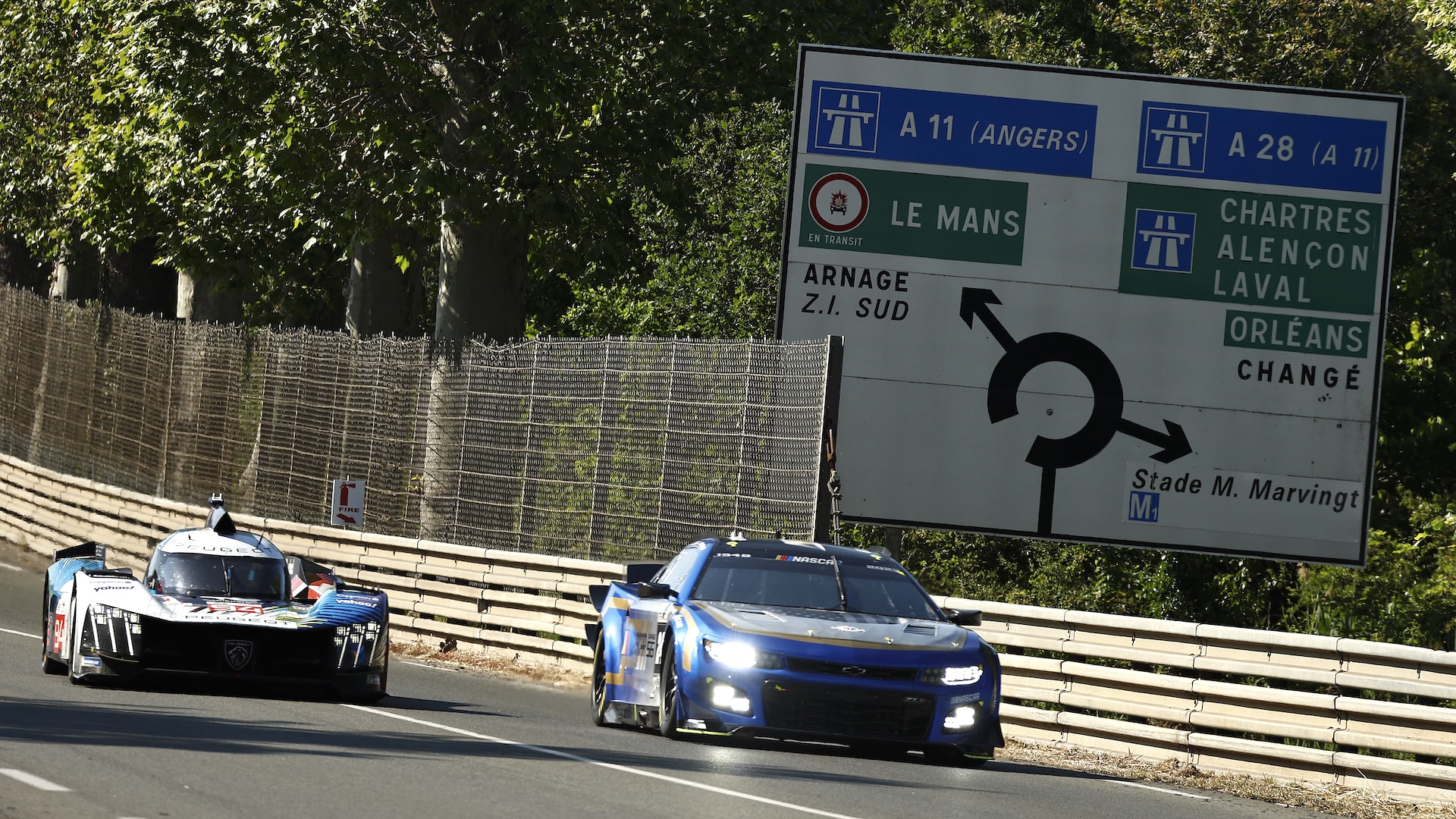
This weekend’s 2023 24 Hours of Le Mans endurance race will see a NASCAR Cup Series Next Gen Chevrolet Camaro ZL1 line up on the starting grid.
Running in the experimental Garage 56 category, the NASCAR Camaro is there to demonstrate just how capable the latest Cup Series stock car racer is.
It’s also part of the celebrations to mark the 100th anniversary of Le Mans, along with commemorating the 75th anniversary of NASCAR’s founding.
Compared to the diminutive Le Mans Hypercar and GT racers, the hulking Chevy NASCAR will certainly be easy to spot on-track. If the V8 noise doesn’t give it away first…
Showing what a Next Gen NASCAR can do
The Garage 56 ‘Innovative Car’ category was introduced at Le Mans in 2012, designed to promote new technology and initiatives. Previous entrants have included the radical DeltaWing and hybrid-powered Nissan ZEOD RC racer.
Although Garage 56 entrants are classified in the actual race results, they are not eligible for outright victory.
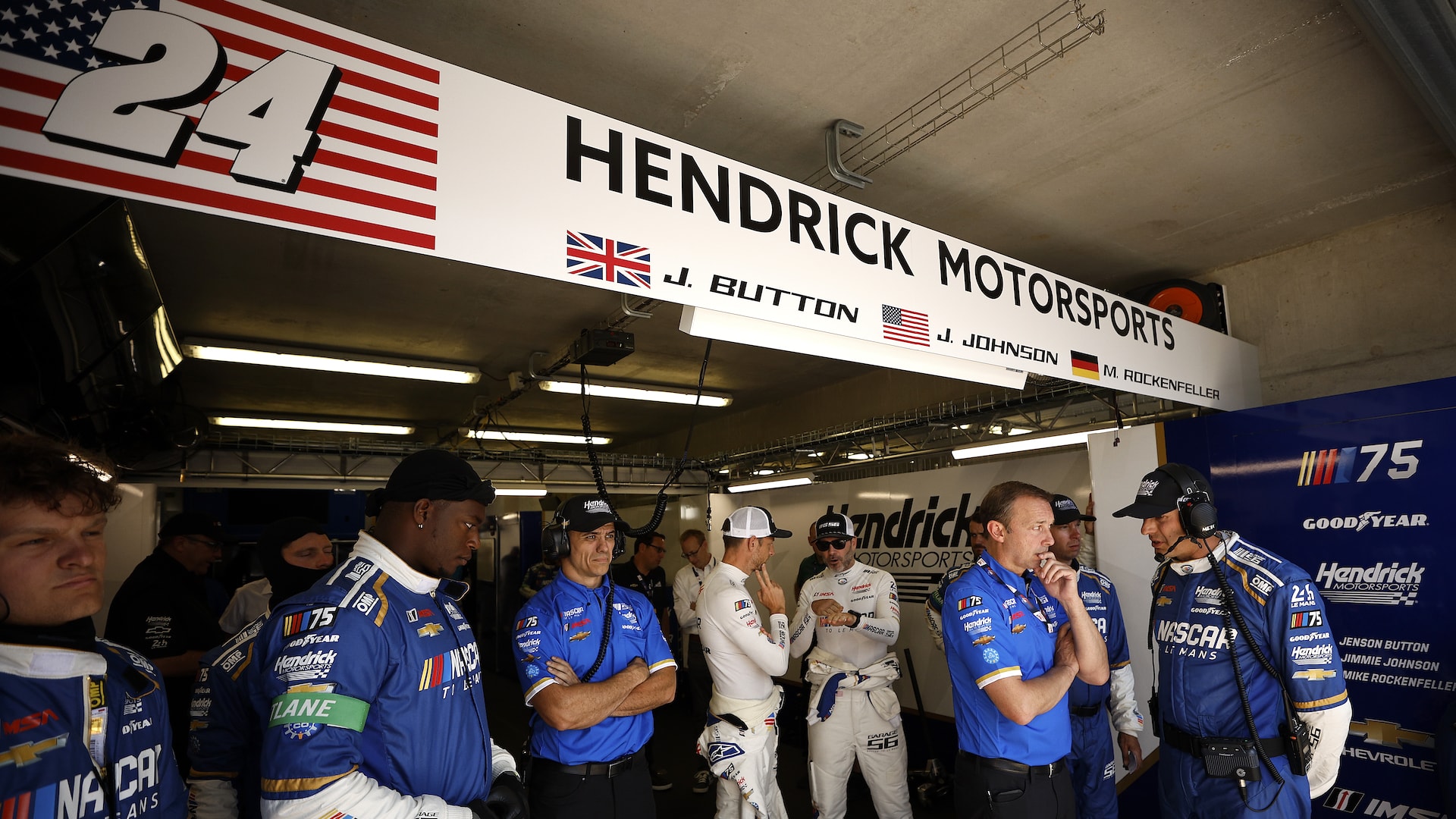
This will matter little to Hendrick Motorsports. The hugely successful American racing team is fielding the Camaro in collaboration with NASCAR, Chevrolet, IMSA and Goodyear.
On driving duty will be seven-time NASCAR Cup Series champion Jimmie Johnson, 2009 Formula 1 world champion Jenson Button, and two-time Le Mans winner Mike Rockenfeller.
An all-star driving team
The car taking to the Circuit de la Sarthe is almost unchanged from the Next Gen Chevrolet Camaro ZL1s used in the NASCAR Cup Series.
This means a 358-cubic inch (5.8-litre) small-block V8 engine, combined with a five-speed paddle shift transmission.
Necessary modifications have included the addition of functioning headlights and tail lights for racing at night. A road course-specification windscreen wiper is also fitted, along with a larger fuel cell to enable the Camaro to complete longer stints.
Bespoke Goodyear Eagle racing rubber has been used, while carbon brake discs ensure the Chevrolet can make repeated stops from high speed.
Creating the full NASCAR experience
“From the beginning of this project, it was important to us that the car we bring to Le Mans is a true NASCAR stock car,” said Jim France, chairman and CEO of NASCAR.
“While there have been some adjustments to allow the car to compete in a 24-hour endurance race, fans in Le Mans will be treated to the full NASCAR experience”, he added.
This is not the first time a NASCAR has taken to the Circuit de la Sarthe, however. In 1976, a Dodge Charger and Ford Torino were entered at Le Mans, as part of an ‘exchange of classes’ between the two events.
Both NASCARs failed to finish in 1976, with a lack of preparation noted as contributing to their mechanical issues.
Flat-out to the finish
This time around, extensive testing has been undertaken since the project was announced in March 2022. Included in this was a 24-hour simulation, held at Sebring in February.
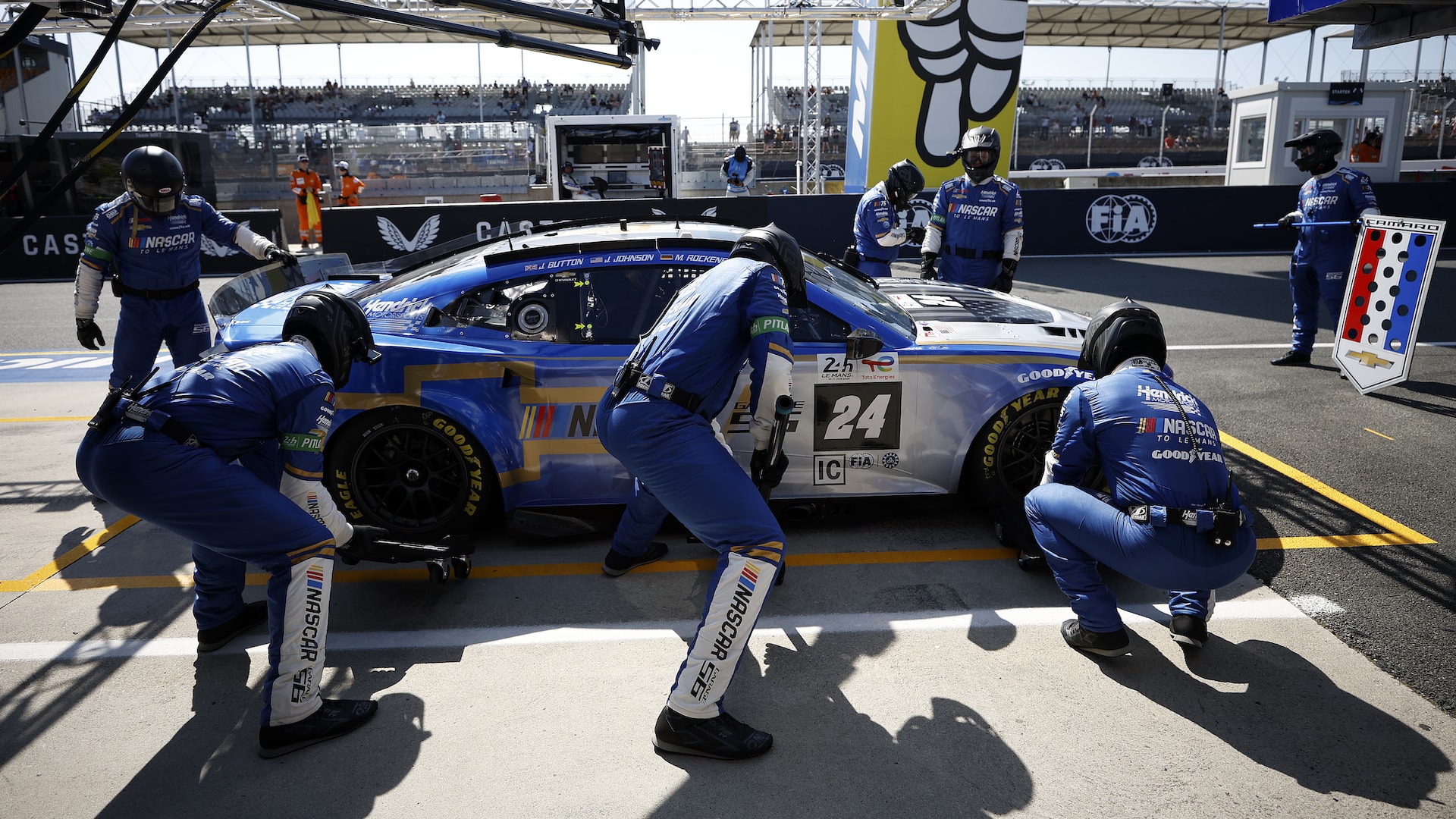
The Chevy has already looked impressive in Le Mans practice, posting quicker lap times than the fastest LM GTE cars. It reached a top speed of 185mph, too. A win by the Garage 56 crew in the annual Pit Stop Challenge also proves the Hendrick team is out for success.
However, simply being at the finish when the race ends on Sunday is likely to be the ultimate prize for the outrageous NASCAR.
For the seventh year running, the London Concours welcomed nearly 100 rare and exotic cars into the heart of the city. Hosted in the enclosed garden of the Honourable Artillery Company, close to Liverpool Street, the three-day event drew in car enthusiasts and curious office workers alike.
For 2023, London Concours marked the 50th anniversary of Porsche’s Rennsport sports cars, with around 50 RS-badged 911s gathered together – from air-cooled rarities to the latest 992 GT3 RS.
Other displays included ‘Grand Tourisme’, a celebration of innovative French cars such as the Citroen SM and Renault 5 Turbo, and ‘Golden Age Coupes’, epitomised by the Mercedes-Benz 300SL and Aston Martin DB5 Vantage.
A question of Rennsport
The highlight for us, though, was the celebration of all things Porsche and RS. The story began with the iconic 911 Carrera 2.7 RS of 1973, which introduced the concept of a lighter, faster and more focused 911 road car – along with the oft-imitated ‘ducktail’ rear spoiler.
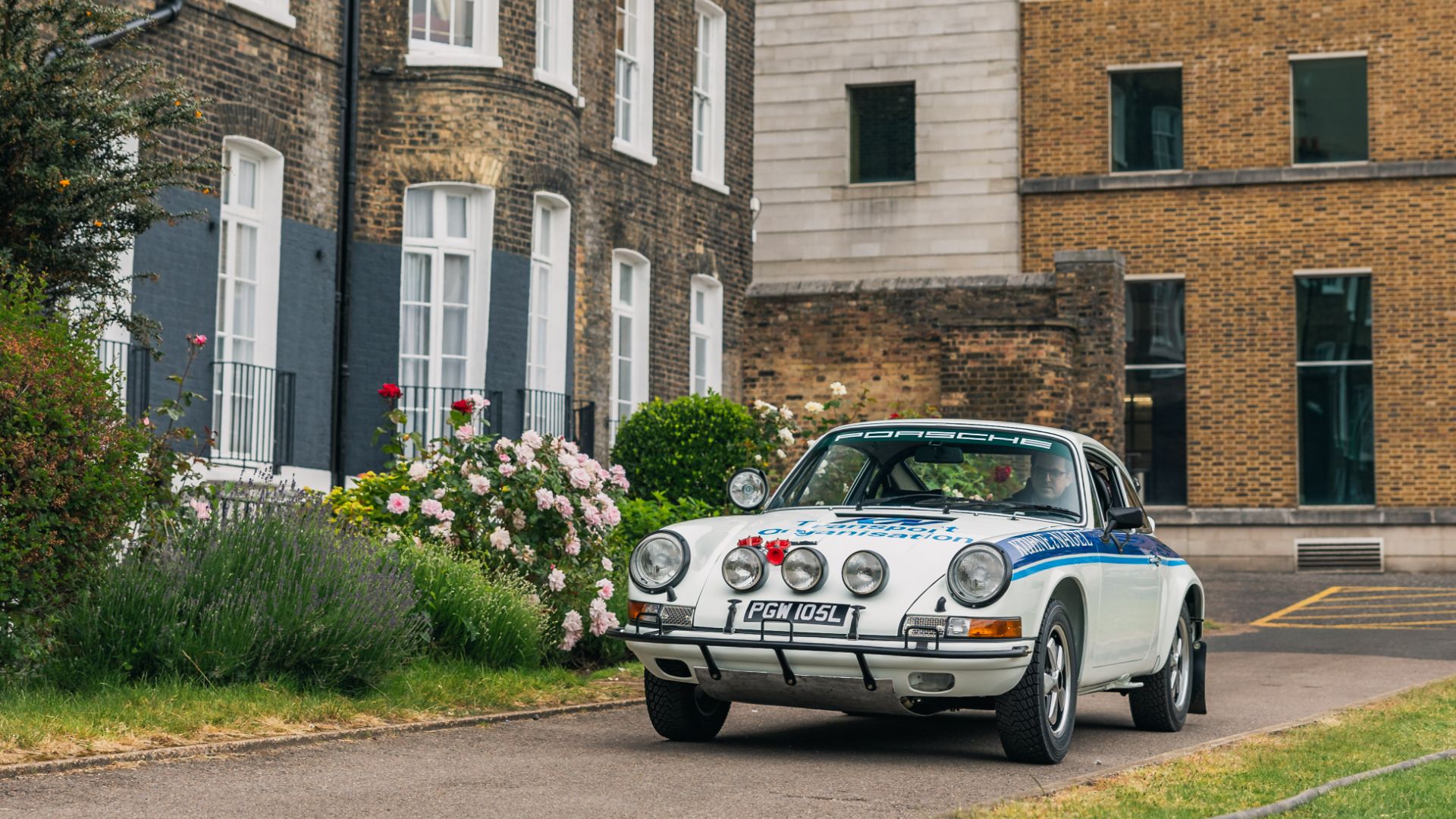
Among several examples of the 2.7 RS at London Concours was a rally car restored by Tuthill Porsche (pictured above). Not seen in public for more than 40 years, it boasted a host of period accessories, from mudflaps to an analogue Halda ‘rally computer’.
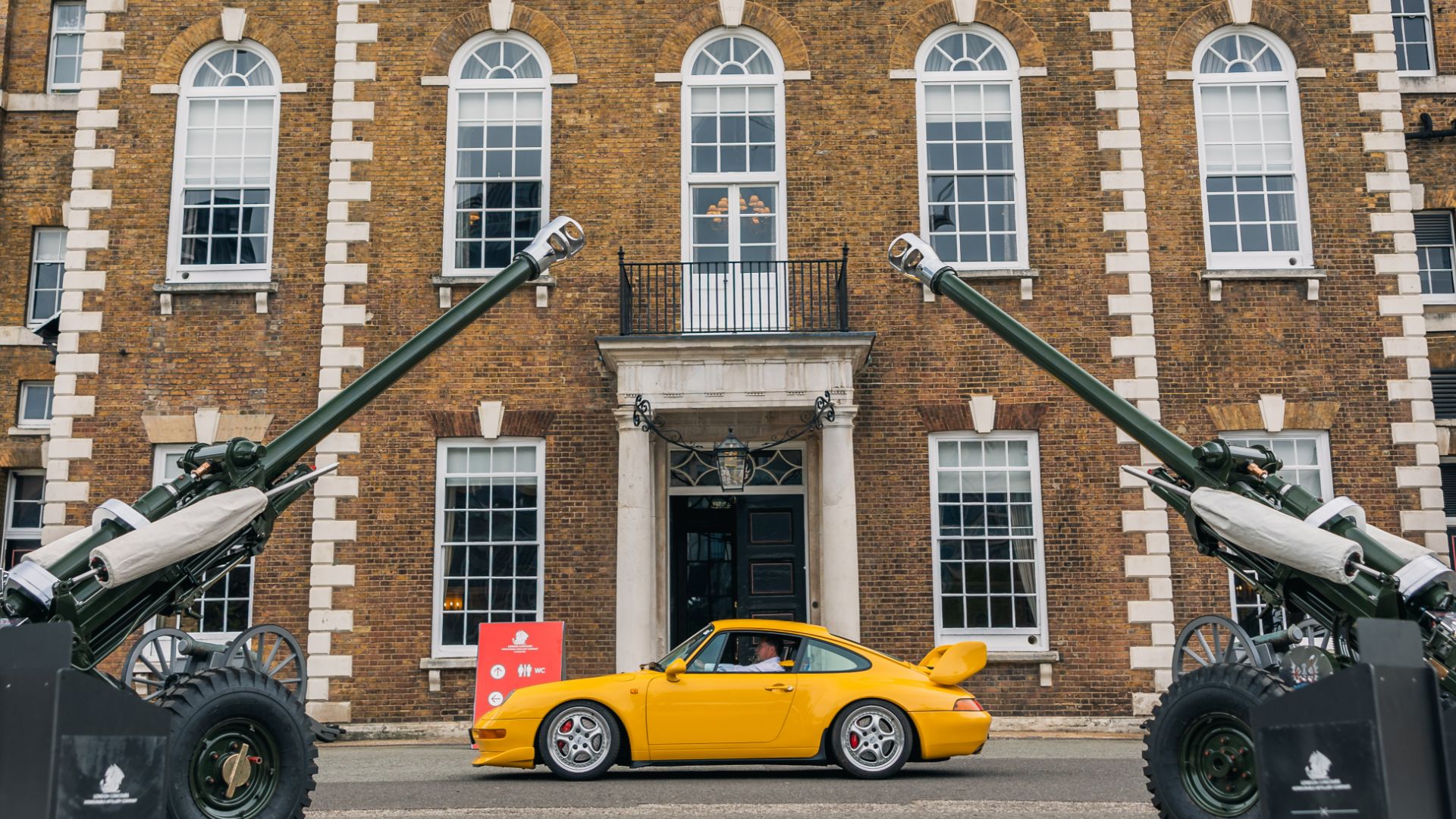
Other standouts included a stunning 993 Carrera RS in Speed Yellow (seen at the top of this page), plus a sizeable number of post-2003 water-cooled cars, with increasingly elevated rear wings and monstrous power outputs.
There was even a plucky Cayman GT4 RS amidst the many 911s, representing one of the newest cars with a dash of ‘Made in Flacht’ magic.
From Le Mans to London
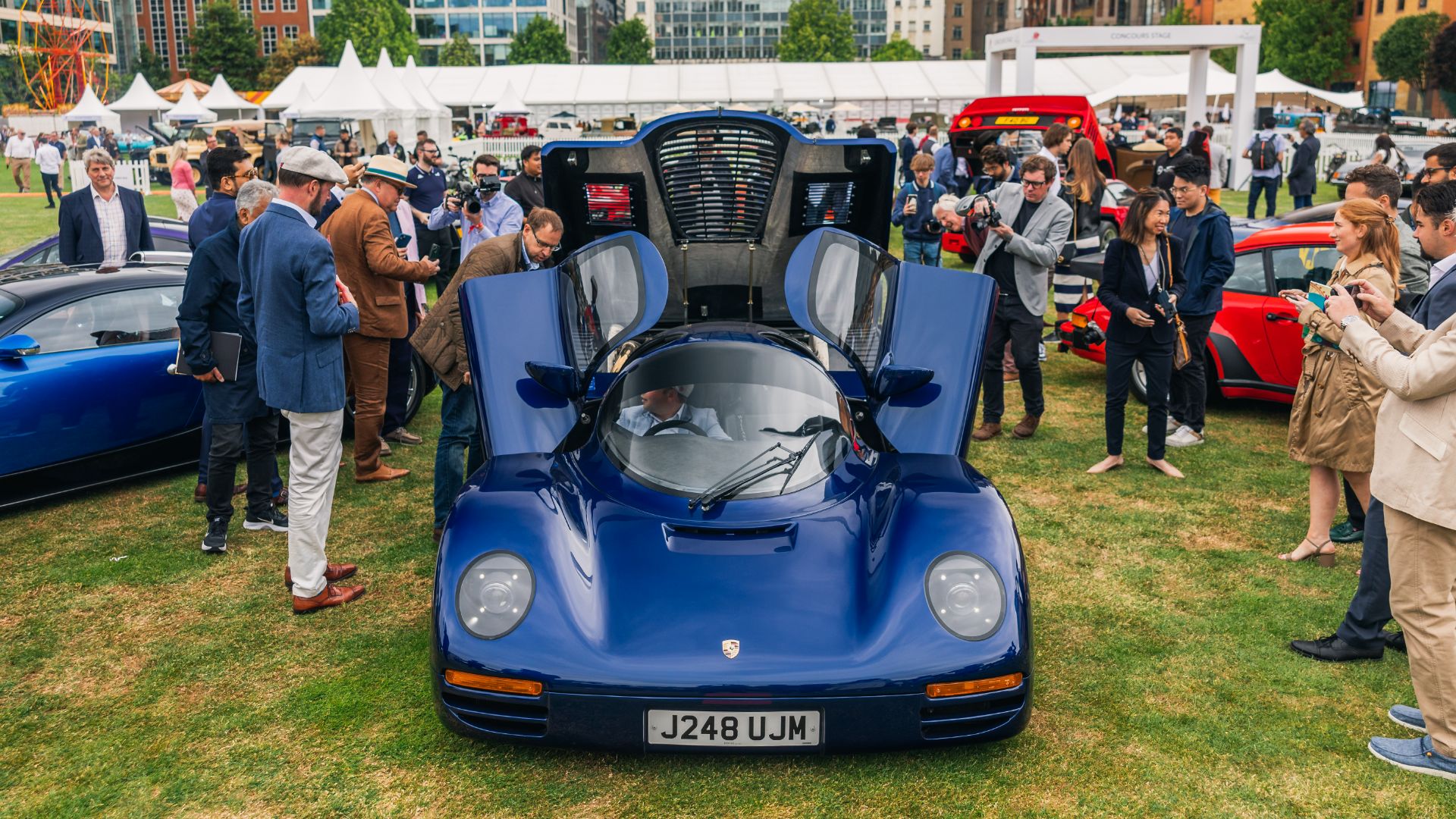
The Best in Show winner at London Concours also wore a Porsche badge, although it was built in High Wycombe, rather than Stuttgart. The Schuppan 962CR P1 (pictured above) is essentially a road-legal version of the hugely successful Porsche 956/962, which dominated Le Mans in the mid-1980s.
A mid-mounted 608hp 3.3-litre turbocharged flat-six and five-speed manual gearbox gave the Schuppan a top speed of 230mph – insane performance for 1992. It also looked every millimetre the Group C racer, with a carbon fibre monocoque chassis and canopy-style cockpit.
Porsche Carrera GT was converted to GTZ spec by Zagato in 2019.
It retains the stock 612hp NA V10, but bespoke panels make it slightly lighter than OEM spec. pic.twitter.com/fpk924Tvoz
Sadly, only six examples of the 962CR were made before Schuppan was declared bankrupt in 1994. However, Porsche would introduce its own motorsport-influenced hypercar a decade later: the V10-engined Carrera GT.
Sure enough, there was one present at the Honourable Artillery Company, complete with bespoke bodywork by Italian coachbuilder, Zagato. It was perhaps the Porsche we most wanted to drive home, albeit preferably not through London traffic…
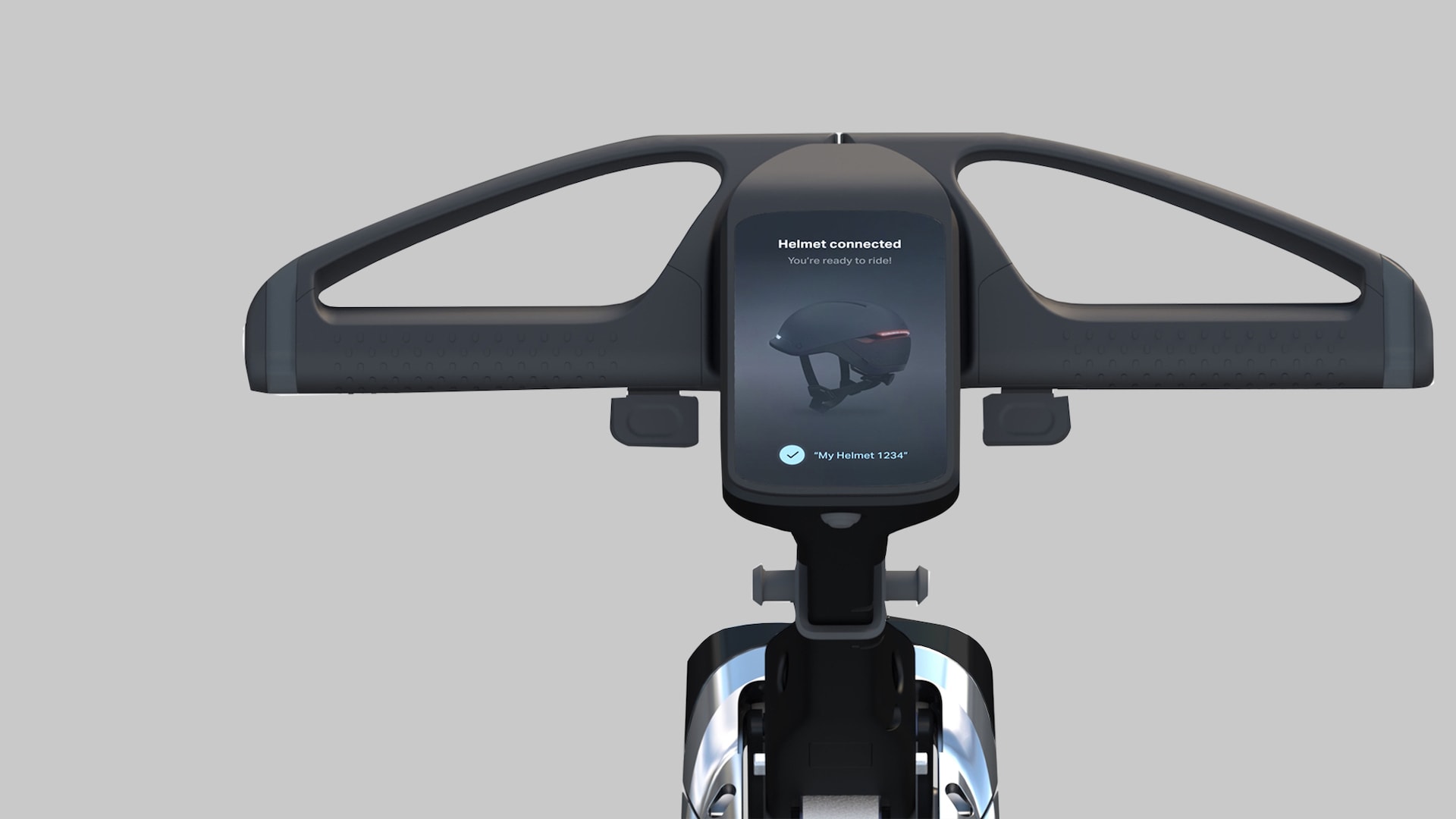
Lotus Engineering has been involved in designing the scooter, while Hilo itself was co-founded by the former CEO of Aston Martin, Dr. Andy Palmer.
Safer handling as standard
Dr. Palmer commented: “E-scooters have faced challenges with safety and public perception. The Hilo One is an e-scooter that addresses these concerns head-on. I believe in the potential of e-scooters to revolutionise urban transportation. I also understand the importance of safety, comfort and rider experience.”
The Hilo One comes fitted with a large 12.5-inch front wheel, chosen to help clear potholes and remove the twitchy handling of some e-scooters. Extensive user trials helped determine the most confidence-inspiring steering geometry.
Central to rider safety is the Hilo One’s illumination system, which is controlled by artificial intelligence (AI). This alerts the rider to potential dangers, using visual and audible warnings, plus haptic feedback through the handlebars.
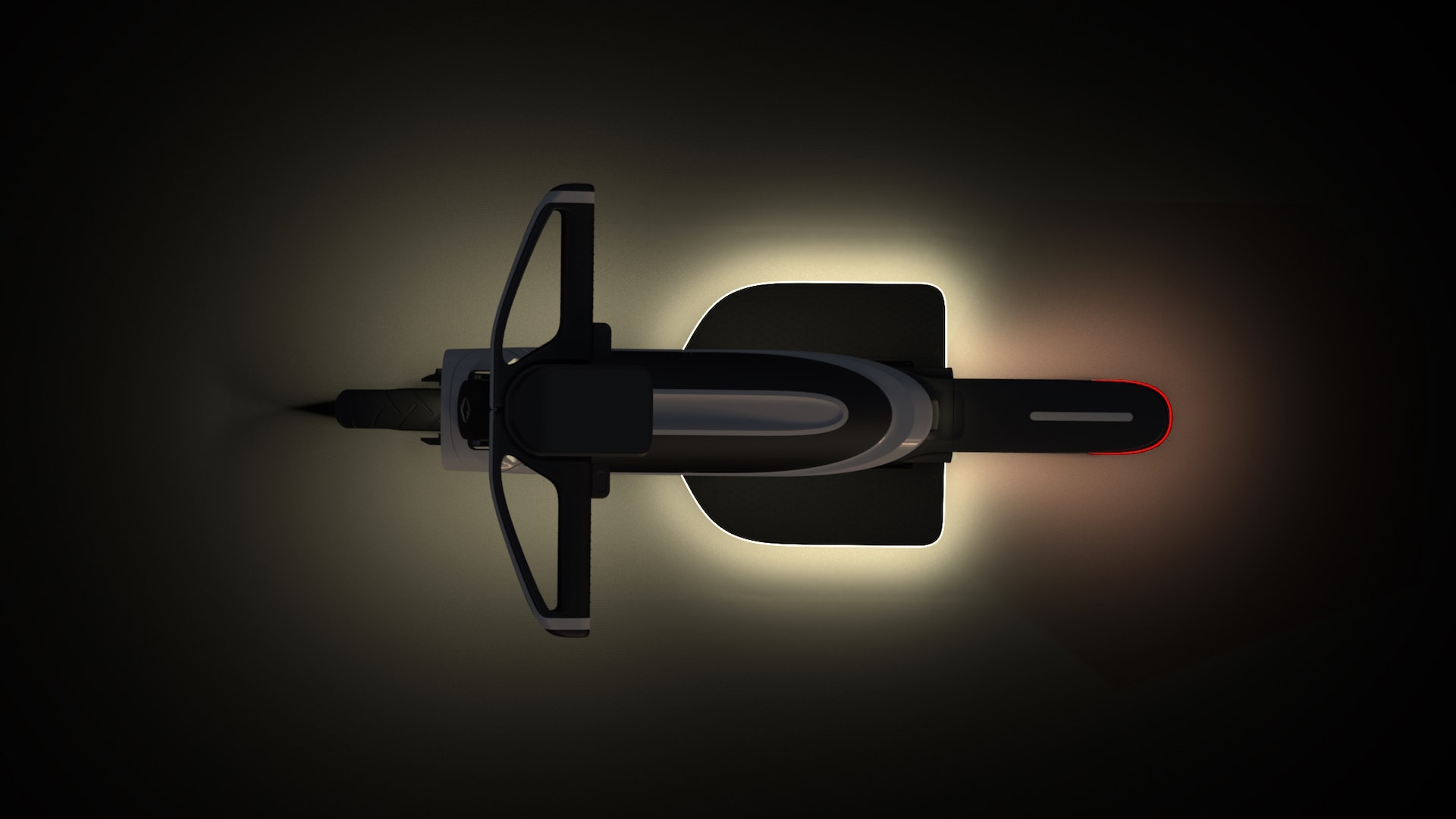
Perimeter illumination helps ensure the Hilo One can be seen at night, with a pool of light making the scooter appear larger to other road users, such as car drivers.
In-car compatibility included
Equipped with 350w electric motors, the Hilo One can reach a top speed of 15.5mph. Fully charged, the e-scooter has a range of up to 25 miles.
Charging can be done at home, or through a dedicated in-car charger. Android Auto compatibility allows navigation and range information to be shared between the car and the Hilo One.
Lotus Engineering has contributed to the overall design of the Hilo One, including the patent-pending folding system.
This sees dirty wheels enclosed within the body of the e-scooter, and allows the Hilo One to be carried or wheeled using the telescopic handle.
‘Redefining micromobility‘
Robin Harris, CEO of Hilo, added: “Hilo was founded to tackle the challenges faced by micromobility and e-scooters, such as safety, lack of innovation and, quite frankly, not necessarily all, but most e-scooters looking the same.
“We have a progressive vision to redefine safety micromobility, creating class-defining products that leverage the latest AI road-scanning technology and perimeter safety lighting. Hilo’s ambitious goal to create an e-scooter that stands out, without compromising safety and the ride experience, was appealing in a sector still in its infancy and is likely to see an exponential increase in innovation.”
Prices for the Hilo One are expected to start from £1,750, with interested customers able to pre-order now. First deliveries are due in the third quarter of 2024.
If you own a modern diesel car, you will probably have heard about diesel particulate filters. But what are these components – and why can they be a problem?
A diesel particulate filter (DPF) is designed to capture and store exhaust soot, reducing emissions from a diesel car. It prevents harmful particulate matter from being released into the atmosphere.
A DPF has been a requirement of all new diesels since 2009 when the ‘Euro 5’ emissions standard came into force. However, particulate filters date back to 1985, when Mercedes-Benz became the first car manufacturer to introduce them on the 300D (sold in California).
In 2000, Peugeot re-introduced the principle when it used a cerium-based fuel additive for regeneration on the 607 2.2 HDi.
Today, there are two main types of DPF: passive regeneration and active regeneration.
Passive regeneration
Passive regeneration uses normal exhaust temperatures and nitrogen oxide (NO2) as the catalyst to oxidise particulate matter in the DPF. This tends to occur at high speeds, typically on a motorway or A-road, with the engine running for 30 minutes or more.
The main advantages of passive regeneration are that it requires no input from the driver, the process takes place automatically and there are fewer components.
However, it relies on the driver making regular trips on faster-flowing roads – without this, problems can occur. It’s for this reason that manufacturers introduced so-called active regeneration.
Active regeneration
Active regeneration uses the car’s ECU to sense when the filter is getting clogged with soot and injects extra fuel into the engine to raise the temperature of the exhaust, triggering regeneration.
This tends to occur around every 250 to 300 miles and will take up to 10 minutes to complete. In theory, this shouldn’t cause any issues, but problems will occur if the system is unable to complete the regeneration.
If the process is interrupted too many times, the DPF warning light will illuminate and you’re advised to take the car to a motorway, dual carriageway or A-road for 15 minutes of steady driving. If you continue to ignore the warning light, the car will go into ‘limp home’ mode.
There is a third form of DPF, which uses a fuel additive to lower the ignition temperature of the soot particles to enable regeneration at a lower temperature. The additive is stored in a separate tank or ‘bladder’ and should be replaced every 70,000 to 100,000 miles.
Make sure the tank is refilled when a warning light appears on the dashboard because, without the fluid, the DPF will become blocked.
Oil dilution
A significant disadvantage associated with active regeneration is the dilution of the engine oil caused by a small amount of diesel during the post-injection cycles, where fuel is injected into the cylinder after the regular combustion. A thin layer of fuel can build up on the cylinder walls, which leads to premature engine wear, and drivers are warned to consider shorter oil service intervals.
There have been various studies into the engine oil dilution issue and the scale of the problem varies according to the make and model of the diesel car in question. Evidence suggests that the problem is worsened when the regeneration process is halted prematurely, or when a car is only used for short trips.
Modern systems should alert the driver via a dashboard message when the oil dilution reaches a certain level, but regular servicing remains critical to the long-term health of the engine. There have been some high-profile issues concerning some major car brands.
The problems of a blocked DPF
If regeneration doesn’t take place, the DPF will need to be cleaned or replaced, landing you with a bill upwards of £1,000. A quick trawl of some forums and discussion threads suggests you could be charged up to £5,000, which might be more than the car is worth.
That means it’s vitally important to look after your DPF and to pay close attention if you’re buying a high-mileage diesel car. A well-maintained DPF should have a life of 100,000 miles. But it could be significantly less if the car has been used for shorter trips and regular regeneration hasn’t taken place.
How to avoid a blocked DPF
To avoid a blocked DPF, you can start by not buying an inappropriate car. Typically, if you drive less than 12,000 miles a year, a petrol, hybrid or electric car would be more suitable for your needs.
Diesel cars tend to be more economical on longer trips, making them unsuitable for short trips and urban driving.
If you’re driving a diesel car with a DPF fitted, read the manual to understand whether your vehicle uses passive or active regeneration, and make sure you know how to look after the filter. Using the right engine oil is very important.
The RAC says performance modifications can damage a DPF, as can the use of low-quality fuel. Even running the car low on diesel can cause problems, as the car may avoid regeneration to save fuel.
Can you remove a DPF?
It is an offence to use a vehicle modified in a way that no longer complies with the emissions standards it was designed to meet. The removal of a DPF could thus land you with a £1,000 fine for a car or £2,500 for a light goods vehicle.
Further issues include an immediate MOT fail if the DPF has been removed, along with invalid insurance as the car has been modified from original specification.
Obviously, you need to be on your guard if you’re buying a high-mileage diesel car. Check the latest MOT details – the information is stored online – and check the DPF is present.
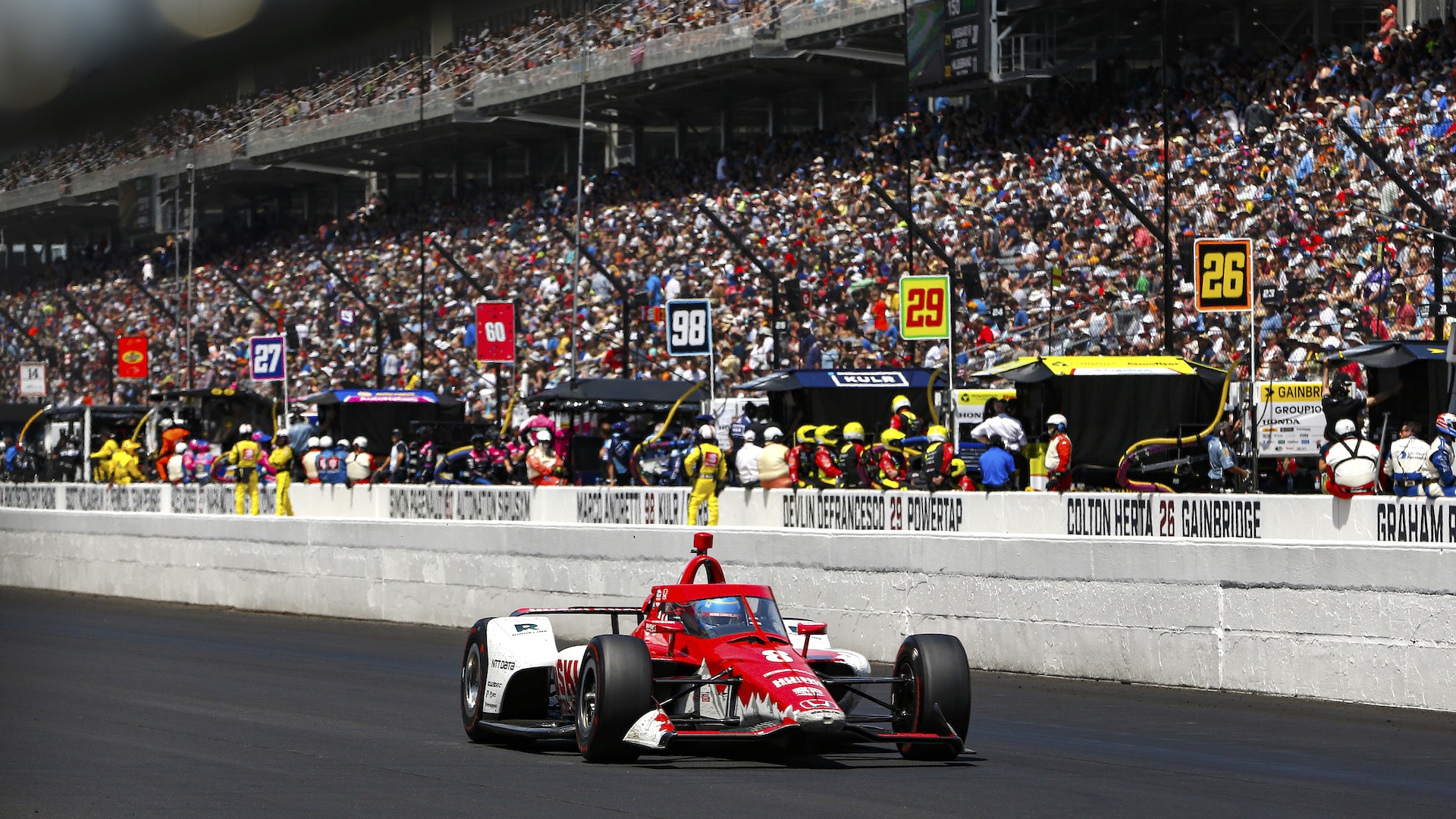
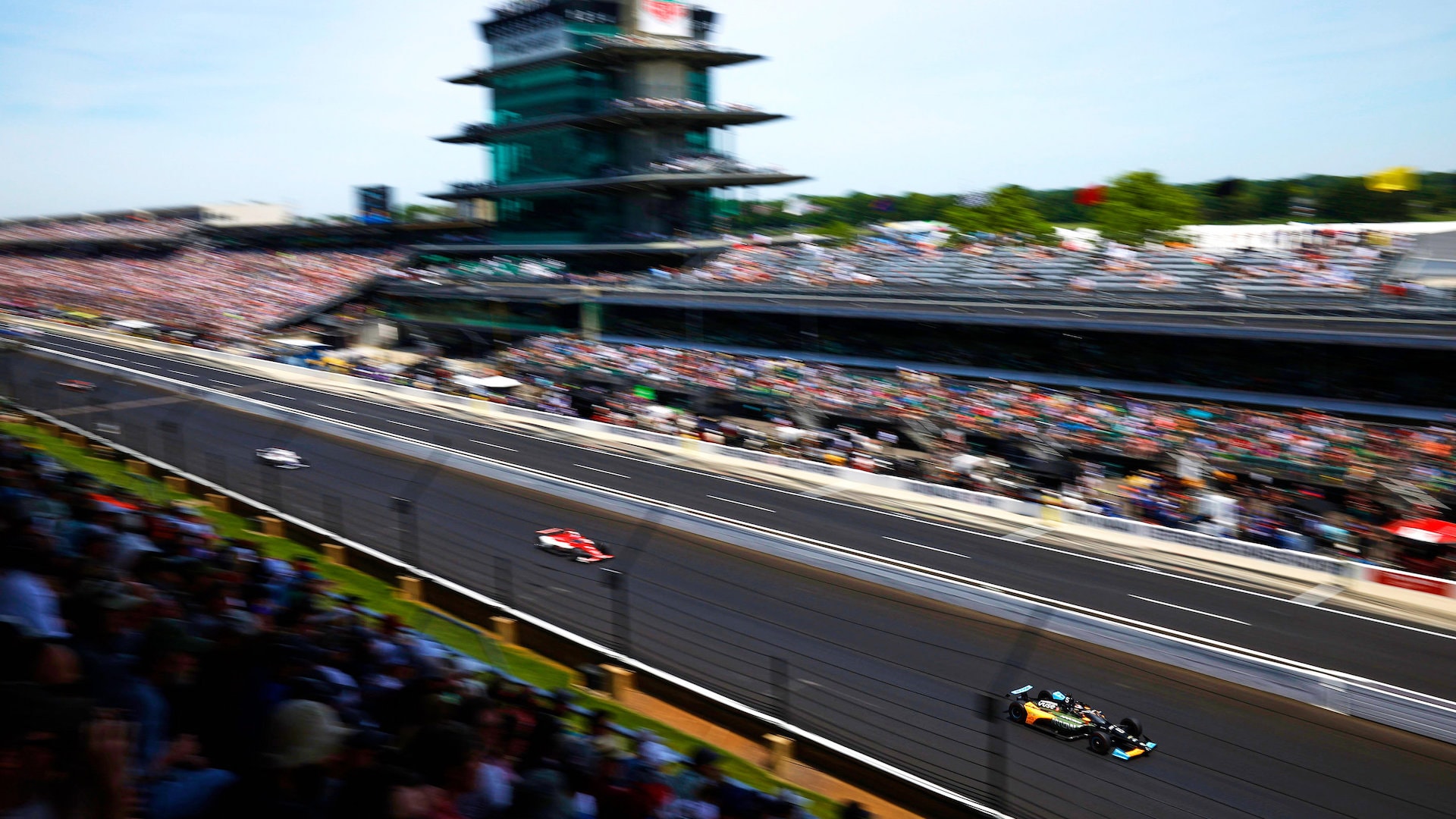
Billed by American enthusiasts as ‘the greatest spectacle in racing’, the 107th Indianapolis 500 takes place this weekend.
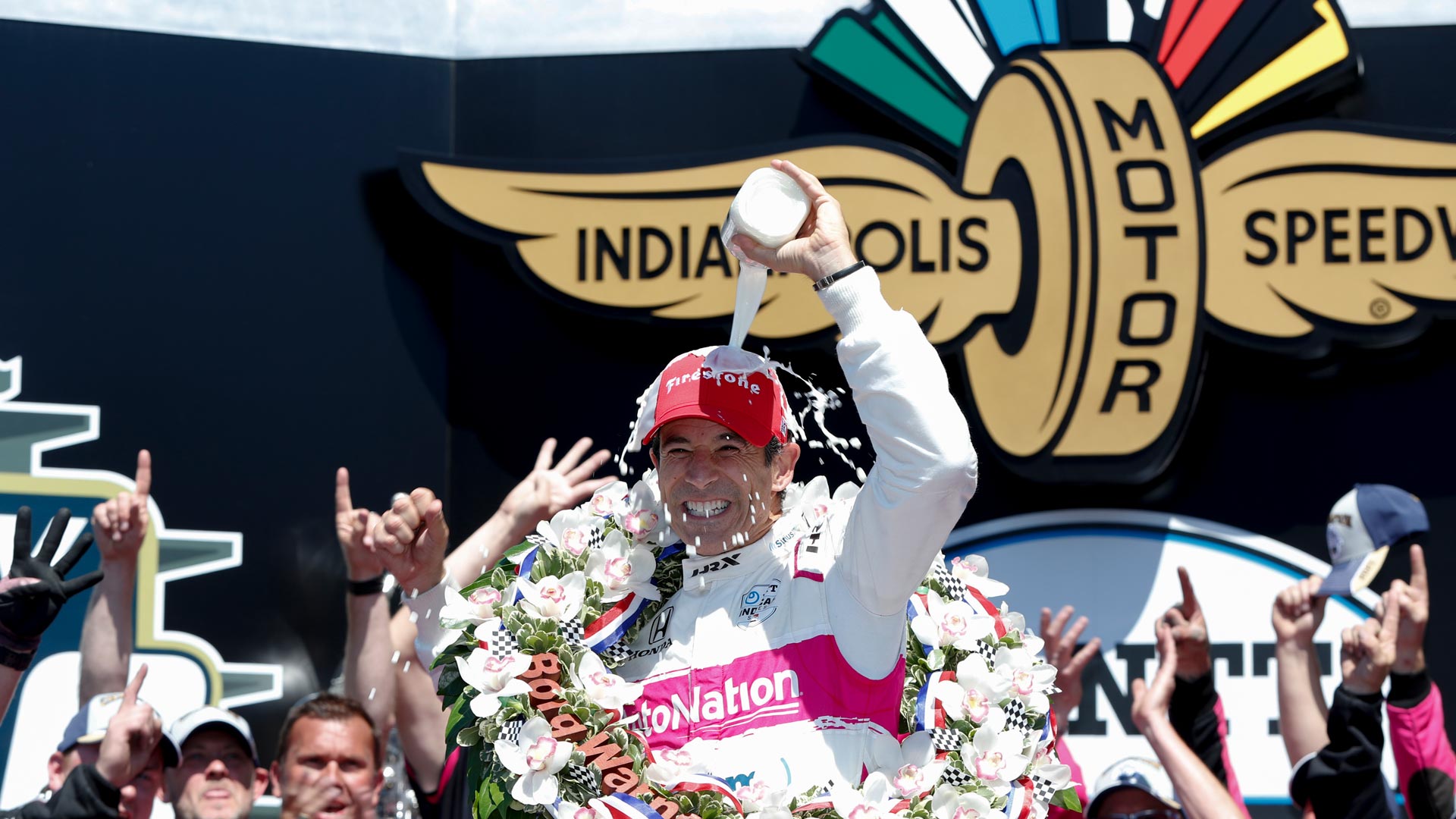
The race will see 33 IndyCar drivers fight it out over 500 miles for one of the top prizes in motorsport. Expect plenty of high-speed action, close competition, and even a celebratory bottle of milk.
Our full guide contains all the key information you need to watch the Indy 500 – and enjoy a big slice of American racing here in the UK.
How can I watch the 2023 Indy 500 in the UK?
Sky Sports has the sole UK broadcast rights to the 2023 Indianapolis 500.
Sky Sports subscribers will be able to watch live via the Sky Sports F1 channel, following the conclusion of the Monaco Grand Prix. All the important build-up to the Indy 500 will air on the Sky Sports Arena channel.
General Sky subscribers can use the SkyGo app on their smartphone or mobile device to watch. Non-subscribers can purchase a Now TV Sky Sports day pass to watch the race. This can be used with a smart TV or compatible mobile device.
Is there a live stream for the 2023 Indy 500?
Sadly there is no official internet livestream for those wanting to watch the Indy 500 in the UK.
Viewers in the United States can watch online through the NBC Sports App, or via the NBC Sports website. NBC’s Peacock service will also cover the race in the USA.
What time does the 2023 Indy 500 start in the UK?
The Indy 500 starts relatively early in the United States, with race day traditions beginning at 9am local time on Sunday in Indianapolis. Cars will start appearing on the grid at around 10:30am – equivalent to 3:30pm British Summer Time (BST).
Sky’s coverage of the build-up to the Indy 500 will begin on Sky Sports Arena at 3:30pm BST, with Sky Sports F1 airing the race from 5:30pm BST.
After all the elaborate processions and ceremonies have taken place, the racing should finally begin at 12.45pm local time, or 5.45pm BST.
How many fans will be at the 2023 Indy 500?
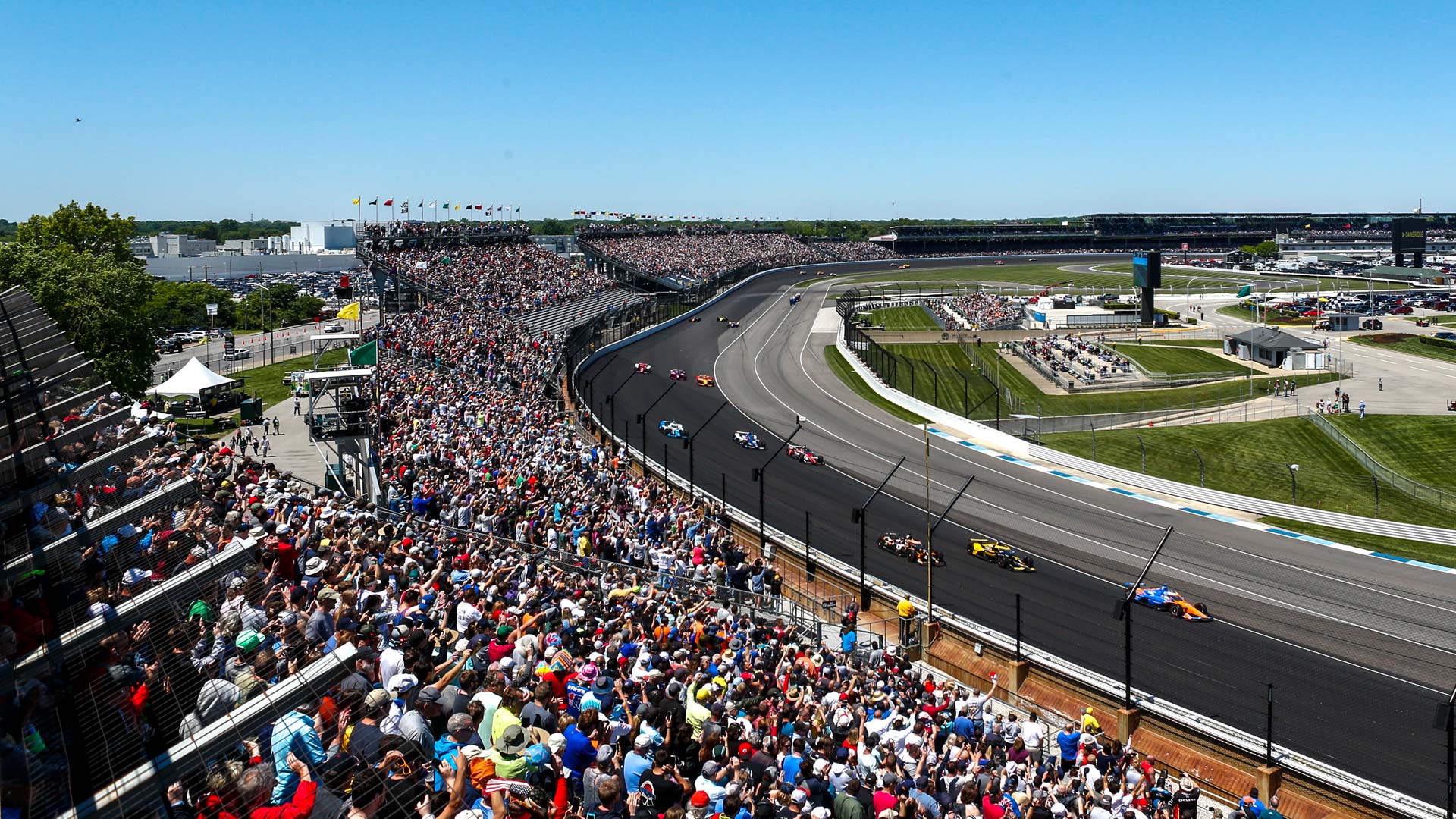
Coronavirus meant that the 2020 Indy 500 took place without any fans present in the gigantic grandstands. And in 2021, the race was limited to 135,000 spectators.
Although this may sound like a large crowd, it meant the Indianapolis Motor Speedway was only operating at 40 percent capacity.
Last year, the crowd returned to full size – and for 2023 this should deliver an expected attendance of 300,000 spectators.
Who is on pole position for the 2023 Indy 500?
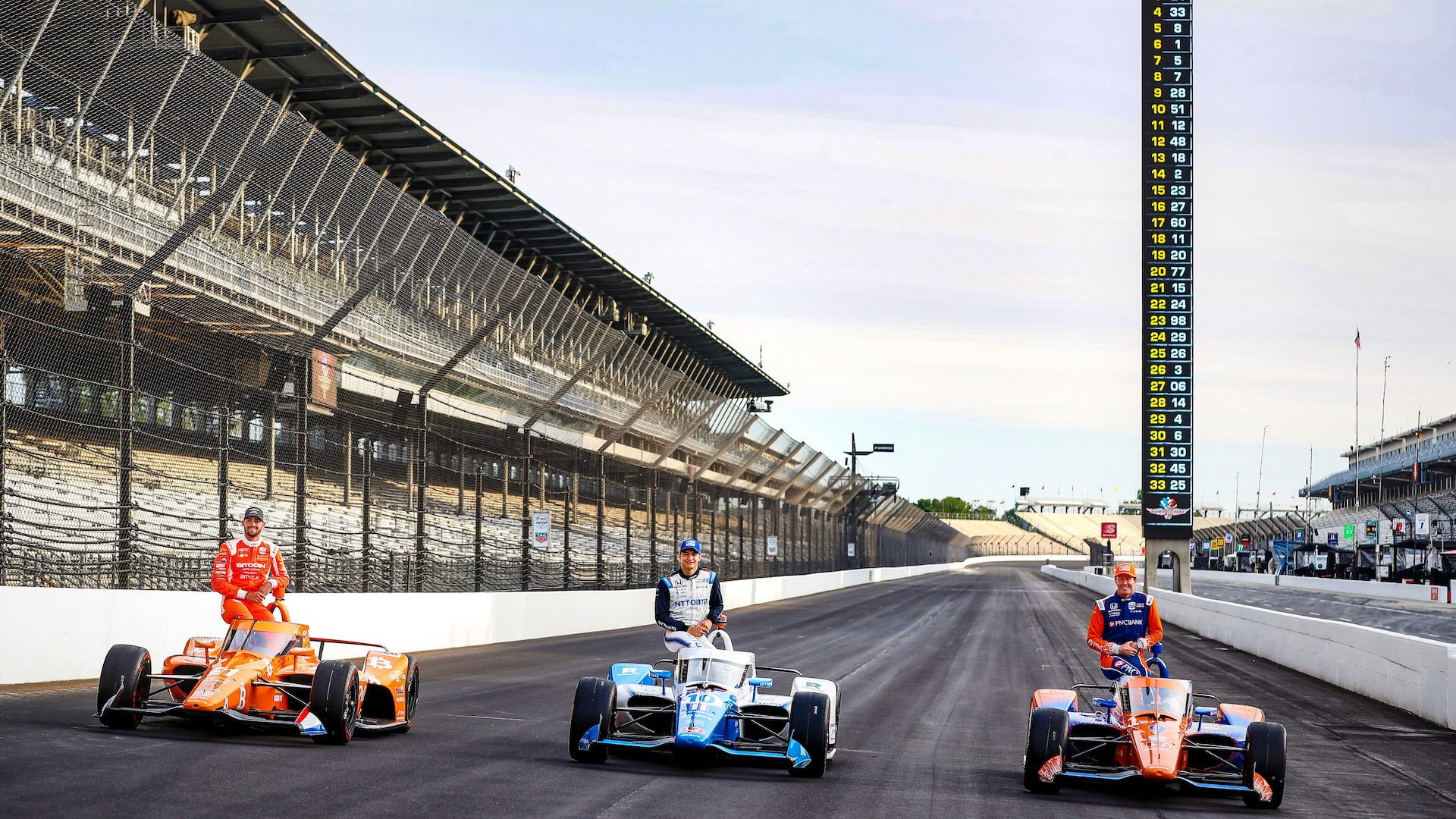
Everything is bigger at the Indy 500, including a qualifying process that takes place over two days. From the full field of 34 drivers, only 33 are able to start the race. This meant Graham Rahal was the unfortunate driver ‘bumped’ from the grid for 2023, before his unexpected return.
Drivers get four laps in each qualifying run, with an average speed then calculated. The fastest 12 drivers get to run again, fighting it out for a place in the final six, and the chance to claim pole position.
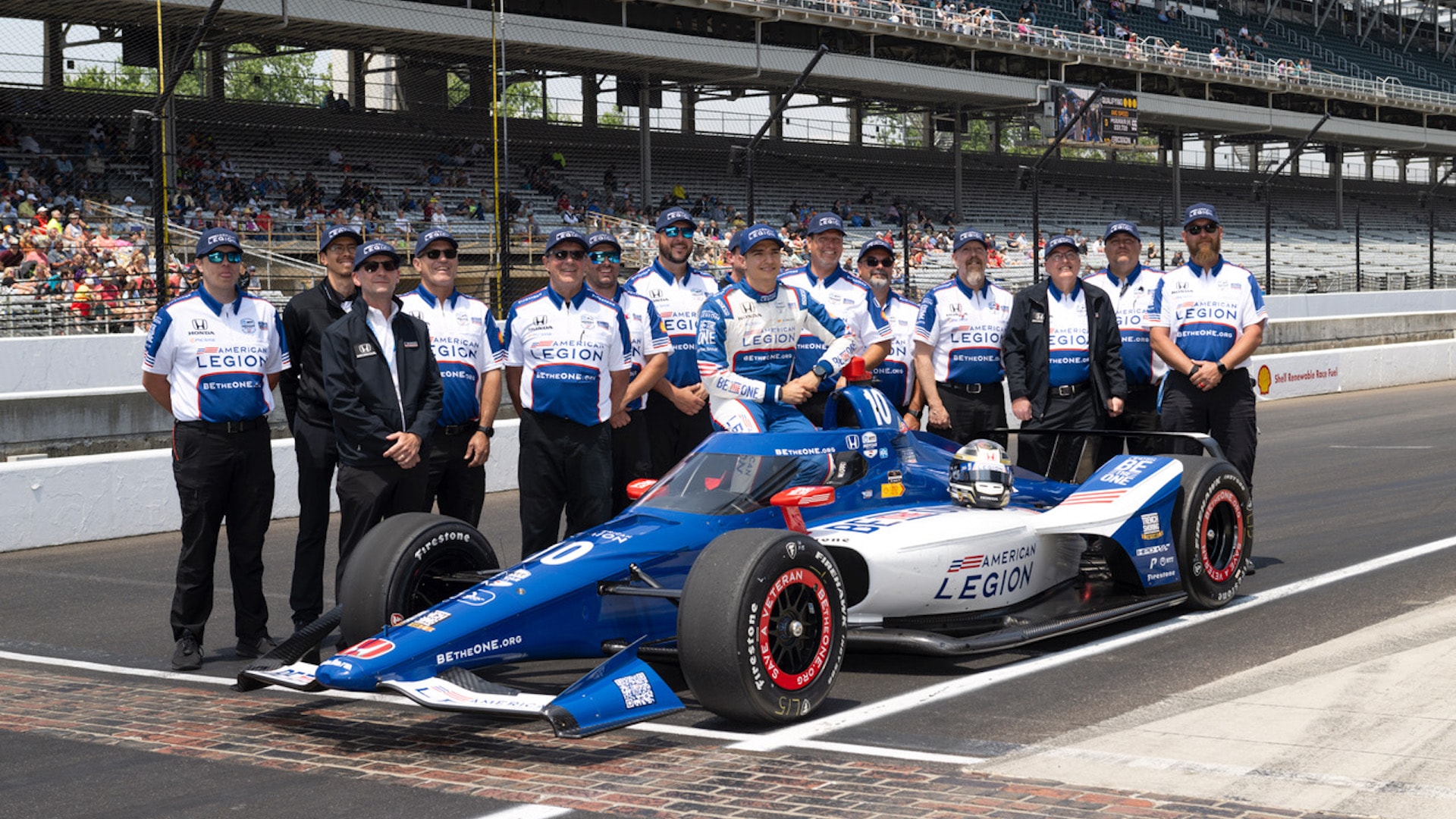
For 2023, Spain’s Alex Palou, the 2021 IndyCar champion, has emerged in pole position. This comes after he won the 2023 Indianapolis GMR Grand Prix earlier in the month.
Palou’s average qualifying speed of 234.217mph saw him claim the second-fastest Indy 500 qualifying time in history.
Which pace car is being used for the 2023 Indy 500?
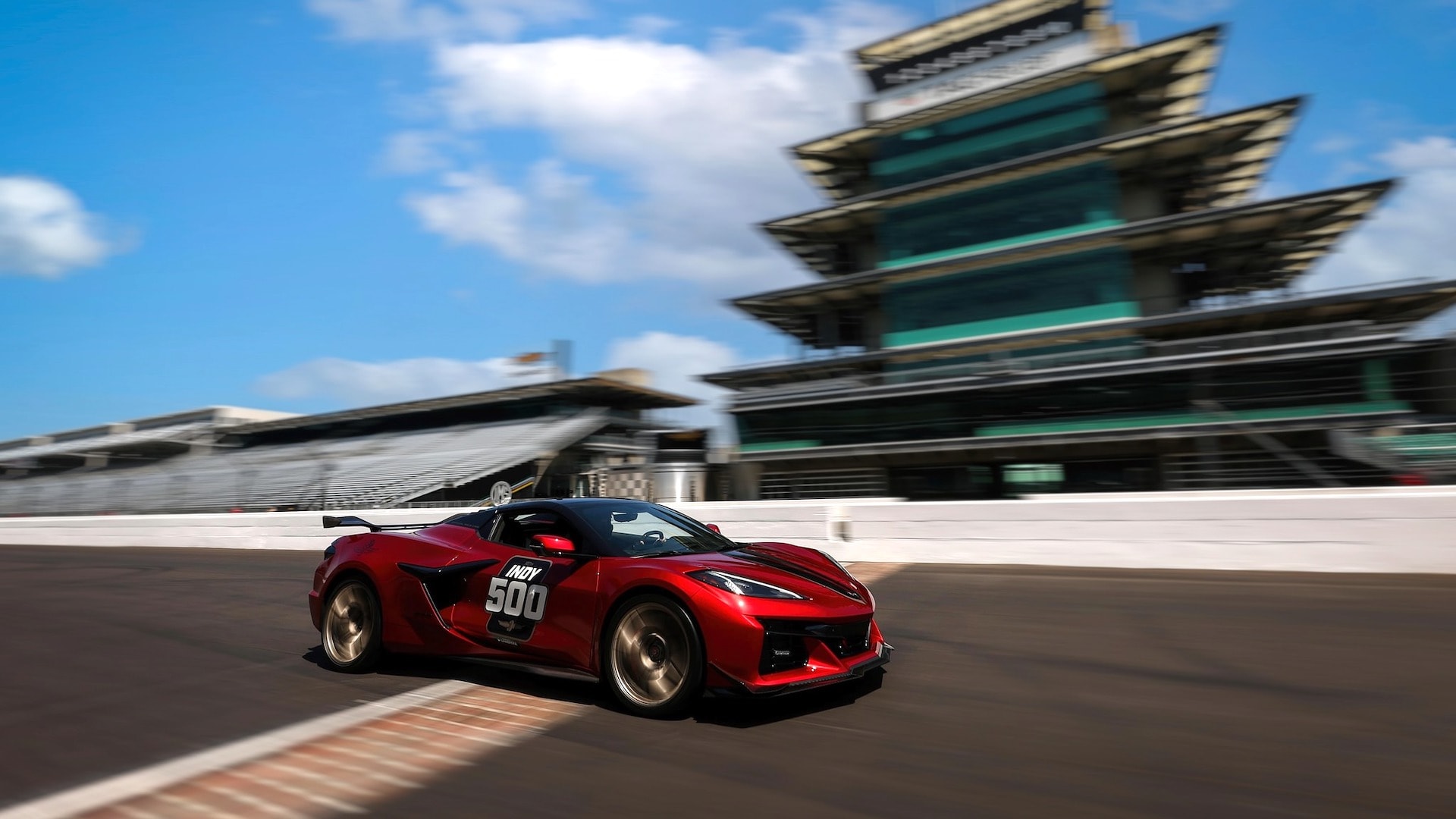
The official pace car for the 2023 Indy 500 is the mid-engined Chevrolet Corvette Z06, in hardtop convertible guise.
It marks the 20th time a Corvette has been used as a pace car for the event, and the 34th time for a Chevrolet. The Bowtie brand first led the field in 1948, and has held a monopoly on the pace car role since 2002.
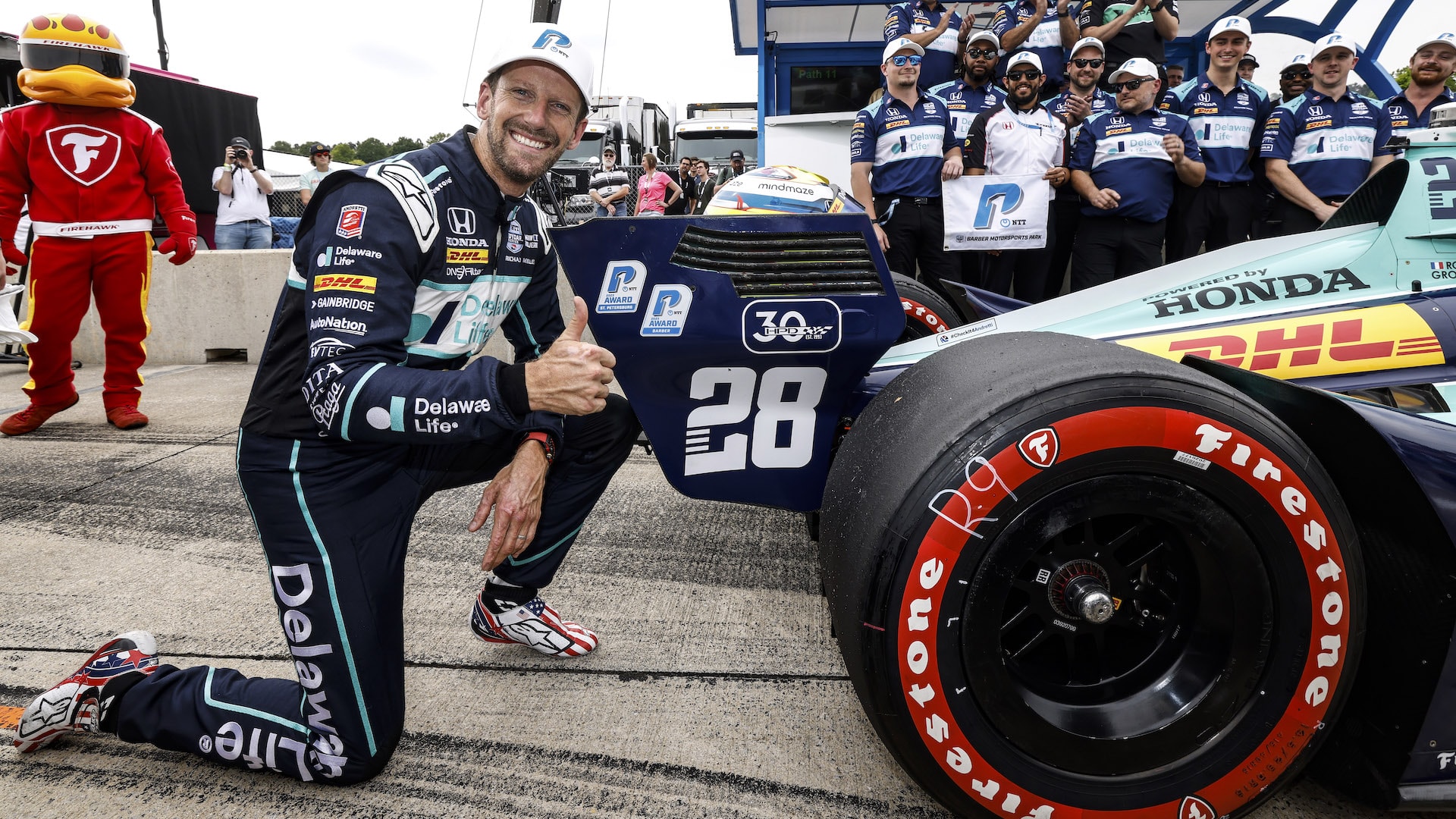
Will Romain Grosjean drive in the 2023 Indy 500?
Romain Grosjean exited Formula One in dramatic fashion at the end of the 2020 season, surviving a terrifying accident in the Bahrain Grand Prix. With no Formula One drive lined up for 2021, he made the move across the Atlantic for IndyCar.
When Grosjean initially switched to IndyCar, he was only contracted for races held on street and road courses. This was to avoid putting his family through the additional stress of him competing on high-speed circuits.
However, for 2022 and beyond, Romain has been allowed to enter all races with the Andretti Autosport team. This includes the Indy 500, where he will line-up 19th on the grid.
Are any British drivers in the 2023 Indy 500?
The 2023 Indy 500 sees three British competitors hoping to take victory in the American classic race.
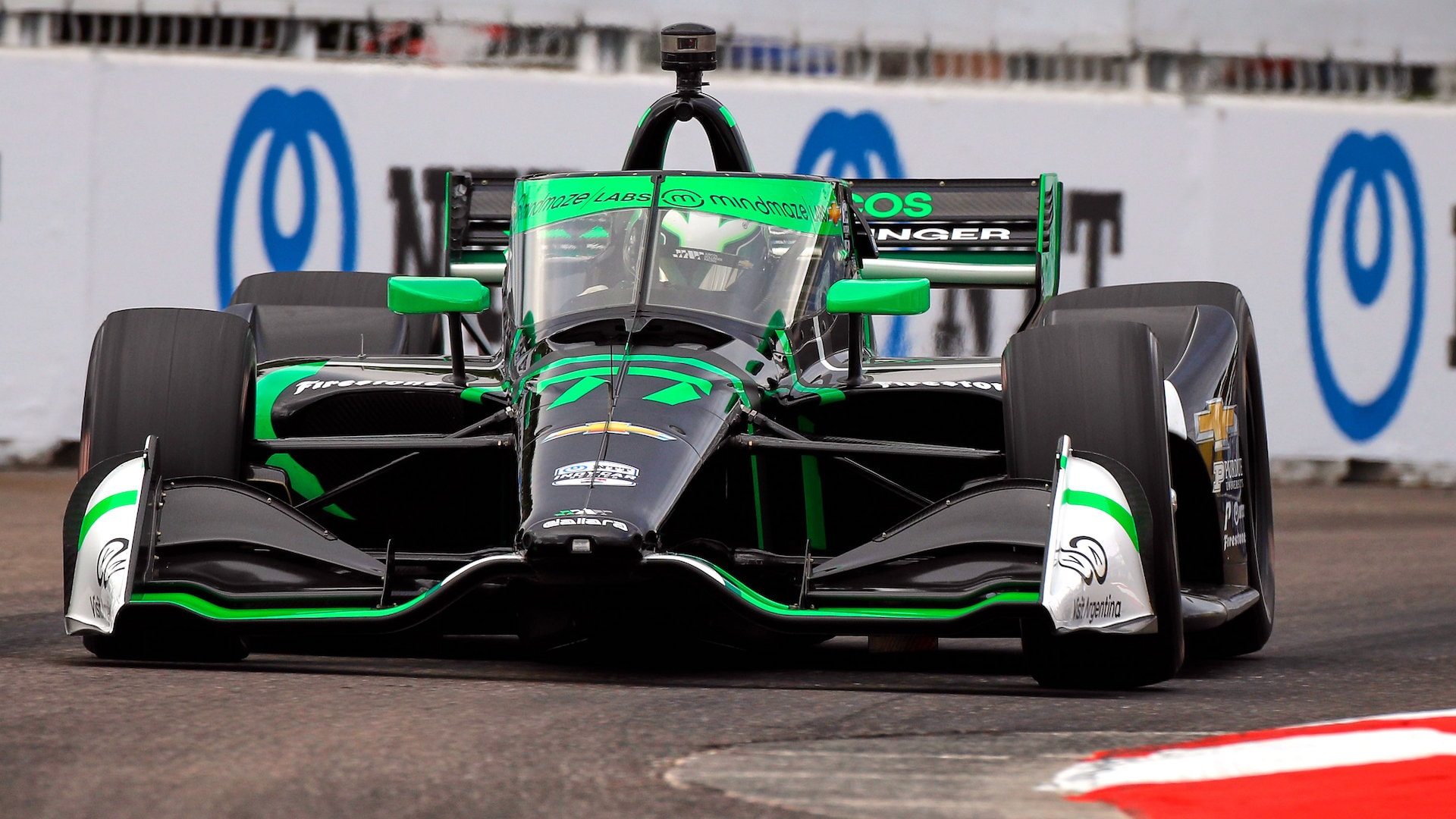
The top British driver in the 2023 Indy 500 is Cambridge’s very own Callum Ilott. Competing in the Indy 500 for the second time, Ilott managed to qualify in 28th position.
Starting 33rd, and last, on the grid is Lincoln-born Jack Harvey. The 30-year-old driver has competed in IndyCar since 2017 but, like others in the Rahal Letterman Lanigan Racing team, he struggled in qualifying. Harvey managed to secure the final place on the grid with a last-gasp run.
Katherine Legge is making her return to the Indy 500 for the first time since 2013, and is the only female driver on the grid for 2023. She emerged as the top Rahal Letterman Lanigan Racing competitor, and took 30th position on the grid.
Stefan Wilson, younger brother of the late Justin Wilson, was due to start the 2023 Indy 500 in 24th position. However, a collision with Katherine Legge in practice saw Sheffield-born Stefan sidelined, with Graham Rahal returning to take his seat instead.
What other big-name drivers are in the 2023 Indy 500?
What makes the Indy 500 special is that experienced drivers will frequently make a return to racing, just to compete in this great event. Teams will sometimes field extra cars to accommodate iconic drivers, just for the one-off race.
Brazilian driver Helio Castroneves is one of the heroes returning to the Indy 500 grid for 2023, doing so as a four-time winner of the race. Helio last won the Indy 500 in 2021, and will be looking to use his talent and experience to do so again this year. The 48-year-old is driving for the Meyer Shank Racing team, and will start from 20th place.
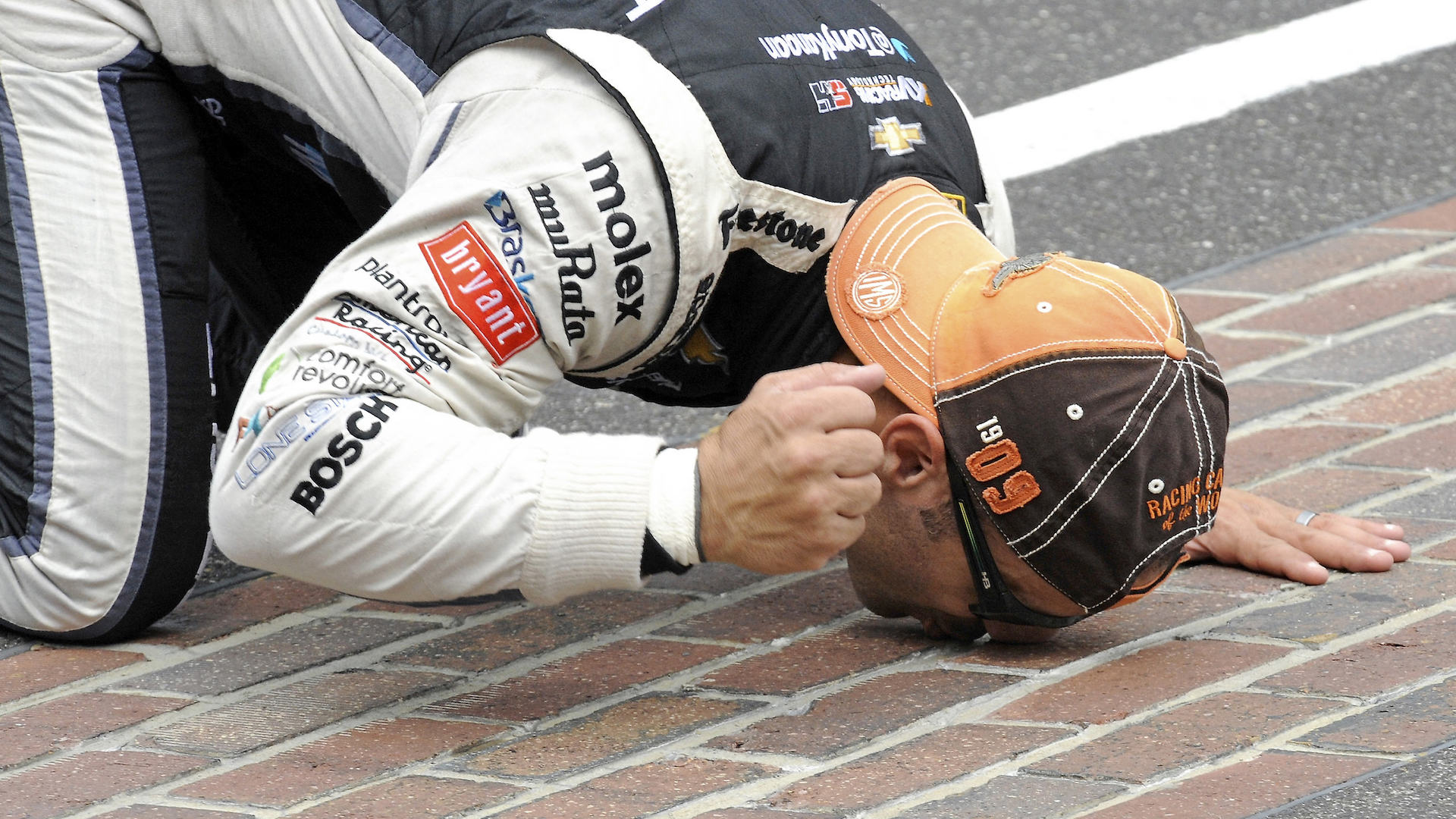
Tony Kanaan, another 48-year-old Brazilian driver, will start the 2023 Indy 500 with a great chance at claiming a second victory. Kanaan took glory back in 2013, and is pictured kissing the yard of bricks in celebration.
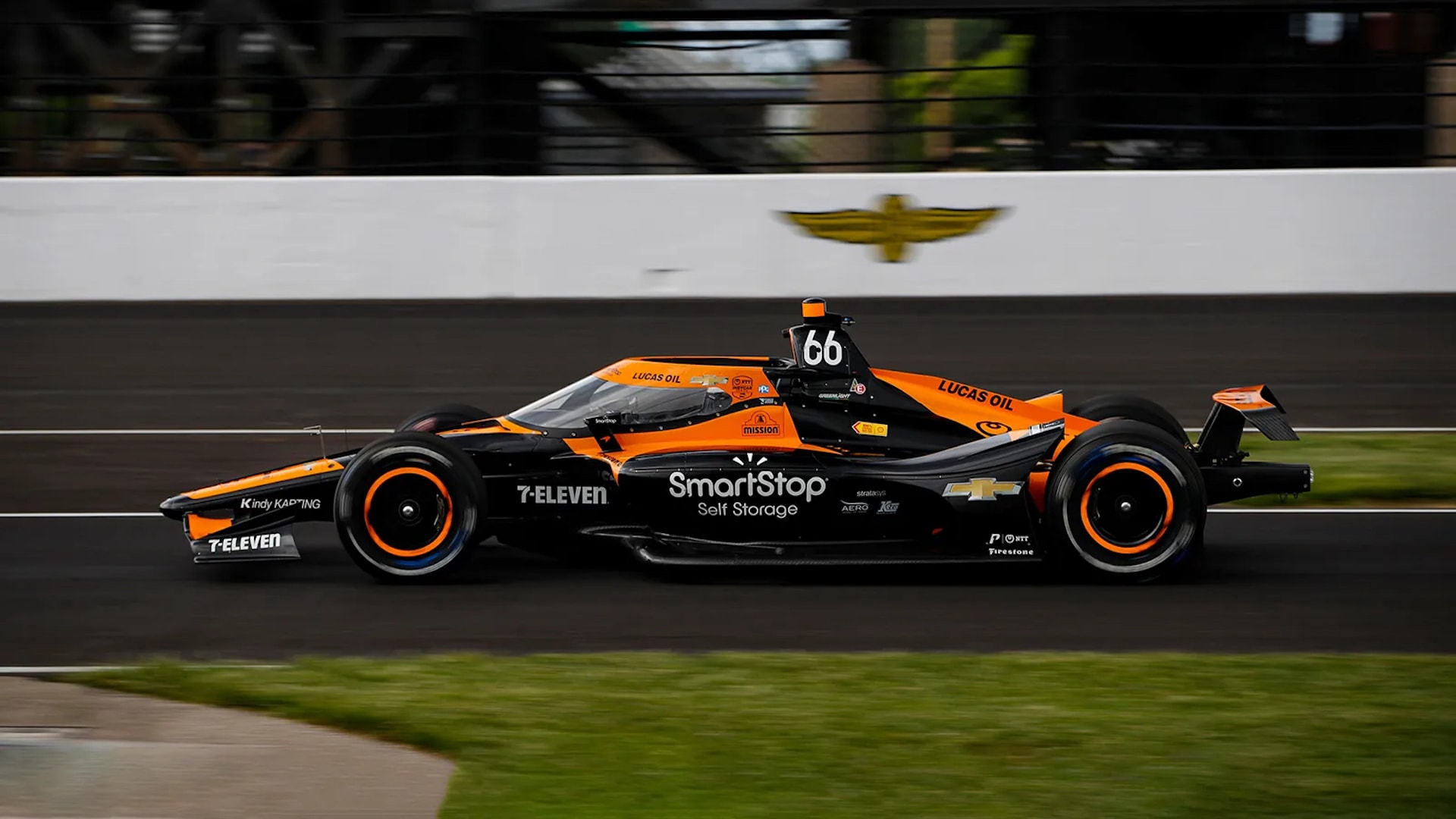
Starting from sixth on the grid, and driving for the competitive Arrow McLaren team, TK has a fantastic opportunity to take glory on Sunday.
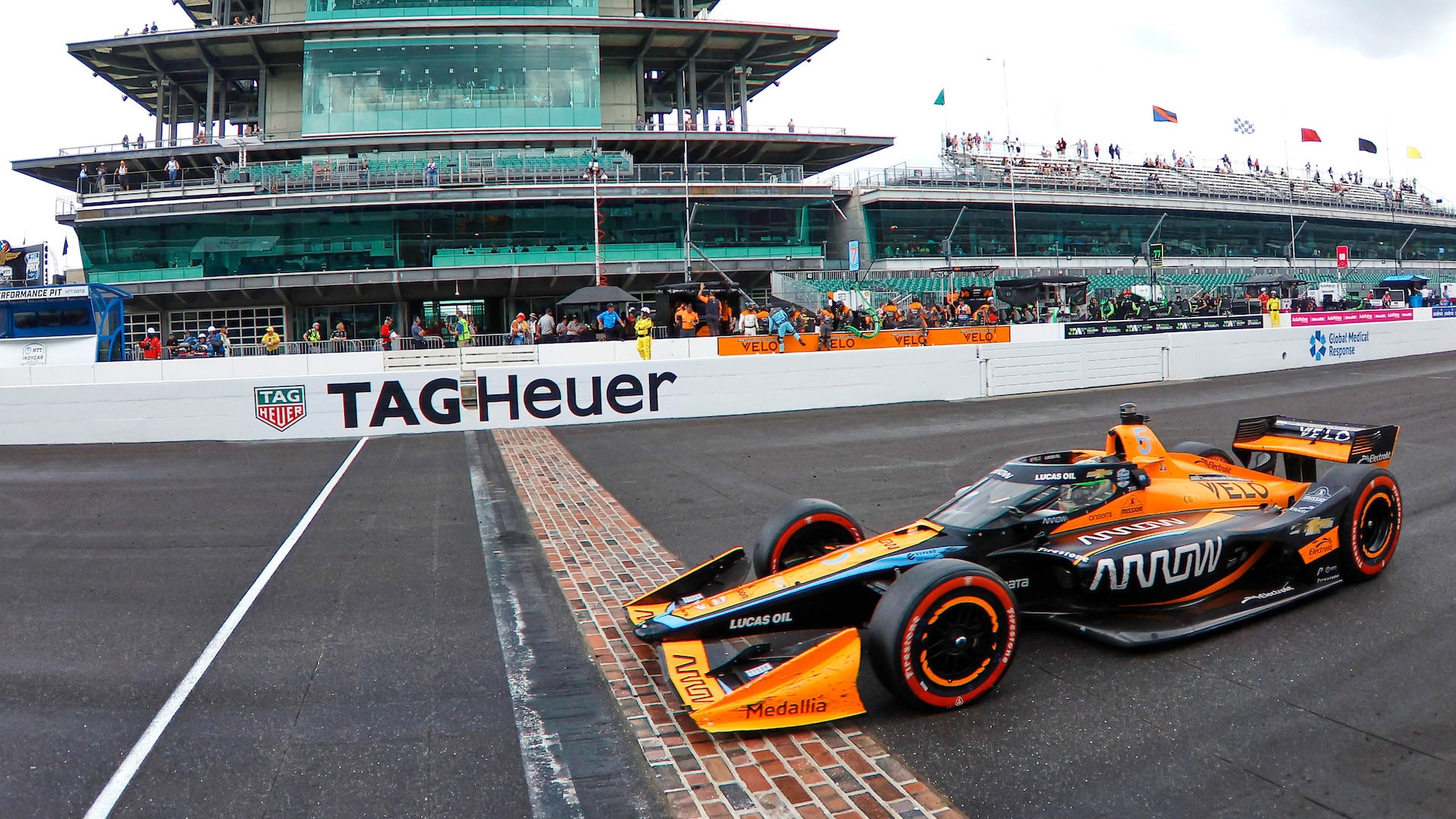
Why does the Indy 500 circuit feature a yard of bricks?
When the Indianapolis Motor Speedway first opened in 1909, the track surface was covered in a combination of soil, gravel and limestone covered in tar. Fatal accidents after only the first three days of racing led to the need for a new track covering.
Bricks were chosen as offering the best traction, with 3.2 million bricks used to pave the 2.5-mile circuit. This resulted in the nickname of ‘The Brickyard’, with the bricks remaining until 1961.
With the track now covered with asphalt, a symbolic yard of bricks was left to mark the finish line.
Why does the Indy 500 winner drink a bottle of milk?
Arguably one of the strangest traditions in the Indianapolis 500 is the winning driver drinking a bottle of milk to celebrate.
The tradition began in 1933, after Louis Meyer took his second Indy 500 victory. Meyer chose to drink buttermilk after the race, believing it would be refreshing on a hot day. He did the same again after his third Indy win in 1936.
A dairy company executive saw a photo of Meyer drinking milk, leading to the beverage being offered to future Indy 500 winners. Today, the Indiana Dairy association gives the winning driver $10,000 for choosing to drink milk as part of their post-race celebration.
Pictured above is Hélio Castroneves, celebrating his fourth Indy 500 win in 2021.