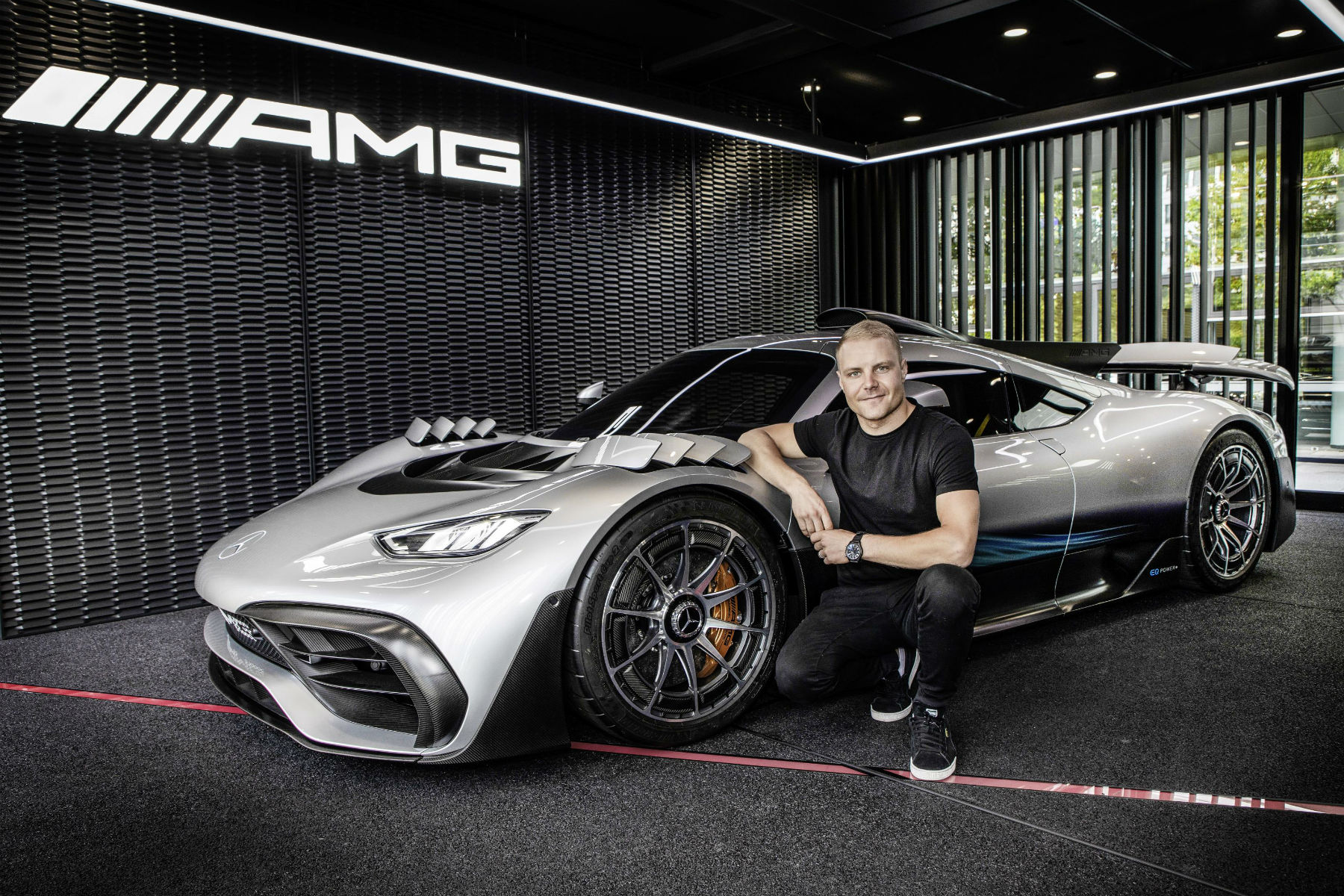
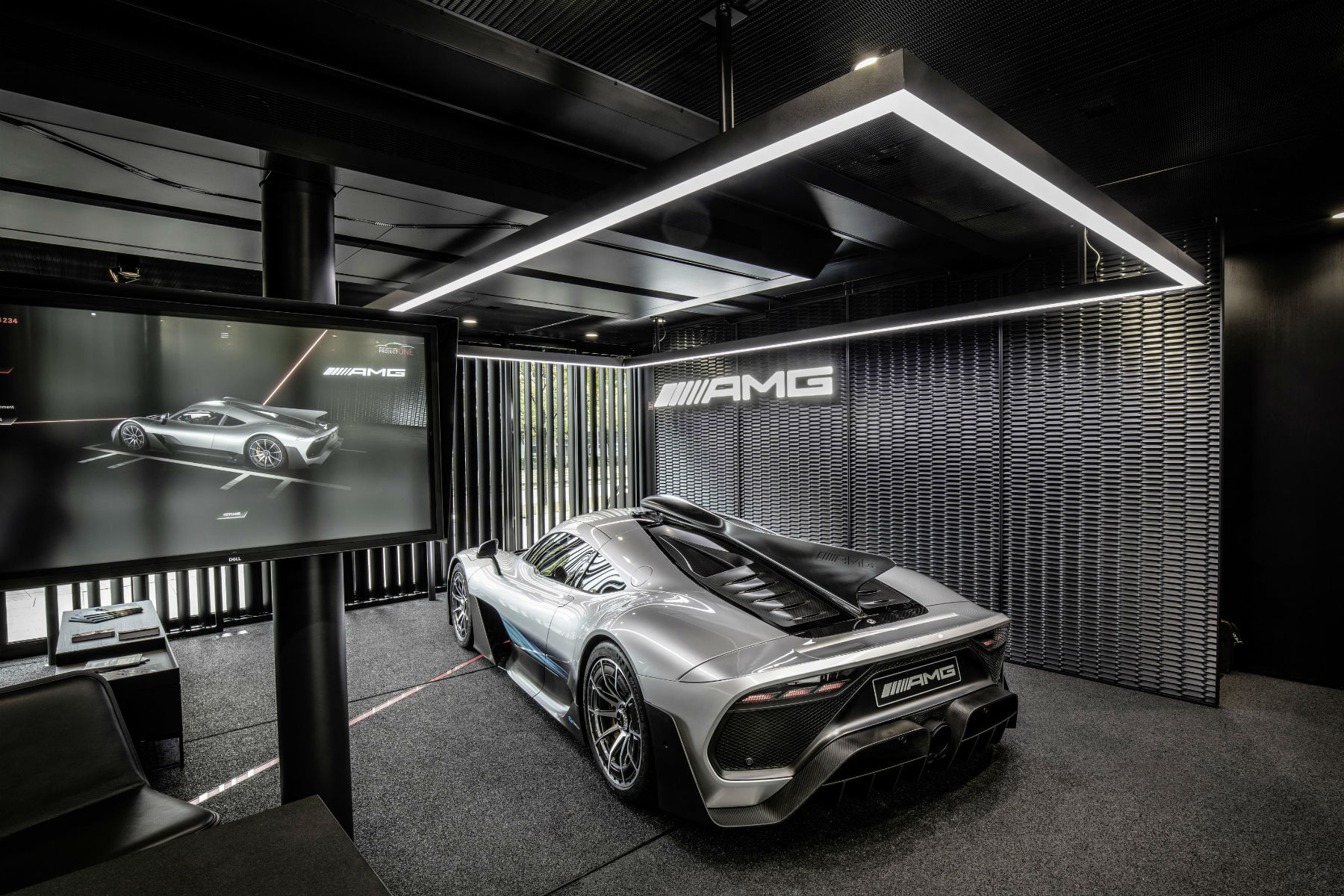
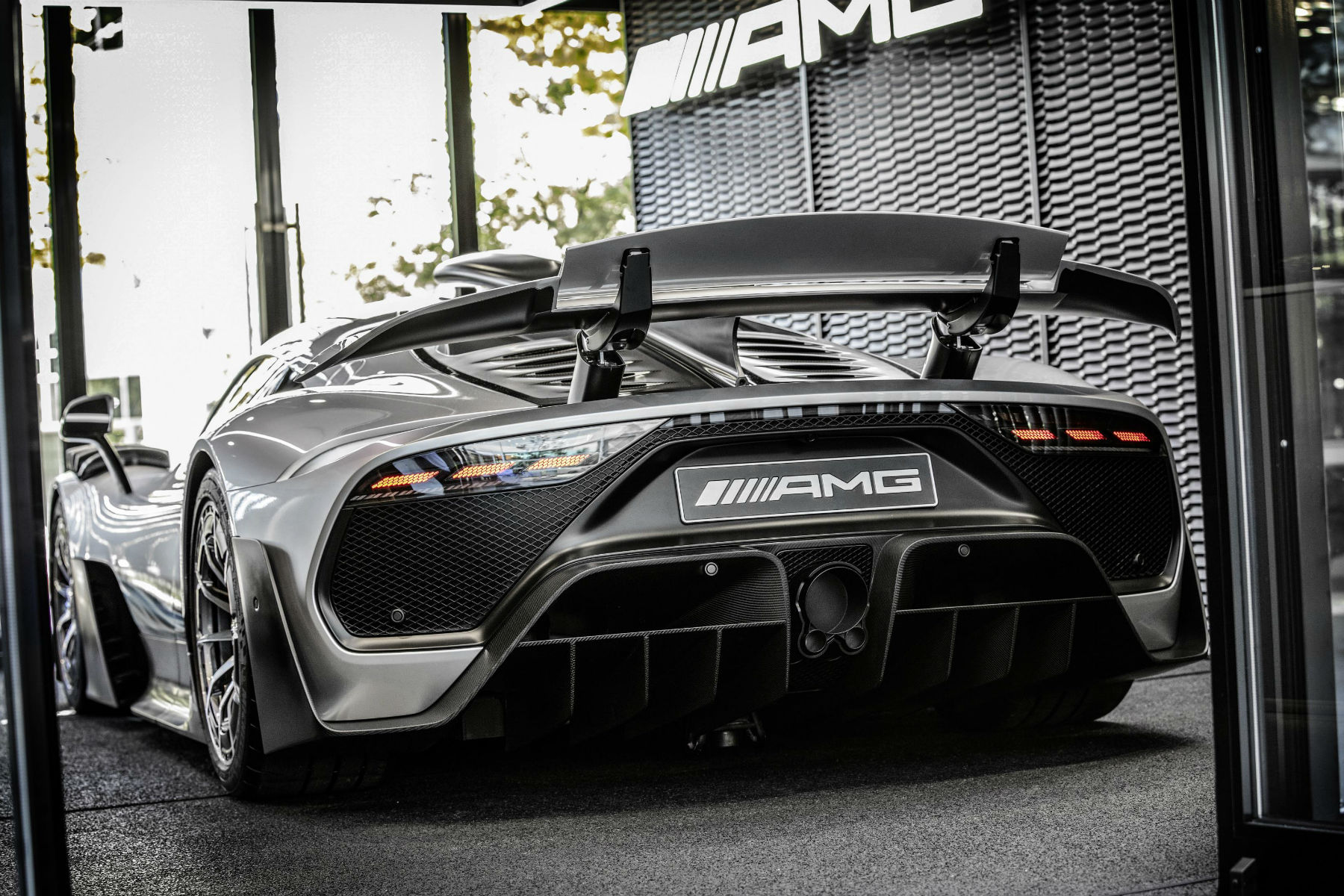
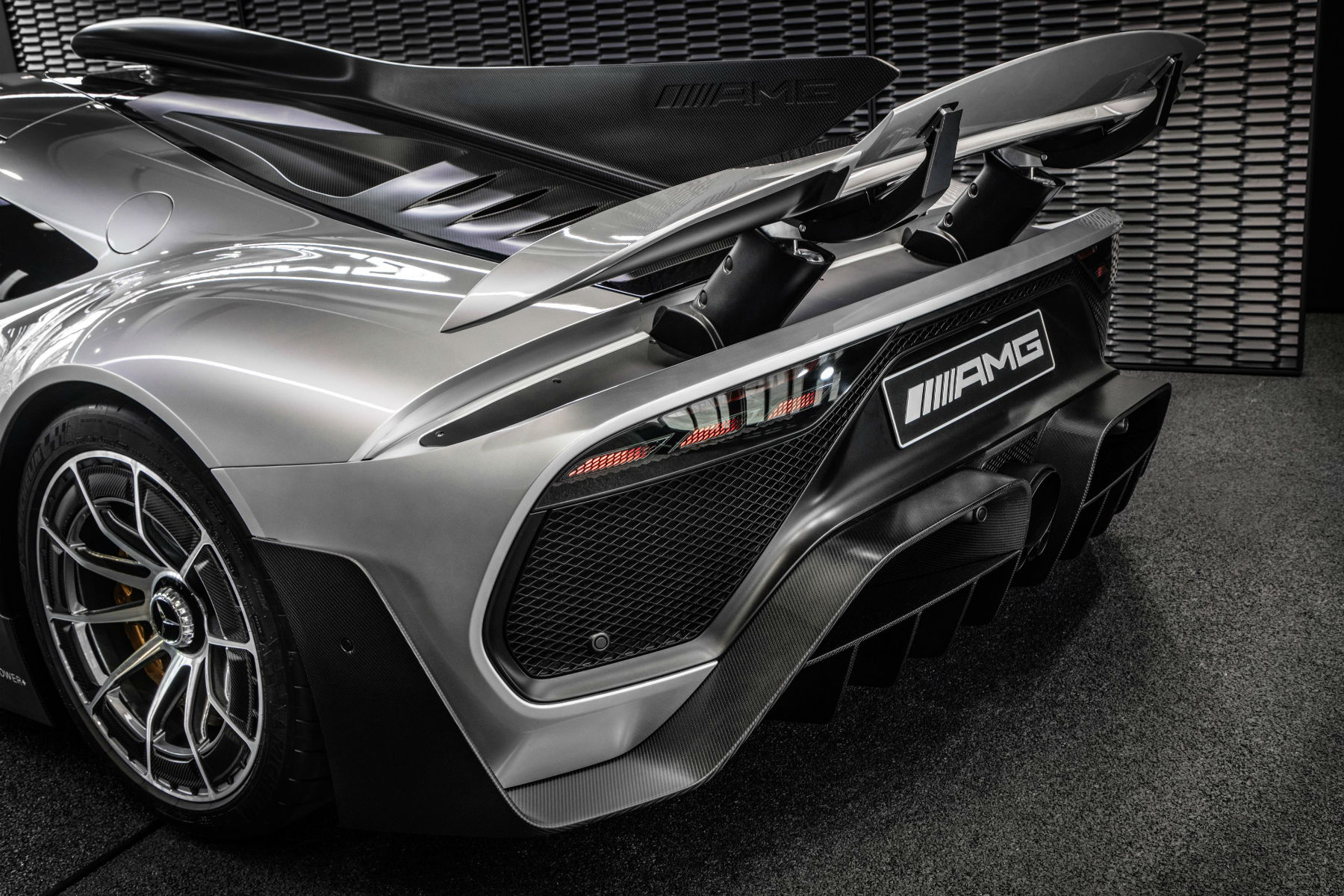
Mercedes-AMG is one step closer to bringing its F1-derived hypercar to fruition. After being spotted testing not long ago, the new car now has a name: the Project One concept has become the Mercedes-AMG One.
It’s not exactly an ‘AM-RB-001 to Valkyrie’ kind of name transformation, but ‘One’ refers to the car’s strong links with Formula 1 racers.
The car is purported to be fitted with a derivative of Mercedes’ 1.6-litre turbocharged hybrid F1 engine. Even though the maximum revs will be pegged back, it’ll still need to be rebuilt every 30,000 miles…
The One is currently going through testing to refine its sophisticated active aerodynamics. Note the extended active louvres over the front wheels on the car, pictured here with Merc F1 ace, Valtteri Bottas.
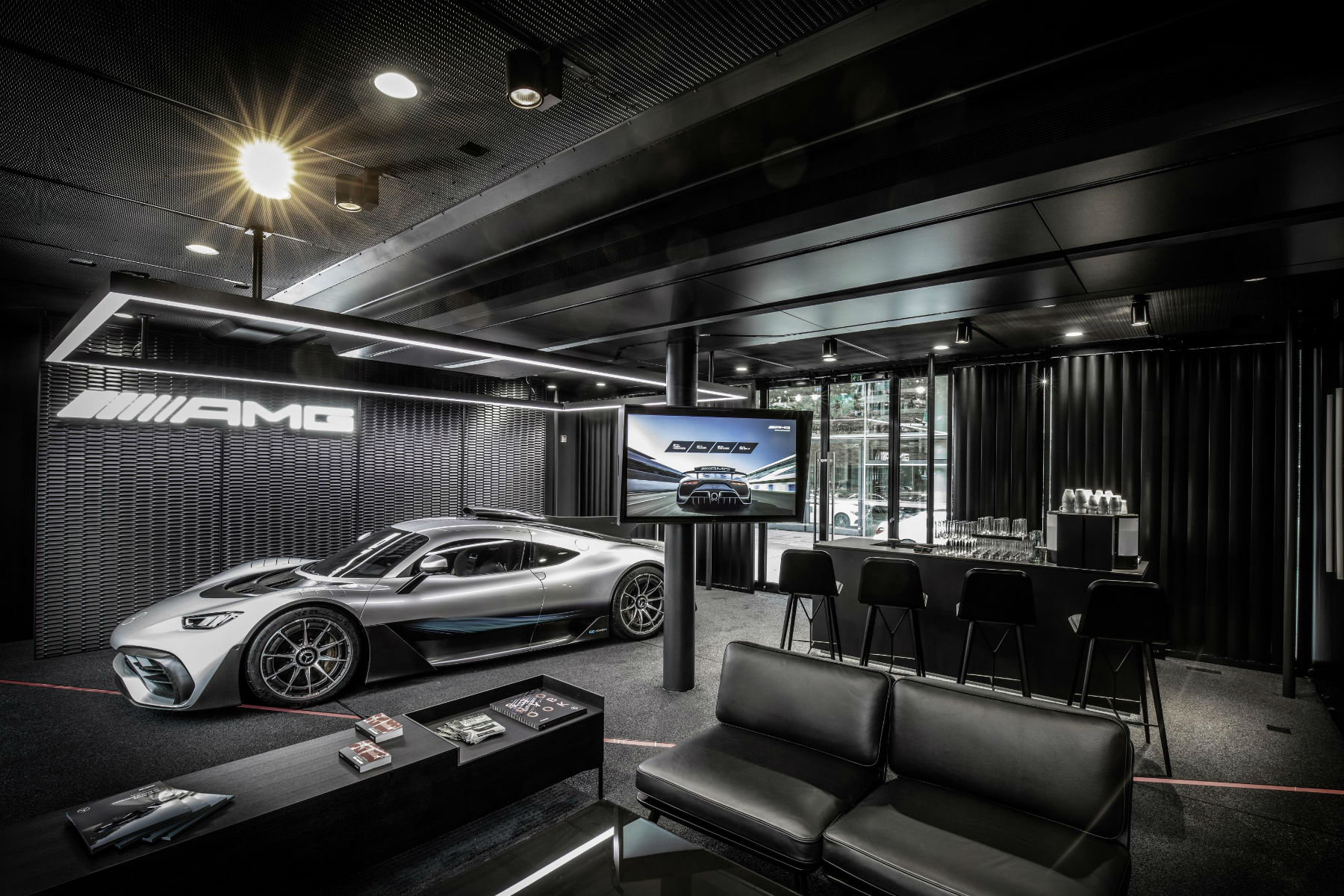
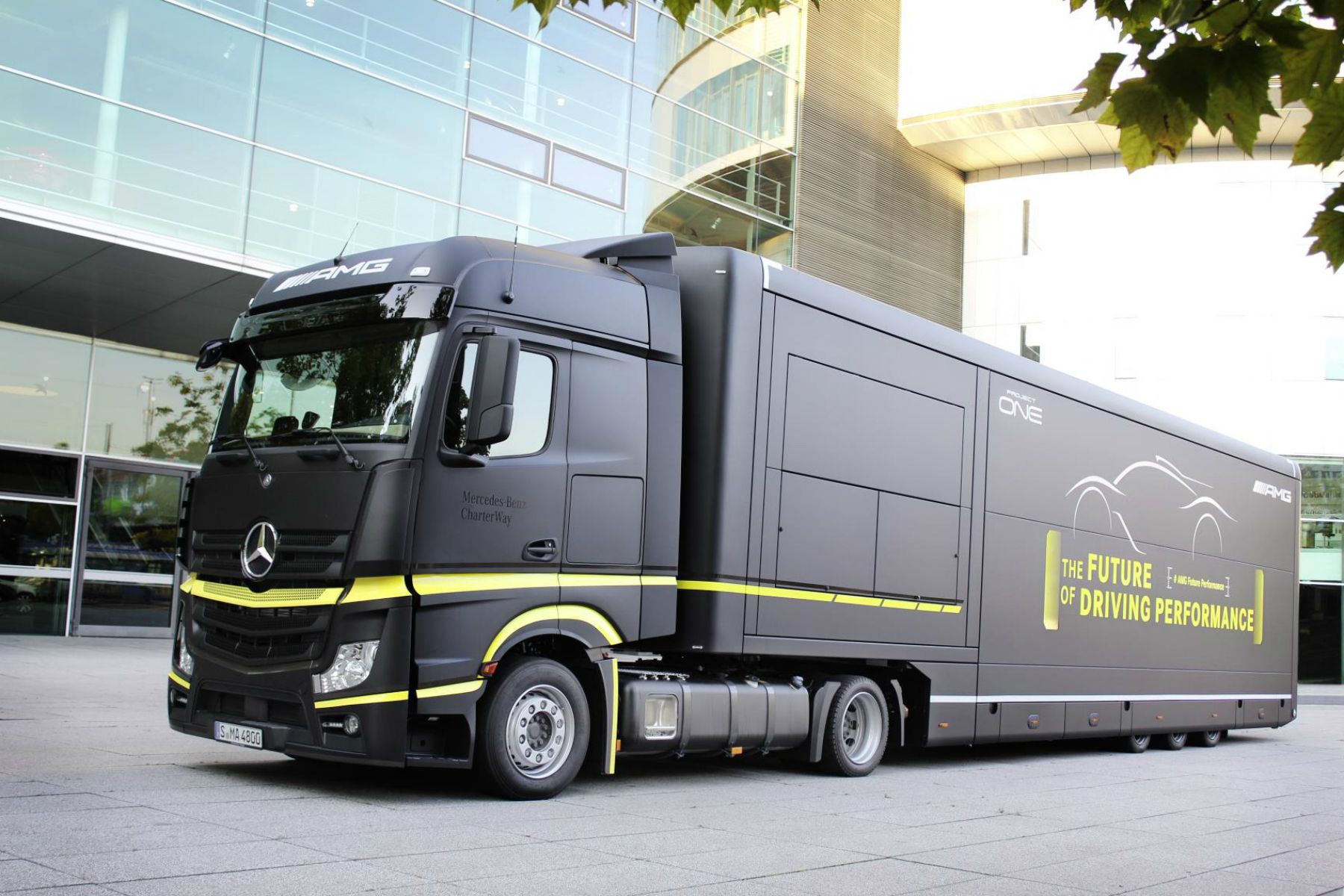
What’s more, prospective customers will be able to get an early taste of this long-awaited hypercar. A mobile showroom Mercedes calls ‘The Future of Driving Performance’ allows for cockpit tests and equipment demos. They’ll be able to go through colour specifications and material samples, too.
Now the One has its name, the countdown begins to cars being ready for delivery. Can we have a go, Mercedes? Pretty please?
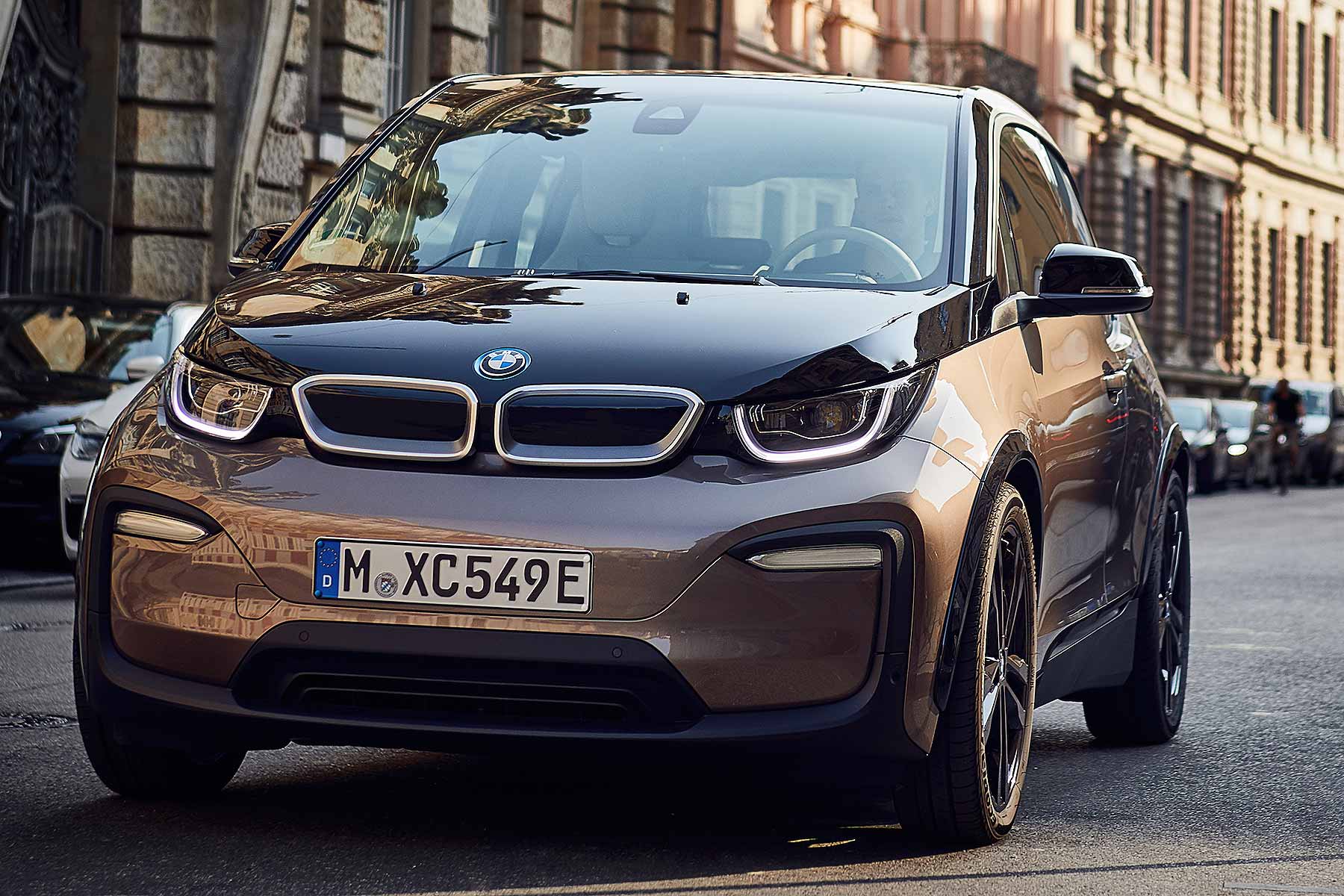
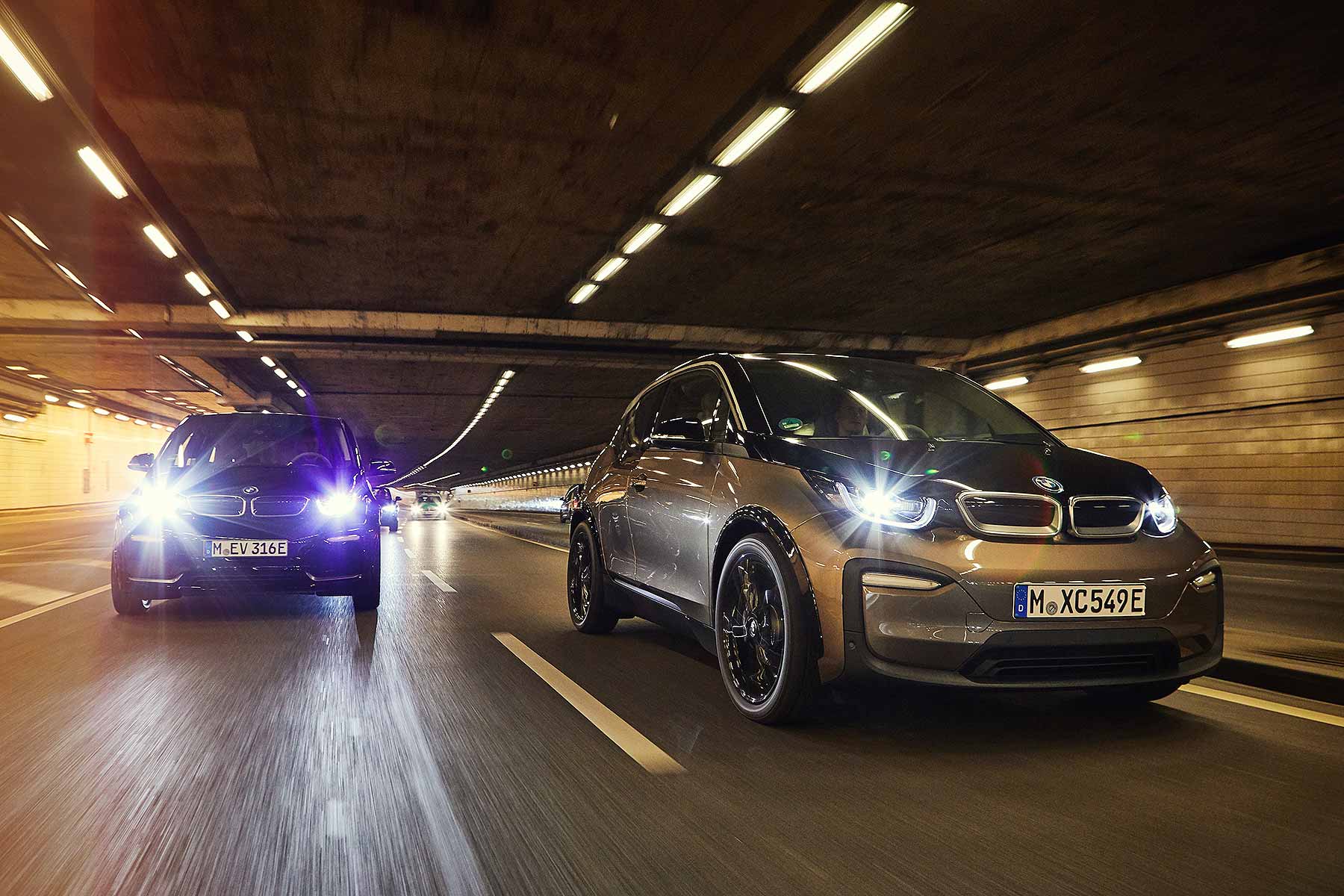
BMW has given its i3 electric car yet another battery update, meaning it now has around twice the electric capacity than it did at launch just five years ago. The 42.2 kWh battery of the 2019 i3 is almost 30 percent larger than today’s model, too.
The firm says this gives it an everyday driving range of more than 160 miles – and that’s according to the super-tough WLTP test, which is much stricter than previous electric car measurements.
According to the more lenient old NEDC tests, the 2019 i3 now has a range of almost 225 miles.
Back in 2013, the i3 used 22.6 kWh batteries, while the 2016 update took capacity up to 33 kWh. The latest boost to 42.2 kWh (more than a current-gen Nissan Leaf) shows the fast pace of electric car battery development.
Both 170hp BMW i3 and 184hp BMW i3s get the new battery packs, which don’t take up any more space than today’s cells. It means the 7.3-second 0-62mph time of the base car, and 6.9-second acceleration of the i3s, can be enjoyed with more confidence you won’t have to recharge en route if you do so.
With a BMW i Wallbox, charging is fast: an 80 percent charge takes 3.2 hours. Use a regular domestic socket, though, and the same state of charge will take 15 hours. Bigger batteries take longer to recharge, see…
The i3 can, however, used 50 kW fast chargers. Here, an 80 percent charge takes just 42 minutes.
To herald the new batteries, BMW has tweaked the i3 elsewhere. Buyers of the base i3 will now be able to equip it with an i3s-style sports back, which lowers it by 10mm, widens the track and adds on 20-inch alloys and black wheelarches.
Adaptive LED headlights are a new option alongside the standard LED lights, and BMW’s added two new body finishes and some fresh interior colours. The iDrive system has also been updated.
BMW hasn’t said when the battery-boosted i3 and i3s will go on sale, nor how much they’ll cost, but expect to see them at the Paris Motor Show next week. Motoring Research will be there and bring you more when we get it.
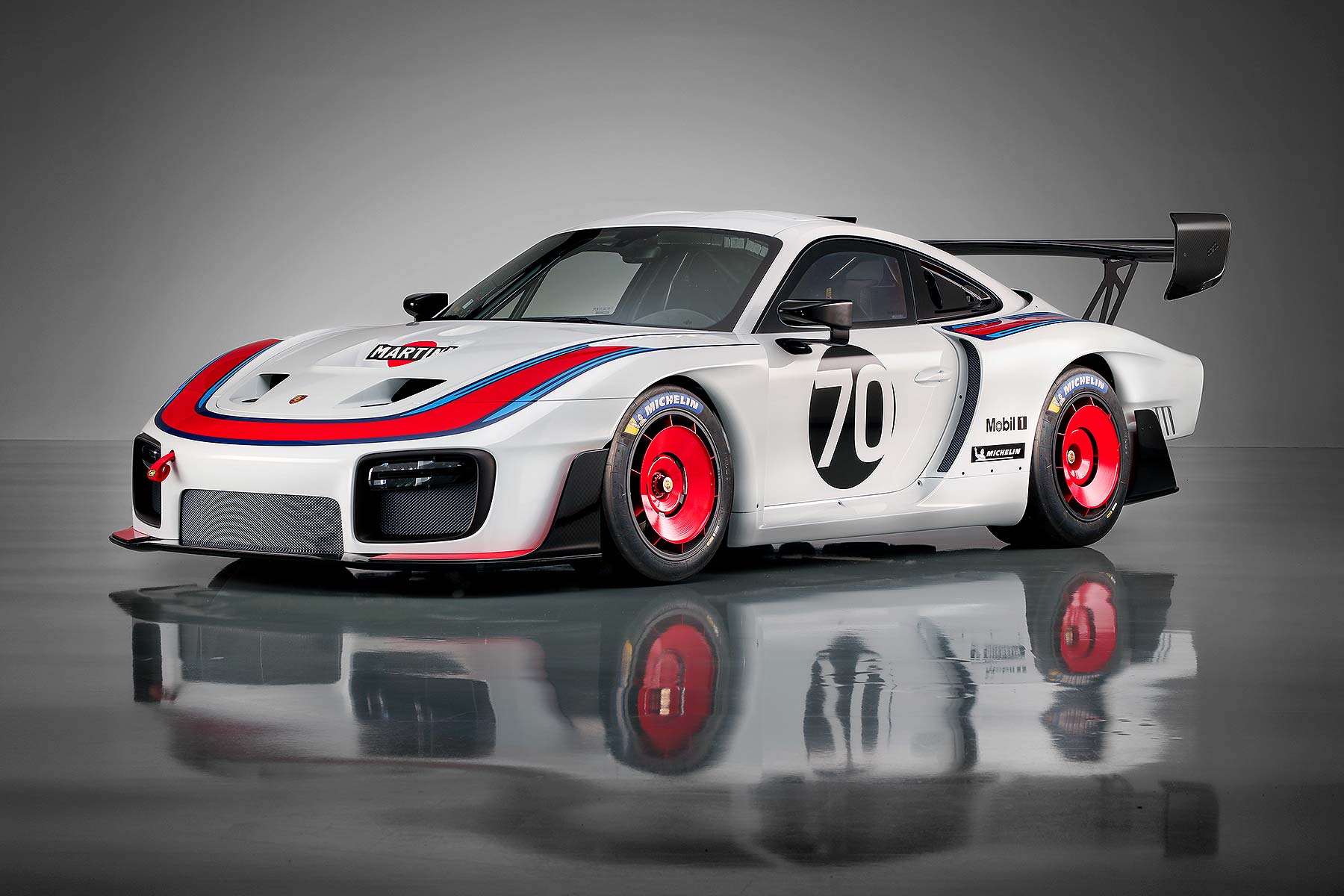
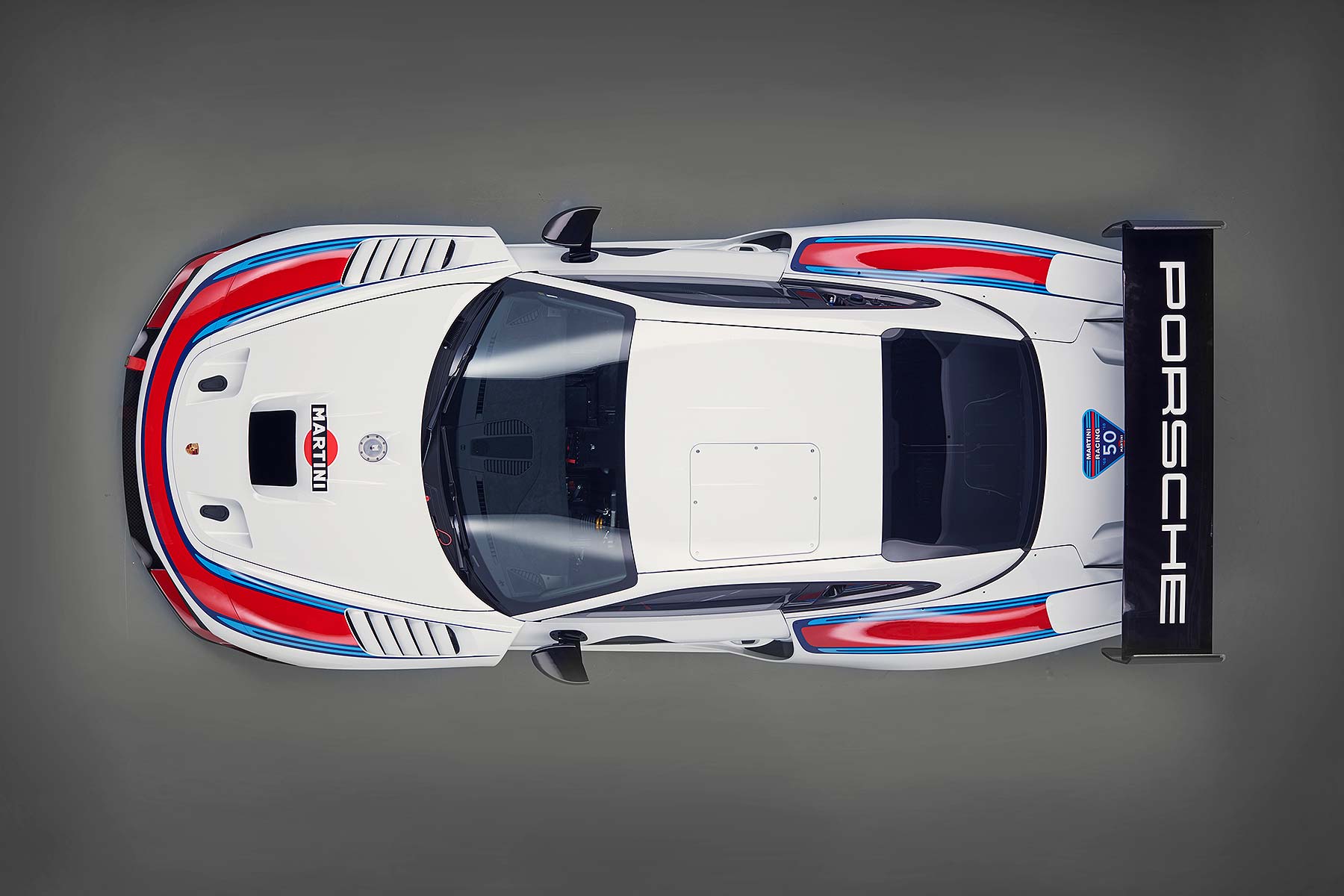
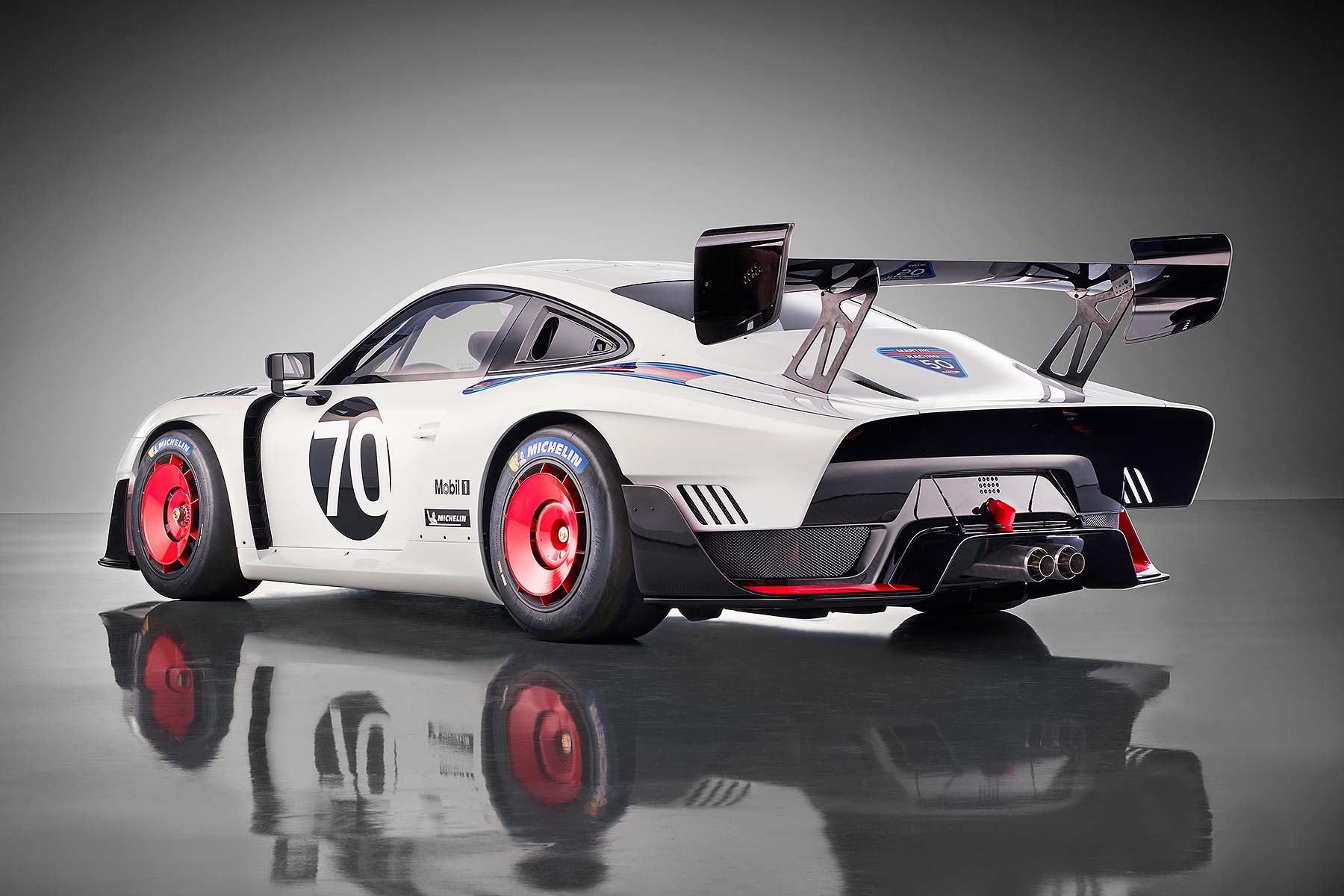
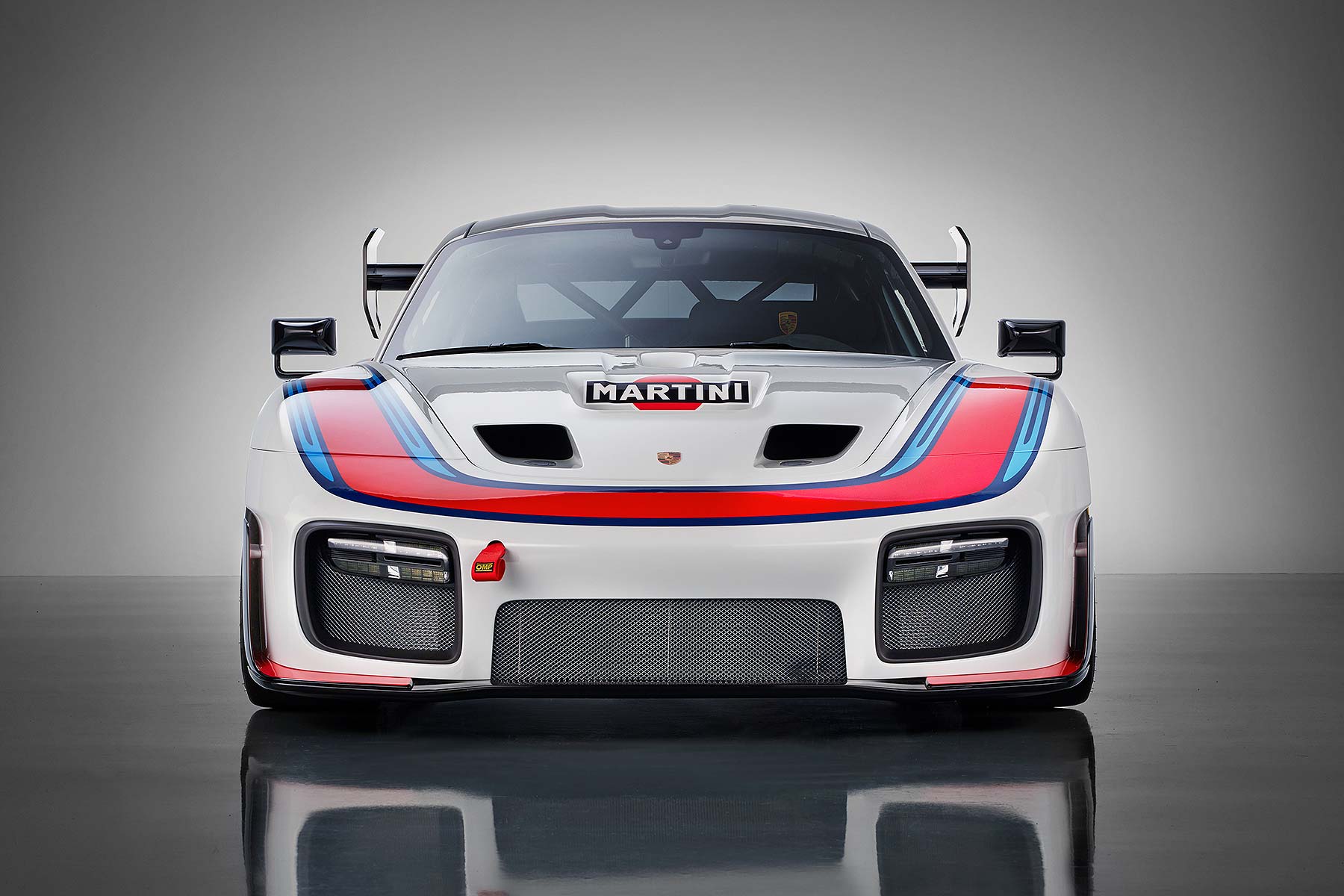
Porsche has stunned motorsport fans by recreating one of its racing legends as a modern day retro homage. The new Porsche 935 is inspired by the 1978 935/78 Le Mans racer that was famously nicknamed ‘Moby Dick’.
Revealed at the exclusive Rennsport Reunion event in Laguna Seca, California, Porsche calls the Martini-liveried car a gift to motorsport fans – and 77 people with £750,000 to spare will actually be able to buy one.
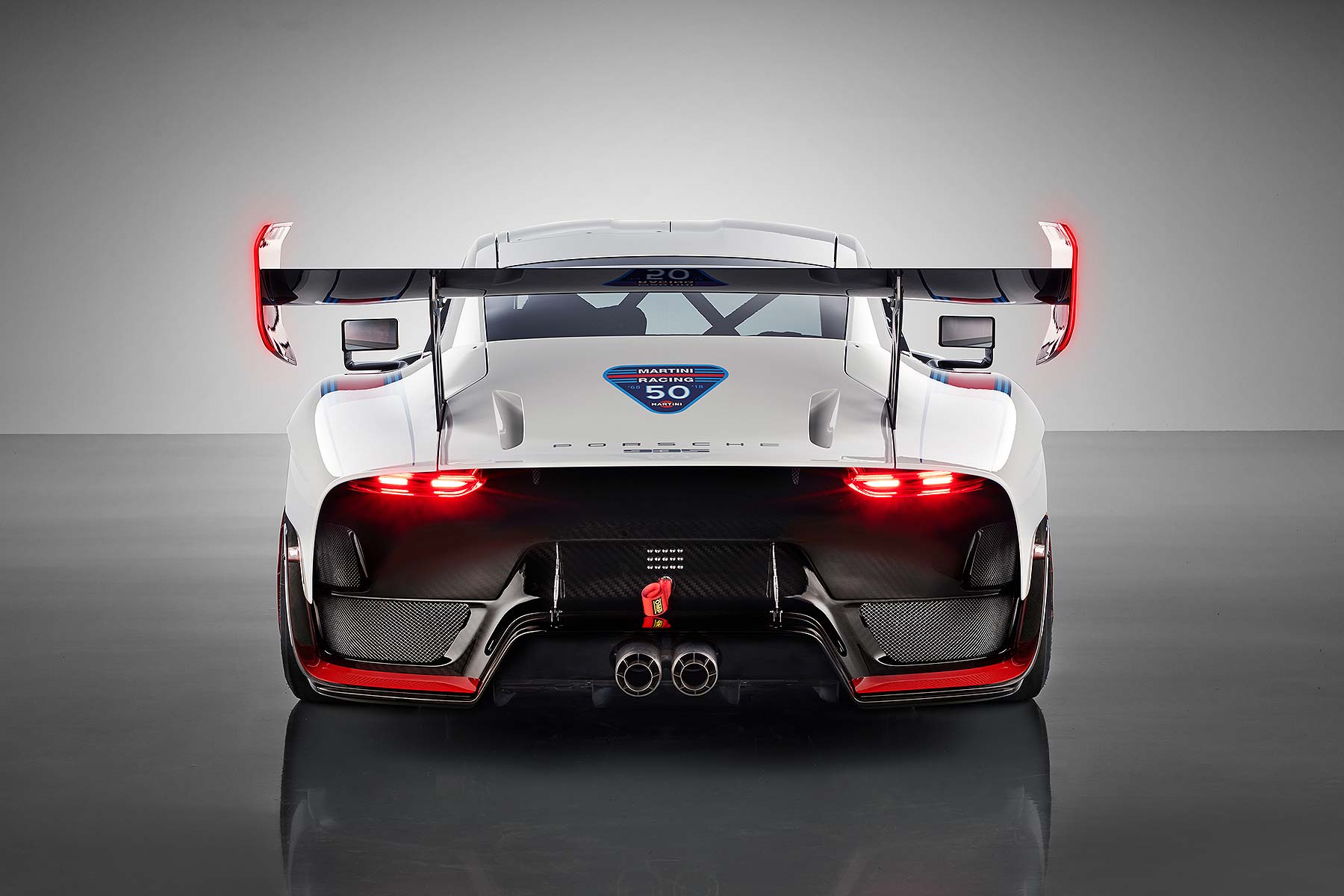
Loosely based on the Porsche 911 GT2 RS road car, the new 935 edition has a fully bespoke body made from carbon fibre composites, with a super-elongated streamlined rear among its most dramatic features – carrying a gigantic (and functional) rear wing, it sees the retro racer homage stretch almost 4.9 metres long – almost as long as a Range Rover Sport.
And at 2.03 metres wide, it’s actually wider than a Range Rover…
It has the same vented front wings as a Porsche 911 GT3 R racing car, aero wheels that reference the 935/78, side mirrors from the modern Le Mans-winning 911 RSR, titanium exhausts referencing the 1968 Porsche 908 and modern motorsport-spec LED lights on the sides of the rear wing similar to the modern 919 Hybrid LMP1 racer.
It’s simply incredible: “Because the car isn’t homologated [and thus not road-legal],” said Porsche motorsport vide president Dr Frank-Steffen Walliser, “engineers and designers didn’t have to follow the usual rules and thus had freedom in development.”
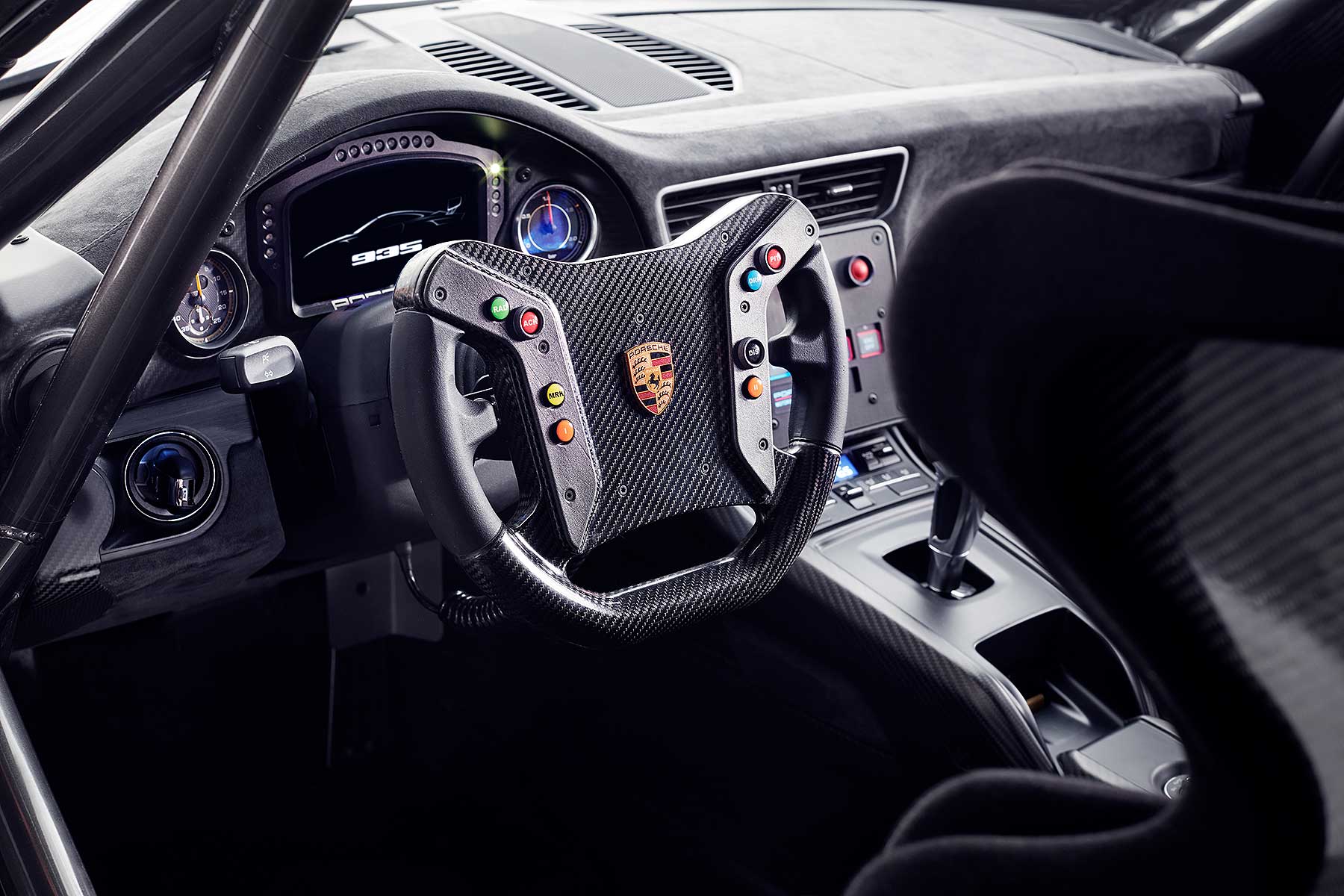
Inside, it’s similarly epic. If you squint, you can see the 911 base – but it’s well hidden by a full race makeover, including a carbon fibre steering wheel and display from the 2019 911 GT3 R racer.
There’s a full racing roll cage and bucket seat, an optional passenger seat and a gorgeous laminated wood gearknob similar to classic racers like the 917 and 909 Bergspyder. Like modern endurance racing cars, air conditioning is standard.
The engine? The same 700 horsepower 3.8-litre flat-six twin-turbo as fitted to the road-going GT2 RS. It has the same seven-speed PDK gearbox too; at 1,380kg, performance should be similar (as in, 0-62mph in 2.8 seconds).
The gigantic 1.9-metre wide, 400mm deep rear wing may cap top speed, but it will make the car phenomenally able through corners – and more balanced at speed.
This stupendous racing homage is one of the final hurrahs for the current 991-generation 911. It’s been revealed at the Rennsport Reunion to mark 70 years of Porsche sports cars, and 50 years of the Martini brand in motorsport.
The 77 customers will receive their cars from June 2019 at “exclusive delivery events” – one of which, we’re sure, will be timed to coincide with the 2019 Le Mans 24 Hours on June 12th.
Moby Dick may not have won the world’s most famous endurance race back in 1978, but this 2018 celebration is every inch a winner in our eyes…
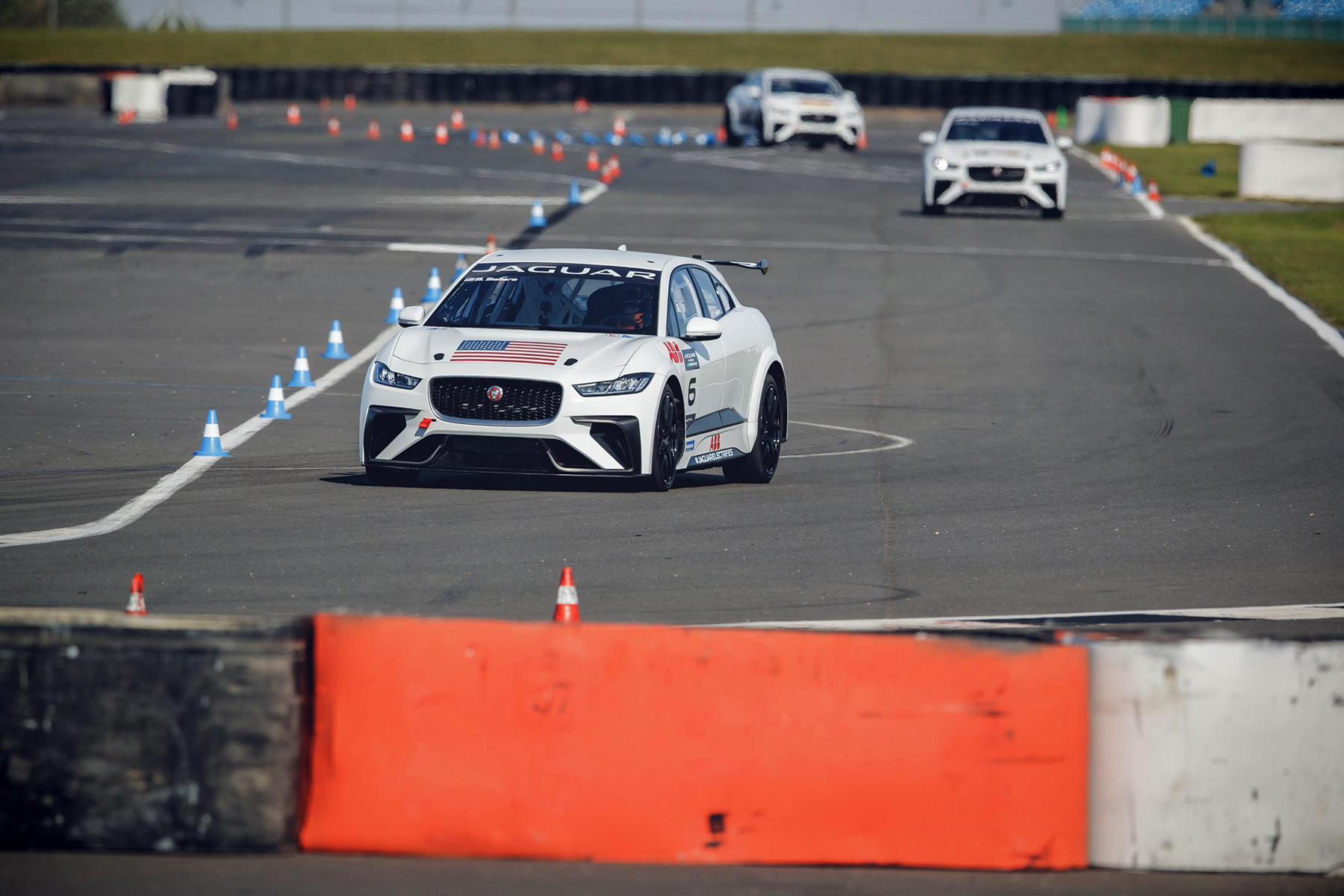
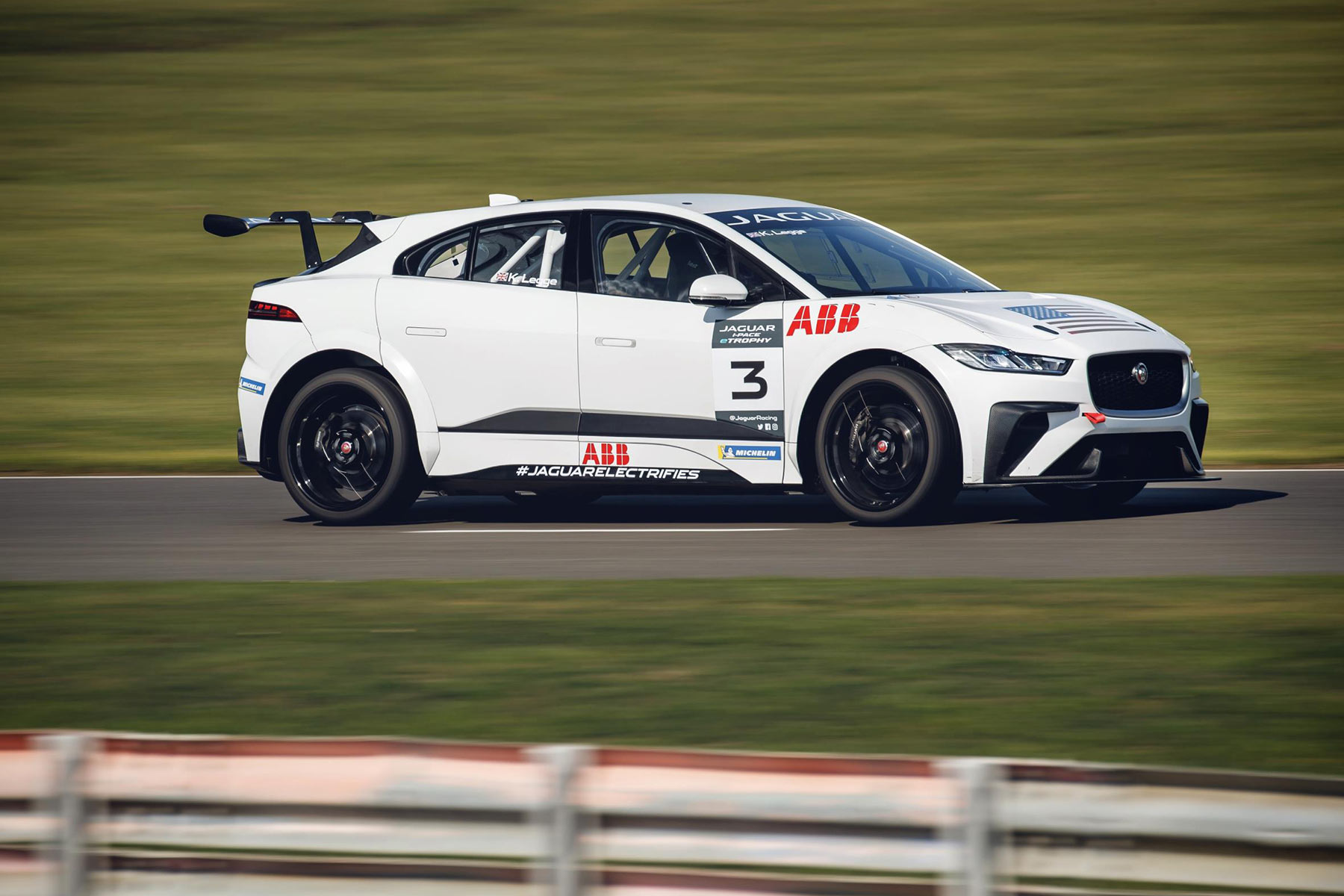
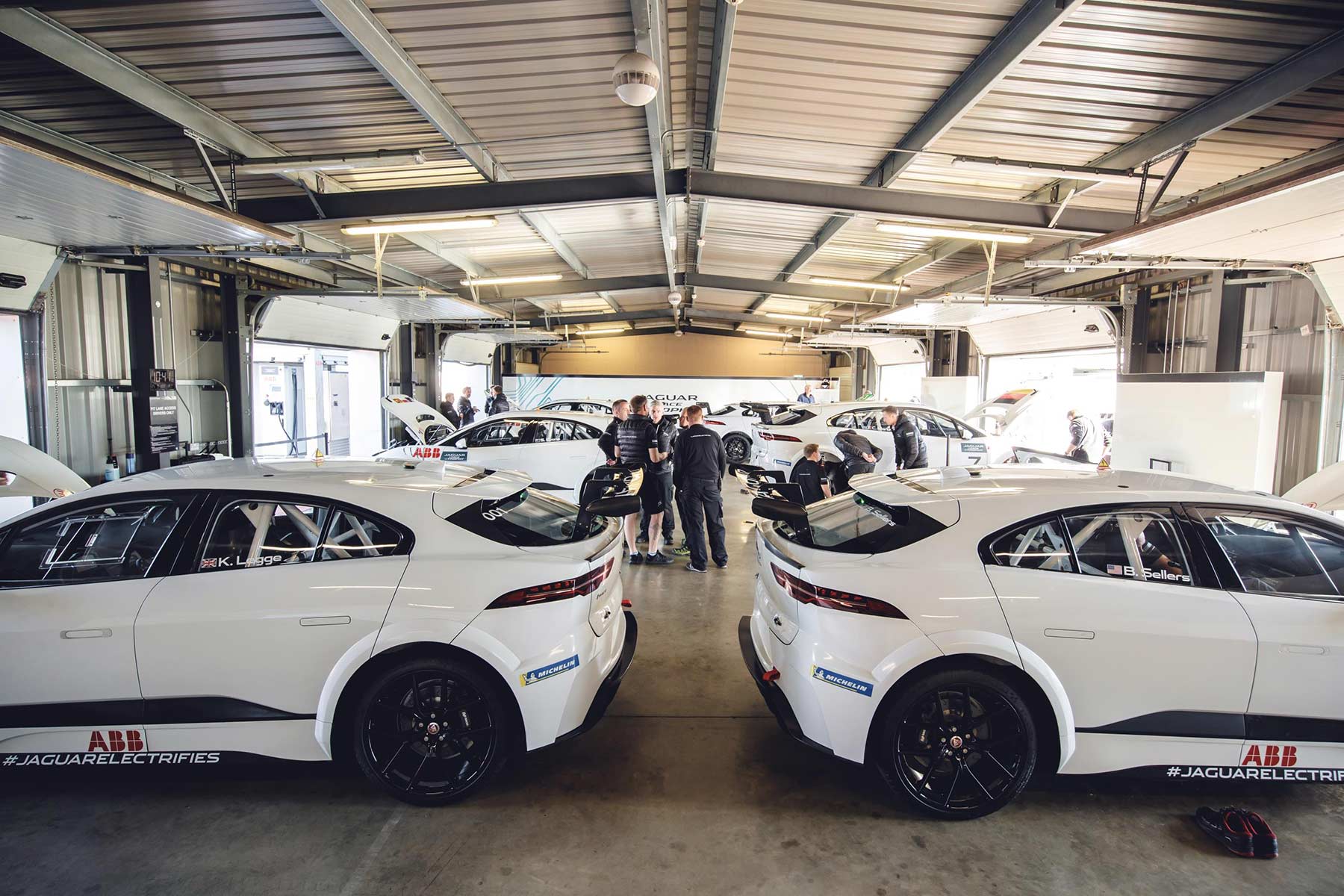
The first batch of drivers have been announced for the forthcoming Jaguar I-Pace eTrophy, as part of a test session at Silverstone race circuit.
Held to help the new racers become accustomed to their new electric I-Pace machines, the official test day saw a global field starting to be assembled for the race series.
Intended to act as a support race for the 2018-19 FIA Formula E Championship, the I-Pace eTrophy will be contested across ten rounds at nine different locations.
One of the first teams to be unveiled was Rahal Letterman Lanigan, a US-based outfit which has competed in IndyCar, Global Rallycross, and the American Le Mans Series. Their cars will be driven by Bryan Sellers, and British-born Katherine Legge who has spent much of her career racing in the USA.
Simon Evans, the younger brother of current Formula E racer Mitch Evans, was another driver making a debut at the test. Having an older sibling already competing in electric motorsport could be a useful bonus, and Simon believe that the two will be “pushing each other on” as the season progresses.
A Brazilian pairing of Cacá Bueno and Sérgio Jiminez also joined the grid at Silverstone. Bueno is a five-time Stock Car Brasil champion, and the duo will form the official Jaguar Brazil Racing team.
Jaguar I-Pace eTrophy Championship Manager, Marion Barnaby, seemed impressed with the on-track action, commenting: “This week’s test confirmed the Jaguar I-Pace eTrophy is shaping up to offer exciting, close and really competitive racing. The standard of drivers is high and with five continents already represented on the grid it is going to be a truly international series.”
More driver and team announcements will be made in due course, with further test sessions scheduled ahead of the opening race in Saudi Arabia on the 15th December.
Much fanfare is given to the safest cars on the road but we wonder, what is the least safe new car money can buy? It’s fair to say markets outside Europe and America are playing catchup in terms of safety. That’s where campaigns like Safer Cars for India come in, to call out cars that are just not up to modern standards.
The zero-star cars
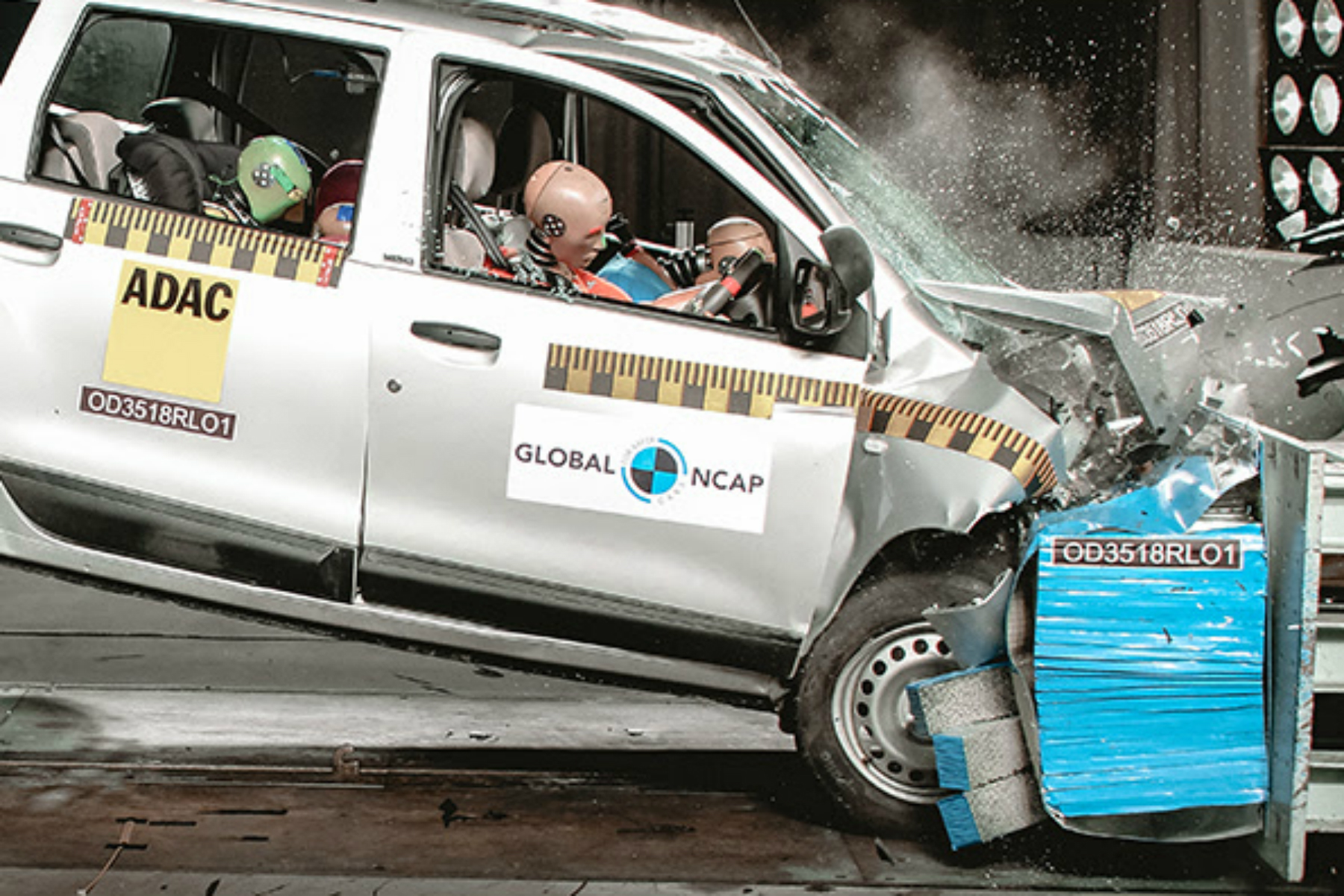
The latest candidate for least safe car in the world? Meet the Renault Lodgy: zero-star adult occupant Global NCAP safety-test alumni. Yes, that’s right, zero stars. That result is, in fact, no surprise, given the standard Lodgy’s lack of the most basic safety amenities.
Seatbelts, made mandatory in the UK in 1983, are an option on the Indian-sold Renault MPV. The worst thing is that this isn’t unique to the Lodgy. Cars from Volkswagen, Honda, Renault, Chevrolet, Hyundai, Ford and more do not come as standard with airbags. Needless to say, most of these cars also score zero stars for adult occupant safety.
The lack of strength in the Renault’s structure is plain to see, too. There are bends evident as far back as the rear door, while distortion of the front footwells is also evident. There’s also a lack of Isofix anchorages, meaning that any child seats need to be secured with the adult seatbelts.
“The zer- star Renault Lodgy is extremely disappointing,” said David Ward, Secretary General of Global NCAP
“Global NCAP had hoped that Renault had learned from the difficult experience they had with the Kwid. It’s time now for Renault to make front airbags standard across their entire Indian product range.”
Improvements
It’s not like such campaigns haven’t done any good at all, though. The Suzuki Maruti Vitara Brezza is celebrated, with four stars achieved. The Suzuki, among other Indian-developed cars such as the Tata Nexon, is evidence of steady improvements being made.
Time to play catch-up, Renault India. Standard airbags all-round would be a start.
Read more:
Male drivers four times more likely to be distracted by attractive pedestrians
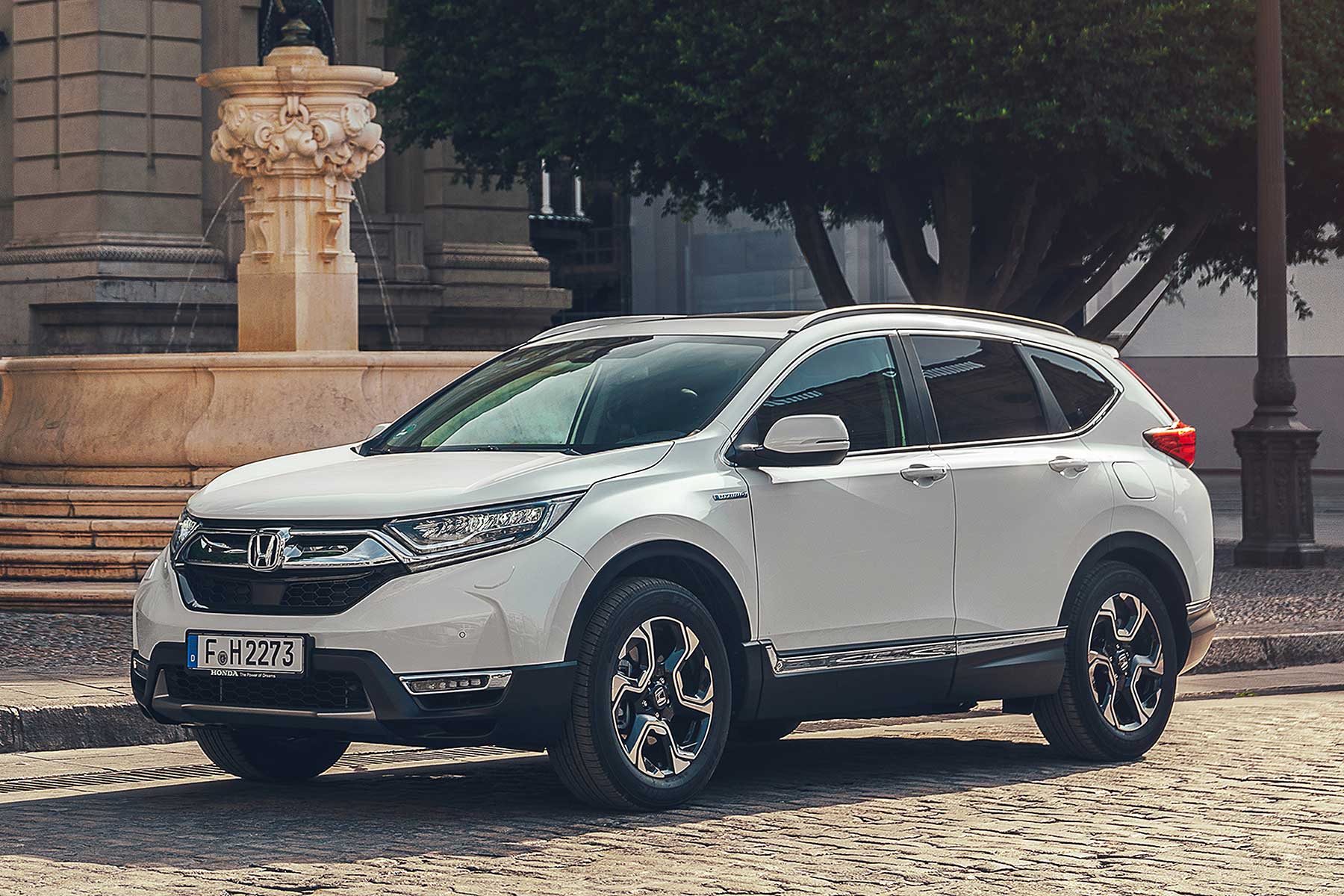
Honda has confirmed fuel economy for its forthcoming 2019 CR-V Hybrid – and it’s good news, for this is a petrol SUV that does a fair impression of a diesel in the efficiency stakes.
Combined fuel economy under the revised, tougher WLTP-related NEDC test is 53.3mpg, equalling CO2 emissions of 120g/km.
That’s for the front-wheel drive model. Choose all-wheel drive and the figures are still decent, with economy of 51.4mpg and CO2 emissions of 126g/km. Not bad for a family-friendly mid-size SUV.
It’s Honda’s clever i-MMD hybrid tech that’s to thank for this. It enables the 184hp 2.0-litre petrol engine to constantly switch between electric (it has two electric motors), hybrid and engine drive, maximising economy and minimising emissions.
The new CR-V Hybrid will make its production-spec debut at the Paris Motor Show 2018 next week, alongside a revised version of its smaller SUV sibling, the HR-V.
Honda’s given the junior crossover a bolder grille with more chrome, revised headlights and LED running lights. It launches with a 1.5-litre i-VTEC engine, with a turbocharged version of this petrol motor following in 2019, alongside a 1.6-litre i-DTEC diesel.
Honda’s also showing a Civic Type R wearing a full ‘ArtCar Manga’ wrap, and the surprisingly successful Honda-powered Scuderia Toro Rosso STR13 Formula 1 car will be shown – as will the NSX GT3 that Jenson Button is racing this year.
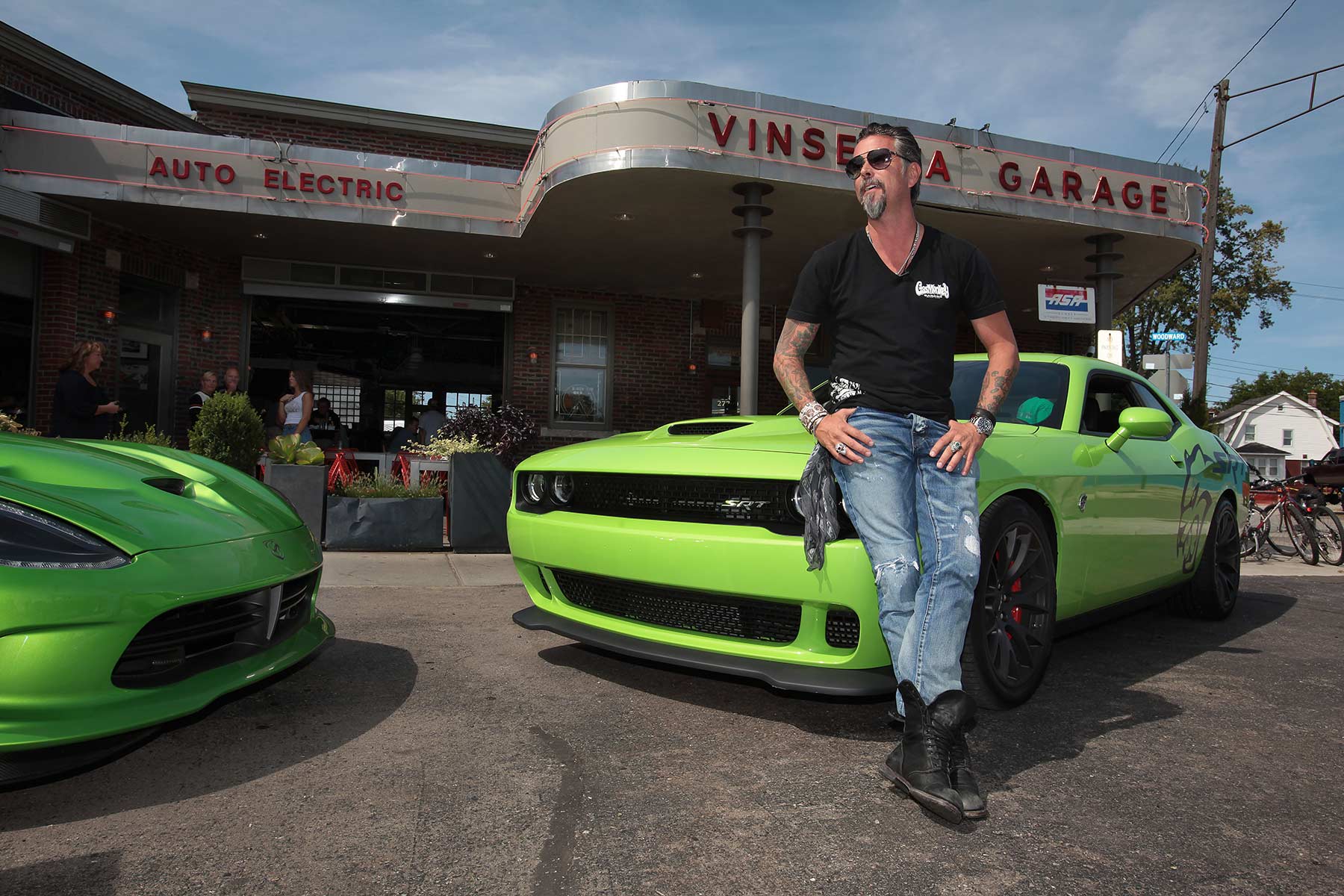
Richard Rawlings, owner of Gas Monkey Garage and larger-than-life star of TV’s Fast N’ Loud has suffered the theft of one of his prize muscle cars.
Rawlings announced on social media that the Dodge Challenger Hellcat had been stolen overnight, with a reward offered for information to help recover it.
Painted black, with black wheels and black interior, this particular Hellcat belongs to Rawlings’ wife, Sue. A priceless photo featuring Sue Rawlings and her son was left inside the car, making the need to recover the Hellcat even more pertinent.
Attention Gas Monkey fans! My black hellcat, license plate FCH-1300 was stolen last night! I need your help to find it. It happened approximately at 2:30am in Dallas and it has a family photo in it that is near and dear to me. Reward for anyone who helps me find it pic.twitter.com/0HCxGRQmBd
The 707-horsepower Hellcat, powered by a supercharged Hemi V8 engine, has made numerous appearances in the Discovery Channel show across its 14 seasons. Most typically, the Hellcat has been seen with smoke pouring from the rear wheels as Rawlings completes yet another burnout.
First launched in 2015, the Challenger Hellcat has gained a cult following with muscle car fans, thanks to the combination of retro-inspired styling and supercar rivalling performance.
The success of both Gas Monkey Garage and the Fast N’ Loud TV series has seen Rawlings amass a wide a varied car collection. Ranging from Ferraris and Lamborghinis, to a replica of the Ford Shelby GT500 used in the Thomas Crown Affair movie, his collection is certainly diverse.
Since 2014, Rawlings has appeared in adverts promoting Dodge products, along with representing the brand at events such as Roadkill Nights and Woodward Avenue.
Anyone with information on the stolen Challenger is asked to contact the Dallas Police Department.
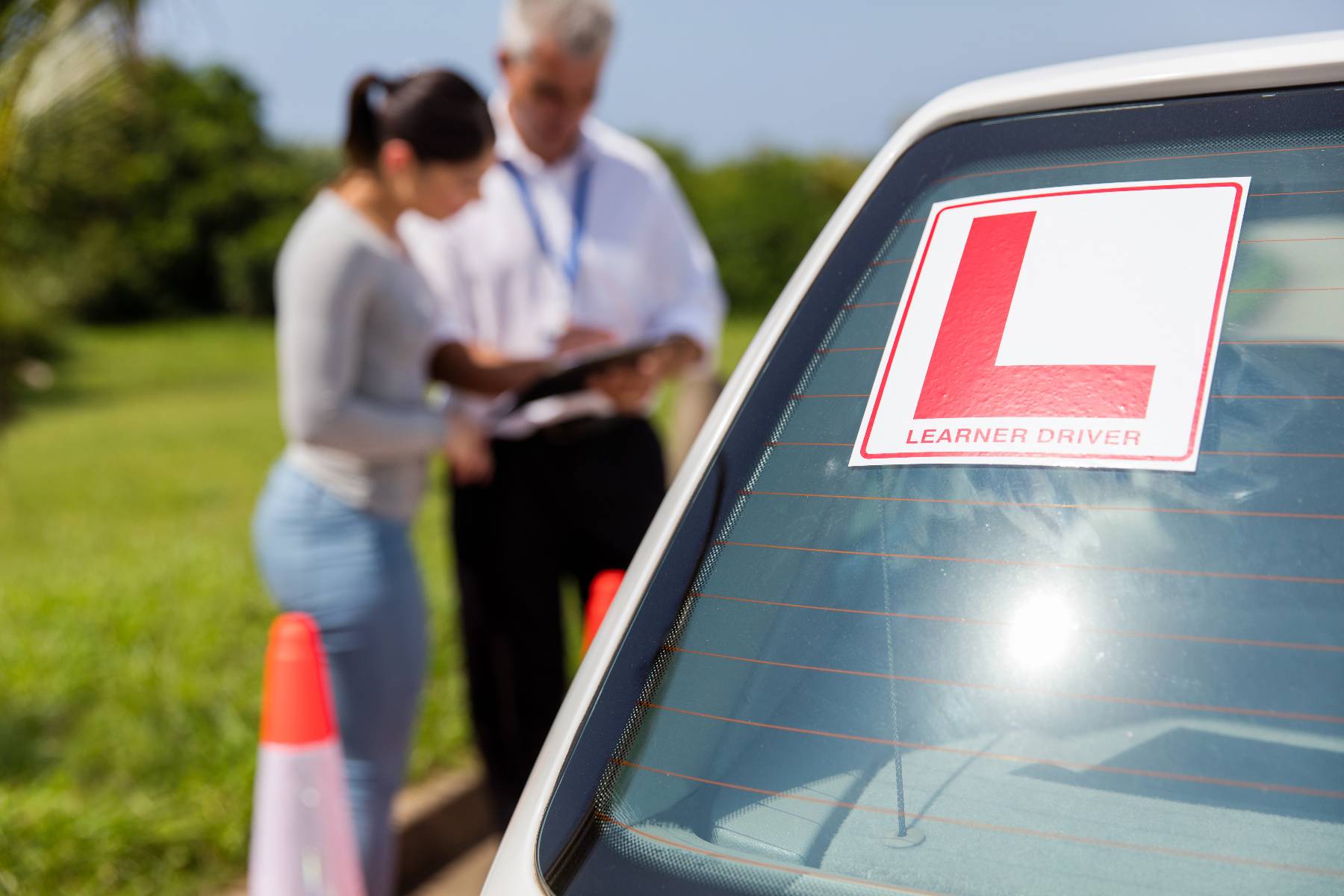
Learner drivers have revealed what they really want to be taught and tested on – and the most common desire is to experience everyday, real-life scenarios.
According to car insurer Marmalade, learner drivers aged between 17-24 indicated they want guidance and tuition on the following experiences:
Night driving: 58 percent
Rush-hour driving: 48 percent
Roadside wheel changes: 37 percent
What’s more, parents (for once) actually agree on what a learner needs to experience. Night driving (74 percent), rush-hour driving (66 percent) and roadside wheel changes (45 percent) also topped their list of important scenarios to be schooled in.
“We take it very seriously that new drivers are more likely to be involved in an accident,” said Crispin Moger, CEO at Marmalade.
“However, most bumps are not down to reckless behaviour, they’re caused by inexperience. Rather than apply restrictions, let’s encourage the Government to broaden their knowledge with skilled professionals, in a safe environment.”
It seems both learner drivers and their parents agree: don’t overcomplicate things, simply make sure new drivers are taught the basics, and overall driving standards may rise accordingly.
Drifting, love it or hate it, is a finely honed and balletic skill. It’s an impressive demonstration of car control wherever you see it.
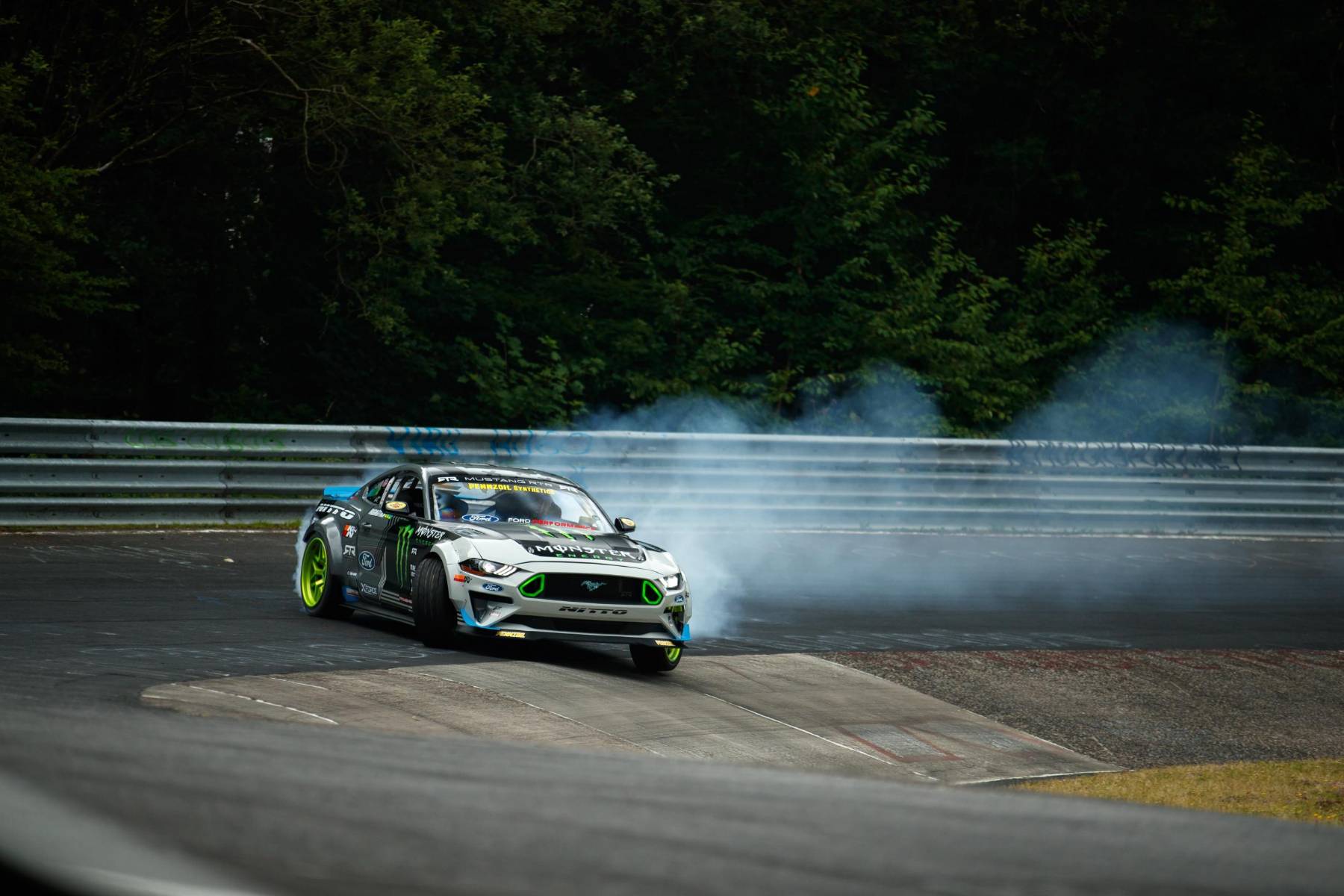
And this is a drift well worth seeing: Vaughn Gittin Jr and Ford have just set the benchmark for the ultimate drift challenge – all 13 miles of the famous Nürburgring, smoking and sideways in his Mustang.
It’s the sort of thing a group of young lads would speculate about on the playground. “Reckon you could drift the whole Nürburgring?” one would speculate. “No way!” the others would respond.
It’s that unbelievable, but Vaughn Gittin has taken his 900hp supercharged RTR Mustang for the hairiest lap of the Green Hell ever.
Lairy enough that the lap had to be split into sections. Why? One set of tyres was never going to last a whole sideways lap of the ‘Ring. In the end, a full three sets were sacrificed.
“Drifting the Nürburgring represents the ultimate challenge to me,” said Gittin Jr.
“It is something that many question whether it would be possible and whether the car and driver could do it and come out in one piece.
“Something inside of me had to take this on to find out.” And how…
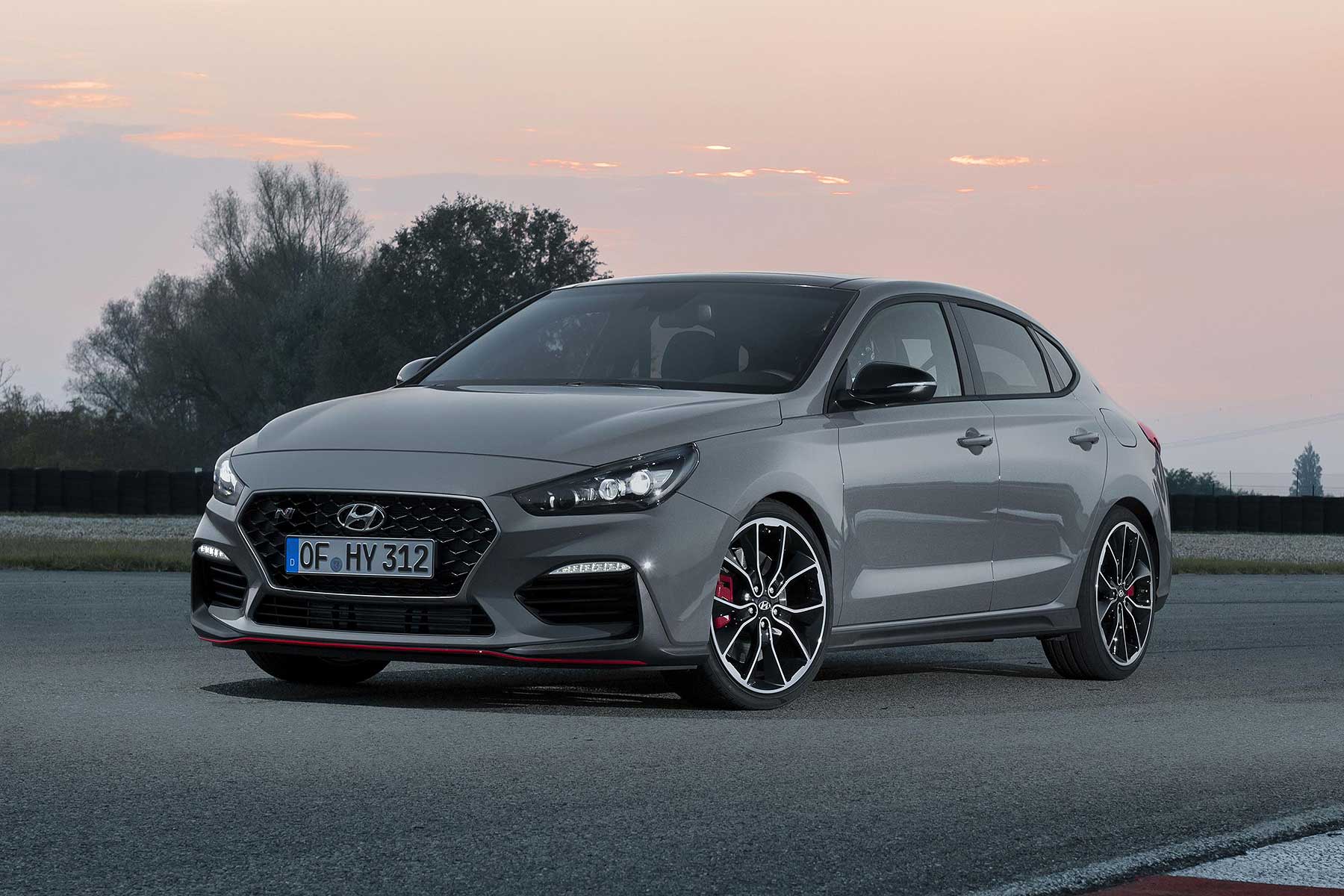
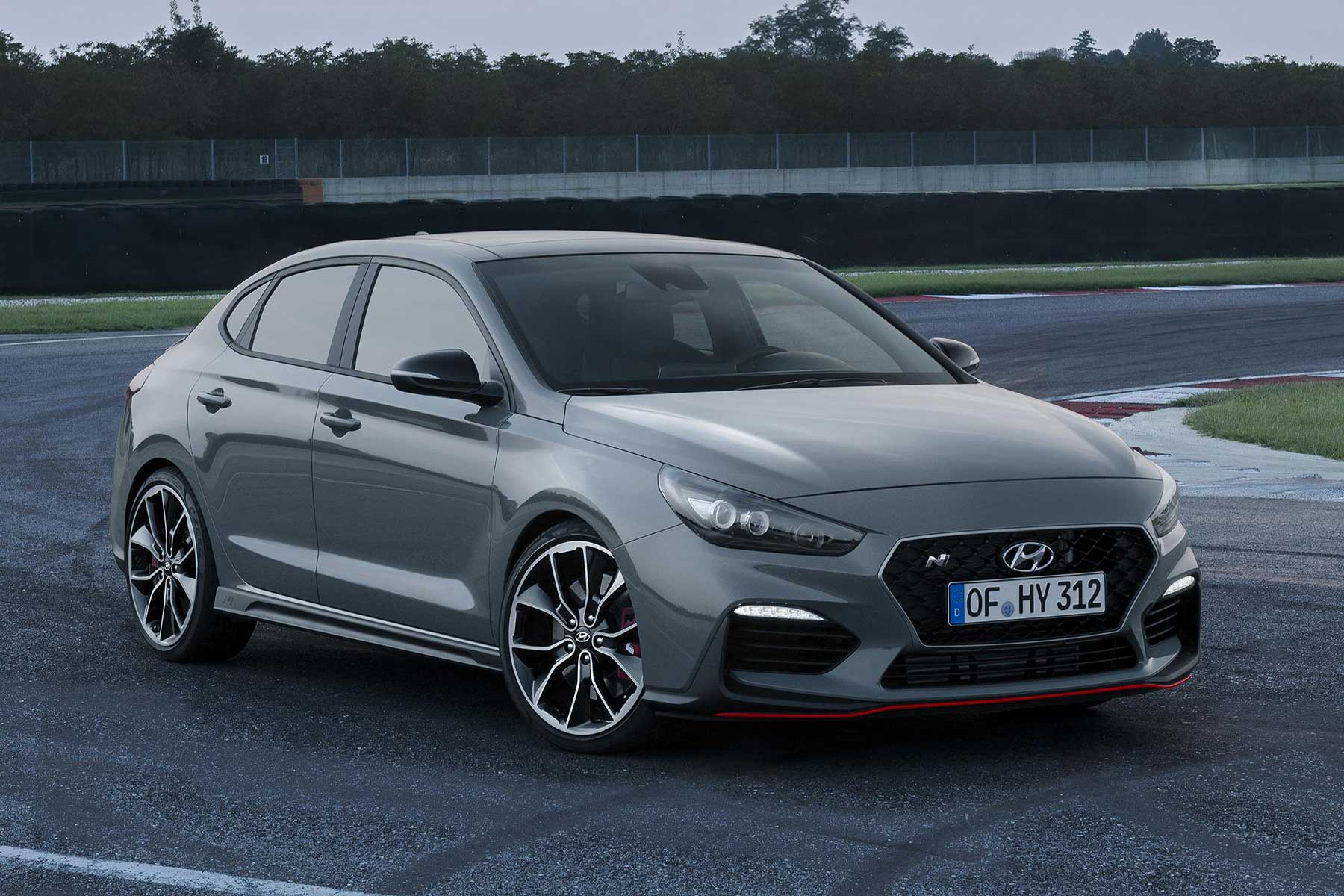
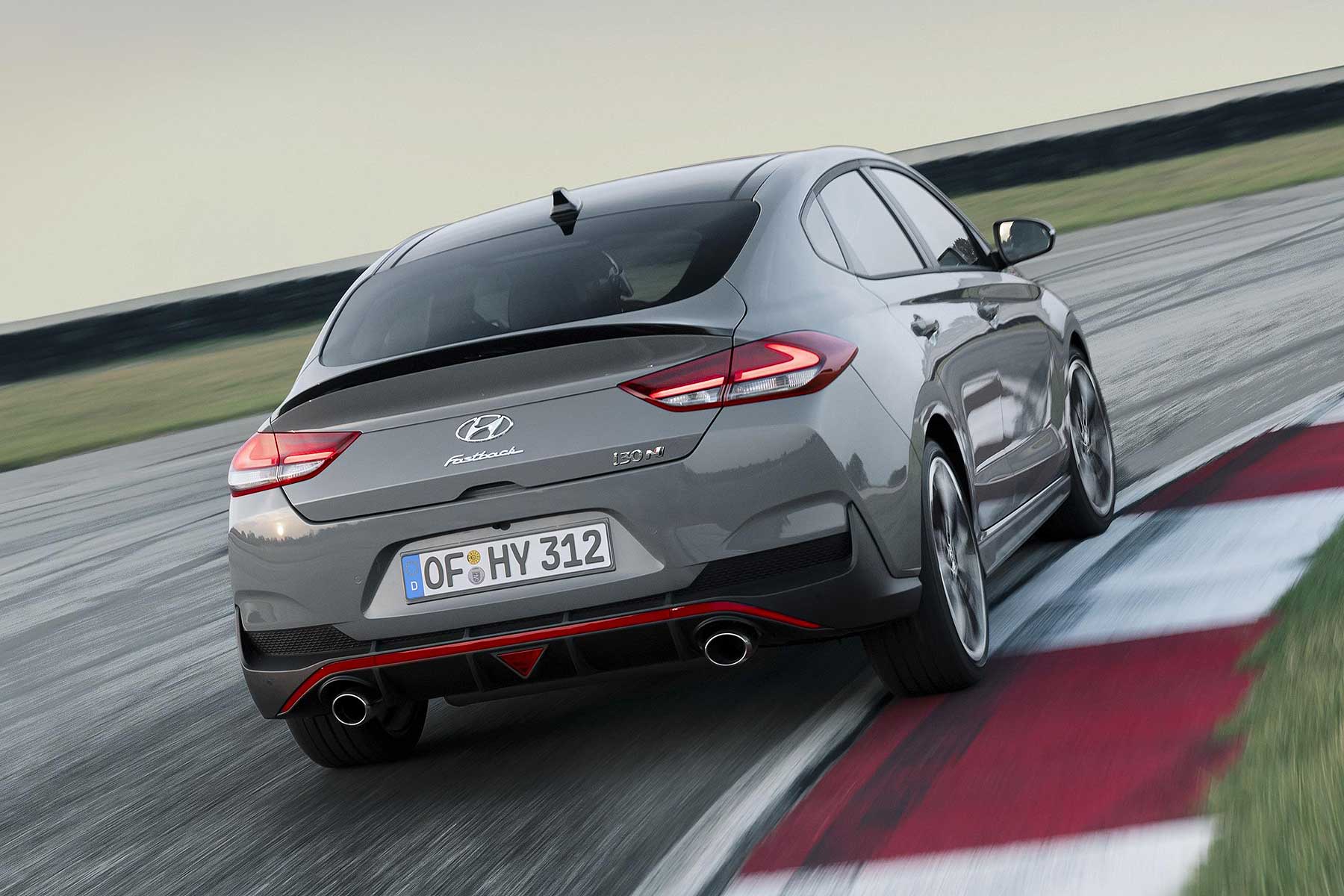
The Hyundai i30 Fastback N is a five-door GT coupe version of the i30 N five-door hot hatch, which Hyundai hopes will prove a fast and value-packed alternative to models such as the Audi A5 Sportback and BMW 4 Series Gran Coupe. It debuts next week at the 2018 Paris Motor Show.
From the front, it’s largely the same as the i30 N hatch, the range-topper of the i30 five-door range.
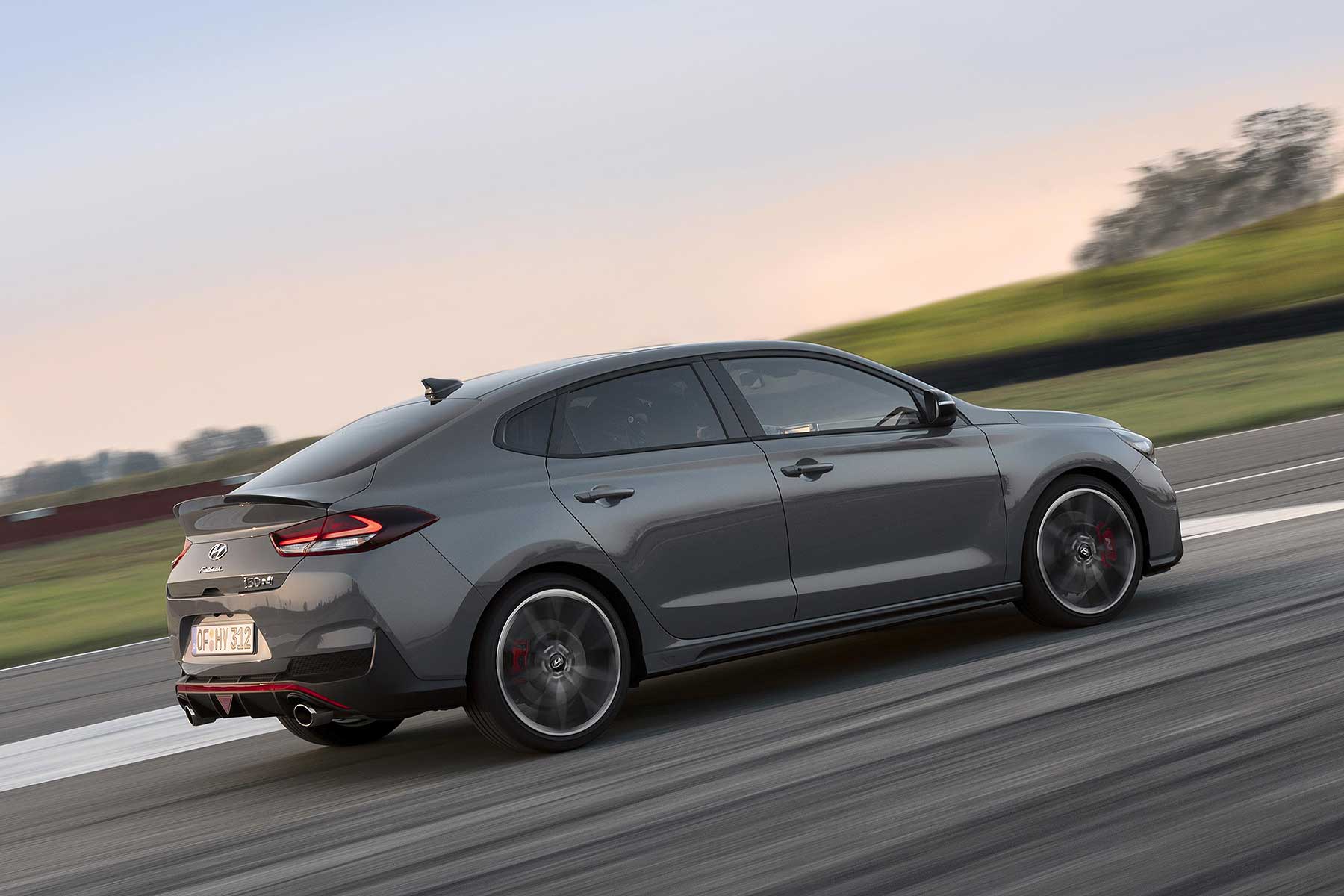
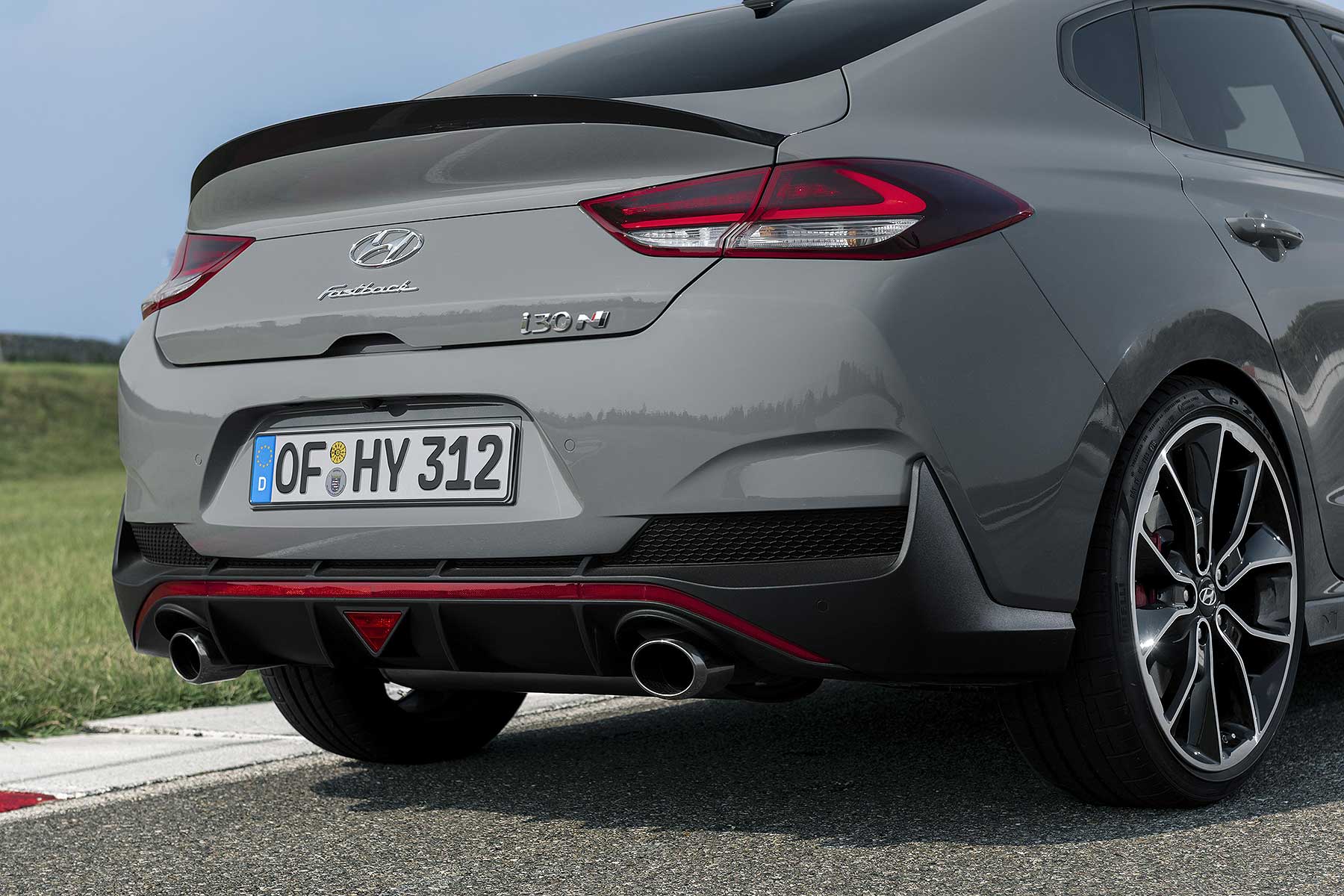
It’s the slinky hatchback rear that’s the standout aspect. Hyundai would rather us refer to it as a four-door coupe, thanks to its sweeping roofline and elegant tail.
Instead of the upright rear of a hatch, it’s more curvaceous and more like one of those premium German alternatives (it doesn’t have a rear wiper either, which should be interesting in rainy wintry Britain…).
Yet it should still have a reasonably roomy rear and the 450-litre boot is actually bigger and more practical than the hatch.
It extends to a yawning 1,351 litres with the seats down. So the sexy-looking version of the i30 N is actually the more practical version too – at least until Hyundai decides to be bold and give us an i30 N Estate…
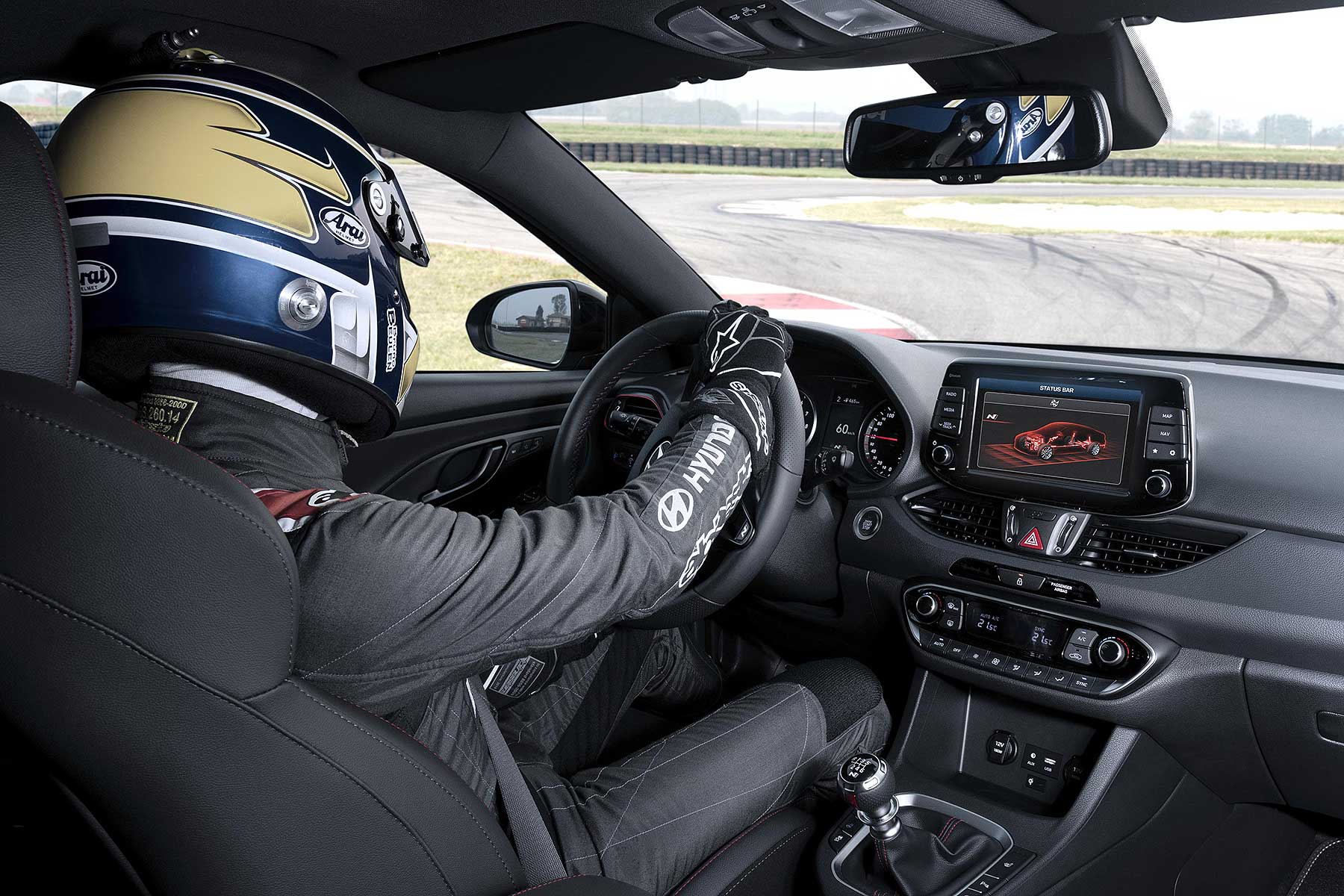
As with the hatch, the 2.0-litre turbo’s offered in both 250hp and 275hp Performance guise. The latter gets a limited-slip differential, plus bigger 19-inch wheels that are wrapped in Pirelli P Zero tyres and hide enlarged brakes. Its dual-exit exhaust is fruitier, too.
Performance? 0-62mph in 6.4 seconds for the regular i30 N Fastback, with the i30 Fastback N Performance Package doing it in 6.1 seconds. Top speed is again capped to 155mph.
Expect prices to show a mild hike over the regular i30 N, which costs £25,760 in regular guise and £28,760 as a 275hp Performance. But as the regular Fastback is only around £350 more than the hatch, it may not be as step as you think.
We’ll find out more at Paris next week – and bring you first live images of the better-looking Fastback four-door coupe alternative to the i30 N hot hatch.
 Mercedes-AMG is one step closer to bringing its F1-derived hypercar to fruition. After being spotted testing not long ago, the new car now has a name: the Project One concept has become the Mercedes-AMG One.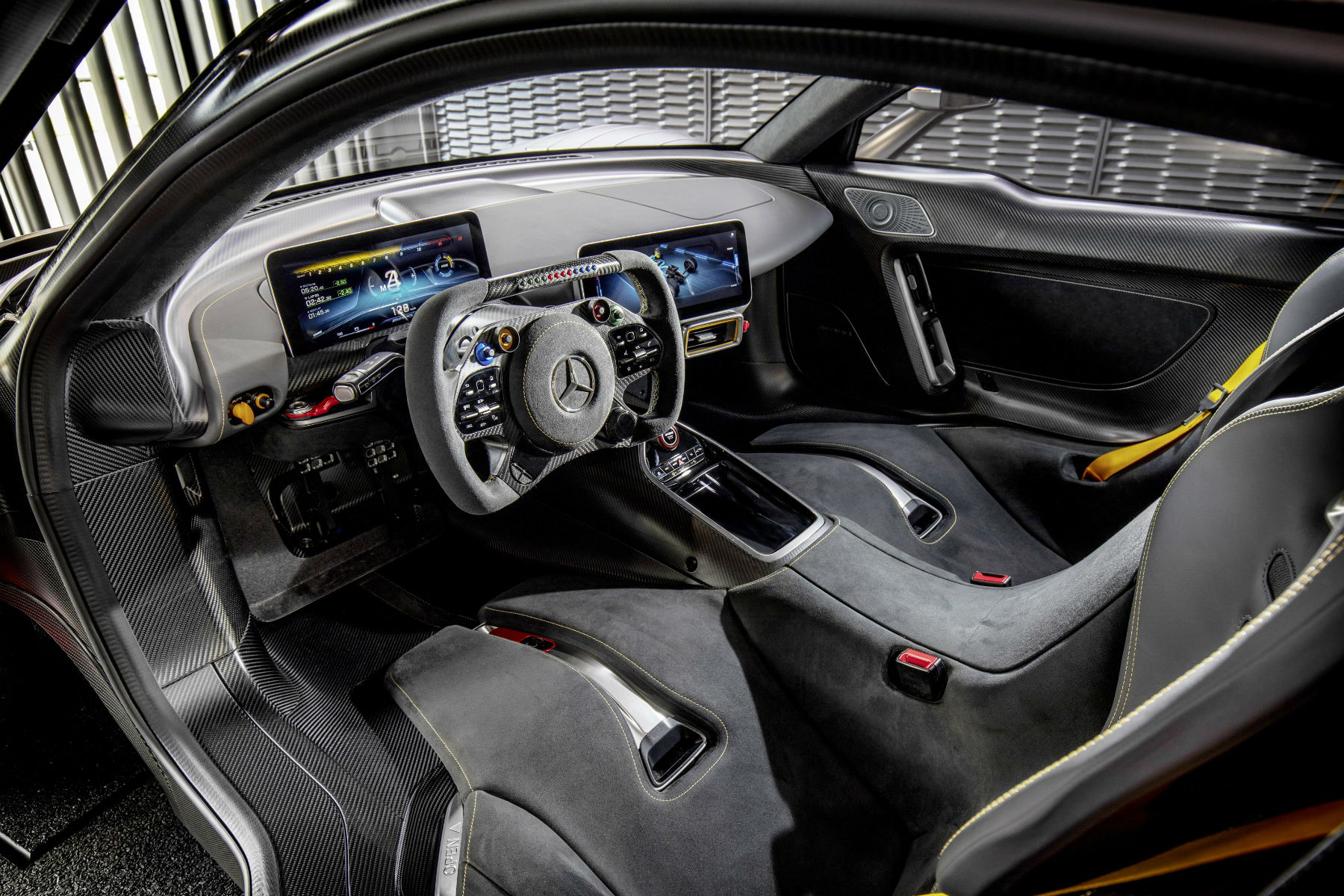
 BMW has given its i3 electric car yet another battery update, meaning it now has around twice the electric capacity than it did at launch just five years ago. The 42.2 kWh battery of the 2019 i3 is almost 30 percent larger than today’s model, too.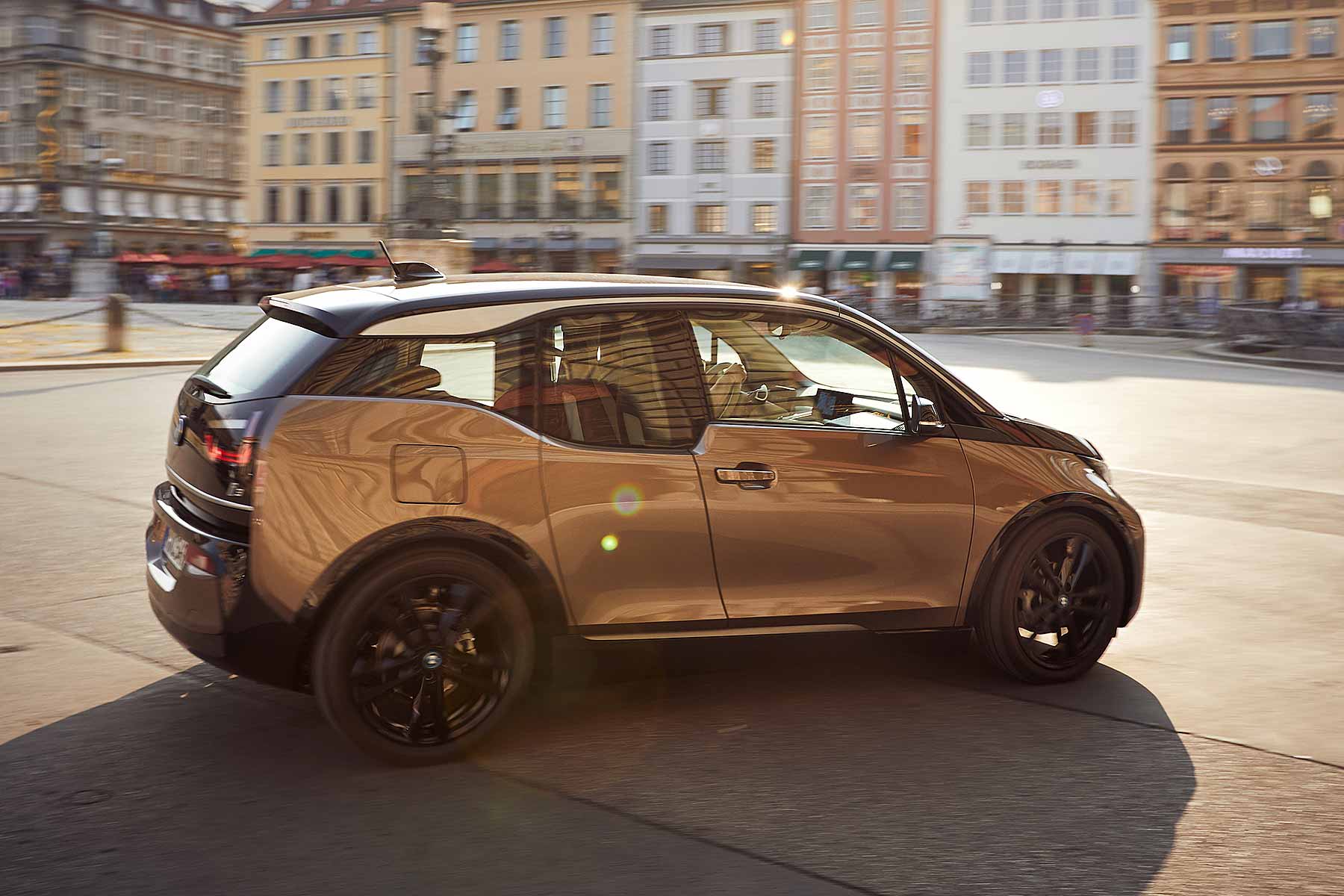

 Porsche has stunned motorsport fans by recreating one of its racing legends as a modern day retro homage. The new Porsche 935 is inspired by the 1978 935/78 Le Mans racer that was famously nicknamed ‘Moby Dick’.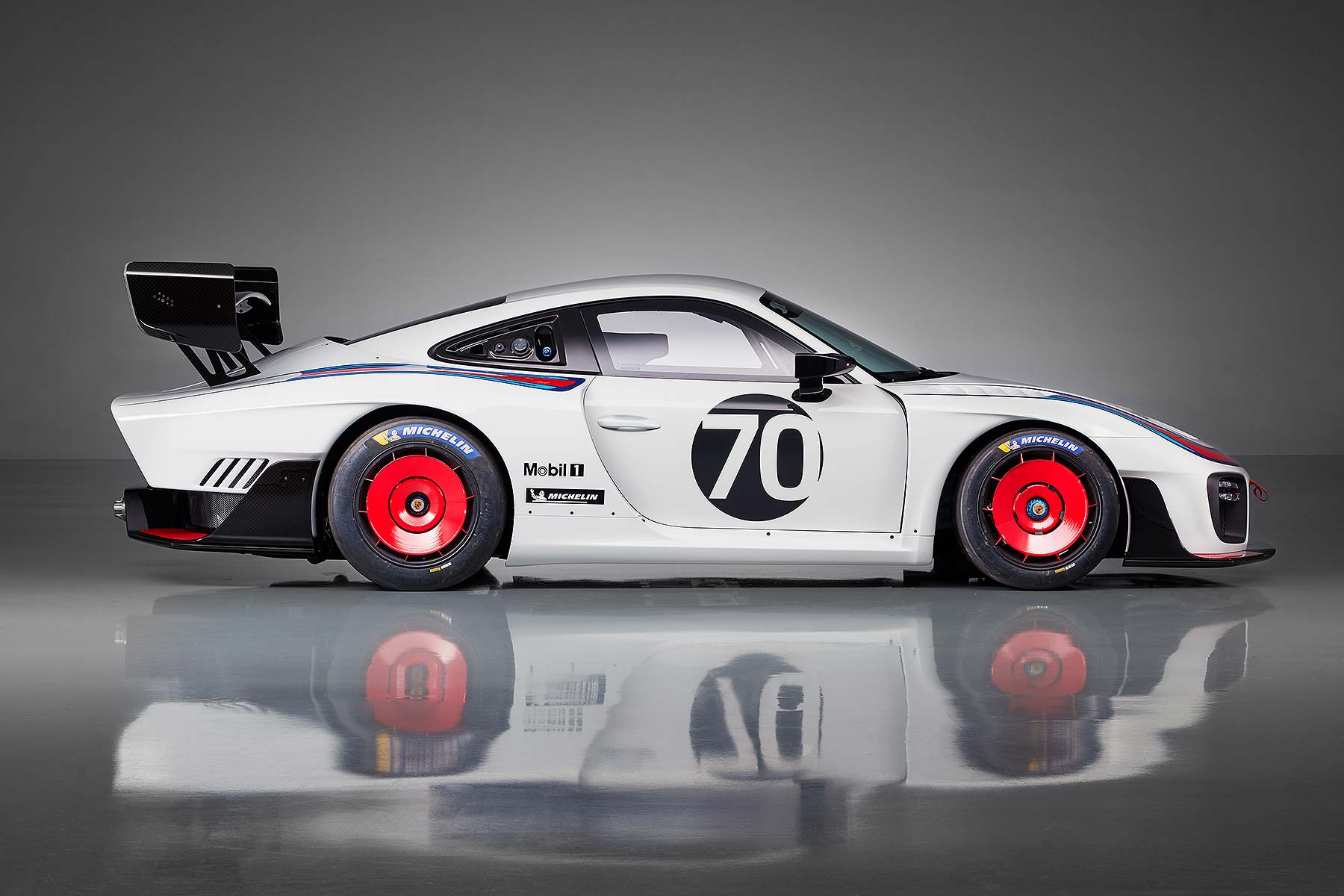
 Honda has confirmed fuel economy for its forthcoming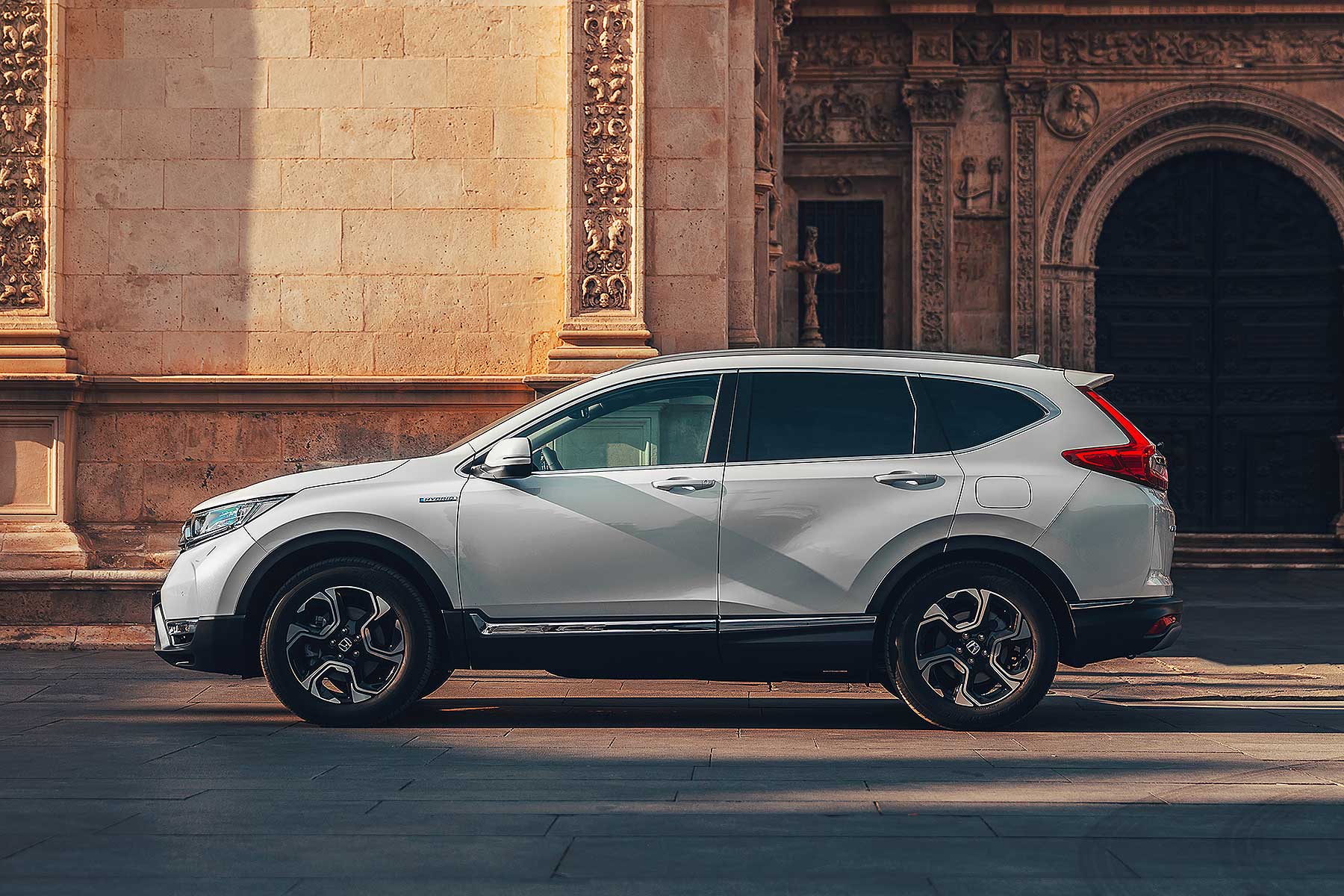


 The Hyundai i30 Fastback N is a five-door GT coupe version of the i30 N five-door hot hatch, which Hyundai hopes will prove a fast and value-packed alternative to models such as the Audi A5 Sportback and BMW 4 Series Gran Coupe. It debuts next week at the