Staying loyal to your existing car insurance provider could leave you £42 out of pocket. That’s according to new research published this week.
It found that 17.1 million drivers let their insurance auto-renew in 2020, at a cost of £720 million – a seven percent increase on 2019 (£674 million). Around 41 percent of drivers let their policy auto-renew, according to one price comparison website.
One in five policyholders saw an increase of £26 to £50, while nine percent saw increases of £51 to £75. Eight percent saw a rise of between £76 and £100.
It’s surprising to discover that eight percent of drivers allow their insurance to renew automatically, WITHOUT shopping around for a cheaper deal. A fifth (20 percent) stay where they are simply for ease.
Kate Devine, car insurance expert at MoneySuperMarket, said: “Letting your car insurance auto-renew almost always sees you end up paying more, with our research showing that the average premium increase last year was £42.
“While it’s great to see that many of us are shopping around for a better deal, the number of people allowing their policy to auto-renew is still high, at 41 percent.”
Transparency rules
In April 2017, the Financial Conduct Authority (FCA) introduced new rules designed to increase transparency at renewal time and to encourage motorists to shop around for new quotes.
Insurance companies must show the customer the premium to be paid on renewal and the price paid for the previous year. In addition, the providers must include text encouraging consumers to check that the level of cover is appropriate for their needs and that they are able to shop around.
Despite this, the MoneySuperMarket research found that 51 percent of drivers do not recall seeing these notifications. Of the remaining 49 percent, a third said they did not encourage them to shop around.
Kate Devine added: “If your policy is up for renewal, you should always shop around to see what deals are on the market – a new deal on your car insurance is very easy to find online and could save you up to £218.”
The Toyota Aygo X prologue previews how the replacement for the Aygo city car is going to become even more bold and standout.
The preview also confirms Toyota’s commitment to a sector other brands are pulling out of – and how the firm is going to reward loyal customers with an exciting new entry point to its range.
Toyota says the city car sector is a style-conscious one, which is why it’s created a ‘statement’ model.
The new Aygo is set to take on a crossover SUV appearance, with a higher stance and more distinctive profile.
It could even indicate Toyota is planning a range-topping ‘Aygo Cross’ variant, with big wheels, roof rails and two-tone paint.
Built on the same acclaimed platform that underpins the award-winning Toyota Yaris – recently named 2021 UK Supermini of the Year – the new Aygo will continue to use regular internal combustion engines, to keep the car affordable.
It is not going electric and is unlikely to get a hybrid alternative as financial accessibility is paramount in this entry-level type of car.
Based on a shortened version of the Toyota Yaris underpinnings, no interior images have yet been revealed, but we can expect that to be as distinctive as the exterior.
The Aygo X prologue was designed at ED2, Toyota’s European design HQ in the South of France.
Design director Lance Scott said the Aygo has “charmed youthful, progressive customers with its sense of playfulness and fun” since its launch in 2005.
Radford, a famous coachbuilder that created custom Minis for all four Beatles, has been revived by a team including 2009 F1 World Champion Jenson Button.
In partnership with car builder Ant Anstead, designer Mark Stubbs (and business adviser Roger Behle), Button said he “jumped at the chance to join Ant and Mark to put the Radford name back in lights.
“The journey has very much begun, and news of our first car will follow shortly, so watch this space.”
Radford was founded in 1948 as Harold Radford Coachbuilders Ltd. Projects included the Bentley Countryman and fibreglass bodywork for the prototype Ford GT40.
The company later became famous for custom Bentleys and Minis – Beatles manager Brian Epstein commissioned Radford to create one-off Minis for the Fab Four.
Why has it been revived? Ant Anstead explains “the time for a revival of proper coachbuilding is right now.
“People want something unique, something different and something tailor-made. Our cars will offer the ultimate in global luxury and personalisation, blending British heart and soul, state-of-the-art technology, and traditional craftsmanship.”
The revived Radford firm is co-owned by Stubbs, Anstead and Button, and its first commission is “already in advanced stages.
“We can’t wait to reveal the exciting plans and products that we’re already working on,” said Behle.
“It’s going to be fun telling the world about them in the coming weeks and months.”
RAC Insurance has launched a new flexible monthly product called Pay by Mile that is aimed at those driving fewer than 6,000 miles a year.
The fully comprehensive car insurance product is in response to the changing needs of motorists – with official figures showing drivers are covering 20 percent fewer miles than two decades ago.
Pay by Mile includes a bespoke app allowing motorists to keep track of miles driven.
Drivers pay an agreed per-mile cost for the miles they drive – the Mileage Premium – and a set monthly fee to cover their car when parked: the Parked Premium.
The Parked Premium is paid at the beginning of each month and the Mileage Premium is paid at the end of the month.
Miles driven are tracked by an RAC ‘drive tag’ that’s stuck to the windscreen. No other data other than miles driven is collected.
The RAC says those who drive relatively few miles may realise significant savings.
There are no fees for changing vehicles or address, and it’s a genuine no-ties product: those who find it’s not suitable, or sell their car, can cancel it straight away with no fees to pay.
Car insurance has been ripe for a shake-up for some time, said RAC Insurance MD Mark Godfrey.
“With a standard car insurance policy, drivers are expected to estimate how many miles they expect to drive from the outset, whether or not they cover this distance during the policy year or not.
“For people who don’t drive very regularly or only ever go short distances, this could result in a premium that seems overly expensive.”
After paying a one-off £50 activation fee and the monthly Parked Premium fee, “drivers just pay a clear ‘per mile’ price of as little as 4p for every mile they actually drive.
“This way, motorists save money for whenever they don’t, or can’t, drive.”
Mr Godfrey said the impact of the coronavirus pandemic on driving matters makes this sort of product more relevant than ever.
RAC Pay by Mile has a minimum £250 excess and is underwritten by Highway Insurance, part of LV=. Motorists must be aged over 21.
For Skoda owners caught out by unexpected cold weather, the ice scraper hidden inside the fuel filler flap is a saviour.
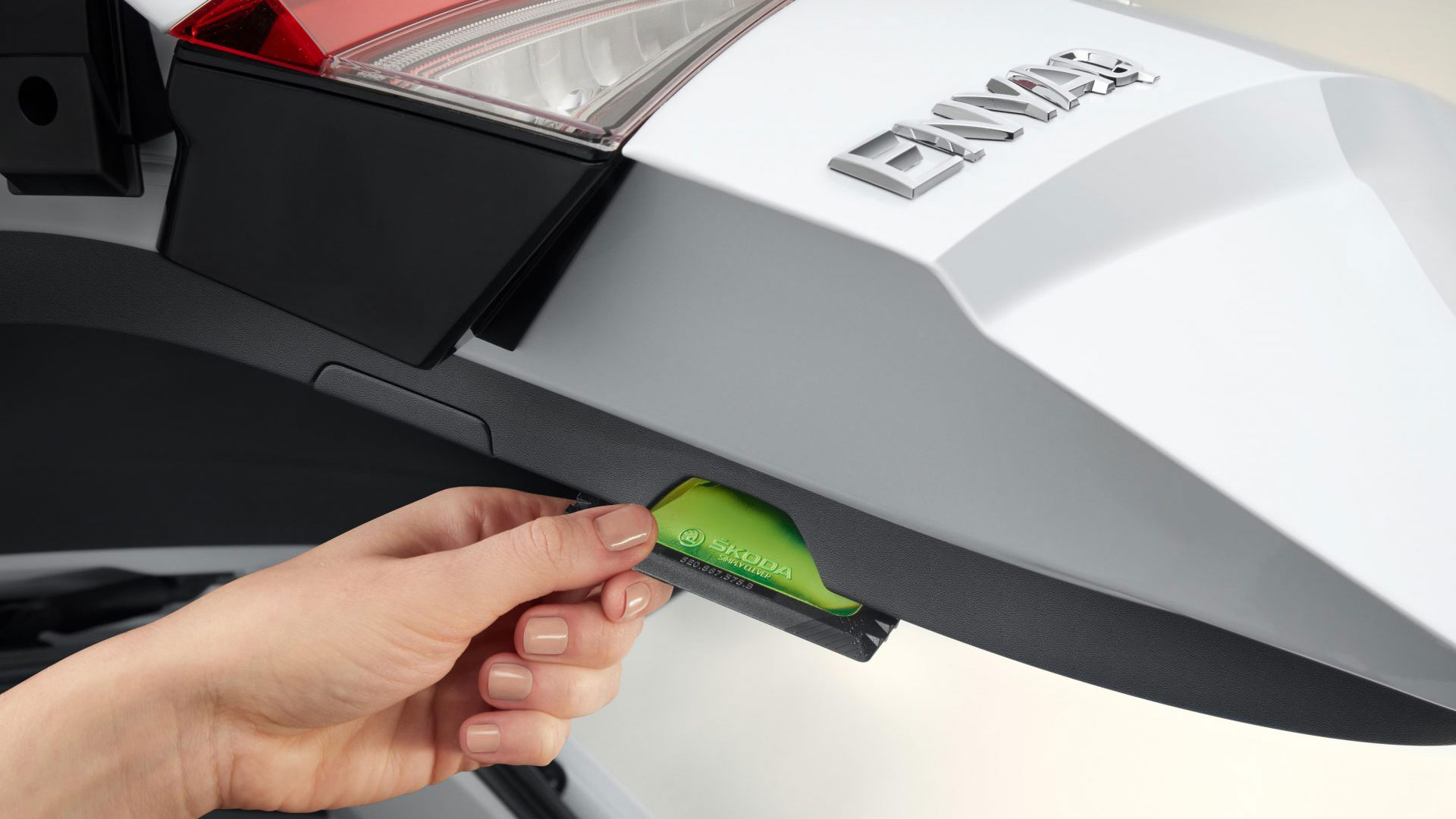
The unassuming plastic square means there is no need to chisel away at a frozen windscreen with a credit card. It also doubles as a handle tyre tread depth gauge.
It is just one of a number of Skoda’s ‘Simply Clever’ ideas, that YouTube influencers would probably refer to as ‘life hacks’.
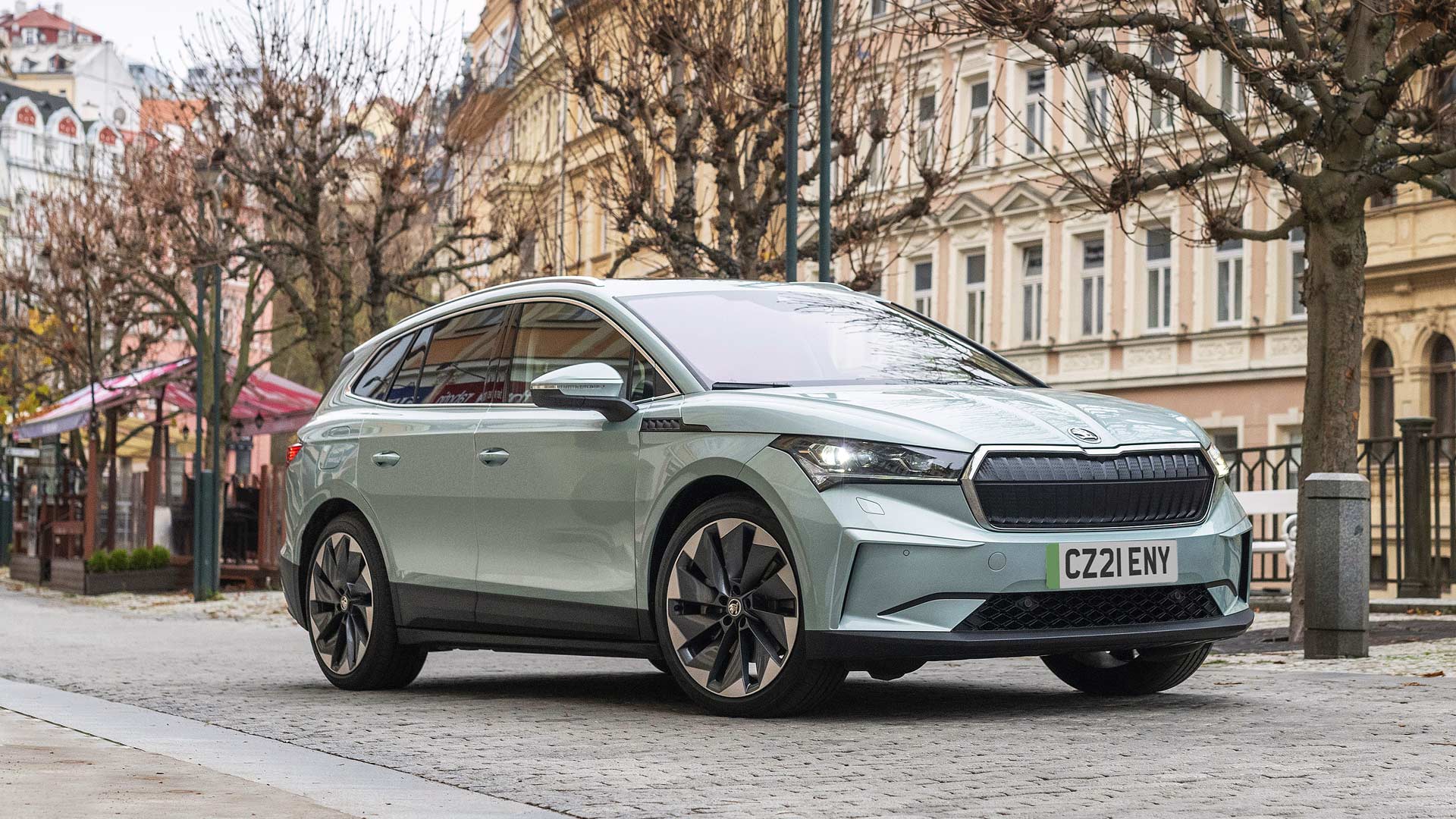
However, the all-new Enyaq iV SUV caused Skoda a challenge for the humble ice scraper.
An (iced) gem of an idea
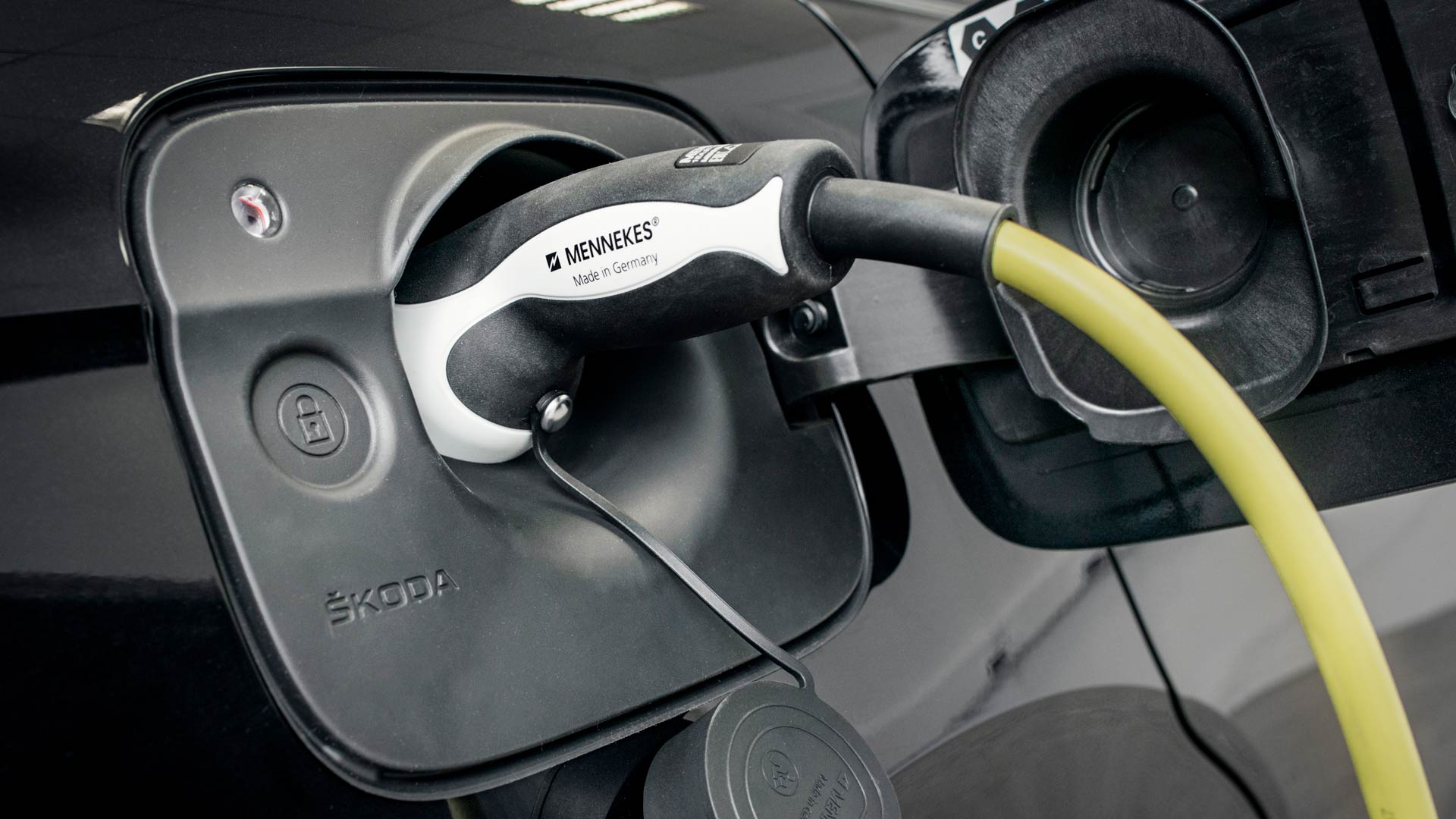
Skoda’s first electric SUV has a charging port that hides behind a cover, much like a fuel filler flap. When charging, the cover has to remain open, meaning the prized ice scraper could be easily stolen.
The Simply Clever solution is, unsurprisingly, rather simple. Skoda has moved the ice scraper to a special compartment inside the tailgate, keeping it safe but still accessible.
What is Skoda’s rationale for not putting it inside the driver’s door? When the weather is really bad, opening the door would mean snow falling off the roof, and onto the seat. Obvious, when you think about it.
Ice scraper fans will also be keen to know that the special Skoda item is now into a third generation. The second iteration switched to a softer plastic to avoid scratching windows, whilst the latest model includes the tyre depth gauge.
Clever inside and out
Moving the ice scraper is not the only Simply Clever feature integrated into the Enyaq iV.
Skoda has designed a special cover for use when the electric SUV is being charged, preventing the cable from freezing in place.
A special storage bag for the charging cable has been made to fit neatly behind the wheel arch in the Enyaq iV’s boot. The bag itself is washable, and incorporates a sponge that cleans the cable as it is pulled out.
Opening the boot now sees the light illuminate space behind the Enyaq iV, whilst the interior is packed with storage options. Being electric means no transmission tunnel, offering up extra room beneath the centre console.
Oh, and Skoda’s trademark umbrellas remain.
Enyaq iV is ready to order
Skoda is now accepting orders for the Enyaq iV, with pricing from £31,085. This includes a government Plug-in Car Grant of £3,000.
Customers will be able to use Skoda’s new ‘Lease and Care’ finance package with the Enyaq iV.
This acts a personal lease deal, with buyers able to specify the level of maintenance support to include with their monthly payment.
A partnership with energy company Octopus Go will give Enyaq iV drivers an extra boost. Switching their home energy supply to Octopus Go will net drivers a £90 credit – equivalent to 7,500 miles of charging.
The 2021 F1 season gets underway at the end of this month, with Lewis Hamilton and co. lining up at the Bahrain Grand Prix.
Hamilton is on record as saying Silverstone, Austin and Montreal are his favourite F1 circuits, but what are the most popular tracks on Instagram? To find out, a scrap car comparison site compared the hashtags of the official F1 circuits.
Predictably, the Nurburgring is ranked number one, with a whopping 850,000 mentions. It’s probably worth pointing out that this includes the fearsome Nordschleife, rather than the just the modern F1 circuit. This gives the Nurburgring an unfair advantage over its Instagram rivals.
Lewis Hamilton might be disappointed to discover that of his favourite tracks, only Austin’s Circuit of the Americas appeared in the top 10, with Silverstone and Montreal failing to make the cut. Actually, the F1 world champ has probably got other things on his mind right now.
Interestingly, Brands Hatch is ranked third, with 212,055 hashtag mentions on Instagram. Even more interesting, when you consider that Brands Hatch hasn’t hosted an F1 race since Nigel Mansell drove his Williams-Renault to victory in 1986.
According to Scrap Car Comparison, the company behind the research, the #Silverstone hashtag was discounted because the posts contained updates relating to the influencer @_____silverstone_____.
Most popular F1 tracks on Instagram
Nurburgring, Germany: 850,152 hashtags
Spa-Francorchamps, Belgium: 225,878 hashtags
Brands Hatch, UK: 212,055 hashtags
Suzuka, Japan: 205,556 hashtags
Hockenheimring, Germany: 188,716 hashtags
Fuji Speedway, Japan: 166,355 hashtags
Red Bull Ring, Austria: 125,469 hashtags
Hungaroring, Hungary: 124,288 hashtags
Yas Marina Circuit, Abu Dhabi: 106,931 hashtags
Circuit of the Americas, USA: 99,354 hashtags
The 2021 F1 season starts with the Bahrain Grand Prix on the weekend of 26-28 March. There are 23 rounds, including the British Grand Prix in July. The season ends at the Yas Marina Circuit in December.
Highways England has launched its biggest ever campaign in a bid to help drivers feel safer on smart motorways.
The multi-million pound public information drive tells motorists to “go left” in the event of a breakdown. To the tune of the Pet Shop Boys’ hit single ‘Go West’, drivers are urged to find their nearest emergency refuse area, hard shoulder or exit.
The campaign is part of an 18-point action plan published by the Department for Transport in 2020. The transport secretary called on Highways England to improve road safety and public confidence on smart motorways.
Highways England acting chief executive, Nick Harris, said: “No one plans to break down on a motorway, but if the unexpected happens then I want all motorists to know what to do so that they can keep themselves and others safe.
“This campaign is just one of the many steps we are taking to invest in our network with safety as our number one priority, doing everything we can to help drivers feel confident on our motorways.”
Not everybody is convinced. Claire Mercer, whose husband Jason and another driver, Alexandru Murgeanu, were killed on a smart motorway, slammed Highways England, saying she thought the campaign was a “spoof”.
Writing on Facebook, the 44-year-old said: “I thought it was a spoof. They had two people dressed as squashed flies on the windscreen – did they not see the analogy?
“What happened to our loved ones, without going into the details, they weren’t in their vehicles when they were hit. This is a silly, bad joke about a serious and hurtful subject.”
Meera Naran, who is campaigning for Safer Drivers and Safer Roads following the death of her eight-year-old son Dev on the M6, supports the initiative. She said: “Having successfully campaigned for the implementation of the 18-point safety plan – this education campaign is an integral step in the right direction to support motorists.
“I’m pleased to see it is being supported by so many key road safety organisations and my only hope is that it will help save lives.”
RAC road safety spokesperson, Simon Williams, added: “Suffering a breakdown on a motorway or a high-speed road can be one of the most terrifying things that drivers might encounter, so it’s important everyone has a clear understanding of what to do in that situation.
“We’re pleased to see Highways England addressing this issue in its new campaign which encourages drivers to ‘go left’. This is a simple and effective message that will hopefully improve safety on our motorways and major dual carriageways by reducing the number of vehicles that stop in live lanes.”
Go left: the key messages
Put your left indicator on and move into an emergency area, onto a hard shoulder, motorway service area, left-hand verge or A-road lay-by.
Switch your hazard warning lights on, even during the day. If it’s dark, use side lights and in poor visibility use fog lights as well.
On a motorway without a hard shoulder, it should be possible for most vehicles experiencing a problem to reach an emergency area. These are regularly spaced and are marked by a clearly visible orange road surface and blue signs featuring an orange SOS telephone symbol.
Phantom to the Opera. It started with a neat headline and idle office banter. Three months later, I was holding tickets to the tomorrow night’s show at the Vienna State Opera in one hand and the key to a £450,000 Rolls-Royce Phantom in the other. An epic, race-against-time road trip awaits.
The plan is to start outside London’s Royal Opera House at 19:00. We’ll set the sat nav for Vienna, 920 miles away, aiming to arrive for the 19:30 performance of Madama Butterfly. Taking into account the CET hour-change, that’s 23-and-a-half hours to drive across Western Europe.
Still, if any car suits a non-stop, cross-continental jaunt, it’s the Phantom. Rolls-Royce’s V12 flagship blasts effortlessly to 62mph in 5.3 seconds and has a limited top speed of 155mph (more on the latter shortly).
This two-tone Black Sapphire over Silverlake blue example also boasts massage seats, in-car TVs and a champagne fridge – ready-stocked with a pre-show tipple. By tomorrow evening, we’ll have earned it. TP
Drivers: Tim Pitt (TP) and Andrew Brady (AB)
19:00 – Royal Opera House, Covent Garden
This isn’t ideal. Our journey hasn’t even begun and already I’ve been driving for two hours. That’s how long it’s taken to crawl from home (Croydon) to our rendezvous point in Covent Garden.
Even in central London, the Phantom turns heads and gets cameraphones clicking. However, the serenity inside the cabin is offset by my mild panic at piloting such a large, conspicuous vehicle through tight, pedestrian-packed streets. Get this wrong and social media stardom beckons.
I arrive at the opera house and pull up outside for an opening photo. I’m not supposed to park here, but the door staff give an appreciative nod. The Phantom is that sort of car. Then, co-driver Andrew and photographer Bradley jump aboard and we’re off, aiming the Spirit of Ecstasy south-east towards the Channel Tunnel terminal at Folkestone – and Europe beyond.
The sat nav says we should arrive in Vienna in time for breakfast, but that’s assuming no toilet breaks, fuel fill-ups or photography. And frankly, as we rejoin the tail-end of London’s rush hour, it’s already starting to look ambitious.
Cruising past Canary Wharf, I admire the Phantom’s reflection in one of many glassy, new-build apartments. You wouldn’t call it beautiful, but it’s imposing, imperious and quite unlike anything else. TP
21:53 – Channel Tunnel terminal, Folkestone
With fingertip-light steering and a titanic 664lb ft of torque from 1,600rpm, the Rolls-Royce will waft gamely around town, but high-speed cruising is its raison d’être. Lucky, as we have many hundreds of motorway miles to go.
We escape London via the A13 and briefly join the M25 before filtering onto the M20 towards Folkestone. As the sun droops below the horizon, the Phantom’s Starlight Headliner – a night-sky of LEDs dotted across the roof lining – bathes the cabin in a cool white glow.
Its dashboard is a curious mix of old-school wood-n-leather (highly polished mahogany here) and modern tech. BMW drivers may spot the Rolls-rebranded iDrive interface, but it remains one of the best media systems available.
Arriving at Folkestone, we’re promptly pulled aside by police with guns. Amazingly, the spectacle of three dishevelled hacks in a half-million-pound car has aroused their suspicions. I produce our papers and show them various emails about the trip. Eventually, we’re waved on to our next challenge: boarding the train.
As any Le Shuttle veterans will know, the train carriages have vicious kerbs either side that can spell disaster for wide cars with pricey alloy wheels. Thankfully, with buttocks clenched and Andrew walking backwards in front of the car to guide me, I avoid any scars to the Phantom’s forged and polished 22s.
Thirty-five minutes later, we’re in France and, after a brief blat up the coast into Belgium, it’s time for a driver-change. TP
12:18 – Ghent, Belgium
Tim says “it’s time for a driver-change”. In truth, I’m itching for a go. If memory serves me correctly, Ghent isn’t that far from the German border – and we know what that means: derestricted autobahn.
Unfortunately, my brain has condensed Europe into a smaller area than it really is. We’re a good 100 miles from crossing into Germany, meaning I have to endure a couple of hours of tedious Belgian motorways before reaching the land of liberal speed limits.
Fortunately, we have coffee and Pepsi Max on board – and, as I usually swerve caffeine, it’s doing an excellent job of keeping me awake.
There’s a surprising amount of traffic for the time of night. Not cars, but an inside lane full of lorries. With two-lane motorway the norm in Belgium, you have to keep your wits about you in case one decides to dart in front for a sluggardly overtake.
With Tim now snoring in the back, Bradley passes me a pack of Haribo and cranks up the cheesy Spotify playlist as we cross into Germany. After dicing with a bit of traffic, the road ahead clears and the sat-nav informs me the stretch of autobahn we’re on is about as straight as it comes.
I accelerate, passing 100mph easily, while 110mph and 120mph also pass by without a fuss. Things start to happen quickly at around 130mph – with the Rolls’ ‘Power Reserve’ dial showing zero percent – but I’m confident that I don’t need to lift just yet. We pass 140mph, and soon hit the 155mph limiter.
Tim’s none-the-wiser as I hit the brakes in time for a slight bend. While the Phantom generally feels planted, you do feel its 2,560kg mass as it tip-toes around at three-figure speeds.
After a few hours of cruising at a pace that’d cost you your licence in the UK, Bradley’s joined Tim in the land of nod. This would be the perfect opportunity to practise my chauffeur skills, but I can feel my eyelids getting heavier. Best wake Tim up. AB
04:36 – Frankfurt, Germany
I’ve never slept so soundly in a car. Cocooned in the rear of the Rolls, heated seat reclined and electric footrest raised, I’ve snoozed through half of Germany. Given that Andrew was bouncing off the limiter and blasting out 90s Europop, that’s some feat.
We pull into a services near Frankfurt, where bleary-eyed truckers eye us with a mixture of bemusement and mild hostility. I take the wheel and we’re back on Autobahn 3, which stretches 483 miles from Holland to Austria.
Even at 4am, the road is packed with trucks bound for Eastern Europe, so I settle for a steady 100mph cruise, marvelling at the complete absence of wind noise – despite the Phantom’s bluff-fronted shape.
Then it starts to rain: a mighty wipers-on-full downpour that creates a sea of spray. To make matters worse, roadworks have reduced the road to two narrow lanes, with frequent chicanes that weave between cones. Squeezing past trucks, I’m acutely conscious of our 2,018mm width, but the Phantom feels sure-footed and stable, with mighty, confidence-inspiring brakes.
I’d forgotten just how big Germany is: the A3 seems never-ending. Still, as the sky finally clears and dawn, um… dawns, I’m enjoying the drive again.
There’s something sublime about a V12, and the Phantom’s 6.75-litre engine is one of best. Butter-smooth and quietly omnipotent, it makes even 20.3mpg thirst seem palatable. TP
06:45 – Regensberg, Germany
Like Tim, I’m amazed how well I slept in the back of the Phantom. He’s in quite a grump when I wake up – clearly having missed the flat-out autobahn experience I enjoyed earlier.
We pull over and I’m informed that it’s my turn again. Still slightly frazzled, I take the wheel, and the sat nav announces that it’s found a better route by diverting us off the motorway. That’s convenient, as Tim’s also left me with less than a quarter of a tank of fuel and there are few services on this stretch of autobahn.
We fill up (€115, having covered around 300 miles since last refuelling), and it’s time to be woken up by pleasant Bavarian scenery. I revel in the opportunity to drive the car along some different roads – even if it does feel massive off the motorway.
Reluctantly, we’re soon diverted back onto the A3 in time for the Austrian border. You need a vignette to drive in Austria: essentially a toll sticker to make it clear to police that you’ve paid the compulsory road tax (even for tourists). Fortunately, there’s a convenient shop on the border, where we spend a few euros on a 10-day pass.
Admin out of the way, and it feels like we’re on the home leg. Signs for ‘Wien’ (Vienna) appear as the motorway gets hilly and twisty. We’re quite happy to obey the lower speed limits.
We soon notice that we’ve picked up the attention of two lads in an old Skoda Octavia. This in itself isn’t unusual: the Phantom gets loads of looks wherever we go. But the driver of this car keeps overtaking us then slowing down and moving to the inside lane so we can overtake them.
Bradley holds a sign to the window displaying our #PhantomToTheOpera social media hashtag for the trip. Moments later, the passenger has found us on Instagram and sent us a picture of the Rolls. AB
12:24 – Vienna, Austria
I’m enjoying driving the Phantom, so I rebuff Tim’s offer to take over for the drive into the centre of Vienna. We’re also way ahead of schedule, meaning I can take a much-welcome inside lane approach to tackling city traffic (a shock to the system after miles and miles of autobahn).
As cities go, Vienna isn’t too daunting. Which is good because, as we’ve already mentioned a few times, the Phantom does feel as big as a bus, even with cameras giving a 360-degree view of the car from within the cabin.
We’re soon at our destination, the Vienna State Opera, and it’s a bit more beguiling than its London counterpart. It’s also incredibly busy outside, with selfie-stick-waving tourists weaving in and out of traffic. Getting photos might be difficult.
We find a quiet road in front of the Opera House, intended primarily for buses and visitors to a nearby upmarket hotel. It’s perfect for photos, though, so we do laps of said hotel while Bradley runs around taking pictures. He’s soon joined by someone who we presume must be Vienna’s top supercar spotter, keen to see the Phantom. A video is uploaded to Instagram within hours. AB
19:30 – Madama Butterfly, Vienna State Opera
We’re far enough ahead of schedule to check into our hotel, shower and sample the local cuisine – delicious Wiener Schnitzel, washed down with a locally-brewed beer – before the show starts.
I’ve never been a huge of opera and, after four bombastic hours of Puccini, my opinion hasn’t shifted. However, the Vienna State Opera is a suitably magnificent venue and I’m happy simply to be here, not least because we were still in London 24 hours ago.
Like a visit to the opera, any journey in the Phantom feels like a special occasion. Objectively, this most luxurious of luxury cars doesn’t do anything an Audi A8 or Mercedes-Benz S-Class can’t. Yet nothing matches the Rolls-Royce for presence, comfort and glorious indulgence.
A 920-mile drive back from Vienna to London tomorrow morning? Bring it on. TP
Motorists in Coventry are being offered £3,000 worth of mobility credits in exchange for scrapping their cars.
The pilot initiative, which is the first of its kind, has been set up by Transport for West Midlands (TfWM) in Coventry, where six car owners have taken up the offer so far. TfWM hopes the scheme will help to reduce traffic congestion and improve local air quality.
The mobility credits can be used to cover the cost of alternative transport, including buses, trains, taxis and car hire for two years. Mohammed Fasiuddin was one of the first customers. He told the West Midlands Combined Authority (WMCA) it was time to ditch his Citroen C1.
He said: “I was a little sad to see the car go, but I haven’t been using it as much as I used to before Covid. I’m working from home more now so the offer came at the right time for me to get rid of it.
“It is a good deal with £3,000 to use for public transport, or a taxi or Uber or a hire car – I have a bus stop two minutes away which is very convenient. And I no longer need to worry about the car breaking down or failing the MOT and a huge repair bill at the garage.”
His Citroen was collected by Car Take Back and taken to a recycling facility in Wolverhampton. Around 95 percent of the car will be recycled.
West Midlands ‘climate emergency’
TfWM says there is capacity to remove 250 vehicles from the road over the next two years. Andy Street, the Mayor of the West Midlands, said: “The West Midlands is facing a climate emergency, and tackling that means reducing air pollution and finding ways to encourage people to cut out unnecessary private car journeys in favour of public transport or active travel such as cycling and walking.
“Our innovative mobility credits scheme helps do exactly that, and I would like to thank the volunteers like Mohammed and his family who are making this bold step to change their travel habits and setting an example for others as to how everyone can do their bit to help the West Midlands reach its #WM2041 target of carbon neutrality by 2041.
“Drivers will only leave their cars if suitable alternatives are available, and that’s why we are investing billions in public transport and active travel, as well as trialling these new innovative schemes.”
The scheme is open to residents of Coventry who own a car more than 10 years old.
Instead, the heaviest-emitting HGVs, buses and coaches will pay £100 a day to enter the Clean Air Zone.
Non-compliant vans, taxis, private hire vehicles and minibuses will pay £9 a day.
Pre-Euro 6 diesel vehicles and pre-Euro 4 petrol vehicles will be charged under the CAZ.
Bath and North East Somerset Council has introduced a vehicle checker so motorists can find out if they will be charged.
Grants are available for eligible owners to replace their vehicles: van drivers can claim up to £4,500, HGV owners up to £20,000 and there’s up to £35,000 for bus and coach operators.
Interestingly, owners of non-compliant motorhomes and horse transporters can apply for a discount, taking the daily charge down from £100 to £9.
Bath is obliged under UK legislation to introduce measures to tackle air pollution: several areas in the city exceed the UK legal limit for NOx emissions.
Around 12,000 people in the region suffer from asthma, which can be triggered by high levels of NOx.
As many as one in four new cases of asthma in children is caused by NOx, adds the council.
‘Deaf ears’
The Road Haulage Association (RHA) has criticised the plans, warning it puts firms at risk. Hauliers, it claims, typically make just £60 per truck per week so cannot absorb the £100 daily charges.
“We have put forward alternative solutions to improve air quality,” said RHA chief executive Richard Burnett, “but sadly these have fallen on deaf ears.
“We all want cleaner air and we will support practical plans which make it happen, but it cannot be at the expense of businesses priming the supply chain.”
The RHA points out that part of the zone takes in a section of the A4 and A36, both key freight routes.
The Clean Air Zone “effectively turns them into toll booths for through traffic not destined for Bath”.






 Phantom to the Opera. It started with a neat headline and idle office banter. Three months later, I was holding tickets to the tomorrow night’s show at the Vienna State Opera in one hand and the key to a £450,000


