Campaign group FairCharge is demanding action on the higher VAT rates for public electric vehicle charging.
Ahead of the Chancellor’s forthcoming Spring Statement, FairCharge founder Quentin Wilson wants to see tax on public EV charging reduced.
It forms part of FairCharge’s six-point action plan, intended to help more drivers make the switch to EV ownership.
Time for a ‘generational commitment’
At present, VAT on public EV charging stands at 20 percent, compared to the five percent levied on domestic electricity. FairCharge calls this disparity the ‘pavement tax’.
Some 38 percent of UK households lack the ability to charge an electric car at home, increasing to 90 percent of homes in London and Glasgow. As a result, FairCharge highlights that more than a third of the population is forced to pay more VAT by using public chargers.
Quentin Wilson said: “The Chancellor should use the Spring Statement to make a generational commitment to the future of UK electrification to create investment confidence for the industry, increase energy security, and help clean up our urban air. Cutting VAT on public charging is essential.
“The Treasury is disadvantaging drivers by forcing them to pay four times the rate of VAT simply because they don’t have a driveway. These higher costs are also slowing EV adoption.”
Keeping the EV revolution rolling
FairCharge has set out details of its action plan, which places an emphasis on UK Government action to boost EV ownership. The six points are:
Axing the pavement tax by reducing public charging VAT from 20 percent to five percent
Publishing a zero-emissions vehicle mandate to create confidence and investment in the UK manufacturing sector
Delivering chargepoint funding, guidance and standards
Mirror US and European schemes to help low-income drivers access EVs
Decouple the wholesale price of electricity from gas to reduce energy bills
Increase the provision of EV charging signage to help current and future electric car drivers
SangYup Lee, executive vice president and head of the Hyundai and Genesis global design centre, has been named World Car Person of the Year 2023.
It is the second year running a Hyundai Motor Group executive has won the award. The 2022 World Car Person of the Year was the South Korean auto giant’s design president and chief creative officer Luc Donckerwolke.
Lee has been at Hyundai since 2016. He previously worked at Volkswagen AG, where he oversaw the Bentley Continental GT and Flying Spur. He was also involved, alongside Donckerwolke, with the design of the Bentayga.
Prior to that, Lee was at GM, where he led design of the 2010 fifth-generation Chevrolet Camaro.
South Korean SangYup Lee studied at the famous ArtCenter College of Design in California.
Collective passion
At Hyundai, Lee has already been involved in the Hyundai Ioniq 6, the upcoming new Hyundai Kona and the stunning Hyundai N Vision 74 concept.
“This honour is not the recognition of an individual but a testament to a shared collective passion for creativity encouraged by the dedication of Hyundai top management who set us high standards to achieve,” he said.
“It is the unwavering diligence of the many talented people who contribute to making Hyundai Design what it is today.
“Hyundai is taking on many challenges, but this is just the beginning. We believe our greatest achievements lie ahead of us.”
SangYup Lee was one of five finalists for the 2023 World Car Person of the Year award. The others, fellow leaders in the auto industry, included:
Wang Chuanfu, chairman and president of BYD
Dr. Stella Clarke, research engineer, open innovations, BMW Group
Peter Rawlinson, CEO and CTO, Lucid Motors
Naoyuki Sakamoto, chief engineer, GR Corolla, GAZOO Racing Company, Toyota Motor Corporation
The World Car Person of the Year is one of seven awards presented each year by World Car Awards.
The awards initiative is the largest in the world, claiming the top spot for the 10th consecutive year in 2022.
The countdown is now on for the 2023 awards, which will be presented on April 5 live from the New York International Auto Show.
Which cars are finalists for World Car Awards 2023? Find out here
To mark International Women’s Day on 8 March 2023, the doors of Aston Martin Works will be opened.
Attendees can experience a day in the life of an employee at the famous Newport Pagnell site in Buckinghamshire.
Finding talent for the future
The day will include a tour of the historic Aston Martin Works facility, including the dealership for heritage cars, plus a CV-writing workshop.
A conversation and panel event will be held in partnership with the Aston Martin Formula 1 team. Female leaders from across the company will be present, including Clare Lansley – chief information officer for the Aston Martin Aramco Cognizant F1 team.
Aston Martin says it hopes to have 25 percent of all leadership roles filled by women within the next five years.
Simon Smith, chief people officer at Aston Martin, said: “Aston Martin is passionate about increasing female leadership at the company, as well as inspiring girls to consider the huge career opportunities within the automotive sector.
“Through initiatives like this event on International Women’s Day and our successful graduate and apprenticeship programmes, we are confident that we can find the right talent for the future of Aston Martin.”
Driving an inclusive workplace
Clare Lansley added: “This year, the Aston Martin Aramco Cognizant F1 team joins forces with Aston Martin in a bid to embrace equity and offer opportunities to ambitious women and girls.
“We are excited to host the event at Aston Martin’s heritage site in Newport Pagnell and look forward to the future generations of women and girls joining our organisations – as we continue to drive an inclusive workplace for all.”
Registration for the event is now open through the Aston Martin Careers website. Places for this special day are strictly limited on a first-come, first-served basis.
National Highways has made an £8 million investment in energy storage systems, destined for motorway service stations where the electricity supply is insufficient at present.
It means seven motorway service locations will be able to offer reliable, high-power EV charging in the future.
Banking power for the future
The seven motorway services identified do not currently have the electrical infrastructure to support rapid (150kW+) electric vehicle chargers.
The use of energy storage systems is a temporary measure until the grid in those areas can be upgraded.
Energy storage systems use large-scale batteries, held inside air-conditioned shipping containers. These store energy from the electricity grid during quiet periods, then supply it to rapid EV chargers when needed.
They have a typical storage capacity of 2MWh: enough power to provide more than two million miles of EV motoring each year.
Just one charge from the grid would allow an energy storage system to power an average home for eight months.
‘Accessible and reliable’ EV charging
The seven motorway services identified for the energy storage system roll-out are:
Beaconsfield on the M40
Corley on the M6 northbound
Clacket Lane on the M25, both eastbound and westbound
Maidstone on the M20
Taunton on the M5 northbound
Tebay on the M6 northbound
National Highways aims to have each site hosting at least six rapid EV charging devices by the end of 2023.
Transport decarbonisation minister Jesse Norman said: “Expanding the UK’s rapid charging network is essential if more people are to switch to electric vehicles, and should make charging cheaper and more convenient.
“Drivers today are never more than 25 miles away from a rapid chargepoint anywhere on England’s motorways and major A-roads. But this news marks another innovative step to making sure that rapid charging is accessible and reliable.”
Porsche has announced a major update for its Roads smartphone app, designed to find the most scenic routes for drivers.
First launched by Porsche in 2019, the free app has gained more than 180,000 users around the world. It allows drivers to form communities, and meet up in the real world to explore new roads.
Compatible with Apple CarPlay, it also provides navigation directions for routes that should be fun to drive – particularly in a Porsche.
AI for driving enjoyment
A ‘scenic route generator’ is a key part of the latest Roads update, featuring a new algorithm to tailor routes to the preferences of individual drivers. Beautiful landscapes, spectacular sights and ‘untouched villages’ are promised.
Robert Ader, chief marketing officer at Porsche, says the algorithm “allows driving fans to find their own individual dream route with just a few clicks.
“AI works out a suitable route based on various parameters, such as the curves of the road, the topography, landscape features, or exciting points of interest. From their starting point, the user can plan a circuit route or navigate to a specific destination – no matter where in the world they are.”
Porsche ownership not required
Drivers are able to specify exactly how demanding and dynamic they’d like their roads to be, then later save and evaluate the route generated.
The best can also be shared with other app users, benefiting the wider Roads community.
App shortcuts can be used to find the most popular roads, with a ‘route of the week’ suggested to provide extra inspiration.
Owning a Porsche is not necessary to use the app, but Roads is currently only available on Apple iOS smartphones. An Android version is said to be in development.
The inside of your car is a breeding ground for bacteria, particularly touch-points such as the steering wheel and switches. With the heightened alertness about disease following the Covid pandemic, keeping your car clean feels doubly important.
Aside from anything else, a clean car will be more pleasant to travel in. So often, our vehicles become repositories for grime, grease, empty crisp packets, mouldy sports kit and more.
To give your car a thorough interior valet, you’ll need a free afternoon, plus the following products: a vacuum cleaner (with the appropriate nozzles), quality microfibre cloths (ideally 300g/m), an all-purpose cleaner spray, plastic brushes, window cleaning fluid and plastic cleaning liquid. If your car has leather seats, a pH-neutral leather cleaner and leather feed will also help.
Read on for our seven-step guide, produced with help from Skoda and Karel Bubela of Car Detailer Garage.
1. Remove your rubbish
First, you need to take everything out of the car. That includes those old parking tickets in the door bins, the half-eaten kebab in the glove box and, yes, the labrador in the boot. Karel also sprays on all-purpose cleaner to loosen dirt and grease, and uses compressed air to blast out grit from hard-to-reach places (e.g. between the front seats).
2. Wipe away dust
The next stage is to loosen and wipe off dust using a microfibre cloth or soft brush. You’ll be surprised how much has accumulated in places such as the air vents – where a vacuum cleaner will find hard to reach. You should also remove the floor mats and beat them to remove excess dust.
3. Vacuum the interior
Now it’s time to vacuum the entire car, starting with the roof lining (yes, really) and working downwards. “You need a powerful vacuum cleaner, various extension adaptors and a number of detailing brushes to dislodge dust particles,” explains Karel. “This is the part I find toughest.”
4. Use a damp cloth on the dashboard
Next, use a damp (not wet!) microfibre cloth to wipe down the dashboard and other plastic surfaces. This should remove any residual dirt before you treat and protect the plastic with cleaning liquid. Microfibre cloths won’t leave behind hairs or fluff, either.
5. Treat surfaces with the right products
“Plastic lasts a long time,” says Karel, “but it’s very sensitive to UV radiation – meaning that its colour is prone to fade. Technology is advancing all the time, of course, and plastics’ colourfastness is getting better and better, but it’s still necessary to impregnate plastic surfaces and strengthen their protective coating. Use a special plastics coating liquid that both protects the surfaces and leaves them with a nice velvety matt finish. Because the surface isn’t greasy, dust won’t stick to it, unlike when you use cockpit sprays.”
Many fabrics can be cleaned with all-purpose cleaner, but not if your car has leather seats. To quote Karel again: “The ideal leather cleaning products are ones that are acidic, but are neutralised after application, with an impregnation product applied afterwards. That will make the leather brighter and softer. You can also use various abrasion-resistant nano-coatings. It’s important to impregnate the leather regularly, roughly once every four to six months.”
6. Wipe away for a flawless finish
Wipe away the plastic cleaning liquid and all-purpose cleaner using dry microfibre cloths. Never use damp tissues or kitchen roll. You’ll be able to source more cloths and the right cleaning products at a car spares shop, but probably not a supermarket or petrol station.
7. Clean the windows
The final job is to clean the insides of the windows. You don’t need a dedicated glass spray – the all-purpose cleaner will do the same job. Wipe it off afterwards with dry microfibre cloths and you’re done. Oh, and Karel says: “Don’t wash micro-fibre cloths with fabric softener. It’s best to launder them at low temperature in a washing machine with a natural, gentle detergent, and then dry them in a spin dryer. Spin drying will soften them and get rid of hairs.”
To round off our guide, here are Karel’s top tips for getting rid of three notoriously stubborn in-car stains:
Chewing gum
Use a freezer spray, wait for a moment and then use a blunt knife to dislodge the hardened gum. White wine vinegar will also do the job.
Chocolate
With a plastic scraper, gently work the chocolate in one direction. Then apply a damp sponge and repeat. Finally, put cleaning foam on a soft brush and scrub away the remainder.
Milkshake
Soak this up as quickly as possible with a kitchen towel or cotton cloth. You can also use dishwasher powder or cat litter if needed. Let the car air-dry afterwards or it will smell of rancid milk – not pleasant!
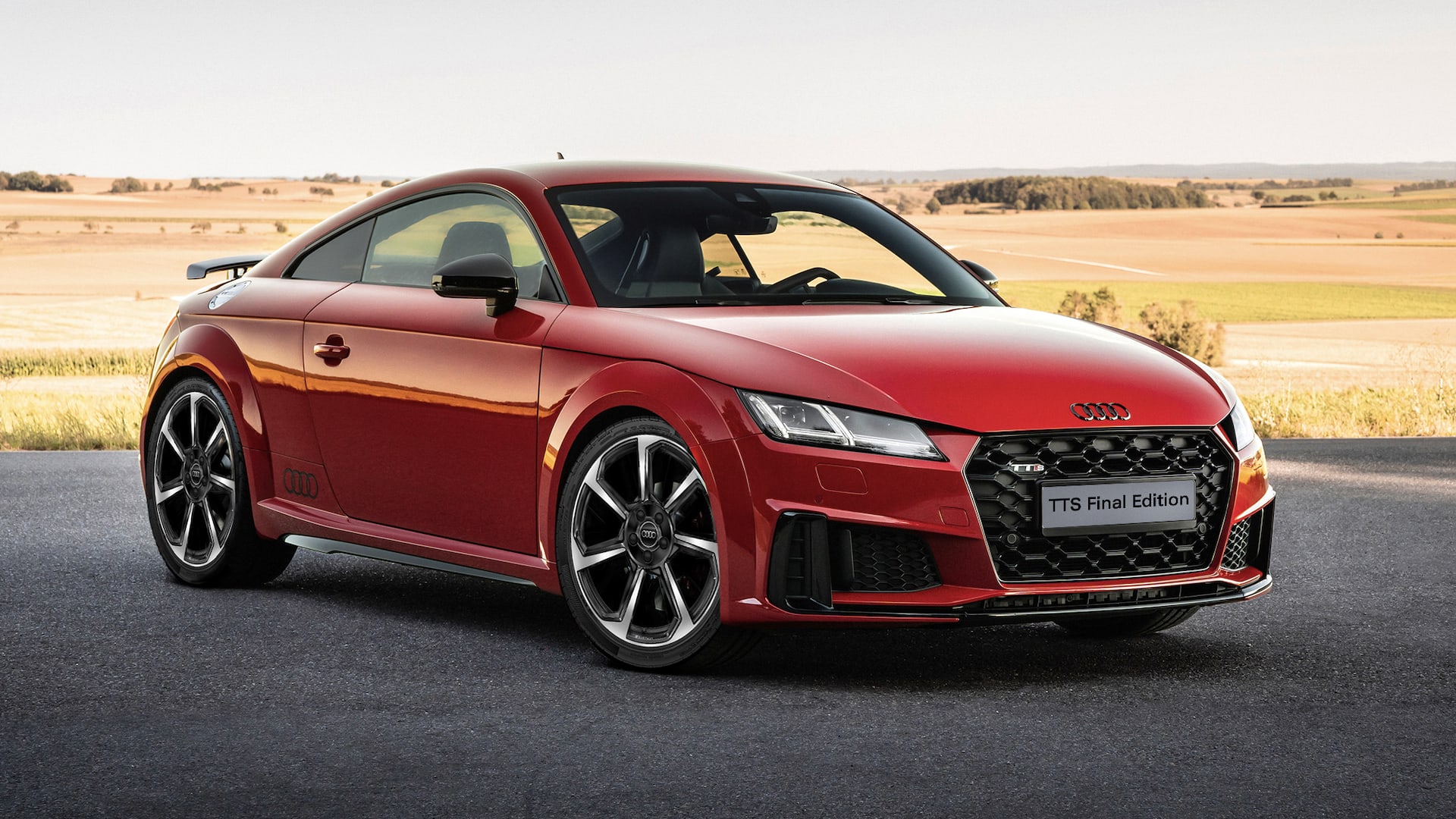
This year marks the 25th anniversary of the Audi TT, which was first launched in 1998. However, the celebrations will be bittersweet.
Audi plans to end production of the TT Coupe and Roadster models later this year, sending them off with a fully-loaded Final Edition.
Offered in both closed and drop-top guises, buyers have a choice of engines – including the powerful TTS. All versions boast a generous standard spec.
A style icon to the end
Final Edition models wear a black styling pack, with the Audi badges, side mirrors, exhaust tailpipes and rear spoiler all getting the noir treatment. Buyers can pick from Tango Red, Glacier White or Chronos Grey paint, with 20-inch alloy wheels standard.
On the inside, the door armrests, pull handles and centre console trim are all finished in leather. Alcantara swathes the steering wheel and sports seats, which have sporty red stitching. More red detailing is found on the air vents, centre console and floor mats.
All models come with Audi’s MMI Navigation Plus infotainment setup. Opting for the TTS Final Edition adds a Bang & Olufsen audio system, plus parking sensors and a reversing camera.
TT for now
The TT debuted as a Bauhaus-inspired concept car at the 1995 Frankfurt Motor Show, with the production model following in 1998. Audi was forced to add a rear spoiler soon after launch following a spate of high-speed accidents.
Despite the inauspicious start, the TT established itself as a style-setting icon. Both the Coupe and Roadster attracted plenty of buyers, with high-performance models soon joining the range .
A second-generation TT was launched in 2006, including the supercar-chasing 340hp TTRS. The current, third-generation TT, launched in 2014, has continued to combine speed and style.
The UK has been a major market for the TT, accounting for one-third of all global sales in 2022. Priced from £41,910, the TT Final Edition goes on sale in March 2023.
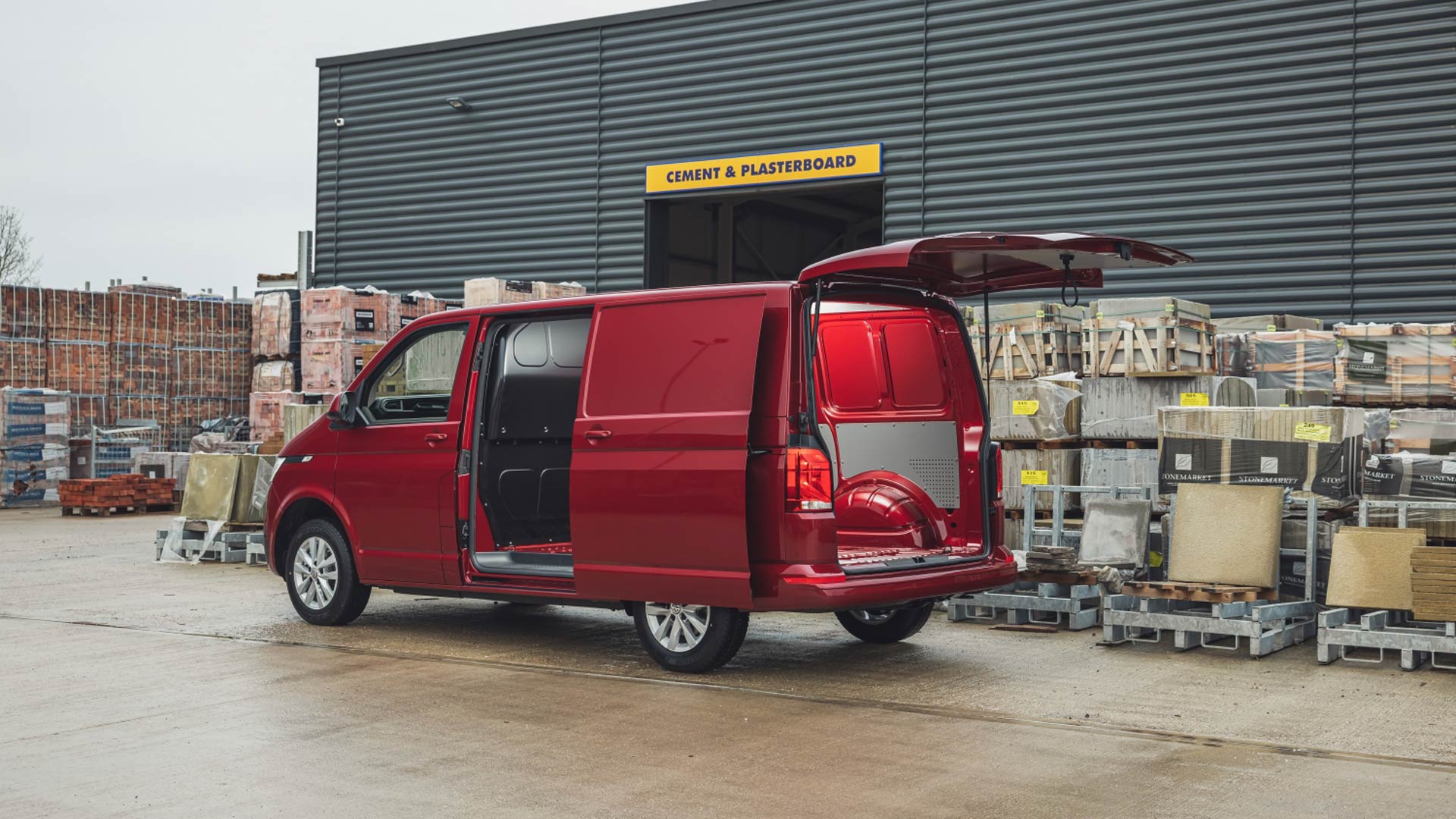
New data has uncovered a huge rise in the number of tools being stolen from vehicles, with a 25 percent increase seen in London last year.
Between January 2021 and October 2022, 34,712 tool thefts were reported in the capital, with items taken from vehicles accounting for a third of these.
Analysis of Metropolitan Police figures, undertaken by hire specialists Herts Tools, discovered that tradespeople are 10 times more likely to experience tool theft from a vehicle than from a building site.
More than just a financial hit
High-value items such as power tools were the most common targets, followed by regular tools.
Builders are the trade most likely to be affected by tool theft, being five times more likely to have items stolen than electricians. Engineers, plumbers and gardeners are also high on the list of occupations at risk.
Brian Berry, chief executive of the Federation of Master Builders, said: “With eight in 10 builders reporting they have had tools stolen before, tool theft is a serious issue for Britain’s tradespeople.
“It’s a shame that over a 40-year working life, tradespeople will typically lose £10,000 and six working days to tool theft. Aside from the detrimental financial impact, tool theft causes mental health issues and stress for builders.”
How to prevent tool theft from vans
Stefano Lobban, director at Herts Tools, added: “It’s disappointing to see that the tool theft epidemic is getting worse in London, particularly from vehicles that now often have theft deterrents in place.
“It’s not surprising to see that high-price items such as powered hand tools are still the most sought-after by thieves. Amid the ongoing cost-of-living crisis, the trade for second-hand (and potentially stolen) tools is booming, tempting more people into stealing tools. We’re urging those across all trades to double-check they have theft security measures in place, to avoid falling victim to crime.”
The average cost of using a public electric car charger fell further during January 2023.
Data supplied by the AA, as part of its latest EV Recharge Report, reveals the cost of public charging with slow devices fell to match home charging prices.
However, more charging providers have introduced peak and off-peak periods, which can see drivers pay up to an average of 35p per kWh more to charge their car during peak times.
Peak periods, peak prices
The average price of slow public chargers fell by eight percent in January, with fast and rapid devices showing a three percent drop. Ultra-rapid devices, defined as offering speeds beyond 101kW, increased in price slightly, by an average of 1p per kWh.
Offsetting the overall fall in prices is a greater use of peak-rate tariffs. Providers have now introduced these for all charging speeds, so that power can be provided throughout the day.
The AA’s research found that peak rates can have a huge effect on charging prices. Using a slow 7kW device in off-peak times costs an average of 37p per kWh, but this rockets to 72p per kWh in peak periods.
Peak rates across all charging speeds now average 70p per kWh, with fast and rapid devices the most expensive at 75p per kWh. Using these chargers, an EV driver would pay £30.00 to charge a 50kW battery to 80 percent capacity.
Charging prices fall faster than petrol
Falling EV charging costs have outstripped the decreases seen in average petrol prices, however. Petrol prices fell by 1.7 percent last month, down to an average of 148.8p per litre.
Electric car drivers recharging at peak times will still pay more per mile than those with a petrol car. However, making use of off-peak periods reverses things in favour of EVs.
Jack Cousens, head of roads policy and EV charging at the AA, said; “The slight fall in electricity prices has been reflected in the flat-rate prices EV drivers pay. The speed at which the prices fell is encouraging and hopefully means the ‘rocket and feather’ approach to wholesale costs experienced in petrol prices won’t be adopted by charge point operators.
“However, we believe Ofgem needs to keep a watchful eye on peak-rate costs to ensure they don’t escalate to the point where it puts drivers off using them. Whilst we understand the reasons why peak rates exist, the price needs to be reasonable in relation to the speed of charge.”
Strong interest in the German company’s first electric vehicle means the first full year of production has already been reserved.
Wiesmann plans to start delivering cars to customers in 2024, so the waiting list for Project Thunderball now stretches well into 2025.
Modern-day muscle
Wiesmann began accepting orders for its two-seat, rear-wheel drive, luxury roadster in September 2022. This followed the car’s official unveiling earlier that year.
Project Thunderball is the first new car from the marque since it temporarily closed its doors in 2014. Wiesmann’s previous history included a range of brawny muscle cars with BMW engines, including the fearsome 555hp GT MF5.
Although electrification is a new concept for Wiesmann, the company has not forgotten its sports car roots. Two electric motors deliver 680hp to Project Thunderball’s rear wheels, plus an accompanying 809lb ft of torque.
With lightweight carbon fibre bodywork, the EV roadster is targeted to hit 62mph in just 2.9 seconds. Accelerating from 0-124mph should take 8.9 seconds.
Made in Germany
Launch versions of Project Thunderball are equipped with a 92kWh battery pack, offering a potential range of more than 310 miles. Using 800-volt technology means the Wiesmann can charge at speeds of up to 300kW, too.
Prices for Project Thunderball start at €300,000 (£265,000), and customers can specify numerous options for personalisation. Each car will be hand-built at Wiesmann’s state-of-the-art ‘Gecko factory’, in Dülmen, Germany.