Home Blog Page 493

All-new 2018 Ford Focus revealed in London

0

New 2018 Ford Focus

  • All-new Ford Focus revealed in London’s Queen Elizabeth Olympic Park to a global audience
  • On sale August 2018, deliveries begin from September
  • Prices start from £17,930
  • Aiming to regain the title of best family hatchback from the Volkswagen Golf

The new Ford Focus aims to build upon two decades of driver-pleasing appeal with more space, technology, luxury and comfort than ever before. Rather than rolling out a heavily-overhauled version of its predecessor, Ford’s invested in an all-new platform for the new Focus – and because the chance to design an all-new car from a clean sheet of paper doesn’t come around very often, Ford product development vice president Joe Bakaj says “we grabbed it with both hands”.

The original 1998 Focus changed the game by being brilliant to drive, in a sector full of dullards. The reason why so many high-volume hatchbacks today feel like premium cars behind the wheel is because of the Focus. These days, rivals such as the Volkswagen Golf have overtaken the Focus. With this new one, Ford’s looking to reassert its authority.
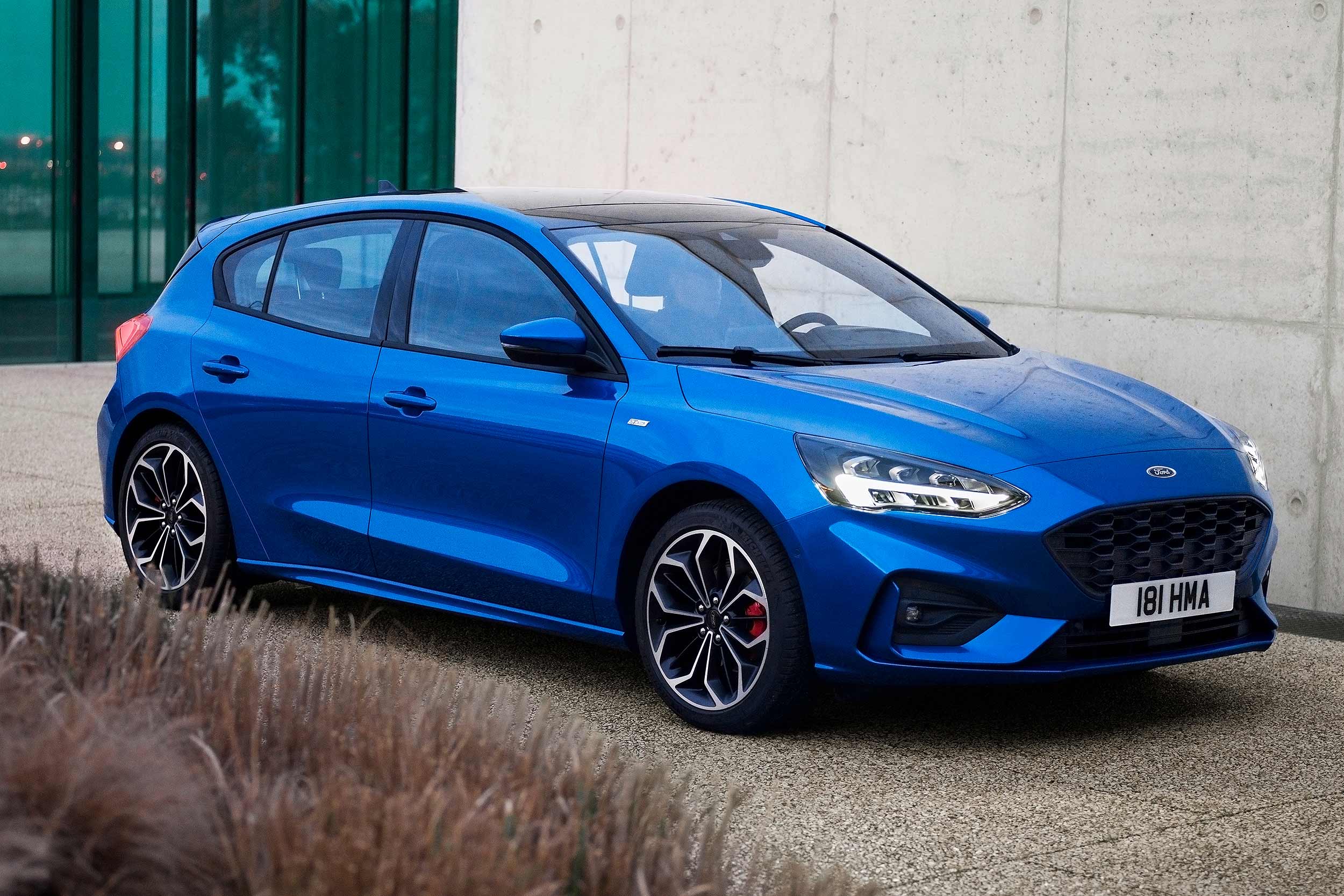
New 2018 Ford Focus

Ford is clear. The new Focus will be the most rewarding family hatchback on the market, both for drivers and passengers. It will also be the most confidence-inspiring and intuitive, the latter presumably in reference to the current car’s somewhat overburdened infotainment system and steering wheel controls. Ford says it’s never worked with customers more closely in developing this car: the new Focus is its most human-centric car ever.

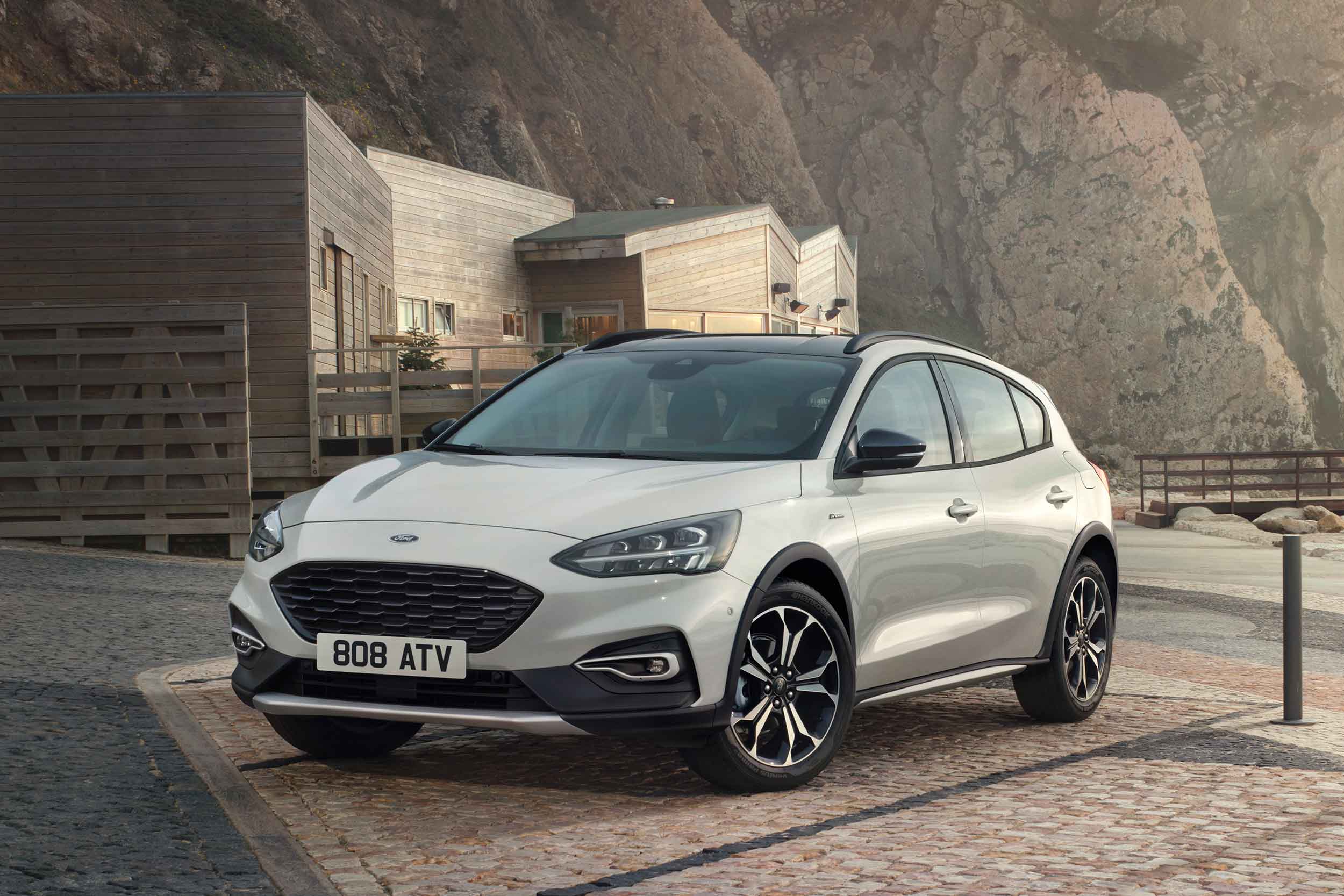
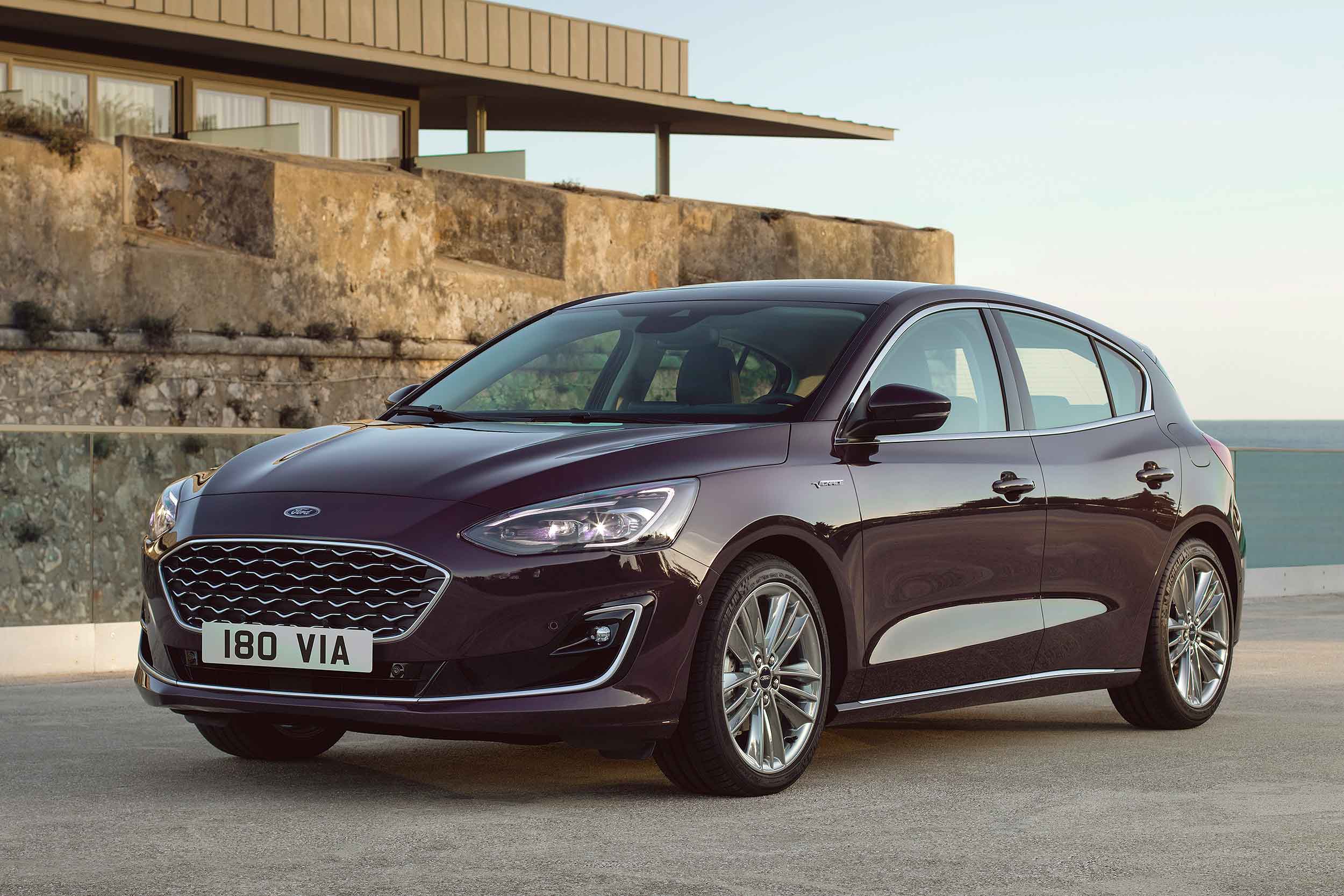
The new Ford Focus will go on sale from August 2018, for deliveries in time for the September registration plate change. Prices will start from £17,930, which Ford says is £2,300 cheaper than the current Focus Style entry-level car. Zetec and ST-Line variants are, respectively, £850 and £250 cheaper. Other variants include ST-Line X, Titanium, Titanium X and the first ultra-posh Ford Focus Vignale: it costs from £25,450. There’s also a crossover-style Focus Active, another Focus first, whose prices are still to be confirmed.

‘Fall in love with a Focus’
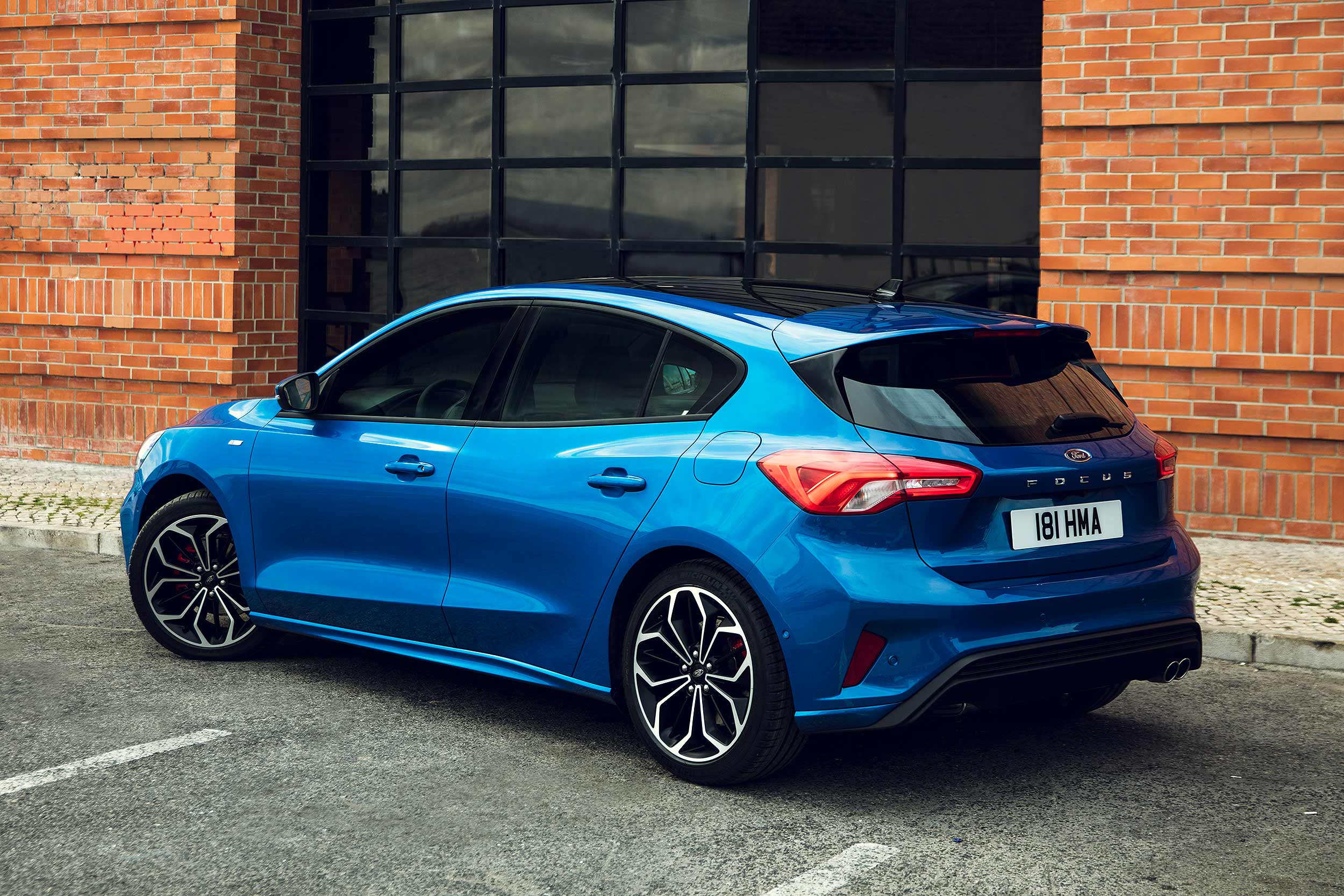
New 2018 Ford Focus

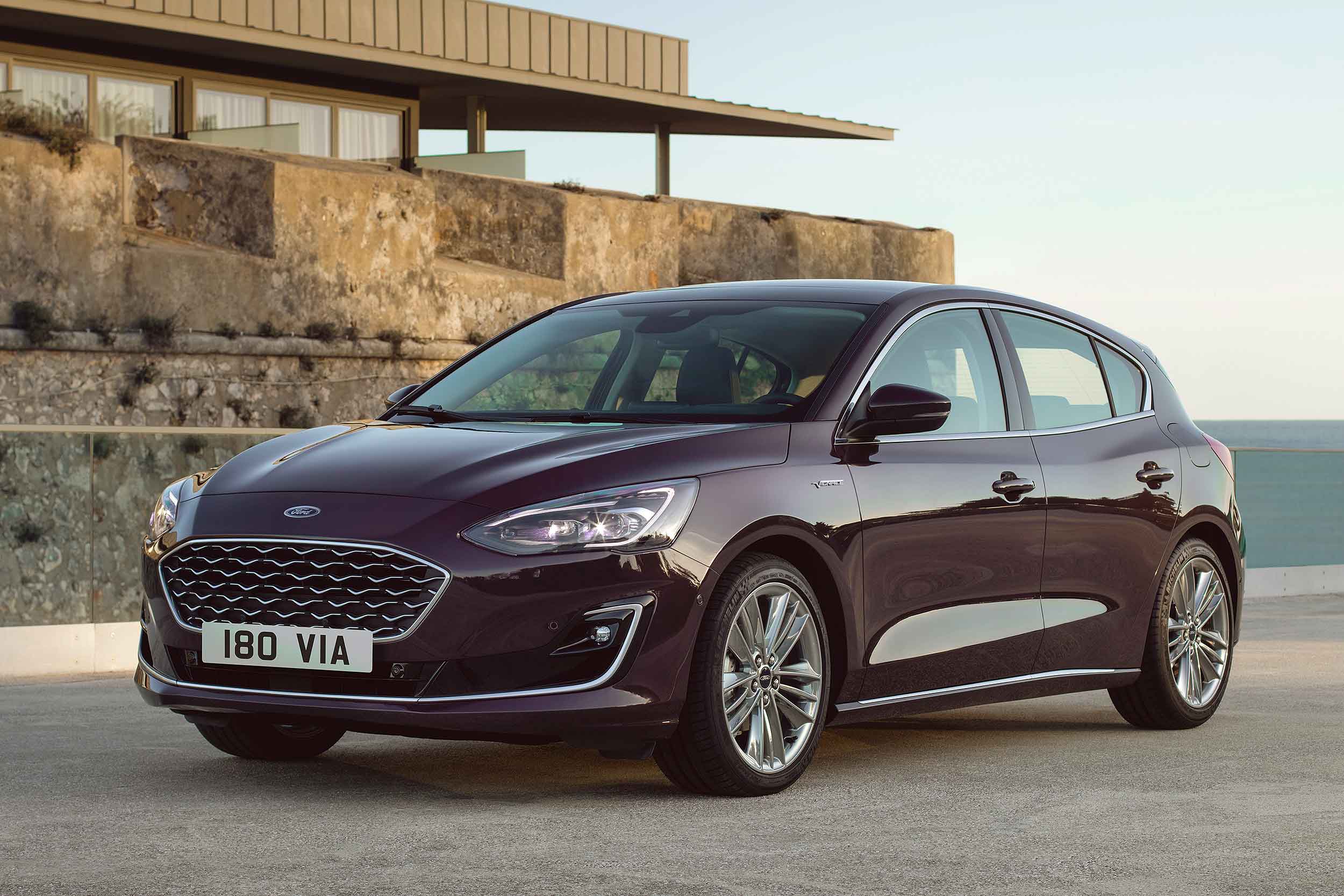
Ford’s European designers say they want customers to “fall in love with, and stay in love with,” the new Focus. Apparently, it’s all about “creating memorable moments of interaction”, which Ford’s done on the outside by lengthening the wheelbase and bonnet, shortening the overhangs and smoothing the wedge shape on the sides – making it look sportier and posher.

Bigger wheels that fill the wheelarches more fully give it a better stance, the body panels are sculptural and appear more tensioned than before, while longer wings and squat rear haunches give it an athletic appearance. Ford’s also made the grille even larger and fitted both front and rear lights as outboard as possible, to emphasise the car’s width.

Details you may spot at the rear: tail lamps are now two-piece, so the boot opening can be bigger, and there are distinctive LED lighting patters both day and night (same goes for the headlights). Also at the rear is a new individually-lettered ‘Focus’ script in the centre of the bootlid, whose satin-finished script further shouts ‘premium’.

Four Focus finishes
New 2018 Ford Focus

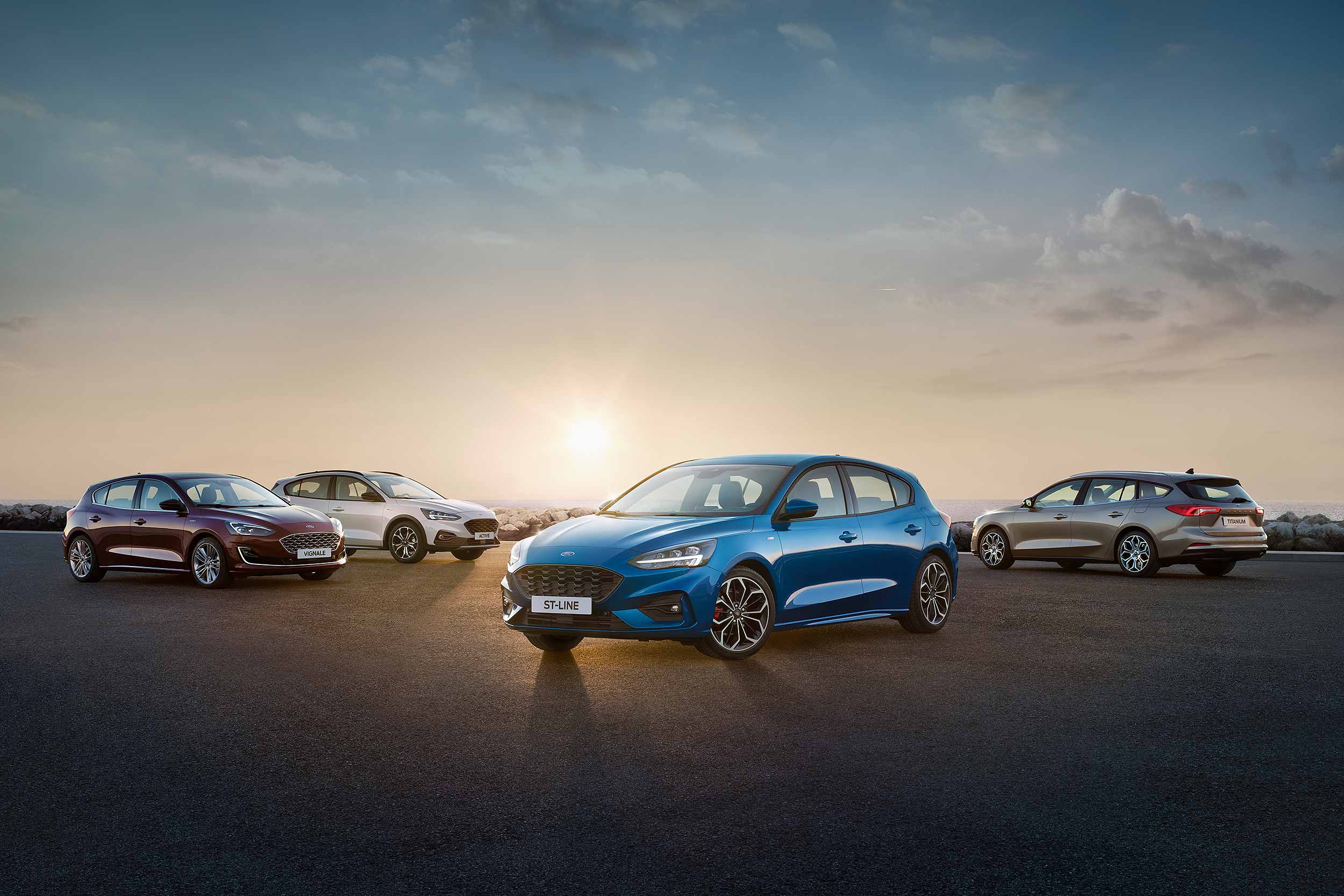
There are four different types of Ford Focus at launch – regular series models (including Style, Zetec and Titanium), the ST-Line, plus new Vignale and Focus Active variants. What marks out the latter three from regular models? The following features:

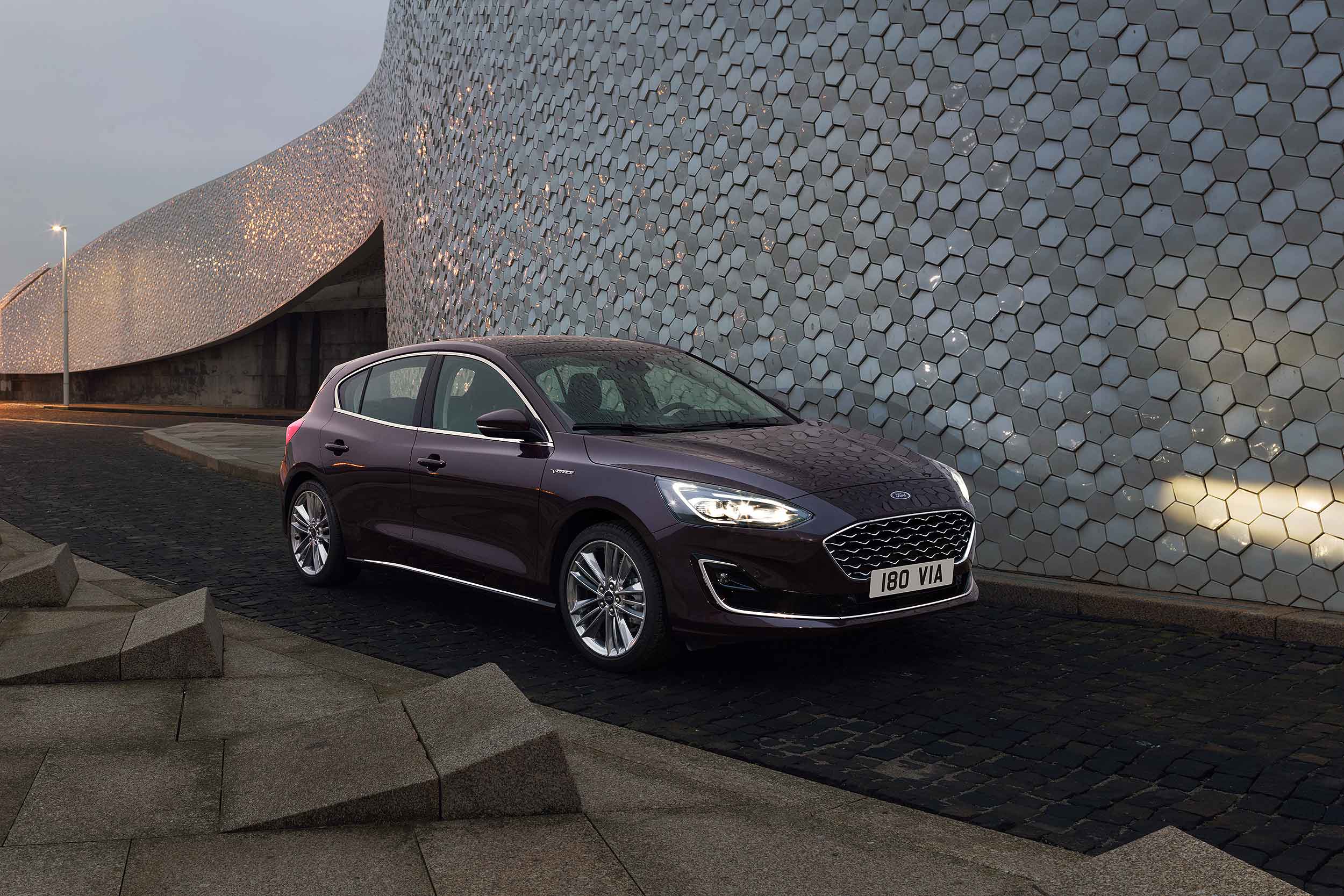
  • Focus Vignale – chrome-laden ‘coast-to-coast’ front bumper, Vignale grille mesh, satin aluminium roof rails and lower body trim, bespoke four-coat Dark Mulberry paint option
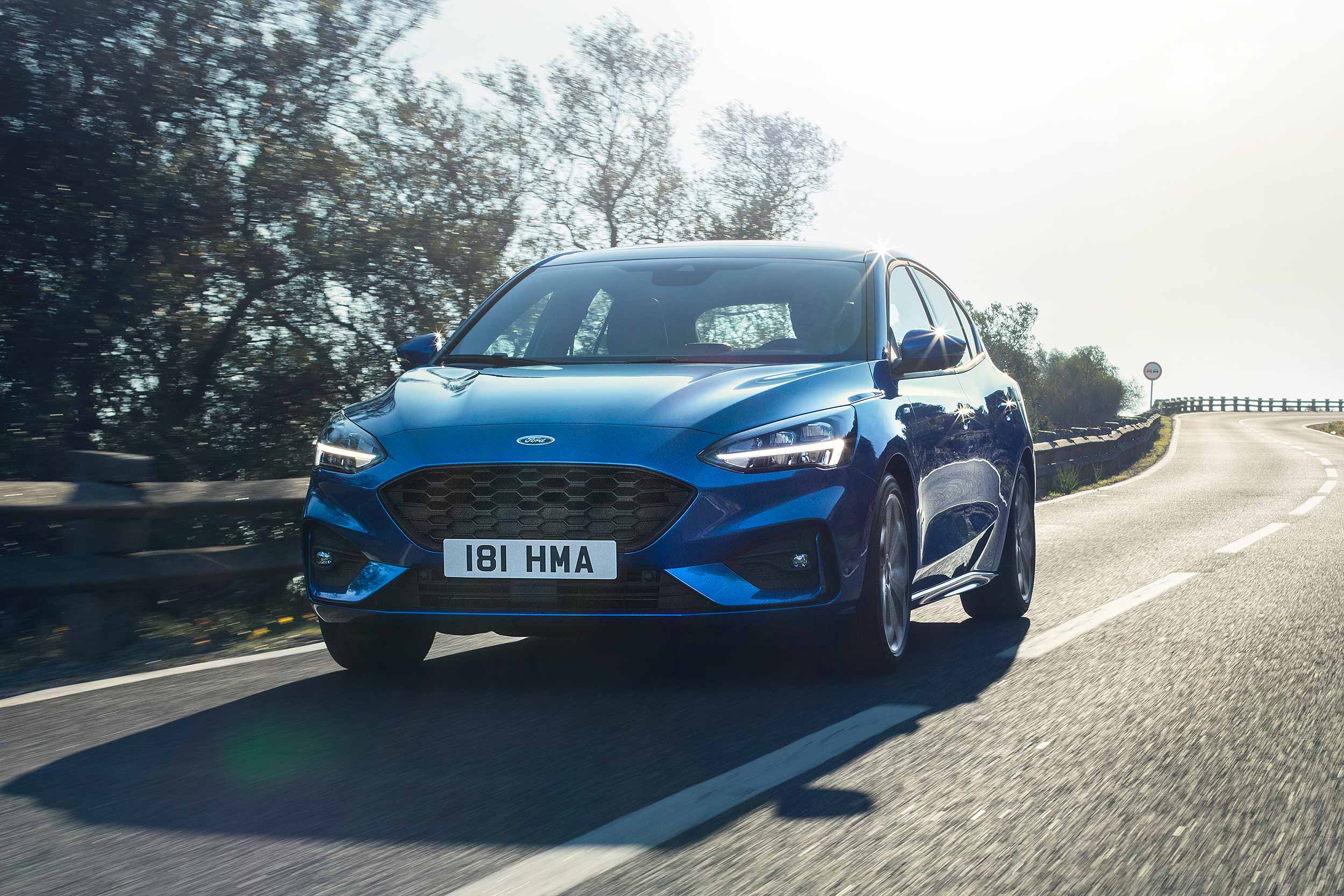
  • Focus ST-Line – 10mm lower ride height, rear diffuser and roof spoiler, sportier front bumper, ST-Line lower wing air curtains
  • Focus Active – 30mm taller ride height, black wheelarch mouldings, front and rear skid plates in contrast silver, crossover-style front end design

Simpler interior
New 2018 Ford Focus

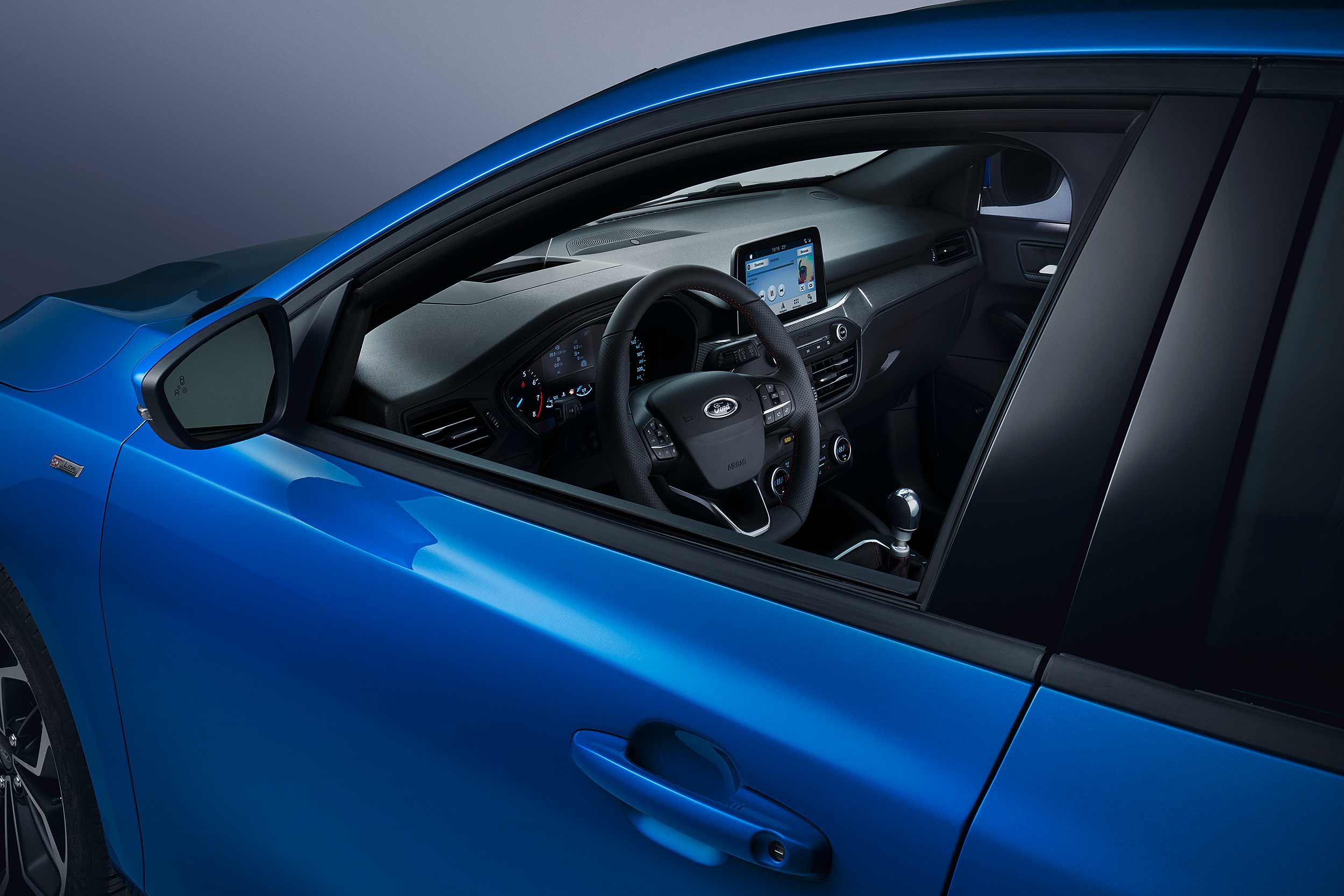
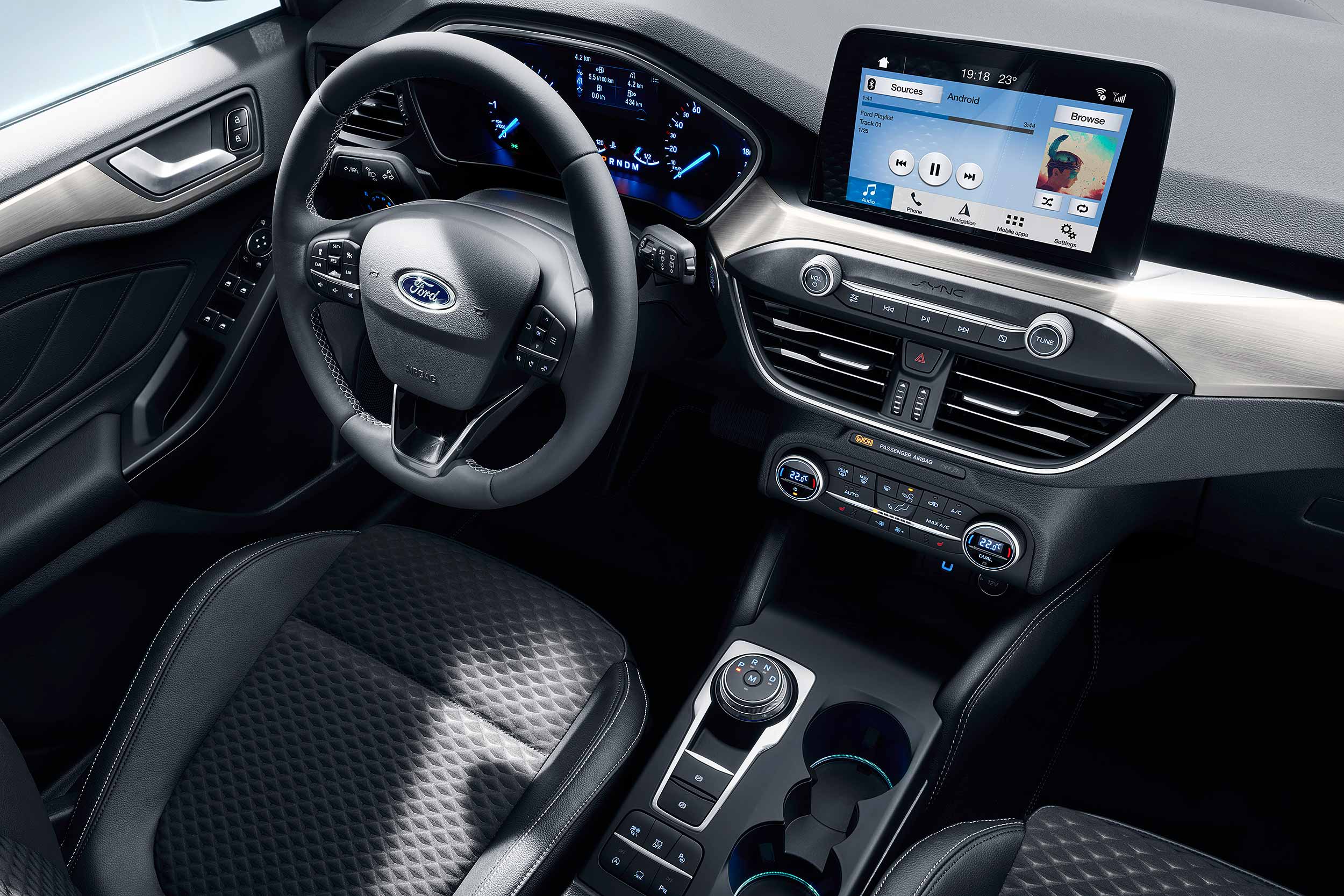
To measure up to cars such as the Volkswagen Golf, Ford has upped interior quality, and greatly simplified the layout. There’s a Fiesta-style floating central touchscreen, and optional new materials such as polished glass and brushed metal finishes. High-end and automatic models get an electronic parking brake to complete the clutter-free look.

Vignale models feature fine-grain wood and leather, ST-Line gets carbon fibre-effect and red stitching, while Active have rugged, textured surface and finishes.

Sync 3 infotainment offers Apple CarPlay and Android Auto compatibility via the 8-inch touchscreen: it’s standard on all but base Style models. For those who want to exploit its Spotify functionality, a new 675-watt B&O Play premium sound system plays through 10 speakers, including central mid-range speaker and a subwoofer in the boot.

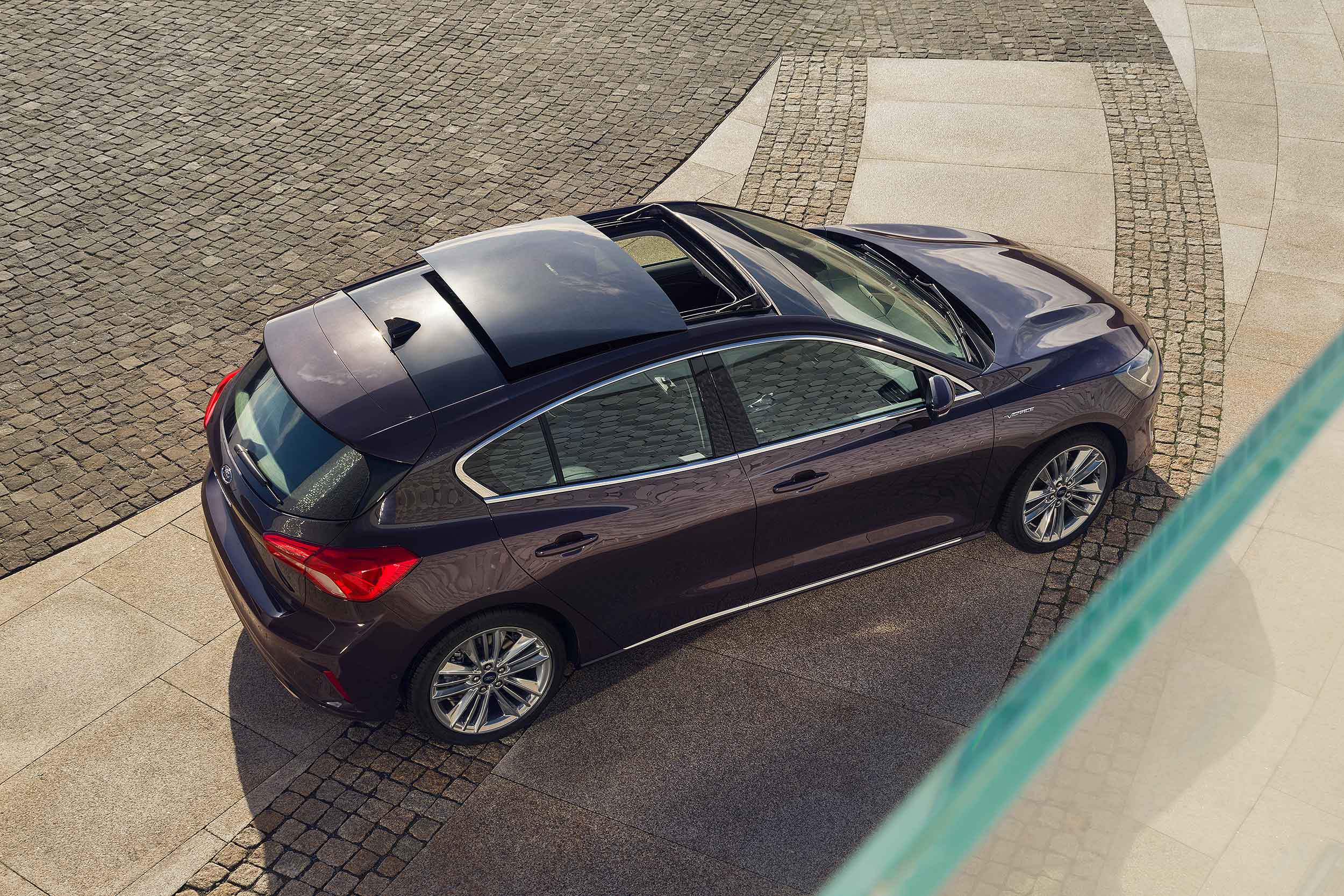
The new Ford Focus is bigger inside. Knee room is up 50mm, there’s 60mm more shoulder room and details such as a flat floor and rear windows that stretch into the rear pillar enhance the spacious feel. An optional, openable, panoramic glass roof is available.

Focus on engines
New 2018 Ford Focus

Engine choice in the 2018 Focus is either Ecoboost petrol (1.0 or 1.5) or Ecoblue diesel (1.5 or 2.0). Both petrol engines are three-cylinder units, and you can get both with cylinder deactivation that cuts a cylinder when demand is light. Ford says the cylinder cuts and reengages in 14 milliseconds, and there’s “no compromise in performance or refinement”. The 1.0-litre comes in 85hp, 100hp or 125hp guise; the 1.5-litre comes in 150hp or 182hp form.

Ecoblue diesels deliver CO2 from 91g/km for the 95hp 1.5-litre engine; it’s also offered in 120hp form. The 2.0-litre produces 150hp, and is expected to boast CO2 emissions from 110g/km. A six-speed manual is standard on all Focus; an eight-speed automatic is offered for the first time, complete with Jaguar Land Rover-style rotary gearshifter.

Focus on chassis
New 2018 Ford Focus

The big deal with the Ford Focus ever since it was launched back in 1998 is how it drives. This one is no exception. But there is a cutback for lower-power variants: for the first time since the Escort, a Ford Focus comes with ‘lightweight’ (read: cheaper) twist-beam rear suspension, instead of the better, pricier independent short long arm (SLA) system on other models.

It’s a system derived from the setup in the Fiesta, so it should be one of the better torsion beam setups (and its more compact design yields a bigger, wider boot), but those seeking the best new Focus experience may prefer to avoid the 1.0-litre Ecoboost and 1.5-litre Ecoblue engines it’s paired with.

Because the independent SLA setup is more sophisticate than ever. Ford’s fitted variable bushes, which have different stiffnesses in different directions – so they can be firm where they need to be and soft where they don’t. They separate the subframe from the body, for a smoother ride and less noise, vibration and harshness; Ford also fits clever springs that pre-load the rear suspension with vectoring forces – making the rear suspension crisper and more responsive.

For the first time, adaptive dampers are offered on a Focus. Continuously Controlled Damping, or CCD, can adjust every 2 milliseconds. It adds intelligence to the Focus’ well-developed core chassis: for example, it can detect the very edge of a pothole and firm up the damper, so the wheel doesn’t fall as far down into it, for less of a crash-bang. While simultaneously sending a signal to the rear wheel, so it can be primed for the pothole too. Ingenious.

Different driving models are offered on a Focus for the first time – Normal, Sport or Eco; CCD adds two more modes, Comfort and Eco-Comfort, which softens the suspension accordingly. Other details Ford’s proud of include a bodyshell that’s 20 percent stiffer, and individual suspension mounting points that are 50 percent stiffer.

Focus on the future
New 2018 Ford Focus

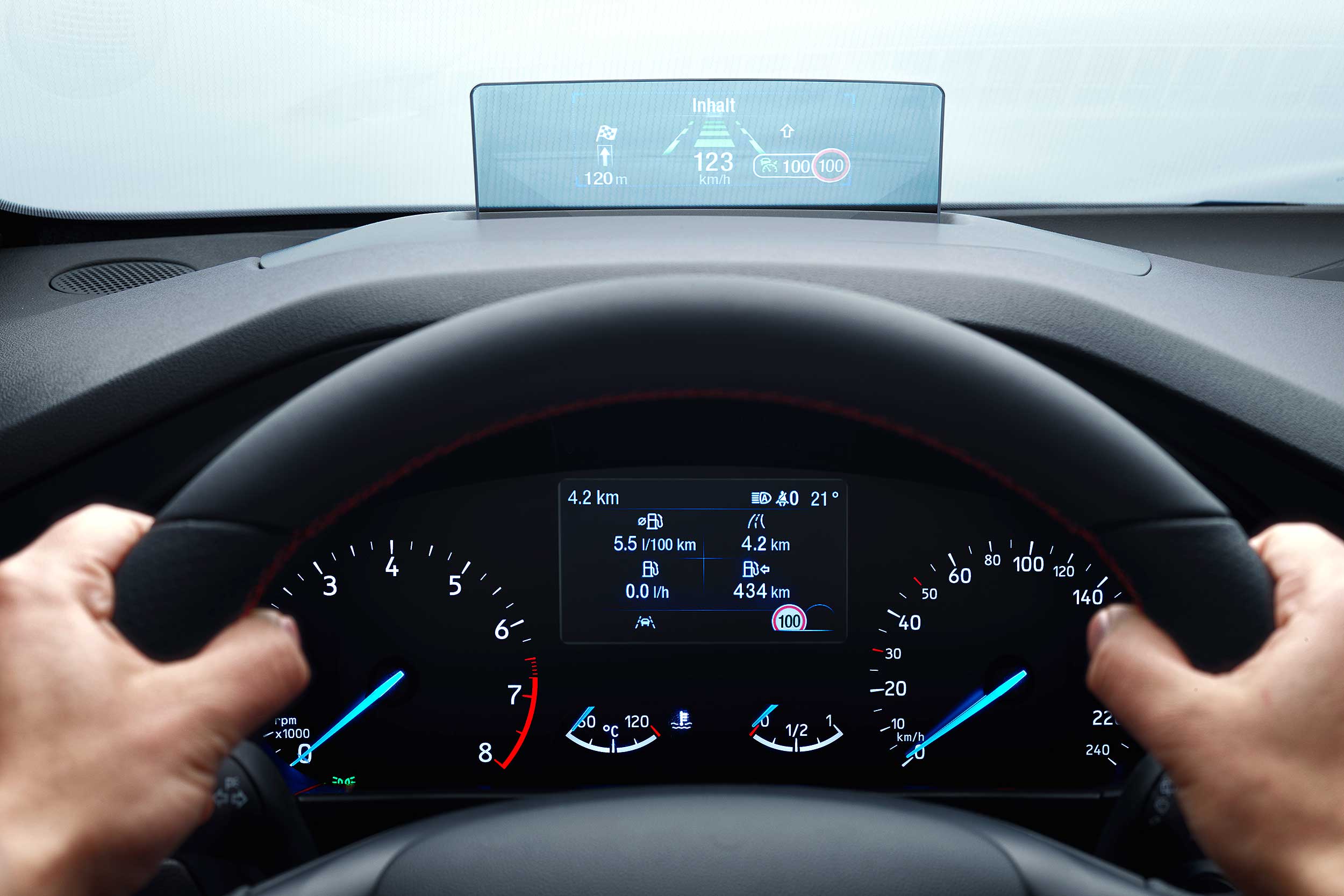
Finally, with one eye on the future, Ford’s prepared the new Focus with a wealth of advanced driver assist tech. available tech includes Adaptive Cruise Control that includes stop and go, lane centreing and speed limit sign recognition. Evasive Steering Assist helps drivers steer around obstructions, and the Adaptive Front Lighting System has a camera-based predictive curve light and industry-first road sign detection.

The new Focus brings head-up displays to the Ford range in Europe for the first time, while the latest generation of Active Park Assist 2 will now park it at the push of a button – handling all accelerator, brake and gear selection. Ford says the combination of autonomous technologies, under the banner Ford Co-Pilot360, “brings technologies synonymous with Level 2 automation to a family car”. Presumably the official Level 2 Focus will arrive later, to take on Nissan’s Level 2-compliant ProPilot system now offered in the Qashqai and Leaf.
New 2018 Ford Focus

Ford has sold 16 million Focus since the model was launched in 1998, including 7 million in Europe. Almost 2 million have been sold in the UK, showing what a key market Britain is for the new family hatch. Perhaps this is why Ford chose to launch the fourth-generation car here, in London. Later this year, we’ll find out if UK buyers will reward this decision with sales volumes strong enough to topple the Volkswagen Golf as Britain’s favourite family hatch…
Advertisement

In pictures: Renault’s incredible classic car collection

0

In pictures: inside Renault’s incredible classic car collection

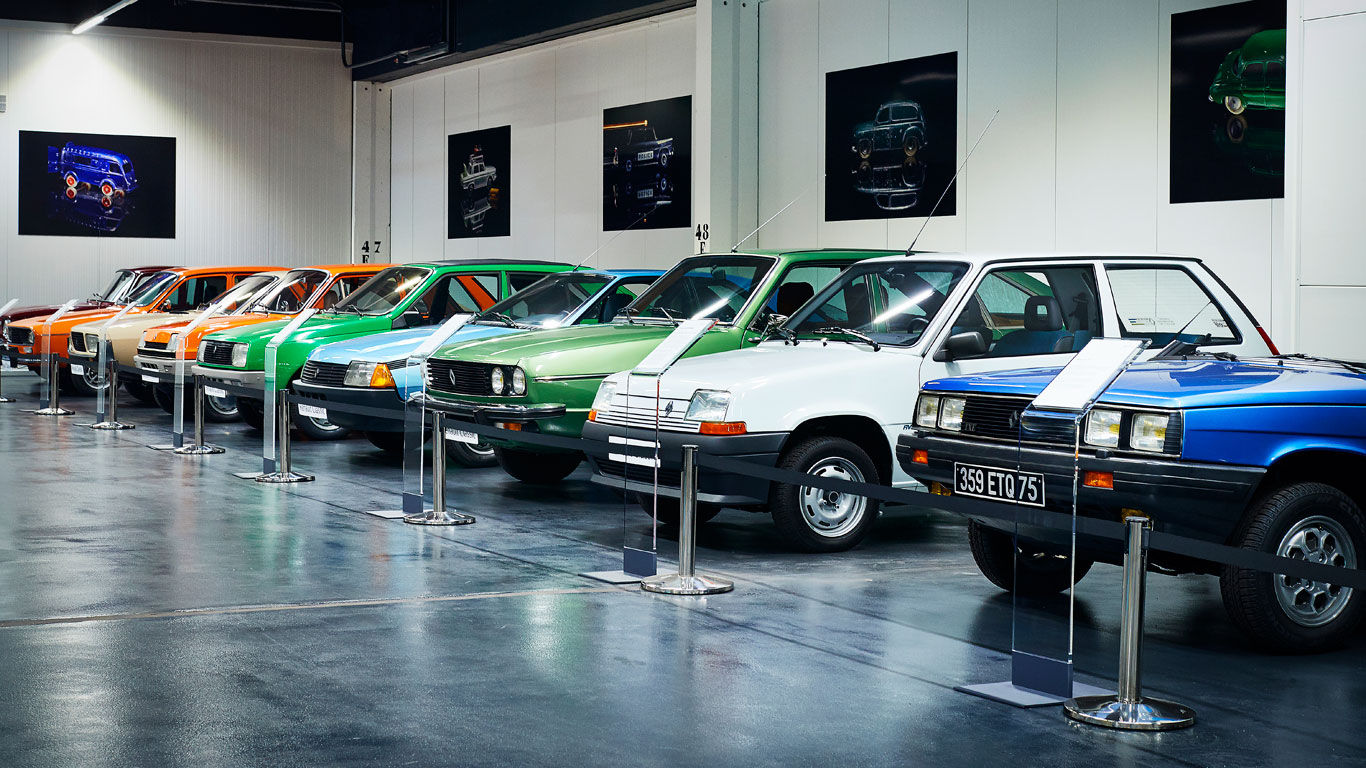
French car manufacturer Renault is celebrating its 120th anniversary this year. The firm – which is headquartered in Paris – has quite the heritage to celebrate, which explains why it has no fewer than 750 classic cars in its collection.

While the cars are dotted around France, a purpose-built garage has recently opened at its Flins factory to house a small part of the collection. Open only to members of staff, we were allowed inside for a sneak peek as part of the brand’s anniversary celebrations.

Renault Type A

Renault Type A

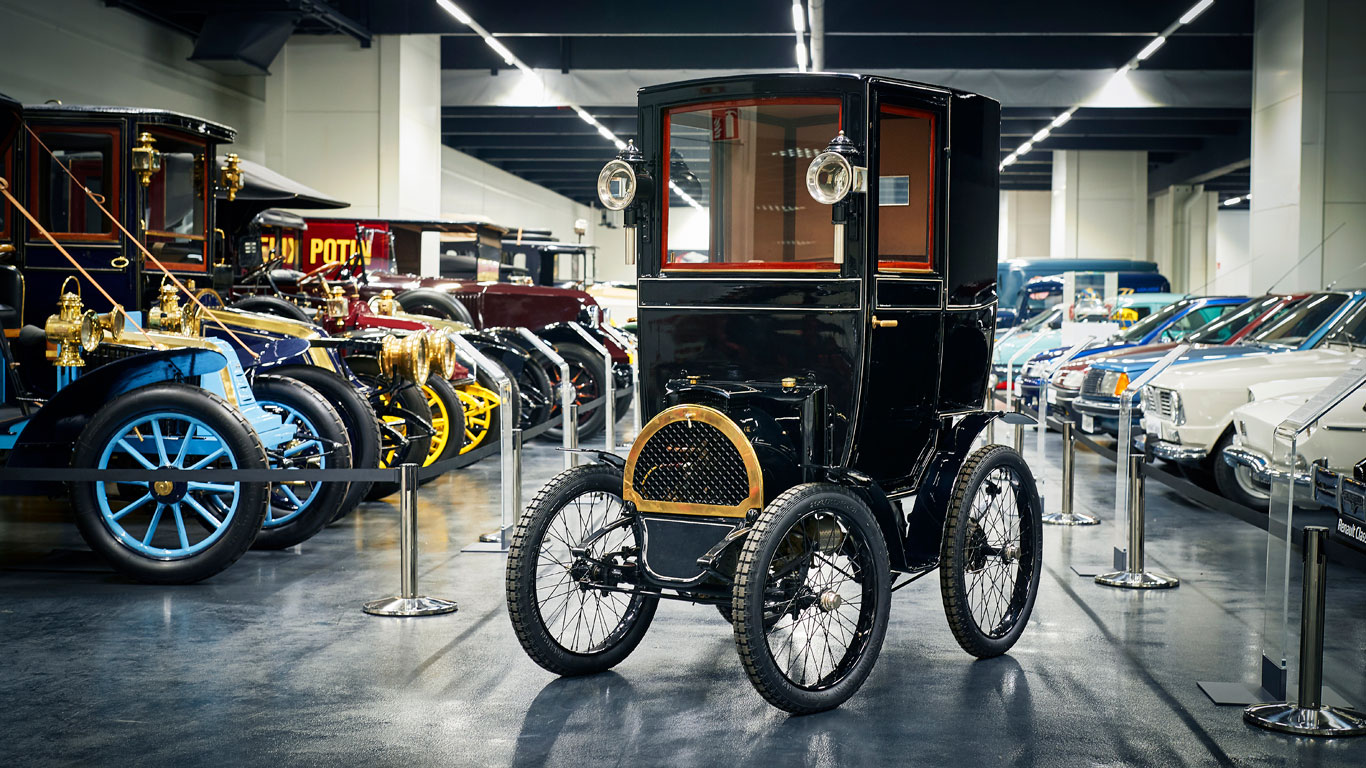
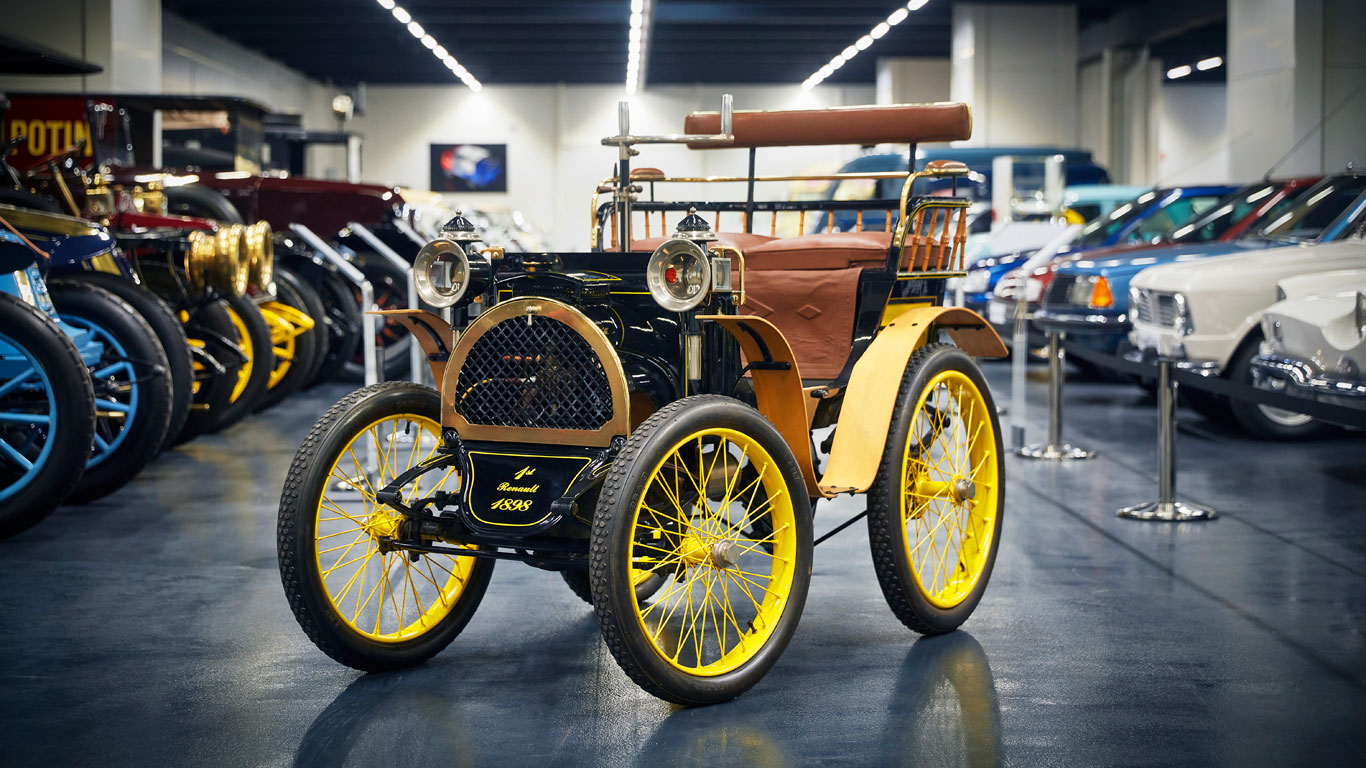
The story goes that Renault was founded on Christmas Eve 1898, when aspiring engineer Louis Renault drove his first car, a Type A voiturette, up the incredibly steep Rue Lepic in Paris. The assembled audience was so impressed that 12 deposits were received, giving the 21-year-old the funds to acquire a factory.

Renault Type B

Renault Type B

Many of Louis Renault’s early customers were friends and family, so he was keen to listen to any feedback and demands they had. The main thing buyers wanted that the Type A didn’t satisfy was comfort. Working with coachbuilder Labourdette, Renault designed a closed body that appeared on the Type B in 1899.

Renault six-wheel type MH

Renault six-wheel type MH

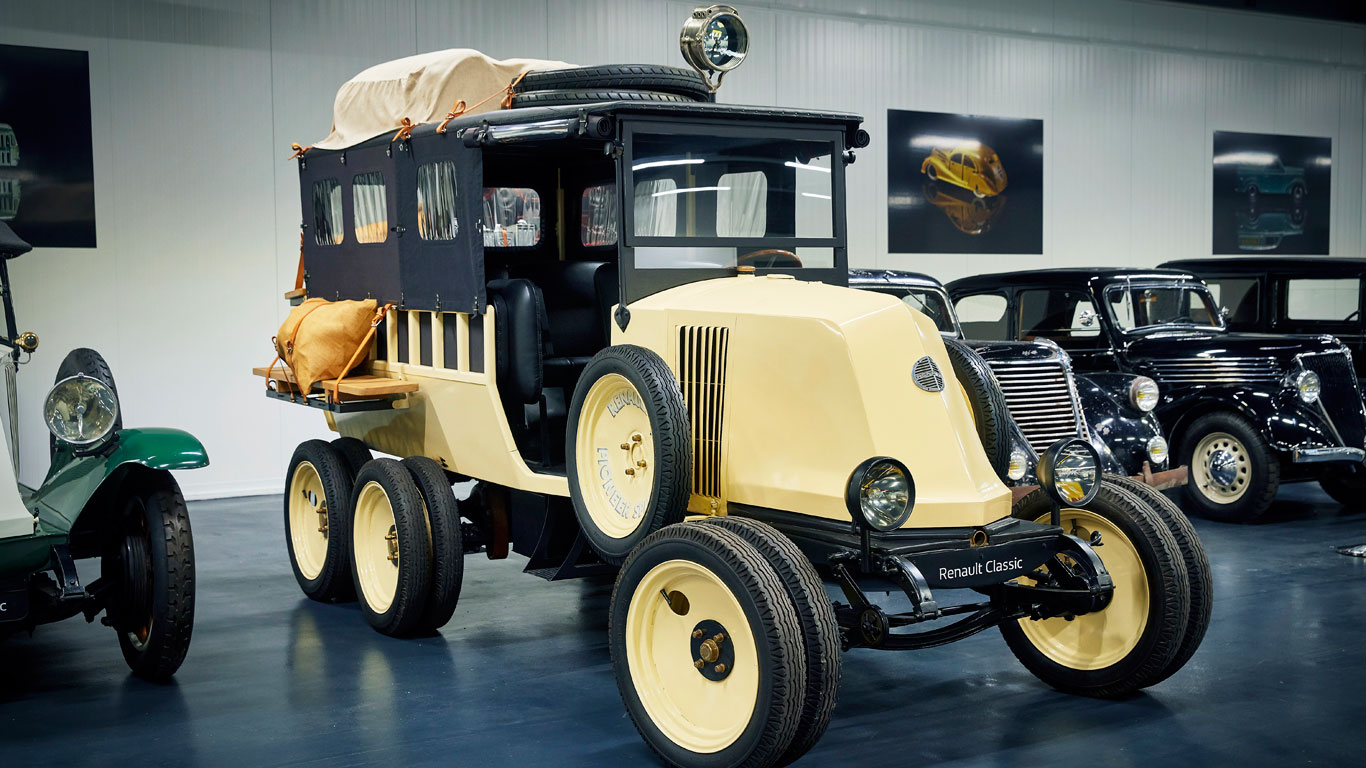
When you think of expedition by motor car, a Land Rover might spring to mind. But the French were doing it years before the British. In 1923, Renault revealed the Six-Roues – a powerful truck with six wheels and low-pressure tyres, along with two-axle drive to provide off-road capability. A number of expeditions followed, including numerous trips across the Sahara.

Renault Primaquatre

Renault Primaquatre

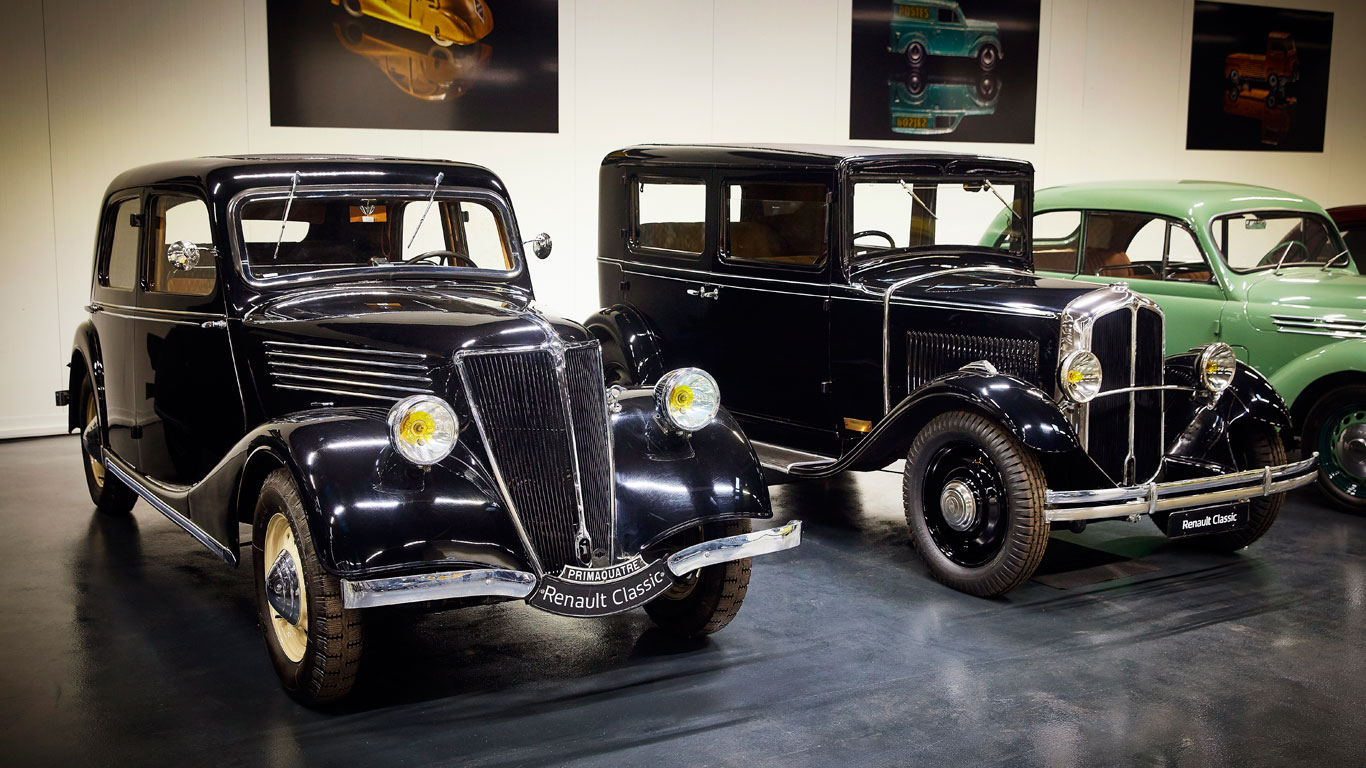
In the wake of the Great Depression, manufacturers were looking at building cheaper cars that were within reach of normal men and women. Louis Renault was adamant that this wasn’t the right approach and, during a time before the middle class emerged, Renault continued to build high-quality cars for affluent families. The Primaquatre of 1937 was a four-seat family car, 3.7 metres long and capable of 105km/h (65mph). It had a start price of 19,500 francs.

Renault 4CV

Renault 4CV

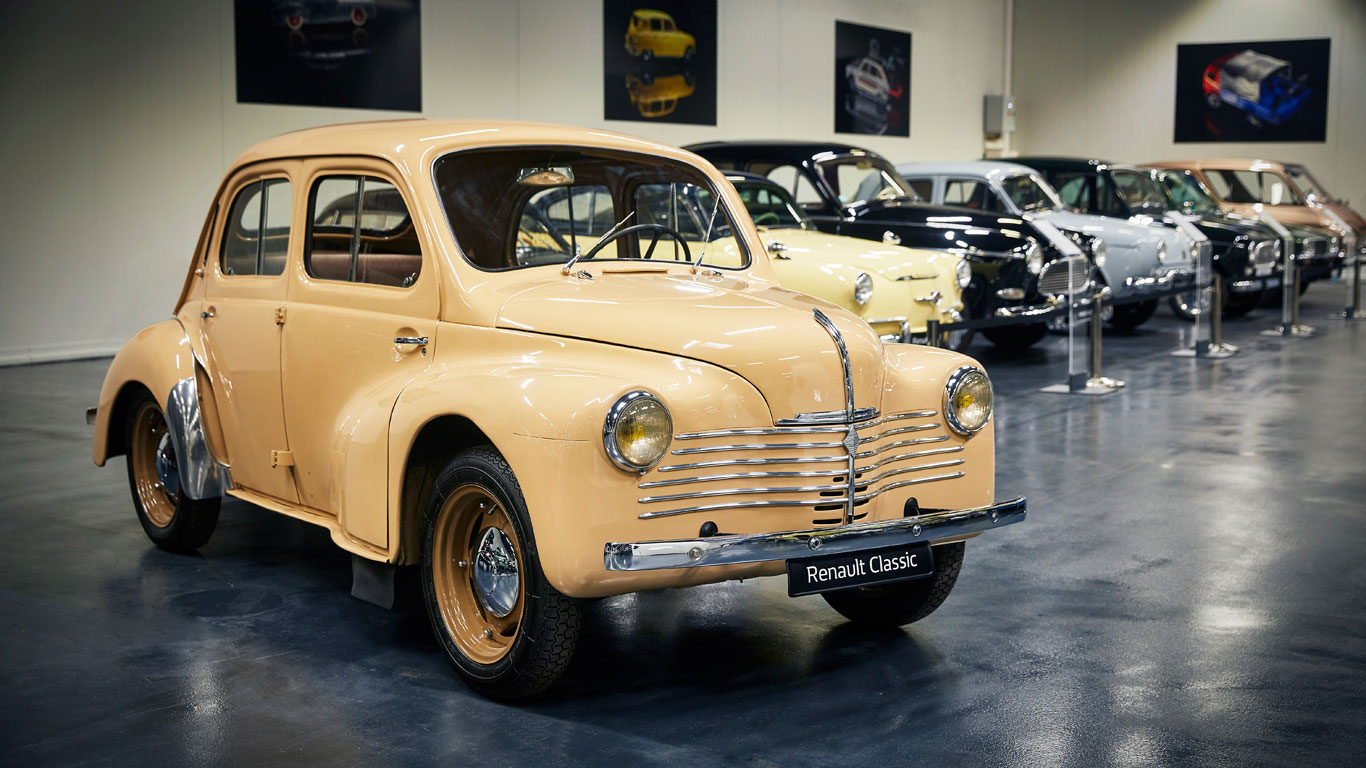
In contrast to Louis Renault’s beliefs that the firm should concentrate on premium cars for affluent motorists, the firm quietly worked on an affordable small car during the Second World War. The 4CV, as it went on to be named, was France’s answer to the Volkswagen Beetle. More than one million were produced before it was replaced by the Renault 4 in 1961.

Renault Colorale

Renault Colorale

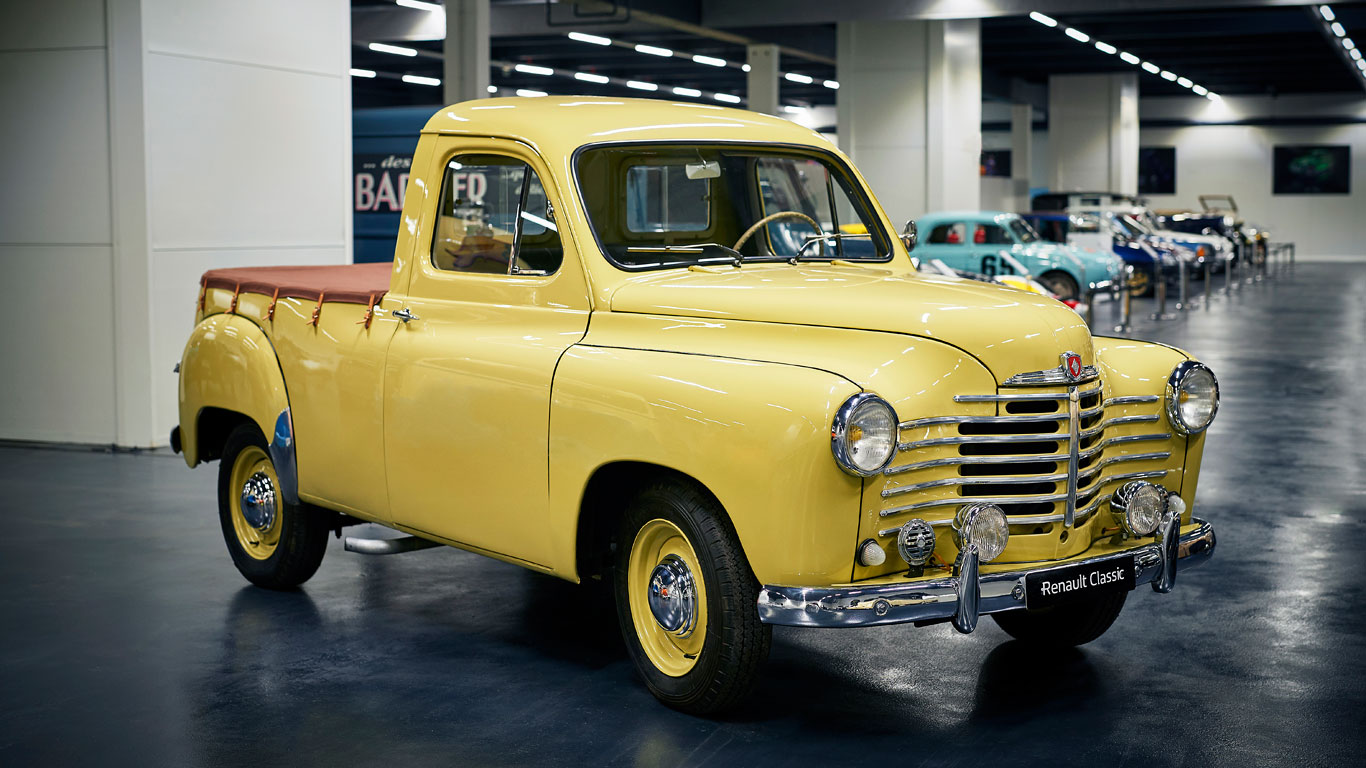
Think 4×4 pickups are a relatively recent thing? Think again. In 1946, Renault began considering a ‘station wagon for the countryside’. The result was the Colorale range, with a number of utilitarian and family versions introduced between 1950 and 1951. They were fairly old-fashioned from a technical point of view, with a truck-like chassis and a tractor engine.

Renault Caravelle/Floride

Renault Caravelle/Floride

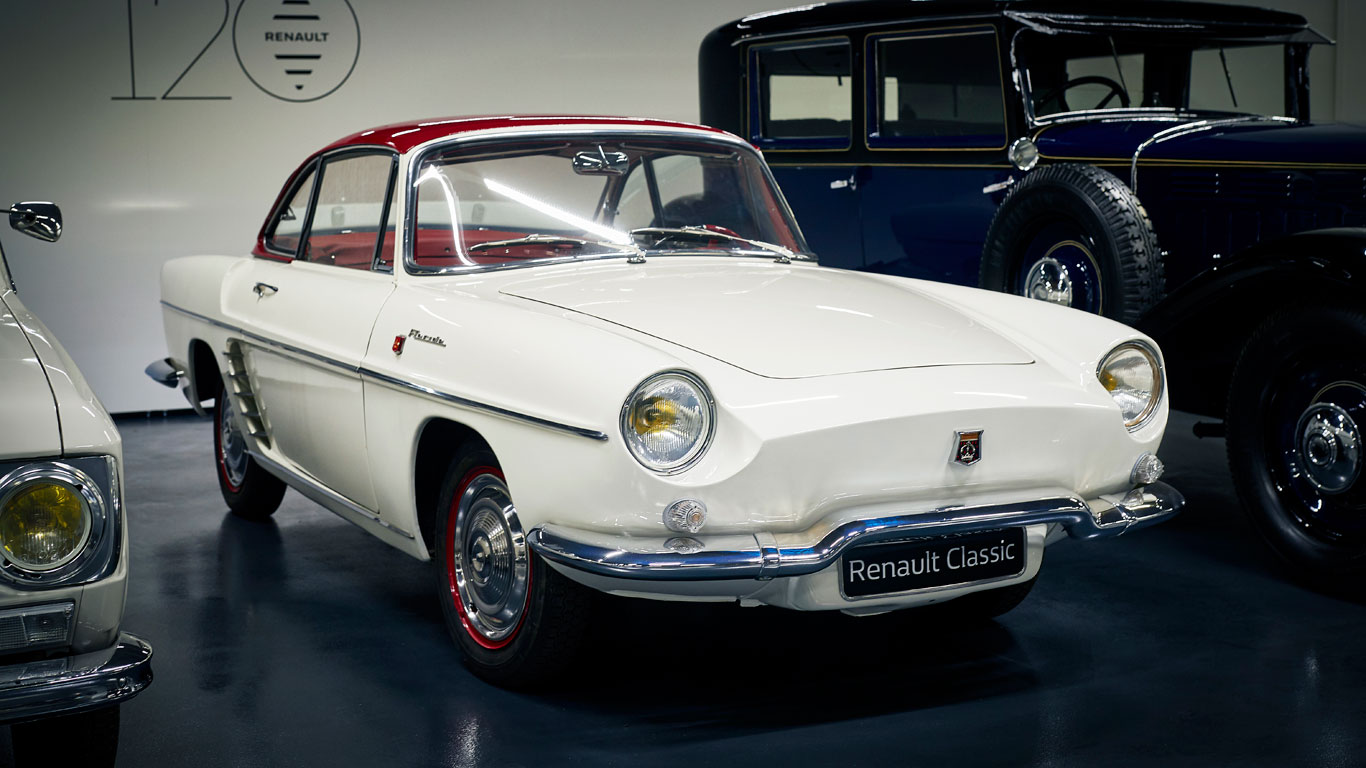
Based on the Renault Dauphine (we’ll come onto that in a minute), the Caravelle was also known as the Floride. That’s because the idea was initially conceived by US dealers at a convention held in Florida, who said a coupe/cabriolet model would improve the brand’s image in the States. However, Renault was concerned that naming it after a US state would exclude buyers elsewhere, hence the Caravelle name.

Renault Estafette

Renault Estafette

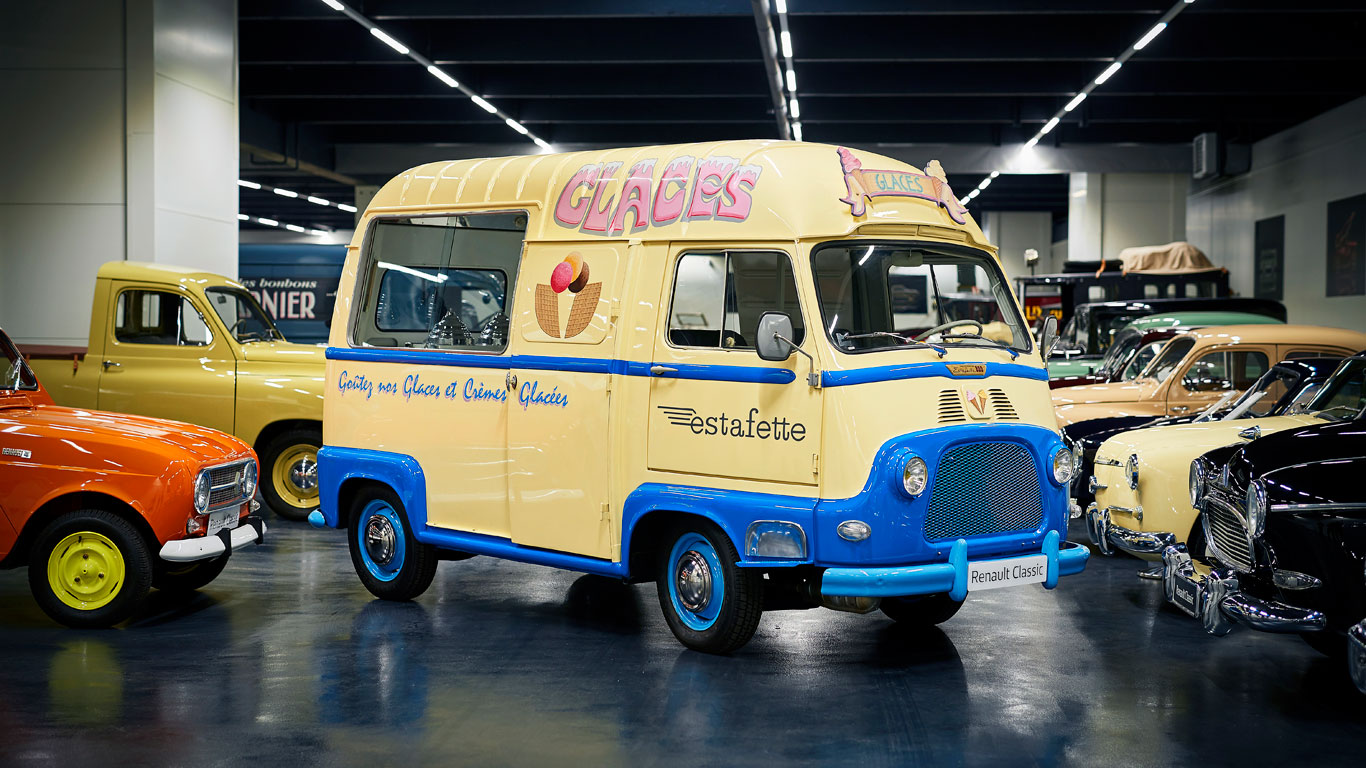
Introduced in 1959, the Estafette was a genuinely clever van. Front-wheel-drive (a first for Renault), it featured a flat floor and a short turning circle, as well as sliding doors, making it the perfect workhorse for French tradesmen. Production lasted until 1980, by which time more than 533,000 Estafettes had been produced.

Renault Dauphine

Renault Dauphine

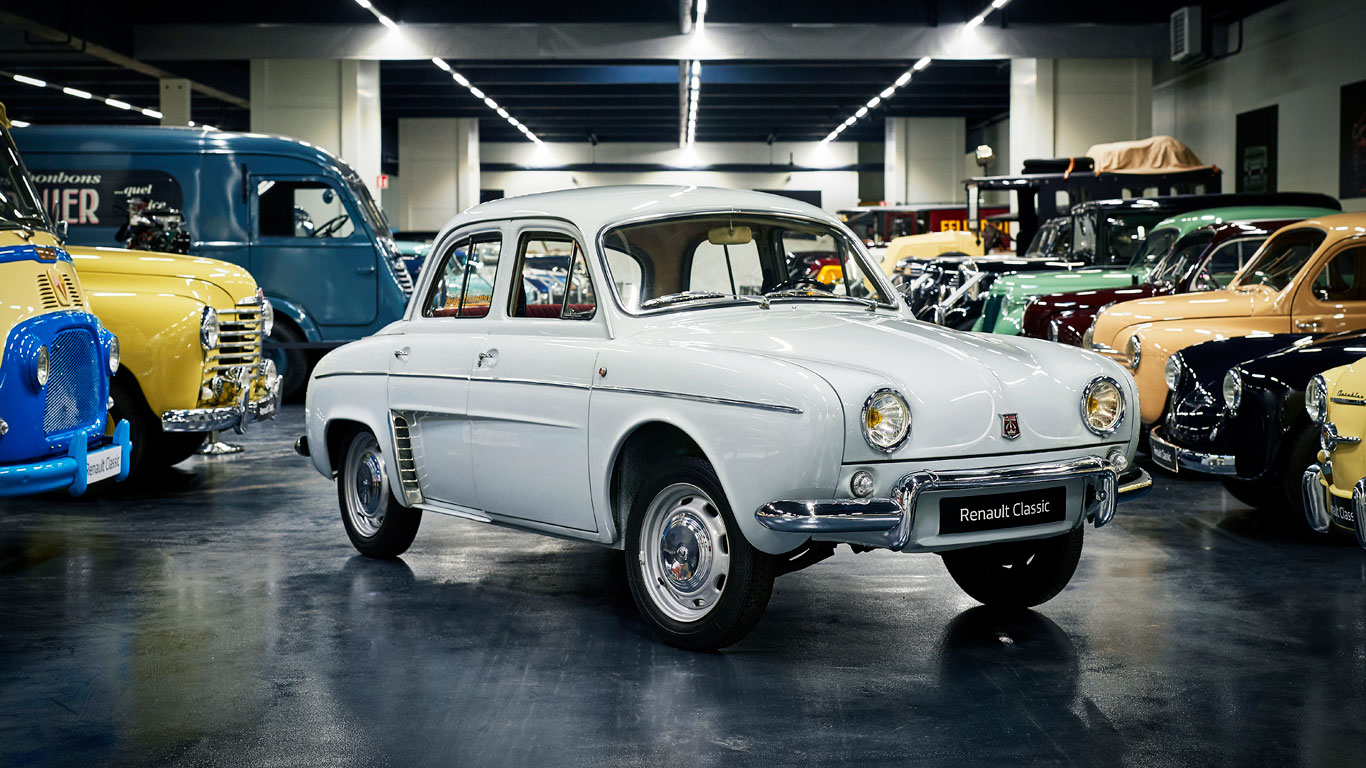
As a successor to the Renault 4CV, the Dauphine continued to rebel against Louis Renault’s wish to target the affluent classes. A rear-engined rival to the likes of the Volkswagen Beetle and Morris Minor, the Dauphine was a hit the second it was revealed at the 1955 Paris Motor Show. More than two million were sold during its 11-year lifespan.

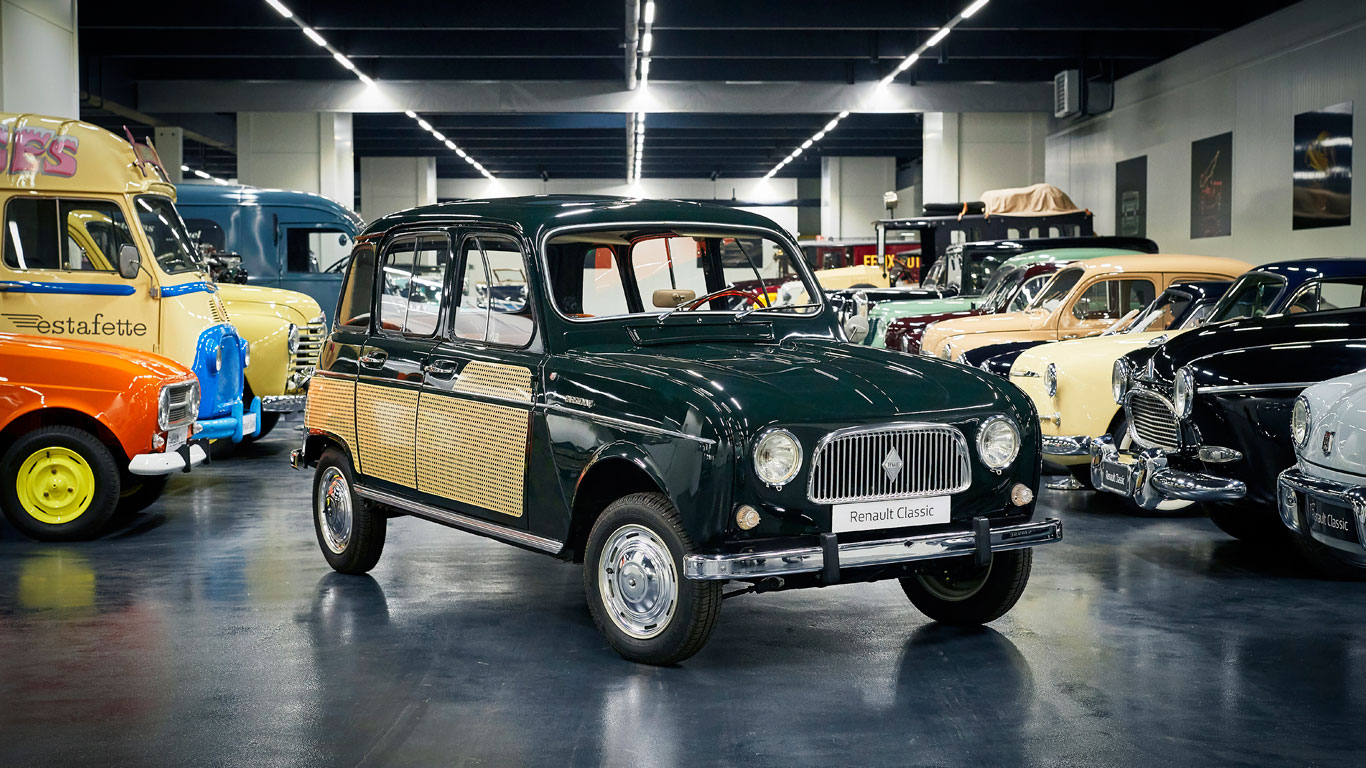
Renault 4

Renault 4

The Renault 4 was more than simply a replacement for the 4CV. It’s a symbol of France in the early 1960s. A rural exodus was happening, seeing people shift from the countryside to new suburbs being developed on the edge of urban areas. As such, Renault decided to launch ‘the ultimate versatile automobile’. Capable of serving as a workhorse during the week, the Renault 4 could also double up as a family car at weekends.

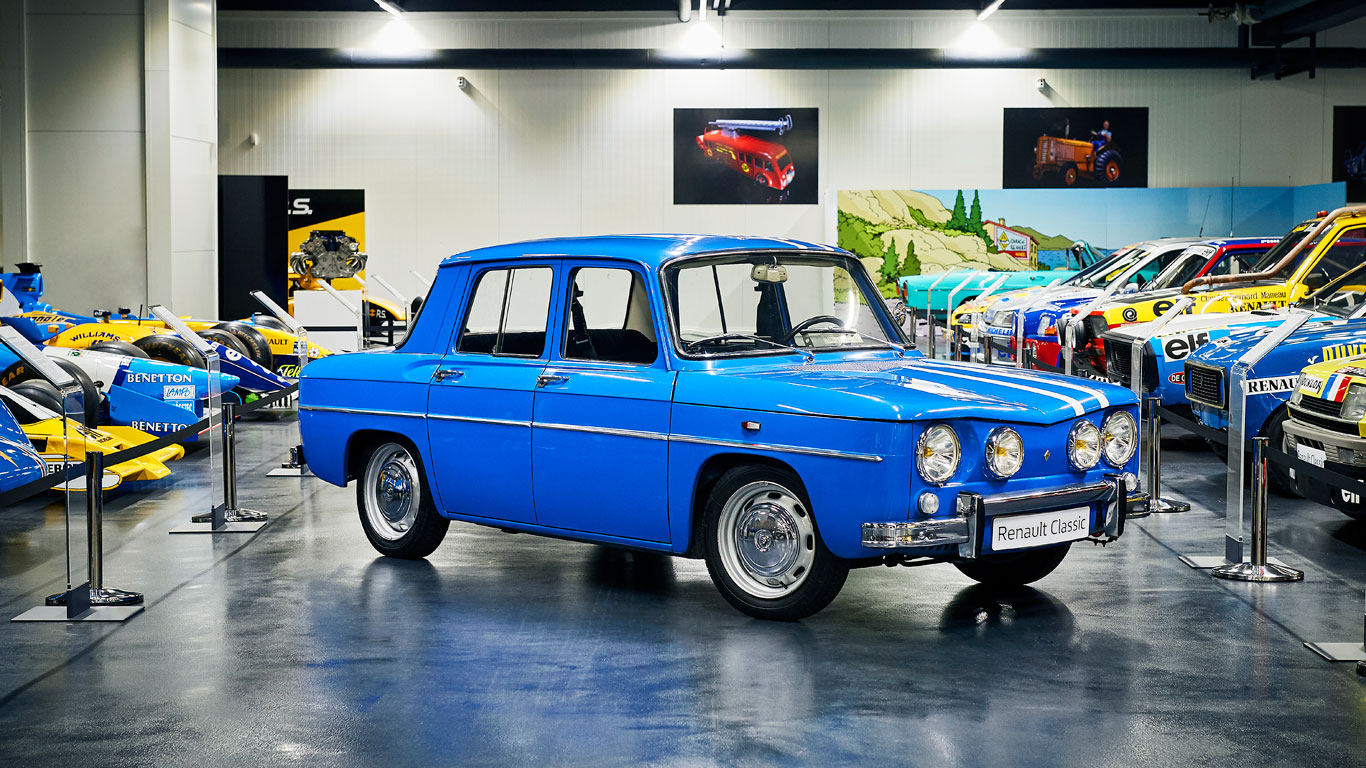
Renault 8 Gordini

Renault 8 Gordini

Although by the 60s Renault primarily catered for people wanting affordable transport, there was still an enthusiastic audience captivated by the likes of the 4CV used in the Monte Carlo Rally. In 1964, Renault brought out the Renault 8 Gordini, with the standard car’s 50hp engine replaced by a 95hp 1,100cc unit. The firm intended to build just 1,000 cars, but 11,600 customers parted with money for the Gordini – despite a price tag close to double that of the standard car.

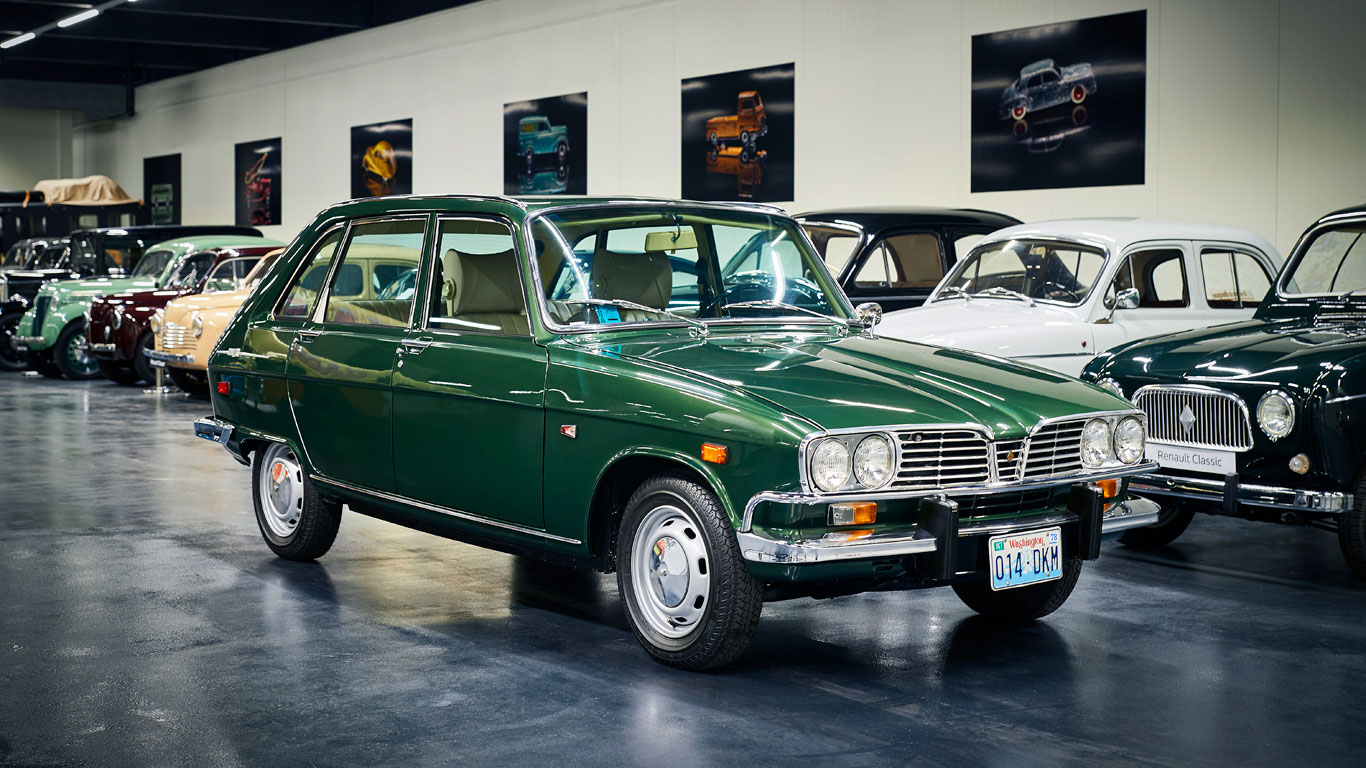
Renault 16

Renault 16

The world’s first production hatchback, the Renault 16 was launched in 1965 as a bigger, upmarket alternative to the Renault 4. Halfway between a saloon and an estate, buyers and journalists struggled to get their head around this new bodystyle at first, but it soon became a huge success. More than 1.8 million were sold worldwide during its 15 year production run. This example in Renault’s collection was destined for the US, where the 16 was sold in tiny numbers.

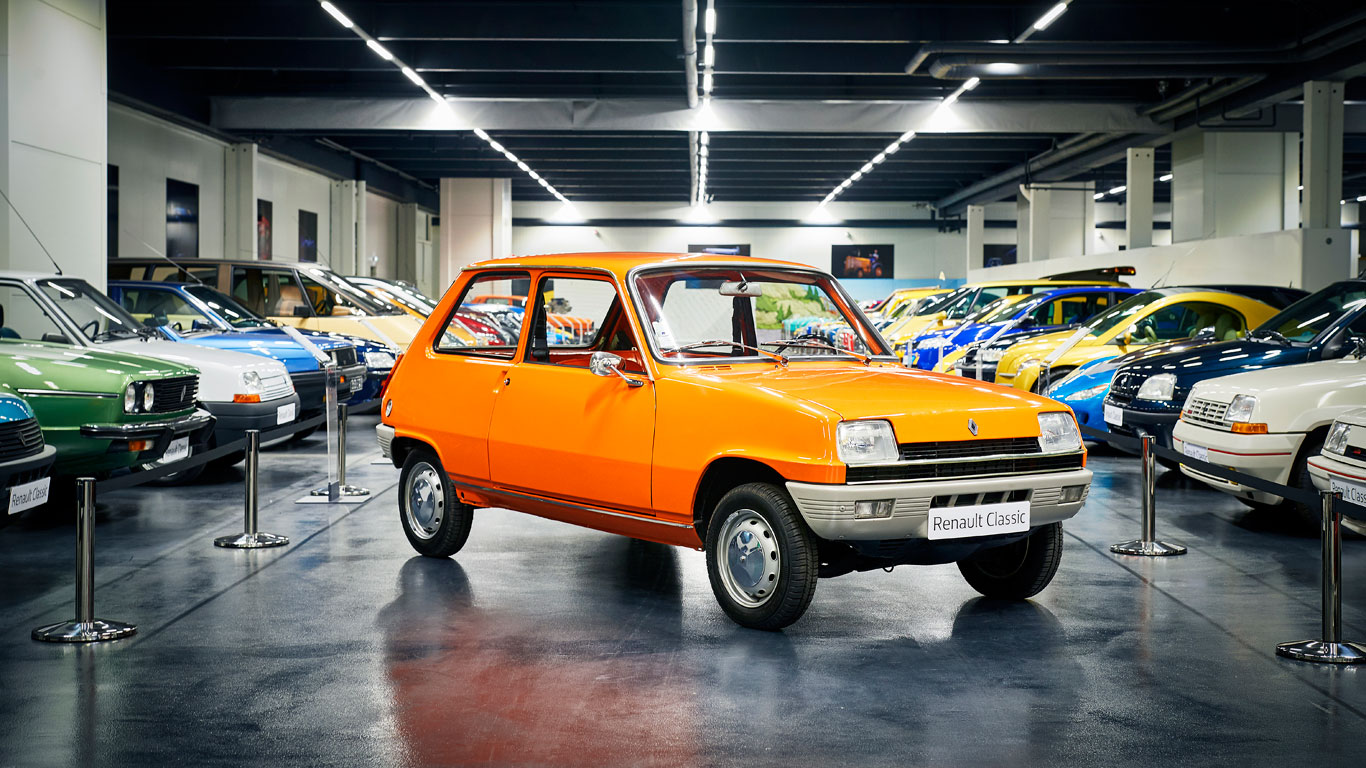
Renault 5

Renault 5

Launched in 1972, the Renault 5 was unashamedly a car designed for women. It featured a curvy shape, just two doors (allowing children to stay safe in the back without the threat of them opening a door) and an easy-to-lift hatchback making it convenient for supermarket shopping. Oh, and plastic bumpers were used for the first time, providing protection from minor impacts.

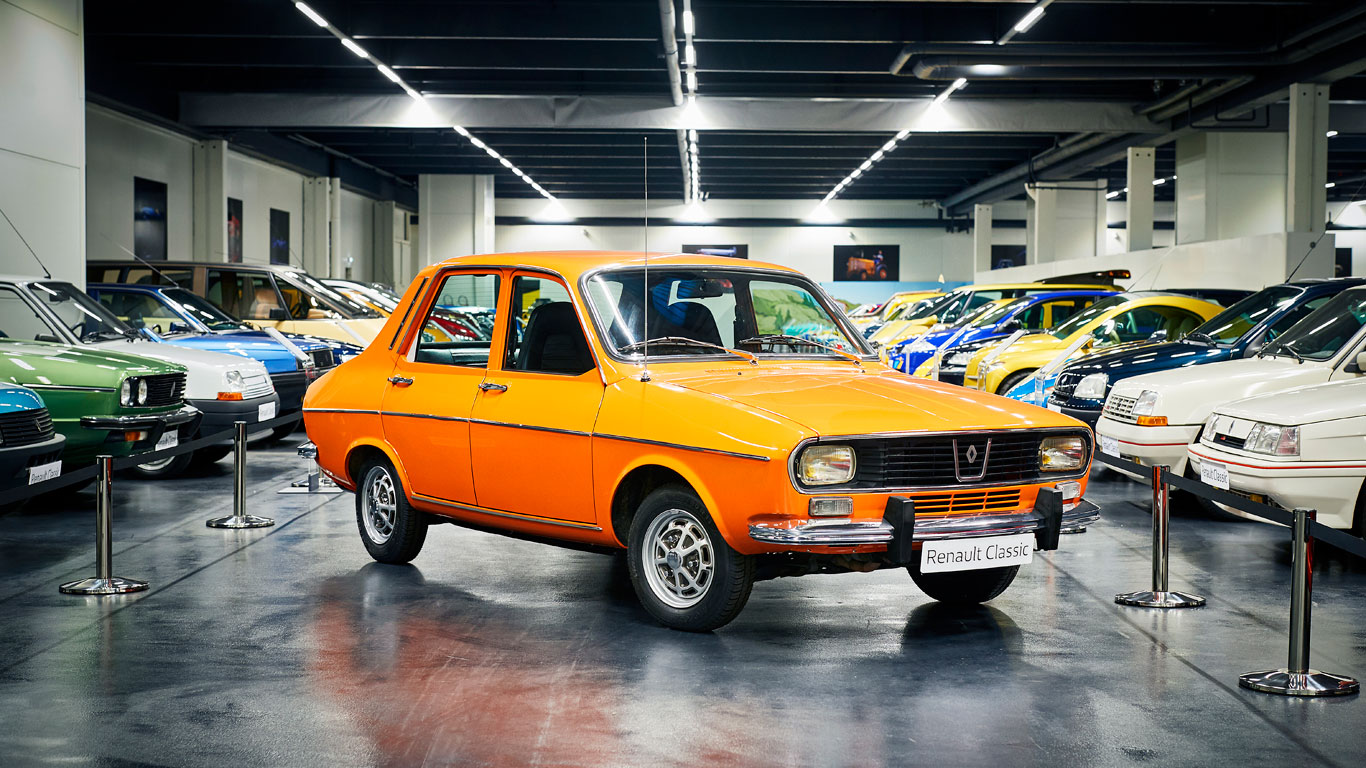
Renault 12

Renault 12

Simple, inexpensive and unbreakable. That was the brief for the Renault 12, revealed at the 1969 Paris Motor Show. Developed with international sales in mind, the 12 would take Renault to new markets, with much of its testing carried out in Brazil. It went on to find a following in Romania, where it was built under licence by the Dacia brand, and Turkey. It was a commercial success, with 2.5 million sold internationally.

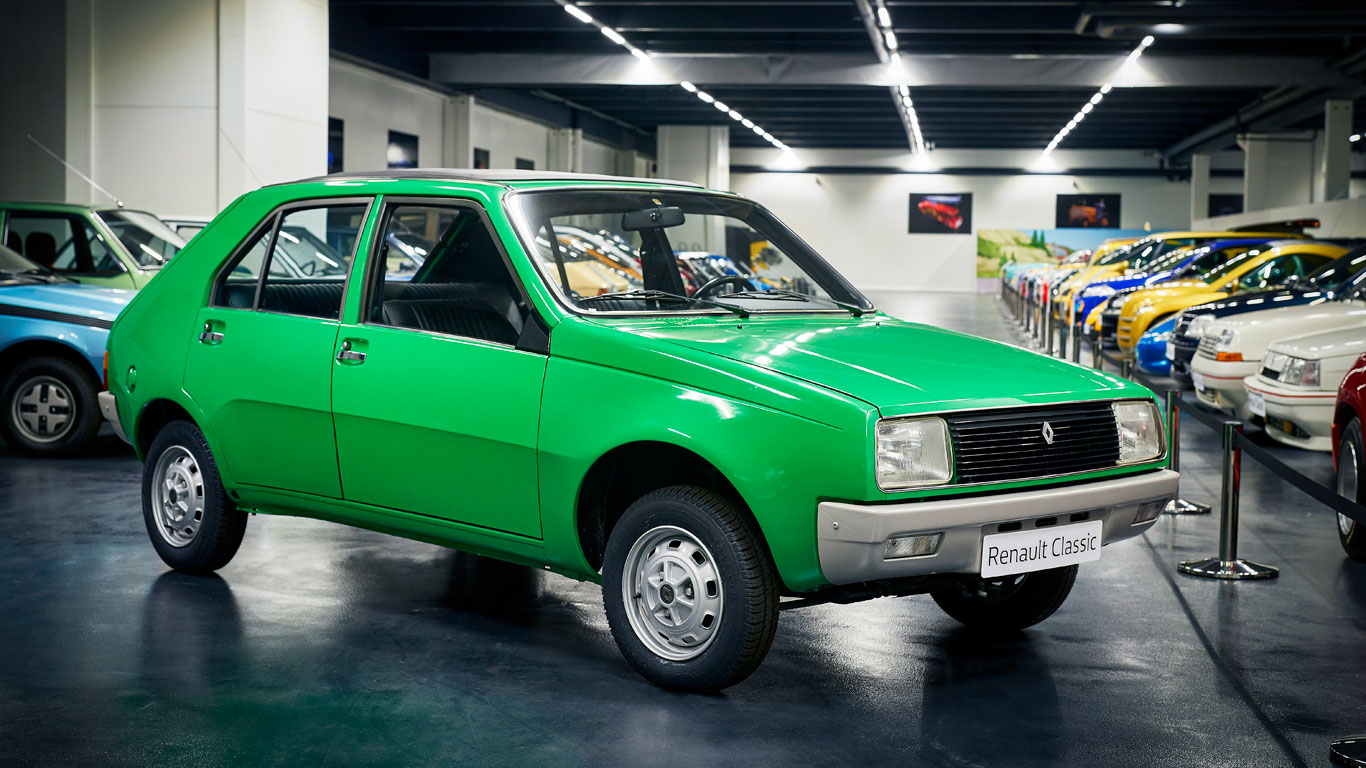
Renault 14

Renault 14

Renault’s trademark had become the hatchback since the R16, but it didn’t offer a mid-range hatch. The Renault 14 was introduced in 1976 following a clever advertising campaign that caused it to be known as the ‘pear-shaped’ car. It was the first Renault to be powered by a transversely-mounted powertrain, allowing a roomier cabin and increased luggage space.

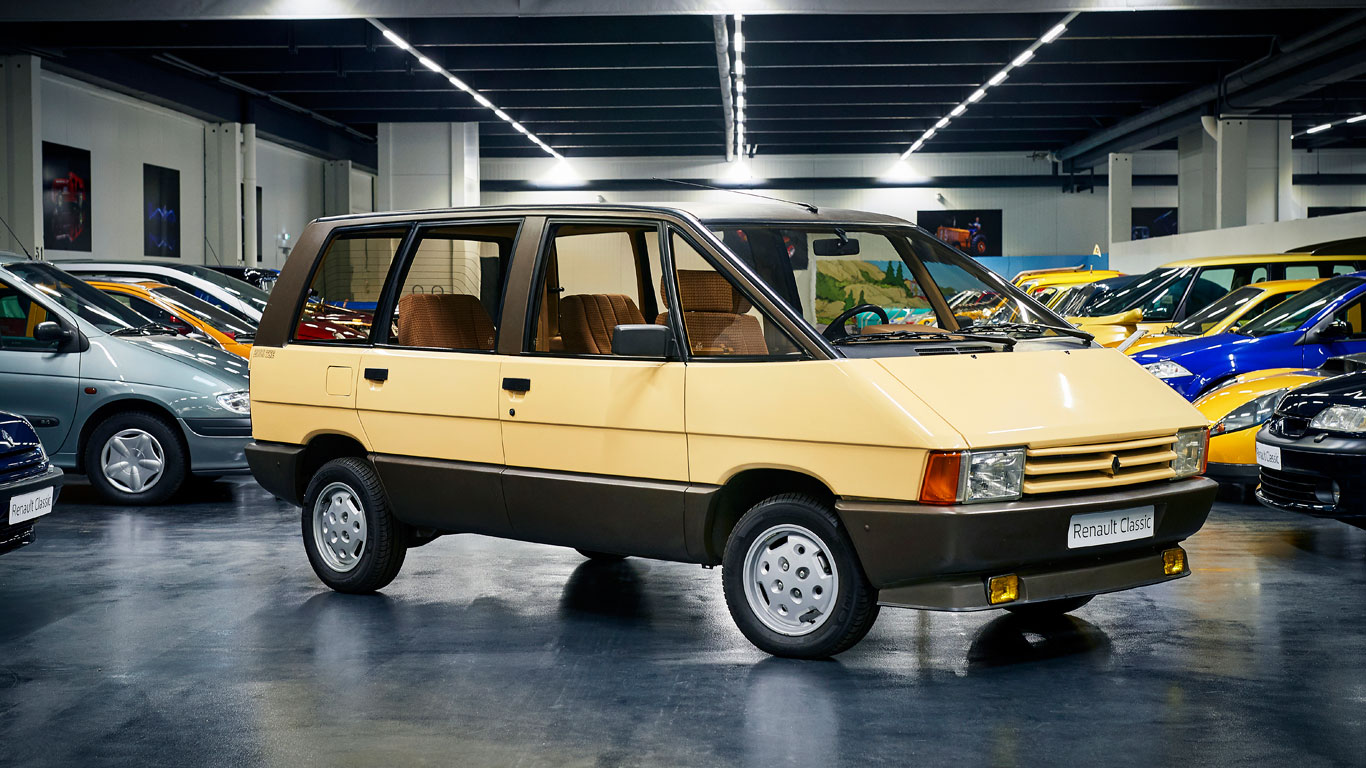
Renault Espace

Renault Espace

Renault had been pushing a ‘car for living’ philosophy with its series of practical cars designed with families in mind – including the Renault 4, 16, 6 and 5. With the launch of its Espace people carrier, it pushed the idea further still, with a revolutionary new vehicle designed by Matra. Although sales were slow to begin with (just nine were sold in its first month on sale), families were soon tempted by the versatility offered by the world’s first MPV.

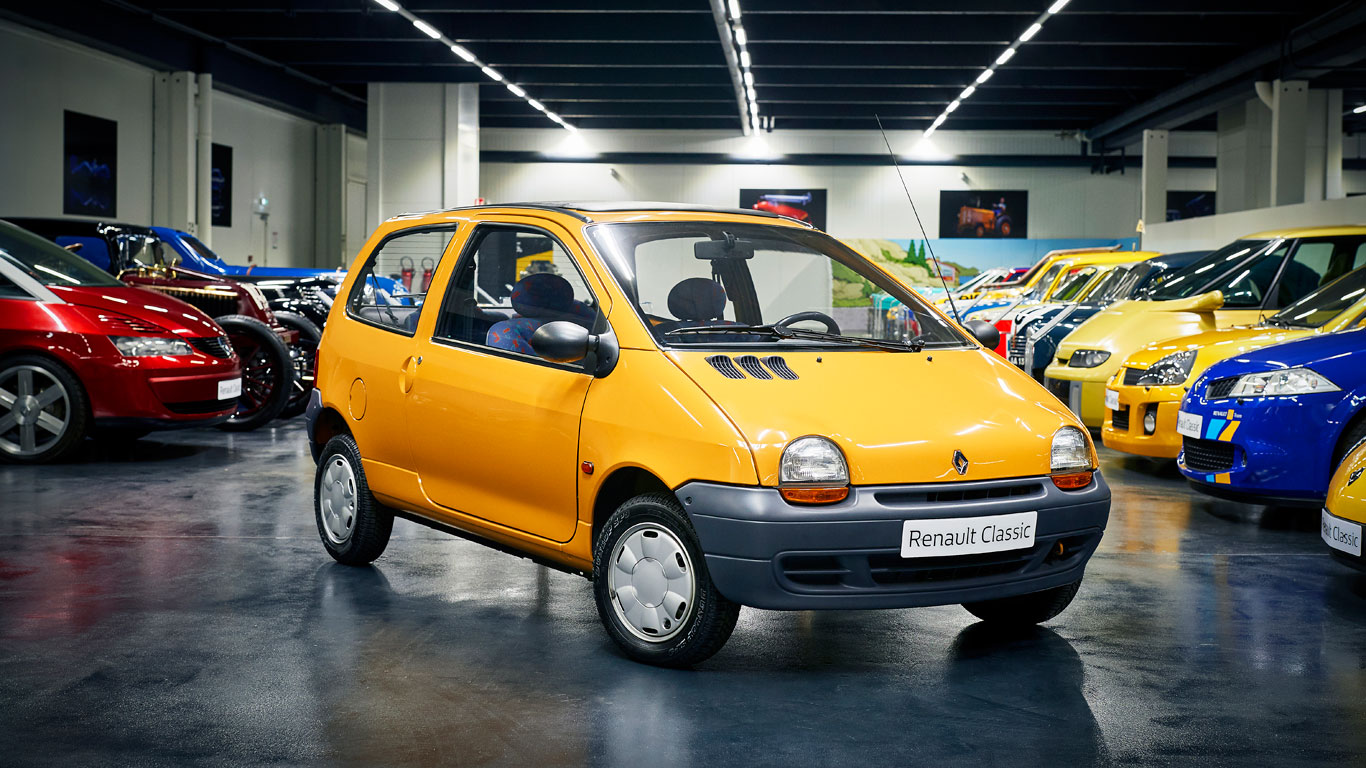
Renault Twingo

Renault Twingo

Described by Renault as having an exterior design that evokes a ‘small, friendly animal’ combined with the interior of a ‘mini passenger van’, the Twingo was launched in 1993 as a quirky yet affordable and practical city car. Initially available with just one trim level and a choice of four colours, “it’s up to you to invent the life that goes with it,” said its launch slogan.

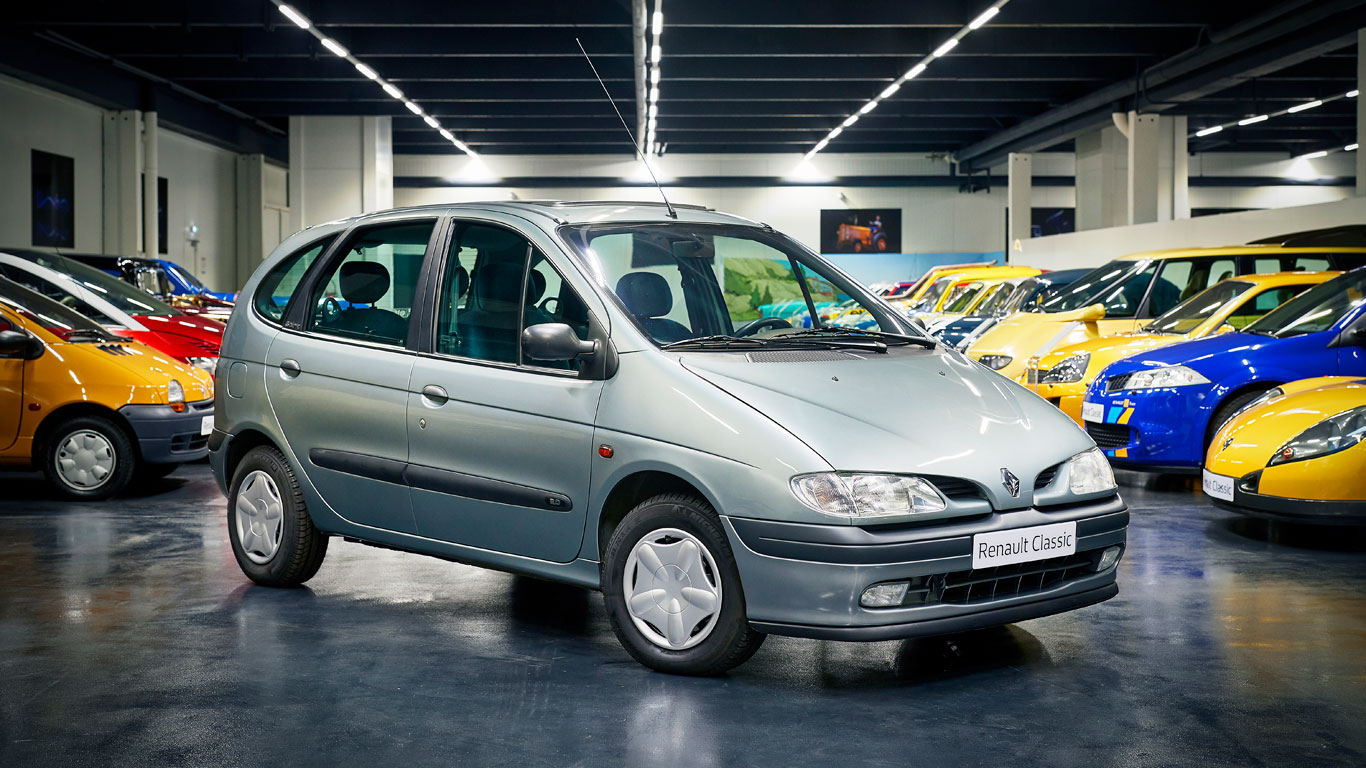
Renault Scenic

Renault Scenic

Having gained experience with its larger Espace people carrier, Renault set about launching a car for the late-20th-century family. Following on with the ‘car for living’ philosophy, the Scenic featured a sliding rear seat that could be used as a table, tilting rear side seats, tray tables for passengers and even a bottle rack. The Scenic was so impressive when it was launched in 1996 that it went on to win the 1997 European Car of the Year award.

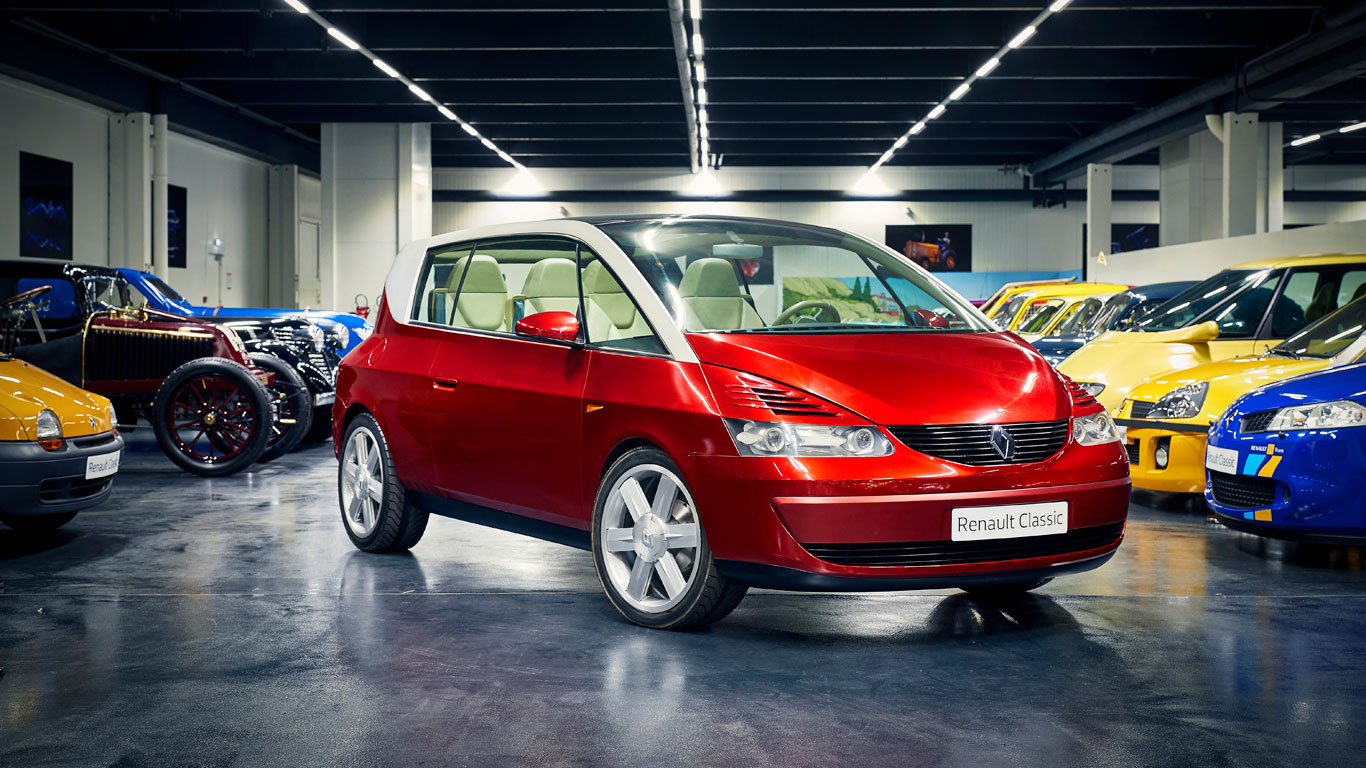
Renault Avantime

Renault Avantime

Renault’s never been afraid of taking risks, and in 1999 it launched a bizarre hybrid of coupe and people carrier. The Avantime ‘embodied the leisure car of the new millenium,’ says Renault, with large windows, an all-glass sunroof and a minimalist centre console. Although reception was generally good, it sold in tiny numbers and production was dropped after just two years on sale.

Read more:

Advertisement

New 2018 Ford Focus prices from £17,930

0

New 2018 Ford Focus VignaleThe new Ford Focus, which goes on sale in August 2018 for September delivery, is cheaper than the car it replaces, Ford has announced. 
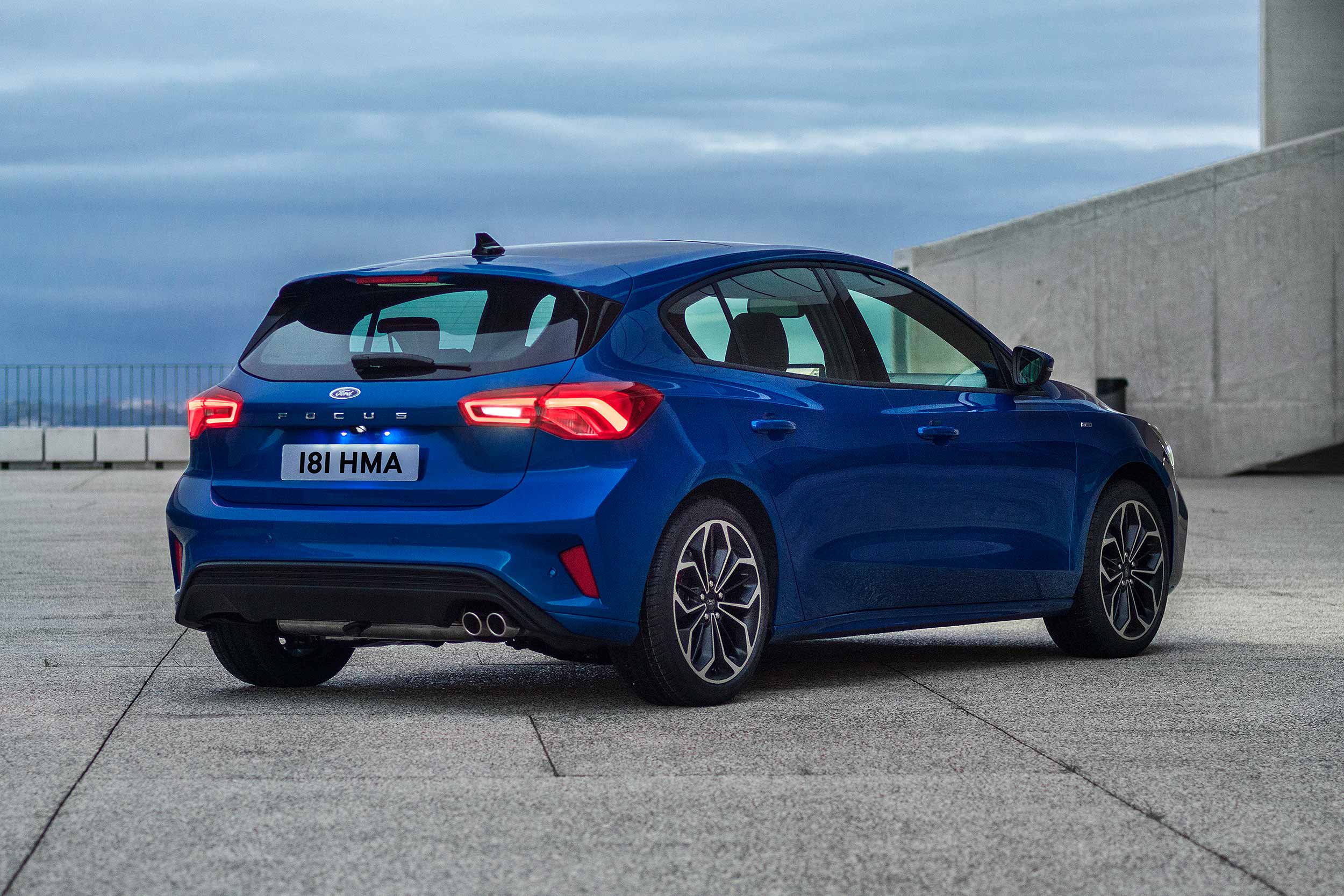
The range opens from £17,930 for the Ford Focus 1.0 Ecoboost 85 Style, which is £2,300 less than the outgoing car. Admittedly, this is slightly unrepresentative, as few people actually by the basic Style version, but other key models in the range are also cheaper.

Focus Zetec and ST-Line models together account for 55 percent of all Focus sales: the Zetec is £850 less than before (from £19,300 for a 1.0 Ecoboost 100 Zetec) and the ST-Line is £250 cheaper (from £21,570 for a 1.0 Ecoboost 125 ST-Line).

Seven Ford Focus variants are offered at launch: Style, Zetec, ST-Line, ST-Line X (from £24,050), Titanium (from £21,550), Titanium X (from £22,820) and new premium-style Vignale (from £25,450 for a 1.0 Ecoboost 125). Estate models are also offered from launch, for around £1,100 more than the comparable five-door Focus hatch.

The Focus Studio comes with 16in alloys, air con, DAB, Bluetooth, electronic parking brake and autonomous emergency braking. But the entry-level trim you really want is Zetec: this adds on the all-important Ford Sync 3 infotainment system, with 6.5in touchscreen boasting Apple CarPlay and Android Auto. Zetec models also come with front fog lamps, Quickclear heated windscreen and cruise control with speed limiter.

Titanium versions add more equipment: dual-zone climate control, all-round parking sensors, heated front seats, larger 8in touchscreen, keyless start and standard sat nav. Titanium X ups the posh features further, with part-leather seats, privacy glass and 17in alloys.

New 2018 Ford Focus ST-Line

Ford’s warm hatch line is ST-Line, which sits on suspension 10mm lower than standard, and has pumped-up ST-Line bodystyling including a unique front end, rear spoiler and polished tailpipes, and inside, flat-bottom steering wheel and a black headlining. ST-Line X brings 18in alloys, red brake calipers, and the equipment features of the Titanium X grade.

New 2018 Ford Focus Vignale

And Vignale? That’s the ultra-posh one. It too has a unique front end and 18in alloys, full LED lighting front and rear, full leather seating inside, a head-up display, rear-view camera, heated steering wheel and a premium 675-watt B&O Play sound system (a £350 option on Titanium, Titanium X and ST-Line X variants).  

New 2018 Ford Focus Active

Prices for the pumped-up Active crossover, which sits 30mm higher than regular cars and has tough bodystyling in the familiar Audi Allroad style, will be announced later. 

Advertisement

50 years of the truck Jeremy Clarkson couldn’t kill

0

Toyota Hilux History

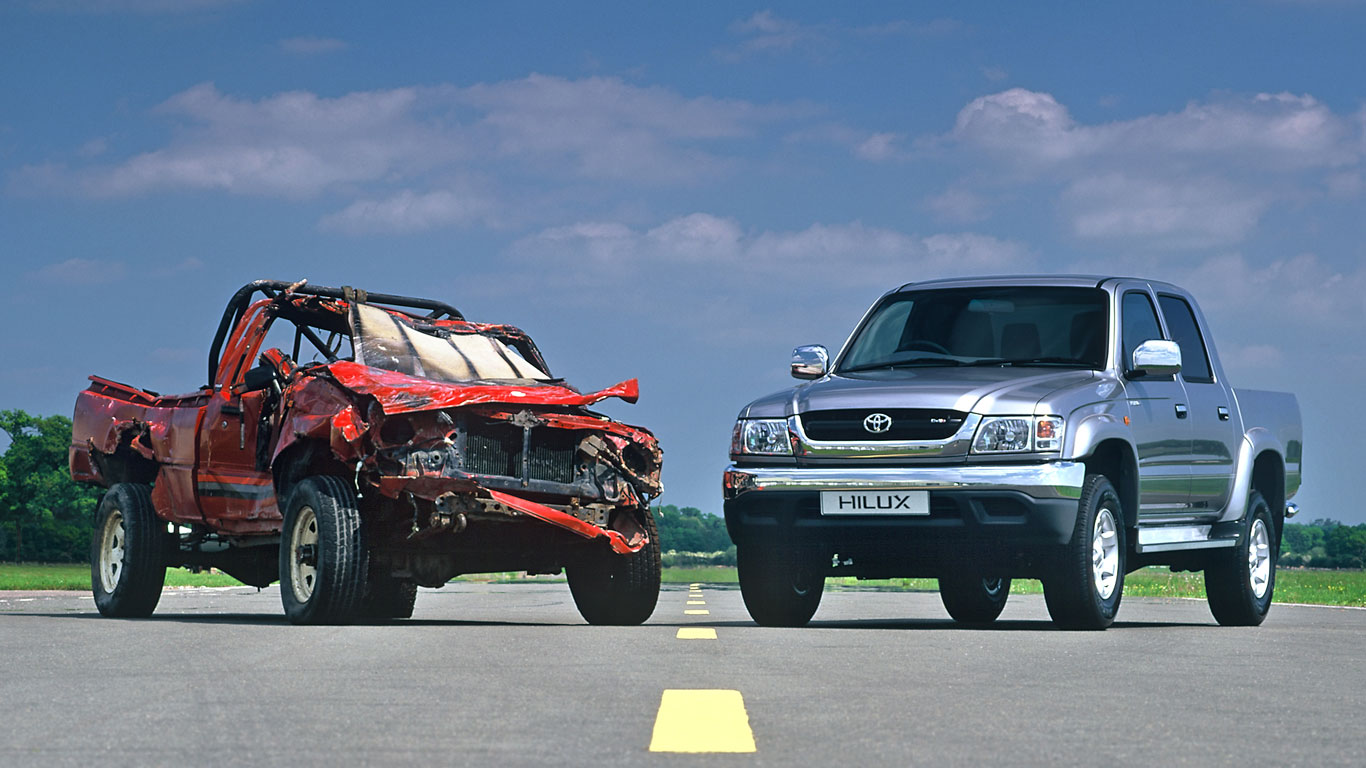
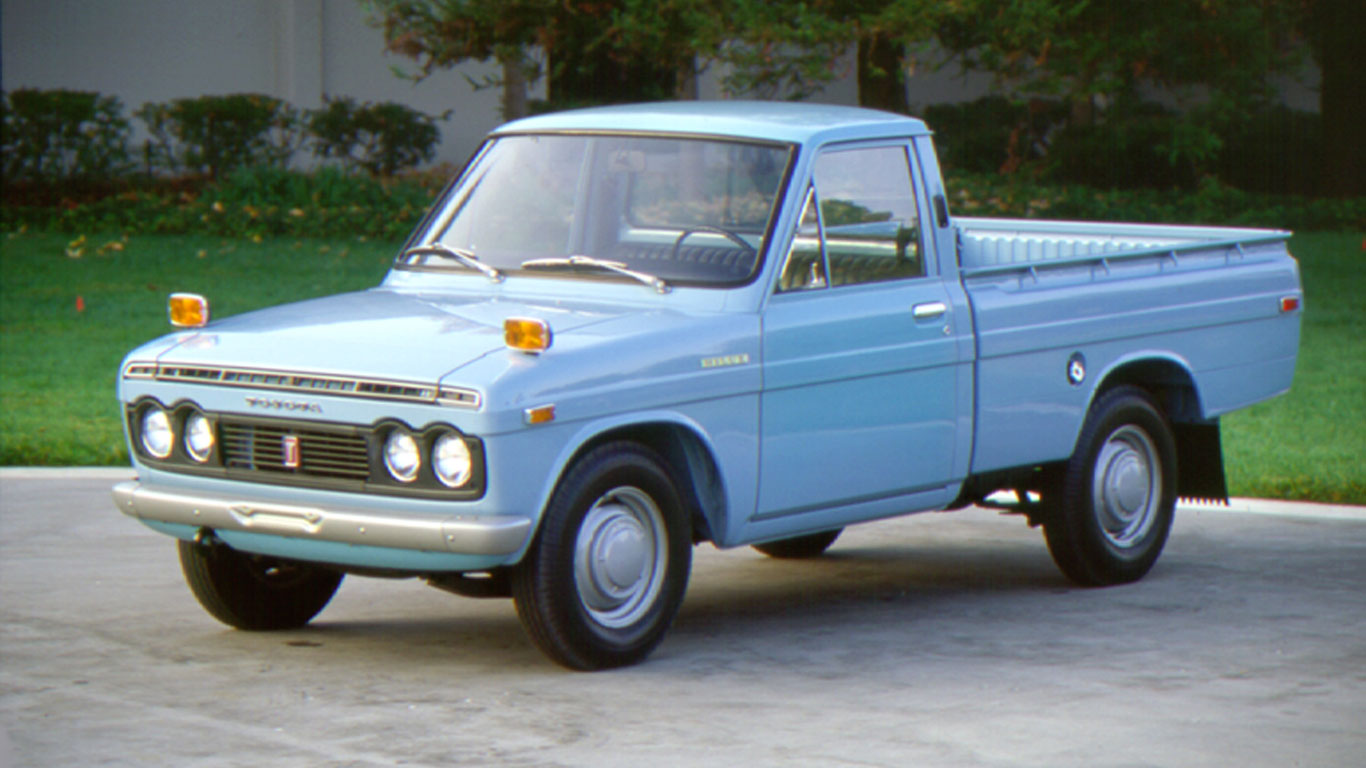
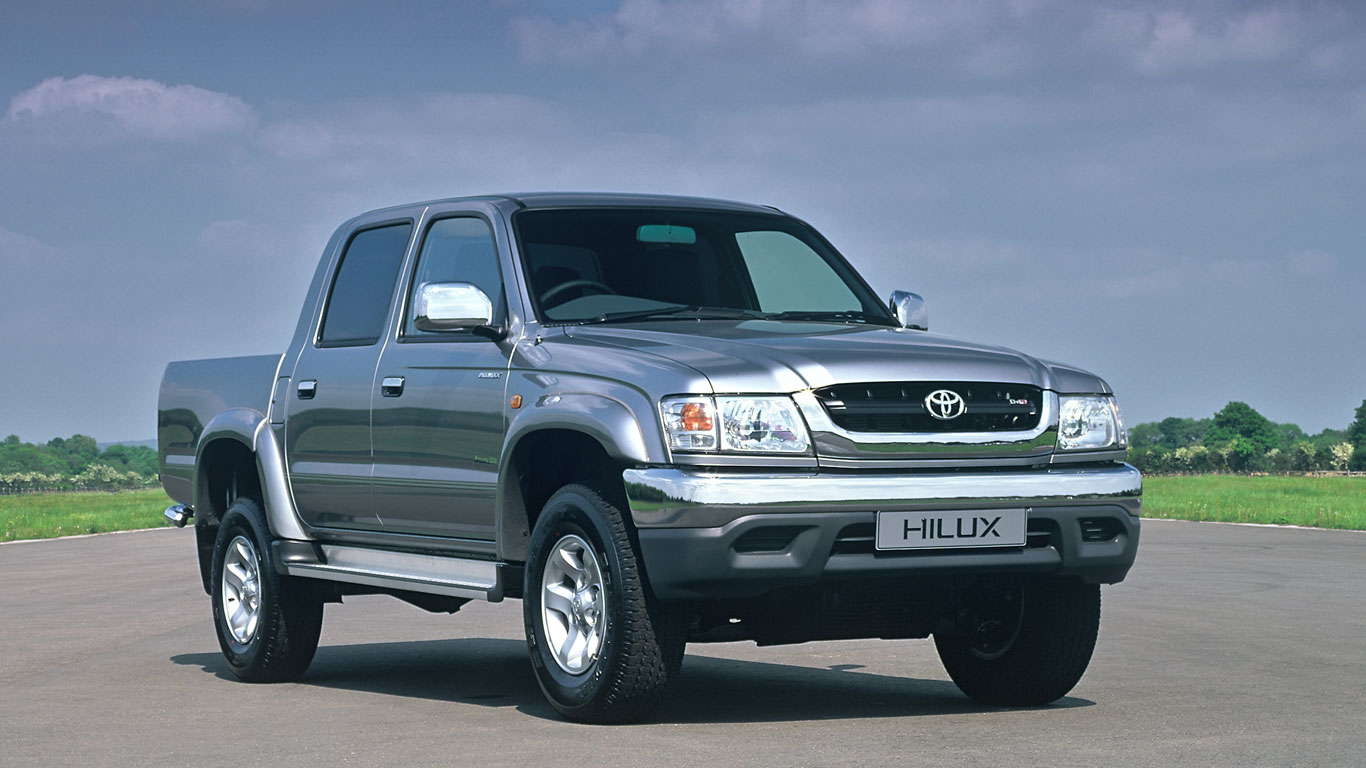
Compile a list of the world’s toughest vehicles and the Toyota Hilux is likely to appear somewhere near the top. As comfortable at the centre of a civil uprising as it is on the uplands of Wales, Toyota’s virtually indestructible pick-up has developed a formidable reputation for robustness and dependability. To celebrate 50 years of the Hilux, we take a look back at the history of the truck even Jeremy Clarkson couldn’t kill.

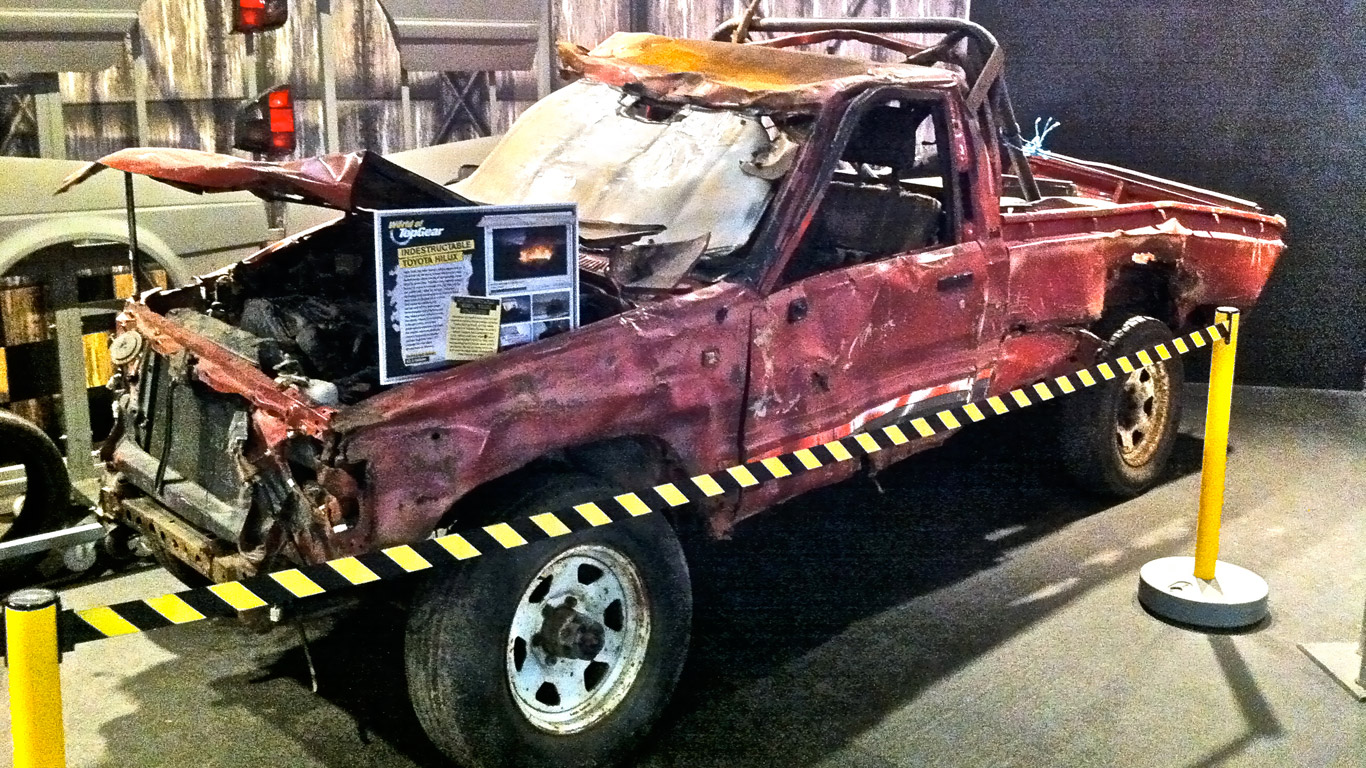
Top Gear: the indestructible Toyota Hilux

Toyota Hilux History

First, he drove it down some steps. Next, he took it on a destructive tour of Bristol. Then, he parked it in the Severn Estuary and waited for the tide to come in. He even tried death by caravan and fire. But, no matter what Jeremy Clarkson did to the Toyota Hilux, he couldn’t kill it. So, James May stuck it on the roof of a tower block that was about to be demolished with explosives. Needless to say, it survived, and was driven into the Top Gear studio.

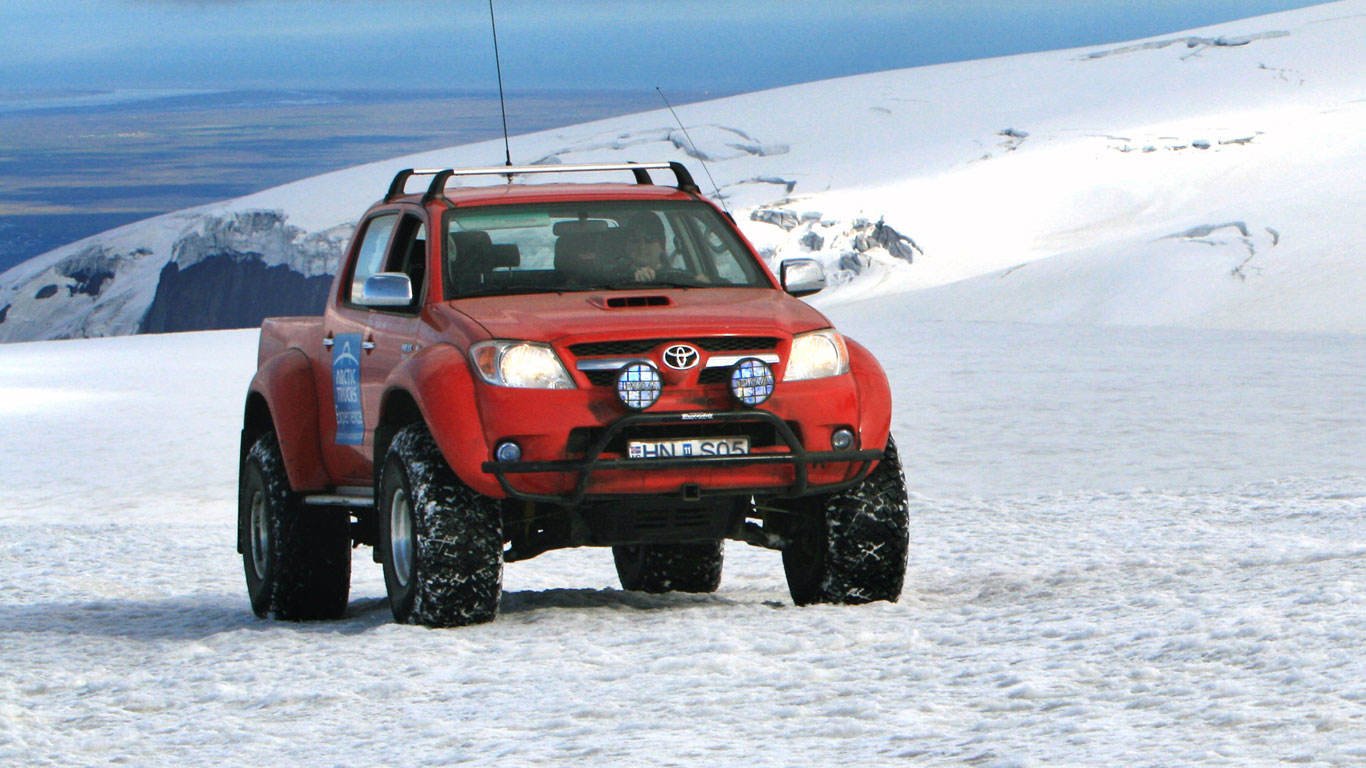
Top Gear: Toyota Hilux Arctic Trucks

Toyota Hilux History

In 2007, Clarkson, Hammond and May raced from the town of Resolute in Canada to the Magnetic North Pole, 450 miles away. Hammond travelled by dog sled, while Clarkson and May were at the wheel of a Toyota Hilux modified by Arctic Trucks. Three years later, James May was sent to Iceland to see how close it’s possible to drive to the mouth of an active volcano. His choice of wheels: a Toyota Hilux.

The Toyota War

Toyota Hilux History

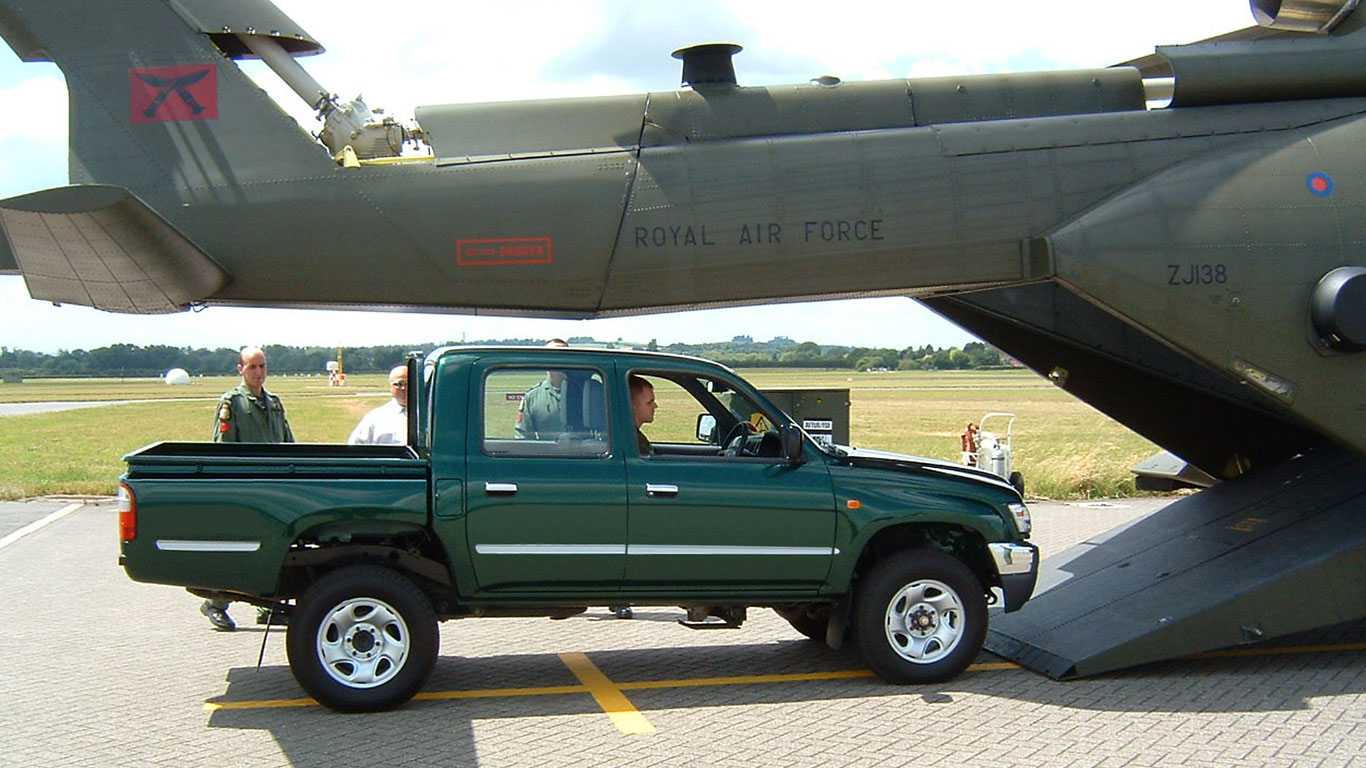
Here is the Toyota Hilux being used as a force for good by the RAF, but the pick-up is also the choice of revolutionaries, guerrilla fighters and terrorists. In fact, such was the truck’s ubiquity in the Chadian-Libyan conflict of 1987, it became known as the “Toyota War”. In an article in Newsweek, Andrew Exum, a former Army Ranger and now a fellow of the Centre for a New American Security, said: “It’s the vehicular equivalent of the AK-47. It’s ubiquitous to insurgent warfare. And actually, recently, also counterinsurgent warfare. It kicks the hell out of the Humvee.”

Back to the Future: Toyota Hilux SR5 Xtra Cab

Toyota Hilux History

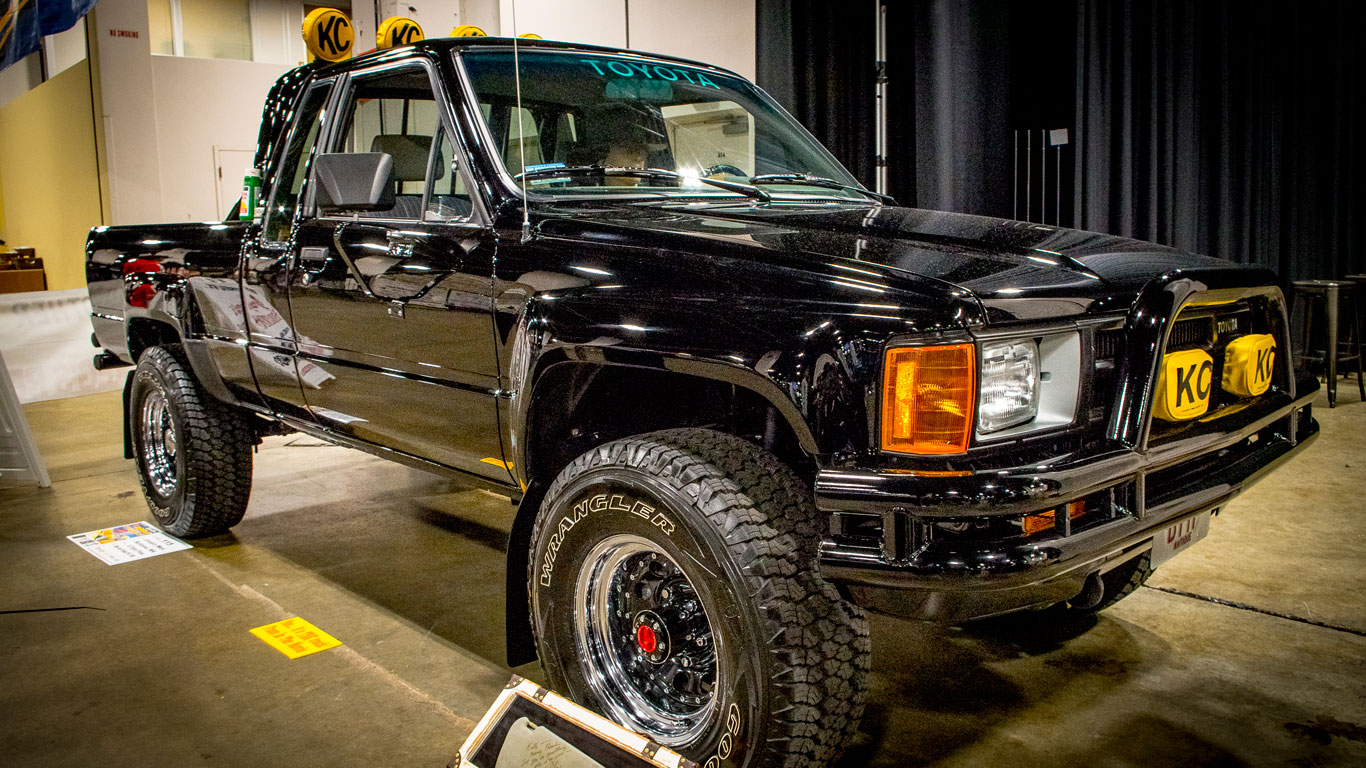
Think of Back to the Future and one car springs to mind. But while the DeLorean DMC-12 grabs the limelight, Marty McFly’s Toyota Hilux pick-up is arguably just as cool. The original SR5 Xtra Cab was written off, so a duplicate was required for the second movie. Be honest, you really fancy a black Hilux with a set of KC daylighters, don’t you?

Dakar Rally: Toyota Hilux

Toyota Hilux History

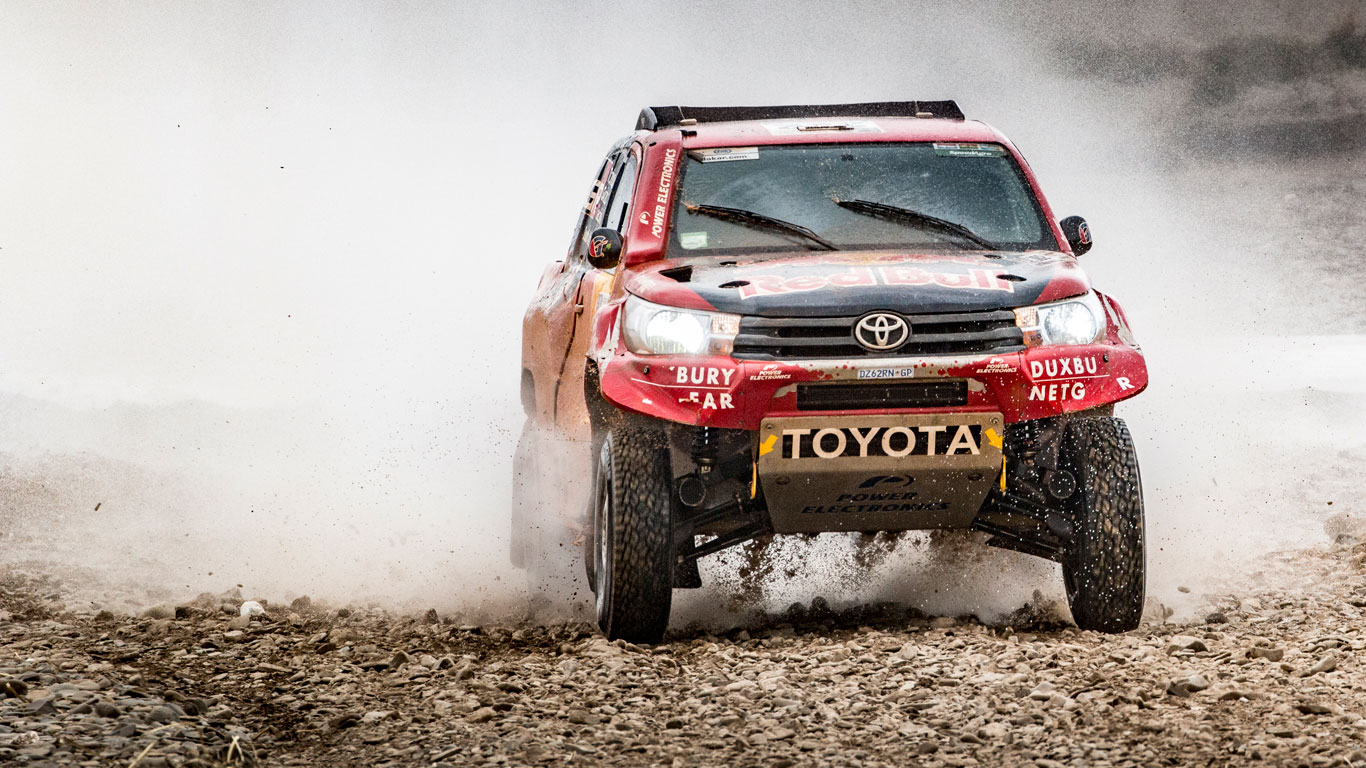
Toyota has participated in the Dakar Rally since its inception in 1979, with Toyota Gazoo Racing South Africa entering three modified Hilux models in the 2018 event. In fact, of the 92 cars that began the 5,500-mile race, 47 were Toyotas. The Hilux finished second and third, as well as taking five positions within the overall top 10. But enough of the present, what about the history of the Toyota Hilux?

Toyota Briska

Toyota Hilux History

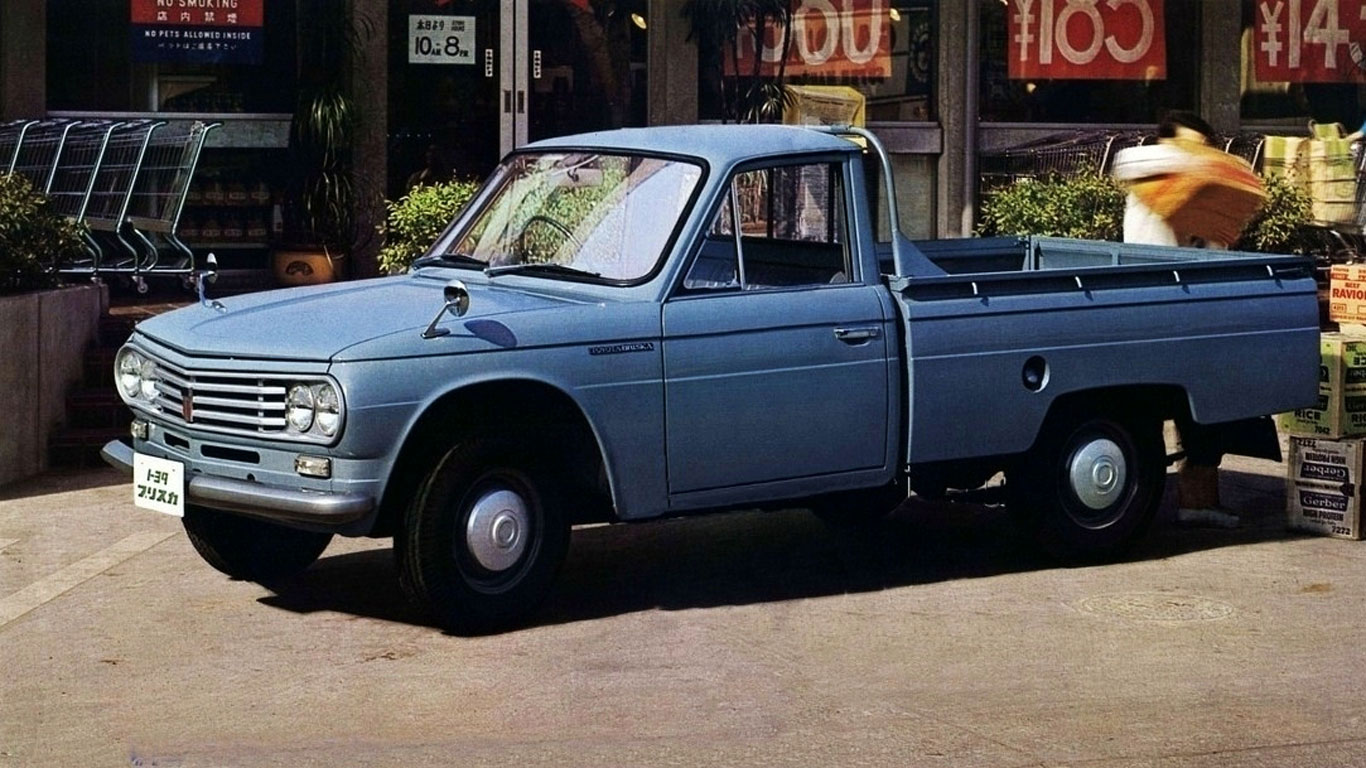
The Hilux can trace its roots back to the Hino Motors Briska, a small truck with seats for three people and a payload capacity of 750kg. The little truck made its debut in 1961, before the second-generation Hino Briska was launched in 1965. When Toyota and Hino Motors signed a partnership agreement in 1966, it wasn’t long before the Briska was given a Toyota badge, while Hino began working on a successor to the Briska, which was released in 1968 under the Hilux name.

Toyota Hilux N10

Toyota Hilux History

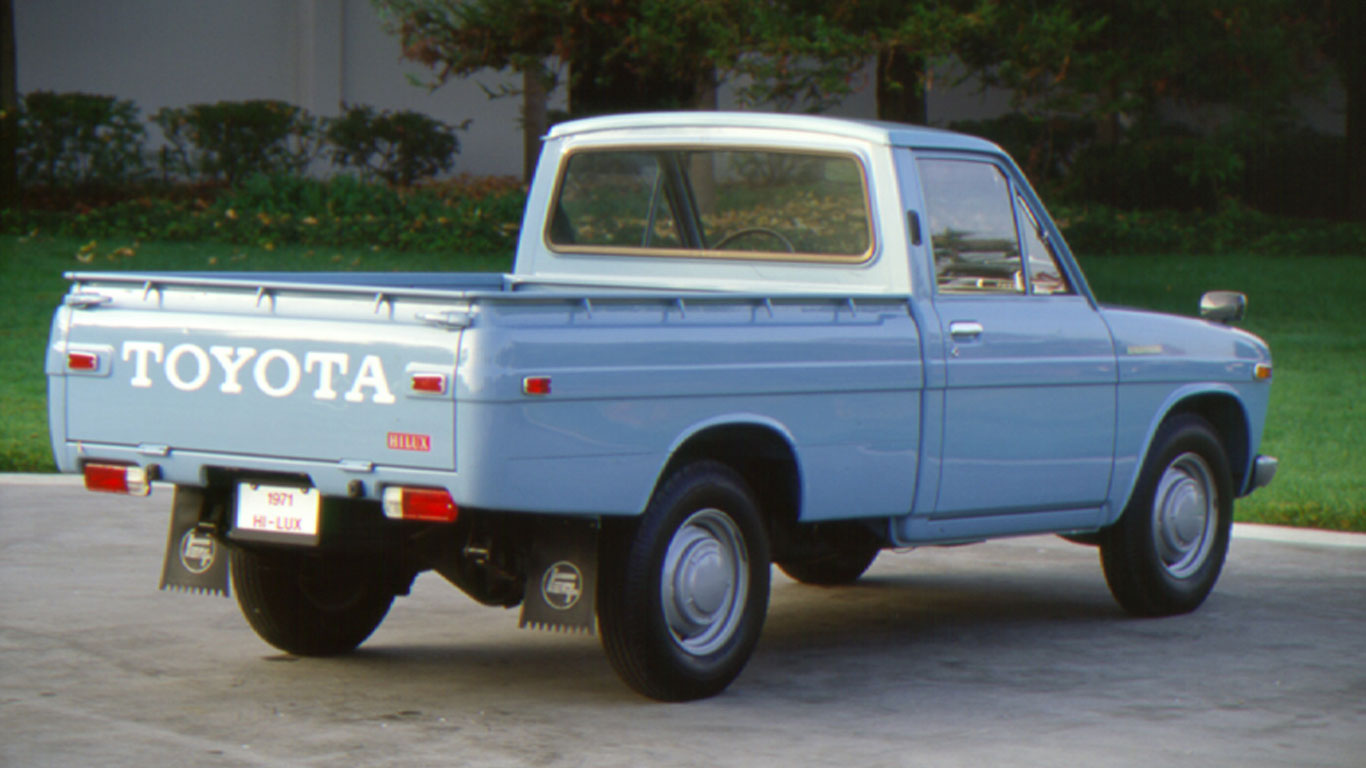
The N10 was born in March 1968, when Japanese dealerships took delivery of the first genuine Toyota Hilux pick-up. It continued to be built at Hino Motors’ Hamura plant and sat alongside the Corona and Masterline in Toyota’s range of light-duty pick-ups. The name, in case you were wondering, is a combination of “high” and “luxury”.

Toyota Hilux N10

Toyota Hilux History

In the same year, Toyota began exporting the N10 to Australia and Saudi Arabia, two regions where it would become part of the automotive furniture. In June 1969, the Hilux – simply badged as the Toyota Truck – was introduced to the US market, replacing the Stout, which had been on sale since 1964. The UK market would have to wait a little while longer.

Toyota Hilux N20

Toyota Hilux History

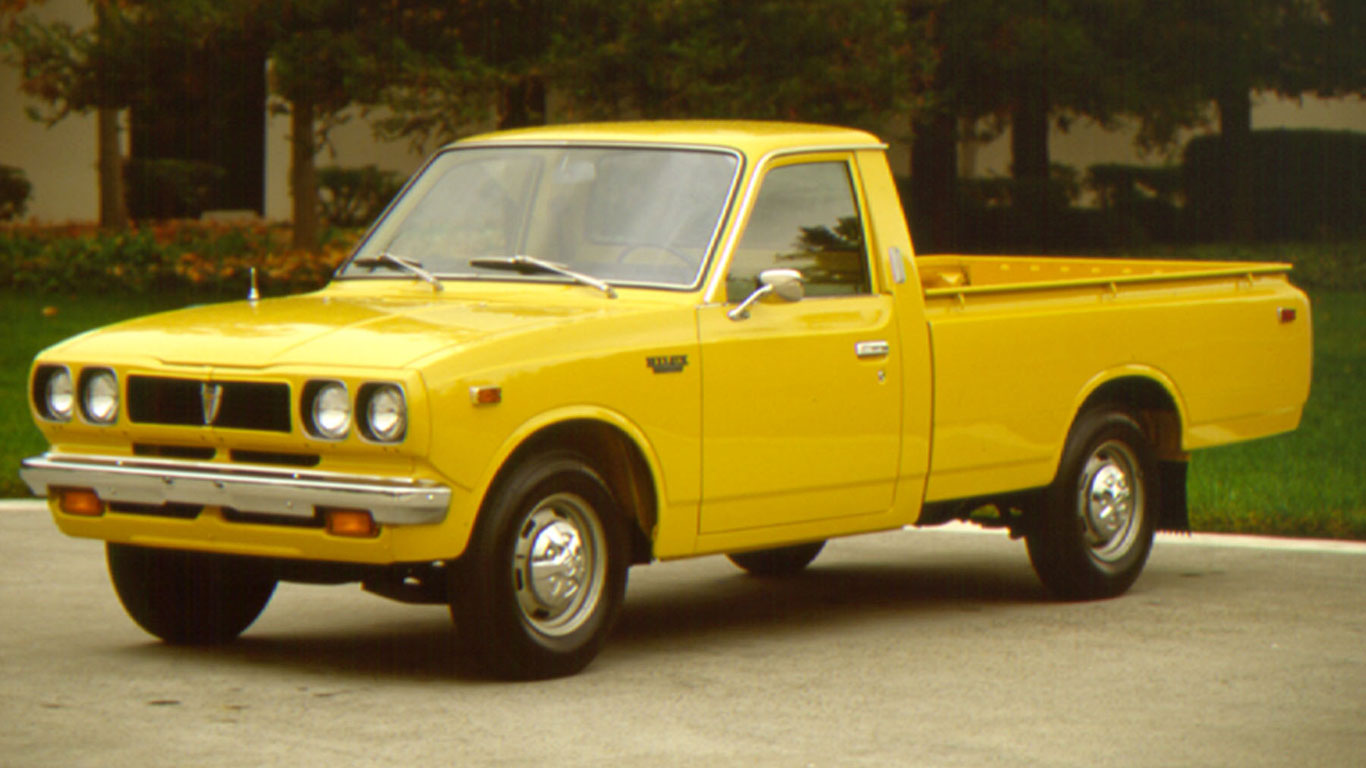
The second-generation Toyota Hilux arrived in May 1972, which signalled its introduction to the UK market. Although based on the previous model, the N20 featured an extended wheelbase and new safety features, including servo-assisted dual brake master cylinders and load-sensing brake proportioning valves. The length and the payload capacity remained the same. A long-bed version was added to the range in 1973, while a move upmarket led to the introduction of a 2.2-litre engine and SR5 trim level in the US.

Toyota Hilux N30

Toyota Hilux History

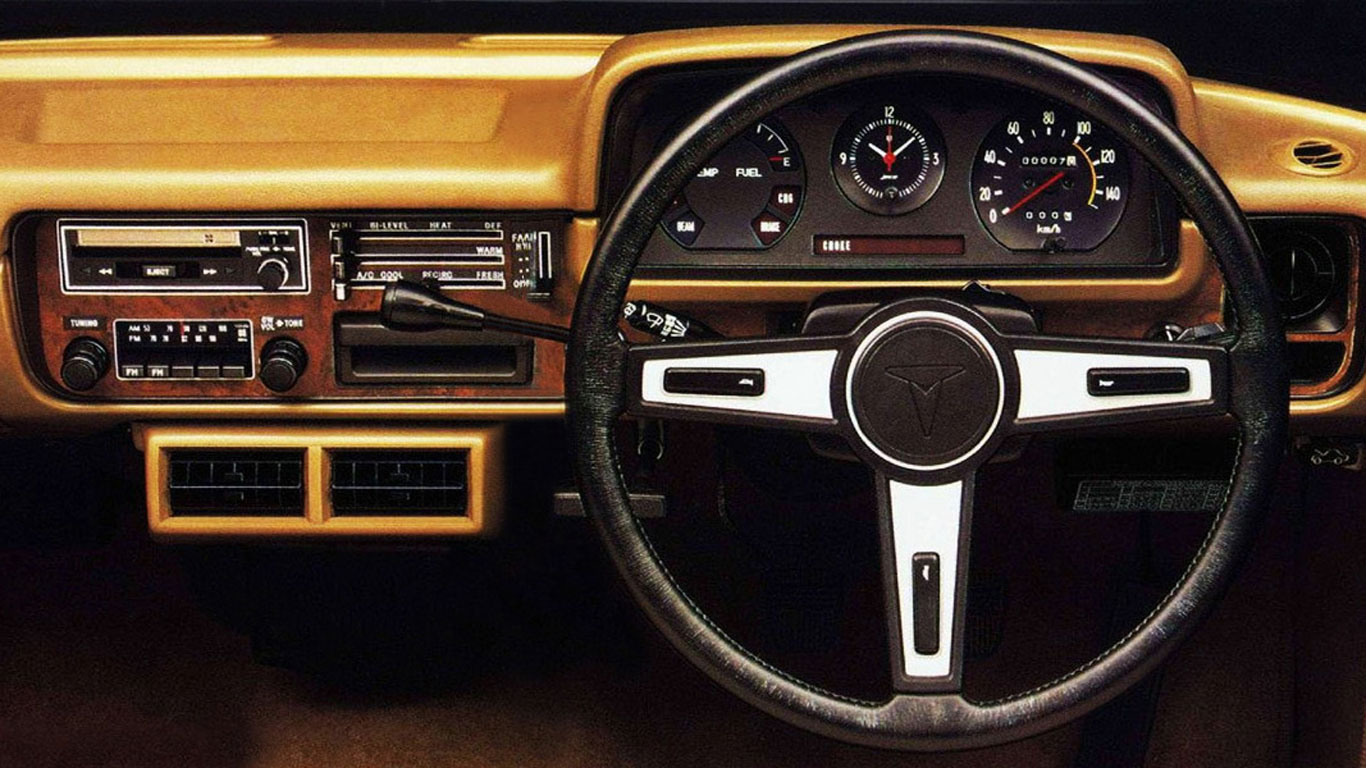
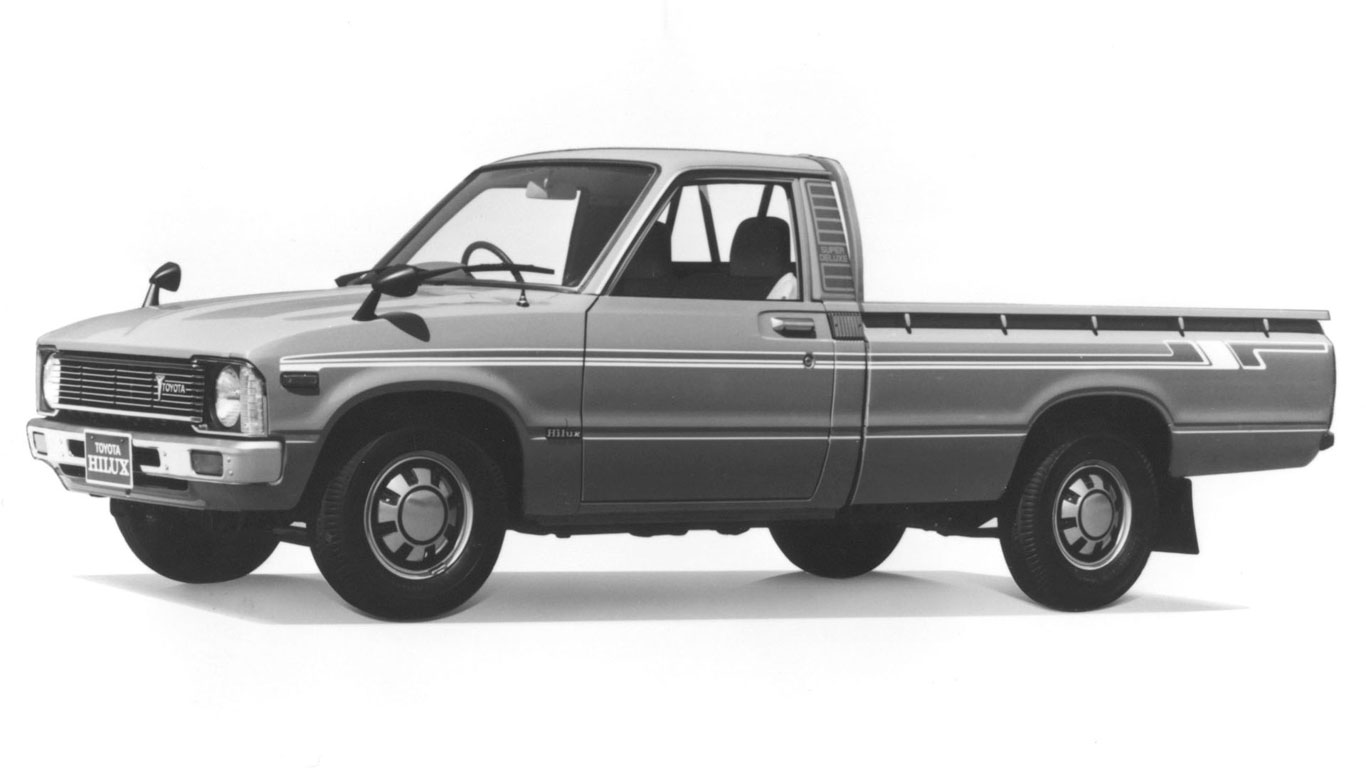
Until the late 1970s, the Toyota Hilux had been nothing other than a workhorse, complete with live axles and leaf springs. But, led by the market trends in the US, it was beginning to blaze a trail as a more lifestyle-led leisure vehicle. To this end, the third-generation Hilux of 1978 was far more car-like, with a greater focus on ride comfort.

Toyota Hilux N30

Toyota Hilux History

Three standard-length and four long-wheelbase versions were available, with a new Super Deluxe model introduced from launch, complete with extended cab some 90mm longer than standard. To take on the might of Ford and Chevrolet, Toyota marketed the pick-up under the banner of “Born in Japan, raised in the US,” emphasising the lifestyle element of its comparatively small truck.

Toyota Hilux N30

Toyota Hilux History

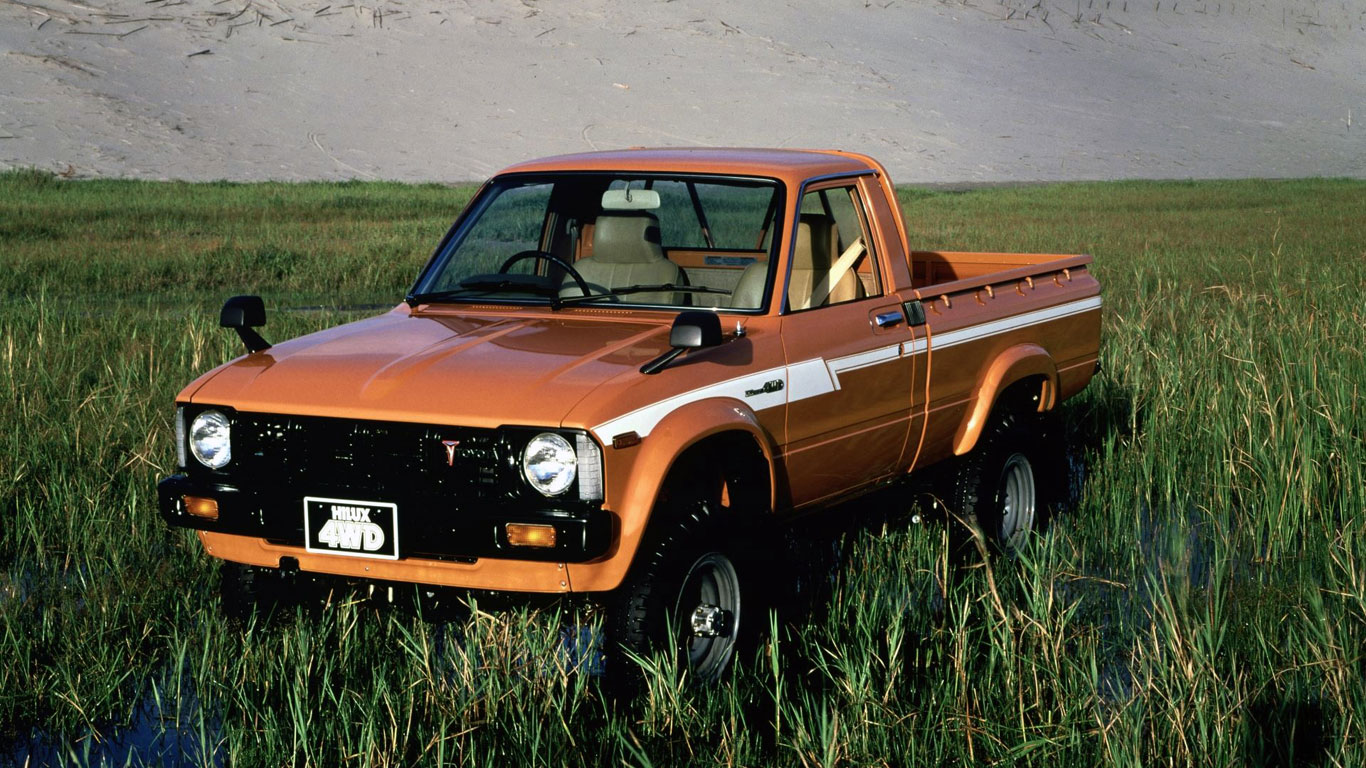
This was a period of big change for the Toyota Hilux, with the first four-wheel-drive model introduced in October 1979, sharing many of its components with the Land Cruiser. A year earlier, cumulative exports of the Hilux broke the one-million mark, with 800,000 units sold during the 1973 to 1978 period alone.

Toyota Hilux N30

Toyota Hilux History

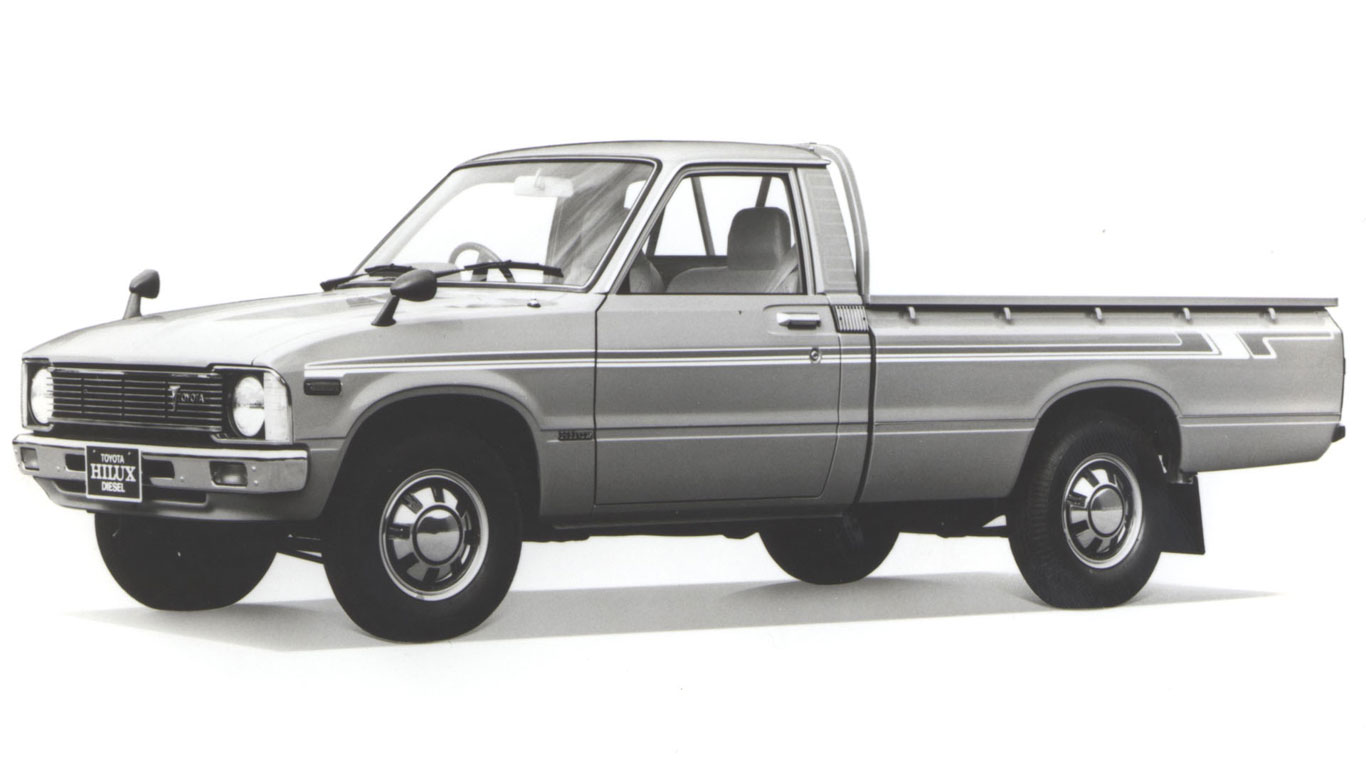
In response to the demand for economical diesel vehicles, five diesel engines were added to the Hilux range in December 1979. The 2.2-litre engine – lifted from the Hiace van – was mated to the recently developed five-speed manual gearbox with overdrive.

Toyota Hilux N40

Toyota Hilux History

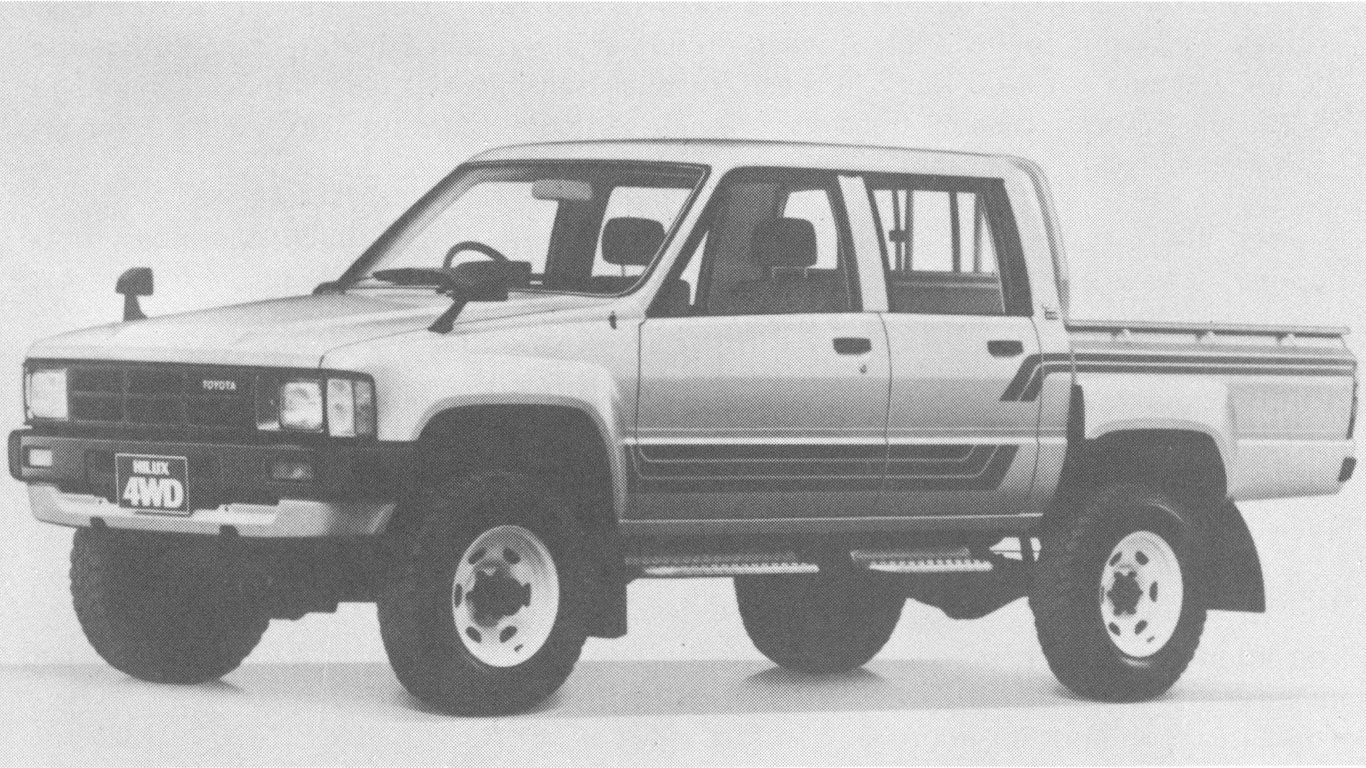
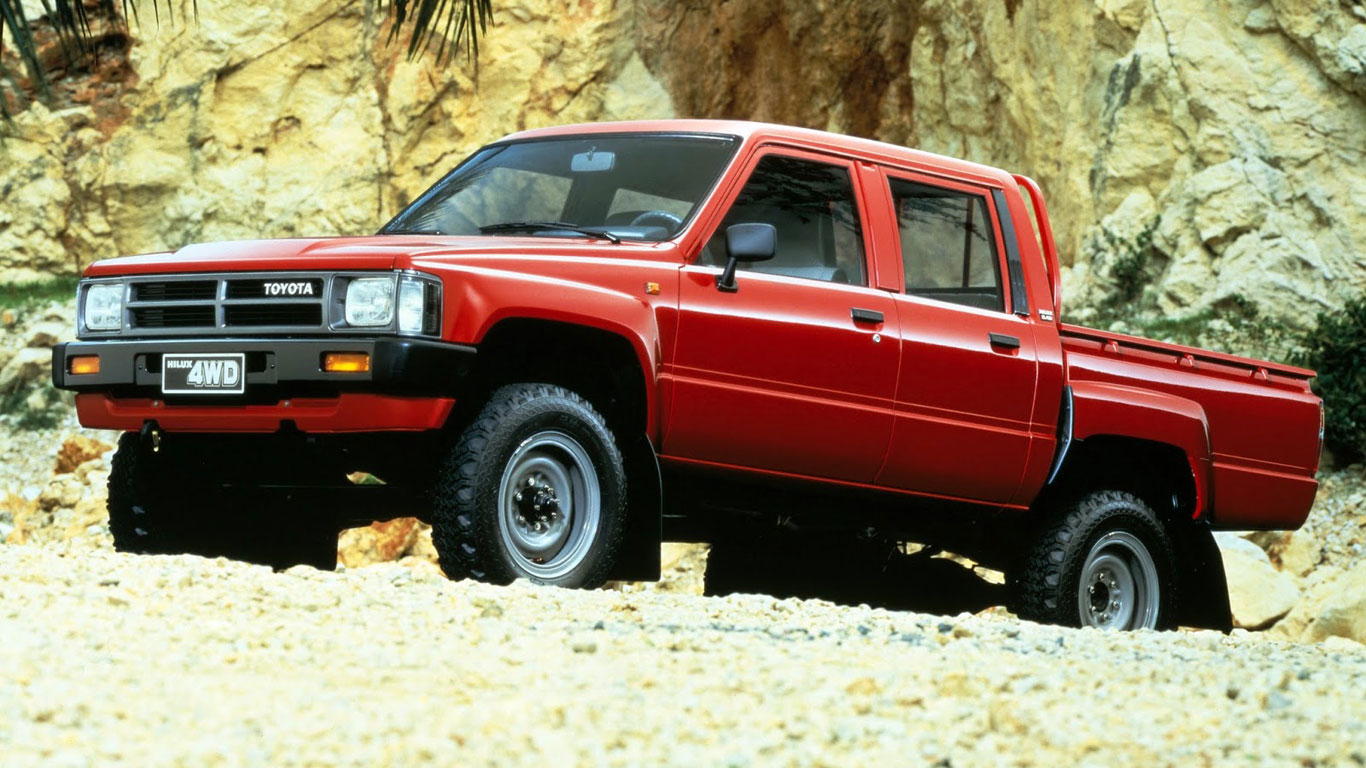
In November 1983, Toyota unveiled the fourth-generation Hilux, although its predecessor remained on sale in Japan as a rear-wheel-drive base model. All four-wheel-drive models featured a new body, complete with blister wheelarches at the front and rear. Once again, Toyota was keen to emphasise the car-like qualities of the Hilux, including a more ‘luxurious’ cabin and a new instrument panel. Options included power steering, an electric winch, automatic locking hubs, a clinometer and altimeter.

Toyota Hilux Surf

Toyota Hilux History

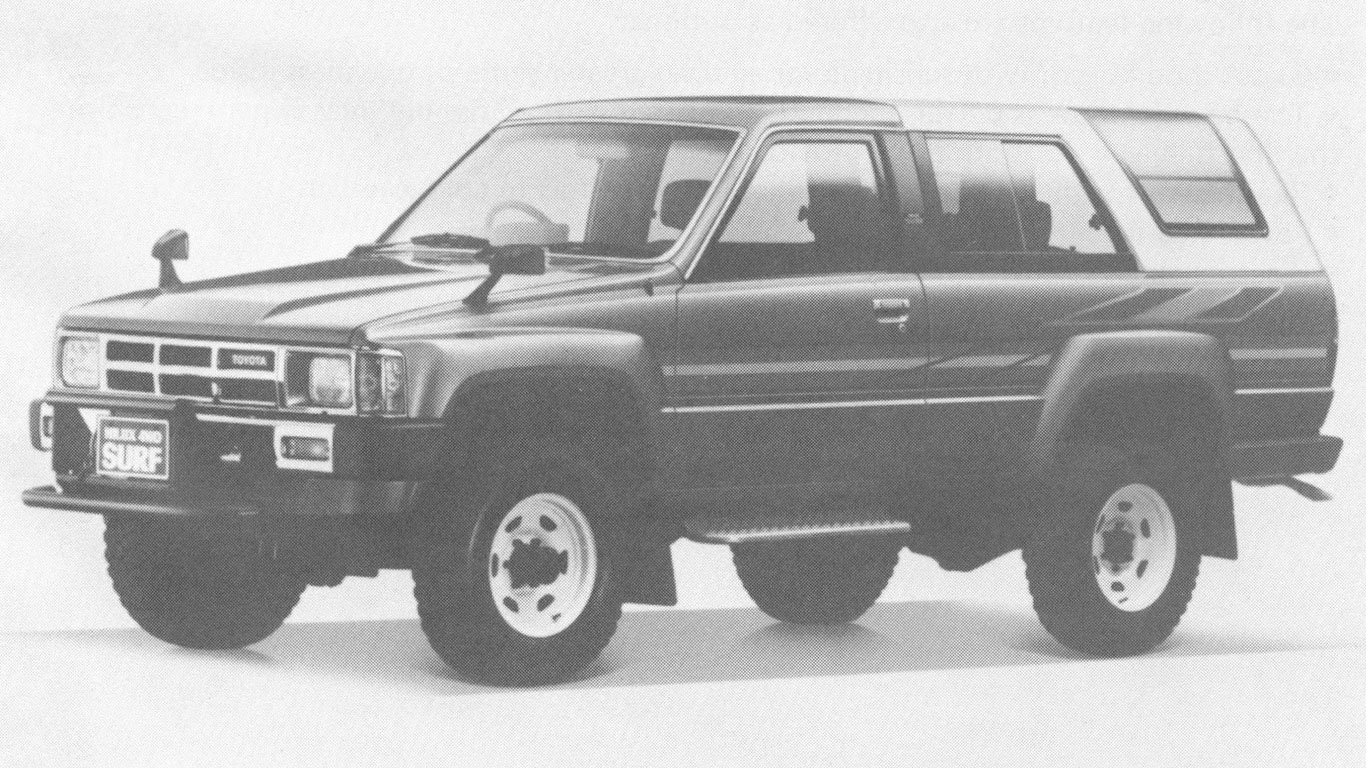
Back in 1981, Toyota had cosied up to Winnebago to create an oft-forgotten concept called the Trekker. The SUV was based on the four-wheel-drive Hilux, with Winnebago and two other body manufacturers adding a fibreglass body to create a rival to the Bronco or the Blazer. This led to the development of the Hilux-based Surf (or 4Runner), with a fibreglass top, electric rear windows, fabric upholstery and van-like versatility. Options included a carpeted rear deck, glass moonroof, rear heater for the back seat area and an electric winch.

Production reaches four million

Toyota Hilux History

In June 1986, Toyota announced that cumulative production of the Hilux had hit four million, making it the first Toyota truck to reach this milestone. Of the four million units, exports accounted for around 90 percent, although in 1985 this was as much as 95 percent.

Toyota Hilux N50

Toyota Hilux History

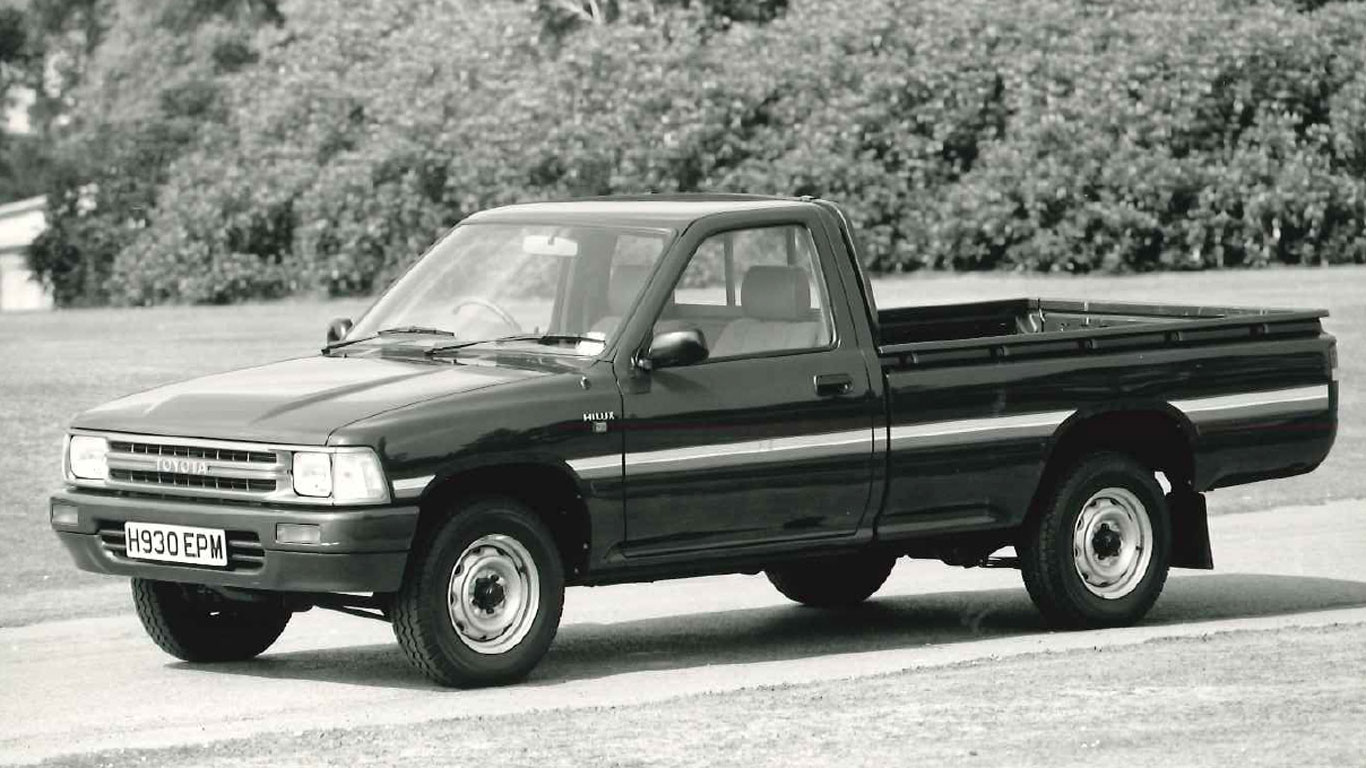
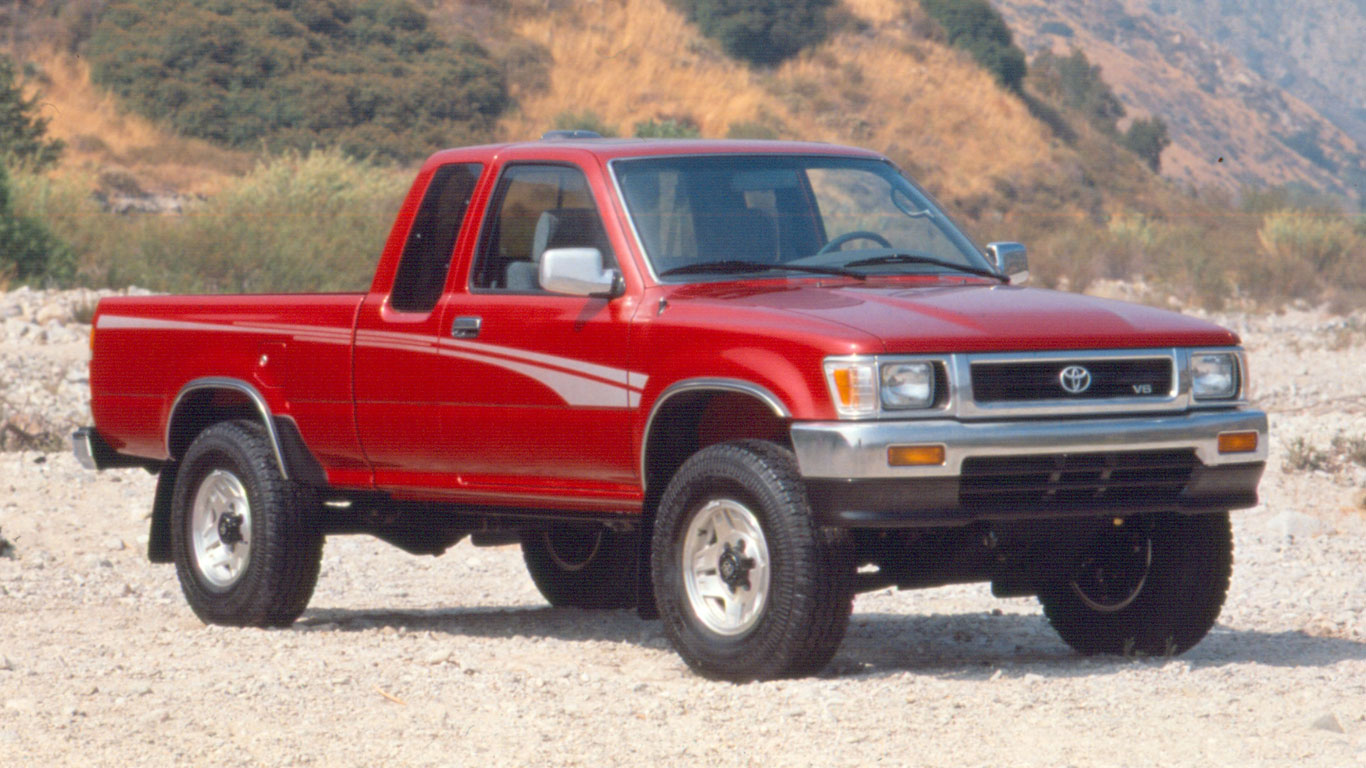
The fifth-generation Hilux was unveiled in September 1988, before arriving in the UK in 1989. “A commercial vehicle should combine reliability, durability, economy and the right specification for the job,” said Toyota GB, “and the familiar Hilux has done this with considerable style; its chunky good looks have always made it stand out in any working environment.”

Toyota Hilux N50

Toyota Hilux History

Three models were available at launch: a two-wheel-drive petrol for £7,348.50, and a choice of two four-wheel-drive options, powered by a petrol or diesel engine. Short- and long-wheelbase versions were available, along with double and Xtra cabs, but unlike in North America, the Hilux remained a commercial proposition.

Volkswagen Taro

Toyota Hilux History

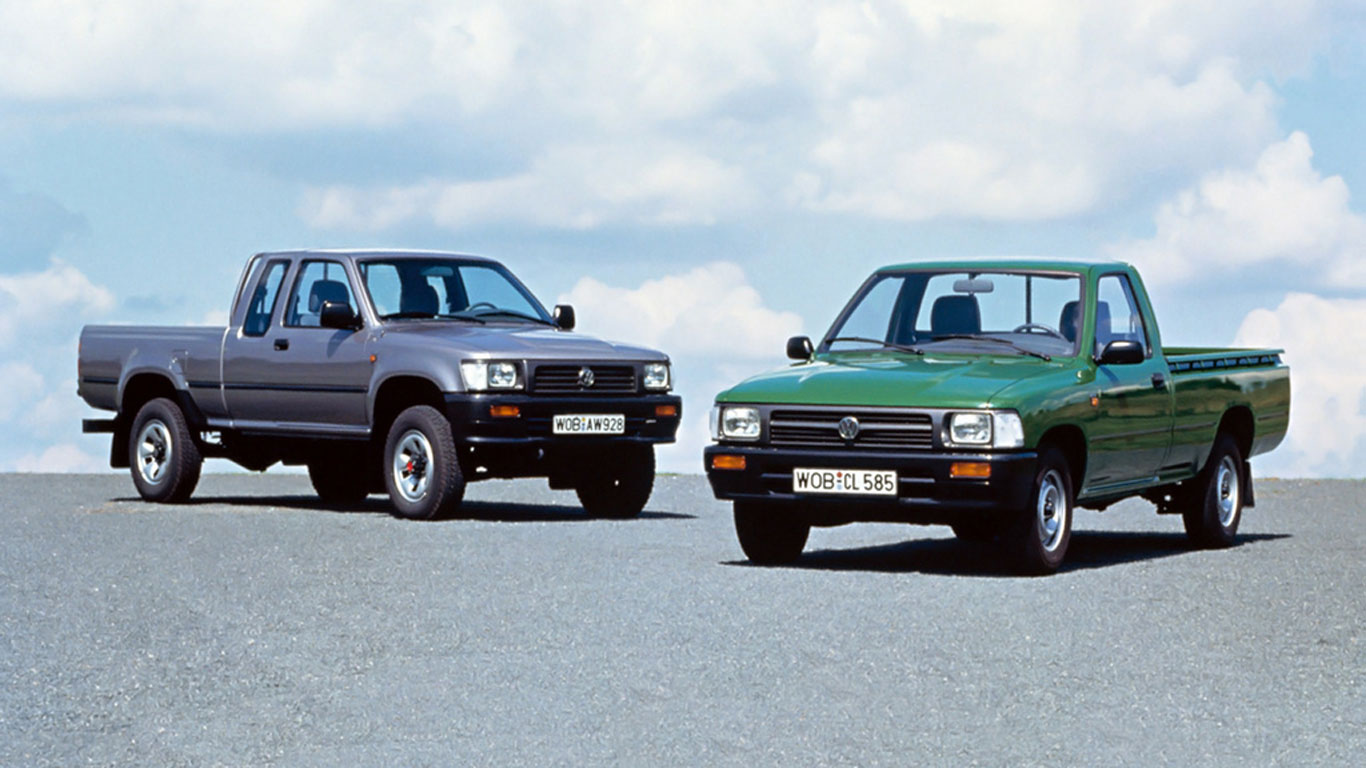
In 1989, overseas production of the Hilux began in Hanover, Germany, following an agreement between Toyota and Volkswagen. The relationship lasted just eight years, but led to the introduction of the VW Taro, while some two-wheel-drive Hilux models sold in Britain were made in Germany.

Toyota Tacoma

Toyota Hilux History

Meanwhile, in the USA, the Toyota Hilux was going through something of a revolution. Independent front suspension gave Toyota the space to fit a V6 engine, enabling it to compete with the Ford Ranger and Chevrolet S-10. But it wasn’t enough, and Toyota was forced into a rethink. The decision was made to switch from an imported truck to the US-built Tacoma, which arrived in 1995.

Toyota Hilux N60

Toyota Hilux History

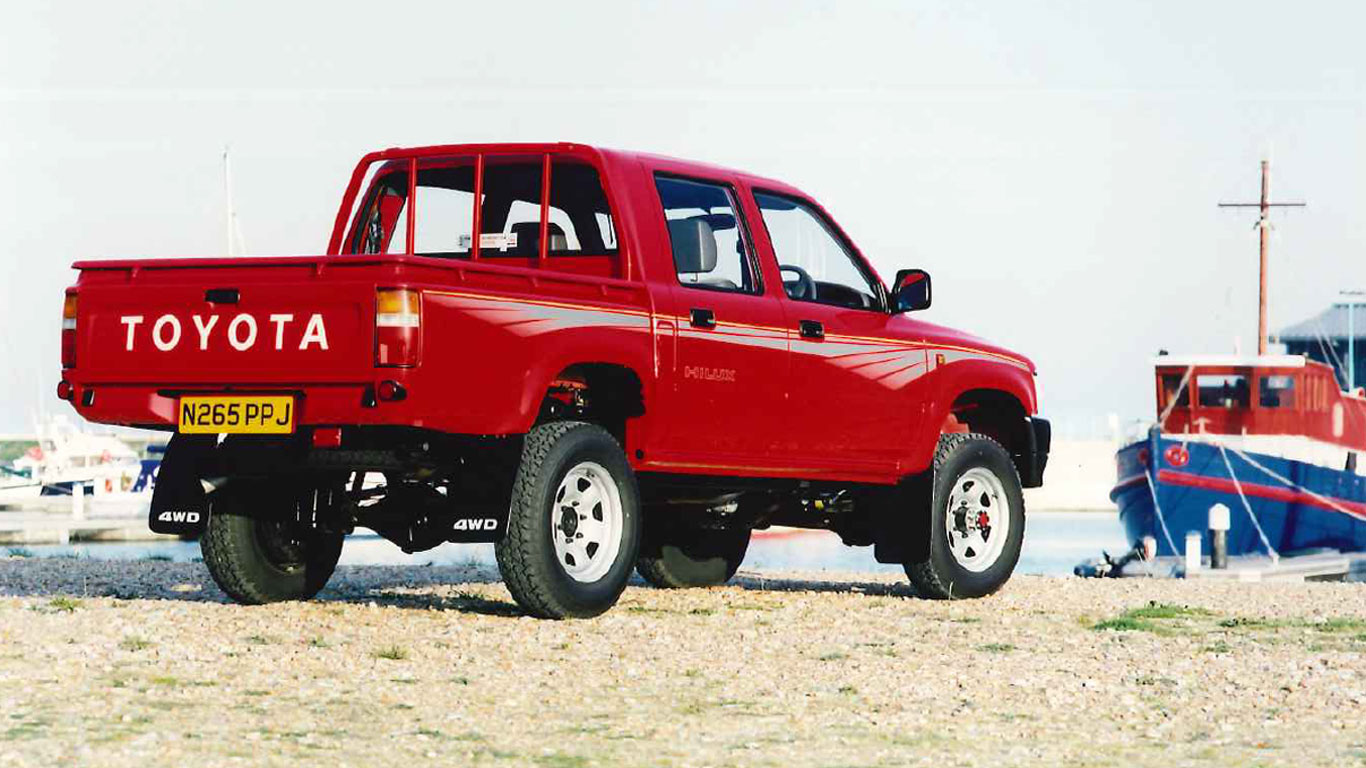
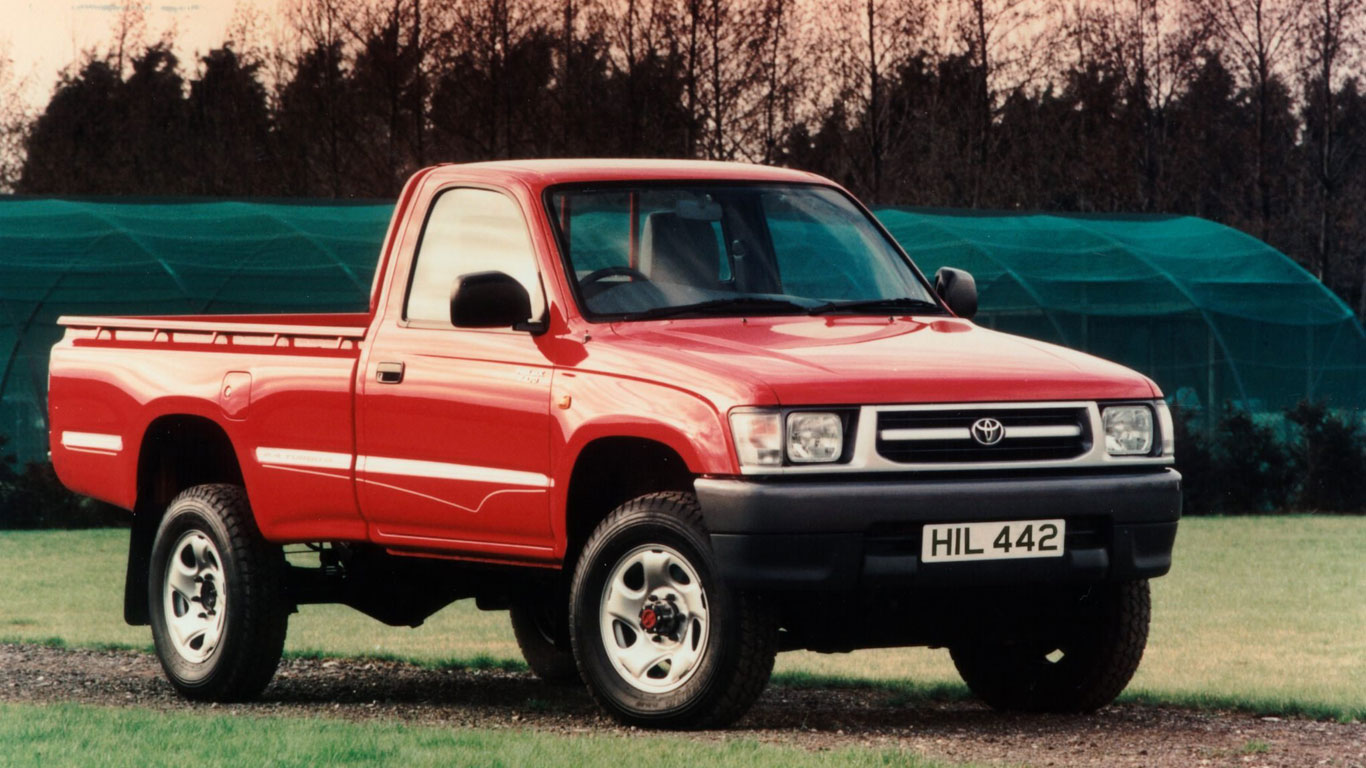
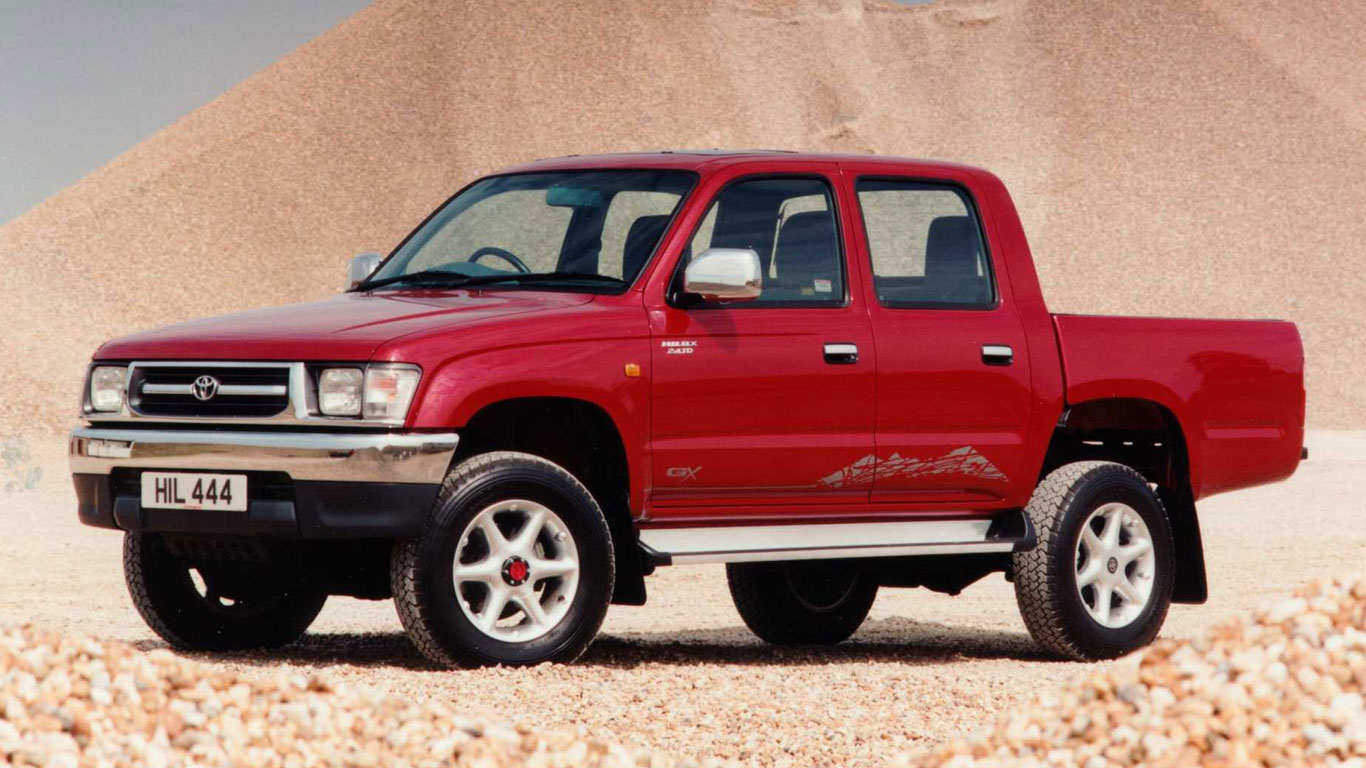
With the Hilux Surf/4Runner and Tacoma forging their own paths, the Hilux was left to go it alone. The sixth-generation pick-up arrived in 1997, with Toyota keen to emphasise the split-personality of the Hilux: as adept at carrying building materials as it was transporting mountain bikers to a muddy trail. “The new Hilux is dramatic and sporty in its design and will satisfy both the established market for reliable, working pick-up trucks and the newer, growing market where customers drive the vehicle in their leisure time,” said Toyota GB in October 1997.

Toyota Hilux N60

Toyota Hilux History

All models now came with independent front suspension, which played in a part in the Hilux re-establishing its lead in the commercial one-ton pick-up market. In Japan, Toyota even went as far as labelling the Hilux designed for personal use as the “Sports Pickup”, complete with sports seats.

Toyota Hilux N70

Toyota Hilux History

The seventh-generation Hilux arrived in August 2004 and was now on sale in 164 markets. This was the first Hilux to not be built in Japan, with production facilities based in nine different countries, including Thailand, South Africa and Argentina. Significantly, with sales (at this point) totalling 12 million, it was the second-best selling Toyota behind the Corolla.

The current Toyota Hilux

Toyota Hilux History

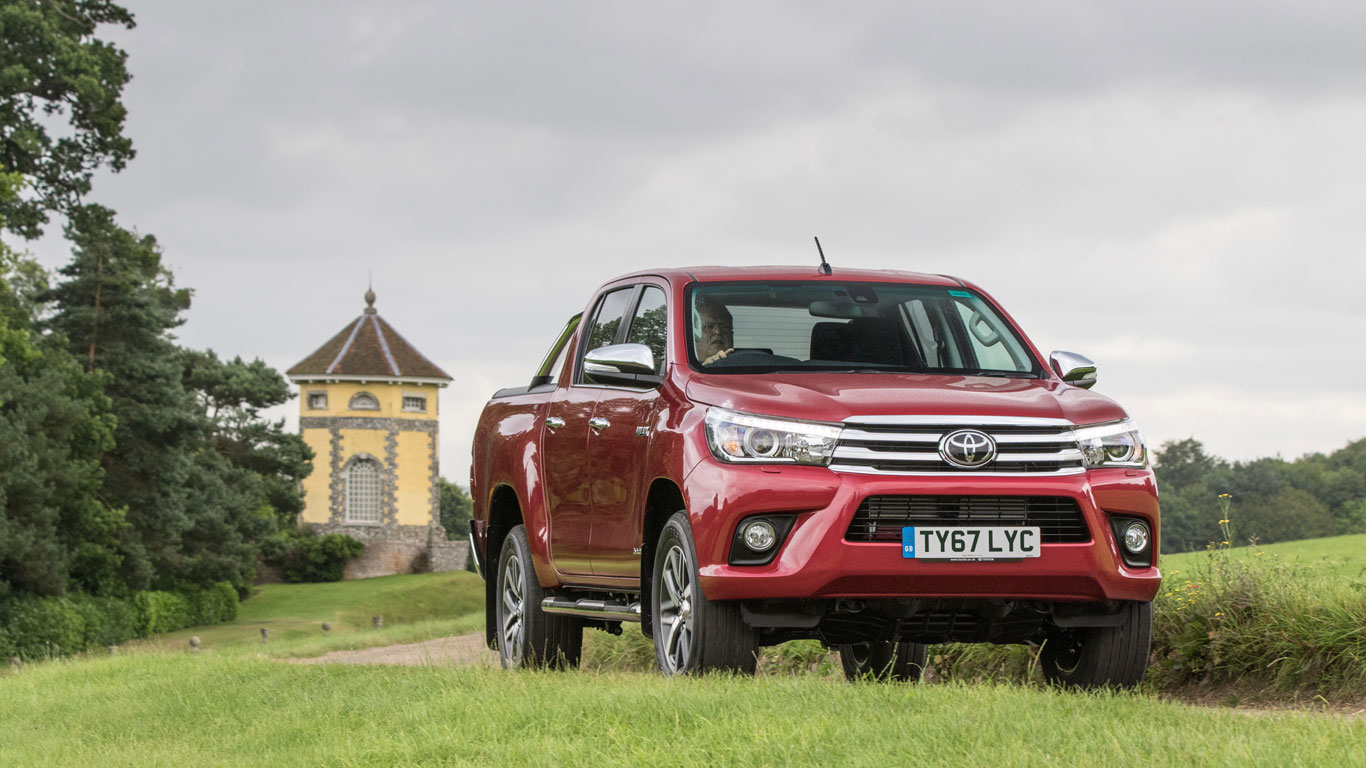
The current Toyota Hilux was introduced in May 2015, by which time the pick-up had amassed cumulative global sales of more than 18 million. Hiroki Nakajima, Hilux executive chief engineer, said: “My motto is ‘seeing is believing’, so I made it a point to begin by visiting as many countries where Hilux is sold as possible. Of those 172 countries around the world, I visited more than 110, to hear first-hand from real users and witness for myself the conditions in which Hilux was being driven.”

Read more:

Advertisement

Official: Porsche Le Mans racer is faster than an F1 car

0

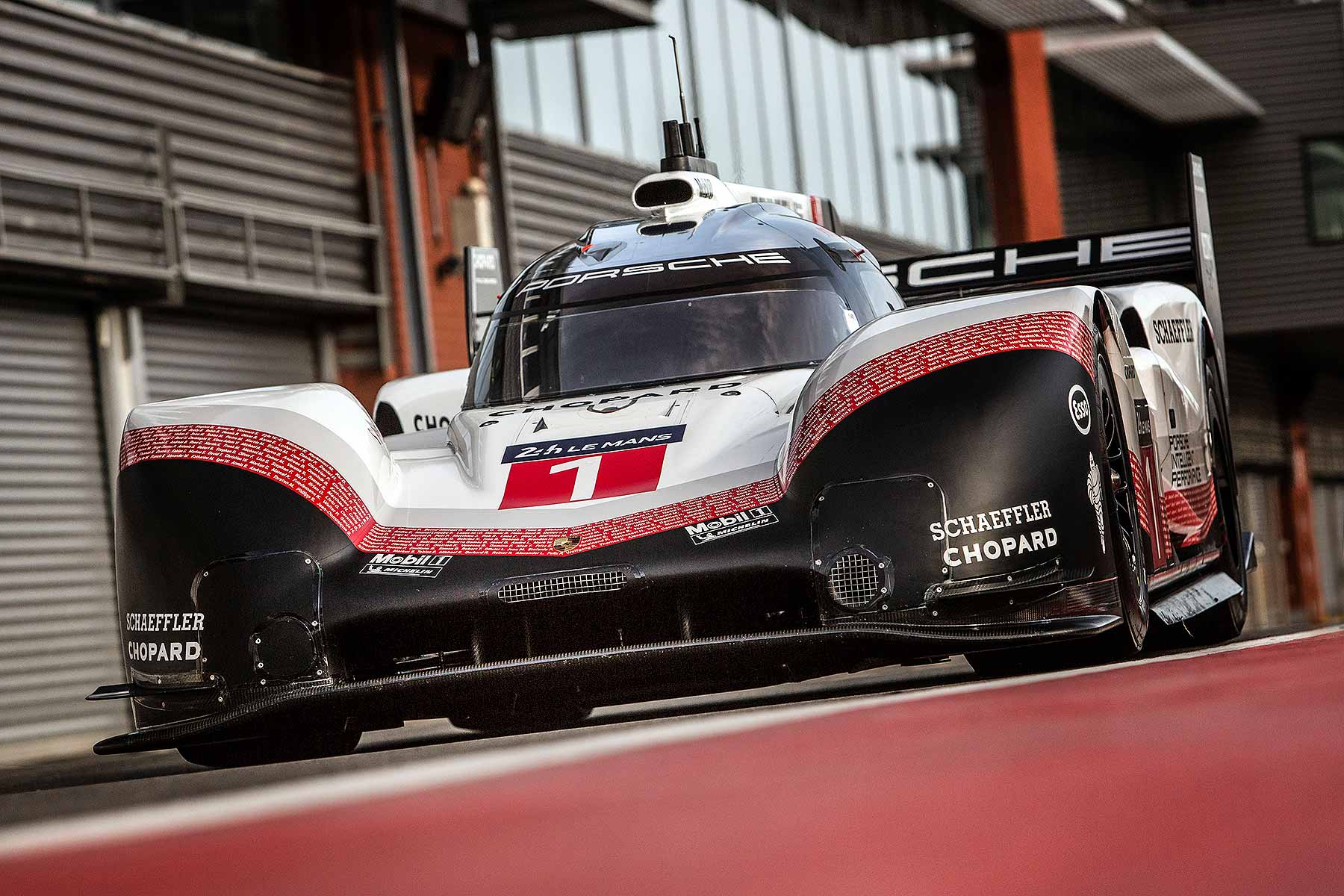
Porsche 919 Hybrid EvoA Porsche works driver has lapped a special evolution version of the firm’s Le Mans-winning 919 Hybrid LMP1 sports car around Belgium’s Spa-Francorchamps circuit more quickly than reigning F1 champ Lewis Hamilton in last year’s title-winning Mercedes-AMG racer.
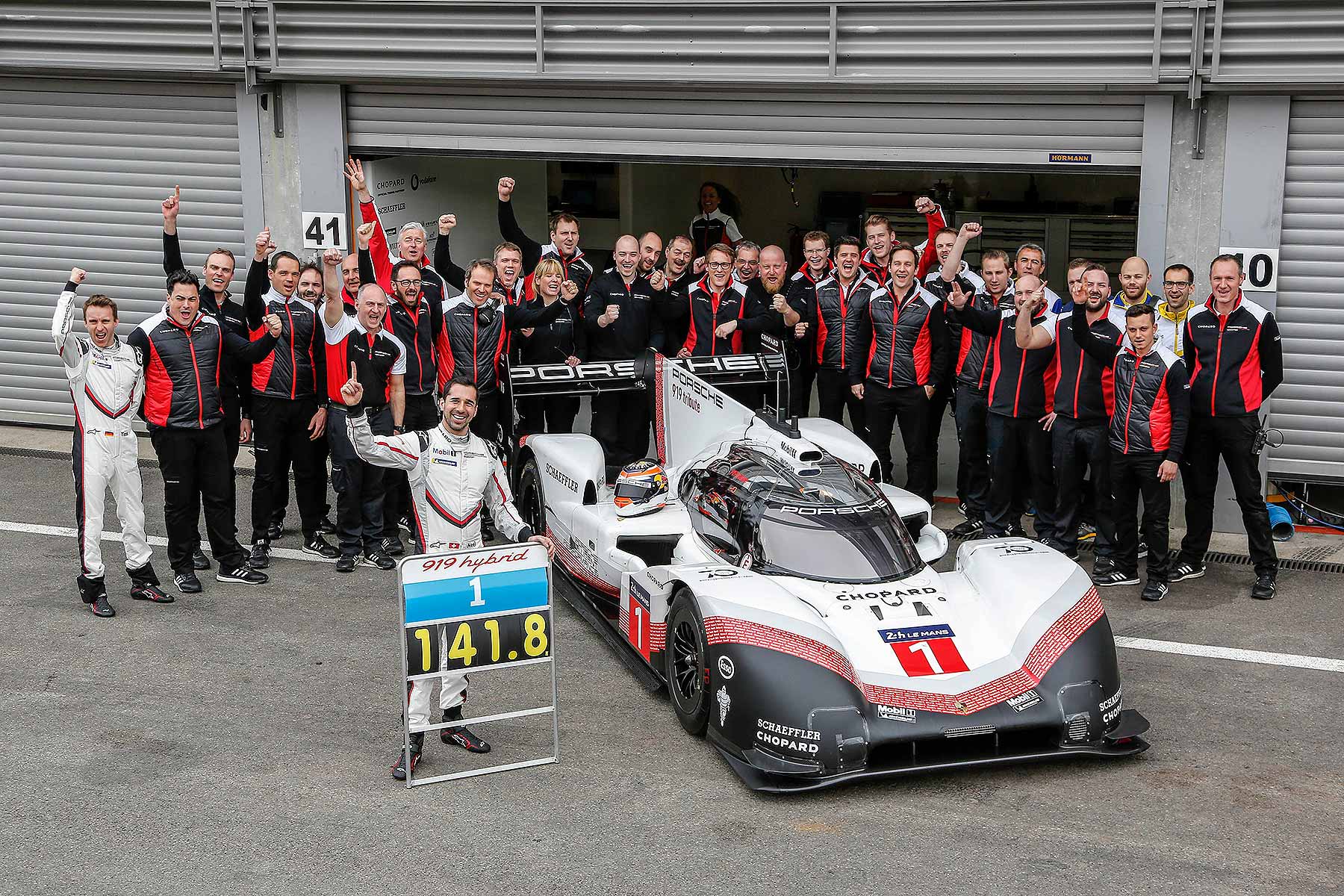
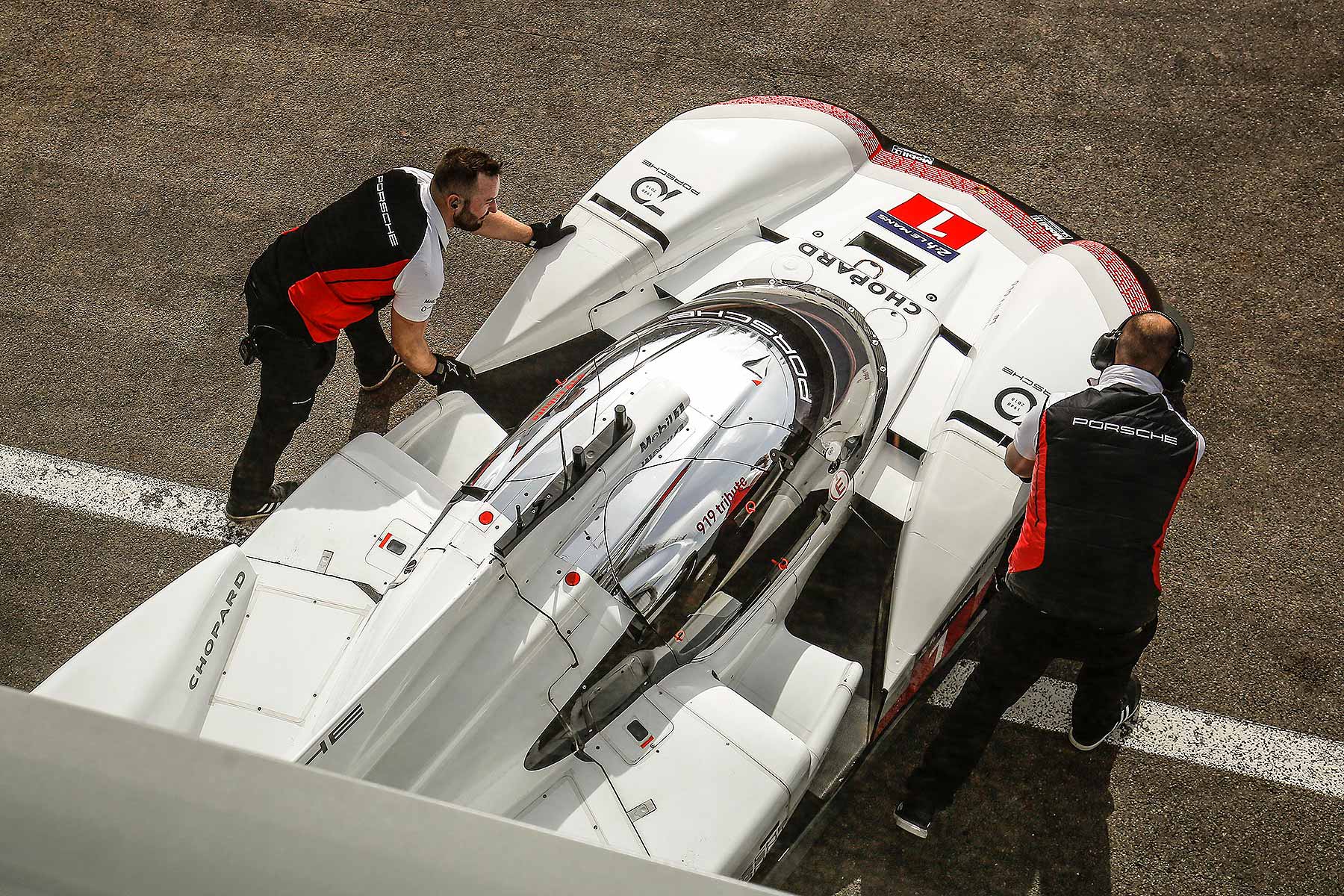
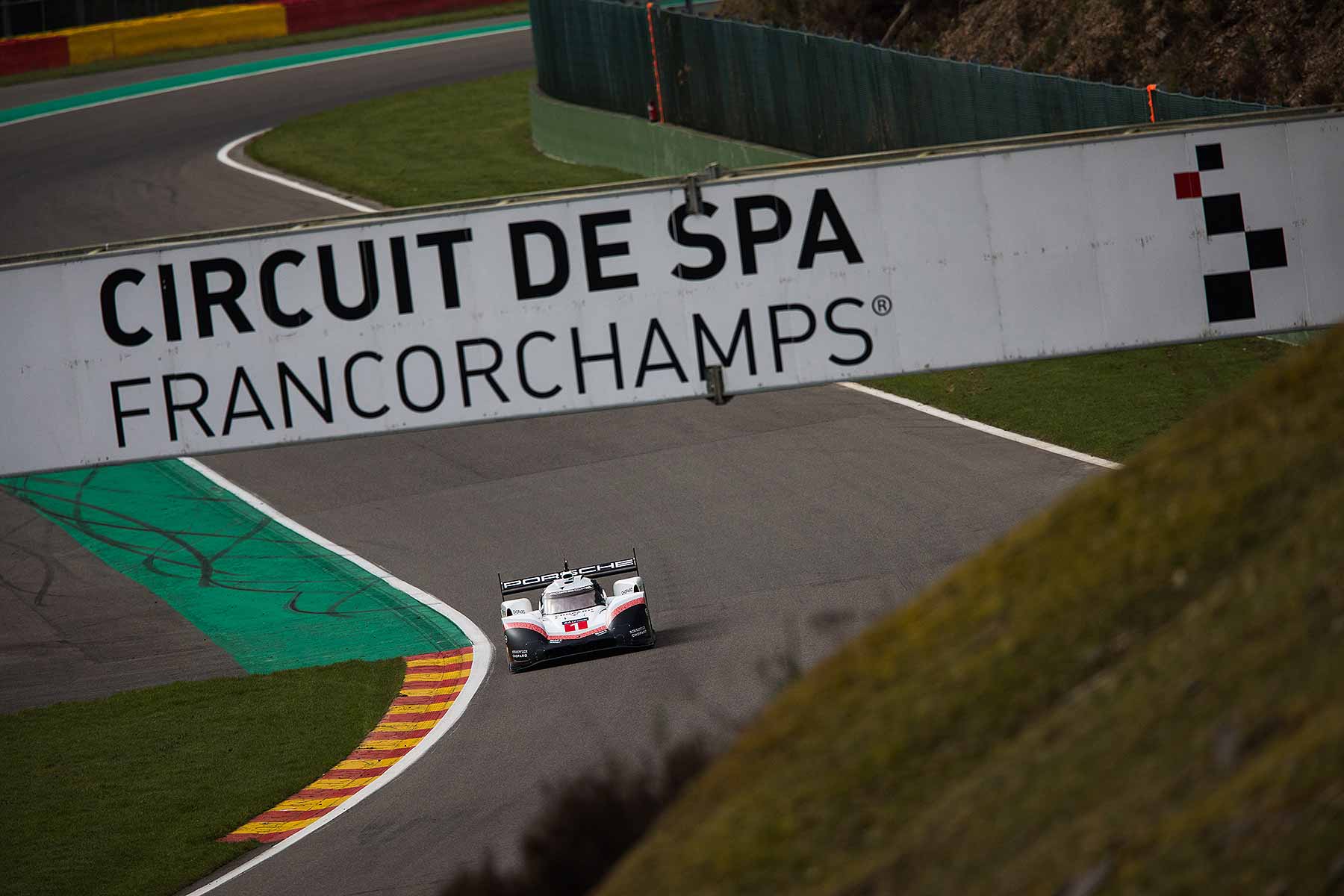
The incredible lap time of 1:41.770, set by Swiss Neel Jani, was a full 0.783 seconds faster than Hamilton’s 2017 pole position time of 1:42.553. Porsche LMP1 vice president Fritz Enzinger described it as “an absolute fantastic lap – an outstanding drivers’ performance from Neel and the result of great engineering.”

Why did Porsche stage the high-speed demonstration run? To “prove the ultimate performance of the most innovative race cars of its time. Our target was to show what the 919 Hybrid Evo is able to do when we loosen the restrictions that normally come from the regulations.”

Porsche 919 Hybrid Evo

Jani, who hit a top speed of 223mph during the lap, called the car “brutally impressive. It is definitely the fastest car I ever drove. The grip level is at a fully new dimension for me – I couldn’t imagine this amount beforehand.

“The speed at which everything happens on a single lap with the 919 Evo is that fast that the demand on reaction speed is very different to what I was used to in the WEC (World Endurance Championship).

“We are not only faster than the F1 pole from 2017… today’s lap was 12 seconds faster compared to our WEC pole position from last year!”

Porsche 919 Hybrid Evo: what’s changed?

Porsche 919 Hybrid Evo

You might think, given such an amazing demonstration of sheer speed, that Porsche has massively modified its Le Mans winner. Not so, insisted Stephen Mitas, the car’s chief race engineer and leader of the 919 Evo project.

“We all knew no matter how successful the 919 Hybrid was, it could never show its full abilities.” But Porsche has sought to explore them not by modifying the engine – none of the powertrain hardware has been changed – but by simply upping the fuel flow rate and increasing the amount of energy the hybrid system can recover.

More extensive are the changes to the car’s aerodynamics A revised aero package delivers 53 percent more downforce and 66 percent greater aerodynamic efficiency. Meanwhile, 39kg has been cut from the kerb weight (taking it under 850kg) and Michelin has even developed special tyres to cope with a car that generates more downforce than an F1 car. It’s a phenomenal machine.

Porsche 919 Hybrid Evo

Actually, even the Evo version doesn’t fully exploit the technical potential, added Mitas. “This time we were not limited by regulations but by resources.” Even so, “it is a very satisfying feeling that what we’ve done to the car was enough to crack the Formula One record.”

Don’t think you’ve missed your opportunity to see the monstrous Porsche 919 Evo in action, either – as part of the 919 Tribute Tour, it’s coming to the Goodwood Festival of Speed in July, and the Festival of Porsche at Brands Hatch in early September.

Don’t miss your chance to witness what could possibly be the fastest racing car ever built…

Watch: Porsche 919 Hybrid Evo at Spa

Advertisement

New diesel car tax rules come into force: everything you need to know

0

New diesel car tax rules: everything you need to know

New vehicle excise duty (VED, or car tax) rules have now come into force that could cost you as much as £500 – yet a survey has revealed that nearly nine out of 10 drivers still don’t know about the changes.

The revised system, introduced at the beginning of April, is based on new ‘real driving emissions’ tests. This means if you buy any new Euro 6 diesel that emits more than 120mg/km of NOx (nitrogen oxides), you’ll be forced to pay more for road tax in the first year.

Currently, all diesel cars on the market exceed this figure, meaning they’ll all move up a band under the new VED rules. This means a Nissan Qashqai 1.5-litre dCi 110, for example, which emits 99g/km CO2, will now cost £145 to tax for the first year – up from £125 currently.

At the other end of the scale, a Mitsubishi Shogun will cost a hefty £2,070 to tax for the first year – an increase of £370.

Under new regulations introduced in 2017, all new petrol and diesel cars costing less than £40,000 are charged a first year tax rate based on CO2 emissions. This is followed by a flat rate of £140 every year, plus an extra £310 supplement for five years for cars costing more than £40,000.

First year VED rates 2018-2019
CO2 emissions (g/km) Petrol cars Diesel cars
0 £0 £0
1-50 £10 £25
51-75 £25 £105
76-90 £105 £125
91-100 £125 £140
101-110 £145 £165
111-130 £165 £205
131-150 £205 £515
151-170 £515 £830
171-190 £830 £1,240
191-225 £1,240 £1,760
226-255 £1,760 £2,070
More than 255 £2,070 £2,070

Although the premium is small for cleaner diesels, high-emitting diesels could face an increase of more than £500 in their first year.

In reality, most diesel car buyers won’t notice a huge difference, as the first year’s road tax is lumped into the on-the-road price of a new car. However, it’s another in a series of anti-diesel messages which nearly half of drivers say are confusing, according to the survey by Confused.com.

“Drivers are clearly confused about the messaging around diesel vehicles,” said the website’s motoring editor, Amanda Stretton. “It’s no wonder motorists are not up to speed with the latest laws.

“As we head towards 2040, when the sale of new diesel and petrol vehicles will be banned, we expect drivers will see numerous incentives and penalties being introduced. Whether such measures will encourage take up of more environmentally friendly car-types remains to be seen.”

The number of new diesel cars being registered continues to plummet, as Confused.com’s research reveals that 60 percent of drivers say they wouldn’t consider a diesel for their new car.

Speaking earlier this month, the Society of Motor Manufacturer and Traders (SMMT) chief executive Mike Hawes said: “Although the new car market has dipped, it remains at a good level despite the drop in demand for diesel. Consumers should be reassured, however, that the latest cars are the cleanest in history and can help address air quality issues, which is why they are econxempt from any restrictions.”

2018 car tax changes: Q&A

New diesel car tax rules: everything you need to know

Is tax for petrol cars going up?

Yes – but only by a small amount. Petrol cars emitting 99g/km CO2 will now be charged £105 in VED compared to £100. A car producing more than 255g/km CO2 will now be taxed £2,070 in the first year compared to £2,000.

Can I negotiate money off a new car to drop it below the £40,000 threshold?

No. The VED is based on a car’s list price including options as well as fuel, number plates and a delivery charge.

Are electric cars cheap to tax?

Yes and no. Zero-emission cars with a list price below £40,000 are free to tax, while hybrids are taxed on emissions, like petrol and diesel cars (albeit slightly cheaper). Even electric or hybrid cars with a list price of more than £40,000 attract the £310 premium for years two to six on top of the standard VED rate.

Read more:

Advertisement

These classic cars from 1978 are now tax-free

0

The rolling exemption for classic cars means that on the 1 April each year, vehicles built more than 40 years before 1 January that year will automatically be exempt from paying Vehicle Excise Duty (VED).
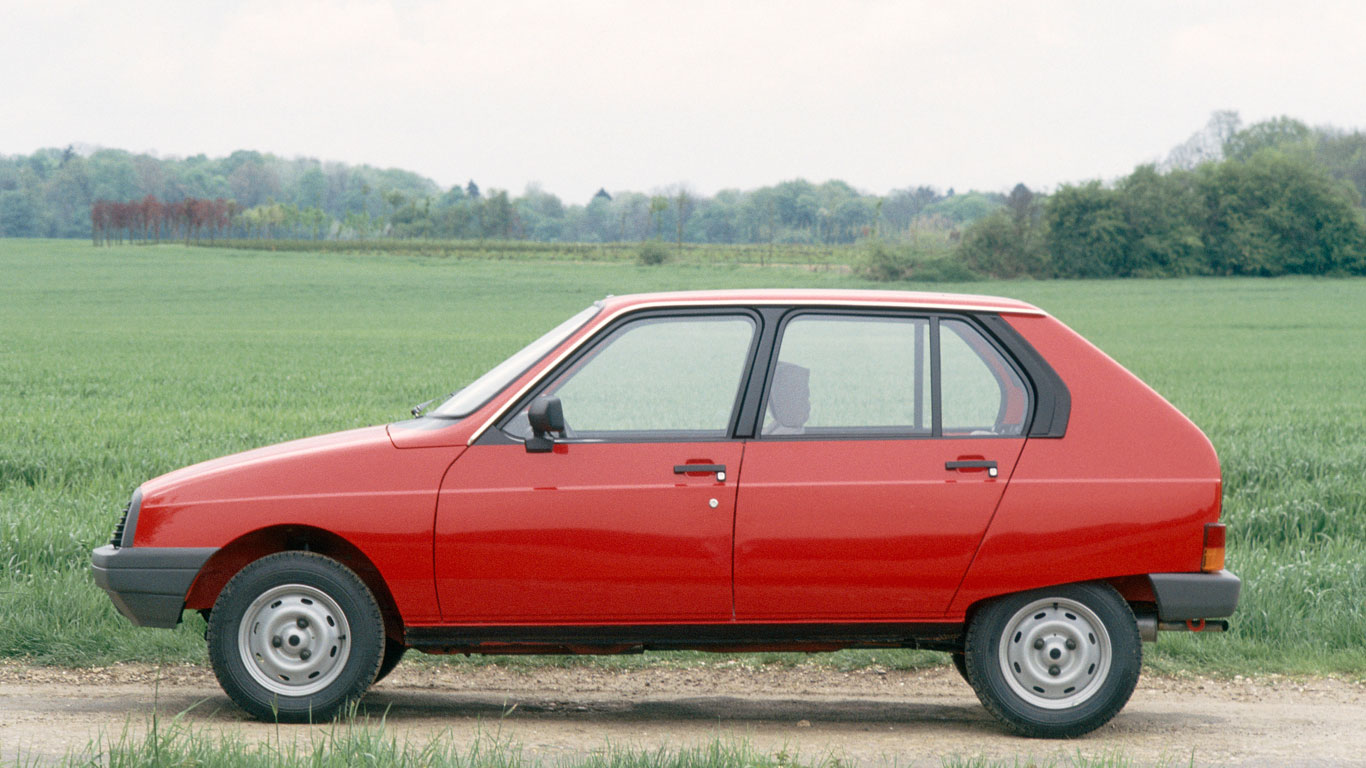
With this in mind, we’ve identified 12 of the many cars launched in 1978, as owners can look forward to a tax-free future.

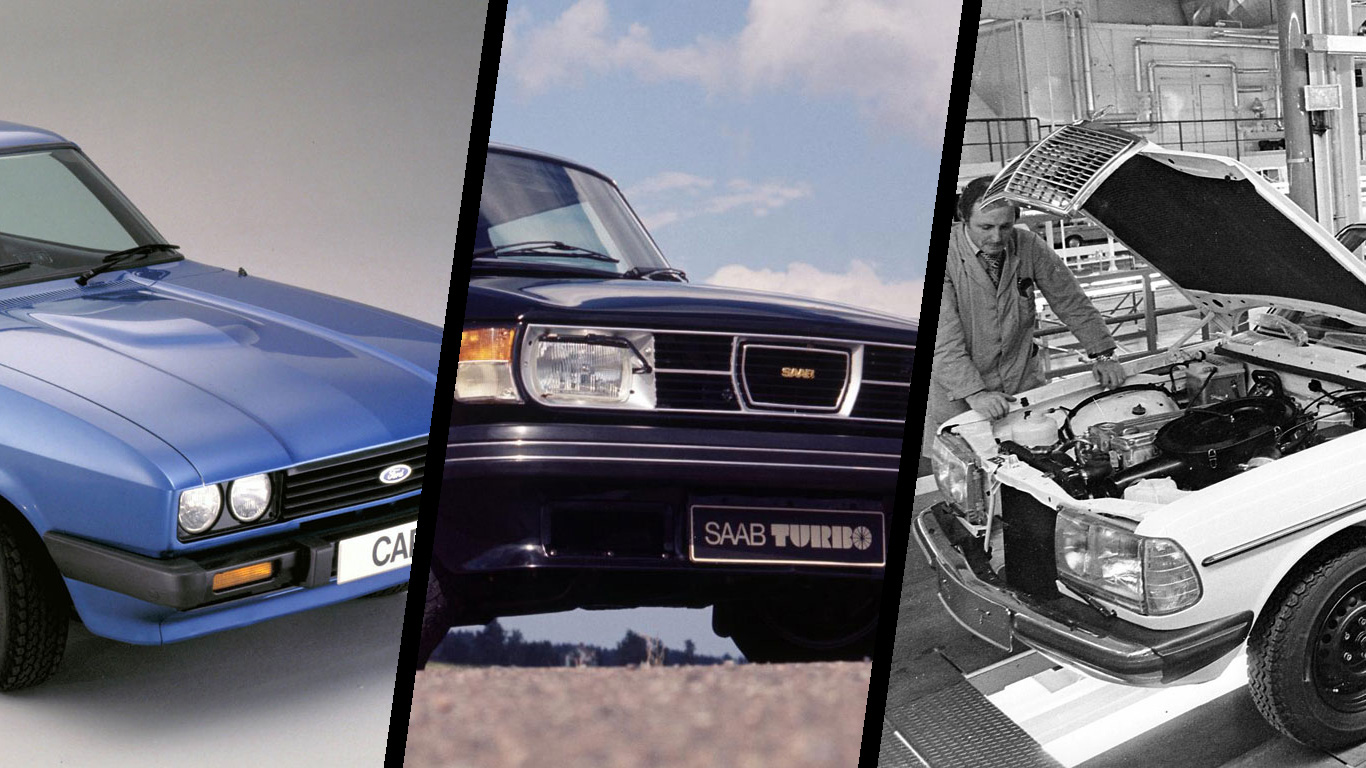
Saab 99 Turbo

The 99 Turbo was a turning point, not just for Saab, but for the world of performance cars. It was there at the genesis of mass-produced turbocharged cars, and went on sale in the UK with a price tag of £7,850. A few weeks later, it was overshadowed by the preview of the Saab 900, which arrived in showrooms in the spring of 1979.

Citroen Visa

Designed to fill the gap between the 2CV and the GS, the Citroen Visa was typically idiosyncratic. Highlights included a dashboard layout inspired by the CX, thermoplastic elastomer bumpers and, for entry-level models, a larger version of the 2CV’s air-cooled engine. Few cars survive.

Ford Capri Mk3

The Ford Capri Mk3 was announced on the 2 March 1978, boasting four circular headlights, a louvred radiator grille, new rear lights and a front spoiler. The new appearance was designed to improve aerodynamics, but Ford’s marketing men would have been pleased with the improved aesthetics. The Capri lived on for another decade, bowing out with the limited edition 280.

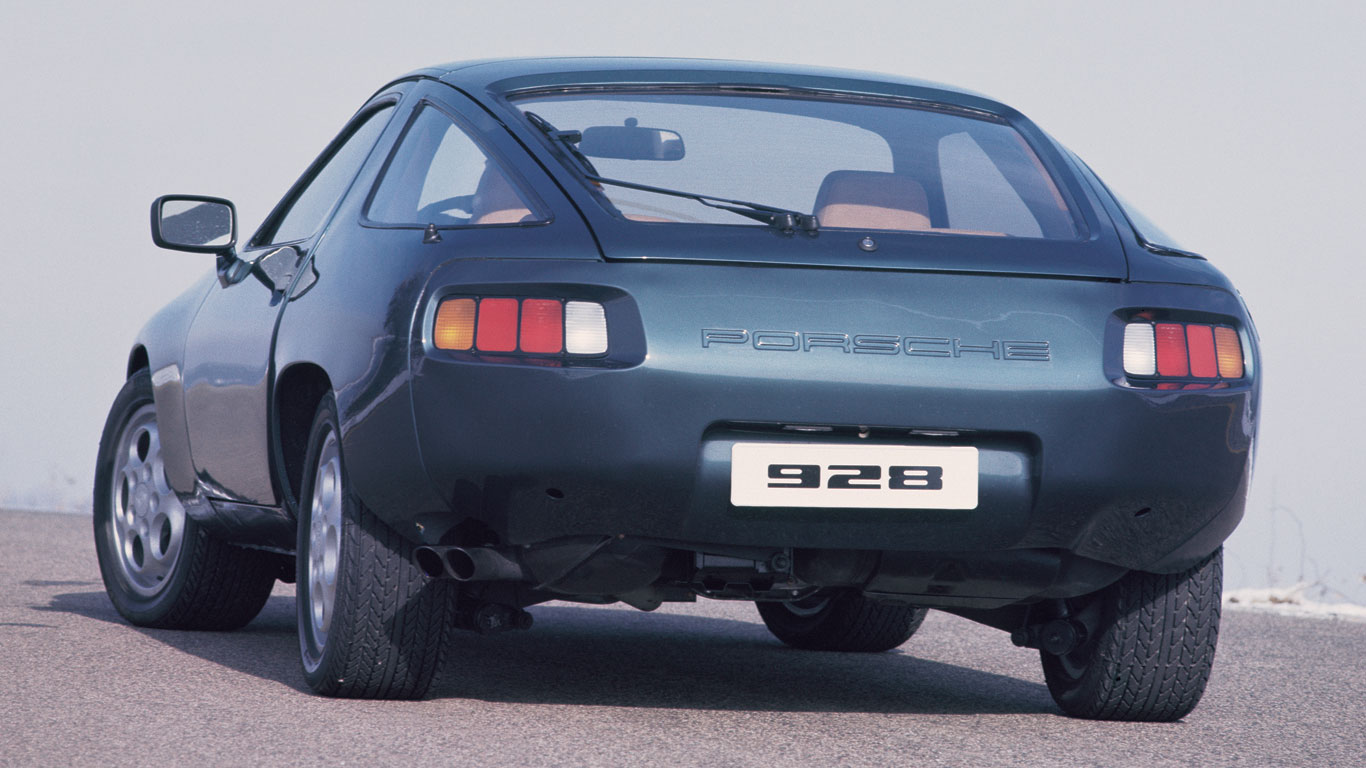
Porsche 928

Making its debut at the 1977 Geneva Motor Show, the first right-hand drive Porsche 928 cars were delivered in February 1978. Famously launched to succeed the iconic 911, the 928 failed to capture the public’s imagination and sales were slow and steady. A programme of gradual improvements created a fine GT car, but the 928 died in 1995, leaving the 911 to live on as Porsche’s flagship sports car.

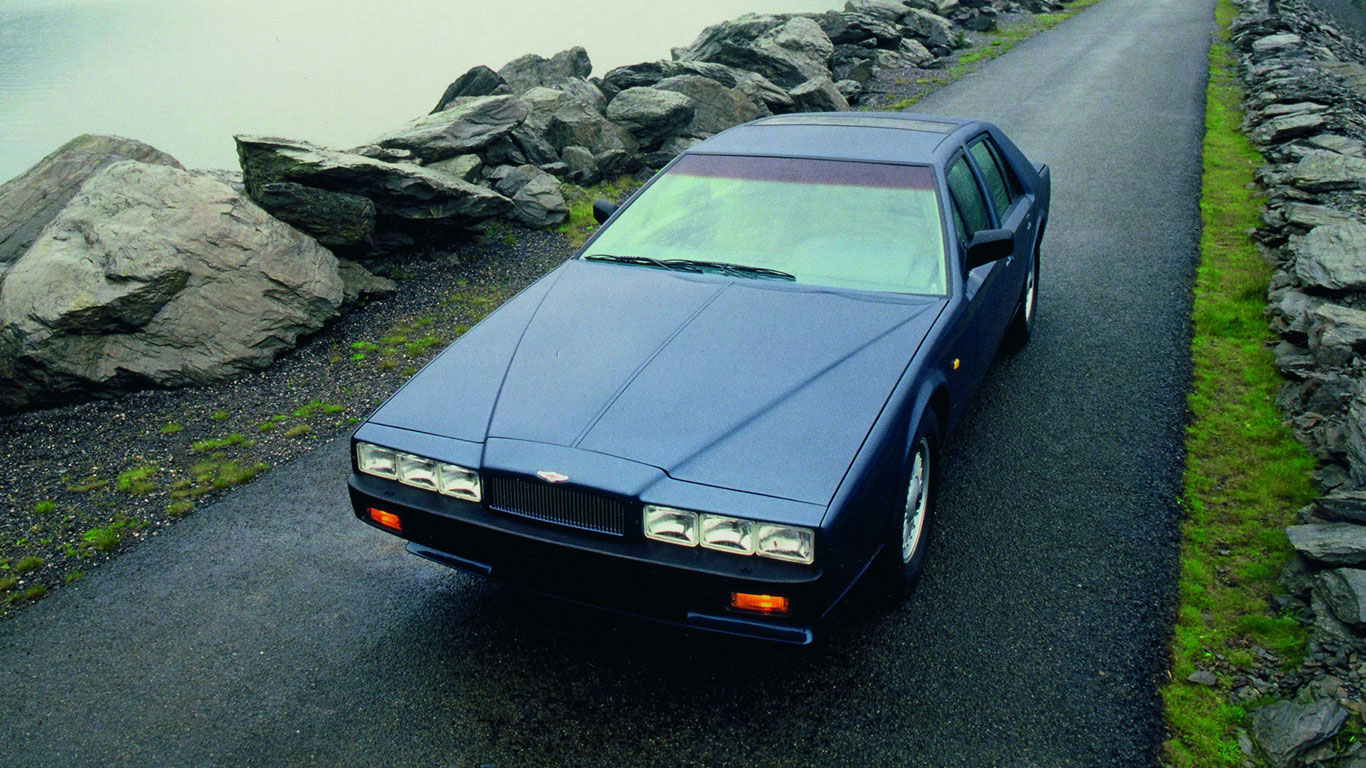
Aston Martin Lagonda

Two years after the first prototype was unveiled, the first Aston Martin Lagonda saloon models were delivered in 1978. In April of that year, a Lagonda would have set you back £32,620, which is about £193,250 in today’s money.

Mercedes-Benz W123 T

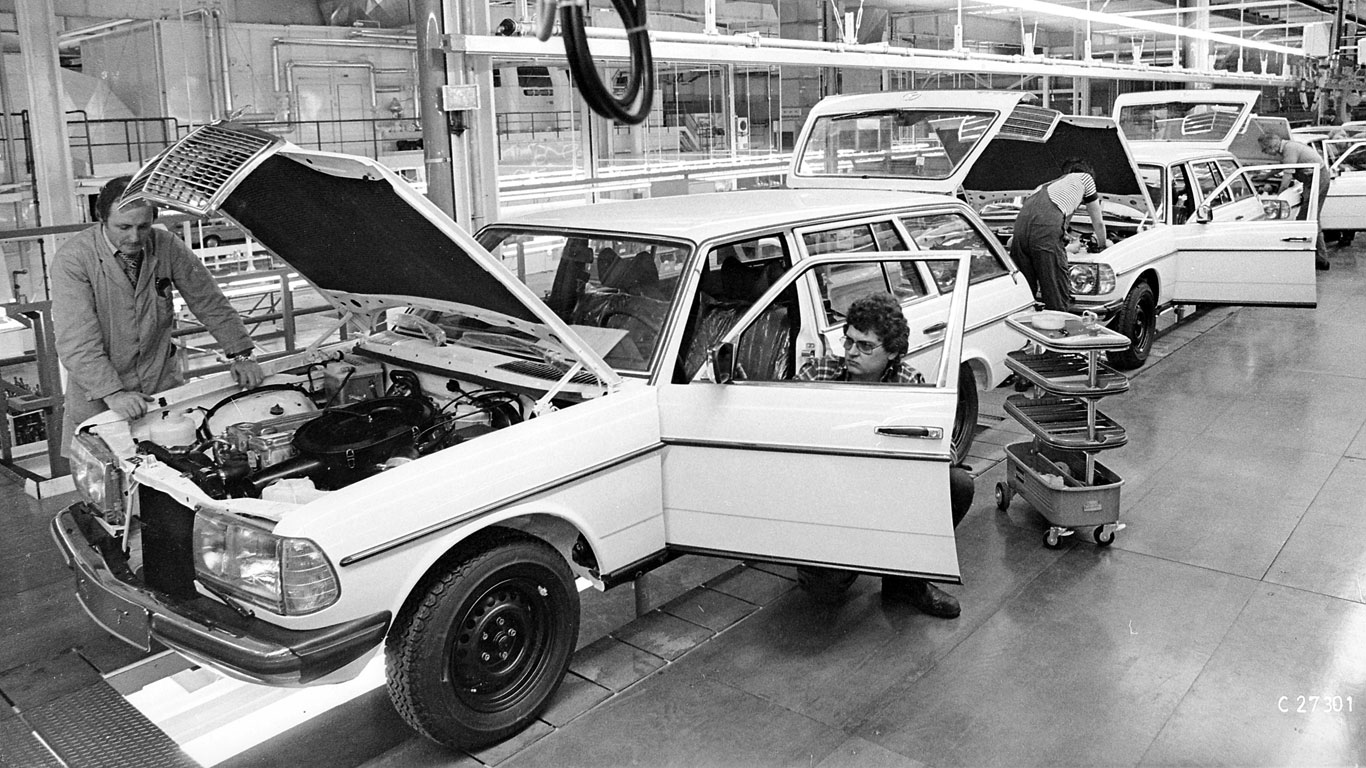
In 1977, Mercedes-Benz launched its first estate car, with the first right-hand drive models scheduled for delivery in 1978. The W123 T – or Touring and Transport – is arguably the ultimate version of one of the greatest cars of the 20th century. If you’re looking for reliable family transport, this is so much cooler than a PCP deal on a new crossover.

Opel Monza

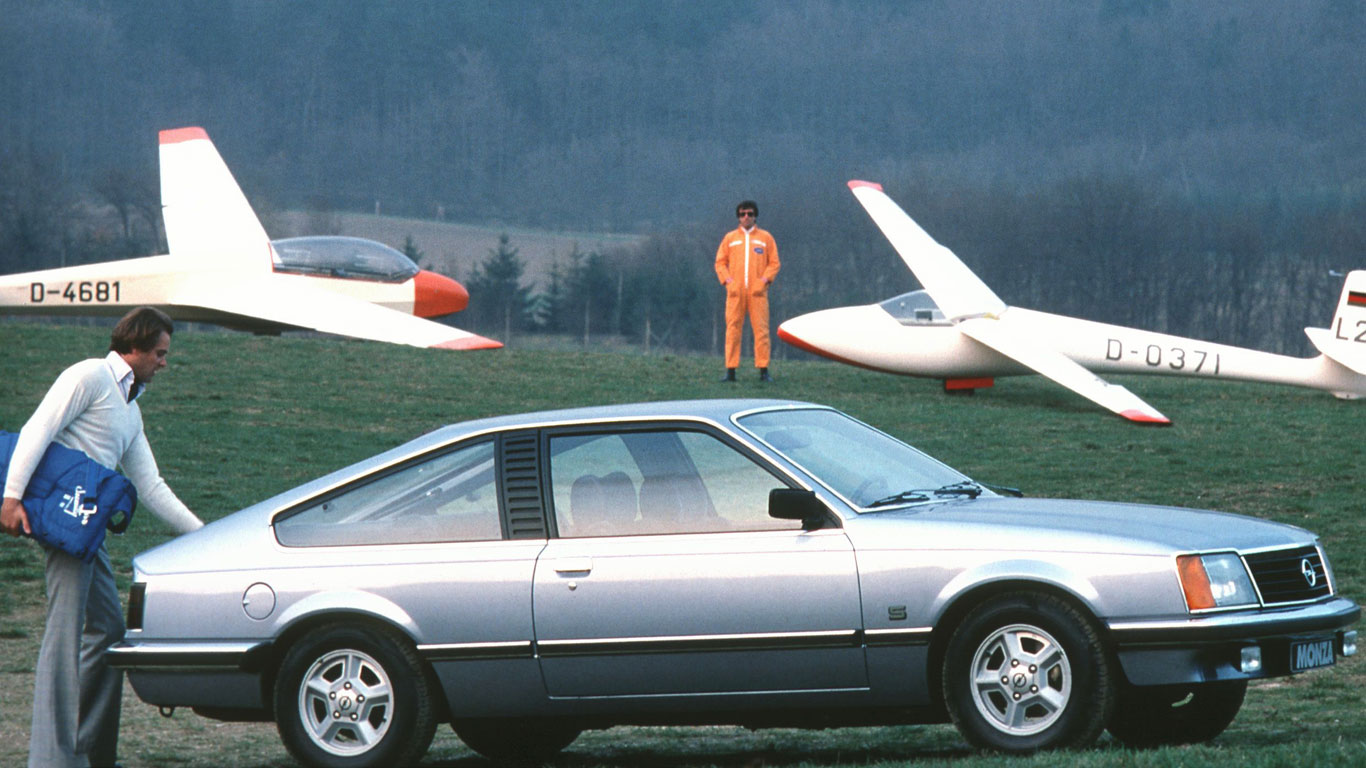
Previewed in 1977, the first Opel Monza models went on sale in May 1978. Based on the Opel Senator, the Monza felt more exotic than its GM parentage would suggest, especially in 3.0-litre form. It certainly sounded more glamorous than the Vauxhall version…

Vauxhall Royale

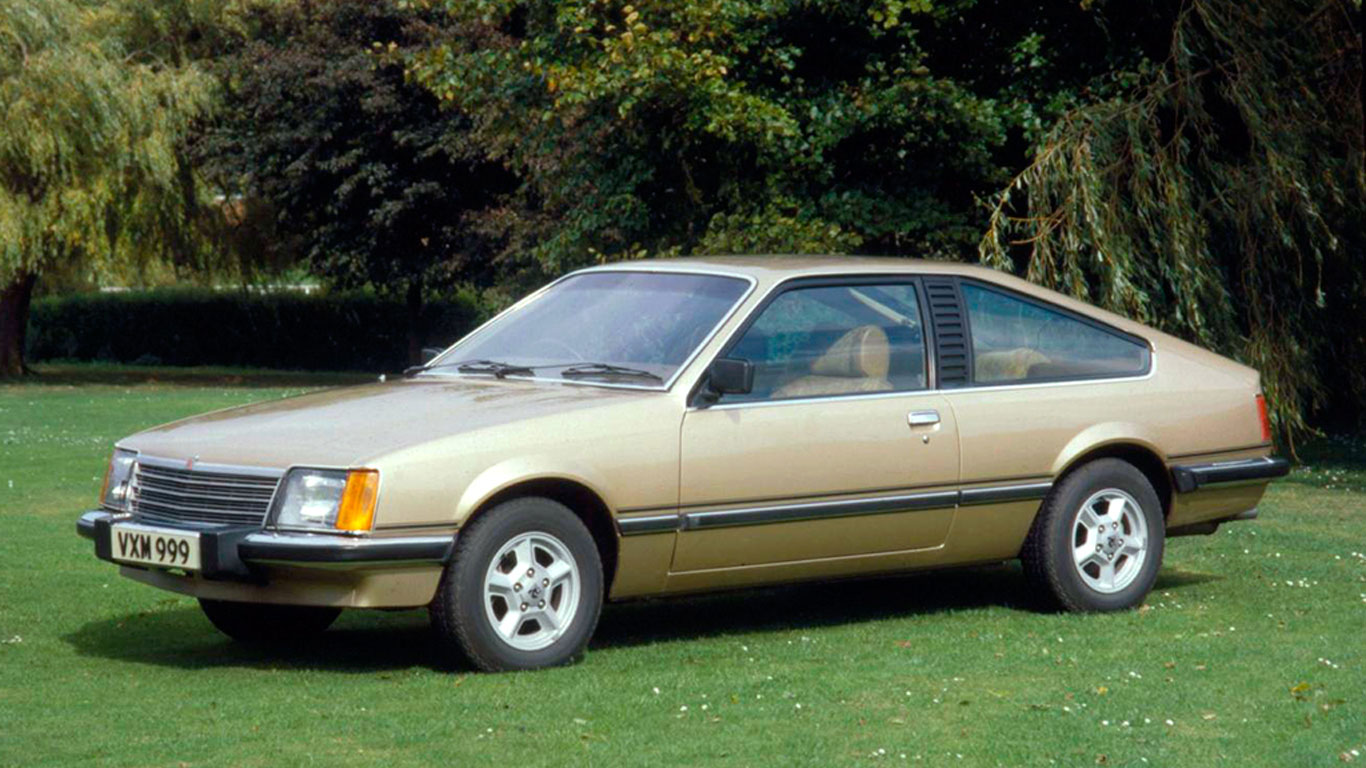
Aside from the badge and front grille, the Vauxhall Royale was little more than a reskinned version of the Opel Monza. Just like its Opel sibling, the Royale was built in Germany, but Vauxhall would have to wait two years before the 3.0-litre engine was offered in the UK. In the meantime, Royale customers had to ‘make do’ with the 2.8-litre six-cylinder unit.

Lotus Esprit S2

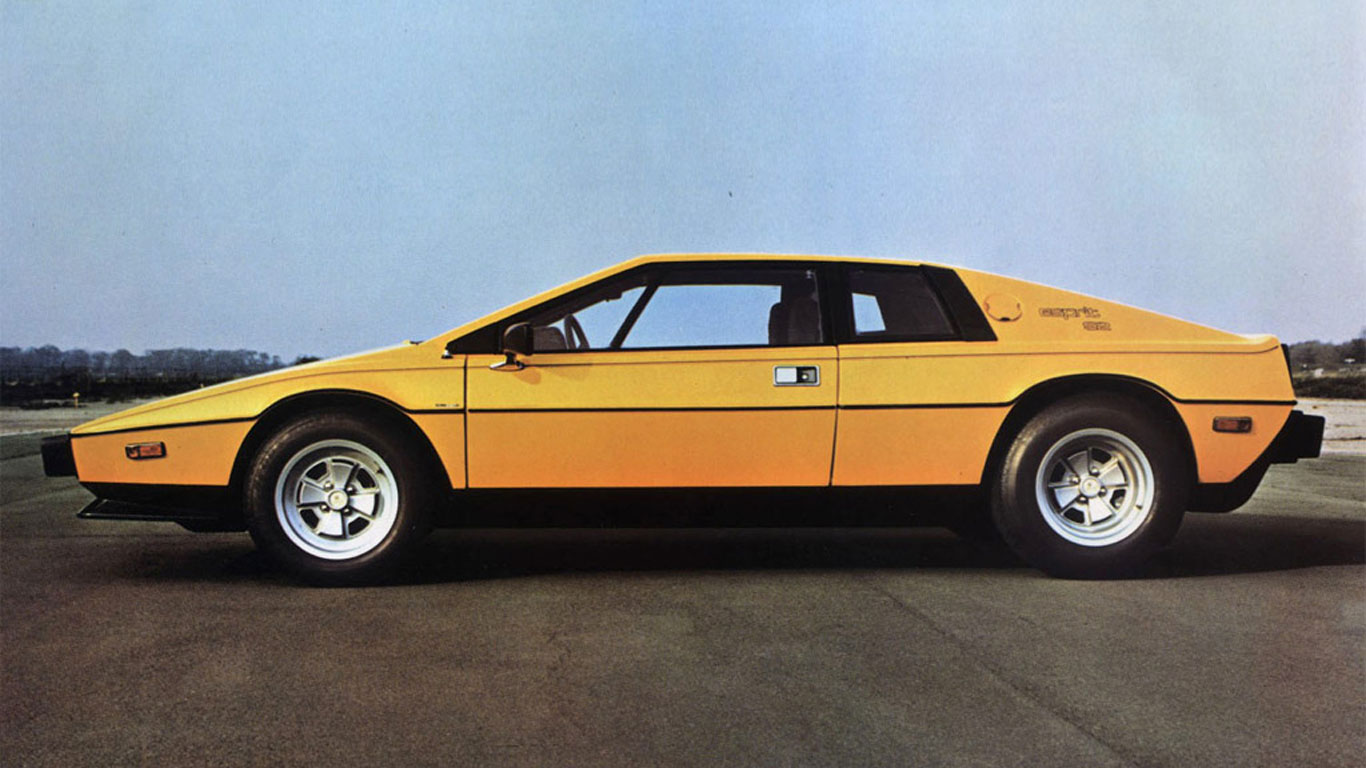
The Lotus Esprit S2 arrived in August 1978 and featured new Lotus-designed Speedline alloy wheels, Rover SD1 rear lights, an integrated front spoiler and scoops behind the doors.

Mazda RX-7

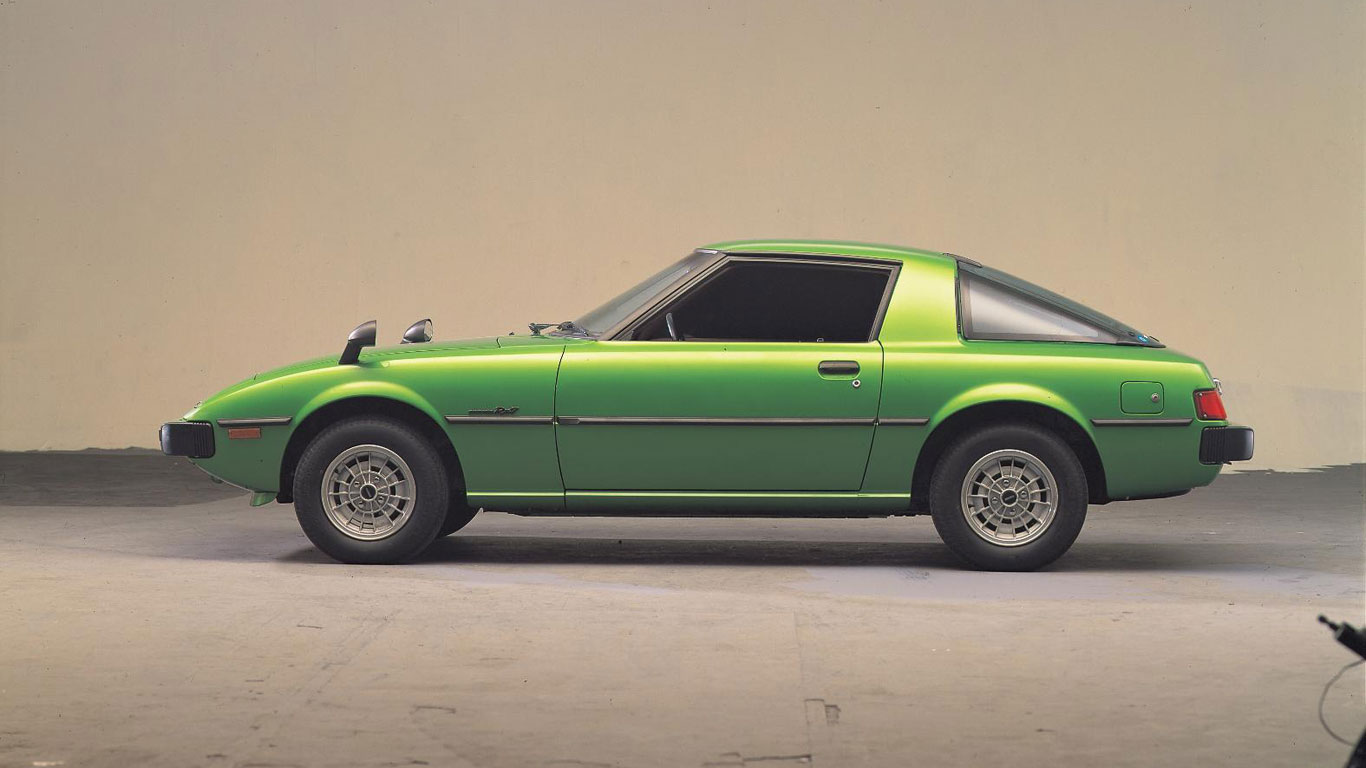
The rotary-engined NSU Ro80 died in 1977, but Mazda wanted the world to believe there was still life in the Wankel. The RX-7 was designed to go head-to-head with the Datsun 260Z and the Porsche 924 in North America, but UK deliveries began before the end of 1978.

BMW 635CSi

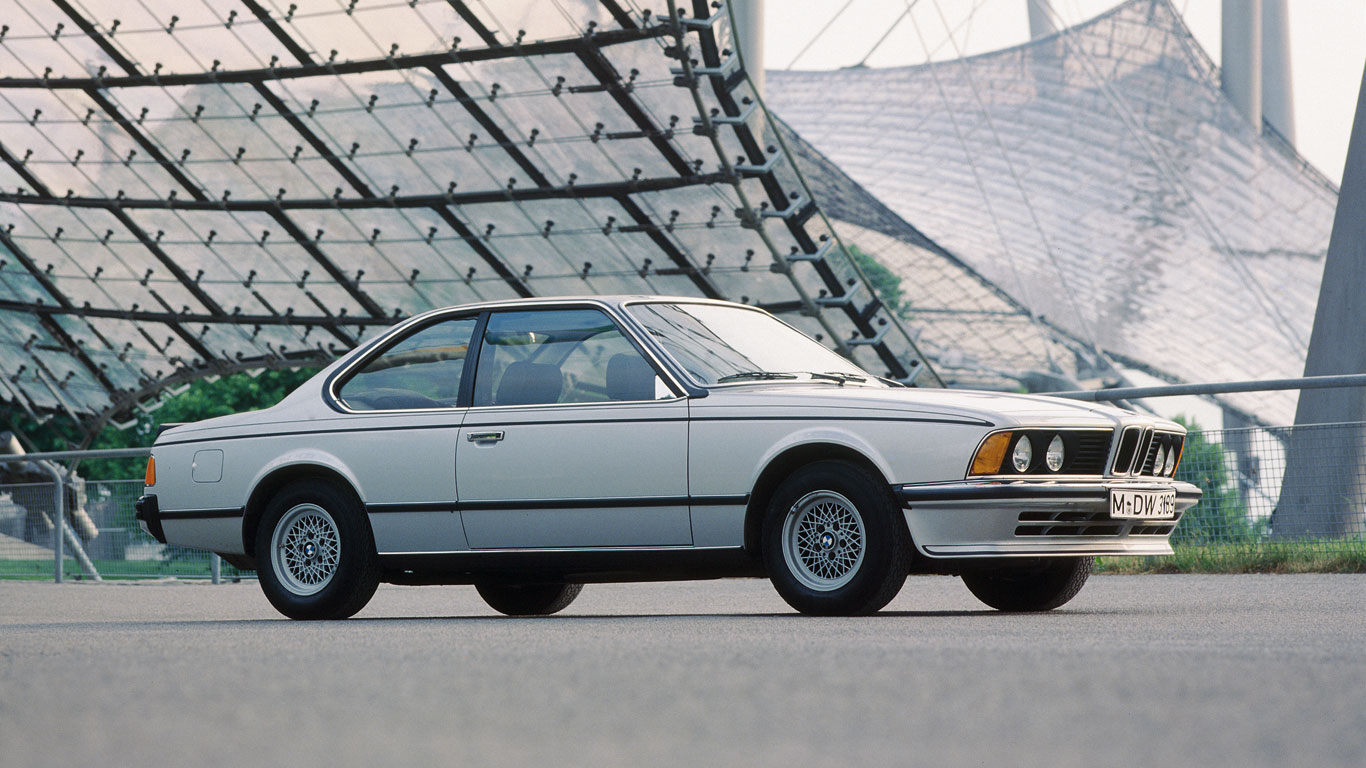
This was a big year for BMW. Along with the aforementioned M1, Bavaria also unveiled the 323i – the fastest 3 Series to date – and this: the 635CSi. Arriving in July, the 635CSi gave the 6 Series the performance to match its good looks, with power sourced from a 3.5-litre six-cylinder engine.

Chrysler Horizon

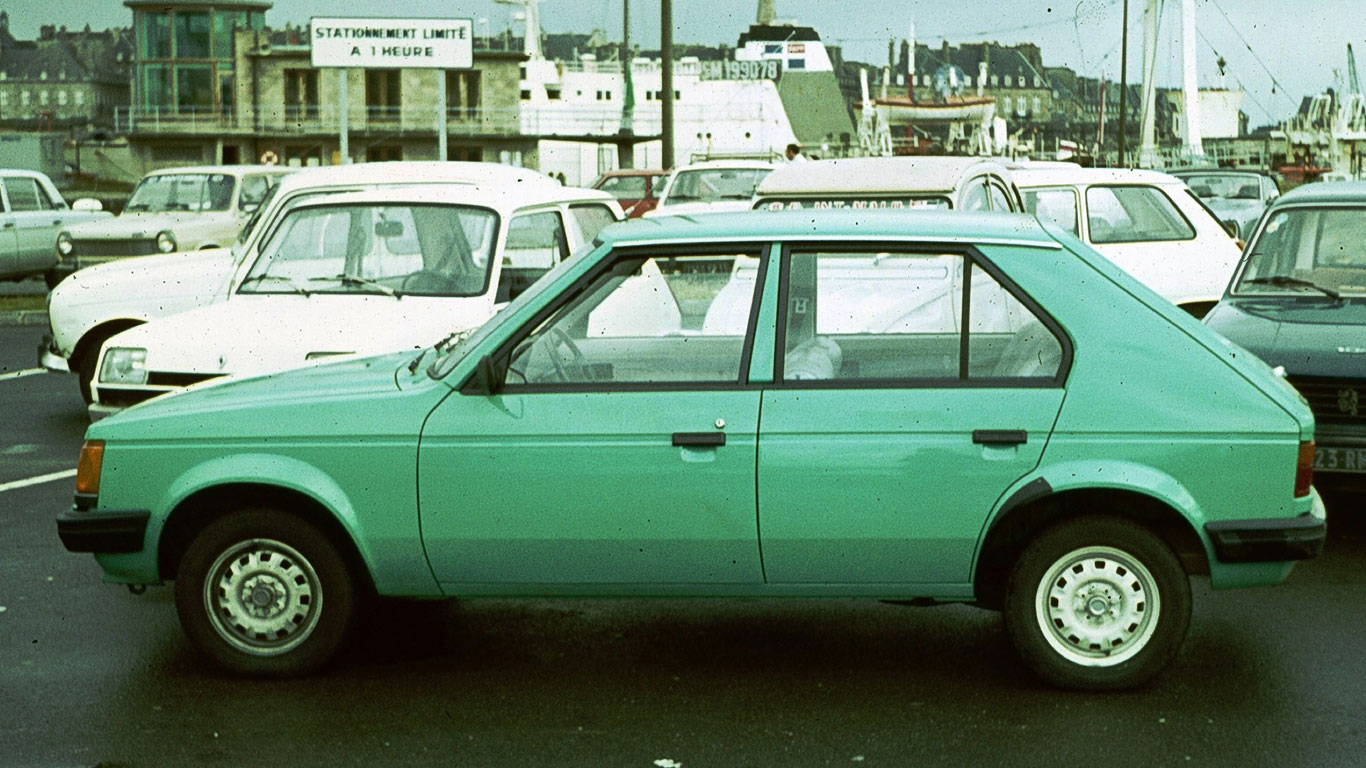
The Simca-Chrysler Horizon scooped the European Car of the Year award in 1979, beating the Fiat Strada and Audi 80 into second and third place, respectively. “Built to win you over,” proclaimed the press ads, although it was always facing a losing battle against the Volkswagen Golf. Within a year, it became a Talbot, but was dead by the mid 80s.

ALSO READ

Lotus Europa: why the ‘softer Elise’ failed to win buyers

Lotus and Volvo owner buys flying car company

Lotus Exige Sport 350 review: 2015 first drive

Advertisement

Opinion: electric cars are the future, so why are sales falling?

0

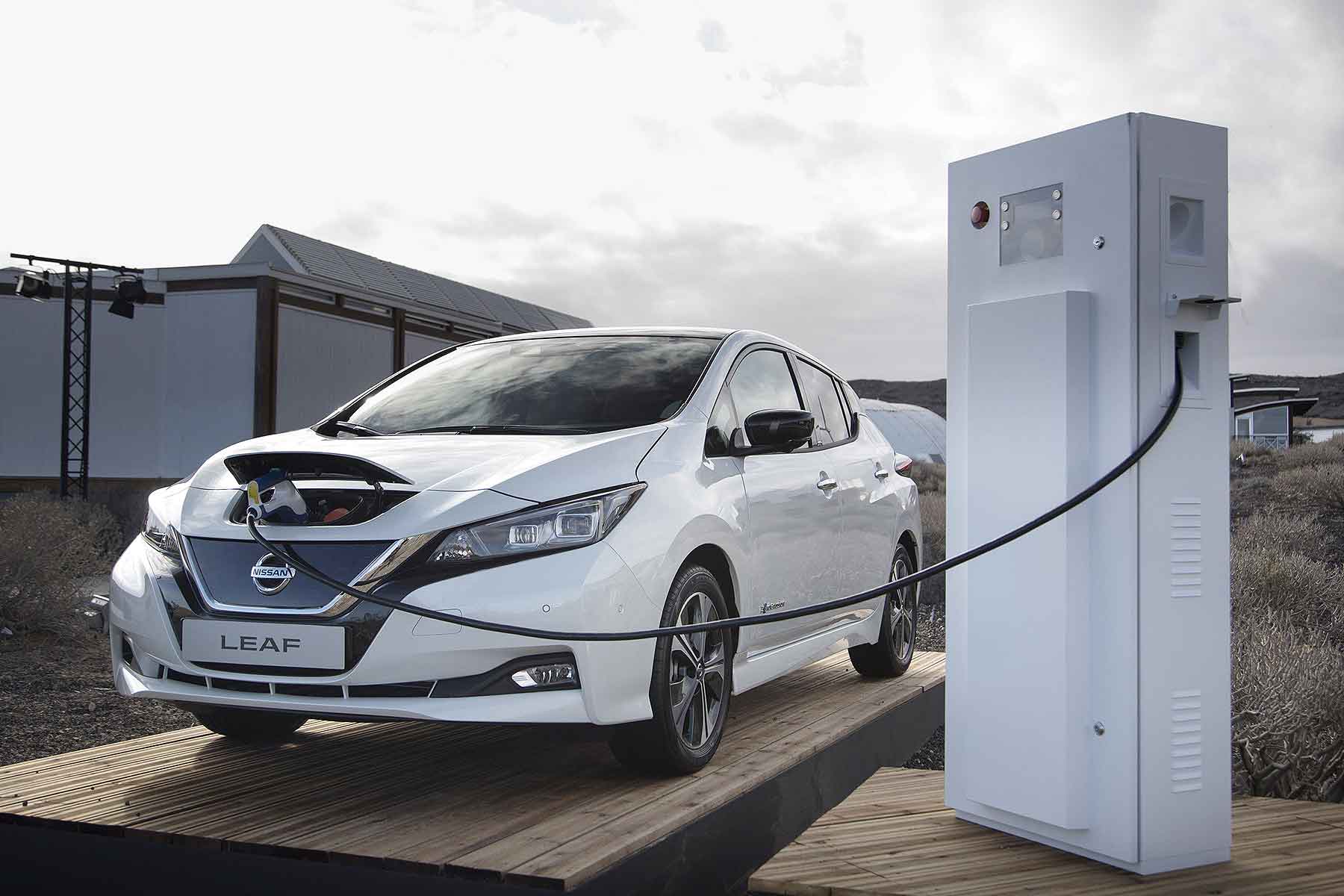
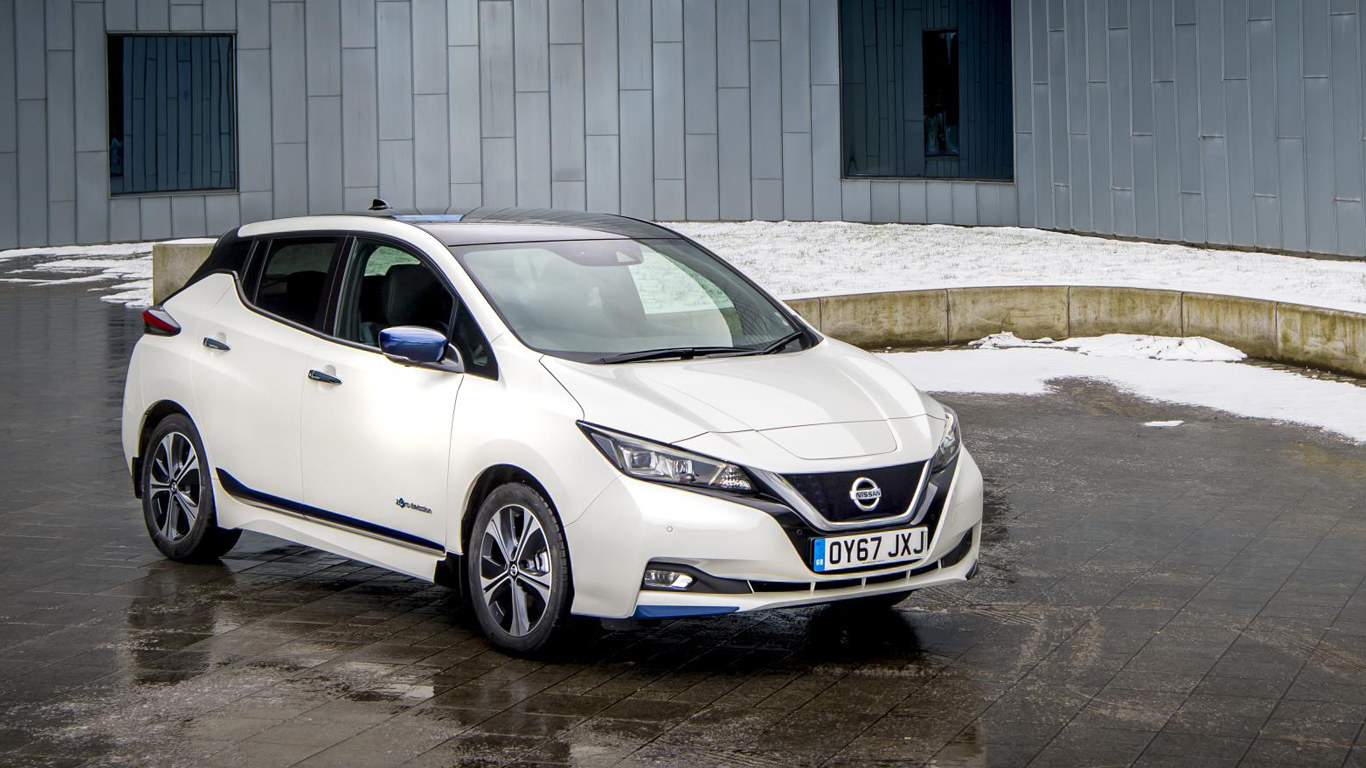
Nissan LeafNew car sales in March 2018 saw the 12th monthly decline in a row, with overall registrations plunging by a whopping 15.7 percent, according to latest data from the Society of Motor Manufacturers and Traders.
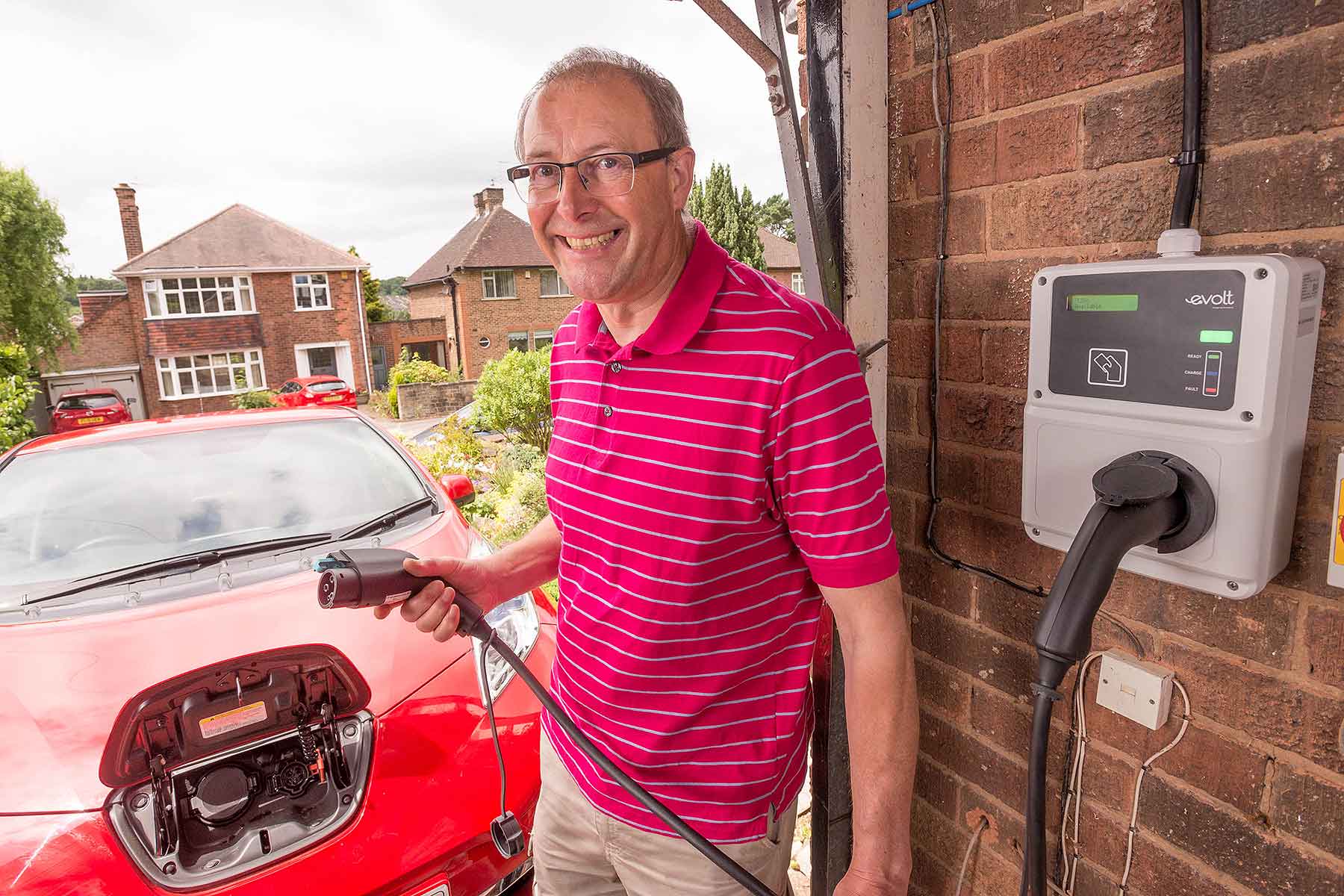
Many are blaming the current demonisation of diesel for this, at least in part – but although rising sales of alternative fuel cars reveal some may be making the switch from diesel to electric, it’s plug-in hybrids, which combine electric with a ‘range-extending’ petrol engine, rather than pure zero-emissions EVs, that are benefiting.

Indeed, sales of pure electric cars actually fell in March, the largest and most important month of the year for new car sales, and by a not-insignificant 7.5 percent.

Plug-in hybrid new car sales, by contrast, rose by 18.2 percent.

Electric car wallbox charger

The decline in pure electric cars is a surprise, as the assumed trend has been that sales will accelerate as battery ranges increase, prices fall and buyers become more familiar and confident with the concept of an electric car.

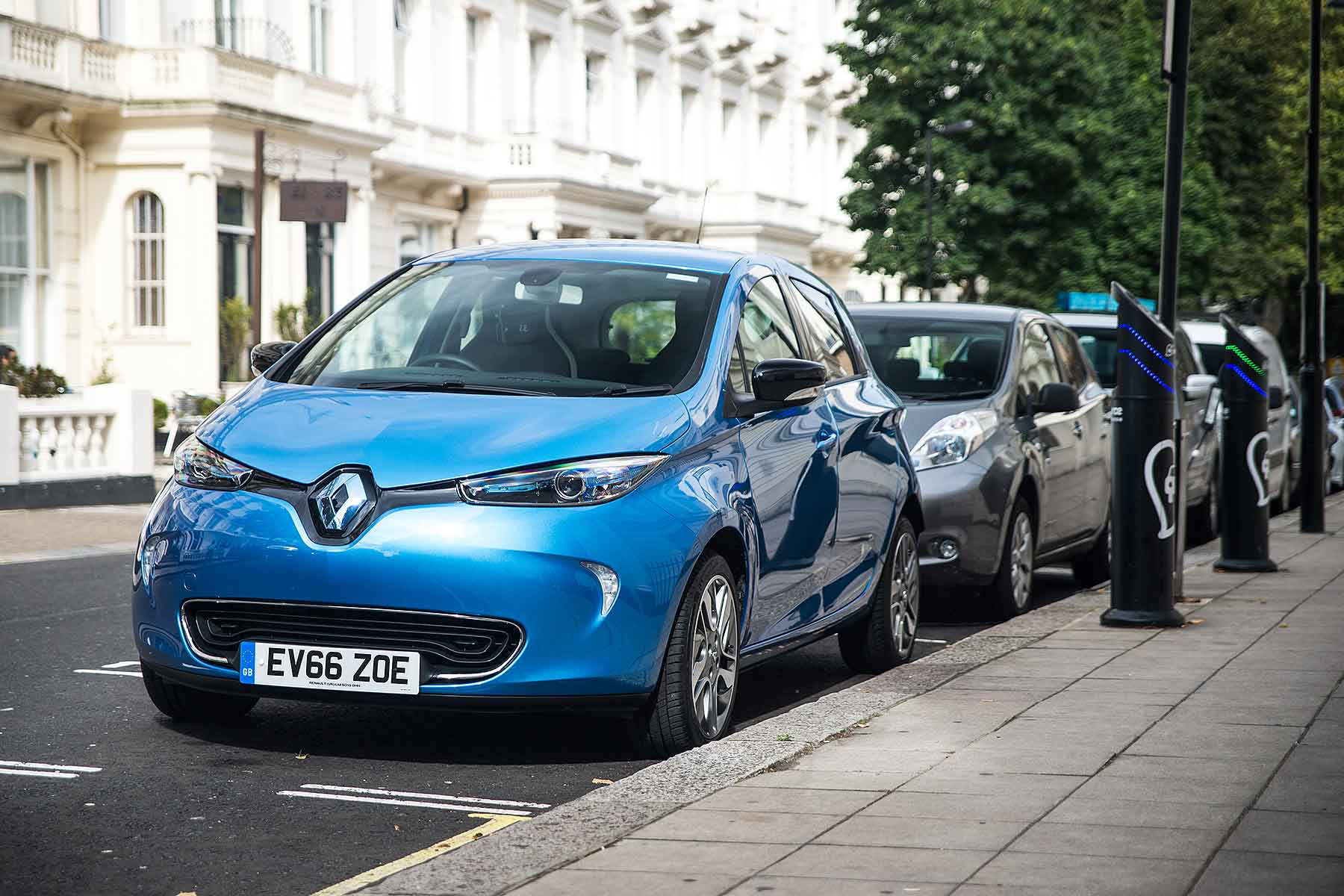
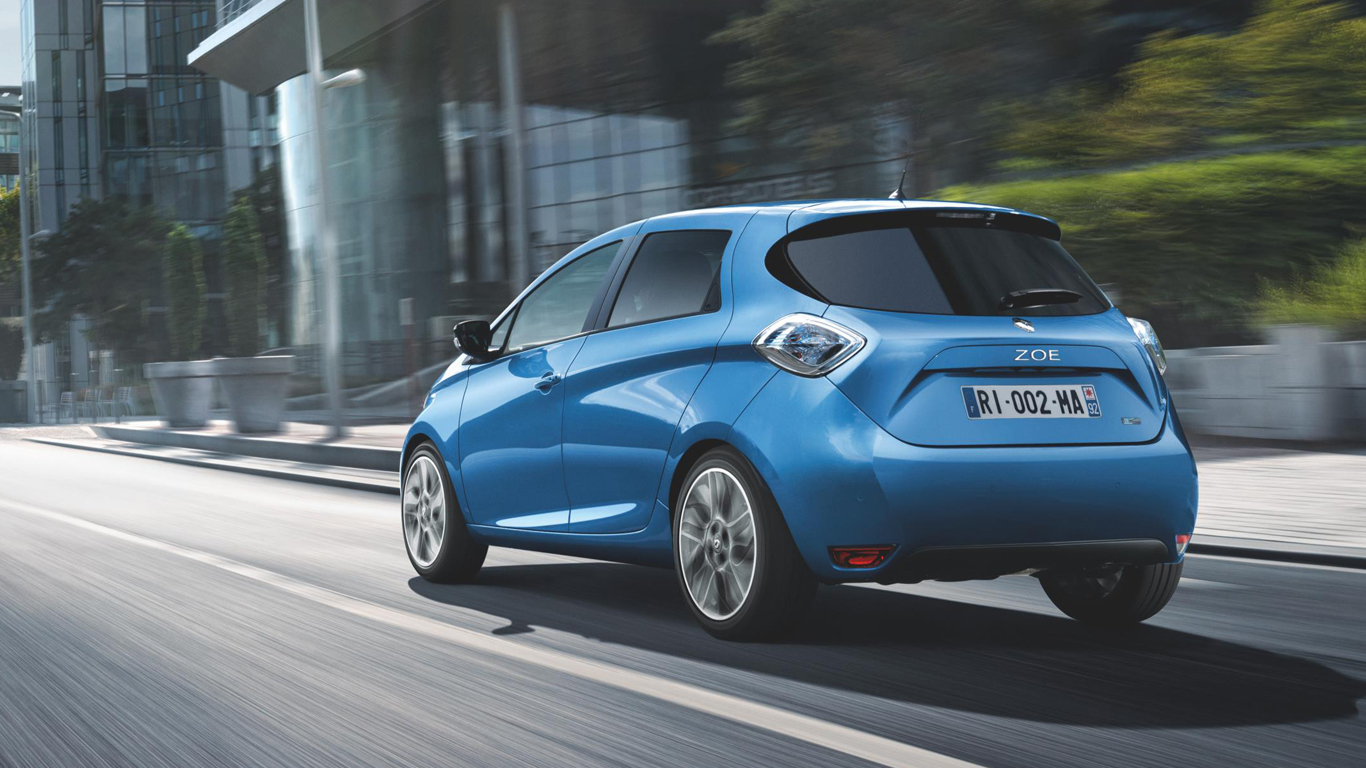
But while more than 3,100 pure electric cars were sold in March 2017, little more than 2,900 were registered in 2018. This is despite Renault, one of the biggest brands for electric cars, offering some appealing £199-a-month deals on its all-electric Zoe.

Renault Zoe

One explanation for the fall in electric car sales could be Nissan’s launch of the new Leaf. Often, there can be a hiccup in deliveries as production switches from one generation to the next.

Ford very publicaly showed what happens when things go wrong last year, when Britain’s perennial best-selling car, the Fiesta, lost its top spot for a few months.

However, another explanation could be that, simply, the bulk of British car buyers don’t think they’re yet ready for electric. Early adopters already have one and it’s going to take the roll-out of the next-generation of electric cars to really rally the market.

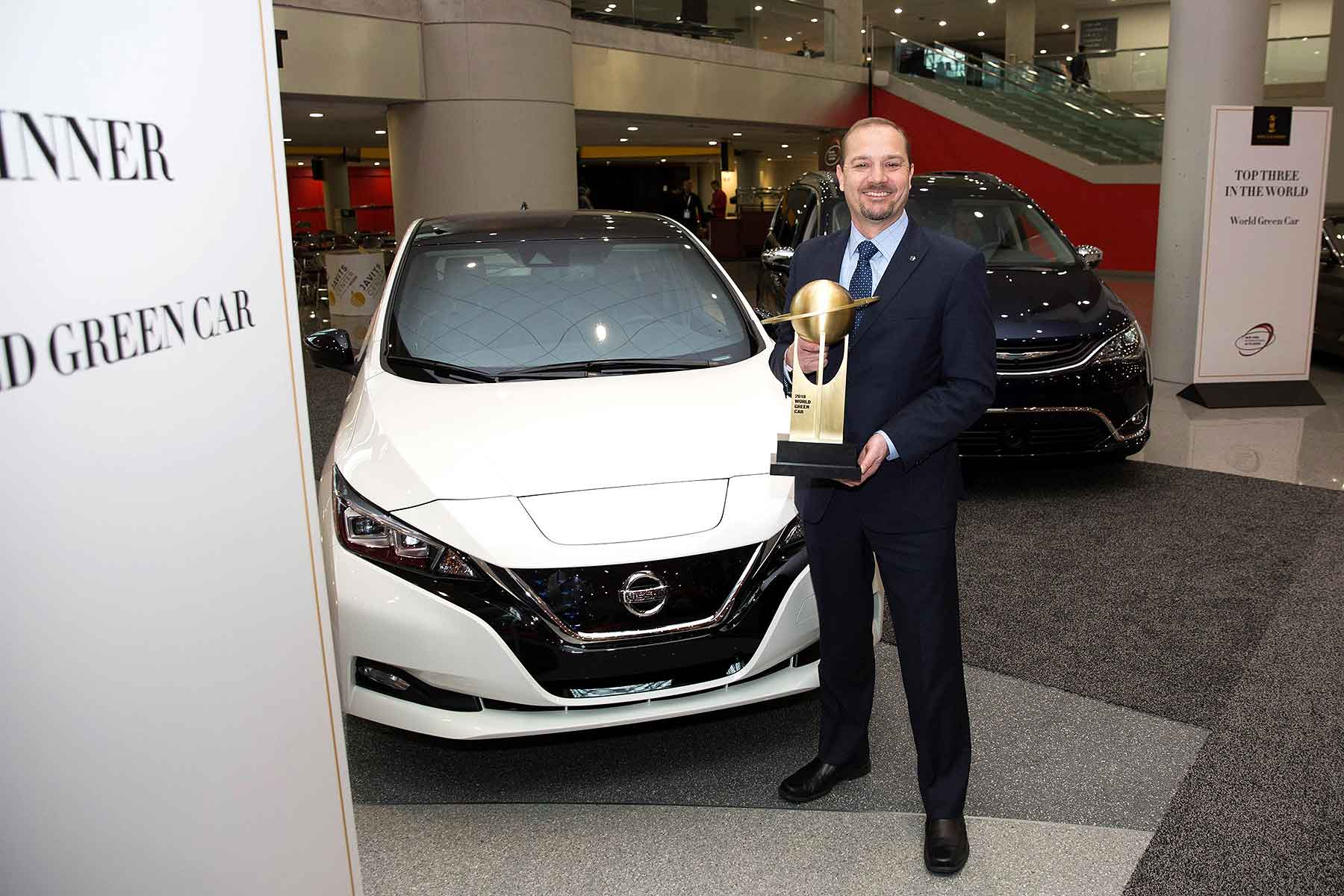
Nissan Leaf

Again, the Leaf may well prove pivotal here, just as the original one did in establishing the idea of an everyday electric car in Britain. Fresh from scooping the 2018 World Green Car of the Year Award, can it deliver?

Analysts will thus be watching pure EV registration figures carefully over the next few months. Because surely it’s far too early in the life of the everyday electric car for a sales stumble to continue for long…      

Advertisement

The most popular hybrid and electric cars

0

The most popular hybrid and electric cars

‘Alternative-fuel vehicles’ – hybrid, plug-in hybrid and electric – accounted for just over five percent of car sales in February 2018. That’s according to JATO Dynamics, which collates car registration figures for 27 European markets. Here, we reveal the top five best-sellers in each of those three eco-friendly categories. These are Europe’s best-selling hybrid and electric cars

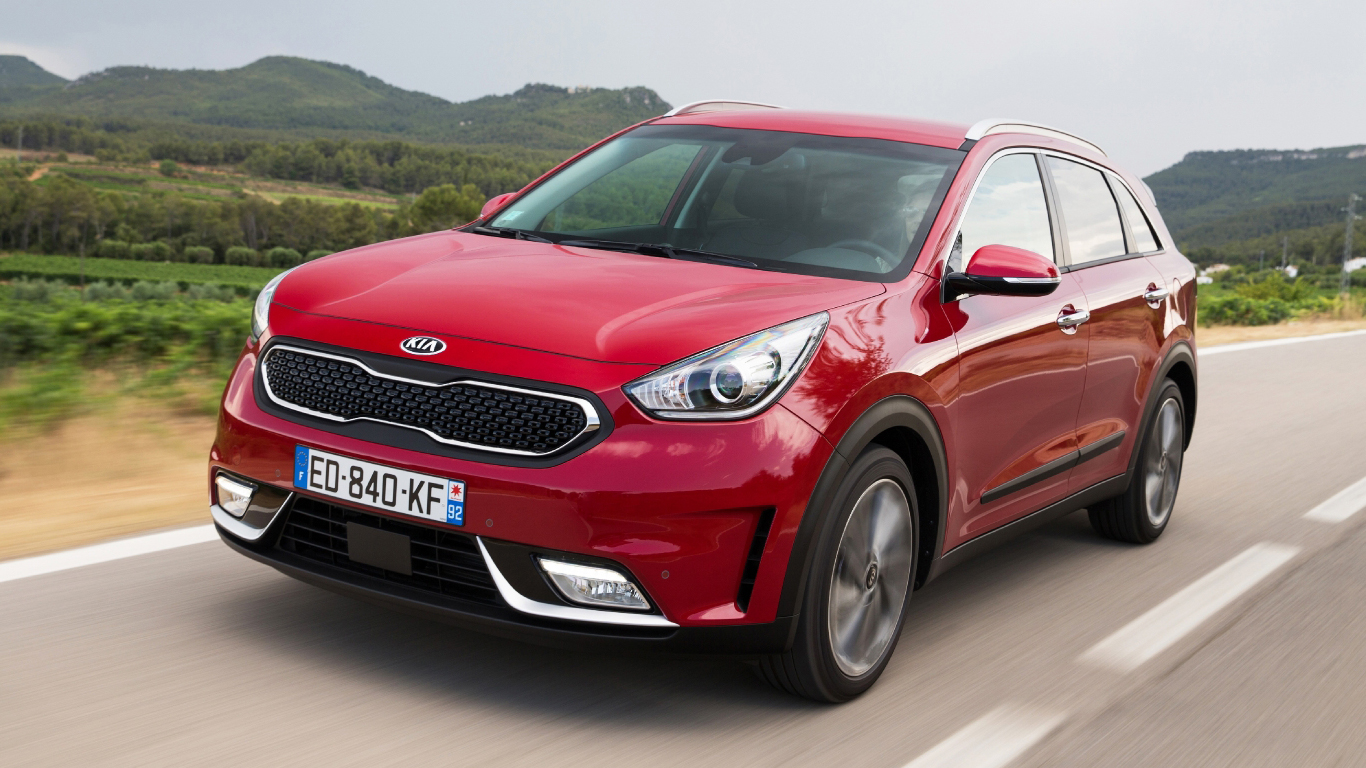
Hybrid no.5 – Kia Niro

The most popular hybrid and electric cars

We start with conventional hybrids: those where on-board batteries are charged solely by an internal combustion engine (i.e. they can’t be plugged in). In fifth place is the Kia Niro, finishing ahead of its Hyundai Ioniq stablemate with 1,853 sales. It’s the only non-Toyota in the top five.

Hybrid no.4 – Toyota RAV4 Hybrid

The most popular hybrid and electric cars

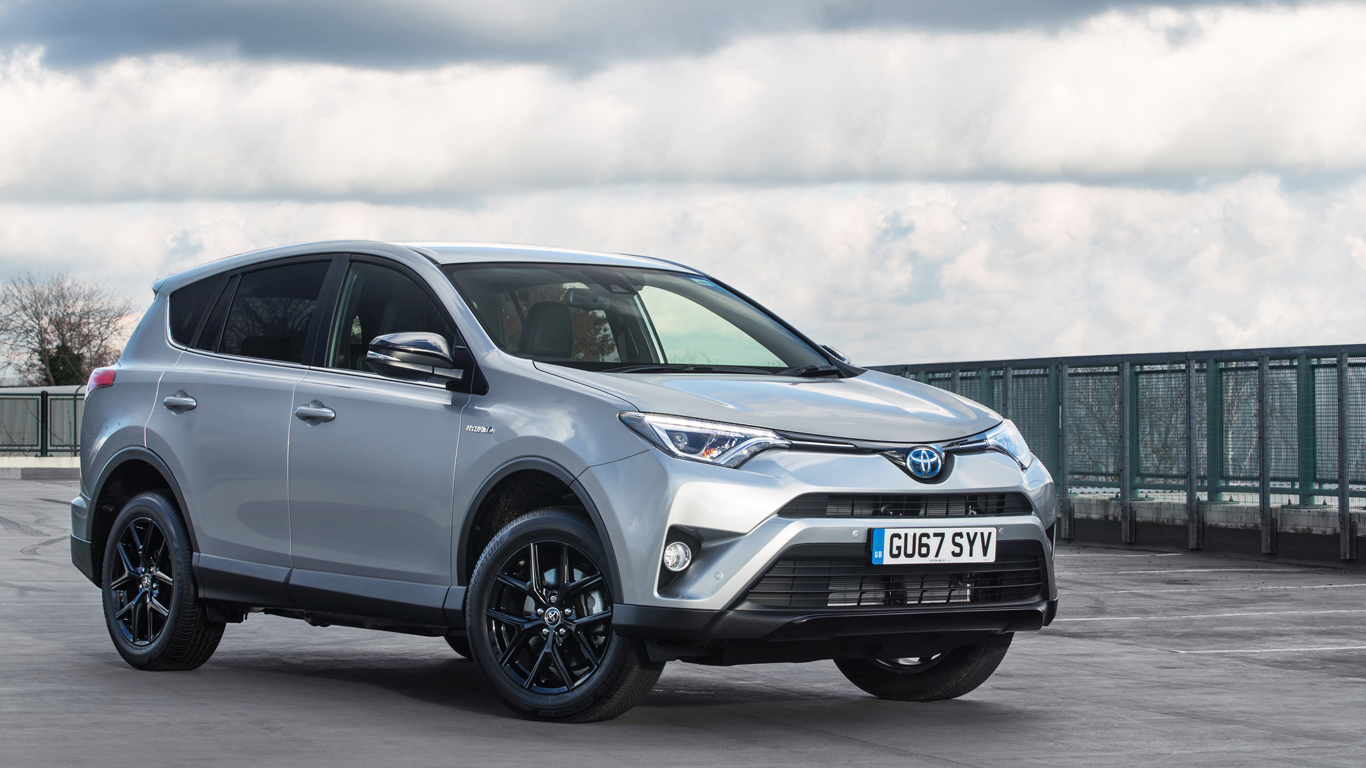
Toyota has majored on hybrids ever since the first Prius was launched in 1997. Interestingly, though, the car many people associate with ‘going green’ is not inside the European top five. It’s outsold by the fourth-placed RAV4 Hybrid for starters, which found 3,326 new owners in February.

Hybrid no.3 – Toyota Auris Hybrid

The most popular hybrid and electric cars

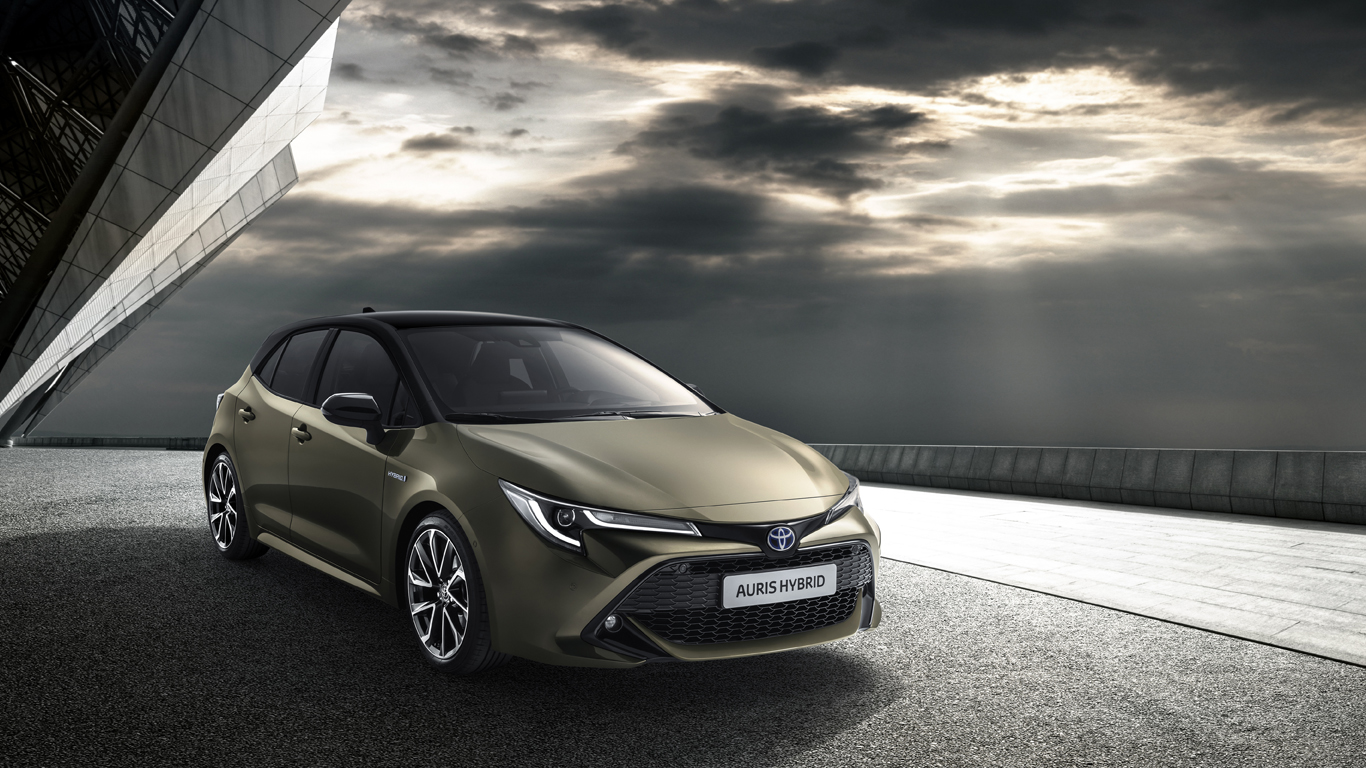
Our next Toyota is the Auris Hybrid. This dull-but-worthy car offers the same petrol/electric drivetrain as the Prius, but packaged in a more conventional hatchback body. There’s also a practical Touring Sports estate. Sales of 4,408 put the Auris in third place.

Hybrid no.2 – Toyota C-HR Hybrid

The most popular hybrid and electric cars

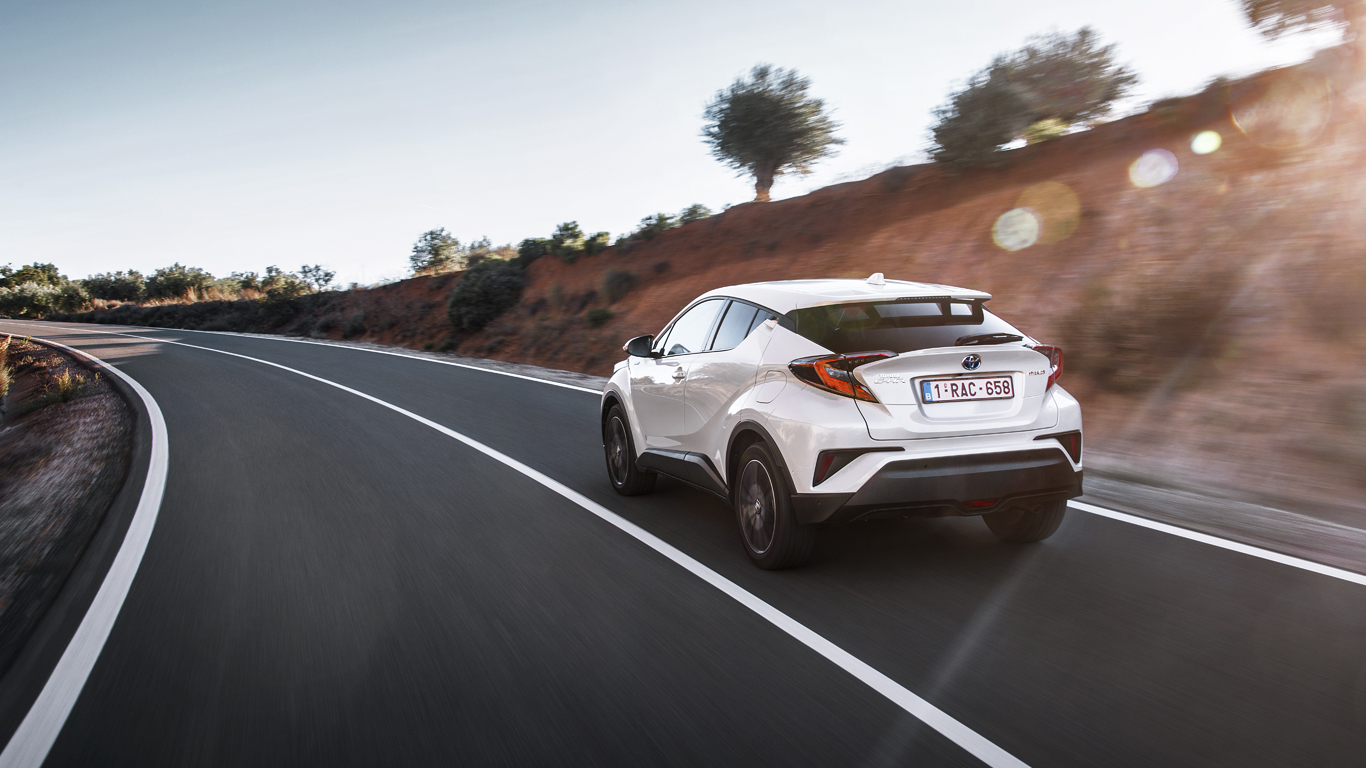
Fashionable crossover it may be, but the C-HR’s slash-cut styling certainly divides opinion. Still, unconventional looks are no barrier to success in this sector – as proved by the Nissan Juke and the C-HR’s strong standing here. It finishes second, with 5,436 sales.
Hybrid no.1 – Toyota Yaris Hybrid

The most popular hybrid and electric cars

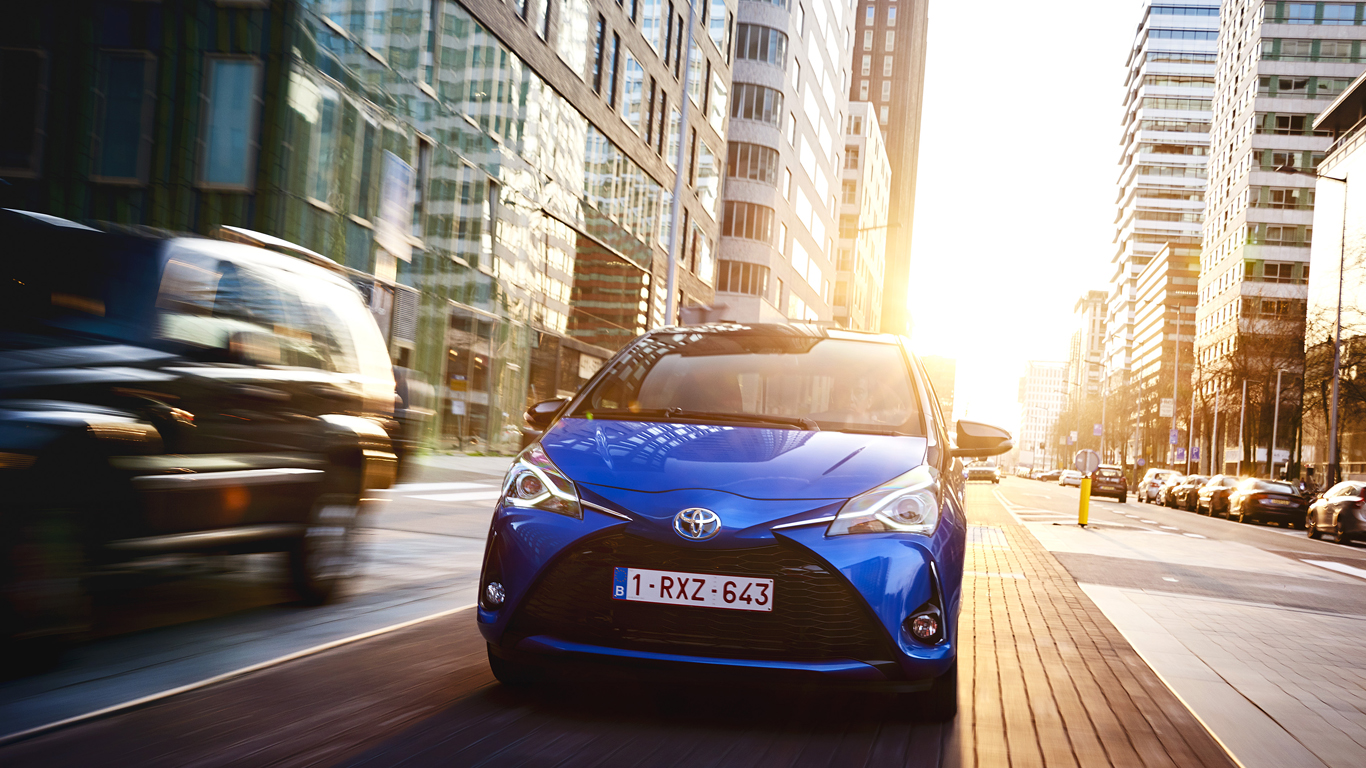
So the number one hybrid in Europe is – you guessed it – a Toyota. The Yaris Hybrid is the smallest and most efficient car in the top five, with official figures of 85.6mpg and 75g/km. It’s also reliable and easy to drive – particularly in town, where a ‘B’ mode for the automatic gearbox boosts regenerative braking for one-pedal driving.
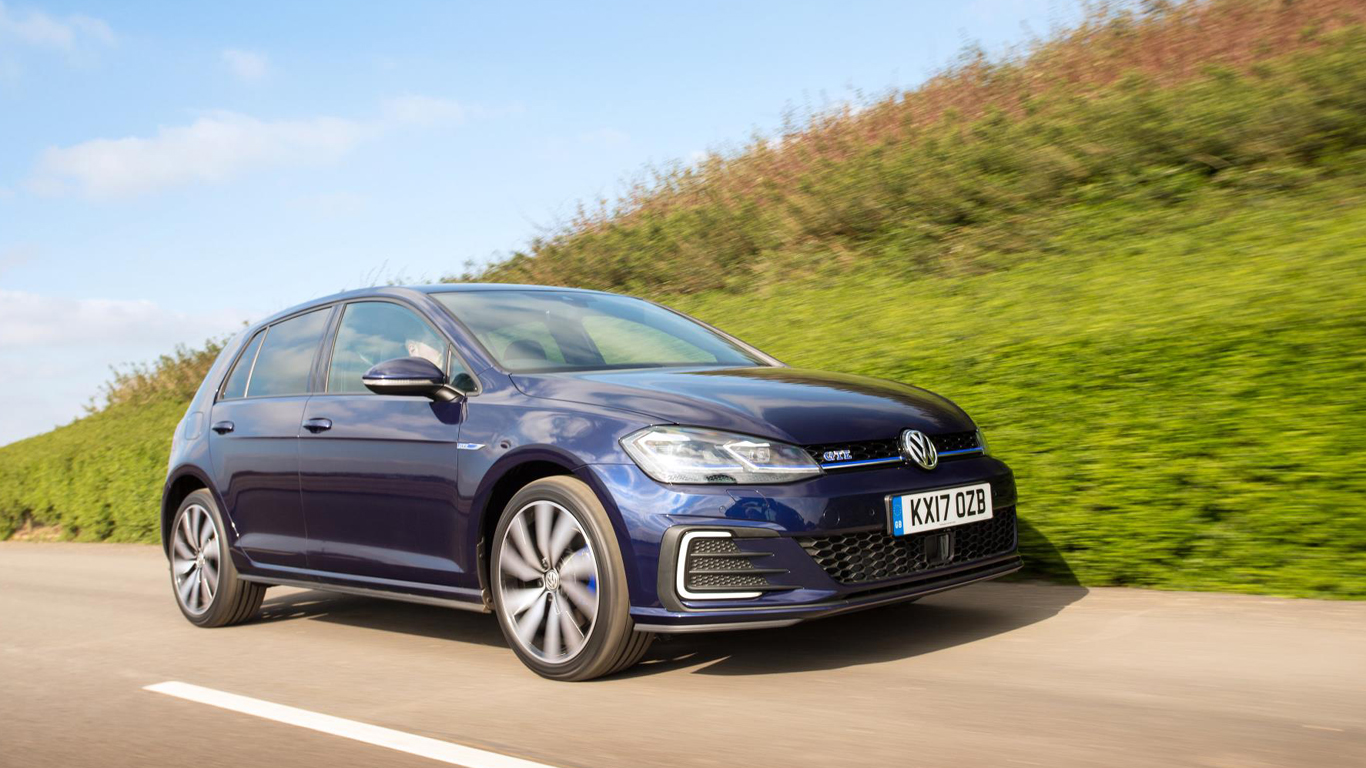
Plug-in hybrid no.5 – Volkswagen Golf GTE

The most popular hybrid and electric cars

We move on to plug-in hybrids, starting with the fifth-placed Volkswagen Golf GTE. Cars in this class usually boast incredible – and not entirely realistic – CO2 emissions figures, due to the fact they complete much of the official NEDC test on electric power alone. The sporty Golf GTE, for example, emits just 40g/km. A total of 665 were sold in February.
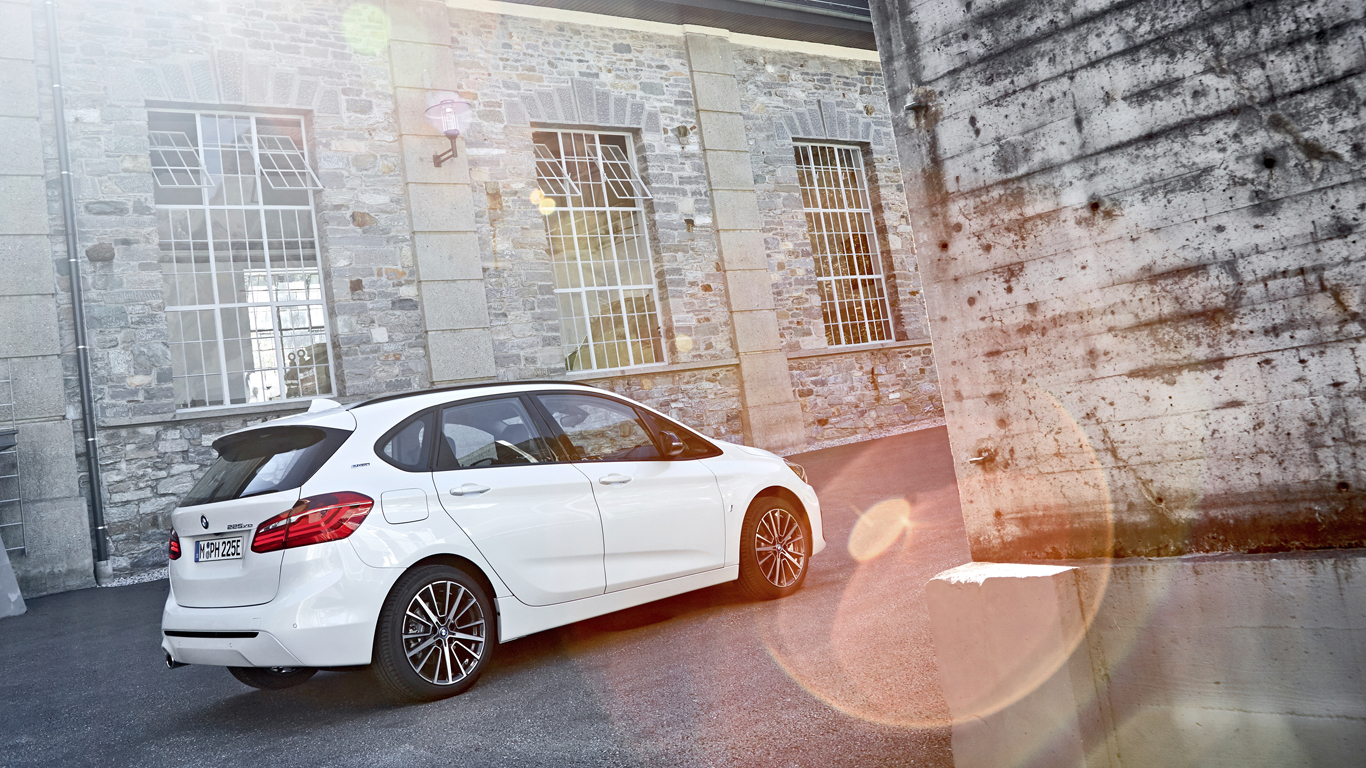
Plug-in hybrid no.4 – BMW 225xe iPerformance Active Tourer

The most popular hybrid and electric cars

‘BMW 225xe iPerformance Active Tourer’ is a bit of a mouthful, and you wouldn’t call this front-wheel-drive MPV attractive. However, its strengths lie elsewhere, with a versatile interior and 46g/km CO2 emissions (meaning low company car tax and VED). It’s Europe’s fourth most popular PHEV, with 692 sold.
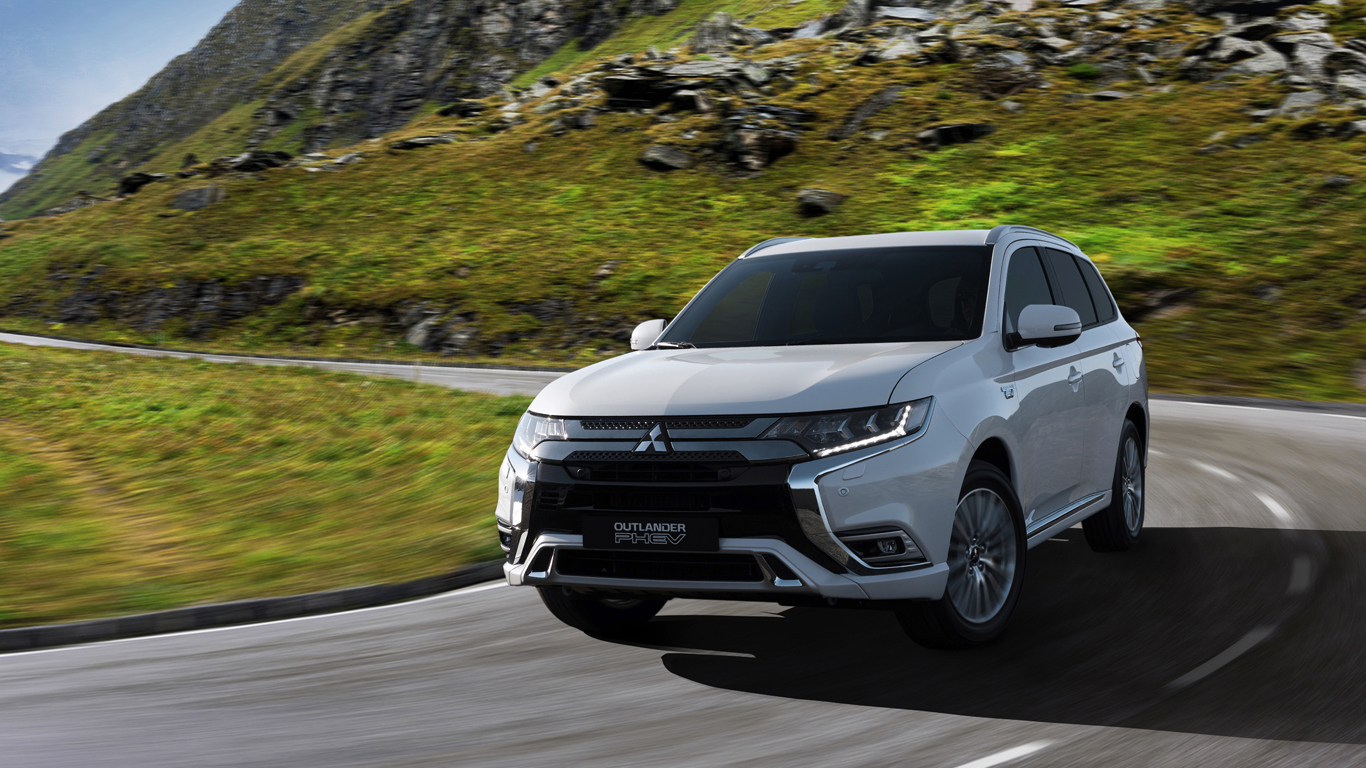
Plug-in hybrid no.3 – Mitsubishi Outlander PHEV

The most popular hybrid and electric cars

Mitsubishi sells diesel and plug-in petrol/electric versions of its Outlander SUV for the same price. Result: the PHEV is hugely more popular, regularly topping the charts as the UK’s most popular plug-in. In Europe overall, it finishes third, shifting 924 units in April. A updated Outlander arrives soon, promising more power and improved economy.

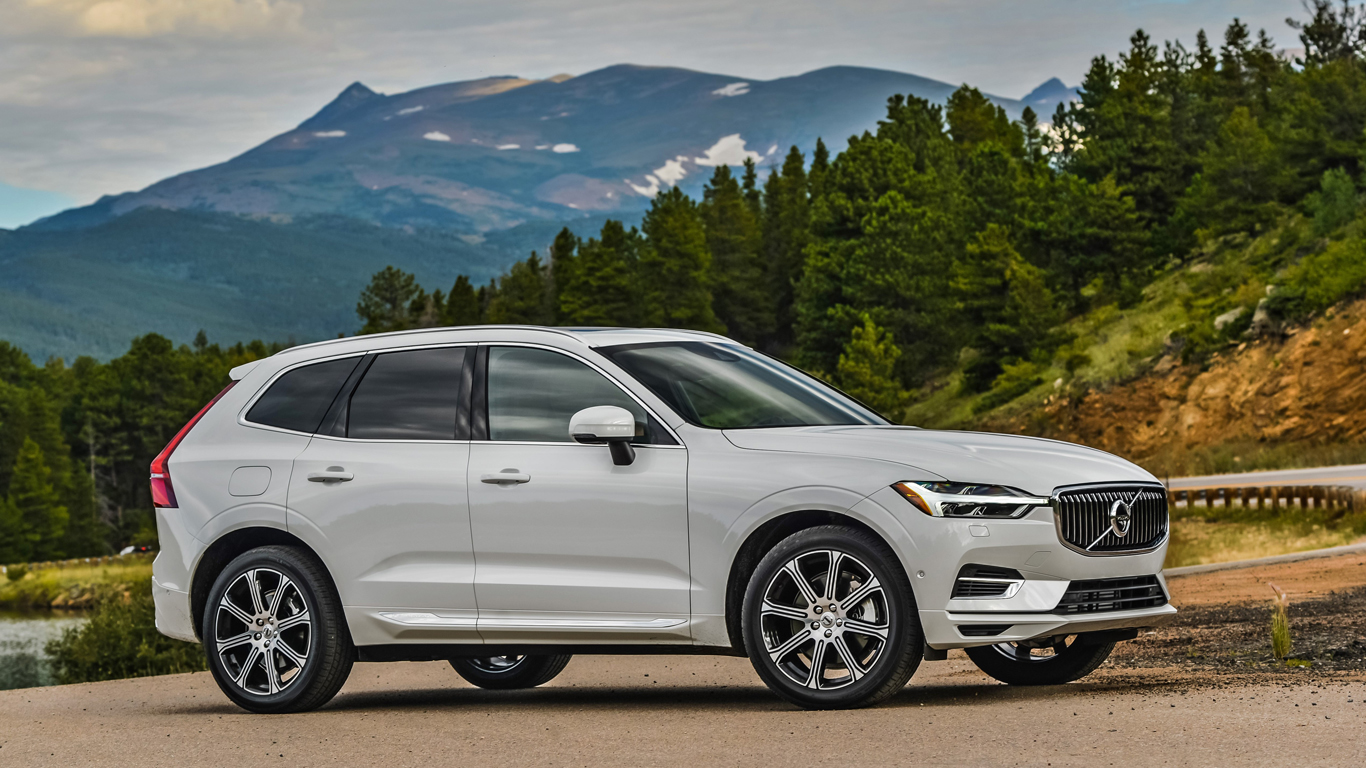
Plug-in hybrid no.2 – Volvo XC60 T8

The most popular hybrid and electric cars

How about this for the best of both worlds? The T8 ‘twin engine’ XC60 has a combined output of 407hp with an official CO2 figure of 49g/km. It’s also stylish, spacious and very comfortable. What’s not to like? Well, perhaps a nigh-on £60,000 price tag, although that didn’t stop 976 T8s finding buyers around Europe.

Plug-in hybrid no.1 – Volkswagen Passat GTE

The most popular hybrid and electric cars

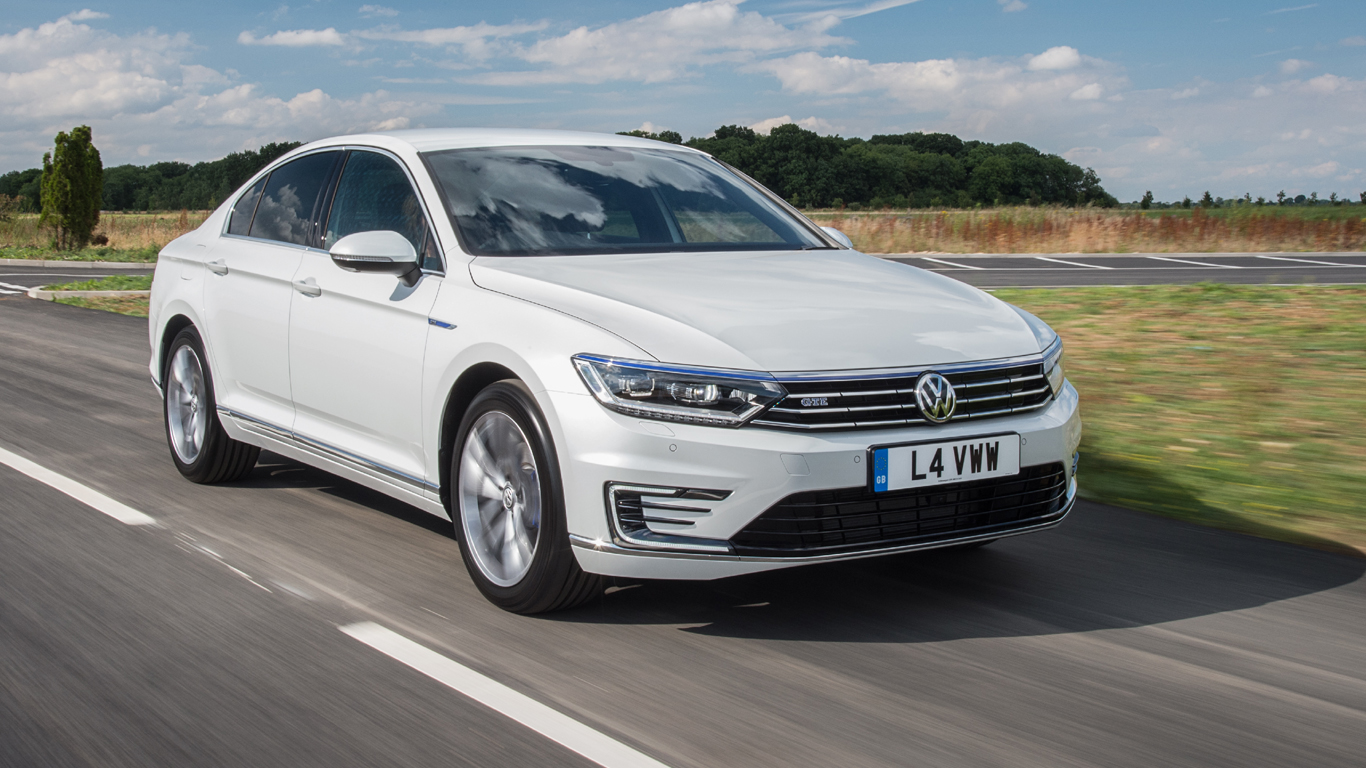
The Passat GTE takes the number one spot, with 1,034 sales – comfortably more than its cheaper Golf sibling. Like the Golf, it’s a performance-oriented hybrid, using its 9.9kWh lithium-ion battery for extra oomph as well as cutting fuel use. The 0-62mph dash takes a swift 7.4 seconds, with CO2 emissions of 39g/km (in theory, at least).

Electric car no.5 – Smart Fortwo EQ

The most popular hybrid and electric cars

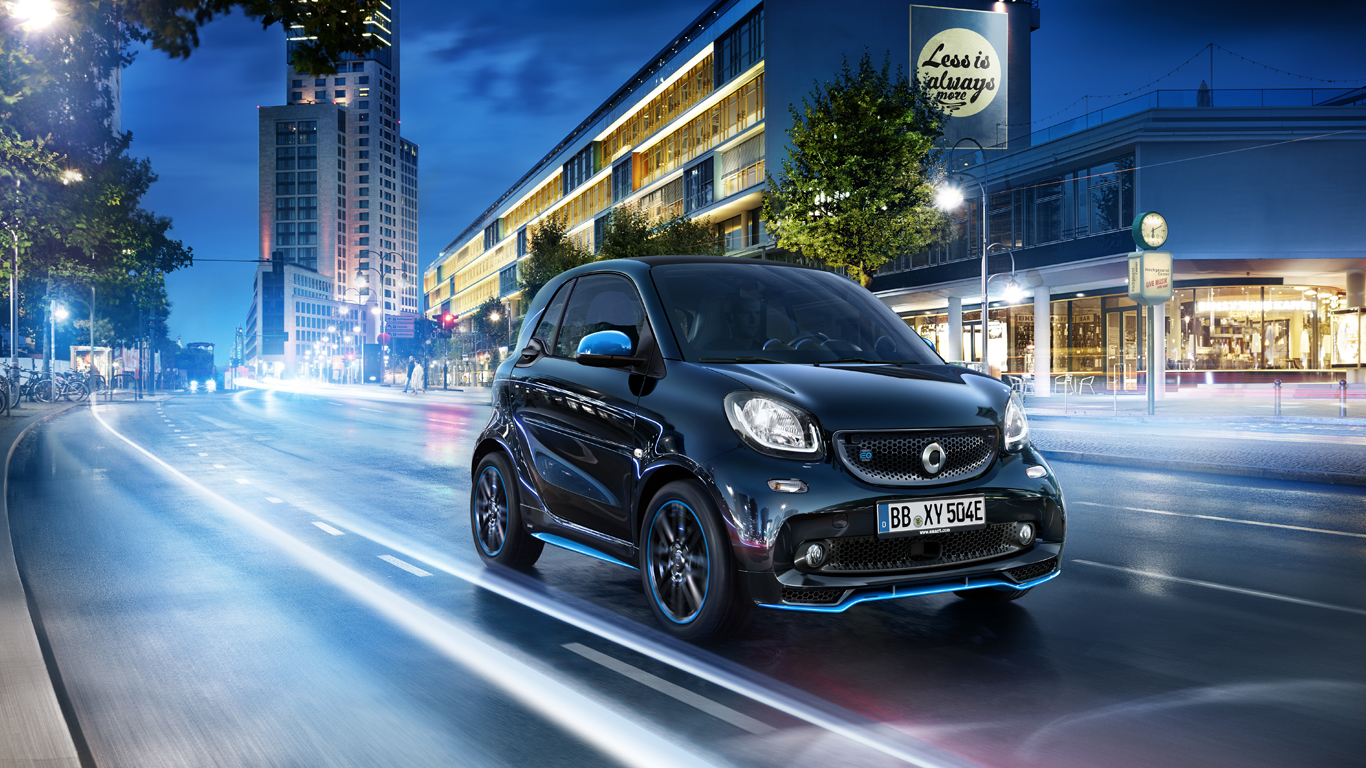
Our third and final top five, also based on Jato Dynamics data, is for fully electric cars (EVs). Times are changing, but many EVs are still small cars designed primarily for city use. The Smart Fortwo EQ is typical of the breed: a two-seat runabout with an 80mph top speed and a 96-mile range. A total of 741 were sold.

Electric car no.4 – BMW i3

The most popular hybrid and electric cars

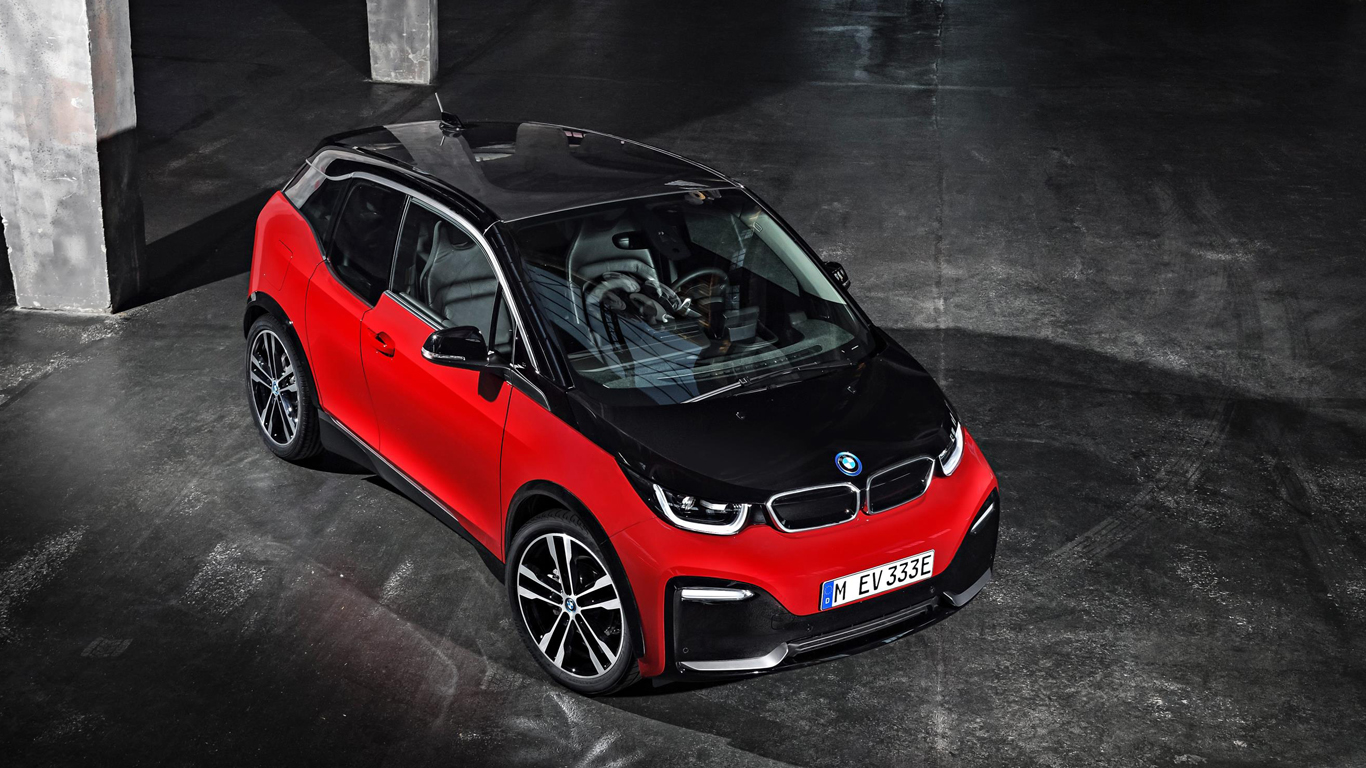
When BMW launched its eco-focused ‘i’ sub-brand, it was the i8 supercar that stole the headlines. However, the i3 hatchback is, in truth, the more innovative car: a futuristic alternative to a 3 Series with a choice of electric or range-extender hybrid powertrains. BMW sold 1,130 electric i3s in February.

Electric car no.3 – Volkswagen e-Golf

The most popular hybrid and electric cars

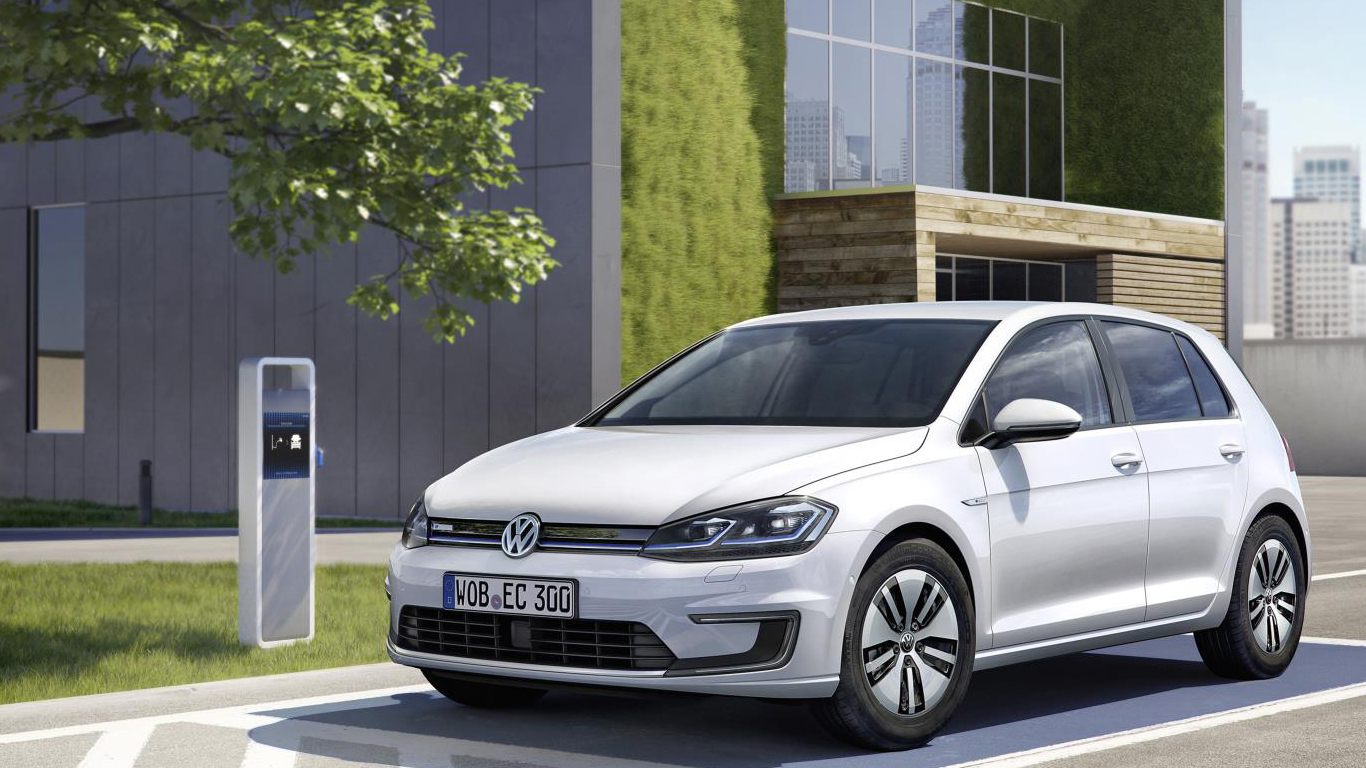
The sprawling Golf range covers all bases, including the fully-electric e-Golf (1,403 sold). From the outside, this five-door hatchback looks near-identical to a petrol or diesel Golf – a blanked-off grille with a blue stripe is a giveaway – but its 24.2kW lithium-ion battery means zero emissions. For everyday driving, there’s simply no compromise.

Electric car no.2 – Nissan Leaf

The most popular hybrid and electric cars

Where Volkswagen fitted an existing car with a battery and electric motor, Nissan took the opposite approach – designing an EV from the ground up. The Leaf is now into its second-generation and the new model has a huge, 235-mile range when fully charged. European buyers snapped up 1,508 in February 2018.

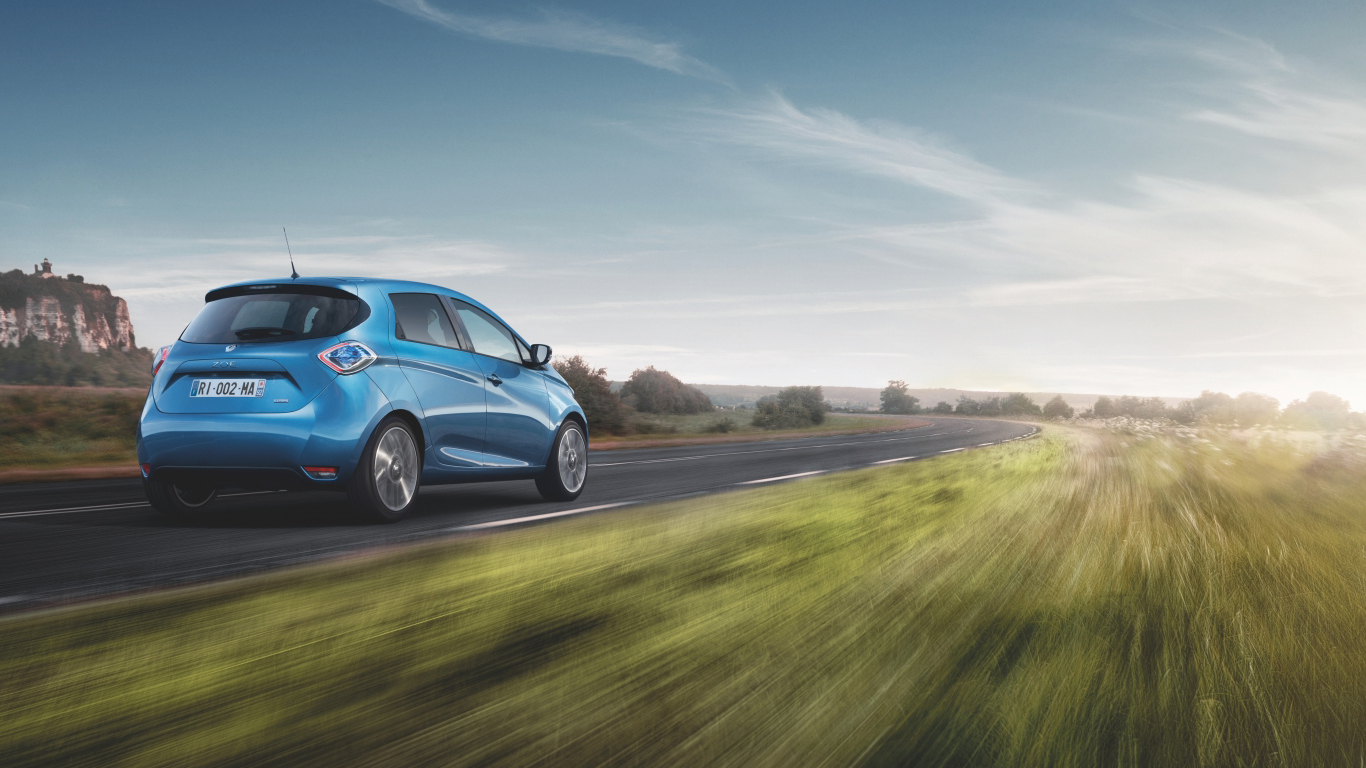
Electric car no.1 – Renault Zoe

The most popular hybrid and electric cars

Renault sold 2,177 Zoes in the same month, however, putting this chic supermini comfortably in first place as Europe’s most popular EV. Not a bad achievement for a car first launched in 2012. Renault has pioneered a monthly battery leasing scheme with the Zoe, which helps keep list prices down. Opt for the beefier 41kWh battery and range increases to around 180 miles.

Read more:

Advertisement

25 car names that sound far cooler in Italian

0

25 car names that sound far cooler in Italian

Everything sounds better in Italian. For example: “Il mio scarico è bloccato. Chiama un idraulico.” If Google Translate is to be believed, that’s telling somebody you have a blocked drain and you’d like them to call a plumber. With this in mind, I’ve been tasked with coming up with 25 car names that sound great in Italian, but sciocchezze in English.

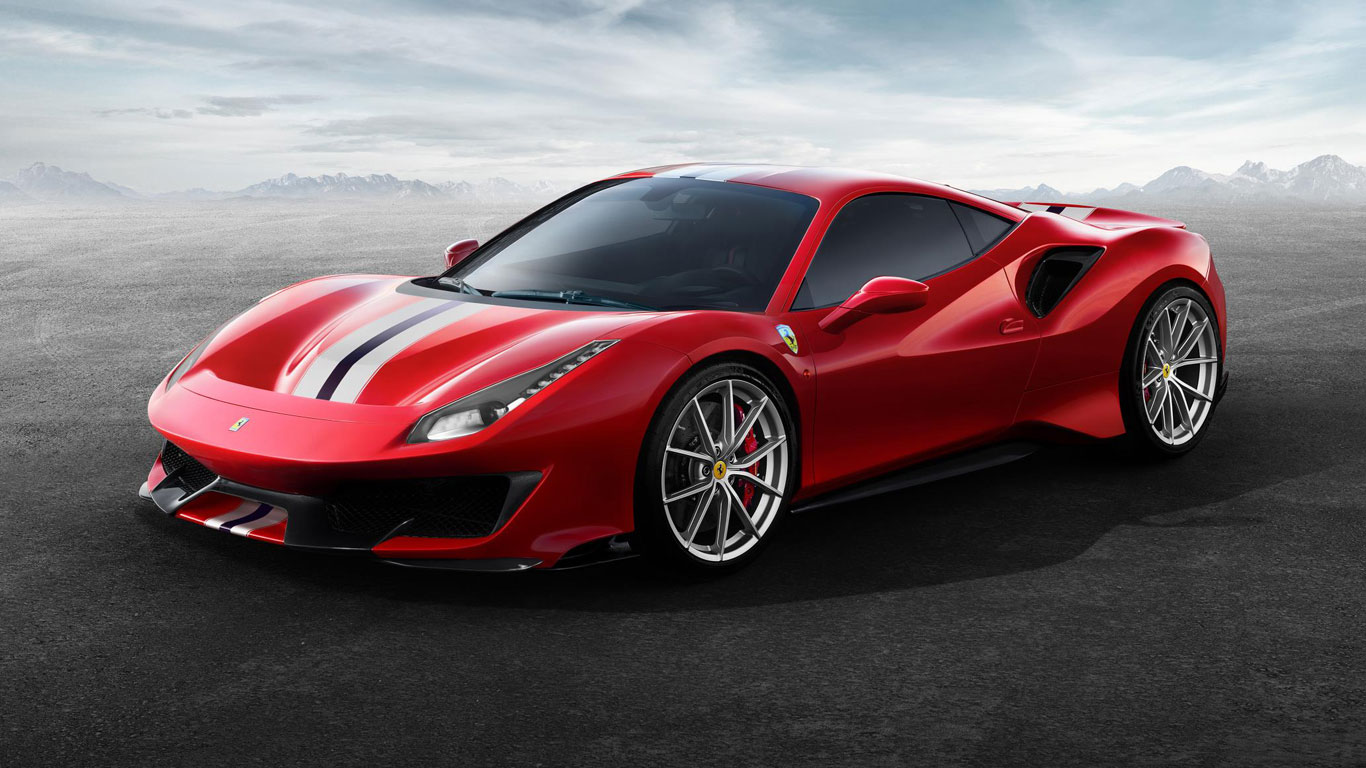
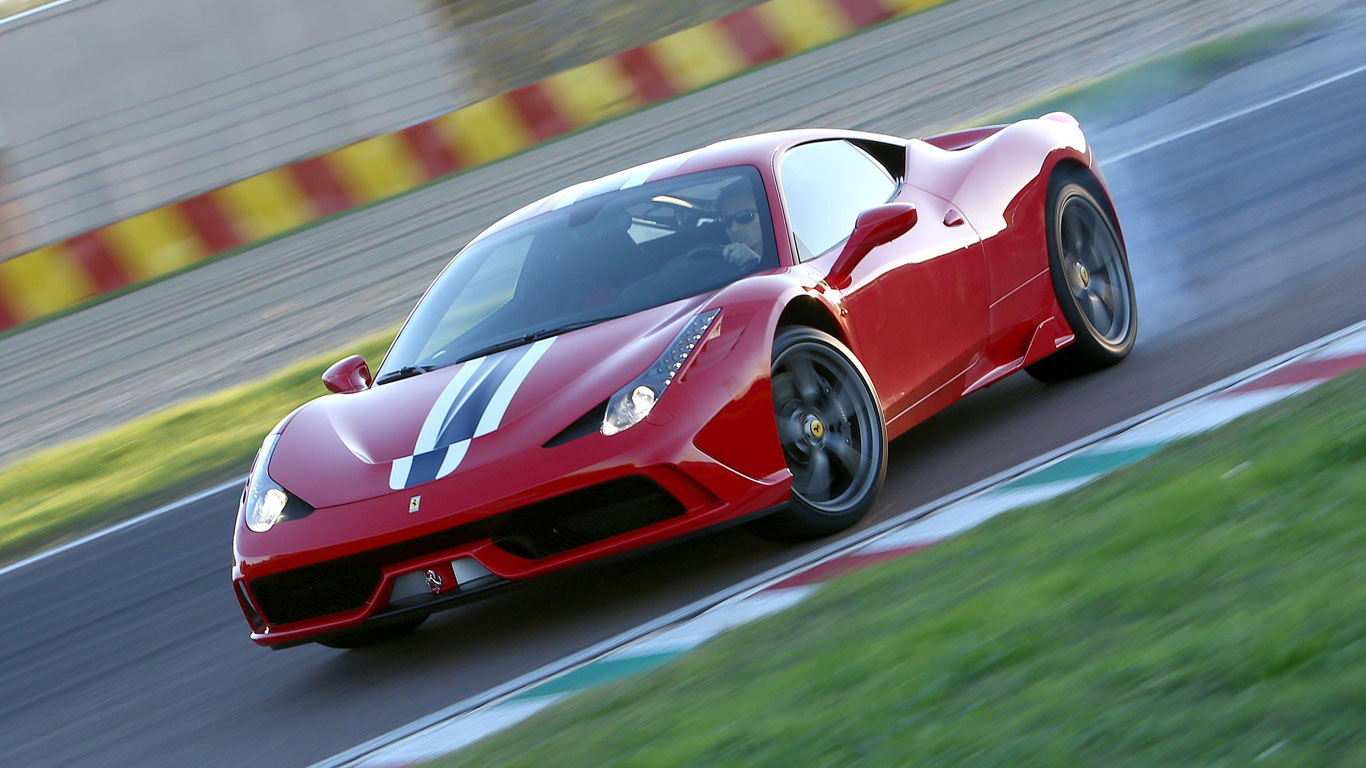
Ferrari 488 Pista

Ferrari 488 Pista

The Ferrari 488 Pista: ask an Italian to pronounce the name and it will sound beguiling, evocative and exotic. Ask somebody from an English-speaking nation and it will sound unpleasant and slightly whiffy. Pista is, of course, Italian for “track”, but if you thought it sounded faintly ridiculous without an Italian accent, have a look at Travis Okulski’s piece on Road & Track. It doesn’t translate particularly well, especially if you’re Estonian, Lithuanian, Persian or Ukranian.

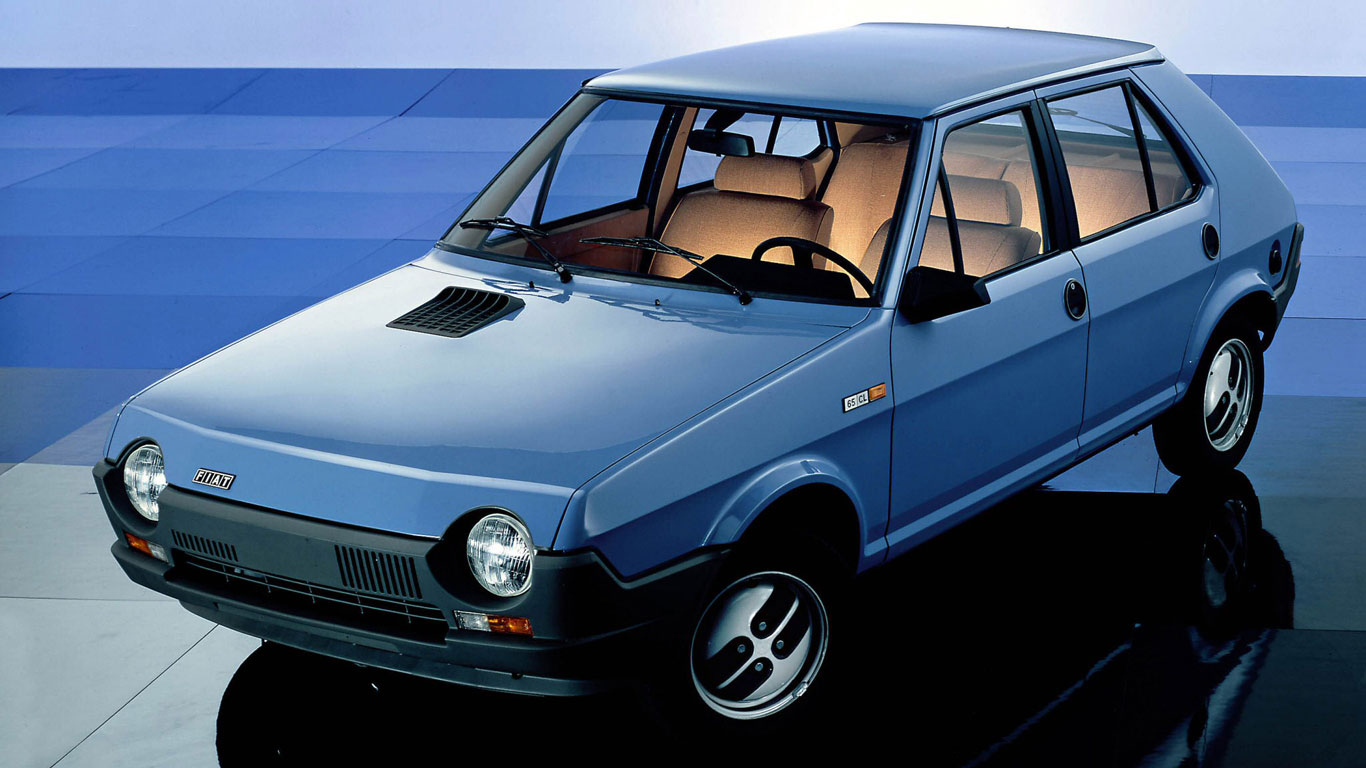
Fiat Strada

Fiat Strada

The Fiat Ritmo was exported to most English-speaking markets as the Fiat Strada, which itself sounds more appealing than the Fiat Street. Why was it called the Strada in the UK and USA? Simply because Ritmo is Italian for “rhythm”, which is a natural form of contraception.

Ferrari 458 Speciale

Ferrari 458 Speciale

Say the word “special”. Now say “speciale” in your finest Italian accent. It just sounds so right, even if your impression of an Italian is about as convincing as Joe Dolce’s Shaddap You Face. Ask your parents.

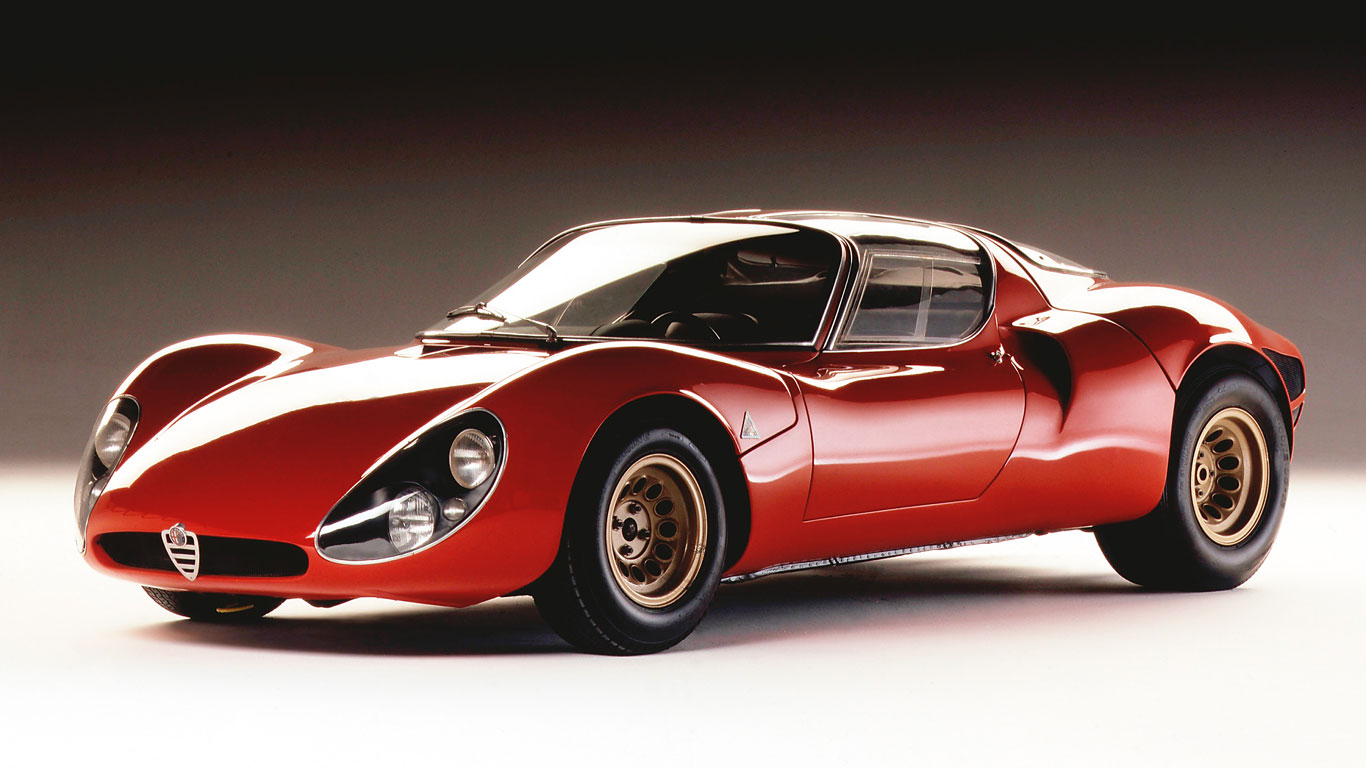
Alfa Romeo 33 Stradale

Alfa Romeo 33 Stradale

Strada is Italian for “street”, while stradale is “road”. Whatever, just admire the majesty of the Alfa Romeo 33 Stradale. Italian car manufacturers have a history of using the name to denote a road-going version of a racing car.

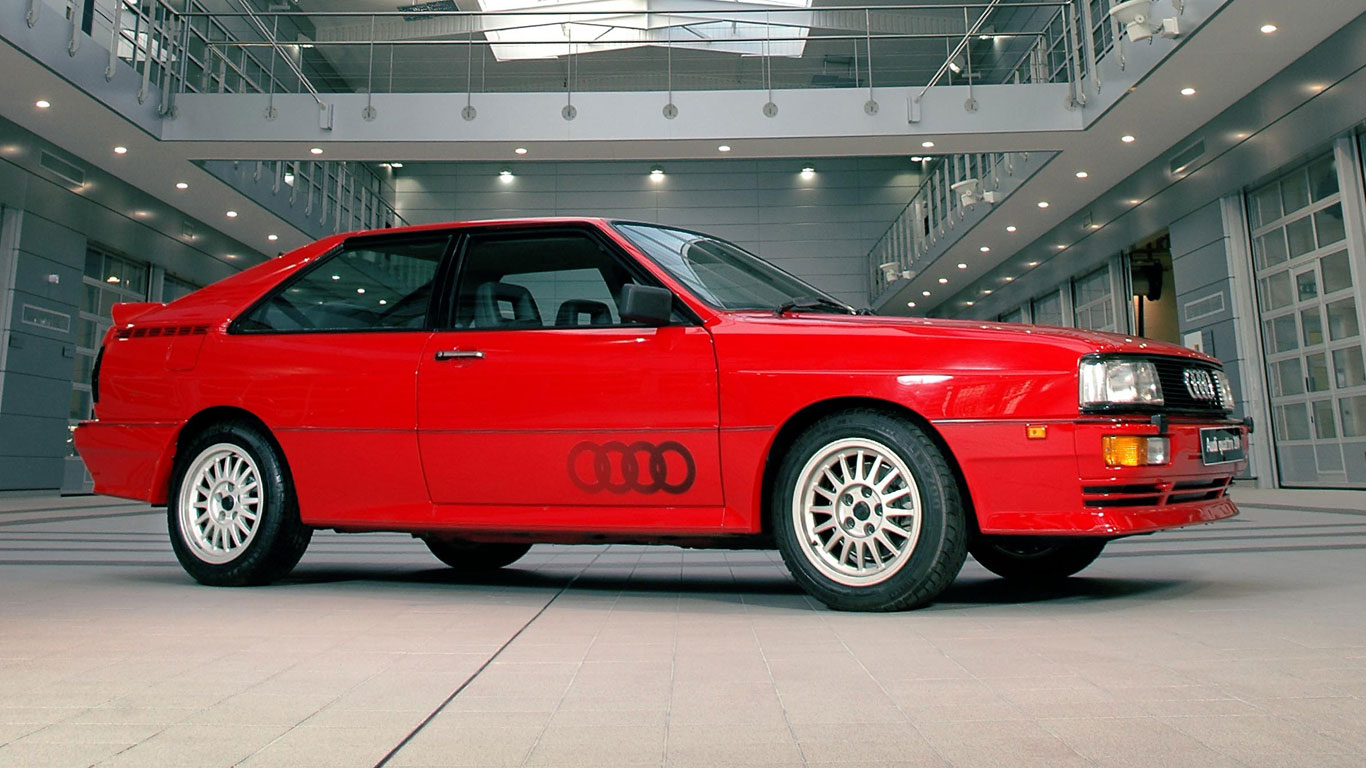
Audi Quattro

Audi Quattro

Anybody who has ordered a four-cheese pizza will know that quattro is Italian for “four”. An apt name, then, for a performance coupe that put four-wheel drive on the map as a real-world option.

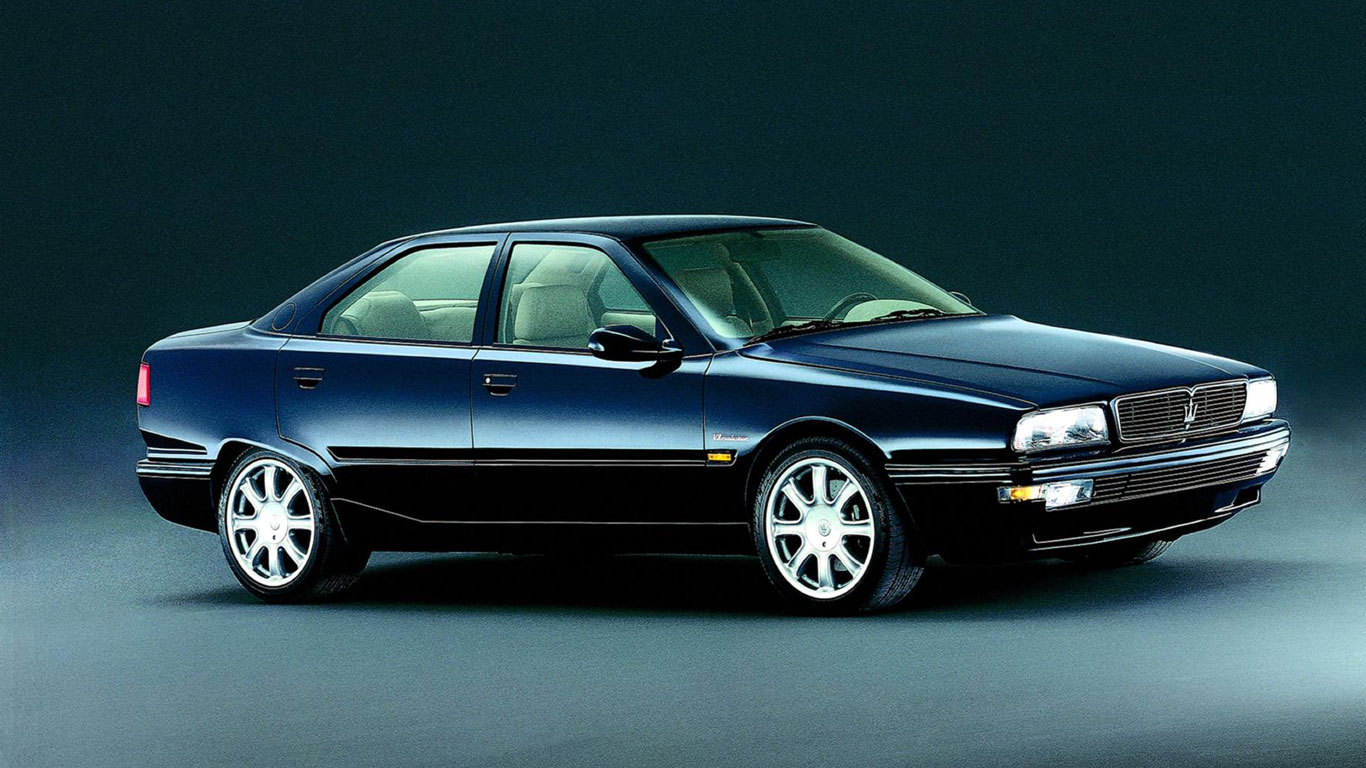
Maserati Quattroporte

Maserati Quattroporte

It sounds like the most exotic car on the planet, but it means little more than Maserati Four Door. Back in 1963, when the original Quattroporte was launched, it was the fastest four-door saloon in the world.

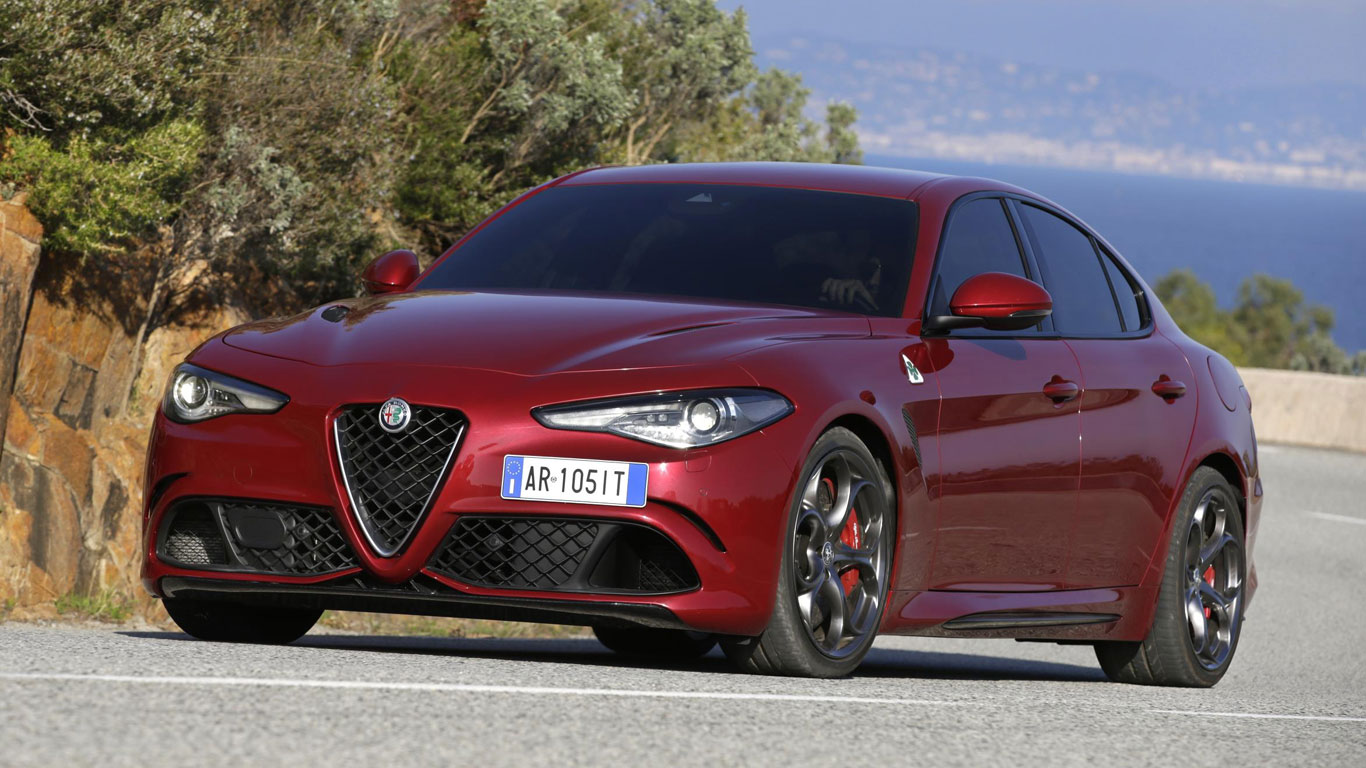
Alfa Romeo Giulia Quadrifoglio Verde

Alfa Romeo Giulia Quadrifoglio Verde

The history of the Quadrifoglio Verde – or “green four-leaf clover” – dates back to 1923, when Ugo Sivocci decided to add the symbol of luck to his race car. Sivocci won the 1923 Targa Florio, and it was assumed that luck played a small part in his victory. Later that year, Sivocci died during practice for the Italian Grand Prix. The Quadrifoglio Verde hadn’t been applied to his race car…

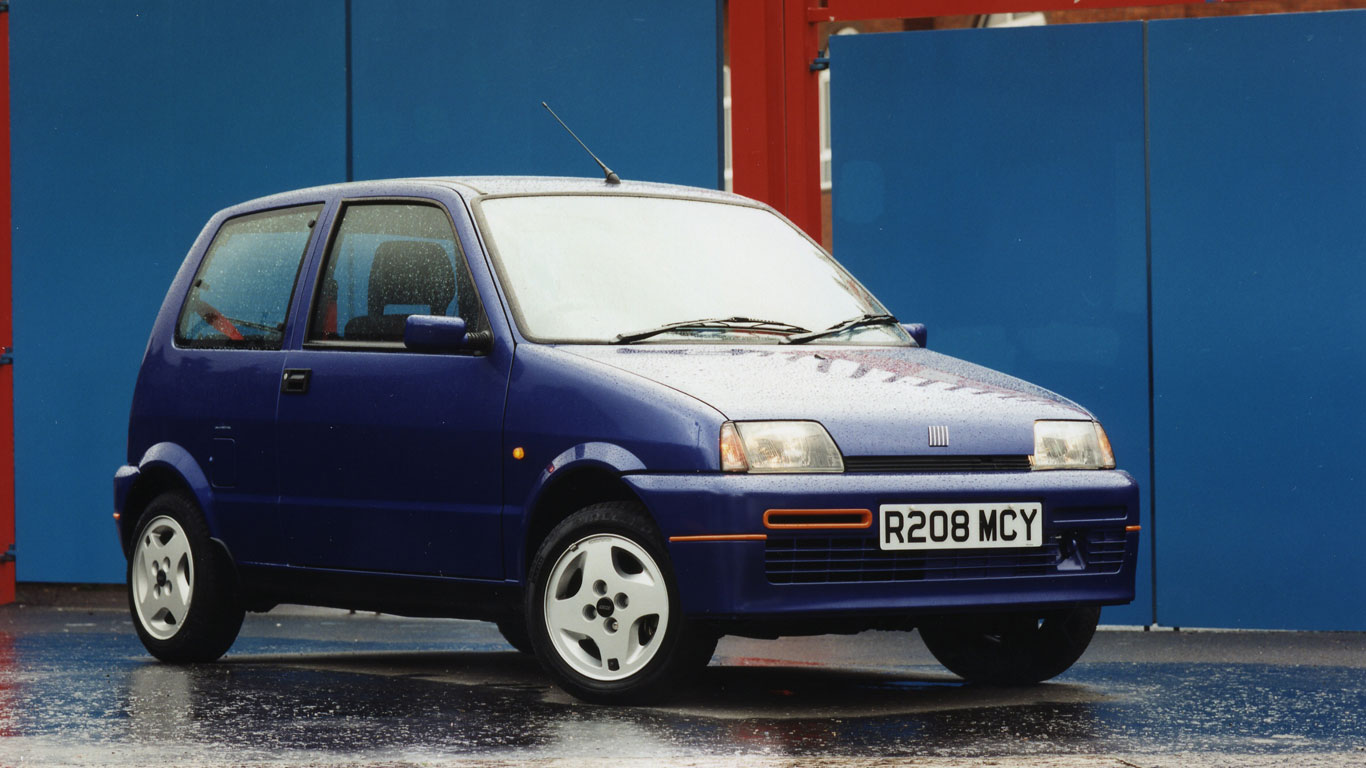
Fiat Cinquecento

Fiat Cinquecento

The Fiat Cinquecento: the city car of choice for The Proclaimers. Well, they’d almost certainly walk 500 miles to find a good one.

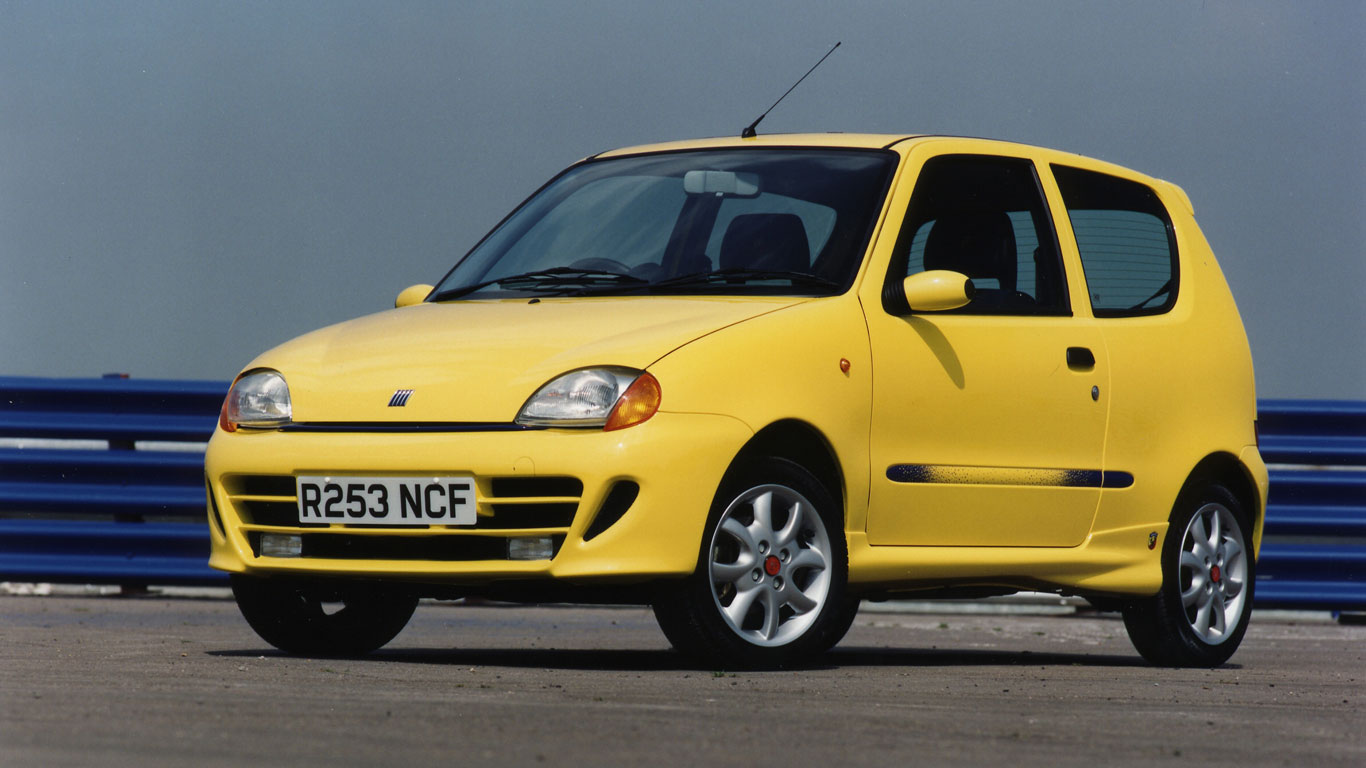
Fiat Seicento

Fiat Seicento

But the Scottish duo wouldn’t walk 600 miles for a Fiat Seicento. That would be da da da (da da da) daft.

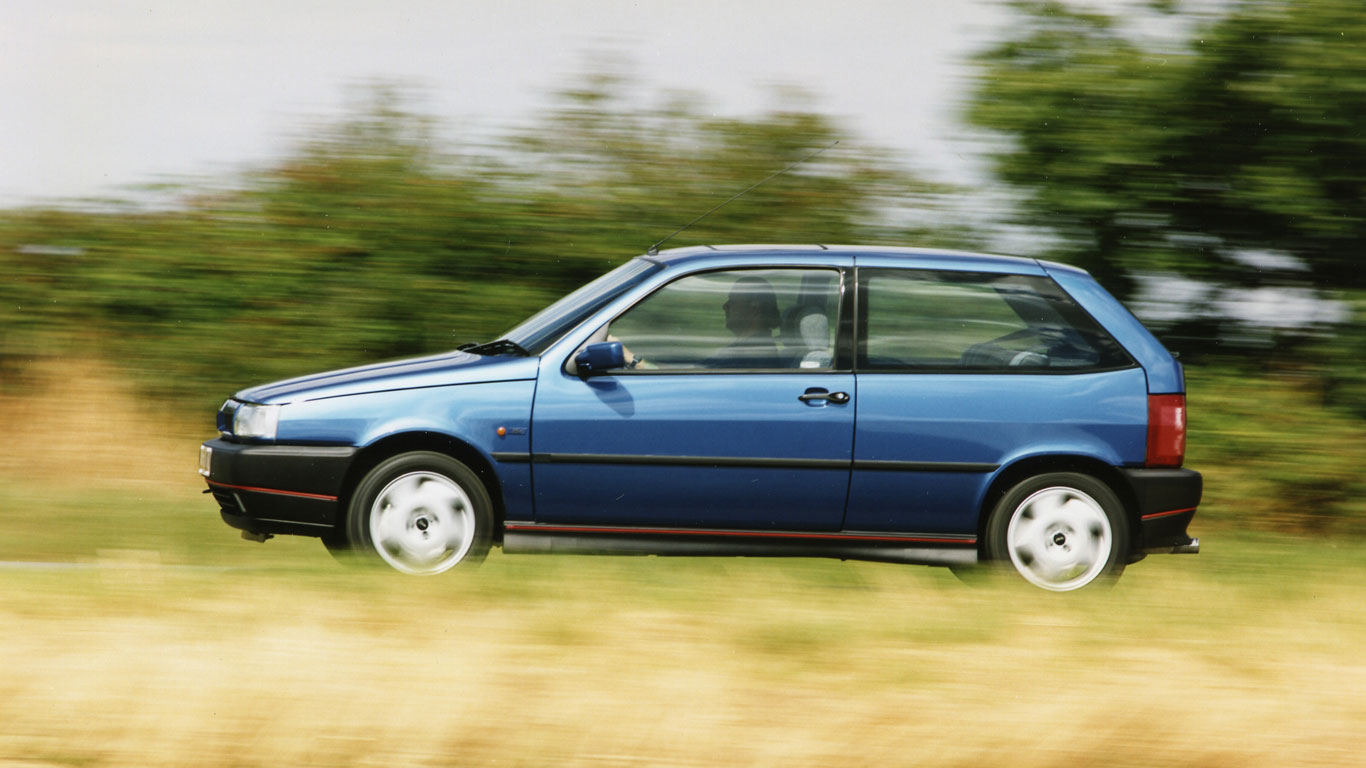
Fiat Tipo

Fiat Tipo

The Fiat Group’s Tipo Due platform – or “Type Two” platform – was conceived from the outset with the intention of shared use, beginning with this: the Fiat Tipo. It was designed by IDEA to go head-to-head with the Volkswagen Golf, and was good enough to scoop the European Car of the Year award in 1989.

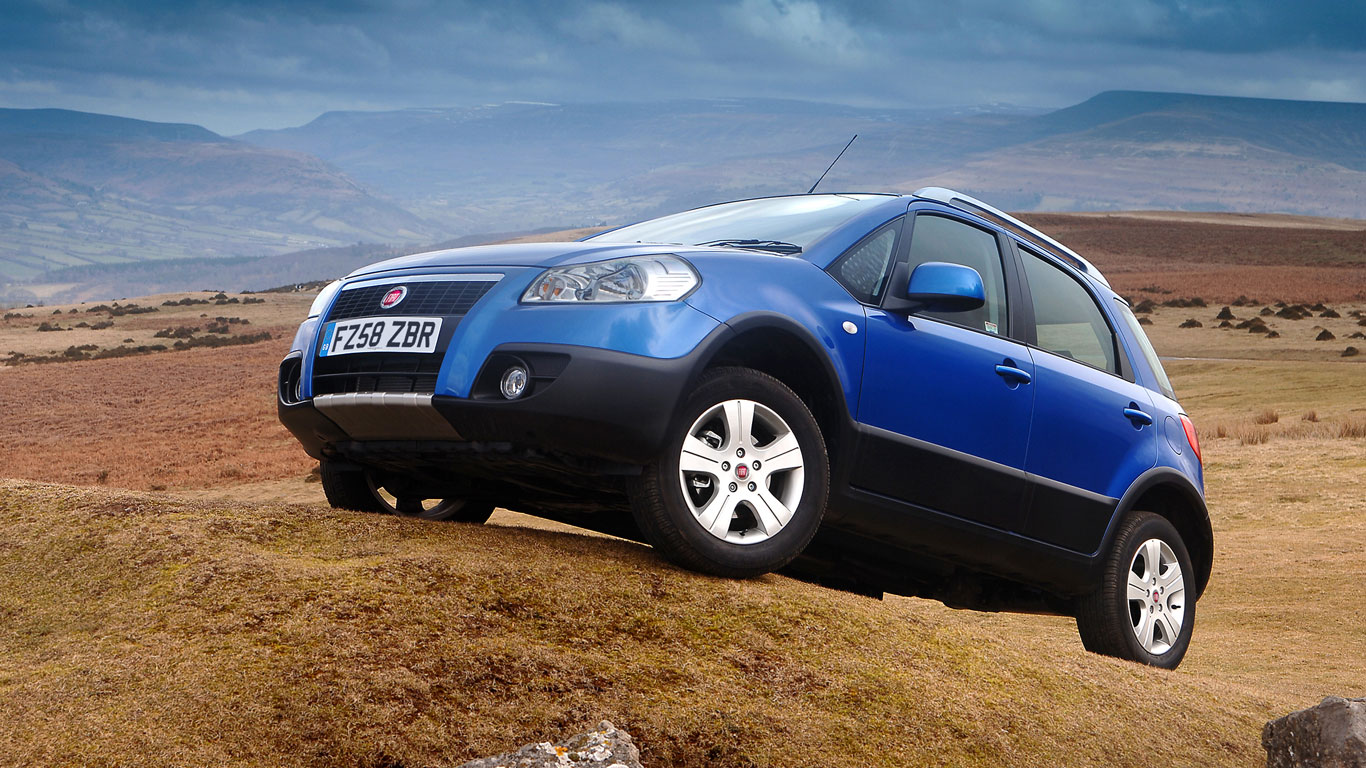
Fiat Sedici

Fiat Sedici

Fiat teamed up with Suzuki to develop the Sedici, which is also known as the Suzuki SX4. The Giugiaro-designed Sedici was the official car of the 2006 Winter Olympics in Turin and the name means “Sixteen”. It’s a 4×4, you see. And four times four equals sixteen. Neat.

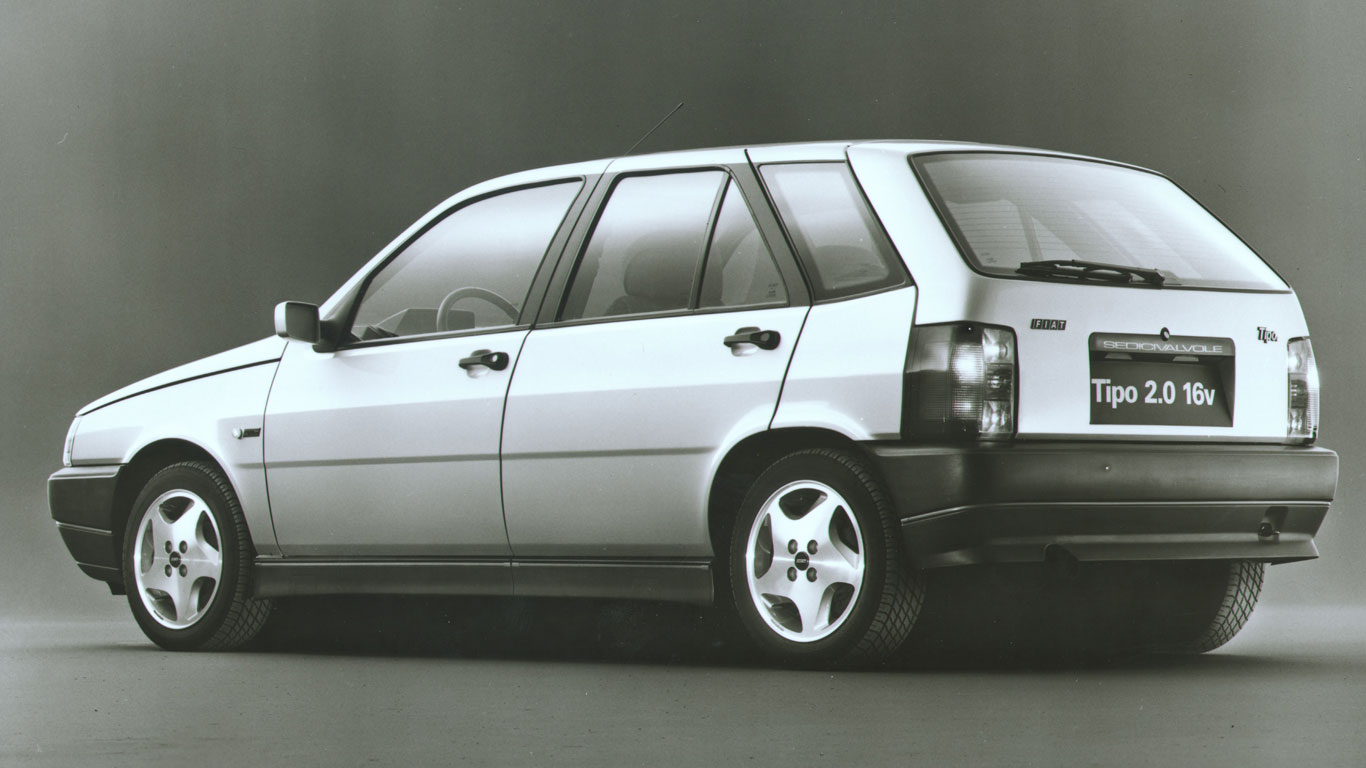
Fiat Tipo Sedicivalvole

Fiat Tipo Sedicivalvole

If you’ve been paying attention, you’ll know that sedici means “sixteen”. And you won’t need access to Rosetta Stone to know that valvole means “valve”. Back in the 90s, a 16v badge on your car’s rump was a sign of merit. But SEDICIVALVOLE on the back of your Tipo was a badge of distinction.

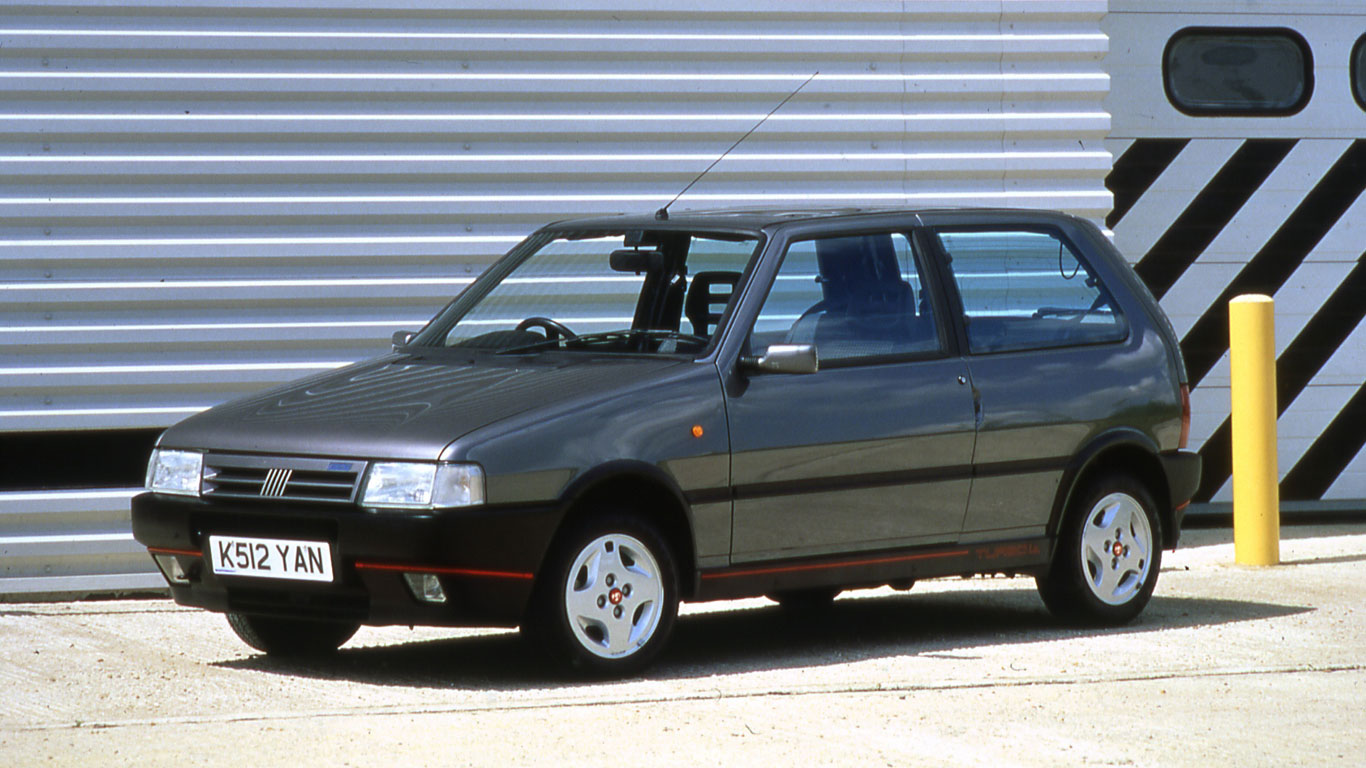
Fiat Uno

Fiat Uno

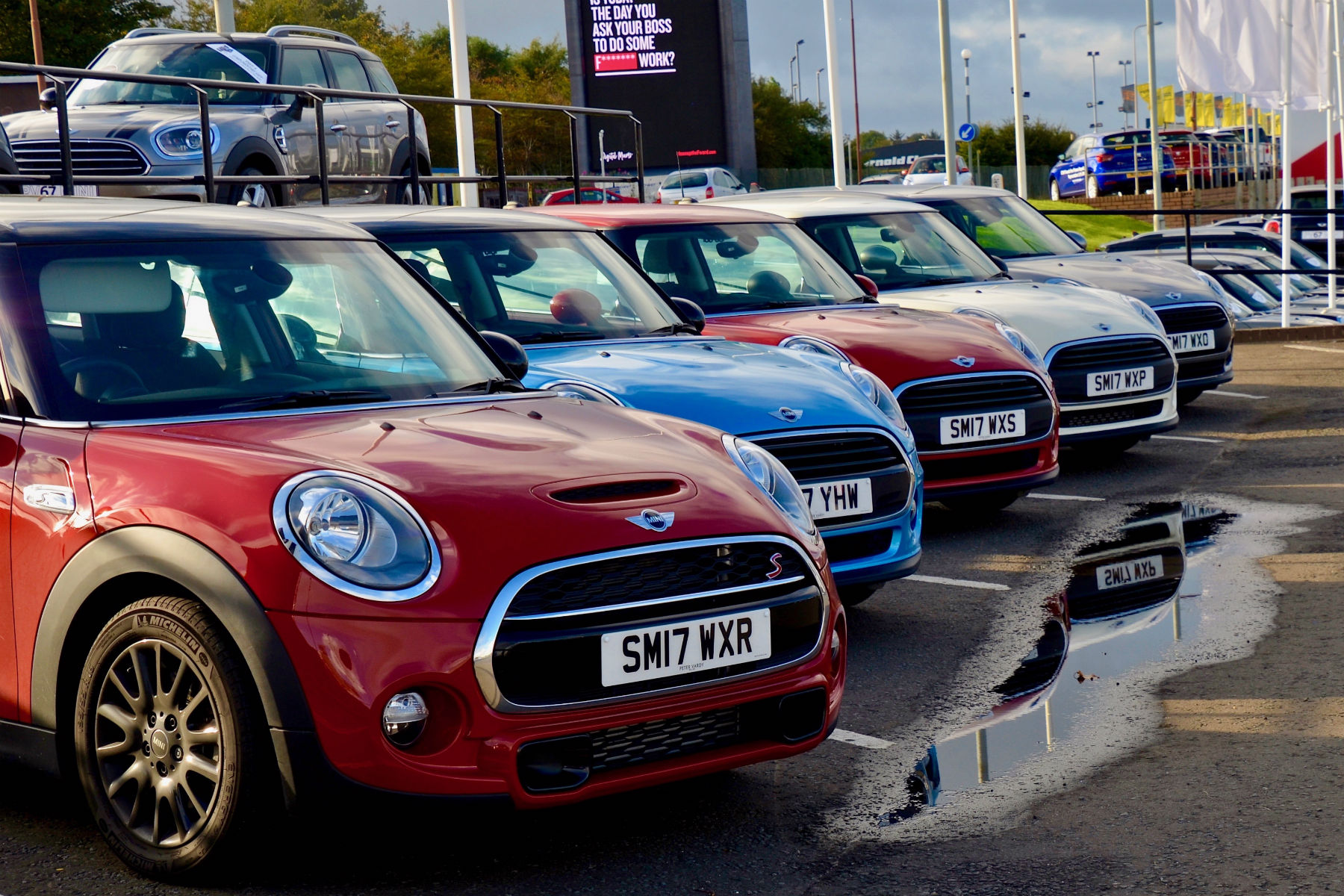
The Mini One: yeah, it’s OK. But the Fiat Uno? Much, much better.

Fiat Punto

Fiat Punto

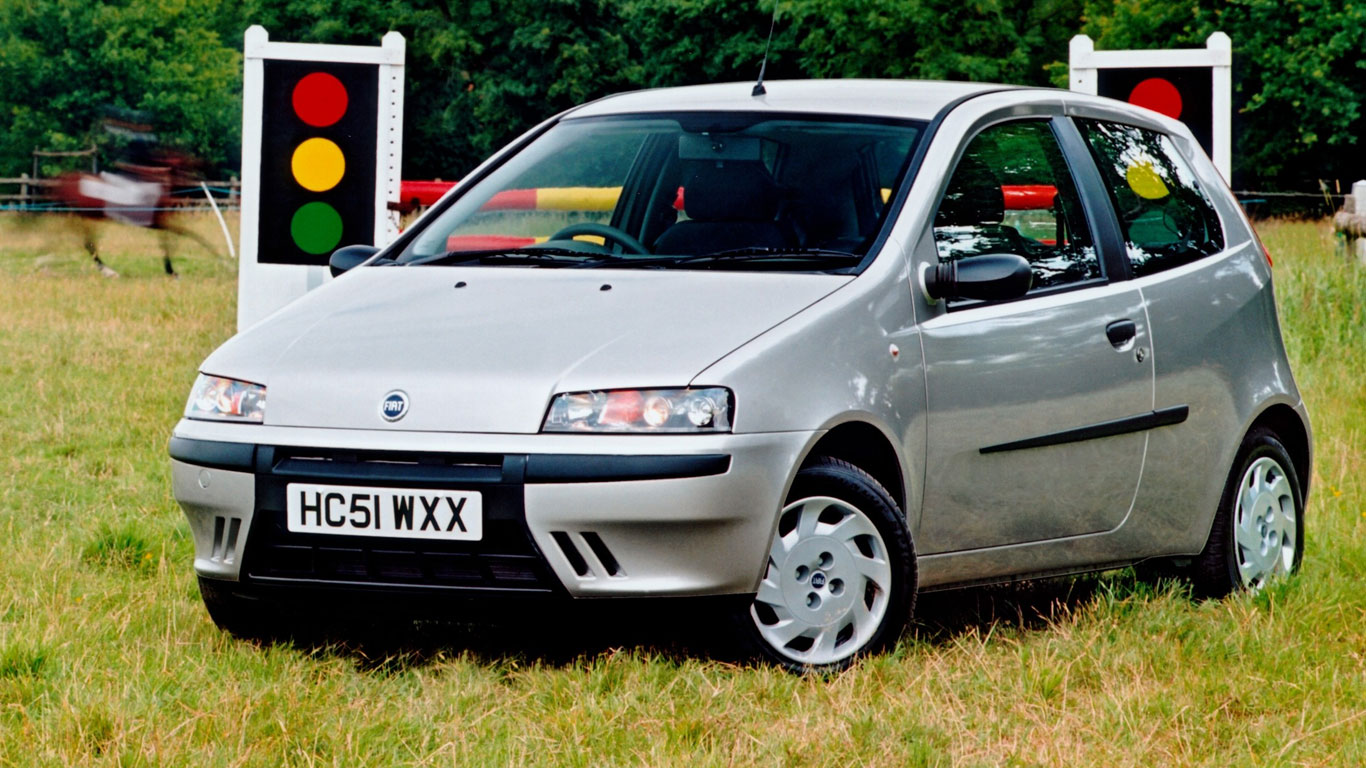
Giorgetto Giugiaro described the Fiat Punto as “a two-box, verging on one-box, car with all the advantages that this type of build offers in terms of habitability and visibility within a predetermined length.” Twenty-five years on from its launch in Turin, it’s time to recognise the glorious simplicity of the Fiat Punto, or Fiat Point.

Fiat Grande Punto

Fiat Punto

Anyone who has ordered an expensive takeaway coffee will know what Grande means in Italian. The Fiat Big Point doesn’t have quite the same ring to it.

Fiat Barchetta

Fiat Barchetta

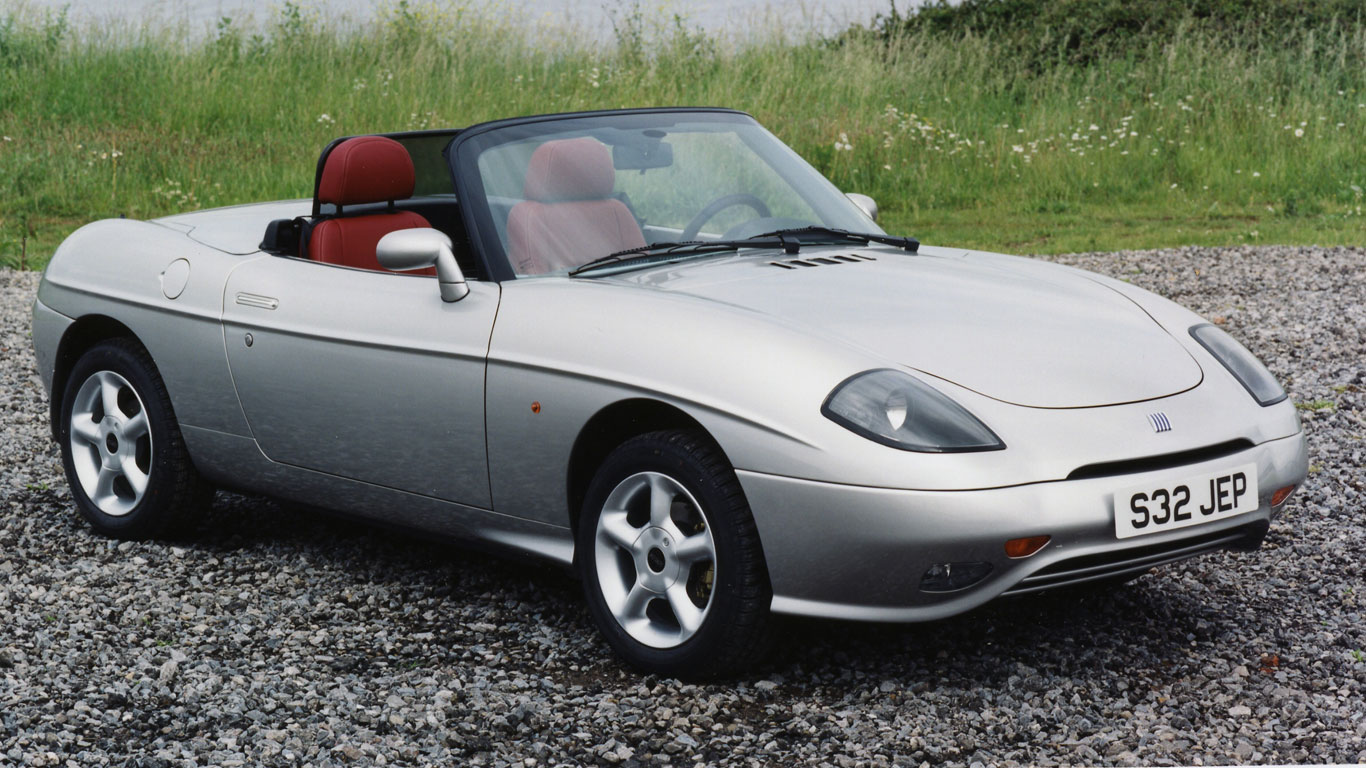
The Barchetta name can trace its roots back to the Fiat 509S Bateau of the 1920s and racing Ferraris of the late 1940s. But the Fiat Barchetta – or Little Boat – is arguably the most famous use of the name.

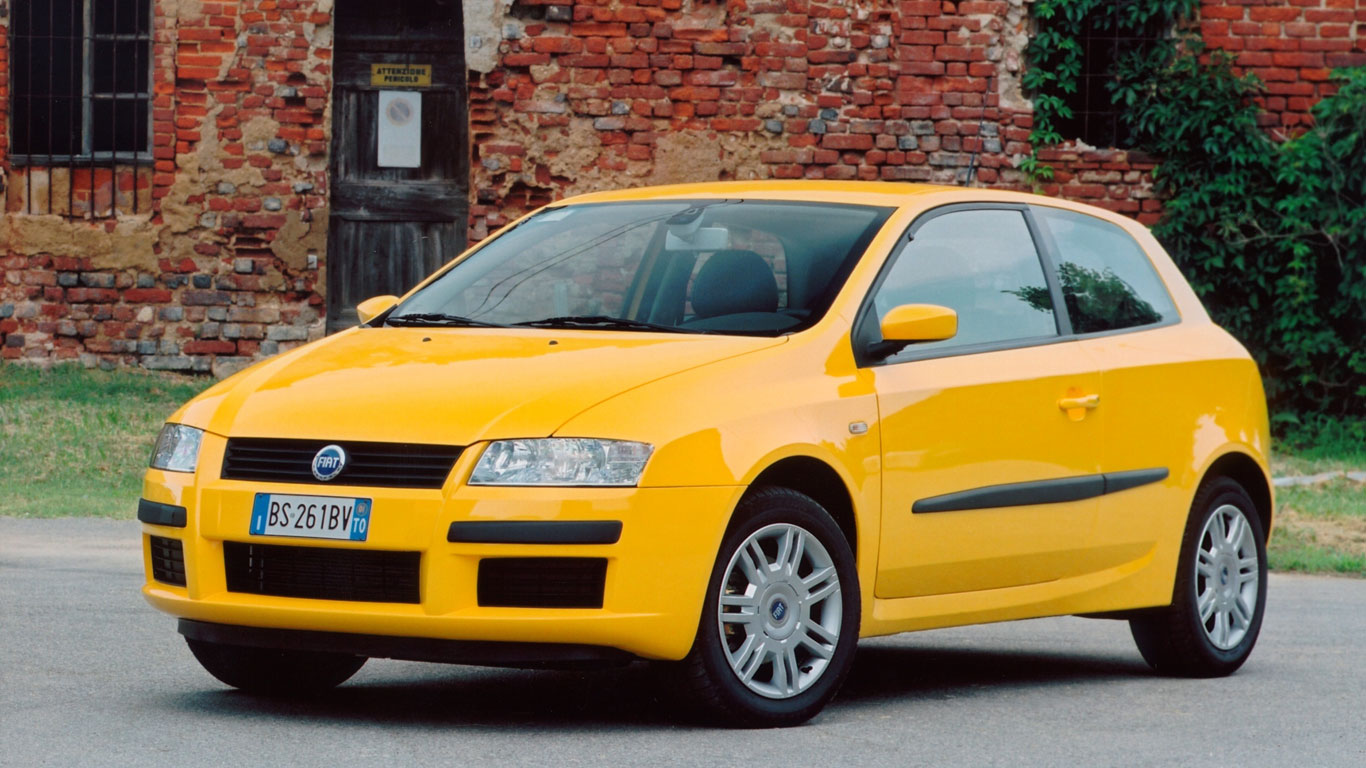
Fiat Stilo

Fiat Stilo

If you’re going to call your car Stilo – or Style – you need to ensure it hits the mark. Sadly, the styling of the Fiat Stilo wasn’t greeted with universal acclaim. “We clothed our new car in a markedly ‘pan-European’ skin, reserving our more distinctively Italian creativity for a few of the details,” said Nevio Di Giusto, Fiat Auto’s product engineering chief.

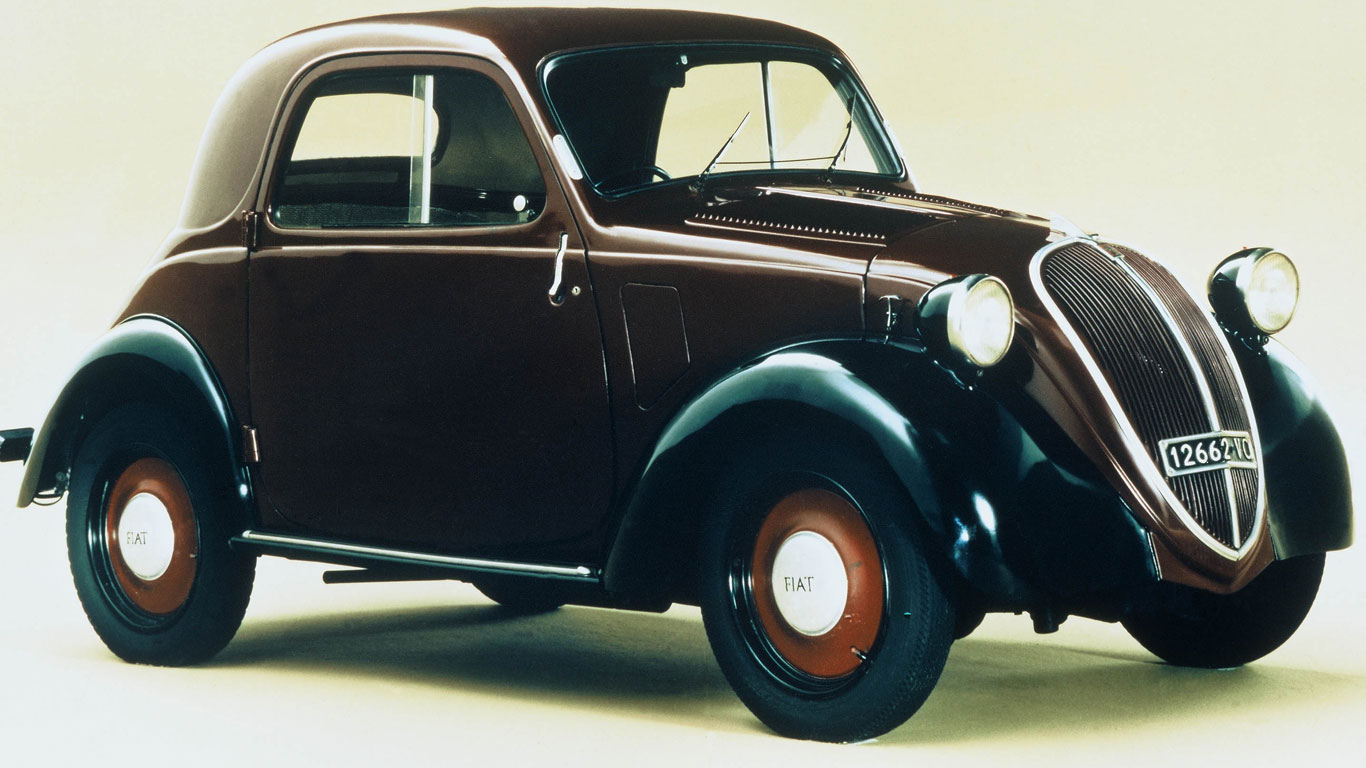
Fiat Topolino

Fiat Topolino

Is this the cutest name in the history of the motor car? The Fiat Topolino, aka the Fiat Little Mouse.

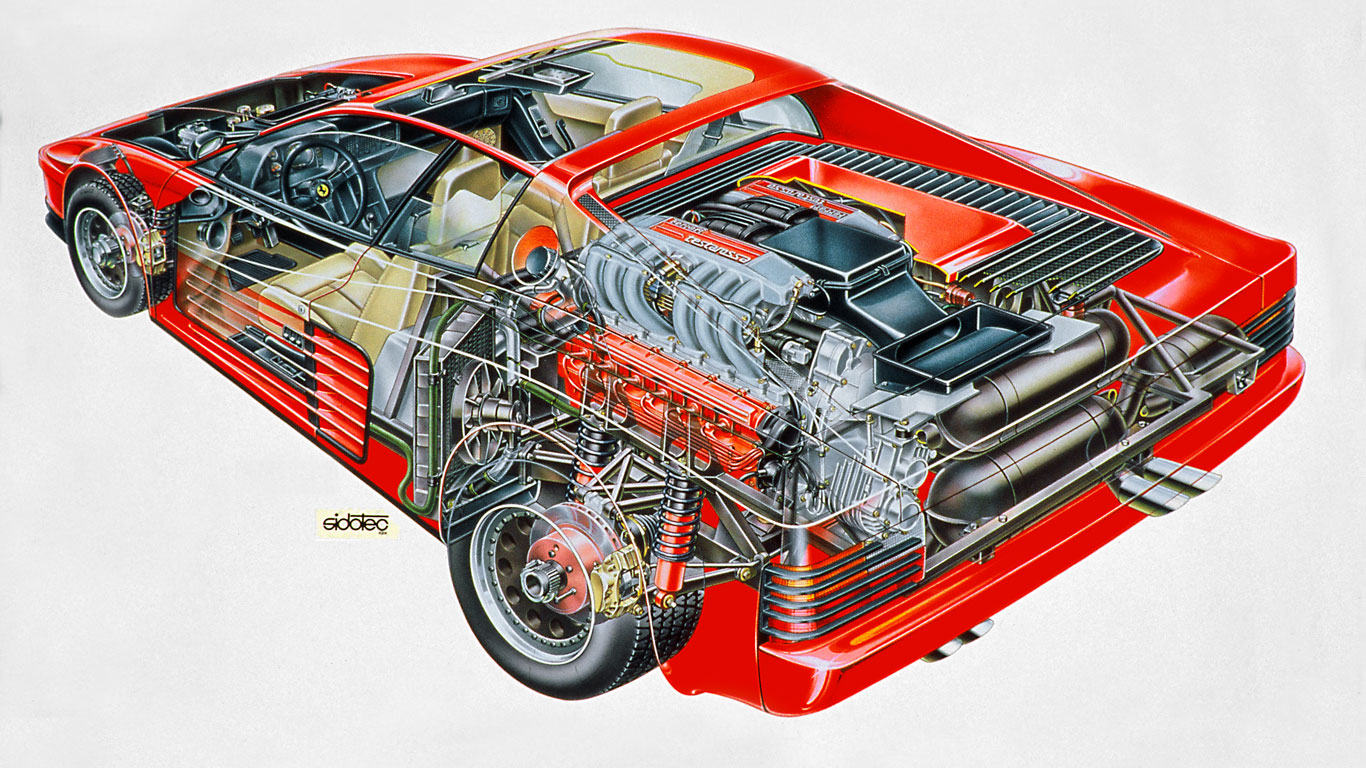
Ferrari Testarossa

Ferrari Testarossa

The Ferrari 500 TR featured a cylinder head painted red, hence the name Testa Rossa, or “Red Head”. The name was revisited in 1984, albeit in Testarossa form for the Pininfarina-designed supercar.

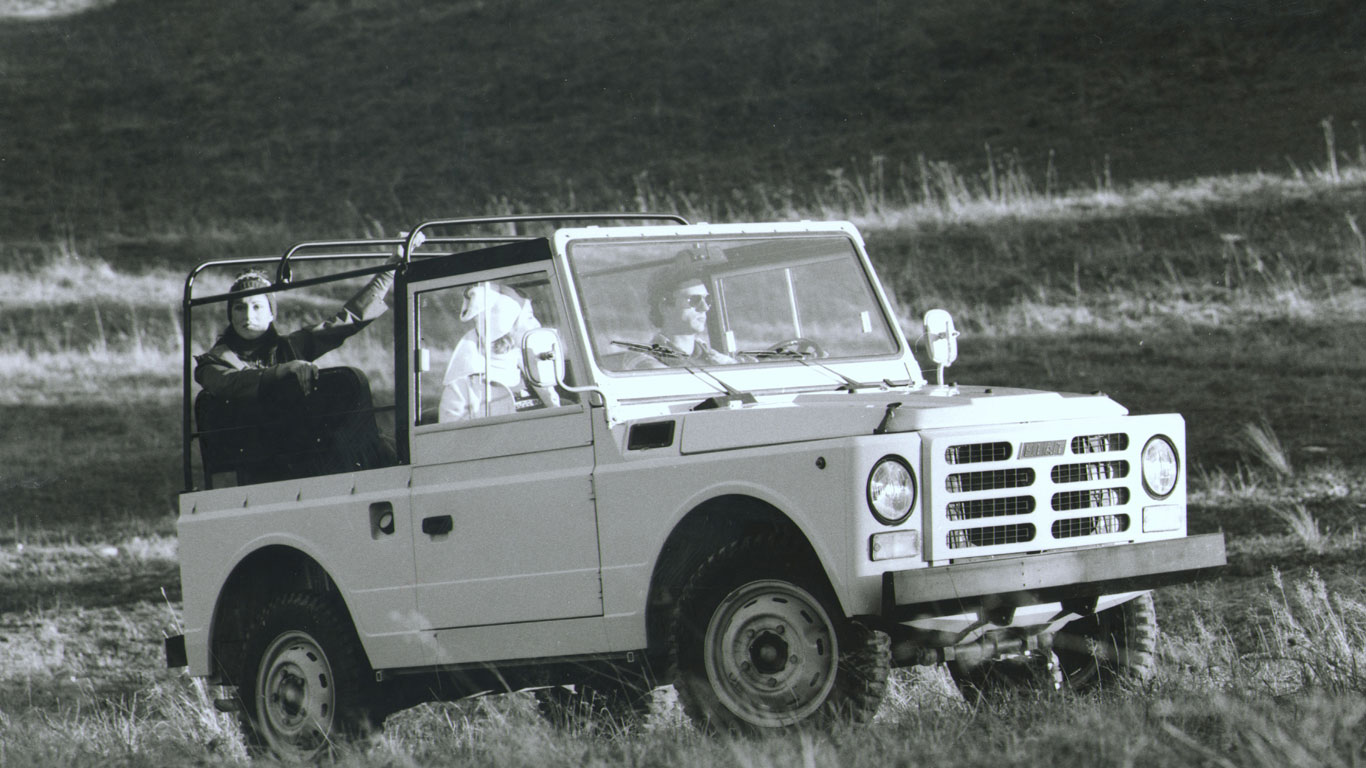
Fiat Campagnola

Fiat Campagnola

Campagna means “country”, so Campagnola is an apt name for an Italian off-road vehicle. The Fiat Campagnola enjoyed success in its domestic market, most notably among the Carabinieri and Polizia.

Fiat Multipla

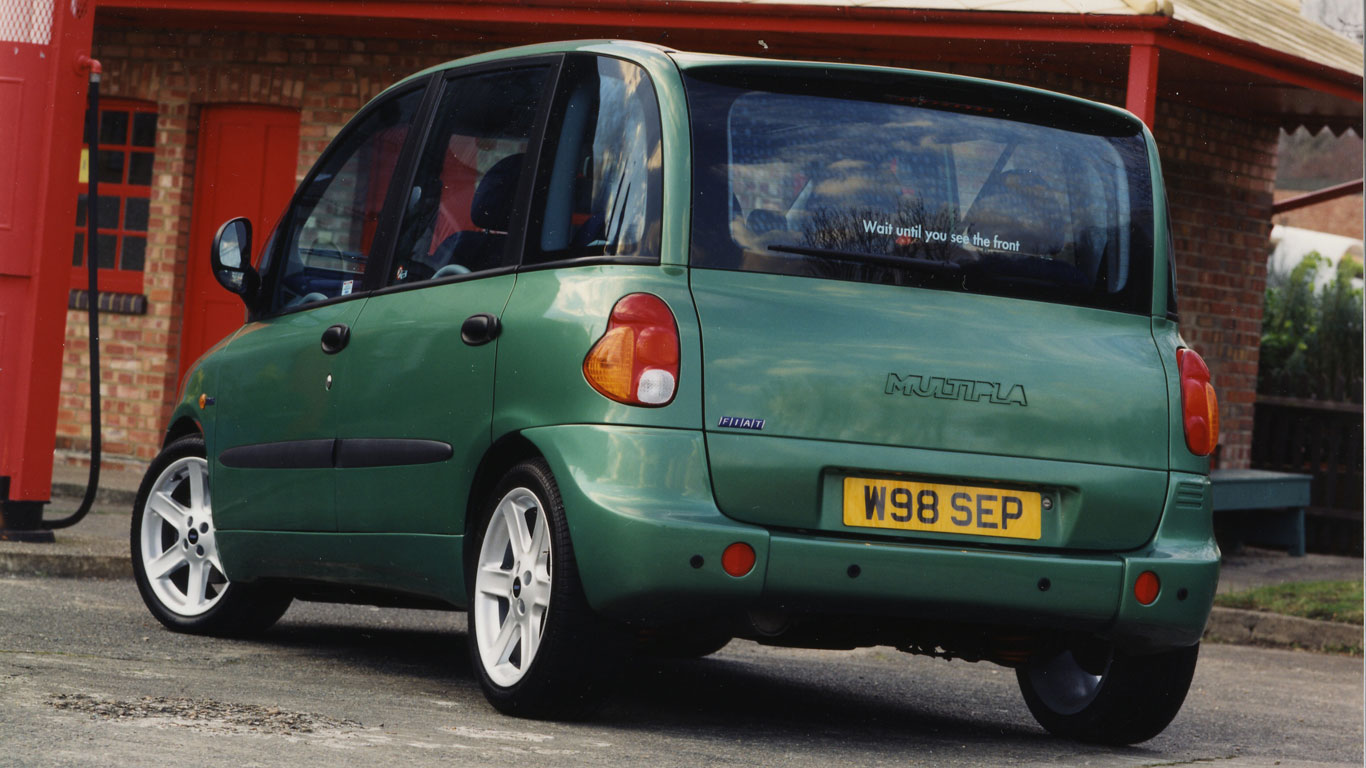
Fiat Multipla

The Multipla name was used for the four-door MPV version of the Fiat 600, before being reused for the aesthetically-challenged, but oh-so-cool, MPV launched in 1998. Multipla means “multiple”, which in this case means seats. The Fiat Multipla has two rows of three seats.

Chevrolet Camaro Berlinetta

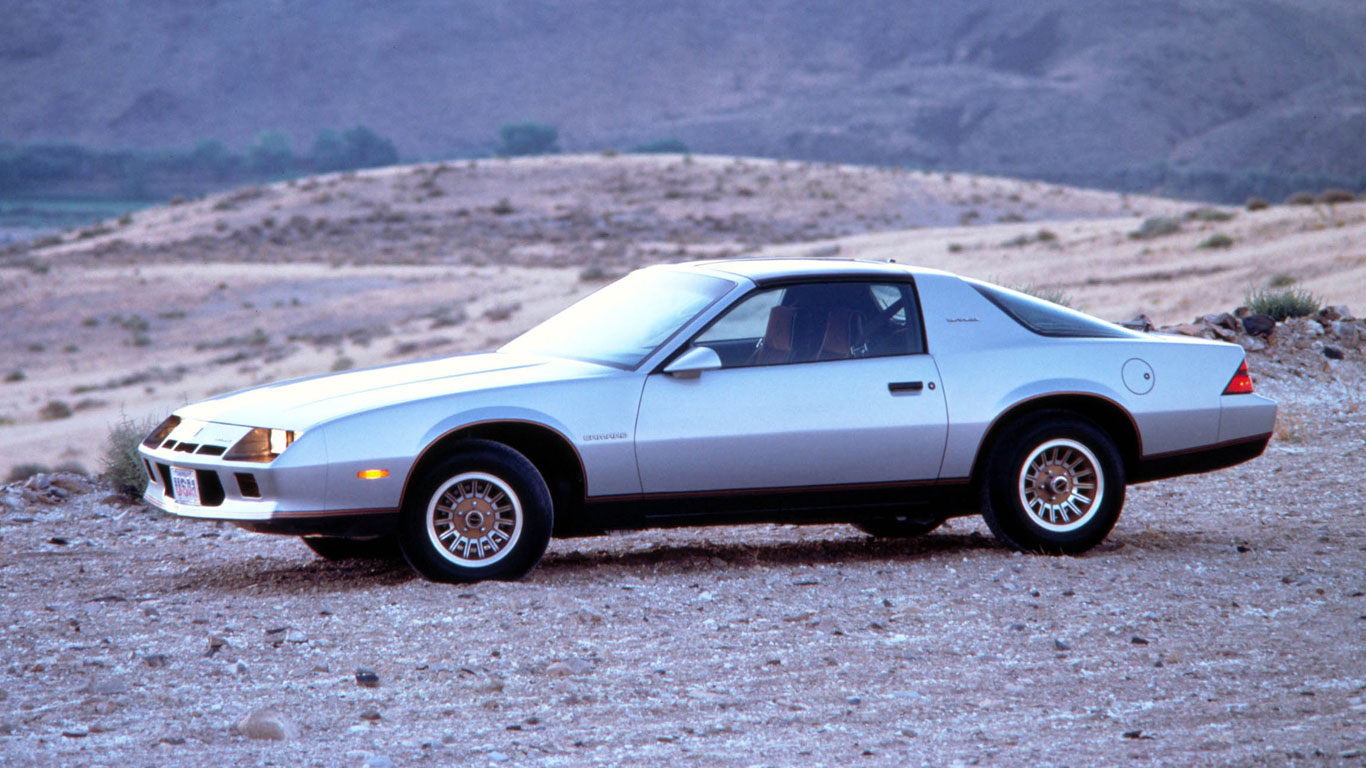
Chevrolet Camaro Berlinetta

In Italian, a berlina is a saloon car, while a berlinetta is a “little saloon”. The name has been used by manufacturers to denote a sporty coupe, but the Berlinetta badge is not restricted to Italian marques. Take the Chevrolet Camaro Berlinetta: the European name was designed to add a touch of luxury to the all-American pony car.

Lamborghini Countach Quattrovalvole

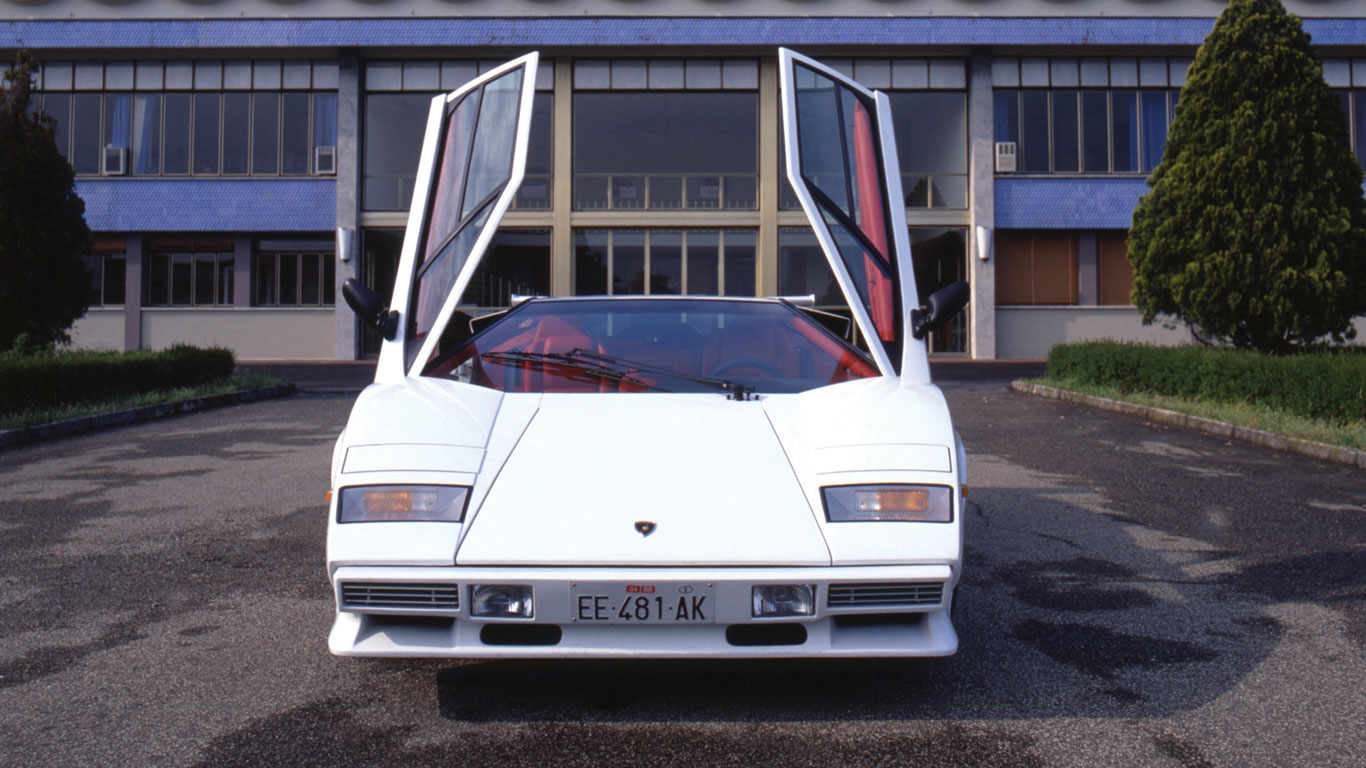
Lamborghini Countach Quattrovalvole

The Quattrovalvole name, often shortened to QV, simply means “four-valves”, as in four valves per cylinder. It’s a good excuse to use this photograph of a Lamborghini Countach QV.

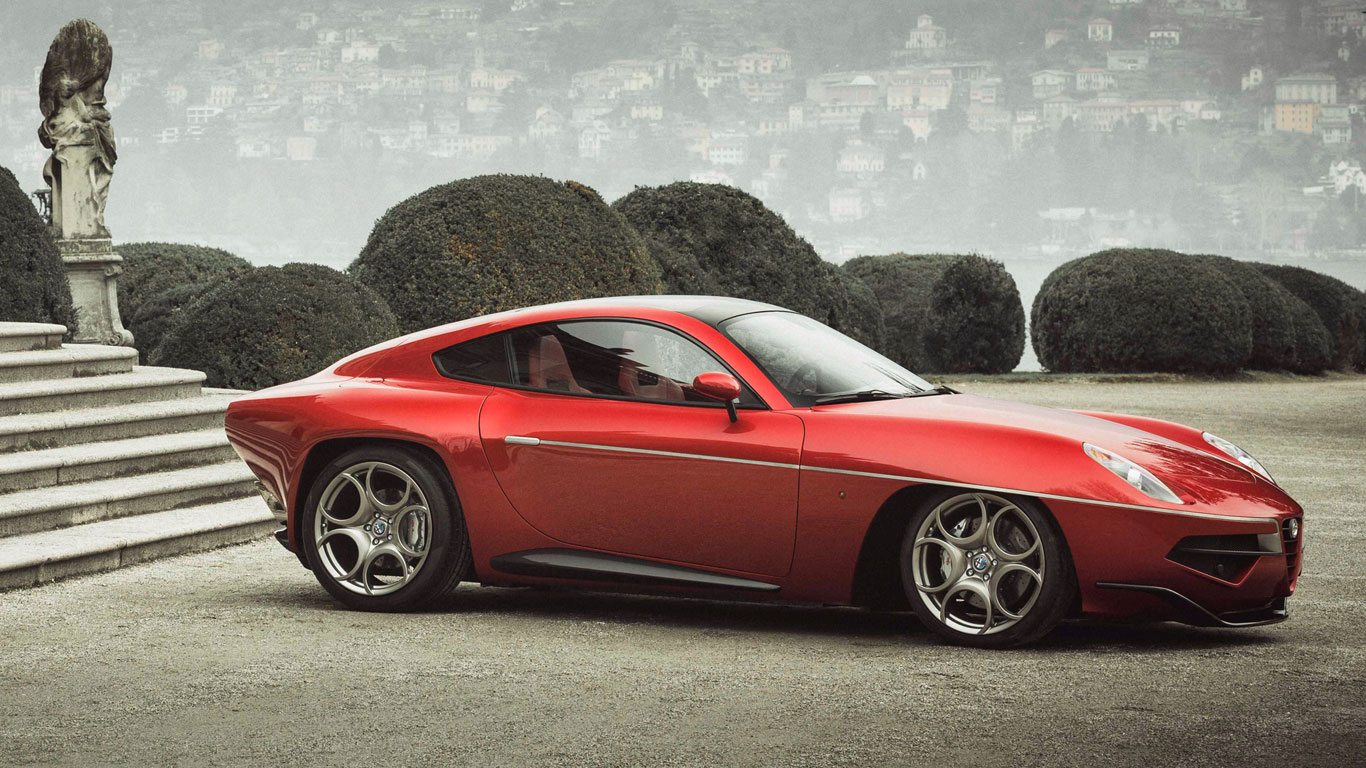
Alfa Romeo Disco Volante

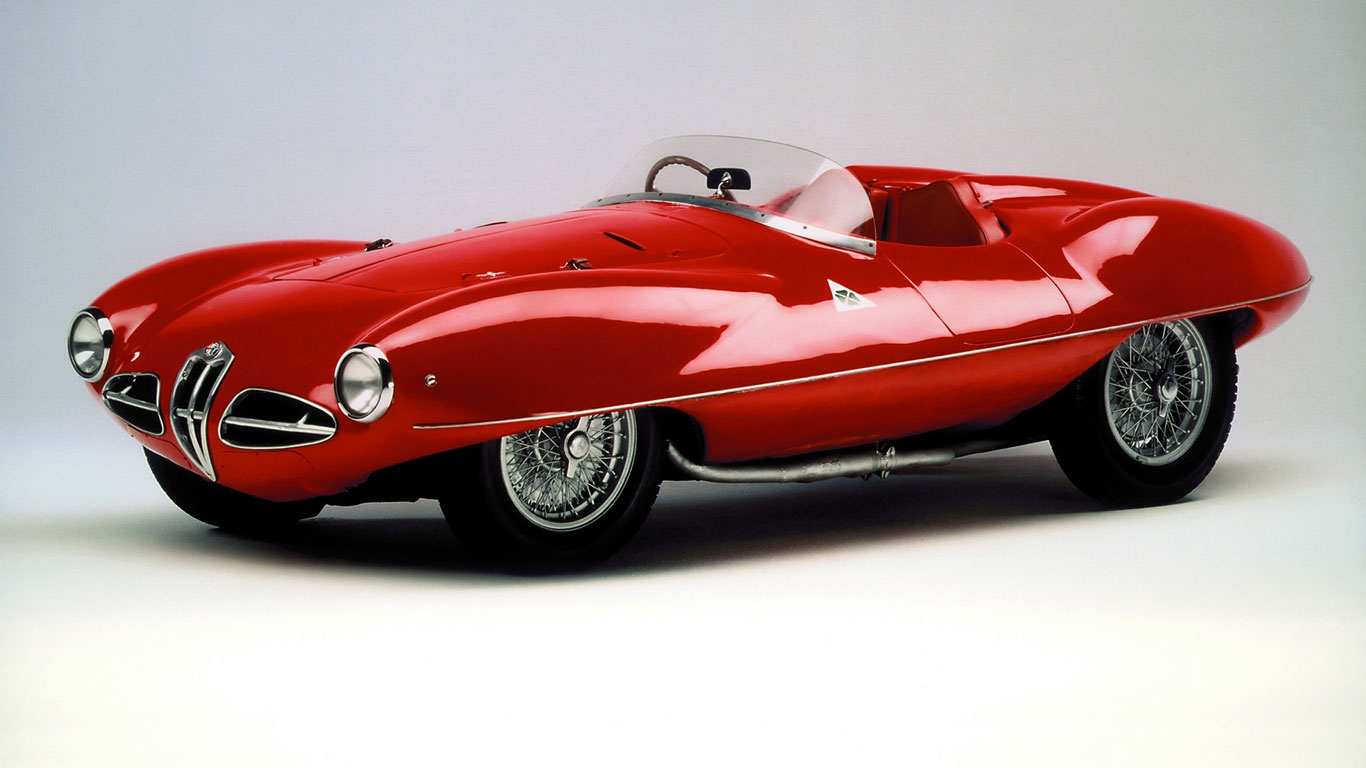
Alfa Romeo Disco Volante

The Alfa Romeo Disco Volante or “Flying Saucer”. Its curvaceous styling led to it being given the internal nickname of Disco Volante, and the unofficial name caught on, thanks in part to the obsession with UFOs in the 1950s.

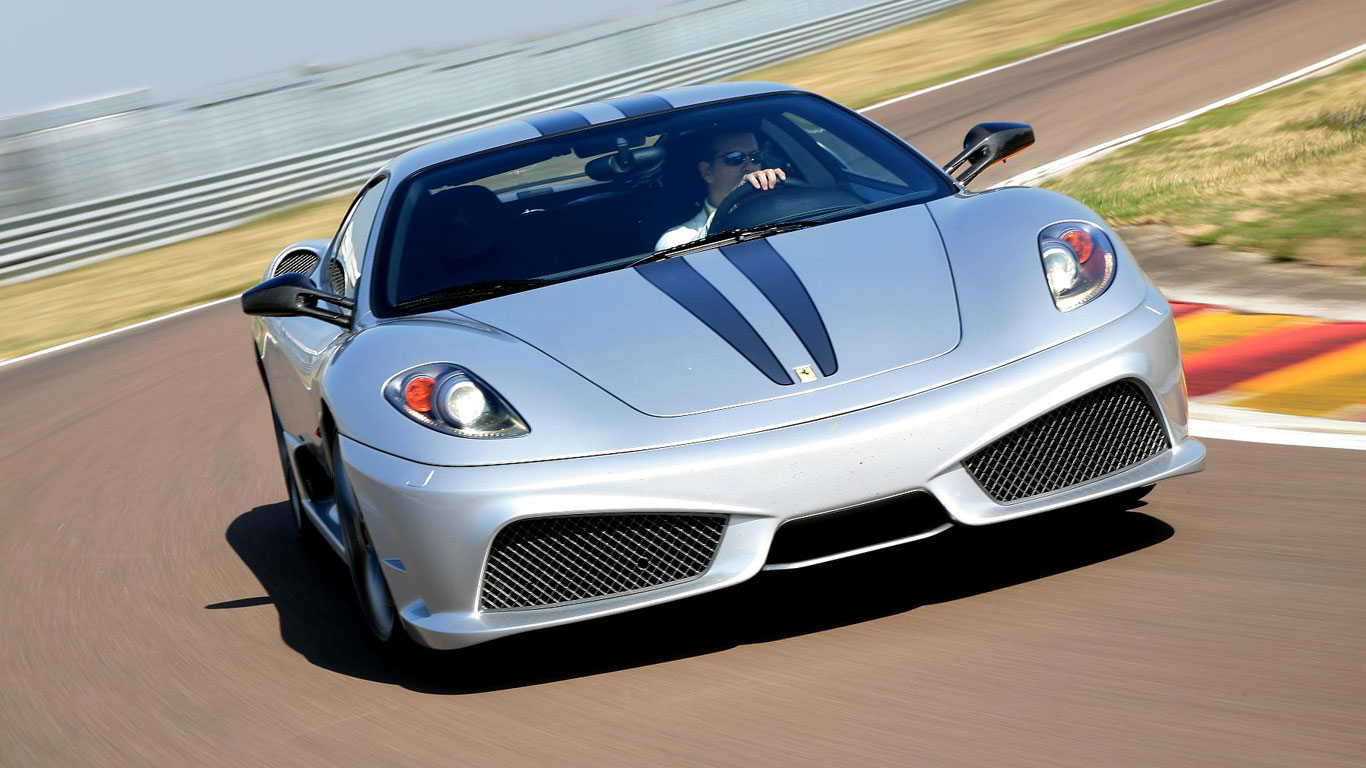
Ferrari F430 Scuderia

Ferrari F430 Scuderia

We conclude with the F430 Scuderia, or “stable” in English. It sounds so much better in Italian and is rather apt for a company name with blacksmith roots and a Prancing Horse for a badge.fi

Read more:

Advertisement