With the Goodwood Festival of Speed as an impressive backdrop, McLaren Automotive used the event to unveil what the future holds for the next seven years.
It seems hard to believe that the brand only started producing supercars in 2011, when the first 12C rolled off the production line. Since then, the Woking-based firm has managed to build some 15,000 cars.
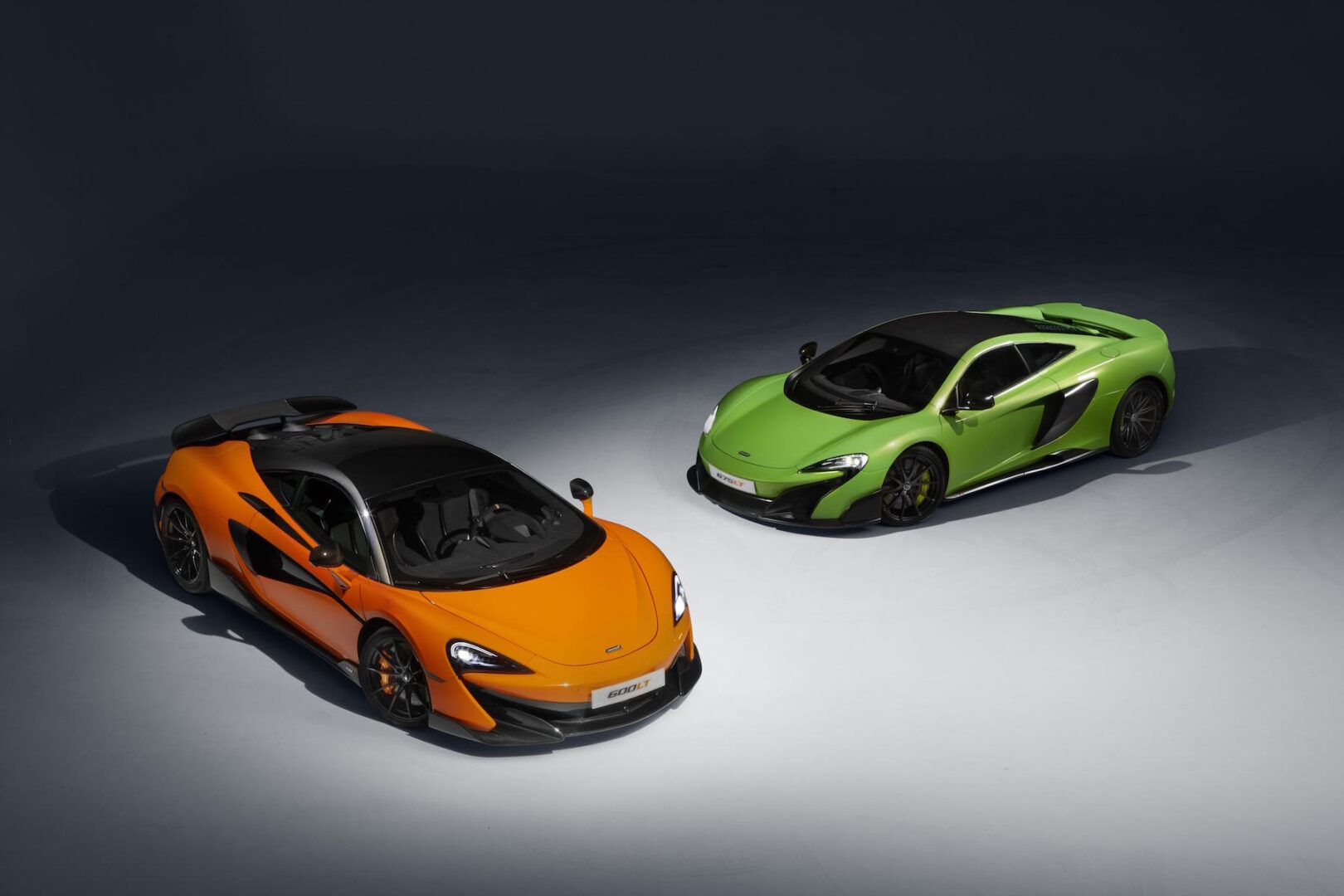
The brand has also just launched the latest, and most extreme, car in its entry-level Sports Series. Making a debut this weekend at Goodwood, it might be a stretch to call the new 600LT ‘entry-level’ with a list price of £185,500, though.
But whilst the 600LT is what McLaren Automotive is doing right now, the future looks set to be even more exciting. The £1.2bn business plan announced at Goodwood, branded Track25, will see substantial developments and innovations across the next seven years, seeing 18 new models launched.
Key to this is investment in the development of augmented driving technology, and enhanced battery capability. The latter includes the promise of a car capable of lapping a race track for 30 minutes on electrical power alone.
By 2025, 100 percent of the company’s range will be powered by hybrid tech.
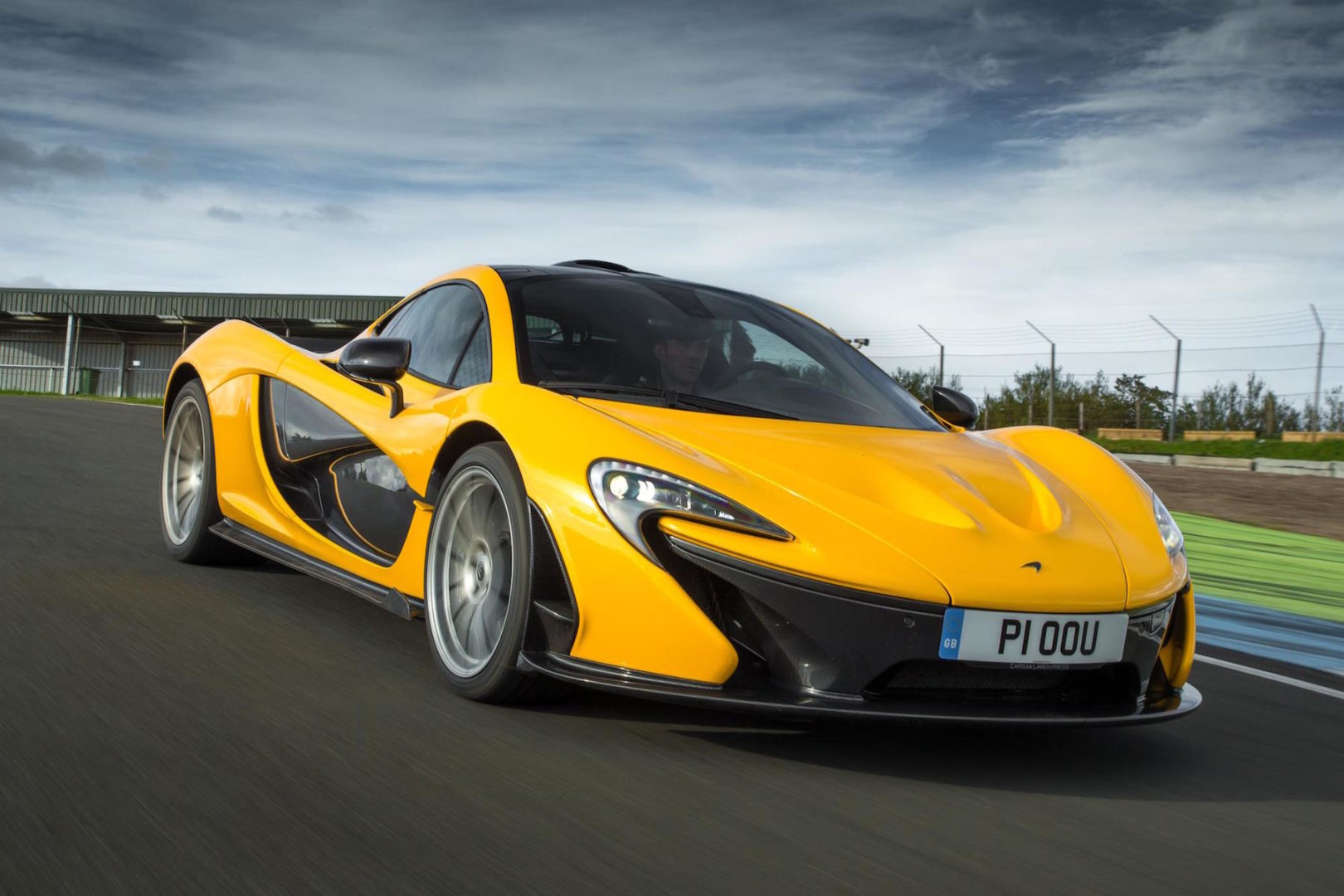
This will include a successor to the dramatic P1 hypercar, which combined a twin-turbocharged V8 petrol engine with an electric motor to produce a total of 903hp.
Other innovations will include the development of over-the-air software updates, mirroring companies such as Tesla which already makes extensive use of the technology. Helpfully, enhanced cyber protection will also be part of the improved ownership experience.
Those owners will be brought in by an expanded dealership network. At present, the brand has 86 dealers across the globe, covering 31 markets. By 2025 McLaren, wants this to be 100 retailers, with eyes on growth markets such as Russia and India.
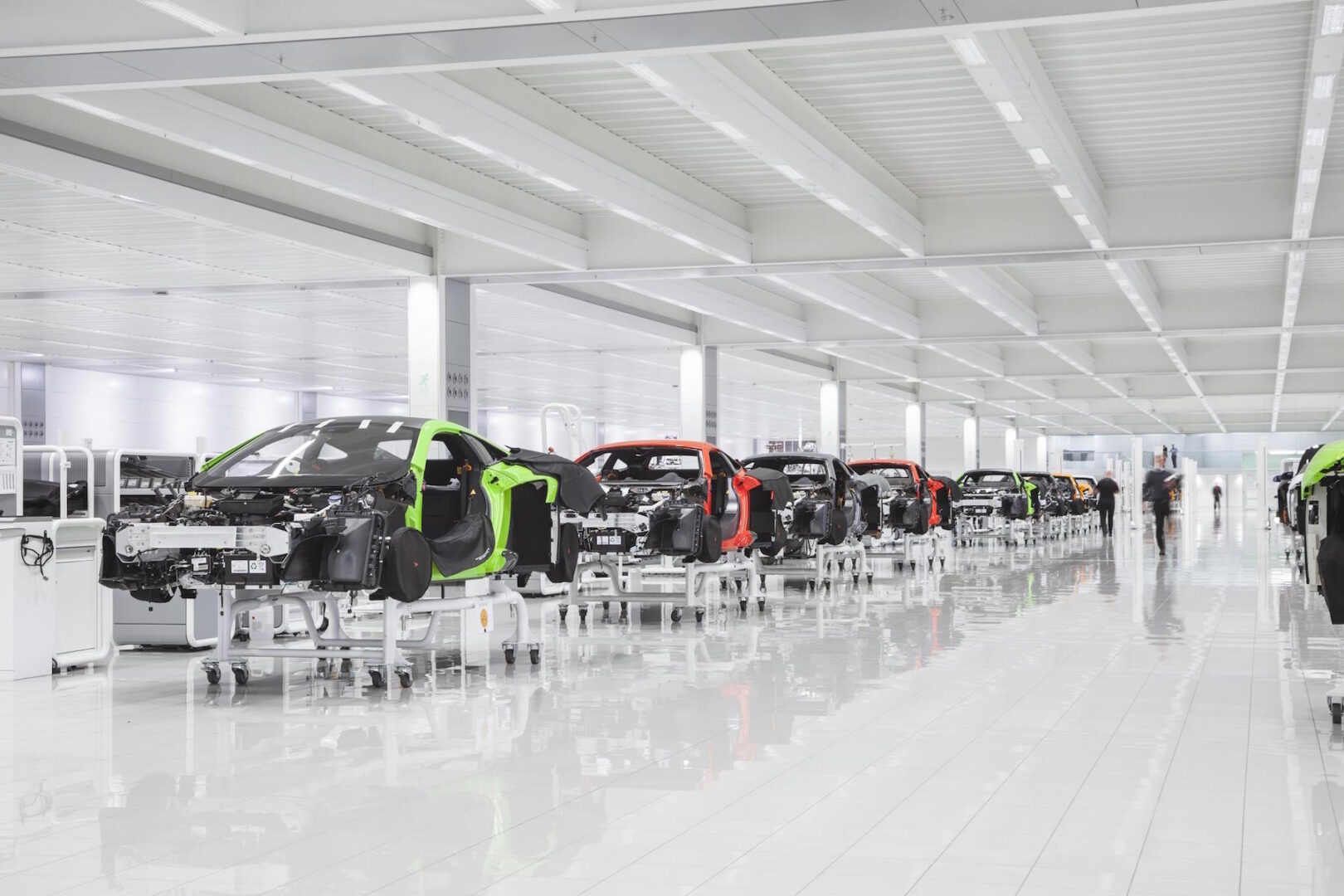
Big news comes in the form of a commitment to increase production output by some 75 percent. This will take McLaren to building 6,000 cars a year. Although this may be still be less than rivals such as Porsche and Ferrari, it is still a significant volume for a relatively young supercar company.
Despite the proposed increases in production, McLaren says it remains committed to all cars being finished by hand at the Woking factory.
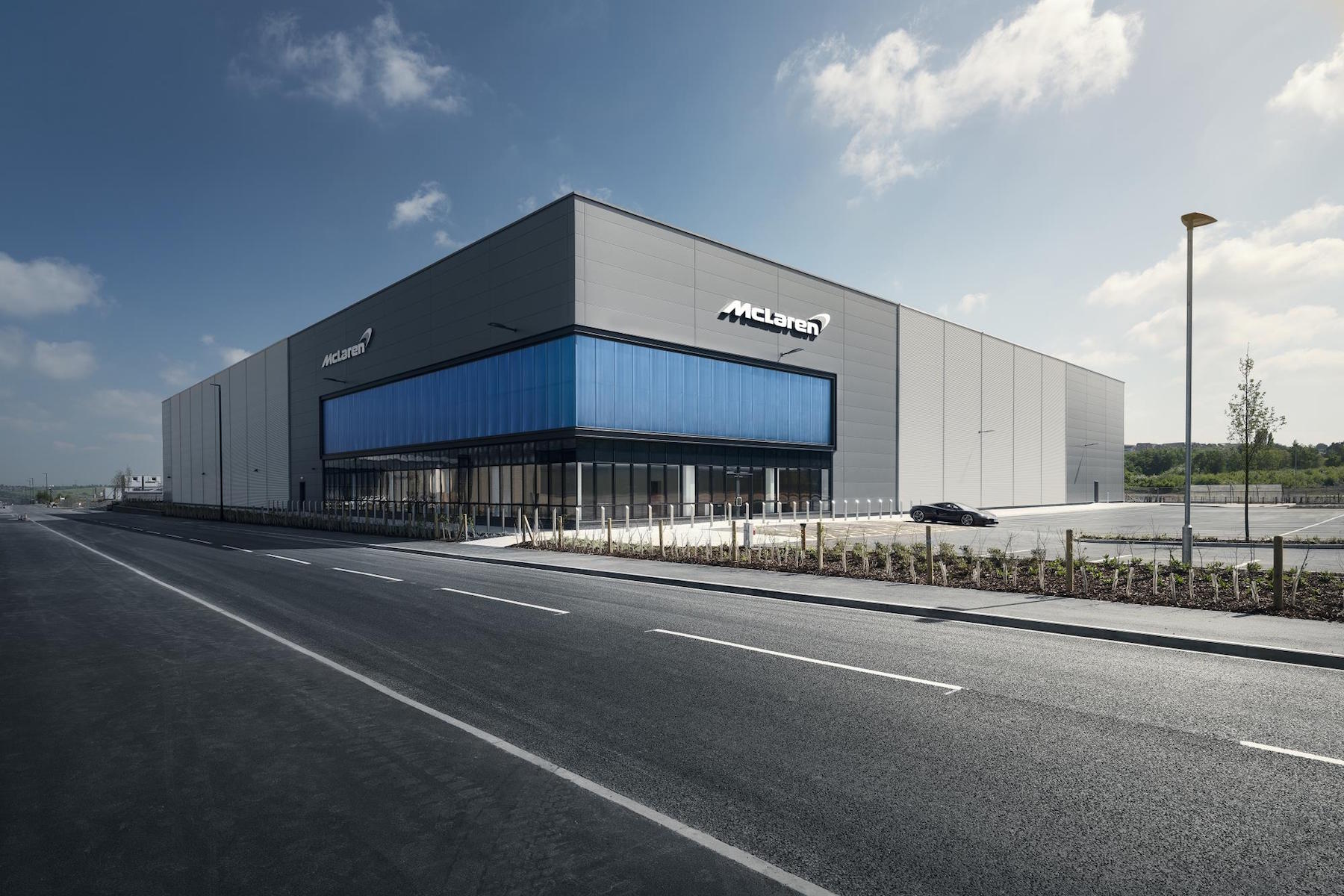
McLaren’s new Composites Technology Centre in Yorkshire will be of importance to achieving these bold numbers. It will also mean 57% of the content found within McLaren cars will be produced in the UK. In light of Brexit, this could prove useful for a sustainable supply chain.
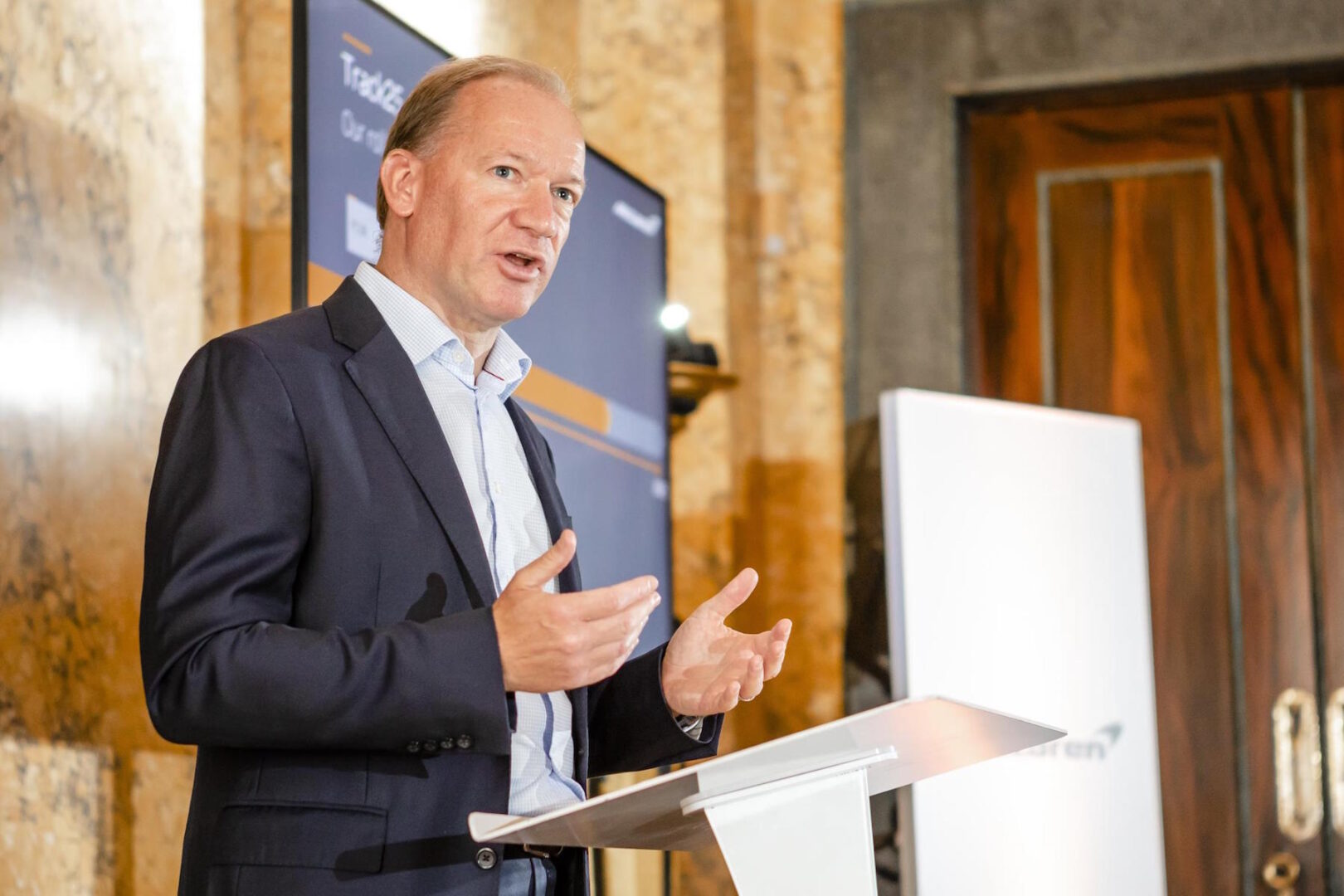
The continued growth of McLaren Automotive, and the plans for the future, are described by CEO Mike Flewitt as the brand sticking to the “focus of building the world’s best drivers’ cars”. Flewitt also noted that the company had to “acknowledge the great effort, ingenuity, and competitive spirit” of the 2,300 employees that have made the achievements possible.
So even if McLaren’s Formula One team may be finding life hard, the road car subsidiary at least looks set for continued success.
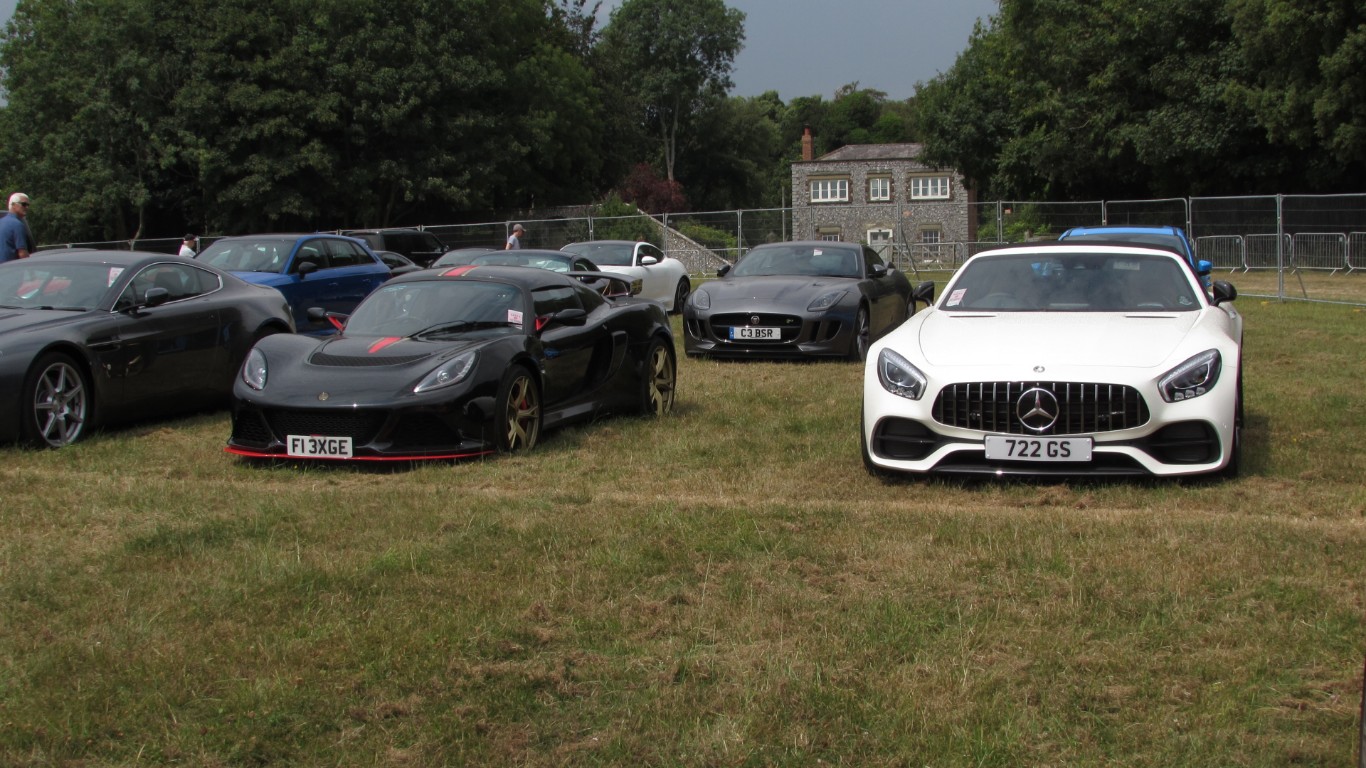
Some people say that the best way to enjoy a party is to head to the kitchen. Indeed, Jona Lewie wrote a song about the very subject. It’s a similar story at the Goodwood Festival of Speed, where the car park is often just as exciting as the main event. We couldn’t send Mr Lewie to Sussex, so instead, here are some photos taken by MR’s newest recruit, Ethan Jupp.
Belgian waffle
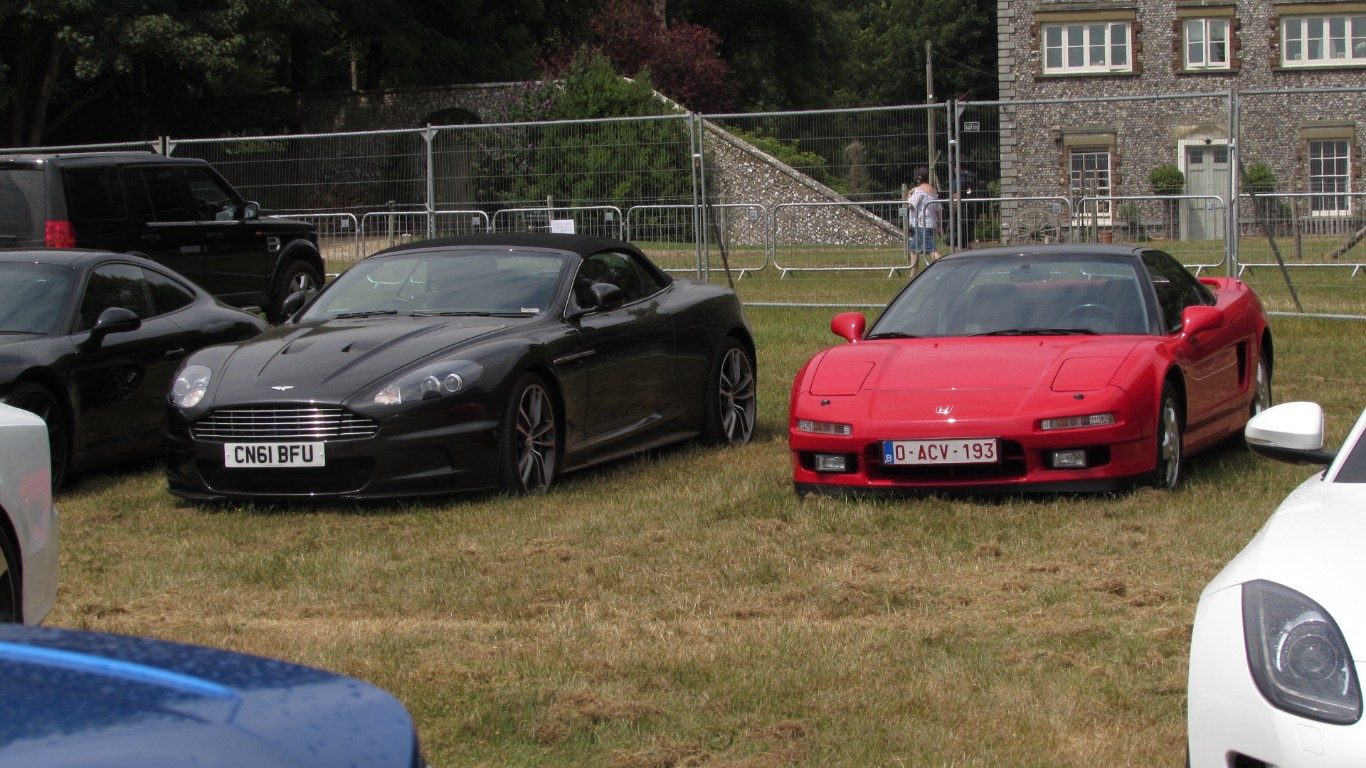
A Cardiff-registered Aston Martin DBS Volante parked alongside a Belgian-registered Honda NSX. It begs the question, would you rather head to the Welsh hills in the Aston or to Belgium in the NSX?
McDelivery
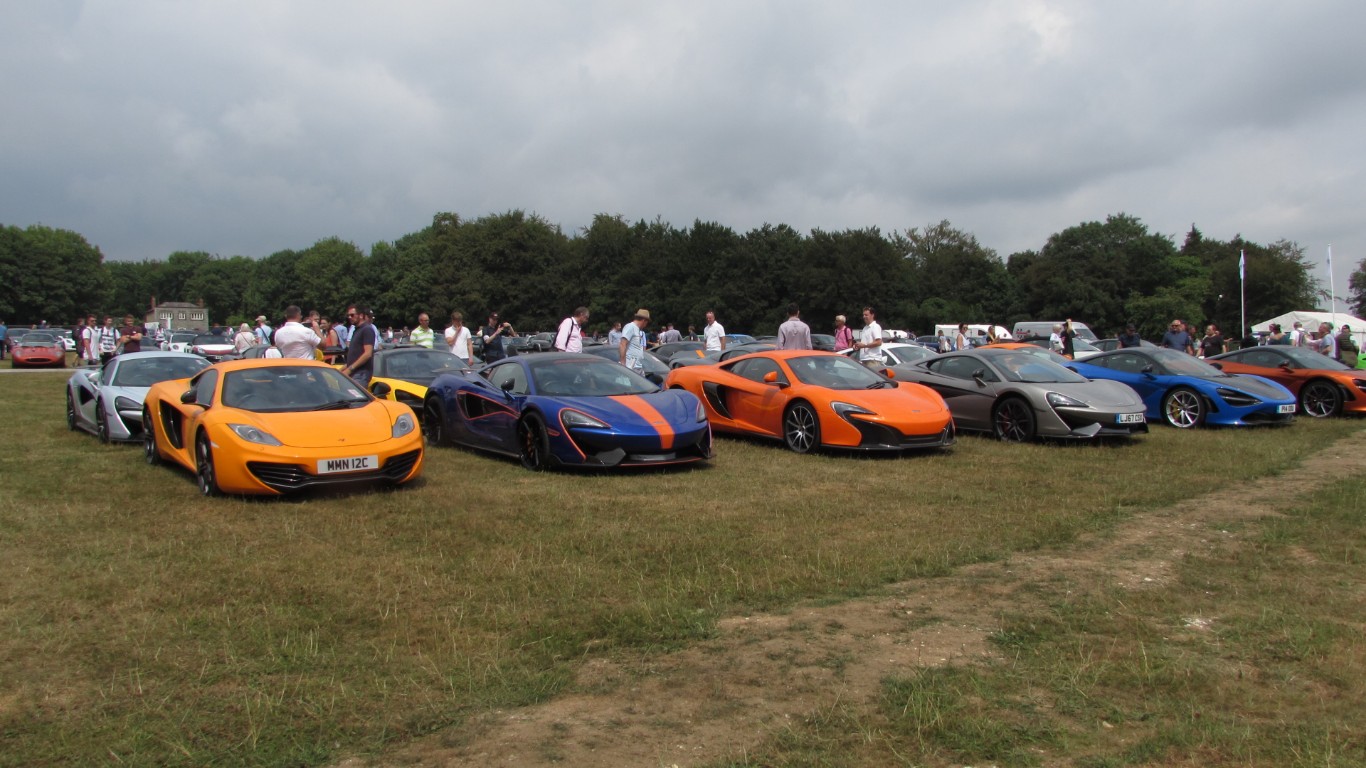
You know what it’s like, you wait an age for a McLaren and then… blimey, how many are in this shot? We haven’t seen this many Maccas since we stumbled across a convention of Beatles tribute acts in Liverpool.
Waspish McLaren
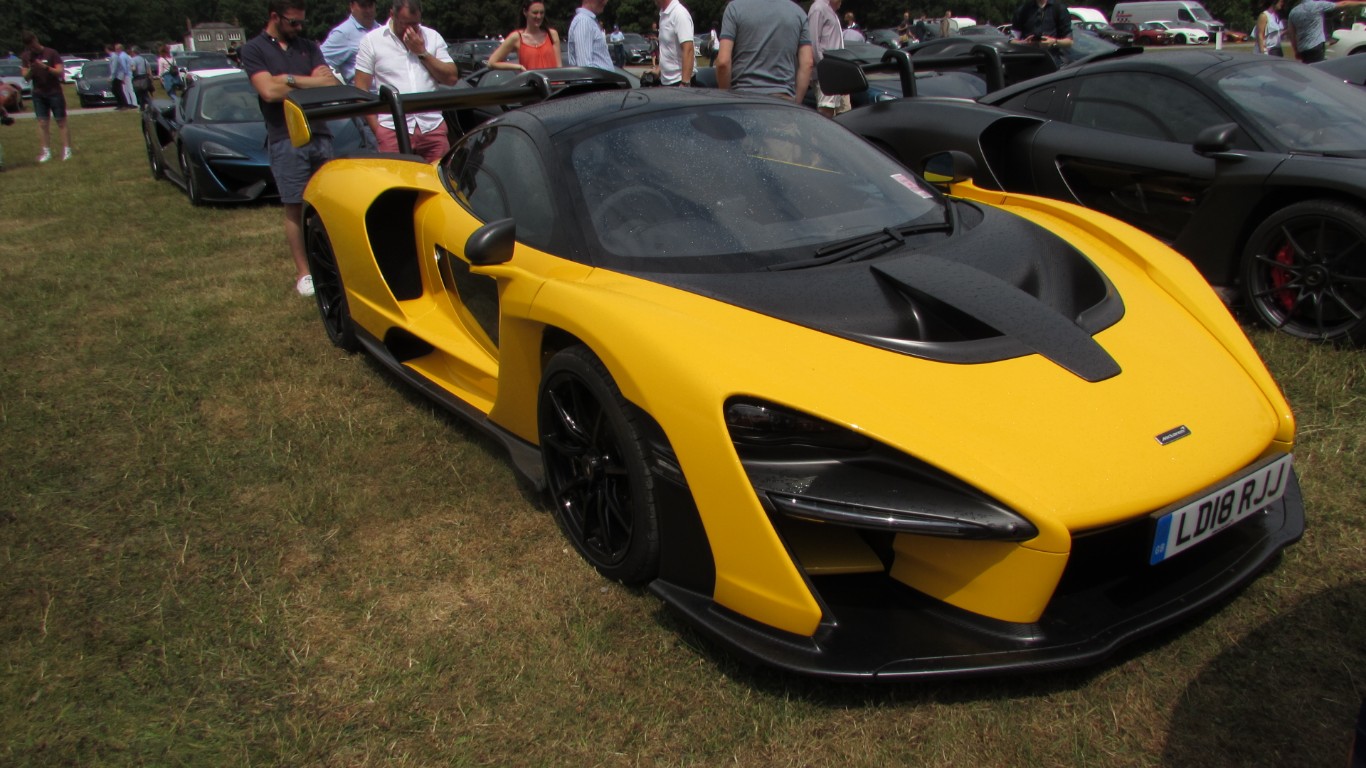
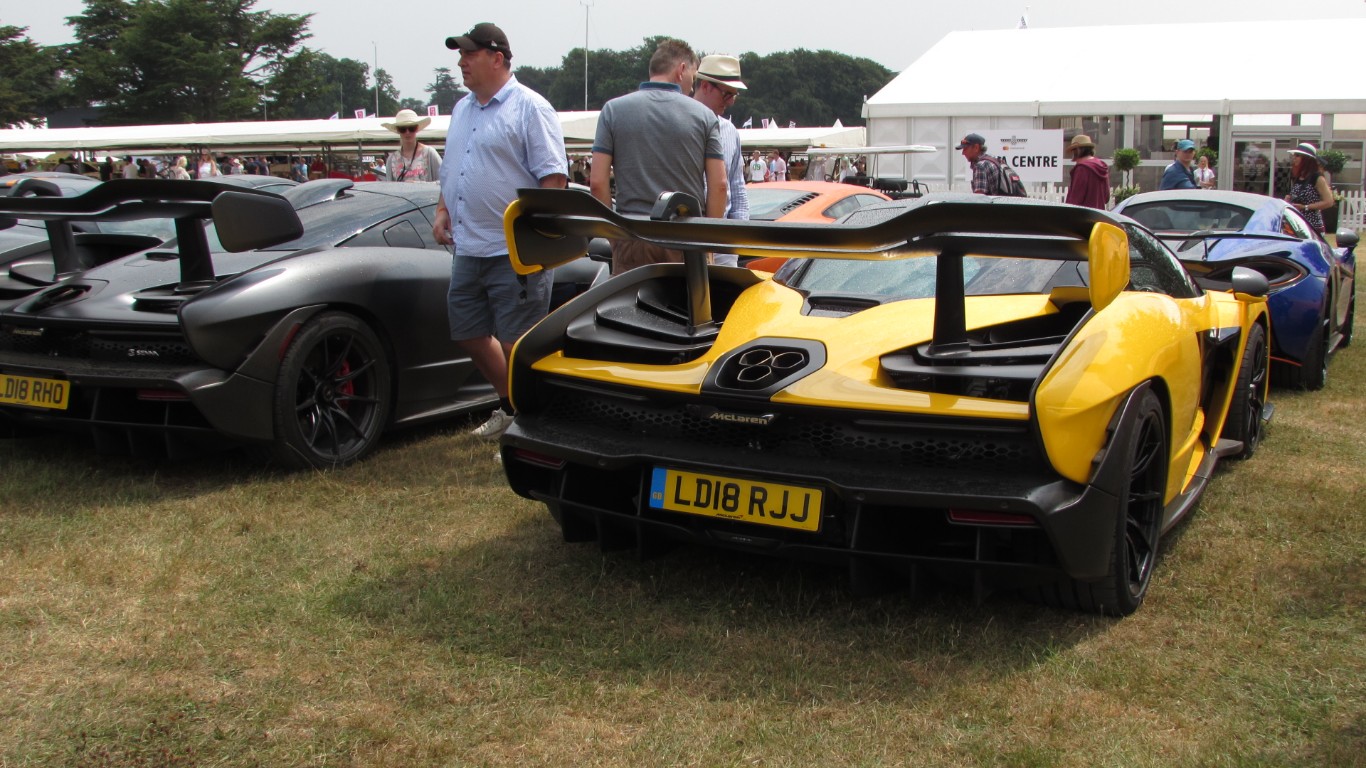
What’s yellow and black and often turns up as an unwelcome guest at summer events? There’s something waspish about this McLaren Senna, although we wouldn’t recommend hitting it with a copy of the Daily Telegraph. Other papers are available.
Better than a Mirage
Our man Richard Aucock was fortunate enough to drive the McLaren Senna at the Estoril circuit in Portugal. We can’t recall his precise words, but he almost certainly said it was nicer to drive than a Mitsubishi Mirage.
Not a Mirage in sight
We’ve taken a closer look at this photo and we can’t find a Mitsubishi Mirage. Jupp needs to work on his car park spotting skills. Initial verdict: must try harder.
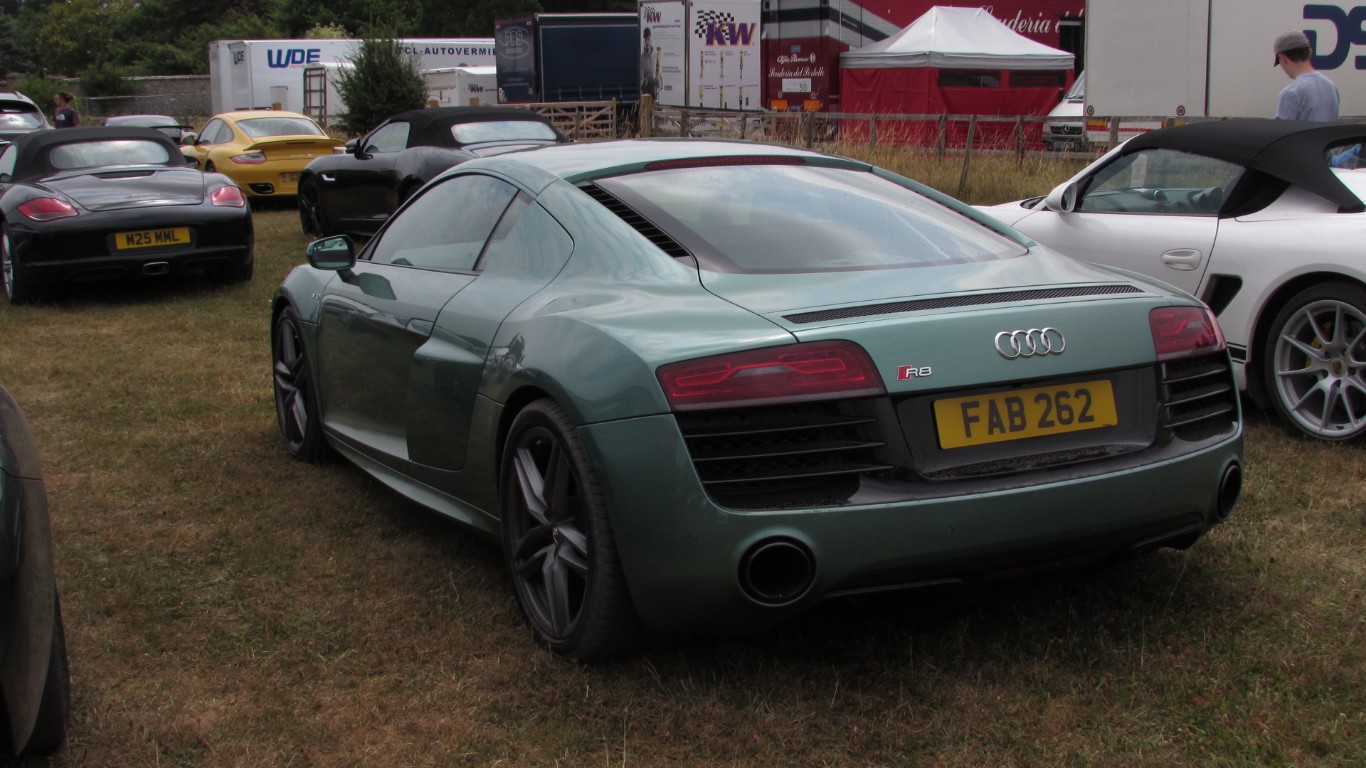
Absolutely fabulous
If the number plate is anything to go by, the owner of this Audi R8 V10 is a fan of the A262 in Kent. We prefer the fab A272, which makes for a nice journey home if you’re heading west from Goodwood.
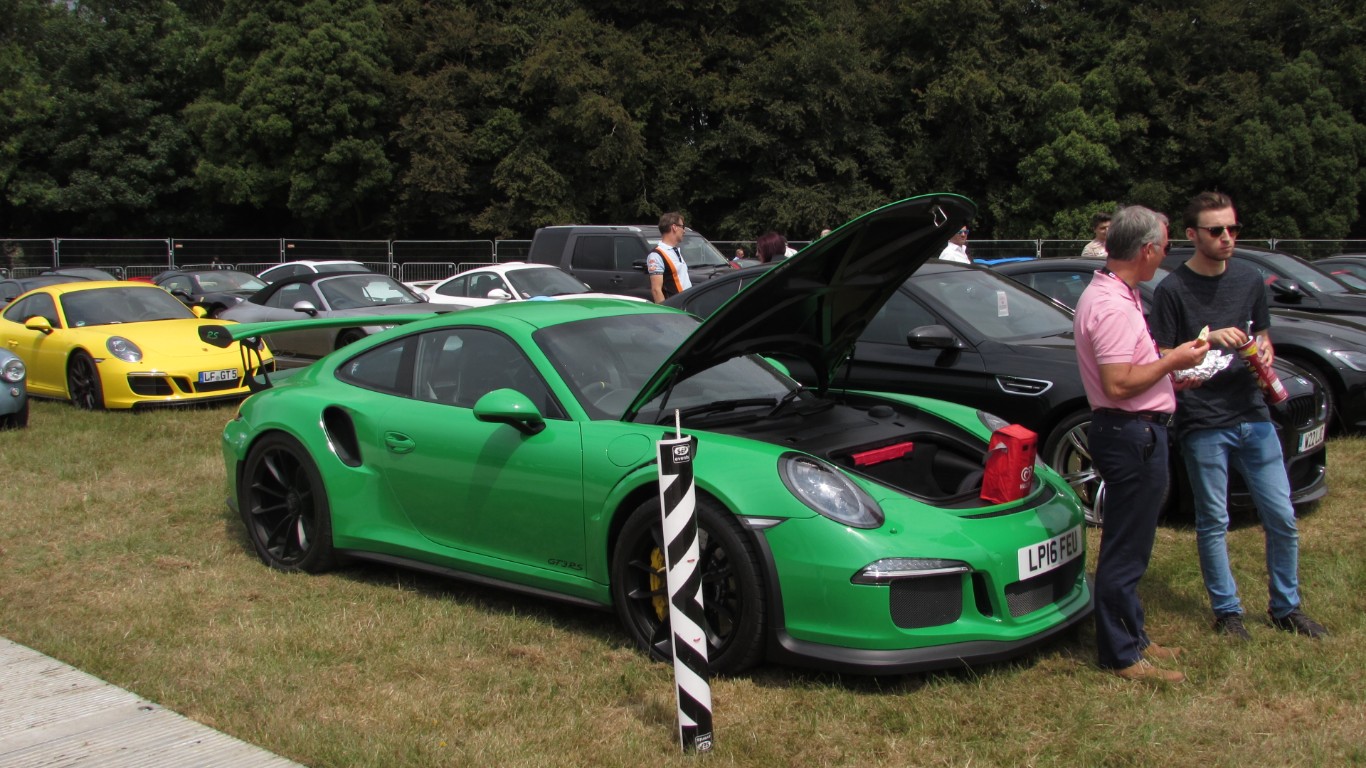
Once you pop…
It’s never too early to break out a packet of Pringles. Once you pop, and all that. We suspect he’ll find it easier to close the lid on the GT3 RS, although he might want to remove that Wall’s chill bag first.
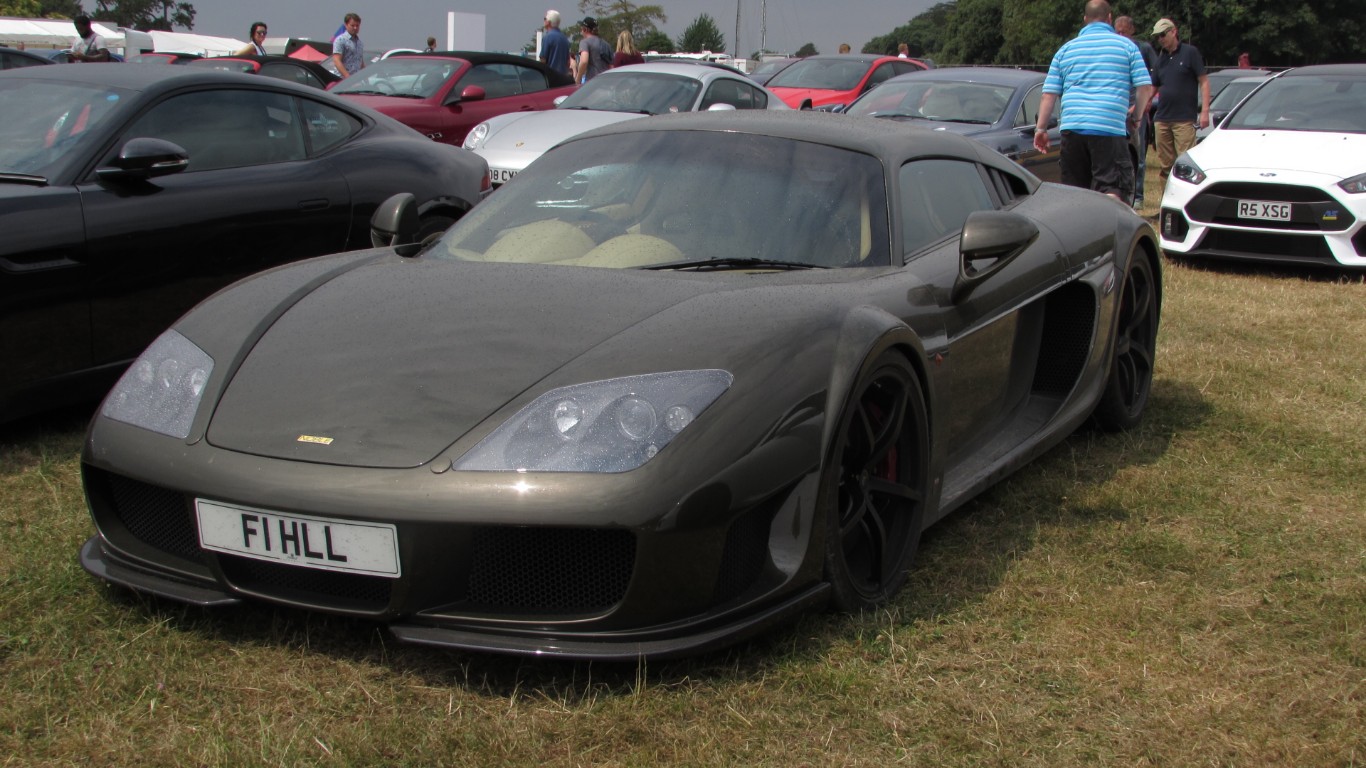
A Noble act
The Noble M600: built in Leicestershire and powered by a Yamaha 4.4-litre V8, as used in the Volvo XC90 and S80. You’d struggle to hit a claimed 225mph in an XC90, mind, especially seven-up with a dog in the boot.
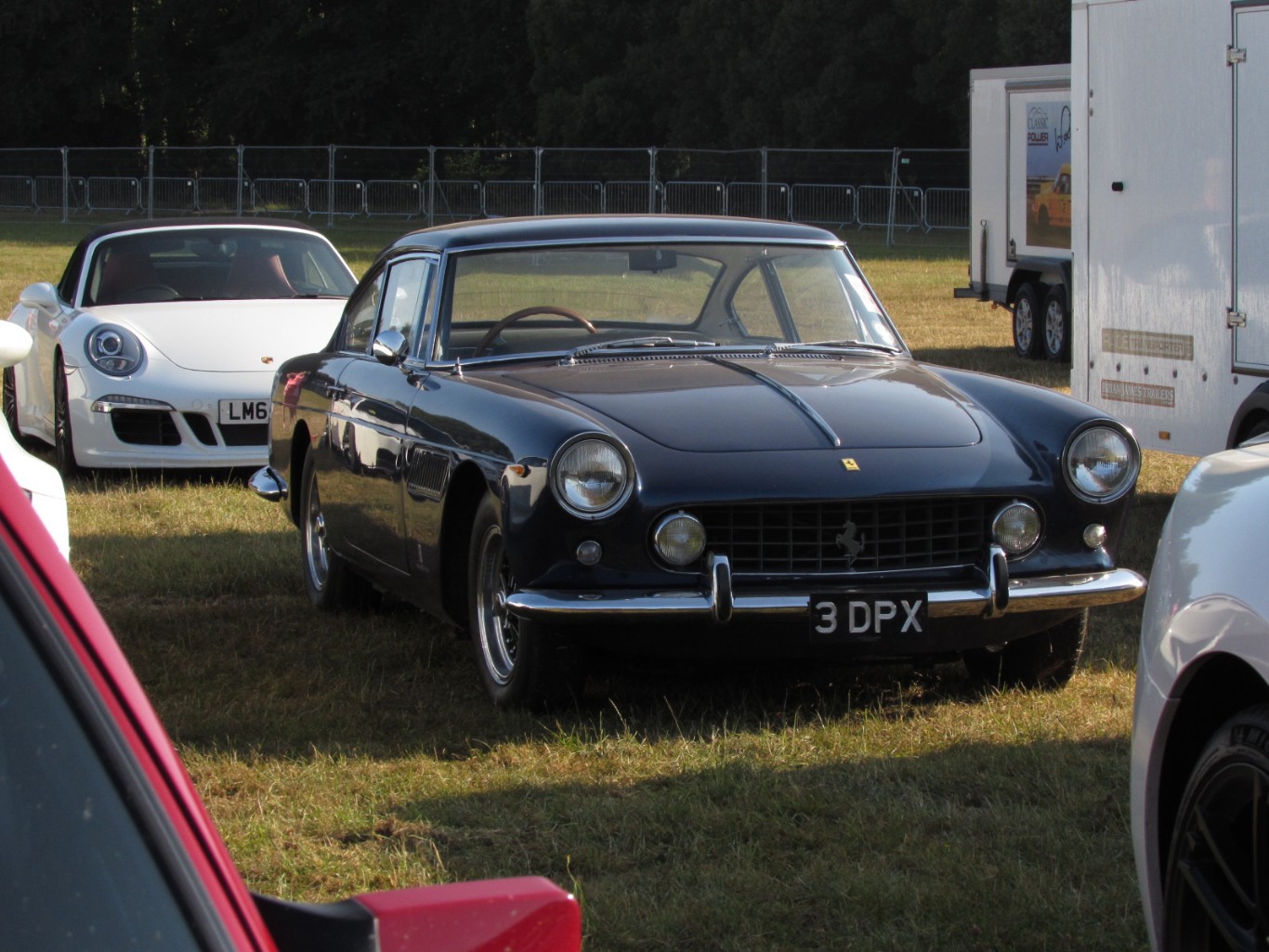
Ferrari 250 GTE
Launched in 1960, the Ferrari 250 GTE was the first genuine four-seater from Maranello. This very car featured in Classic & Sportscar in September 1983. At the time it was worth between £5,000 and £6,000, roughly the same as a new Ford Sierra. It was also the year in which UB40 hit the number one spot with Red Red Wine. You’ll need a few glasses of that before we tell you that, 35 years later, it’s worth upwards of £300,000.
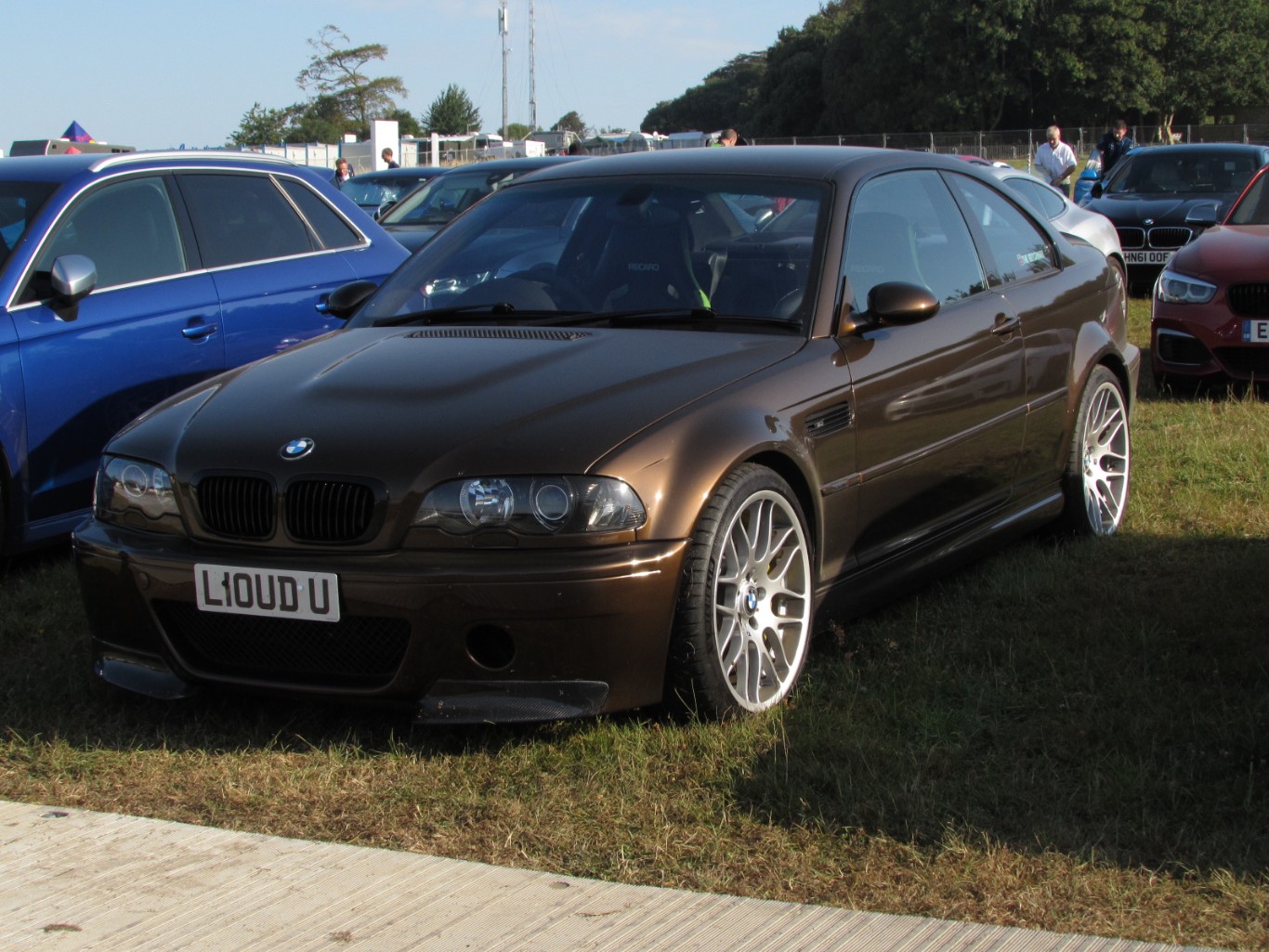
Loud and fast
This 2001 BMW M3 is worth considerably less, but we suspect that it’s louder than the Ferrari. Or, should that be L1OUDer?
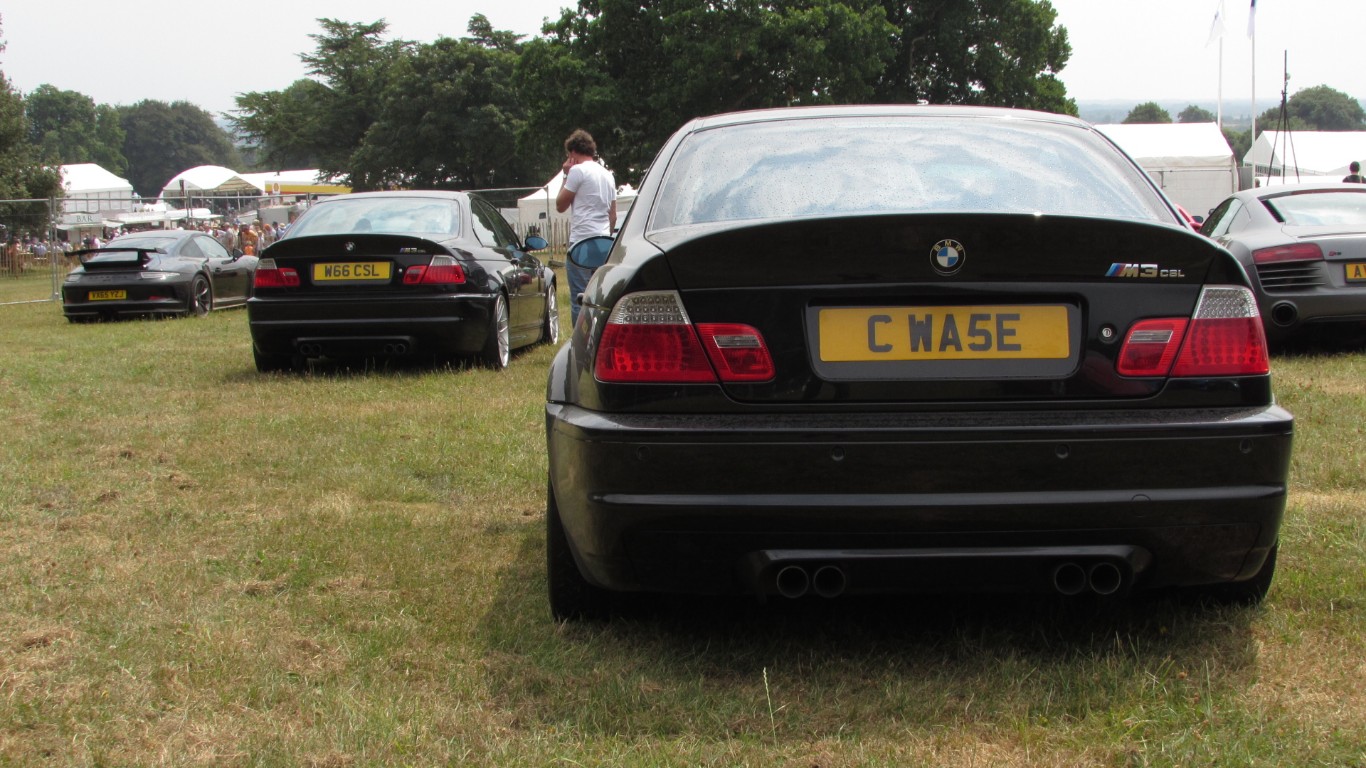
A brace of CSLs
The BMW M3 CSL represents the embodiment of the ‘ultimate driving machine’ tag. CSL stands for Coupe Sport Leichtbau, which is German shorthand for ‘we give you less, you pay us more’. Values have shot up, with the very best examples knocking on the door of £100,000.
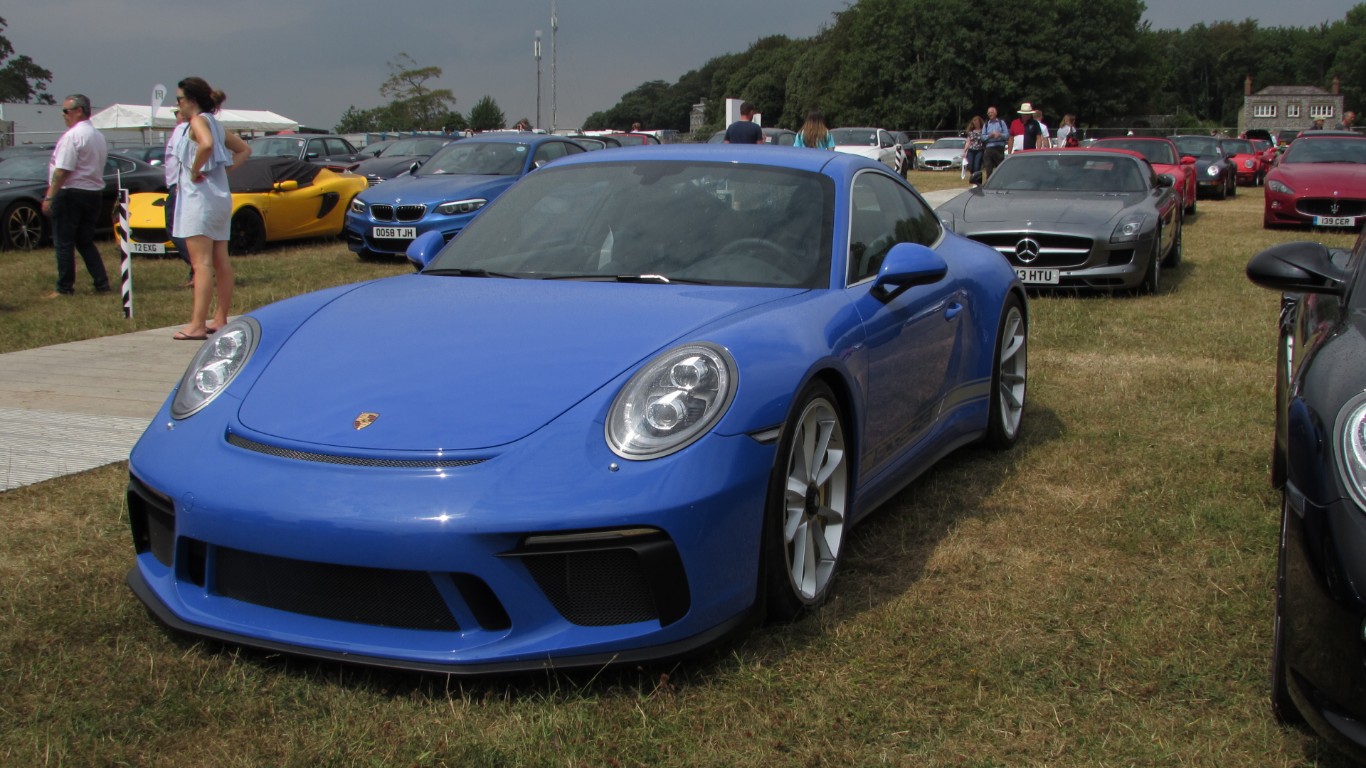
Pure GT3
Still relatively fresh from its debut at the 2017 Frankfurt motor show, here is a Porsche 911 GT3 Touring. The optional Touring Package does away with the fixed rear wing, but the car is equipped with a six-speed manual gearbox. It is, if you like, a 911 GT3 for the purist.
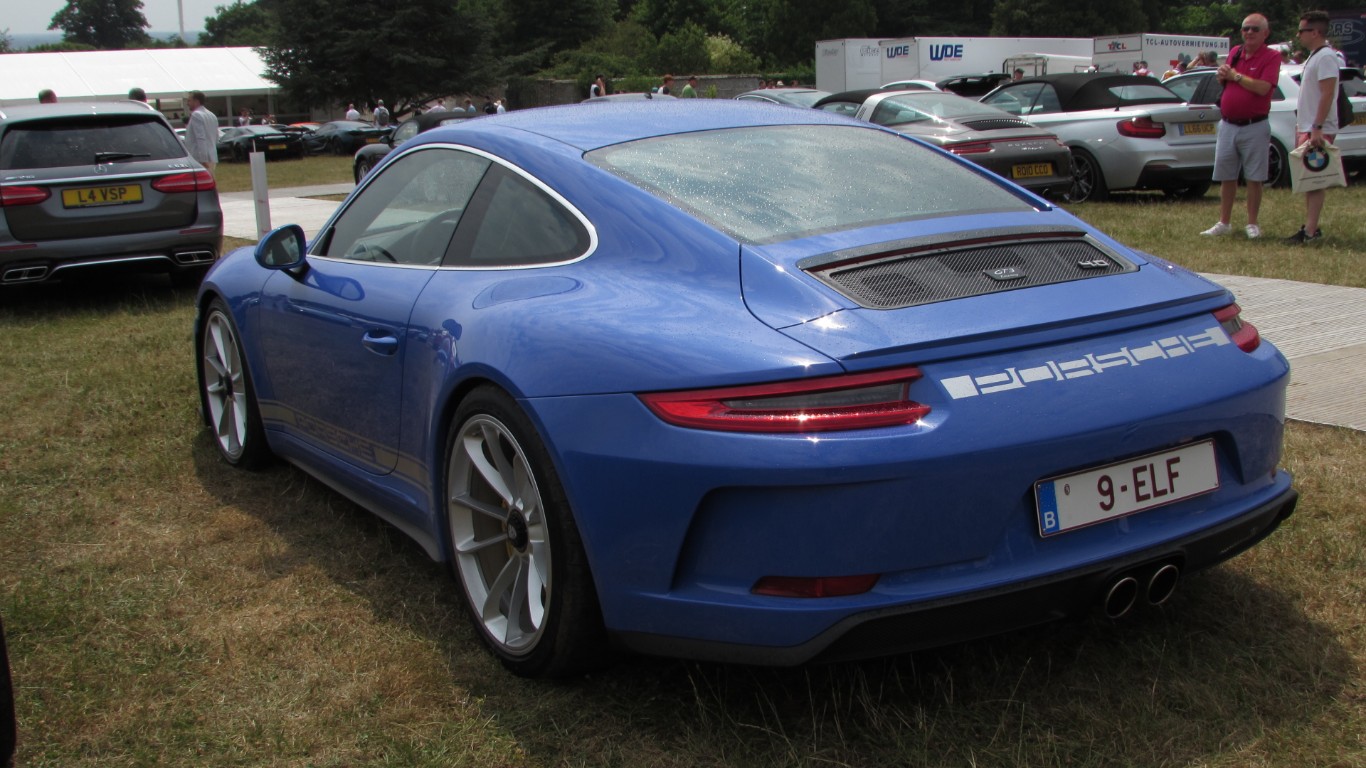
‘Elf and safety
If only to highlight the absence of the rear wing, here’s another view of the 911 GT3 Touring. It’s good to see that Elf, having found his father in New York, has made his way to Belgium. He should enjoy the chocolates. And waffles. And buns.
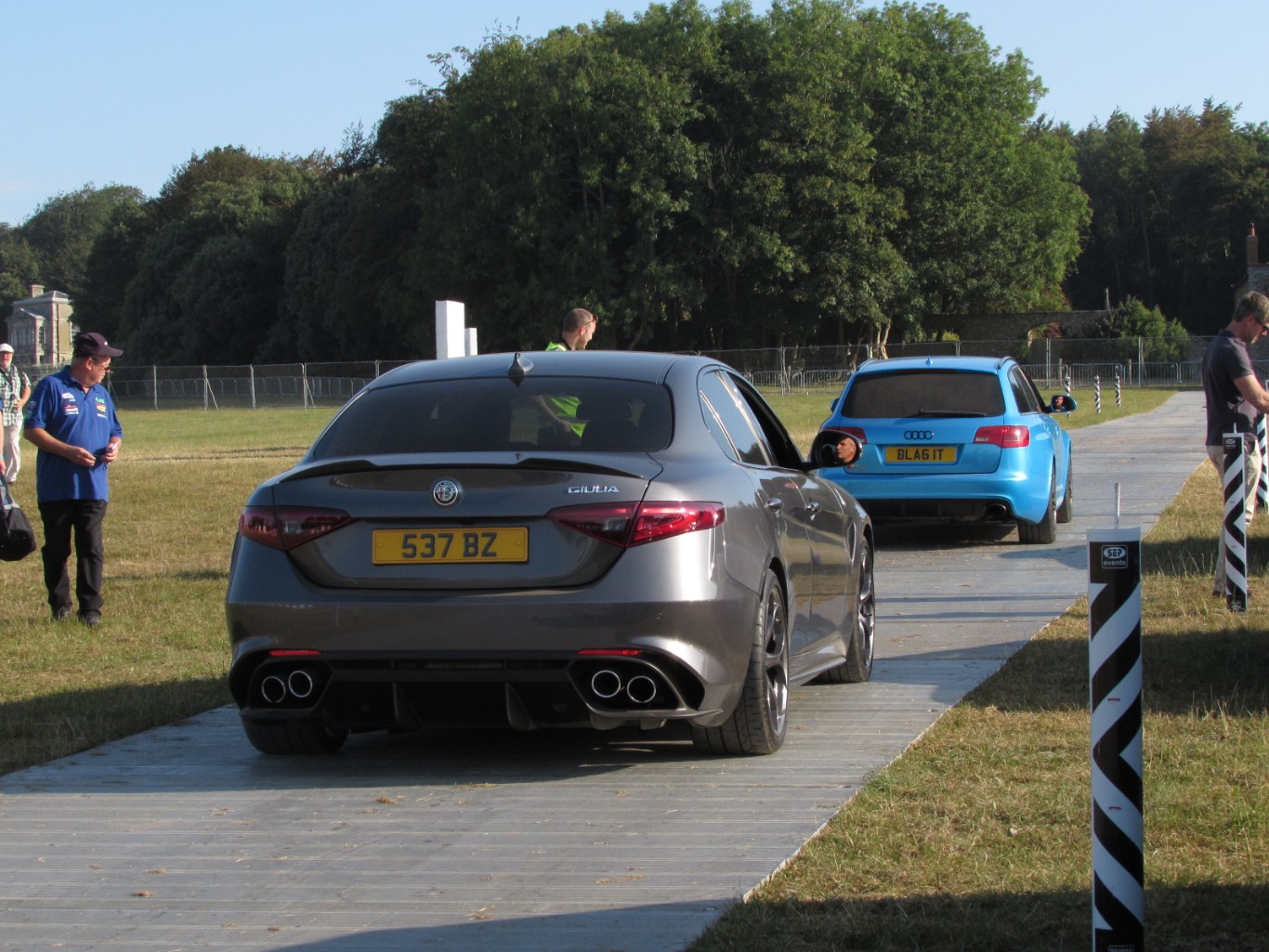
Romeo and Giulia
All eyes appear to be on the Audi, but we’d rather enjoy a drive home in this Alfa Romeo Giulia Quadrifoglio.
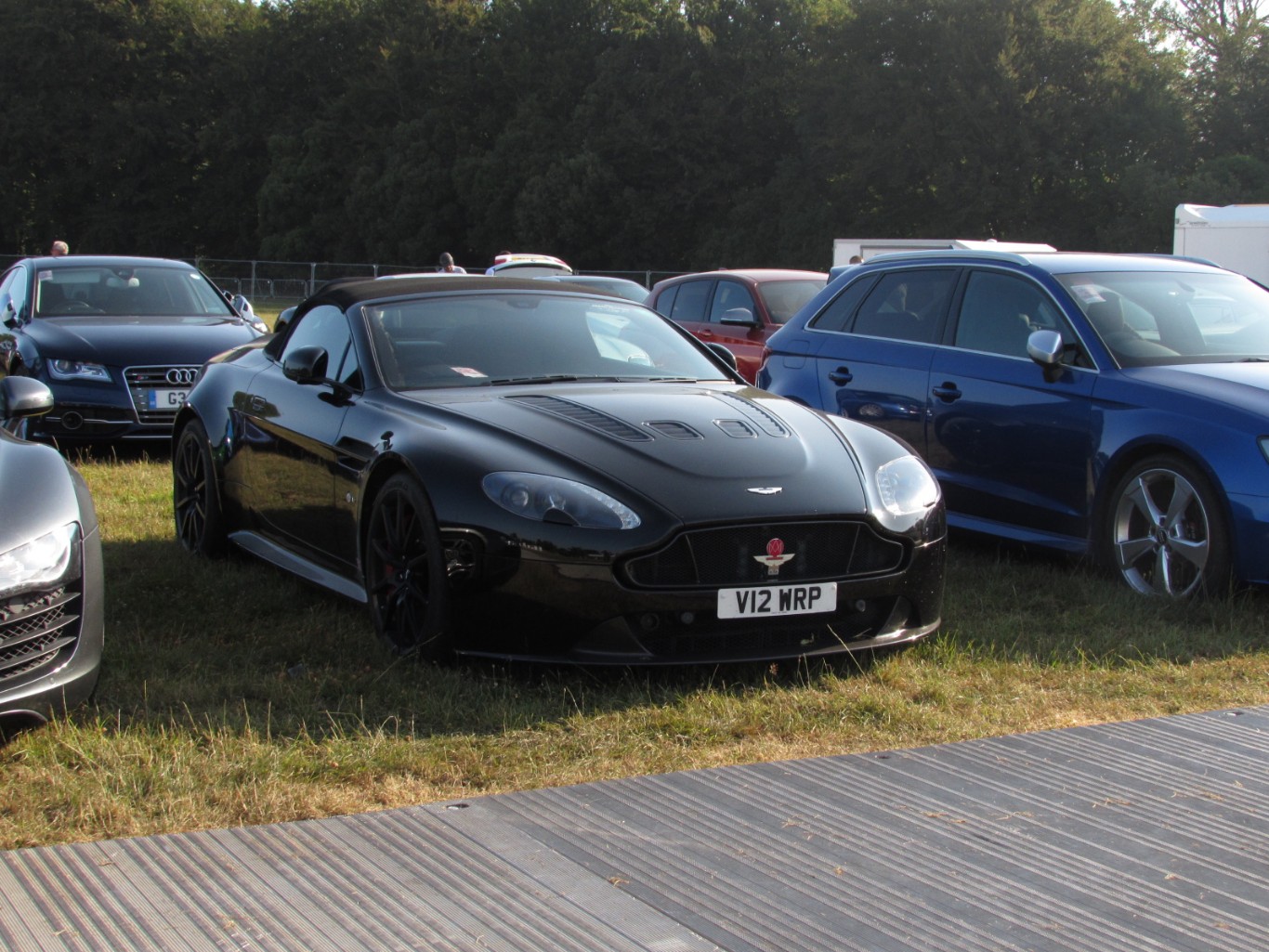
Advantage Vantage
Here’s an Aston Martin V12 Vantage S Roadster basking in the sun at Goodwood. It’s probably worth a cool £100,000.
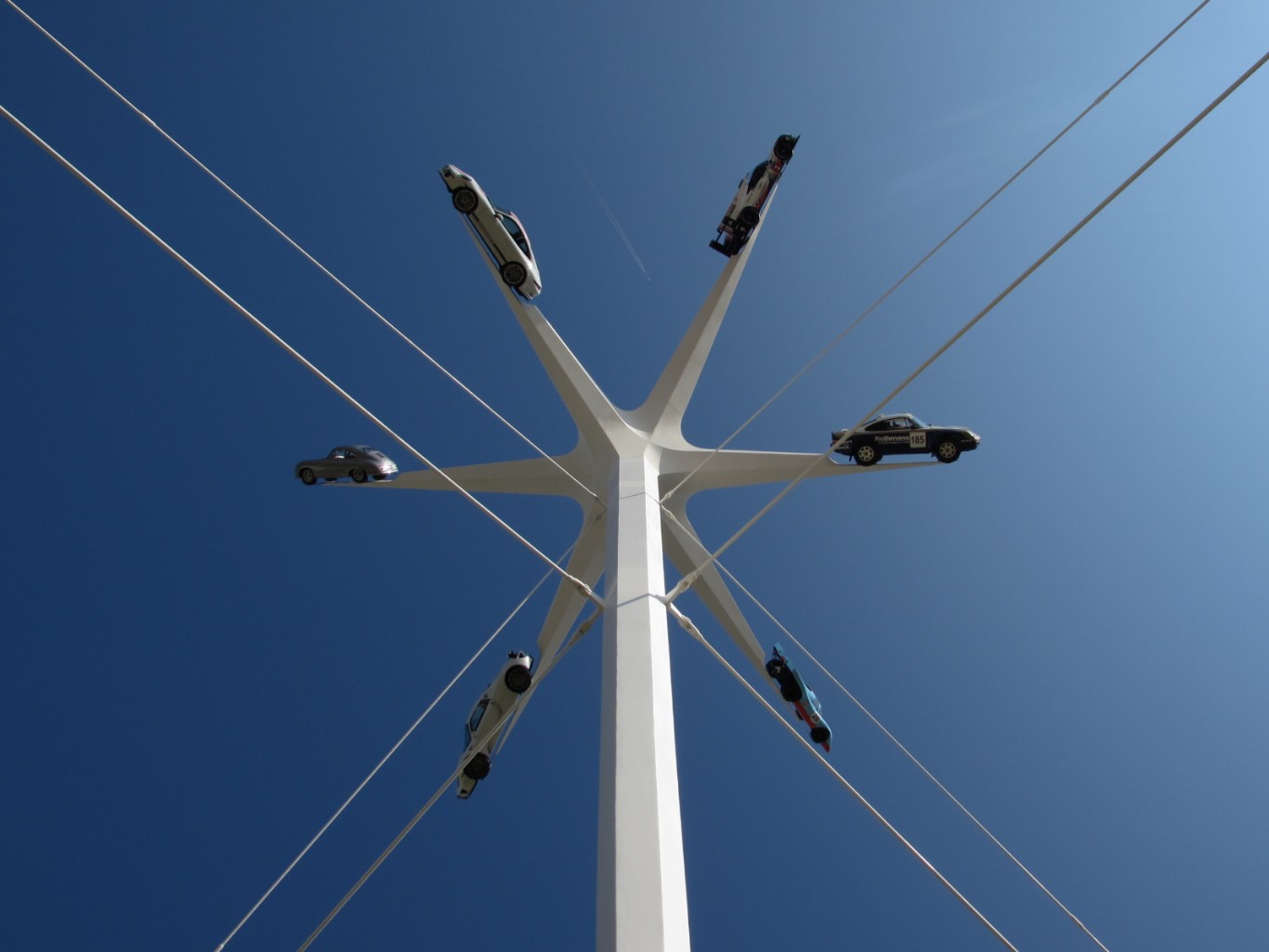
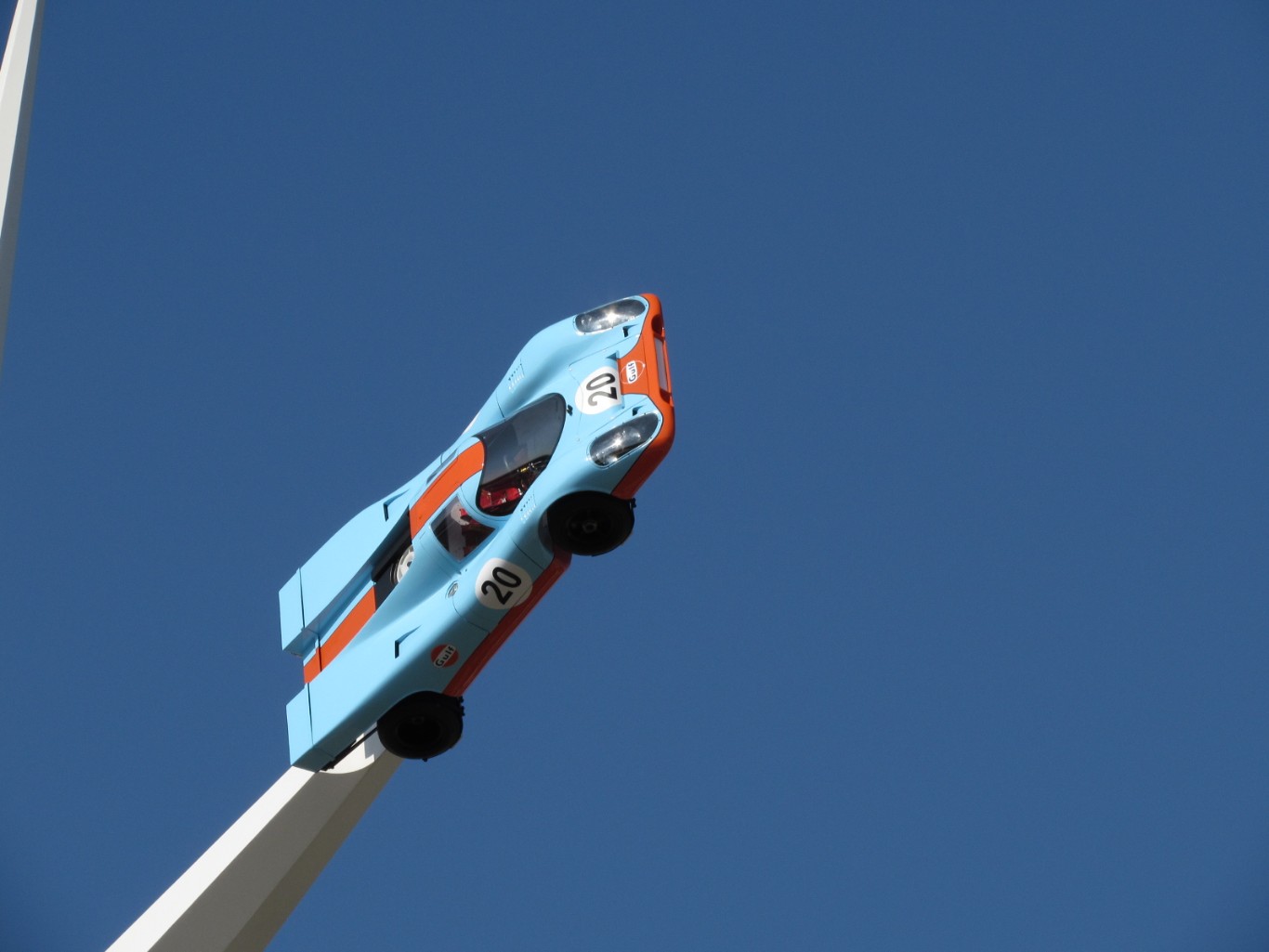
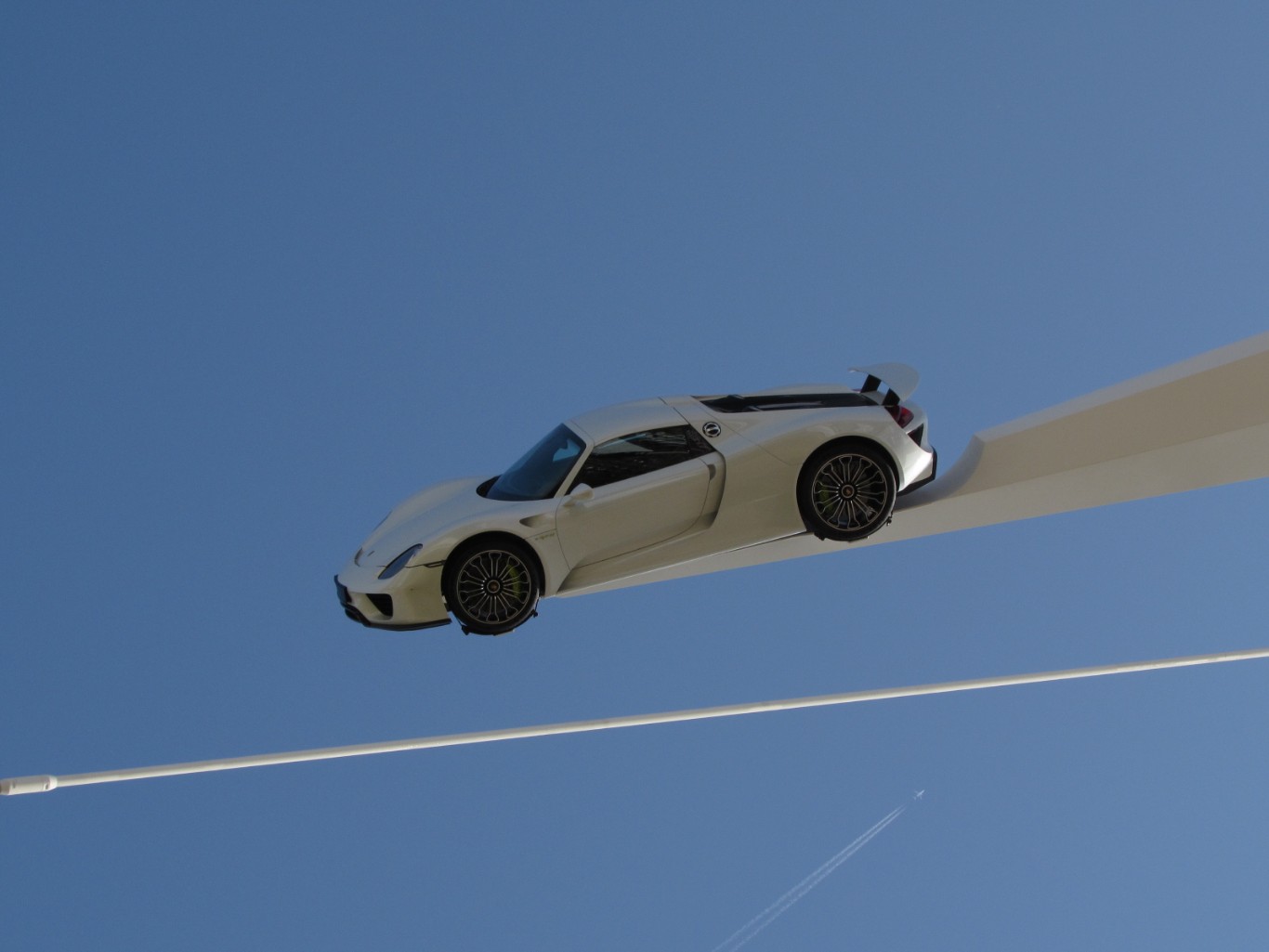
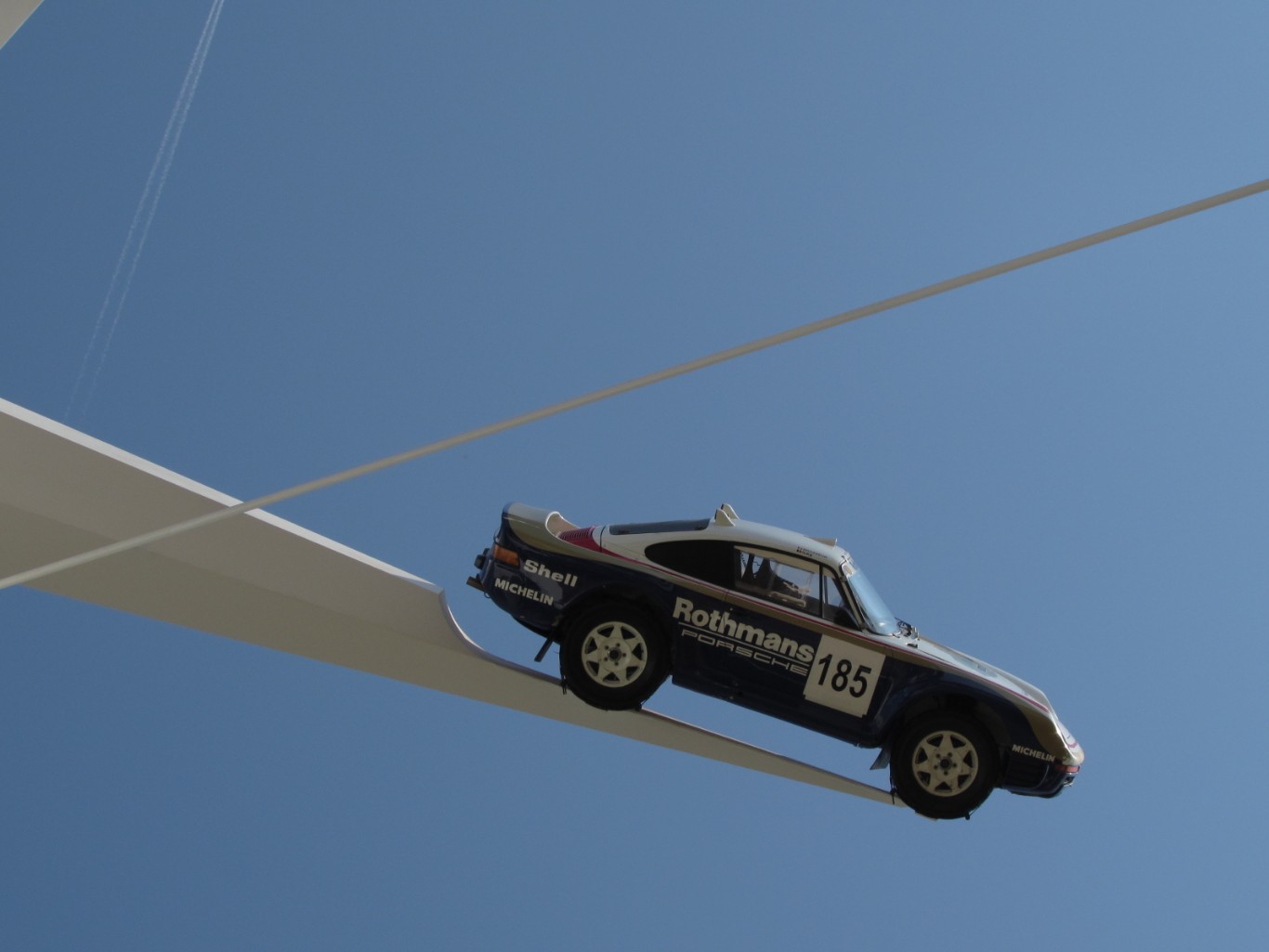
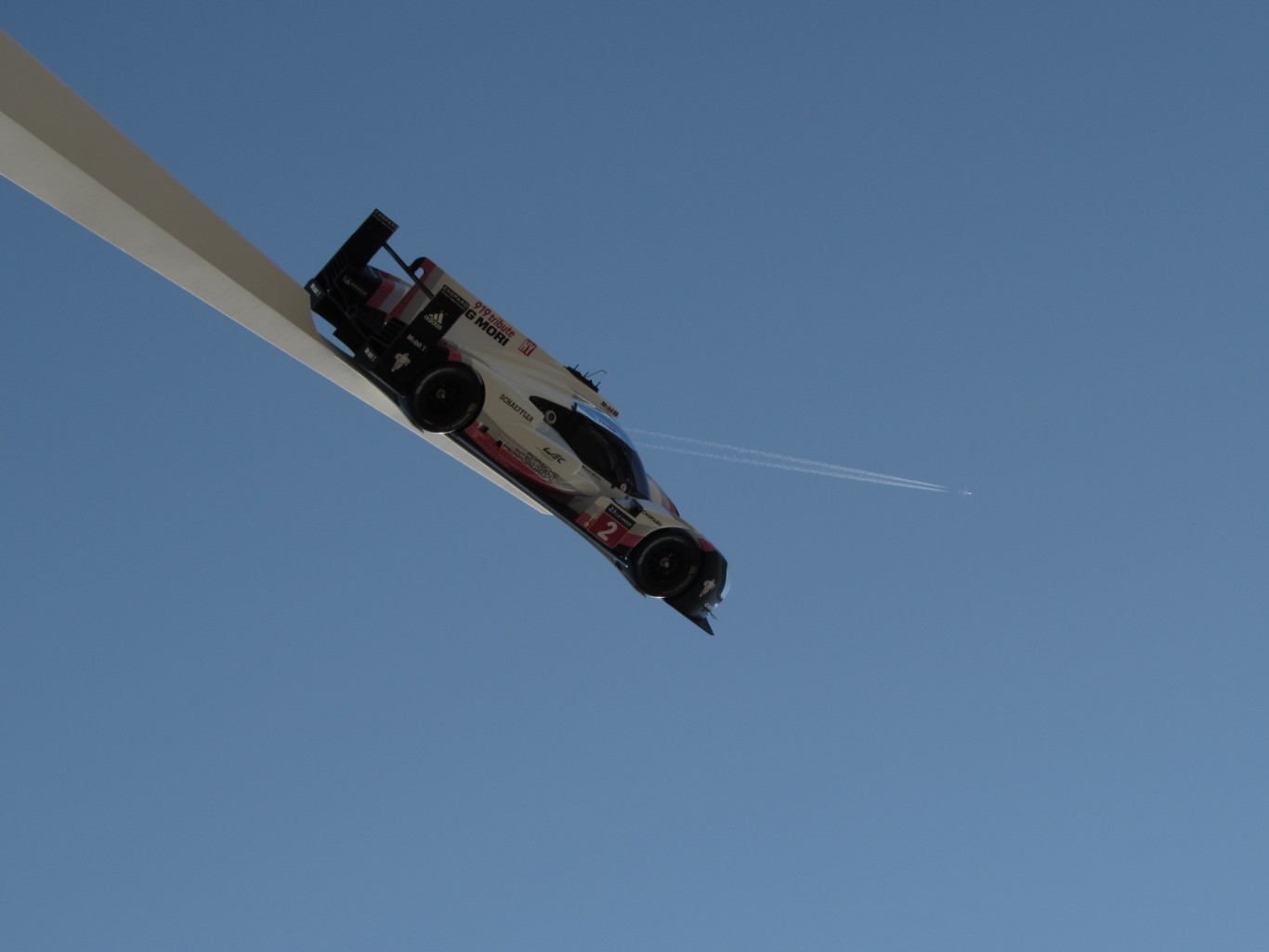
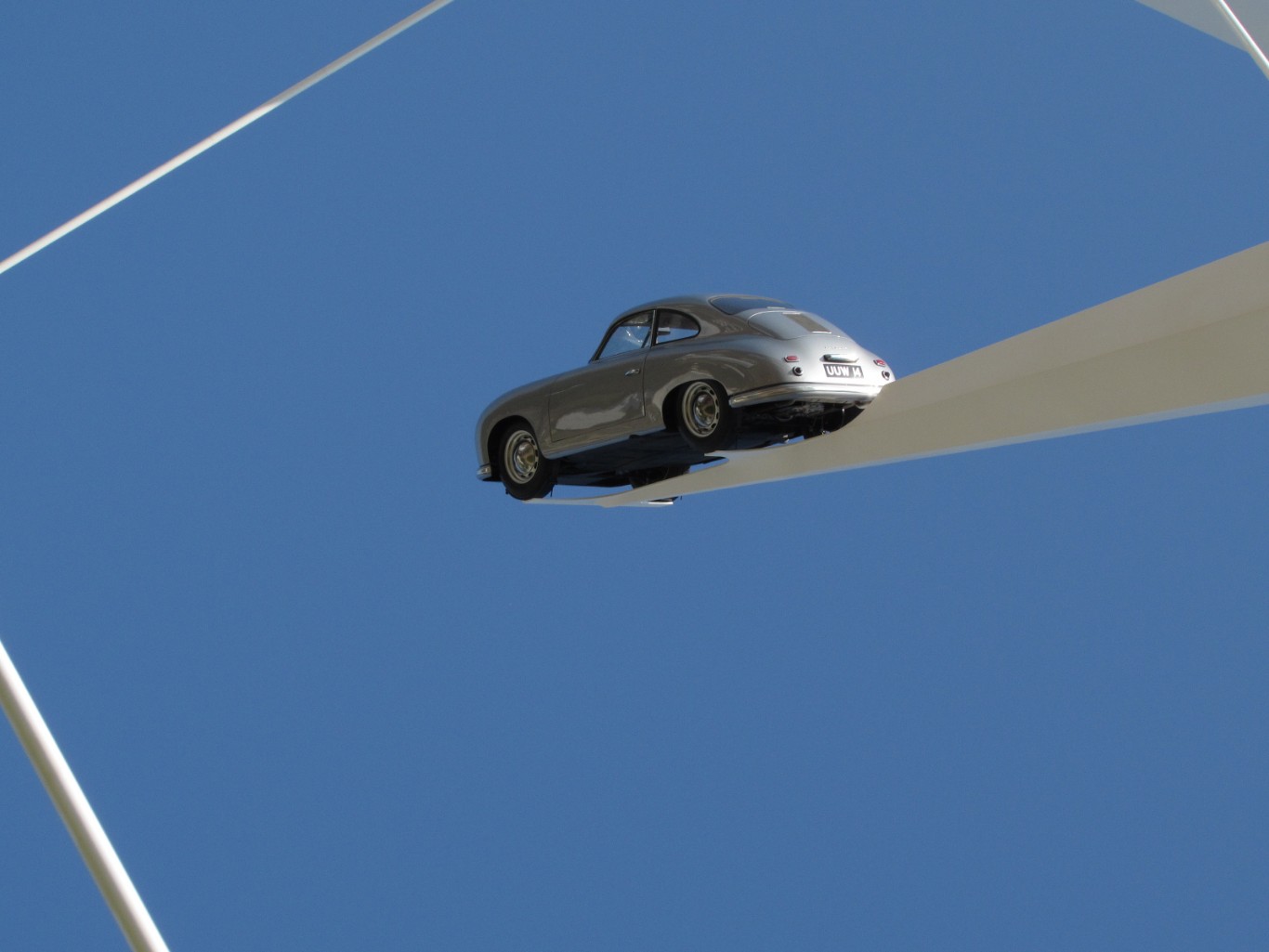
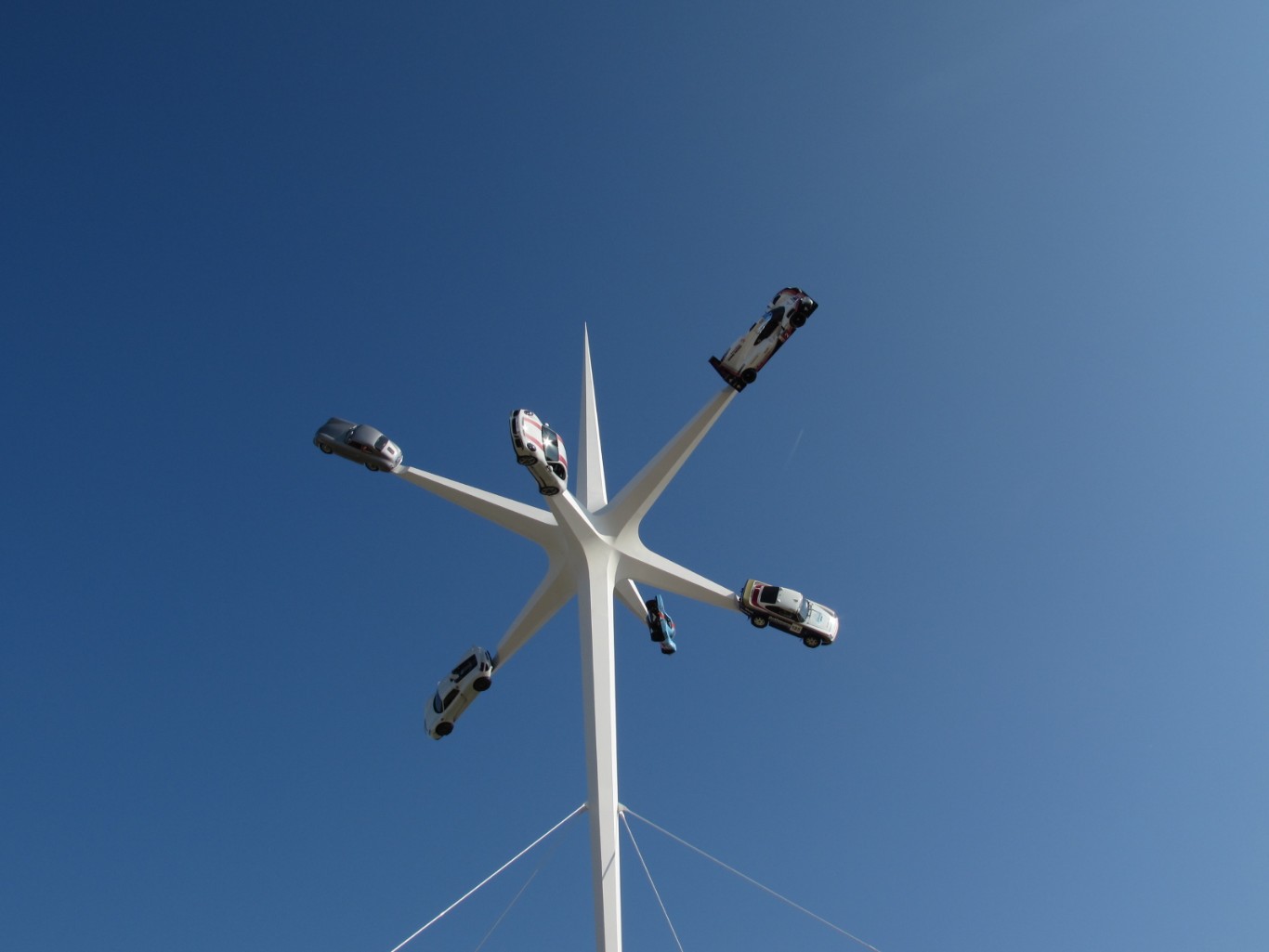
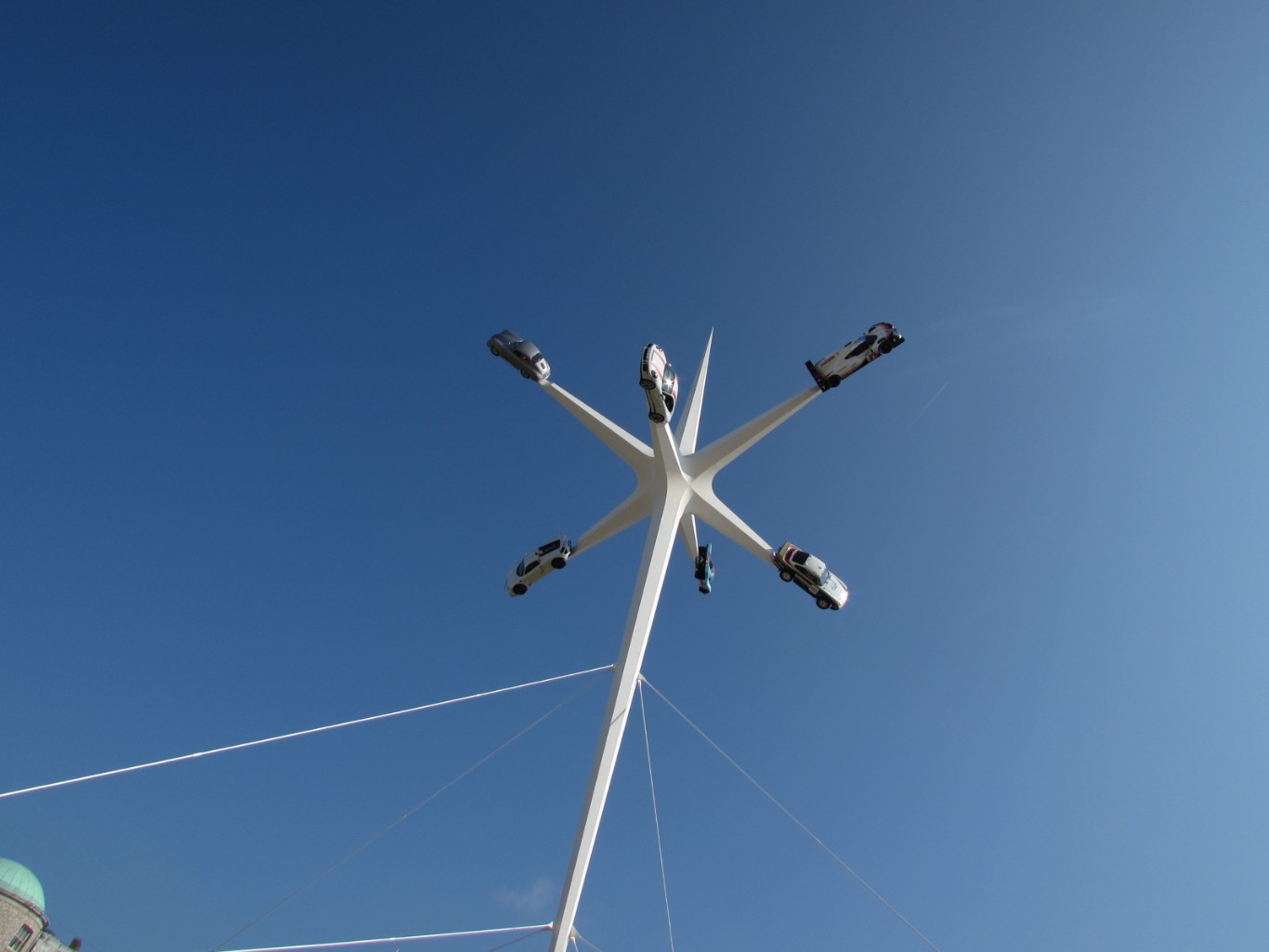
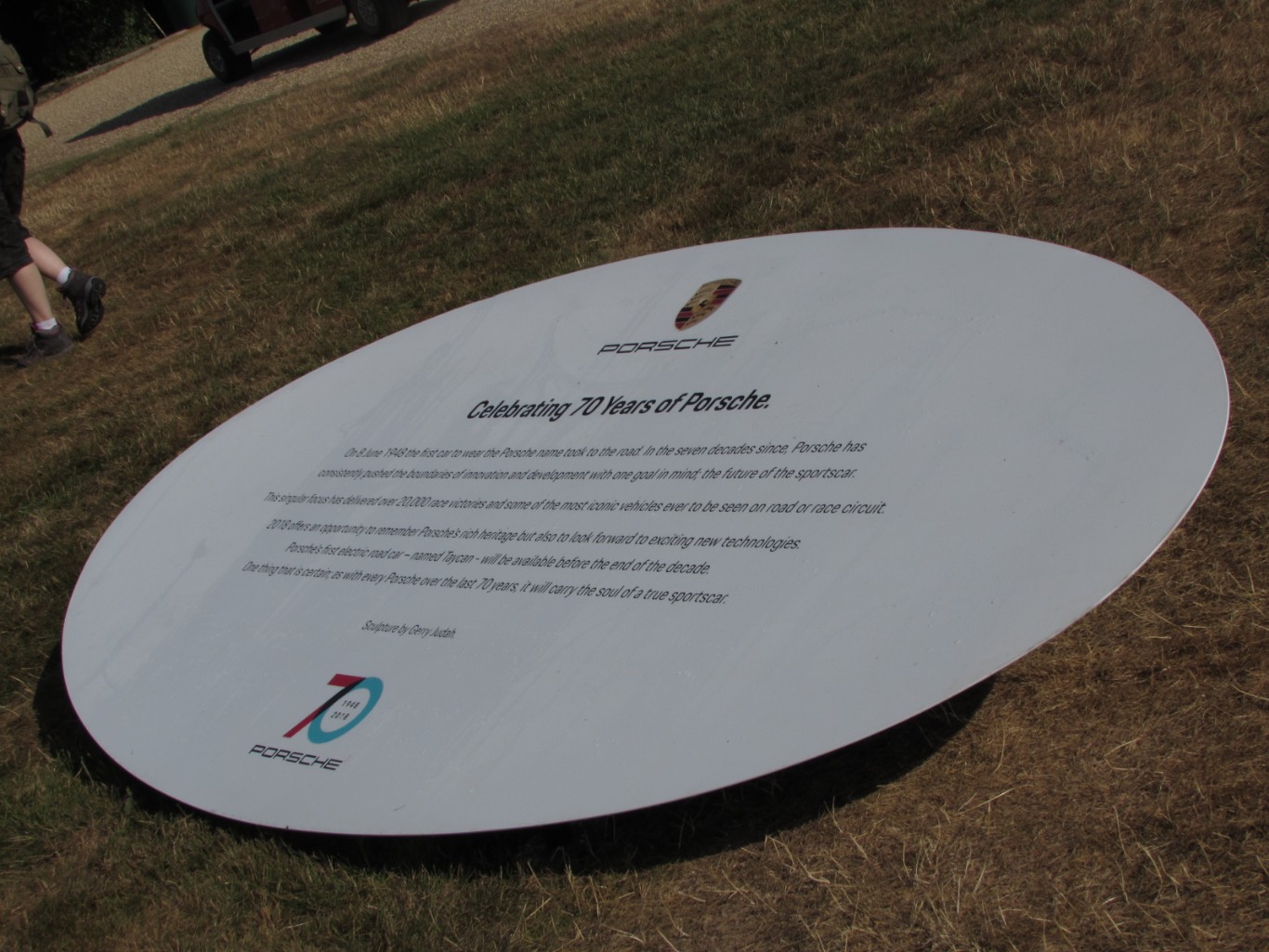
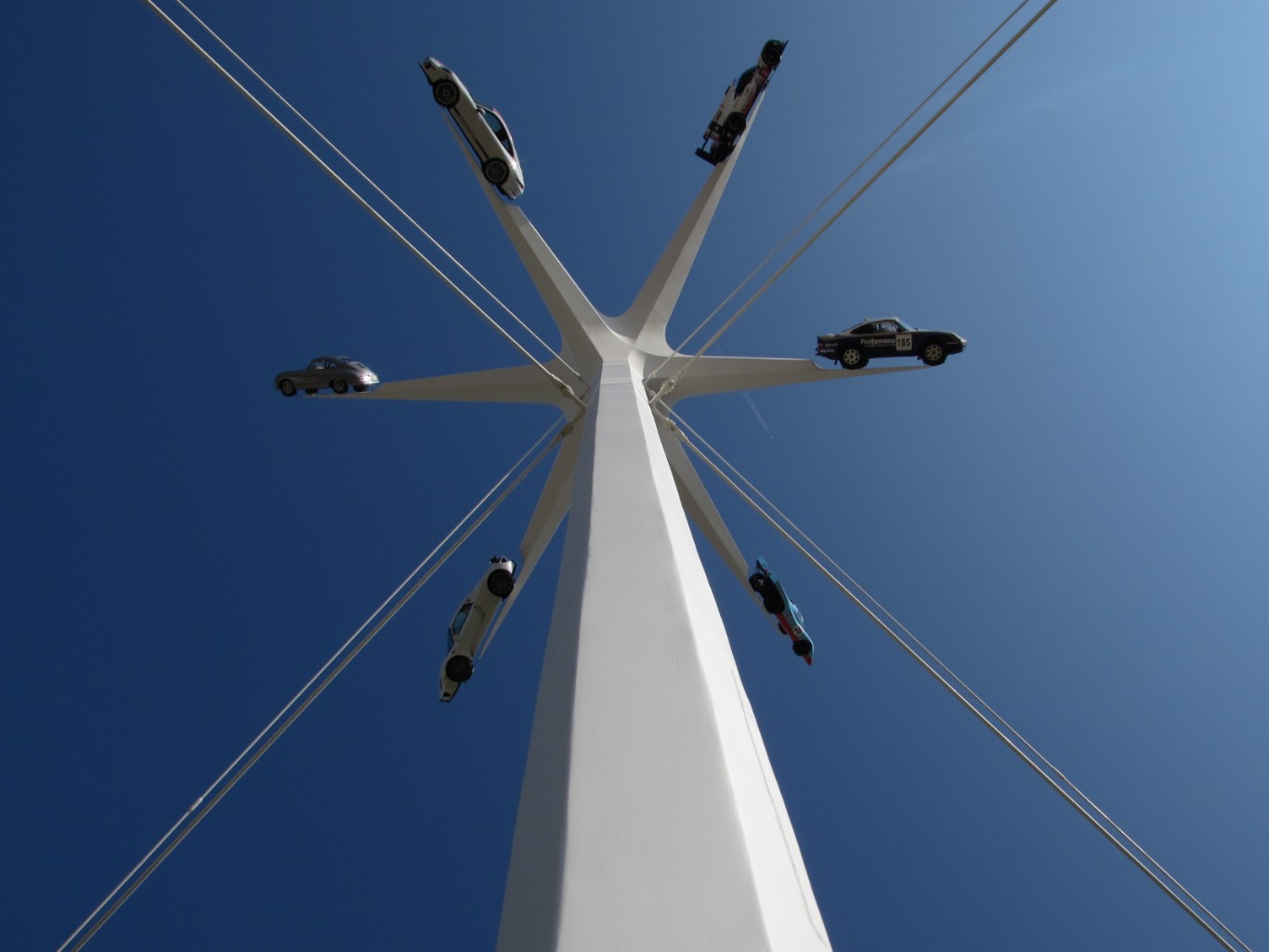
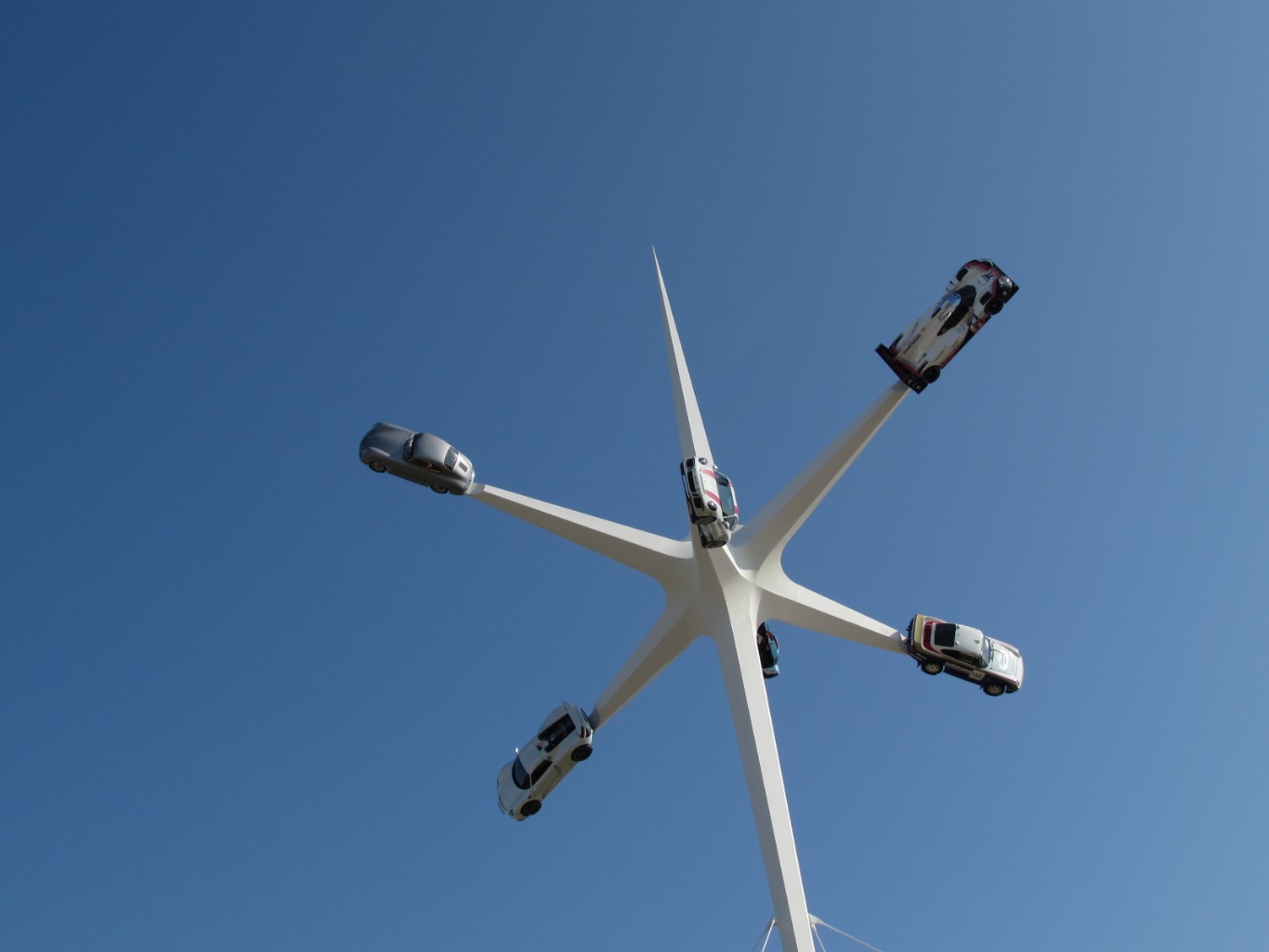
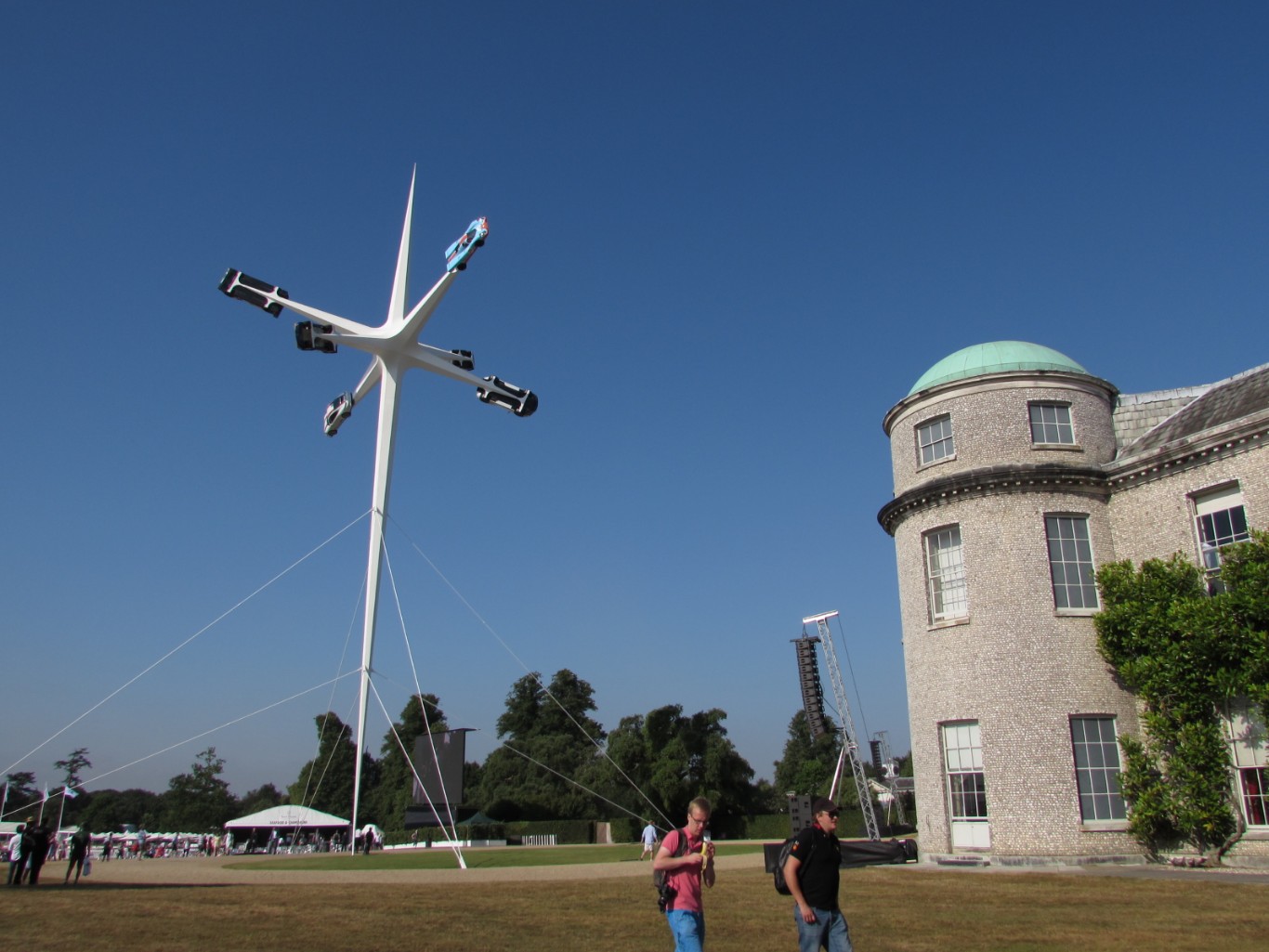
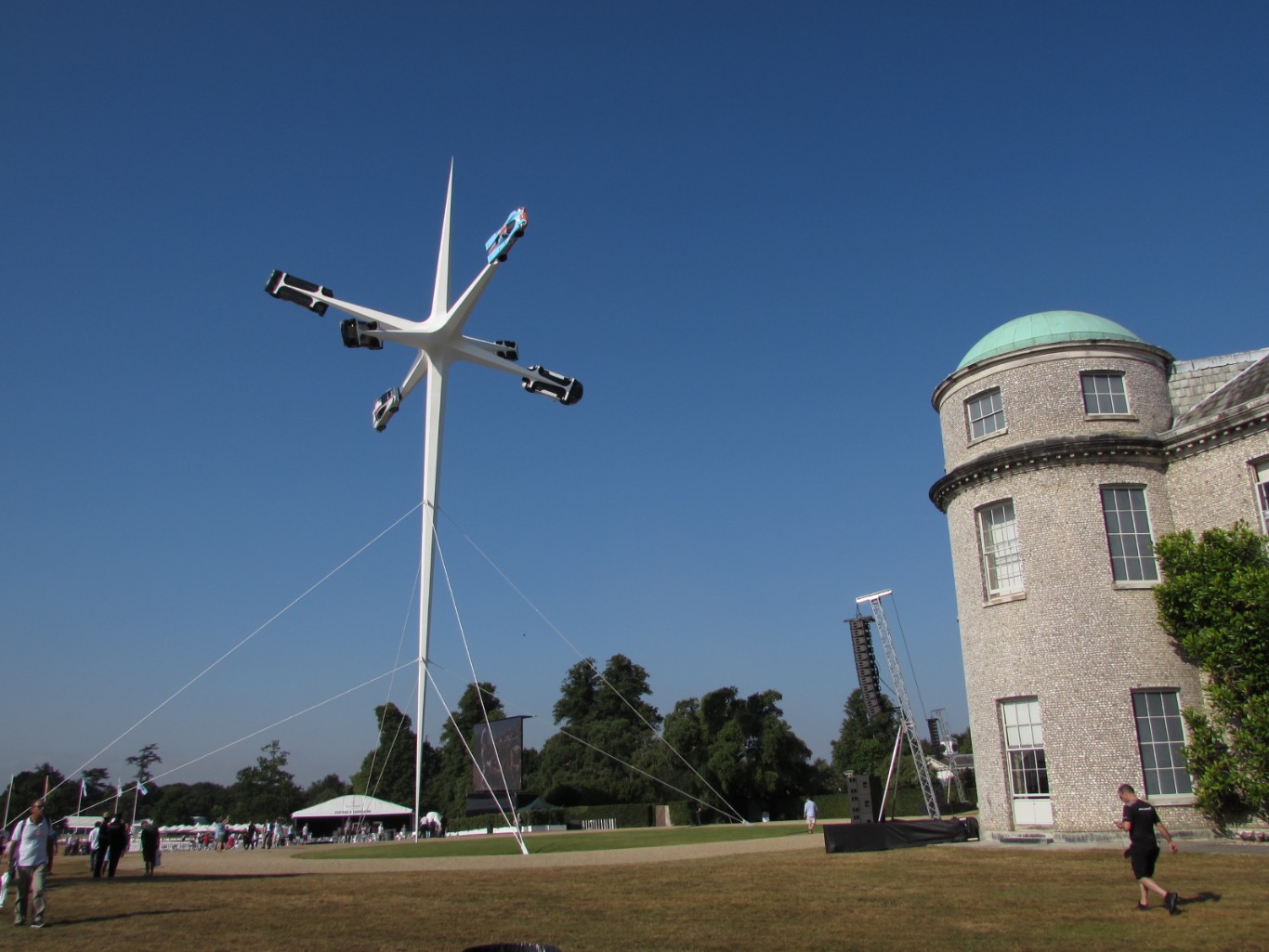
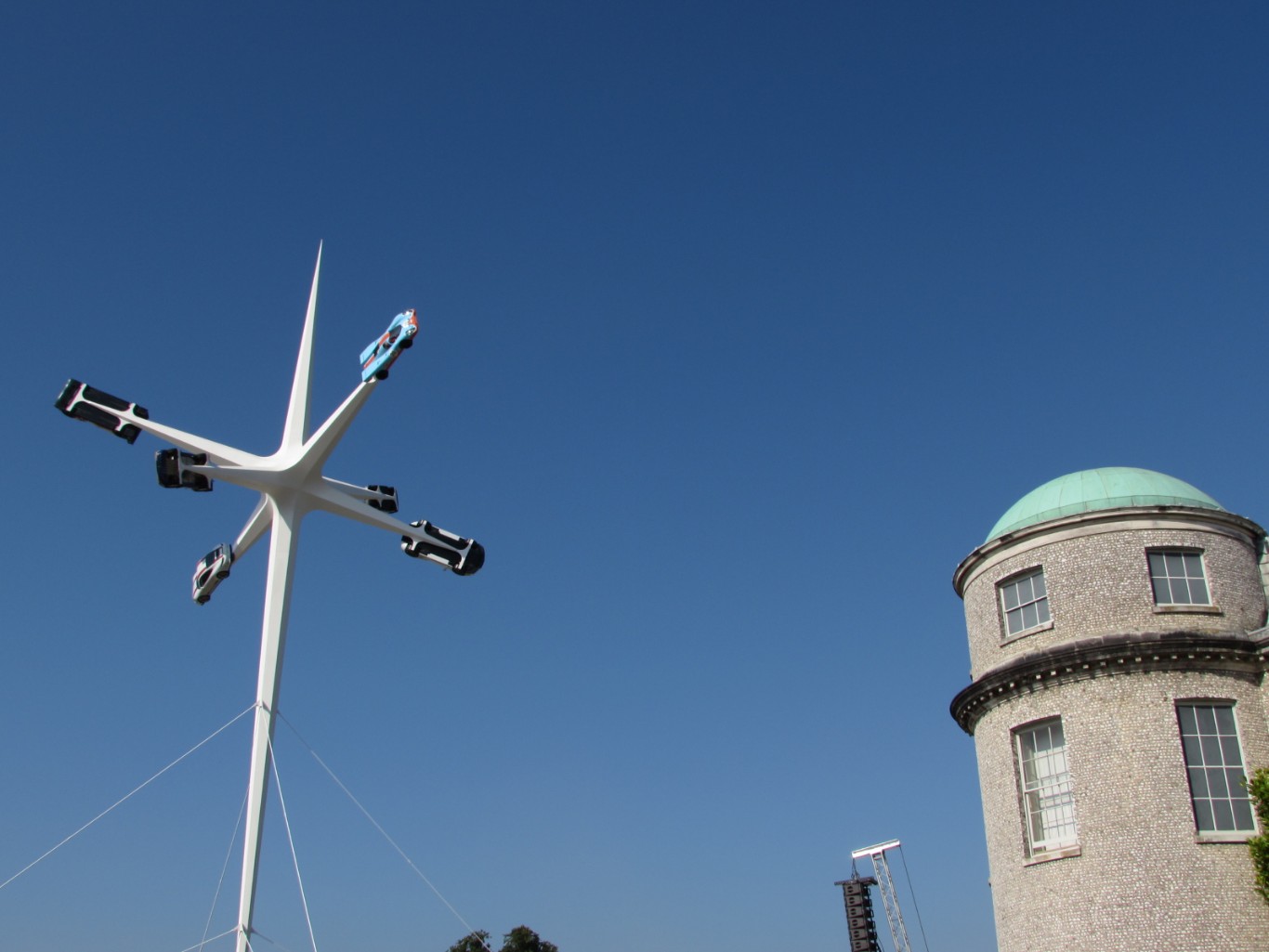
This year’s central celebration at the Goodwood Festival of Speed – besides 25 years of the event itself – is the 70th anniversary of Porsche. As one of the most revered sports car marques in history, Porsche has the lead in the FOS celebration standings, with this being its third time as the central brand. Its 70th birthday follows a celebration of 50 years of the 911 in 2013 and the company’s 50th anniversary way back in 1998.
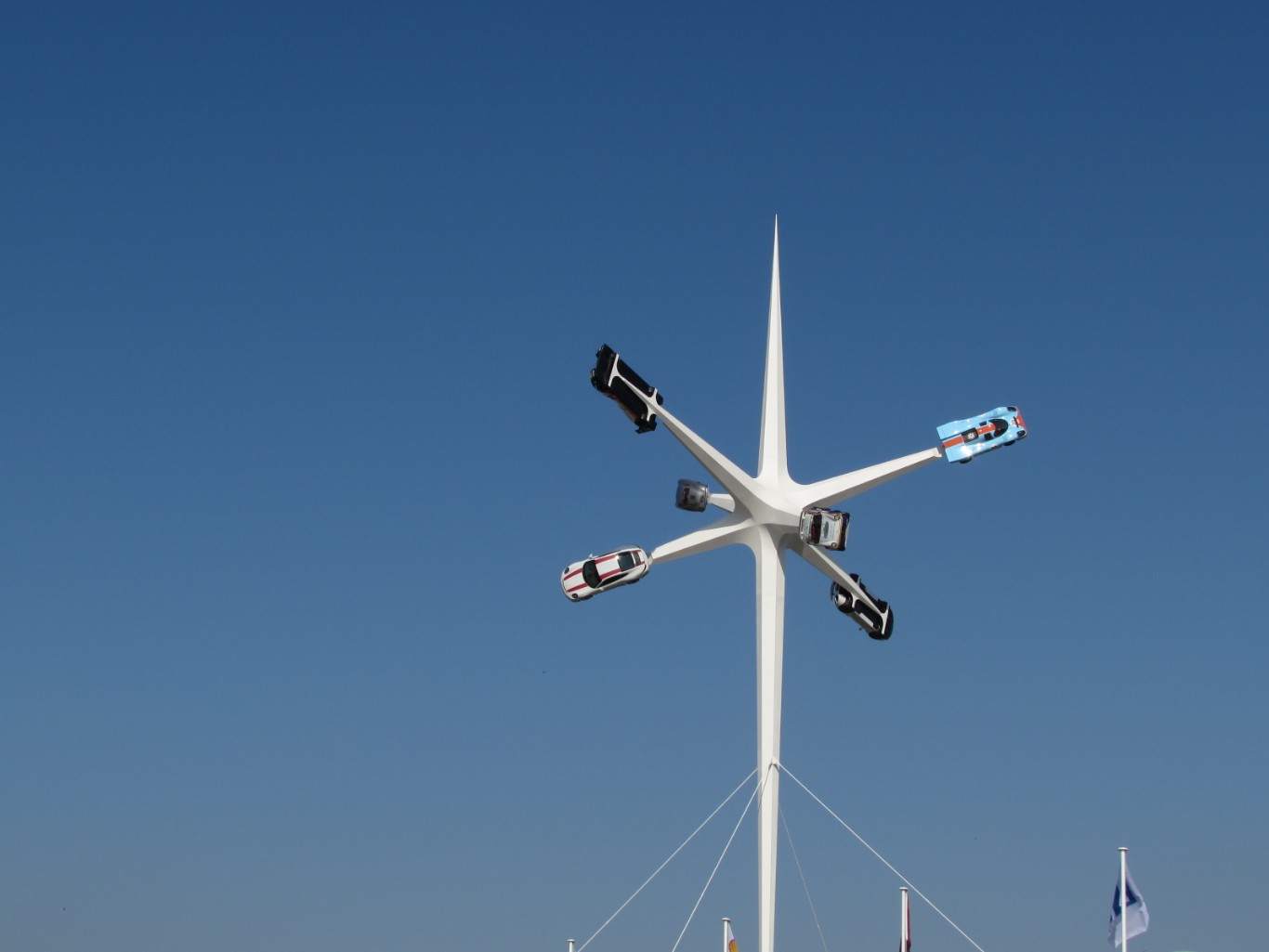
The central feature is always a highlight of Goodwood, with the car selection intended to encapsulate everything great about the marque over the course of its history. Let’s break down Porsche’s super six.
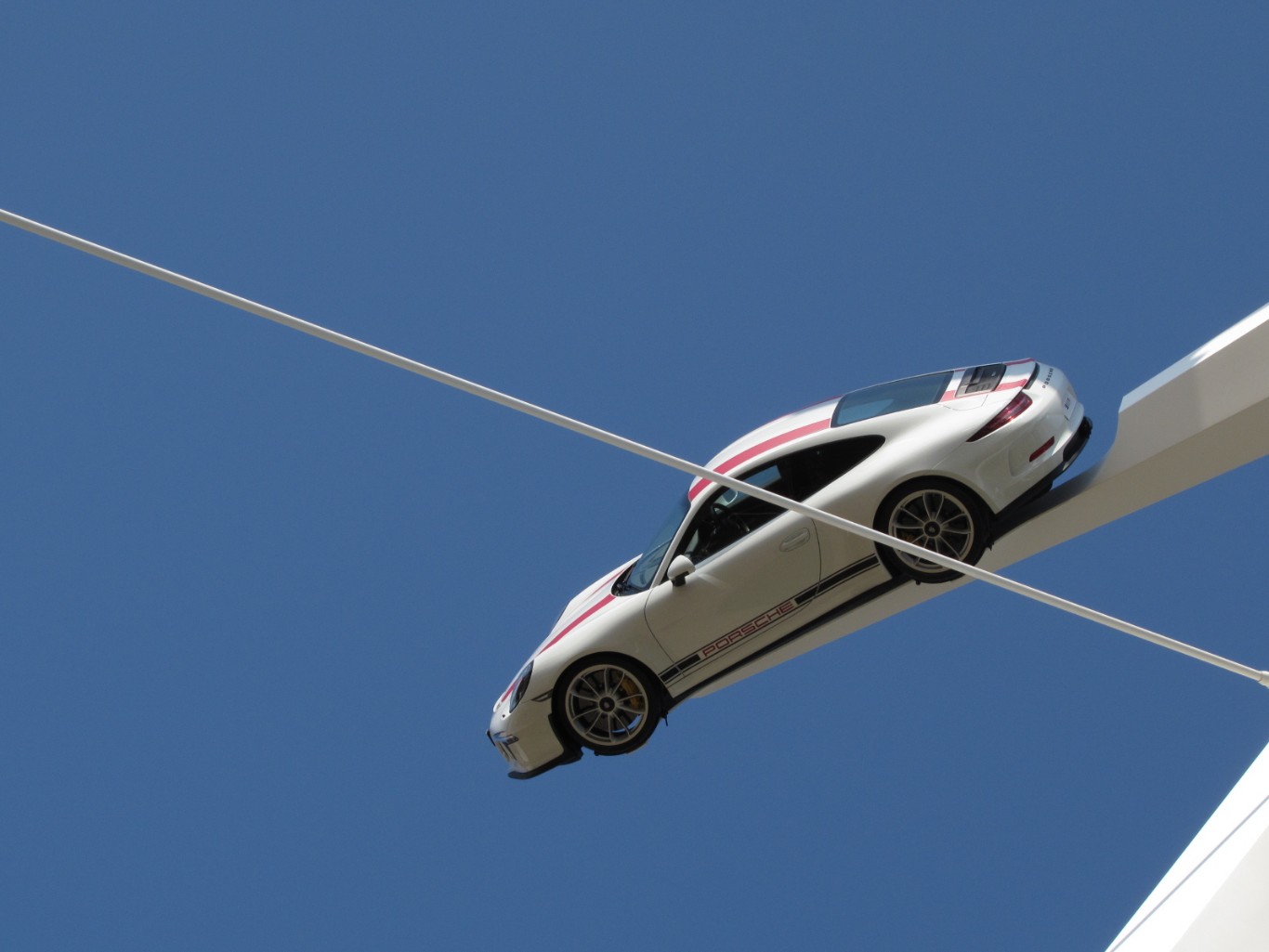
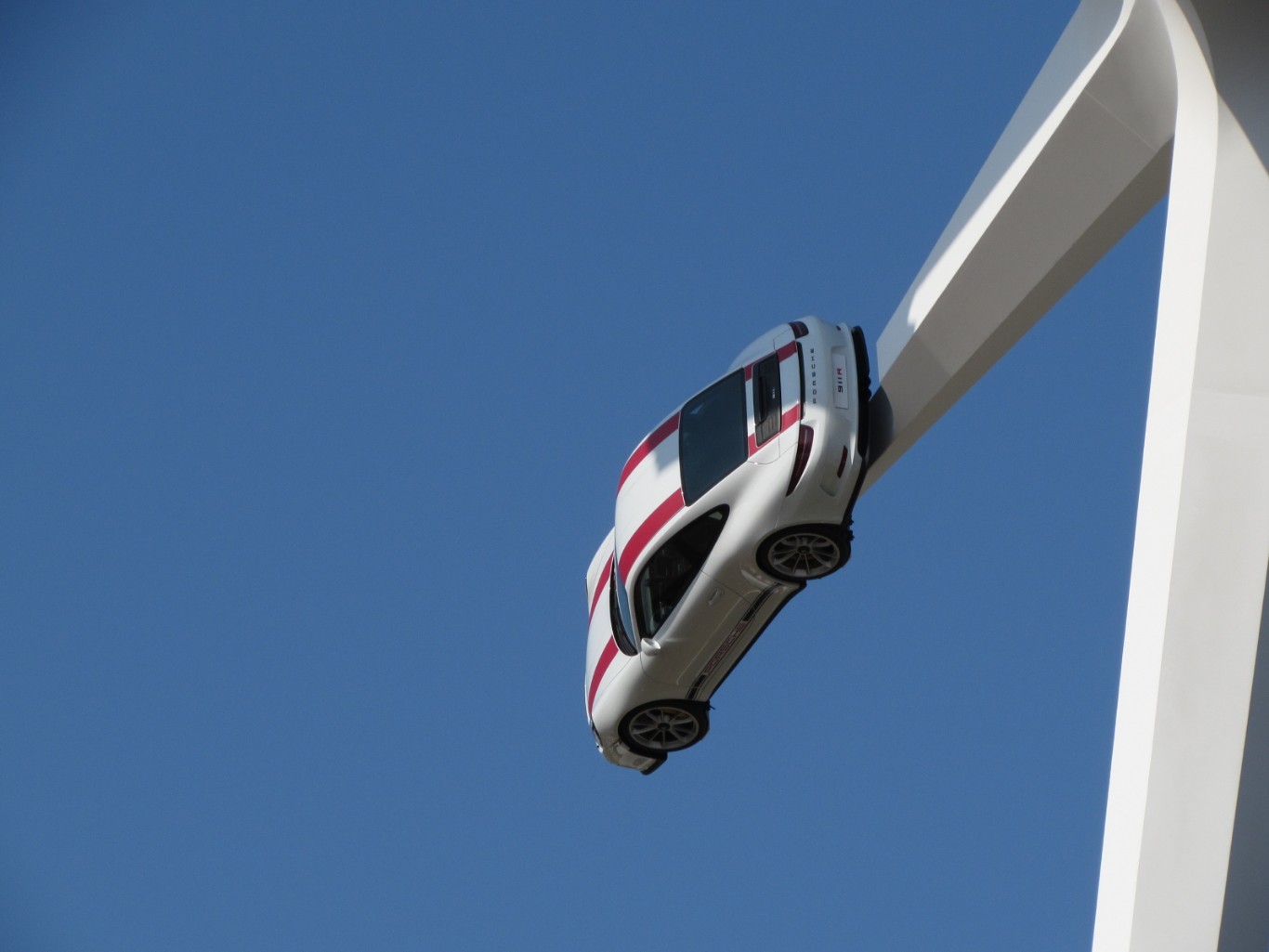
Porsche 911 R
This is an easy one. The car encapsulates everything Porsche stands for on the road in the eyes of enthusiasts. The ultimate in driver feel and interaction, with a slick-throw six-speed manual giving the driver precise control over 500hp of 4.0-litre flat-six as it howls its way to 8,800rpm. The pinnacle of Porsche desirability and driver enjoyment, its place on the central feature was surely guaranteed.
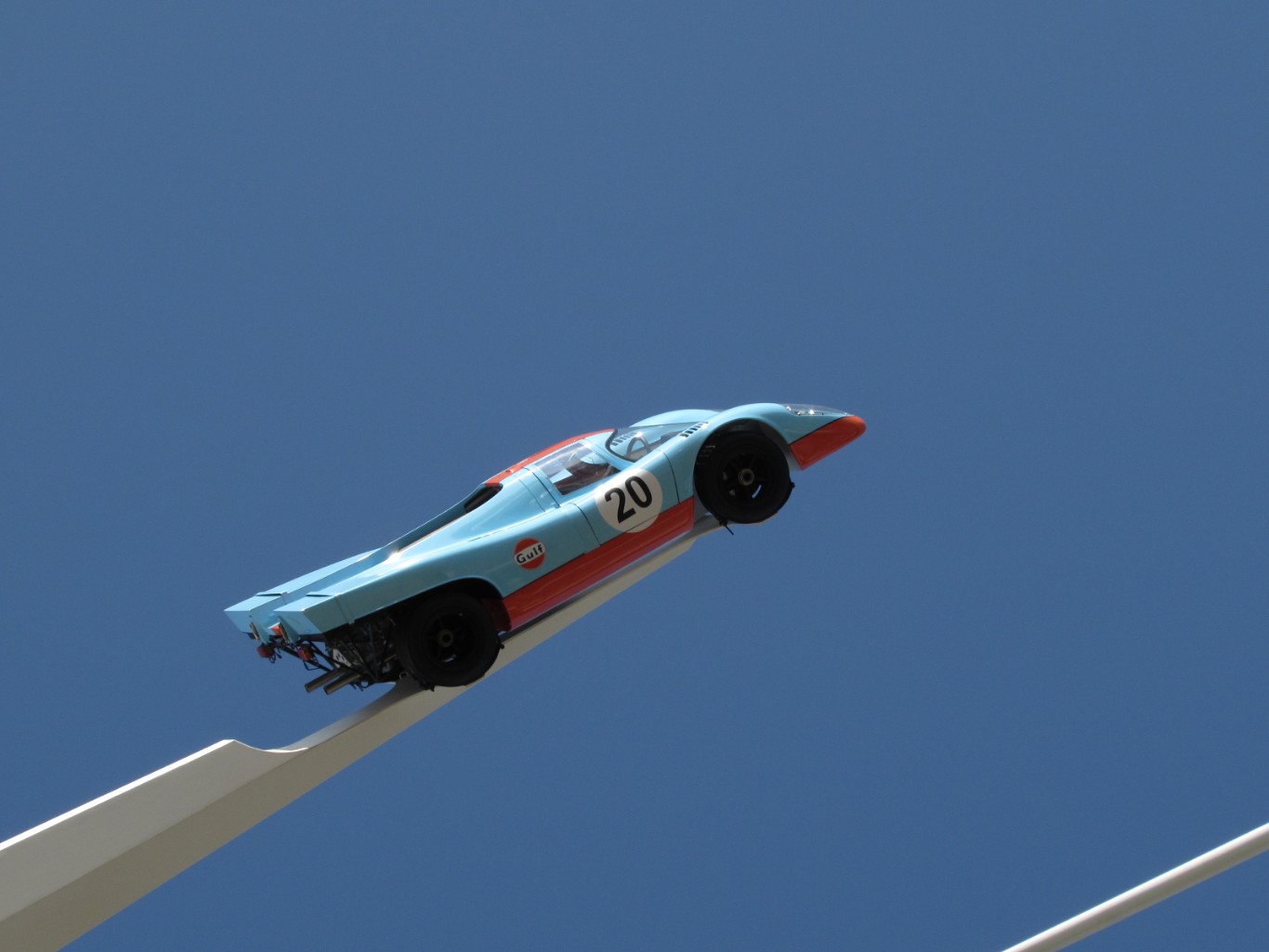
Porsche 917
This ground-breaking sports prototype not only gave Porsche its first win at Le Mans in 1970, it’s the tap-root design influence for the most desirable Porsche road cars of all time. The Carrera GT can thank it for its wood-topped gear shifter, which shielded drivers’ hands from transmission heat after up to 24 hours flat-out at La Sarthe. Those curves, that swept-back stance – GT1 through CGT, 918 and beyond – it all goes back to the 917.
Porsche 918 Spyder
Speaking of the 918… Again, this car’s place on the feature was almost guaranteed. It’s still at the pinnacle of Porsche’s technical prowess five years after release. It carries the heritage of a plethora of top-level machinery from the road and racetrack, going through Carrera GT, 911 GT1, 959, 962, 956, 936 and 917. Everything that Porsche was, is and will be was distilled and intensified in this car.
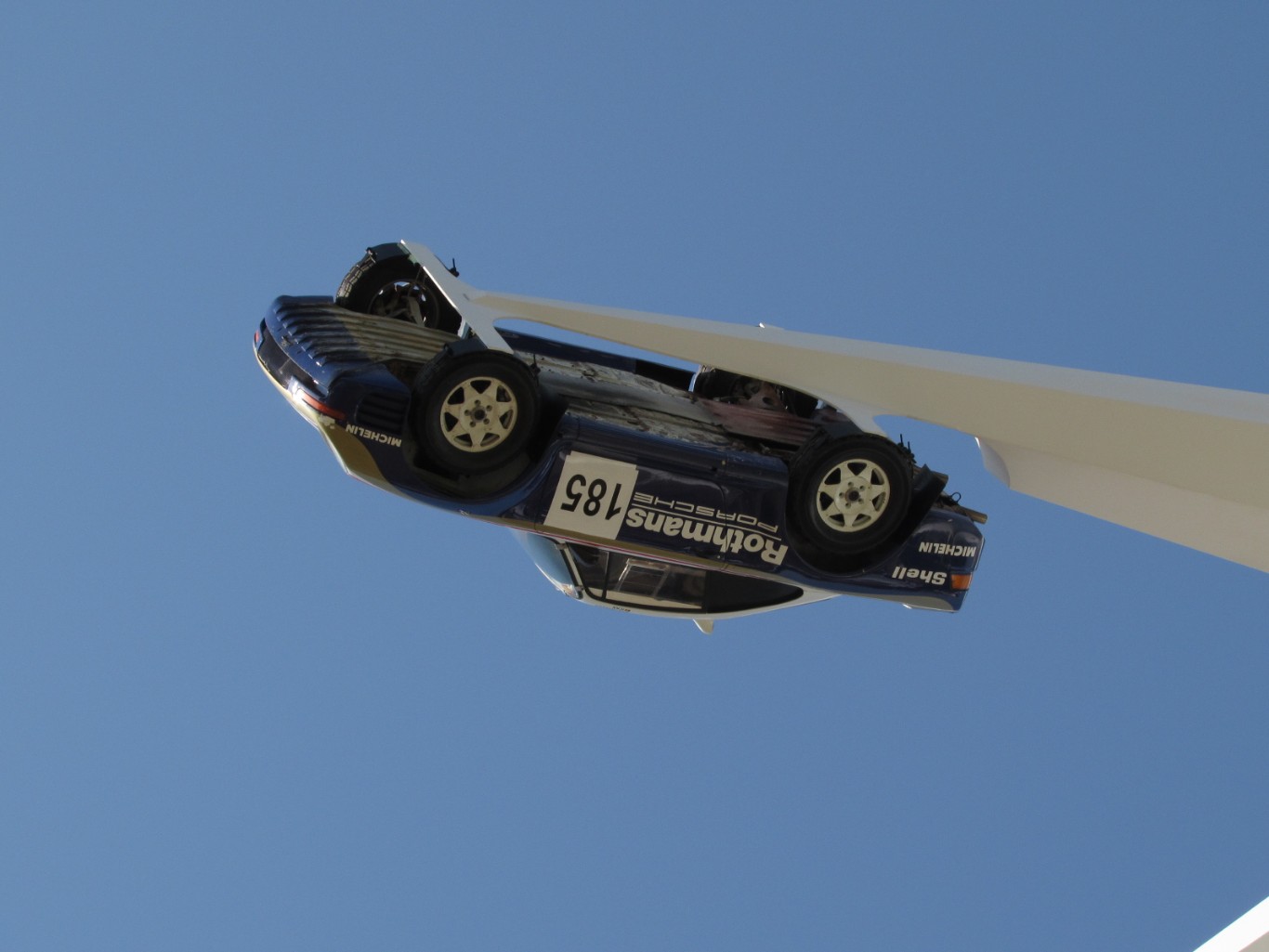
Porsche 959 Dakar
Evidence of a life outside of sports car racing, as well as the versatility of one of its most celebrated supercars, the 959 Dakar is a legendary unicorn – and a signature departure from the Porsche norm. Based on the marque’s 1980s technical tour de force, this off-road racer cementing its place in Dakar history with a one-two finish in 1986.
Porsche 919 Hybrid
Carrying on a legacy of Porsche’s top-level Le Mans sports racers, the 919 is the latest and definitely the greatest in terms of its technology. When the Taycan arrives on UK roads, we can rest assured the EV tech has been proven in the greatest motorsport arena on Earth. In its time in service, the 919 asserted Porsche’s dominance as the most successful automotive marque at Le Mans, with its three wins taking the tally up to 19.
Porsche 356
This is where it all started for Porsche. Born in a barn, this was the company’s first foray onto the road – a moment in history that occurred 70 years ago last month. The 356 set that unique rear-engined, air-cooled Porsche standard – attributes for which so many generations of 911 command such reverence (and value) to this day. Some way from the leviathan that is the most profitable car manufacturer in the world, but we all start somewhere…
Are these the cars you’d have picked for the central feature? Let us know in the comments below.
We all love a good hot hatch. The market’s gone crazy for them in recent years with newcomers like Hyundai joining new generations of old-guard heroes like the Ford Focus RS and Renaultsport Megane.
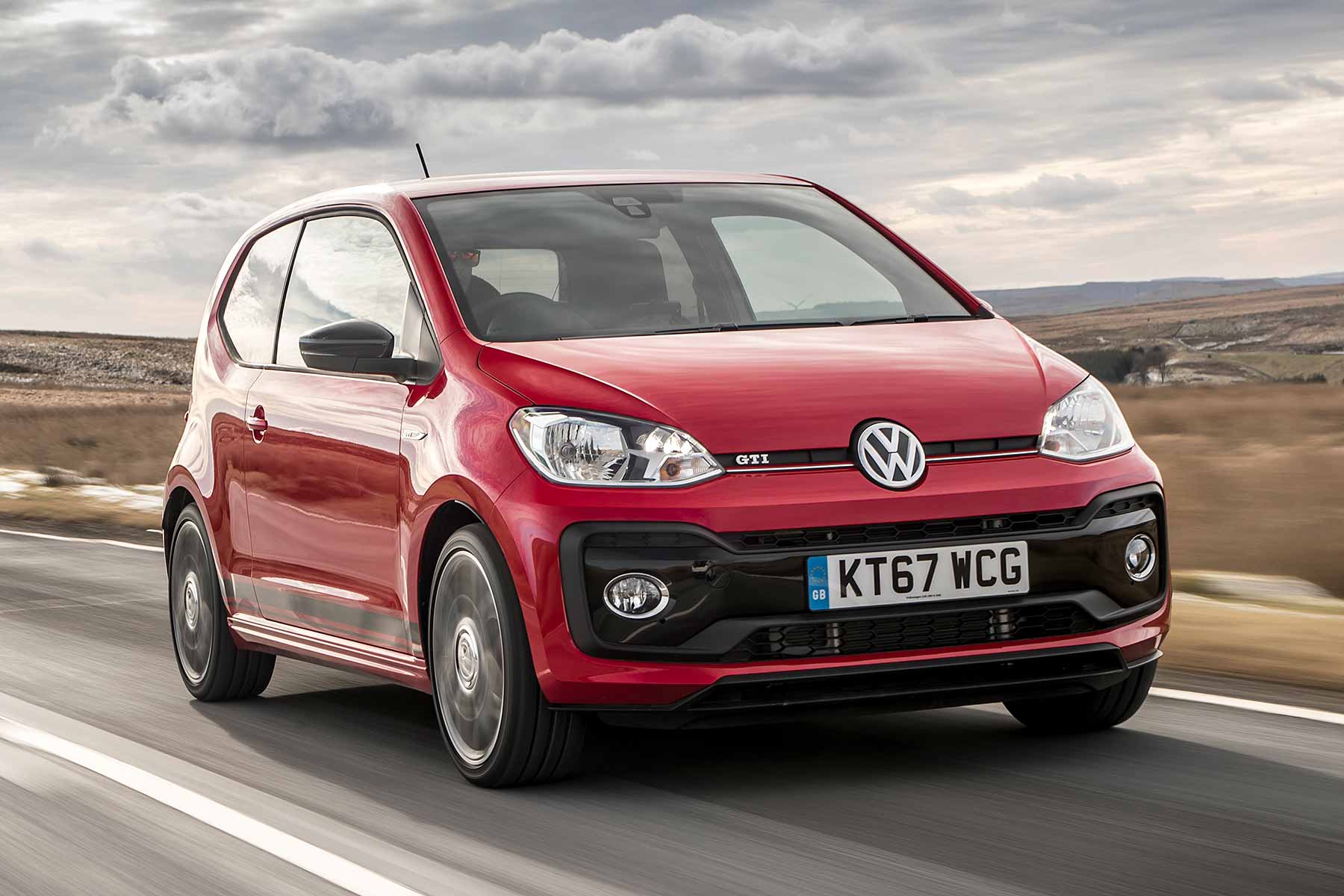
The segment is also broader than ever, ranging from the little 115hp Volkswagen Up GTI to the rip-snorting 400hp Audi RS3. Now, it’s Aston Martin’s turn to join the party.
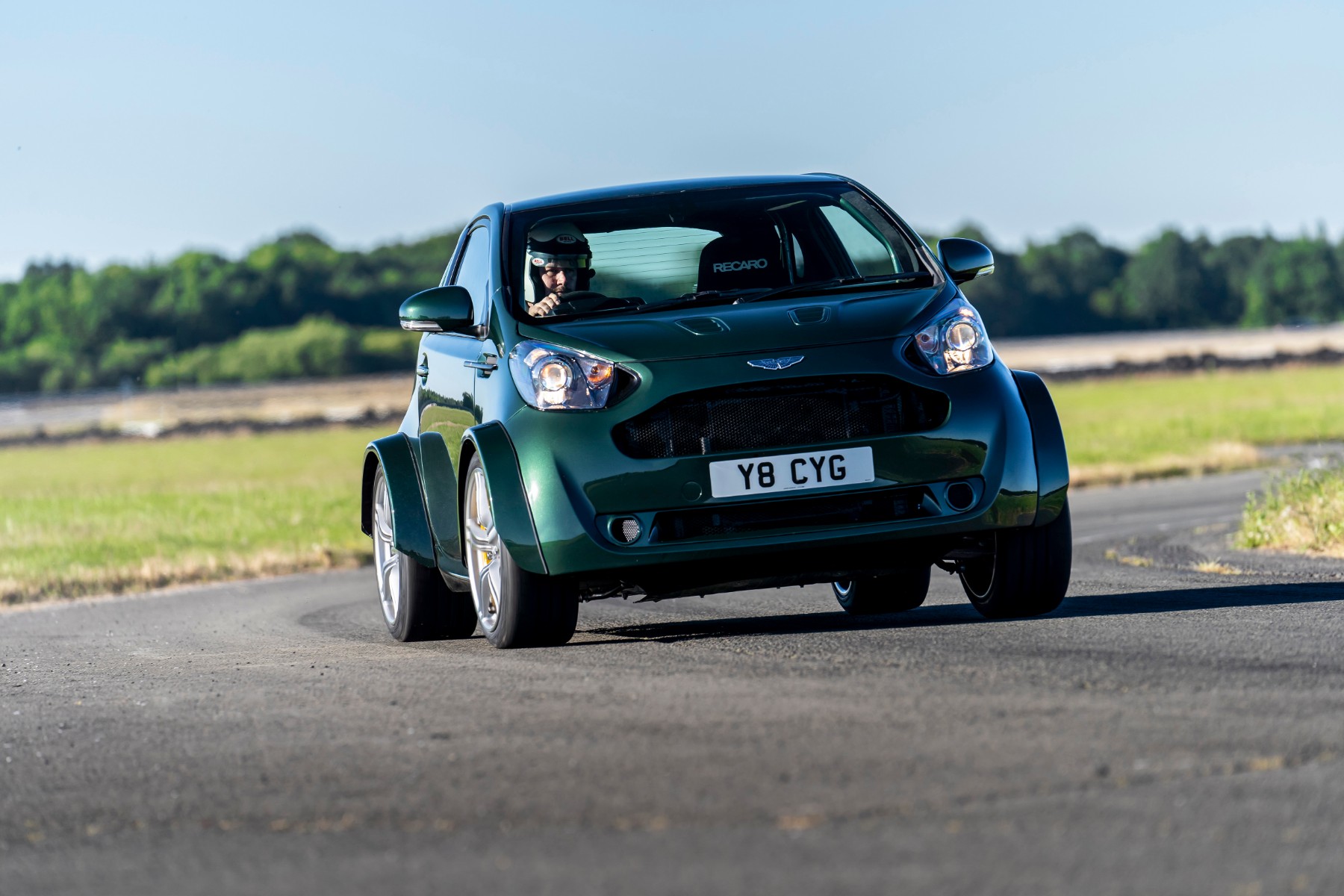
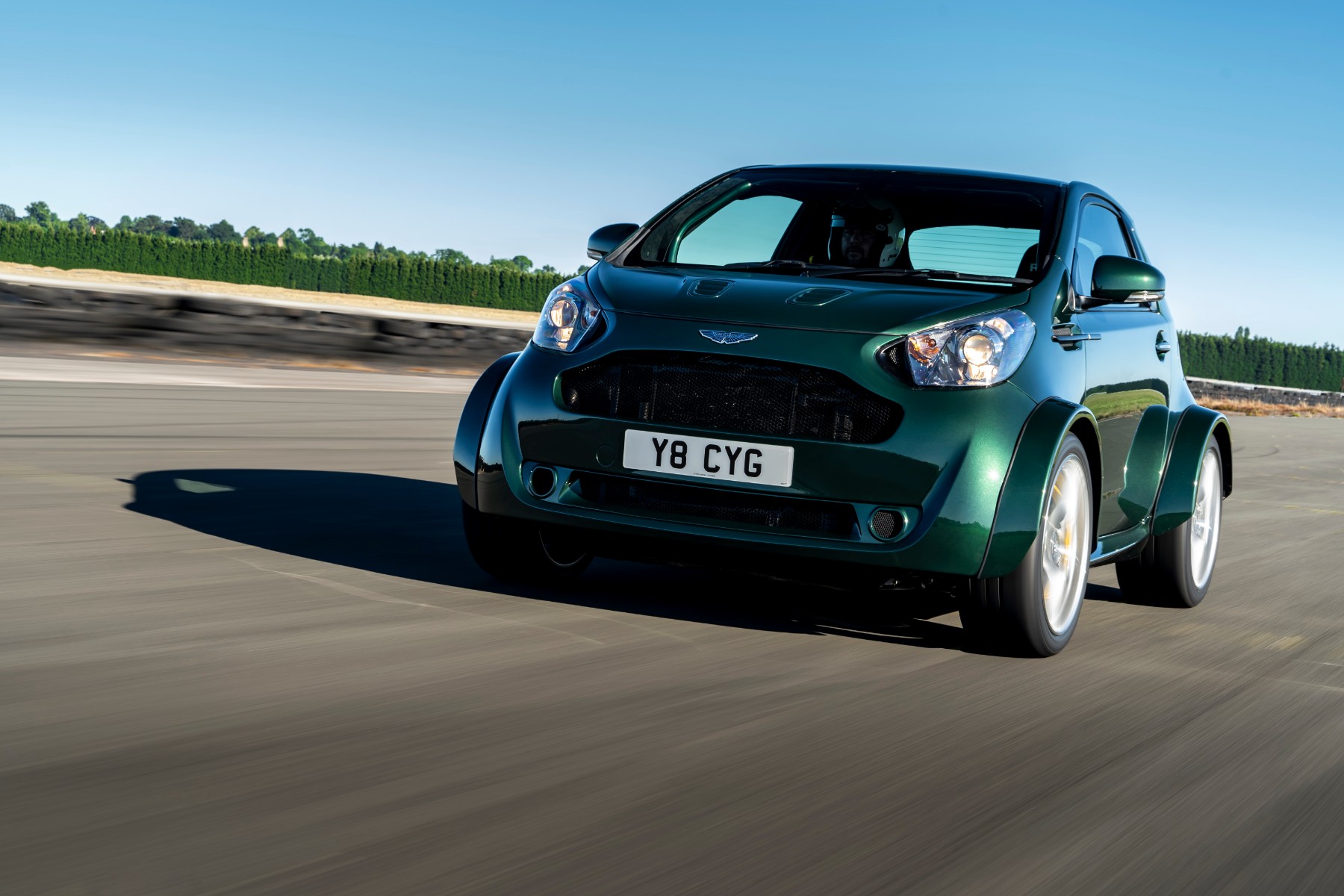
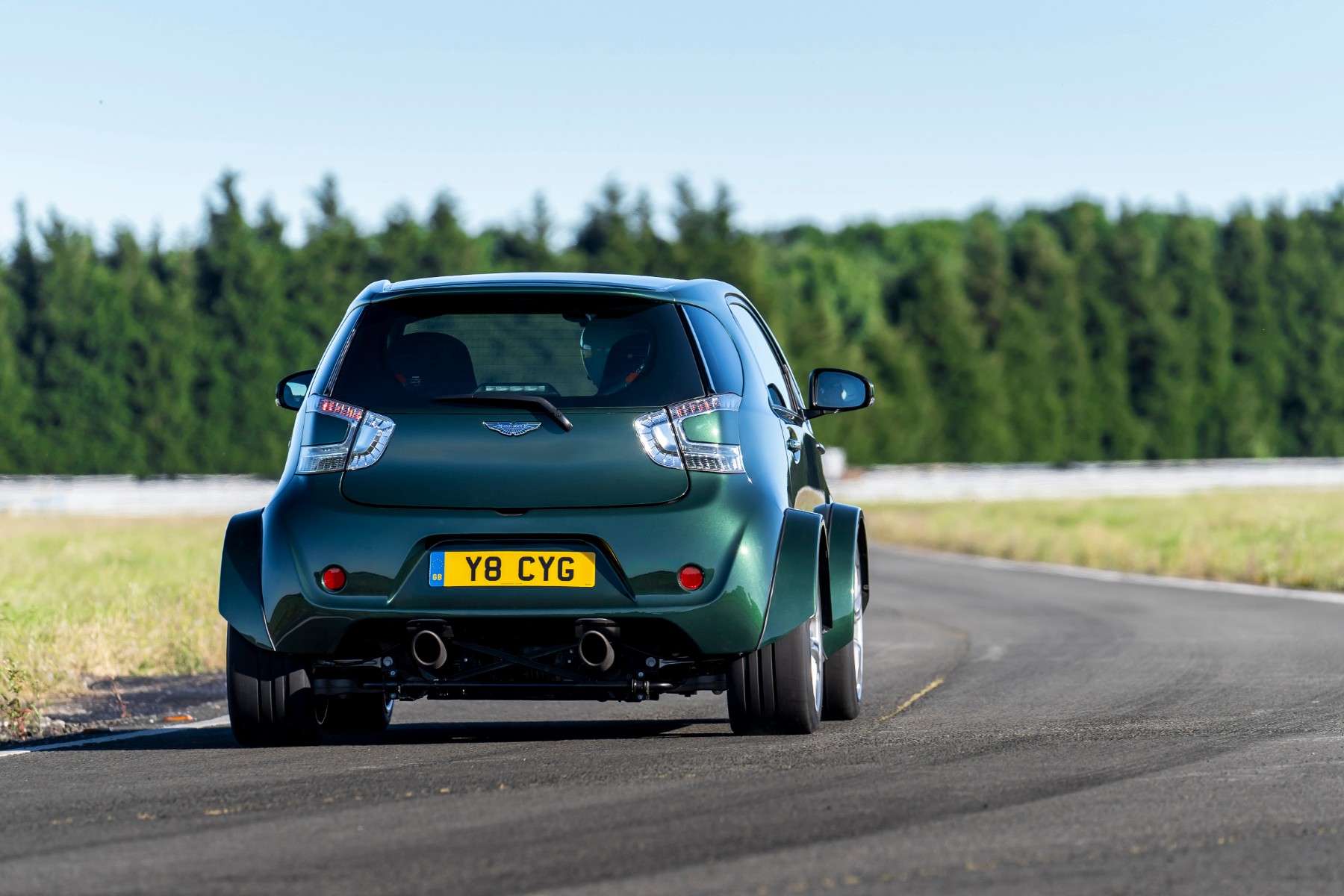
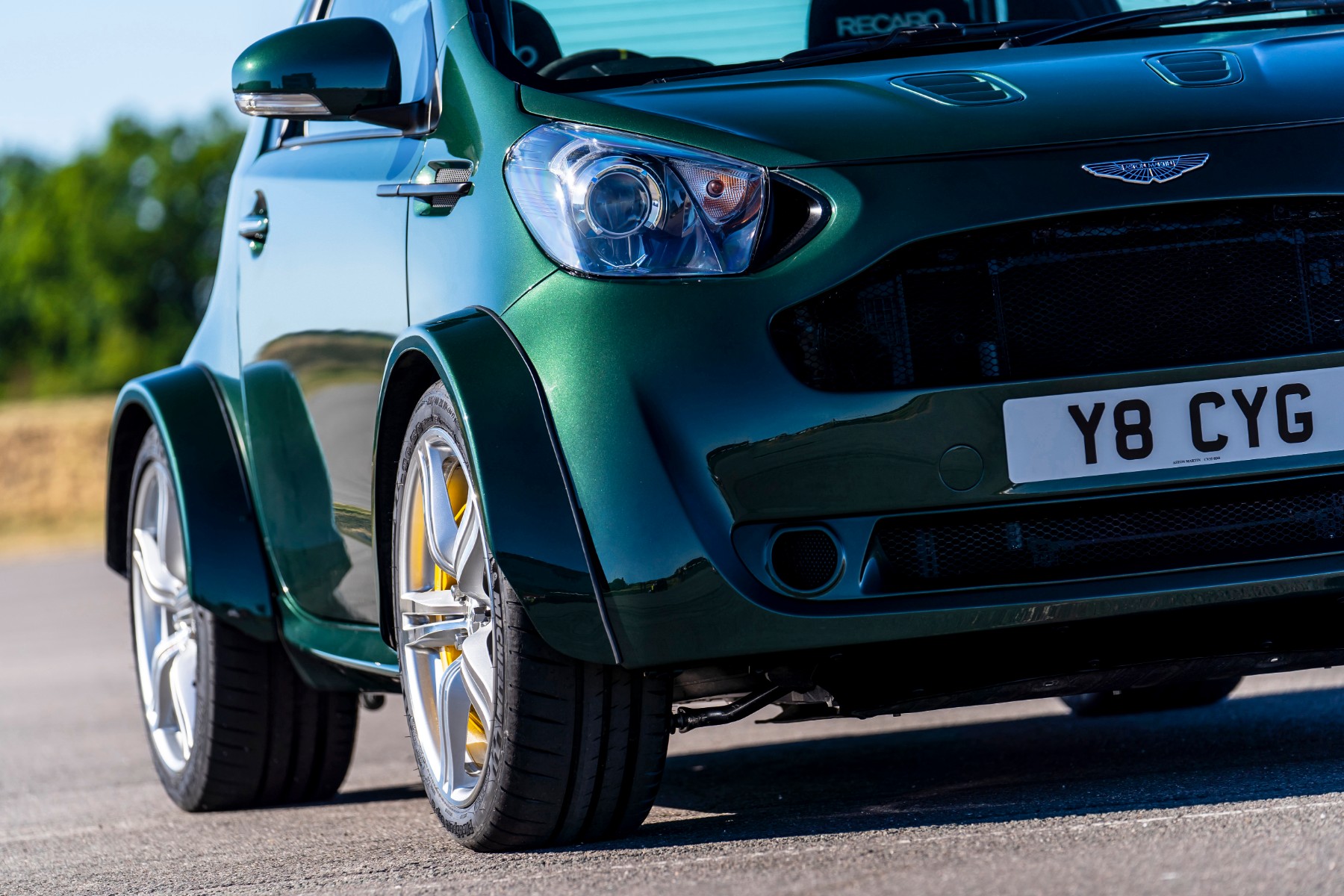
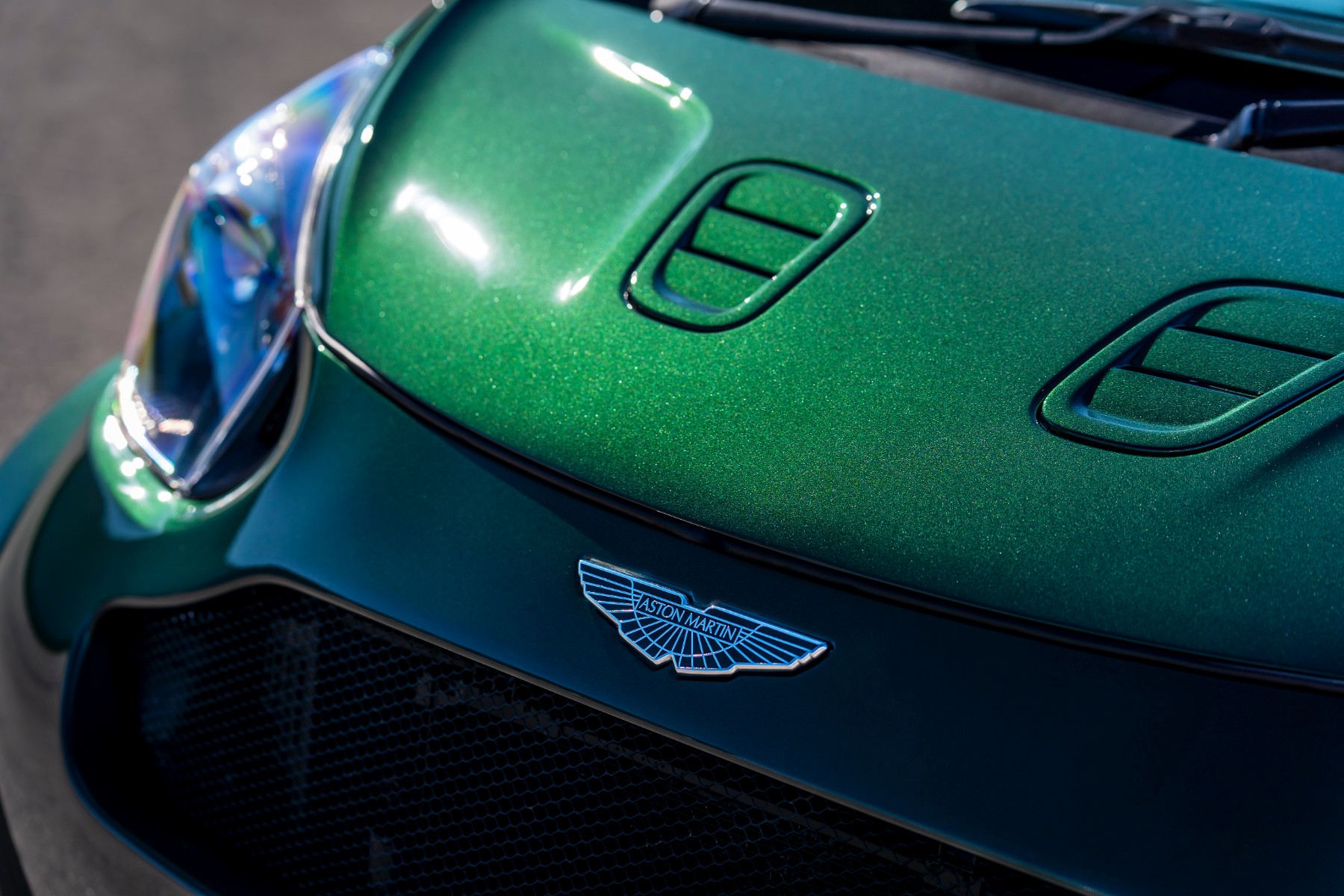
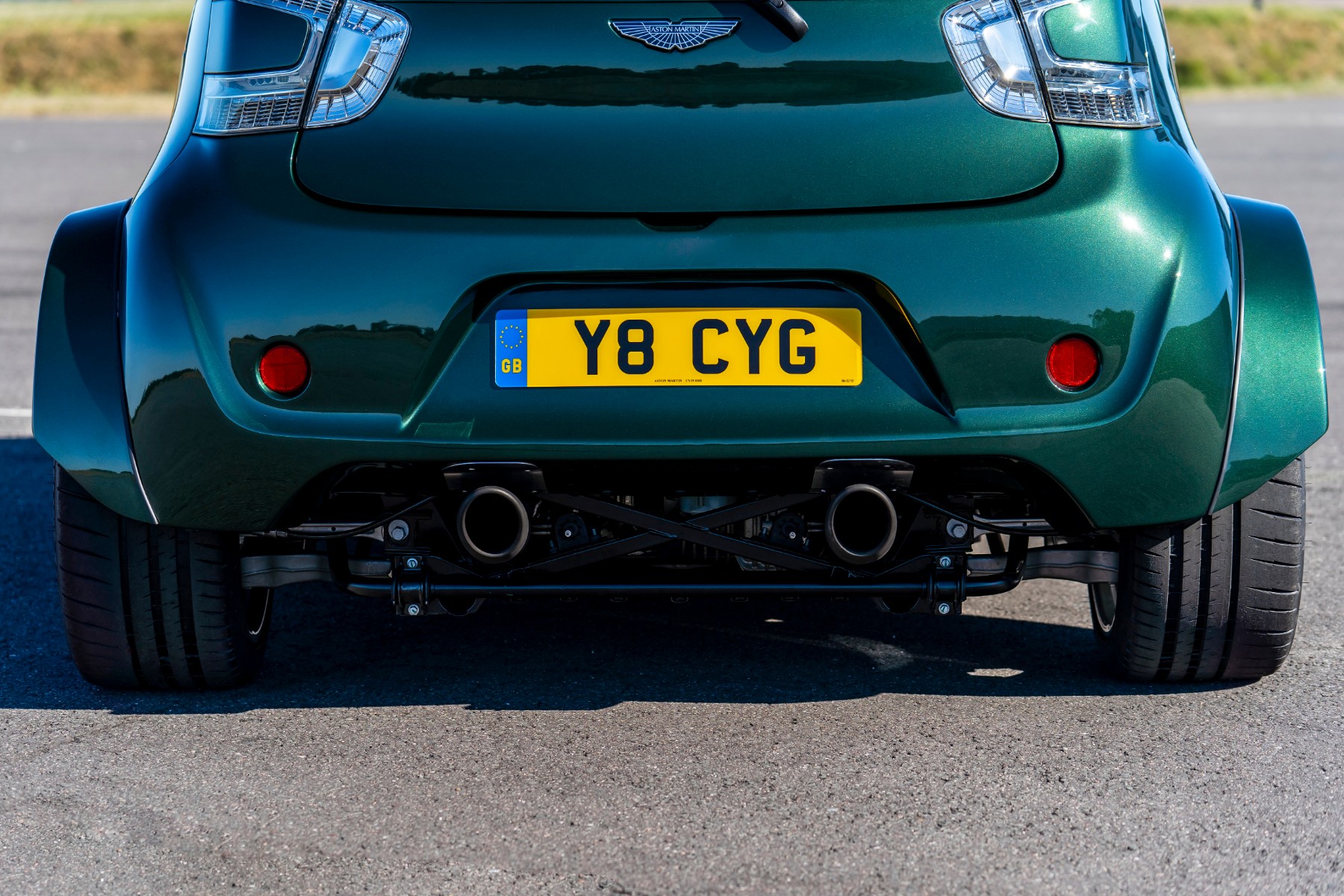
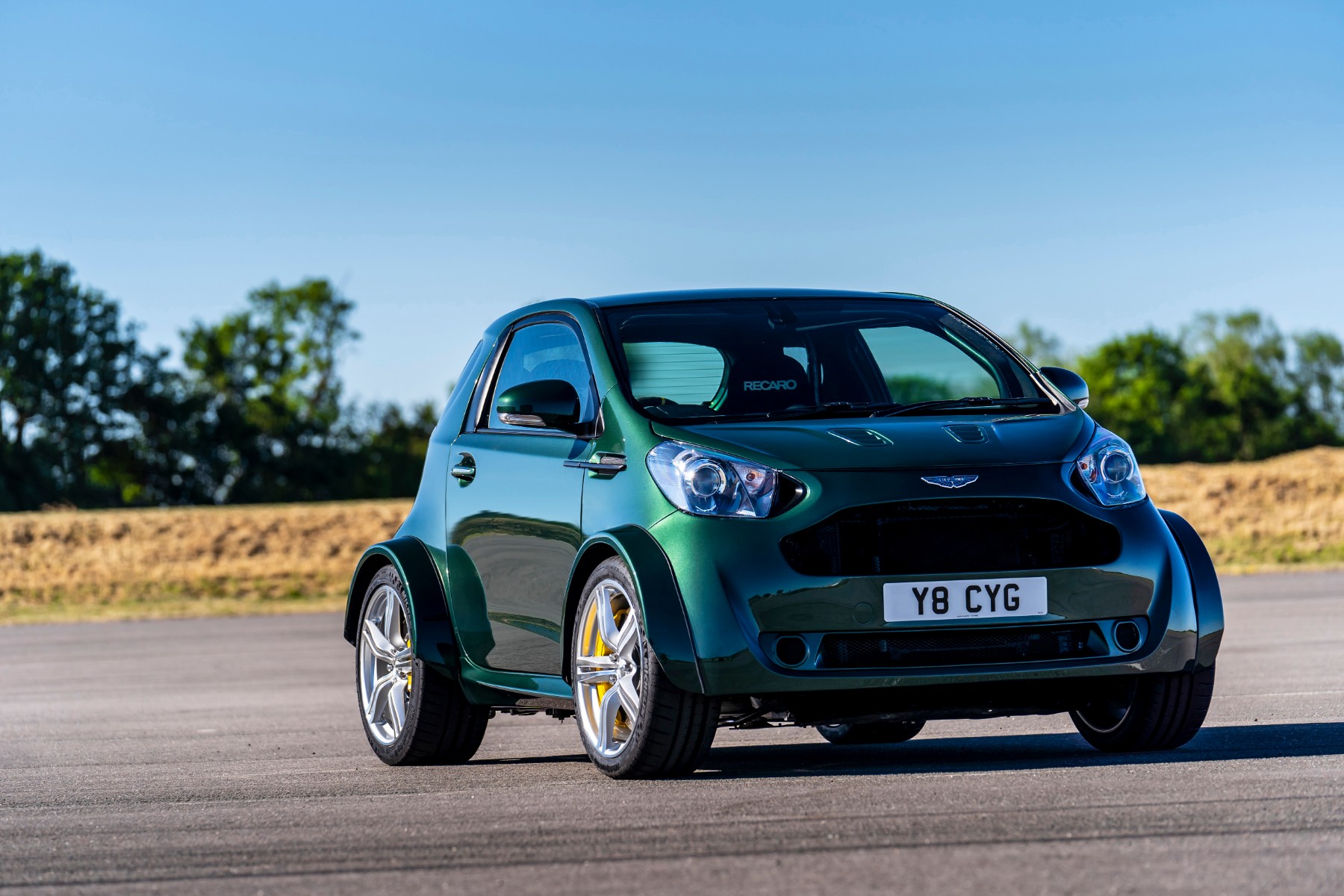
We say ‘join’. We strongly suspect that this one-off Cygnet fitted with the 430hp V8 from a Vantage S won’t be making it to series production any time soon, though it should be taking to the Hill at the Goodwood Festival of Speed starting today.
“The V8 Cygnet shows the fun side of both Aston Martin and its customers. It is also a fine example of the engineering talent within the company as it’s no small achievement to fit the Vantage’s V8 engine so harmoniously into the Cygnet’s compact body” said Aston Martin Vice President & Special Operations Officer, David King.
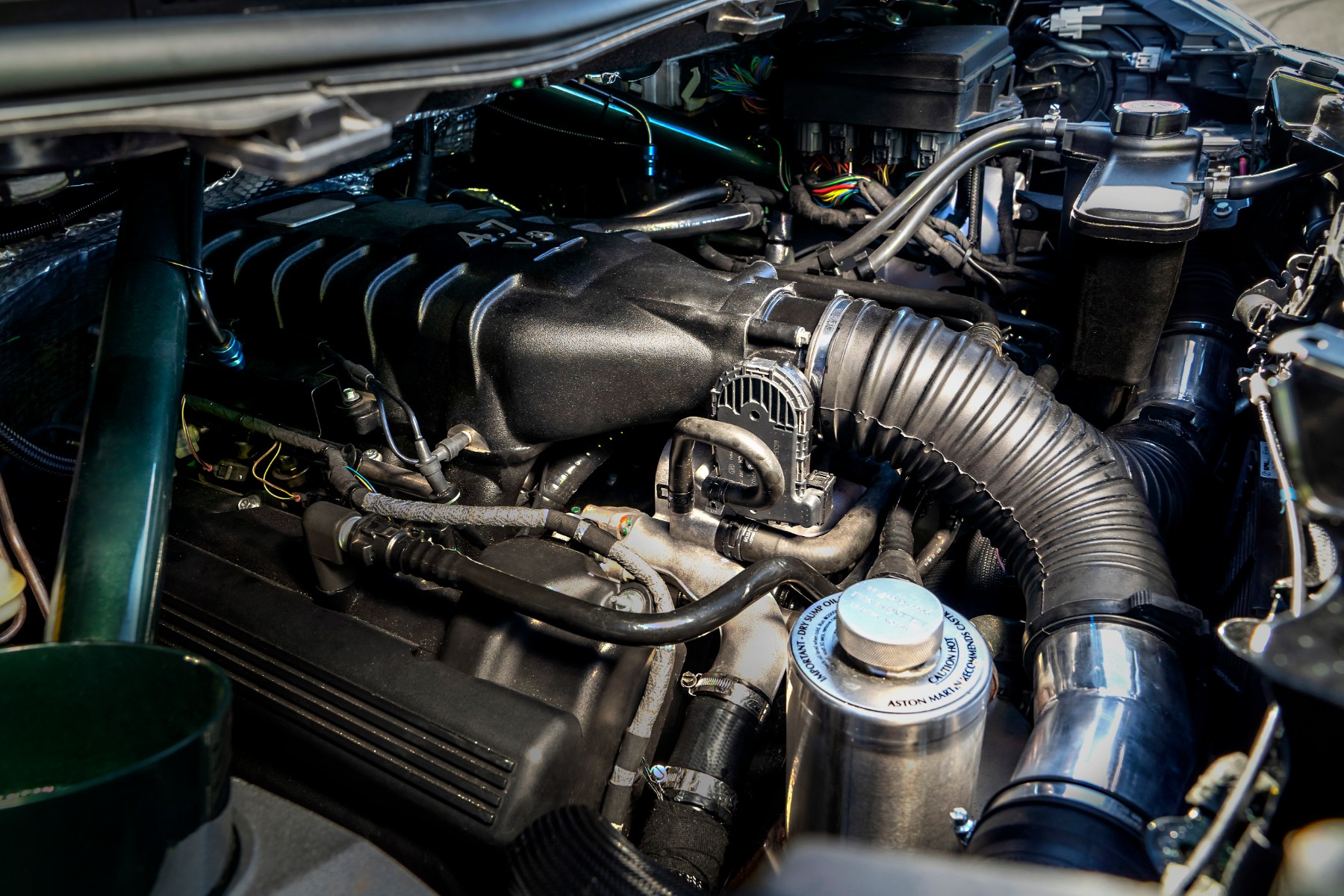
Shoehorning a 4.7-litre V8 into the tiny Toyota IQ-based Cygnet sounds like a gloriously ridiculous mix of fun and an engineering challenge. This kart-like wee beastie was, believe it or not, a customer commission, created by Aston Martin’s Q Commission service.
Weighing 1,375kg all fuelled up, the V8 Cygnet boasts a power-to-weight ratio of 317hp per tonne. It’ll get to 60mph in a brisk 4.2 seconds, on its way to a top speed of 170mph. Aston feels the need to note that the V8 is a full 60mph quicker than the regular Cygnet.
What else have they stuffed in the V8 Cygnet?
The seven-speed Sportshift II transmission comes with the engine from the Vantage S, putting power to the rear wheels (yes, really). Also making the swap is most of the braking system, suspension and subframes. New additions are 380mm and 330mm discs front and rear, a roll cage and a custom fabricated front bulkhead and transmission tunnel.
The spectacularly ridiculous arches are carbon composite, with the body covered in ‘Buckinghamshire Green’ paint. A stately colour for something that wouldn’t look out of place parked on the starting grid in Super Mario Kart.
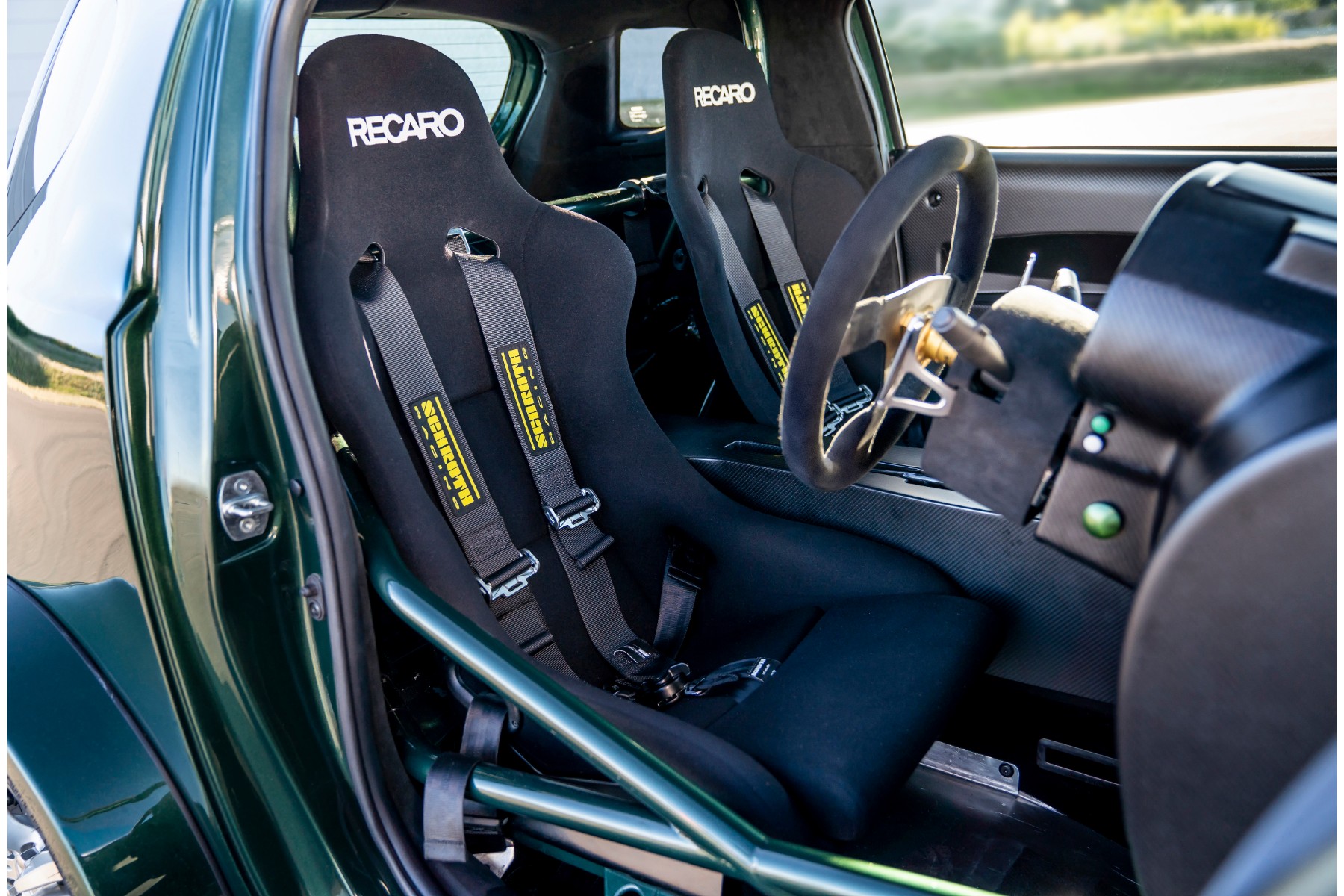
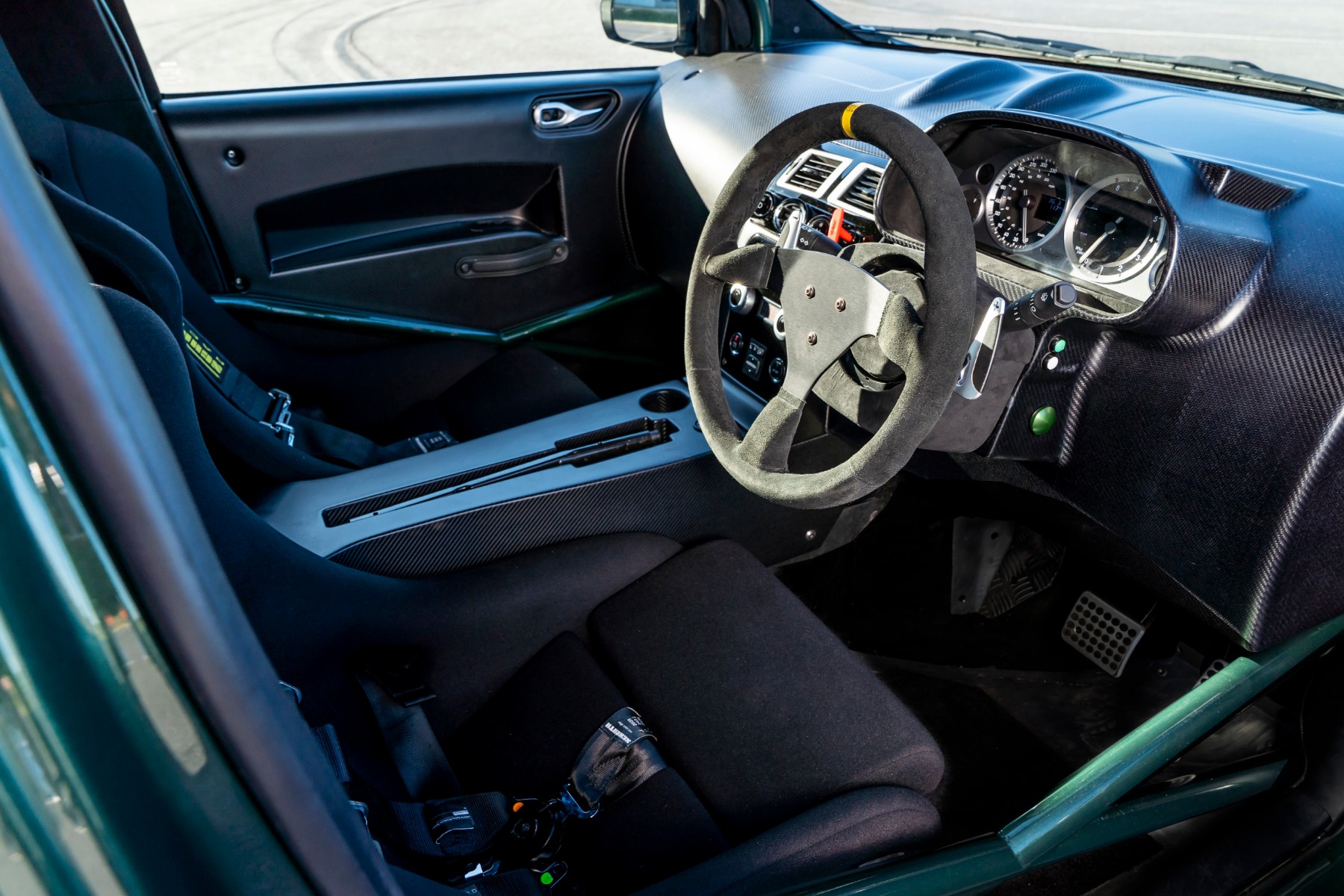
Inside, it’s very competition spec, with Recaro seats, full four-point harnesses, a racing wheel and a bespoke carbon dashboard. Being an Aston Martin, there has to be a touch of luxury at least. As such air conditioning and USB connectivity are retained.
Aston goes on to suggest that the original Cygnet “looks set to become a future classic” as prices begin to rise on the secondhand market. For its latest V8-engined creation, Aston claim “classic status is already almost assured”. Volkswagen Golf W12, you have a new challenger for the title of the world’s craziest hot hatch.
Be sure to catch what must be Aston’s maddest creation scrabbling its way up the Hill at FOS, where it will no doubt travel at speeds and make noises hitherto unknown to any Aston Martin Cygnet owner.
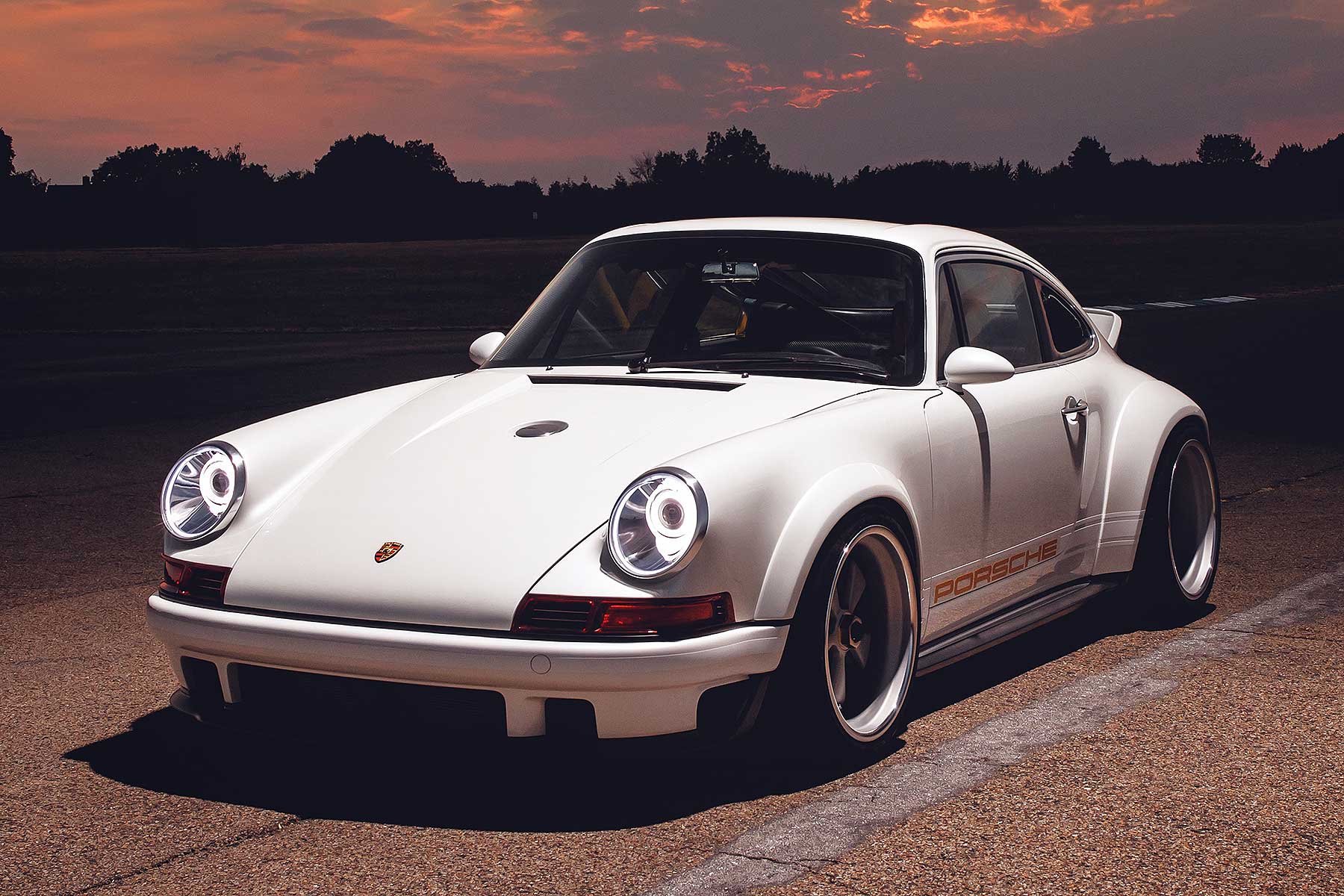
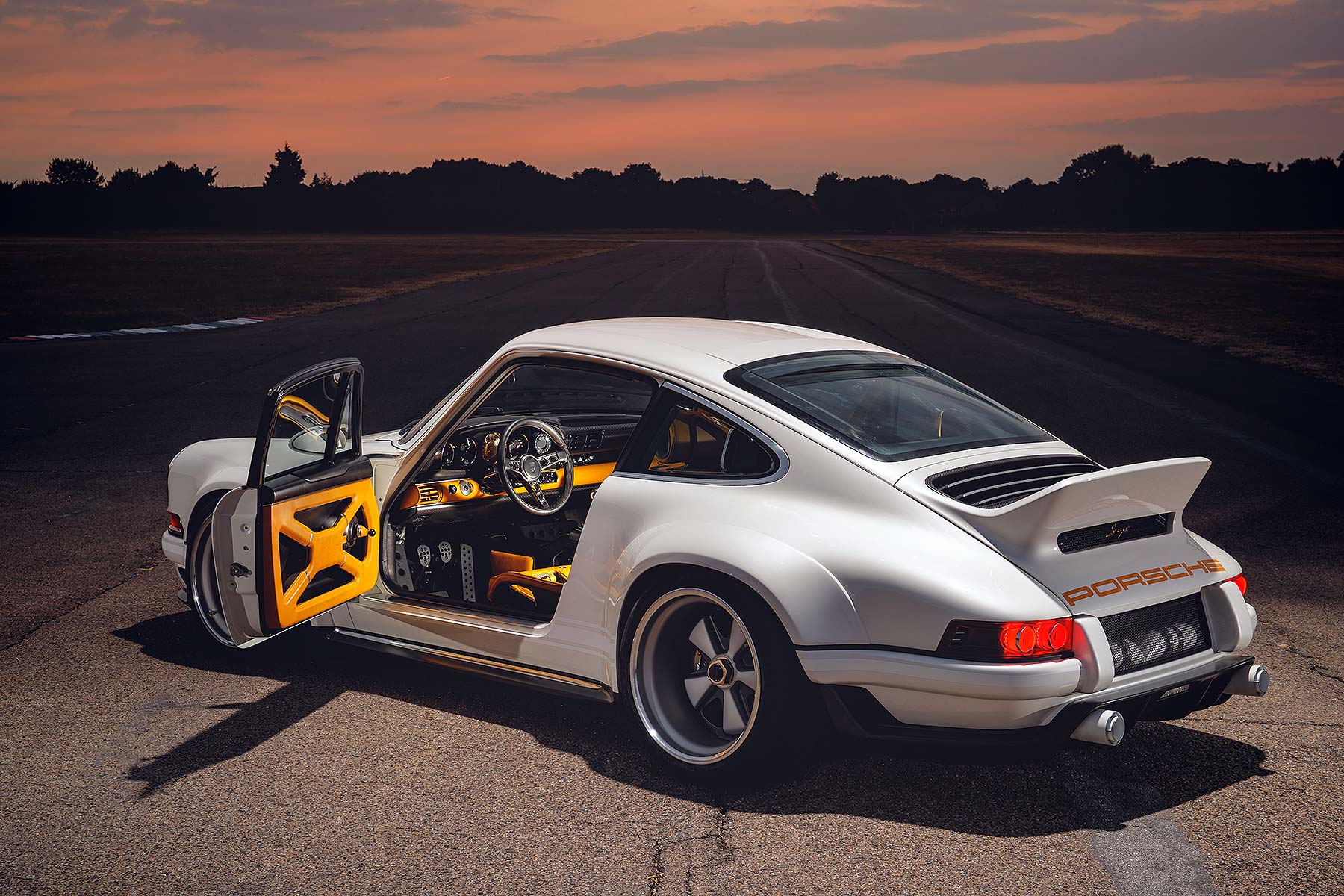
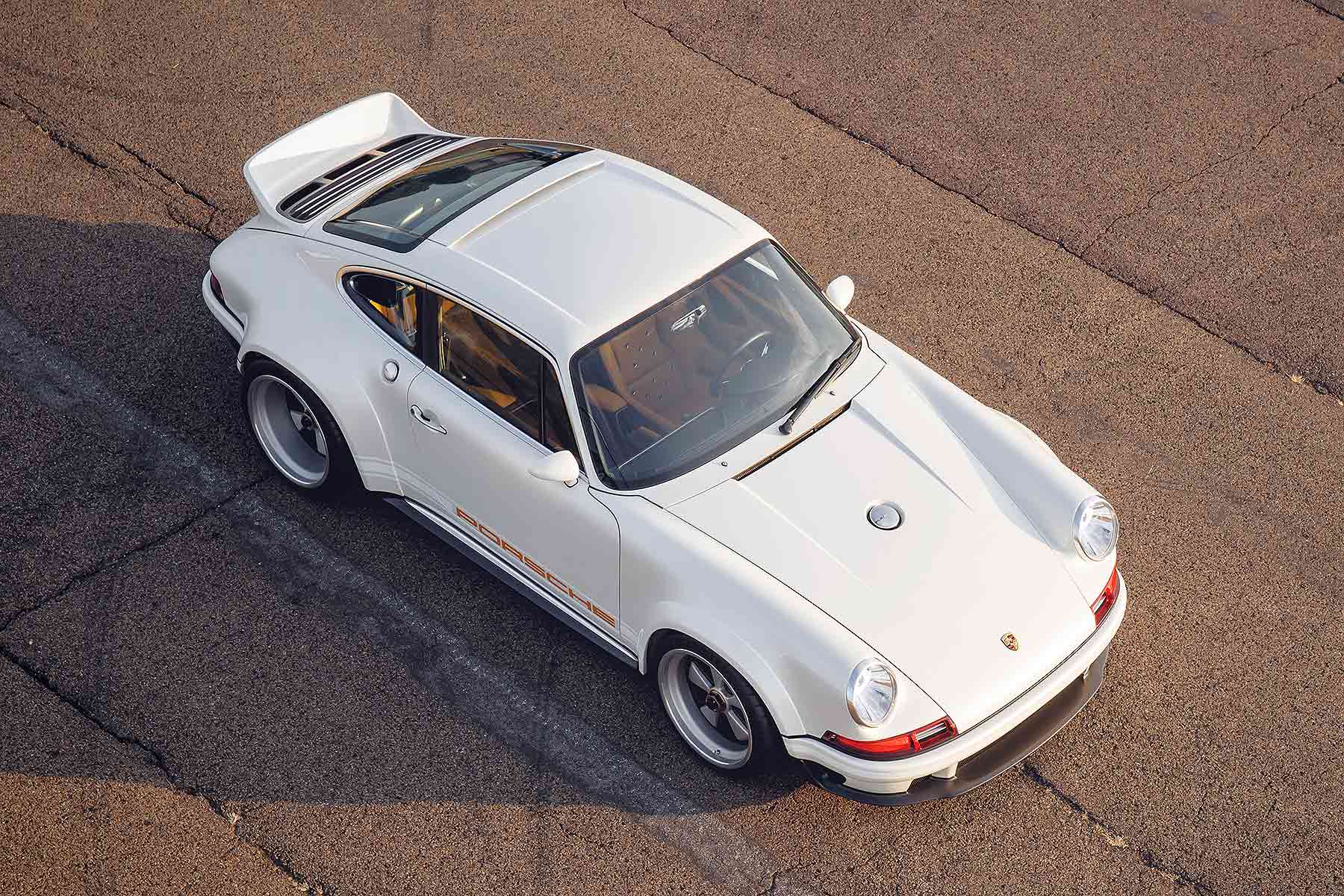
Singer Vehicle Design has revealed a jaw-dropping new Porsche 911 reimagination at the Goodwood Festival of Speed. It has worked with Williams Advanced Engineering and other technical partners on the ‘Dynamics and Lightweighting Study’(DLS) of a period 1990 Porsche 964.
The car has a 4.0-litre air-cooled engine that produces an incredible 500hp at a dizzy 9,000rpm. Singer sought consultancy from the famed creator of the Porsche engine, Hans Mezger, and it packs in exotica such as titanium valves, magnesium materials and F1-inspired fuel injectors.
Williams Advanced Engineering developed the fearsome engine, and it also gave the car a full aero makeover, with the entire body assessed through F1-style CFD analysis. A redesign at the front has eliminated lift, the famed ducktail spoiler has been optimised and work on the roof channels and roof spoiler help it actually generate rear downforce at speed.
The bodywork is also fully carbon fibre, and each panel is unique to the Singer DLS. The only thing we don’t yet know is the final kerbweight, but as so much has gone into this incredible car, the figure itself is highly likely to be incredible…
Williams’ work hasn’t stopped there, either. It has given the suspension a full overhaul, and Bosch ABS and ESC has been fitted, along with Brembo carbon-ceramic brakes and bespoke Michelin Cup tyres. The wheels are forged magnesium and Williams has used its F1 experience to develop a centre-lock mechanism, made from aluminium and titanium.
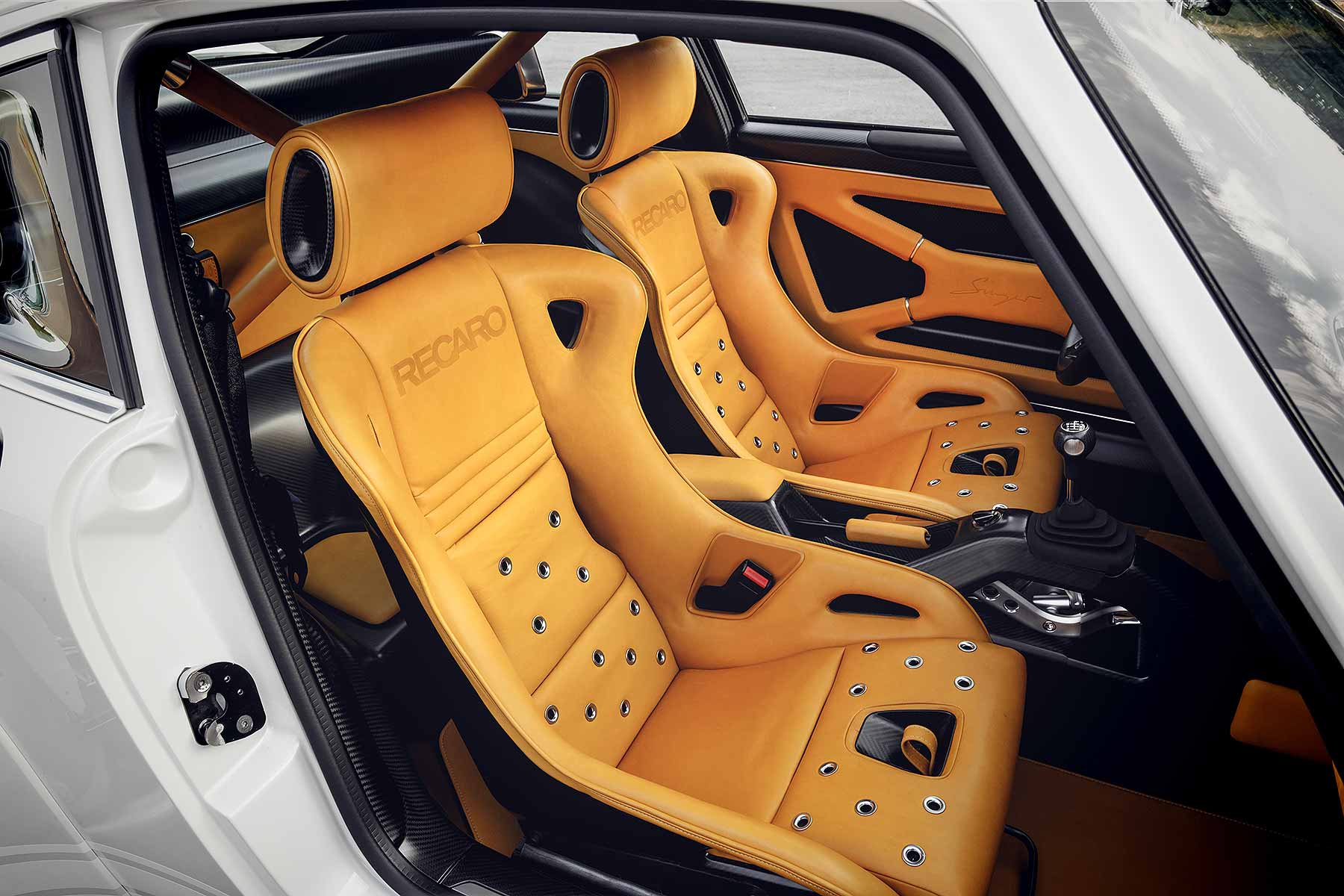
Inside, the Norfolk Yellow-coloured cabin is totally bespoke and typically Singer, i.e. stunning. There are Recaro carbon fibre sports seats, a Momo carbon fibre steering wheel and the manual gearlever has been raised up, and its shift mechanism exposed (and remade in titanium and magnesium).
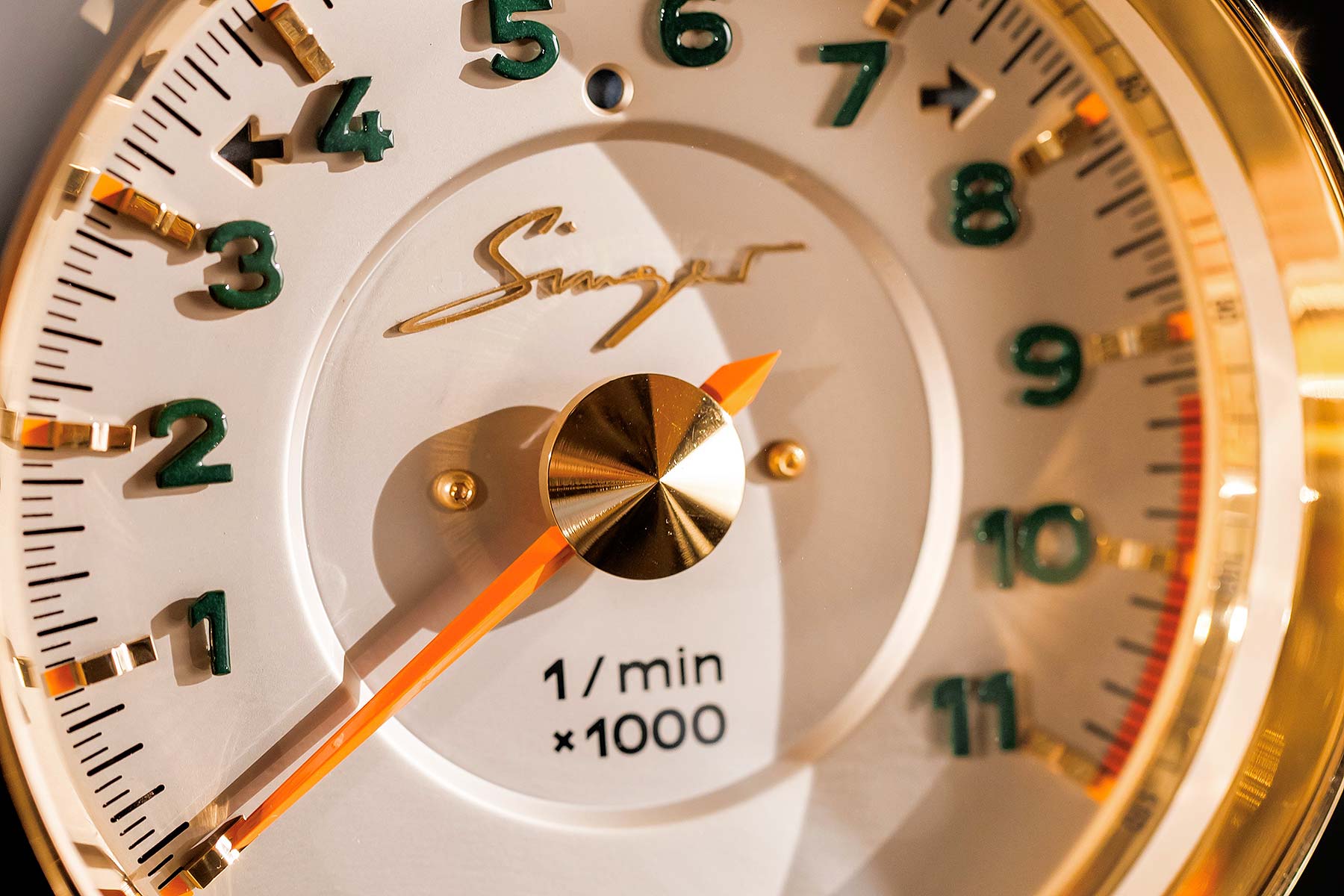
Even the instruments have been reimagined by Singer, with hand-applied markings. The instrument panel itself is also carbon fibre.
The car was commissioned back in November 2017 by Singer client Scott Blattner. He asked them to make his 964 a bit lighter and sharper, and the project went from there. Singer bought together all the technical partners, “strongly oriented toward lightweighting and dynamic gains,” and started work.
The result is the Parallax White Porsche 911 Reimagined by Singer DLS. A car so wonderful, it’s taking pride of place on Singer’s stand – and, amazingly, another one is going to give the car its dynamic debut by running up the Goodwood hillclimb.
Just for good measure, there are a further six Singer-restored Porsche 911s on show outside Goodwood House, providing an alternative take on 70-year-old Porsche’s most famous model. And if you’re unable to travel to England to be at Goodwood, fear not: the Singer DLS will be at Monterey Car Week in the U.S. from 23 August.
Click to see more images of the Singer Vehicle Design Dynamics and Lightweighting Study Porsche 911
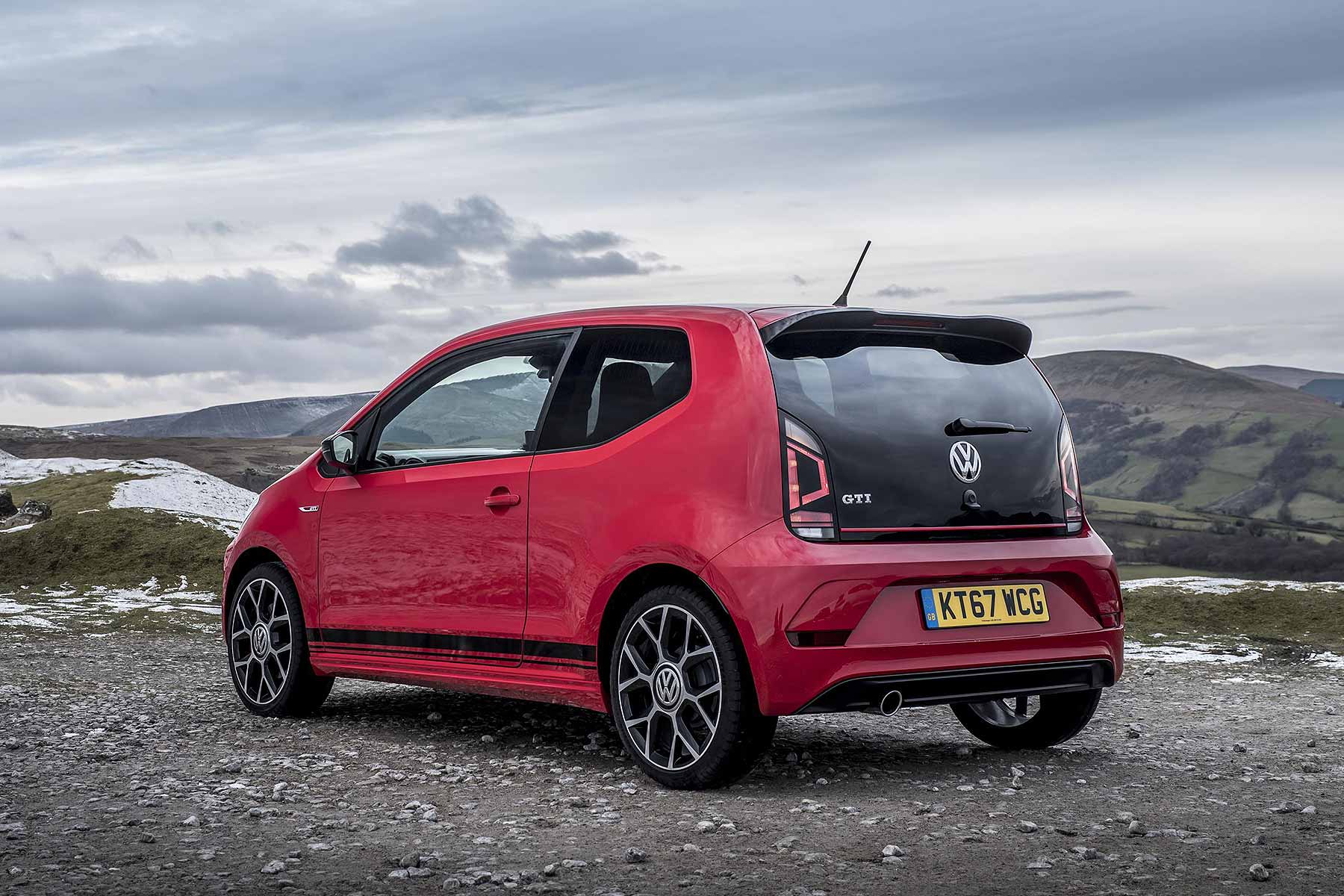
The Volkswagen Up GTI is a pocket rocket of the highest order – and has been so well-received by GTI-loving Brits that Volkswagen has had to temporarily close the order books while it works on sourcing more cars for the UK.
The £139-a-month GTI has been receiving rave reviews from the press, and it seems this has been enough to convince enthusiastic hot hatch buyers to sign up for Volkswagen’s newest GTI. And so many have done so, waiting lists now stretch almost to the end of 2018.
To ensure they don’t become too extreme, Volkswagen has thus temporarily paused sales of the Up GTI, so the factory can work on getting the cars already reserved out the door, and investigate how to, ahem, up supplies of the Up GTI for Britain.
All cars ordered to-date will be delivered, confirmed a spokesman, meaning there will be a steady flow of Up GTIs through the dealer network during 2018. And the pause in sales is temporary: ordering will open again once current demand has been sated.
Britain is Volkswagen’s biggest market in the world for hot hatches. Around 30 percent of Golf sales are hot GTI or R models, way higher than almost every other sales region. Deliveries of the new Polo GTI are also beginning in dealers, and the Up GTI gives the firm a three-pronged attack at the GTI sector.
Now to rejig the factory so it can meet we Brits’ insatiable demand for VW hot hatches…
The 2018 JD Power UK Vehicle Dependability Study named Hyundai as the country’s most dependable car brand. The study, which is based on the responses of 13,536 motorists, measures problems experienced during the past 12 months after 12-36 months of ownership.
Question is, what model should you buy if you’re after something you can rely on? Here we run through every sector and reveal the most dependable motors in each category.
City car winner: Hyundai i10
JD Power examined 177 problem symptoms across eight categories: vehicle exterior, driving experience, features, controls and displays, audio, communication, entertainment and navigation, seats, heating, ventilation and air conditioning, vehicle interior, and engine and transmission.
The Hyundai i10 drives away with the award for the most dependable city car. Looks like you won’t be needing that five-year, unlimited mileage warranty.
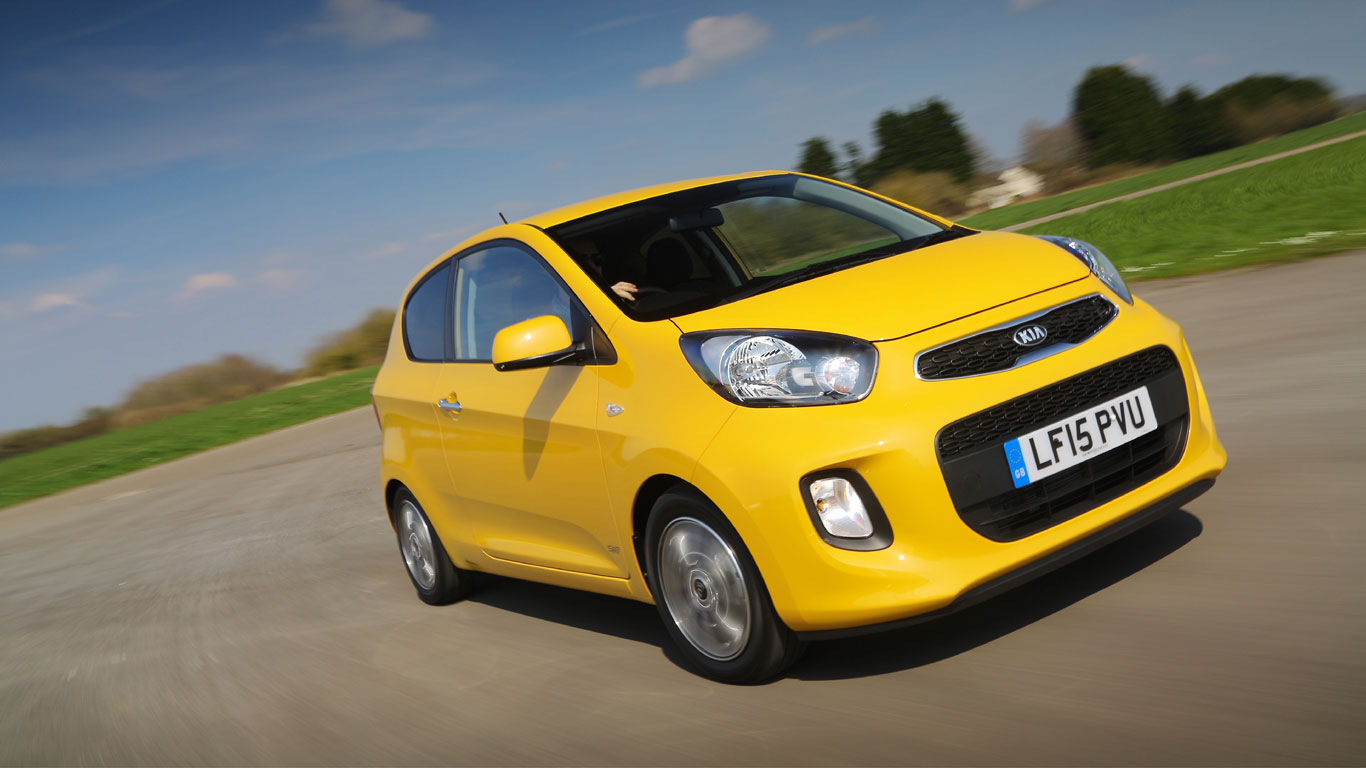
Runner-up: Kia Picanto
The i10’s Korean rival – a previous winner in this category – finishes as a runner-up. In the Vehicle Dependability Study, overall dependability is determined by the number of problems experienced per 100 vehicles, with a lower score reflecting higher quality. Kia finished third overall, with a score of 94 problems per 100 vehicles. Hyundai scored 78.
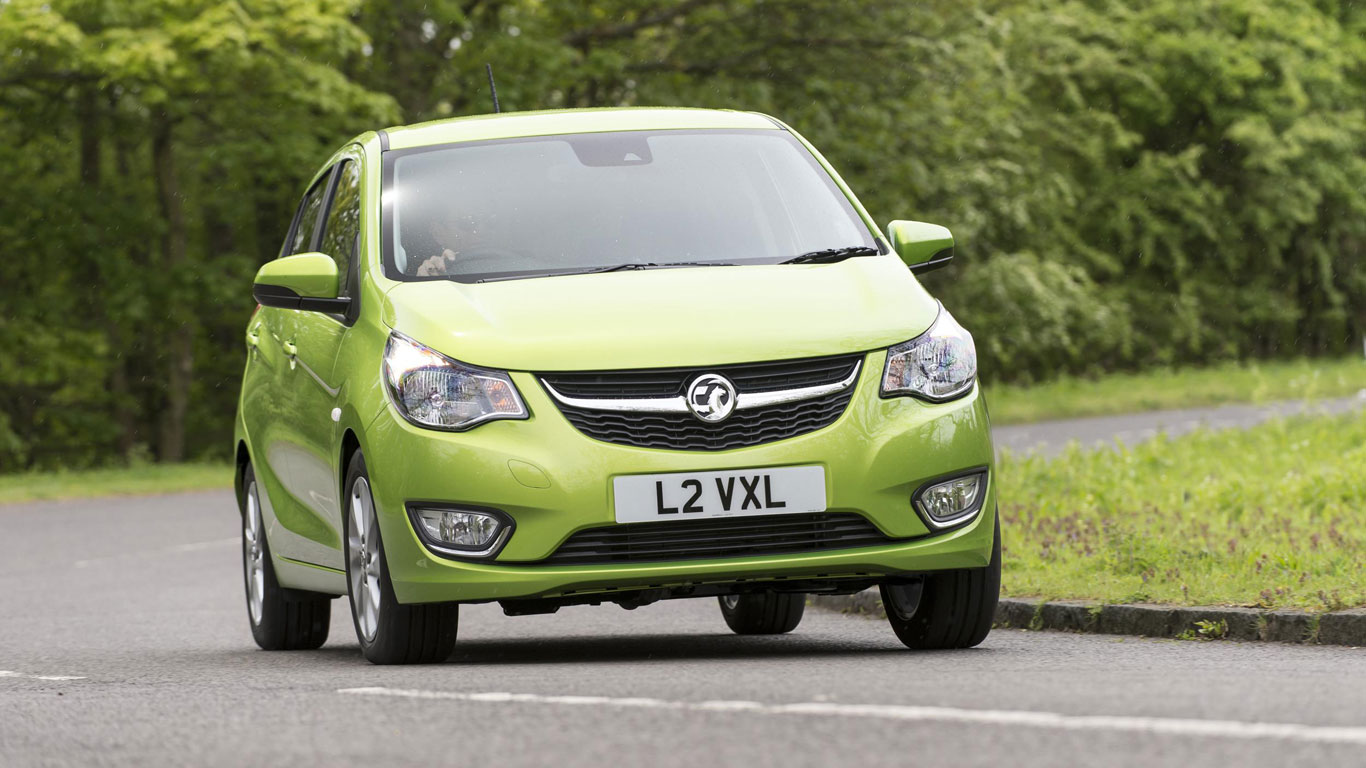
Runner-up: Vauxhall Viva
The Vauxhall Viva is named as another runner-up behind the Hyundai i10, which is a good result for the value-driven city car. The likes of the Volkswagen Up, Skoda Citigo, Seat Mii and Renault Twingo might have more showroom appeal, but none of them have made the cut.
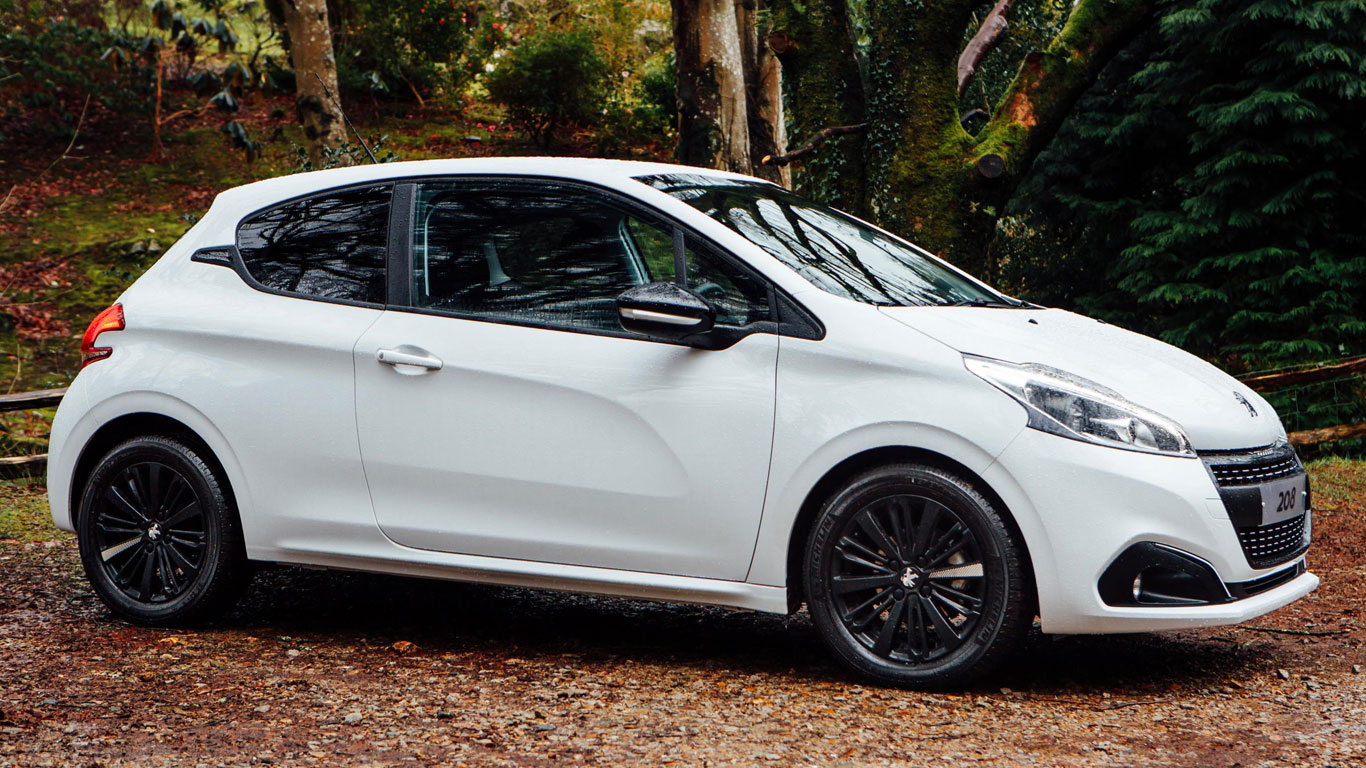
Small car winner: Peugeot 208
Moving up a segment, the Peugeot 208 is the highest ranked small car in the JD Power study. Peugeot finished eighth overall, with a score of 107, two points behind Dacia. But unlike Peugeot, Dacia hasn’t been named in the models section of the Vehicle Dependability Study.
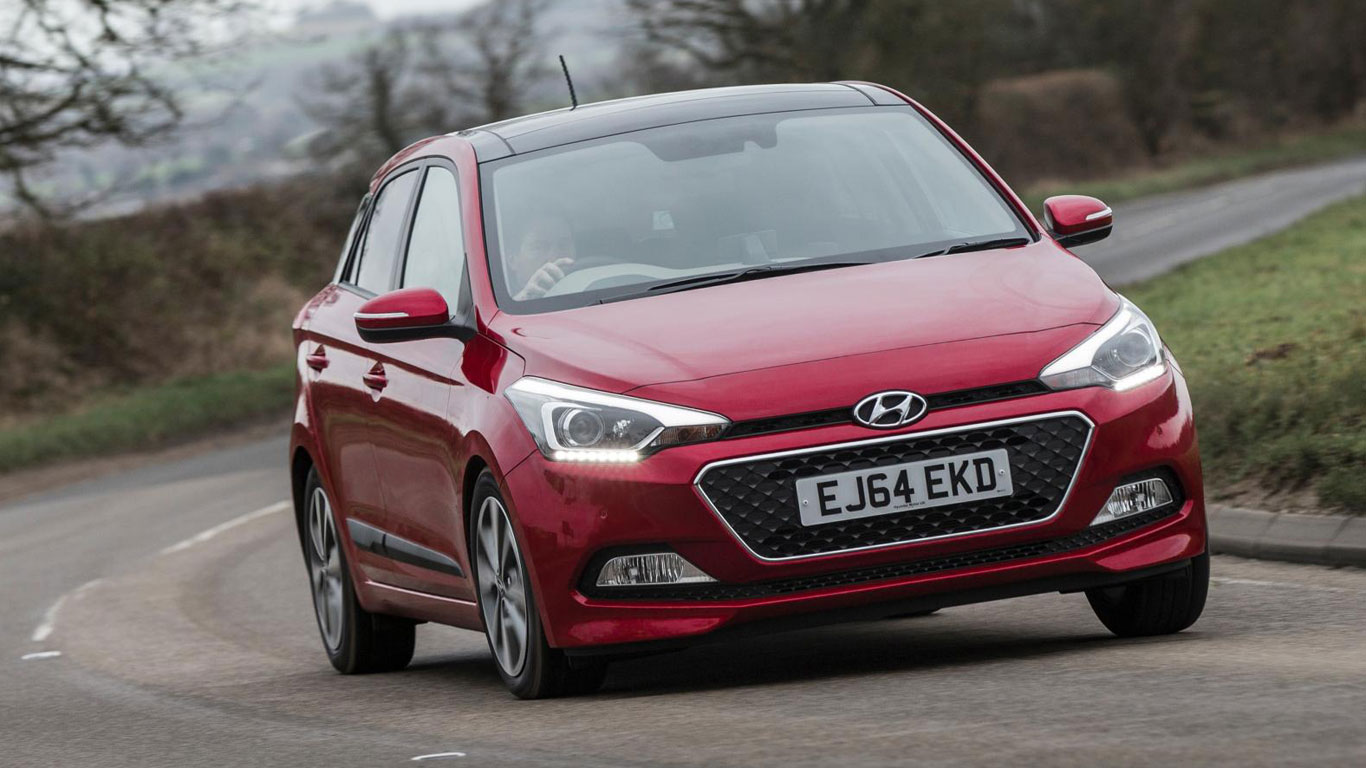
Runner-up: Hyundai i20
The 2018 JD Power Vehicle Dependability Study makes for good reading for Hyundai, its dealers and prospective purchasers. Not content with finishing top in the city car class, Hyundai secures a runner-up slot in the small car category.
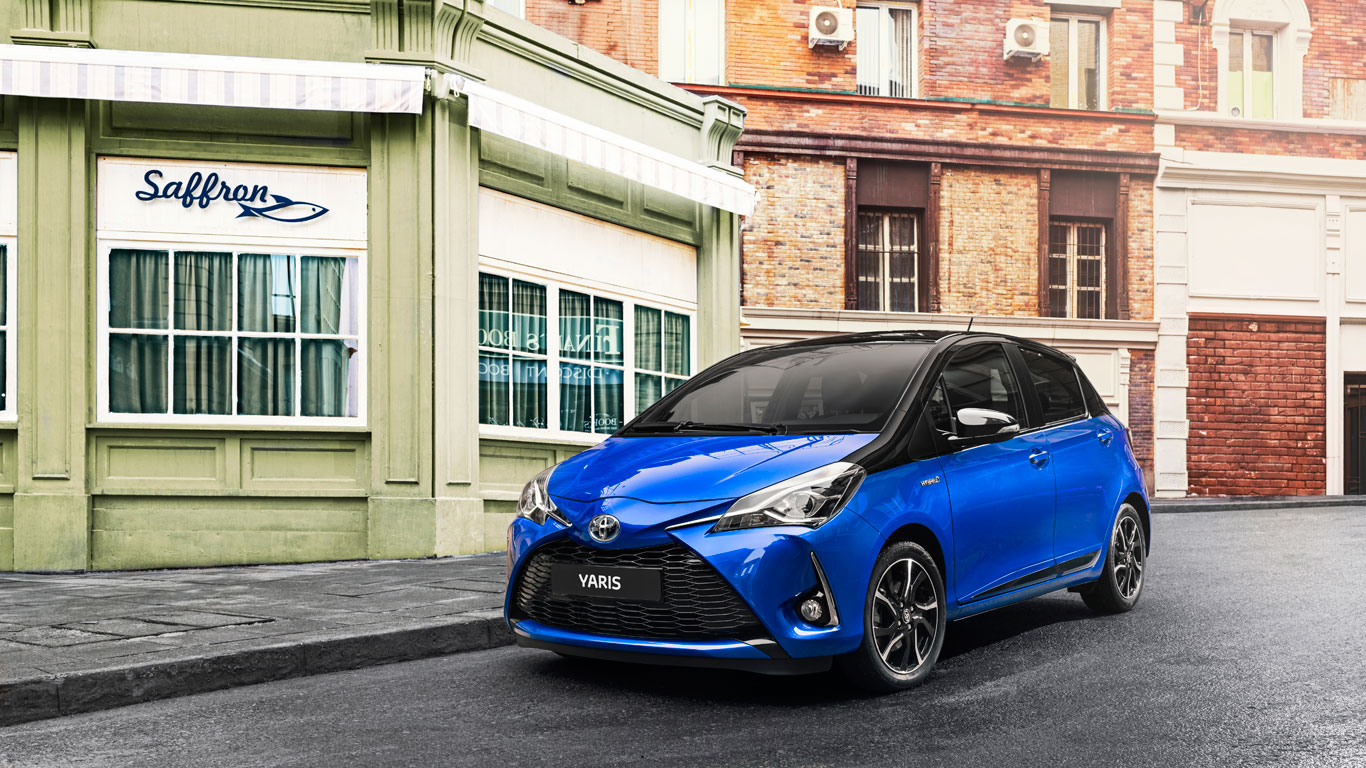
Runner-up: Toyota Yaris
The Toyota Yaris is another runner-up in the small car category. It’s not the most exciting car in its class, which explains why it is often overlooked, but the Yaris is available as a hybrid. Prices start from £13,015. What price dependability?
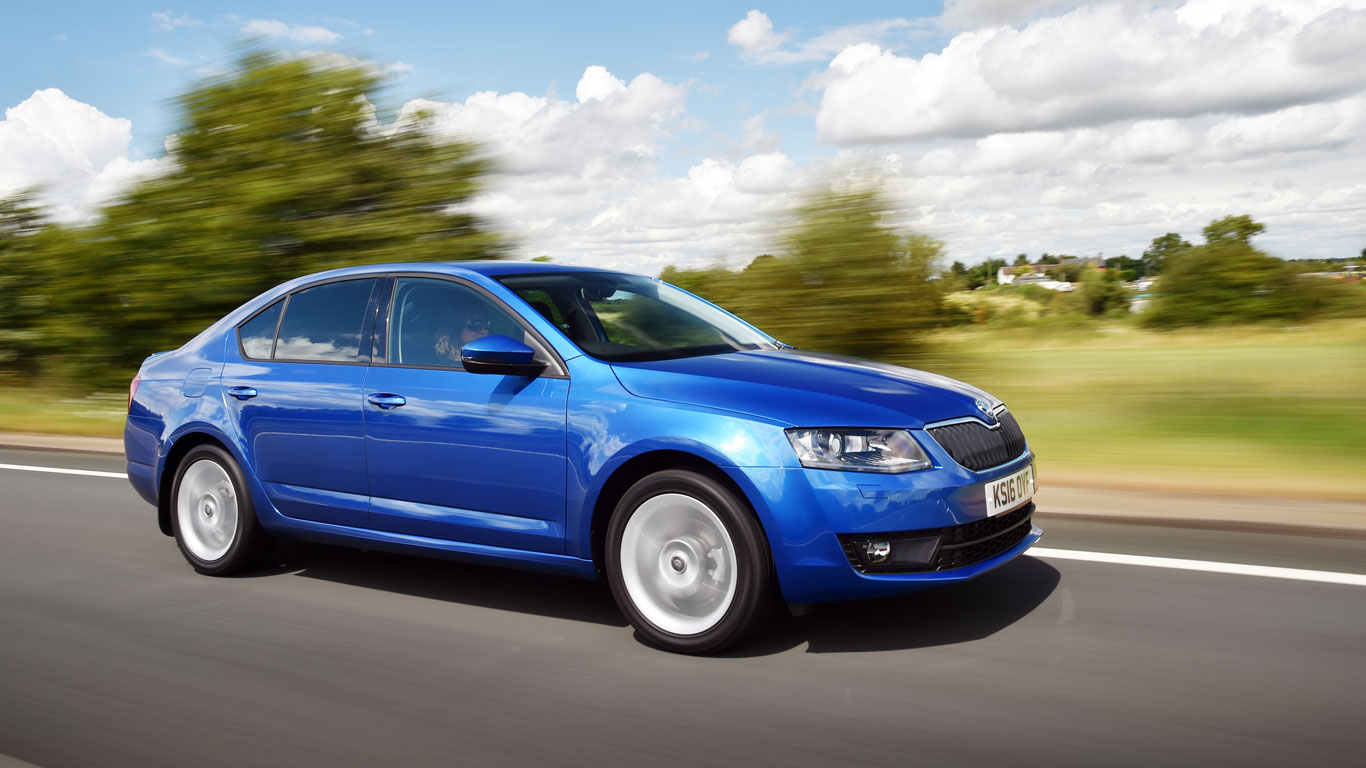
Compact car winner: Skoda Octavia
Skoda finished fourth overall in the JD Power study, while the Octavia finishes top in the compact car category. Prices start from around £20,000, and the Octavia is available as a hatchback, estate and sporty VRS model.
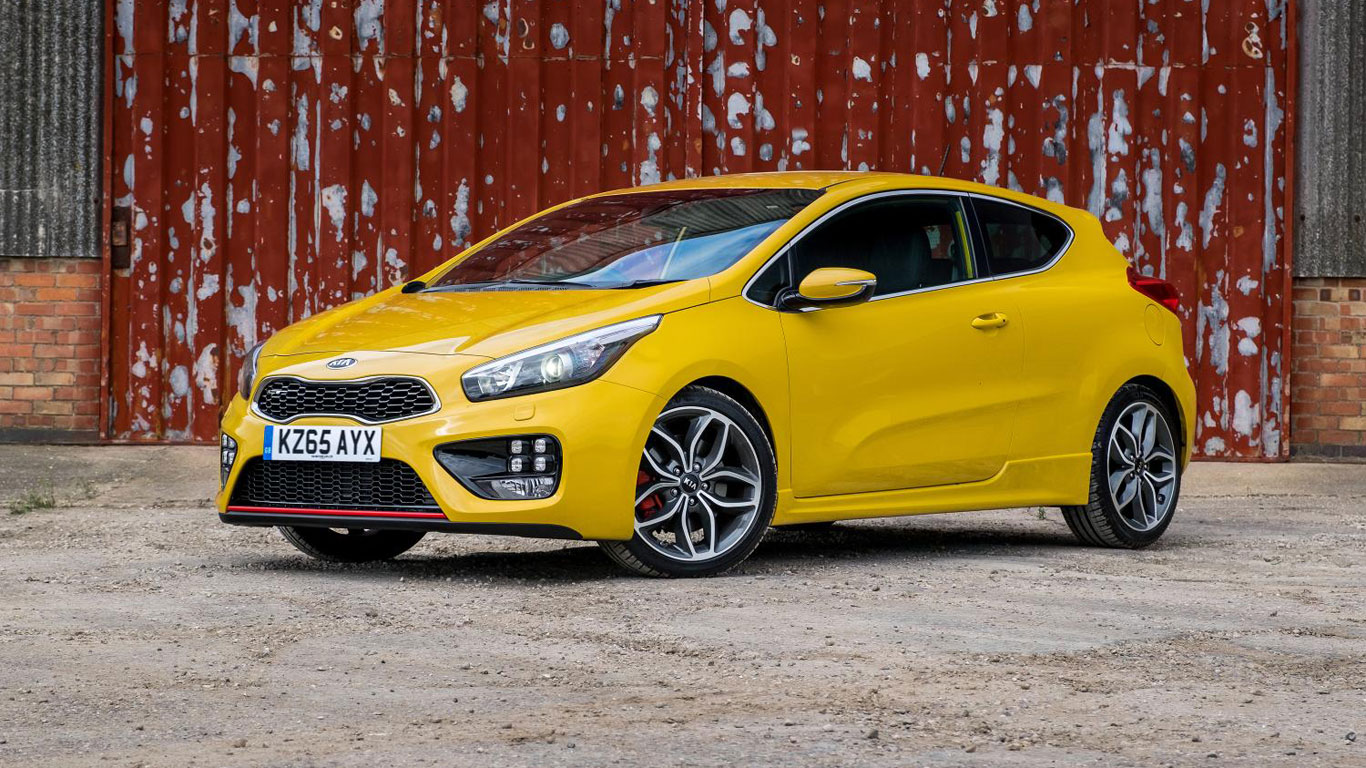
Runner-up: Kia Cee’d
There’s a new Kia Ceed on the way – note the missing apostrophe – but the enemy of the search engine optimiser secures a runner-up berth in the JD Power study. Prices start from just over £15,000 and, with a new version waiting in the wings, it shouldn’t be too hard to secure a sizeable discount on the outgoing Cee’d.
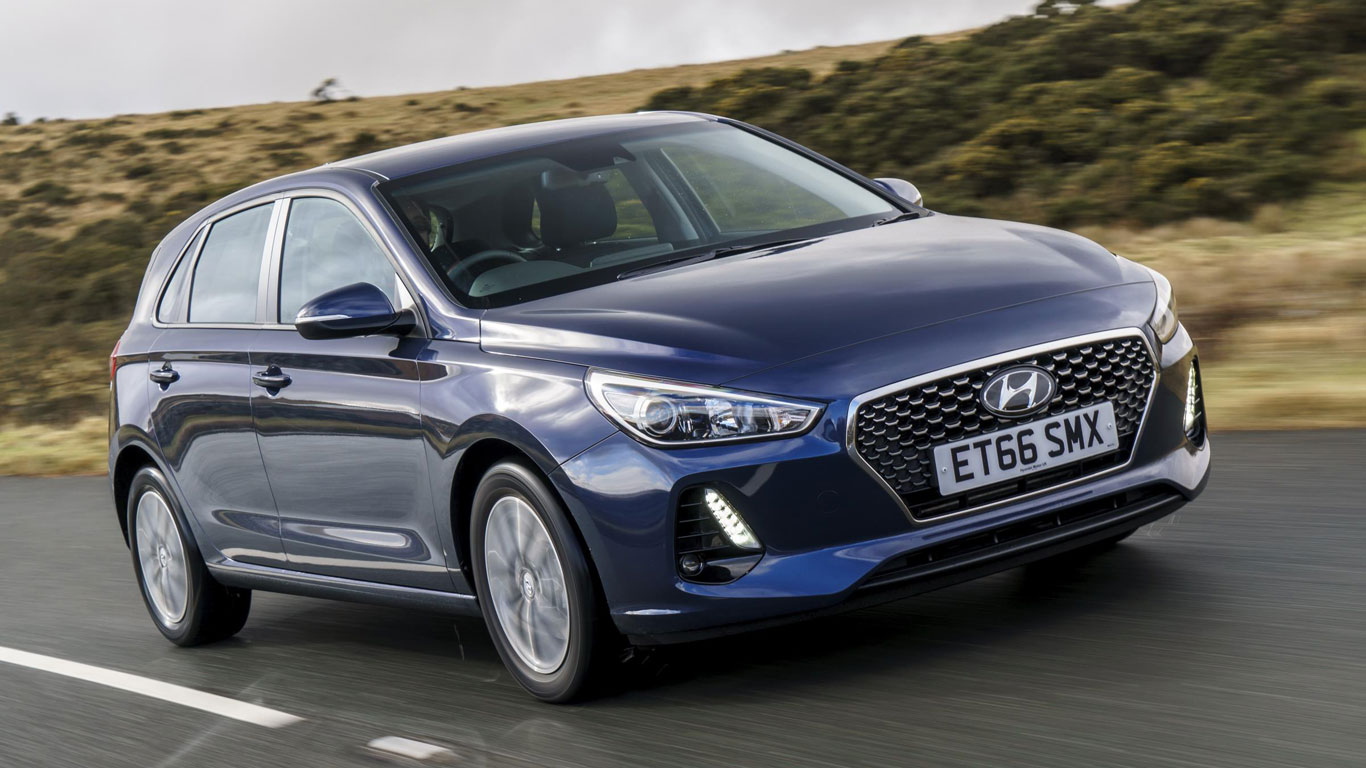
Runner-up: Hyundai i30
They will be throwing a party at Hyundai HQ, with news of yet another medal for the Korean brand. Pass the cheese and pineapple on sticks and the Wotsits, because the i30 is a runner-up in the compact car category.
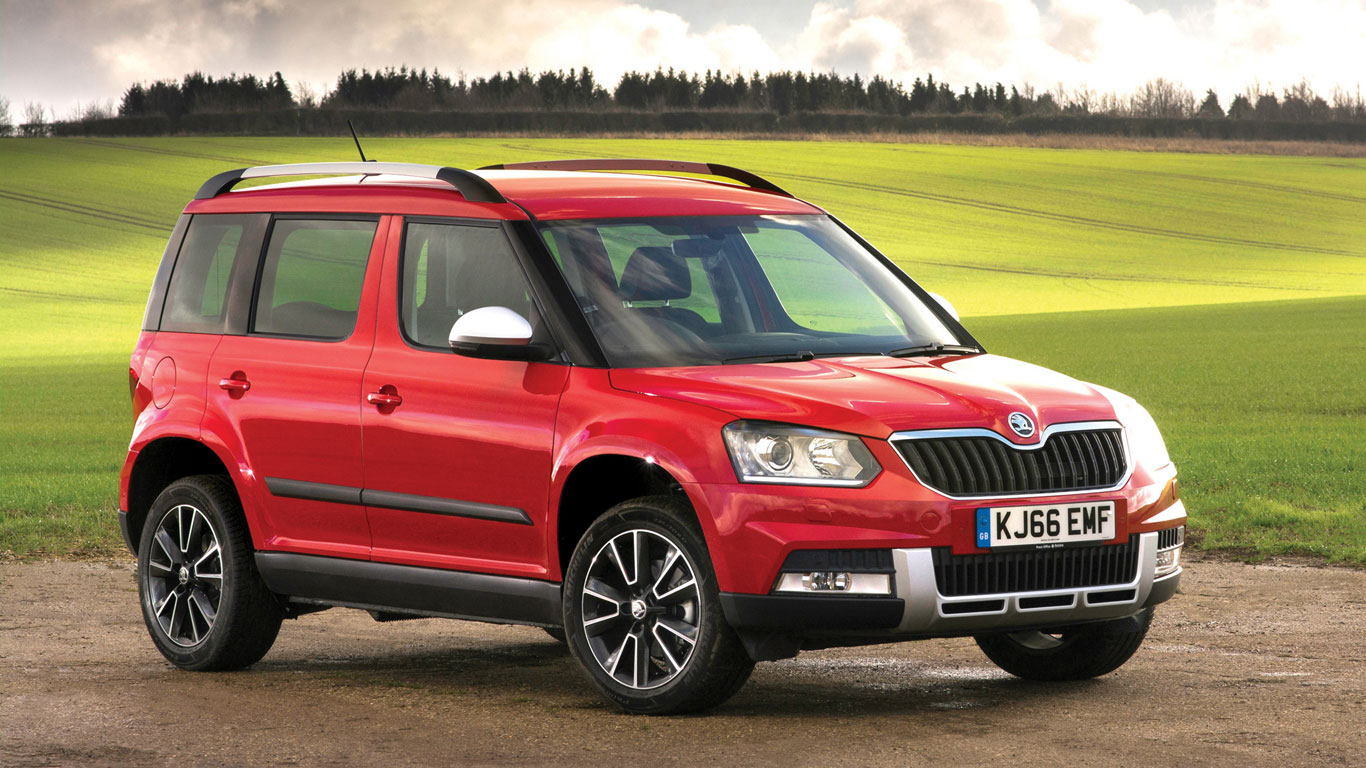
Small SUV winner: Skoda Yeti
Hurrah! JD Power has confirmed what we have suspected for a long while: the Skoda Yeti is the best small SUV… in the world. Admittedly, that’s not quite what JD Power is saying, but it will be interesting to see if the Karoq is as dependable.
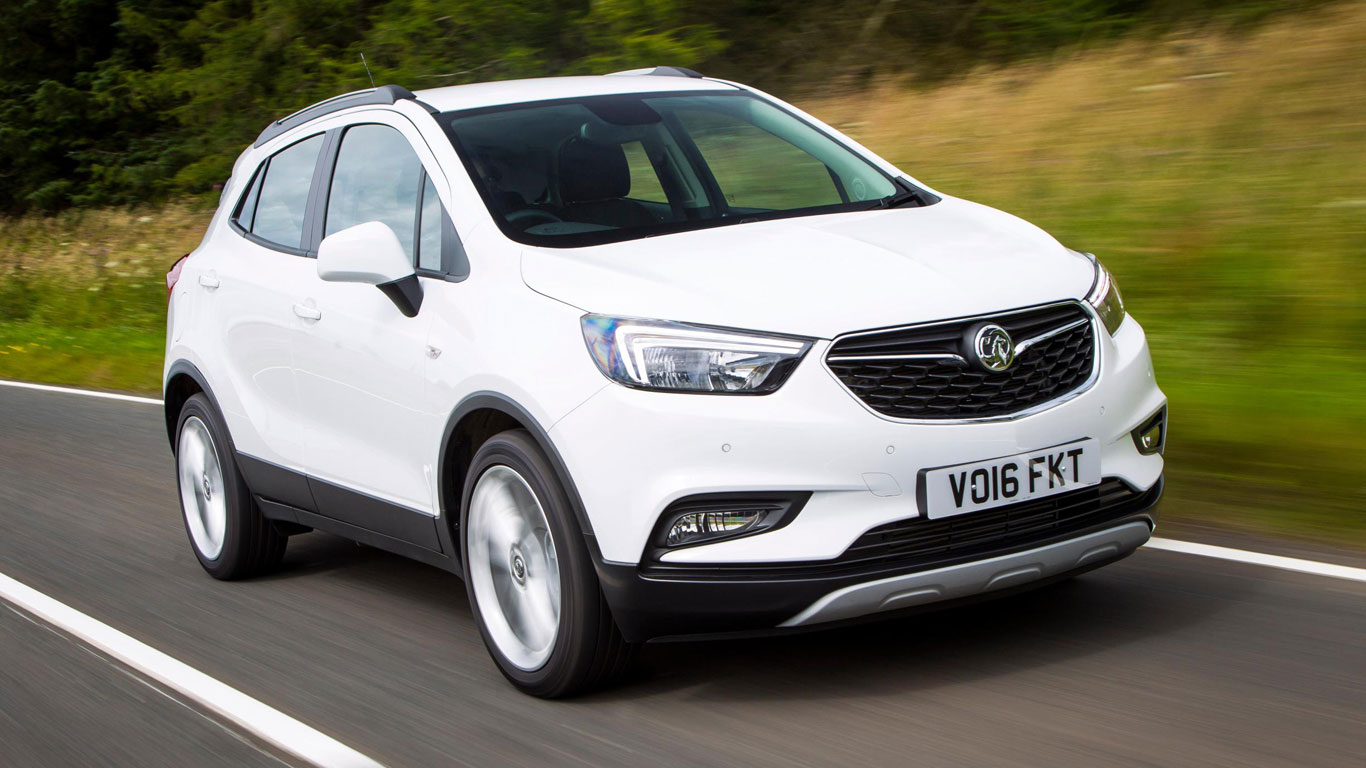
Runner-up: Vauxhall Mokka/Mokka X
The Vauxhall Mokka/Mokka X is unlikely to win many awards – unless they’re dishing out gongs for mediocrity and anonymity – but finishing runner-up behind the Yeti is no disgrace. Buy more Mokkas. Said nobody, ever.
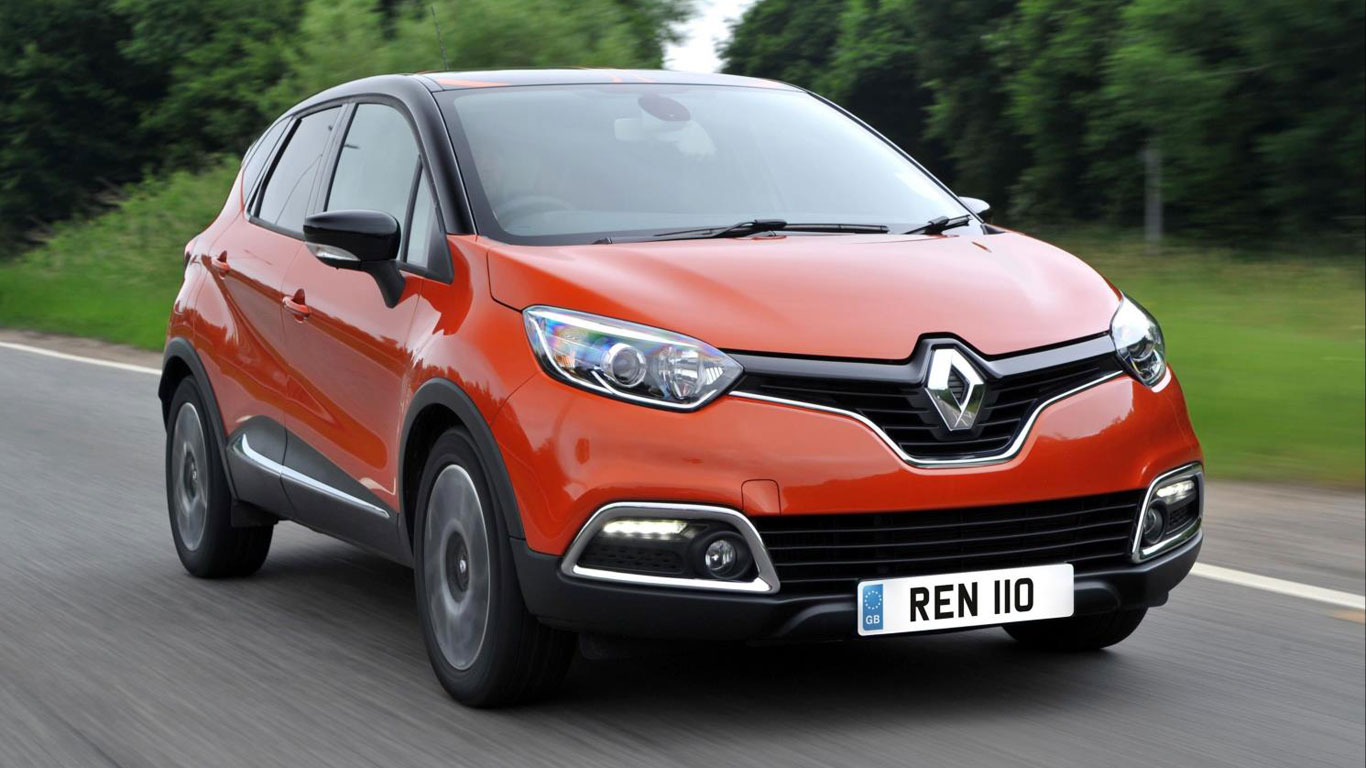
Runner-up: Renault Captur
Renault didn’t perform particularly well in the JD Power study, with a score of 139 putting it above the industry average of 128 and in the bottom half of the table. Fortunately, the Captur managed to lift the entire squad, making it the Ronaldo of the Renault range.
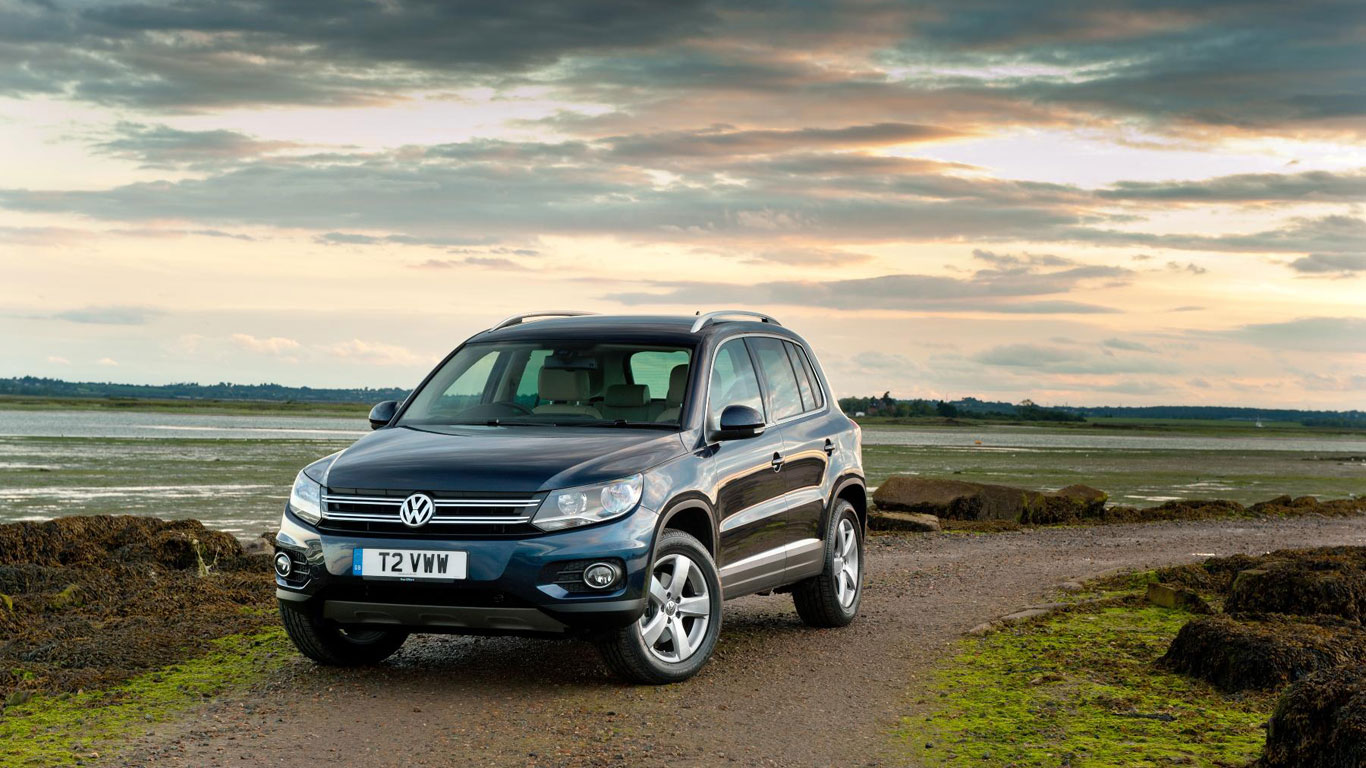
Compact SUV winner: Volkswagen Tiguan
Moving up another segment, where we find the Volkswagen Tiguan named as the most dependable compact SUV. We’re struggling to find something interesting to say here, so how about a random fact: the African elephant has the greatest sense of smell among mammals.
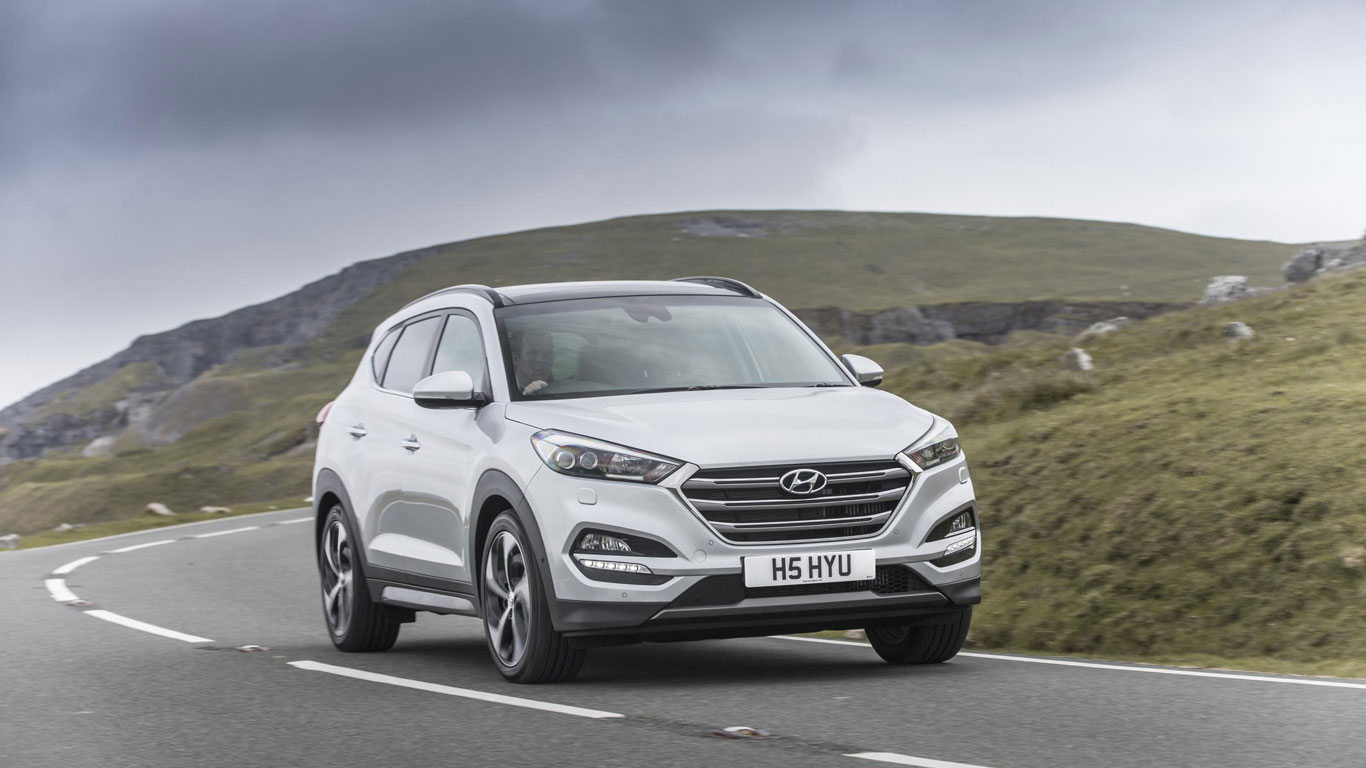
Runner-up: Hyundai ix35/Tucson
Hyundai is going to be writing press releases long into the night, with news that the Tucson is a runner-up in the compact SUV category. Steer clear of the waffle, Hyundai, because an African elephant can sniff out that stuff from a mile away.
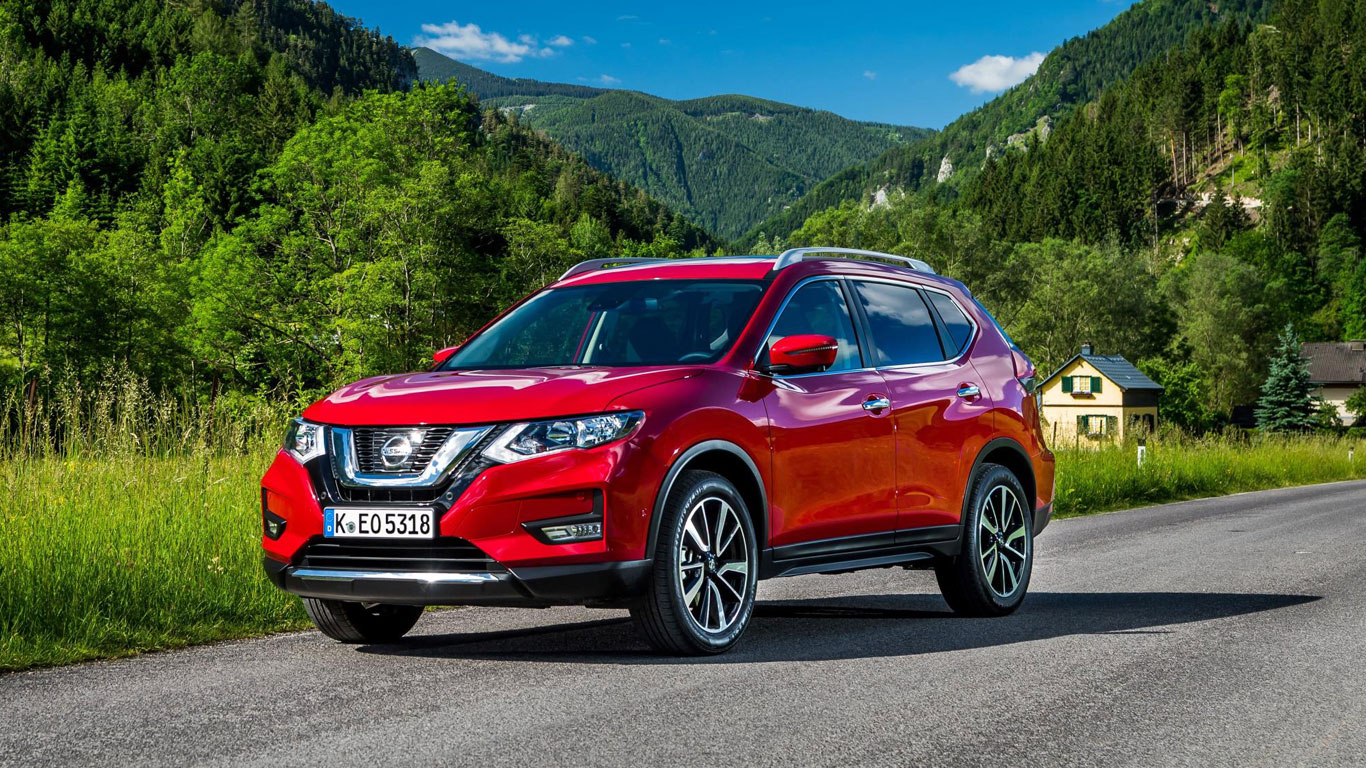
Runner-up: Nissan X-Trail
Pushing the ‘compact’ tag to the limit, the Nissan X-Trail is another runner-up in this category. Prices start from around £25,000 and you can upgrade to a seven-seat version. That said, the five-seater is a better option, as you get a larger boot. Or should that be trunk?
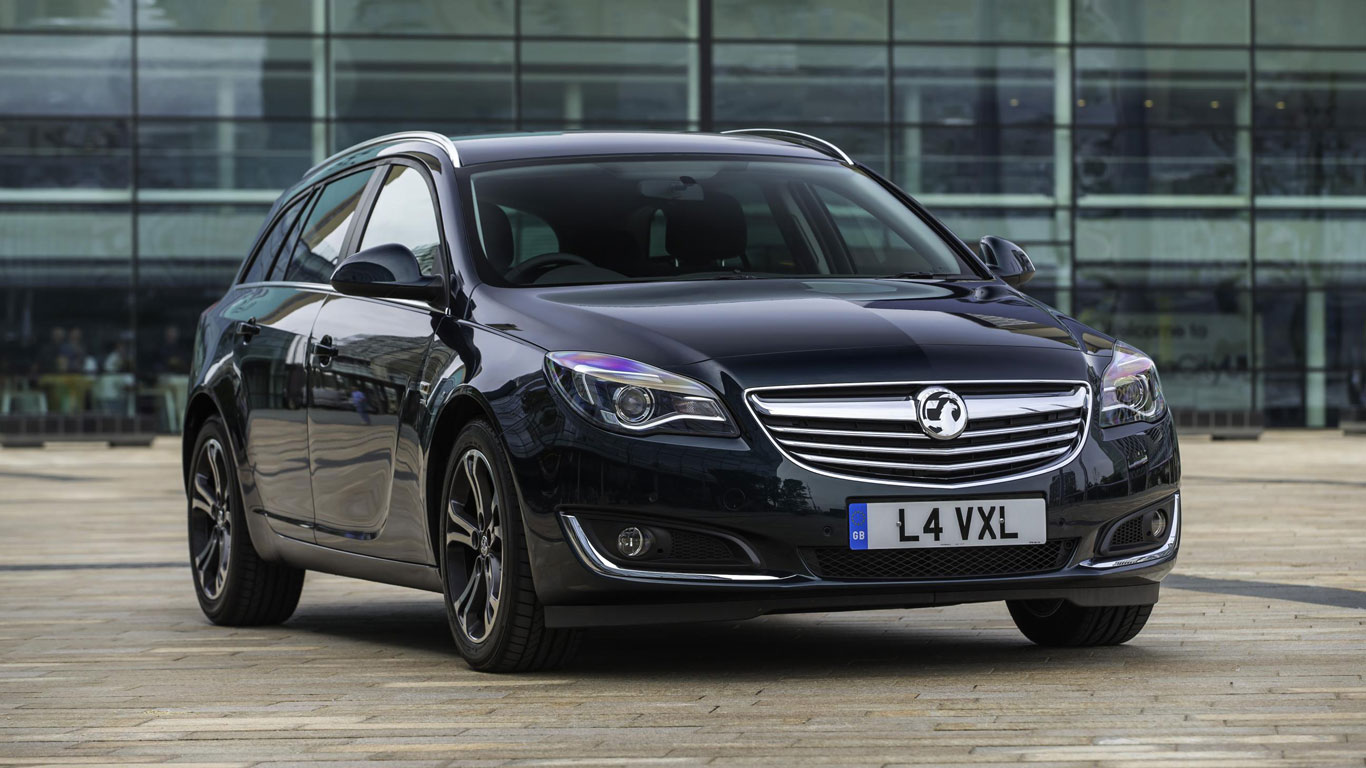
Midsize car winner: Vauxhall Insignia
Leaving the elephant mentions at the side of the room for a moment, here’s the news that the Vauxhall Insignia is the most dependable mid-size car you can buy. This is a terrific result, as the likes of the BMW 3 Series, Audi A4 and Mercedes-Benz C-Class are conspicuous by their absence.
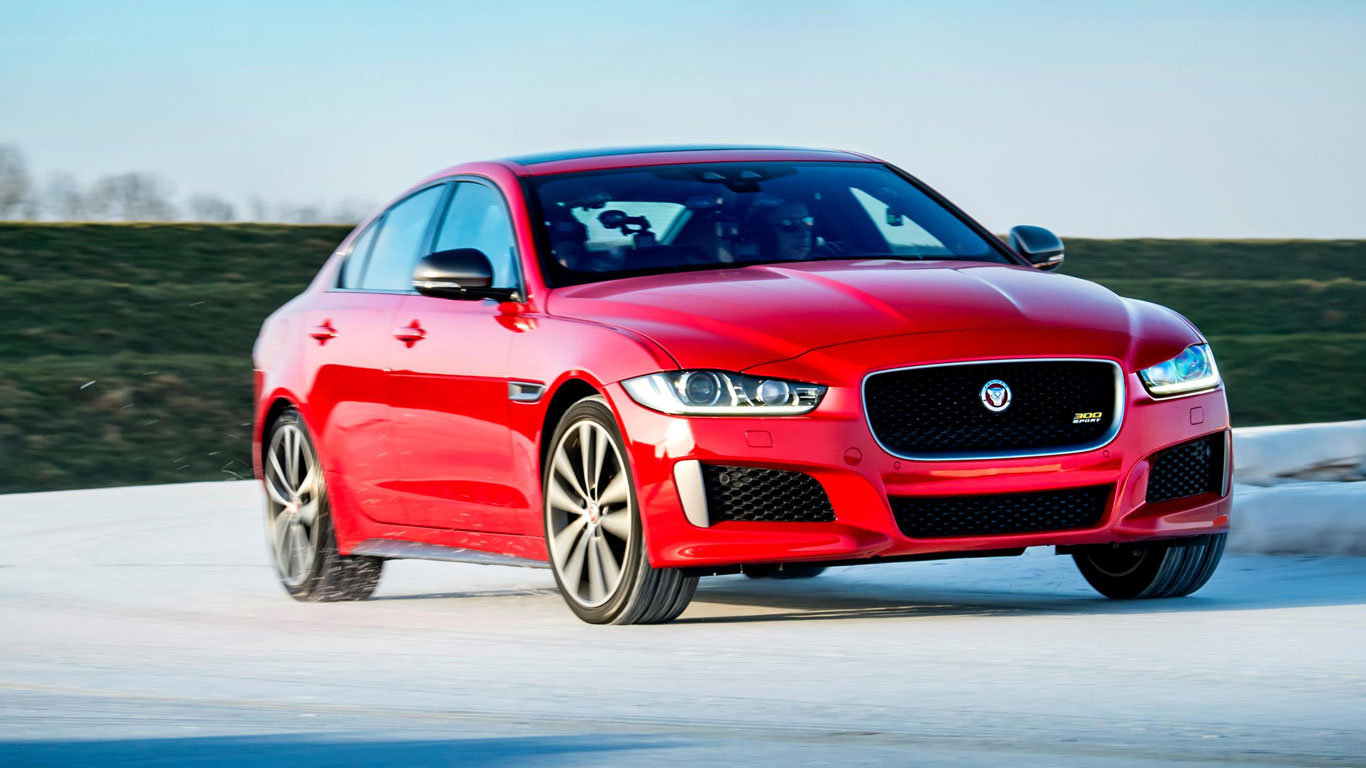
Runner-up: Jaguar XE
To paraphrase the great Barry Davies, where are the Germans? But, frankly, who cares? While BMW, Audi and Mercedes can’t manage a slot in this category, the Jaguar XE is on hand to keep the great British end up.
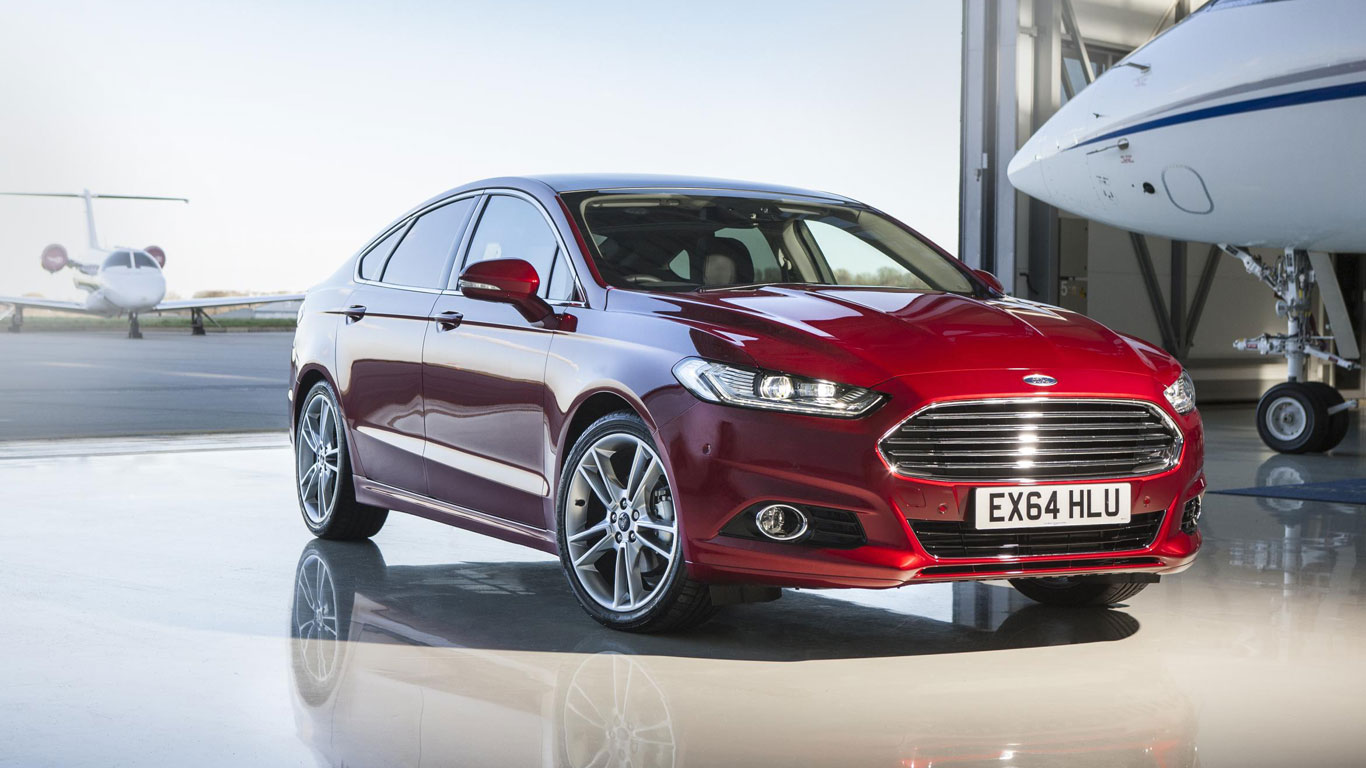
Runner-up: Ford Mondeo
Once upon a time, Little Chef restaurants lined the streets, the Spice Girls were a thing, and the Ford Mondeo ruled the road. Today, rather than fighting the Vauxhall Cavalier and Vectra, it must withstand the rise of the crossover and SUV. On this evidence, it’s a dependable car.
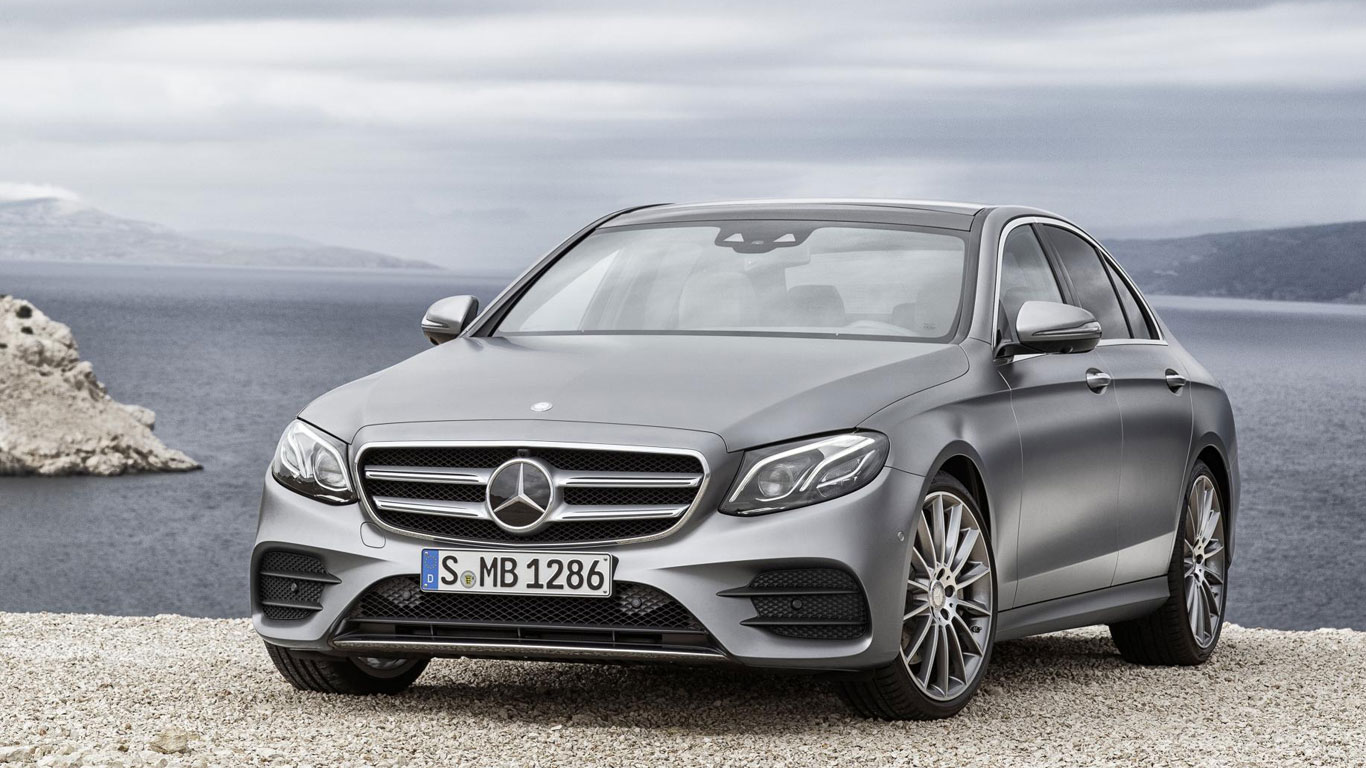
Large and luxury car winner: Mercedes-Benz E-Class
The Mercedes-Benz E-Class is victorious in the final category, seeing off its German rivals to secure top billing. With an overall score of 124, Mercedes secured a mid-table position, while BMW finished bottom with a score of 192.
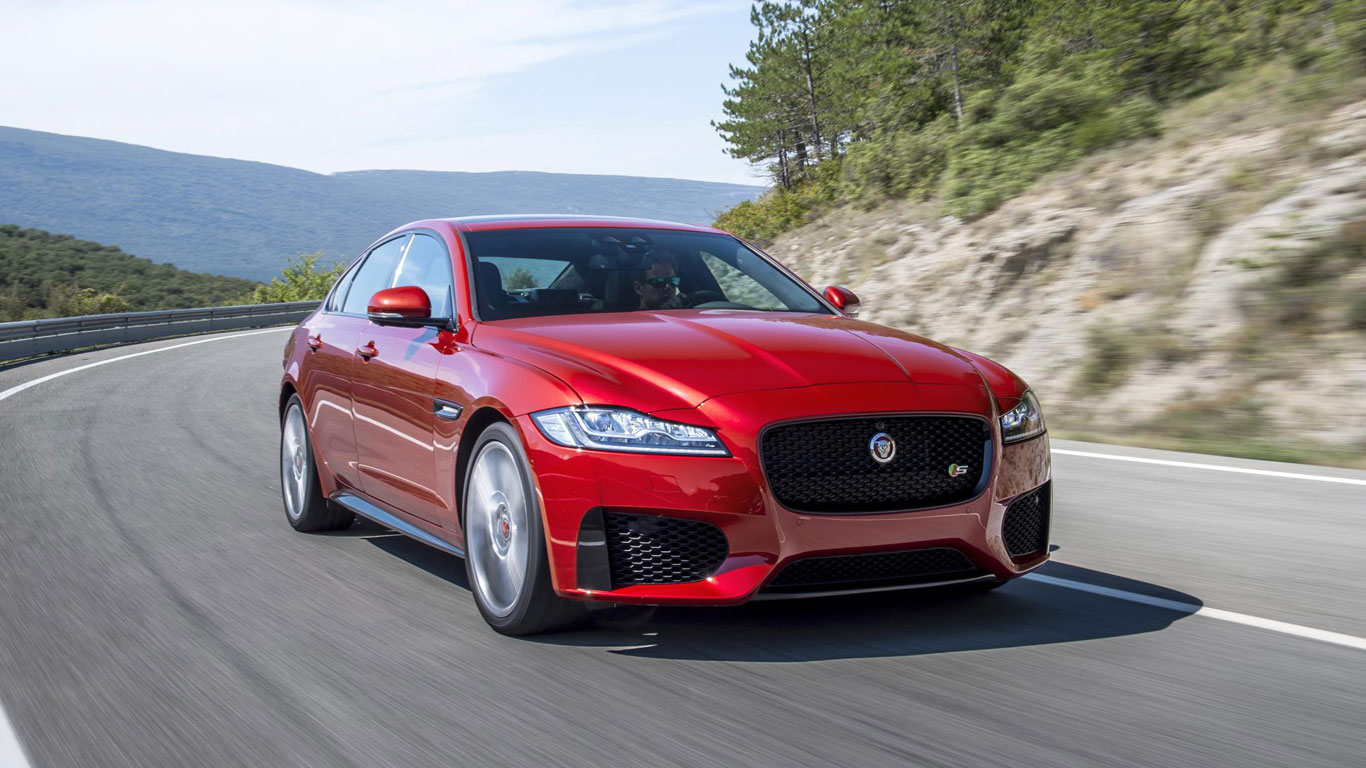
Runner-up: Jaguar XF
There’s only one runner-up in the large and luxury category, with the Jaguar XF playing second fiddle to the E-Class. It’s interesting to note that there’s no MPV category this year, with the segment under pressure from the dominating SUVs.
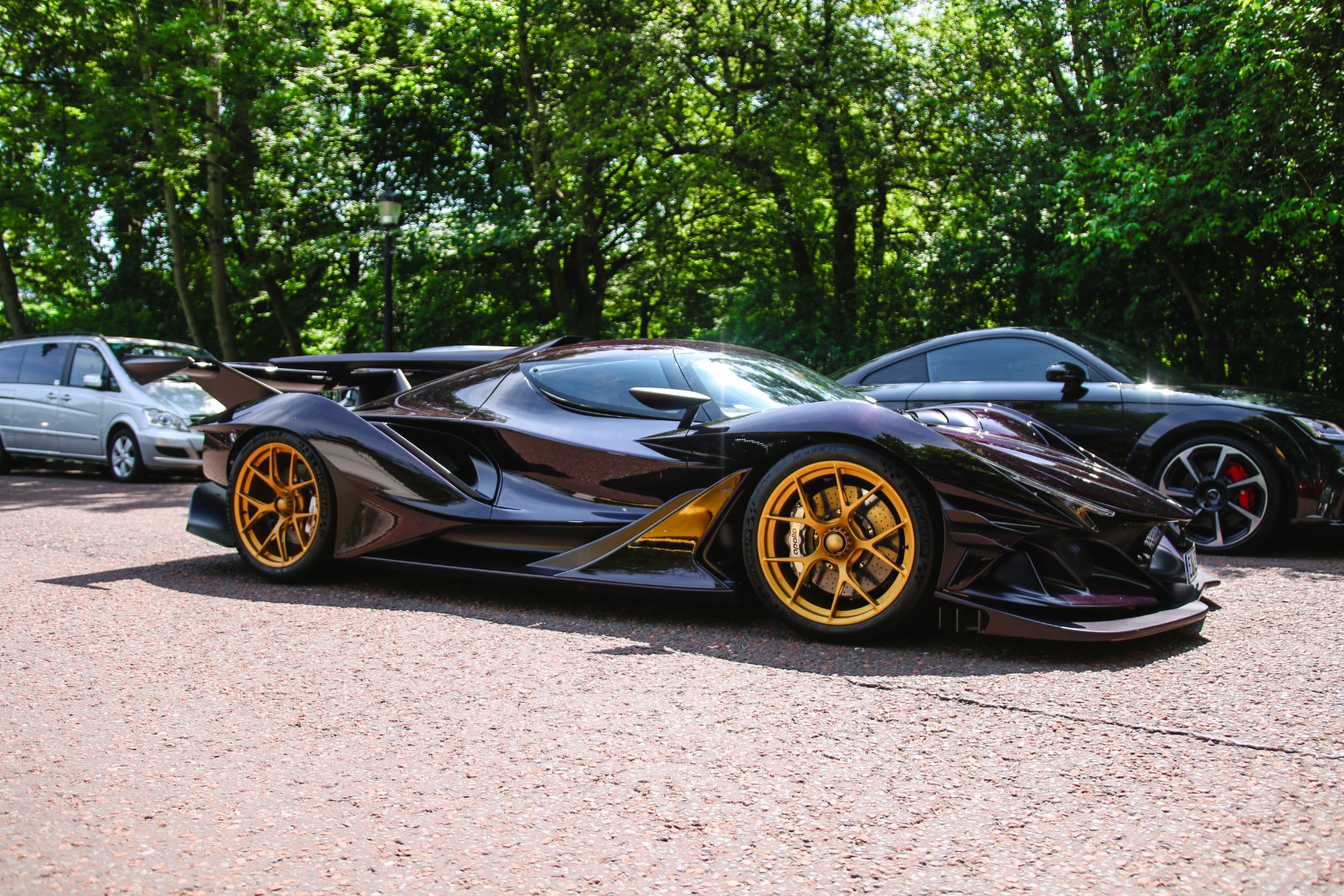
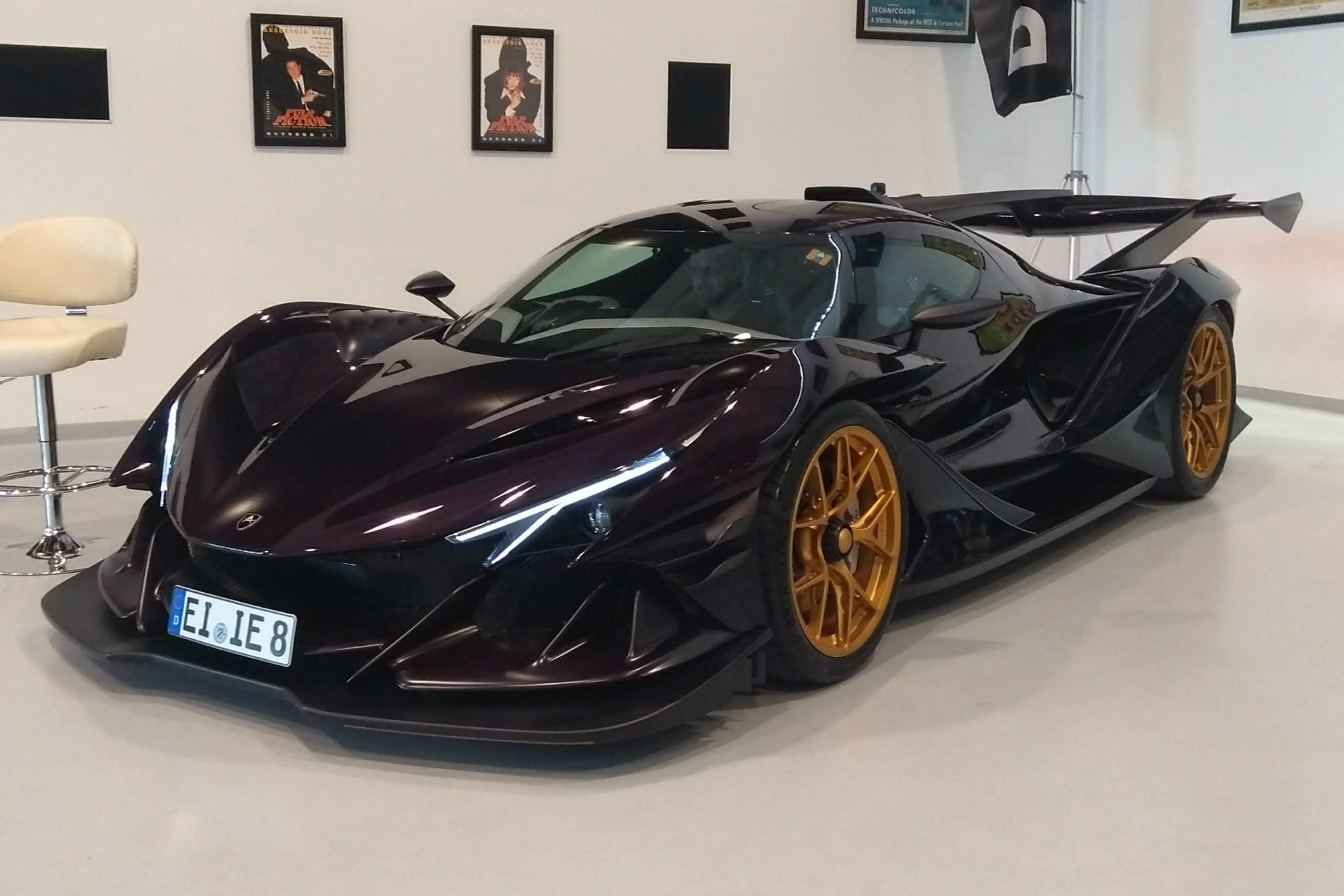
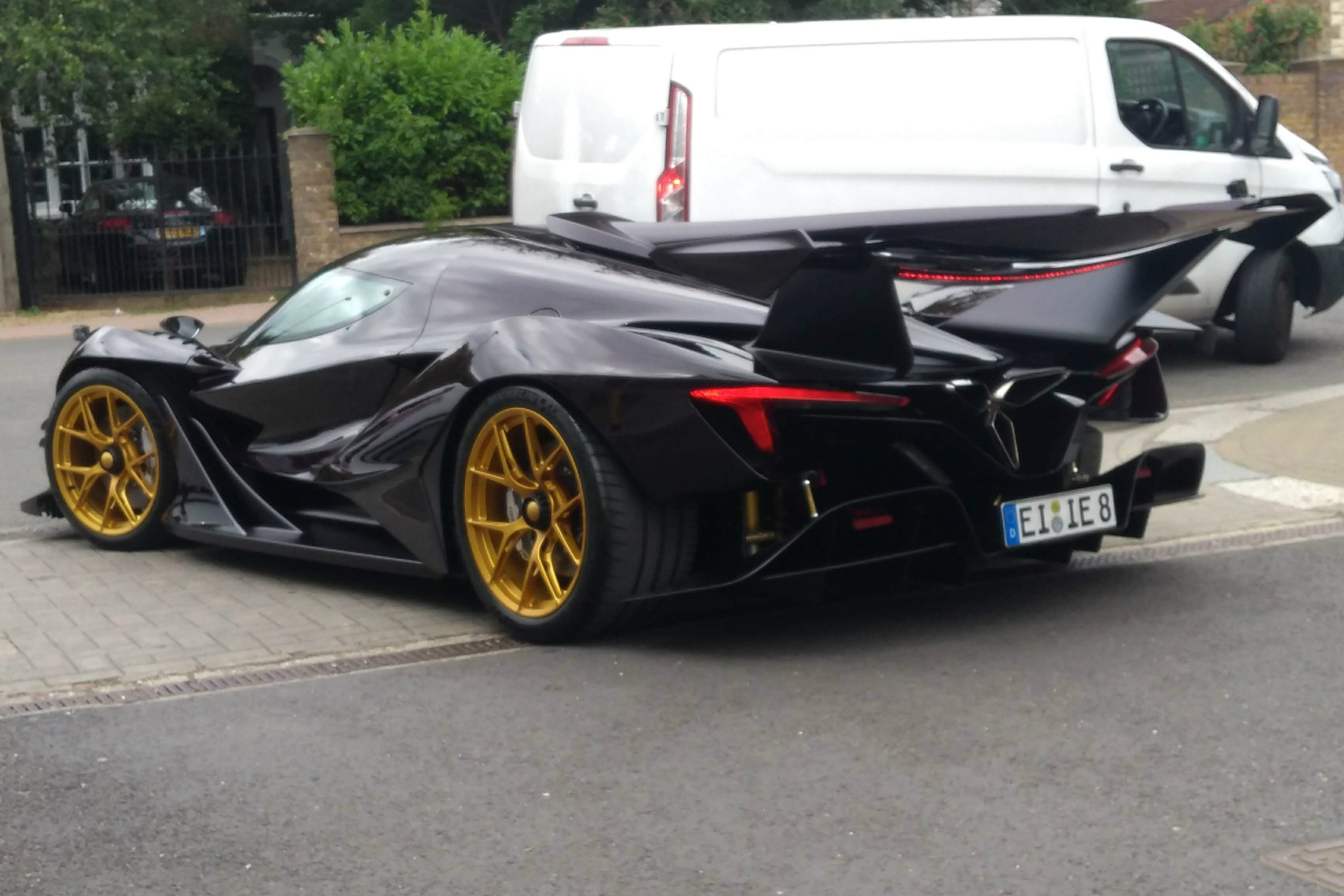
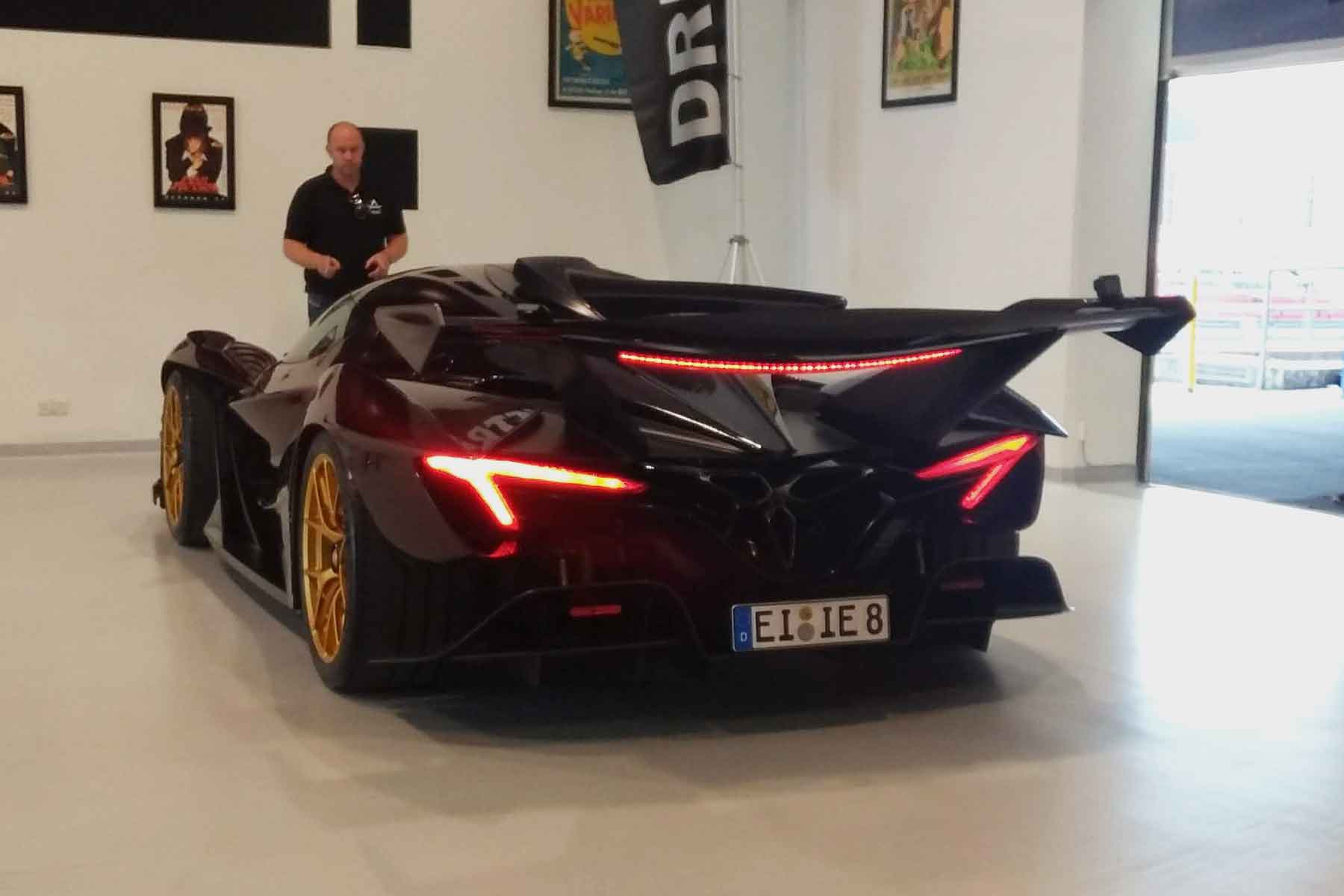
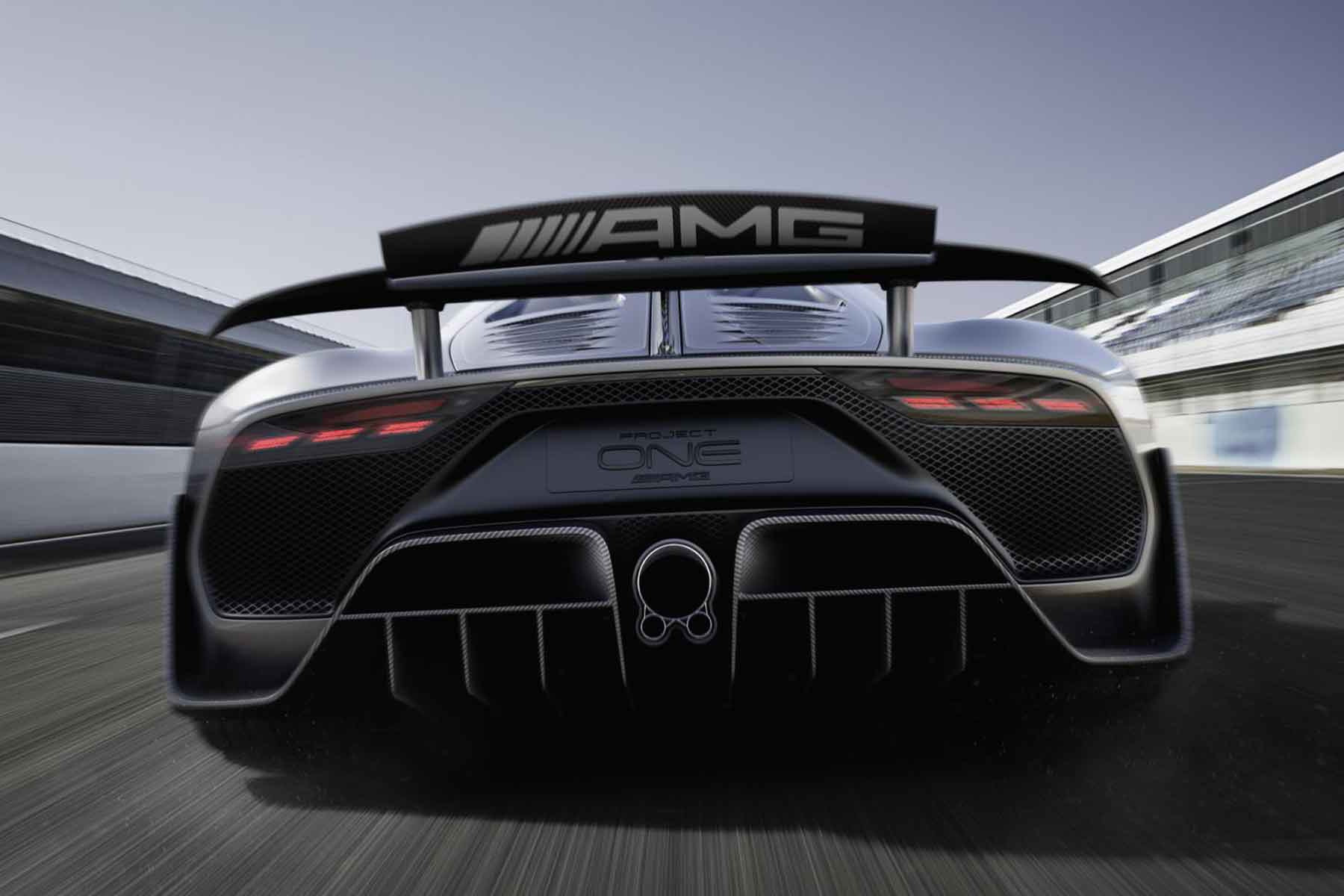
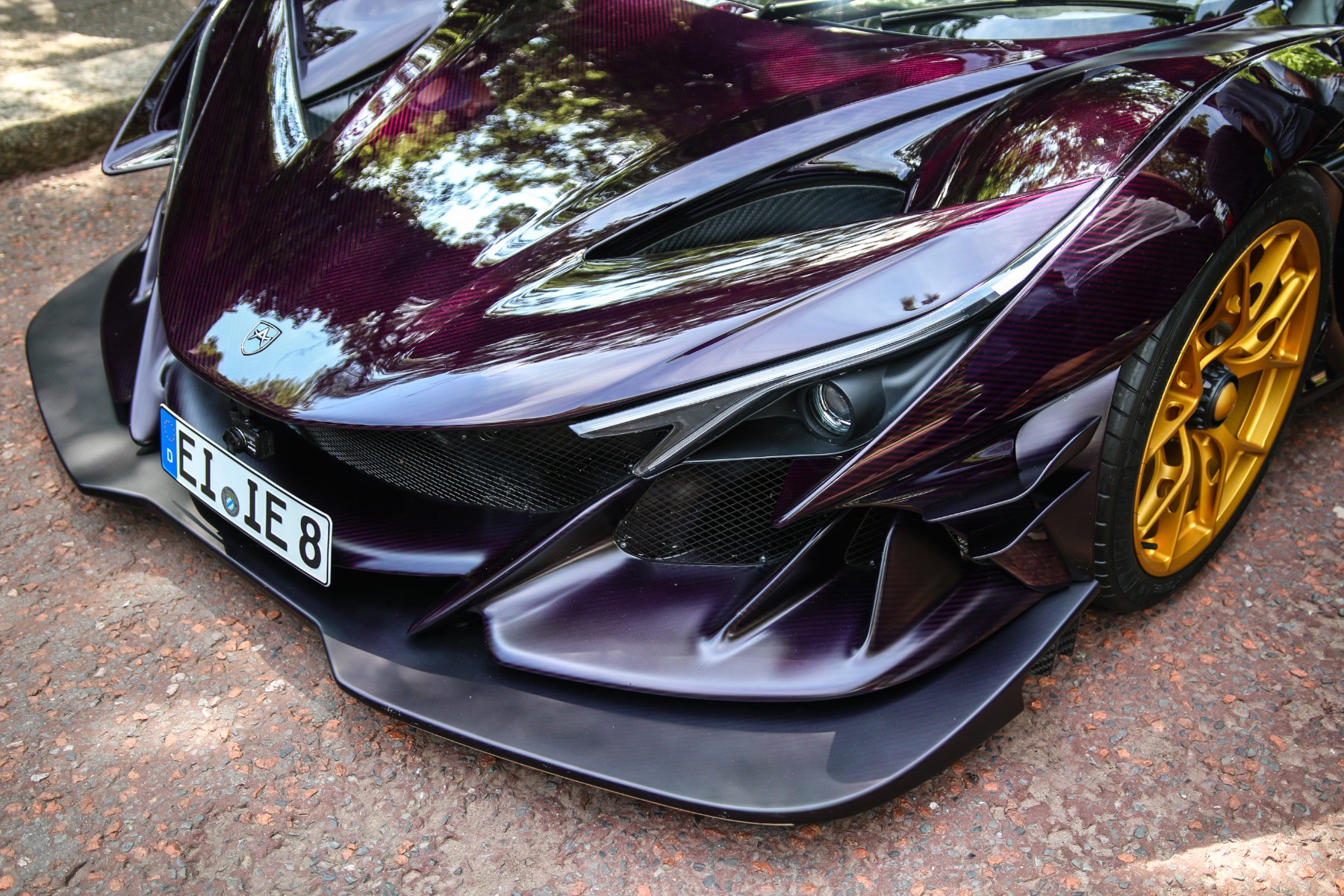
The coolest new supercar for a very long time – the Apollo Intensa Emozione (IE) – will be stretching its carbon-clad V12 legs at the Goodwood Festival of Speed this weekend. Here are a few reasons why you really shouldn’t miss it.
That V12 music
You’ll know a bit about the Apollo IE by now. You’ll be familiar with the outrageous looks. The reason you need to see it in action – and why Apollo saw fit to parade it around Geneva instead of relegating it to a show stand – is the noise.
A 780hp V12 paired with an aggressive sequential gearbox sounds like a tasty concoction on paper. The reality is something akin to a brass band composed of Norse gods playing a soundtrack to the end of the world. It’s as otherworldly as the styling – particularly that mad exhaust piece – would suggest. It’ll rattle the cascading windows and bone china crockery of Goodwood House.
Styling by visitors from another world
We touched on this above but it really is a visual assault. Actually, assault sounds too violent given the extravagance doesn’t necessarily deny it prettiness.
The proportions are correct. The flowing air-carved carbon seems to look that way by delicate and intelligent design rather than cold hard physics in a wind-tunnel. The flourishing lights and that crazy exhaust compliment what is a nuanced piece of automotive architecture, not necessarily the hatchet-attack you might assume from pictures or from afar. We’re in no doubt the car-hungry FOS crowds will be transfixed.
Apollo is a company of passionate car guys
We had a chat with the guys from Apollo and they’re passionate about cars. They’re car guys with enough disposable to build their own – handy as they’ll allegedly be losing money on each of the ten to be produced. It’s sold out if you were wondering…
Fond memories of GT1 and worries about a silent, electrified, numb, supercar-less future inspired them to take action. The IE is the result and the thing is so obviously the physical manifestation of a genuine passion. Automotive passion is central to the Festival of Speed, isn’t it?
It’s inspired by a GT1 legend
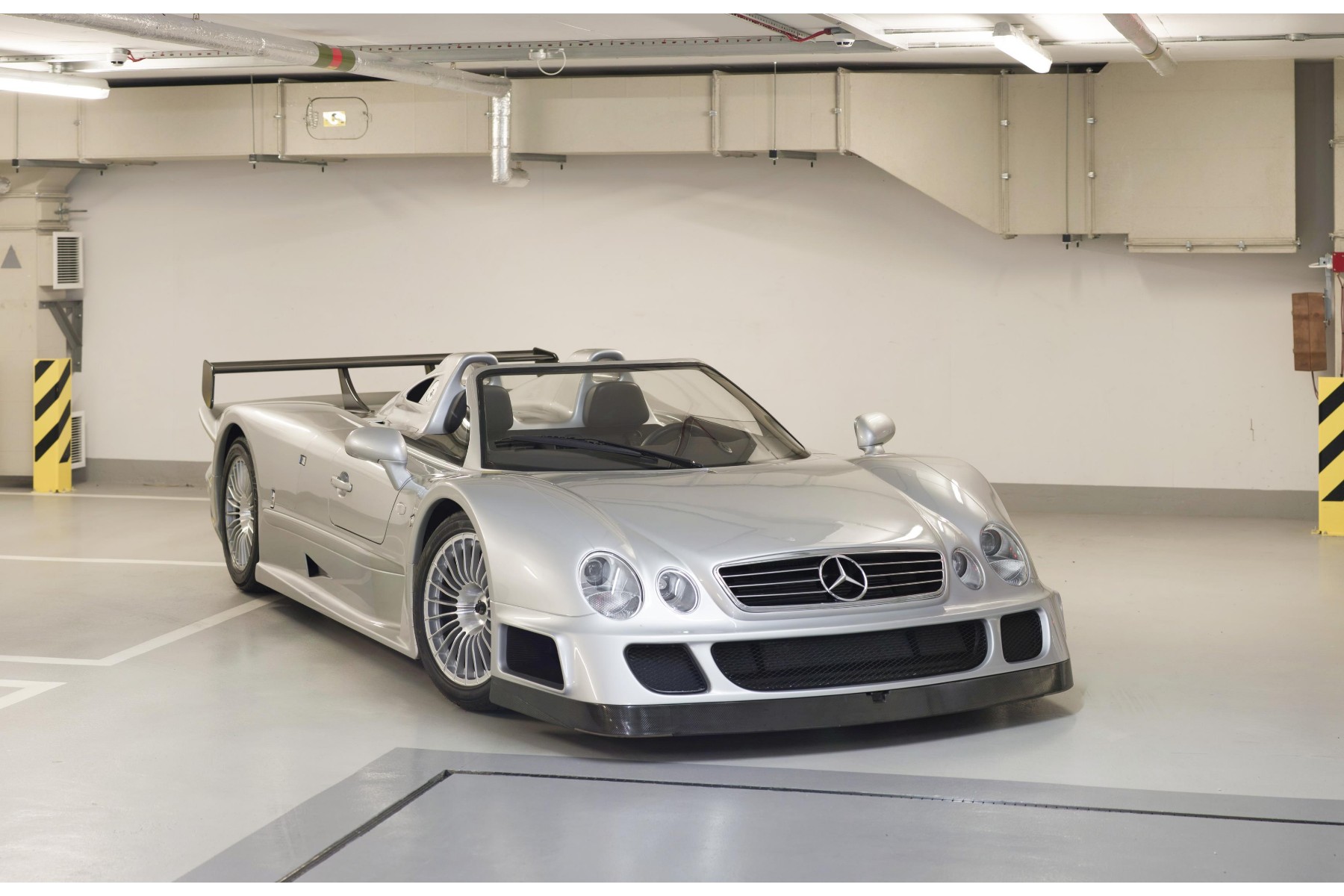
Ryan from Apollo, while talking to us at a pre-FOS event at Joe Macari, spoke of missing the days of GT1. When top-level racing cars were objects of desire as well as instruments of performance and could be obtained for road use. He cited the CLK GTR as the dream car of his younger days.
Okay, the car is inspired by the CLK GTR. What’s more, HWA, the company Apollo have on board for the development and engineering of the car, is the same one that delivered the CLK GTR back in the mid-90s. GT1 racing prowess woven into the car intended to be a tribute to the era. It’ll be at home at Goodwood surrounded by the cars that inspired its creators.
It’s the antidote to hybrids, turbos and EVs
We welcome a turbocharged, hybridised, even electrified future for the automobile. In part, at least. But that doesn’t mean the thought of machines like the McLaren F1 and Pagani Zonda becoming extinct doesn’t make us sad.
An automotive industry devoid of free-breathing V12 money-no-object existence for existence’s sake supercars sounds like a colder one to us, as it does to Apollo. The IE is the proposed remedy: a breath of fresh air in the new-car batches on the Hill.
It’s designed to save the supercar
Apollo told us one of the IE’s most important jobs is to help forge the next generation of car enthusiasts. It’s the car designed for a 10-year-old’s bedroom wall. It has to drop the jaws of the younger generation and get them hooked on cars. We can’t think of a nobler automotive cause. Expect young ones up and down the FOS bales to be slack-jawed, pestering their parents to buy one when their crossover gives up the ghost.
All of the above makes the IE a bit of a new-generation hero. Catch it running in the supercar batch at the Festival of Speed this weekend.
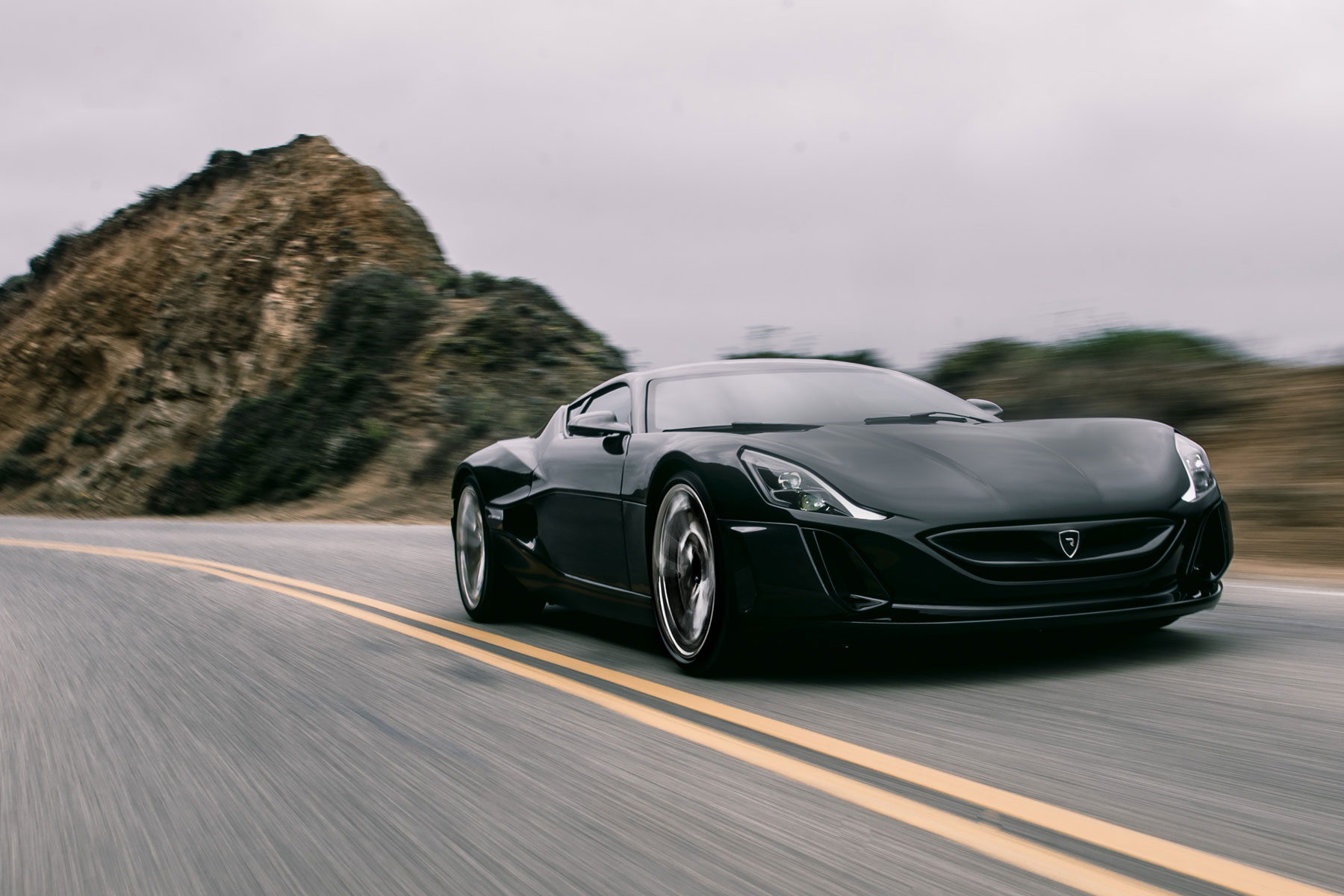
Search online for ‘Croatian car’, and you’ll be greeted with a wave of information on the Rimac Concept_One supercar, arguably Croatia’s finest export since Luca Modric. It’s fast, it’s electric, and Richard Hammond crashed one, so it gets more attention than a certain Swedish blonde sat in the crowd looking forlorn during England’s quarter-final victory.
The Rimac Concept_One was, however, famous within enthusiast circles long before Hammond decided to go flying off the side of a Swiss mountain. You can thank a 1,224hp powertrain, 2.5-sec 0-62mph time and a 220mph top speed for its ability to rub shoulders with the hypercar elite.
— Rimac Automobili (@AutomobiliRimac) July 7, 2018
But in flame-grilling a Concept_One for The Grand Tour, Hammond thrust the Rimac name into the mainstream, while providing more joke material for Messrs Clarkson and May. Today, many people will know of the Rimac Concept_One, even if they don’t link it to Croatia, or indeed know anything about the car’s background.
Croatia’s Elon Musk
The company is led by 30-year-old Mate Rimac. Born in Livno, in the former SFR Yugoslavia, Rimac grew up in Germany, before moving to Croatia to establish a construction company. As the owner of an electric car company, comparisons with Elon Musk are inevitable – his Wikipedia page lists the Tesla CEO under ‘See also’ – but Mate Rimac has forged his own path.
In 2015, Politico named him one of the 28 most influential people in the EU, Forbes named him one of the top 30 entrepreneurs under the age of 30, while only last year, he won the Ernst & Young Entrepreneur of the Year award for 2017.
“There is no greater pleasure than going into the factory and seeing how the others work. Hats off to all of them. I always say we are always at the beginning, eight years ago I was in a garage, today there are 350 people in the company. We have gone through a lot of hard times,” Rimac said.
Not that Rimac is ready to slow down. Rimac unveiled the C_Two at the 2018 Geneva motor show, with all 150 units snapped up within three weeks, despite an eye-watering £1.5m price tag. Kreso Coric, Rimac’s head of sales, must have one of the cushiest gigs in the business. Build a 1,888hp hypercar, and the punters will follow.
Meanwhile, back in the real world, Rimac unveiled its first electric bicycle in 2013, with the Greyp G12 offering motorcycle-like levels of performance. The G12 has since been replaced by the G12S, which can reach 70km/h without any assistance from the rider while offering up to 120km of range from a single charge.
With such a track record in the field of electromobility, it’s little wonder that Porsche took the decision to buy a 10 percent stake in the Croatian company. “We feel that Rimac’s ideas and approaches are extremely promising, which is why we hope to enter into close collaboration with the company in the form of a development partnership,” said Lutz Meschke of Porsche.
The investment will allow Rimac to focus on high-voltage battery technology, electric powertrains, digital interfaces between man and machine and, what the company claims, will be the most advanced electric bicycle on the market.
‘Quite reliable’ coaches
Away from visions of the future and silent runnings, Croatia’s car industry is hardly overflowing with heritage and excitement. A few companies emerged during and after the Second World War, with production focused on buses, trucks, rolling stock and military vehicles.
Indeed, school children and tourists in the late 80s and early 90s might remember travelling on Tvornica Autobusa Zagreb (TAZ) Dubrava coach. It wasn’t the last word in luxury and quality, but it was powered by a dependable, rear-mounted Daimler-Benz V8.
According to Martyn Hearson on Flickr: “The not unattractive type was imported from Yugoslavia towards the end of the 1980s by Leicester-based dealer DSB Coach Sales, and if I recall correctly, about 60 were sold in the UK.
“Power came from a virtually bomb-proof rear-mounted Mercedes V8 and generally speaking they were quite reliable. Where they did fall down, however, was with poorer build quality than would typically be expected in Western Europe and spare parts for the bodies were to become an issue.
“The latter affected, I suppose, by feuds in the manufacturer’s ‘backyard’. There were tales of unsold examples being dismantled at the dealer’s premises in order to provide some form of back-up for those already sold and in service.”
Modric, Rakitic, Perisic and Octavia
Fortunately, the vast majority of Croats aren’t travelling around perched on the moth-eaten and fag-burned seats of a Dubrava. It’s also fair to say that, unless their surname is Modric, Rakitic or Perisic, not many will have the funds required to drive a million-dollar hypercar.
Indeed, the top 10 best-selling cars in Croatia are a tad predictable, with the Skoda Octavia topping the charts in 2017. This was followed by the Renault Clio, Ford Focus, Volkswagen Golf, Opel Astra, Suzuki Vitara, Opel Corsa, Volkswagen Polo and Dacia Duster.
Unlike here in the UK, the Croatian new car market is enjoying a successful period, with Best Selling Cars Blog reporting a 7.8 percent gain in May. A total of 8,758 registrations is the highest level this decade, with the Renault Clio hitting the top for the first time since 2003. What’s Croatian for ‘Va Va Voom’?
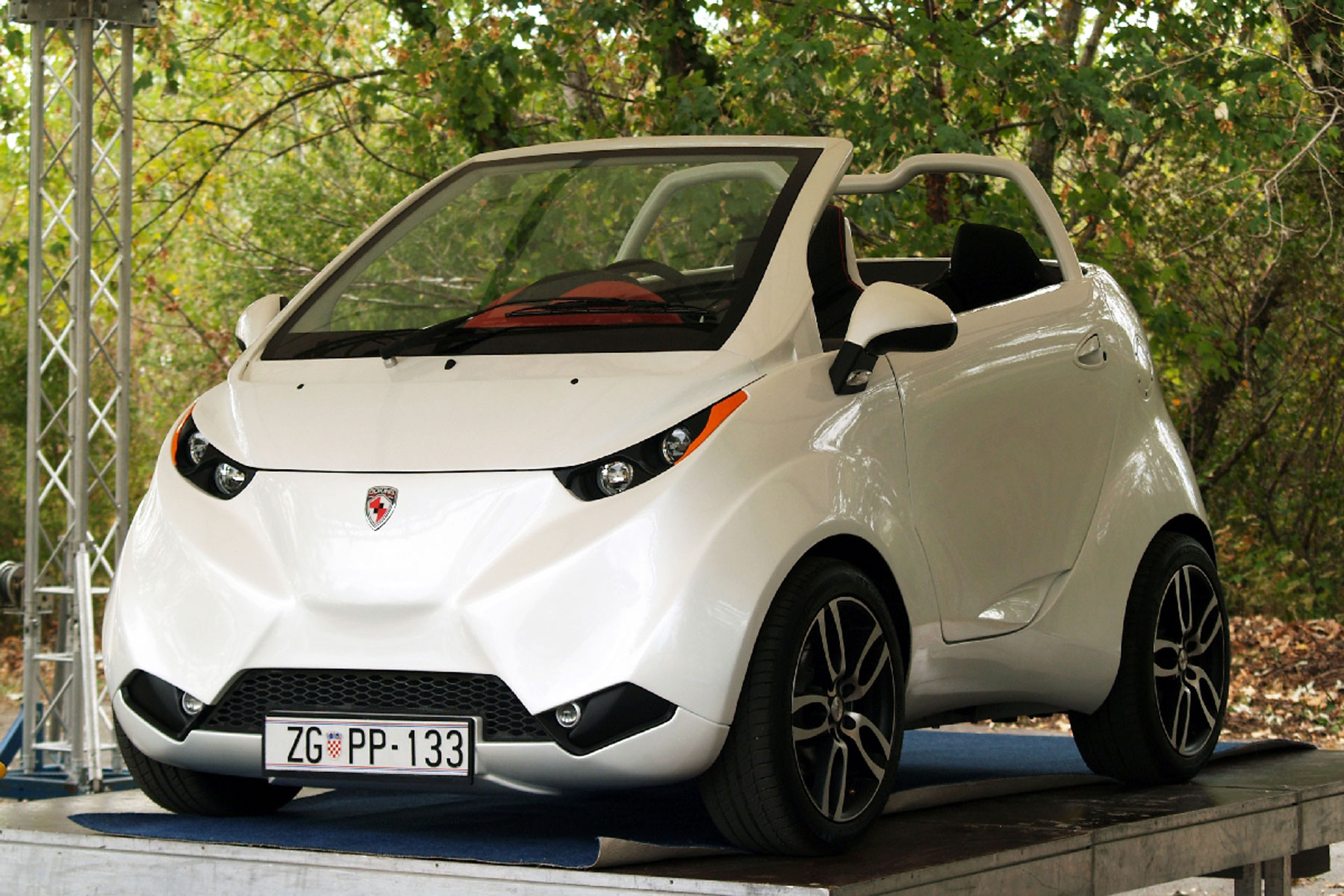
In the future, the people of Croatia might be driving around in a smaller and more affordable electric vehicle – the DOK-ING Loox. Built by a company with a history in electric, unmanned vehicles, the three-seater Loox offers a range of up to 220km and a 0-62mph time of 7.7 seconds.
With a central driving position, flanked by two rear seats – think McLaren F1, of sorts – the Loox also features a pair of gullwing doors, an aluminium chassis, carbon body and a charging time of 3-8 hours, depending on the source. DOK-ING is searching for investors to put the Loox into volume production, and if successful, the Loox is likely to cost around £25,000.
It’s coming home
For now, it’s left to Mate Rimac to fly the flag for the Croatian car industry and to Luka Modric and his teammates to do the same for the national football team.
The England fans will be hoping that two penalty shootouts will leave the Croatian players feeling as fatigued as an ageing Dubrava, while the opposing fans will be looking to the Rimac for inspiration.
But maybe that’s not such a good idea. The last time an Englishman encountered a Croat on foreign land, the Croatian crashed and burned, while the Englishman was able to fight another day before coming home in a blaze of publicity.
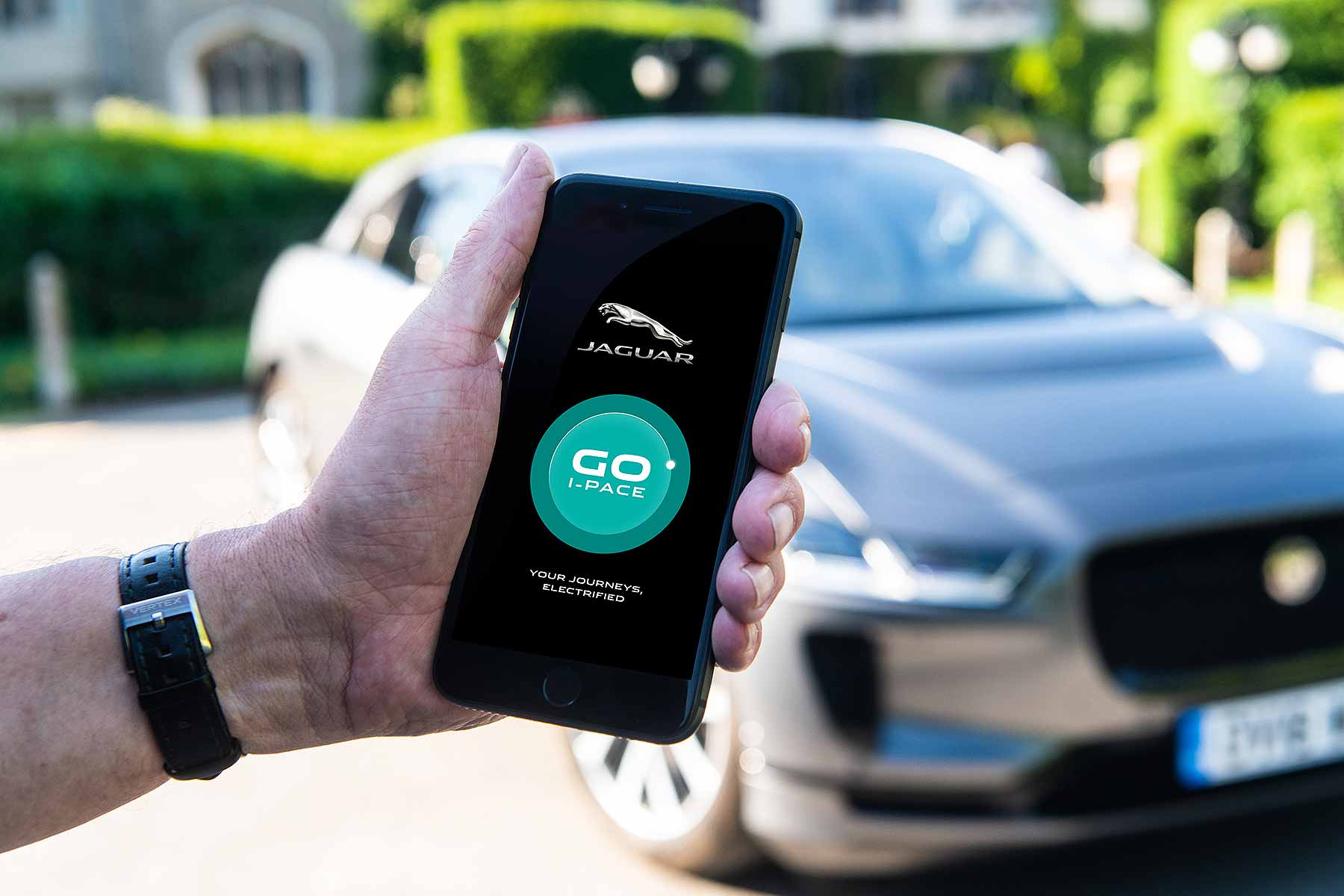
Jaguar has launched an app that it hopes will prove to uncertain motorists that the all-electric I-Pace will fit neatly into their daily lives after all. It will also work out how many times they’d actually need to charge it each week.
The Go I-Pace app can also work out how much cash they might save, simply by entering the real-world fuel economy of their car (which they can get from their trip computer). Once enough journeys have been logged, the app will advise motorists whether Jaguar’s EV is for them.
It can even estimate how much electric battery charge drivers may use each trip – or, more usefully, how many journeys they’d get per charge.
Jaguar is confident the app will surprise people by green-lighting an EV, because journeys over 50 miles make up just 2 percent of all UK trips. The I-Pace, it adds, has a range of up to 298 miles.
“Making the switch to EV ownership is a big decision,” said Jaguar I-Pace vehicle line director Ian Hoban. The car, well, it speaks for itself, he said; what a test drive doesn’t show is the lower running costs and convenience of living with an EV.
“The Go I-Pace app is designed to help potential customers make an informed decision.” (So long, that is, they have an Apple iPhone: it’s coming to Android later.)
How do you use the Jaguar Go I-Pace app?
The app uses smartphone location services, and runs in the background once opened (privacy-seekers, it can easily be turned off again – see the images above). It tracks individual journeys to precisely analyse what sort of driving you do.
Not just driving, either: it can distinguish between different types of transport and is so accurate, it will even ask for confirmation that a journey was, say, cycled rather than driven.
The free app is now available through Apple iTunes, initially in the UK, before rolling out globally.
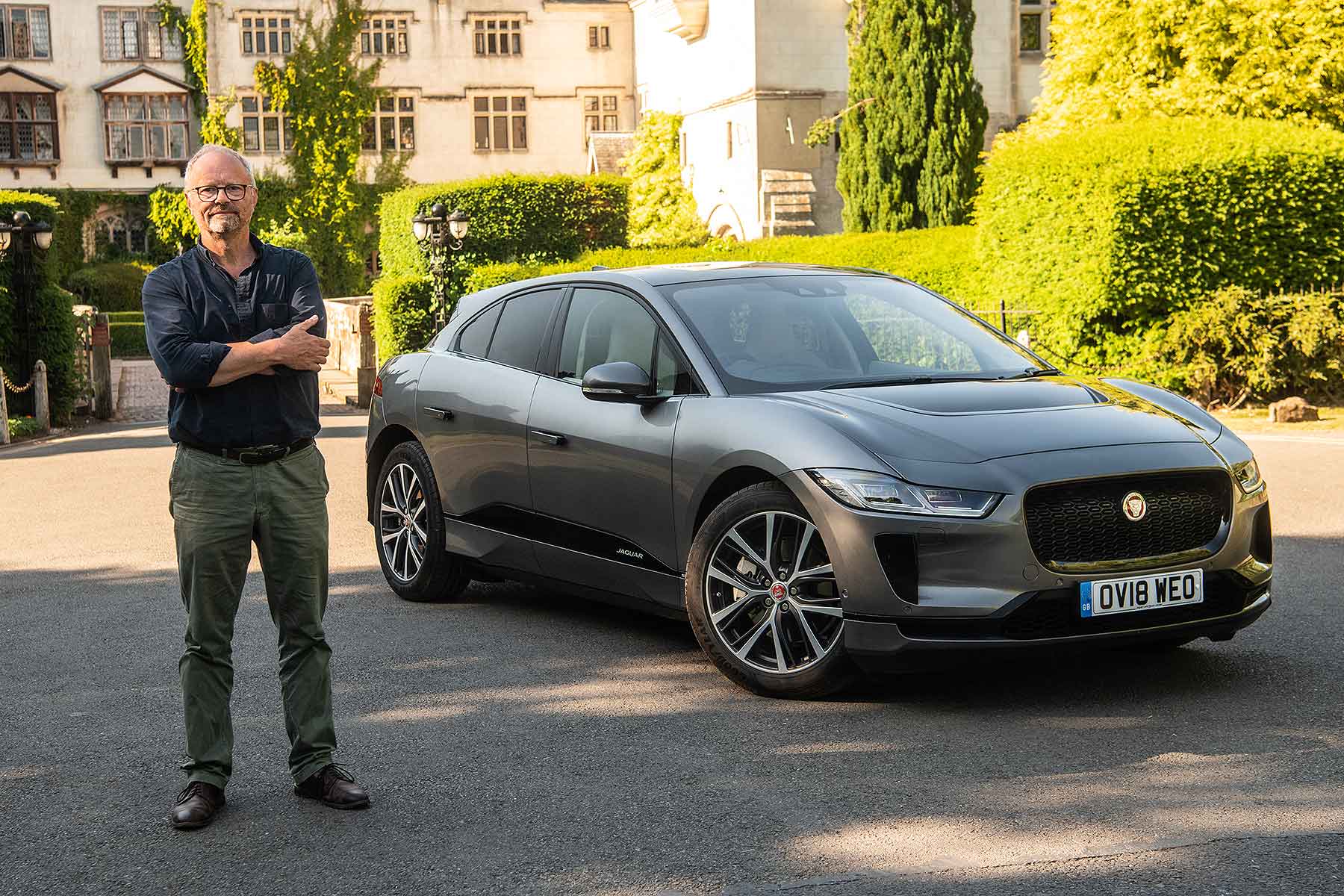
It has a high-profile endorsement as well, from Fully Charged Show creator and EV expert Robert Llewellyn. “It can be hard for drivers to understand how an EV would fit into their day-to-day lives,” he said.
“I’ve no doubt the app will surprise many users with the scale of the potential cost savings and by revealing how little change to their driving habits I-Pace ownership would actually make.”
 Singer Vehicle Design has revealed a jaw-dropping new Porsche 911 reimagination at the Goodwood Festival of Speed. It has worked with Williams Advanced Engineering and other technical partners on the ‘Dynamics and Lightweighting Study’(DLS) of a period 1990 Porsche 964.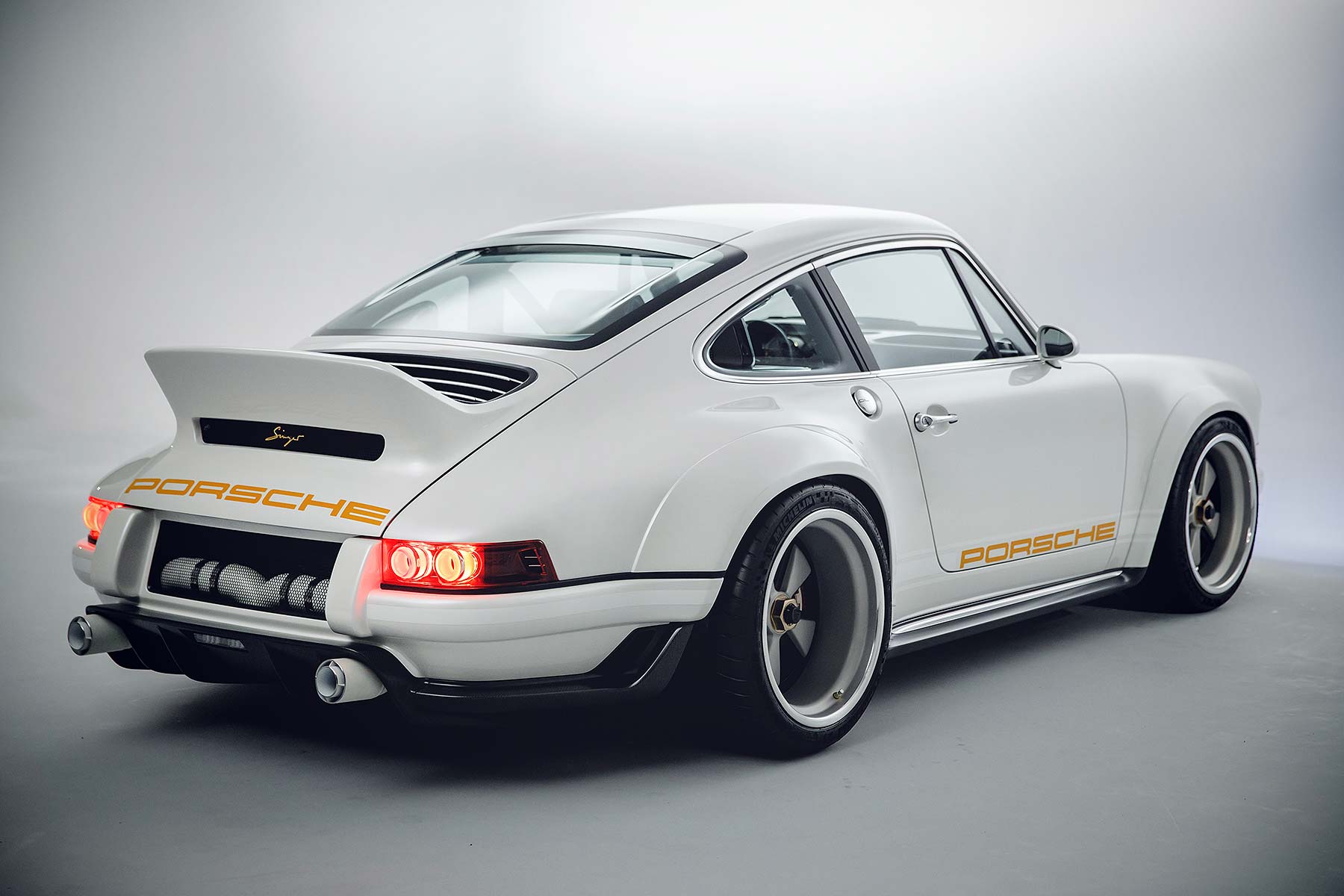




 The
The 


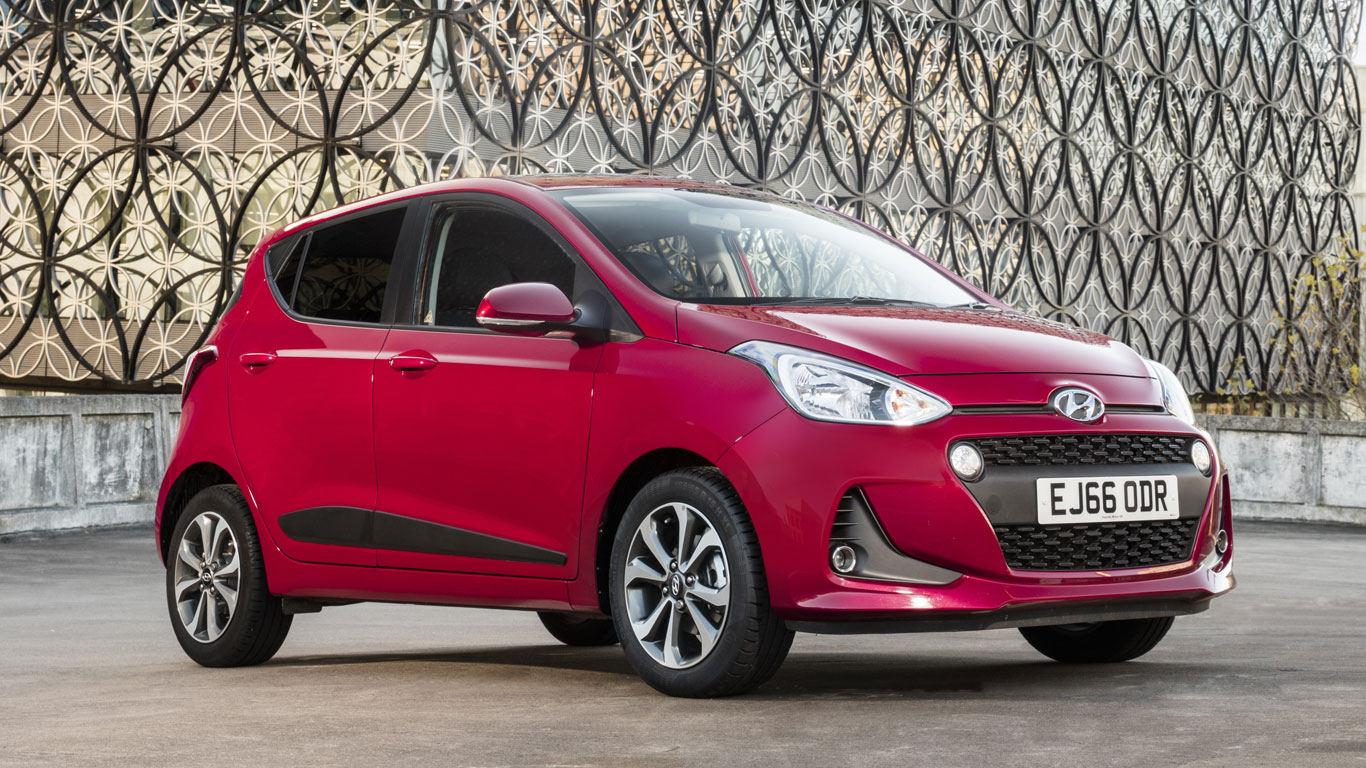 The 2018 JD Power UK Vehicle Dependability Study named Hyundai as the country’s most dependable car brand. The study, which is based on the responses of 13,536 motorists, measures problems experienced during the past 12 months after 12-36 months of ownership.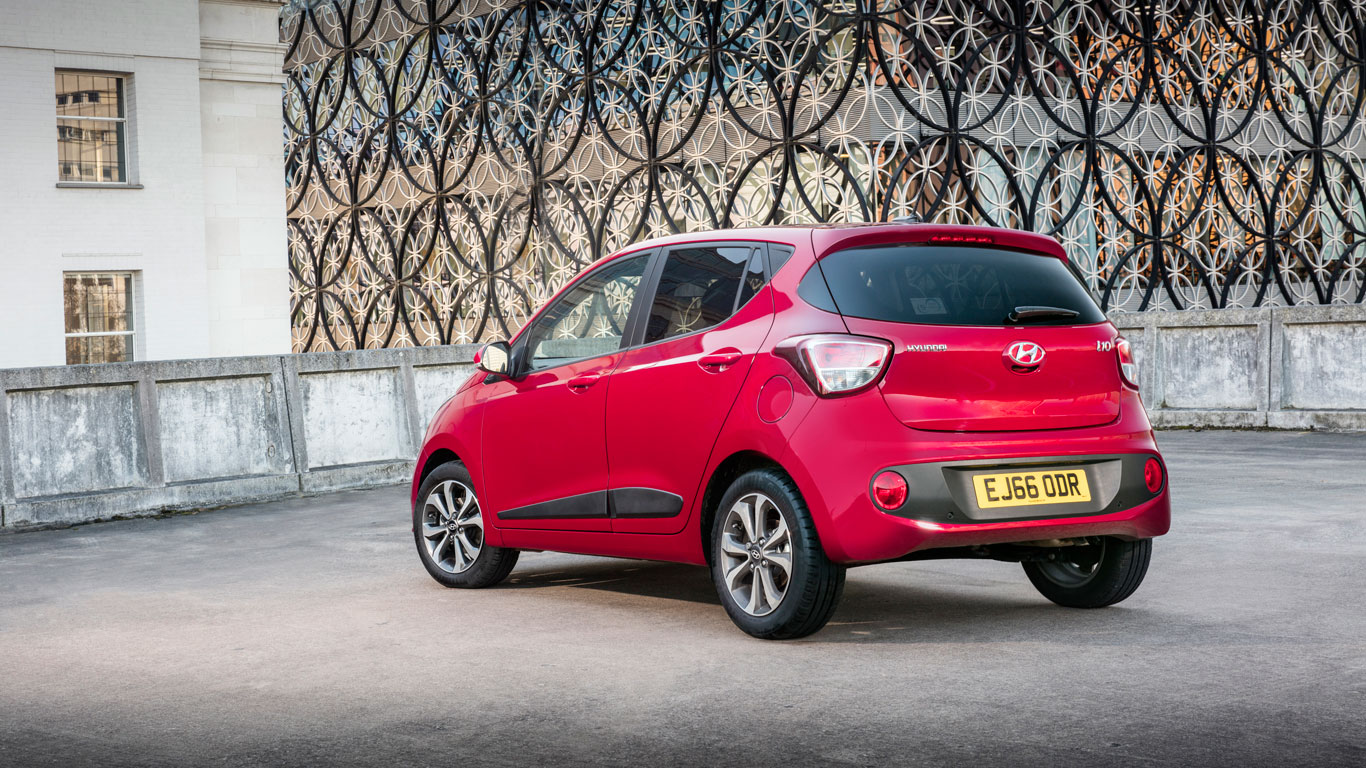
 Jaguar has launched an app that it hopes will prove to uncertain motorists that the