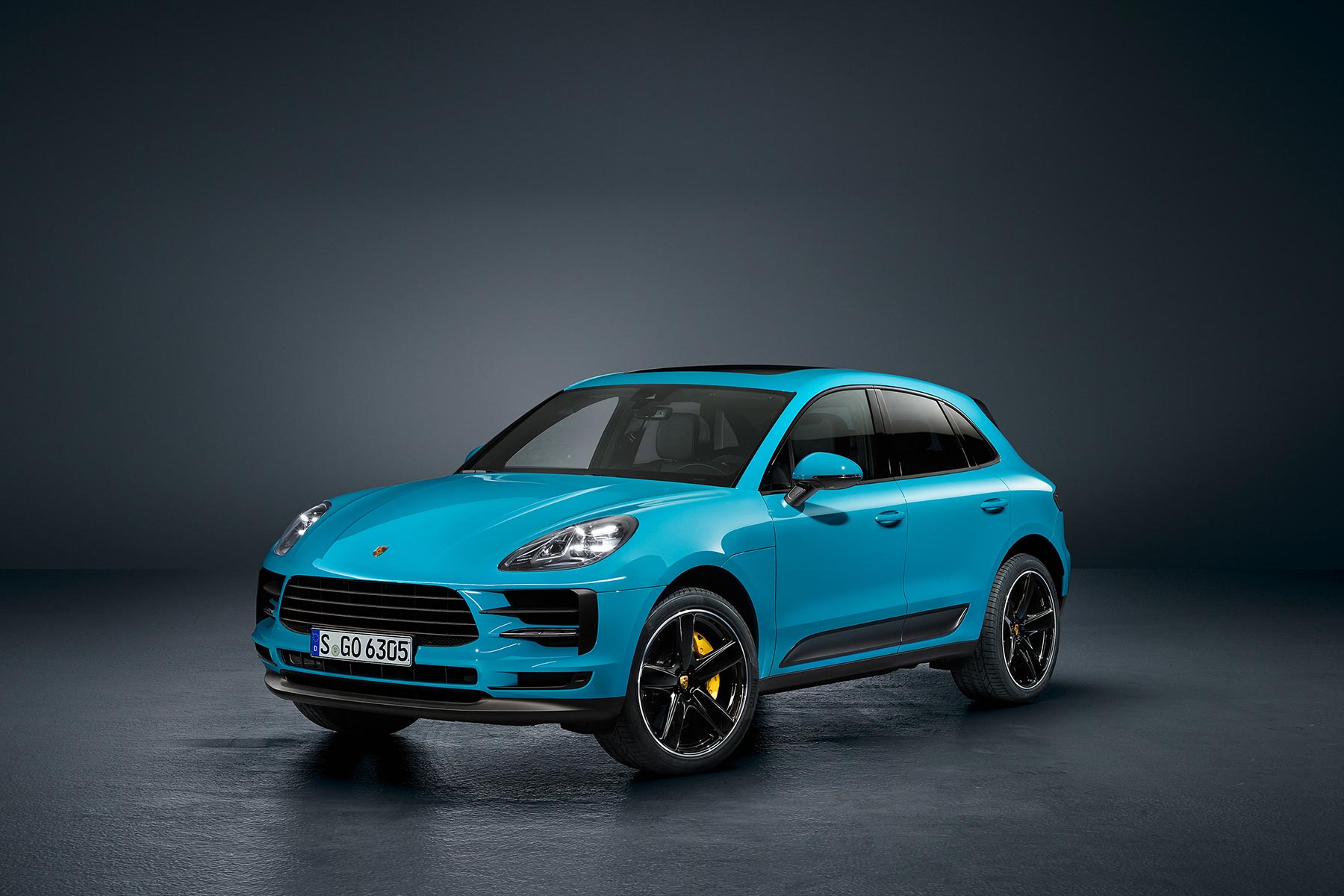
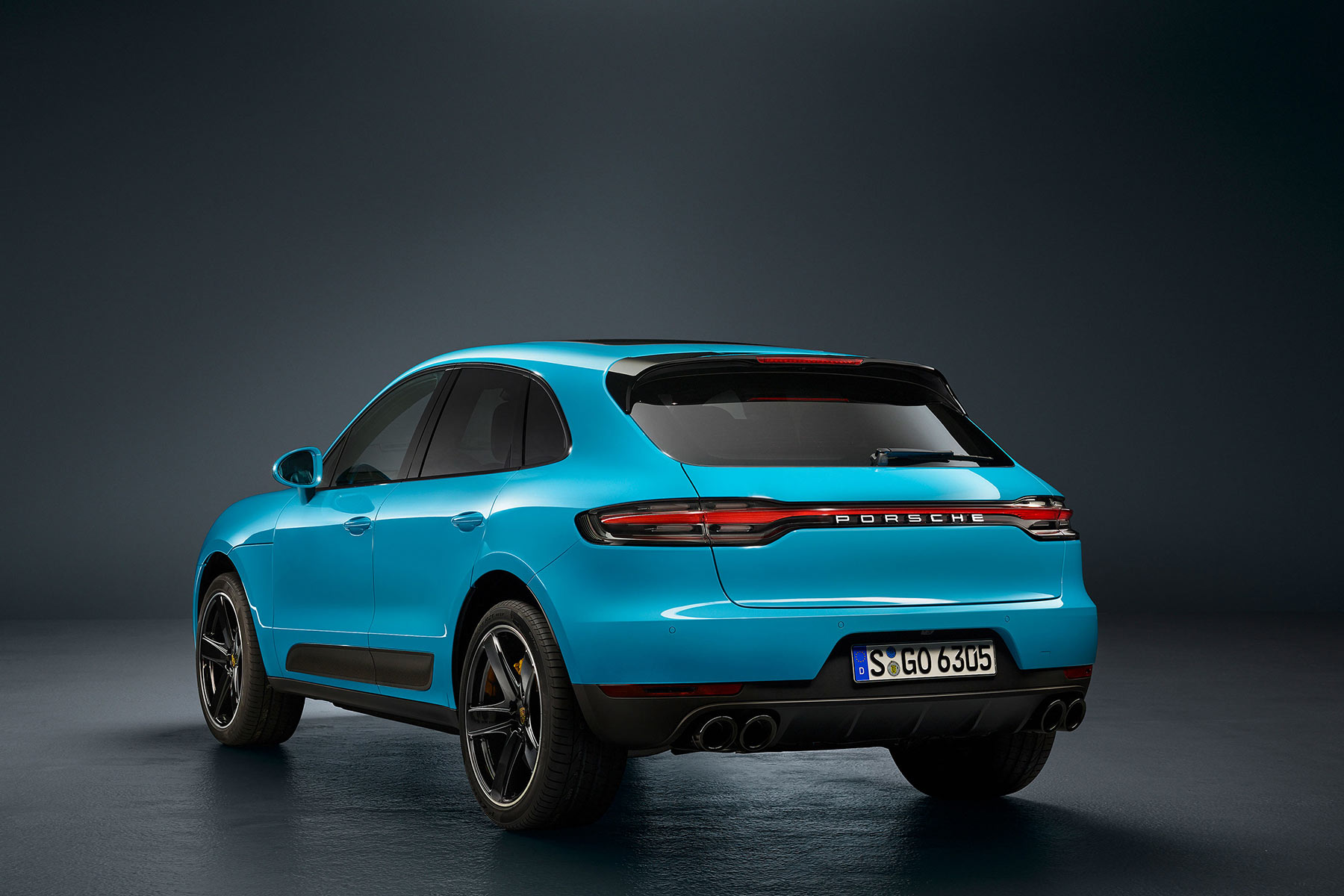
Following an official unveiling at the Shanghai Motor Show in July, the 2018 Paris Motor Show is the first chance for European buyers to see the facelifted Porsche Macan.
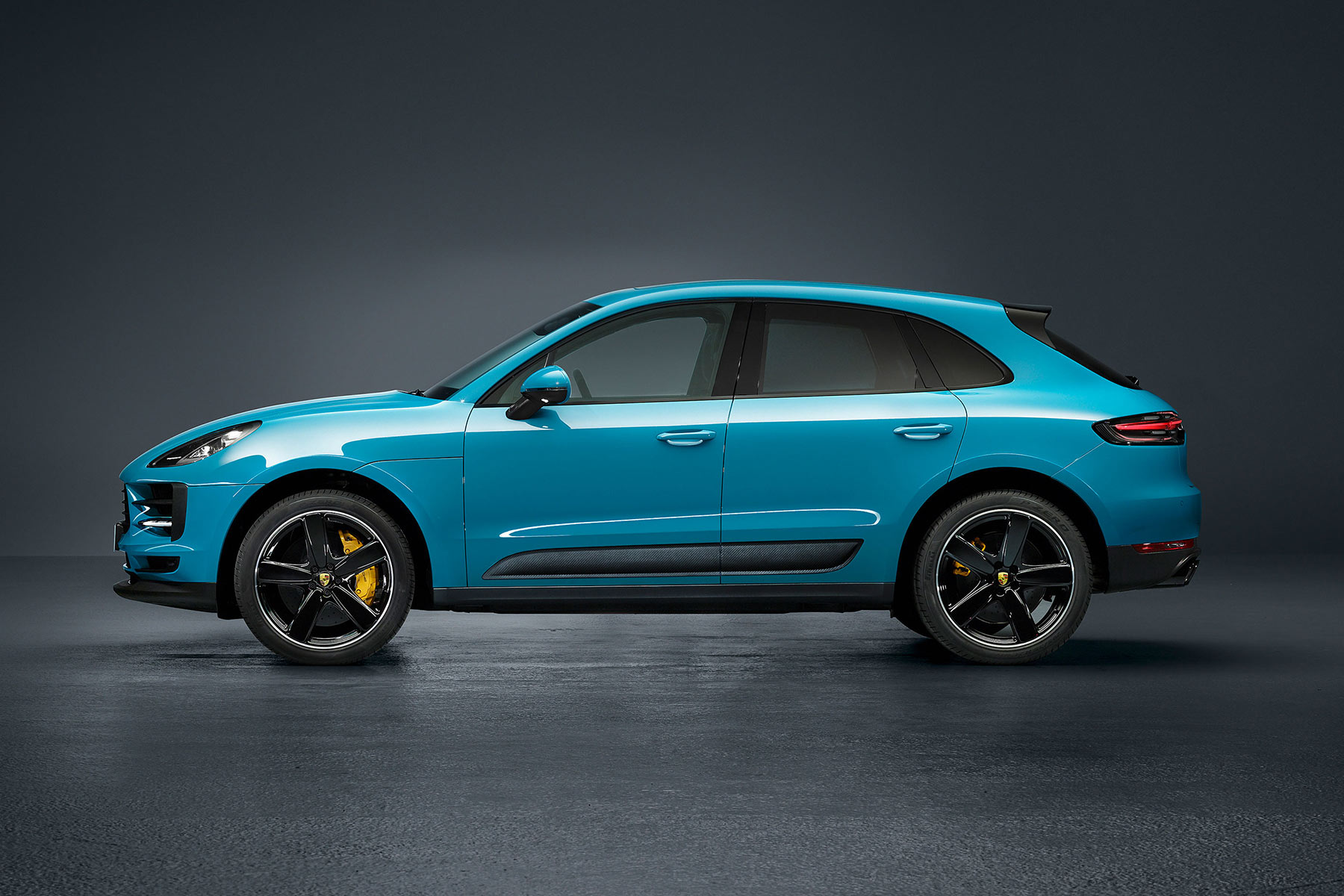
If you expected dramatic surprises outside, you might be disappointed. This is a subtle exterior nip and tuck, with the biggest change happening at the back. The new three-piece LED light strip across the rear hatch is meant to embody classic ‘Porsche design DNA’. It gives a distinct signature at night, and is matched with new LED headlights at the front.
Beyond the lighting, you’ll need to really know your Macans to spot the revised front bumper. New classic Porsche colours such as Miami Blue, Mamba Green and Crayon might be more recognisable.
But that’s not to say the latest Macan doesn’t have the ability to raise eyebrows…
Hybrid theory
Although subtle outside changes were predictable, a revolution beneath the bonnet was thought to be on the cards. Porsche has recently made a show of the decision to abandon diesel power for good. With the larger Cayenne SUV offered with a hybrid powertrain, along with the Panamera, the junior Macan seemed ripe for hybridisation.
Instead, the revised Macan simply features a 2.0-litre four-cylinder turbocharged petrol engine, similar to that in the Volkswagen Golf GTI. A gasoline particulate filter is part of the revisions, along with other tweaks to improve efficiency. Tellingly, power output has dropped from 252hp to 245hp.
Despite the small power reduction, 0-62mph takes the same 6.7 seconds as before. Four-wheel-drive is standard, as is a seven-speed PDK dual-clutch gearbox.
At least for now, that’s it on the engine front: just a 2.0-litre turbo petrol – no V6 petrol, no plug-ins and certainly no diesels. Is it a sign of the times?
Widescreen dreams
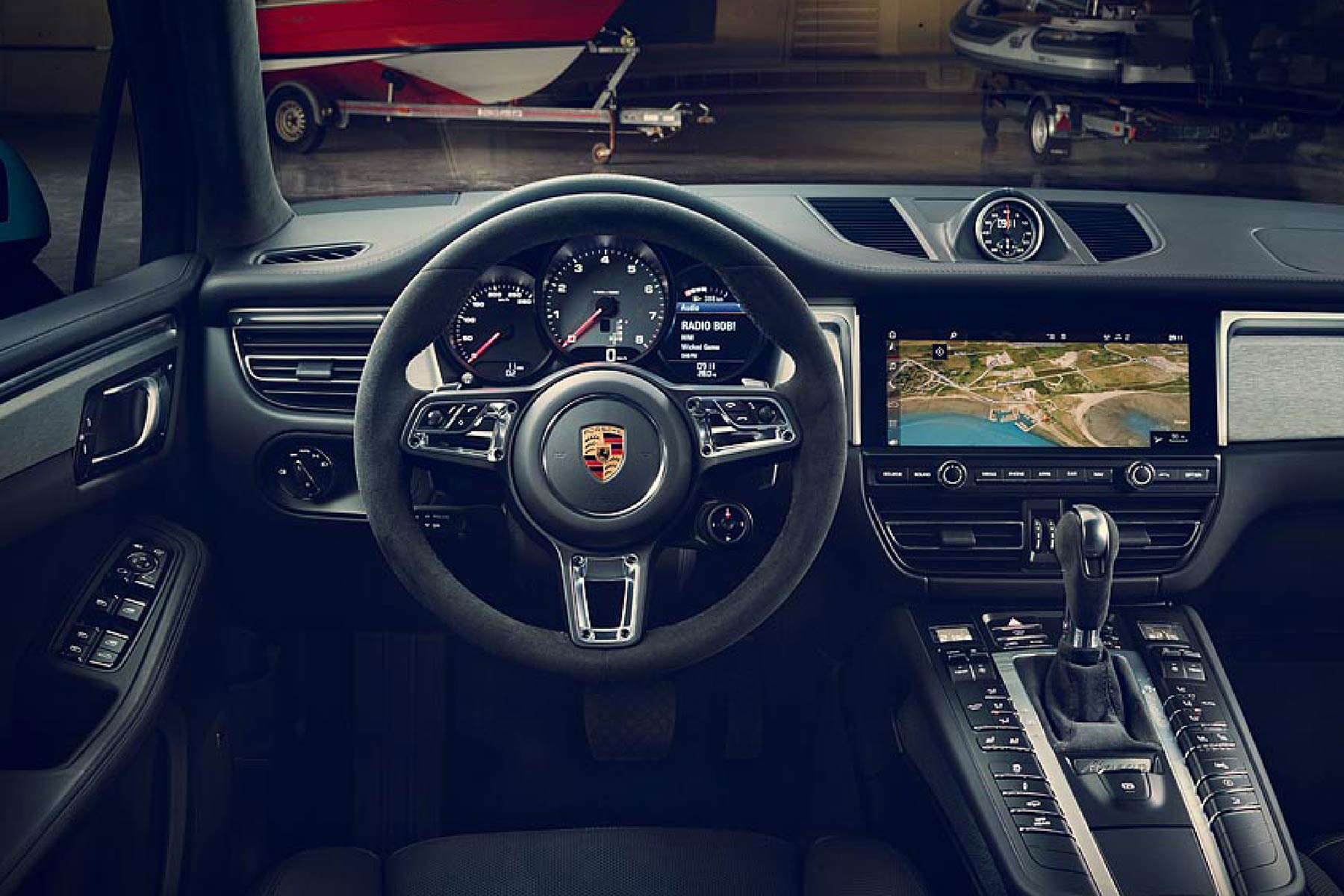
Inside, the big story is the enlargement of the HD multimedia touchscreen to a substantial 10.9-inches. The Porsche Communication Management system allows for easy connectivity with smartphones, whilst the ability to create a WLAN hotspot is standard.
A cloud-connected navigation system allows for real-time traffic updates to be taken into account, whilst those drivers who venture off-road can record their exploits with a dedicated app.
Drivers who want to feel like they are in a 911 can now specify an optional GT sports steering wheel. The design of it is influenced by the iconic Porsche sports car, and can feature a button to engage Sport mode, providing you tick all the relevant boxes. An air ioniser, with a dedicated cabin air filter, is another addition to the lengthy options list.
Strength in numbers
Whilst it might be easy to still treat the idea of a Porsche SUV with a modicum of contempt, the Macan and larger Cayenne are credited with the financial success of the German firm. Building cars like the Macan, means projects like the crazy retro 935 creation announced last week, can happen.
Zuffenhausen sold some 97,000 Macans last year, making it the best-selling Porsche model. In fact, more than one in three Porsches sold in 2017 was a Macan. That underscores how important the compact SUV is to the firm, and to allowing for wild 911 versions to exist.
New Macans are already rolling off the production line, with the first cars heading to the important Chinese market. UK buyers can place orders right now, with a starting price of £46,344 – an increase of less than £500 compared to the current car.
The first International Automobile Exhibition was held on the terrace of the Jardin des Tuileries in 1898, making this the 120th anniversary of the Paris Motor Show. This year, the show is as notable for the list of absentees as it is for the manufacturers in the French capital showcasing their latest metal. But there’s no shortage of debuts to get excited about, as our preview gallery reveals.
Ferrari Monza SP1 and SP2
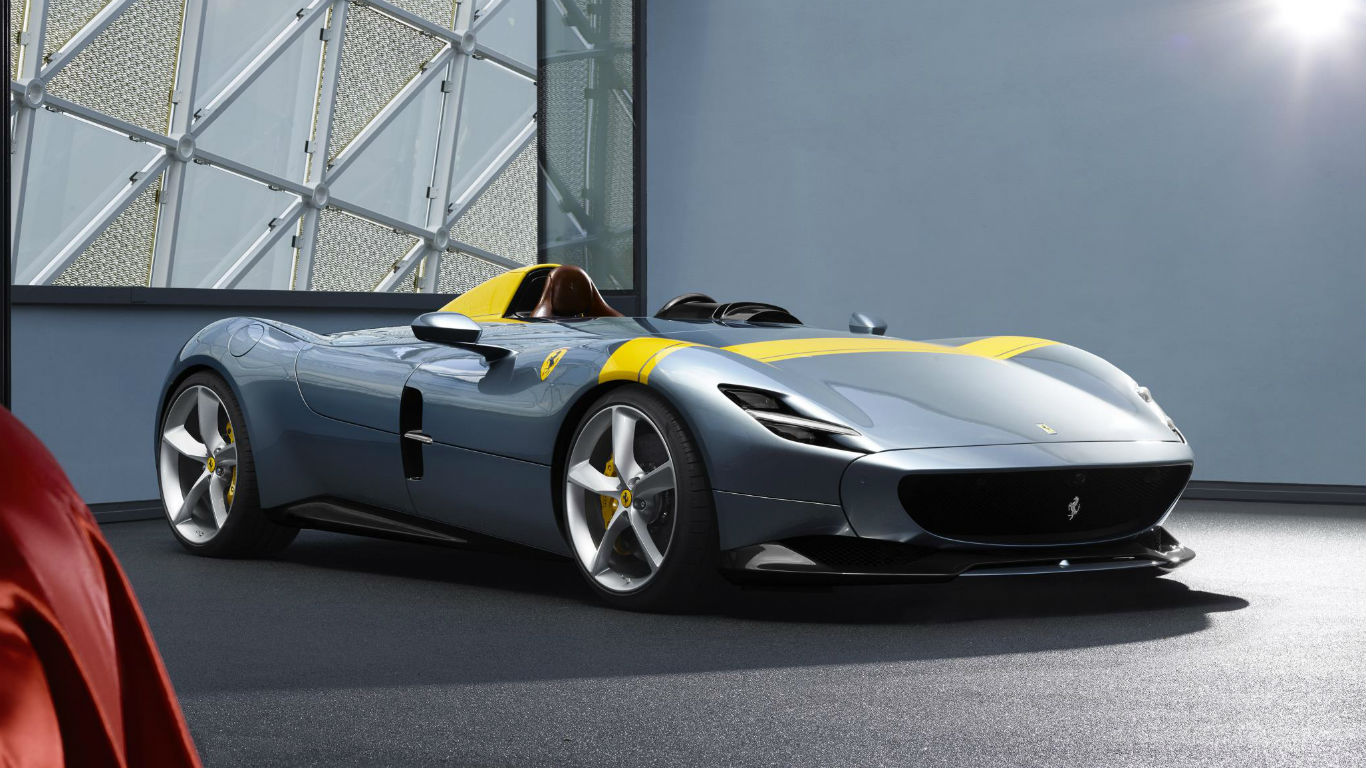
The new Monza SP1 and SP2 models are the first in a new segment called ‘Icone’ and draw inspiration from Ferraris of the 1950s. The SP1 (top) is a single-seat road car, while the SP2 (above) does away with a tonneau cover and adds a second protective screen to become a two-seater. Each one will hit 62mph in just 2.9 seconds. They’re likely to be the biggest draws at this year’s show.
BMW 3 Series
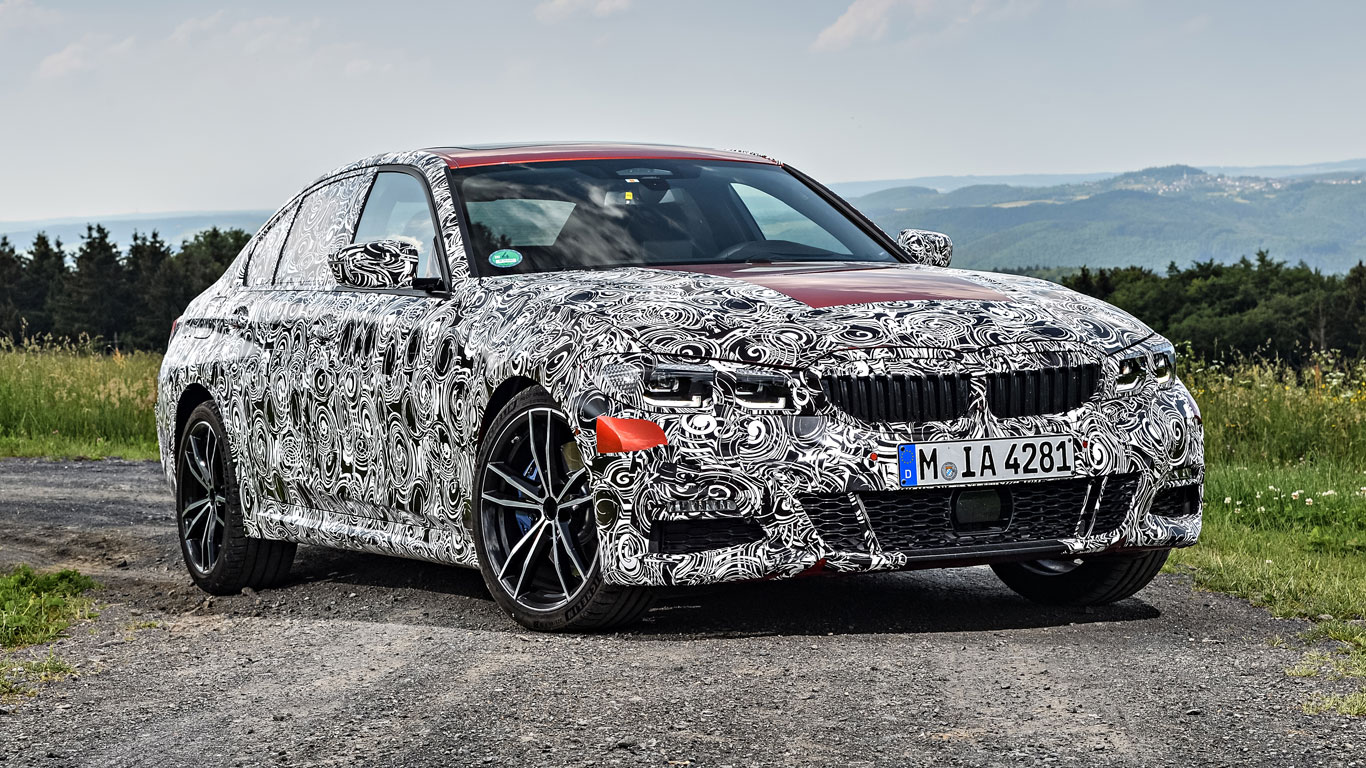
In the real world, this is the probably the most important new car at the Paris Motor Show. Some 14 million BMW 3 Series have been sold since its launch in 1975, making it the best selling premium executive car the world has ever seen. It’s not hard to imagine what it will look like – even in full camo-wear – while the tech will be lifted from the 5 Series and 7 Series. The hours spent at the Nürburgring should ensure it retains the driving pleasure of its predecessors.
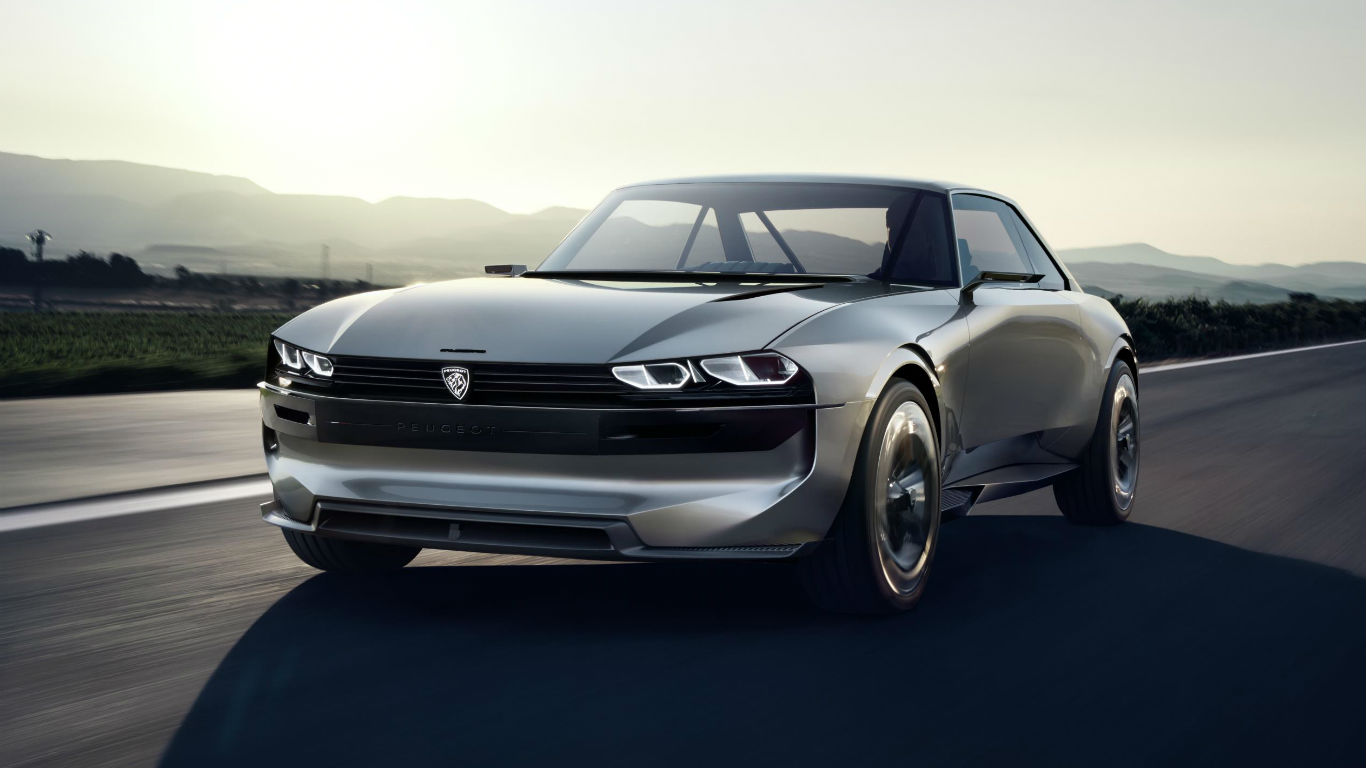
Peugeot e-Legend concept
The Peugeot e-Legend concept is an all-electric, fully-autonomous show car inspired by the famous 504 Coupe. A fitting tribute for a car celebrating its 50th anniversary, but the e-Legend has its eyes firmly on the future. Powered by 100Wh batteries, the 462hp concept has four-wheel drive, a 136mph top speed and will sprint to 62mph in less than four seconds. It also offers 442 miles of range.
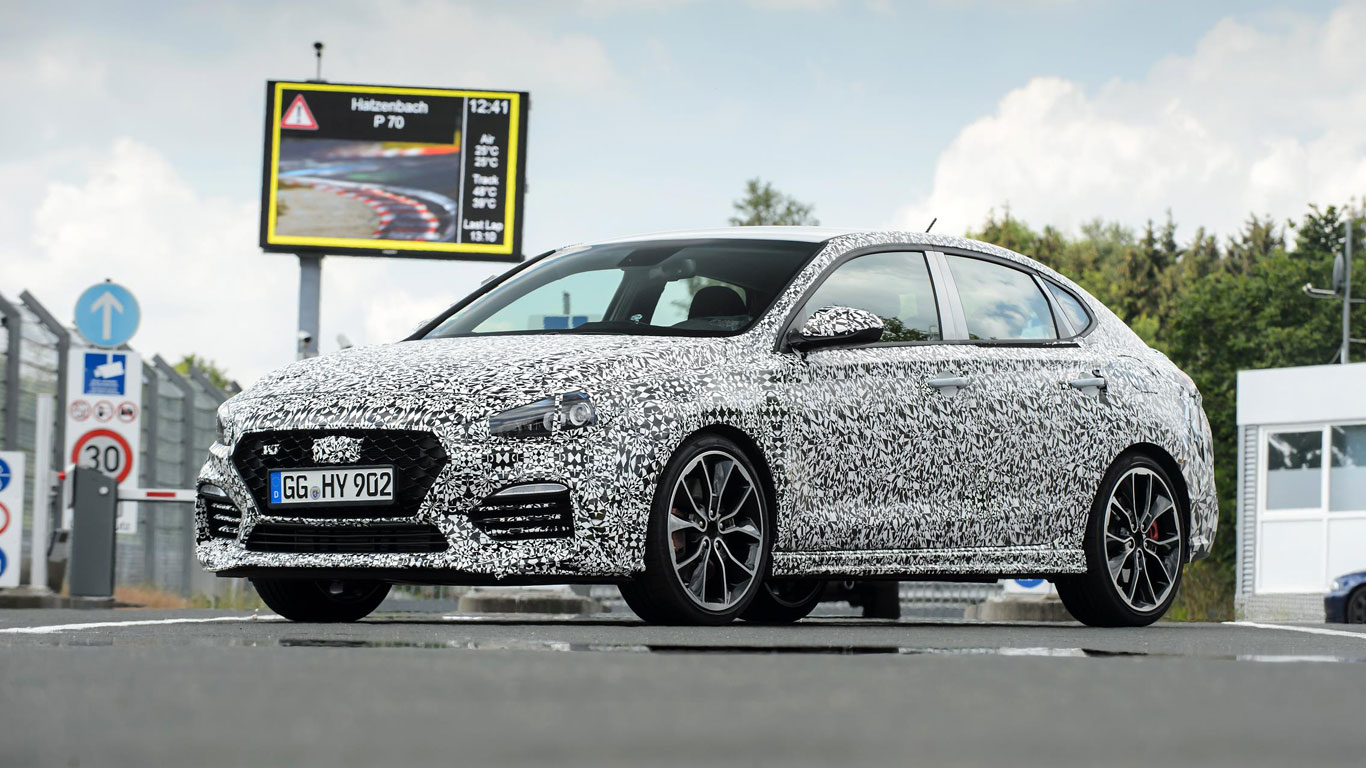
Hyundai i30 Fastback N
The Hyundai i30 Fastback N is another car with countless Nürburgring hours to its name, and we’re confident that it will be every bit as good as its hatchback sibling. It’s the third N model after the five-door i30 N and the Veloster N, and we expect the performance figures to be similar to those of the hot hatch.
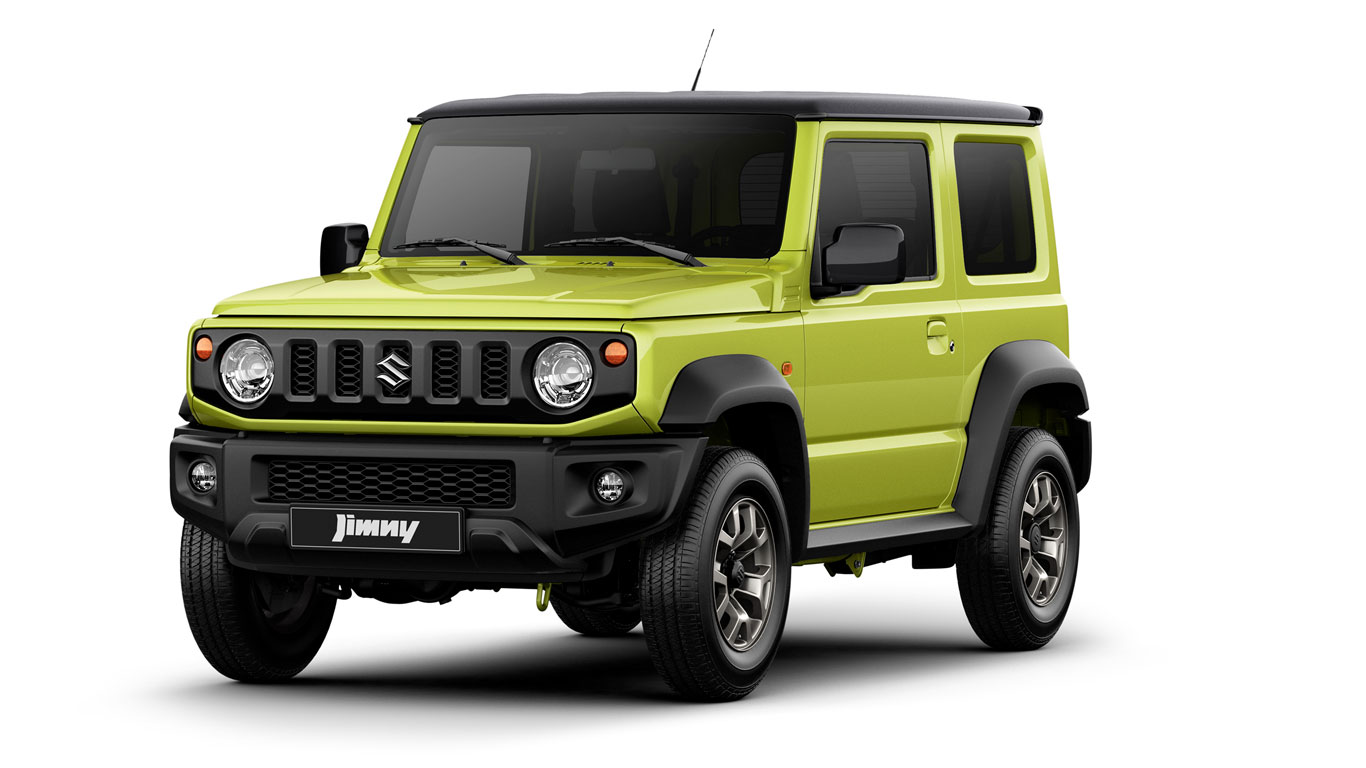
Suzuki Jimny
Suzuki is rolling into Paris armed with an antidote to the rise of the needlessly oversized and brutish SUV. The new Jimny tips its hat to Suzuki models of old, featuring the likes of round headlights, independent indicators, rear combination lights and a tailgate-mounted spare wheel. Power is sourced from a 1.5-litre four-cylinder petrol engine, with two transmissions available. We’ll be driving a new Jimny before the Paris show…
DS 3 Crossback
As the new suggests, the new DS 3 Crossback will be a smaller sibling to the DS 7 Crossback (pictured) and will do battle in the hotly contested compact SUV segment. Although little is known about the new car, we do know that it will use PSA’s small Common Modular Platform and that an electric version is on the cards.
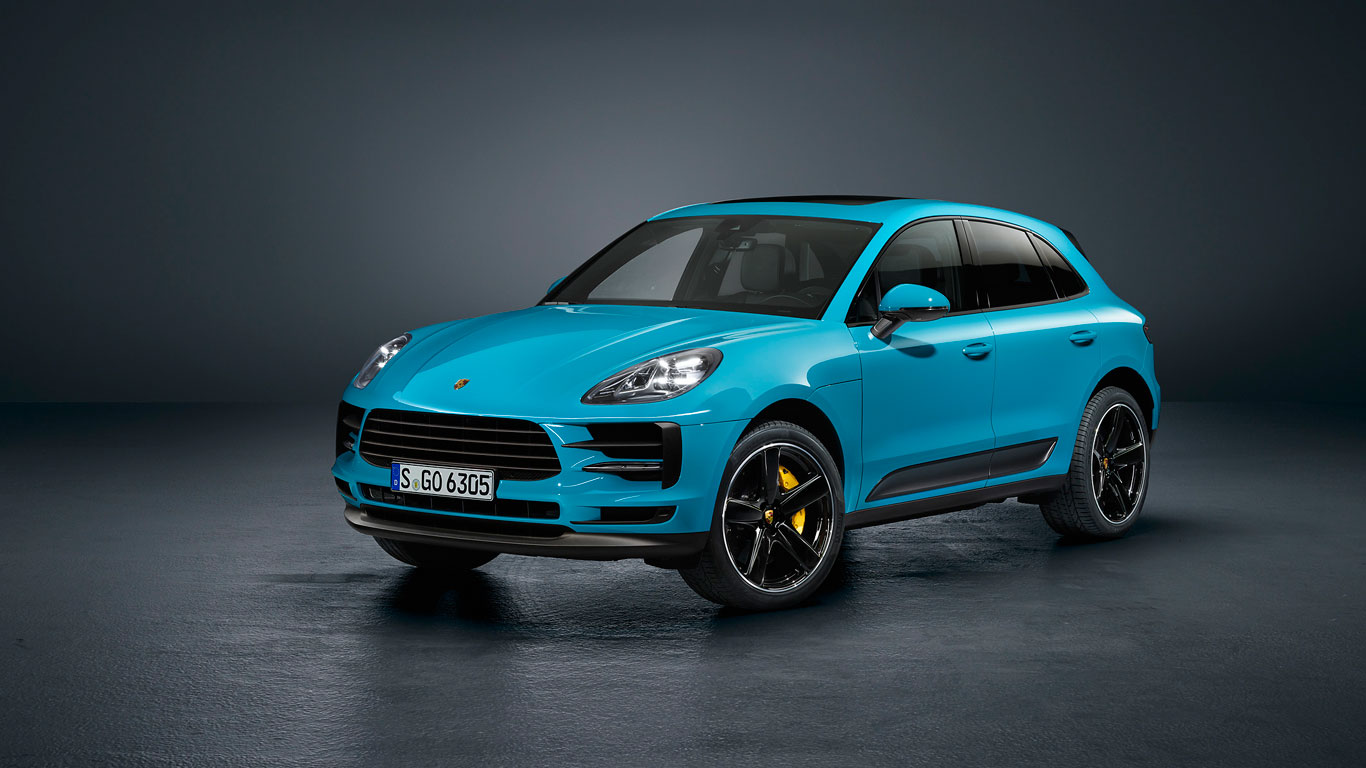
Porsche Macan
Fresh from its launch at the Shanghai Motor Show in July, the new Porsche Macan will be making its European debut in Paris. Sensibly, Porsche has retained much of the original car’s styling, adding a LED light strip across the back, standard-fit LED headlights and a new 11-inch touchscreen infotainment system. There’s also a new range of exterior colours, including Miami Blue, Mamba Green Metallic, Dolomite Silver Metallic and Crayon.
Mercedes-Benz EQC
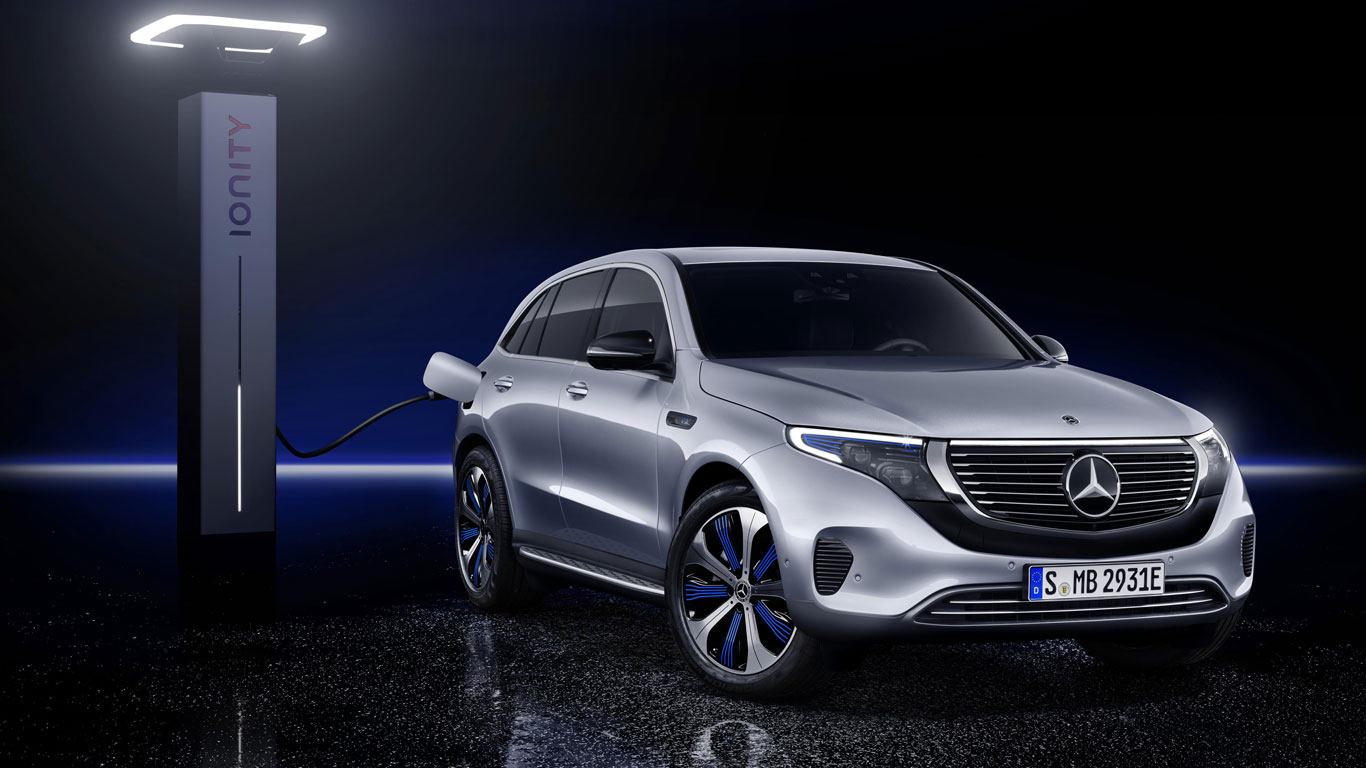
If looks could kill, the Tesla Model X and Jaguar I-Pace could be in for a nasty surprise. Questionable aesthetics aside, the Mercedes-Benz EQC is the firm’s first fully-electric SUV, featuring an 80kWh lithium-ion battery providing a 280-mile range. Alternatively, if you’re not too fussed about overall range, the 408hp EQC will sprint to 62mph in just 5.1 seconds.
Skoda Kodiaq vRS
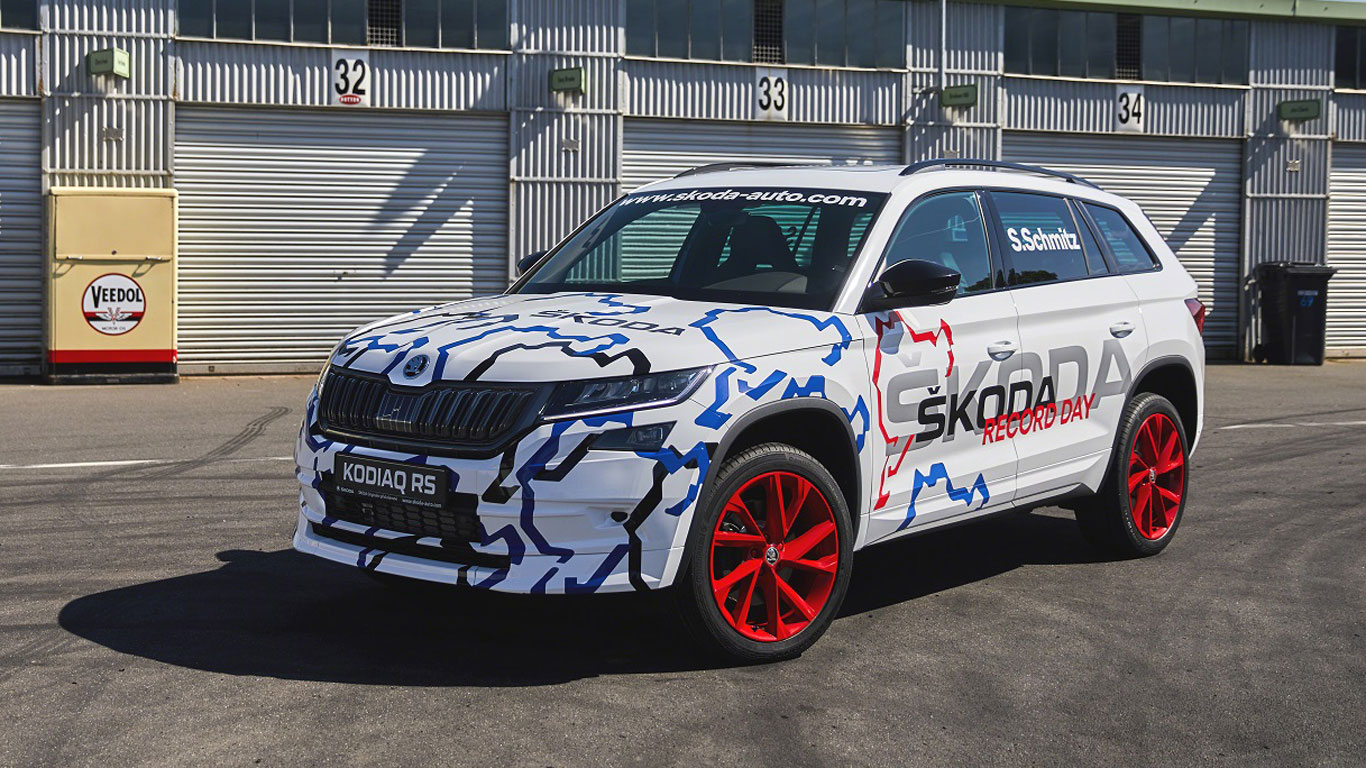
This is the first SUV to wear a vRS badge, with the hot Skoda Kodiaq powered by a 239hp twin-turbocharged diesel engine, making it the most powerful production diesel in the firm’s history. In June, a Skoda Kodiaq vRS driven by Sabine Schmitz set a record for the fastest time for a seven-seater SUV around the Nürburgring, lapping the famous circuit in 9:29.84 minutes. This should come in handy on the school run.
BMW 8 Series
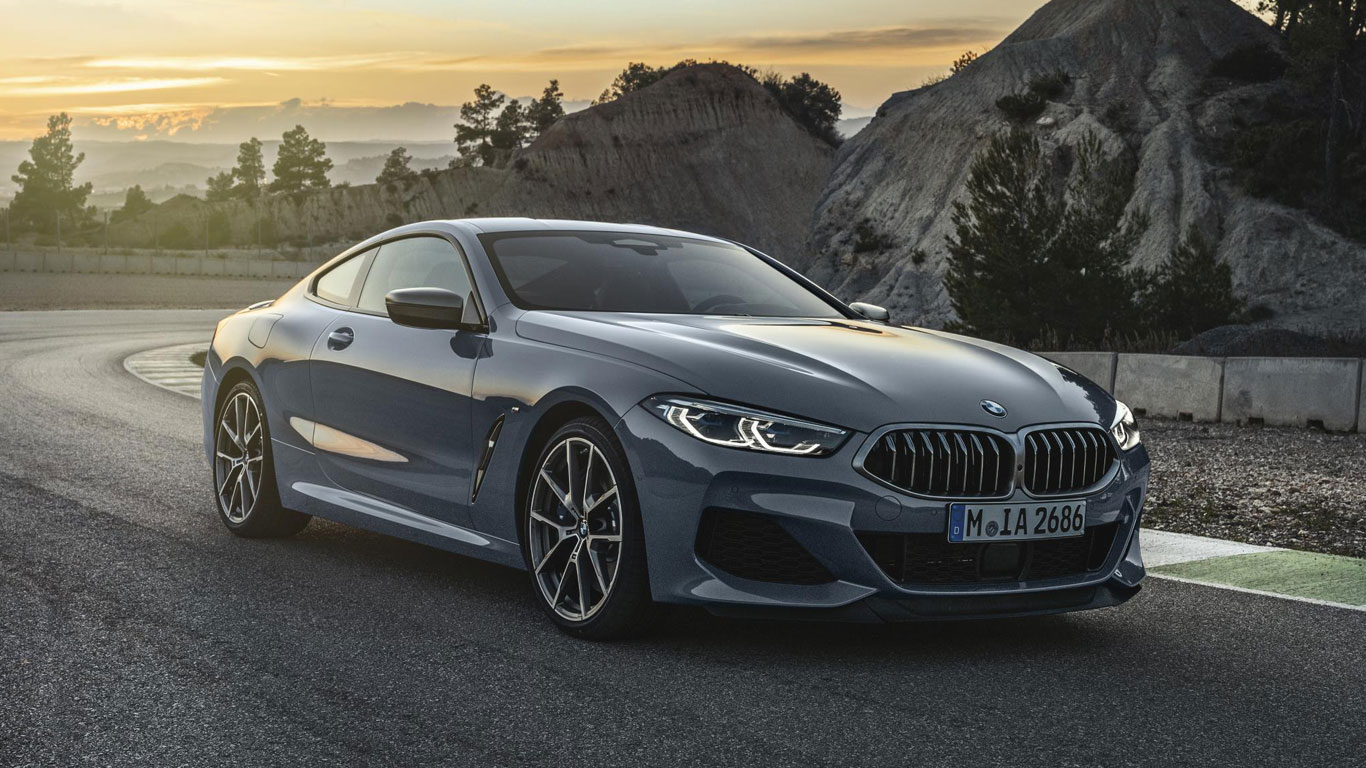
The new BMW 8 Series isn’t making its debut at the Paris Motor Show – racegoers will have seen it at the 2018 Le Mans 24 Hours race – but we’re a little closer to seeing the first cars on the road. It’s based on the same platform as the 5 Series and 7 Series, but BMW has treated the 8 Series to a brand new, bespoke interior. Yours from £76,720.
Kia ProCeed
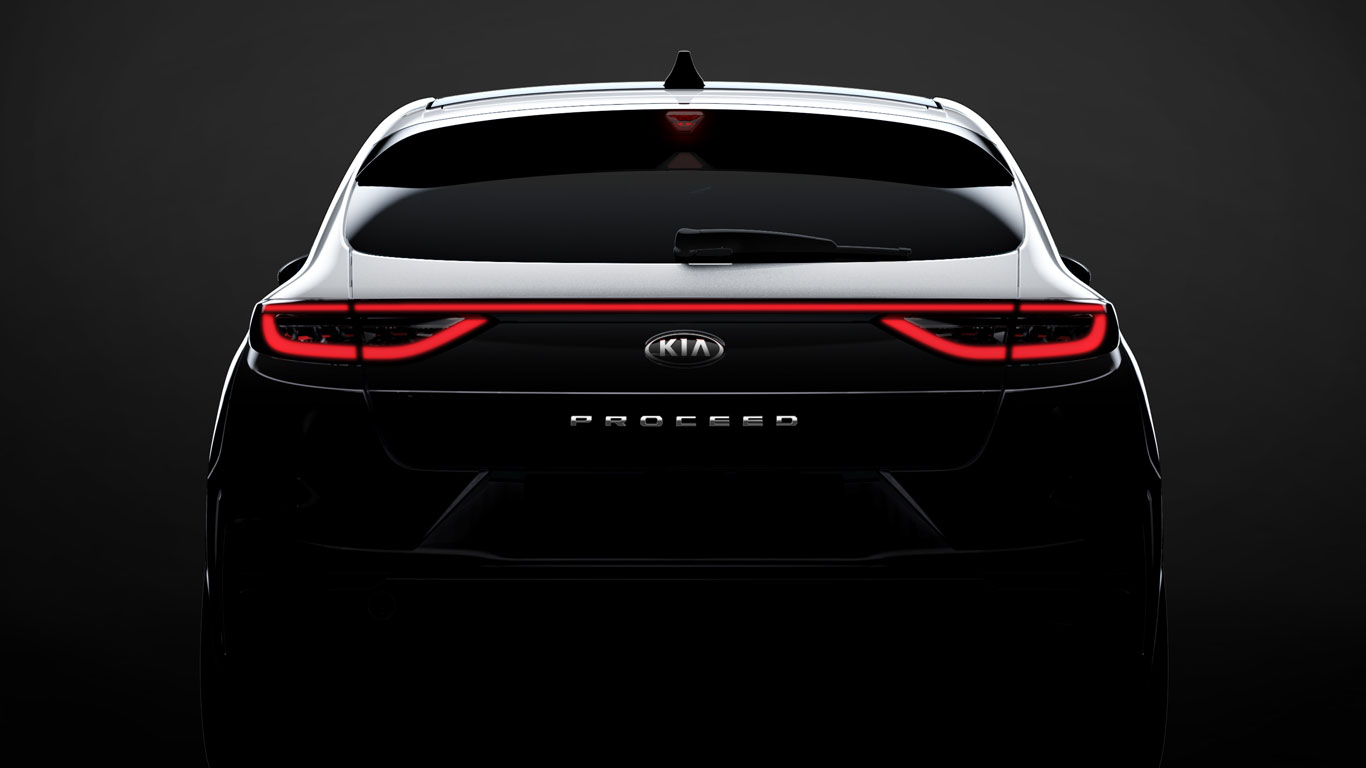
In common with the five-door Ceed, Kia has dropped the apostrophe (and the underscore) from the Proceed, with Paris our first chance to see the new five-door estate version. Kia is calling it a ‘shooting brake’, but we’re not sure it can live up to such a grand and noble tag. That said, if the 2017 Kia Proceed Concept is anything to go by, it’ll be quite a looker. Ding dong.
Peugeot 508 SW
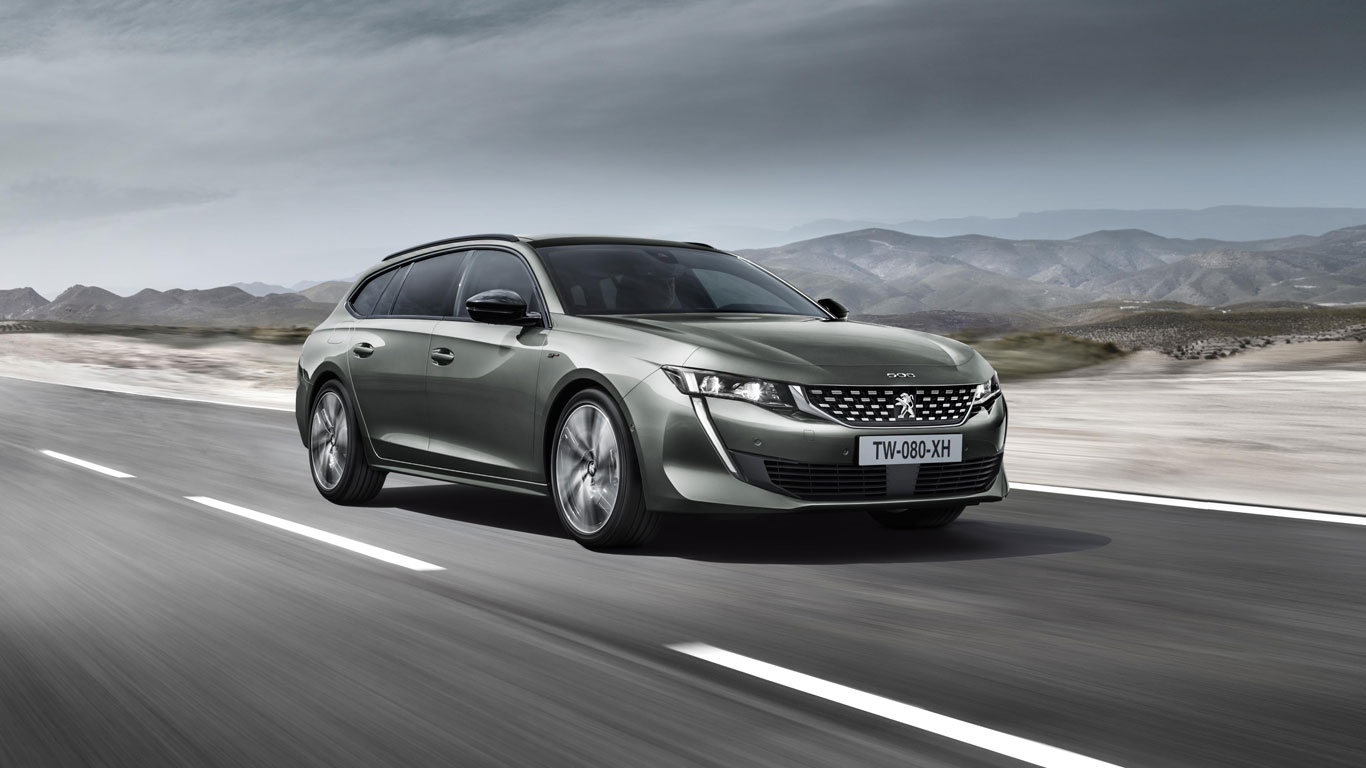
The Peugeot 508 SW is the estate version of the 508 saloon and inherits all of the good looks of its stablemate. The sleek styling comes at a price – at 530 litres, the boot is 30 litres smaller than the old 508 SW, although this can be extended to 1,780 litres with the seats folded down. It makes the Volkswagen Passat estate look a tad outmoded.
Citroen C5 Aircross Hybrid Concept
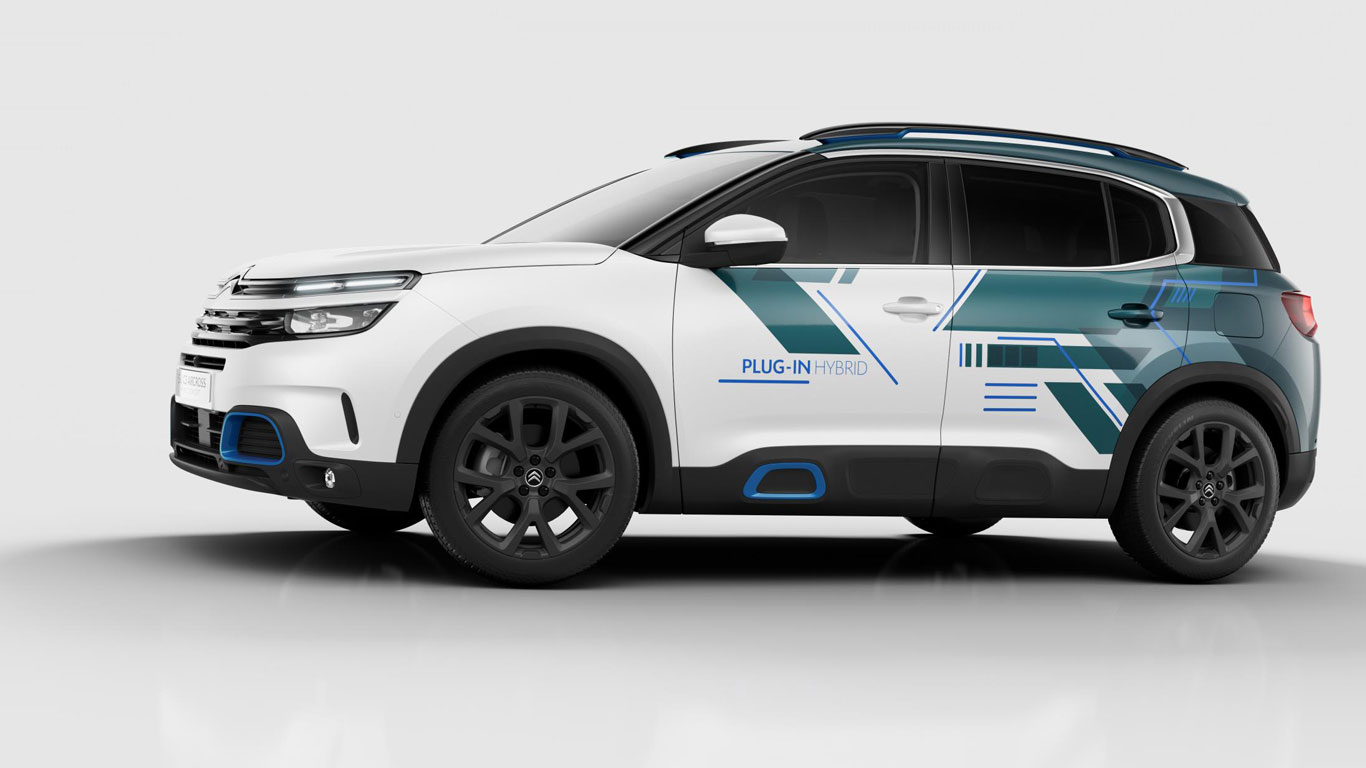
The Citroen C5 Aircross Hybrid Concept will make its global debut in Paris – the first stage in the brand’s ‘energy transition offensive’, leading to 100 percent of the range having an electric option by 2025. The C5 Aircross features Citroen’s Progressive Hydraulic Cushions and Advanced Comfort seats, two innovations we’ve experienced in the new Citroen C4 Cactus.
Toyota Corolla Touring Sports
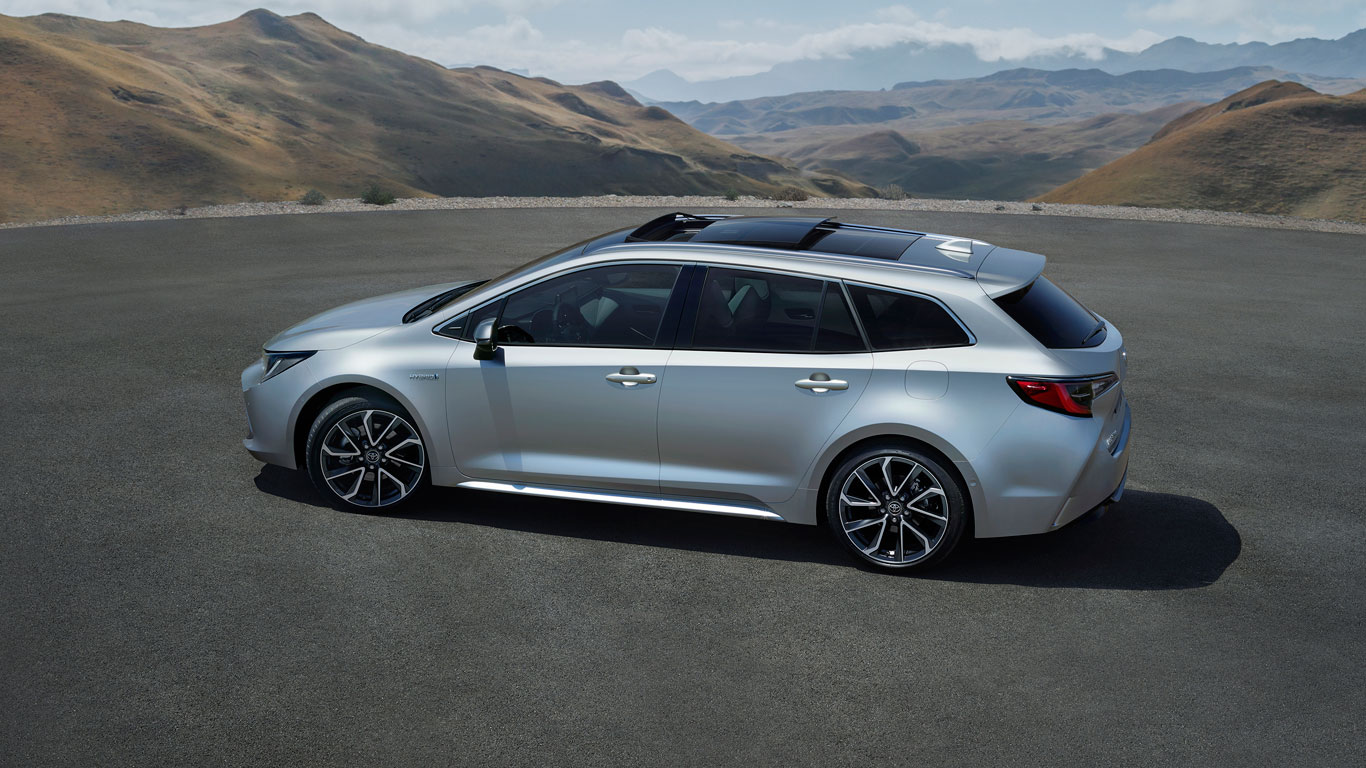
The European-designed and striking Corolla Touring Sports follows the unveiling of the Toyota Corolla hatchback revealed earlier this year. It also heralds the UK return of the Corolla name, replacing the outgoing Toyota Auris. A brand new 2.0-litre hybrid powertrain will be available, along with a 1.8-litre hybrid and a conventional 1.2-litre petrol.
BMW Z4
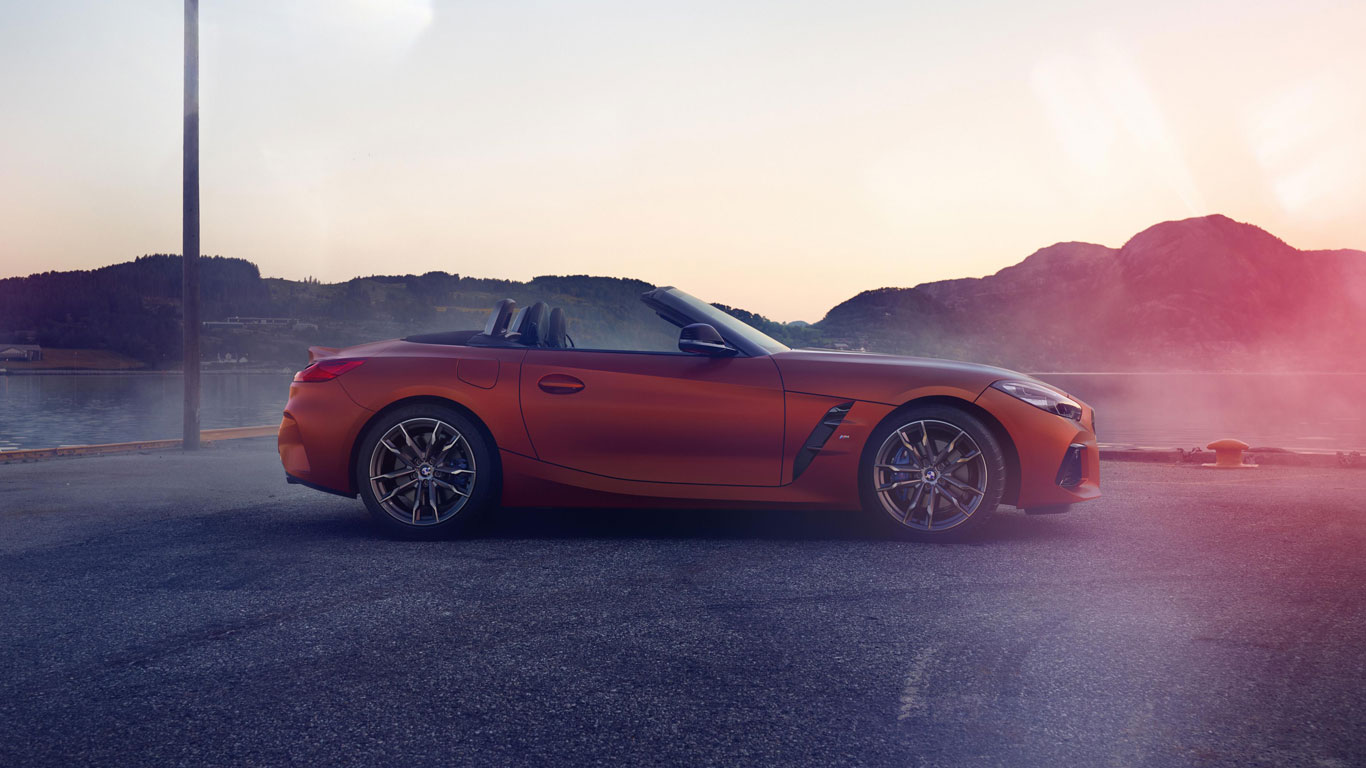
BMW chose Monterey Car Week to give the all-new Z4 its global debut, but Paris will be the first chance for the European public to cast its eyes over the roadster. Co-developed with Toyota – a new Supra is also on the way – the Z4 has a 50:50 weight distribution, a low centre of gravity and a wide track. We’ll have to wait for the full specs, but the M40i will be powered by a six-cylinder twin-turbocharged engine producing 340hp.
Mercedes-AMG A35
The new entry-level Mercedes-AMG A35 is based on the standard A-Class (pictured) and will sit below the A45 in AMG’s bonkers range of cars. Little is known about the A35, but we’re expecting a power output in excess of 300hp, a £35,000 price tag and countless opportunities to tempt Focus RS drivers into an impromptu traffic light Grand Prix.
Lexus LC Limited Edition
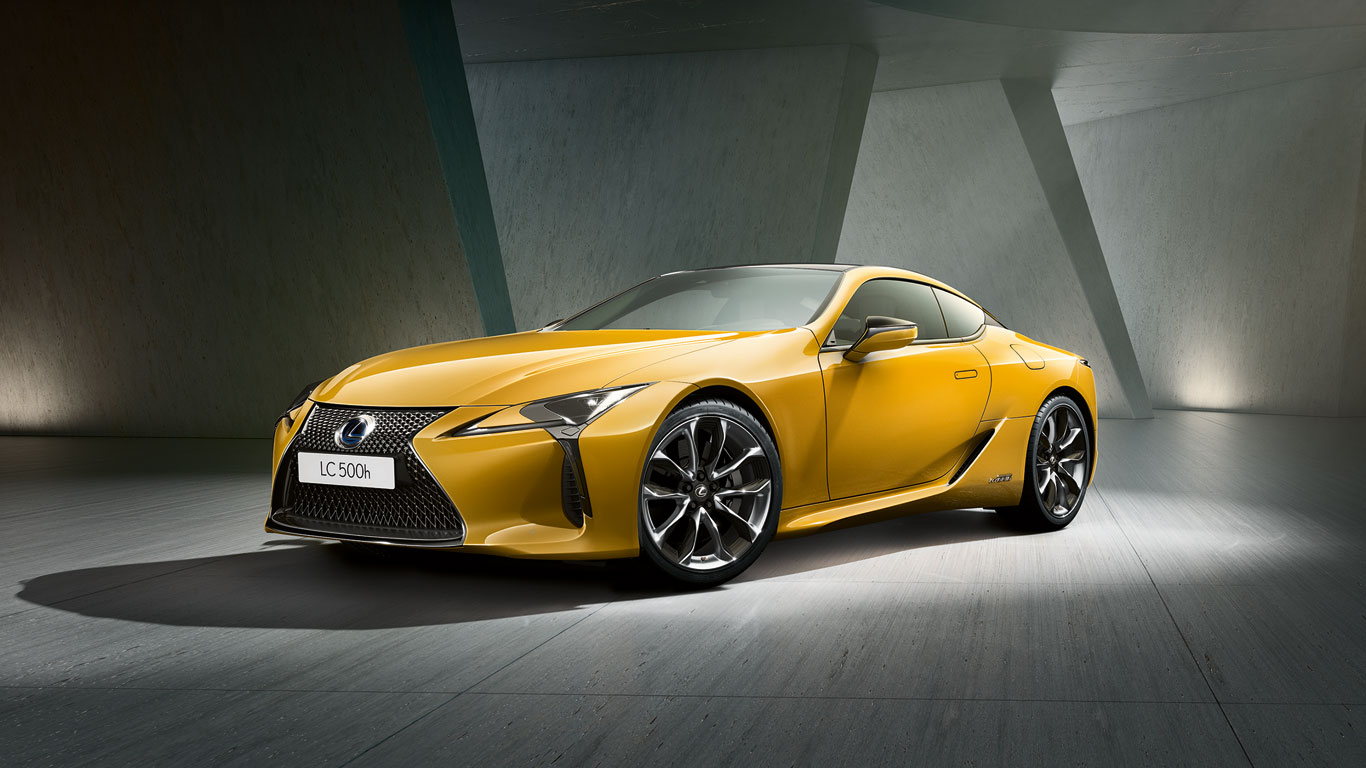
Lexus will unveil a new aptly-named LC Limited Edition in Paris, distinguished by its Naples Yellow paintwork which, the company says, is “achieved through [a] painstaking selection of layered paint and primer colours.” But it’s not all Tony Hart, because the LC LE also features the performance and handling features from the flagship LC Sport+ specification.
Audi A1
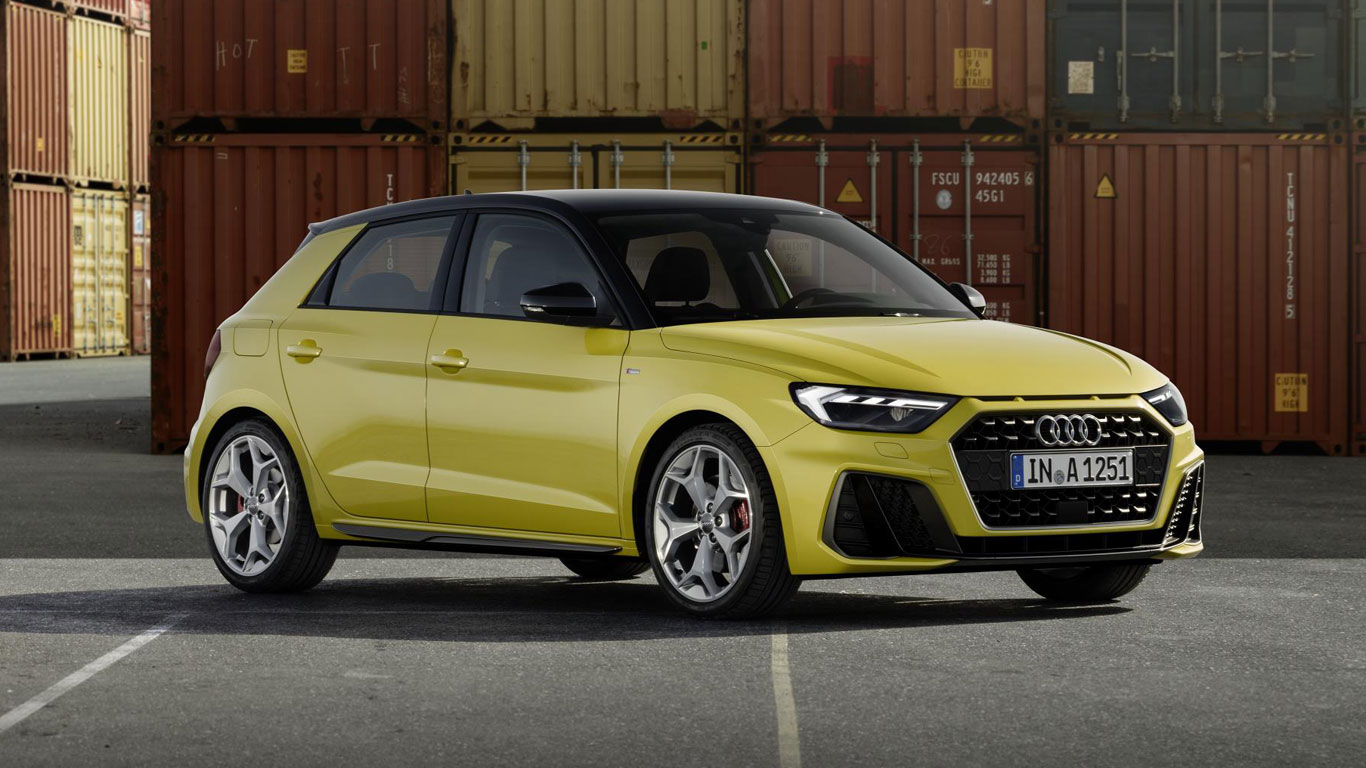
The new A1 is Audi’s most configurable car ever, making it the ‘pick and mix’ of the supermini sector. “Customers can combine exterior and interior lines however they like,” says Audi. Be prepared for some rather outlandish creations when the new A1 hits the streets.
BMW X5
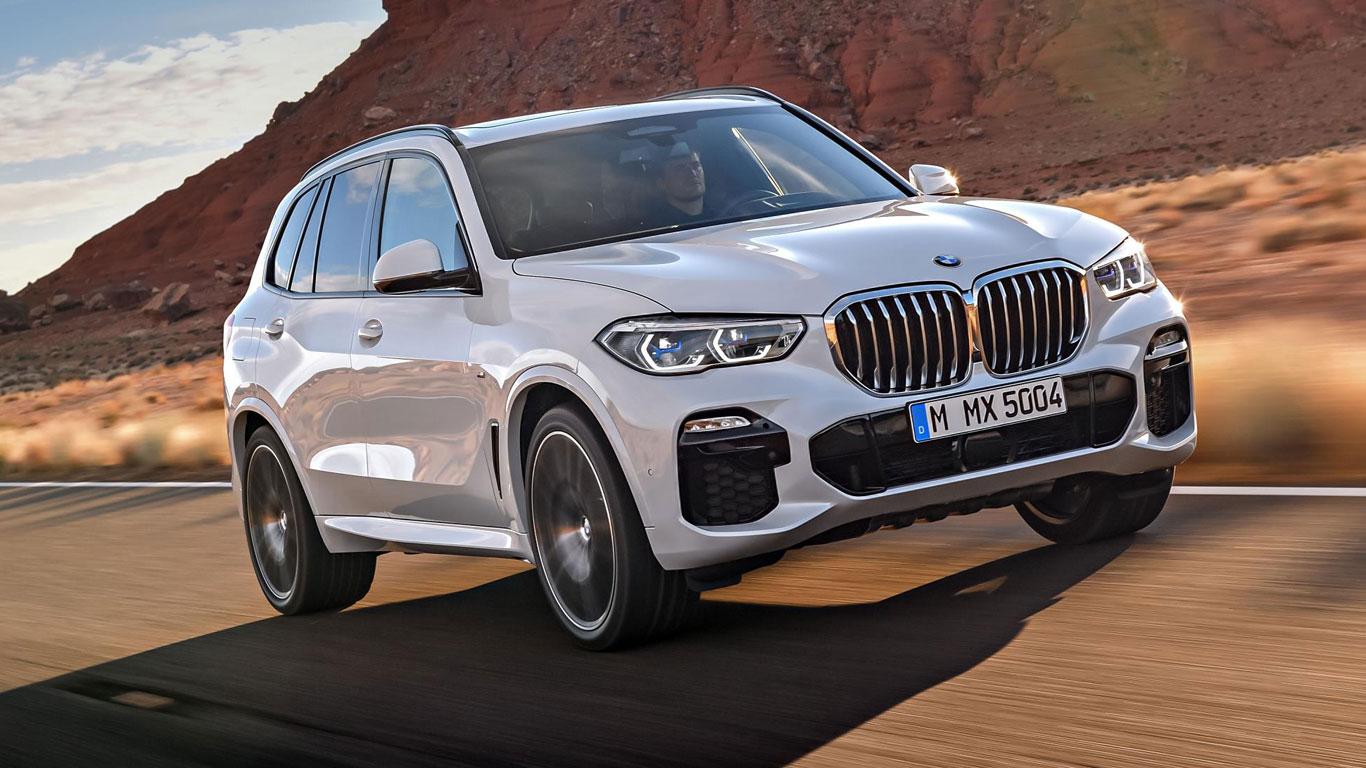
You’ve already seen the photos, but this will be our first chance to get up close and personal with BMW’s luxury SUV. Predictably, the new X5 is longer, wider and taller than its predecessor, which means more cabin and luggage space. It’s available to order now, with prices starting from £57,495.
Audi A4
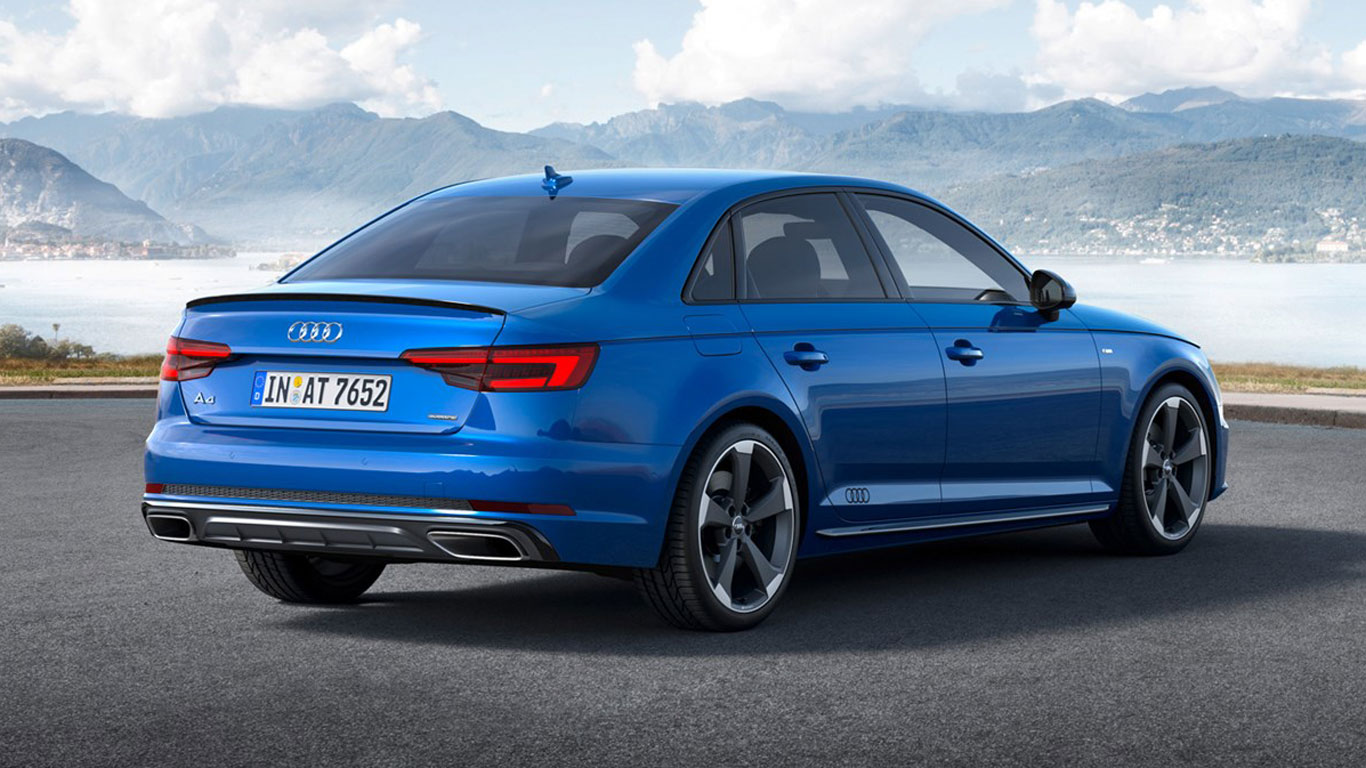
With a facelifted Mercedes-Benz C-Class on sale and a new BMW 3 Series waiting in the wings, Audi had to do something with the A4. The response: a subtle new look, standard-fit sat nav and a small number of interior and tech upgrades.
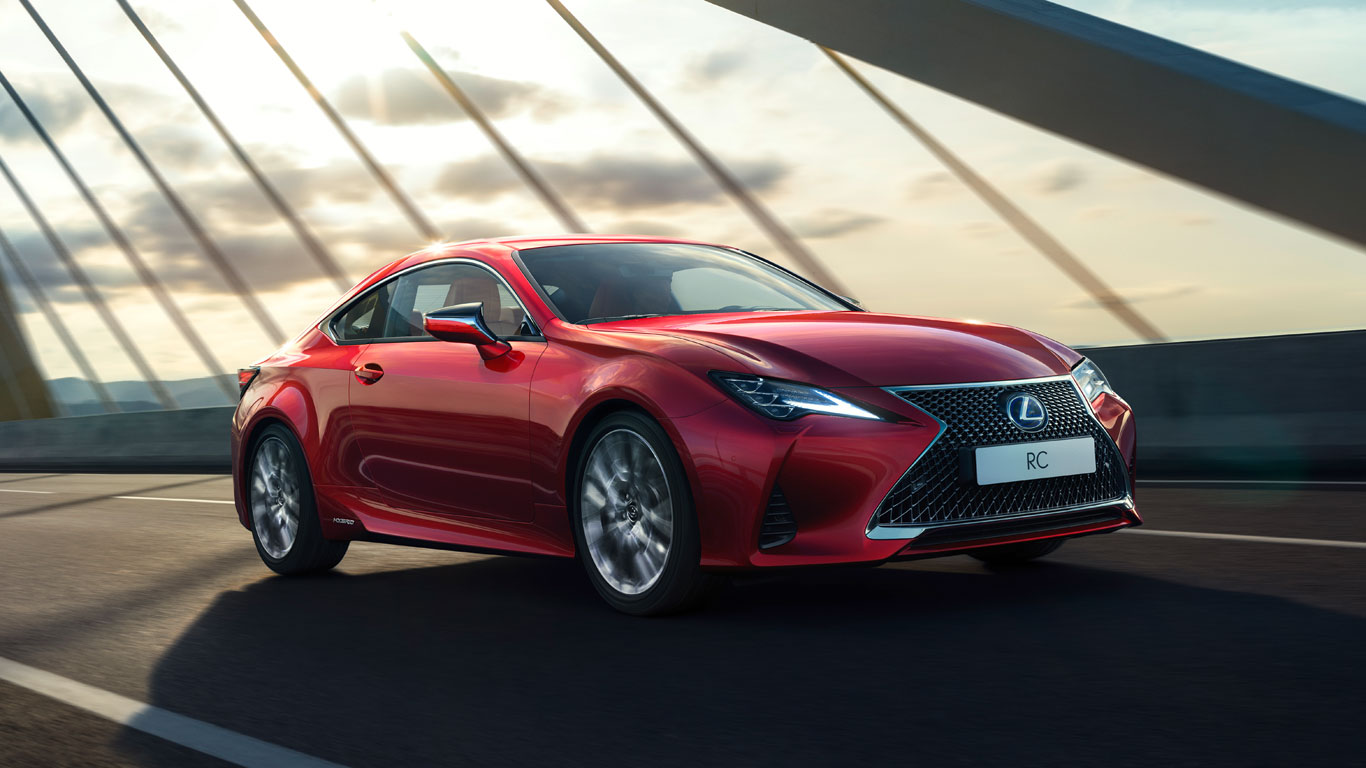
Lexus RC
According to Lexus, this isn’t the new RC, it’s the “reimagined” RC. The company has even given the coupe its own hashtag, so you can follow its launch via #SharpYetSmooth, which sounds a little like a tagline for a beer or cider.
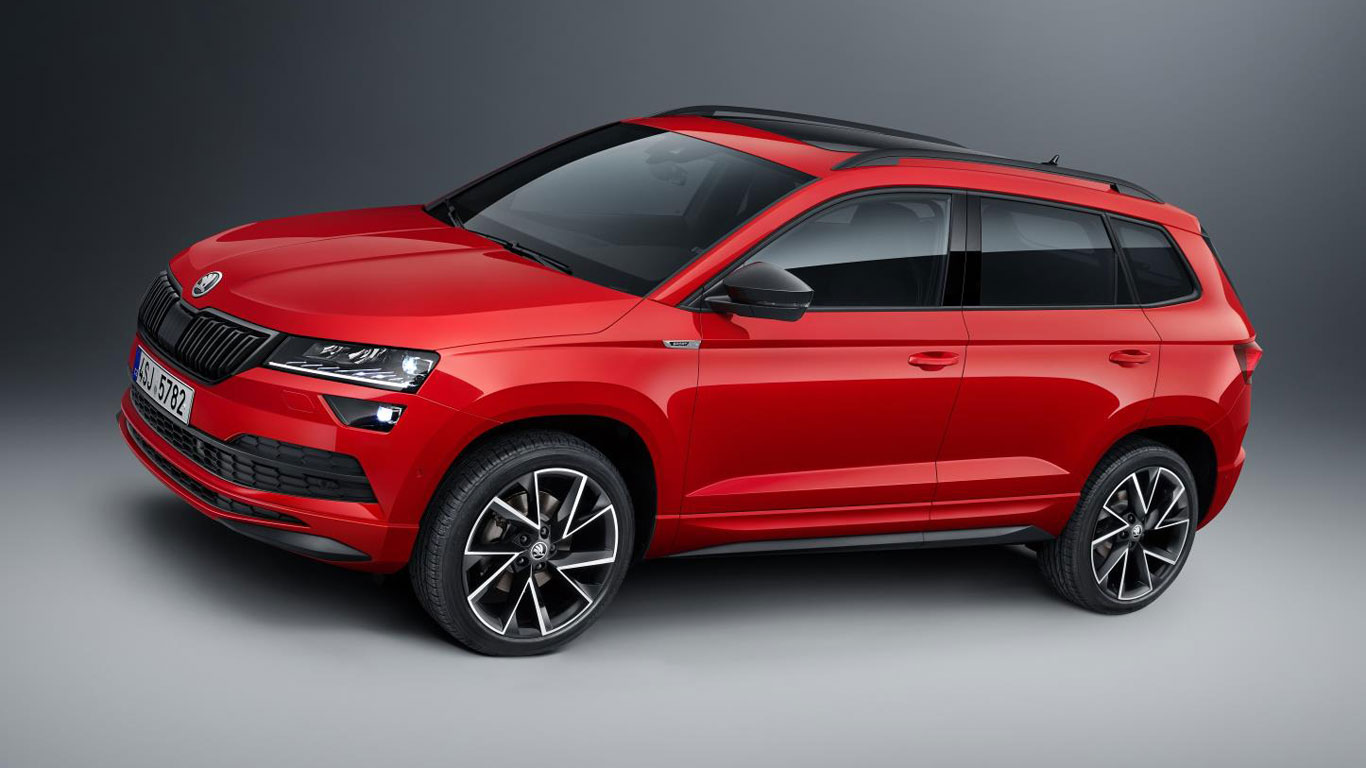
Skoda Karoq Scout and Sportline
The Karoq isn’t new, but Paris will be your first chance to see two new trim levels of the SUV formerly known as the Yeti. The SportLine will be offered exclusively with the most powerful 190h 2.0-litre TSI petrol engine, along with 19-inch ‘Vega’ black polished alloys, sports bumpers, black sports seats and stainless steel pedals. Meanwhile, Karoq Scout trades kerb appeal for off-road ability, featuring four-wheel drive as standard and a more rugged appearance.
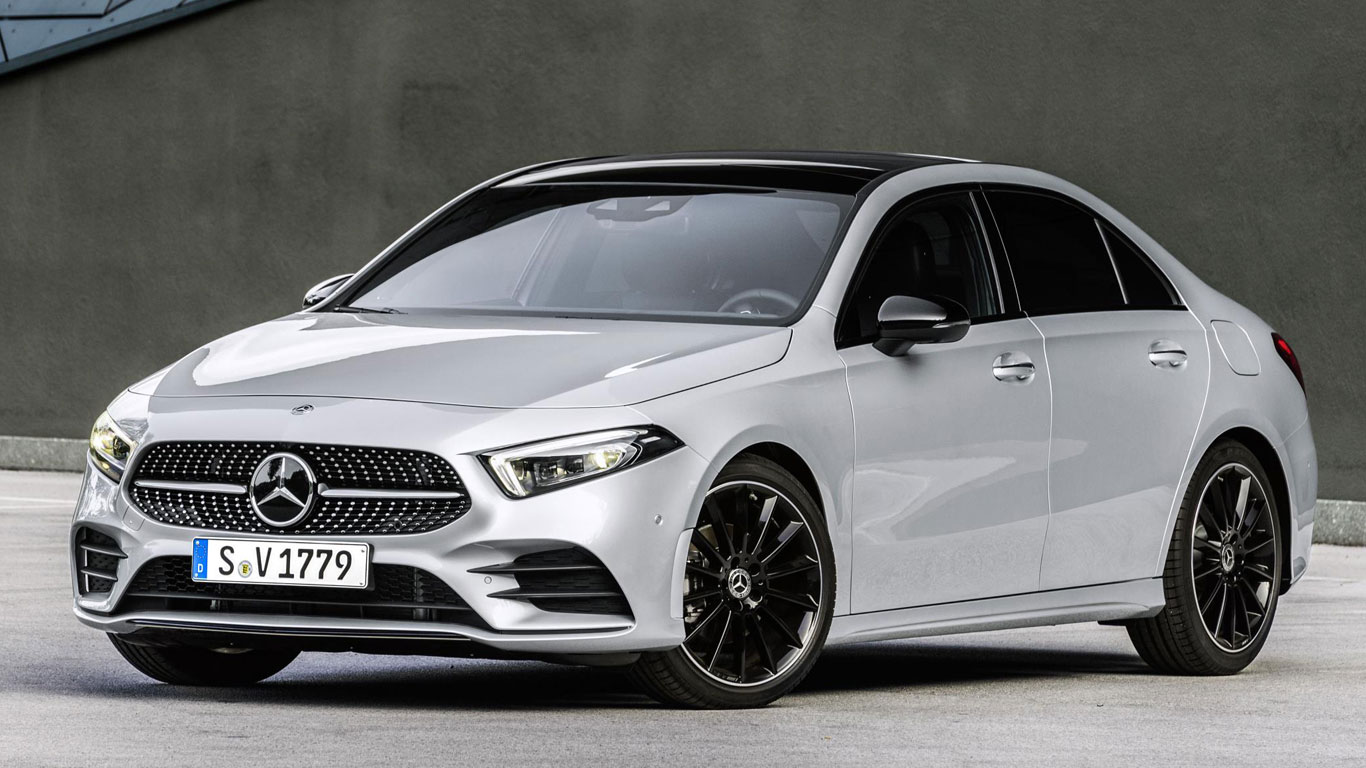
Mercedes-Benz A-Class saloon
The new Mercedes-Benz A-Class saloon boasts a Cd drag factor of just 0.22 which, when combined with a compact frontal area of 2.19 metres squared, makes it the most aerodynamic new car in the world. You can order your new wind-cheating A-Class now, with deliveries expected in early 2019.
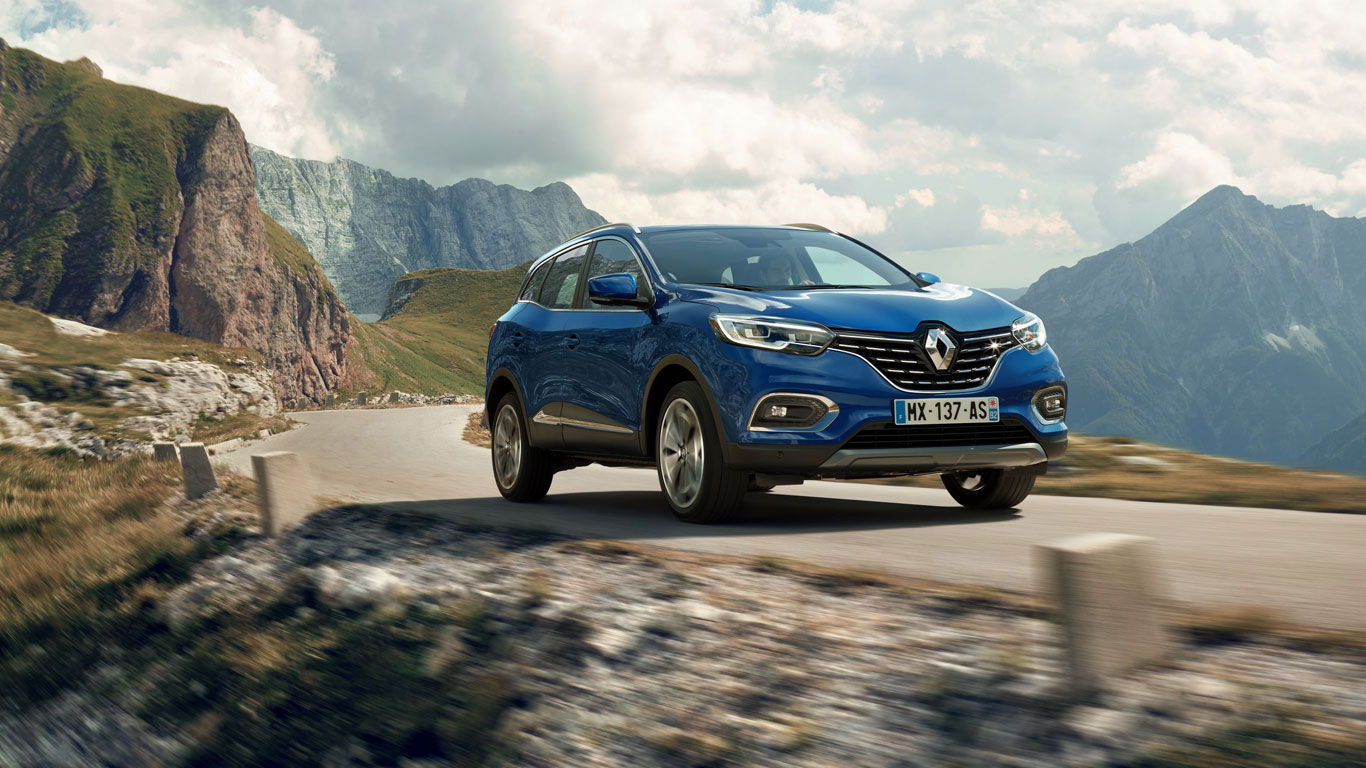
Renault Kadjar
“New Kadjar makes progress in all areas. While respecting traditional SUV design codes, it has a more attractive, stylish look, with dynamic contemporary lines,” says Renault. Makes progress in all areas? This sounds a little like a school report written by your French teacher.
Mercedes-Benz GLE
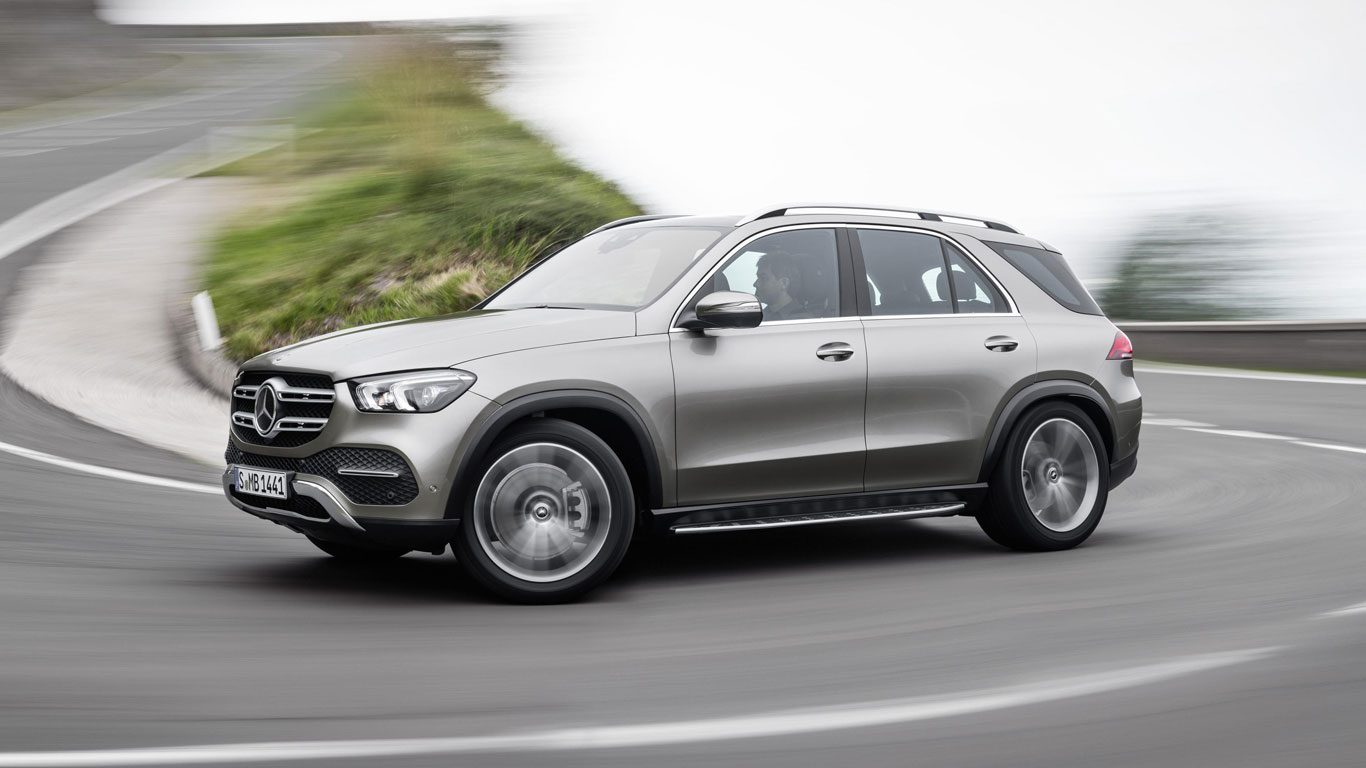
Mercedes-Benz is waging war on being uncomfortable, with a car that delivers “extraordinary” ride comfort. The new GLE features optional active air suspension that can scan the road ahead to counteract bumps before they are reached. A seven-seat option is a GLE first, but if you can live without the extra seats you’ll enjoy a boot that stretches from 825 litres to over 2,000 litres.
Audi E-tron
With the Jaguar I-Pace hitting the road and the Mercedes EQC poised to make its debut in Paris, Audi is in danger of being left behind in the electric SUV race. The E-tron is the firm’s first all-electric series production model and will offer a driving range of at least 248 miles. It made its world debut in San Francisco ahead of its European debut in Paris.
Mercedes-Benz B-Class
“The new Mercedes-Benz B-Class puts the emphasis on the sports part of Sports Tourer,” says Mercedes, with the new car featuring a sharper exterior, along with greater agility and more comfort than before. With safety functions carried over from the S-Class, the new B-Class should be one of the safest cars in its class.
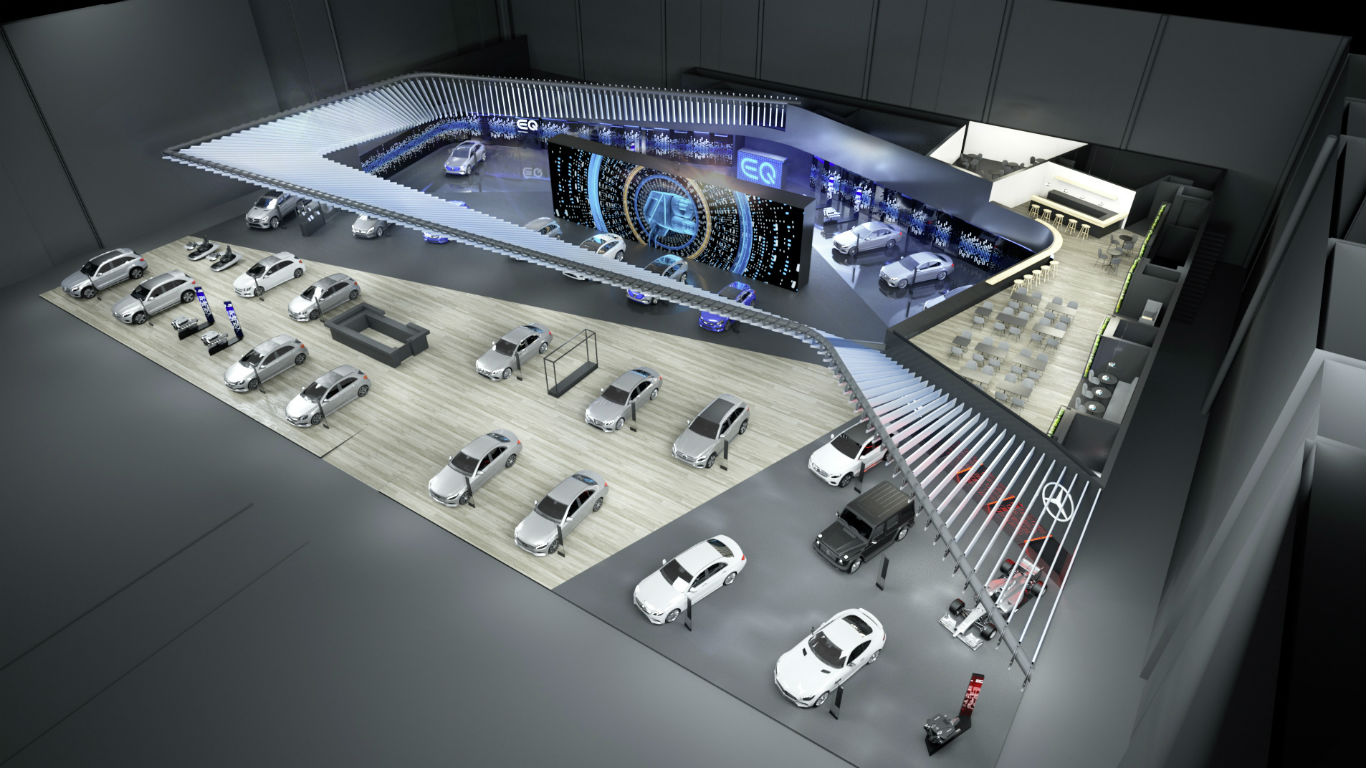
It promises to be a busy show for the German giant. Naturally, we’ll be there to bring you all the latest news and gossip, straight from the show floor.
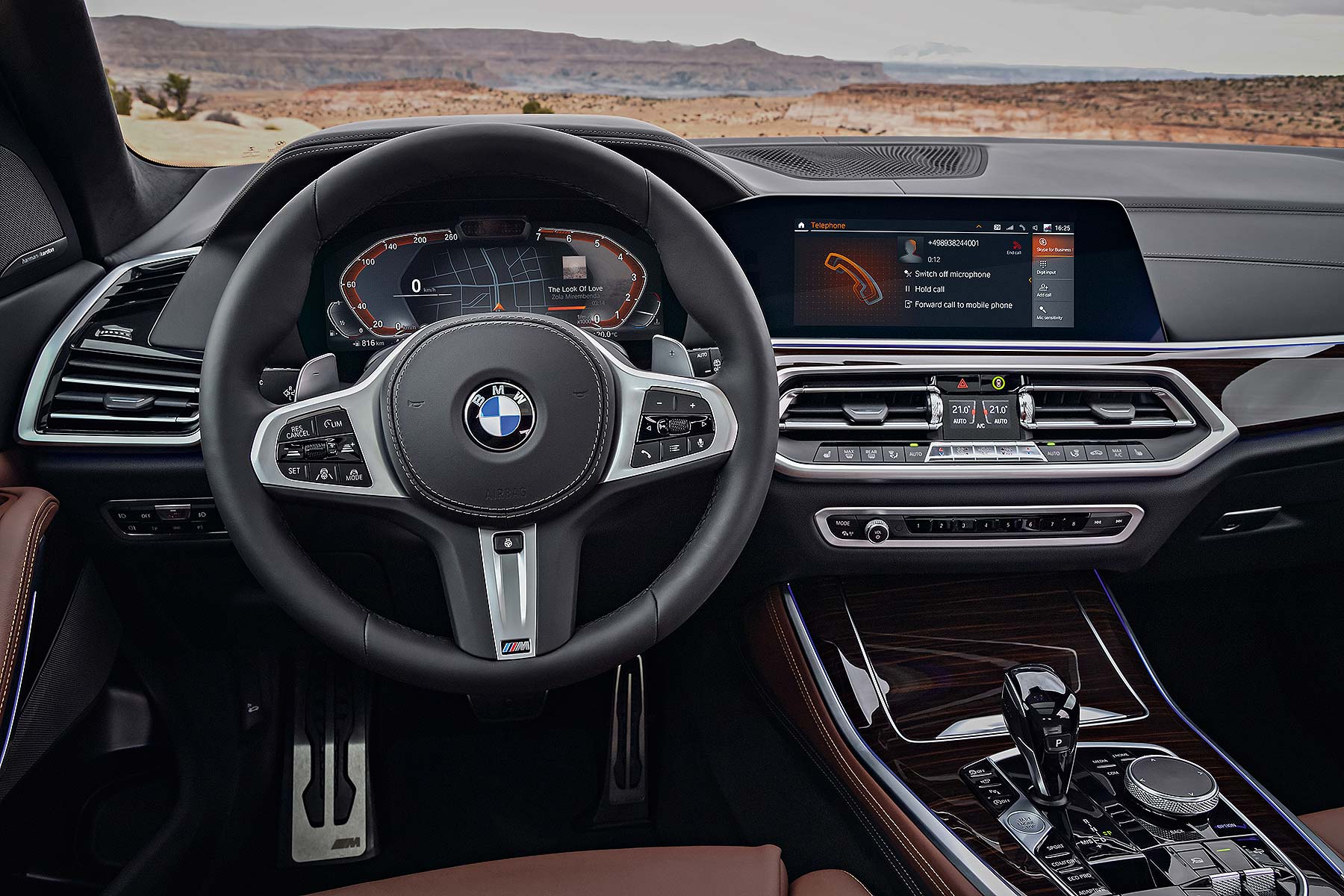
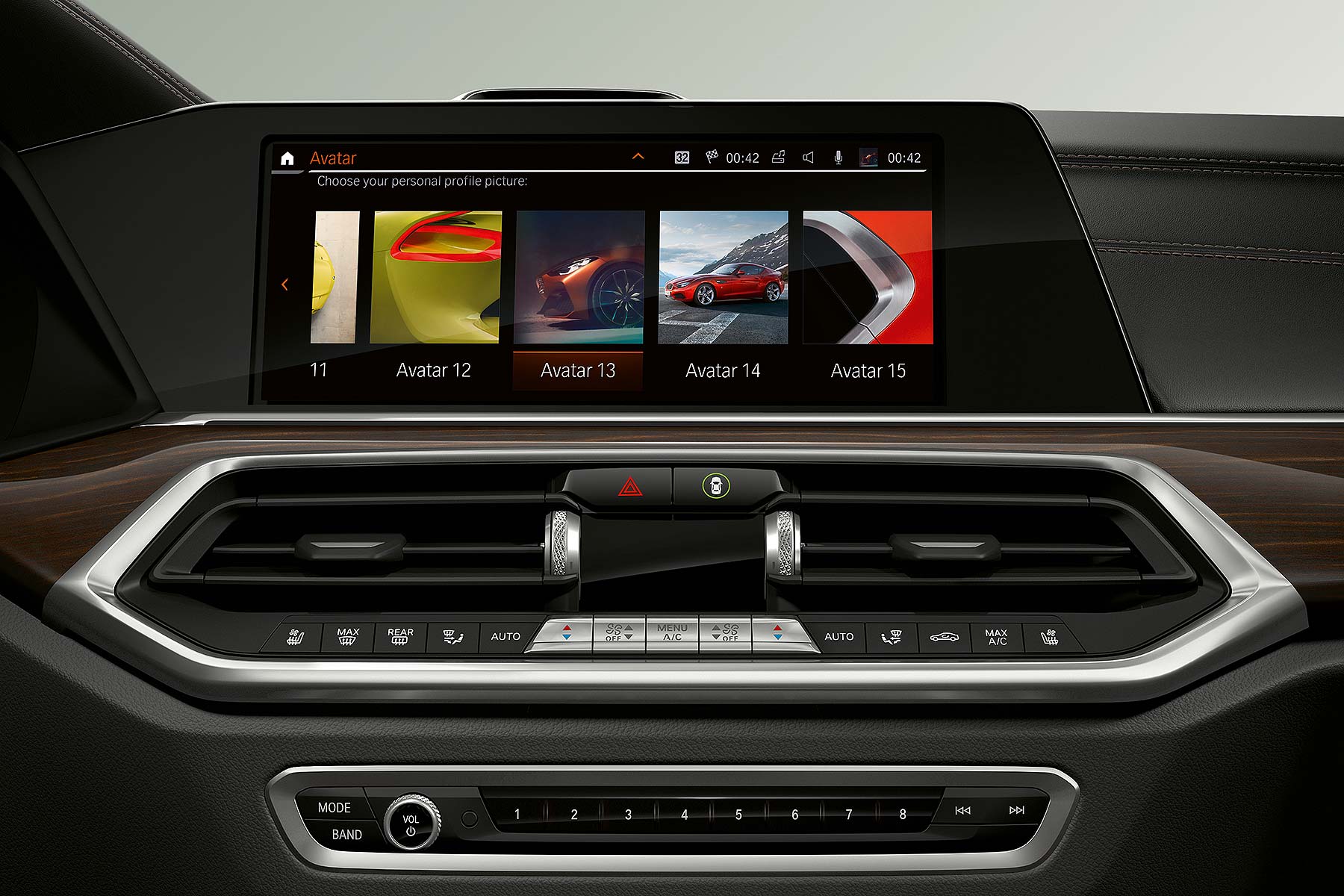
The long-running BMW iDrive infotainment system is being phased out: future BMWs, including the new 3 Series revealed at the 2018 Paris Motor Show, will use the BMW Cockpit system instead.
BMW’s new infotainment system is described as more driver-focused than ever. The BMW Cockpit uses all-new software called the BMW Operating System 7.0, and also integrates the BMW Intelligent Personal Assistant for the first time.
Saying, ‘Hey BMW’ brings it to life…
There will be three levels of BMW Cockpit:
BMW Live Cockpit
BMW Live Cockpit Plus
BMW Live Cockpit Professional
The top-line Professional system will have a full digital instrument cluster in addition to the centre touchscreen that features on all systems – BMW calls this the Control Display, with the digital cluster being the Info Display.
The Control Display is now fully configurable. It’s based around tiles, and from two to four can be displayed on each configurable ‘page’: up to 10 pages can be configured.
Instead of being optimised around the rotary controller, the new BMW Cockpit’s primary optimisation is for touch, although the iDrive Controller does still remain. Gesture and voice control are also available.
BMW says the new system is much simpler and faster to use. The menu structure is ‘flatter’ than with iDrive, so submenus can be accessed with fewer steps. The setup is also contextual, displaying relevant options where necessary.
If it’s all still a bit overwhelming, the new BMW Intelligent Personal Assistant can help. Say ‘Hey BMW’ prompts it to life, and it will even understand natural language – if you say, ‘take me home’, it will set the navigation for your home address, for example.
You can be pretty casual, promises BMW. If you say, ‘Hey BMW, I’m cold’, it will adjust the cabin temperature. It’s going to continually evolve too, with technical upgrades bringing more preferences and settings.
Speaking of which, BMW’s added Remote Software Upgrade to the new system, for automatic over-the-air updates.
All newly-launched BMWs will get the new BMW Cockpit system. It’s already in production on the BMW X5, 8 Series and Z4, while the 3 Series will be its high-volume showcase when it goes on sale in early 2019.
BMW iDrive: a gamechanger
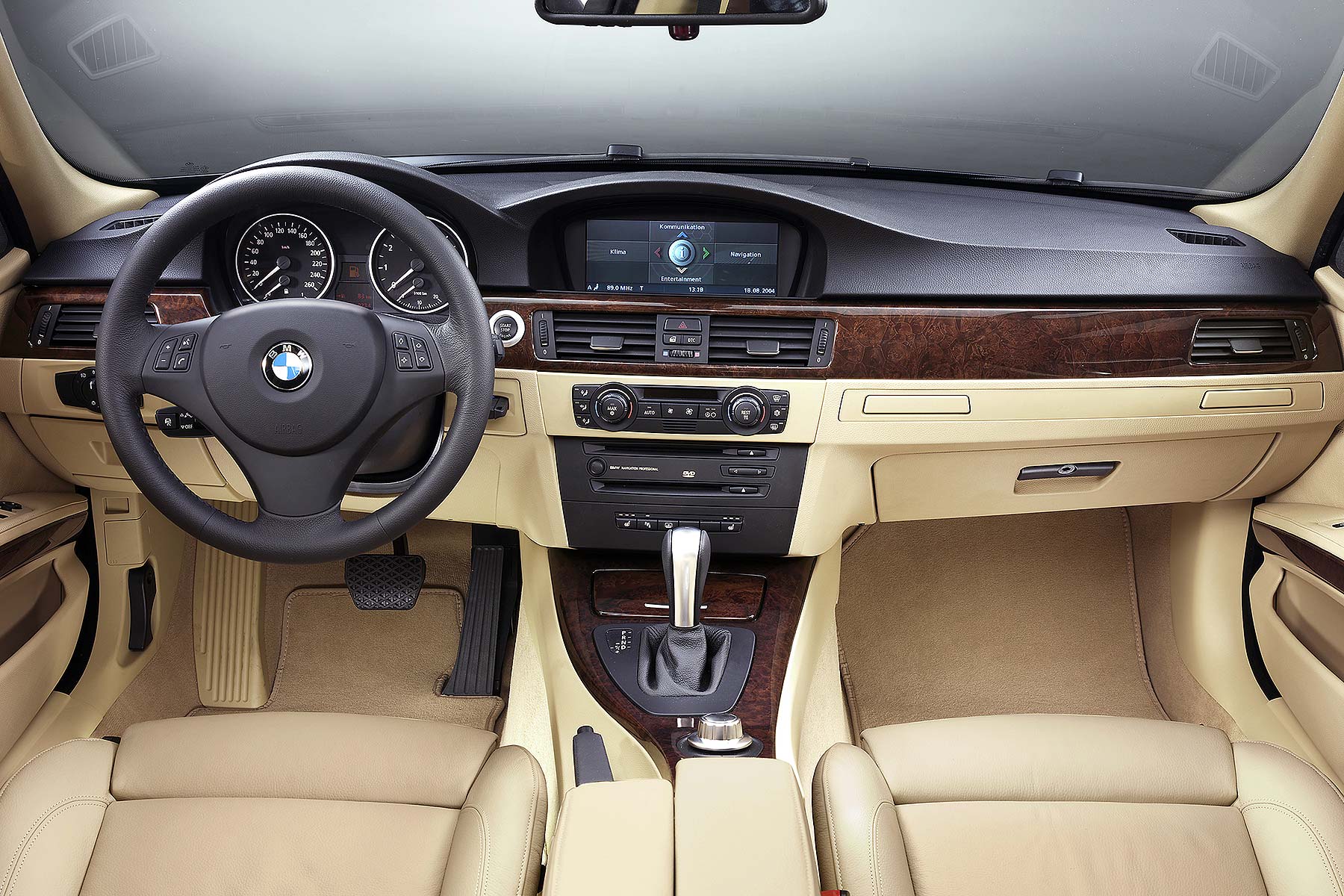
BMW first introduced iDrive on the 2001 7 Series. At the time, it was revolutionary, replacing multiple dashboard buttons with a multi-function rotary controller and a colour central display.
While not perfect, it nevertheless proved to be a trend-setter, and BMW evolved it over the years into arguably the finest automotive infotainment system of all.
Now, the final iDrive system, ID6, is being replaced by BMW Cockpit and Operating System 7.0. While it will be a new system to learn, BMW’s hoping the intuitiveness of the setup means it won’t be too much of a headache to learn…
There’s no organisation quite like Mission Motorsport. The Forces charity uses cool cars to help returning soldiers rehabilitate and reintegrate. With support from the likes of the Royal Foundation, The Endeavour Fund and Help for Heroes, Mission Motorsport takes a passion for cars and uses it to make a real difference for combat veterans in need.
It’s not all larking about in ATVs and blasting up runways in a supercharged Jaguar, though. We had a chat with founder James Cameron about all things MM. Here’s a potted account of what they have and all the great stuff they do.
A petrolhead toy box
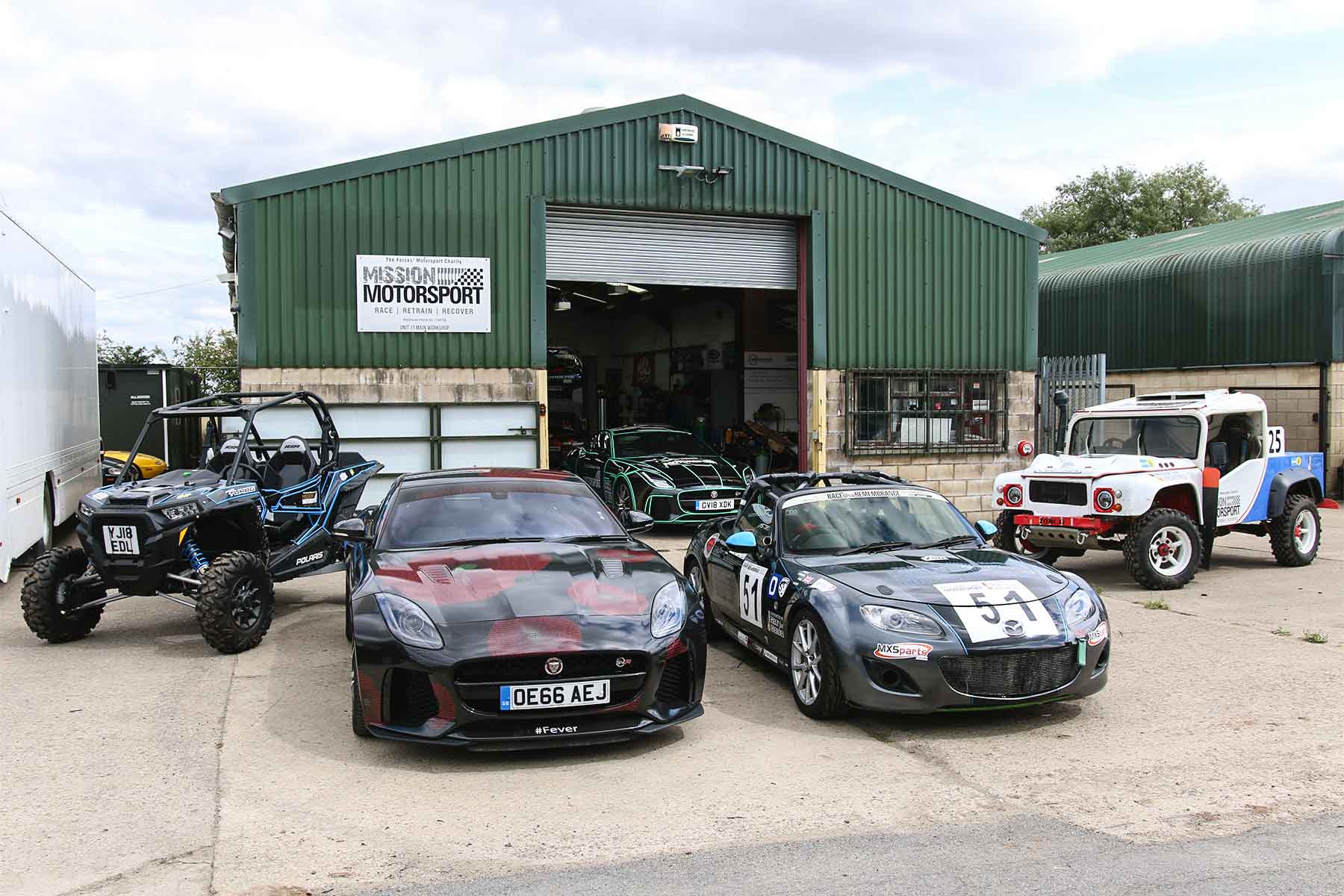
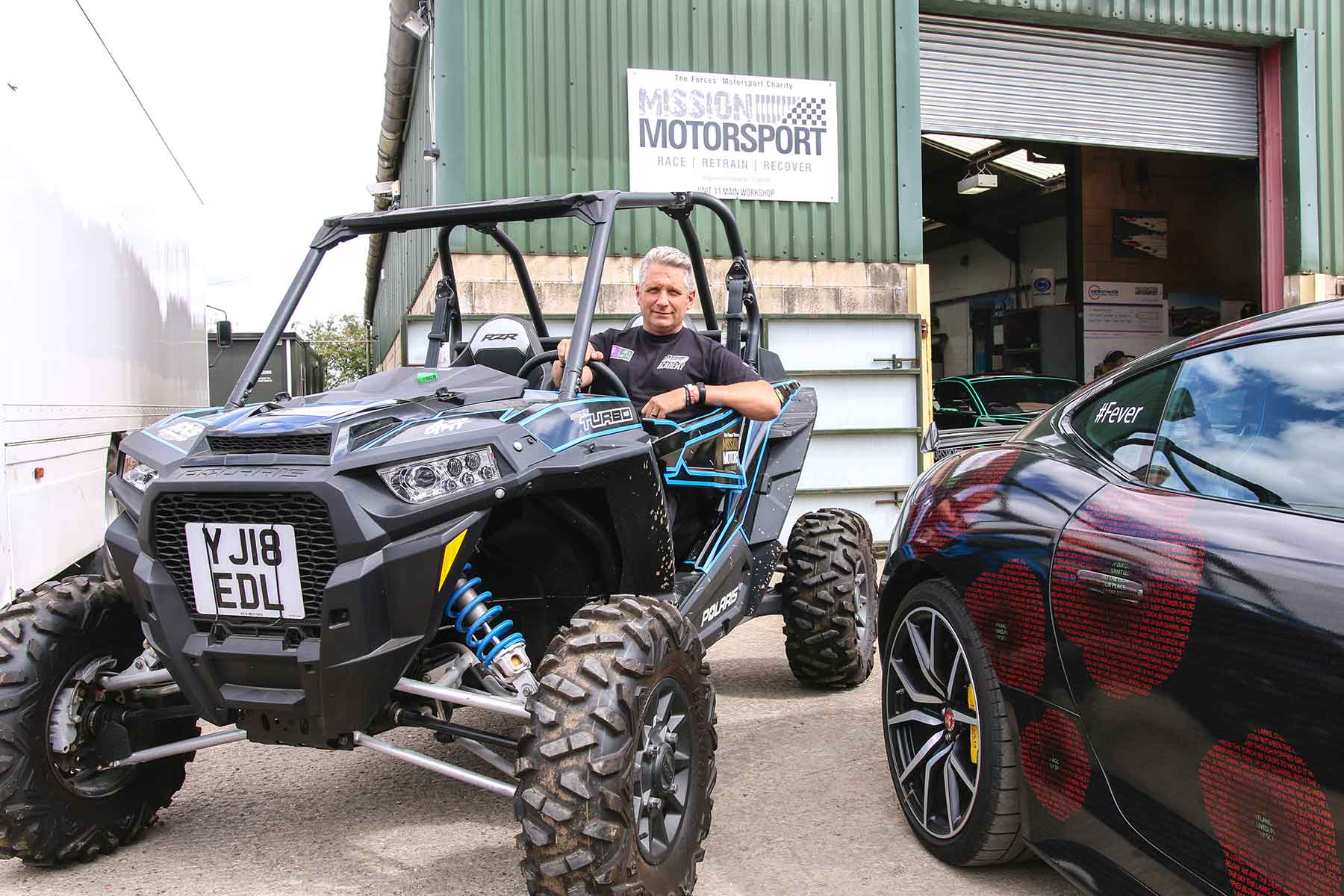
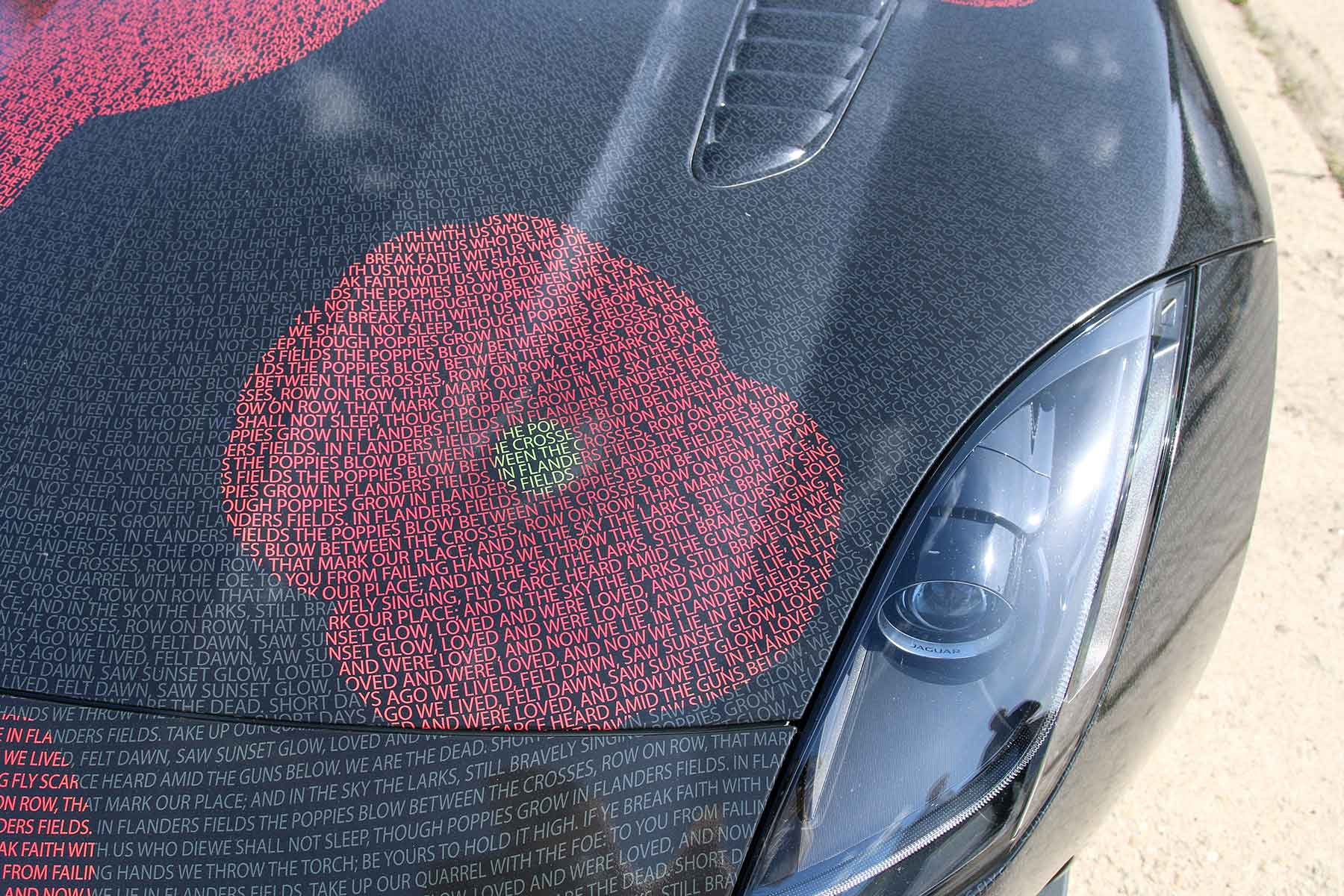
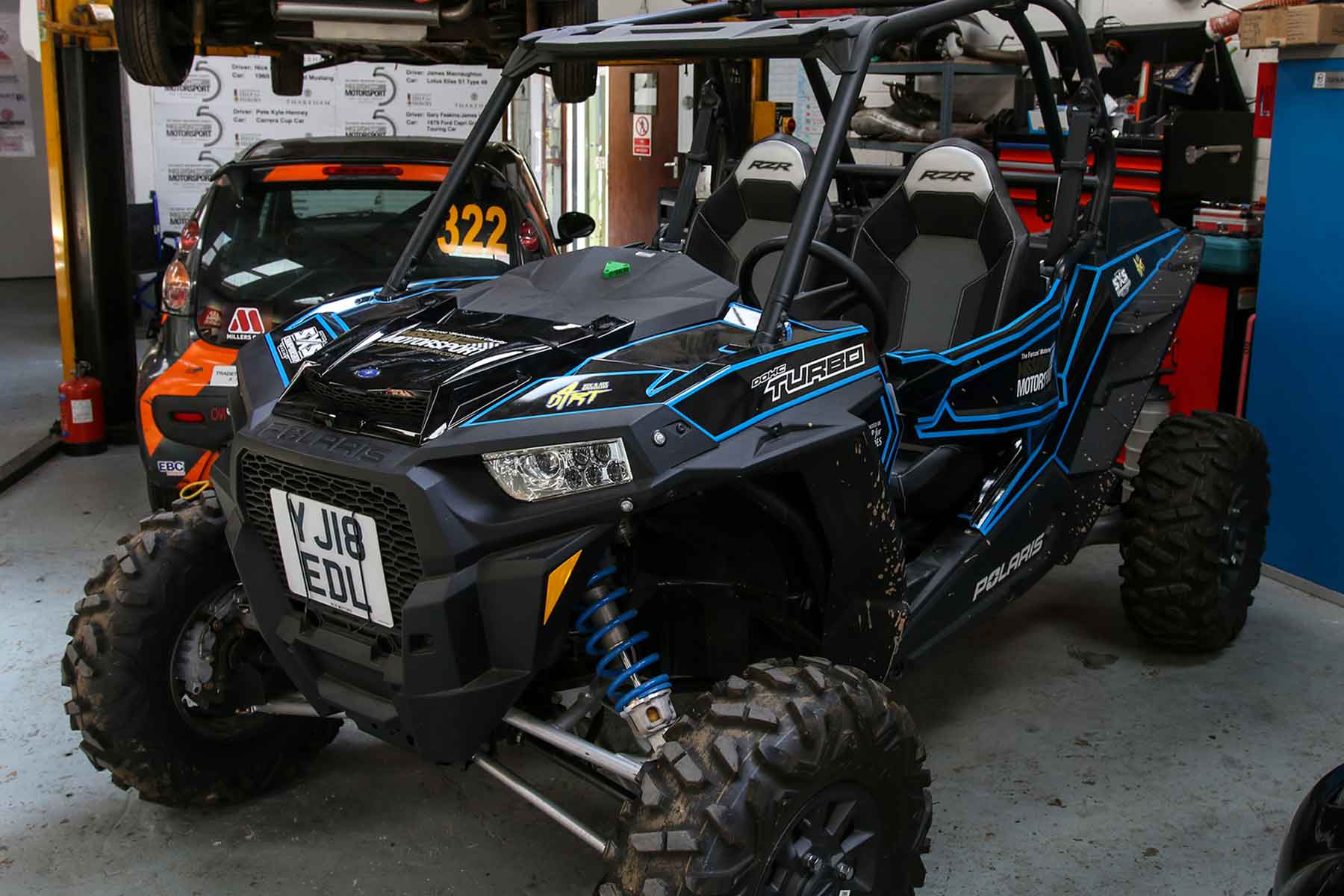
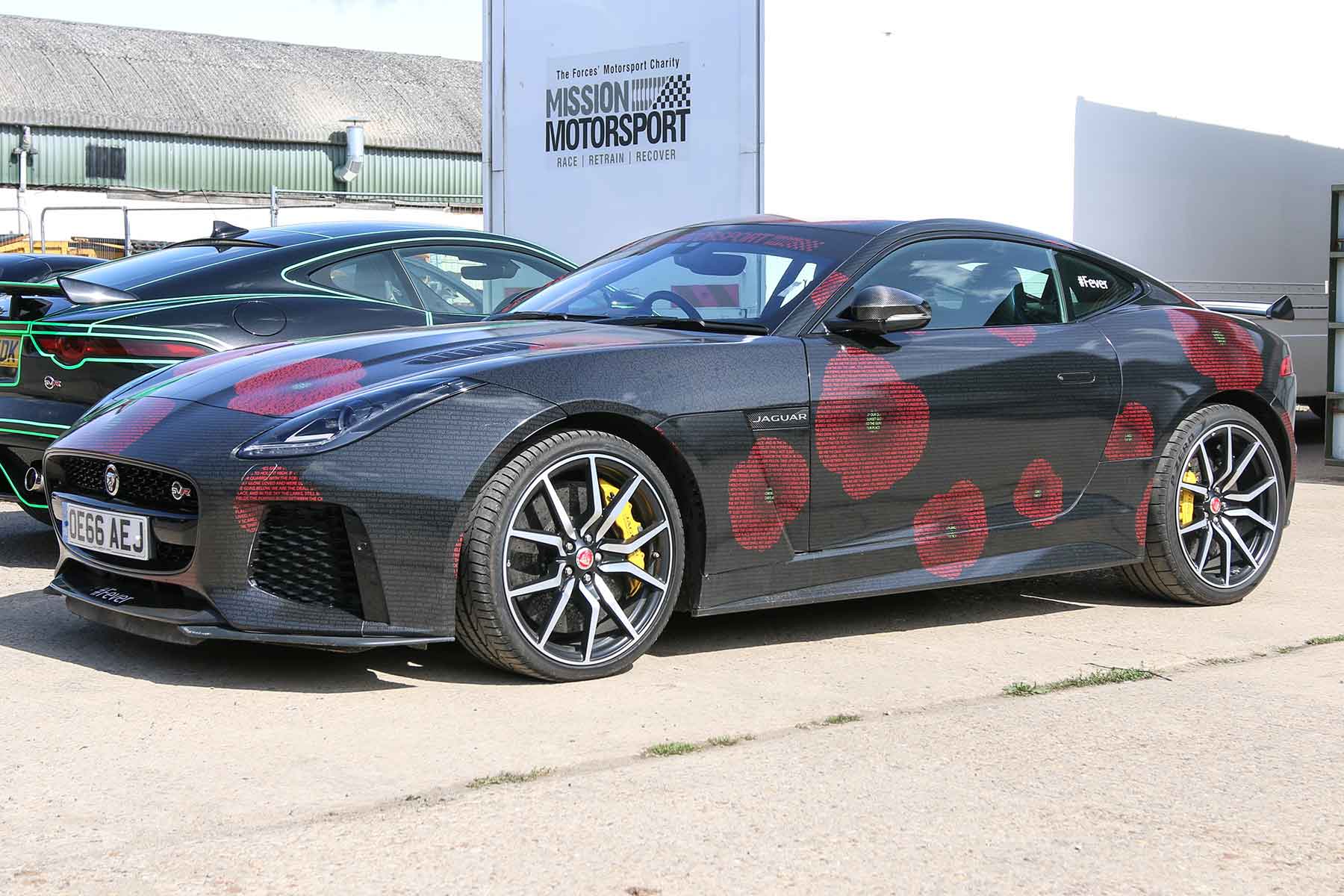
We trundle into an industrial estate not unlike any other. Large, nondescript units line the sides of the road: a body shop, a construction firm, then two liveried Jaguar F-Type SVRs – one in ‘Tron’ style, another covered with poppies. A unit like any other, only complete with a petrolhead toy box to rival the best of them – this was definitely the place. Apparently, it used to contain diggers. Much cooler now with a couple of Mazda MX-5 race cars and a Polaris RZR buggy…
James is unmistakably a man of the Forces. A firm handshake, directness and a room-filling demeanour that has you both at ease and at your fullest attention. He could only have been military-hewn.
We’ll sum him up with a component-parts explanation of his @TankSlider Twitter handle. It involves a snow-covered cobbled expanse and a Challenger tank. That combination resulted in this now-respectable charity director lumbered with three months of extra duties during his time in the Royal Tank Regiment. James is as fun to be around as he is serious about his cause.
What is Mission Motorsport?
“A lot of it is about jobs, but a lot of it is about getting people to find a life-purpose and a reason to get out of bed in the morning. Some need a living, some need a sense of self and vocation”.
The public face of Mission Motorsport is perhaps the smallest facet of the charity itself. The cars, the yearly Race of Remembrance, the events, all have been garnering publicity and interest from prospective patrons since 2012. The magic of Mission Motorsport, however, is what it does for its beneficiaries.
The challenges returning servicemen and women face are difficult to comprehend. What was once home can seem like an alien world, family can seem like strangers, help can feel like a hindrance. Mission Motorsport is about giving returning veterans who have suffered in service – physically or mentally – vocation, purpose and a family.
“The shiny and stupid stuff is to get them off the sofa and get them engaged,” says James. “Then you’ve got them on the hook, so we can go and do things to benefit them in the long run. There’s value in giving someone a day out, but the longer-term impact matters more.”
On-site, there are facilities for training in multiple motoring and engineering skills. One unit has workbenches with gearboxes, engines, differentials and more for dissection, examination and reassembly. A room beside that is where beneficiaries learn engineering theory.
Supported by the Endeavour Fund, Mission Motorsport can deliver up to a level-three diploma in light vehicle engineering. A two-year course for the average college-joiner is usually much less for a service-leaver, due to the experience they can carry over.
Lantra training courses for working and driving off-road in the country are now offered, too. Plus, ex-soldiers can study what James calls the “shinier stuff”: City and Guilds-verified qualifications, which are more academic in focus.
The end result is more than 130 job-starts for people as a direct result of the work Mission Motorsport does. Not only that, the communication MM has with companies like Jaguar Land Rover changes the way they look at a CV. The real value of military experience is translated into a civilian context.
The potential effect is exponential, with thousands of returning servicemen and women getting a proper chance at securing the job they’ve applied for.
More shiny stuff
You could be forgiven for spending the whole day meandering around the MM premises. Around every corner, you find something more ridiculous and amazing – with an equally mad story to match.
We’ve mentioned the F-Types, which are generously loaned by JLR itself. They see regular demonstration and high-speed experience duty at events like VMAX. “That car has done over 180mph for 18 beneficiaries this year” says James of the poppy-liveried SVR.
Inside are two Mk3 Mazda MX-5s, one in sprint racing spec and another in endurance spec. A unit across the way has shelves full of enough spares to rebuild both twice over.
Joining them, there’s an absolutely mad Polaris RZR buggy and, of all things, a pair of Citroen C1s. Of course, this is Mission Motorsport, so these C1s are endurance prepared. One of them has seen action at Spa Francorchamps and three Races of Remembrance.
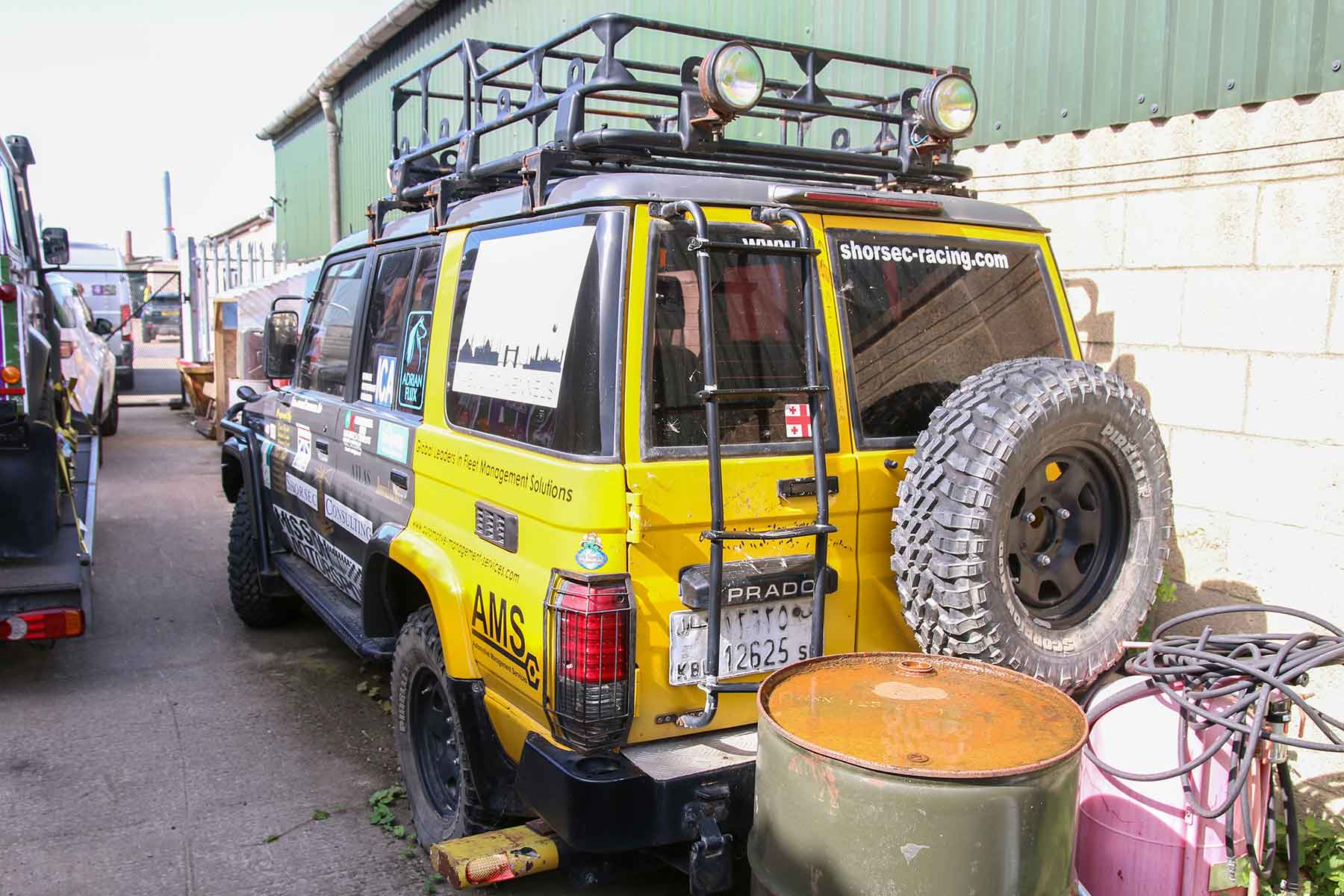
In between the two units is the Lightning McQueen MX-5, a Bowler Defender, a Land Cruiser brought back from Afghanistan and a pair of Land Rover Discoverys.
Across the way in another unit are some more absolute gems, including a custom Land Rover Defender with a rip-snorting V8 and special controls for amputees, called Fenton. “Fenton, like the Polaris next door, is just about having really good fun. It’s the reaction we look for.”
Behind that is a fully race-ready Honda CR-V – yes, a CR-V – as built by Synchro Motorsport, Honda’s in-house race team. After a beneficiary found employment at Honda, MM was keen to keep Synchro on the grid at the Race of Remembrance and shout about the achievement. With the Type Rs getting too quick for the event, the logical thing to do (sort of) was have them race-prep an SUV. Laugh all you want, but it ended up on the podium at the Mission Motorsport Invitational event.
Right at the back is a car very far from home. A Ford Falcon as used for skidding and practical workshops, it came over, along with a lot of spare parts, back when Ford of Australia shut-up shop.
Less glamorous but no less important, a tatty BMW 3-series Compact also serves as an ECU and diagnostics cadaver for beneficiary training.
There’s also a Lancia Delta in the midst of some wrapping work. The cars are liveried in-house, with car wrapping just one of many motoring and motorsport-focused vocations MM can introduce and train veterans in.
As an example, they sent a couple of beneficiaries out on work experience. One went to Caterham F1 and another to Touring Cars. Instead of coming back, they both got full-time jobs. In a business, that’s lost talent. At Mission Motorsport, that’s something close to job done.
Plans for the future
It wouldn’t be overstating the case to say James has huge plans going forward. The future is as bright as the coming undertaking is Herculean.
With the rise of the EV in the automotive market, demand is increasing for people trained to work with high-voltage systems. That demand, it’s predicted, won’t be met by the existing civilian UK population. What’s been identified isn’t just areas where veterans can contribute, it’s a growing chasm in the job market – one that military high-voltage training (on submarines, tanks and other heavy-duty machines) can readily fill. All that is to come, when MM moves to new and expanded facilities.
Full details of that endeavour will follow soon. For now, we hope we’ve given you an insight into the magic of Mission Motorsport, beyond that famous poppy-liveried Jag.
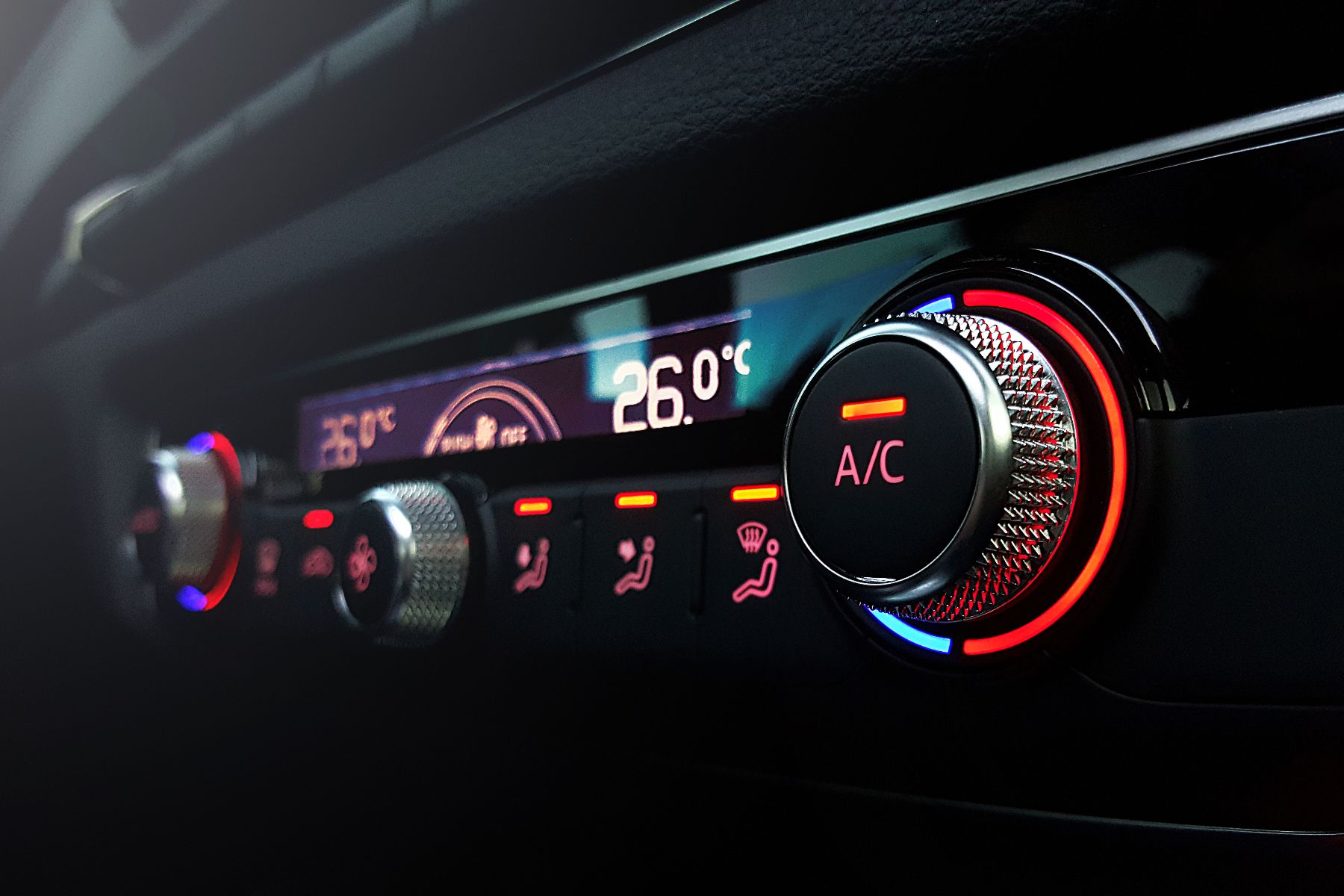
New research from Kwik Fit reveals exactly what we want in our new cars. And, with a super-hot summer still fresh in our memories, air conditioning tops the list.
Second place also on the list also comes as no surprise: Bluetooth phone connectivity. It seems keeping in contact and connected comes second only to keeping cool.
Seasonal woes are a rolling theme on the list of most desired car features. A heated windscreen, of all things, takes third. We’re clearly mindful of the coming cooler weather and the icy mornings that come with it.
Sat-nav and parking cameras take fourth and fifth respectively. We want to know where we’re going and we don’t want to damage our cars parking up when we get there. Fair enough.
What we’re not so keen on are voice control, sunroofs and head-up displays. Research indicates that 70 percent or more of us wouldn’t stump up the cash for these features.
Our aversion to voice control and head-up displays is interesting as manufacturers are keen on developing and pedalling these at the moment. As for sunroofs? It’s interesting how what was once a desirable feature finds little favour today.
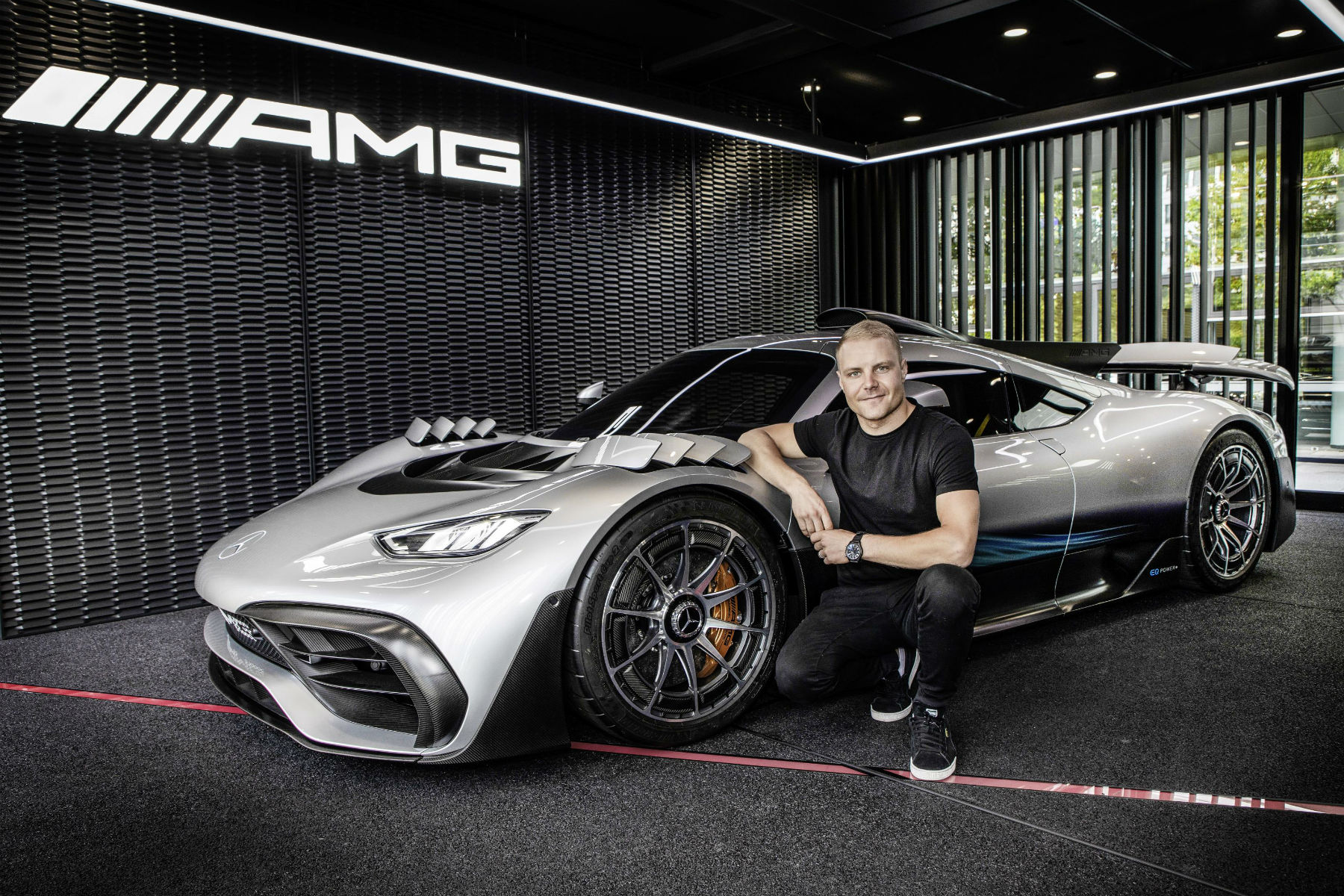
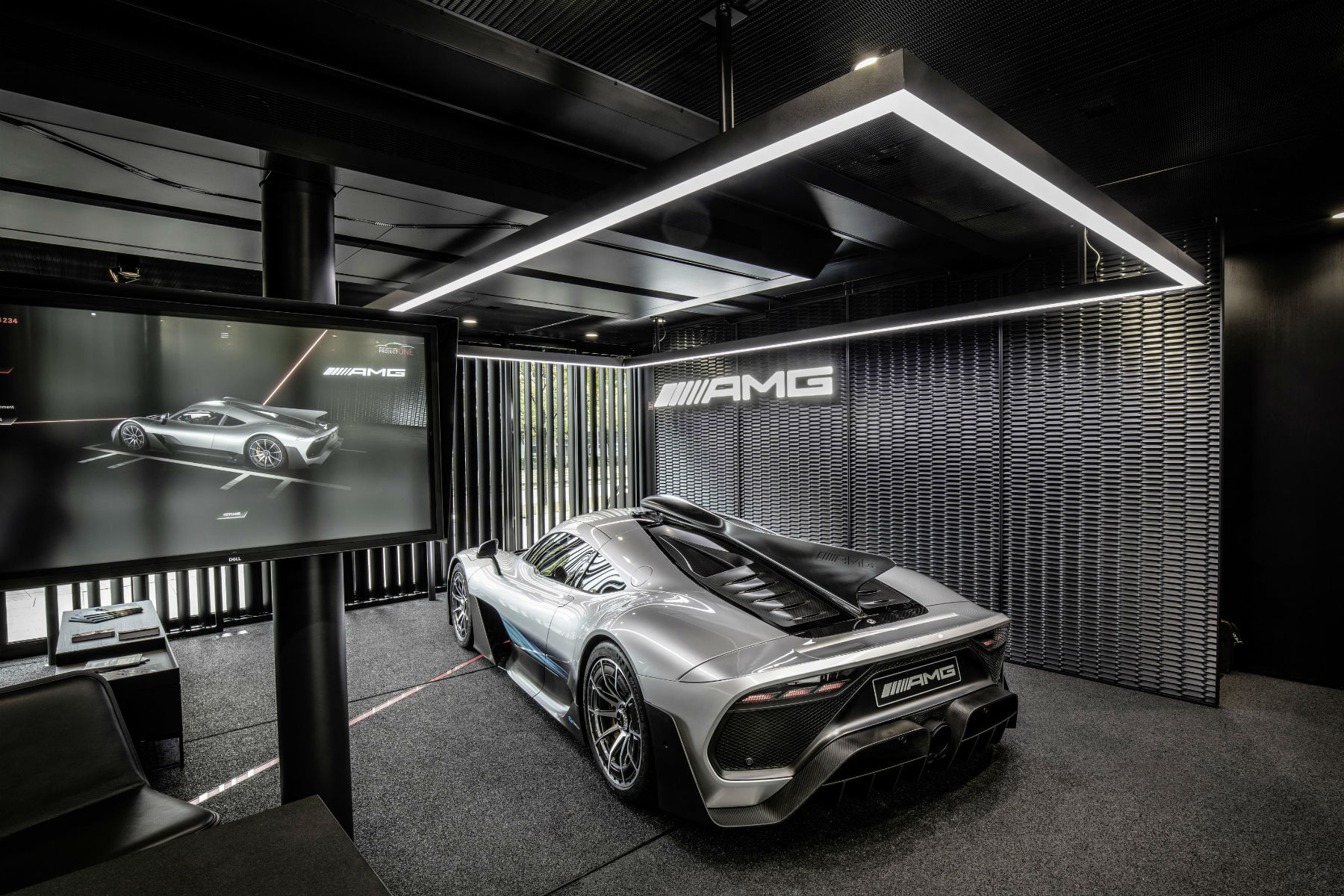
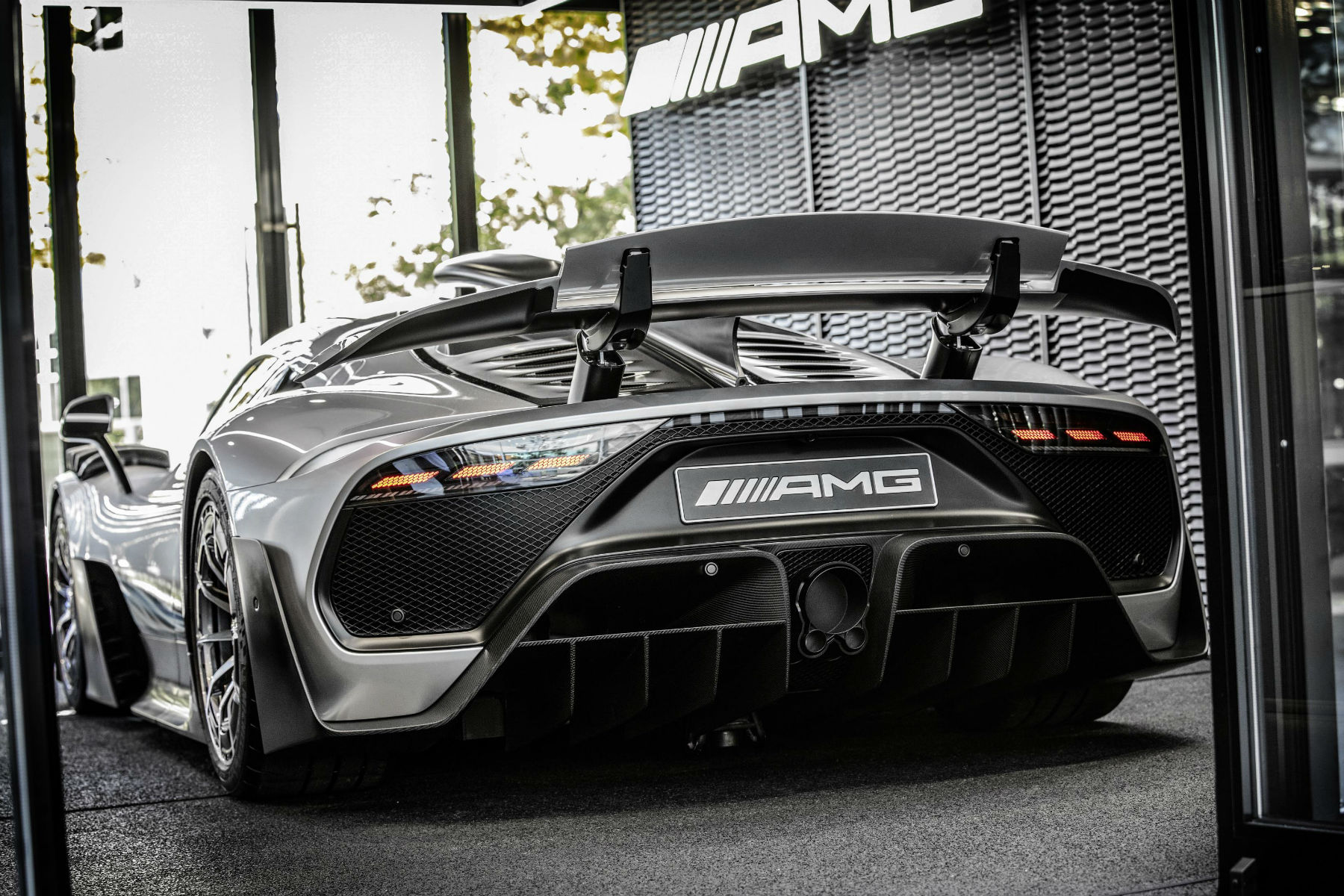
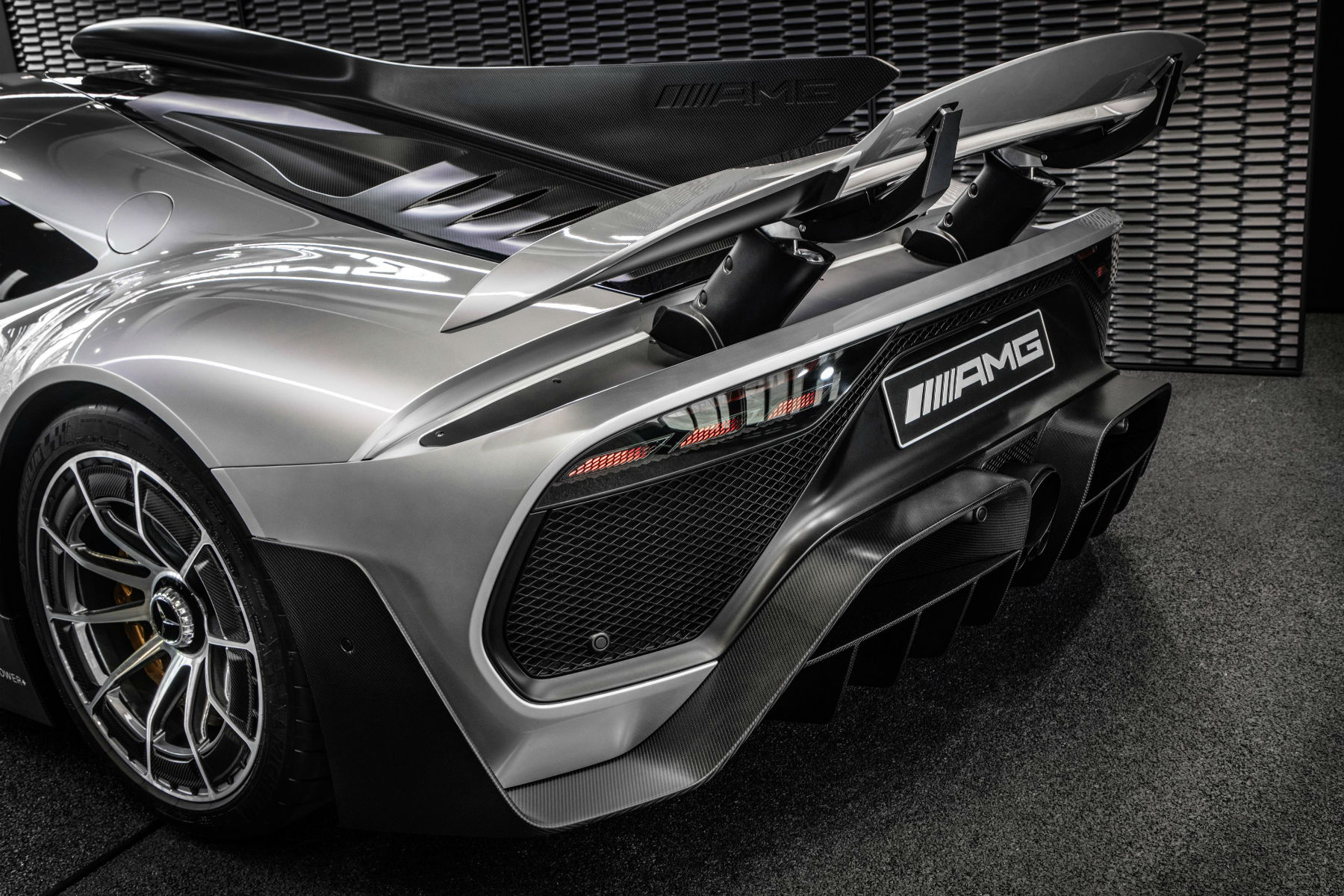
Mercedes-AMG is one step closer to bringing its F1-derived hypercar to fruition. After being spotted testing not long ago, the new car now has a name: the Project One concept has become the Mercedes-AMG One.
It’s not exactly an ‘AM-RB-001 to Valkyrie’ kind of name transformation, but ‘One’ refers to the car’s strong links with Formula 1 racers.
The car is purported to be fitted with a derivative of Mercedes’ 1.6-litre turbocharged hybrid F1 engine. Even though the maximum revs will be pegged back, it’ll still need to be rebuilt every 30,000 miles…
The One is currently going through testing to refine its sophisticated active aerodynamics. Note the extended active louvres over the front wheels on the car, pictured here with Merc F1 ace, Valtteri Bottas.
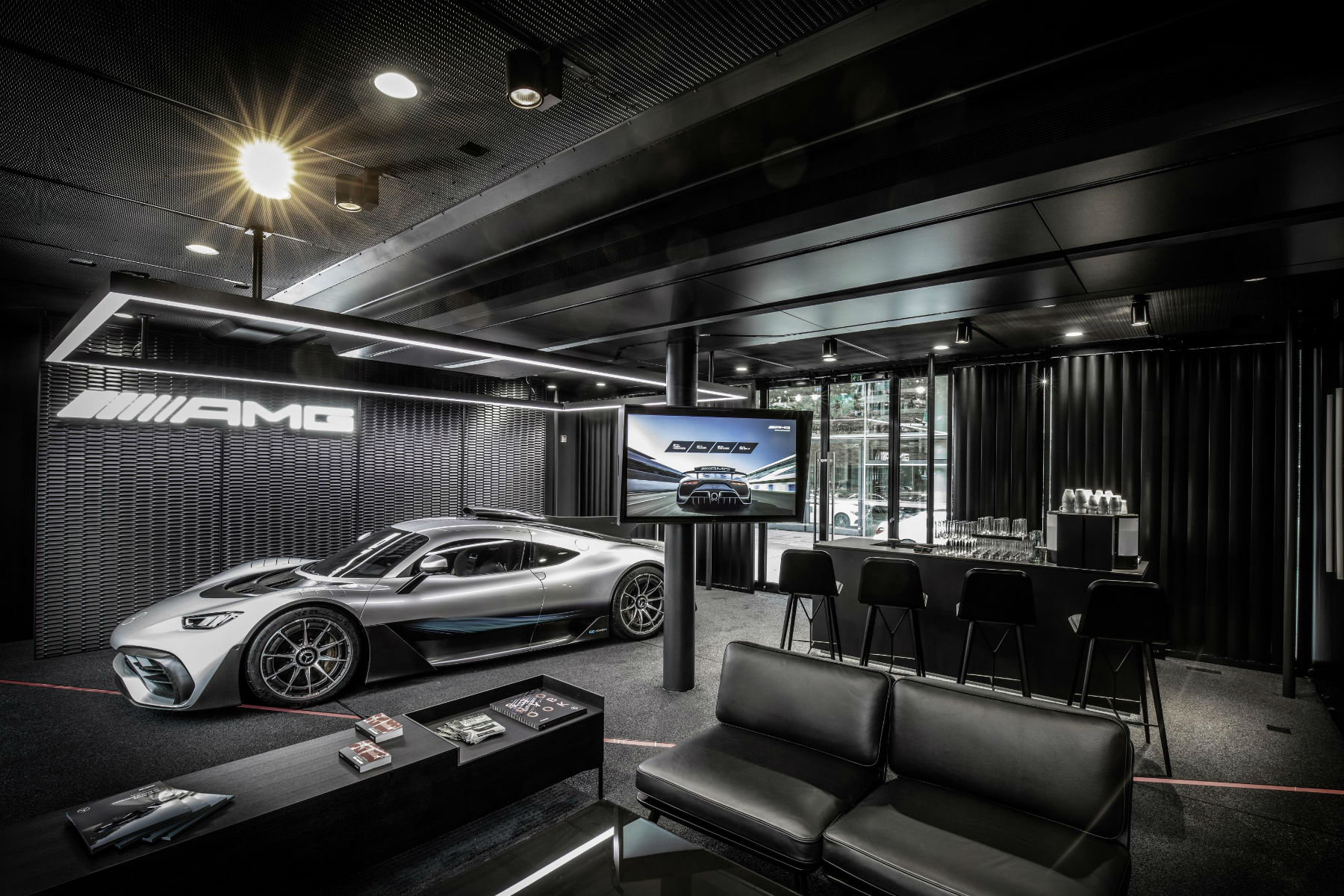
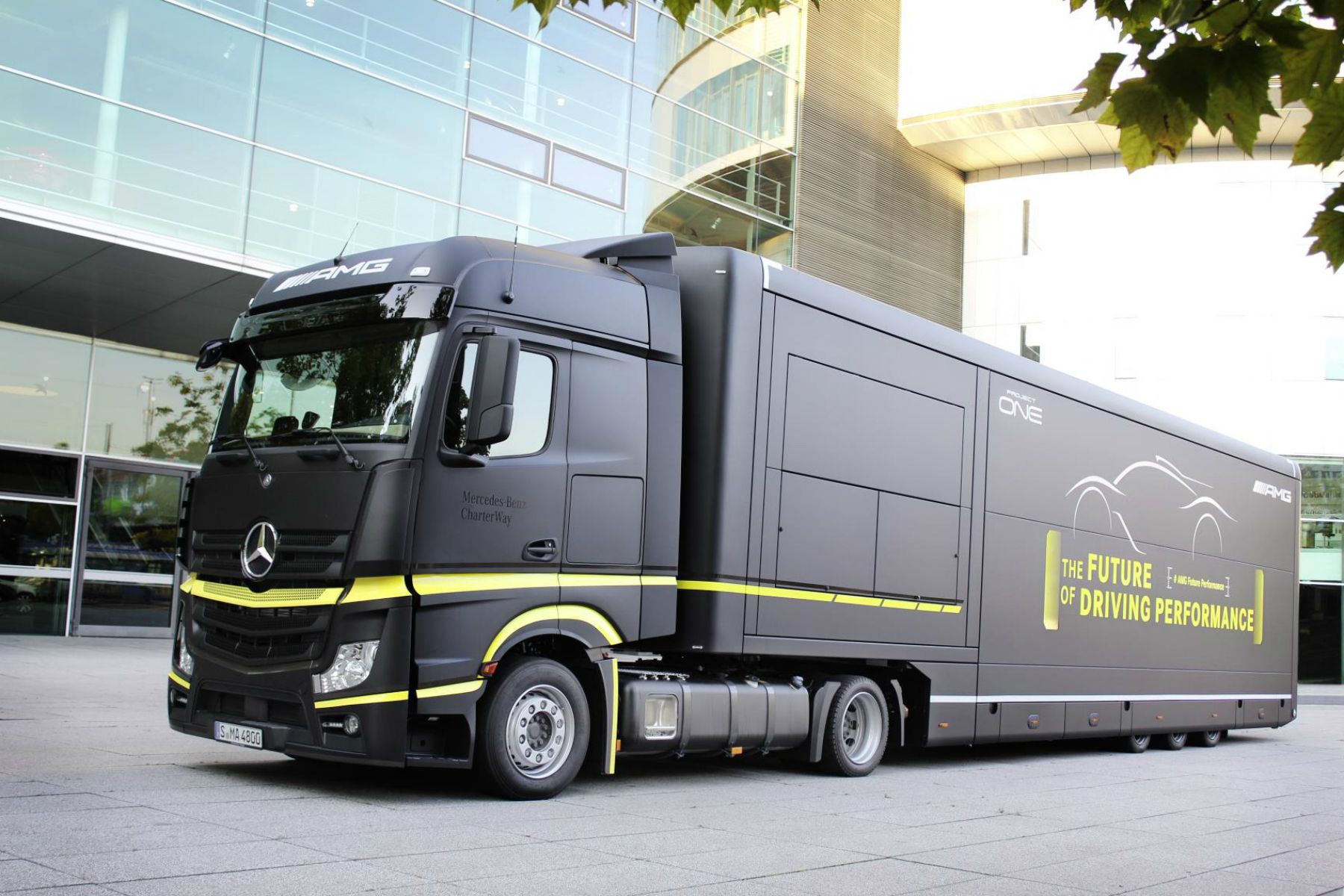
What’s more, prospective customers will be able to get an early taste of this long-awaited hypercar. A mobile showroom Mercedes calls ‘The Future of Driving Performance’ allows for cockpit tests and equipment demos. They’ll be able to go through colour specifications and material samples, too.
Now the One has its name, the countdown begins to cars being ready for delivery. Can we have a go, Mercedes? Pretty please?
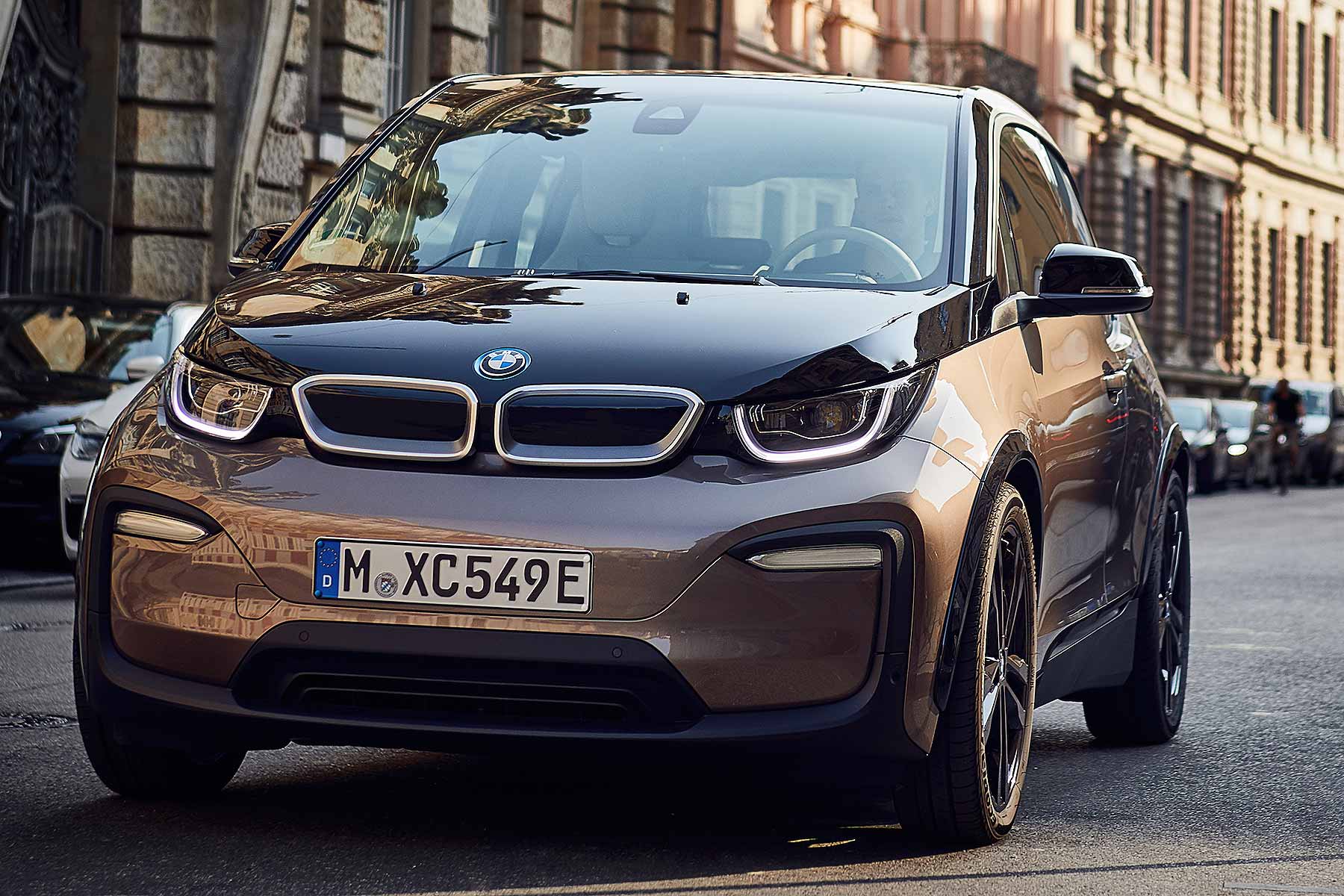
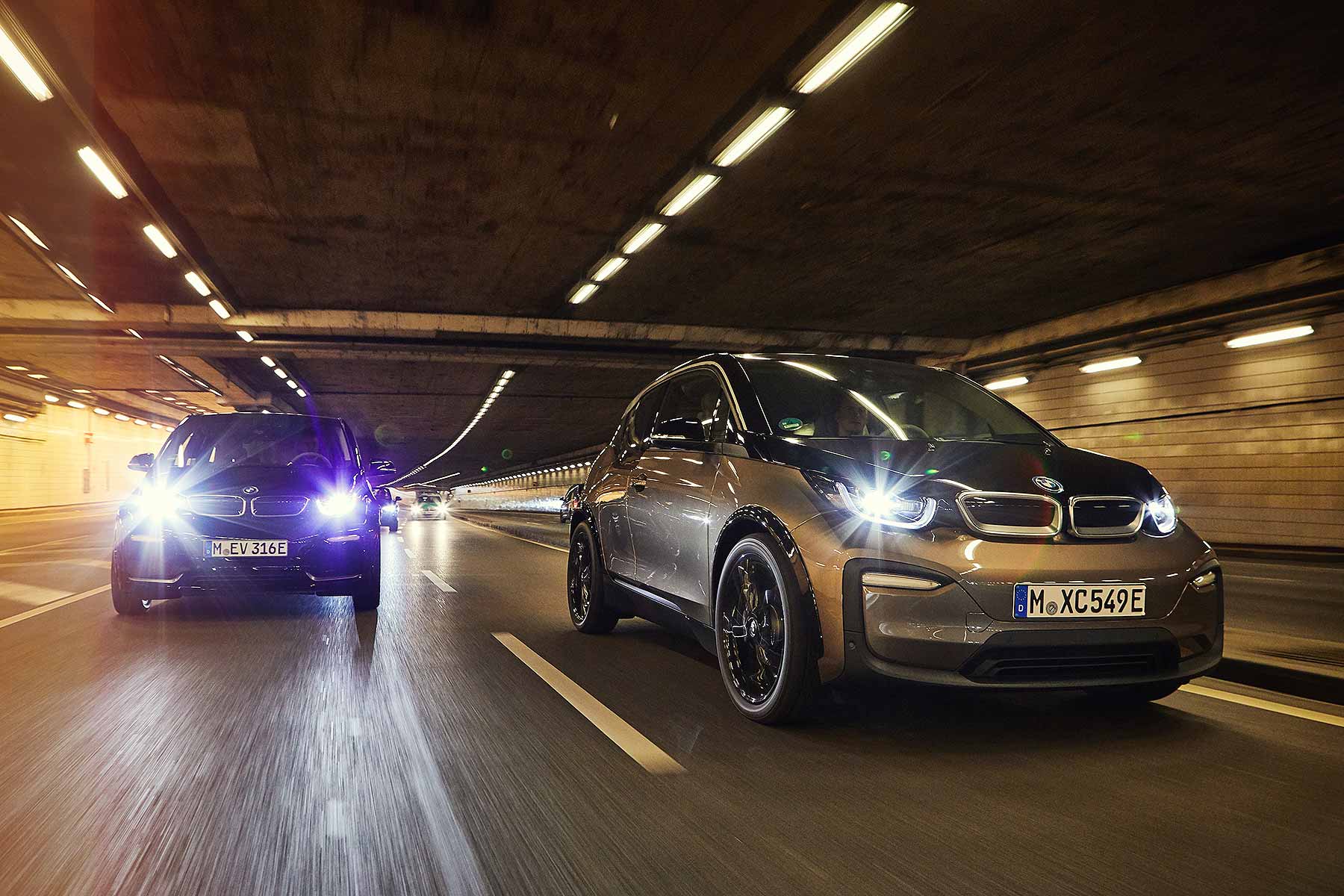
BMW has given its i3 electric car yet another battery update, meaning it now has around twice the electric capacity than it did at launch just five years ago. The 42.2 kWh battery of the 2019 i3 is almost 30 percent larger than today’s model, too.
The firm says this gives it an everyday driving range of more than 160 miles – and that’s according to the super-tough WLTP test, which is much stricter than previous electric car measurements.
According to the more lenient old NEDC tests, the 2019 i3 now has a range of almost 225 miles.
Back in 2013, the i3 used 22.6 kWh batteries, while the 2016 update took capacity up to 33 kWh. The latest boost to 42.2 kWh (more than a current-gen Nissan Leaf) shows the fast pace of electric car battery development.
Both 170hp BMW i3 and 184hp BMW i3s get the new battery packs, which don’t take up any more space than today’s cells. It means the 7.3-second 0-62mph time of the base car, and 6.9-second acceleration of the i3s, can be enjoyed with more confidence you won’t have to recharge en route if you do so.
With a BMW i Wallbox, charging is fast: an 80 percent charge takes 3.2 hours. Use a regular domestic socket, though, and the same state of charge will take 15 hours. Bigger batteries take longer to recharge, see…
The i3 can, however, used 50 kW fast chargers. Here, an 80 percent charge takes just 42 minutes.
To herald the new batteries, BMW has tweaked the i3 elsewhere. Buyers of the base i3 will now be able to equip it with an i3s-style sports back, which lowers it by 10mm, widens the track and adds on 20-inch alloys and black wheelarches.
Adaptive LED headlights are a new option alongside the standard LED lights, and BMW’s added two new body finishes and some fresh interior colours. The iDrive system has also been updated.
BMW hasn’t said when the battery-boosted i3 and i3s will go on sale, nor how much they’ll cost, but expect to see them at the Paris Motor Show next week. Motoring Research will be there and bring you more when we get it.
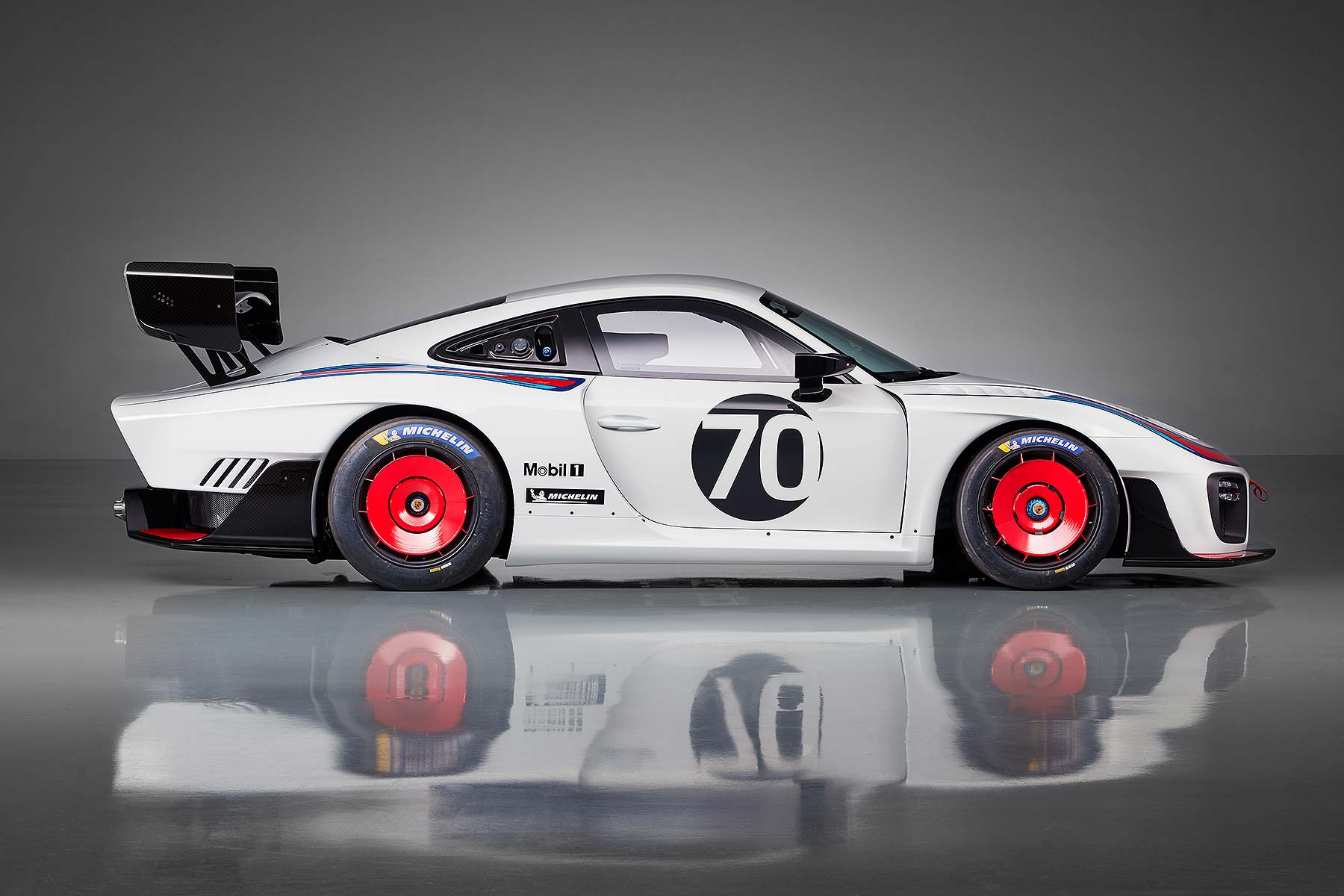
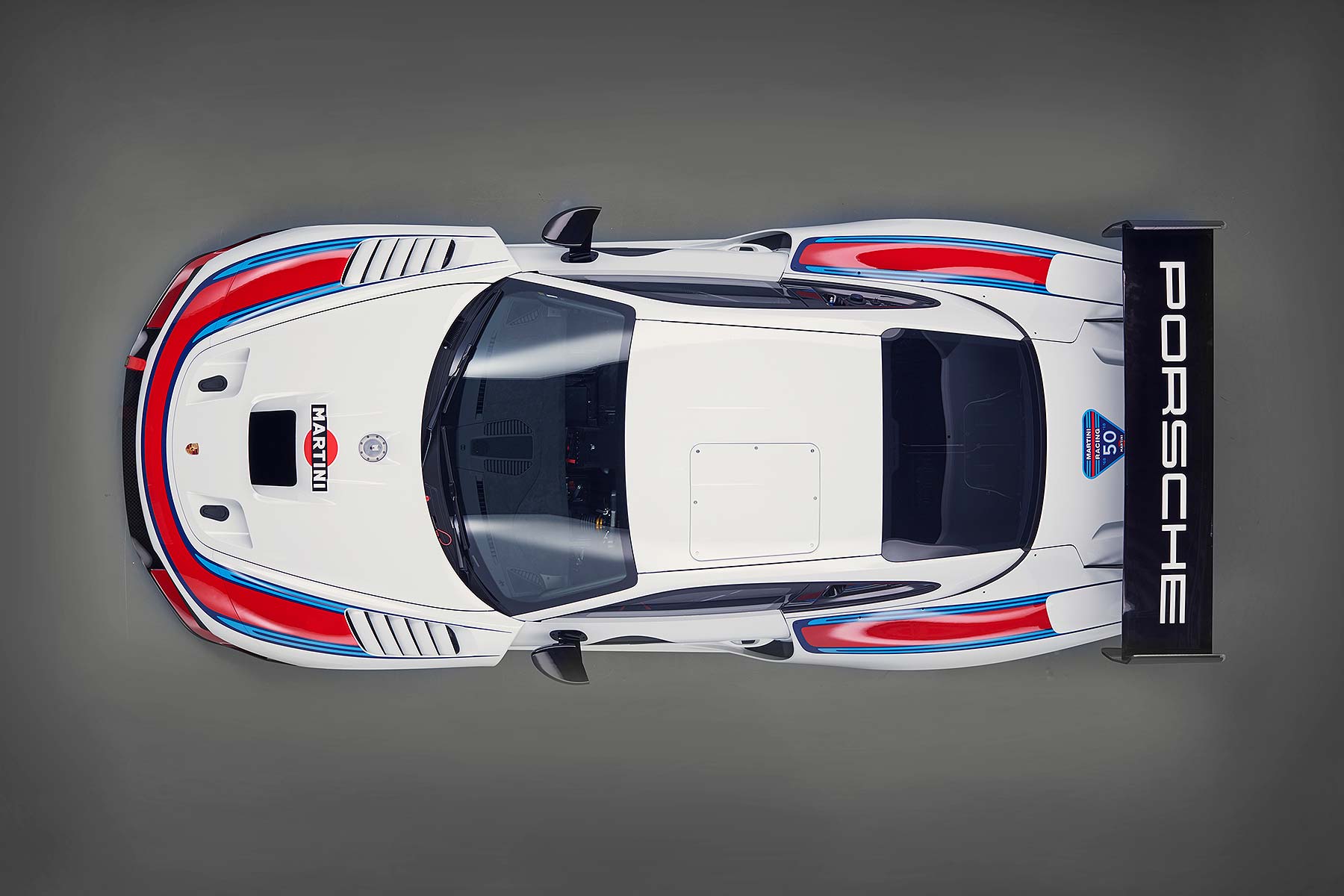
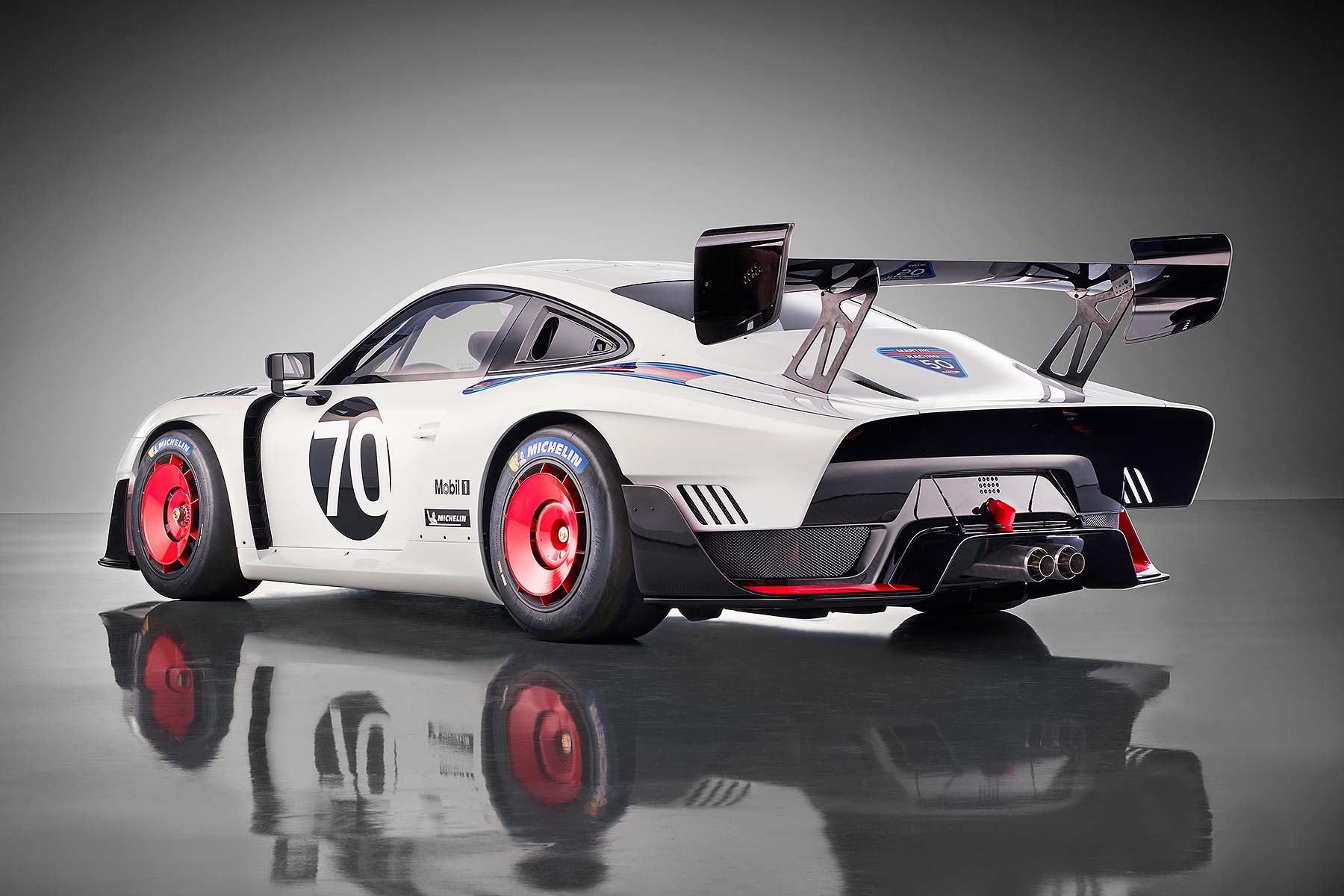
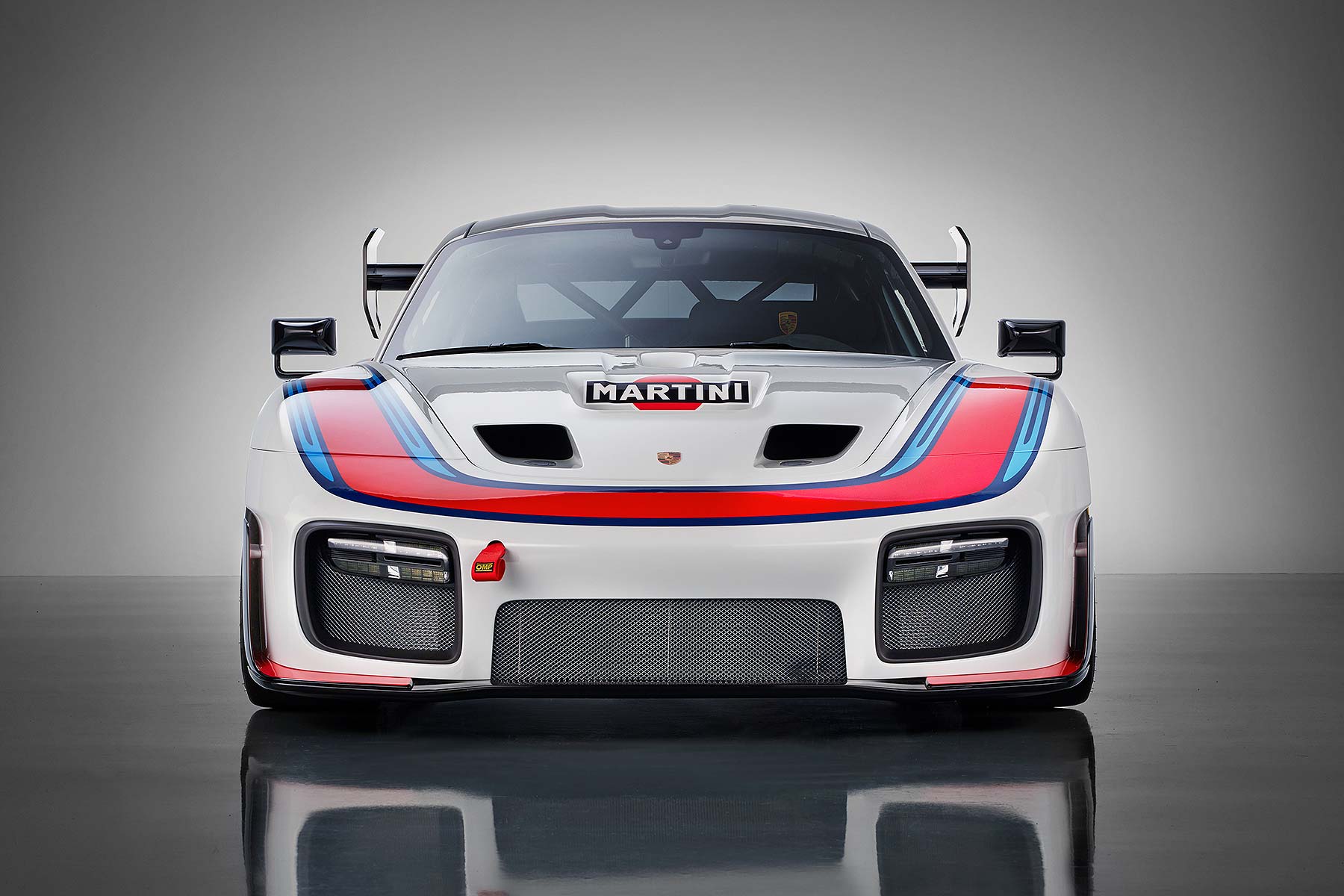
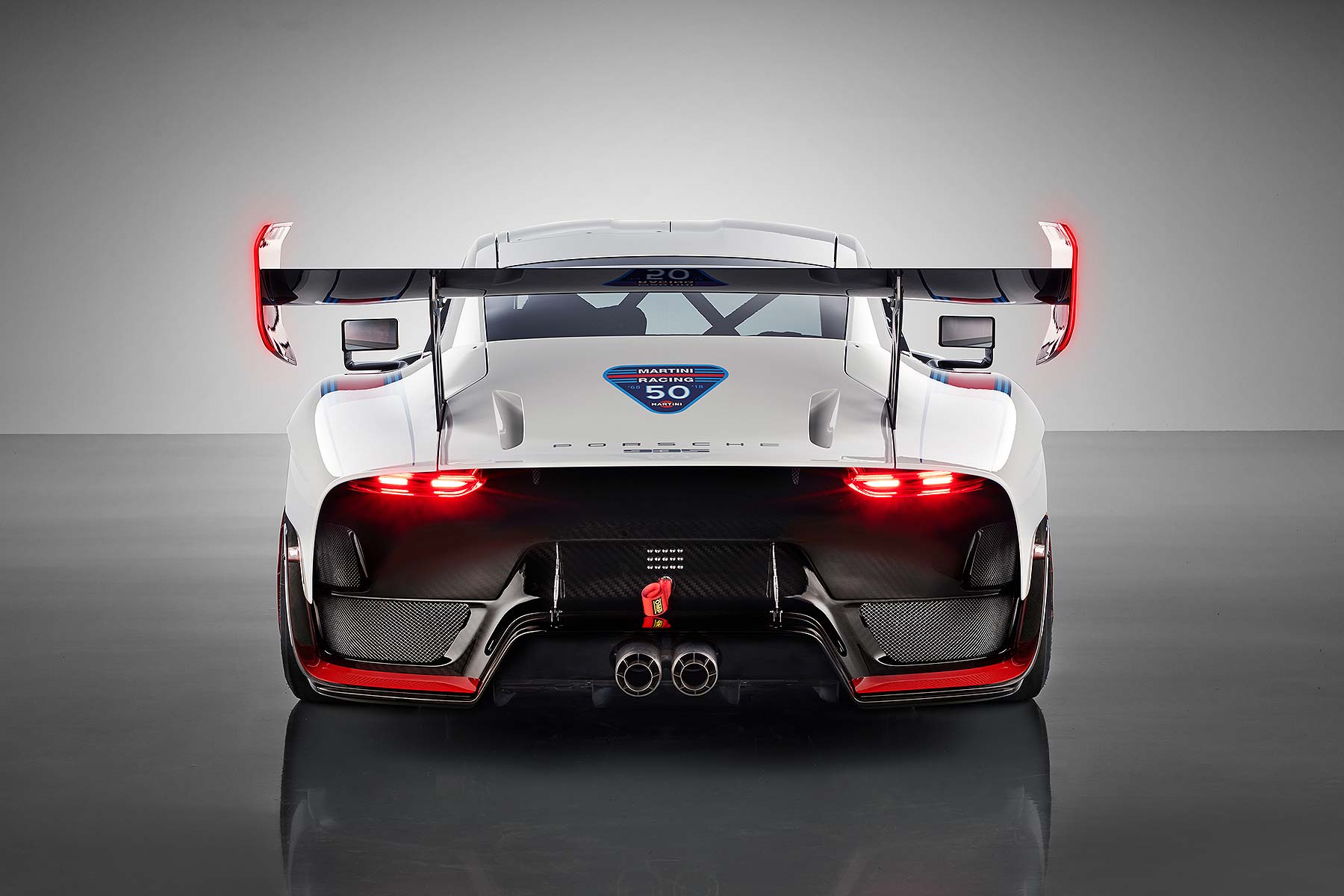
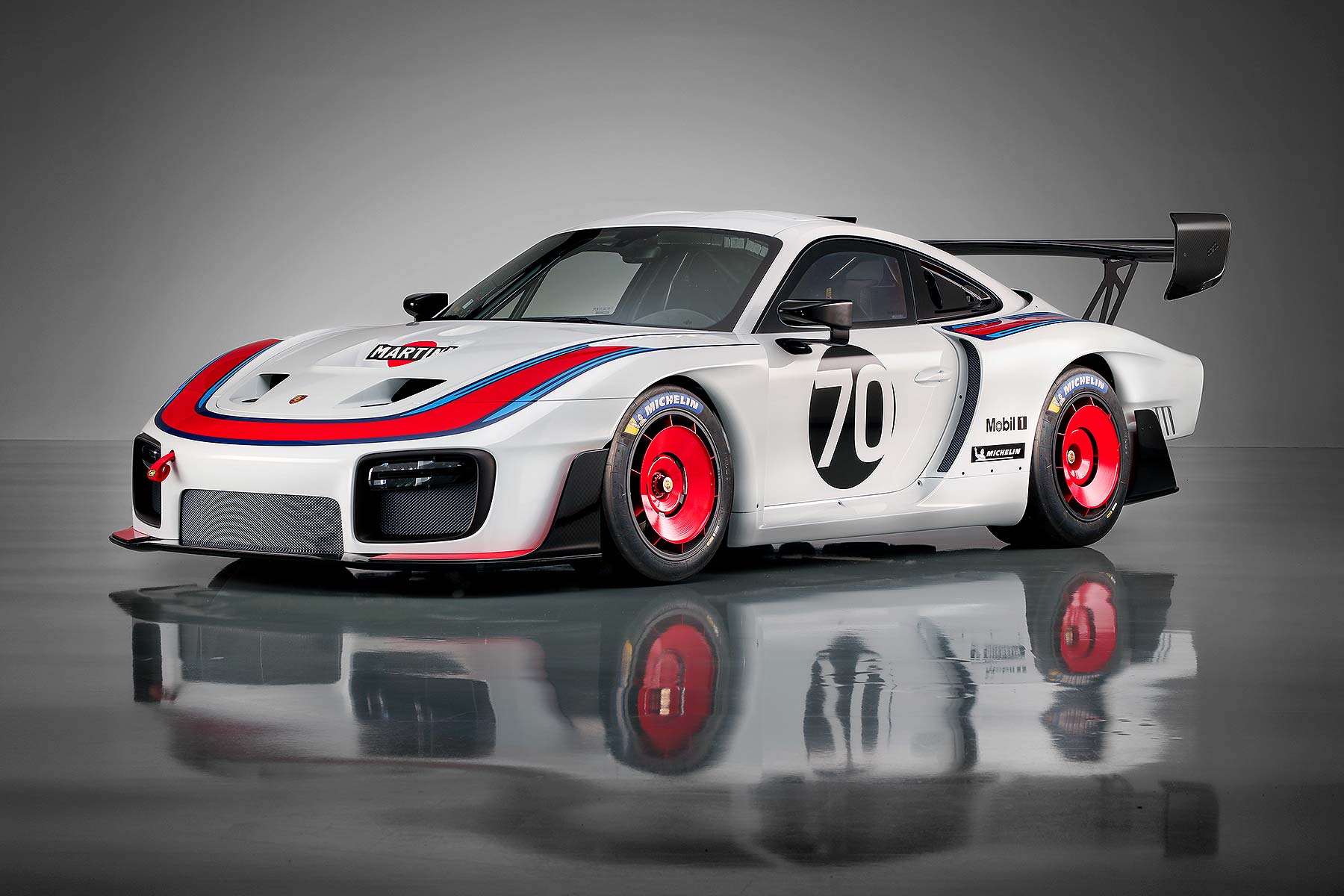
Porsche has stunned motorsport fans by recreating one of its racing legends as a modern day retro homage. The new Porsche 935 is inspired by the 1978 935/78 Le Mans racer that was famously nicknamed ‘Moby Dick’.
Revealed at the exclusive Rennsport Reunion event in Laguna Seca, California, Porsche calls the Martini-liveried car a gift to motorsport fans – and 77 people with £750,000 to spare will actually be able to buy one.
Loosely based on the Porsche 911 GT2 RS road car, the new 935 edition has a fully bespoke body made from carbon fibre composites, with a super-elongated streamlined rear among its most dramatic features – carrying a gigantic (and functional) rear wing, it sees the retro racer homage stretch almost 4.9 metres long – almost as long as a Range Rover Sport.
And at 2.03 metres wide, it’s actually wider than a Range Rover…
It has the same vented front wings as a Porsche 911 GT3 R racing car, aero wheels that reference the 935/78, side mirrors from the modern Le Mans-winning 911 RSR, titanium exhausts referencing the 1968 Porsche 908 and modern motorsport-spec LED lights on the sides of the rear wing similar to the modern 919 Hybrid LMP1 racer.
It’s simply incredible: “Because the car isn’t homologated [and thus not road-legal],” said Porsche motorsport vide president Dr Frank-Steffen Walliser, “engineers and designers didn’t have to follow the usual rules and thus had freedom in development.”
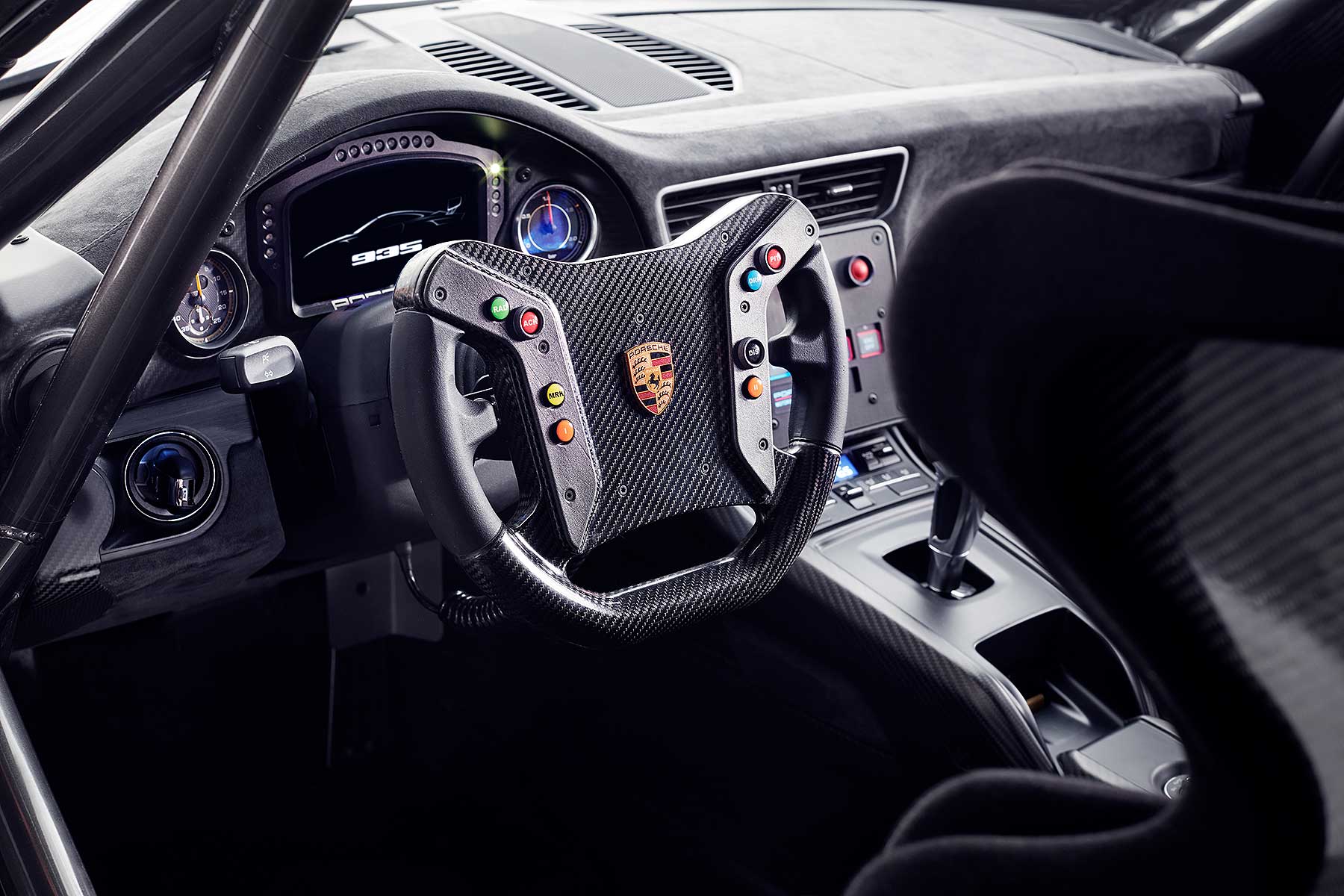
Inside, it’s similarly epic. If you squint, you can see the 911 base – but it’s well hidden by a full race makeover, including a carbon fibre steering wheel and display from the 2019 911 GT3 R racer.
There’s a full racing roll cage and bucket seat, an optional passenger seat and a gorgeous laminated wood gearknob similar to classic racers like the 917 and 909 Bergspyder. Like modern endurance racing cars, air conditioning is standard.
The engine? The same 700 horsepower 3.8-litre flat-six twin-turbo as fitted to the road-going GT2 RS. It has the same seven-speed PDK gearbox too; at 1,380kg, performance should be similar (as in, 0-62mph in 2.8 seconds).
The gigantic 1.9-metre wide, 400mm deep rear wing may cap top speed, but it will make the car phenomenally able through corners – and more balanced at speed.
This stupendous racing homage is one of the final hurrahs for the current 991-generation 911. It’s been revealed at the Rennsport Reunion to mark 70 years of Porsche sports cars, and 50 years of the Martini brand in motorsport.
The 77 customers will receive their cars from June 2019 at “exclusive delivery events” – one of which, we’re sure, will be timed to coincide with the 2019 Le Mans 24 Hours on June 12th.
Moby Dick may not have won the world’s most famous endurance race back in 1978, but this 2018 celebration is every inch a winner in our eyes…
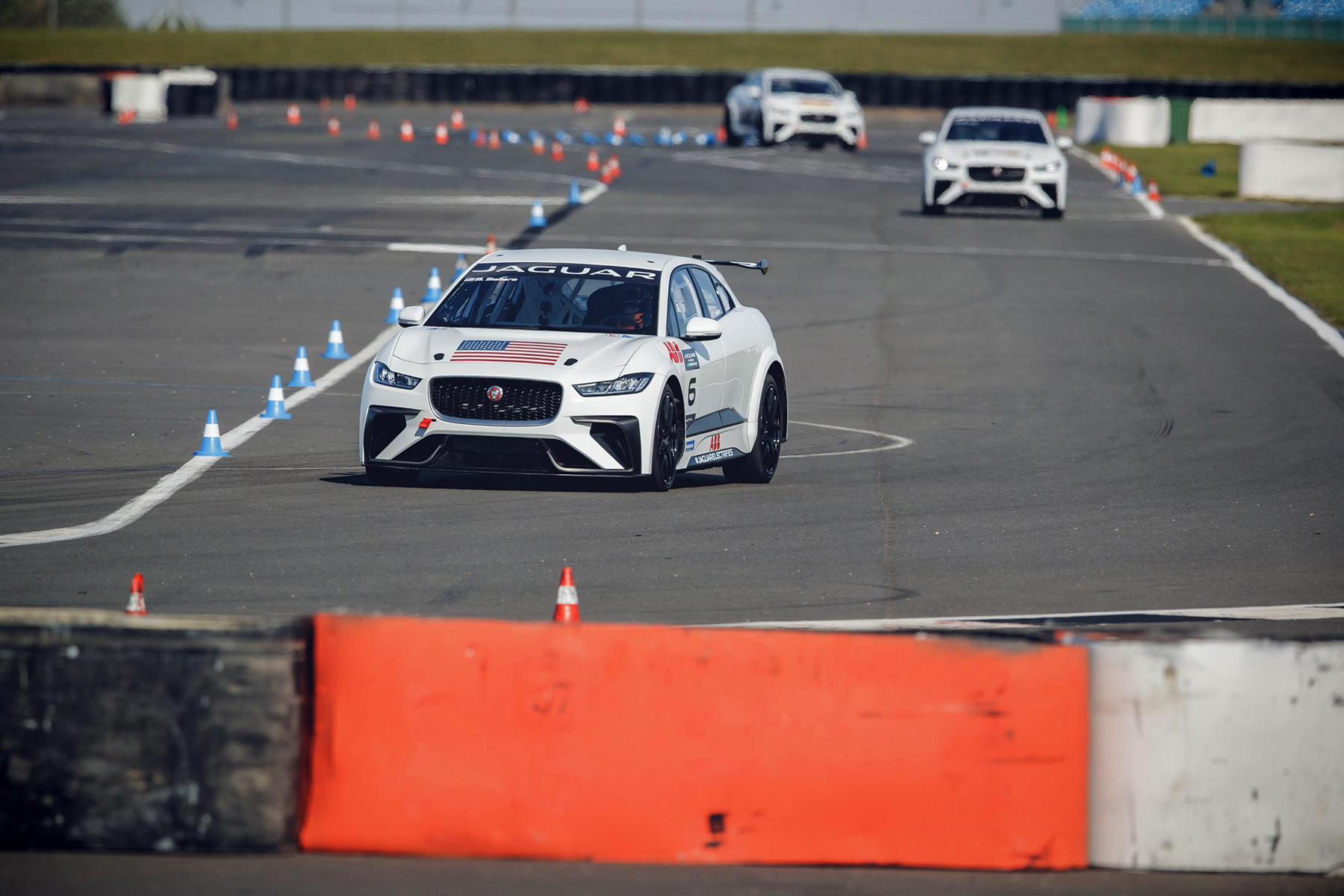
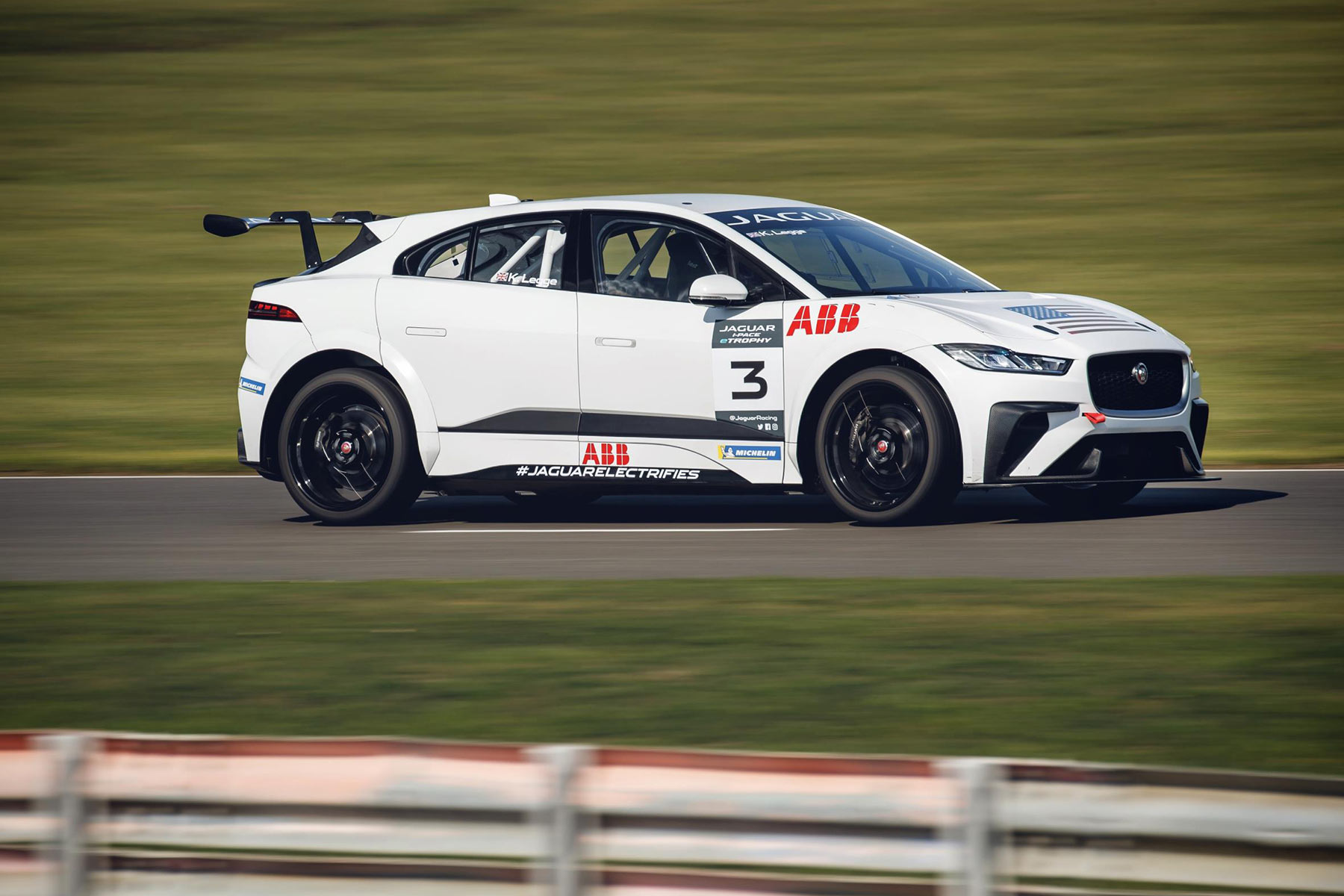
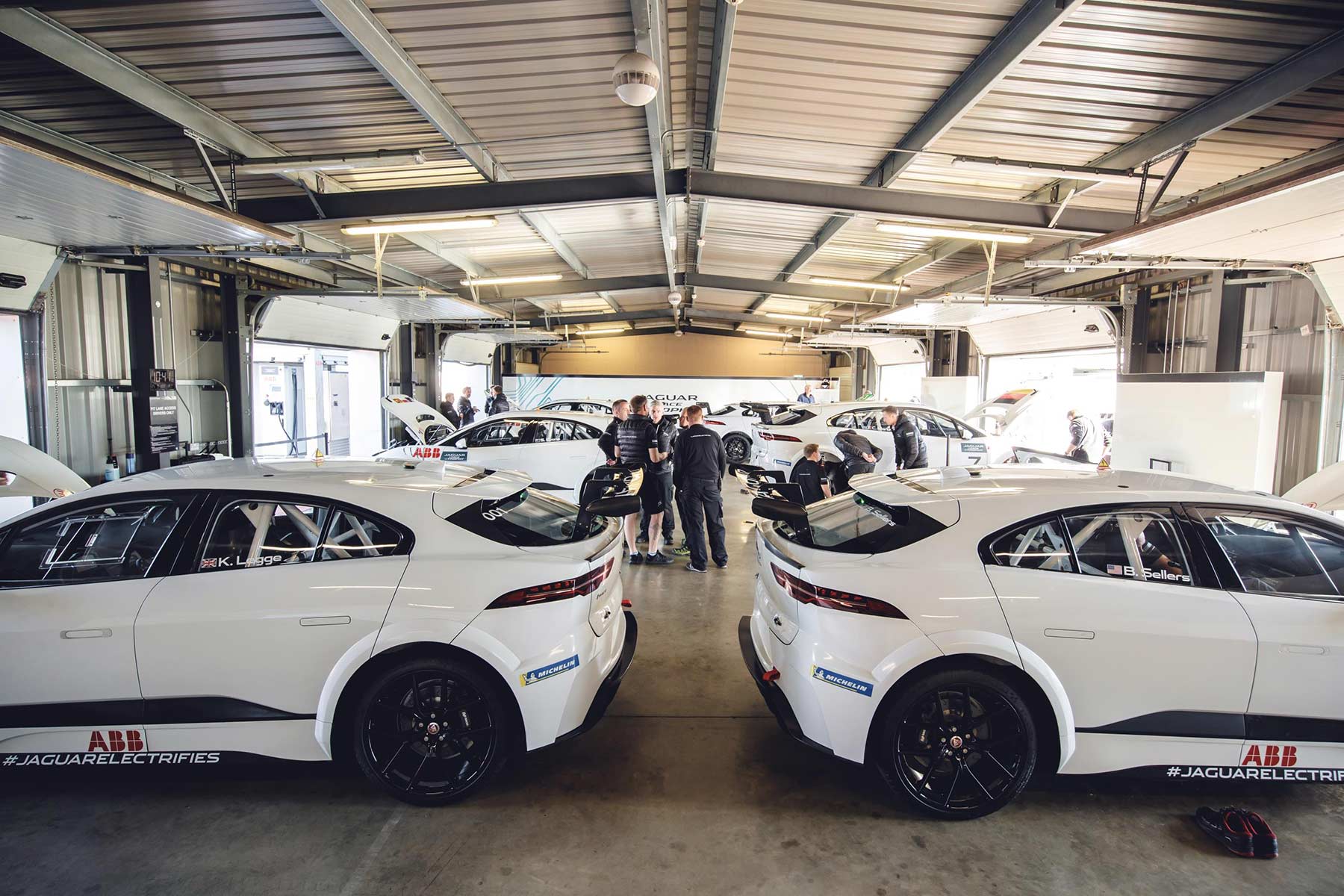
The first batch of drivers have been announced for the forthcoming Jaguar I-Pace eTrophy, as part of a test session at Silverstone race circuit.
Held to help the new racers become accustomed to their new electric I-Pace machines, the official test day saw a global field starting to be assembled for the race series.
Intended to act as a support race for the 2018-19 FIA Formula E Championship, the I-Pace eTrophy will be contested across ten rounds at nine different locations.
One of the first teams to be unveiled was Rahal Letterman Lanigan, a US-based outfit which has competed in IndyCar, Global Rallycross, and the American Le Mans Series. Their cars will be driven by Bryan Sellers, and British-born Katherine Legge who has spent much of her career racing in the USA.
Simon Evans, the younger brother of current Formula E racer Mitch Evans, was another driver making a debut at the test. Having an older sibling already competing in electric motorsport could be a useful bonus, and Simon believe that the two will be “pushing each other on” as the season progresses.
A Brazilian pairing of Cacá Bueno and Sérgio Jiminez also joined the grid at Silverstone. Bueno is a five-time Stock Car Brasil champion, and the duo will form the official Jaguar Brazil Racing team.
Jaguar I-Pace eTrophy Championship Manager, Marion Barnaby, seemed impressed with the on-track action, commenting: “This week’s test confirmed the Jaguar I-Pace eTrophy is shaping up to offer exciting, close and really competitive racing. The standard of drivers is high and with five continents already represented on the grid it is going to be a truly international series.”
More driver and team announcements will be made in due course, with further test sessions scheduled ahead of the opening race in Saudi Arabia on the 15th December.
Much fanfare is given to the safest cars on the road but we wonder, what is the least safe new car money can buy? It’s fair to say markets outside Europe and America are playing catchup in terms of safety. That’s where campaigns like Safer Cars for India come in, to call out cars that are just not up to modern standards.
The zero-star cars
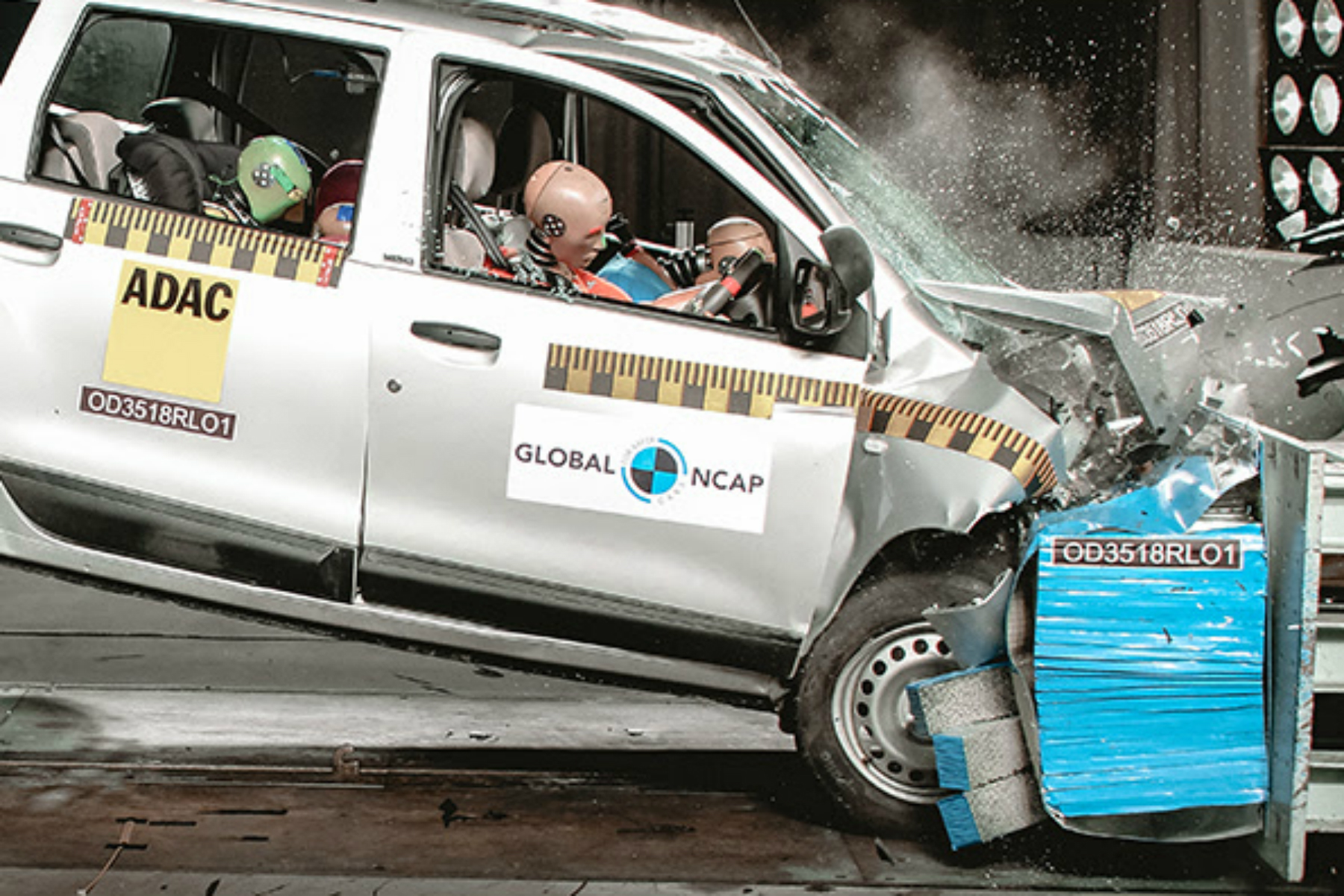
The latest candidate for least safe car in the world? Meet the Renault Lodgy: zero-star adult occupant Global NCAP safety-test alumni. Yes, that’s right, zero stars. That result is, in fact, no surprise, given the standard Lodgy’s lack of the most basic safety amenities.
Seatbelts, made mandatory in the UK in 1983, are an option on the Indian-sold Renault MPV. The worst thing is that this isn’t unique to the Lodgy. Cars from Volkswagen, Honda, Renault, Chevrolet, Hyundai, Ford and more do not come as standard with airbags. Needless to say, most of these cars also score zero stars for adult occupant safety.
The lack of strength in the Renault’s structure is plain to see, too. There are bends evident as far back as the rear door, while distortion of the front footwells is also evident. There’s also a lack of Isofix anchorages, meaning that any child seats need to be secured with the adult seatbelts.
“The zer- star Renault Lodgy is extremely disappointing,” said David Ward, Secretary General of Global NCAP
“Global NCAP had hoped that Renault had learned from the difficult experience they had with the Kwid. It’s time now for Renault to make front airbags standard across their entire Indian product range.”
Improvements
It’s not like such campaigns haven’t done any good at all, though. The Suzuki Maruti Vitara Brezza is celebrated, with four stars achieved. The Suzuki, among other Indian-developed cars such as the Tata Nexon, is evidence of steady improvements being made.
Time to play catch-up, Renault India. Standard airbags all-round would be a start.
Read more:
Male drivers four times more likely to be distracted by attractive pedestrians




 The long-running BMW iDrive infotainment system is being phased out: future BMWs, including the new 3 Series revealed at the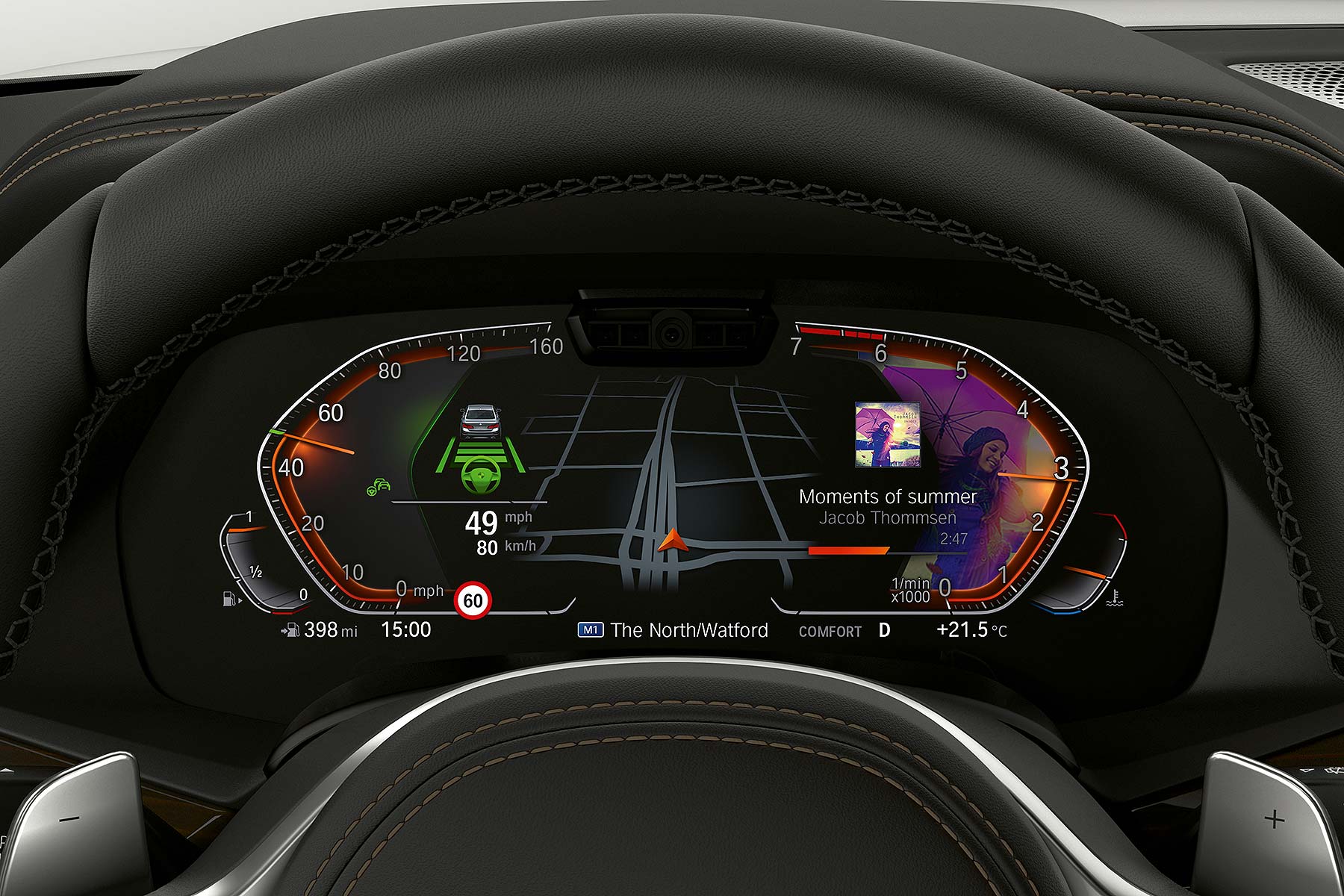





 Mercedes-AMG is one step closer to bringing its F1-derived hypercar to fruition. After being spotted testing not long ago, the new car now has a name: the Project One concept has become the Mercedes-AMG One.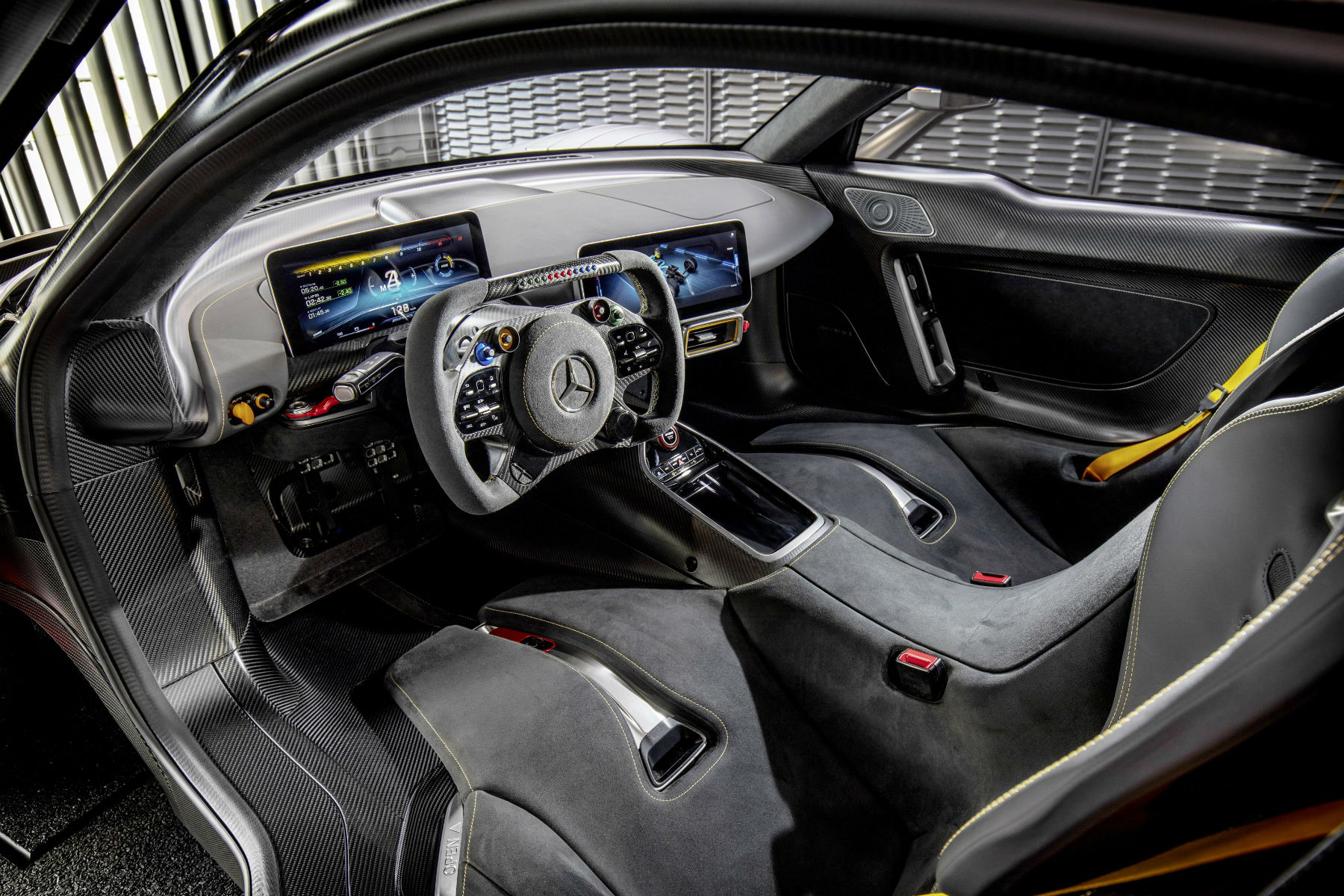
 BMW has given its i3 electric car yet another battery update, meaning it now has around twice the electric capacity than it did at launch just five years ago. The 42.2 kWh battery of the 2019 i3 is almost 30 percent larger than today’s model, too.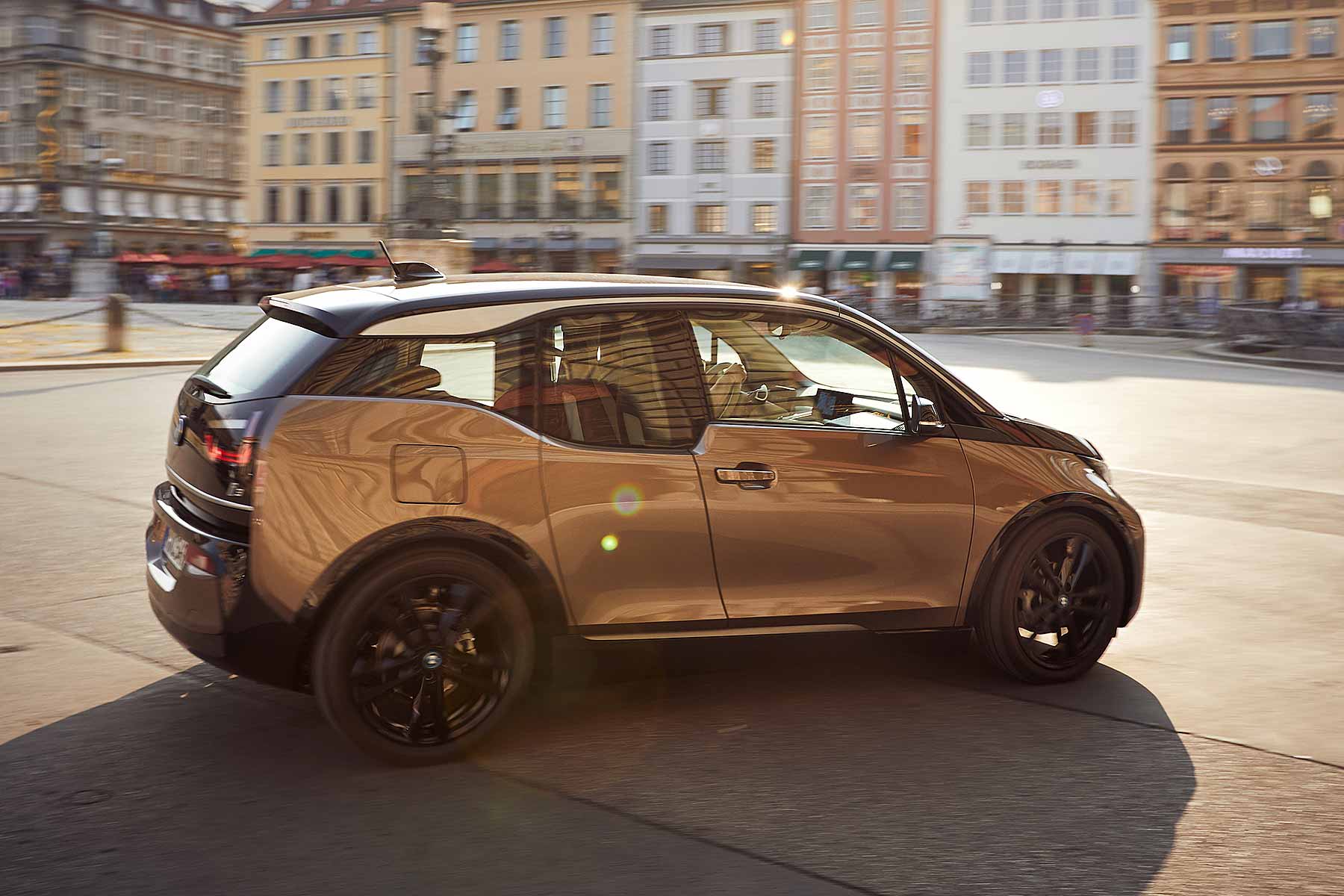

 Porsche has stunned motorsport fans by recreating one of its racing legends as a modern day retro homage. The new Porsche 935 is inspired by the 1978 935/78 Le Mans racer that was famously nicknamed ‘Moby Dick’.