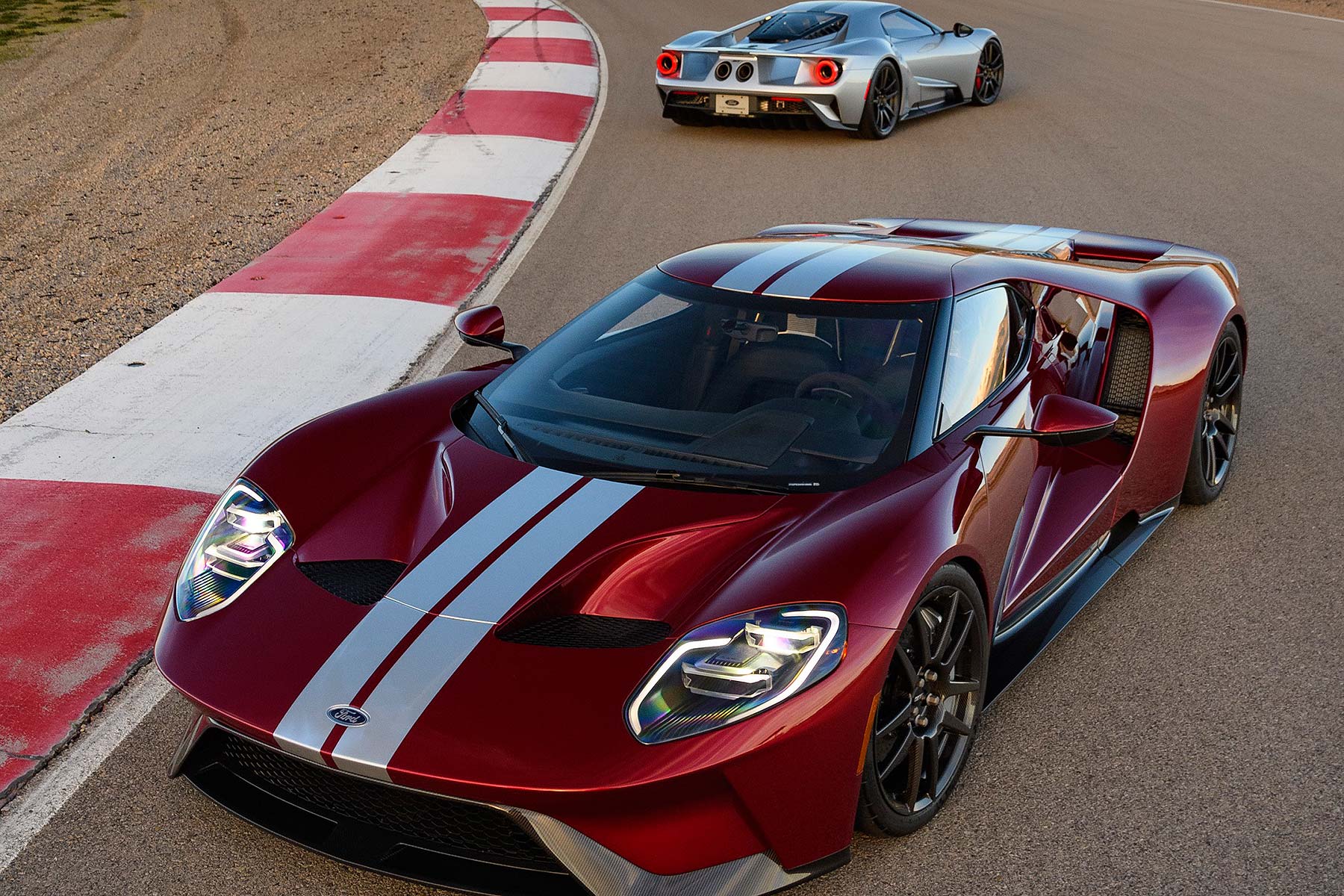
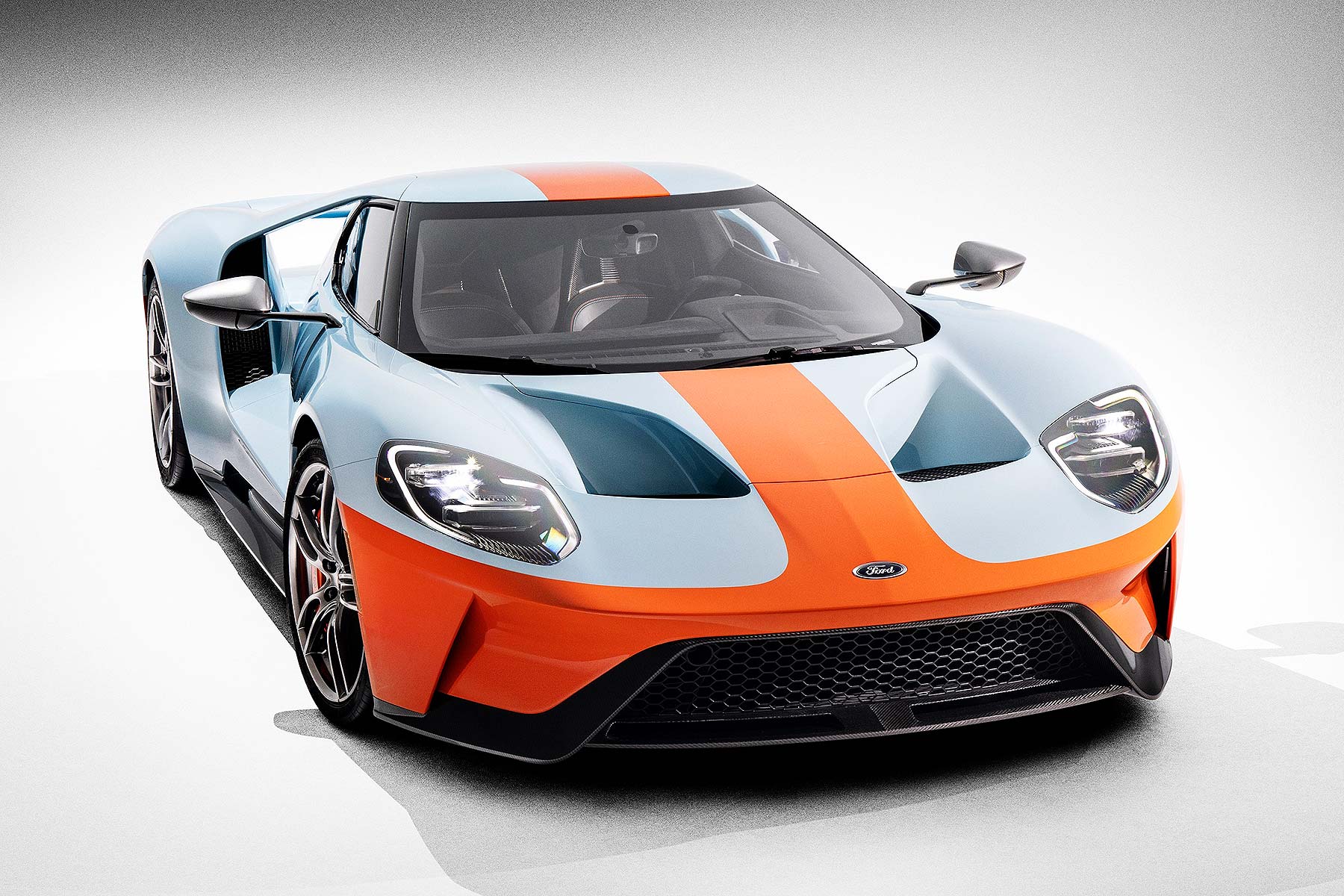
So many supercar buyers are eager to buy a new Ford GT, the firm has decided to extend production for two more years.
The application window for orders will open again on 8 November for exactly one month – and the UK is among the markets selected for ordering.
Racing in the blood: the story of the Ford GT40
Ford Performance director Hermann Salenbauch said the decision to keep on building the 216mph GT was because of “unprecedented demand”. Orders have outstripped supply by more than six to one, he said.
The Ford GT will still remain exclusive, he insisted, but a few more lucky customers will now get one – including some “in addition to the 80 Ford GT owners in Europe who’ve taken delivery to date”.
Ford originally planned to build 1,000 GTs over four years, with production beginning in late 2016. Build slots will now cease in 2022, rather than 2020.
Even those who manage to apply for a GT are not certain of actually owning one, though. Ford says prospective owners should “submit their applications at fordgt.com [when it opens on November 8]… successful applicants will work with the Ford GT Concierge Service for a personalised purchase experience”.
Among the options for the fresh batch of Ford GT buyers will be the Heritage Edition model. This wears a Gulf Oil racing livery in Heritage Blue and Heritage Orange. It marks the 50th anniversary of the Ford GT40 that won the Le Mans 24 Hours in 1968 and 1969.
MPs want the government to bring forward its proposed 2040 ban on the sale of new petrol and diesel cars by eight years to 2032 – and have criticised it for being ‘vague and unambitious’ about zero emission cars.
The Business, Energy and Industrial Strategy Committee (BEIS), a parliamentary select committee, also blamed a lack of public charging points for electric vehicles (EVs) for the lack of growth in the UK EV market – although David Martell, chief executive of electric car charging company BP Chargemaster, said the committee’s report “appears to be based on outdated information.”
BEIS chair Rachel Reeves MP said: “For all the rhetoric of the UK becoming a world leader in EVs, the reality is that the government’s deeds do not match the ambitions of their words.”
She said that targeting zero-emissions new car sales by 2032 would show the world Britain is serious about being a EV leader.
“The government needs to get a grip and lead.”
The car industry, however, has does not believe the transition is realistic. “Government’s 2040 ambition was already extremely challenging,” said Mike Hawes, chief executive of automotive trade body the Society of Motor Manufacturers and Traders (SMMT).
“To fast-track that by eight years would be nigh on impossible.
“Zero emission vehicles make up just 0.6 percent of the market, meaning consumer appetite would have to grow by some 17,000 percent in just over a decade. This is unrealistic and rejects the evidence put forward by SMMT on behalf of the industry.”
On this decision, Reeves was clear: “The Department for Transport’s slashing of the Plug-in Grant scheme drives the incentives of buying an electric vehicle into reverse.
“Cutting support is a perverse way to encourage drivers to move into non-polluting cars. This is only the latest sign of the government’s inconsistent approach to develop the market for electric vehicles.”
Hawes agreed: We said we need world class infrastructure and world class incentives to have any chance of delivering so the recent cuts to the Plug-in Car Grant and lack of charging facilities – both of which are severely criticised by the Committee – show just how difficult it would be to accelerate this transition.”
BEIS wants the government to maintain the grants, give electric vehicles preferential Vehicle Excise Duty Rates and bring forward preferential EV company car tax rates “without delay”.
The new McLaren Speedtail, which will be revealed on 26 October, is such a bespoke car, it’s even getting its own special bonnet badge option.
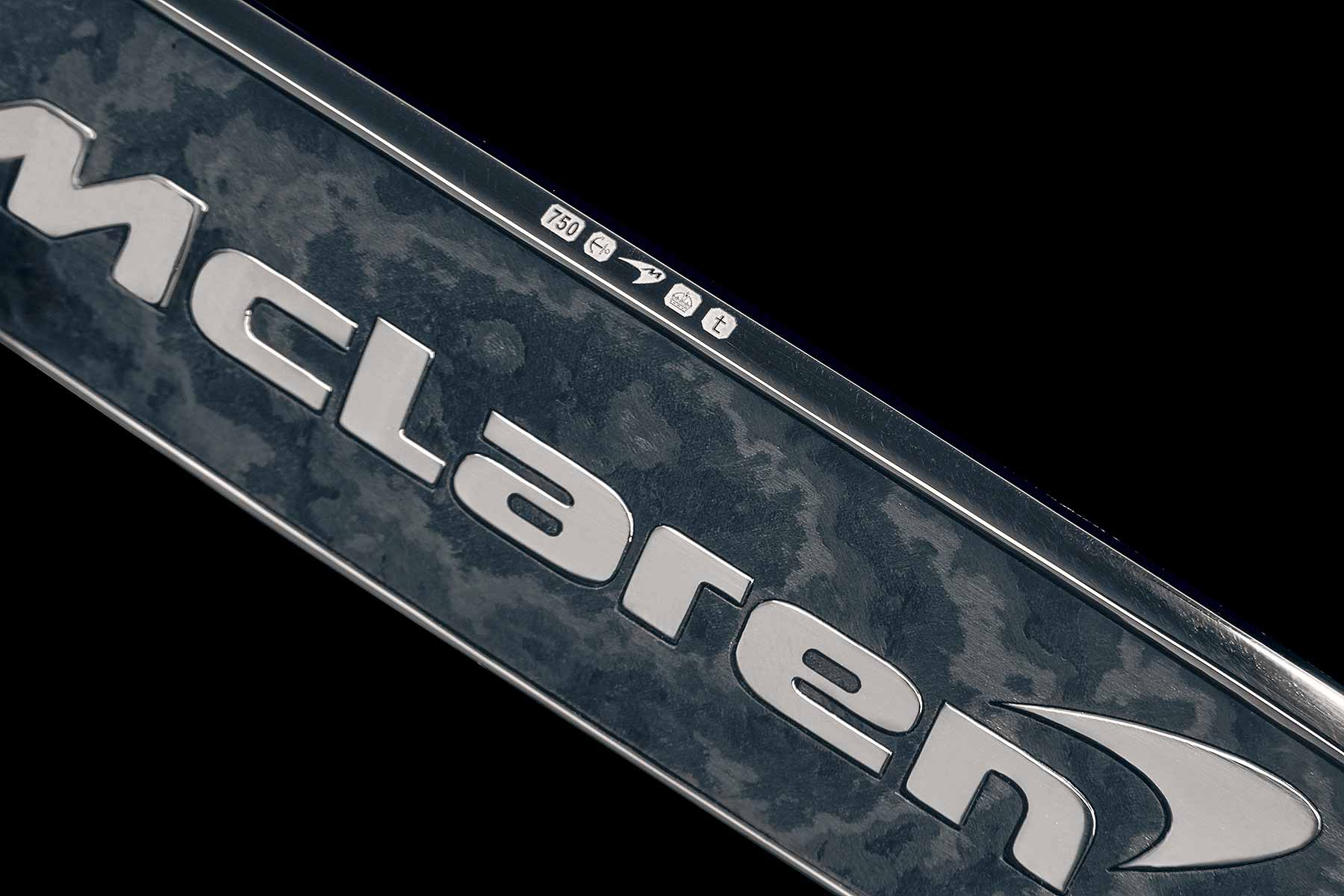
Each of the 106 hyper-GT cars can be fitted with a set of three 18-carat white gold badges: two brand badges at the front and a model name at the rear.
They’ll be made in Birmingham’s famous Jewellery Quarter, by Vaughtons – a firm established in 1898 that also creates Olympic gold medals and trophies for the FA Cup.
The badges carry laser etching showing when and where they were made, as well as the McLaren ‘Speedmark’ logo. The carbon fibre inserts use ‘Thin Ply Technology’ (TPT) that’s exclusive to McLaren.
McLaren says the front badge weighs 100 grams. If that’s too heavy, a lacquered transfer can be fitted instead. This “weighs almost nothing”.
But going for gold is more authentic, reckons McLaren. The Speedtail is the spiritual successor to the 1993 F1, which used a gold foil heat shield in its engine bay.
“A new gold standard”
Emphasising that this is a new, ultra-posh and premium McLaren, the firm’s design director Rob Melville said that “as beautiful pieces of exquisitely hand-crafted jewellery, the white-gold badges perfectly set off a car that in every way represents a new gold standard [very good – Ed.] for McLaren luxury.
“They fit perfectly with the philosophy of the Speedtail, the most luxurious car in McLaren Automotive’s portfolio, as well as paying homage to its forebear, the McLaren F1.”
For those who don’t want to fork out for the white gold badge set, the standard badge is made from aluminium with a gloss black inlay.
And if white gold is still not quite rich enough, McLaren is offering a fourth option for Speedtail badges – to have them made from solid platinum.
A survey by MoneySupermarket has found 76 percent of drivers want to be in control of their own vehicle, rather than leave it to autonomous systems. Equally, 68 percent don’t trust autonomous tech and another 68 percent don’t believe it’s safe.
Almost one in two are suffering ‘driverless dread’ and think introducing autonomous cars is a bad idea, with the over-55s being particularly negative about it. Almost half of 24 to 34 year-olds were receptive to self-driving cars, though.
MoneySupermarket editor-in-chief Tom Flack said it’s “understandable that people are sceptical, as full control over their vehicle will be lost.There will no doubt be a transitional period where people get used to the new technology on offer.”
The comparison website does, however, believe autonomous cars are a good thing, “reducing accidents and bringing down the cost of motoring, including insurance”.
The survey also looked at ethical issues: who is at fault if an autonomous car crashes. A total of 45 percent of respondents would blame the car manufacturer, but 34 percent would blame the ‘driver’ – even if they weren’t driving at the time.
Curiously, 18 percent say nobody would be at fault if a driverless car crashed.
Other worries include rising costs such as soaring MOT prices, while 42 percent believe car insurance will actually become more expensive when autonomous cars take to the roads in significant numbers.
As for the joy of driving, it may not be all it’s cracked up to be. Only 36 percent of people are worried about the arrival of autonomous cars because they enjoy driving…
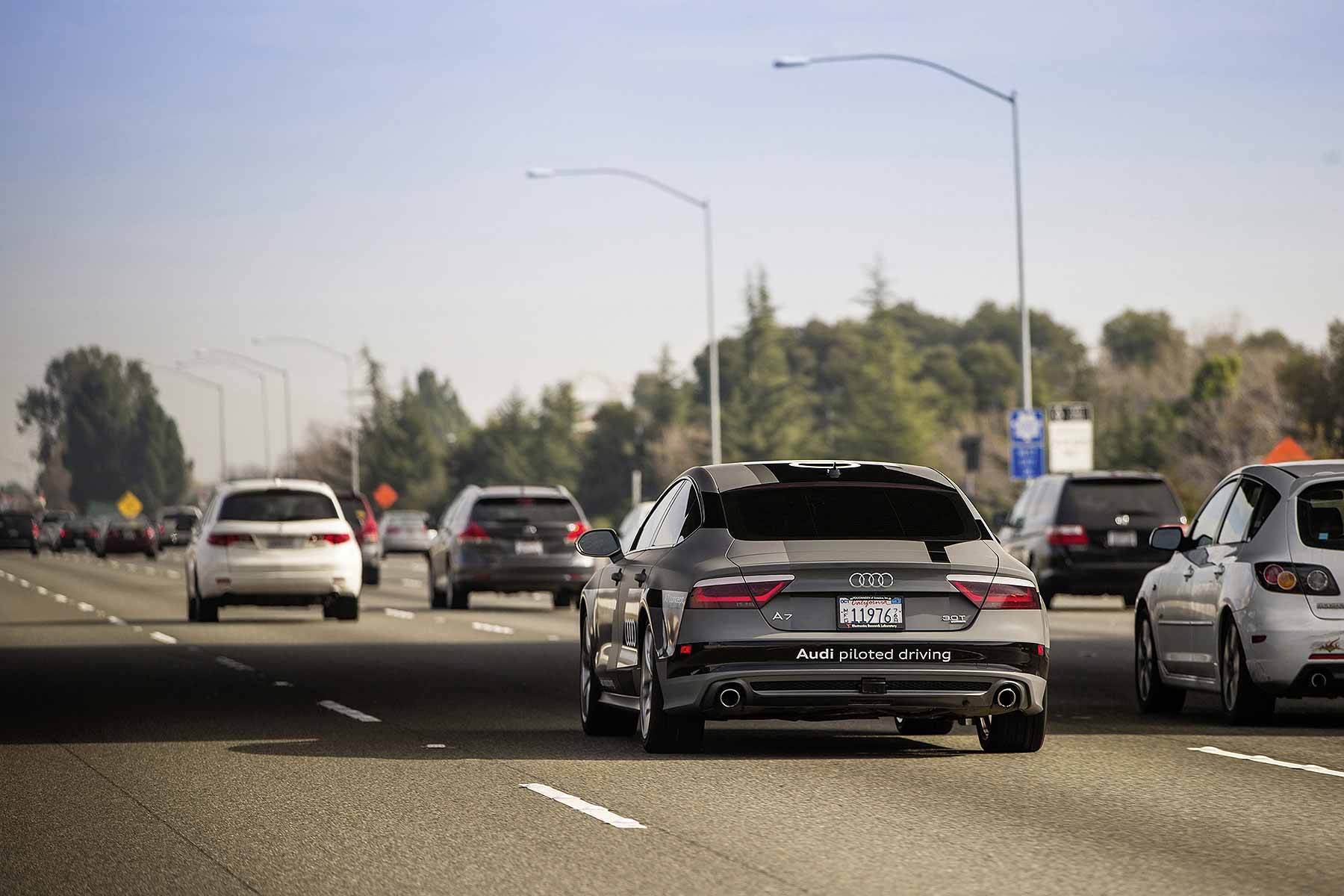
Thatcham Research has warned that car buyers are already becoming dangerously confused by new driver-assistance technology.
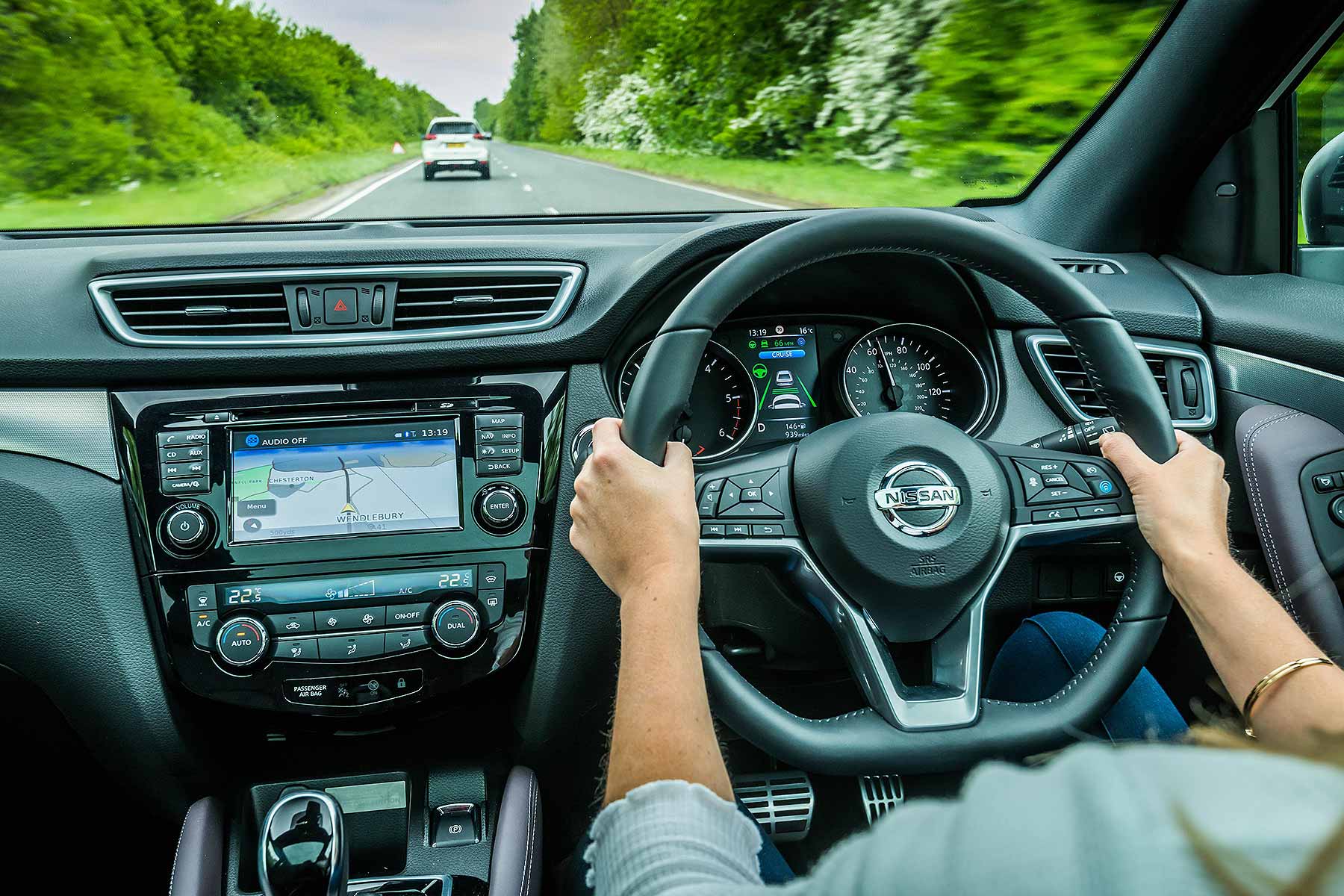
Its concerns follow the latest Euro NCAP crash-tests, which assessed ‘highway assist’ technology in 10 cars. These systems bundle up adaptive cruise control, lane centring and speed assist to aid the driver on motorways.
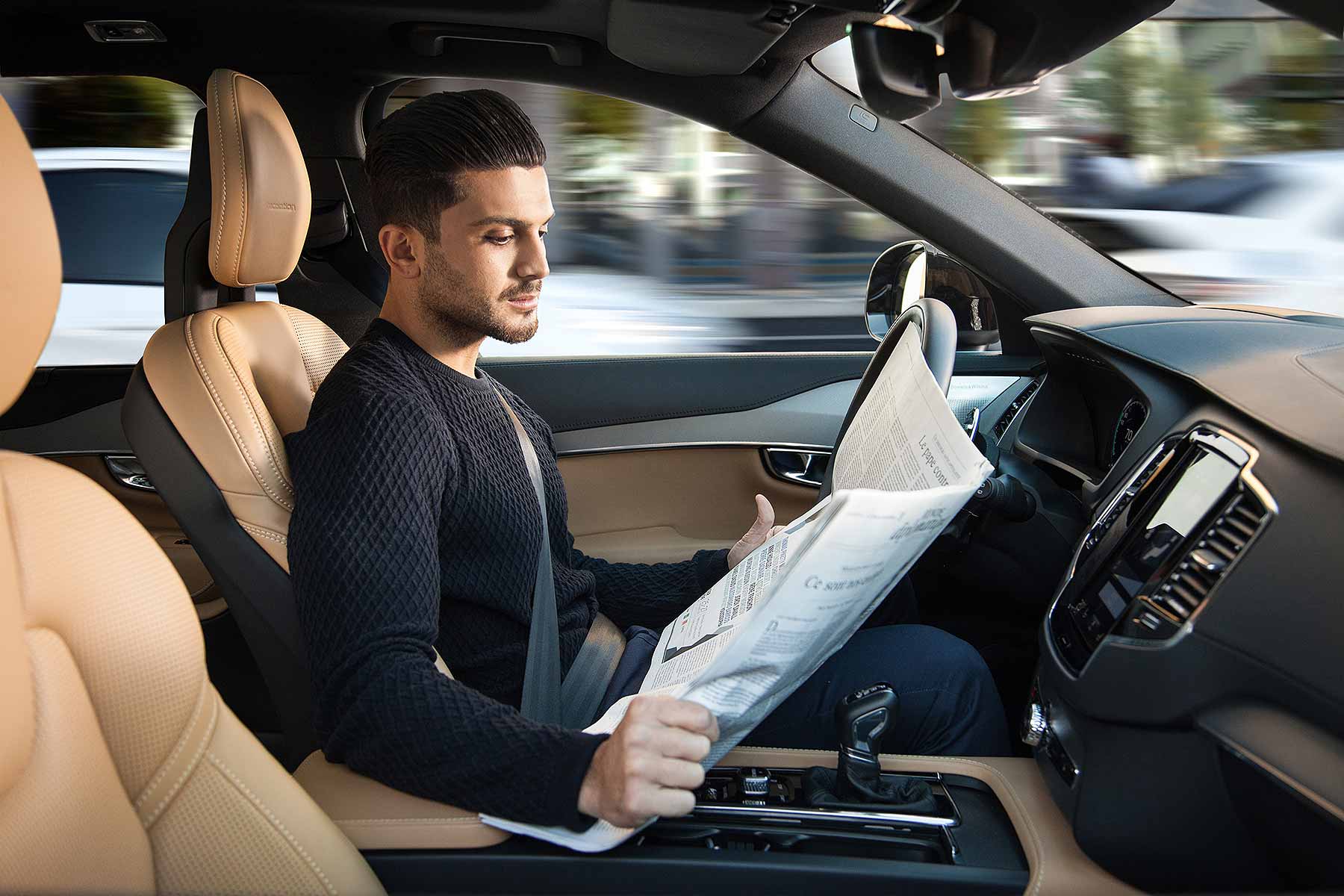
But Thatcham Research says over-hyped branding by car firms is leading motorists to misinterpret such tech as ‘autonomous’ – and alarmingly, 71 percent believe they can buy a car that drives itself today.
Matthew Avery, director of research at Thatcham, blamed car manufacturers for marketing the systems in such a way that drivers believe they can give up control.
When automated driving tech goes wrong
“Carmakers want to gain competitive edge by referring to ‘self-driving’ or ‘semi-autonomous’ capability in their marketing, but it is fuelling consumer confusion.
“This is exacerbated by some systems doing too much for the driver, who ends up disengaged.
“If used currently, highway assist systems will improve road safety and reduce fatalities, but they won’t if naming and marketing convinces drivers that the car can take care of itself.”
Euro NCAP’s findings are clear: no car on the market today offers full automation or autonomy. Highway assist systems offer driver assistance “but should not be confused with automated driving.
“Cars, even those with advanced driver assistance systems, need a vigilant, attentive driver behind the wheel at all times,” said Euro NCAP secretary general Michiel van Ratingen.
How carmakers are confusing car buyers
Thatcham Research highlighted some examples of marketing from car firms that it believes is confusing customers into believing the self-driving car is already here.
Audi: “The new Audi A6 is developed to take a step towards autonomous driving thanks to the Audi AI garage pilot and the Audi AI parking pilot”
BMW: “semi-autonomous driving due to Driving Assistant Plus”
Citroen: “DS Connected Pilot is a step closer to autonomous driving, but still allows you to retake full control of the car at any point”
Mercedes-Benz: “The C-Class is able to drive semi-autonomously in certain situations”
Tesla: “All Tesla vehicles produced in our factory, including Model 3, have the hardware needed for full self-driving capability at a safety level substantially greater than that of a human driver”
Volvo: “For smoother driving from standstill up to motorway speeds, Pilot Assist semi-autonomous drive supplements Adaptive Cruise Control buy adding gentle steering support to help keep the car centred in its lane and at a set speed”
Car makers: safety is ‘number one priority’
Mike Hawes from the Society of Motor Manufacturers and Traders (SMMT) has responded, insisting that “safety is the number one priority for car makers, which spend billions developing technology that mitigates driver error, reduces accidents and saves lives.
“Many new cars are now available with advanced assistance systems where the driver must remain in control at all times, including lane keeping assist, blind spot monitoring and emergency braking.
“Such systems are already making our roads safer and are expected to save 2,500 lives by 2030.
“We understand this survey found that 118 people in the UK believe they can buy ‘a car that drives itself’ today, but as most would accept, fully self-driving cars are still a long way off.”
Because full self-driving cars are so far off, the SMMT believes industry and regulators should now take the opportunity to clearly clarify exactly what makes a vehicle fully autonomous.
“This will ensure there is a common understanding and that all autonomous cars meet exacting international standards.”
Who had the best crystal ball: George Orwell or American singer Rockwell? It’s a strange question, but news that General Motors (GM) used in-car wi-fi to gather music listening data presents the ideal landscape for this surveillance-led tussle.
For the past three months, GM has tracked the habits of 90,000 drivers in Los Angeles and Chicago who agreed to take part in a ‘proof of concept’ study. The aim: to see if there’s a direct relationship between what we listen to in the car and what we buy.
So, if Kelis singing about milkshakes promotes an urge to visit McDonald’s, or The Beatles’ Octopus’s Garden tempts you into an impromptu visit to Otter Nurseries for a punnet of pansies, your car will spill the beans.
Speaking of which, if Weezer’s Pork and Beans results in you making a diversion via a supermarket… well, you get the picture.
Why? Because GM and its ilk can sell the data to advertisers, who in turn can use the insights to produced targeted radio advertising. It might not spell the end of those annoying radio ads, but it might mean the messages are more relevant to you.
To some, this will fuel the fire of concerns over data gathering and privacy, while others might embrace the future of targeted ads and reminders to buy some dog food on the way home from work.
According to GM, one commuter who listened to a country and western radio station made regular visits to a Tim Hortons restaurant. At the very least, this could result in Tim Hortons ads playing during The Bobby Jones Show on BIG 95.5 FM, but who’s to say it couldn’t be extended to include special offers sent directly to the car’s infotainment system?
For now, the data is kept anonymous, but targeted corporate-to-car ads must represent the golden goose for advertisers.
Every breath you take
GM spokesperson Jim Cain said: “Connected radios generate data that could allow for more radio markets to be measured and provide other valuable insights.
“This data is then aggregated and anonymised and would represent the results over a very large sample size and would not include any personally identifiable information.”
GM is quick to point out that customers using the connected services must opt-in by accepting terms of use and privacy statements, but where will this end? If a manufacturer knows what station you’re listening to, who’s to say that the data couldn’t be extended to highlight bad habits?
No, we’re not talking about picking your nose in a traffic jam, but that time you did 85mph on the motorway or parked on a double yellow line. This information would be of interest to the authorities.
As for the answer to our original question, we reckon George Orwell had the best handle on the future, although there’s something poetic about the fact that Rockwell released his hit single in 1984.
You’re being watched and listened to. Things were more straightforward in the days of a Goodmans car radio – you could listen to Agadoo without fear of anyone finding out. Anyone fancy some pineapple or ground coffee?
Meridian Vehicle Solutions has a number of plug-ins on order, such as the BMW 530e iPerformance and Kia Niro, and these will still qualify for the grant.
But “future additions are looking very unlikely” said managing director Phil Jerome. “This is really disappointing.
Charging ahead: plug-in hybrid car sales leap by a third
“There is rapidly growing demand from fleets for plug-in hybrids, and we made a strategic decision earlier this year to meet that need.
“The dozens of vehicles that we already have on order will, we are sure, easily be placed on lease.”
However, removing the grant now adds £2,500 to the purchase price of any new acquisitions – and, potentially, hundreds of pounds per month to the price of a plug-in lease, explained Jerome.
“The maths no longer stacks up… the pricing is no longer commercially viable.
“It leaves us in a very odd and frustrating position, where we are able to supply the current plug-ins that we have on order to fleets that want them – but then will probably have to step back from the plug-in market unless manufacturers cut prices.”
Calling the move “hard to understand”, Jerome also said he was frustrated the grant will be removed in just weeks, giving fleets almost no chance to plan and react strategically.
“With WLTP, company car tax and the cut in grants – all occurring against the backdrop of Brexit – it is difficult not to feel that the government is intent on making life as difficult as possible for fleets.”
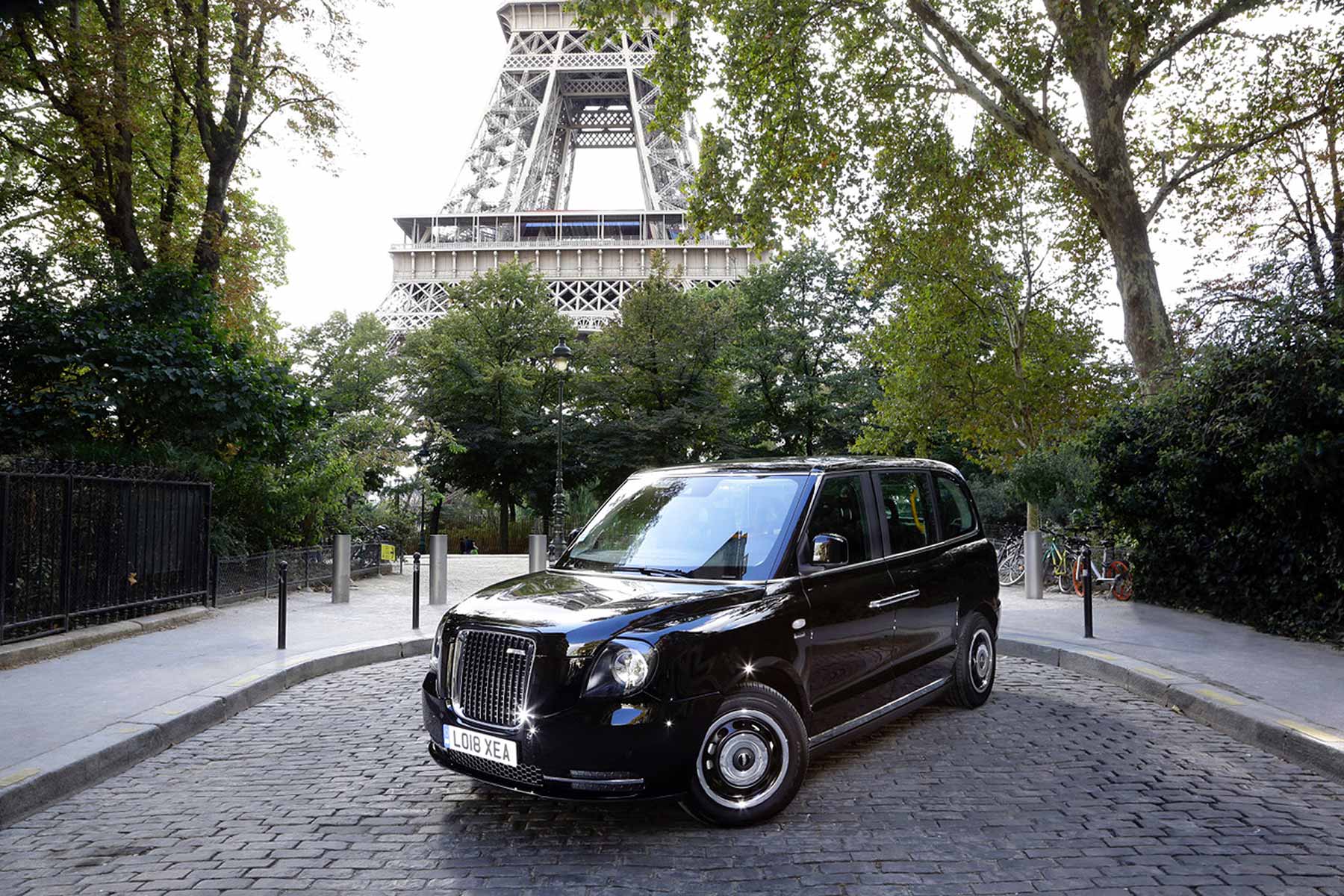
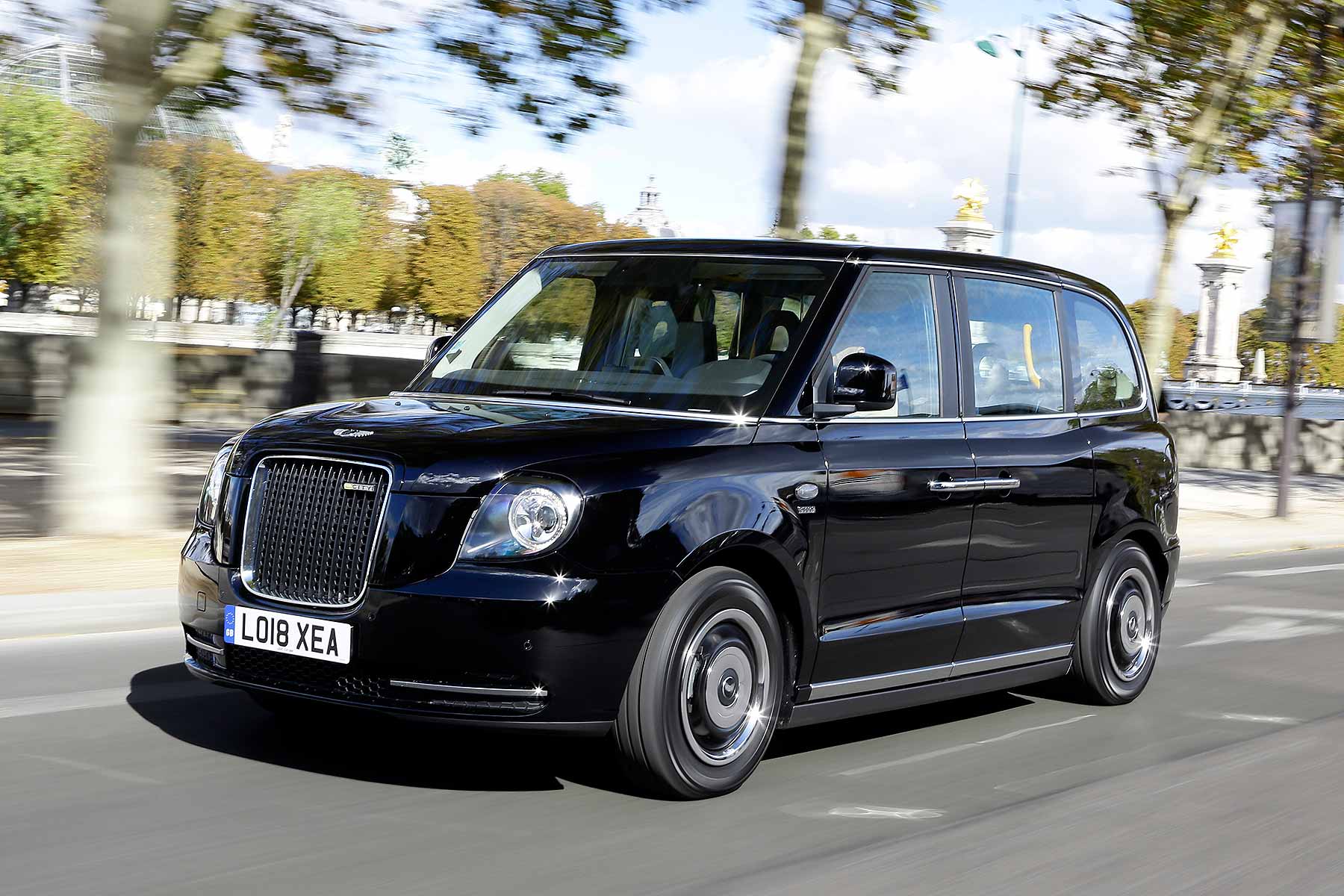
Parisian authorities have approved the British-built LEVC TX eCity ‘London black cab’. It will begin taking fare-paying passengers in the French capital from early 2019.
Bosses say the French green light comes many months ahead of schedule, and is more proof of fast-growing international interest in the reborn hybrid taxi.
TX eCity cabs are already in use in Amsterdam, Berlin, Hamburg and Oslo, on top of the 600 on the roads in London.
British cabbies say the new taxi is saving them more than £100 a week in fuel bills, but it’s the fact it’s so clean that’s convinced Parisian authorities to introduce it quickly.
Around 48,000 people a year are killed in France because of air pollution. Paris is even witnessing the worrying re-emergence of smog, something associated with a bygone era of coal-burning.
To counter this, the Parisian Mayor has committed to ban pre-2005 diesel cars from 2019, and outlaw all diesel vehicles just five year later, in 2024.
This will have a big impact on the 20,000 taxis on the road in Paris: enter the TX eCity, says LEVC CEO Chris Gubbey. “This truly bolsters our European position and we look forward to servicing the cities of France alongside those in Norway, the Netherlands and Germany.”
Built in Coventry, the new LEVC TX eCity London taxi is a plug-in hybrid that combines a 1.5-litre petrol engine with high-capacity electric batteries. It has an electric-only range of 80 miles; the average taxi covers around 120 miles a day, says the firm.
Once the batteries are flat, the engine kicks in – as a generator to provide electricity, rather than directly driving the vehicle. This is more efficient and is why the quoted fuel savings are so significant.
A combination of zero-emissions electric driving plus the low-pollution petrol engine offers massive improvements in overall emissions compared to an older diesel taxi, adds the firm. And its optimised design, six-passenger space and Volvo XC90-derived underpinnings have all generated “a very positive reception on the streets,” said Gubbey.
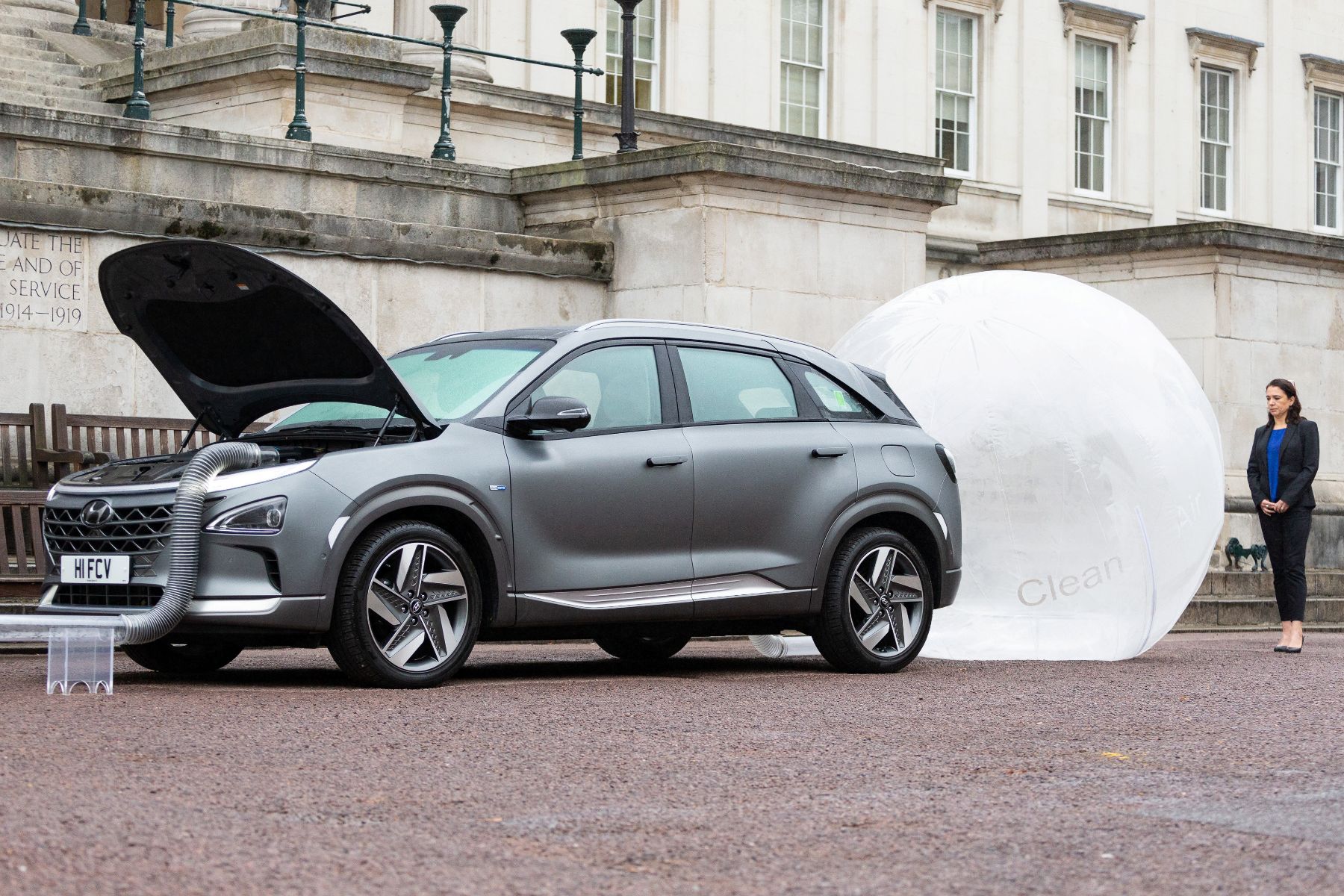
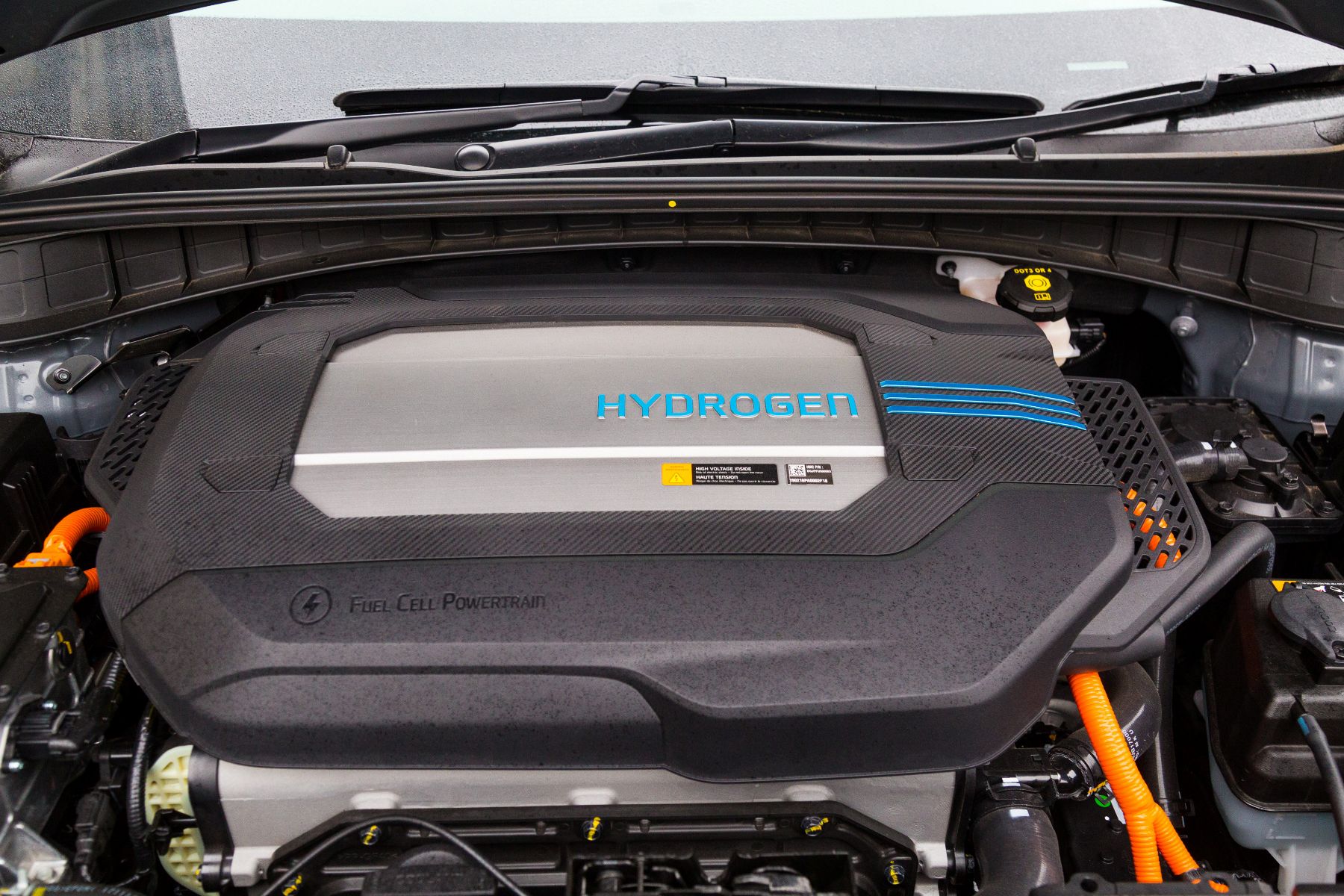
Hyundai’s next-generation hydrogen electric car, the Nexo, has been driving along the most polluted streets in London – and purifying the air as it goes.
Hyundai teamed up with University College London (UCL) to map a route of the most polluted roads in the capital, including streets in Elephant & Castle, Kings Cross and Westminster (as we reported yesterday, Google is also in the process of mapping London air quality).
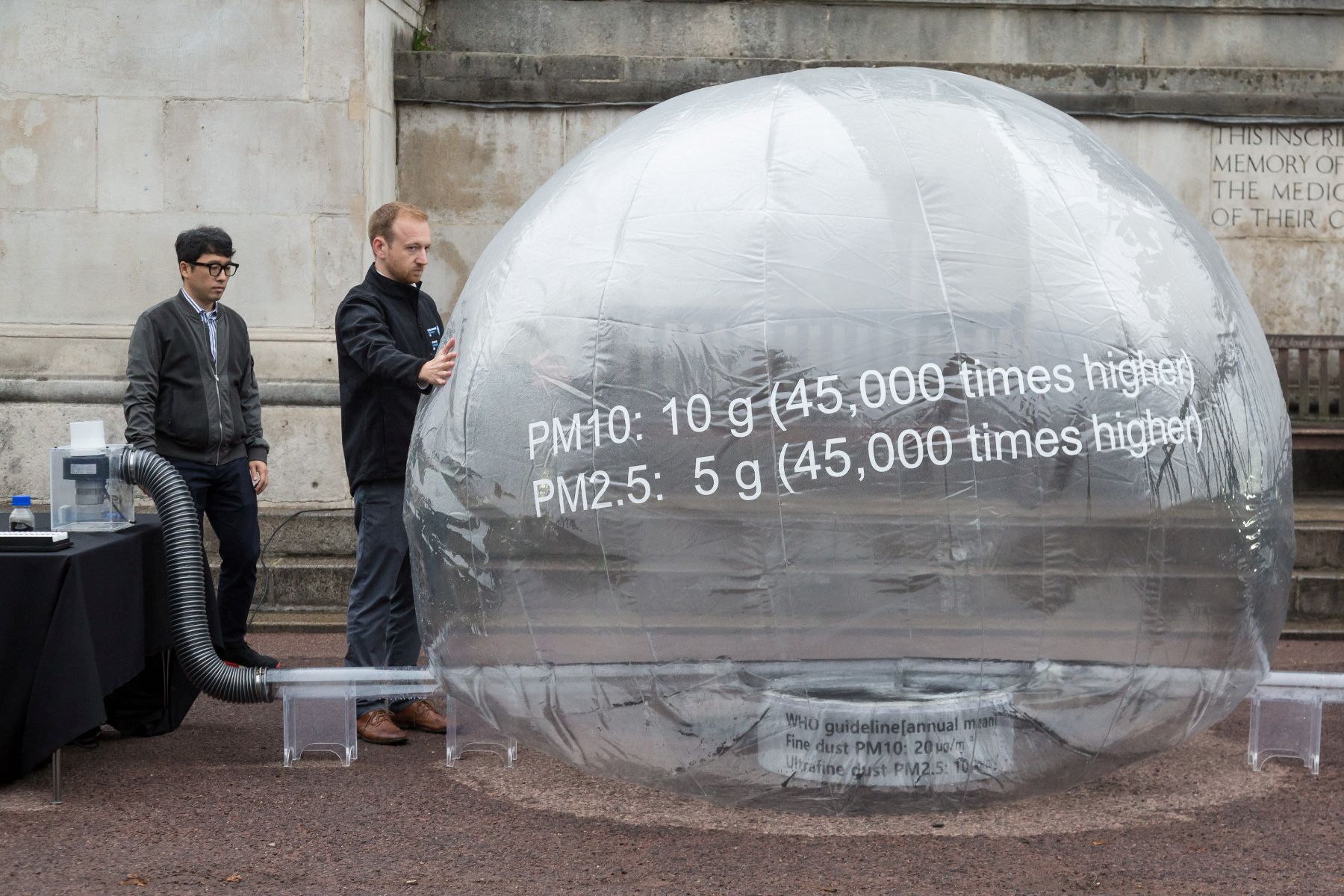
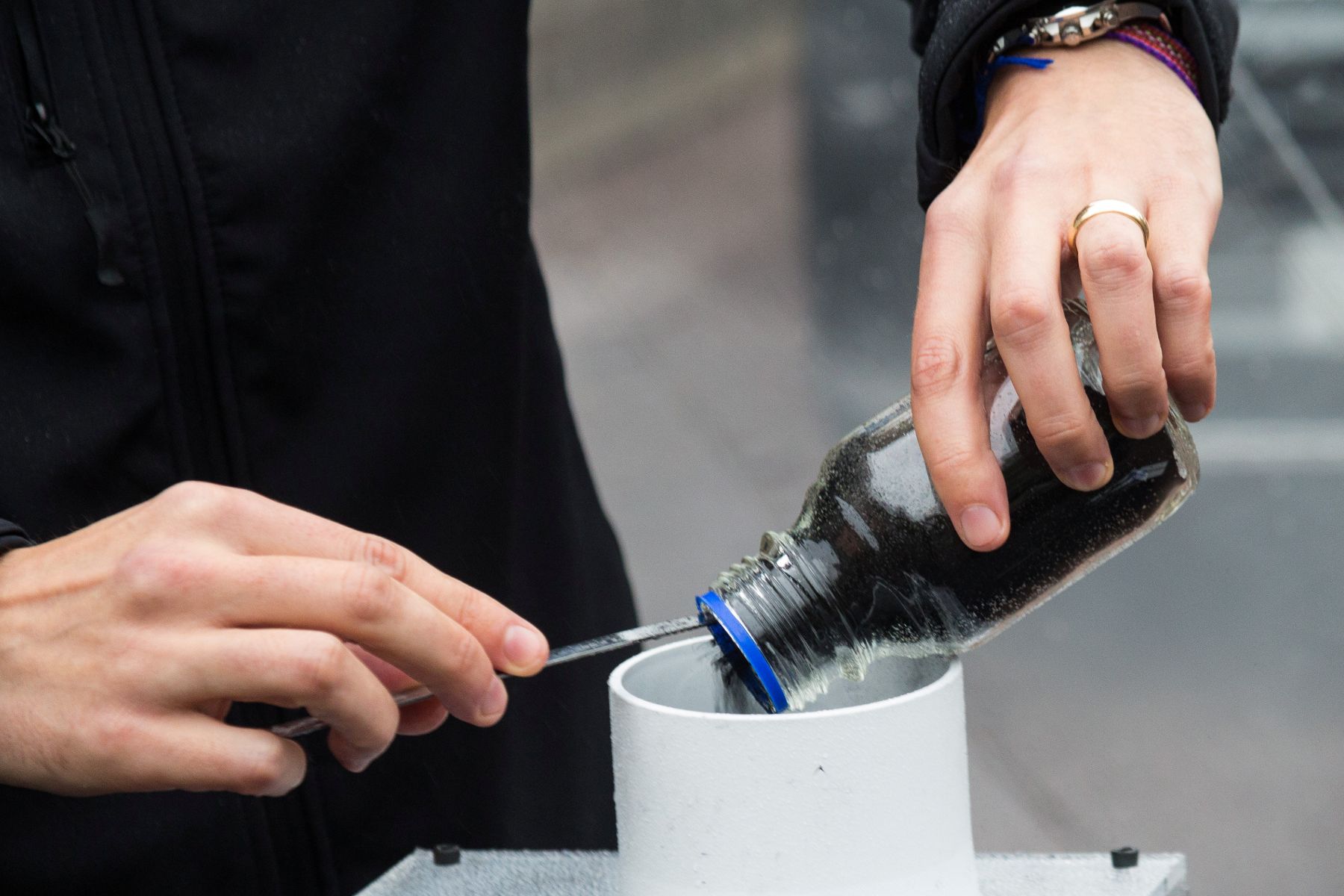
While the car itself only emits water and heat, it also has an air purification system that can filter 99.9 percent of fine dust and particulates in the air. Over the course of an hour, the Nexo can filter as much as 26.9 kilograms of air – enough, says Hyundai, to keep up to 42 adults breathing for an hour.
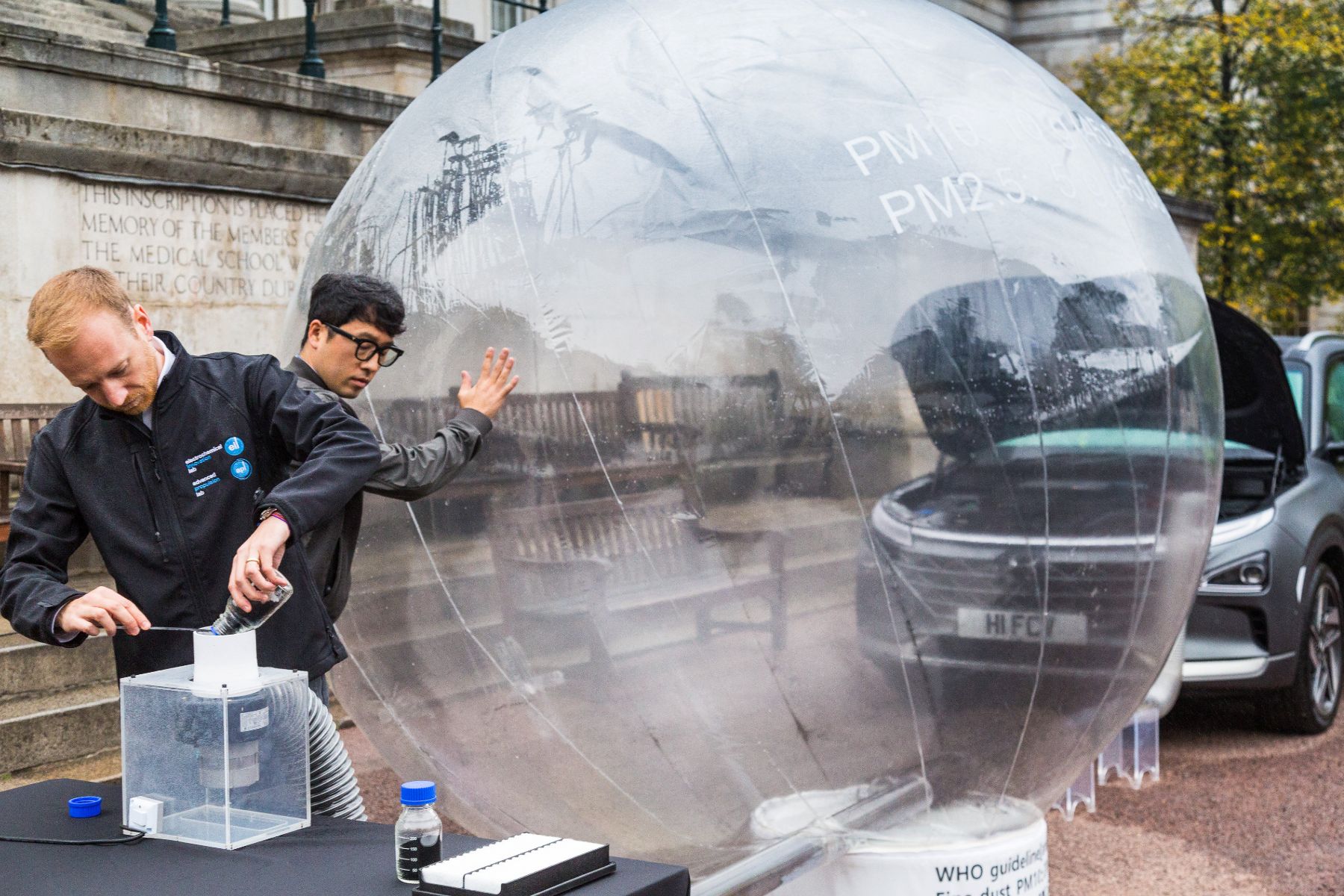
If 10,000 of these cars were on the road, it would have a similar carbon reduction effect to planting 60,000 trees. Big claims that for once, get some in-action proof. A demonstration was set up outside UCL, putting the filtration system to work live.
“We are all concerned about air quality and what affects it”, says Sylvie Childs, Hyundai’s Senior Product Manager for Nexo.
“At Hyundai, we are committed to improving the efficiency and environmental performance of all our vehicles and have been investing billions in bringing a full range of low and zero emission vehicles to the marketplace. We believe that the availability of alternatives, like the Nexo fuel-cell electric vehicle, will bring the UK closer to its zero-emissions future.
“However, the responsibility for this cannot only rest with us, the manufacturer. We need the government to invest equally in incentives and infrastructure that would enable Brits to have better choices when it comes to the car they drive and how it can fit into their lives.”
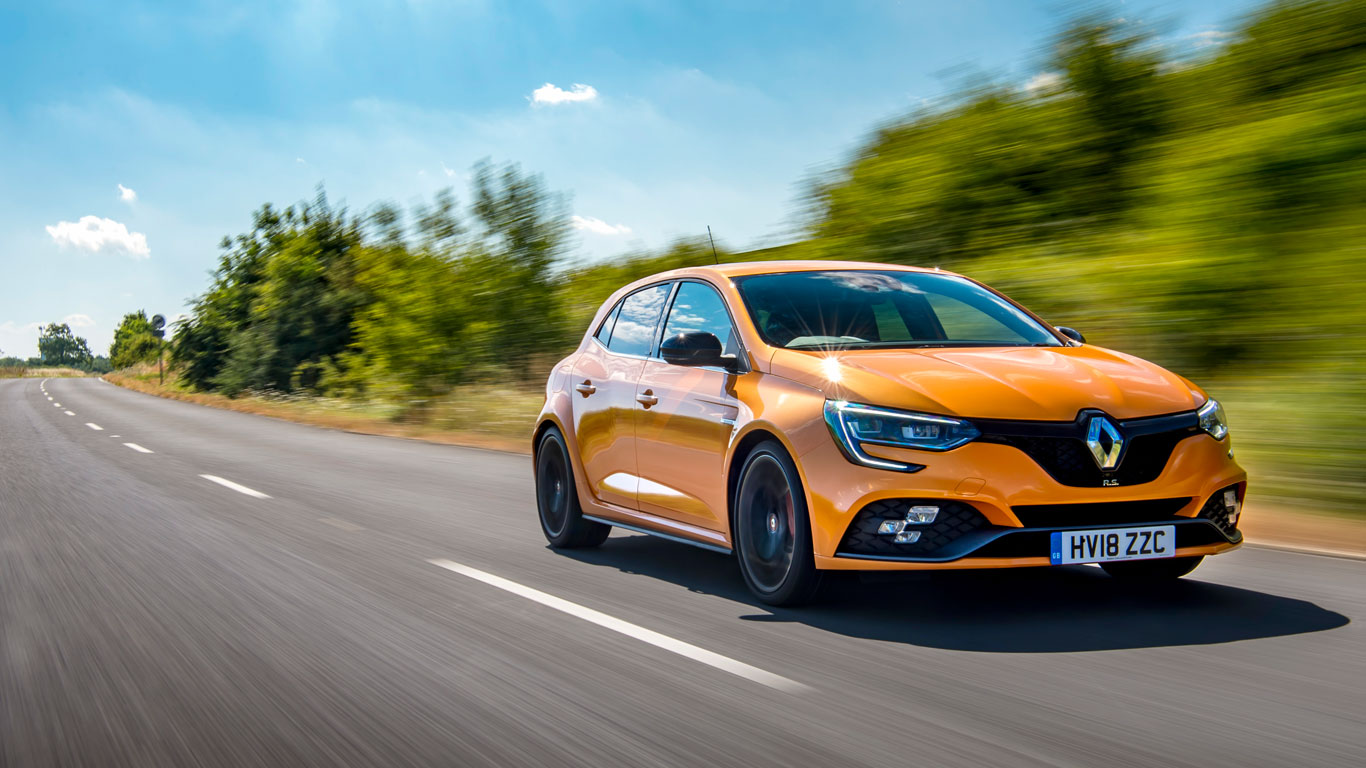
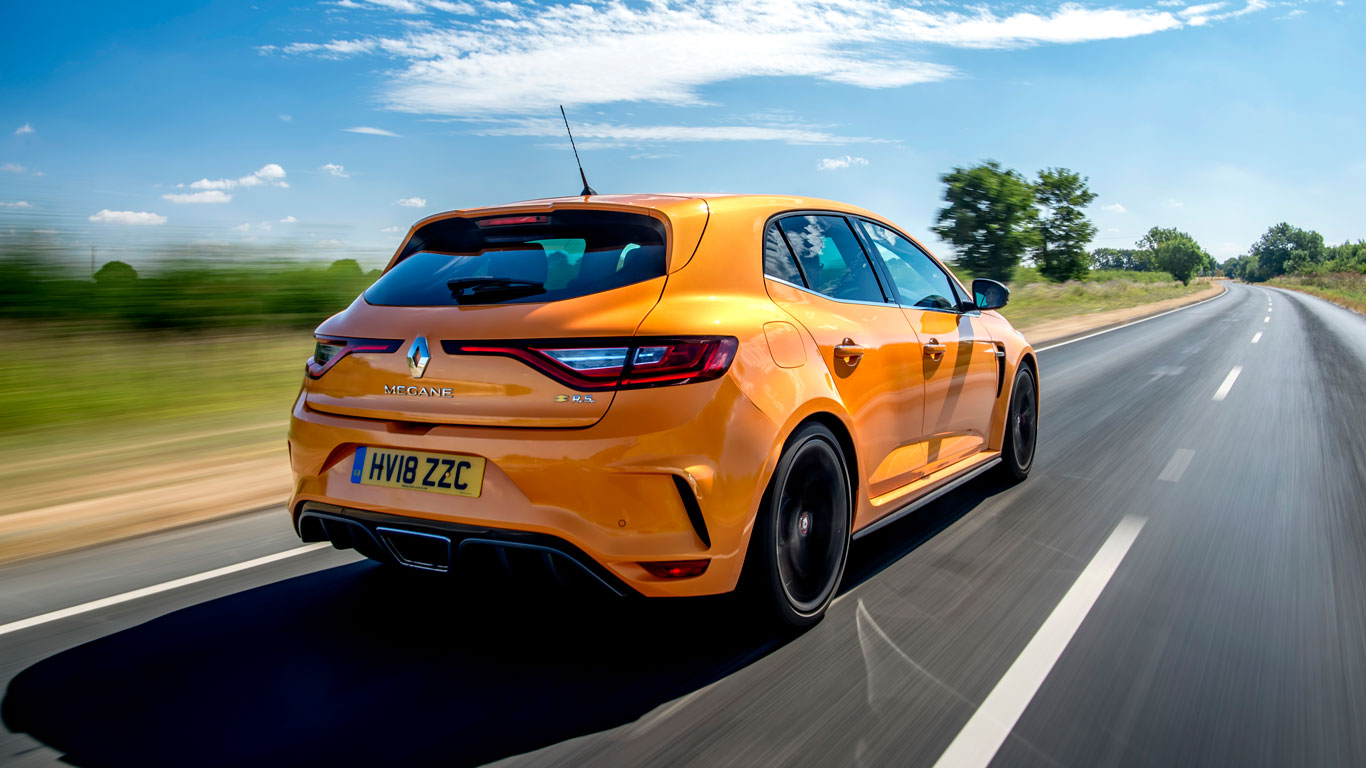
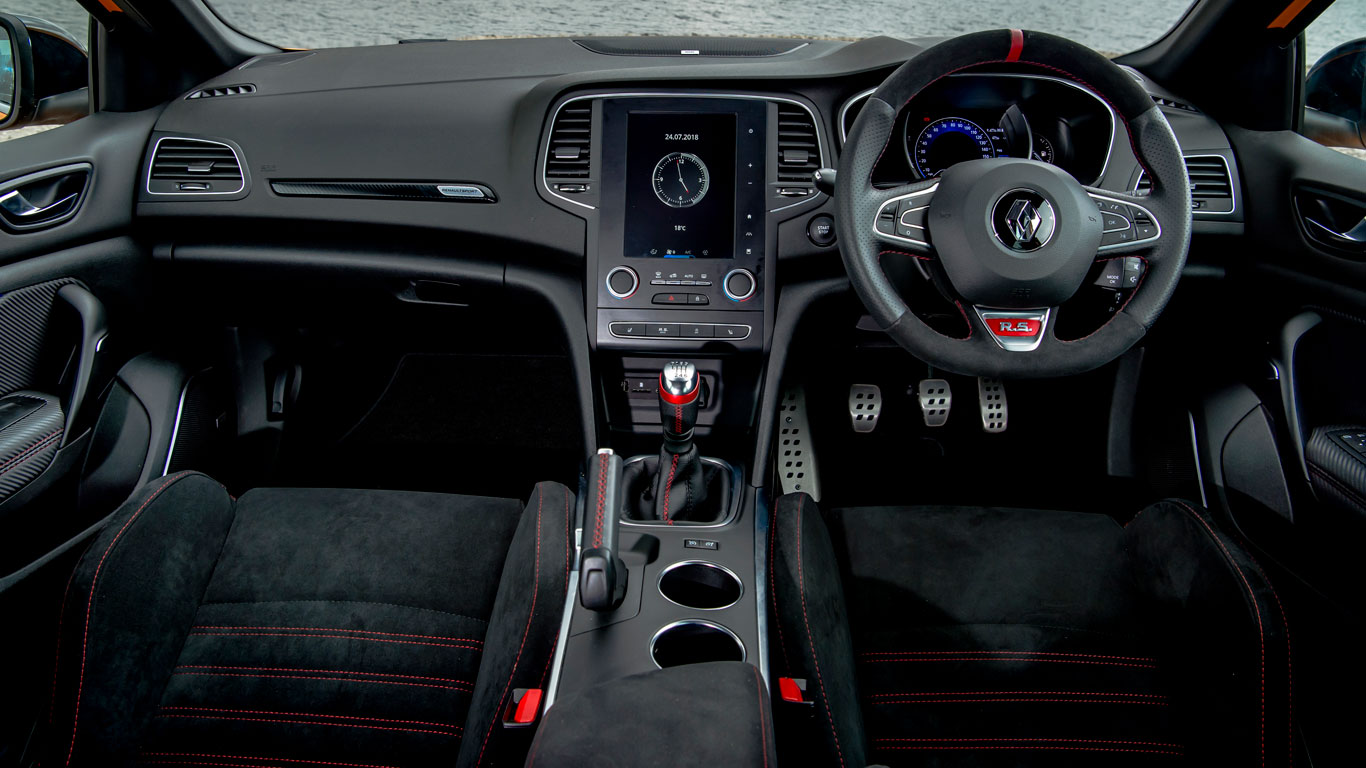
After years in the wilderness, the Renault Megane RS is back in the hot hatch game, which is great news for performance car fans. We’ve just returned from a drive in a new Volcanic Orange Megane RS 280 with the optional Cup chassis. As its name suggests, the hottest Megane develops 280hp, putting it well below the 300hp+ hot hatches we’ve grown accustomed to. Does this matter? Here, we deliver our verdict, which is followed by our favourite performance Renaults of all time.
Renault Megane RS 280
First things first, the perceived lack of oomph is no issue. This turbocharged Megane is as powerful as the old 2.0-litre cars and, crucially, that 280hp is harnessed to great effect by the optional Cup chassis. For £1,500, Renault will equip your Volcanic Orange or Liquid Yellow (other less lurid colours are available) car with a limited-slip differential and stiffer springs and dampers. It’s a must-have option.
The Torsen diff means that you can get the power down early as you exit the corner, while the four-wheel steering means that you can carry more speed through the bend. There’s no denying that it can take a while to get used to, but it soon becomes part of the intoxicating driving experience. It’s just a shame that the steering lacks feedback and the six-speed manual gearbox isn’t the last word in satisfaction. Still, rather that than the EDC auto transmission, eh?
Renault Megane RS 280
The Megane RS 280 Cup feels ‘on it’ at all times, which some will love, while others might prefer the more laid-back approach of the Golf GTI. Switching from Sport or Race mode to Comfort helps things a little, but the firm ride might jar with some people, especially passengers. For what it’s worth, we love the ride, even on the pockmarked roads of the Cotswolds.
Other points to squeeze into this mini review: the seats are excellent, especially with the optional Alcantara pack, the Brembo brakes are superb and the soundtrack is fabulous, especially for a four-cylinder unit. We also happen to think the Megane RS looks terrific, falling somewhere between the sombre-suited Golf GTI and the in-yer-face Honda Civic Type R. Overall, we’re big fans of the new Megane RS, but something tells us that Renault is holding something back for the Trophy model. In the meantime, enjoy some of our favourite hot Renaults.
Renault 8 Gordini
The Renault 8 Gordini might not have been the first ‘hot’ Renault – the 4CV 1063 and the Dauphine 1093 were its forebears – but the modern crop of fast Renaults owe a great debt to this rather anonymous saloon car. First came the 1108cc of 1964, which was followed by the more powerful 1255cc in 1966, known as the Gordini 1300. Thanks to its success on the world rally stage, the R8 ‘Gorde’ laid the foundations for future performance cars from La Régie.
Renault 5 Alpine/Gordini
The Renault 5 Alpine – known as the 5 Gordini in the UK – was one of the world’s first hot hatches, which, in France at least, beat the Golf GTI to market. Powered by a twin-choke Weber carburettor 1400cc engine, the 5 Gordini could sprint to 60mph in 10.7 seconds before reaching a top speed of 110mph. A go-faster turbocharged version arrived in 1982, which paved the way for one of the greatest hot hatches of the 80s…
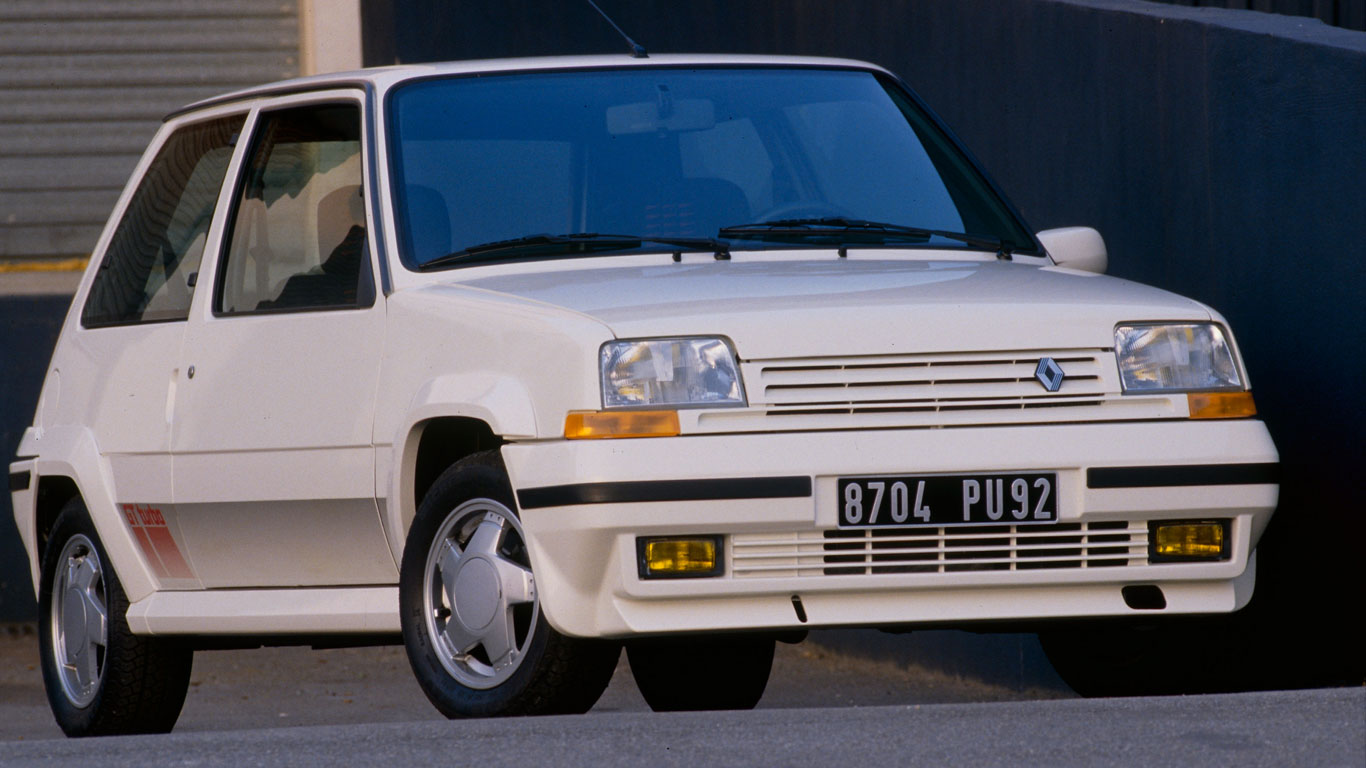
Renault 5 GT Turbo
“Gordon Bennett!” proclaimed the double page press ads, as Renault took a lump hammer to the hot hatch fight. The “125mph Renault 5 GT Turbo” subhead played to the car’s key strength: outright pace. At its launch, the 5 GT Turbo was 11mph faster than a Golf GTI and 5mph quicker than a Uno Turbo or Astra GTE. A 0-60mph time of 7.5 seconds meant that, pound for pound, the £7,360 5 GT Turbo was the best value hot hatch you could buy.
Renault 5 Turbo/Turbo 2
But of course, the real hero was the homologation special Renault 5 Turbo. It was, if you like, Renault’s answer to the Lancia Stratos and it had very little in common with the regular 5 parked on your local high street. A host of unique parts made this mid-engined Group 4 rally car rather expensive to build, which led to the development of the Turbo 2, which was both cheaper to build and therefore less expensive to buy.
Renault 16 TX
The Renault 16 was a pioneer of the hatchback body, which makes the 16 TX a kind of hot hatch of the 1970s. It was based on the TS and featured a five-speed gearbox, four iodine headlights, a rear spoiler and Gordini alloy wheels. Not quick by today’s standards, but it allowed the driver to cover ground in supreme comfort: a hallmark of French cars of years gone by.
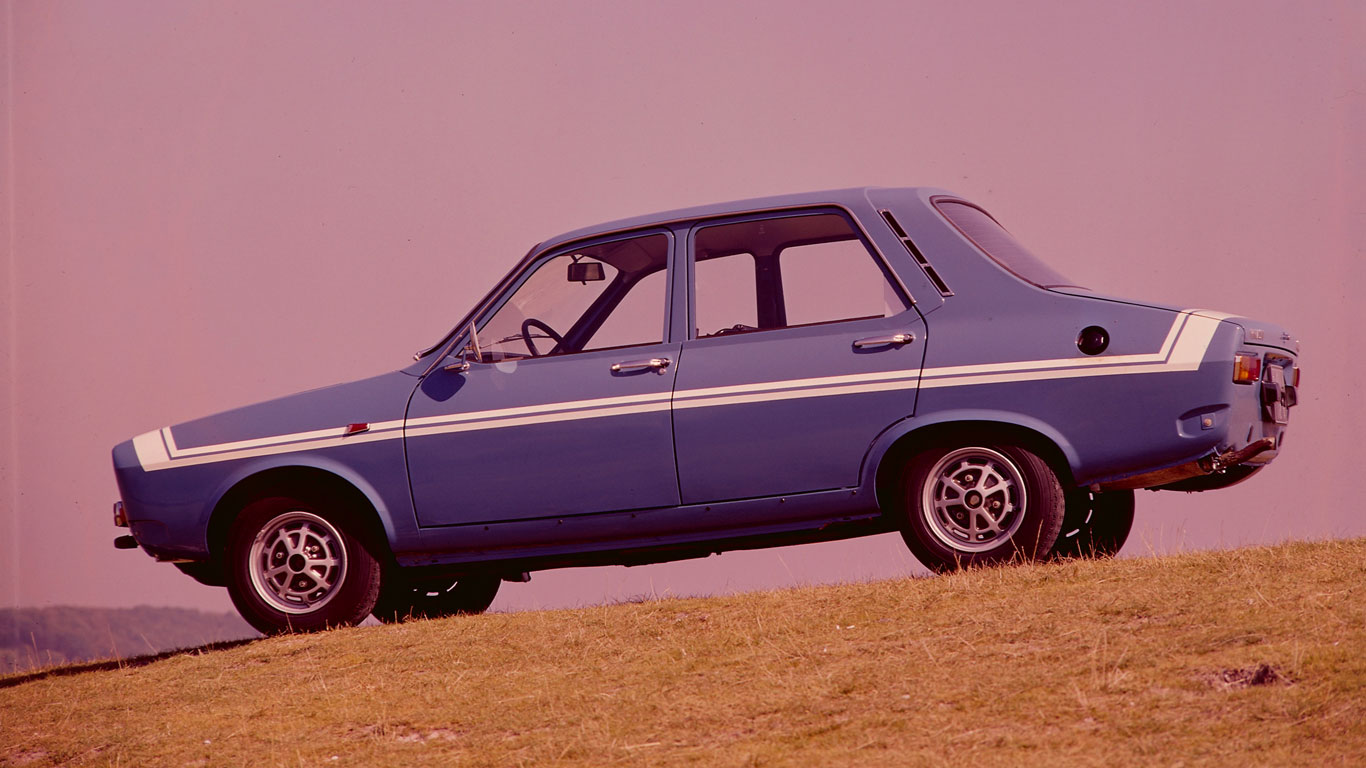
Renault 12 Gordini
Once a familiar sight, the Renault 12 has all but disappeared from these shores. Launched in 1969, the 12 was built in a number of locations around the world and actually lived on until 2004 in the form of the Dacia 1300. In 1971, a Renault 12 Gordini set a new record between Cape Town and Algiers, covering 15,432km in just eight days. The Gordini, along with the TS, was a credible performance car of its day.
Renault 17 TS
The Renault 15 and 17 arrived in 1971 and were La Régie’s answer to the Ford Capri, launched two years earlier. Of the two, the 17 was designed to appeal to a younger audience, with the TS model the choice of the enthusiast. It used the engine from the 16 TX to give this Renault 12-based coupe genuine pace.
Renault 18 Turbo
For a car marketed as a new model, the Renault 18 was little more than a reskinned Renault 12. And in blistering 18 Turbo form, it used the same 1565cc engine found in the old Renault 16 TS, albeit with a little help from a turbocharger. The performance model was set apart from the rest of the range thanks to its distinctive alloy wheels and rubbing strip, which ran alongside the side of the car and into a boot lid spoiler. This was the first time Renault had fitted a turbocharger to a production car.
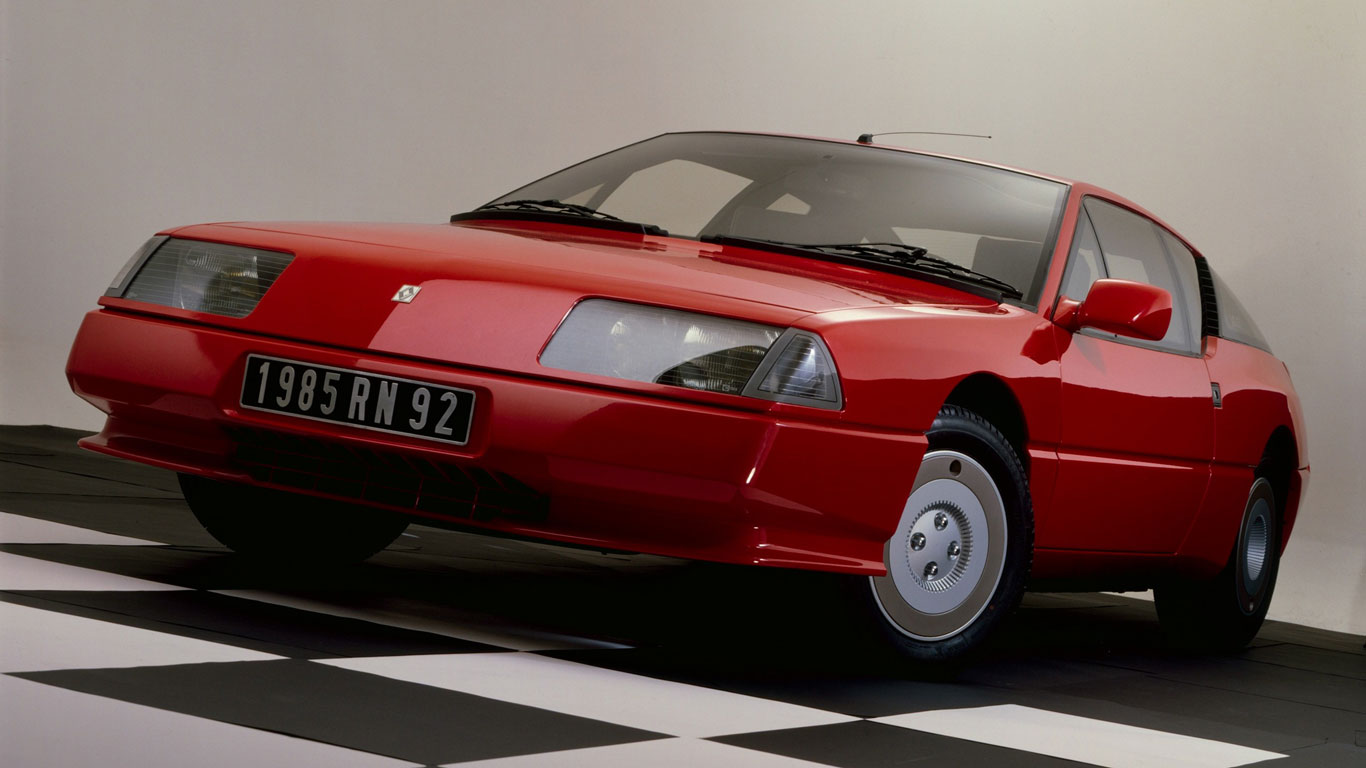
Renault Alpine GTA
We had to wait an age for the first Alpine to be officially imported into the UK, but it was worth the wait. The GTA was the first Alpine to be launched under Renault ownership, although the two firms had a history dating back many years. Known as the Renault Alpine GTA elsewhere, in the UK it was sold as the Renault GTA, as Chrysler owned the rights to the Alpine name. First came the GTA Turbo in 1986, which was followed by the cheaper GTA V6 in 1988.
Renaultsport Clio V6
Every so often, the mad people of Renault Sport decide to smoke something a little stronger than a Gauloise and let their hair down a little. The results can be staggering, like sticking a 3.0-litre V6 engine where the rear seats and boot should be. Sadly, thanks to Brunel-levels of reengineering, the rear-engined Clio was 300kg heavier than the 172 Cup, which only served to blunt the performance of this potential supercar-slayer.
Renaultsport Clio V6 255
By tweaking the cylinder head and induction system, Renaultsport managed to squeeze an additional 25hp for the phase 2 model, creating the Clio V6 255. Sadly, the weight also increased, with the Clio V6 now tipping the scales at 1,400kg. It was also ‘blessed’ with the interior of a regular supermini, which isn’t great when you’re pitching a car against genuine sports cars. And yet, despite all of this, we can’t help but love the unhinged and ‘mad as a box of frogs’ Clio V6.
Renault 21 Turbo
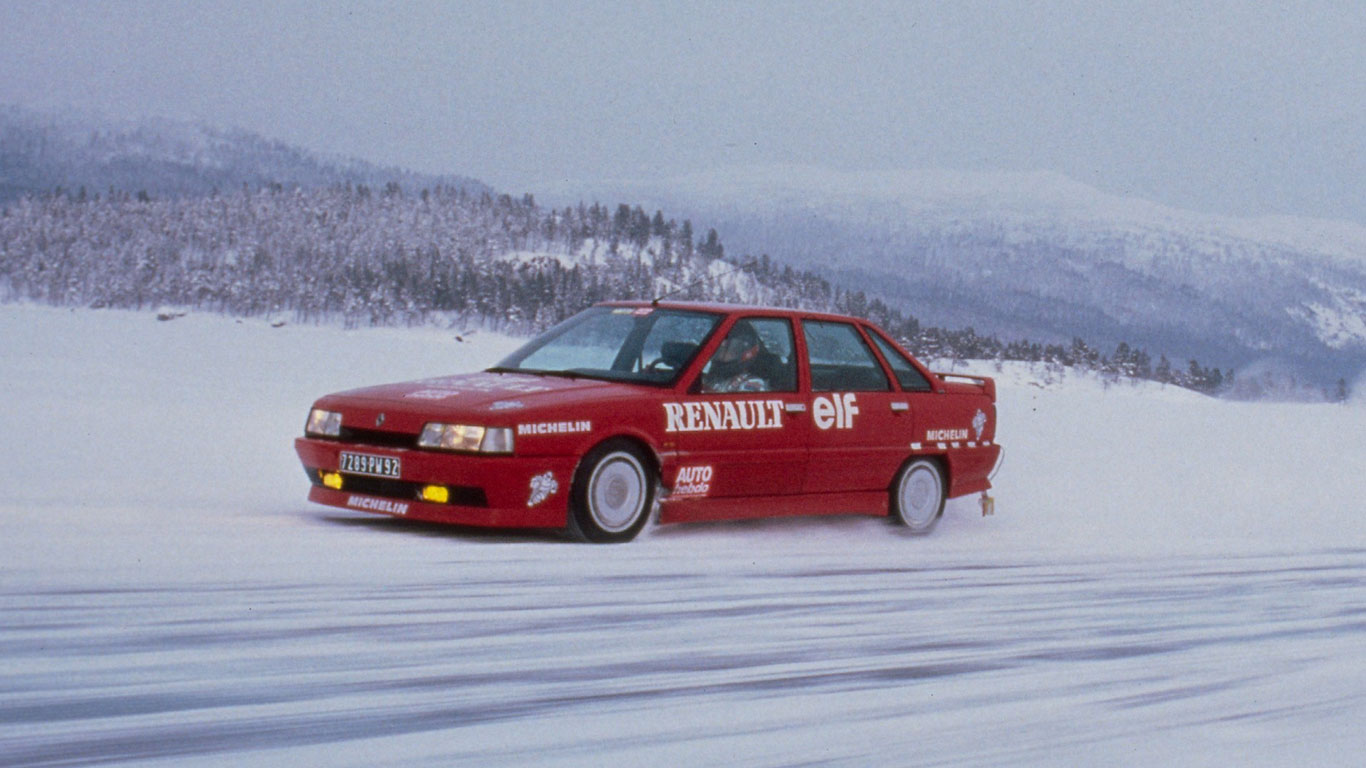
“The 21 Turbo is the best sporting saloon Renault has ever built,” proclaimed Autocar in 1988. High praise indeed for Renault’s Cossie killer. With 175hp on tap, the 21 Turbo could sprint to 60mph in just under eight seconds, before going on to reach a top speed of 137mph. And if you were struggling to harness all that power, the 21 Turbo Quadra added four-wheel drive to the mix.
Renaultsport Megane R26.R
Fans of the Renaultsport Megane take note, because we haven’t included all versions in this gallery. The fact is: there are simply too many. The R26.R is, perhaps, not only one of the best hot Renaults of all-time, but one of the best hot hatches the world has ever seen. Compromises? Sure, there were a few – no rear seats, polycarbonate side and rear windows, no climate control, to name but three – but the R26.R is as hardcore as it gets. A true modern classic.
Renaultsport Megane 230 F1 Team R26
But if you fancied a little soundproofing and the option to carry some rear seat passengers, the Renaultsport Megane 230 F1 Team R26 is arguably the next best thing. Ridiculously long name aside, the R26 was, until the arrival of the R26.R, the best hot Megane you could buy. A 230hp 2.0-litre turbocharged engine and a limited slip diff were just two of the highlights.
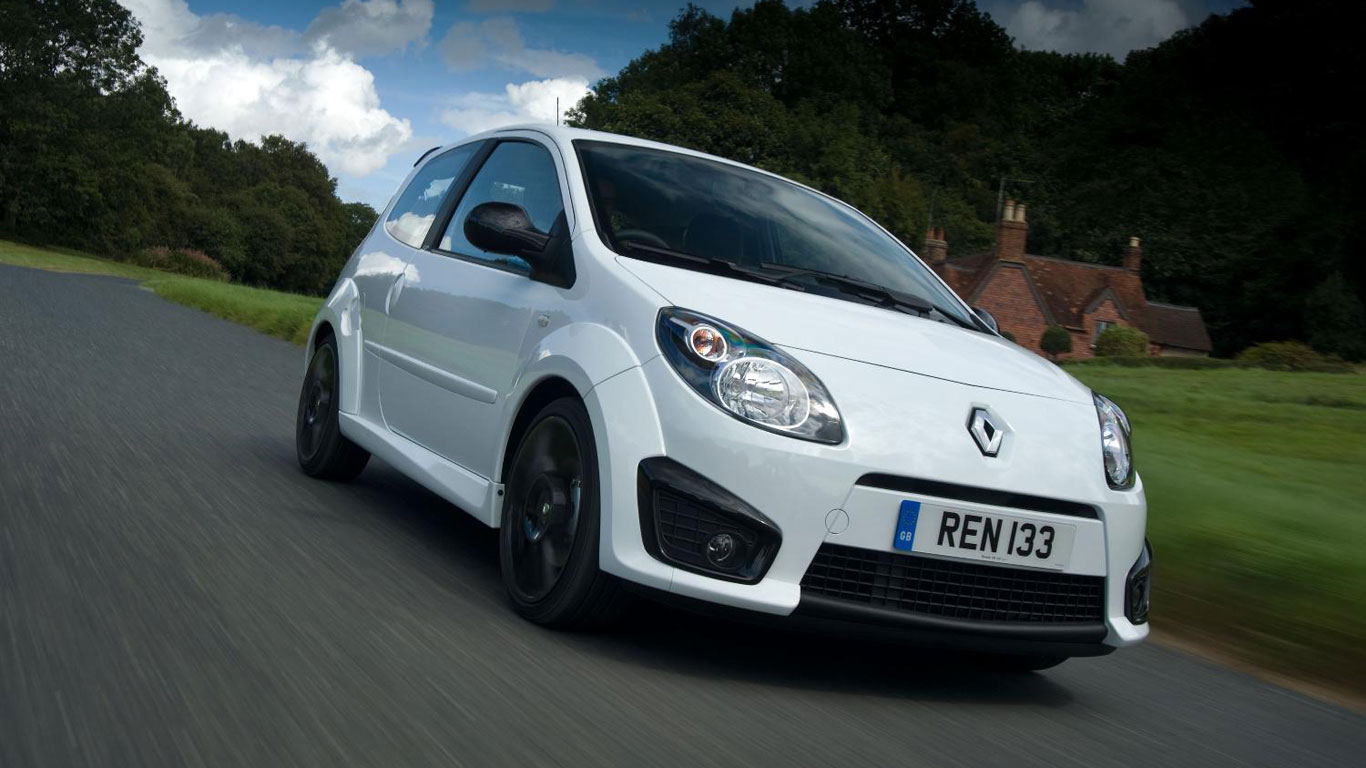
Renaultsport Twingo 133 Cup
Good things come in small packages, as demonstrated by the Renaultsport Twingo 133 Cup, which is perhaps the closest thing a French carmaker has got to creating a modern-day Citroen AX GT. In standard form, the Renaultsport Twingo 133 was a riot, but the Cup shed 10kg of weight, doing away with the aircon in the process. Stick a can of deodorant in the glovebox.
Renaultsport Clio 172
By the time the Renaultsport Clio 172 arrived in 1999, Renault had cemented a reputation for delivering the very best hot hatches. Fortunately, the first of the hot Mk2 Clios was up for the challenge, showing the rest of the world how a hot hatch should behave. Power was sourced from a 2.0-litre 16v engine and buyers could opt for a more focused Cup trim level.
Renaultsport Clio 182 Cup
Five years after the launch of the Clio 172, Renault launched the 182, which offered more power and twin tailpipes. As before, the Cup was the choice of the purists, available to buy as a stripped-out version from the factory, or as an optional extra ‘pack’ to be applied to a more luxurious 182. While we like to think of ourselves as purists, we rather like the feeling of dry armpits, so we’d opt for a Cup with aircon, thank you.
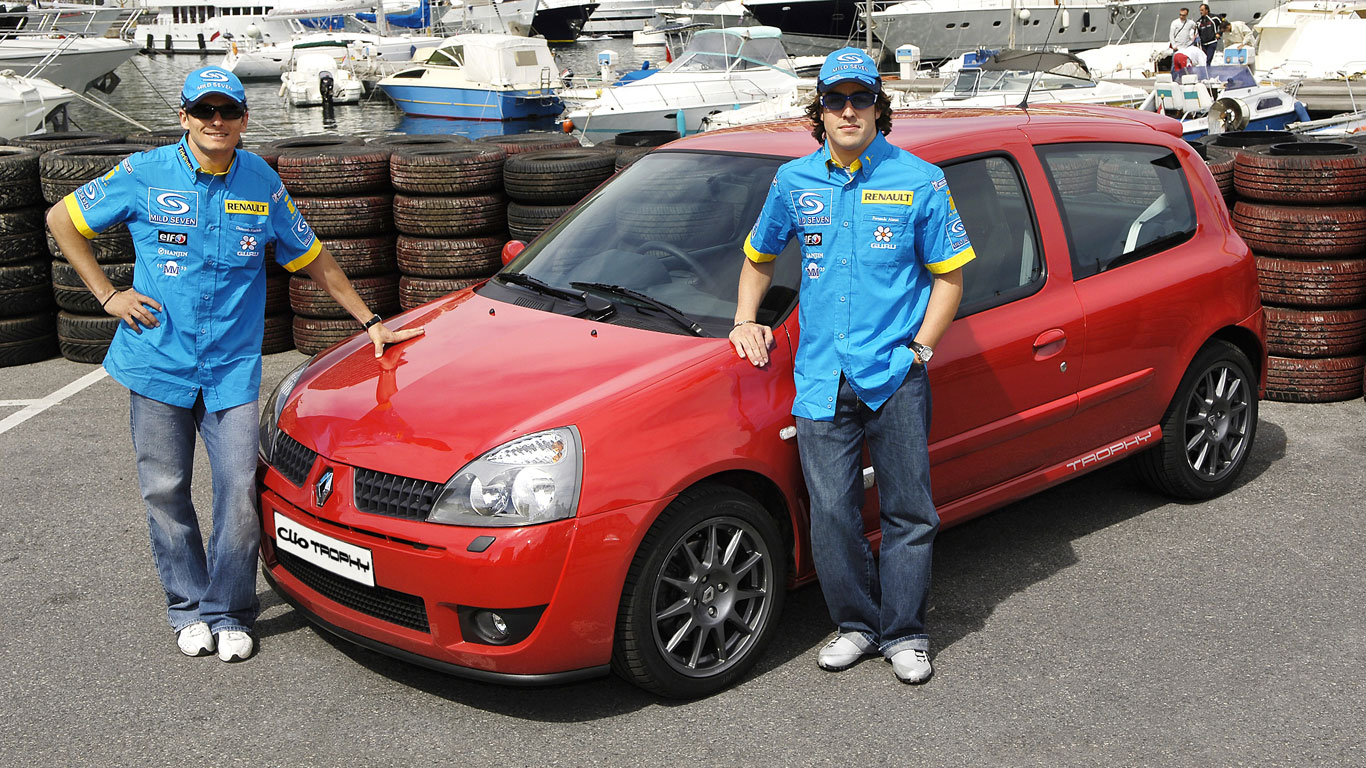
Renaultsport Clio 182 Trophy
If the Clio V6 was unhinged and slightly compromised, there could be no such complaints concerning the Clio 182 Trophy. In short: this was the hot Mk2 Clio at its peak. Only 550 were ever built – 500 for the UK and 50 for Switzerland – each one with trick Sachs dampers and Turini alloy wheels. A future classic with genuine investment potential.
Renaultsport Clio 200 Cup
We have fond memories of driving a Renaultsport Clio 200 at a Renault media driving day, at which we became so besotted with the hot Clio we lost track of time and were late back to the car park. We were greeted by the sight of a fully laden car transporter and a definite look of “what time do you call this” on the faces of the waiting press team. Any regrets? Only that we wished we had carried on driving until the tank was dry.
Renaultsport Megane dCi 175
History isn’t exactly littered with diesel-powered hot hatches, but the Renaultsport Megane dCi 175 was Renault’s first attempt at a performance car that appealed to both head and heart. It was good, too, looking to all intents and purposes like a petrol version, with the lack of a rear spoiler the only visual clue to its identity. It was a full second quicker from 50 to 75mph than the Renaultsport 225 and could deliver 10mpg more on a combined cycle.
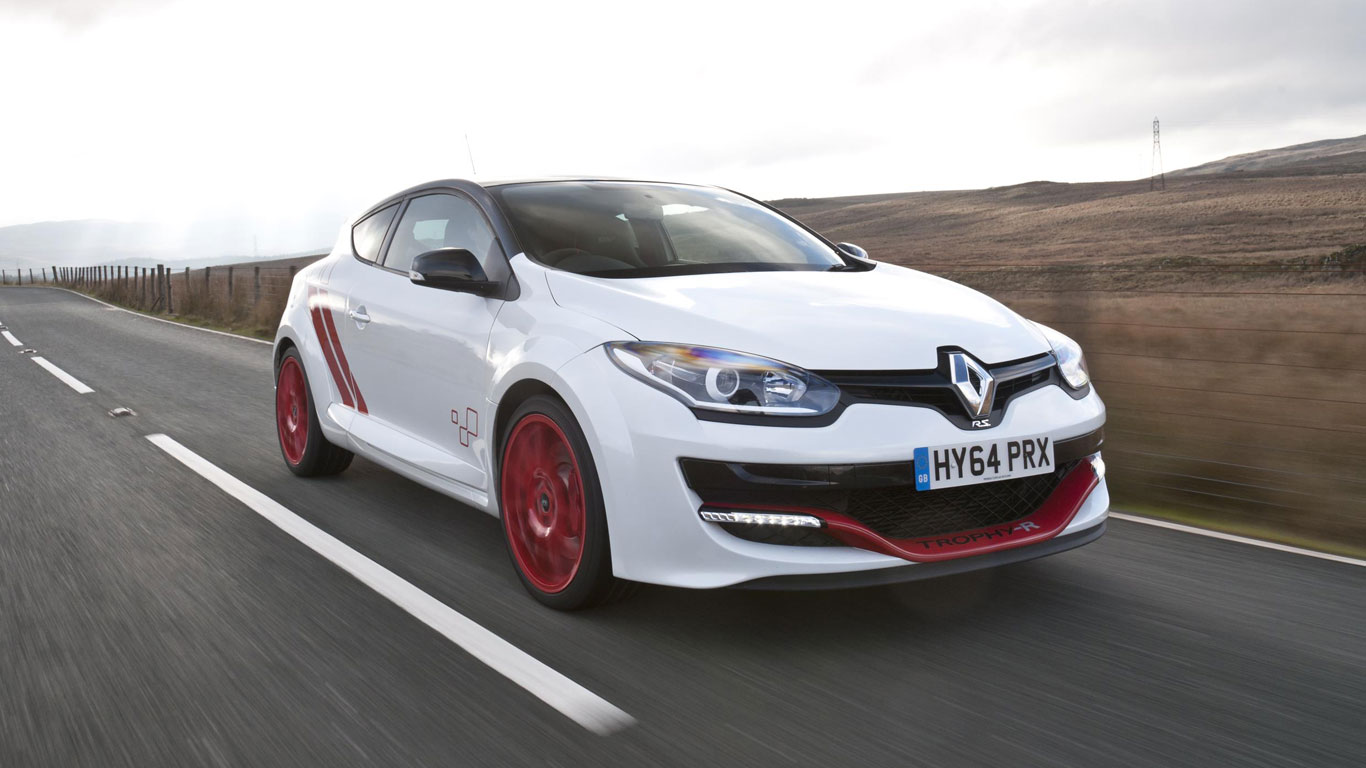
Renaultsport Megane 275 Trophy-R
We said we’d avoid listing all variants of the most hardcore Meganes, but we simply have to make room for the 275 Trophy-R. As the spiritual successor to the R26.R, the Trophy-R did away with all but the bare essentials and scored a Nürburgring lap record in the process.
Renault Sport Spider
It should have been brilliant, but somehow the Renault Sport Spider failed to hit the mark. It didn’t help that the Spider was launched around the same time as the cheaper Lotus Elise, and we all know what an impact that had on the sports car segment. On the plus side, the Spider was powered by the 2.0-litre engine from the Clio Williams and has rarity on its side: only 96 were officially imported.
Renault 19 16v
In its day, the Renault 19 16v – available in hatchback and Chamade saloon flavours – was considered to be one of the best performance cars. And yet today, it is almost forgotten, suffering a similar fate to that of the Peugeot 309 GTi. Sure, the interior is as flimsy as a tray in a chocolate box and something electrical will throw a hissy fit at some point, but your patience will be rewarded by this forgotten gem of the 1990s.
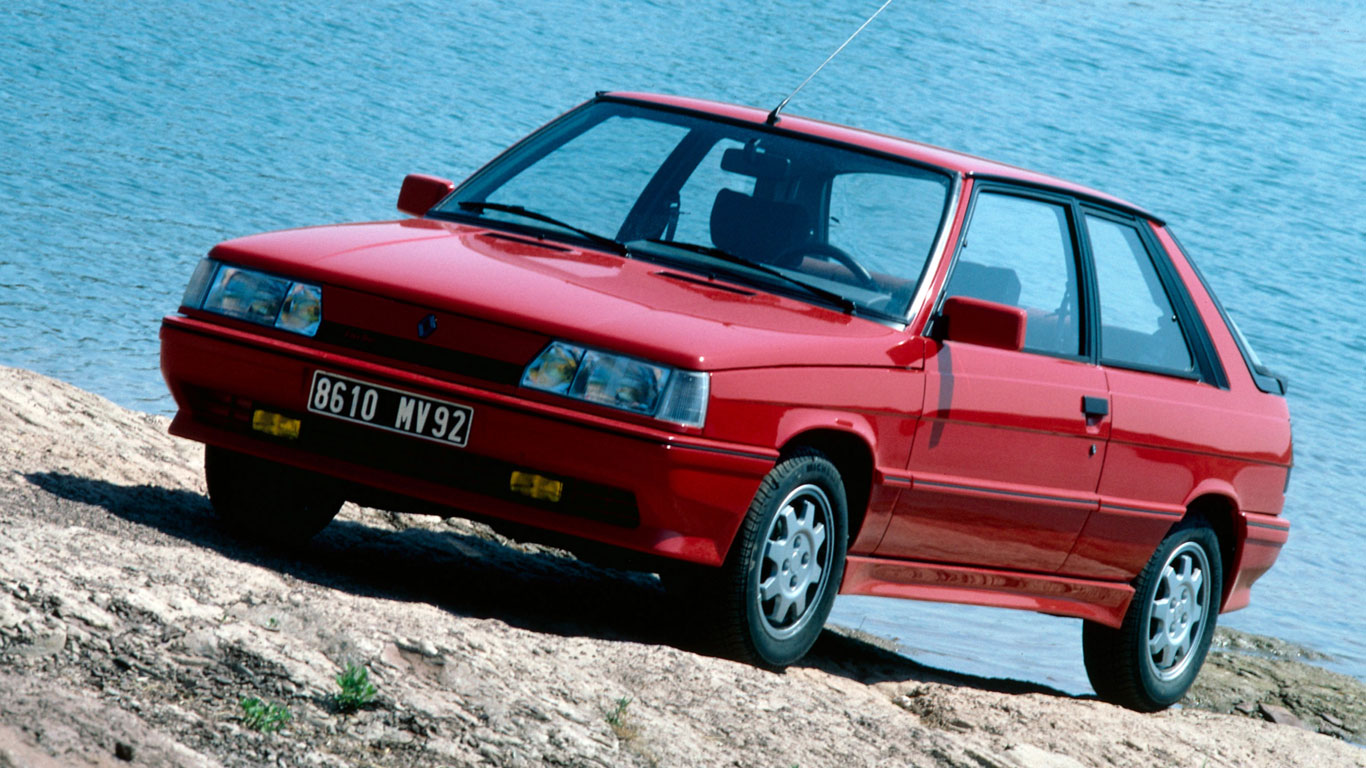
Renault 9/11 Turbo
If you’ll struggle to find a Renault 19 16v, you’ll find it just as tough securing a 9 or 11 Turbo. The rather conservative looking Renault 9 was an unlikely source for a performance car, but in both cases these were genuine alternatives to the more famous 5 GT Turbo. Good luck finding one.
Renault Fuego Turbo
Beneath the slippery Fuego body you’d find the floorpan and drivetrain of the Renault 18, although quite why it took La Regie so long to fit a turbocharger is anybody’s guess. The Fuego Turbo arrived in 1983 and was blessed with a pair of oh-so-80s TURBO decals. At the time, the 120mph Fuego Turbo was – homologation and handbuilt specials aside – Renault’s fastest production car.
Renault 25 V6 Turbo
Not all performance cars are focused on B-road thrills and track day spills. In fact, nobody does fast and comfortable quite like the French, as demonstrated by the Renault 25 V6 Turbo. By adding a Garrett T3 turbocharger to the Douvrin V6 engine, the flagship 25 produced 182hp and 207lb ft of torque. The top speed was 140mph, with a 0-62mph time of 7.7 seconds. A bit of a discrete street sleeper, this one.
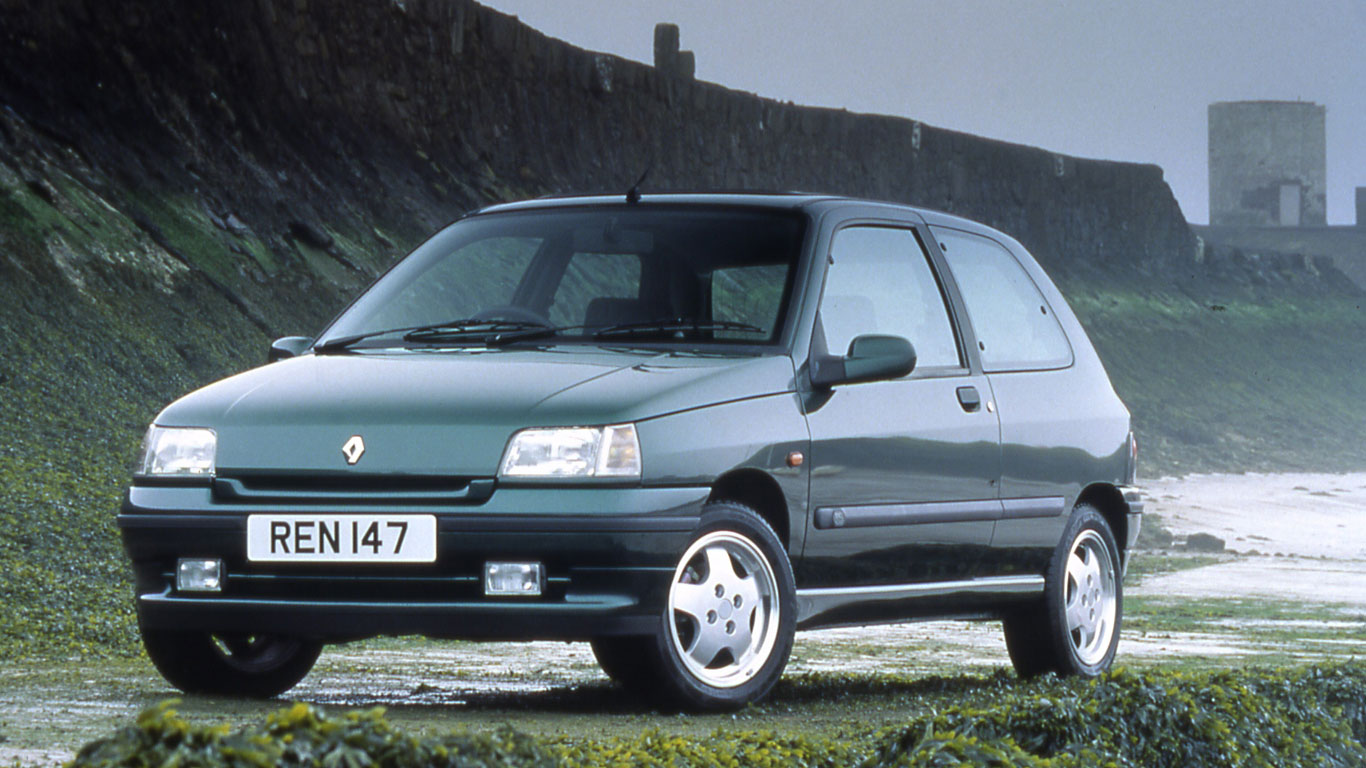
Renault Clio RSi
The phase one Clio might have lacked the Renaultsport badge, but that doesn’t mean it was lacking in poke. The Clio RSi was the junior version of the 16v and Williams, but without the wide arches and bonnet scoop, and powered by an 8v engine. It was, if you like, the entry point to the world of hot Clios.
Renault Clio 16v
The Renault Clio 16v, on the other hand, felt like the real deal. Power was sourced from the 1.8-litre 16v engine from the brilliant Renault 19 16v and, even then, the Clio handled with aplomb. All the ingredients were there for a thoroughbred hot hatch…
Renault Clio Williams
It might have lacked the badge, but Renault Sport was involved in the development of the Clio Williams. This was the real deal, powered by a 2.0-litre 16v engine and built for homologation purposes. Much to the annoyance of those who had ordered the ‘limited edition’ original, Renault decided to build the heavier and therefore less desirable Williams 2 and 3.
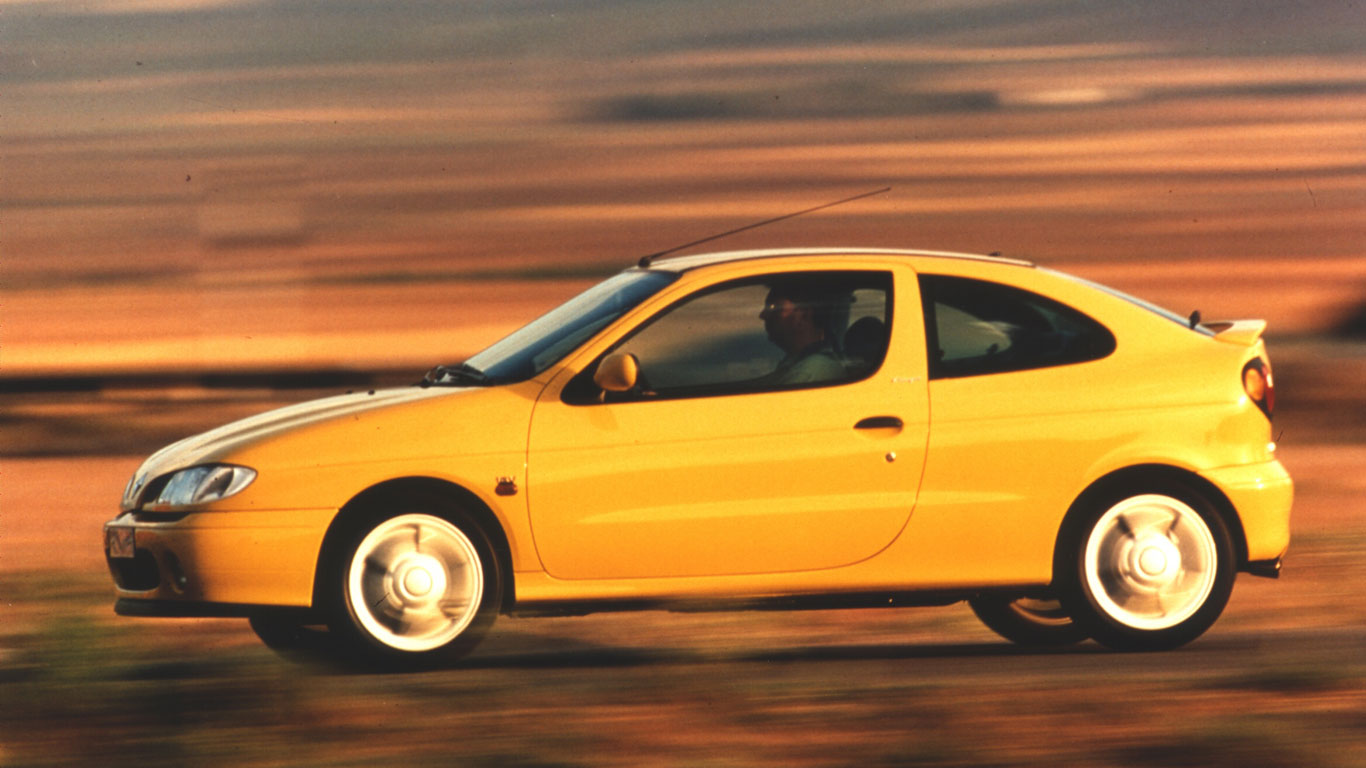
Renault Megane Coupe 2.0 16v
Weirdly, you might find it easier to find a Clio Williams than you would a Renault Megane Coupe 2.0 16v. The problem being, in this form the pretty and pert Megane Coupe is powered by the same 2.0-litre engine you’d find in the ‘Willy’ and the Sport Spider. So while there were literally thousands left a decade ago, today the number has shrunk to fewer than 100, as many have been sacrificed in the name of engine transplants.
Renault Safrane Biturbo
The Renault Safrane failed to reach the heights of its forebears – Renault 25 in particular – with a lack of power one cause for complaint. The Biturbo laughed in the face of such criticism, powered by an evolution of the 3.0-litre V6 engine found in the Alpine A610, along with all-wheel drive and a manual gearbox. Sadly, this 258hp French express never made it to these shores. A shame, as the likely catastrophic depreciation would have made it a used car bargain.
Renault Laguna Coupe Monaco GP
In the case of the Renault Laguna Coupe Monaco GP, we readily admit that it’s more hot in the styling department than it is from a performance perspective. From the rear it looks like an Aston Martin, but at the front you’ll find a 2.0-litre diesel engine, which removes any thought of this being a cut-price Bond car. But four-wheel steering, rarity and stunning looks earn it a place here.
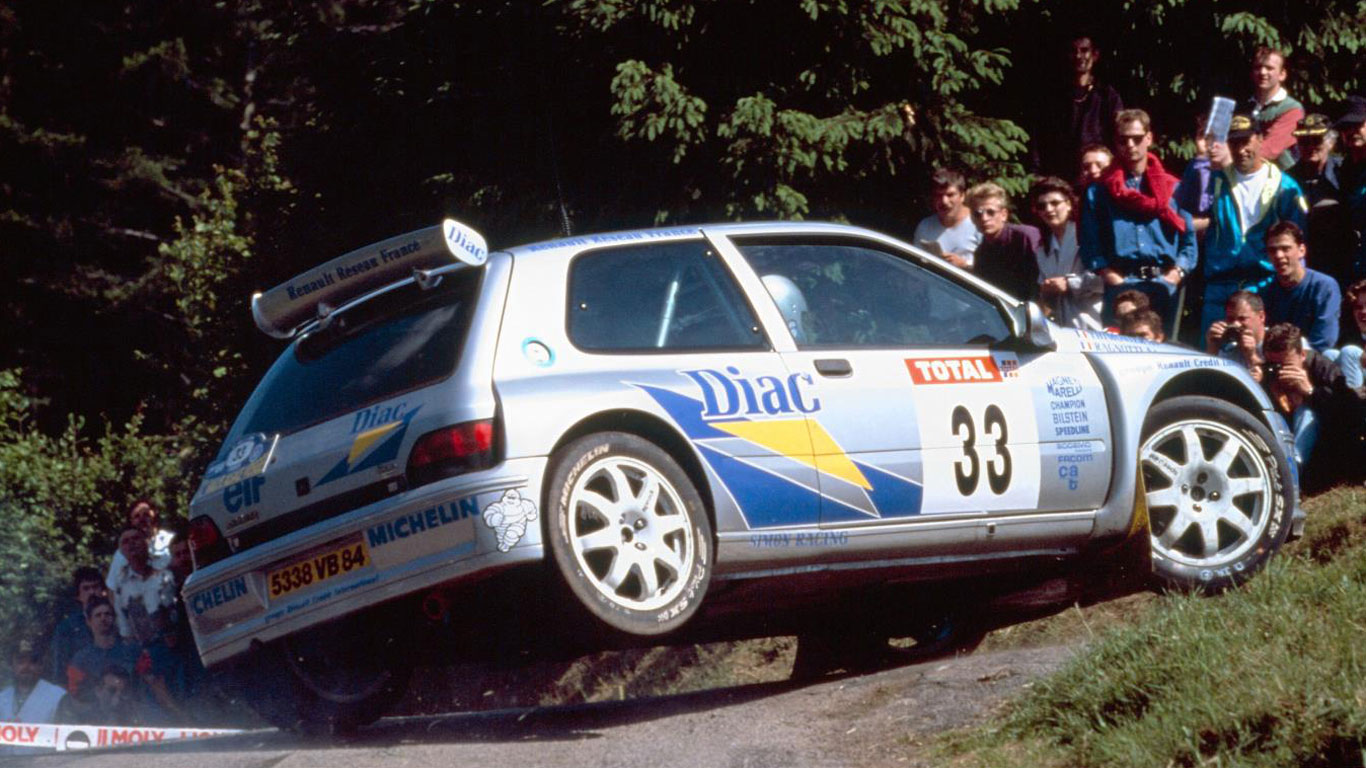
Renault Clio Maxi
We’ve deliberately kept motorsport specials to a minimum, but we’ll make an exception for one or two heroes of stage and track. Take the Renault Clio Maxi, which was an evolution of the Clio Williams Group A rally car. For one glorious season, the Clio Maxi, complete with sequential gearbox, was a rallying hero, before it made way for the even more bonkers Megane.
Renault Alpine A610
Like its predecessor, the GTA, the Alpine A610 was once again branded as a Renault in the UK and was, until the rebirth of the Alpine brand, the final car to wear the famous badge. It failed to sell in big numbers, despite Renault slashing £5,000 off the list price in 1993, but this 160mph sports car could sit comfortably alongside a Porsche 968 and 911.
Renault Espace F1
Not to be confused with the Renault Espace your parents drove to seaside every summer, the Espace F1 was more Formula 1 car than it was MPV. It was built to celebrate the Williams-Renault team’s third consecutive Constructors’ crown and the sixth title for Renault’s V10 engine. Aptly, then, it was powered by a 3.5-litre V10 engine producing 800hp. Top speed: 194mph.
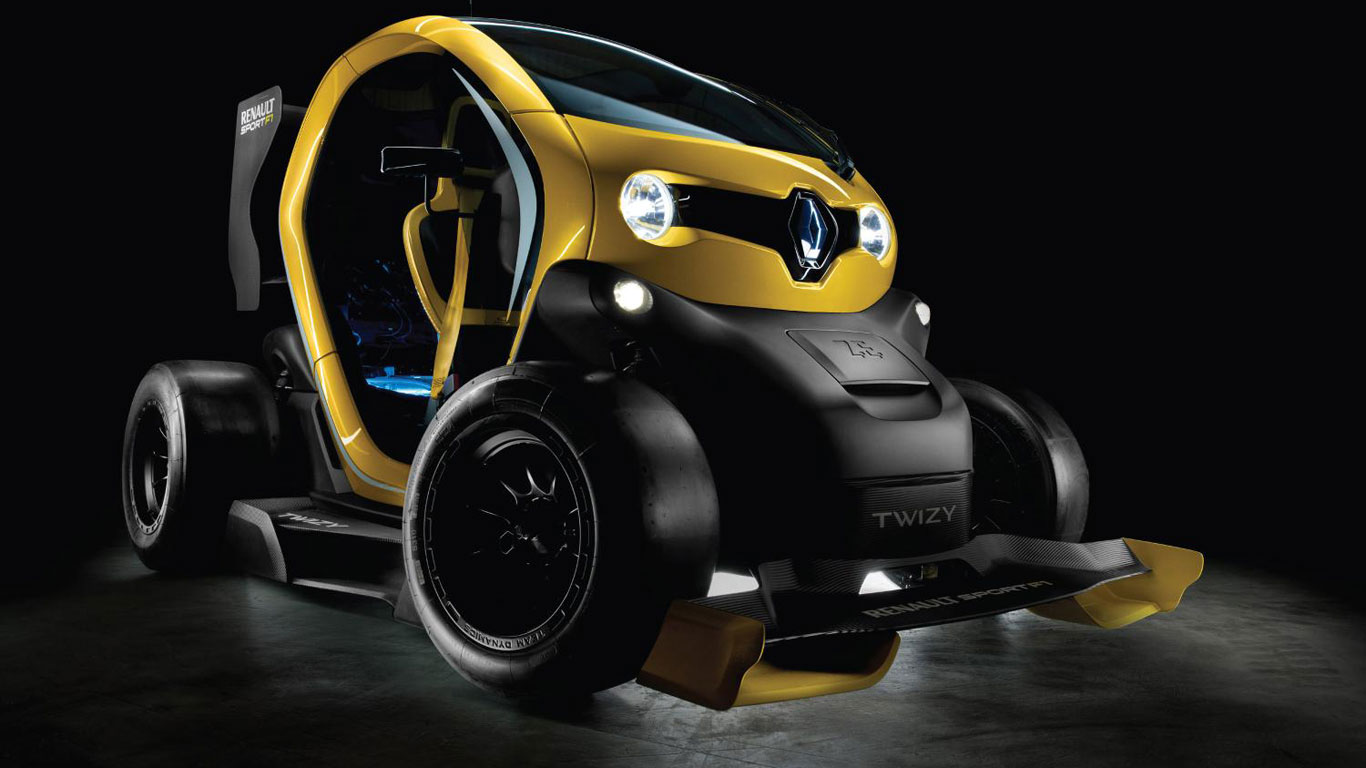
Renaultsport Twizy F1
We drove the Renaultsport Twizy F1 in 2013. Even now, three years later, we’re still picking the stones from our teeth. The Twizy F1 was given the full Renaultsport makeover, or as much as you could squeeze into an electric quadricycle. Which means a KERS unit derived from Renault Sport’s F1 experience, Michelin slicks and a motorsport steering wheel from a Formula Renault 3.5 race car. We kept up with a Megane 265, which tells you all you need to know about this tiny car’s potential.
Renault 20 Turbo 4×4 Paris-Dakar
In 1982, Claude and Bernard Marreau emerged victorious in the gruelling Paris-Dakar Rally. Three years earlier they had raced in a Renault 4, but to win outright in ‘82 was testament to the brothers’ skill behind the wheel and the pace and reliability of the turbocharged four-wheel drive prototype.
Renault Dauphine 1093
The Renault Dauphine 1093 of 1962 was essentially a race car for the road: a rally-prepared version of the popular Dauphine family car. Larger headlights, vented wheels, two blue stripes on the body and a modified powertrain were just some of the highlights. Top speed: for its day, an impressive 87mph.
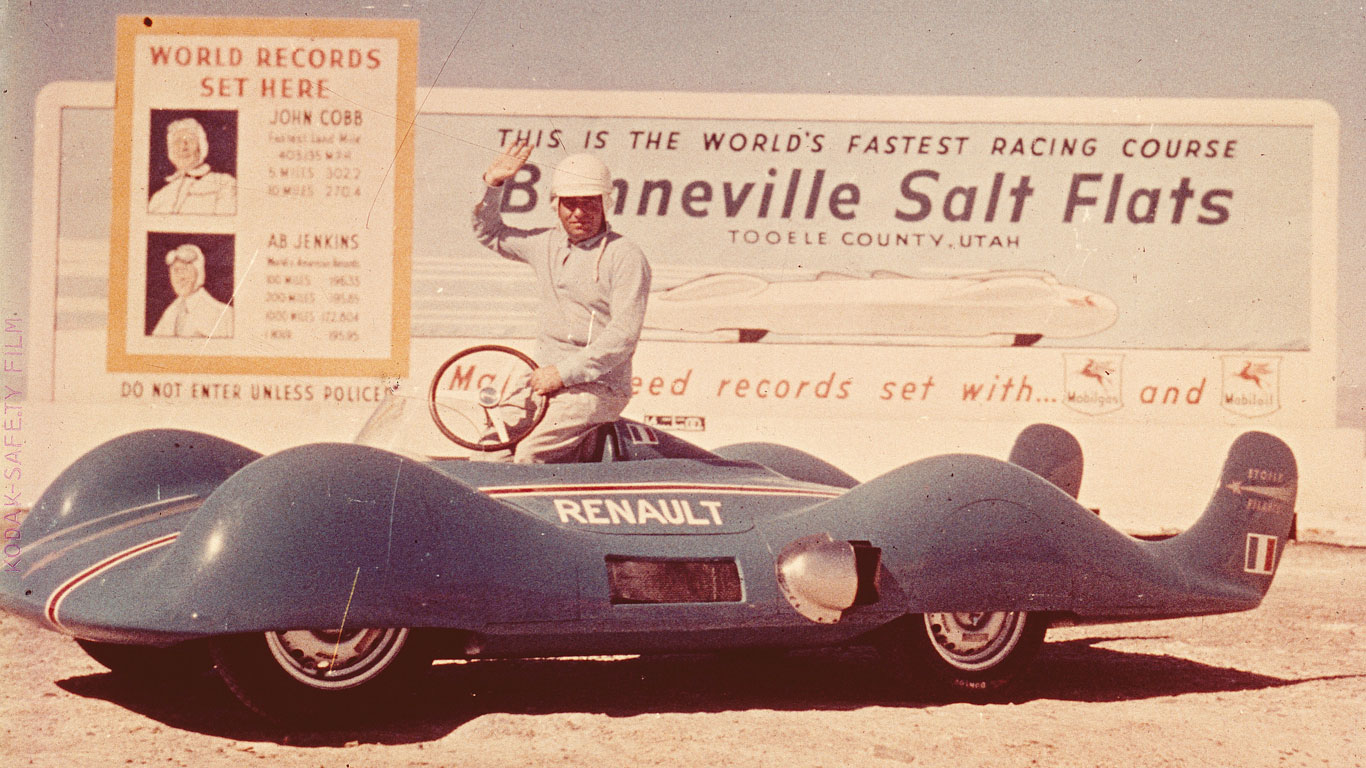
Renault Etoile Filante
The oh-so-pretty Etoile Filante has held a land speed record since since 1956, and yet it has been all but forgotten. On the Bonneville Salt Flats, the Etoile Filante – powered by a 270hp gas turbine engine – reached an average of 306.9km/h over 1km and 308.85 over 5km, a record that still holds today.
Renault 4CV
The 4CV was Renault’s first major development after the Second World War and the rear-engined family car proved to be a commercial hit, with sales in excess of a million. It also enjoyed some sporting success, with none other than Jean Rédélé, the founder of Alpine, racing a 1063 model. This is Rédéle at the wheel of a modified 4CV while competing in the Monte Carlo Rally. Later, he would secure a class win in the Mille Miglia and overall victory in the Coupe des Alpes, the latter of which would inspire the name of his company. The rest, as they say, is history.
 So many supercar buyers are eager to buy a new Ford GT, the firm has decided to extend production for two more years.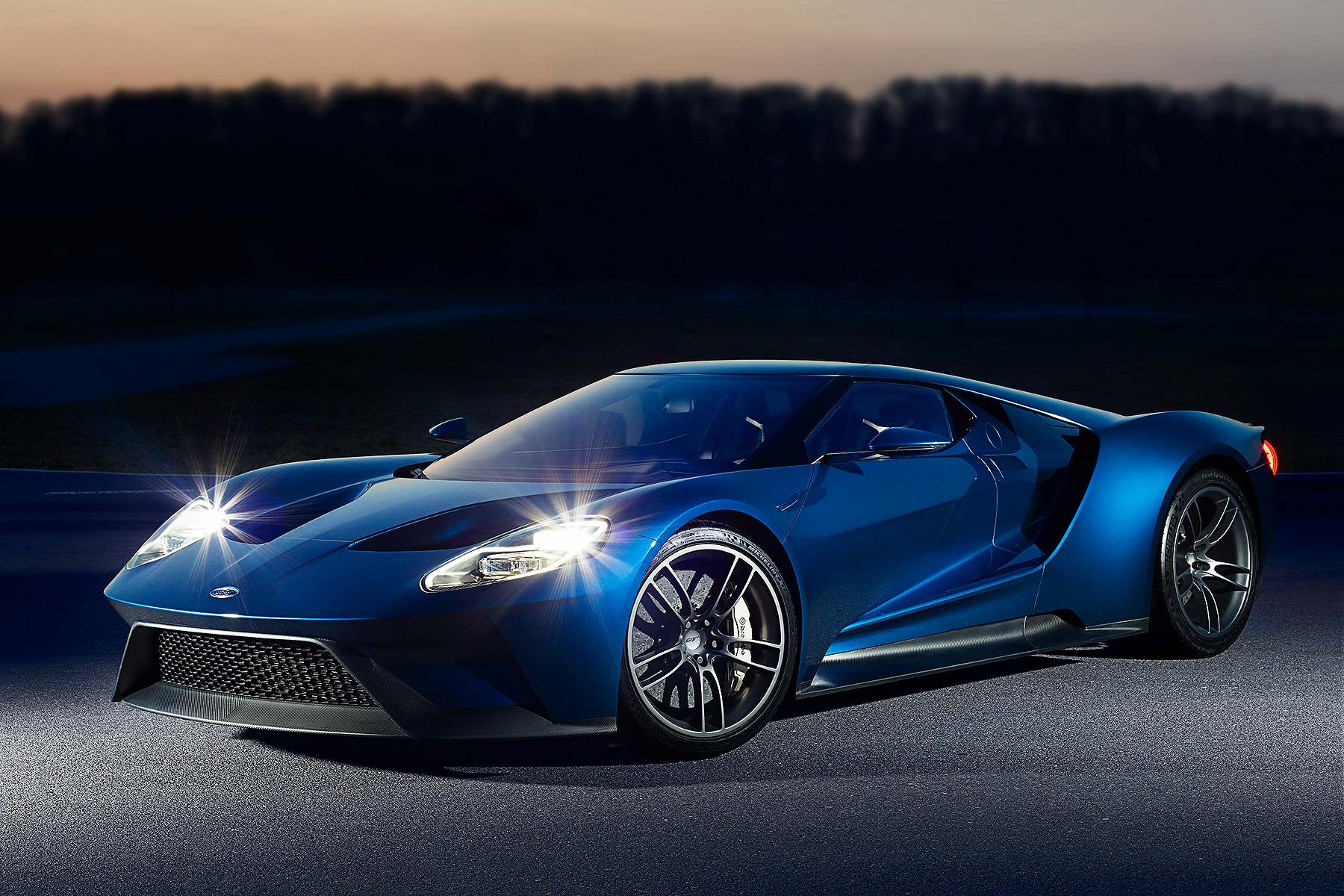
 MPs want the government to bring forward its proposed
 The
The 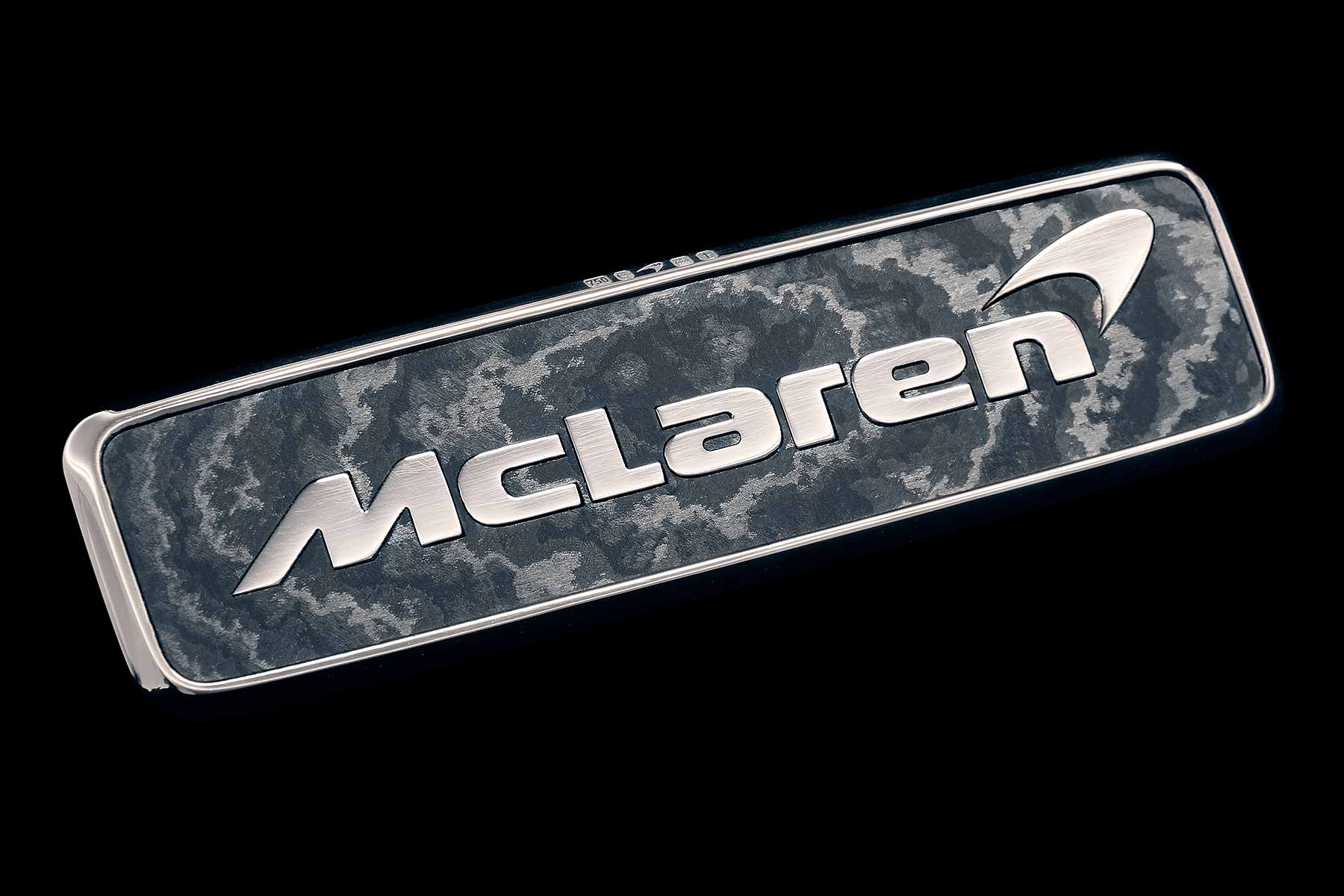
 As news emerges that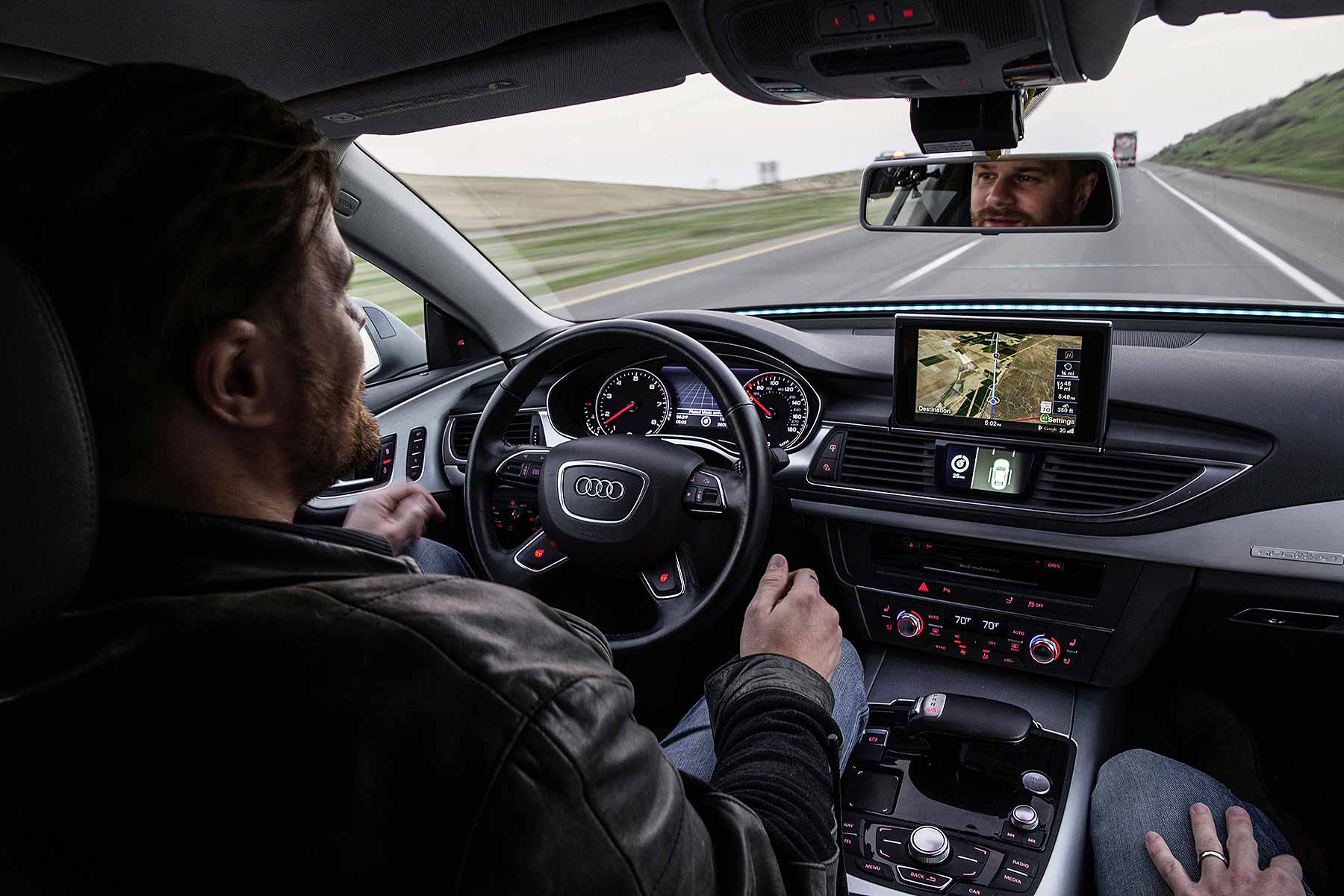
 Thatcham Research has warned that car buyers are already becoming dangerously confused by new driver-assistance technology.
 An influential fleet leasing company says it has canned plans to bring more ultra-low emission vehicles onto its books after the
  Parisian authorities have approved the British-built