The global electric vehicle market grew substantially in 2020, despite the impact of the coronavirus pandemic on the automotive industry.
According to the International Energy Agency (IEA), a record three million EVs were registered worldwide last year, a 41 percent increase versus 2019. By comparison, the global car market contracted by 16 percent in 2020.
Electric cars’ strong momentum has continued into this year, with sales in the first quarter of 2021 reaching nearly two and half times their level a year earlier, said the IEA.
In total, more than 10 million electric cars are now on the world’s roads. That’s in addition to one million electric vans, trucks and buses.
Europe overtakes China for first time
For the first time last year, Europe overtook China as the centre of the global electric car market. EV registrations in Europe more than doubled to 1.4 million during the year, while in China they increased by nine percent to 1.2 million.
The IEA says that, based on the current trajectory, the number of electric cars, vans, heavy trucks and buses on the road worldwide could reach 145 million by 2030. However, the global fleet could reach 230 million if governments ‘accelerate efforts to reach international climate and energy goals’.
“While they can’t do the job alone, electric vehicles have an indispensable role to play in reaching net-zero emissions worldwide,” said Fatih Birol, executive director of the IEA.
“Current sales trends are very encouraging, but our shared climate and energy goals call for even faster market uptake. Governments should now be doing the essential groundwork to accelerate the adoption of electric vehicles by using economic recovery packages to invest in battery manufacturing and the development of widespread and reliable charging infrastructure.”
A new report urges the government to offer a third off the price of new electric cars – in exchange for participating in a road charging trial.
The Recharging Britain’s Roads Policy report by Greener Transport Solutions, a not-for-profit group overseen by academics, advocates charging road users per mile by the end of this decade. It warned the government faces losing a huge amount of tax revenue from fuel duty and road tax, as drivers increasingly transition to electric cars.
The Treasury collects just over £40 billion in vehicle taxes, with £28 billion from fuel duty, £6 billion on VAT from fuel and another £6.5 billion from vehicle excise duty (VED). EV drivers do not pay fuel duty or VED.
The report – written by David Begg, a former transport advisor to the government, and Claire Haigh, the founder of Greener Transport Solutions – warned a widespread adoption of EVs could be slowed if the government introduced a pay-per-mile scheme without warning.
It suggests gradually phasing in the programme from 2022, with a pilot scheme in a city with a Clean Air Zone. The government could then offer a third off the price of EVs costing up to £35,000, in exchange for the driver committing to pay the new road user charge in 2023.
EVs risk ‘locking in car dependency’
While the report said road charging would be an effective way to claw back lost fuel duty revenue, it warned the transition to EVs risked ‘locking in car dependency’ and claimed this could push up congestion by 30 percent.
‘The risk is that in lowering the cost of motoring, electrification will increase car use and congestion, and make mode shift to public transport and active travel harder to deliver,” says the report.
‘If we electrify the car fleet without sorting out how to transition away from fuel duty, road traffic could increase by 30 percent.’
One in 10 drivers who received an MOT extension for their car during the first coronavirus lockdown are unaware when this expires, according to new data.
The six-month MOT extension only applied to MOT tests due between 30 March 2020 and 31 July 2020 – so the extended MOT certificates expired on 31 January 2021.
Comparison site Gocompare – which undertook the survey – says 13 percent of drivers can’t remember when their car is due its MOT. Eight percent of drivers polled also said they were also worried about the Covid infection risk from attending a garage..
Many are driving without a valid MOT
The claims from the Gocompare survey follow on from research conducted by fast-fit chain Kwik Fit, which estimated that up to two million cars could be on the road without a valid MOT.
Gocompare also found the majority – 58 percent – of motorists get stressed about putting their car through its MOT. The cost of potential repairs causes the most sleepless nights (22 percent), while a fifth are concerned about being ripped-off.
“If your car’s MOT has expired, it’s illegal to drive it on the road and you could be prosecuted for doing so. The only exception allowed would be if you’d already booked an MOT and were driving to the test, which you would have to prove to the police,” said Lee Griffin, CEO of Gocompare.
“The penalty for driving a car without a valid MOT is a fine of up to £1,000. If the car is found to have a dangerous fault, the penalty rises to £2,500 and three penalty points for ‘using a vehicle in a dangerous condition’. Drivers caught without an up-to-date MOT also risk invalidating their car insurance.”
Digger company JCB has completed a ‘successful trial’ of its Pothole Pro repair machine on the M6 motorway.
The British firm said its new Pothole Pro can repair a damaged road in just eight minutes. A spokeswoman for the company told Motoring Research this is a huge improvement over the manual process. She explained that Stoke City Council takes an average of one hour to fill a pothole.
The all-in-one machine is equipped with a cutter, sweeper/bucket and hydraulic cropping tool. It can cut defects, crop pothole edges and clean holes, streamlining tasks that would normally be completed by hand.
JCB claims the machine can repair up to 250 square metres per day, equivalent to 700 potholes per month. It also has a 25mph top speed, which enables it to move from site to site easily.
The trial was part of a ‘national demonstration programme to show how the innovative machine repairs potholes permanently’. The Pothole Pole repaired the M6 motorway between junctions 14 and 15 during two routine night-time lane closures.
‘It filled potholes so quickly, we ran out of tar’
“The JCB Pothole Pro really did live up to expectations in the fast lane of the M6. It filled the potholes so quickly that we ran out of tar,” claimed Ben Rawding, a member of the product team at JCB.
“It was done so quickly and efficiently, it could have filled so many more holes. The main thing is that repairs were done rapidly and permanently by the JCB Pothole Pro.”
Just over 12,000 learner drivers could lose their licence as soon as they pass their test, new data has suggested.
Freedom of Information requests submitted by leasing company Moneyshake to the Driver Vehicle and Licensing Agency (DVLA) found 10,639 learner drivers have between seven and nine points on their provisional licence, while 1,803 have 10 or more points.
Points on a provisional are carried over to a full licence. If a learner gets six or more points within two years of passing their test, their licence will be revoked.
To avoid a licence being cancelled straight away, a newly-qualified driver would need to wait for the points to expire before taking their test, Moneyshake said. Endorsements stay on your driving record for four years, going up to 11 years for the most serious offences.
Female drivers have fewer points
The leasing comparison site also found that 52,802 men already have points on their provisional licence, compared with just 12,252 women. Female learners have ‘significantly fewer points across every point category’, the firm added, suggesting they’re safer on the roads and will be better drivers when they pass the test.
When broken down by age group, learners in their twenties are the worst for having penalty points before passing their test, with the DVLA data showing that 26,552 provisional licence holders in this age group already have one or more endorsements on their driving record.
Those in their sixties are the least likely to have points on their provisional licence, with just 2,183 learners having endorsements.
Independent vehicle safety body Thatcham Research has blasted the government over its plans to roll-out automated technology in the future.
The government has announced that vehicles fitted with Automated Lane Keeping System (ALKS) technology could be legally defined as a self-driving vehicle, as long as they receive GB type approval and that there is no evidence to challenge the vehicle’s ability to self-drive.
According to the Department for Transport, the first automated vehicles could be on the roads by the end of the year.
But Thatcham hit out and claimed this announcement meant the UK Government “is contributing to the confusion and frequent misuse of assisted driving systems that have unfortunately already led to many tragic deaths”.
Matthew Avery, director of research at Thatcham Research, added: “ALKS as currently proposed by the Government are not automated. They are assisted driving systems as they rely on the driver to take back control.”
ALKS enables a vehicle to drive itself in a single lane, while maintaining the ability to easily and safely return control to the driver when required.
The Department for Transport claimed the technology could improve road safety by reducing human error, which it said contributes to over 85 percent of accidents, as the driver will be able to hand control over to the vehicle, which will constantly monitor speed and keep a safe distance from other cars.
Avery added a “widespread and effective ongoing communications campaign, led by the automotive industry and supported by insurers and safety organisations, is essential” in order to address current and future misconceptions and misuse.
How can ALKS tech be classed as driverless?
According to Thatcham, the following four “non-negotiable criteria” need to be met before ALKS can be classed as automated:
The vehicle must have the capability, and be allowed through legislation, to safely change lanes to avoid an incident
The vehicle must have the capability to find a “safe harbour” at the side of the road and not stop in a “live” lane
The systems on the vehicle must be able to recognise UK road signs and this needs to be assured by an independent organisation
Data must be made available remotely through a neutral server for any incident to verify who was “in charge” at the time of the incident – the driver or the vehicle.
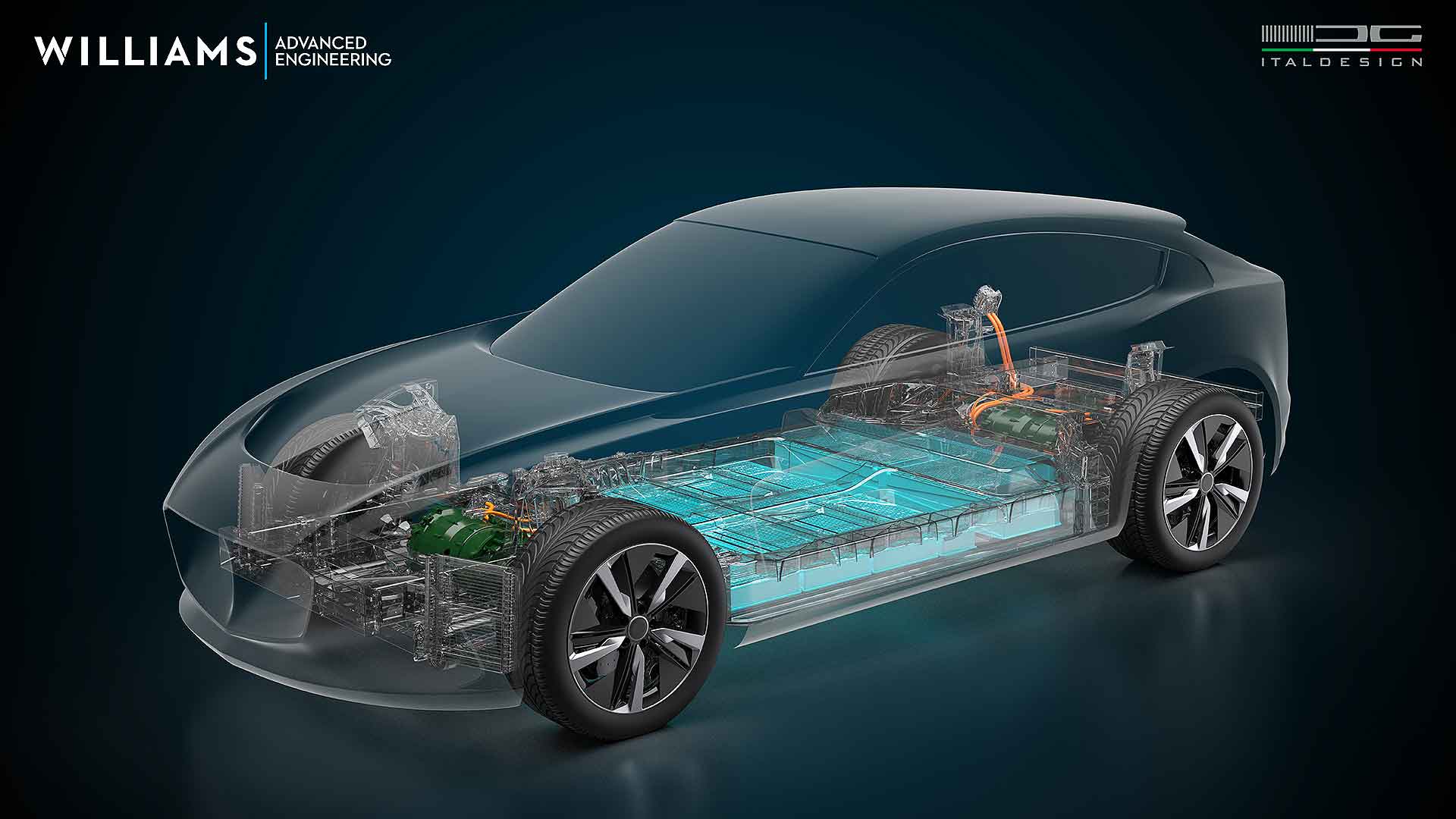
Williams Advanced Engineering (WAE) is teaming up with Italy’s Italdesign to offer car companies and startups a production-ready high-performance electric car package – with the two firms, if required, handling everything from EV underpinnings, to design, legal compliance and production.
WAE is combining its clever ‘EVX’ modular electric vehicle architecture with Italdesign’s vehicle design and ‘turn-key’ development expertise, for a “fully-customisable solution adapted to individual brands’ needs”.
If required, the cars can even be homologated and legally readied for sale, in volumes of up to 10,000 cars a year, with prices starting from £100,000.
Potential customers include new entrants to the electric car market, as well as established vehicle brands.
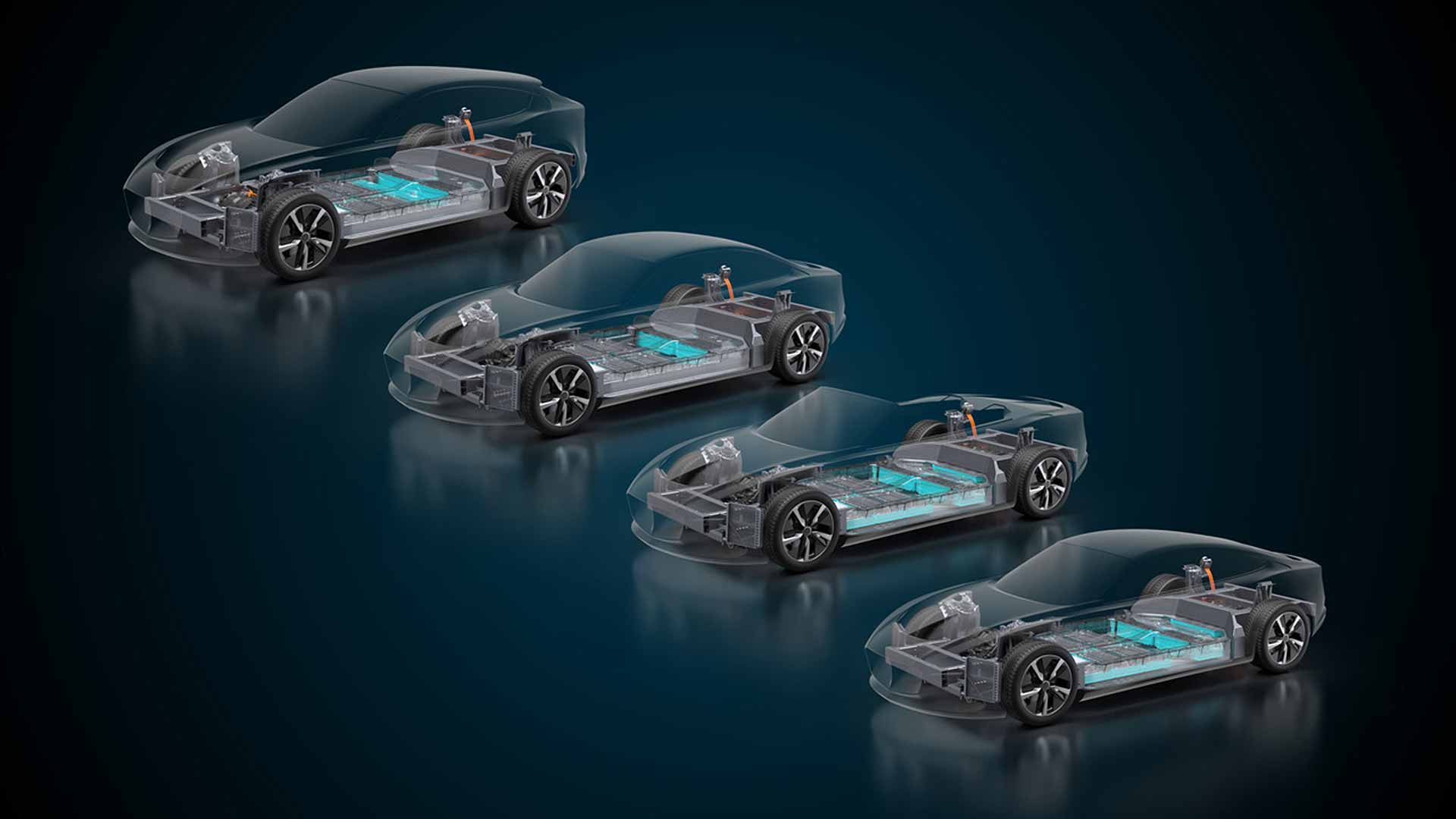
The two companies say they can create a comprehensive line-up of EVs, with the core product being a sporty GT coupe or convertible, but with the ability to make luxury saloons and performance crossover SUVs too.
Italdesign can even produce up to 500 vehicles a year at its Turin factory, for those who want a complete outsourced solution.
‘Complete EV production’
“Demand for high-performance electric vehicles is continuing to show considerable growth, but to date, there has not been a complete EV production solution,” said WAE technical director Paul McNamara.
“This unique relationship brings together state-of-the-art EV rolling chassis technology with one of the world’s leaders in vehicle body engineering.”
Premium car makers will be able to access “an unprecedented amount of sector-leading expertise… on lower volume high performance models”.
Mr McNamara also stressed the two firm’s potential to bring models more rapidly to market than usual.
“We are extremely glad and thankful of the chance to cooperate with Williams Advanced Engineering,” said Italdesign CTO Antonio Casu.
“Our role in the partnership will be to advance the rolling chassis developed by WAE to the complete platform, and shape it according to the vehicle body style, architecture and contents defined by customers.”
He adds the firm has more than five decades’ of experience here, “whether international OEMs or new-born start-ups”.
EVX architecture
The EVX platform “sets new standards” says WAE: with batteries delivering up to 120kW of energy, it is ready to deliver up to a staggering 1,360hp. The battery pack can also be extended to 160kWh for a potential range of over 620 miles.
WAE says its EVX architecture, which uses a moulded composite structural battery, differs to other EV platforms currently on sale through being much more tightly integrated.
The battery casing is integrated into elements of the body structure, while front and rear chassis structures can take much greater crash loads through the side sills.
This means the EVX ‘skateboard’ chassis delivers greater stiffness, reducing reliance on the upper structure for rigidity – which gives much greater design freedom.
WAE told Motoring Research it has been working on EVX for several years already, and has collaborated with Italdesign for around 18 months in perfecting the interface between underpinnings and the car body on top.
Italdesign’s styling team are confident they have the flexibility to take a car maker’s designs and turn them into a production-ready final vehicle – that will have “class-leading” performance and weight, and “outstanding” aerodynamics and safety.
Performance EV expertise
Williams Advanced Engineering was the original supplier of batteries for the FIA Formula E grid back in 2014, and this relationship has been revived for the 2022-23 season.
The company also provides battery systems to the ETCR electric touring car series and the new Extreme-E rallycross EV series championed by stars such as Lewis Hamilton.
WAE also has “considerable” experience in high-performance electrified road car programmes that goes back more than a decade – including, famously, the Jaguar C-X75 hybrid supercar.
When quizzed on whether the two were currently working on any projects, journalists were told client confidentiality stopped them from disclosing any projects.
However, WAE’s Dyrr Adash tantalisingly added, “we could have a vehicle ready in three years.”
Hennessey Performance has announced a new limited-edition SUV, based upon the 2021 Ram 1500 TRX truck.
Dubbed the ‘Mammoth’ by the Texas-based tuner, bespoke bodywork will turn the pickup into a three-row SUV.
Star of the show will be the 6.2-liter supercharged Hemi V-8, with output pushed far beyond the Ram TRX’s 702 horsepower.
More seats, more horsepower
Hennessey has developed experience dealing with the 6.2-liter ‘Hellcat’ Hemi V-8, found in a range of Mopar products. Previous efforts have included modifying the Dodge Challenger and Jeep Gladiator.
It means that the claim of 1,012 horsepower and 969 lb-ft of torque from the Hennessey upgrades seem perfectly feasible. Contributing to the improved output is a new supercharger system, upgraded exhaust, new fuel injectors, and a high-flow air intake.
This is said to translate into faintly ridiculous levels of performance for a seven-seater SUV. A 0-60 mph sprint should be dismissed in 3.2 seconds, with a quarter-mile run taking 11.4 seconds.
Whether you wish to submit six passengers to such acceleration is another question, however . . .
The new king of SUVs
Hennessey will fit the Mammoth SUV with an off-road package, including a 2.5-inch suspension lift, and a set of new wheels wearing 35-inch tires. Custom bumpers, and new LED lighting, are also included.
The folding third-row bench seating is said to accommodate adults, with the promise of luggage space being retained behind them.
Only 20 examples are set to be made, with prices starting at $375,000 before taxes and shipping.
Discussing the new Mammoth SUV, company founder John Hennessey commented: “Creating this king of SUVs offers our customers the ultimate combination of space, power and exclusivity.”
Hennessey has recently completed testing of its new Venom F5 hypercar, ahead of an official launch next month.
Lotus has confirmed its upcoming, Porsche 911-rivalling sports car will be called Emira.
The car – previously known as the Type 131 – will be revealed in full in early July, ahead of its public debut at the Goodwood Festival of Speed. It isn’t a hybrid, but will be the last Lotus powered by an internal combustion engine. After this, every new Lotus will be electric.
Further details are thin on the ground – Lotus says it will be powered by a ‘choice of engines… with a new powertrain partnership’. Styling, meanwhile, is inspired by the Evija electric hypercar.
The launch of the Emira – pronounced ‘E-meer-a’ – comes as Lotus winds down production of its three current sports cars, the Elise, Exige and Evora. In doing so, it closes the book on one chapter and starts a new one under Geely ownership.
The company is developing four new platforms, which will form the basis for all new vehicles going forward: sports car, hypercar, premium car and electric sports car.
The Emira sits on the first of the four platforms, while the 2,000hp Evija sits on the second.
What does ‘lifestyle’ mean?
Look away now, Hethel purists, Lotus says the premium platform ‘will be the basis for an all-new range of lifestyle vehicles from the company’. It added that ‘these cars will catapult Lotus into a new era of higher retail volumes and significant revenues’.
Could Lotus do the previously unthinkable and launch an SUV in the coming years? It seems more likely than not.
The fourth platform, meanwhile, will be shared between Lotus and Alpine. Matt Windle, Lotus CEO, says he has “challenged our team to target the same weight as our latest combustion engine sports cars”.
Windle continued: “This year is a pivotal one for Lotus, particularly with our sports cars, as we reach the end of one era and begin another. The spirit and passion that gave the world the Elise, Exige and Evora will live on in the next generation of cars – cars like the all-new Lotus Emira.”
The Government has issued new guidance to motorists and the automotive industry on how to report MOT fraud.
Most garage owners and MOT testers follow the rules and work within legitimately run businesses, but there are still ‘those who try to cheat the system’, warned the Driver and Vehicle Standards Agency (DVSA).
Within the last year, the organisation said it has investigated 2,057 fraud reports, which resulted in 156 garages and 335 individuals being stopped from testing.
The DVSA said people can report an MOT tester or centre if the person or business is breaking the law. It provided three examples of illegal behaviour:
Giving an MOT certificate to a vehicle they know should have failed
Giving an MOT certificate to a vehicle they have not tested
Taking bribes for MOT certificates
People have the option to report MOT testers and/or centres anonymously. Those raising issues should supply the following information if possible:
Who’s involved
What the MOT tester or centre has been doing
Where it happened
When it happened
The vehicles involved, including the registration numbers (number plates) if you know them
The DVSA said once it has received a report, it will investigate claims made and/or work with other government departments and agencies and the police. Depending on how serious the offence is, the tester or centre could be banned from carrying out MOTs, fined or given a prison sentence.
To raise an issue, email enquiries@dvsa.gov.uk or phone 0800 030 4103.