Ownership of luxury cars increased by a substantial 9.2 percent in the UK last year. Analysis by national accountancy group UHY Hacker Young calculates the number of luxury cars in the UK leapt from 221,124 in 2020, to 241,391 in 2021.
During the same period, the number of supercars increased by almost one fifth (19 percent).
Exotic cars from brands such as Bugatti, Ferrari, Lamborghini, Koenigsegg and McLaren now number 18,186 on British roads.
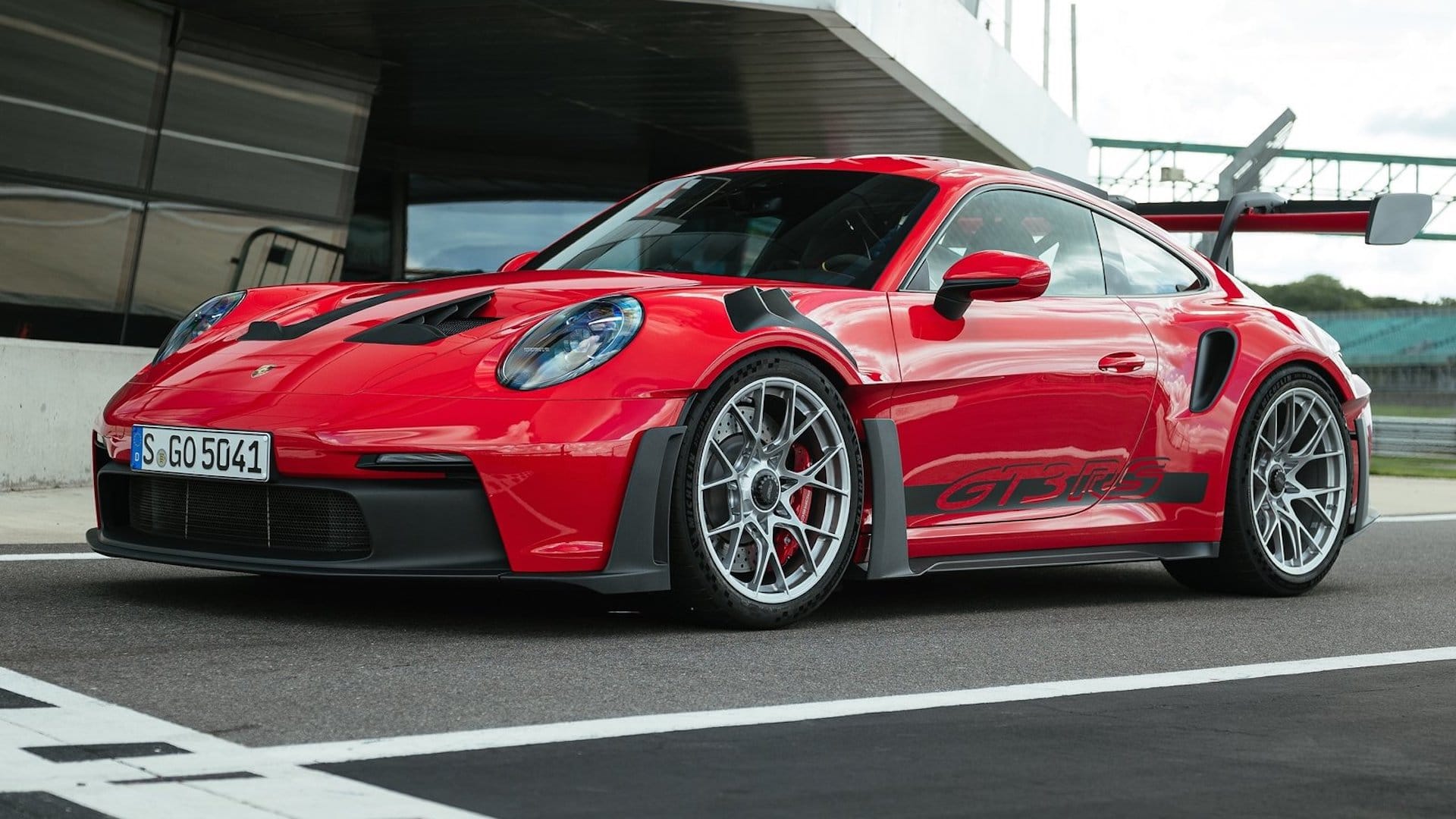
Porsche leads luxury league table
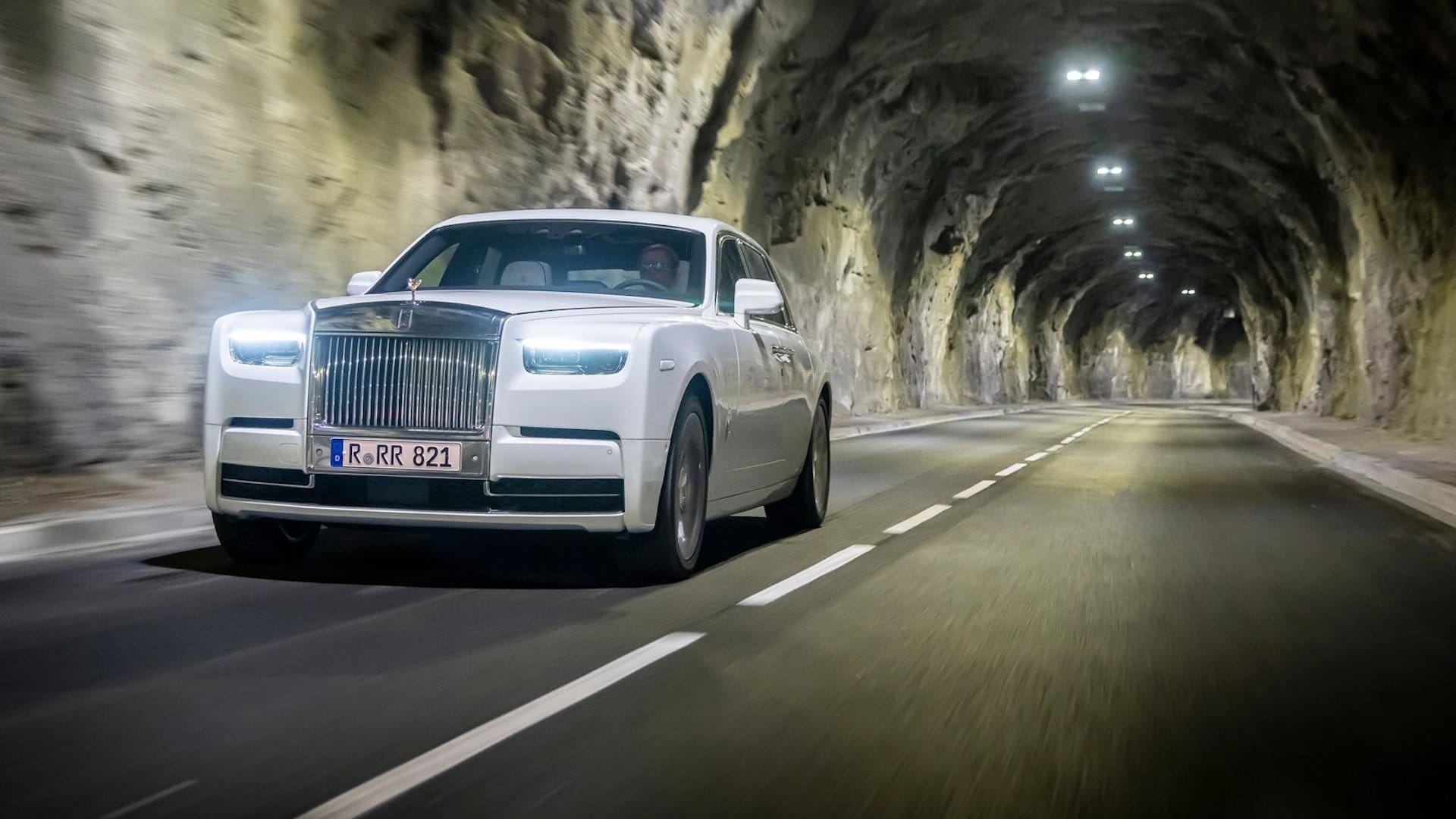
UHY Hacker Young includes cars made by Aston Martin, Bentley, Maserati, Porsche and Rolls-Royce in its definition of luxury vehicles.
Of this group, Porsche leads the way, accounting for 173,523 cars in UK ownership during 2021. This made for a 10 percent increase from the 157,916 cars recorded in 2020.
However, ownership of Maseratis is growing at the fastest rate from this luxury collective. The Italian brand had 10.3 percent more cars on the road during 2021, with a total of 11,113 now owned in the UK.
Market slowdown ahead
David Kendrick, partner at UHY Hacker Young, believes a surge in the value of cryptocurrency may have fuelled the increased demand for luxury vehicles and supercars. Cryptocurrency investors were faced with a windfall before values dropped, translating some of this into high-end vehicle sales.
Kendrick notes that: “The surge in luxury car ownership was a feature of the last stages of the post-Covid economic recovery. Ultra-low interest rates meant luxury cars were affordable to a much wider group of motorists.
“We also saw how the crypto-currency boom created ‘overnight millionaires’ who found they could suddenly afford expensive luxury vehicles – a process made much easier by very low interest rates on financed purchases.”
However, Kendrick cautions that the cost-of-living crisis could cause a slowdown in the luxury market: “With interest rates soaring and the crypto bubble bursting, it is unlikely that people will have the appetite to spend so heavily on luxury vehicles. The luxury car market should expect a big challenge until some of the clouds lift from the economy.”
Research by the RAC has uncovered the astonishing financial impact of London’s expanded Ultra-Low Emission Zone (ULEZ).
The larger ULEZ area introduced by Transport for London (TfL) has captured an estimated 1.5 million extra journeys made by non-compliant vehicles each month.
The result is an additional £93.6 million of revenue in the first year of operation, thanks to more drivers having to pay the £12.50 daily charge.
Zoned out
When first introduced in April 2019, the ULEZ area only covered central London. Analysis of TfL figures by the RAC found this original zone saw 329,527 journeys made by non-compliant vehicles each month.
In October 2021, the ULEZ was expanded to cover the area of London surrounded by the North and South Circular roads. This encapsulates close to four million people inside the widened zone.
From the beginning of November 2021 through to July 2022, an average of 1.9 million journeys were made into the zone each month by vehicles not conforming to either Euro 6 diesel or Euro 4 petrol emissions standards.
The RAC estimates that TfL will have received a total income of more than £112 million from the entire ULEZ during an eight-month period. This compares to a previous amount of less than £19 million for the original ULEZ area.
‘Need for a pragmatic approach’
Such figures do not include penalty charge notices (PCNs) for non-payment of the £12.50 ULEZ fee. With an estimated 1.6 million PCNs issued, at a cost of £160 (or £80 for prompt payment), the RAC estimates TfL could receive anything between £130.9m and £261.9m in fine revenue.
RAC head of roads policy Nicholas Lyes said: “The expansion of the ULEZ has resulted in a much-increased revenue stream for Transport for London, notwithstanding the costs associated with introducing the larger ULEZ. Londoners living outside the current ULEZ will now be worrying about the prospect of further expansion, mooted to be at the end of August 2023.
“While we accept that action is needed to reduce toxic emissions from vehicles, the cost-of-living crisis is hurting drivers in the pocket and there is a risk that further enlarging the zone will be hugely costly for those with older vehicles who can least afford to change them for something newer.
“As it is, RAC research suggests drivers are holding on to their vehicles for longer, so there is a real risk that more people with non-compliant vehicles will be forced to pay a charge they can ill afford to.
“We would encourage the mayor to take a pragmatic approach and redouble his efforts to support lower-income families and businesses with non-compliant vehicles with a targeted scrappage scheme ahead of any expansion plans.”
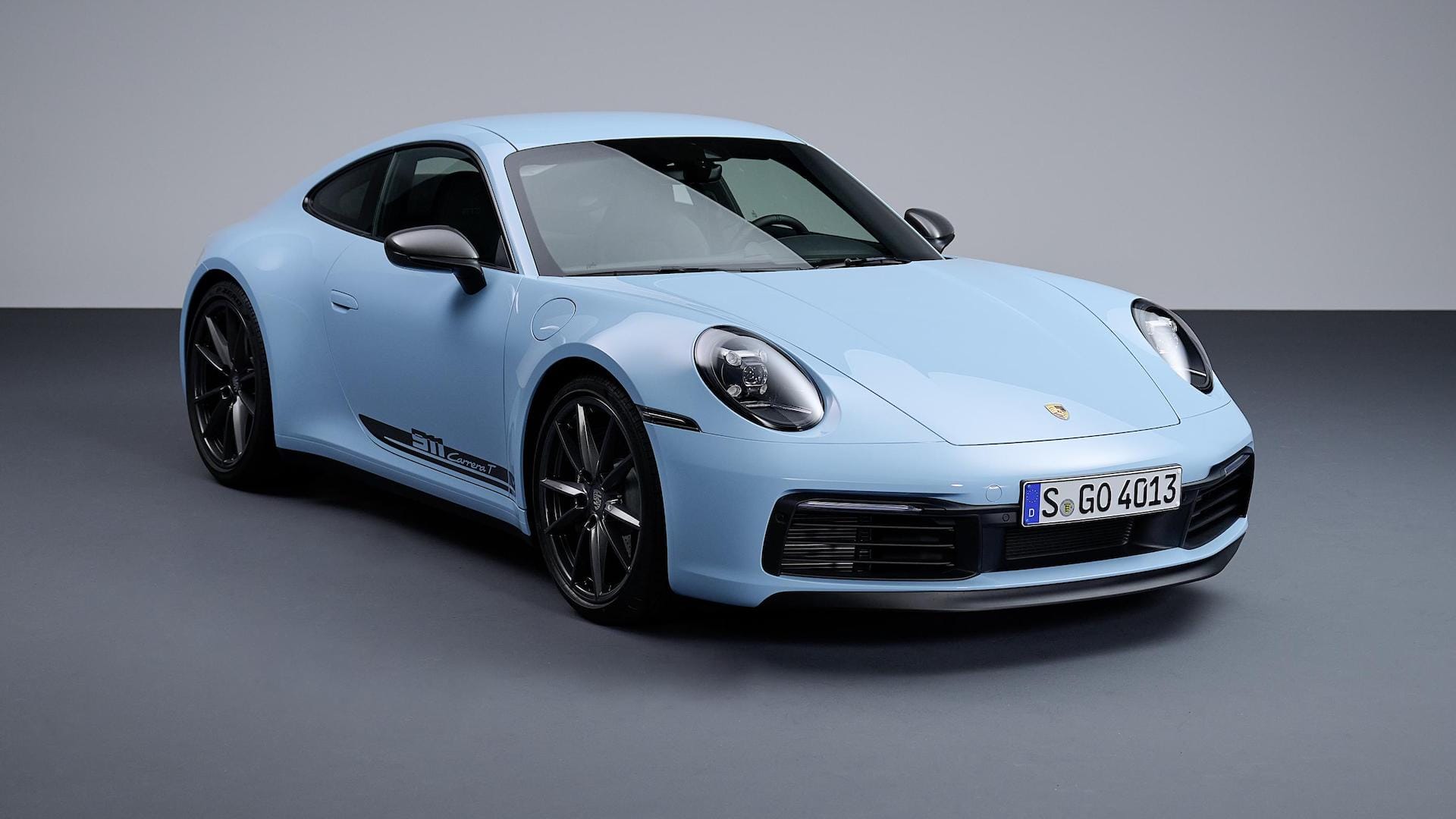
Porsche has revealed details of a new 2022 911 Carrera T, designed to offer ‘a pure and exhilarating driving experience’ on the road.
Slotting into the range between the 911 Carrera and Carrera S models, the new T-for-Touring version is lighter and more driver-focused.
Most significantly, it marks the first time that Porsche’s 385hp 3.0-litre turbocharged flat-six, found in the 911 Carrera, can be combined with a seven-speed manual gearbox.
Three pedals of thrills
Previously, the 385hp engine has only been available with the eight-speed PDK paddle-shift automatic transmission. Being able to swap cogs manually means the Carrera T should deliver ‘one of the purest 911 driving experiences’.
To cut kilos, Porsche has reduced the level of sound insulation, ditched the rear seats and fitted lighter window glass. A lightweight battery adds to the savings, reducing overall kerb weight to 1,470kg – a saving of 35kg versus a regular 911 Carrera.
Other standard equipment includes PASM sports suspension (lowering the Carrera T by 10mm), a sports exhaust and a mechanical rear differential lock with Porsche Torque Vectoring.
The result is an ability to accelerate from 0-62mph in 4.5 seconds, plus a top speed of 181mph.
Grey or green
On the inside, the 911 Carrera T gains upgraded sports seats with four-way electric adjustment. The rest of the interior features a blend of matt black trim with gloss black inlays.
An optional Carrera T package is available, with trim finished in the Carrera T’s two signature colours of Slate Grey or Lizard Green. The seat belts, floor mats and stitching all gain the colour-coded treatment.
On the outside, the Carrera T’s door mirror caps and rear grille trim are finished in Agate Grey, with the same colour used for the door decals and rear badges. The exhaust tailpipes have a gloss black finish, while alloy wheels are painted in Titanium Grey.
A classic comeback
Porsche’s use of the ‘T’ name stretches back to 1968, with the first 911 T created as an entry-level model. The badge was revived in 2017 for a special edition 911, and has since been applied to the Cayman, Boxster, and Macan.
For buyers in the UK, the 911 Carrera T is available to order now, with a starting price of £98,500. First deliveries are expected in spring 2023.
Lucky buyers will get access to a bespoke driver training event, to be held at Silverstone’s Porsche Experience Centre.
“The electric car is perfectly noiseless and clean. There is no smell or vibration, and they should become very useful when fixed charging stations can be arranged. But for now, I do not anticipate that they will be very serviceable – at least for many years to come.”
Those were the words of Charles Rolls, spoken in 1900. Now, some 122 years later, the time is finally right for an electric Rolls-Royce.
The new Spectre ‒ revealed here undisguised for the first time – is an imposing four-seat coupe that promises to be the world’s most refined and indulgent EV. It’s also the first step in Rolls-Royce’s plan to become fully electric by 2030. Here’s what we know so far.
A sense of space
Rolls-Royce certainly has a way with words. Cars are invariably ‘motor cars’ and the Spectre is, well, an ‘Ultra-Luxury Electric Super Coupe’. Reflecting the company’s belief that ‘there is no greater luxury than that of space’, it is nearly 5.5 metres long and 2.1 metres wide, with a kerb weight of almost three tonnes.
Performance figures haven’t been finalised yet, but the 585hp powertrain will likely offer 0-62mph in a brisk 4.5 seconds, plus a fully-charged range of 320 miles in the official WLTP test. Maximum torque of 664lb ft is available from a standstill, and should make for serene and effortless progress.
The Spectre prototype has completed 1.6 million miles of testing – equivalent to 400 years of use for a typical Rolls-Royce owner – prior to the finished car reaching showrooms in winter 2023. Prices will be announced closer to the time, but don’t expect much change from £300,000 before bespoke options are added. The average retail price for a Rolls-Royce now exceeds £500,000.
Inspired by luxury yachts
Designed in-house at the Rolls-Royce factory in Goodwood, West Sussex, the Spectre employs a new version of the ‘Architecture of Luxury’ aluminium spaceframe chassis, with crisp-cut styling inspired by luxury yachts.
Particular attention was paid to airflow – the sleeker Spirit of Ecstasy bonnet mascot occupied 830 hours of modelling and wind tunnel testing alone – a drag factor (Cd) of 0.25 making this the most aerodynamic Rolls-Royce ever.
At the front, the distinctive split headlights are a nod to the Phantom Coupe, and frame a wider-than-usual ‘Pantheon’ grille backlit by 22 LEDs. The vertical tail lights are clear, ‘in anticipation of the myriad of colourways selected by clients during the commissioning process’. The two-tone ‘Chartreuse’ and black combination here is just the start – indeed, Rolls-Royce will shortly be upgrading its paint shop to meet demand for one-off finishes.
The Spectre’s sweeping fastback roof contrasts with its upright, muscular flanks and huge 23-inch alloy wheels. Worried about tyre noise? The floorpan incorporates almost 700kg of sound deadening to isolate you from the outside world.
Star quality
Open the Spectre’s 1.5m-long ‘coach doors’ and you enter a haven of traditional luxury and modern tech, along with near-endless opportunities for personalisation.
The famous Rolls-Royce Starlight Headlining can now be extended to the inner doors, with 4,796 illuminated LED ‘stars’ to welcome you inside. Further new options include dials colour-matched to the car’s interior and Canadel wood panelling (its name taken from the cove in the South of France where Sir Henry Royce spent his winters).
The rear seats are roomy enough for adults, but one suspects this is a Rolls-Royce most owners will choose to drive themselves.
The Spectre runs a new operating system called Spirit, which works with Rolls-Royce’s Whispers smartphone app. This offers ‘live information curated by the marque’s luxury intelligence specialists’, so you need never rely on Tripadvisor for a hotel recommendation again.
Ready for the Riviera
CEO Torsten Müller-Ötvös says going electric is “ideally suited to Rolls-Royce”, highlighting the contrast with supercars in the same price bracket. “For Ferrari and Bugatti, sound is a big part of the brand. For us, to be without sound is a part of the brand.”
So, how will the Spectre drive? We’ll have to wait a few months to find out, but Müller-Ötvös highlights its ‘magic carpet ride’, along with a focus on stability and control.
A new suspension system called Planar can decouple the anti-roll bars in a straight line, allowing each wheel to act independently, then reconnect them for flatter (and faster) cornering. Some 18 sensors monitor driver inputs and the car’s movements, working together with four-wheel steering to keep all 2,975kg in check.
Interestingly, Rolls-Royce says 55 percent of testing took place ‘on the very roads that many production Spectres will be driven on’ – notably the French Riviera. Sounds like an ideal launch location to us. Are you listening, Goodwood?
Porsche has announced updates for its range of battery-powered eBikes. The changes are intended to deliver increased range and improved performance.
First launched last year, the eBike Sport and eBike Cross were developed in collaboration with electric cycling experts, Rotwild. Design inspiration came from the electric Porsche Taycan, including a striking carbon fibre frame.
Sticking with its tradition of continuously updating and evolving its vehicles, Porsche has added extra capabilities to the eBike duo.
More grip and go
Aimed at commuters and leisure cyclists, the Porsche eBike Sport is equipped with a Shimano EP-8 electric motor. Connected to a 630wH battery pack, it can reach the maximum legally-permitted top speed of 15.5mph.
Charging to 80 percent battery capacity takes 2.5 hours, with a full battery giving a potential range of more than 75 miles.
Changes for the 2022 model include new Continental tyres for better grip on gravel and unpaved roads, along with a more powerful Magura four-piston brake caliper for the rear wheel.
LED lights are integrated into the frame of the eBike Sport, plus there is even the ability to connect your smartphone.
The all-terrain electric Porsche
The eBike Cross mountain bike is ready for all-terrain action, and uses the same Shimano EP-8 electric motor. A full-suspension design includes Fox 34 Performance front forks with 120mm of travel, combined with a Fox Float DPX damper giving 100mm of travel at the rear.
Both the eBike Sport and Cross are offered in three different frame sizes. First deliveries of the Sport are expected later this year, with the Cross available in early 2023.
Porsche is yet to confirm UK prices for the upgraded 2022 versions of its eBikes. However, the previous eBike Cross was priced from £7,400, with the eBike Sport starting at £9,600 – certainly the cheapest way to take ownership of a new battery-powered Porsche.
Lotus has unveiled the Evija Fittipaldi, a special edition marking 50 years since Emerson Fittipaldi and Team Lotus won the F1 Drivers’ and Constructors’ World Championships.
Driving a Lotus Type 72, Fittipaldi triumphed in five out of 11 races during the 1972 season. Named the greatest ever F1 car by Autosport magazine, the radical Type 72 was the first racing car to incorporate aerodynamics from the outset, including an integrated front splitter and rear wing.
Revealed at Lotus headquarters by Emerson Fittipaldi himself, the new Evija wears the same black and gold colours as its inspiration (albeit without John Player Special cigarette branding) and features a host of unique details.
Black and gold
The world’s most powerful production car, the Lotus Evija develops 2,039hp and 1,257lb ft of torque from four electric motors. Zero to 62mph is quoted as ‘less than three seconds’, with 0-186mph in ‘less than nine seconds’. Top speed is limited to 217mph.
The Evija also has a target driving range of 250 miles, and can fully replenish its 93kWh battery in 18 minutes using a 350kW charging point.
Changes made for the Fittipaldi edition are entirely cosmetic. Along with the JPS-style livery – including decals detailing the Type 72’s race victories on the active rear wing – the Evija has an image of the F1 car etched into its exposed carbon fibre roof, plus Fittipaldi’s signature hand-stitched into the dashboard. It rides on bespoke centre-lock alloy wheels with gold brake calipers.
The interior is swathed in black leather, with yet more gold for the pedals, air vent surrounds and start button. The pièce de résistance, though, is a drive mode switch made from recycled Type 72 aluminium. It means ‘a genuine piece of the F1 racer is part of each Evija Fittipaldi,’ says Lotus.
On the Button
Another former F1 world champion, Jenson Button, also visited the Lotus test track at Hethel to drive the Evija Fittipaldi.
After many laps of the 2.2-mile circuit – and several standing starts to experience the car’s brutal acceleration – Button seemed very much enthused. “It sounds like a jet engine! You think of an EV as quiet but it’s not. The torque is astronomical,” he remarked.
Button continued: “It’s amazing, it puts a big smile on your face. It feels like a spaceship, the drivability and direction in the steering certainly lets you know you are driving a Lotus. I am amazed by the agility of it. It is a Lotus of the future and I can’t wait to drive my own Evija.”
The F1 ace then swapped into Fittipaldi’s 1972 Lotus Type 72, part of the extensive collection owned by Classic Team Lotus. “It’s lovely to get into a bit of racing history,” he said. “There isn’t a lot of space, but everything is in the right position. It was easy to heel and toe. It’s a real privilege to drive such a special car.”
Only eight examples
Production of the Lotus Evija has now started and 130 cars are planned – including eight examples of the Fittipaldi edition. With jaw-dropping performance, an iconic colour scheme and endorsement from an F1 legend, it’s a surefire classic-in-waiting.
The all-electric powertrain means this exotic hypercar is effectively future-proofed, too.
Will Emerson Fittipaldi, like Button, also be getting his own Evija? He didn’t say, but all eight cars have now been spoken for. The price? Also not mentioned, but reckon on at least £2 million.
The notion of Lamborghini going green sounds akin to a T-Rex embracing vegetarianism. The Italian marque is famous for its extravagant V10 and V12 engines, not saving the planet one supercar at a time.
The world is changing fast, though, and even the most rarefied carmakers must change with it. The UK plans to outlaw the sale of non-hybrid petrol cars from 2030, with the EU likely to follow suit in 2035.
“We will continue to build dream cars,” Lamborghini CEO Stephan Winkelmann assures me, “but with a clear focus on decarbonisation and sustainability.” His masterplan also includes some 600,000 bees – but we’ll come to them shortly.
Electricdreams
Lamborghini is currently ‘celebrating the internal combustion engine’ with models such as the fabulous Huracan STO and new Urus Performante. However, all its model lines will be electrified by 2024 – starting with the plug-in replacement for the Aventador, due next year.
The company will then begin the transition to fully electric cars, with its first EV – an entirely new fourth model – expected by 2030. Rumours suggest a luxurious four-door GT in the style of the classic Espada or 2008 Estoque concept.
The target is to slash overall fleet CO2 emissions by 50 percent by 2025 (compared to the 2021 figure), then 80 percent by 2030.
On the question of synthetic fuels, Winkelmann is unconvinced: “They might be an opportunity to reduce emissions for existing cars, but they’re not an alternative to electrification.” The biggest challenge, he concedes, will be making a Lamborghini EV sound suitably special.
Bring me sunshine
Thus far, the main efforts to make Lamborghini cleaner and greener have focused on the factory, which builds 26 examples of the Urus, 16 Huracans and (until very recently) 4.5 Aventadors a day.
The site at Sant’Agata Bolognese has been certified carbon neutral since 2015, when it measured 80,000 square metres. Today, despite having more than doubled in size to 172,000 square metres – largely thanks to the runaway success of the Urus – it is still CO2 neutral.
Hundreds of solar panels, which cover the office buildings and canopies over the car park, help to produce renewable energy. A photovoltaic plant converts this into 2.5 million kWh of electricity a year – saving 2,000 tons of CO2 in the process.
Sant’Agata also has its own biogas district heating system fuelled by decomposing agricultural waste, with four miles of underground pipes carrying water heated to 85deg C. This eliminates a further 1,800 tons of CO2 emissions every year.
Sting in the tale
The nearby Lamborghini Park, where the company has planted 10,000 oak trees over an area of 17 acres, also plays a part in the sustainability effort.
An innovative biomonitoring project involves 13 beehives, which are studied by entomologists and apicologists to detect pollutants. Because the bees collect nectar and pollen within a two-mile radius of the park, their hives provide a very accurate snapshot of the local environment.
As an added bonus, the bees also produce around 500kg of honey a year, which is shared among Lamborghini employees.
Immortal machines
Lamborghini also ‘upcycles’ many of its (often brightly-coloured) leather offcuts into accessories such as bags, wallets and phone cases. The project is a collaboration with social enterprise Cartiera, which promotes social inclusion, providing work for migrants, people with disabilities and others who might be disadvantaged in the job market.
Unused carbon fibre is also recycled where possible, or donated to local universities to help young people learn about working with composites.
As for Lamborghinis themselves, they remain treasured possessions. “Eighty percent of all the Lamborghinis ever made still exist,” says Winkelmann, “so recycling cars isn’t really an issue for us”.
Maserati has pulled the virtual wraps off its 2022 GranTurismo coupe, promising a new era for the sporty GT.
The biggest news is that Maserati will offer an all-electric drivetrain in the ground-breaking Folgore version (the name means ‘lightning’ in English).
The Folgore will be sold alongside conventional petrol-engined Modena and high-performance Trofeo models.
Electrifying performance
The GranTurismo Modena and Trofeo are both powered by a twin-turbocharged 3.0-litre V6, also used in the Maserati MC20 supercar. In detuned formats here, it gives the Modena 490hp, while the hardcore Trofeo delivers 550hp.
An eight-speed automatic gearbox is used, with a 0-62mph time of 3.9 seconds for the Modena.
The Trofeo reduces this sprint time to 3.5 seconds, with a top speed of nearly 200mph.
A unique acoustic experience
The most impressive performance, however, is supplied by the electric GranTurismo Folgore. This uses a trio of electric motors, generating a combined output in excess of 1,200hp.
A total of 761hp makes its way to all four wheels, allowing the Folgore to accelerate from 0-62mph in a startling 2.7 seconds. It boasts the same near-200mph top speed as the Trofeo.
The GranTurismo Folgore features 800-volt electric architecture, and is powered by a 92.5 kWh battery pack. Rapid-charging up to 270kW is supported, with the ability to add 60 miles of range in just five minutes.
In the absence of an engine, Maserati says the Folgore will offer a ‘unique acoustic experience’. Maseratis are famed for their searing soundtracks, so we’ll be interested to hear it.
Classic styling, modern cabin
Maserati has stuck with tradition in styling the new GranTurismo. It retains classic GT proportions, including a long clamshell bonnet and short chopped tail. The front grille features a 3D trident emblem, while the LED tail lights have boomerang details – a nod to the classic 3200 GT.
A ‘clean’ design is used inside, featuring multiple digital displays. Along with a 12.3-inch central multimedia screen, there is also an 8.0-inch ‘comfort’ screen, plus a 12.2-inch driver display. Maserati’s traditional analogue clock has been given a digital makeover, too.
To celebrate the launch of the new GranTurismo, Maserati will offer a special PrimaSerie 75th Anniversary Launch Edition, inspired by the A6 1500 Gran Turismo of 1947.
It looks like a classic British sports car and borrows its name from a Bond film, but the Wiesmann Project Thunderball hails from a small market town in Germany. As the world’s first fully electric roadster, it promises to combine traditional craftsmanship with thoroughly modern performance.
Beneath a curvaceous carbon fibre body, two electric motors deliver up to 680hp and 738lb ft of torque to the rear wheels. With a kerb weight of 1,775kg – relatively light for an EV – that means 0-62mph in 2.9 seconds, plus 0-124mph in just 8.9 seconds.
The car also has a target range of 311 miles from a 92kWh battery (an 83kWh version will be offered), plus the ability to rapid-charge at up to 300kW thanks to its advanced 800V architecture.
Living off the wall
Project Thunderball represents a comeback for Wiesmann after the company closed its doors in 2014. Founded by brothers Friedhelm and Martin Wiesmann, its first car was the BMW-powered MF 30 roadster, launched in 1993. The later MF 3 version borrowed its 343hp straight-six from the 2000-2006 (E46) M3.
Wiesmann moved on to building sleek GT coupes with BMW V8 engines in the early 2000s, but a failed attempt to expand into America left the brand in limbo for several years. It’s now owned by entrepreneur and car collector Roheen Berry, who says: “Project Thunderball is the car that will bring Wiesmann into the new electrified era”.
That said, the company also has another, non-electric sports car in the works. The forthcoming Project Gecko will use a BMW M Power V8 and takes its name from Wiesmann’s gecko logo – chosen because the cars ‘stick to the road like geckos to a wall.’
Rolling Thunder
The order book for Project Thunderball is now open, with first deliveries expected in 2024. Prices start at €300,000 (around £267,000), although every car will be bespoke and built to order.
CEO Roheen Berry added: “The car is driving beautifully and our investment in regenerative braking and latest battery technology has paid off. The Wiesmann brand not only has such a storied and wonderful past and legacy, but a bright and exciting future ahead of it.”
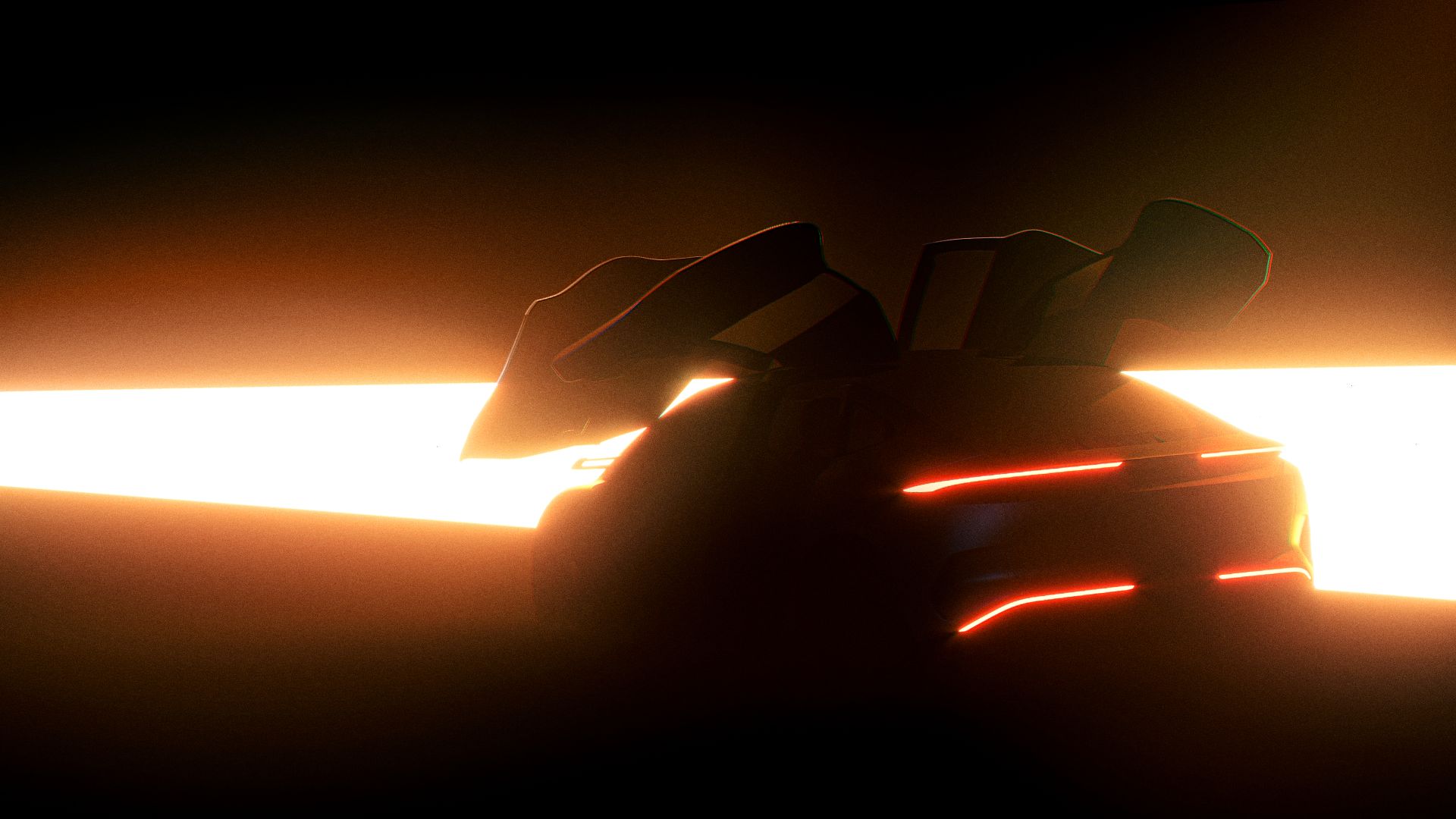
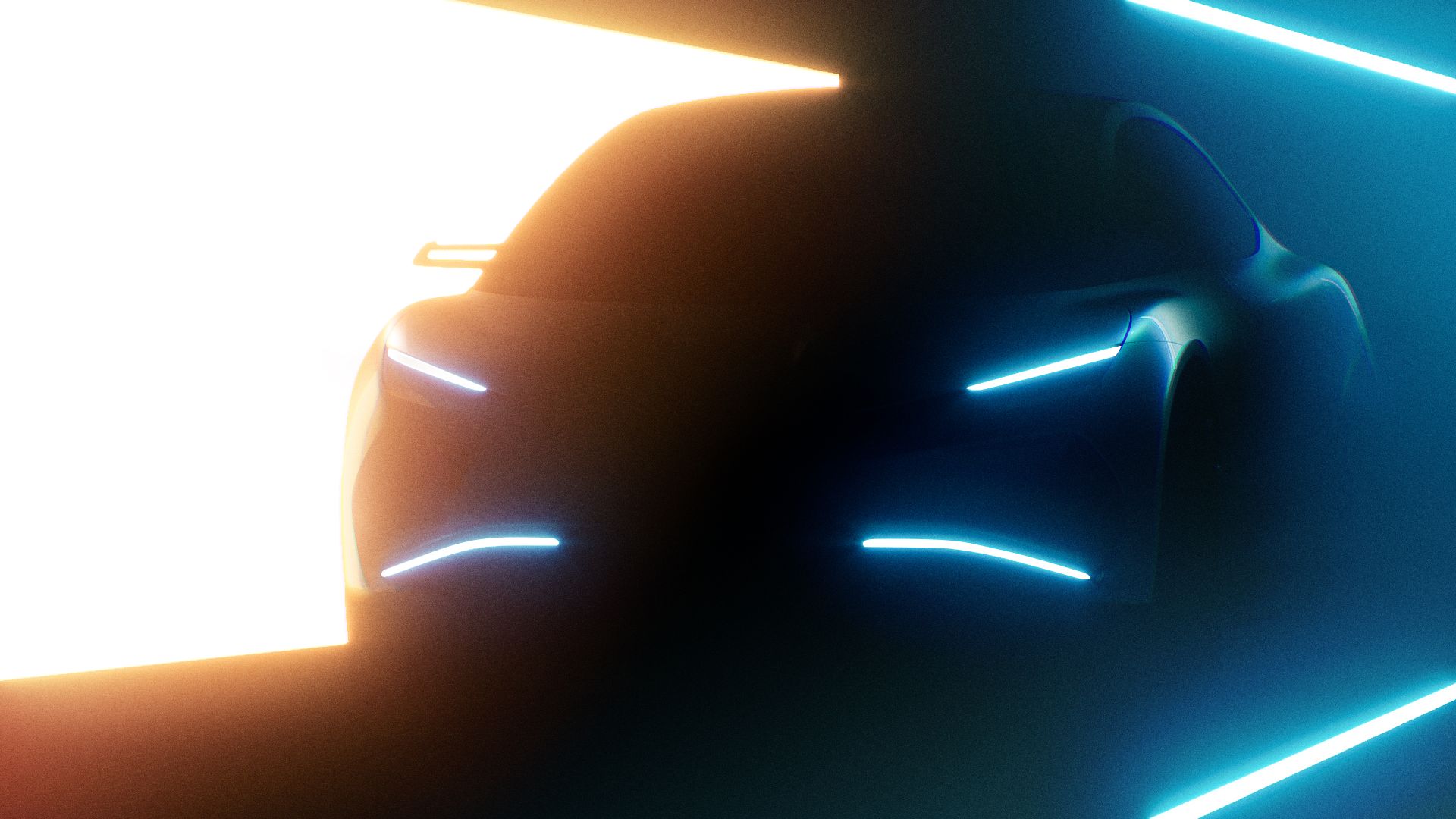
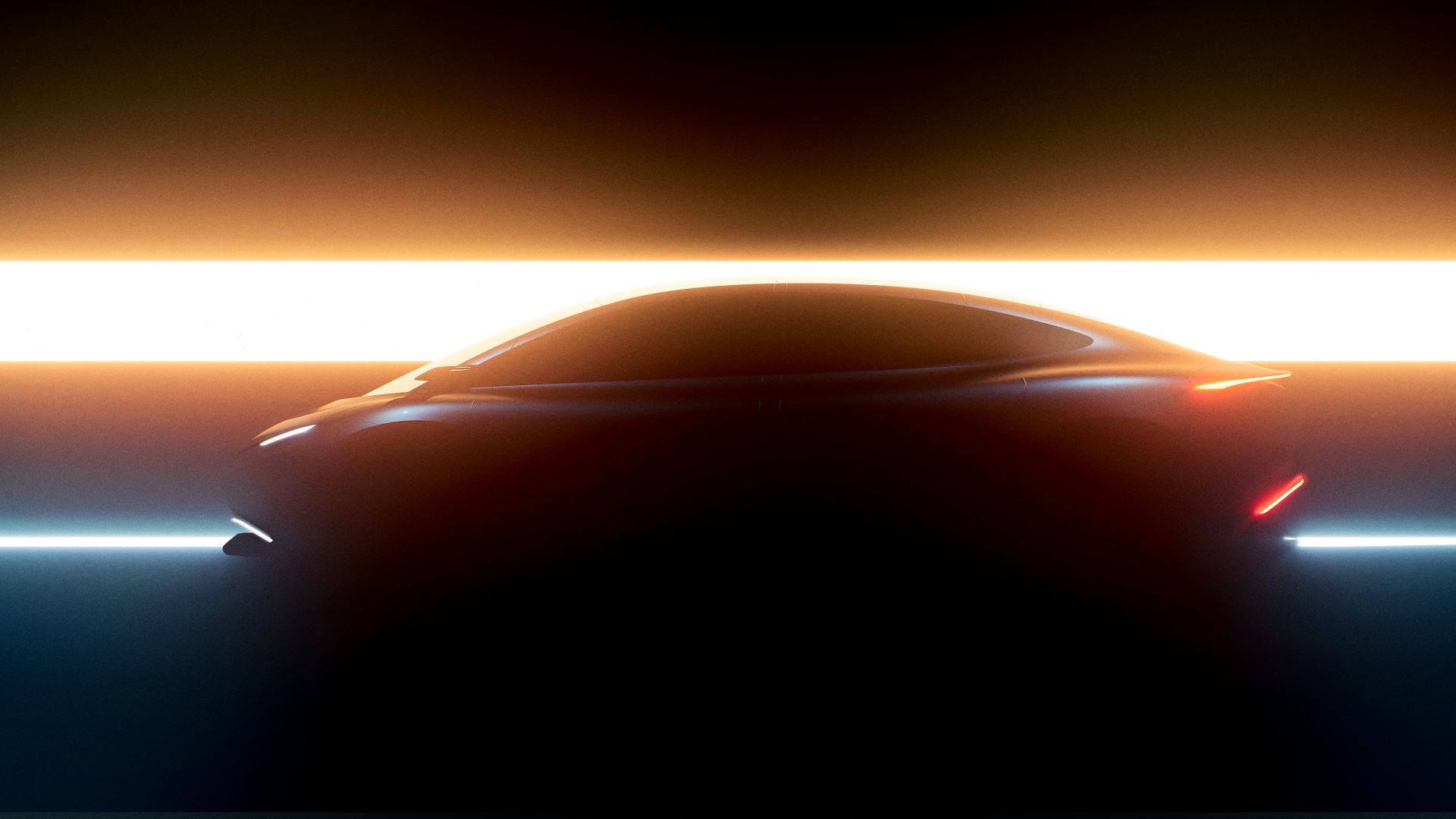
Aehra has revealed the first images of its futuristic electric SUV. The new Italian car brand says it is ‘coming for customers from Tesla, Lucid, BMW, Mercedes-Benz and Porsche’ with the as-yet-unnamed EV, which is predicted to cost upwards of £140,000.
Established by former oil trader Hazim Nada and based in Milan, Aehra has recruited some strong local talent. Design chief Filippo Perini previously worked at Lamborghini, while Stefano Mazzetti, head of purchasing, comes from Ferrari. Alessandro Serra joins the design team from upcoming Korean brand, Genesis.
Aehra also has a premium electric saloon in the pipeline, due to be revealed in February. First customer deliveries of both cars are expected in 2025.
Gives you wings
Technical details of the Aehra SUV are limited so far – look out for a full preview on Motoring Research in late October – but the company promises innovative use of carbon fibre and ‘cutting-edge EV technology’.
What can be gleaned is the car’s overall design, which is much sleeker than a typical SUV. The roof has an elegant and very aerodynamic profile, flowing from a short nose to an elongated tail. All four doors open upwards, in a dramatic gullwing style, leaving the rear ‘Falcon Wing’ doors of the Tesla Model X looking like a half-measure.
The Aehra SUV also has distinctive LED light signatures front and rear, plus cameras instead of conventional door mirrors. A jutting front spoiler and upswept rear diffuser should further enhance the car’s aero-credentials.
Dreaming big
Privately-funded Aehra aims to sell between 15,000 and 25,000 cars in its first full year, focusing on Europe, North America, China and the Middle East. It’s an ambitious target, but CEO Nada seems determined to seize the moment.
“The unveiling of the preview images of the first Aehra model, just four months after the launch of the company, certifies that we remain firmly on track with our ambitious strategy to transform the EV mobility ecosystem with vehicles charged with emotional design and imbued with superior aerodynamic efficiency,” he explained.
As for the company’s name, it’s a combination of the Latin word for ‘epoch’ and the Italian for ‘aerodynamic’. We’ll discover the name of this new SUV very soon.