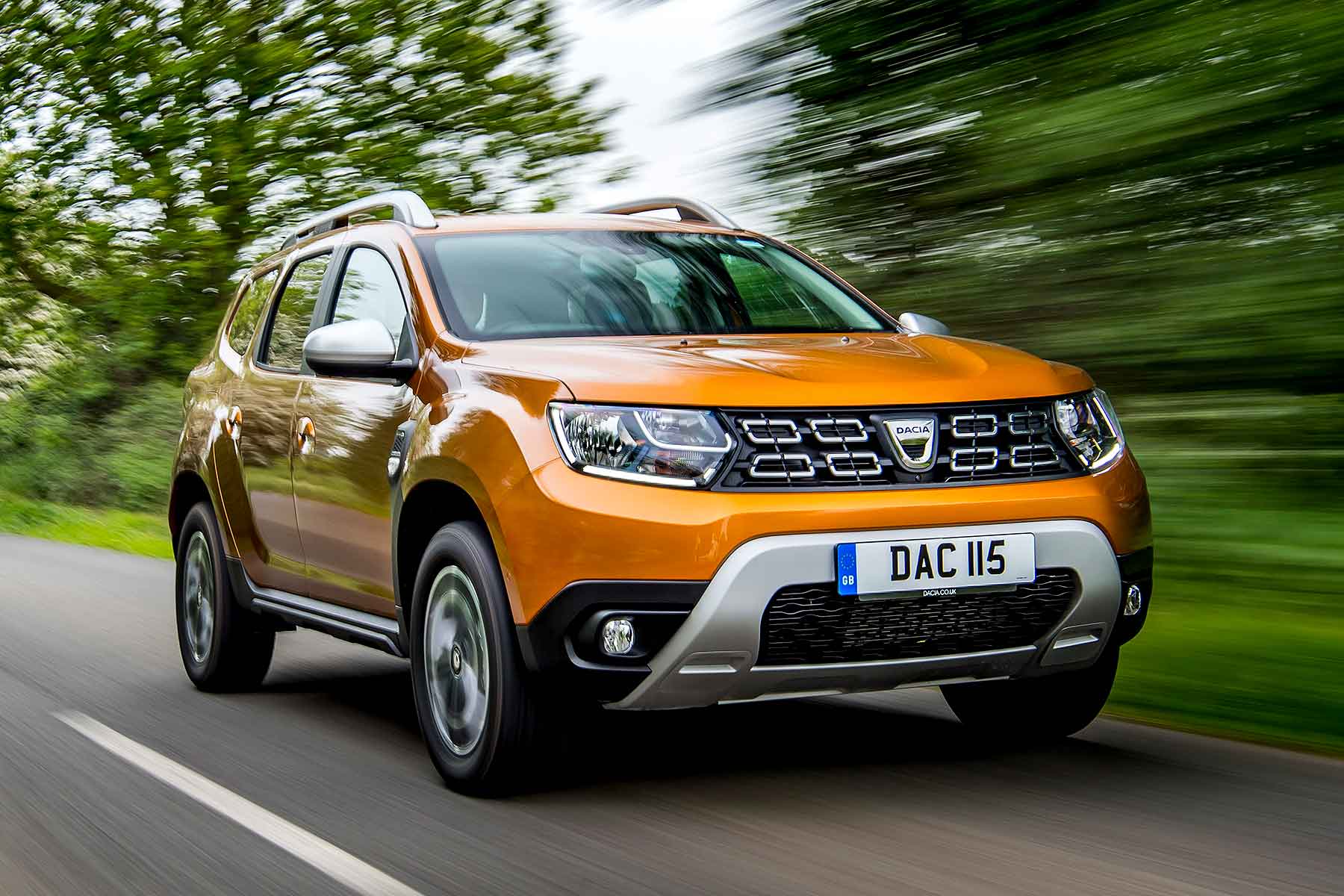
New Dacia Duster prices start from £9,995, the firm has revealed ahead of ordering opening on 11 June 2018 – meaning the second-generation model is still Britain’s cheapest SUV.
First revealed at the 2017 Frankfurt Motor Show, the new model is finally arriving in the UK; Dacia says that every single body panel has changed, and the interior has been “totally revised” with more advanced onboard technology.
Complexity for consumers hasn’t increased though, insists the firm. “Dacia’s ethos is to keep things simple and no-nonsense.” The new trim line comprises Access, Essential, Comfort and Prestige.
Core features include LED daytime running lights, electric front windows, engine stop-start and emergency brake assist. But it’s the Essential, priced from £11,595, that’s expected to become the effective entry-level model: it includes 16-inch alloy wheels, body0coloured bumpers, DAB radio, Bluetooth – and air conditioning.
Comfort costs from £13,195; key extras include posher upholstery, leather steering wheel, rear parking camera, electric door mirrors and 7-inch MediaNav touchscreen infotainment with standard sat nav. The range-topping Prestige has 17-inch alloys, blind spot warning, keyless entry and climate control.
The engine range is even more simple: either SCe 115 petrol or Blue dCi 115 turbodiesel; the former has 4×2 and 4×4 options, but the diesel is front-wheel drive only. No Duster currently offers an automatic gearbox option.
Dacia says customers will feel clear benefits with the new Duster, not just the new styling. The power steering is 35 percent lighter, for example, interior noise has been halved and larger speakers mean the audio system sounds better.
In-cabin stowage is improved 20 percent, the infotainment screen is positioned 74mm higher on the dashboard and denser front seat foam is coupled with 20mm longer seat cushions. The driver’s seat has a greater range of height adjustment as well.
First UK deliveries of the new Duster begin from July.
Apple CarPlay is going to allow third party navigations systems such as Waze and Google Maps to use the iPhone-mirroring service, starting with the upcoming iOS 12 system upgrade, the tech firm has announced at its 2018 WWCD developer conference.
The move will fix a longstanding frustration with CarPlay: Apple Maps is less popular than its rival Google Maps, while many motorists swear by the traffic-dodging functionality of Waze. Both will now be accessible through the CarPlay Interface.
Apple hopes it will encourage more drivers to actively use CarPlay, rather than default to their own car’s navigation systems. Once they’re hooked into the mapping systems, it’s expected they’ll use other functions within the Apple iPhone system.
The top cars available with Apple CarPlay in the UK
Apple describes CarPlay as “a smarter, safer way to use your iPhone in the car… [it] takes the things you want to do with your iPhone while driving and puts them on your car’s built-in display”. Many drivers have for years wanted to use Waze – an app designed for drivers – through CarPlay. At last, Apple has responded.
Most major vehicle manufacturers now offer CarPlay as standard-fit or (oddly, in the case of premium-brand Volvo) a cost-option, and those who don’t freely admit it’s coming soon. CarPlay rival, Android Auto, has for some time offered navigation using third-party apps such as Waze.
iOS 12 will launch as a system update for iPhone users in the autumn.
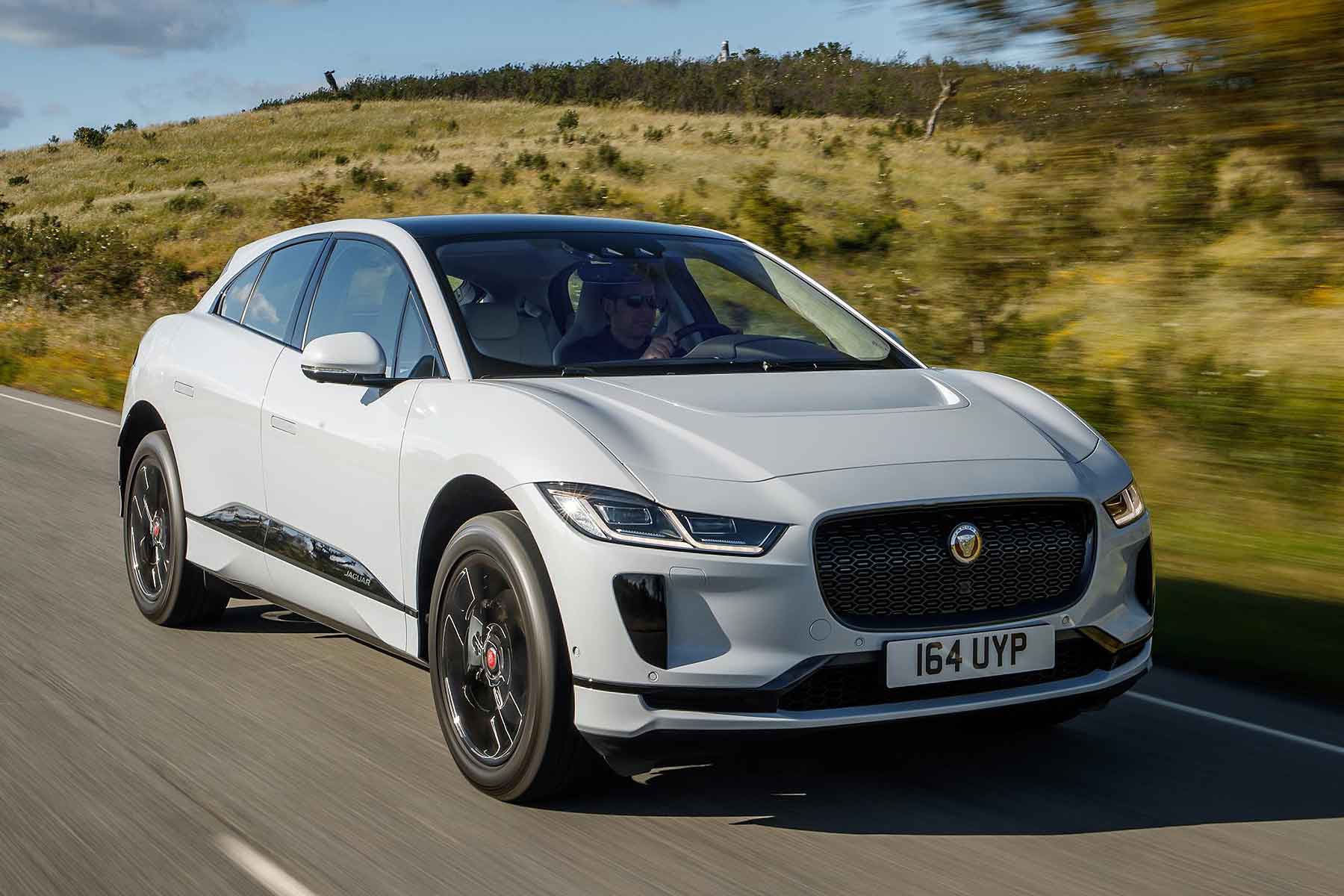
The Jaguar I-Pace is been declared officially eligible for the government’s Plug-in Car Grant scheme AND the £500 Electric Vehicle Homecharge Scheme – which takes the transaction price down from £63,495 to £58,995 and helps make homecharging a lot more affordable.
In being accepted onto the OLEV electric vehicle grant schemes, the I-Pace qualifies for the £4,500 Plug-in Car grant and the £500 ‘wallbox’ grant, which chips the starter price down from starting with a ‘6’ to opening with a ‘5’.
Jaguar says it received written confirmation from officials earlier today, and confirms the new I-Pace is now included as an eligible vehicle on the list of low-emissions vehicles eligible for a Plug-in Car Grant.
Because the I-Pace is a full EV with zero CO2 emissions and a range of more than 70 miles, buyers benefit from the ‘Category 1’ grant – the full £4,500.
Jaguar works with Chargemaster to offer approved wallbox installations: with the OLEV grant included, the cost to the customer is £334. That buys a 7kW unit, which charges three times faster than a domestic plug socket: Jaguar reckons it gives 22 miles of range per hour of recharging.
As the government points out, it’s not a given that an electric vehicle will be eligible for a grant: “Only vehicles that have been approved by the government”. Hence Jaguar waiting until receiving official confirmation before making the announcement.
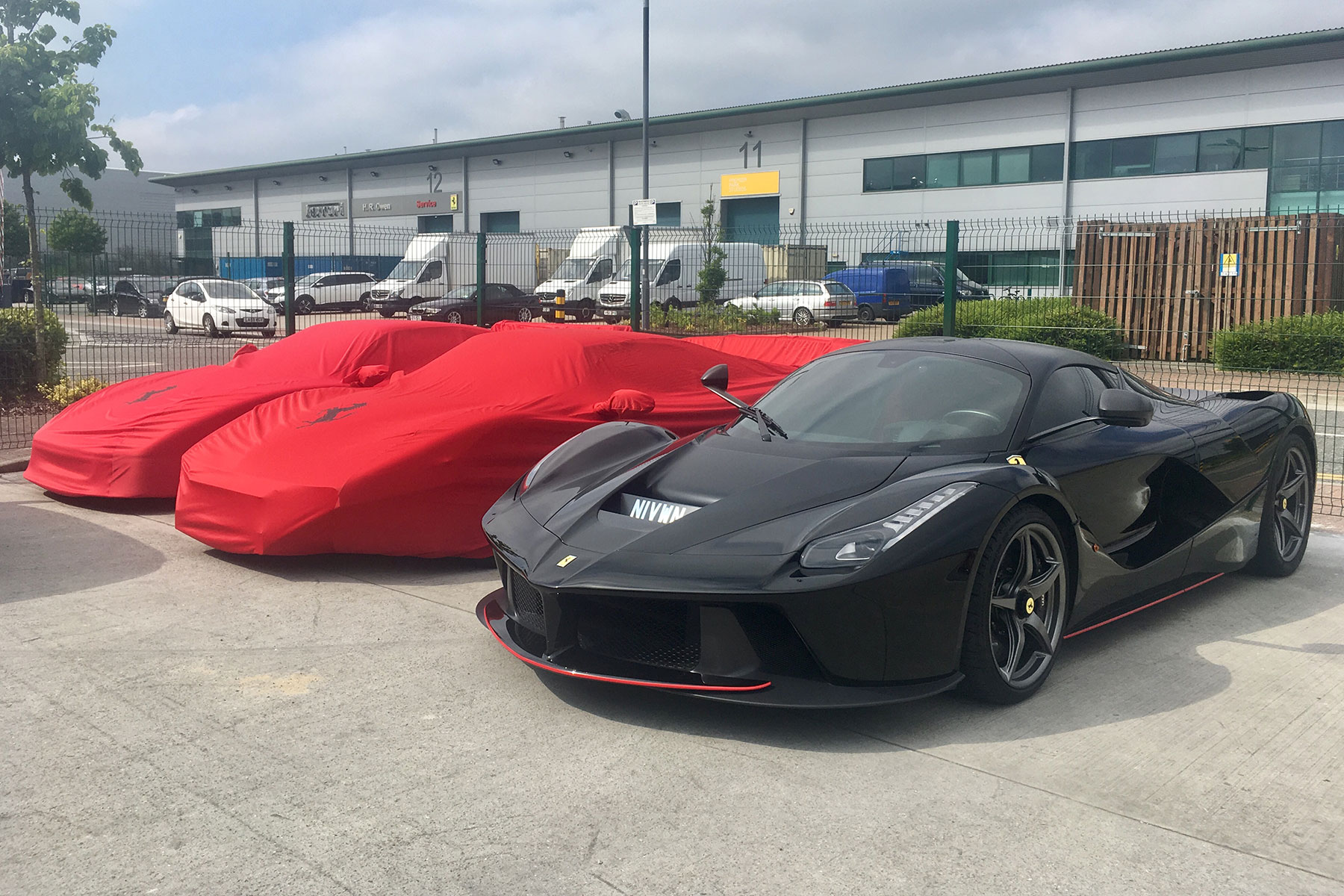
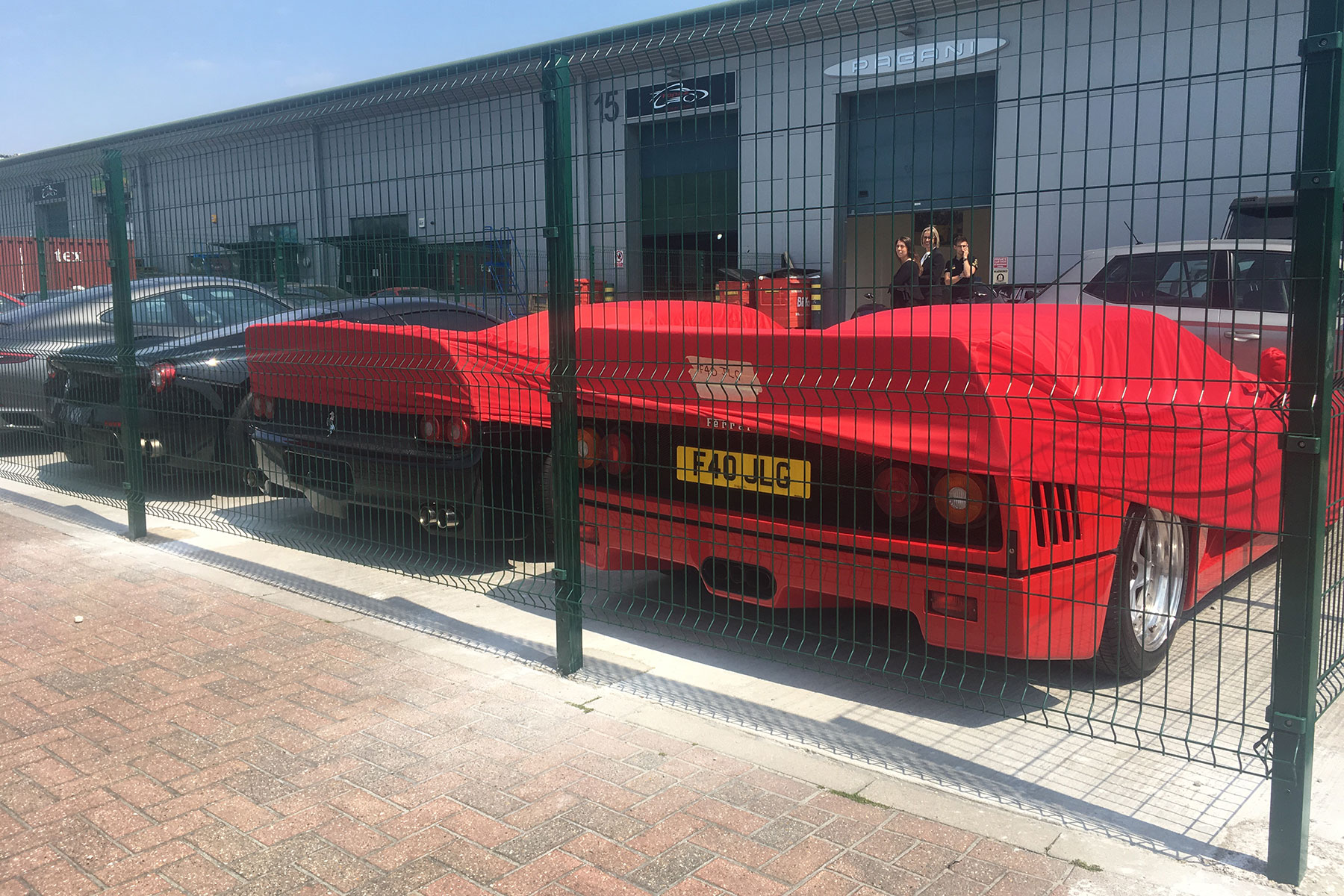
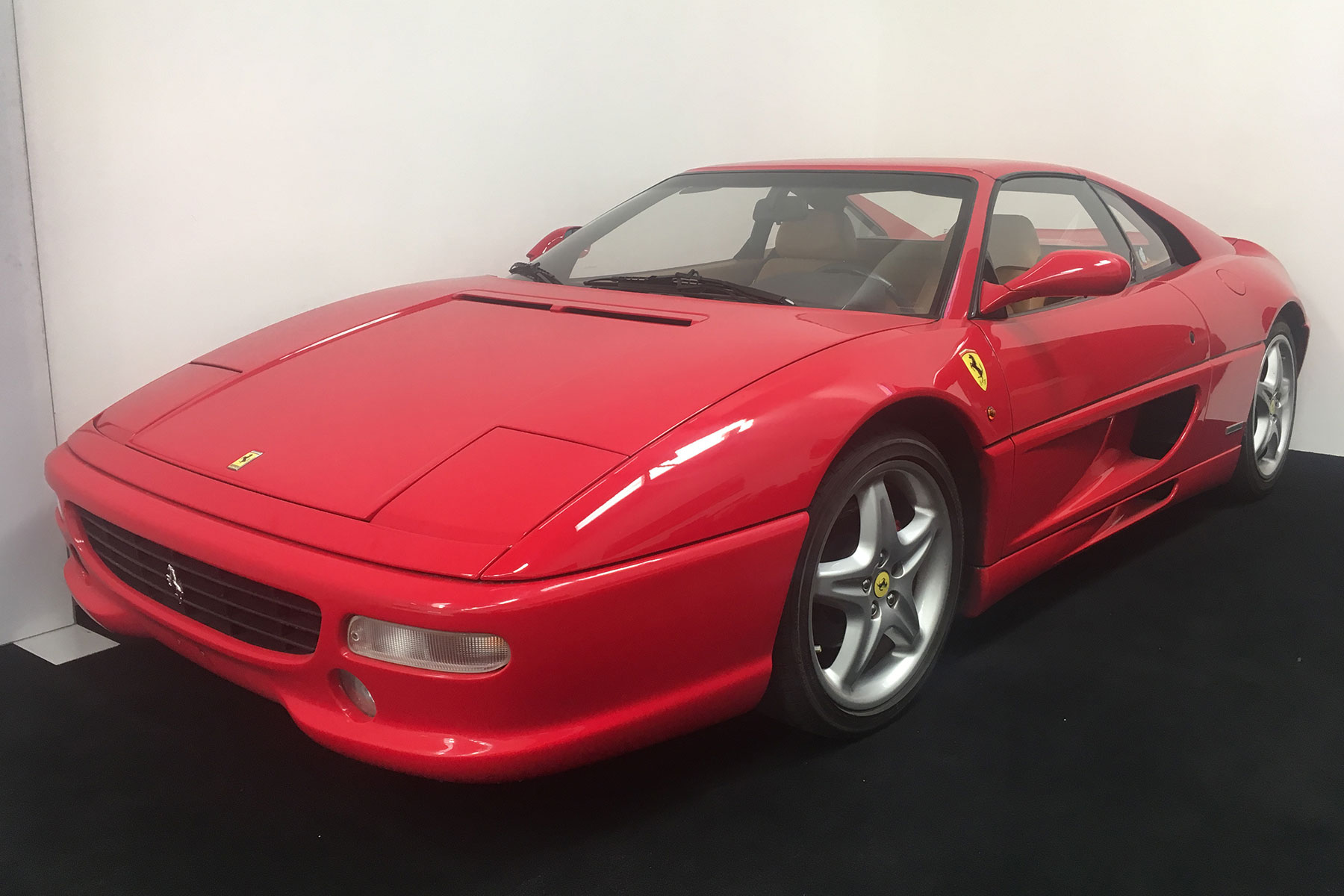
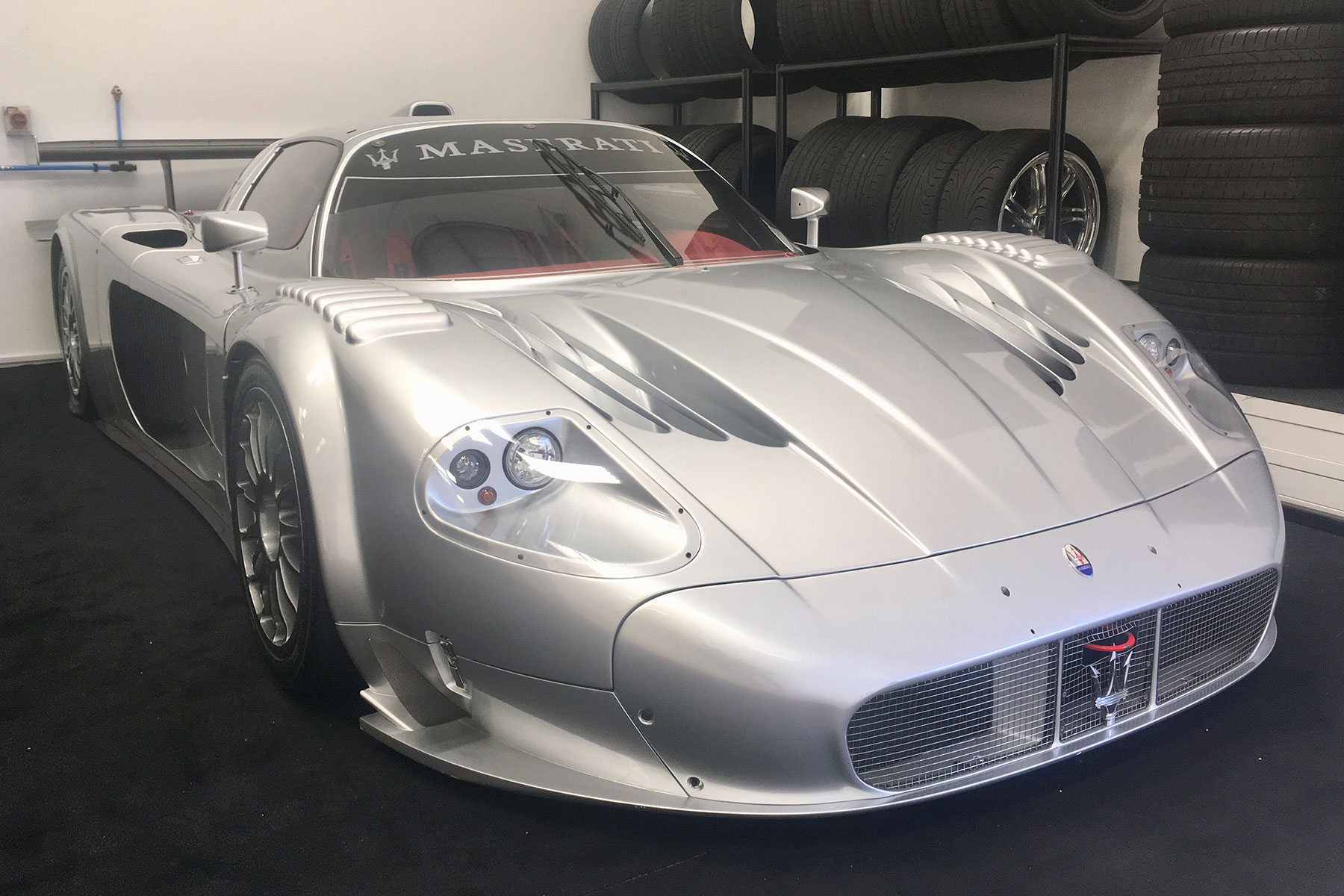
Forget Park Lane or the King’s Road, this small street near Wembley boasts many more supercars per square foot. The service department of H.R. Owen Ferrari is here, along with Topaz, a high-end detailing company. Within minutes, I’ve spied a new Porsche 911 GT3 RS, Aston Martin Vanquish and numerous Ferraris – including an 812 Superfast and Testarossa.
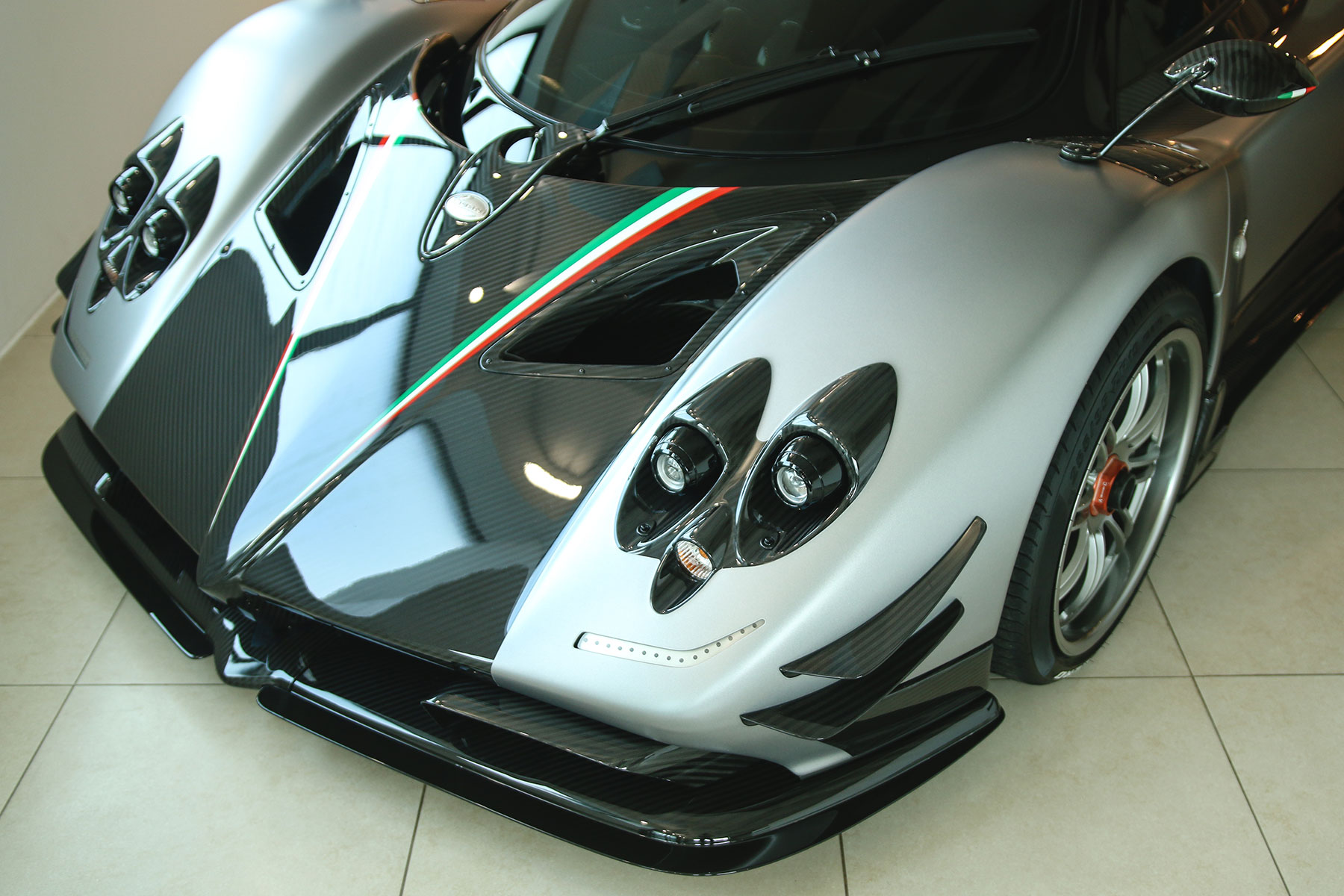
The cars I’m here to see, though, make even such rarified metal look mainstream. I ring a buzzer and enter a nondescript warehouse. This is the UK home of Pagani: purveyor of money-no-object hypercars since 1999.
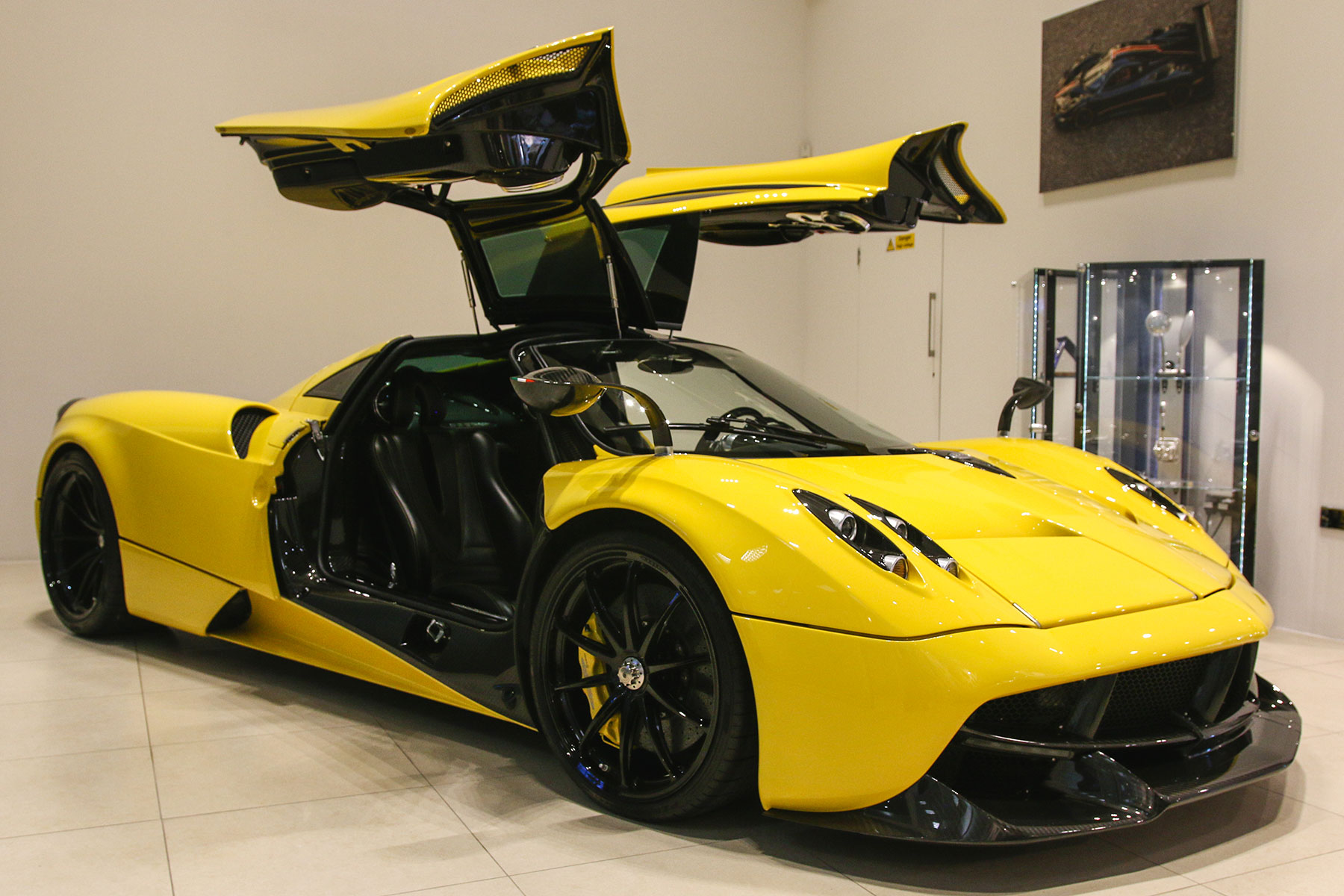
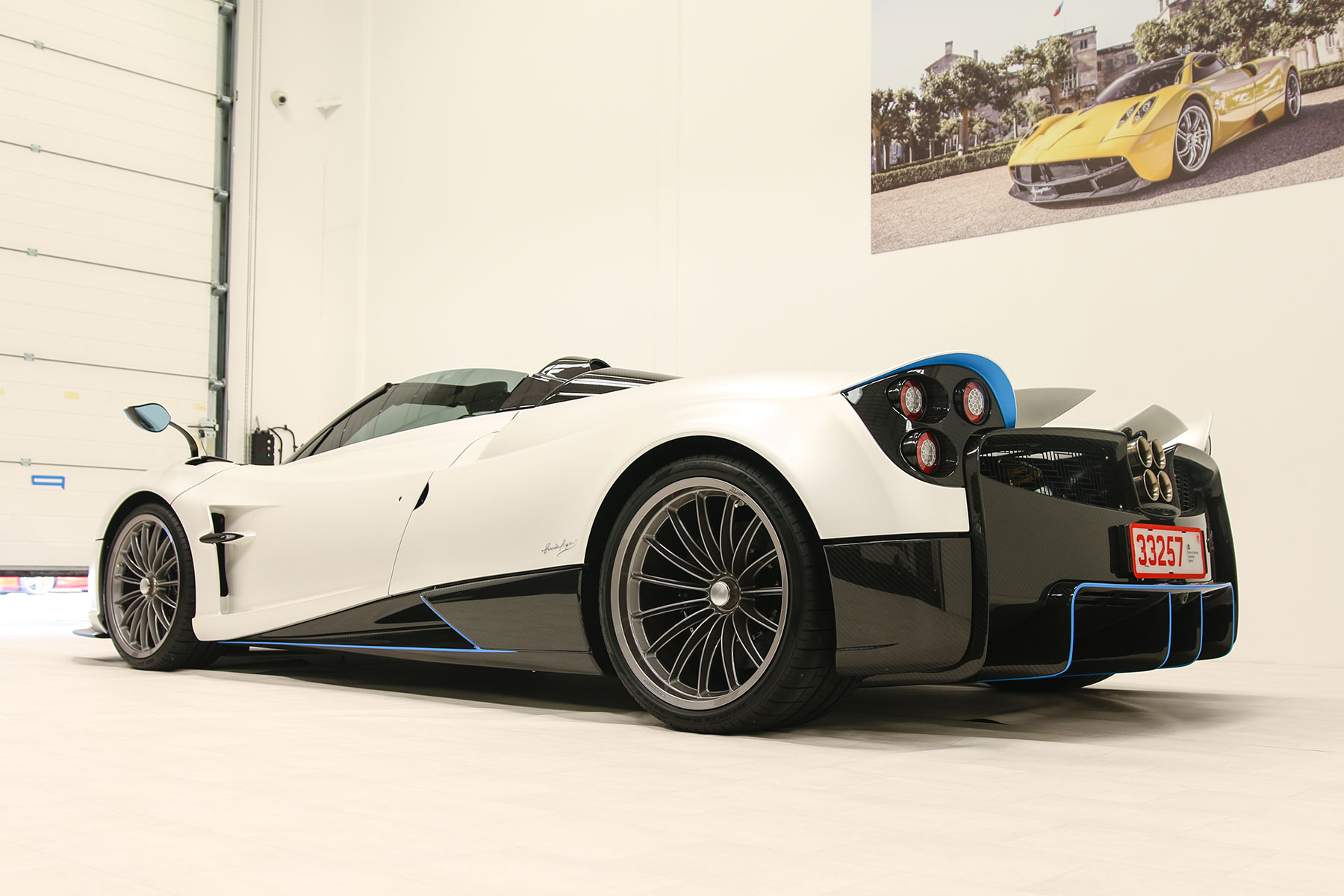
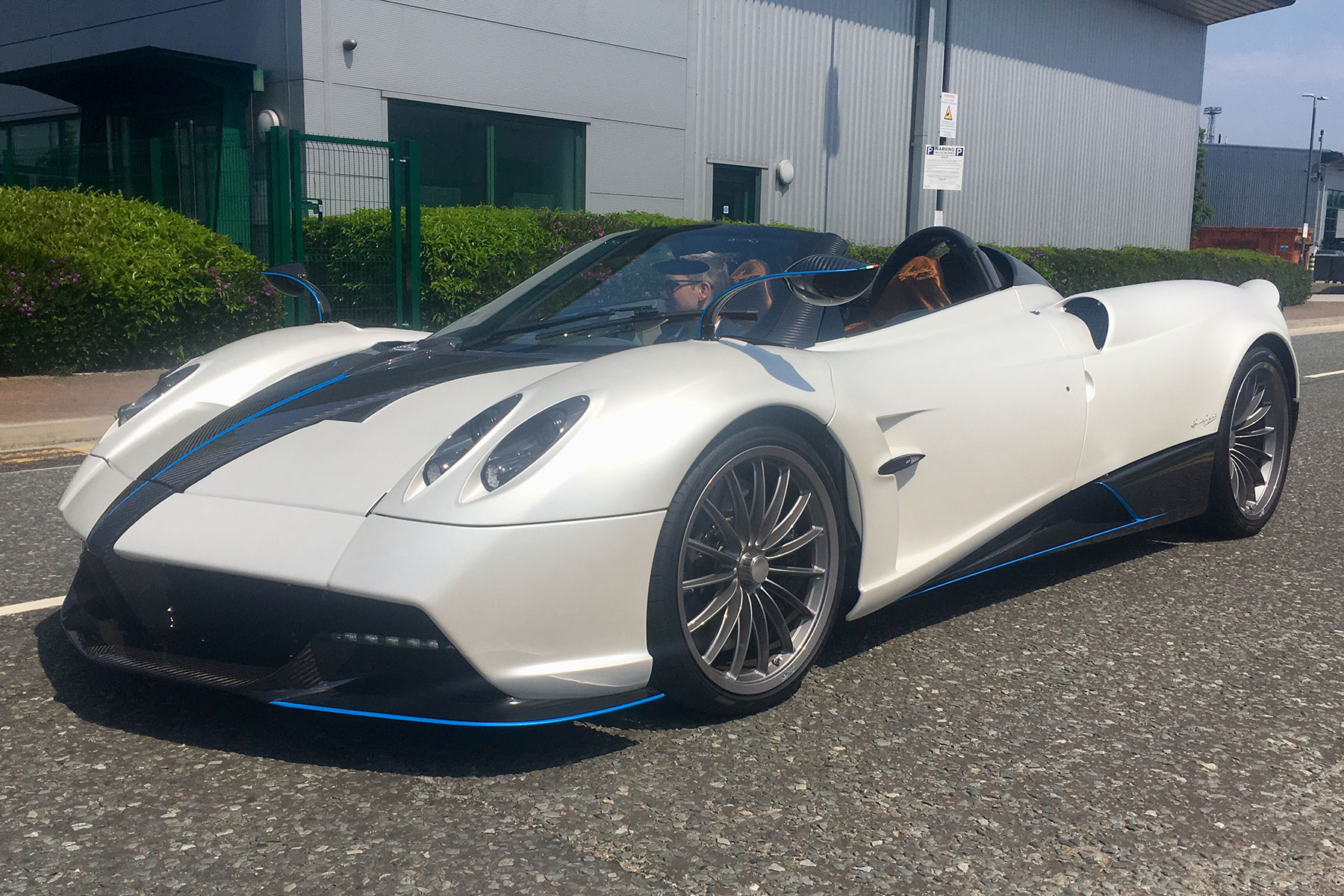
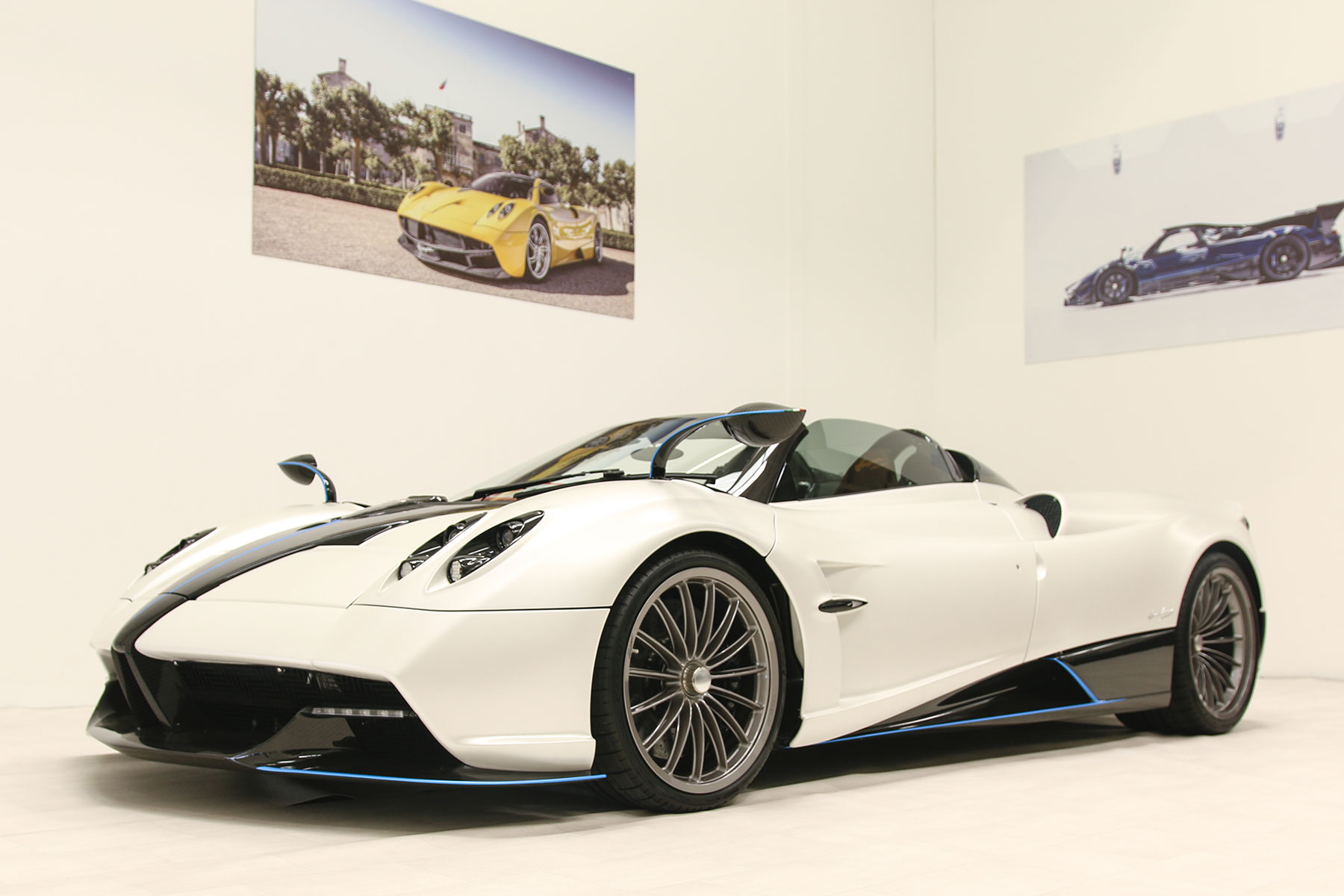
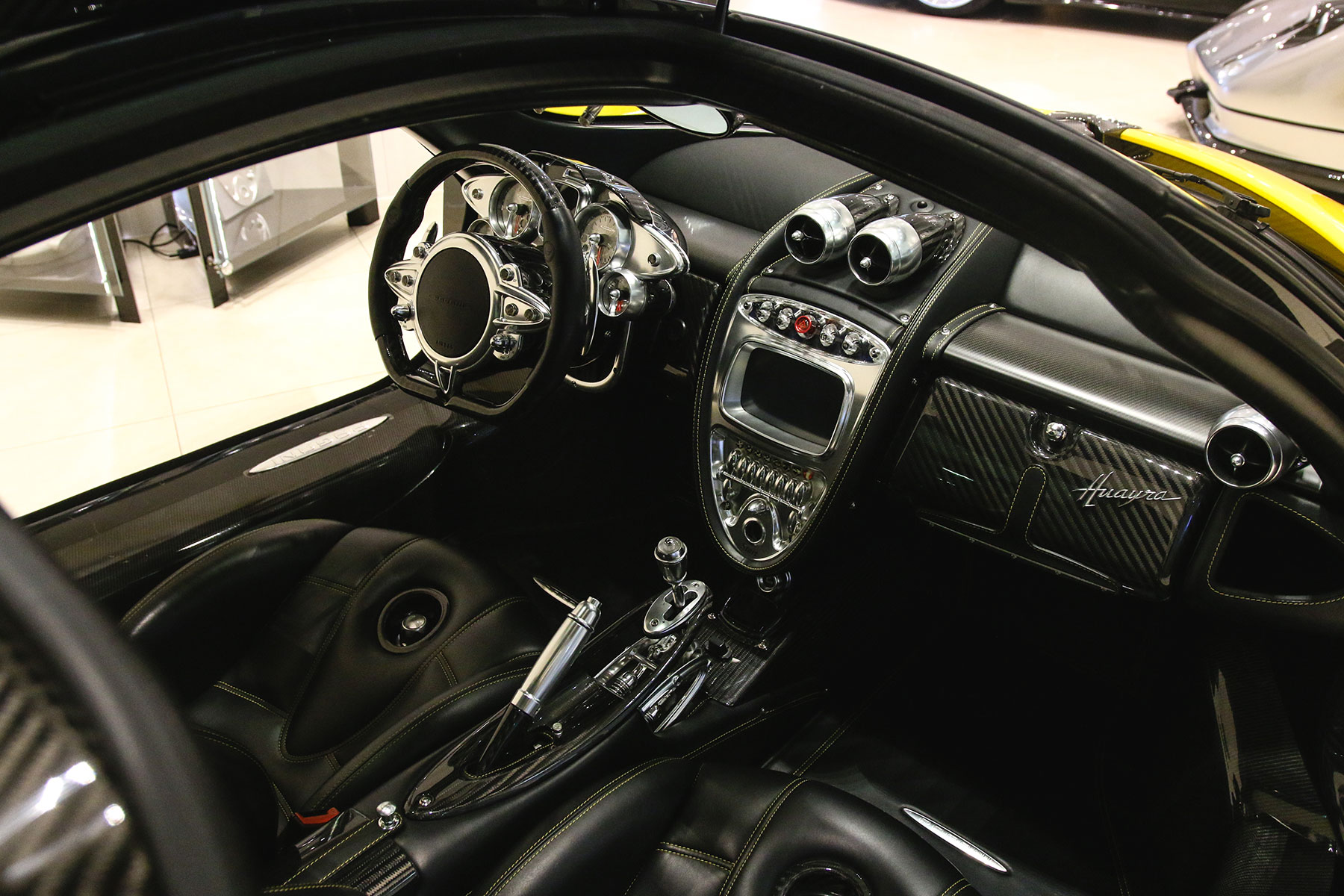
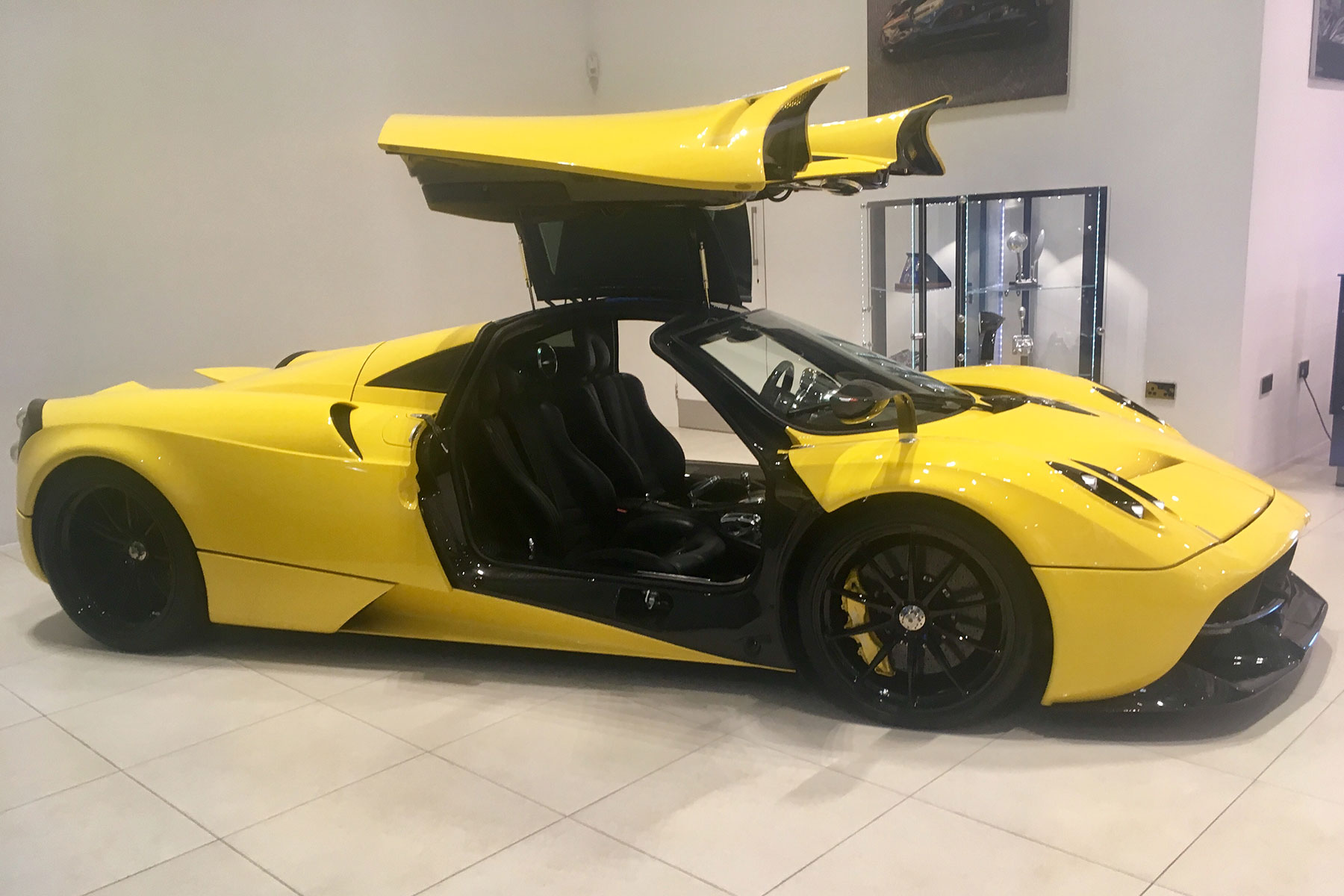
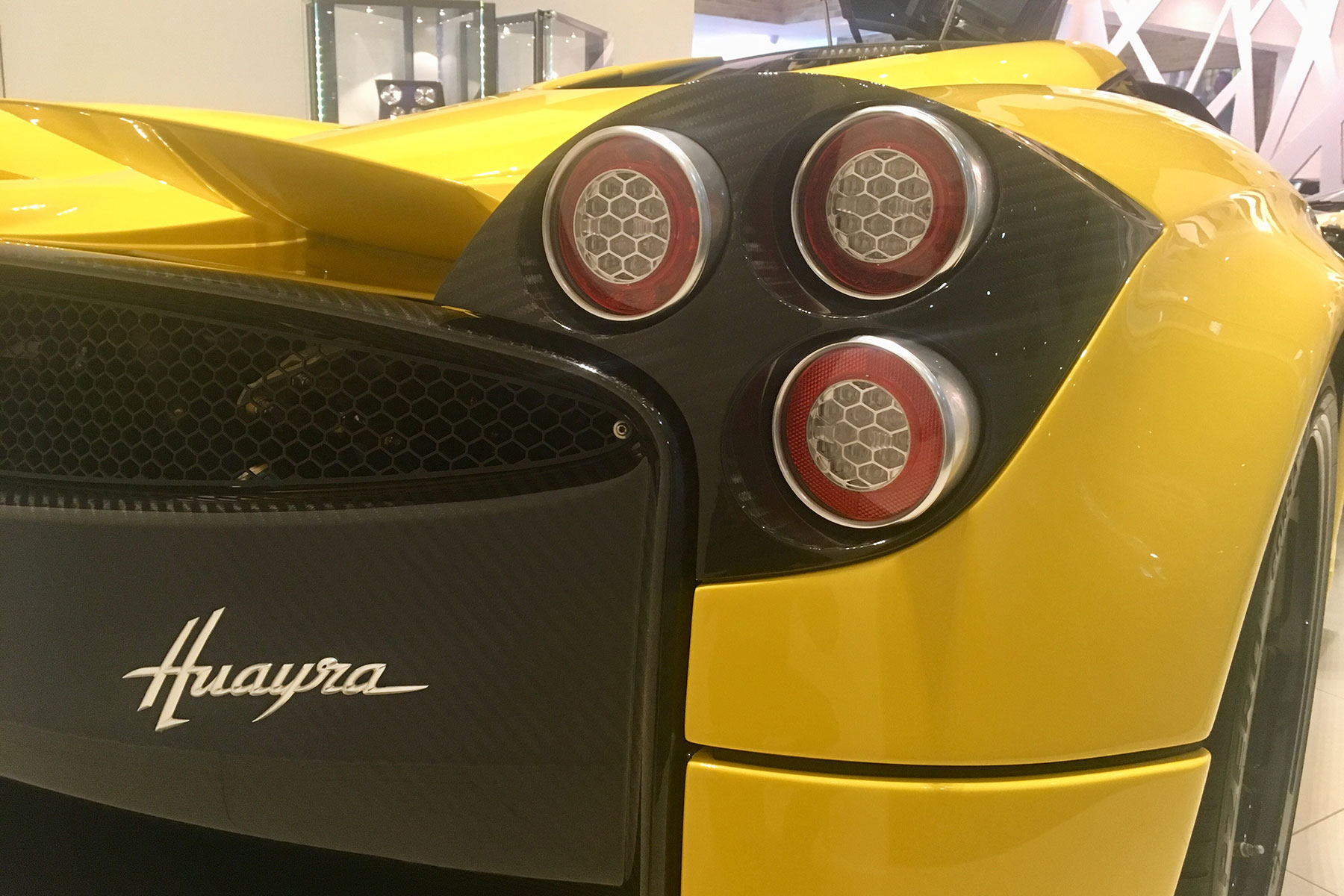
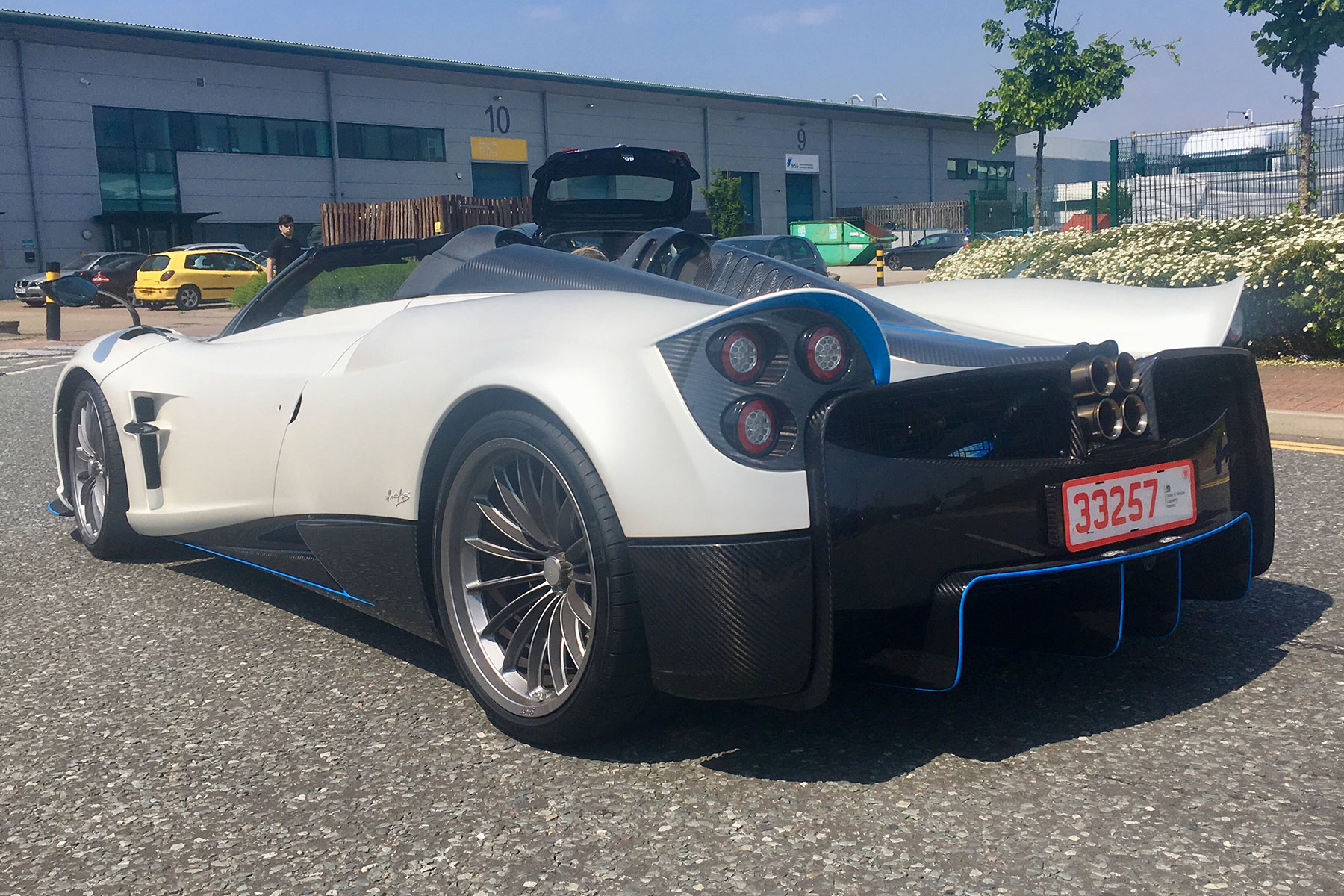
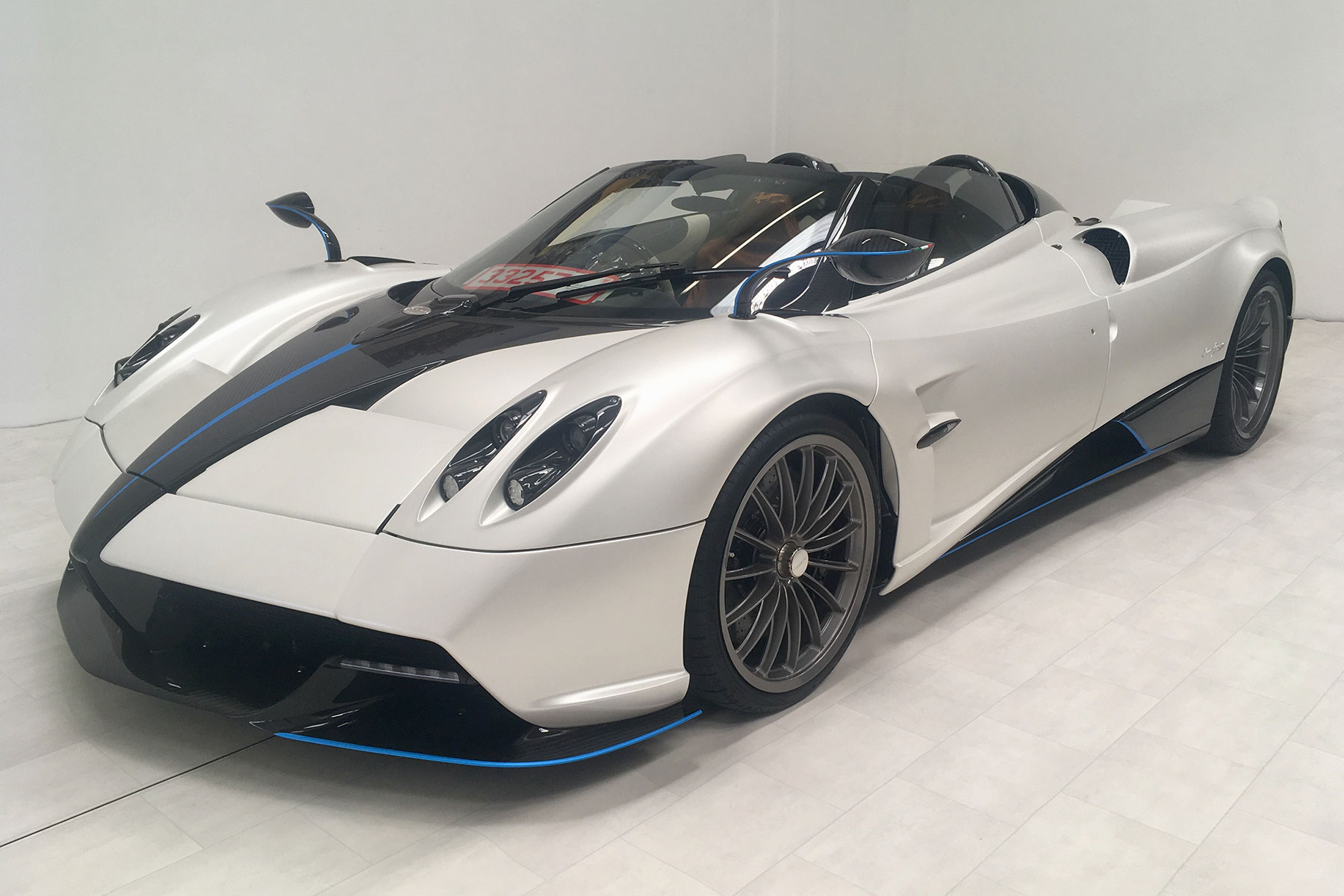
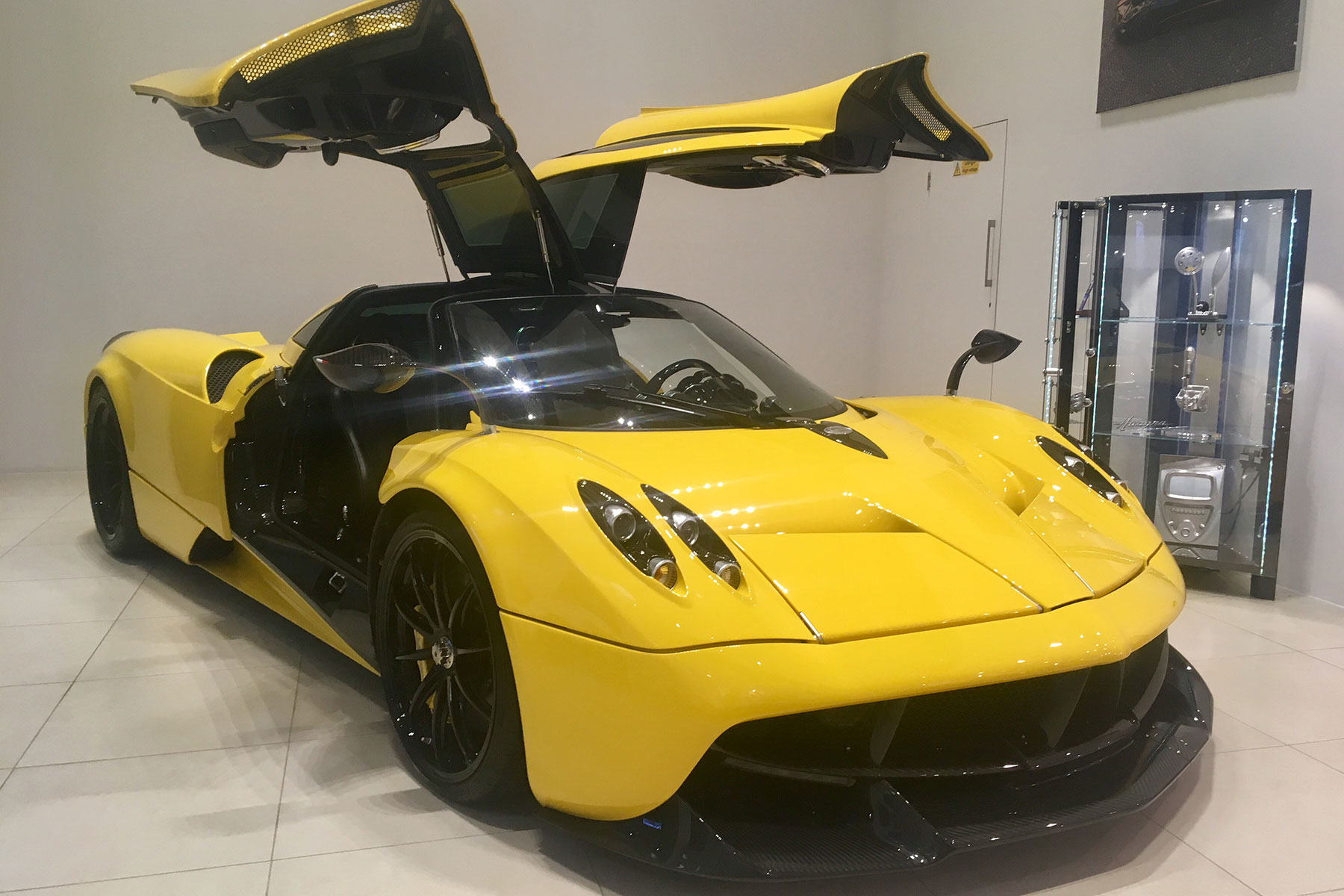
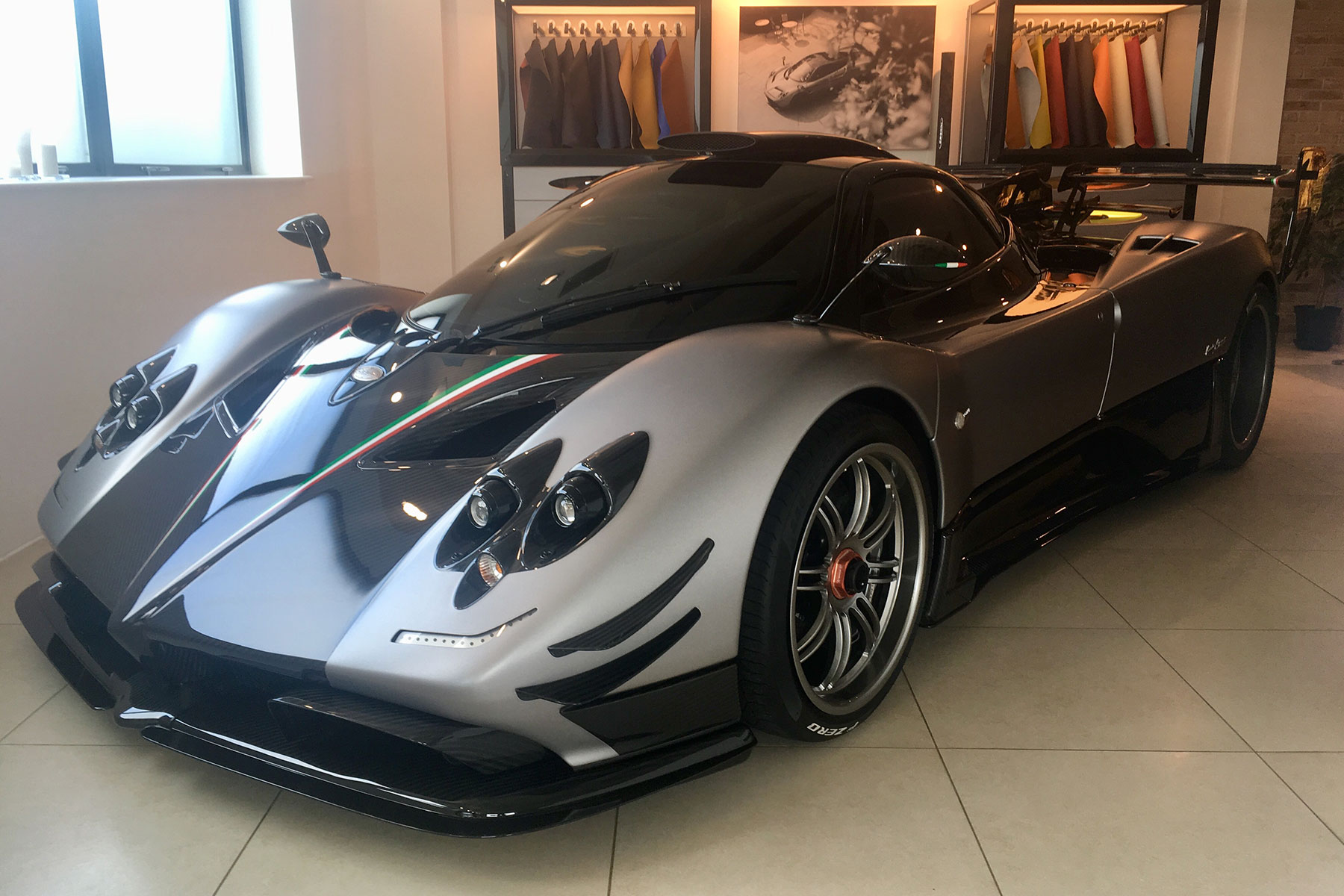
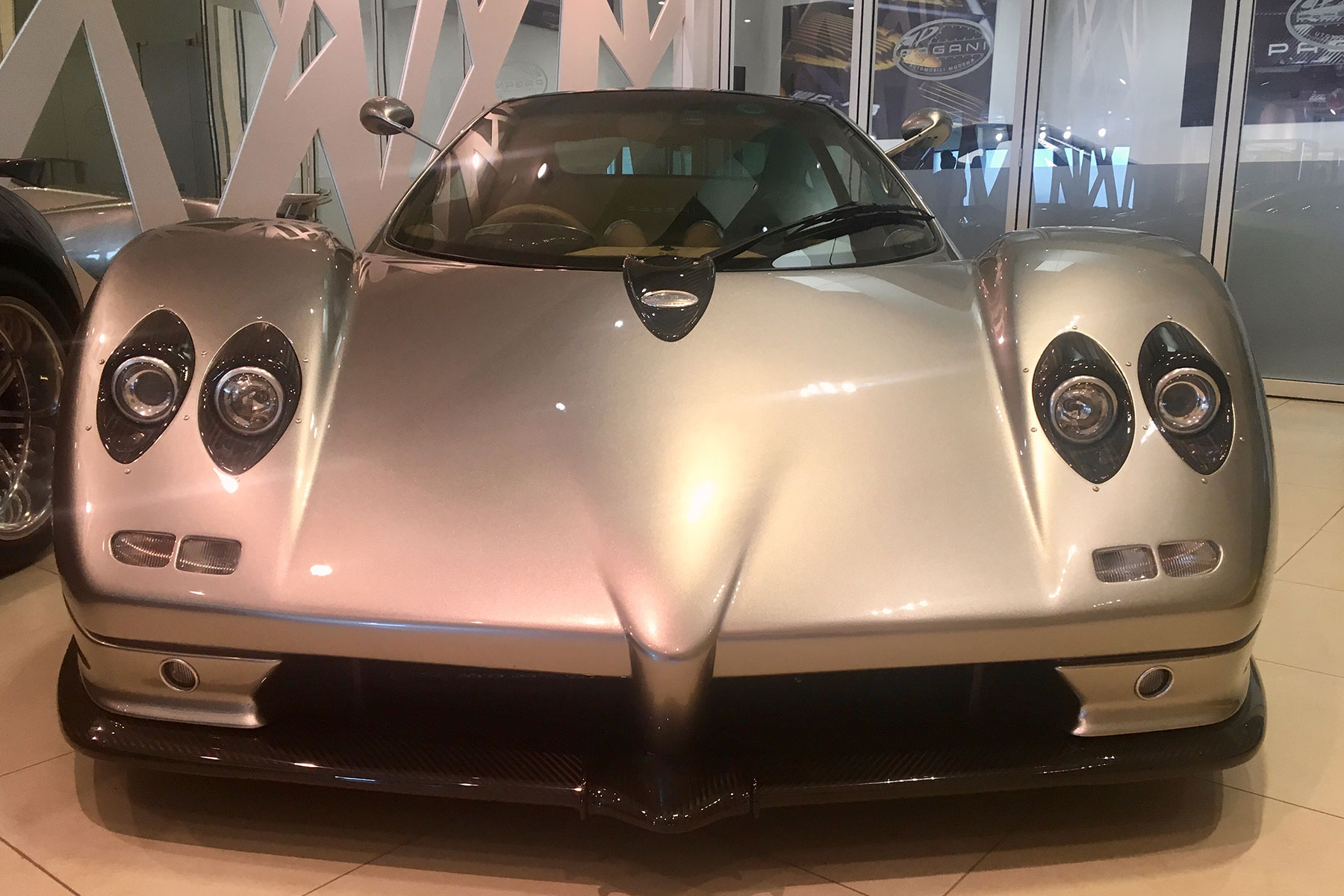
In the showroom and workshop are no less than eight Zondas – a sizeable chunk of the 136 cars ever made. And waiting in the car park is the world’s only right-hand-drive Pagani Huayra Roadster, valued at £3 million. Today promises to be quite special.
Classic colours for Porsche racers at Le Mans 24 Hours
Video: Pagani Huayra Roadster and showroom tour
First, though, a bit of background. Company founder Horacio Pagani honed his craft at Lamborghini, becoming an expert in lightweight composites before their use was widespread. His high watermark was the 1987 Countach Evoluzione concept, which clothed a steel spaceframe in kevlar and carbon fibre.
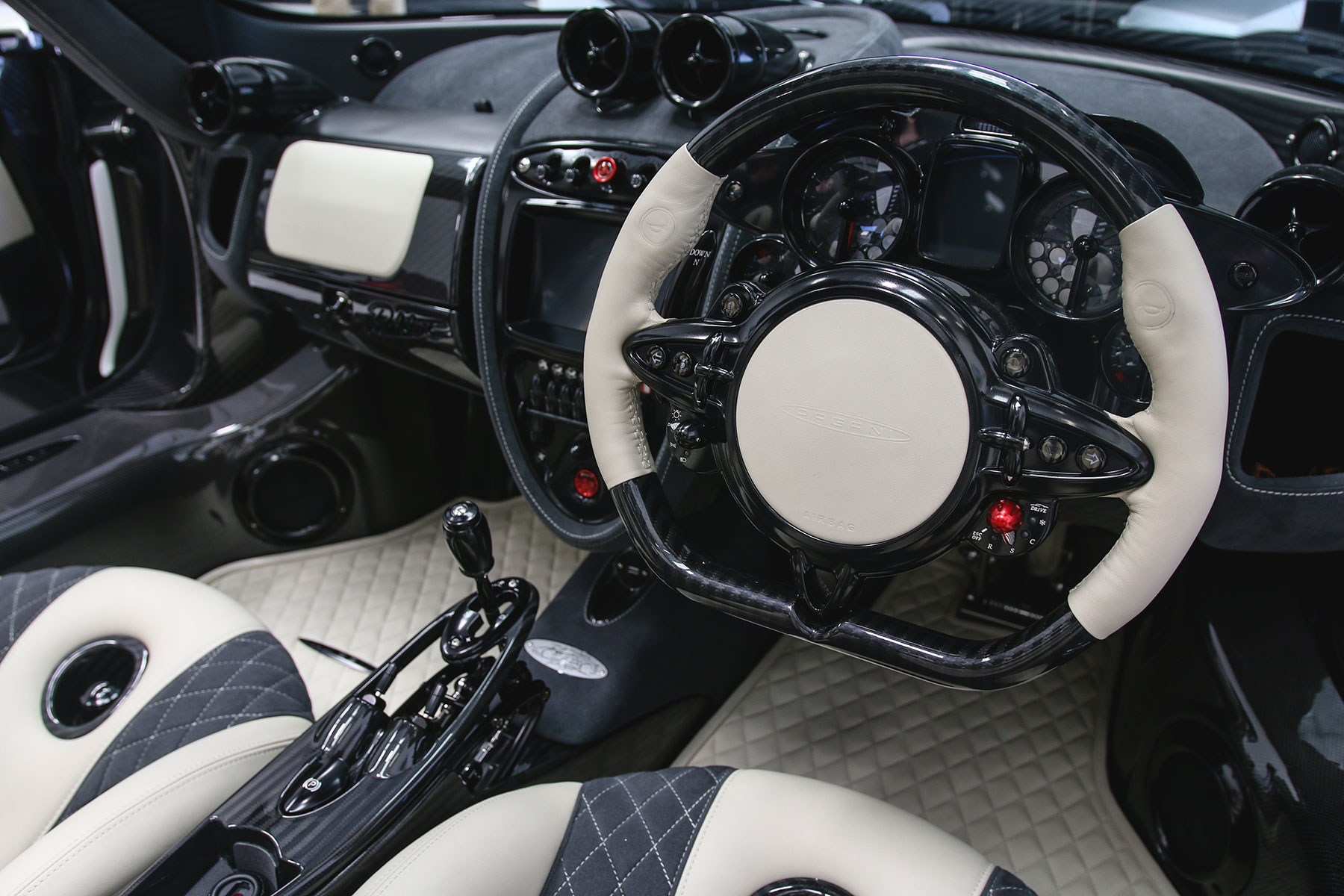
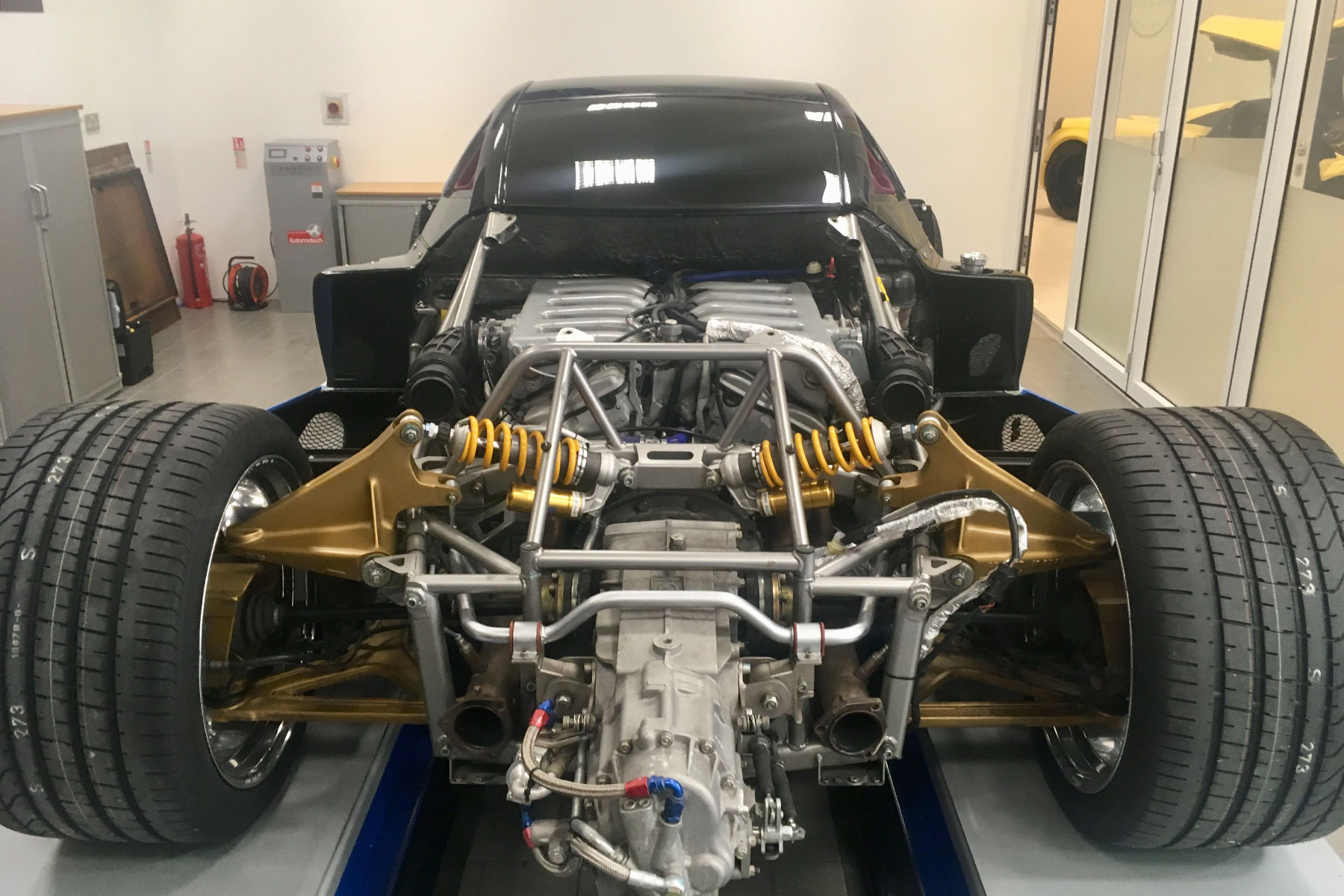
Pagani set up shop in 1992, and seven years later the Zonda C12 was revealed. Powered by a 6.0-litre Mercedes-Benz V12, its key stats were 389hp, 0-62mph in 4.2 seconds and 185mph. It looked sensational, too, with a jet fighter-style canopy cockpit and beautifully bespoke interior.
The Zonda remained in production for 18 years, growing steadily more powerful (up to 760hp) and spawning endless special editions. Its Huayra replacement arrived in 2012 – overlapping with the Zonda – and the Roadster followed in 2017.
A work of automotive art
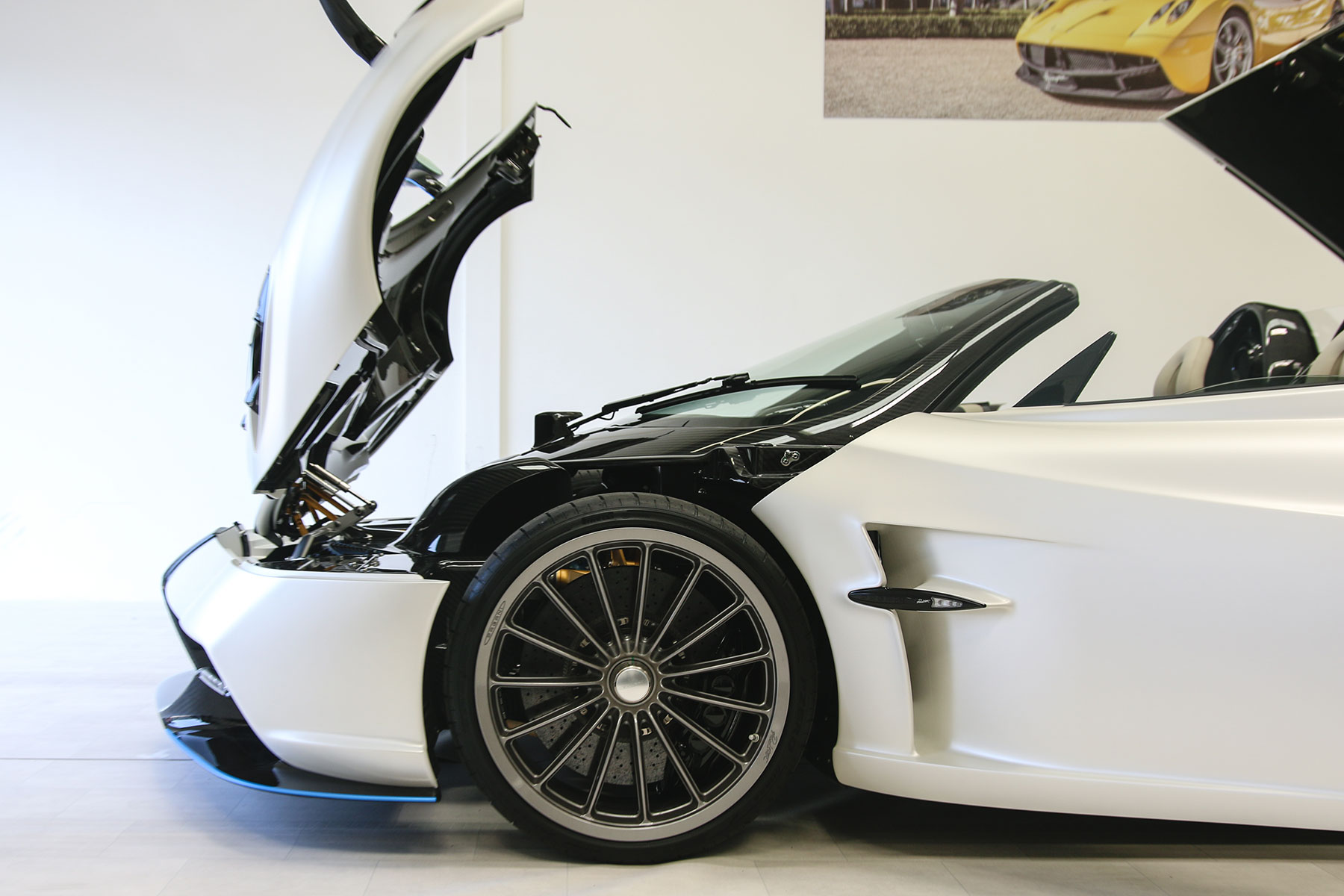
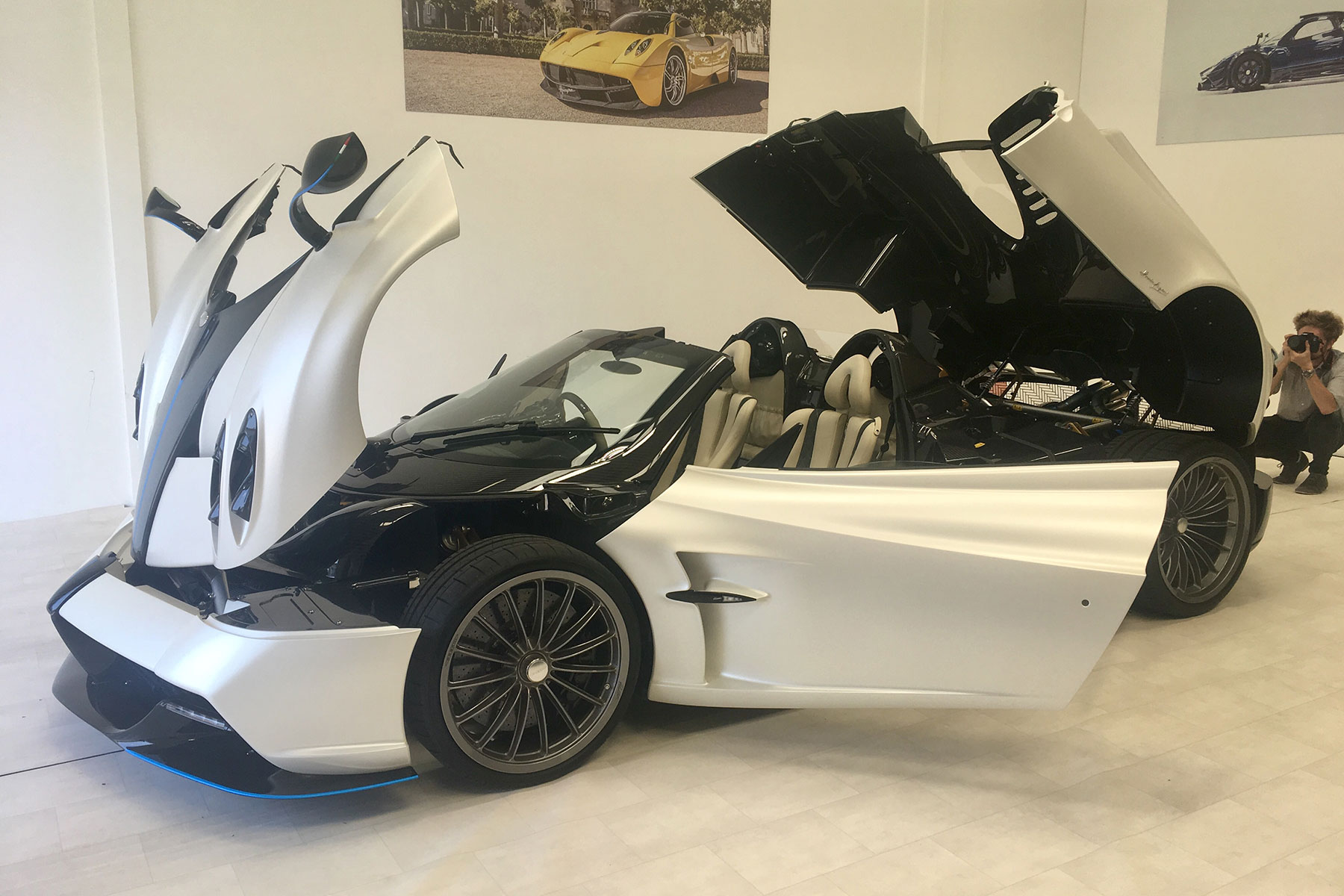
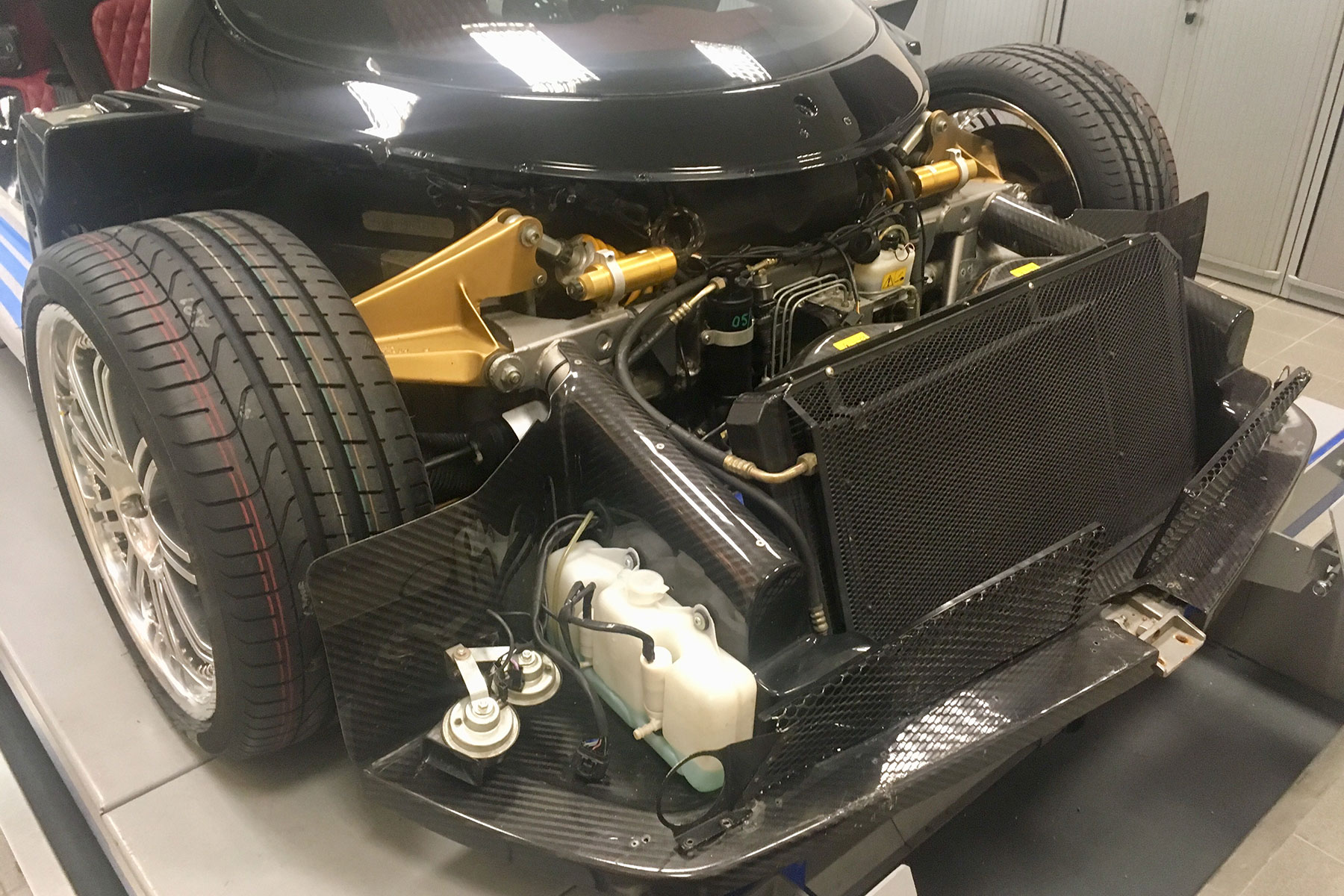
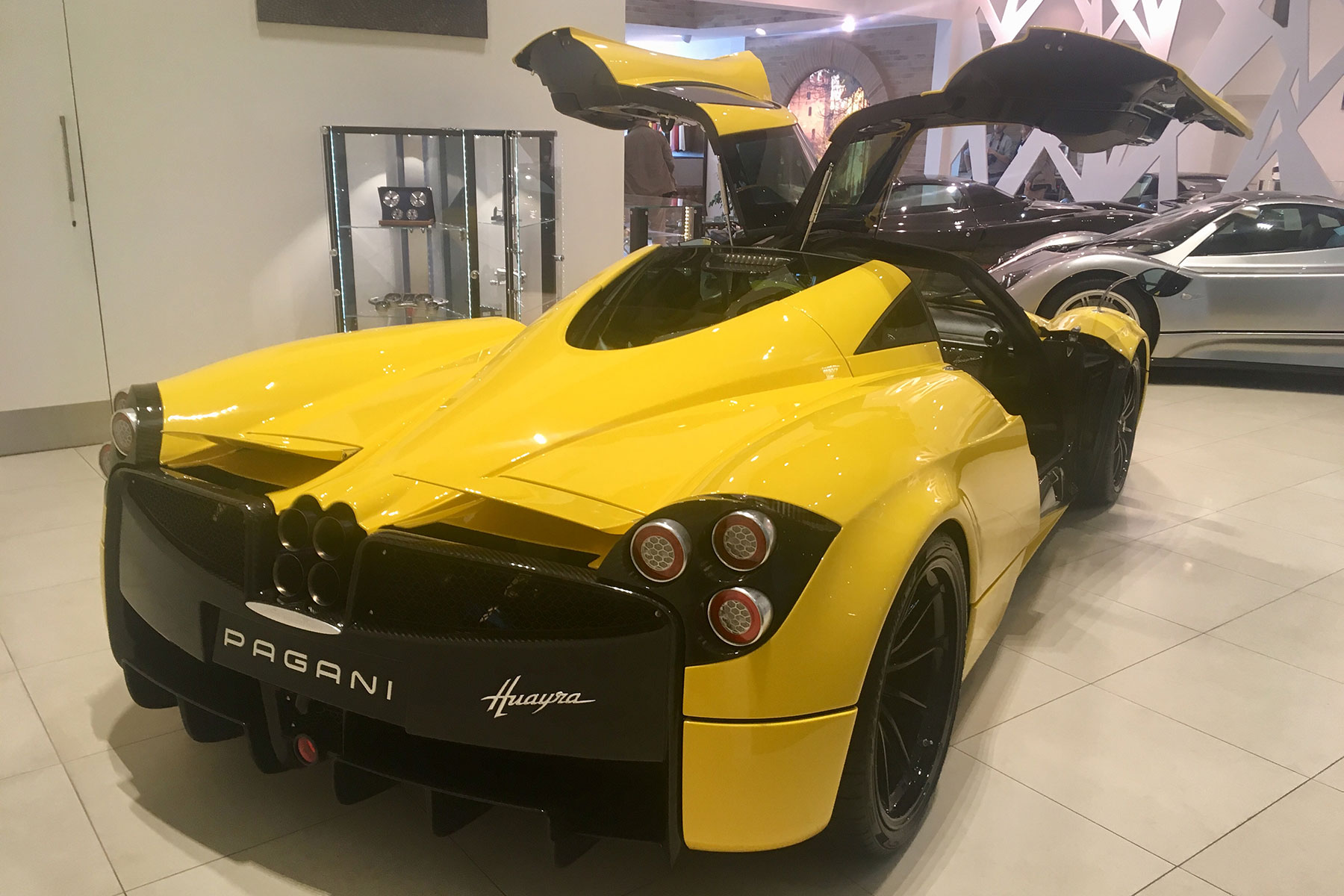
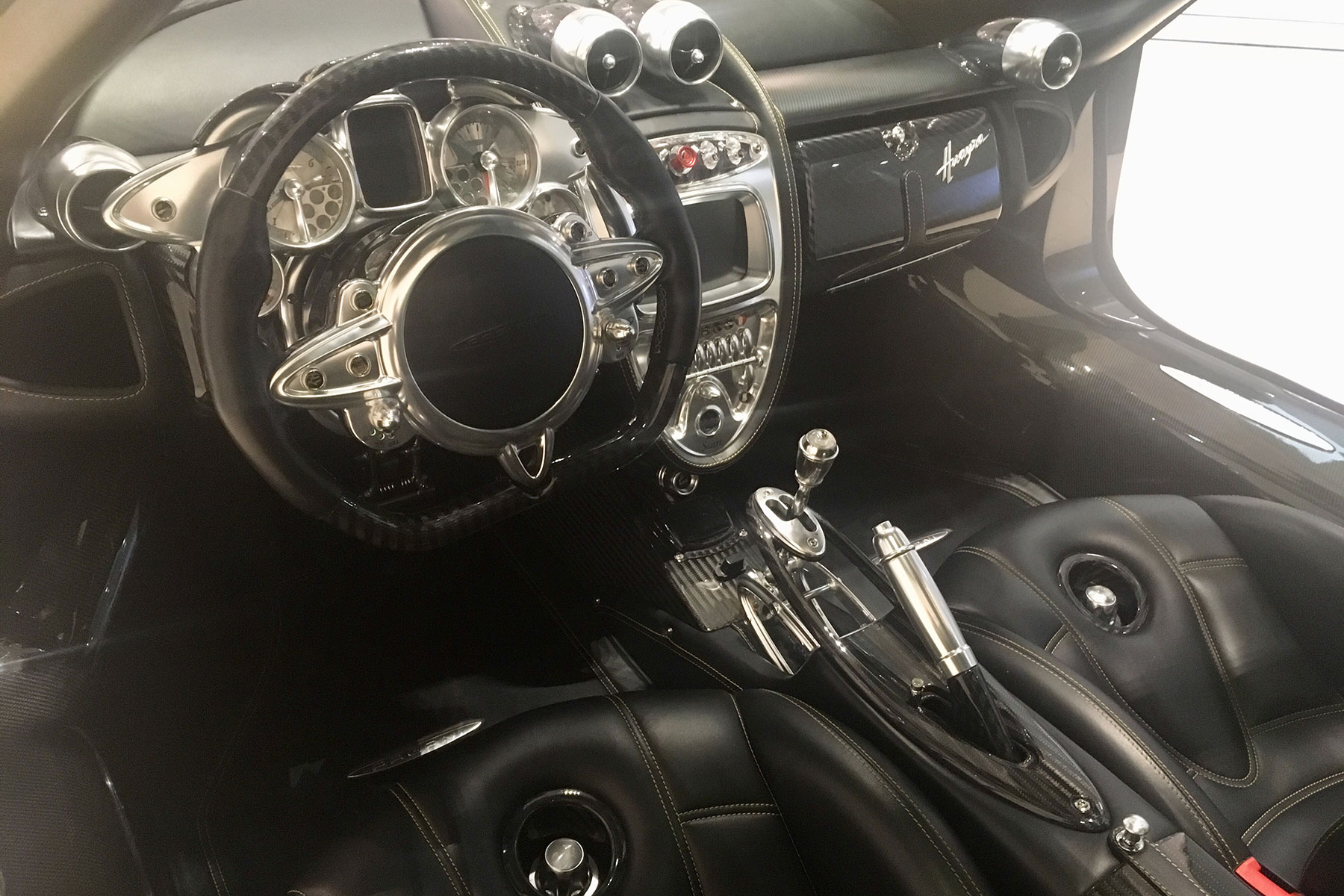
I’m introduced to head of sales, Francis Falconer, who’ll be taking me for a spin in the Huayra Roadster. With its front and rear clamshells open, this one-of-100 hypercar resembles a Transformer: futuristic and fantastic.
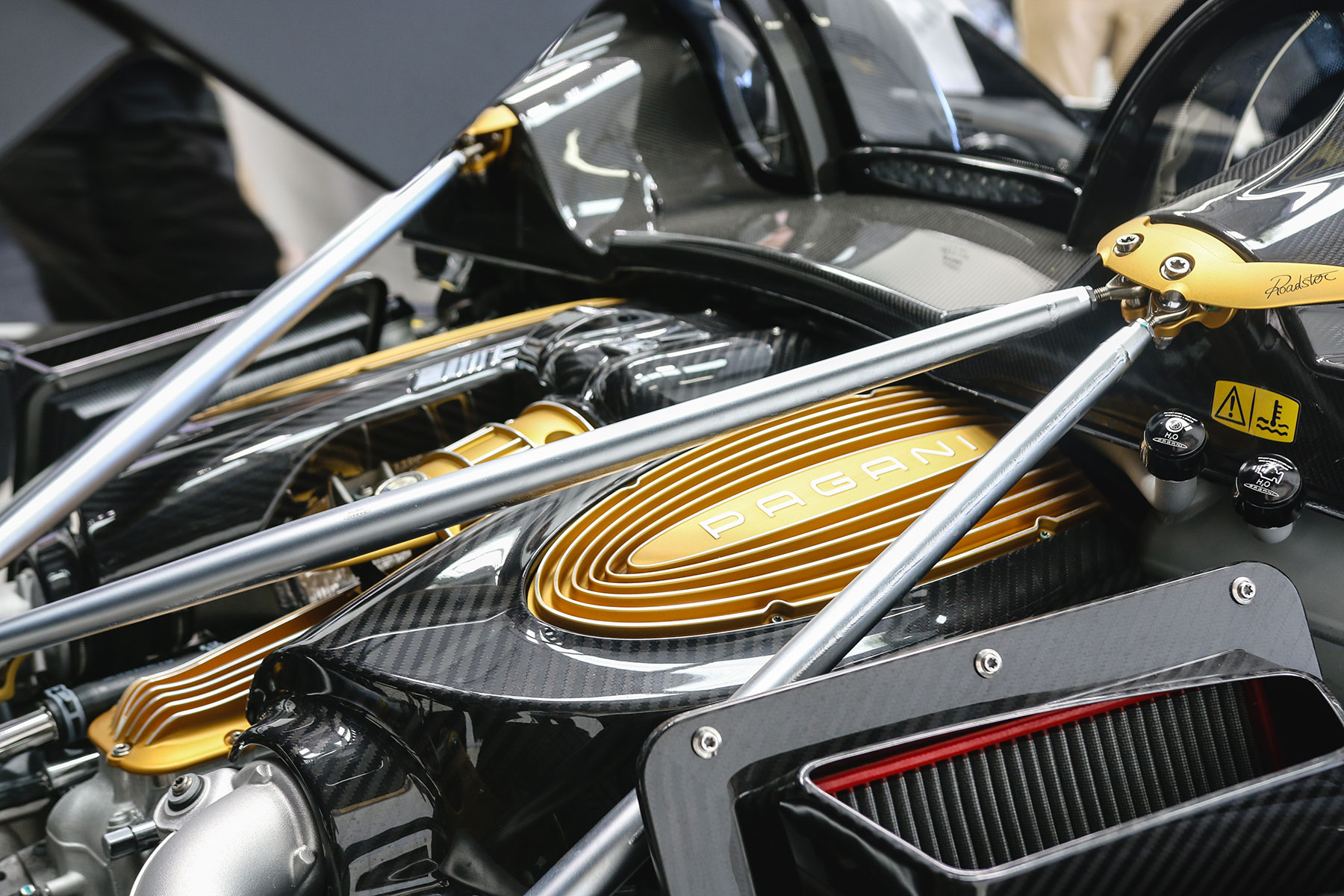
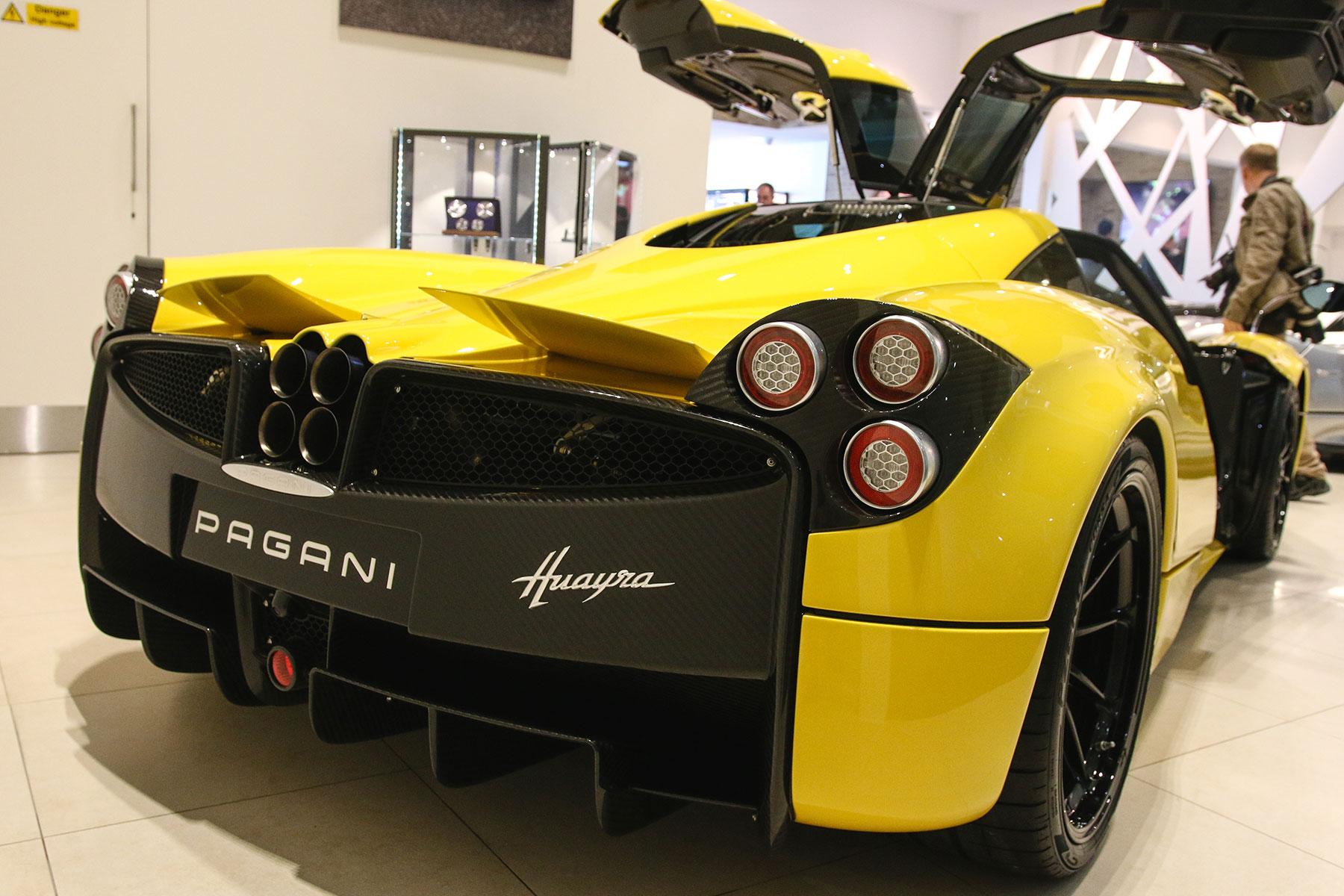
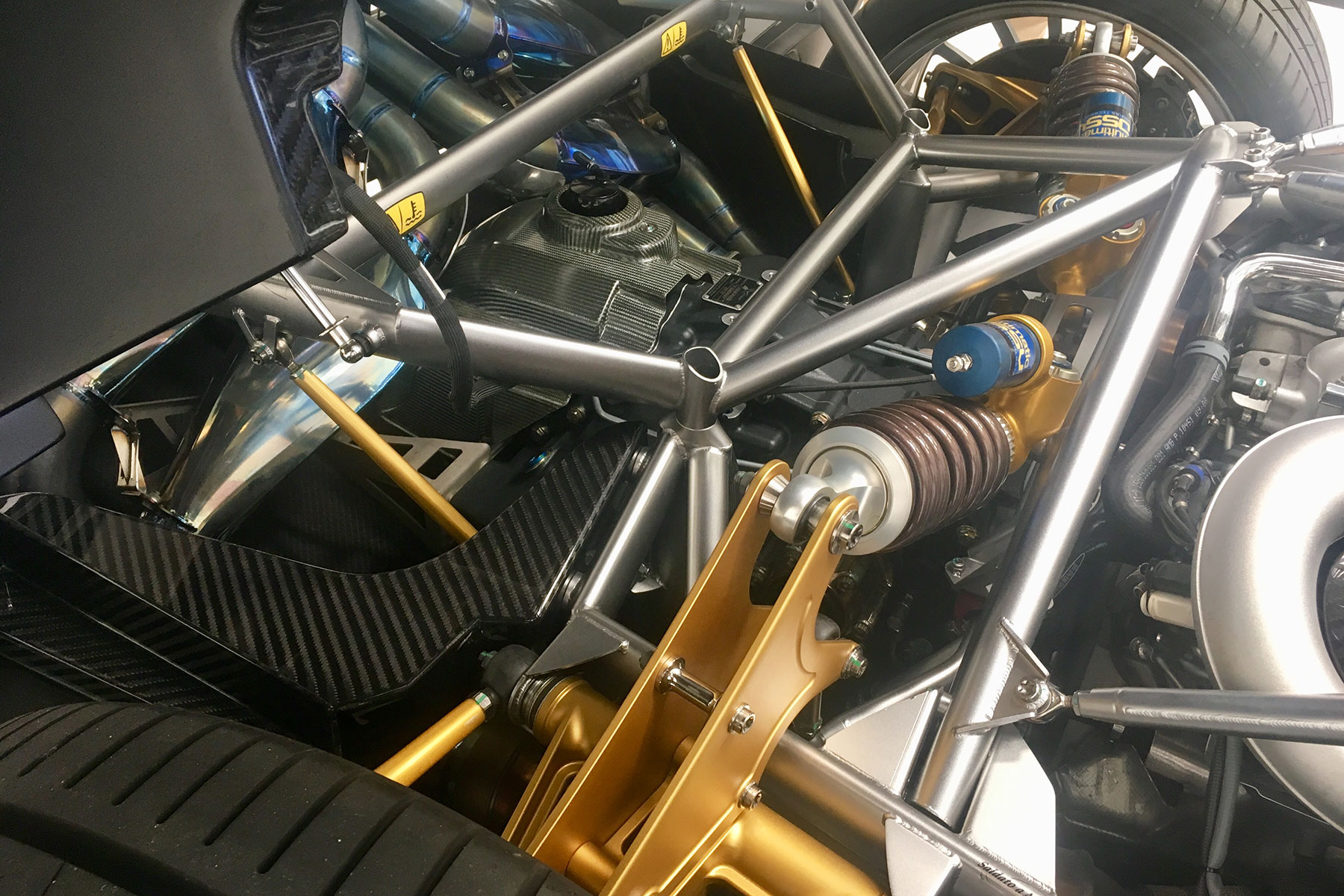
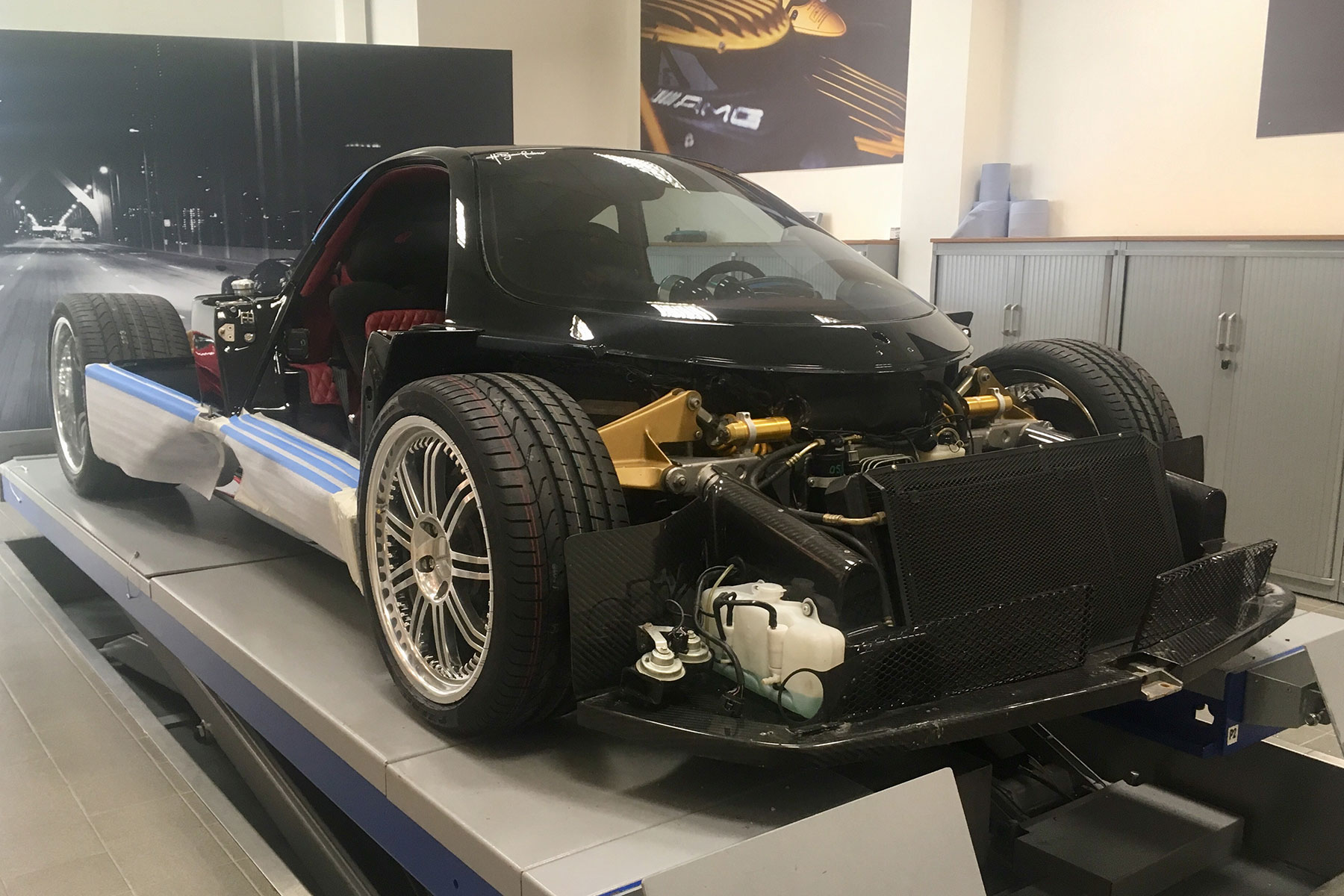
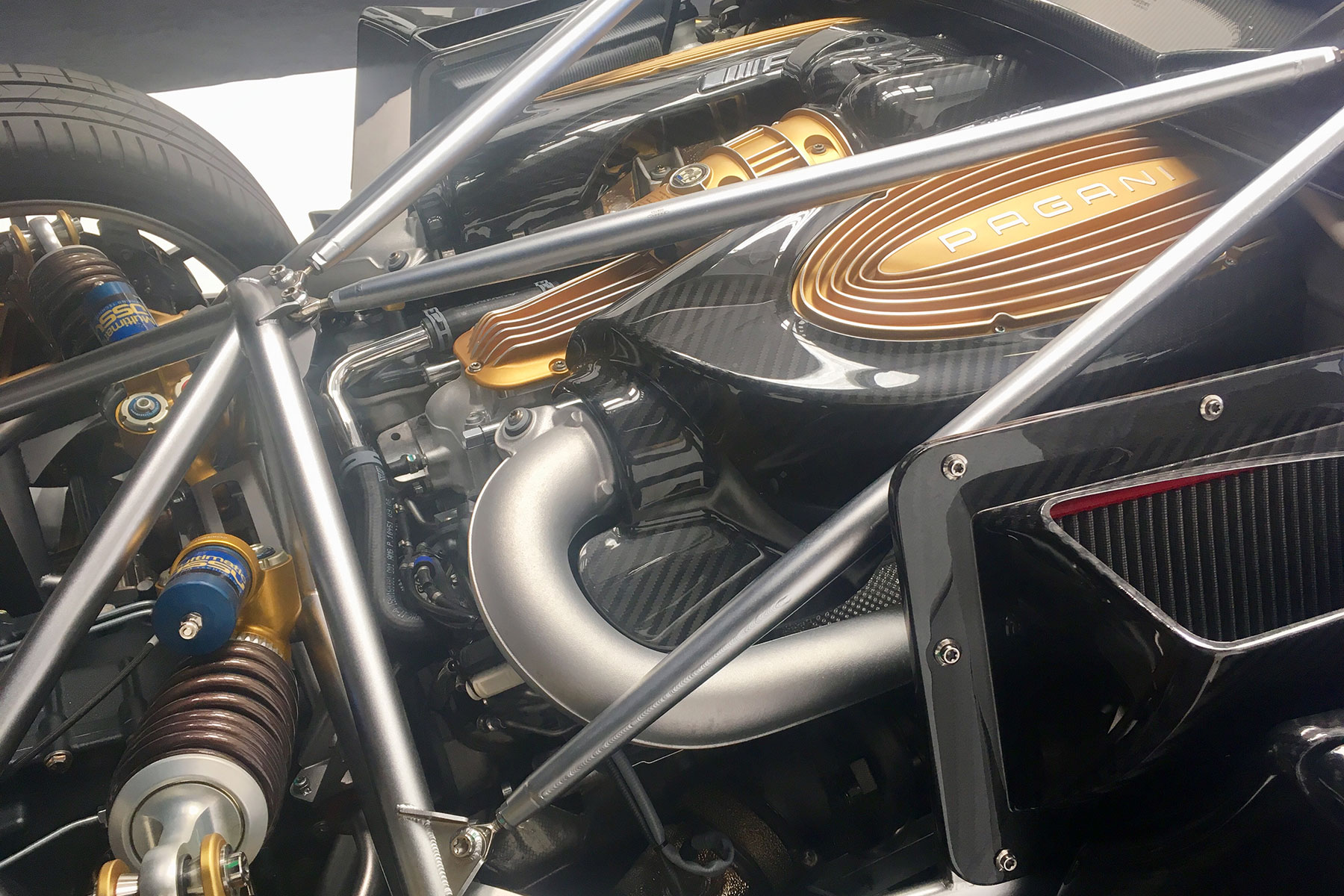
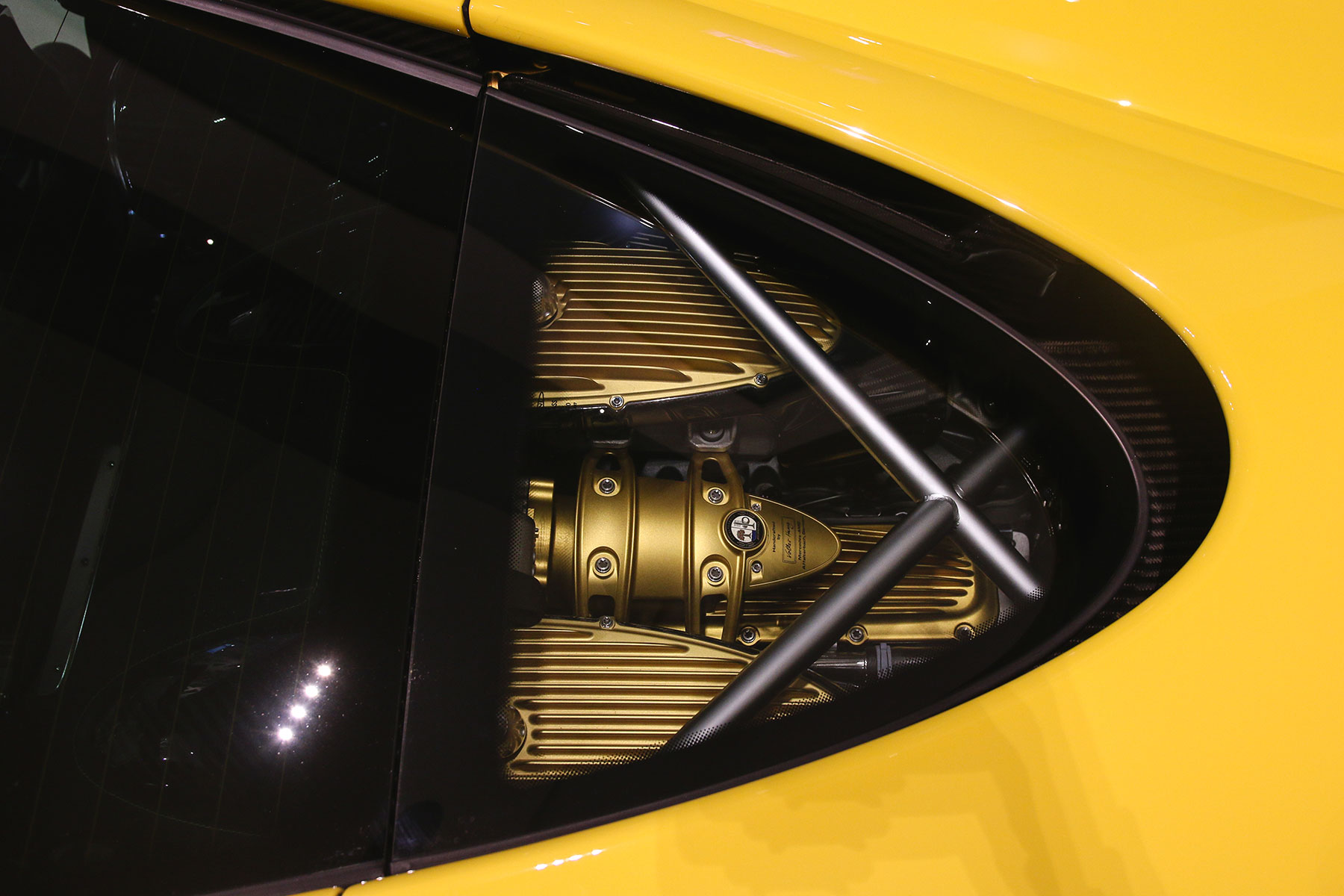
A twin-turbo Mercedes-AMG V12 nestles between aluminium-alloy suspension, cradled by carbon fibre. Drive goes to the rear wheels via a seven-speed dual-clutch gearbox with an electronic differential. Active aerodynamic flaps – two front and two rear – boost downforce at speed.
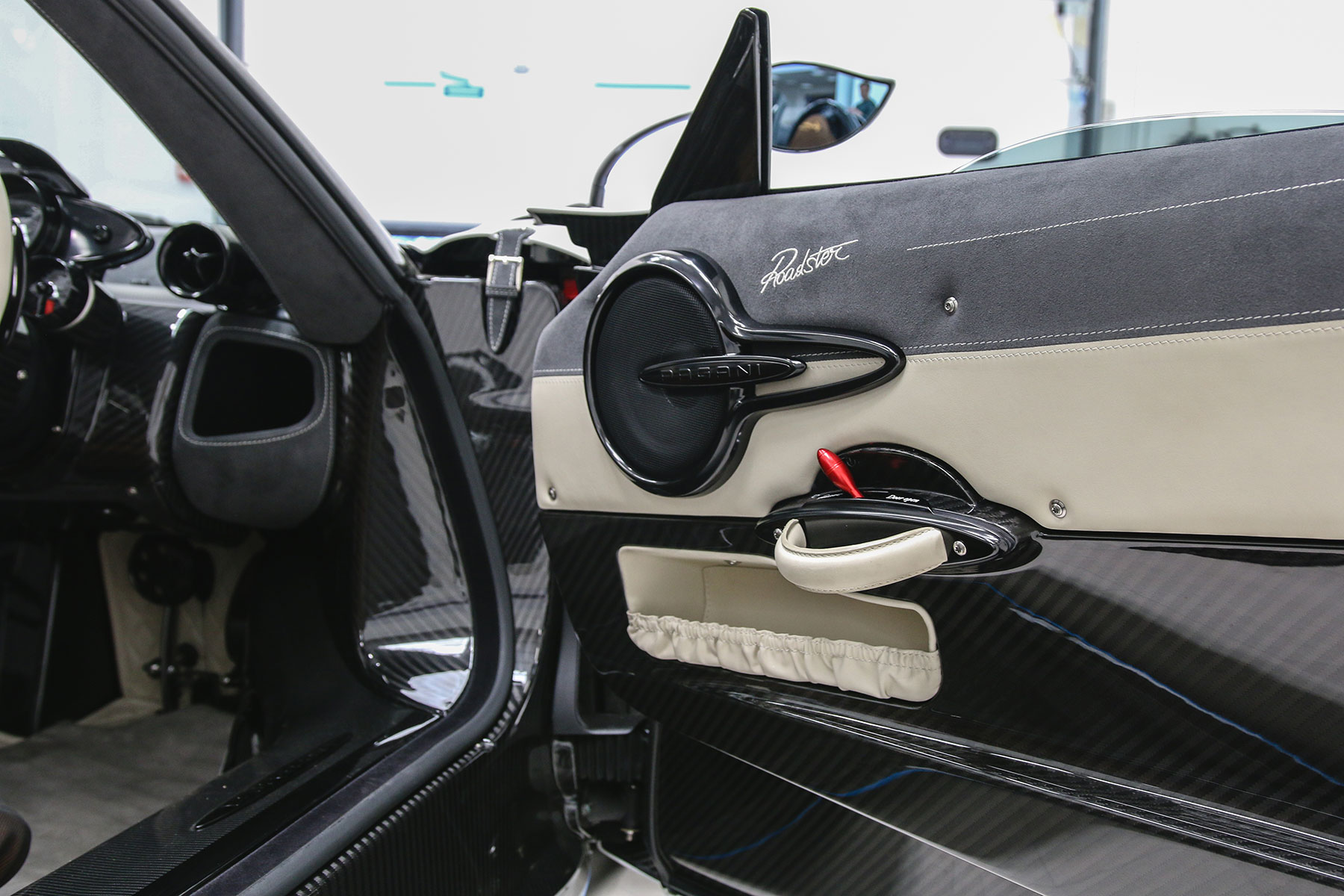
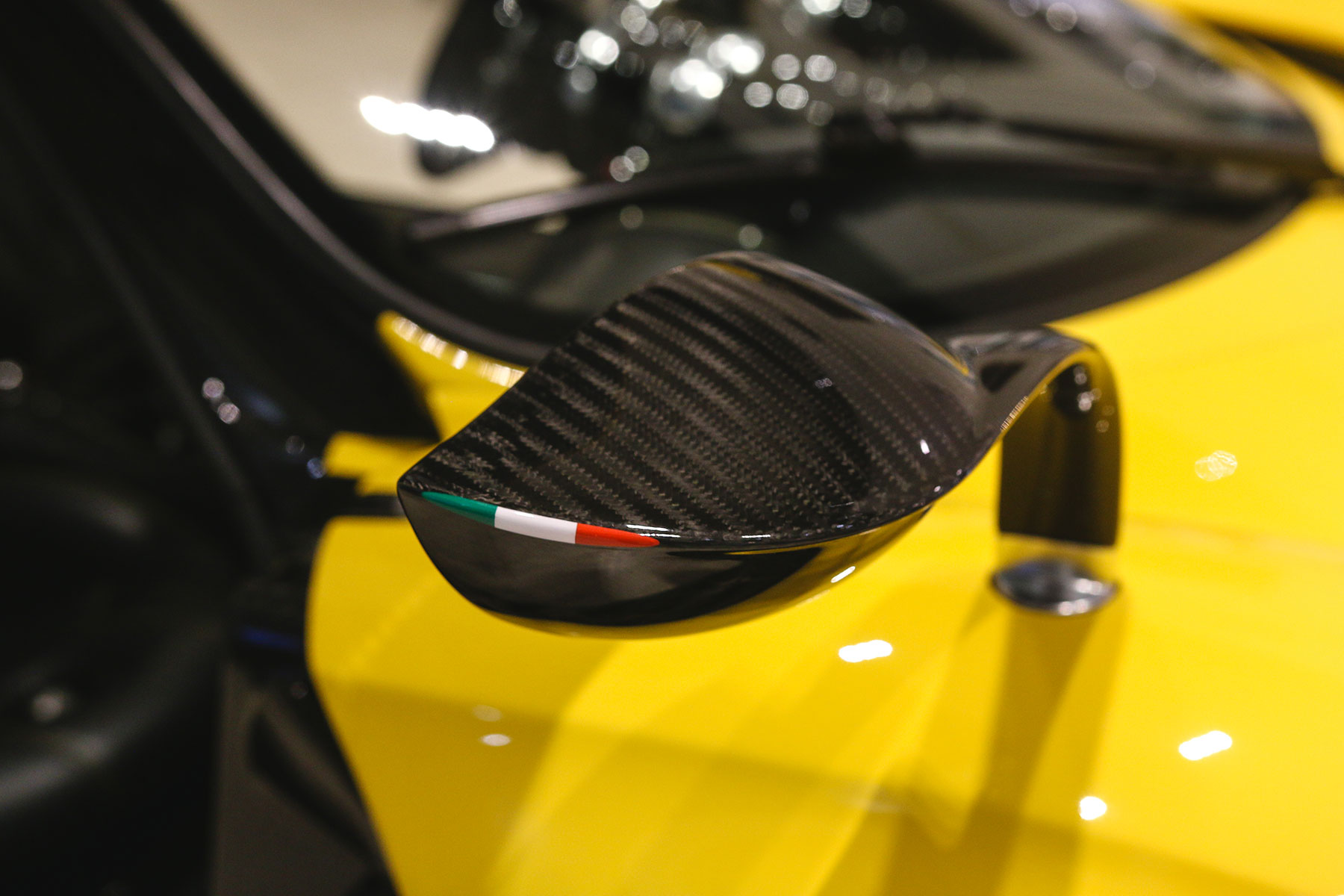
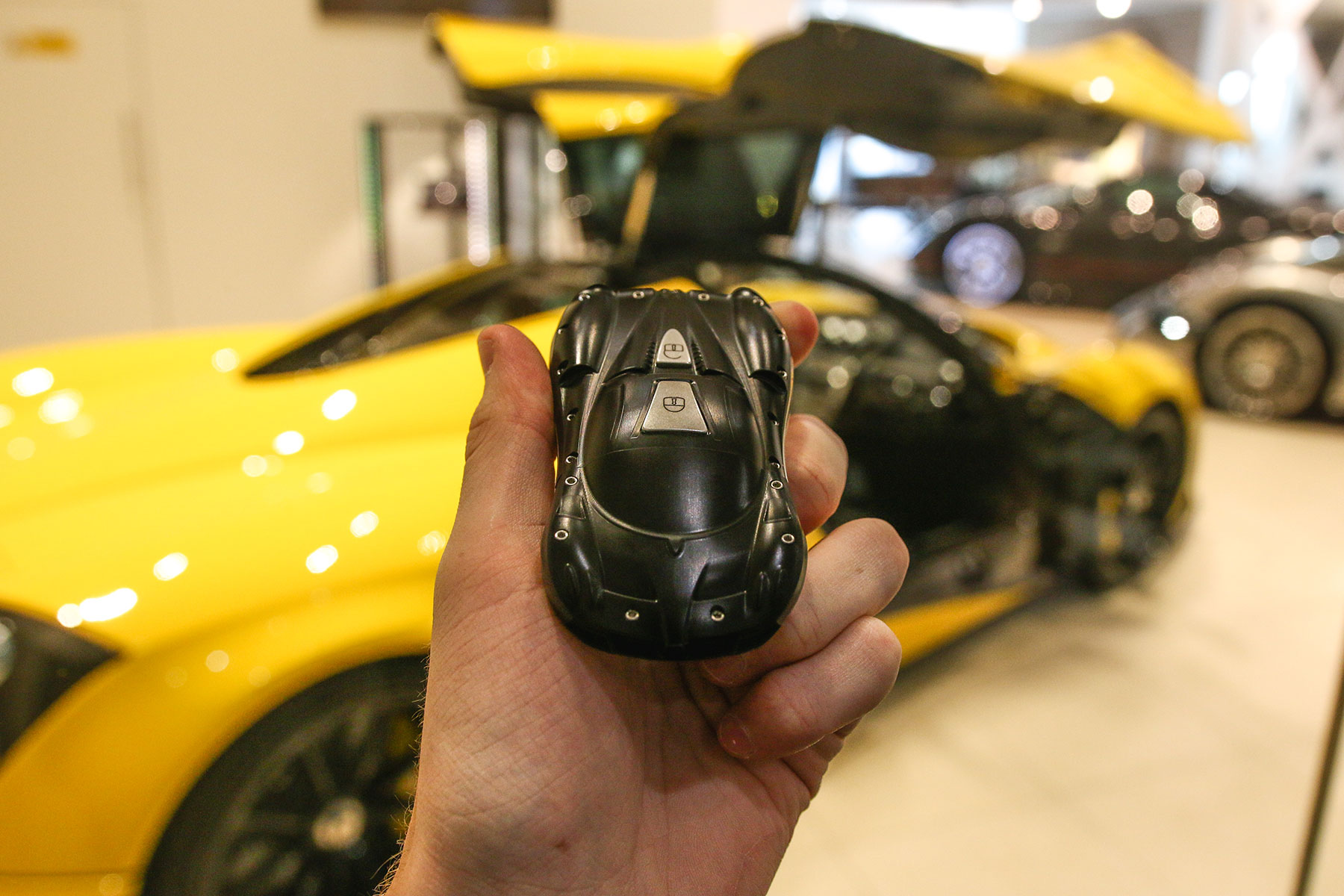
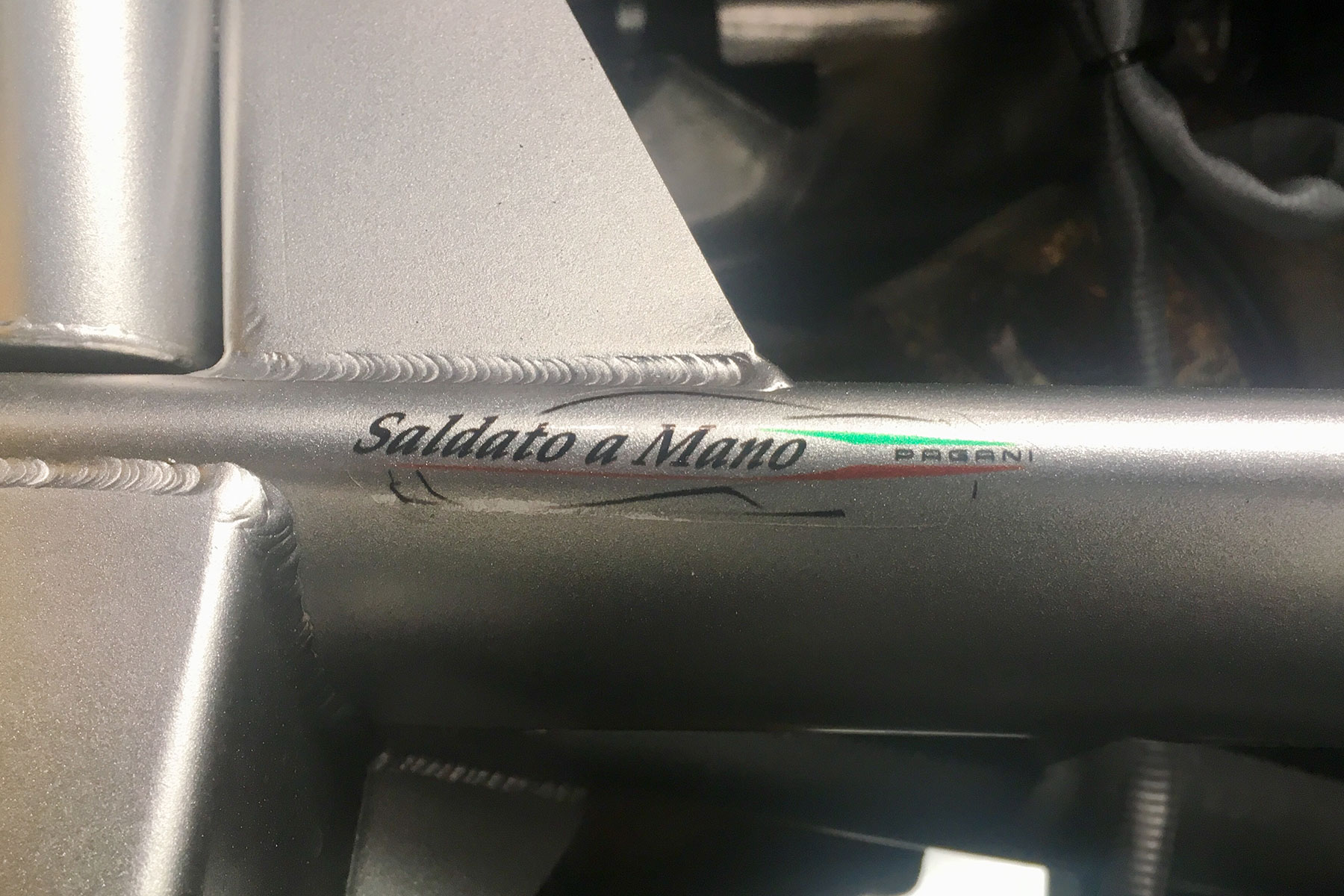
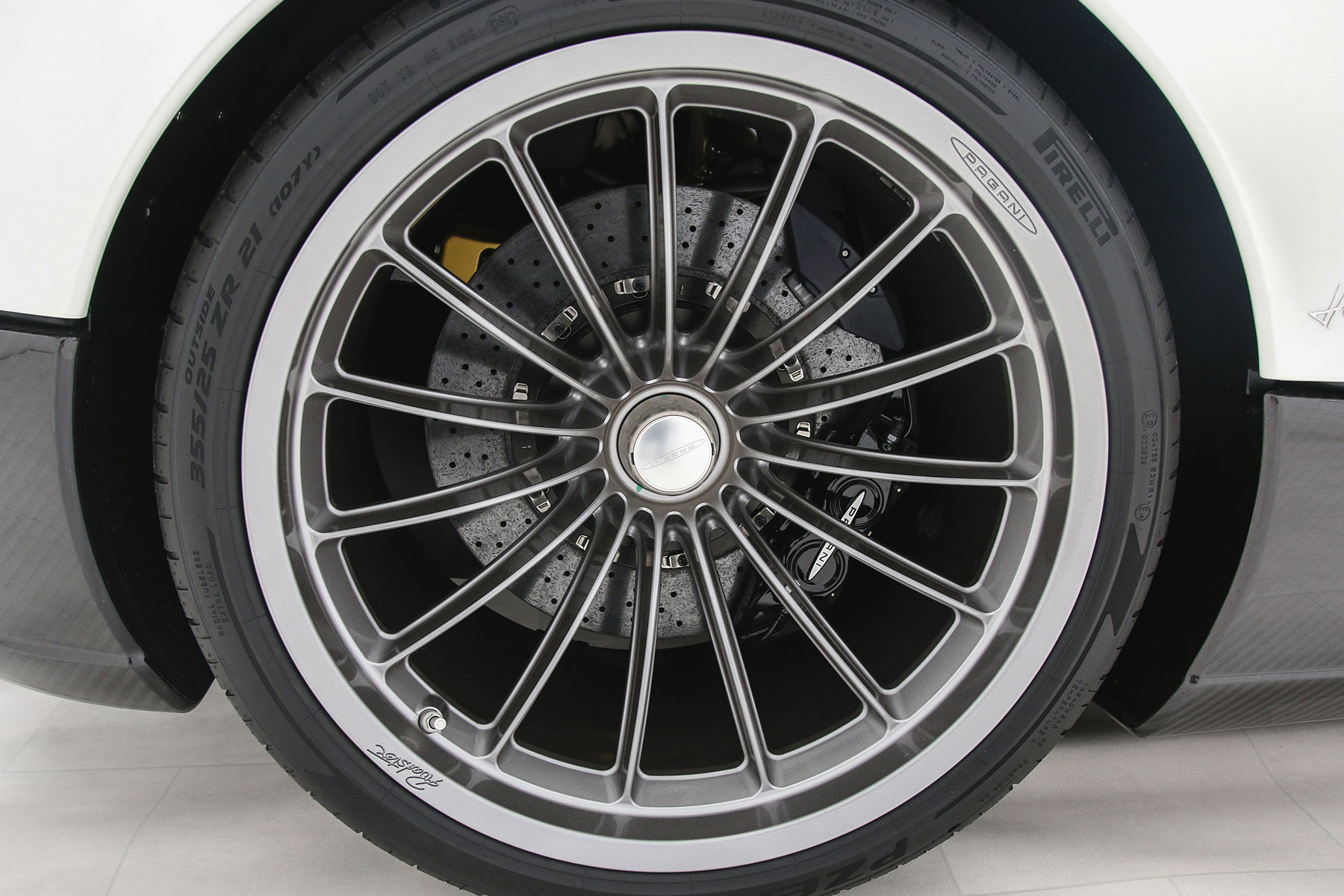
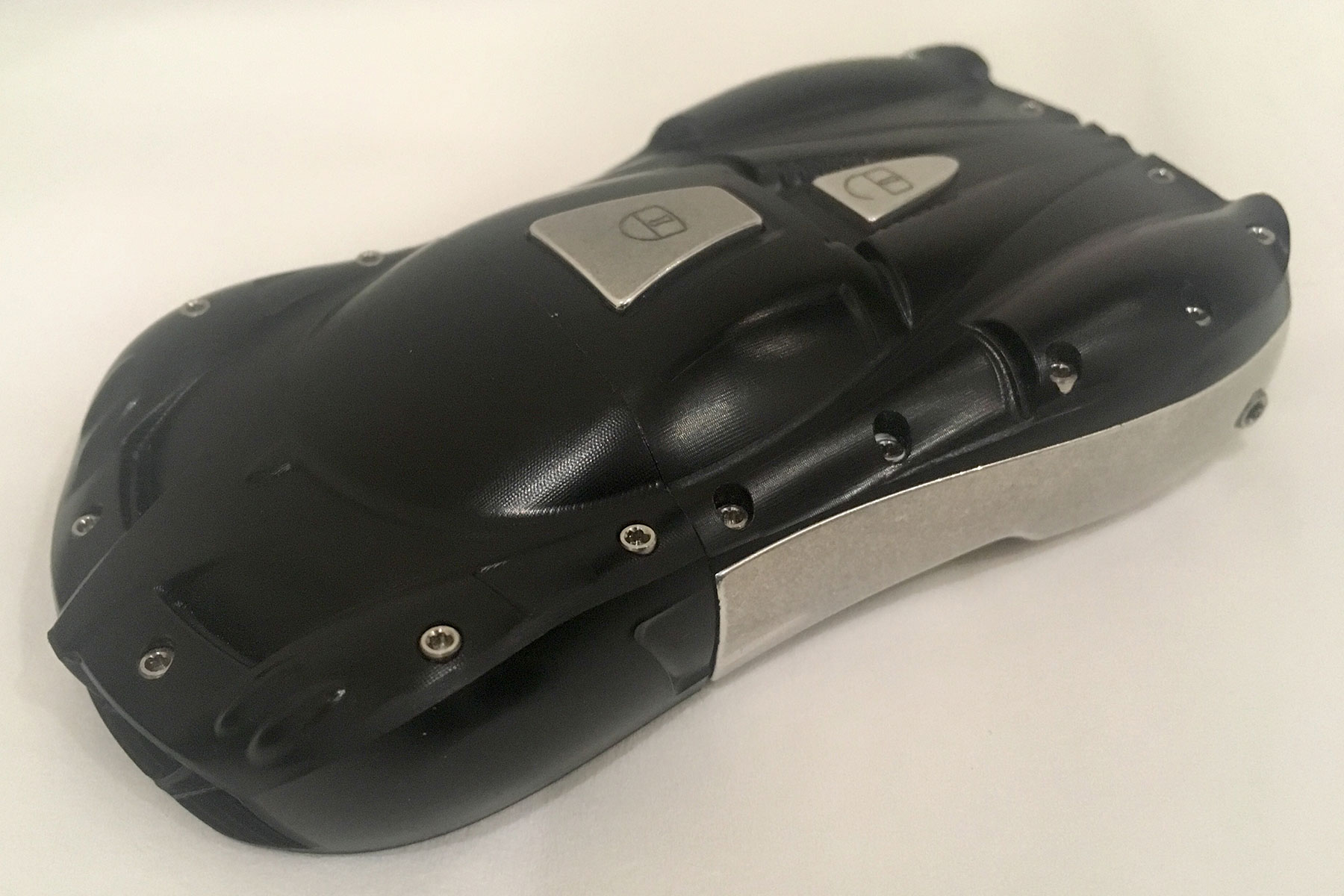
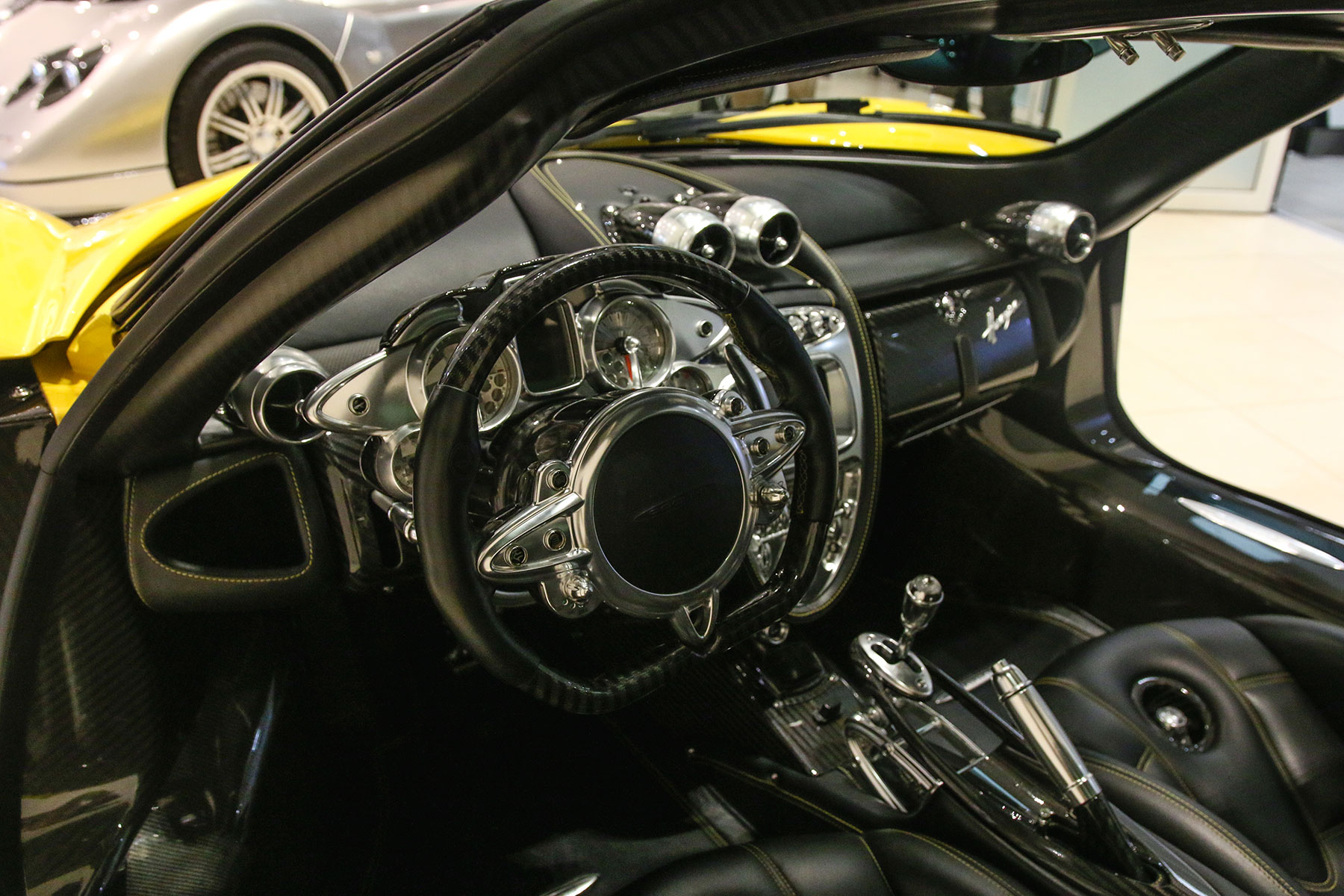
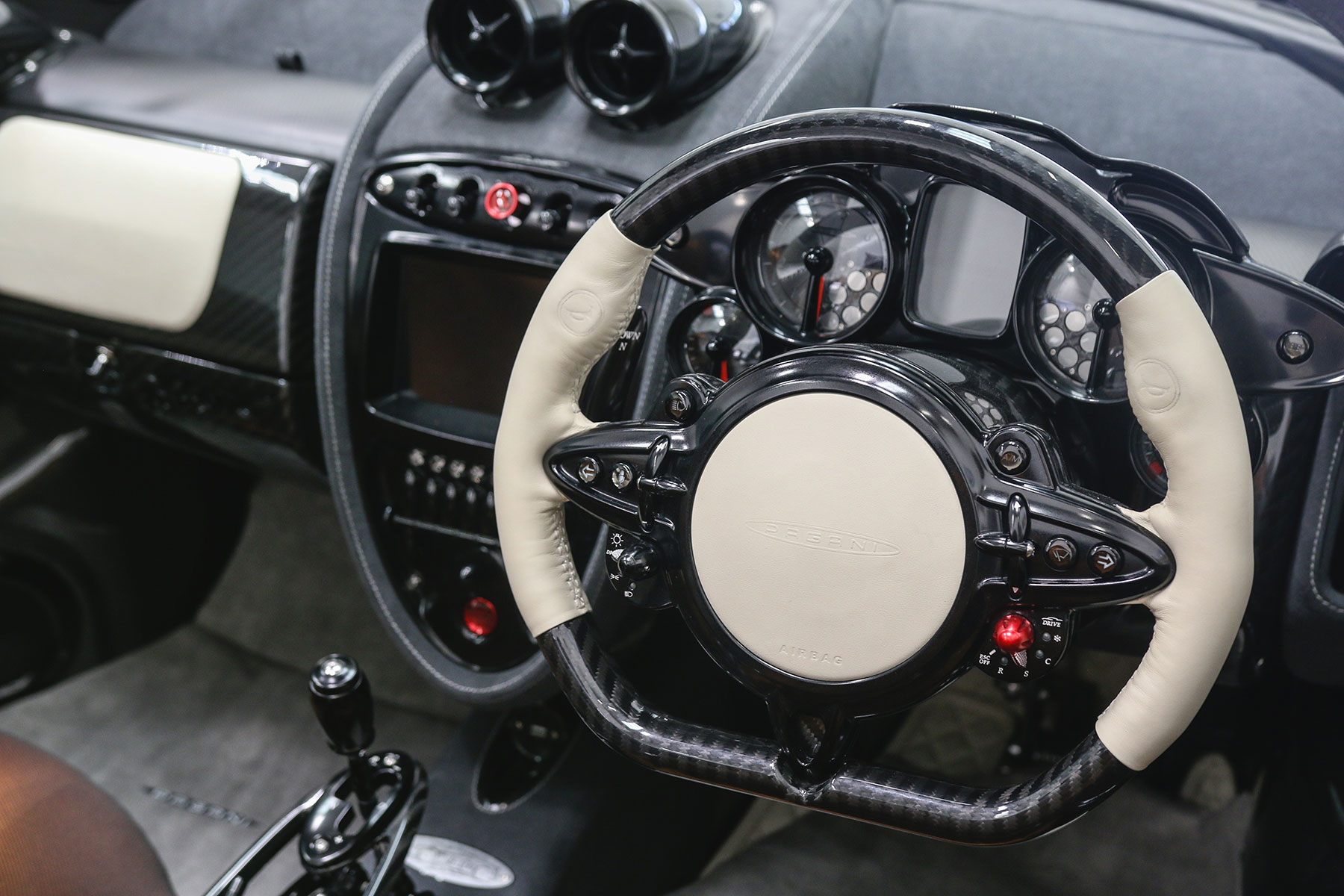
Impressively, the Roadster is both stiffer and 80kg lighter than a Huayra coupe. A new ‘Carbo-Triax’ composite that’s “more advanced than materials used for Formula One cars” takes much of the credit. Every screw on the car is made of titanium and etched with the Pagani logo – at a cost of £65 each.
Huayra Roadster vs. the North Circular
The small matter of 764hp means the Roadster will blast to 62mph in around three seconds, topping out beyond 200mph. Neither of which we’ll be verifying in west London traffic, sadly.
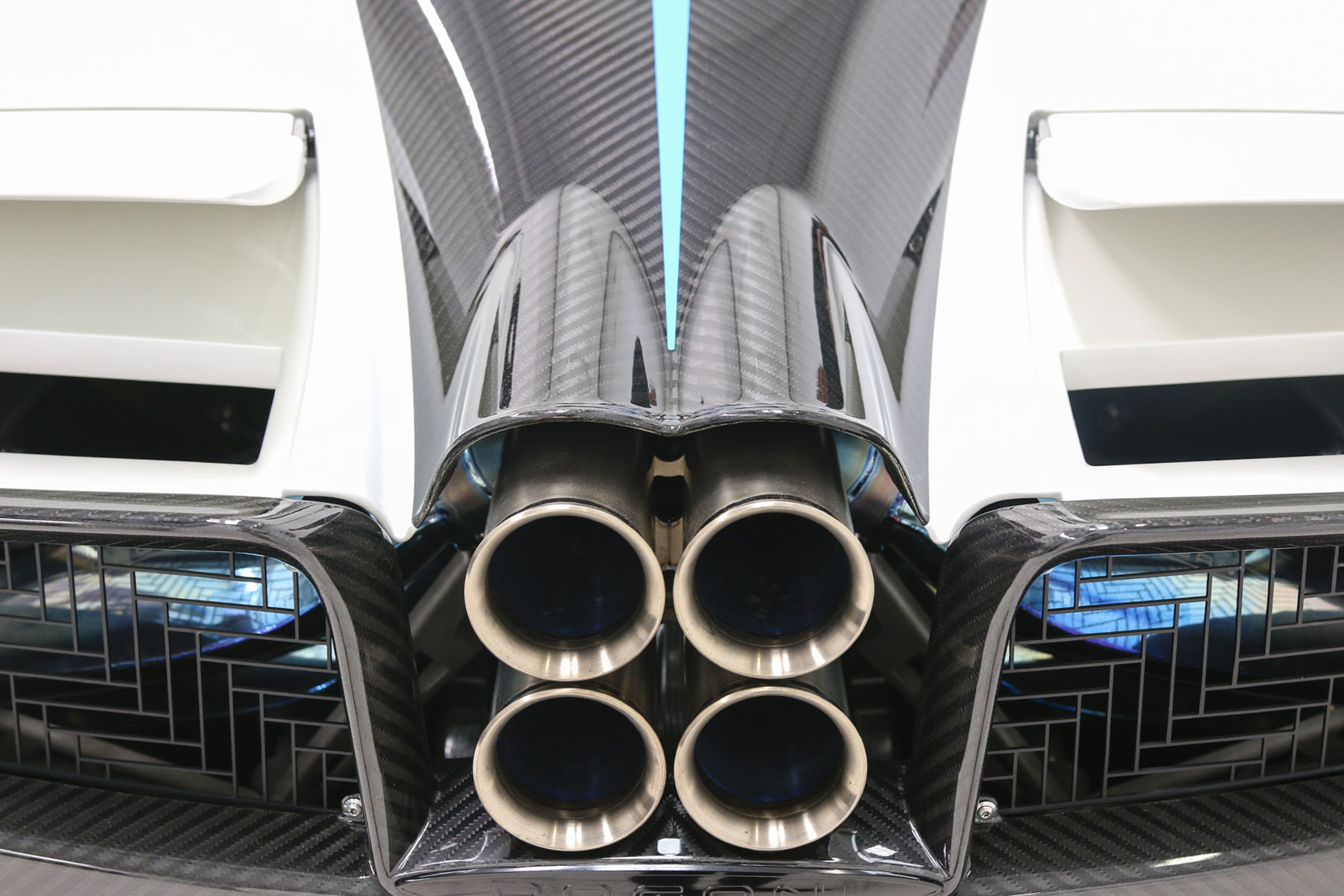
I slide into the low-slung seat and Francis prods the starter button. The V12 erupts with a bellicose bark, then settles to a strident idle, exhaling through Pagani’s trademark quad tailpipes. Over the speed humps of the industrial estate, it feels surprisingly compliant. “The Zonda was like a go-kart with a massive engine,” explains Francis. “This is more of a long-distance GT car.”
It still shifts, though. Francis only gets one opportunity to floor it – on the dual-carriageway North Circular – but acceleration feels utterly savage: a frenzied explosion of raw kinetic energy. Getting the best from a Pagani demands serious driving talent, but Francis says the biggest day-to-day challenge is parking: “The car attracts social media attention wherever you go. Clip a kerb and you’ll end up on YouTube.”
The EVOlution of Zonda
Heart racing, hair restyled by Huayra, I return to Pagani HQ. Even from the passenger seat, a full-paid-up hypercar is an intense and energising experience. Time for a cold drink and a nose around the showroom.
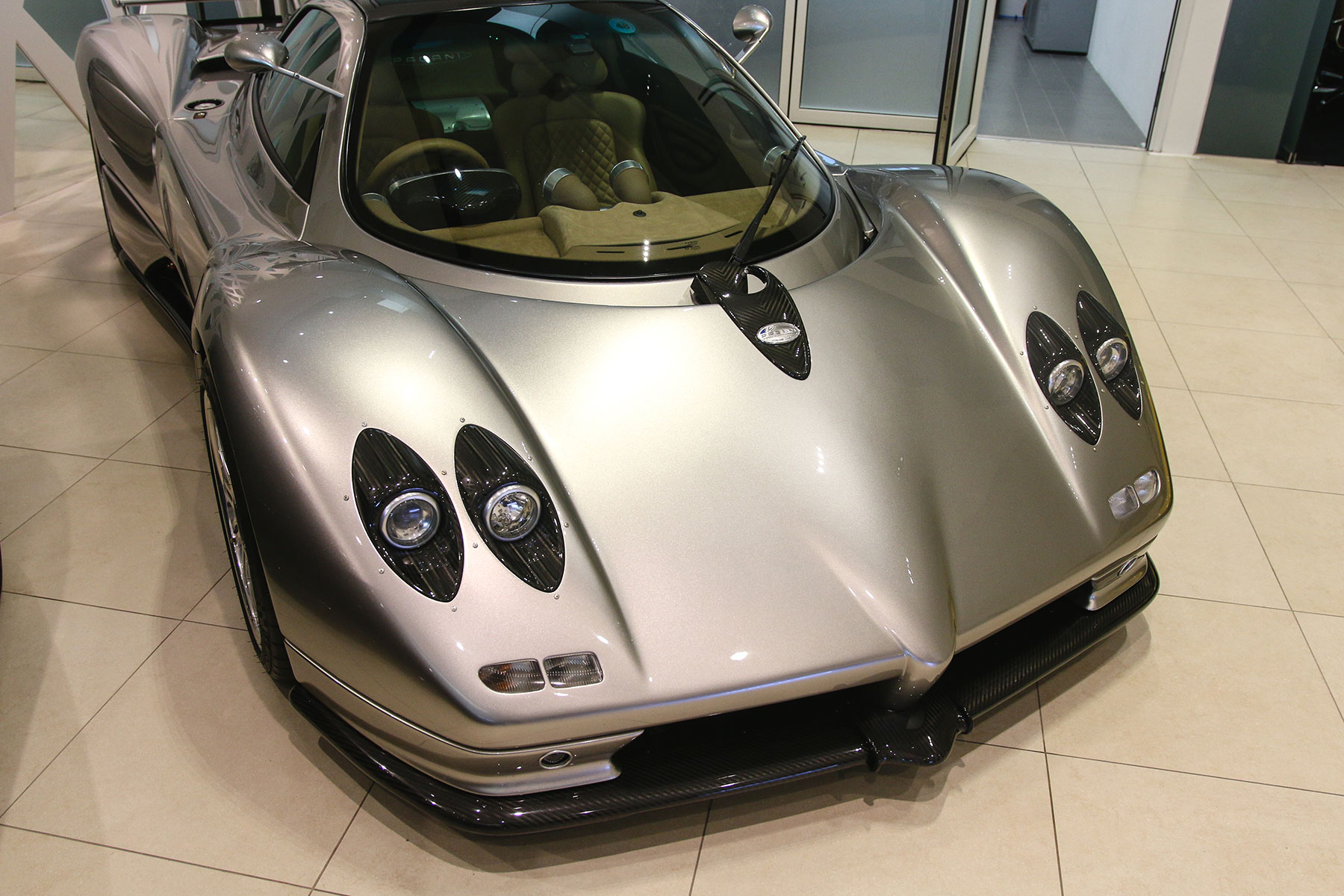
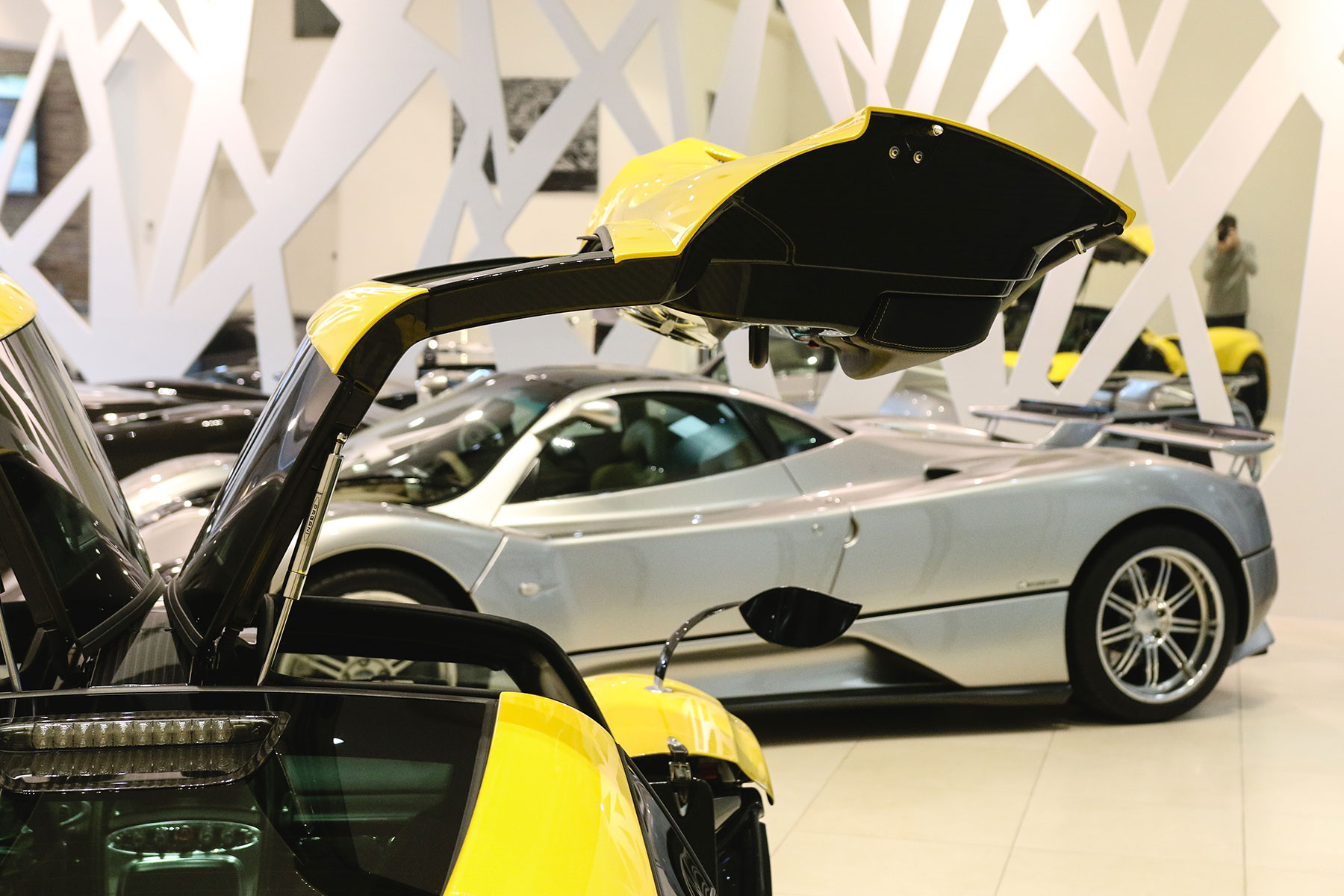
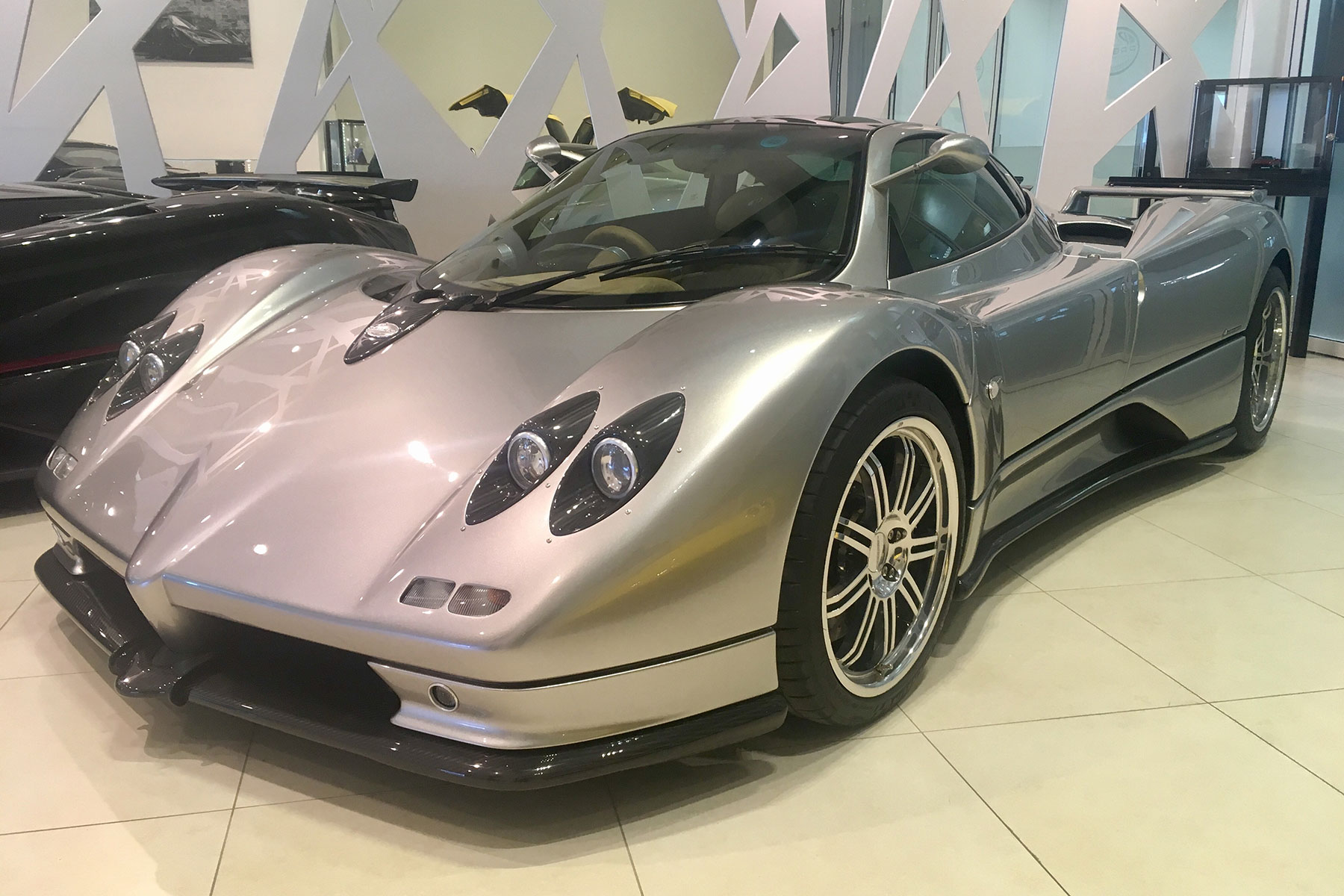
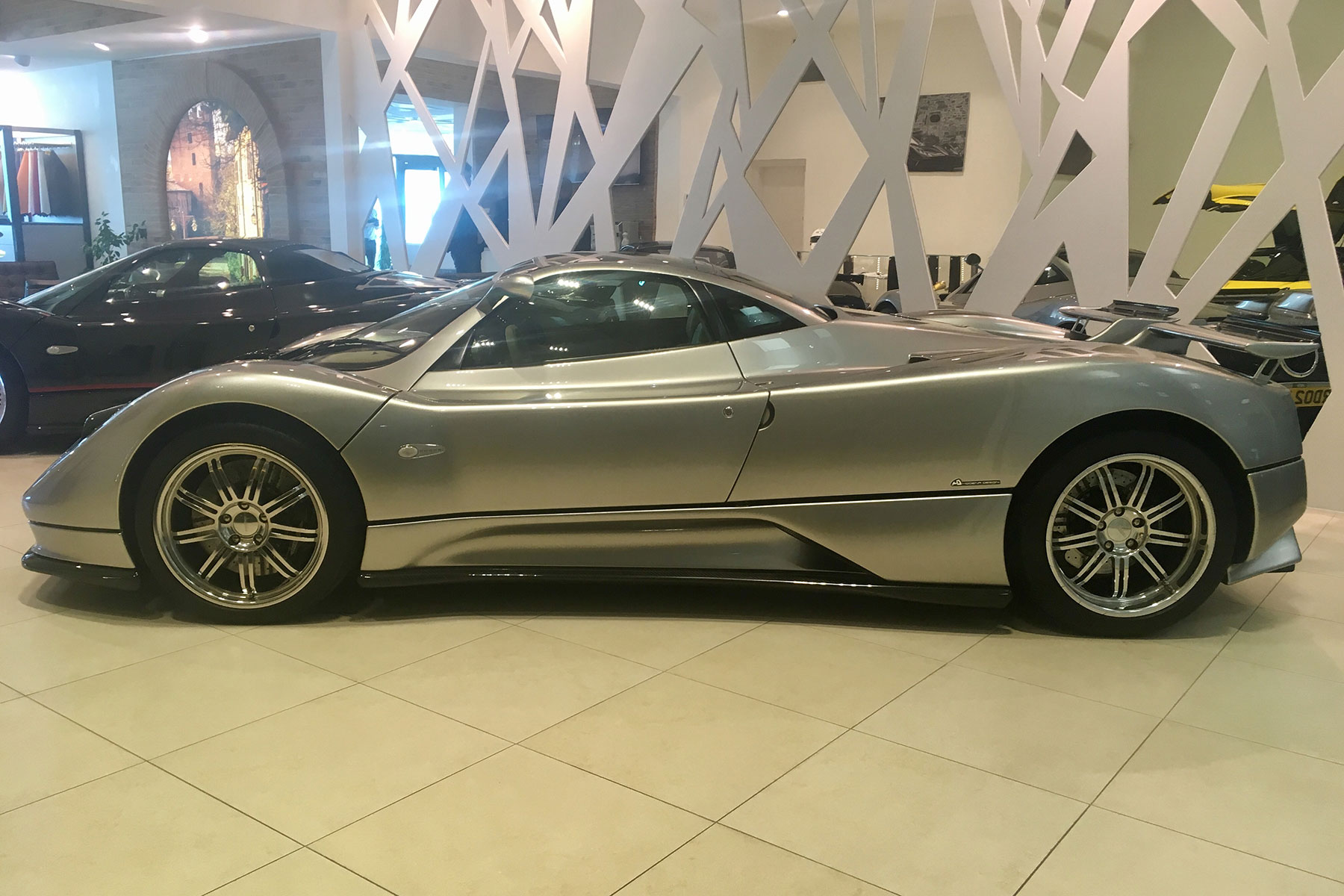
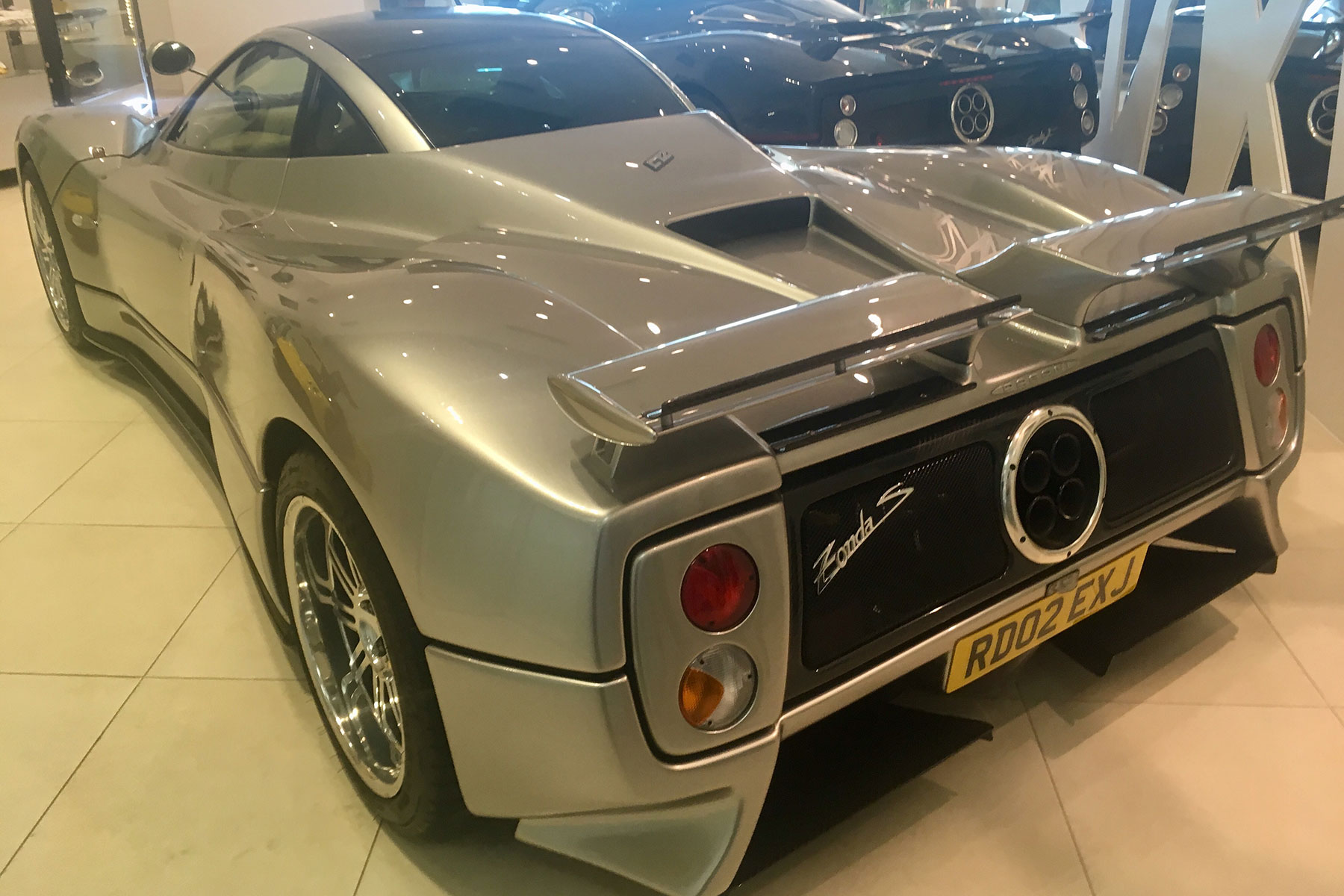
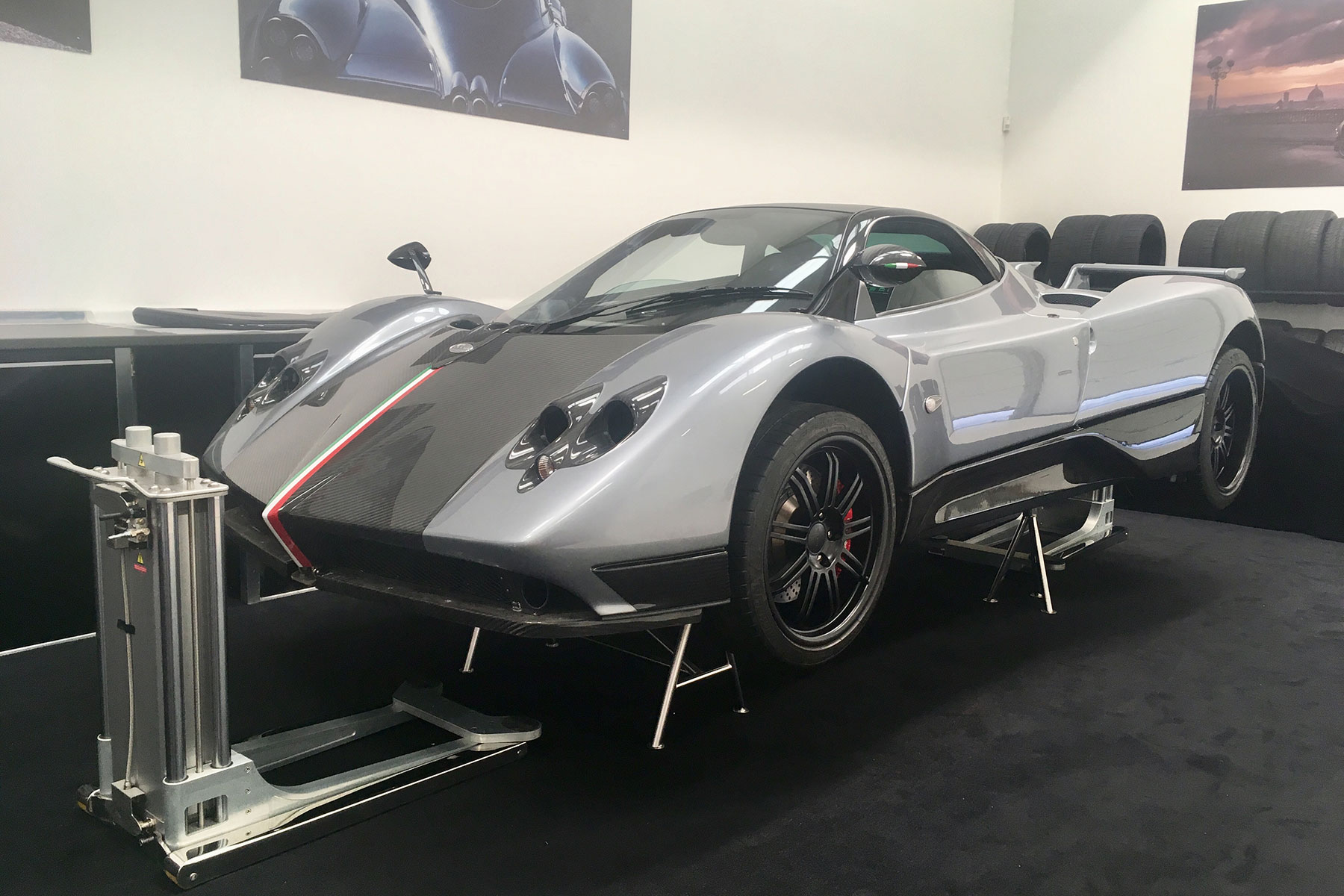
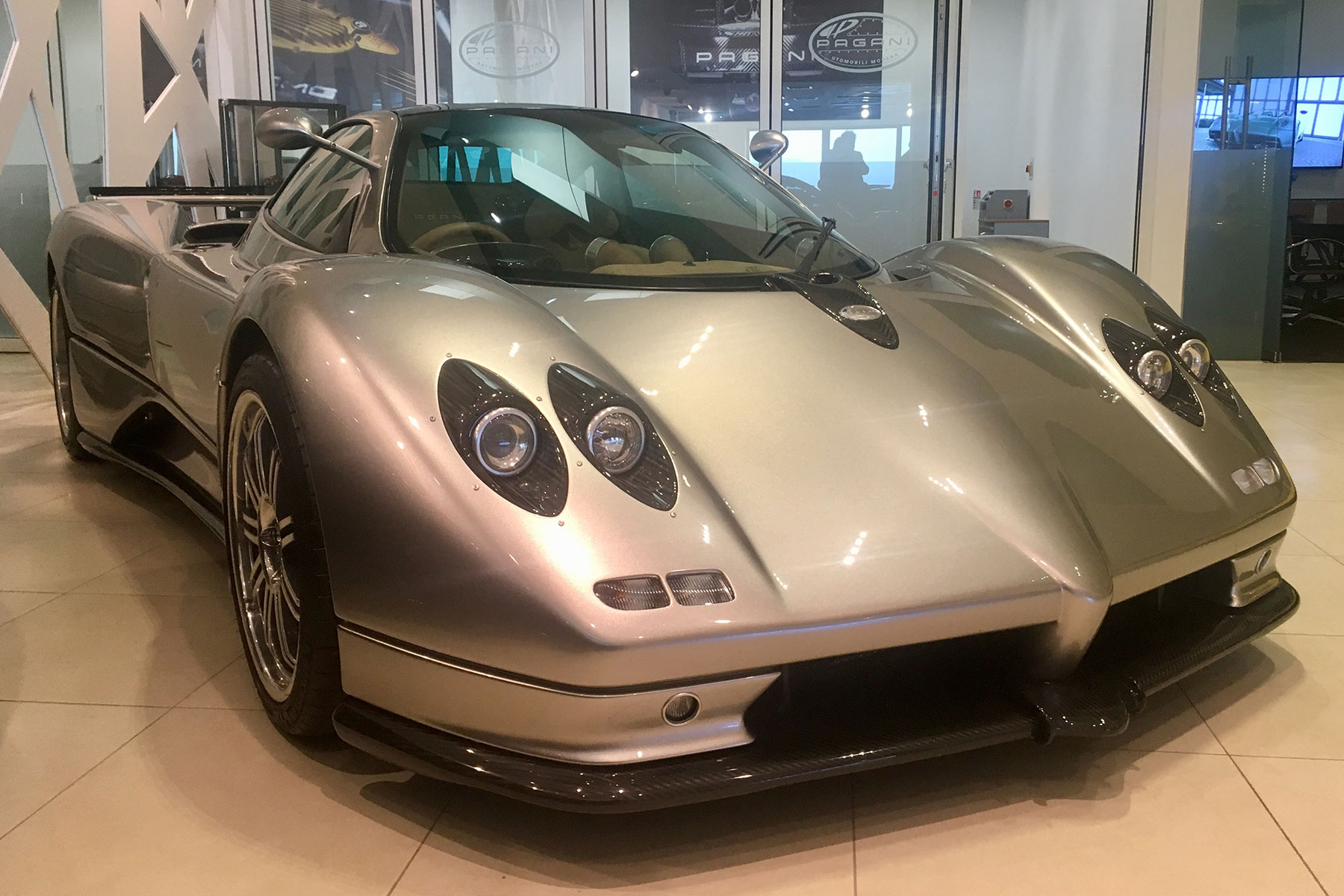
One particular car grabs my attention: a silver Zonda C12 S. Readers of Evo will recognise one of the magazine’s former long-termers, previously owned by editor Harry Metcalfe. Parked between a dazzling yellow Huayra and a naked carbon Zonda F Roadster, it looks surprisingly subtle – yet still effortlessly exotic.
Metcalfe’s car was the second 7.3 S built and has since been fitted with uprated ‘F’ brakes. But as I discover, very few Zondas have remained standard.
Upping the ante: Zonda specials
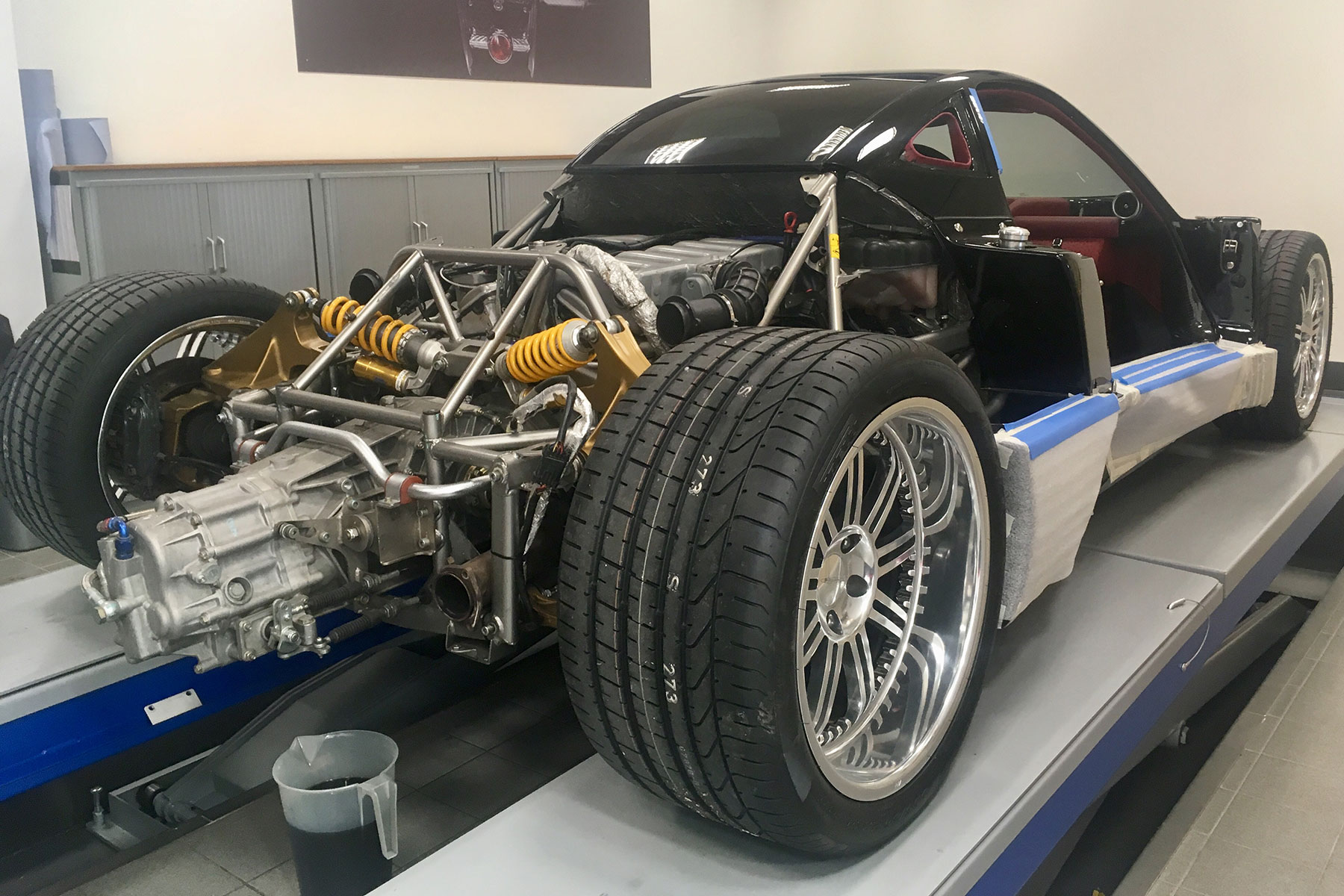
“Many Zondas have been modified with help from Pagani, often from Horacio himself”, explains dealer principal Christine Clarkin. “Everything Horacio does can be upgraded.”
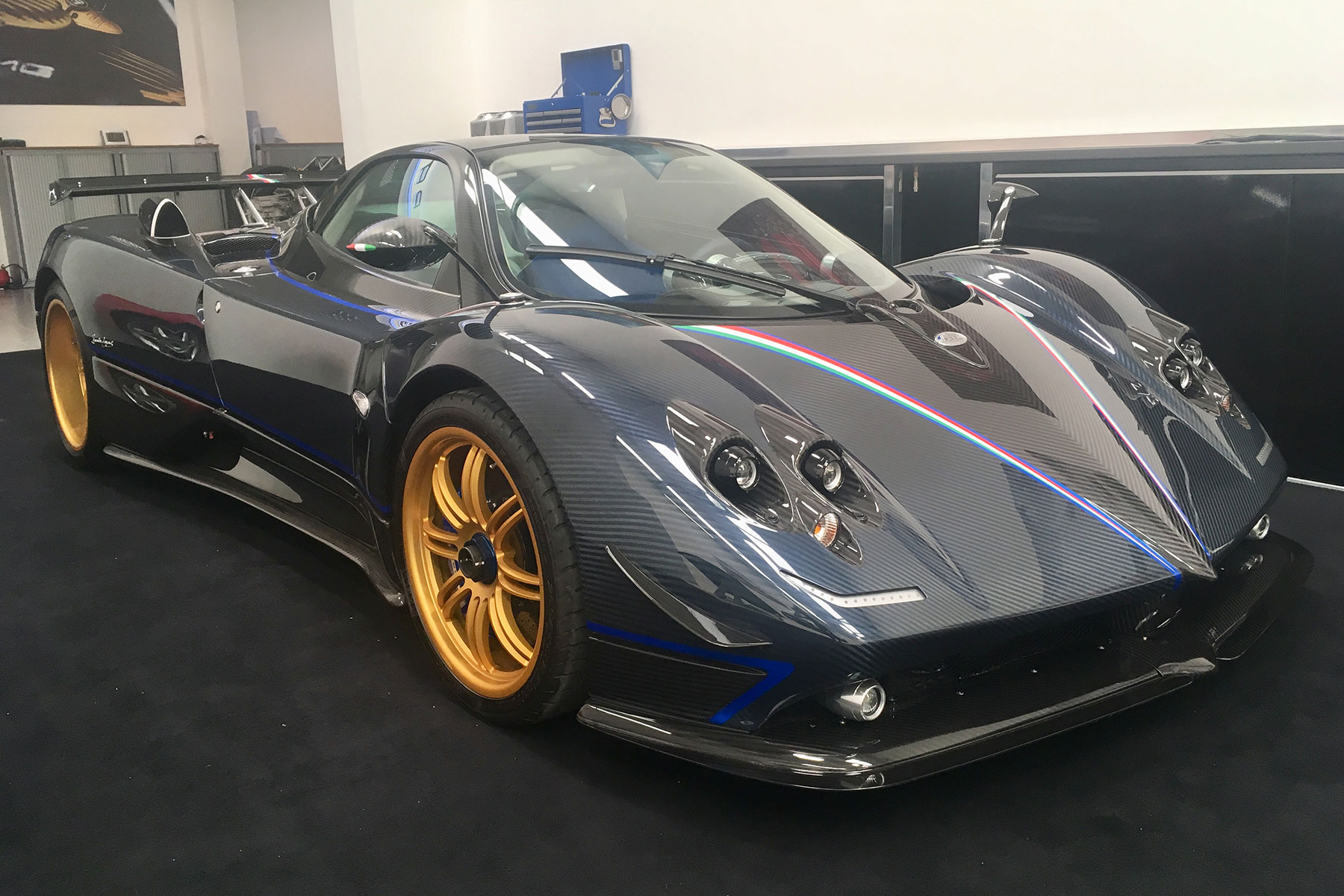
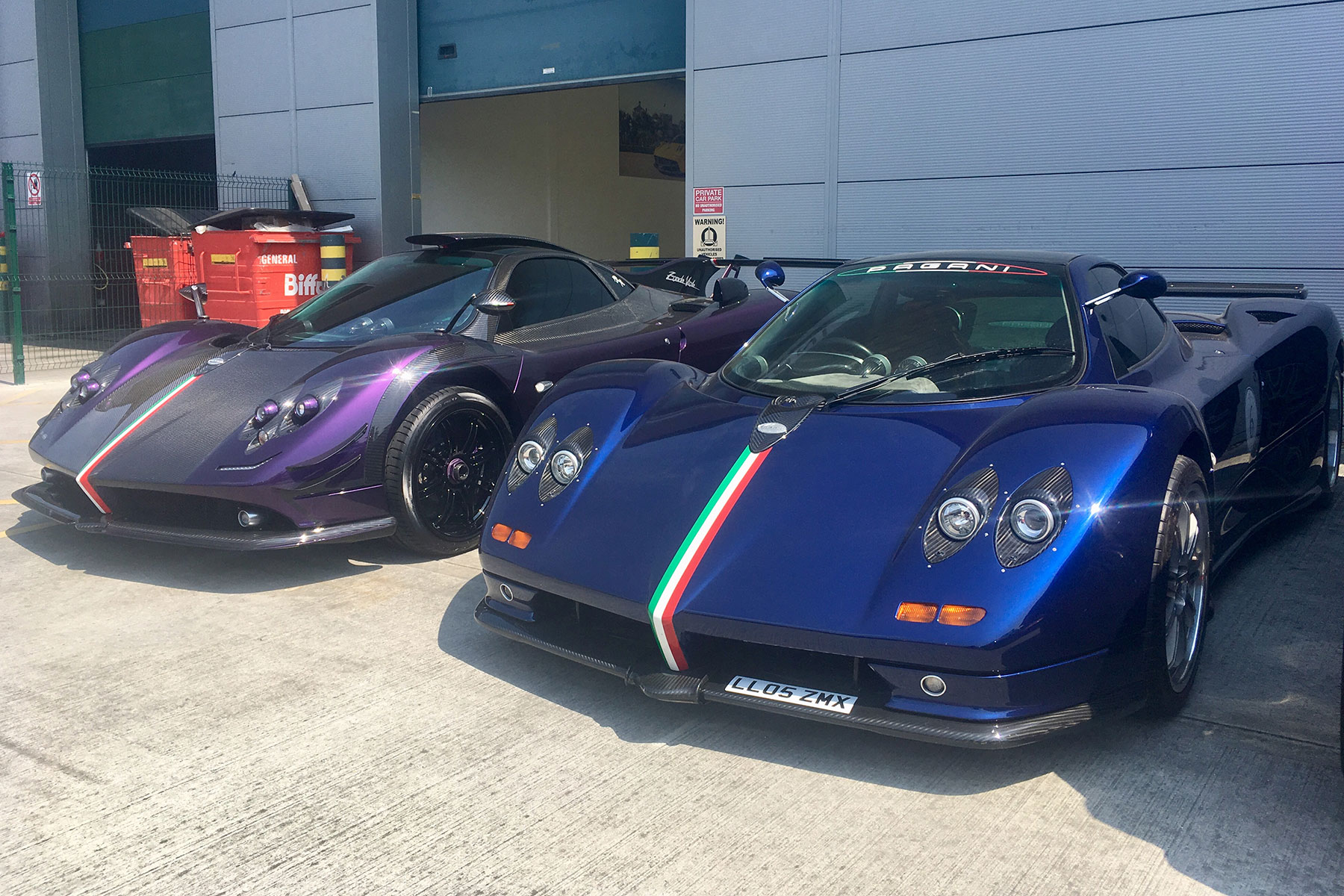
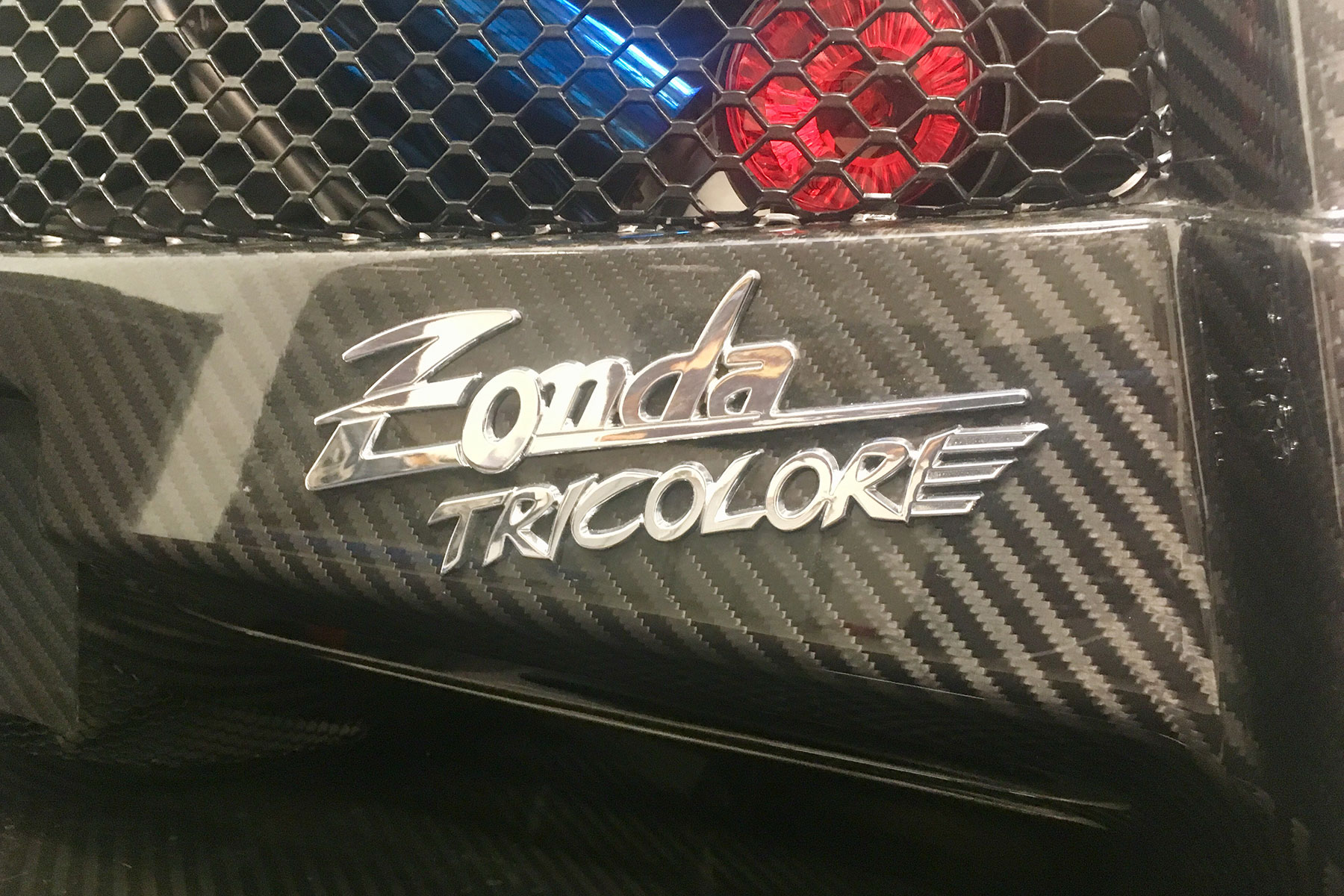
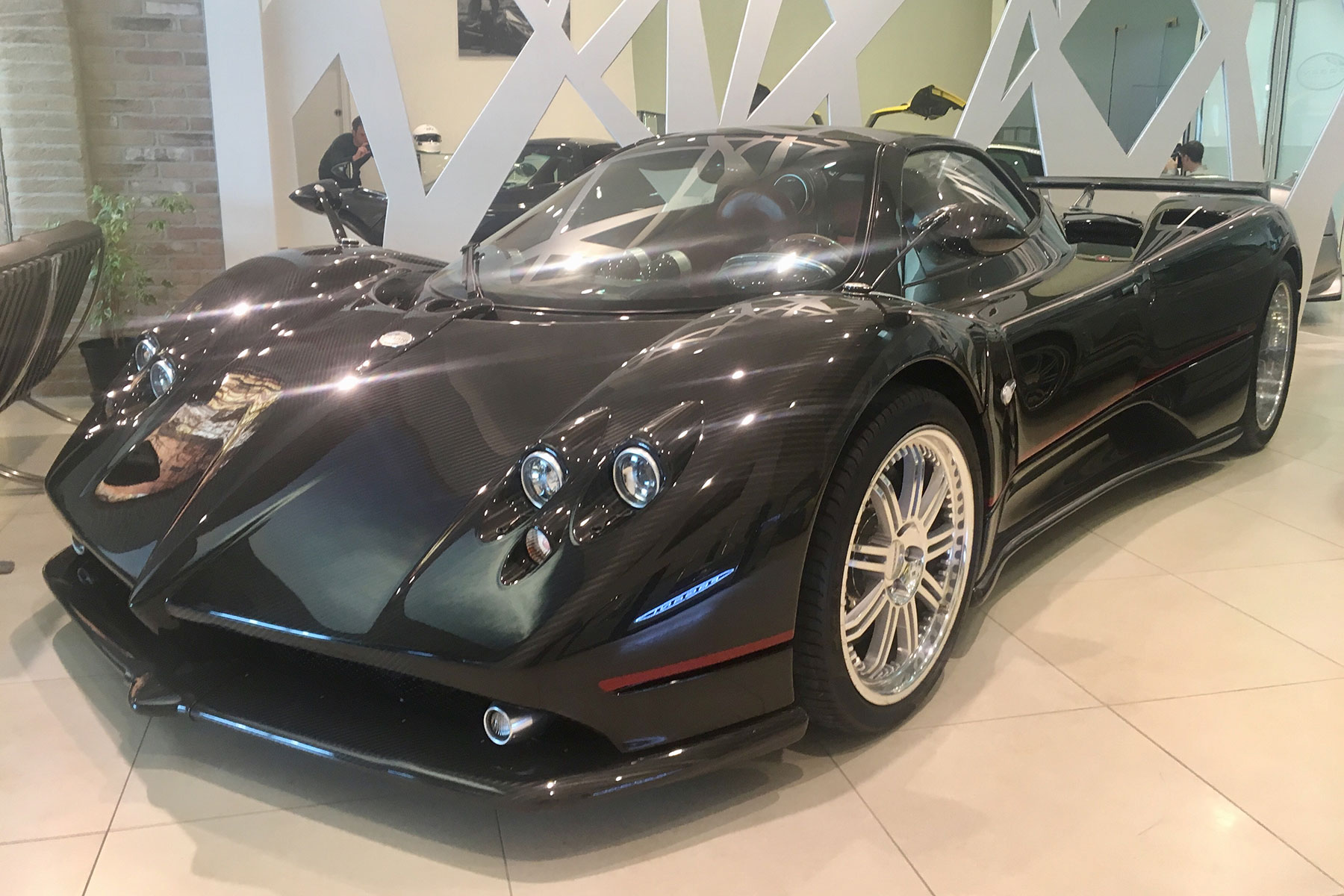
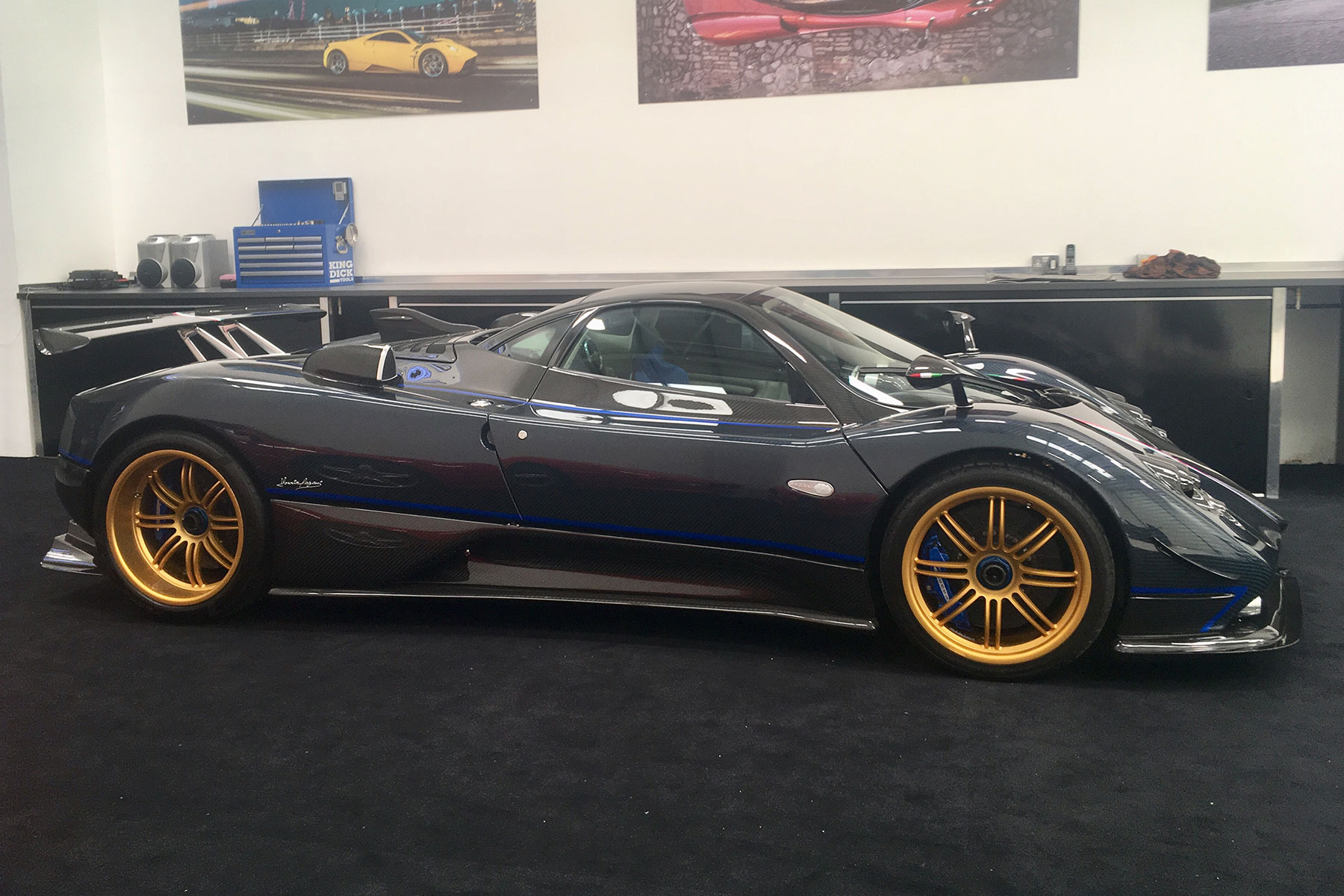
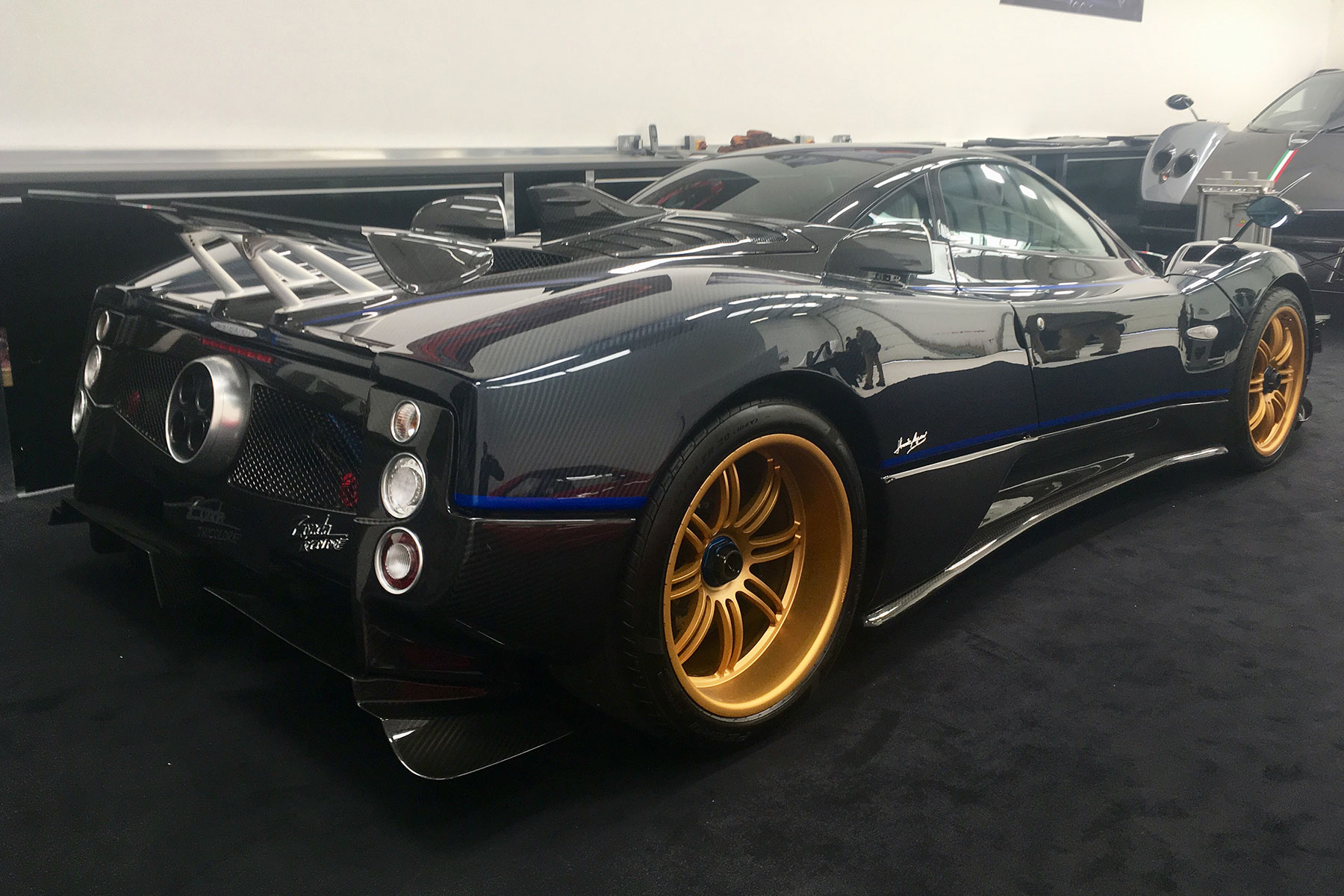
There’s also been a bewildering array of Zonda special editions, many of them one-offs. The Tricolore above, for example, is one of three built to celebrate an Italian air display team. Its carbon fibre bodywork has a blue lacquer coating and there are vertical air scoops that mimic jet engines, plus a one-piece rear wing.
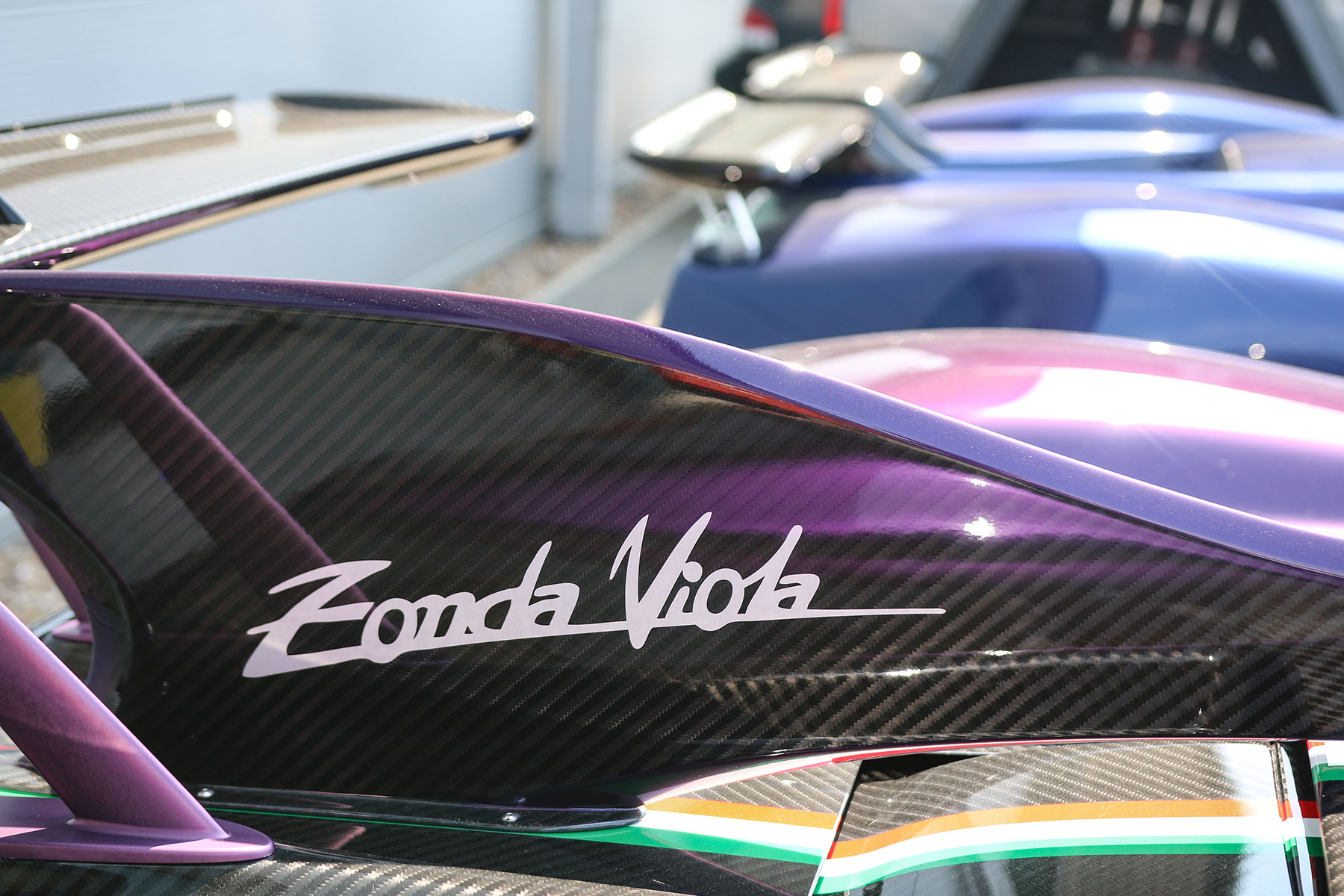
Five Zondas were originally built to final 760hp spec, including the purple ‘Viola’ parked outside, but “between 10 and 15” cars have since been converted.
Just add greatness
This is perhaps the greatest distinction between Pagani and its rivals. While most owners of supercars and classics are obsessed with originality, Pagani makes a virtue of continuous improvement. And, crucially, modifying your car in the ‘right’ way (i.e. via the factory) doesn’t seem to affect its value.
The ultimate expression of an owner’s individuality is, of course, a custom one-off. As Andy Smith, director of aftersales, reveals: “All special editions have direct input from Horacio and involve a huge amount of work. Everything is done from scratch, including bespoke tooling and bodywork moulds. The process takes between 18 months and two years – and there’s a long waiting list.”
Such dreams are beyond mere mortals such as I. Yet the unattainable otherworldliness of Paganis doesn’t diminish their appeal. The single-minded vision of this small company is genuinely inspiring. To quote Horacio himself, each car is “an unbridled work of art”.
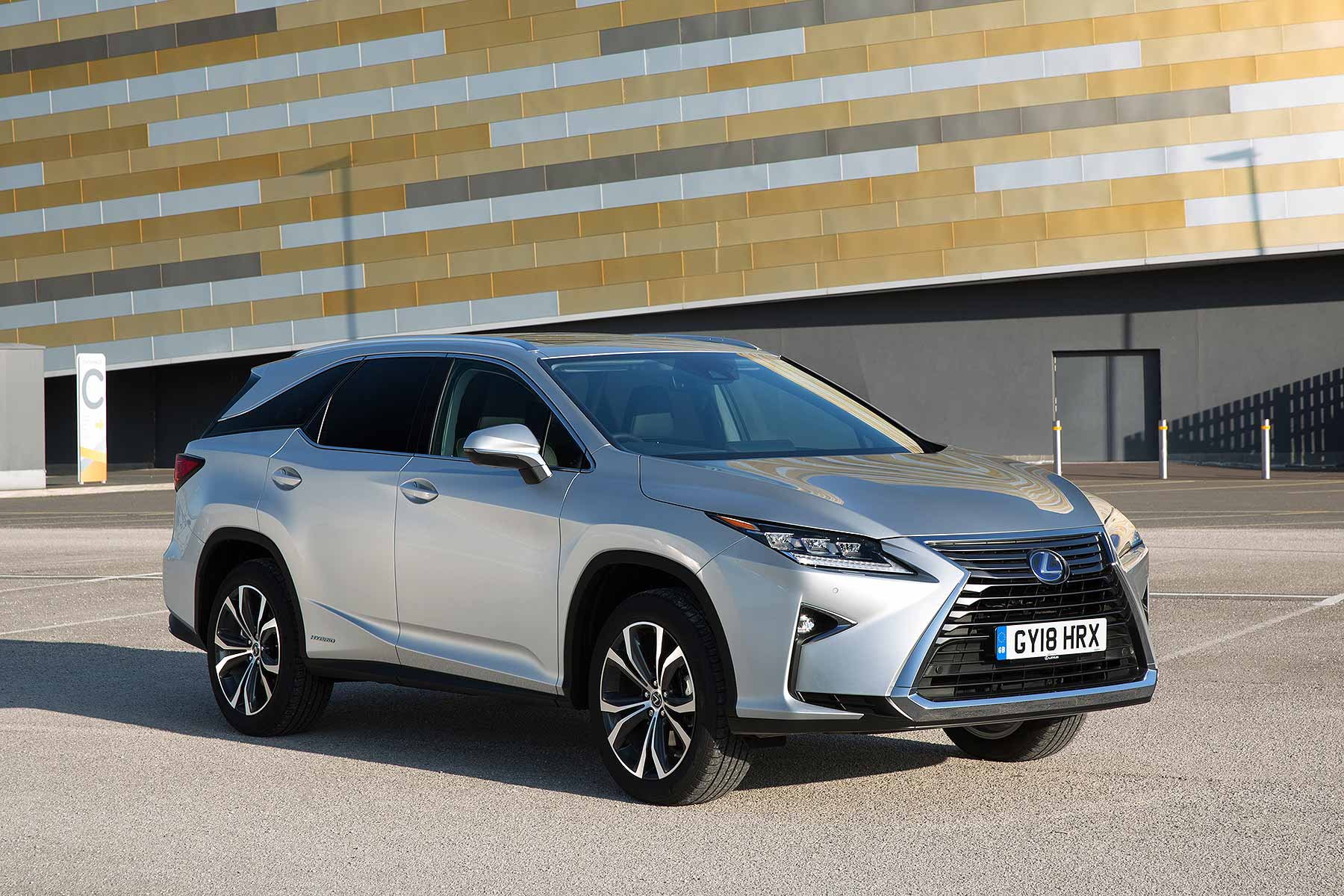
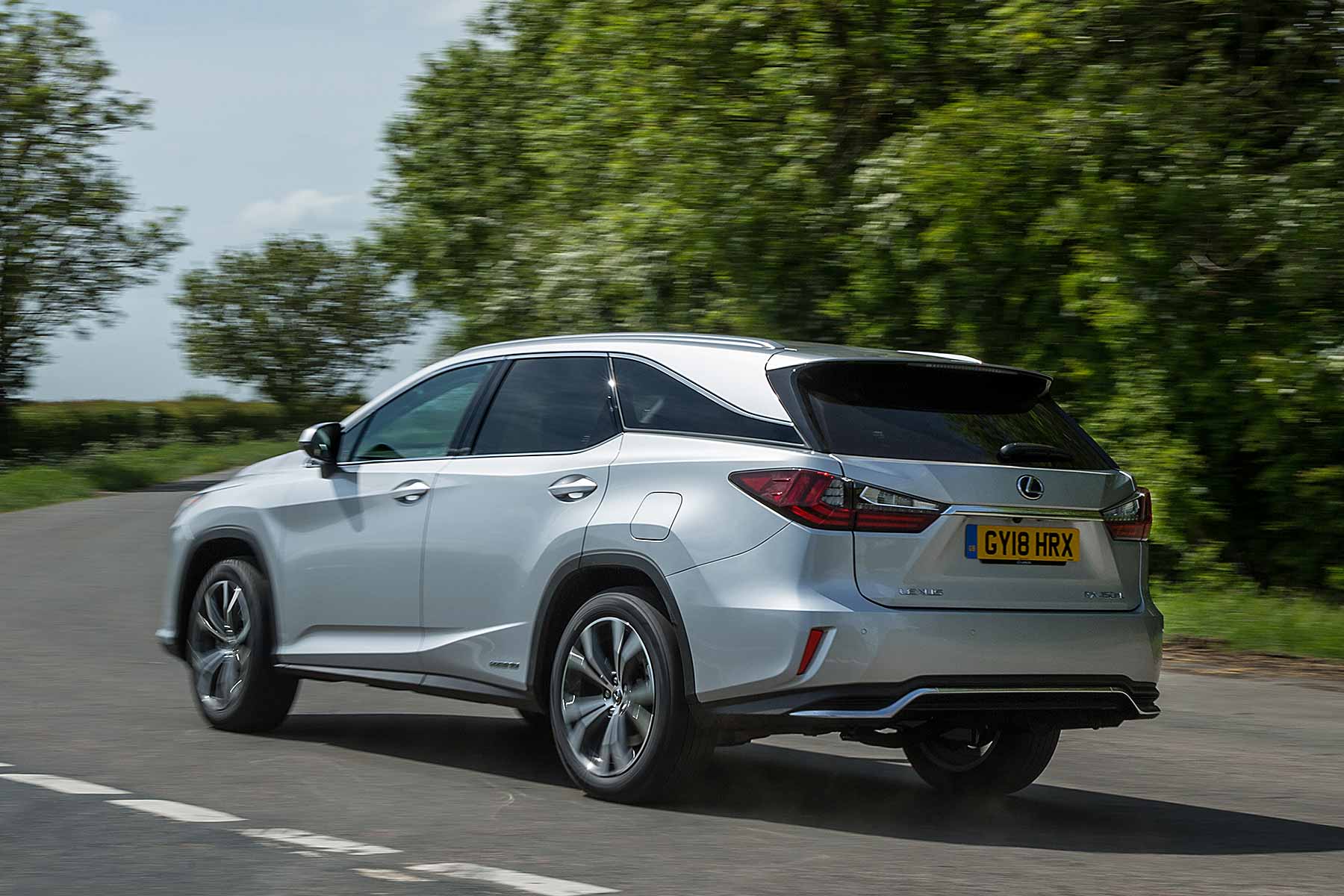
Lexus owners have never been able to take more than four friends or family along for the ride. Until now; with the launch of the RX 450h L, the Japanese premium brand is offering a three-row seven-seater model in the UK for the first time.
Priced from £50,995, the new hybrid SUV goes on sale this week, in a three-model range that should broaden the appeal of one of Lexus’ more popular cars – and also better compete with rivals such as the Volvo XC90 and Audi Q7 (both of which also come in fuel-saving hybrid guise).
The RX isn’t a plug-in hybrid, but this isn’t necessarily a negative, reckons Lexus: it describes the 450h as a ‘self-charging hybrid”. It’s not a mere conversion job of the existing model, either – the entire body aft of the rear wheels has been extended to slot in the third row of chairs.
Lexus promises the seats “offer good head and legroom and are easy to access”. All models have a standard power-folding system for the third row chairs, and there’s triple-zone climate control as well.
The £50,995 RX 450h L SE includes heated and ventilated leather seats, sat nav, 18-inch alloys, power steering wheel adjust, power tailgate and LED headlights. A £54,095 Luxury ups the alloys to 20-inches, and adds better premium sat nav, wireless smartphone charging, ‘triple-eye’ LED headlights and a smart tailgate.
Living up to its name, the £61,995 Premier has a colour head-up display, adaptive suspension, semi-aniline leather, Mark Levinson surround sound system, sunroof, heated middle row seats and a fancy heated steering wheel with wood inserts. Those in the back also get sunshades, so they can pretend to be celebrities.
Learner drivers are now legally able to take driving lessons on motorways in England, Scotland and Wales, as part of government plans to help ensure rookie drivers know how to use motorways safely.
It’s not a free-for-all: learners will still need to be accompanied by an Approved Driving Instructor (ADI), and be driving a car fitted with dual controls. Unqualified driving instructors won’t be allowed to take learners on the motorway, and learner motorcyclists are still barred too.
The Driver and Vehicle Standards Agency (DVSA) adds that the change doesn’t mean motorway driving is being introduced to the driving test – the lessons are entirely voluntary. “It will be up to the driving instructor to decide when the learner driver is competent enough for them,” says the DVSA.
4 in 10 learner drivers are aged OVER 55
Learner driver fined for hitting 132mph on the M25
The rule-change means an update is required for Highway Code rules on motorways, and the DVSA is also upping its efforts to ensure driving instructors and learner drivers are prepared – and other road users know they may soon be encountering learner drivers on motorways.
Many driving school cars feature branded roofboxes. The DVSA says instructors are entitled to remove these for motorway lessons, if they wish. They must, however, display L-plates both front and rear if they do so.
Leading young driver insurance provider Marmalade says the new rule is likely to prove popular. ‘Our annual census revealed that motorway driving was the top ‘real life’ scenario that learner drivers wanted to experience,” said its CEO Crispin Moger.
“Allowing them access in a supportive environment is an encouraging shift by the government.”
Why are learner drivers being allowed to use motorways?
Get broader experience
Get training on how to join and leave the motorway, overtake and use lanes correctly
Practice driving at higher speeds
Understand motorway specific signs
Understand what to do if the vehicle breaks down
Improve confidence to drive on motorways unsupervised after they pass their test
(DVSA August 2017)
Motorway driving: Q&A
How can I tell if an instructor is an approved driving instructor?
They’ll have a green DVSA badge, usually displayed in their car’s windscreen.
How do I find an approved driving instructor?
Gov.uk has a section dedicated to finding driving lessons, schools and instructors.
How is the Highway Code changing?
Rule 253 has been updated, to state learner drivers are allowed on the motorway with an ADI in a car with dual controls.
Where can I get more motorway lessons after I’ve passed my test?
The government’s Pass Plus scheme continues, which teams newly-qualified drivers up with approved driving instructors to help give further advice and guidance. This includes much more motorway driving.
Can I research motorway driving online?
The government has launched a new Driving Hub dedicated to high-speed driving. It contains advice for driving instructors, learner drivers and their parents; later this year, an app will also be launched.
Think Britain doesn’t build cars anymore? Think again – our automotive industry is worth around £70 billion a year and is currently booming.
The United Kingdom is home to a huge variety of car, motorcycle, truck and specialist vehicle makers. Here we showcase the industry, literally from A to Z.
The origins of the British automotive industry
Britain was one of the world’s automotive pioneers. Frederick Simms was friends with Gottlieb Daimler, himself a pioneer who patented a petrol engine. He licensed this and other Daimler components to create Britain’s first production car in 1896.
The rest is history: a quarter-century later, there were 183 motor companies operating in Britain.
Not all survived, and many are now in foreign hands – but many are in rude health. So who does what and where? Read on to see the rich mix of vehicles built in Britain.
Alexander Dennis: Falkirk and Guildford
A fast-growing bus builder, Alexander Dennis employs 2,000 people and runs the Alexander, Dennis and Plaxton bus and coach brands. Many authorities operate its buses, including London, and its line-up includes hybrid buses. The Enviro400 pictured is a green city market-leader.
Ariel: Somerset
The Ariel Atom is one of the world’s most distinctive performance cars. With no bodywork or roof, it’s all about pure driving thrills – and is a Top Gear TV favourite. The Ariel brand was revived in 1999 by Somerset-based Simon Saunders. Formerly, it was a Birmingham firm producing motorcycles, something Ariel is now returning to with the radically retro Ariel Ace.
Aston Martin: Gaydon
Aston Martin is one of the world’s most valuable and envied brands. The choice wheels of James Bond, it was founded in 1913 by Lionel Martin and Robert Bamford. After various changes of ownership, Aston is now owned by a group of investors including Daimler, which has a 5% stake. CEO Dr Andy Palmer is currently leading a ‘second century’ business strategy to turn Aston Martin into a company as successful as Ferrari.
BAC: Liverpool
The Briggs Automotive Company, or BAC, is the brainchild of Neill and Ian Briggs. Based in Liverpool (it tests at nearby John Lennon Airport), it makes the Mono single-seater, which brings a race car-like experience to the road. It was The Stig’s Car of the Year in 2011, is the second-fastest car around the old Top Gear track (a Pagani suspected of running on track tyres, contravening TG rules, kept it off top spot) and can be driven in Forza Motorsport 6.
Bentley: Crewe
W.O. Bentley founded the company bearing his name in 1919 and Volkswagen AG bought it in 1998 to set the brand upon its modern transformation into one of the world’s leading sports-luxury manufacturers. A serial winner of the Le Mans 24 Hours, Bentley’s latest foray is into the world of SUVs with the controversial but extremely accomplished Bentayga.
BMW: Hams Hall
BMW’s stewardship of Rover Group was controversial. More successful has been a subsidiary it initially built to supply the sprawling Longbridge Rover site with engines: Hams Hall. Today, the Warwickshire plant builds engines for BMWs and MINIs, including models such as the 3 Series, MINI Cooper and even the BMW i8. It makes three major components – cylinder blocks, cylinder heads and crankshafts – on site.
Caterham: Dartford
Caterham bought the rights to build the Lotus Seven from Colin Chapman back in 1973 and has been building its half-tonne, two-seat sports car ever since. Ultra-simple, ultra-intense, there’s nothing quite like a Seven, which is why Caterham keeps on building ’em. In the 1990s, it tried to make a modern car, called the 21, but there were few takers. It seems that only the real thing will do.
Cummins: Darlington
Cummins is a huge American industrial engineering company with a factory in Britain building high-output diesel engines. They’re used in agriculture, mining, construction and even rail industries, but they’re also used on the road in trucks, motorhomes and buses, plus fire and emergency vehicles. Cummins is even helping keep the classic Routemaster bus on the road with a green engine conversion.
David Brown Automobiles: Silverstone
David Brown loves classic Aston Martins, so has recreated one – the GT – and built a brand new car company to sell it. Derived from the Jaguar XK, it’s hand-built and sold to a rarefied clientele. Only in Britain could such a concept become a production reality.
Dennis Eagle: Warwick
Next time it’s bin day, take a look at the refuse truck. Chances are, it will be a Dennis Eagle. Based in Warwick (and owned by Spanish giant Ros Roca), the company has been building vehicles since 1907 and there are few experts better at precision-engineering refuse trucks. The latest Elite 6, pictured above, is all-new and fully compliant with tough Euro 6 emissions standards, ensuring it really is green bin day.
Ford: Bridgend and Dagenham
Ford doesn’t build cars and vans in Britain anymore, despite Manchester’s Trafford Park being its first non-US site back in the early 1900s. Instead, Ford builds engines here – lots and lots of engines. The Fiesta ST uses a 1.6-litre turbo built in Bridgend, Wales, while the famous Dagenham site makes hundreds of thousands of diesel engines a year. Ford has committed £475 million to further expand Dagenham and build a new 2.0-litre diesel engine there.
Ginetta: Yorkshire
Ginetta was founded in 1958 and developed a strong following in the 1960s, both on road and track, for its great-value, charismatic sports cars. The company floundered in the 1990s, but was revived by race driver and businessman Lawrence Tomlinson. Now based near Leeds, the company has a range of road and race cars, and is on the BTCC support race bill for top-line motorsport kudos. Nearly 60 years on, Ginetta has never been stronger.
Honda: Swindon
Honda first came to the UK in the early 1980s, in a joint venture with British Leyland firm Triumph: the Acclaim was a rebadged Japanese-market Honda. It built its own factory in Swindon, which opened in 1989 and today builds the Civic and CR-V. It’s been confirmed as the lead factory for the new Euro-spec Civic, production of which begins in 2017.
Jaguar: Castle Bromwich and Solihull
Jaguar was founded by Sir William Lyons in Blackpool in 1922 (it was initially called the Swallow Sidecar Company) but he soon moved to the heart of the UK automotive industry: Coventry. The traditional home for Jaguar was Browns Lane, but today its production HQ is Birmingham’s Castle Bromwich, alongside the M6 motorway, with its engineering HQ at Whitley in Coventry. Jaguars are also now built at the Land Rover plant in Solihull – a ‘plant within a plant’.
Land Rover: Solihull and Halewood
Land Rover, of course, has been based at Solihull since its inception in 1948. The site has grown enormously since then and, in 2007, the Freelander was moved to the Halewood, Merseyside factory, freeing up space to build more Land Rovers and Range Rovers. Halewood also makes the Range Rover Evoque, and the Land Rover Discovery Sport replaced the Freelander in 2014.
Jaguar Land Rover: Wolverhampton
The most recent Jaguar Land Rover factory was also opened in 2014, by Her Majesty The Queen – but to produce engines, not cars. For the first time in decades, JLR now produces its own engines, under the Ingenium brand. Eventually, the factory will cover more than 200,000 square metres.
John Dennis Coachbuilders: Guildford
The third ‘Dennis’ in our group: John Dennis is the specialist fire truck division based in Guildford. It’s independently owned (by the grandson of John Dennis himself) and holds the acclaimed BS EN ISO 9001 accreditation – one of just a few suppliers to the UK fire service to do so. It doesn’t make its own vehicles anymore, but does produce fire trucks based on other manufacturers’ chassis.
Leyland Trucks: Leyland
Leyland Motors was a former giant of the British motor industry, owning Austin, Morris, Triumph, Jaguar, Land Rover, Rover… Of course, British Leyland famously disintegrated, crippling the British automotive sector for years, but the Leyland truck division that started it all survived. Leyland Trucks merged with DAF in 1987, was bought out by management in 1993 when DAF went bust. Since 1998, it has been owned by US truck giant, PACCAR. Still using the DAF brand, 800 people build around 14,000 trucks a year.
Lightning Car Company: Coventry
The fledgling Lightning Car Company has been around since 2007 and has been based in Fulham, Peterborough and now Coventry. The Lightning GT is an ambitious EV using twin motors and a fast-charge lithium titanate battery pack. It looks beautiful, but has been much delayed. The latest news is simply of an update in summer 2016. Which is, er, now.
Lotus: Norfolk
Lotus Cars, the perennial innovator and producer of sublime drivers’ cars that often seems to be in a slightly perilous business state. The Dany Bahar era was a recent low, but stern new chief Jean Marc-Gales is trying to turn things round by returning Lotus to its roots – and the cars launched since his inception have been superb. Original founder Colin Chapman, who created Lotus in 1952, would be proud.
London Taxi Company: Coventry
The London Taxi Company boasts a very diverse history. Former parent company Manganese Bronze Holdings acquired the Carbodies company in 1973 and the rights to the British Leyland FX4 taxi it built in 1982, renaming it LTI Fairway. It developed a new cab, the retro-modern TX1, in 1997 and the latest TX4 still meets the strict Transport for London regulations for taxis. Manganese sadly went bankrupt in 2012 and the future of LTI looked bleak – but a buyout by Chinese giant Geely has seen production recommence. It’s now investing £250 million in building a new plant for the London Taxi Company near Coventry, due to open in 2017 and produce a radical new plug-in hybrid London black cab.
McLaren Automotive: Woking
The seeds of McLaren Automotive were sown when F1 boss Ron Dennis and his designer Gordon Murray were waiting for a delayed flight in the late 1980s. The new company was called McLaren Cars and its first car, the F1, is a legend. Modern McLaren Automotive was created in 2010 by Ron Dennis as a stand-alone division to challenge Ferrari with high-tech British sports cars and supercars. It’s succeeded – several years of profits and some amazing cars, including the 675LT, P1 and new 570S, are testimony to that.
Metrocab: Coventry
Metro Cammell Weymann (MCW) was a major bus manufacturer that, in the 1980s, created a rival to the traditional London Taxi, called Metrocab. It went out of business in 1989 and Reliant bought the rights to the cab. Reliant then went bust in 1991 and coachbuilder Hooper bought the rights. It went bust in 2000, with modern owners Kamkorp buying the rights. The Metrocab was produced again for a year in April 2005 and now the firm is readying a radical new Metrocab, pictured above. It promises 99mpg, sub-65g/km CO2 and running costs so low the typical London cabbie will save £40 a day.
MINI: Oxford
When BMW bought Rover Group, it originally wanted to make the Rover 75 at Plant Oxford. But when BMW sold Rover, it kept MINI. The answer? Swap the Longbridge-built new MINI and Oxford-built 75 around. And MINI has been built there ever since its relaunch in 2001. Around 3,500 people work at the plant and it’s even been the star of the BBC’s ‘Building Cars Live’ TV show, starring James May.
Morgan: Malvern
The Morgan Malvern factory is a step back in time to traditional hand-craftsmanship. In fact, the company makes as much money from tours as it does from building cars. Around 160 people work there and the firm makes, by hand, around 1,300 cars a year. And yes, the cars are made from wood; ash is used to construct a frame, upon which the body is hung. Morgan’s most recent success has been the delightful Three-Wheeler. Later this year, an all-electric EV3 version will be launched.
New Holland: Essex
New Holland in Essex is the only agricultural tractor plant in the UK. It opened in 1964, originally as a Ford plant until the company sold its agricultural division to Fiat in the late 1990s. Today, it’s owned by CNH Industrial, an Italian firm headed by Sergio Marchione. Around 100 tractors a day roll off the production line.
Nissan: Sunderland
Bringing Nissan to Sunderland was one of the biggest industrial success stories of the 1980s. Nissan could have chosen anywhere in Europe to set up shop. It chose the UK, and the plant has thrived ever since it opened in 1986. More than half a million Nissan Qashqais, Notes and Jukes are produced there each year. It also builds the electric Nissan LEAF, including its batteries.
Noble: Leicester
According to Jeremy Clarkson, Nobles are built on an industrial estate in Leicestershire. Technically, he’s right: Lee Noble set up shop there in 2000, making specialist supercars that were raw but wonderful to drive. Then, new investors arrived to help the company take the next step, and Damon Hill’s former manager, Peter Boutwood, became MD. Lee Noble left, Noble set about designing a new premium-price supercar and, in the process, moved to a flash new HQ on the Meridian Business Park next to the M1 in Leicestershire. So, Clarkson is half right.
Norton: Castle Donington
Norton, a famous motorcycle name from the 60s and 70s, made its first bike in 1902. It thrived until Japanese motorcycles showed up British-built machines and went out of business in the early 80s. Revival attempts begun in 1988 but it wasn’t until 2006 (and several owners later) that things began in earnest. Norton acquired its new corporate HQ, Donington Hall, in 2013 and today aims to produce 1,000 retro-look motorcycles a year.
Optare: Leeds
Bus maker Optare was created in 1985 when Leyland closed down a vehicle bodywork business in Leeds. Backed by the local enterprise board, the plant’s former director, Russell Richardson, created Optare and, after slow beginnings, started producing buses in earnest. Today, after several takeovers, it’s majority-owned by Ashok Leyland – the former Indian subsidiary of British Leyland. Only this time, Leyland is helping the maker thrive, from a brand new 13,000 square metre factory in Sherburn-in-Elmet.
P50 Cars: London
The original Peel P50 was a tiny car made on the Isle of Man in the 1960s, entering the Guinness Book of Records as the smallest production car ever in 2010. By then, the original firm was long out of business, but an enterprising London company is now producing a recreation, which you can buy in kit form from £3,000, or fully-assembled from £8,499. You can even get it as a full EV. Tempted?
Plaxton: Scarborough
Plaxton is a brand with history. It was set up as a joinery in Scarborough in 1907 and, thanks to the region’s popularity as a holiday resort, gradually found its key market to be coach bodies. It grew and prospered – a Plaxton Panorama was used in The Beatles’ Magical Mystery Tour film – and became a dominant coach brand, before events took over and the business stumbled. After several owners, it’s now part of Alexander Dennis and produces both buses and coaches. Once again, it’s the centre of coach excellence for its Scottish owner.
Radical: Peterborough
Radical was founded in 1997 to build simple road-going cars that could be driven to track days and races. Clearly, it’s a formula that worked. Today, Radical has a huge range of models including a Le Mans prototype – and one of them even held the record for fastest lap around the Nürburgring Nordschleife – in a barely believable 6 minutes 48 seconds.
Riversimple: Wales
Riversimple is an enterprising start-up company based in mid-Wales that’s built a hydrogen fuel cell car called the Rasa. It’s just as ingenious as the Toyota Mirai, but has been developed without the vast resources or budget of the Japanese giant. It’s a clever little zero-emissions city car that the firm hopes early adopters will take to. It could be the start of something big.
Rolls-Royce: Goodwood
The late-1990s battle for Rolls-Royce and Bentley between Volkswagen and BMW was fascinating. While Volkswagen ‘won’ Bentley, and the Crewe works, it didn’t get the Rolls-Royce name. BMW won the rights, so set about designing a new range of cars and building a factory to make them. Chichester was chosen, on a site over the road from the Goodwood circuit. Today, it has built more than 1,100 ultra-pricey luxury cars in the previous three months alone.
Toyota: Burnaston and Deeside
Toyota followed Honda and Nissan into the UK, setting up shop at Burnaston in Derbyshire in 1989. The first car left the line in 1992: a Carina E – that’s ‘E’ for Europe. An engine plant in Deeside was subsequently built and today the two sites employ almost 4,000 people. Burnaston builds the Toyota Avensis and Auris, including hybrid models. Deeside makes a range of 13 petrol and diesel engines for the Auris and Avensis, plus models for export. It’s also to build the new 1.8-litre hybrid engine going into the Turkish-built C-HR crossover.
Triumph: Hinckley
Everyone’s dad, granddad or uncle probably rode a Triumph back in the day, but the original company went bust in 1983. Housebuilding millionaire John Bloor bought the rights and, after developing a new range of bikes and a factory in Hinckley to build them, relaunched Triumph in 1990. A dramatic fire destroyed the factory in 2002, but determination saw it rebuilt. Today, a prospering Triumph is Britain’s largest motorcycle manufacturer and a genuine rival to brands such as Honda, BMW and Suzuki. It builds around 50,000 motorcycles a year, more than 80% of which are exported.
TVR: Ebbw Vale, Wales
TVR is back, with a rumbling new sports car true to the spirit of TVR but based on an advanced chassis designed by McLaren F1 genius Gordon Murray. And it’s planning to assemble it in Ebbw Vale, Wales – despite the collapse of the Circuit of Wales project that originally tempted it to the region. It’s even recently announced a sponsorship deal with the local rugby team. We look forward to finding out more in the coming months.
Vauxhall: Ellesmere Port and Luton
Vauxhall, started making cars in 1903, initially in London’s Vauxhall before moving to Luton in 1905. Vehicles are still built there today, as it’s the home of Vauxhall’s commercial vehicle operations (famous cars from the past such as the Cavalier were also built there). Vauxhall also has a big factory in Ellesmere Port, building the Astra hatchback and Sports Tourer estate. It employs around 1,900 people, making it twice as big as Luton.
Westfield: Kingswinford, West Midlands
Westfield Sportscars was founded in 1983, building a replica of the 1956 Lotus XI. It then created the Westfield 7SE kit car, a model very similar in appearance to the Caterham. Too similar for Caterham’s liking, in fact – it threatened Westfield with litigation. The West Midlands cars were thus redesigned, with glassfibre bodywork and independent rear suspension. The Rover V8-engined SEiGHT put it on the map in the 1990s and it’s also developed track-ready racers. More recently, the Kingswinford maker has worked on an all-electric racer and a hybrid version of its European Small Series Production Status-accredited Sport Turbo.
Wrightbus: Ballymena, Northern Ireland
Wrights Group has operations in Ballymena and Antrim, Northern Ireland. A leading independent European bus manufacturer, it was established in 1946 and today builds 1,300 buses a year, plus 350 kits. Turnover tops a quarter of a billion pounds and it employs 2,000 people. Products range from small buses to full-size single and double deckers, plus articulated buses.
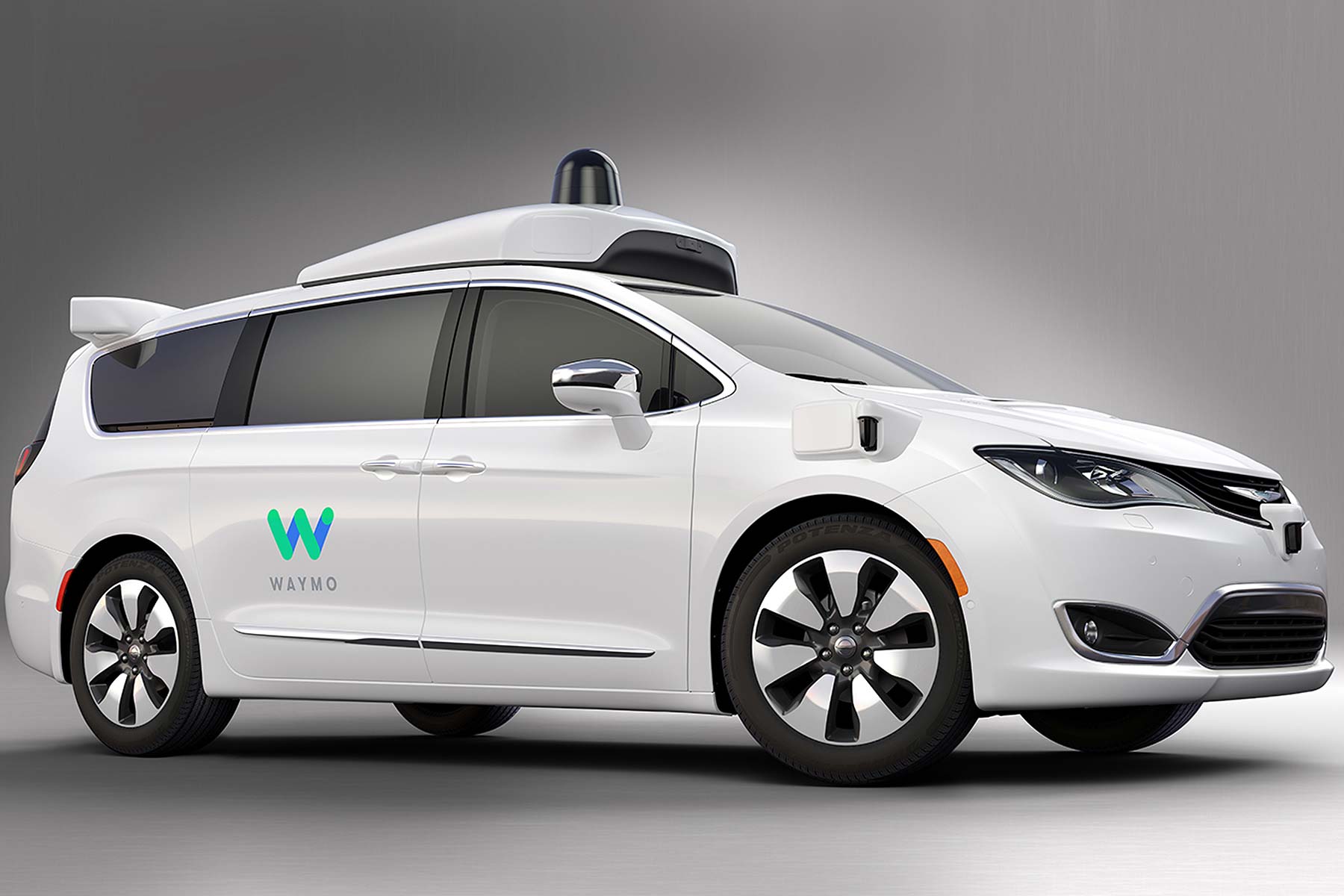
The future of Chrysler has been up in the air in recent days. Currently, it only sells two models, the 300C and Pacifica, and appears to have been starved of development investment (despite promises from management). Some have even speculated Chrysler could be killed off entirely.
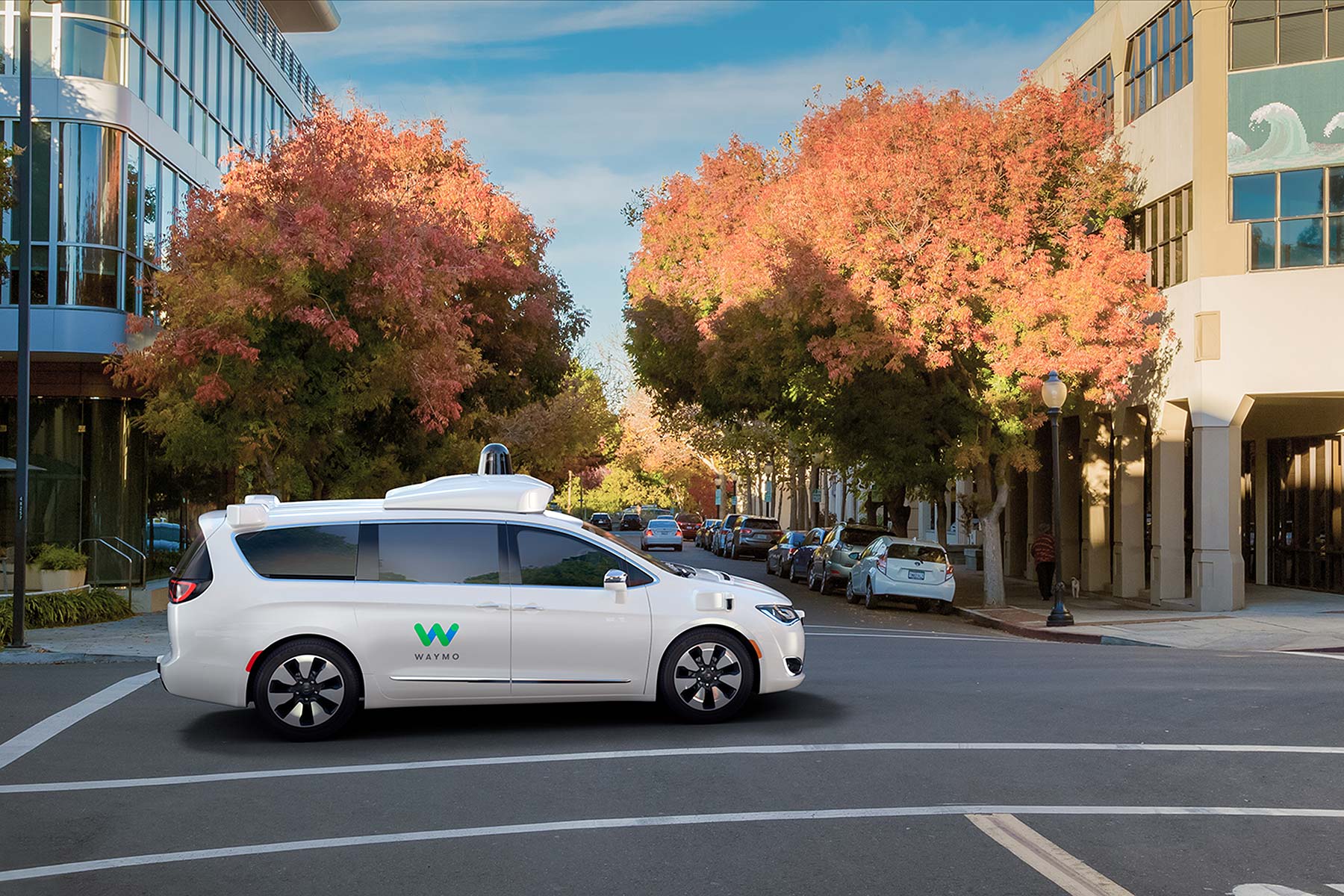
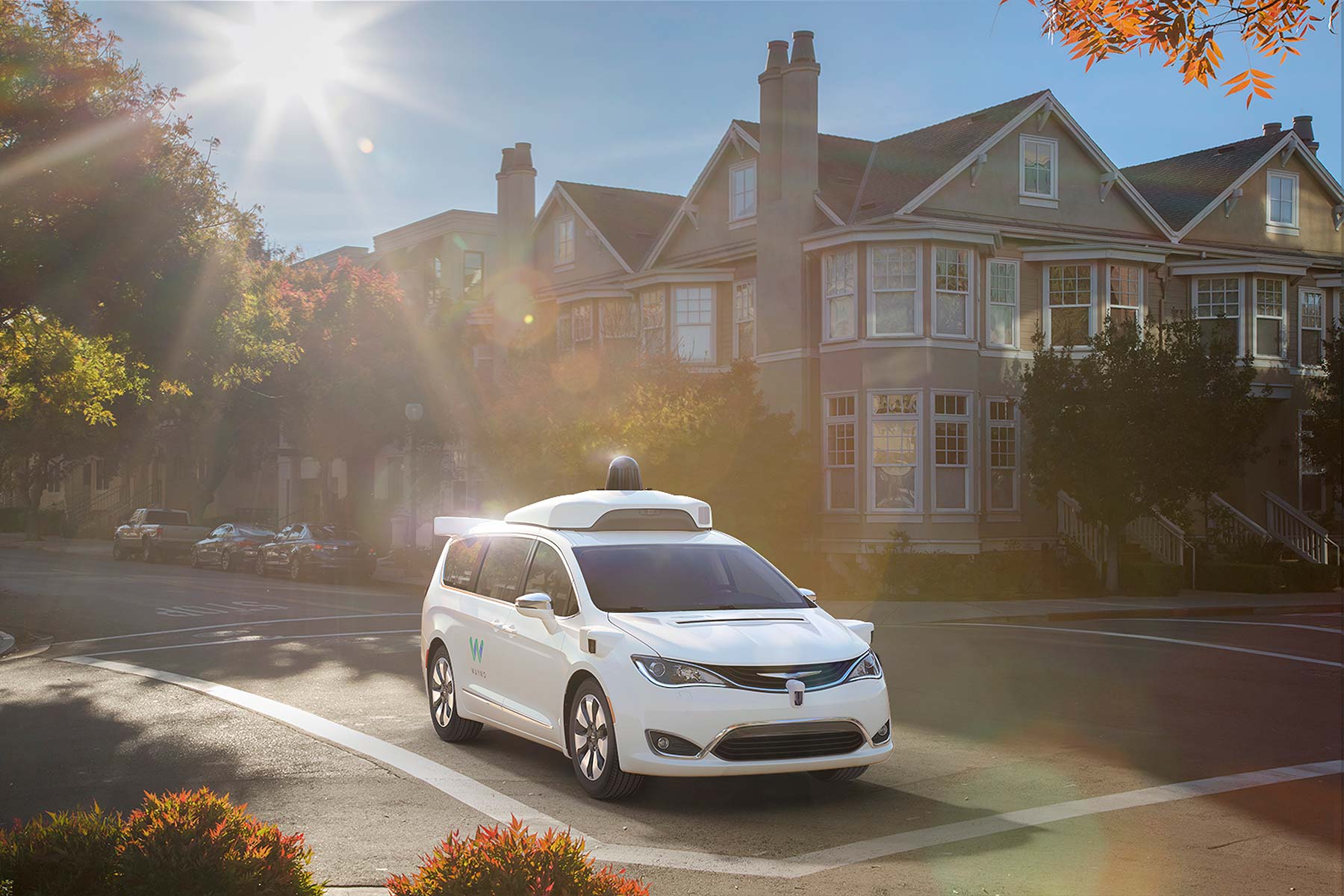
Which is why this week’s surprise announcement that Google’s self-driving vehicle division, Waymo, is to buy 62,000 Chrysler Pacifica Hybrids over the next few years is so significant.
Does it signal this long-running and innovative premium brand could be one of the world’s first to merge into a fully autonomous car company?
The 10 most important Chrysler vehicles
Great motoring disasters: Chrysler in Britain
The FCA (Fiat Chrysler Automobiles) and Waymo announcement itself hinted as much. The two “are beginning discussions about the use of Waymo self-driving technology, including potentially through licensing, in an FCA-manufactured vehicle available to retail customers”.
Why couldn’t Chrysler – the brand that has already helped reinvent the car several times with models such as the 1934 Airflow and the 1984 minivan range – become the first car company in the world to only sell autonomous vehicles?
The amount of learning that the company will benefit from given its close and growing relationship with Waymo will be considerable. Right now, Waymo is the only self-driving car company with a fleet of genuinely autonomous vehicles on public roads. Later in 2018, it will launch the world’s first self-driving transportation service, so people can use the Waymo app to book a ride in an autonomous car. And that car will likely be? Yes, a Pacifica Hybrid.
“Waymo’s goal from day one has been to build the world’s most experienced driver and give people access to self-driving technology that will make our roads safer,” said Waymo CEO John Krafcik. “We’re excited to deepen our relationship with FCA that will support the launch of our driverless service, and explore future products that support Waymo’s mission.”
Chrysler: a modern luxury car company
Anyone who’s seen a car company’s dreamy corporate video on its autonomous future will likely have watched happy people enjoying the journey in a decadent open-plan living room-style cabin, decked out with large screens, luscious seats and little evidence of actually accommodating a driver. They often have steering wheels that retract into the dash. They invariably have front seats swivelled to face the rear.
This is the future of luxury motoring: moving spaces on wheels, rather than what we know as car interiors today. It’s going to be a big leap for traditional luxury brands, particularly those that still emphasise driver-focused traits. Chrysler doesn’t have such baggage. It hardly has a model range at all these days – but it does have two feet firmly in the autonomous car camp, with arguably the best player around right now, well ahead of any rivals.
And the Pacifica Hybrid’s interior? It’s already more like a living room on wheels than many other conventional cars. The attributes that make it such an acclaimed minivan would develop perfectly into being a desirable autonomous mini-room.
If ever this was an opportunity to revive its former mainstream-luxury status, once again make it an innovator, this is it. FCA could kill Chrysler, certainly. Or it could cash in on all the free publicity it’s getting with its future-tech association with Waymo, all those people being wowed by Pacifica Hybrids that drive themselves, and reinvent Chrysler as a luxury car company of the future. With the tech-leader profit margins that presumably could come with it.
Doing so needn’t cost a fortune. It would steal it a march over all its rivals. It would help FCA double down on its association with the autonomous car industry, and help spread this tech through to other brands in its range. Go on, Sergio Marchionne, throw the dice. What do you have to lose?
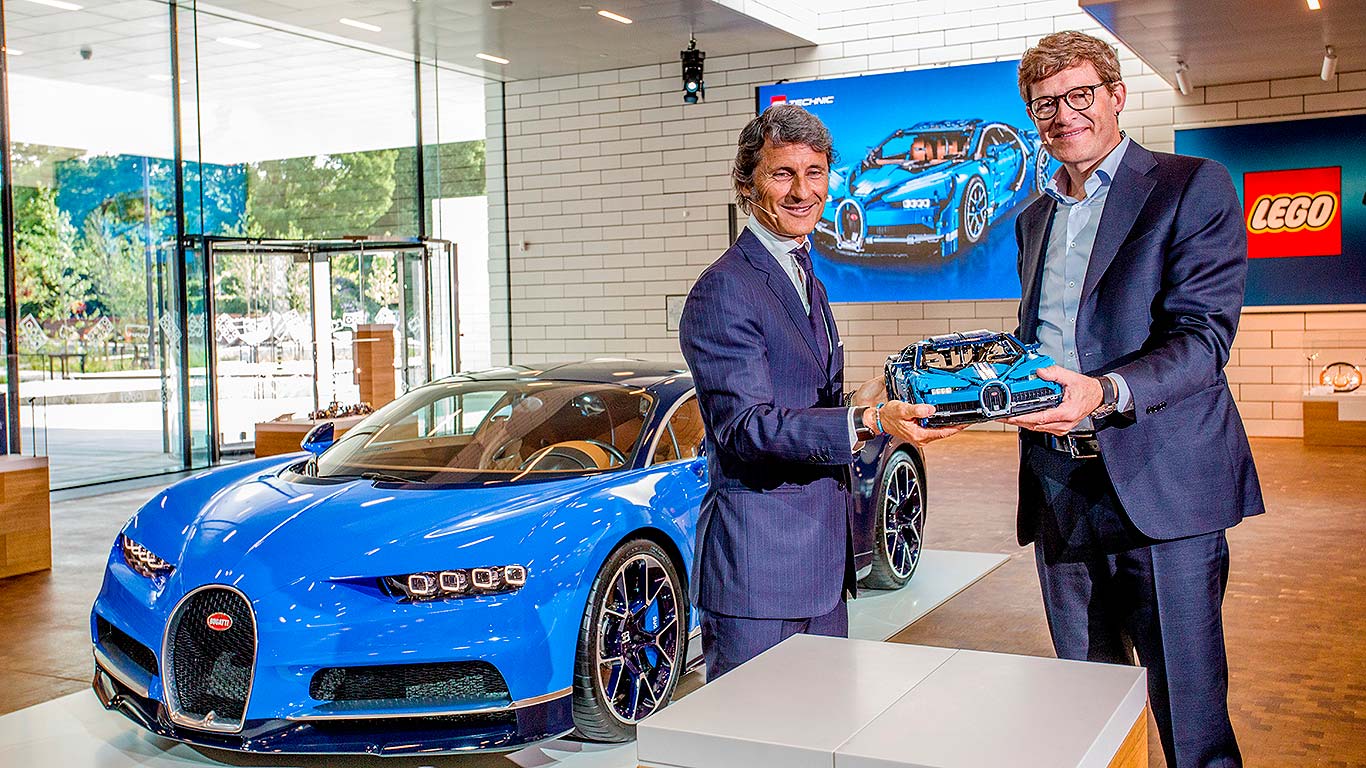
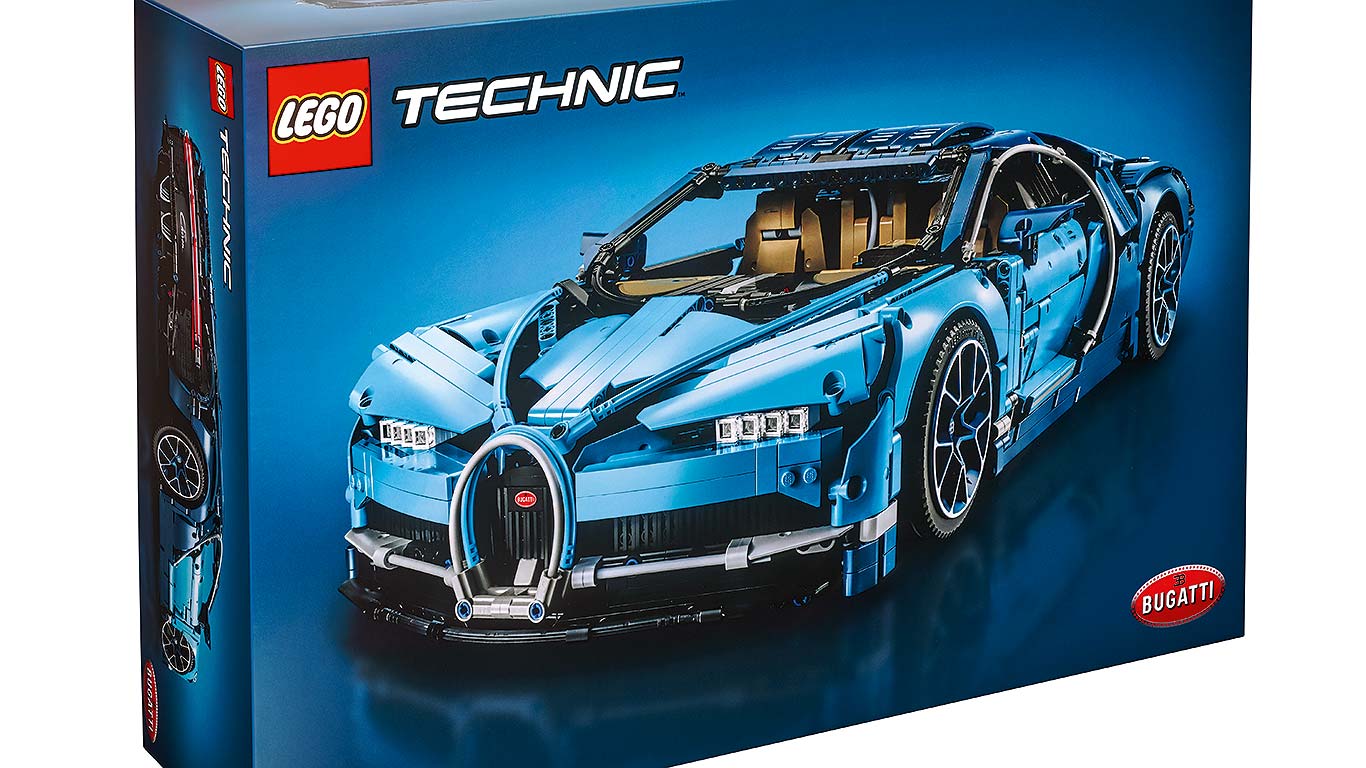
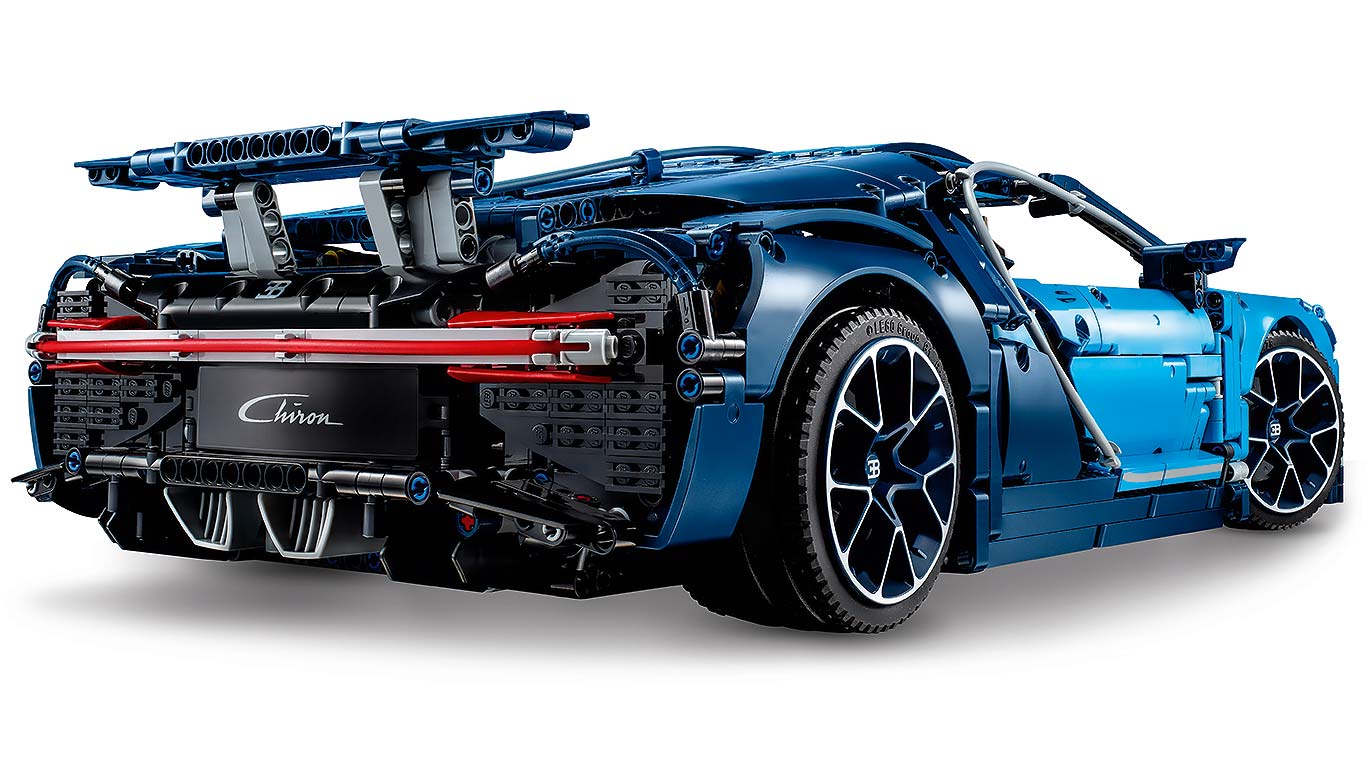
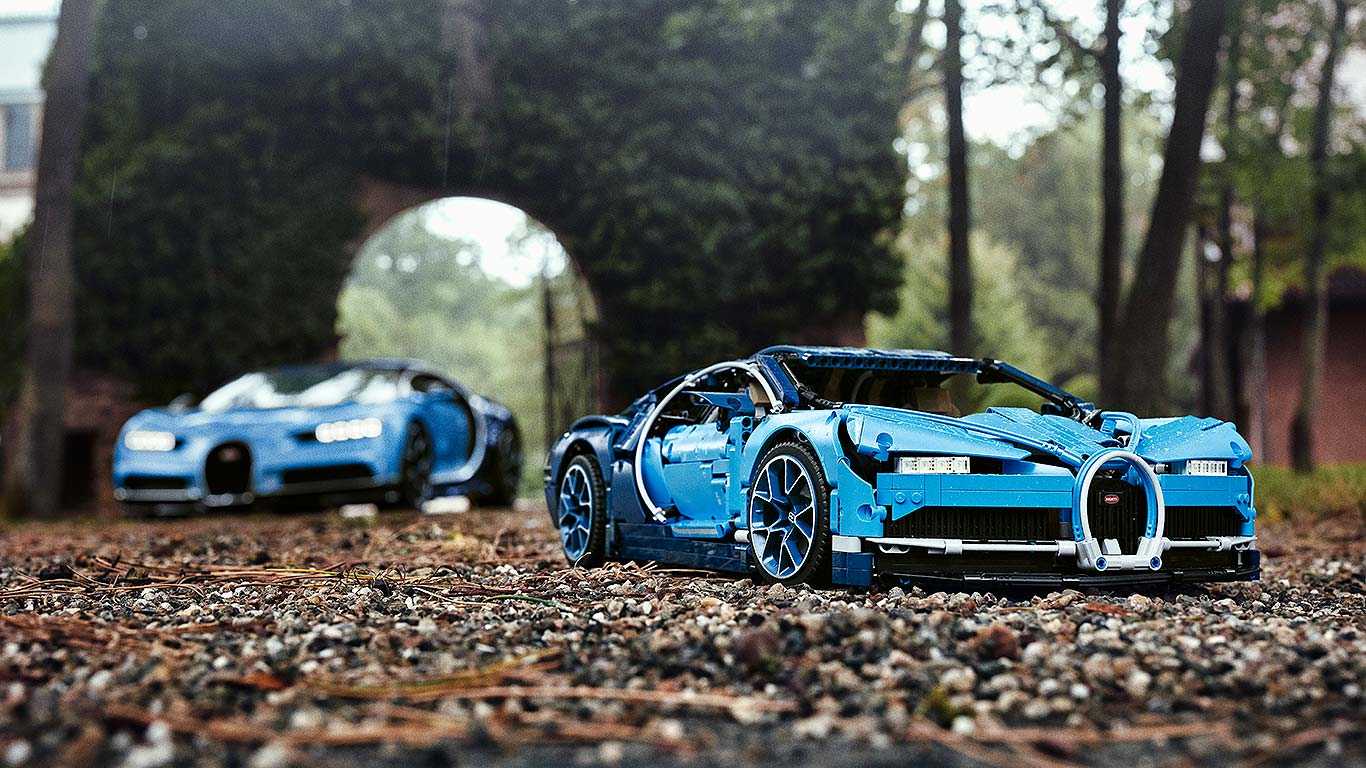
Bugatti and Lego have revealed what could be the world’s fastest Lego Technic model: the 1:8 scale Chiron hypercar kit. On sale now through Lego stores, it arrives in all retailers from 1 August 2018. The price? £329.99.
Lego CEO Niels B. Christiansen and Bugatti president Stephan Winkelmann revealed the new kit at Lego House in Billund. It was first seen two years ago, but has only just reached production.
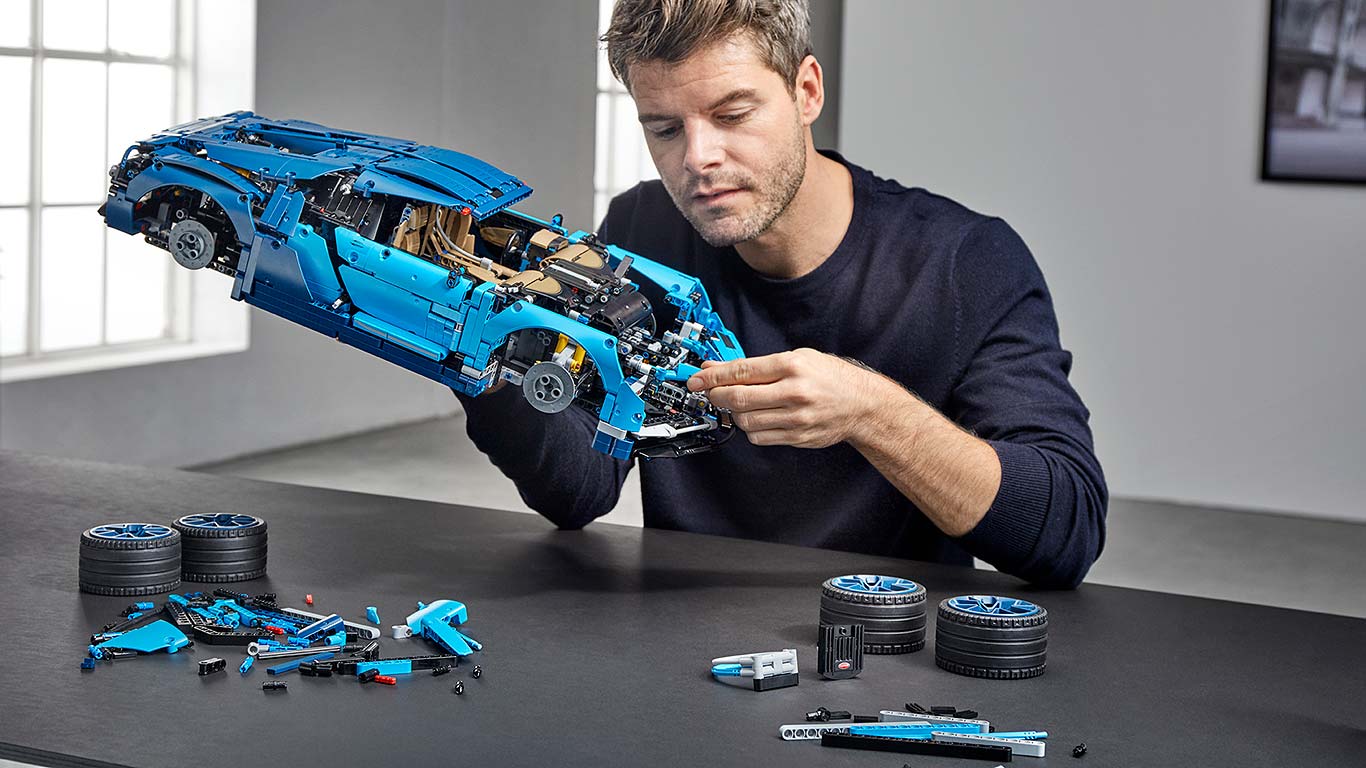
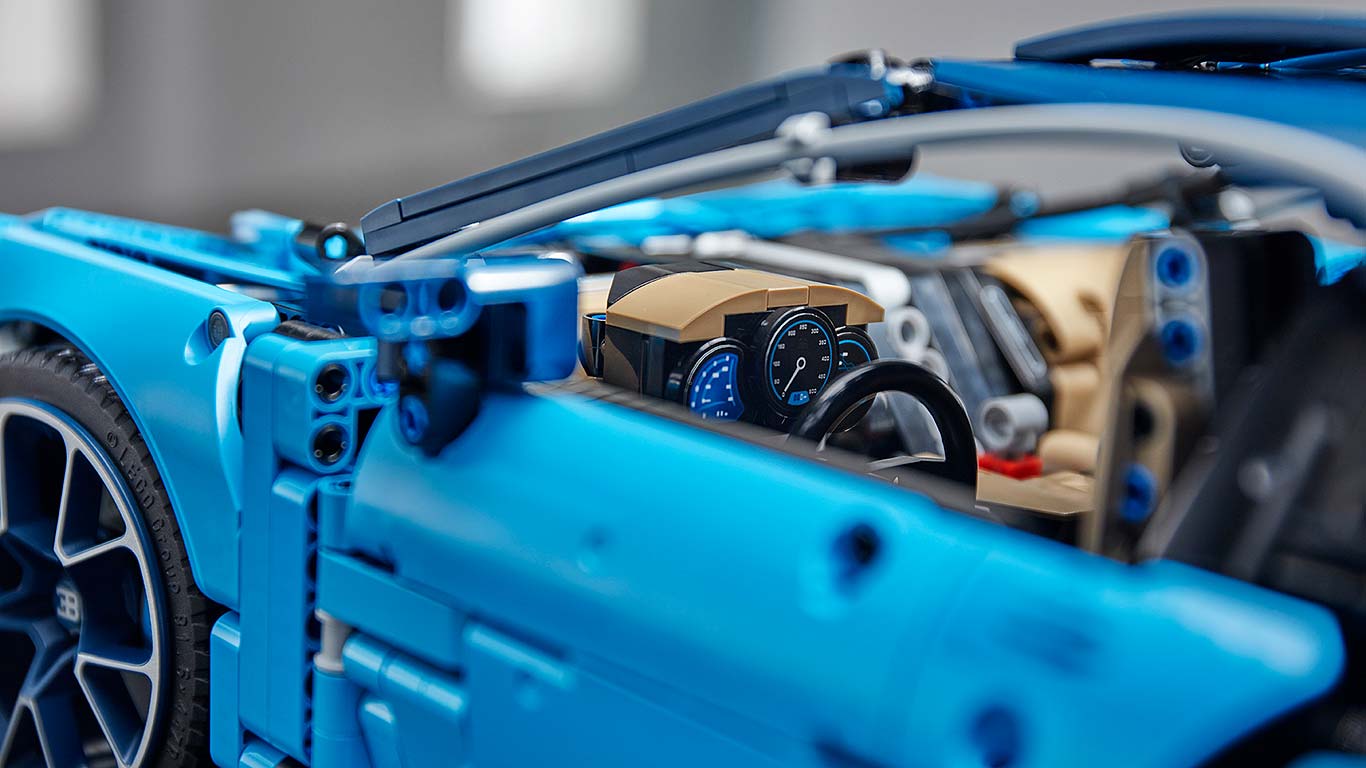
The Lego Bugatti Chiron kit is full of complex detail engineering, comprising of no fewer than 3,599 pieces. Christiansen reckons “our Lego designers have done an amazing job capturing the details of this iconic Bugatti design. It truly stands as testament that with Lego bricks you can build anything you can imagine… it’s a huge model that I can’t wait to start building myself”.
When Christiansen says huge, he means it. The Chiron model is 560mm long, 250mm wide and 140mm tall…
Winkelmann said the Lego Technic Chiron “is an expression of a perfect relationship. I am impressed at the precision and refinement with which our super sports car has been translated into the Lego world and I am sure that fans of both Lego bricks and Bugatti will love this product.”
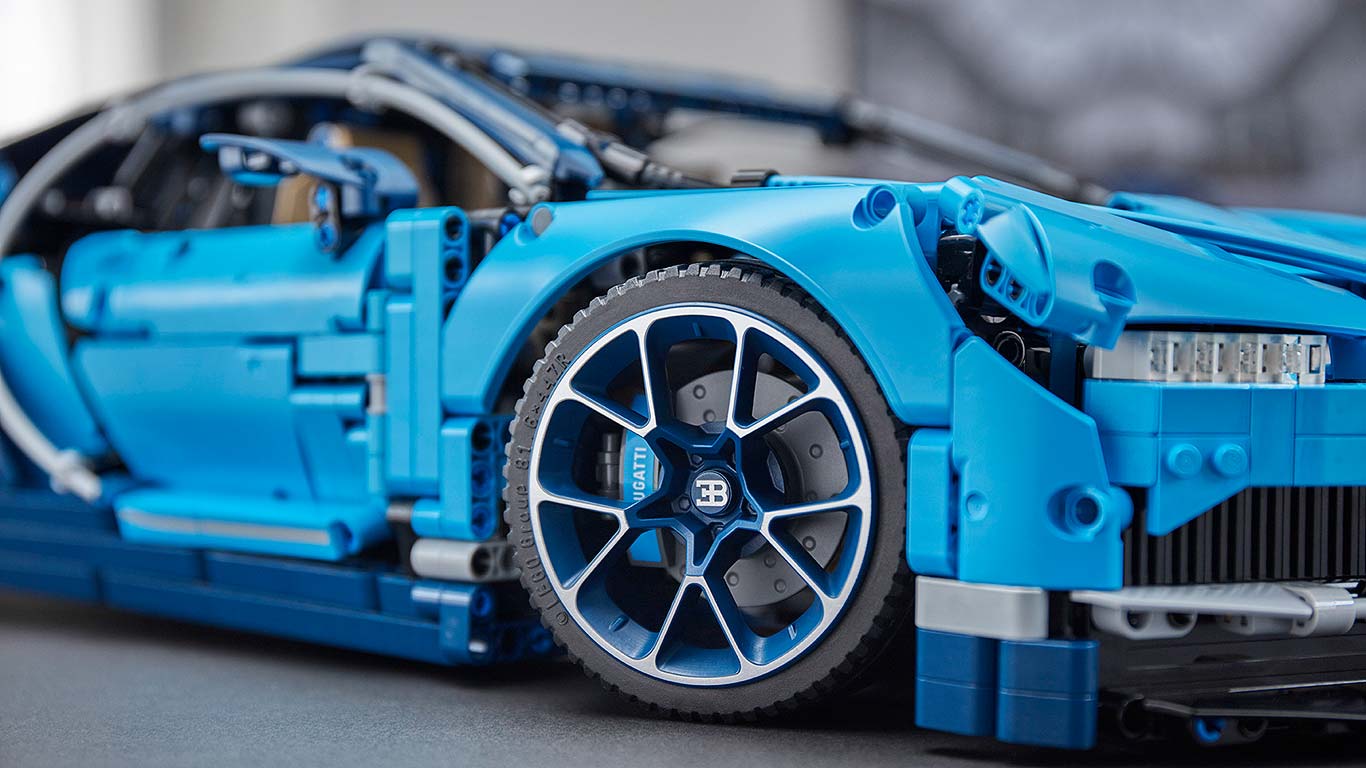
The attention to detail is wonderful. Lego has engineered an impressively convincing replica of the Chiron’s aerodynamic bodywork, including spoked rims with low-profile tyres.
The rear wing is a moveable active spoiler and – brilliantly – the kit includes a ‘speed key’ that lets model-makers twitch the position of the rear wing from the handling position to its more streamlined top speed setting.
Inside, the cockpit is super-detailed, with Lego even engineering moving paddle-shifters for the eight-speed gearbox. Behind, the mighty W16 engine is faithfully depicted, and this too has moving positions.
Under the hood of each Lego Bugatti Chiron is a unique serial number, which can be used to unlock special content via lego.com/technic. You’ll find another delightful feature hidden there, too – a Bugatti overnight bag.
If you need further justification to fork out £300+ on a Lego kit, check out the presentation set. All models come in an exclusive box, with a coffee table-style collector’s booklet that includes the instructions. Set aside plenty of time, but rest assured, your efforts will be worth it.
McLaren Automotive has taken control of its new £50 million facility in Sheffield, and is now getting ready to prepare it for production.
With the company having already delivered 15,000 cars since 2011, the new McLaren Composites Technology Centre is key to continuing production expansion to meet demand.
Following completion of the newly constructed building, McLaren now has the task of turning it into a factory for build its lightweight carbon fibre tubs. Once up and running, the MCTC will create the Monocage chassis used in the entire range of McLaren road cars.
Having used carbon fibre chassis technology as part of its Formula 1 race cars since 1981, the material is central to the future of the company. Once produced at the MCTC, the carbon fibre chassis will be transported to the existing McLaren Technology Centre in Woking, and turned into finished supercars.
McLaren currently sources its carbon fibre tubs from suppliers. Taking direct control of the process will give it much more flexibility and control, as well as significant cost savings.
At present 45 McLaren Automotive employees are involved in the set up of the new MCTC. Once fully operational next year, McLaren expects the new facility to support hundreds of new jobs throughout the Sheffield region.
 New Dacia Duster prices start from £9,995, the firm has revealed ahead of ordering opening on 11 June 2018 – meaning the second-generation model is still Britain’s cheapest SUV.



 The
The 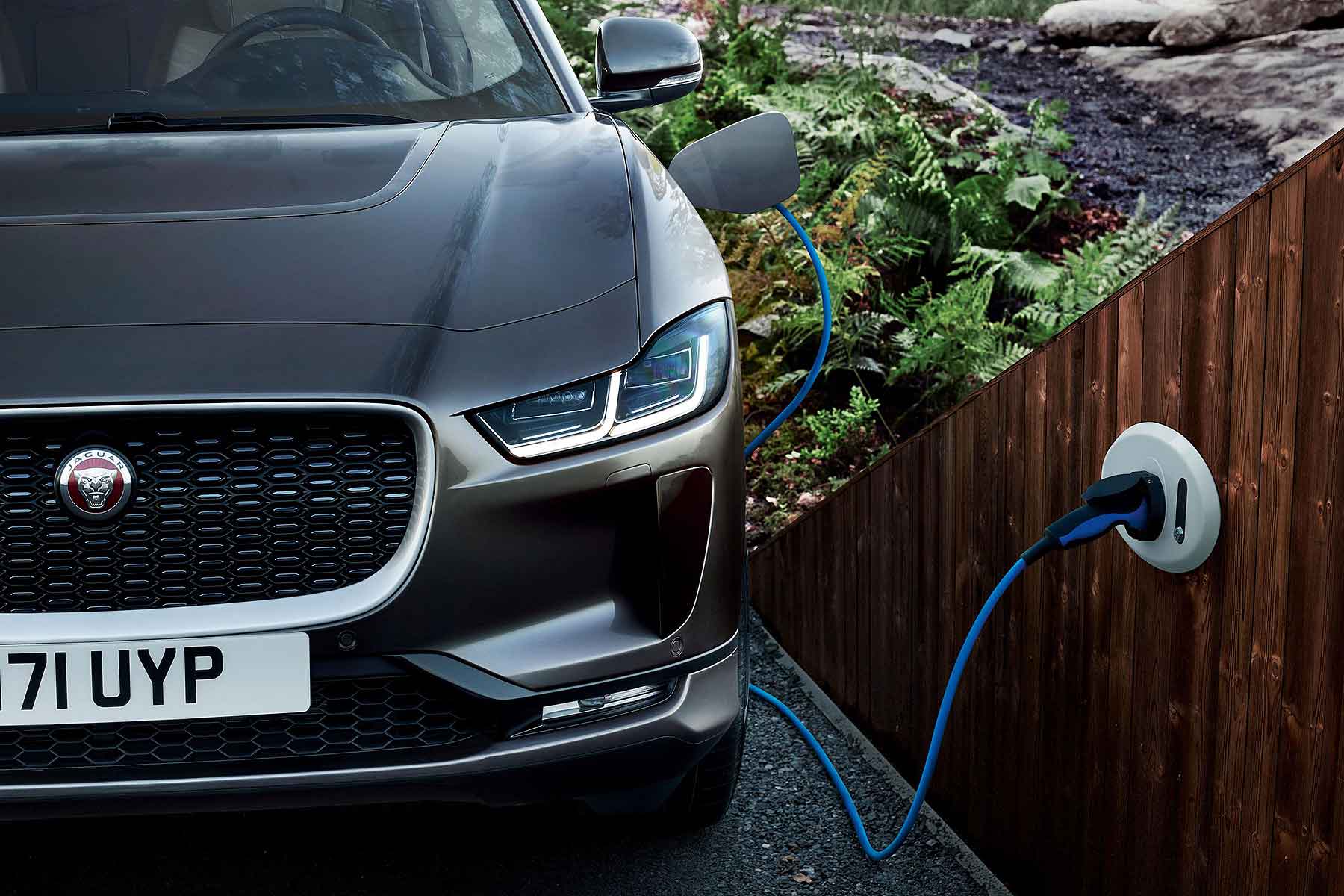

 Lexus owners have never been able to take more than four friends or family along for the ride. Until now; with the launch of the RX 450h L, the Japanese premium brand is offering a three-row seven-seater model in the UK for the first time.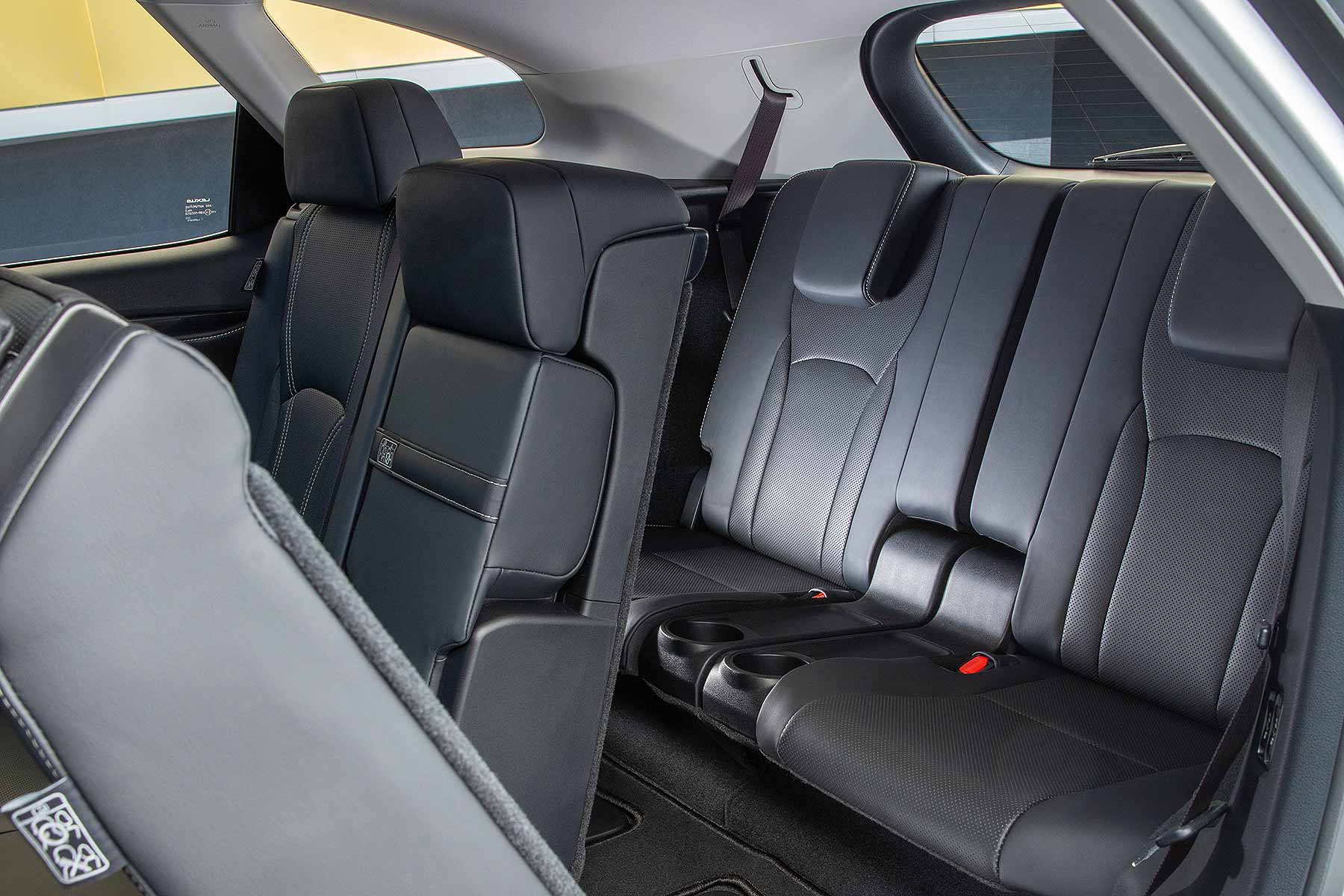
 Learner drivers are now legally able to take driving lessons on motorways in England, Scotland and Wales, as part of government plans to help ensure rookie drivers know how to use motorways safely.


 The future of Chrysler has been up in the air in recent days. Currently, it only sells two models, the 300C and Pacifica, and appears to have been starved of development investment (despite promises from management). Some have even speculated Chrysler could be killed off entirely.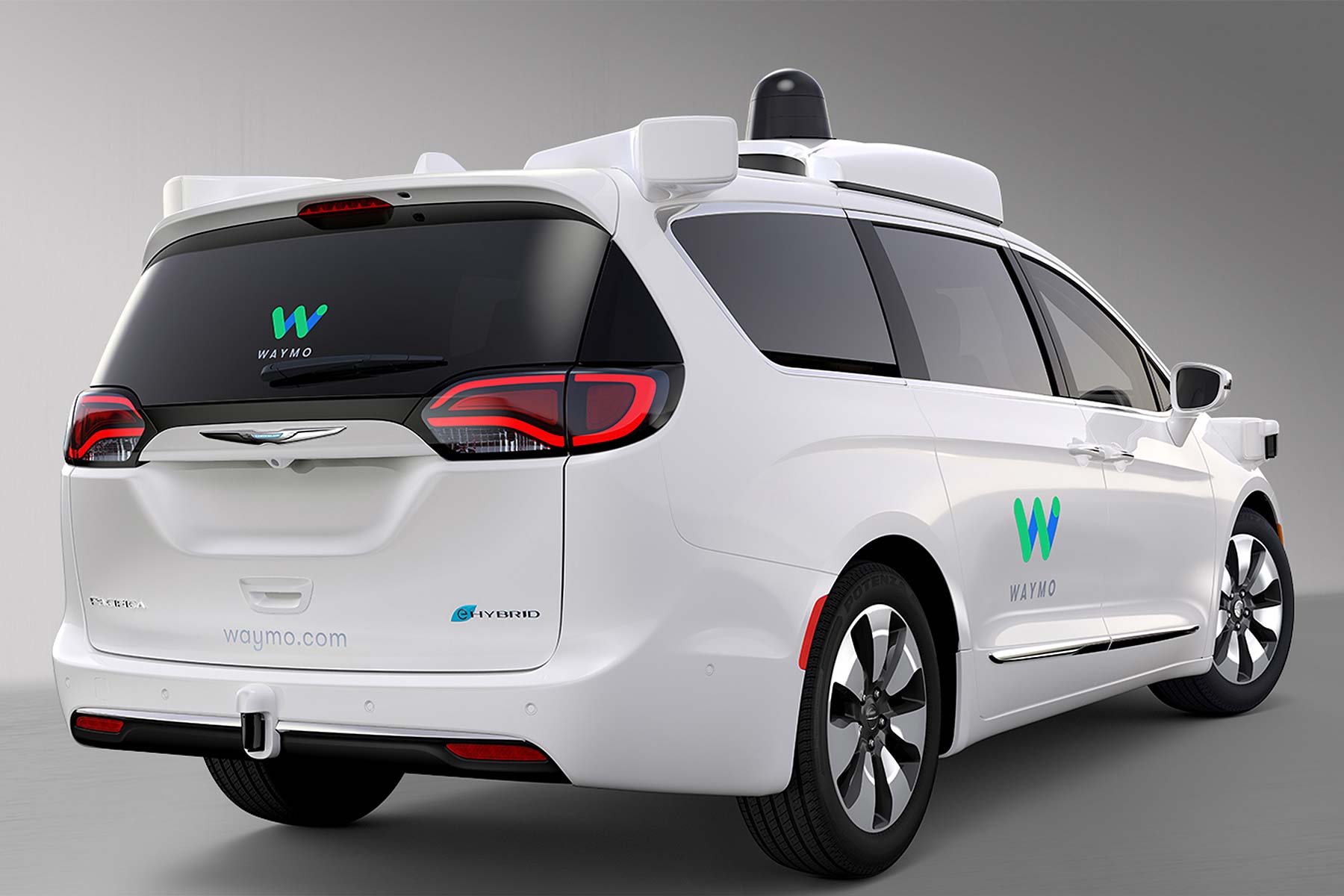
 Bugatti and Lego have revealed what could be the world’s fastest Lego Technic model: the 1:8 scale Chiron hypercar kit. On sale now through Lego stores, it arrives in all retailers from 1 August 2018. The price? £329.99.