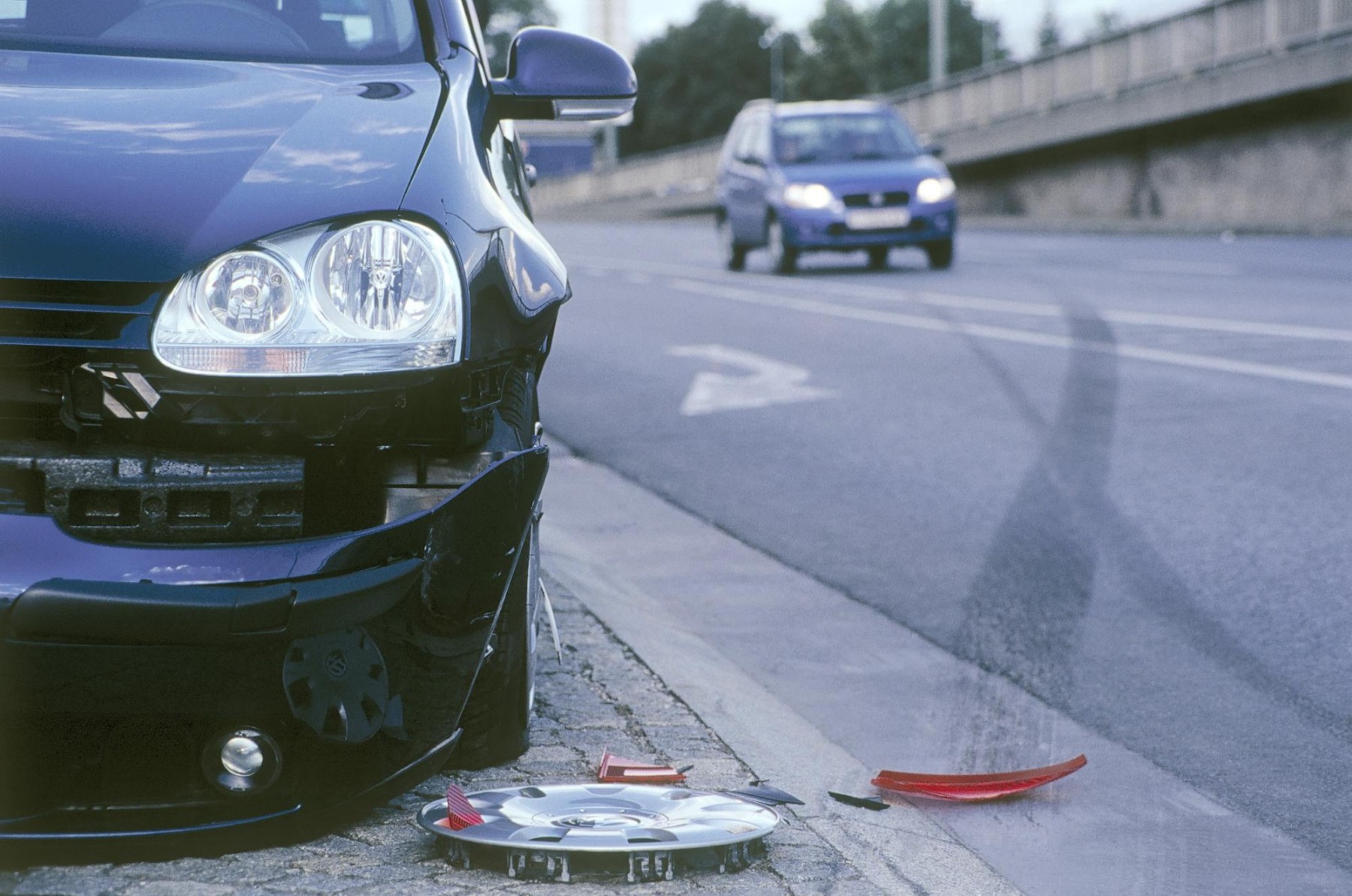
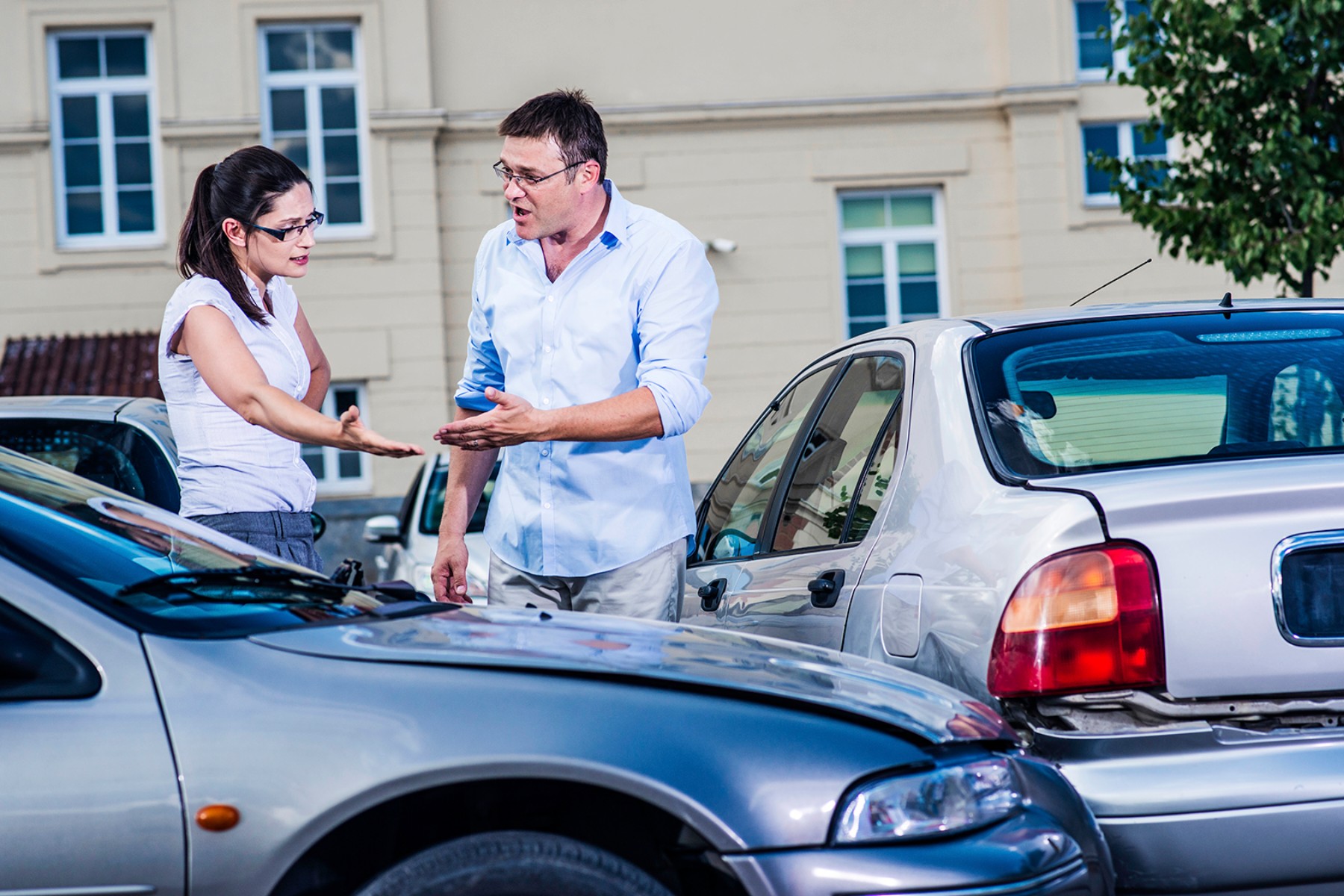
Britain’s biggest black box car insurance company has released new data that appears to show that some of the riskiest drivers on our roads are also some of the youngest.
Insurethebox has been providing telematics-based car insurance since 2010. It recently analysed its records for 2017 – and has found that, from 4 million miles of driving data, drivers aged 17-21 were responsive for more than 7 in 10 of the most serious ‘high impact collision alerts’ via its Accident Alert service.
These alerts are auto-generated when dangerous incidents are detected. It works in a similar way to eCall, the automatic emergency call function that’s now mandatory on new cars sold in the EU.
The alerts are triggered when a significant G-force is registered: the system will examine the time of day, whether the vehicle is still moving, and what road the car is on. If it senses an accident is a possibility, contact with the driver is automatically attempted. If this unsuccessful, the emergency services can remotely be alerted by an operator.
For younger drivers to generate such a high proportion of the highest-level collision alerts is naturally damming, but the firm is framing it as a positive: “Our Accident Alert service is an example of telematics technology making UK roads safer,” said its road safety manager Simon Rewell.
“We provide young drivers with the benefits of connected motoring – and they don’t need to buy a brand new car to access it.”
Insurethebox revealed some other interesting findings from the data: it seems drivers who trigger Accident Alerts between midnight and 5am are six times more likely to require emergency services, with 43 percent of all accident alerts being triggered after 5pm.
The highest number of alerts throughout the year were triggered in December, while vehicles on a 30mph road are six times more likely to trigger an alert than those on a motorway, no matter what time of year it is.
What is the safest used car you can buy as a new parent?
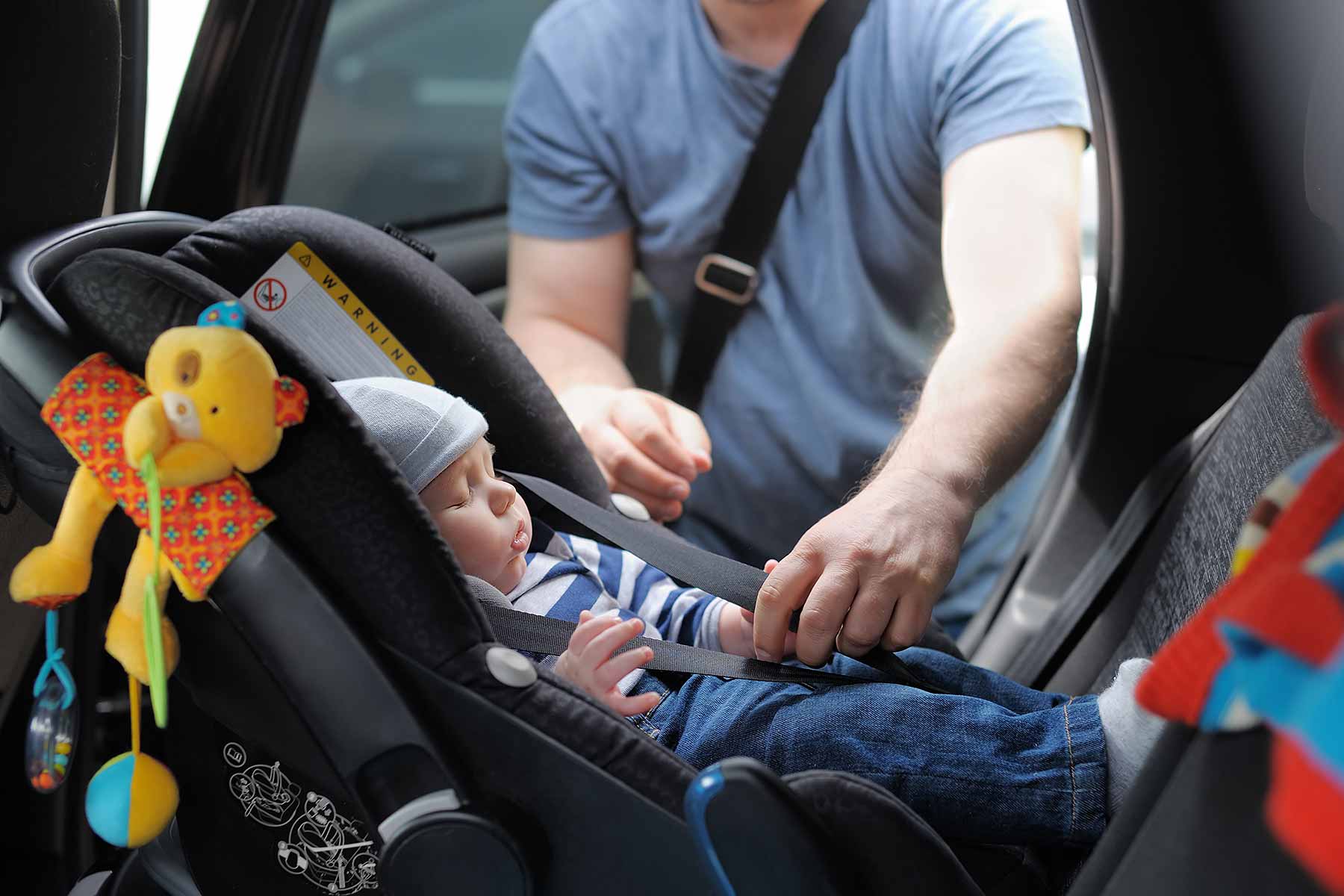
A child-friendly safe set of wheels is something on many a young couple’s list of things to buy in the lead up to the big day – but babies are expensive, and it’s not always feasible to go out and choose from the very newest cars to keep your new arrival safe.
Co-op Insurance in association with Thatcham Research has thus taken the liberty of collating the safest used cars for young families, based on a specific set of criteria.
A five-star NCAP rating is a given, with a specific focus put on child occupant safety. Front and side protection, as well as how easy and safe it is to fit child restraints in the rear seats, were factored in.
An additional essential feature was Autonomous Emergency Braking.
And the five safest used cars for young families are..?
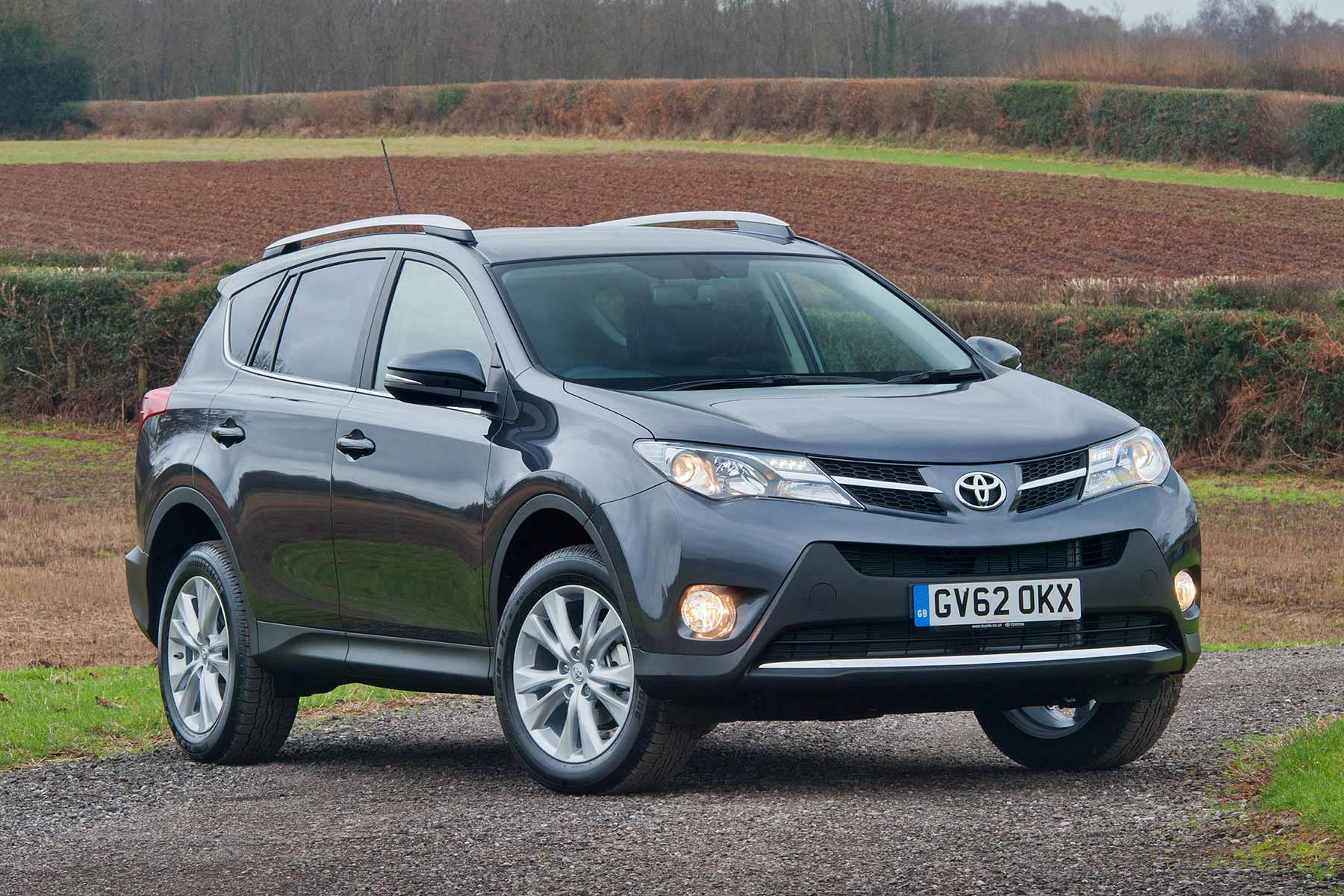
5: Toyota RAV4
Proof that taller and bigger isn’t necessarily better. The RAV4 is alone in being anywhere close to what you might call a ‘proper’ SUV on the list. It’s also one of the safest used SUVs young families can buy. But other more compact machines still do it better…
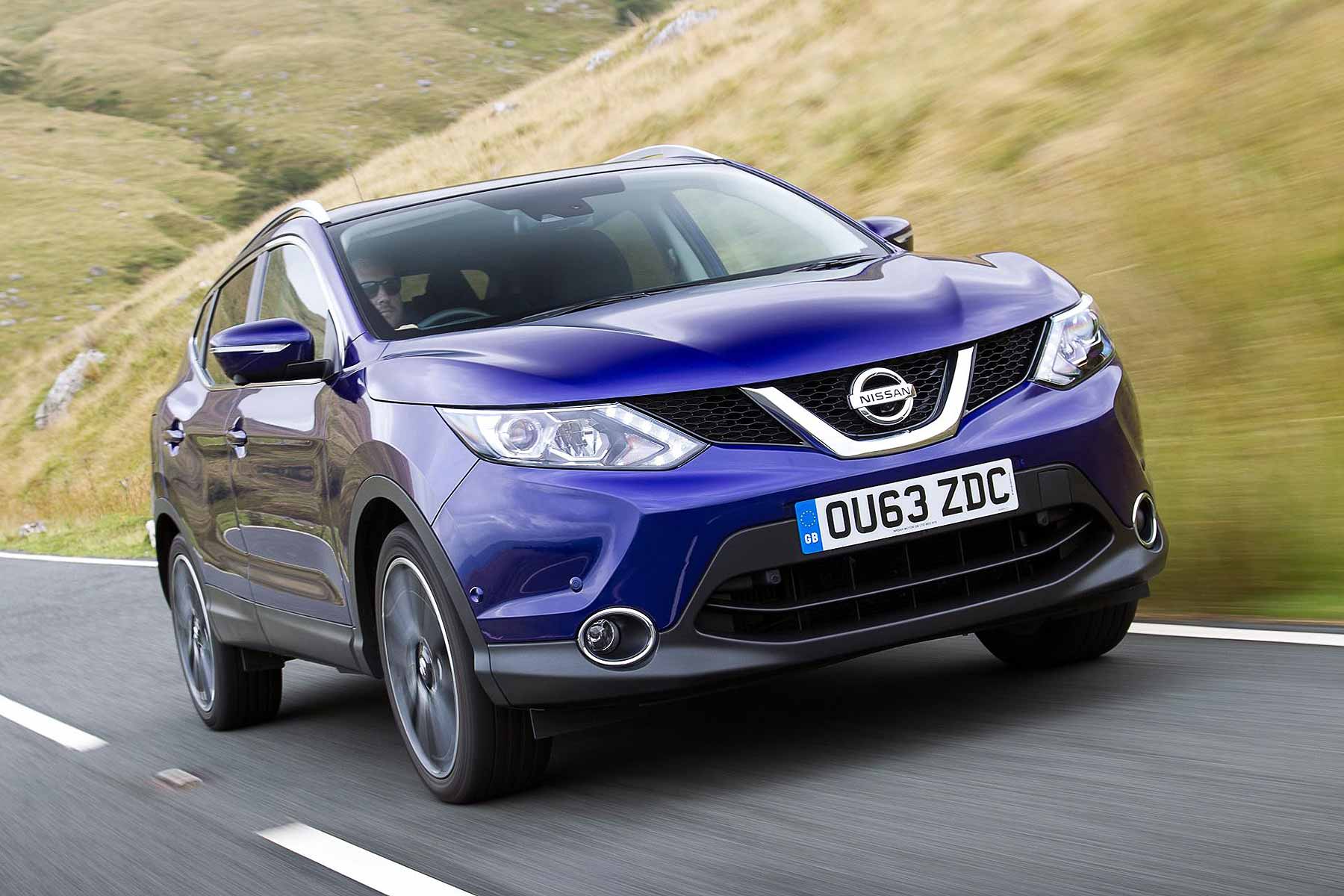
4: Nissan Qashqai
Proof that most popular isn’t necessarily quite best. That’s not to discredit the Nissan’s smash hit best-seller. While it’s fourth on this list of five here, it’s still among the very safest bets for a young family looking to get moving.
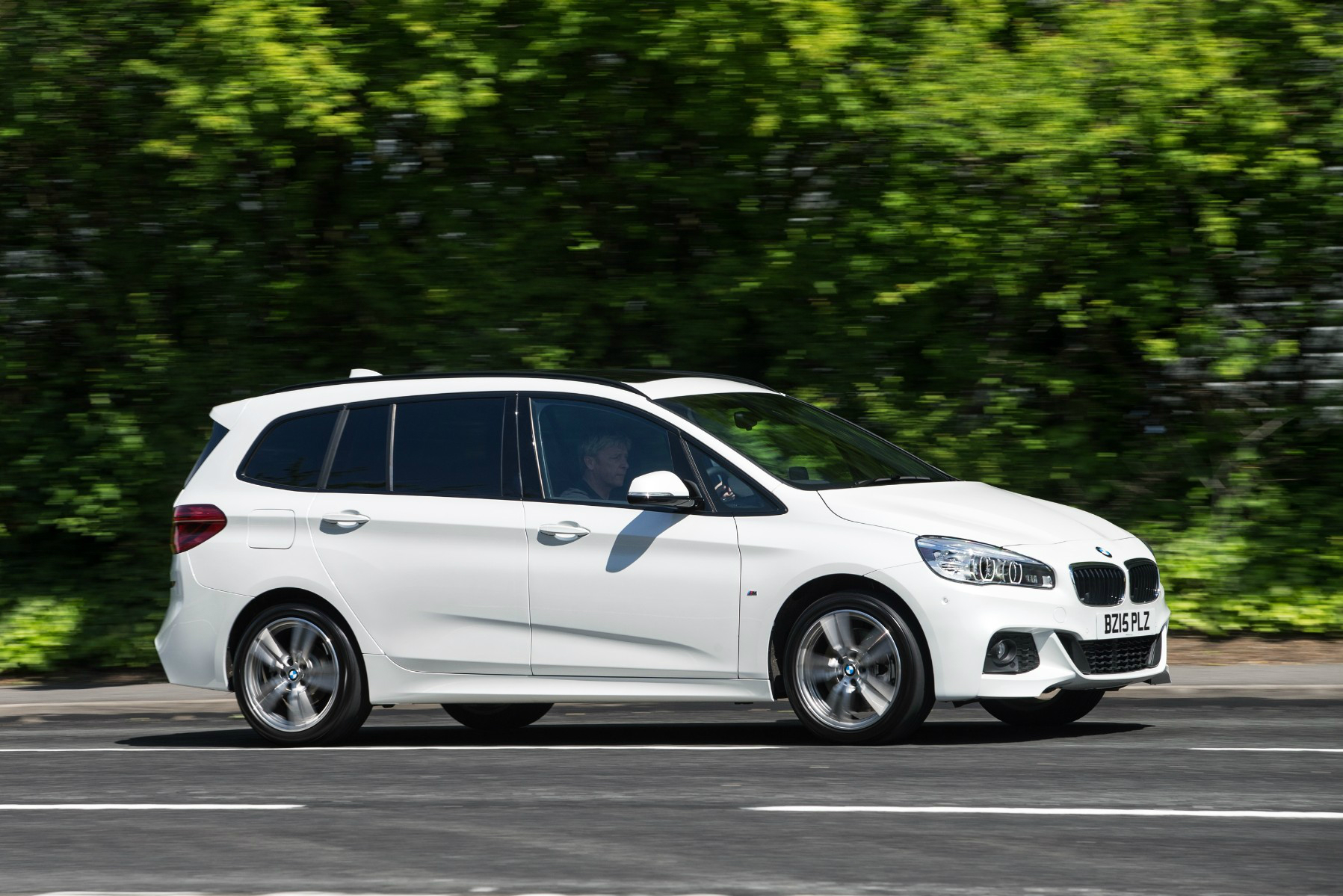
3: BMW 2 Series Active Tourer
A first foray into this segment for the premium German manufacturer. BMW’s engineering fetishism extends beyond performance and technology, with the big 2er being one of the safest and easiest to operate used family cars on the market.
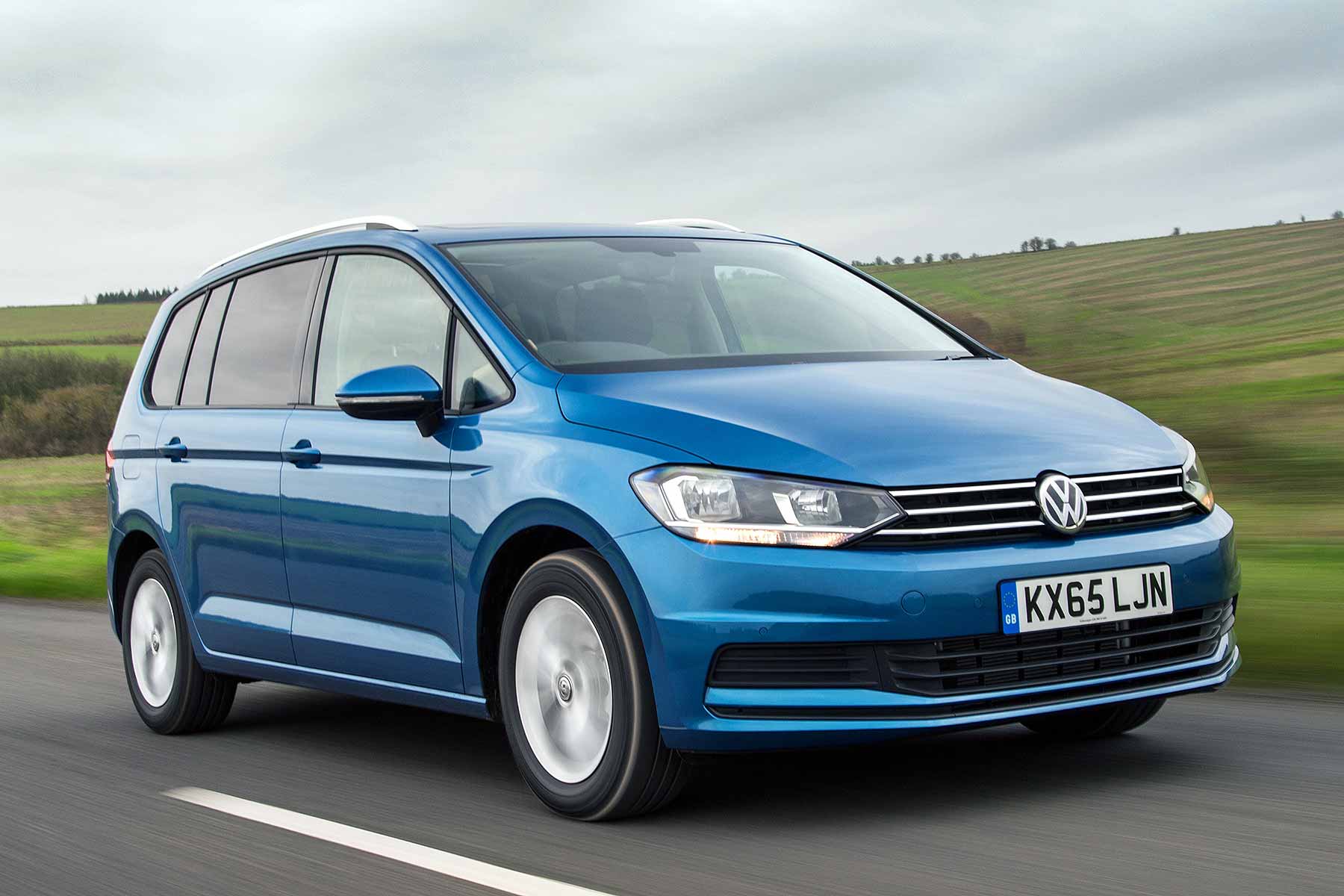
2: Volkswagen Touran
A safe buy in terms of actual safety, reliability and residuals. You can’t go far wrong with Volkswagen – the Touran will last, it’ll hold its value better than most contemporary offerings and if you do have a prang, you can rest assured you’re in one of the best used cars for new families out there.
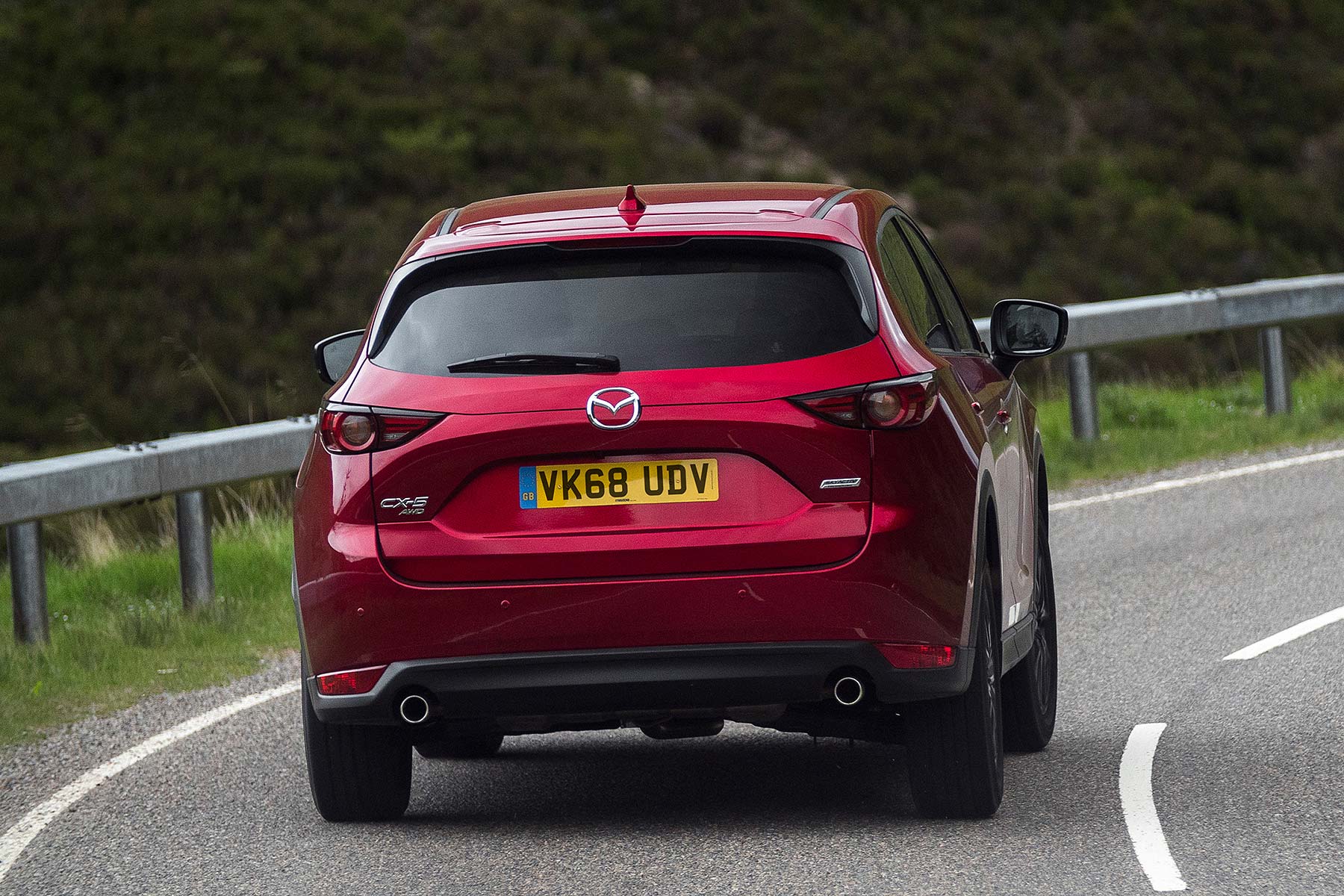
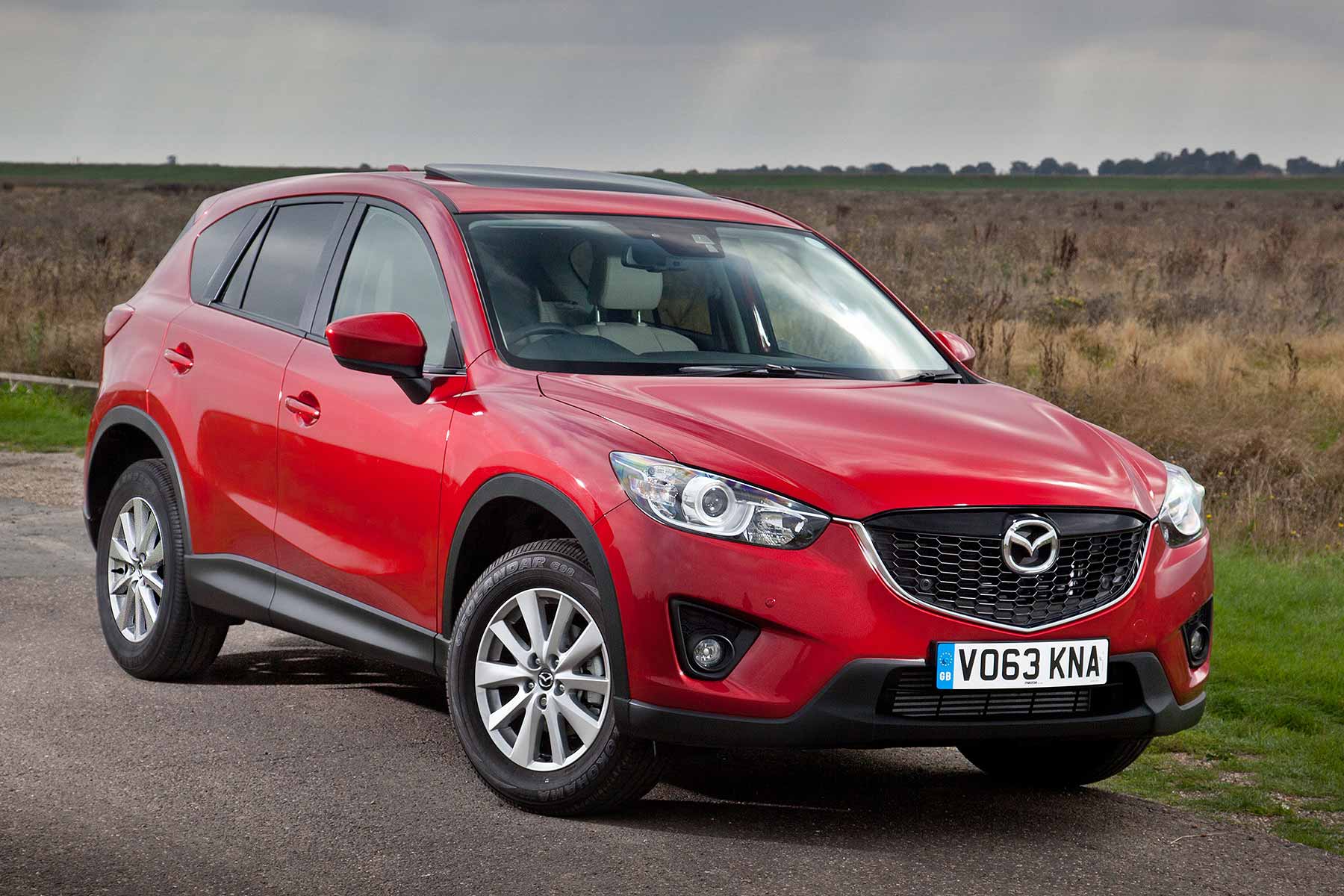
1: Mazda CX-5
Mazda will forgive us for referring to it as something of a dark horse in the new car market. Never a sales leviathan like Ford or VW, but always with near-top class products. The CX-5 is no different (after all, it was shortlisted in the 2018 World Car Awards final) and its place heading this list comes as no surprise to us whatsoever.
New car sales across Europe recorded their highest running total of the century during the first half of 2018, new data from JATO has revealed. 8.66 million new cars hit the road in the first six months, a rise of 2.7 percent.
This is despite a stiff 6.3 percent decline in the UK, Europe’s second-biggest market for new car sales. Strong growth in Germany, France and Spain helped offset this, particularly the former: Germany is by far the biggest new car market in Europe, with over three million sales a year.
And what type of car are Europeans clamouring to buy? Why, SUVs, of course – they are the region’s favourite type of vehicle by a large and growing majority.
SUV sales now comprise a third of new car sales in Europe, with the next-best sector, superminis, way behind on 20.4 percent. SUV sales have grown by 24 percent so far in 2018… and in June, they were up 30 percent.
Of the 2.92 million SUVs sold so far in 2018, the fastest growing sub-sector is small SUVs. 1.08 million of them found new homes. 1.24 million compact and 455,200 midsize SUVs were sold, although the luxury SUV sector did actually fall 9 percent, with sales down to 141,000.
As SUVs go up, car sales go down, by 4 percent overall – but in the case of MPVs, an eye-watering 23 percent…
Europe’s top cars of 2018 so far
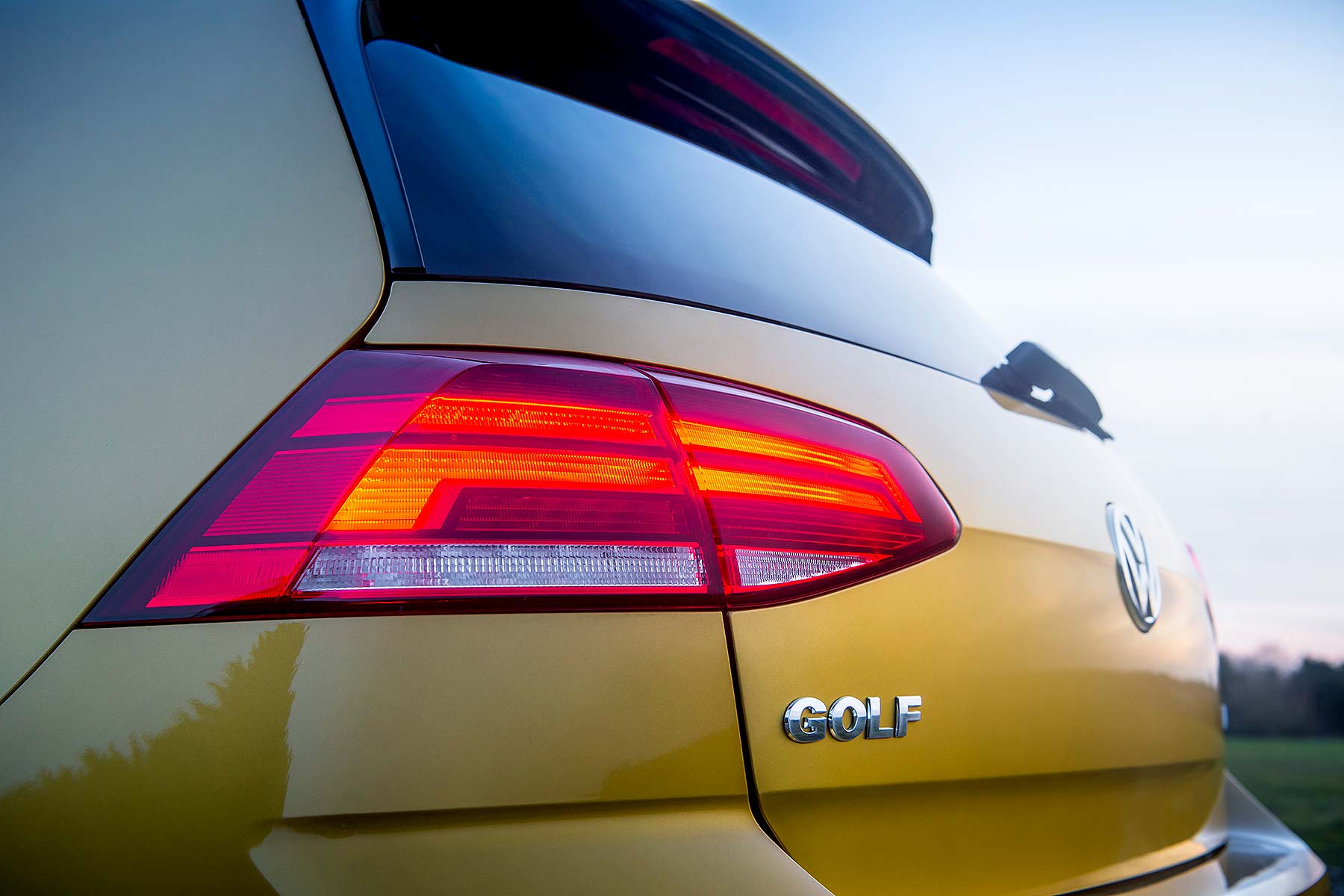
Volkswagen Group, which includes Audi, Skoda and Seat, is Europe’s biggest brand for SUVs – but with the Volkswagen Golf, it is also the firm building Europe’s best-selling car. Despite essentially being seven years old the Golf sits at the top of the EU sales charts, with registrations up 8 percent to 257,550 cars.
JATO figures reveal there’s been a dash away from Golf diesels, with registrations down 26 percent… but a rise in petrol registrations of 29 percent more than compensates. Volkswagen also currently sells a 6 percent alternative fuel vehicle (AFV) mix with the Golf.
The Renault Clio was second, with meagre growth of 1 percent, and sales of 185,234 cars (note, this is way behind the quarter-million total of the Golf). The Volkswagen Polo fell 4 percent, to 166,924 cars, with Britain’s favourite car, the Ford Fiesta, 1 percent up on 157,286 cars.
Nissan’s Qashqai is Europe’s fifth favourite car, with registrations of 134,547 cars, placing it ahead of the Peugeot 208 and its fast-rising Volkswagen Tiguan arch-rival. The Skoda Octavia, Renault Captur and Vauxhall Corsa rounded out the top 10 – the latter suffering its own worrisome decline of 15 percent.
The Vauxhall Astra fared even worse, with a massive sales drop of 33 percent seeing it plummet to 22nd in the 2018 European sales chart. Opel Vauxhall itself is down 6 percent – luckily, the weakness of its core cars is being offset by the arrival of new models such as the Crossland X and Grandland X.
The best-performing new arrival, however, was again from Volkswagen: 71,000 T-Roc were registered, placing it 32nd in the European sales chart for the first half of 2018.
Seat fans who like to combine load-lugging practicality with performance are in luck this summer.
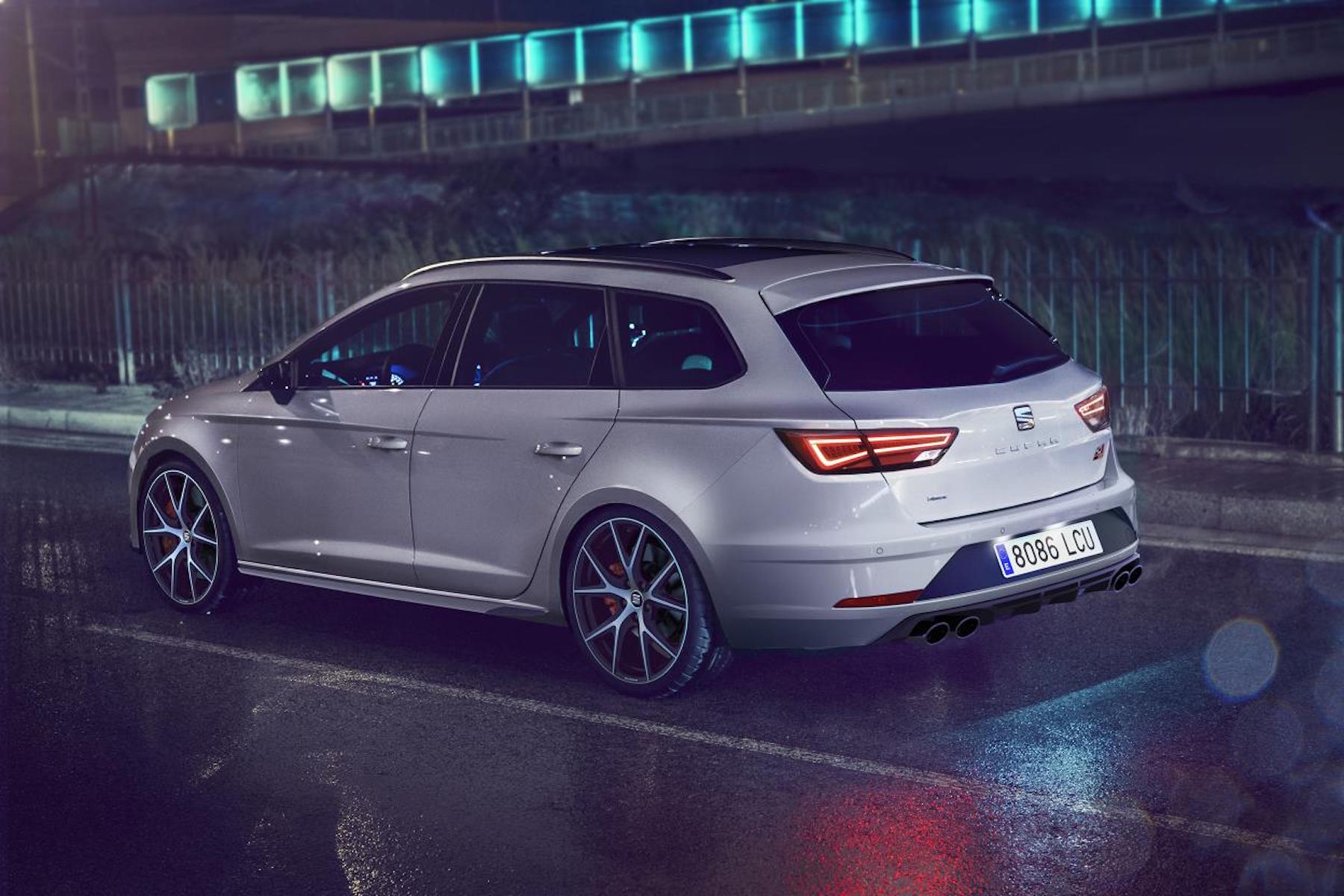
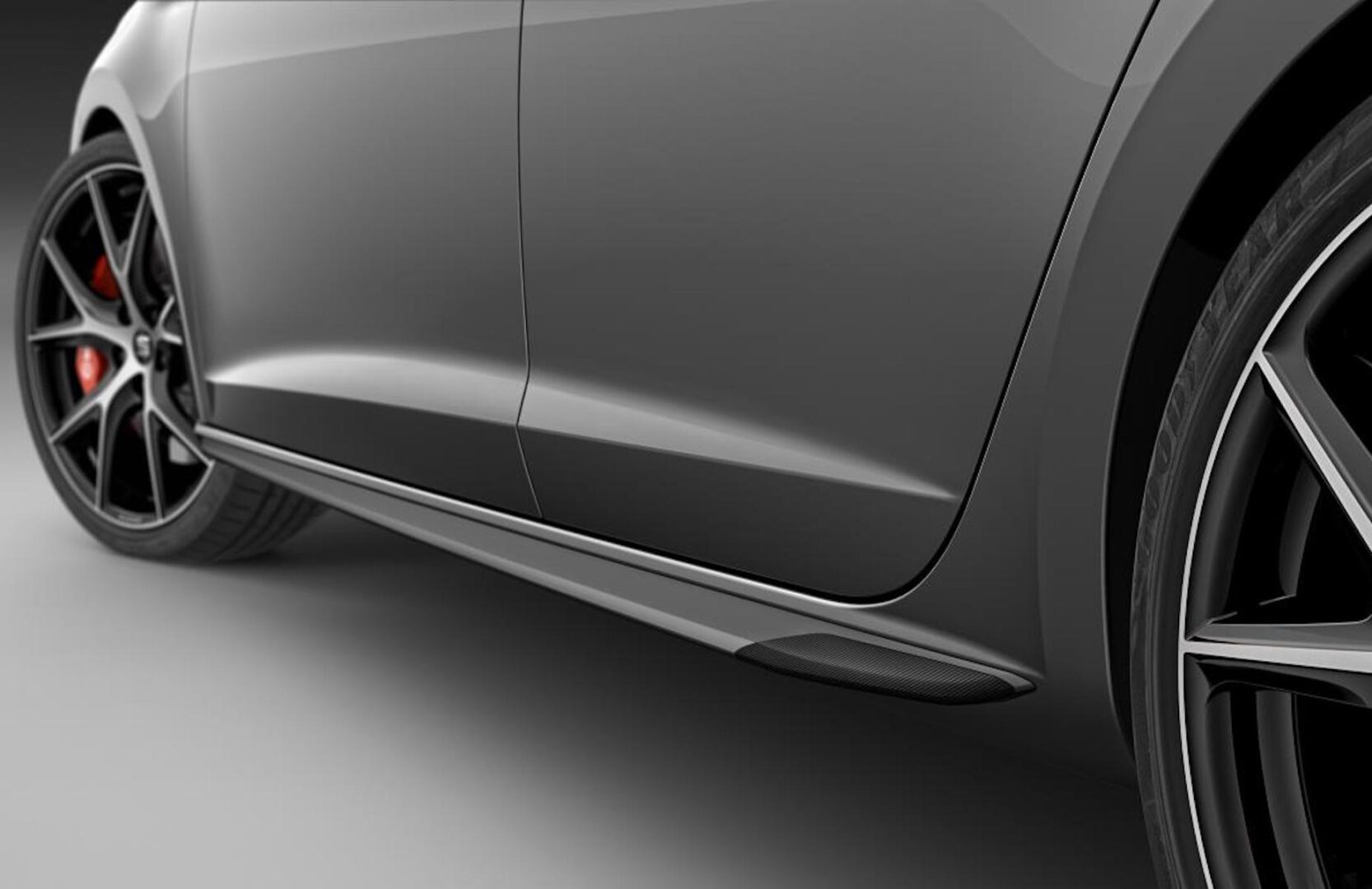
A new limited-edition version of the Leon ST Cupra estate adds an array of styling enhancements, along with mechanical upgrades over the standard car.
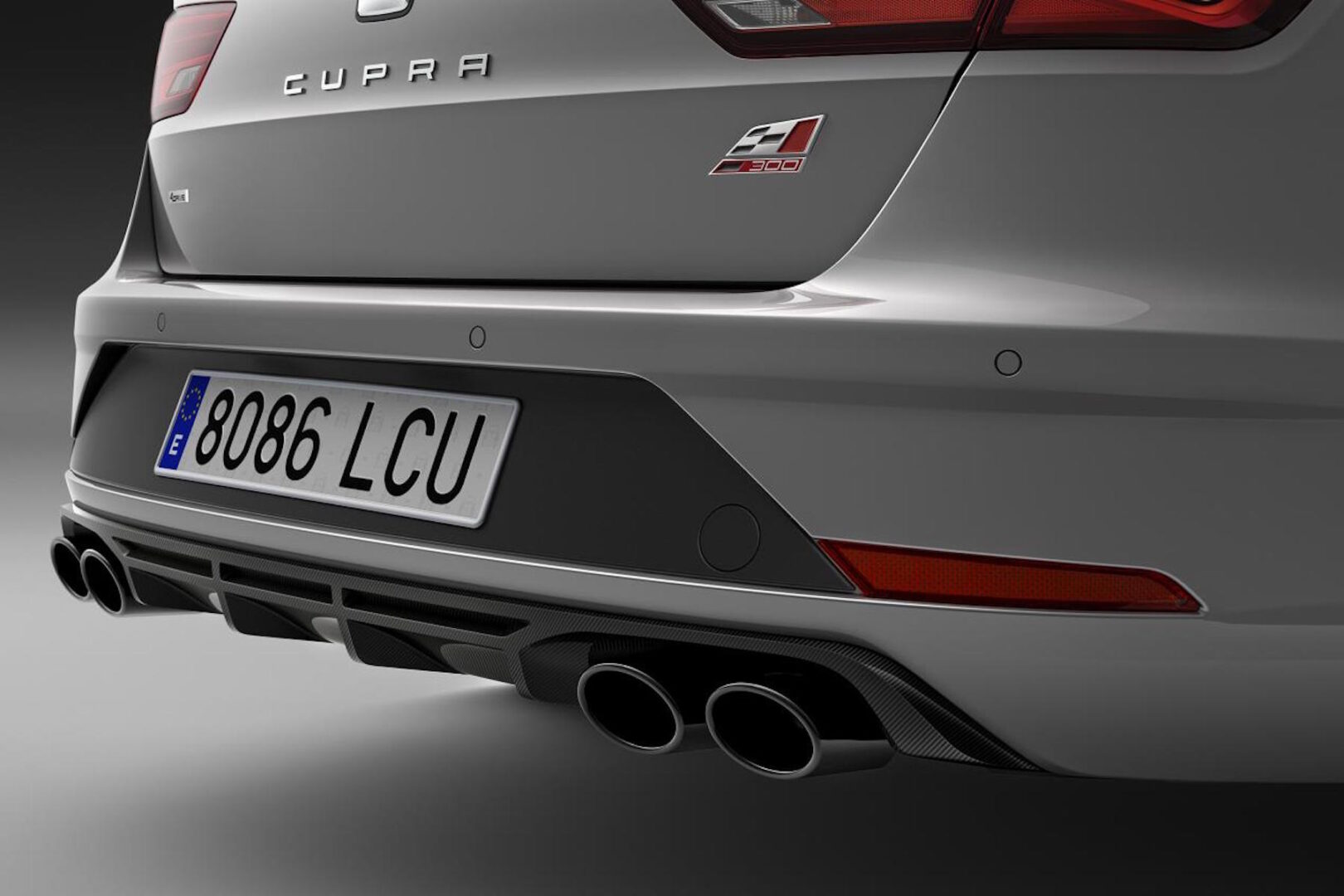
Being badged as the Carbon Edition gives an obvious clue as to the nature of the bodywork bolt-ons, with lightweight carbon fibre used for the rear diffuser and side skirts. It might not be as dramatic as the special Cupra R version, but it still adds some extra aggression to the handsome Leon.
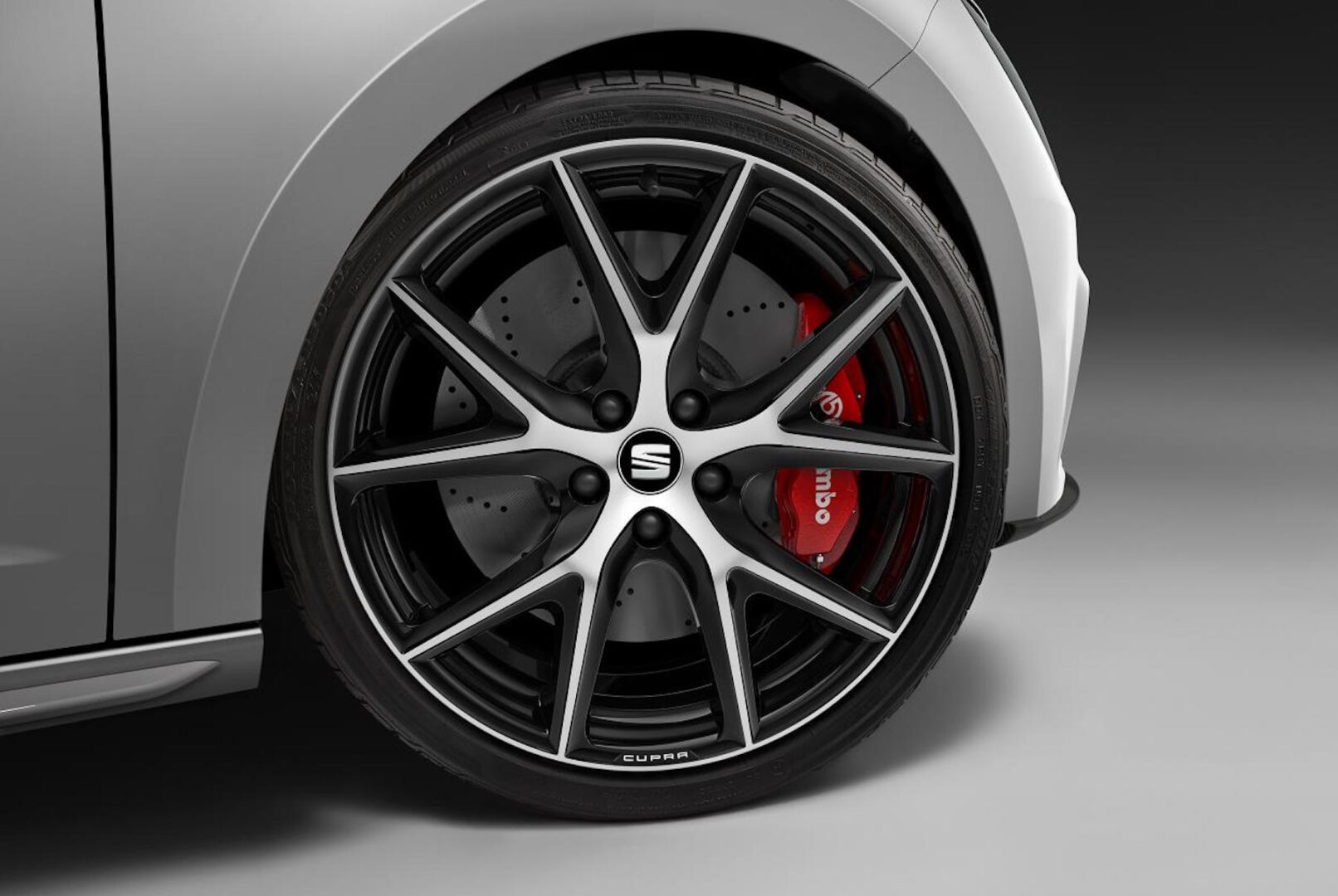
You’ll need to be a fan of Seat’s Monsoon Grey paintwork, as that is the only colour on offer here. A set of 19-inch diamond cut alloy wheels are also standard, with uprated Brembo brakes nestled behind them.
Expect plenty of Cupra logos in your Carbon Edition. The badge is applied to both the bucket seats inside, and to the quad exhaust tailpipes on the outside. There’ll be no confusing it for FR models at least.
Power comes from the 2.0-litre turbocharged engine, which still produces 300hp. This is matched to Seat’s ‘4Drive’ four-wheel-drive system, along with a DSG dual-clutch gearbox.
Recent announcements have confirmed that the regular Leon Cupra hatch will see its power output reduced to just 290hp. Blame the need to comply with the new WLTP emissions testing regime for the 10hp drop. It does mean that the Leon ST is now the hottest member of the Cupra family.
A price tag of £35,575 might seem steep, but this actual undercuts the mechanically similar Volkswagen Golf R estate. Those interested can place an order now, and the Carbon Edition is already available to play around with the configurator on the Seat UK website.
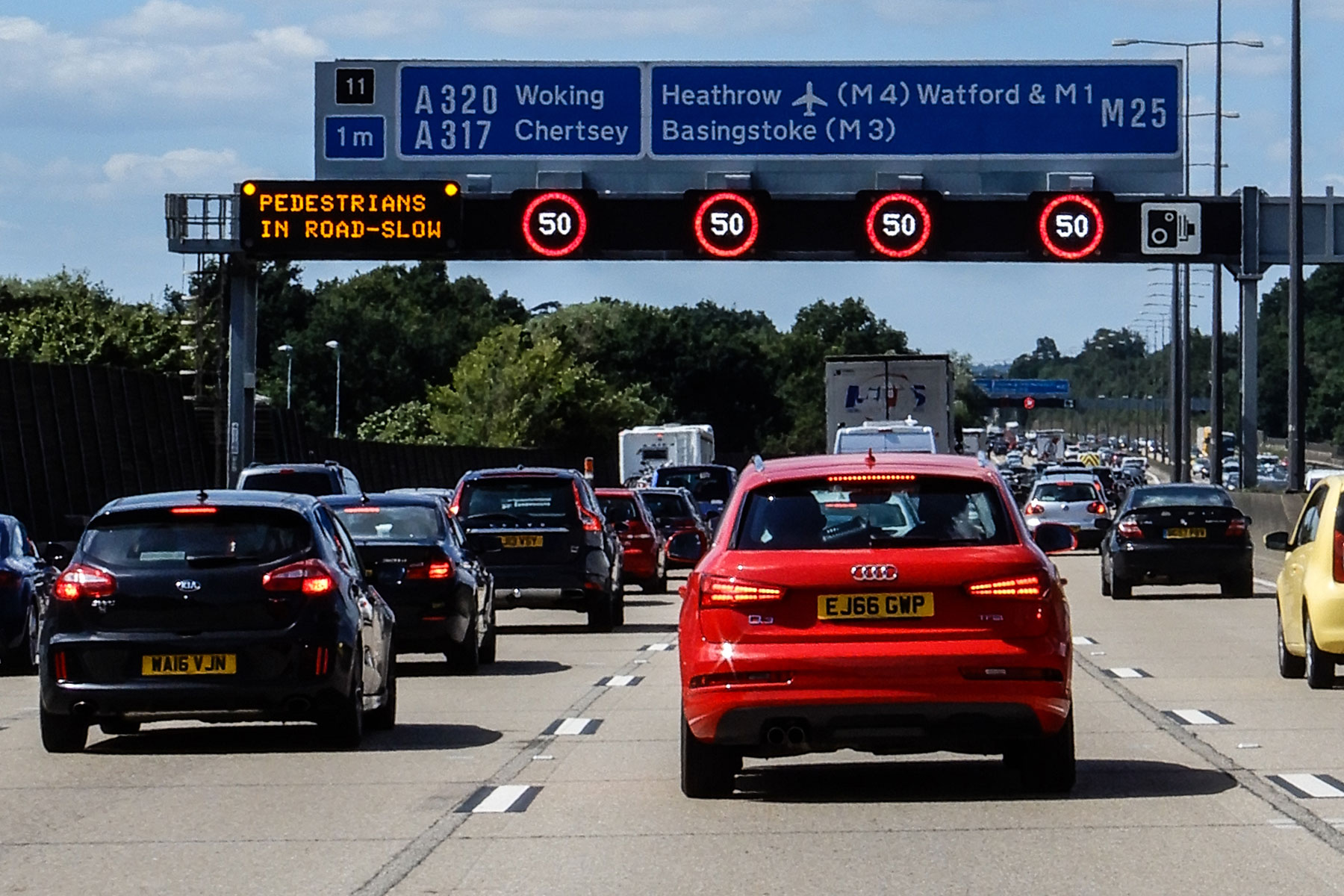
Yes, we know, this is a case of stating the blimmin’ obvious, but the M25 is the least-liked motorway in Britain. And, before you weigh with cries of a north-south divide, the M6 is a very close second.
That’s according to the 2,000 drivers who took part in a survey conducted by InsuretheGap.com, who were asked about their motorway experiences and the reasons they like and dislike them.
Apparently, the number one reason for disliking the M25 is – and this might surprise you – the lack of speed cameras. For many people, this would be a reason to like the big circular car park around our nation’s capital, if indeed you can ever drive fast enough to trigger a camera.
Other reasons for loathing the London Orbital include too much road debris, confusing signage, poor lighting and dangerous junctions.
Similar reasons were given in response to the M6, but drivers also feel unsafe and are disappointed by the lack of service stations. Maybe they should try the M6 Toll, which offers the best motorway services in Britain.
Good lord, you like the A66 and M40
But it’s not all bad news for our much-maligned motorway network, with drivers enjoying their time on the A66 from Grangetown to Workington. Of course, there’s a little cheating involved here, because only a small section of the A66 is a proper motorway. Still, when you’re asking people to name their favourite motorway, you can expect some flexibility.
Next up, drivers will be asked to name their favourite Lord… #Partridge.
The A66 was praised for its service stations, lack of debris, light traffic and streetlights. The M40 finished second, for precisely the same reasons. Imagine liking the M40.
As for our favourite Lord, we’re torn between the Lord of the Rings, Lord of the Dance and Lord of the Flies. It’s this afternoon’s hot topic.
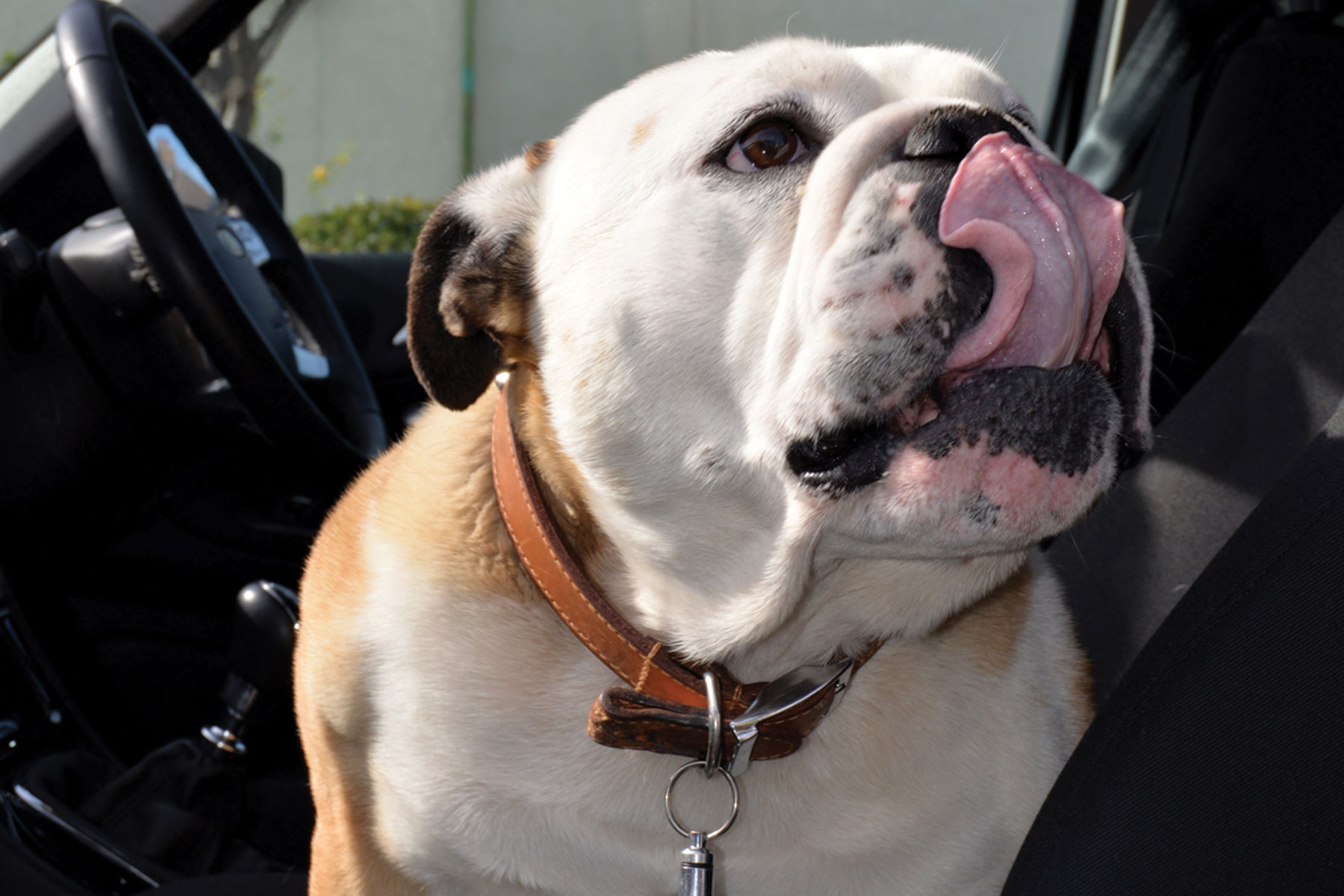
Another hot day, another report of dogs being left in vehicles with no ventilation. According to the Independent, workmen in Bristol were forced to smash a car window to rescue three dogs trapped on the hottest day of the year.
This is after one person left a note on the windscreen which read: “Dogs die in hot cars! You have been reported to the police.”
In a statement, the RSPCA said its emergency hotline has received 3,832 calls about animals and heat exposure from 1 June to 24 July. Sadly, three dogs have died in hot cars since the start of the heatwave. Why isn’t the message getting across?
🐕 ☀️🚗 Last year, we received 7,199 calls about dogs suffering from heat exposure. It doesn't matter if the windows are open or you won't be long: #DogsDieInHotCars. Always call the police on 999 if you see a dog in distress in a hot car. https://t.co/UvI0FmlVrBpic.twitter.com/f9JUtCA8Vd
— RSPCA (England & Wales) (@RSPCA_official) July 23, 2018
Both the RSPCA and the Dogs Trust are regularly reminding dog owners of the dangers of leaving pets in parked cars, with many people believing that it’s OK to leave a dog on a hot day if the windows are open or they’re parked in the shade.
Just 20 minutes can prove fatal
But the fact is, just 20 minutes in a hot car can prove fatal to a dog. Even when its a relatively low 22ºC, in a car it can reach an unbearable 47ºC within an hour. The dog will suffer through excessive panting, whimpering or barking, which can lead to a loss of muscle control, kidney failure, brain damage and, eventually, heart failure.
The veterinary team at the Dogs Trust has listed six tips to make people aware of the dangers of leaving a dog in a hot car, which are summarised as follows:
Don’t leave your dog in a parked car, even for a few minutes.
If you see a dog in distress in a parked call, call the police.
Avoid travelling with a dog during the heat of the day. Use sun blinds on the windows and consider opening a window.
Make sure the dog has a supply of fresh water.
If you are present at the rescue of a dog, seek veterinary advice.
Wet towels can be used to cool a dog, but they must be changed regularly or sprayed with water.
If the situation becomes critical, and the police and RSPCA are too far away to help, you have a lawful excuse to commit damage if you believe that the owner of the property that you damage would consent to the damage if they knew the circumstances.
Be aware that if you decide to do this, you may need to defend your actions in court.
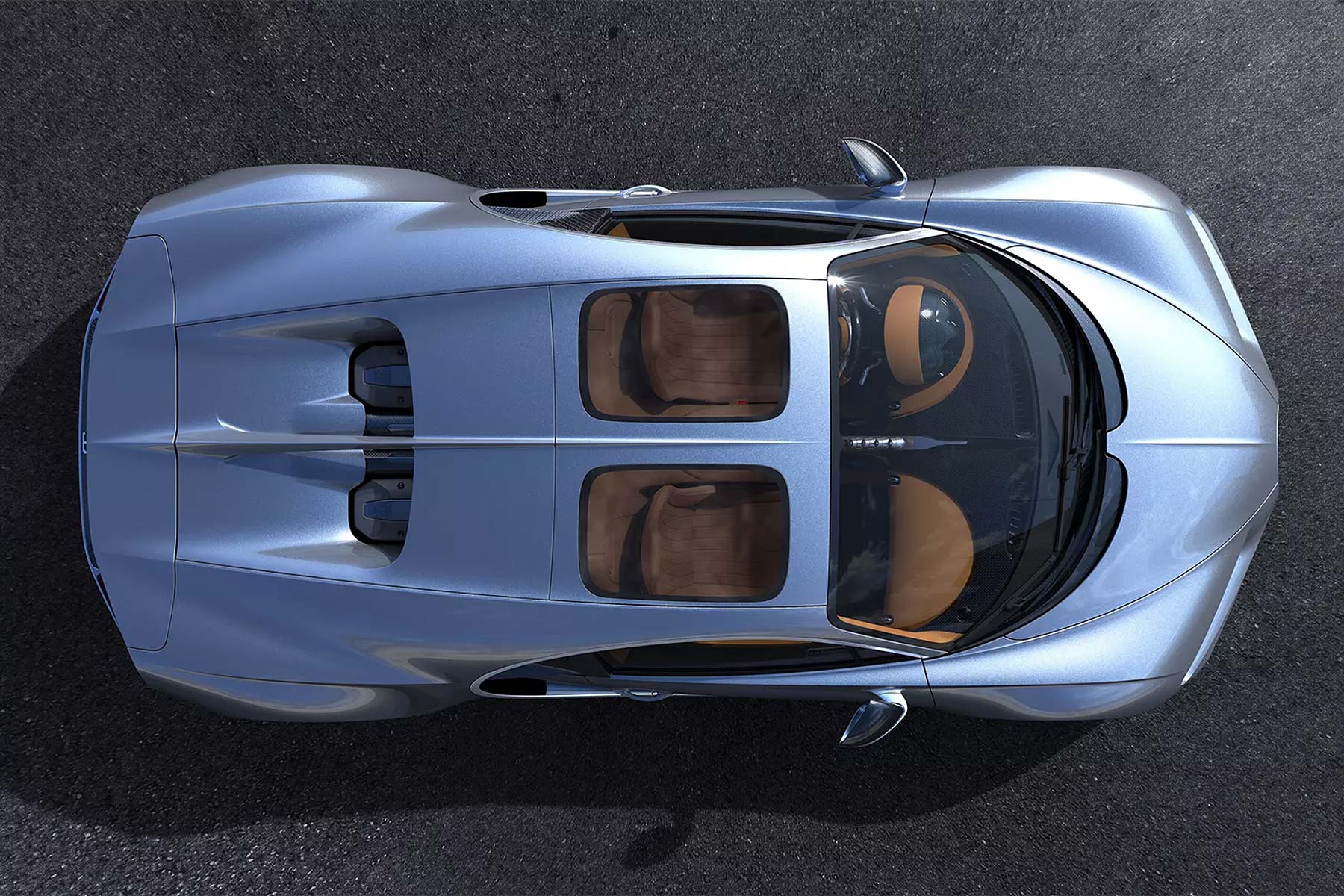
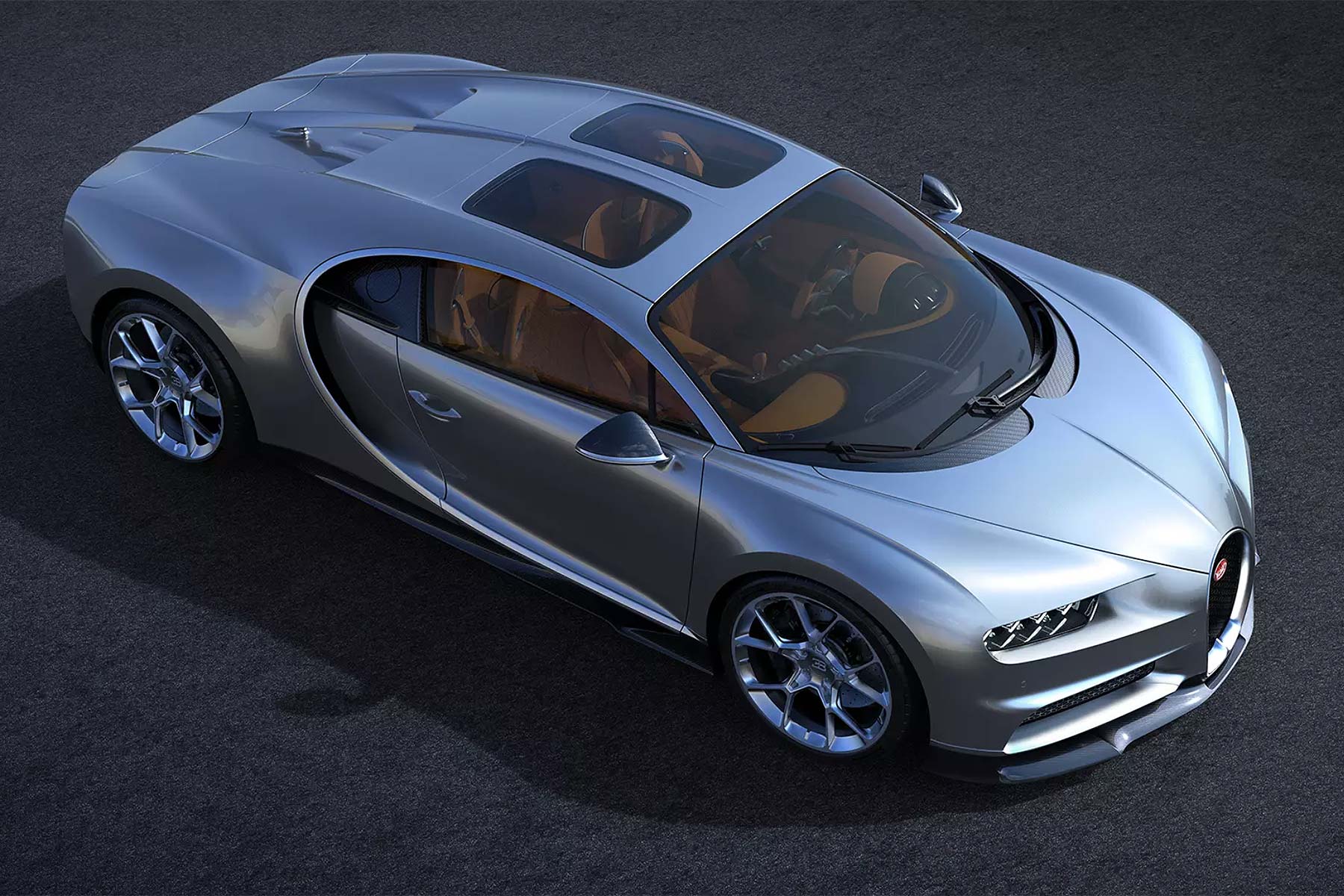
The ultra-exclusive Bugatti Chiron has become a bit more appealing to sun-worshipers with the launch of a new glass roof option called Sky View.
Comprising two fixed glass panels above each seat, the new ‘sunroof’ option is available to order now and will be presented in public for the first time at the 2018 Pebble Beach exhibition at Monterey Car Week next month.
The Sky View panels are not just any old glass panels. Each is 650mm long and 440mm wide, and are made of a “newly developed” laminated material made up of thin glass and no fewer than four intermediate layers.
This construction serves two purposes: keeping wind noise at bay, and filtering out infrared radiation. The panels are also tinted, “to protect occupants’ privacy” and stop dazzling, and also treated to filter out UVA and UVB radiation.
And unlike many panoramic roof options, Bugatti says the stiff laminated structure maintains the stiffness of the regular Chiron… and instead of eating into headroom, Sky View liberates 27mm additional headroom.
We don’t yet know how much the option costs, but we’re guessing it won’t be cheap. Not that this is likely to be of the remotest concern to buyers of the £2.5 million Chiron.
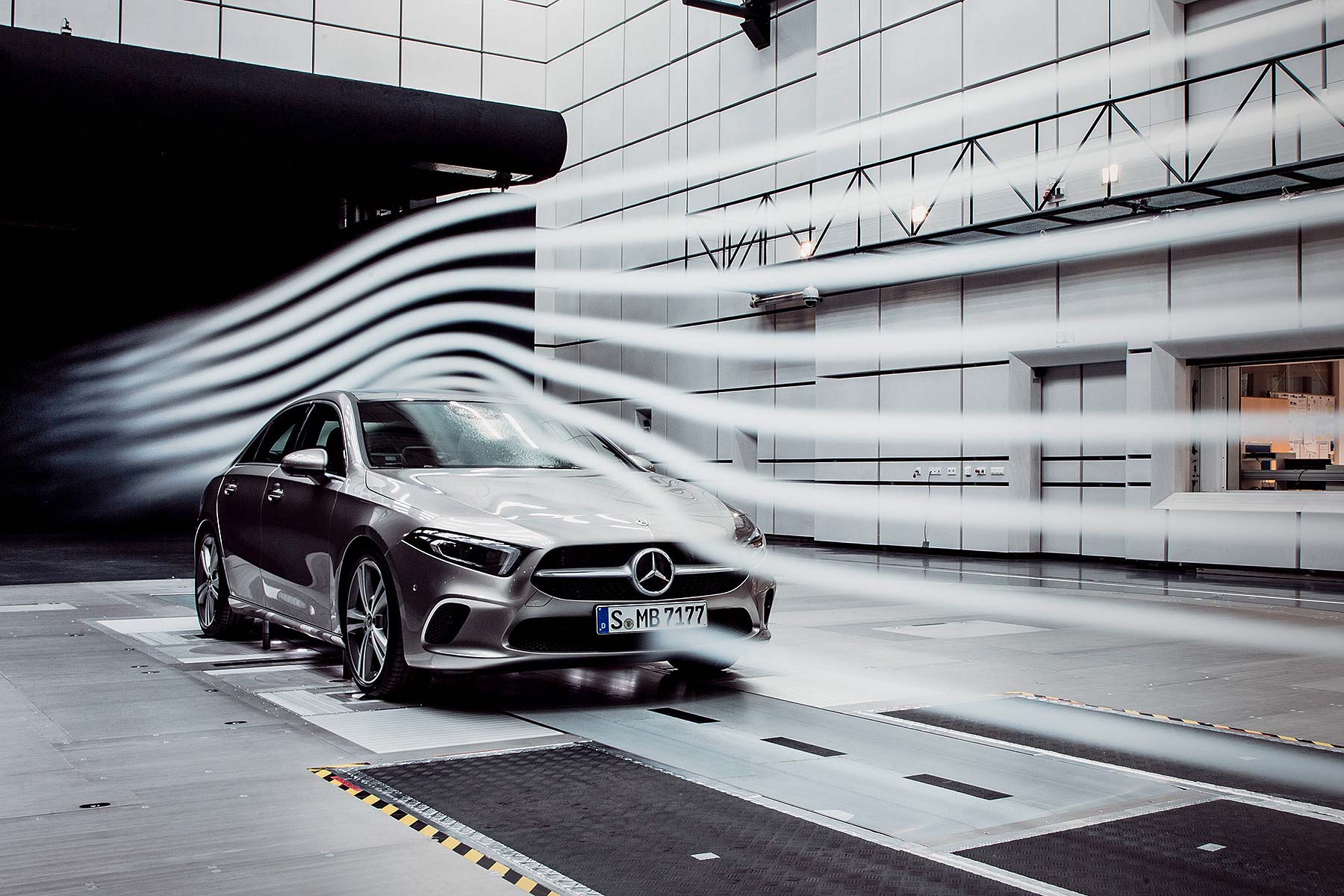
Mercedes-Benz consistently produces some of the most aerodynamically efficient new cars on sale. The new 2018 A-Class Saloon has jumped straight to the top of the pile with an unbeatable set of aerodynamic efficiency stats.
The new four-door A-Class boasts a Cd drag factor of just 0.22 which, when combined with a compact frontal area of 2.19 metres squared, gives it the lowest drag of any production vehicle in the world.
It beats the previous record-holder, also a Mercedes-Benz: the CLA Coupe.
The new record shows just how much more aerodynamic saloons, with their smooth and elongated rears, are than comparable hatchbacks. The Mercedes-Benz A-Class hatch has a Cd of 0.25.
There haven’t been any particularly special tricks to cheat the wind, says Mercedes-Benz, just a series of tireless detail engineering. It has, for example, meticulously sealed the headlamp surrounds and almost the entire underbody, and tuned front and rear wheel spoilers to direct air around the wheels.
It tuned both the shape of the wheels and, impressively, the tyres themselves. Also offered will be an active grille, which can shut off when extra engine cooling is not required, so air passes smoothly around the engine bay rather than being dragged into it.
And the benefit of such excellent aerodynamic efficiency? Excellent real-world fuel consumption, particularly for those cruising up and down the motorway. We’ll find out just how impressive it is in the real world when the new A-Class Saloon goes on sale towards the end of 2018.
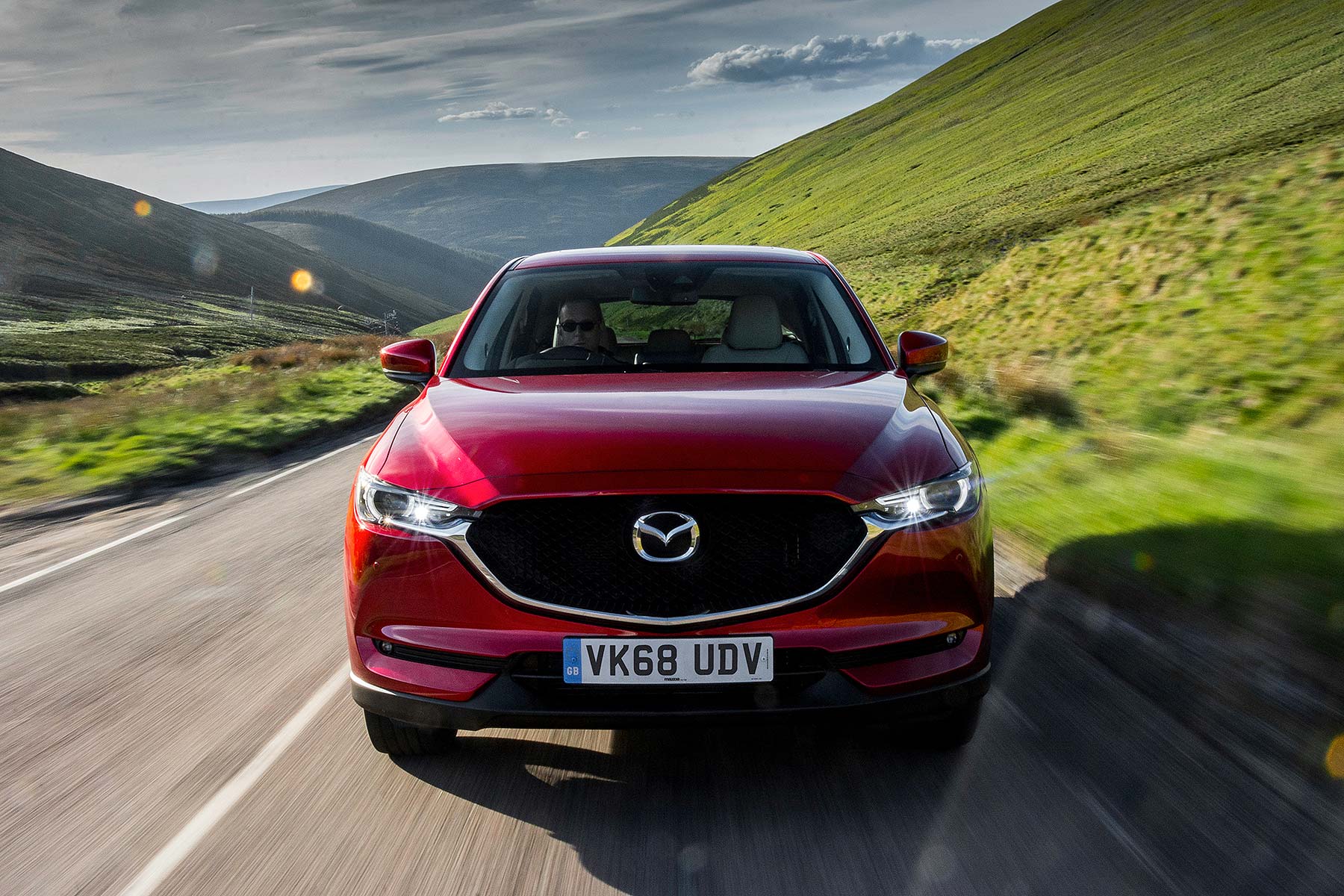
The Mazda CX-5 mid-size SUV is the firm’s best-selling car in the UK – and globally, 1 in 4 new Mazdas sold is a CX-5. So the firm has rolled out a series of revisions for 2018 to keep it sharp in the marketplace.
Put away your specs: nothing has changed outside. This car was only launched as a new model barely a year ago, so the only difference is a new 19-inch alloy on Sport Nav+ models.
The interior is the same too: it’s what’s offered as standard that’s been upgraded. All 2018 CX-5 now get more active safety kit as standard, including radar-assist active cruise control, blind spot monitoring and automatic high beam control.
There’s a bleeper that warns if there’s something or someone approaching as you reverse, and lane-keep assist that also warns if you drift out of your lane. (The sheer irritation factor means many may be leaving this turned off, though.)
On Sport+ models, further active safety can be optioned: a 360 degree camera and piercingly bright Adaptive LED headlights. They also get Mazda’s first-ever power tailgate and a head-up display that includes traffic sign recognition.
Paint colour options are the same but the Soul Red Crystal metallic and Machine Grey metallic both have three-layer ‘Takuminuri’ paint tech – it’s 20 percent brighter and 50 percent deeper than the original CX-5 paint.
For the first time, Skyactiv-G petrol models can be had with an optional automatic, while the higher-power 2.2-litre Skyactiv-D diesel is even more powerful: up from 175hp to 184hp.
All Skyactiv-D engines have new injectors, a new turbo, revised combustion chamber and a NOx-eradicating selective catalytic reduction (SCR) system – it means CX-5 owners may have to occasionally top up with AdBlue, but can drive safe in the knowledge their exhaust gases are as clean as can be.
Prices? They start from £24,795, and ordering opens 31 August. The model range is 10-strong and, for simplicity, includes just two trim lines, SE-L Nav+ and Sport Nav+.
“Thanks to the 2018 CX-5’s improved equipment and upgraded diesel engine,” said Mazda UK MD Jeremy Thomson, “I’m sure our SUV will carry on winning over British buyers, especially as superb residual values mean it continues to represent great value for retail and fleet customers alike.”
Some product placement just works. When Sean Connery screeches through a warehouse in an Aston Martin DB5, we cheer inwardly. When Daniel Craig swigs a bottle of Heineken, we reach for the imaginary sick bag.
The link between 007 and Aston Martin begins with Ian Fleming’s very first book and, despite occasional dalliances with other car brands, continues to this day. Even Aston’s new in-house personalisation department is called ‘Q’ – a knowing nod to the MI6’s fictional gadget-maker.
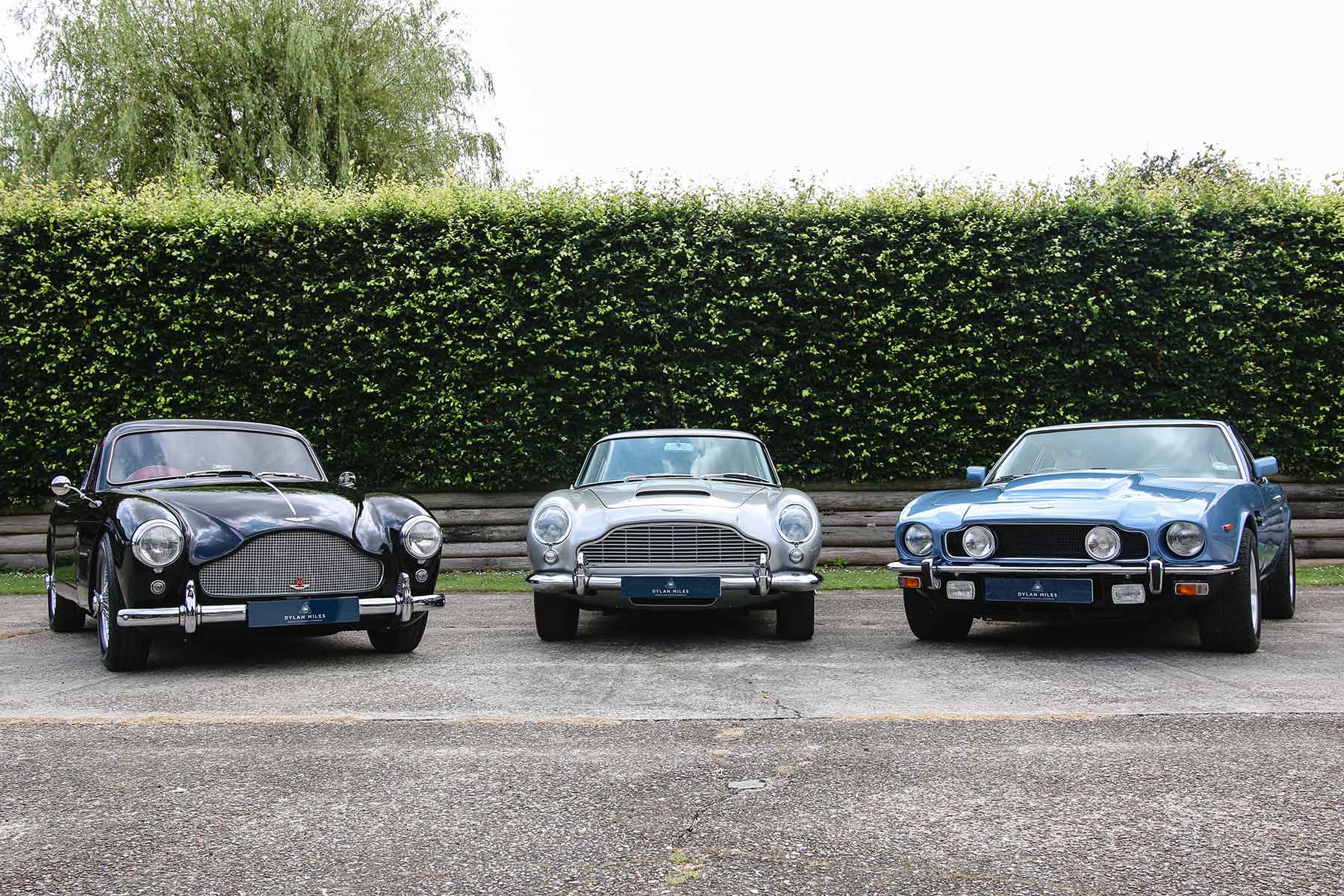
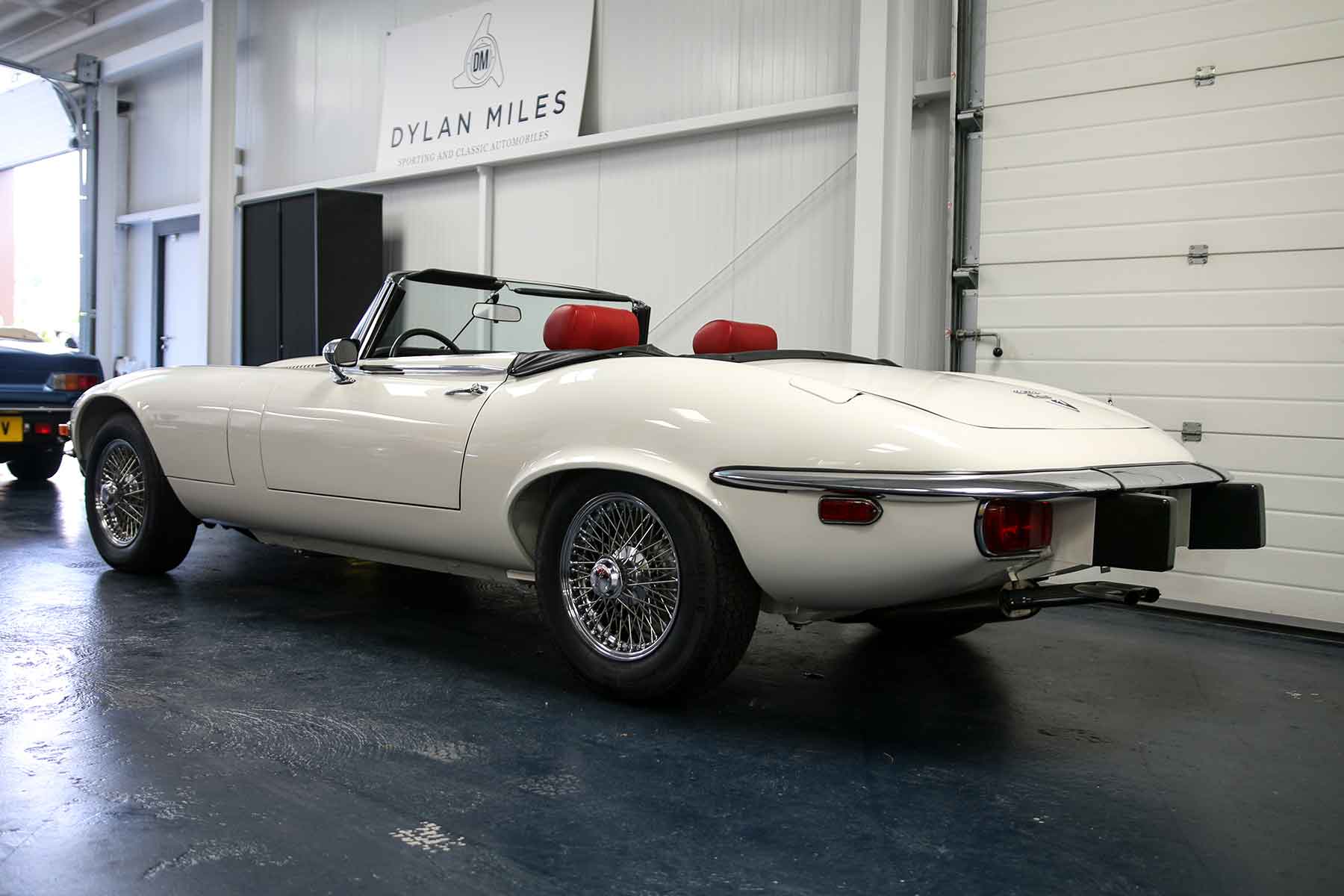
All of which, in a rather roundabout way, brings us to Dylan Miles: a classic car collector and dealer who, at the time of our visit, had no less than three ‘Bond’ Aston Martins in stock.
Just to be clear, these cars – a DB Mk III, DB5 Vantage and V8 Vantage – aren’t the actual celluloid stars, yet all three have been immortalised by Bond. One also has another, somewhat surprising, celebrity connection.
Read on to see our highlights from Dylan’s secret West Sussex warehouse.
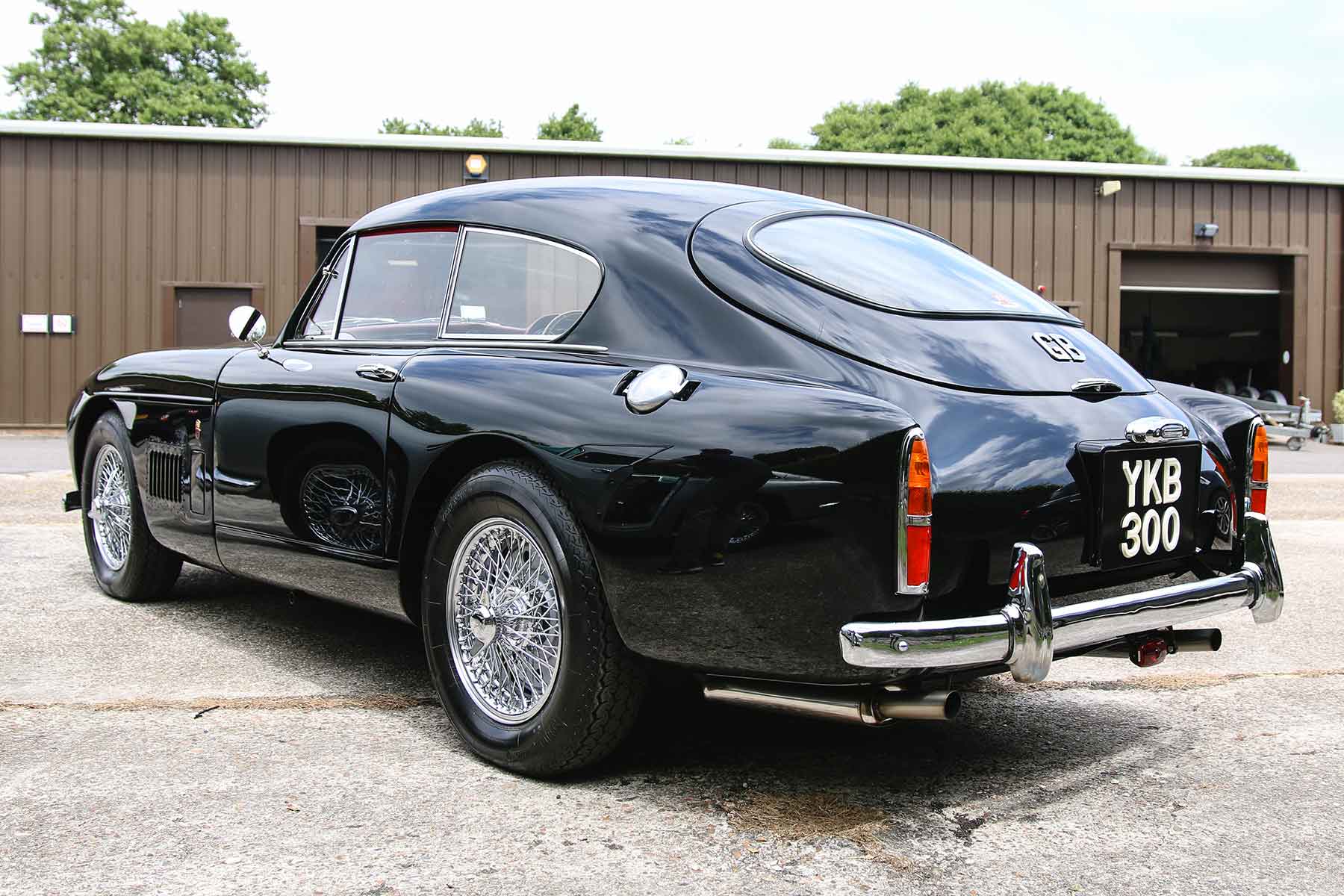
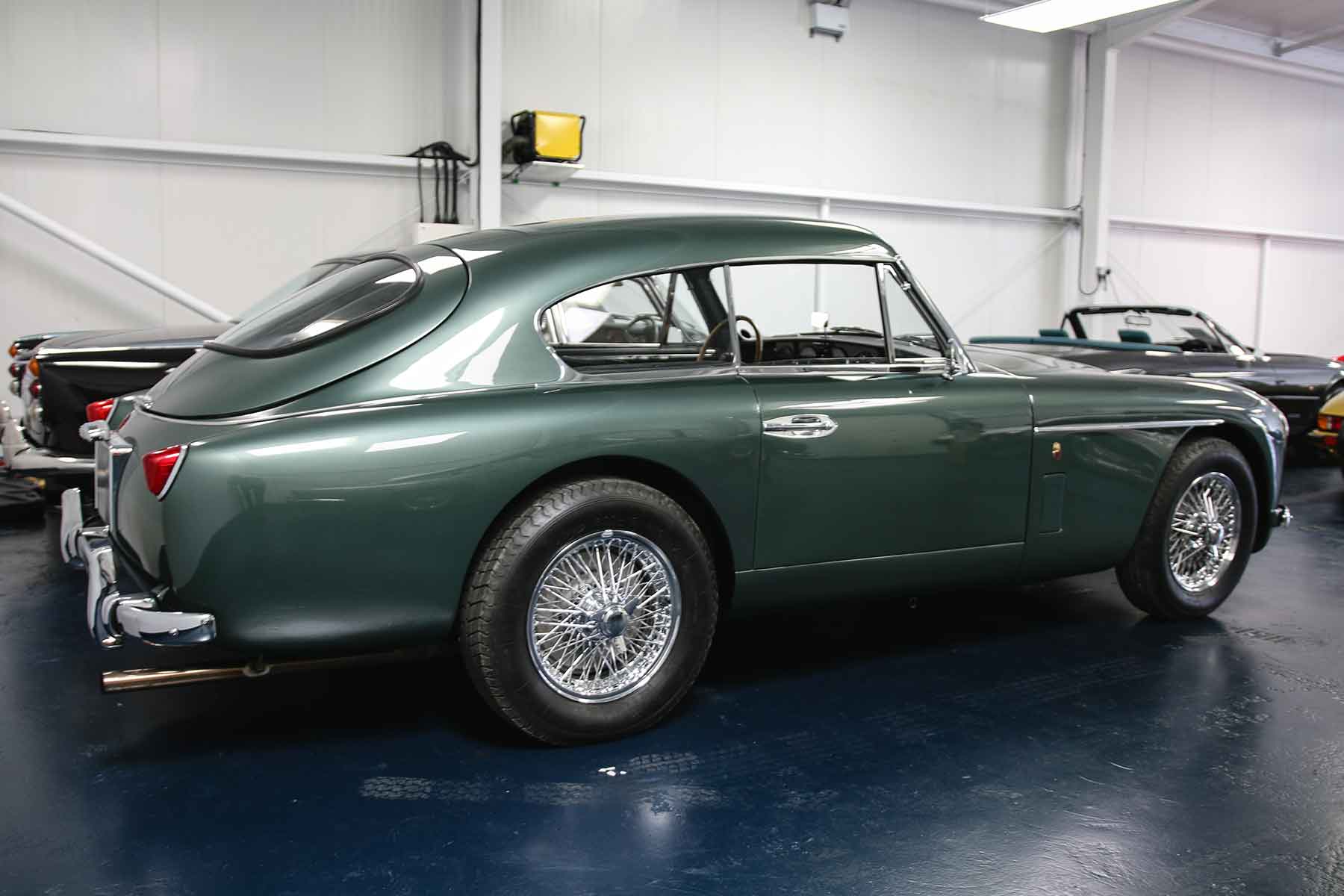
Aston Martin DB Mk III
Doesn’t look familiar? That’s because this Aston Martin only featured in the 1959 novel version of Goldfinger. By the time of the 1964 film, Bond’s wheels were updated to the then-current DB5.
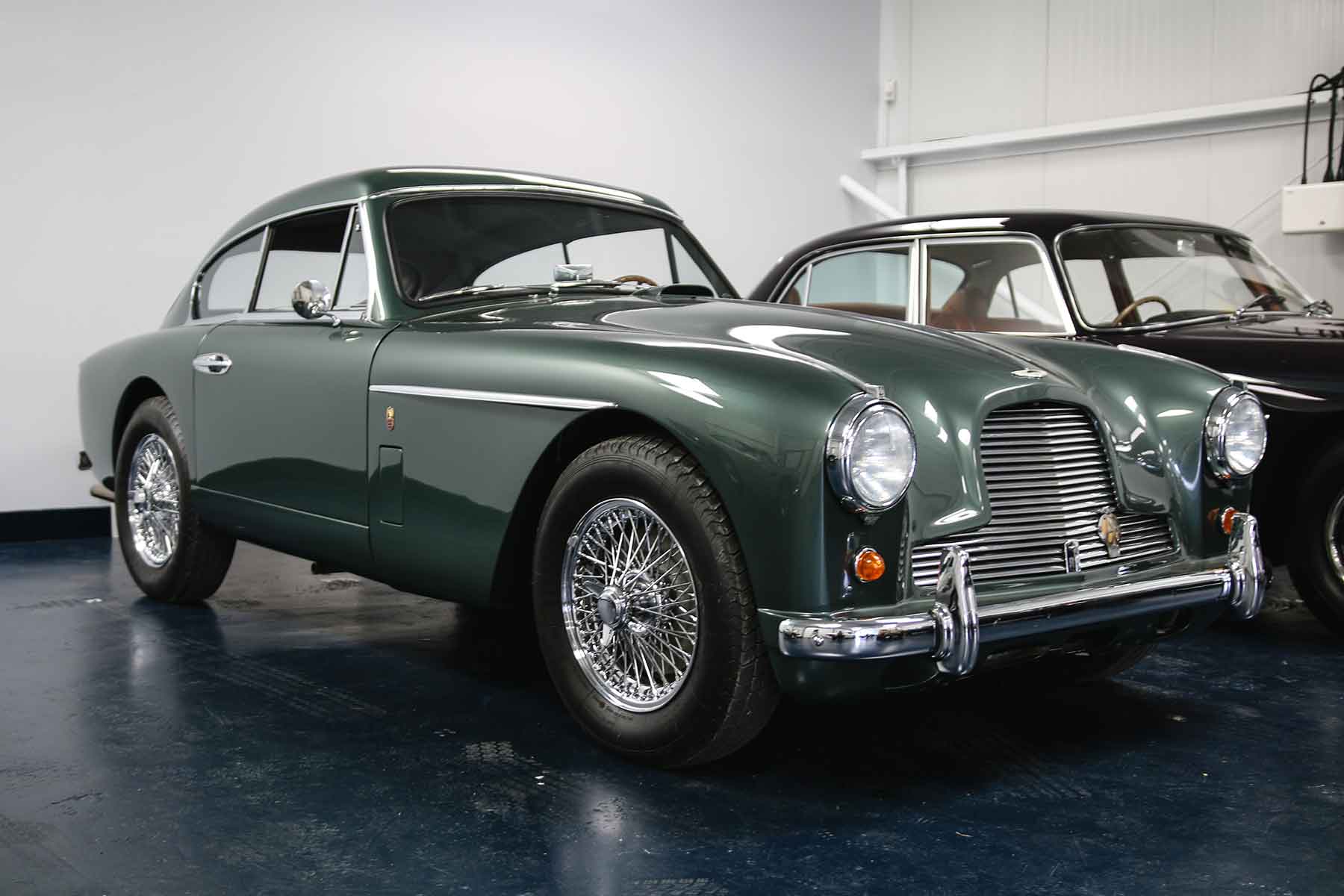
Officially known as the DB 2/4 Mark III – and referred to simply as a ‘DB III’ in the book – the Mk III was a luxurious four-seater GT with a practical hatchback tailgate. Its 2.9-litre straight-six produced 178hp with the optional dual exhausts fitted here – good for a 120mph top speed.
This breathtakingly immaculate 1957 DB III was restored to concours standard in 2008 and, by the time you read this, will be en route to its lucky new owner in Hong Kong.
Aston Martin DB5 Vantage
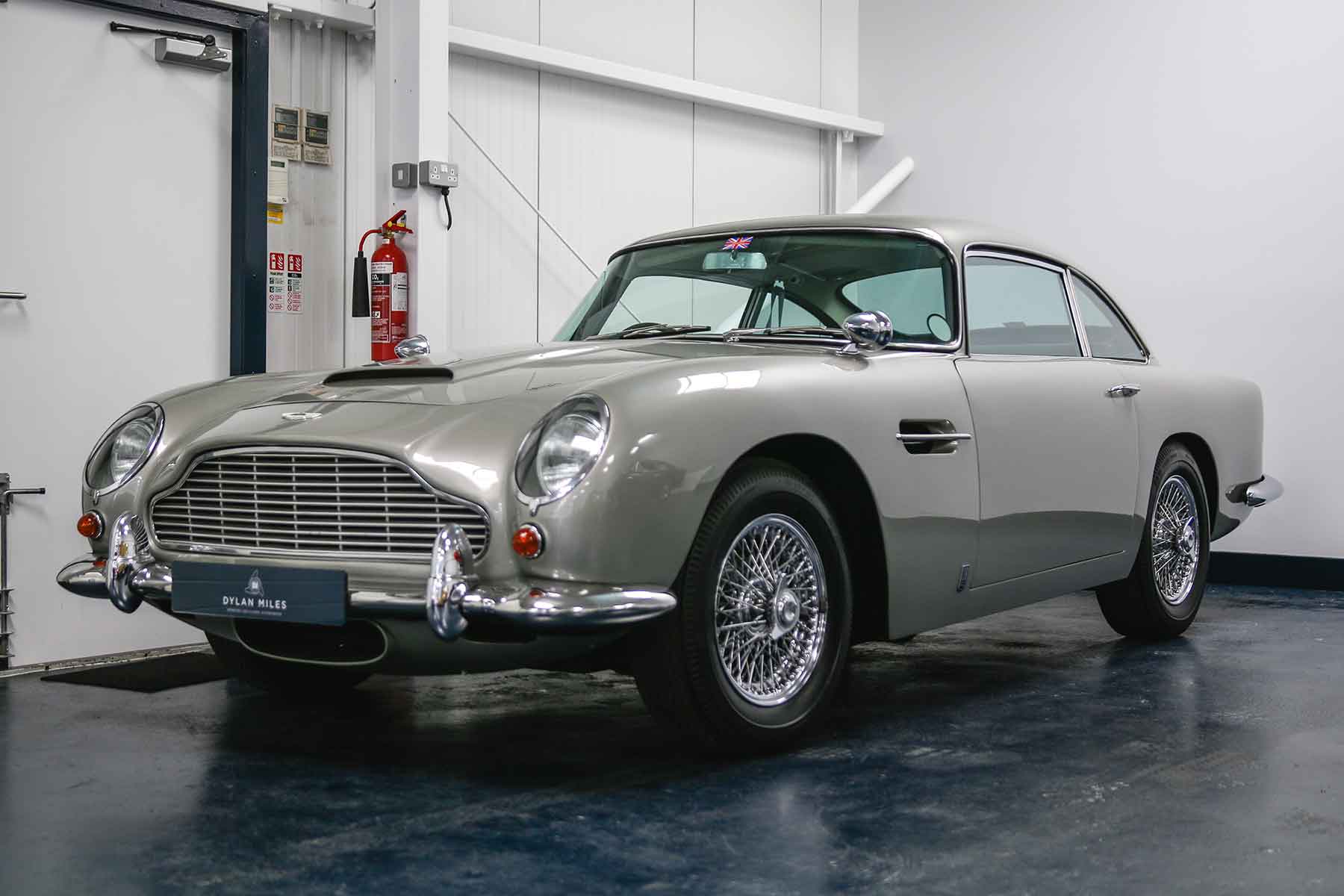
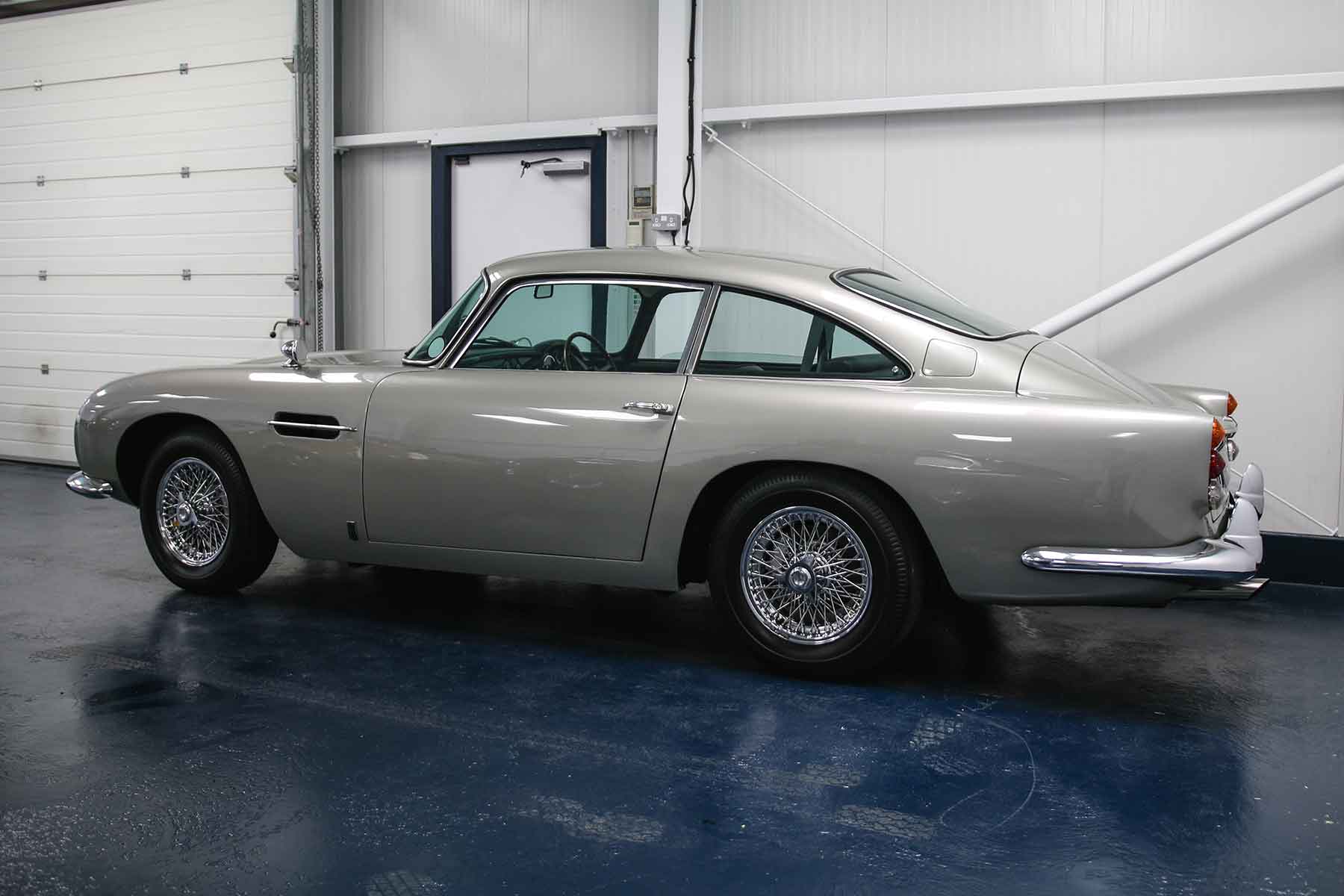
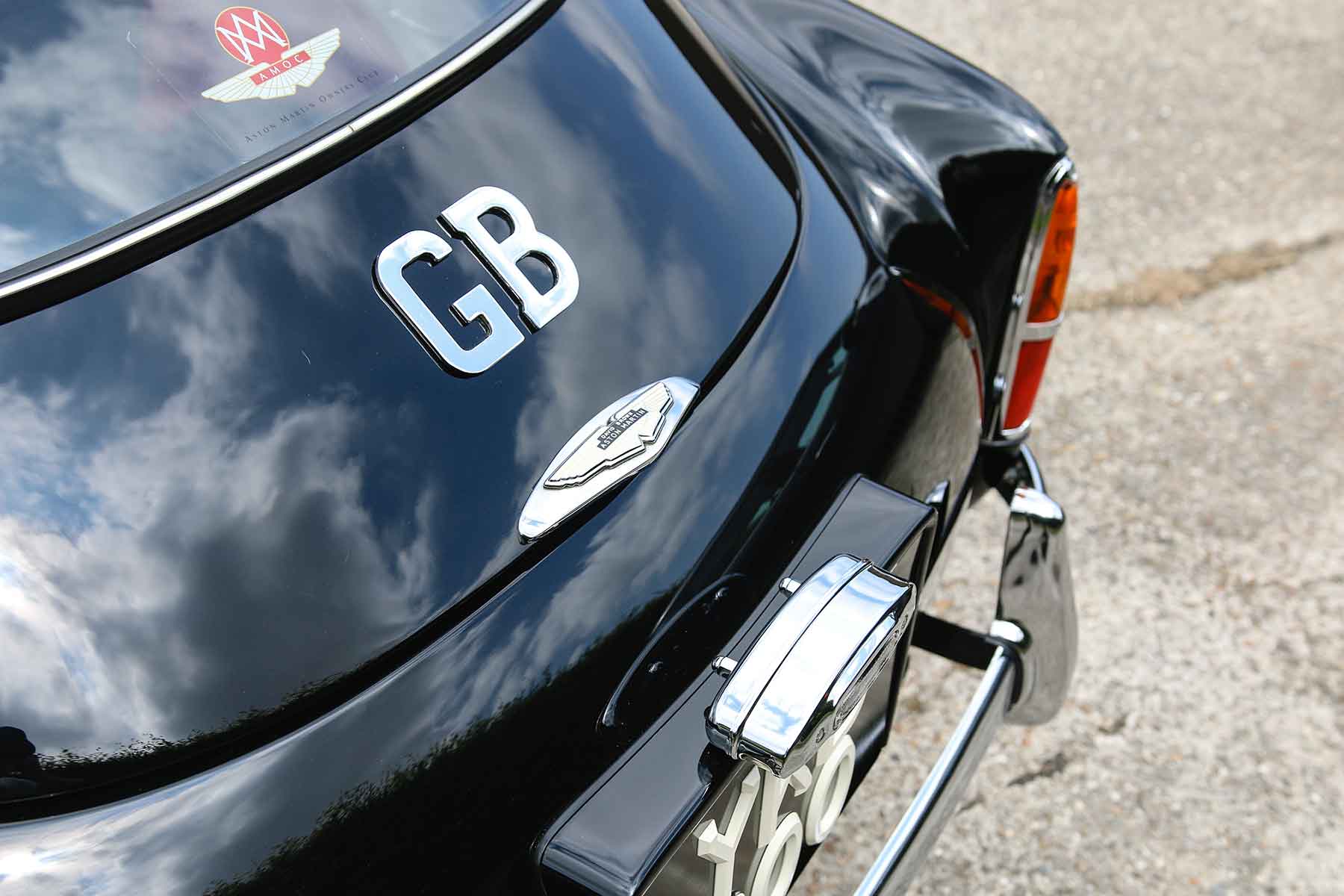
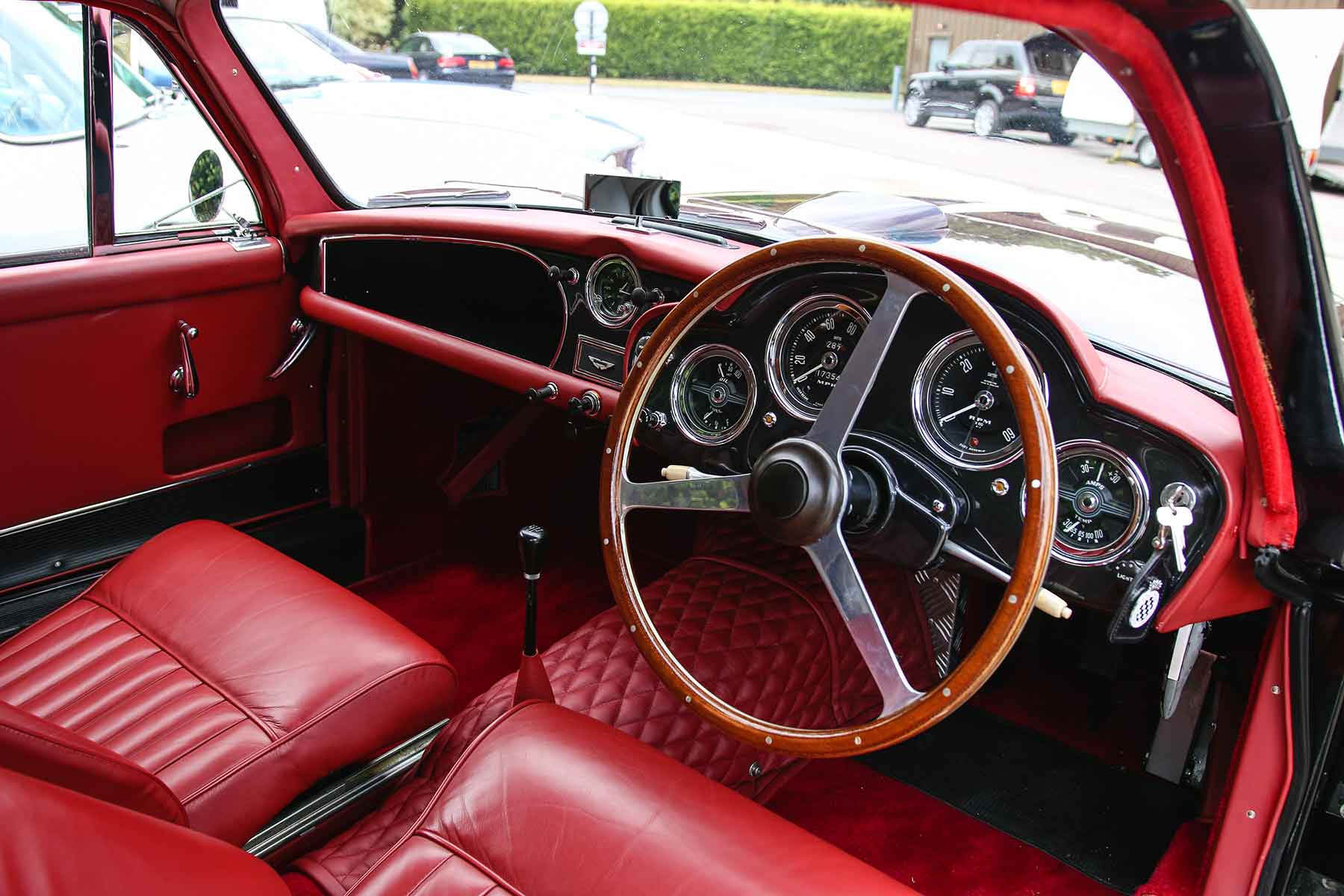
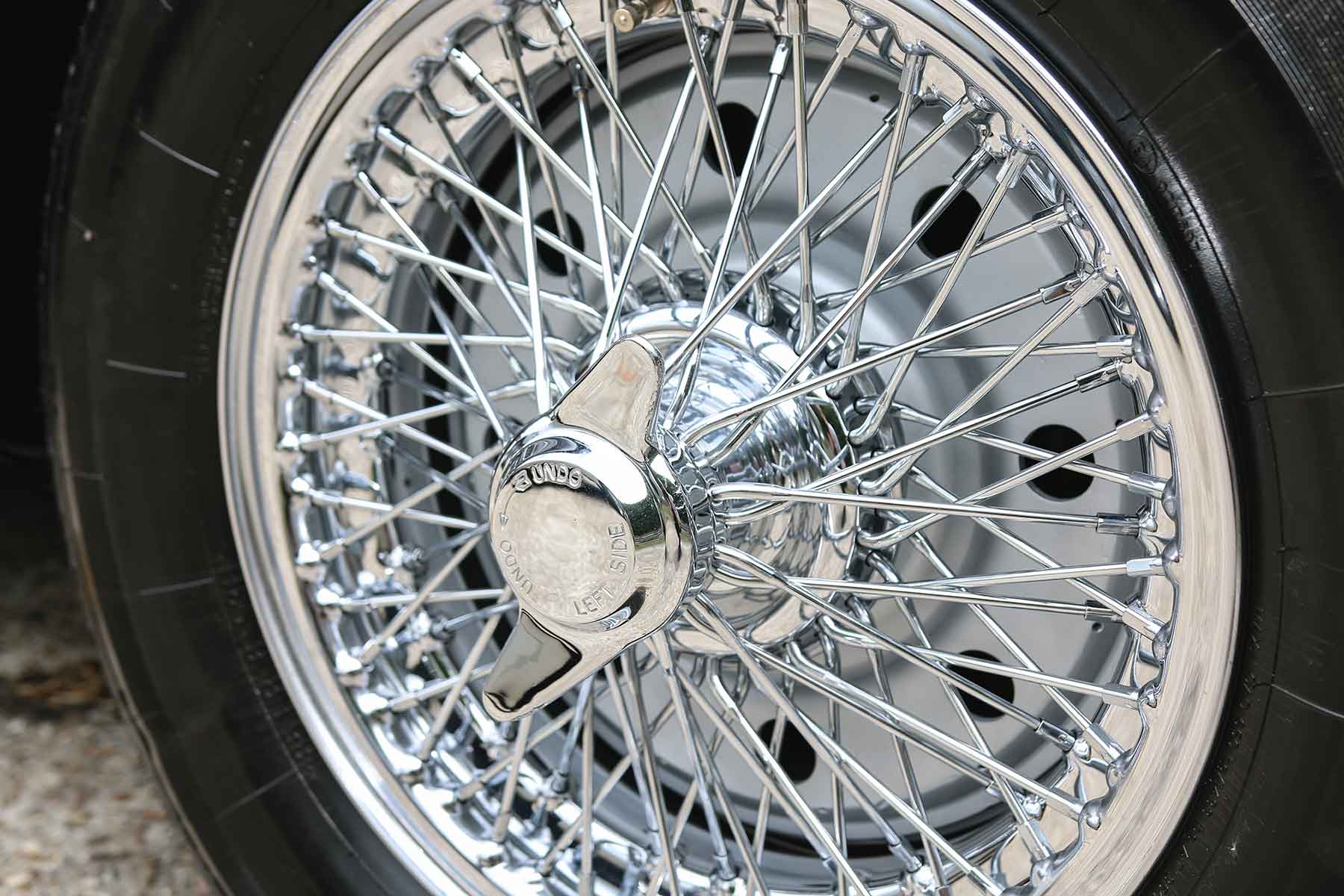
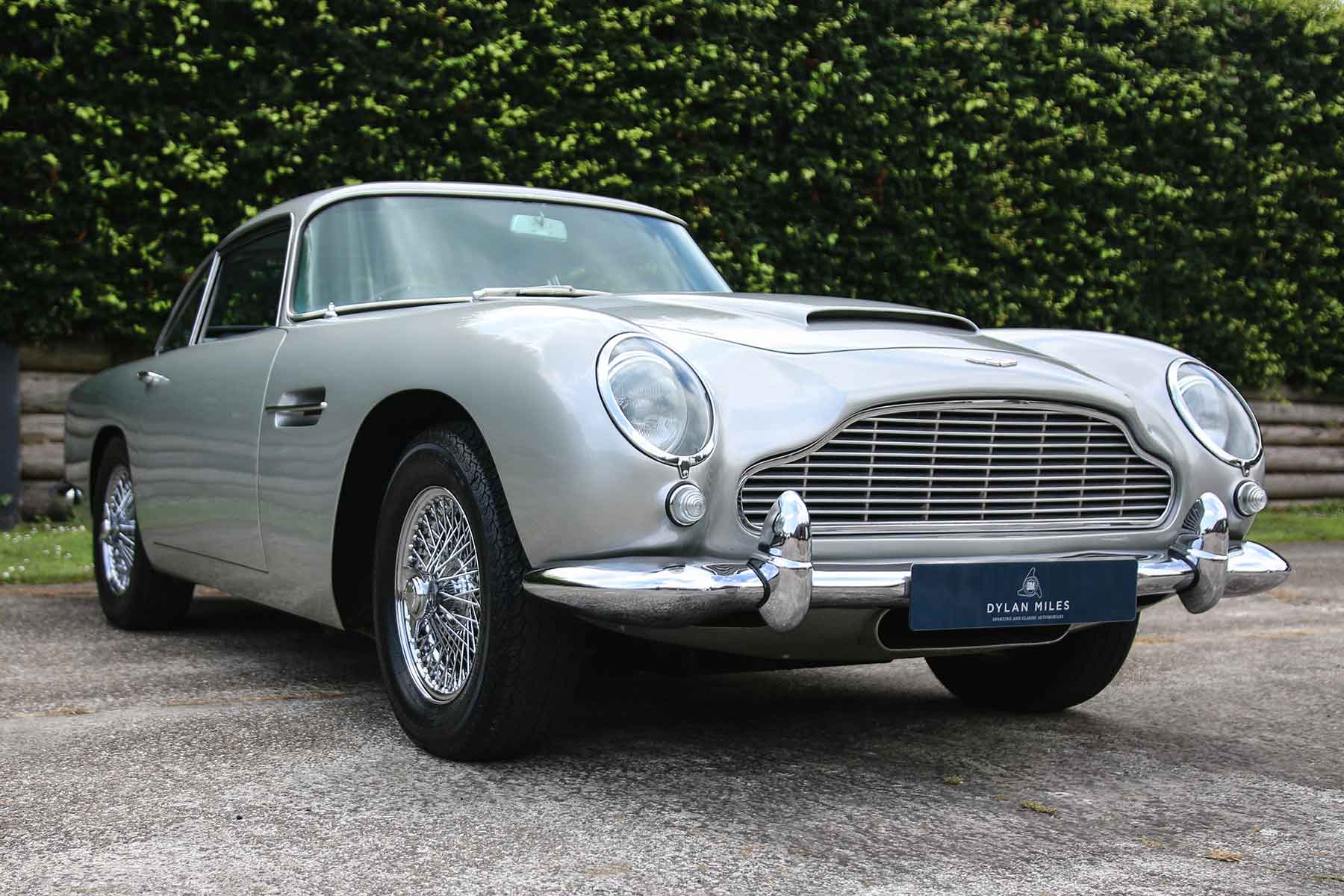
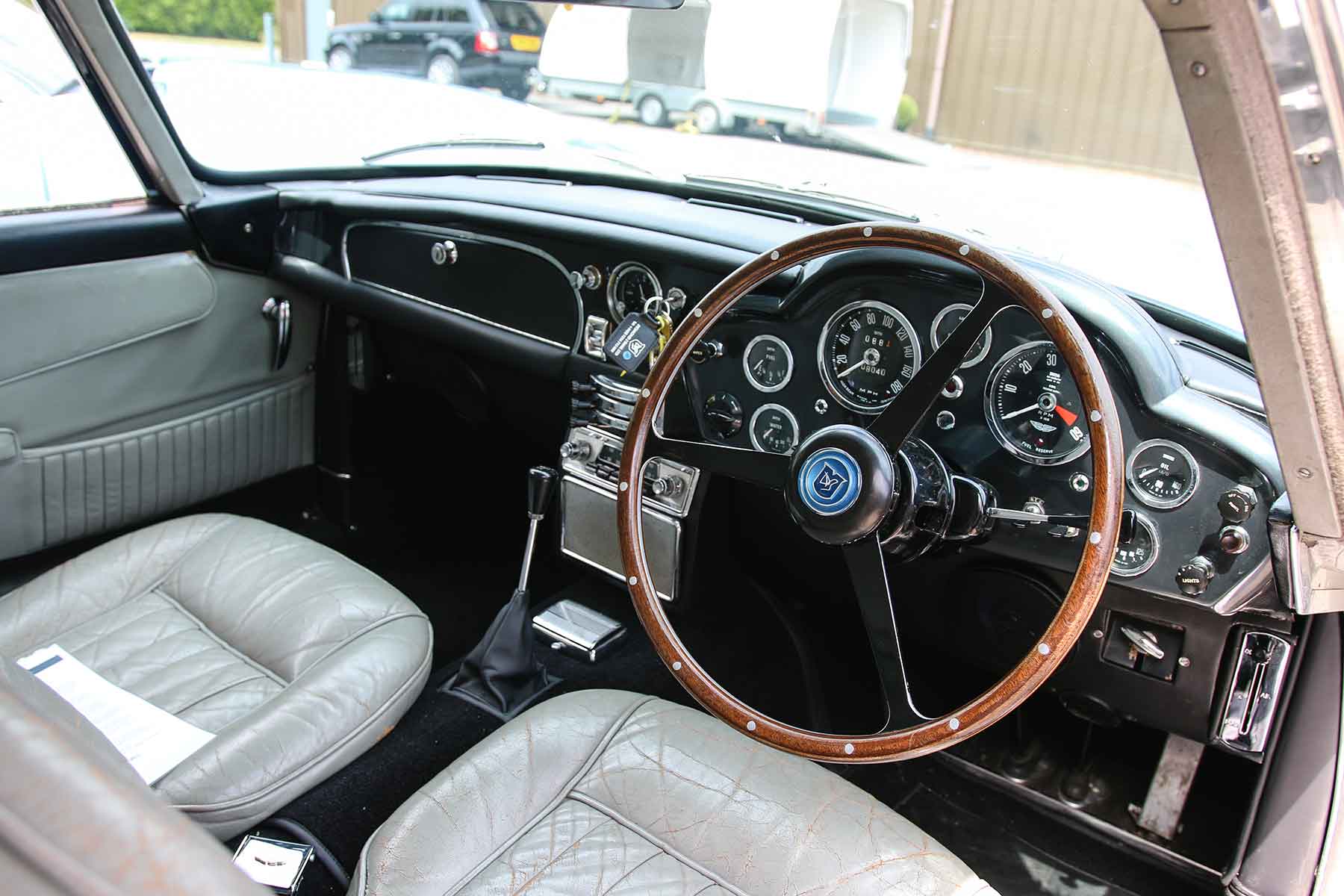
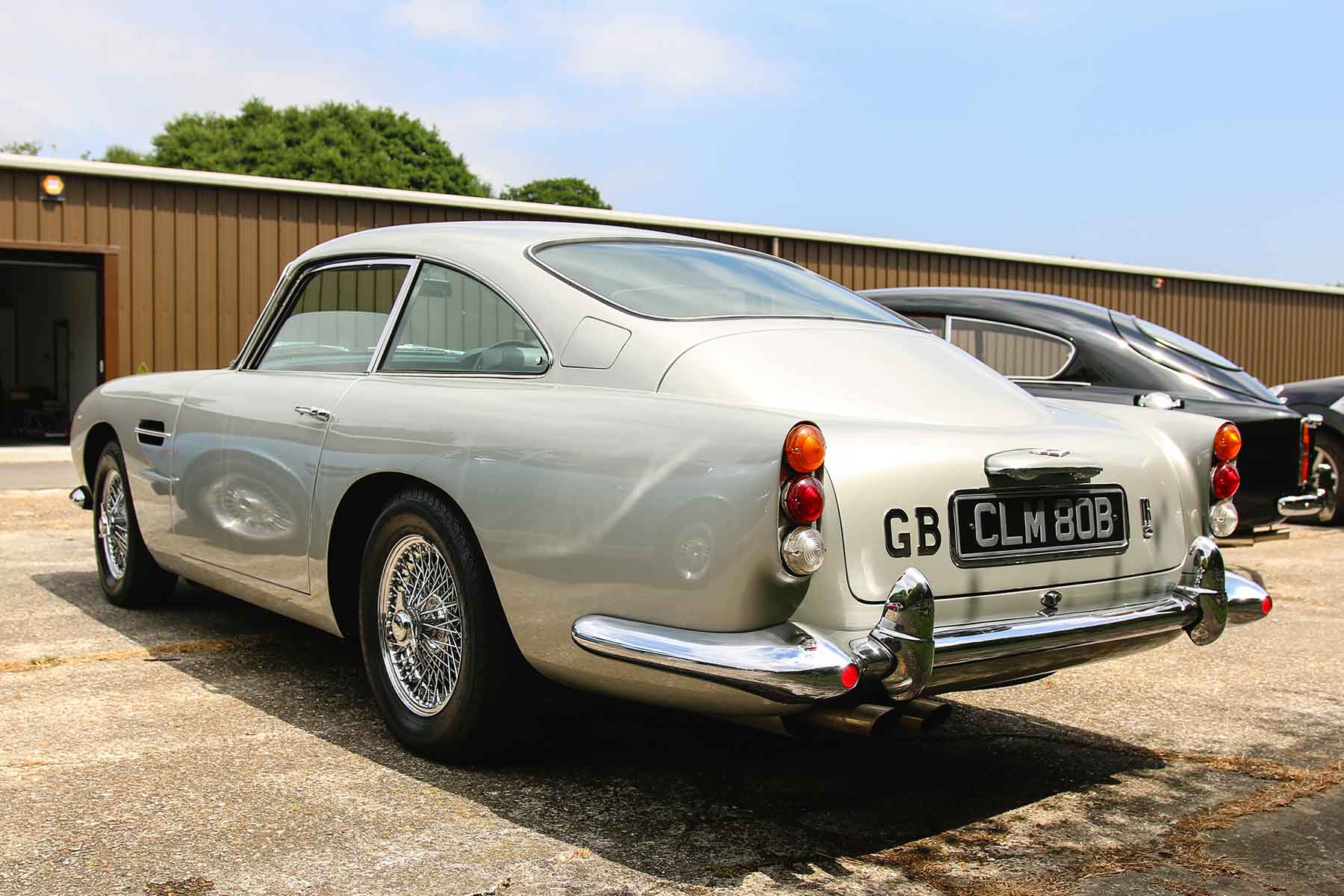
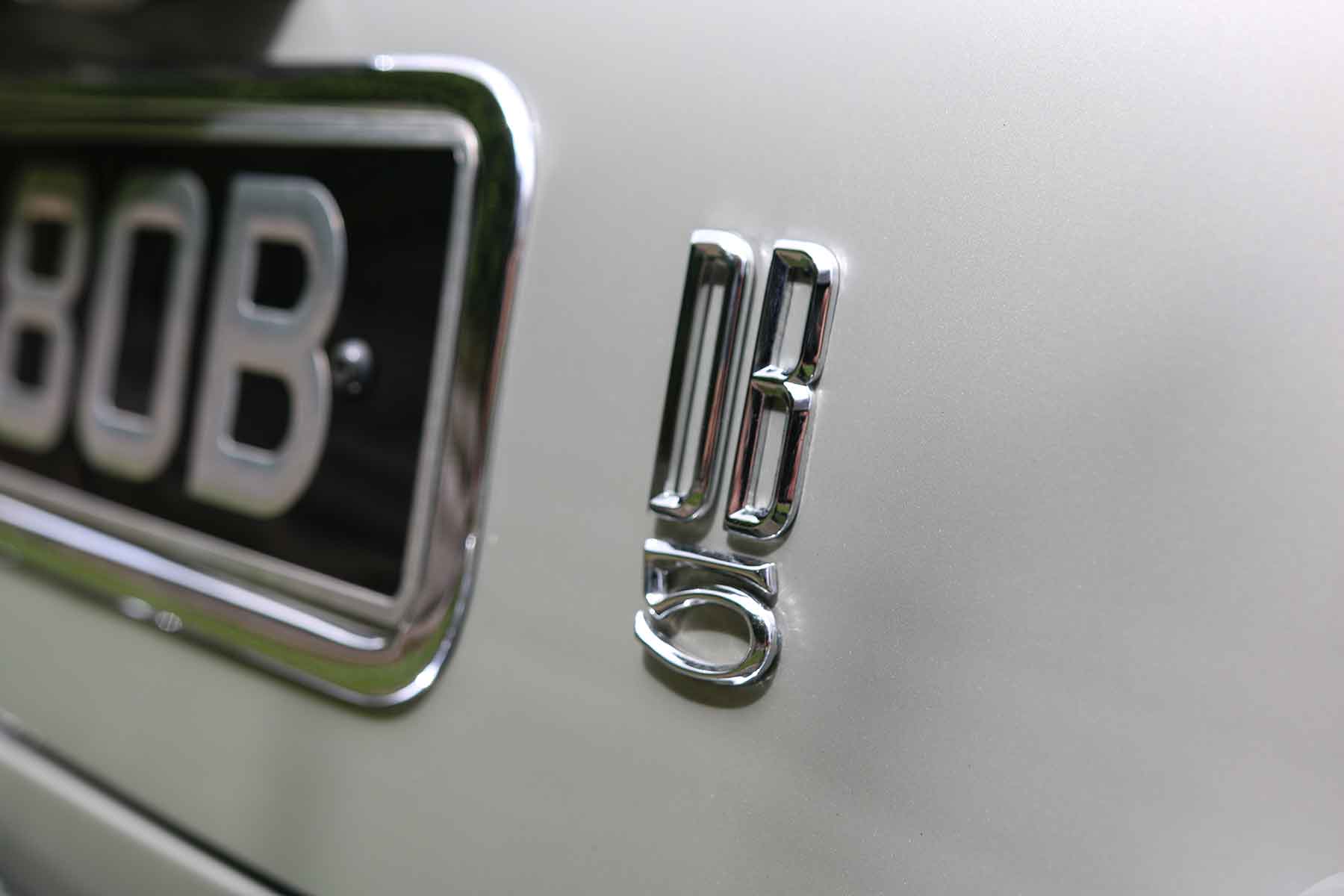
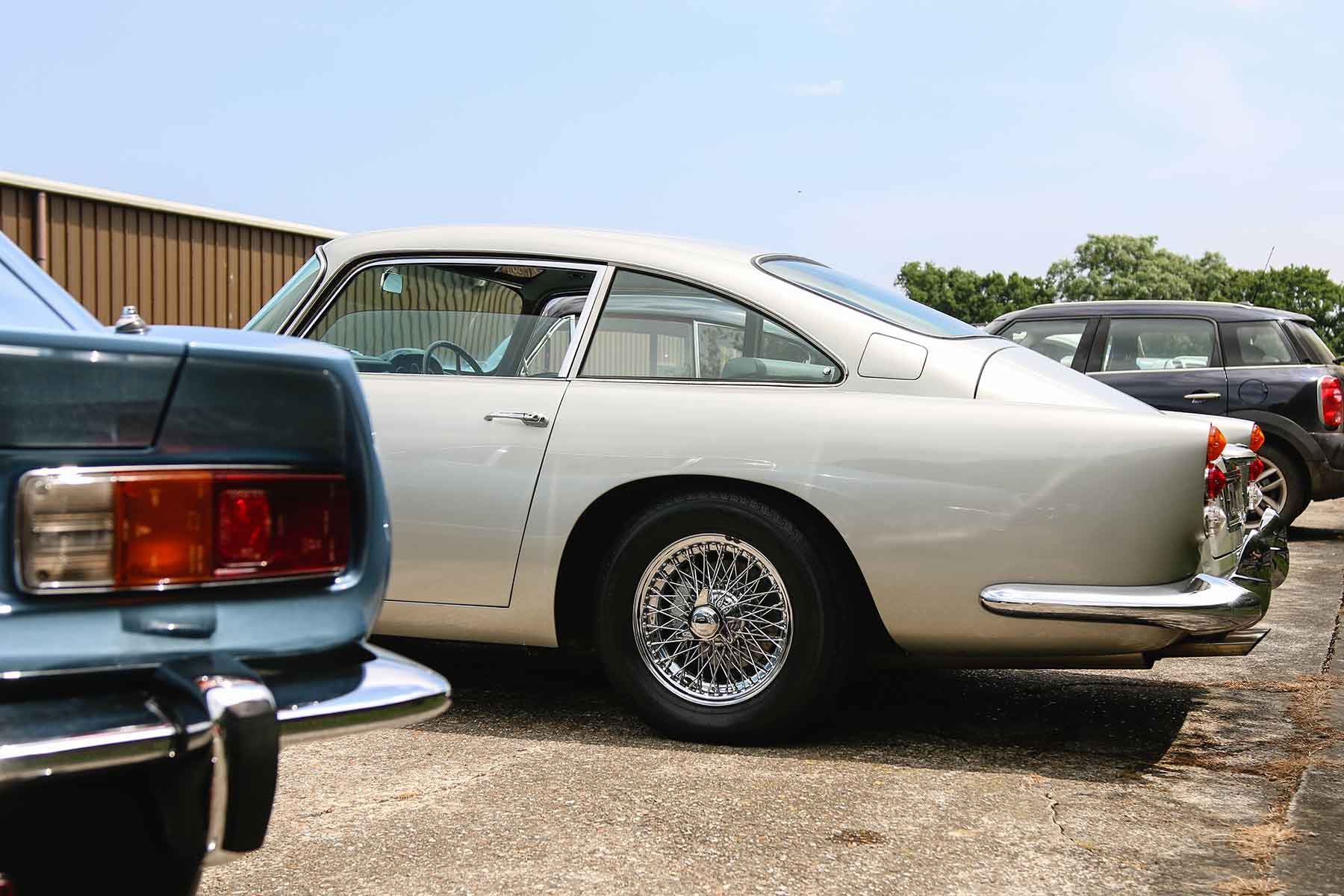
Even those with zero interest in cars will recognise this one. The DB5 is James Bond, having featured in no less than eight films: Goldfinger, Thunderball, GoldenEye, Tomorrow Never Dies, The World Is Not Enough, Casino Royale, Skyfall and Spectre.
Built between 1963 and 1965, the DB5 (‘DB’ refers to former Aston owner, David Brown) is another elegant, understated GT. Peak power from its 4.0-litre six is 286hp, but this is one of just 65 cars upgraded to 330hp Vantage spec.
Jay Kay of Jamiroquai bought the DB5 in 1994 and commissioned a full restoration – including a respray from Fiesta Red to Bond-style Silver Birch.
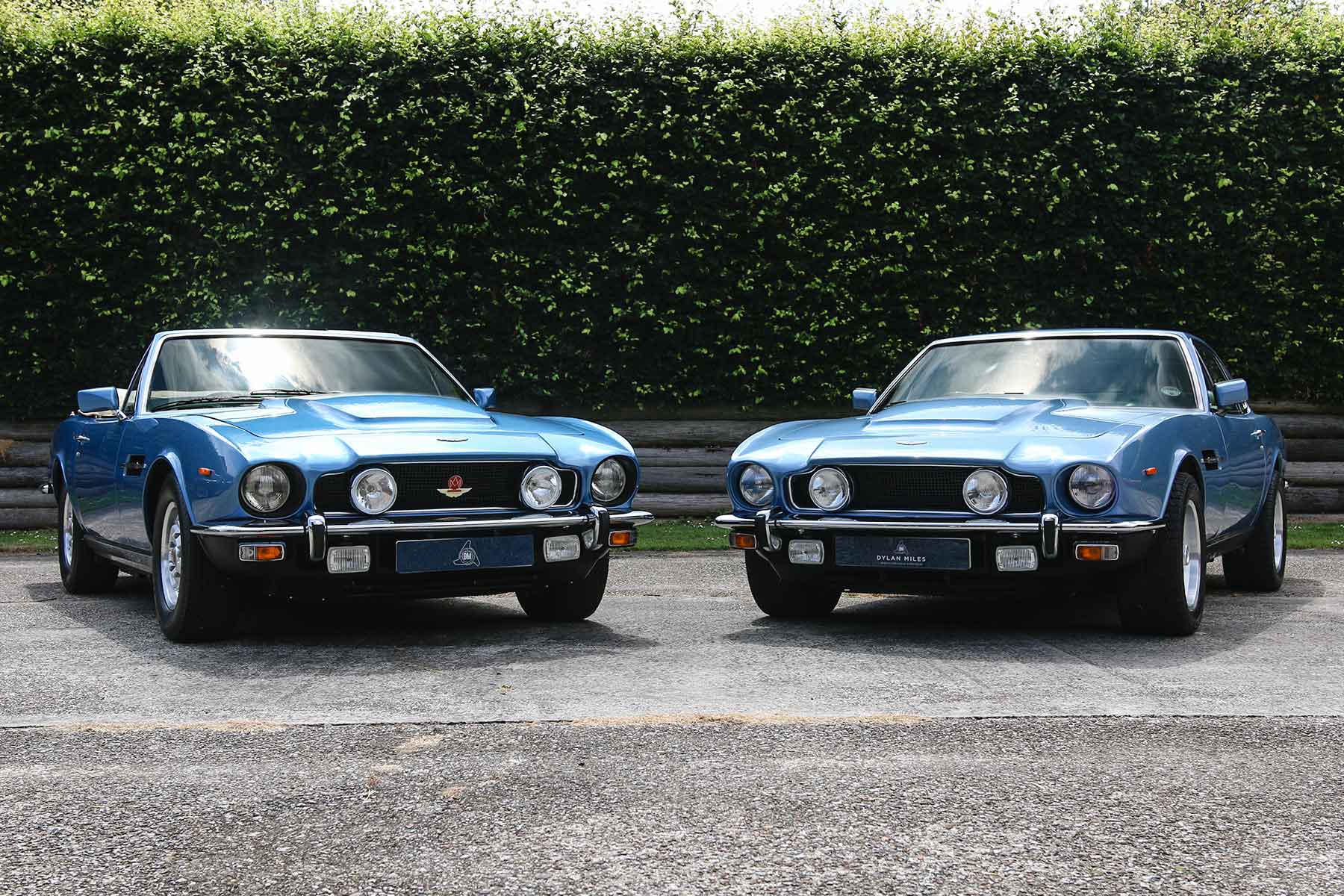
Aston Martin V8
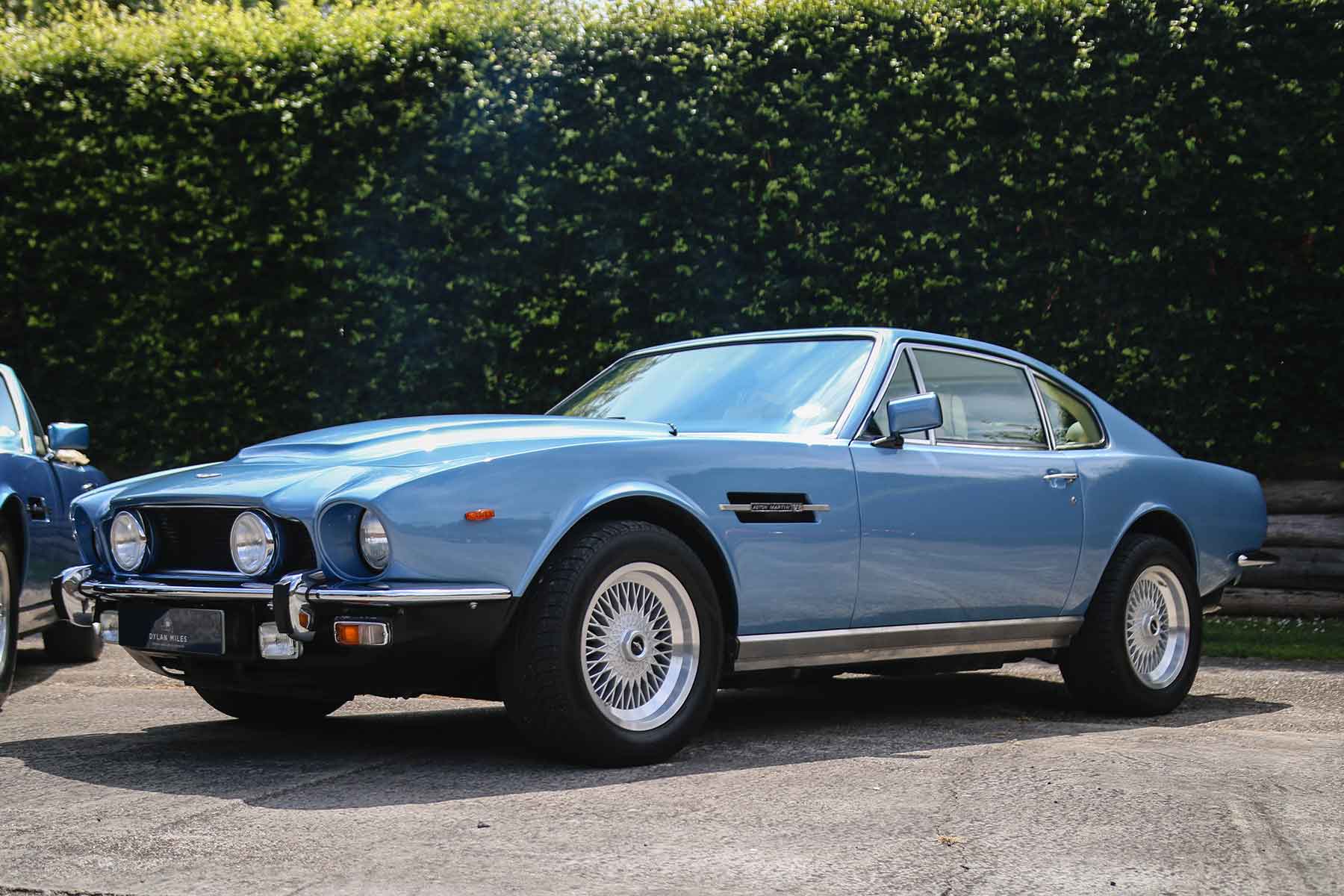
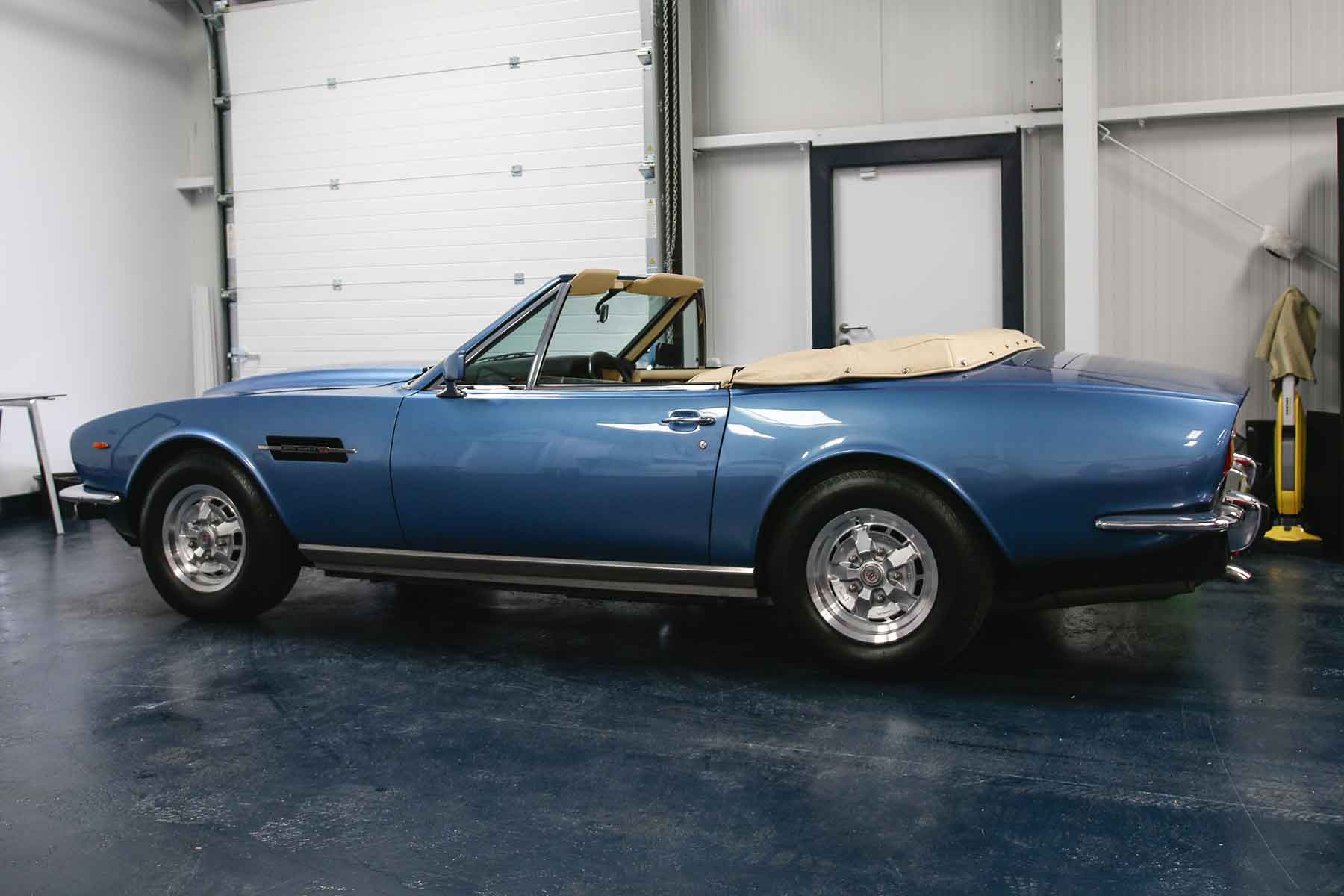
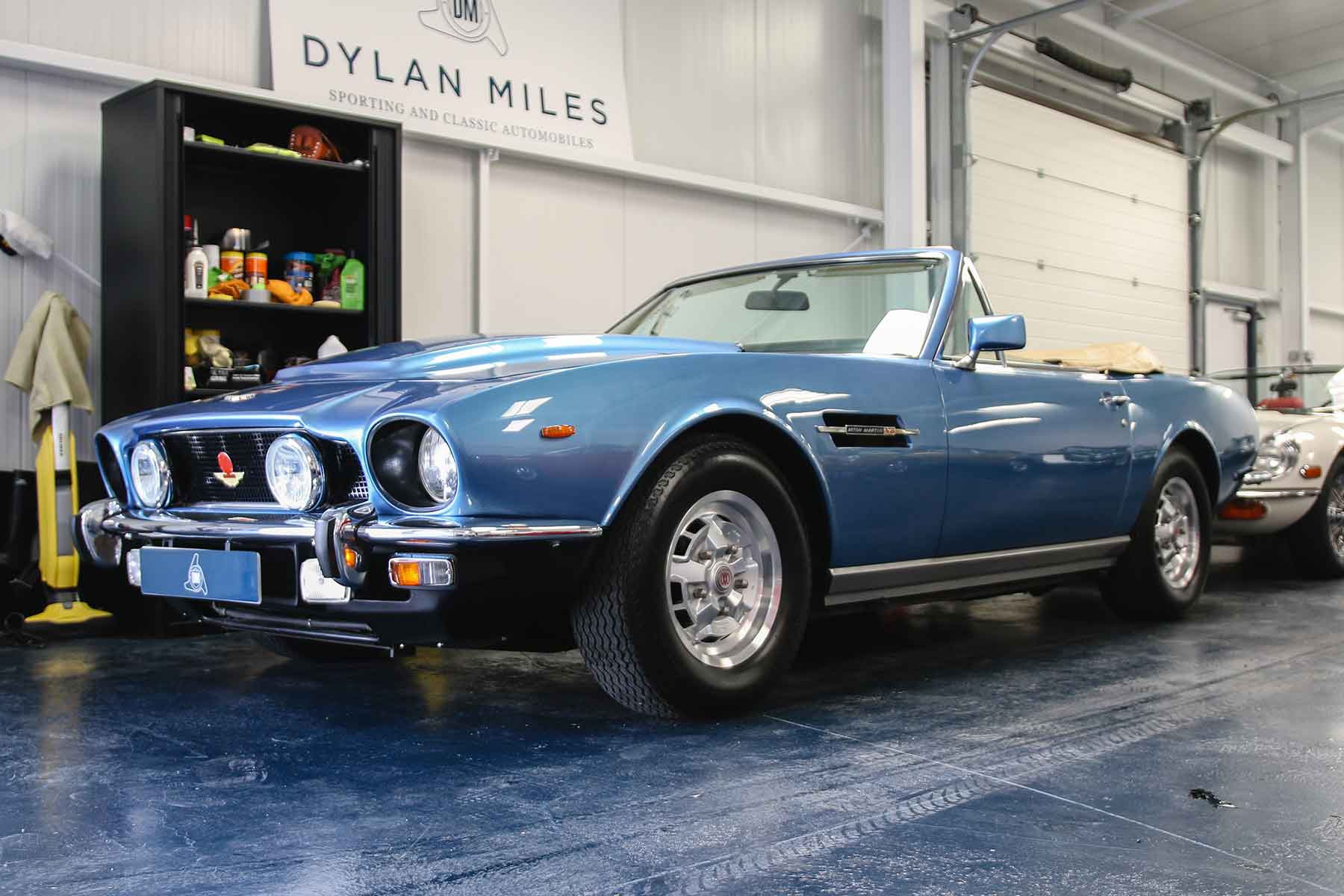
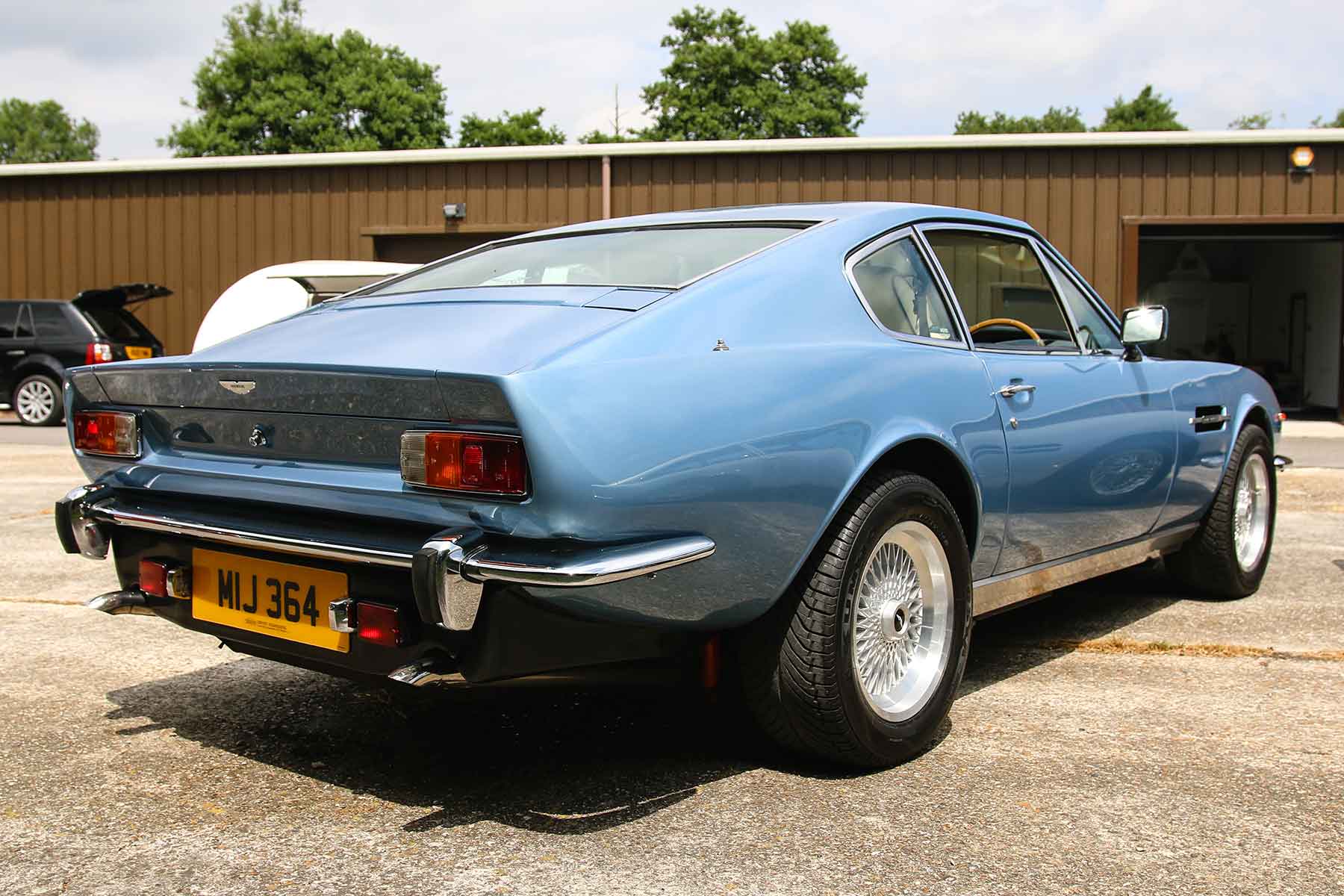
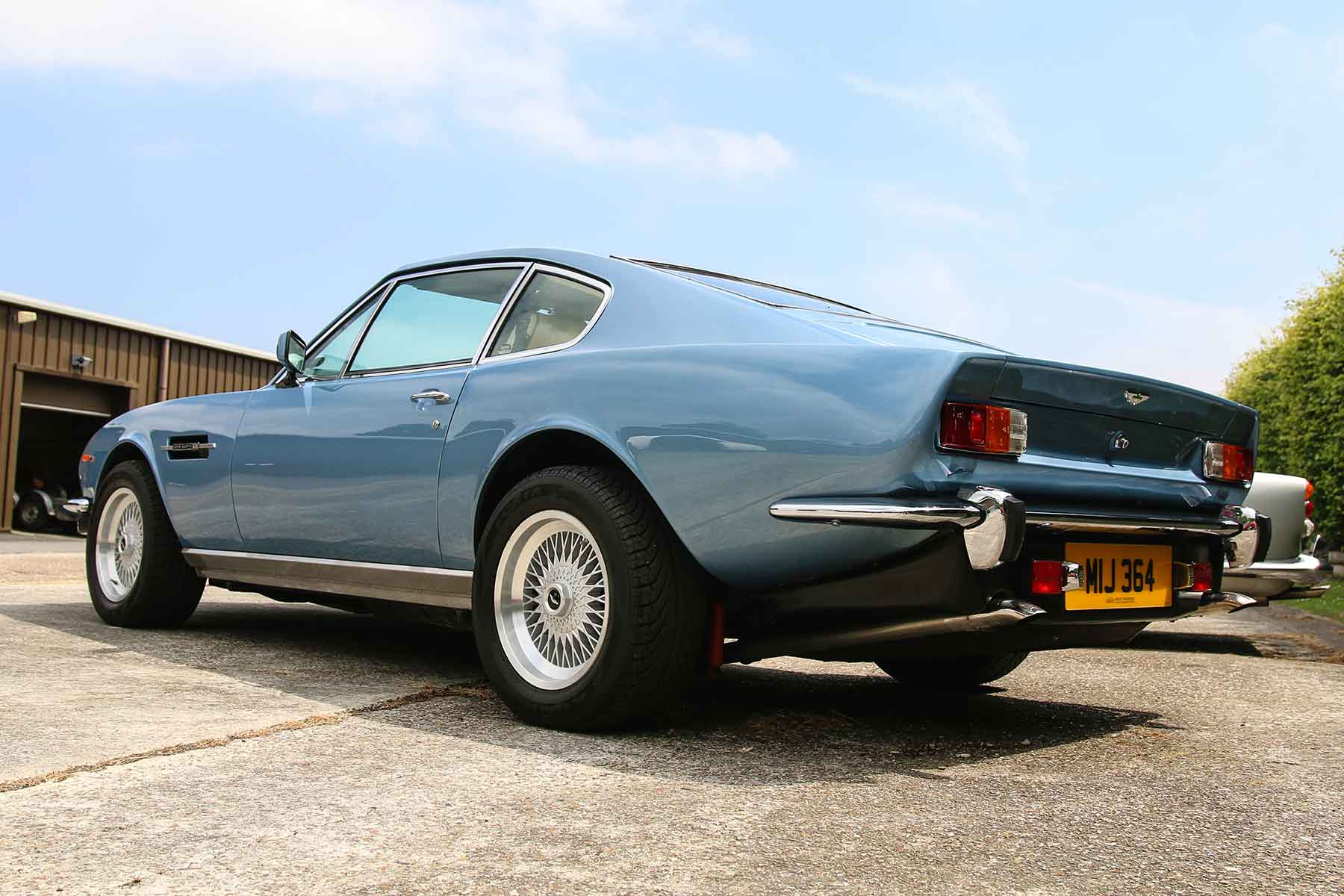
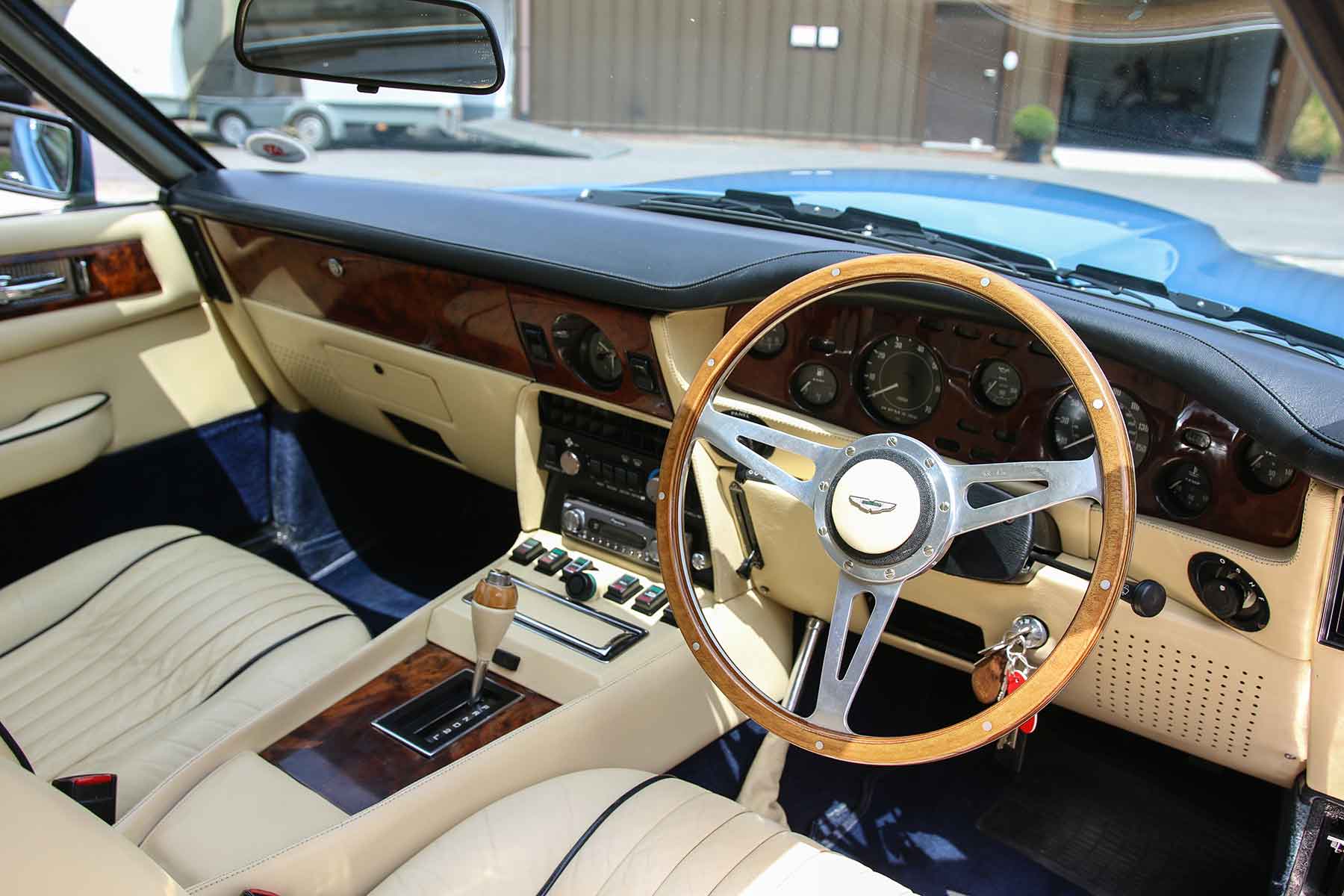
It seems fitting that Dylan Miles had near-identical coupe and Volante (convertible) versions of the Aston Martin V8 in stock, since Timothy Dalton drives both in The Living Daylights. Well, kind of…
The Vantage Volante used by Dalton at the start of the film was actually a pre-production car owned by Victor Gauntlett, the charismatic Aston chairman who had negotiated the marque’s return to the big screen. Later on, it visits Q Branch to have a hard-top fitted, along with tyre spikes, heat-seeking missiles and a jet engine.
Even the regular V8 isn’t slow, with a 5.3-litre engine and around 300hp, depending on spec. The 395hp Vantage, meanwhile, was a seventies supercar, hitting 60mph in 5.3 seconds and 170mph.
Aston Martin Lagonda Rapide
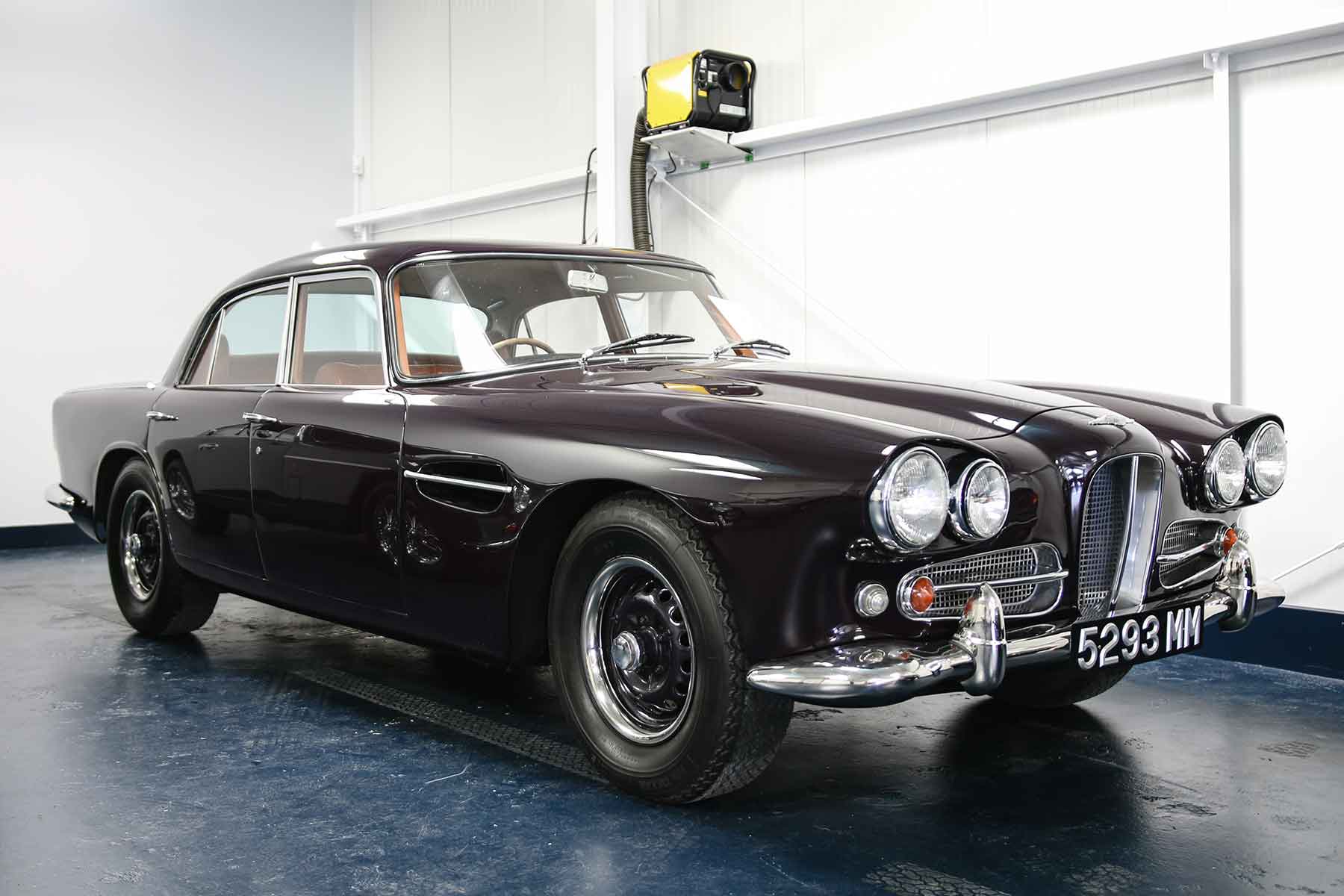
Now for a rather different Aston Martin – and one that’s never been driven by James Bond esq. Instead, this 1961 Lagonda Rapide was the property of David Brown himself, who used it as his personal car until 1964.
Brown from some angles, aubergine from others, the name of the Lagonda’s paint colour is Roman Purple. This was the pre-production prototype and its favourable reception from press and customers led to production of a further 54 cars. The Cartier family apparently ordered one trimmed in mink.
Never seen one of these before: 1961 Lagonda Rapide.
The car started life with a 3.7-litre DB4 engine, but this was later replaced with a 4.0 DB5 unit – as per the other 54 cars. You couldn’t call it beautiful, but this four-door Aston saloon is stately, commodious and very rare.
Alfa Romeo Giulia Sprint Speciale
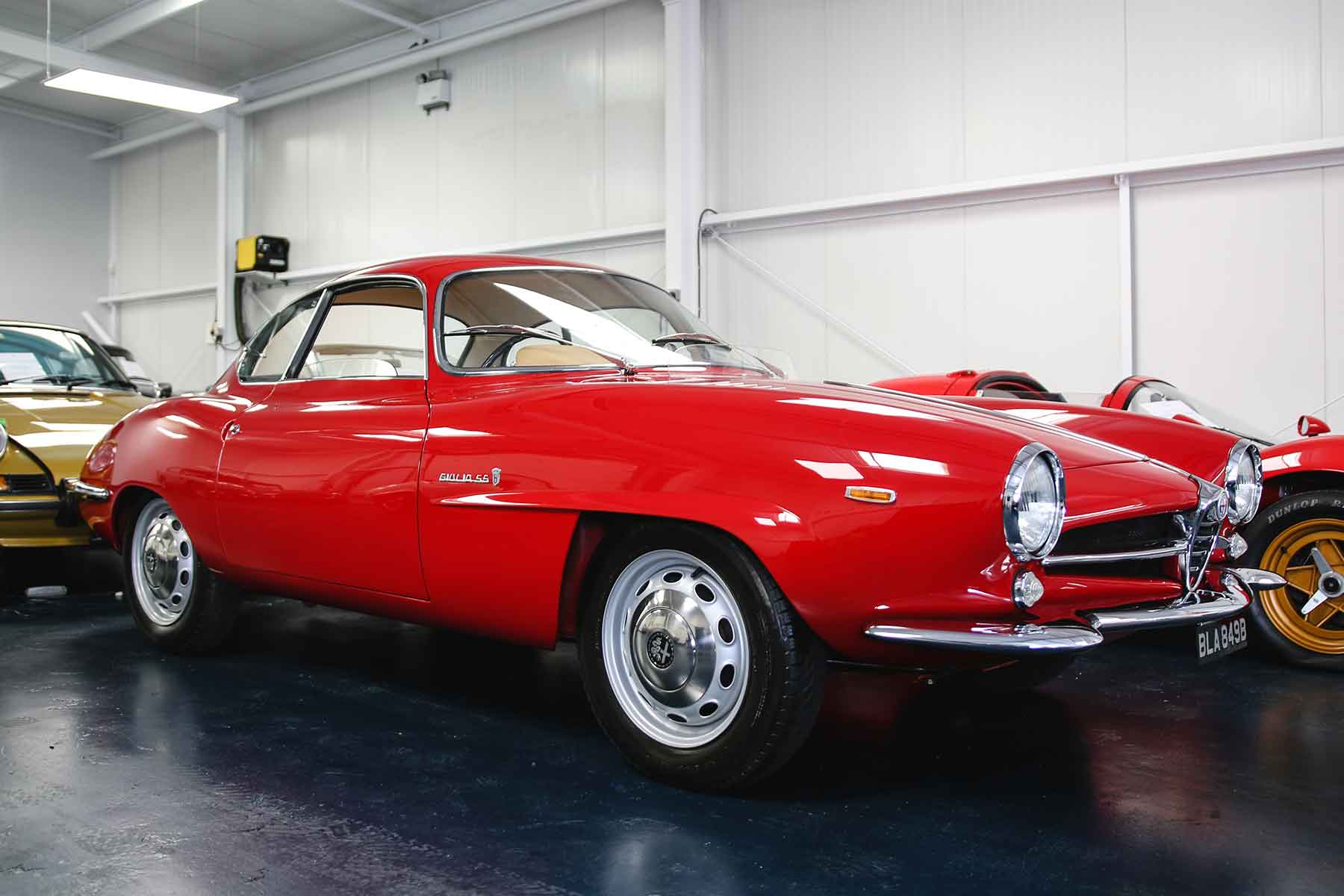
Here’s a car that anyone with at least one functioning eyeball will find beautiful. This Alfa Romeo Giulia Sprint Speciale is one of 1,400 made and 25 converted to right-hand drive by Ruddspeed when new. It arrives fresh from a 1,300-hour restoration.
Those voluptuous lines are by Bertone, while that colour is, of course, Rosso Corsa, the Italian racing red more commonly seen on Ferraris. The interior has been retrimmed in British Connolly leather with Wilton carpets.
Powered by a 112hp 1.6-litre engine, the Giulia SS has a top speed of 120mph. Dylan Miles recently sold this example for an undisclosed amount.
Ferrari 365 GTB/4 Daytona Spyder
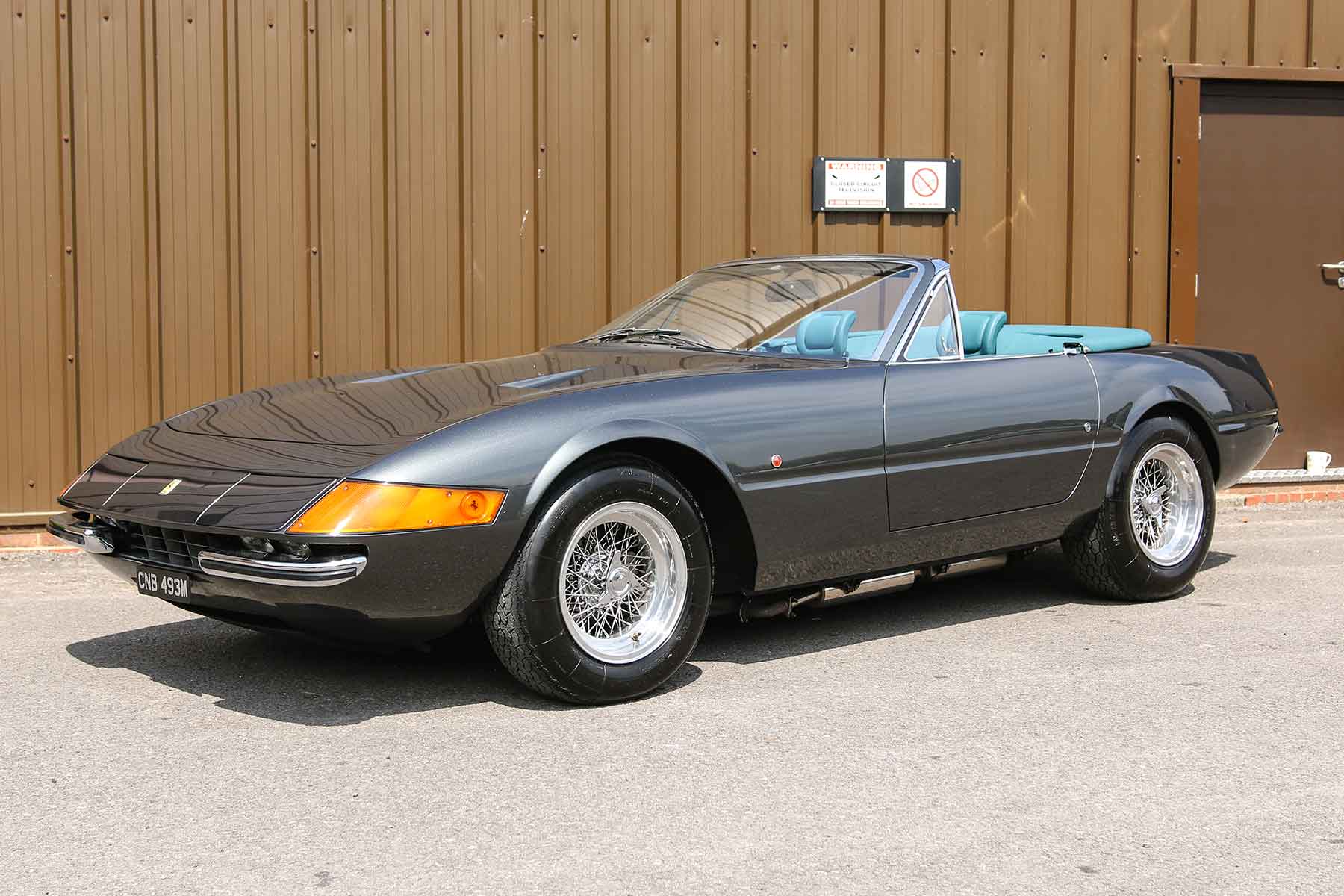
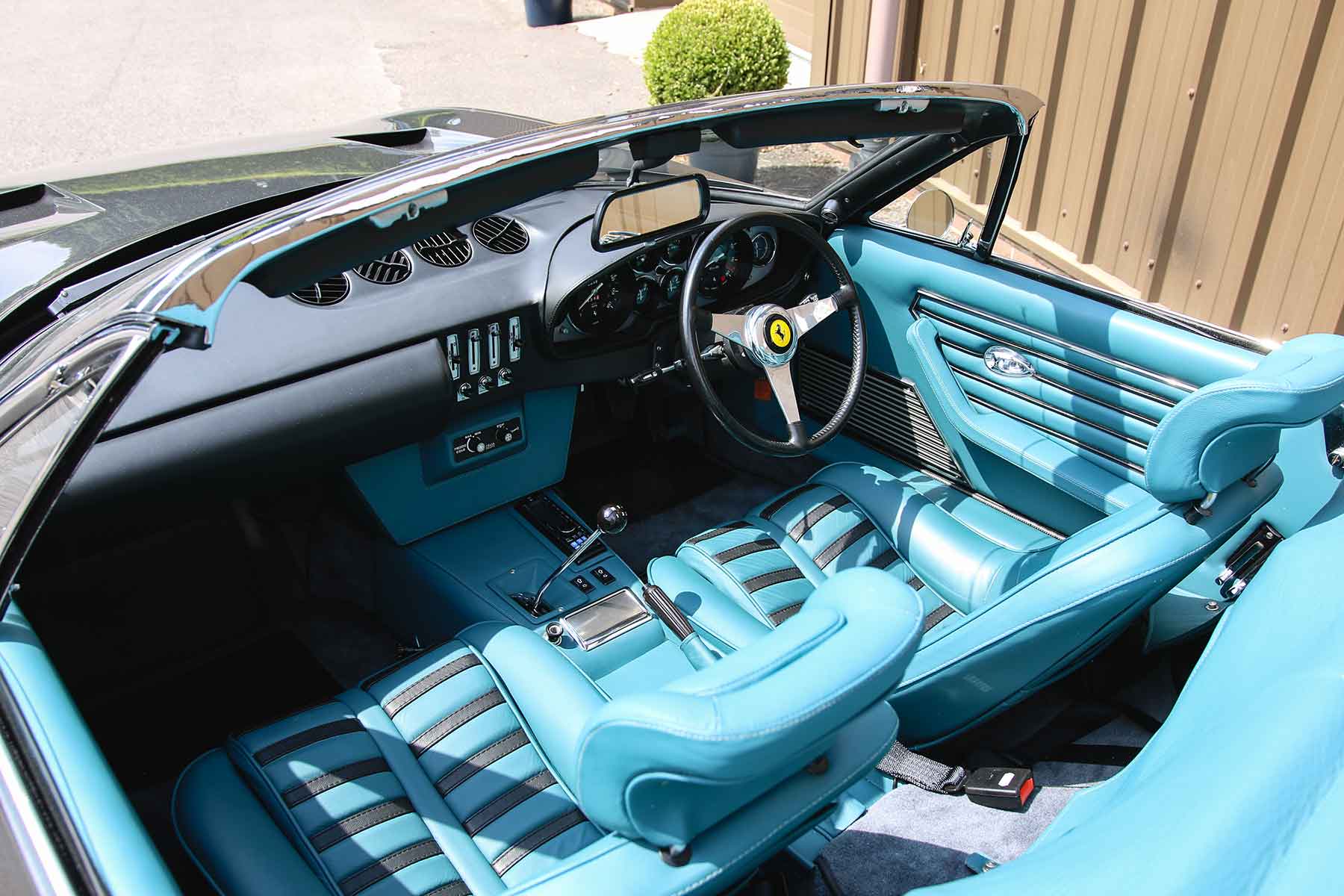
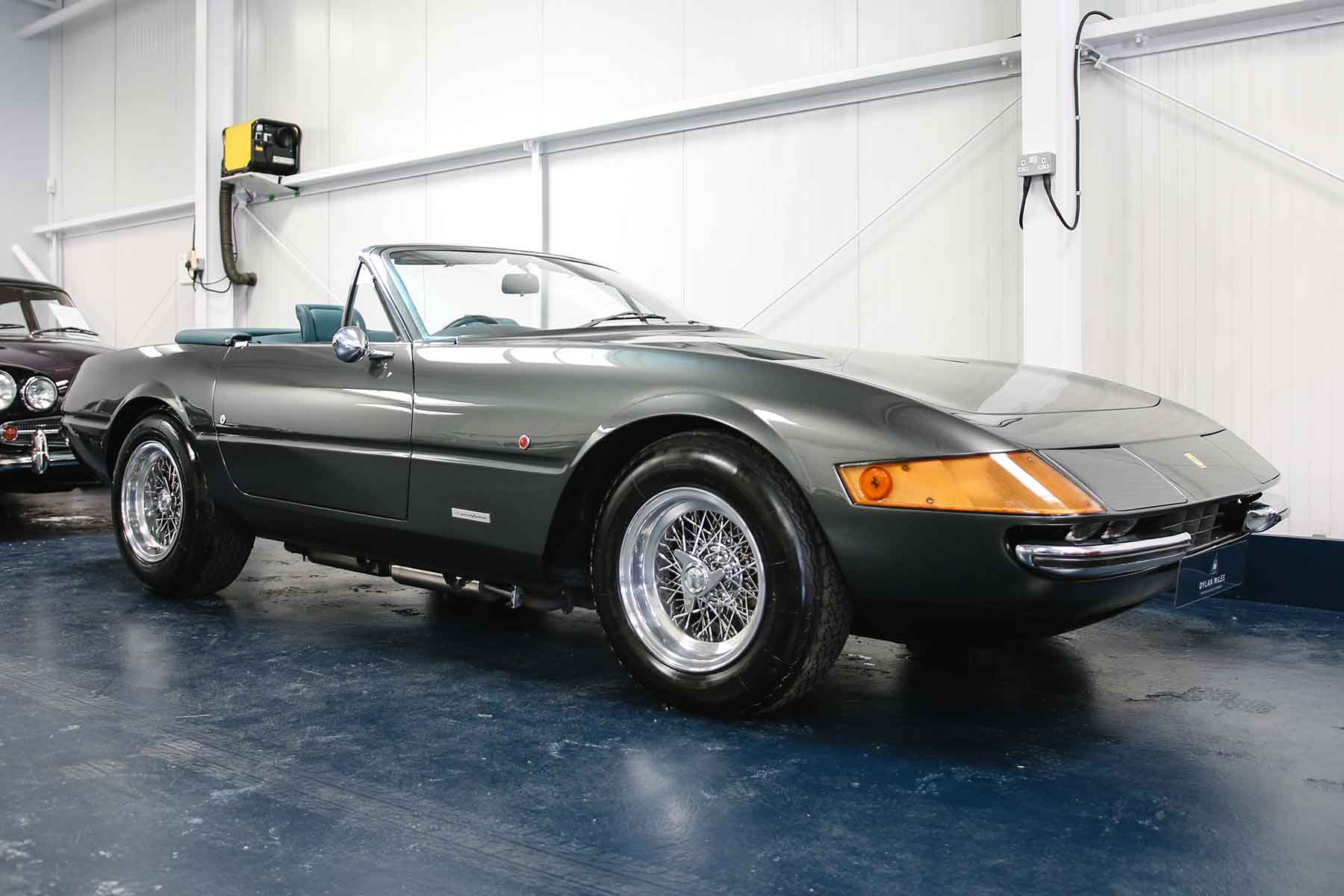
Ferrari only made 122 open-top 365 GTB/4 Spyders… and this isn’t one of them. Nonetheless, the former coupe – converted at a cost of £50,000 in 1989 – is still stunning. Even if we’re not entirely sold on that turquoise leather interior.
Under that very long bonnet is a 352hp 4.4-litre V12, giving the ‘Daytona’ (as it quickly became known) a 174mph top speed. It was also a surprisingly successful racer, taking three GT class wins at Le Mans.
Dylan, whose father used to own a Daytona, is clearly a fan. “It’s one of the greatest cars ever made,” he says.
Porsche 911S
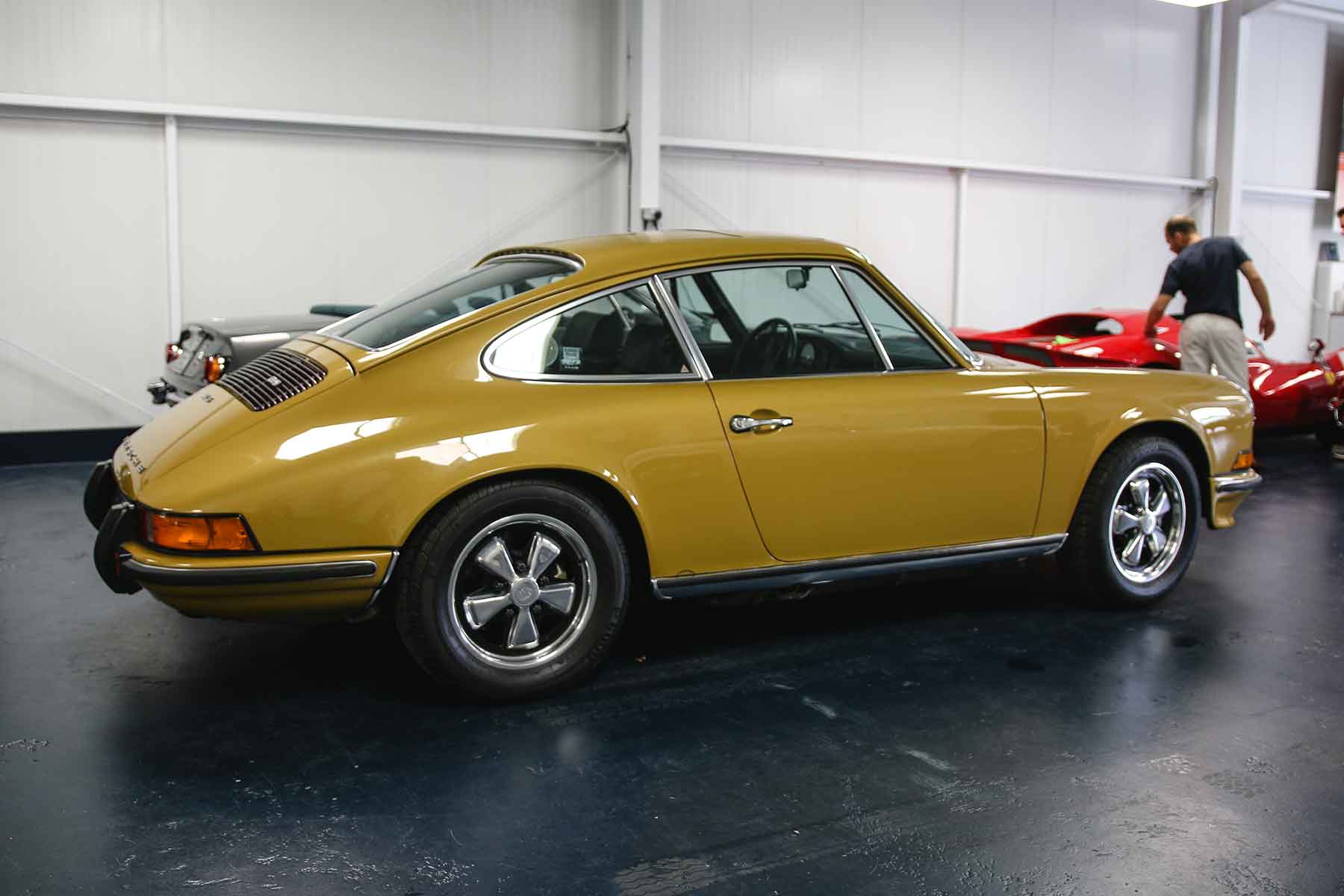
Speaking of the ‘greatest cars ever made’, the venerable Porsche 911 is surely in with a shout? First launched in 1963, it has evolved over six (soon to be seven) generations without losing its focus on driving excitement.
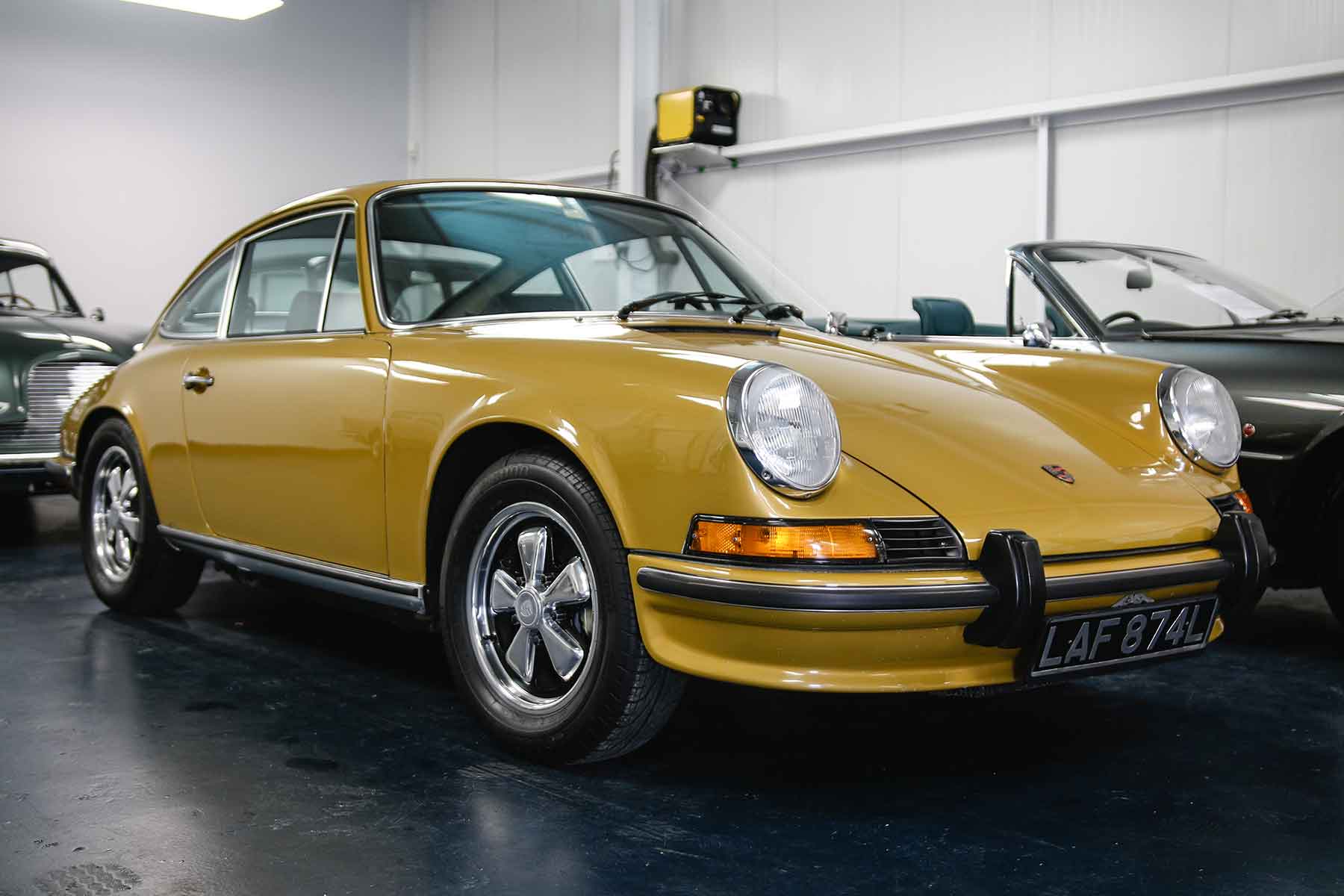
The 2.4S is one of the most desirable early 911s – and Porsche’s flagship until the legendary 2.7 RS arrived in 1973. This 1972 car was originally exported to California and is finished in an oh-so-seventies shade of metallic gold.
Interestingly, it’s also one of a minority with the four-speed ‘Sportomatic’ clutchless manual gearbox. This requires the driver to change gear using a conventional lever, but has an automatic-style torque converter instead of a flywheel.
 New car sales across Europe recorded their highest running total of the century during the first half of 2018, new data from JATO has revealed. 8.66 million new cars hit the road in the first six months, a rise of 2.7 percent.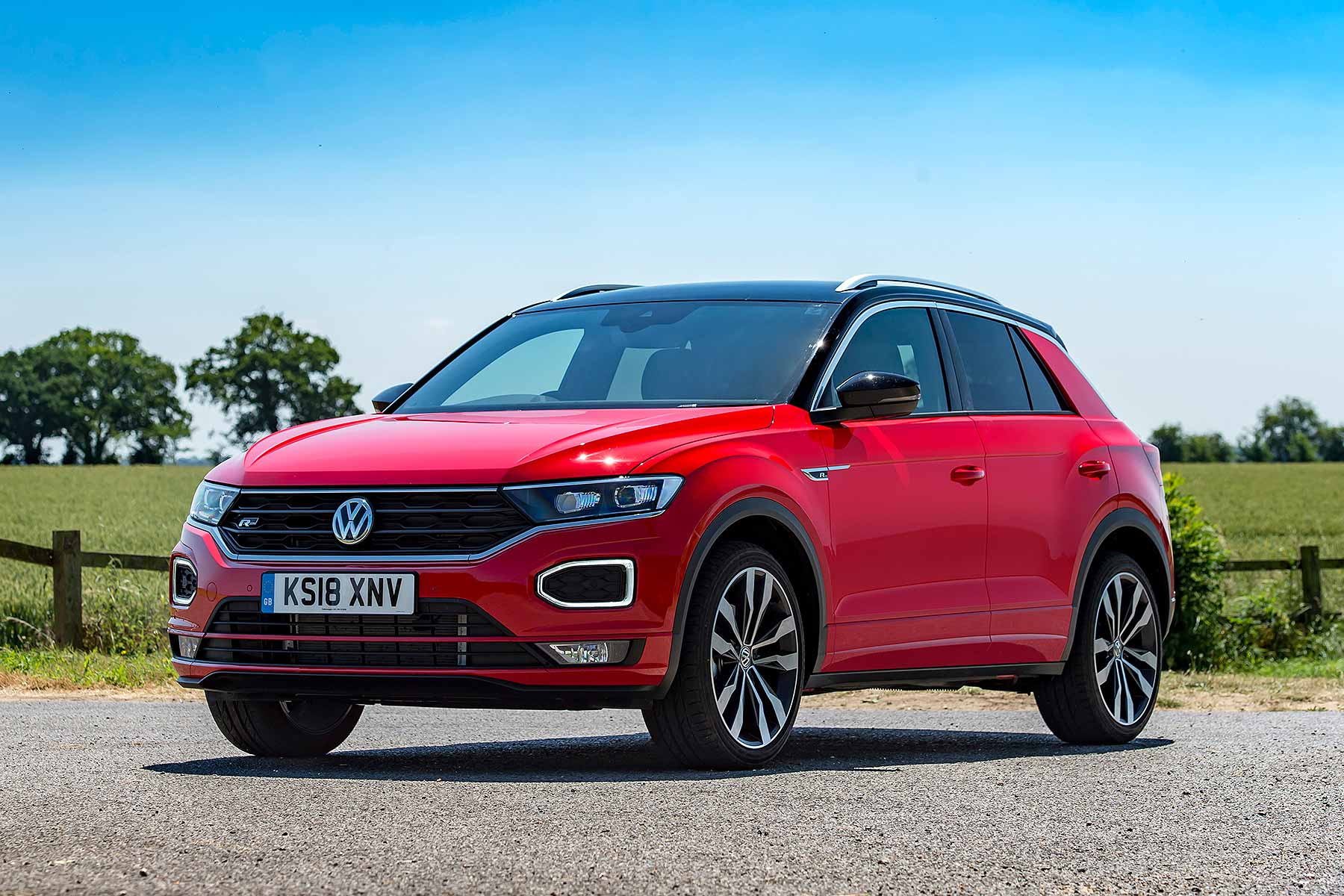
 The ultra-exclusive Bugatti Chiron has become a bit more appealing to sun-worshipers with the launch of a new glass roof option called Sky View.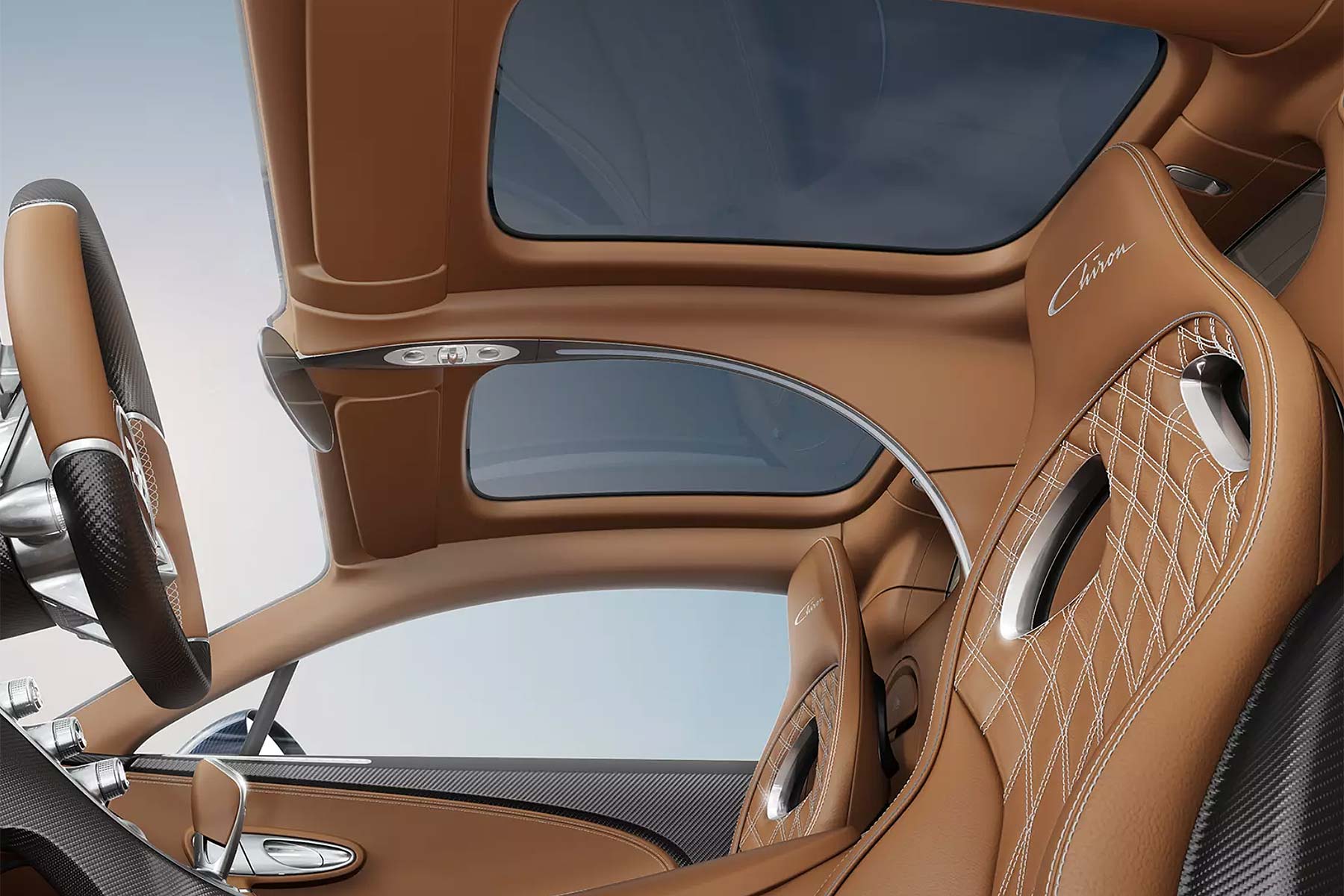
 Mercedes-Benz consistently produces some of the most aerodynamically efficient new cars on sale. The new 2018 A-Class Saloon has jumped straight to the top of the pile with an unbeatable set of aerodynamic efficiency stats.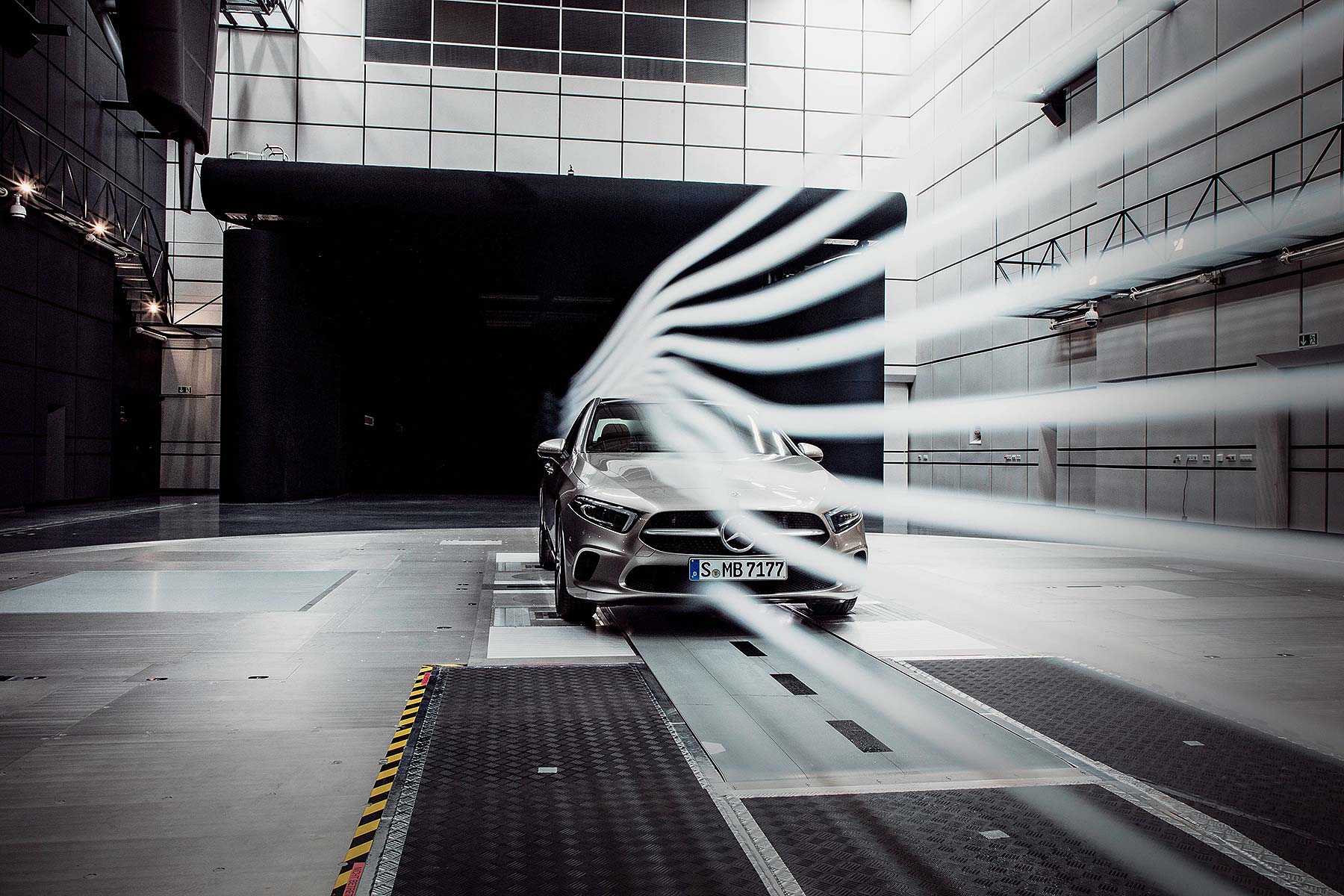
 The Mazda CX-5 mid-size SUV is the firm’s best-selling car in the UK – and globally, 1 in 4 new Mazdas sold is a CX-5. So the firm has rolled out a series of revisions for 2018 to keep it sharp in the marketplace.