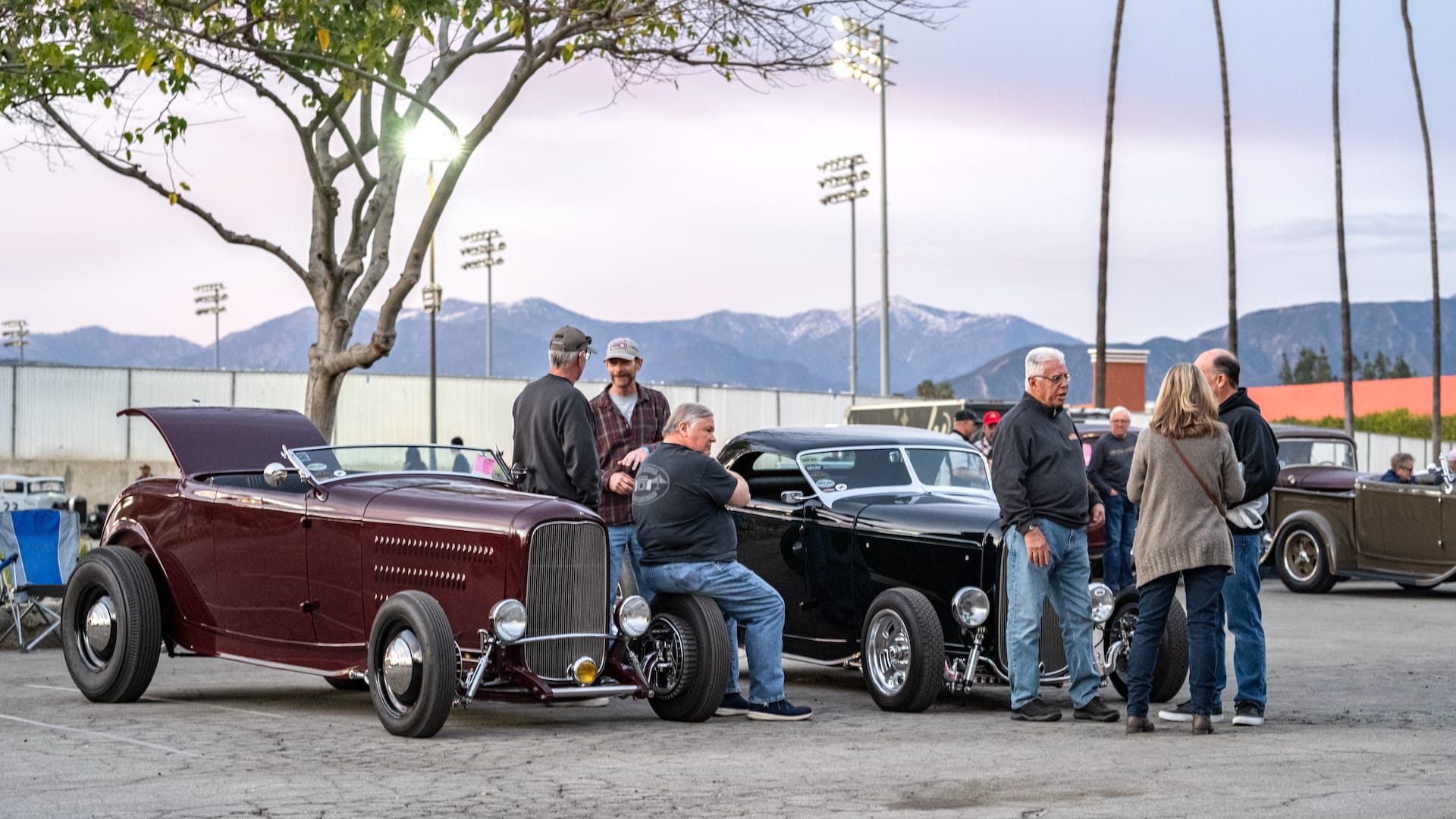
The return of the Grand National Roadster Show has seen a celebration of America’s best roadsters, hot rods and custom cars.
Held at the Fairplex in Pomona, California, the 2022 show marked the event’s return after the 2021 edition was postponed.
More than 1,000 custom cars were on display. The event culminated with the presentation of trophies for the America’s Most Beautiful Roadster (AMBR) Award and the Al Slonaker Memorial Award.
America’s Most Beautiful Roadster Winner
Taking the top AMBR Award was a 1934 Chevrolet Roadster. Owned by Jeff Breault and built by Devlin Rod & Customs, the Chevy had been subject to an extensive two-year build project.
Using a custom Roadster Shop chassis, the Chevrolet has a host of bespoke exterior touches and details. A modern LS V-8 engine is found under the hood, covered with parts to make it appear like a vintage block.
The interior is also completely customized, with the work performed by Downey’s Auto Upholstery.
Beating 10 other contenders, the Chevrolet will now be immortalized on the nine-foot-tall trophy. The winner also receives a prize of $12,500, provided by ARP Bolts.
Al Slonaker Memorial Award Winner
Taking the other major prize at the 2022 event was a 1932 Ford Coupe. It collected the Al Slonaker Memorial Award, dedicated to the founders of the Grand National Roadster Show, as the top non-roadster on display.
Owned by Pat Gauntt, and built by Hollywood Hot Rods, the Ford has been more than 15 years in the making. It features a 331-cubic inch Cadillac V-8 engine, fitted with race-specification parts.
Making the Ford even more impressive is its bespoke suspension setup. A cockpit-controlled system uses pressurized oil, and is adjusted by valves mounted near the gear shifter.
Celebrating history and heritage
More than 600 awards were presented during the show weekend, with tens of thousands of visitors attending.
As part of the 2022 event, a celebration of the 1932 Ford’s 90th anniversary was held, and featured at the Grand Daddy Drive-In.
A special exhibit also placed attention on “A Gathering of Hot VWs”, with the display including a previously unseen Volkswagen Beetle, owned by ZZ Top’s Billy Gibbons.
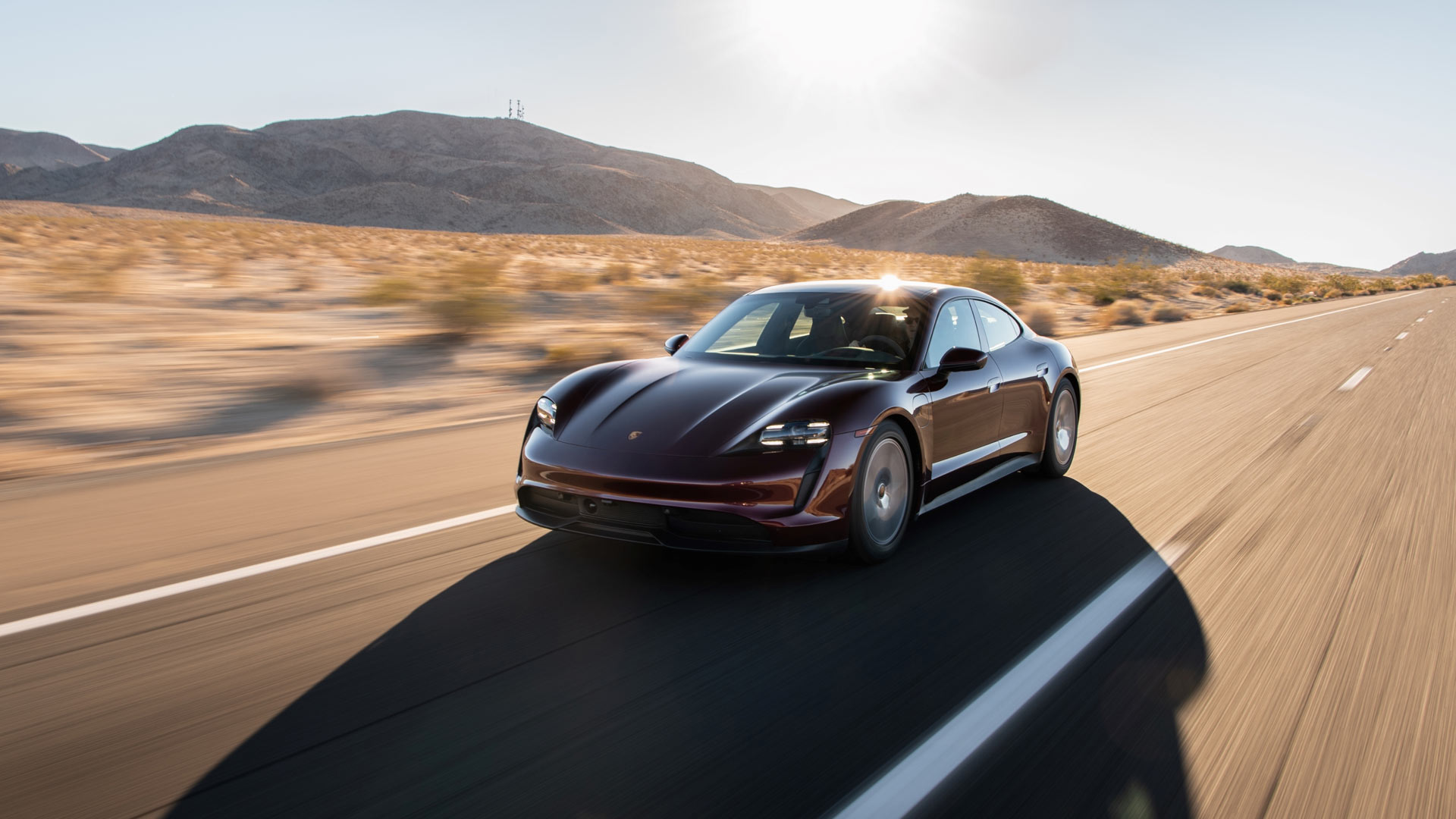
The Porsche Taycan has claimed a new Guinness World Record with an epic journey across America.
Travelling from Los Angeles, California, to New York City, the all-electric Taycan set a record for the amount of time it spent charging.
To cover the 2,835-mile journey, the Taycan required just two hours and 30 minutes connected to charging devices.
Fast charging for the win
Porsche’s achievement comes just months after the same Guinness World Record was broken. In November 2021, a Kia EV6 completed the trans-American trip, requiring seven hours and 10 minutes of charging.
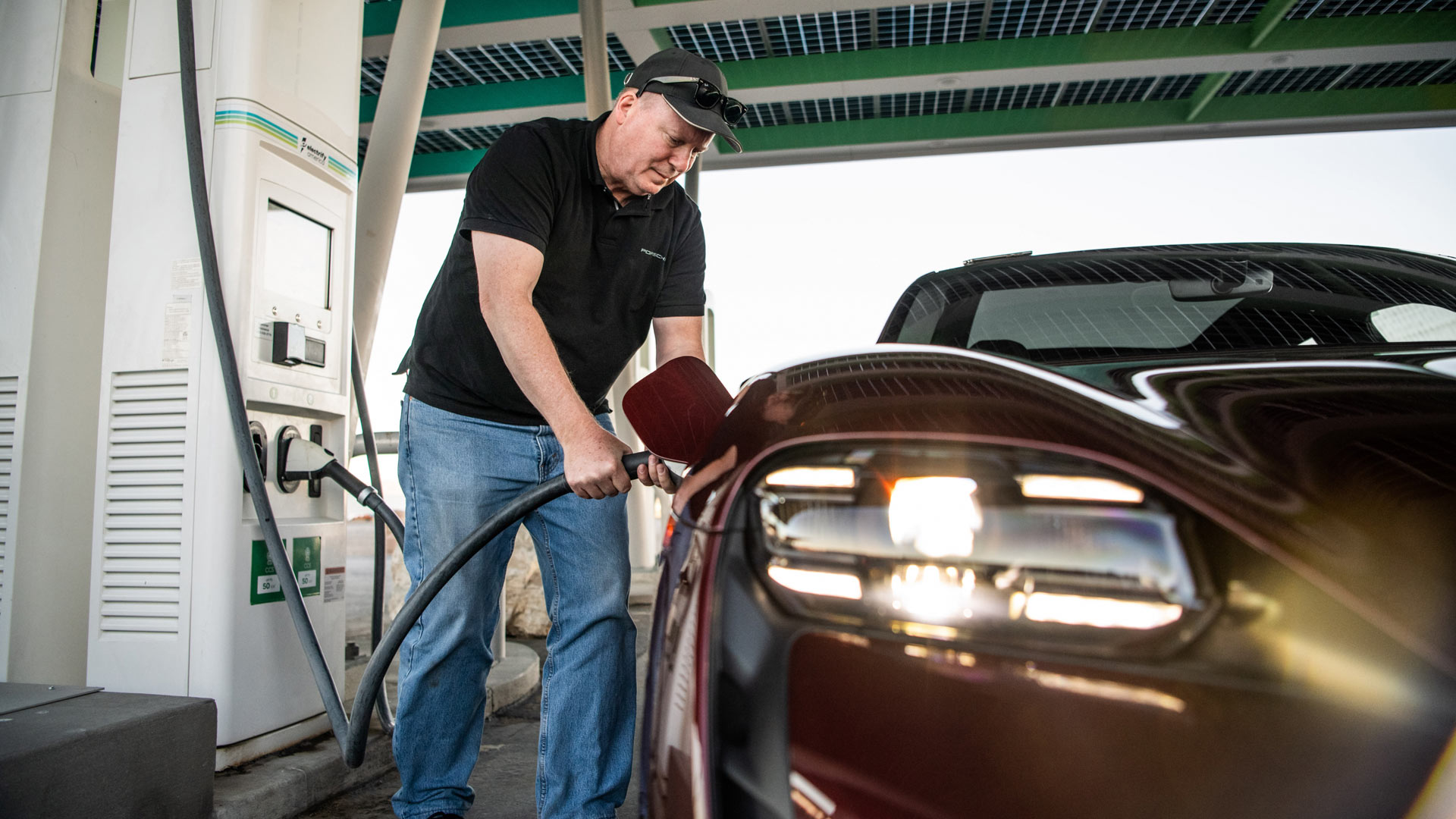
The Electrify America CCS DC rapid-charging network allowed Porsche to shave almost five hours off the record. Electrify America, and the European Ionity network, offer more than 4,800 charging points across the world.
This includes 350kW devices, which offer ultra-fast charging capability.
“Comparing charging performance from a variety of EVs I have driven to date, the Taycan sets the bar,” said the car’s driver, Wayne Gerdes. “The first time I charged on a 350kW charger, 6-82 percent occurred in just 22 minutes.”
Another record for the collection
Gerdes has previously set multiple Guinness World Records for driving efficiency. This EV challenge required him to plan a route using the Electrify America app. He also benefited from Plug-and-Charge capabilities for the majority of the trip.
Porsche supplied Gerdes with a standard 2021 Taycan, equipped with the 93kWh Performance Battery Plus. Adaptive Cruise Control and Porsche Electric Sport Sound were added to make the journey more enjoyable.
Last month the Porsche Taycan Cross Turismo off-road estate set a different Guinness World Record. Gaining 4,842.967 metres, the Cross Turismo now has the official title for the greatest altitude change ever achieved by an electric car.
Said to be a UK industry-first, Volvo owners will be able to get free repairs for punctured tyres and chipped windscreens.
These will be offered at no cost for all Volvo cars, regardless of their age.
Exclusive to Volvo drivers
Drivers will need to visit their local Volvo dealership, where technicians will make an assessment of the damage.
For windscreens, technicians will work to Volvo’s own National Safety Standards. Whether a repair can be made will depend on where the damage is located, and how large the chip is.
Should Volvo not be able to offer a free repair, the option of a cost replacement will be offered.
Free puncture repairs will also be dependent on the size and seriousness of the tyre damage. A Volvo technician will advise if a tyre cannot be fixed, with the price for a new one provided.
Reducing the nuisance
Drivers can take their Volvo to any UK dealership. The company hopes to be able to offer free repairs in most instances.
The service is designed to be completed while the customer waits. Should a repair take longer, the expected time required will be confirmed before work begins.
Kristian Elvefors, MD of Volvo Car UK, said: “As well as reducing the nuisance factor of minor damage, this new service helps keep cars in safe condition and, in the case of windscreens, can prevent chips leading to cracks and more costly replacements.
“We value all Volvo drivers, no matter how old their car might be, and this new service is the perfect way to help them stay safe, secure and mobile.”
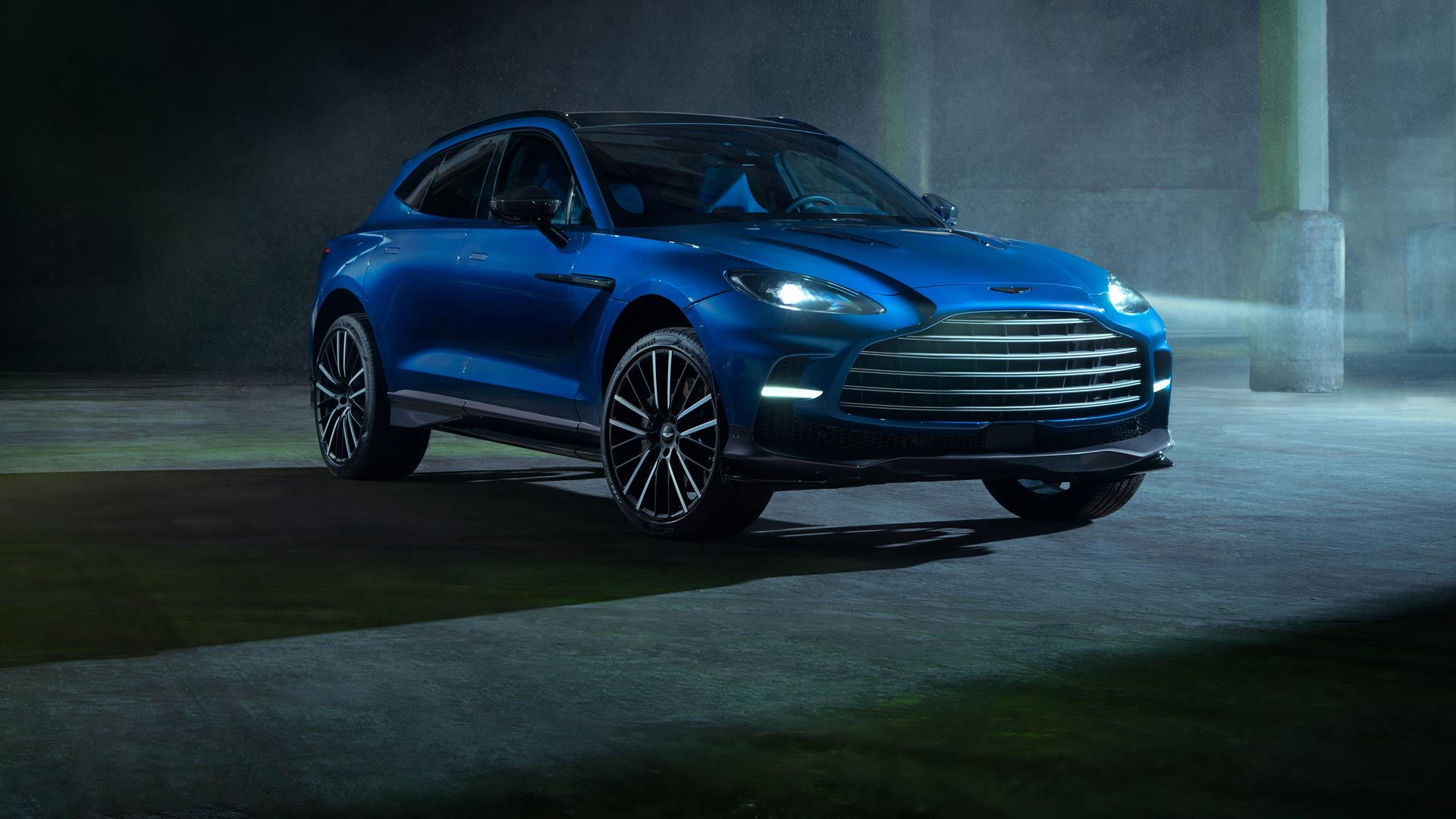
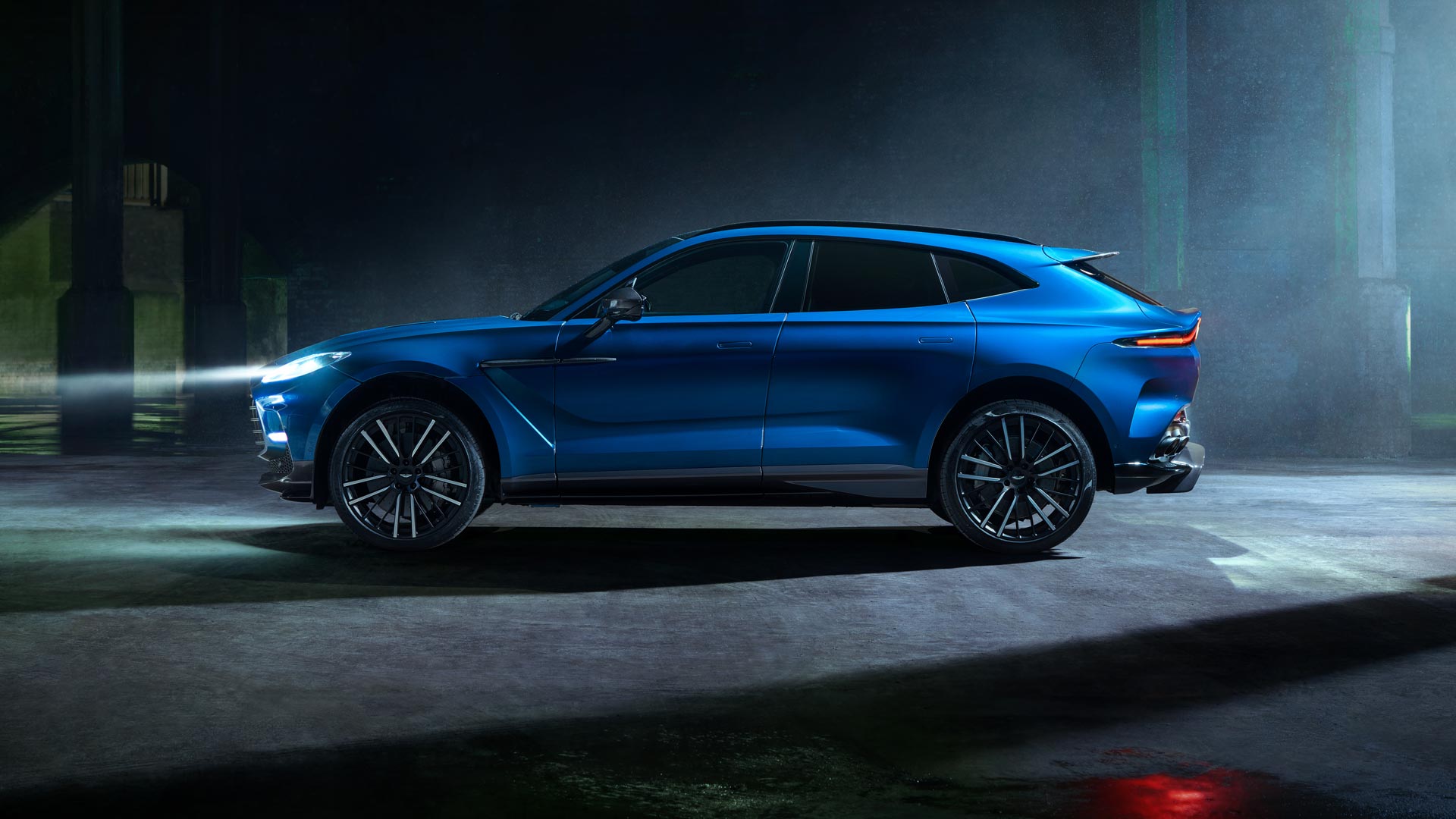
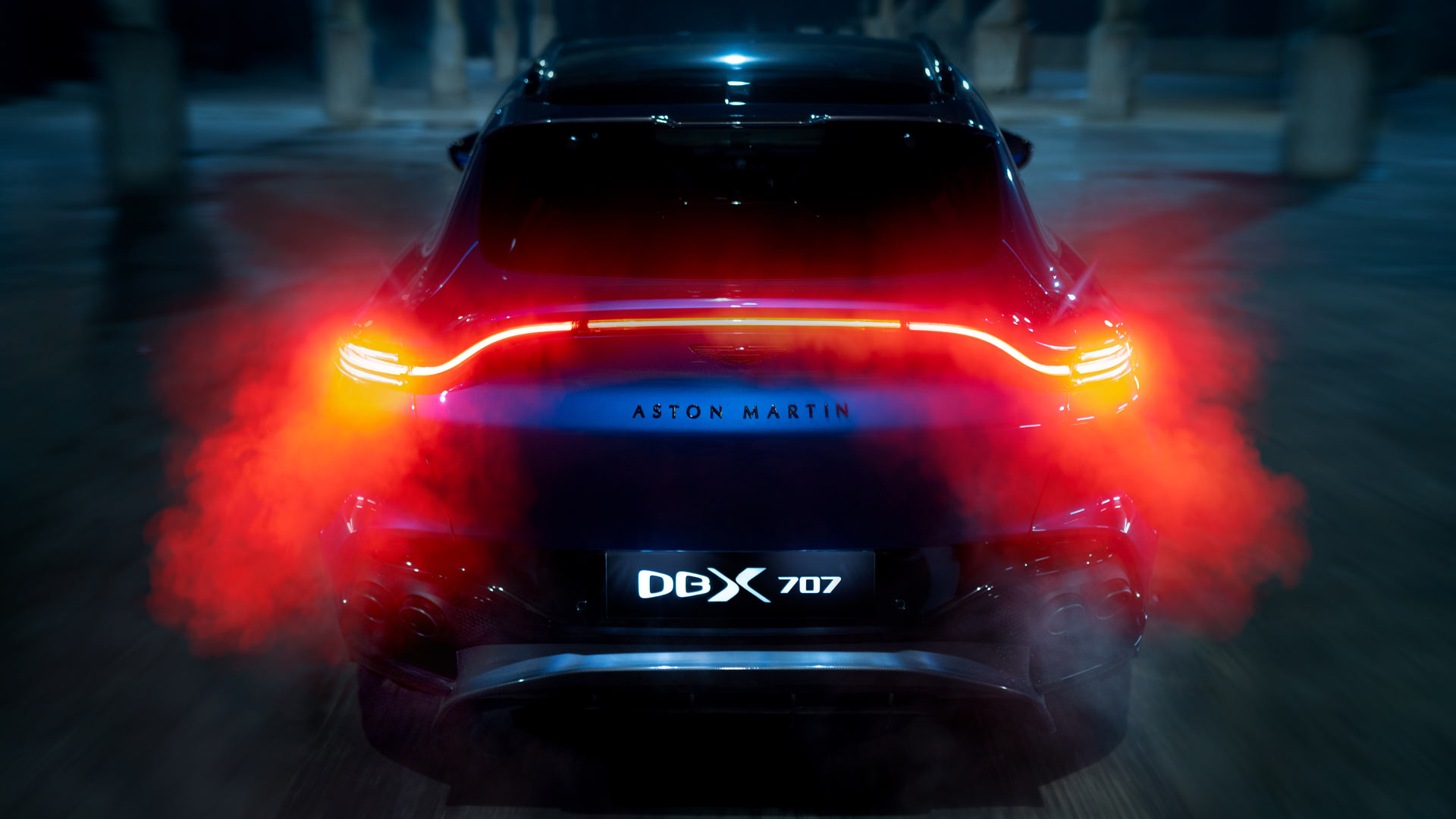
Aston Martin has announced a flagship new version of the DBX SUV, designed to offer maximum luxury and performance.
Called the DBX707, its name gives a rather obvious clue as to the level of power available.
A 4.0-litre petrol V8 serves up 707hp, catapulting the family-sized DBX deep into supercar territory.
Ready to launch
The DBX707’s engine was developed in-house by Aston Martin Powertrain Engineering, led by Ralph Illenberger. It gains new ball-bearing turbochargers and a recalibrated engine management system.
Along with the hike to 707hp, torque has also increased to a substantial 663lb ft: gains of 157hp and 149lb ft over the regular DBX.
A nine-speed wet-clutch transmission is also new. Said to deliver much faster shifts, it contributes to the DBX707’s 0-62mph time of just 3.3 seconds. Top speed is 193mph.
A new ‘Race Start’ mode is found within the Dynamic Drive menu. Acting as a launch control, it helps the all-wheel-drive DBX707 demonstrate its ferocious acceleration.
Beyond brute force
The DBX707’s transformation is about more than just straight-line performance, however. Aston Martin’s head of vehicle engineering, Drummond Jacoy, said: “Too often this class of car is characterised by an obsession with brute force. With DBX707, our objective was to match immense performance with impeccable control and precision, combined with an authentic sporting character.”
Carbon-ceramic brakes are standard, with discs measuring 420mm at the front. These sit behind 22-inch alloy wheels, with optional 23-inch rims introducing wider tyres.
Aston Martin has reconfigured the DBX’s electronic limited-slip differential, which can send 100 percent of torque to the rear axle. Detailed adjustments have also been made to the air suspension, while the power steering has been recalibrated for improved feel.
More bark, more bite
The DBX707 gains bespoke bodywork, with a larger front grille, new air intakes and a more aggressive front splitter.
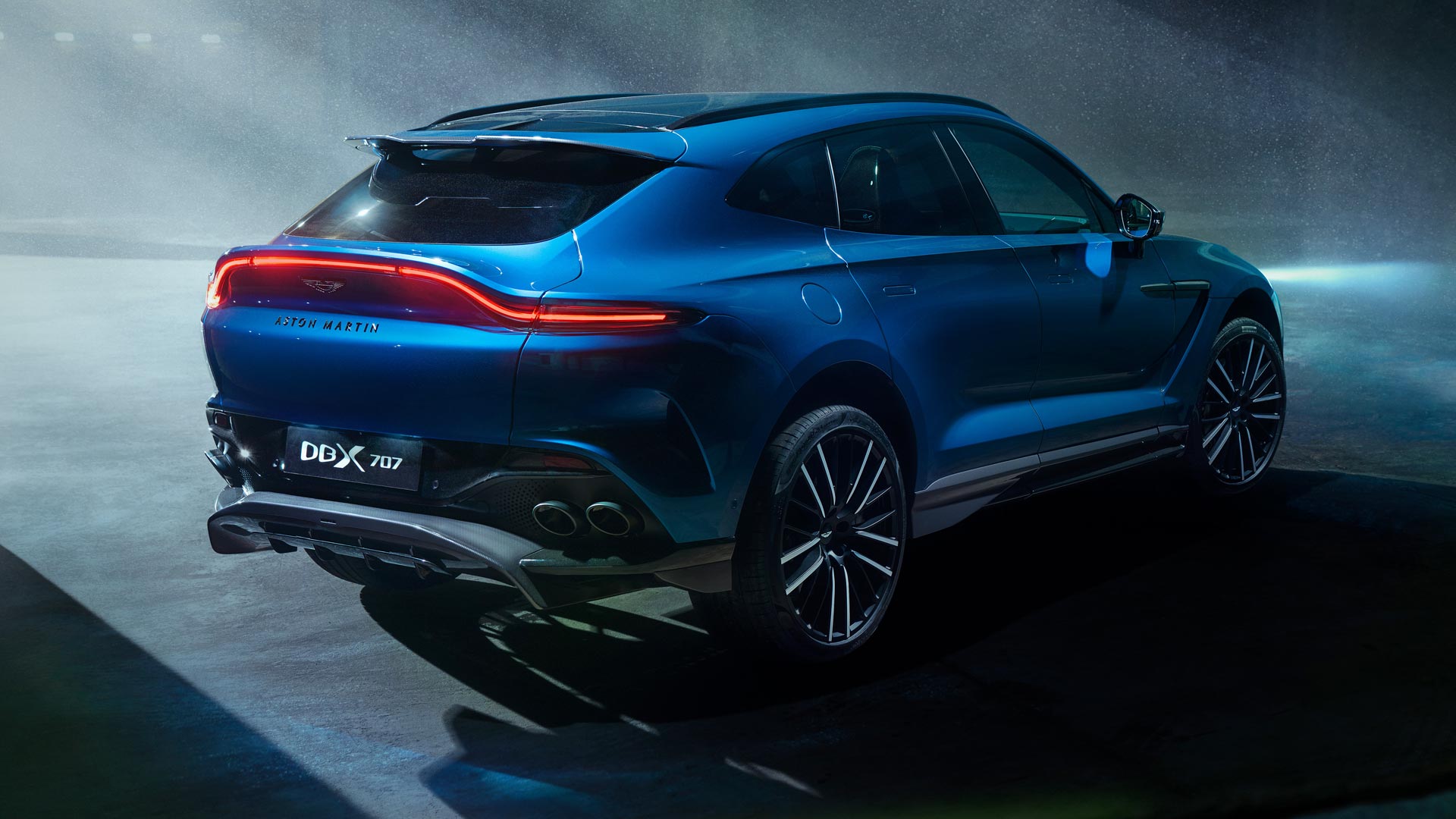
At the rear, the larger diffuser is matched by broader exhaust tailpipes, designed to offer a ‘unique sound signature’. A new tailgate spoiler helps boost high-speed stability.
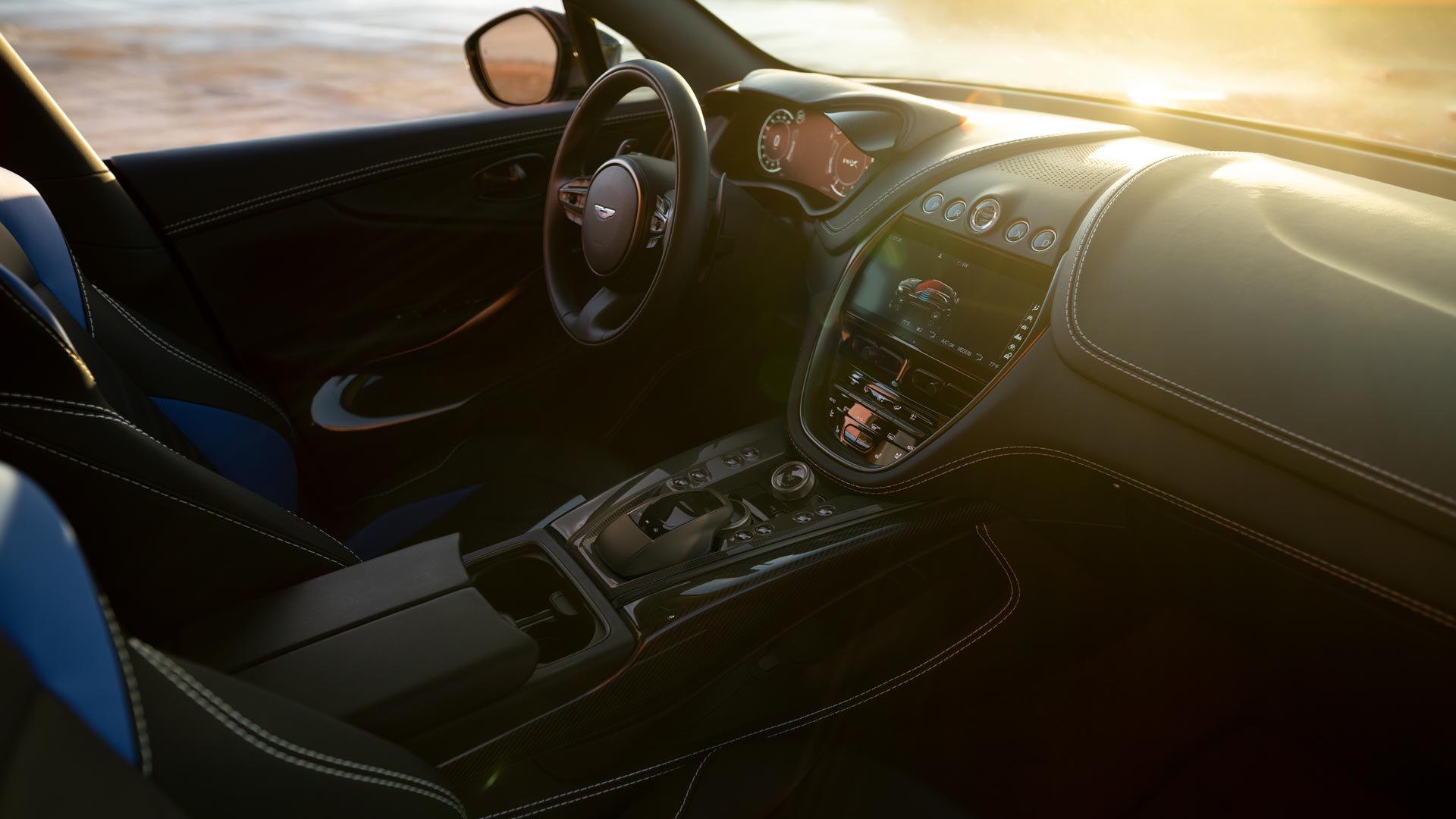
Inside, you’ll find sports seats finished in a mix of leather and Alcantara. Dark chrome trim is used throughout, complementing the dark satin chrome found on the DBX707’s exterior.
Buyers can use the bespoke ‘Q by Aston Martin’ service to tailor the DBX707 to their own taste, too.
Pushing the boundaries
Aston Martin CEO, Tobias Moers, said the company has “pushed the boundaries in every area to create a car that sets new standards of performance and desirability. The fastest, most powerful, best handling and most engaging car of its kind, it propels Aston Martin to the pinnacle of SUV performance”.
Prices for the DBX707 are yet to be confirmed, but expect a sizeable jump from the £158,000 for a regular DBX.
Production of the DBX707 begins soon, with deliveries expected in the second quarter of the year.
The very first 2023 Chevrolet Corvette Z06 70th Anniversary Edition has achieved an incredible record price at auction.
Sold at the Barrett-Jackson Scottsdale event to raise money for charity, the special commemorative Z06 achieved a winning bid of $3.6 million (£2.68 million)
This surpasses the previous Barrett-Jackson charity record of $3 million (£2.24 million), set in 2020 for the first example of the eighth-generation Corvette.
Another Corvette for the collection
As in 2020, the huge winning bid for the 2023 Z06 70th Anniversary Edition came from Rick Hendrick.
The businessman and NASCAR team owner is a regular visitor to Barrett-Jackson auctions. Hendrick has an invitation-only car collection, which is incorporated into his Hendrick Motorsports headquarters in Concord, North Carolina.
Housing upwards of 200 cars, more than half of Hendrick’s collection consists of Corvettes. It’s therefore no surprise he has added VIN 001 of the 70th Anniversary model to his stable.
Supporting those who serve
Operation Homefront, a national non-profit charity focused on building stable and secure military families, will receive 100 percent of the winning bid.
Chevrolet has supported the charity since 2017, providing seven full-size Silverado pickup trucks to help the organization.
“It’s truly a privilege to support our military members and their families through Operation Homefront,” said Steve Hill, vice president of Chevrolet. “Proceeds from the first retail 2023 Corvette Z06 will benefit many U.S. military families who have done so much to serve our country.”
Other charity sales included the one-off 2021 Ford ‘Bronco 66’ First Edition Model. Sold for $500,000 (£373,000), the money from the Bronco will benefit the Pope Francis Center, which provides services to homeless people.
ALSO READ:
From Arkus to Z06: History of the Chevrolet Corvette
Grey was the UK’s favourite new car colour in 2021, topping the charts for the fourth year running.
Nearly one in four new cars sold was painted grey, with the colour’s popularity actually increasing by 2.8 percent last year. More than 408,000 new grey cars were registered in 2021.
In a monochromatic top three, black was second, with one in five new cars sold, and white was third, accounting for around 17 percent of new cars.
More than six in 10 new cars sold are now either grey, black or white.
Blue was back in fourth, but it is edging closer to the top three – finishing the year just 2,638 units behind white.
The Society for Motor Manufacturers and Traders (SMMT) collated the figures from official sales data. This showed a largely unchanged top 10, although green cars did overtake orange to finish in seventh.
Sales of green new cars actually grew for the first time since 2015, by an impressive 24 percent.
But even though more motorists picked a ‘green’ hybrid, plug-in hybrid or electric drivetrain, they didn’t choose to paint them in green. Grey remained the most popular colour even for alternative-fuel cars.
Any colour you like so long as it’s greener
SMMT chief executive Mike Hawes said: “2021 was anything but normal, but British drivers stuck to their familiar favourites of grey, black and white cars.
“But while last year’s new cars might share the same shades as previous years, under the bonnet there has been a real shift, with one in six buyers choosing to go green.
“With car registrations still low compared to pre- pandemic, helping even more drivers move to greener cars – whatever the actual colour – has never been more important.”
Mr Hawes called for the installation of electric car charge points across Britain to be speeded up.
“Incentives are helping move the market and should continue, but the speed of this shift to electric must be matched by an acceleration in the pace of charging infrastructure investment.
“Drivers should expect to be able to recharge irrespective of wherever they live, work or visit.”
Local authorities will be given the power to enforce moving traffic offences from 1 June 2022.
This will allow councils outside of London to issue fines for breaking traffic rules such as incorrectly entering a yellow box junction, or making a prohibited turn.
At present, only authorities in London and Cardiff have the ability to enforce moving traffic offences. In all other areas enforcement is left to police forces.
As confirmed in a written parliamentary response this week, regulations to allow this have now been laid before parliament. Statutory guidance will be issued to local authorities in March, with the new rules coming into force on 1 June 2022.
This won’t allow councils to instantly start dishing out fines though. Instead, local authorities will have to apply to the Secretary of State for an order to be made. This will then designate the council as the enforcement authority in its area.
The AA is now calling for MPs to have closer scrutiny of the Government’s plans, given the experience of drivers in London. It is concerned that cash-strapped councils could see drivers as a way to ‘stuff town hall coffers with easy money’.
Checks and balances needed
Research by the AA found that while only two percent of UK drivers received a fine for stopping in a yellow box junction, this rose to 12 percent in London. Other offences are also more commonly given a penalty in London than elsewhere.
The AA also highlights that London traffic penalty adjudicators, who hear appeals, have shown numerous examples of ‘bad road layout, or councils ignoring or simply not understanding the rules of enforcement’.
Edmund King, the AA’s president, said: “The experience of London with enforcement of moving traffic violations sends a clear message to MPs: the roll-out beyond the capital needs effective checks and balances. That includes identifying, analysing and rectifying the causes of fines hotspots. And, where a traffic tribunal adjudicator identifies a problem that is not just a one-off, the council should suspend enforcement and report back to the adjudicator on how it has been resolved.
“Alternatively, or better still additionally, first-time offenders should be sent a warning letter, as set out by the Government previously. After all, the object of enforcement is to get road users to understand and comply with directions and restrictions – with the deterrence of fines if they deliberately ignore them.”
The 2021-22 FIA Formula E motorsport season begins this weekend, with a special double-header event.
A special circuit around the walls of the UNESCO World Heritage Site in Diriyah, Saudi Arabia, will play host to the first two rounds of the year.
Now into an eighth season, there have been plenty of driver changes and calendar updates.
If you are new to Formula E, or need to catch up on the latest developments, read on to get yourself fully charged.
OK, what exactly is Formula E?
Put simply, it is the only FIA-sanctioned single-seater electric motorsport championship. Imagine Formula One-style racing cars, but powered by batteries, and you are on the right lines.
The championship began as a way to promote the significant development of electric vehicle technology, and prove that battery power does not have to be boring.
However, the championship has become about more than just the sheer novelty of electric racing.
Formula E is now into its eighth season, and has grown in popularity. This season sees a total of 11 teams competing, with several major car manufacturers involved.
What cars do they use in Formula E?
All teams use the same Spark SRT05e chassis, with batteries supplied by McLaren Advanced Technology. Hitting 0-60 mph in 2.8 seconds, with a potential 174mph top speed, means these are serious racing cars.
Teams are able to supply and develop their own electric powertrains, but the rules are kept tight to ensure the racing is close. Maximum power output for each car totals 250kW (335hp), reduced to 220kW (295hp) in race mode.
The cars do feature aerodynamic wings and spoilers, but these are nowhere near as intricate as thoe aero seen in Formula One. Again, this helps cars race in close proximity to each other, encouraging as much overtaking as possible.
Formula E had planned to introduce a modified car for the 2020-21 season. However, coronavirus saw the GEN2 Evo idea shelved, with an all-new GEN3 car planned for the 2022-23 season instead.
Which car manufacturers are involved in Formula E?
With electric cars becoming more prevalent on the road, manufacturers have seized on Formula E as an opportunity to demonstrate to the world what they can do.
This season sees five familiar car manufacturers involved. Porsche, Mercedes-Benz, Nissan, DS Automobiles, and Jaguar are all on the grid for 2021-22.
Where does Formula E take place?
Formula E is dedicated to bringing action straight to the fans, which means racing takes place on street circuits in major cities throughout the world.
The circuits used are shorter in length than those used in Formula One, but feature tight layouts designed to encourage overtaking. Dramatic backdrops only boost the racing’s appeal.
The 2021-22 season has races planned in London, Rome, New York and Berlin, amongst other locations. See the calendar at the end of this article for the full list.
Is Formula E exciting to watch?
Equal machinery, plus talented drivers and compact circuits, mean the competition is as fierce as you would imagine.
Bumping and barging on track is a common occurrence, aided by the strong design of the cars. In fact, one of the reasons Formula E wanted to introduce the GEN2 Evo car was to try and stop drivers from making contact on the track!
Drivers have the use of ‘Attack Mode’, which sounds like something inspired by Mario Kart. By moving off the racing line to run through a special designated area of the track, drivers receive a temporary power boost for their car.
Fans can also use social media to vote for their preferred driver in the run up to each E-Prix. The most popular five drivers then receive an extra ‘Fanboost’ of power to deploy during the second half of the race.
Will I know any of the Formula E drivers?
Initially stocked with a wealth of ex-F1 racers, the Formula E grid has become a desirable motorsport career choice for a wide array of drivers.
F1 experience is still well-represented for 2021-22. Stoffel Vandoorne, Pascal Wehrlein, Sebastien Buemi, and Jean-Eric Vergne all previously raced in F1 before making the switch to EVs.
Antonio Giovinazzi, who spent three seasons with the Alfa Romeo Sauber F1 team, is the latest addition to the Formula E grid.
The championship is not all about retired F1 drivers, though. André Lotterer, who drives for Porsche, won the World Endurance Championship in 2012.
New Zealander Nick Cassidy, who drives for Envision Racing, has previously won the Super GT and Super Formula championships.
Which British drivers compete in Formula E?
Sam Bird, who drives for the Jaguar Racing team, is pictured here winning the second New York ePrix race last year. He led the championship for much of the 2020-21 season, so will be looking to build on that success in 2022.
Cumbrian-born Oliver Turvey has raced in multiple championships, and is a McLaren F1 test-driver. He is partnered at the NIO 333 team for this season by London-born Dan Ticktum.
Barnsley’s own Oliver Rowland is now into his fifth Formula E season, and currently races for the Mahindra team. Formula E race winner Alex Sims will be alongside him this year.
Avalanche Andretti driver Jake Dennis returns for a second year of Formula E, and has previously competed in the DTM series.
Who is the reigning Formula E champion?
Dutch driver Nyck de Vries won the Drivers’ Championship in the 2020-21 Formula E season.
Driving for the works Mercedes-EQ Formula E team, de Vries notched up two wins, and scored two additional podiums. He edged out Edoardo Mortara, who took second, with Britain’s Jake Dennis in third.
The Mercedes-EQ team also scooped the Teams’ Championship for 2020-21, the first time the German team has won the top prize. Jaguar finished second, with DS Techeetah in third.
What is new in Formula E for 2021-22?
For the 2021-22 season, Formula E organisers have incorporated a host of changes to how race weekends will run.
A new qualifying format will see drivers placed in groups, with the fastest moving through into a duel knockout phase. This will work to a final shootout, seeing two drivers go head-to-head for pole position.
Races can be extended by up to 10 minutes where incidents cause Safety Car or Full Course Yellow neutralisations. This will be in addition to the regular ‘45 minutes plus one lap’ race time.
The cars themselves will also benefit from more power this season. Race output has increased from 200kW to 220kW, with ‘Attack Mode’ now offering up to 250kW.
What safety car does Formula E use?
Another major change for the 2021-22 season is the use of an all-new safety car.
Formula E has previously used the electric BMW i8, with a Mini Electric used for selected rounds in the previous season. However, the 2021-22 season sees the electric Porsche Taycan leading the field.
With a power output of 751hp (560kW), the Taycan Turbo S certainly has the pace to react quickly to incidents. It can accelerate from 0-62mph in just 2.8 seconds, and has a top speed of 161mph.
The radical livery used by the Porsche Taycan safety car includes colours from all 11 teams competing in the series, as well as those of the FIA and Formula E.
What is the future of Formula E?
The introduction of a new, third-generation ‘GEN3’ Formula E car for the 2022-23 season is the biggest development on the sport’s horizon.
Under the GEN3 rules, Formula E would impose exit penalties on manufacturers who leave the series early. It means manufacturers may need to think hard about signing up for the new series.
Audi Sport and BMW left the series at the end of the 2020-21 season. However, both companies remain as powertrain suppliers. Mercedes-Benz will also leave at the end of the 2021-22 season.
It means Formula E will seemingly need to work hard to retain major manufacturers, and attract new ones. Maserati has committed to entering the competition with the introduction of GEN3 cars.
How can I watch Formula E?
In the United Kingdom, Channel 4 will now provide live coverage of all qualifying sessions and races.
Viewers in the United States can watch all races live through CBS Sports, with a selection to be featured on the CBS Television network. CBS Sports HQ will offer streaming for practice and qualifying.
Formula E also offers live streaming through its dedicated YouTube channel.
Last year saw the release of a 15-episode documentary series called Formula E Unplugged on the official YouTube channel.
Nearly 1.2 million examples of the entry-level Citroen have been delivered to customers since 2005, but the final car has now left the factory.
With no direct replacement, Citroen will attempt to appeal to buyers with the smaller, all-electric Ami instead.
A more basic version of the Citroen C3 will also go on sale in April, aimed at those who want a conventional, petrol-powered hatchback.
C1 in a million
The first generation of the Citroen C1 was launched in 2005, as part of a joint venture between what was then called PSA and Toyota.
This saw the C1 produced in the Czech Republic, alongside the platform-sharing Peugeot 107 and Toyota Aygo.
Compact dimensions and low prices made the C1 and its brethren an instant hit with younger drivers. Buyers could pick three- or five-door versions of the first-generation C1, with a choice of 1.0-litre and 1.4 engines.
An electric version called the C1 ev’ie, created by the now-defunct Electric Car Corporation, was offered in the UK.
Czech mates no longer
A second-generation C1 was launched in 2014, with the Toyota Aygo and Peugeot 108 again on offer, too.
Along with the three- and five-door hatchback versions, Citroen released an Airscape model with an electric, cabriolet-style canvas roof.
The C1 continued to be popular with new drivers, with Grammy Award-winning singer Foxes (see above) learning to drive in one.
Toyota has now taken complete ownership of the Czech Republic plant, bringing an end to the Citroen- and Peugeot-badged models. Instead, the factory will build the latest Toyota Aygo X and Yaris.
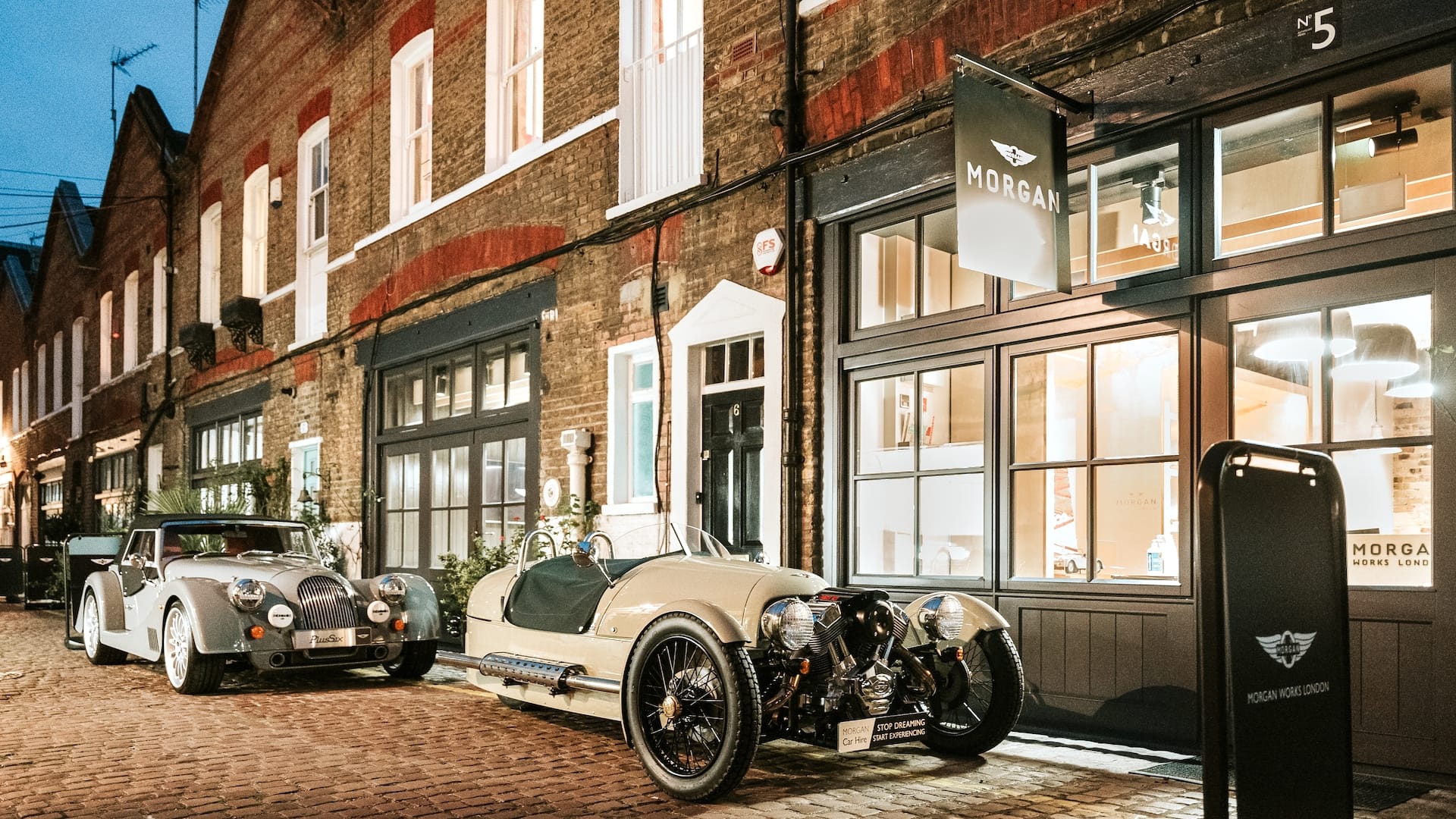
Located on Astwood Mews in Kensington, Morgan Works London will offer both new and used vehicles to the capital’s car enthusiasts.
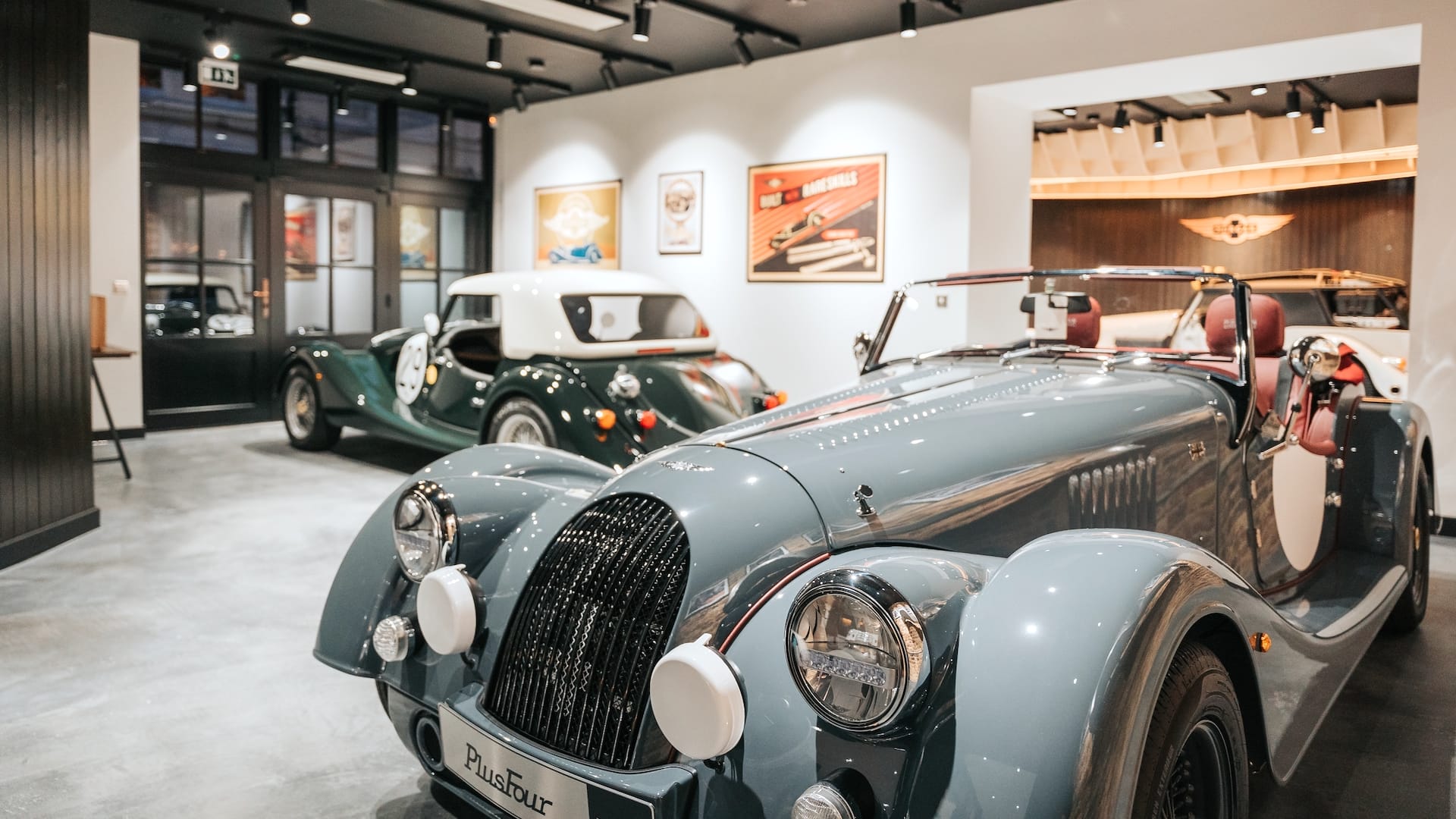
Intended to be a ‘destination showroom’, five Morgan vehicles will be on display at any one time within the redeveloped building.
Working up a thirst
Morgan Works London is the company’s second factory-owned outlet. It follows on from Morgan Works Malvern, which is located at the brand’s traditional headquarters in Worcestershire.
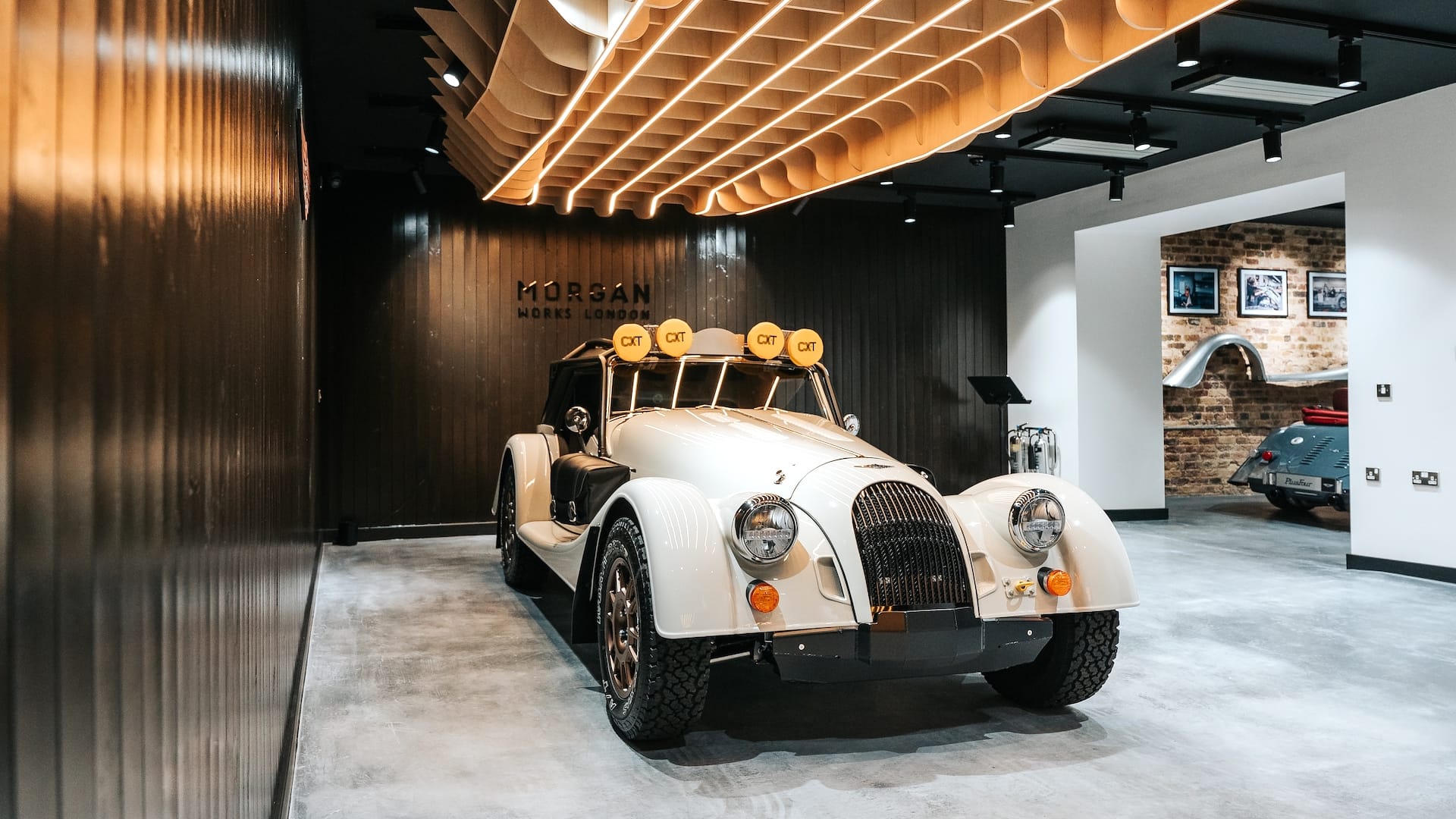
Design elements from the newly opened Morgan Experience Centre in Malvern are used for the London showroom. Morgan’s core materials of wood, leather and aluminium feature extensively.
Customers will be able to design their dream Morgan, along with viewing the company’s latest creations. On display at the launch event were the radical Plus Four CX-T, along with the newly announced Plus Four LM62.
The launch also saw Pol Roger announced as the ‘official champagne’ of the Morgan Motor Company.
‘Key piece in the puzzle‘
The London showroom is part of Morgan’s plans to expand its global dealer network. In the past year alone, the company has seen its retail outlets increase from 56 to 74 locations.
Joining the London and Malvern Works showrooms will be a third site in Bicester, Oxfordshire.
Marcus Blake, head of sales at Morgan, said: “Throughout the last year Morgan has strategically elevated and grown its dealer network to enhance its customer experience, increase its global reach, and introduce the latest Morgan products to entirely new audiences.
“Morgan Works London forms a key piece in the puzzle, representing us in the capital city of our home market, and serving a unique customer demographic.”