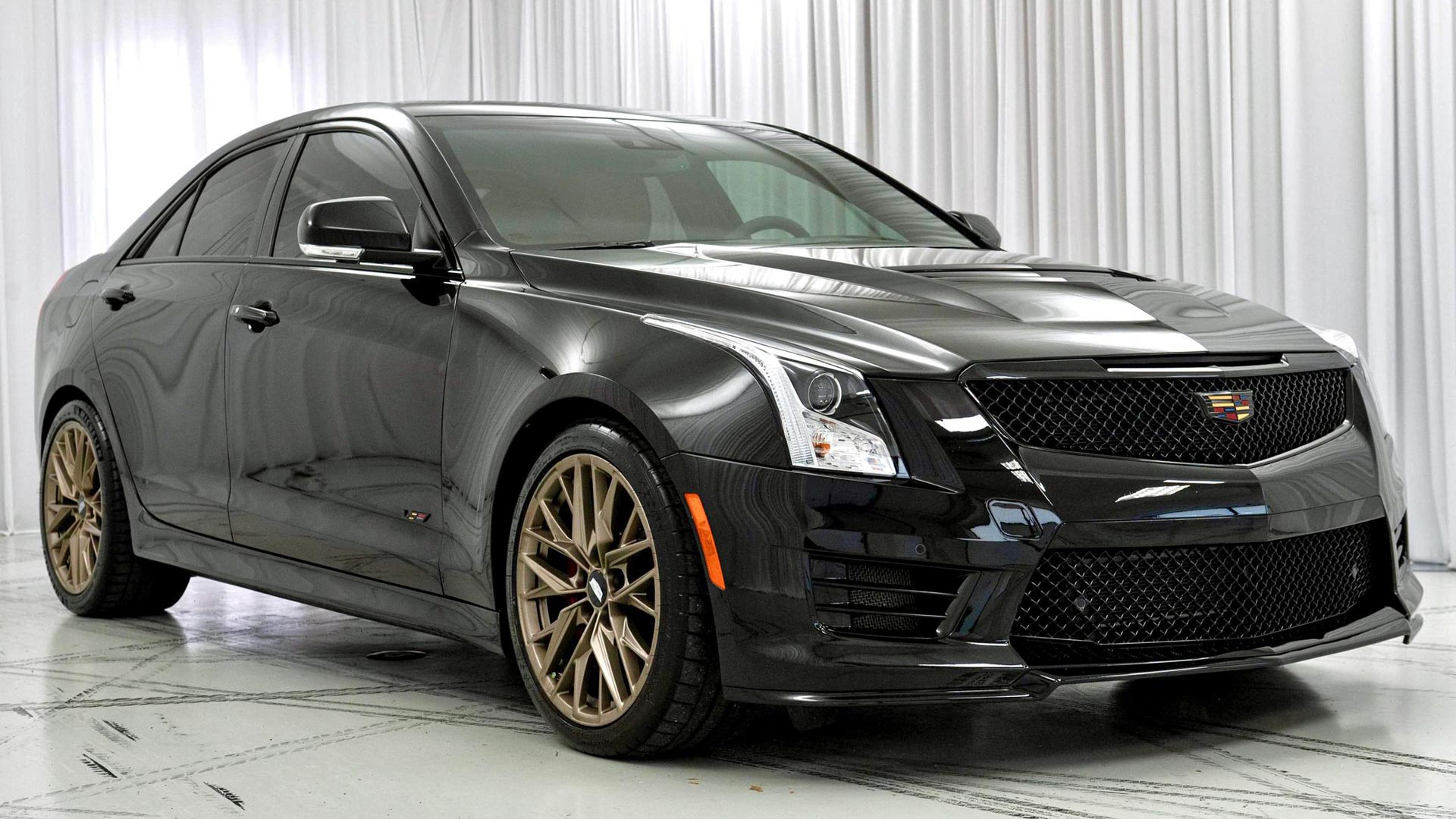
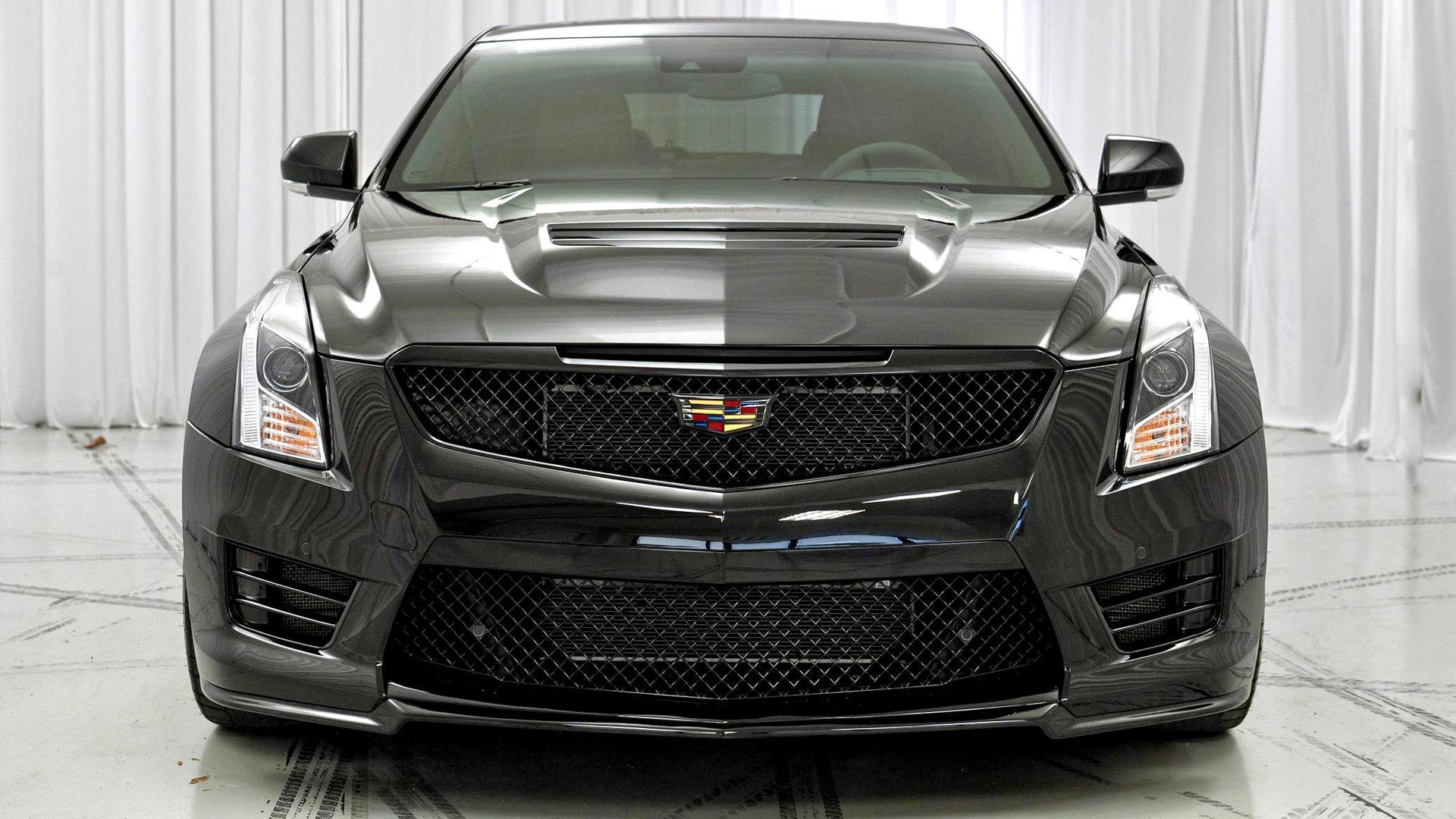
A Cadillac ATS-V built for President Joe Biden is currently listed for sale on the Cars & Bids online auction website.
President Biden is known to be a keen auto enthusiast, and the powerful four-door Cadillac was built to his individual specification.
Unsurprisingly, given the significance of its first owner, the 2018 ATS-V has already attracted plenty of attention and numerous auction bids.
A bespoke VIP build
Designed to challenge the BMW M3 and Lexus GS F, the Cadillac ATS-V features a twin-turbocharged 3.8-liter V-6 engine serving up 464 horsepower and 445 lb ft of torque. Offered exclusively with rear-wheel drive, this addition to Cadillac’s V-Series range was a serious performance sedan.
According to documents provided by the seller, President Biden noted that he could amend his security detail in order to drive the Cadillac himself.
Doing so potentially all owed him to hit 60 mph in 3.9 seconds, then reach a top speed of 189 mph. A presidential pardon may come in useful at those speeds.
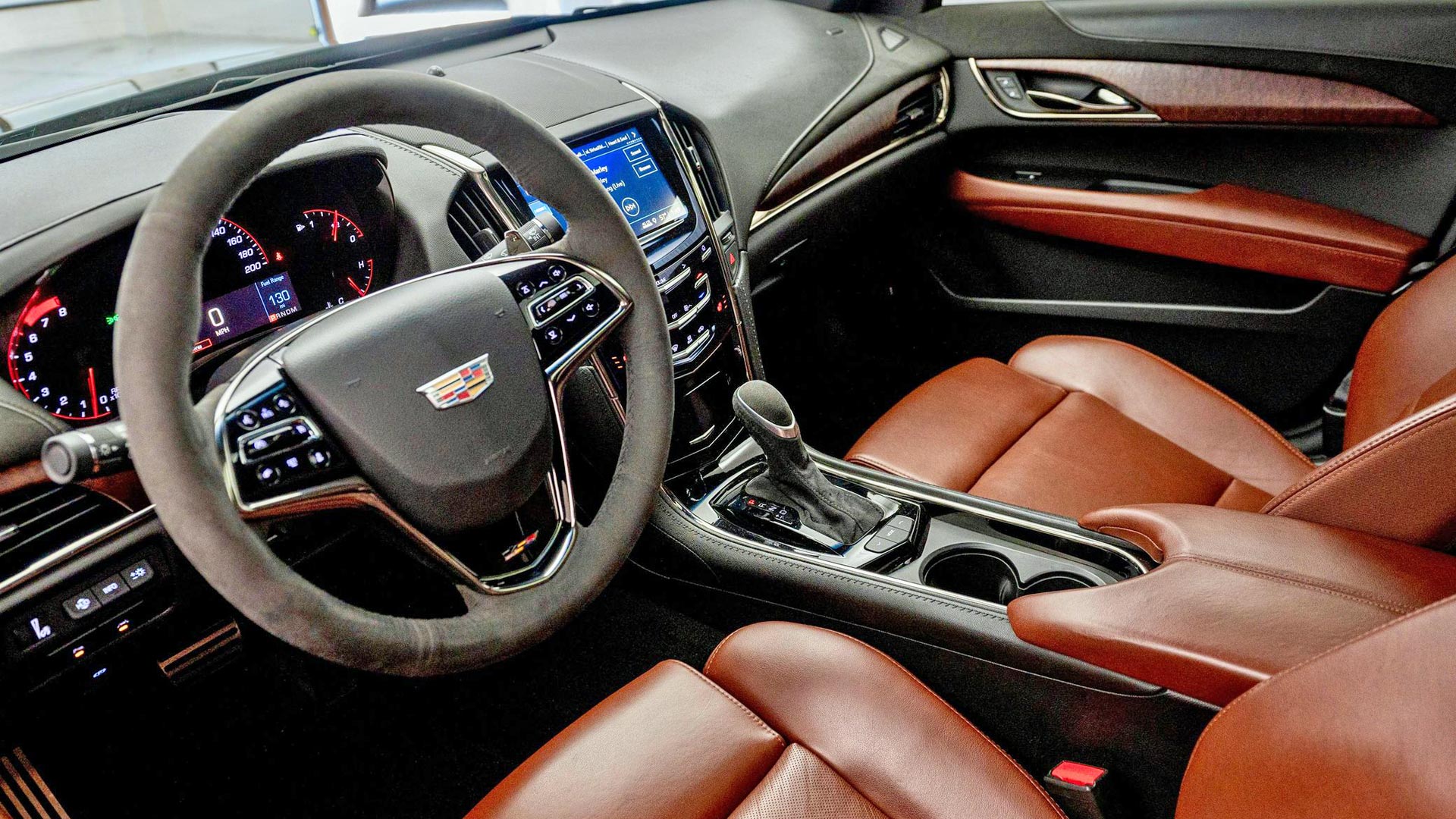
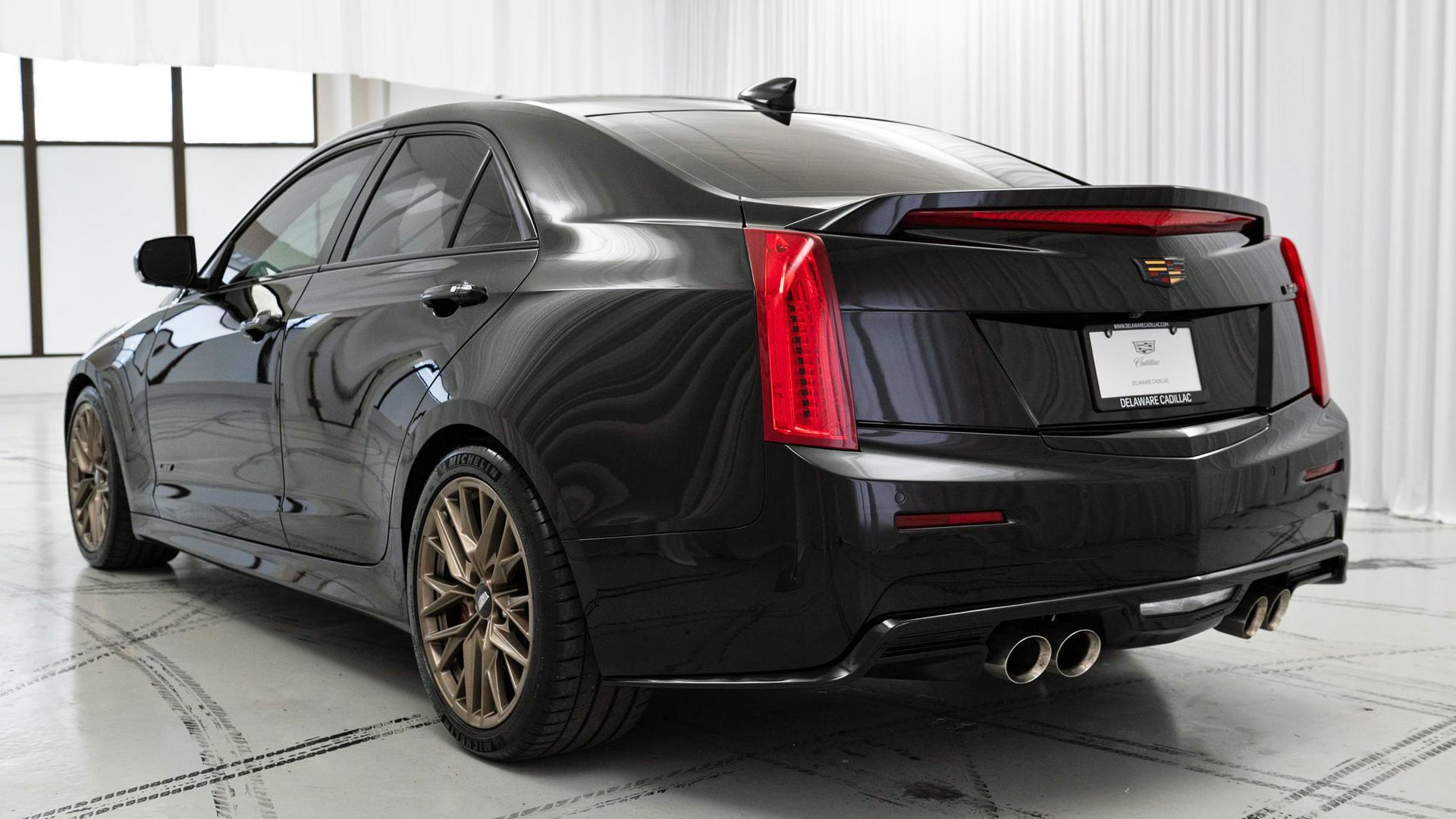
Ordering the Cadillac with Black Raven exterior paint, the POTUS made a unique request for an interior finished in Kona Brown semi-aniline leather upholstery. This complements the Sapele wood trim, making for a truly one-off ATS-V.
Presidential seal of approval
Other key features of the 2018 ATS-V include a carbon engine cover, Brembo brakes with red-painted calipers, an eight-speed automatic transmission and Magnetic Ride Control suspension.
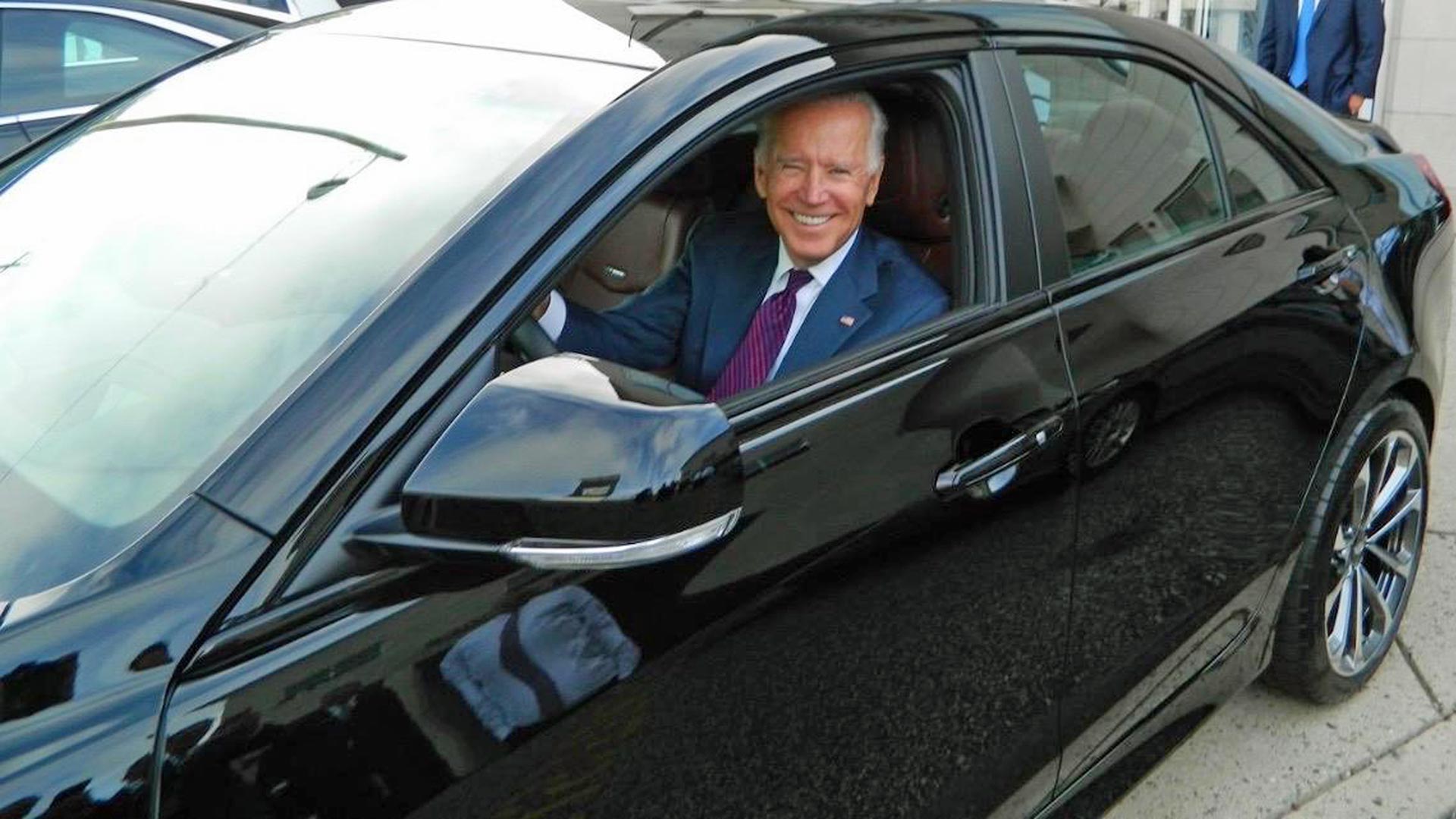
Delivered to the President in October 2017, the Cadillac comes with a Delaware title certificate issued to Joseph Robinette Biden Jr. Photos of it being handed over to Mr Biden are included in the sale, too.
Accompanying emails note that President Biden was very pleased with his new Cadillac. Another message pre-warns Cadillac’s V-Performance Academy that it could might expect a very important student to attend.
Low miles and extra enhancements
The selling dealership took ownership of the ATS-V in March 2020, and has since added a number of upgrades to the car.
These include a set of 18-inch CT4-V Blackwing wheels finished in Tech Bronze, tinted windows, black exterior emblems and a suede-covered steering wheel.
A total of 15,900 miles have been added to the Cadillac’s odometer, with the car being subject to comprehensive maintenance in recent years.
Some minor cosmetic damage has been repaired during the dealership’s time with the car, with the outer bolster of the driver’s seat also showing signs of wear.
A piece of American auto history
Vehicles associated with the White House have appeared for auction before. However, a car driven by a sitting president, and during an election year, is certainly a unique attraction.
As a result, it’s no surprise to discover the ATS-V had already recorded bids in excess of $70,000 (£55,000) at the time of writing.
There is still a little time remaining on the Cars & Bids auction, with the virtual hammer set to fall on February 21 2024. Hopefully there will be no need for a recount this time…
Disabled drivers eligible for a Blue Badge can apply for or renew one online, using the UK Government website.
A Blue Badge permits the user to park in disabled bays. It means people with mobility issues can stop closer to their destination.
The online service makes the process of applying for a Blue Badge quick and easy. The Department for Transport (DfT) says it can be completed in less than 30 minutes.
In the past, applicants were asked to send supporting documents in the post, leading to lengthy waiting times while the application was assessed. A survey found it took an average of 17 days for a driver to receive a Blue Badge – or 28 days if a medical assessment was required.
Now, all documents, including photographs and proof of identity, can be uploaded to the Blue Badge page on the UK Government website. We found it takes around 13 minutes, or closer to 30 minutes if additional information is required.
Video guide to applying for a Blue Badge
The video above provides a quick guide to applying for or renewing a Blue Badge. To go through the process yourself, visit the Gov.uk website.
You will need details of your current badge (if you have one), along with a digital or signed photograph, your National Insurance number, proof of identification, proof of benefits (if you receive any) and proof of residence.
The fee for a Blue Badge is up to £10 in England and £20 in Scotland, while Welsh motorists don’t have to pay. A badge usually lasts up to three years.
Note: you can save your part-completed application and return to it later if needed.
Applying for a Blue Badge works differently if you live in Northern Ireland. Follow this link to apply if so.
Visit an internet forum for electric car owners and ICEing is invariably one of the topics. Tesla even introduced pop-up barriers to some of its Supercharger bays to prevent the problem.
So what exactly is ICEing?You might not be familiar with the issue, so here’s a brief guide to bring you up to speed.
Most of our photos come from America, but ICEing is also prevalent in the UK. And it has nothing to do with the recent winter weather…
ICE, ICE baby
Firstly, let’s explain ICE. This is a common acronym in the car world. Confusingly, it’s used to mean both internal combustion engines (i.e. petrol or diesel) or in-car entertainment (audio systems and the like). In the context of ICEing, it’s the former.
The act of ICEing is to park in a space intended for electric cars, without making use of, or having any need for, the charger. In other words, a car with an internal combustion engine using a parking space reserved for electric cars.
It can be a hugely frustrating obstacle for EV owners looking to charge their car – the equivalent of somebody blocking a petrol pump. Drivers have reported ICEing on social media for years now. As seen in these photos, some unhelpful advocates of internal combustion appear to do it deliberately.
Taking it to Tesla
The term ‘ICEing’ was first coined in America, when repeated instances of large pick-up trucks parking in Tesla Supercharger bays were reported.
There were reports of Tesla owners being harassed by and getting abuse from truck drivers. Some even parked their trucks then mockingly clamped the chargers to the load bed.
In China, Tesla has introduced floor-locking barriers for some of its charging bays, which legitimate EV drivers can release using a QR code and a third-party app.
Charge or be charged
Technically, ICEing specifically refers to petrol- or diesel-powered cars taking electric car charging spots.
However, some charging points, such as those operated by Alfa Power, are now guarded by CCTV cameras – and anyone who doesn’t charge can expect a fine. Yes, even if they’re driving an electric car. Are you ICEing if your car is electric?
The moral of the story is, don’t park in electric car charging bays unless you have the capacity – and the intention – to charge your car. EV owners need that plug more than you do.
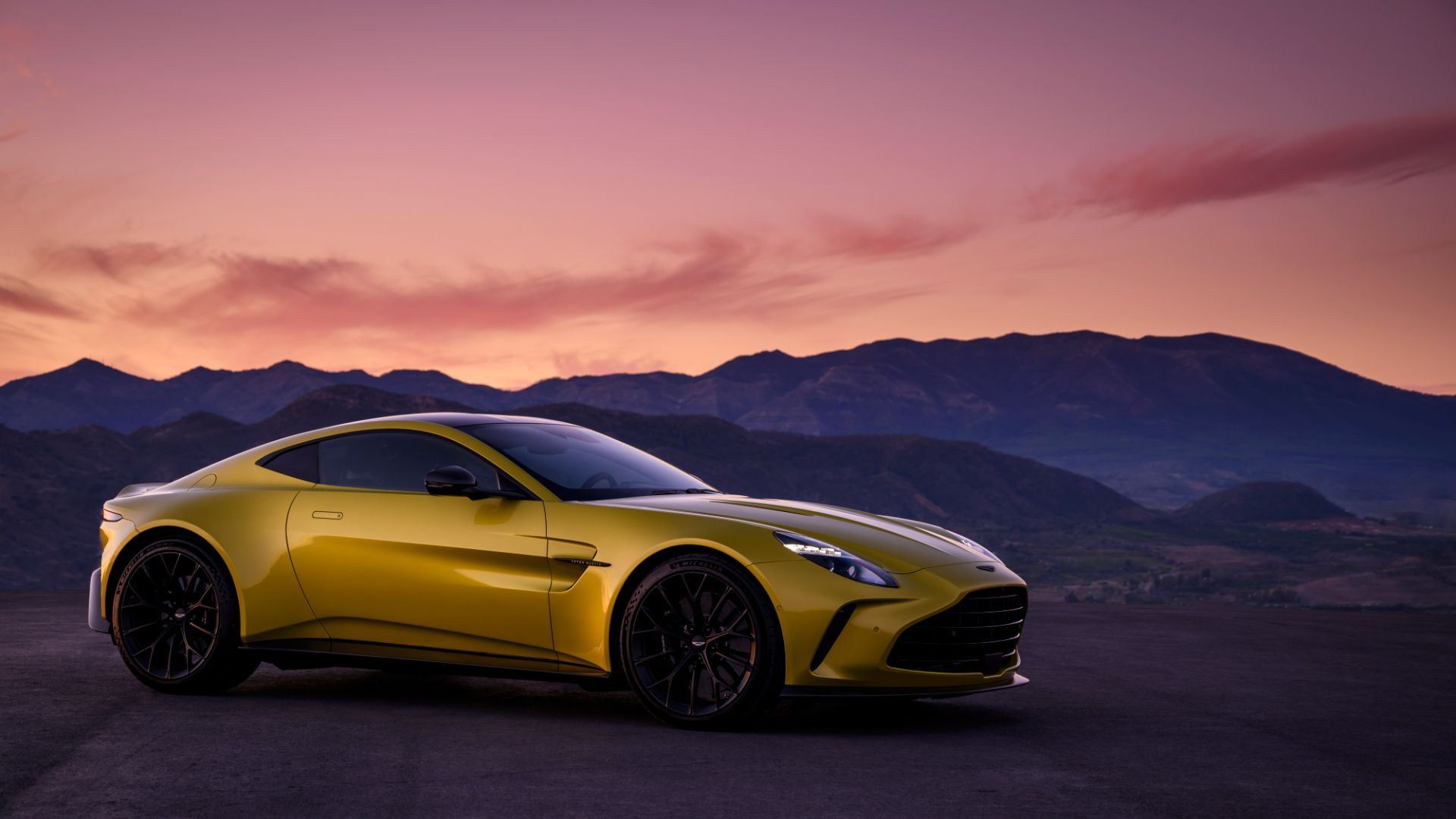
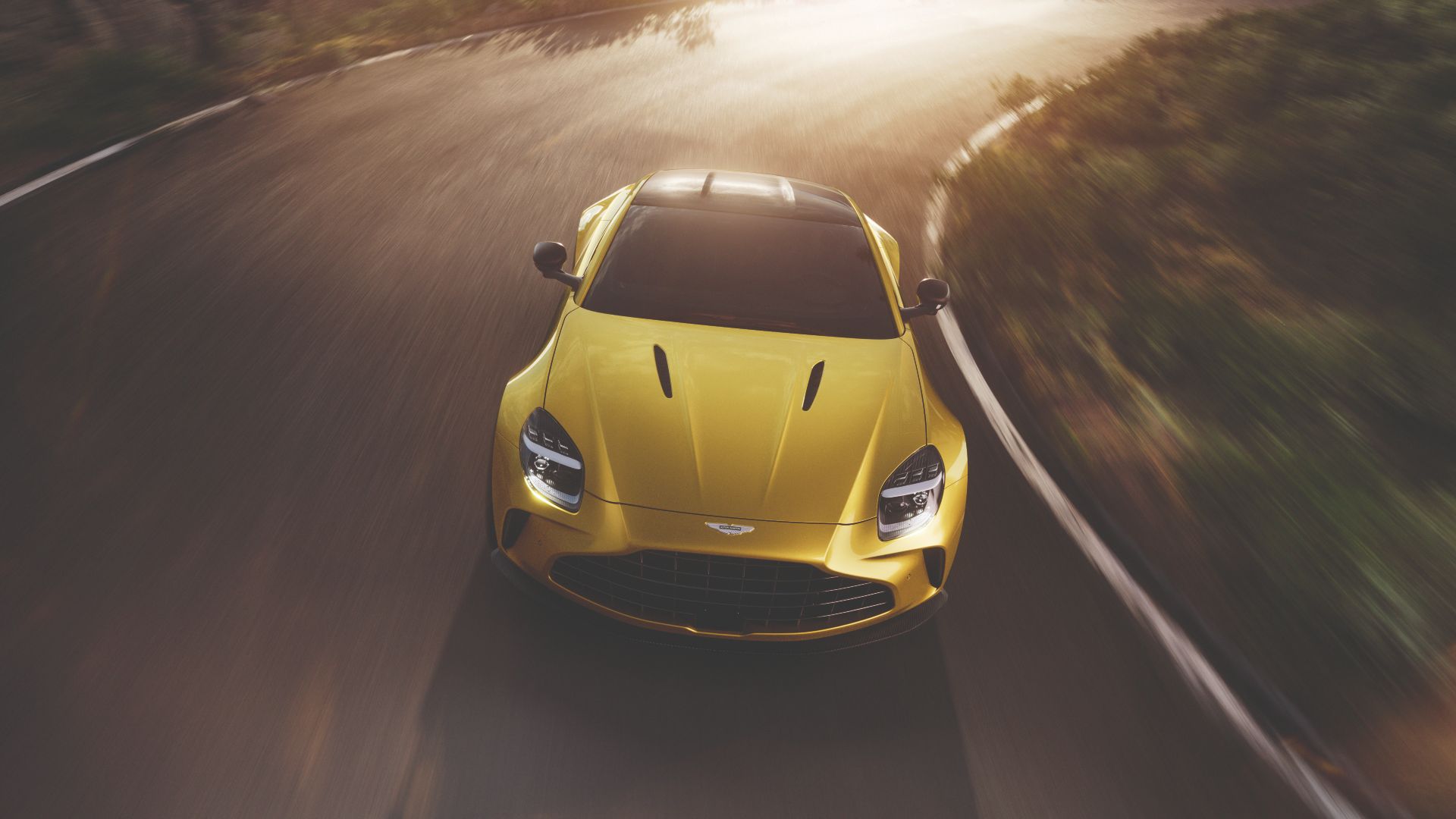
Aston Martin has given the Vantage a mid-life makeover, with aggressive new styling, a sharper chassis, improved infotainment and a generous dollop of extra power.
Headline numbers from the uprated 4.0-litre twin-turbocharged V8 are 665hp and 590lb ft of torque: good for 0-62mph in 3.5 seconds and a top speed of 202mph.
Squaring up to the McLaren Artura, Porsche 911 Turbo S and Lamborghini Huracan, Aston Martin’s entry-level supercar also gains a host of adaptive chassis technology. The British company promises ‘an authentic, unadulterated celebration of pure performance, engineered to deliver maximum thrills with maximum confidence’.
Read on for everything we know about the new Aston Martin Vantage, due on sale in early summer 2024.
The laws of physique
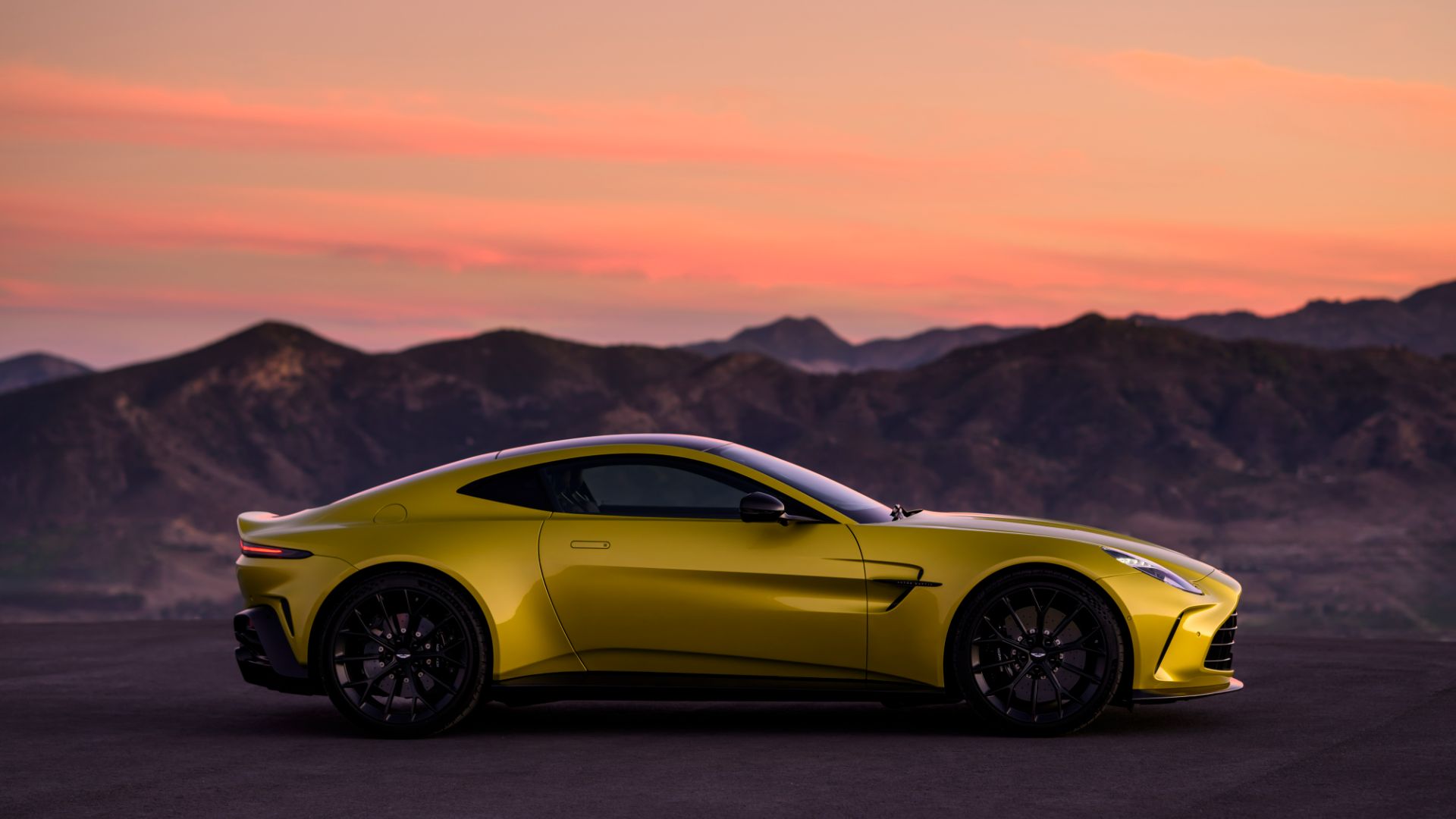
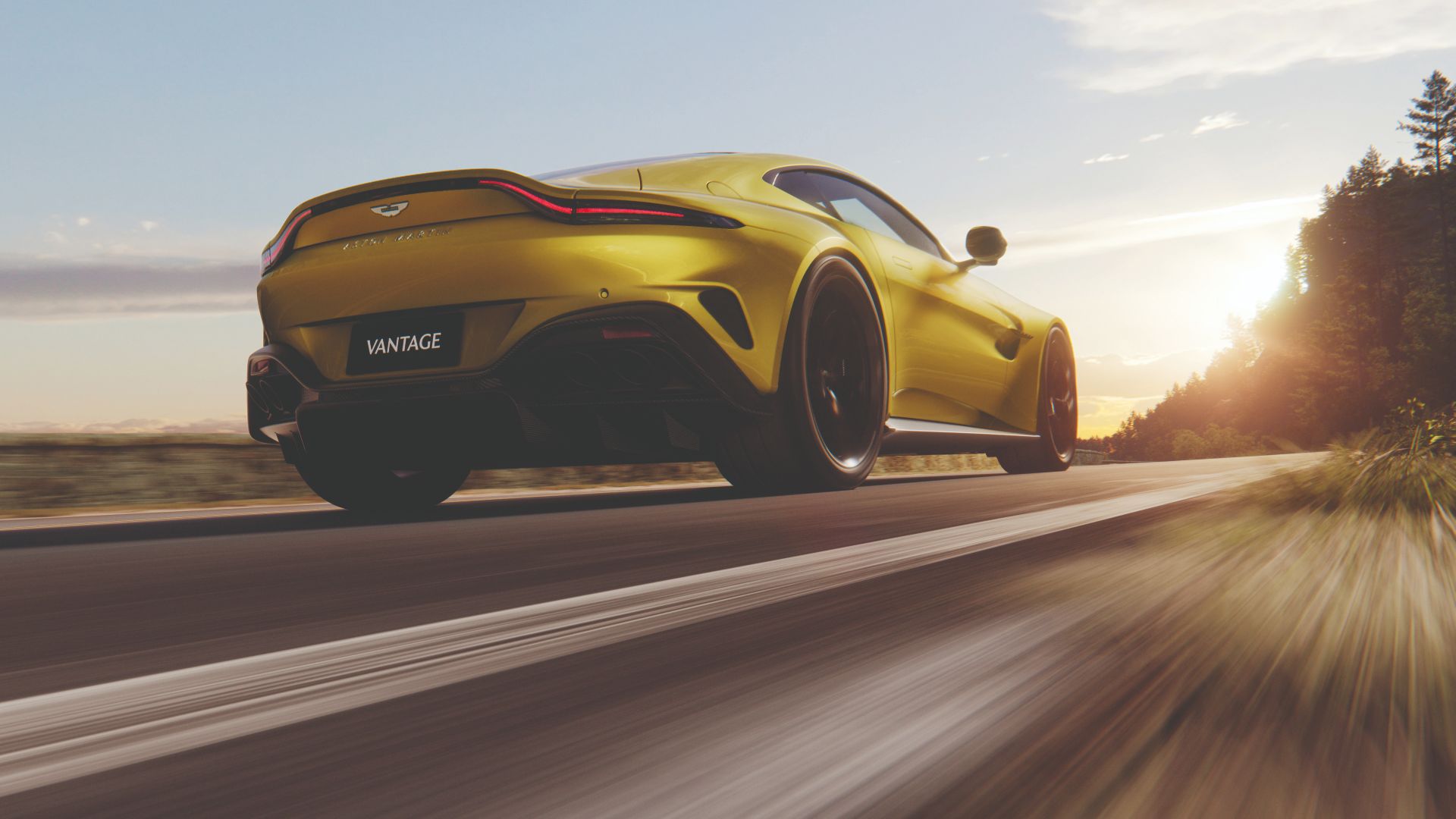
Broader and brawnier, the Vantage should possess the road presence to match its potent performance. Design chief Marek Reichman says “some inspiration” came from the One-77 hypercar of 2008, but elements of the new Aston Martin DB12 are clearly visible as well, particularly in the 30mm wider stance and 38 percent larger front grille.
Aston Martin has also reintroduced its classic side strake, which bisects the vents cut into the car’s flanks. Standard 21-inch alloys fill out the muscular wheelarches and the shapely rear bumper now incorporates side vents and fatter exhaust tailpipes (all four of ’em).
As ever, Aston Martin’s Q division offers plenty of scope for personalisation, starting with a choice of three core liveries – including a ‘Lipstick’ finish for that hungrier grille. You could even request an homage to the new Vantage GT3 racer (see bottom of page).
Old-schoolcool
Unlike an increasing number of its rivals, there’s no sign of plug-in hybrid assistance for the Vantage’s Mercedes-AMG V8 engine.
Instead, the hand-built motor gains larger turbochargers, modified cam profiles, improved cooling and revised compression ratios. The result is 30 percent more power and 15 percent more torque – 665hp at 6,000rpm and 590lb ft at 2,750rpm respectively – the biggest gains between model updates in Vantage history.
All that oomph goes to the rear wheels via an eight-speed ZF automatic gearbox with paddles behind the steering wheel. A shortened final drive ratio offers improved acceleration, while a new driver-adjustable launch control system helps you cheat at the traffic lights.
New touchscreen tech
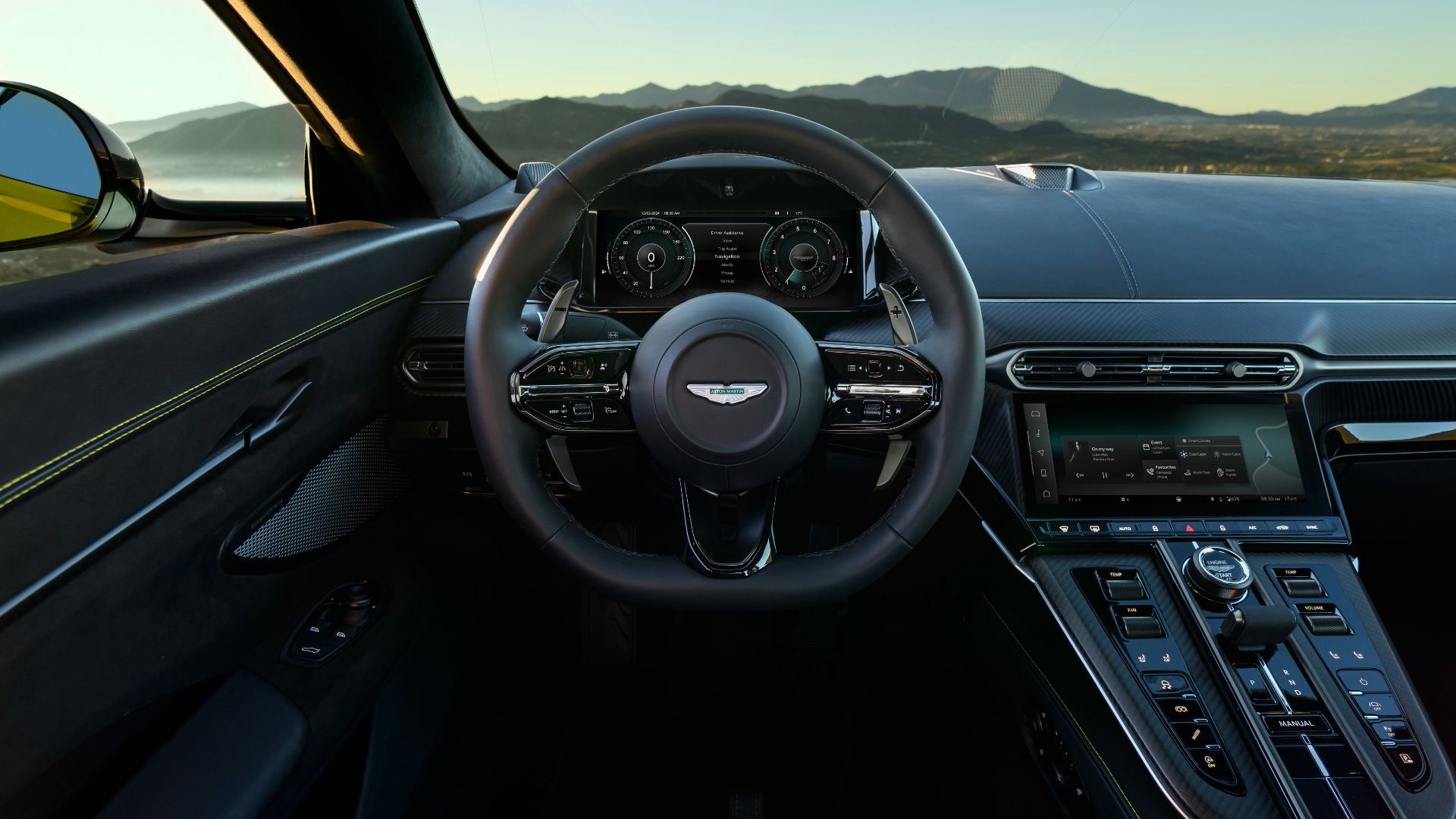
The previous Vantage’s dated media system also came from Mercedes, but the new car inherits Aston Martin’s latest tech from the DB12 (also coming soon to the DBX SUV). The 10.25-inch touchscreen has wireless Apple CarPlay connectivity, What3Words navigation and a connected smartphone app.
An 11-speaker, 390-watt audio system is standard, or buyers can upgrade to a 15-speaker, 1,170-watt Bowers & Wilkins setup that has been ‘acoustically engineered’ to suit the car’s interior.
The Vantage’s interior is trimmed in upmarket Bridge of Weir leather. Unlike a Porsche 911, there are no rear seats, but the 350-litre boot offers enough luggage space for a week away.
Rubber on the road
So, what will the new Vantage be like to drive? Aston Martin looks to have the basics right, with a stiffer bonded aluminium body and perfect 50:50 front:rear weight distribution. The quoted dry weight is 1,605kg, so reckon on a not-too-chunky 1,700kg with fluids added.
New ‘intelligent’ dampers should boost the car’s sense of agility and its ride and handling greater bandwidth. Combined with recalibrated power steering, an electronic rear differential and multi-mode stability control, Aston Martin says the Vantage can ‘adapt from the demands of a challenging alpine road to wide-open race track at the push of a button and twist of a switch’.
Cast-iron brakes are standard, with carbon-ceramic discs as an option (saving 27kg in unsprung mass). Like the DB12, the Vantage also has its own bespoke tyres: Michelin Pilot Sport 5 S measuring 275/35 R21 at the front and 325/30 R21 at the rear. How much of that rubber you leave on the road is partly dependent on the new Active Vehicle Dynamics control system… but mostly dependent on your right foot.
GT3 racer revealed
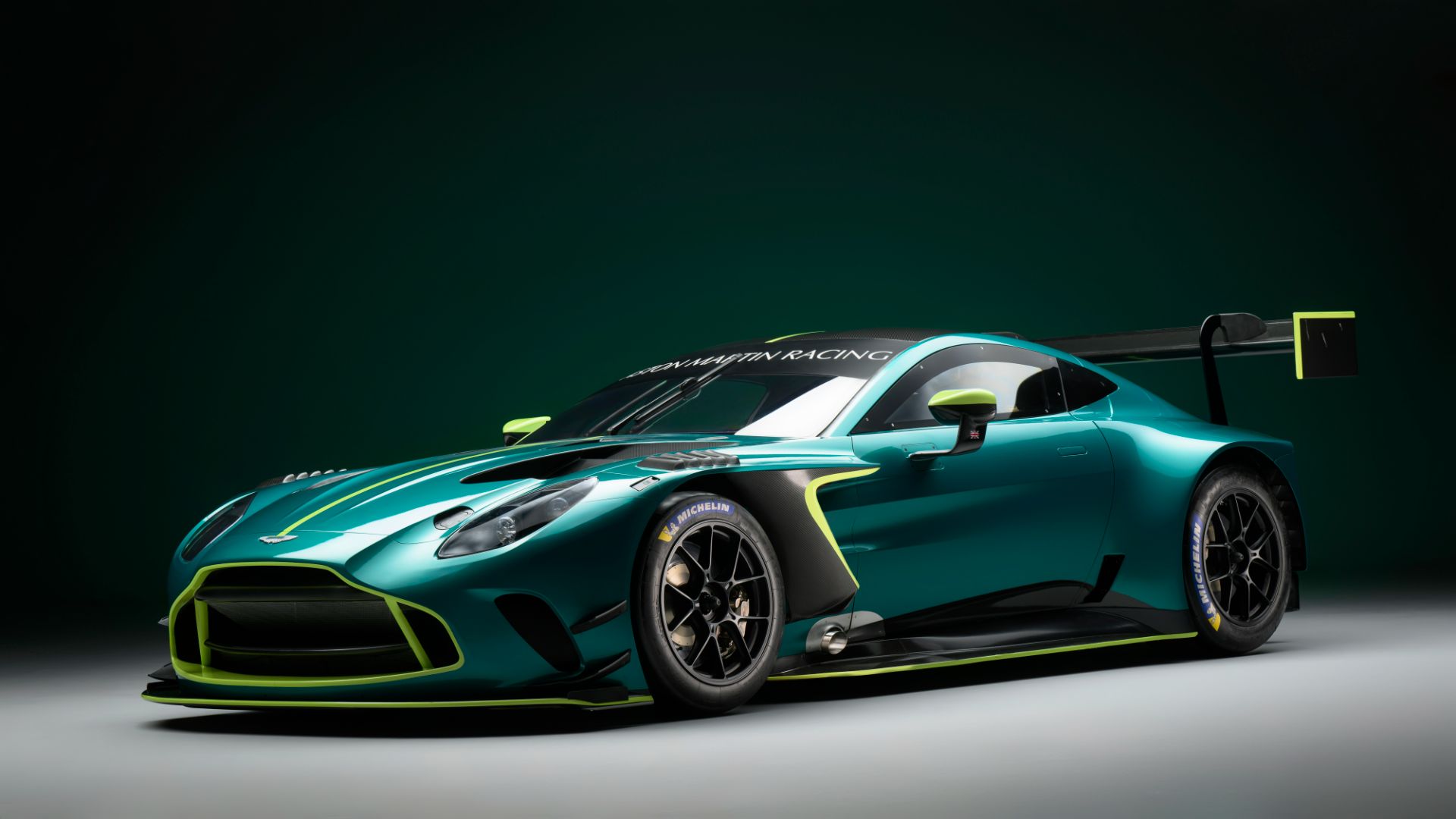
Aston Martin has also published the first photos of the Vantage GT3, coinciding with the reveal of the road car. An evolution of the existing Vantage GTE and GT3 racers, it boasts a new aerodynamic package – including an enormous swan-neck rear wing – revised suspension and cleverer electronics.
Built to compete in the FIA World Endurance Championship (WEC), IMSA WeatherTech Sportscar Championship (IMSA), Fanatec GT World Challenge, European Le Mans Series (ELMS) and Nürburgring Langstrecken Serie (NLS), the 2024 Vantage should be easier to drive too.
Aston Martin says ‘upgrades centred upon addressing some of the old car’s more challenging handling characteristics, with the aim of making the new GT3 as driveable as possible for both professional and amateur drivers alike’.
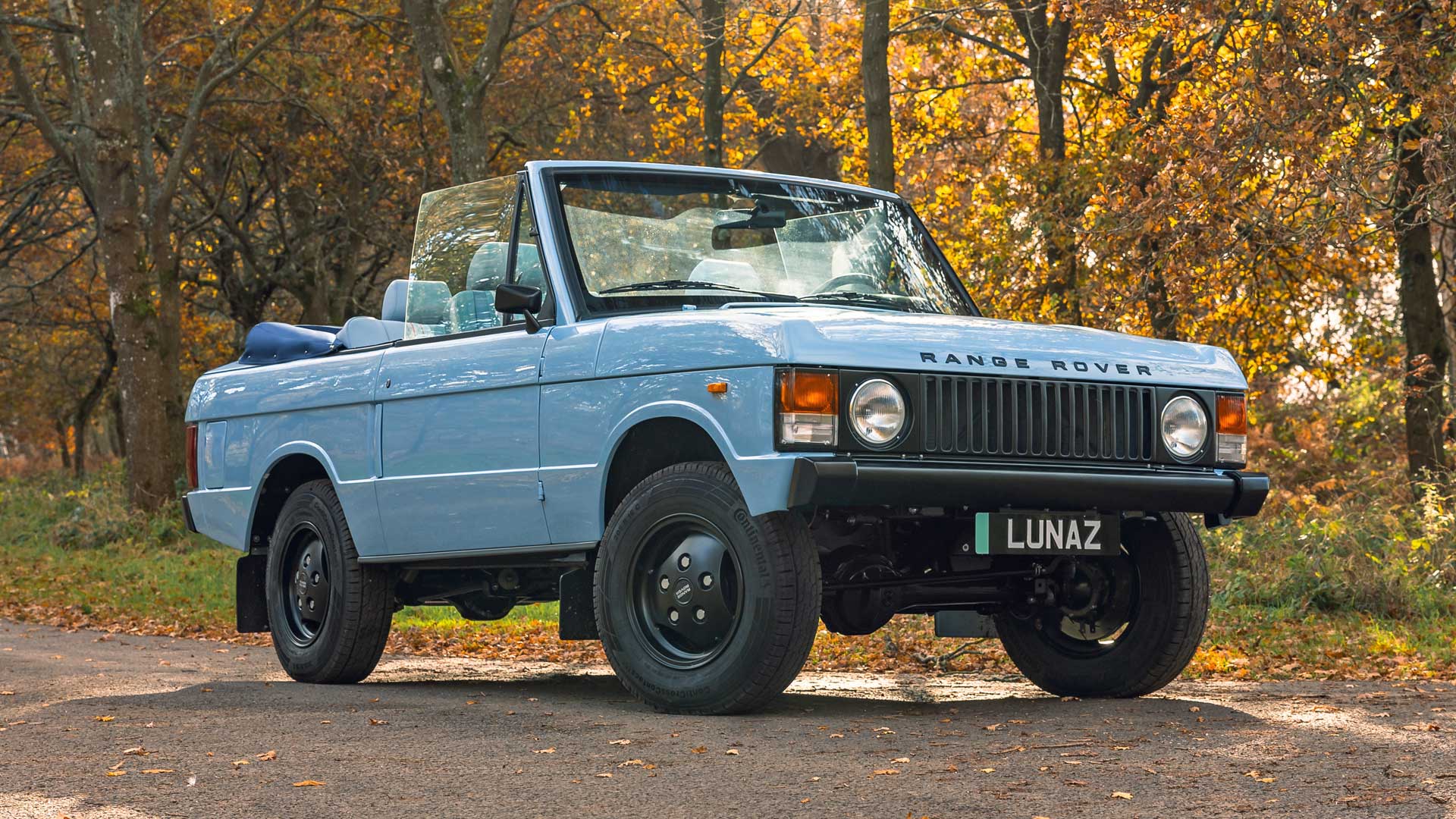
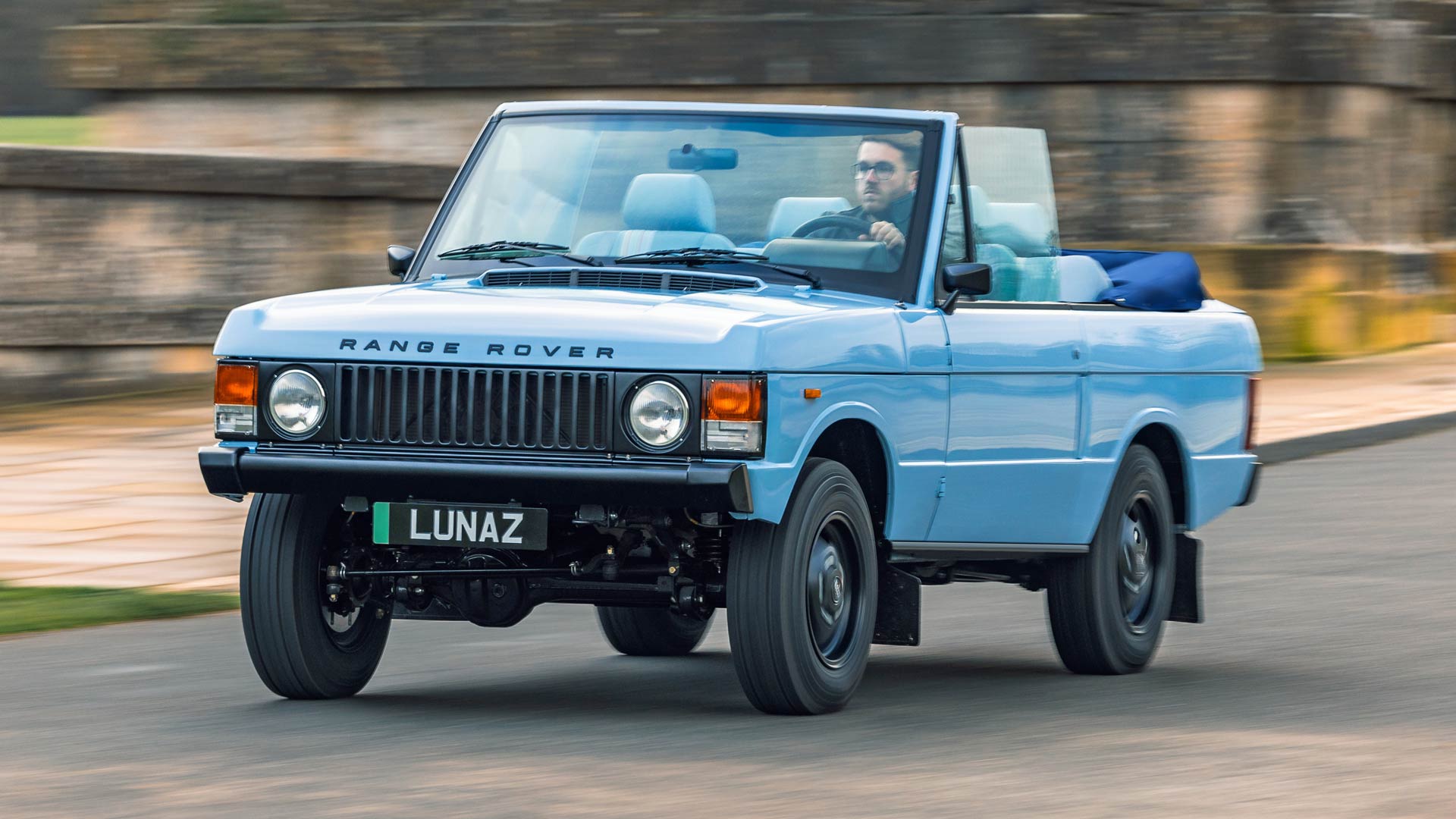
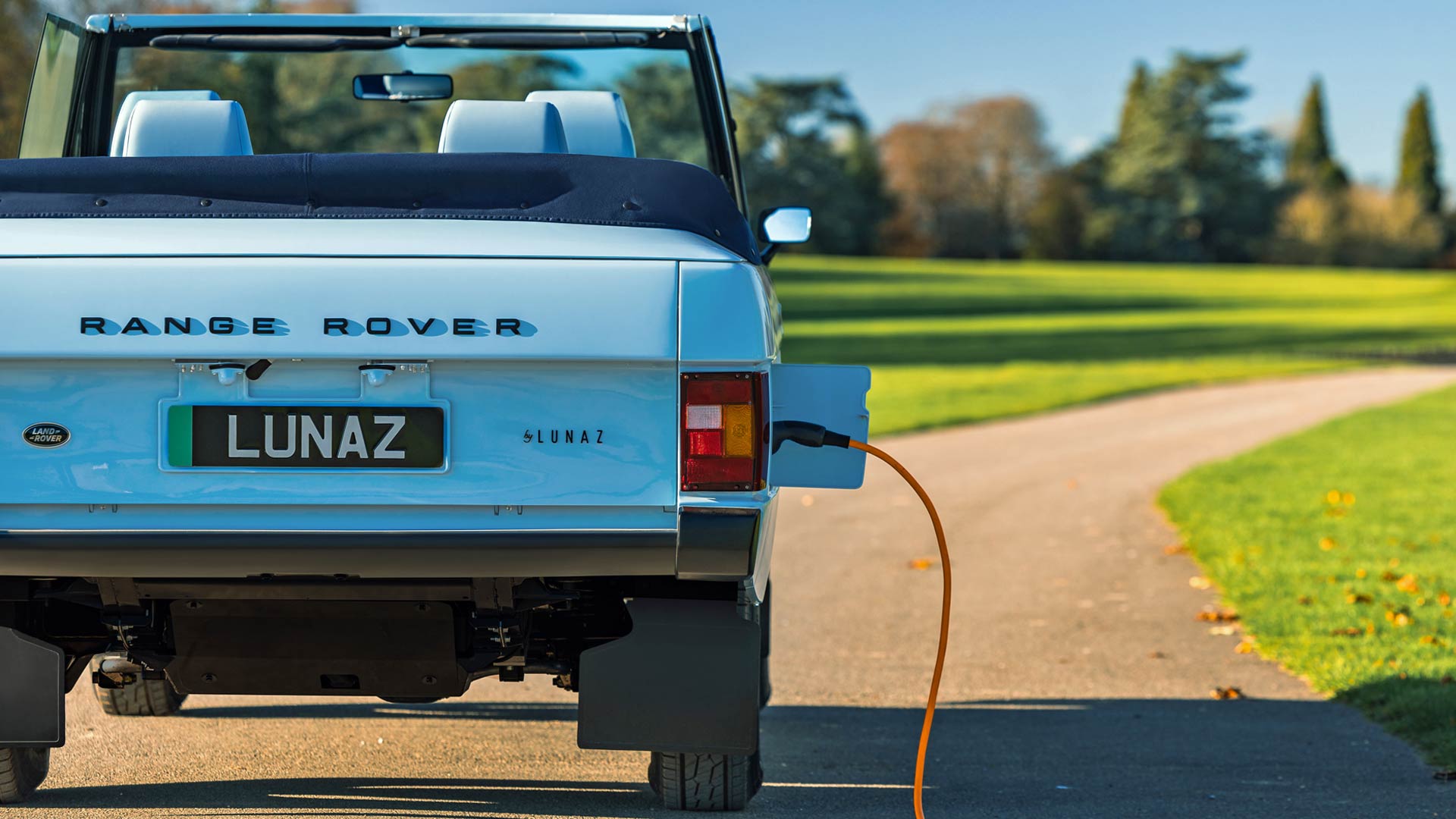
Electric restomod specialist Lunaz has revealed its latest project: an electric open-top Range Rover with a James Bond-inspired twist.
The convertible Range Rover Safari pays homage to the vehicle used in the 1983 film, Octopussy.
However, the Lunaz conversion is more than just a simple tribute. The Silverstone-based company has invested 5,000 hours of testing and development to refine its Range Rover for the road.
These enhancements will now be made available to other customers who order an electric Range Rover from Lunaz.
From Silverstone with love
To ensure the 1983 Range Rover Safari can handle the performance from its new electric powertrain, the car’s chassis and body have been extensively reinforced.
Externally, the Range Rover looks indistinguishable from the original, wearing one-off Maya Blue paintwork and a dark blue mohair roof.
Beneath the bonnet is a 280kW electric drivetrain, generating a substantial 375hp. Adjustable dampers with bespoke springs are fitted, along with uprated brakes that offer the ability to charge the battery via regenerative braking.
Lunaz says the EV Range Rover matches the 500mm wading ability of the petrol version, and has the same approach and departure angles for driving off-road.
A classic interior redefined
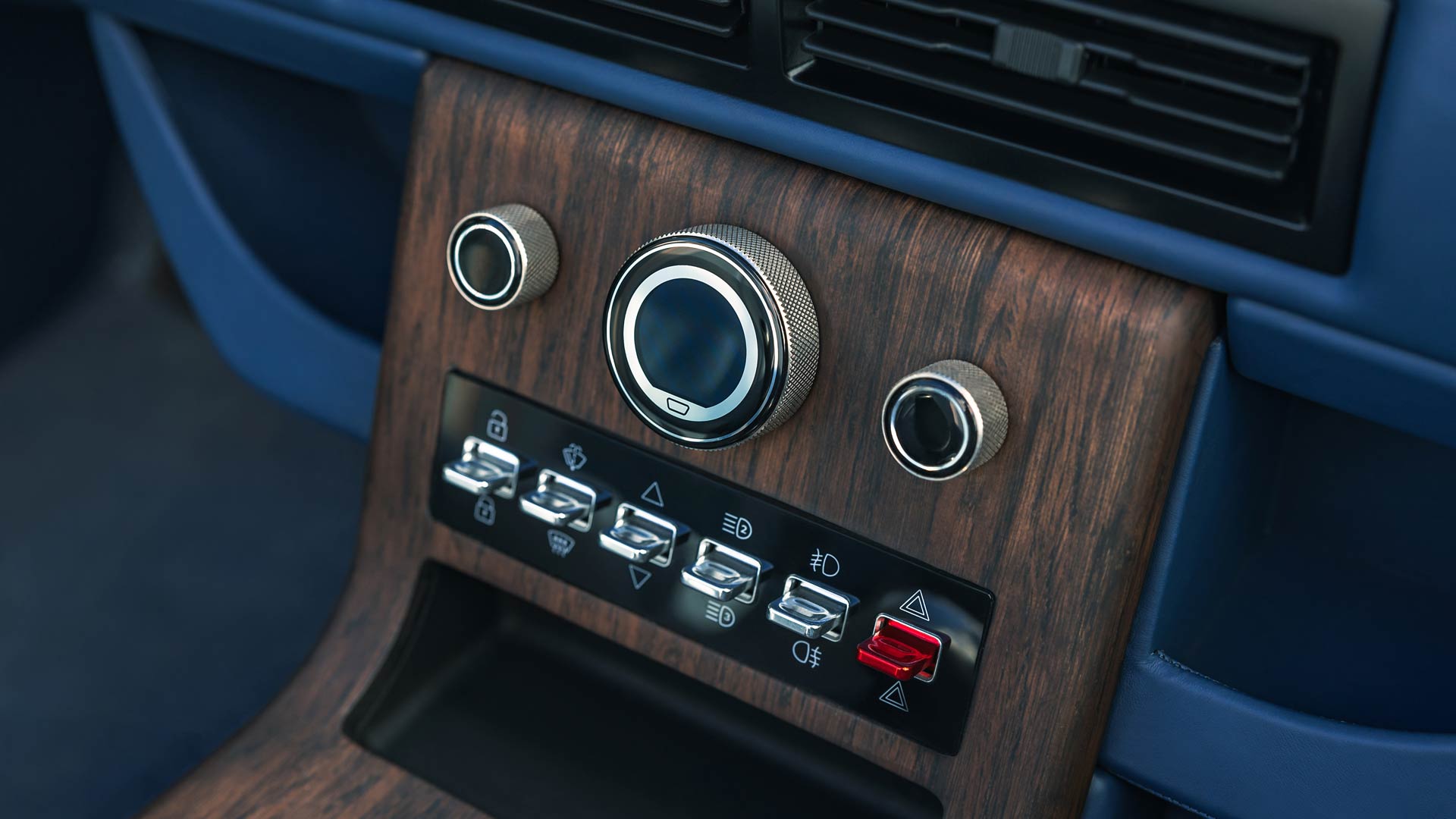
One key aim was to bring the Range Rover’s interior into the 21st century. More than 1,000 hours were spent designing and crafting a new cabin, including a bespoke 3D-printed centre console that incorporates an infotainment display.
A reversing camera makes use of the central screen, which also offers Apple CarPlay and Android Auto connectivity. Digital controls operate the air conditioning and there are USB-C ports for charging smartphones.
Lunaz has redesigned the front seats – which come upholstered in soft but hard-wearing leather – to improve both aesthetics and comfort.
A waterproof and chlorine-resistant knitted material adds some extra flair to the seats, and contrasts with the Mocca Walnut wood trim. The latter wears a weatherproof satin lacquer for extra durability.
A playful approach
Lessons learned from developing the open-top Safari model will be channelled into future Lunaz Range Rovers. A further 50 build slots are available, potentially offering the same interior refinements as this car.
Company founder David Lorenz said: “Lunaz has become known for elevating the most beautiful and elegant classic cars in history. With this Range Rover, we’re doing something different. We’re showing that our incredibly detailed and exacting approach can be applied to more playful icons, so they can be enjoyed for their own sake.
“I believe that this stunning electrified restomod captures this perfectly, elevating the Range Rover Classic to a place that perfectly marries its utility with a contemporary and precisely executed new interior and exterior design treatment.”
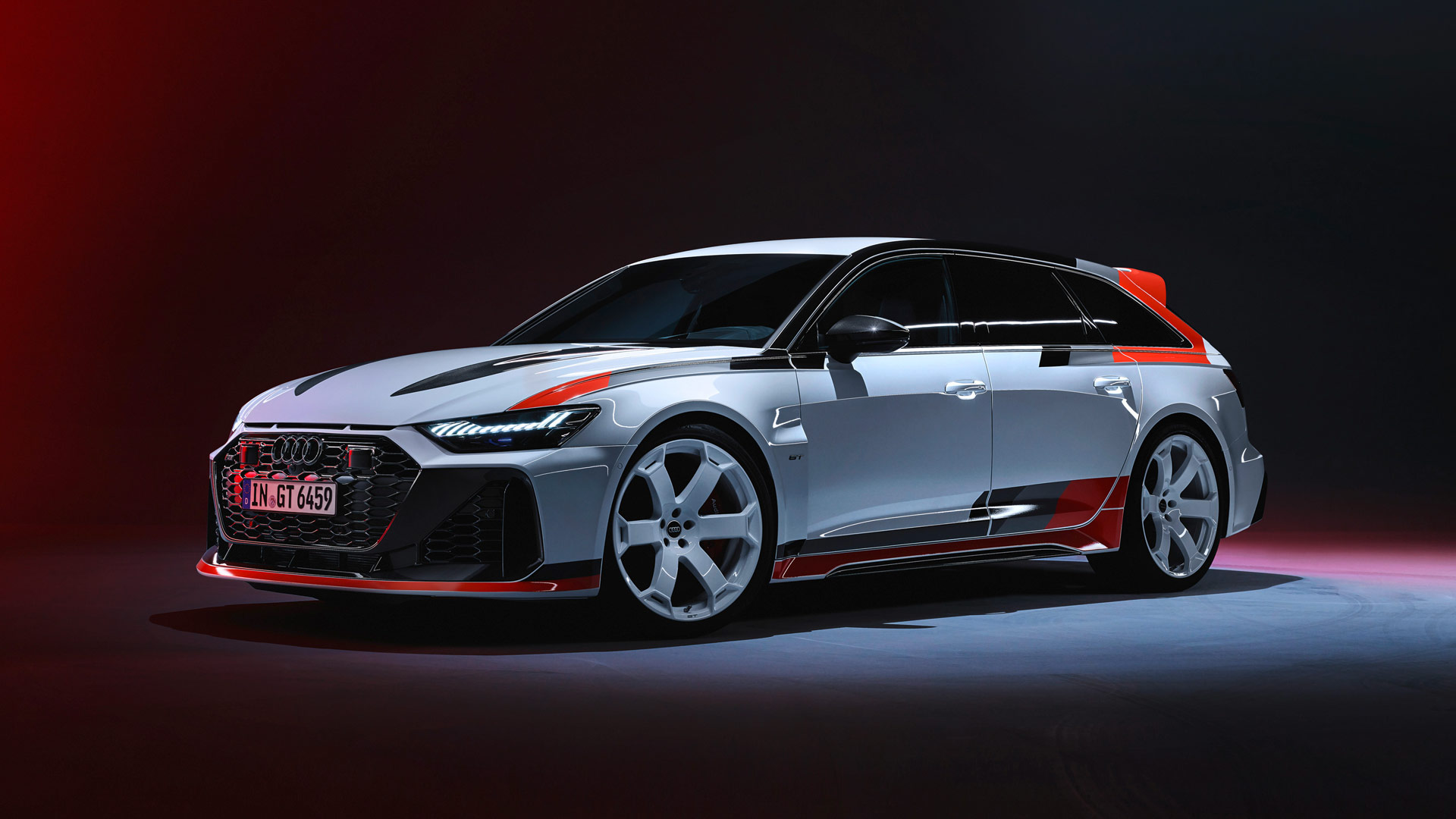
Audi has pulled the wraps off its limited edition RS6 Avant GT. With bespoke features and a distinctive, motorsport-inspired colour scheme, the company declares it the ultimate version of its performance estate car.
Only 660 examples of the RS6 GT will be produced, with 60 right-hand-drive cars allocated to UK customers.
Each one carries a hefty price tag of £176,975, or nearly £50,000 more than the current, range-topping RS6 Performance Vorsprung Carbon.
Celebrating an Audi Sport legend
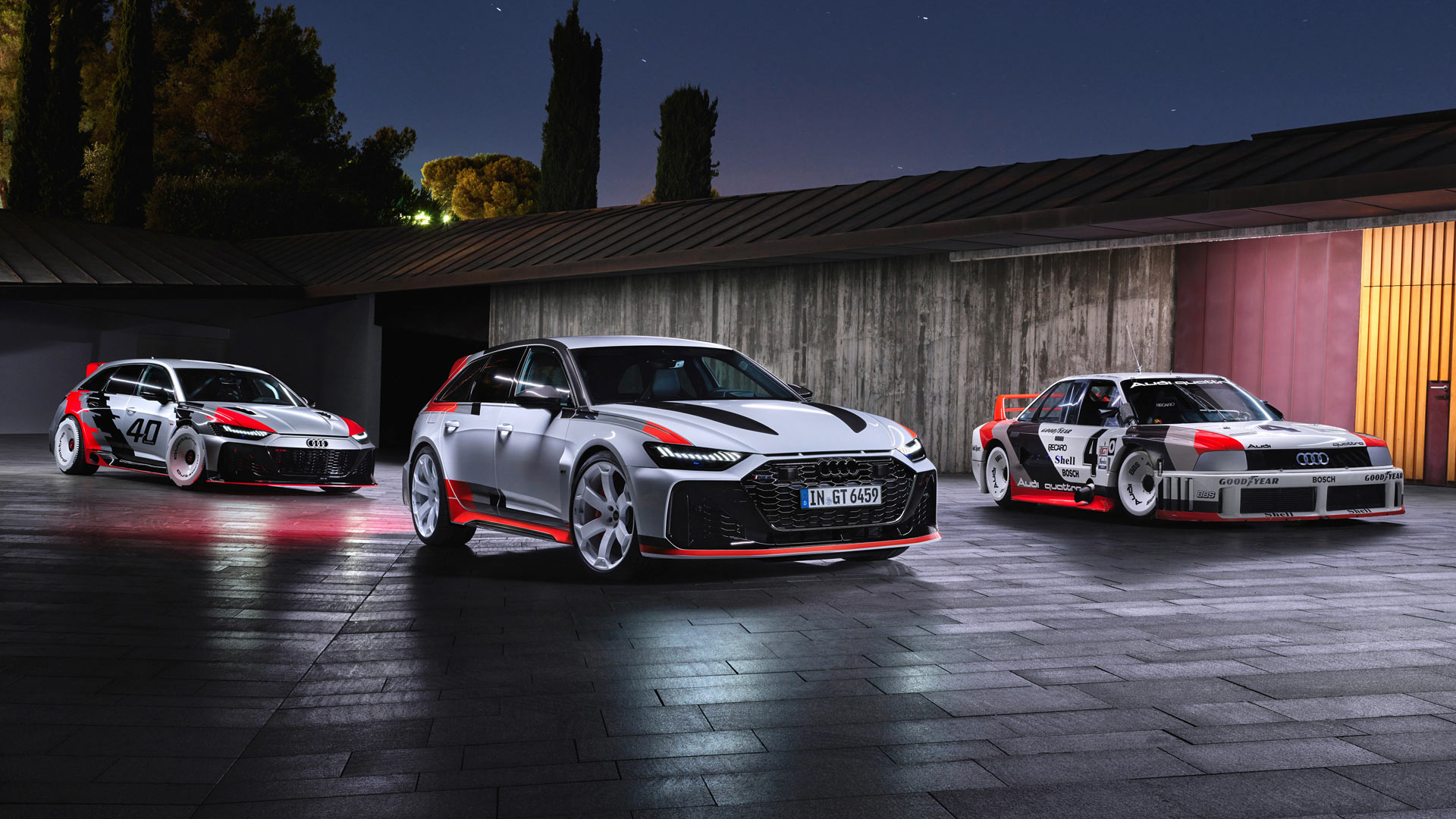
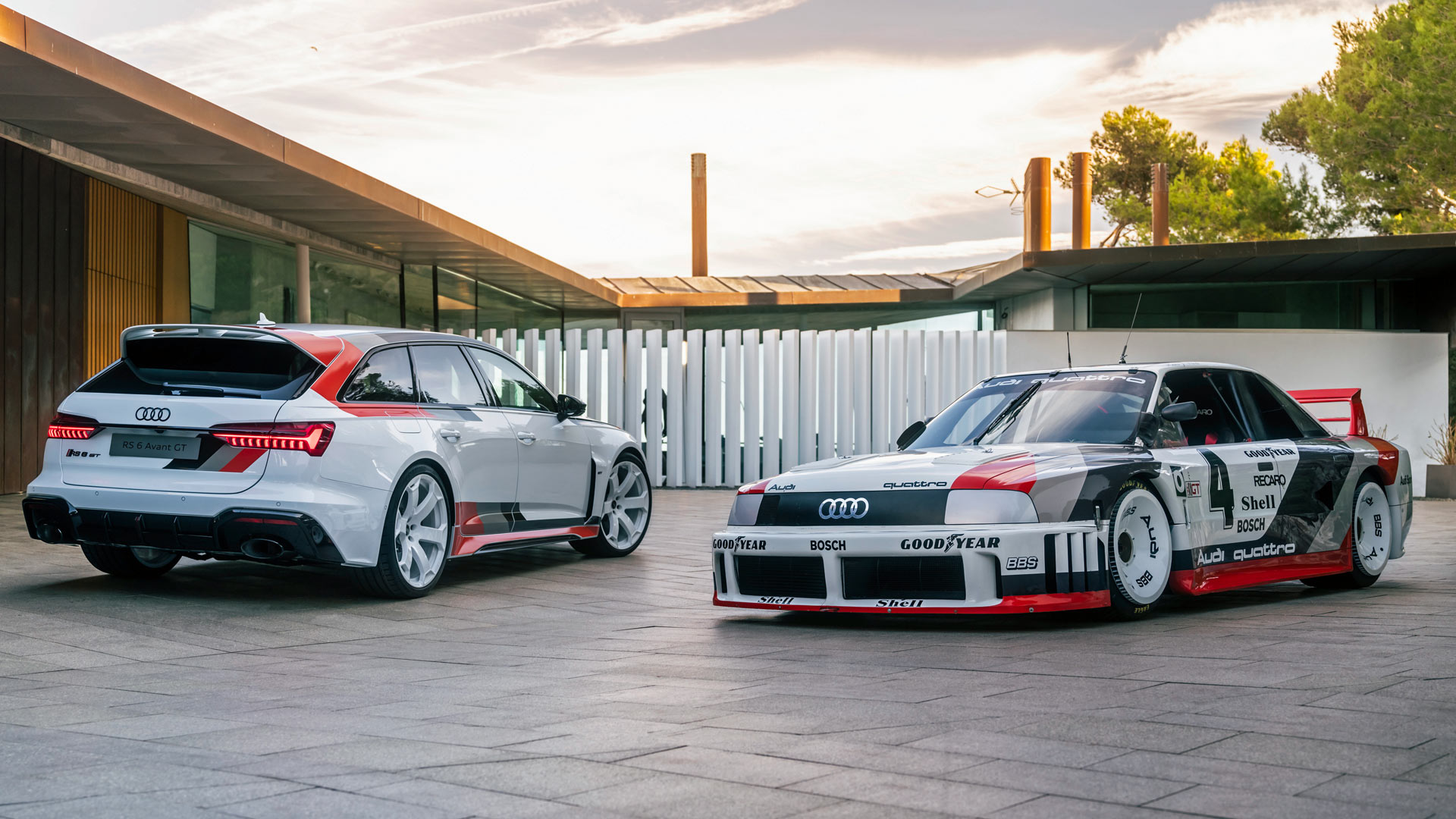
The Audi RS6 GT’s white, black and red livery comes from the 2020 RS6 GTO Concept (parked on the left above) – a project for 12 apprentice engineers and designers. This original one-off was, in turn, a homage to the 1989 Audi 90 Quattro IMSA GTO, one of Ingolstadt’s most iconic race cars.
Built for use in the IMSA GT Championship, the Audi 90 Quattro GTO brought sonorous five-cylinder turbocharged power and all-wheel drive to circuits across the US and Canada.
In the right conditions, the GTO could leave its rivals for dust, although bad luck and poor decisions prevented it from taking title glory at its first attempt.
Despite this, the 90 Quattro IMSA GTO has become part of Audi folklore, leading to today’s wagon-based tribute.
Engineered for agility and fun
The GT’s bodywork mimics the look of the RS6 GTO Concept, with carbon fibre used for the new bonnet, side skirts and widened wheelarches. Its bi-plane rear spoiler is also direct copy of that fitted to the concept car.
Audi has ditched the RS6’s roof rails to aid aerodynamics, and fitted a set of six-spoke 22-inch wheels that are unique to the GT. Carbon ceramic brakes are also standard, as is adjustable coilover suspension (plus a set of tools and instructions on how to make setup changes).
The same twin-turbocharged 4.0-litre V8 as the regular RS6 Performance powers the new GT, serving up 630hp and 627lb ft of torque. This makes for 0-62mph in just 3.3 seconds, with a potential top speed of 190mph.
The car’s rear differential has been tailored for a ‘focus on greater agility’, while Continental Sport Contact 7 tyres are said to reduce understeer at high speeds.
The hand-built performance estate
Although buyers can choose Nardo Grey or Mythos Black paintwork, Arkona White with the contrasting Audi Sport graphics is likely to be the colour combination of choice.
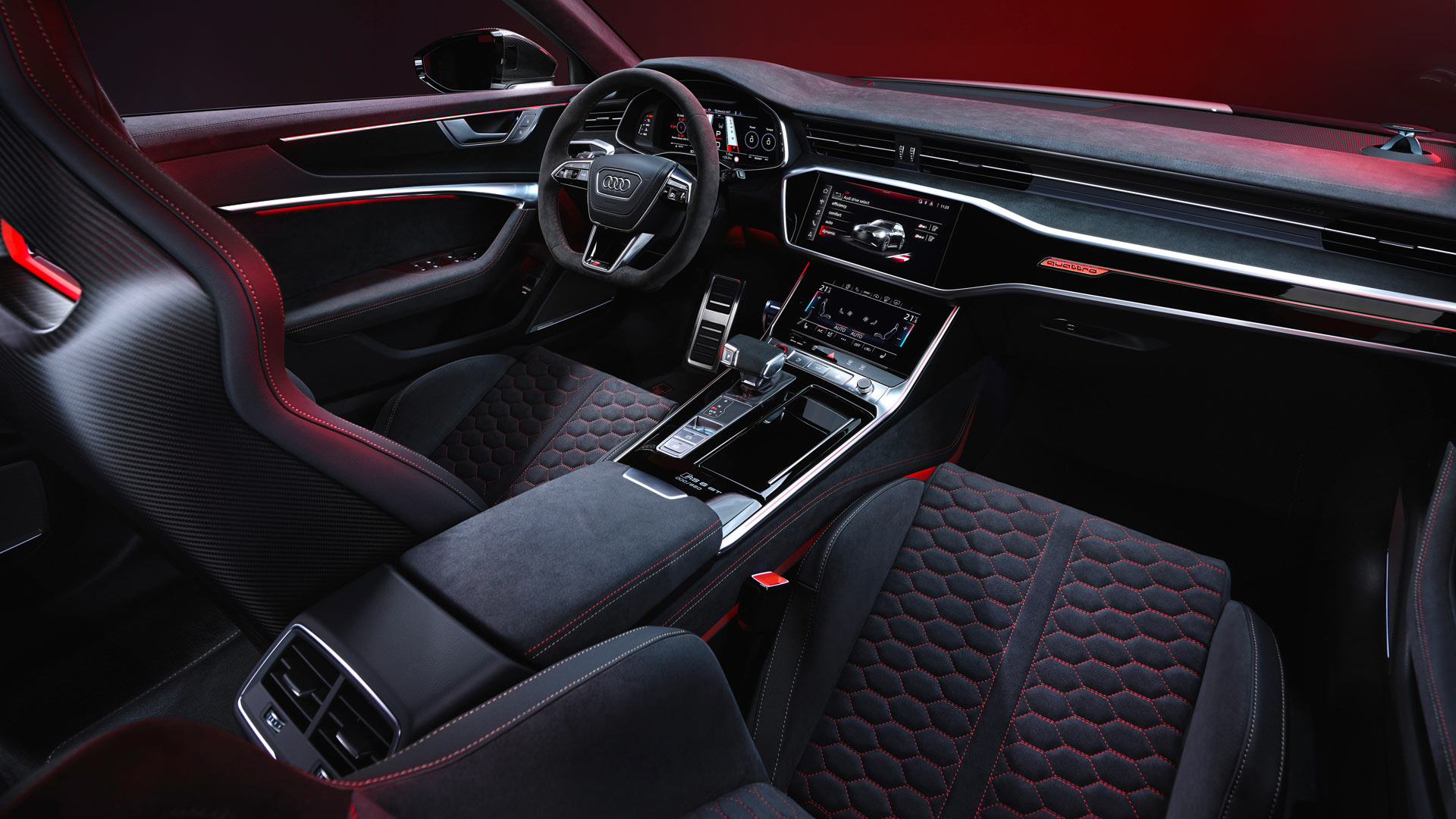
The GT’s interior benefits from carbon fibre-backed bucket seats finished in a combination of leather and Dinamica, with red and copper detailing used throughout the cabin. A numbered plaque is found on the centre console, too.
Audi is accepting orders for the RS6 GT now, with production set to commence in the second quarter of 2024.
Each of the 660 cars will start life at Audi’s Neckarsulm factory, before moving to the Böllinger Höfe site to have the bespoke GT parts fitted by hand.
In September 2023, the UK Prime Minister postponed the ban on sales of new petrol and diesel cars to 2035. In his statement to parliament, Rishi Sunak cited high purchase costs and a lack of public charging infrastructure as key reasons for the delay.
The ban was previously due to come into effect in 2030, with some plug-in hybrids exempt until 2035. However, all combustion-engined vehicles, including hybrids, are now included. This means only fully electric cars can be sold after the 2035 deadline.
Here, we look in detail at the 2035 petrol and diesel car ban, and explain what it means for motorists.
Which cars will be banned and when?
The government is clear on this: all sales of cars and vans with petrol or diesel engines will be forced to end in 2035. This ban also applies to hybrid vehicles, even plug-in hybrids that can drive a significant distance on electric power only.
Why will the government introduce the ban?
Phasing out combustion engine vehicles is a key part of the UK meeting its goal of ‘net zero emissions’ by 2050.
Former prime minister Theresa May committed the UK to this target in 2019, making the UK the first major economy to do so. The original plan was for the petrol and diesel ban to become law in 2040. This was brought forward by a decade by Boris Johnson in 2020, then pushed back again by Rishi Sunak in 2023.
Former transport secretary Grant Shapps said: “The UK is going further and faster than any other major economy to decarbonise transport, harnessing the power of clean, green technology to end the UK’s contribution to climate change by 2050”.
Will I still be able to drive my current petrol and diesel car?
Yes, you will. Ministers are keen to stress that motorists will still be able to drive conventional cars after 2035. It is only the sale of new ones that will be banned.
This means the existing infrastructure, including petrol stations, will also continue for many years.
How will the government make up the shortfall in fuel tax?
The Institute for Fiscal Studies warns £40 billion in road taxes is at risk from the 2035 petrol and diesel car ban. “Some form of road pricing will be needed,” said director Paul Johnson.
“The government needs to get started now – it will be very hard to introduce after people have got used to no tax.”
What about classic and retro cars?
As there are currently no plans to ban the use of petrol and diesel cars already on the road, classic and retro cars will not be affected.
It is expected the government will continue to consider vehicles aged 40 years and older as ‘historics’, allowing their continued use even within Ultra-Low Emissions Zones (ULEZ).
Nonetheless, social pressure, plus current ULEZ restrictions in cities, mean the growing trend for converting classic cars to electric power – such as the Bentley S2 Continental by Lunaz pictured above – is likely to continue.
Do motorists get help to buy new electric cars?
Not any more, sadly. The government offered a £5,000 Plug-in Car Grant from 2011 to encourage uptake of EVs. However, this figure was progressively reduced over the years.
In its final guise, the PiCG offered a £1,500 discount – and only for electric cars with a list price of less than £32,000. Then it was withdrawn altogether in June 2022.
How does the UK ban compare to other countries?
The UK’s petrol and diesel car ban is the one of the world’s most ambitious targets. Delaying it to 2035 brings Britain into line with the European Union, including major countries such as France, Germany and Spain.
Norway is one of the few nations moving faster than the UK, with a target date of 2025 to ban the sale of new combustion-engined cars.
Will electric car charging infrastructure be improved?
To help make the switch, the government is investing £1.3 billion to roll out more electric vehicle charging points for homes, streets and trunk roads.
The remaining £300 million allocated to the Plug-in Car Grant is also being diverted to improve the UK’s public charging infrastructure.
Will the National Grid cope?
Critics frequently suggest more electric cars will lead to power cuts as the National Grid won’t be able to cope. However, its former director, Graeme Cooper, dismissed these concerns.
Supplying energy to recharge electric cars would require around a third more energy than today’s demand, he said, “which the grid could easily cope with”.
Even if motorists all plugged their cars in as soon as they got home, peak demand would only climb by 10 percent, Cooper estimated.
Will UK industry benefit from the ban?
The government has committed almost £500 million to develop and produce electric vehicle batteries in the UK.
Former prime minister Boris Johnson envisioned these would be “made in the Midlands”, a region that will also get a boost in the number of electric vehicle technicians.
Will diesel trucks be banned?
The 2035 petrol and diesel car ban currently doesn’t extend to heavy goods vehicles (HGVs).
Instead, the government is launching a consultation on the phase-out of diesel trucks, although no target date has been set.
It is hoped hydrogen fuel-cell trucks will help make the switch from diesel lorries. Electric trucks are unlikely to deliver the range needed for long-distance transport of 46-tonne vehicles.
What does the car industry say?
SMMT: Chief executive Mike Hawes said the automotive industry is “committed to the journey” of decarbonising road transport. He said the organisation will “work with the government on the detail of this plan, which must be delivered at pace”.
RAC: The car industry and charging infrastructure providers “have an enormous task on their hands,” said head of roads policy, Nicholas Lyes. “The country’s public charging network will need to grow exponentially to cater for the surge in EVs on the road.” He added motorists also face a “big learning curve” to get confident about going electric.
AA: President Edmund King said the barriers to EV ownership are the initial cost and availability, perceived range anxiety and charging infrastructure. Tackle these issues and “the electric revolution could flourish”.
NFDA: “The new deadline is challenging,” said Sue Robinson, chief executive of auto retail trade body, the NFDA. “Strong incentives are key to ensuring the UK remains a strong consumer market for electric cars as the market begins to mature. We have to avoid a situation where the least well-off car drivers are deterred from buying a new car when the time comes to replace their old one.”
BVRLA: The rental association’s members are responsible for one in two new car registrations. It warns that setting dates is only the start of the process. “Now the government needs to create the supportive environment that will enable fleets and motorists to step up to the challenge of decarbonising road transport. It won’t be easy, and it won’t be cheap,” said chief executive Gerry Keaney.
Low Carbon Vehicle Partnership: MD Andy Eastlake called the announcement a “critical milestone” in Europe’s second-largest car market. “We’re setting a bold example to countries around the world… however, don’t underestimate the scale of the challenge ahead. This throws down the gauntlet to industry, government and the public… the real work starts now.”
Friends of the Earth: Head of Policy Mike Childs said the government was “right to accelerate the phase-out of petrol and diesel cars to curb air pollution and address the climate emergency, but the ban should start in 2030 – not 2035. A new 2035 target will still leave the UK in the slow-lane of the electric car revolution and meantime allow more greenhouse gases to spew into the atmosphere.”
Petrol Retailers Association: “People driving used ICE [petrol and diesel] vehicles are generally those with less disposable income,” said chairman Brian Madderson. “Penalising ICE drivers who can’t afford to make the transition to an EV is no way to foster a new market in alternative fuels. As ever, the biggest tax burden will fall on those least able to afford it.”
Lamborghini broke its own sales record in 2023, surpassing 10,000 cars for the first time. In the Italian marque’s 60th anniversary year, it delivered a total of 10,112 new vehicles – up 10 percent versus 2022.
The United States was comfortably Lamborghini’s largest market, with 3,000 cars delivered during the past 12 months. It was followed by Germany (961), China (845), the UK (801) and Japan (660).
The Urus SUV was Lamborghini’s best-seller overall, finding 6,087 new owners in 2023. The workforce at Sant’Agata also assembled 3,962 Huracans, the final 12 examples of the Aventador Ultimae and 51 exclusive ‘Few-Offs’ (including the reborn Countach, plus the Invencible and Autentica hypercars).
We spoke with Lamborghini CEO Stephan Winkelmann about his vision for the future, from the company’s ‘Cor Tauri 2.0’ strategy for electrification to its new SC63 Le Mans racer.
Huracan ends on a high
Referring to Lamborghini’s sales success, Winkelmann said it came despite a backdrop of increasingly turbulent world events. Yet he also stressed the company won’t chase volume at the expense of exclusivity and retained values: “We’ll always build fewer cars than the market demands.” The waiting list for a Urus extends into 2025, while the flagship Revuelto is sold out until 2026.
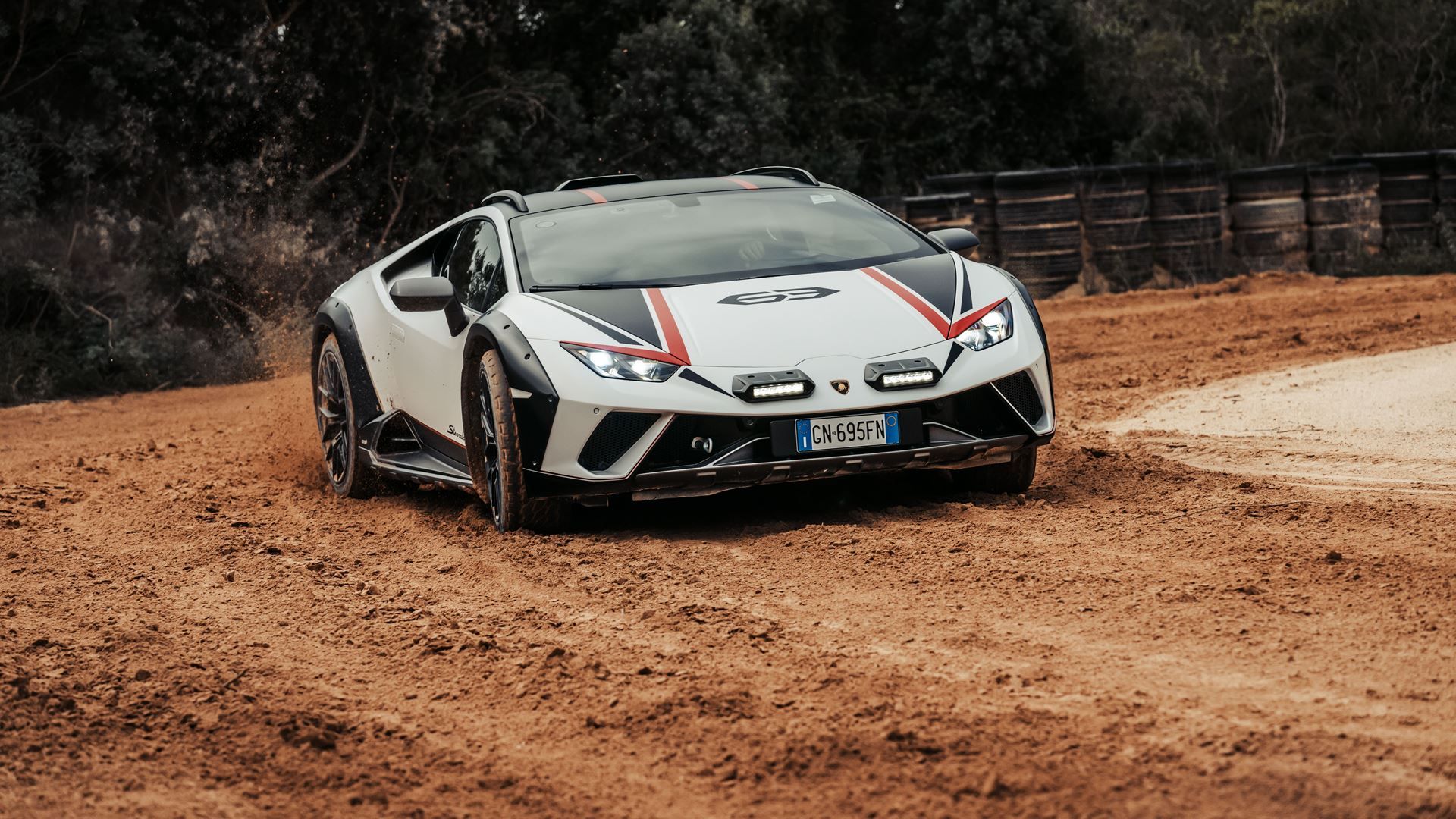
Winkelmann seemed chuffed by the Huracan racking up its best ever sales total: a remarkable result in the supercar’s final full year of production. Are customers keen to buy a naturally aspirated V10 while they still can? Perhaps, but the CEO also points to derivatives such as the track-focused STO and rugged Sterrato, which have maintained interest in the car and driven up deliveries.
Looking ahead, order books are already open for the soon-to-be-revealed Urus hybrid, while the Huracan’s successor arrives later this year. The latter swaps that voracious V10 for a twin-turbocharged V8 backed up by three electric motors. Winkelmann confirms that “open and higher performance” versions are in the pipeline, but won’t confirm a sequel to the Sterrato. At least, not yet…
Lanzador EV on the way
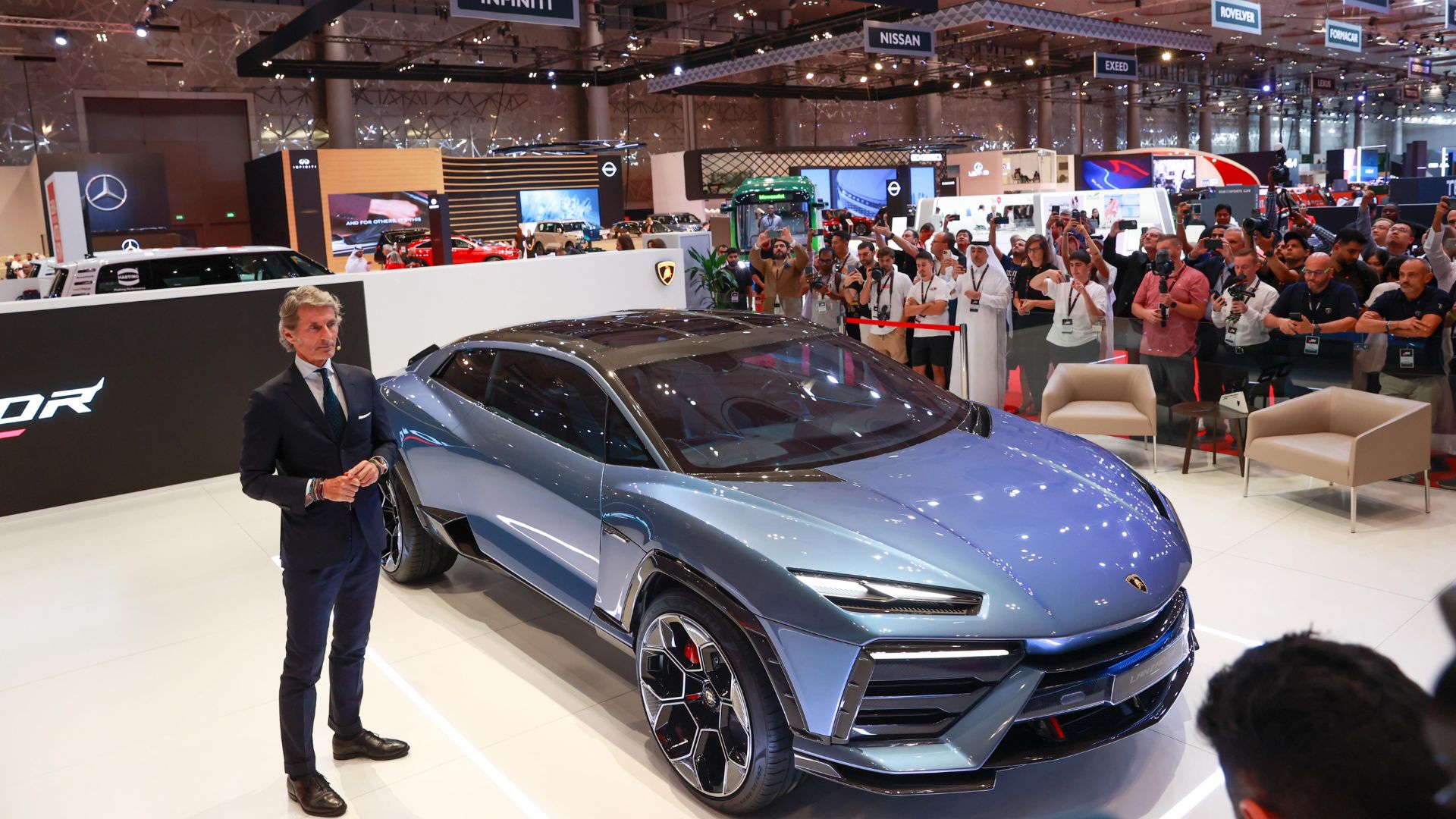
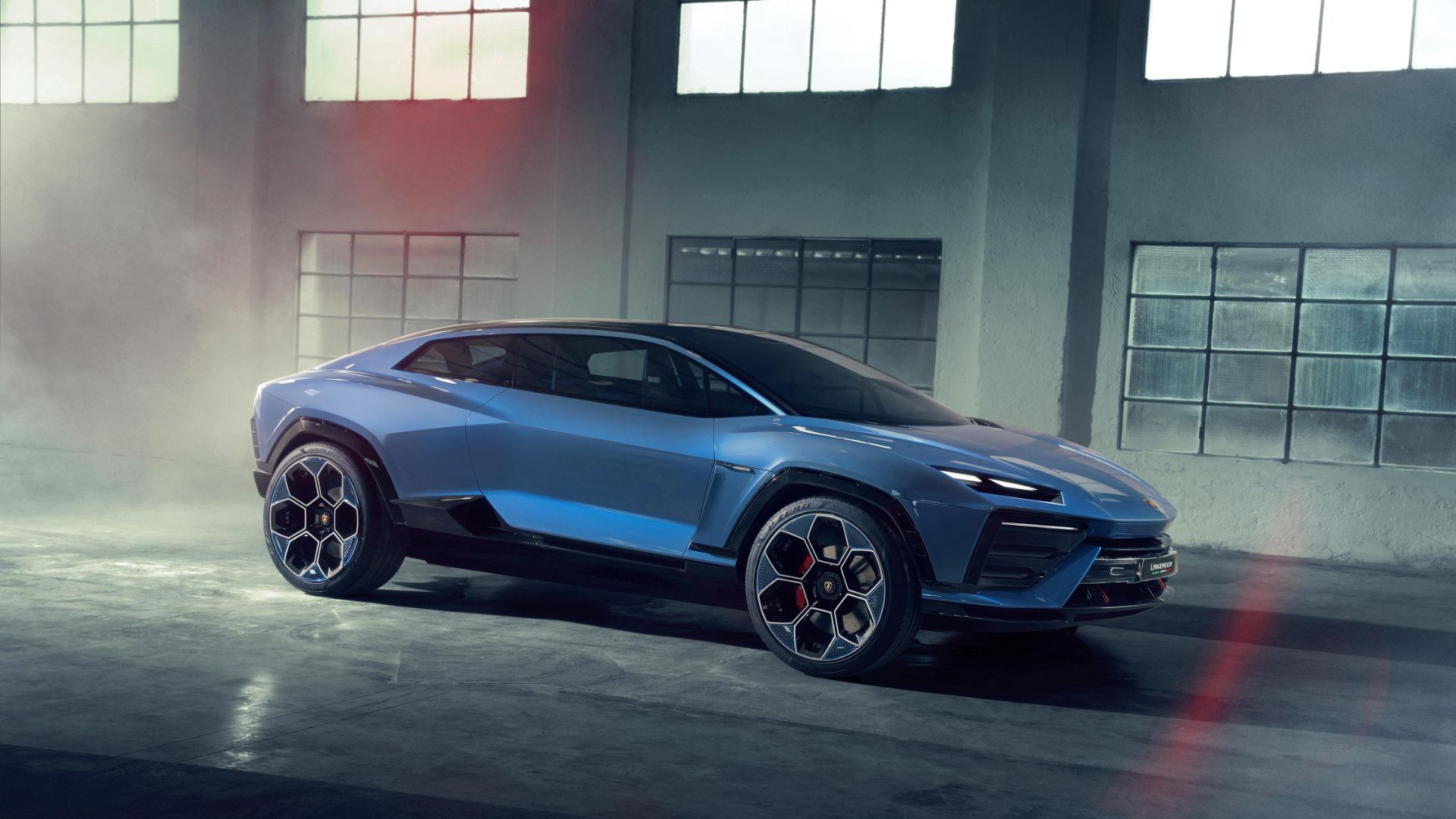
Lamborghini recently revealed a concept for its first EV, the 1,360hp Lanzador, and the production car is on-track for launch in 2028. Winkelmann explains that both its electric drivetrain and crossover-style body garnered a “positive reaction”, with in-depth customer clinics due soon.
The Lamborghini boss admits that creating an electric car “to deliver the attributes of repeated acceleration, top speed and range, all at the highest level, is almost mission impossible”. However, being part of the Volkswagen Group offers a “big advantage”, providing Lamborghini with access to the latest EV battery technology.
“Translating the emotional part of Lamborghini into an electric car” is arguably an even greater challenge. “Much more important than the facts and figures is how you feel,” says Winkelmann. The Lamborghinis of the future may be battery-powered, but they won’t be one-dimensional to drive.
On-track for Le Mans
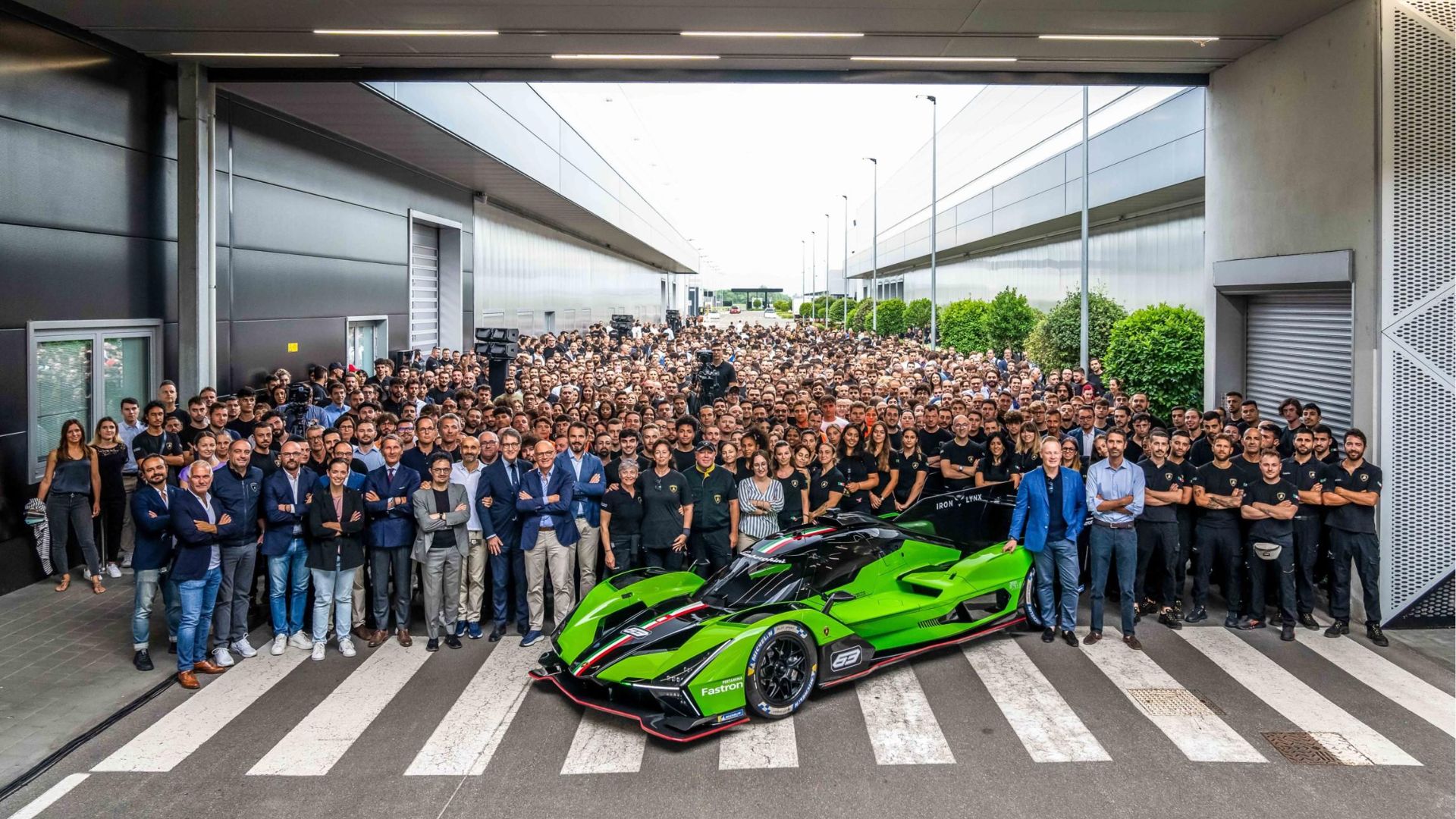
Another new development is Lamborghini’s SC63 sports prototype racer, pictured above. Powered by a V8 and rear-mounted electric motor, it will race in the 2024 World Endurance Championship (WEC). The season starts in Qatar at the beginning of March and includes the Le Mans 24 Hours as its flagship round.
Winkelmann says endurance racing will provide a test-bed for new materials and software, along with the credibility of top-tier motorsport. The Huracan’s successor also seems likely to spawn a Super Trofeo racing version, which “could be run on synthetic fuels”.
After many decades of hand-building a few hundred cars a year, Lamborghini is thriving. The coming decade poses some of the biggest challenges in its long history, but whatever comes next, it definitely won’t be dull.
The Dubai police force is continuing its tradition of using dramatic performance cars for law enforcement in the emirate
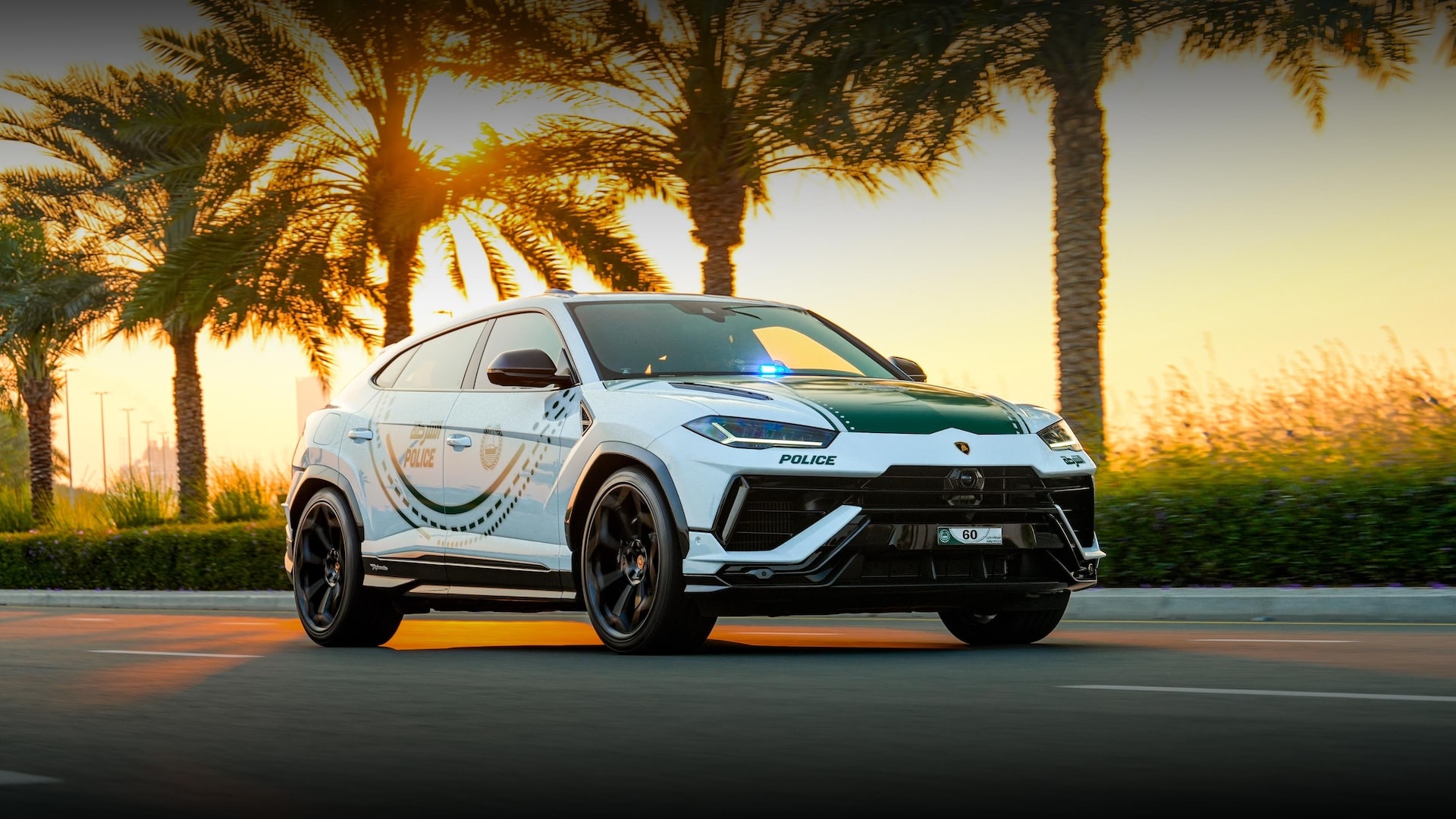
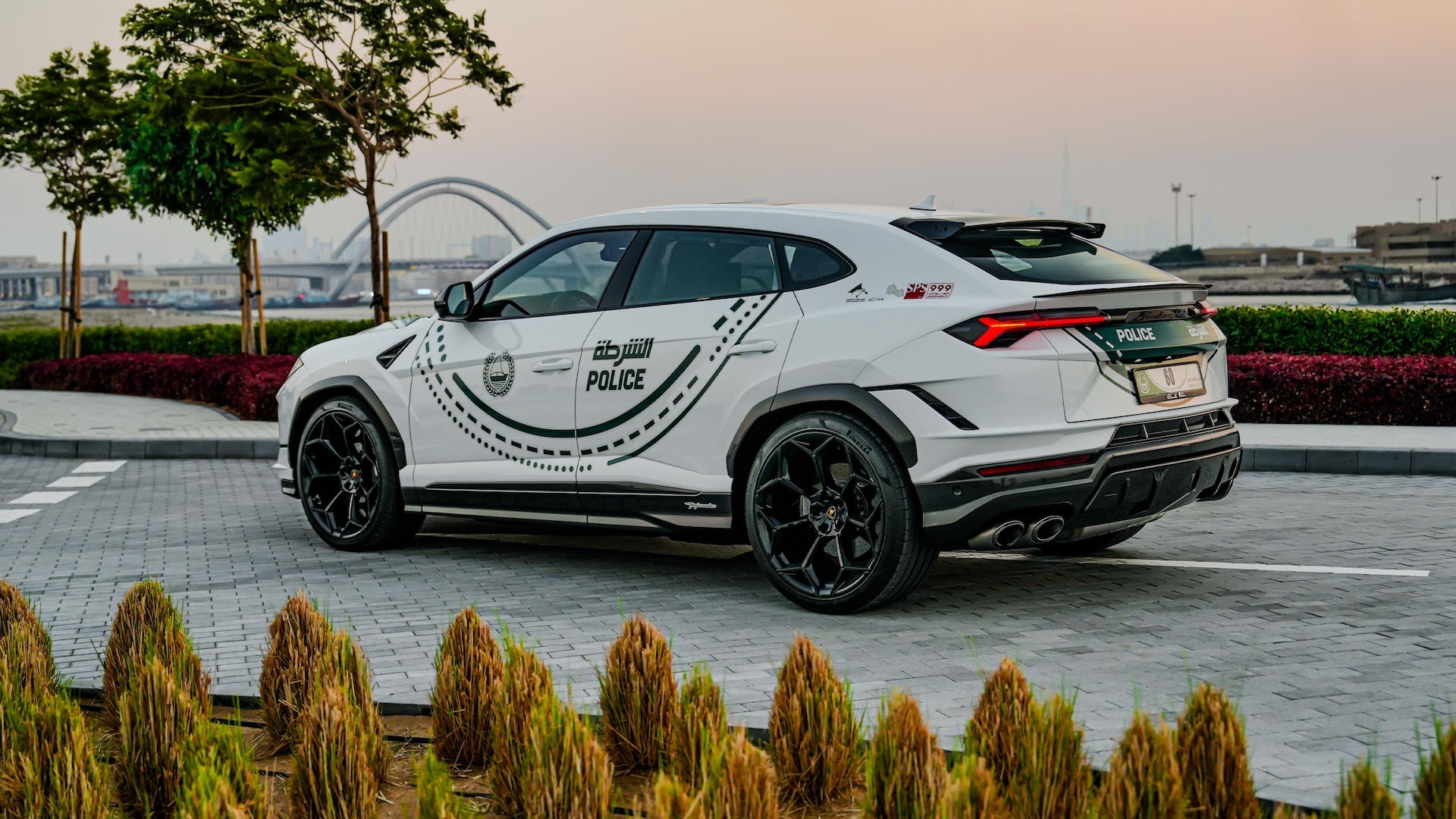
The latest extreme machine to join the force is a Lamborghini Urus Performante. Our Tim Pitt drove the flagship Urus at its launch in 2022, describing it as ‘a true supercar on steroids’.
With a top speed of 190mph and a 0-62mph time of 3.3 seconds, the Lamborghini should certainly help Dubai’s police officers to reach emergency calls quickly.
A rapid response vehicle
A partnership between the Dubai police and a local Lamborghini dealership has seen the Urus Performante added to the fleet. It follows a Lamborghini Huracan and another Urus as one of the rarefied vehicles used by the force.
Compared to a ‘standard’ Urus, the Performante’s 4.0-litre twin-turbocharged V8 engine is tuned to deliver 666hp, along with a mighty 627lb ft of torque.
Although the more exotic members of the Dubai fleet are typically reserved for high-visibility patrols in tourist areas, the Urus Performante has still received plenty of police-spec upgrades.
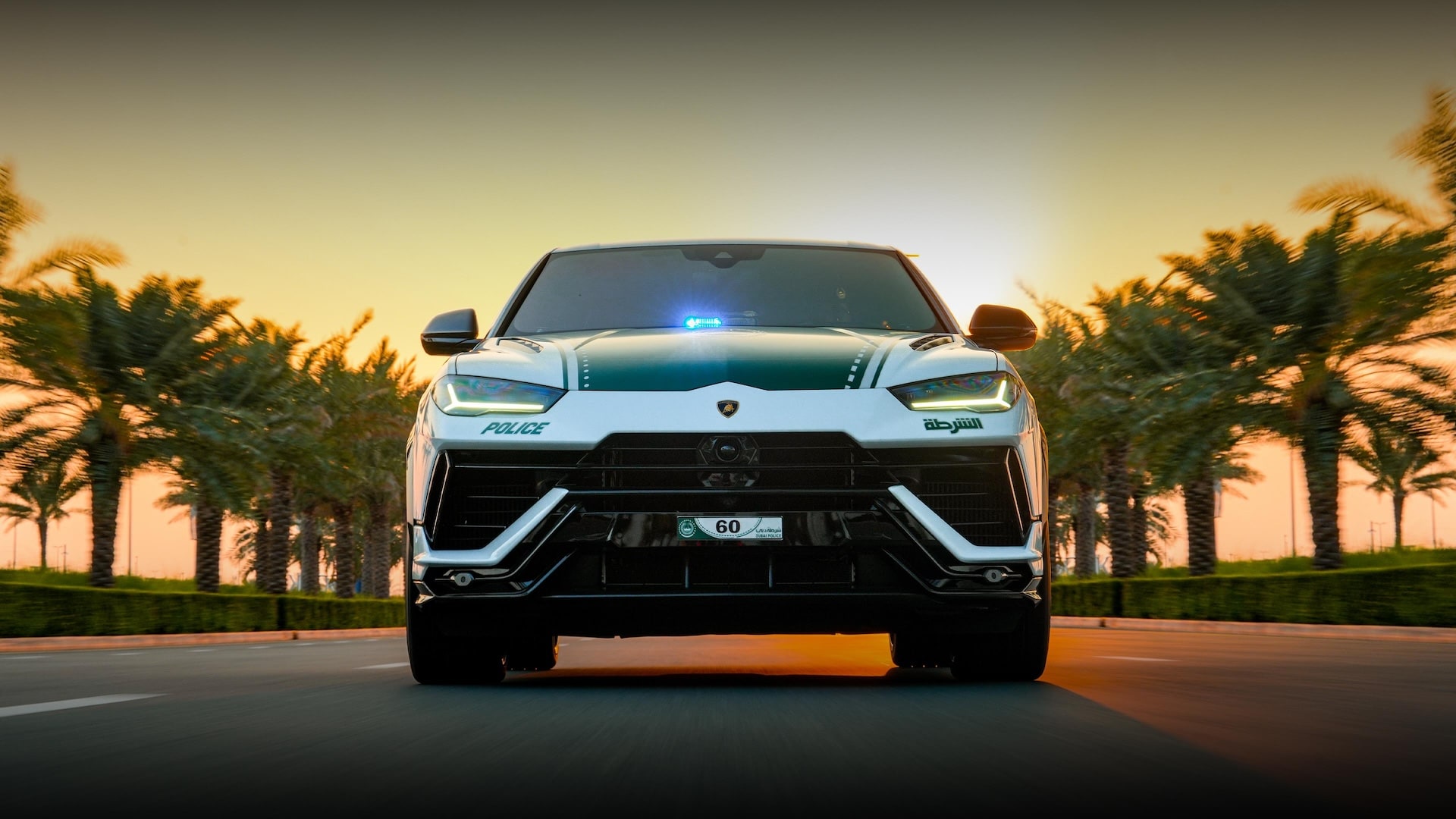
Along with its distinctive white and green livery, the car is fitted with the requisite blue lights and siren. There is also a fold-down message display, an armoured gun box and a defibrillator in the boot.
The latest new recruit
The Lamborghini Urus Performante joins a long list of supercars used by the Dubai police, including a Rolls-Royce Wraith and even a Bugatti Veyron.
The rookie recruit was announced in a special ceremony at the Dubai Airshow. Paolo Sartori, head of Automobili Lamborghini for the Middle East and Africa, handed over the keys to Major General Ahmed Mohammed bin Thani, acting commander-in-chief of the Dubai police.
Sartori said: “We are delighted to continue our collaboration with Dubai police, supporting them in their crucial public safety mission. Following our delivery of an Urus to the force in 2022, this new Urus Performante edition will be used to carry out a range of public duties and, above all, will help enhance the city’s security and safety, with this initiative further demonstrating our brand’s longstanding presence here in the UAE.”
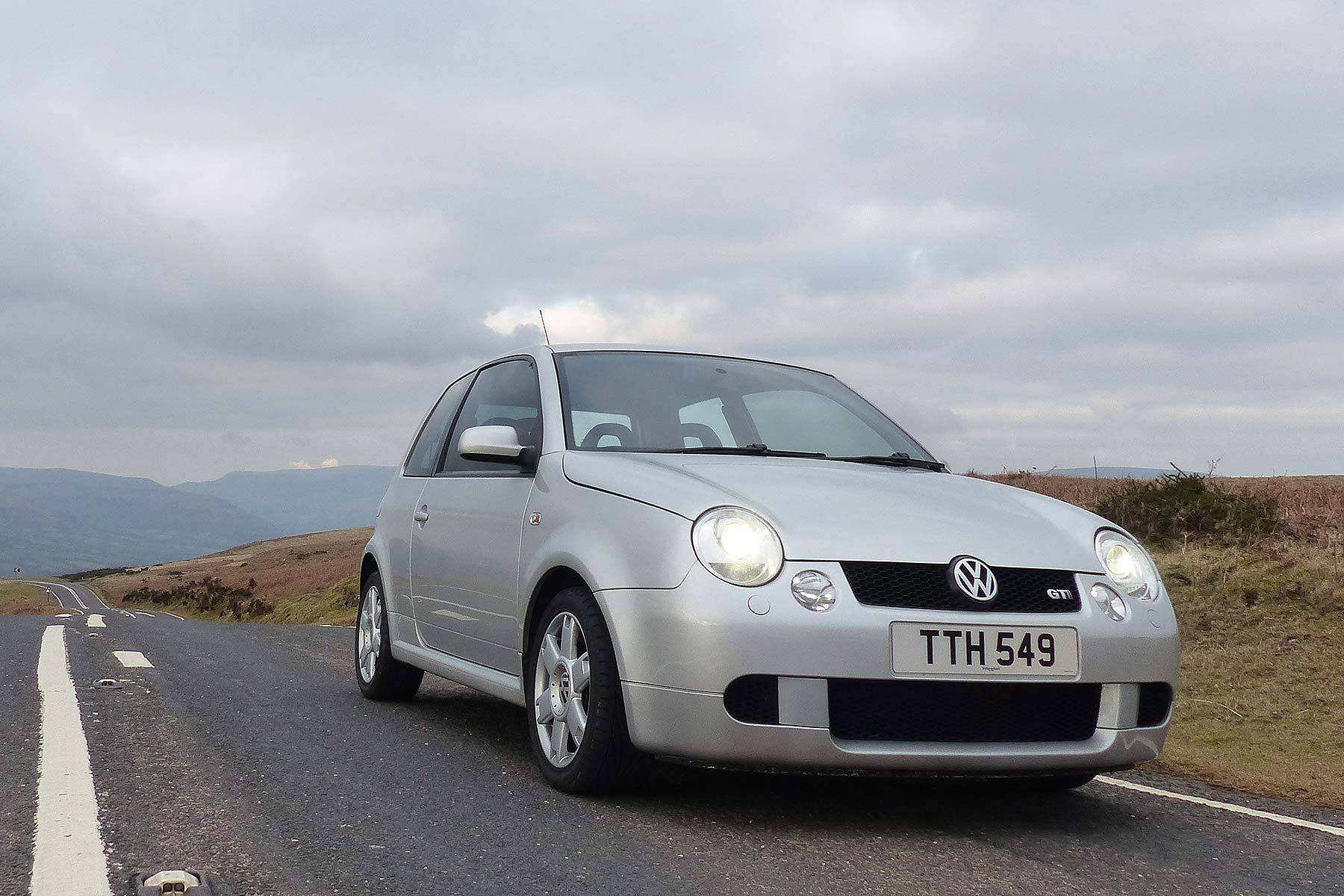
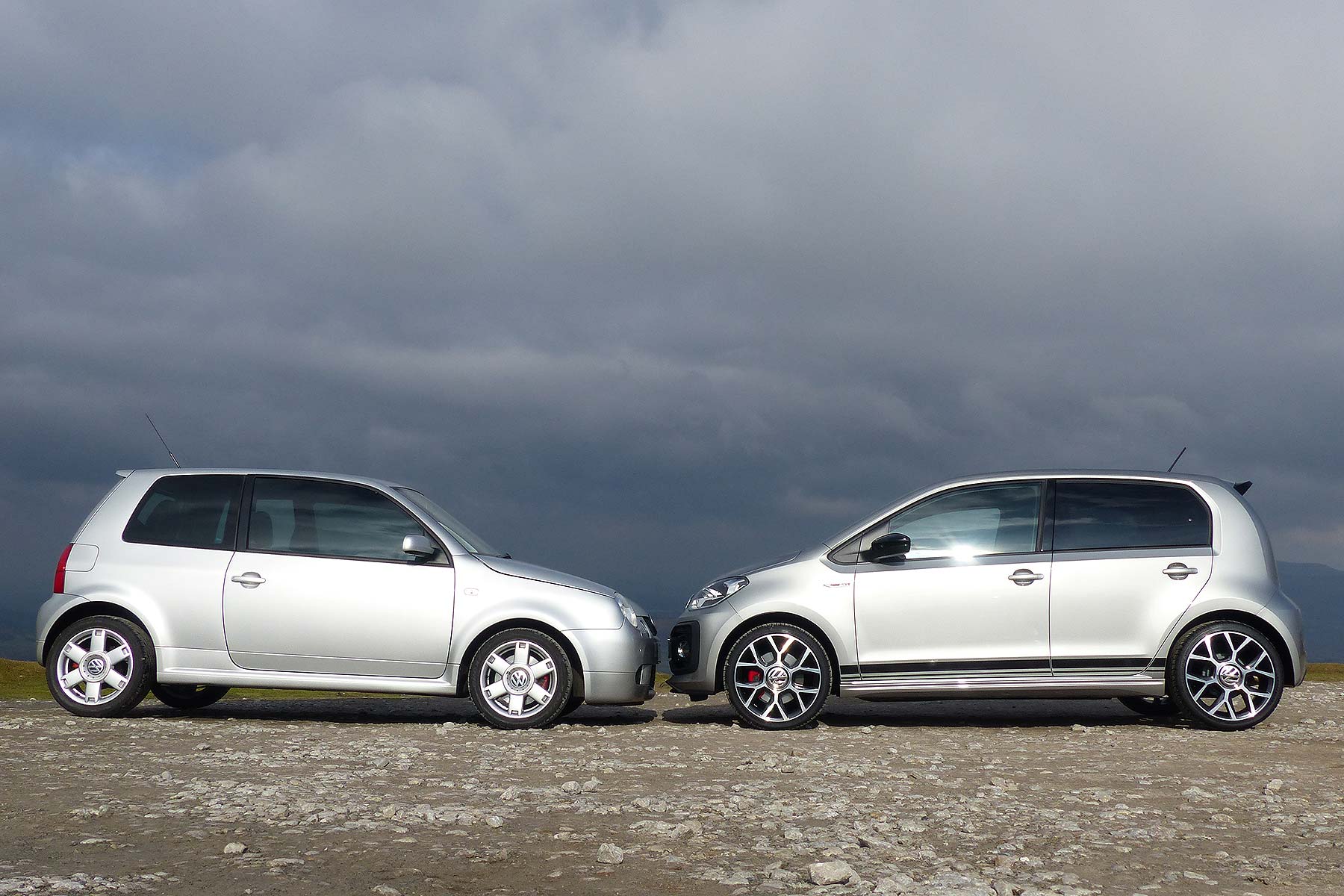
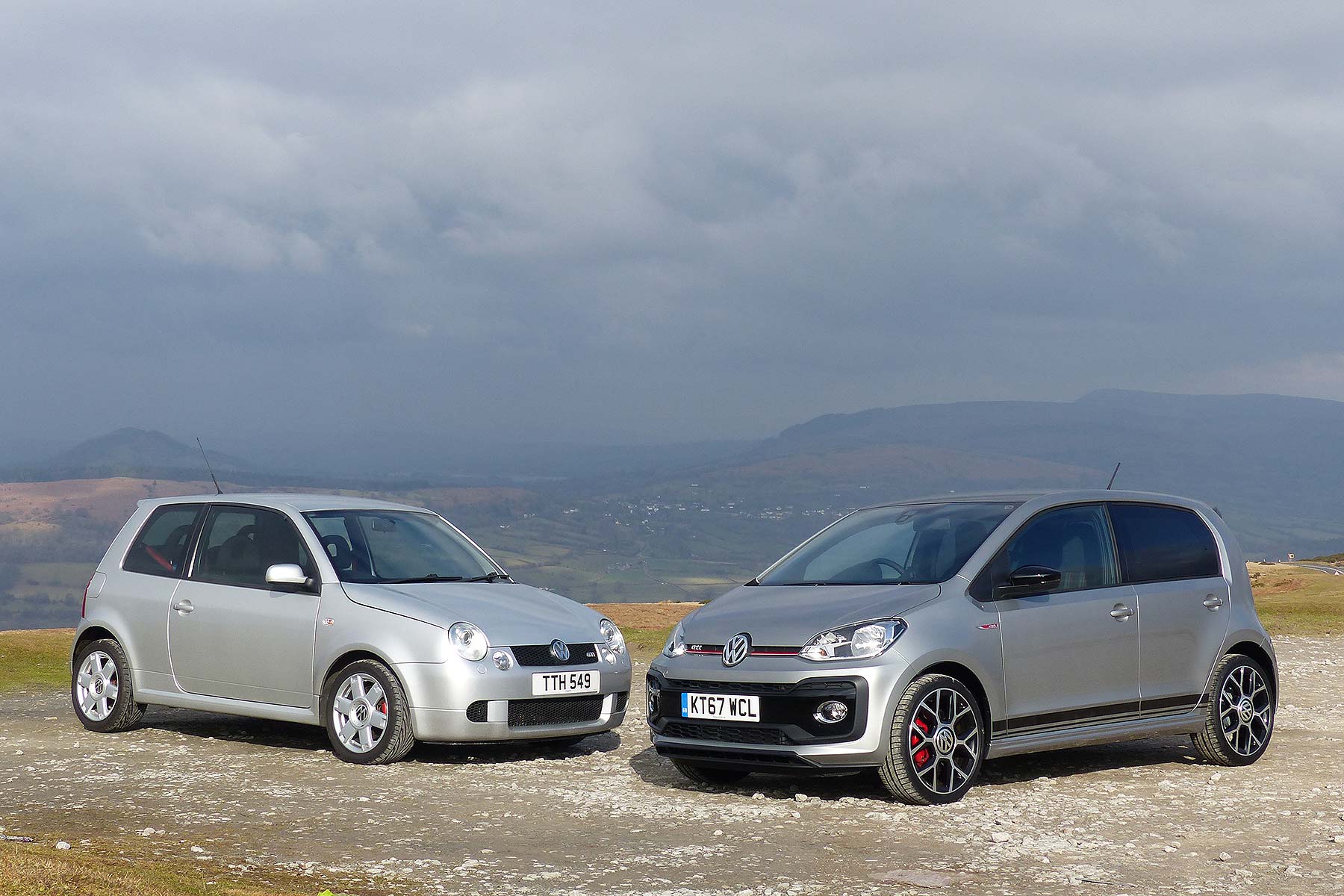
Thirteen years after Lupo GTI production ended, Volkswagen has finally produced a GTI version of its popular Up city car. Common sense would suggest that as the Up replaced the Fox, and that replaced the Lupo, VW would proudly proclaim the Up GTI the long-awaited successor to its popular Lupo GTI. However, this wasn’t the case.
Instead, the Up was cited as a contemporary interpretation of the iconic Mk1 Golf GTI, with no mention of the car many assumed it shared a stronger bloodline with. The plot thickens when you realise that for the Lupo GTI launch, guess which car VW put forward as its inspiration? Yep, the Mk1 again. VW itself clearly doesn’t want to make comparisons between the two sub-Polo GTI pocket rockets, but we’ve come to the challenging roads of South Wales to do just that.
Has the Up GTI has got the makings of a future classic – just like the Lupo back in the day – or is it just a cynical exploitation of those iconic three letters to boost the company’s post-dieselgate image? This is going to be good….
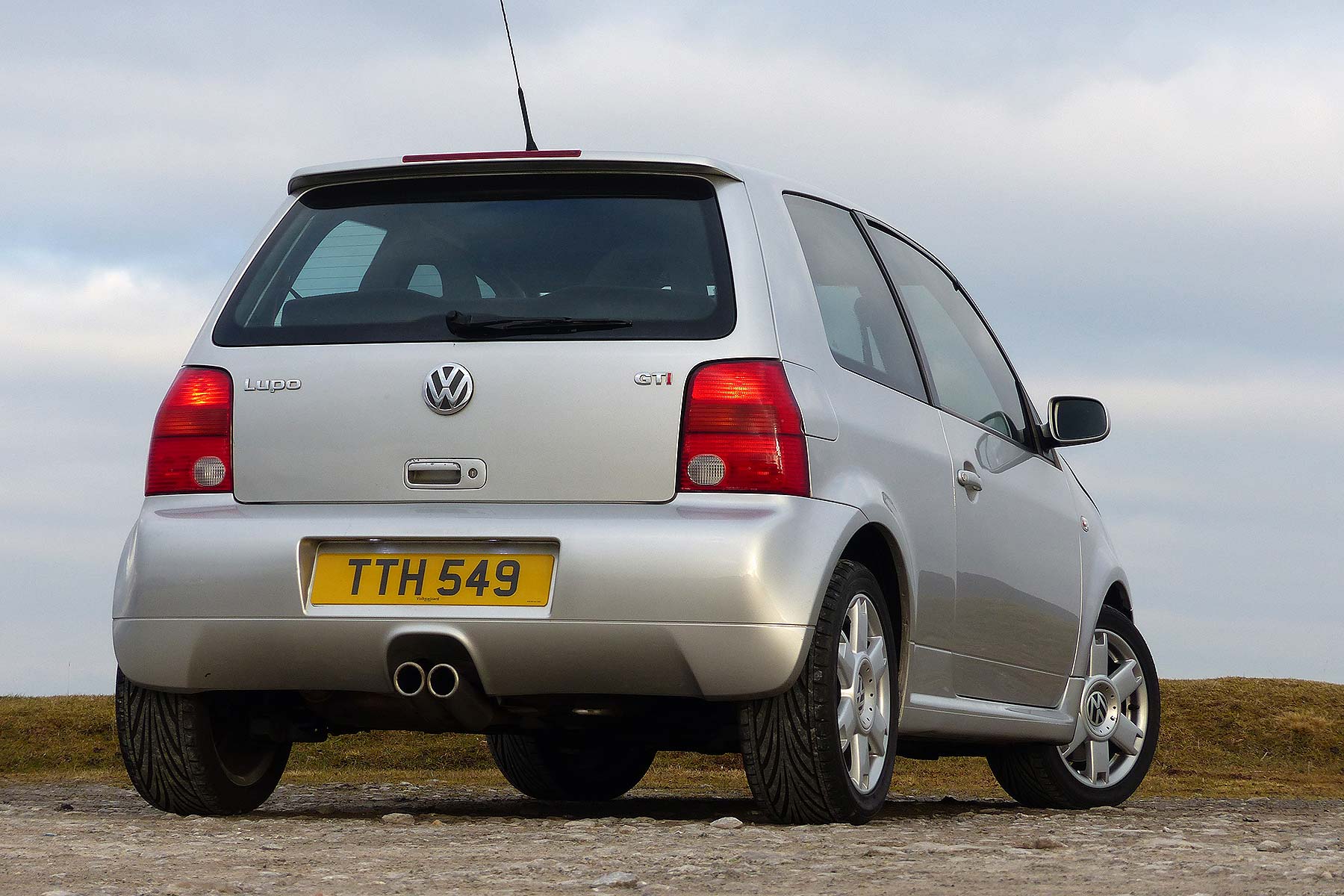
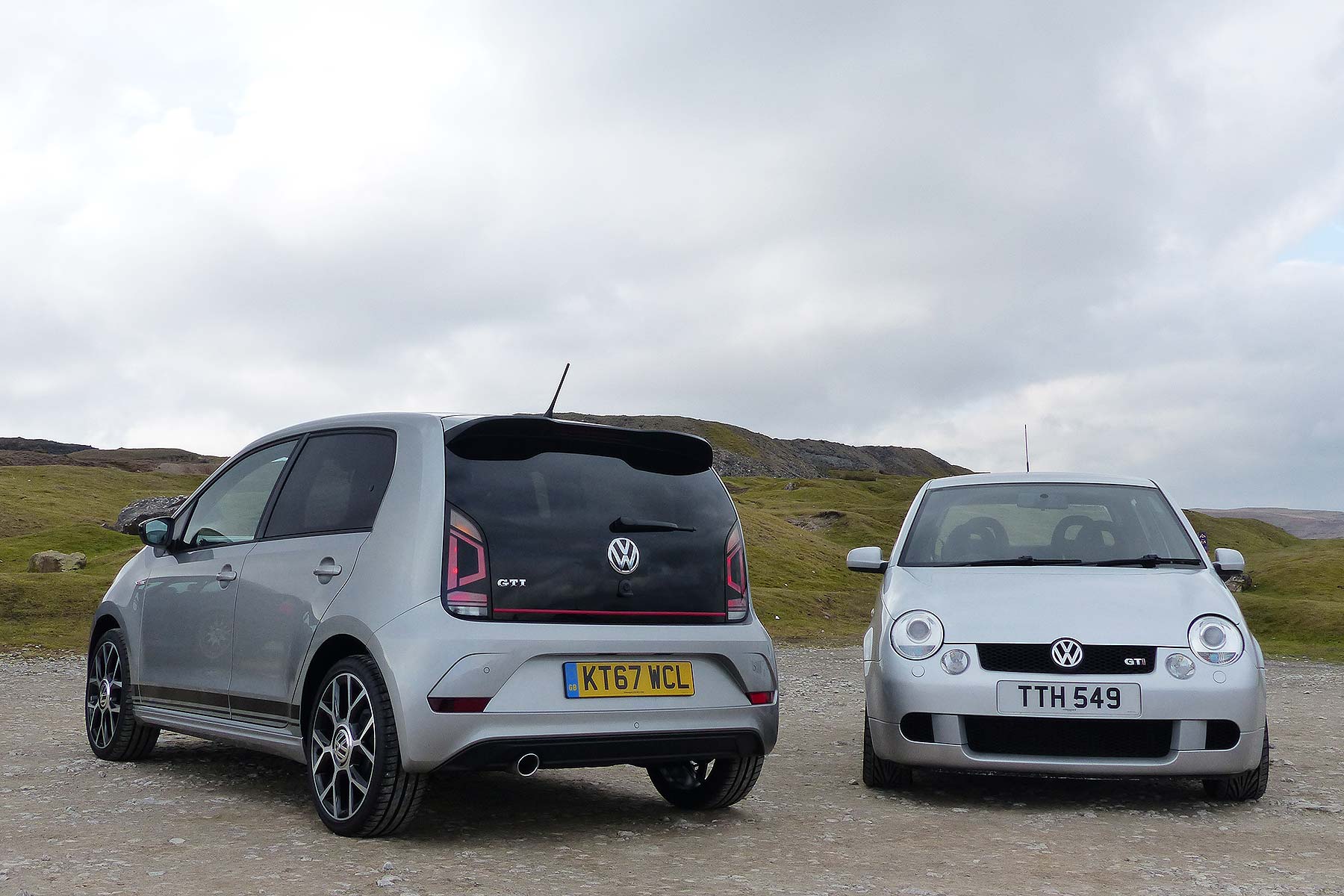
Even though it’s old enough to vote, the Lupo takes an instant lead in the eye-candy stakes. Up front, Audi RS4-style flared arches join the doors and bonnet in being aluminium, transforming the normally slab-sided Lupo into a curvy hunk. Standard gas-discharge headlamps, twin-exhaust tailpipes, sculpted bumpers, 15-inch alloys, red callipers and extended sills complete a thorough external makeover.
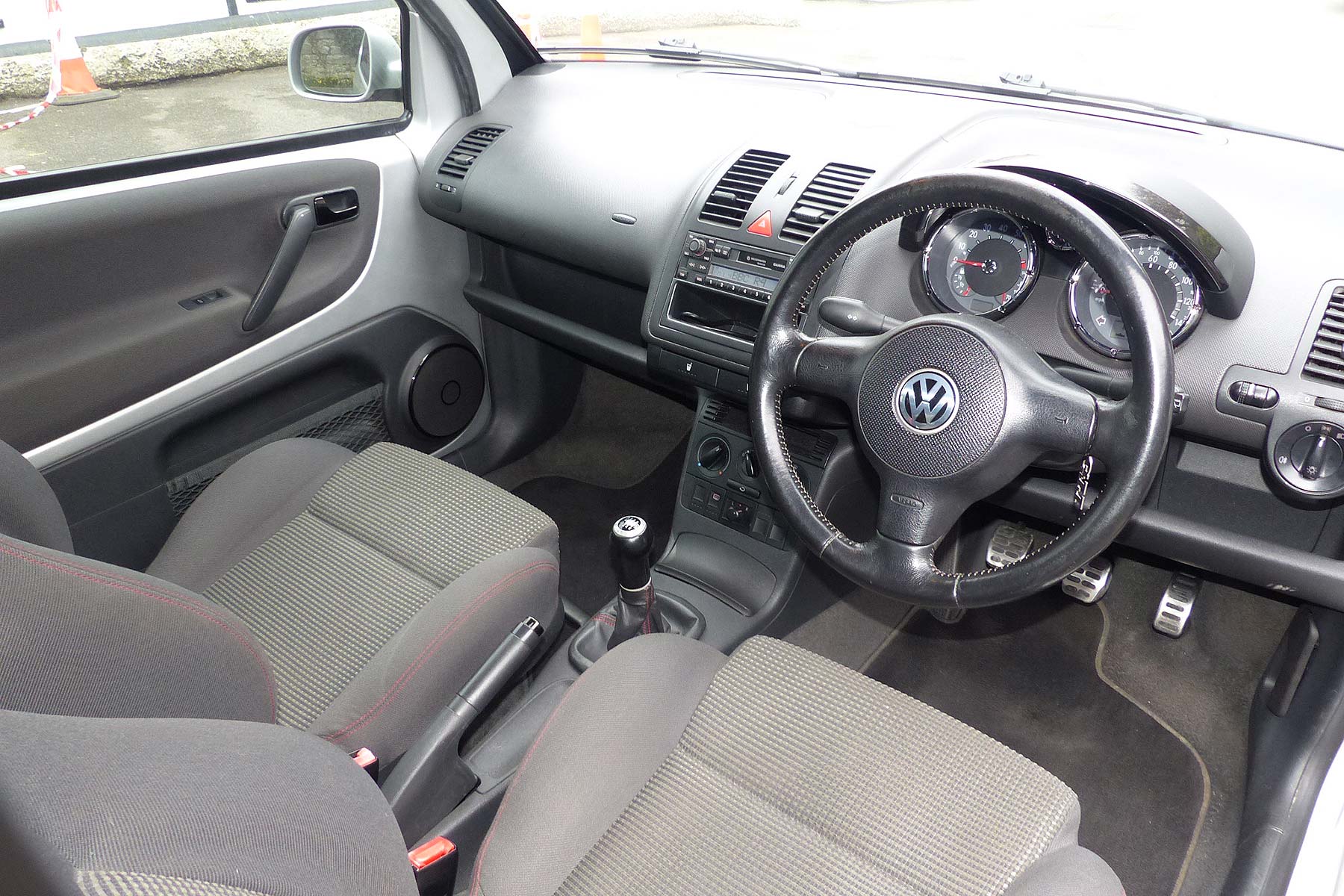
Inside, grey sports seats with red stitching (also available in a more inspiring red fabric) and a Polo dashboard seem a tad ordinary compared to the exterior, but snazzy silver-bezel instruments, red seatbelts (who said ‘MG Metro’?), alloy pedals and a gorgeous leather/alloy gearknob help make amends for the otherwise monochromatic theme.
The Up is textbook GTI, combining numerous subtle and inexpensive styling cues to make a package that’s sufficiently distinctive even non-fanboys will see it coming a mile off. A black panel set into the front bumper, red grille stripe and classic GTI badge do the business, while side-on there’s no mistaking the gorgeous BBS-style 17-inch alloy wheels and sill extensions. There are even some stripes that perfectly mimic those of the Mk1 Golf GTI, although black cars sadly miss out on them.
At the rear, a pert roof spoiler, 3D red stripe, GTI badge and chrome tailpipe all gel perfectly. You can even have a black roof. OK, there are no flared arches, but does it really need them? The standard Up styling is a lot sharper than a vanilla Lupo’s, and the big wheels, combined with 15mm lower suspension, do wonders for its stance, emphasising those chiselled haunches.
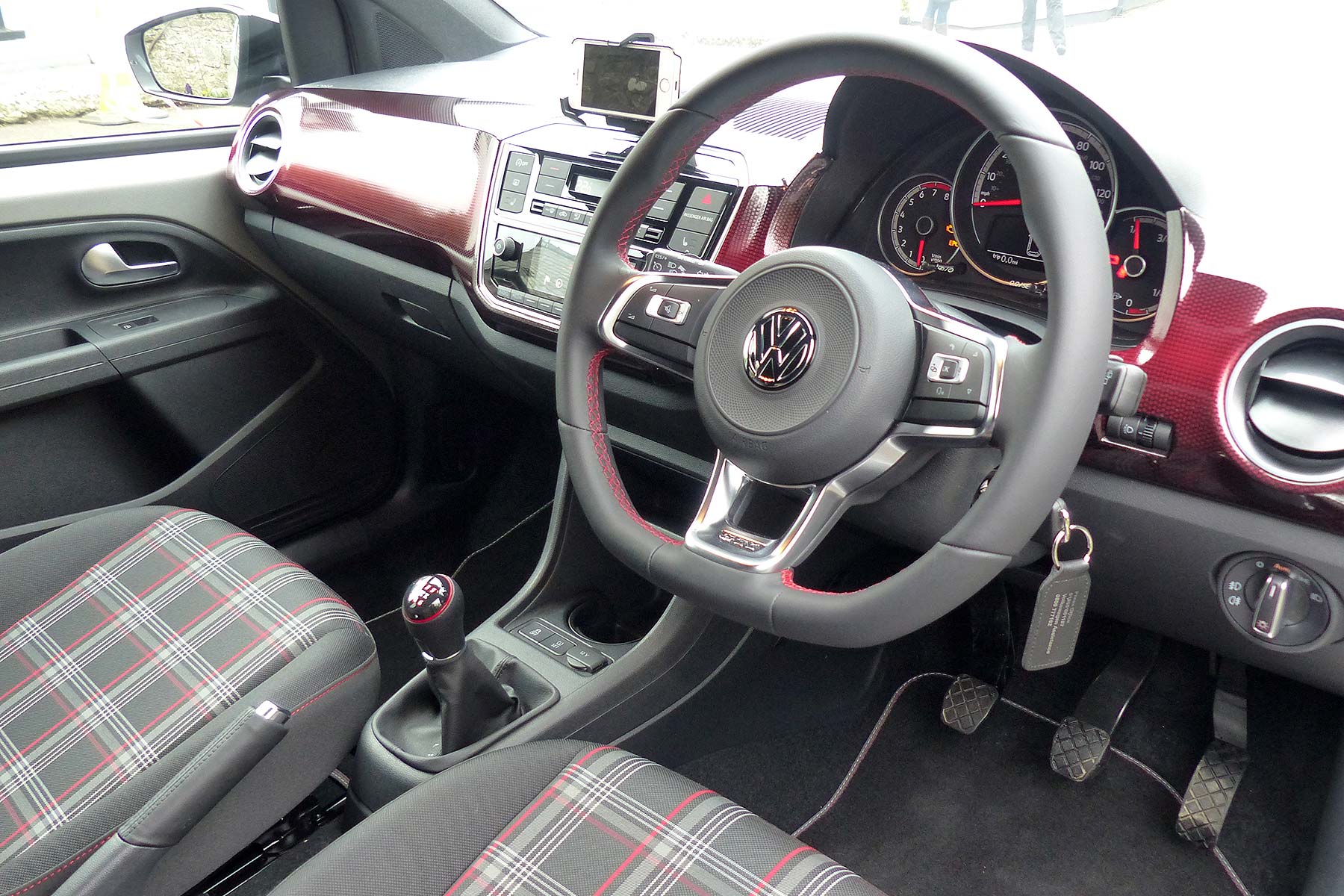
Inside, the GTI- clan ‘Jacara Red’ tartan makes a welcome appearance, albeit looking slightly incongruous on the undernourished seats common to every Up. The red theme continues with a colourful ‘dashpad’ that spans the full width of the dashboard. The Up’s plastic gearknob lacks the glamour of the Lupo’s, while the plain pedals and seats belts are both standard Up fare.
All this can be forgiven though, thanks to a flat-bottomed steering wheel nicked wholesale from a Mk7.5 Golf GTI. While the accountants have clearly sharpened their pencils since the pricey Lupo, you get the feeling that even they couldn’t say no to this inclusion.
Heading for the hills
This well-used but mechanically tip-top 2002 Lupo feels unexpectedly plush. Road noise is well suppressed and the fresh VW dampers and original springs provide an almost magic- carpet ride quality (the relatively small wheels undoubtedly help). The standard exhaust system keeps things hushed, even with a lofty 3,500rpm on the tacho when cruising at 70 mph in 6th. Clearly this extra gear, introduced in 2002, wasn’t dropped in for economy, but to shorten the ratios to keep the normally aspirated 1,595cc 16v engine spinning in the upper half of the rev range – to hell with emissions.
It’s this very old-school way the Lupo goes about its business that defines it. Drive it like a modern forced-induction car and progress will be pedestrian, with not an awful lot happening below 3,000rpm: the official torque peak. Drop a gear or two, though, and at 4,000rpm that free-spinning engine comes alive with a growl, a distinct second wind occurring at 5,000rpm that’s sustained all the way to the rev limiter – just north of the 6,500rpm power peak. Proper fun when you’re in the mood, but a little tiring when you aren’t.
The chassis harks back to the bad old Mk4 Golf days, when an overly comfortable ride was always at the expense of agility. Thanks to the new hardware fitted here, damping is well controlled, but pitch it into a corner and your head will initially go into mayday mode, the amount of roll triggering unnerving sensations unfamiliar in modern performance cars. Get used to this though, and once fully loaded, it digs in enthusiastically, the shifting of its modest 978kg unladen weight compressing the 205-section tyres into the tarmac without overloading them. Maybe the costly lightweight panels, accommodating a wider track, were money well spent after all?
Sitting behind the wheel of the Up GTI, little readjustment is required. Both lack reach adjustment for the steering column, but this is soon forgotten thanks to the ergonomic perfection elsewhere. At idle, the Up actually feels more industrial than the Lupo, with the off-beat three-cylinder idle sending subtle vibrations through the bodyshell. This sensation continues once you get moving: a sound actuator pipes up, providing a pleasing R32-like crescendo at higher revs. At first, the gearchange, just like the Lupo’s, feels a little imprecise, but you soon adjust.
Where it differs massively is through the gears. While the Lupo hits 60mph at 5,000rpm in third, the Up nearly cracks it in second. Long ratios aren’t a recipe for fun, but with turbocharging bringing such an abundance of torque (147lb ft from 2,000-3,500rpm) and with so little weight to contend with (1,070kg) this really is no handicap to progress.
Rest assured that fun is also in abundance. Just like the Lupo, peak power is at the top of the rev-range (115hp between 5,000 and 5,500rpm) and the sweet-spinning 999cc engine is quite happy to reach up high and grab it. Sorties to the soft rev limiter will be a regular occurrence.
While the chassis’ ingredients are similar to the Lupo, with MacPherson struts up front and a torsion beam rear, it’s clear that chez Wolfsburg has had a change of chef in the intervening 18 years. The ride is undoubtedly firmer but rarely agitates, the trade off being superb body control. And yet with one-size-narrower tyres, it’s easy to unexpectedly breach the limits of lateral grip in the chilly conditions we experienced. It’s not that the Up GTI is skittish, more that its unexpected turn of speed gives the front end a lot more to do.
Managing these relatively low grip levels is what makes it such an engaging drive. Remember too, all this can be done at sane speeds, unlike in most modern performance cars.
GTI generations
Wales is famous for its choirs, so it’s fitting that we found these two pocket rockets to be singing from different hymn sheets. The Lupo remains big fun and it’s totally understandable why it has such a following. While it’s an unexpectedly good motorway car, you can also grab it by the scruff of its neck, get the rev counter needle vertical and the chassis a long way from the horizontal.
It’s the bit between these two disciplines where the car shows its age, with lazy response at low revs and pretty heavy fuel consumption. Yet, as a hot hatch to get out of the garage on summer weekends and drive to great roads, the Lupo is the one.
Allowing for inflation, the Up GTI is around 30% cheaper than the Lupo was when new, yet it carries over most of the good bits while attending to any weaknesses. It has the unusual ability to satisfy both head and heart.
Maybe that Mk1 Golf GTI comparison wasn’t so tenuous after all, as the Up GTI is bringing the fun back into daily driving – just as its iconic ancestor did all those years ago. No doubt in another 42 years, we’ll be coveting any remaining examples of the newbie in much the same way we do the old stager today.
Say hello, then, to the newest nominee to that future classic hall of fame: the sensational Up GTI. It’s the rocket that’s easy on your pocket.




 Thirteen years after Lupo GTI production ended,