The Lamborghini Countach has become the latest supercar to receive the Lego Icon treatment.
For those who couldn’t stretch to Lamborghini’s recent, limited-edition remake of the Countach, this brick-built version is a more affordable alternative.
The original Countach joins the likes of the classic Land Rover Defender and Porsche 911 as a Lego replica model.
An iconic supercar
Lego hasn’t chosen just any version of the Countach to transform into a scale model, but has gone all-out on 1980s excess. The 1,500-piece Lego Icons Lamborghini is based on the Countach 5000 Quattrovalvole, launched in 1985.
As a result, the Lego Countach features a gigantic rear wing, flared wheelarches and a set of deep-dished alloy wheels. On the inside, bold red seats contrast with the retro white exterior.
Standard features include the iconic scissor doors, an opening front trunk and a flip-up engine cover. Beneath the latter is a detailed version of the Countach’s naturally aspirated 5.2-litre V12 engine.
Not exactly child’s play
Intended to be challenging but rewarding models to build, the Lego Icons range is aimed at adults – rather than childen.
The new Countach is a sizable creation, too, measuring around 34cm (13 inches) in length and 16cm (6.5 inches) across.
Enthusiasts will be able to purchase the Lego Lamborghini Countach 5000 Quattrovalvole from 4 July 2024. The model’s recommended retail price is £159.99.
Buying a new Tesla this month? You will now receive free access to the company’s public Supercharging network.
It marks a welcome return for a major Tesla perk, which has been offered at various times to help promote the American marque’s electric cars.
UK customers taking delivery of a new Tesla will now receive the equivalent of 15,000 miles of free Supercharging with their purchase.
Free Supercharging included
There is a time limit on Tesla’s new Supercharging offer, however. To take advantage, customers must take delivery of their new car by 1 July 2024.
Tesla does say that the offer applies to both custom orders and pre-configured cars while stocks last. It also notes that the 15,000 miles of free Supercharging can still be claimed ‘if the time of delivery is postponed due to circumstances within Tesla’s control’.
Previously, Tesla offered unlimited free Supercharger access for life on its Model S and Model X vehicles. However, this standard bundle was removed at the start of 2017, in anticipation of the Model 3 entering production.
Sustaining demand for EVs
Tesla enthusiasts in European countries have also reported similar offers to that introduced in the UK. The timing of Tesla Supercharger deal is significant, as the end of June coincides with the company reporting new vehicle sales for the second quarter of 2024.
Tesla experienced a fall in deliveries during the first quarter of this year – the first time this had occurred since the beginning of the coronavirus pandemic.
Elon Musk’s company is locked in battle with China’s BYD for dominance of the global electric car market, and has also been dealing with a softening demand for EVs.
The radical Tesla Cybertruck is never far from the headlines. Now the electric pick-up is ready to enlist with North American police forces.
California-based Up.Fit has established a business converting Tesla vehicles for police use. And its latest project is the Cybertruck.
The company has created the ‘world’s first Tesla Cybertruck patrol vehicle’, designed for use by public safety officials in the United States and beyond.
‘An epic tactical vehicle’
The Up.Fit Tesla Cybertruck Next-Gen Patrol (to use its full title) is described as the ‘most epic tactical vehicle on earth’.
Its credentials include serious performance from the Cybertruck’s electric powertrain, along with the option to fit NIJ level three ballistics protection body armour.
These body panels can withstand 7.62mm FMJ lead-core rifle ammunition. This means the modified Cybertruck could potentially be used by SWAT and other tactical teams.
Tesla CEO Elon Musk infamously claimed that the standard Cybertruck would be bulletproof. Up.Fit clearly puts more faith in armoured protection, however, which it already fits to other Tesla products.
A leap into the future
“The Up.Fit Cybertruck Next-Gen Patrol vehicle represents a significant engineering leap into the future. We’re excited to offer law enforcement agencies the future of policing,” said Ben Schaffer, CEO of Unplugged Performance – responsible for Up.Fit’s work.
“We’ve been thrilled with the direct feedback from police departments that have participated in our Cybertruck development. We look forward to deploying these complete Up.Fit vehicles to law enforcement agencies across the nation this year.”
A number of police forces throughout the UK have tested Tesla EVs for fleet use, with the Model 3 and Model Y the most popular candidates.
The Cybertruck is unlikely to be road-legal on this side of the Atlantic without major modifications to its design. Nonetheless, Tesla is currently taking a Cybertruck on tour throughout the UK and Ireland.
An online service run by the UK government allows drivers to check whether they will be charged for entering a Clean Air Zone (CAZ).
Using the tool, you can confirm if you face a daily charge to drive into a Clean Air Zone. A fee will apply if your car doesn’t meet the minimum exhaust emissions standards.
The UK cities with Clean Air Zones operating at present are Bath, Birmingham, Bradford, Bristol, Portsmouth, Sheffield and Tyneside (Newcastle and Gateshead).
London has its own separate Ultra Low Emissions Zone (ULEZ), with stricter emissions requirements. Read our London ULEZ guide for more information.
‘Air pollution has improved significantly,’ said the government, but ‘there is more to do, and local authorities are taking forward Clean Air Zones to reduce the use of polluting vehicles.’
How does the online checker work?
To find out if you’ll be charged to enter a Clean Air Zone, you need to visit the CAZ charge website. You will require the number plate (registration number) of the vehicle you want to drive into the zone.
You will be asked you to confirm these details, then select which city you want to drive in.
By using the registration of a 1998 Range Rover, we discovered that we’d be charged £8 for entering Birmingham and £9 to drive into Bristol. But there was no fee for any of the other cities mentioned above. Portsmouth, for example, only charges buses, coaches, taxis and private hire vehicles inside its Clean Air Zone.
The different types of Clean Air Zones
There are four categories of CAZ: A, B, C and D. These are summarised as follows:
Class
Vehicle type
A
Buses, coaches, taxis, private hire vehicles
B
Buses, coaches, taxis, private hire vehicles
C
Buses, coaches, taxis, private hire vehicles, HGVs, vans, minibuses
D
Buses, coaches, taxis, private hire vehicles, HGVs, vans, minibuses, cars(local authority has the option to include motorcycles, too)
Going back to the example of our almost classic Range Rover, Birmingham and Bristol are a Class D zones, while Portsmouth is a Class B.
The area covered by the various Clean Air Zones also varies hugely. Bradford’s CAZ stretches over 9.35 square miles, while Sheffield’s is just 0.9 square miles.
Are there any exemptions?
There are some national and local exemptions from the Clean Air Zone charges. By contacting the relevant authorities you can find out if there are local differences, but the following vehicles are automatically exempt from national CAZ charges:
British engineering firm Lanzante has created arguably the ultimate version of the original Porsche 911 (930) Turbo.
Back in 2018, the company announced plans for a series of 11 classic Porsches powered by engines from 1980s Formula One cars. The TAG Championship by Lanzante goes one step further, however…
This run of three cars will combine the iconic Porsche 930 body with period-built TAG power units that took McLaren to three F1 Drivers’ World Championships between 1984 and 1986.
The ultimate 911 restomod
The TAG TTE P01 twin-turbocharged 1.5-litre V6 engines were used by Alain Prost and Niki Lauda. Lanzante acquired the pre-raced powerplants, before having them rebuilt and uprated by Cosworth.
New pistons and conrods, a custom exhaust system and a pair of titanium turbochargers have been fitted, with all the work certified by McLaren Racing.
The result is an engine that revs to an incredible 10,250rpm and produces a maximum of 625hp. It drives the rear wheels via a custom Porsche 993 six-speed gearbox. Top speed is around 200mph.
Reassuringly, a bespoke carbon ceramic brake setup means the TAG Championship 930 should stop as effectively as it goes.
F1-style weight saving
The TAG Championship’s performance is maximised by extensive use of carbon fibre. The lightweight material is used for the doors, bonnet, front splitter and rear wing, keeping kerb weight down to a scant 920kg.
Lanzante will build just three examples of the TAG Championship, with each car themed around one of the three championship-winning years.
The first completed car is known as the Championship ’85, and is powered by the V6 engine that powered Alain Prost to victory. Appropriately, it features a red and white livery inspired by the French driver’s race helmet, plus a minimalist interior with two Recaro bucket seats.
Lanzante will give the TAG Championship its public debut at the 2024 Goodwood Festival of Speed. The event opens on 11 July 2024.
The Silverstone racing circuit in Northamptonshire has chosen Skoda to be its new official car partner.
It means the Czech manufacturer will supply a fleet of vehicles to assist with logistics at the world-famous British venue.
This will include playing a key part in the 2024 British Grand Prix, which takes place next month – from 4 to 7 July 2024
VIP chauffeurservice
Heading up the Skoda fleet at Silverstone will be the electric Enyaq. Offered in both coupe and SUV forms, the choice of an EV should help the race circuit to boost its environmental credentials.
In preparation, Silverstone has recently installed 24 electric vehicle chargers. Some 30 Skoda Enyaqs will be in service for the British Grand Prix – assigned to chauffeur VIP guests to and from the circuit’s hospitality areas.
The four-day British Grand Prix attracted a total of 480,000 F1 fans in 2023, with a similar number expected to attend this year.
Aiding sustainable motorsport
Along with the Enyaq fleet, Skoda will have its own stand in the British Grand Prix Fanzone. This will feature Gran Turismo 7 simulators, which offer the chance to race the Skoda Vision GT car.
Commenting on the new partnership, Pietro Panarisi, head of PR at Skoda UK, said: “We’re thrilled to be involved with Silverstone, one of the biggest and most famous names in motorsport. Like Silverstone, Skoda has an incredible motorsport pedigree, but an eye to the future and a passion for sustainability.”
Nick Read, chief commercial officer at Silverstone, added: “We are delighted to announce Škoda as the official car partner to Silverstone, a company that has truly embraced our sustainability objectives as we continue on our Shift to Zero journey.
“This partnership with Skoda is a significant step as we transition to a greener fleet of vehicles and continue to put sustainability at the heart of all we do at Silverstone.”
British sports car manufacturer Caterham Cars has opened a brand new factory in Dartford, Kent.
Having moved from its original home town of Caterham in Surrey, the marque’s new 54,000 square-foot facility brings together assembly, engineering and motorsport under one roof.
It also gives the famous Caterham Seven (née Lotus Seven) a new home – and offers the potential for a 50 percent increase in production numbers.
Hand-built sports cars
Caterham first moved to Dartford in 1987, but fresh investment by VT Holdings – previously the Japanese importer for Caterham Cars – has established the new facility in Dartford X business park.
The Caterham factory underwent nine months of preparation to allow for efficient car production, while staying in Dartford enabled the company to retain its skilled workforce.
There are 33 individual assembly bays, where each Caterham Seven is put together by a dedicated technician. Paint booths, an engine shop and a parts warehouse are all on-site, too.
A new chapter for Caterham
The opening of the new facility follows the 50th anniversary of Caterham Cars in 2023.
CEO Bob Laishley said: “Moving into our new global headquarters is a significant moment in our brand’s history and will be transformational for the business and the future of the Seven.
“Caterham fans and customers will also be able to see first-hand where our cars are assembled. It’s a hugely impressive modern facility and I have no doubt they’ll be blown away by it. I certainly am and I know our staff are thrilled to be operating in such a world-class facility.”
Enthusiasts can now book tours of the factory: a 2.5-hour experience that demonstrates how a bare chassis progresses to become a completed Caterham Seven.
Priced at £30 per person, demand for the factory tours has already proved strong – with the first four dates now sold out.
The BMW 1 Series has received a major facelift, as the German marque aims to keep its entry-level hatchback fresh in the face of strong competition.
Although BMW pitches the latest 1 Series as an all-new, fourth-generation model, much of its hardware is shared with the previous version, launched in 2019.
This includes the same ‘UKL2’ platform, used by various other BMW and Mini models, meaning the car’s dimensions remain very similar.
However, BMW has ditched the option of diesel engines for the UK market. And manual transmissions have gone for good, too.
Getting a grilling
A new face is the biggest change for the 2024 1 Series, with a shallower front grille, stretched headlights and a deeper front splitter. It makes the styling something of an acquired taste, although aesthetics were no barrier to the success of the previous model…
The redesign extends to the pointier LED headlights, a smoothed front bumper and a reprofiled rear bumper. The latter have added 42mm to the car’s overall length.
M Sport trim is likely to remain a popular choice with UK buyers, and includes a larger front air intake, more dramatic side sills and a deeper rear diffuser.
The range-topping M135i hot hatchback comes with an M-badged front grille, bespoke M side mirror caps and four exhaust tailpipes.
No more diesel for the UK
BMW has slimmed down the 1 Series model range, making the 1.5-litre turbocharged three-cylinder petrol 120i the new starting point. Mild-hybrid assistance is included, with an output of 170hp and 207lb ft of torque.
All versions of the 1 Series now use a seven-speed Steptronic dual-clutch automatic transmission and the 120i is front-wheel drive. It reaches 62mph in 7.8 seconds and a top speed of 140mph.
The hot M135i has retained the same 2.0-litre turbocharged four-cylinder engine as previously. However, power has dropped a fraction, to 300hp and 295lb ft of torque, compared to its predecessor.
Accelerating from 0-62mph takes 4.9 seconds in the M135i, with an electronically limited top speed of 155mph. BMW’s xDrive all-wheel drive system comes as standard.
Digital updates inside
On the inside, the 1 Series has undergone a substantial overhaul, including a new dashboard and centre console. BMW has added the Curved Display used in a host of its other models, which combines a 10.25-inch digital instrument panel with a 10.7-inch multimedia touchscreen.
In common with other BMW updates, physical buttons for the climate control have disappeared. Ventilation is now operated via the touchscreen.
BMW Operating System 9.0, the latest version of the iDrive infotainment suite, is included. Sadly, the rotary iDrive controller is no more, replaced by ‘quick select’ shortcuts from the screen.
A new steering wheel design, including a red 12 o’clock marker on M Sport versions, along with illuminated interior trim, are further highlights of the updated cabin.
Available to order now
The 120i Sport comes with LED headlights, 17-inch alloy wheels, climate control air-con, cruise control, heated seats, parking sensors and a rear-view camera as standard.
Moving up to the 120i M Sport adds 18-inch alloy wheels, bespoke M styling and sports seats in a combination of black Alcantara Veganza with blue stitching.
UK prices for the 120i start at £29,950, with the M135i xDrive priced from £41,000. Orders can be placed now, with first deliveries of the new 1 Series expected in October 2024.
The Dacia Spring is set to become the UK’s cheapest new electric car, with prices starting from £14,995.
Having proved popular throughout Europe, the compact Dacia EV is now available to order here in the UK.
Deliveries of the first completed cars are expected later this year, giving a new option for those seeking a budget electric car. For comparison, the popular MG4 EV costs from £26,995.
Ready for city life
For the UK market, Dacia will offer the Spring with a choice of two electric powertrains.
The entry-level 45hp version requires a lengthy 19.1 seconds to accelerate from 0-62mph, while the 65hp model reduces this to 13.7 seconds. Both cars are capable of reaching 78mph. However, the reality is the supermini-sized Spring will be best suited to city life.
When fully charged, the Spring can cover up to 140 miles, according to the official figures. Charging the 26.8kWh battery pack from 20 to 100 percent requires four hours with a 7kW wallbox.
Standard equipment with the Essential trim level includes a 7.0-inch digital instrument panel, cruise control, manual air conditioning and rear parking sensors.
Extreme trim, which is only available with the 65hp motor, adds copper interior details, a 10.0-inch touchscreen with satellite navigation and wireless connectivity for Android Auto and Apple CarPlay.
Springing into action
To coincide with the UK launch of the Spring, Dacia has announced a number of competitive finance offers.
With a deposit of £2,325 for a Dacia Spring Expression 45, customers can pay £169 per month on a four-year deal. This includes an annual mileage limit of 6,000 miles, with a final payment of £6,033.
Dacia also allows buyers to add the cost of fitting a home-charging wallbox to their finance package. This contributes an extra £20 to the monthly total.
Orders for the Spring can be placed through dealerships, or via the Dacia website.
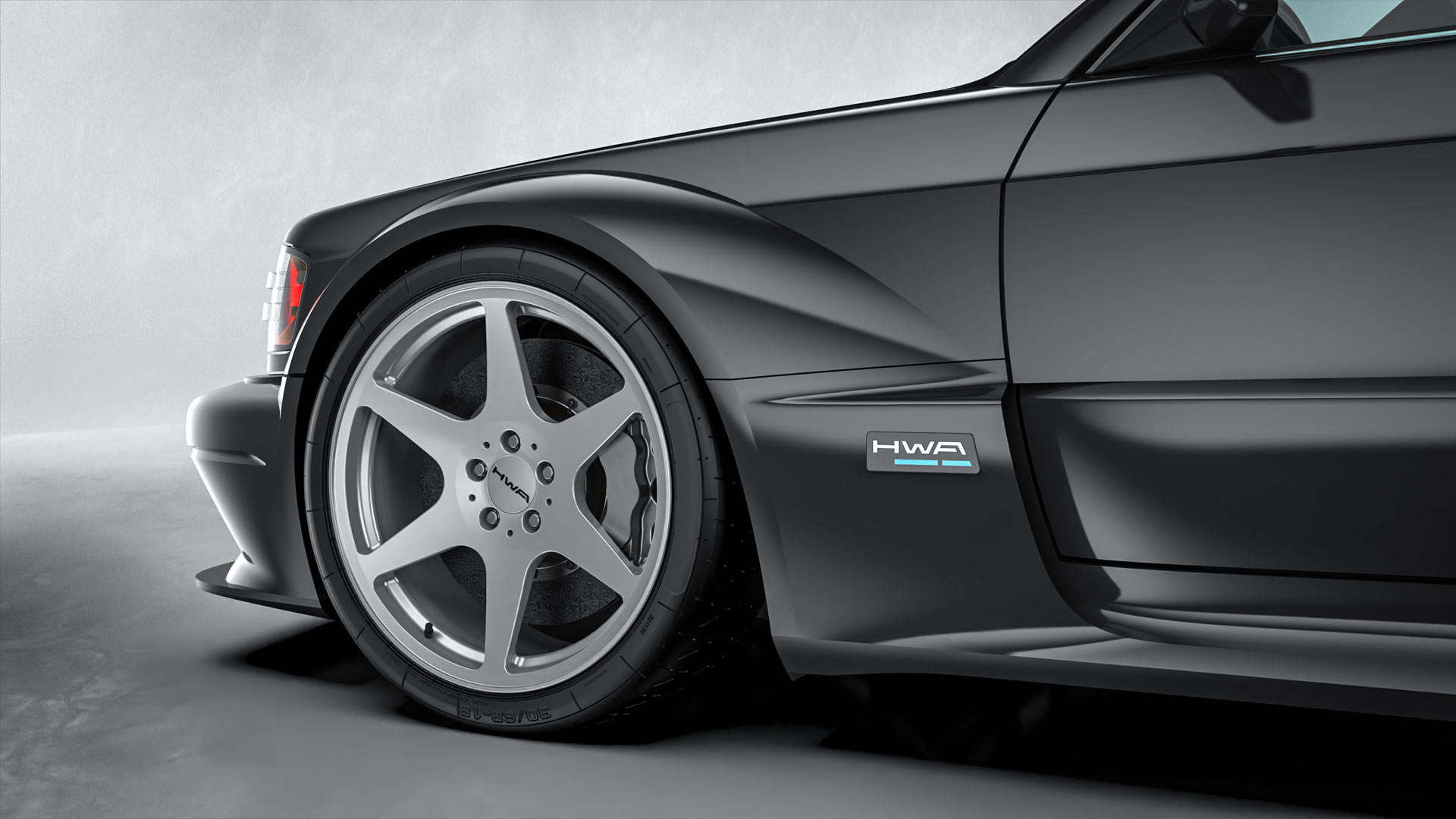
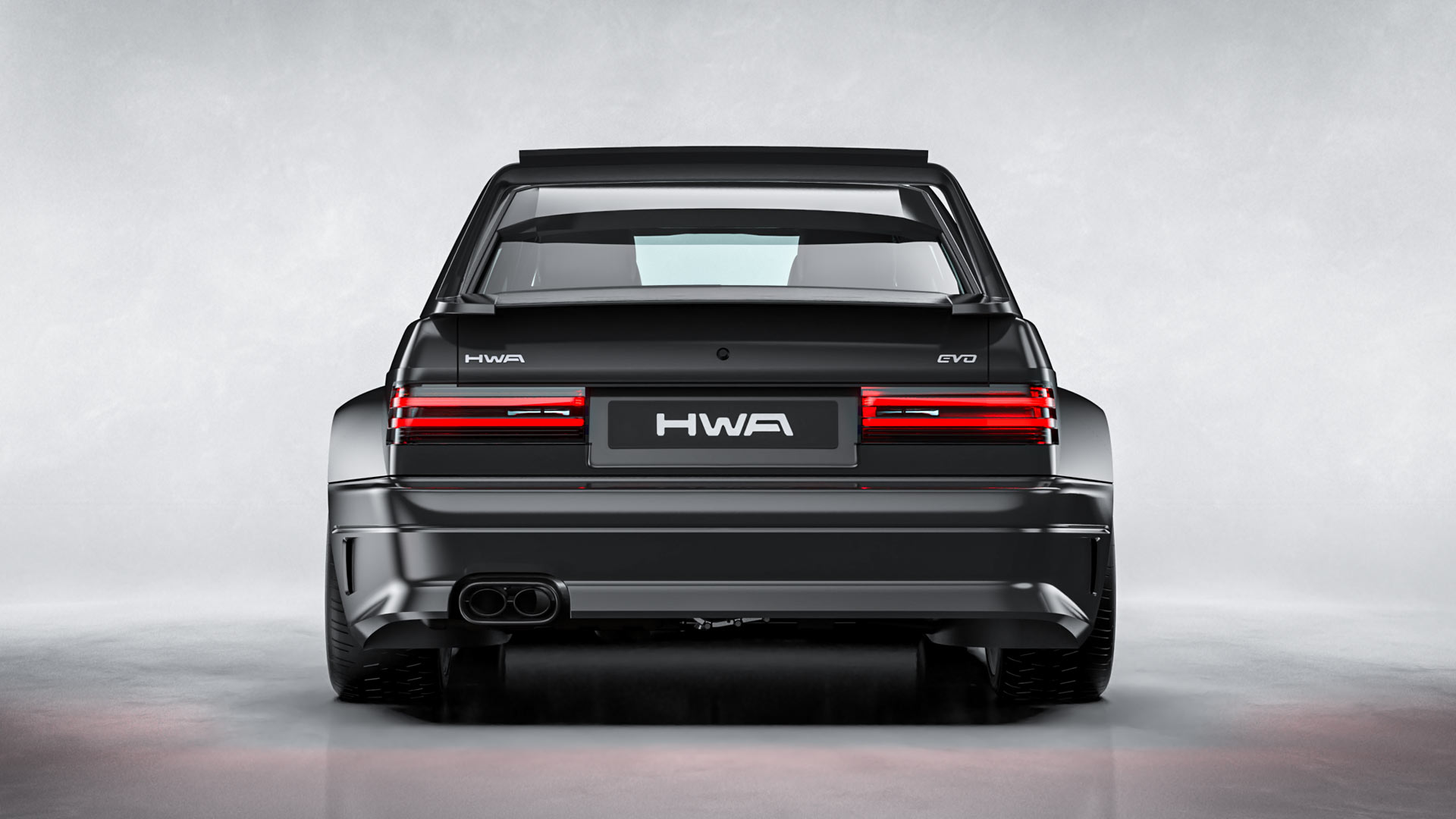
The first example of the HWA Evo restomod heads to auction next month. A modern reinterpretation of the Mercedes-Benz 190E 2.5-16 Evo II – a wild homologation special from the 1990s – only 100 examples of the HWA Evo will be made.
To own the very first car to leave HWA’s Affalterbach factory, buyers will need to bid in the RM Sotheby’s Tegernsee sale.
Being held as part of the Concours of Elegance Germany event, the HWA Evo goes under the hammer on Saturday 27 July 2024.
A retro racer reborn
Introduced in 1990, the Evo II version of the Mercedes 190E 2.5-16 was the ultimate incarnation of the German marque’s road racer. Only 502 examples of the original car were made, which homologated the competition version for the DTM championship.
With a near-mythical status, it was perhaps only a matter of time before the 2.5-16 Evo II got the restomod treatment.
HWA might not be a familiar name, but the company certainly isn’t a startup. Established in 1998 by Hans Werner Aufrecht, one of the founders of AMG, HWA has been responsible for numerous Mercedes-Benz racing cars.
It makes the company perfectly placed to update the 2.5-16 Evo II, with expert engineers transforming a donor Mercedes-Benz 190E into a new HWA Evo.
Manual transmission included
HWA completely strips down the Mercedes 190E, with new carbon fibre panels used to ensure a kerb weight of just 1,350kg. The car also features an integrated four-point roll cage, along with modern LED headlights and tail lights.
Instead of the Cosworth-developed engine used in the 2.5-16 Evo II, HWA fits a twin-turbocharged 3.0-litre V6. With an output of 450hp, plus 406lb ft of torque, performance should be suitably ferocious.
Fans of paddle-shift transmissions should look away now, however, as the HWA Evo comes with an old-school six-speed manual gearbox only.
DTM-spec suspension
Further details of the HWA Evo are what might be expected from a company skilled in producing racing cars. These include DTM-specification suspension, with double wishbones and electronically adjustable dampers. The front axle can be lifted by 30mm to help with the inconvenience of speed humps.
The car’s forged alloy wheels pay tribute to those found on the original 2.5-16 Evo II, but come in larger 19-inch and 20-inch sizes. Behind these are larger brakes with six-piston calipers at the front.
Inside, a pair of Recaro seats are fitted, complete with four-point harnesses. A modern climate control system will be included, along with a digital instrument panel and new navigation software.
Time to dig deep
Ahead of the RM Sotheby’s Tegernsee Auction, no guide price has been provided for HWA Evo chassis number 000.
However, ordering one of the following 99 cars will cost a minimum of €714,000 before taxes – the equivalent of £730,000 with VAT for UK buyers.
HWA has already received a number of orders for the Evo, with the first deliveries to lucky customers expected by the end of 2025.