This is not a normal, full-blooded drive of a new car. If you think you’ve seen a review of the Jaguar I-Pace elsewhere (before June 2018), well, the writers are being economical with the truth.
The truth is that Jaguar whisked a bunch of journalists from the Geneva Motor Show to a small driving-school test track at the end of the airport runway nearby. This would be a 10-minute ‘experience’, rather than a proper first drive.
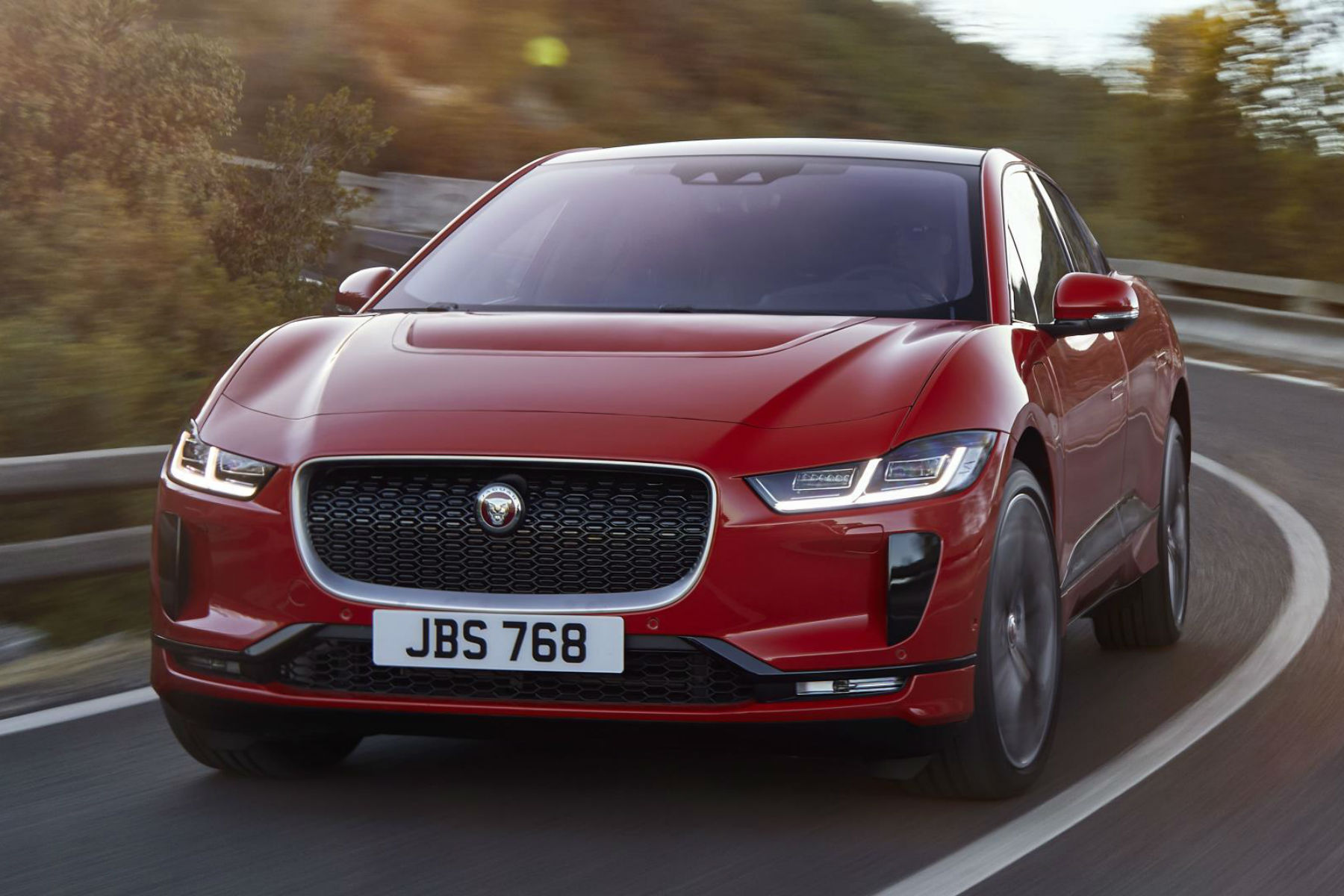
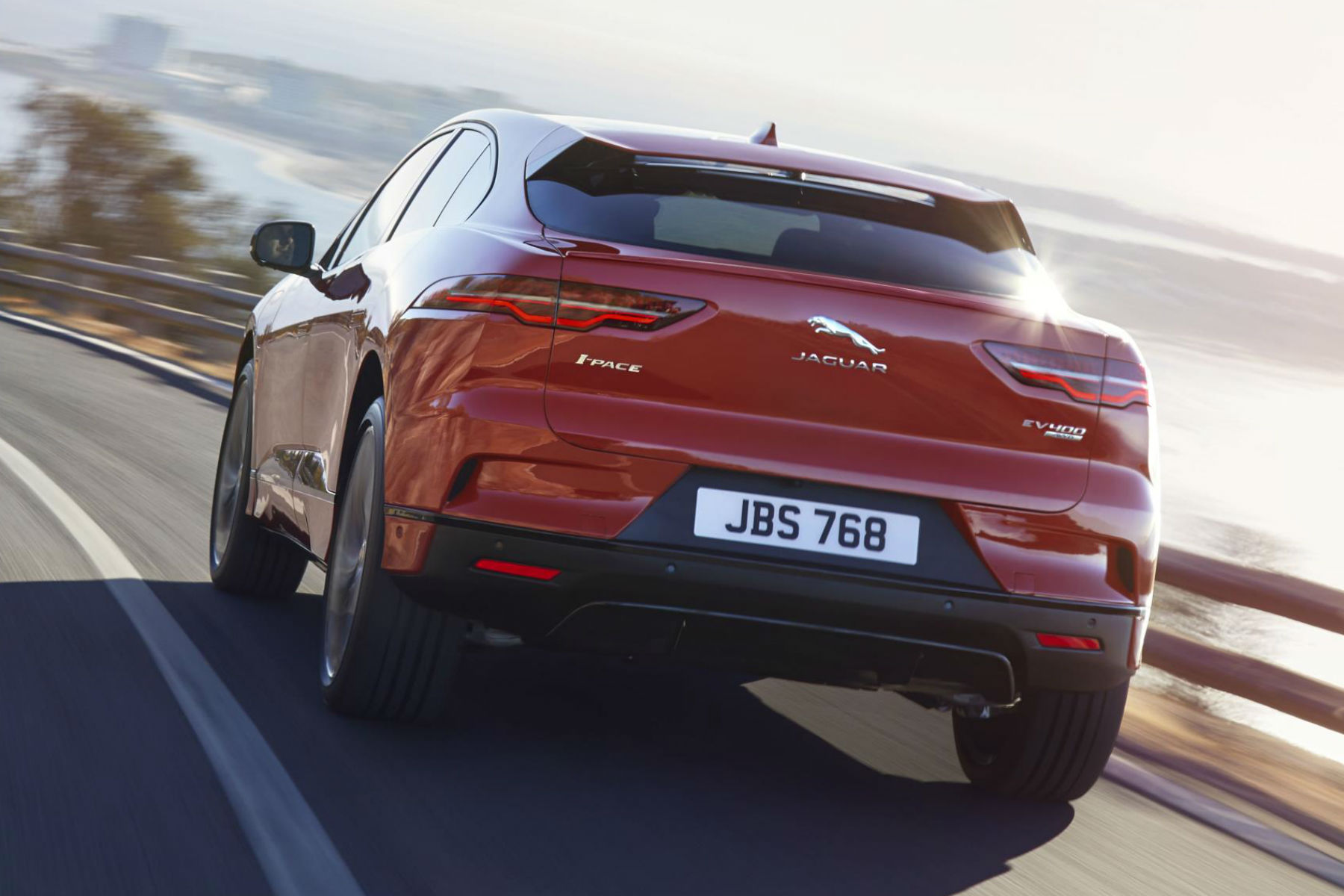
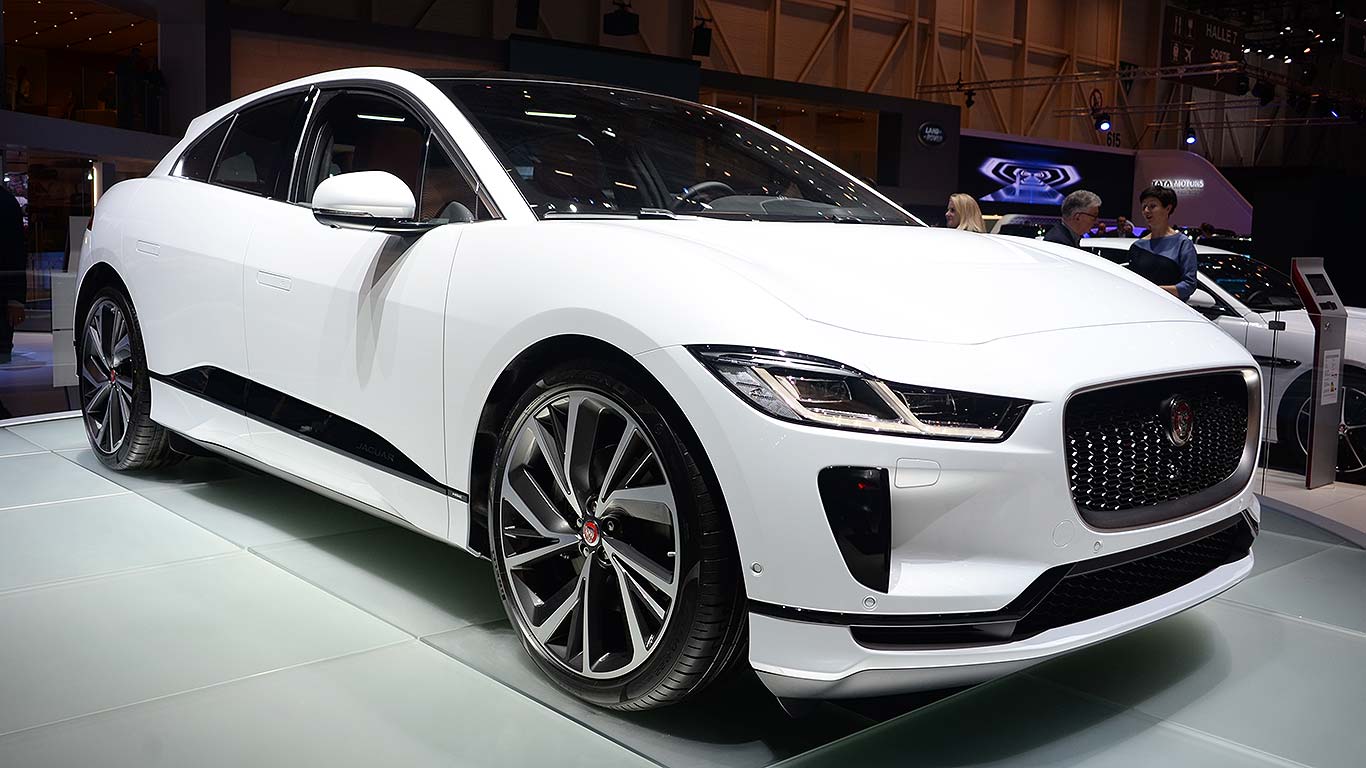
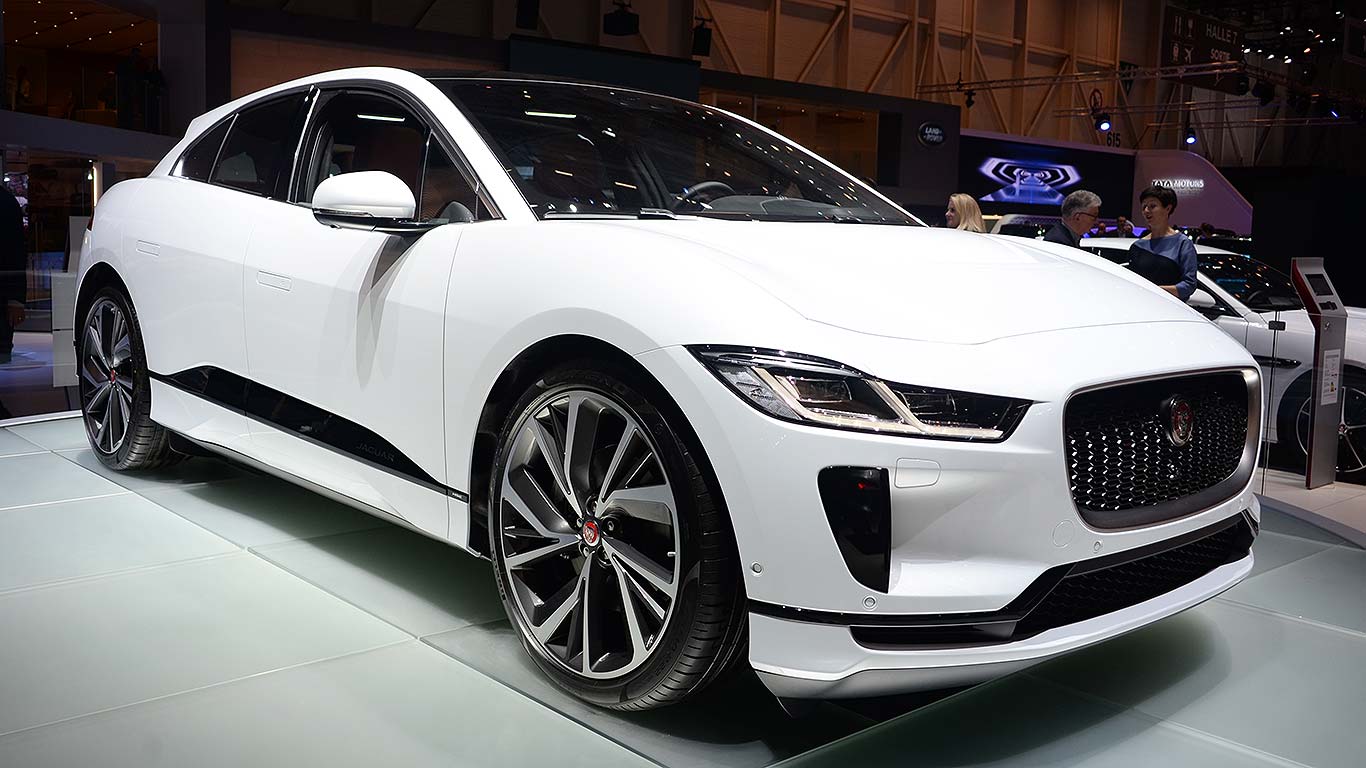
What can I tell you from 10 minutes? Quite a lot, as it happens. Firstly, the I-Pace looks great in the metal, on the road and out in the open air. Falling between the Jaguar E-Pace and F-Pace SUVs in terms of size, it’s much swoopier than either.
New all-electric Jaguar I-Pace revealed: it’s yours from £63,495 https://t.co/aABhlwQZIE pic.twitter.com/JCVaGN6OjV
This recent trend of the SUV morphed into a coupe has been promulgated by BMW and Mercedes-Benz, who have managed to turn out whole families of shockingly ugly designs that offer nothing over the vehicles from which they were derived.
A special, premium SUV
The I-Pace is a bit special, though, and you’ll surely be happy if you’ve already put your money down. The interior lives up to the promise, too. It feels properly premium with no sign of lightweight features there to compensate for the
weight of all those batteries.
It also drives very well – at least up to 50mph. There’s 400hp, which translates into acceleration that can shame a supercharged Jaguar F-Type.
On the wet track the grip was prodigious – I stuck the chassis into its Dynamic setting and simply floored it wherever possible. The i-Pace hunkered down, the four-wheel drive did its thing and the steering simply seemed connected to my
brain.
First impressions are good
The seats feel comfortable and very supportive, but while rear space looks pretty good, those seats are incredibly flat and rather close to the floor.
How far will it really travel on a full battery, when it’s cold and wet? I suspect not the 300 miles quoted, although there are some clever features that, for example, allow you to warm up the battery (and the interior) while the car is still plugged in, making a major difference to the range.
The jury is necessarily still out. A full appraisal is needed and we’d be even happier to know how those first customers get on over the first 12 months.
Still, there seem to be many who are excited enough to put there cash down right now, and we can hardly blame them.
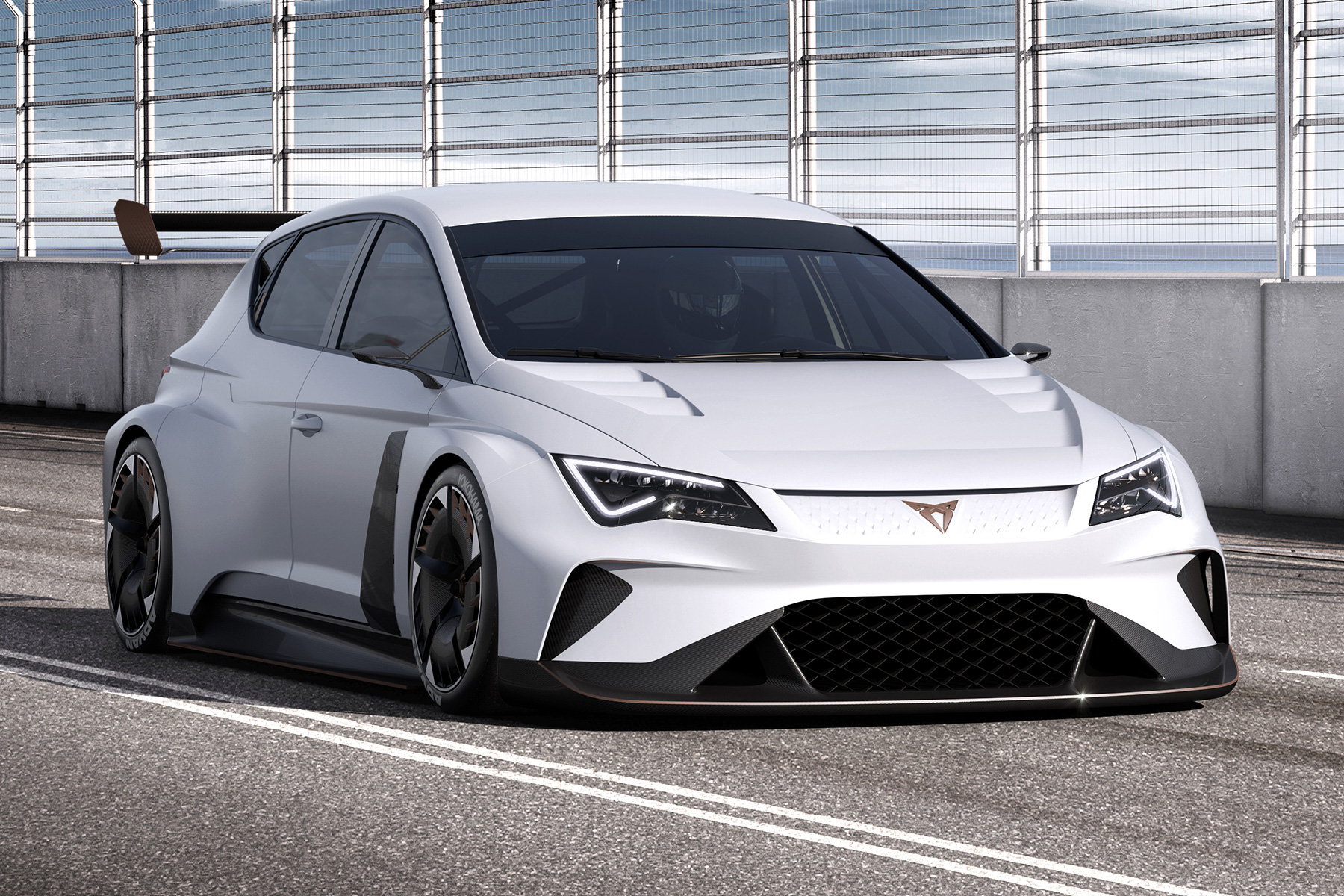
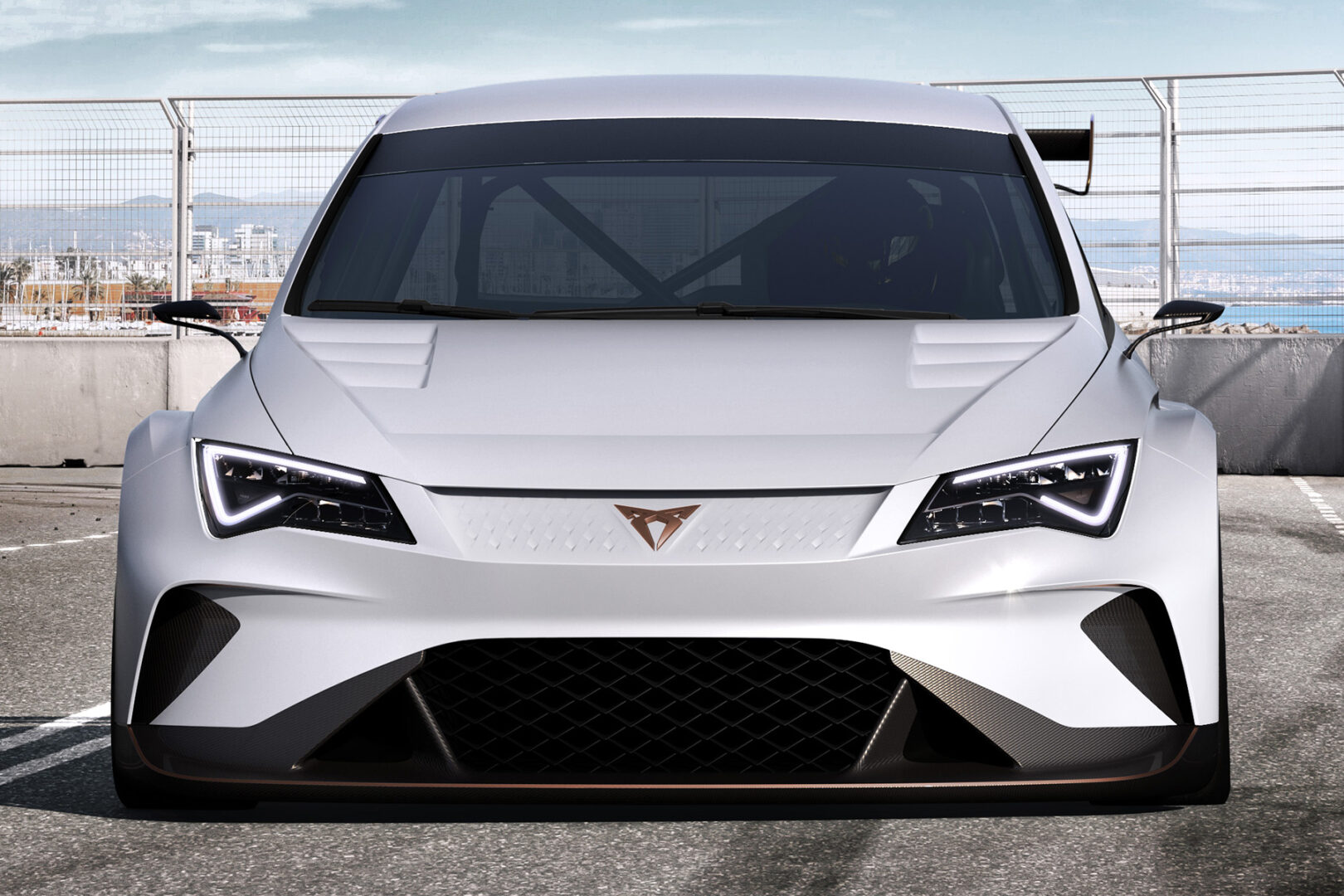
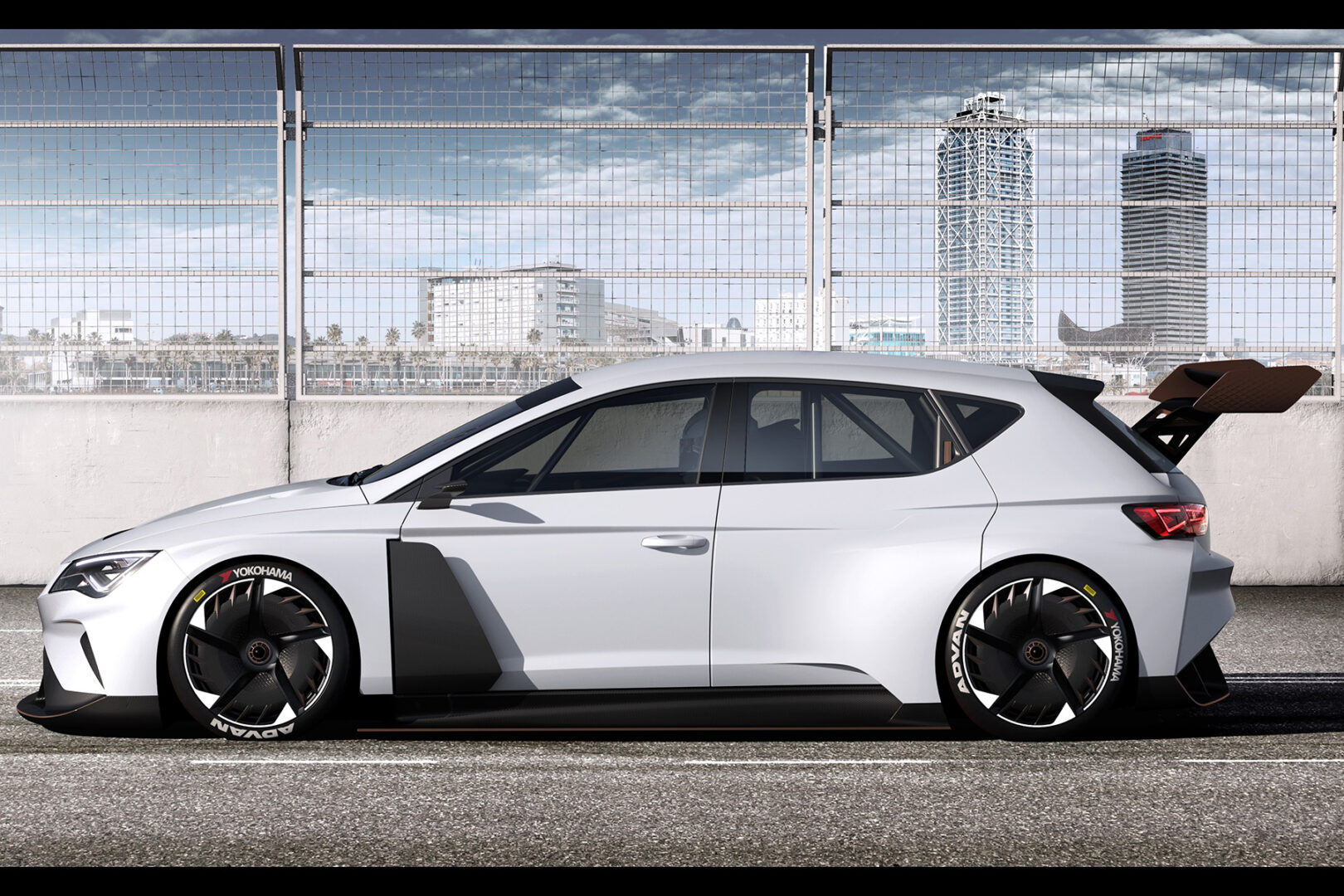
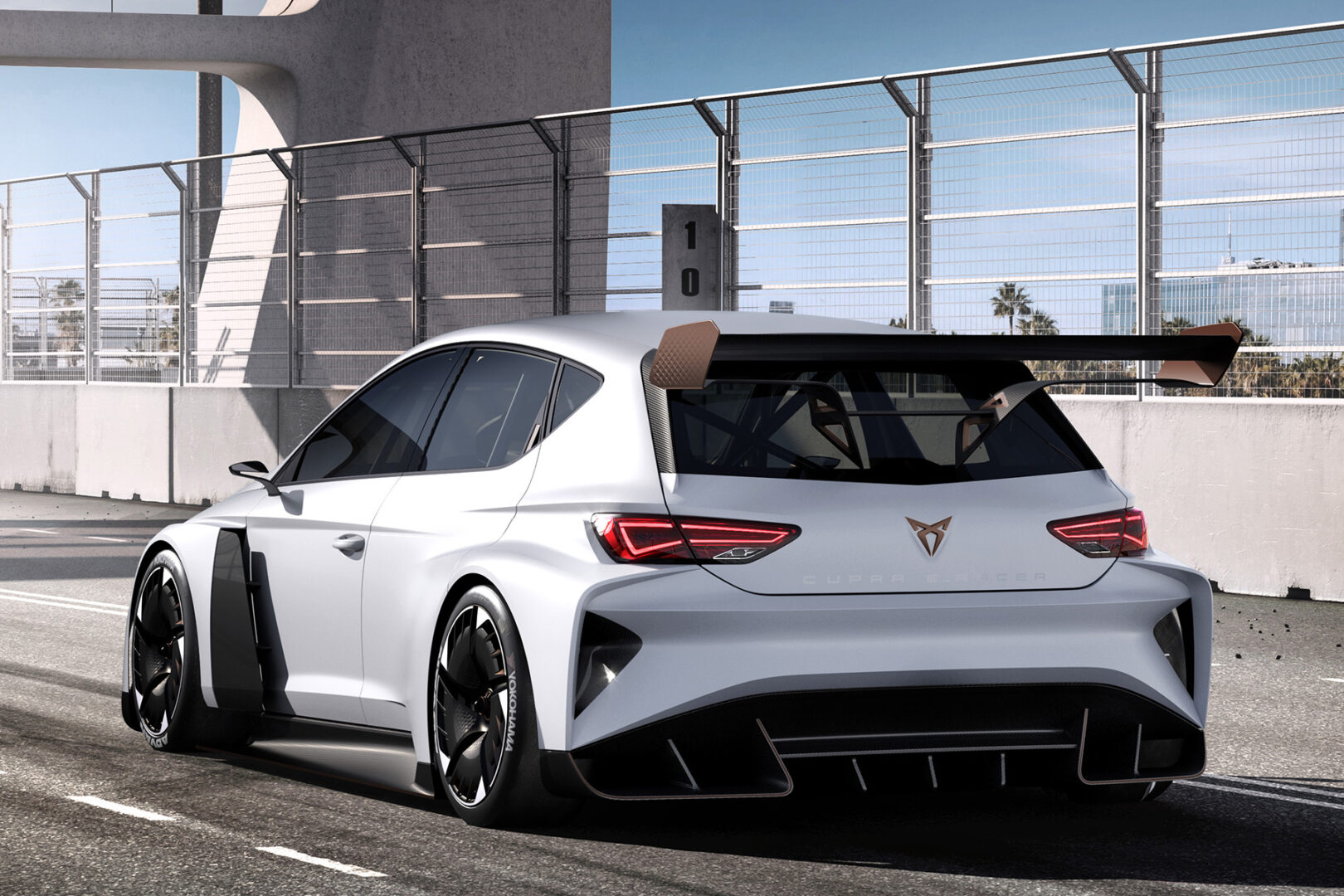
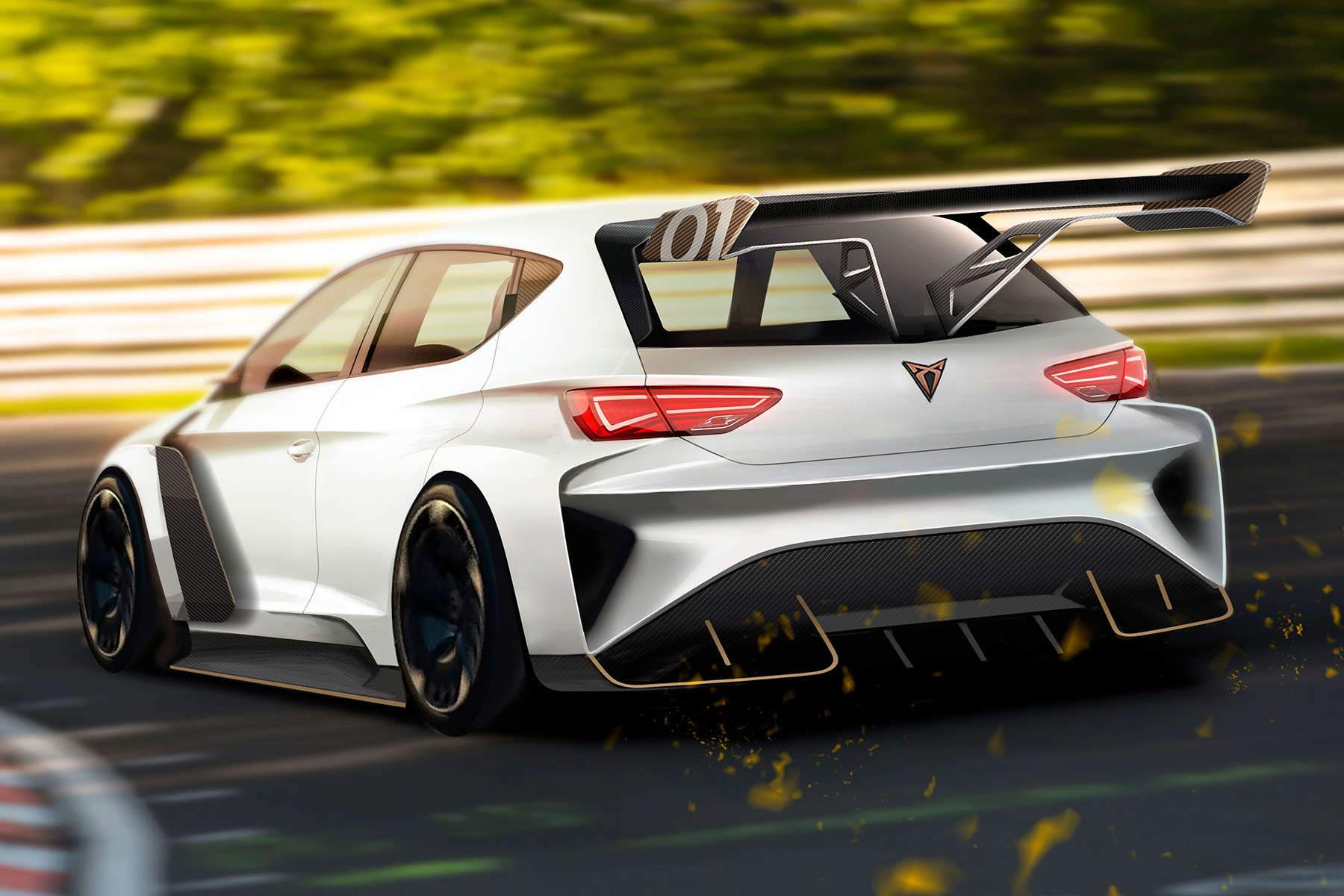
Electric cars can be fun. It’s a message drummed into us time and again by manufacturers pushing their new technology. But is fun simply about quick 0-62mph times? Not necessarily, according to Seat’s sporty offshoot, Cupra. The freshly divorced brand has revealed a 680hp electric racing car at the 2018 Geneva Motor Show, but claims there’s more to it than a 3.2-second 0-62mph time and an incredible 8.2-second 0-124mph time.
Speaking to Motoring Research, R&D boss Matthias Rabe explained that he had big ambitions for the Leon-based rear-wheel-drive e-Racer.
Seat’s new Cupra sub-brand launches with the Ateca. Note the new badge on the front. It’s meant to look like a tribal tattoo, apparently. pic.twitter.com/7EsKDF5cfr
“To be honest, when we said OK, let’s [make] the TCR car electric, I saw some first proposals… they were front-wheel drive and with much lower power. And then I asked, OK, what’s the performance figure? And they showed me something of acceleration in the region of 6.7 seconds or seven seconds and I said ‘no’.
“If we want to go electric, we have to be better than today. In general, with electric, you don’t have the sound experience and therefore I think it is more boring in general, and therefore the car has to be more exciting. So we created a rear-wheel-drive car and we increased the power.”
We asked Dr Rabe to give us three features of the e-Racer that could be used on production Cupra models in the near future. This is what he said.
Torque vectoring
Torque vectoring is fairly commonplace in petrol performance cars of today. In simple terms, it shifts torque between wheels, sending it to the wheel with the most traction to aid grip when setting off and cornering.
But Rabe explains that you can take torque vectoring to the next level with electric cars. Unlike internal combustion-engined vehicles, torque vectoring can also be used during braking. Because of the electric brake modes, you can shift the amount of braking from one side of the car to the other, helping to keep it stable under heavy deceleration.
Added carbon
This is a feature already available on the Cupra Ateca: a carbon fibre exterior pack. It’s optional, “because carbon is very expensive,” explains Rabe. We already know that Cupra will take a similar route to AMG and BMW M Sport, offering sporty option packs for Seat-branded cars, but buyers of Cupra models will also be able to customise their vehicles to their own taste.
The Leon Cupra R features carbon fibre detailing in the form of a front splitter and rear-view mirror casings. Which brings us on to…
Cameras instead of rear-view mirrors
When you think of it, modern road cars are relying on rather old-fashioned technology in the form of three mirrors stuck to the car to inform the driver what’s going on behind them. Cameras are obviously fairly commonplace to aid reversing and tight manoeuvring, and we frequently see them replacing mirrors on concept cars. So why haven’t they made it to road cars yet?
“I love the idea,” Rabe said, “[but] I think we could integrate it from the design even better than on the e-Racer. I have some ideas for that, but the point is why not in the future? It’s a cost thing, but then that’s the nice thing with racing. With racing it’s easy to test it. To bring it into a serial car right now the costs are very high, and it’s complicated in terms of electrical integration. But in the future, maybe.”
Although the answer is mainly down to cost, Rabe says that it is also partly because of legislation. However, “normally legislation just follows technology.”
He continues to point out a number of advantages to using cameras rather than mirrors.
“One advantage is, I think, you reduce the drag because you don’t have the mirrors. Another advantage is, especially with the rear camera, you can focus more on the speed. For example, if you go on the motorway, you can make it very close. If you are in the city, or you’re parking, you can make it very wide and also reduce the dead angle. With a mirror, there’s always a dead angle from the mirror itself or if you turn back you have the C-pillar and as a camera you can overcome this.”
The Cupra e-Racer will be showcased at special events throughout 2018, with a competition for purely electric touring cars planned for 2019. Promising to be “much more active, incredibly dynamic, intense and exciting,” could this be the trigger that gets us enthused about the everyday electric vehicles of the future?
Read more:
In the hot Seat: a history of Cupra hot hatches – Retro MR
The final three in the running for the prestigious 2018 World Car of the Year Award have been revealed at the 2018 Geneva Motor Show – and for the second year running, it’s an all-SUV final.
The Mazda CX-5, Range Rover Velar and Volvo XC60 have all made the shortlist, following the earlier announcement of the top 10 longlist. The winner will be revealed at the New York Auto Show later this month.
Jaguar Land Rover will be hoping to repeat the success of last year’s award-winning Jaguar F-Pace, which also won the World Car Design award – something the Velar is also shortlisted for in 2018.
But it faces stiff competition from the Volvo XC60, which is also a design top three contender. Meanwhile, Mazda will be banking on a follow-up of the 2016 competition, where the Mazda MX-5 emerged as victor.
Journalist jurors from around the world vote through several rounds to determine the World Car Awards winners. To be eligible, cars must be sold in numerous regions and countries across the planet, rather than in just one or two countries – making it the world’s only genuinely global awards initiative.
The three finalists in the other awards categories were also revealed at Geneva. In alphabetical order for each, they are…
There is no shortage of high-performance hypercars and sports cars at the 2018 Geneva Motor Show. Here, we round-up our favourites, from Aston Martin to Zenvo.
Revealed late last year, the Geneva show is our first real chance to get up close and personal with the latest Vantage. All-new inside and out, it certainly looks distinctive, with a gaping front grille and range of eye-searing colours to top things off. It effectively dispenses with the idea of all Astons looking the same.
Beneath the bodywork lurks a 4.0-litre twin-turbo V8, sourced from Mercedes-AMG and packing a useful 510hp and 505lb ft of torque. An eight-speed automatic gearbox is standard at present, but a manual version is on the cards. Orders have already been taken, with deliveries of the £120,900 coupe due in the next few months.
BMW Concept M8 Gran Coupe
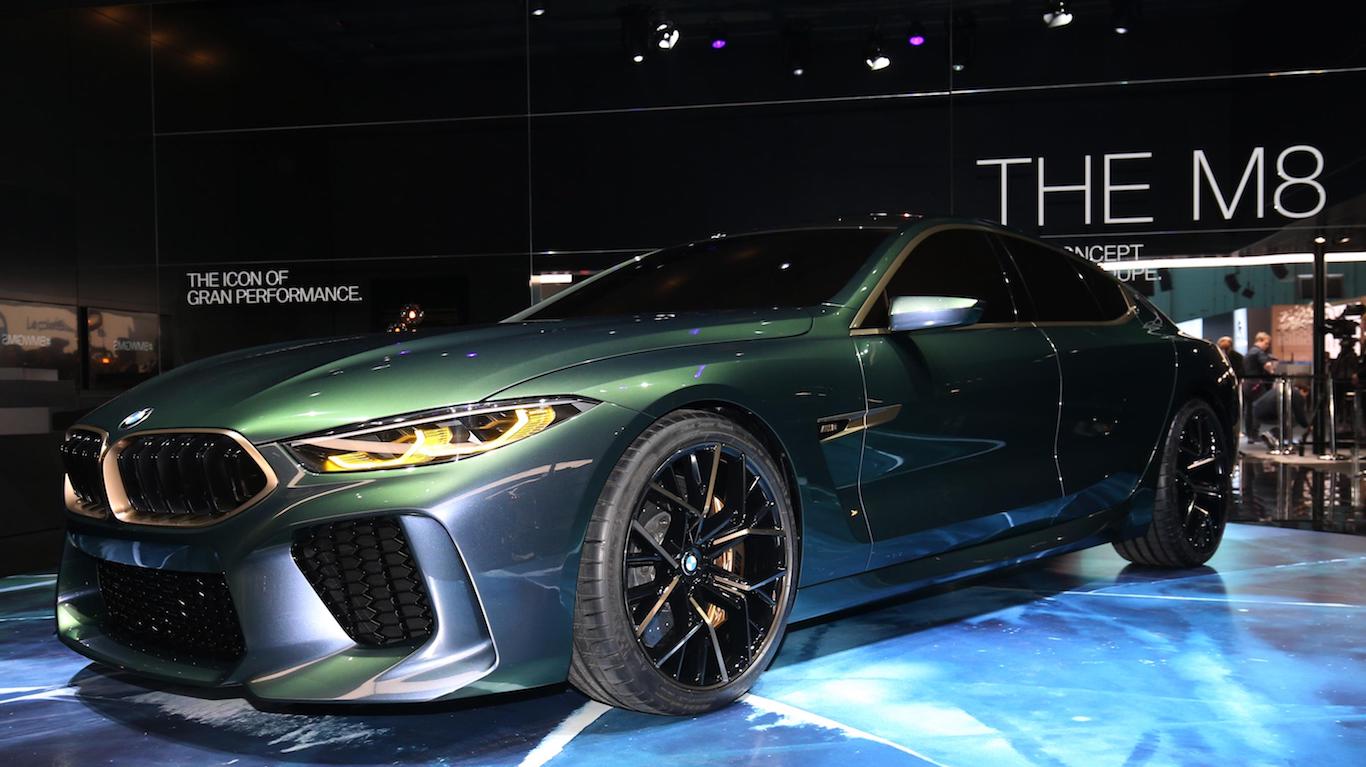
BMW has teased us with the idea of an M8 for some time, with the previous Concept 8 Series shown last year and also the M8 GTE race car. Now we have the finished M8 concept, but in four-door ‘Gran Coupe’ guise here at Geneva. However, more waiting is involved, as BMW claims we won’t see the production-ready article until next year.
For now, we can check out with the aggressive front-end treatment the M8 receives, including the distinctive yellow LED headlights borrowed from the GTE race car. The classic BMW kidney grille is there, along with gaping air intakes and a jutting splitter. A ducktail spoiler at the rear is particularly neat, as are the hidden door handles.
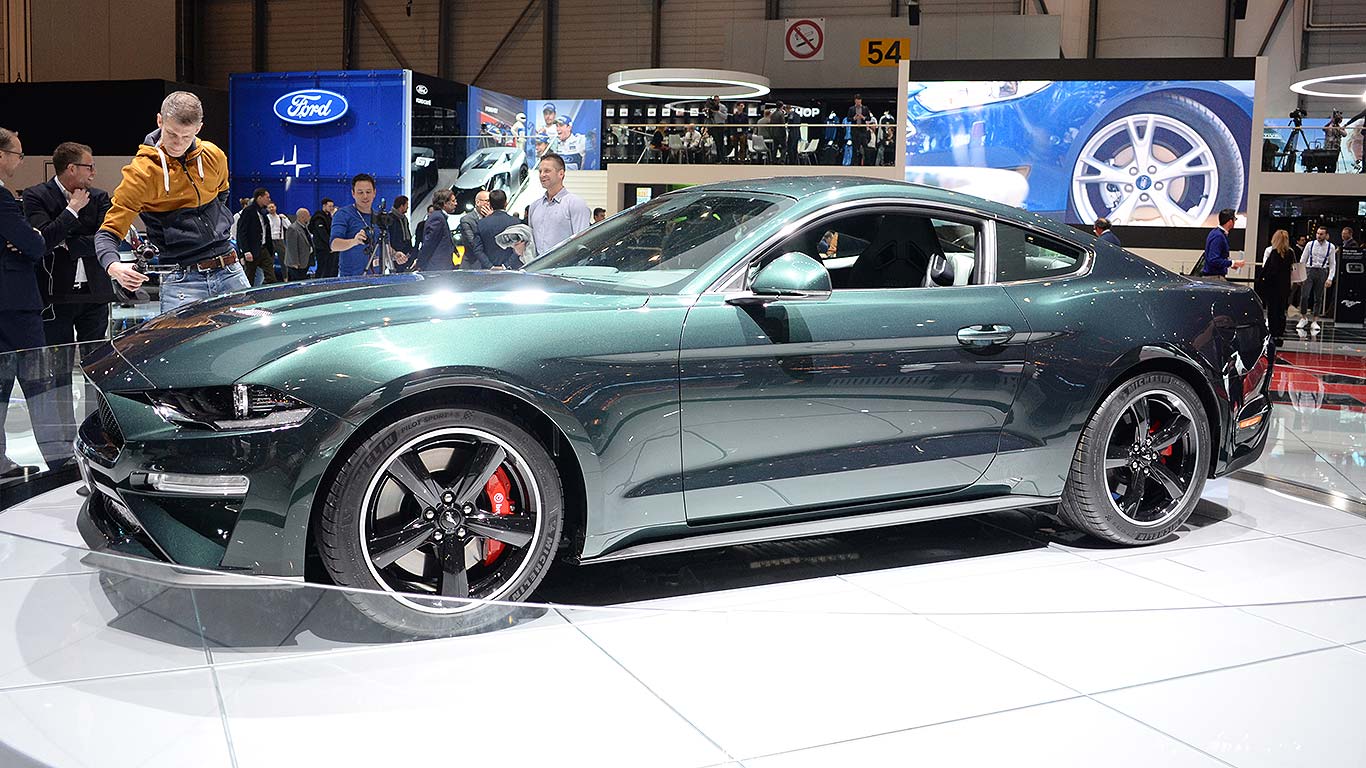
Ford Mustang Bullitt
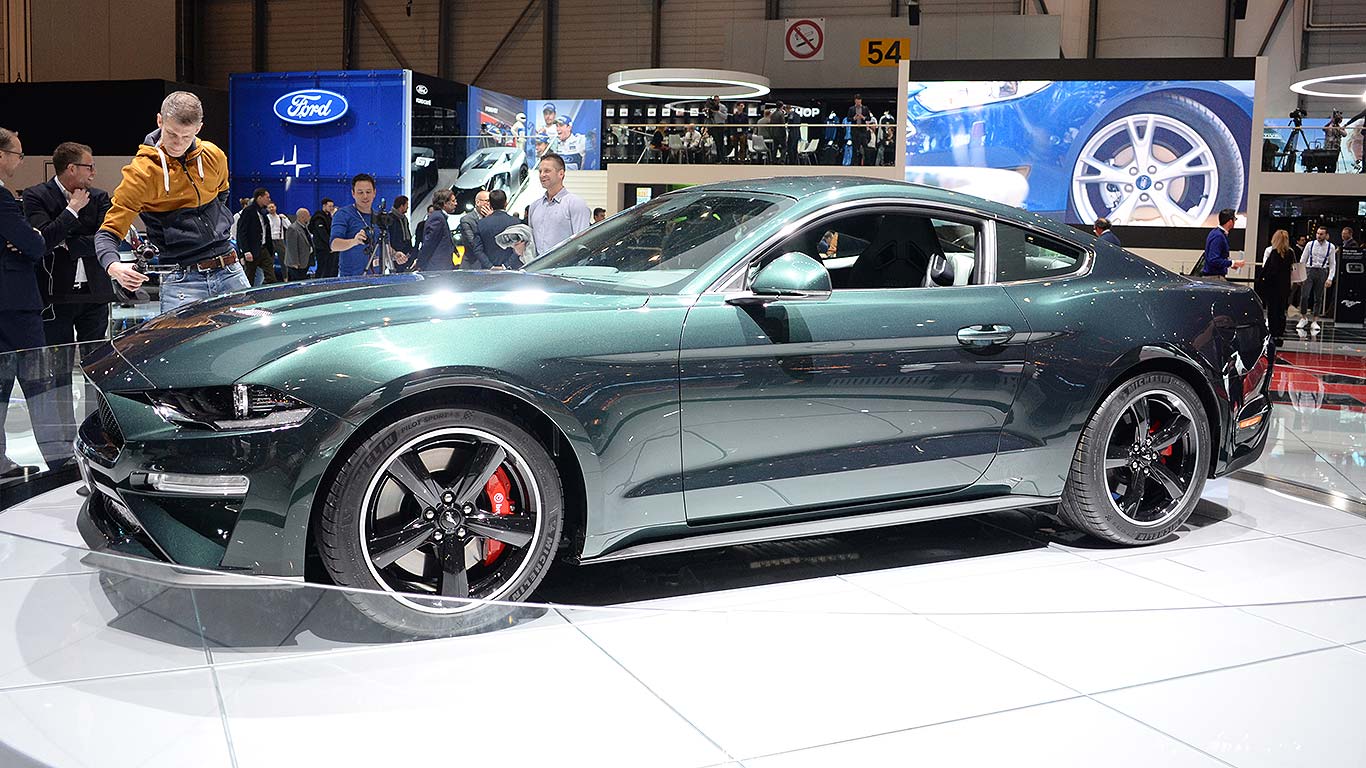
We might be stretching the definition of ‘supercar’ here, but a Ford Mustang with 464hp and a link to an iconic driving film seems fairly super to us. Initially announced at the Detroit Auto Show in January, Ford has used Geneva to confirm the Mustang Bullitt will be coming to the UK in right-hand drive.
The uprated 5.0-litre V8 engine features a new air induction system, bigger throttle bodies and an ECU shared with the Shelby GT350. Shadow Black paint is an option, but it would seem wrong to pick anything other than Highland Green to go with the Torq Thrust-style alloy wheels. Be sure to keep an eye out for sinister Dodge Chargers if you buy one.
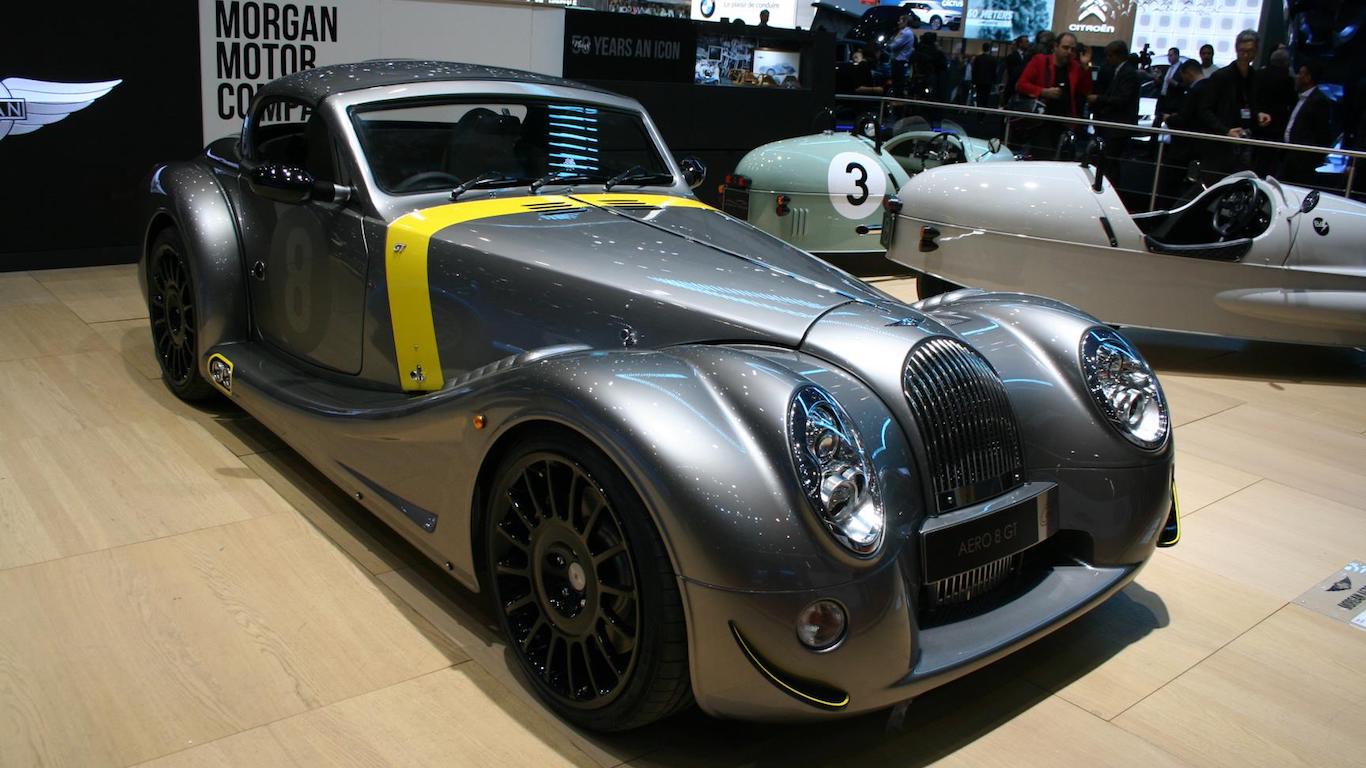
Morgan Aero GT
The end of Morgan Aero production is sad, but the Malvern company is ensuring the model goes out with a bang. Just eight examples of the race-inspired Aero GT will be built, all tailored to individual customer specifications by Morgan’s Special Projects team.
All will use the same 367hp BMW V8 fitted to a manual gearbox, with the Aero GT making a sprightly run from 0-62mph in 4.5 seconds. Adjustable suspension is standard, and the Aero GT features trick parts like a carbon fibre roof and aerodynamic appendages developed from the 2009 GT3 race car. You’ll need £120,000 plus taxes to secure this incredibly rare creation.
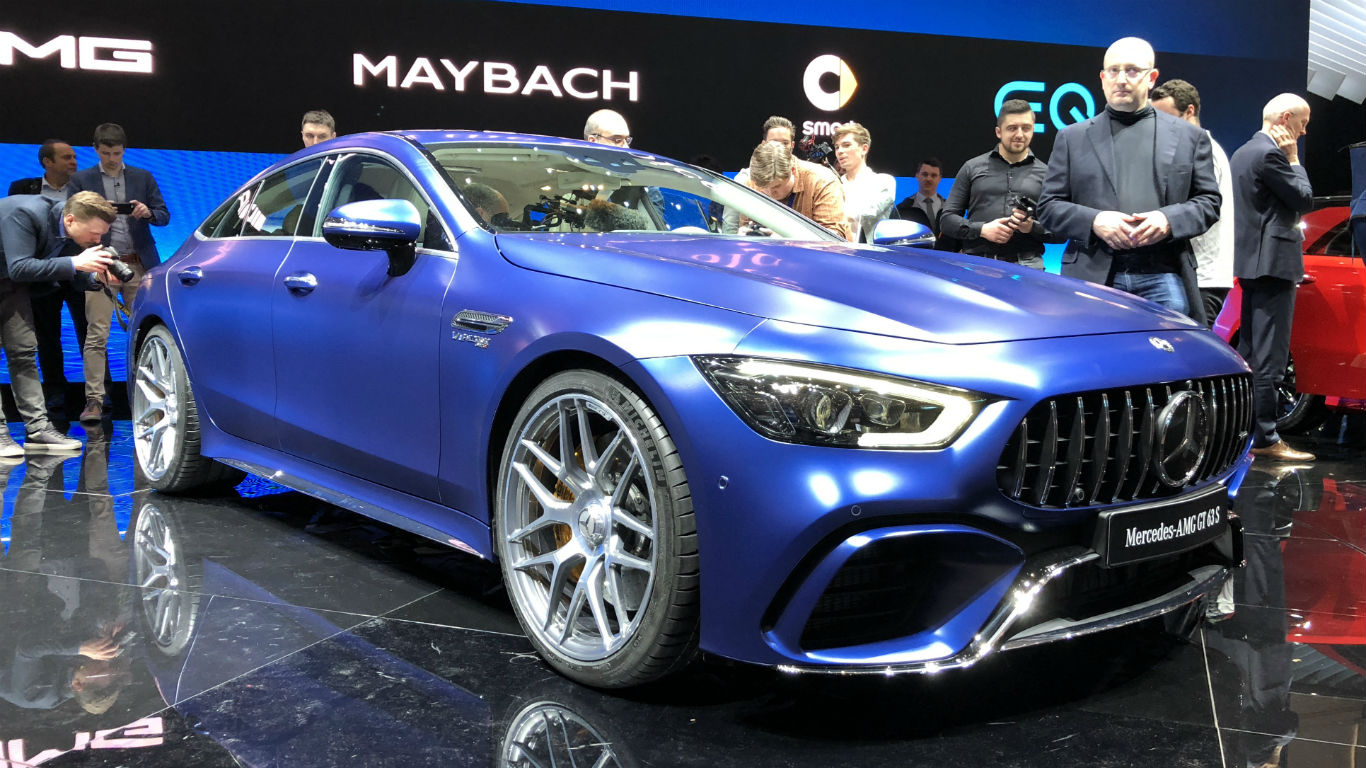
Mercedes-AMG GT 4-Door Coupe
The engineers at Mercedes-AMG have seemingly been worrying about how to make their supercars more family-friendly. The answer was quite simple: turn the AMG GT coupe into a four-door, letting the kids come along for the ride.
Set to be offered in both GT and GT S flavours, the former has 585hp, with the latter boasting a peak output of 639hp. Both use the same 4.0-litre biturbo V8 engine as seen in the AMG GT coupe, with permanent all-wheel drive to keep things under control. Zero to 62mph in under 3.5 seconds means true supercar performance: certainly enough to terrify your four passengers.
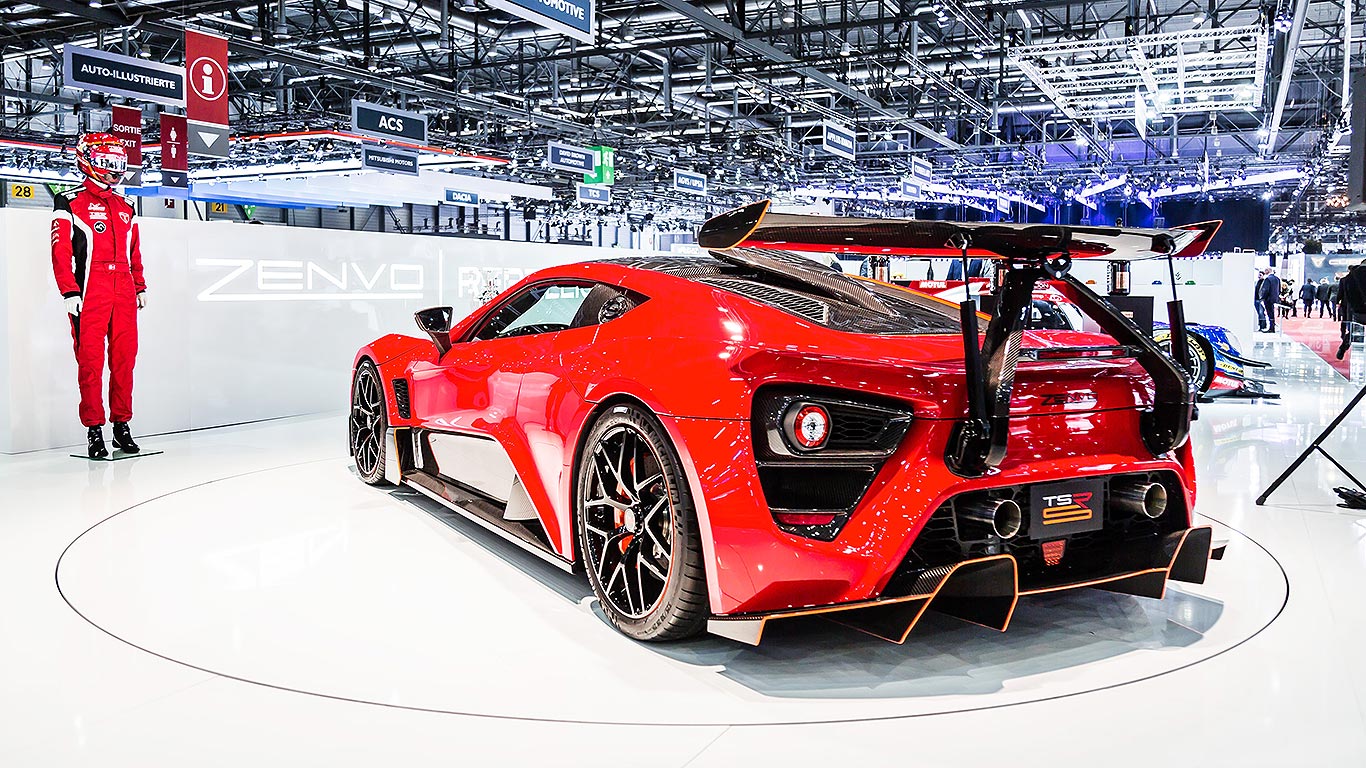
Zenvo Automotive TSR-S
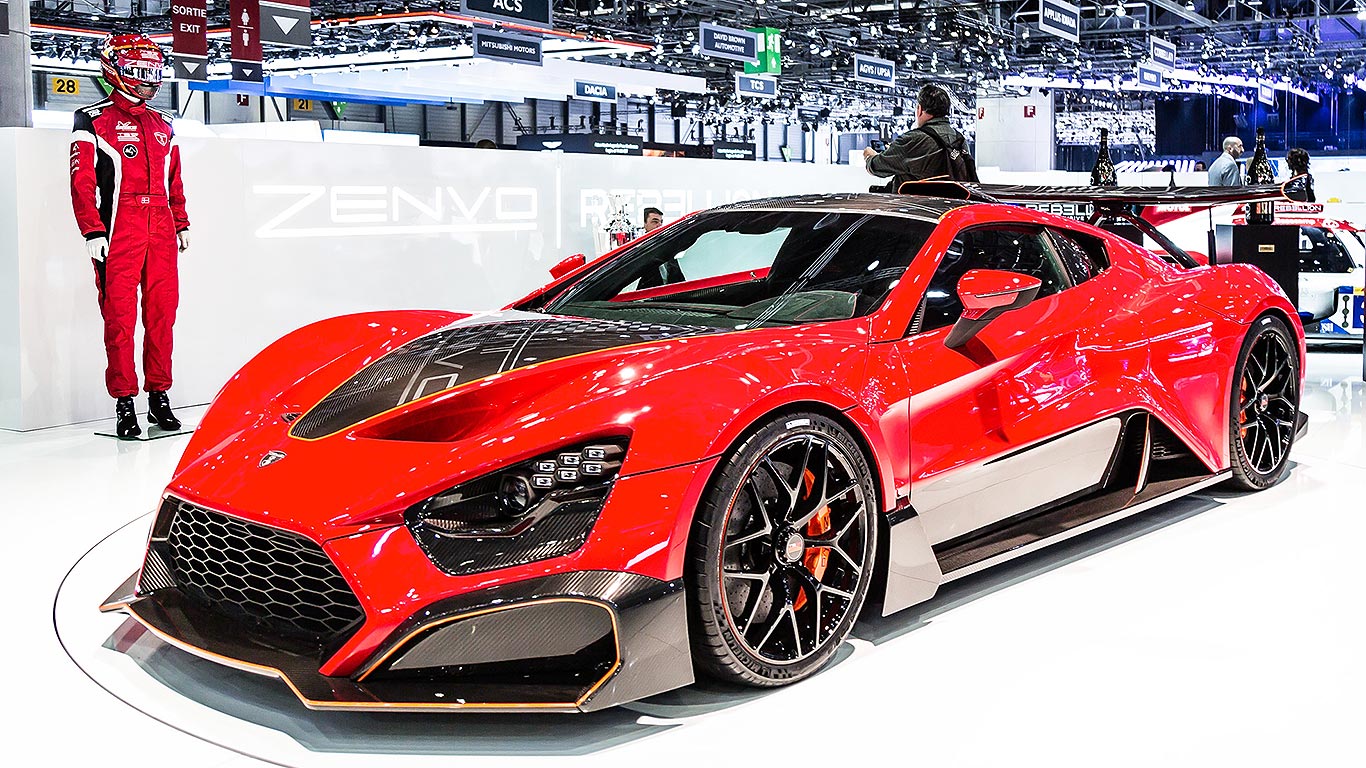
Danish company Zenvo might not be the biggest supercar manufacturer, but its TSR supercar certainly pushes boundaries. The latest version features an in-house V8 engine with twin superchargers, producing an amazing 1,177hp. The technology is pure race car, with a seven-speed paddle-shift gearbox driving the rear wheels.
The biggest news in Geneva is the addition of a patent-pending centripetal rear wing, which uses clever dampers to rotate as the car corners. This allows the wing to use centripetal force to pull the car into a turn. It also means it can act as a giant air brake, helping the huge carbon ceramic discs slow the car even faster.
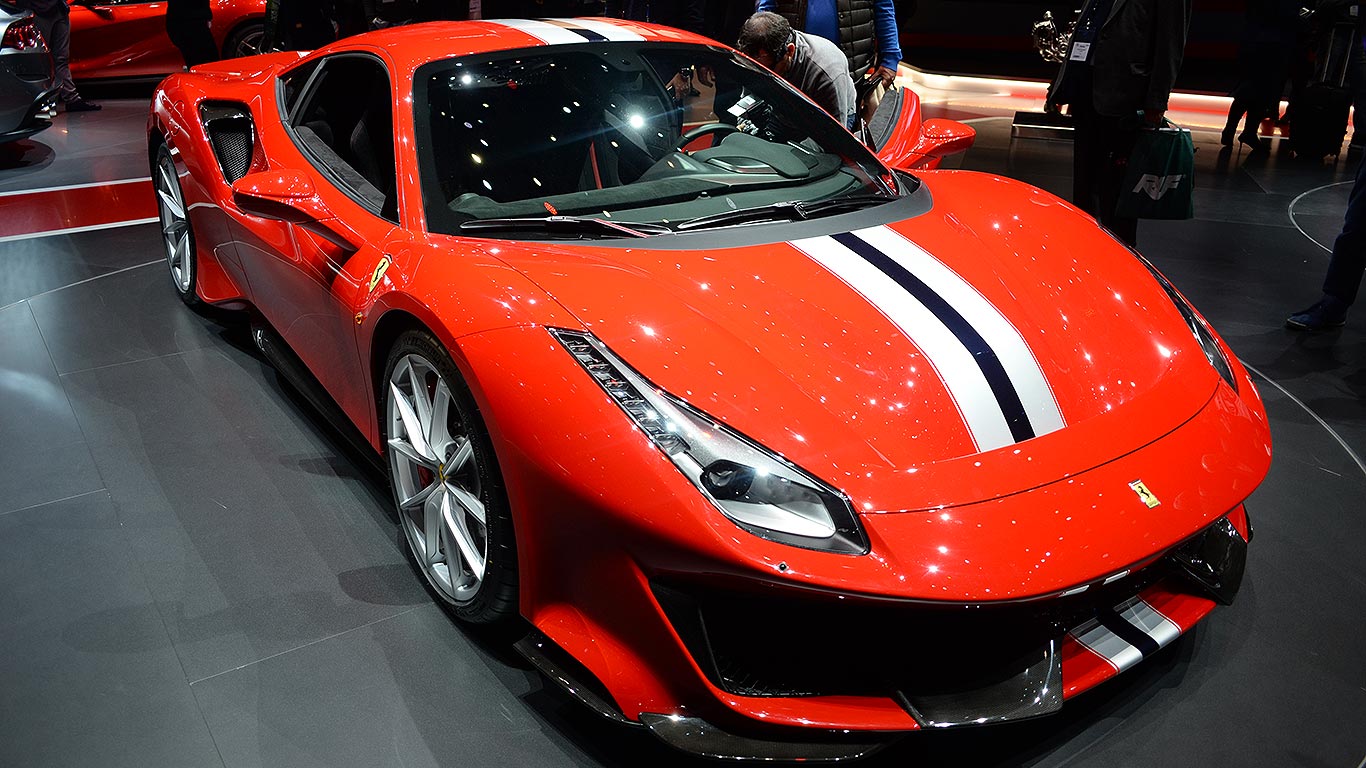
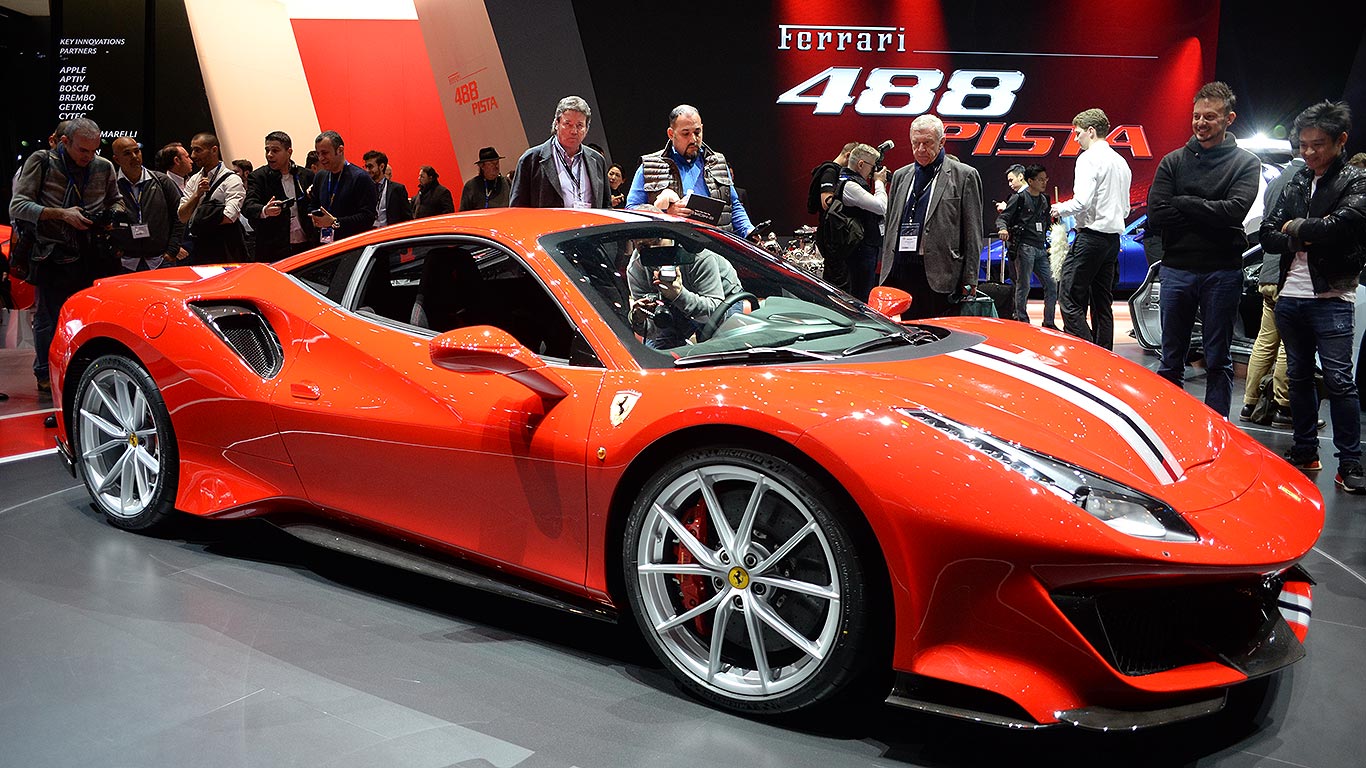
Ferrari 488 Pista
A hardcore version of the already-rabid Ferrari 488 is always going to be big news, and even though the 488 Pista was announced a few weeks ago it is still attracting attention in Geneva. Said to be inspired directly by Ferrari’s success in the World Endurance Championship, the Pista is promised to be even more special than the 360 Challenge Stradale or 458 Speciale.
The Ferrari 488 Challenge race car provides the uprated turbochargers for the V8 engine, taking peak power to 720hp. This coincides with a kerb weight reduced by some 90kg, along with bodywork that includes lessons learned from Formula 1 and a spoiler inspired by a dolphin’s tail. No, really. We don’t think Flipper could hit 0-62mph 2.85 seconds, or peak at 211mph, though.
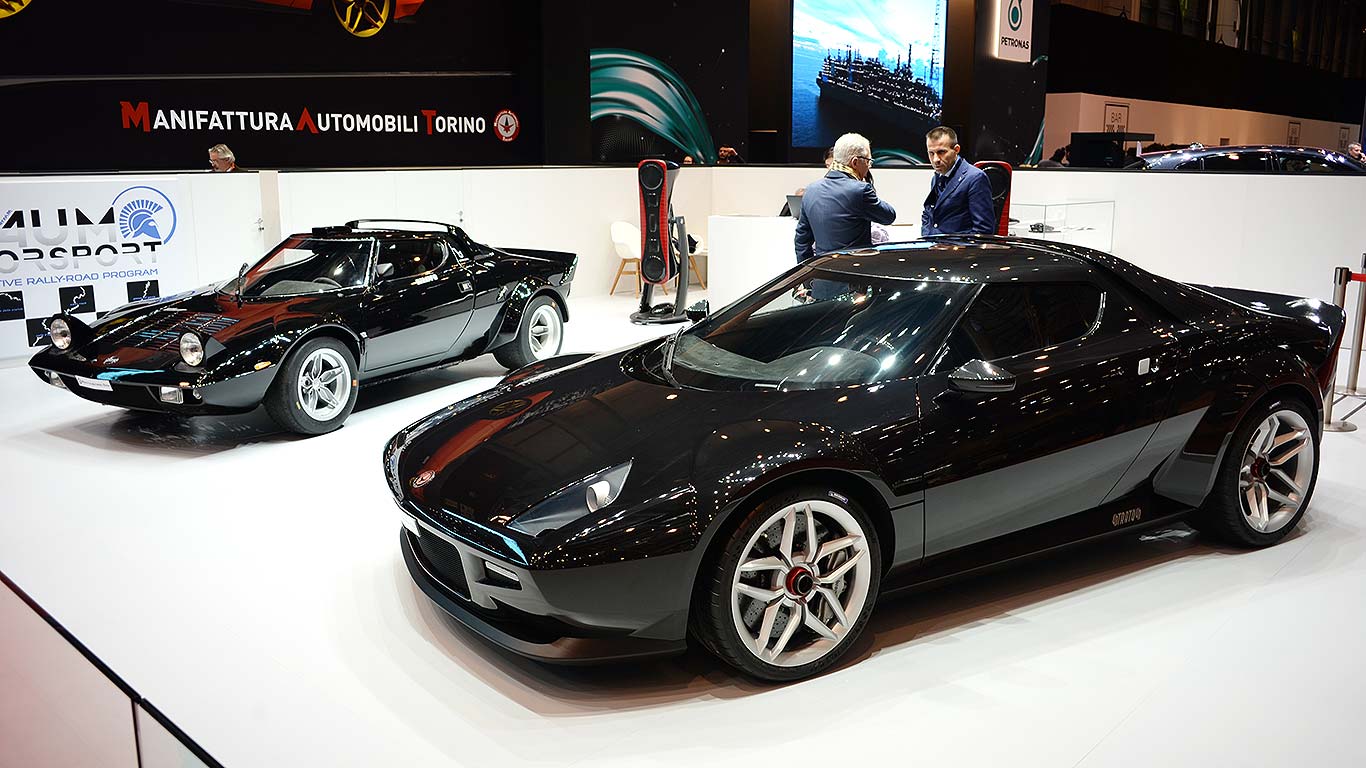
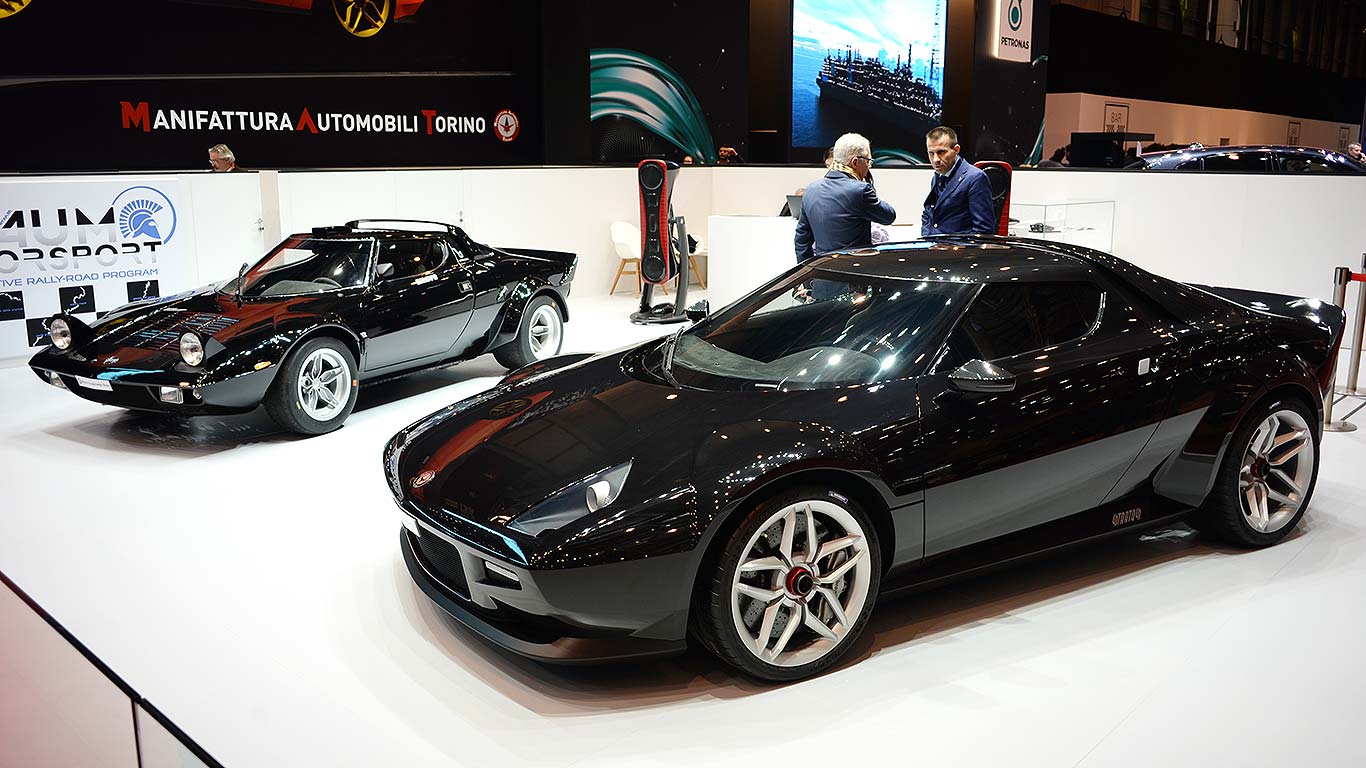
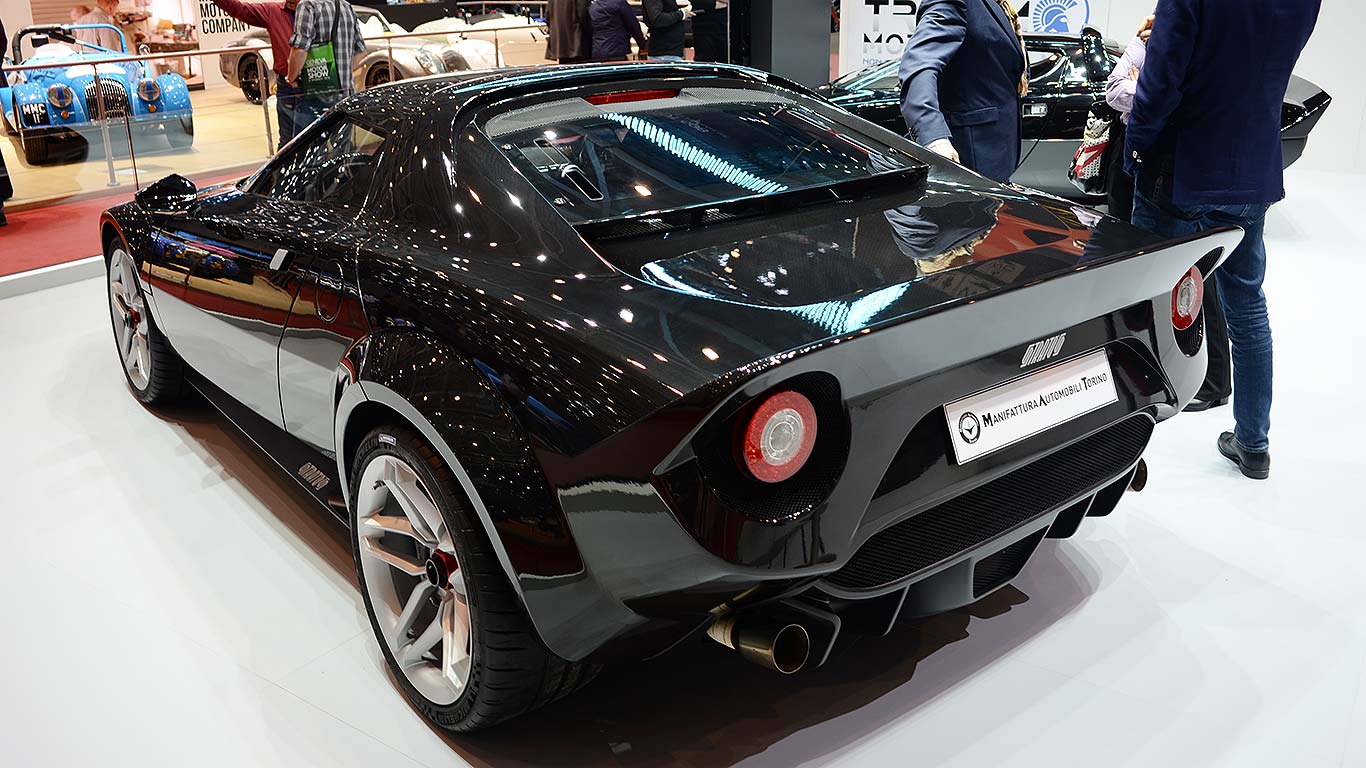
MAT Stratos
You may not have heard of MAT (Manifattura Automobili Torino), but you’ll certainly recognise the distinctive wedge-shape of the Stratos. A modern reincarnation of the Lancia classic from the 1970s, the MAT Stratos first appeared as a concept over seven years ago. Now it’s set for limited production – just 25 units – but requires you first sacrifice a Ferrari F430 Scuderia.
The 4.3-litre flat-plane V8 in the F430 Scuderia was already potent to begin with, but extra tweaks mean the power output increases to 540hp. Splash more cash and the potential for 600hp is on the cards. MAT claims to have twelve buyers already lined up to pay the £445,000 asking price, which comes in addition to finding your own spare Ferrari to butcher. What price nostalgia, eh?
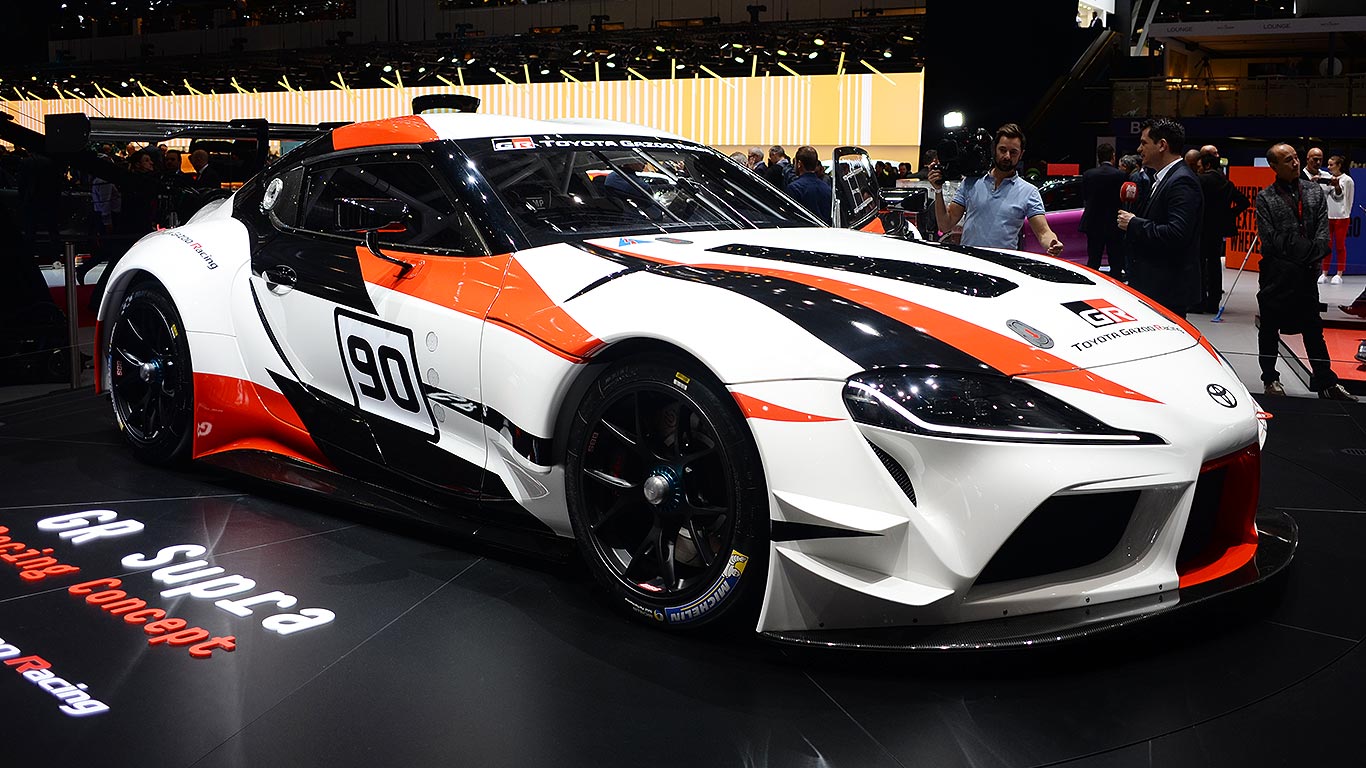
Toyota GR Supra Racing Concept
We suspected Toyota would finally unveil the finished Supra concept at Geneva, so this racing version is most of the way there. The basic Supra ideas of a front engine and rear-wheel drive remain, and if you squint hard enough you can definitely see the family resemblance beneath the wings and splitters. We do already know it’ll share a platform with the forthcoming BMW Z4.
While we’ll have to wait until 2019 to drive it in real life, players of Gran Turismo Sport will get the chance to drive the GR Supra concept in an update coming to the game next month. Just imagine it finished in a red and green Castrol livery for full effect.
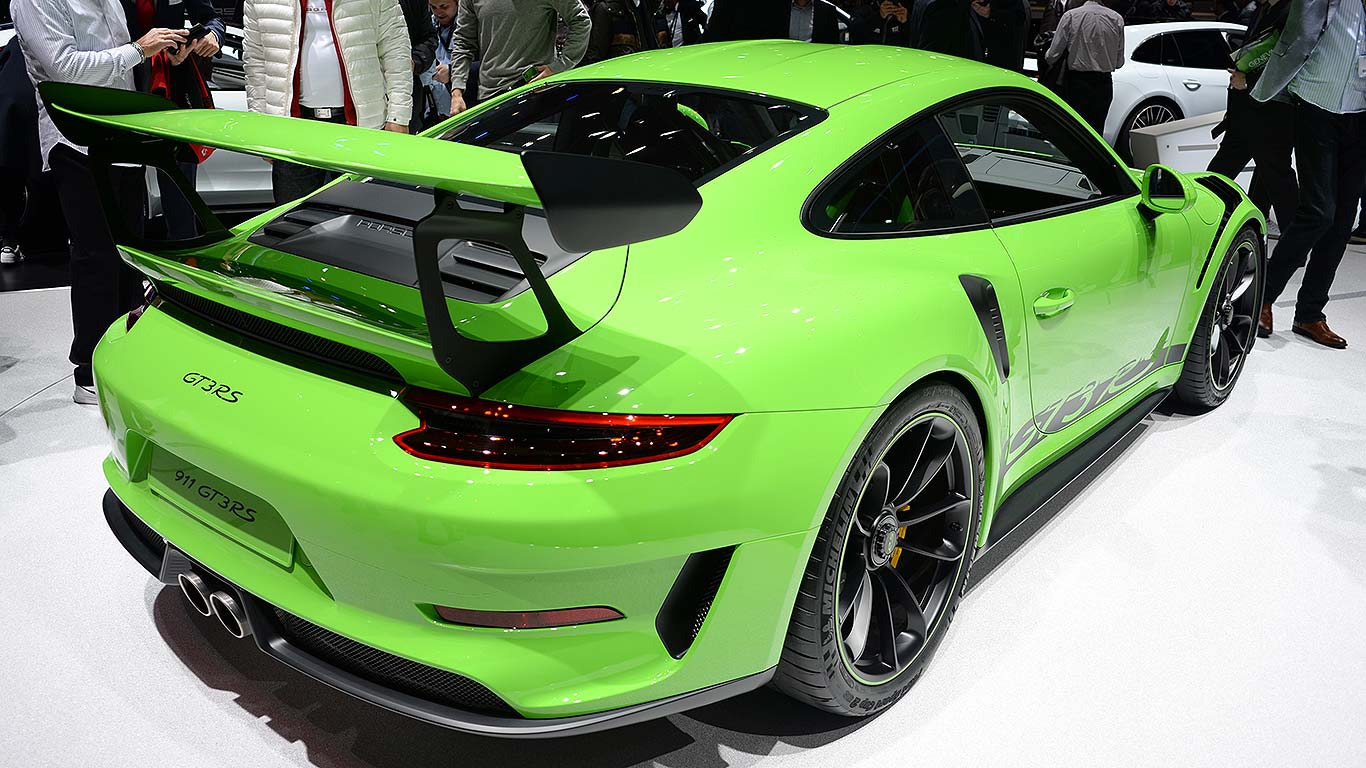
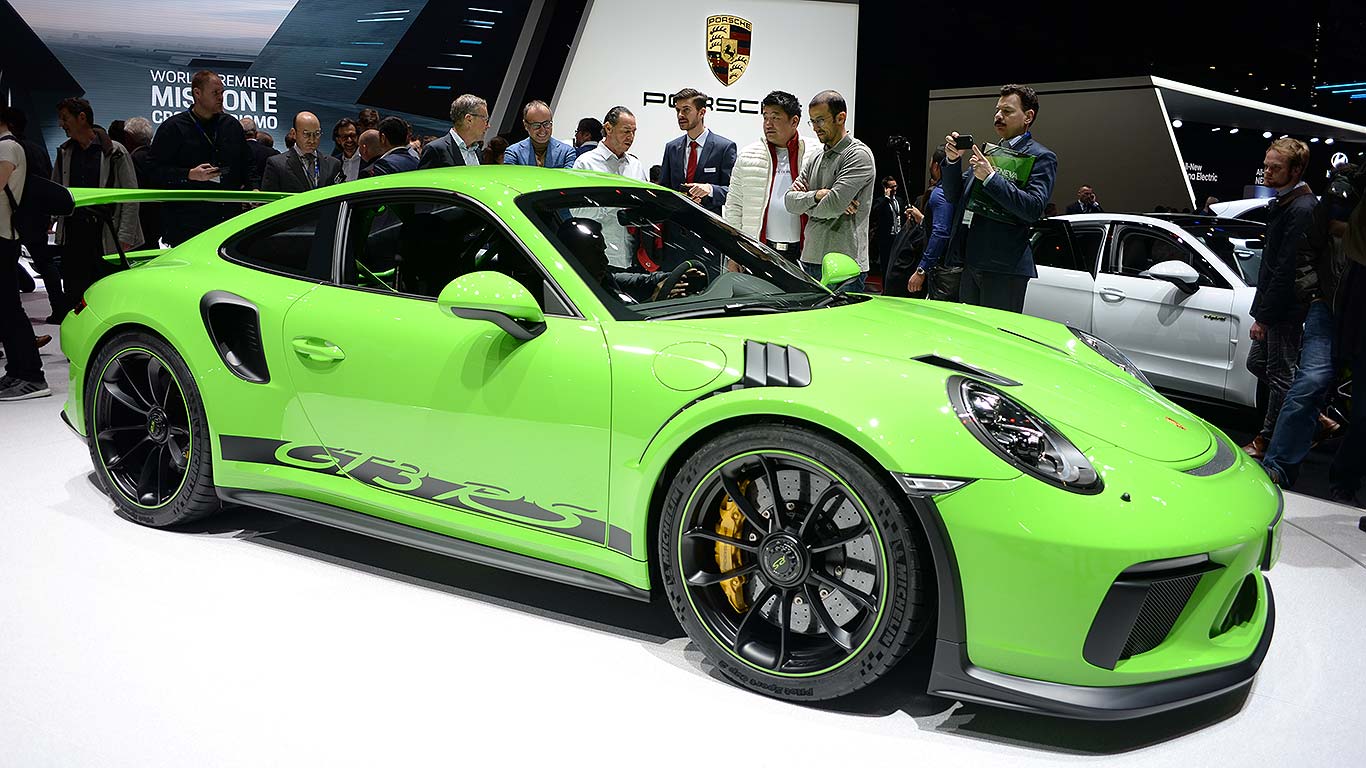
Porsche 911 GT3 RS
Death, taxes and a Porsche 911 GT3 RS that will sell out before mere mortals even have chance to think about buying one. These things are all constants in life, and Zuffenhausen hasn’t disappointed. As a final hurrah for the 991-generation 911, there’s more power and even crazier bodywork, along with revisions to the PDK dual-clutch gearbox. Sorry purists, there is still no manual ’box option.
However, 520hp from the 4.0-litre flat-six engine should be some consolation, along with alloy wheels which save 100g compared to the previous version. Tiny tweaks we know, but ones that drive Porsche fans crazy. The changes result in a 0-62mph time that drops to 3.2 seconds, although the barn-door-sized wing pegs the top speed to 193mph. Priced from £141,000, there might still be time to befriend your local Porsche dealer.
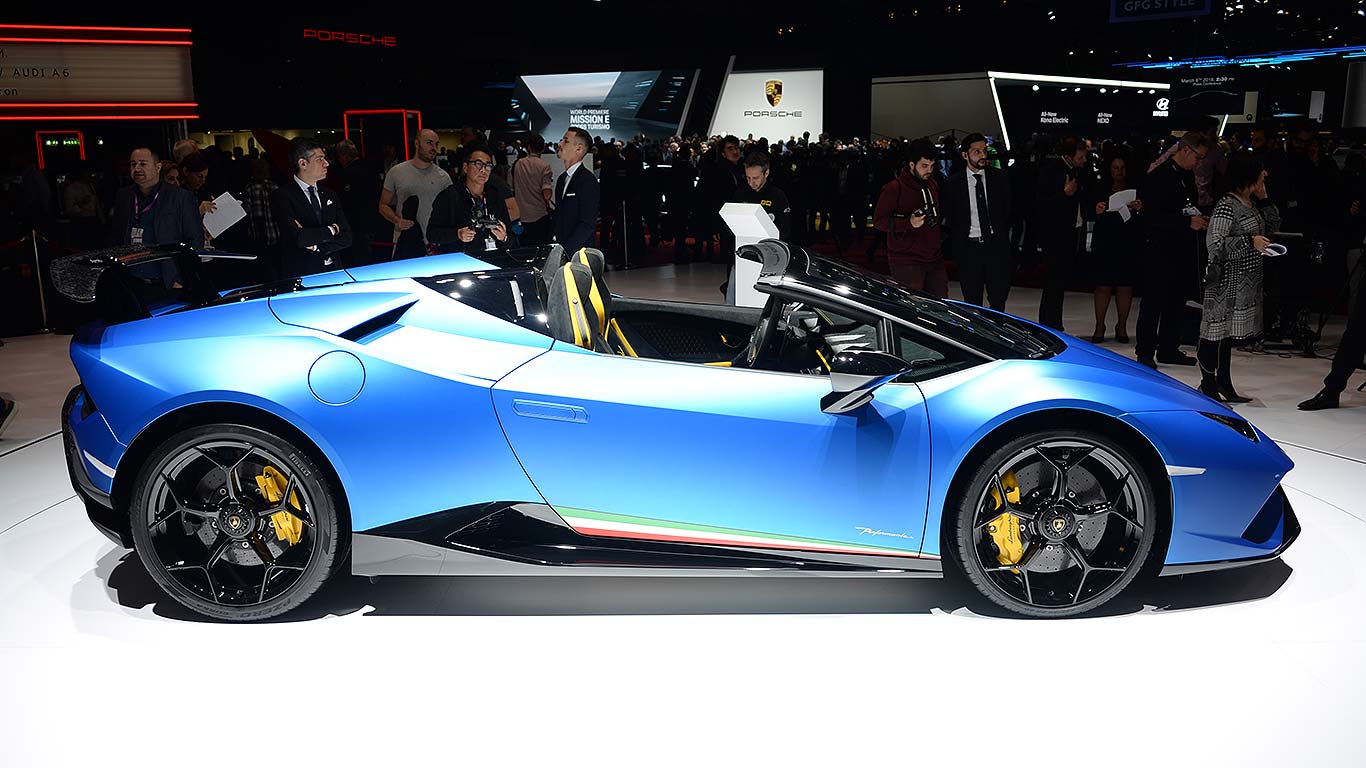
Lamborghini Huracan Performante Spyder
What better way to hear the V10 wail in your Huracan Performante than by chopping the roof off and creating a Spyder? It might seem something of a juxtaposition to create a topless version of your track-focused supercar, but Lamborghini knows what its customers want. Realistically, they want to cruise around looking cool, safe in the knowledge they can brag about the performance of their ultimate Huracan.
The 5.2-litre 631hp engine still sends power to all four wheels, but the weight of the folding soft-top and additional strengthening means the Spyder weighs some 125kg more than the Performante coupe. Zero to 62mph in 3.1 seconds it still impressive, though, as is the blustery 201mph top speed. Expect to pay £238,000 – a premium of 10% over the fixed-roof version.
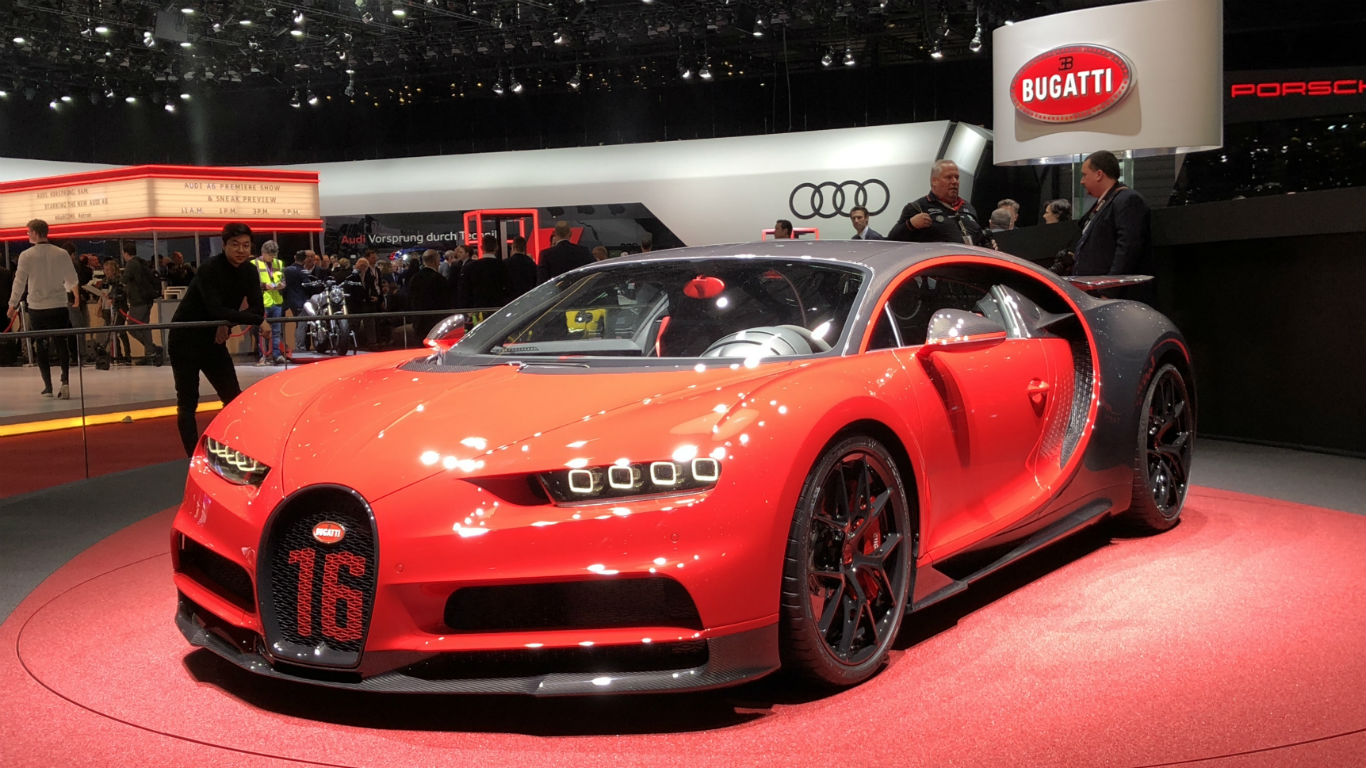
Bugatti Chiron Sport
If we’ve had one complaint about the Bugatti Chiron it’s that, despite the 1,479hp output, we just wish it was slightly better on-track. Actually, that’s a lie. We’re not sure anyone has ever complained about the handling of the Chiron, but Bugatti has seen fit to fix it regardless.
Stiffer suspension dampers, weightier steering and the addition of a special handling mode mark the biggest changes. There is also a 18kg weight reduction, although this is a drop in the ocean given the considerable bulk of the Chiron. You do get lighter carbon fibre windscreen wipers, however, which go some way to justifying the £2.4million price tag.
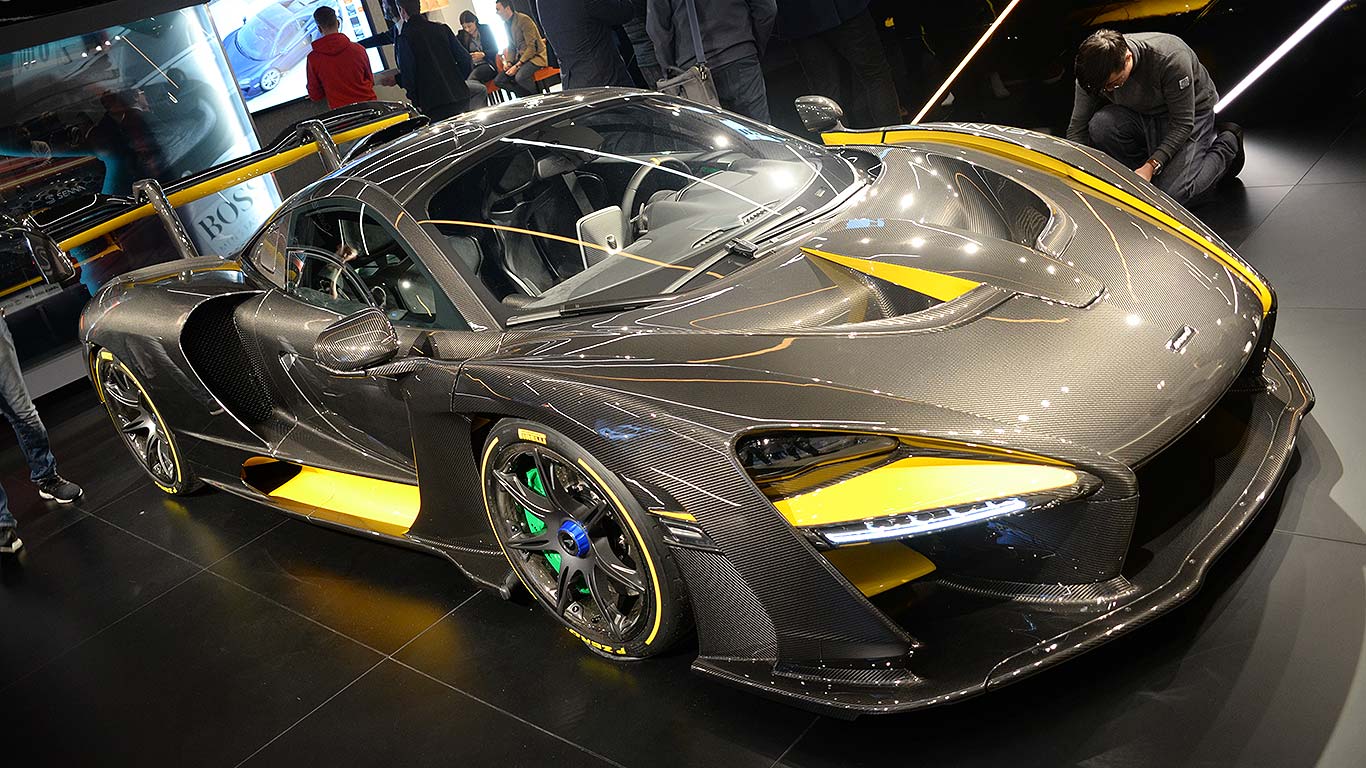
McLaren Senna
Naming a car after one of the greatest Formula 1 drivers ever is an incredibly bold move. Yet McLaren feels suitably convinced that the Senna more than lives up the name. We already saw the car at an event last year, but this will be the first time the general public can gape in awe at the £750,000 hypercar and see if it looks any less shocking in real life. Although they can’t buy one, as it’s already sold out.
Carbon fibre bodywork creates the potential for the Senna to generate 800kg of downforce, said to enable incredible cornering speeds. At the heart of the Senna is an 800hp version of McLaren’s twin-turbocharged V8 engine, capable of delivering 0-62mph in 2.8 seconds and 0-186mph in just 17.5 seconds. When even the paint options have been chosen to save weight, you know McLaren isn’t messing around.
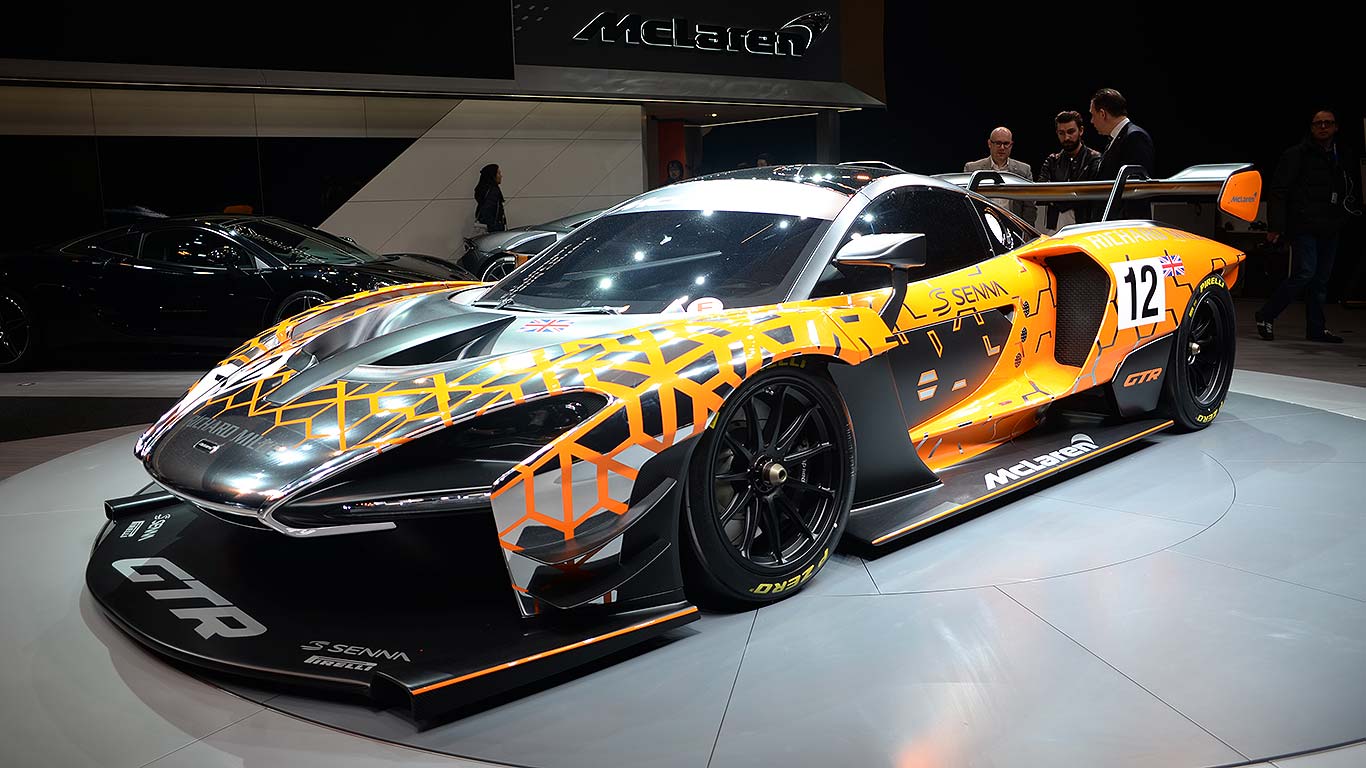
McLaren Senna GTR
With the regular Senna sold out, and rivals like Aston Martin creating the Valkyrie AMR Pro, clearly what McLaren needed was to create a hardcore track-focused version of the Senna. Before customers even get the chance to try the normal car, 75 buyers will have the chance to spend £1million on a Senna GTR.
Horsepower is increased to 825hp, but the big news comes with the boost in downforce to a faintly ridiculous maximum of 1,000kg. Pirelli slick tyres are standard, along with the prize for what is probably the biggest rear diffuser fitted to any car. So, if you were unable to grab a regular Senna, the GTR will let you feel superior to those who only bought a ‘regular’ roadgoing version.
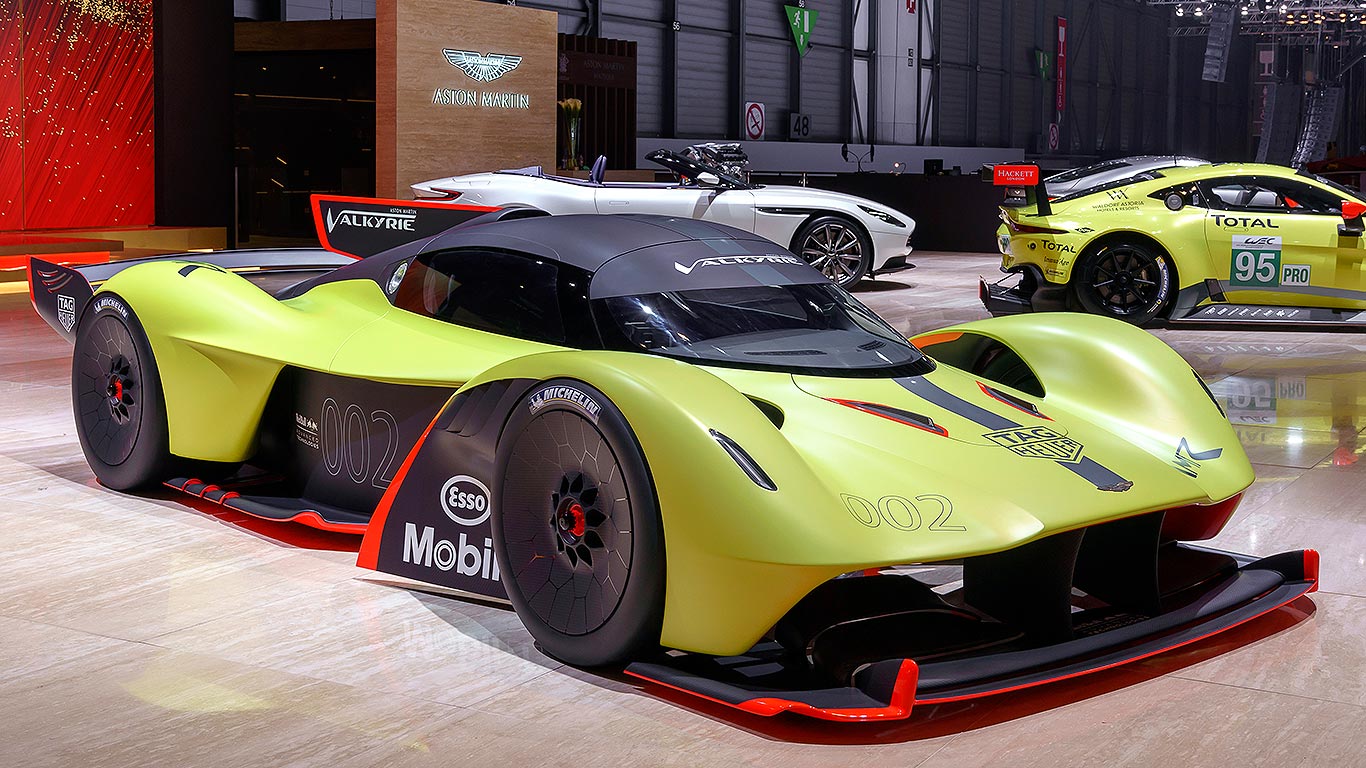
Aston Martin Valkyrie AMR Pro
Claiming that your new track-only hypercar is as fast as a contemporary Formula 1 racer certainly sets expectations high. Yet that’s exactly what Aston Martin claims for this enhanced version of the Valkyrie. F1 design supremo Andrew Newey has let his imagination run wild, freed from the limits of having to make something road-legal.
The 6.5-litre V12 now produces 1,100hp, while the AMR Pro is capable of producing more downforce than its actual weight. Just like an F1 car, in fact. Even set for maximum downforce, there is still a top speed of 225mph, but the biggest story is the ability to generate 3G of lateral acceleration. Owners will need to be physically fit to get the most out of their cars, with just 25 examples set to be built. Naturally, they’re all sold.
The 88th Geneva International Motor Show is underway, packed with the usual array of supercars, hypercars, crazy concepts and folk tripping over trailing flight bags. We’ve elbowed our way to the front of each stand to bring you all the important cars from Geneva 2018.
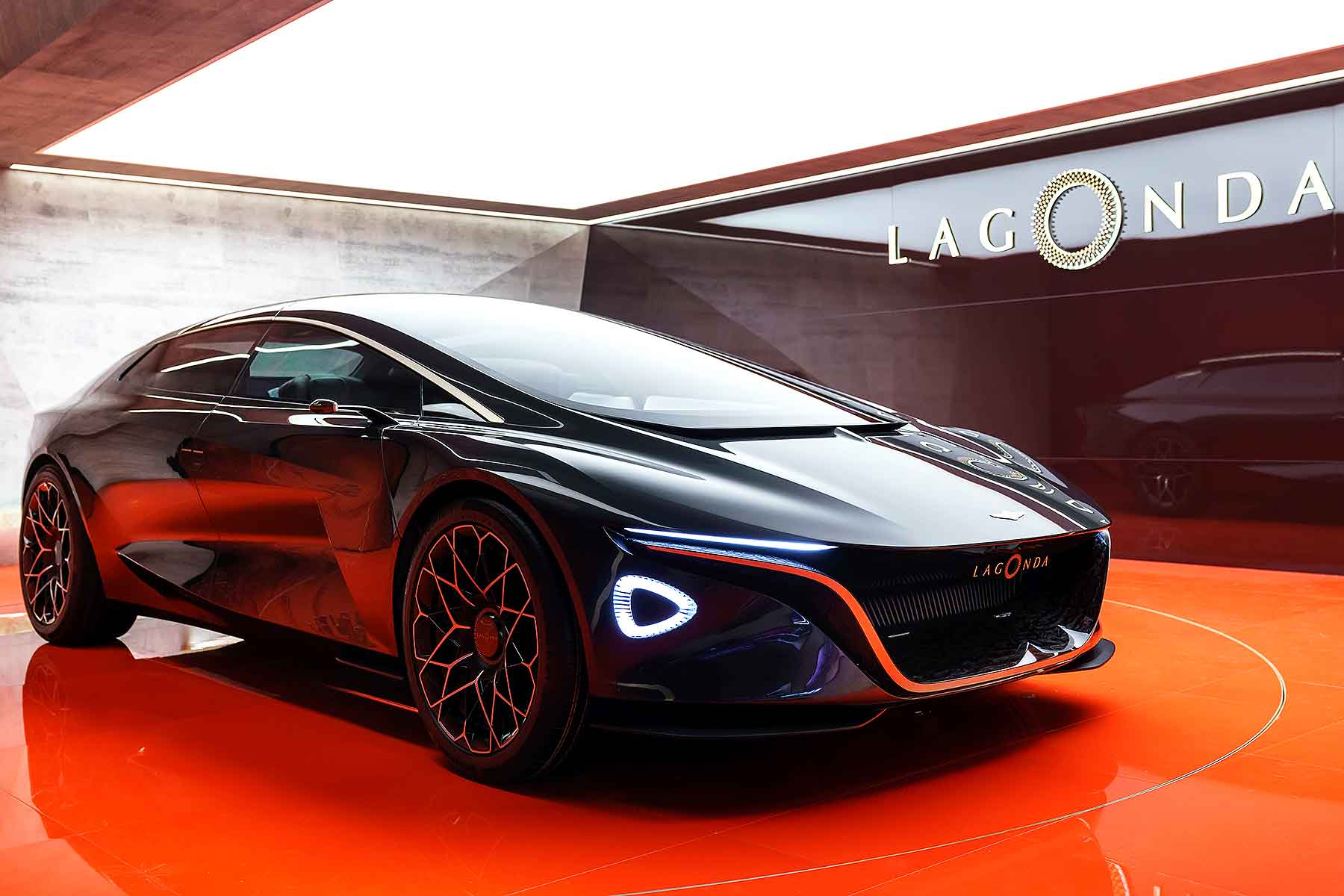
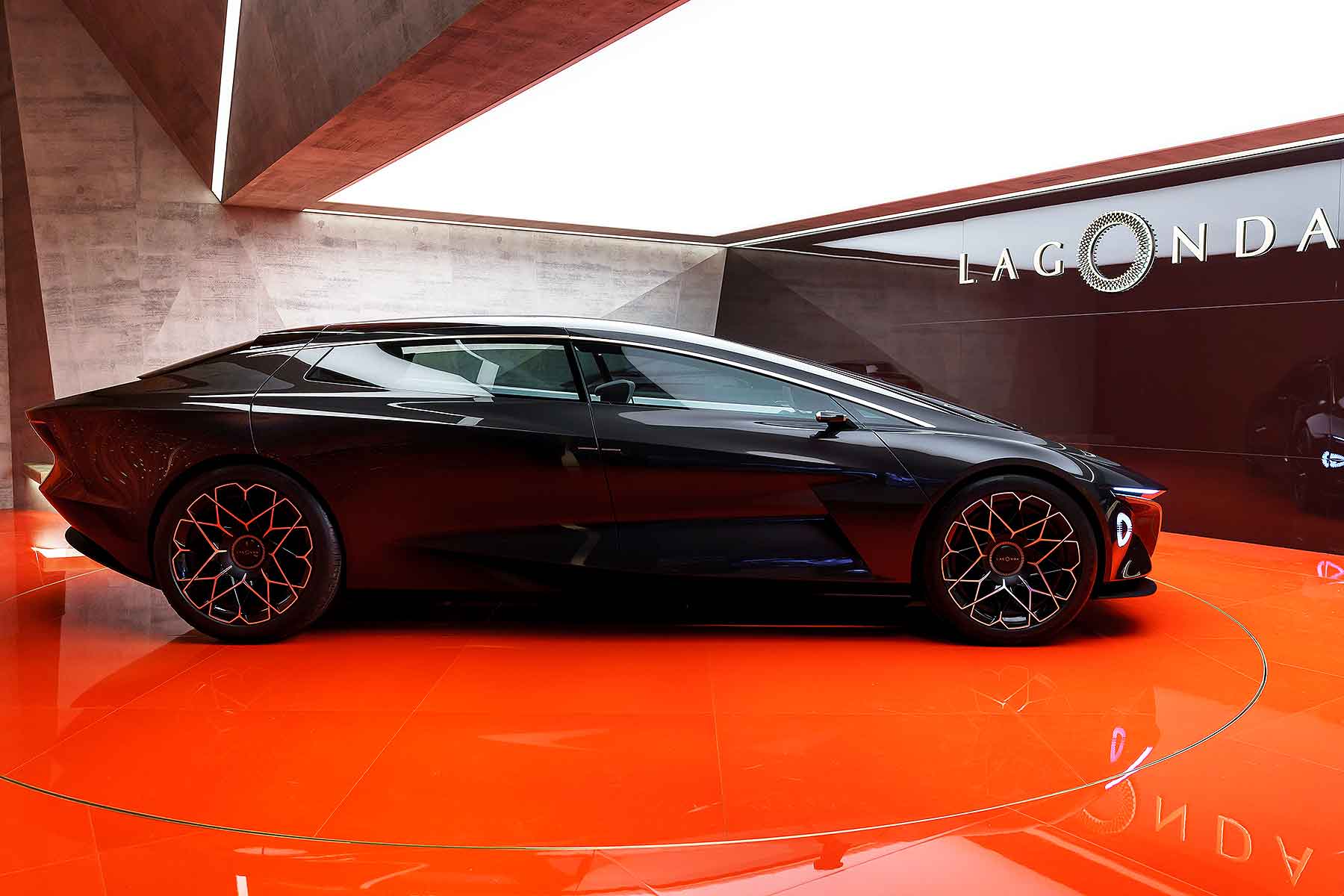
Aston Martin Lagonda Vision Concept
In an era of pre-launch teasers and pre-show reveals, the Aston Martin Lagonda Vision Concept is a genuine surprise. It previews an all-electric future for the Lagonda sub-brand, with production scheduled to start in 2021. By 2023, two Lagonda models will be rolling out of the new plant in St Athan, Wales. The all-wheel drive Lagonda will travel 400 miles between charges and be ready to recharge wirelessly.
Ferrari 488 Pista
With 720hp on tap, the Ferrari 488 Pista is the most powerful production V8 Fezza ever produced. It has been built with the track in mind, hence the name: Pista is Italian for ‘track’. It weighs an impressive 90kg less than the 488 GTB and will hit 62mph in just 2.85 seconds. It looks great, not that you can get anywhere near it here in Geneva.
Ford Mustang Bullitt
Unveiled at the Detroit Auto Show in January, this is the first time the Ford Mustang Bullitt has been seen in Europe. It salutes the 1968 movie car with its Highland Green metallic paint, along with a series of mechanical and cosmetic upgrades befitting its role of flagship ’Stang. The tuned 5.0-litre V8 engine packs 475hp and 420lb ft of torque and tops out at 163mph. We expect a smaller number of Mustang Bullitts to arrive in the UK later this year.
Jaguar I-Pace
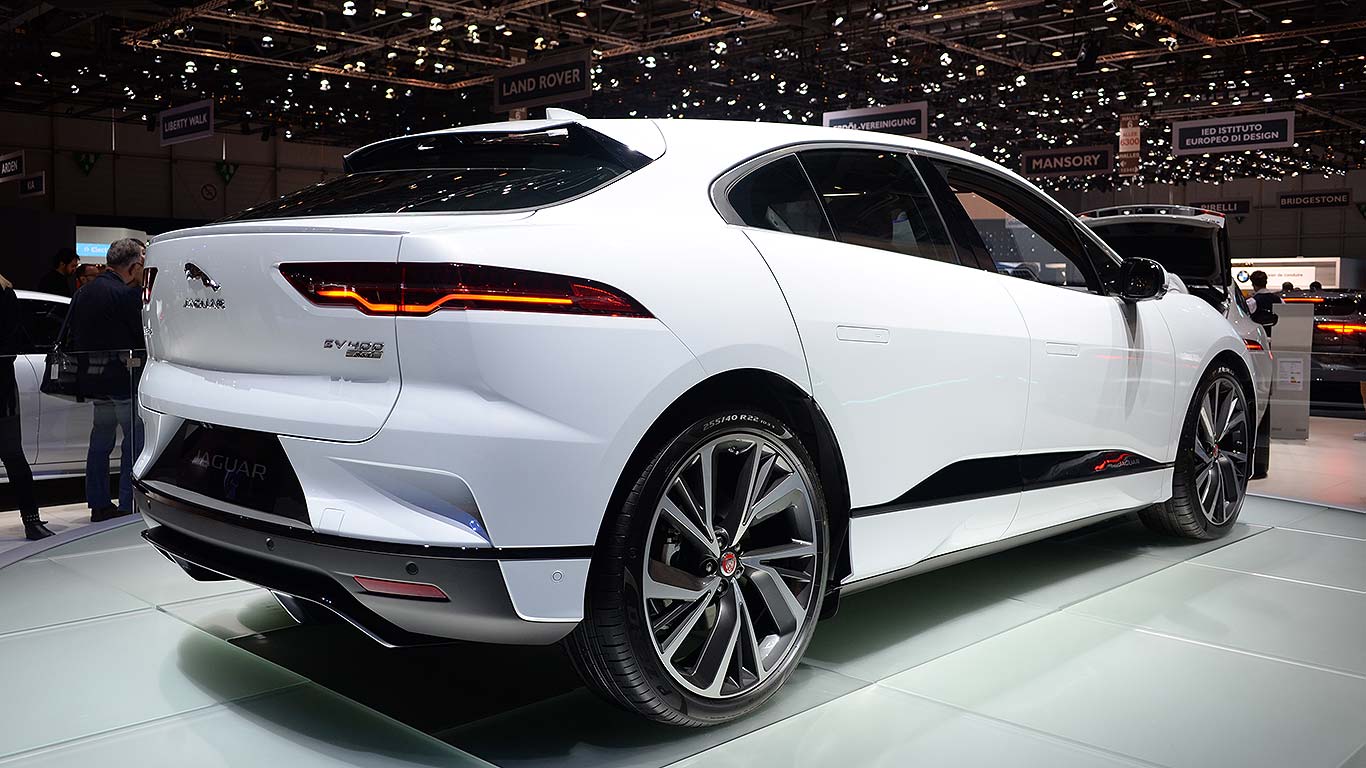
Car of the show? The I-Pace is certainly a landmark, not just for Jaguar, but for the electric vehicle segment. It takes the fight to Tesla in a way that Audi, BMW and Mercedes-Benz have failed to do and is remarkably close to the concept of 2016. It’s similar in length to the XE, but offers SUV-like levels of interior space and a range of up to 298 miles. Prices start from £63,495 and first deliveries are expected before the end of the year.
MAT Stratos
Every time we visit a European motor show, we come away disappointed by the Lancia stand. After all, there’s only so many times you can peddle yet another Ypsilon special edition. This might not be a Lancia – it’s actually a Ferrari F430 underneath – but it pays homage to the legendary Stratos of the 1970s. Three versions will be built, including a rally-inspired model – and Manifattura Automobili Torino (MAT) has promised to produce 25 examples. You’ll need €500,000 (£490,000) plus an F430 for the privilege.
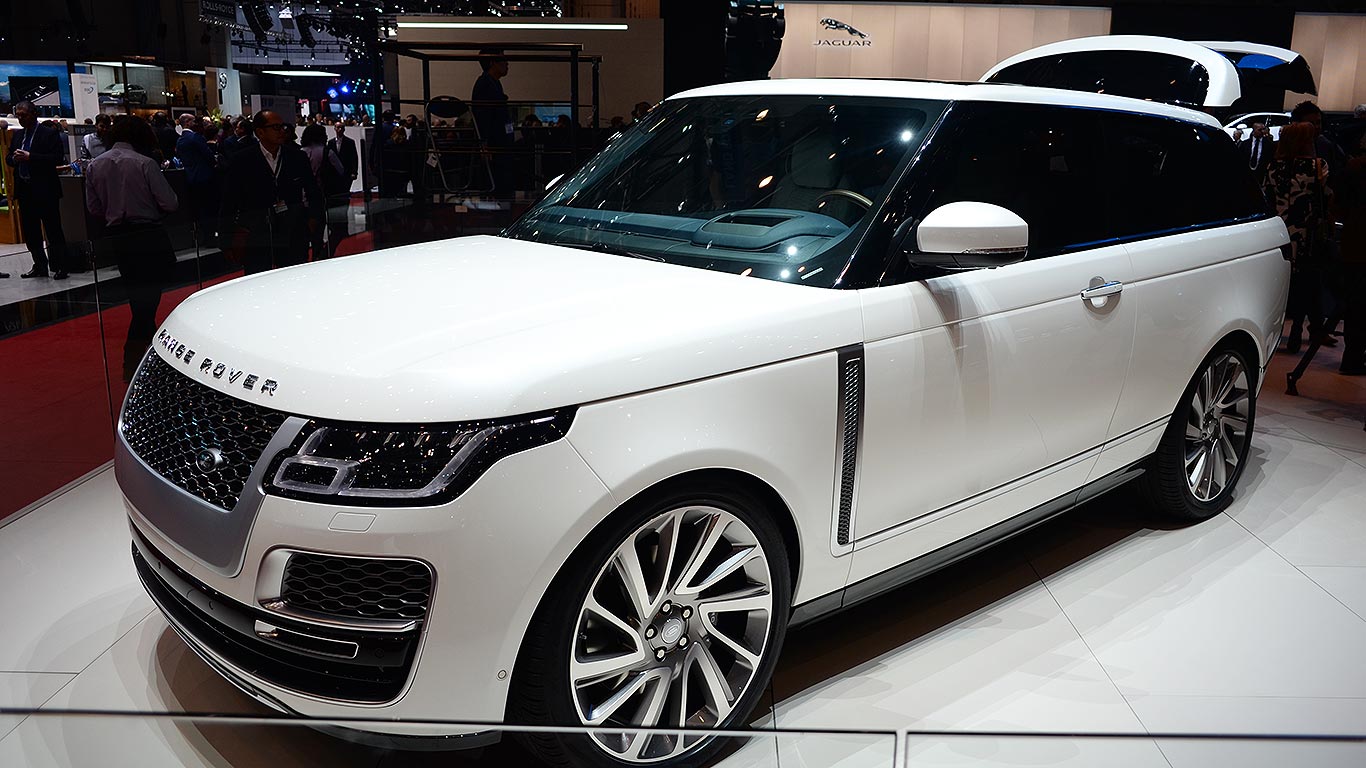
Range Rover SV Coupe
What’s the betting the Range Rover SV Coupe will be sold out by the end of the Geneva show? We were fortunate enough to attend the pre-launch reveal in Paris and, putting cynicism to one side, we find the idea of the SV Coupe utterly beguiling, even at the £240,000 price tag. The three-door, four-seat SUV is powered by a 565hp supercharged V8 engine and can be equipped with 23-inch rims – the largest ever offered on a Range Rover. Only 999 will be built.
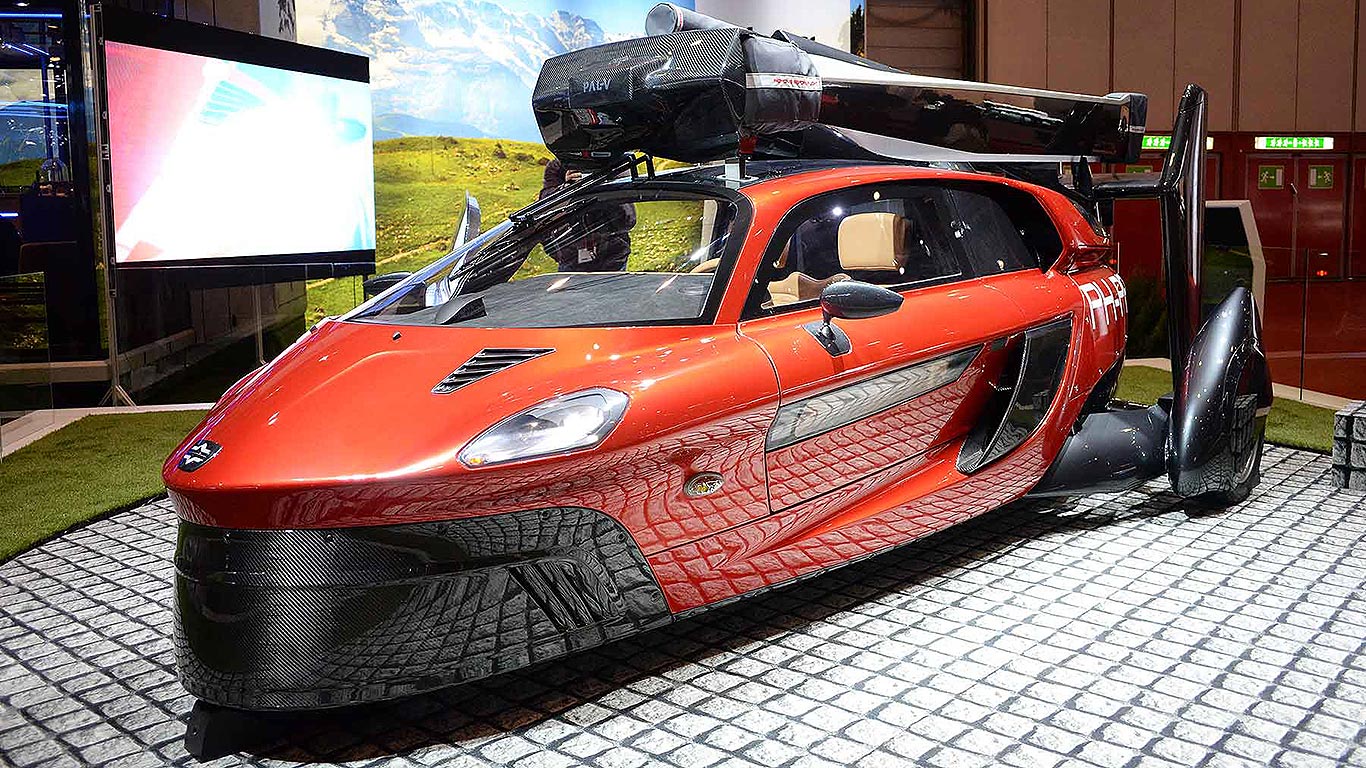
PAL-V Liberty
Is it a car or is it a plane? Actually, it’s both, as the PAL-V Liberty is the world’s first commercial flying car. In drive mode, the two-seater car is powered by a 100hp engine, has a top speed just shy of 100mph and can hit 62mph in nine seconds. In flight mode, the Liberty develops 200hp and can climb to an altitude of 3,500m. Total flying time is 4.3 hours or 500km (310 miles). The first model to market will be the €499,000 (plus taxes) Pioneer Edition, of which 90 will be sold worldwide. After that, PAL-V will start deliveries of the cheaper Sport Edition.
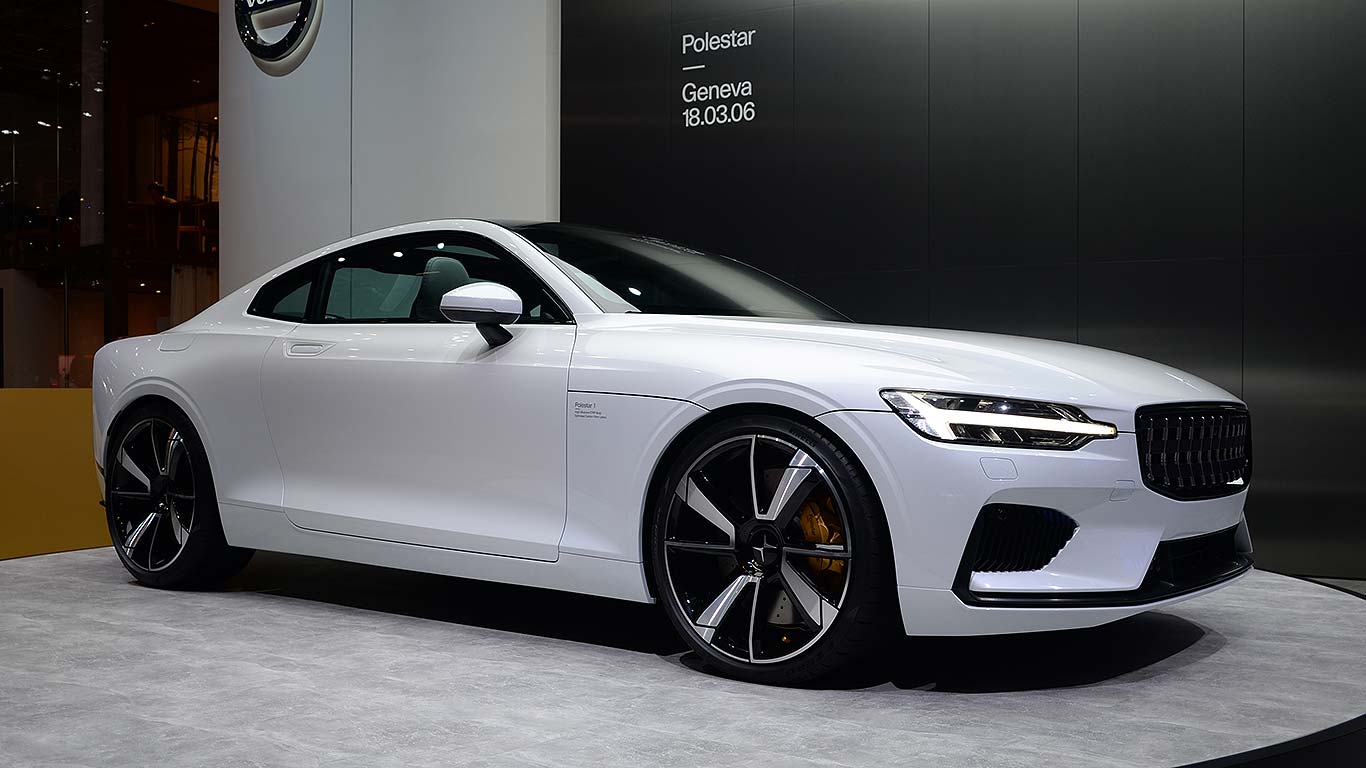
Polestar 1
Arguably the most attractive car on show in Geneva, the Polestar 1 is a bittersweet pill to swallow. On the one hand, we can marvel at its svelte and minimalist exterior and 600hp hybrid powertrain. On the other hand, Polestar won’t be producing a right-hand-drive version of this Volvo S90-based four-seat GT car. But at least it is coming to the UK.
Porsche 911 GT3 RS
With 520hp on tap, the GT3 RS is the most powerful naturally-aspirated Porsche 911 ever built and is likely to be the last hurrah for the 991 before the 992 arrives in September. The 4.0-litre flat-six engine is mated to a seven-speed PDK double-clutch transmission, delivering 0-62mph in 3.2 seconds. Order your £141,346 GT3 RS now, collect in June, then sell for an inflated figure. Probably.
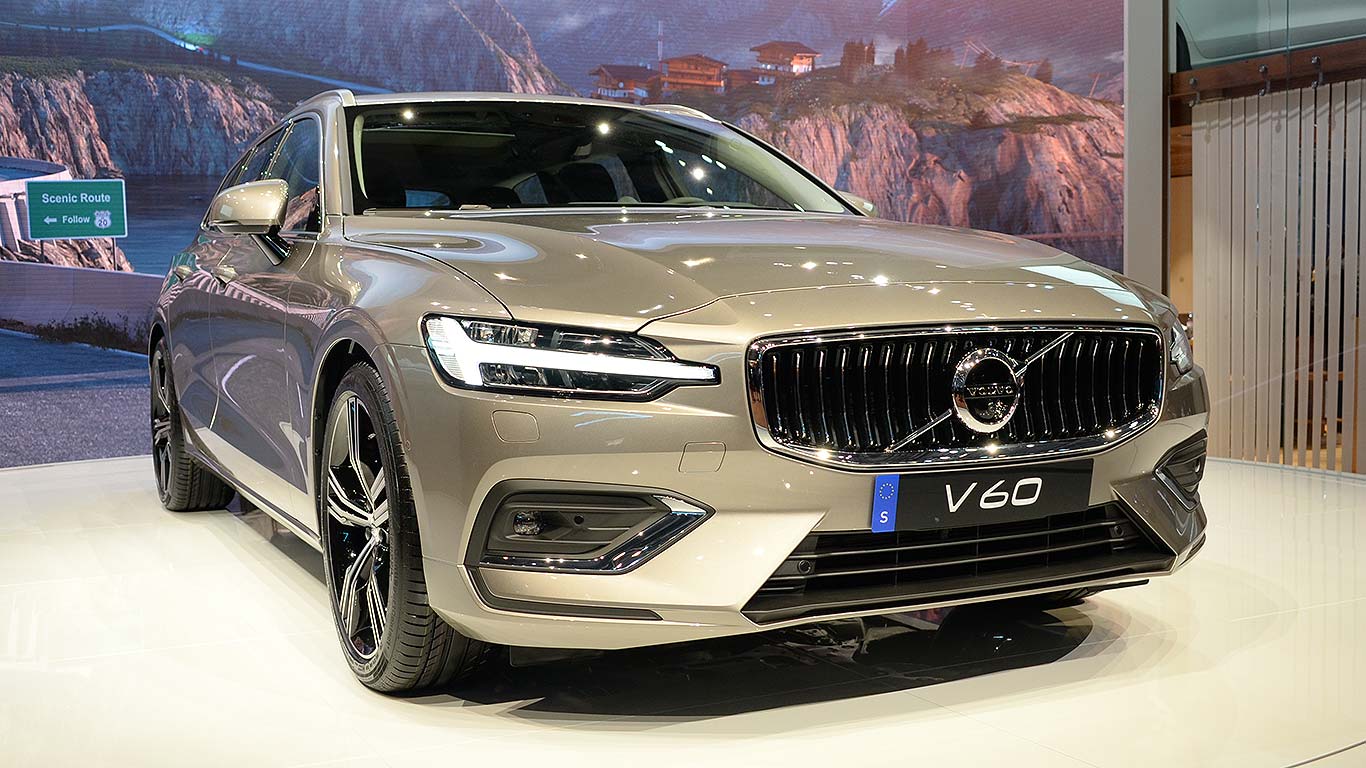
Volvo V60
If there was a prize for the best looking estate car at the Geneva Motor Show, the new Volvo V60 would be in the running. It’s like the V90, but in a more compact and well-proportioned package, sharing its platform with the XC60 and three 90-series cars. Prices will start at £31,810 when the first V90s are delivered in the third quarter of 2018.
Aston Martin thinks traditional luxury cars are old-fashioned and archaic. It’s thus reviving the Lagonda brand to ‘change how people perceive luxury transport’. The radical Lagonda Vision Concept, revealed at the 2018 Geneva Motor Show, demonstrates this bold new approach.
It’s about time, frankly. It was way back in 2008 that Aston Martin announced plans to bring back Lagonda. Since then, we’ve had an SUV concept the company would rather we forgot about, plus the unusual 2015 Taraf – a homage to the radical 1970s Lagonda.
Now, things are finally underway. Aston is currently building a new plant in St Athan, Wales, to produce thousands of luxury Lagondas a year, with production scheduled to start in 2021. By 2023, there will be two Lagondas on sale for the first time in decades.
All will be fully electric. Lagonda will be the world’s first zero-emissions luxury brand, and its cars will also have a high degree of autonomy. The aim is to launch with Level Four self-driving capability, just one level down from truly ‘driverless’ cars.
“For owners of true luxury cars, autonomy has existed for over a century, in a carbon-based form called a chauffeur,” said Aston Martin president and CEO, Dr Andy Palmer. ‘We imagine most Lagonda customers will choose to be driven, but whether by a person or a computer will be up to them.”
Aston is even hinting at solid state battery integration at some point in the car’s life – the same radical technology being pursued by Dyson’s start-up car division (whose chief engineer is Aston’s former head of engineering). The all-wheel-drive Lagonda will travel 400 miles between charges and be ready to recharge wirelessly, too.
The Lagonda Vision Concept
Described as a ‘near future concept’, the Lagonda Vision is a genuine Geneva Motor Show surprise. A luxury limousine, it’s joined on the firm’s stand by two smaller design models, one showing a possible Lagonda Coupe, the other a Lagonda SUV.
It seems the limo will come first. Going after high-end models such as top-line Mercedes-Benz Maybach, Bentley Flying Spur and even the Rolls-Royce Ghost, the Lagonda Vision isn’t as large as those cars. Chief creative officer and executive vice president Marek Reichman likens it to Concorde, which was smaller than traditional jet liners, but even more luxurious.
It’s all because it’s electric. Because there’s no need to jam in a large engine, it doesn’t technically need a bonnet. The shape is thus how it looks distinctive and cleaves the air as efficiently possible. The batteries sit in the floor, says Reichman: “Everything above that line belongs to us”.
It’s been designed from the inside out. There’s enough room for four adults two metres tall or more (Reichman is a tall guy). The door openings can be massive, and extra panels in the roof lift up so you can – literally – walk into it.
Armchairs and self-driving tech
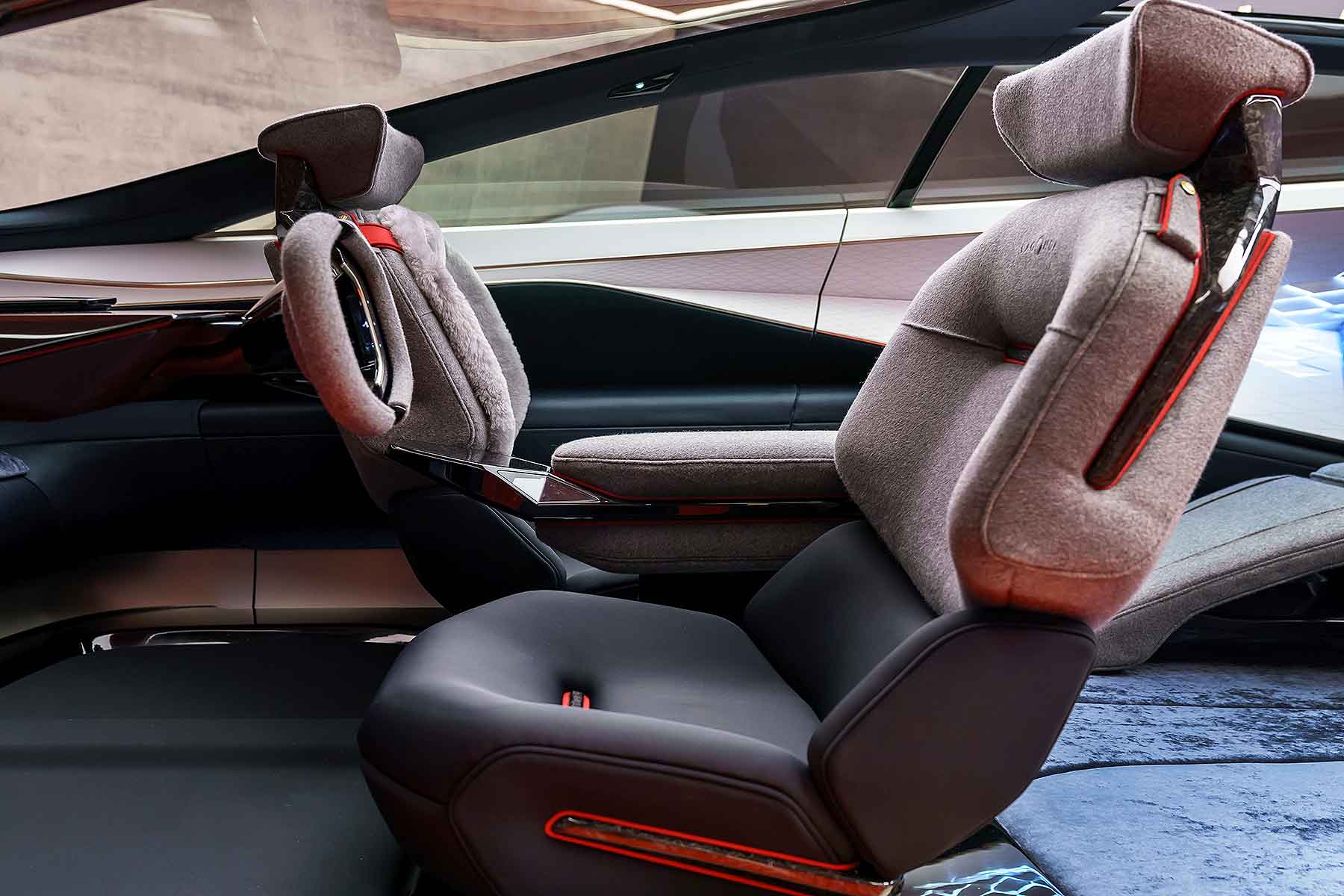
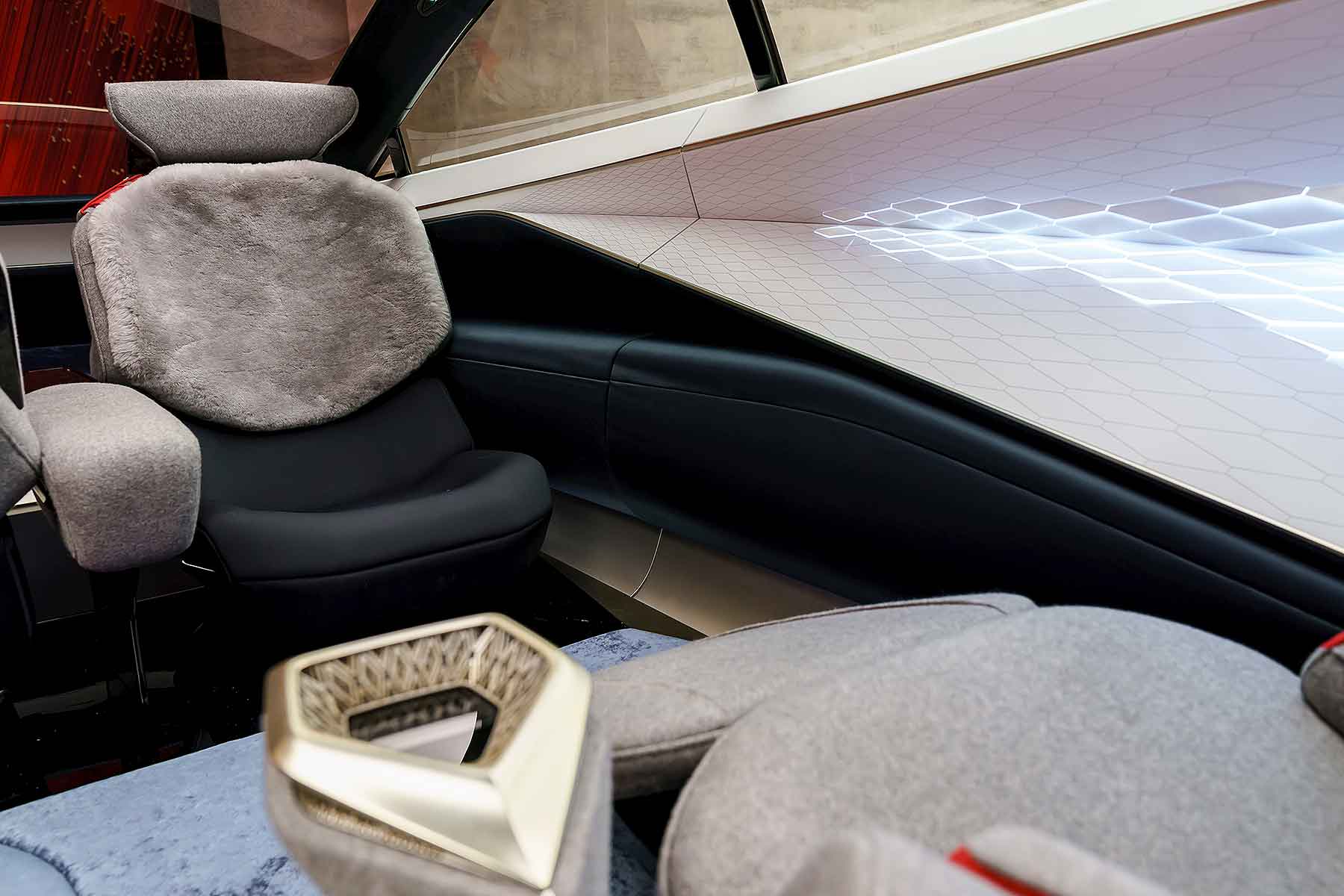
The Lagonda Vision doesn’t have mere seats, it has armchairs. With, stresses Reichman, proper armrests, because people use them to lower and lift themselves in and out of armchairs. The floor is uncluttered and space has been maximised.
Because it’s self-driving, the front seats rotate 180 degrees, and the steering wheel both retracts and can automatically switch from left to right, depending on who wants to drive.
It’s also trimmed unlike any other luxury car, using modern and traditional materials. Aston brought in famed furniture designer David Linley to advise on the interior. “Let’s use different materials, materials people won’t expect even in isolation, let alone together,” was his mantra. Hence the combination of carbon fibre, ceramics, cashmeres and silks.
A different kind of luxury
And wool seats, trimmed by Saville Row tailors Henry Pool. They created the patterns for the interior, meaning the seats are perfectly cut, like a fine suit.
“We believe people associate luxury in their cars with a certain traditional and even old-fashioned approach because, to date, that is all that’s been available to them” said Palmer.
“Lagonda exists to challenge that thinking and prove that being modern and luxurious are not mutually exclusive concepts.” The question is, are you ready for it, luxury car buyers?
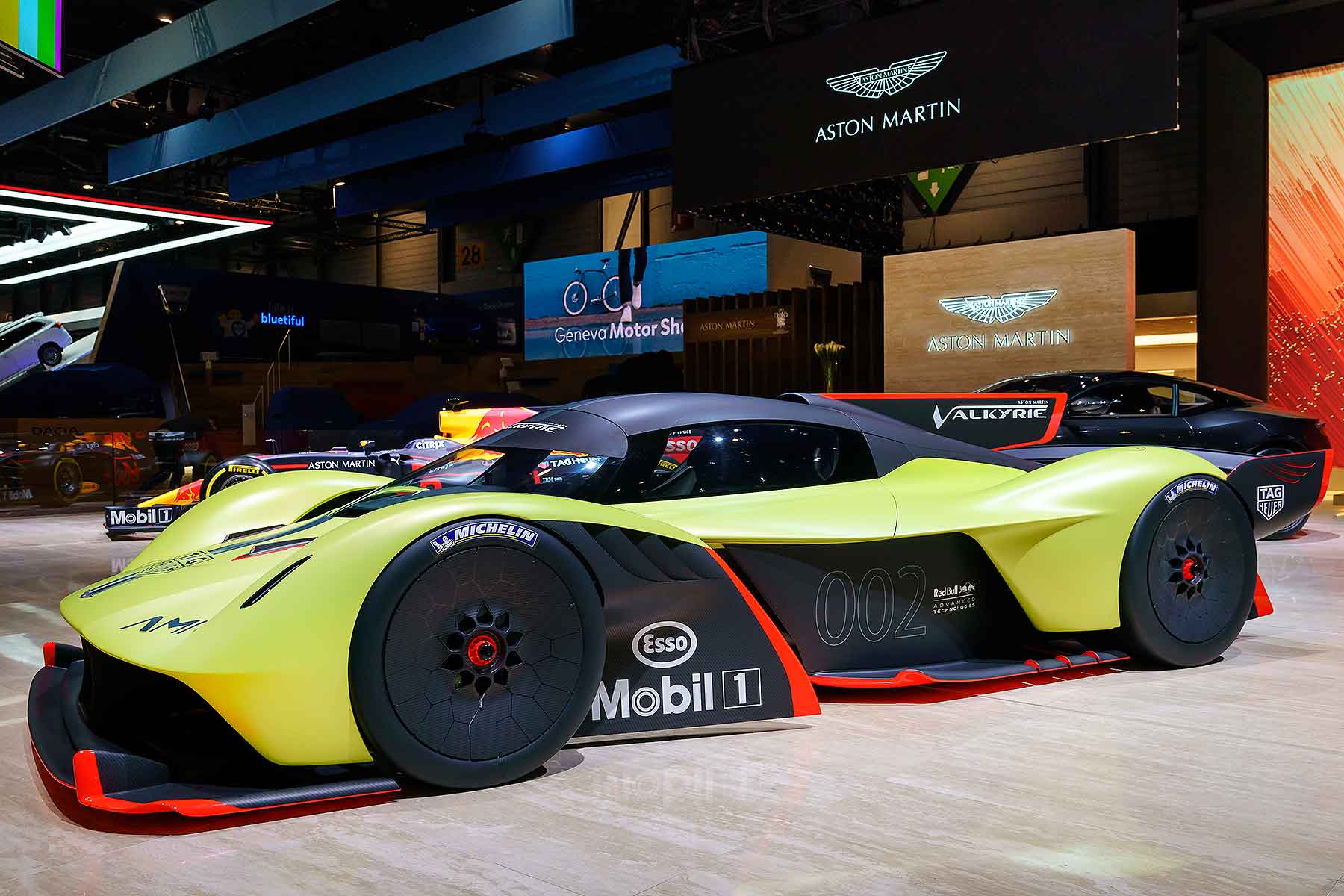
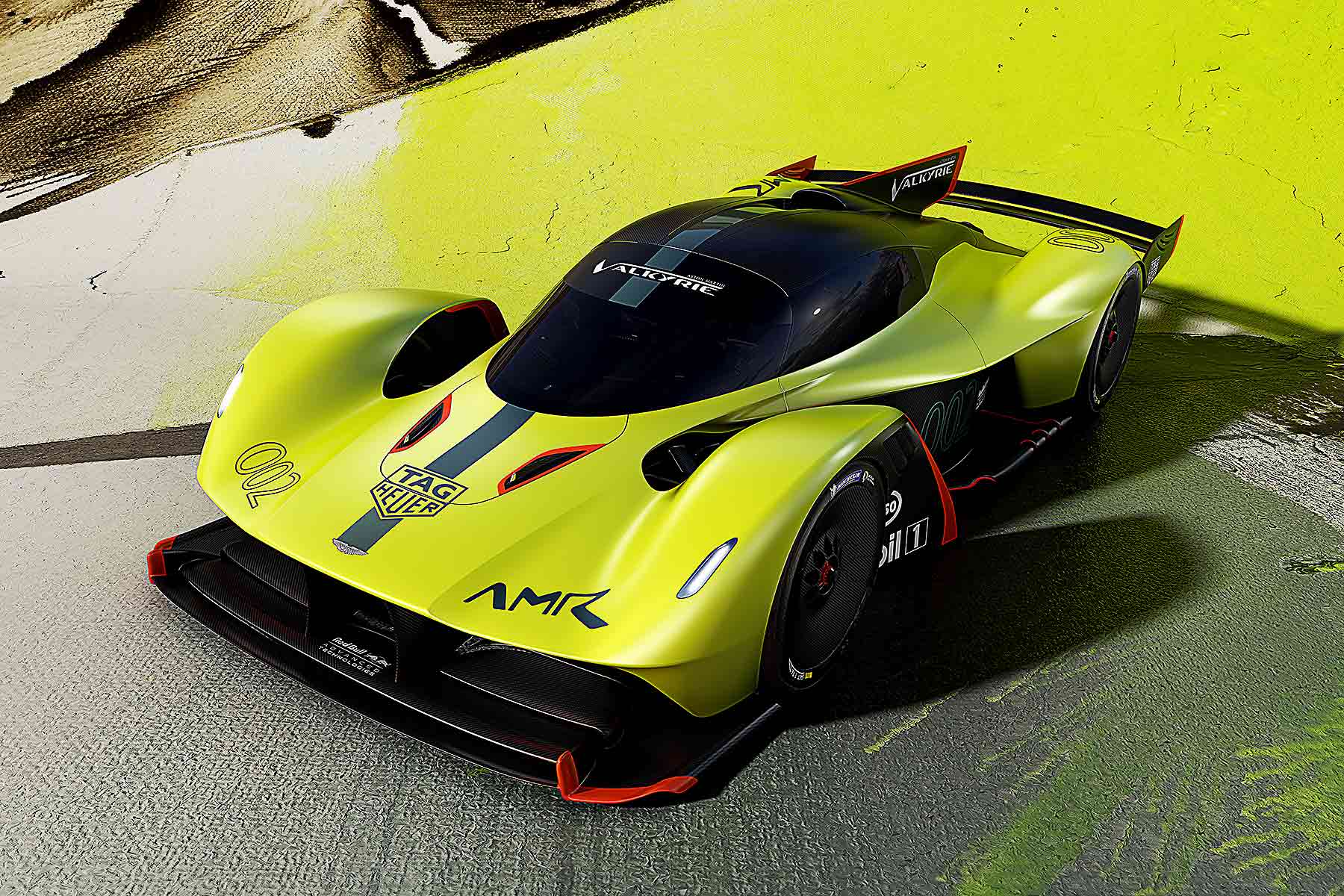
Aston Martin has revealed its new track-only Valkyrie AMR Pro hypercar at the 2018 Geneva Motor Show with a bold claim: it has performance capabilities equal to the 2018 Red Bull Racing F1 racer it is displayed alongside at the show.
The track-only version of Aston’s road-going Valkyrie hypercar, the same dream team has worked on the AMR Pro version: Red Bull F1 genius Adrian Newey, Aston’s chief creative officer Marek Reichman and motorsport guru David King. The result is a hybrid V12 hypercar putting out over 1,100hp and generating over 1,000kg of aerodynamic downforce.
As it weighs less than this, it means the Valkyrie AMR Pro has the fantastic boast of generating more than its own weight in downforce – something only racing cars are able to achieve.
Purely for the racetrack
Red Bull boss Christian Horner was on hand to reveal the car, which Aston also says has the performance potential of a modern Le Mans LMP1 prototype racer, similar to that Fernando Alonso is going to drive at the Le Mans 24 Hours this year.
Nothing short of a full aerodynamic overhaul could achieve this. Compared to the road-going Valkyrie, the AMR Pro has wider bodywork, bigger wings and new programming for its active aerodynamics.
The weave of the carbon fibre is also thinner, and Aston has ditched the heater and infotainment systems, all to save weight. It even has a polycarbonate windscreen – which, to ensure it doesn’t steam up due to the loss of the heat system, has heating elements built in.
The Valkyrie AMR Pro is a 1:1 car – it has more than 1bhp for every 1kg of mass, giving an exceptional power-to-weight ratio. This has been achieved by recalibrating the 6.5-litre V12 and its electrical energy recovery system. It also has enough power to hit 225mph, even in this high-downforce guise.
Cornering’s where it’s at, though. Aston boasts of cornering forces nudging 3G, way beyond any normal road car and the sort of Gs you only normally see F1 racers achieving.
F1 and Le Mans technology
Aston Martin CEO Andy Palmer said: “Anyone who knows me will tell you I’m a true racer at heart, so to see the track-only Aston Martin Valkyrie AMR Pro together with Aston Martin Red Bull Racing’s Formula One and Aston Martin’s World Endurance Championship cars here at Geneva is fabulous.
“I’m starting to get used to some of the extraordinary things Adrian (Newey), Red Bull Racing, Aston Martin and all our exceptional technical partners – now including Mobil 1 and Esso as Valkyrie’s official oil and fuel partners – are capable of. But the Aston Martin Valkyrie AMR Pro is something truly mind-bending.”
Red Bull Racing’s Newey added: “The Aston Martin Valkyrie road car draws extensively from the knowledge I have gained during my career in Formula One, but the AMR Pro version has allowed me to work beyond the constraints of road legality, or indeed practicality!
“We’ve told a few of its secrets, but by no means all. I will leave it to the public to ponder the lap-time predictions. Suffice to say they’re quite impressive.”
Bad luck if you want one though. Aston will only build 25 Valkyrie AMR Pros, starting 2020. And all are already sold.
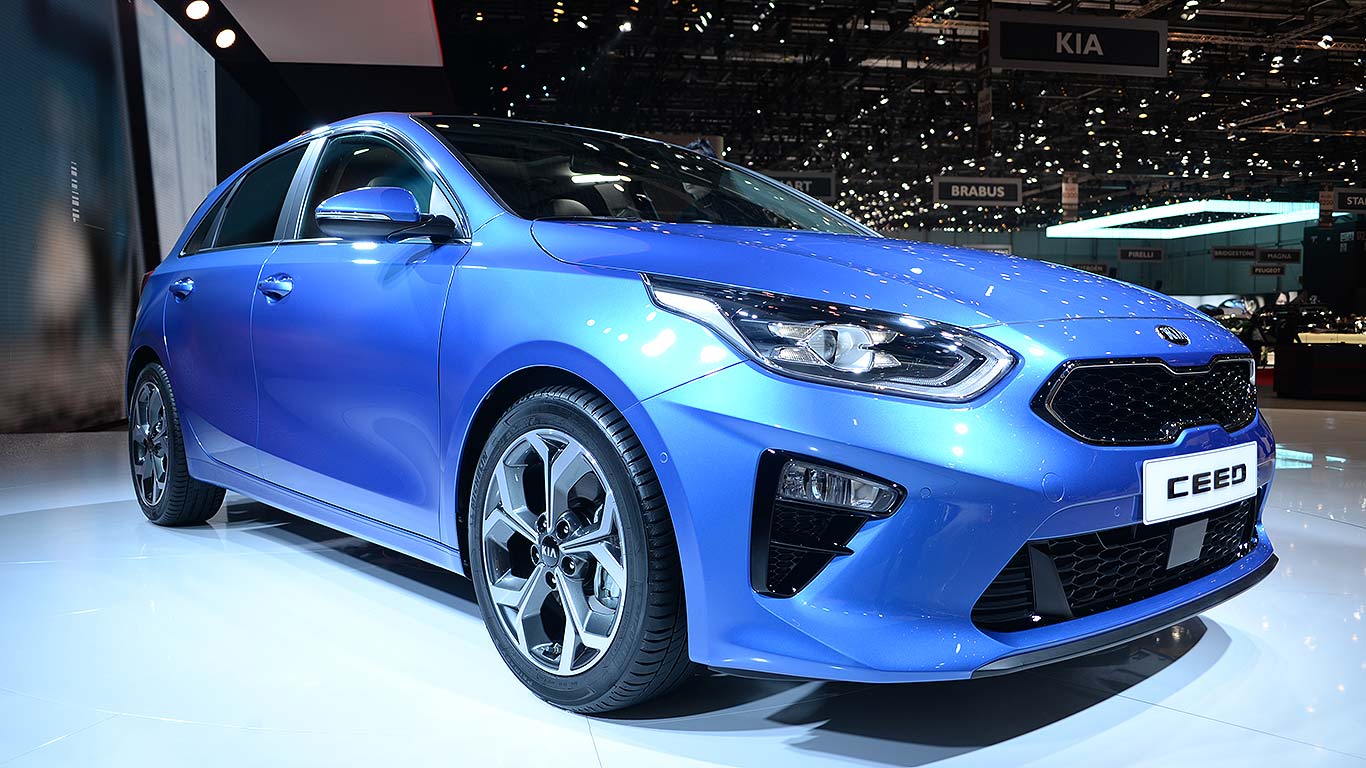
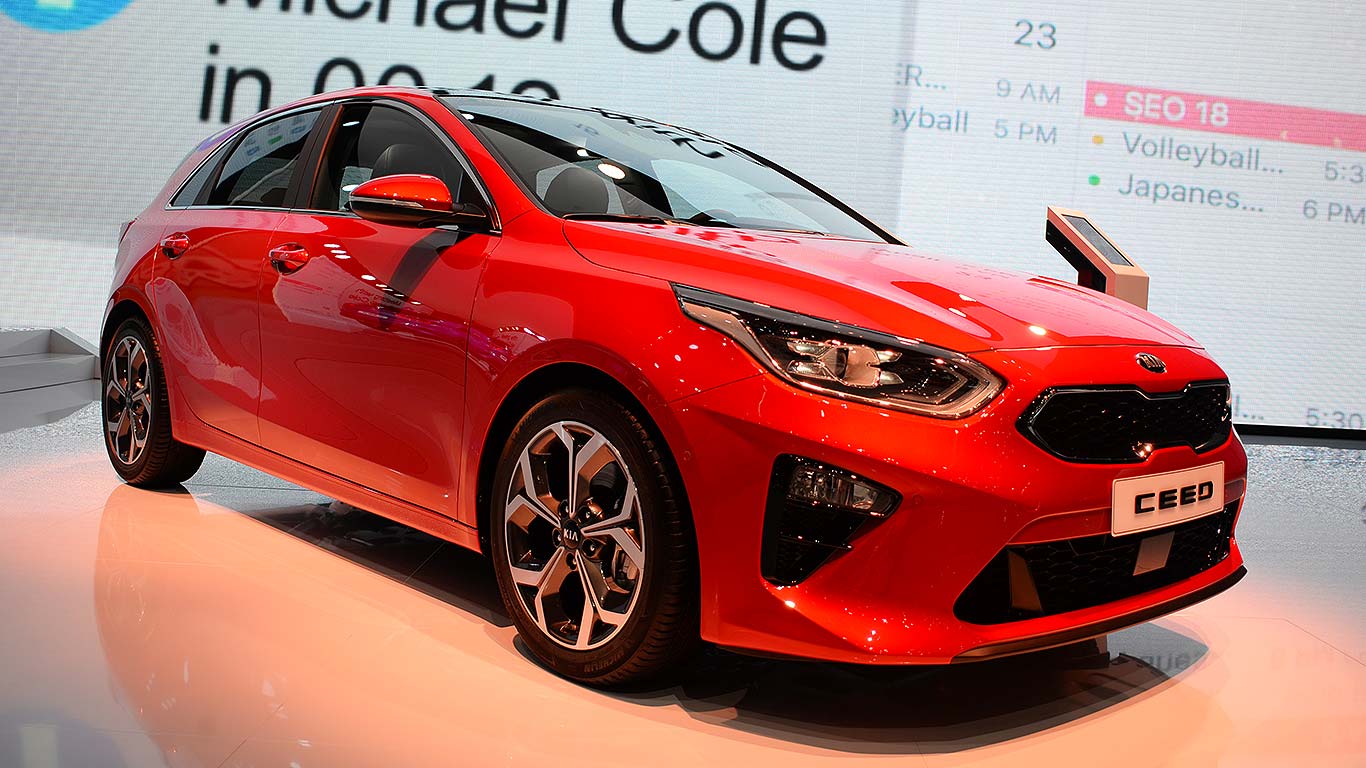
Can’t wait for the new Ford Focus? Kia has revealed its new Ceed hatchback and Ceed Sportswagon estate at the 2018 Geneva Motor Show.
Based on Kia’s new K2 platform, the new Ceed (note the lack of an apostrophe – at last) is 20mm wider and 23mm lower than its predecessor. Its wheelbase remains the same, while a rear overhang extended by 20mm compensates for a 20mm shorter front overhang.
Engineered especially for Europe – something that has helped Kia become one of the big boys over here in recent years – the new Ceed will come with a variety of petrol and diesel engines.
The petrol line-up is made up of a 100hp 1.4-litre, a 120hp 1.0 turbo and a turbocharged 140hp 1.4. Diesel buyers are catered for with a 1.6 in 115hp and 136hp guises. There’s also a choice of a six-speed manual or seven-speed double-clutch auto transmissions.
The Stinger effect
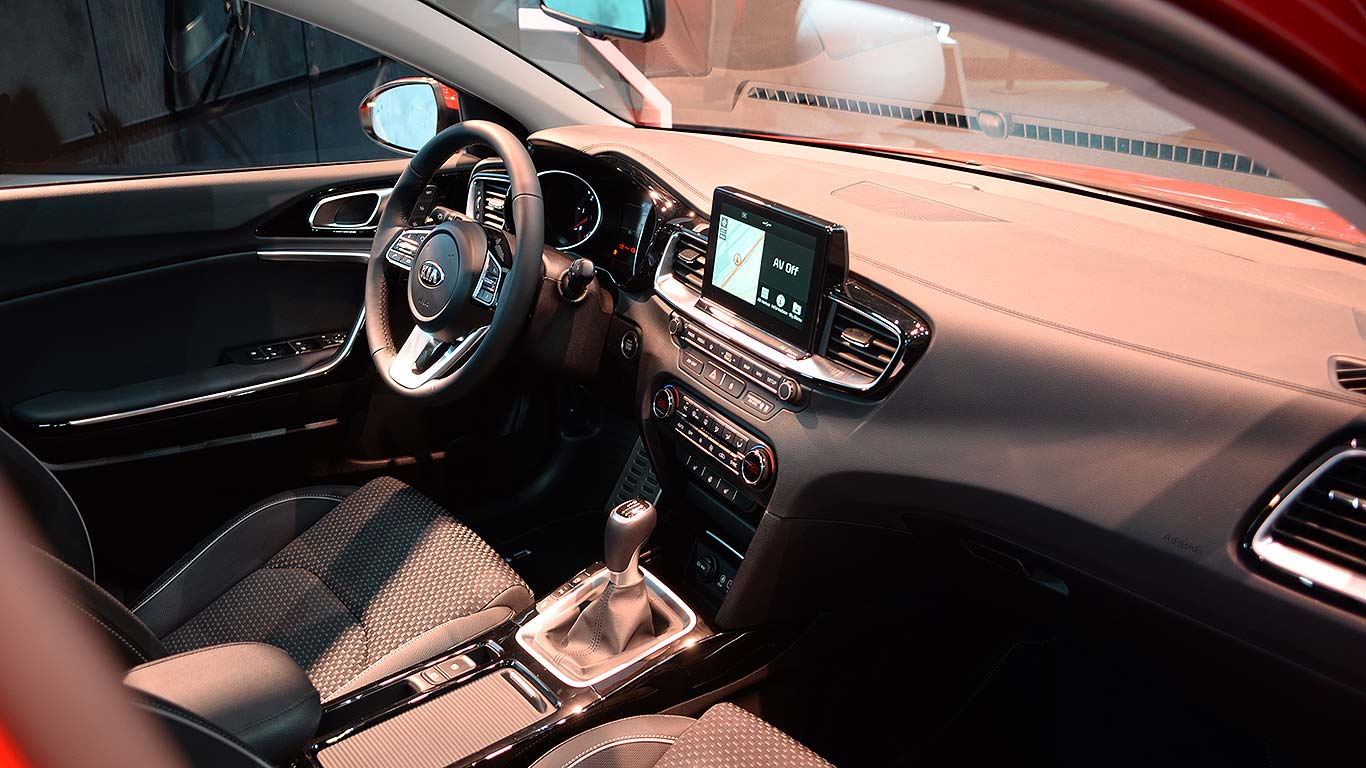
Built alongside the Sportage and Venga in Slovakia, the Ceed marks a clear step upwards in terms of quality. Sitting in the cabin at Geneva, cues from recent Kia models such as the upmarket Stinger are obvious. There’s a new infotainment system, available with a five- seven- or eight-inch screen, while a variety of drive modes cater for all driving styles.
The boot’s 15 litres bigger than before, up to 395 litres in the hatchback (which, incidentally, is now only available as a five-door). The Sportswagon accounted for around 40 percent of all sales of the outgoing Ceed, with the new model boasting a boot size of 600 litres (bigger than the larger Optima Sportswagon but short of the Honda Civic’s 624 litres).
Technology includes level two autonomy in the form of lane-following assist. This tracks vehicles in front of the Ceed in traffic and uses road markings to keep the car in its lane on the motorway. It can control the steering, acceleration and braking using sensors to monitor vehicles ahead. It operates at speeds between 0mph and 80mph.
Prices are yet to be announced, but we doubt there’ll be much of an increase over the current £15,365 start-price. In true Kia fashion, the new Ceed will come with a seven-year, 100,000-mile warranty with sales starting in summer. Still tempted to hold on for that Focus?
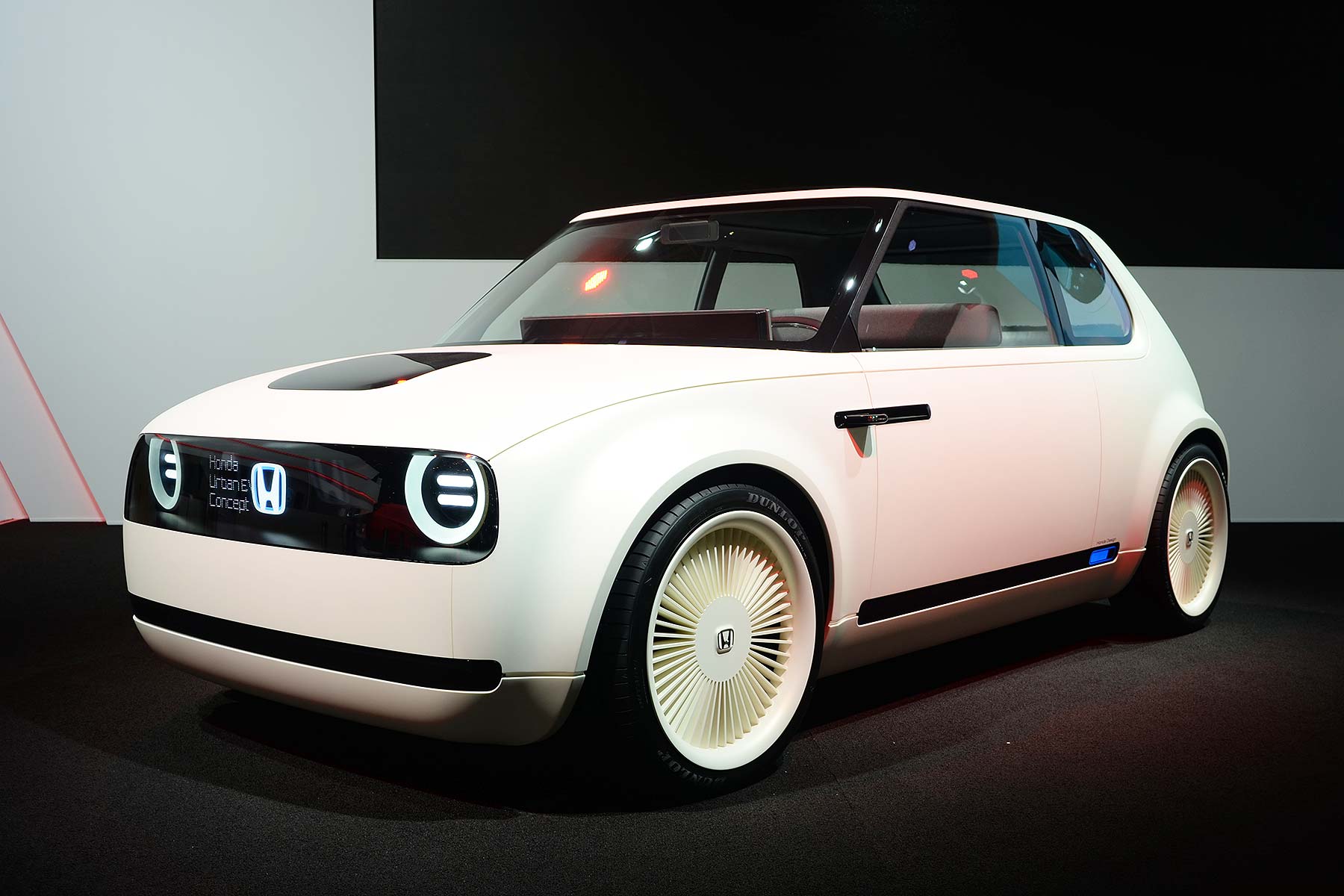
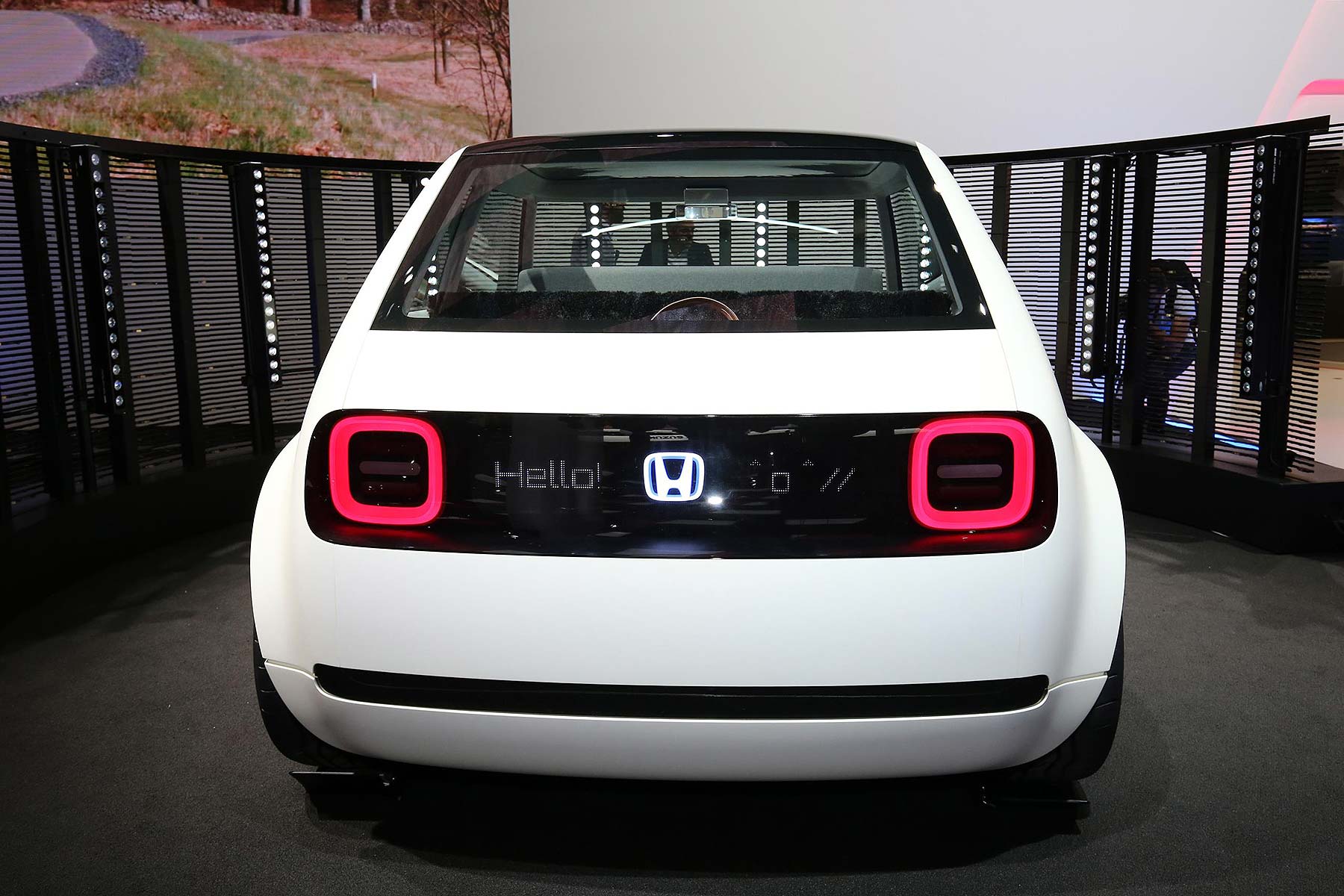
The Honda Urban EV Concept wowed the crowds at the 2017 Frankfurt Motor Show, and it returns to the show stands at Geneva 2018, with an added bonus – the confirmation Honda’s going to build it.
Indeed, Honda has actually announced ordering for the production Urban EV will open in early 2019.
It’s all thanks to response to the concept version that was, reportedly, beyond Honda’s wildest dreams. An insider told us the positive reaction took the engineers by complete surprise.
It’s this excitement that’s encouraged them to accelerate production: getting confirmed orders from buyers is a great way to keep momentum up.
Honda’s first volume battery electric car, the purist Urban EV Concept is gloriously simple in design, from its near-retro appearance to its thin A-pillars and wide windscreen that afford great visibility.
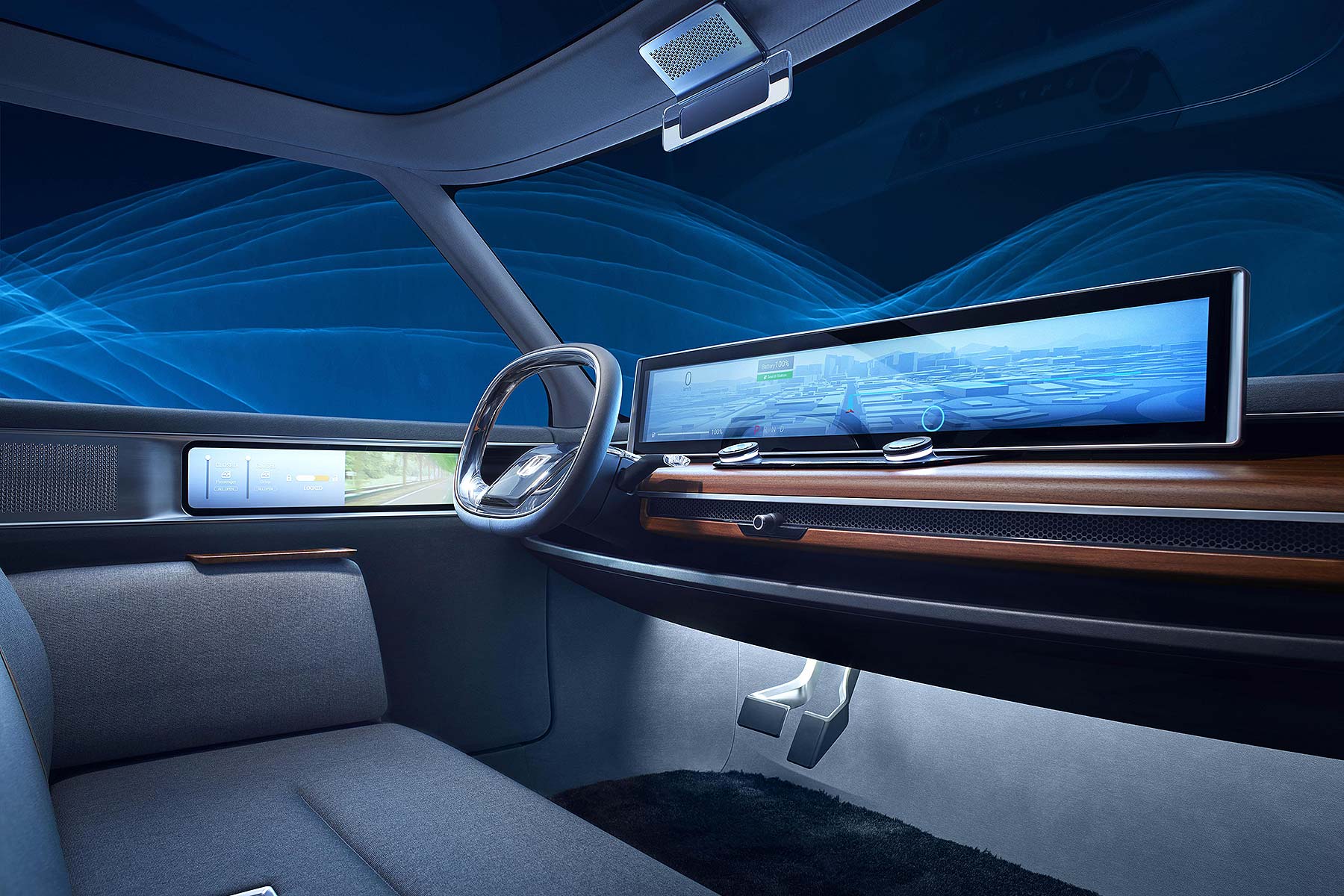
The concept seats four inside, on two bench seats which are trimmed in different materials – like a living room, says Honda. Whether they’ll make it to production remains to be seen: perhaps Honda could trim conventional seats in differing materials, to continue the theme?
Less likely to make it is the dashboard’s full wrap-around screen, or the monitors in the doors that stream a camera feed and serve as the door mirrors. But, as the latest Civic proves, Honda can still do standout interiors even in production cars.
We look forward to what it might have in store for the Urban EV.
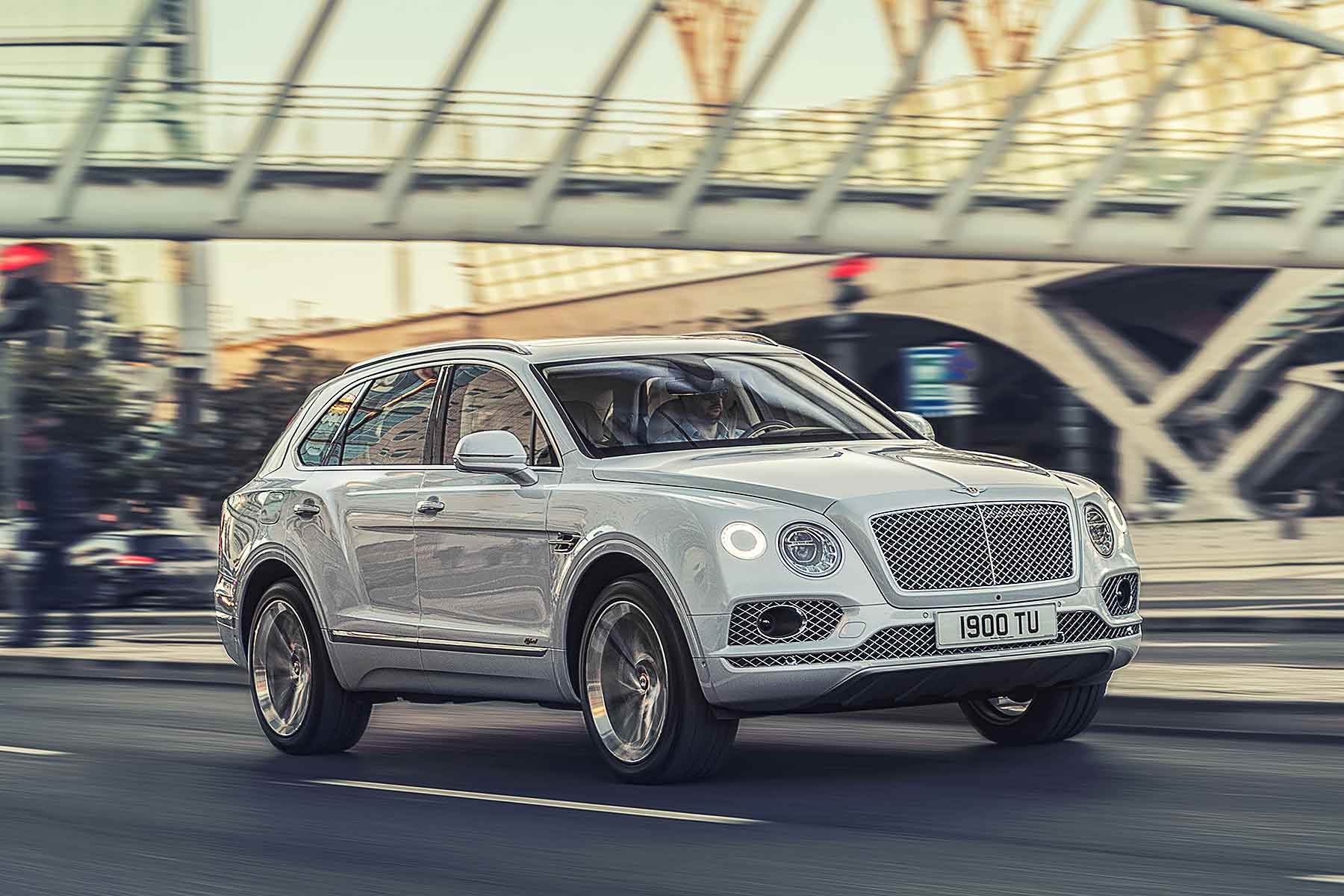
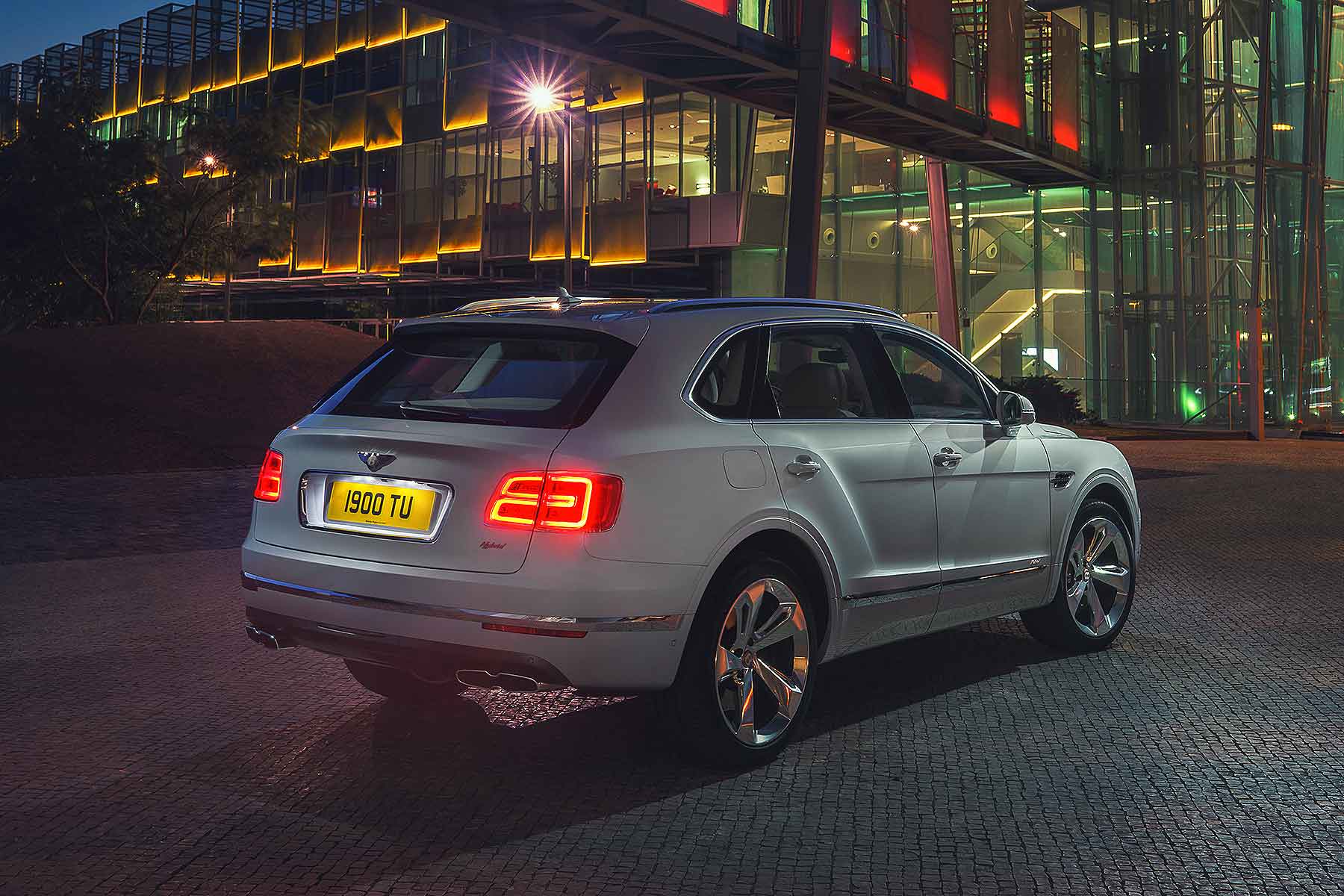
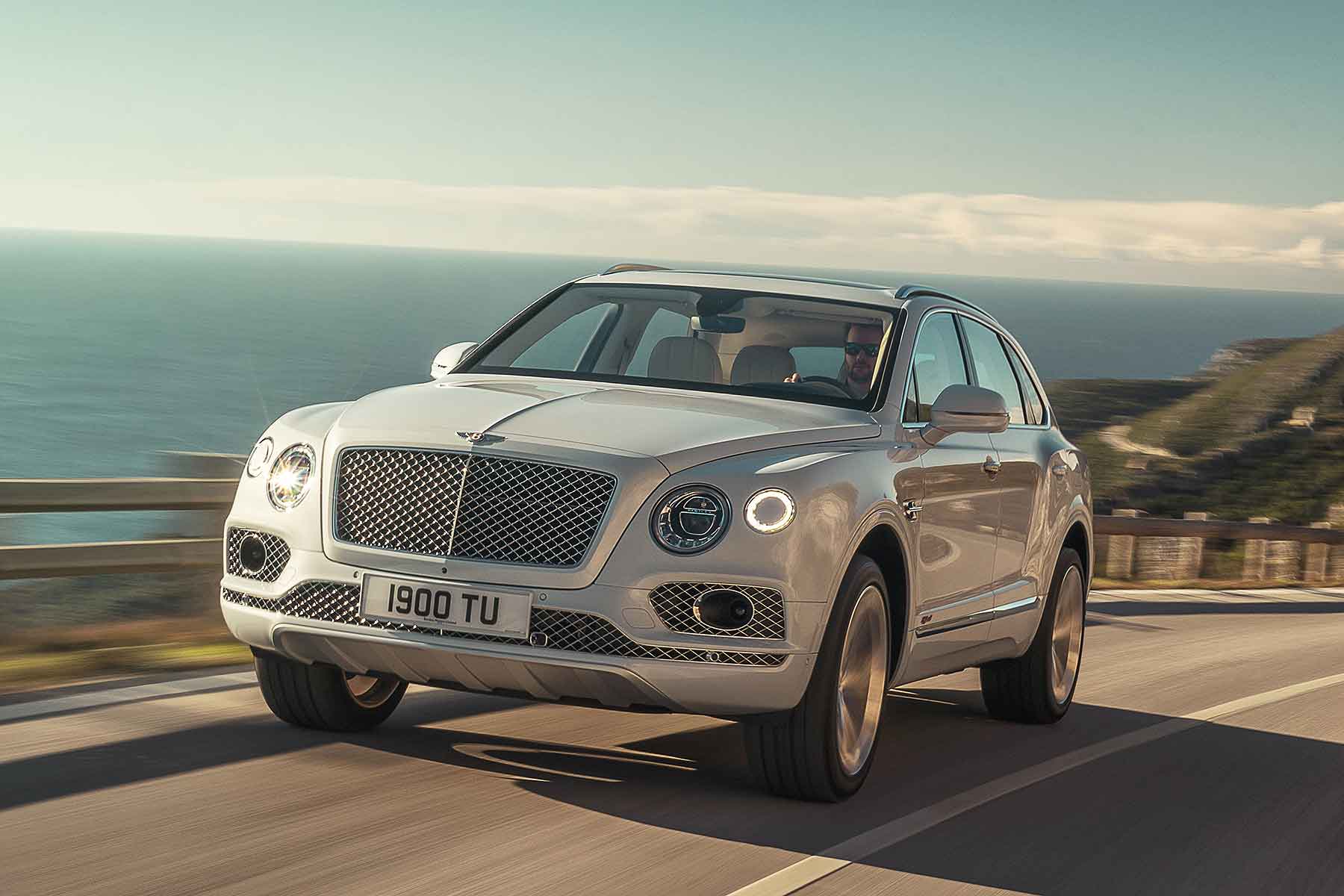
Bentley has revealed what it calls the world’s first luxury hybrid at the 2018 Geneva Motor Show. The new Bentayga Hybrid is its first electric-assist vehicle and, says new British chairman and CEO Adrian Hallmark, a first step towards full electrification.
A plug-in hybrid, the Bentayga combines a 3.0-litre turbo V6 engine with an electric motor and beefy battery set. It will run for 31 miles as a pure EV and, on the official fuel economy cycle, emits just 75g/km CO2.
For comparison, the UK’s most popular car, the Ford Fiesta, emits 99g/km CO2 in top-selling 1.0-litre Ecoboost 125 guise.
Although the car is derived from the Audi Q7 E-tron, Bentley is adamant the arrival of its Bentayga plug-in hybrid is significant – and “sets Bentley on the path towards a sustainable electrified future”. Lots of luxury cars are sold and used in cities, which are clamping down on vehicle emissions.
The Bentayga Hybrid is the firm’s first response to anticipated future restrictions that only allow the use of EVs.
It even has a clever sat nav system that’s geared around this. Set your destination and the computer will work out when best to use the various EV modes – even storing up battery power so you can finish your journey in the city entirely with electric drive. Bentley says the system is set up to take the battery charge right down to zero at the end of every drive, to fully maximise its zero-emissions range.
It looks like any other Bentayga, apart from a few key changes. There are copper ‘Hybrid’ badges on the lower front doors and the tailgate, plus copper wheel centres and Bentley logos. Open the door and ‘Hybrid’ is written on the kickplates.
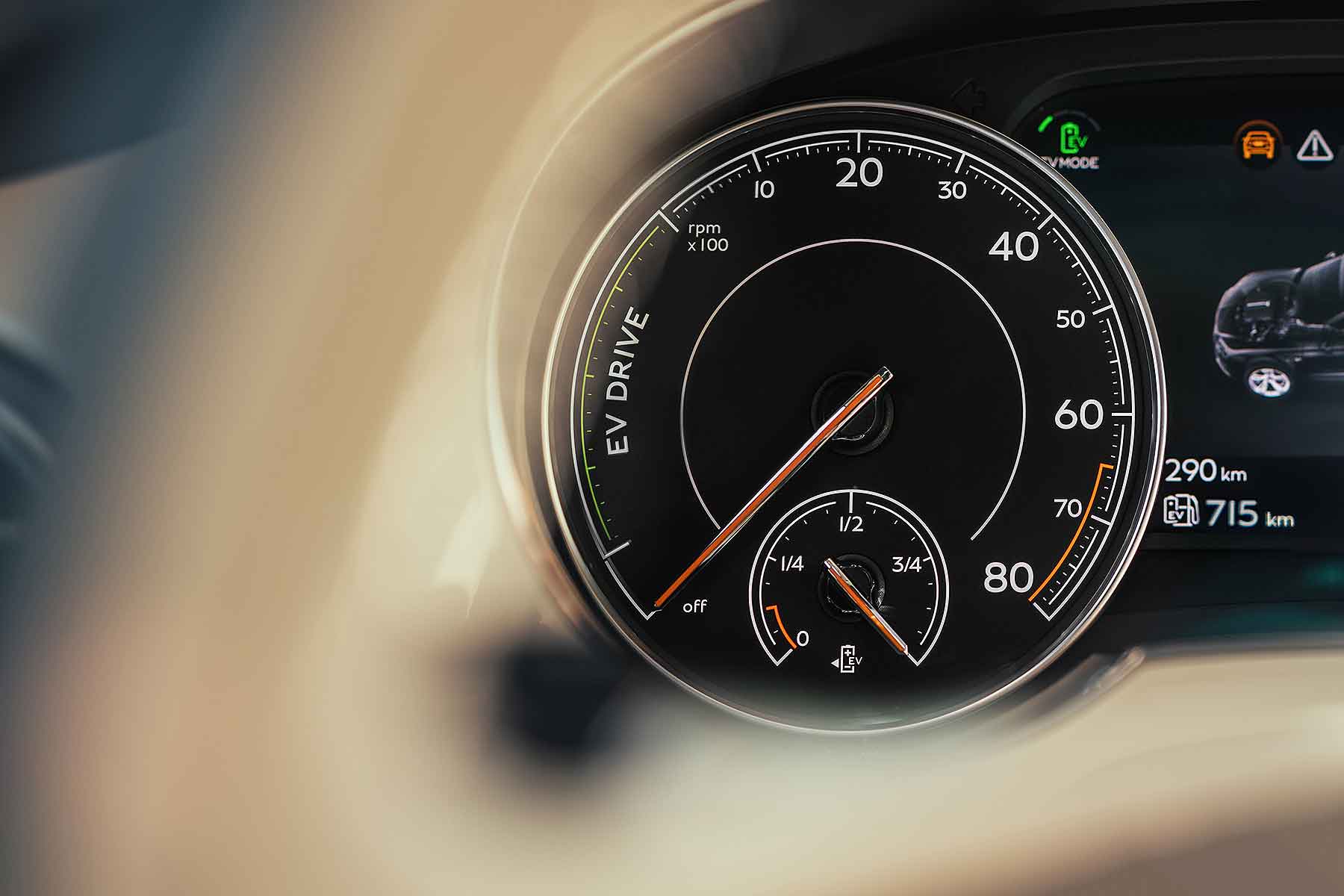
The rev counter is replaced by an electric charge dial, while the coolant dial is substituted by a battery charge indicator. And, in the central infotainment system, you can have a full Toyota Prius-style electric distribution display (or a TV if you prefer).
If you charge the batteries via a three-pin socket, it will take a yawning 7.5 hours. This reduces to 2.5 hours if you have a wall box – and, anticipating that, Bentley is working with famed designer Phillipe Starck to create an ultra-posh ‘Bentley by Starck Power Dock’ wall box. It won’t be cheap, but it will be fancy.
Further details of the new Bentayga Hybrid will be revealed later in the year, with ordering opening in the second half of 2018. Prices? Expect a starting point of at least £150,000.
 This is not a normal, full-blooded drive of a new car. If you think you’ve seen a review of the Jaguar I-Pace elsewhere (before June 2018), well, the writers are being economical with the truth.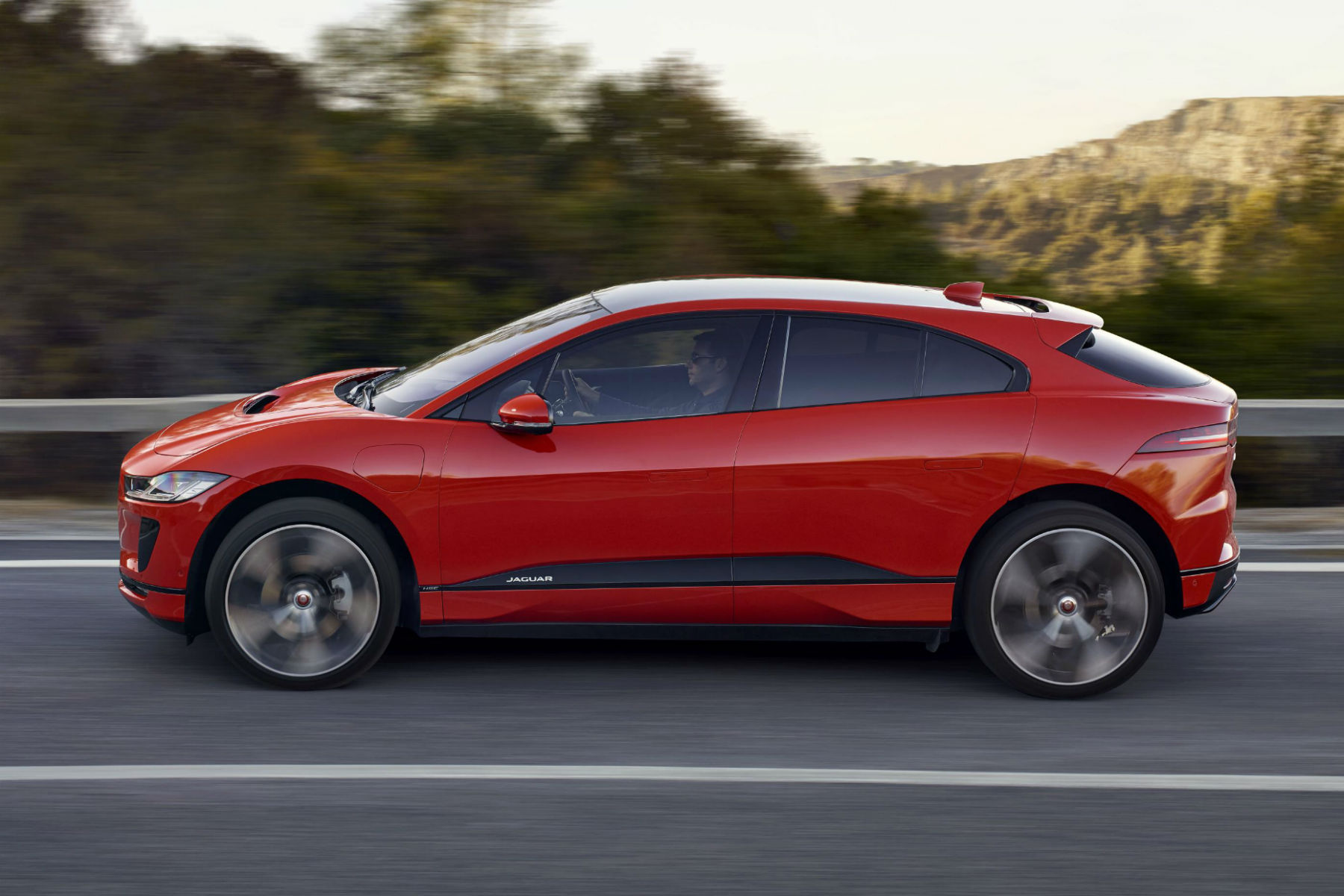
 The final three in the running for the prestigious 2018 World Car of the Year Award have been revealed at the
  There is no shortage of high-performance hypercars and sports cars at the 2018 Geneva Motor Show. Here, we round-up our favourites, from Aston Martin to Zenvo.
 The 88th Geneva International Motor Show is underway, packed with the usual array of supercars, hypercars, crazy concepts and folk tripping over trailing flight bags. We’ve elbowed our way to the front of each stand to bring you all the important cars from
 Aston Martin has revealed its new track-only Valkyrie AMR Pro hypercar at the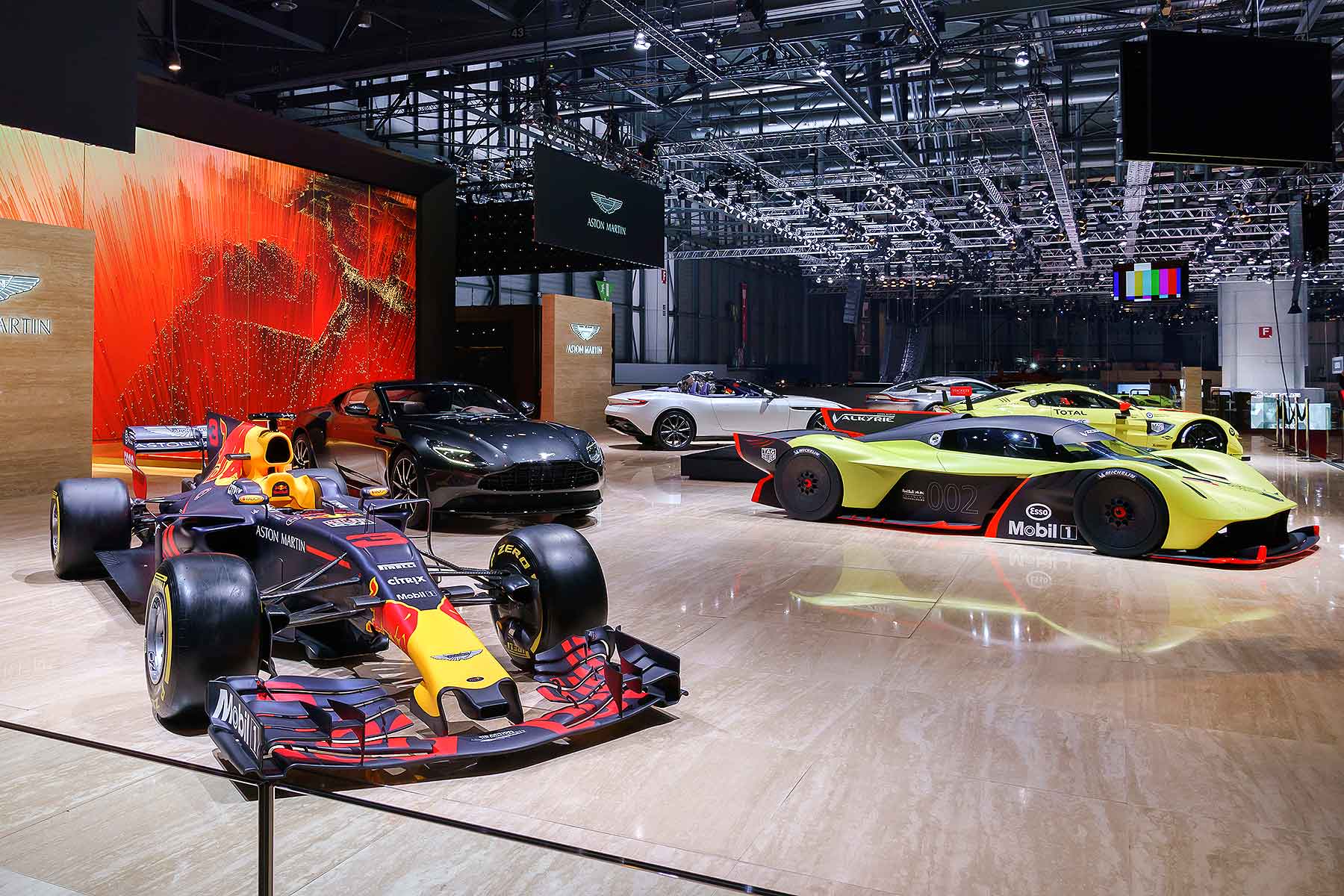
 Can’t wait for the new Ford Focus? Kia has revealed its new Ceed hatchback and Ceed Sportswagon estate at the 2018 Geneva Motor Show.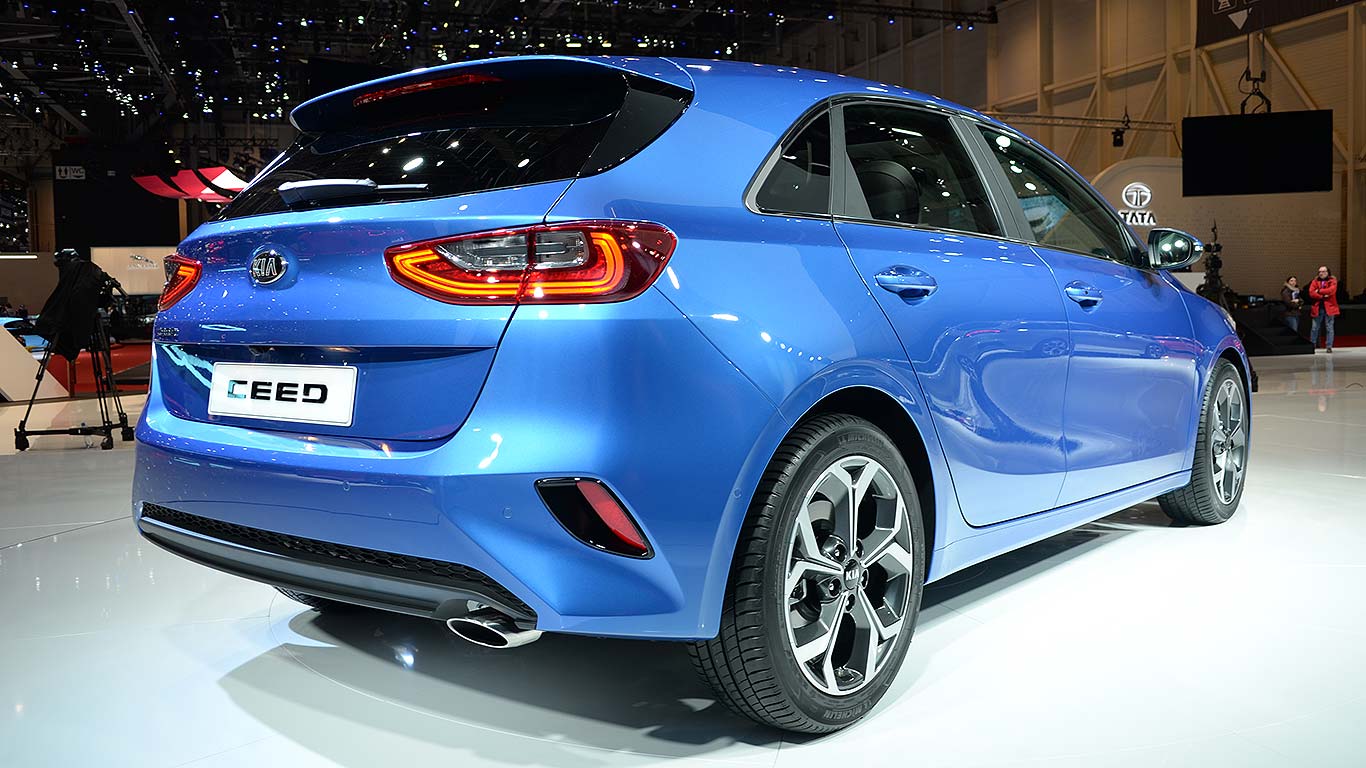

 Bentley has revealed what it calls the world’s first luxury hybrid at the