Ferrari has launched two new extended warranties for those who buy – or already own – one of its plug-in hybrid (PHEV) supercars.
The cover is intended to provide extra peace of mind for those choosing a car from the famous Italian marque.
Offered for various Ferrari models, from the 296 GTS (pictured above) to the extreme SF90 XX Stradale, the extended warranties are in addition to the standard five-year cover provided on hybrid components.
Dedicated to hybrid Ferraris
The two new warranty programmes, named ‘Warranty Extension Hybrid’ and ‘Power Hybrid’, can be purchased through the Ferrari dealer network.
Owners can choose warranties in renewable two to four year packages, which can be transferred when their Ferrari is sold.
Even cars outside of the existing four-year standard factory warranty period are eligible to upgrade, following a technical inspection by a Ferrari dealer.
Choosing the maximum eight-year period also means Ferrari will replace the high-voltage battery pack (HVB) at no extra cost.
Cover for up to sixteen years
Choosing the Power Hybrid warranty lets owners extend cover to include all major elements of the car’s powertrain.
This comprehensive warranty spans from years eight to sixteen of the car’s life, and sees another HVB replacement included at no additional cost.
Ferrari has also committed to future-proofing owners against developments in battery technology. The company will guarantee that any replacement HVBs will be a brand new component, able to match the performance of the original factory item.
Both the new warranty packages are available to buy from Ferrari dealers now.
Nick English, who co-founded luxury brand Bremont Watches with his brother Giles, has been appointed executive chairman of heritage automotive brand MOKE International.
English will spearhead a major growth phase for MOKE, which has already sold 500 vehicles to date, and is now in talks with strategic partners and investors.
His appointment is effective immediately, as current CEO Isobel Dando steps away from her role.
“Hiring Nick is a real coup for MOKE,” she said. “He is passionate about British engineering – be it flying planes, making watches or driving cars – and, as a serial entrepreneur, I believe he has exactly what we need to further develop the business.”
MOKE International owns the original 1964 European MOKE trademark; the famous Mini MOKE was conceived in the early 1960s as a military utility vehicle by Austin Mini designer Sir Alec Issigonis.
In 2023, an Electric MOKE was launched, helping the firm become the first heritage automotive brand to go 100% electric.
The cars are built in Northamptonshire – “just miles away from where the original MOKEs were built in the 1960s” – and the firm currently has a wating list of around 800 orders, which is worth $25m.
Pivotal time
English says he is joining MOKE at a “pivotal time… I look forward to working with the talented team to build on its legacy, continue and grow the manufacturing of the cars in the UK, and explore new opportunities for innovation and expansion”.
Impressively, the Electric MOKE has already been homologated for use in both Europe and the USA, and the company now plans to take it even further afield.
In 2022, MOKE attracted a bid worth $120m for the business, but remains proudly independent, and has raised $35m of investment to date.
After handing over Bremont to new management as part of a strategic investment round that valued it at £100m, English will now use his experience in manufacturing and lifestyle brands to further develop MOKE.
The ECOBEST Challenge 2024, which rates the real-world range of electric cars, begins this week with 14 new EVs set to be tested until their batteries run flat.
The fourth running of the ECOBEST Challenge will again take place in Vairano, Italy, using a combination of public roads including motorways, national roads and city centres.
The independent test aims to reveal the true green credentials of the latest electric cars, including the real-world battery range and how far an EV will travel when the range display is showing zero.
Key cars taking part in the ECOBEST Challenge 2024 include the award-winning BYD Dolphin and Kia EV9, the new Mini Cooper, best-selling Tesla Model Y and the long-range Volkswagen ID.7. The full list of contenders is below.
Each EV will be driven until its battery is completely flat. Drivers include media from across Europe, who are instructed to apply their typical real-life driving styles.
They are also encouraged to use all onboard tech, including the climate control system and other power-munching tech.
To prevent driving style bias, drivers are rotated every 25 kilometres (15.5 miles).
The ECOBEST Challenge 2024 is organised by AUTOBEST, the largest independent motoring awards initiative in Europe, in partnership with new EV brand VinFast.
AUTOBEST chair Dan Vardie said the challenge “delivers real information on the range a customer can expect, how big the battery reserve is worth, the energy efficiency, and more”.
It is certified by official organisation Bureau Veritas, meaning “the entire driving method is consistent with the randomised ‘human factor’ defined by AUTOBEST, and based on the diversity of members coming from all around Europe”.
ECOBEST Challenge 2024 takes place between 26-28 June. Full results will be announced following final verification and approval by Bureau Veritas.
Aston Martin has released the first images of its new limited-edition supercar, created by the company’s in-house Q division.
The Valiant is based on a personal commission for Aston Martin’s very own F1 team driver, Fernando Alonso.
The Spanish star requested a more hardcore, driver-focused version of the 2023 Aston Martin Valour, with less weight and the ability to be driven hard on-track.
Alonso will demonstrate the 745hp, V12-engined Valiant at this summer’s Goodwood Festival of Speed.
Pinnacle of performance
A press release describes the Valiant as the ‘pinnacle of ferocious front-engined Aston Martin limited edition specials’. Its twin-turbocharged 5.2-litre V12 is mated to a six-speed manual gearbox.
Multimatic Adaptive Spool Valve (ASV) dampers, as seen on the Ford Mustang GTD, are fitted to the Valiant. With unlimited tuning potential, owners will be able to perfect their setup for specific race circuits.
Carbon ceramic brakes are included, while the distinctive 21-inch alloy wheels are made from magnesium. This has allowed Aston Martin to reduce unsprung mass by 14kg.
A new 3D-printed rear subframe also removes 3kg in weight, with a magnesium torque tube saving a further 8.6kg. A motorsport-spec lithium-ion battery is 11.5kg lighter than the item used in the Valour.
More visual aggression
Aston Martin’s design team has taken the Valour and ramped up its visual aggression. New parts include a deep front splitter, full-width carbon fibre grille and carbon aero discs for the 21-inch wheels.
The discs are inspired by the 1980 RHAM/1 ‘Muncher’ Le Mans racer, and are mounted directly to the magnesium rims. Reducing turbulence and drag, they also help channel air to cool the brakes.
At the back, a new spoiler sits above the Kamm tail, designed to balance the downforce created by the splitter. The one-piece rear clamshell has an opening panel to provide access to luggage space.
Completing the Valiant’s makeover is a functional rear diffuser, shaped by computational fluid dynamics (CFD). Along with reducing lift, it also serves to highlight the quad-exit titanium exhaust system.
Inside the Aston Martin Valiant
Although designed with track use in mind, the Valiant will be fully homologated for the road. That won’t mean a traditionally luxurious interior, however.
Instead, the Valiant has a stark, race-bred feel, with satin-finish carbon fibre throughout its two-seat cabin. A cutout in the transmission tunnel allows occupants to see the workings of the six-speed manual gearbox.
Lightweight Recaro Podium bucket seats are fitted, with strategic padding to maximise ventilation. Four-point harnesses can be mounted to the standard built-in roll cage.
Furthering the motorsport theme, lightweight fabric interior door pulls save a few grams on either side
‘Born to drive at the limit’
Talking about the project, Fernando Alonso said: “Valour was a spectacular celebration of Aston Martin’s 110th anniversary, and stirred me to create a more extreme, race car-inspired version that was track-focused, while also delivering a thrilling drive on-road.
“Valiant is born from my passion for driving at the limit and I have enjoyed working closely with the Q by Aston Martin team on both the design and technical specification. I believe we have created a masterpiece.”
Alonso will drive the Valiant on demonstration runs at this year’s Goodwood Festival of Speed, which takes place between 11 and 14 July.
Want a Valiant for yourself? Perhaps inevitably, all 38 examples have already been sold. The first lucky customers should take ownership in the fourth quarter of 2024.
Bentley has revealed the new, fourth-generation Continental GT Speed. The luxurious grand tourer swaps its former W12 engine for a V8 boosted by plug-in hybrid technology.
However, while the cylinder-count in the new Continental GT Speed has decreased, power and performance have both ramped up.
In fact, the one-two punch of a 4.0-litre V8 engine and an electric motor make this the most powerful road-going Bentley ever sold.
Bentley will also launch both body styles – the Continental GT Speed coupe and GTC convertible – together for the first time.
Outgunning the old W12
Bentley has already announced the big numbers for the new hybrid powertrain, including a headline-grabbing power output of 782hp.
The 4.0-litre turbocharged V8 engine produces 600hp on its own, with a 25.9kWh battery pack feeding the 190hp electric motor. Still more impressive is a peak torque figure of 738lb ft, an 11 percent increase versus the W12.
With an eight-speed dual-clutch automatic transmission and an electronic limited-slip differential, the 2024 Continental GT Speed can accelerate from 0-60mph in just 3.1 seconds.
Top speed is a heady 208mph, and Bentley has already set an unofficial ‘underwater speed record’ in the world’s deepest tunnel.
The first hybrid Continental GT
Huge performance is only half the story with the new Continental GT Speed, as the plug-in hybrid tech also delivers major efficiency gains.
In the official WLTP test, the GT Speed returns CO2 emissions of just 29g/km, helped by its ability to cover 50 miles on battery power alone.
Multiple performance modes, including a fully electric setting, help the driver to deploy this power effectively. Replenishing the Continental GT Speed’s battery takes two hours and 45 minutes when connected to a fast-charging device.
The extra hardware does impact on the Bentley’s weight, though. The new hybrid tips the scales at 2,459kg in coupe guise, compared with 2,273kg for the outgoing W12 version.
Inspired by coachbuilt Bentleys
While its powertrain grabs much of the attention, the Continental GT Speed also debuts a new design language for Bentley’s popular coupe and convertible.
Inspiration comes from the coachbuilt Bentley Batur and Bacalar models. A single headlight is used on either side; the first time a production Bentley has featured such a setup since 1959.
A ‘horizontal eyebrow’ cuts through each headlight, featuring a deep crystal effect and 120 separate LEDs. At the rear, new tail lights are more prominent, with the boot lid now incorporating a pop-up spoiler.
Mood lighting in 30 colours, an optional 2,200W Naim audio system and a new, precision-made quilt pattern for the seats are highlights of the interior.
Green with envy yet?
To mark the launch of the new Continental GT Speed, Bentley has introduced new paint colours to the extensive range already available.
Tourmaline Green (seen here) will be the car’s signature hue, with Gravity Grey leather now available for the cabin. The latter can be chosen with matching exterior paint, said to reveal a copper effect in direct sunlight.
Delving into Bentley’s near-endless range of personalisation options will add to the Continental GT Speed’s price tag, which starts from £236,600 in the UK. Deliveries of the first completed cars are expected in the third quarter of 2024.
New versions of classic fast Fords are coming soon – including a restomod and a series of continuation cars.
Boreham Motorworks of County Durham has gained official permission from Ford to create a series of ‘reborn’ icons, based upon some of the blue oval’s most important vehicles.
The project kicks off with a reimagining of the Ford RS200, coinciding with the Group B rally car’s 40th anniversary. Details so far are scant, but we’re told it will deliver ‘a peak analogue driving experience’.
Singing the blues
Along with the new RS200, Boreham Motorworks has also gained permission to make ‘blueprint-accurate, period-sympathetic vehicles with continuation VIN numbers’.
These continuation cars will recreate historically significant fast Fords, beginning with the Mk1 Escort in Group 5 racing specification. Campaigned in the British Saloon Car Championship by Alan Mann Racing, the distinctive red and gold Escort claimed the overall title with Frank Gardner in 1968.
It is no coincidence, perhaps, that Boreham Motorworks is part of the DRVN Automotive Group, along with Alan Mann Racing. The latter has recently been involved in building electrified versions of the classic Ford Mustang.
Praise the Ford
Darren McDermott, executive chairman of the DRVN Automotive Group, said: “We are thrilled to embark on this journey with Ford Motor Company and kickstart a series that will redefine and remaster these icons of the past.
“We aim to redefine automotive innovation and push the boundaries in terms of driver engagement and design. Our shared commitment to this incredible project will create an outstanding analogue driving experience and leave a lasting legacy for the true petrolhead.”
Although the RS200 and Mk1 Escort are the opening salvo from Boreham Motorworks, the company plans to bring back at least five other important classic Fords.
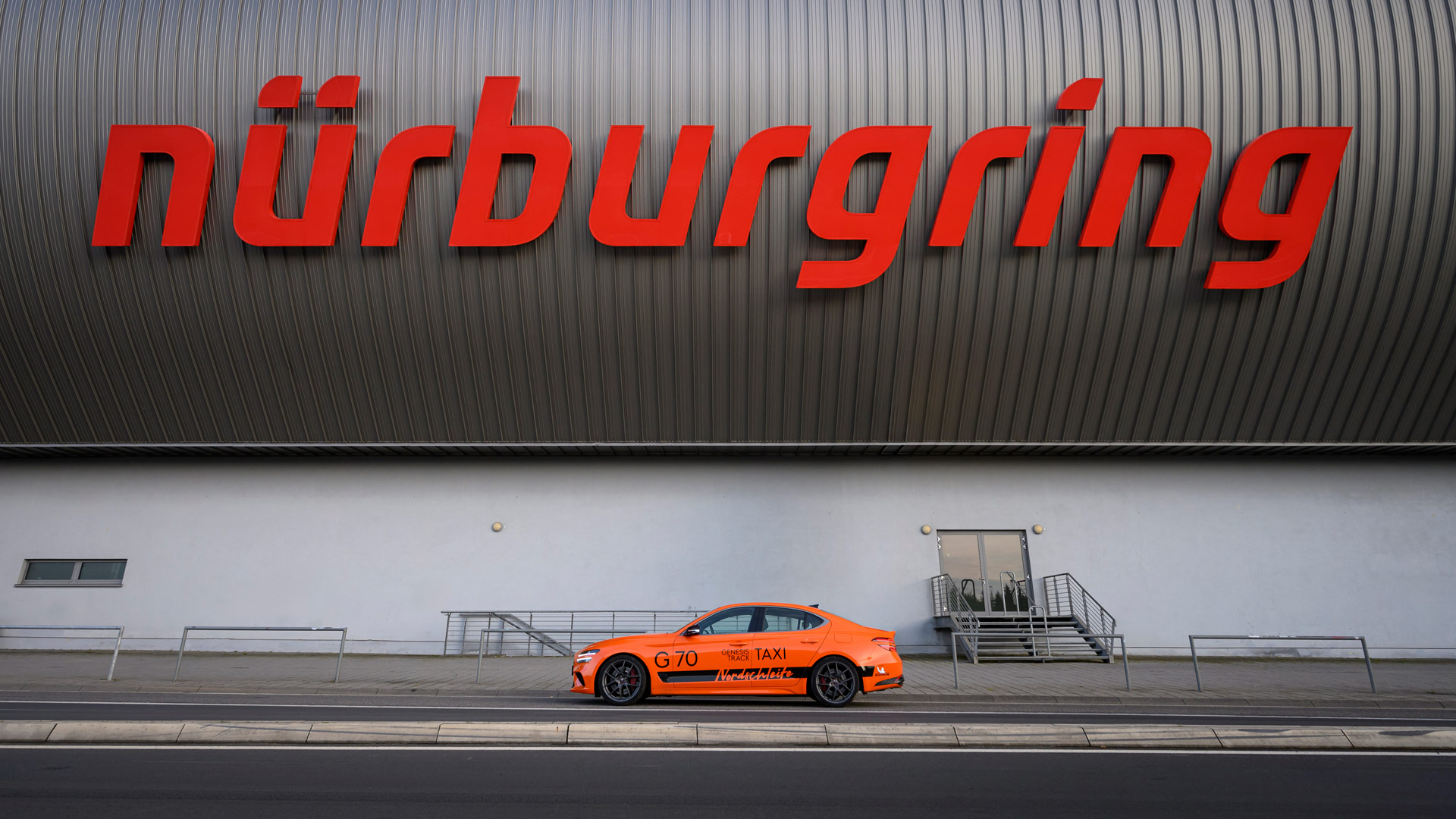
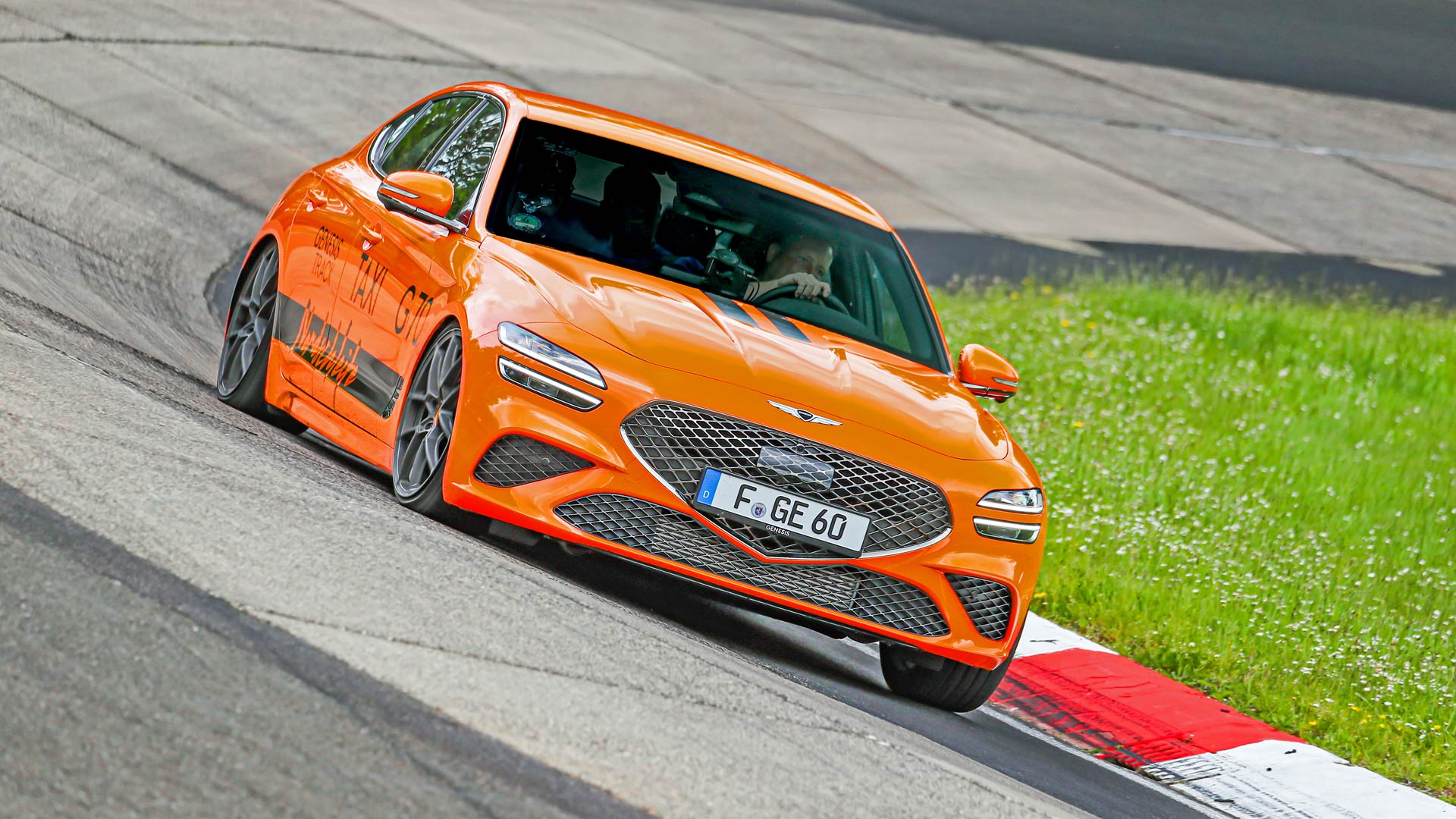
The Nürburgring Nordschleife circuit has a new track taxi service: a fleet of Genesis G70 3.3T saloons.
It marks a new initiative for the upmarket Korean brand, taking its performance model to the famous – and infamous – playground of the German car industry.
A special event at the Nürburgring marked the start of the Genesis Track Taxi programme, with motorsport legend Jacky Ickx in attendance.
Keep the meter running…
At 12.944 miles in length (20.832km), and with 73 corners, learning the racing line around the Nürburgring Nordschleife is no mean feat.
However, making use of a Ring Taxi, like the service now offered by Genesis, offers the chance to experience the ‘Green Hell’ as a passenger, with an expert driver behind the wheel.
To ensure the 373hp G70 3.3T can survive the sustained demands of the circuit, the Hyundai Motor Europe Technical Centre (HMETC) has made some minor upgrades. These include additional brake cooling ducts, plus new heat shields for the transmission oil cooling lines.
A performance showcase
Michelin will supply the Genesis Track Taxi Nordschleife with bespoke Pilot Sport 4S tyres, designed to maximise grip whatever the Nürburgring’s notoriously changeable weather conditions may be.
As a finishing touch, Genesis has given each of the G70 3.3T saloons an eye-catching orange exterior wrap, inspired by the company’s Magma high-performance division.
“The launch of the Genesis Track Taxi Nordschleife programme marks an important milestone in our journey to delivering bold high-performance cars, showcasing the power, handling and performance that the brand can offer,” said Luc Donckerwolke, chief creative officer at Genesis.
Online bookings for the Genesis Track Taxi are open now, with the first drives starting on 6 July 2024. Three passengers are allowed per ride and prices are €120 (£102) for the first person, €40 (£34) for a second person and €20 (£17) for a third person.
Bugatti has unveiled the replacement for the Chiron – and the new Tourbillon hypercar packs even more power than its predecessor.
The Tourbillon is named after a Franco-Swiss watchmaking invention, created in 1801 to improve timekeeping accuracy. It’s the first modern Bugatti not to pay tribute to one of the marque’s legendary racing drivers.
Bugatti’s reason for the change of naming strategy reflects a radical change in powertrain for the car. The incredible 8.0-litre quad-turbocharged W16 engine is no more, but its replacement is no less a feat of engineering…
‘Shaped by speed’
Frank Heyl, director of design at Bugatti, has channelled two decades of experience from the Veyron and Chiron into shaping the new Tourbillon.
Aerodynamics have led the overall design, although Bugatti trademarks such as the horseshoe-shaped front grille and two-tone colour split remain.
Thanks to a new diffuser, the rear wing no longer needs to be elevated for downforce at maximum speed. It still works as an airbrake, though, supporting the huge carbon ceramic brakes fitted all-round.
Bugatti has added upwards-opening dihedral doors to the Tourbillon, while its single windscreen wiper now parks in an upright position to aid aerodynamics. You may remember this approach was also used on Super Touring race cars in the 1990s.
True hypercar performance
The Tourbillon is powered by an all-new 8.3-litre naturally aspirated V16 engine, developed with assistance from Cosworth. Capable of revving all the way to 9,000rpm, it produces 1,000hp and 664lb ft of torque on its own.
However, Bugatti has gone further, adding two electric motors to the front axle, plus a further motor to the rear axle. The result is a combined output of 1,800hp, with a 25kWh battery allowing the hybrid Tourbillon to travel 37 miles on electricity alone.
Despite the addition of the hybrid powertrain, extensive use of carbon fibre and 3D-printed parts means the Tourbillon weighs less than a Chiron, at 1,995kg.
Outright performance is suitably ludicrous, with 0-62mph taking 2.0 seconds, 0-124mph in 5.0 seconds and 0-186mph in 10.0 seconds.
The standard top speed is 236mph, but using the special ‘Speed Key’ unlocks the ability to reach 276mph.
An impeccably timed interior
The cockpit of the Tourbillon is notable for numerous reasons, not least the obvious absence of digital touchscreens. Bugatti notes that such is the progress of infotainment tech, a new car could look dated in just 10 years.
To keep the Tourbillon looking fresh when it appears at a concours d’elegance in 100 years’ time, the only touchscreen is hidden away. It can pop up in portrait mode in two seconds to show the reversing camera, while revealing a landscape-oriented display takes five seconds. But if you can live without Apple CarPlay, it can stay out of sight.
Living up to its horology-inspired name, the Tourbillon features an exquisite instrument cluster, created with help from Swiss watchmakers. It is made of more than 600 parts, including sapphires, rubies and titanium.
The steering wheel has a fixed hub and rotates around the instrument panel, ensuring drivers have an unobstructed view of the dials. There are small paddles for the eight-speed dual-clutch transmission, too.
Buy your lottery ticket now
Bugatti is putting the Tourbillon through an extensive test programme, with prototype models already on the road.
The company plans make 250 examples, each one built by hand at the factory in Molsheim – once the final Chirons have been completed. This first deliveries should take place in 2026.
Prices for Bugatti’s latest hypercar start from €3.8million before taxes, equating to around £3.85million when VAT is included.
Maserati has announced two limited-edition versions of its MC20 supercar, influenced by a motorsport hero from 20 years ago.
The MC20 Icona and Leggenda are both inspired by the Maserati MC12, which led the Italian marque’s return to racing in 2004.
Production of the two customised ‘Fuoriserie’ MC20 models is limited to 20 cars each, in recognition of the two decades since the MC12 was launched.
A true homologation hero
The Maserati MC12 shared a platform with the Ferrari Enzo supercar. This meant a mid-mounted 6.0-litre V12 engine that was surrounded by aerodynamic bodywork made entirely from carbon fibre.
In order to homologate the MC12 for use in the FIA GT Championship, Maserati produced 50 Stradale (Street) models, along with the 12 race cars.
The MC12 proved to be hugely successful, claiming six teams’ titles, six drivers’ championships, and two manufacturers’ trophies between 2004 and 2010.
Maserati has chosen to honour the famous Vitaphone Racing MC12 GT1 with the MC20 Leggenda. The MC20 Icona, meanwhile, pays tribute to the road-going MC12 Stradale.
Extra strong mint
For the MC20 Leggenda, Maserati has used a Vitaphone-inspired colour scheme of Nero Essenza and Digital Mint Matte. Its trident-design alloy wheels are finished in black, with yellow used for the Maserati badges on the front grille and C-pillar.
On the inside, the four-way adjustable bucket seats are finished in black with silver stitching. The word ‘Leggenda’ is embroidered onto their headrests.
The MC20 Icona mimics the design of the MC12 Stradale, with a combination of Bianco Audace Matte over Blu Stradale paint.
Blue brake calipers and an Italian flag behind the front wheelarch are further highlights. The Icona’s sports seats are also upholstered in blue.
A classic comeback
Maserati has left the MC20’s 630hp 3.0-litre twin-turbocharged V6 untouched for the Icona and Leggenda editions, but it now resides beneath a carbon fibre cover.
An electronic limited-slip differential is fitted as standard on both cars, along with a front axle lift kit. A Sonus Faber audio system and carbon fibre interior trim are included for good measure.
No prices have been announced by Maserati yet, but expect the 20 examples of each special MC20 to sell out soon.
Launched in 1990, the Mercedes-Benz 190E 2.5-16 Evo II was a classic homologation special. The racing version locked horns with the E30 BMW M3 and Audi V8 in the German touring car championship (DTM), finally winning the title in 1992. And the road-going Evo II remains one of the wildest cars ever to wear the three-pointed star.
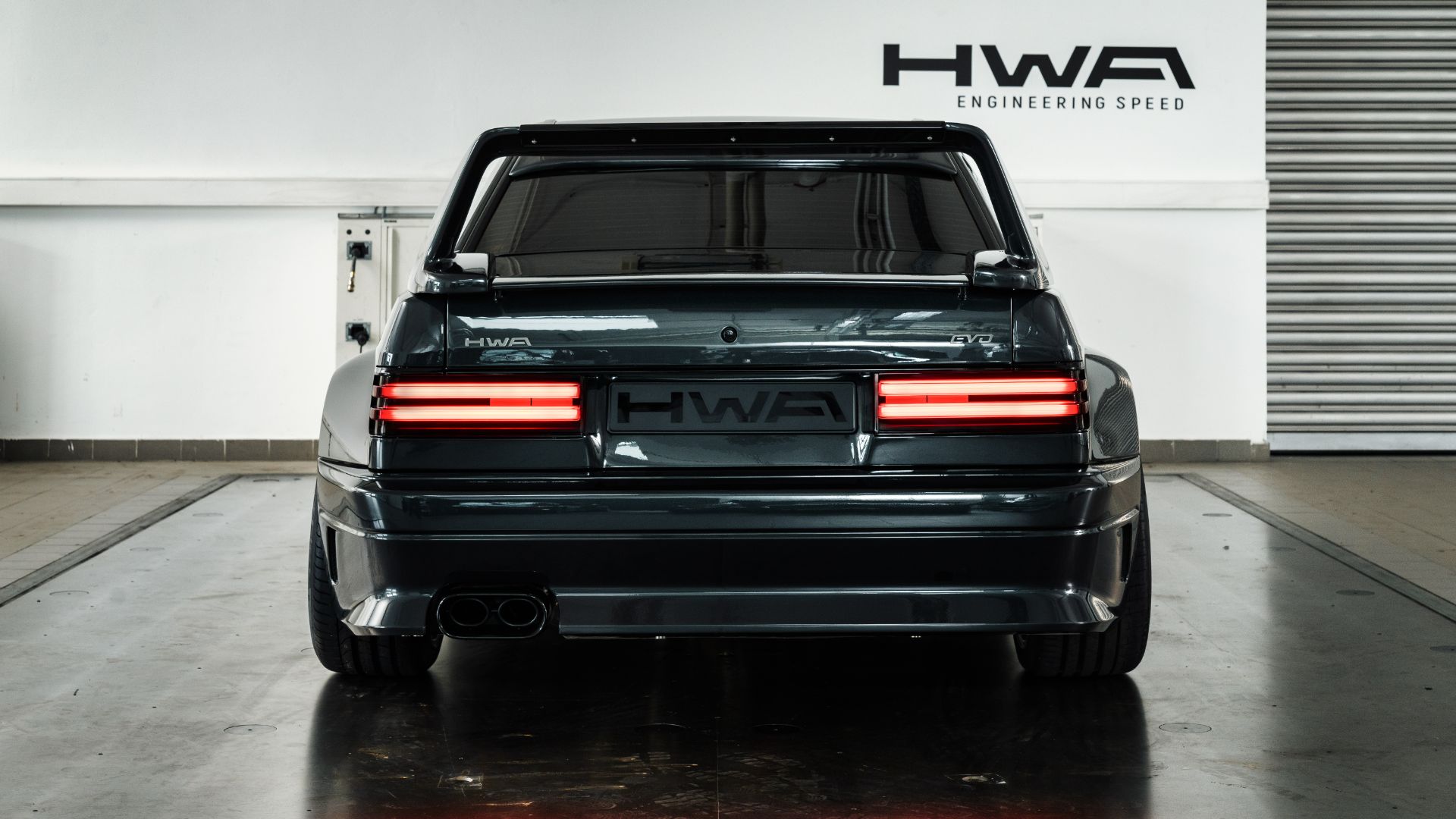
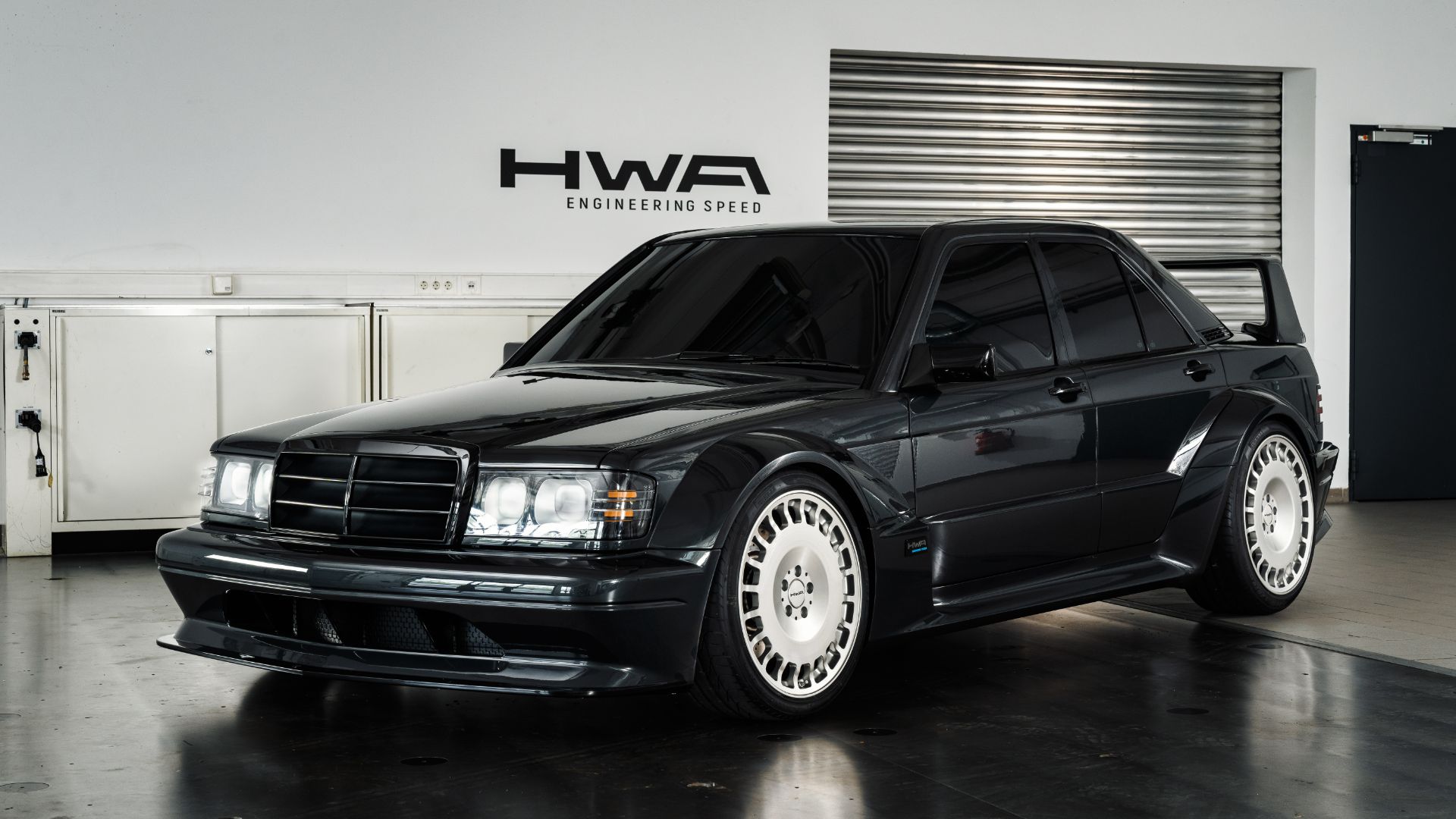
Now the Evo II is back, ‘evolved’ by HWA into a ‘road-legal, track-ready supercar‘ with carbon fibre bodywork, DTM-derived suspension and twice the power of the Stuttgart original.
Just don’t use the ‘R’ word… “This is not a restomod, it’s a completely new car,” says chief engineer Gordian von Schöning. We travelled to HWA headquarters in Affalterbach, southern Germany – also home to Mercedes-AMG – for an in-depth preview.
Born in Affalterbach
HWA’s close proximity to AMG is no coincidence. Company founder Hans Werner Aufrecht (note the initials) was also the ‘A’ in AMG, having established the now-legendary tuning firm in 1967. When DaimlerChrysler acquired AMG in 1998, Aufrecht started afresh – literally across the road on Benzstrasse – with HWA.
Now in its 26th year, HWA’s primary focus has always been motorsport. It has won 11 DTM championships with Mercedes-Benz, and supplies engines and electric powertrains for Formula 3 and Formula E. It also hand-builds around 120 AMG GT-based race cars each year, including the Track Series, GT4 and GT3.
On the road-going side, joint projects with AMG have included the extreme CLK-GTR ‘Strassenversion’, CLK DTM and SL 65 Black Series. HWA also assembled the Apollo IE hypercar and recently started building the De Tomaso P72. Yet it has never launched a car under its own banner – until now.
Making ’emotional engines’
Before we come face-to-face with the new Evo, CEO Martin Marx – who began his career as a race engineer for Bernd Schneider – takes us for a guided tour. Brightening up the reception is an HWA-built Aston Martin Vantage DTM, which competed for one season in 2019, along with an enormous trophy cabinet. It soon becomes apparent that there are motorsport trophies everywhere. They even serve as door-stops in the offices upstairs.
We start in the engine workshop, where Marx shows me the 850hp, 9,000rpm V12 that HWA developed for the Pagani Huayra R. “Horacio Pagani told us he wanted an emotional engine and we delivered,” he says with a smile.
HWA Evo’s wheelbase is stretched by 80mm, with a 300mm wider track.
Only the centre section of the donor 190E is retained, supported by new aluminium subframes and structural carbon fibre panels.
HWA chief engineer says: “This is not a restomod, it’s a completely new car”. pic.twitter.com/5hCwa9z2SL
Heading across to the design studio, we see classic Mercedes-Benz paint colours such as Silver Thistle and Sunset Orange being remixed and enhanced for the Evo. Then it’s down to the dyno rooms, where road and racing components are tested to destruction. “Our transient powertrain dyno is the only one in Germany,” Marx explains. “It can simulate hard-driven laps of any racetrack in the world: acceleration, braking and cornering forces – even bumping over the kerbs.”
Our tour concludes in the production facility, where race-ready versions of the AMG GT are built up from bare shells. The Evo will also be assembled here – at a rate of one car per week – from early 2025. Max says 71 of the 100 cars planned are already accounted for.
The evolution of Evo
With a price tag of €714,000 (approx. £730,000), that is some sales feat. However, Gordian von Schöning says the “depth of engineering is on another level to any competitor, even a certain company from California”. That’s Singer Vehicle Design, in case you failed to read between the lines…
Indeed, the steel chassis centre section is the only major part retained from the donor Mercedes-Benz 190E. After being reinforced, it is bookended by lightweight aluminium subframes, then clothed in structural carbon fibre panels. The car’s wheelbase is stretched by 80mm and track width grows by around 300mm.
The 1990 Evo II was powered by a 235hp 2.5-litre four-cylinder engine. The 2024 Evo raises the stakes somewhat, with a 450hp 3.0-litre twin-turbocharged V6 loosely related to that found in a Mercedes-AMG E 53. Opt for the Affalterbach power pack and output rises to 500hp – good for a top speed of 185mph.
Sensibly, the Evo’s brakes have been upgraded to match, with six-piston front calipers and the option of carbon-ceramic discs. Suspension is by double wishbones all-round, bolstered by KW dampers and billet-machined wheel carriers.
A homologation hero
Finally, we enter a small workshop and Marx pulls the wraps off the first Evo ‘concept demonstrator’. Parked alongside a classic 190E Evo II, the differences between the two cars are immediately apparent. In isolation, the Stuttgart original looks imposing and aggressive. In this company, it seems undernourished, perhaps even a little underwhelming.
HWA designer Edgar Chu walks us around the car, pointing out details such as the minimalist grille and one-piece LED headlight/indicator units. However, the superb stance is what hits hardest. Enlarged alloy wheels – 19 inches at the front, 20s at the rear – fill out cartoonishly swollen arches, with a hydraulic nose-lift fitted to protect that vulnerable front splitter.
Here’s the HWA Evo alongside the car that inspired it: the 1990 Mercedes-Benz 190E 2.5-16 Evo II.
The original is one of 502 built to homologate the 190E for DTM racing.
Production of the new Evo will be limited to 100 cars, with 71 already reserved. pic.twitter.com/eJ7OQpTR5e
As these photos reveal, customers can choose between ‘OEM+’ six-spoke or racing-style aero rims. We’ll go for the latter, please – preferably with a period DTM livery to match.
Later over coffee, Chu compares the Evo to one of his previous projects: the 2018 Mercedes-Benz G-Class. “When you recreate an icon such as the G-Wagen or 190E Evo II, you can’t change too much,” he explains. “It’s important to retain the essence of the original.”
What’s next for the HWA Evo?
The major part of the HWA Evo we haven’t seen yet – hidden here behind blacked-out glass – is the interior. It will only be offered in left-hand drive (although that never hindered the E30 M3) and Chu says to expect a “classic 190E dashboard with configurable digital dials”. The manual gearlever will be illuminated with each car’s individual build number, too.
A manual gearbox? Oh yes. For all its added performance and motorsport breeding, the Evo should offer a defiantly analogue experience.
We will find out how this “road-legal, track-ready supercar.” drives later this year. Perfect 50:50 weight distribution and a kerb figure of 1,360kg (almost identical to the Evo II) certainly whet our appetite, but there’s no doubt the Evo delivers on HWA’s slogan: ‘Engineering Speed’.
Click + Follow above to receive more great content written by car experts