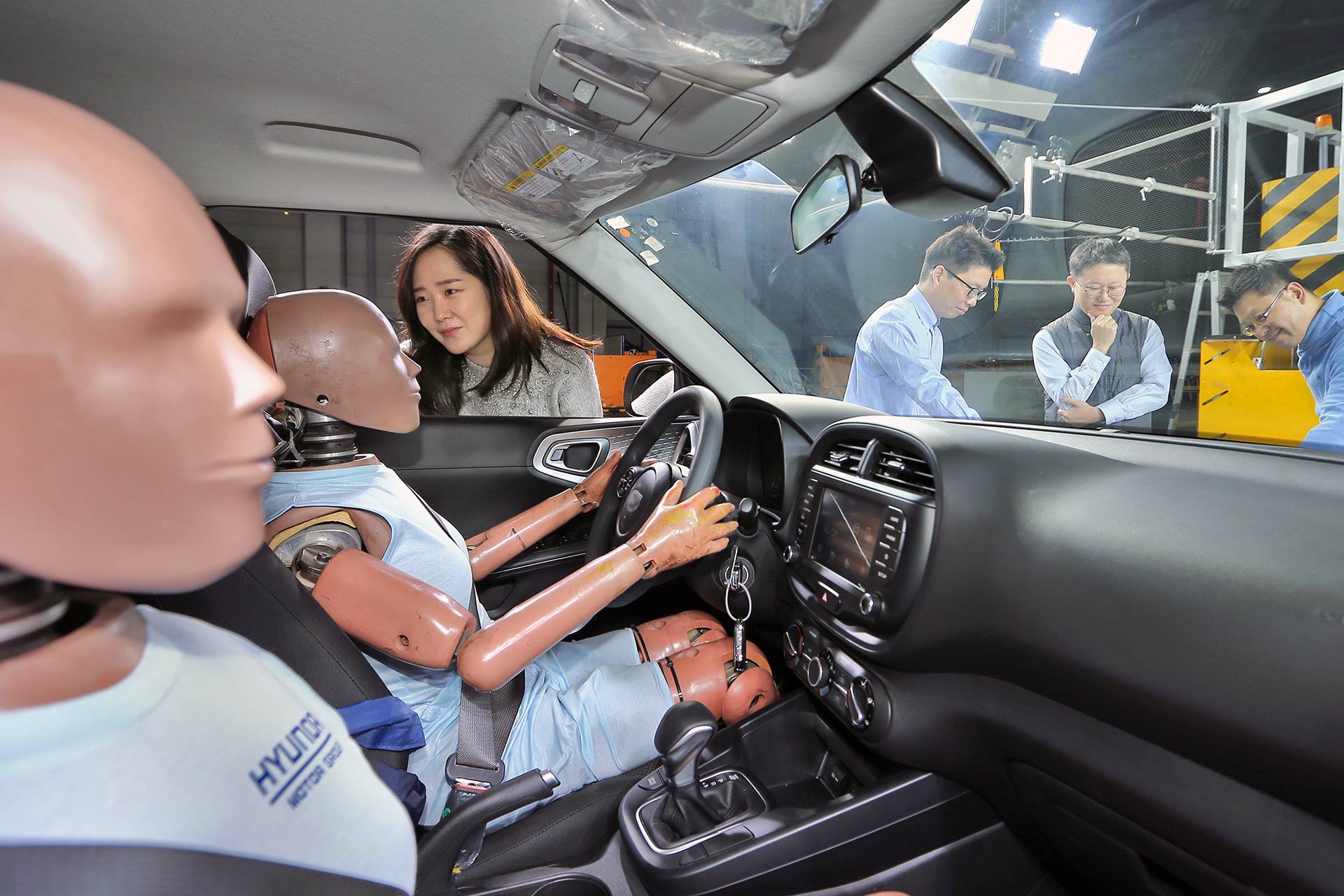
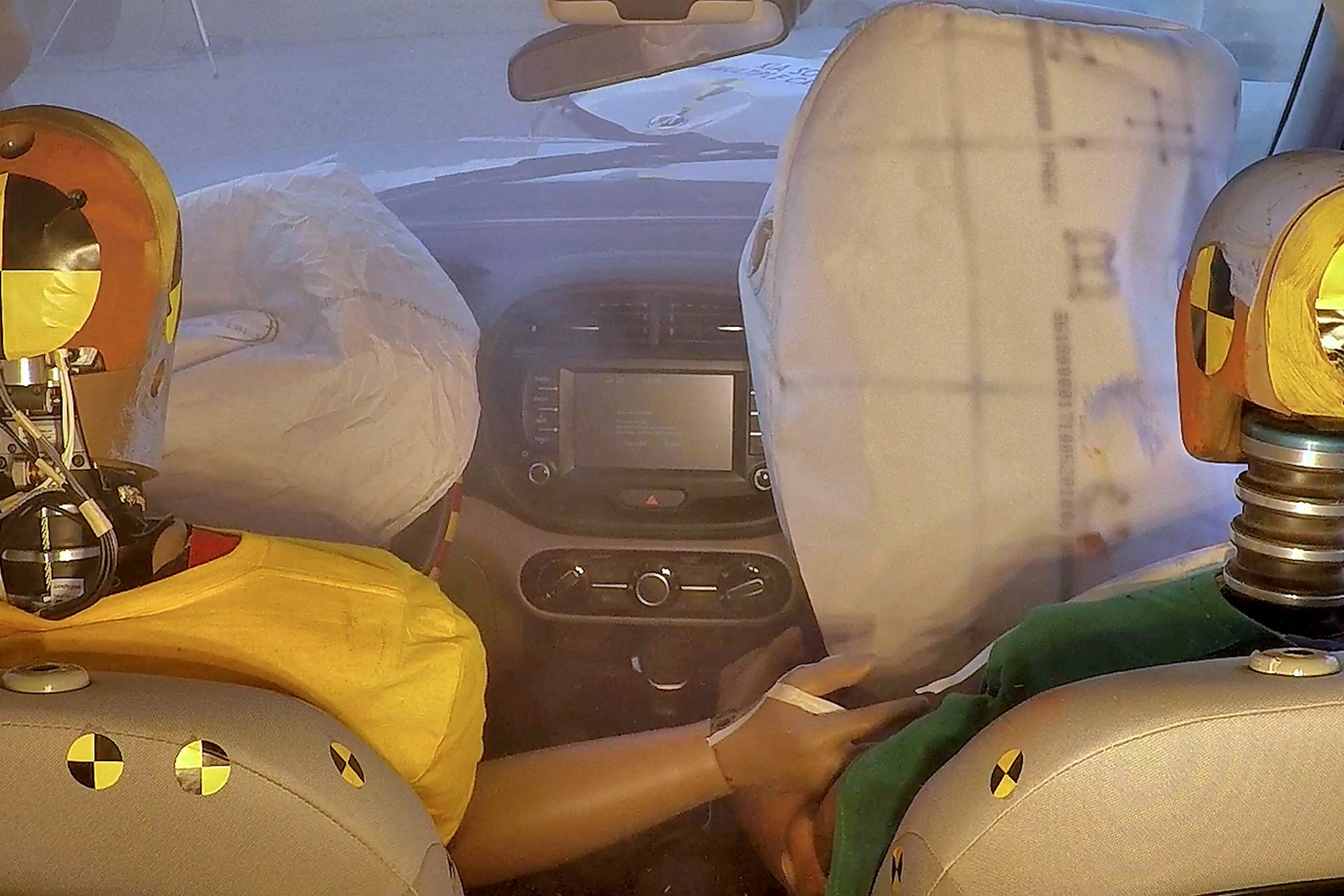
The Korean company has become the first in the world to build a multi-collision airbag system, which could assist in almost a third of car accidents.
A ‘multi-collision’ accident is defined as one where, following the primary collision, the vehicle is then involved in a secondary impact. With current airbags designed to react only to the the initial crash, this can leave drivers and passengers exposed to danger.
The importance of Hyundai’s work has been highlighted by statistical research undertaken by the National Automotive Sampling System Crashworthiness Data System (NASS-CDS).
As part of the National Highway Traffic Safety Administration in the United States, NASS-CDS undertook analysis of some 56,000 vehicle accidents between 2000 and 2012.
From that research, it was found that secondary collisions occurred in some 30 percent of the road traffic accidents studied.
Leading causes of multi-collision events included crossing the centre line of the road, colliding with tollgates, and also hitting trees and electrical poles.
Given the violent movement of vehicle occupants during a crash, Hyundai knew that the airbag system could not just simply be designed to deploy again.
Instead, the new multi-collision system uses numerous sensors to detect precisely where drivers and passengers are located in the cabin. The airbags can also deploy even more quickly for secondary impacts, ensuring that occupants are completely protected.
For now Hyundai is still working on the development of the multi-collision airbag system. However, it promises to offer it in new Hyundai and Kia vehicles in the future.
Taesoo Chi, head of Chassis Technology Centre at Hyundai said: “We will continue our research on more diverse crash situations as part of our commitment to producing even safer vehicles that protect occupants and prevent injuries.”
From compact city cars to luxury SUVs: there’s a new car for everyone. But that doesn’t stop us peering across the English Channel to gaze longingly at some of the European cars that we’re denied access to in the UK. Here’s a selection of Euro motors we wish were sold on these shores.
Renault Megane Grand Coupe
When is a compact saloon not a compact saloon? When it’s a Grand Coupe. The name makes no sense, but there’s no denying the Renault Megane Grand Coupe is a good looking saloon. It actually boasts a larger boot than its hatchback counterpart, but while it will be sold in 20 countries worldwide, UK buyers will be denied the privilege of driving the attractive Renault.
Alfa Romeo Giulia Quadrifoglio manual
We still have to pinch ourselves about this one. A genuinely handsome, rear-wheel-drive Alfa Romeo with a top speed that puts it at the top table of the supercar elite. Thanks to the small matter of 510 raging horses, the Giulia Quadrifoglio will hit 191mph, all for a shade over £60,000. Yes, you can buy it in the UK, but the cost of converting to right-hand drive means we don’t get the manual transmission. Shame.
Citroen E-Mehari
The original Mehari is a bit of cult vehicle within Citroen circles, so this beach buggy for the new millennium has a lot to live up to. The signs are good: a potential range of 125 miles, 70mph top speed and a maintenance-free body are amongst the highlights. It’s already on sale in France, but a UK-launch is unlikely. On the plus side, it’ll be the coolest car at the holiday rental compound.
Renault Talisman
The Citroen C6, Renault 25, Peugeot 605, Renault Vel Satis and Peugeot 607, to name but a few – lessons from history warning French carmakers that shifting big cars is a big ask in the UK. Which helps to explain why the Renault Talisman isn’t available here. Nobody would buy it and it would depreciate faster than you could say ‘financial ruin’, but that doesn’t stop us wanting one.
Citroen C-Elysée
We’re not fans of small saloons in the UK, preferring the practicality of a hatchback. Thus the C-Elysée– a staple of the French taxi trade – has never made it to these shores. On the one hand, that’s a positive; Jalopnik journalist Doug DeMuro described it as the worst car he’s even driven. On the other, the championship-winning WTCC racer looks pretty cool.
Fiat Freemont
Spend some time across the Channel and it won’t be long before you stumble across a Fiat Freemont, especially in its native Italy. Actually, that’s a bit of a moot point, because the Freemont is based on the all-american Dodge Journey. It was unveiled back in 2007, so it’s hardly a spring chicken and is currently being phased-out. If we’re honest, that’s probably a good thing.
Dacia Lodgy Stepway
The Dacia Lodgy offers space for up to seven people and traditional Dacia value for money. OK, so the Stepway version does inflate the price, but it looks a million Euros. Practical, wipe-clean motoring for a bargain price. Where do we sign? Oh, we can’t. Shame.
Renault Espace
The Renault Espace helped to establish the people carrier segment in the early 1980s and it soon became part of the UK furniture. The fourth generation Espace offers styling that doesn’t say to the world you’ve given up on life and are well past your prime. In fact, it looks more appealing than the majority of crossovers. Being denied access to the Espace just isn’t playing fair.
Opel Ampera-e
The original Vauxhall (and Opel) Ampera was one of the first production plug-in hybrids. Sadly, it was too far ahead of its time and sold in tiny numbers. This second-generation car – renamed Ampera-e and only available in left-hand drive – looks more conventional and is now fully electric. Opel claims a range of 236 miles using the latest WLTP test cycle.
Mercedes-Benz G500
If you want a new G-Wagen in the UK (and we do), your only option is the blood-and-thunder 585hp AMG G63. However, many consider the detuned 422hp G500 a better all-rounder. It’s quieter, smoother and more efficient – and considerably cheaper to buy, too. But only if you live on the continent…
Volvo S60 Polestar
We’re fortunate enough to be offered the Volvo V60 Polestar, but the S60 is strictly off limits. This is due in part to the fact that we prefer wagons to saloons, but there’s something delightfully old-school about the S60 Polestar. Avoid the Rebel Blue paint job and it’s one of the world’s ultimate sleepers.
Skoda Rapid Spaceback ScoutLine
On character count alone, this is one of the biggest names in Europe. The Skoda Rapid Spaceback Scoutline could be the Rapid you always dreamed of. Don’t let the looks deceive you, because this particular Skoda has about as much off-road ability as a Mini Moke, but it looks wonderfully cool in Pistachio Green.
Toyota Camry
The Camry made its UK debut in 1984, soon establishing itself as the flagship of the Toyota range. It majored on equipment and refinement, but there was a Sport model, complete with 2.2-litre 16v engine. The Camry lived on until 2004, but hasn’t been seen in the UK since. However, it will make a comeback later this year…
Lada Granta Sport
Who doesn’t want a budget-priced compact saloon with sporting credentials? The Lada Granta Sport is powered by a distinctly old-school 1.6-litre 16v engine, delivering a distinctly old school 0-62 mph time of 9.5 seconds. For some reason we’re really keen to drive it. We have visions of being transported back to the 1990s. And that’s a good thing.
Renault Clio Estate
Small estate cars aren’t hugely popular in the UK, with the Skoda Fabia and SEAT Ibiza representing the best of a rather niche breed. But we feel we’re missing out by not having the Renault Clio Estate on sale in the UK. One for Nicole’s more practical sister, perhaps?
Toyota Highlander
The Toyota Highlander is a seven-seat SUV built at Toyota’s plant in Indiana, along with its assembly plant in China. It’s not widely available in Europe, but customers in Moldova and Ukraine are able to get their hands on Toyota’s “sophisticated” SUV. We’d like a single Highlander to be sold in the UK, just to enable us to use the ‘there can be only one’ gag.
Lada 4×4 Urban
The word ‘urban’ is often synonymous with cutting-edge cool. Not here. Lada’s 4×4 Urban is essentially a reworked version of the ancient Niva, with a 1.7-litre, four-cylinder petrol engine and (slightly) more modern dashboard. Like the Land Rover Defender or Suzuki Jimny, though, it has a certain back-to-basics appeal.
Fiat Tipo saloon
While UK buyers will be able to buy to the Fiat Tipo as a hatchback or estate car, we’re being denied the compact saloon. Taking into account the fact that small estates are a hard sell in the UK, we think the Tipo saloon looks rather stylish. A budget alternative to the Audi A3 saloon and Mercedes-Benz CLA?
Renault Kwid
The Indian-market Renault Kwid is set to enter Europe and there’s every chance it could arrive in the UK as a Dacia. Remarkably, prices in India start at the equivalent of £2,945, so it could present astonishing value for money in the UK. A decent addition to the Dacia range? We think so.
UK driving licence holders living in the EU may have to take new driving tests in the event of a no-deal Brexit, the government has warned.
The AA estimates that this will affect up to half a million ex-pats living in France and Spain, with the government warning that they will need to pass a driving test in their country of residence to be able to carry on driving there.
Ex-pats are being advised to exchange their UK driving licence for a local European Union (EU) driving licence before 29 March 2019 or risk taking a new test. Increased demand may lead to longer processing times, especially as the country edges closer to a no-deal Brexit.
In a further development, on 28 March 2019, the type of international driving permit (IDP) that some countries outside the EU and European Economic Area (EEA) recognise will change. In the event of a no-deal Brexit, UK drivers may need an IDP in addition to their UK licence to drive in EU and EEA countries.
From 28 March, countries that are party to the 1968 Vienna Convention on Road Traffic will no longer recognise 1926 and 1949 IDPs issued by the UK. Instead, UK drivers may need a 1968 IDP to drive in these countries.
Until 31 January 2019, you can get 1926 and 1949 IDPs from 89 UK post offices, or by mail order from the AA or the RAC. From 1 February, you will only be able to get IDPs over the counter from 2,500 UK post offices, at a cost of £5.50.
‘Backward step’
Edmund King, AA president, said: “Thousands of ex-pats, many of them elderly, will not relish the prospect of having to re-take their driving test in a different country and different language if there is no deal.
“Drivers without the appropriate IDP(s) could also be turned back at the ports. Currently, they could obtain an IDP from the AA shop at the Eurotunnel port but that won’t be allowed after the end of this month.
“It really does seem a backward step that drivers will no longer be able to apply for IDPs in the post. Unless these Brexit driving issues are sorted out soon many UK drivers living in Europe may well need to start practising for a new driving test.”
The cost of car insurance is climbing for the first time since 2017, according to The AA’s British Insurance Premium Index.
During the last quarter of 2018, the cost of a fully comprehensive policy rose by 2.7 percent to £609.93, with the pound’s Brexit-related plunge making vehicle repairs more expensive.
Insurers can tell when you’re lying on your car insurance application
In 2018, premiums were reduced following changes in the Ogden rate, used to calculate compensation for personal injuries, but the Civil Liability Bill, which means drivers will receive a smaller payout for whiplash injuries, won’t take effect until April 2020.
The bill introduces a fixed tariff for whiplash damages, along with a rise in the small claims limit to £5,000 for road traffic accident claims. It means that legal costs cannot be recovered when the damages are under the limit.
“But underlying all of this are concerns surrounding Brexit,” said AA’s director of insurance, Janet Connor.
“Regardless of what the final deal looks like, the market has continued to battle with the value of sterling. This has led to the rising cost of imported car parts, further adding costs to the car repair industry which ultimately finds its way to the premiums we pay.”
Green Card woes
Insurers are warning UK motorists of the need to arrange extra documentation in the event of a ‘no-deal’ Brexit. Last year, the Department for Transport issued guidance notes for vehicle insurance following a no-deal scenario, stating that access to the Green Card-free circulation would cease.
Huw Evans, director general of the Association of British Insurers (ABI), said: “As it looks increasingly possible that a no-deal Brexit may happen, we want all insurance customers to know the facts about what this means for them.
“If you live in Northern Ireland and drive to the Republic of Ireland, or if you plan to drive your vehicle to mainland Europe after a no-deal Brexit, you will need a Green Card to prove you are insured.
“You should contact your insurer before you travel in order to get one. This advice applies to businesses as well as individuals.”
Green Cards are currently issued free-of-charge, but insurance providers may increase administration fees to reflect production and handling costs.
Motorists could be forced to pay up to £1,000 a year to park at work, as councils move to tackle air pollution and congestion.
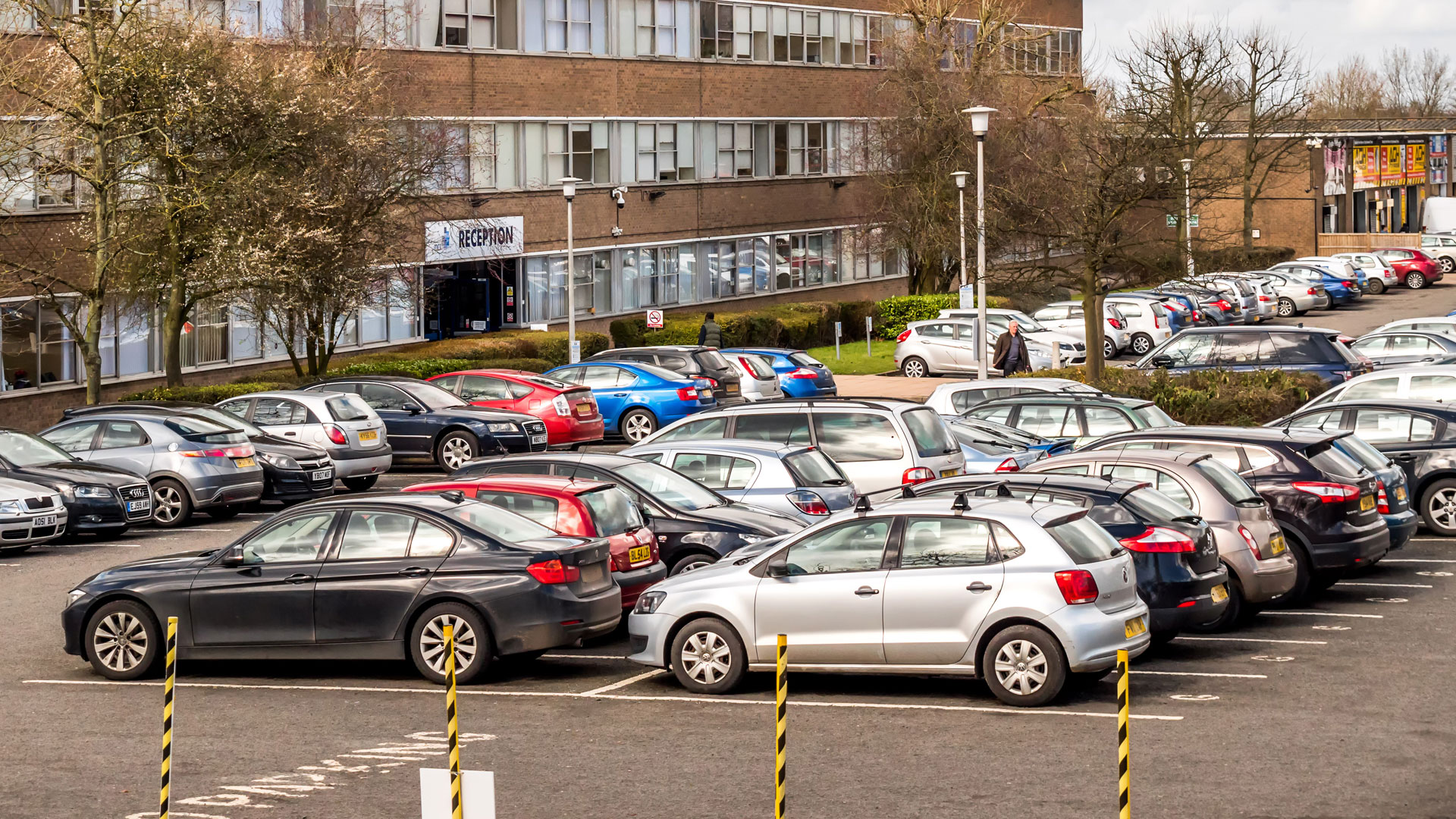
At least 10 local councils are considering a so-called ‘Workplace Parking Levy’ (WPL), following the lead of Nottingham City Council. The charge will be imposed on businesses with 11 or more parking spaces, but there are fears this cost will be passed on to staff.
UK council parking profits could top £900 million in 2018
In Nottingham, businesses with at least 11 parking spaces will be charged £415 for the period from 1 April 2019 to 31 March 2020, with the council advising businesses that they can ‘choose to reclaim part or all of the cost of the WPL from their employees’.
Last year, a report by the think tank Centre for Cities argued ‘the WPL is one way cities can generate funding for policies to extend prosperity to more people – in this case, by improving public transport and therefore increasing access to opportunities for more people.
‘But it is also essentially a tax on something that nobody likes – congestion. By encouraging commuters to carpool or switch to public transport, it reduces congestion and its cost to business and residents. The reduction in traffic also improves carbon emissions and air quality.’
In Nottingham, where charges were introduced in 2012, the WPL has raised around £9m a year, which is why the likes of Cambridge, Oxford, Reading, Bristol, Glasgow and Edinburgh are considering introducing a levy.
Meanwhile, councillors in Hounslow are considering the introduction of a WPL in 2020, following a consultation that closed earlier this month. Charges of £500, £750 and £1,000 have been assessed, with proceeds from the 4,200 workplace parking spaces expected to be spent on the introduction of new rail service between Syon Lane and Brentford.
Revenues would also be used to fund walking, cycling and bus schemes, as well as the proposed West London Orbital rail service to Cricklewood.
‘Poll tax on wheels’
Not everyone is a fan of the parking levy. Edmund King, AA president, said: “We need more incentives to switch to electric vehicles rather than a tax on work to drive businesses out of town or out of business. If it spreads to other cities, workplace parking levies could become the new ‘poll tax on wheels’. ”
Robert Halfon, Conservative chairman of the Commons education select committee is similarly sceptical, saying: “This is complete madness. It’s yet another tax on motorists and all it will do is hit working people with the cost of the living. It’s entirely the wrong thing to do.”
In February 2018, WPL to reduce air pollution in Greater Manchester was rejected, with councillors calling for a ‘dirty diesel’ scrappage scheme and a timeframe for non-polluting vehicles.
But an increasing number of councils are viewing Nottingham’s levy with interest, and Edinburgh is expected to become the first Scottish city to introduce a WPL. “We’re still at a very early stage and our next steps will involve setting out an argument and rationale for introducing a workplace parking levy,” said the city’s transport and environment convener last year.
“However, we’re confident that introducing a workplace parking levy would achieve many benefits – reducing the number of car journeys made into the city and in turn lowering congestion, improving air quality and encouraging active travel.”
Would you welcome a WPL in your city? Let us know in the comments below.
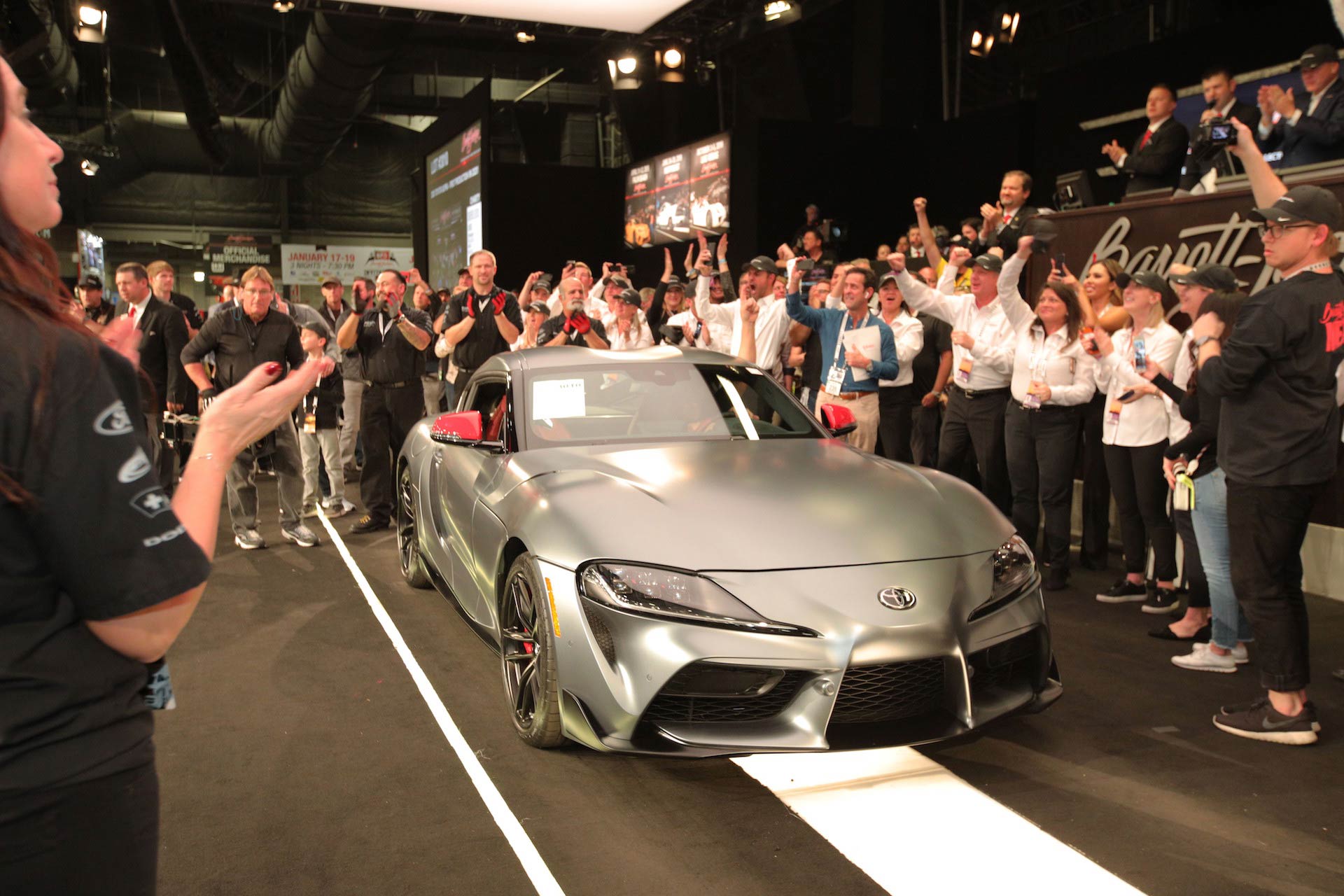
An astonishing $2.1 million (£1.63 million) is the answer. A rather serious markup compared to the regular $49,990 (£52,695) list price that the Supra will sell for in North America.
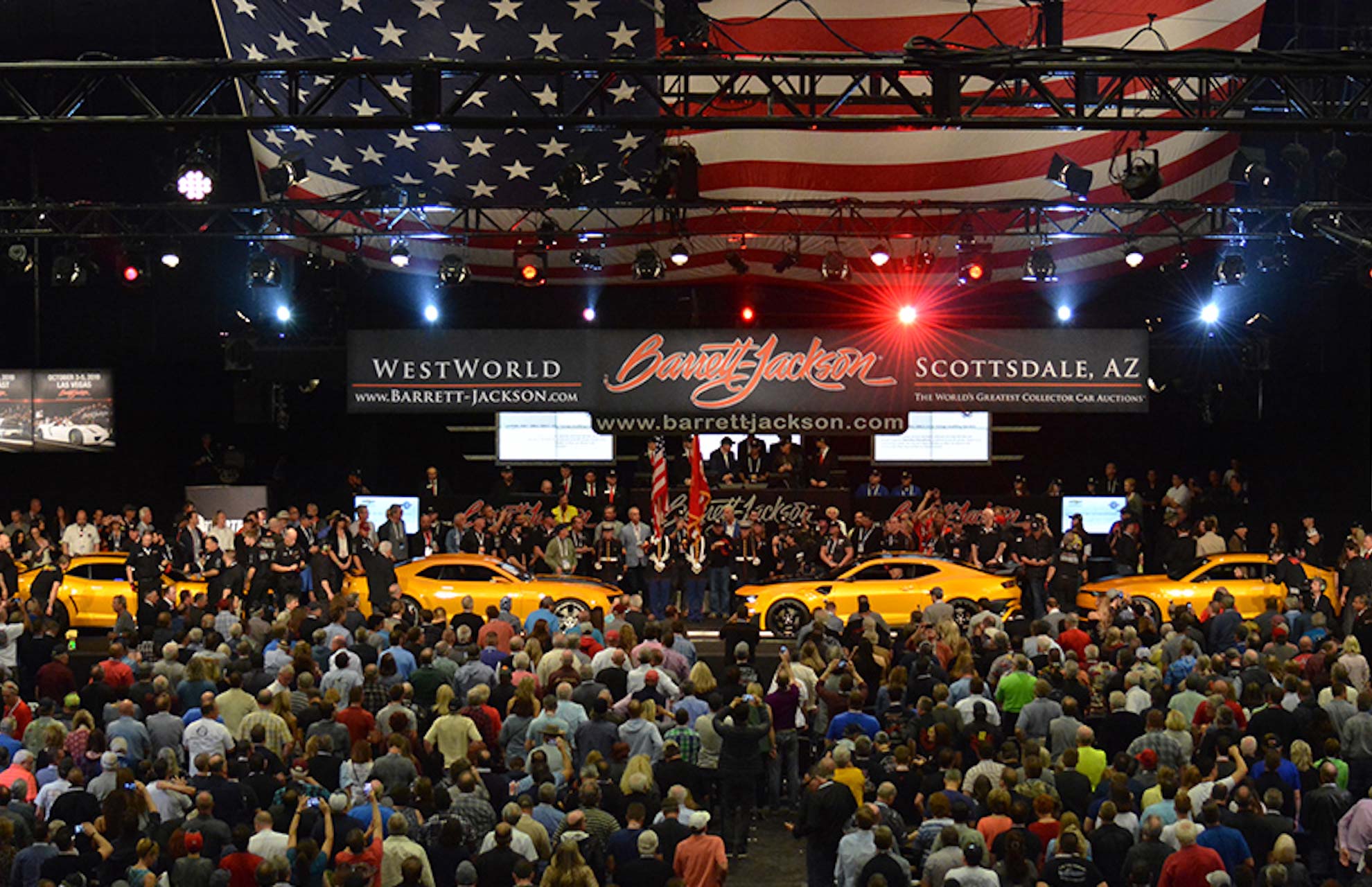
The huge amount paid for the first Supra was one of the highlights from the giant Barrett-Jackson Scottsdale sale in Arizona, which saw records broken and scores of special cars crossing the block on ‘Super Saturday’.
Doing it all for charity
Helping raise the sale price of the first fifth-generation Supra was the fact all proceeds would be going to charity. Toyota North America had donated the specially created car, allowing all money to be split between the American Heart Association and Bob Woodruff Foundation.
The winning bidder was serial car-collector and philanthropist, John Staluppi. No stranger to Barrett-Jackson auctions, Staluppi sold 140 cars from his extensive collection at a Palm Beach sale in 2018. More than sufficient to fund the purchase of a very special Supra.
Finished in a unique matte paint, with red mirror caps, and matte black wheels, Supra ‘number 1’ will be like no other. Staluppi will also receive a custom-create race suit, a VIP track day experience, and the chance to drive a Toyota pace car at a NASCAR race.
Hypercars, autobots, and more
Despite the incredible price tag, the first A90 Supra was not the car making the biggest sale at the 2019 Scottsdale event.
That record was taken by another production line first – with $2.5 million (£1.94 million) paid for a 2019 Ford GT Heritage Edition wearing VIN 001. Motorsport magnate Rick Hendrick was the winning bidder, with all proceeds again going to help good causes.
More money was raised for charity, with $500,000 (£388,000) raised for the collection of four Bumblebee Chevrolet Camaros, as used in the Transformers movie franchise.
There were more silver screen connections, with the 1967 ‘Eleanor’ Ford Mustang as used in the 2000 Gone in 60 Seconds movie selling for $385,000 (£299,000). A healthy profit compared to the $216,000 (£169,000) paid for it in 2009.
Other sale stars included $1.44 million (£1.12 million) achieved by a 2019 McLaren Senna, $1.21 million (£939,000) paid for a Mercedes-Benz G63 AMG 6×6, and a world record $918,500 (£713,000) 2012 Lexus LFA Nurburgring Edition.
These days, it isn’t hard to find a new car with DAB digital radio fitted as standard. Even the £7,795 Dacia Sandero Essential offers DAB, while the now-commonplace smartphone integration has made it even easier to listen to your favourite music or radio station on the move.
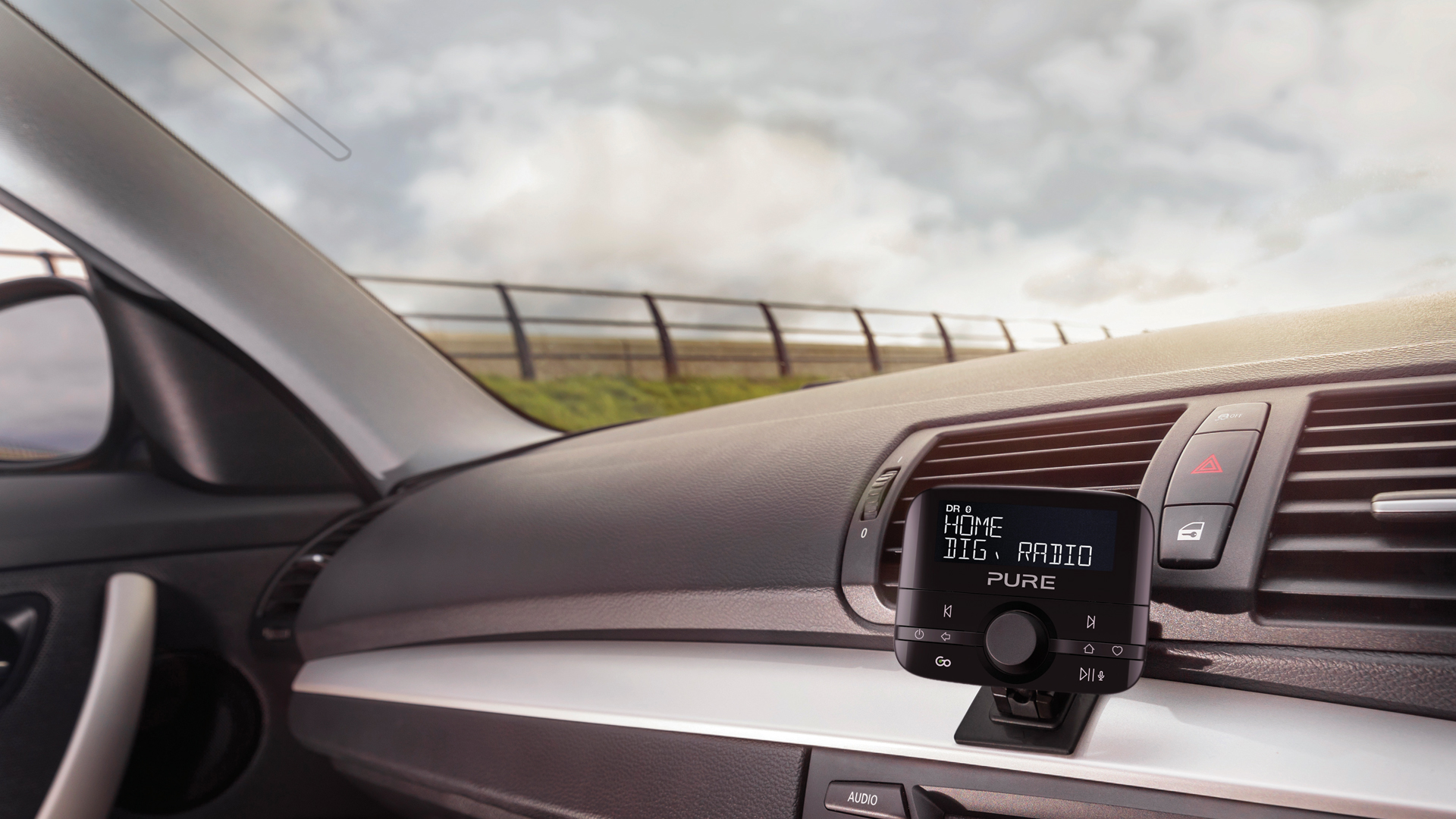
However, what if you have no intention of splashing out on a new car, but want to upgrade your existing audio system? If you’re after digital radio with the added benefit of Spotify music streaming, the Pure Highway 400 might be the answer.
Sounds great: 20 of the best in-car audio systems
The Highway 400 costs £139.99 and is Pure’s mid-range in-car solution, offering digital radio, Bluetooth music streaming, a wireless display and smartphone voice assistant. For an additional £20, you can upgrade to the Highway 600, which offers hands-free calling.
Yes, you can buy DAB head units for upwards of £99, but a Highway system works with your existing audio system, which might be an important consideration if you hope to retain the OEM look or the present system is an irregular size.
Wired for sound
The flipside is that you’re left with a wireless controller fastened to your dashboard and an antenna attached to the windscreen. Also, depending on the quality of your DIY install, you may have to live with a few exposed wires, but more on this in a moment.
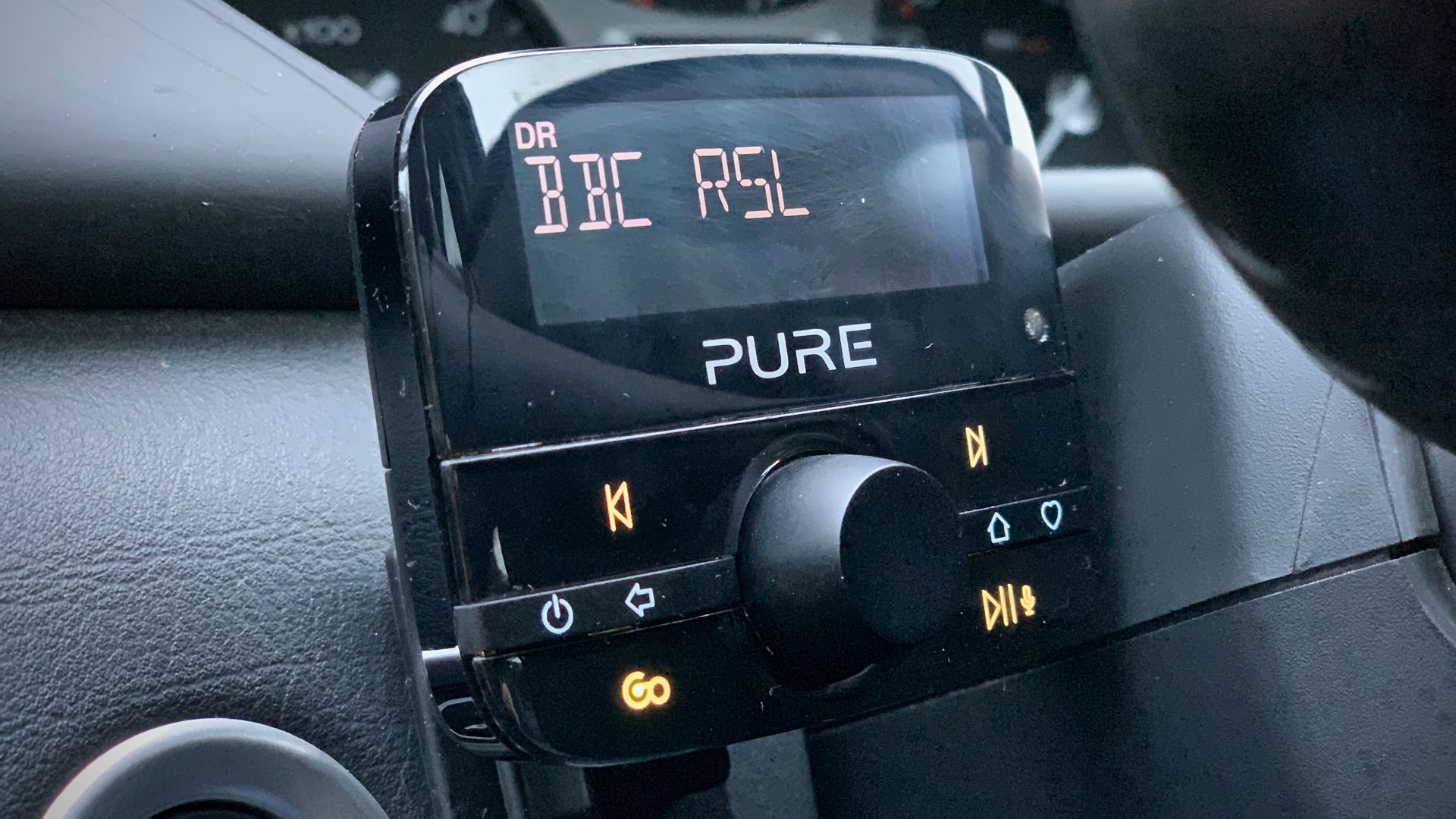
Not that the Highway 400 is an unattractive device. In common with Pure’s range of household digital radios, the battery-powered wireless controller looks neat and obtrusive, while the OLED screen is clear and crisp, regardless of whether it’s night or day.
The system comes with a chunky instruction manual – but fear not, because only the first 22 pages are English. You will need to read it because while the installation is straightforward, it’s important to follow the instructions. Get it wrong and you risk not optimising the digital reception. Worse still, it might fail to function entirely.
It’s not worth running through the entire installation as part of this review, but there are some key things to note. Firstly, the antenna must be positioned as high as possible on the windscreen and at least 4cm from the side of the screen.
The magnetic grounding tail slots through the tap between the roof liner and the roof and needs to touch the bodywork. I chose my £100 Renault Laguna as the lucky recipient of this DAB upgrade and, if I’m honest, I’d have liked the antenna to sit closer to the A-pillar. It’s not a fault of the system, merely my inability to find a magnetic connection.
Aside from that, I’m delighted with the results. The lead is long enough to pull around the inside of the top of the A-pillar, down through the inside of the rubber door seal, behind the glovebox and centre console, and out through the ashtray. It’s a tidy job.
Power to all our friends
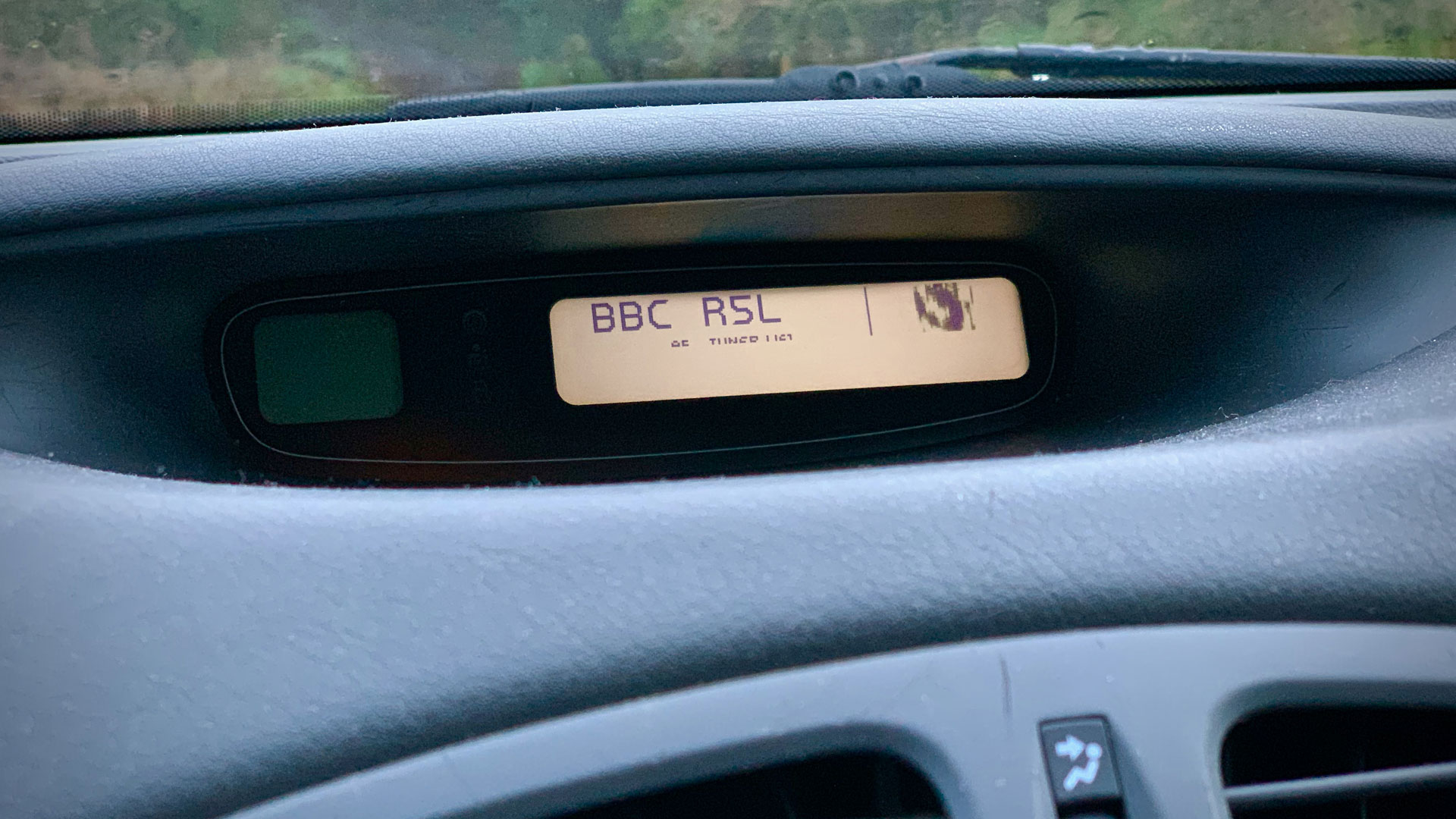
There are two ways to connect to the wireless controller: either using the aux-in socket – which is the recommended way – or via the FM radio. The Laguna doesn’t have an aux-in socket, so the Highway system is broadcasting the DAB signal on 87.6MHz.
The Highway name appears on the Laguna’s OEM display – at least it does when the car’s screen is functioning correctly – before being replaced by the name of the radio station. Save the Highway as a preset and it will make it easy to find if you’ve switched to another FM station.
Assuming the installation has been done correctly, the receiver will pick up the available digital stations within seconds and you’ll have filled the 20 presets in no time at all. It really is that easy.
The buttons are a little small and tightly packed together, but the central dial makes it easy to switch between stations and songs. Speaking of which, thanks to the Pure Highway 400, the Laguna now benefits from in-car Spotify. Who needs Apple CarPlay?
You’ll need a premium account to use the music streaming service, but connecting is easy. You simply download the Pure Go app, login to your Spotify account, and connect to the wireless receiver via Bluetooth.
The sound quality isn’t as crisp and clear as when listening to the radio – there’s a noticeable ‘hiss’ between songs – but it’s good (not to mention a legal requirement) to access Spotify or other apps without touching your smartphone. The songs are displayed on the wireless controller, and you can skip tracks and select playlists via the buttons.
You can even hit a ‘Go’ button if you hear a song on the radio and you want to add it to your playlist. I can’t tell you if this feature is any good, because I tend to listen to Radio 5 Live, where music tends to be off the menu. If I’m honest, I don’t think it’s something I’d ever use.
Do you want to dance?
Overall, I’m delighted with the Highway 400. I felt pretty smug about the quality of my install – the fact that the wires are almost completely hidden behind the dashboard is a bonus. I also like the way they feed in from behind the ashtray and are therefore hidden away when the lid is closed.
The size of the power adaptor means that the lid cannot be closed when the digital radio is in use, but when I leave the car I simply unplug it, put the adaptor in the ashtray and tuck the wire into the space next to the cigarette lighter. Crucially, the adaptor has two USB ports, meaning you can keep your phone on charge when on the move.
So far, the digital radio reception hasn’t been quite as good as I’ve found when using OEM systems. There are the usual DAB dead zones in rural Devon, but the Highway 400 seems to drop out earlier and reconnect later than the other systems.
Other gripes? The antenna and aerial look a tad unsightly on the windscreen of my otherwise, ahem, immaculate £100 Laguna, and thanks to the unique way in which the dashboard is sculpted and finished, I could only find one place to mount the wireless controller bracket. French cars, eh?
For me, it adds a little extra to the £100 Laguna. I have simple desires – Radio 5 Live and Spotify are enough for me – so this ticks two boxes. Whether or not it represents good value for money at £40 more than the price of the car is up to you. Personally, I like it.
Spotify has launched an update for the app’s user interface, specifically for users connecting their phones to their car’s Bluetooth system. Meet Car View.
Spotify Car View is designed to make controlling your music player much easier when on the road. Or rather, easier for your passenger, given that using your phone in any way while the keys are in the ignition is illegal. The feature is Bluetooth only – sorry, auxiliary cable users. Spotify’s did use the word “currently’ when saying that only Bluetooth would work. Perhaps there’s a future for aux users. Landscape mode is supported, too, if you mount your phone that way.
Overall this offers a decent halfway house for car owners with Bluetooth, but without a screen with Apple CarPlay or Android Auto. There’s a similar chunky clear aesthetic to the user interface. There’s no indication, however, as to whether it will work with third-party retro-fit Bluetooth systems.
It’s rolling out to Android users the world over right now so if you don’t have it, you ought to soon. No word on a version for iPhone users. ‘As soon as we have an update on this feature rolling out to other devices we will let you know here,’ said Spotify in a statement.
Spotify has a good track record of integration with in-car entertainment systems, be that via Apple CarPlay, Android Auto or in-house systems. This latest development sees Spotify spare a thought for users with slightly less sophisticated in-car systems that want a bespoke user experience.
Read more:
This timewarp 1978 Ford Fiesta has covered just 141 miles
Urban drivers better off using a car club than owning
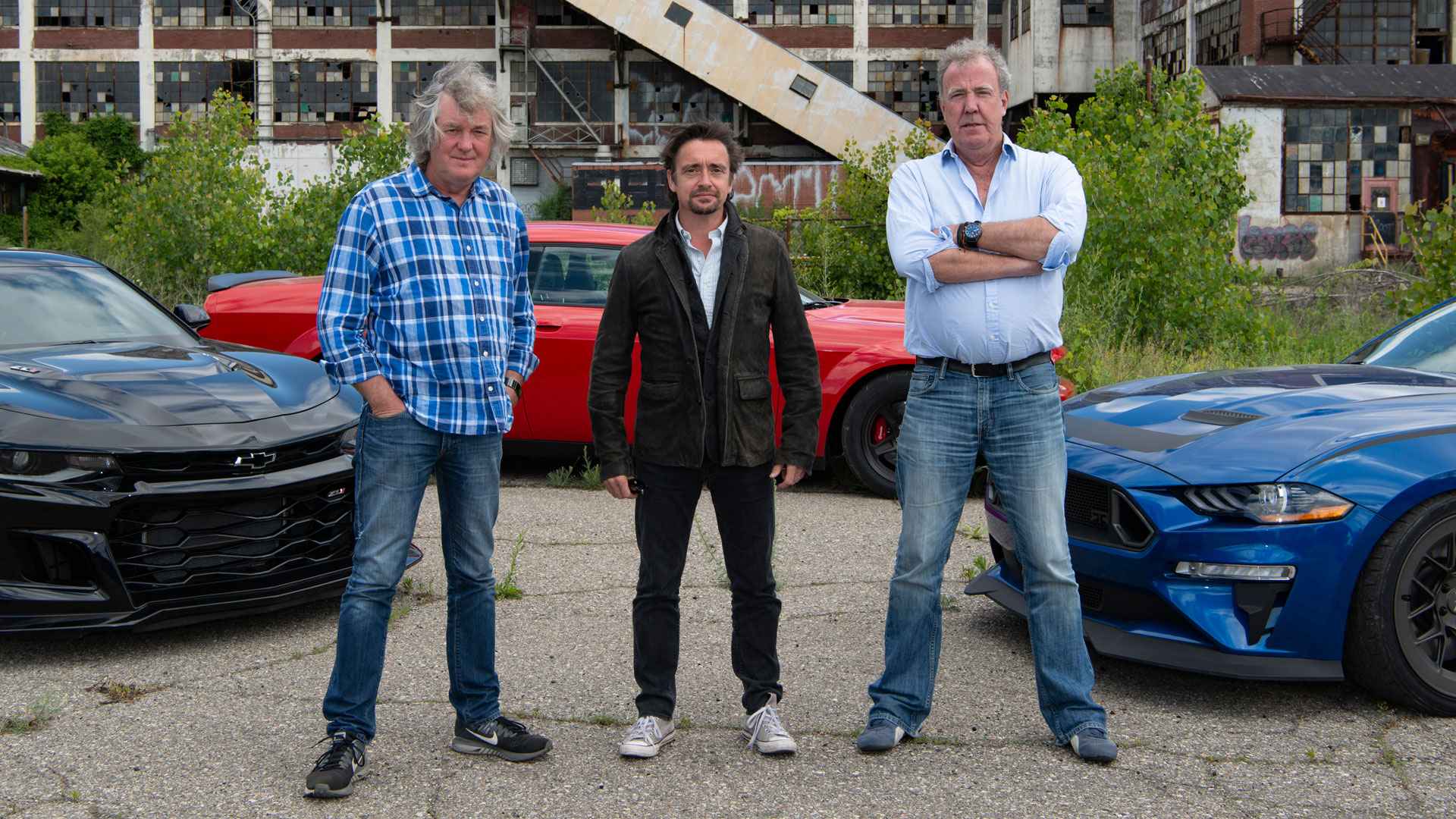
I’m going to come straight to the point: I’ve never really seen much value in a review of a television show. Which might seem like a strange admission at the beginning of a piece focused on examining the first episode of season three of The Grand Tour, but hear me out on this.
The return of the #amazonshitcarshow – clever hashtag, guys, very clever – will guarantee at least three things. The Guardian will post a largely negative review. The tabloids will revel in the show’s silliness. And Prime Video’s viewing figures will shoot through the roof.
I was asked to watch the first episode and then provide my thoughts. There are clicks at stake here and everybody is hoping to hitchhike on the back of the bandwagon that will be streamrollering online viewing figures for the coming weeks and months.
There ain’t much room on this wagon, so be prepared to get cosy with your neighbour if you’re taking a ride.
Detroit Spinners
Which brings me back to point about being asked to review The Grand Tour. I’m not complaining – spending the first hour of a Friday morning watching Clarkson, Hammond and May mess about in Detroit was fine by me. But, honestly, do you care what I think?
Put it this way. If you enjoyed the first two seasons, you’ll undoubtedly love series three. As teasers go, the near-on two-minute montage at the beginning of episode one is pretty conclusive. And it scores points for the use of Do the Strand by Roxy Music.
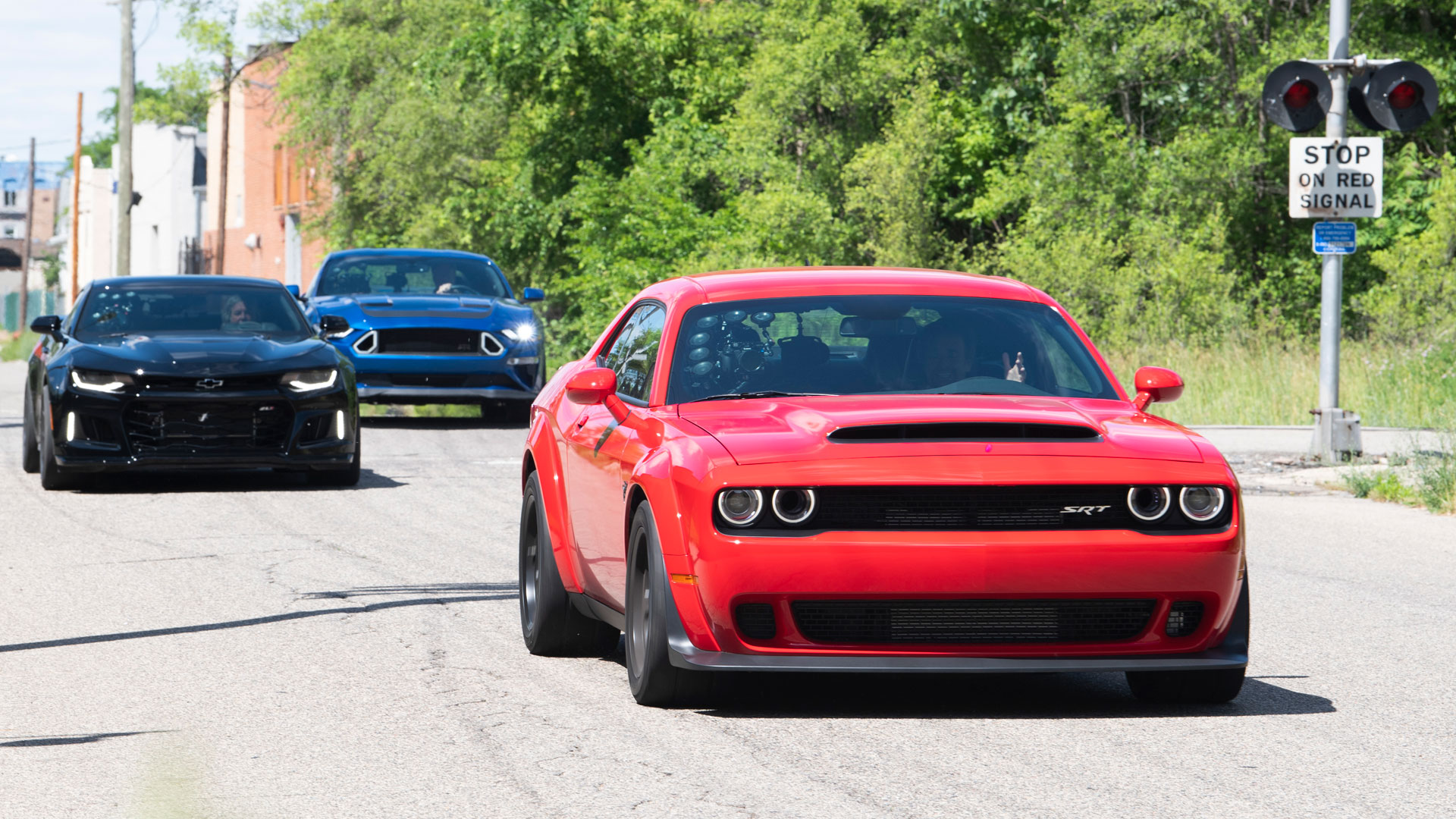
If there’s one thing The Grand Tour does very well, it’s delivering a balance between the sensational and the incidentals. The muscle cars in Detroit segment is a feast for the ears and eyes – the sound of Hammond’s Demon echoing off the crumbling walls of ‘Motor City’ is a particular highpoint.
But the smaller reference points remain at the heart of what makes The Grand Tour tick. Even the demise of the celebrity segment is brushed aside courtesy of a sharp but cruel reference to Howard from the Halifax ads and Adrian Chiles. Not that the global audience will have a clue who they are. Google it.
Which is something you’ll be doing a lot following the first episode. Whether it’s watching footage of rock concerts at the Michigan Building on YouTube, trawling through images of the Conner Avenue assembly plant in its heyday, or wandering through the suburbs of Detroit on Google Street View, you’ll almost certainly lose another hour or so on the net.
So that’s your Friday afternoon sorted.
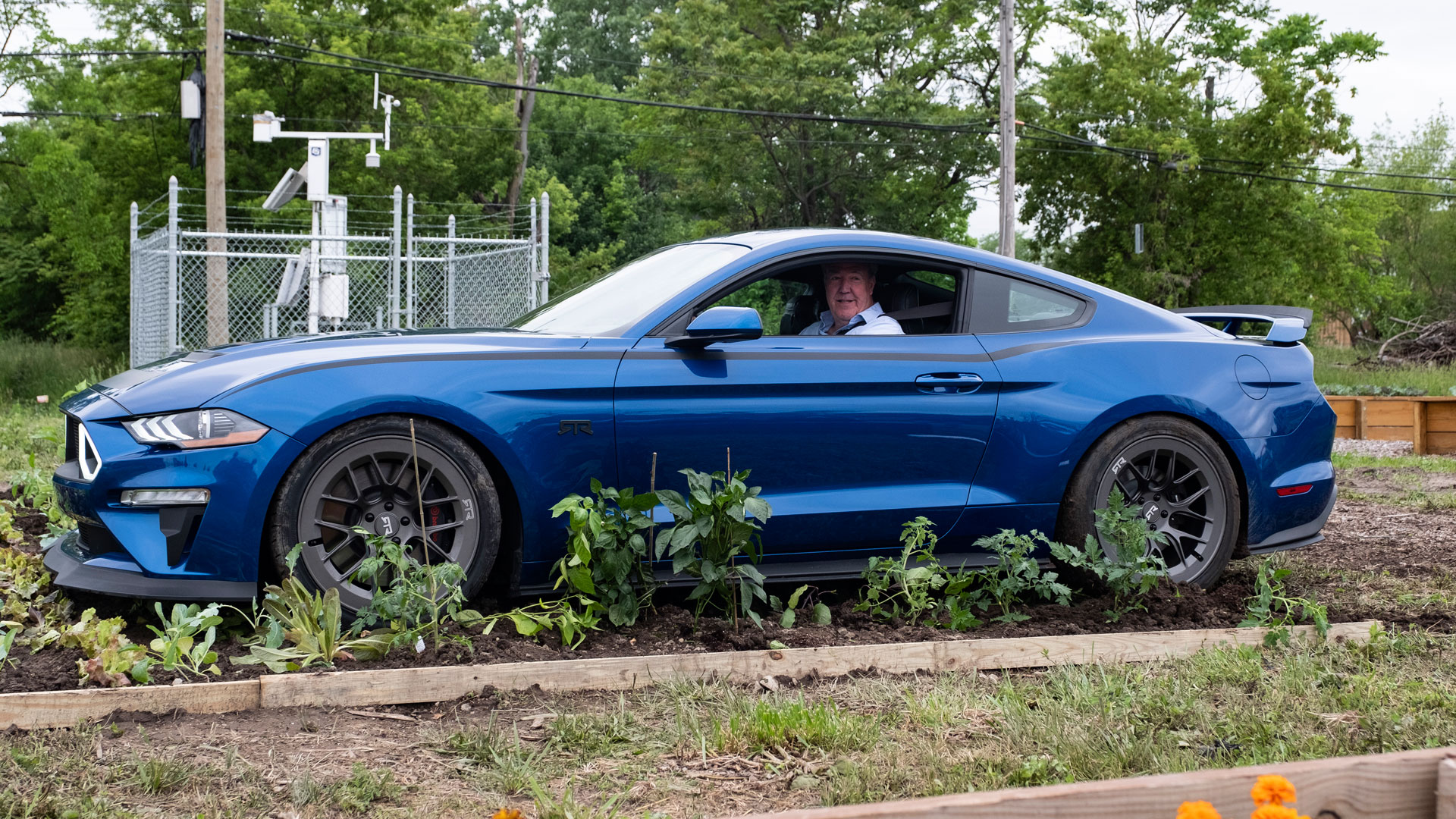
Happy little plants
I’m sure the detractors will make some wisecracks about three old farts hurtling through a once rich and powerful town as some kind of metaphor for The Grand Tour’s tried and tested formula. And that’s their prerogative.
But if, within the first few minutes of the show, you’re not enjoying it, why not switch it off and watch The Man in the High Castle? Or The Joy of Painting with Bob Ross.
The Grand Tour exists to make people happy. “Shoot, if you want bad stuff, watch the news,” as the painter with the big hair once said.
The colour of their new car is one of the biggest choices motorists can make. It’s something most of us spend ages agonising over, staring endlessly at brochures or clicking constantly at the online configurator. For years, the top colours have therefore been seen as a reflection of the mood of the nation.
And in 2018, it seems we’re feeling rather glum and sober, based on the choices of our new car colour as ranked by the Society of Motor Manufacturers and Traders (SMMT). Let’s run through the favourite shades of Britain’s best-selling cars, then, before looking at the best-selling new car colour overall at the end.
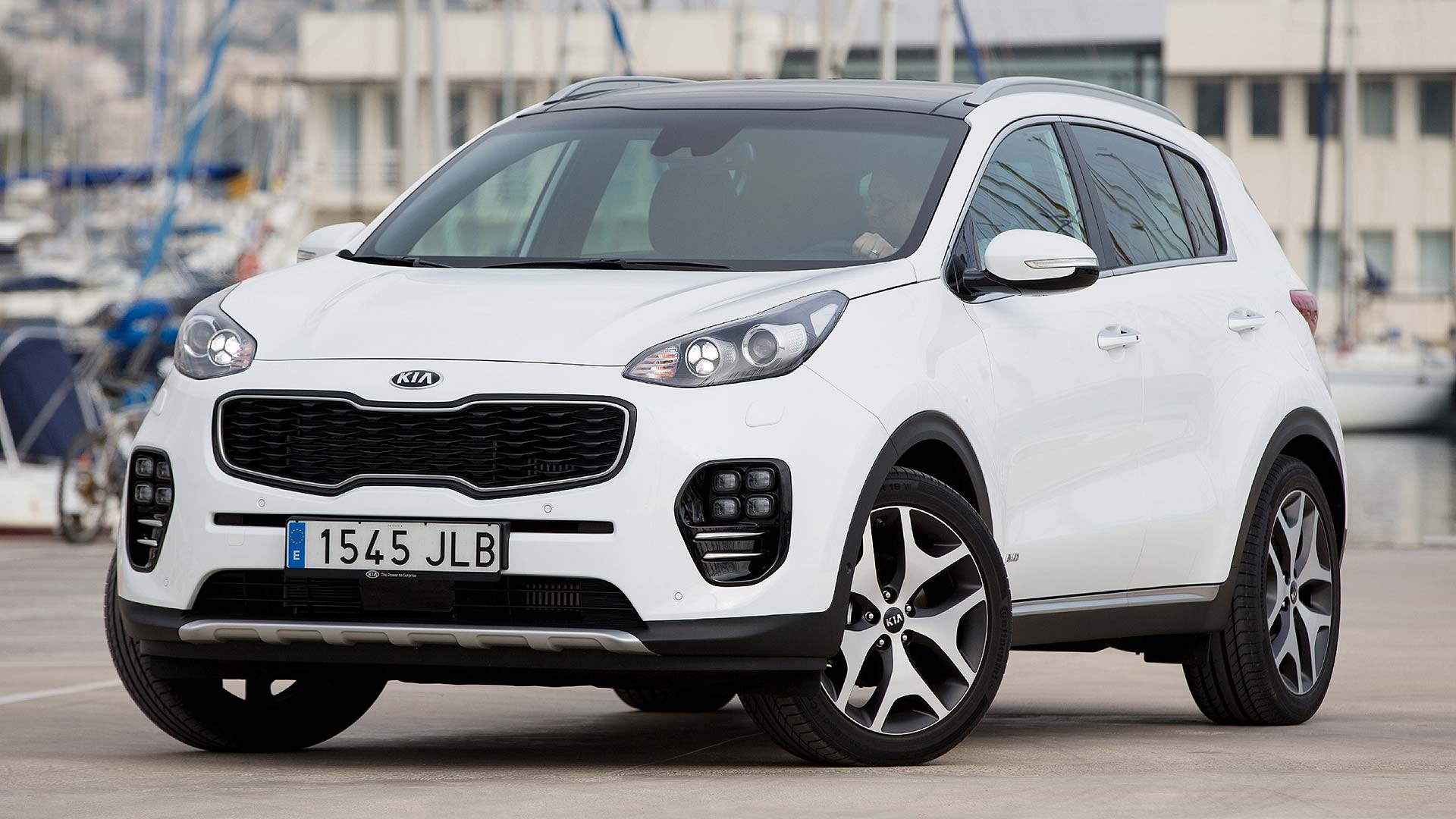
Kia Sportage: white
The Kia Sportage was the 10th best-selling new car in Britain last year, with over 35,000 new models finding homes. The top choice of colour was white – perfect for bringing out the facelifted car’s crisp lines and LED-accented front end.
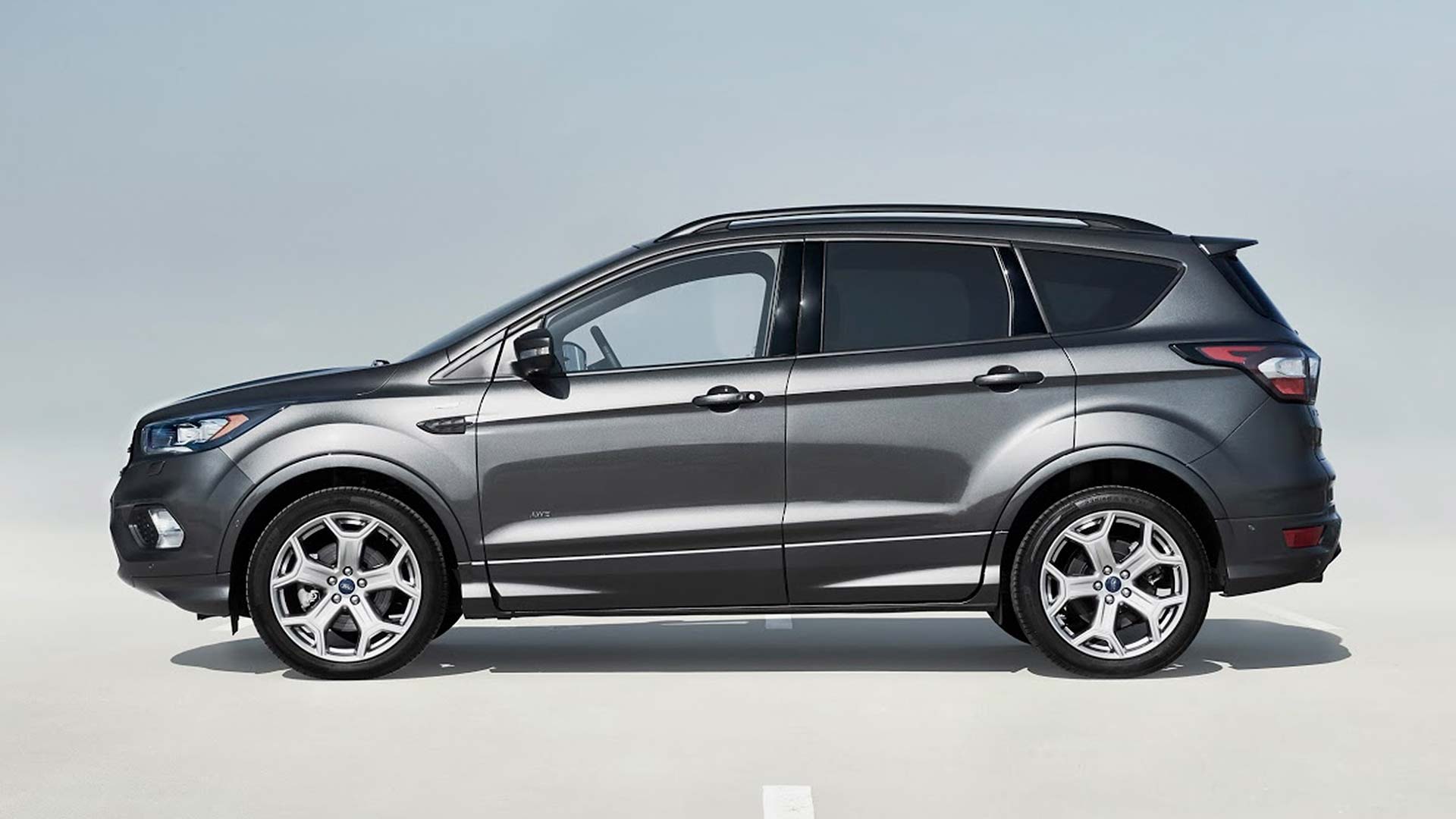
Ford Kuga: grey
Another SUV in the top 10, Ford Kuga buyers preferred grey. Called Magnetic, it’s interestingly a so-called ‘exclusive’ colour, costing £750 – regular metallic paint on the Kuga is £600.
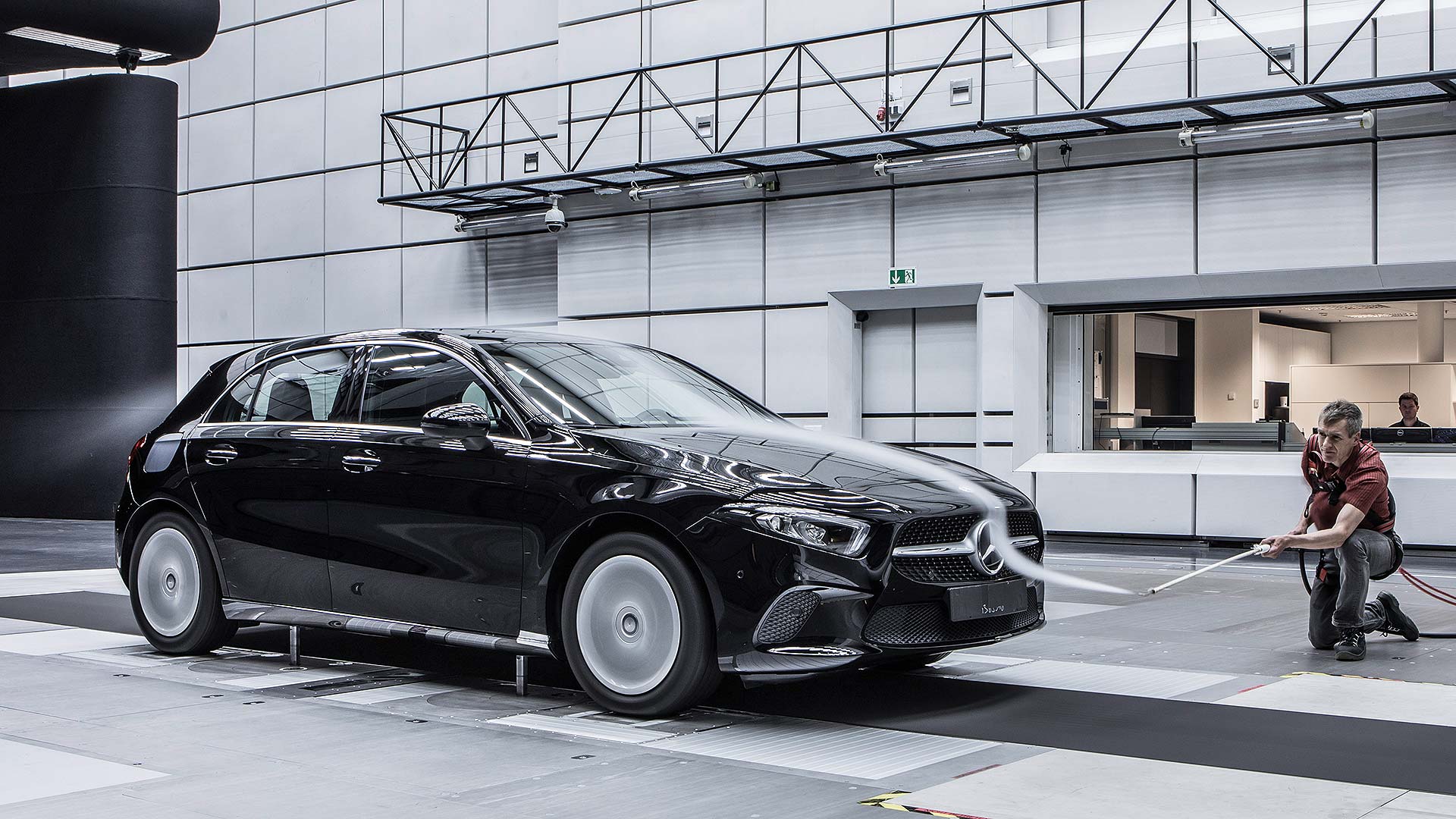
Mercedes-Benz A-Class: black
The new Mercedes-Benz A-Class was launched in 2018 and, like many a Merc, the favourite new car colour pick for Brits was black. Because any Mercedes-Benz looks great in black, we fully approve of this.
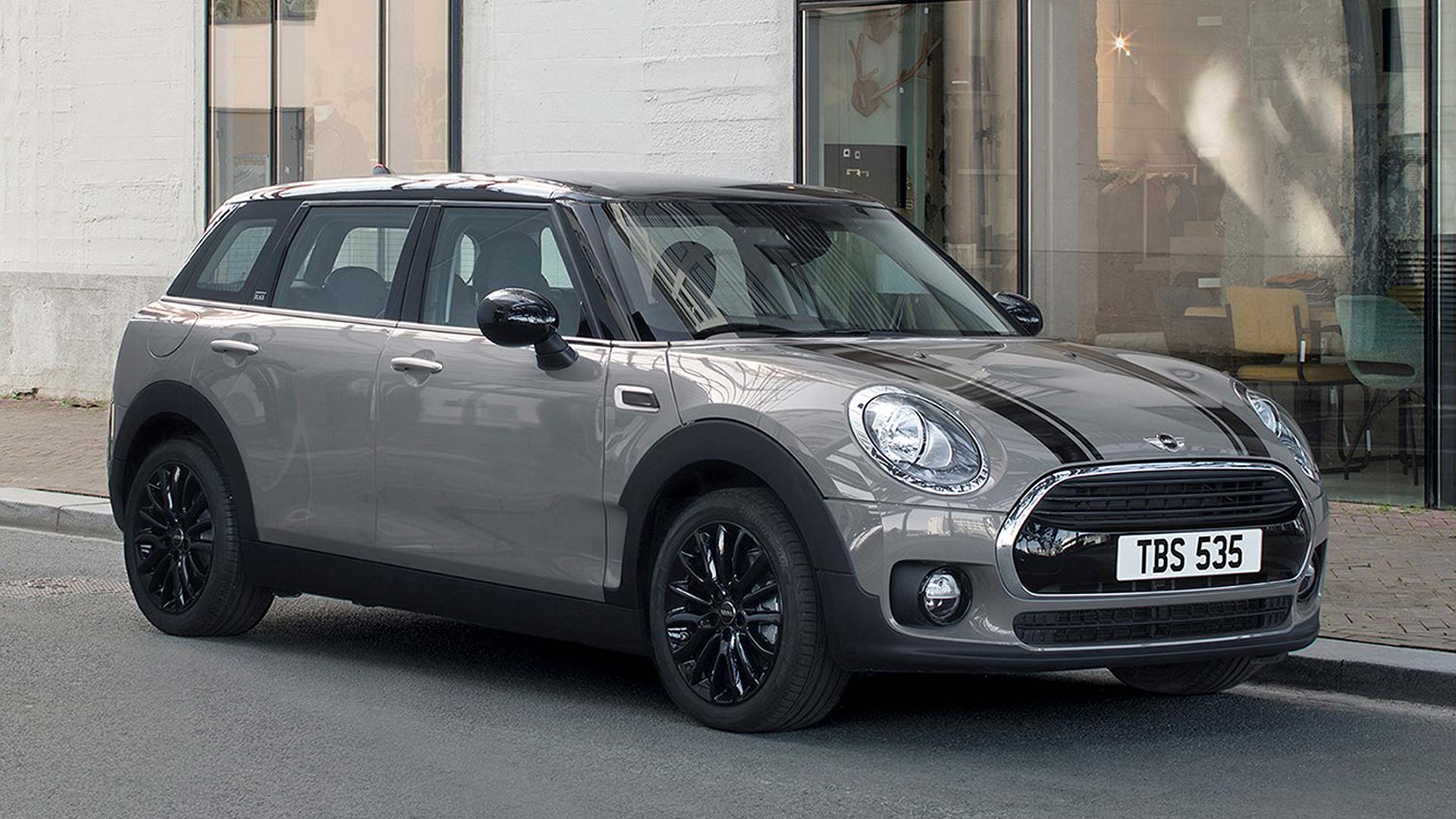
Mini: grey
Mini buyers are cheery sorts, but even they seem to have been swayed by the glum mood in Britain last year. There are umpteen bright shades on offer in the range, but our favourite was still grey.
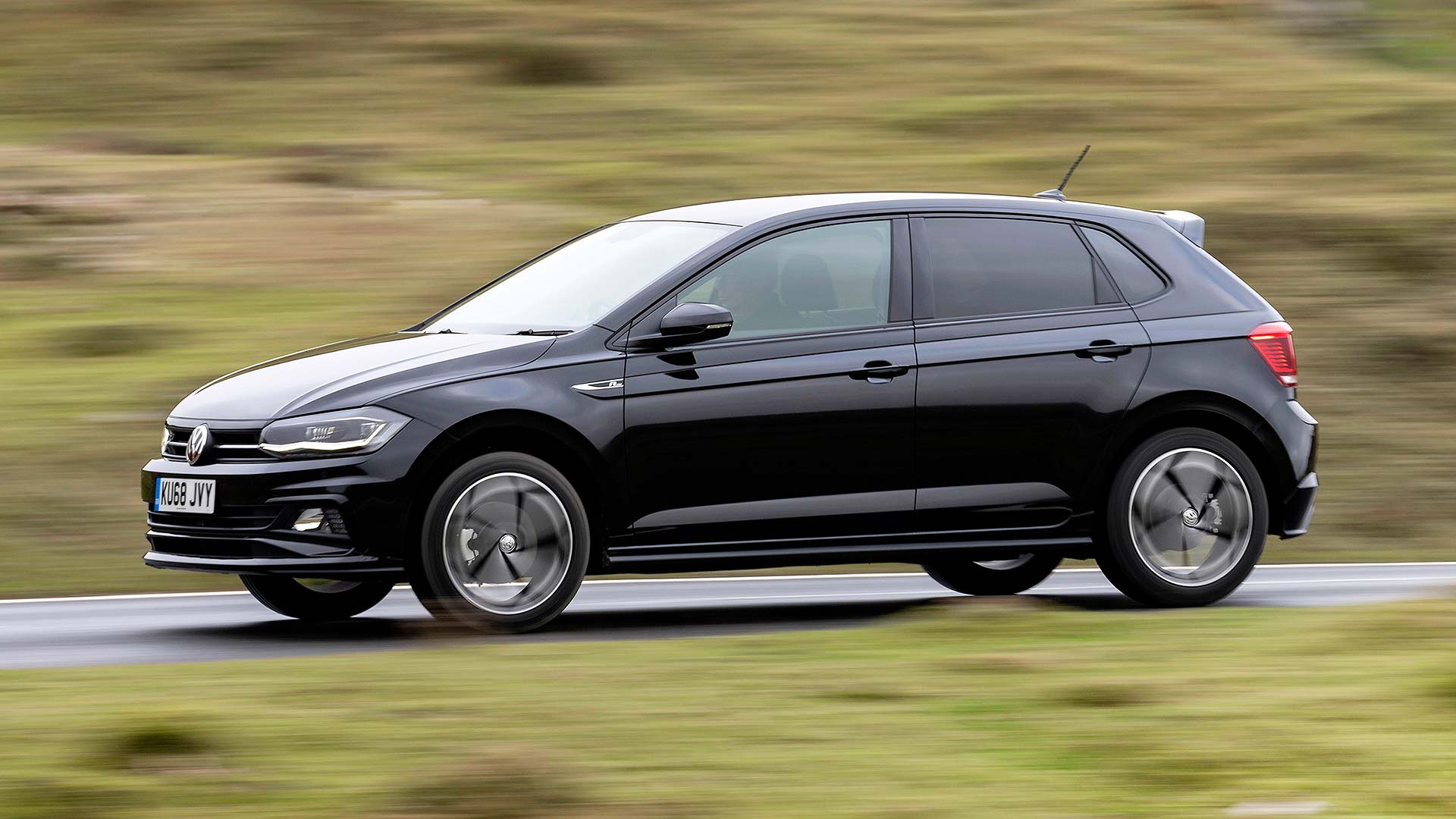
Volkswagen Polo: black
The Volkswagen Polo is another new car for 2018, and another model in which Brits preferred it in black. We must say, though, based on the image above, it does look pretty good in black, doesn’t it?
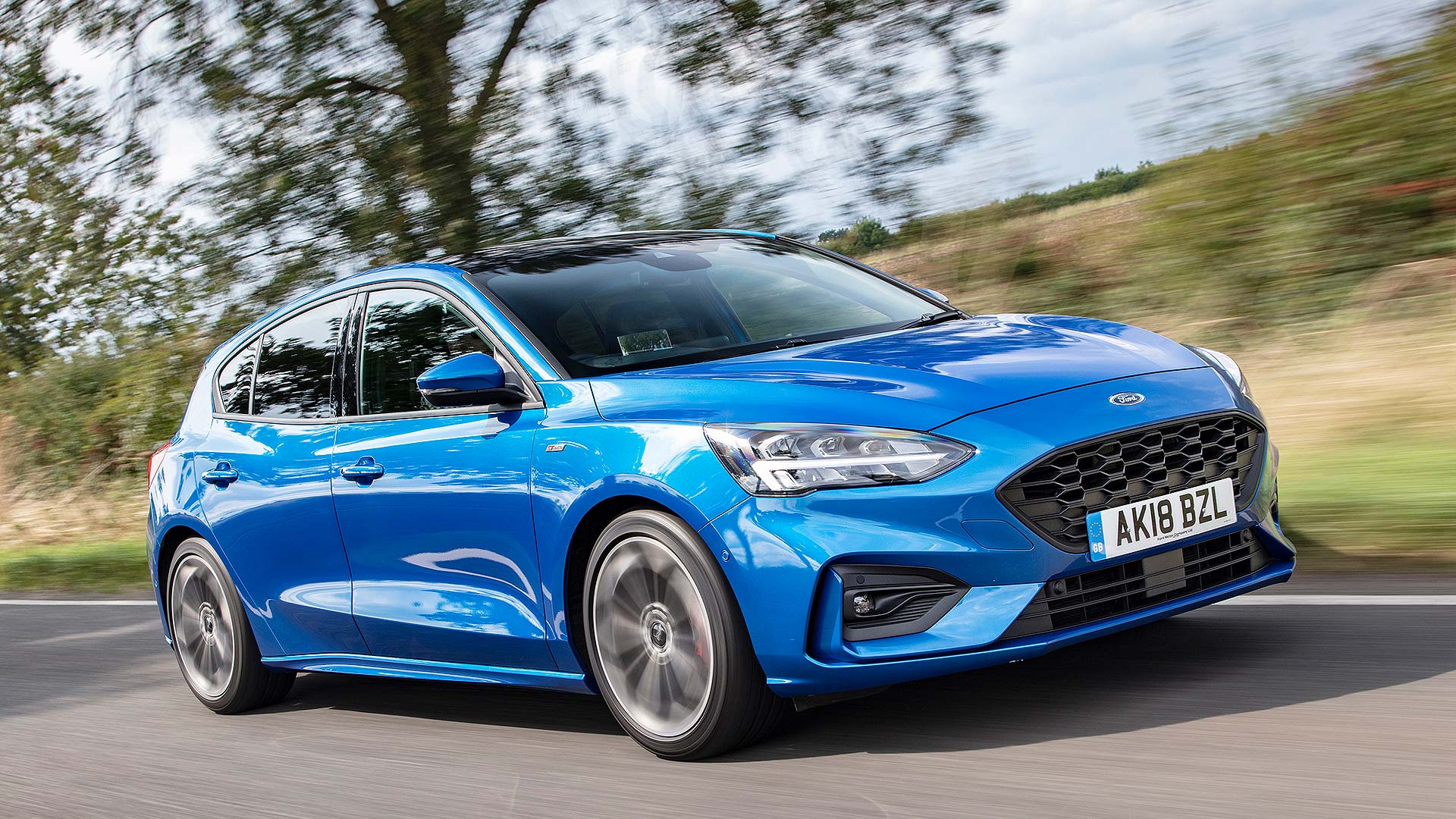
Ford Focus: blue
The Ford Focus was also new in 2018 and we also fully endorse Brits’ pick of blue as their favourite colour. Chrome Blue is a more subtle shade but we particularly like the Desert Island Blue pictured above – it really pops.
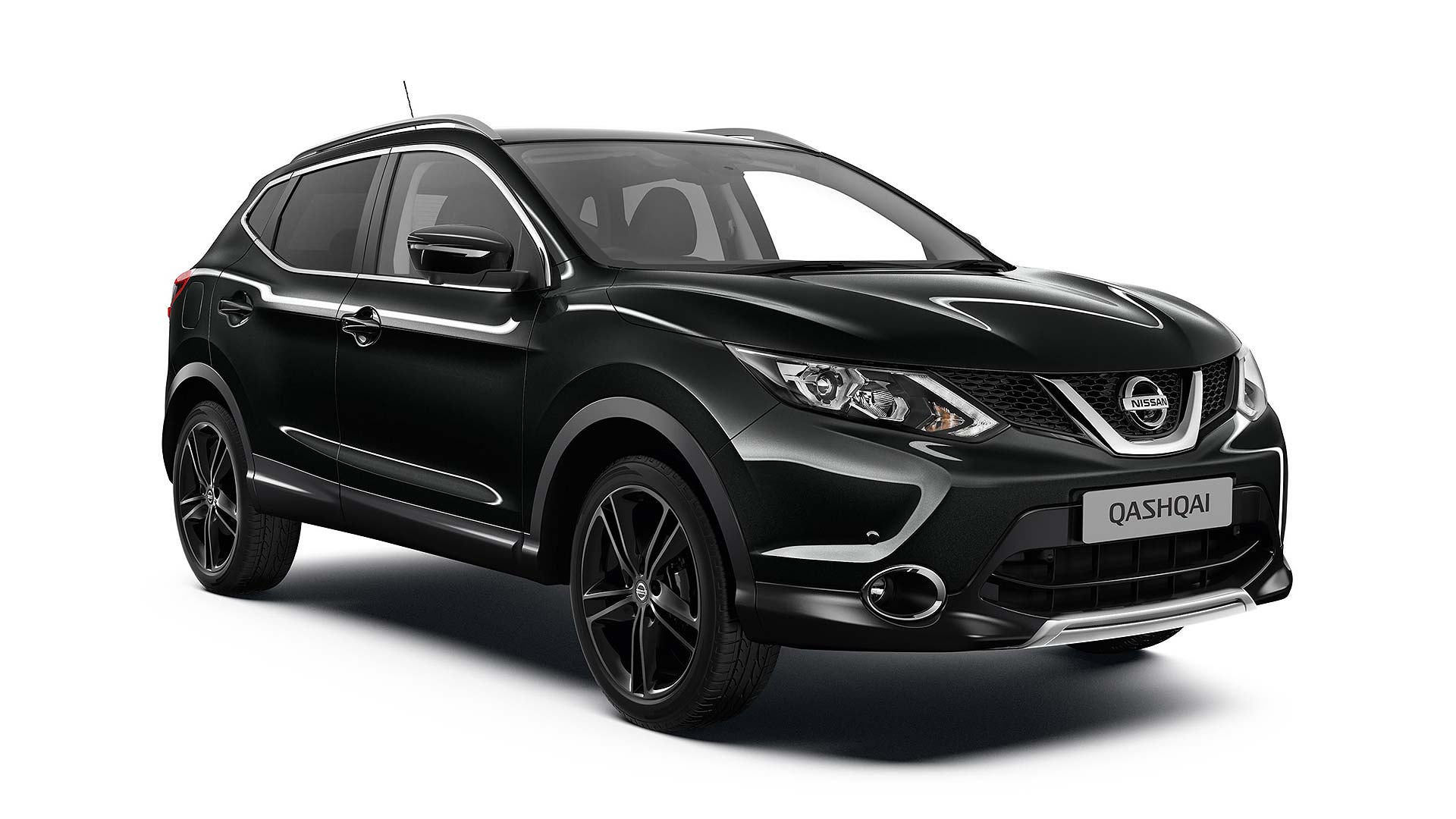
Nissan Qashqai: black
Back to black for the Nissan Qashqai. The Sunderland factory has an excellent paint shop so it looks just as rich as the Mercedes-Benz A-Class, we reckon.
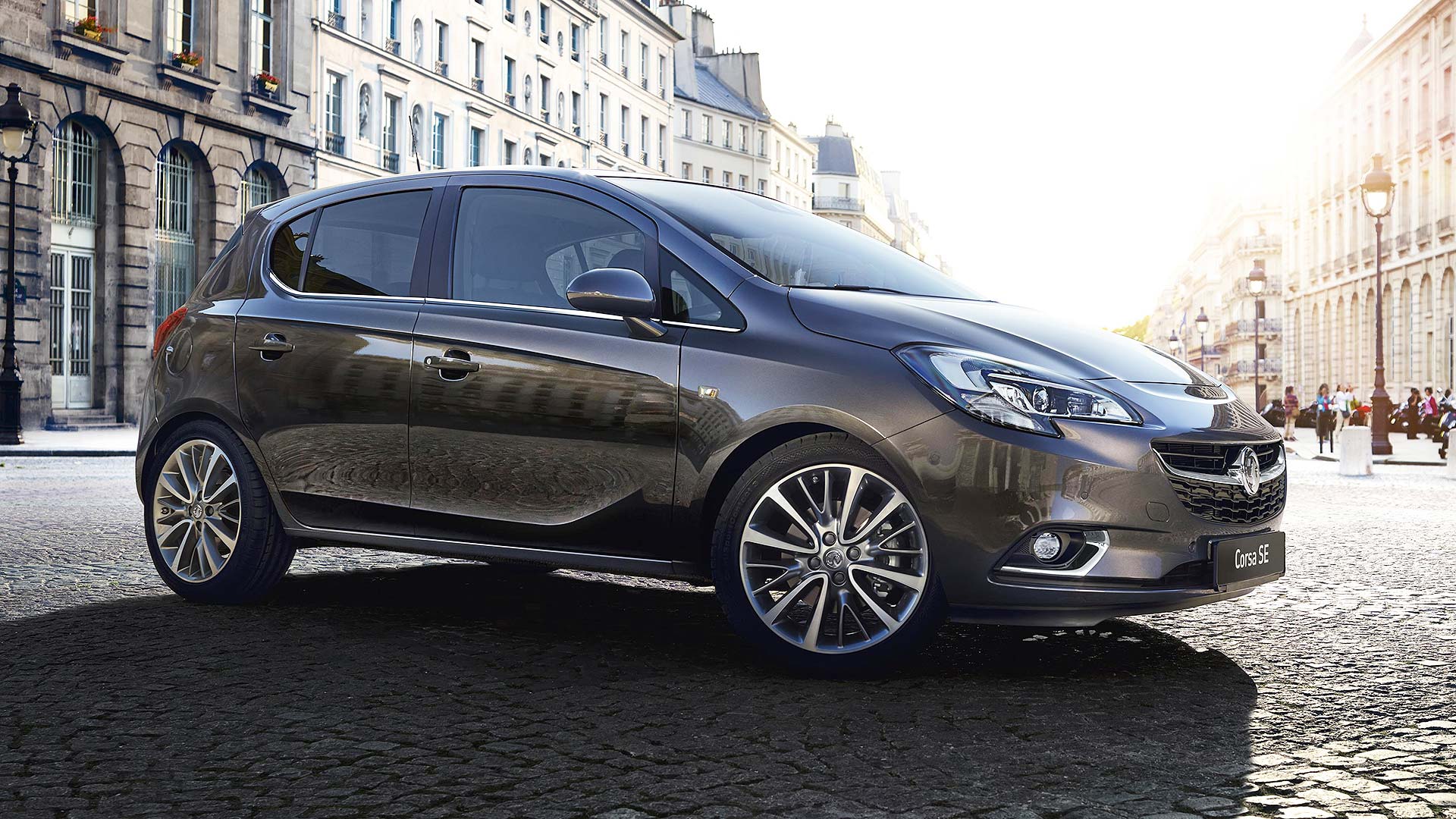
Vauxhall Corsa: grey
The ageing Vauxhall Corsa is currently being sold in special edition Griffin guise, in which the feature colour is red. This may sway things for 2019, but for 2018, the moodier shade of grey was top choice.
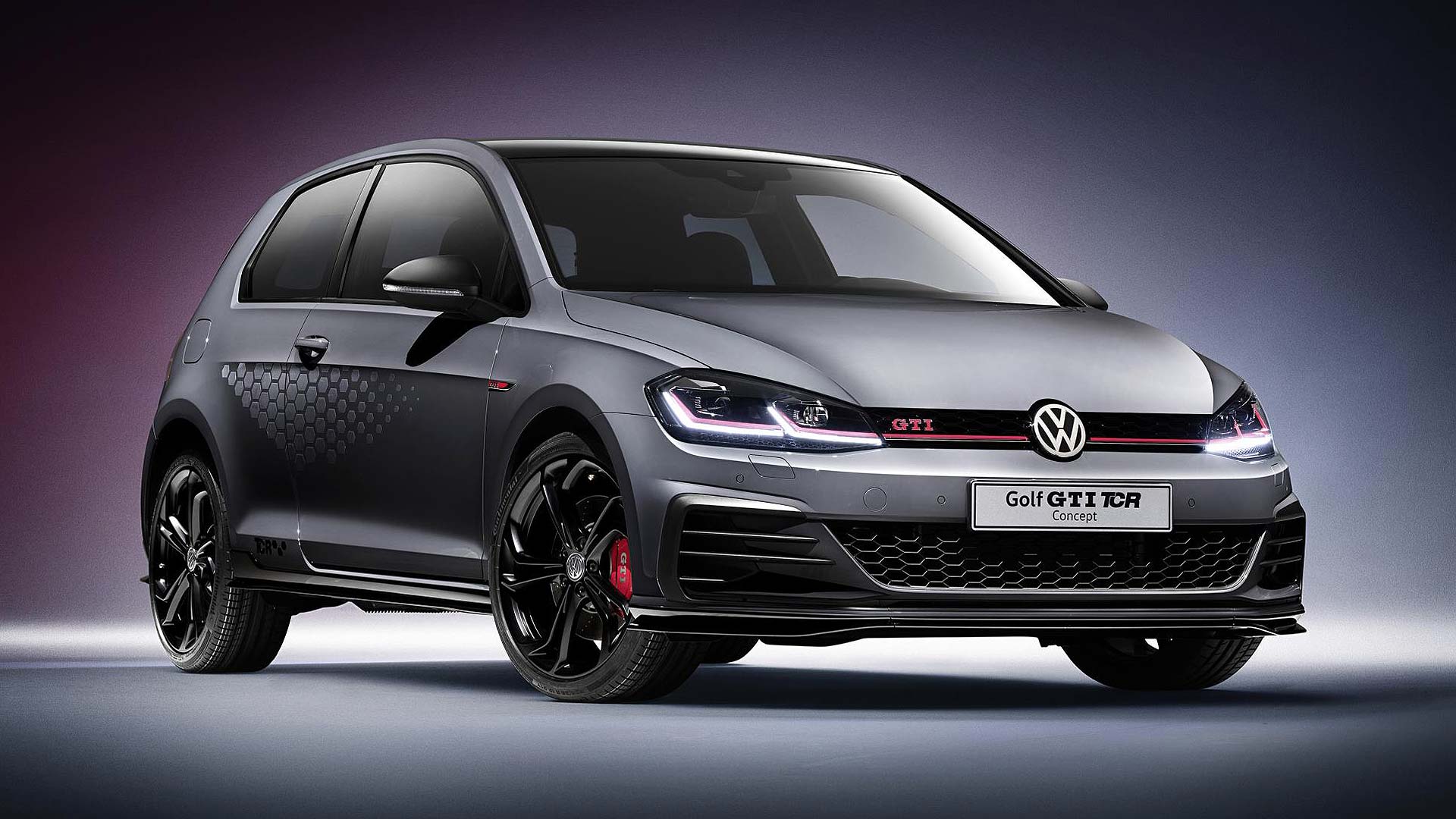
Volkswagen Golf: grey
The sensible, sober-suited Volkswagen Golf was yet another car that was most popular painted in grey. VW offers two shades – Urano Grey is actually free, and Indium Grey metallic is £580.
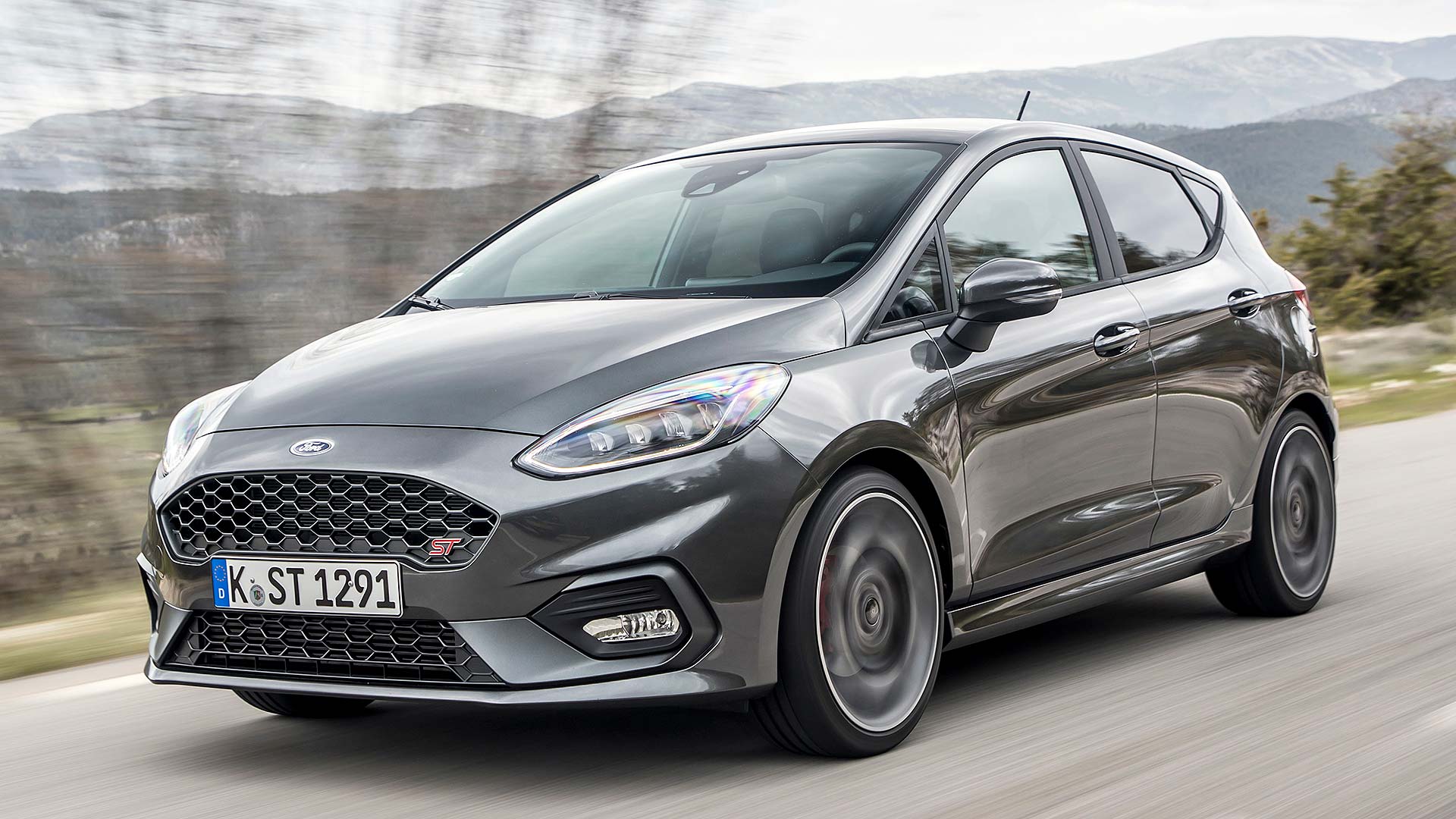
Ford Fiesta: grey
Our favourite new car by far in 2018 was the Ford Fiesta. And the colour we chose above all for it was, yes, grey. Again, Ford’s grey is called Magnetic, an exclusive colour that costs £650, as pictured here on the exceptional new Ford Fiesta ST.
Grey day
And the best-selling new car colour in 2018 overall? It’s perhaps no surprise to read it is grey. Perhaps reflecting the mood of the nation, the many shades of grey beat the previous top colour, black, into second place. It’s the first time grey has topped the charts, reports the SMMT.
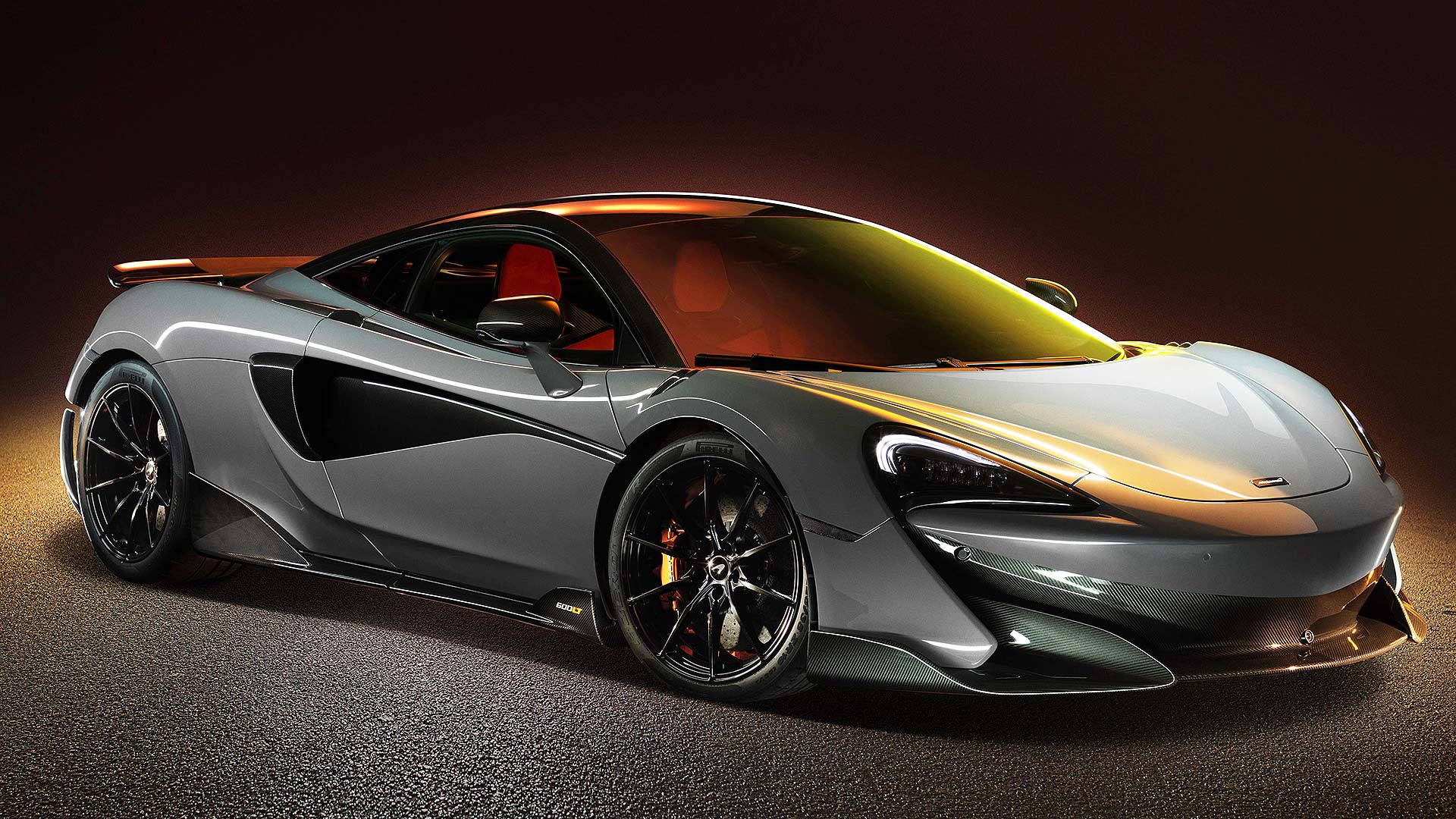
So let’s cheer things up a little: we may all be feeling a little grey, but if it means picking a racy McLaren 600LT like the one pictured above, we reckon we’d soon cheer up once we got behind the wheel…
 Hyundai Motor Group has announced news of an important development set to make life-saving airbag technology even better.
  The importance of Hyundai’s work has been highlighted by statistical research undertaken by the National Automotive Sampling System Crashworthiness Data System (NASS-CDS).
  Given the violent movement of vehicle occupants during a crash, Hyundai knew that the airbag system could not just simply be designed to deploy again.


 The
The 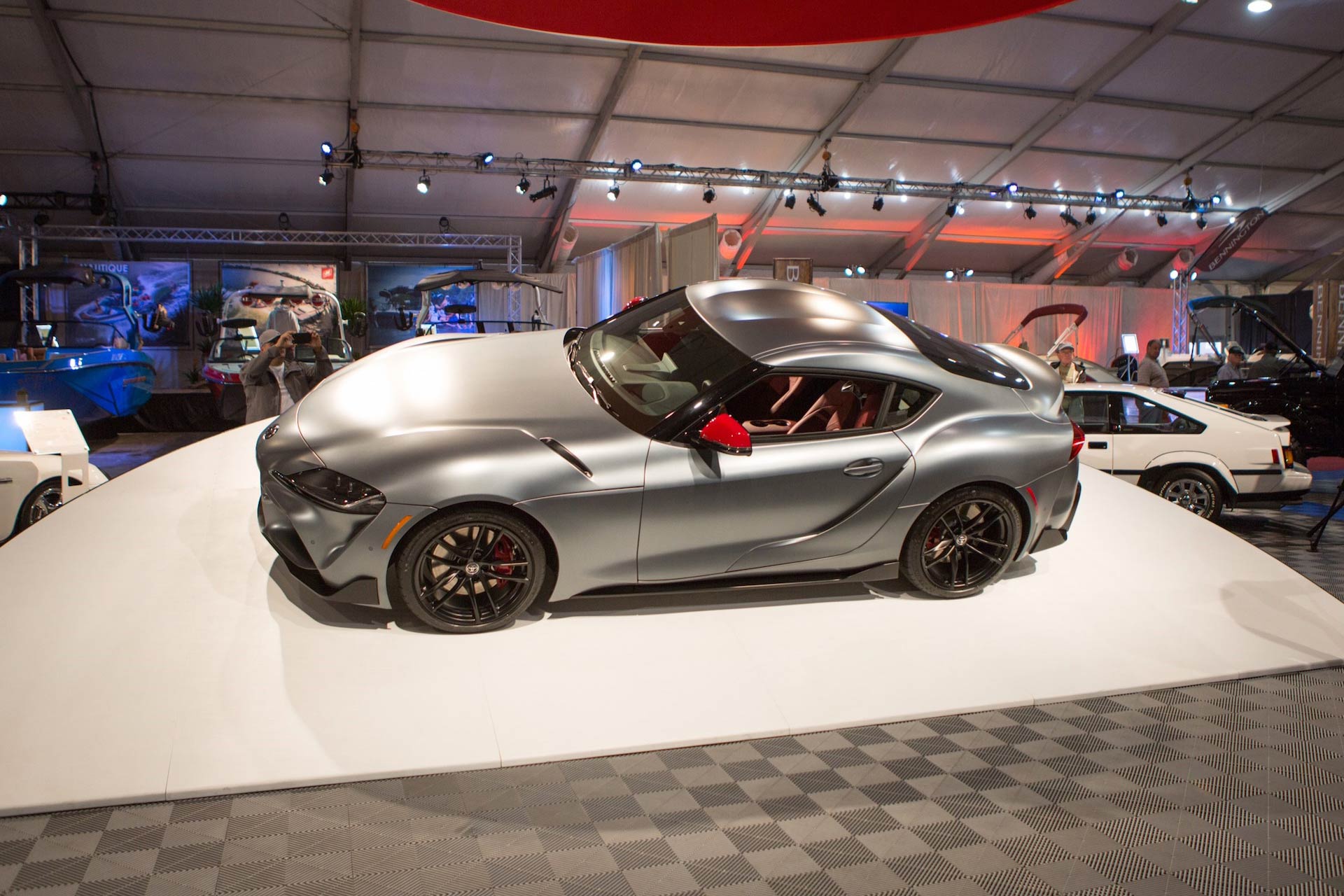 Helping raise the sale price of the first fifth-generation Supra was the fact all proceeds would be going to charity. Toyota North America had donated the specially created car, allowing all money to be split between the American Heart Association and Bob Woodruff Foundation.
 Despite the incredible price tag, the first A90 Supra was not the car making the biggest sale at the 2019 Scottsdale event.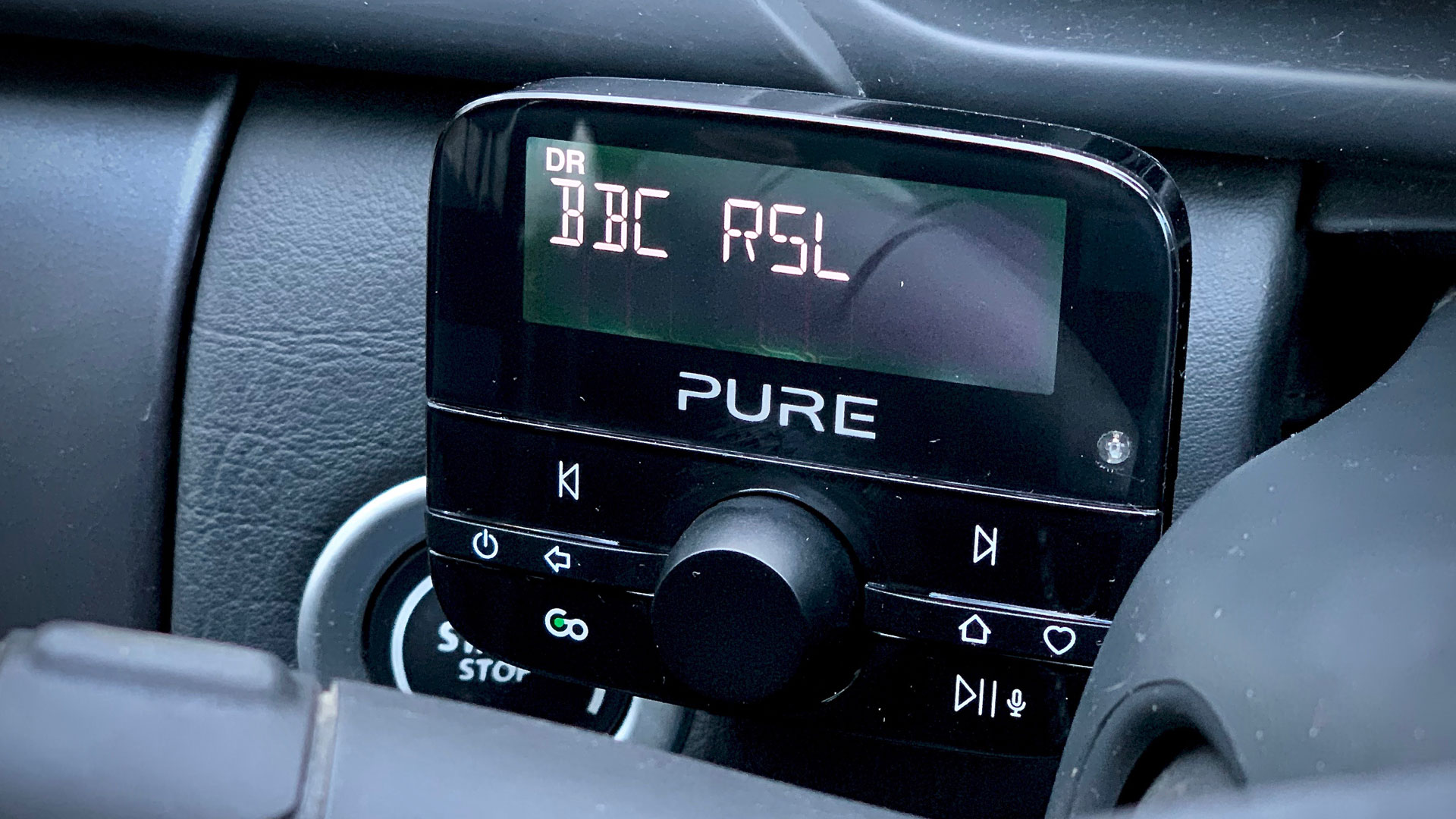

 The
The