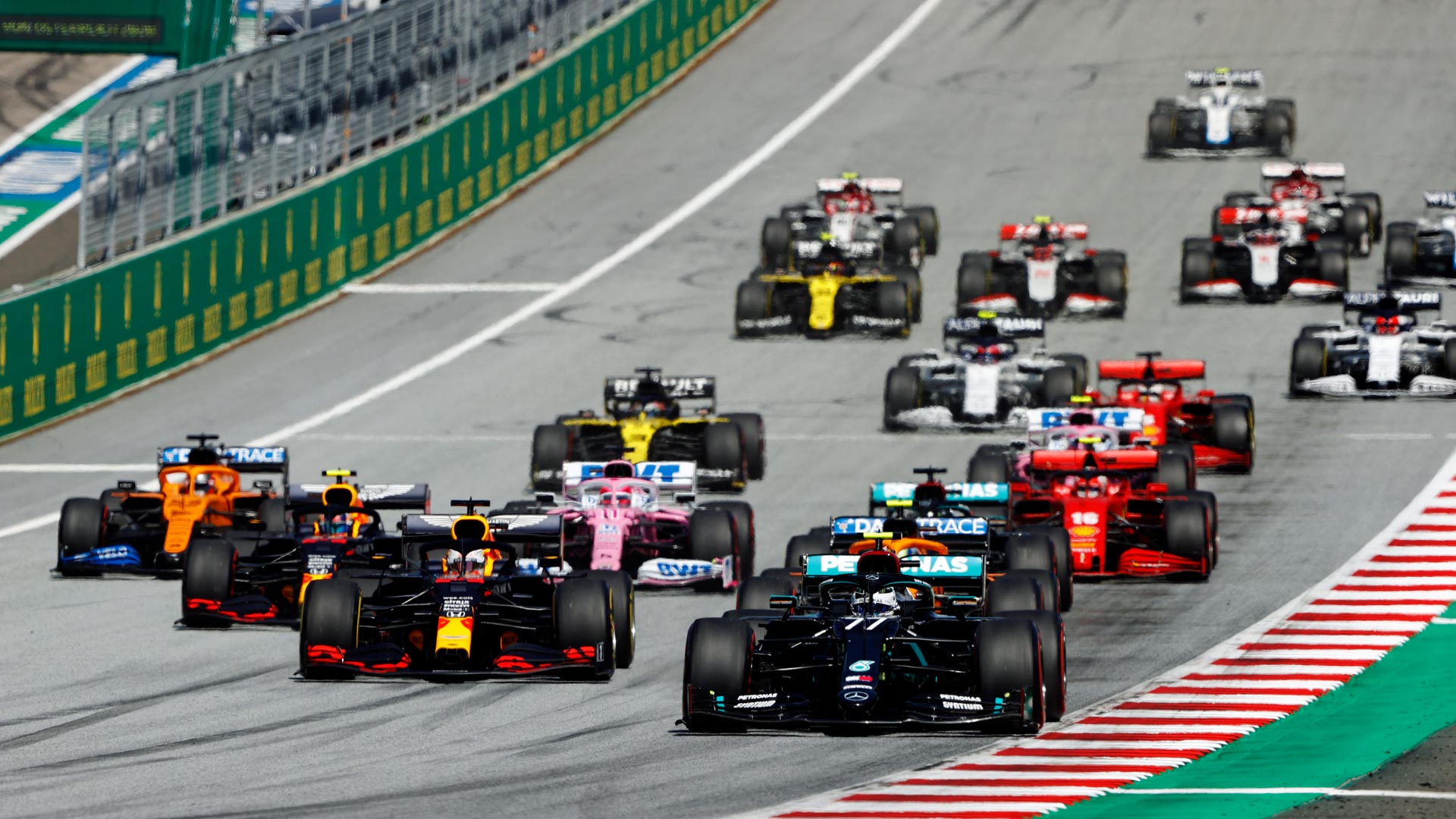
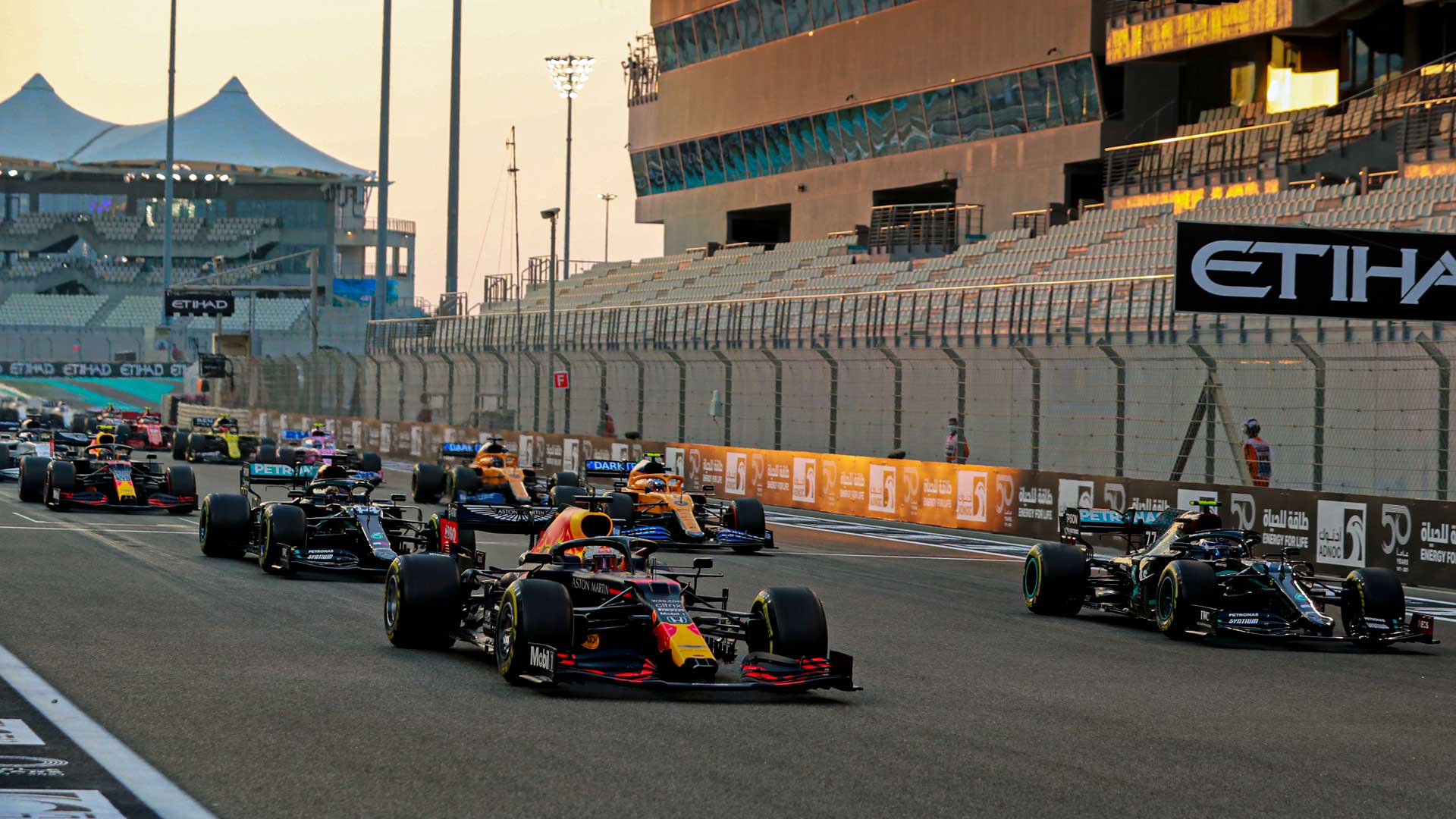
Formula 1 fans may find themselves preoccupied as season 3 of the hit Drive to Survive is released.
Available to stream on Netflix, the latest series covers the 2020 Formula 1 World Championship.
As a collaboration between Netflix and Formula 1’s organisers, the documentary programme has become renowned for covering the important off-track action.
Raw speed and raw emotions
Instead of simply covering the story of racing action chronologically, Drive to Survive has placed attention on the human side of the sport.
Interviews with drivers, team managers, and F1 officials have formed the backbone of the programme. The first season gained attention for the expletive-laden rants from Haas team principal, Guenther Steiner.
Last year’s second season delved into the struggles of Red Bull drivers Alex Albon and Pierre Gasly, showing the harsh realities of meeting the team’s expectations.
Given the challenges of the past twelve months, there is little to suspect season 3 of Drive to Survive will be short on content.
Driving changes on and off the track
Netflix does not release details of the teams and drivers covered each year, or the particular storylines to be followed.
However, the impact of COVID-19, which affected filming of Drive to Survive itself, will surely take a major role. The strong social justice stance taken by Sir Lewis Hamilton during 2020 is also a strong contender for being featured.
Expect to see Romain Grosjean’s terrifying high-speed crash in Bahrain included, too.
Although the Formula 1 season was shortened during 2020, Netflix has still committed to ten episodes of Drive to Survive. A perfect amount to pass the time until the start of the 2021 F1 season on Friday, 26 March.
If you can avoid binge-watching them all first, that is.
Currently, there are no plans to offer the Spring in right-hand-drive markets.
But, revealed Dacia CEO Denis Le Vot to Motoring Research today, UK sales are still actively being considered.
“There is potential, yes. We will take a decision in the next few months.
“The Sandero has already been named What Car? Car of the Year, and we care about our presence in the UK. We know Dacia is a very popular brand in the UK.” The clear message was to ‘watch this space’.
“We have seen the hashtag #BringtheSpring on social media,” added product marketing boss Xavier Martinet. “This does not go unnoticed.”
Dacia’s decision could even be influenced by recent changes to the Plug-in Car Grant, which focuses funds on more affordable car models.
Industry watchers have noted there are few pure electric cars on sale for less than £20,000, despite the government’s eagerness to drive the switch to electric with its 2030 target in mind.
Offering a pure electric car for a post-grant price of well under £15,000 could be a real marketing coup for Dacia, underlining the brand’s strong reputation in the UK for value.
Springing a surprise
The Dacia Spring is a city car-sized EV, with SUV styling, measuring just over 3.7 metres long – smaller than the current Dacia Sandero supermini.
It has a battery offering 27.4kWh of usable capacity and, thanks to a kerb weight that impressively dips below one tonne, a WLTP range of 141 miles.
When restricted to city driving – where Dacia expects most will be used – this range grows to 190 miles. The firm expects most Spring owners will only charge their car once a week.
The four-seat EV has a voluminous 290-litre boot, much bigger than the city car norm, and even the entry-level model will offer air-con, six airbags and autonomous emergency braking.
Pre-orders in France begin this weekend, Mr Martinet told an exclusive group of AUTOBEST jurors – and, unlike with the Tesla Model 3, prospective owners won’t have to actually pay anything.
Instead, they submit a scan of their credit card, “like with hiring a car”, and a Dacia dealer then contacts them to confirm the order and deposit later.
“If demand is high, it’s first come, first served: the preorder is not about charging cash, but about allowing serious prospects to book their place in the queue.”
For Brits, the message seems to be clear: if you want to see the Dacia Spring on sale here, let the firm know and signal your intention to join the queue…
More significantly, it has also lowered the price ceiling, from £50,000 to £35,000.
The car industry was quick to respond. “The wrong move at the wrong time,” said SMMT chief executive Mike Hawes. “Extremely disappointing” said car dealer trade body the NFDA.
But now the shock has subsided, here’s why, on reflection, it could actually be positive for British car buyers.
It all hinges on that maximum price cap. The previous £50,000 level,reports the Times, irked government ministers. The “Tesla subsidy,” said one source. “Taxpayers should not be subsidising people to buy £50,000 cars.”
The $35,000 (£30,000) Tesla Model 3 famously never materialised, and the company has since abandoned this goal.
That means the cheapest Tesla Model 3 in the UK is currently £40,490, before savings. Previously, it was eligible for the Plug-in Car Grant, which would have reduced this to £37,490.
So that’s a £3,000 price hike, overnight. How can this be good news for EV buyers?
Well, because the focus will not be on getting EV list prices below £50,000, but getting them below £35,000.
In other words, the new goal won’t be on £47,000 EVs, but offering them to consumers for less than £32,500.
As analyst Matthias Schmidt pointed out, car firms in the UK now have to meet strict CO2 limits for this country on its own, rather than pooling them with other EU nations.
So, if brands are to avoid big fines for selling profitable, high-CO2 cars, they need to either put their hands in their pockets, or offset this with plentiful volumes of zero-CO2 EVs. And now the bar for volume buyers has effectively been lowered by a healthy £14,500.
Suddenly, manufacturers are being forced to focus on significantly cheaper EVs to keep that all-important sales volume high. The competition will now switch to a price point far more within reach for millions.
Who knows, maybe Tesla will even bring us a sub-£35,000 Model 3?
Yes, it’s a surprise move from a government committed to the very zero-emissions cars that it now appears to be disincentivising.
For the consumer, though, it may actually end up delivering more affordable EVs that far more people can consider. Surely that’s got to be a good thing?
The Plug-in Car Grant for pure electric cars has been reduced from £3,000 to £2,500, with the list price cap also reduced from £50,000 to £35,000.
The changes are effective immediately from today (18 March 2021).
These measures have been taken to ensure the funding lasts longer, says the government.
The £50,000 price cap has been lowered to £35,000 because higher-priced vehicles are ‘typically bought by drivers who can afford to switch without a subsidy from taxpayers’.
As the number of sub-£35,000 EVs has increased by almost 50 percent since 2019, argues the government, more than half the models currently on sale will still be eligible for the grant.
“While the level of funding remains as high as ever,” said transport minister Rachel Maclean, “given soaring demand, we are refocusing our vehicle grants on the more affordable zero emission vehicles – where most consumers will be looking and where taxpayers’ money will make more of a difference.
“We will continue to review the grant as the market grows.”
“The government argued at the time the move would “allow more drivers to benefit from making the switch for longer”.
The Plug-in Car Grant currently has £582m of funding allocated, which is ‘intended to last until 2022 or 2023’.
‘Wrong move at the wrong time’
The car industry has expressed its frustration over the sudden move. SMMT chief executive Mike Hawes called it “the wrong move at the wrong time.
“New battery electric technology is more expensive than conventional engines and incentives are essential in making these vehicles affordable to the customer.
“Cutting the grant and eligibility moves the UK even further behind other markets, which are increasing their support, making it yet more difficult for the UK to get sufficient supply.
“This sends the wrong message to the consumer, especially private customers, and to an industry challenged to meet the government’s ambition to be a world leader in the transition to zero emission mobility.”
Ford of Britain Chairman Graham Hoare called the news “disappointing and is not conducive to supporting the zero emissions future we all desire.
“Robust incentives – both purchase and usage incentives – that are consistent over time are essential if we are to encourage consumers to adopt new technologies.”
The NFDA, which represents car dealers has called the move “extremely disappointing as it risks undermining the progress the UK has bene making towards a zero-emission market in line with the 2030/2035 deadline set by the government”.
Chief executive Sue Robinson says the NFDA has “repeatedly highlighted that we must avoid a situation where the least well-off drivers are deterred from buying a new, low-emission vehicle when the times comes to replace their old one.
“The cost of the electric cars currently available on the market remain higher than their petrol or diesel counterparts and it is vital that buyers continue to be incentivised.”
RAC head of roads policy Nicholas Lyes said that although ministers talk-the-talk on encouraging people into cleaner vehicles, “cutting the Plug-in Car Grant certainly isn’t walking the walk.
“Even though more models are coming on to the market, our research suggests upfront cost remains a concern to drivers when comparing the cost of an electric vehicle with a similarly sized conventional vehicle.
“By cutting the grant, the Government may risk people holding on to their older, more polluting vehicles for longer.”
Staying loyal to your existing car insurance provider could leave you £42 out of pocket. That’s according to new research published this week.
It found that 17.1 million drivers let their insurance auto-renew in 2020, at a cost of £720 million – a seven percent increase on 2019 (£674 million). Around 41 percent of drivers let their policy auto-renew, according to one price comparison website.
One in five policyholders saw an increase of £26 to £50, while nine percent saw increases of £51 to £75. Eight percent saw a rise of between £76 and £100.
It’s surprising to discover that eight percent of drivers allow their insurance to renew automatically, WITHOUT shopping around for a cheaper deal. A fifth (20 percent) stay where they are simply for ease.
Kate Devine, car insurance expert at MoneySuperMarket, said: “Letting your car insurance auto-renew almost always sees you end up paying more, with our research showing that the average premium increase last year was £42.
“While it’s great to see that many of us are shopping around for a better deal, the number of people allowing their policy to auto-renew is still high, at 41 percent.”
Transparency rules
In April 2017, the Financial Conduct Authority (FCA) introduced new rules designed to increase transparency at renewal time and to encourage motorists to shop around for new quotes.
Insurance companies must show the customer the premium to be paid on renewal and the price paid for the previous year. In addition, the providers must include text encouraging consumers to check that the level of cover is appropriate for their needs and that they are able to shop around.
Despite this, the MoneySuperMarket research found that 51 percent of drivers do not recall seeing these notifications. Of the remaining 49 percent, a third said they did not encourage them to shop around.
Kate Devine added: “If your policy is up for renewal, you should always shop around to see what deals are on the market – a new deal on your car insurance is very easy to find online and could save you up to £218.”
The Toyota Aygo X prologue previews how the replacement for the Aygo city car is going to become even more bold and standout.
The preview also confirms Toyota’s commitment to a sector other brands are pulling out of – and how the firm is going to reward loyal customers with an exciting new entry point to its range.
Toyota says the city car sector is a style-conscious one, which is why it’s created a ‘statement’ model.
The new Aygo is set to take on a crossover SUV appearance, with a higher stance and more distinctive profile.
It could even indicate Toyota is planning a range-topping ‘Aygo Cross’ variant, with big wheels, roof rails and two-tone paint.
Built on the same acclaimed platform that underpins the award-winning Toyota Yaris – recently named 2021 UK Supermini of the Year – the new Aygo will continue to use regular internal combustion engines, to keep the car affordable.
It is not going electric and is unlikely to get a hybrid alternative as financial accessibility is paramount in this entry-level type of car.
Based on a shortened version of the Toyota Yaris underpinnings, no interior images have yet been revealed, but we can expect that to be as distinctive as the exterior.
The Aygo X prologue was designed at ED2, Toyota’s European design HQ in the South of France.
Design director Lance Scott said the Aygo has “charmed youthful, progressive customers with its sense of playfulness and fun” since its launch in 2005.
Radford, a famous coachbuilder that created custom Minis for all four Beatles, has been revived by a team including 2009 F1 World Champion Jenson Button.
In partnership with car builder Ant Anstead, designer Mark Stubbs (and business adviser Roger Behle), Button said he “jumped at the chance to join Ant and Mark to put the Radford name back in lights.
“The journey has very much begun, and news of our first car will follow shortly, so watch this space.”
Radford was founded in 1948 as Harold Radford Coachbuilders Ltd. Projects included the Bentley Countryman and fibreglass bodywork for the prototype Ford GT40.
The company later became famous for custom Bentleys and Minis – Beatles manager Brian Epstein commissioned Radford to create one-off Minis for the Fab Four.
Why has it been revived? Ant Anstead explains “the time for a revival of proper coachbuilding is right now.
“People want something unique, something different and something tailor-made. Our cars will offer the ultimate in global luxury and personalisation, blending British heart and soul, state-of-the-art technology, and traditional craftsmanship.”
The revived Radford firm is co-owned by Stubbs, Anstead and Button, and its first commission is “already in advanced stages.
“We can’t wait to reveal the exciting plans and products that we’re already working on,” said Behle.
“It’s going to be fun telling the world about them in the coming weeks and months.”
RAC Insurance has launched a new flexible monthly product called Pay by Mile that is aimed at those driving fewer than 6,000 miles a year.
The fully comprehensive car insurance product is in response to the changing needs of motorists – with official figures showing drivers are covering 20 percent fewer miles than two decades ago.
Pay by Mile includes a bespoke app allowing motorists to keep track of miles driven.
Drivers pay an agreed per-mile cost for the miles they drive – the Mileage Premium – and a set monthly fee to cover their car when parked: the Parked Premium.
The Parked Premium is paid at the beginning of each month and the Mileage Premium is paid at the end of the month.
Miles driven are tracked by an RAC ‘drive tag’ that’s stuck to the windscreen. No other data other than miles driven is collected.
The RAC says those who drive relatively few miles may realise significant savings.
There are no fees for changing vehicles or address, and it’s a genuine no-ties product: those who find it’s not suitable, or sell their car, can cancel it straight away with no fees to pay.
Car insurance has been ripe for a shake-up for some time, said RAC Insurance MD Mark Godfrey.
“With a standard car insurance policy, drivers are expected to estimate how many miles they expect to drive from the outset, whether or not they cover this distance during the policy year or not.
“For people who don’t drive very regularly or only ever go short distances, this could result in a premium that seems overly expensive.”
After paying a one-off £50 activation fee and the monthly Parked Premium fee, “drivers just pay a clear ‘per mile’ price of as little as 4p for every mile they actually drive.
“This way, motorists save money for whenever they don’t, or can’t, drive.”
Mr Godfrey said the impact of the coronavirus pandemic on driving matters makes this sort of product more relevant than ever.
RAC Pay by Mile has a minimum £250 excess and is underwritten by Highway Insurance, part of LV=. Motorists must be aged over 21.
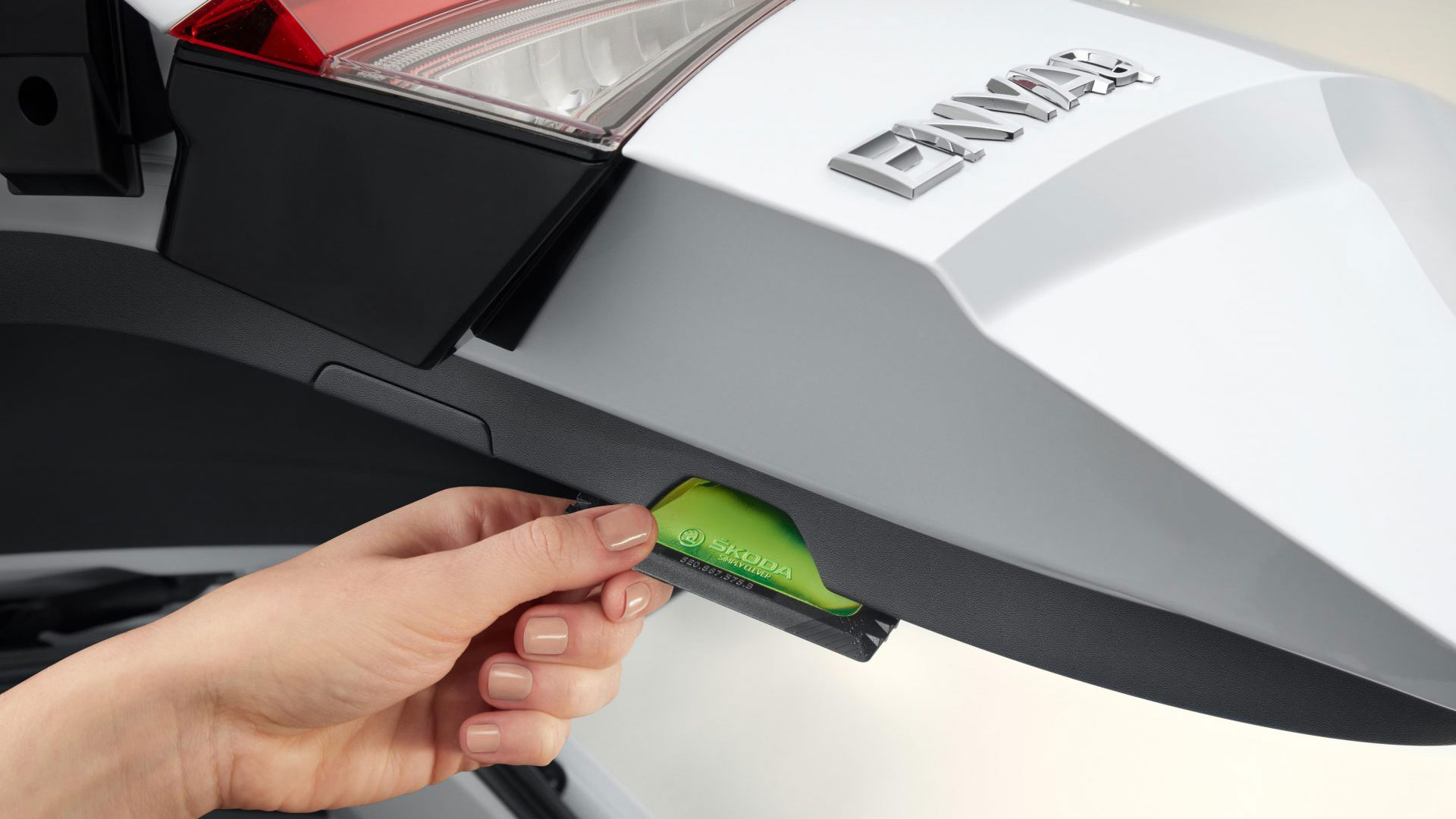
For Skoda owners caught out by unexpected cold weather, the ice scraper hidden inside the fuel filler flap is a saviour.
The unassuming plastic square means there is no need to chisel away at a frozen windscreen with a credit card. It also doubles as a handle tyre tread depth gauge.
It is just one of a number of Skoda’s ‘Simply Clever’ ideas, that YouTube influencers would probably refer to as ‘life hacks’.
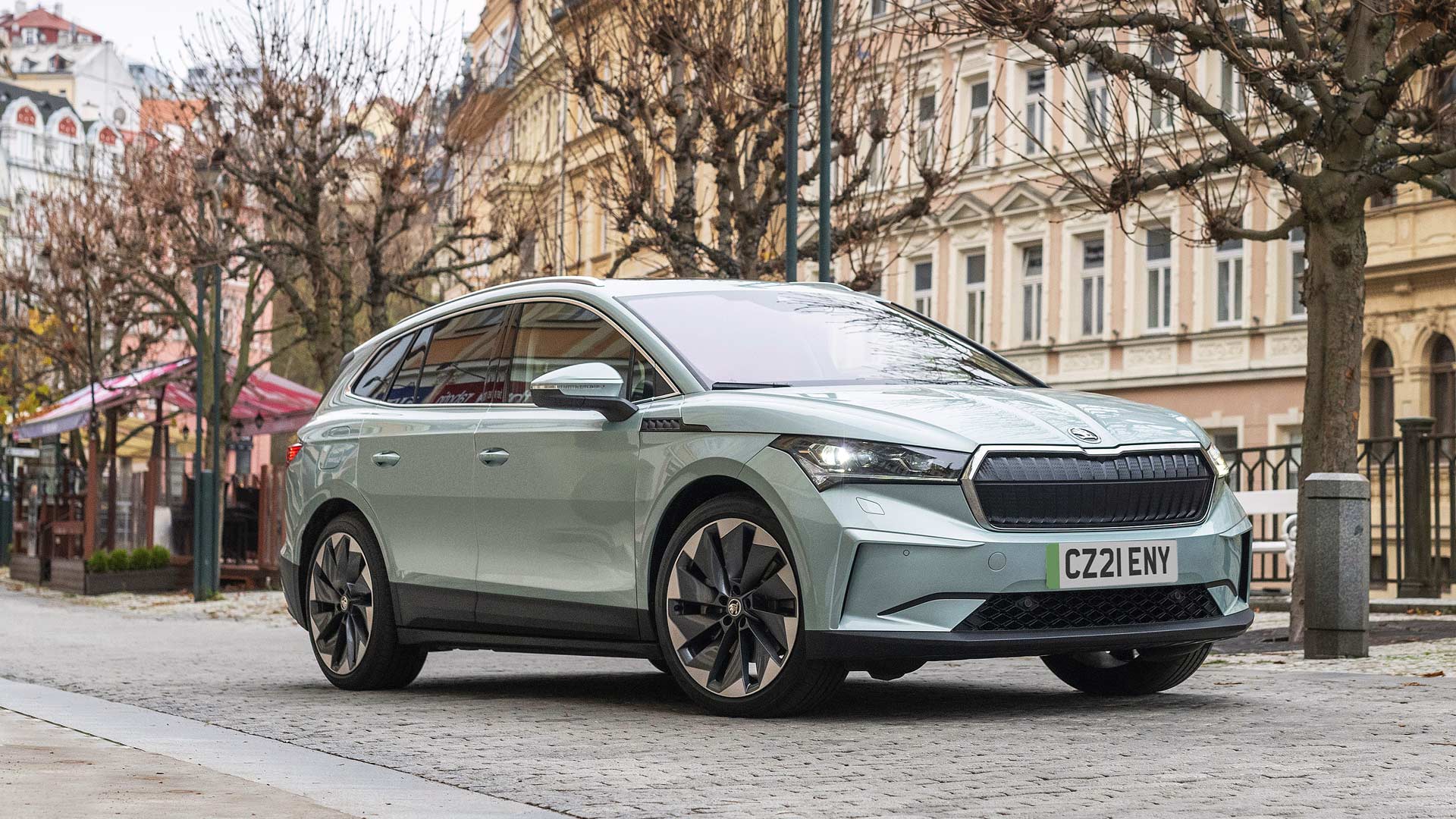
However, the all-new Enyaq iV SUV caused Skoda a challenge for the humble ice scraper.
An (iced) gem of an idea
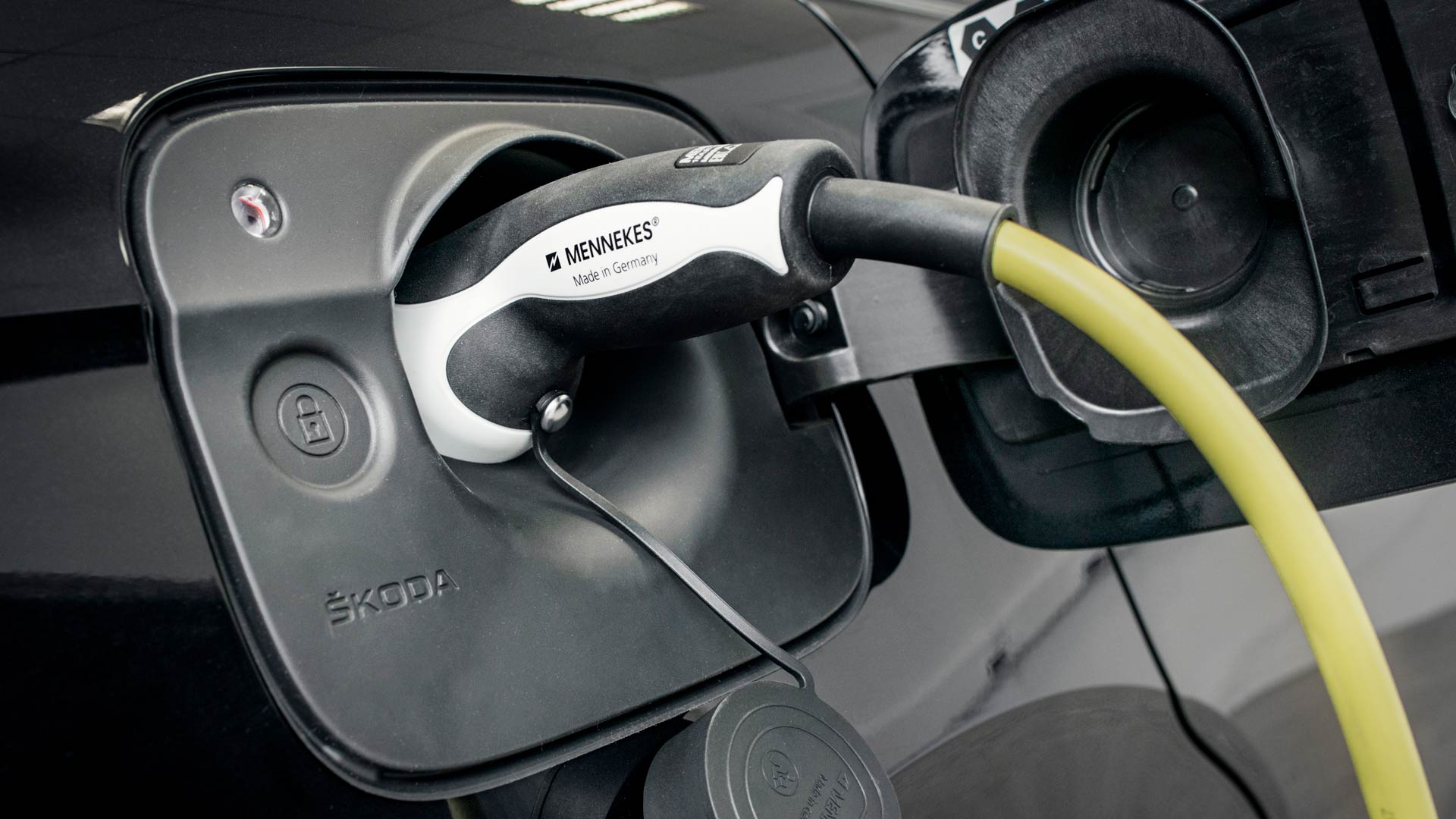
Skoda’s first electric SUV has a charging port that hides behind a cover, much like a fuel filler flap. When charging, the cover has to remain open, meaning the prized ice scraper could be easily stolen.
The Simply Clever solution is, unsurprisingly, rather simple. Skoda has moved the ice scraper to a special compartment inside the tailgate, keeping it safe but still accessible.
What is Skoda’s rationale for not putting it inside the driver’s door? When the weather is really bad, opening the door would mean snow falling off the roof, and onto the seat. Obvious, when you think about it.
Ice scraper fans will also be keen to know that the special Skoda item is now into a third generation. The second iteration switched to a softer plastic to avoid scratching windows, whilst the latest model includes the tyre depth gauge.
Clever inside and out
Moving the ice scraper is not the only Simply Clever feature integrated into the Enyaq iV.
Skoda has designed a special cover for use when the electric SUV is being charged, preventing the cable from freezing in place.
A special storage bag for the charging cable has been made to fit neatly behind the wheel arch in the Enyaq iV’s boot. The bag itself is washable, and incorporates a sponge that cleans the cable as it is pulled out.
Opening the boot now sees the light illuminate space behind the Enyaq iV, whilst the interior is packed with storage options. Being electric means no transmission tunnel, offering up extra room beneath the centre console.
Oh, and Skoda’s trademark umbrellas remain.
Enyaq iV is ready to order
Skoda is now accepting orders for the Enyaq iV, with pricing from £31,085. This includes a government Plug-in Car Grant of £3,000.
Customers will be able to use Skoda’s new ‘Lease and Care’ finance package with the Enyaq iV.
This acts a personal lease deal, with buyers able to specify the level of maintenance support to include with their monthly payment.
A partnership with energy company Octopus Go will give Enyaq iV drivers an extra boost. Switching their home energy supply to Octopus Go will net drivers a £90 credit – equivalent to 7,500 miles of charging.
The 2021 F1 season gets underway at the end of this month, with Lewis Hamilton and co. lining up at the Bahrain Grand Prix.
Hamilton is on record as saying Silverstone, Austin and Montreal are his favourite F1 circuits, but what are the most popular tracks on Instagram? To find out, a scrap car comparison site compared the hashtags of the official F1 circuits.
Predictably, the Nurburgring is ranked number one, with a whopping 850,000 mentions. It’s probably worth pointing out that this includes the fearsome Nordschleife, rather than the just the modern F1 circuit. This gives the Nurburgring an unfair advantage over its Instagram rivals.
Lewis Hamilton might be disappointed to discover that of his favourite tracks, only Austin’s Circuit of the Americas appeared in the top 10, with Silverstone and Montreal failing to make the cut. Actually, the F1 world champ has probably got other things on his mind right now.
Interestingly, Brands Hatch is ranked third, with 212,055 hashtag mentions on Instagram. Even more interesting, when you consider that Brands Hatch hasn’t hosted an F1 race since Nigel Mansell drove his Williams-Renault to victory in 1986.
According to Scrap Car Comparison, the company behind the research, the #Silverstone hashtag was discounted because the posts contained updates relating to the influencer @_____silverstone_____.
Most popular F1 tracks on Instagram
Nurburgring, Germany: 850,152 hashtags
Spa-Francorchamps, Belgium: 225,878 hashtags
Brands Hatch, UK: 212,055 hashtags
Suzuka, Japan: 205,556 hashtags
Hockenheimring, Germany: 188,716 hashtags
Fuji Speedway, Japan: 166,355 hashtags
Red Bull Ring, Austria: 125,469 hashtags
Hungaroring, Hungary: 124,288 hashtags
Yas Marina Circuit, Abu Dhabi: 106,931 hashtags
Circuit of the Americas, USA: 99,354 hashtags
The 2021 F1 season starts with the Bahrain Grand Prix on the weekend of 26-28 March. There are 23 rounds, including the British Grand Prix in July. The season ends at the Yas Marina Circuit in December.