Home Blog Page 163

Jerry can sales soar as fuel shortages continue

0
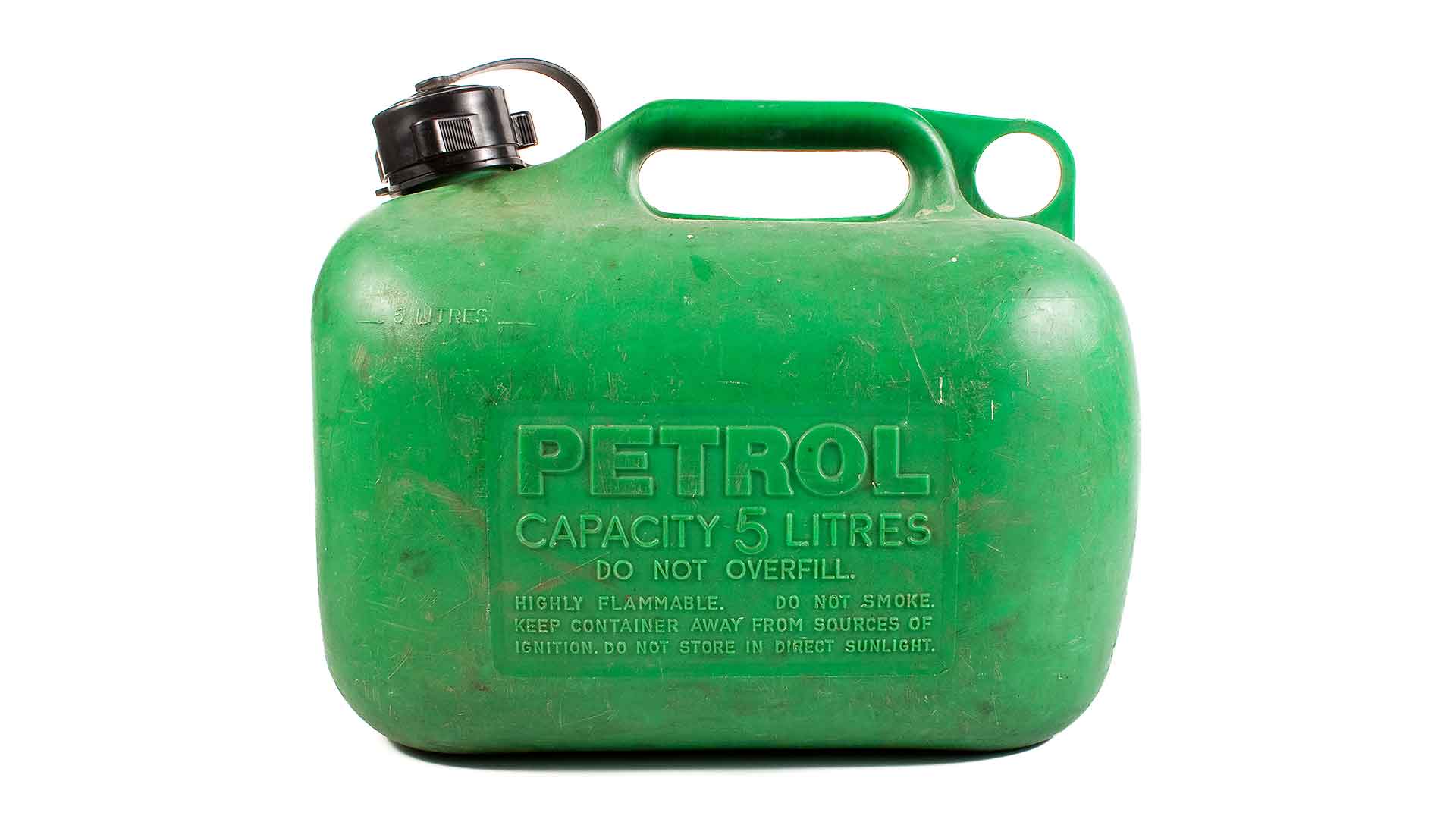
Plastic petrol can

Sales of jerry cans have soared as motorists look to top up on fuel during the current filling station shortages.

Halfords says that sales of jerry cans and plastic fuel containers have rocketed 1,656 percent.

The term ‘jerry can’ is now Halfords’ fourth most popular search term, with searches soaring 1,100 percent in a week.

Despite the AA advising motorists against storing petrol and diesel in their cars, something it says is “incredibly, incredibly dangerous”, many motorists are still seeking to maximise the amount of fuel they purchase during a visit.

There is no specific law forbidding the storage of fuel in containers though; the Health and Safety Executive merely advises not doing so unless you absolutely have to.

However, unless your fuel container is in good condition, the police can still class it as a “dangerous load” or “may be hazardous”.

Halfords says that sales of e-bikes have also gone up, as motorists look to avoid driving entirely during the current fuel shortages.

Orders for electric bikes have more than doubled since the crisis began.

What is the law on filling petrol cans at garages?

It is legal to fill petrol and diesel jerry cans at filling stations – but there are some rules around it.

If it is a metal container – the traditional ‘jerry can’ type – the total motorists can store is capped at 20 litres.

Motorists are allowed to hold no more than a total of 10 litres in plastic cans.

The traditional jerry can typically holds 10 litres and plastic cans hold 5 litres: motorists are allowed to only carry two of each, meaning the maximum they can carry is 30 litres – two 10-litre jerry cans and two 5-litre plastic cans.

All cans must be clearly marked with the words ‘petrol’ and ‘highly flammable’.

The containers must be “robust and not liable to break under the normal conditions of use”. They should also stop the escape of petrol vapour.

Petrol should also be carried in the boot, not in the passenger compartment.

ALSO READ

What to do if you fill your car with the wrong fuel

Is it illegal to run out of fuel on the motorway?

The cars that go furthest with the fuel light on

Advertisement

Retro NSX livery celebrates Motul race oil anniversary

0
Motul 300V 50th Anniversary

As part of last weekend’s Acura Grand Prix of Long Beach, Motul designed a retro-inspired car livery. 

It celebrates the 50th anniversary of the brand’s flagship 300V oil for race cars, and appears on the limited-edition Acura NSX Type S

Launched in 1971, the 300V formula became the world’s first fully synthetic lubricant to be used in four-stroke engines.

Refined design

Motul 300V 50th Anniversary

Inspiration for the livery on the NSX Type S comes from decades of Motul-sponsored racing cars. The red and white stripes are complemented by a set of gold HRE Vintage FMR 527M two-piece wheels, adding an extra motorsport connection.

Acura will only produce 300 examples of the 600 horsepower Type S for North America. This makes it an even more suitable choice to celebrate 300V oil. 

“300V is Motul’s most advanced racing oil,” said Motul USA brand manager, Nolan Browning. “We worked hard to make new 300V even better, using technical data from Motul-sponsored racing teams to develop a product worthy of the historic 300V name. 

He added: “We couldn’t be more excited to return to the Acura Grand Prix of Long Beach as an official sponsor for the U.S. preview of new 300V on track.”

Down to the wire

Motul 300V 50th Anniversary

Founded in France in 1853, Motul officially entered the U.S. market in 1989. Today it supplies oil to teams competing in sports car racing, endurance championships and the Le Mans 24 Hour race.

This year’s Grand Prix of Long Beach marked the season finale of the 2021 IndyCar Championship.

Other motorsport action in California over the weekend included the IMSA SportsCar Grand Prix of Long Beach, Formula D Super Drift Challenge and the Historic Formula Atlantic Challenge.

ALSO READ:

Road-trip to Reims: we join a Honda NSX supercar convoy

GTO Engineering 250 SWB California Spyder review

Porsche Cayenne Turbo GT review

Advertisement

Jeremy Clarkson’s infamous Ford GT is for sale

0
Jeremy Clarkson's Ford GT

The 2005 Ford GT originally owned by Jeremy Clarkson has appeared for sale again in the UK.

Listed by Essex-based performance car specialists GT 101, this is your opportunity to own the car that broke Clarkson’s heart. The GT caused a stir when it was previously listed for sale in 2017.

Having appeared on Top Gear with its owner when new, whoever buys the GT will get a genuine piece of TV history.

Sounding the alarm

Jeremy Clarkson's Ford GT

Clarkson tested a pre-production version of the first Ford GT in 2003. He expressed his admiration for the mid-engined supercar on Top Gear, making it clear how much he wanted to own one.

Only 27 cars were allocated to the UK, but Clarkson’s status helped him secure one. This led to a two-year wait, with the list price for the 550hp GT increasing during that time. 

Once finally delivered, Clarkson’s car immediately began to cause problems. Faults with the alarm system and engine immobiliser saw the GT returned to Ford for a refund after only a month.

Jezza would later buy the car back, but eventually replaced it with a Lamborghini Gallardo Spyder.

Ready for a power lap?

Jeremy Clarkson's Ford GT

Following the sale, the car passed into the hands of a new private owner. During their tenure, the majority of the 24,454 miles shown on the odometer were added.

New additions include adjustable KW suspension components, along with an Accufab performance exhaust system. The GT’s original parts have been retained, should a new owner wish to return the car to stock specification.

The rest of the car remains as ordered by Clarkson. This includes the desirable BBS alloy wheels, plus painted white stripes over Midnight Blue paintwork. The Alpine sound system includes Bluetooth connectivity.

Star in a reasonably priced supercar

Jeremy Clarkson's Ford GT

Service records for the car, and its 5.4-litre supercharged V8 engine, are noted as being comprehensive and up to date. A new battery has recently been added, with the MOT good until June 2022.

The market for first-generation Ford GTs is notably buoyant in the United States. However, it remains something of a blue-collar bargain in the UK.

A sale price of £269,000 ($369,000) has been set by GT 101. For a 205mph supercar previously owned by one of the world’s biggest motoring celebrities, that seems a relatively small price to pay.

ALSO READ:

Ford GT (2017) review

The real story of the Ford GT40 at Le Mans

Best supercars to buy in 2021

Advertisement

Hybrid Toyota Corolla races to a greener future for BTCC

0
BTCC Hybrid Race Test

This weekend sees the British Touring Car Championship (BTCC) test out a special hybrid-powered Toyota Corolla

It preempts a full transition to using hybrid tech for all cars in the BTCC series from 2022. 

A study undertaken by title sponsor Kwik Fit has found touring car fans and other UK motorists are in favour of the switch.

Motorsport leads the way

BTCC Hybrid Race Test

A total of 2,000 drivers were asked their opinion on the BTCC’s hybrid move. More than half (57 percent) though hybrid or electric racing cars will encourage regular motorists to consider alternative-fuel vehicles. 

This positive reception increases to 65 percent amongst motorsport fans, with 54 percent saying it will influence their choice of car. 

Some 82 percent of fans believe the next 20 years will see greater restrictions on petrol- and diesel-powered race cars. 

And 67 percent of those asked said it was important for championships to make an effort to reduce emissions.

Racing to cut pollution

BTCC Hybrid Race Test

The hybrid Toyota Corolla will be driven at this weekend’s Silverstone rounds by former BTCC champion, Andrew Jordan.

Although Jordan will not be able to score points, the Corolla will still compete under race conditions. This will give BTCC organisers important feedback ahead of next year’s introduction.

Hybrid power will coincide with the BTCC’s use of sustainable fuel from 2022 onwards. An agreement with Haltermann Carless will introduce E10 race fuel with 20 percent renewable components.

This change will result in an 18 percent reduction in greenhouse gases compared to traditional fuel.

ALSO READ:

New Lotus Emira First Edition to cost £75,995

Bentley Continental GT Speed road test review

GTO Engineering 250 SWB California Spyder review

Advertisement

More than half of drivers think electric cars are too expensive

0
Electric Car Survey Results

Research has found most UK motorists still have concerns about making the switch to electric cars

A survey of more than 2,000 drivers discovered more than half (56 percent) think electric vehicles cost too much.

This concern contributed to a fifth (20 percent) of respondents saying that buying an EV is currently too daunting.

A waiting game

Electric Car Survey Results

Only eight percent of respondents to the survey by InsuretheGap intend their next car to be electric. Men (10 percent) are slightly more likely than women (six percent) to make the move to an EV.

Some 37 percent said they plan to wait several years before considering an electric car.

More than half (54 percent) believe electric vehicle charging points are too scarce at present. And 40 percent have no way of charging an electric car at home.

Concerns about having to wait around at charging stations were an issue for 41 percent of respondents, too.

Barriers to entry

Electric Car Survey Results

The responses to the survey demonstrate the key challenges to encouraging greater EV ownership. 

Just over a fifth (22 percent) were aware of the potentially cheaper running costs for an electric car. But almost half of those asked (44 percent) think EVs do not travel far enough on a single charge.

The same number (44 percent) believe the government needs to improve the UK’s charging infrastructure before they will consider an EV. 

Ben Wooltorton, chief operating officer at InsuretheGap, said: “We’re being encouraged to embrace the idea that electric cars are the future, but when only one in five drivers are aware that the running costs of an electric car can be significantly lower than a diesel or petrol car for typical driving patterns, and more than half think charging points are too scarce, it’s clear that there are still a lot of barriers to overcome.”

ALSO READ:

What are the pros and cons of an electric car?

How cheaply can I buy a used electric car?

Charging an electric car: the difference between kW and kWh

Advertisement

Opinion: our love-hate relationship with the motorway

0

60 years of the M1 motorway

“Take it easy, motorist,” was the advice given to drivers by Ernest Marples as he officially opened the M1 motorway on 2 November 1959.

“If in doubt, don’t,” he warned, as if to preempt the behaviour of motorists as they took to the motorway for the first time. In those days, of course, the speed limit wasn’t governed by legislation, simply by what a car could manage.

Perhaps more importantly, top speed was limited by the courage and talent of the motorist. Accidents were commonplace, as drivers realised they lacked the skills of Messrs Hawthorn, Hill and Clark.

Less than five years later, Jack Sears hit 185mph in an AC Cobra Coupe GT on the M1, using the motorway to do a test run ahead of the Le Mans 24 Hours. As Sears said in an Autocar article, “many teams were using the motorway for test runs”, including Rootes Group, Jaguar and Aston Martin.

A 70mph speed limit was introduced in July 1967, although the legislation doesn’t appear to have been influenced by the antics of Sears in 1964.

The open road

Congestion on the M1 motorway

To mark the 60th anniversary of Britain’s first city-to-city motorway in 2019, the Guardian published an article from October 1959, which is best read with the style of a Pathé newsreader in your head.

The 72 miles from London to Birmingham increased the length of Britain’s motorway network to 80 miles. Today, that figure is around 2,300 miles – still less than one percent of the entire road network.

But the importance of motorways cannot be underestimated. Every year, these roads carry around 70 billion vehicle miles of traffic, including millions of HGV deliveries.

The Ministry of Transport estimated that an average of 14,000 vehicles a day would use the M1 between London and Birmingham in 1960, reducing casualties by 500 and saving 2.7 million hours of driving.

We’ve developed a love-hate relationship with the motorway network, relying on it to reach our destination quickly, efficiently and without fuss. When the network delivers on its promise, we don’t give it a second thought.

But when something goes wrong – accidents, Bank Holiday traffic or congestion – we moan that the network is creaking at the seams and not fit for purpose. Visiting a motorway service area tends to give us something to moan about, too. Still, it makes a change from the weather.

Back in the 1960s, motorways were destinations in themselves. People would visit the three-lane ribbons of adventure that could move cars like a conveyor belt of shopping in a supermarket. Restaurants would cater for the motorway tourists, who’d watch the traffic go by behind huge expanses of glass. Those days are gone.

Cats’ eyes and cold meat pies

M1 motorway Redbourn

Today, the motorway is facing a period of change. Smart motorways are arguably the most controversial thing to hit the network since the 70mph speed limit, while a future of autonomous cars could change the way we use the roads forever.

Old newspaper reports make for fascinating reading. In a separate Guardian article, the editorial slams the ‘slow progress’ of the construction programme and draws a comparison with Victorian railway promoters.

‘No one can say when the M1 will be finished,’ it grumbles, before highlighting the proposed expansion of the network, including, quite interestingly, the M3 stretching all the way to Exeter.

‘In an age of serious contemplation of travel to the moon it seems senseless that no British Government has yet devised means of enabling traffic to move more freely on the ground at home,’ it concludes.

We’ve since been to the moon and back – and have sent a car into space – but moving freely on the motorway seems out of reach to beleaguered commuters on the M25, M1 and M6. Take it easy out there.

ALSO READ:

All the places you must NOT park your car

New Lotus Emira First Edition to cost £75,995

Bentley Continental GT Speed road test review

Advertisement

How to use the Dartford Crossing on a bicycle

0

How to use the Dartford Crossing on a bicycle

Motorists are charged £2.50 to use the Dartford Crossing (Dart Charge), but cyclists aren’t permitted to use the Dartford Tunnel or cross the Queen Elizabeth ll bridge by bicycle.

However, it is possible to use the Dartford Crossing with a bike. And the good news is that it’s free of charge.

A special pick-up service is available at Essex Point or Kent Point, with a vehicle taking you and your bicycle through the Dartford Crossing. If your bike fits on a standard car roof rack, there’s no need to pre-book.

How to use the Dartford Crossing service

Dartford Crossing bicycle on a roof rack

  1. Cycle to Essex Point or Kent Point
  2. Follow the signs directing you to a yellow telephone
  3. Use the phone to request the service; there’s no number to dial – it’s a direct line
  4. Wait in the designated area for a vehicle to take you and your bicycle through the Dartford Crossing

If the bicycle doesn’t fit on a roof rack – if it’s a tandem, for example – or you’re travelling in a group of more than three cyclists, you’ll need to contact Connect Plus in advance.

This is done by calling 0203 386 8826 or emailing dartfordsecurity@connectplusm25.co.uk.

How to find the Dartford Crossing points

Dartford Crossing East Tunnel

Essex Point is at 859 London Road, Grays, Essex, RM20 3AT. It’s accessible from the cycleway next to the entry slip-road for junction 31 of the M25 motorway.

Kent Point is at Crossings Offices Roundabout, South Orbital Road, Dartford, Kent, DA1 5PR.

When is the bicycle service available?

Cyclist at night

The service is available seven days a week and 365 days a year, but it’s not a 24-hour service. Instead, the bicycles can only use the Dartford Crossing at the following times:

  • 3am to 9am
  • 10.30am to 2pm
  • 3pm to 9pm
  • 10.30pm to 2am

It usually takes 15 minutes for the lift to arrive, but it might take a little longer at peak times or if there is traffic congestion.

A short history of the Dartford Crossing by bike

In the 1960s, five buses were pressed into service to carry cyclists under the river at a cost of around £2,550 per month.

The lower deck was converted to carry bicycles of various sizes, while the upstairs was used to ferry the cyclists. Unfortunately, it proved to be financially untenable, so the service was soon reduced to a single bus, before being cancelled altogether in 1965.

ALSO READ:

When car companies build bicycles

Best estate cars to buy in 2021

Peugeot 508 PSE SW review

Advertisement

Hennessey Venom 775 brings big power to the Ford F-150

0
Hennessey Venom 775

Ford fans can buy a much faster F-150 pickup, thanks to Hennessey Performance.

The Texas-based tuner has created the limited-edition Venom 775 truck, and it packs serious power. 

Hennessey claims its new truck is a rival for the Ram 1500 TRX, and it benefits from a significant weight advantage over the Mopar truck.

Boosted to the max

Hennessey Venom 775

The 400 hp 5.0-l V8-powered F-150 is used as the base for the Venom 775. Hennessey adds a supercharger, along with a bespoke intercooler and air intake system.

Other modifications include new engine management software, a performance exhaust system, and multiple internal upgrades for the motor. 

This results in a substantial output of 775 hp, along with a thumping 685 lb-ft of torque. 

Acceleration from 0-60 mph should take just 3.9 seconds, with a quarter-mile sprint dispatched in 12 seconds.

Get low or reach for the sky

Hennessey Venom 775

Along with the engine changes, Hennessey can also fit the Venom 775 with a host of other performance parts. 

A bespoke Venom-branded front bumper includes a new LED light bar. A suspension kit adds six inches to the overall height, providing room for the 35-inch off-road rubber. 

Alternatively, buyers can opt for a sport coilover suspension setup, dropping the Venom 775 closer to the road. 

Exterior decals and Venom 775-embroidered headrests, plus numbered plaques for the engine and dashboard are also included.

This truck bites back

Hennessey Venom 775

Hennessey plans to produce only 100 examples of the Venom 775, with trucks tailored to suit the taste of their owners. 

Orders from international customers are being encouraged. Depending on the options selected, buying a Venom 775 should cost $90,000 to $100,000 (£65,500 to £72,750). 

This includes the price of the new Ford F-150, with Hennessey able to offer a three-year and 36,000-mile warranty, too.

ALSO READ:

Porsche Cayenne Turbo GT review

Aston Martin Vantage F1 Edition review

GTO Engineering 250 SWB California Spyder review

Advertisement

New Lotus Emira First Edition to cost £75,995

0
Lotus Emira First Edition Configurator

The Lotus Emira V6 First Edition will cost £75,995, with production of the new British sports car starting in spring 2022.

Described as ‘fully loaded’ and featuring a 400hp supercharged 3.5-litre V6 engine, the First Edition comes with four option packs as standard.

Customers can choose from six different colours, and each First Edition has unique badging to ensure future collectability.

Lotus hasn’t forgotten those who hoped the replacement for the long-running Elise was a bit more affordable. A cheaper, four-cylinder First Edition will be revealed in the autumn.

An entry-level ‘base edition’ Emira arrives in 2023, priced from £59,995.

“To celebrate and reward our keenest early customers,” said Lotus MD Matt Windle, “we want to make the first cars extra-special to own.

“The features have been carefully selected by our design team to make for a truly special and distinct First Edition.”

Eager customers can visit the Lotus configurator to place a £2,000 refundable deposit, which guarantees an early delivery slot.

Lotus Emira V6 First Edition

Lotus Emira First Edition Configurator

The Emira V6 First Edition comes with a six-speed manual gearbox as standard, including Lotus’ now-familar visible gearchange mechanism. A six-speed paddle-shift automatic is an £1,800 option.

Diamond-cut, ultra-lightweight forged 20-inch alloy wheels are standard, as are two-piece brake discs with Lotus-branded calipers.

The launch colour of Seneca Blue is likely to be popular, but the other no-cost alternatives are Magma Red, Hethel Yellow, Dark Verdant, Shadow Grey and Nimbus Grey. Lotus says more colours will be added in 2022.

There are also seven interior colour options, plus either Nappa leather or Alcantara upholstery with contrast stitching.

Lotus Emira First Edition Configurator

First Edition equipment is comprehensive, with features such as climate control, cruise control and a 10.25-inch central touchscreen with Apple CarPlay, Android Auto and navigation. Other niceties include a premium KEF audio system and 12.3-inch TFT driver display.

Four option packs are standard: the Lower Black Pack, Drivers Pack, Design Pack and Convenience Pack. Users of the Lotus configurator will be delighted at all the goodies they bring for free.

For those reading from overseas, Lotus adds that pricing in Germany start from €95,995, with prices for the USA and China due to be announced in the coming weeks.

ALSO READ:

World’s first electric Urban-Air Port to open in Coventry

First £215k Bugatti pool table is ready for delivery

Lotus gets serious with hand-built Emira GT4 racer

Advertisement

Less than half of drivers know eyesight rules

0
Driving Eyesight Warning

The majority of motorists are unaware of the correct legal eyesight requirement to drive safely. 

Research by the Driver and Vehicle Licensing Agency (DVLA) found less than half (45.8 percent) of those asked knew they must be able to read a car number plate from 20 metres away.

As part of National Eye Health Week, the DVLA will launch a campaign to remind drivers to check their eyesight.

Going the distance

Driving Eyesight Warning

The DVLA surveyed 1,623 drivers earlier this year about eyesight standards

A total of 744 were aware of the need to be able to read a number plate from the 20-metre distance. Almost a fifth (19.8 percent) believed this distance was 15 metres, while 28 percent thought it was 25 metres. 

Most concerning were the six percent of drivers asked who could not specify any distance at all.

For the avoidance of doubt, drivers must be able to read a number plate from 20 metres. Where a driver needs glasses or contact lenses, these must be worn for every journey.

A reminder to test yourself

Driving Eyesight Warning

The DVLA will aim to improve awareness of eyesight standards throughout National Eye Health Week. 

Lynette Rose, director of strategy, policy and communications at DVLA said: “The number plate test is a simple and effective way for motorists to check their eyesight meets the required standard for driving, which includes reading a number plate clearly from 20 metres. 

“Anyone can do the test at any time. Twenty metres is typically around the length of five cars parked next to each other – you can test yourself on whether you can clearly read the number plate of the furthest car.”

ALSO READ:

UK prices confirmed for new-look 2021 Volkswagen Polo

Majority of motorists want smart motorways scrapped

PCP car finance: How to avoid charges when you return the keys

Advertisement