New safety equipment will be added to smart motorways without a permanent hard shoulder.
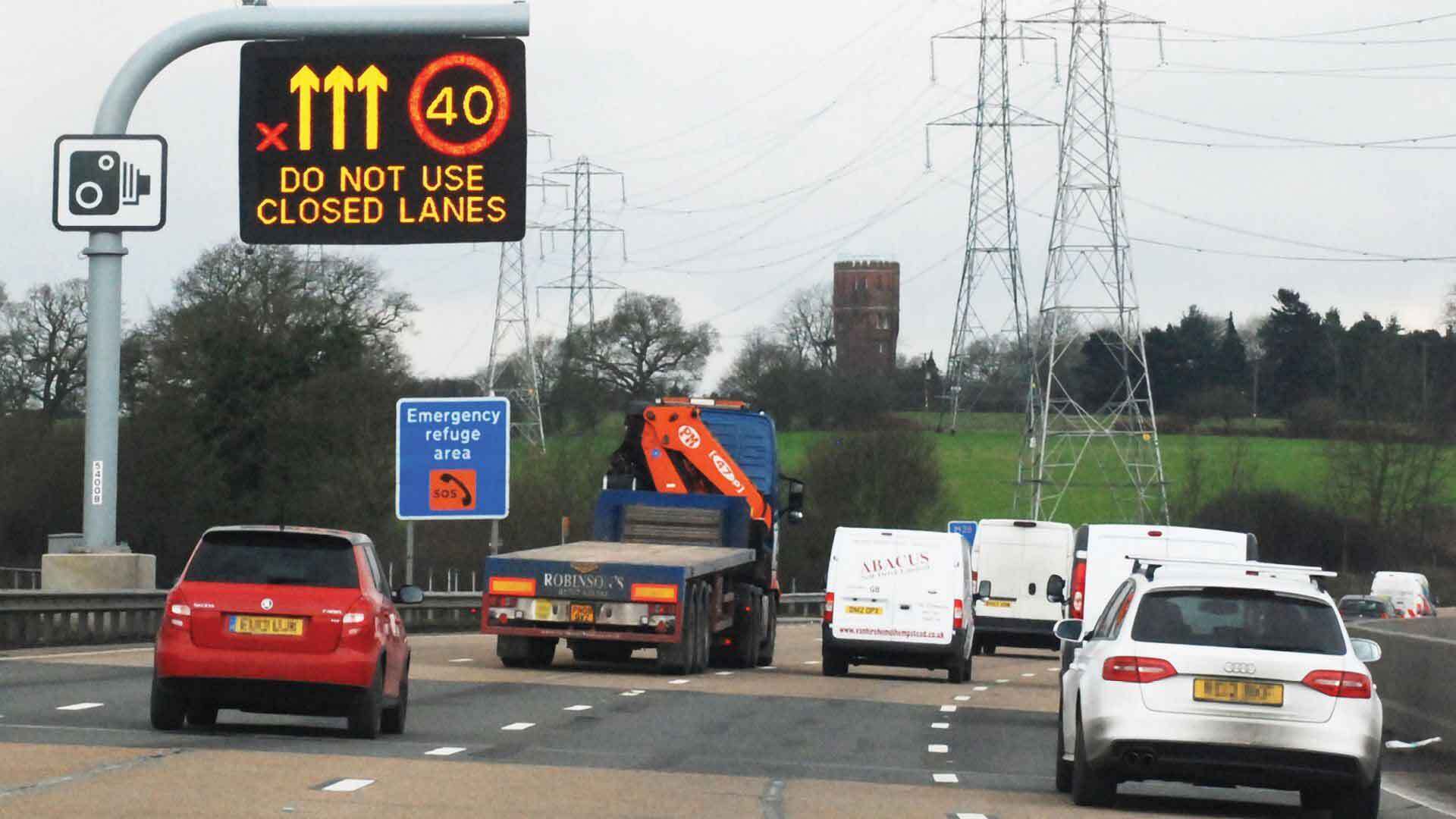
The National Highways agency is currently upgrading almost 100 safety cameras, and installing 330 extra signs to keep drivers informed.
Radar-based technology is also being added to more than 200 miles of All-Lane Running (ALR) motorways, with the work due for completion by the end of September 2022.
A five-year trial
It follows the decision, taken earlier this year by the Department for Transport and National Highways, to pause the roll-out of any new ALR motorways.
No extension of the ALR scheme will be allowed until five years of safety and economic data is available.
Safety concerns about smart motorways were raised through multiple Transport Committee inquiries. Independent research by road safety organisations also highlighted concerns about ALR motorways, and that many drivers do not trust the existing safety technology.
As part of its latest Smart Motorway Stocktake, National Highways has published extensive analysis of motorway accident statistics.
Are smart motorways safer?
The data shared by National Highways shows that ALR smart motorways have lower rates of collisions between moving vehicles. However, collisions with a stopped vehicle are found to be higher, demonstrating a concern raised by many drivers.
On controlled motorways, with speed limit signs but a permanent hard shoulder, stopped-vehicle collisions accounted for 2.36 percent of all crashes. On conventional motorways, this increased to 2.99 percent.
When it comes to ALR motorways, however, stopped-vehicle crashes account for 5.36 percent of all collision types.
RAC head of roads policy Nicholas Lyes said: “While good progress is being made in upgrading existing smart motorways by installing stopped-vehicle detection technology and more refuge area signage, the key question is whether these changes are enough to reassure drivers, many of whom firmly believe that removing the hard shoulder compromises safety.
“The Government is keen to point out that ALR smart motorways tend to have a better overall safety record than conventional motorways, but the safety comparisons with other types of smart motorways are less impressive.”
ALSO READ:
MOT test every two years branded ‘irresponsible’ by experts