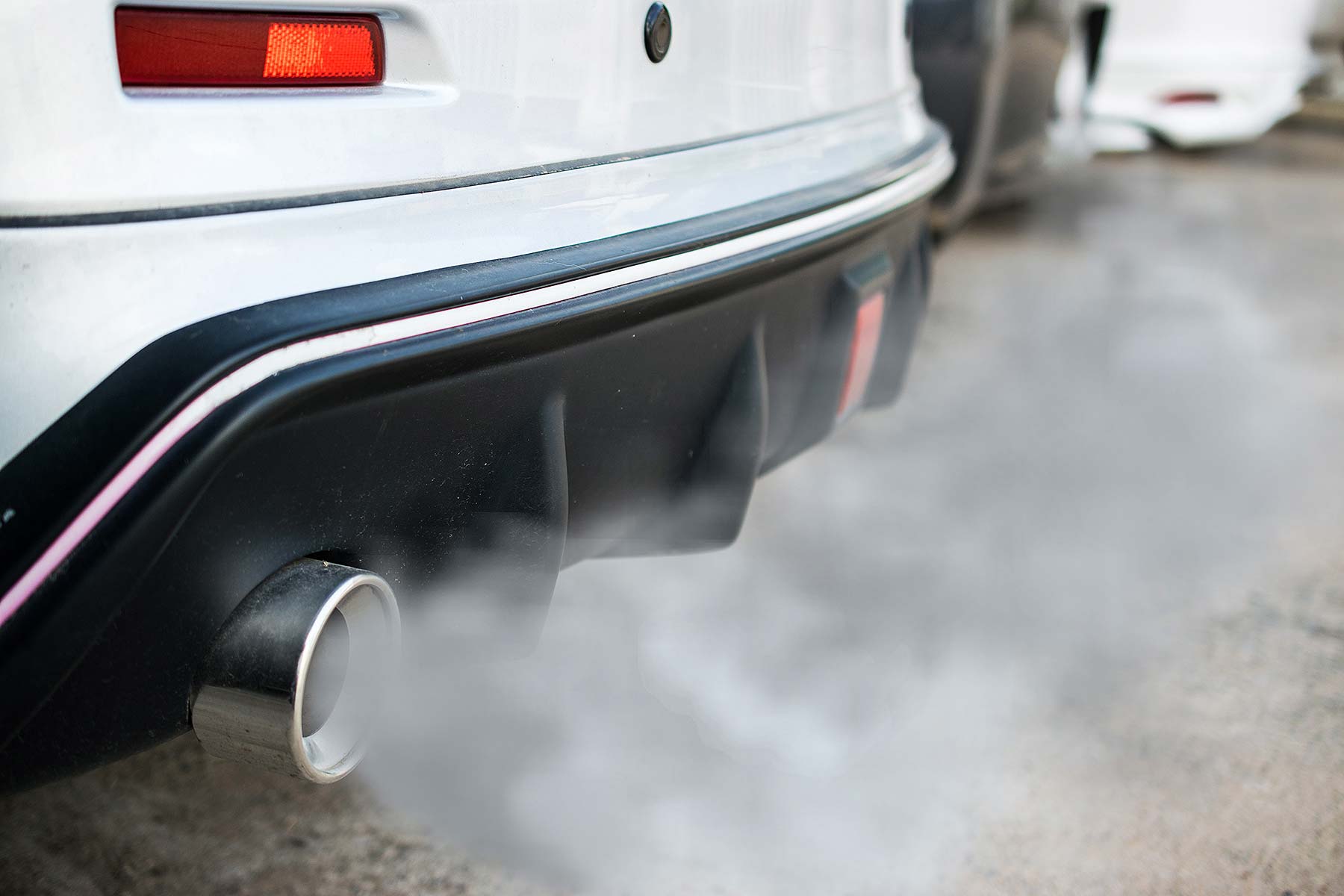
 The car industry risks missing its 2021 CO2 targets with the first-ever annual increase in carbon dioxide emissions today being revealed by the Society of Motor Manufacturers and Traders (SMMT). Last year, average new car CO2 went up 0.8 percent, to 121g/km.
This will have “negative consequences for the UK’s own climate change goals,” warned the SMMT.
The reason is the demonisation of diesel, says the automotive industry trade body – and it means the car industry is at risk of missing its challenging 95g/km average CO2 target set for 2021.
- Plug-in hybrids emit MORE CO2 than diesels, report finds
- SMMT warns ‘anti-diesel agenda’ will hit falling CO2
- The worst cars for real-world CO2 emissions
In order to meet it, CO2 needs to plunge by 5.9 percent every year, something the SMMT is now calling “increasingly challenging”. Car firms thus face the risk of big EU fines from 2021, depending on how much over target their average CO2 emissions are.
Diesel is a lower-CO2 fuel than petrol, and the rapid shift away from it is responsible for almost half the CO2 increase. Diesels generally emit 15-20 percent less CO2 than their petrol counterparts, says the SMMT.
Other reasons for the unprecedented rise in CO2 include the slow uptake of zero-emissions electric cars (99.5 percent of all new cars are still petrol or diesel), a big fall in registrations of smaller cars – and ever-growing sales of crossovers and SUVs. These vehicles are less efficient than conventional alternatives.
New cars are, at least, more efficient than the ones they’re replacing. On average, a car driven out of a UK showroom emits 12.6 percent less CO2 than the one it’s replaced.
Mike Hawes, SMMT chief executive, said: “The anti-diesel agenda has set back progress on climate change… motorists must have the confidence to invest in the cleanest cars for their needs – however they are powered.”
The SMMT again criticised the government’s confusing policy over diesel. “A consistent approach to incentives and tax, and greater investment in charging infrastructure will be critical. Now, more than ever, we need a strategy that allows manufacturers time to invest, innovate and sell competitively, and which gives consumers every incentive to adapt.”