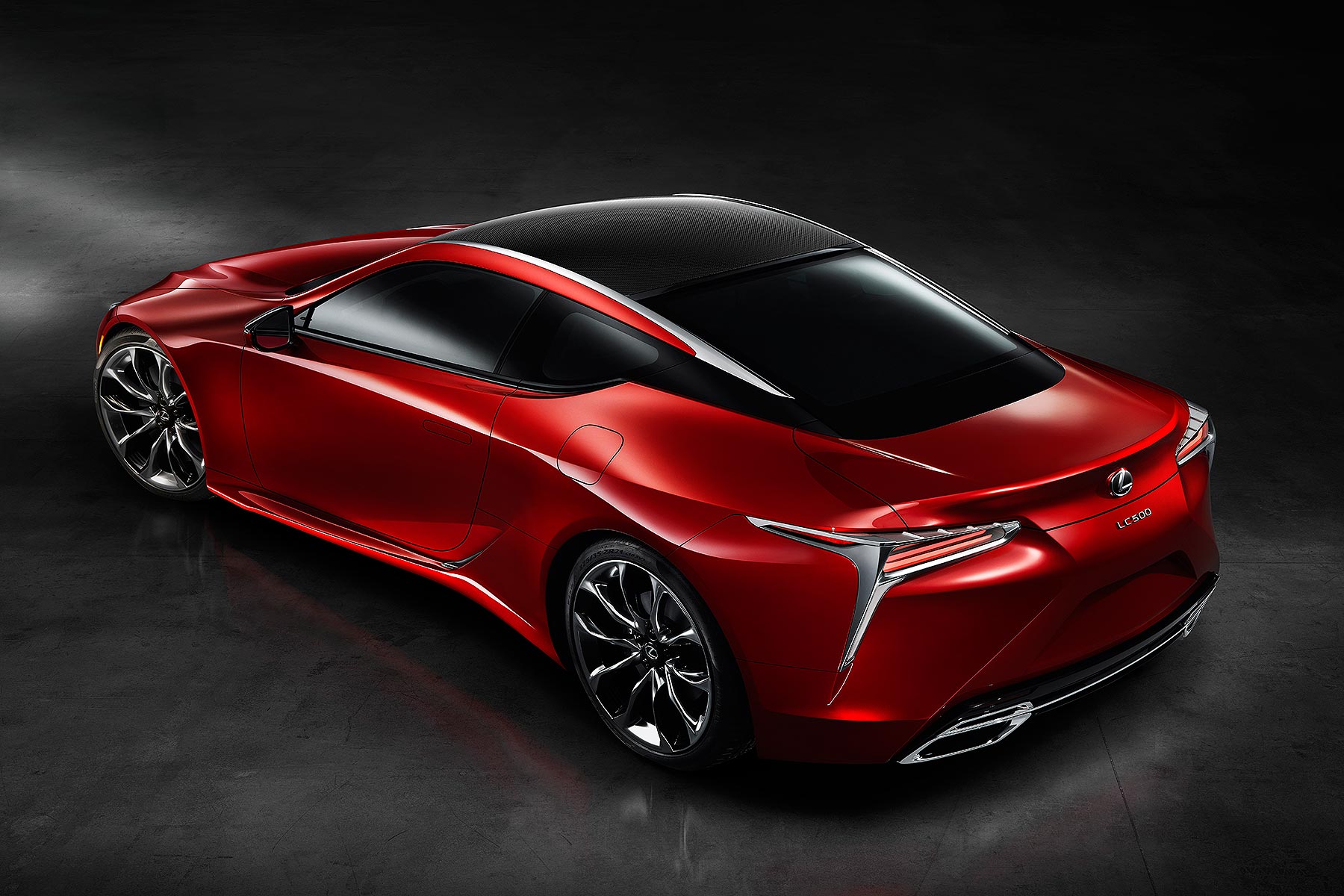
Lexus has revealed its new LC 500 2+2 luxury coupe at the 2016 Detroit Motor Show, the car with which it’s hoping to sway well-heeled Mercedes-Benz S-Class Coupe buyers.
And on looks alone, Lexus could be onto a winner. The new LC is a very striking and shapely coupe that successfully brings to production the bold lines of Lexus’ well-received LF-LC Concept of 2012.
Lexus is betting big on it. No less than Akio Toyoda himself is banking on it: “The new LC 500 coupe’s proportions, stunning design and performance make a strong statement about our brand’s emotional direction and will increase Lexus’s global luxury appeal.”
New architecture
The LC 500 is based on Lexus’ new global architecture for luxury cars, dubbed GA-L. All future front-engine, rear-wheel drive Lexus will be based upon this.
It has a low centre of gravity, masses have been centralised and occupants’ hips and legs are lower than ever. Even the overhangs have been shortened – and Lexus says it’s used run-flat tyres to improve packaging (and make space for the battery that’s been relocated from the engine bay).
It doesn’t quite achieve perfect weight distribution, but 52/48 front/rear isn’t bad.
The familiar super-high-revving 5.0-litre V8 from the RC F and GS F is used here, in 467hp guise. Lexus is targeting 0-62mph in less than 4.5 seconds, aided by the first use of its all-new 10-speed automatic gearbox.
Yes, 10-speed.
Dynamic interior
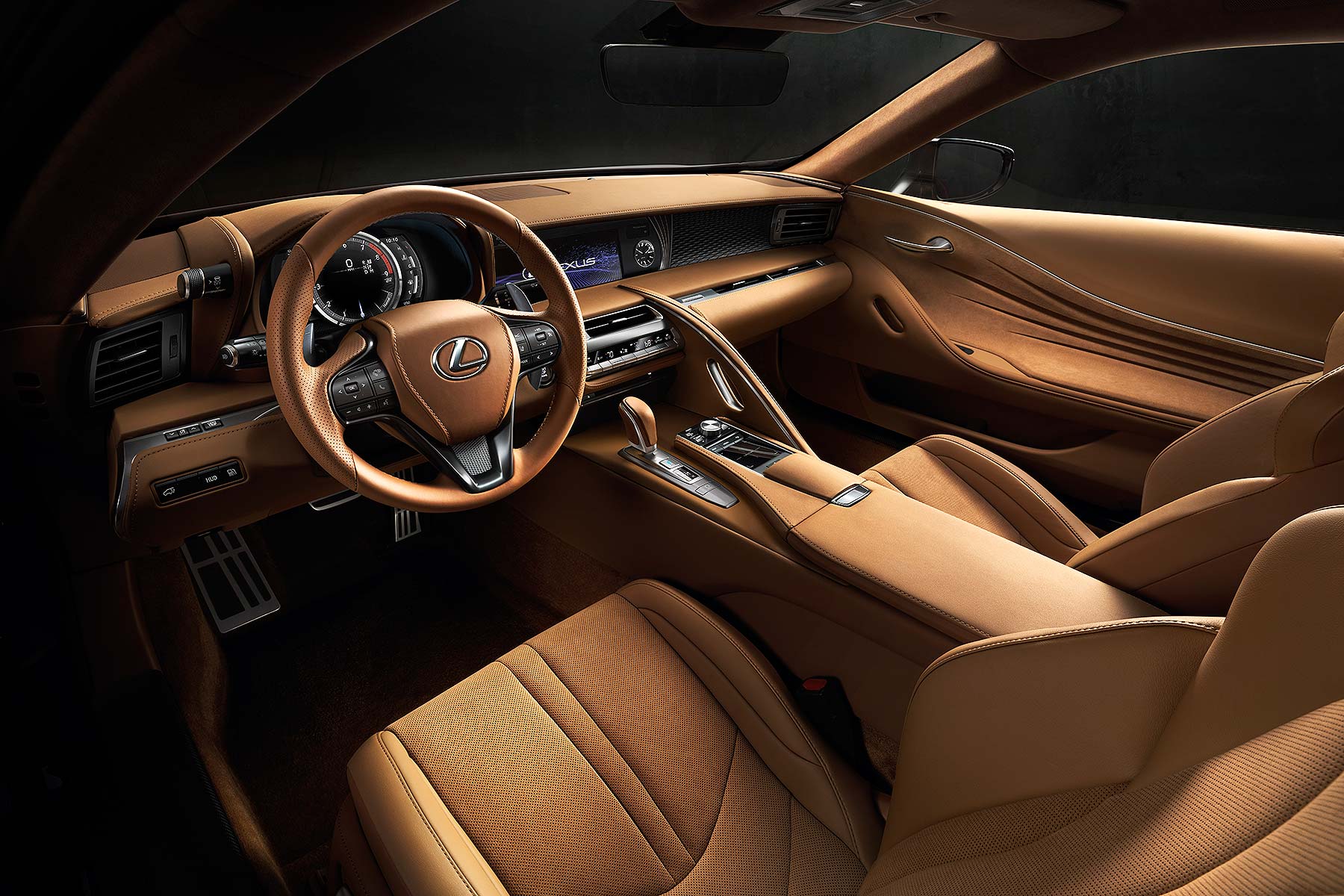
Inside, Lexus has poured over details such as the size and angle of the steering wheel, feel of the paddleshifters and detailing of the dashboard structure.
Tadao Mori, chief designer, said: “At an early stage, the designers worked with the engineers to understand their vision for the LC 500’s driving dynamics, and they incorporated this into the design.
“This was one of the first projects where designers were closely involved in the dynamic engineering development, so we could understand the driving goals and support them with the car’s design.”
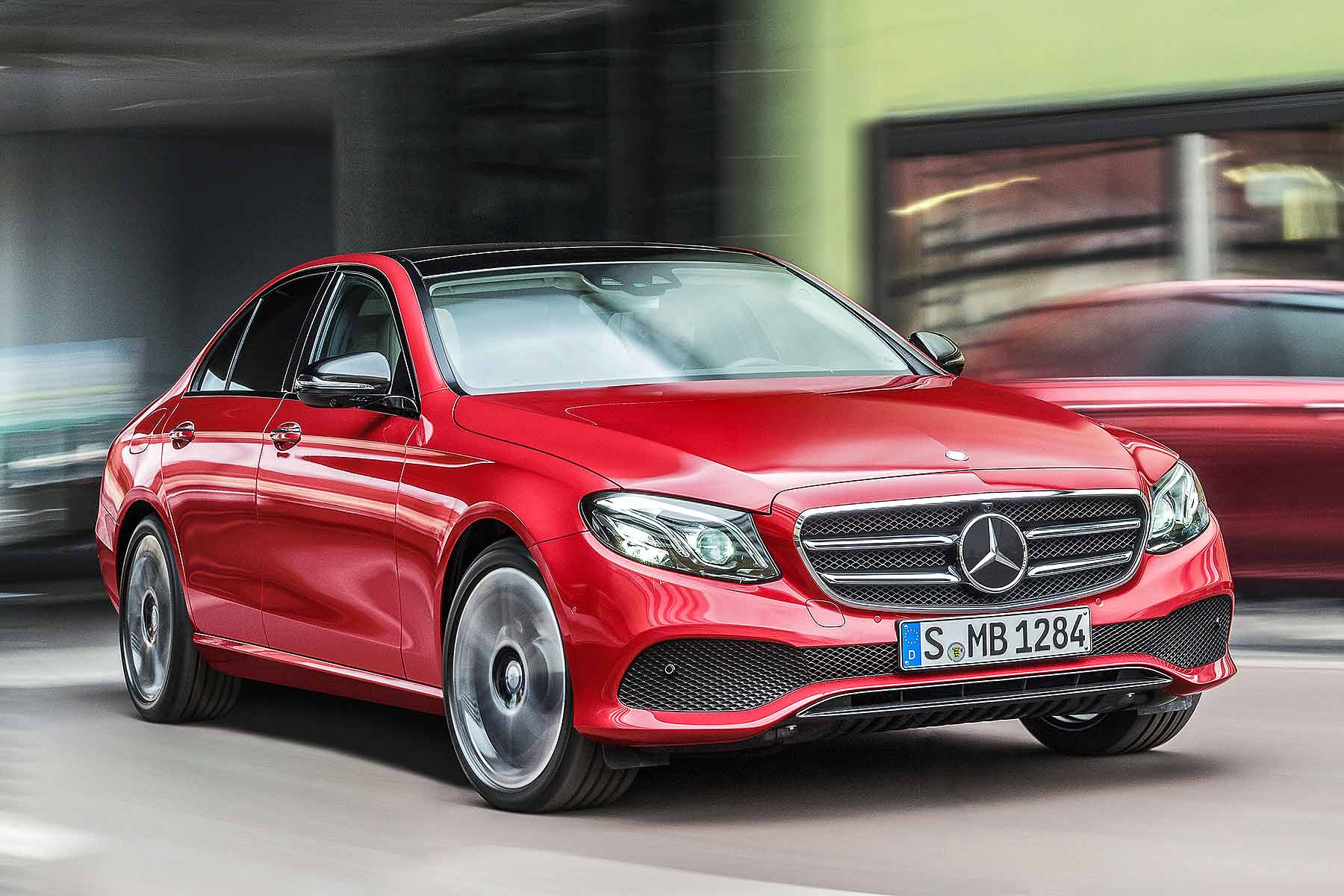
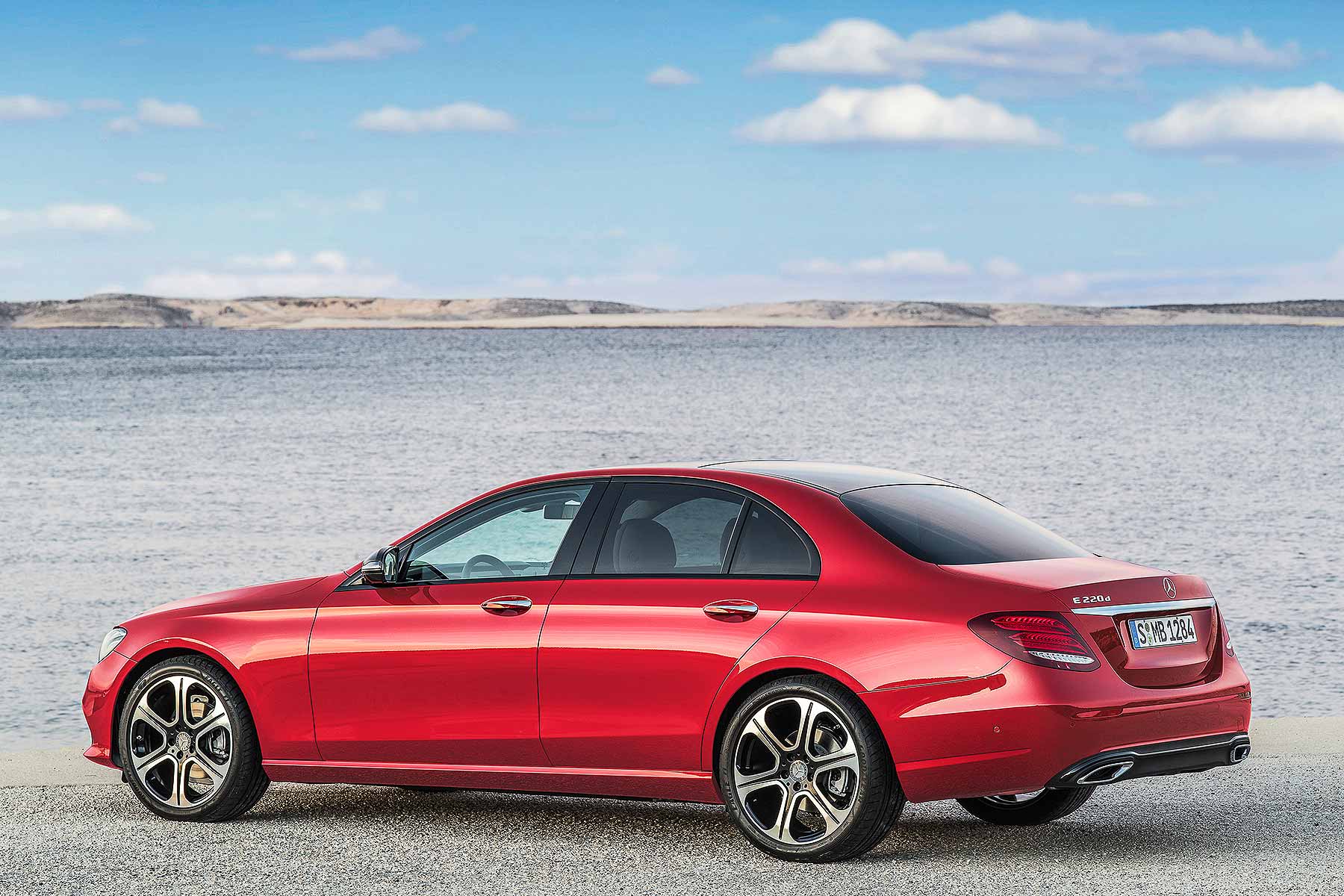
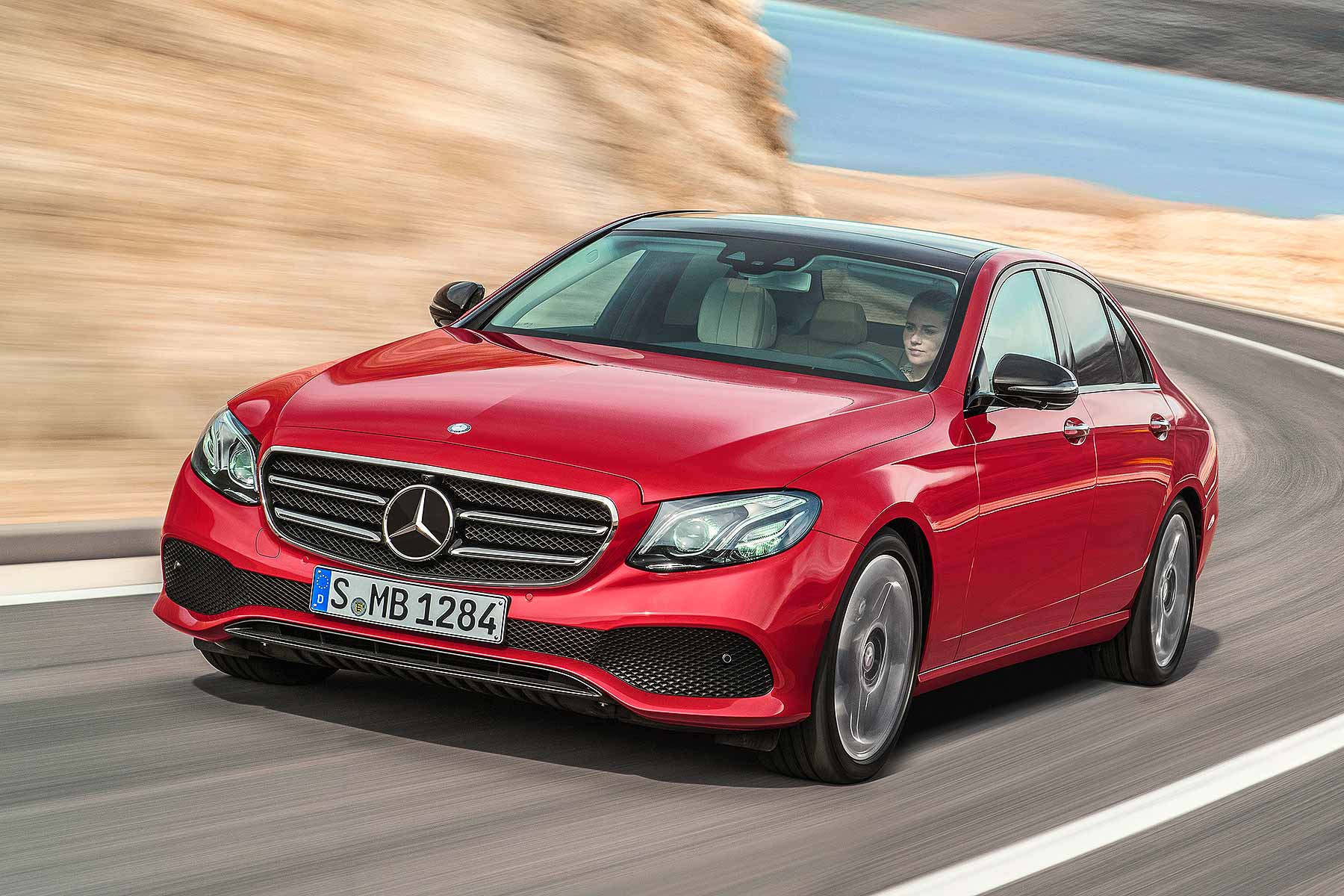
Mercedes-Benz has revealed the all-new E-Class ahead of the 2016 Detroit Motor Show, promising the 10th generation of its executive saloon will be “the most intelligent business saloon” of all.
Packing a plethora of technical innovations, the new E-Class is even ready for self-driving: research and development boss Prof Dr Thomas Weber said the new E-Class “takes another major step towards fully autonomous driving”.
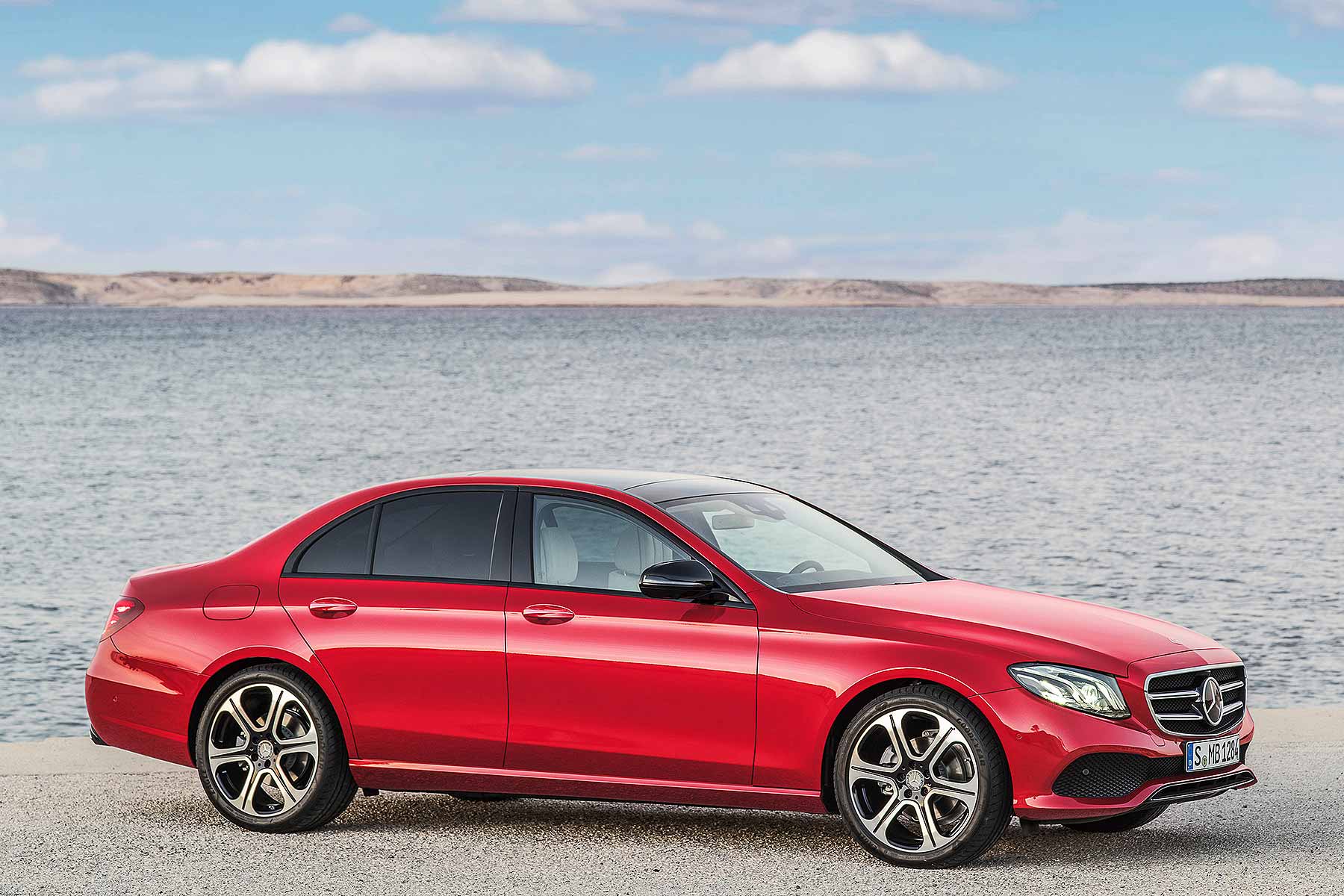
Carrying the latest smoother, sleeker Mercedes-Benz style created under design boss Gorden Wagener, the new E-Class contrasts with the boxy current-gen car and apes the larger S-Class with its family look.
Mercedes-Benz is particularly proud of the short overhangs, broad tail and (faintly) coupe-like roofline. A new option at the rear is ‘stardust effect’ tail lamps; at the front, there’s the choice of traditional or sport-style grilles (the latter will likely prove more popular).
To save weight, the bonnet, front wings, bootlid and key parts of the front and rear are made from aluminium. The aero drag factor also breaks records: the Cd value is just 0.23 (and such advanced aerodynamics mean the new E-Class is quieter than some rivals’ luxury models, claims Merc…).
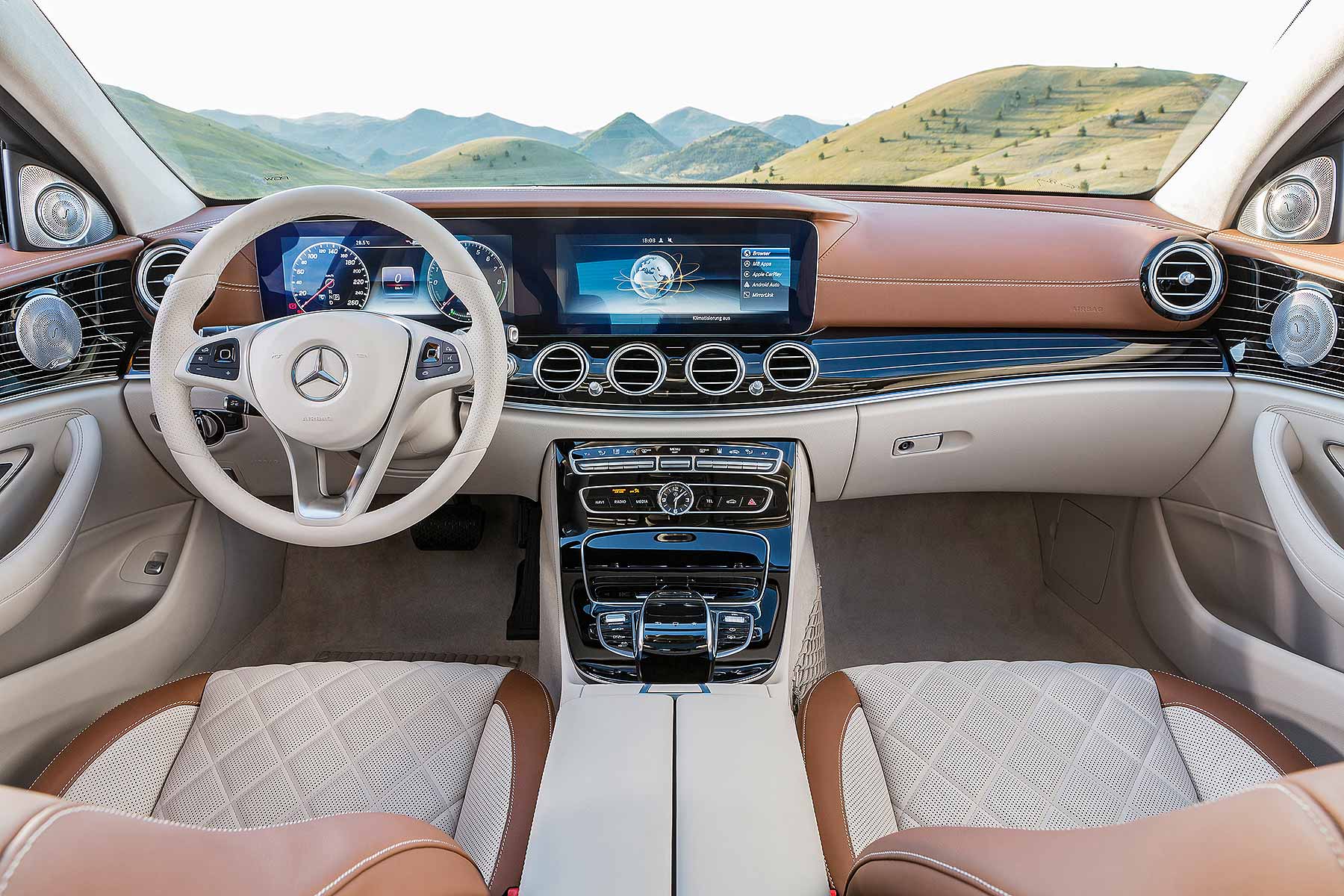
Inside, you can get a conventional dial setup, but Mercedes-Benz would rather customers go for the optional digital dash: two wide-screen 12.3-inch screens, one for the dials and one for infotainment. It’s a class-first, as are the touch-sensitive buttons on the steering wheel.
Some amazing colour and trim combinations have been created for the new E-Class, such as open-pore ‘yachting’ woods, nut and saddle brown colour options and real leather for the doors on upper-line models. The ambient LED lighting boasts 64 colour choices.
Engines
The new E-Class launches with just two engines: the E 200 2.0-litre four-cylinder turbo petrol and E 220 d 2.0-litre turbodiesel. The latter engine is exciting though: at last, it’s an all-new four-cylinder diesel for Mercedes-Benz.
Downsized from the ageing 2.1-litre, it produces 195hp and 295lb ft of torque; Merc’s quoting 102g/km CO2 and 72.4mpg, both extraordinary figures that will have Audi and BMW sitting up to take notice (particularly as this engine is likely to go into the smaller, lighter C-Class in time too…).
The spec sheet says it contains tech such as NANOSLIDE surface coating to reduce friction between cylinders and pistons; this version has single-stage turbocharging and we can expect variants with more turbos in due course.
Both launch engines come as standard with Mercedes’ nine-speed 9G-TRIONIC automatic gearbox.
Shortly after launch, an E 350 e plug-in hybrid will arrive (bank on around 18 miles’ full EV driving, plus claimed figures of 49g/k CO2 and 134.5mpg), as will the E 350 d 3.0-litre V6 turbodiesel. This will average 55.3mpg and emit 133g/km CO2: not bad, considering its 0-62mph time of 5.9 seconds.
Forthcoming engines include a 150hp version of the 2.0-litre diesel and four-cylinder petrol engines producing between 183hp and 245hp. A 333hp six-pot turbo petrol E 400 4MATIC will follow later too.
Technology
The might of Mercedes-Benz ensures the new E-Class is available with a wealth of new technology. A highlight is the Drive Pilot pack, which autonomously follows other cars on the motorway at speeds of up to 130mph (best not try that in the UK). It’ll work well in ‘swarms’ of traffic at speeds of up to 80mph.
It will help you change lanes too, assisting with steering if its safety systems detect the lane is clear.
Mercedes-Benz claims its updated Active Brake Assist system can also completely avoid accidents at speeds of up to 62mph, by detecting hazardous situations up ahead and autonomously braking far sooner than it otherwise might. There’s even Evasive Steering Assist, to help you steer around the pedestrian who’s just stepped out in front of you.
Other tech features include multibeam LED headlights, digital vehicle key using your smartphone and, get this, Pre-Safe Sound: if a collision risk is detected, it plays a noise through the stereo that can “prepare the occupants’ ears for the expected sound of the accident”.
“The E-Class is the core of the Mercedes-Benz brand and in the past has repeatedly redefined the standards in the business-class segment,” said Prof Dr Weber.
“Now it carries this tradition into the future with a wealth of top-class innovations.”
The automotive world is getting its head around the smart new world of connected cars. If you drive an old car, your onboard tech is almost certainly terrible, but the good news is that it’s changing. CES 2016 showed how.
Because cars are now a thing at CES. They have even become a staple in the ‘must see’ guide for the non-automotive tech titles reporting from the event. These guys have no interest in cars but, now makers belatedly starting to smarten up, they’re fascinated by the tech within them.
Cars themselves may still not be cool, but car tech? Big winner.
Which is why many were actually rather nonplussed by the appearance of an all-new 1,000hp all-electric supercar that looks like a modern Batmobile here at CES. Yes, Faraday will be making the new FFZero1 just up the road in Nevada, but maybe it should have waited for Detroit to show off its bold new concept.
Here, among the tech community who don’t care for 200mph top speeds and compare everything automotive to Tesla, it lacked appeal. What, you can’t buy it? They’re not gong into detail about the in-car tech? Wait, what, they don’t even have any running cars yet? Consumer electronics works in quarters: the years it’ll take Faraday to come to market are anathema here.
(Rumours that it’s the Apple Car in disguise didn’t convince the tech guys either. “Apple wouldn’t launch something like that,” scoffed one.)
At least you can now buy the Chevrolet Bolt. This was a smarter move, although GM did its very best to keep the thing hidden from the press and even those who did get to see it simply compared it to Tesla. “A Tesla for the average guy” I heard it dismissed as in the pressroom.
Maybe that’s why Mercedes-Benz concept was one we’d already seen at Frankfurt, and Audi didn’t bring one at all. It did bring a mock-up of its new multi-touchscreen interior, although this slightly alarmed us as, while clever, it was hardly intuitive and looked a scattered mish-mash of ideas.
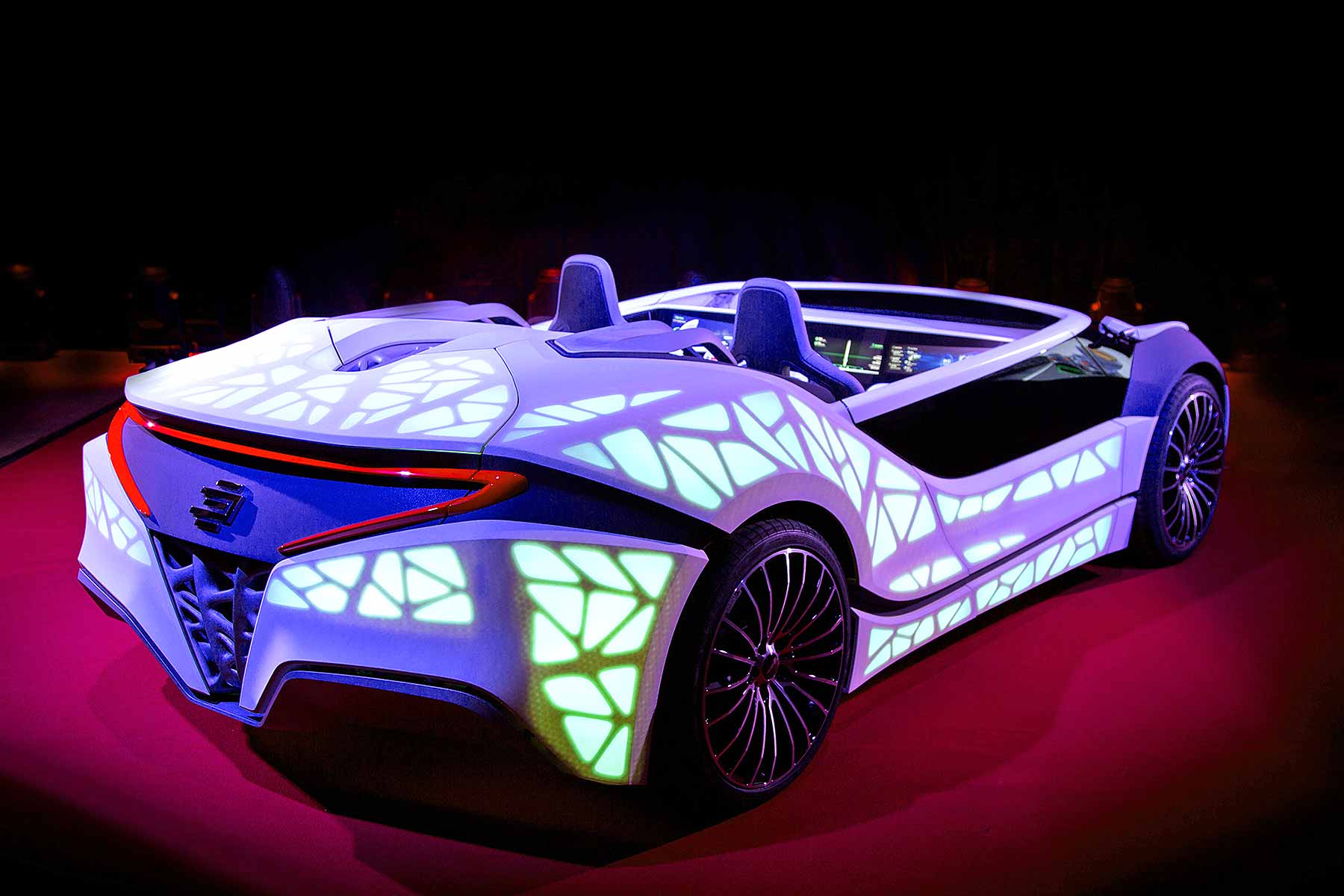
We prefer BMW’s solution, showcased in its i Vision Future Interaction concept car (really an old i8 Spyder concept with the doors (bloody) blown off). It’s clever, but simple: very Apple. There’s a head-up display and 3D console screen for the driver, and a wonderful 21-inch panoramic screen stretching across the passenger side that showcases all the infotainment and multimedia features.
It’s so big, BMW had to mount it well out of reach in order to be legible. So how do you operate it? By a new control system it’s invented called AirTouch (fairly Apple?). Make gestures to flip across menus, swap screens, even choose sub-menu tiles; then make your selection with a dab of a hard control. It’s a touch-sensitive mouse in gestures.
Next-generation stuff and BMW’s still perfecting the fundamentals, but the gesture control logic seemed delightfully intuitive and the tech community at CES relished the opportunity of trialling, and feeding back on, all-new tech in its infancy.
BMW continued to impress them with its other near-future concepts. The Connected Mirror, the Open Mobility Cloud virtual brain that oversees mobility via the BMW Connected app, the head-up motorcycle display, the ‘mirrorless’ i8 concept whose replacement cameras use glass made by a Silicon Valley starlet, Gorilla.
Of all the car brands, BMW seems to best ‘get’ CES. Forget the cars themselves, they’re not a draw. Instead show off the tech within, both current and future, as indulgently and relevantly as possible. This, after all, is the show that sets the trends for the future.
Volkswagen certainly wants to set a few new trends and overcome the emissions scandal that has engulfed it. In his keynote, Dr. Herbert Diess started out by apologising, which pleased the loyalists in attendance, then rolled out a Golf concept with next-gen gesture-based infotainment tech he confirmed would be in showrooms “before we gather again for CES 2017”. Textbook turnaround stuff.
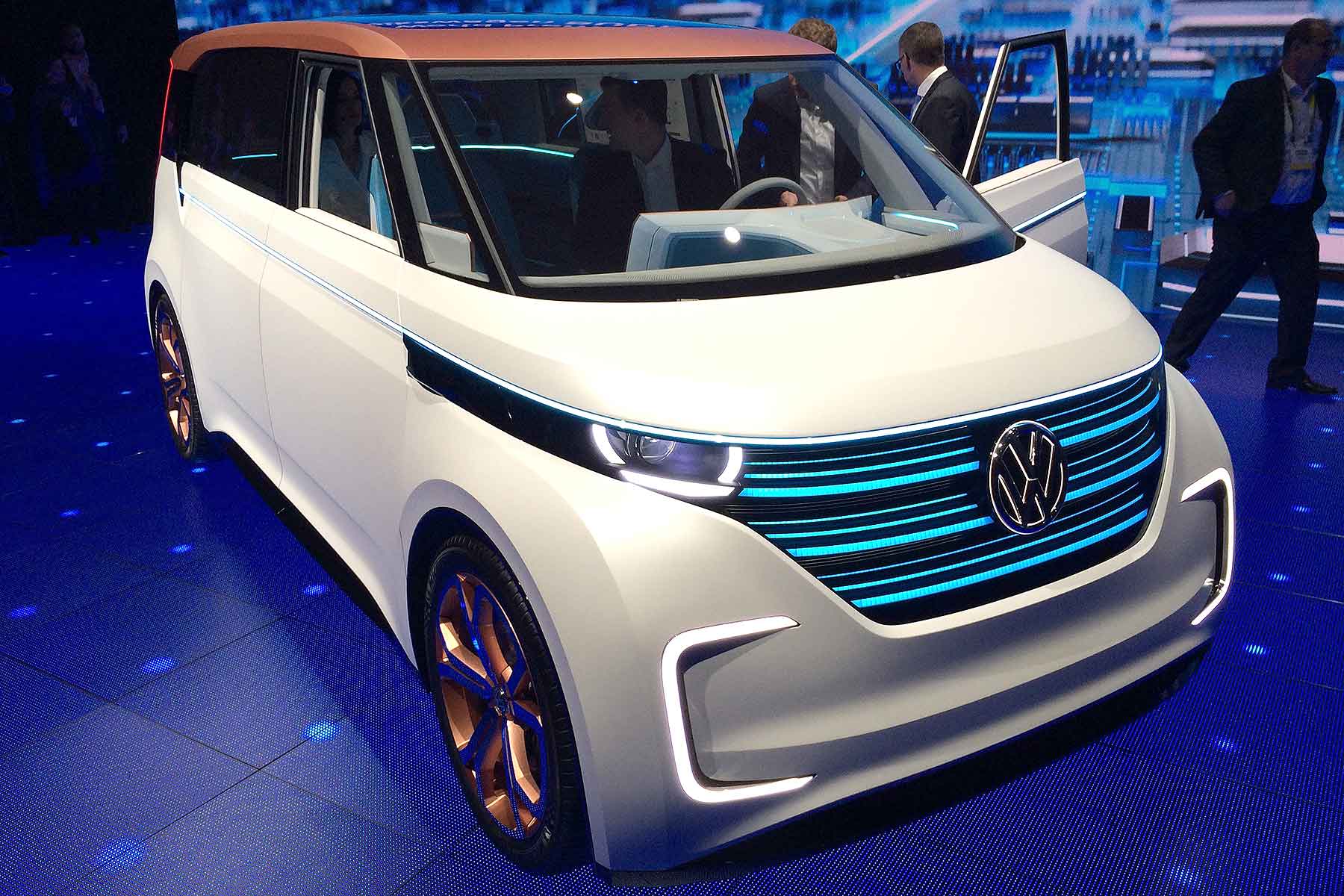
Then the sucker punch: revealing a concept reinvention of the original Microbus so loved by hippies and hipsters, dripping in futuristic tech and Internet of Things connectivity. BUDD-e is electric, it can drive itself, it has a sofa in the back (and an HD screen on the wall): yes, it was a new car, but what a car to make the tech community sit up and go hurrah.
The knockout was Volkswagen’s tacit confirmation something like this will become a production reality by 2019. Why else base it on its new modular electric vehicle platform, MEB? Power to you, VW. (But pity about the name: BUDD-e? Seriously?)
Of course, the real insight at CES is gained from wearing out the shoe leather and walking all the stands; that’s automotive, automotive supplier, general tech and the multitude of traders all showing off gadgetry they’ve either invented themselves or bought over from abroad. This is where you find what’s coming to the car of the future.
It seems aftermarket car stereo will hook into your car’s network and display gauges you don’t already have (and not only diagnose what the glowing warning light on the dash is, but also allow you to clear it). Child seats will auto-latch and have their own app to monitor their state. Comedy licence plates will contain serious ADAS cameras. Microsoft Office will be available on the drive to and from the office.
And then there’s the potential of the Internet of Things. Cars are going to become a ‘Thing’, talking to your other ‘Things’ as part of an extended network. You’ll turn on the heating from your infotainment screen as you drive home. Receive security alerts from your car as you watch TV (and turn on the cameras to see what’s going on). Even beckon your autonomous car from your garage simply by kicking up the keyfob.
It’s beyond tantalising. Cars have developed into fantastic driving machines over the past century, but have remained pretty dumb while the traditional bell telephone has evolved into the smartphone. Now it’s cars’ turn to be digitised.
What’s clear is that this won’t mean cars will simply drive around themselves like autonomous robots. ‘Highly automated, if you want’ is the vibe at CES: the Google Car isn’t a realistic vision of a self-driving car.
It will mean we may not want to drive, though. Cars will have so much cool stuff packed in, driving may become reserved for pleasure: let it take over for the chore of commuting because you’ve got emails to check via Harman’s Microsoft Office integration, or music to listen to from either its entry-level Venture or high-end Summit audio systems.
No wonder the tech world is embracing cars. They’re the next big device to get excited about. We really haven’t seen nothing yet.
As the Volkswagen Group emissions scandal rumbles on, new CEO Dr. Herbert Diess wasted no time at VW’s CES 2016 keynote apologising to the assembled crowd of media and Volkswagen enthusiasts.
“The current issue around diesel engines is nothing to be proud of. We are truly sorry.
“Volkswagen is disappointed this could happen in a company we love.”
He added that 2016 will be the year of putting it right. And “we are focused on making sure this can never happen again at Volkswagen.”
The scandal even threatened Volkswagen’s very attendance at CES 2016, admitted Dr. Diess. Speaking to Consumer Technology Association president and CEO Gary Shapiro on stage, he said the car giant had doubts as the scandal broke.
“When we spoke in September, we wondered whether to do it. But we decided to: we feel it’s a good thing.”
New Volkswagen
Dr. Diess then quickly moved on to outline how Volkswagen has changed, and is changing, in response to the emissions crisis. Enter New Volkswagen.
This initiative is “redefining every aspect of VW”. It’s about affordable electric mobility, he said. Fully connected cars. Affordable advanced driving. Intuitive cars that can serve as a second home on wheels.
Enter the BUDD-e (pictured above), the concept EV to take it beyond dieselgate, and the e-Golf Touch, which showcases Volkswagen’s next-generation infotainment system (bringing tech like gesture control to the masses).
“Cars will become the most important device in the internet,” said Dr. Diess. Before then promising nearly all of the features packed into the new e-Golf Touch on show at CES 2016 will become a showroom reality “before CES 2017”.
“The best days of the car are yet to come,” he said. He will be hoping New Volkswagen means the same for VW too.
The cars of the future won’t just communicate with one another: they’ll connect to everything, from traffic lights to bends in the road. Even pedestrians.
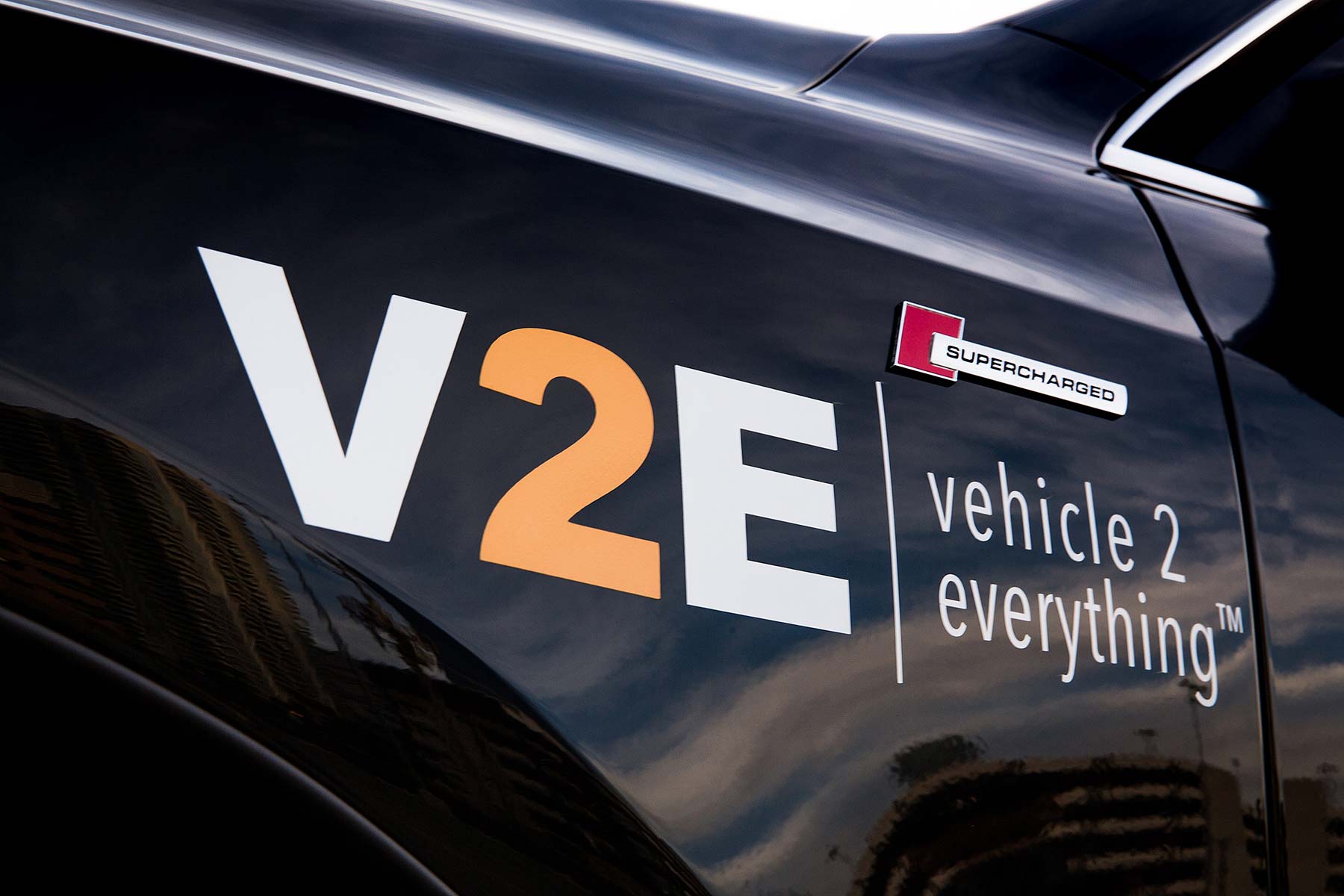
Automotive supplier Delphi is so confident of the concept, it’s even trademarked the ‘V2E’ acronym.
To get to a world with zero car crashes, says its chief technology officer Jeff Owens at CES 2016, “we will need a convergence of active safety, sensor fusion, connectivity platforms and advanced software.”
Bullishly, he claims “Delphi has proven we are the only company that has the right mix of all these”.
5 things cars will communicate with
To illustrate its V2E technology, Delphi is demonstrating a car at CES featuring five things that connected cars of the future will be connected with:
Other cars – vehicle-to-vehicle (V2V) comms allows Delphi’s car to see all other cars nearby – and sense if one’s about to cut you up
Pedestrians – the Delphi car can send an alert to a pedestrian’s smartphone if they’re looking down at it and not watching the traffic
Traffic lights – the Delphi car knows what signal’s showing on all nearby traffic lights: it thus anticipates yellows and reds
The road – blind corners will no longer be blind
Friends and family – drivers can notify them of their location and see if they need a lift (or simply reassure them they’re almost home)
Sounds futuristic? Not so; next year, Delphi’s launching industry-first V2V tech on the 2017 Cadillac CTS, called Super Cruise.
And if you’re not a 2017 CTS driver, Delphi has another claimed industry first: an aftermarket V2V unit that will allow any cars to communicate with one another…
Highly automated versions of mainstream cars will go on sale by 2020 says Bosch – and it should know: the German firm will be supplying the technology and systems to many car makers that will allow them to launch these self-driving cars.
At CES 2016, Bosch is thus showcasing the very latest systems and sensors that “assume all the driver’s tasks and responsibilities” on motorways. Such ‘highly automated’ cars will drive themselves when conditions allow (similar to how the Tesla Model S is starting to do today).
The immediate benefit for us? A drop in car crashes by up to a third in Germany alone, it says.
And once high-speed, straight-road self-driving cars are here, adds Bosch, the next steps will be possible: connected cars will be able to ‘see around bends’ and anticipate dangers; proof of autonomous technology on the road will also encourage legislators to further ease legislation outlawing fully hands-off cars.
Solving many a city centre headache, Bosch also expects autonomous parking to become the norm: “It’s up to cars, not drivers, to find a parking space”.
Automated valet parking lets drivers leave cars at the entrance to a car park, for it autonomously to drive off and find a space. Call it back later with a tap of the smartphone or smartwatch.
Dash display car
Connected cars will let makers do more inside the car too. Bosch’s CES 2016 showcar has a dashboard made fully into an electronic display. It’s touch-sensitive and fully configurable; it’s also smart.
If a pedestrian walks up from the right, says Bosch, that side of the dash will flash a warning sequence. If a diary appointment is cancelled, the sat nav will auto-reprogramme it the next location. Sales reps, never make a wasted trip again.
Best of all, turn on automated driving and the sheer flexibility of the virtual dashboard will provide hours of interactive entertainment, from watching movies to checking emails.
Wrong-way warning
Bossh is also working on a ‘wrong way driver’ warning system, that alerts both drivers and other motorists within 10 seconds if a car is driving the wrong way on a road.
The system is autonomous and, as part of the Bosch MyDriveAssist smartphone app, cheap: this is why the firm’s planning to roll it out later in 2016 as a cloud service.
Further connectivity with the smart home will also bring new functionality – such as being able to unlock a safe storage spot from your car if a courier calls and you’re not in.
A freedom of information investigation by Motoring Research recently revealed that the most popular car for private hire drivers in London is the Toyota Prius.
Yesterday, we ran a blog post pointing out the advantages of this. We argued that “If each of these Toyota Prius models were replaced with the latest Euro 6 TX4 black cabs, which emit 222g/km CO2, carbon dioxide emissions from these drivers would more than double.”
Taxi drivers aren’t a bunch to shy away from confrontation, so many have taken to Twitter to make their point of view and pick holes in our argument. In a bid to show both sides of the story, we thought we’d publish the responses here.
Some pointed out that Uber drivers are increasing congestion on London roads
@MR_AndrewBrady not all good news? Record traffic on London’s roads ’caused by firms like Uber’ https://t.co/gOloVAtrh7
(Yes – regulations previously announced by Transport for London state that, as of 2018, all new taxis registered in London must be ‘zero emission capable’ – i.e. a hybrid capable of running under electric power alone when in high-pollution areas of the capital.)
It’s the debate that’s set to continue – traditional London cabbies are calling for stronger regulations on Uber drivers, while Uber-supporters claim private hire cars are more efficient, cheaper and safer.
Whose side are you on? Leave a comment below or tweet us @editorial_MR.
Ford has finally installed Apple CarPlay and Android Auto into the latest version of its in-car infotainment system, Sync 3.
It’s a big deal. Ford says there are over 15 million Sync-equipped cars on the road. By 2020, there will be a staggering 43 million.
The long-awaited announcement at CES 2016 thus at last will allow Ford drivers to control their Apple and Android smartphone apps through the colour Sync touchscreen.
It means smartphone maps, messages, music and phone can all be controlled via the car – and it should also offer in-car access to additional apps such as Spotify.
The interface mirrors the smartphone’s too.
Rolling out this year on 2017 cars, for now it’s only on the latest Sync 3 system currently on sale in the United States: Europe still uses the older, fiddlier Sync 2 system.
Wait for a possible announcement at next month’s Worldwide Mobile Congress in Spain on that, hinted a spokesman…
Sync apps
Ford’s also launching a suite of apps for Sync 3, via a new Sync AppLink system.
In the US, this links to apps such as Eventseeker, which hunts down events that fit a user’s preassigned profile as they drive. Another app tracks fuel prices and plans a route to the cheapest.
Similarly smart apps are expected for European owners when the system is launched.
Ford’s proud of the Sync system, which it launched in 2007 as “the industry’s first system to widely and most affordably offer voice-activated technology to control smartphones”.
It’s grown and been honed a lot since then. And at last, now more fully links with the world’s two most widely used smartphone platforms.
It’s the controversial app that is being blamed for killing London’s black cab industry. Uber is facing tough opposition, and not just from angry taxi drivers – even Transport for London (TfL) has made proposals to curtail its success.
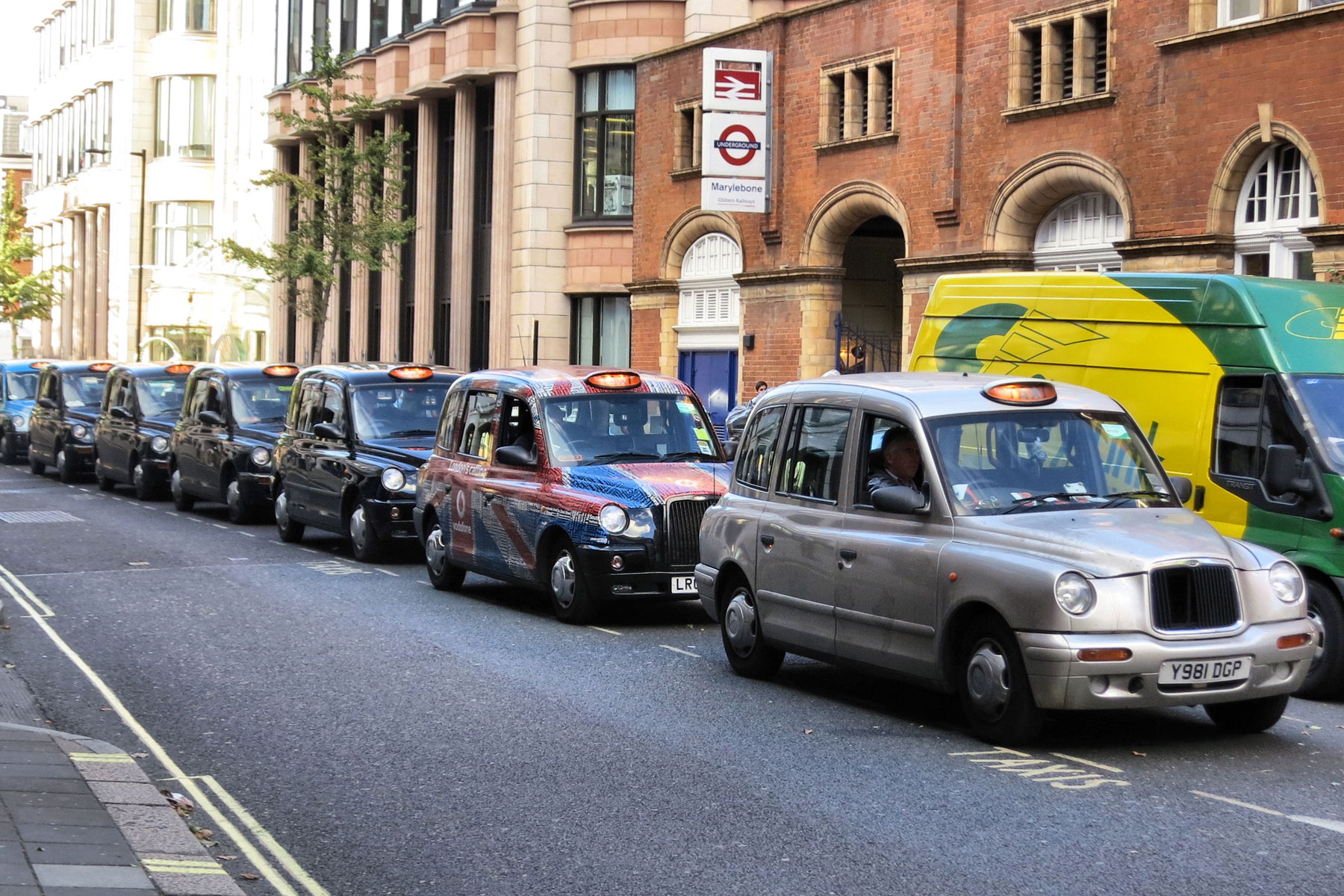
But figures obtained by Motoring Research reveal that the booming private hire car sector could be doing a substantial amount to reduce harmful emissions in the city – with the hybrid Toyota Prius being the most popular car with drivers of private hire vehicles.
Uber good: London’s favourite private hire cars
A Freedom of Information investigation by Motoring Research quizzed Transport for London on the most popular licensed private hire vehicles across Greater London, and discovered that 12,429 Toyota Prius minicabs are currently registered.
It sees the Prius top the list of private hire cars, ahead of conventional fuel vehicles such as the Ford Galaxy. A total of 10,052 Ford Galaxy people carriers are registered as private hire vehicles with TfL.
Toyota GB’s general manager, press relations and social media, Scott Brownlee, said: “The low running costs – both in fuel and maintenance – of hybrids are a big attraction for private hire firms.
“The mechanical reliability of the hybrid system results from the fewer moving parts compared to a conventional cars (e.g. no clutch or starter motor) while the regenerative braking reduces wear on brake pads and discs.
“Combined, it can mean extraordinary high mileages are common with Prius. We know of one private owner who has clocked up over 435,000 fuss-free, reliable miles.”
Private hire cars can only collect pre-booked fares, and include (but are not exclusive to) those used by Uber drivers. The new proposals outlined by Transport for London include a ban on apps showing cars available for hire, and a minimum five-minute wait time between ordering a cab and it arriving.
Campaigners have said it could trigger a ‘backward step’ in the industry, as Uber drivers instead look towards driving black cabs.
If each of these Toyota Prius models were replaced with the latest Euro 6 TX4 black cabs, which emit 222g/km CO2, carbon dioxide emissions from these drivers would more than double. There would also be a significant increase in NOx emissions – with the most-efficient black cabs producing 52mg/km.
Some of those Prius currently being used as private hire vehicles are likely to be plug-in models – which officially return 59g/km CO2, but can also travel on electric-only power for 12.5 miles after being charged. At these times, they’ll produce no tailpipe emissions at all.
To find out the top 10 most popular private hire cars in London, click through our gallery on MSN Cars.
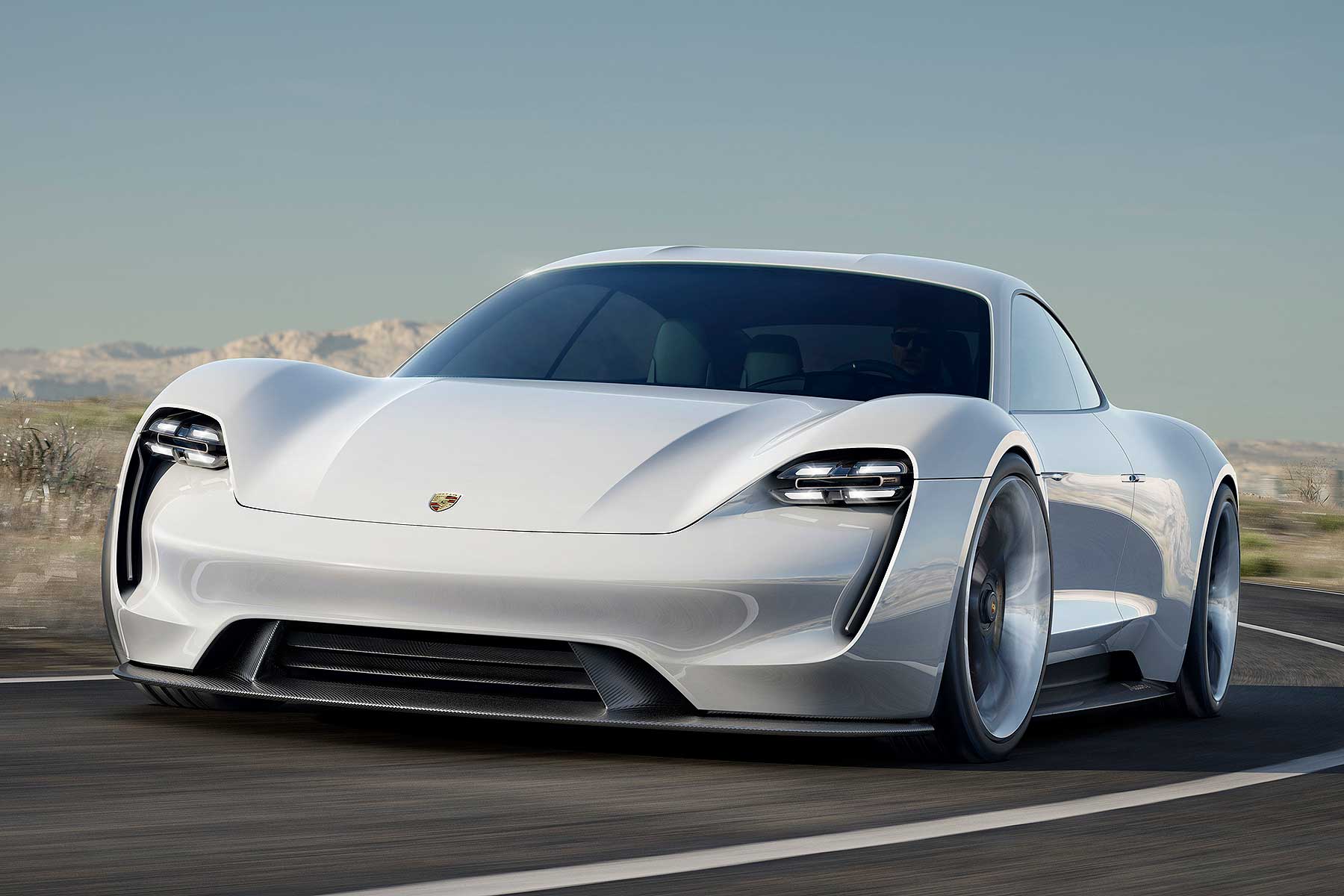
Porsche will launch its first all-electric car before the end of the decade as it commits €1 billion to put the Mission E concept car into production.
The 600hp four-door, four-seat sports car will have a range of over 300 miles, accelerate to 62mph in less than 3.5 seconds – and Porsche promises a flat battery will recharge to 80% capacity in just 15 minutes.
Porsche chairman Dr. Oliver Blume says it is “beginning a new chapter in the history of the sports car”. More than 1,000 new jobs will be created to build the production Mission E in Stuttgart-Zuffenhausen: Porsche is even extending its engine factory to add electric motor production capacity.
The Mission E was revealed at the Frankfurt Motor Show in September 2015. A beautiful, surprisingly compact and delicate machine, the influence of the Porsche 911 is clear: the focus now is on how much of the concept car will make production.
In making the Mission E, Porsche hopes it will future-proof its world-famous sports cars by responding to ever-present environmental concerns (and face off the threat of upstart eco brands such as Tesla).
Dr. Wolfgang Porsche, chairman of the supervisory board of Porsche AG said: “With Mission E, we are making a clear statement about the future of the brand. Even in a greatly changing motoring world, Porsche will maintain its front-row position with this fascinating sports car.”
Uwe Hück, chairman of the Central Works Council and deputy chairman of the Porsche AG Supervisory Board, enthusiastically added: “A day to celebrate! Yes, we did it! With today’s decision, Porsche is driving flat out with no speed restrictions into the automotive and industrial future.”
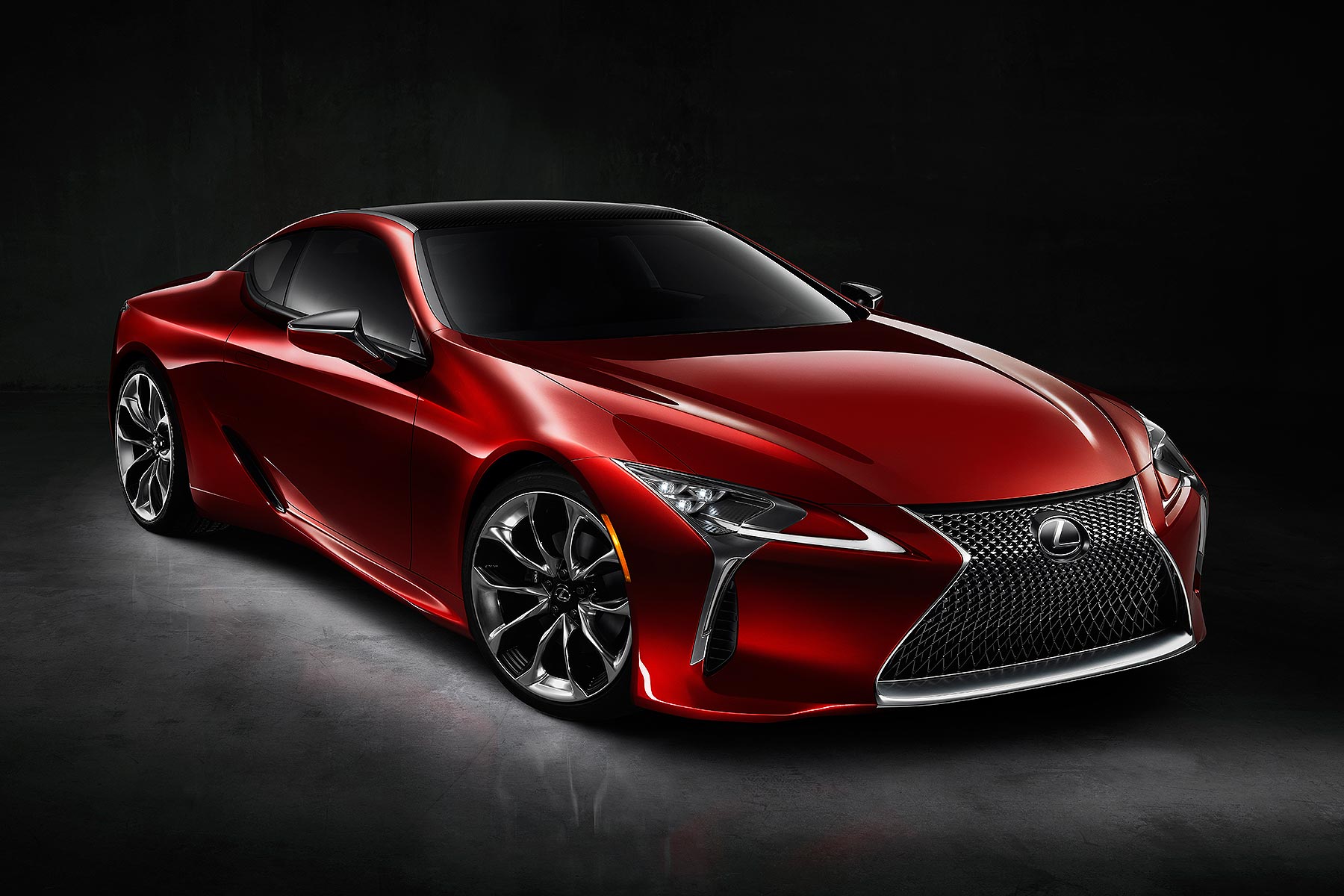 Lexus has revealed its new LC 500 2+2 luxury coupe at the 2016 Detroit Motor Show, the car with which it’s hoping to sway well-heeled Mercedes-Benz S-Class Coupe buyers.