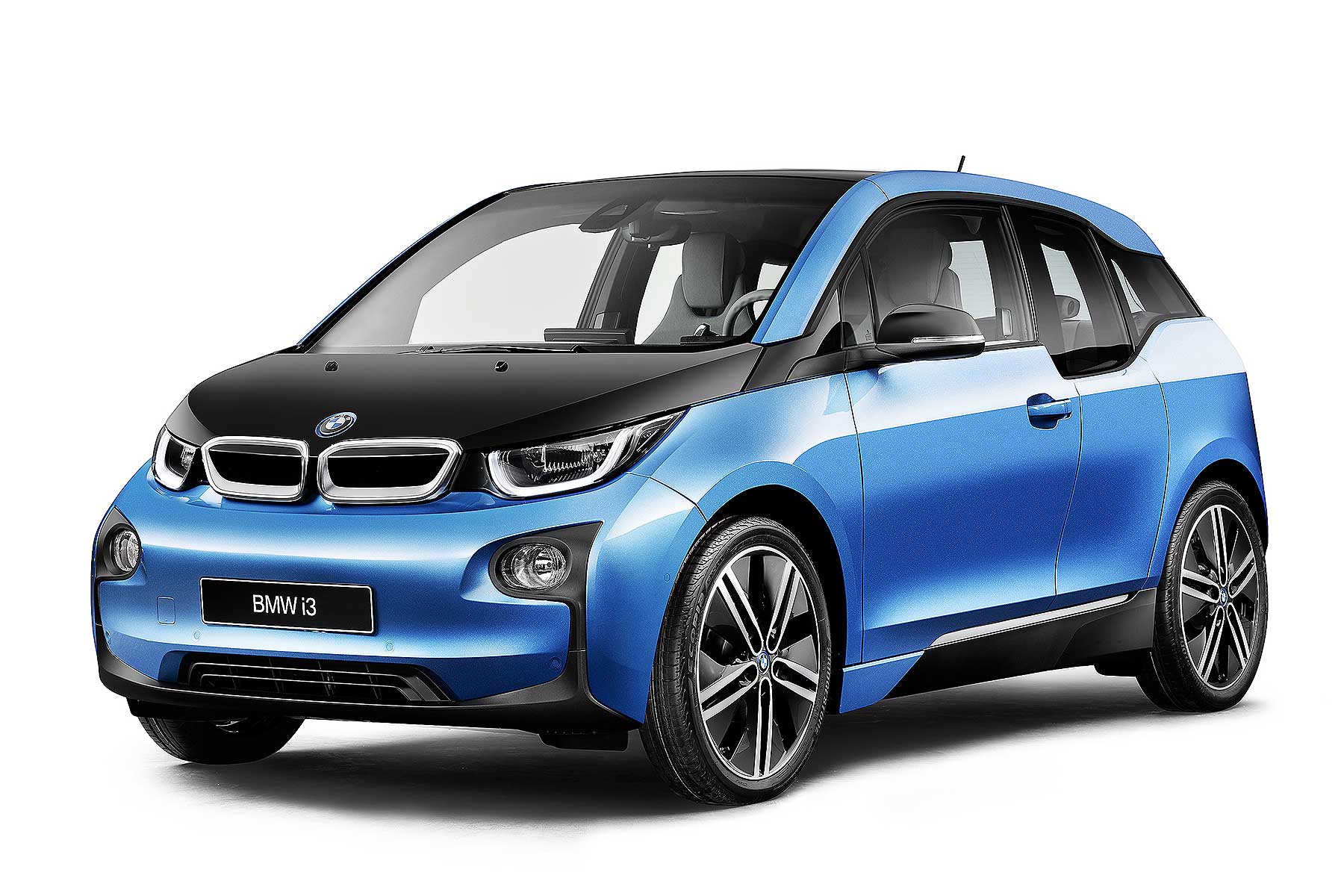
BMW will launch a revised version of its i3 electric car in July 2016, with a bigger battery capacity that extends the range to almost 200 miles.
The i3 94Ah model gets a larger-capacity 33kWh battery that adds more than 50% to the standard NEDC-tested EV distance: BMW now claims a range of 195 miles in everyday driving.
That’s despite the 170hp i3 EV also being capable of accelerating from 0-62mph in 7.3 seconds (naturally, you won’t get such a big range if you utilise this…).
BMW does, impressively, also claim the full 195-mile range is available even if you use the air con or heating – “with no subjective loss of driving performance and agility”. Makes you wonder what the range is if you really decided to hypermile with all the systems turned off.
Gallery: 2016 BMW i3
BMW says the new battery is faster to charge as well: a DC rapid charge system is now standard.
The arrival of the bigger-battery i3 94Ah, which will cost £27,830 including the £4,500 government OLEV grant, may now make the i3 Range Extender alternative a little less of a must-have. Costing £30,980, BMW does, however, claim an also-extended range of 276 miles for this version, many times more than the average daily drive (and not far shy of a conventional family hatch petrol car).
The i3 Range Extender, which has a tiny 31hp motorcycle engine in the rear to extend the range by 81 miles when the batteries are flat, emits a scant 12g/km on the official cycle – that’s 1g/km less than before, despite the bigger range.
Other revisions for the bigger-capacity battery i3 EV include the introduction of BMW’s distinctive Protonic Blue paint, first seen on the BMW i8 PHEV supercars.
BMW has updated its interior trim packages, for more choice from the four ‘world’s: Loft, Lodge and Suite are joined by an Atelier interior trim ‘world’.
As before, all materials are a mix of naturally treated leather, wood, wool and other renewable raw materials – so, says BMW, “the sustainable premium character of the i3 (is) both visible and tangible”.
BMW also reminds us the i3 is made in factories that use 70% less energy than normal plants, which are powered by 100% wind turbine energy. The factories even use 50% less water than normal facilities.
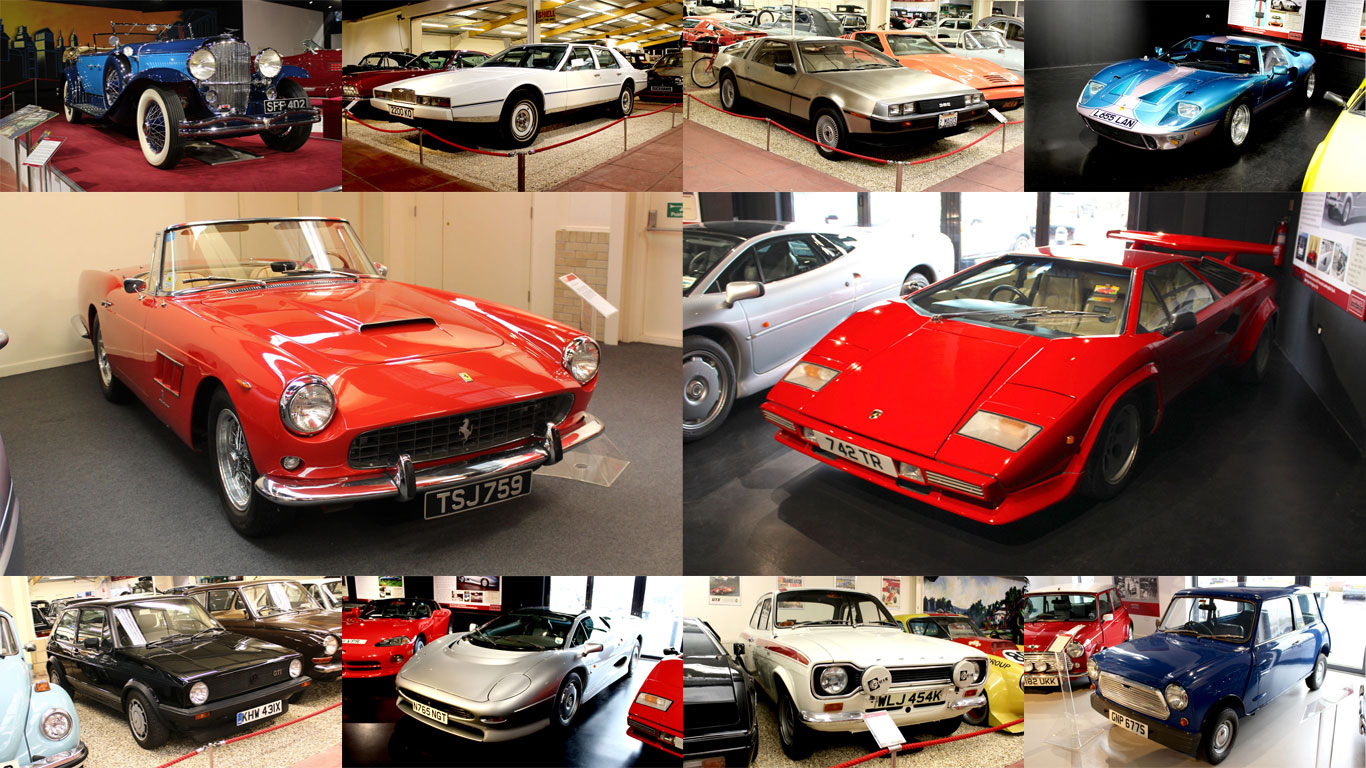
The Haynes International Motor Museum is one of our favourite car museums, offering an eclectic blend of supercars and everyday classics.
We’ve selected 25 of our favourite exhibits, leaving you to create a shortlist of your own. You’ll find the museum in Somerset, just off the A303.
Multimillion pound ‘Doozy’
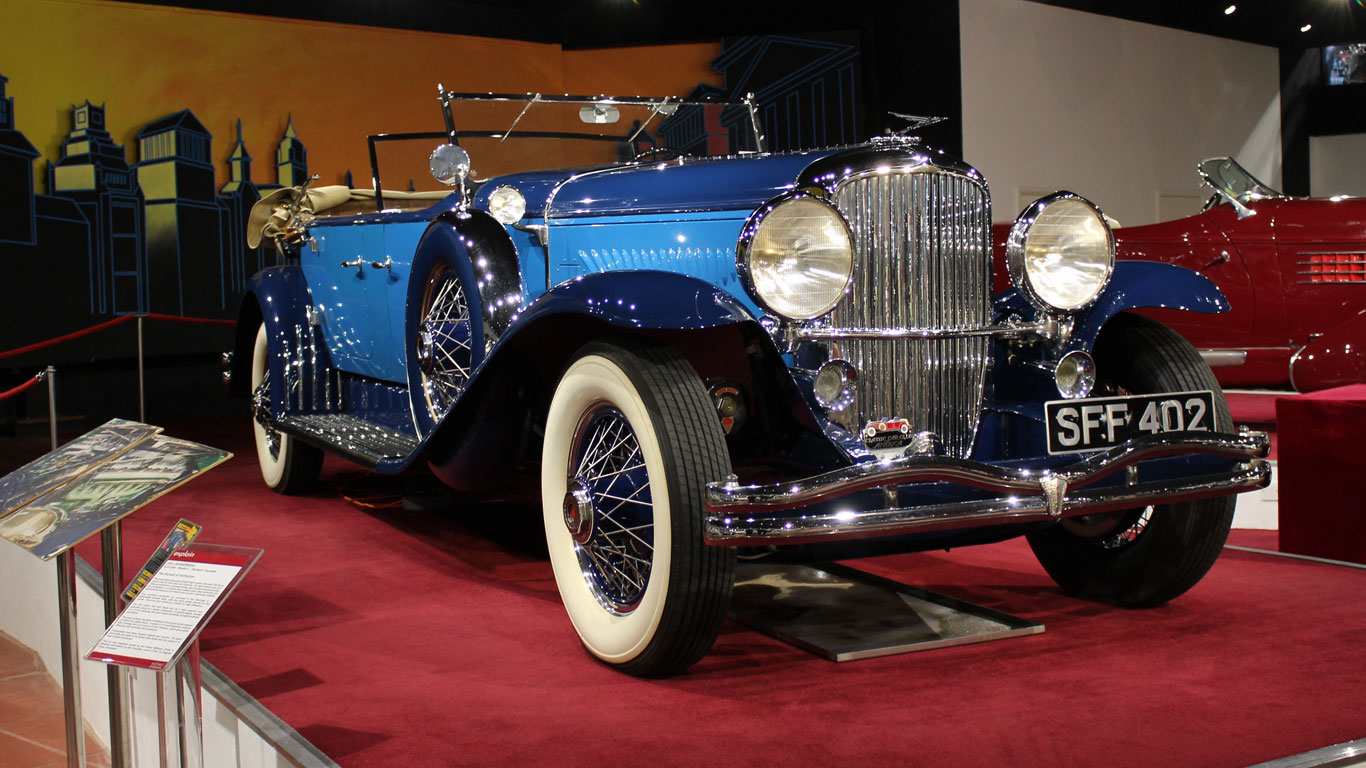
Sitting proudly in the hall entitled ‘The American Dream’ is this 1931 Duesenberg Model J. The Duesenberg company was established by E.L. Cord of the Cord Motor Company, with the sole aim of building the most luxurious cars in the world. The example in the Haynes Museum is one of eight built and was formerly owned by Mrs Payne Whitney of Pratt & Whitney fame. The museum values the ‘Doozy’ at a cool £8 million.
Gandini’s greatest triumph?
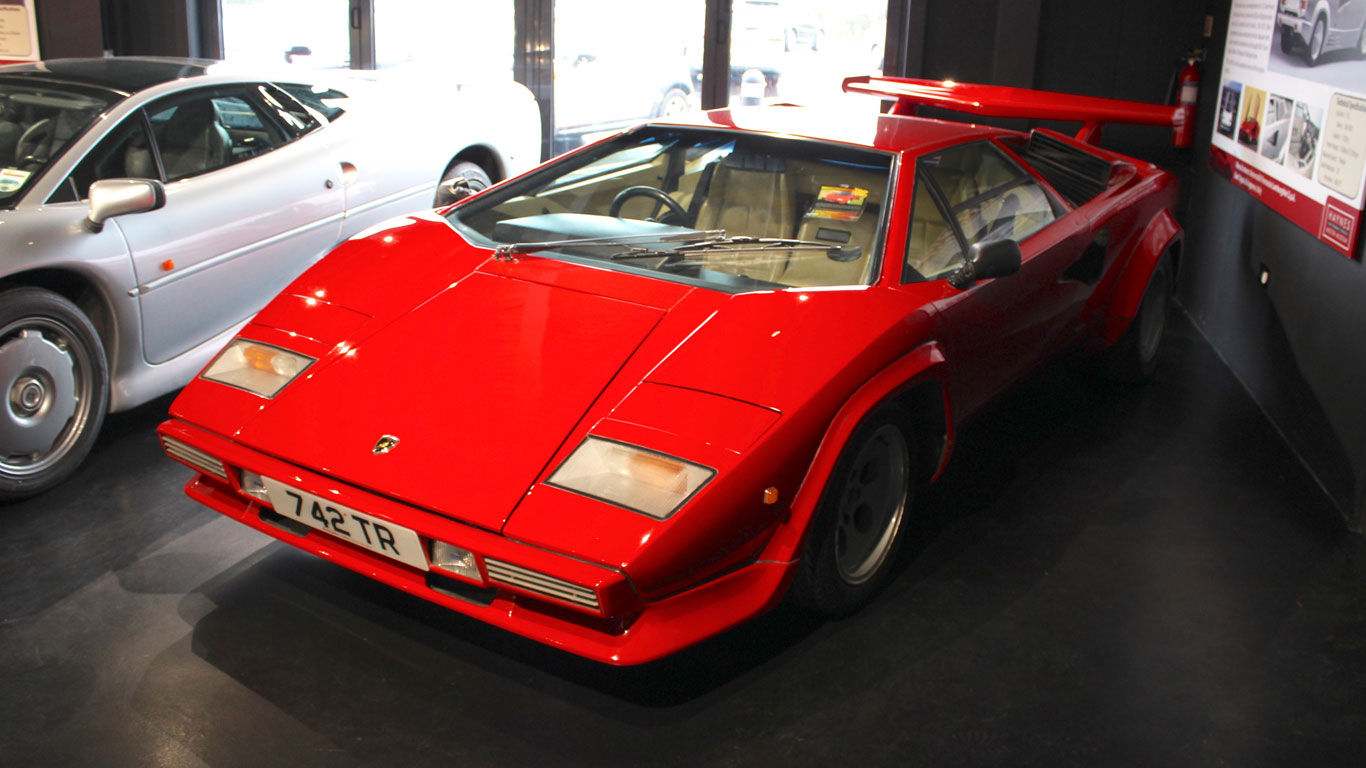
Once upon a time, this Lamborghini Countach took pride of place in the famous ‘Red Room’, but following the museum’s multimillion pound revamp it was moved to the supercar collection. The Countach is one of Marcello Gandini’s most famous creations and remains the pin-up star for a generation of petrolheads.
When Ford gave Ferrari a bloody nose
Legends are born out of the strangest of circumstances. Back in the 1960s it looked highly likely that Ferrari would be sold to the Ford Motor Company, with the American giant keen to go racing. Having spent millions of dollars on due diligence, Ford bosses were left high and dry when Enzo Ferrari famously pulled out of the deal. Ford reacted in the best possible way, by creating the GT40 and winning Le Mans. The rest, as they say, is history.
Just don’t mention the electronics
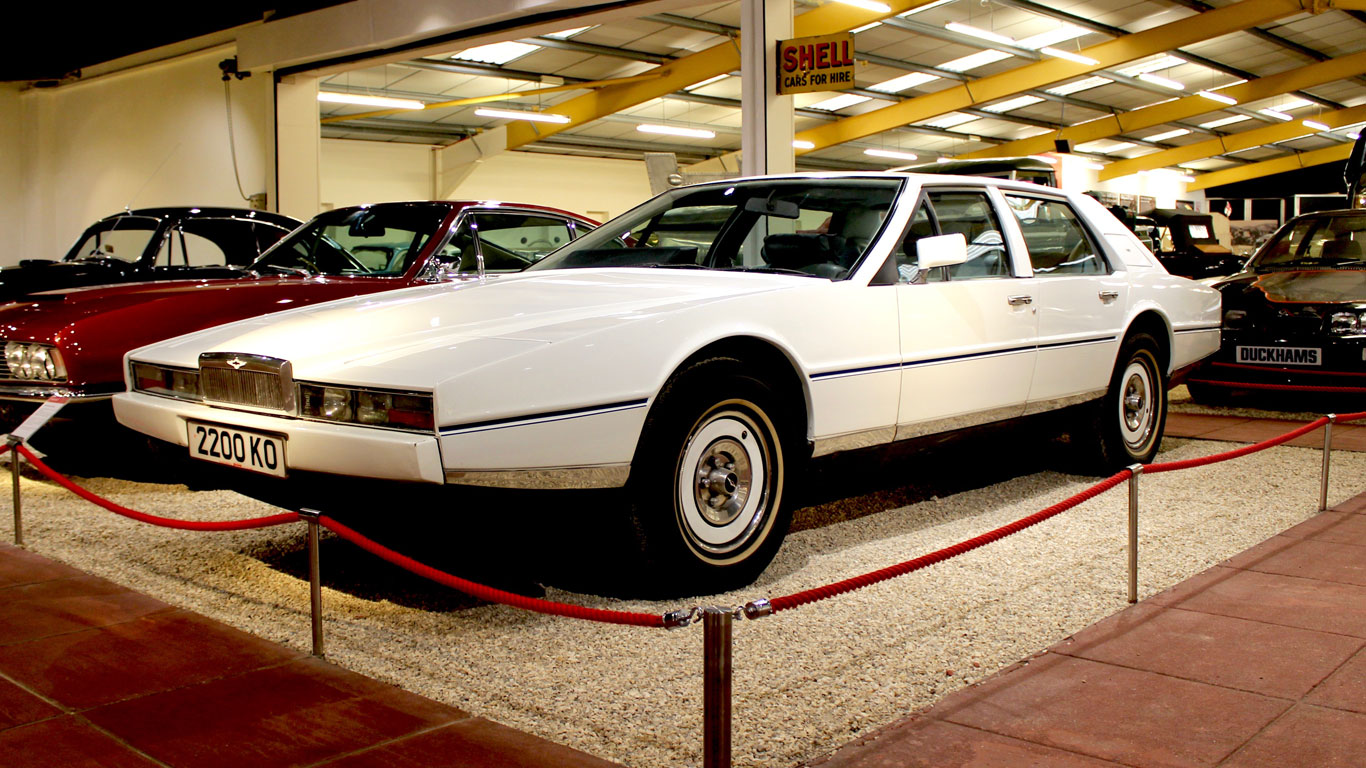
This might be a gallery featuring cars you don’t want to miss at the Haynes Motor Museum, but with the Aston Martin Lagonda it’s more a case of can’t miss. A flawed gem it might be, not least because of the eye-wateringly expensive electronics, but you can’t help but marvel that such a car exists. We’d be tempted to say they don’t make’em like they used to, but Aston Martin has launched an all-new Lagonda super-saloon.
Big cat crippled by the economic crisis
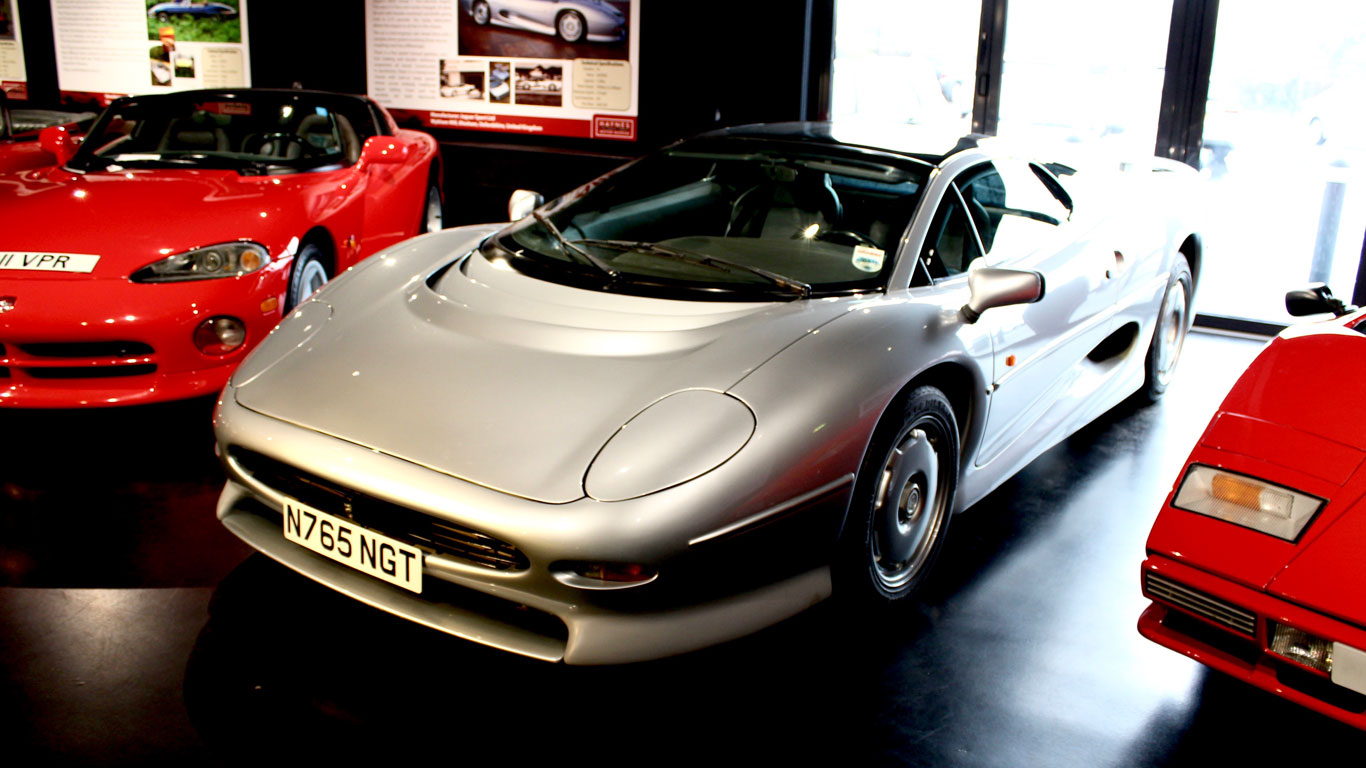
We all know the backstory: Jaguar builds a four-wheel drive, V12-engined prototype; people get rather excited; huge deposits are put down; car becomes rear-wheel drive, V6-engined; economy collapses; potential buyers pull out; Jaguar struggles to sell the car, even at a reduced price. Back in the early 90s, the Jaguar XJ220 was a bit of a laughing stock, but time has been kind to the 212mph supercar from Oxfordshire. And let’s face it: Jaguar has built nothing else quite like the XJ220.
Who ya gonna call?
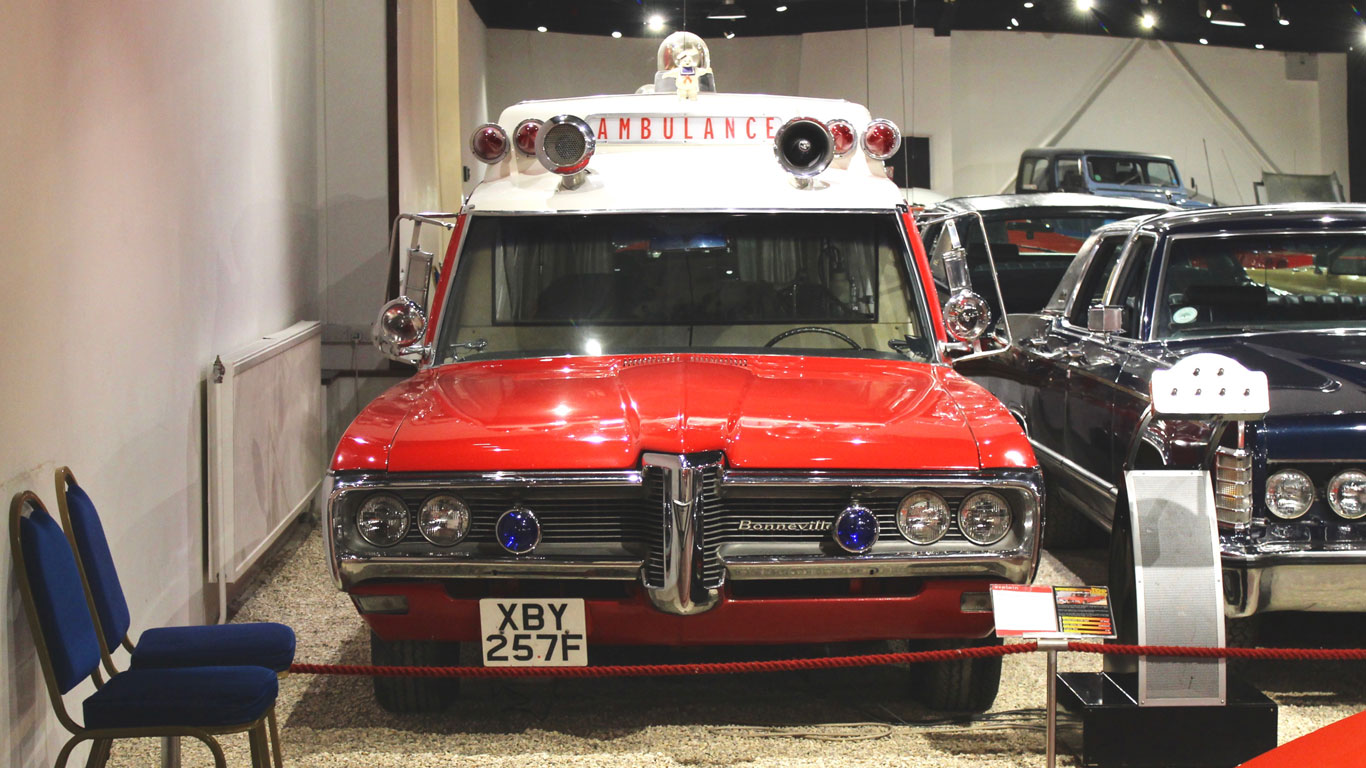
Fans of Ghostbusters will tell you that Ecto-1 was a 1959 Cadillac Professional ambulance/hearse, but that hasn’t stopped Haynes slapping a Stay Puft Marshmallow Man on the roof of this Pontiac Superior ambulance and having a little fun. Press one of those buttons to the right of the former City of Lewistown emergency vehicle and Ray Parker Jr. will do his thing. Who ya gonna call?
Maserati and Citroen: a match made in heaven?
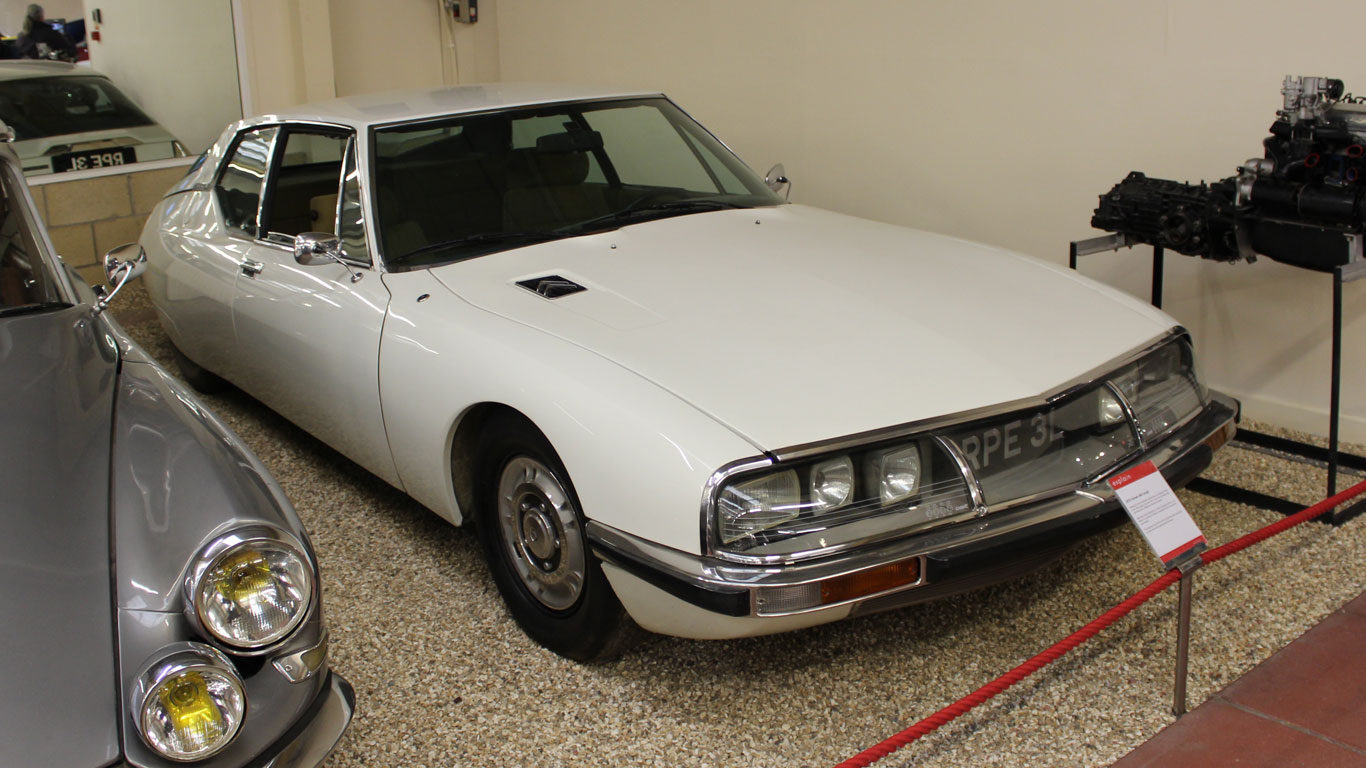
This has to be the most eccentric corner of the Haynes Motor Museum. To the left of this Citroen SM you’ll find a DS and Traction Avant, with a 2CV appearing further down the line. The DS gets its fair share of press, so we’ll focus on the SM, which was powered by a Maserati V6 engine.
The most desirable Porsche in the world?
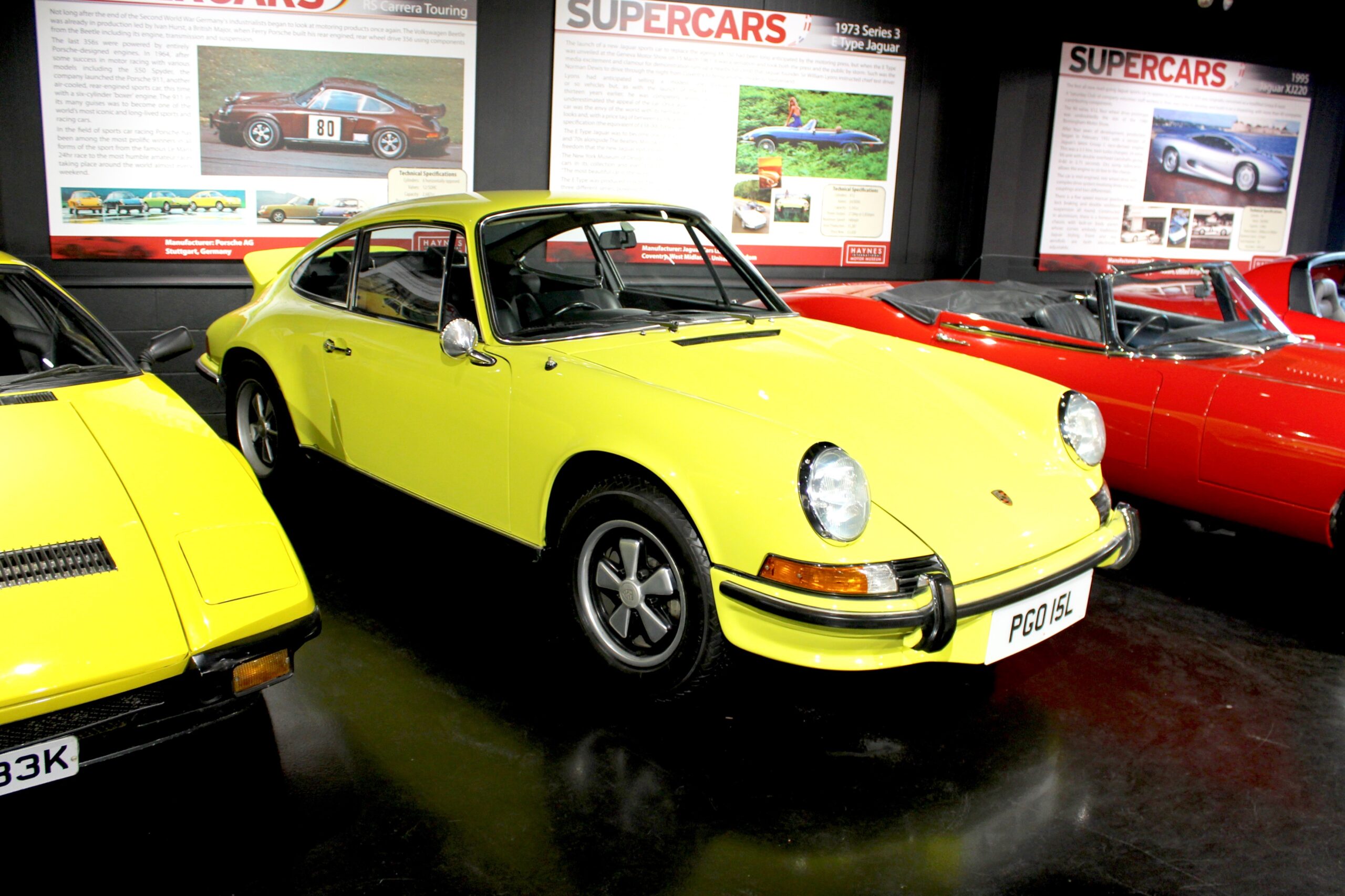
This is one of the most highly sought-after 911s on the planet and to some, the most desirable Porsche in the world. A total of 1,580 RS examples were built, in either Touring or Lightweight specification. This example could be worth as much as £1 million.
Classic Pininfarina styling
The 250 GT Cabriolet on display at the Haynes Motor Museum is a series II, first launched at the 1959 Paris Motor Show. The original 250 GT Cabriolet made its debut at the 1957 Geneva Motor Show and a mere 40 were built before Ferrari toned down the styling, increased the size of the boot and treated the cabin to a more luxurious feel.
Mark Webber’s Red Bull RB6
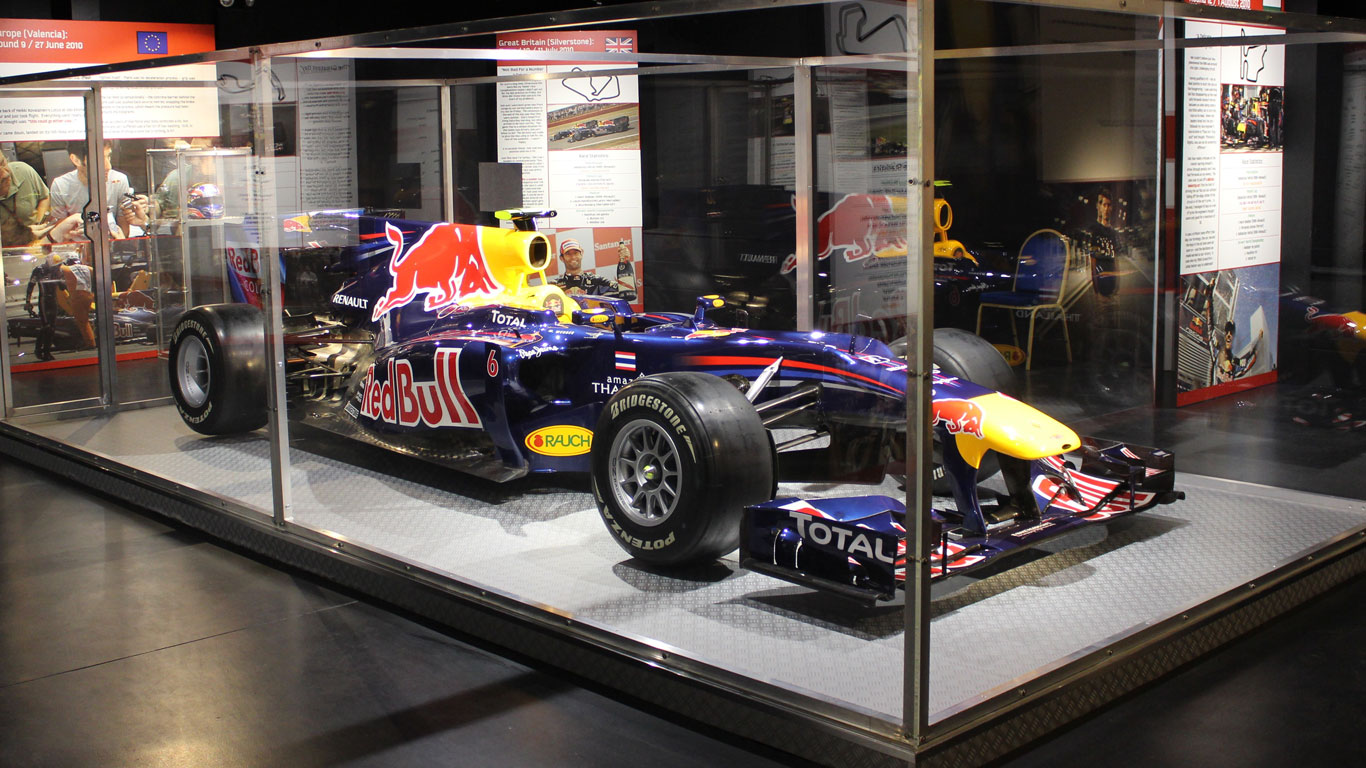
Next to the display of supercars you’ll find a section of the Museum dedicated to Mark Webber and his Red Bull RB6 F1 car. This is the actual car the Australian drove as he raced to victory in the British and Hungarian Grand Prix of 2010. His dulcet tones are played through speakers as you wander around the car.
Nobody mention the fuel bill
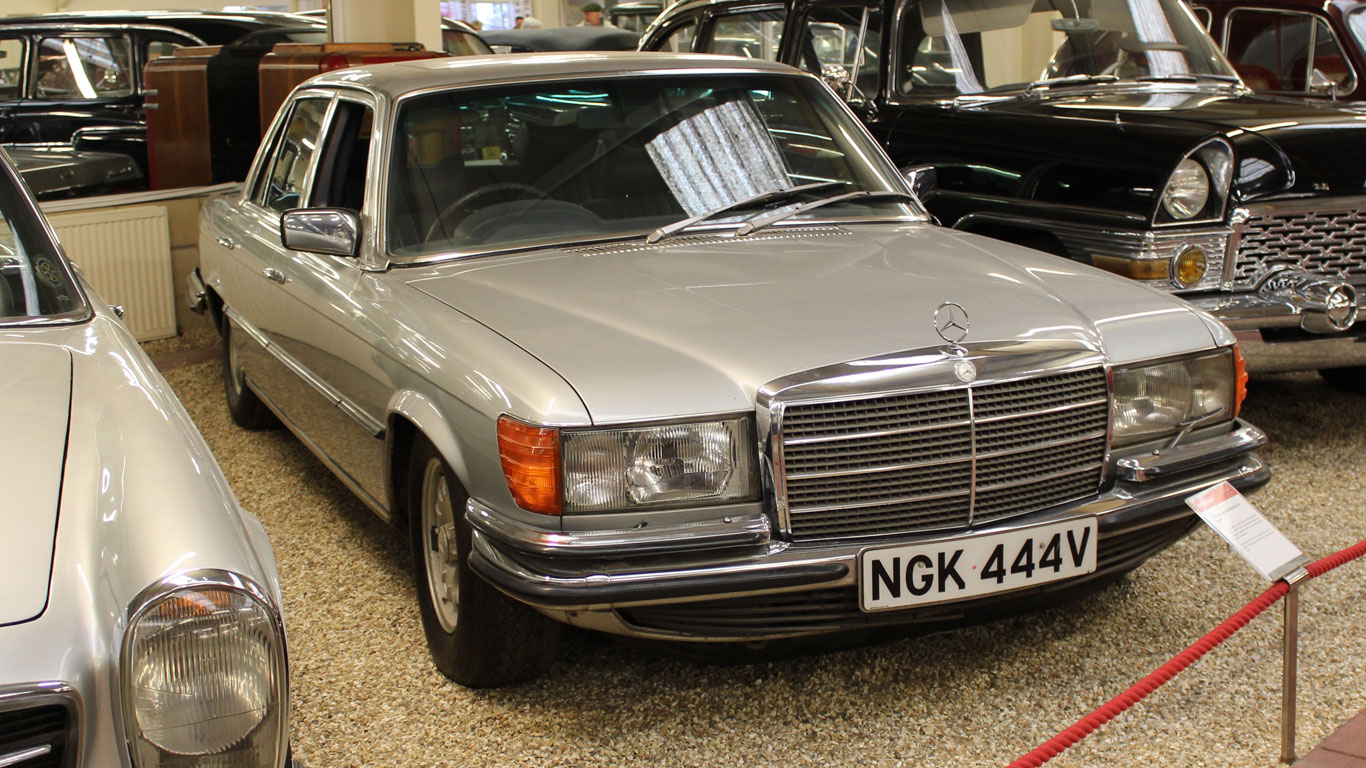
If we had to name the car we’d most like to drive home in, this Mercedes-Benz 450 SEL 6.9 would be in with a shout. This was the flagship of the S-Class range, featuring the likes of hydropneumatic suspension, ABS brakes and the small matter of a 6.9-litre V8 engine. The Museum’s patron, John H. Haynes OBE, used it as his personal car, clocking up 130,000 miles in the process. We won’t ask what he spent on fuel.
Fast Ford to Mexico
Even when surrounded by such illustrious and exotic vehicles, a fast Ford still manages to hold its own. Of course, it helps when the Ford in question is an Escort Mexico, so named following success in the London to Mexico World Cup Rally. The Mexico was powered by a detuned version of the engine found in the Escort RS1600 and soon became a hero of road and track.
The ultimate Haynes registration number?
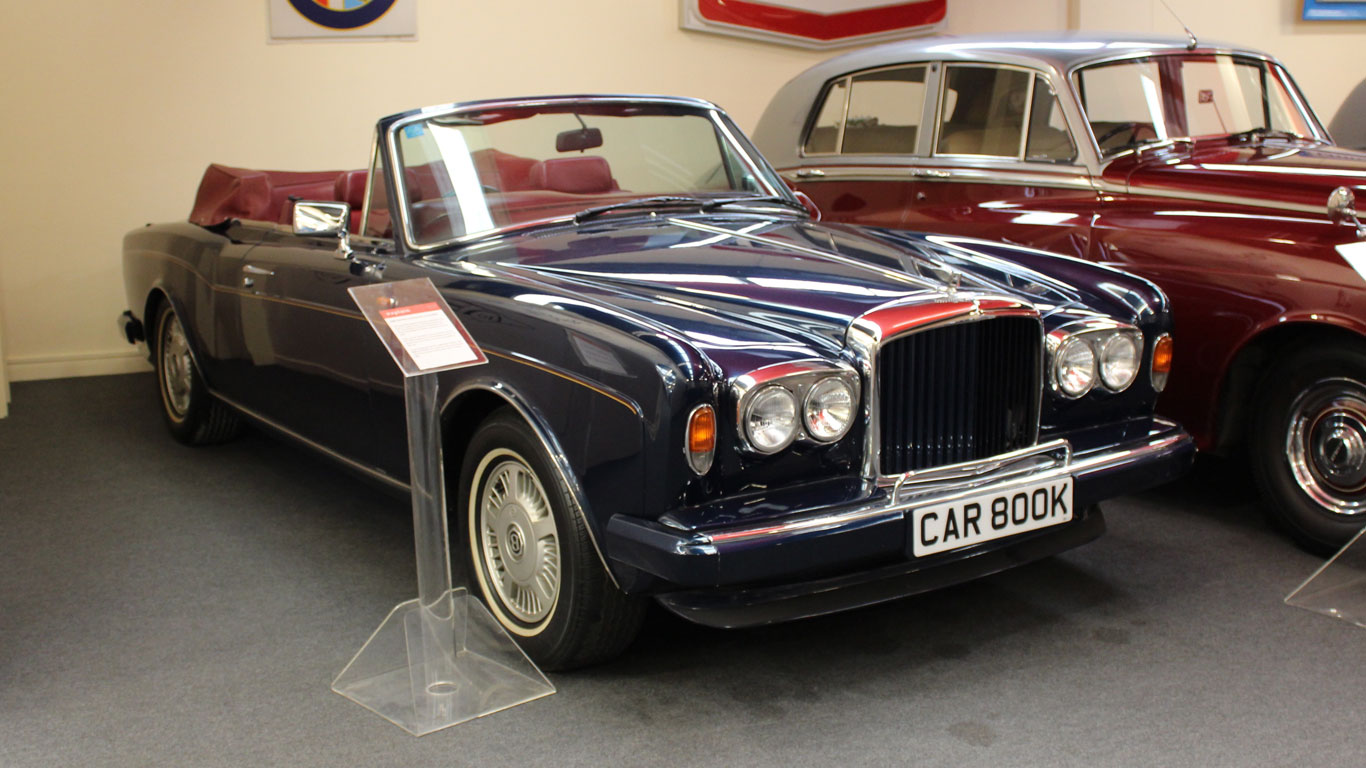
If we’re honest, as nice as this 1987 Bentley Continental Convertible is, the registration number is the only reason it makes our 25-car shortlist. CAR 800K – or CAR BOOK – is a reference to the Haynes Publishing Business, famous for producing the Haynes Manual.
We don’t need roads…
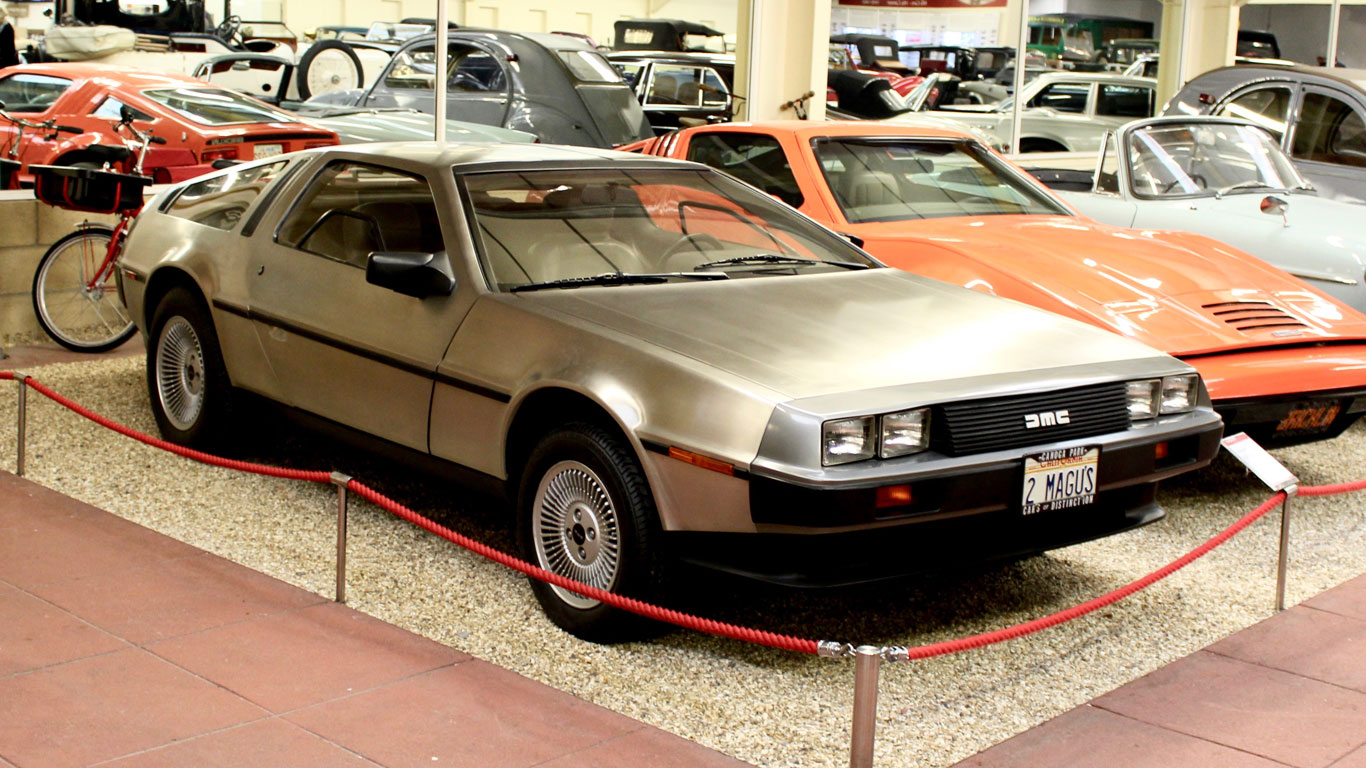
It needs no introduction, does it? The DeLorean DMC-12 is a prime example of a seriously flawed vehicle, elevated to a higher status by external factors. The story surrounding the development and collapse of the DeLorean Motor Company would have ensured a lasting legacy for the Belfast-built sports car, but its starring role in Back to the Future presented it with an iconic status.
Genesis of the hot hatch?
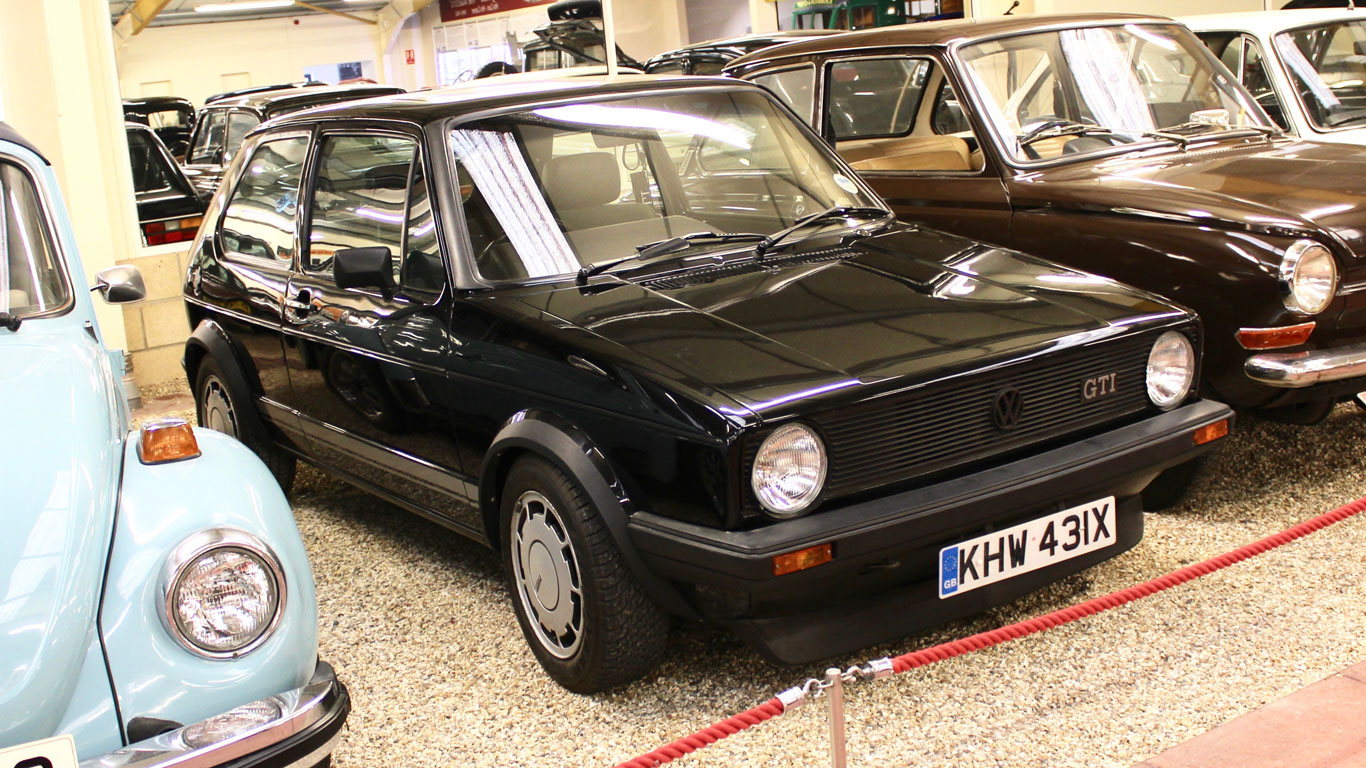
Was the Volkswagen Golf GTI the first hot hatch? Strictly speaking, no, because the likes of the Simca 1100 TI and Renault 5 Alpine/Gordini got there first, but the Golf GTI is credited as perfecting the recipe and taking the idea to the mainstream. Hard to believe it is 40 years old in 2016.
Good enough for Ringo Starr
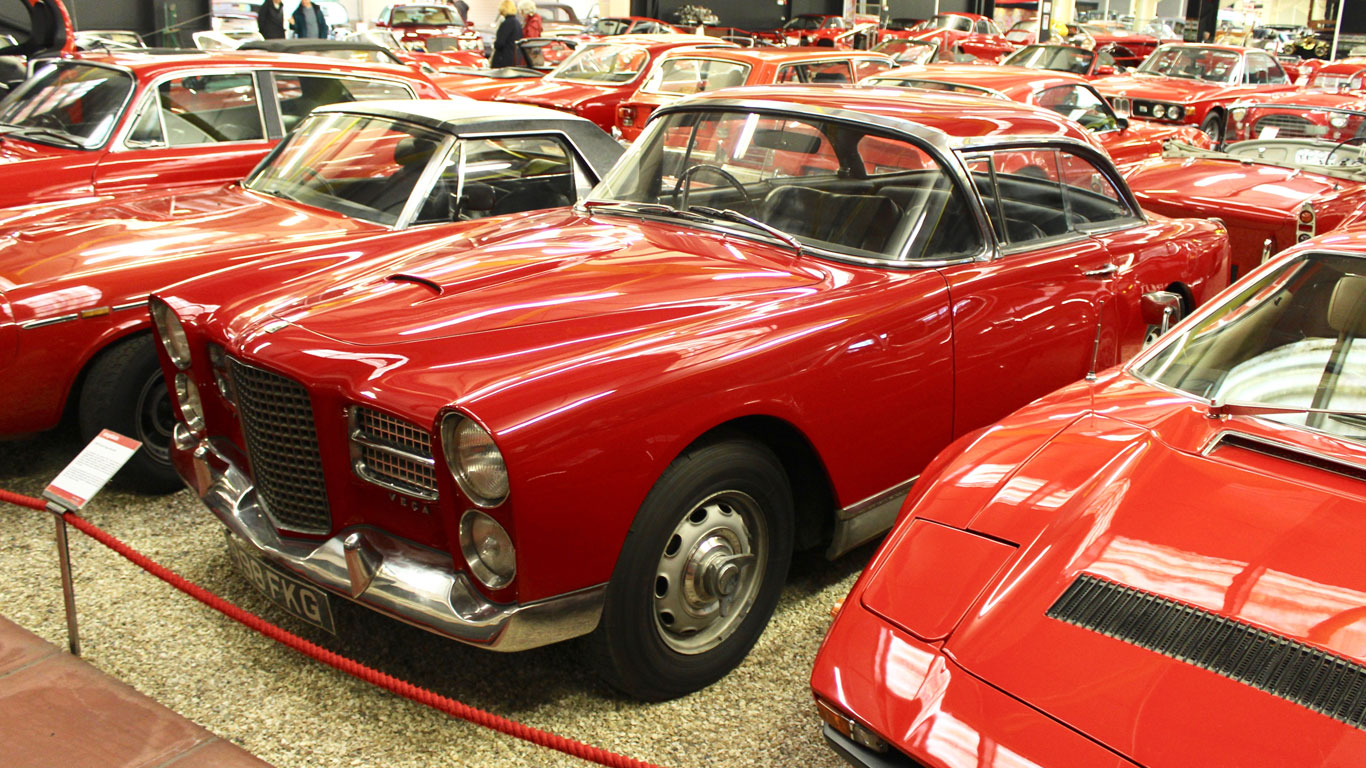
How can a car so large and imposing look so elegant and beautiful? The HK500 is arguably the ultimate Facel Vega, not least because of its huge Chrysler 6.3-litre V8 engine. This gave it a tremendous turn of pace, but it wasn’t the most nimble of creatures to chuck into a corner. But does that matter when something looks this good? Previous owners such as Stirling Moss, Pablo Picasso, Ava Gardner, Ringo Starr and Tony Curtis didn’t seem to mind.
Gordon Bennett, that’s pretty
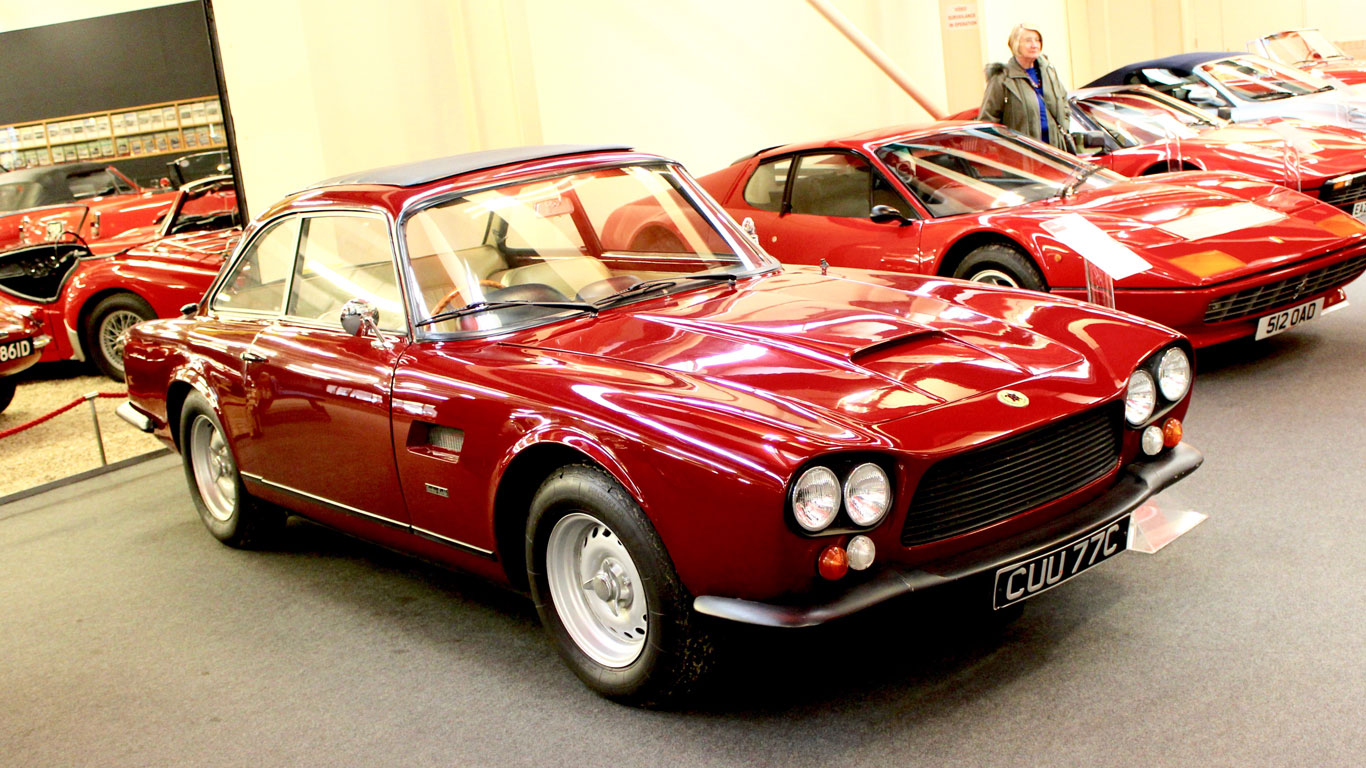
OK, cards on the table: of all the cars at the Haynes Motor Museum, this the one we spent the most time gawping at. There’s just something about the Gordon-Keeble GK1, with its Italian styling, American V8 engine and British engineering. This four-seater coupe featured a glassfibre body, two petrol tanks and an interior that could shame more illustrious rivals.
Who needs a 280 Brooklands anyway?
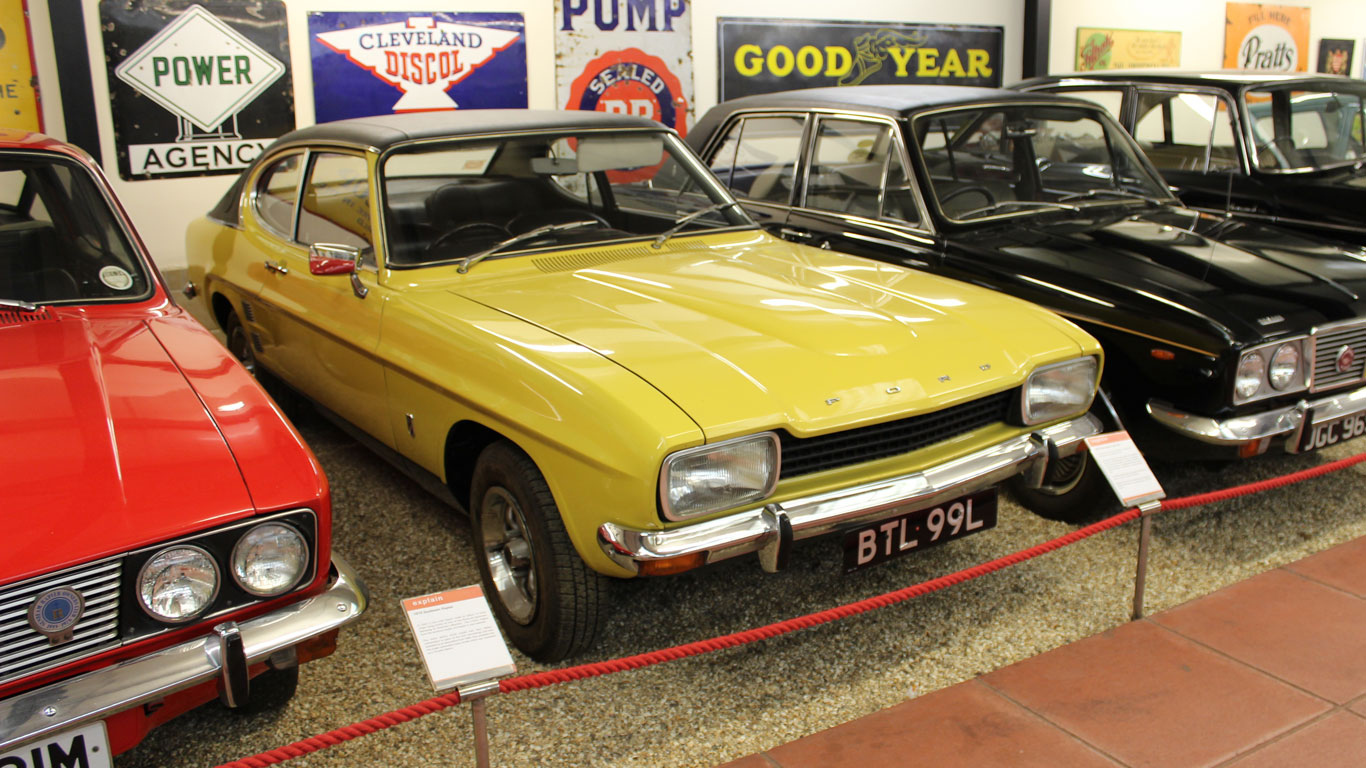
With all the hoo-ha surrounding the auction prices of Mk3 Ford Capris, it would be all too easy to forget there was a Mk1 and Mk2. The model on display at the Haynes Motor Museum is actually a Mk1 facelift model, notable for its larger headlights and separate indicators. The facelift also benefited from a revised suspension, larger taillights and new seats.
Born to be the miniMetro…
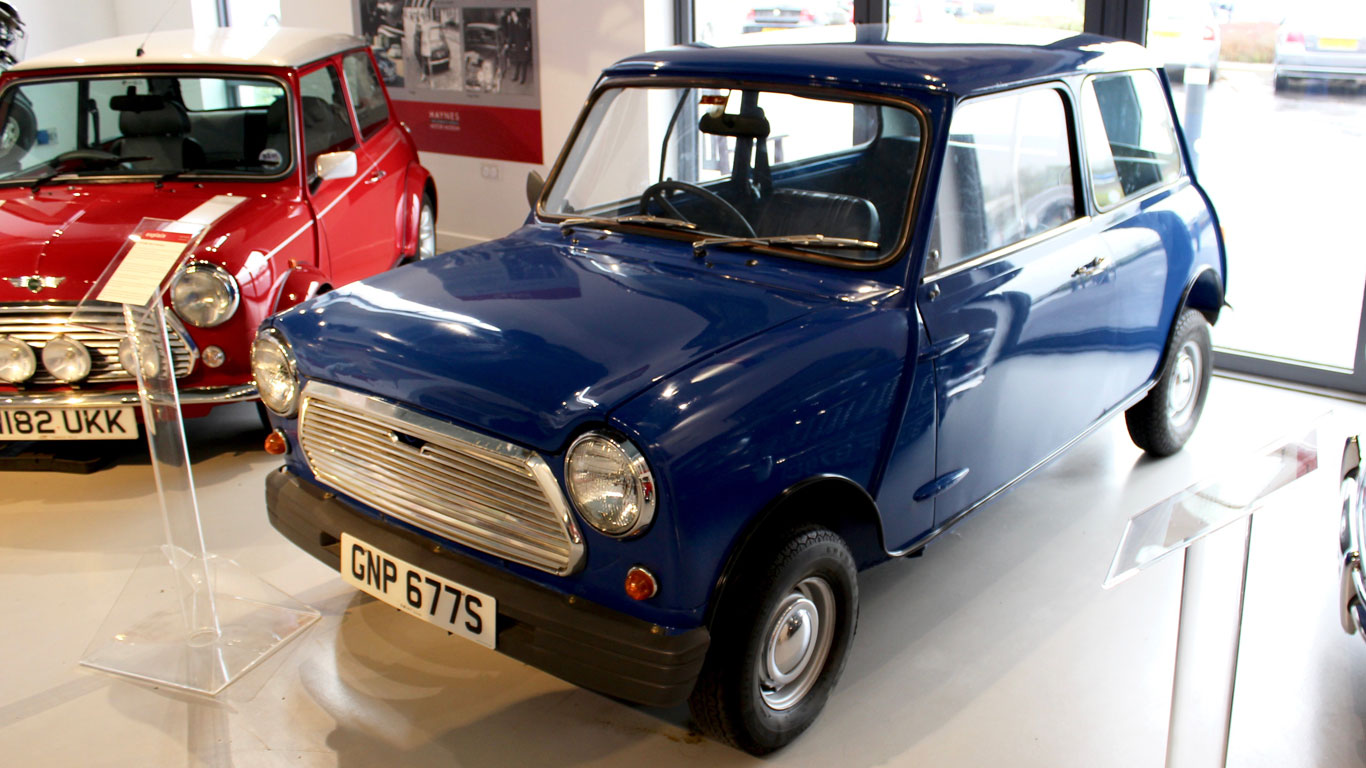
Here’s a rarity and a must-see exhibit for fans of the classic Mini. It’s a 1978 British Motor Corporation (BMC) Mini prototype, otherwise known as the 9X. Sir Alec Issigonis was convinced he could create a small car superior to the original Mini and to this end the 9X was blessed with more interior space in a smaller overall package. Sadly, it never saw the light of day and – three years later – British Leyland launched the Austin miniMetro.
Electric dream turns to nightmare
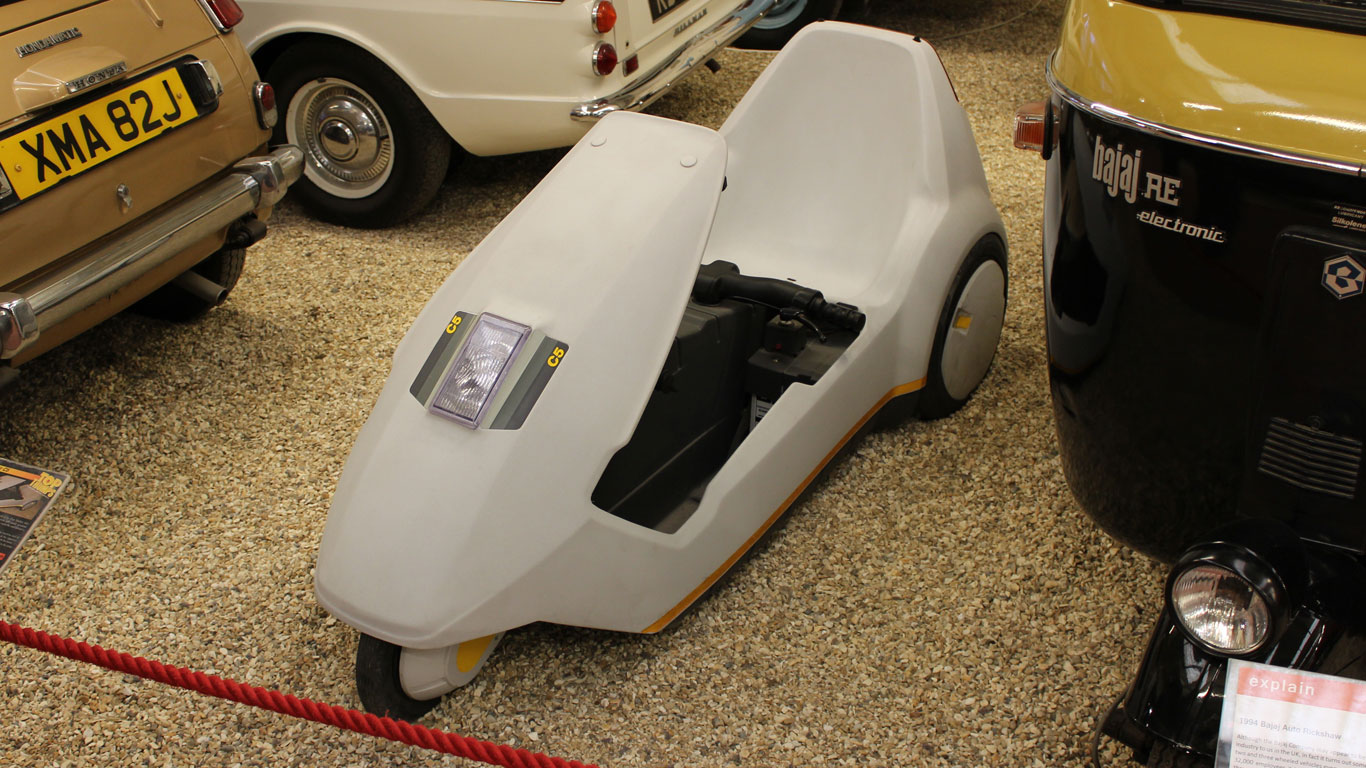
This one doesn’t take up a great deal of room in the Museum, but it deserves its place amongst the more exotic exhibitions. Sir Clive Sinclair’s vision of the future was a great British failure and there were too many problems to list in one short paragraph. That said, who wouldn’t want a go in this 1980s electric dream?
Prince William and Prince Harry’s Zip Cadet Karts
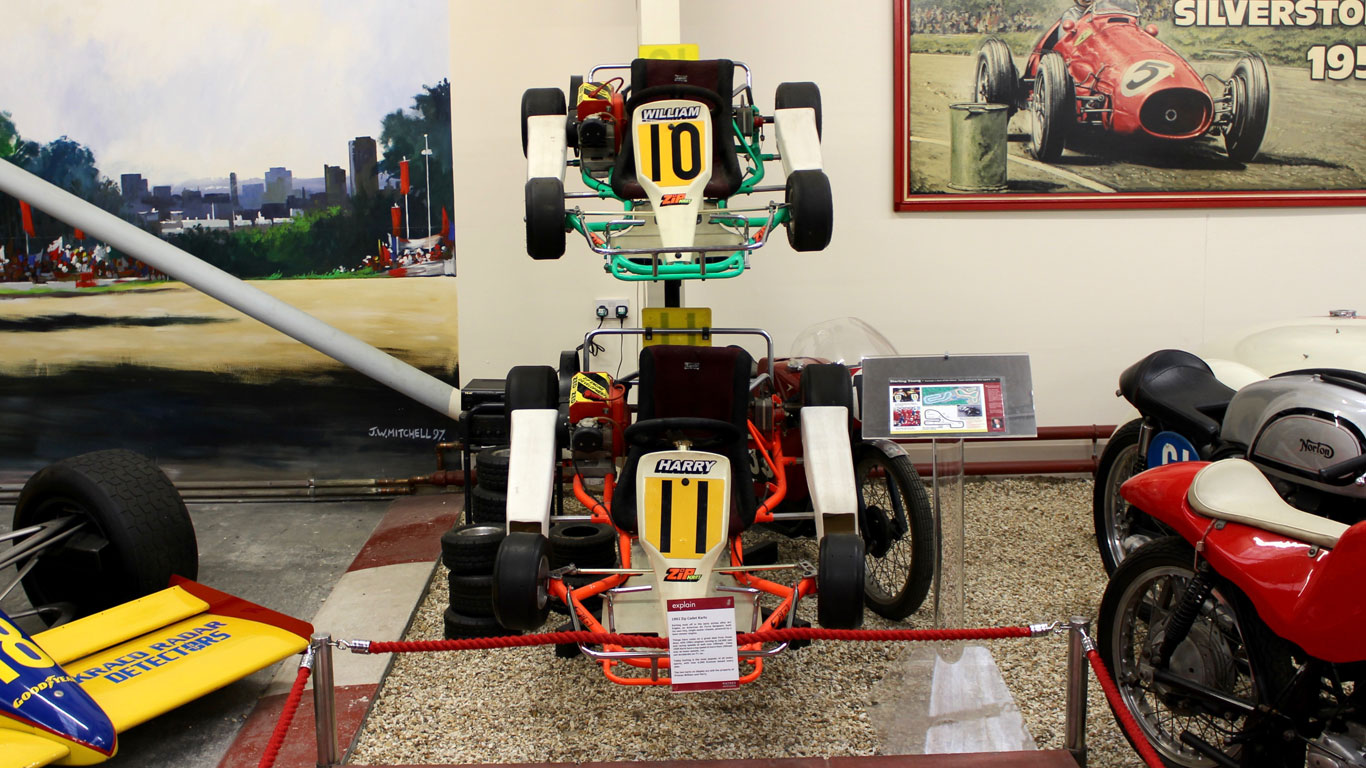
Here’s another blast from the past, with two Zip Cadet Karts, designed for children aged between 8 and 11. The karts remain the property of Princes William and Harry. We wonder if the Duke of Cambridge will present these to Prince George and Princess Charlotte?
Corvettes overload
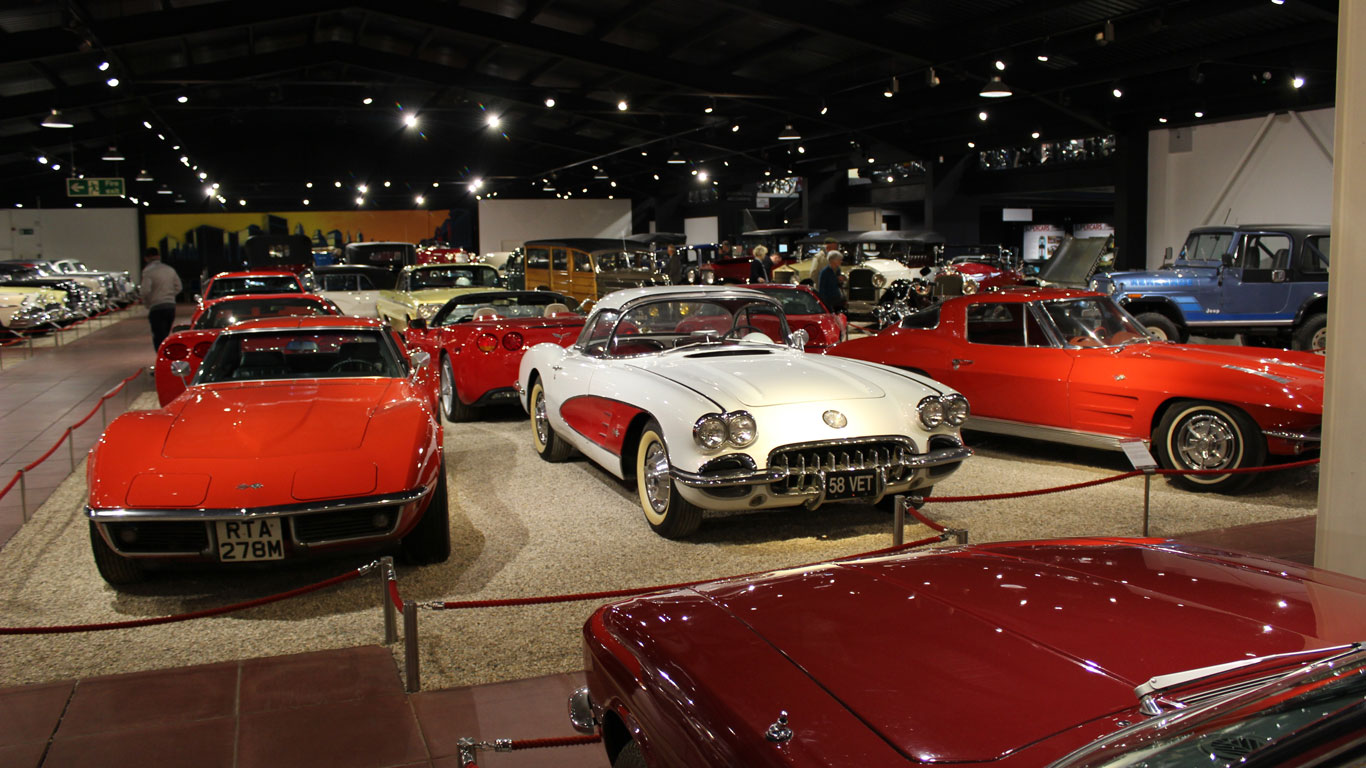
Fans of the Chevrolet Corvette will not be disappointed with the display of Vettes at the Haynes Motor Museum. You can chart the history of this all-American sports car thanks to six historic models. We think these cars are unlikely to fall down a sinkhole.
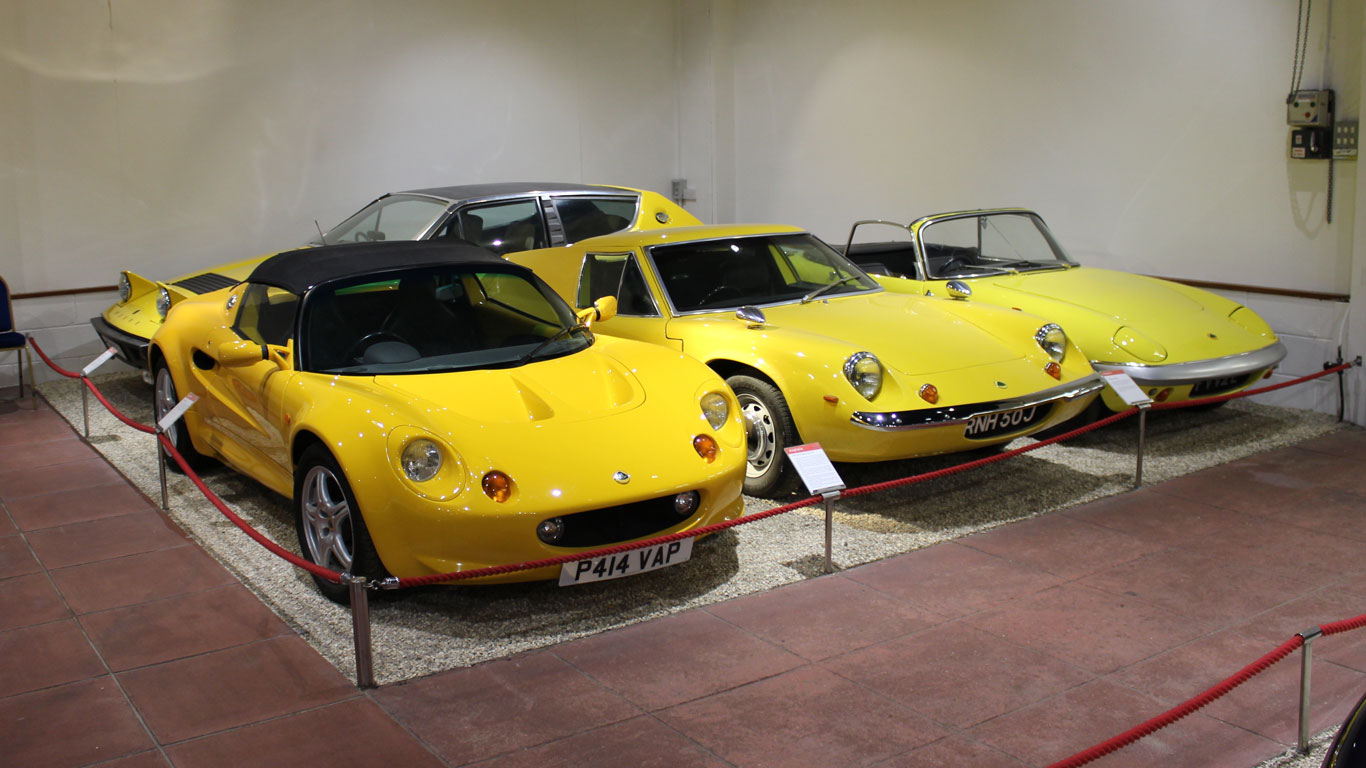
The Lotus position
Not to be left out, there’s one corner of Haynes devoted to Norfolk mustard. We adore this four-car collection, consisting of Elise, Europa, Elan and Elite. One day, somebody might fix the Elite’s headlights…
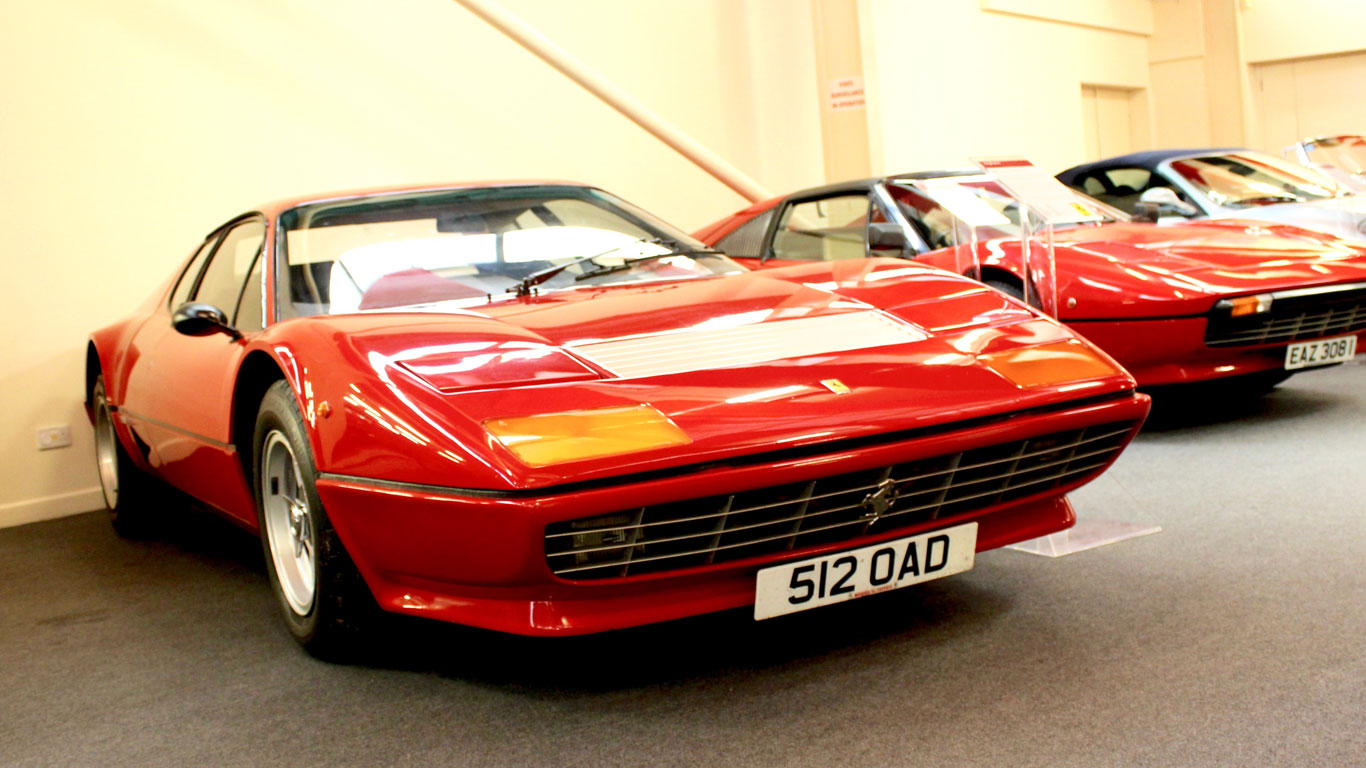
In the corner stands a Boxer…
In its day, the Ferrari 512 Berlinetta Boxer (BB) was one of the fastest cars you could buy. The 512 stands for 5.0-litre, 12-cylinders – an engine that developed 360hp. With a top speed of 188mph, this wasn’t a Ferrari for the fainthearted.
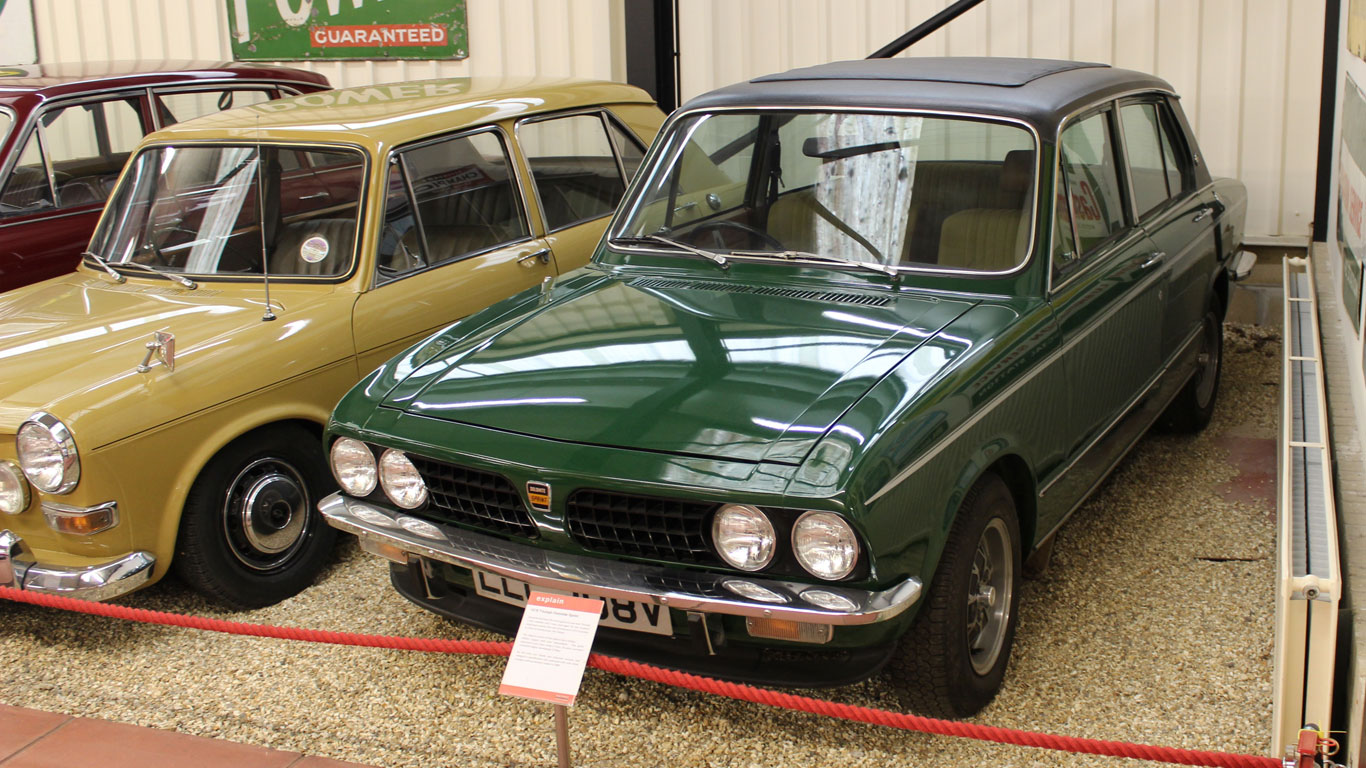
A Triumph of British engineering
When you see cars like the Dolomite Sprint, you have to ask yourself, where did it all go wrong for Triumph? Of course, the reasons for the decline in the British car industry have been well documented, but in the ‘Dolly’ Sprint, Britain had a performance saloon to take on the world. It seems like a fitting conclusion to our round-up of the best exhibits at the Haynes International Motor Museum.
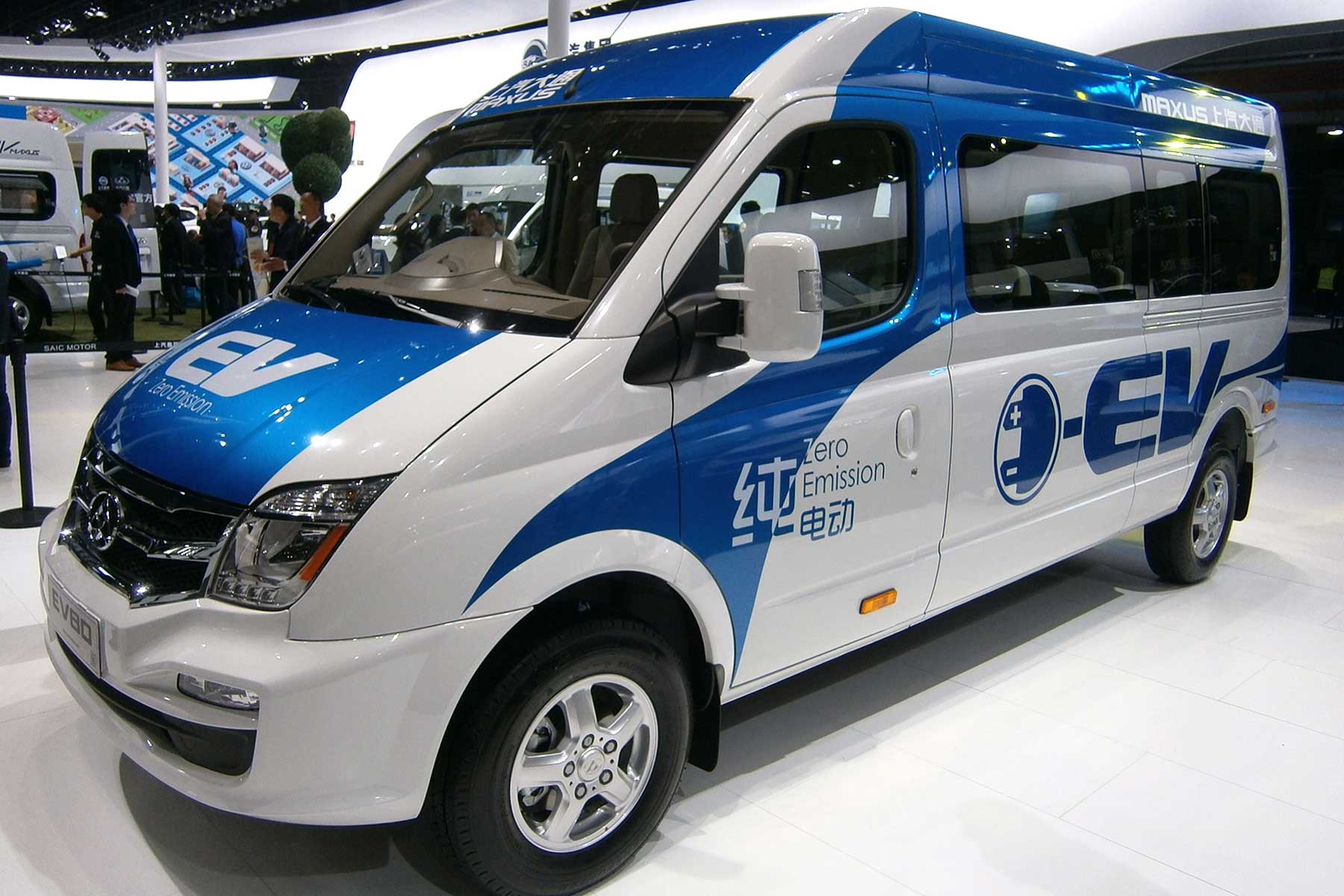
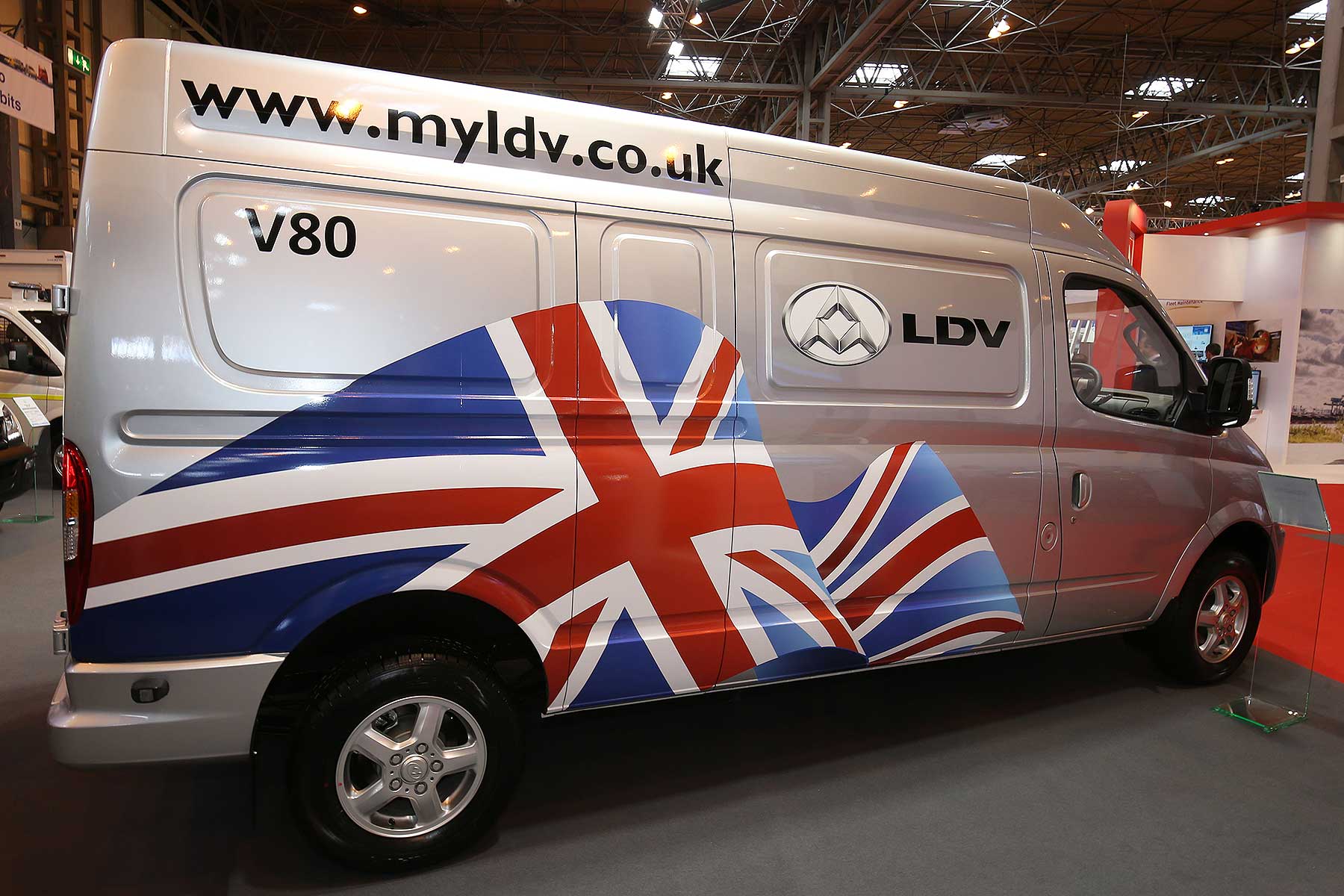
LDV has returned to the UK with a range of models including an all-electric green van that promises a 215-mile range, combined with city-friendly zero local emissions. There’s also a surprise all-new MPV that claims input from Lotus.
China’s first all-electric van, the LDV EV80 will launch later this year as the flagship of the reborn LDV range of vans, following its debut at the Commercial Vehicle Show currently underway in Birmingham.
Now owned by China’s SAIC Maxus, the LDV brand collapsed in Britain back in late 2008. It was the last remaining part of the once-great Leyland company, although by then the brand was owned by the Russian GAZ group.
A rescue attempt failed and SAIC acquired the dormant brand in 2010 – and has since restarted production of the familiar LDV Maxus, now called the LDV V80.
It’s the V80 that’s been converted to a full EV, packing a lithium-ion phosphate battery capacity of up to 75 KWh, plus a choice of short- and long-wheelbase panel van configurations and a custom-built chassis cab option.
LDV says the EV80 can be fully recharged in around two hours – faster than rivals such as the Nissan e-NV200 – while other technical specifications are among the most advanced of any commercial vehicle in the world.
Mark Barrett, general manager of LDV UK & Ireland, said: I think it’s safe to say that LDV has demonstrated just how obtainable the future is for a commercial EV vehicle, following today’s EV80 reveal.”
The LDV MPV
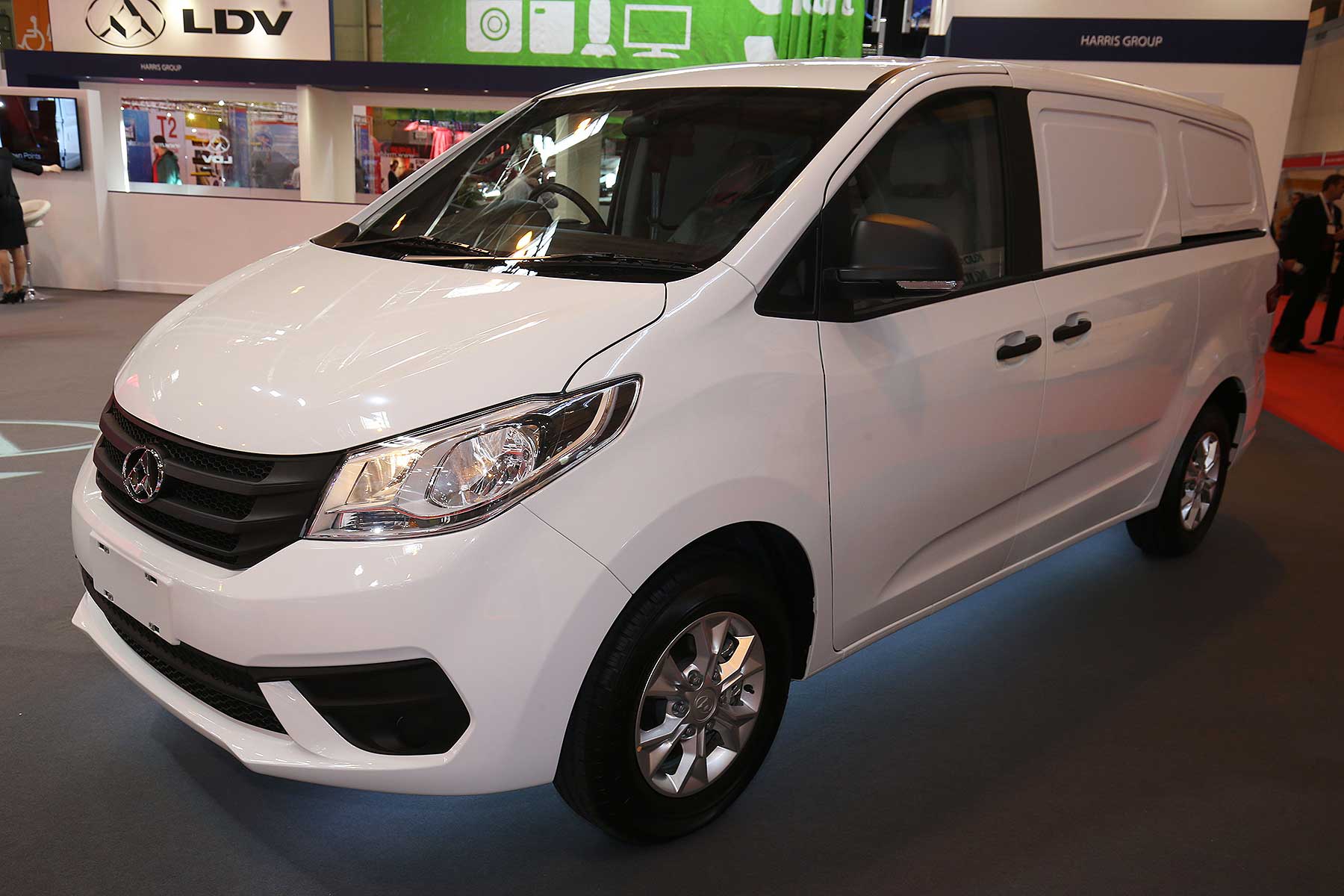
LDV also revealed the new G10 panel van, powered by a 2.0-litre turbodiesel offered in both manual and automatic guises.
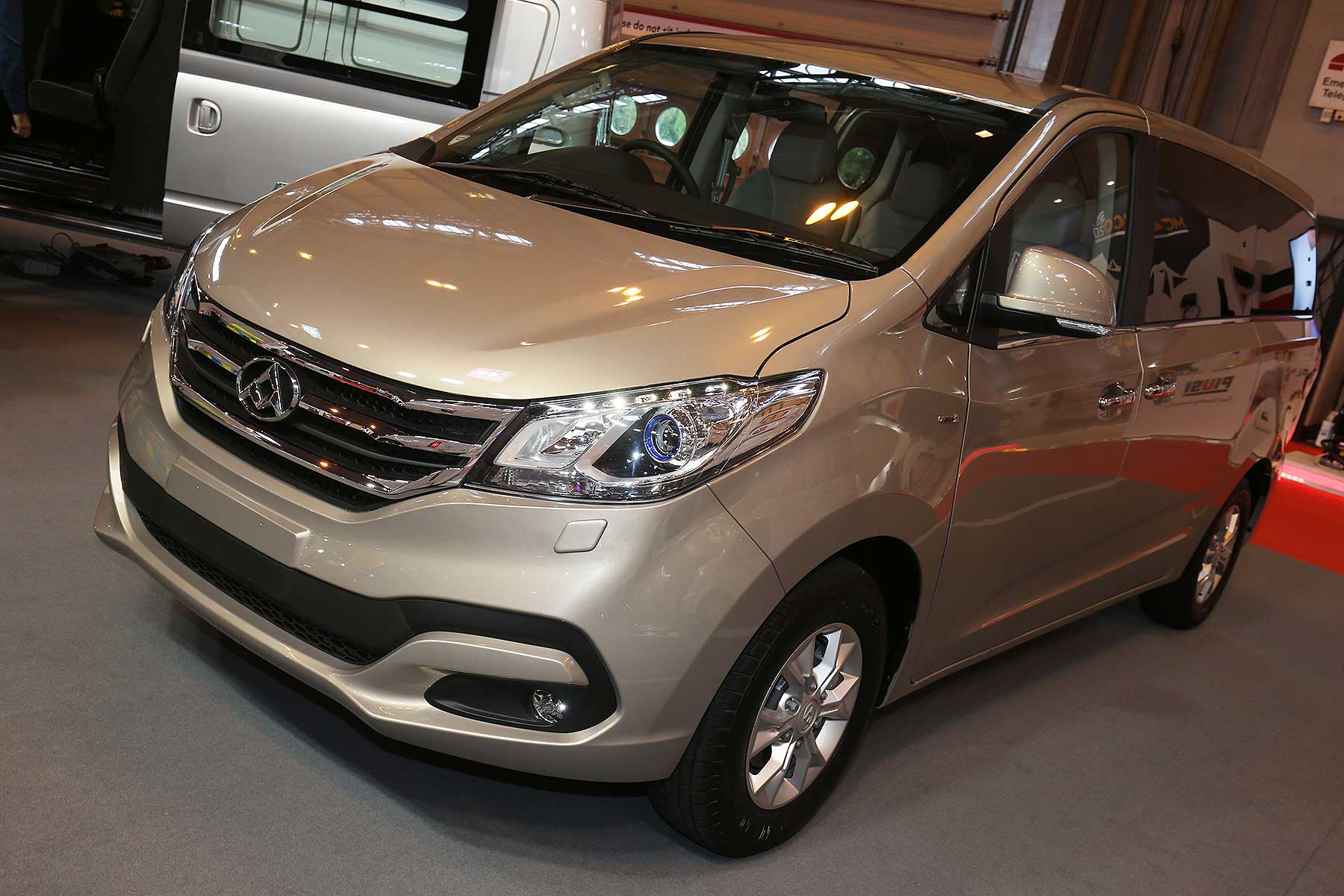
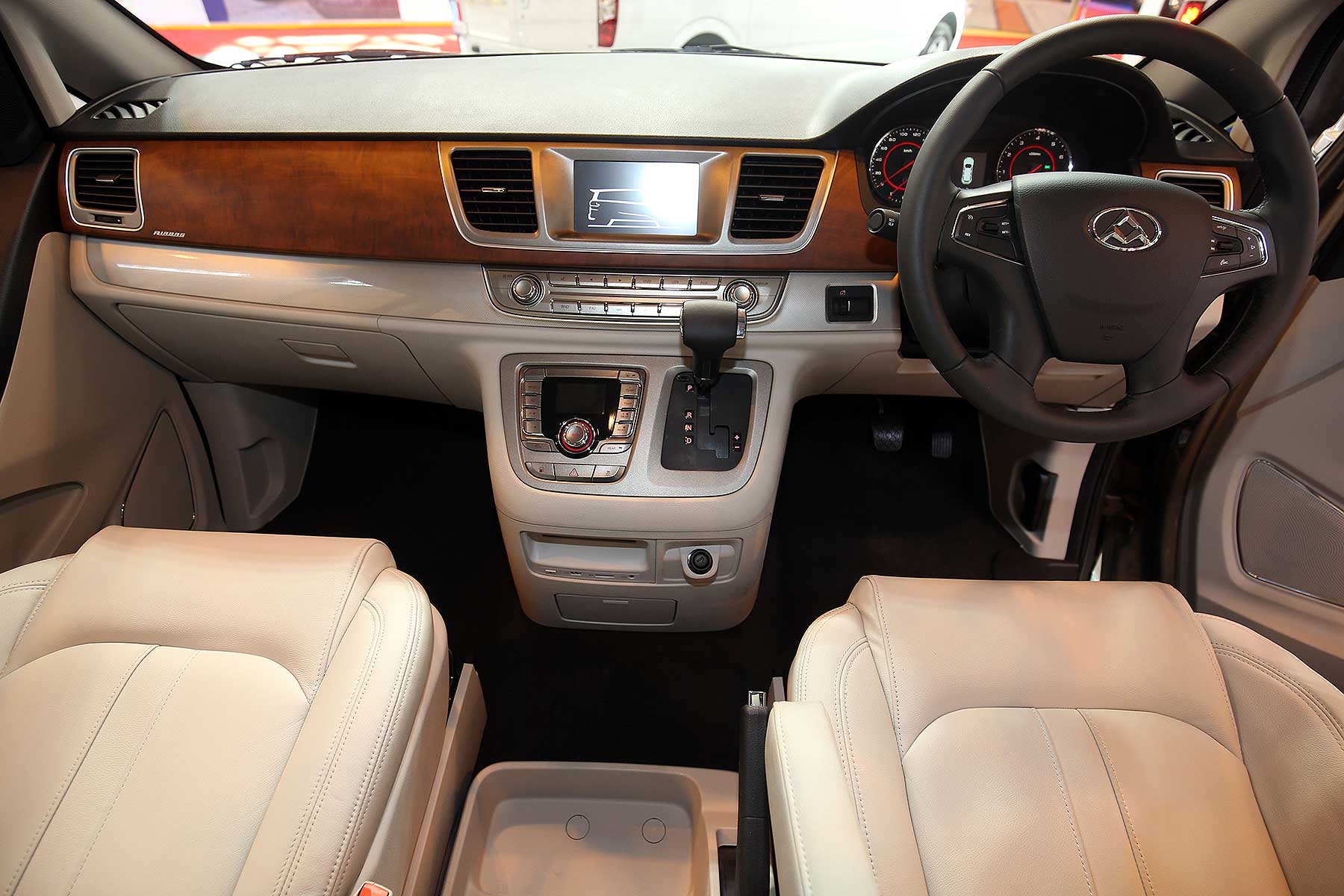
It’s this panel van that’s given windows and other luxuries to create the new LDV G10 MPV. This is powered by a 2.0-litre turbo petrol engine (curiously rated at only 105hp, says the firm) that’s mated to a six-speed automatic gearbox.
Seating five, seven or nine people, the G10 MPV is well equipped with touchscreen infotainment, rear-view camera, cruise control and Bluetooth. It’s only quoted as having two airbags but LDV says prices will be competitive when they’re released later this year.
The most fascinating aspect? No less than Lotus has been involved in calibrating the chassis. Whether this means it will handle like no van-derived people carrier before it remains to be seen…
LDV back in the UK
LDV’s return has generated a “phenomenal” response, said Barrett.
“We are well ahead of our forecasts with almost 40 dealers on board, 11 of whom are in the UK with many more signings imminent in the UK and Ireland.
“I think this is indicative of the strength of the new LDV range and spec and the confidence and trust that the market has in the future of the brand, particularly given SAIC’s investment in LDV, which is set to top $2.9bn by 2020.”
The firm is even offering a carrot to those unsure about rediscovering the LDV brand – a five-year warranty, offering coverage up to 160,000 miles, with five years’ free roadside assistance thrown in for good measure.
Mitsubishi has admitted cheating fuel economy tests dating back to 1991 and the Japanese car company has now set up an independent investigation committee to establish just what’s been going on.
Since the news broke that 625,000 Kei cars had been given falsified fuel economy figures, Mitsubishi has lost around half the market value. It seems more bad news is likely to emerge in coming days too as attention focuses on the sixth-largest Japanese car company’s fuel economy test procedures.
Here’s what we know so far about the Mitsubishi fuel economy test cheat crisis.
What has Mitsubishi done?
Mitsubishi has overstated fuel economy figures of four cars sold on the Japanese market: the Mitsubishi eK Wagon and eK Space, and the Nissan Dayz and Dayz Roox.
Not only has testing not been conducted correctly, it was also done in a way different to that required by Japanese law – something that has infuriated Japanese ministers who have said such manipulation is “extremely serious”.
How did Mitsubishi cheat the test?
It seems misconduct centred around the running resistance value test cars were subjected to. This rolling road resistance mimics two things – the rolling resistance, largely from the tyres, and the effect of air resistance when vehicles are moving: cars are tested stationary in labs where there’s no wind resistance, so it has to artificially be applied.
An analyst put it more bluntly: Mitsubishi appears to have over-inflated the tyres to cut rolling resistance and thus artificially inflate fuel economy.
What effect would this have had on official figures?
Experts say this practice may have artificially inflated Mitsubishi fuel economy figures by around 5-10%.
Are the cars with dodgy fuel economy figures still on sale?
No – when news of the scandal broke, Mitsubishi immediately stopped production and sales of the eK models. Nissan has also stopped selling the Dayz models (and is now in discussions with Mitsubishi over compensation).
Who discovered the fuel economy test cheat?
Ironically, it was Nissan that discovered the fuel economy test misconduct, during initial development for the successor to these cars. It took evidence of the deviations to Mitsubishi, which discovered things were amiss.
Is anything else amiss with Mitsubishi’s fuel economy test procedures?
Separate to this misconduct, further revelations about how Mitsubishi carries out fuel economy testing in Japan have emerged.
Japanese fuel economy test regulations are configured differently to tests in other parts of the world to better reflect the stop-start city-style driving commonplace in Japanese driving. Remarkably, when they changed, Mitsubishi admits it did not follow this rule change.
So how long has Mitsubishi been doing this?
Alarmingly then, Mitsubishi has admitted it’s been testing fuel economy this way for a quarter of a century. “For the domestic market, we have been using that method since 1991,” said Mitsubishi vice-president Ryugo Nakao at a press conference. The regulations changed: Mitsubishi testing did not change to reflect it.
Are other Mitsubishis affected?
Mitsubishi says it’s thus likely other Japanese market cars are affected: “During our internal investigation, we have found the testing method which was different from the one required by Japanese law has been applied to other models manufactured by Mitsubishi for the Japanese domestic market.”
Does it involve emissions cheating like the Volkswagen scandal?
This is an issue related to fuel economy test figures, not emissions. While any official emissions figures may well be different once fuel economy is restated, this will be an incremental addition – unlike Volkswagen, Mitsubishi has not been employing ‘cheat’ devices that alter the engine to get back emissions regulations.
Thus far, the Mitsubishi scandal is also related to petrol cars, not diesels – and petrol cars generally meet emissions regulations with ease.
So if Japanese cars are affected, do UK Mitsubishis have dodgy fuel economy figures?
Mitsubishi says this issue is restricted to the Japanese market: there is no evidence cars sold in Europe and the U.S. are affected.
European cars are tested according to the NEDC fuel economy test cycle, which itself is largely agreed to be outdated – but it is an independent test that all cars sold in Europe must pass. Manufacturers cannot overstate fuel economy: when they do, as Volkswagen discovered last year, clarifications must be issued when it is discovered.
What is Mitsubishi doing about it?
Mitsubishi, after expressing “its most sincere apologies to all of our customers, shareholders, and stakeholders,” has set up a special investigation committee that’s fully independent from the company itself.
It will have three members – all attorneys of law – who will fully investigate the matter, see if there’s any other improper conduct at play within Mitsubishi, and then reveal both the cause and suggested remedial action to prevent it happening again.
Mitsubishi fuel economy test procedures have not been compliant with Japanese regulations since 1991, an unnamed source has revealed.
Reuters says the leaked news was first reported to Japanese business title Nikkei: Mitsubishi is to hold a press conference briefing on the matter later today.
Top 10 most economical cars – spring 2016
Mitsubishi reveals fuel economy test misconduct
Europe’s car makers admit fuel economy test is obsolete
It is said the firm compiled its fuel economy data using U.S. standards, which involves more high-speed driving, rather than Japanese standards which demand more stop-start inner-city driving. Japanese standards generally deliver worse economy figures than U.S. standards.
The latest Mitsubishi revelation follows last week’s admission that it overstated the fuel economy of four city cars, sold under both the Mitsubishi and Nissan brands.
Since then, the firm – Japan’s sixth-largest vehicle manufacturer – has lost half its market value.
Manipulation of fuel-efficiency tests is “extremely serious,” Japanese transport minister Keiichi Ishii told reporters yesterday after a cabinet meeting, reports Bloomberg.
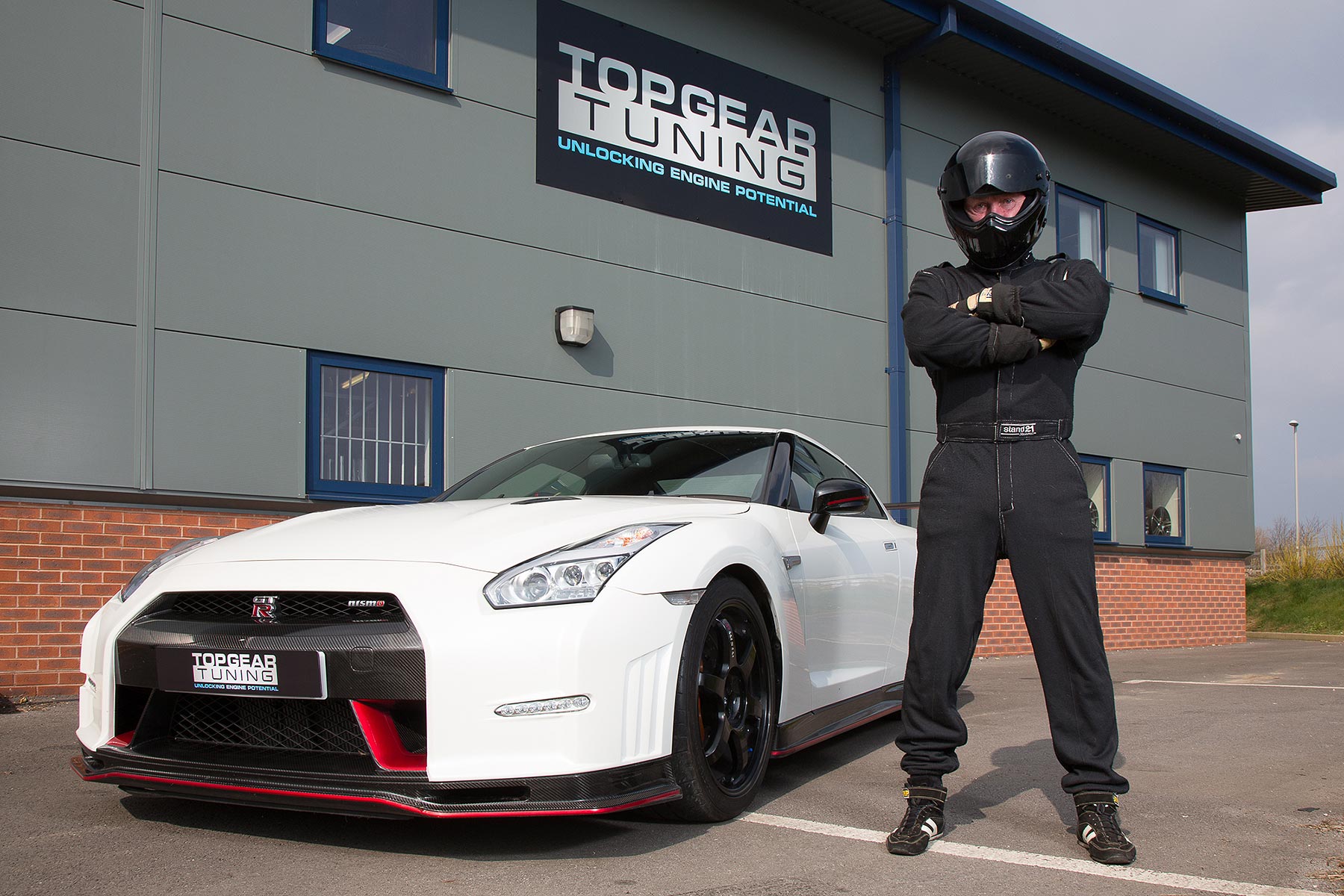
Top Gear’s original ‘Stig’ liked what he saw at car tuning firm TopGear Tuning so much, he bought the company – and now ex-racer Perry McCarthy is revealing his plans for expansion.
The former F1 driver has just launched a new website for the ECU remapping firm based in Bridport, Dorset, with the aim of rapidly growing the number of dealers and garages its systems are offered in.
The Stig has driven a Forza Ford Focus RS to Gamescom
‘The Stig’ delivers Jeremy Clarkson petition to the BBC in a tank
This is what the new Top Gear line-up looks like
To date, 20,000 cars have been remapped by the tuning firm, via 270 dealers nationwide. McCarthy wants to quickly ramp that up and hopes his profile and former career as The Stig will help the company gain traction.
“I was invited by the owner of Topgear Tuning, Steve Kilcoyne, to visit their head office,” he said. “Steve thought I may be interested in the process of ECU remapping and his team’s approach to it.
“I agreed but after arriving, what was scheduled as a one-hour meeting turned in to five hours… my initial curiosity quickly changed to recognising a great business opportunity within my home ground of the automotive industry.”
Why has The Stig bought a car tuning company?
McCarthy believes the remapping sector as a whole is a growth market in the UK – largely driven by consumers becoming more aware of the performance and economy gains claimed.
Performance improvements from remapping are well known, of course: it’s the economy improvements that’s a particularly interesting growth area, given the ongoing fuss over Europe’s outdated economy test cycle…
The B2B firm is now “offering independent and larger service centres the same opportunity to take commercial advantage of increased public awareness of remaps.
“With its experience, expertise and unique brand marketing, it can deliver, manage and support existing tuners or new entrants in to the remapping trade.”
Naturally, McCarthy can’t resist reminding us of his Top Gear days either. “If only some of those reasonably priced cars that we raced around the Top Gear track had been remapped, I’m sure the leader board would’ve looked very different.” Quite.
European car manufacturers have responded to recent tests by the British and German transport authorities by saying they know the test cycle is outdated – and for them, the new, more real-world test can’t come soon enough.
Representing Europe’s 15 vehicle makers, The European Automobile Manufacturers’ Association said it’s actually “been advocating for many years an updated laboratory test… as well as an additional new test to measure pollutant emissions on the road”, according to ACEA secretary general Erik Jonnaert.
Mitsubishi reveals fuel economy test misconduct
Real world fuel economy: there is a limit
BMW 320D ED Plus review: long-term test
Both are coming. A new, more representative fuel economy test called WLTP – World Harmonized Light Test Cycle and Procedures – is due to take force next year, replacing the current outdated NEDC test.
The second real-world test, called Real Driving Emissions (RDE), is due to arrive then too, although the European Commission is taking a step-by-step approach in approving it – and two key packages to help car makers start preparing for RDE are still missing and “urgently needed to complete the legislation”.
As it stands, the EC aims to present the third package in October 2016 and the fourth, final package by early 2017. Car makers, it seems, want confirmation to come sooner: the legislation is due to go live for all newly-launched cars by September 2017, and all vehicles on sale by 2019.
A few campaign groups have already speculated that delays in gaining approval could see the WLTP and RDE tests delayed.
When they go live, car makers will have to minimise the discrepancy between WLTP lab test figures and RDE real-world figures to a maximum of 110%, which will fall to a maximum of 50% by January 2020. Currently, the discrepancy can be as much as 400%.
“These results show again that we now need to move forward with the new testing conditions in order to bridge the gap with the lab test,” said Jonnaert.
“RDE represents a tremendous effort for Europe’s car manufacturers, both in terms of investments and production, but our industry will take up this challenge.”
Volkswagen will offer to buy back diesel cars fitted with defeat device emissions cheat software as part of a deal agreed in principal with the US authorities.
The firm has reached the agreement with the US Department of Justice (DOJ), the Environmental Protection Agency (EPA) and the Californian Air Resources Board (CARB). The deal is expected to be made binding in the next few weeks.
The final terms of the deal have not been revealed – they’re still subject to negotiations with US authorities – but it is already believed to be significantly more costly to Volkswagen than the firm initially predicted when news of the ‘dieselgate’ defeat device scandal first emerged.
The initial €6.7 billion Volkswagen set aside has already risen to €15 billion.
“Volkswagen is committed to earning back the trust of its customers, dealers, regulators and the American public,” it said in a brief statement.
“These agreements in principal are an important step on the road to making things right.”
Emissions Analytics has launched the first fully independent index-based NOx emissions standard for cars and the UK firm claims the new EQUA Index provides a level playing field “to help clear the confusion over real world NOx emissions”.
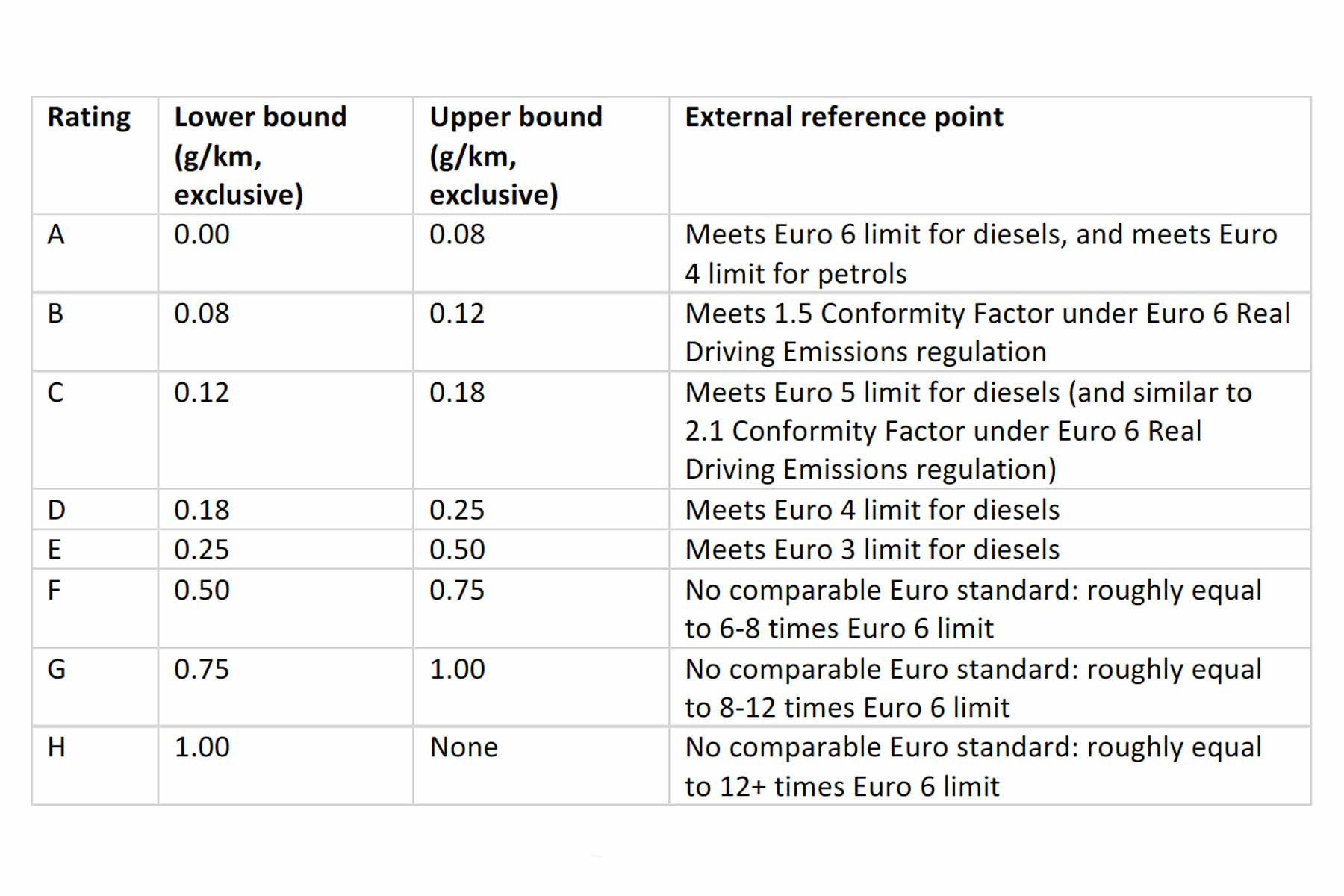
The new EQUA Air Quality Index has been developed from Emissions Analytics’ existing real-world car economy test. Purely assessing NOx (nitrogen oxide) emissions, it gives a simple score from A to H for all cars tested.
An A rating means a car meets current NOx limits for diesel and petrol cars: an H rating is worse than even the very oldest Euro emissions standard – equivalent to 12 times the current Euro 6 limit. The ratings are explained in full below.
Calls for 20mph speed limits to cut NOx emissions
New £800 tax for diesel cars proposed – plus diesel scrappage scheme
EU agrees to cut real-world car emission – but green groups are not happy
Alarmingly, more than 50 older Euro 5 diesels scored an ultra-dirty H rating, along with three current-standard Euro 6 cars – and a supposedly-green diesel-hybrid model, the Peugeot 3008 Hybrid4, was also given a worst-possible H rating.
The EQUA Air Quality Index has been launched with ratings for 440 vehicles and the firm has vowed to test 200-400 new cars each year to ensure the rankings are as up-to-date as possible.
> Search the EQUA Index database
Nick Molden, CEO and founder of Emissions Analytics, said: “There’s a great deal of confusion among car buyers on the subject of pollutant emissions, but we’re able to deliver impartial and precise information to help them buy better.
“We’re also looking forward to working with the industry as a whole to highlight the best vehicles available.”
EQUA Air Quality Index: the winners and losers
Volkswagen Group cars are the big winner of the EQUA Air Quality Index tests. A batch of its latest Euro 6 diesels have been tested – and of the six cars assessed, all six have achieved the very cleanest A-rating, suggesting tailpipe NOx emissions are exactly what Volkswagen claims in real-world use.
Proof that no defeat devices are active on the latest models..?
The BMW 3 Series also achieved an A-rating for real-world Euro 6 diesel emissions – the only other Euro 6 diesel to do so: of the 62 latest-spec cars tested, three scored B-ratings, 9 were rated C, 13 were rated D, a worrying 20 were rated E, five scored F, two G and three the very worst H rating.
These models were the Fiat 500X 1.6-litre diesel SsangYong Korando 2.2-litre diesel, plus the 2013 Audi A8 3.0-litre diesel that’s no longer on sale (an indication that defeat device systems could be active on in-market Volkswagen Group cars?).
In contrast, all but four of the 45 Euro 6 petrol cars tested were rated A, suggesting the latest diesel models in particular have an issue with hitting Euro 6 NOx targets in real world use. All diesels, that is, except Volkswagen Group diesels…
Every single Euro 6 hybrid vehicle also achieved an A-rating.
As for Euro 5 diesels (which were applicable for new cars in showrooms up until September 2014 for newly-launched models and September 2015 for existing on-sale in-market motors), things are far worse.
Not a single Euro 5 diesel car scored an A-rating, or a B-rating: the best model was the Skoda Octavia 1.6-litre TDI, with a C-rating. Then it was five D-rated cars (proving Euro 5 cars can only meet Euro 4 limits), followed by a staggering number of E, F, G and H-rated cars.
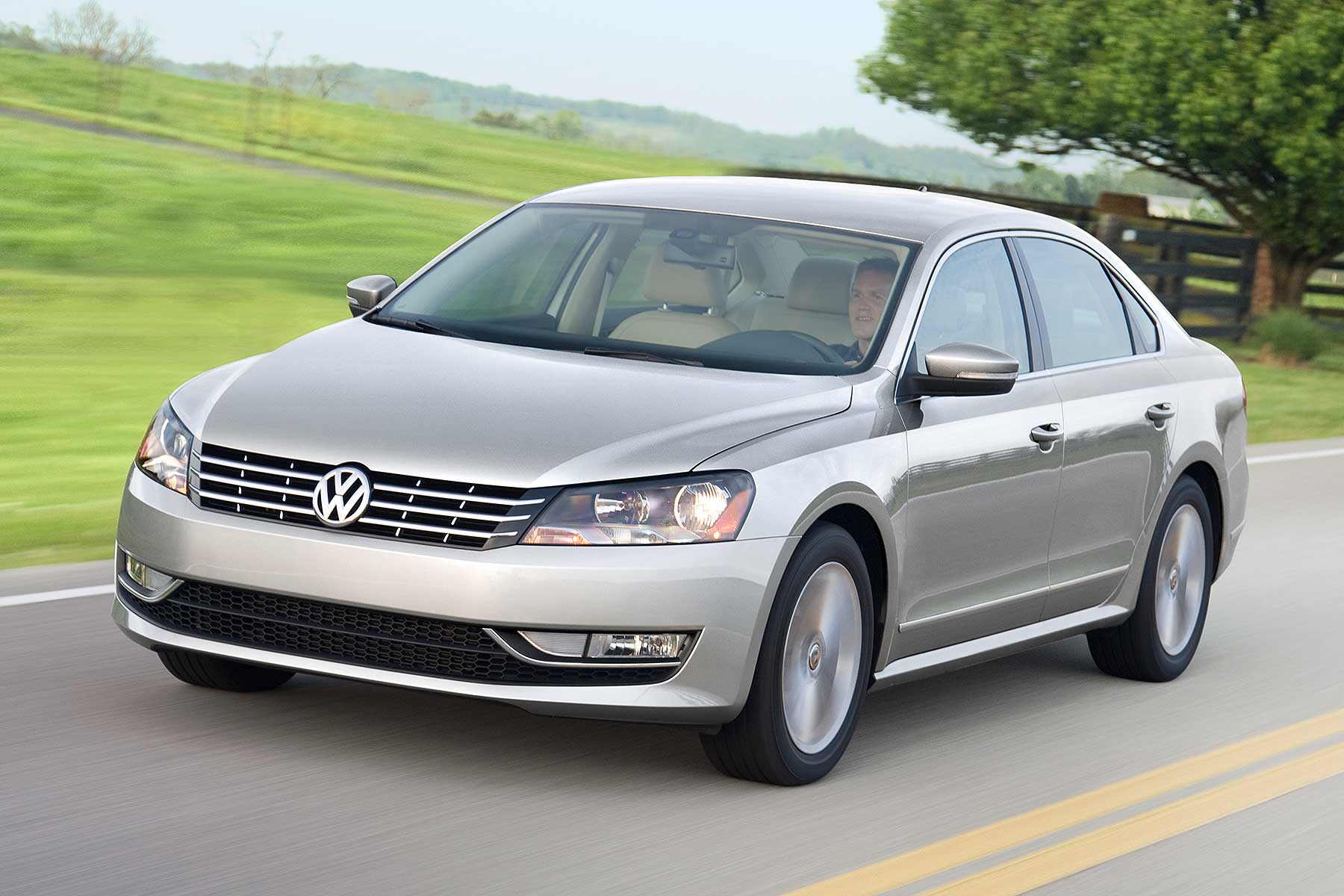
Such H-rated models include best-sellers such as the BMW 1 Series, Mercedes-Benz C-Class, Nissan Qashqai, Renault Clio, Vauxhall Corsa and, yes, the 1.6-litre Volkswagen Passat.
However, all but eight of more than 100 older Euro 5 petrol cars tested failed to score the very lowest A-rating for NOx emissions. Does this mean air quality campaigners are right to focus on getting older diesel models off Britain’s roads?
Mitsubishi has revealed details of misconduct in official fuel economy tests after some of its models were found to have failed part of the test.
The firm has admitted falsifying fuel economy data for 625,000 cars across four model lines: most of the cars were sold in Japan.
Audi developed Volkswagen defeat device software in 1999
Volkswagen’s UK reputation plunges following emissions scandal
Former Volkswagen CEO ‘told about emissions irregularities in 2014’
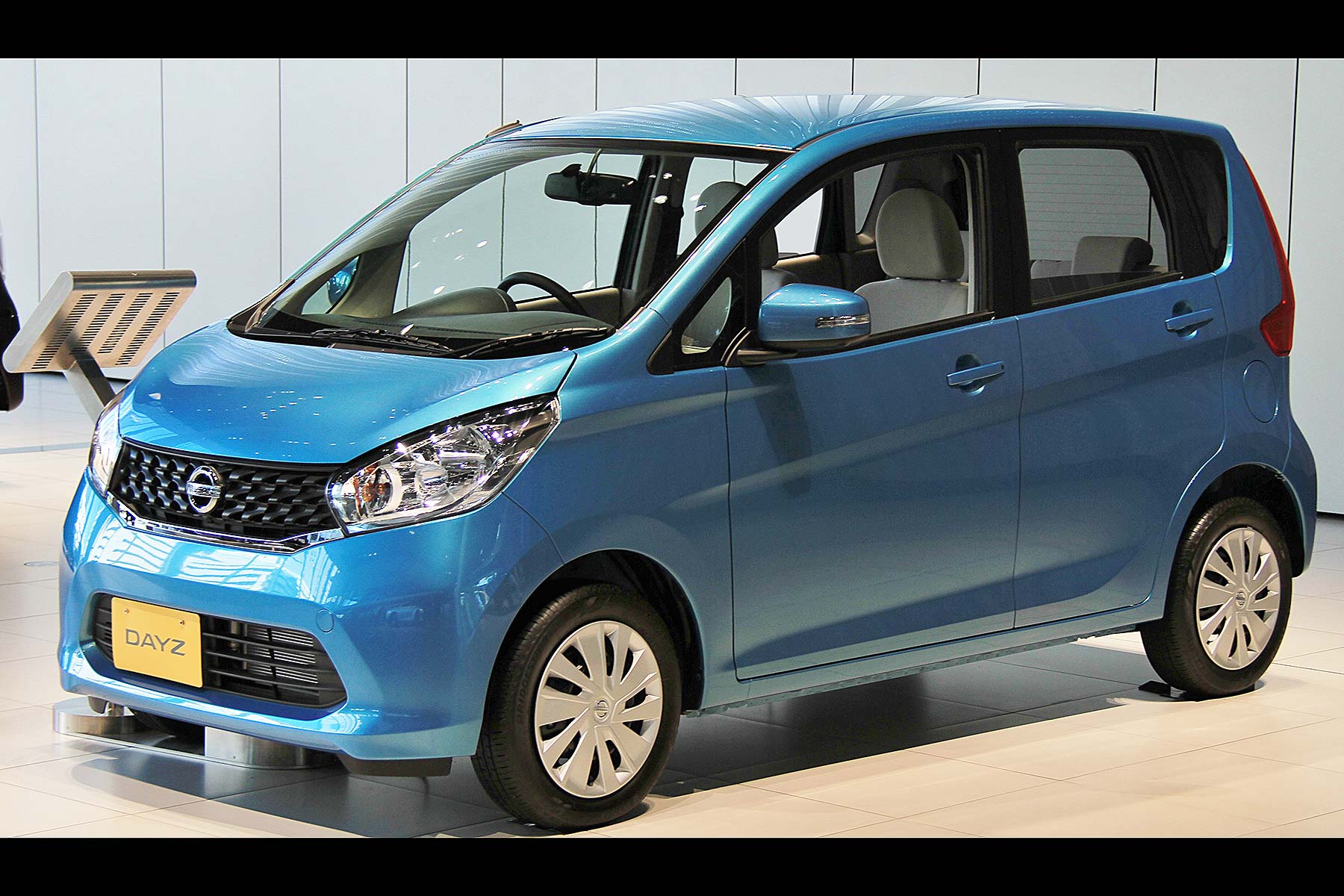
Rather embarrassingly, only 157,000 of the cars are branded Mitsubishi: Japan’s sixth-largest car company also built the models for Nissan, of which 468,000 cars are affected (the Nissan Dayz is pictured above).
What’s more, it was Nissan that discovered the fuel economy inconsistency and reported the problem to Mitsubishi…
The firm no longer builds the affected cars; Mitsubishi and Nissan are now in compensation talks.
Mitsubishi president Tetsuro Aikawa led company executives onto stage during the press conference this morning – and bowed deeply before revealing news of the economy misconduct.
The affected cars are:
Mitsubishi eK Wagon
Mitsubishi eK Space
Nissan Dayz
Nissan Dayz Roox
The firm held the press conference this morning – but stock markets already reacted with shares plunging 15% on news of the misconduct revelation.
This is the biggest one-day drop in Mitsubishi shares in more than a decade.
Bloomberg revealed the misconduct centred around loading on individual tyres during rig testing, to make fuel economy appear better than it would be in reality.
Mitsubishi’s revelation follows the huge Volkswagen emissions scandal, where pre-installed software detected when cars were being tested on rigs and altered vehicle emissions to ensure they passed the tests.
UPDATE: News has since emerged that Mitsubishi offices in Japan have been raided by officials. A government spokesman is quoted by BBC News saying they’re treating it as “a very serious case” and have given Mitsubishi until 27 April to respond.
 BMW will launch a revised version of its i3 electric car in July 2016, with a bigger battery capacity that extends the range to almost 200 miles.