After months of teasing, the new Skoda Kodiaq SUV made its official public debut at the 2016 Paris Motor Show.
Available as a five- or seven-seater, the Kodiaq is the firm’s first SUV and will rival the likes of the Hyundai Santa Fe and Kia Sorento when it goes on sale later this year.
It’s a Kodiaq moment for Skoda’s new large SUV
Skoda reveals Kodiaq 7-seat large SUV interior
More Paris Motor Show news on Motoring Research
At 4.7m long, the Kodiaq is the longest vehicle to sit on VW Group’s versatile MQB platform, but weight has been kept down to less than 1.5-tonnes in front-wheel-drive petrol form.
The manufacturer says it will trump rivals on space and value – with prices expected to start at less than £25,000. For comparison, the Kia Sorento starts at £28,795.
Czech the tech
It’ll be packed with technology – including a bird’s-eye-view camera for low-speed manoeuvring, as well as semi-autonomous functions that activate in the case of a crash.
Buyers will get a choice of a 2.0-litre turbodiesel engine (in 150hp or 190hp guises), along with a variety of 1.4-litre and 2.0-litre petrol units.
A six-speed manual gearbox and six or seven-speed DSG automatic ‘boxes are offered, along with the choice of front- or four-wheel drive.
An off-road mode suggests the Kodiaq will have genuine rough-terrain capability, although we’ll find out exactly how much when we test it later in the year.
In case you hadn’t noticed, the 2016 Paris Motor Show is underway. We’re reporting live from the show, which means we can show you all the cars in one rolling mega-feature. We do the walking, so you don’t have to.
More Paris Motor Show news on Motoring Research
Alfa Romeo Giulia Veloce
If you don’t fancy the range-topping Alfa Romeo Giulia Quadrifoglio, may we suggest that a) you check yourself for signs of a pulse and b) you consider the new Giulia Veloce. Available with a choice of either a 2.0-litre turbo or 2.2-litre turbodiesel, the all-wheel drive Veloce is fitted with a standard eight-speed transmission. Will it come to the UK? That remains to be seen.
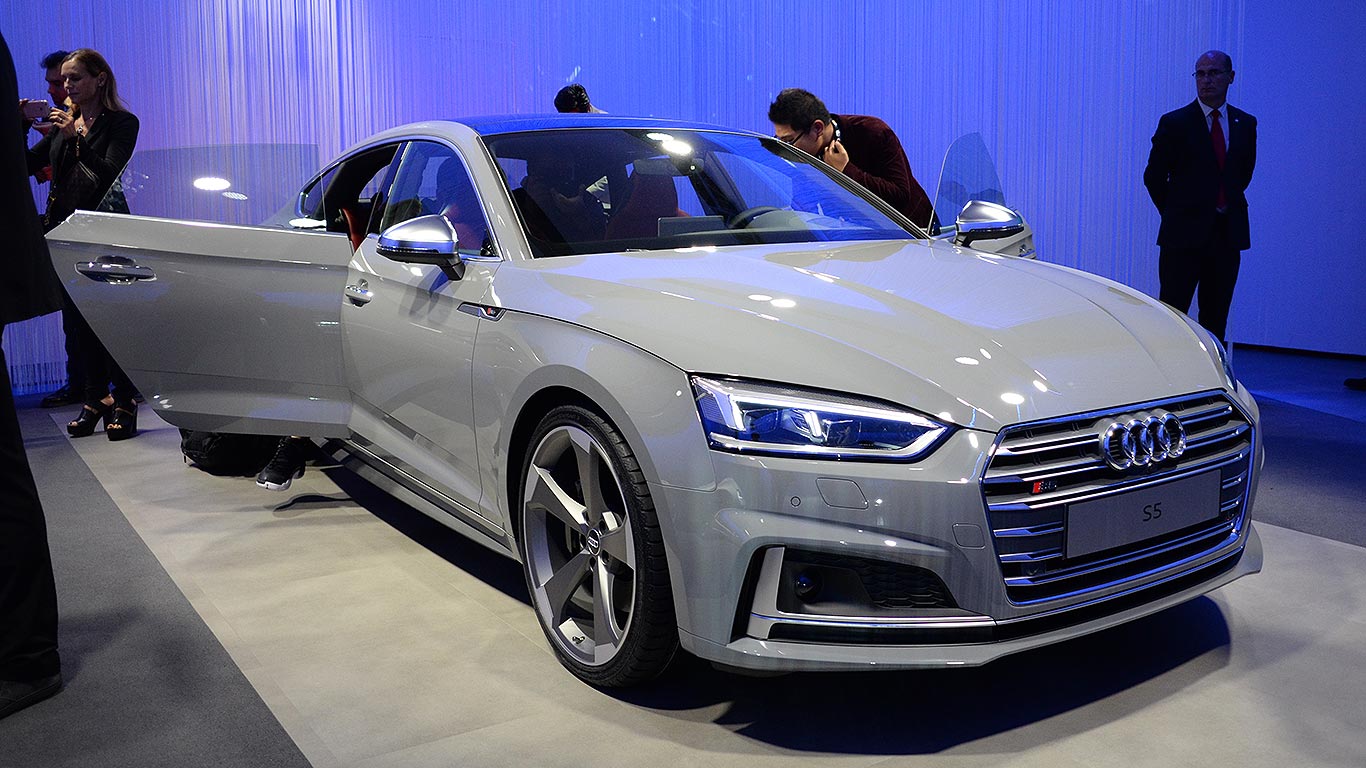
Audi A5 and S5 Sportback
We’ve already driven the impressive new Audi A5 and S5 coupe, but Audi has revealed the more practical five-door Sportback version of both models at Paris. It looks good – if a bit unimaginative – with an interior familiar to anyone who’s driven the latest A4.
Citroen C3
This is possibly one of our favourite ‘real world’ debuts of the show – and certainly the car we’d most like to head out on the streets of Paris in. The new C3 looks like a return to form for Citroen, featuring Airbumps from the C4 Cactus. It’s based on an all-new platform and is packed with tech: including an in-built dashcam.
Citroen CXperience
This incredible-looking concept is a nod to the 1974 CX. It’s a plug-in hybrid hatchback and hints at the firm’s future design direction, says Citroen. Its bold, yellow interior is quite something – a return to Citroen’s of old where comfort was more important than, well, anything else. As for performance, a total output of 300hp would seem more than adequate.
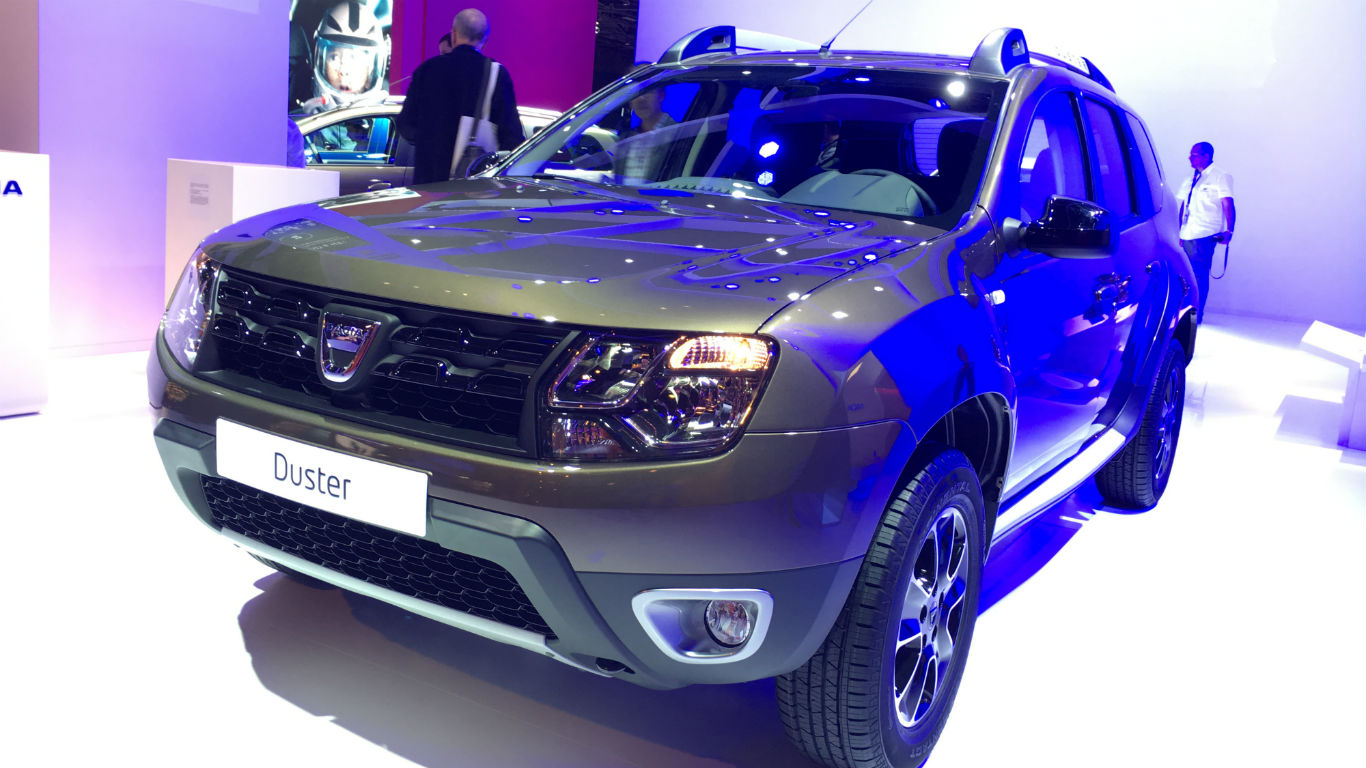
Dacia Duster
For the first time, the Dacia Duster comes with an automatic six-speed dual clutch transmission. It’s mated to the 1.5-litre turbodiesel engine and is available on Laureate and Prestige models. It might be the cheapest crossover in the UK, but it remains one of the most appealing.
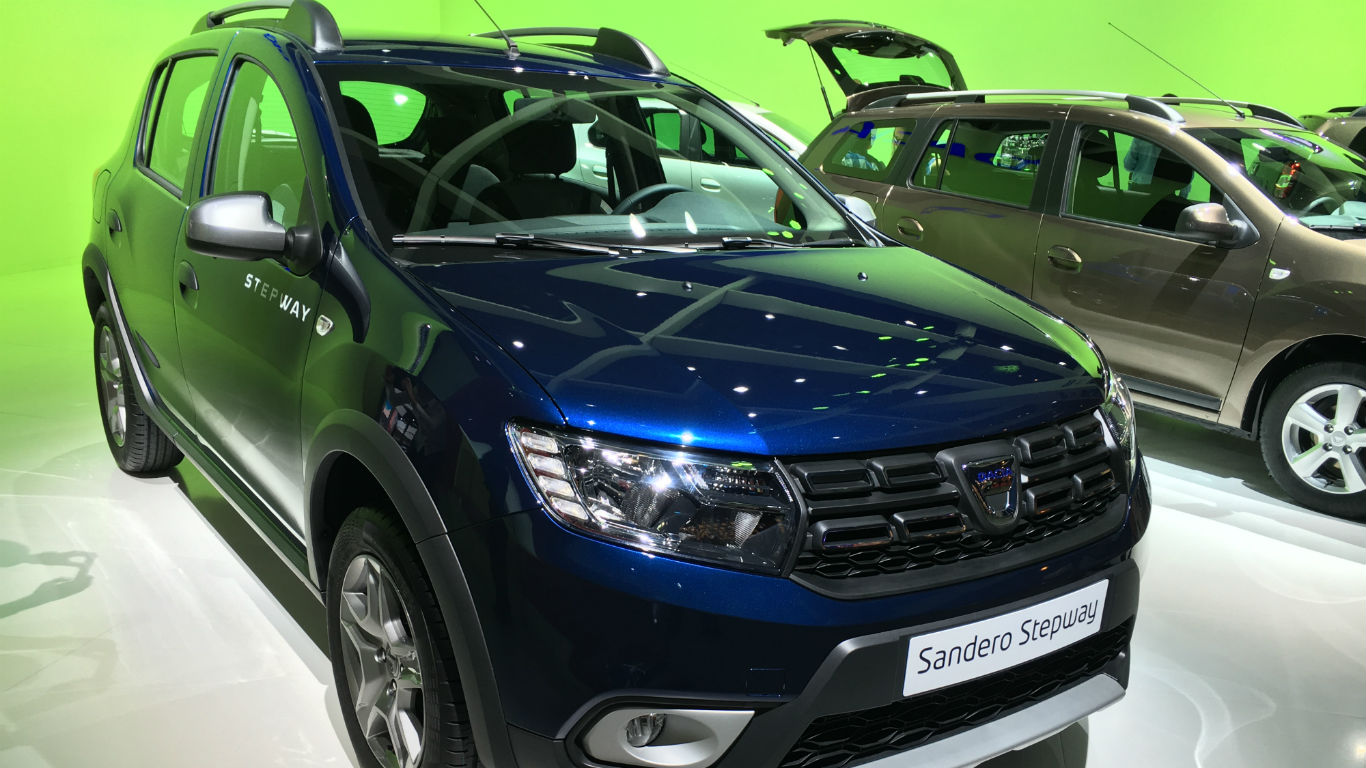
Dacia Sandero/Sandero Stepway/Logan MCV
Dacia has refreshed its entire range of vehicles, with a new look for the Sandero, Sandero Stepway (seen here) and Logan MCV. Granted, the changes are subtle, but the cars look good, especially the faux off-roader that is the Stepway. The cabins have been improved, while a new 75hp 1.0-litre three-cylinder engine is available.
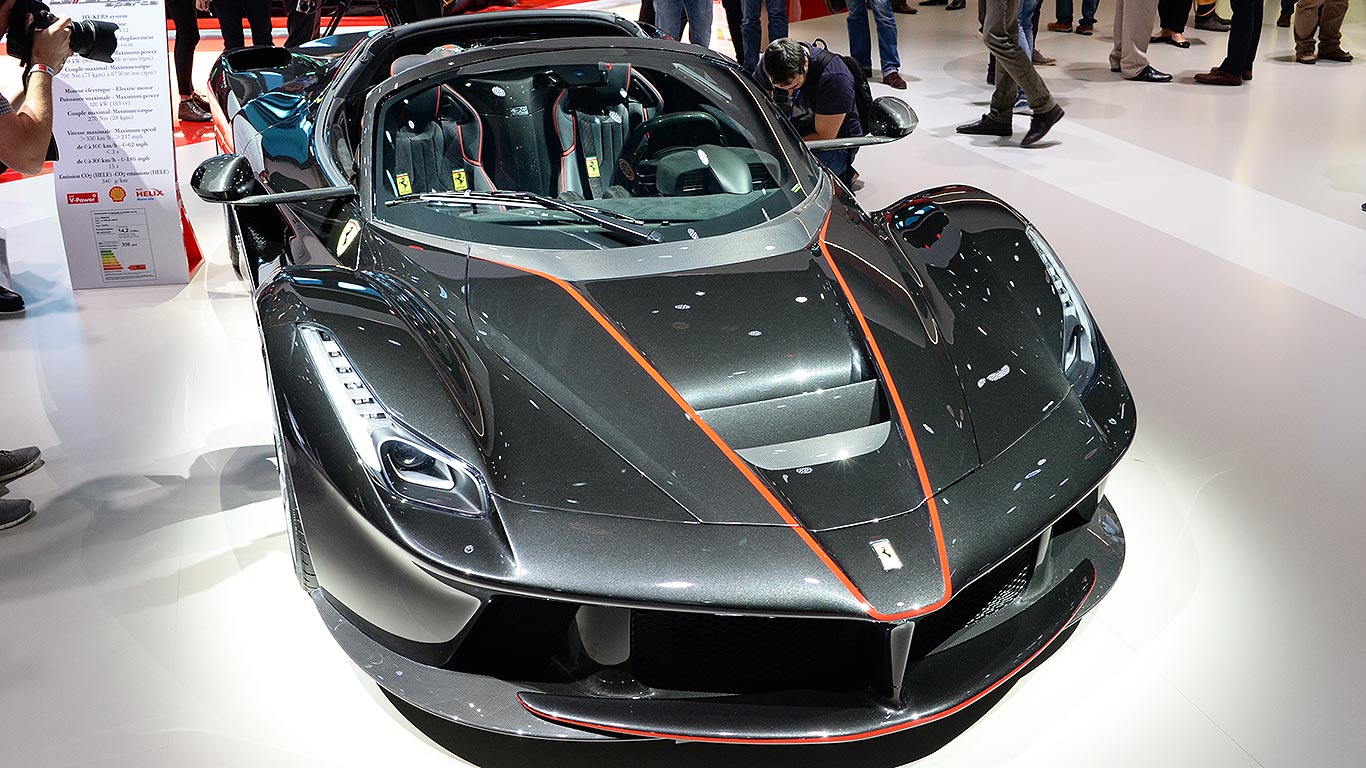
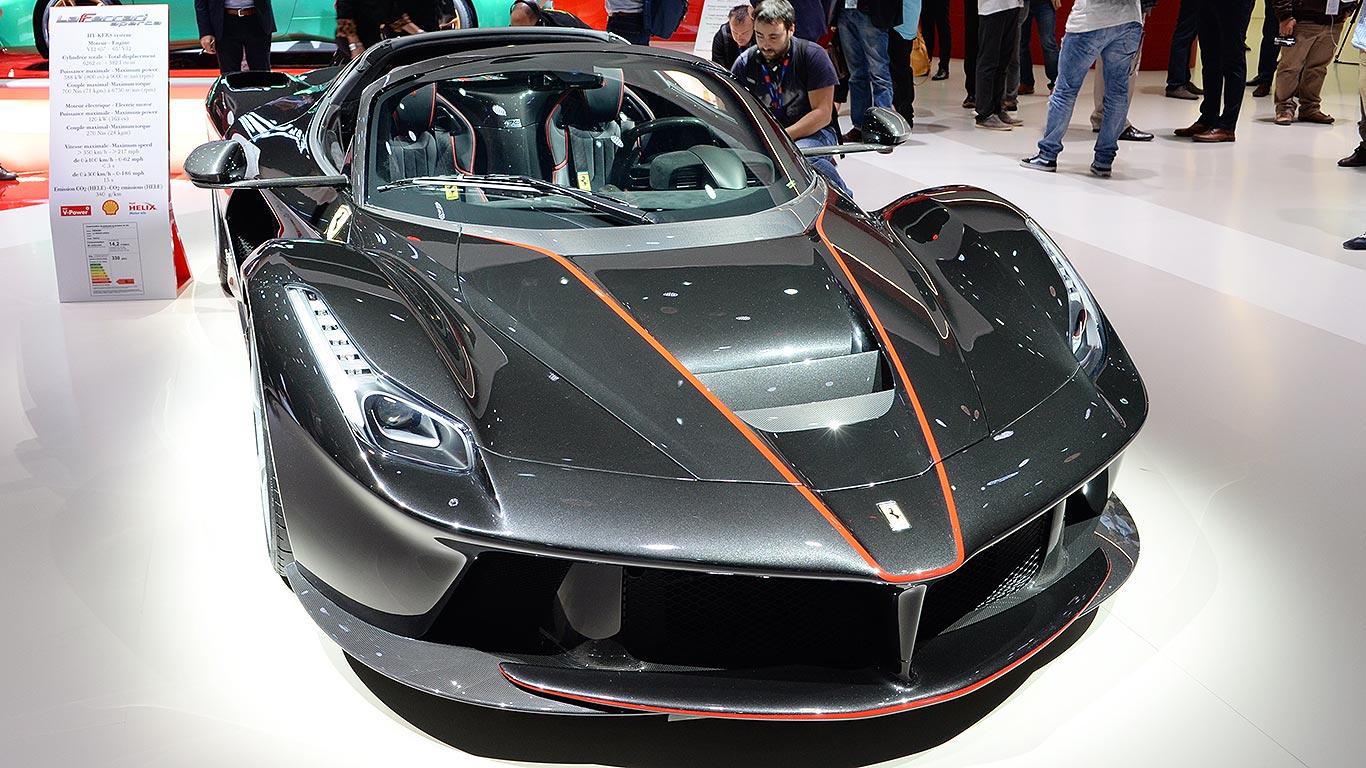
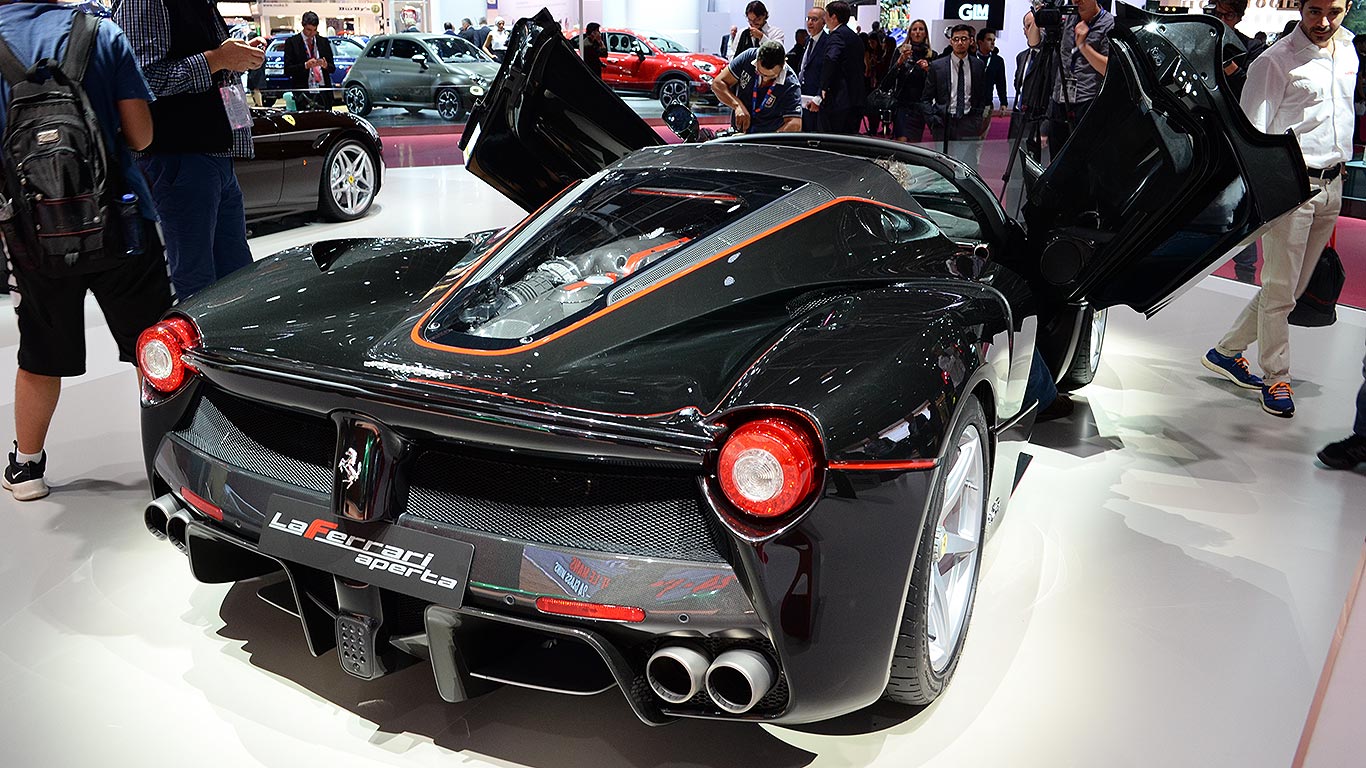
Ferrari LaFerrari Aperta
It might just be a LaFerrari without a roof, but that isn’t stopping it attracting the crowds here at Paris. Ferrari hasn’t said exactly how many Spiders will be built – only that the entire production run has sold out in advance.
Ferrari GTC4Lusso T
Looks familiar? Think again, because the ‘T’ in Ferrari GTC4 Lusso is rather significant. Gone is the 6.3-litre V12 as the ‘standard’ GTC4 Lusso, with a 3.9-litre V8 turbo fitted in its place. It offers an impressive 602hp and is able to sprint to 62mph in just 3.5 seconds. Top speed is an impressive 198mph.
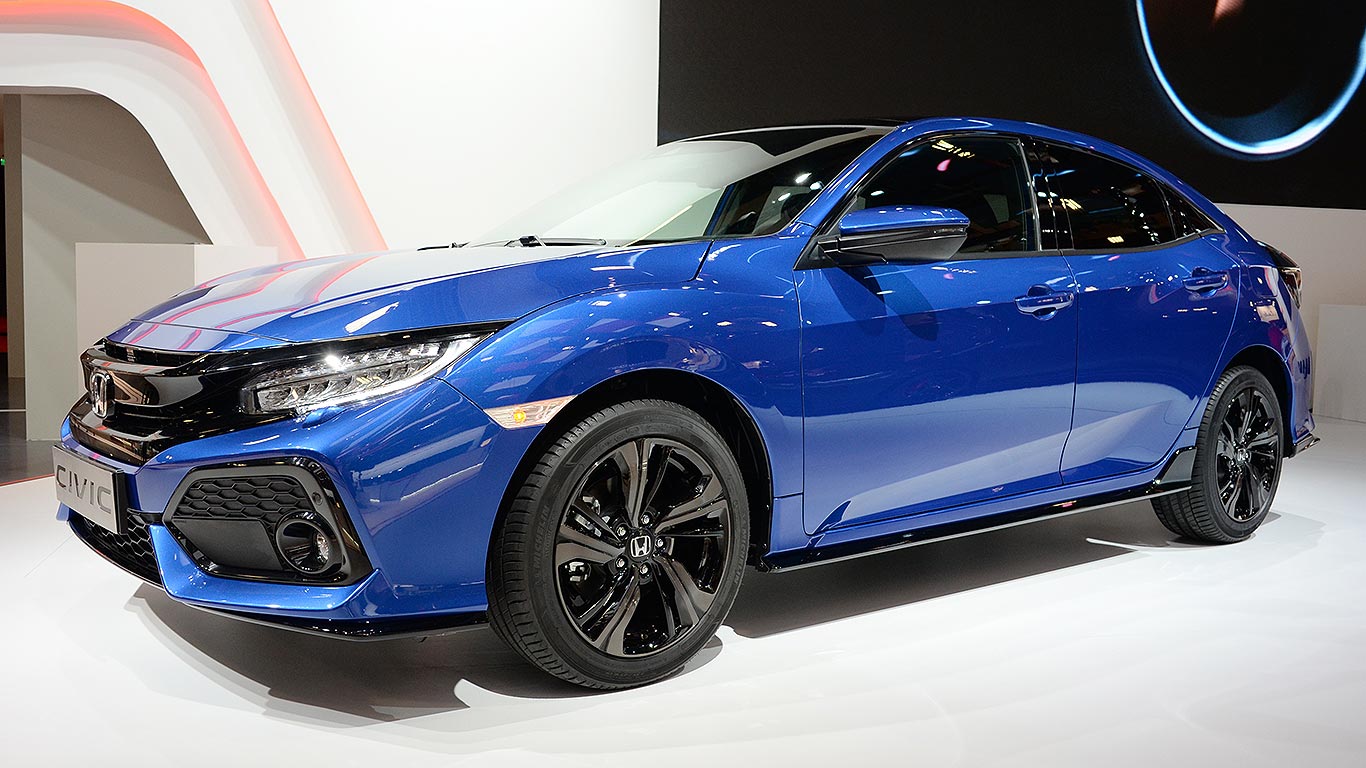
Honda Civic
The new Honda Civic was previewed in concept form at Geneva, but Honda’s revealed the production version of the British-built car at Paris. Even in cooking-spec guise, it’s sportier than its predecessor, while new 1.0- and 1.5-litre turbocharged VTEC petrol engines should combine fun with economy.
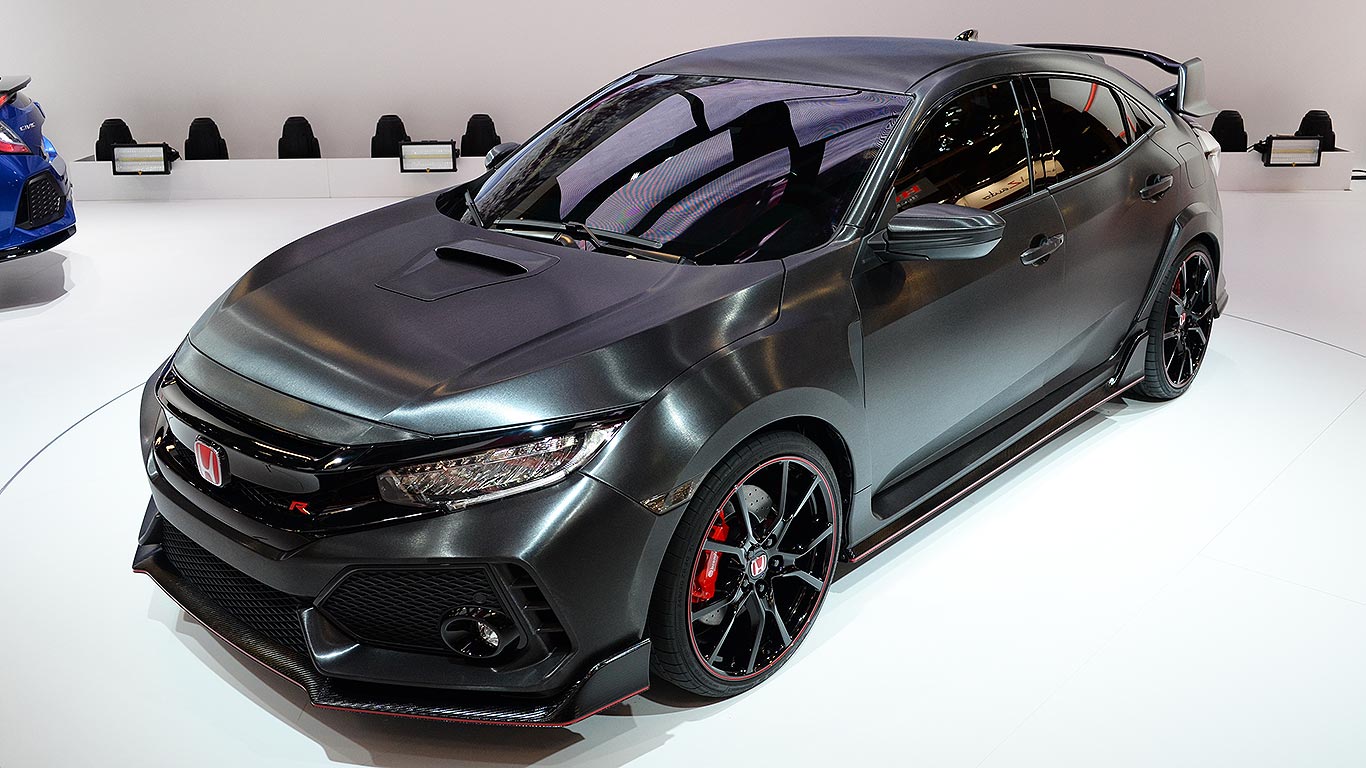
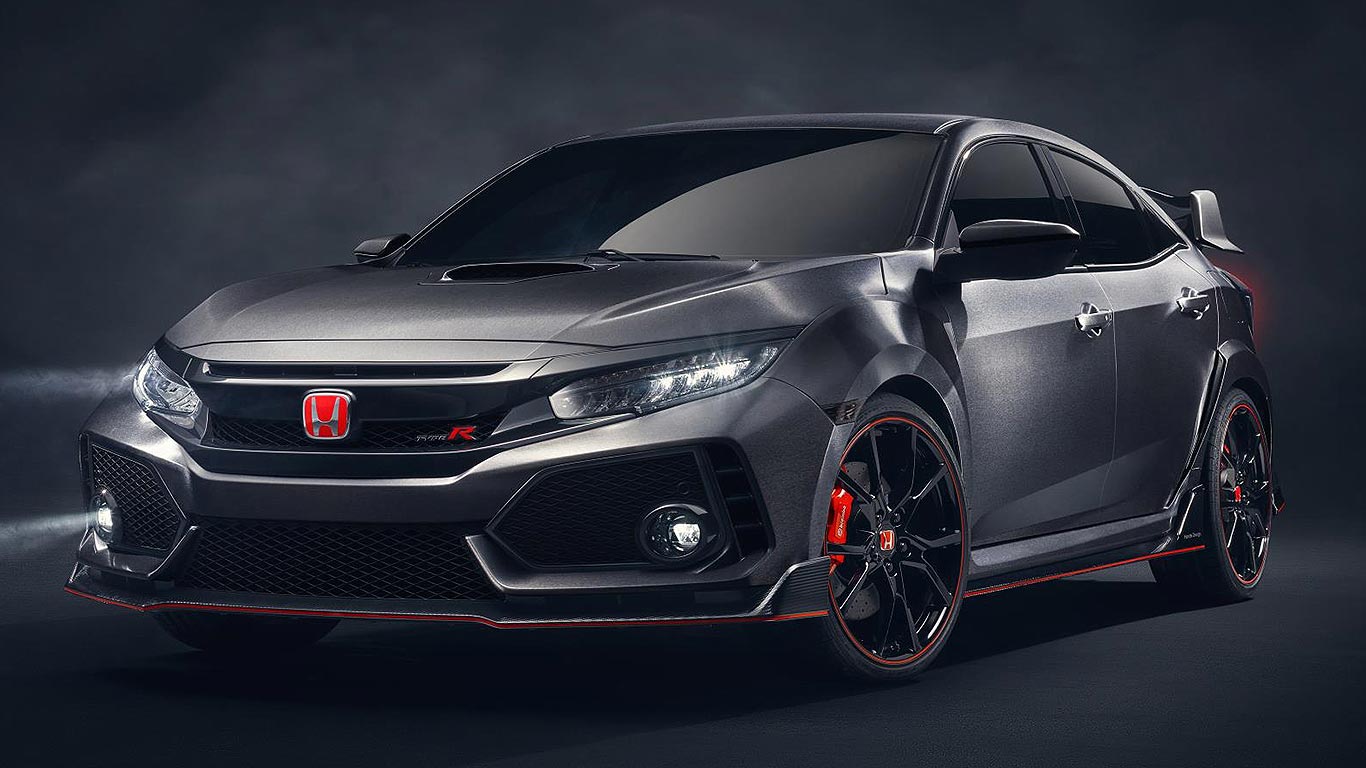
Honda Civic Type R
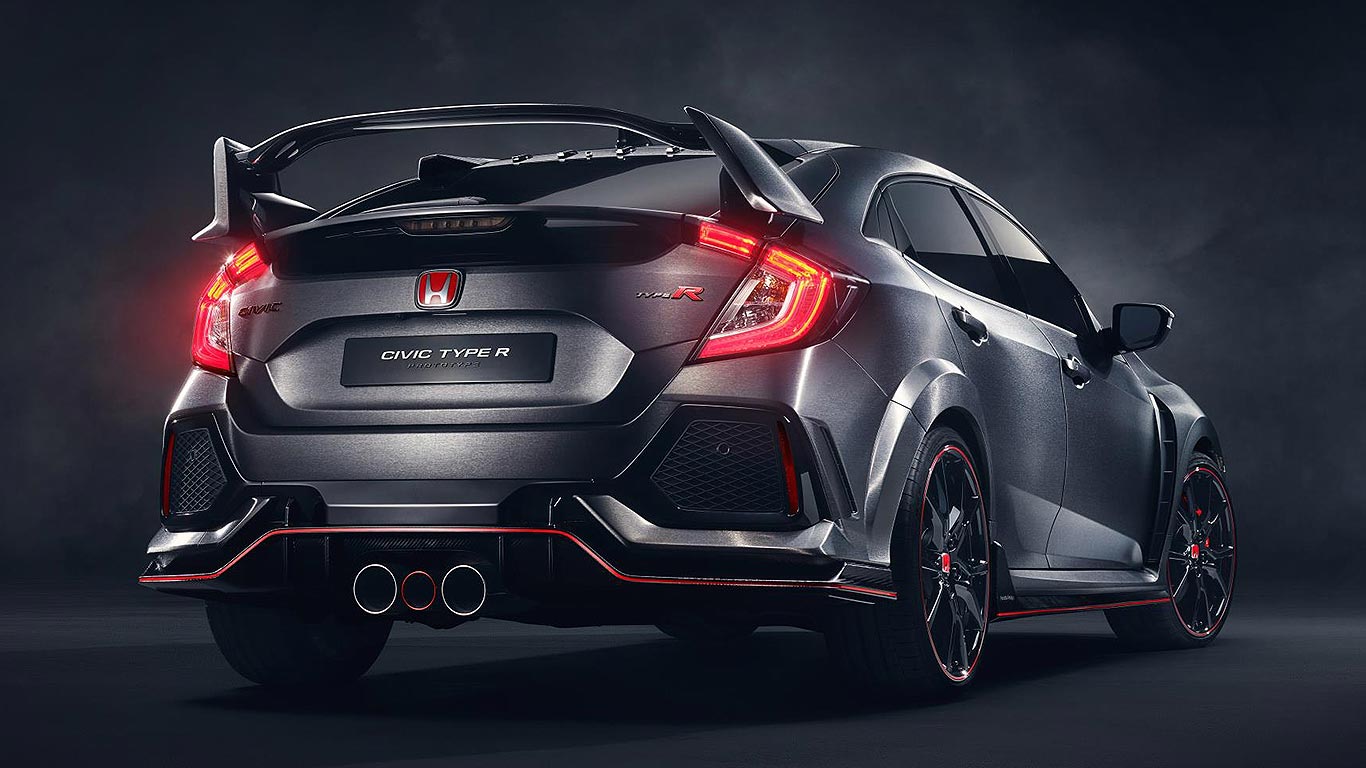
Our cup runneth over with Type R goodness. Hot on the heels of the current Civic Type R comes this: the new Civic Type R. Honda claims it’s a prototype, but it looks pretty damn finished to us. We can’t tell you anything about the performance, but we can tell you it will be sold in the US. Still want that Focus RS?
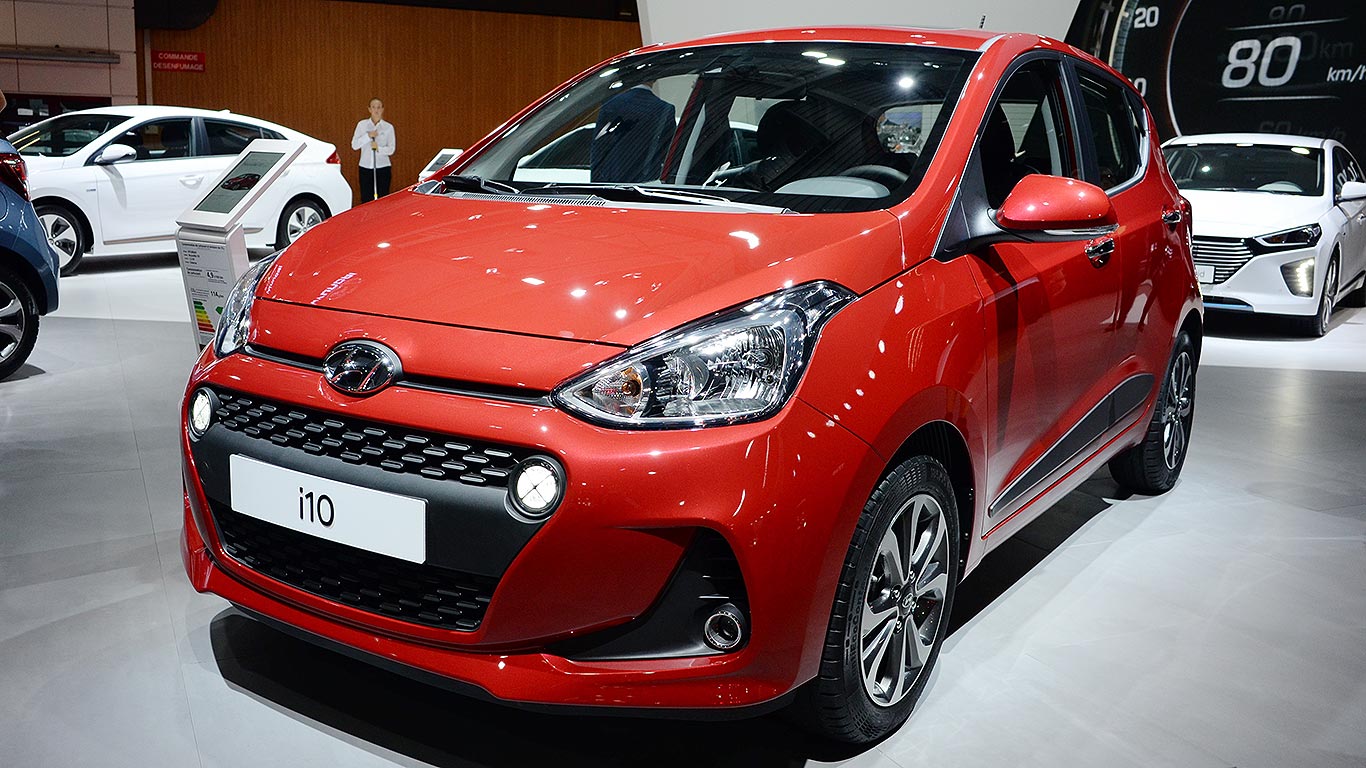
Hyundai i10
Hold the front page! Hyundai’s given its i10 city car a makeover for Paris. It’s got a larger front grille, LED daytime running lights and a new rear bumper. Inside, a new touchscreen infotainment system is compatible with Android Auto and Apple Carplay. Not exciting, perhaps, but we really like the i10 – and these updates bring it bang up-to-date.
Hyundai i30
Grabbing a quick seat in the Hyundai i30 here at Paris, it’s clear the brand is trying to take its Focus-sized car upmarket from the budget offering that was its predecessor. Buyers get a choice of three petrol engines and three diesels.
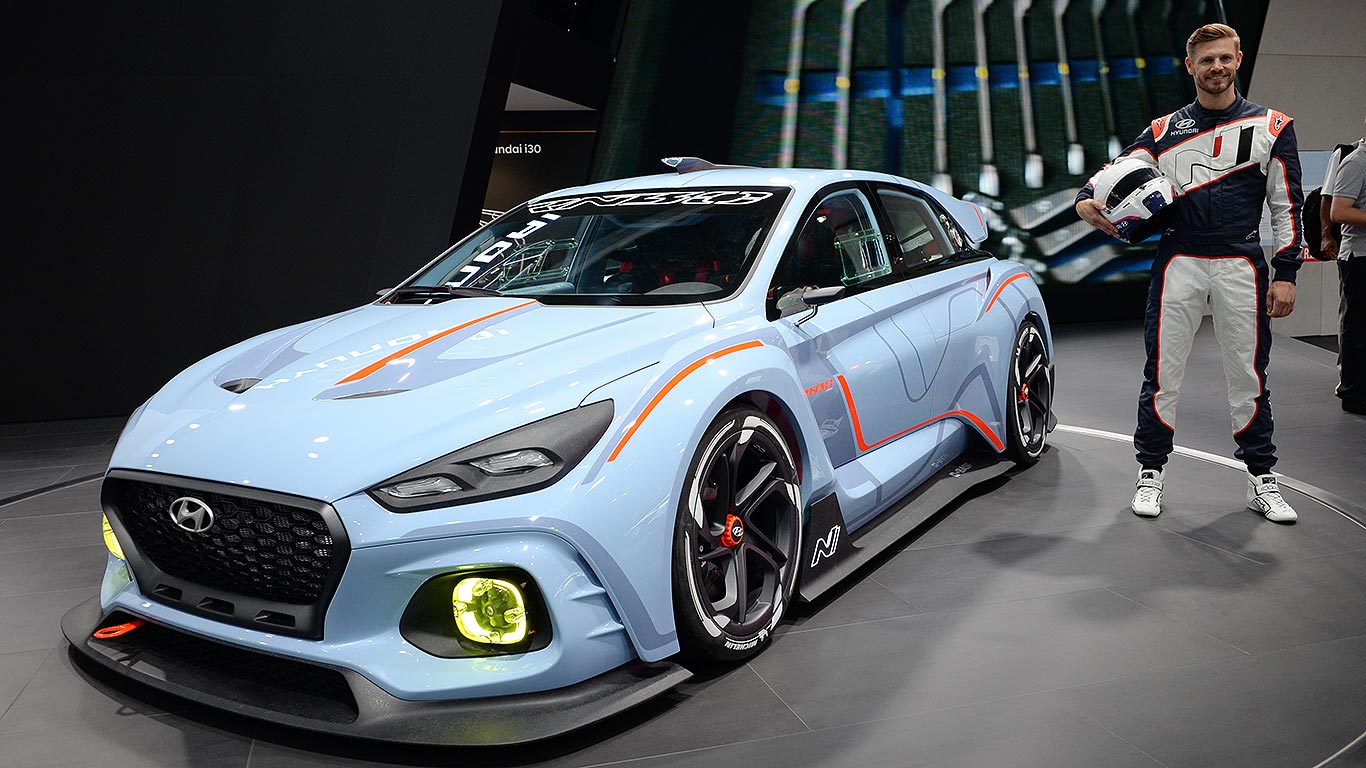
Hyundai RN30 Concept
Hot – and we mean hot – on the heels of the regular i30 comes this: the RN30 Concept. This ‘motorsport-inspired racing concept’ is powered by a 2.0-litre turbocharged engine developing 380hp and 332lb ft of torque. Sadly, it’s unlikely to be coming to a Hyundai dealer near you soon. But we can always dream.
Kia Rio
The fourth-generation model of Kia’s Fiesta-sized supermini has been unveiled at Paris, with the firm’s standard tiger-nose grille and a new, bigger platform. It gets some clever driver assistance tech, such as autonomous emergency braking with pedestrian recognition, while a new infotainment system incorporates Apple Carplay and Android Auto.
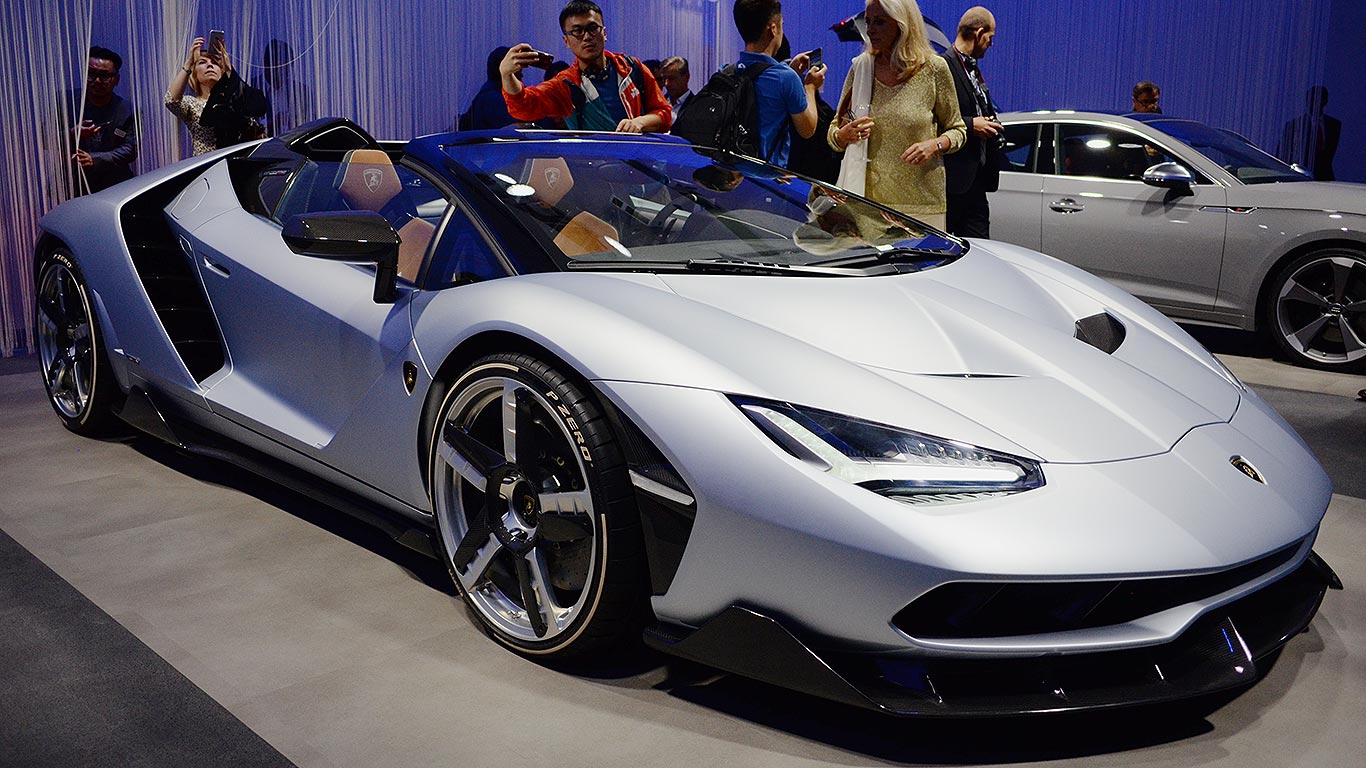
Lamborghini Centenario Roadster
It wouldn’t be a motor show without some kind of crazy Lamborghini. Step forward the Centenario Roadster, which is like the ‘standard’ Centenario, only with less roof. Before you go reaching for that £1.75 million hidden down the back of the sofa, we’re sorry to tell you they’ve all been spoken for.
Land Rover Discovery
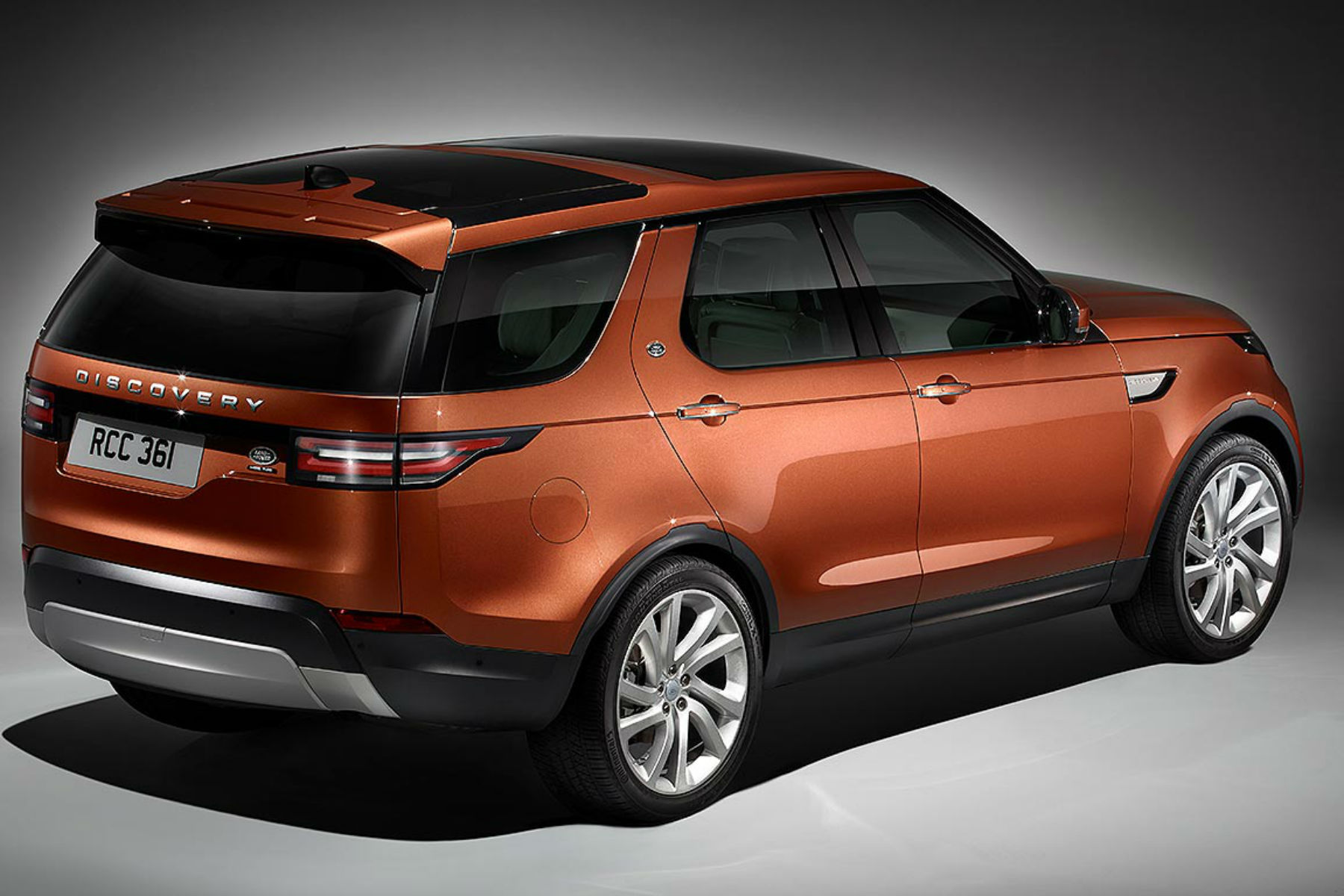
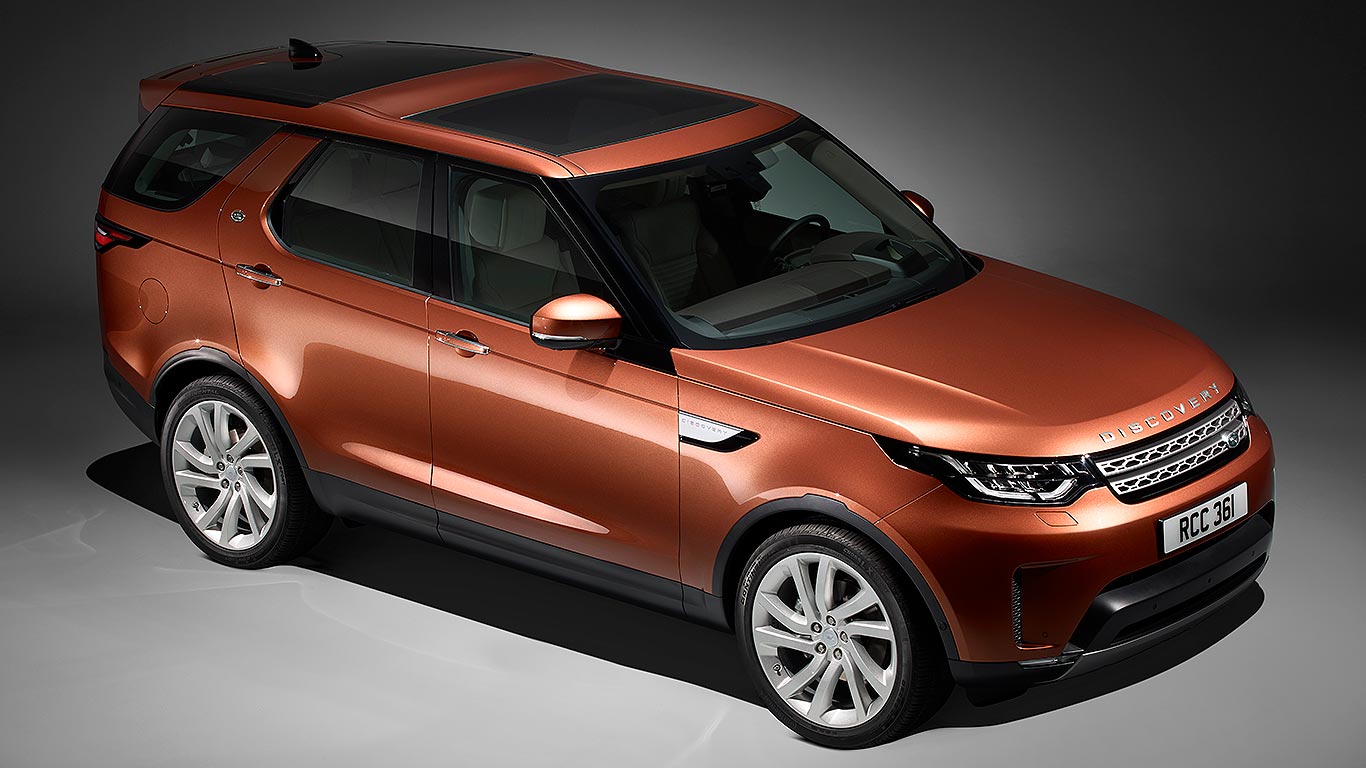
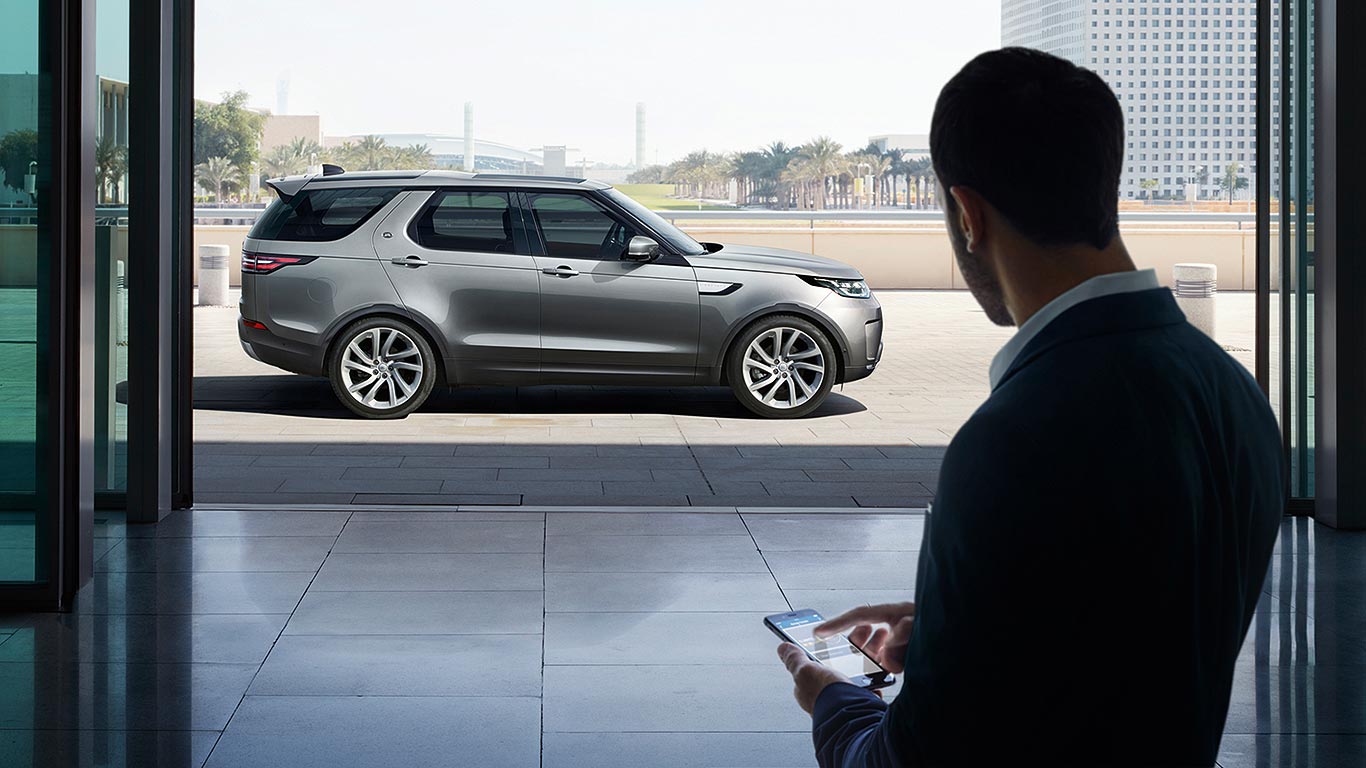
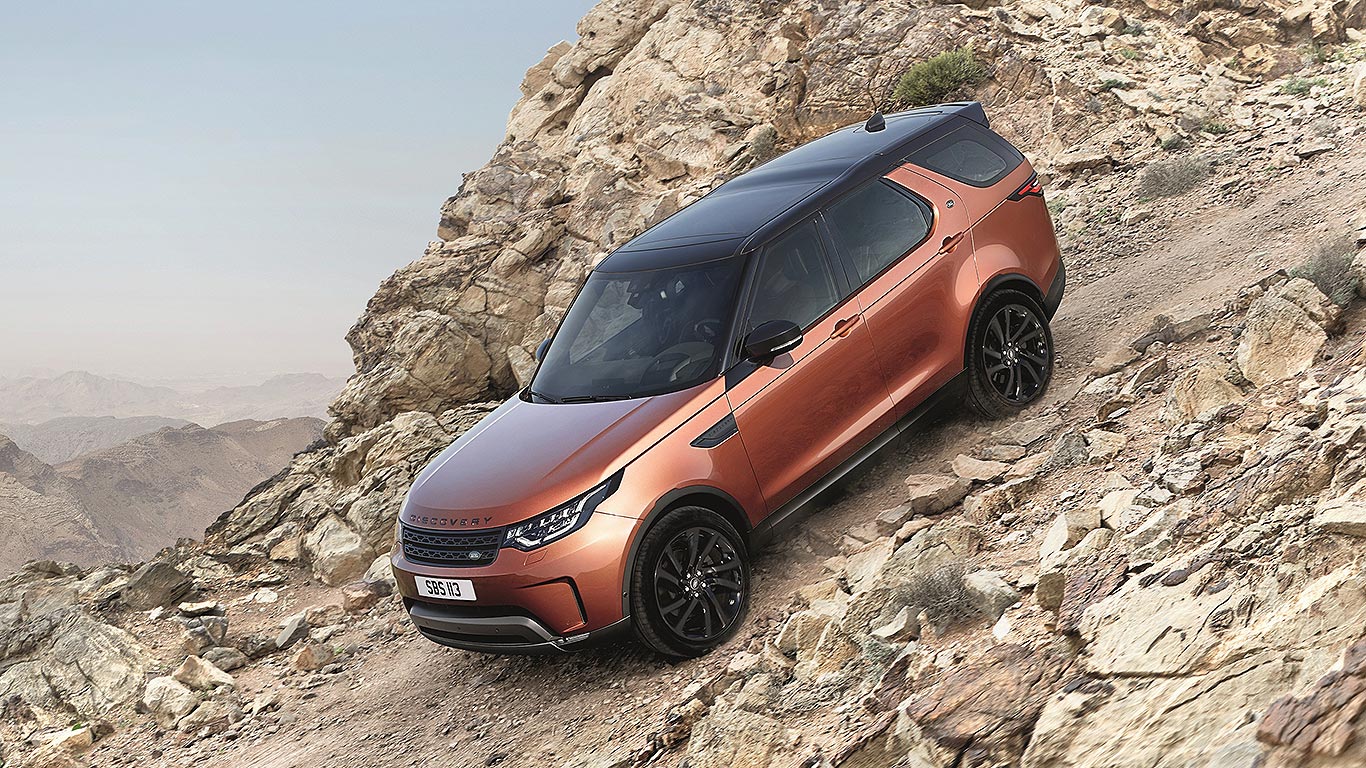
We nearly walked straight past the new Discovery here at Paris – it does look rather like the Discovery Sport, which itself looks like the Range Rover Evoque. That’s not a bad thing per se, it’s a handsome thing and hasn’t lost any of its practicality. An all-aluminium body means it’s lighter than before.
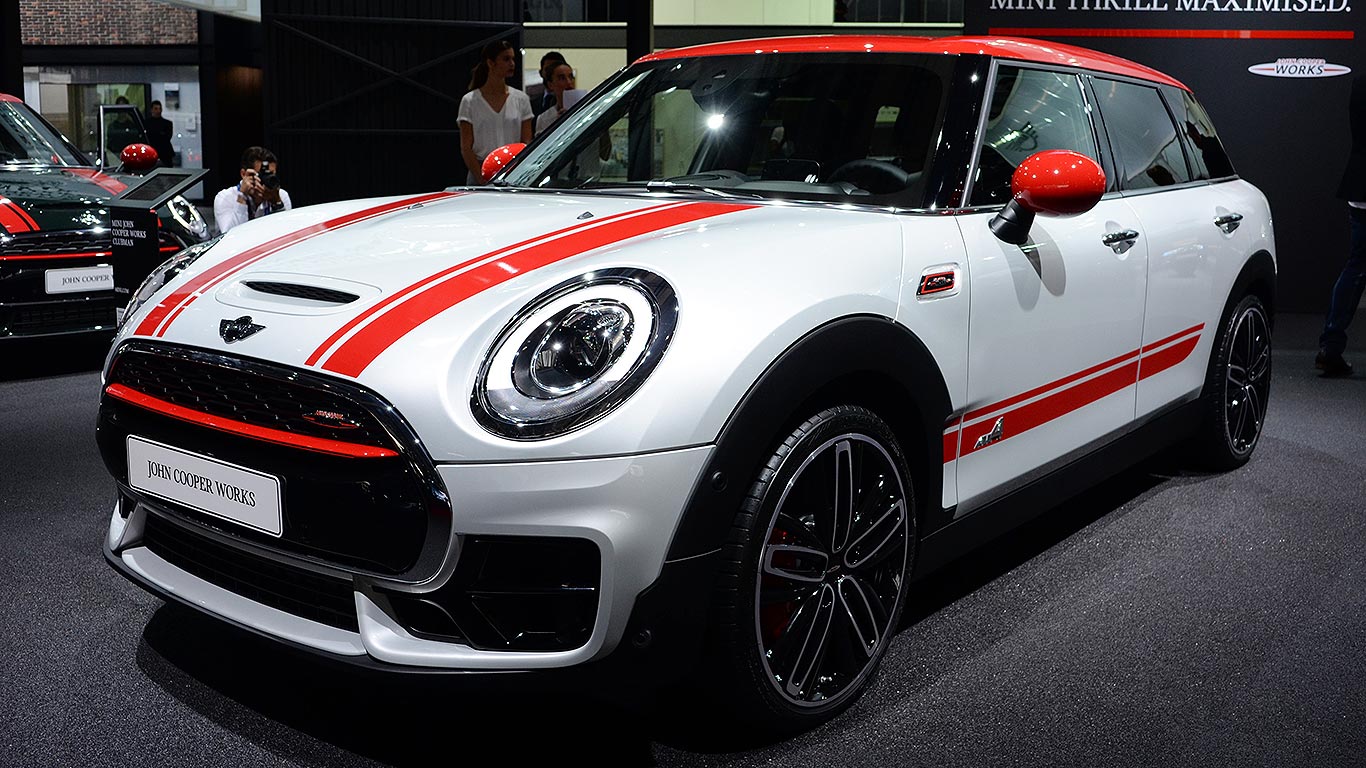
MINI Clubman John Cooper Works
Is this the MINI Clubman we’ve been waiting for? It’s a new John Cooper Works edition, which pumps 228hp through MINI’s ALL4 all-wheel drive system to provide a 0-60mph time of just six seconds. With those twin doors at the back, we’re tempted to say something about it having enough power to blow the blimmin’ doors off. But we won’t.
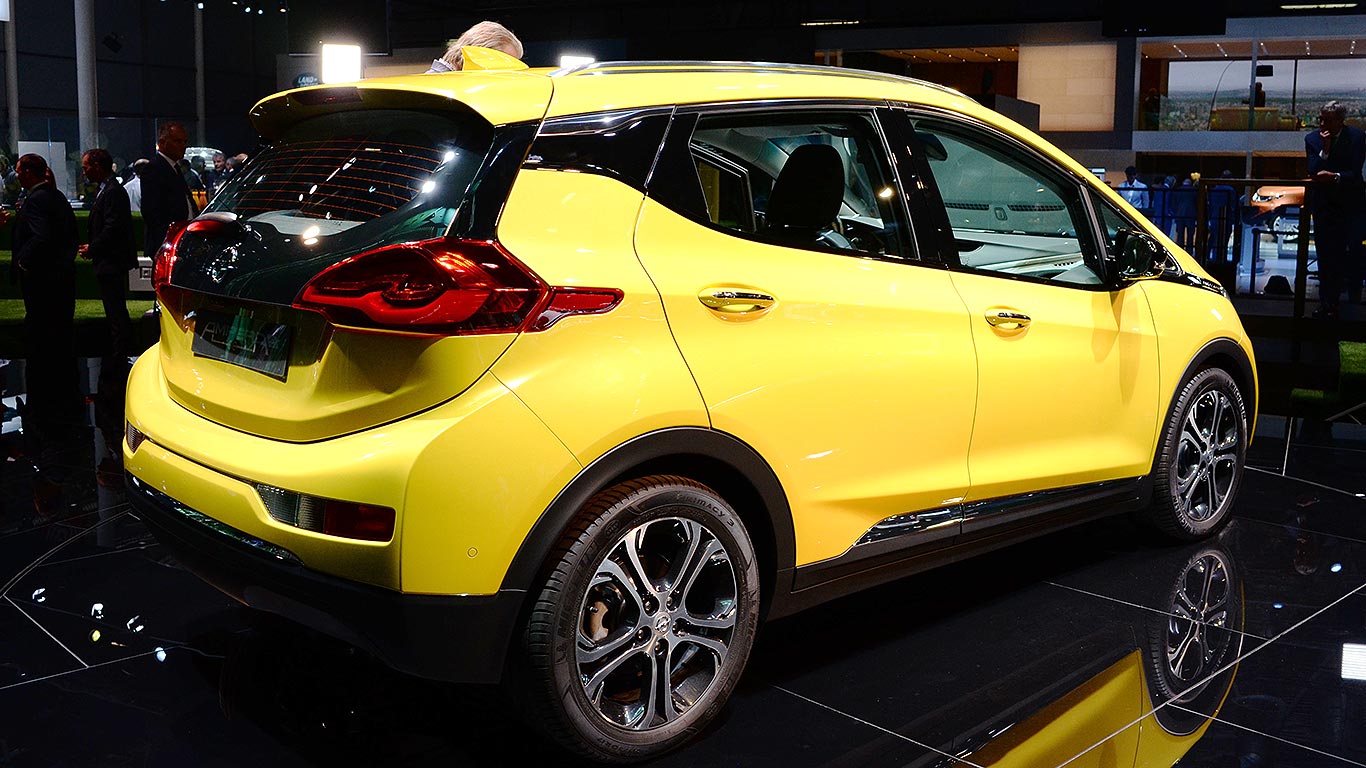
Opel Ampera-E
The Opel Ampera-e is a small electric car with a 250-range, set to take on the ever-popular Nissan Leaf. But, surprisingly, Vauxhall has announced it won’t be sold in Britain. A shame as, our first impressions, under the bright lights of Paris, are incredibly positive.
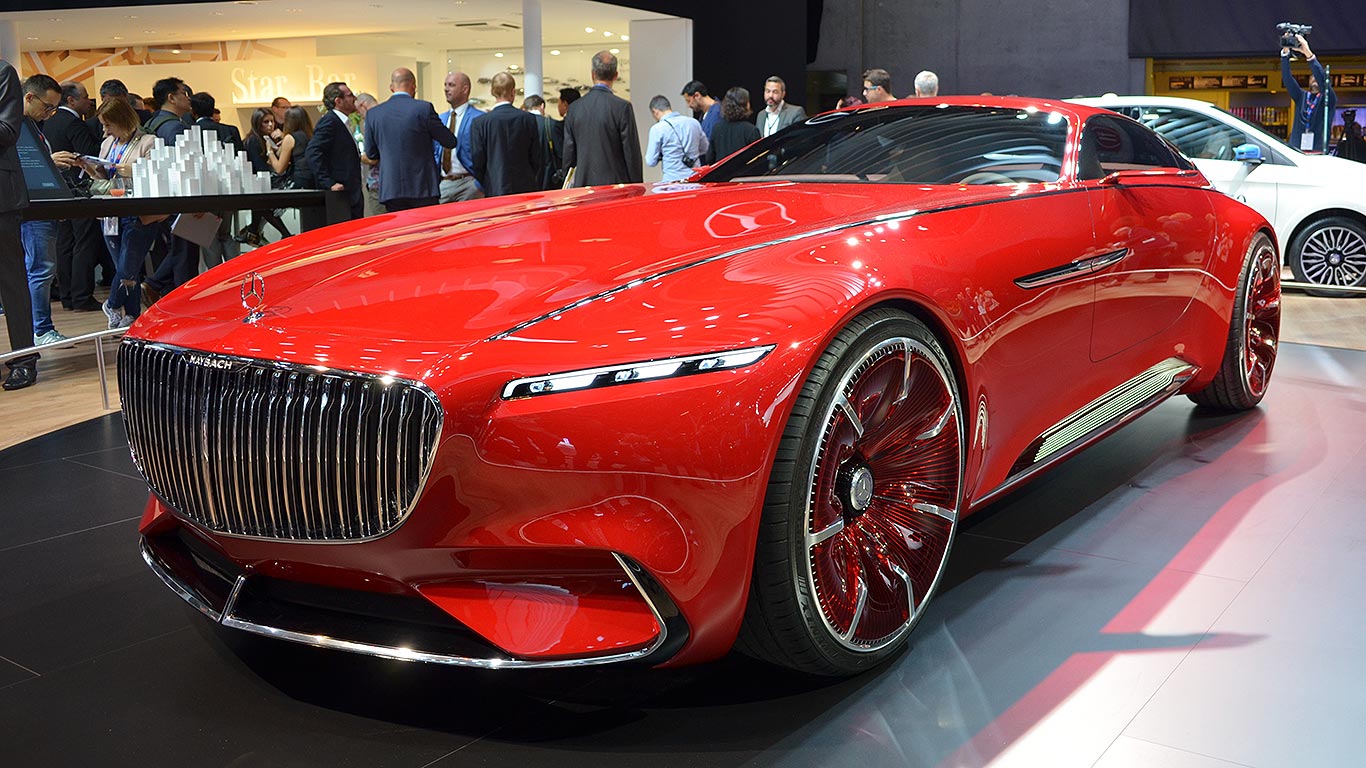
Vision Mercedes-Maybach 6
You may have seen photos of this at Pebble Beach back in the summer, but nothing can prepare for seeing the Vision Mercedes-Maybach 6 in the metal. It’s as long as it is glorious and as imposing as a Maybach concept should be. It looks like a vision of an electric future that’s been thrust straight out of the 1930s.
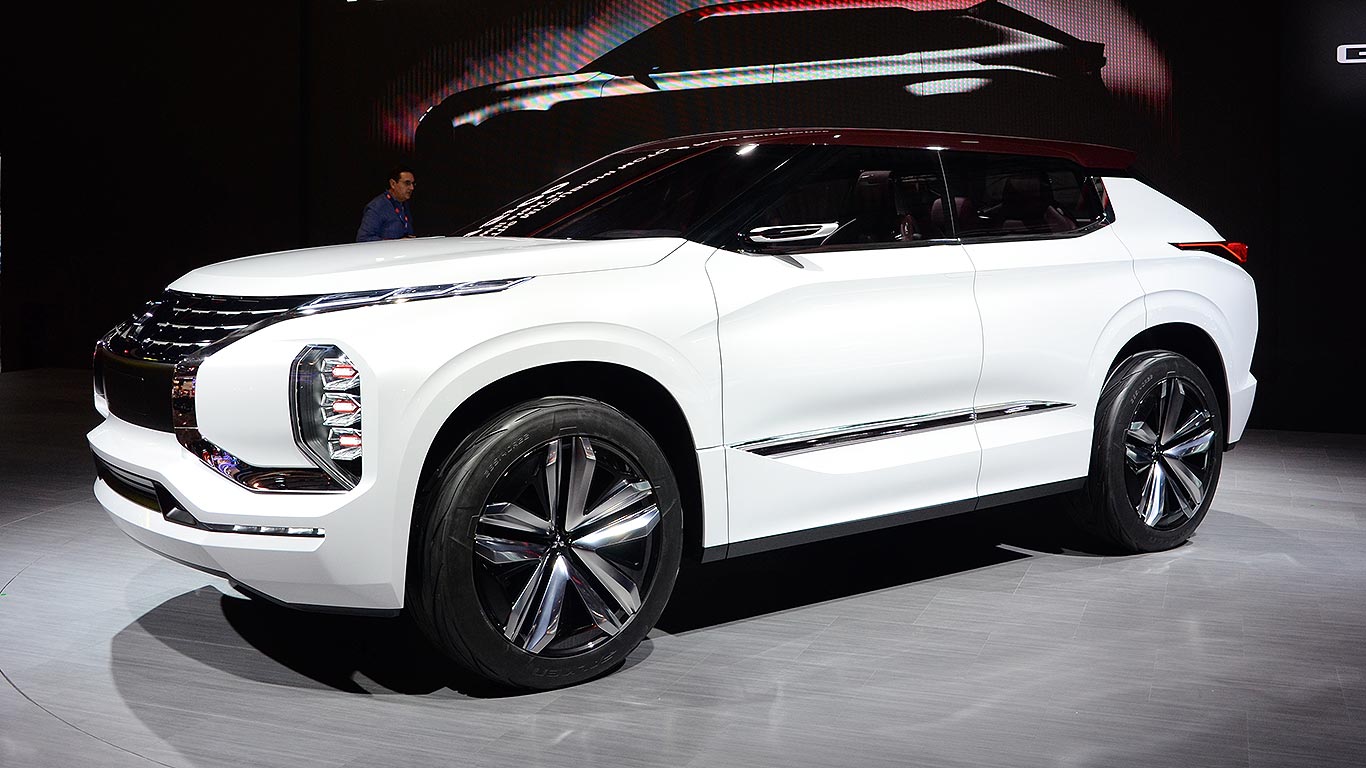
Mitsubishi GT-PHEV concept
This is the biggy on Mitsubishi’s stand – the new GT-PHEV concept. It follows on from the firm’s eX concept, which itself followed on from the XR PHEV II concept, and teases a future SUV that could sit between the ASX and Outlander.
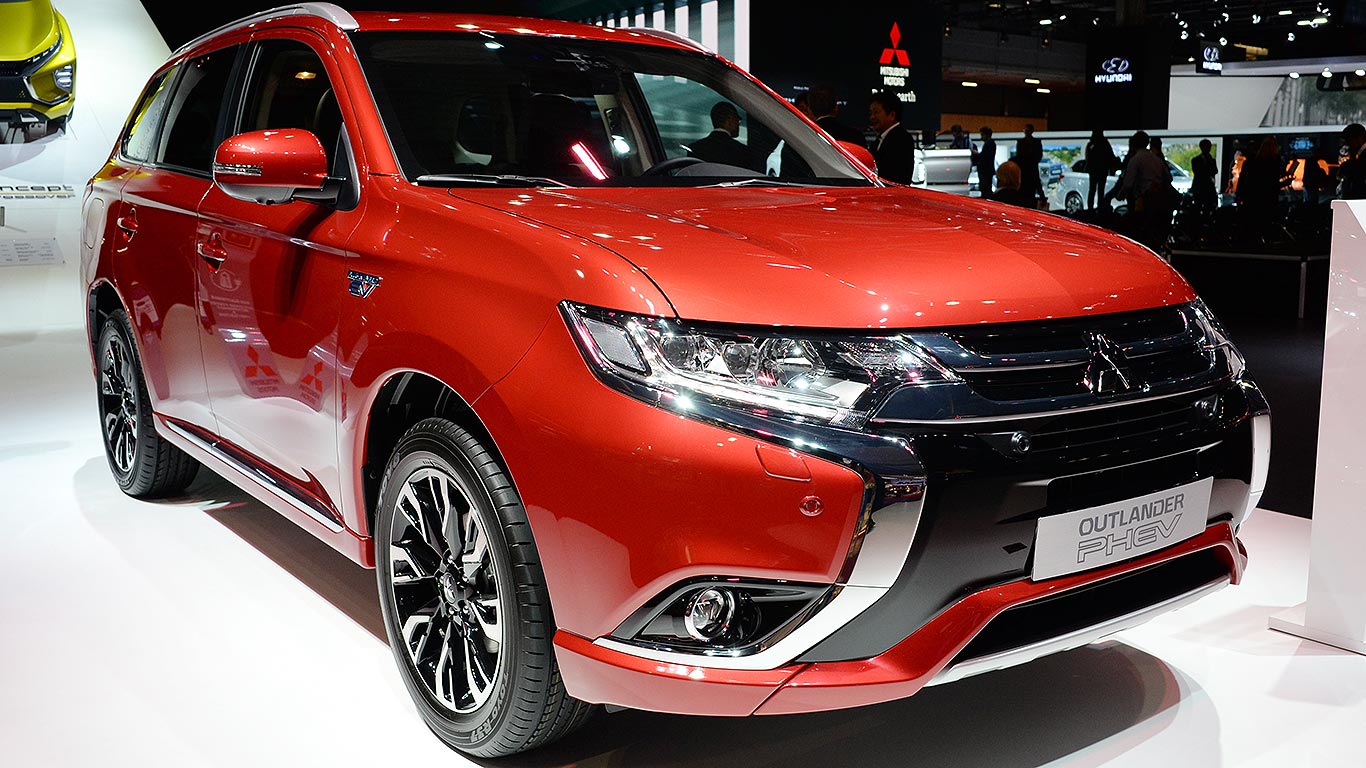
Mitsubishi Outlander
The Outlander’s been given a minor update for Paris, too. The popular plug-in version now features an ‘electric priority’ mode, while all models get Android Auto and Apple CarPlay connectivity.
Nissan Micra
Nissan messed up with the outgoing model – an attempt to make it an affordable world car killed sales in Europe, as so many competitors were simply better in almost every way. But the new Micra, revealed at Paris, could be a return to form for the Fiesta-rivalling hatchback. It’s based on the Sway concept and features a range of engines, including a 0.9-litre turbocharged three-cylinder petrol.
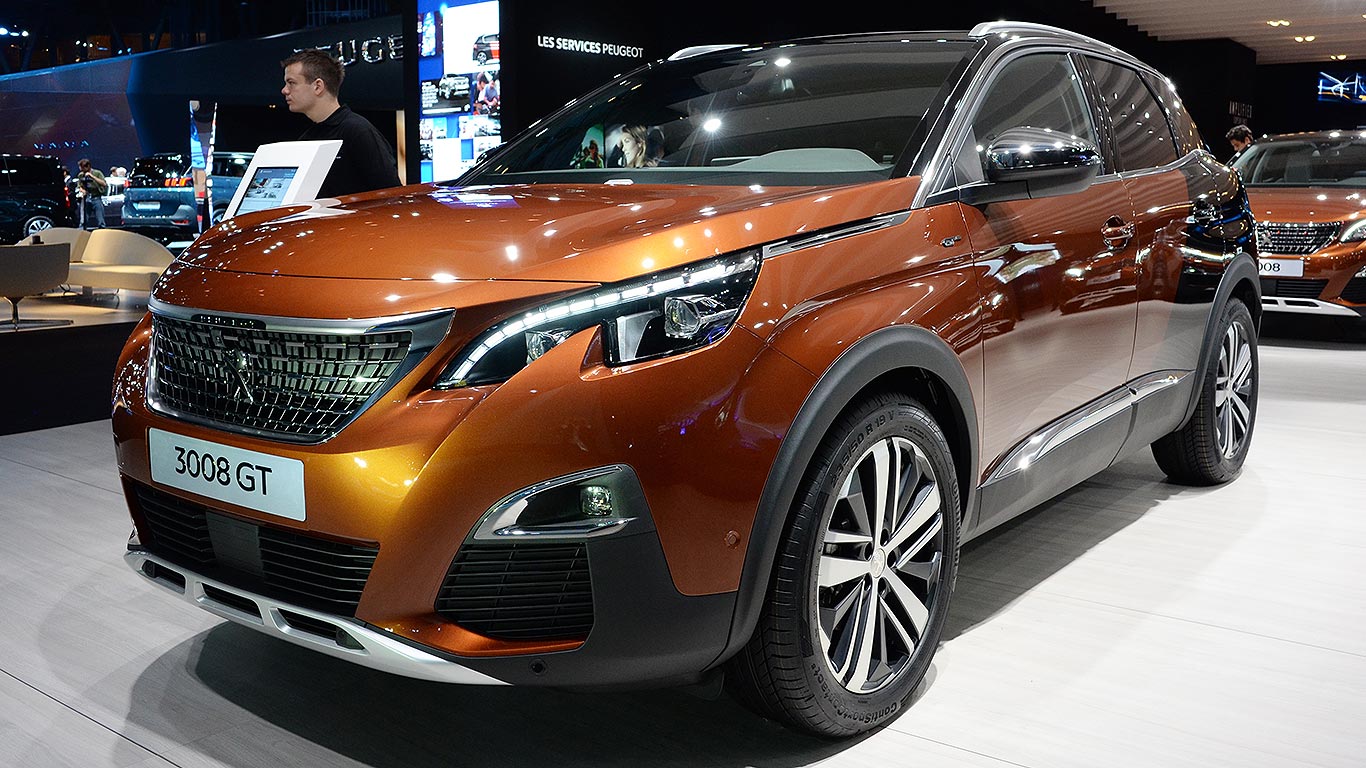
Peugeot 3008
MPVs aren’t cool anymore – which is why Peugeot is re-launching its 3008 as a crossover SUV. Sales start in November, with a five-setting traction control system offering a modicum of off-road ability – despite the lack of a four-wheel-drive version.
Peugeot 5008
Like the 3008, the bigger 5008 is also turning from an MPV into an SUV. The seven-seater features the same ‘i-Cockpit’ interior design as the smaller model – replacing conventional dials with a virtual display. We reckon the 5008 is a cracking looking thing and is sure to sell in big numbers back in the UK.
Renault Alaskan
Paris is Renault’s home show, so the French firm’s stand is rather prominent at the Mondial. On it is the new Alaskan pick-up truck – Renault’s take on the Nissan Navara. Like the Navara, with which it shares a platform, the Alaskan will come in a variety of configurations.
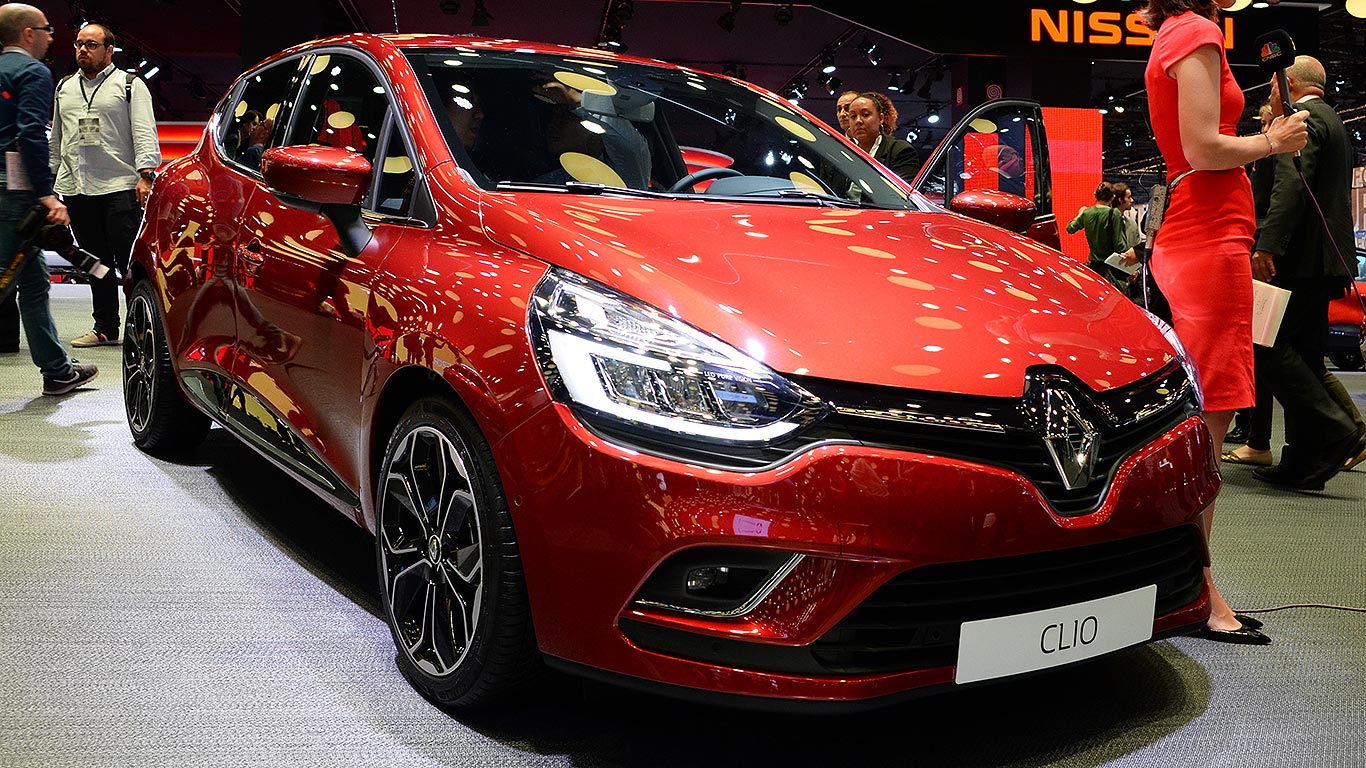
Renault Clio
The Renault Clio has been given a facelift for Paris, although we’re struggling to spot the difference. Changes include C-shaped daytime running lights and an upgraded touchscreen media system.
Renault Koleos
The Renault Koleos is coming back! In truth, you’d probably forgotten about the original Koleos, but the fact that the new one will be sold in the UK is big news. Renault claims the large SUV will have ‘the elegant refinement of a large saloon’ and will offer ‘class-leading’ passenger space. Looks great under the bright lights of the Renault stand.
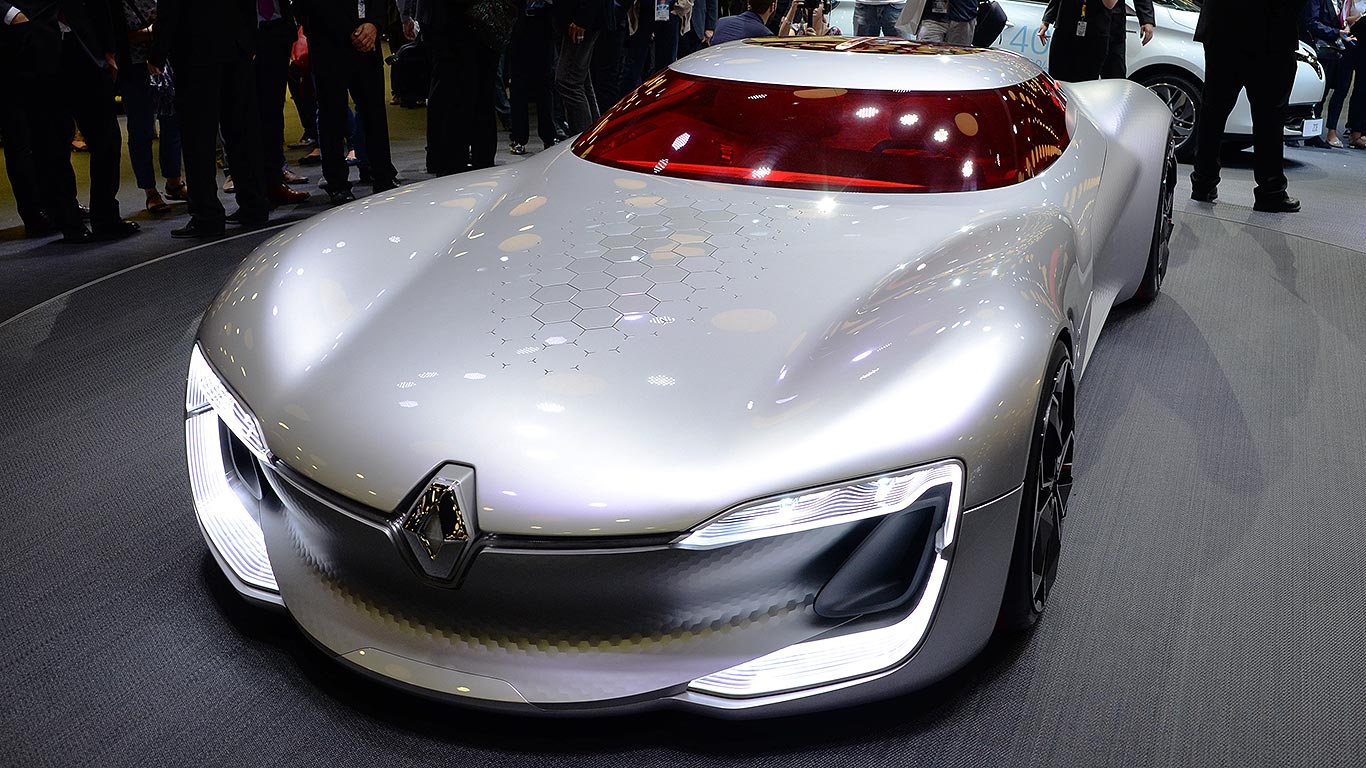
Renault Trezor
It’s a French show, so it’s only right that a French carmaker delivers one of the showstoppers. It’s called the Renault Trezor – no, not Trevor – and it borrows heavily from the company’s involvement with Formula E. Beneath that Hot Wheels style exterior lies a 350hp all-electric powertrain, capable of propelling this concept to 62mph in under four seconds.
Renault Zoe
From one Renault you can’t buy, to one that you can. Indeed, you can drive the Renault Zoe further than ever before, because it now offers up to 250 miles of driving range from a single charge. It’s thanks to a new ZE 40 battery, which means the real-world range jumps from 106 to 186 miles. The existing 22kWh will remain on sale alongside the new model.
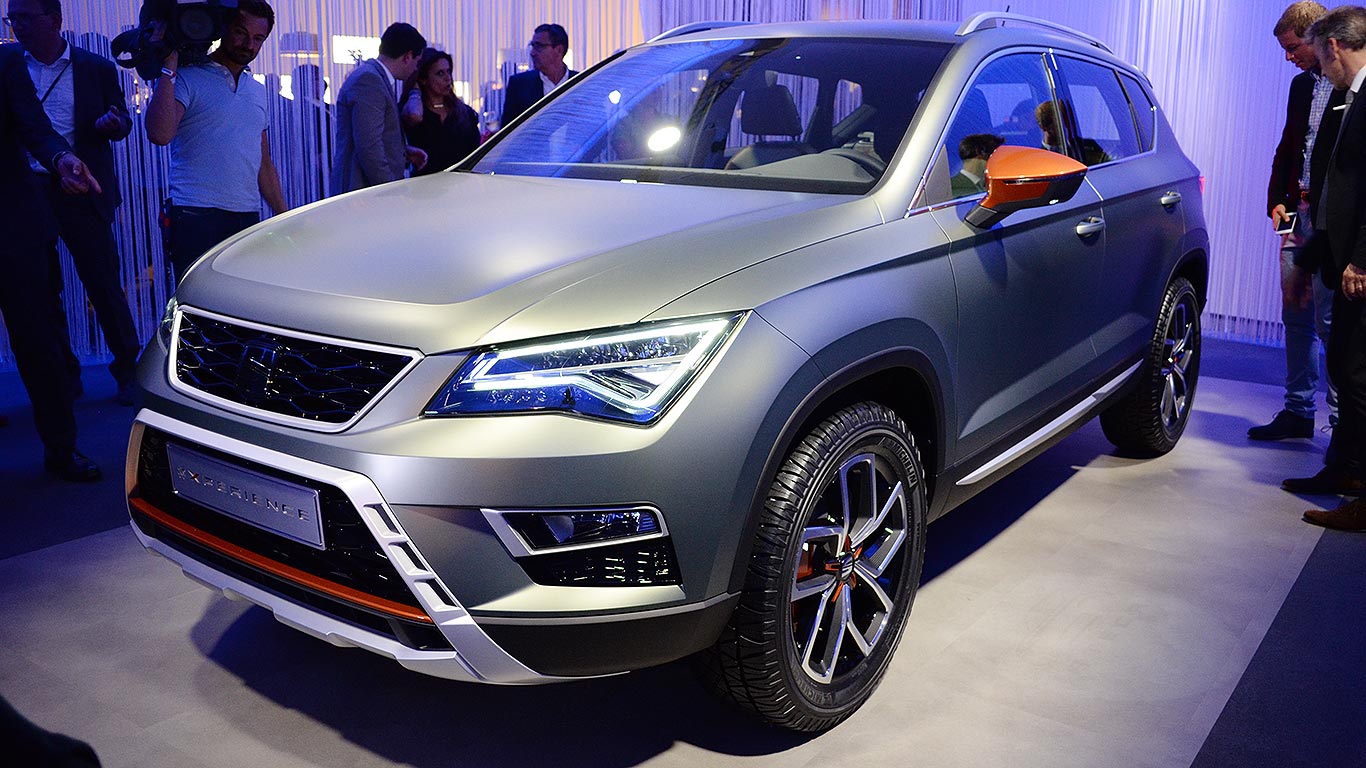
SEAT Ateca X-Perience
Fancy a SEAT Ateca with a little more bite? The appallingly named Ateca X-Perience is said to be ‘inspired by the Mediterranean culture’ and previews a future direction for the Ateca family. Chunky body cladding, scuff plates and off-road tyres hint at a rougher, tougher Ateca, but it remains a concept, for now.
Skoda Kodiaq
Is there a car that’s guaranteed to be a surefire hit more than a new, affordable VW Group SUV? Making its public debut at Paris, the seven-seat Kodiaq will take on the Kia Sorento when it goes on sale next year. Our first impressions are overwhelmingly positive.
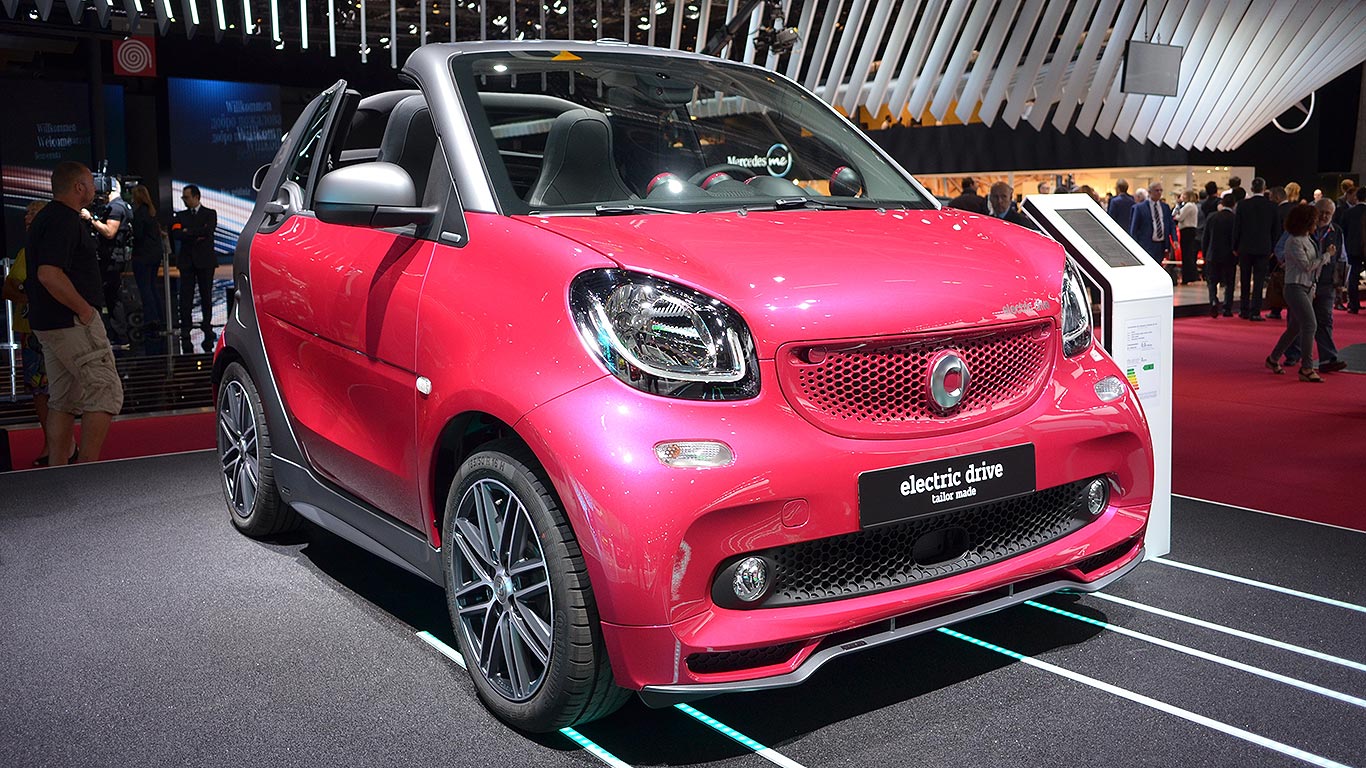
Smart ForTwo Electric Drive
How do you make the latest Smart models even more desirable to fashion-conscious city types? An electric powertrain will help. Revealed at Paris, here’s the new electric-only Smart ForTwo.
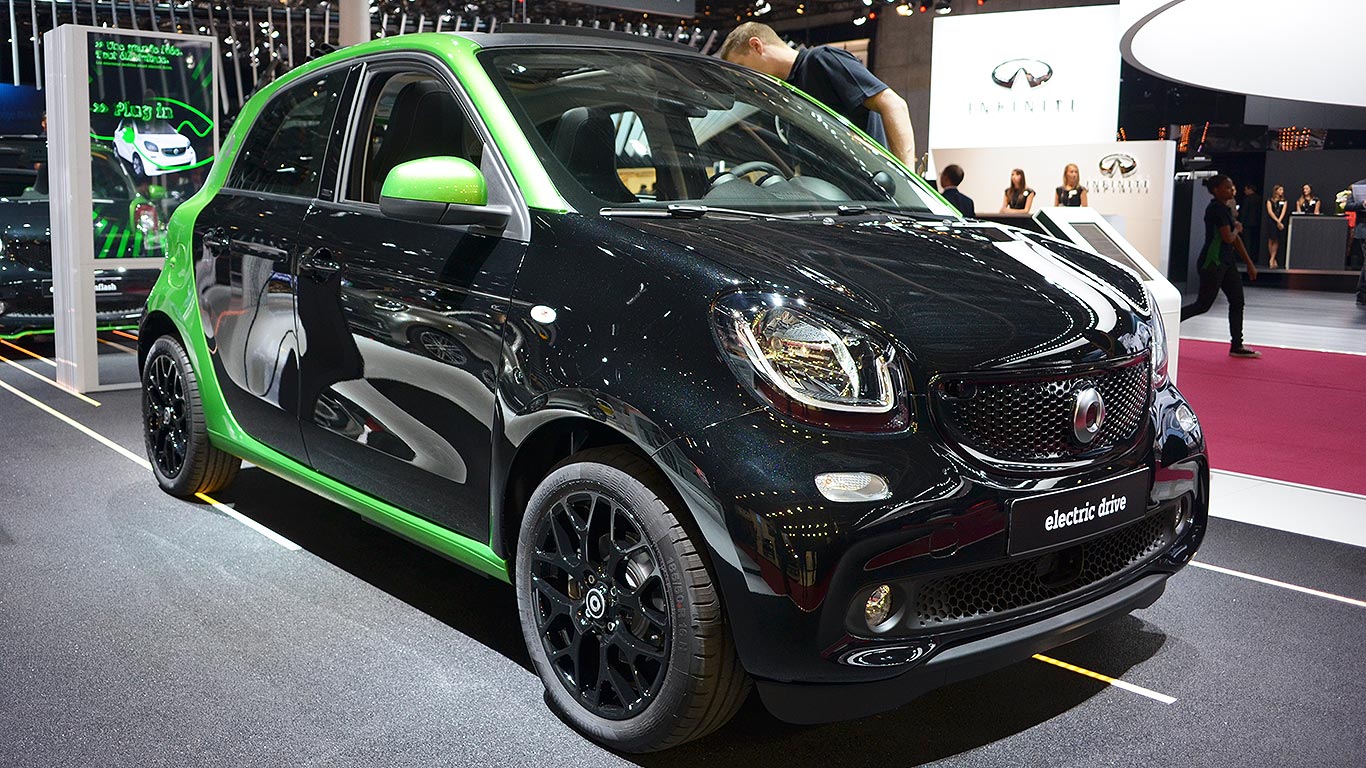
Smart ForFour Electric Drive
There’s also an all-electric version of the four-door Smart ForFour. Both models will go on sale in 2017.
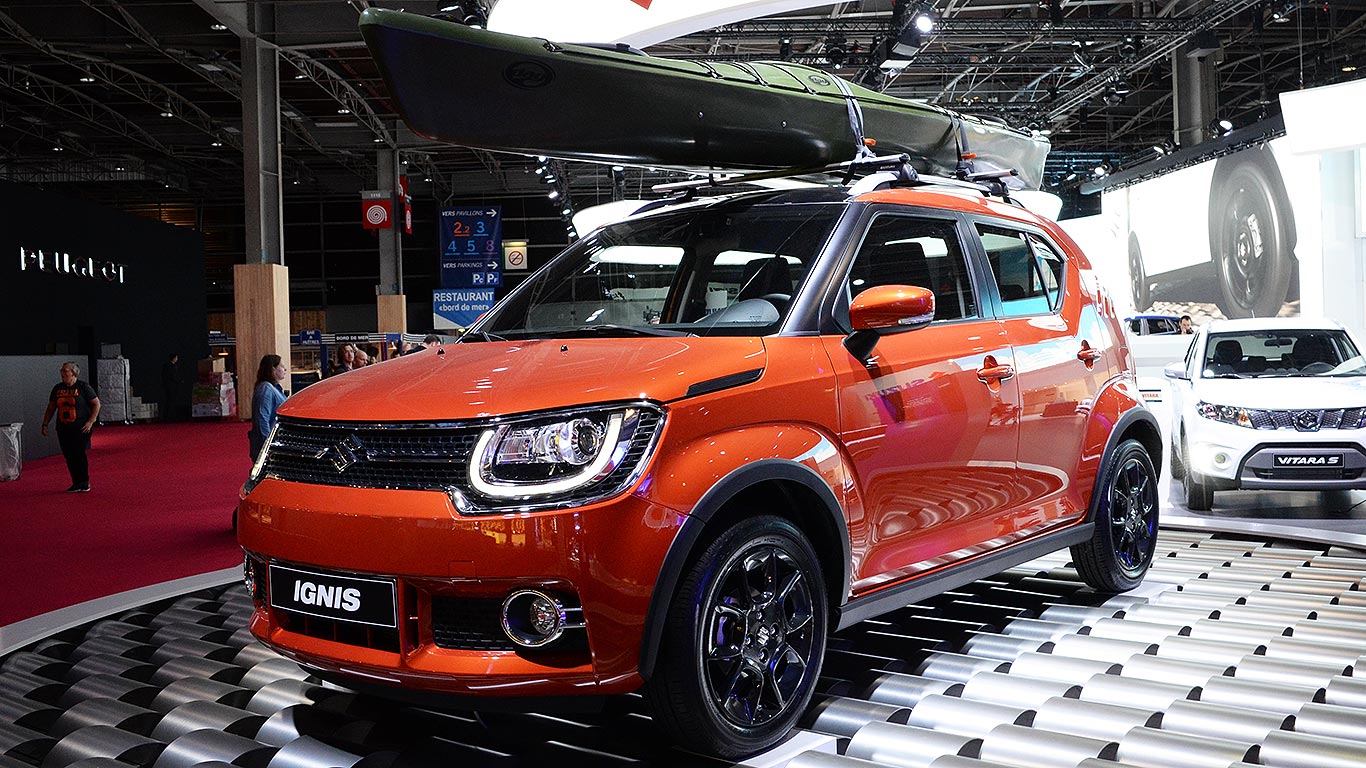
Suzuki Ignis
You can always rely on Suzuki for bringing along a quirky new car to a motor show, and it hasn’t disappointed us at Paris. It’s brought the ‘Ignis’ name back, but rather than being a plane-Jane city car, it’s a unique A-segment-sized take on the Nissan Juke and Mazda CX-3: consider it an arch-rival to the Fiat Panda Cross. It features Suzuki’s SHVS ‘mild hybrid’ powertrain.
Suzuki SX-4 S Cross
Remember when British Leyland gave the Allegro the Vanden Plas treatment by sticking on a bold grille on an otherwise unappealing car..? Yeah, say hello to the facelifted SX-4 S Cross. At least it benefits from the firm’s excellent new Boosterjet petrol engines, in 1.0- and 1.4-litre guises. Shame the Allegro wasn’t offered with a Boosterjet. “I own an Austin Allegro BOOSTERJET.” Anyway.
Volkswagen I.D.
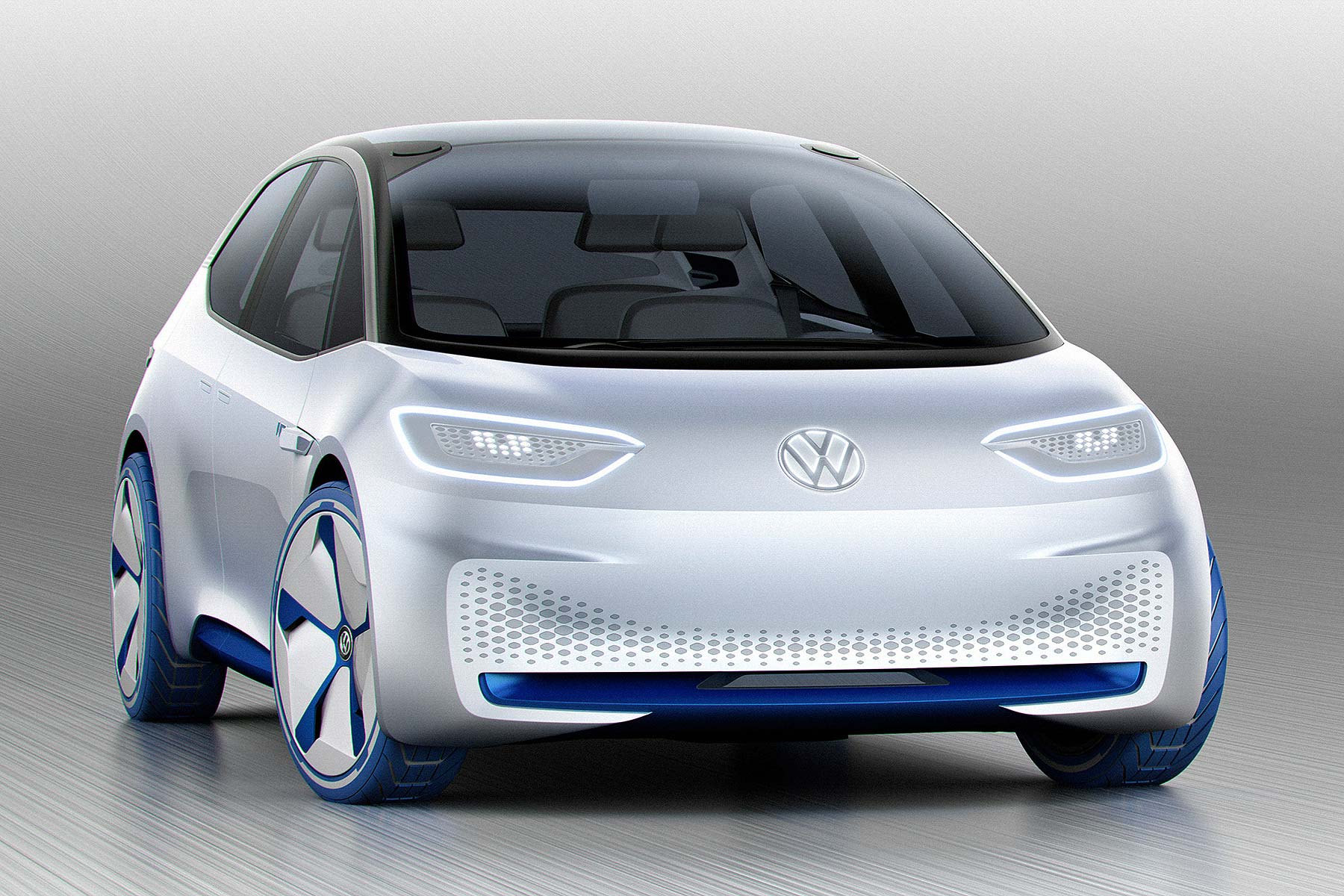
This is the fruit of a post dieselgate Volkswagen. It’s called the I.D. and Volkswagen claims the electric concept offers a remarkable range of between 250 and 373 miles. It’s set to arrive in 2020 and will herald the launch of an entire fleet of electric Volkswagens.
Ferrari has revealed the drop-top LaFerrari at the 2016 Paris Motor Show – and confirmed it will take the Aperta name.
Unveiled as part of a lavish press conference outlining the Maranello firm’s plans for its 70th anniversary year, Ferrari said just 209 soft-top LaFerraris would be made, with each one already accounted for.
Official photos of open-top LaFerrari revealed: it’s sold out already
More Paris Motor Show news on Motoring Research
200 of these will be sold to regular customers, and the final nine will be used by Ferrari to promote its 70th anniversary.
The LaFerrari Aperta takes the same 800hp V12 petrol engine as the regular model, combined with an electric motor. It’ll complete the 0-62mph run in 2.9 seconds, the same as the hard top, and max out at 217mph.
The manufacturer says buyers have been given a choice of a removable carbonfibre hard-top and a more conventional soft-top. Meanwhile, the chassis has been heavily tweaked to “retain the same torsional rigidity and beam stiffness as the coupe version.”
Ferrari is keeping quiet about how much wannabe owners have had to shell out for the LaFerrari Aperta, but it’ll be more expensive than the £1 million standard LaFerrari. Some reports suggest buyers are shelling out as much as £3 million for the limited-run supercar.
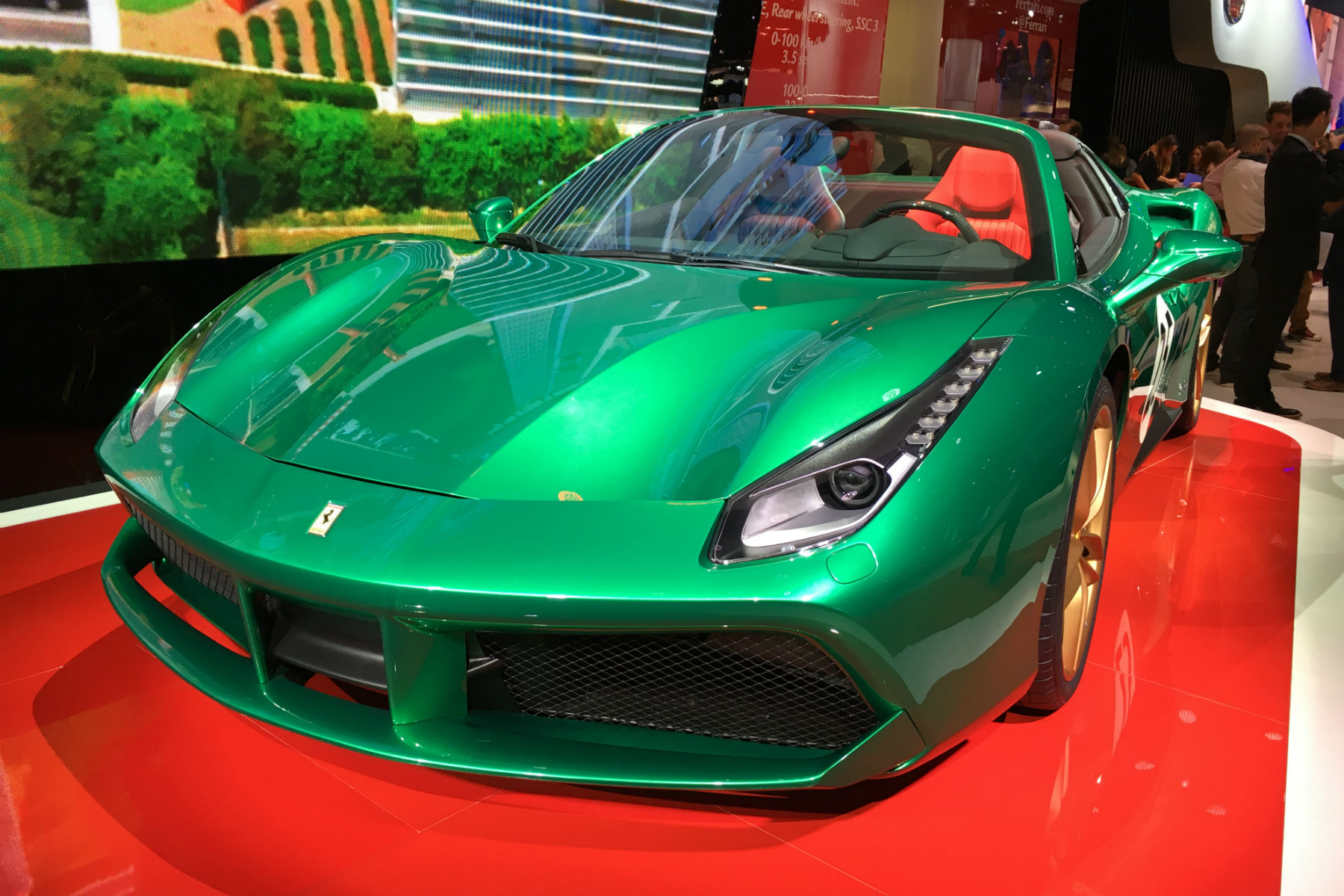
Also attracting attention on Ferrari’s stand is a series of five liveries launched to celebrate the anniversary.
These range from The Green Jewel, a tribute to a Le Mans 365 P2, to The Schumacher, a red colour scheme dedicated to the multiple F1-winning race car.
The final Ferrari on display is the more user-friendly GTC4 Lusso T. Visually almost identical to the V12 GTC4 Lusso, the T uses a turbocharged V8 engine with power going to the rear wheels.
It’ll hit 62mph in 3.5 seconds and max out at 199mph.
An all-new Honda Civic Type R will go on sale in 2017 and the Japanese firm is previewing the new hot hatch with a bold Type R Prototype at the Paris Motor Show.
Finished in an eyecatching brushed aluminium-effect paint job, it further enhances the attitude of the current all-new Civic (also launching here at Paris) with more muscular bodywork and many of the radical aero features seen on the current Type R.
New 2017 Honda Civic revealed
New Honda Civic Type R confirmed for 2017
Paris Motor Show on Motoring Research
There’s a carbon fibre splitter at the front, complete with wings and red accents, plus more air cooling in the bumper and an air scoop on the bonnet (Subaru fans, rejoice). Smoked light lenses give menace; a red ‘H’ Honda badge depicts it as a proper Type R.
More carbon fibre is used to make the side skirts, which sit between 20-inch alloys: they’re so big, they wheelarches have had to be enlarged to swallow them.
At the rear, all eyes will be on the humungous rear wing that Honda understatedly calls ‘visually striking’. There’s also yet more carbon fibre for the rear diffuser, a central exhaust tailpipe and yet more red detailing.
Honda will reveal the new Civic Type R Prototype at the Paris show later this afternoon – but, based on what we’ve seen here, plus given how the current regular Civic emerged so similar-looking to the bold prototype that previously impressed us, put good money on a new Type R emerging in showrooms looking not dissimilar to this hot hatch star later next year…
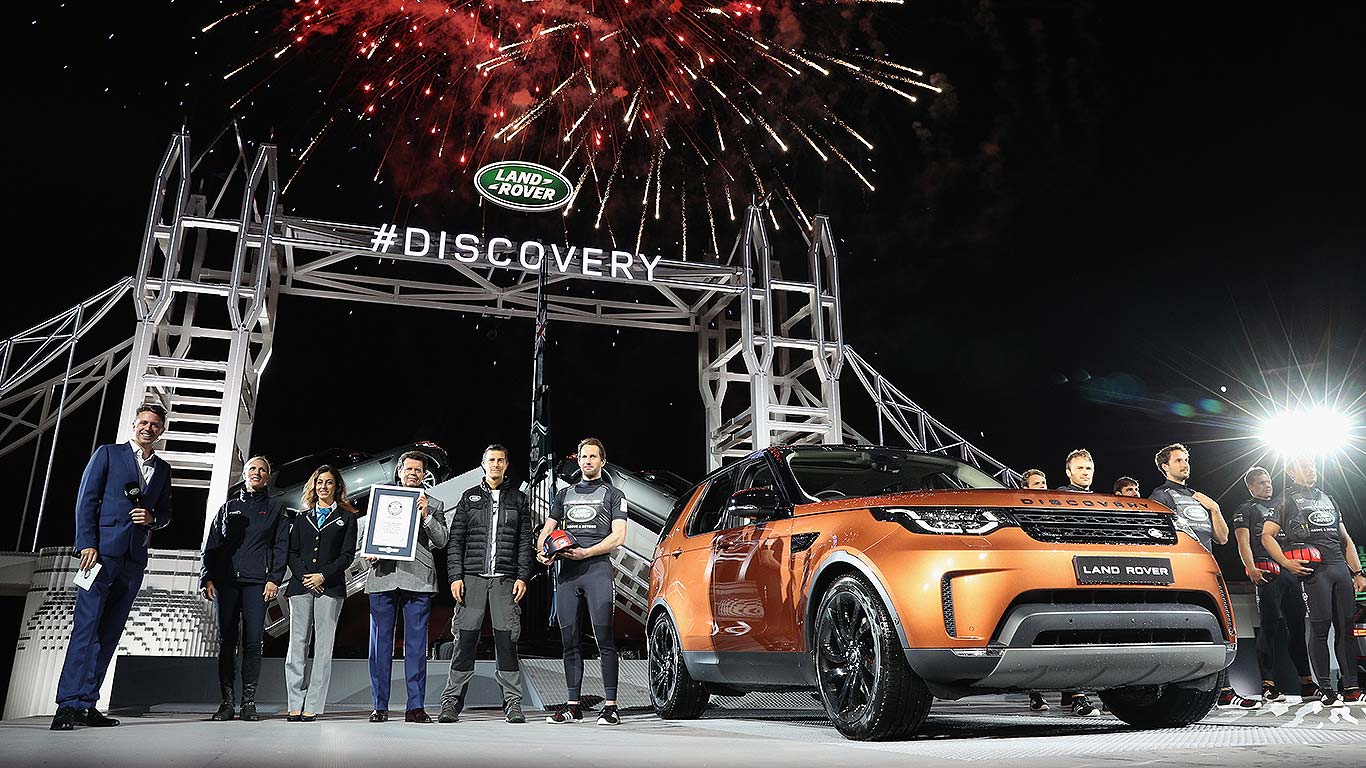
After months of teases, the 2017 Land Rover Discovery has been revealed at a special event on the eve of the Paris Motor Show. It featured Bear Grylls, Zara Phillips and a record-breaking Lego model of Tower Bridge.
The car is a huge deal for Land Rover, as evidenced by the huge marketing and PR budget that has gone into its launch. But reaction online has been varied. Our first impression was “it looks exactly as we expected”, but then we started to look a bit closer.
New 2017 Land Rover Discovery revealed at last
Watch: new Land Rover Discovery reveal event spectacular
More Paris Motor Show news on Motoring Research
Top Gear’s Chris Harris was amongst the first to point out that it looks a little, er, odd…
New Disco will be sold out for a few years already. But anyone else think it looks a bit, well, awkward from some angles?
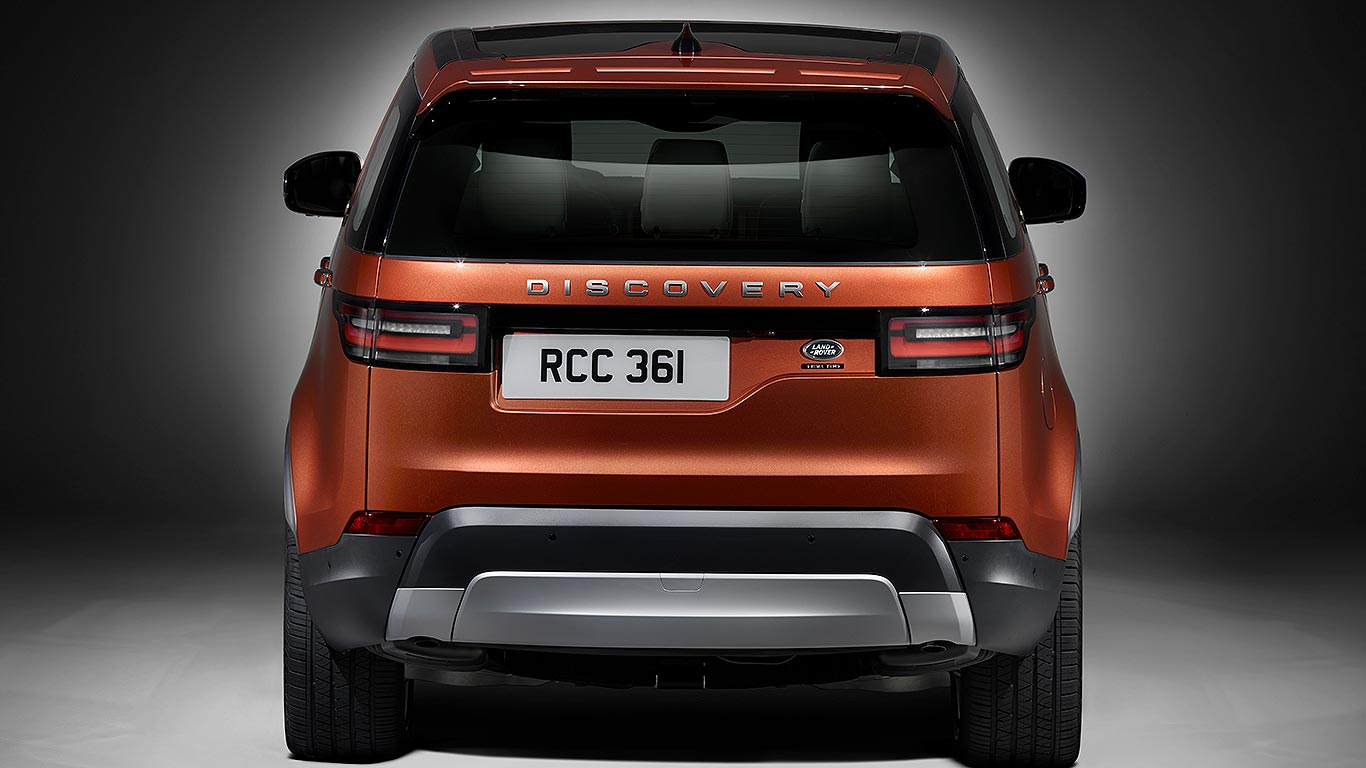
Or is it the fact that the number plate is offset, mimicking the original Discovery’s side-hinged tailgate?
Maybe we’re being harsh on the new Discovery – as Harris points out, it’s sure to be yet another hit for JLR. We’ll reserve our final judgement until we’ve seen it up close and personal at the show – but we’d love to here your thoughts. Is it us, or does it look a bit awkward? Comment below.
Land Rover has revealed the all-new Discovery ahead of sales beginning in spring 2017 – and it is already claiming it is “the best family SUV in the world”.
Launched in a spectacular event attended by Bear Grylls, Sir Ben Ainslie and Zara Phillips MBE, the now-all-aluminium Discovery is a full-size seven-seat SUV that Land Rover insists has “unbeatable capability and versatility”.
The Discovery launch event was genuinely jaw-dropping. The centrepiece was, no less, a 13-metre-high Guinness World Record-breaking Lego structure of London’s Tower Bridge. Built from more than 5.8 million Lego bricks, the Discovery appeared alongside it – in the process, setting a new world record on the night for using the most Lego bricks in one construction (beating the previous record by almost half a million bricks!).
Children design unique 2017 Land Rover Discovery
The story of the Land Rover Discovery in pictures
Paris Motor Show on Motoring Research
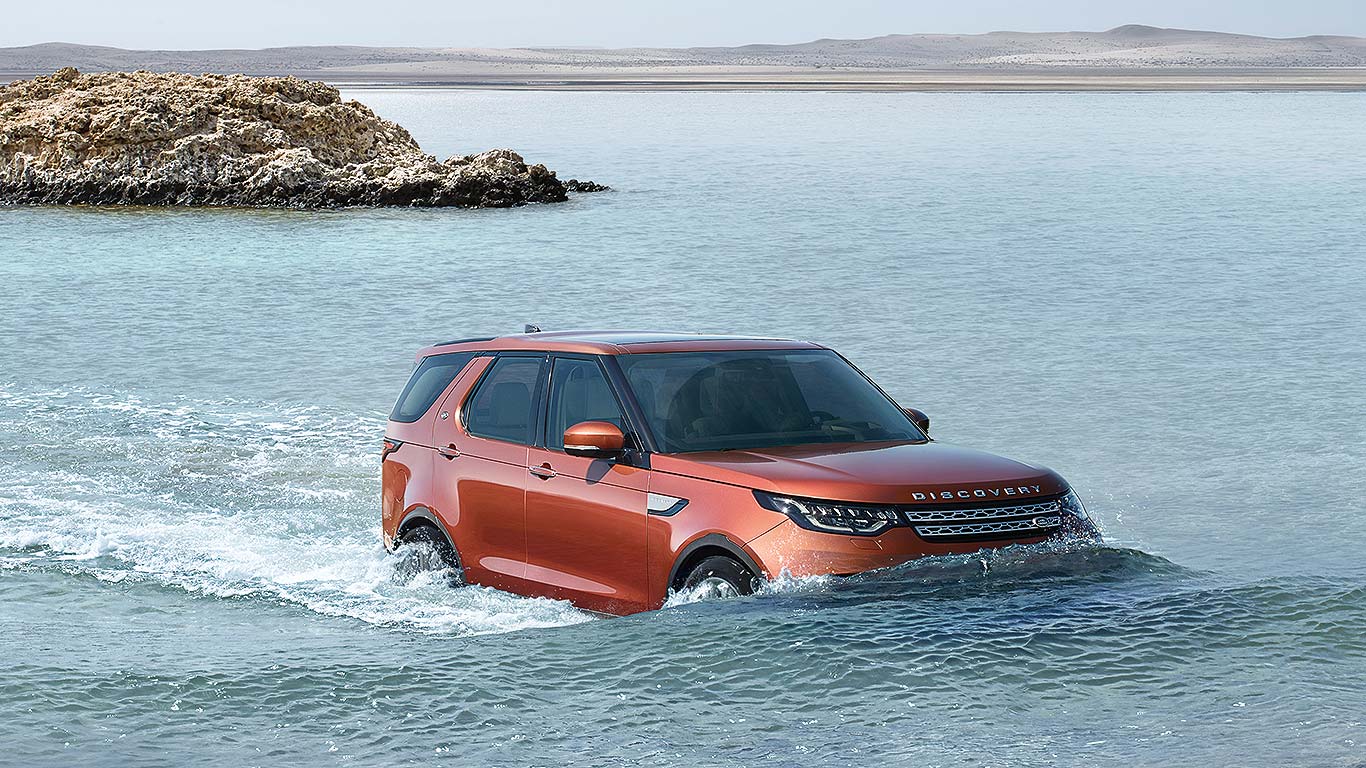
It also involved Bear Grylls abseiling off the bridge onto stage next to the Discovery, Sir Ben Ainslie driving his sailing team in a Discovery through almost a metre of water beneath the bridge – and Zara Phillips even starred in a special equestrian zone. And once we’d caught our breath, we took a look at the new Discovery itself.
‘The most complete all-round SUV package on sale’
Land Rover launched the Discovery back in 1989 but, although there have been four generations since then, there technically have only been two basic models: that’s not a lot for 27 years on sale. The new Discovery makes it three new models – and this is easily the most advanced yet. Indeed, it’s now more Range Rover than Land Rover.
Sleek new look
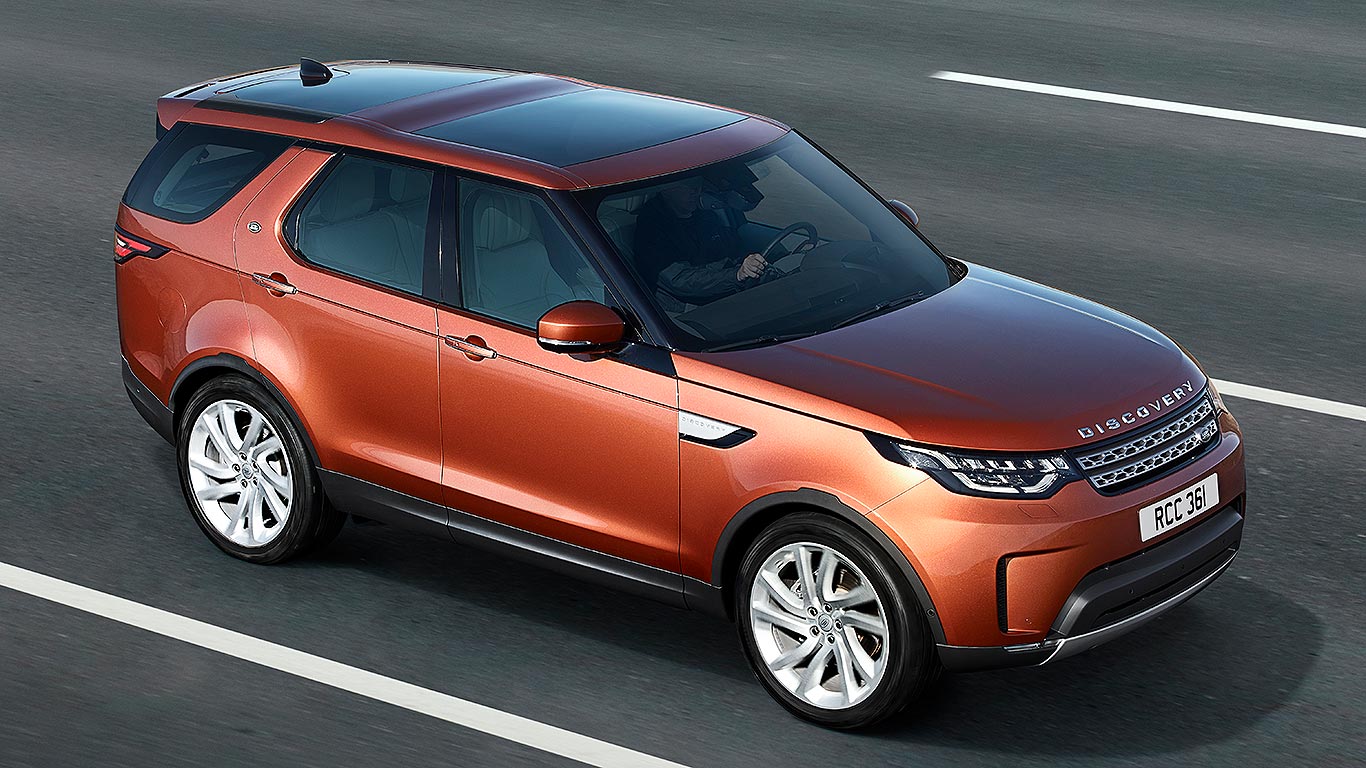
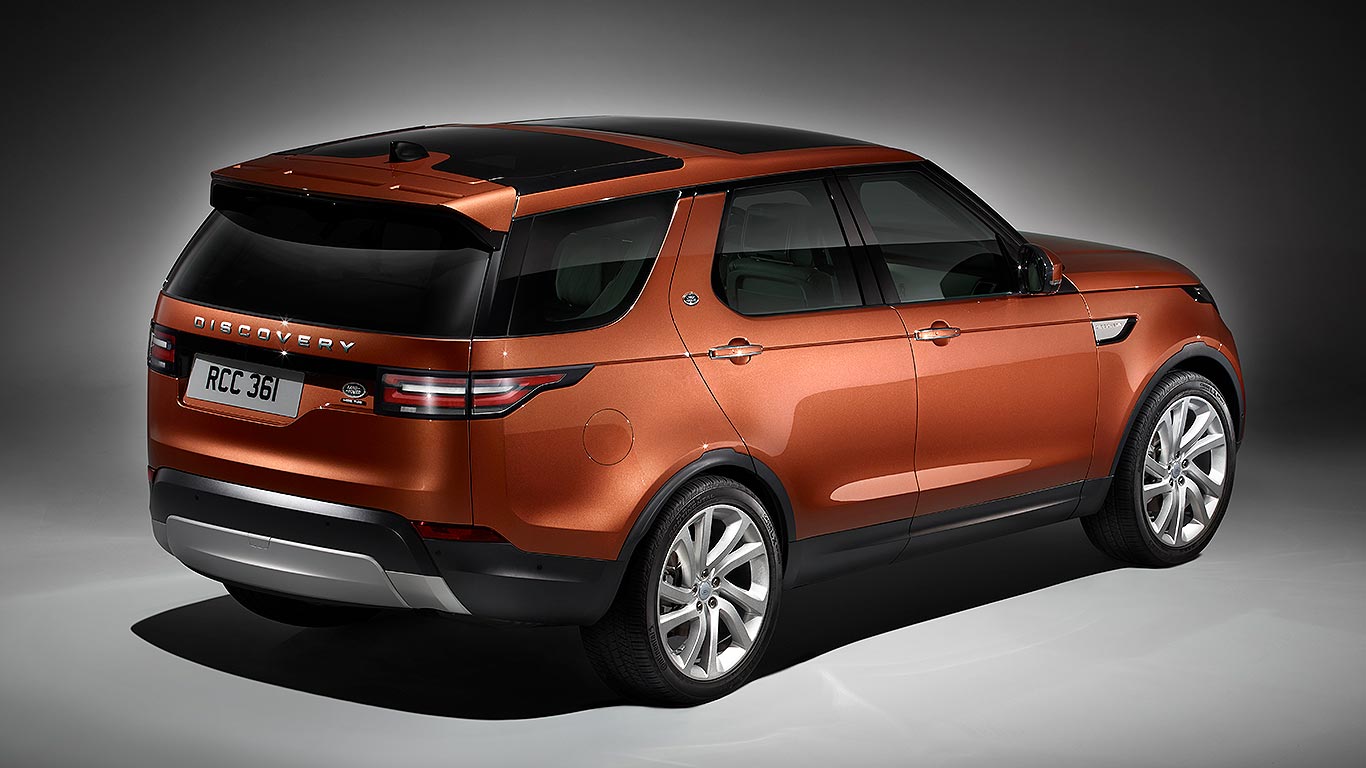
Doesn’t look much like a traditional Discovery, does it? More like a Discovery Sport, or the Discovery Vision Concept car that previewed Land Rover’s new look – or even, a Range Rover Sport sibling? This is easily the most sophisticated Discovery ever, a quantum leap over its Lego-block predecessor. The question is, of course, how will Land Rover traditionalists take to it?
A radical Discovery
Design chief Gerry McGovern admits the Discovery has been revolutionised and “the result is a radical departure in design,” but he feels the new look will “introduce the Discovery family to a new, wider customer base”. That’s buyers of the Audi Q7 and Volvo XC90: this is why the Discovery has become so much more premium-looking. Besides, if they hadn’t waited so long to replace the old one, it probably would have looked more like this anyway…
Why it looks like it does
Key to the look of the new Discovery is its sheer volume and proportions, reckons McGovern. The surfaces are much more sophisticated and the detailing far more precise than the slightly hit-and-miss Discovery 4. Basically, it’s more premium in appearance, significantly so, which McGovern insists “will resonate with today’s customers”.
Discovery: a new face
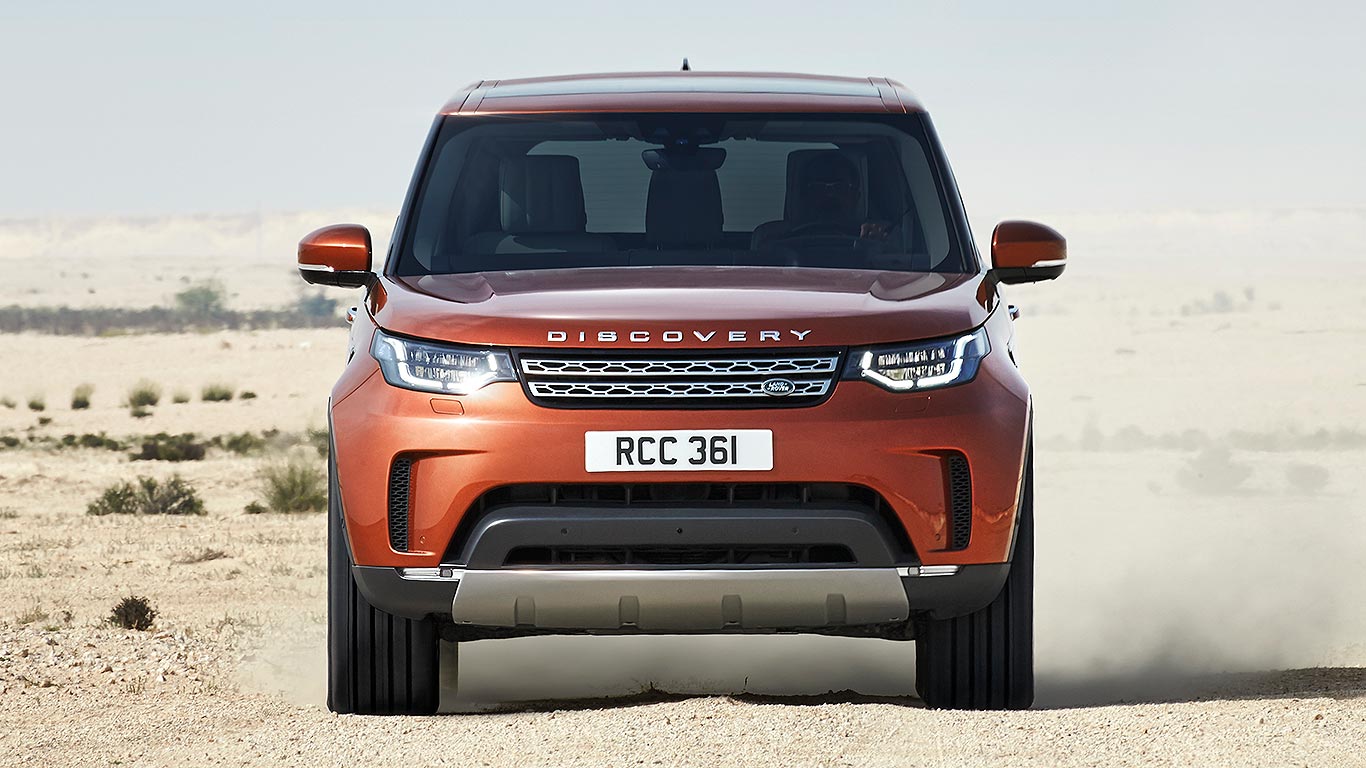
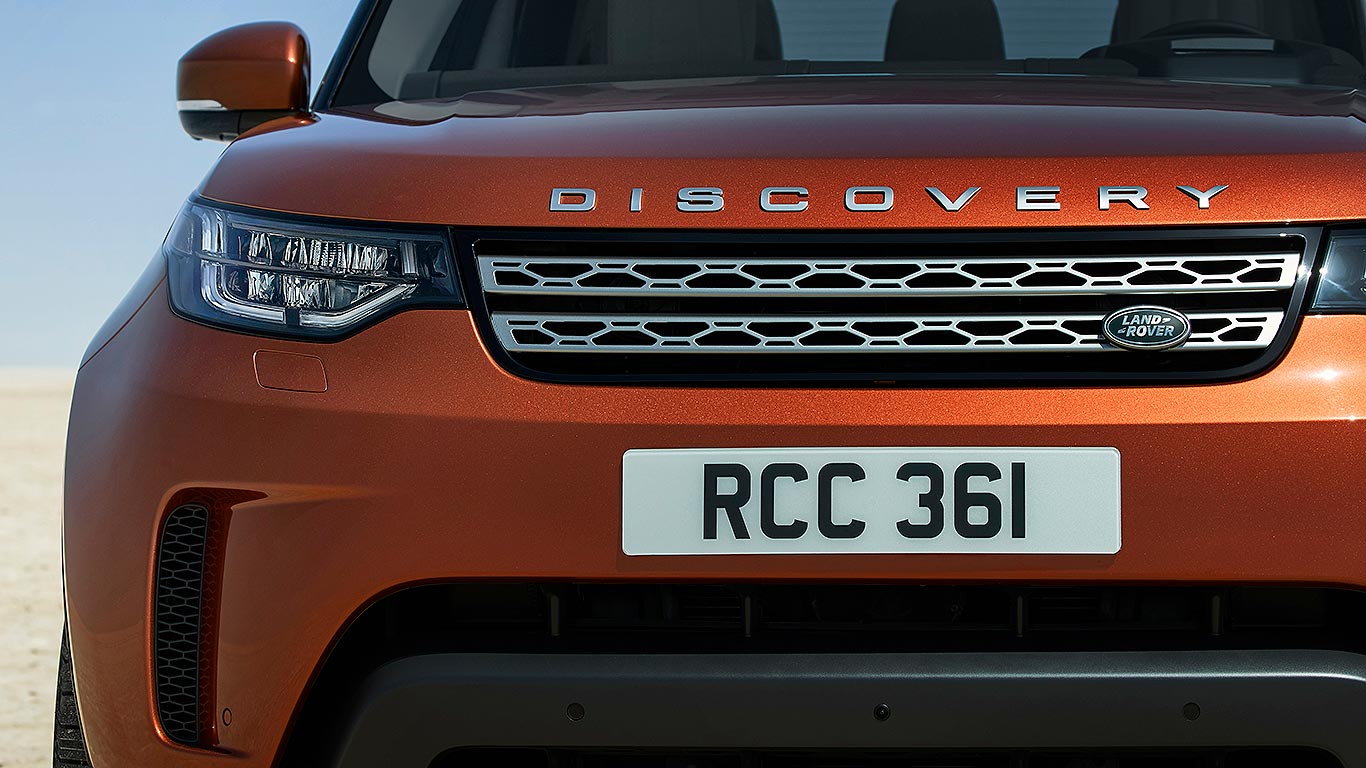
Discoverys have always had square headlights and blunt, brick-like front ends. No longer. They now have sculpted lights, an ultra-smooth frontage and minimal fuss, fripperies or air intakes. It’s a huge step on here, reflecting the Discovery’s newfound lightness – almost half a tonne lighter than the old one.
Distinctive rear
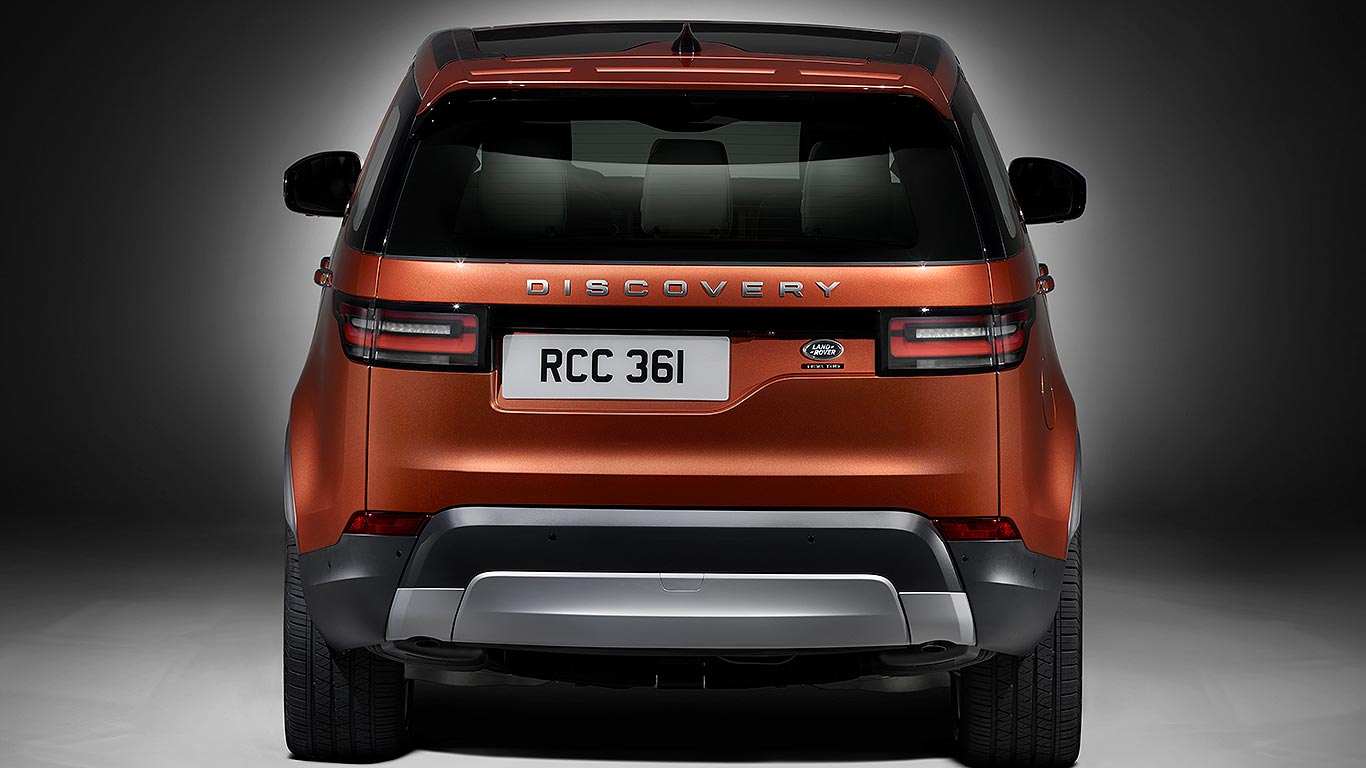
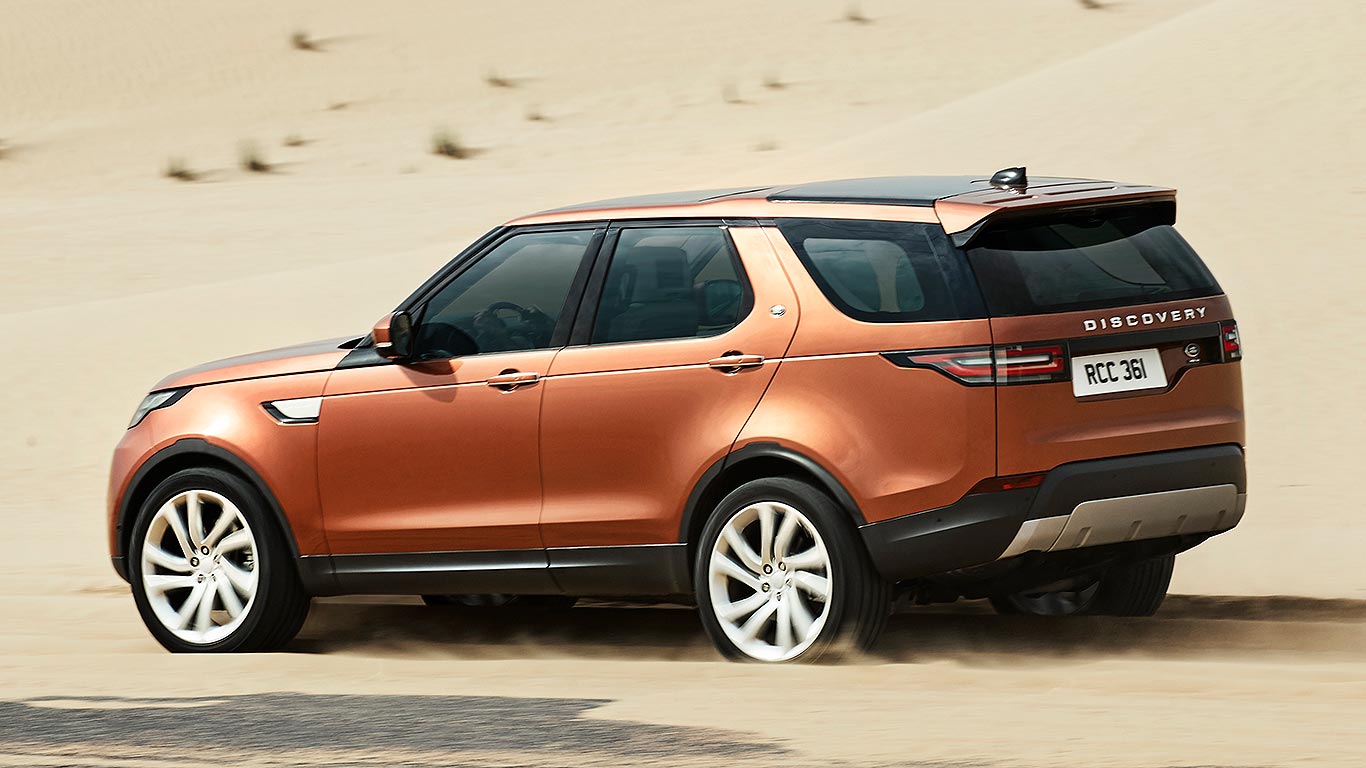
The rear is distinctive. The number plate is offset and the design asymmetric, mimicking the side-hinged tailgate of the original (even though this is a conventional liftback). Those new horizontal tail lamps look almost like a concept car, and the ‘DISCOVERY’ text is again writ large. The one-piece design gives a bigger opening, says Land Rover, and the powered hatch is gesture activated. Just ‘kick’ beneath the rear bumper to open it.
Has the new Discovery retained its trademark features?
Every Discovery up to now has had a stepped roofline and the new 2017 Discovery isn’t about to change that. It means the stadium seating has been retained inside, too; each row is higher than the one in front of it, so everyone gets a good view out. Some timeless Discovery cues, such as the shape of the C-pillar, are retained, but others are eschewed. The tail lamps are horizontal, for example, rather than vertical – and the split tailgate is also no more (instead, a powered fold-out ledge in the boot floor provides the well-loved ‘picnic seat’, sheltered by the hatchback tailgate).
Inside Discovery
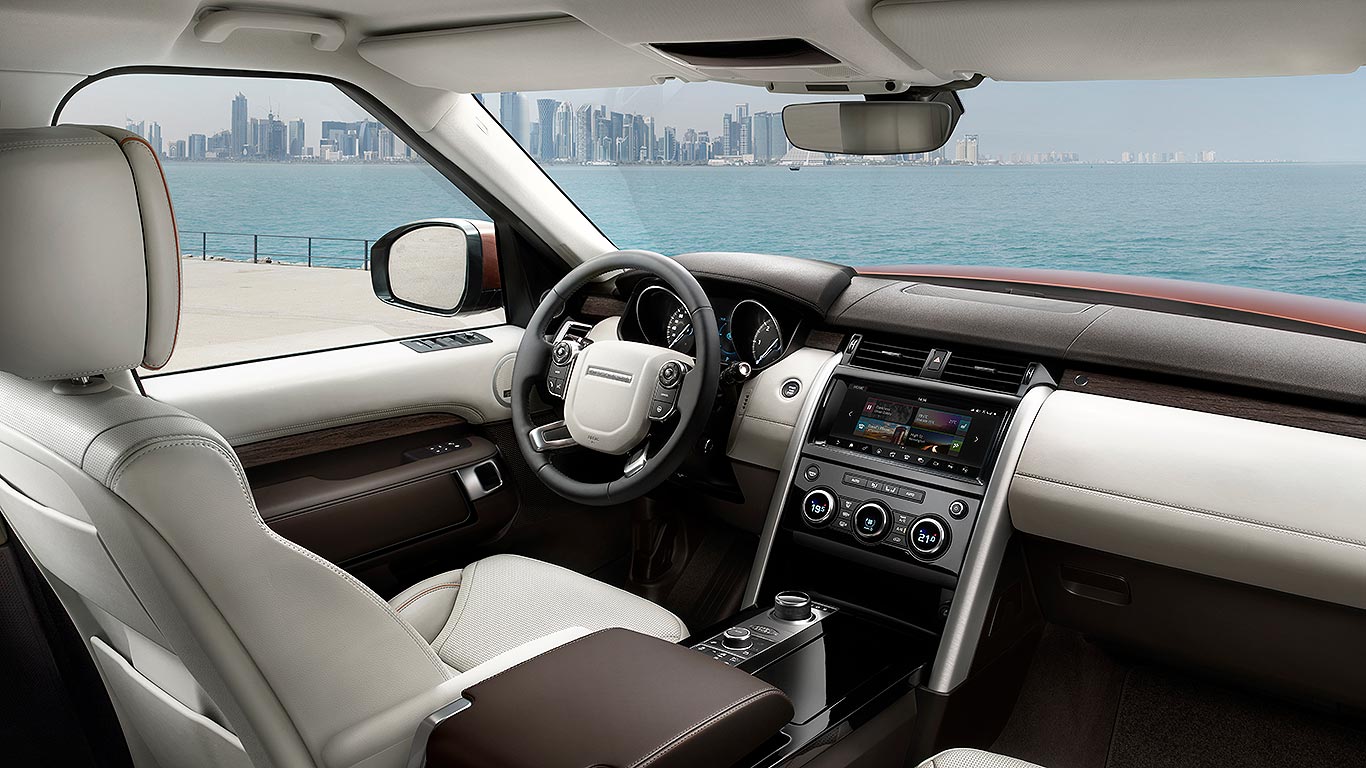
The new Discovery is equally headline-grabbing within. It was imperative to be as spacious and as practical as could be, insisted McGovern: Range Rovers are all about luxury, but this car should be about “complete interior flexibility”. Not that it isn’t luxurious, mind: to existing Disco owners, it may feel not unlike a posh Rangie in there…
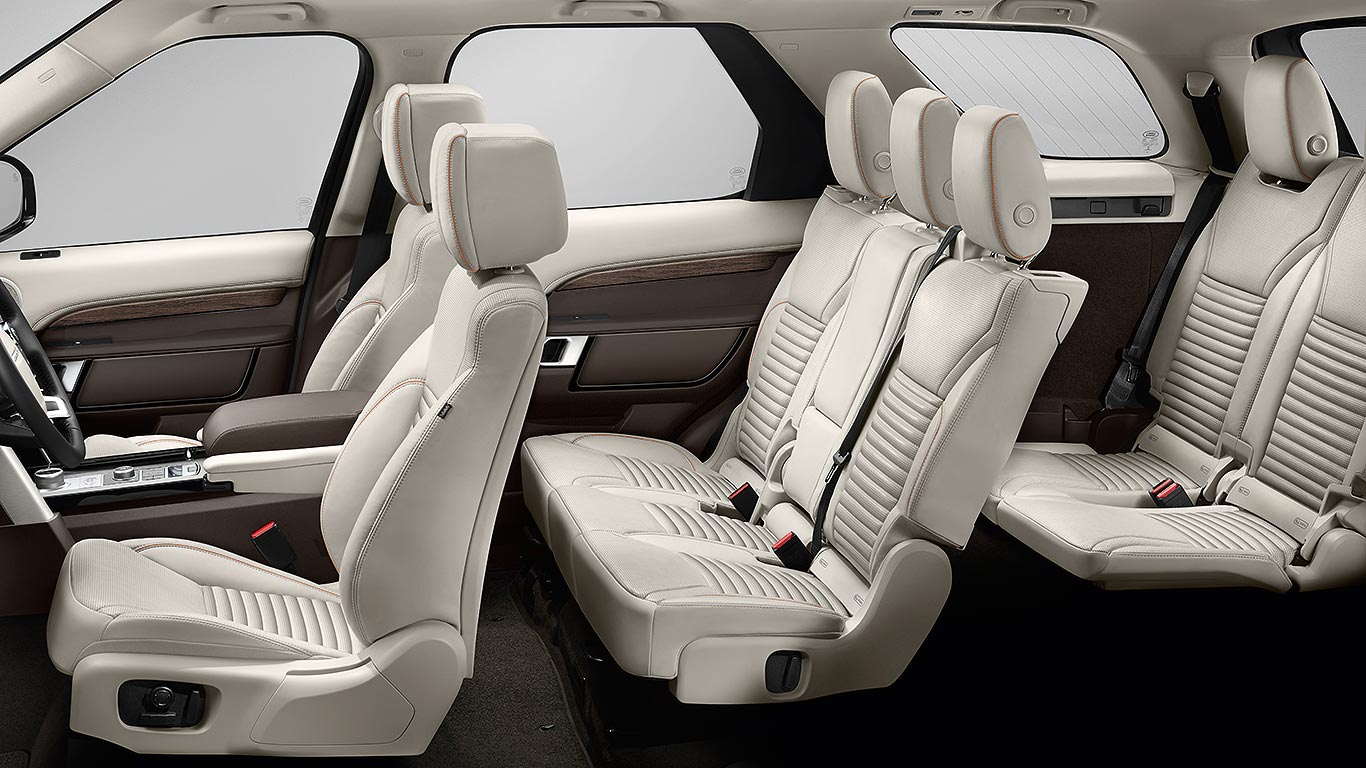
Seven seat space
The big Discovery is just under five metres long and has enough space for adults in all three rows (95th percentile adults really can comfortably sit in the rear: we know – we tried it to confirm this). All those seats can even be reconfigured remotely via an app, as so aptly demonstrated recently by Bear Grylls jumping out of a plane (in fairness, you’ll more likely use this in the queue at IKEA). All three rows can be heated, and the first two can be cooled as well. The lucky duo up front can even have massage seats.
Glass is good
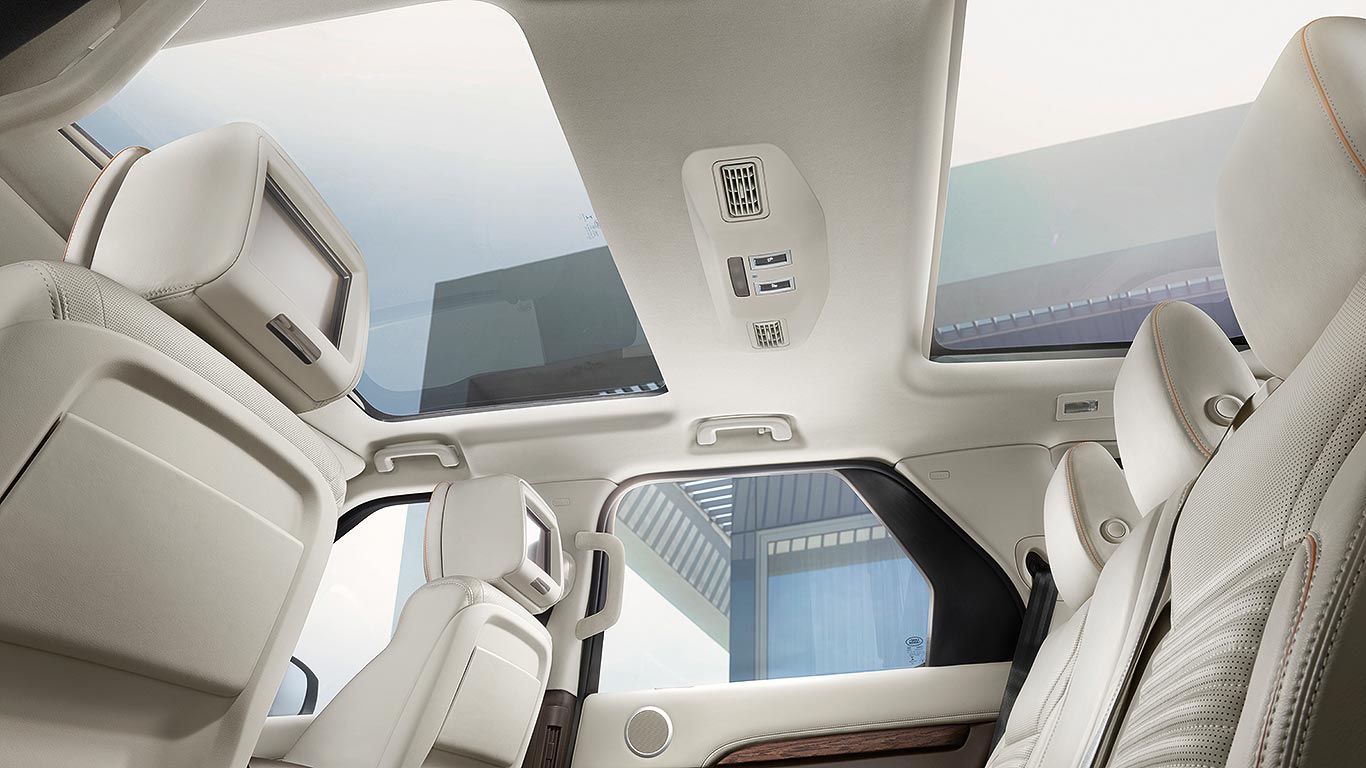
A massive panoramic roof is standard on SE models and above – that’s one up from base S, meaning most Discoverys will have the same light, airy feel that’s always been a feature of the model. It’s a tall machine, but standard air suspension on all can be dropped by 40mm to make it easier to get in and out. Up to four 12v sockets and nine USB sockets should keep multi-device families happy, and most models also have wi-fi.
Infotainment
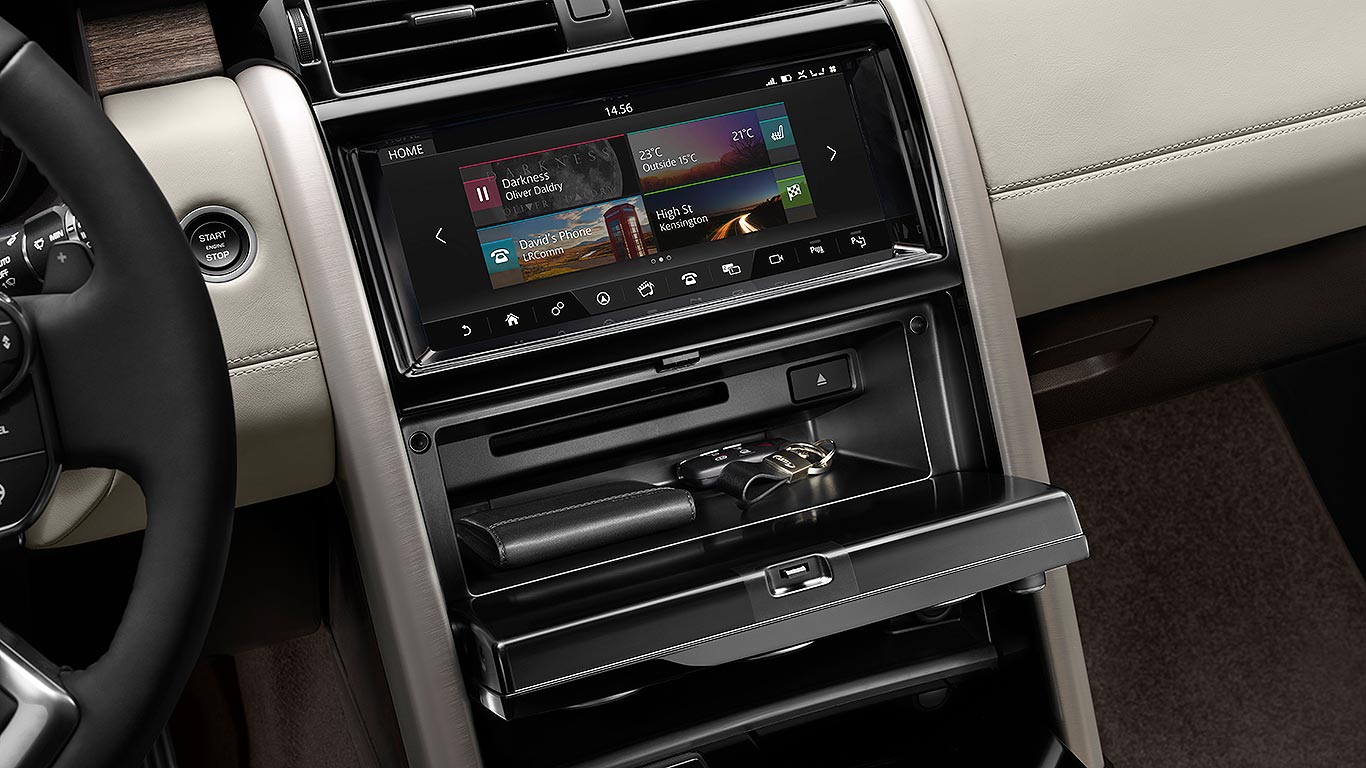
The current Discovery’s horribly dated sat nav is fixed here with new, fully-connected InControl Touch Pro infotainment system, complete with 10-inch touchscreen. It’s so feature-packed, the button count on the centre console is down by a third, making it appear more modern. The screen even folds down, revealing yet another stowage box behind. Because, yes, there are a lot of them…
Out-of-car comms
Owners will even be able to communicate remotely with their new Discovery, courtesy of JLR’s clever smartphone app. Not all rivals offer this, and it’s functionality the Discovery has previously only been able to dream of. Range Rover sophistication is now available on the family-friendly Land Rover.
Does it off-road?
If you’re a die-hard fan, you’re at this stage probably panicking. Has Land Rover destroyed the Discovery’s bulletproof go-anywhere ability? Not one bit. A massive 200mm increase in wading depth alone – up to 0.9m – is evidence of that. The 283mm of ground clearance is up 43mm and other metrics simply “put Discovery in a class of its own,” says Land Rover. The all-terrain ability is simply described as “supreme”.
Off-road-ready
The suspension has an almost ridiculous 500mm of wheel articulation and a standard two-speed transfer box means all models offer high- and low-range gears (and the driver can switch between them at speeds of up to 37mph). The Land Rover All-Terrain Progress Control ‘off-road cruise control’ is also available, as is tech wizardry that helps it pull away smoothly even on virtually grip-free surfaces (perfect for sudden wintery British snowfall).
Engine insight
What’s under the bonnet? Because it’s now all-aluminium, greener and cleaner engines can be fitted. The entry unit is actually a 2.0-litre turbodiesel, producing 240hp and returning a stonking 43.5mpg. But it can also do 0-62mph in 8.3 seconds, making it as fast as the old 3.0-litre V6 Discovery, despite being so much more efficient. There will also be a 258hp 3.0-litre V6 diesel and a 340hp 3.0-litre supercharged V6 – yes, that is the engine from the Jaguar F-Type… All engines use a world-class ZF eight-speed automatic.
Smooth stuff
Double wishbone air suspension will mean the Discovery is transformed on the road, promises JLR dynamics guru Mike Cross. “We set out to deliver improved cornering dynamics with better body control than before – but we knew this couldn’t come at the expense of Discovery’s legendary ride quality.” It sounds like it’s going to drive in a way old Discoverys could only dream of. Oh, and it still leads the class with a 3.5-tonne towing weight, with Land Rover introducing semi-autonomous Advanced Tow Assist tech that takes the pain out of parking a trailer.
Safe stuff
Family-focused cars must sweat on safety, so Land Rover’s fitted a plethora of electronic kit to hopefully keep Euro NCAP happy. The old Discovery perhaps used its enormous weight to shrug off crashes, but the new one is way more sophisticated than that. All the cameras on board will autonomously help you avoid crashes, too.
Price walk
So how much does it all cost? From £43,493 for the base Discovery S, with the SE moving up to £49,495. An HSE costs from £56,995 (the V6 is £3,000 more) and the ultra-plus Discovery HSE Luxury costs £62,695. There’s also a limited-edition Discovery First Edition, with a mass of kit and special launch colour schemes. Just 600 are to be sold in the UK, each costing £68,295.
New 2017 Land Rover Discovery: verdict
Has Land Rover nailed the high-tech new Discovery? It certainly seems to have. This is Land Rover’s big family-friendly star car and the interior seems uncommonly well optimised for that role. It’s roomy, comfortable and set to be plush and luxurious like no Discovery before. It’s also all-aluminium, so much lighter and potentially better to drive – and packed with the modern tech buyers now demand.
The styling suggests it’s now more of a Range Rover than a Land Rover, but the firm insists no off-road potency has been lost. If anything, it’s even more wildly capable here too. Which just leaves the sophisticated new appearance. How will die-hards react to it, and will traditionalists accept this is what Land Rover had to do in order to take on the Audi Q7 and Volvo XC90? Time will tell. Indeed, the launch event and Paris Motor Show debut will tell plenty.
We’ve briefed you about the highlights, now it’s over to you to click on and see more of the Discovery, and make your own first impressions of this vitally important new Land Rover. Over to you…
The new Volkswagen I.D. all-electric concept car has been revealed ahead of the Paris Motor Show 2016. With a remarkable claimed range of between 250 and 373 miles, it’s the first in a new era of post-dieselgate cars from the German giant.
The design is intentionally minimalist: the Volkswagen I.D. is intended to be a mainstream electric car, just as the Golf is a mainstream conventional car. It’s what’s beneath the surface that’s really significant here: a completely new architecture that’s radical enough to give a range equal to a normal petrol car. Volkswagen is calling this MEB – that’s ‘Modular Electric Drive’.
Volkswagen driverless cars: “they will happen”
Herbie goes bananas: the 205mph VW Beetle
Paris Motor Show on Motoring Research
It’s not only all-electric either: the Volkswagen I.D. also demonstrates a fully automated self-driving mode that the firm says will launch on the market in 2025.
The I.D. won’t just be a solus electric car – its arrival in 2020 will make it the first in an entire fleet of all-new Volkswagen electric cars, all of which will be “highly innovative”.
You can expect all future Volkswagen electric cars to carry the styling cues seen on the I.D. concept car – the firm says it’s an entirely new design DNA just for electric cars. As for the I.D. itself, Volkswagen is firmly pitching it as “a compact electric car in 2020, parallel to the Golf”.
The electric motor is rated at a punchy 170hp, more than enough for swift family hatchback performance. The range of up to 373 miles will be on a single battery charge, says Volkswagen.
Inside the Volkswagen I.D. the simpler and more compact packaging potential of an electric car has allowed the firm to create “an entirely new spatial experience” which it’s calling Open Space. For Open Space, think open-plan.
It becomes even more open-plan in that fully automated mode marked for launch in 2025: the steering wheel retracts fully into the dashboard when the car is driving itself.
The I.D. is a critical car for Volkswagen, which is still reeling from the dieselgate emissions crisis that’s affected millions of TDI diesels. Its strategic environmental response has been swiftly formulated and this is the first fruit of that plan. Volkswagen isn’t going to now sit back, either: by 2025, it aims to be selling one million electric cars like this a year.
A post-Brexit imposition of trade tariffs would not only threaten UK automotive industry jobs, but also put hundreds of thousands of jobs across Europe at risk, car industry leaders have said today.
Jaguar Land Rover director of corporate and strategy Hanno Kirner said that the firm employs 42,000 people, but estimates 300,000 positions depend on it – roles that are spread across Europe in the wider supply chain.
“Whatever the deal, if it involves tariffs, it will affect what we sell as well as what we buy – which would affect British and European jobs.”
Although more than half a million Jaguars and Land Rovers were built in the UK in 2015, 80% of them were exported. And 40% of the parts used to build them were purchased from Europe.
Kirner was also among car industry leaders calling for free movement of people for businesses. “Our jobs require skilled people,” he said, and Britain is not yet producing enough skilled engineers to meet them: just 21,000 engineers graduated from British universities last year, compared to 600,000 in India.
“How do we meet this skills gap? We must have access to global talent. It must be barrier-free.”
UK government: ‘We are listening to automotive’
Mark Garnier MP, Parliamentary Under Secretary of State for International Trade, was also at the pre-Paris Motor Show briefing event organised by the SMMT at the Eiffel Tower. He reassured industry leaders that government was listening – and UK automotive has a big opportunity to help shape any post-Brexit deal.
“We have to look after UK automotive; 1.6 million cars were built here last year and 80% of them were exported. We have an incredible jewel with the automotive industry, which employs 900,000 people. We really understand how important it is to the UK.”
“Brexit is not what the automotive sector wanted,” he said, but “I am delivering your messages, via the SMMT, to parliament.
“As we develop our approach to Article 50, all of these messages will form part of the negotiation process.”
The Renault-Nissan Alliance and Microsoft Corp are to collaborate on next-gen technology to help connect cars with their owners, other cars and the world around them – to make self-driving car ‘free time’ more productive.
The companies will work together on so-called ‘connected driving experiences’ using the Microsoft Azure intelligent cloud platform, helping Renault-Nissan roll out new services to customers faster.
These will cover futuristic new sat nav solutions, predicted maintenance, remote vehicle monitoring and over-the-air updates for critical car functionality.
More car news on Motoring Research
“A car is becoming increasingly connected, intelligent and personal,” said Ogi Redzic, Renault-Nissan Alliance senior vice-president, Connected Vehicles and Mobility Services. “Partnering with Microsoft allows us to accelerate the development of associated key technologies.
“We aim to become the provider of connected mobility for everyone with one single global platform.”
The news comes as Nissan prepares to launch the first generation of its self-driving autonomous car technology. Next year, the UK-built Nissan Qashqai will become available with Propilot, a Tesla-style autonomous drive feature: coming generations will quickly follow, says Nissan, offering ever-greater self-driving abilities.
There will be almost a dozen Renault-Nissan Alliance vehicles on sale with autonomous driving technology by 2020 – and the new partnership with Microsoft should help newly-liberated drivers make better use of their in-car free time, say the two companies.
What will connected cars offer?
Microsoft and the Renault-Nissan Alliance say they want to roll out infotainment services and location-based services that:
Let drivers personalise – and protect – their settings
Project the vehicle and utilise ‘geofences’
Bring Microsoft productivity into Renault and Nissans
Access over-the-air updates
Remotely monitor the car
Allow car makers to deliver unique features to customers
Let drivers better stay in touch with others
“While the connected car experience is in its infancy,” said Microsoft’s Jean-Phillippe Courtois, “we believe there’s so much potential to dramatically change the industry.
“This collaboration will bring a new standard to connected cars.”
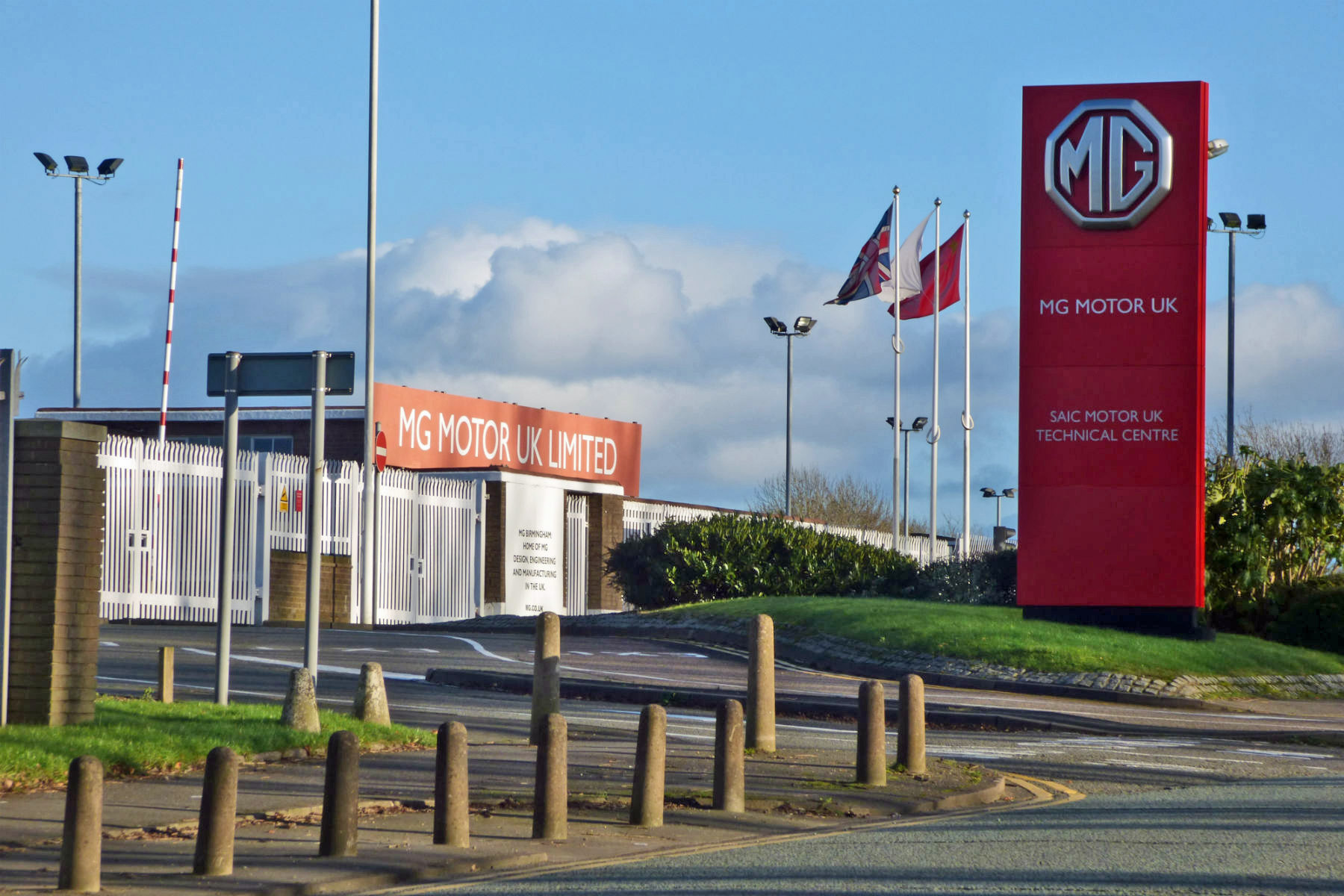
MG Motor’s Chinese owner SAIC has announced it is ending car production at the firm’s Longbridge plant in the West Midlands.
The manufacturer resumed production at the ex-MG Rover factory in 2011, assembling the MG6 and later MG3.
Get FIVE years’ 0% finance on an MG3 or MG6
2016 MG GS review: can an MG be an SUV?
More car news on Motoring Research
Although most of the production work was already carried out in China, the cars were assembled at Longbridge and sold with the legendary MG badge.
But now, MG’s owners says the historic plant would “no longer be required”, with the cars produced entirely in China.
The firm says it only expects to make around 25 redundancies, while jobs in sales, marketing and after-sales will remain unaffected.
MG Motor UK’s head of sales and marketing, Matthew Cheyne, told the Birmingham Mail: “With efficiency and flexibility both key to long-term market success, off-shoring vehicle production is a necessary business decision.
“Relocating to state-of-the-art overseas production facilities will allow faster access to product and help to meet ever-increasing customer demand, all while maintaining the highest levels of production quality.
“In addition, improving production scale efficiencies will support ongoing sales growth in the UK market – a key priority.”
The MG brand has struggled in the UK since production restarted under Chinese ownership in 2011.
The company has registered just 2,300 vehicles so far this year – an increase of 350 compared to the same time in 2015, but a long way behind other mainstream manufacturers.
It’s hoping the launch of its new MG GS SUV will help boost sales, while the poor-selling MG6 was recently dropped from the range.
MG enthusiast Malcolm Watson posted on Facebook: “I honestly didn’t believe that SAIC had any interest in keeping MG in the UK or keeping Longbridge going. But I did hope.
“In the end they got what they wanted. Modern engineering, modern designs, and for a pittance. A sad day indeed.”
More than 400 designers, engineers and other staff at the Longbridge SAIC Motor Technical Centre (SMTC) are not affected, the firm says.
 After months of teasing, the new Skoda Kodiaq SUV made its official public debut at the 2016 Paris Motor Show.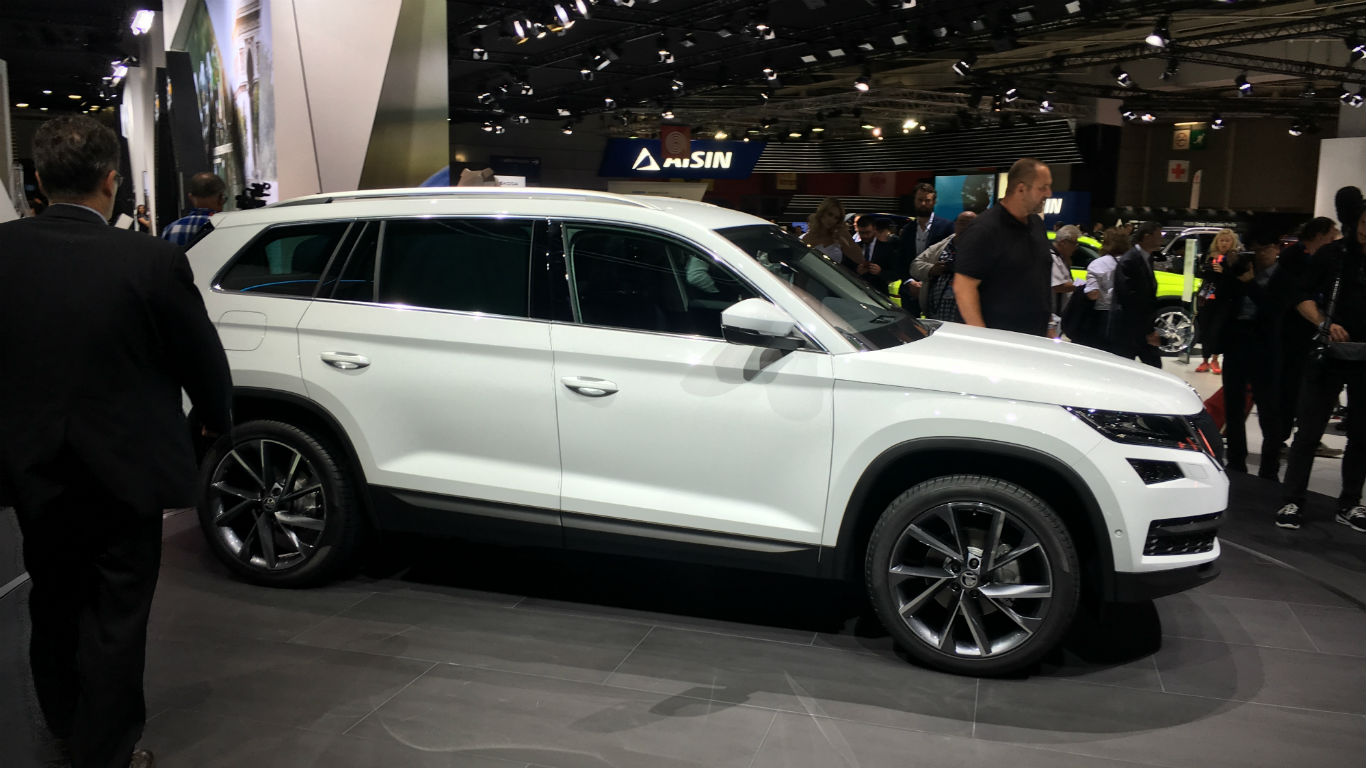
 In case you hadn’t noticed, the 2016 Paris Motor Show is underway. We’re reporting live from the show, which means we can show you all the cars in one rolling mega-feature. We do the walking, so you don’t have to.














 An all-new Honda Civic Type R will go on sale in 2017 and the Japanese firm is previewing the new hot hatch with a bold Type R Prototype at the Paris Motor Show.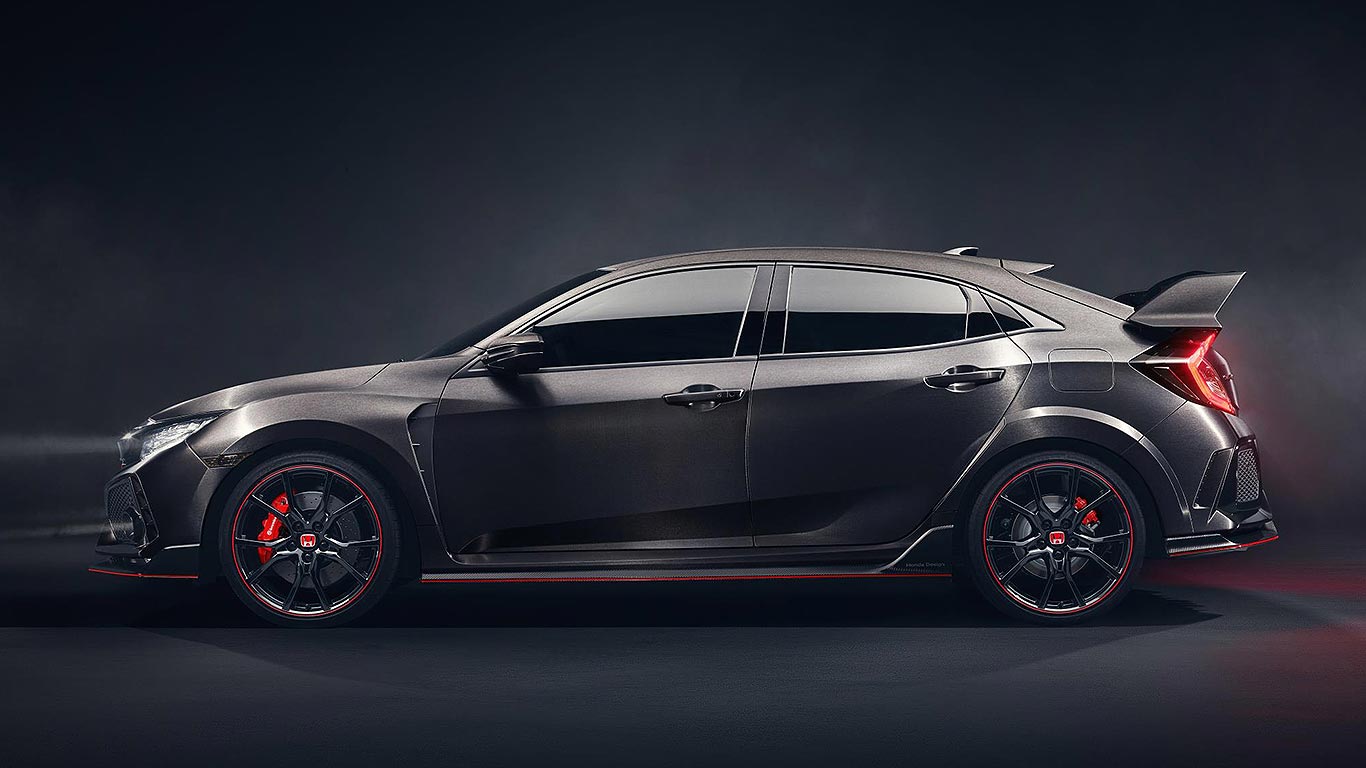

 Land Rover has revealed the all-new Discovery ahead of sales beginning in spring 2017 – and it is already claiming it is “the best family SUV in the world”.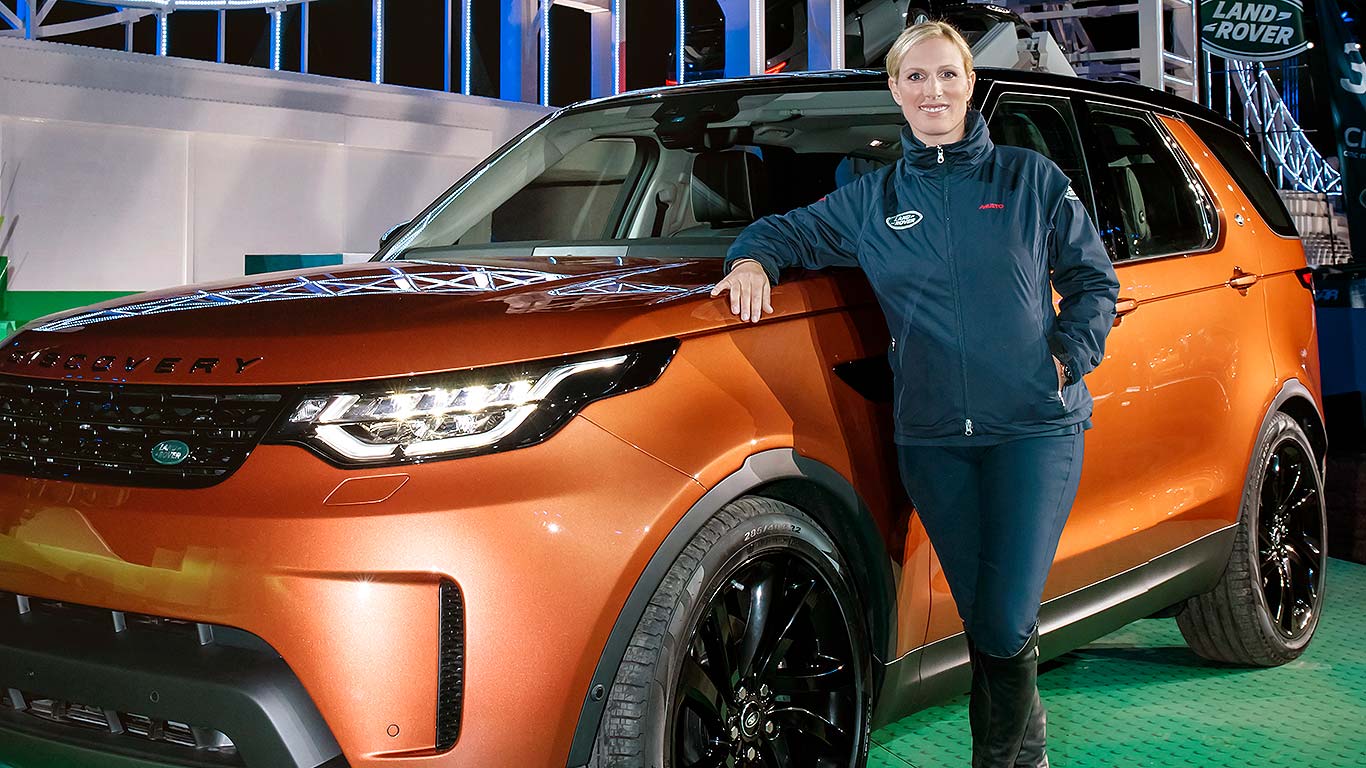
 The new Volkswagen I.D. all-electric concept car has been revealed ahead of the Paris Motor Show 2016. With a remarkable claimed range of between 250 and 373 miles, it’s the first in a new era of post-dieselgate cars from the German giant.
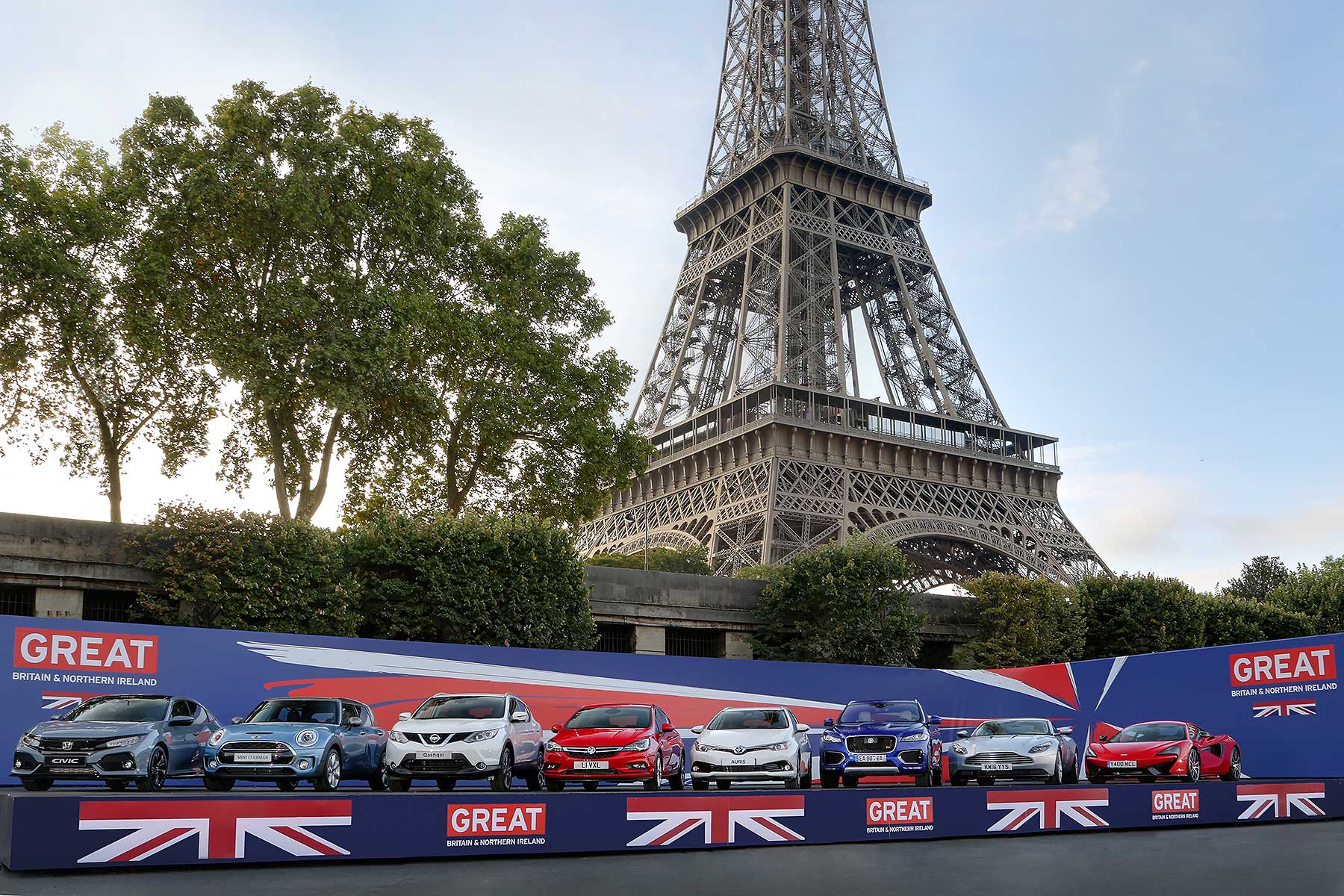 A post-Brexit imposition of trade tariffs would not only threaten UK automotive industry jobs, but also put hundreds of thousands of jobs across Europe at risk, car industry leaders have said today.
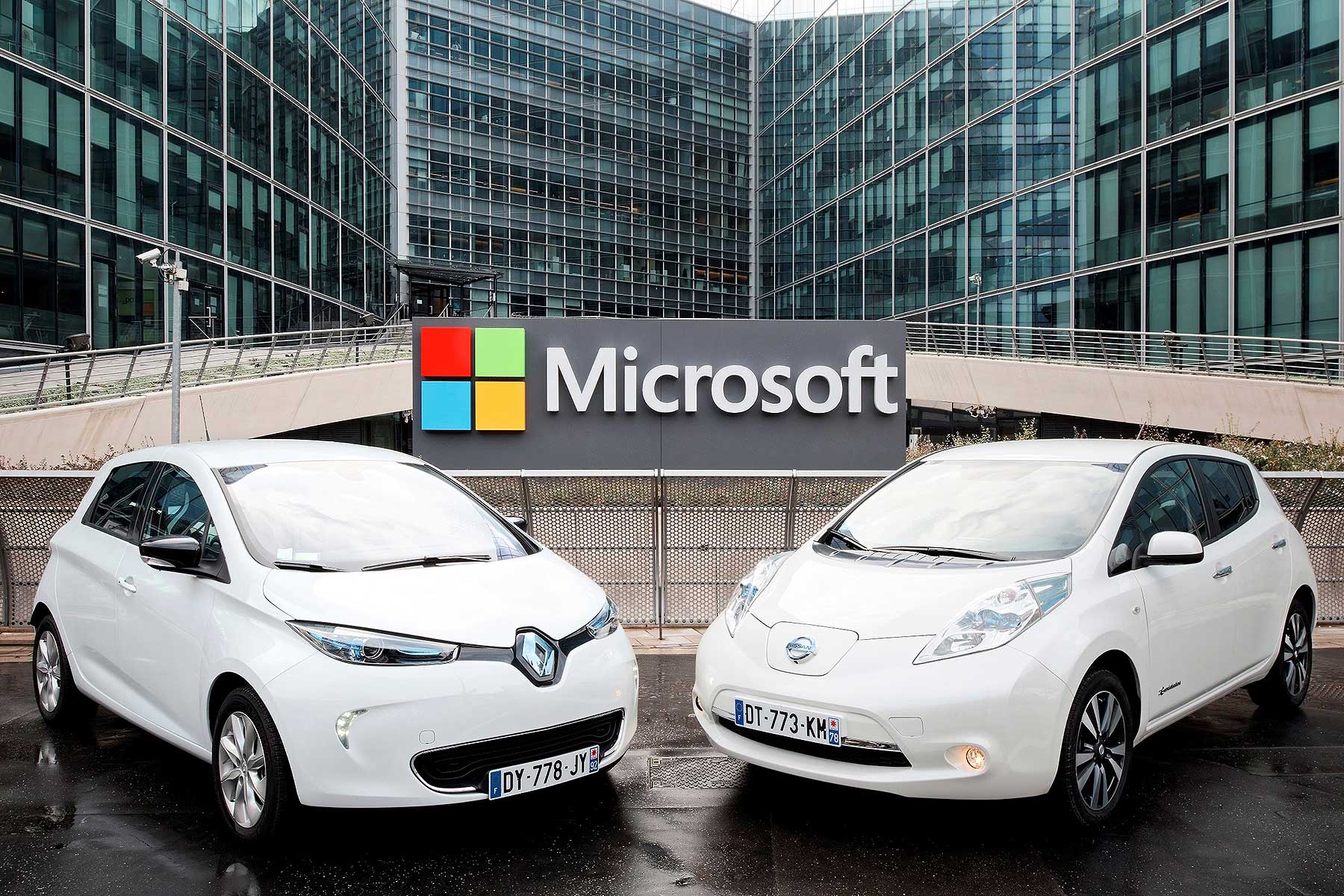 The Renault-Nissan Alliance and Microsoft Corp are to collaborate on next-gen technology to help connect cars with their owners, other cars and the world around them – to make self-driving car ‘free time’ more productive.