Home Blog Page 482

TRUE Rating ‘NCAP for car emissions’ launched

0

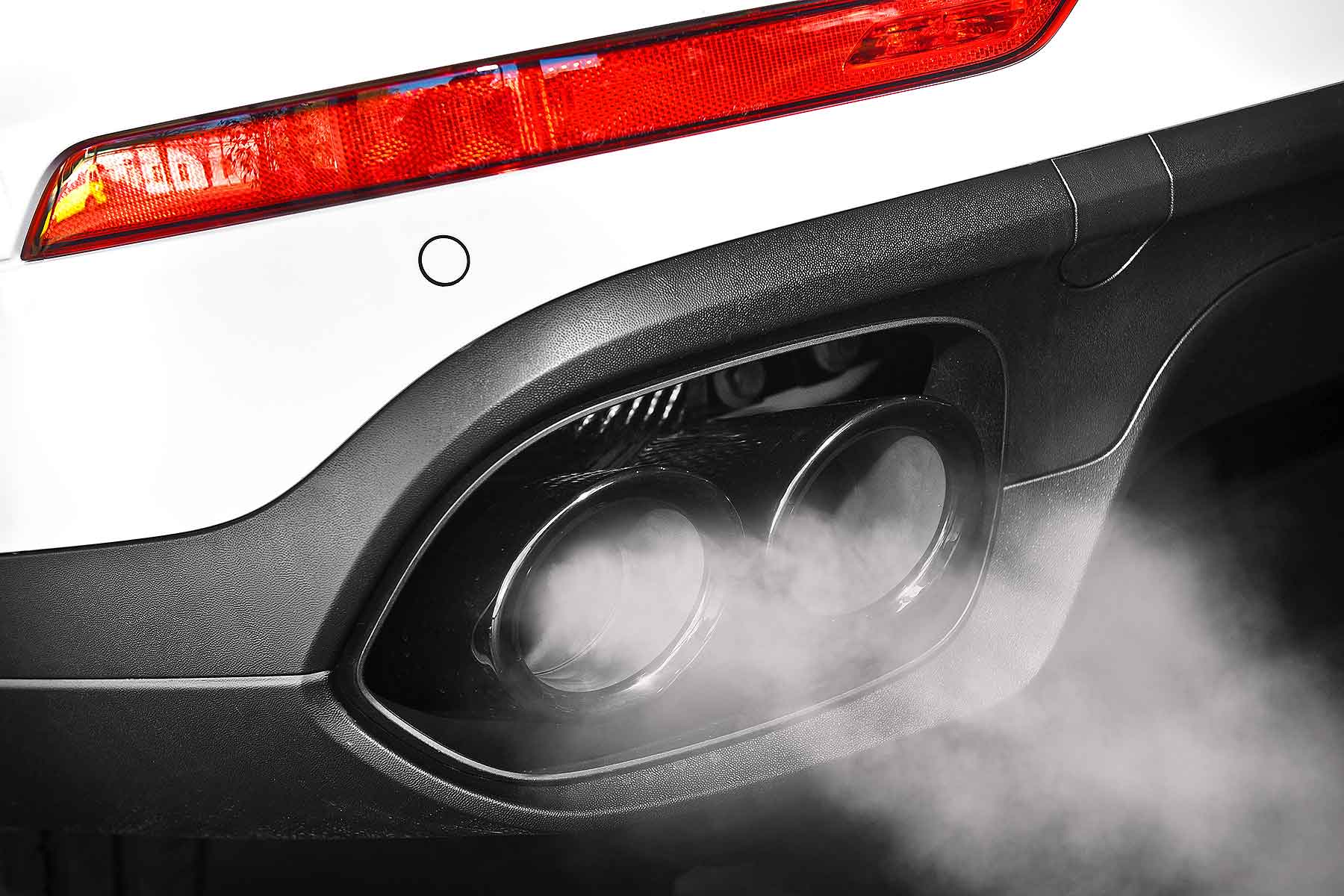
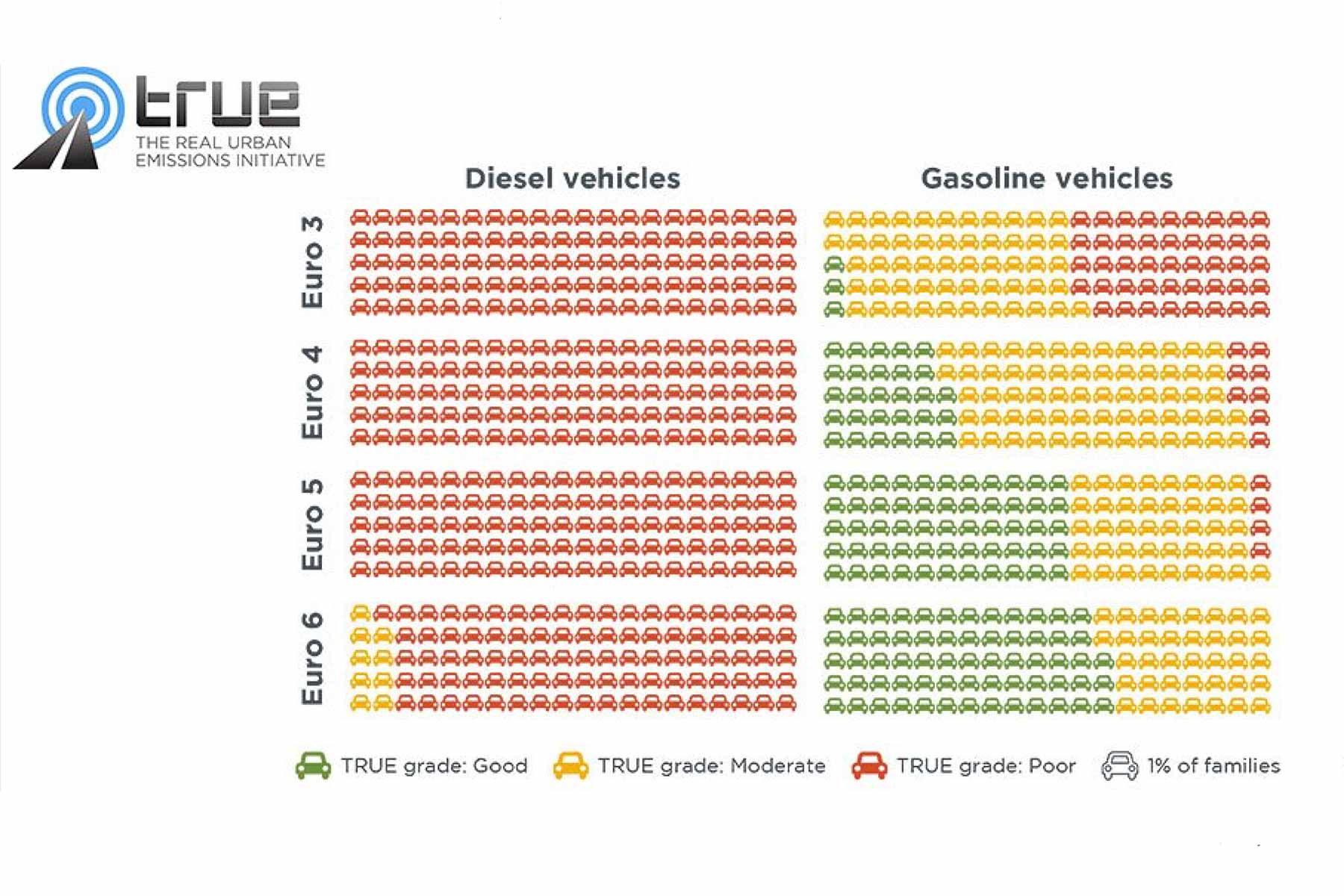
Tailpipe emissionsThe FIA Foundation has teamed up with a number of partners to introduce a new real-world vehicle emissions rating system called the Real Urban Emissions (TRUE) Initiative. It hopes this will become an NCAP-style rating for car exhaust NOx emissions – and it’s bad news for all but the very newest diesel cars as they ALL score a worst-possible red ‘poor’ score.

  • The most economical new cars in 2018

The International Council on Clean Transportation (ICCT) has developed the TRUE Rating, based on real-world assessments of, it claims, more than 700,000 vehicles. Almost 5,000 individual models in Europe were assessed, by using remote-sensing equipment situated by the roadside. 

Incredibly, every single Euro 3, Euro 4 and Euro 5 diesel measured was given a poor rating, because of excessive NOx emissions. Even the latest, greenest Euro 6 vehicles, a standard introduced in 2014, emitted twice the legally-permitted levels of NOx. Other older Euro 6 diesels emitted four times the legal limit.
TRUE rating

“Nearly all diesel vehicles on European roads received a ‘poor’ rating, meaning they exceed the Euro 5 diesel NOx emissions limits introduced in 2009,” said the organisation.

It’s much better news for petrol cars, though. Only the oldest Euro 3 cars (from 2000-2005) scored a high number of poor ratings; not a single Euro 6 petrol car was given a poor rating, and the majority of them received a green ‘good’ score.

The TRUE Rating currently only assesses vehicle NOx emissions, but will be expanded in the future to include particulates, carbon monoxide, and hydrocarbon emissions.

Mike Hawes, chief executive of the UK’s Society of Motor Manufacturers and Traders, said that “differences between results fro­­­m historical official laboratory emissions tests and those performed in the ‘real world’ are well known.

“However, September 2017’s introduction of the more onerous WLTP lab test plus, for the first time, on-road testing, which measures emissions direct from the tailpipe in everyday and extreme driving conditions, means that all new car models now meet the world’s toughest and most accurate emissions measurement regime.”

Every new generation of car emits “significantly lower pollutant emissions. This is acknowledged by the report, and consumers can be assured that new cars on sale today are the cleanest ever and fully compliant with EU emissions standards.”

The True Rating splits real-world vehicle emissions into three categories – ‘good’ is green, ‘moderate’ is yellow, ‘poor’ is red. The scores equate to the following levels of real-world NOx emissions: 

  • Green: less than 90mg of NOx per kilometre
  • Yellow: 90-180mg of NOx per kilometre
  • Red: more than 180mg of NOx per kilometre

The new database allows motorists to search by make and model; BMW is the only manufacturer to receive a ‘moderate’ score for its diesel cars, say the developers of the emissions database. 

U.S. organisation the ICCT developed the TRUE rating, and is now working in association with the FIA Foundation, Transport & Environment, C40 Cities and Global NCAP. 
Advertisement

Toyota boosts scrappage offers on its cheapest cars

0

Toyota YarisThe Toyota scrappage scheme has, since its launch in September 2017, taken more than 7,000 old cars registered up to June 2010 off the road. 40 percent of customers have chosen a fuel-efficient Aygo… and now Toyota’s making it even more appealing by upping the scrappage saving on the city car.
Toyota scrappage scheme customers now get an extra £500 incentive, which takes the total saving up to £2,000. Why the generosity? Because these are outgoing models; the facelifted one will be launched later this year. That’s why the saving is only available in June. Still, it’s a generous saving on a car priced from £8,995.

It means, if you’ve owned your old car for six months or more, a Toyota Aygo could be yours from £6,995.

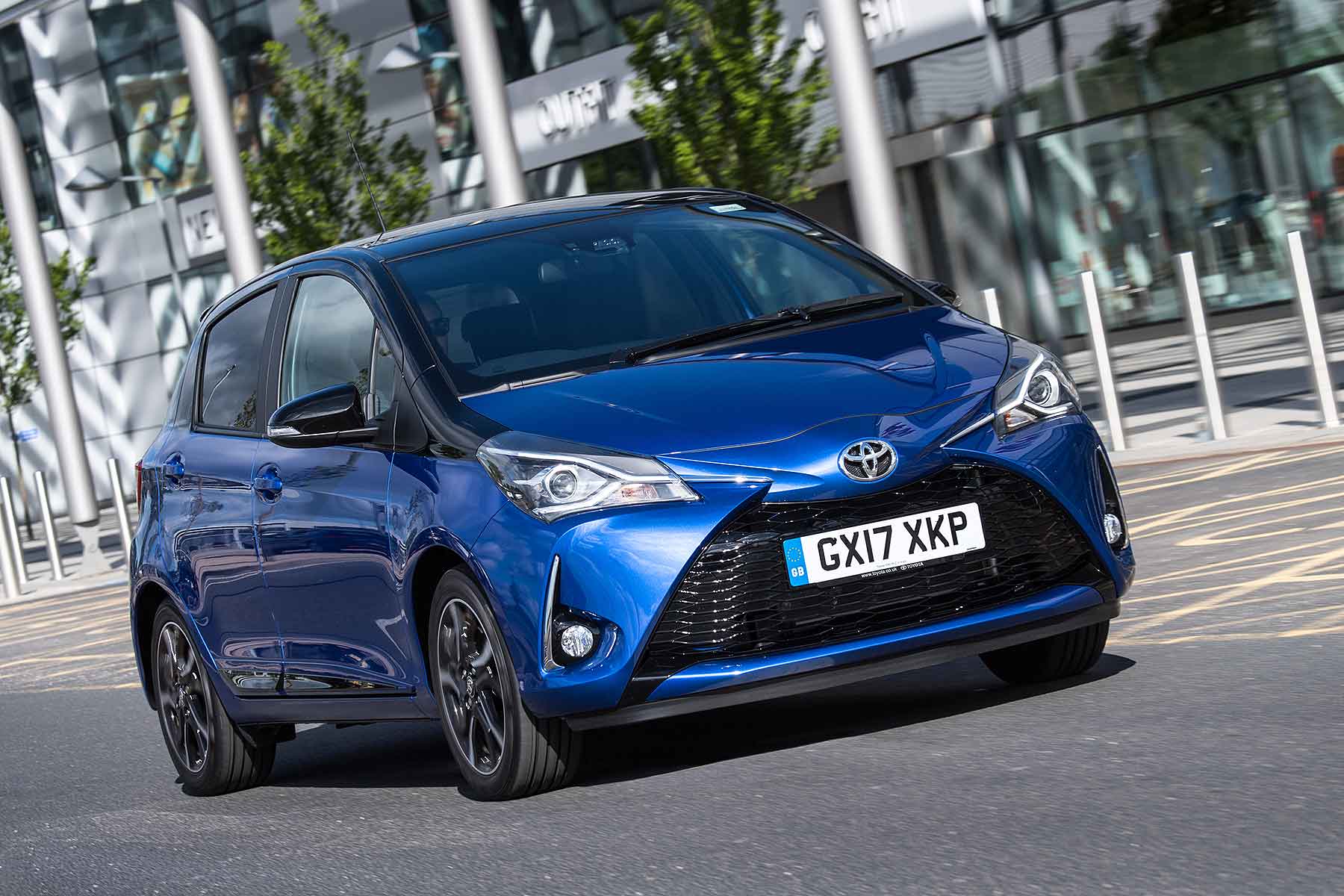
Toyota has also introduced the Yaris Hybrid onto the scrappage scheme savings list. One of Britain’s most fuel-efficient cars, Toyota’s giving a £1,500 saving on this model; prefer a regular Yaris and you’ll get £2,500 off.

Other scrappage savings include £3,000 off an Auris Hybrid, £2,000 off the Prius and £1,000 off the popular C-HR. All cars must be ordered by 30 June, and delivery must be made before 10 September.

Toyota adds that this might not be the only savings on offer, either: qualifying customers can still access Toyota’s finance offers, including zero percent APR and finance deposit contributions.  

65 percent of Toyota scrappage scheme customers have never bought a car from the firm before. Its GB operations director Mark Roden said: “The response to our scrappage initiative has been excellent, with many customers taking the opportunity to move into cleaner and more efficient Toyota hybrid electric models in place of their old petrol and diesel cars.”

Toyota scrappage savings: June 2018

  • Aygo: £2,000
  • Yaris petrol: £2,500
  • Yaris Hybrid: £1,500
  • Auris and Auris Hybrid: £3,000
  • Verso: £3,500
  • RAV4 and RAV4 Hybrid: £2,500
  • C-HR: £1,000
  • Avensis: £3,500
  • Prius: £2,000
  • GT86: £2,000
  • Land Cruiser: £4,000
  • Hilux: £2,000
  • Proace: £2,000
Advertisement

New BMW X5 SUV goes large for 2018

0

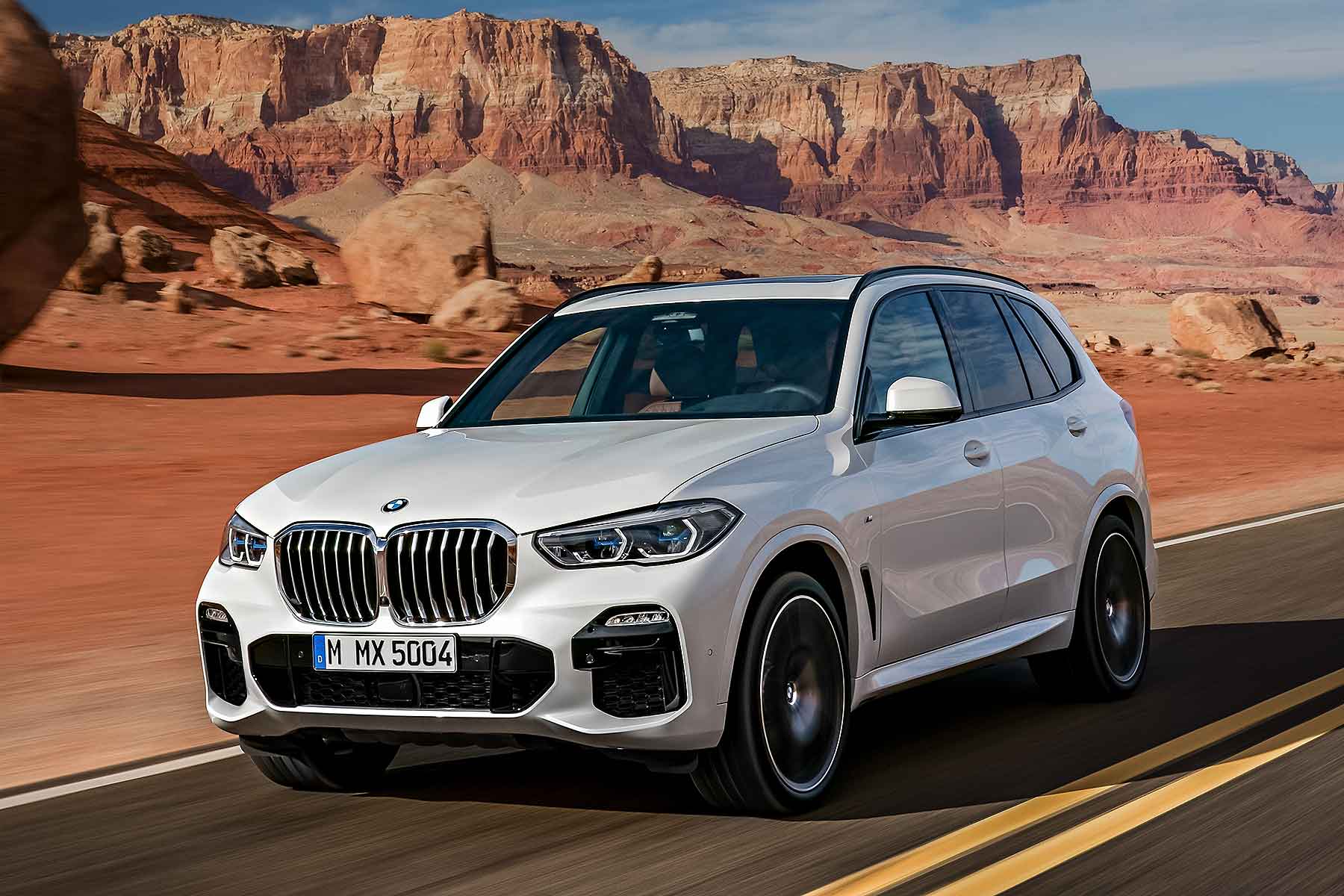
New 2018 BMW X5The new BMW X5 has grown in every direction to provide a sterner challenge to the latest Audi Q7 and underline its status as BMW’s luxury SUV all-rounder. More imposing than ever, the imposing new X5 will go on sale in the UK from June 2018, with prices starting from £56,710.
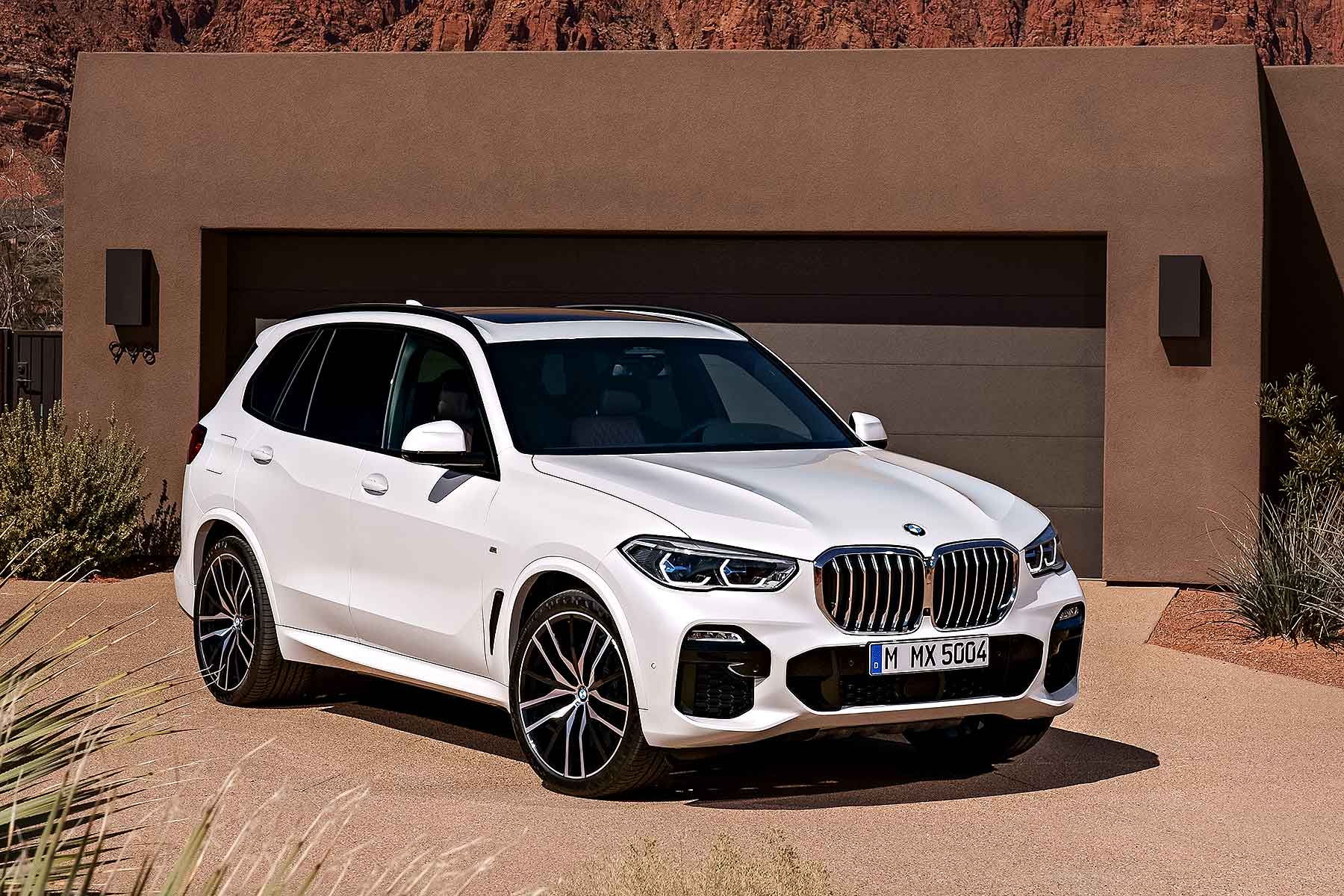
The X5’s all-round growth is notable: it’s 36mm longer, a hefty 66mm wider, has a 42mm longer wheelbase and even height is up 19mm. Space inside is more generous both for passengers and their luggage, says BMW – particularly in the seven-seat version that will be offered from the end of 2018.

New 2018 BMW X5Design is cleaner and more paired back than previous X5s, with “elegant poise and muscular authority”. You won’t be able to get wheels smaller than 19-inches; they go up to 22 inches. xLine trim has matt aluminium styling cues, while the M Sport paints all the tough plastic parts of the X5 in body colour. An M50d variant turns the wick up further.

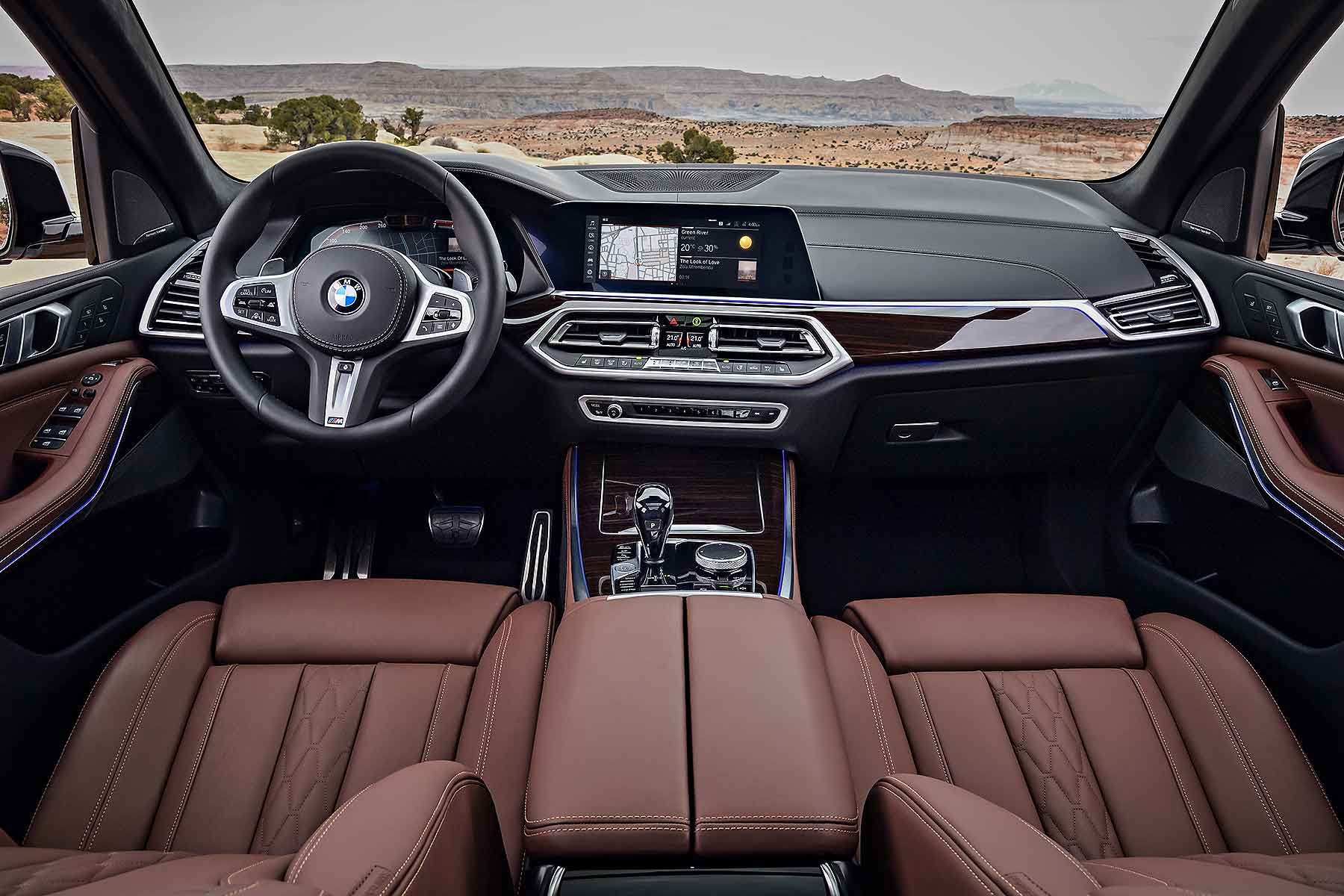
There’s a fully electronic instrument panel inside, and BMW’s redesigned the centre console and climate controls too: plenty of showroom time will be necessary before departing in the new X5. Four different colours of leather are available even with on the standard model, which also includes sports seats; comfort seats are optional.

New 2018 BMW X5

Passengers are well catered for. The panoramic roof is 30 percent larger, four-zone air conditioning features, and BMW’s been inspired by luxury partner Rolls-Royce with the Sky Lounge roof: it “provides LED light spread evenly across the glass surface to illuminate more than 15,000 graphic patterns and generate a display reminiscent of a starlit sky”.

Those in the rear seats can be treated to an infotainment system composing two 10.2-inch HD touchscreens, Blu-ray DVD player, dual USB ports and the use of media sources independent of those in front. Those in the front can enjoy thermo-cupholders that keep drinks either cold or hot; CraftedClarity glass is a fancy Volvo-like feature for the driving controls.

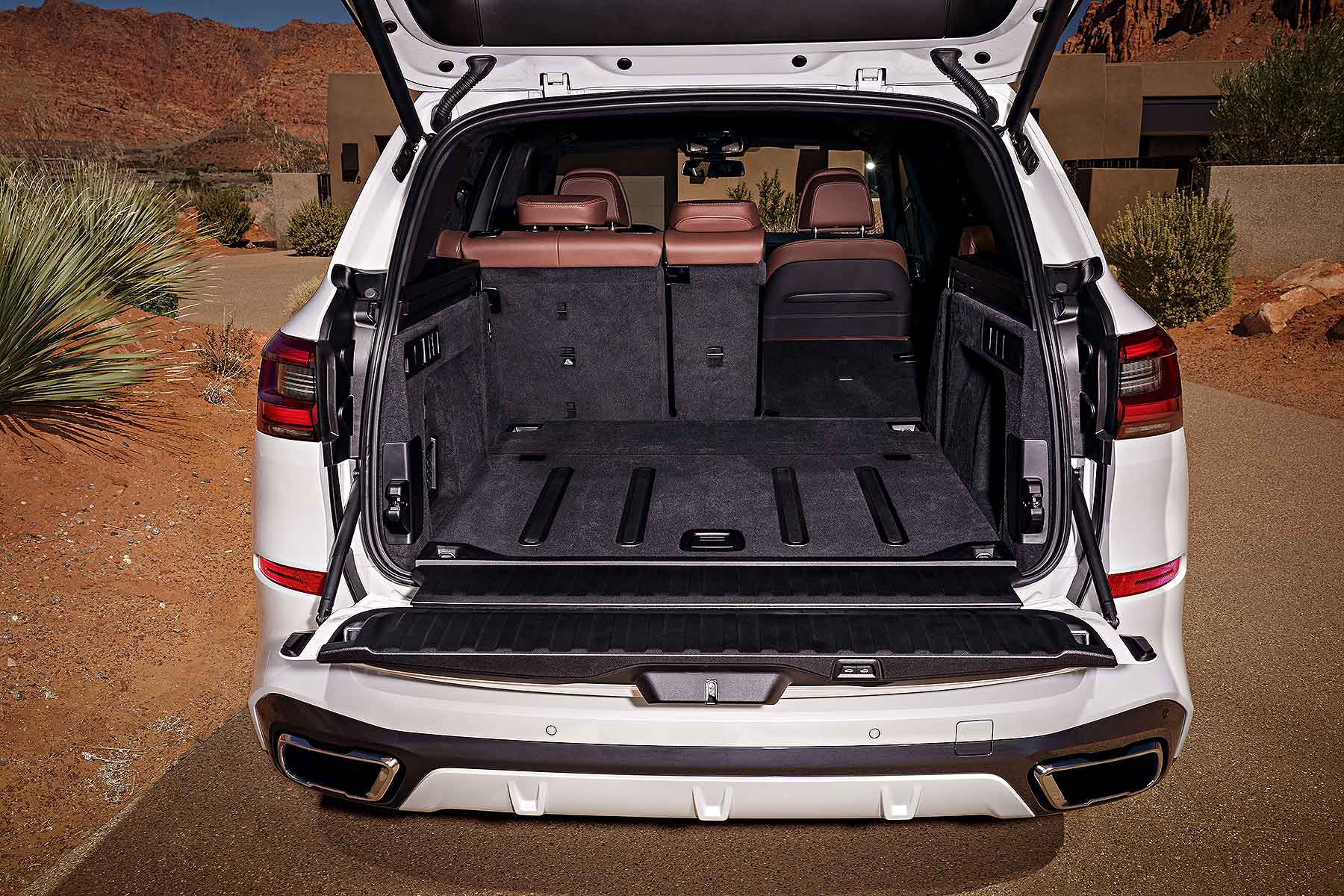
Boot space? 645 litres with the seats up, 1,860 litres with them down. The two-section tailgate can be electrically operated and the third-row seats can be electrically powered too – and a button in the boot will remotely slide the middle-row seats back and forth, and drop down the backrests of all five seats.

New 2018 BMW X5

Engines? The xDrive30d has a 265hp 3.0-litre turbodiesel, capable of 0-62mph in 6.5 seconds and 47.1mpg. It will be the best-seller. The 340hp xDrive40i is one for petrol fans, but although the 3.0-litre turbo does 0-62mph in 5.5 seconds, it also only averages 33.2mpg. The M50d quad-turbodiesel has 400hp, does 5.2 seconds to 62mph and averages 41.5mpg. All use an eight-speed auto, and all have ultra-capable xDrive all-wheel drive.

The new chassis, based on the exceptional platform already seen in the 7 Series and 5 Series, features two-axle air suspension as standard on the 30d and 40i models, and there’s no end of optional suspension technology, including active anti-roll Adaptive M suspension and an optional Off-Road package for the first time. Needless to say, there’s also a welter of driver assist systems, which are “another significant step towards automated driving”.

BMW has sold over 2.2 million X5s since it was launched in 1999; it believes the “even greater blend of premium luxury performance and comfort” will see that number grow yet further. 

2018 BMW X5: prices

xDrive30d xLine: £56,710

xDrive40i xLine: £58,100

X5 M50d: £70,690

Advertisement

New Audi Q8 revealed: luxury SUV targets Range Rover Sport

0

New Audi Q8

Audi’s growth strategy appears to be focused on climbing every sales mountain and fording every niche, which is why we’re faced with the imminent arrival of the Q8. Yes, it’s yet another SUV.

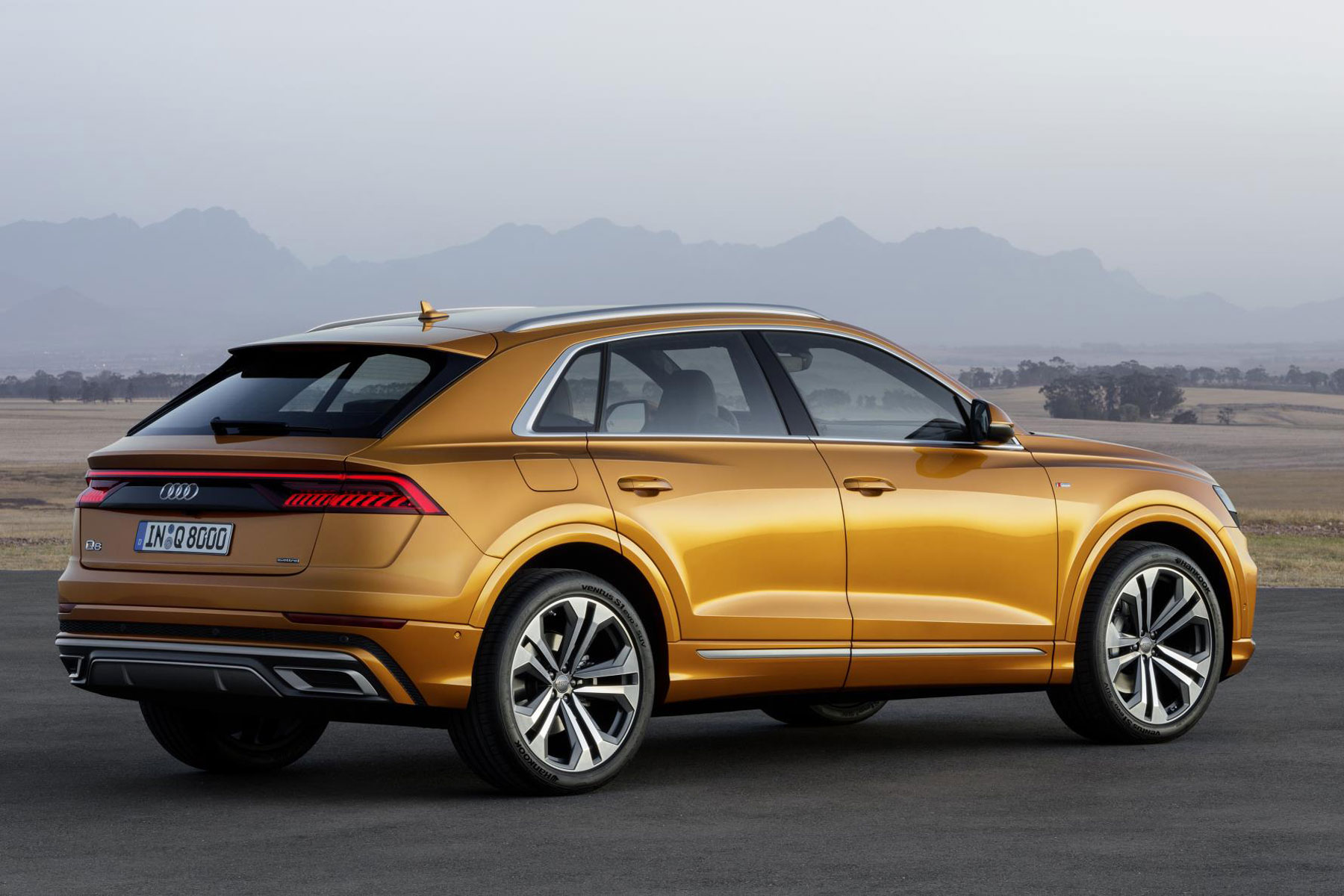
Although it’s based on the Q7, the new Q8 features a lower, coupe-like roofline, as Audi guns for the Mercedes-Benz GLE Coupe, Range Rover Sport and BMW X6.

In a nutshell, the Q8 boasts an interior and a level of technology influenced by the new A8 luxobarge, with a body that fuses “an elegant four-door luxury coupe with a large SUV”. You may or may not agree with the ‘elegant’ part of Audi’s statement, but you’ll almost certainly struggle to the grasp Ingolstadt’s claim that it echoes the original Quattro. Wait, what?

But we’re not here to be judge and jury on the latest vehicle to jump on the bandwagon – we’ll leave that for when we see it in the metal. Instead, we’ll pick the bones out of one of the longest press releases on record to bring you the facts that matter.

Audi Q8 rear

At launch, the Audi Q8 will be powered by a 3.0-litre six-cylinder turbodiesel engine developing 282hp and 442.5lb ft of torque. That’s enough to propel it from rest to 62mph in just 6.3 seconds before hitting a top speed of 144mph.

The engine features mild hybrid technology, enabling it to coast between 34mph and 99mph with the engine switched off, with a start-stop range that starts as low as 13mph.

Two further engines will become available in 2019, with the 50 TDI joined by a smaller 231hp 3.0-litre turbodiesel (45 TDI) and a 340hp 3.0-litre petrol (55 TFSI). No, we haven’t come to terms with Audi’s new naming strategy yet, either.

At 4,986mm long, 1,955mm wide and 1,705mm high, the Q8 is 66mm shorter and 40mm lower than the Q7, but 27mm wider than its stablemate. The hunkered-down, aggressive stance is enhanced by a set of 21-inch alloy wheels. Subtle, it isn’t.

Vorsprung durch Bling

Audi Q8 interior

Initially, all models will be available in S Line trim, but a new high-end Vorsprung edition will follow, offering Valcona leather, all-wheel steering, head-up display and – wait for it – 22-inch rims as standard. Vorsprung durch Bling.

In the meantime, standard kit includes adaptive air suspension, MMI Navigation Plus, Matrix LED headlights and three-dimensional daytime running lights, which are mimicked on the back, similar to the approach used on the new A8.

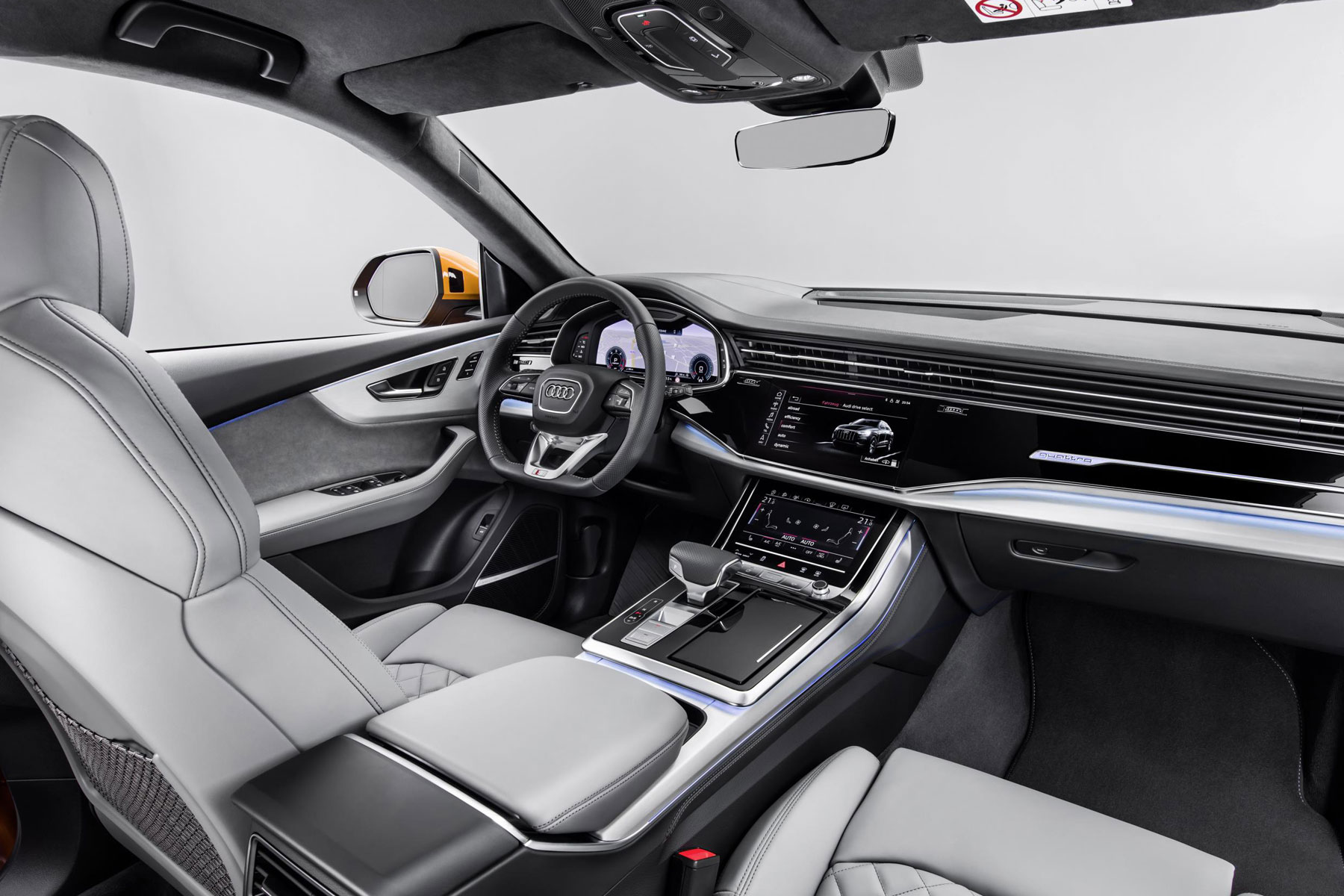
The interior also borrows heavily from the A8, featuring a clean and simple design, two large touchscreens and a choice of interior finishes.

Unlike the Q7, the Q8 will not be offered with a seven-seat option, but interior space is on a par with its longer and narrower sibling. Boot capacity with the rear seats in place is 605 litres, but this can be increased to 1,755 litres with the seats folded down. The tailgate opens and closes electrically, as you’d expect.

Naturally, Audi buyers will be offered the chance to select from many options, including a 23-speaker Bang & Olufsen 3D sound system to deliver music “exactly how it was recorded at the concert hall”. David Hasselhoff in crystal-clear clarity, which will be music to the ears of German drivers.

And, while The Hoff would invite you to jump in his car, the Q8 will offer drivers the opportunity to get out of the vehicle to park it using their smartphone. That’s one for the future, but in the meantime, Audi will offer four driver assistance packages, with a range of systems that all but drive the car for you. Who needs KITT, eh?

Prices have yet to be announced, but we’d expect the range to start from around £65,000. The Q8 will be manufactured in Bratislava, with the first deliveries expected in the summer.

Read more:

Advertisement

Diesel sales down a quarter as green cars hit new high

0

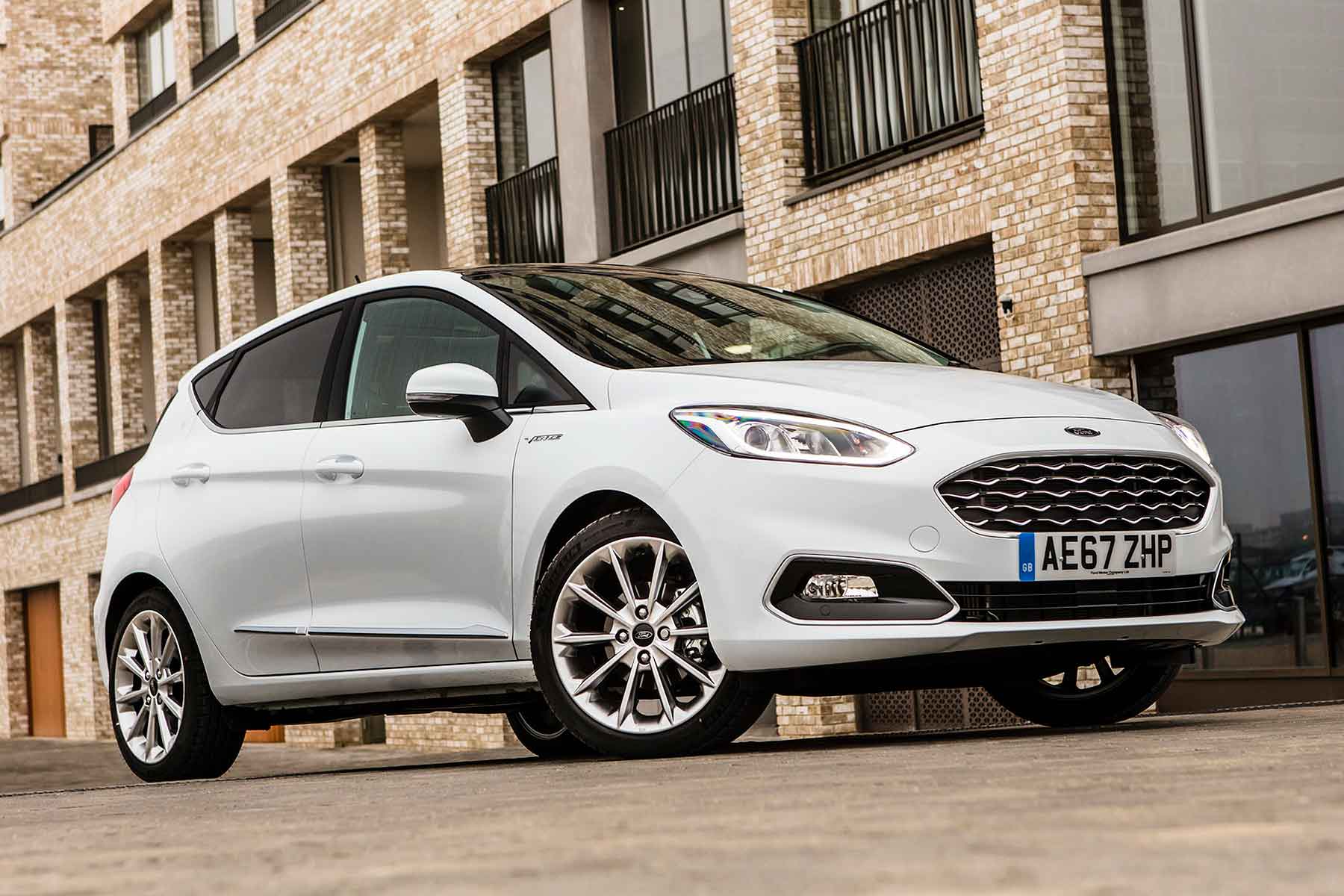
Ford Fiesta

New car registrations recorded a small 3.4 percent rise during May 2018, reports the Society of Motor Manufacturers and Traders (SMMT). However, this wasn’t enough to offset a year-to-date decline of almost seven percent. 

Diesel once again bore the brunt of consumers’ scorn with overall sales down 23.6 percent. That’s the 14th consecutive month of decline for diesel.

Petrol registrations were up 23.5 percent and alternative fuel cars (that’s electric and hybrid) rose by a third, albeit from a small base. Even so, the 5.8 percent market share of hybrids and plug-ins is a new UK record; 11,240 alternative-fuel cars were sold in May.

The AFV breakdown shows a 72.7 percent rise for plug-in hybrids, a 22.6 percent boost for hybrids, but a more modest 18.7 percent boost for EVs.

Private sales rose by 10.1 percent, up to more than 83,000 cars. By contrast, the business and fleet sectors, declined 9.6 percent and 0.7 percent respectively.

Superminis were the most popular type of new car (up six percent), while the hottest May on record resulted in a big boost for convertibles – up 11.7% year-on-year.

Mike Hawes, SMMT chief executive, said: “May’s growth, albeit on the back of large declines last year, is encouraging and suggests the market is now starting to return to a more natural running rate.

“Now it’s time for government officials to show common-sense,” he added. “To ensure long-term stability, we need to avoid any further disruption to the market, and this will require sustainable policies that give consumers and businesses the confidence to invest in the new cars that best suit their needs.

“Fleet renewal is the fastest way to improve air quality and reduce CO2, and this applies to hybrid and plug-in technologies as well as the latest low emission petrol and diesels which, for many drivers, remain the right choice economically and environmentally.”

May 2018 top 10 best-sellers

1: Ford Fiesta

2: Ford Focus

3: Volkswagen Golf

4: Nissan Qashqai

5: Volkswagen Polo

6: Vauxhall Corsa

7: Mini

8: Mercedes-Benz C-Class

9: Mercedes-Benz A-Class

10: Audi A3

Read more:

Advertisement

New 2018 Dacia Duster prices confirmed: from £9,995

0

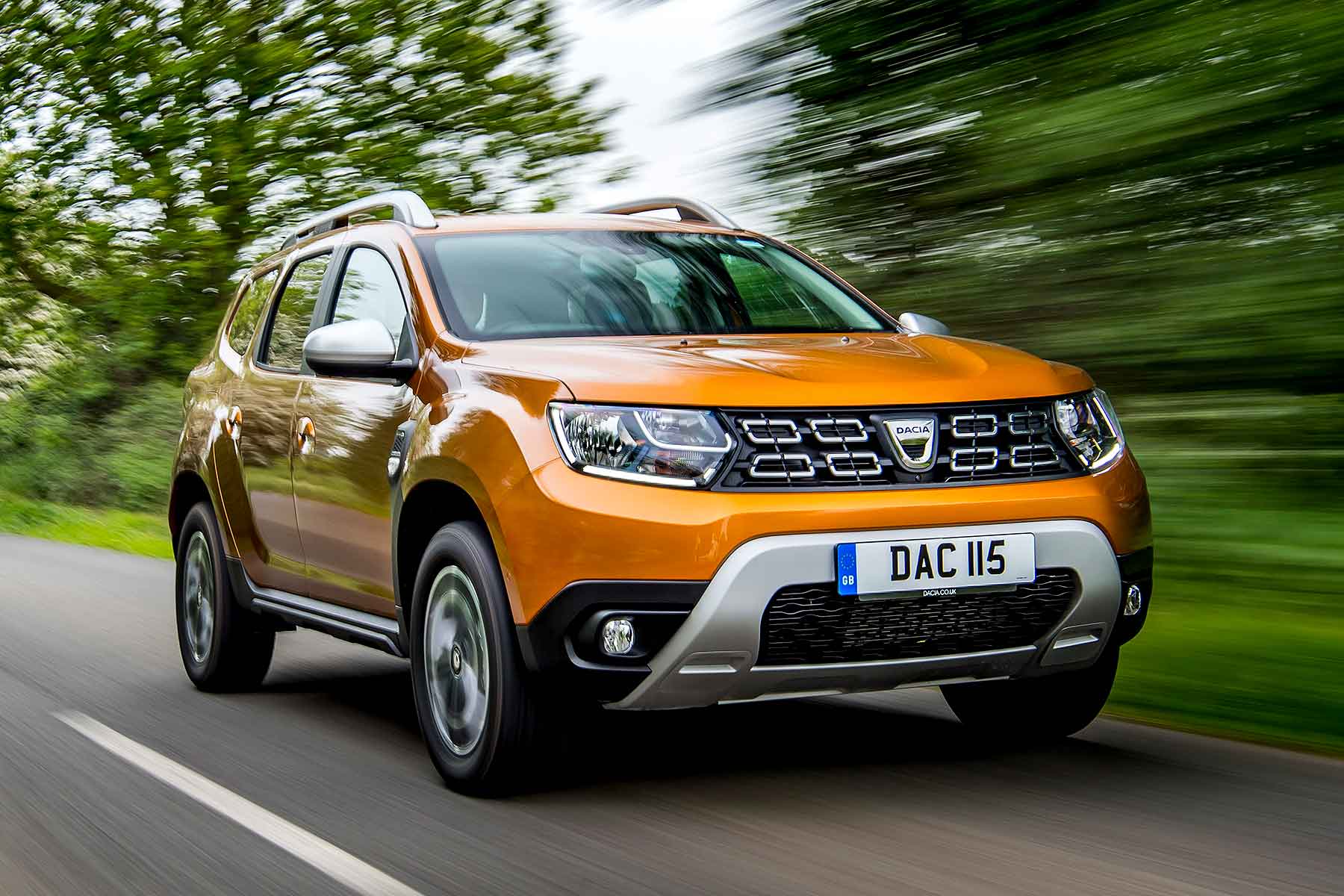
2018 Dacia DusterNew Dacia Duster prices start from £9,995, the firm has revealed ahead of ordering opening on 11 June 2018 – meaning the second-generation model is still Britain’s cheapest SUV.

First revealed at the 2017 Frankfurt Motor Show, the new model is finally arriving in the UK; Dacia says that every single body panel has changed, and the interior has been “totally revised” with more advanced onboard technology.

Complexity for consumers hasn’t increased though, insists the firm. “Dacia’s ethos is to keep things simple and no-nonsense.” The new trim line comprises Access, Essential, Comfort and Prestige.
Core features include LED daytime running lights, electric front windows, engine stop-start and emergency brake assist. But it’s the Essential, priced from £11,595, that’s expected to become the effective entry-level model: it includes 16-inch alloy wheels, body0coloured bumpers, DAB radio, Bluetooth – and air conditioning.

Comfort costs from £13,195; key extras include posher upholstery, leather steering wheel, rear parking camera, electric door mirrors and 7-inch MediaNav touchscreen infotainment with standard sat nav. The range-topping Prestige has 17-inch alloys, blind spot warning, keyless entry and climate control.
The engine range is even more simple: either SCe 115 petrol or Blue dCi 115 turbodiesel; the former has 4×2 and 4×4 options, but the diesel is front-wheel drive only. No Duster currently offers an automatic gearbox option.
Dacia says customers will feel clear benefits with the new Duster, not just the new styling. The power steering is 35 percent lighter, for example, interior noise has been halved and larger speakers mean the audio system sounds better.

In-cabin stowage is improved 20 percent, the infotainment screen is positioned 74mm higher on the dashboard and denser front seat foam is coupled with 20mm longer seat cushions. The driver’s seat has a greater range of height adjustment as well.

First UK deliveries of the new Duster begin from July.

2018 Dacia Duster prices

Version Price
Access SCe 115 4×2 £9,995
Essential SCe 115 4×2 £11,595
Essential SCe 115 4×4 £13,595
Essential Blue dCi 115 4×2 £13,595
Comfort SCe 115 4×2 £13,195
Comfort SCe 115 4×4 £15,195
Comfort Blue dCi 115 4×2 £15,195
Prestige SCe 115 4×2 £14,395
Prestige SCe 115 4×4 £16,395
Prestige Blue dCi 115 4×2 £16,395
Advertisement

Apple CarPlay to finally offer Waze, Google Maps

0

Apple CarPlay

Apple CarPlay is going to allow third party navigations systems such as Waze and Google Maps to use the iPhone-mirroring service, starting with the upcoming iOS 12 system upgrade, the tech firm has announced at its 2018 WWCD developer conference.

The move will fix a longstanding frustration with CarPlay: Apple Maps is less popular than its rival Google Maps, while many motorists swear by the traffic-dodging functionality of Waze. Both will now be accessible through the CarPlay Interface.

Apple hopes it will encourage more drivers to actively use CarPlay, rather than default to their own car’s navigation systems. Once they’re hooked into the mapping systems, it’s expected they’ll use other functions within the Apple iPhone system.

Apple describes CarPlay as “a smarter, safer way to use your iPhone in the car… [it] takes the things you want to do with your iPhone while driving and puts them on your car’s built-in display”. Many drivers have for years wanted to use Waze – an app designed for drivers – through CarPlay. At last, Apple has responded.

Most major vehicle manufacturers now offer CarPlay as standard-fit or (oddly, in the case of premium-brand Volvo) a cost-option, and those who don’t freely admit it’s coming soon. CarPlay rival, Android Auto, has for some time offered navigation using third-party apps such as Waze.

iOS 12 will launch as a system update for iPhone users in the autumn.

Advertisement

Confirmed: Jaguar I-Pace prices start from £58,995

0

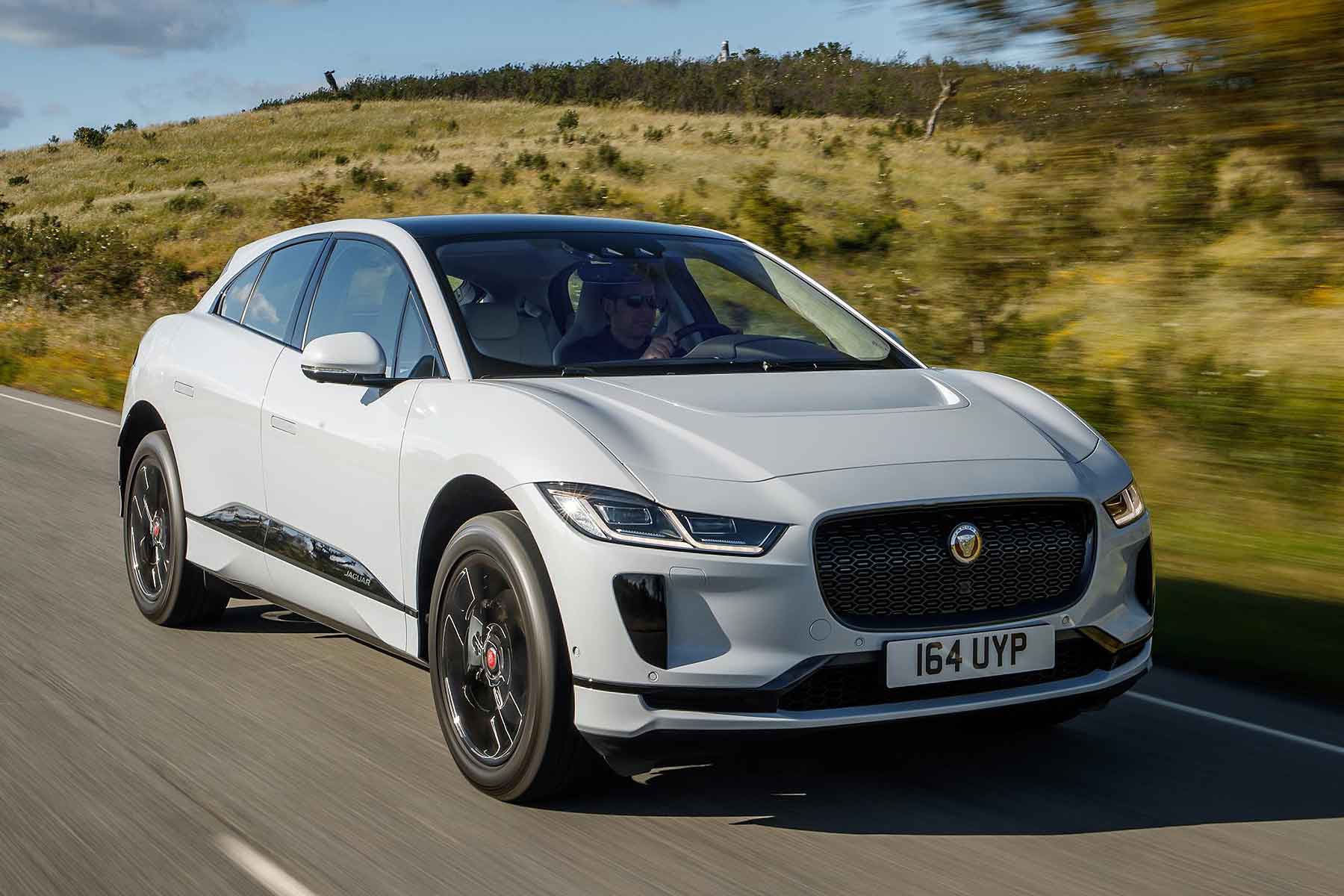
Jaguar I-Pace prices from £58,995The Jaguar I-Pace is been declared officially eligible for the government’s Plug-in Car Grant scheme AND the £500 Electric Vehicle Homecharge Scheme – which takes the transaction price down from £63,495 to £58,995 and helps make homecharging a lot more affordable. 

In being accepted onto the OLEV electric vehicle grant schemes, the I-Pace qualifies for the £4,500 Plug-in Car grant and the £500 ‘wallbox’ grant, which chips the starter price down from starting with a ‘6’ to opening with a ‘5’. 

Jaguar says it received written confirmation from officials earlier today, and confirms the new I-Pace is now included as an eligible vehicle on the list of low-emissions vehicles eligible for a Plug-in Car Grant. 

Because the I-Pace is a full EV with zero CO2 emissions and a range of more than 70 miles, buyers benefit from the ‘Category 1’ grant – the full £4,500. 

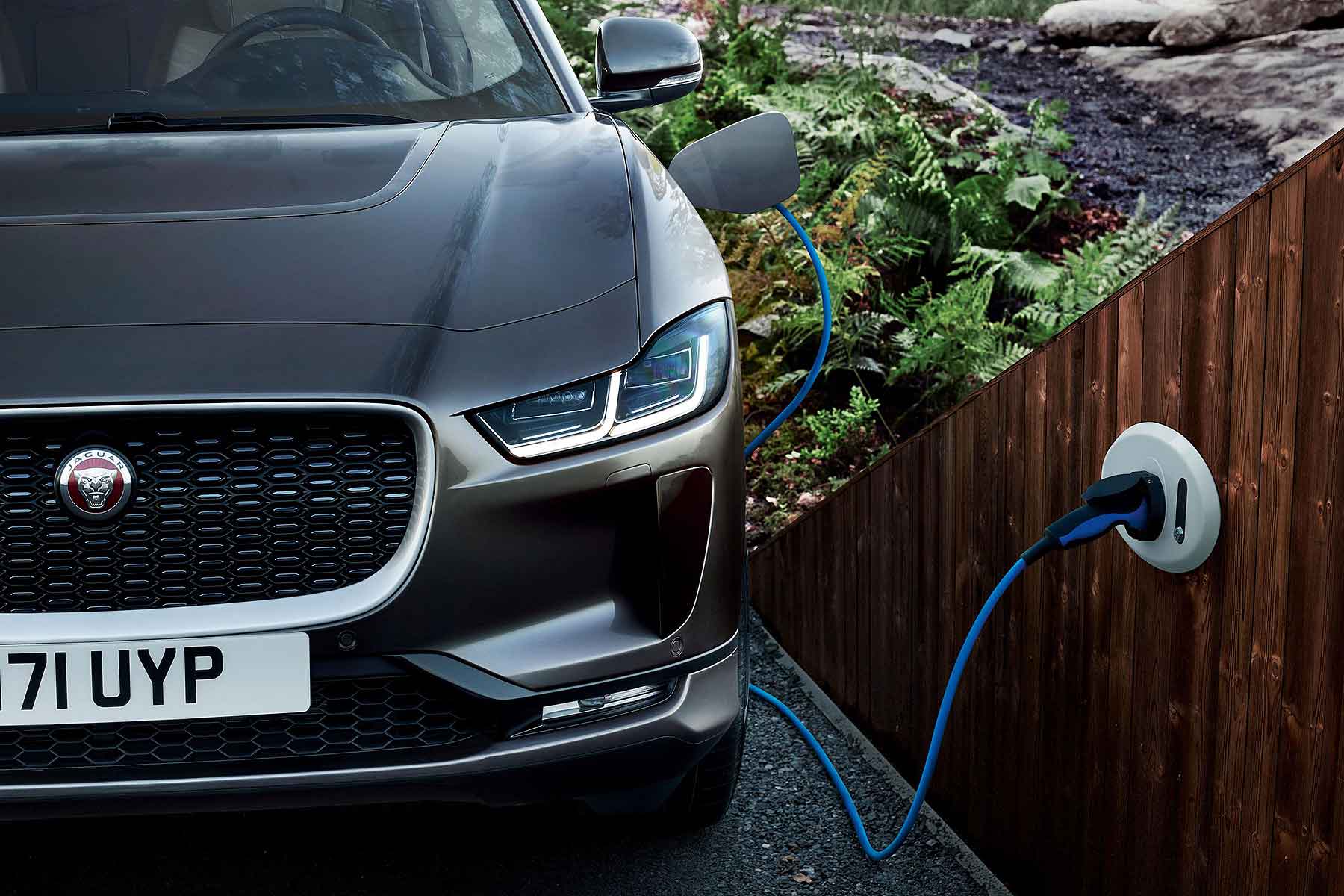
Jaguar I-Pace wallbox charging

It’s also on the list of vehicles eligible for the Electric Vehicle Homecharging Scheme

Jaguar works with Chargemaster to offer approved wallbox installations: with the OLEV grant included, the cost to the customer is £334. That buys a 7kW unit, which charges three times faster than a domestic plug socket: Jaguar reckons it gives 22 miles of range per hour of recharging.

As the government points out, it’s not a given that an electric vehicle will be eligible for a grant: “Only vehicles that have been approved by the government”. Hence Jaguar waiting until receiving official confirmation before making the announcement. 

2018 Jaguar I-Pace: prices

VEHICLE UK PRICING (including £4,500 UK gvt incentive)
I-PACE S £63,495 (£58,995)
I-PACE SE £69,495 (£64,995)
I-PACE HSE £74,445 (£69,945)
I-PACE First Edition £81,495 (£76,995)
Advertisement

Inside Pagani UK: the ultimate hypercar showroom

0

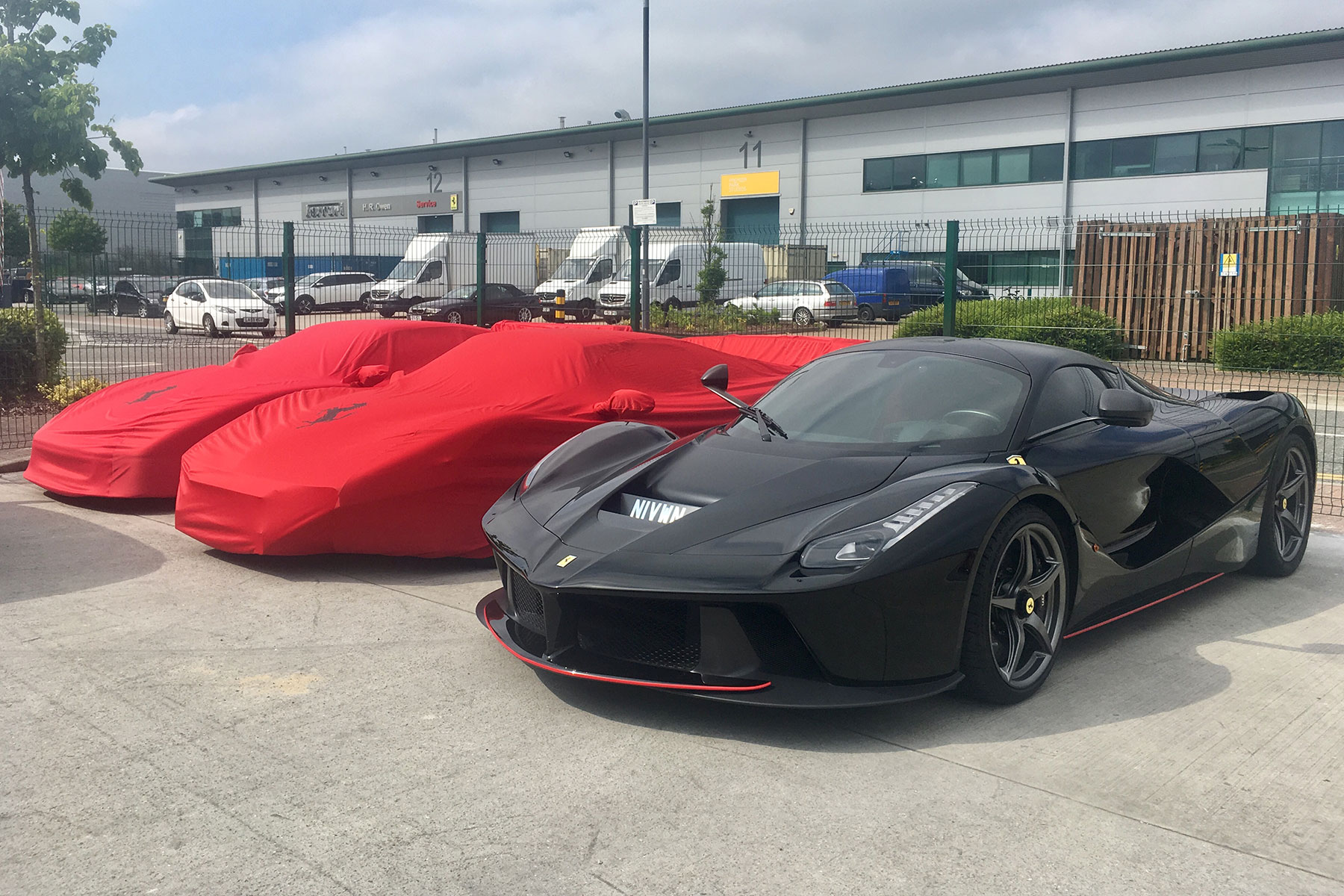
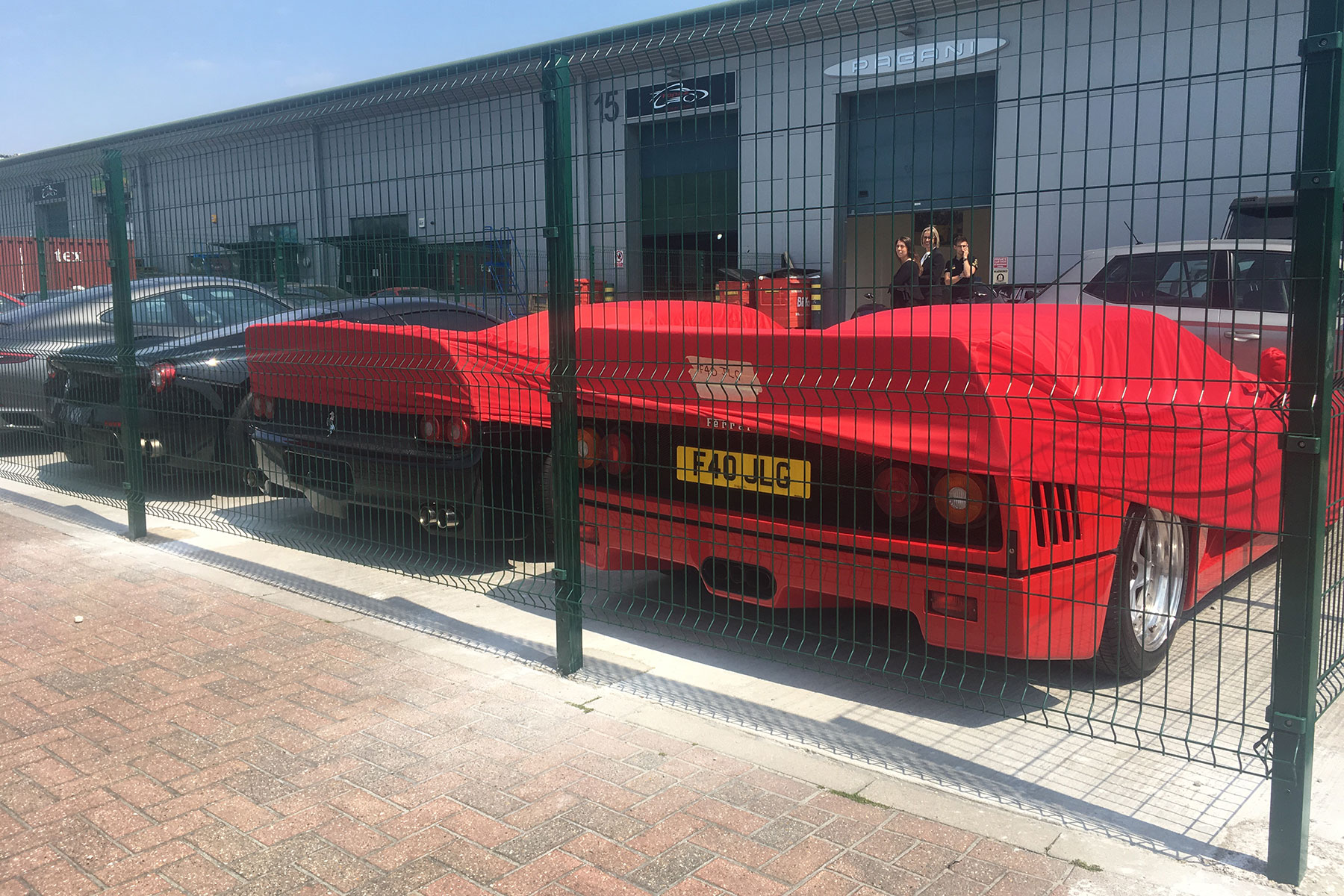
Forget Park Lane or the King’s Road, this small street near Wembley boasts many more supercars per square foot. The service department of H.R. Owen Ferrari is here, along with Topaz, a high-end detailing company. Within minutes, I’ve spied a new Porsche 911 GT3 RS, Aston Martin Vanquish and numerous Ferraris – including an 812 Superfast and Testarossa.

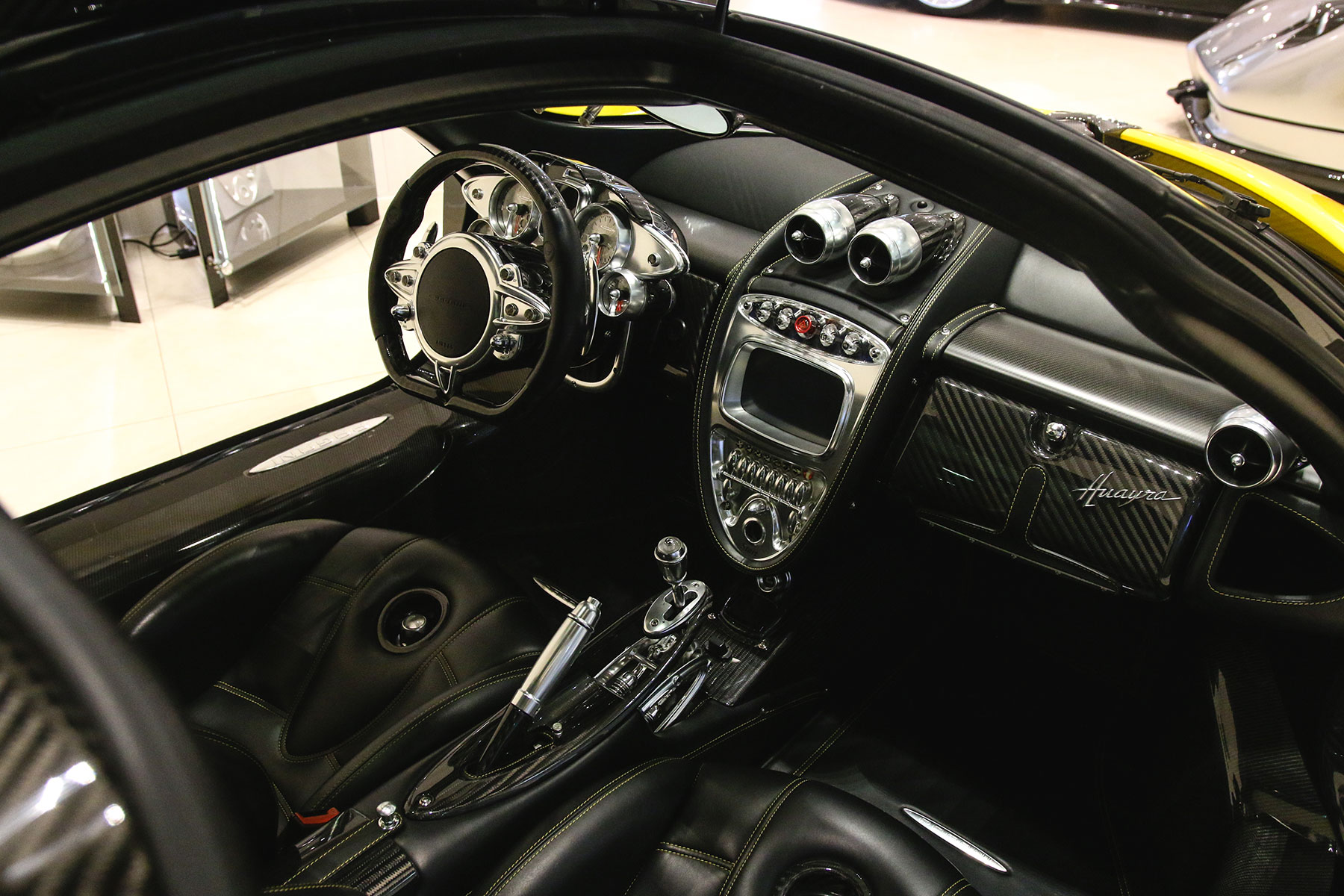
The cars I’m here to see, though, make even such rarified metal look mainstream. I ring a buzzer and enter a nondescript warehouse. This is the UK home of Pagani: purveyor of money-no-object hypercars since 1999.

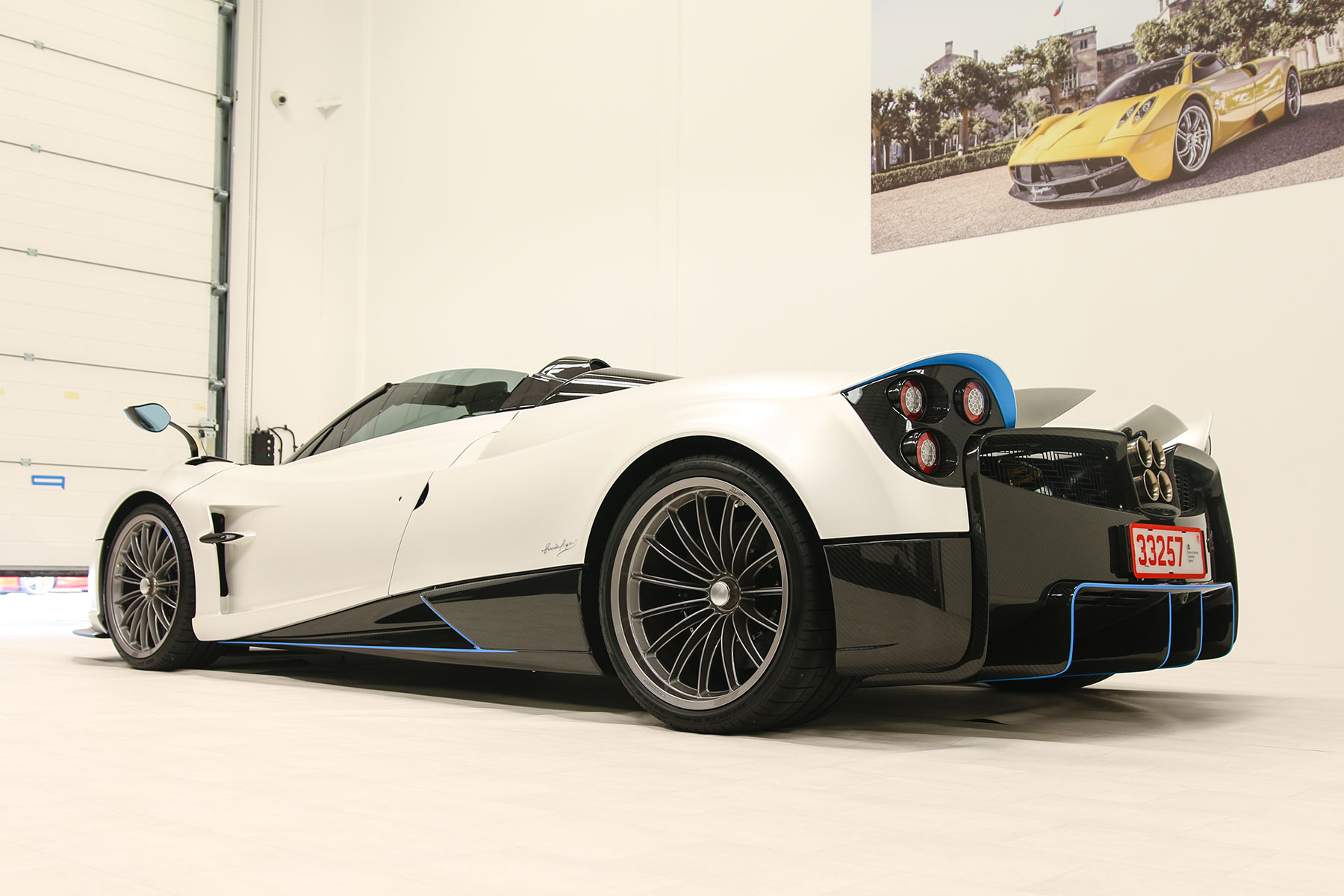
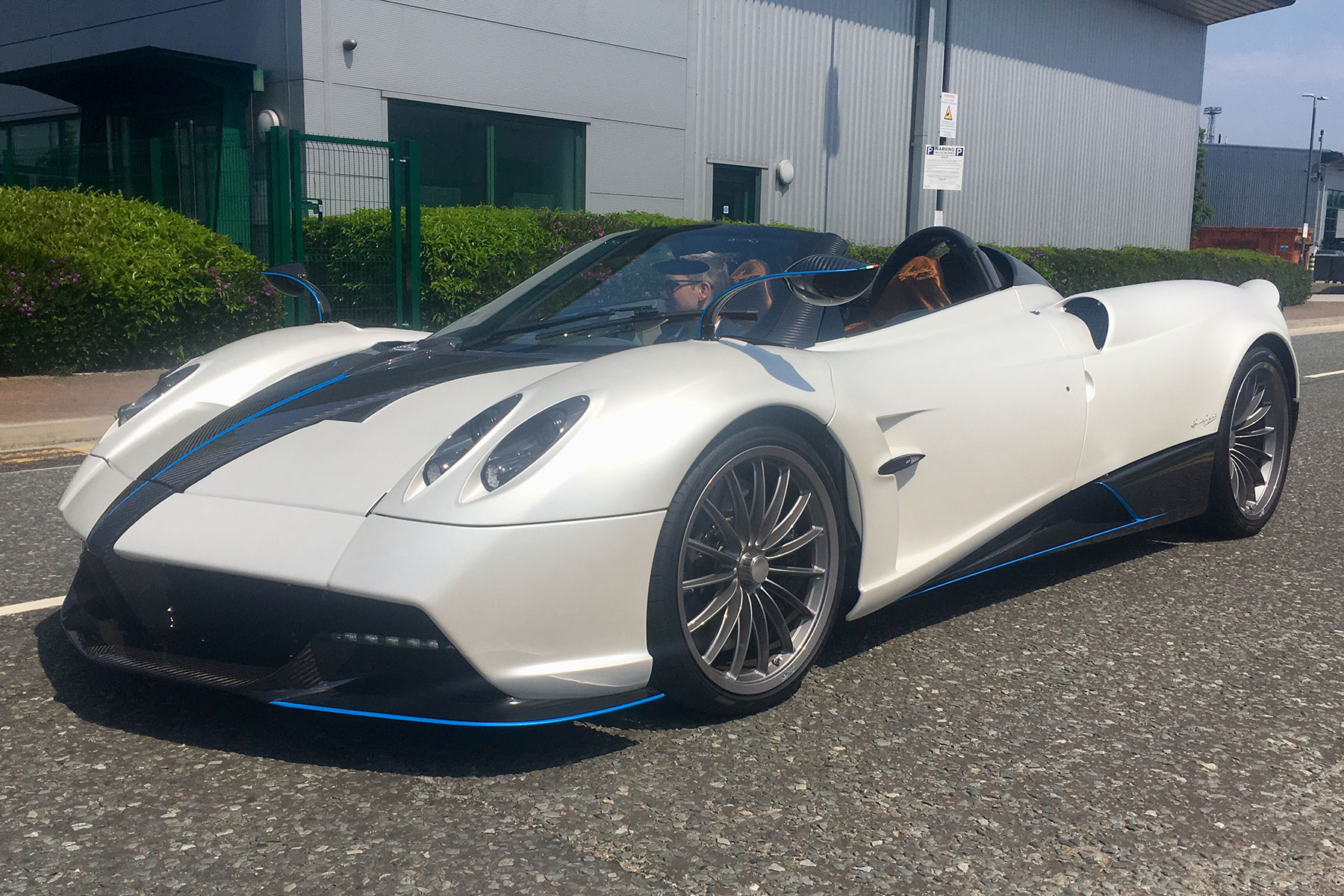
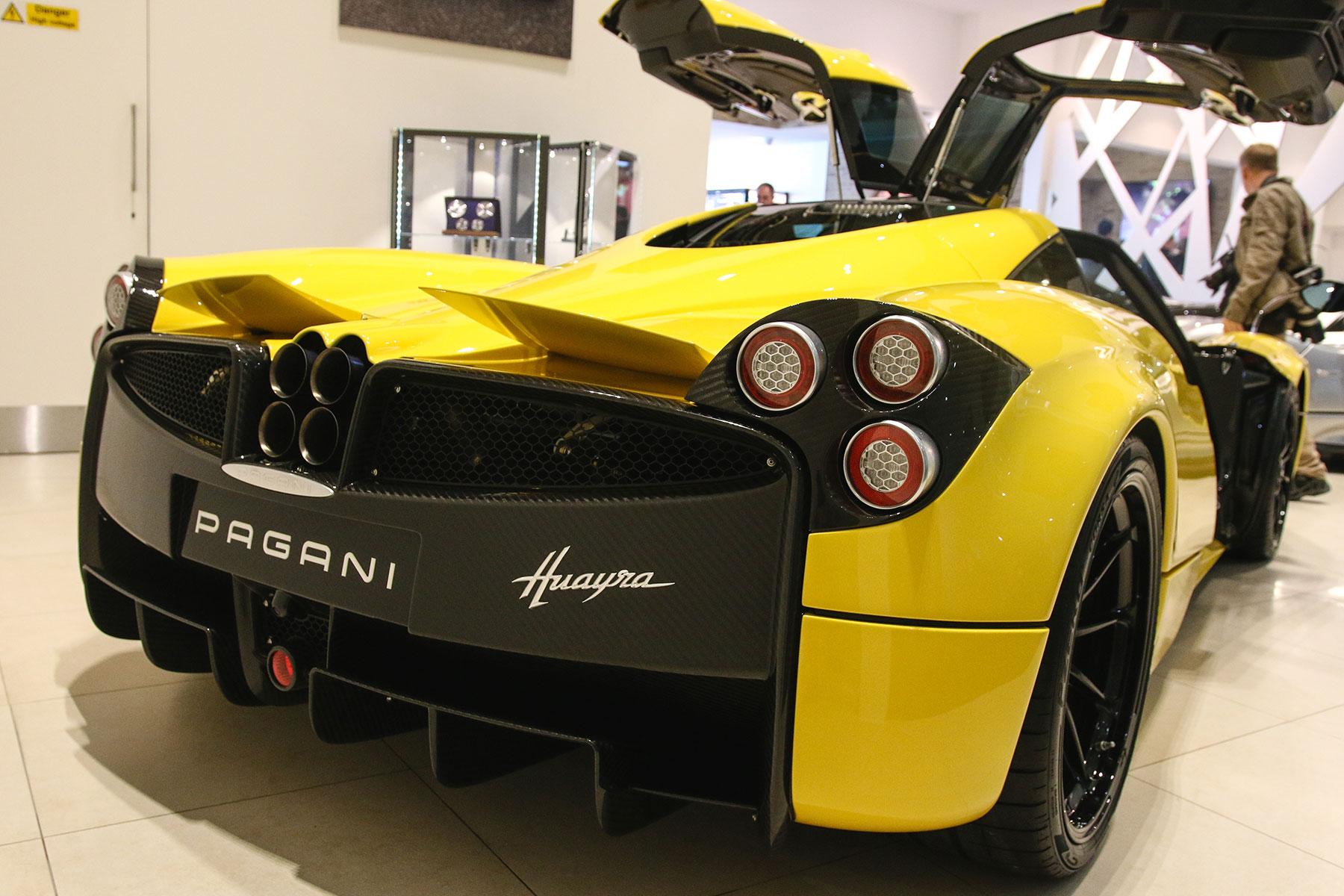
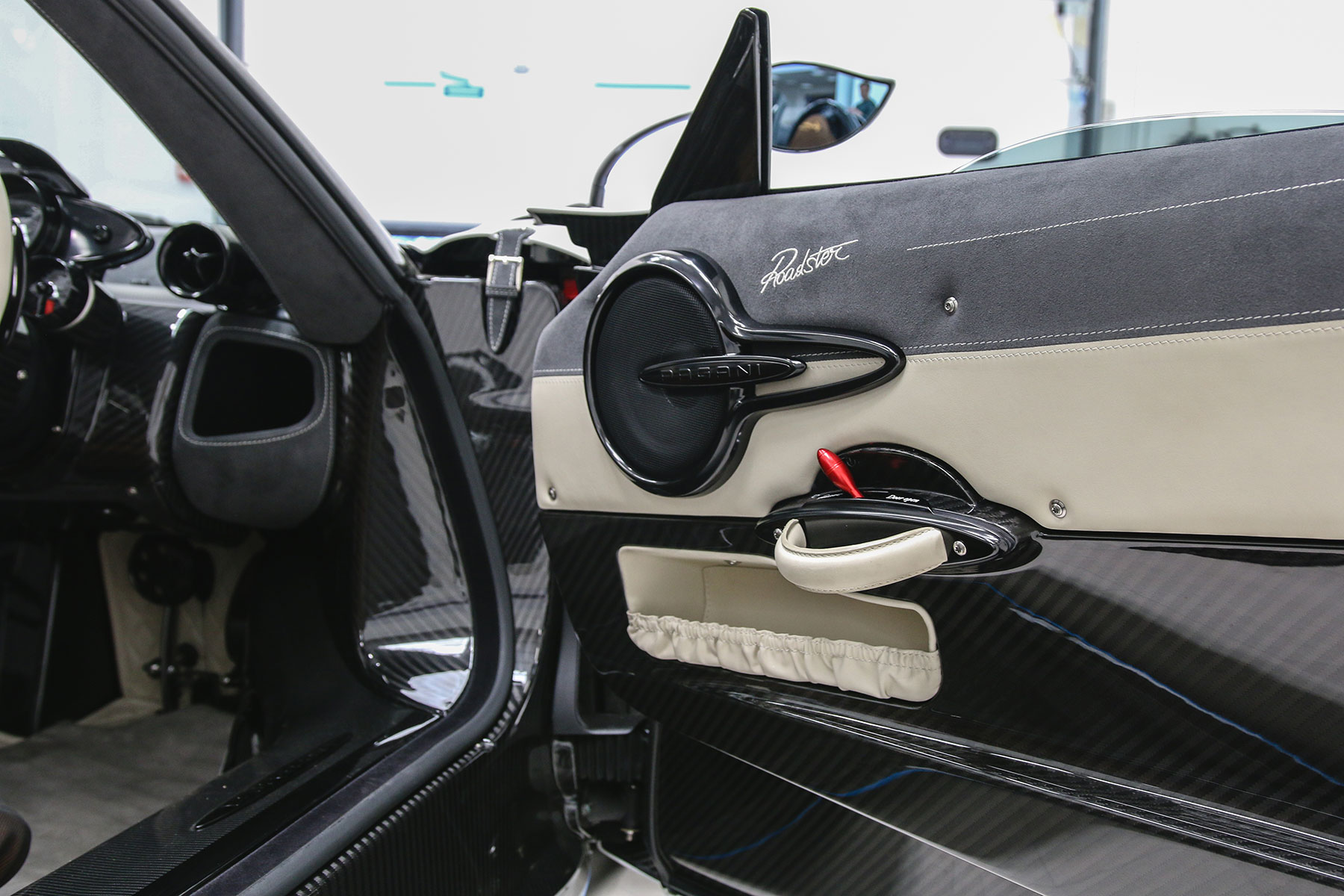
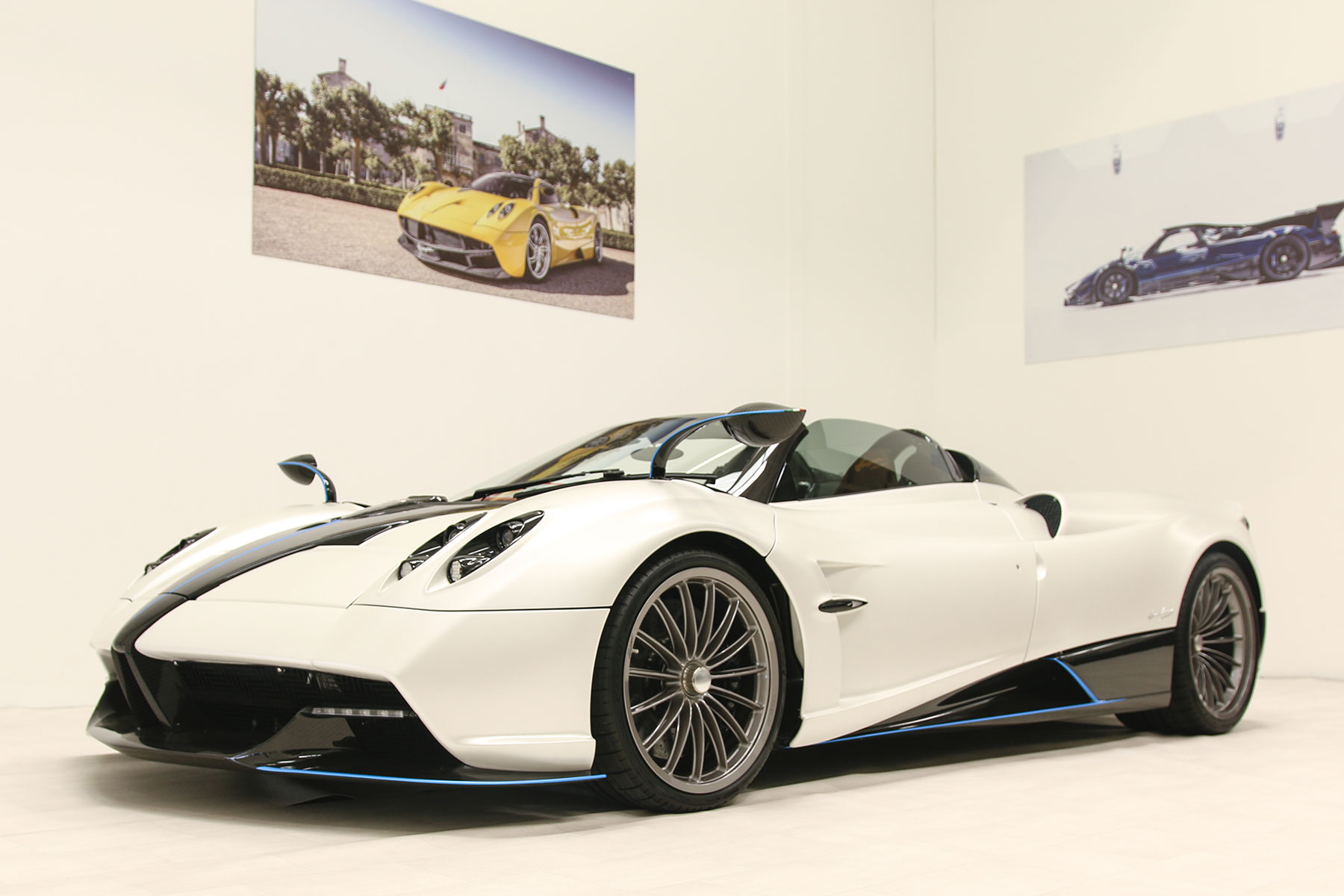
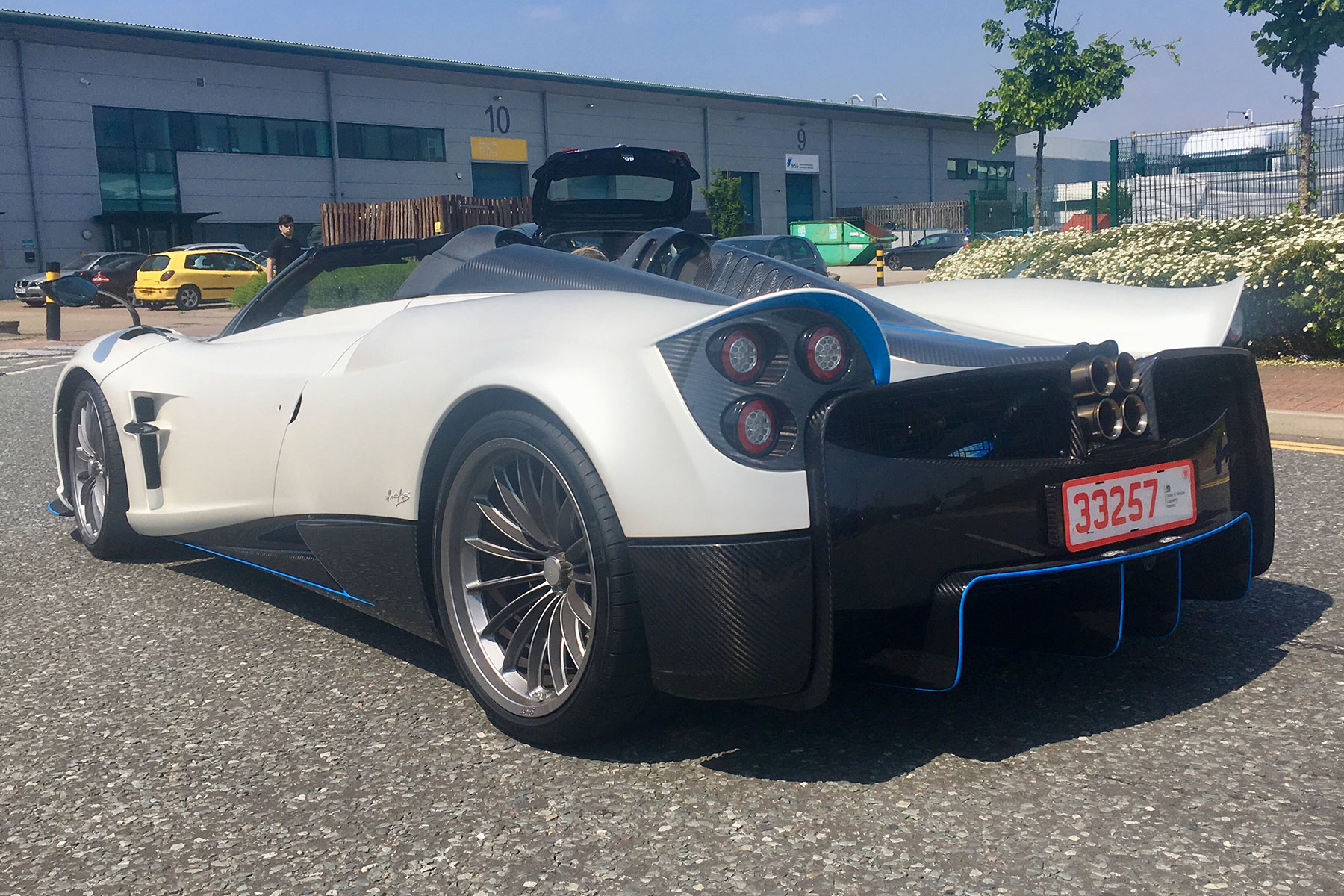
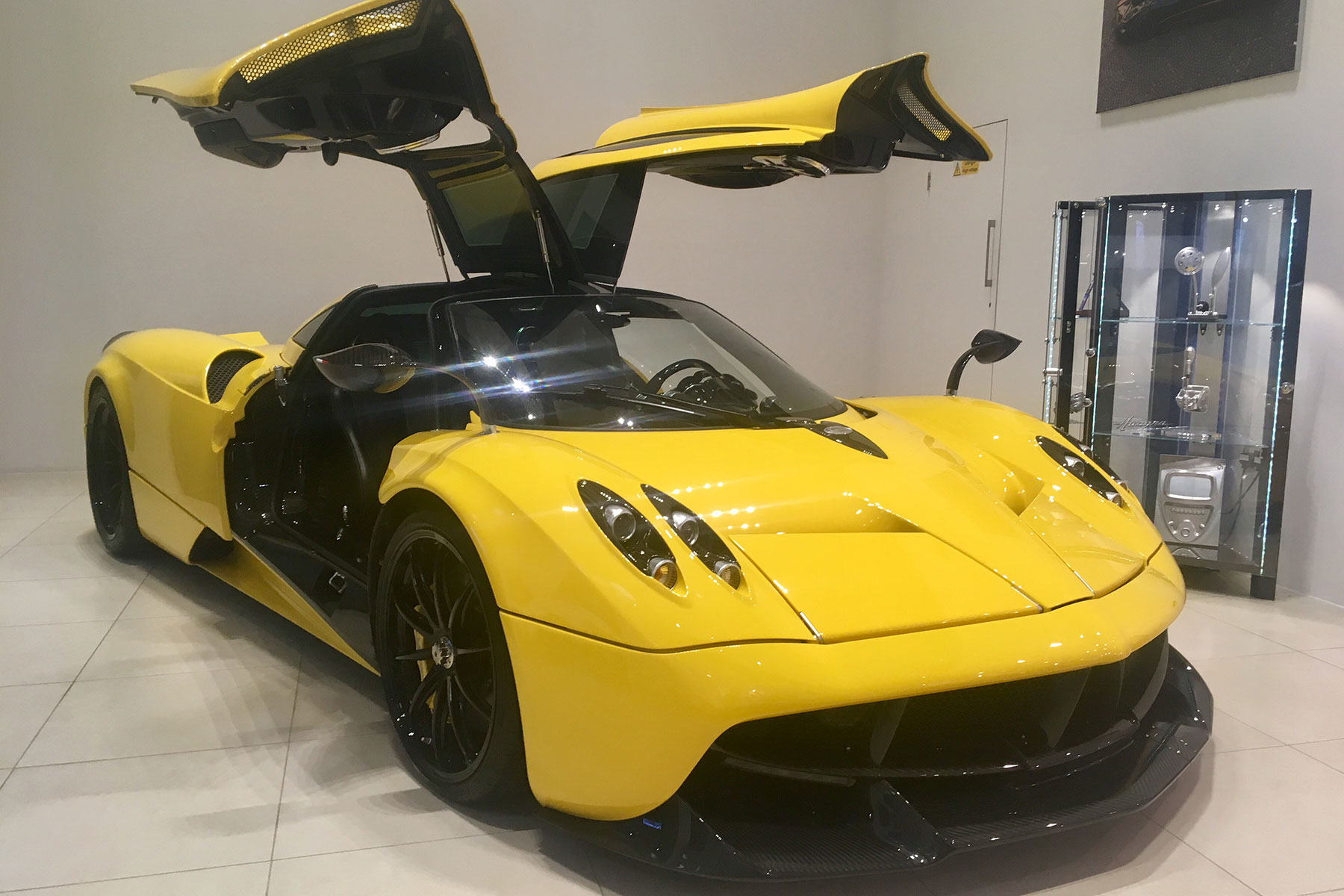
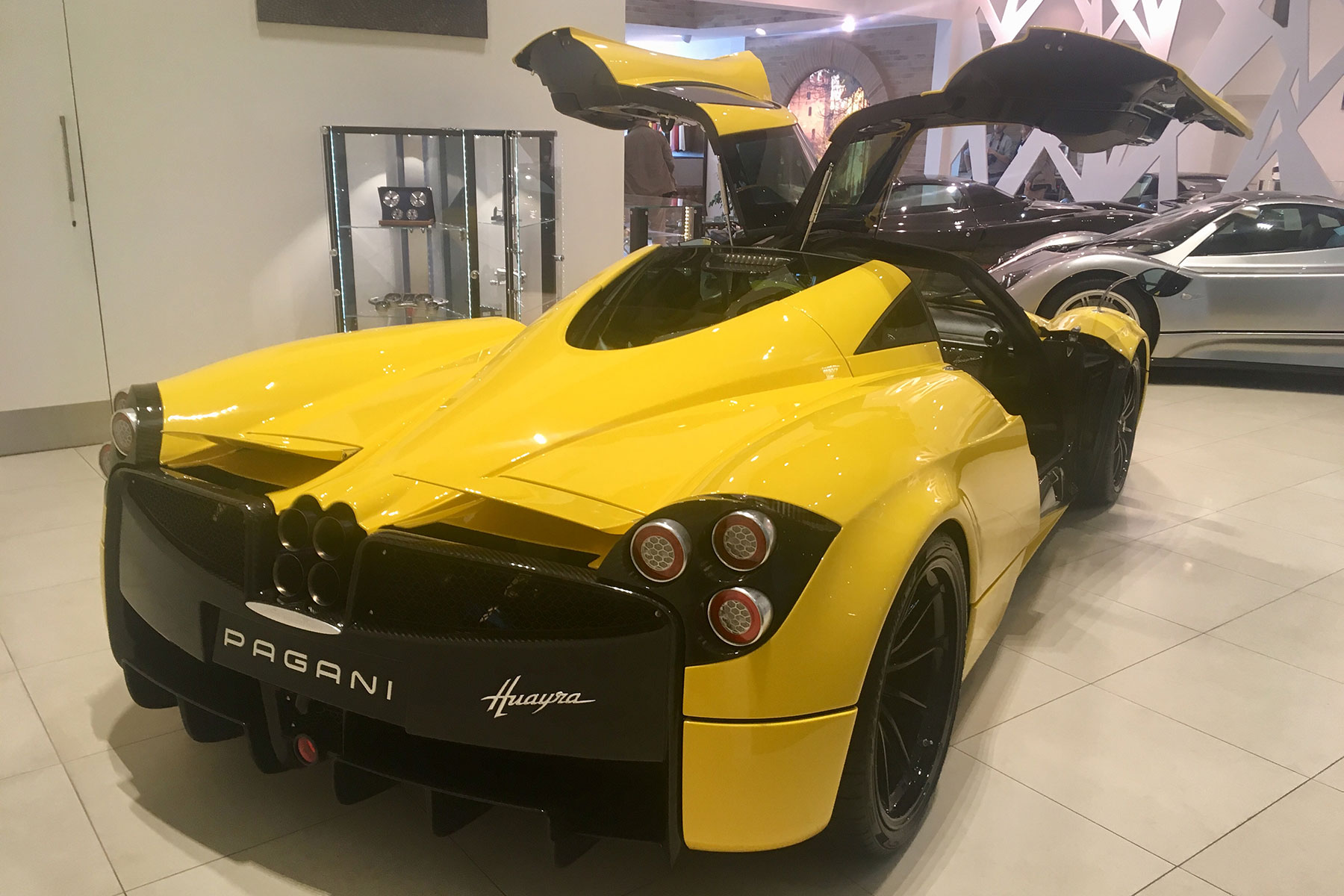
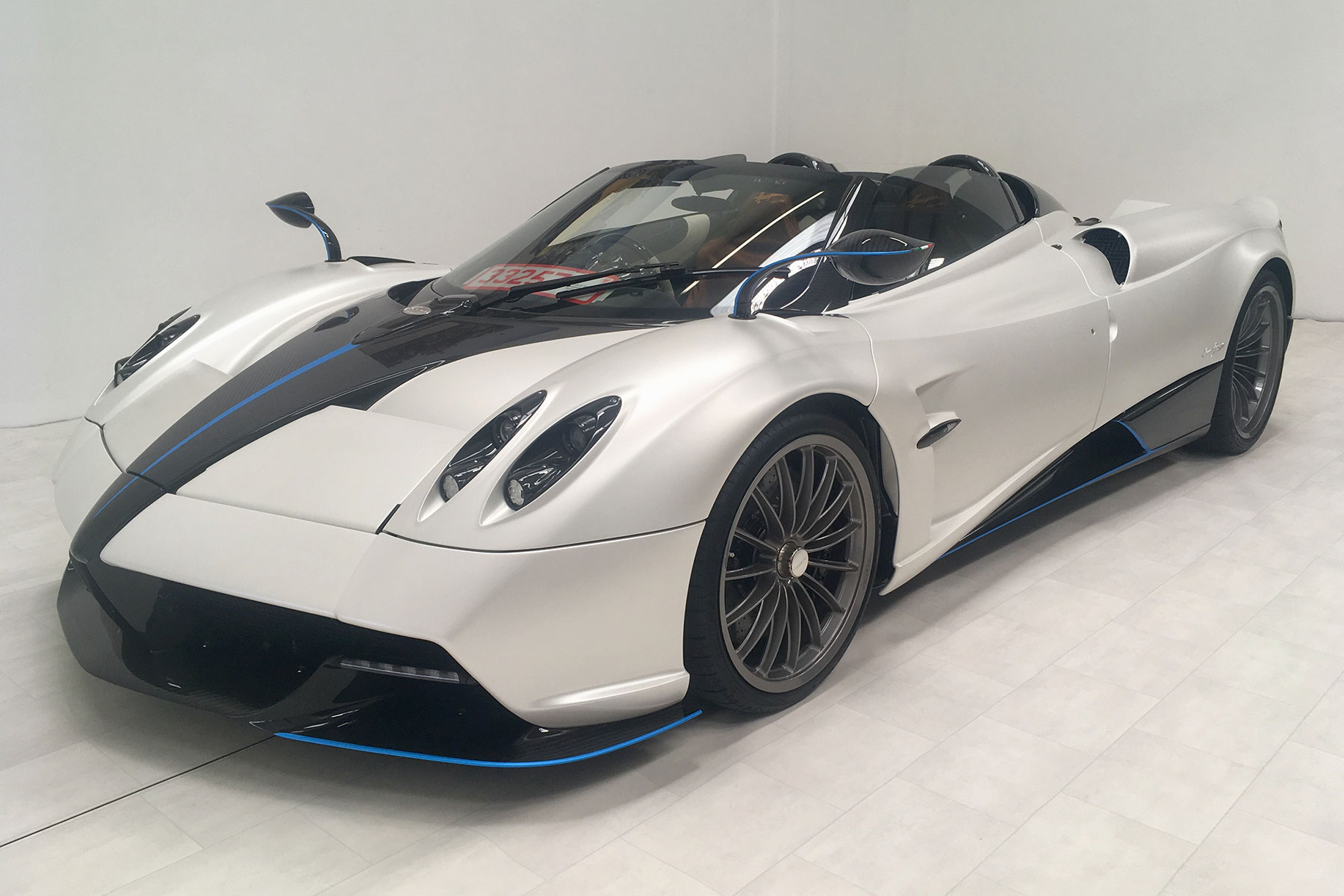
In the showroom and workshop are no less than eight Zondas – a sizeable chunk of the 136 cars ever made. And waiting in the car park is the world’s only right-hand-drive Pagani Huayra Roadster, valued at £3 million. Today promises to be quite special.

  • Classic colours for Porsche racers at Le Mans 24 Hours

Video: Pagani Huayra Roadster and showroom tour

First, though, a bit of background. Company founder Horacio Pagani honed his craft at Lamborghini, becoming an expert in lightweight composites before their use was widespread. His high watermark was the 1987 Countach Evoluzione concept, which clothed a steel spaceframe in kevlar and carbon fibre.

Pagani set up shop in 1992, and seven years later the Zonda C12 was revealed. Powered by a 6.0-litre Mercedes-Benz V12, its key stats were 389hp, 0-62mph in 4.2 seconds and 185mph. It looked sensational, too, with a jet fighter-style canopy cockpit and beautifully bespoke interior.

The Zonda remained in production for 18 years, growing steadily more powerful (up to 760hp) and spawning endless special editions. Its Huayra replacement arrived in 2012 – overlapping with the Zonda – and the Roadster followed in 2017.

A work of automotive art

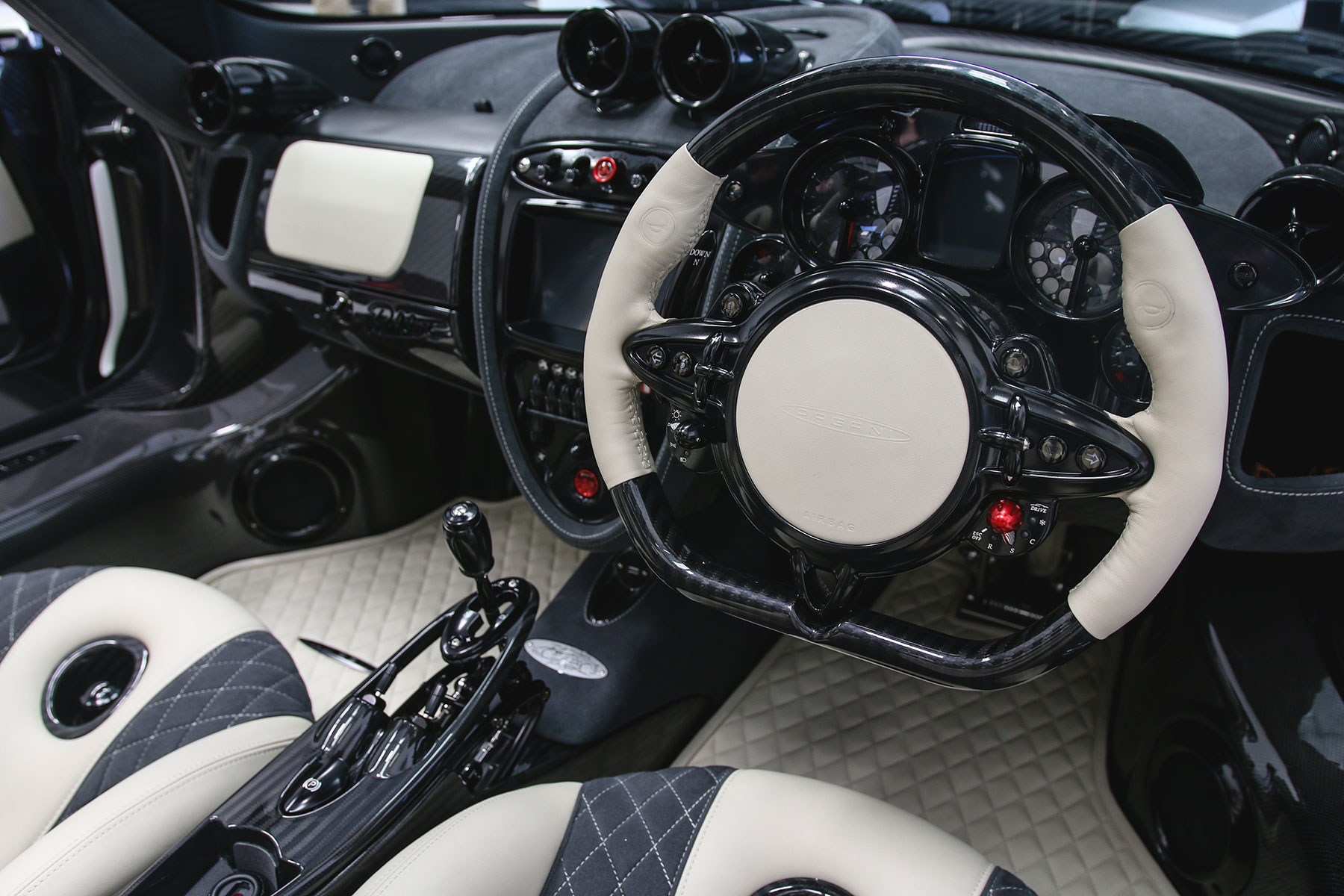
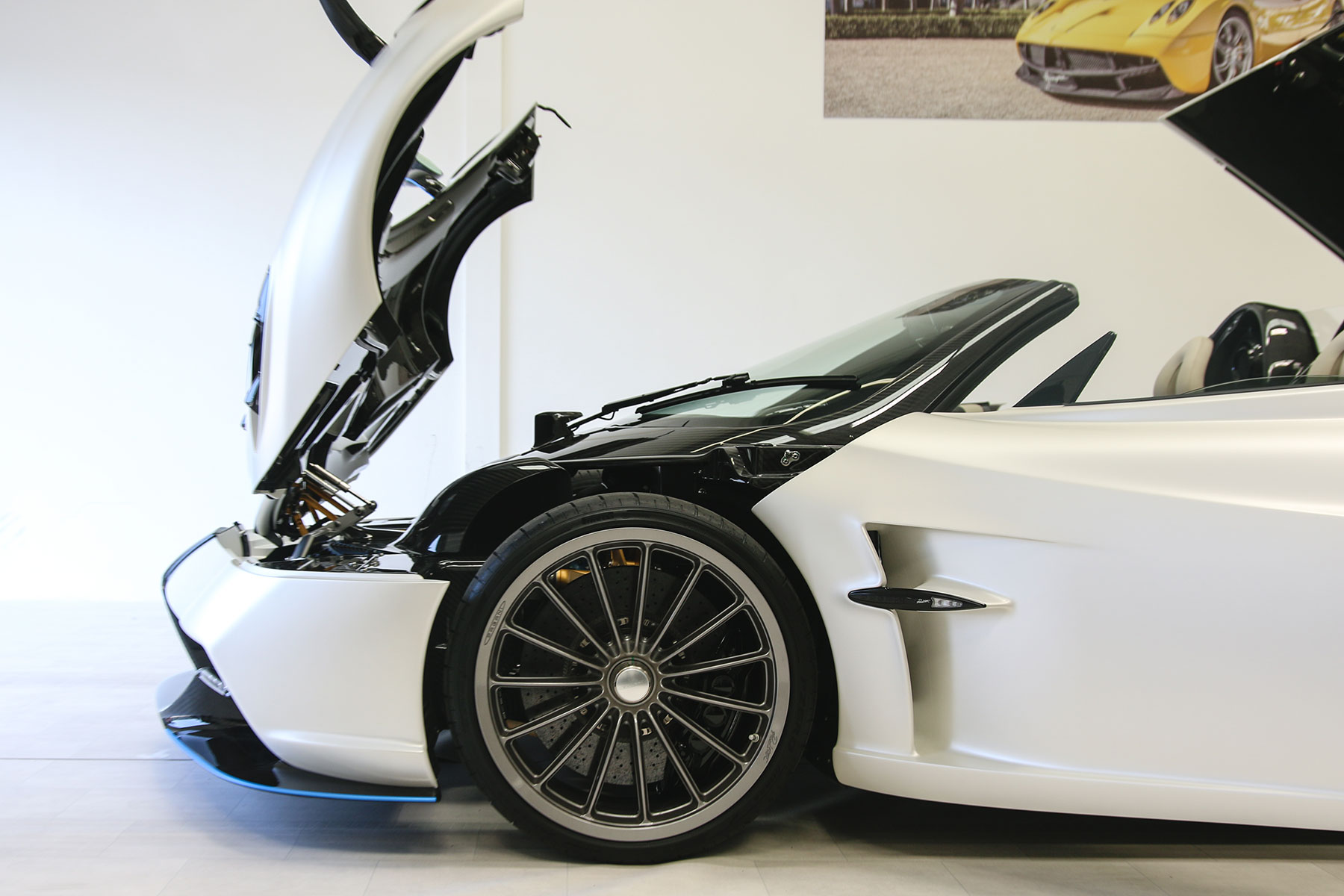
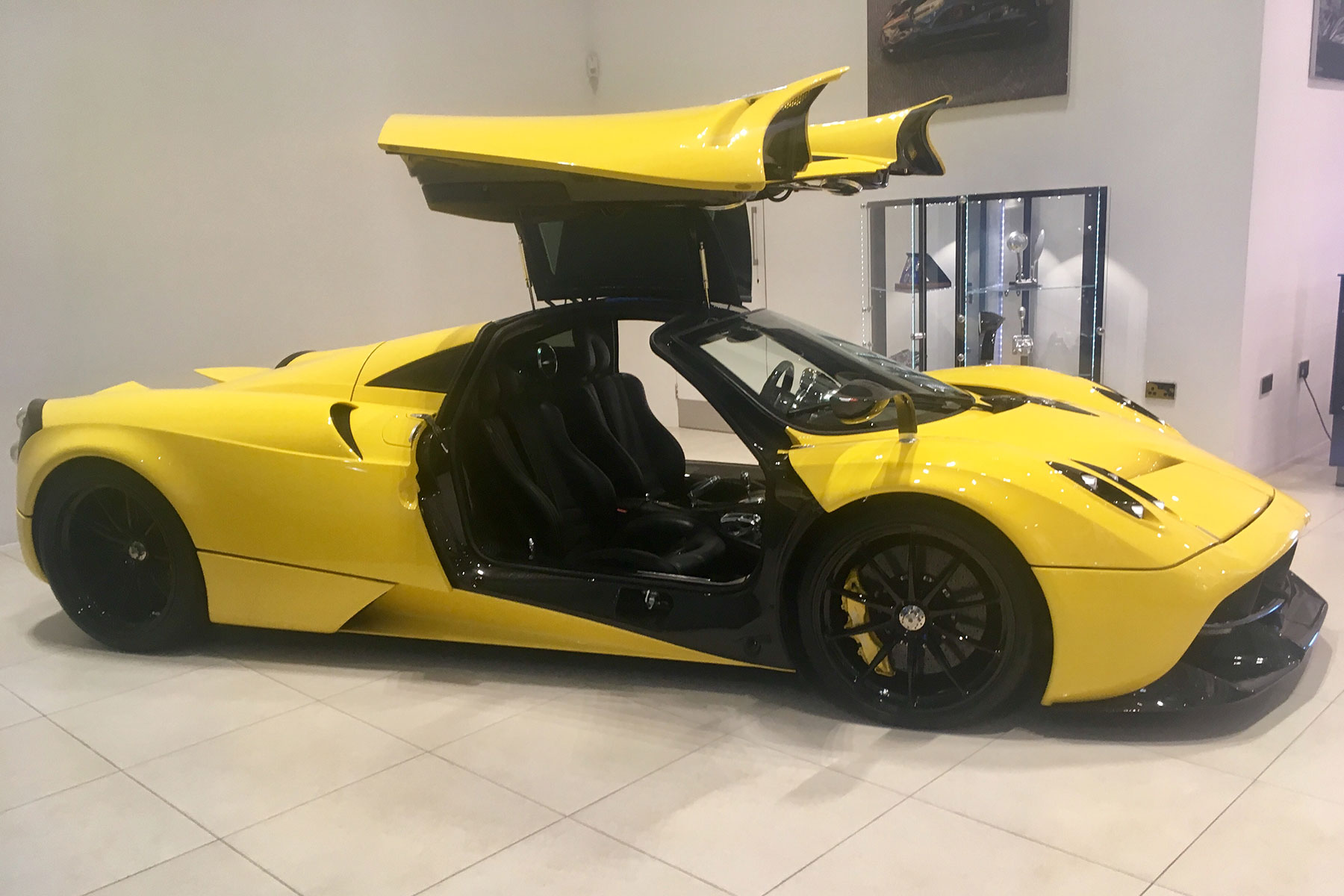
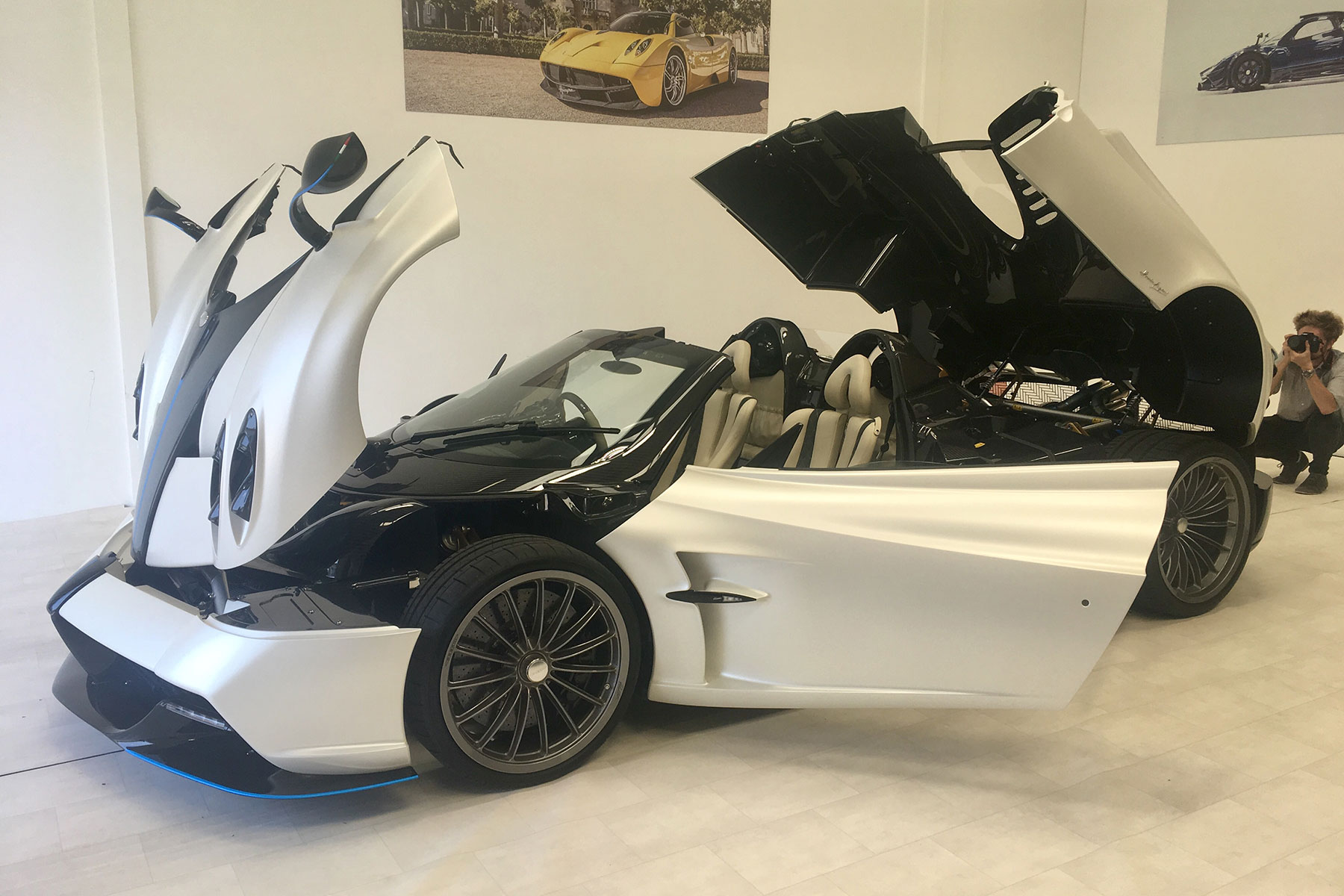
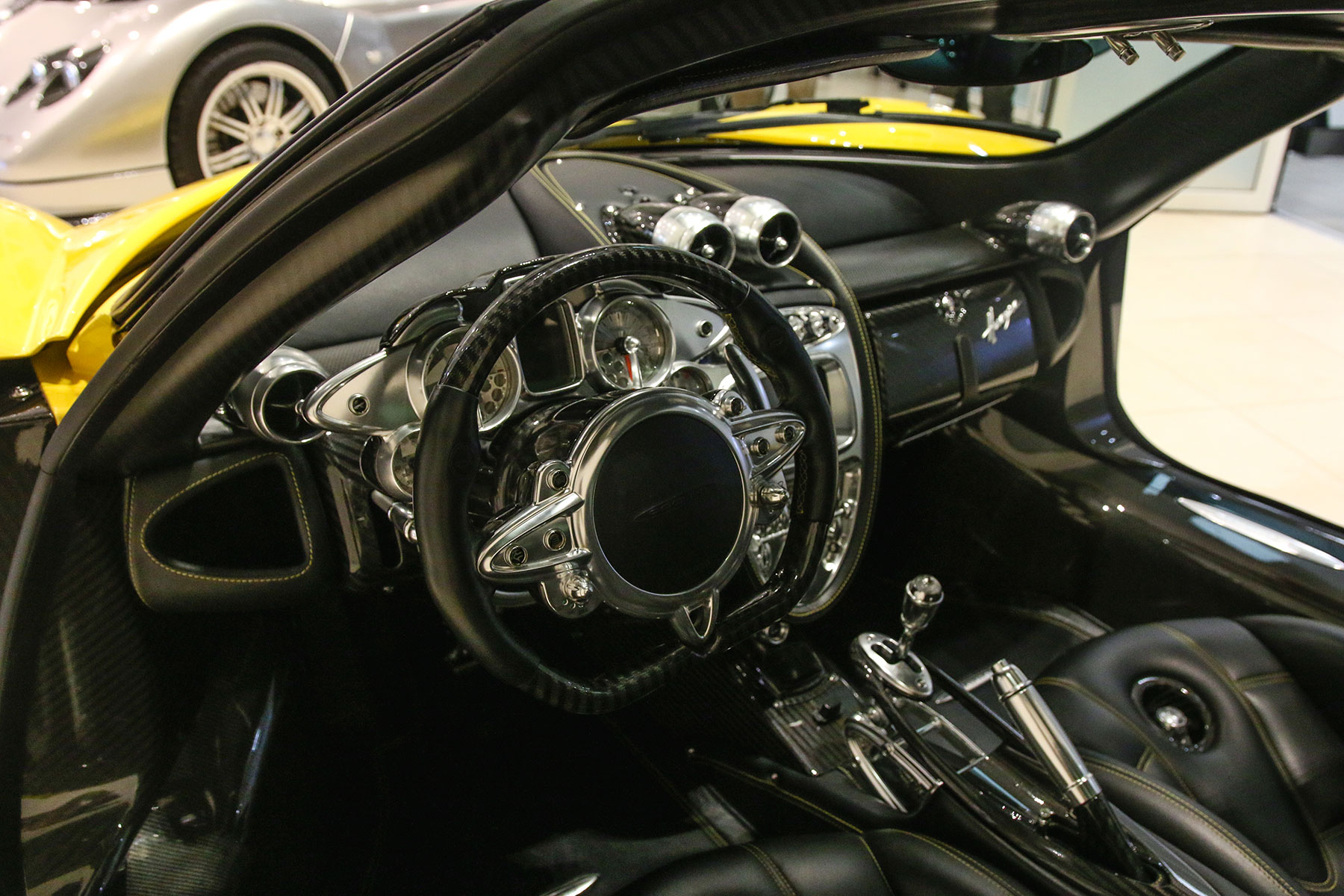
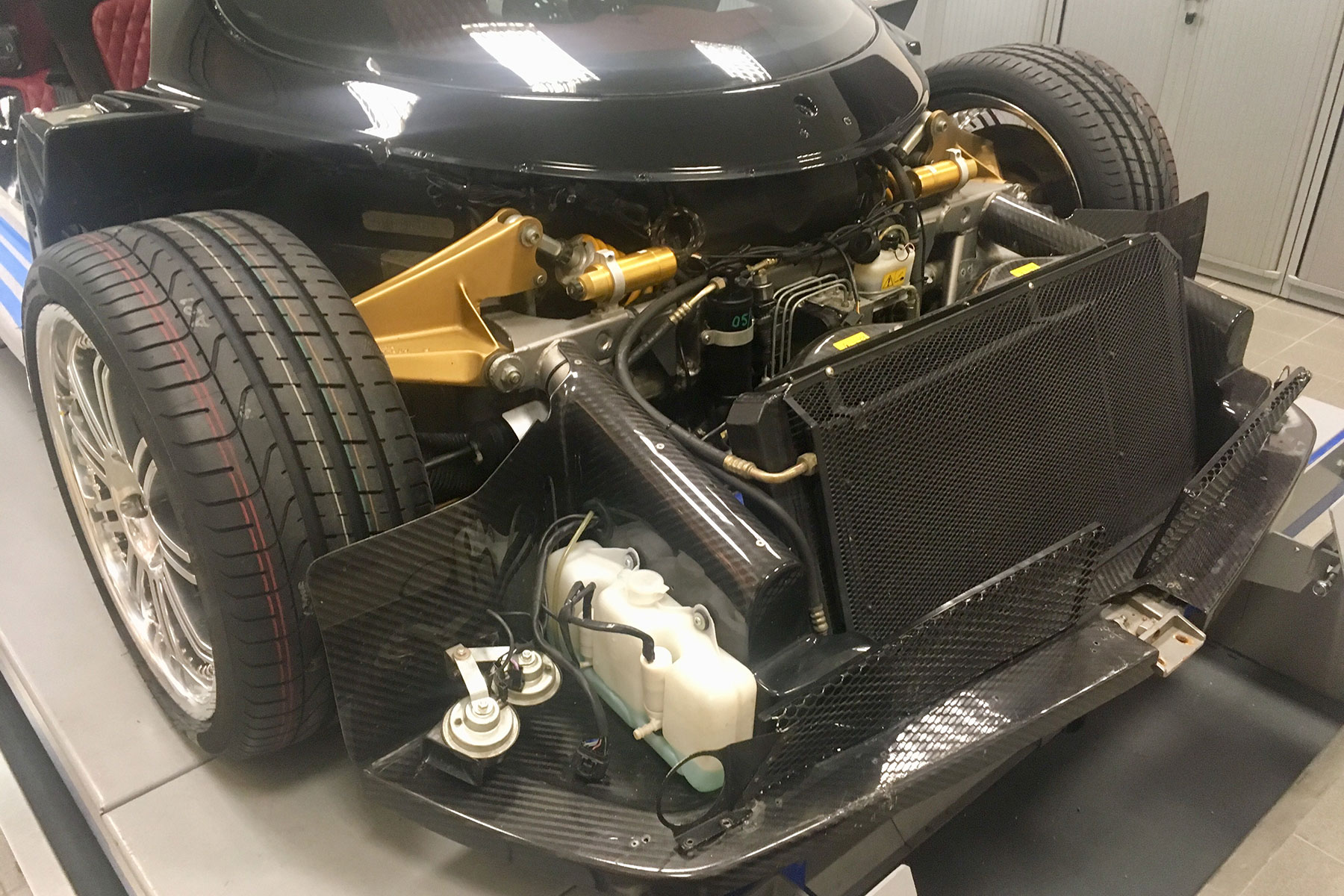
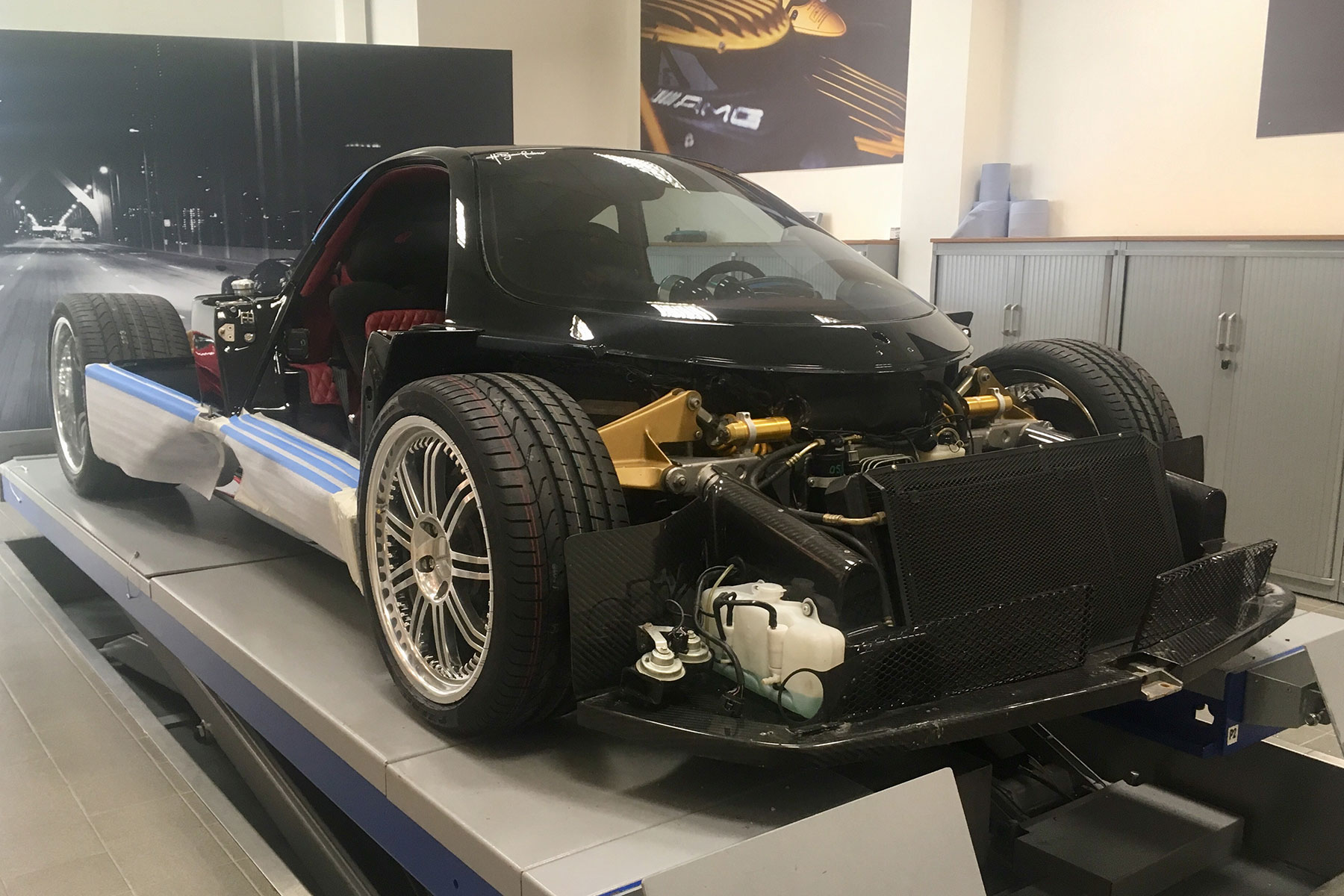
I’m introduced to head of sales, Francis Falconer, who’ll be taking me for a spin in the Huayra Roadster. With its front and rear clamshells open, this one-of-100 hypercar resembles a Transformer: futuristic and fantastic.

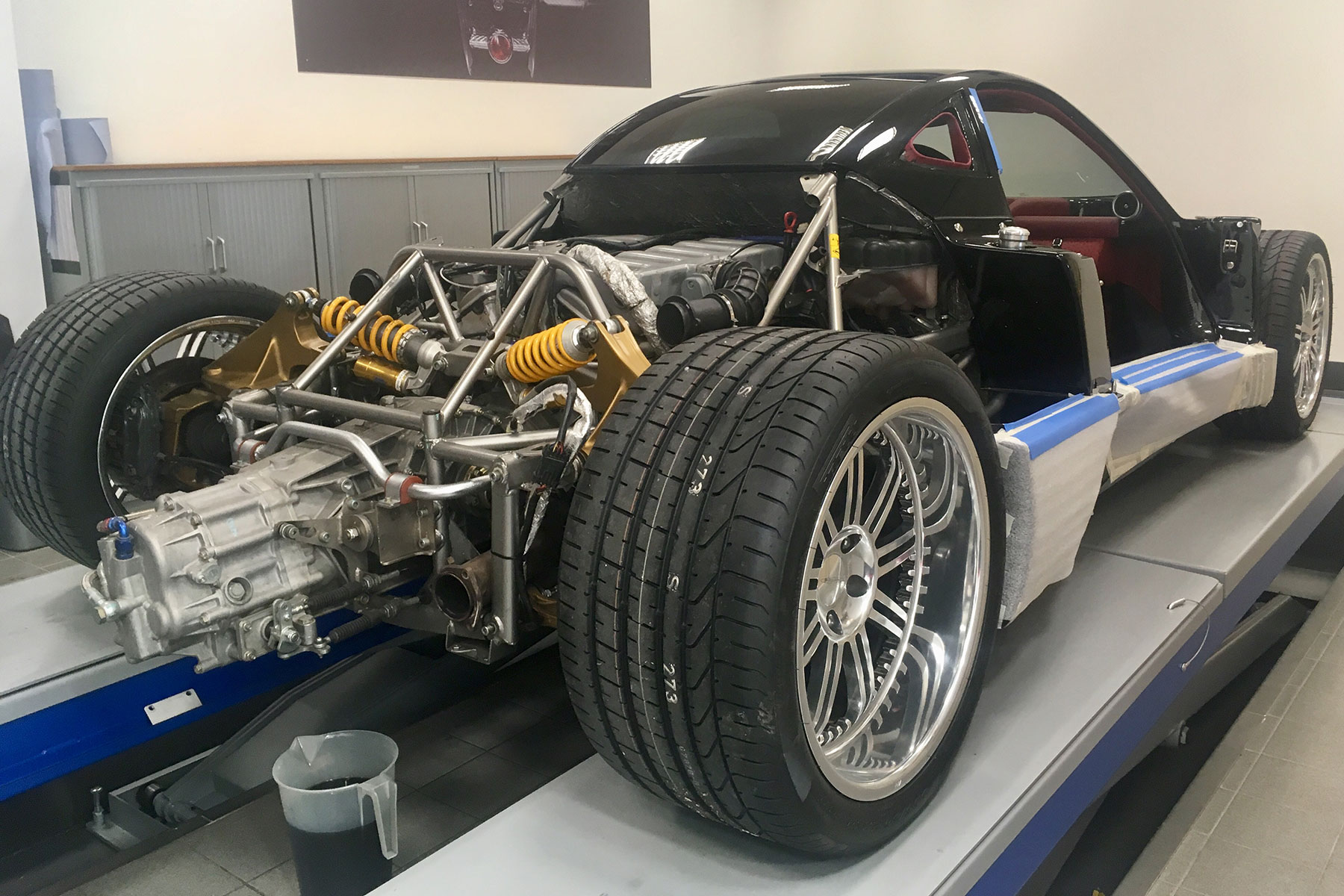
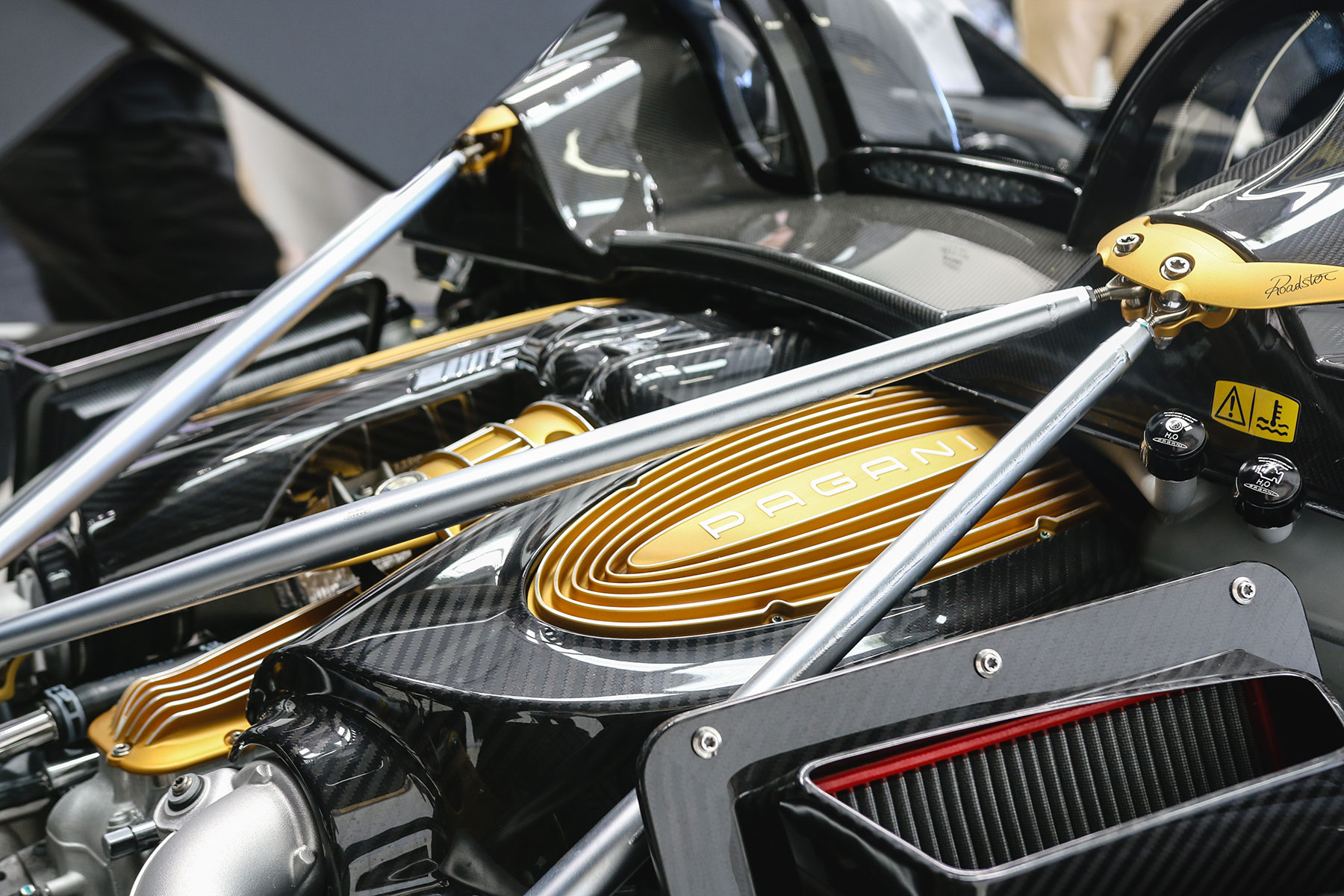
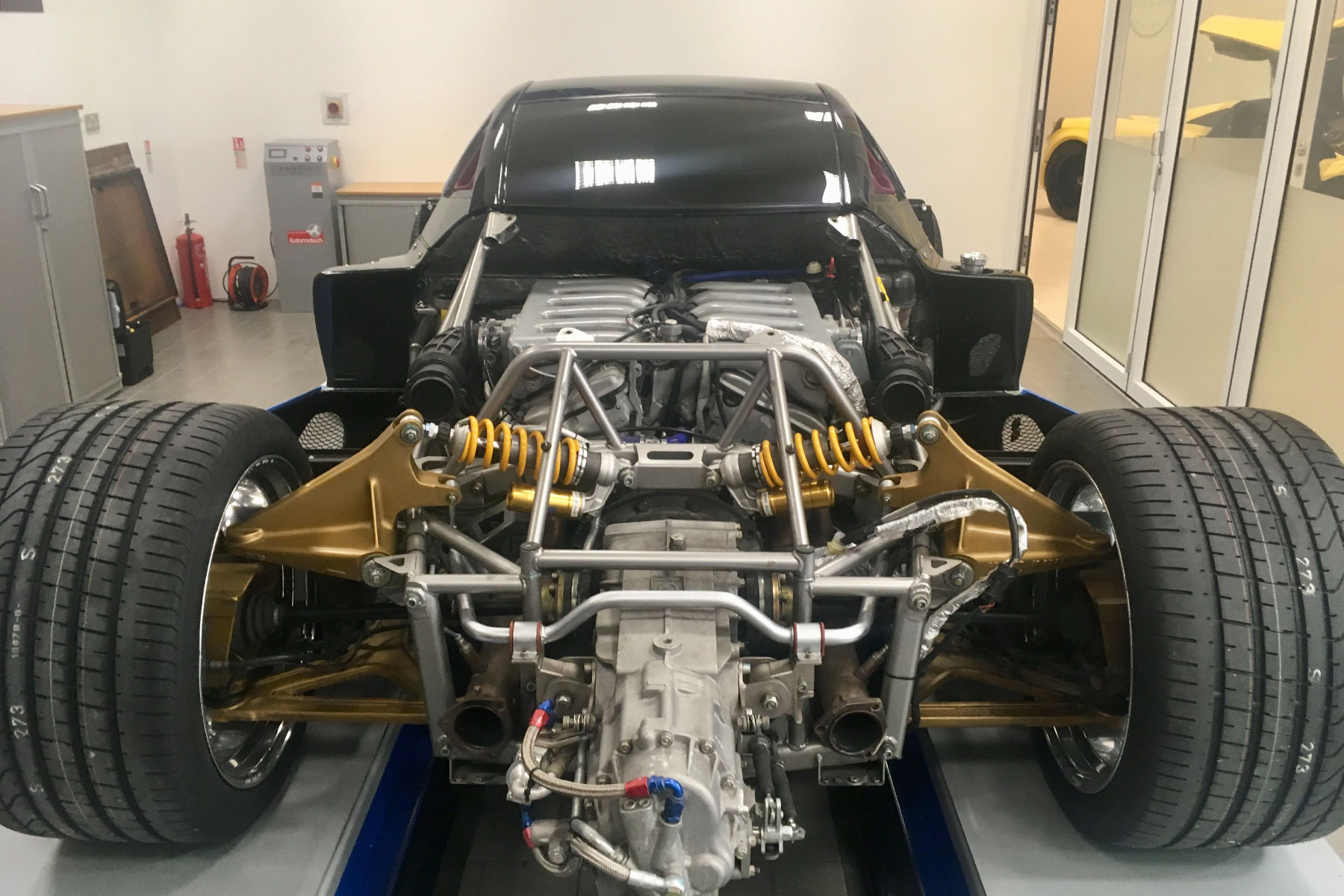
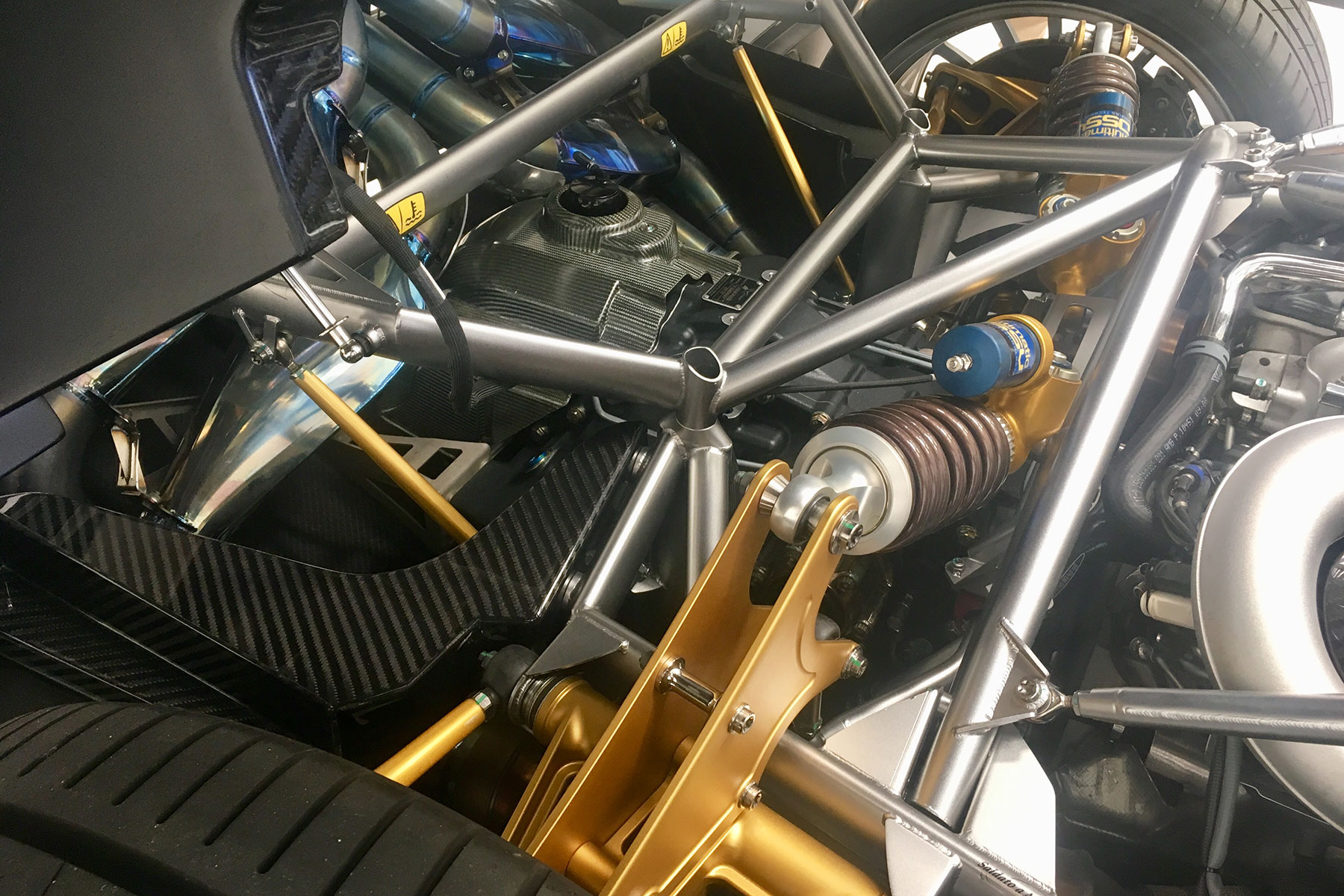
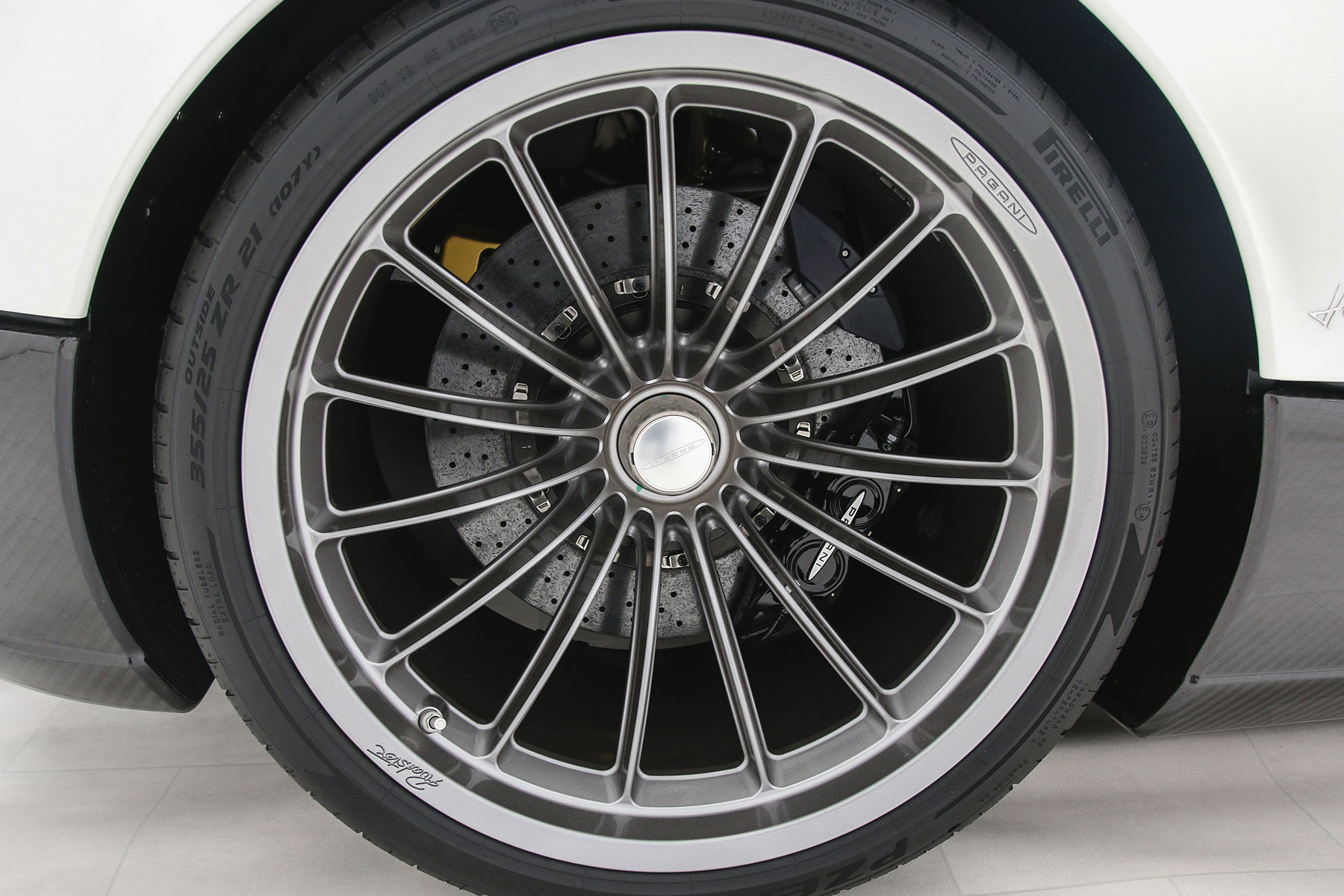
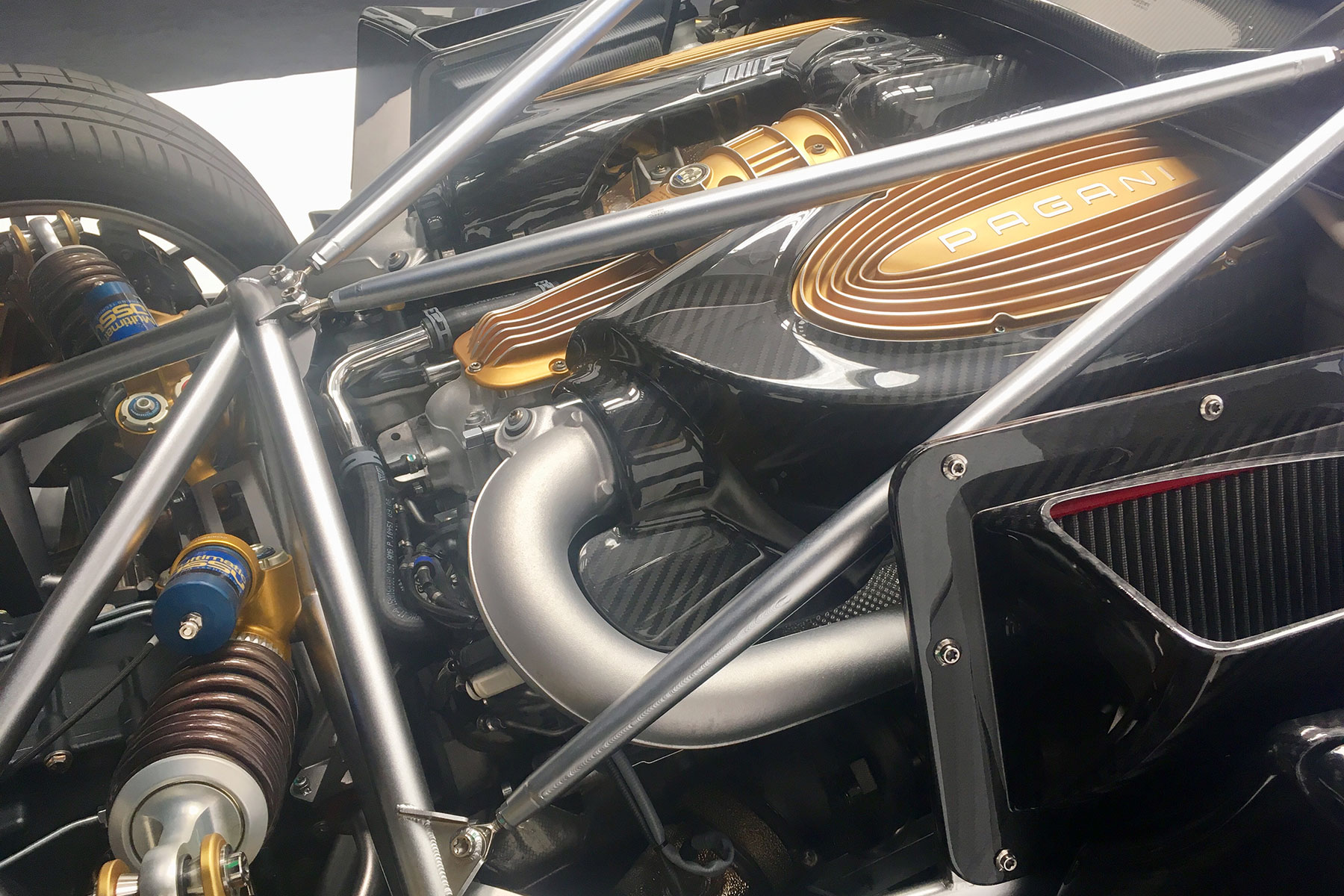
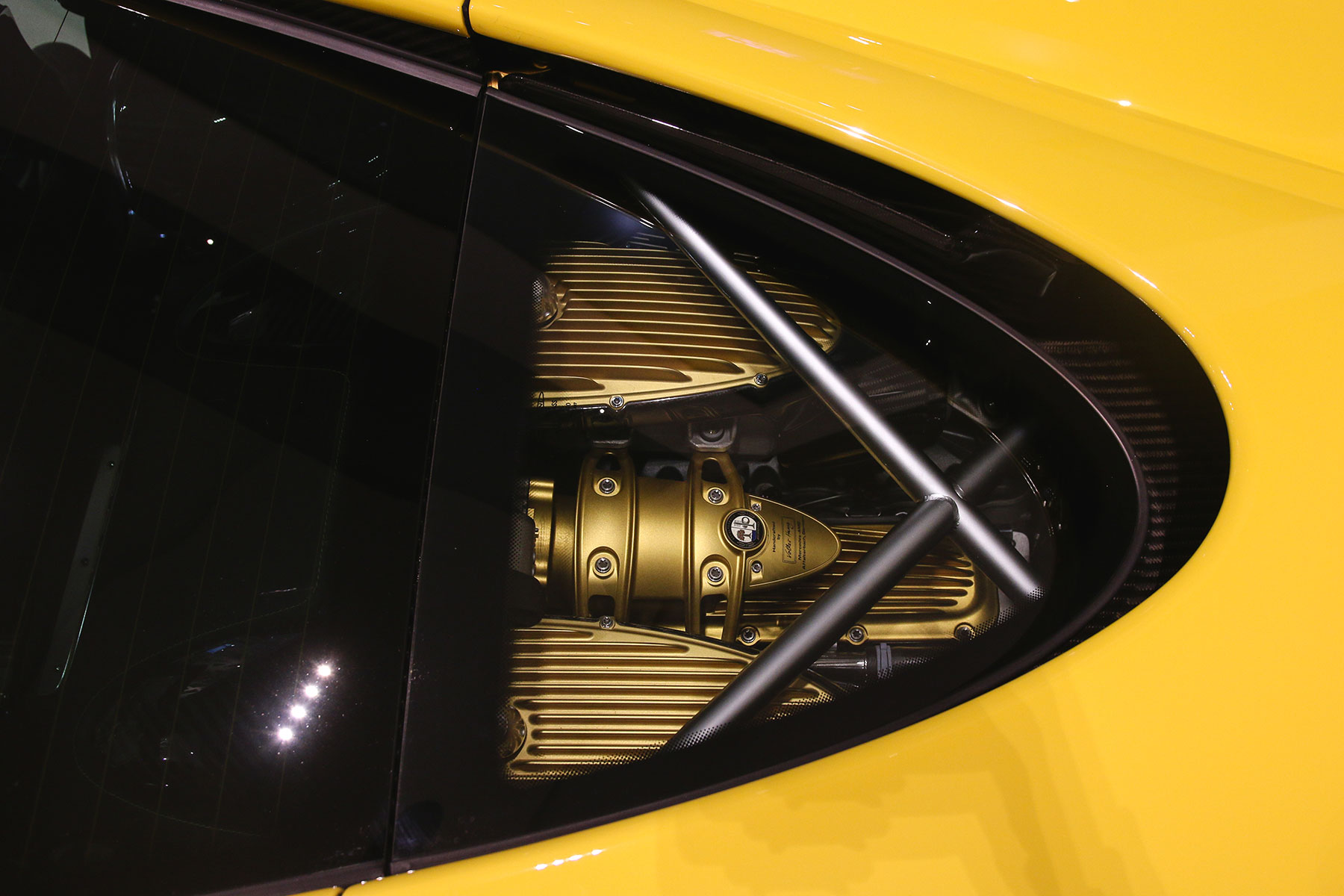
A twin-turbo Mercedes-AMG V12 nestles between aluminium-alloy suspension, cradled by carbon fibre. Drive goes to the rear wheels via a seven-speed dual-clutch gearbox with an electronic differential. Active aerodynamic flaps – two front and two rear – boost downforce at speed.

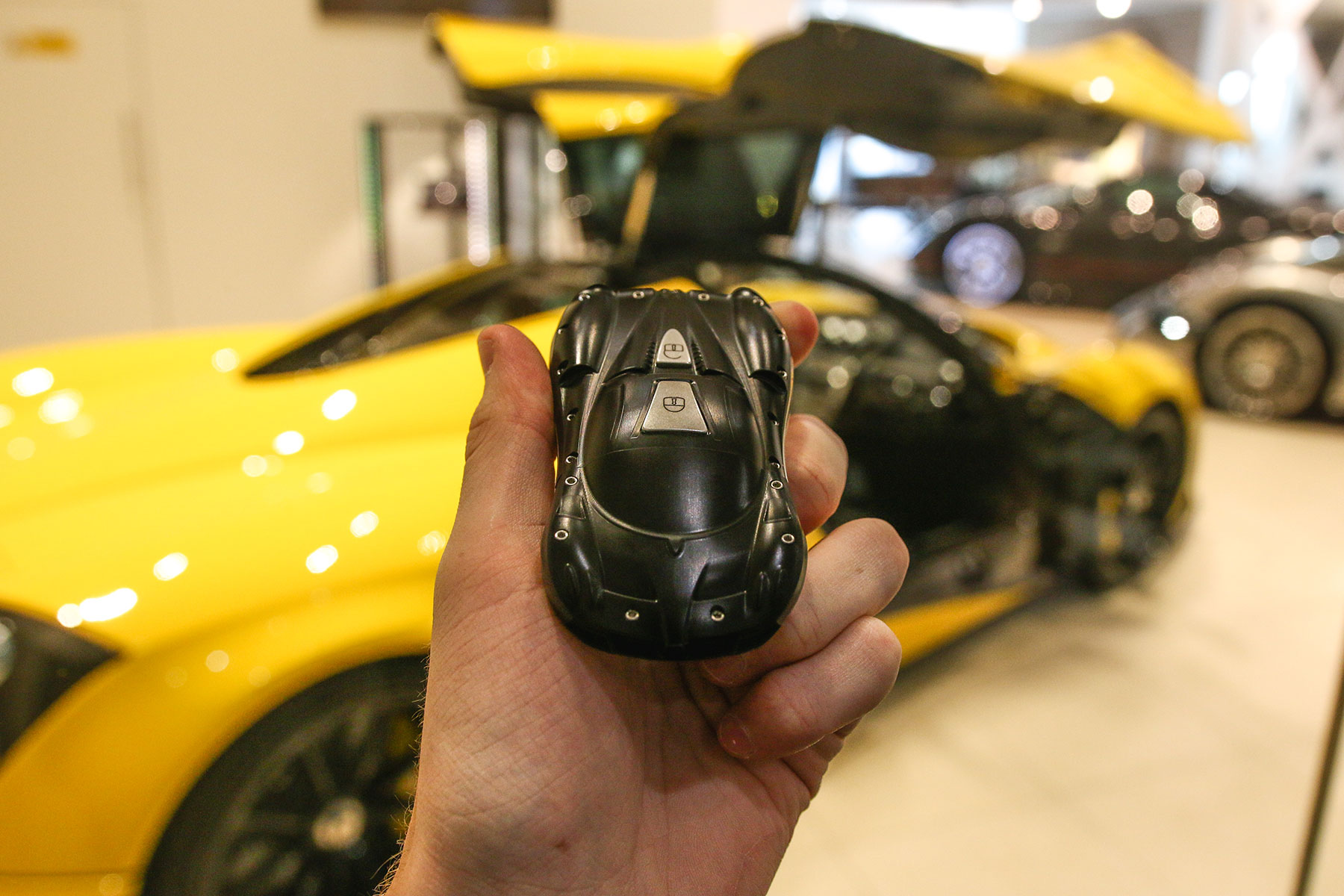
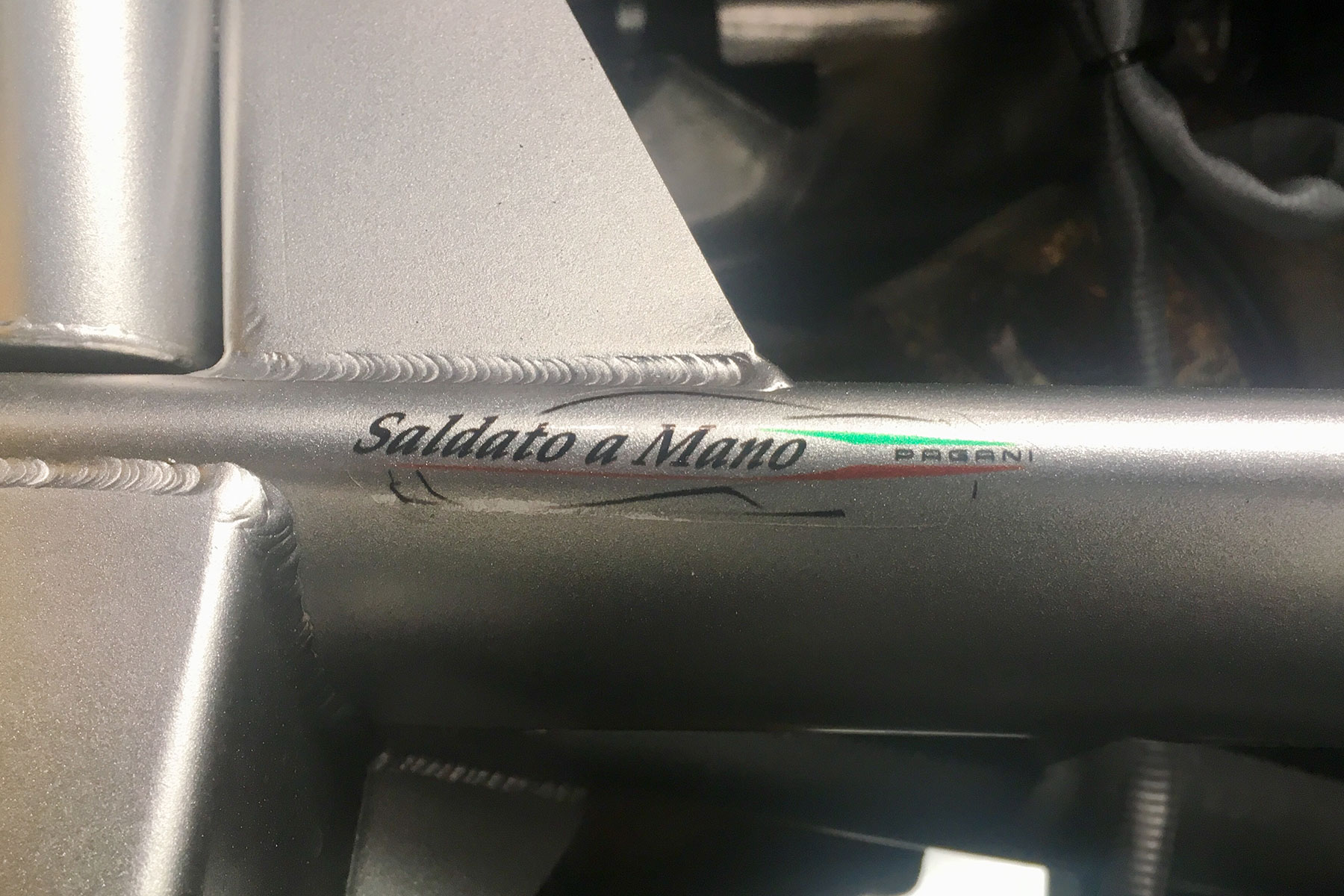
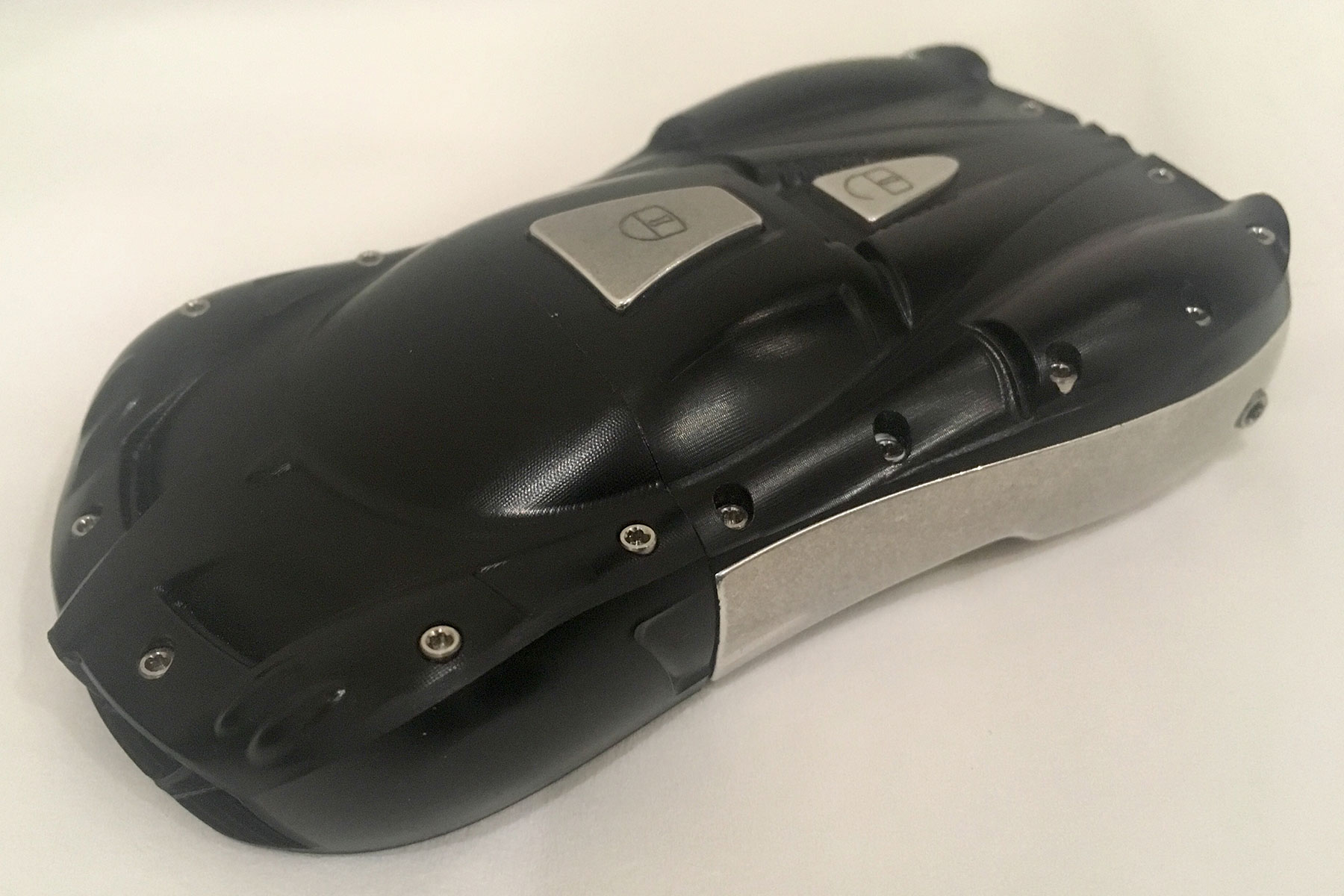
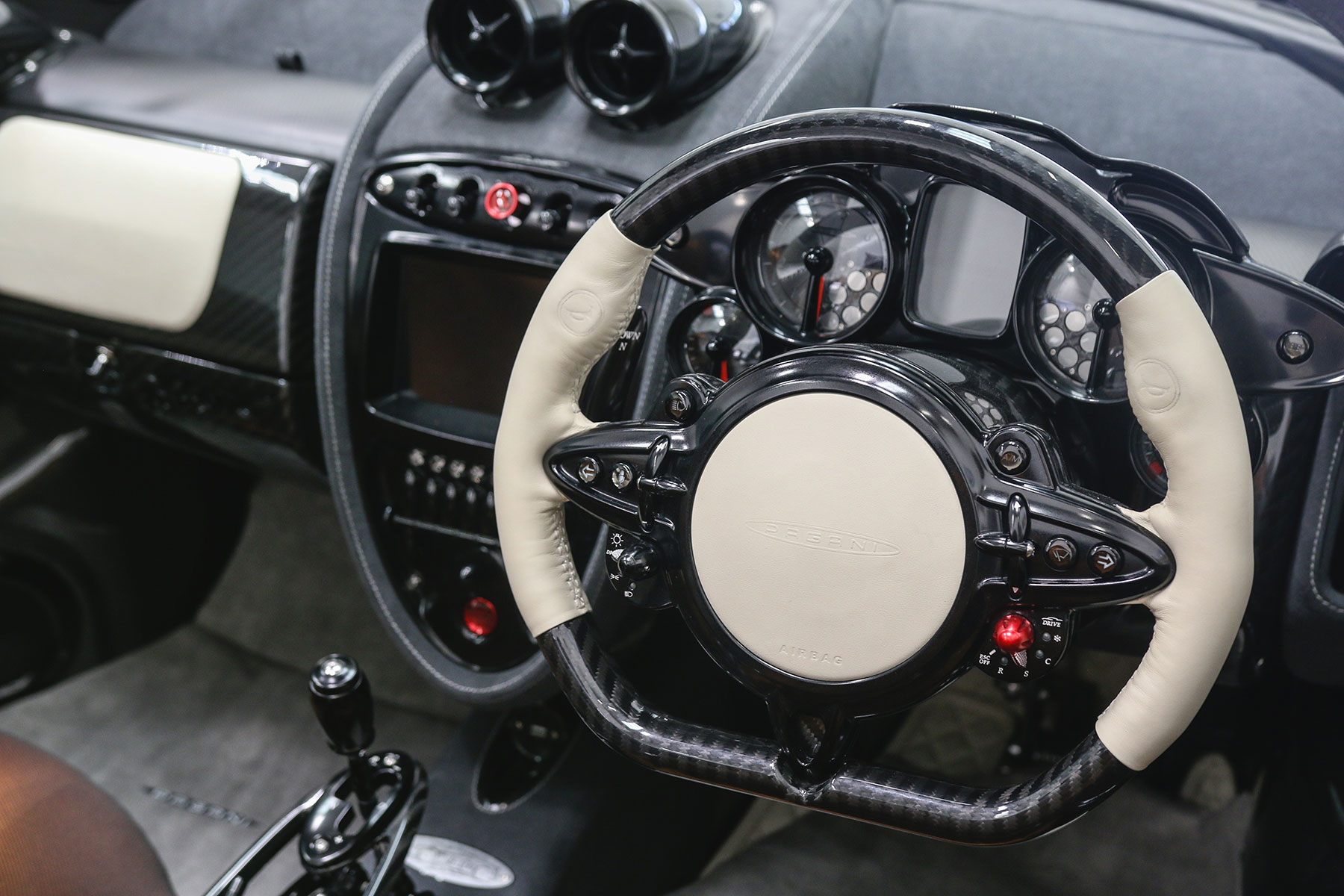
Impressively, the Roadster is both stiffer and 80kg lighter than a Huayra coupe. A new ‘Carbo-Triax’ composite that’s “more advanced than materials used for Formula One cars” takes much of the credit. Every screw on the car is made of titanium and etched with the Pagani logo – at a cost of £65 each.

Huayra Roadster vs. the North Circular

The small matter of 764hp means the Roadster will blast to 62mph in around three seconds, topping out beyond 200mph. Neither of which we’ll be verifying in west London traffic, sadly.

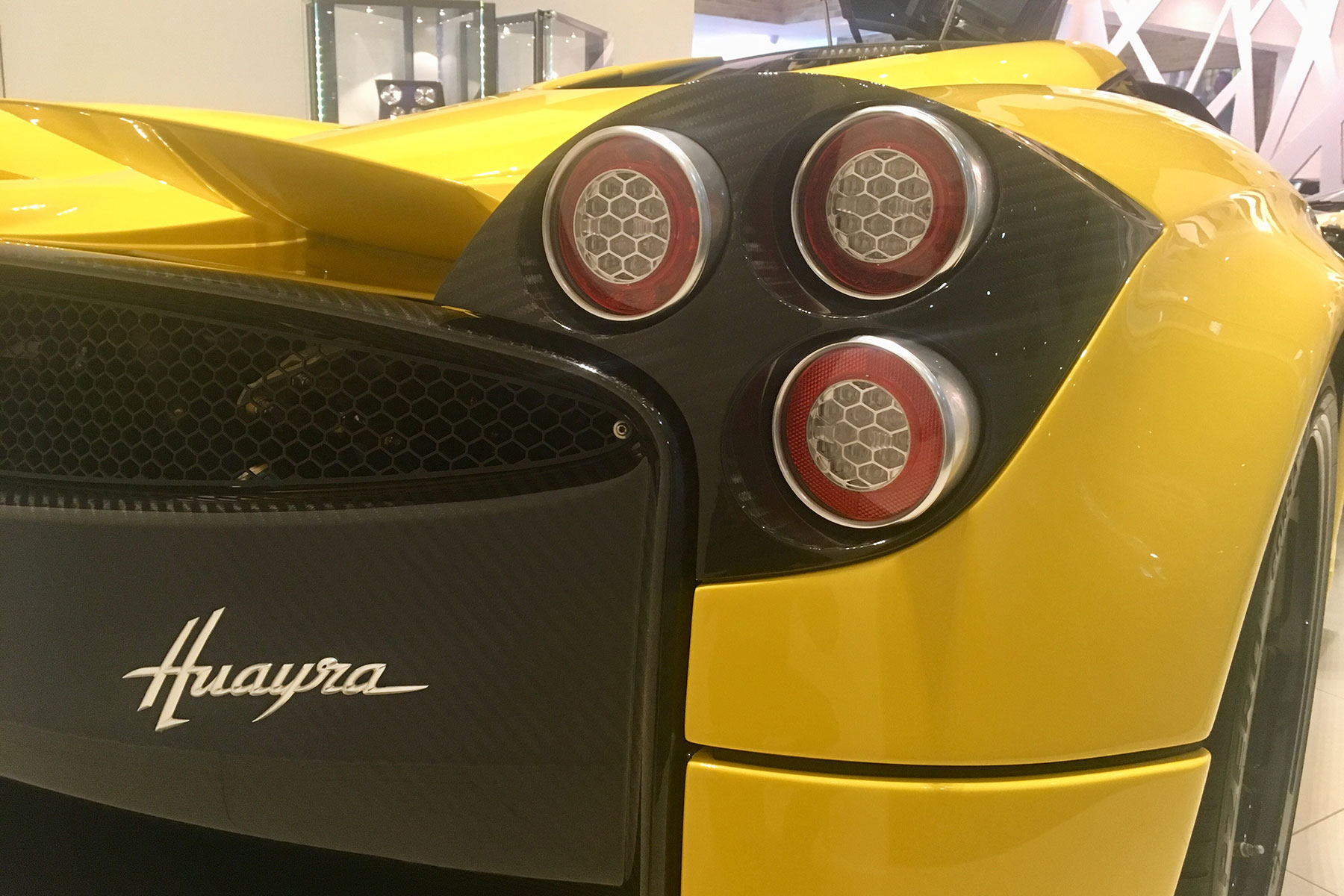
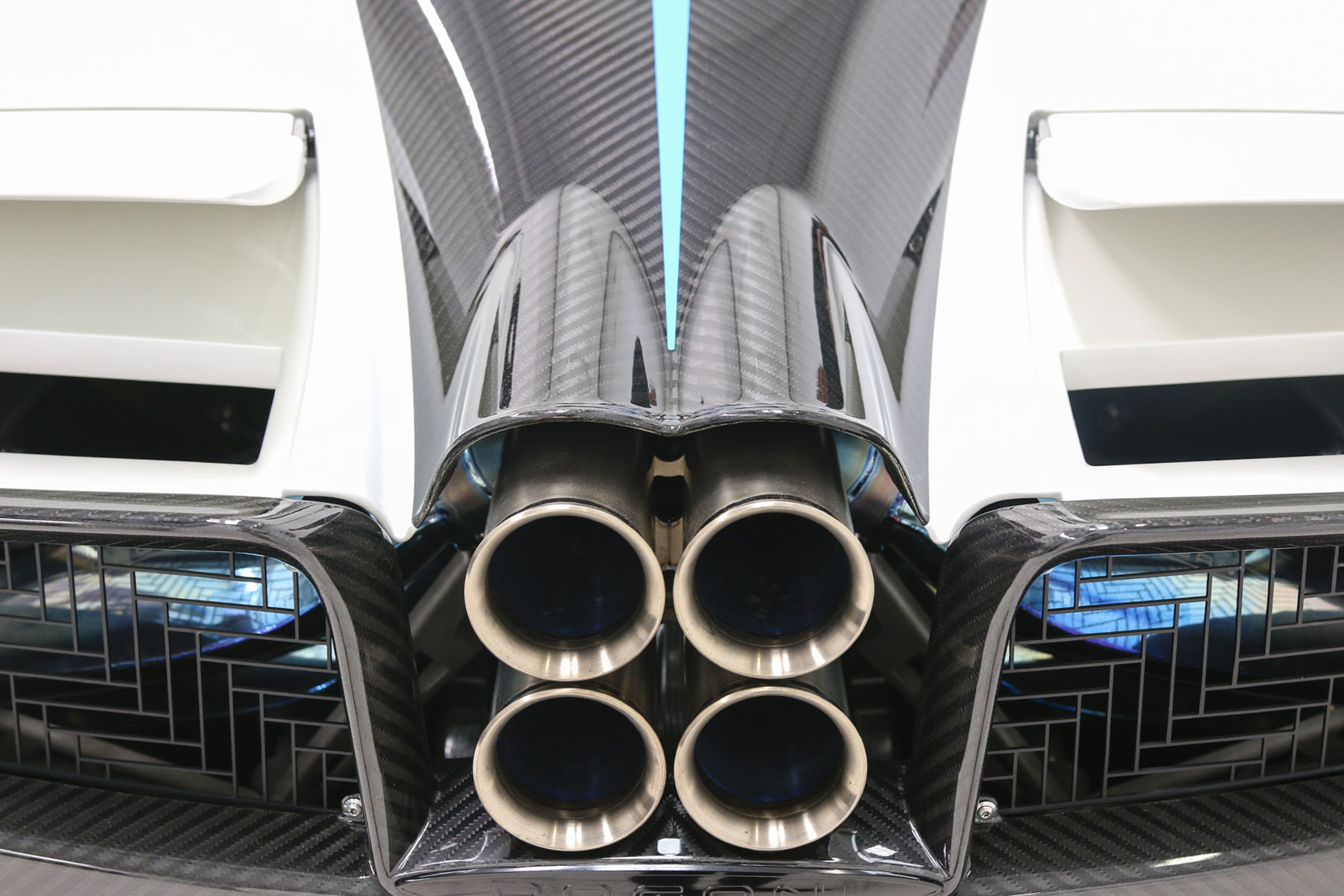
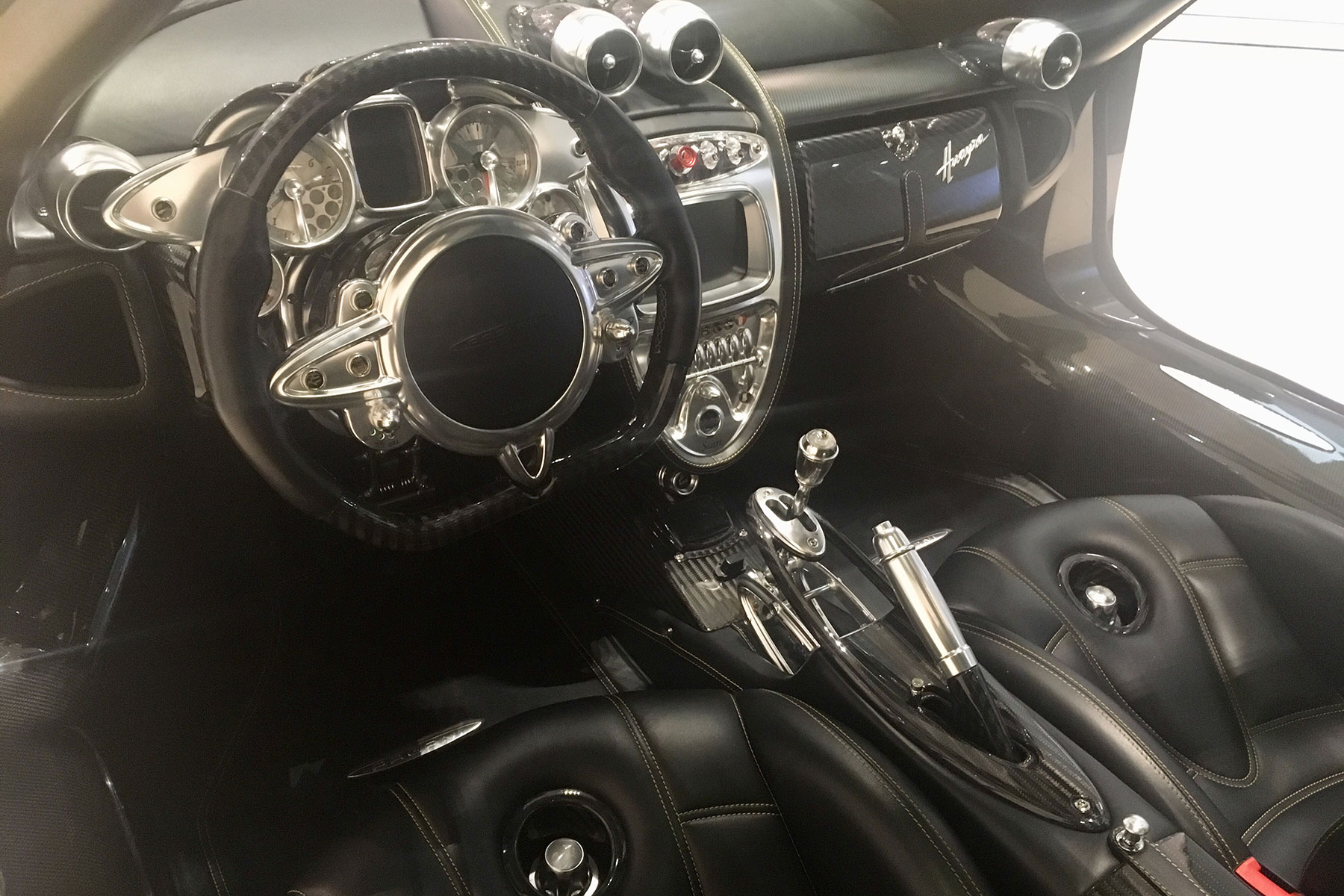
I slide into the low-slung seat and Francis prods the starter button. The V12 erupts with a bellicose bark, then settles to a strident idle, exhaling through Pagani’s trademark quad tailpipes. Over the speed humps of the industrial estate, it feels surprisingly compliant. “The Zonda was like a go-kart with a massive engine,” explains Francis. “This is more of a long-distance GT car.”

It still shifts, though. Francis only gets one opportunity to floor it – on the dual-carriageway North Circular – but acceleration feels utterly savage: a frenzied explosion of raw kinetic energy. Getting the best from a Pagani demands serious driving talent, but Francis says the biggest day-to-day challenge is parking: “The car attracts social media attention wherever you go. Clip a kerb and you’ll end up on YouTube.”

The EVOlution of Zonda

Heart racing, hair restyled by Huayra, I return to Pagani HQ. Even from the passenger seat, a full-paid-up hypercar is an intense and energising experience. Time for a cold drink and a nose around the showroom.

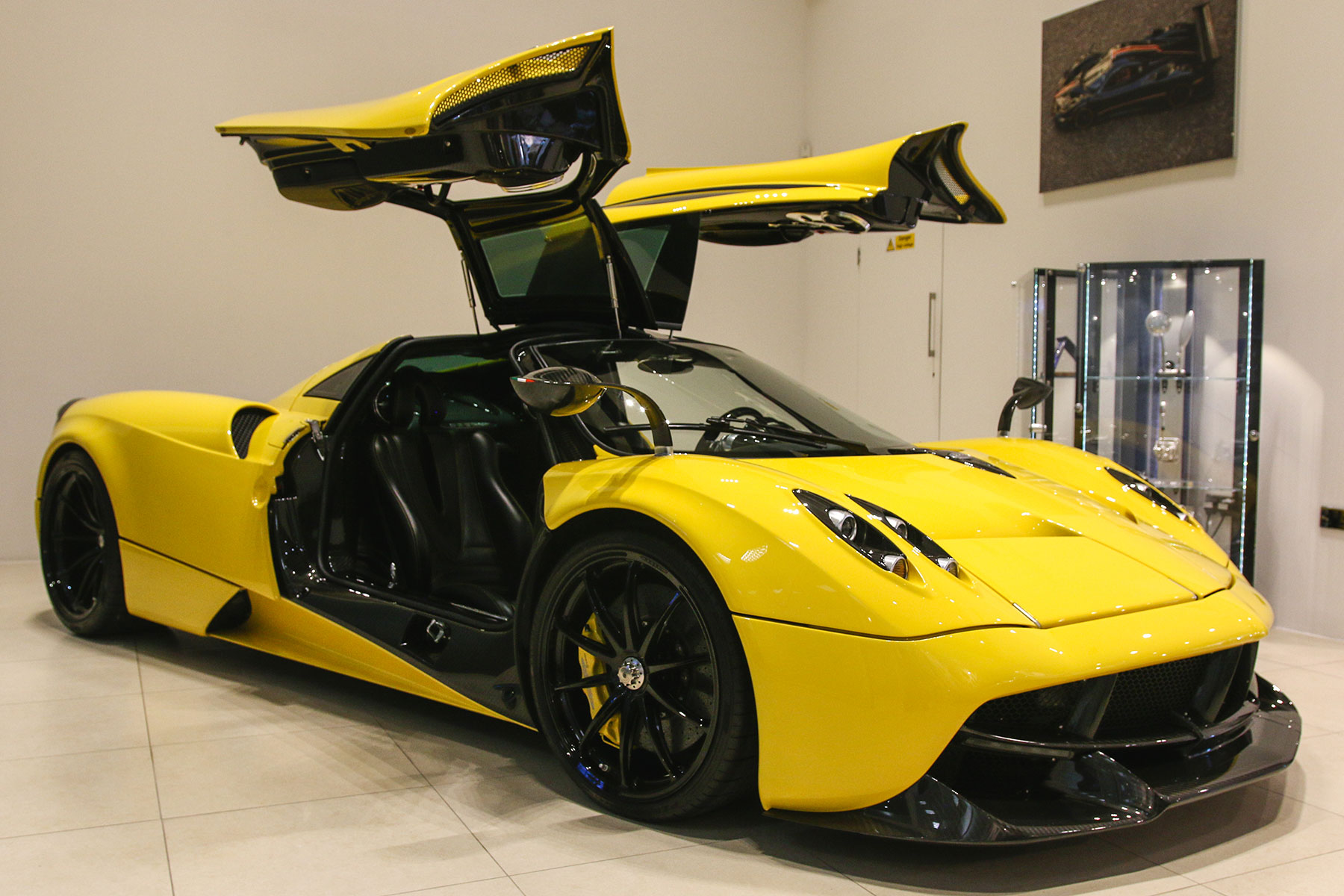
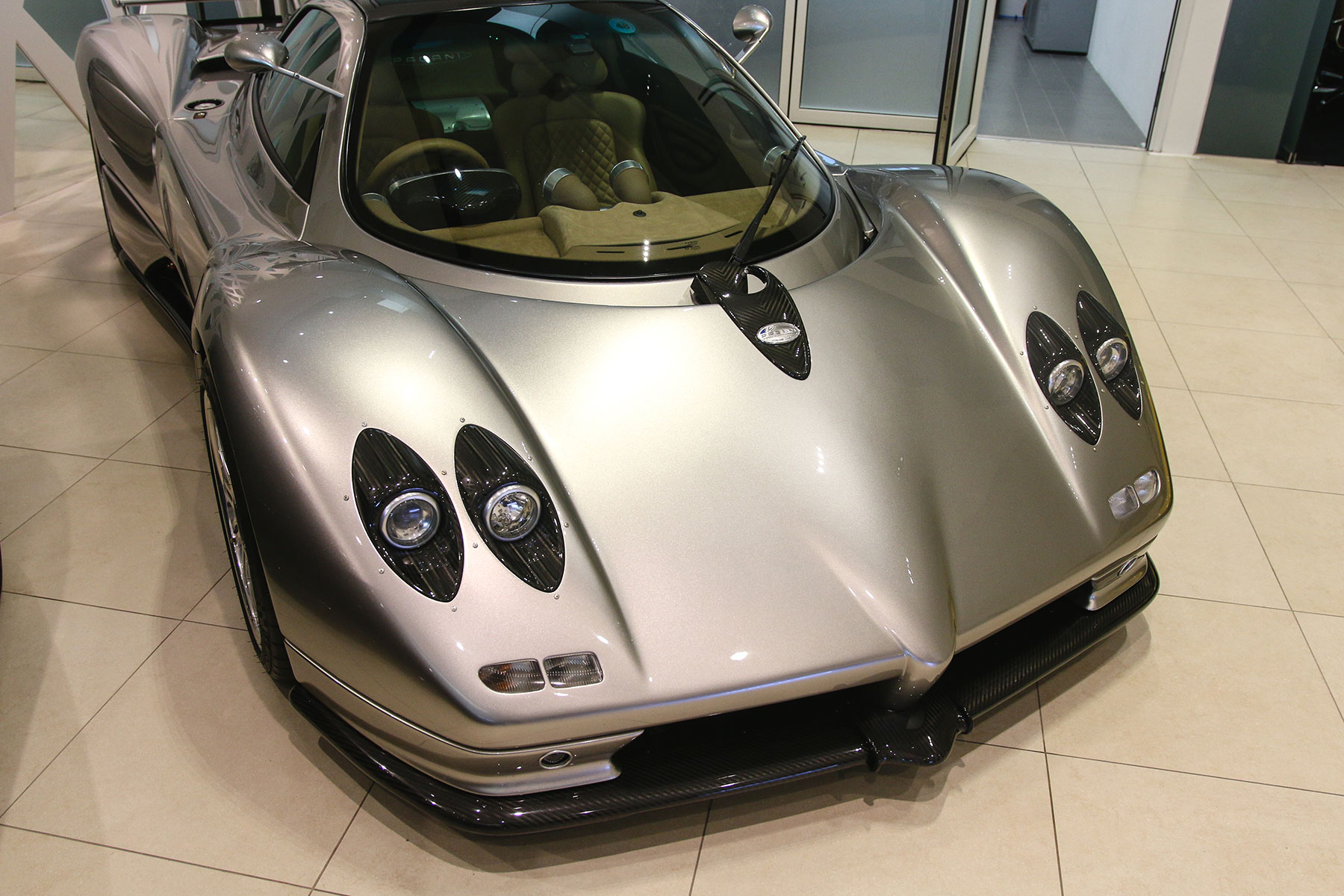
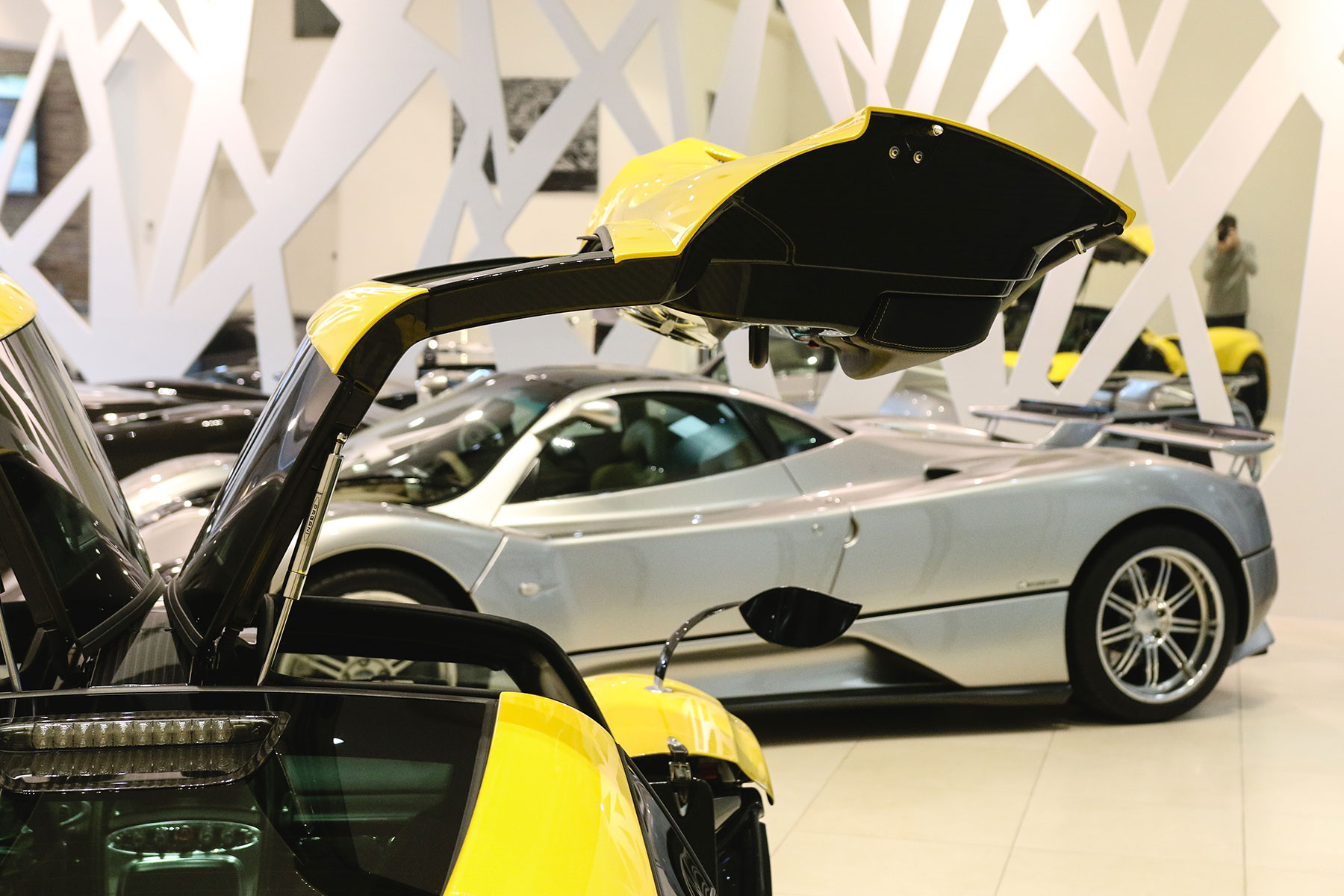
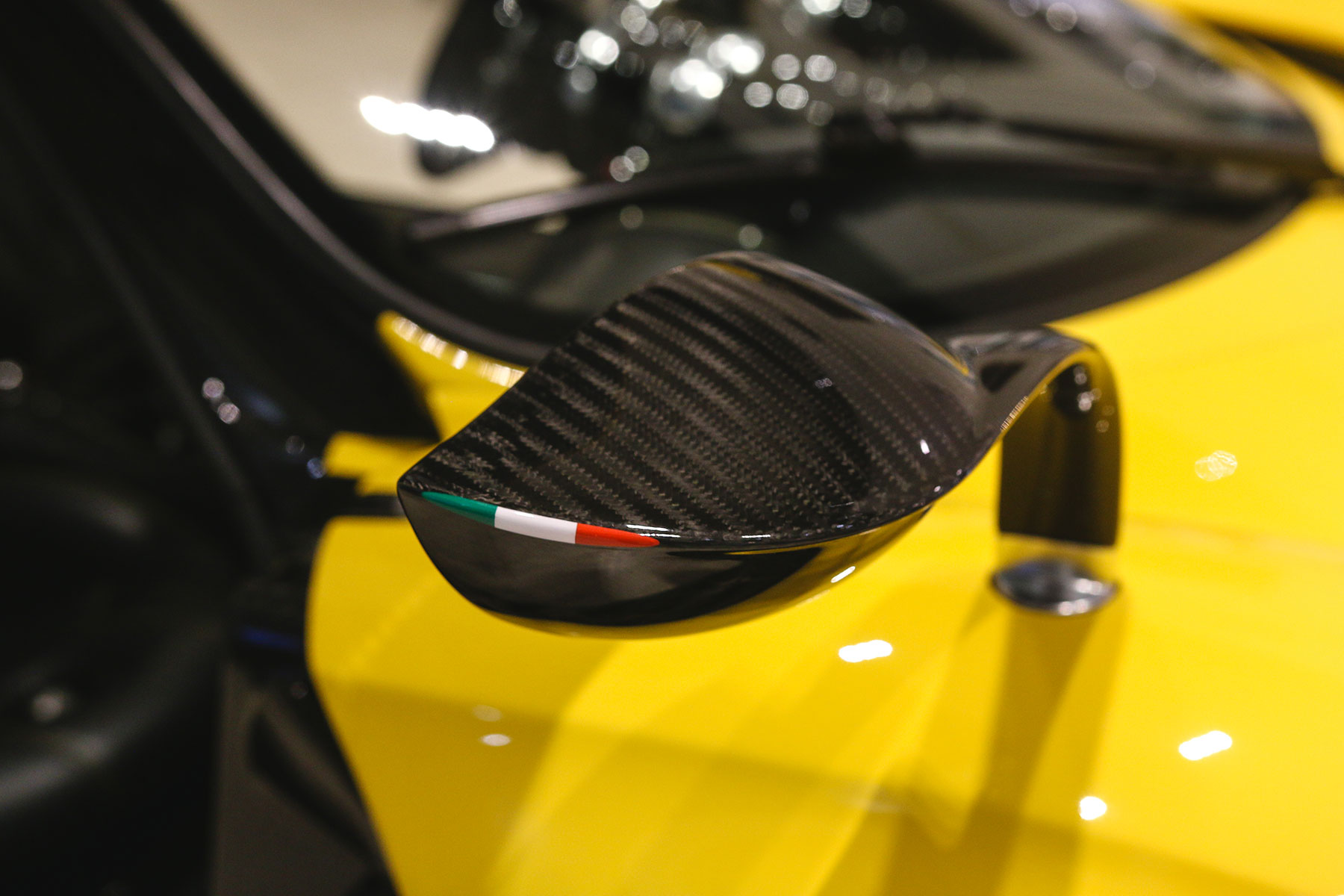
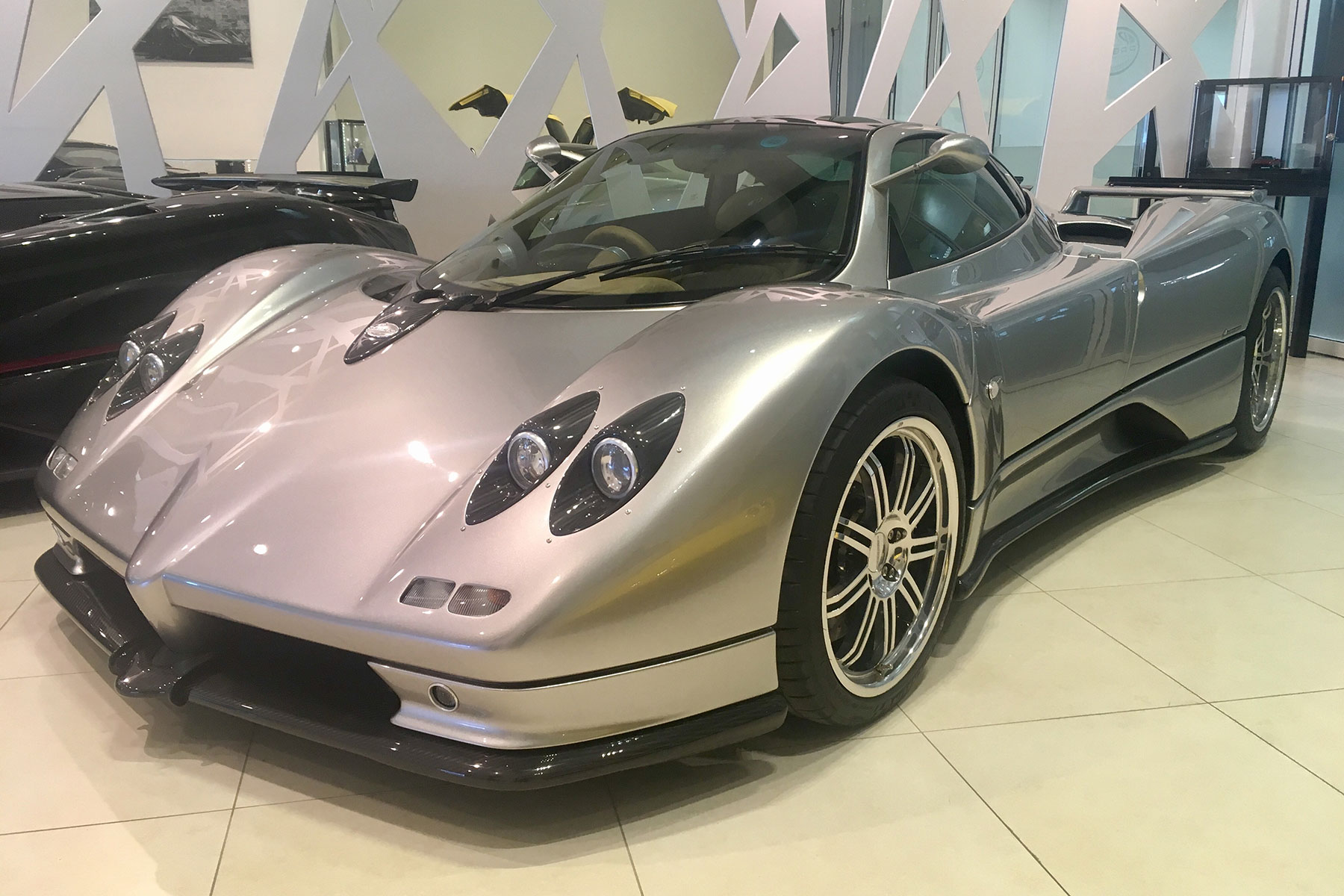
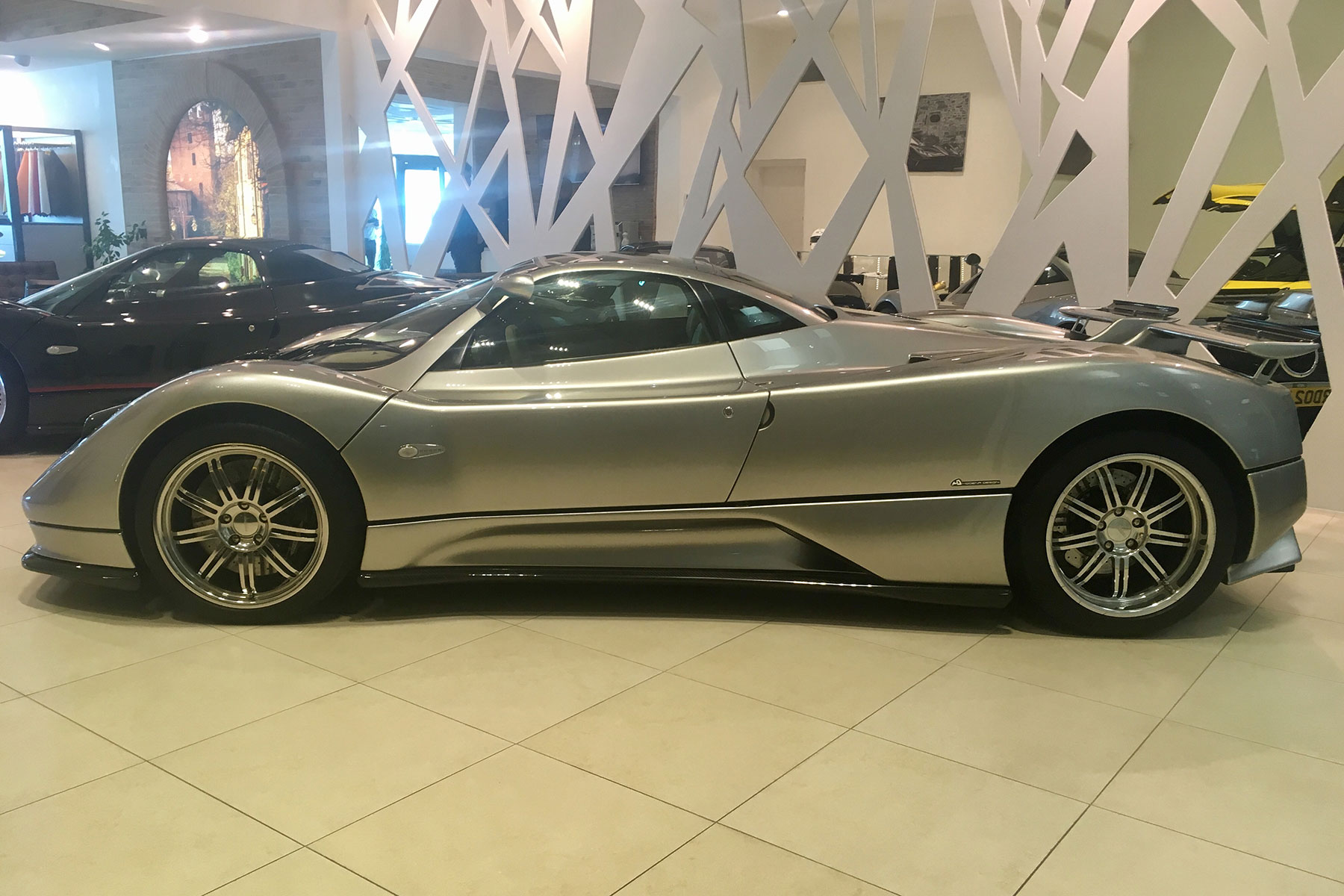
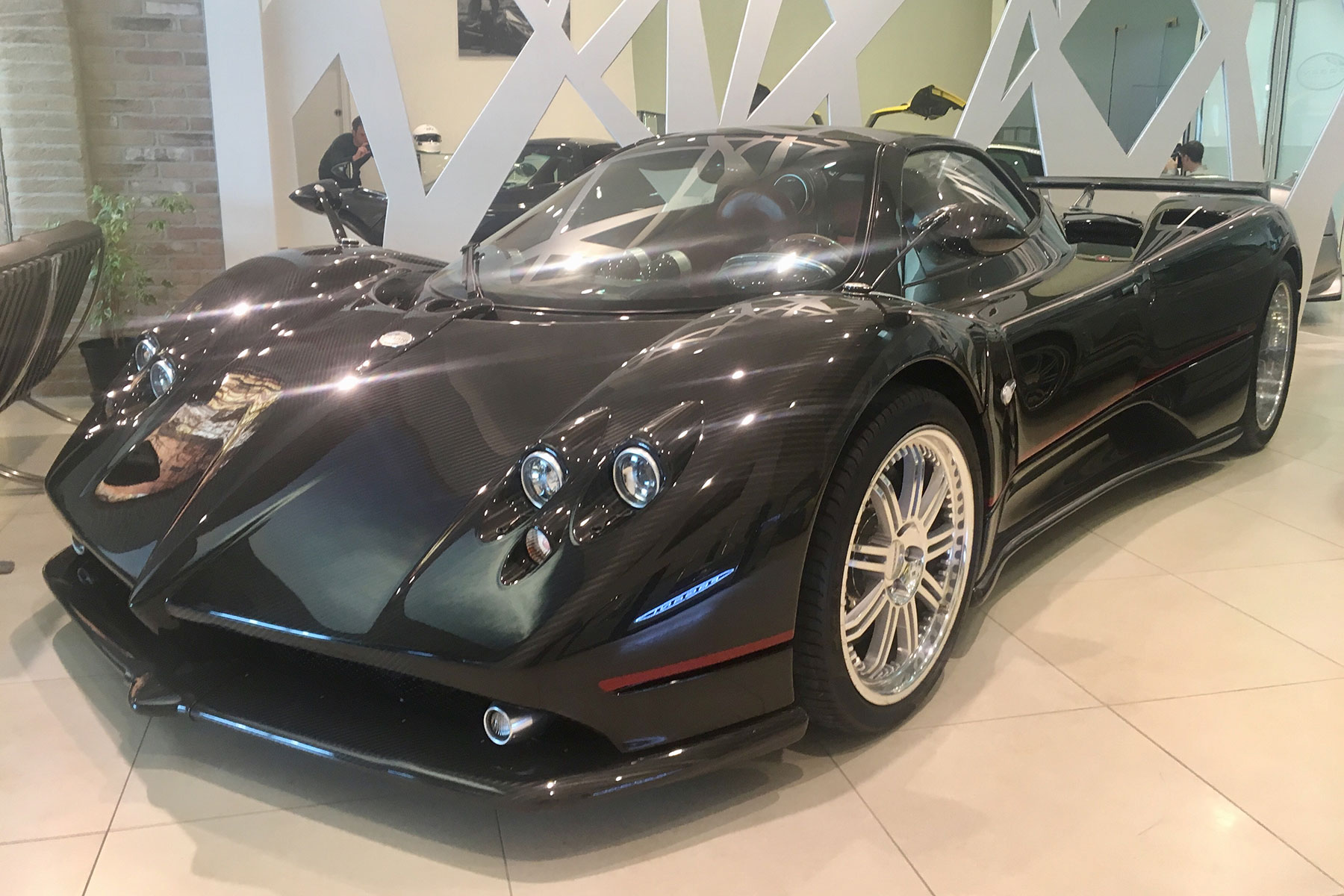
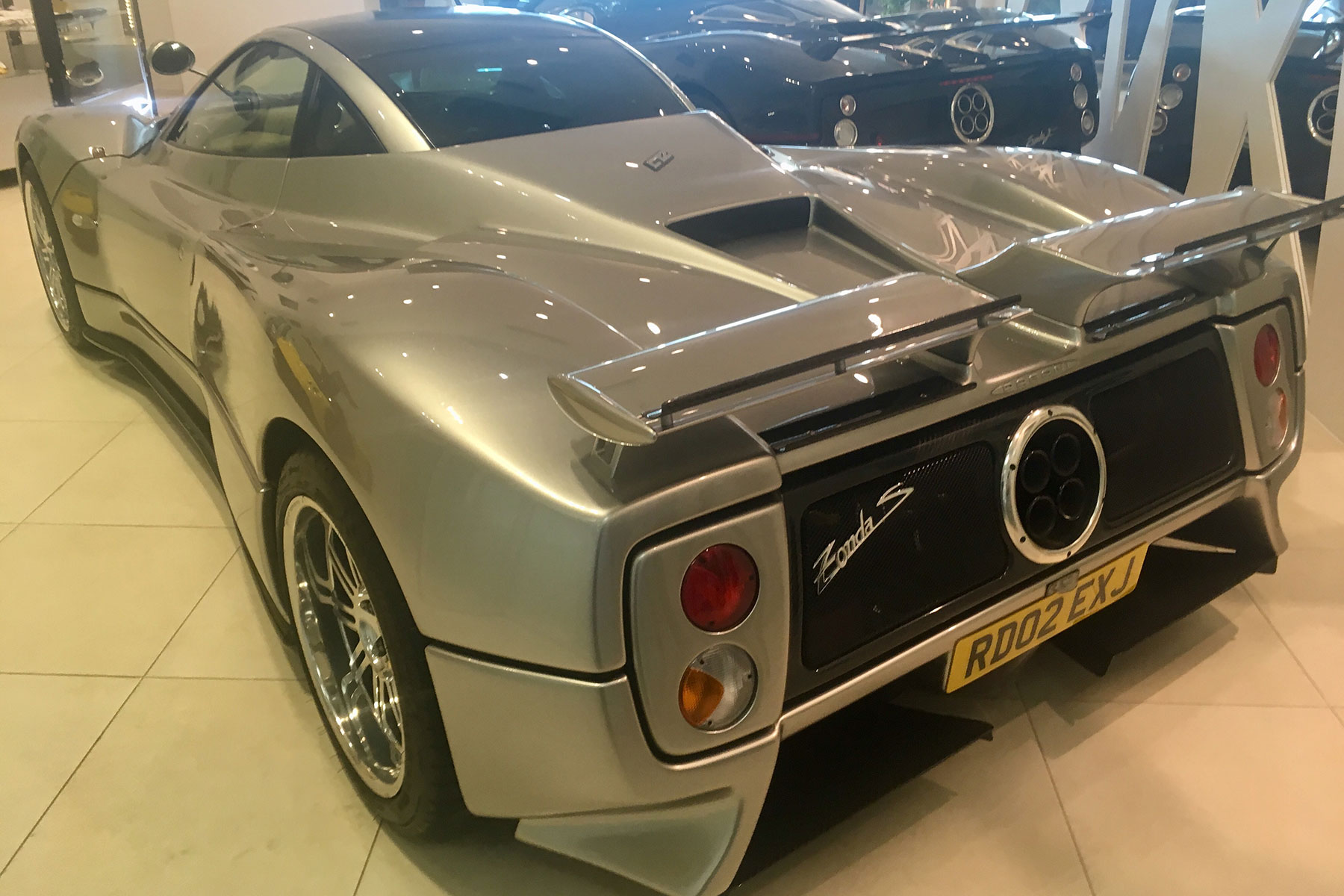
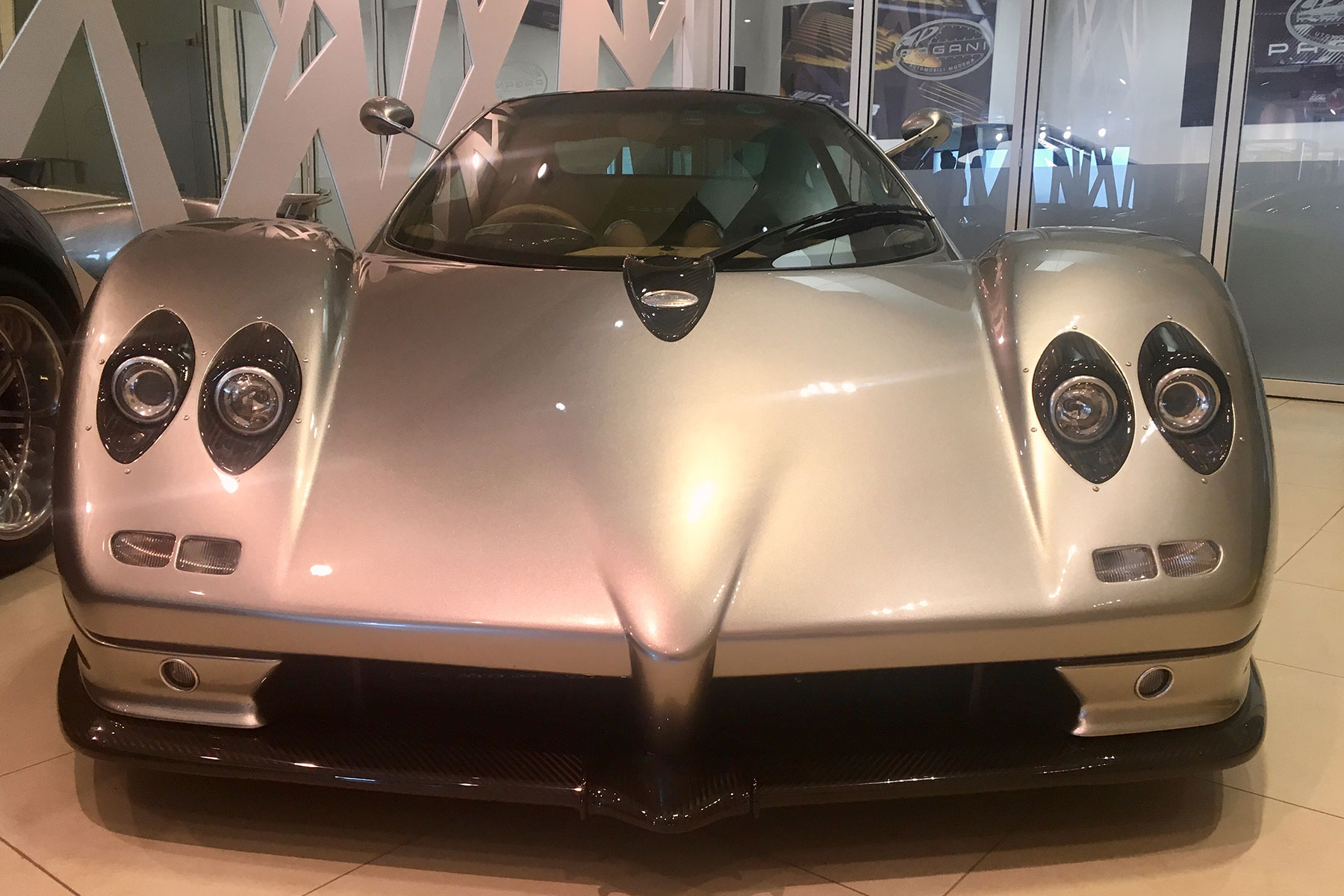
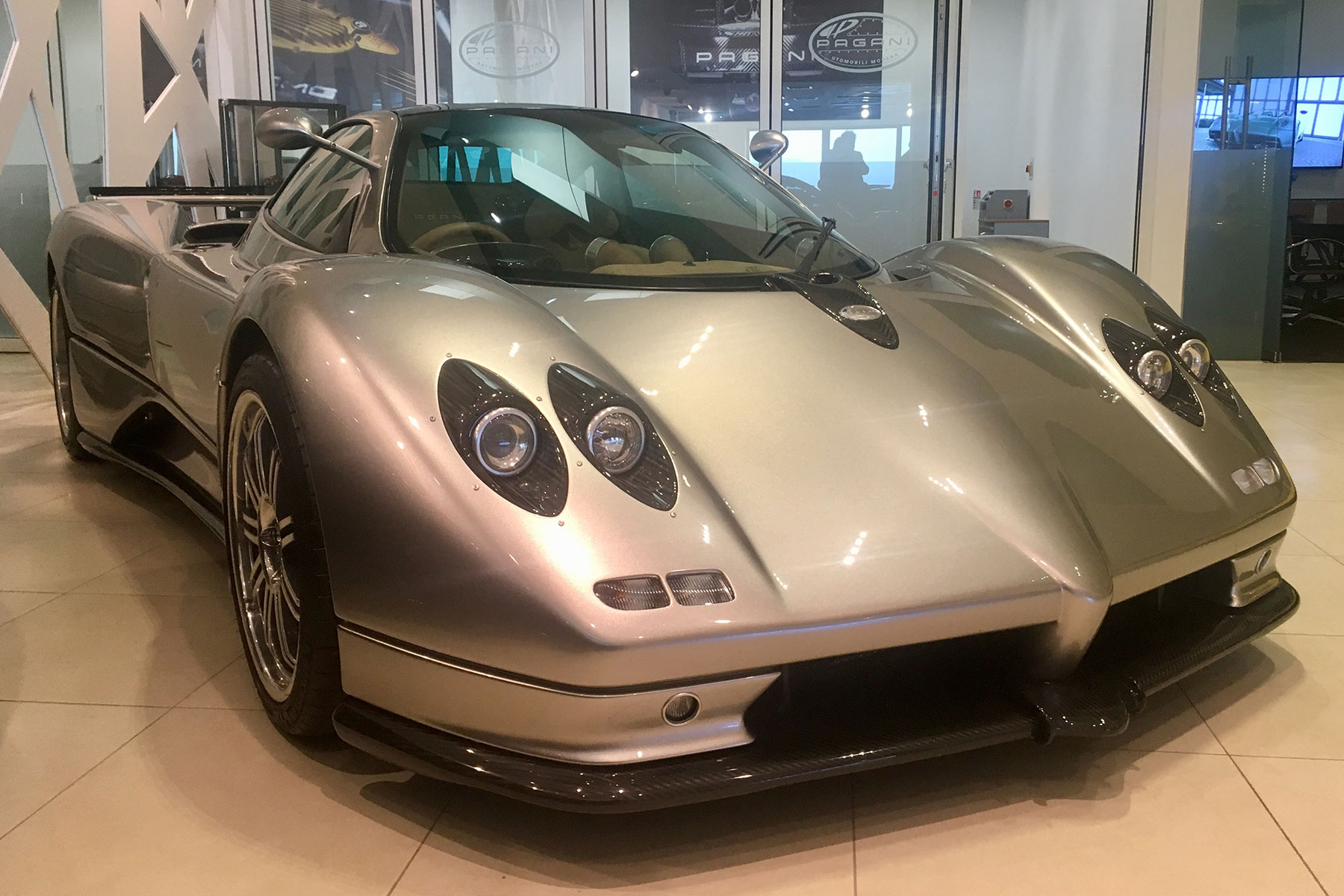
One particular car grabs my attention: a silver Zonda C12 S. Readers of Evo will recognise one of the magazine’s former long-termers, previously owned by editor Harry Metcalfe. Parked between a dazzling yellow Huayra and a naked carbon Zonda F Roadster, it looks surprisingly subtle – yet still effortlessly exotic.

Metcalfe’s car was the second 7.3 S built and has since been fitted with uprated ‘F’ brakes. But as I discover, very few Zondas have remained standard.

Upping the ante: Zonda specials

“Many Zondas have been modified with help from Pagani, often from Horacio himself”, explains dealer principal Christine Clarkin. “Everything Horacio does can be upgraded.”

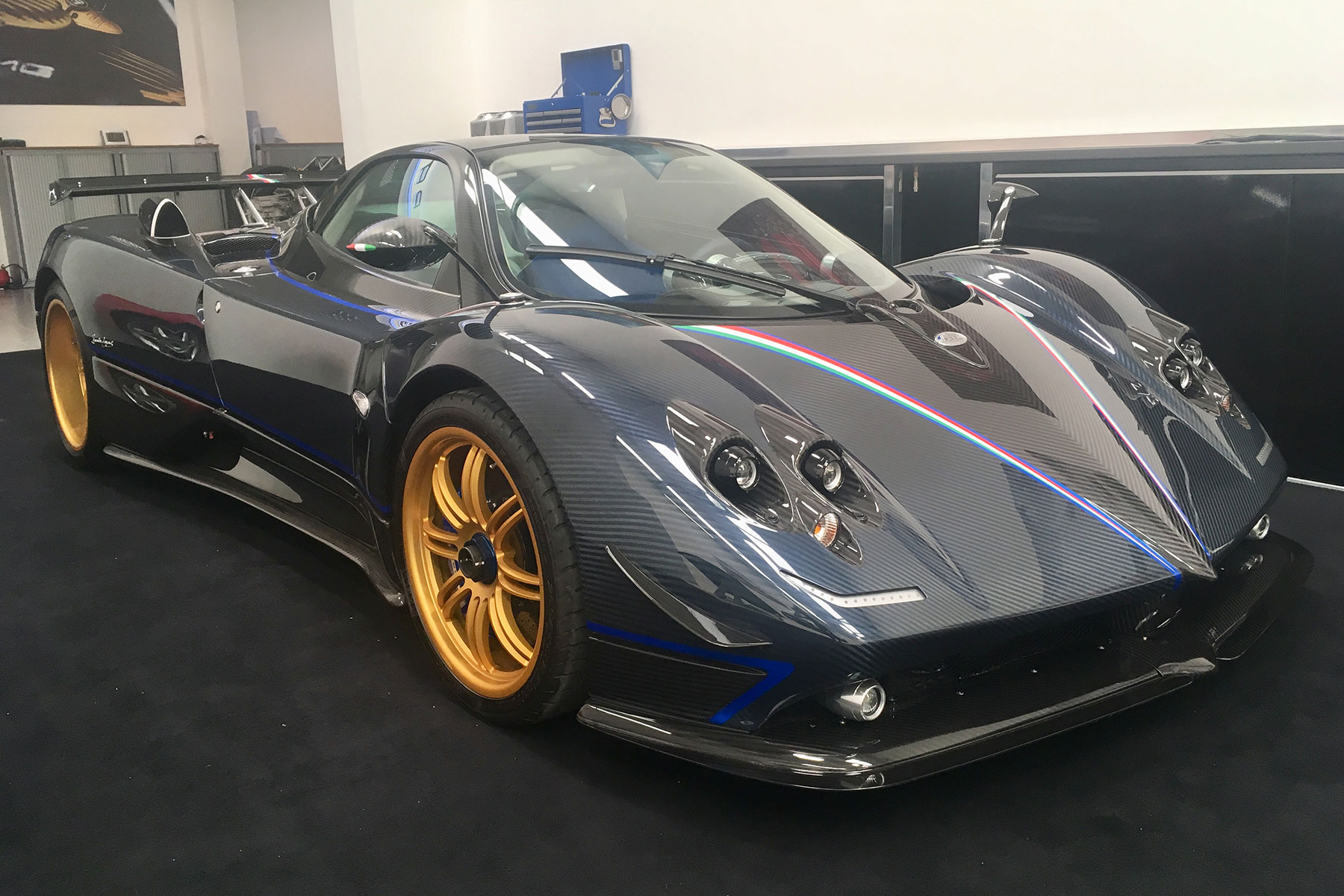
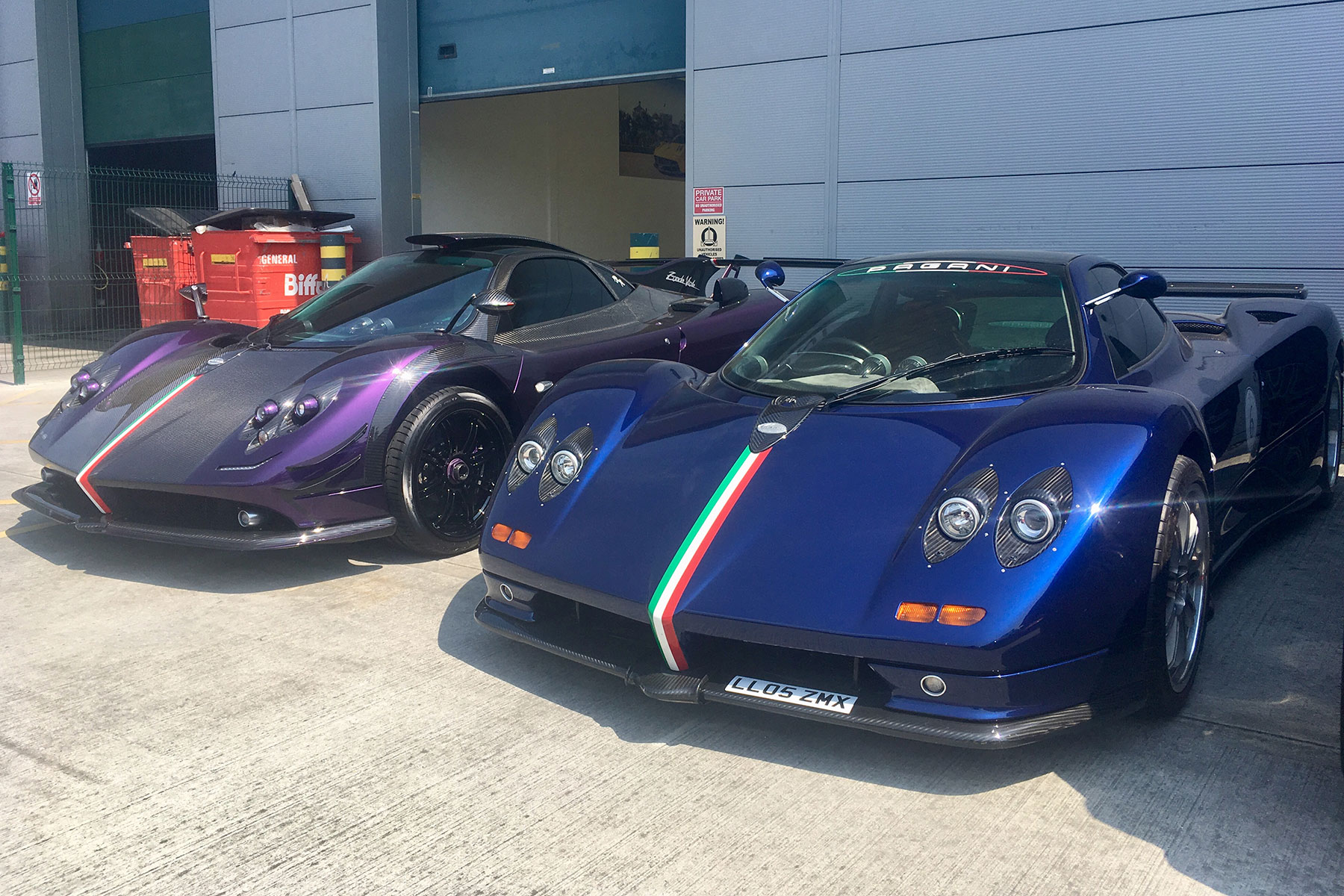
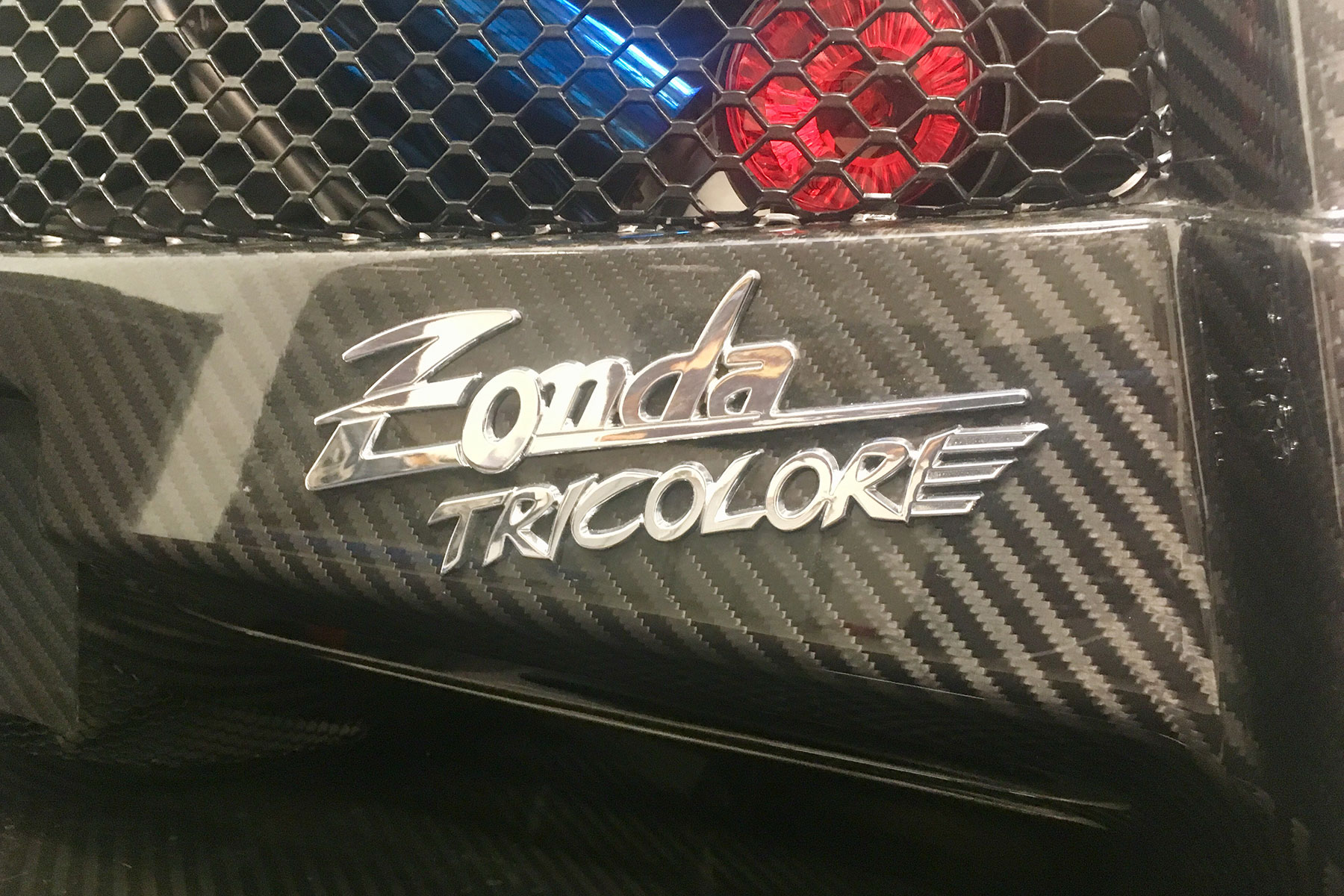
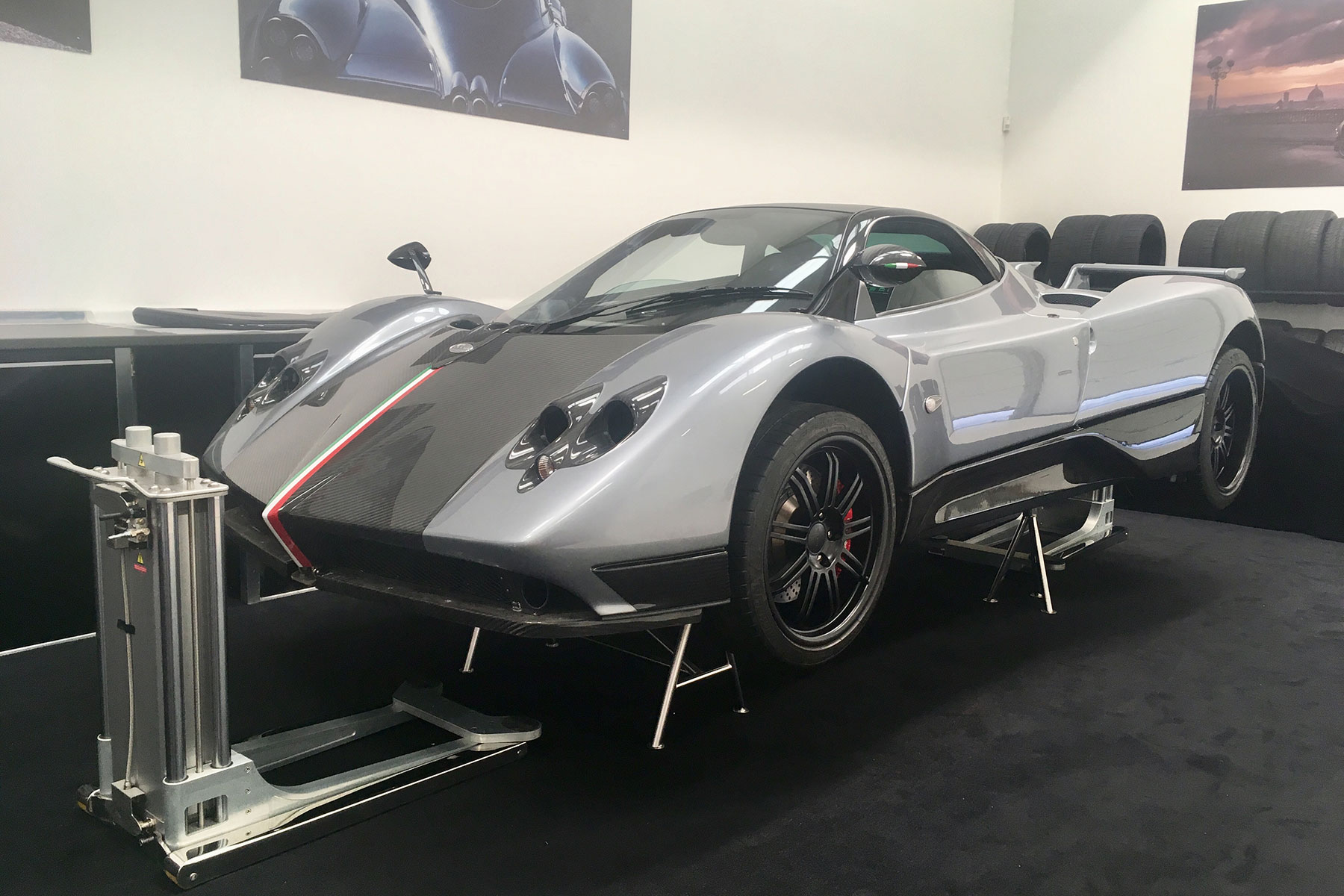
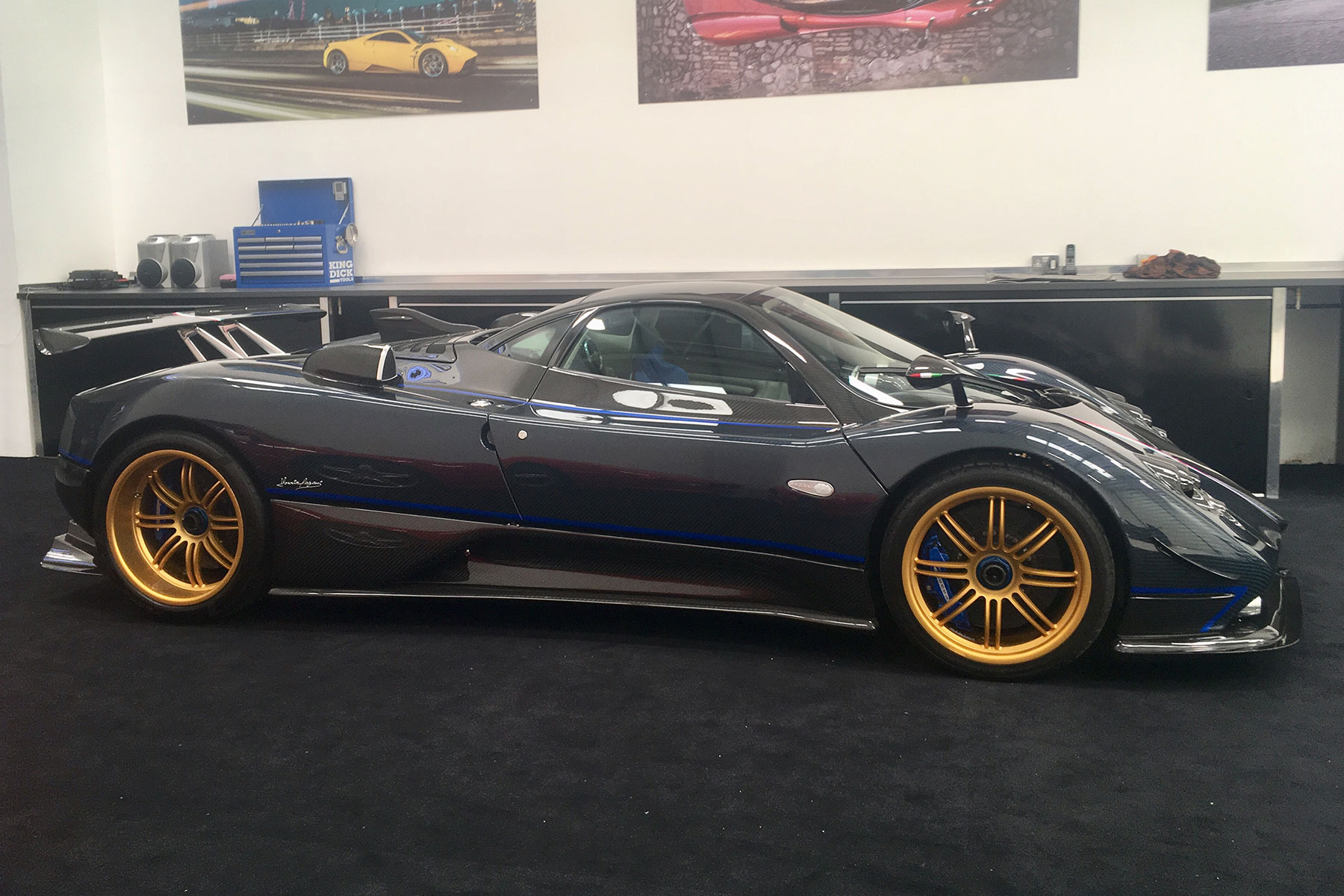
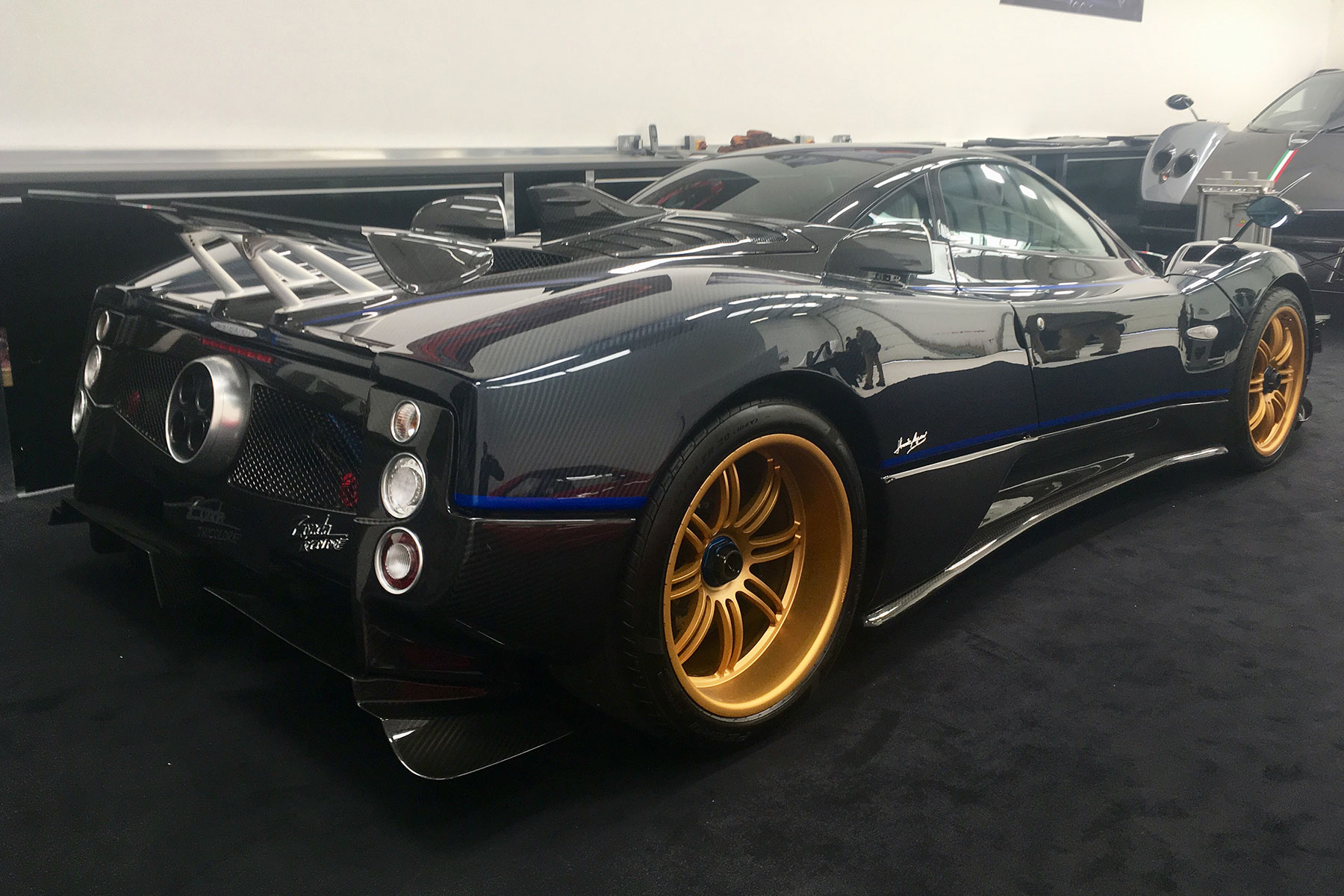
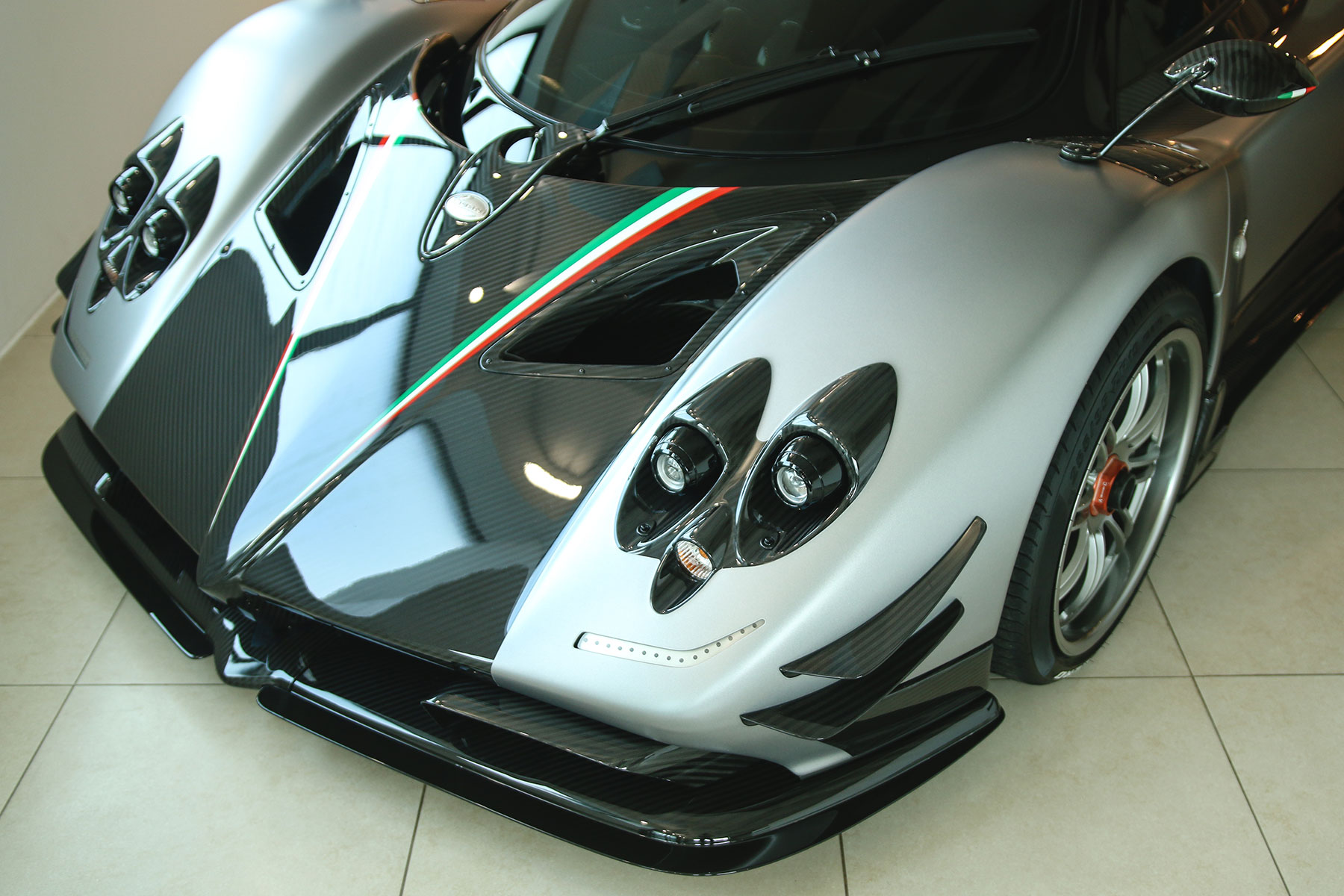
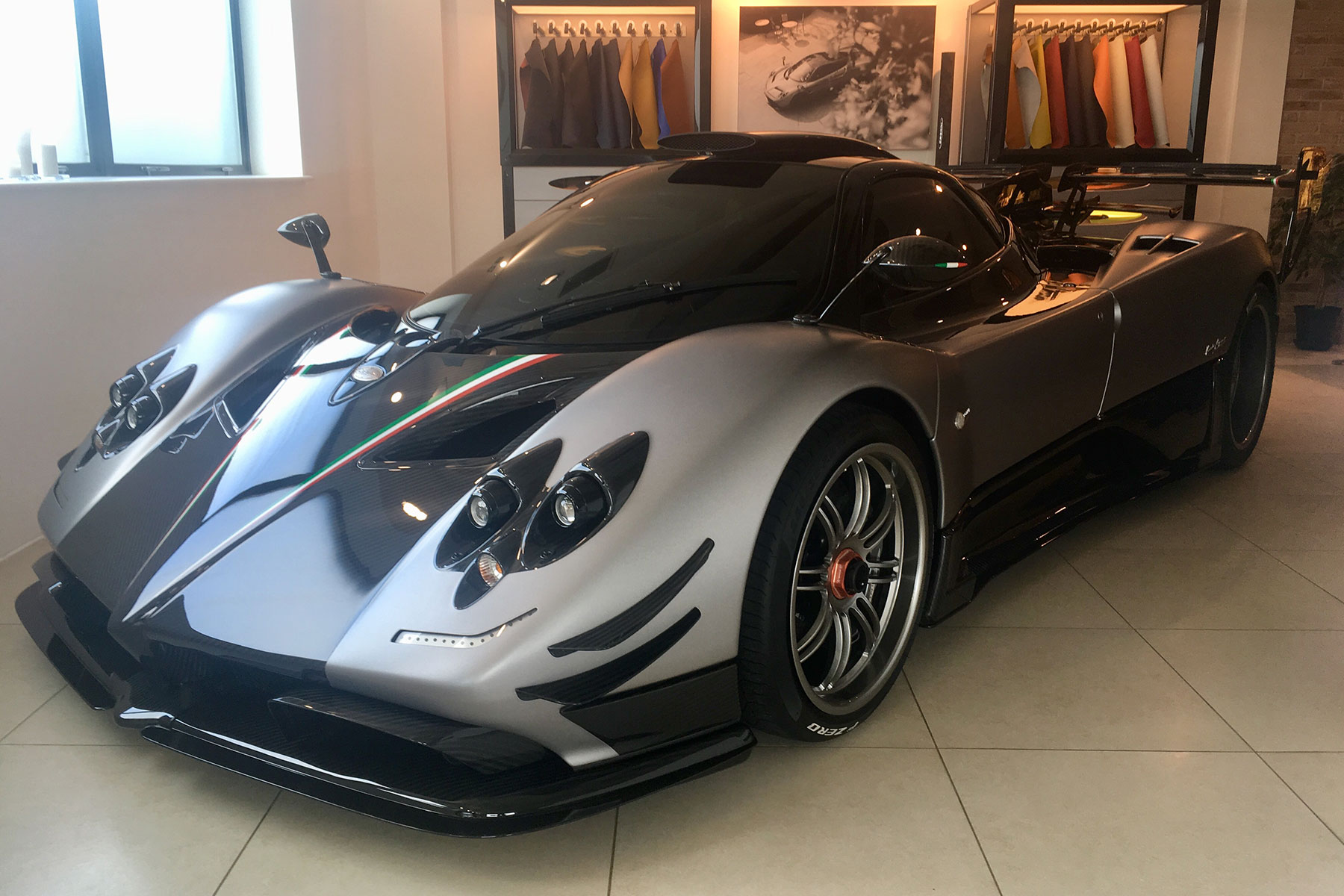
There’s also been a bewildering array of Zonda special editions, many of them one-offs. The Tricolore above, for example, is one of three built to celebrate an Italian air display team. Its carbon fibre bodywork has a blue lacquer coating and there are vertical air scoops that mimic jet engines, plus a one-piece rear wing.

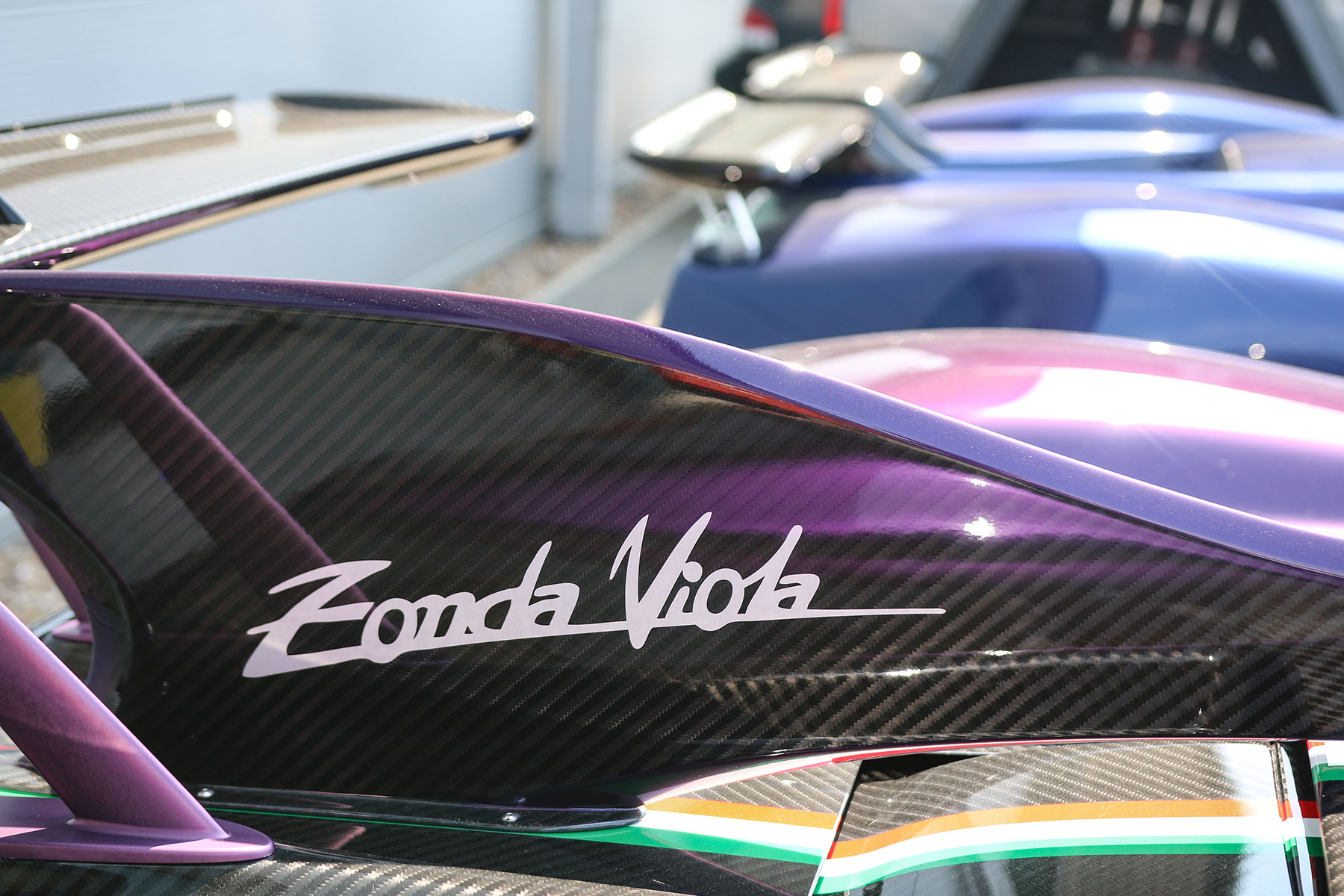
Five Zondas were originally built to final 760hp spec, including the purple ‘Viola’ parked outside, but “between 10 and 15” cars have since been converted.

Just add greatness 

This is perhaps the greatest distinction between Pagani and its rivals. While most owners of supercars and classics are obsessed with originality, Pagani makes a virtue of continuous improvement. And, crucially, modifying your car in the ‘right’ way (i.e. via the factory) doesn’t seem to affect its value.

The ultimate expression of an owner’s individuality is, of course, a custom one-off. As Andy Smith, director of aftersales, reveals: “All special editions have direct input from Horacio and involve a huge amount of work. Everything is done from scratch, including bespoke tooling and bodywork moulds. The process takes between 18 months and two years – and there’s a long waiting list.”

Such dreams are beyond mere mortals such as I. Yet the unattainable otherworldliness of Paganis doesn’t diminish their appeal. The single-minded vision of this small company is genuinely inspiring. To quote Horacio himself, each car is “an unbridled work of art”.

Read more:

Advertisement

Britain’s first Lexus 7-seater will cost from £50,995

0

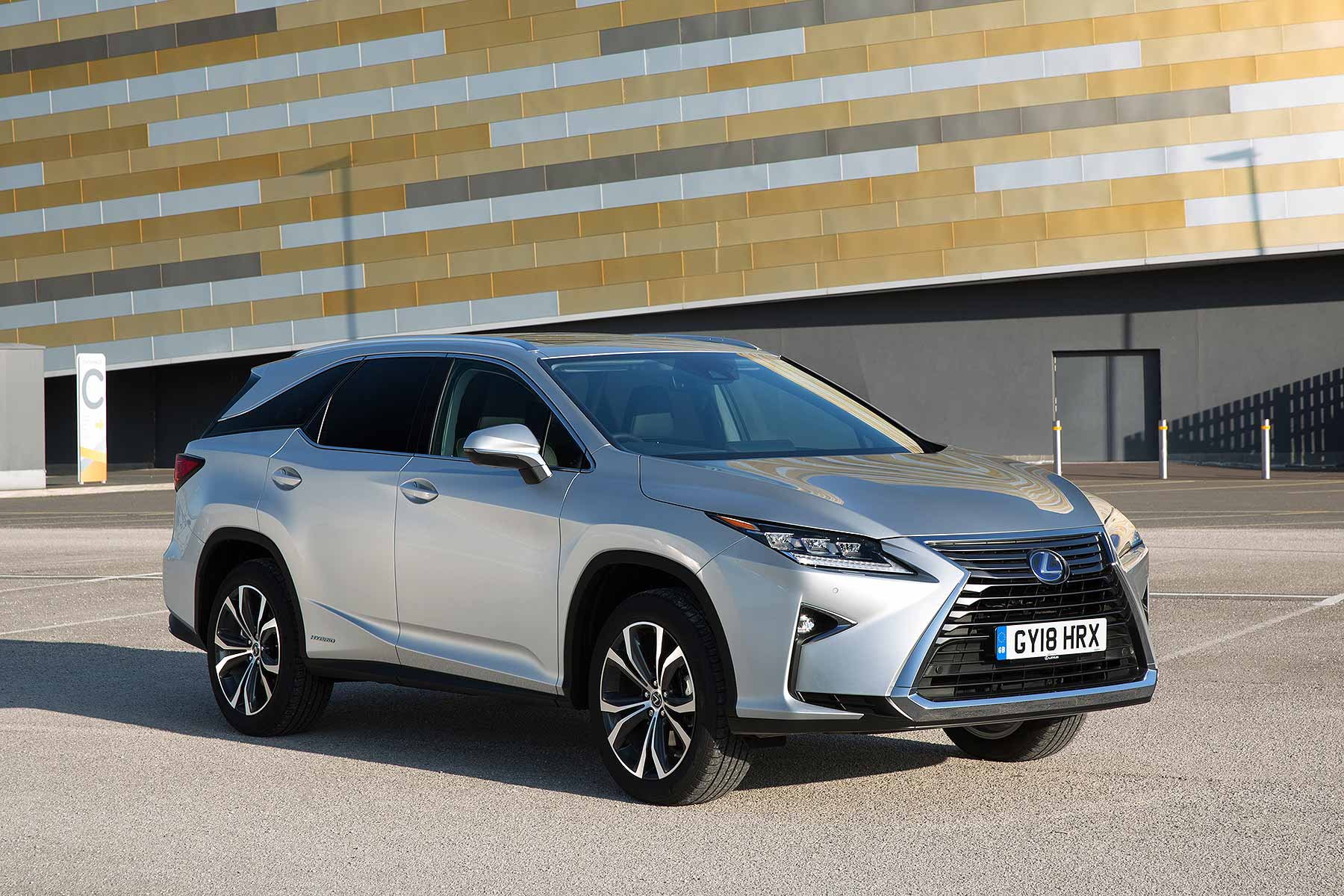
Lexus RX 450h LLexus owners have never been able to take more than four friends or family along for the ride. Until now; with the launch of the RX 450h L, the Japanese premium brand is offering a three-row seven-seater model in the UK for the first time.
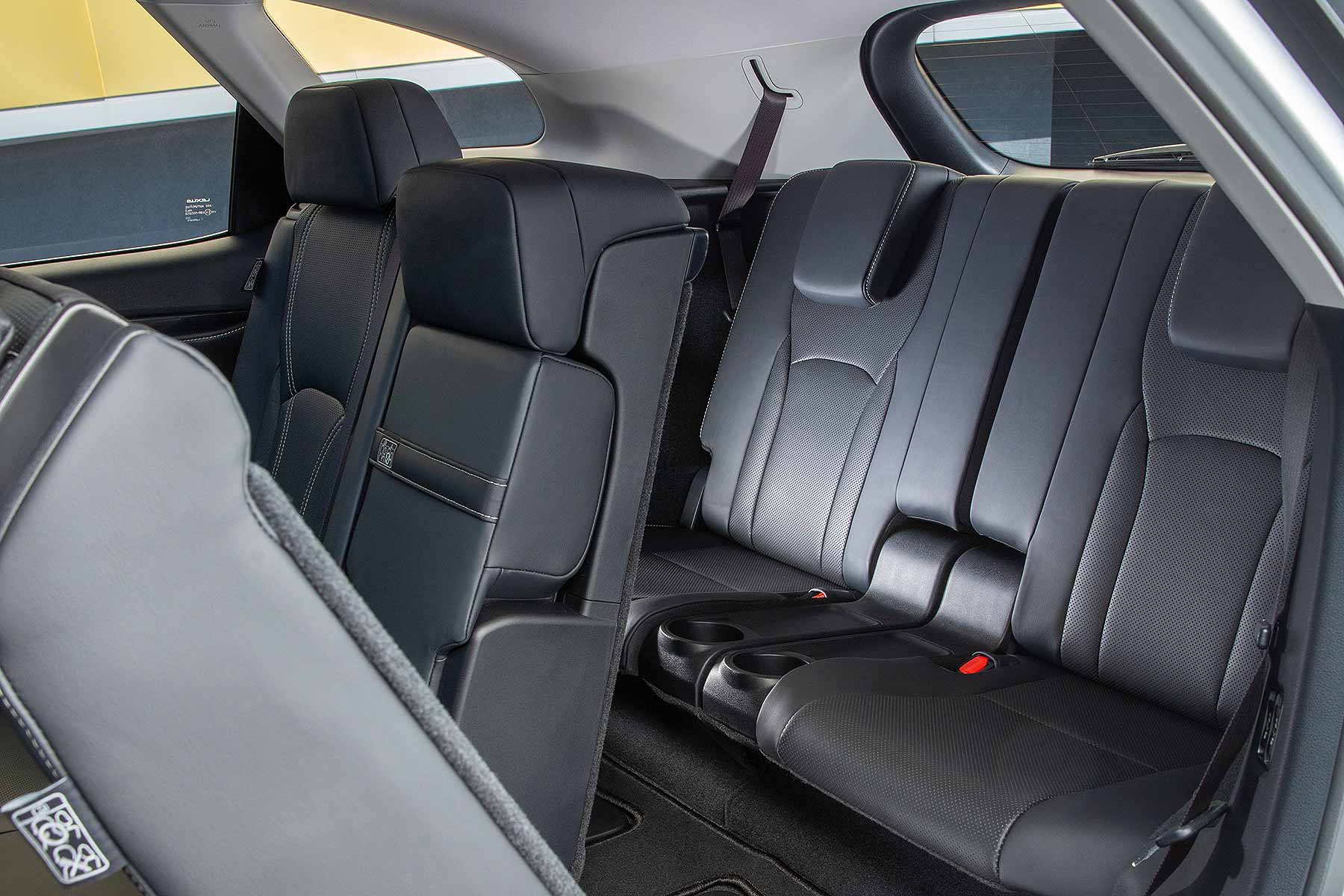
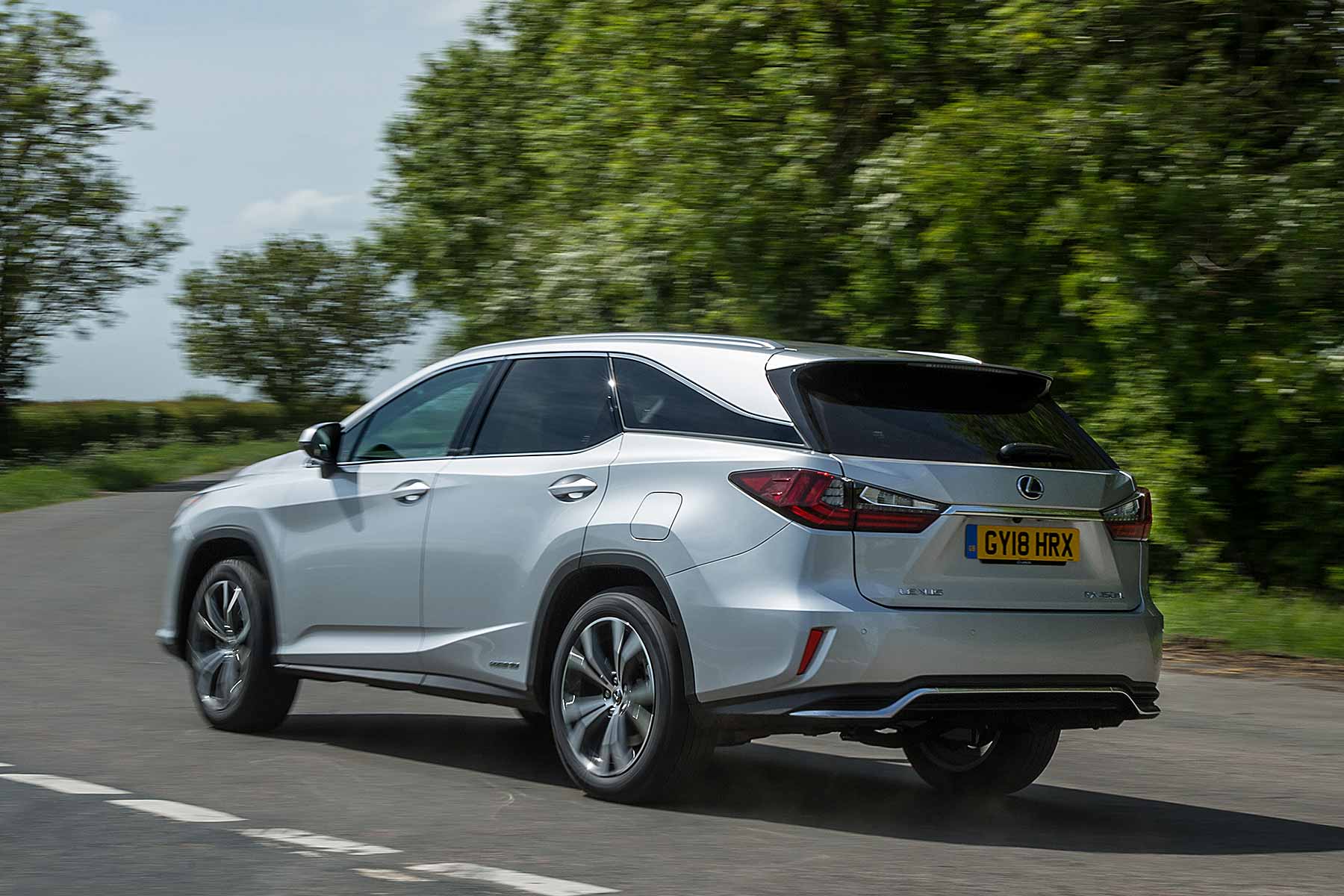
Priced from £50,995, the new hybrid SUV goes on sale this week, in a three-model range that should broaden the appeal of one of Lexus’ more popular cars – and also better compete with rivals such as the Volvo XC90 and Audi Q7 (both of which also come in fuel-saving hybrid guise).  

The RX isn’t a plug-in hybrid, but this isn’t necessarily a negative, reckons Lexus: it describes the 450h as a ‘self-charging hybrid”. It’s not a mere conversion job of the existing model, either – the entire body aft of the rear wheels has been extended to slot in the third row of chairs.

Lexus RX 450h L

Lexus promises the seats “offer good head and legroom and are easy to access”. All models have a standard power-folding system for the third row chairs, and there’s triple-zone climate control as well.

The £50,995 RX 450h L SE includes heated and ventilated leather seats, sat nav, 18-inch alloys, power steering wheel adjust, power tailgate and LED headlights. A £54,095 Luxury ups the alloys to 20-inches, and adds better premium sat nav, wireless smartphone charging, ‘triple-eye’ LED headlights and a smart tailgate.

Lexus RX 450h L

Living up to its name, the £61,995 Premier has a colour head-up display, adaptive suspension, semi-aniline leather, Mark Levinson surround sound system, sunroof, heated middle row seats and a fancy heated steering wheel with wood inserts. Those in the back also get sunshades, so they can pretend to be celebrities.

Advertisement