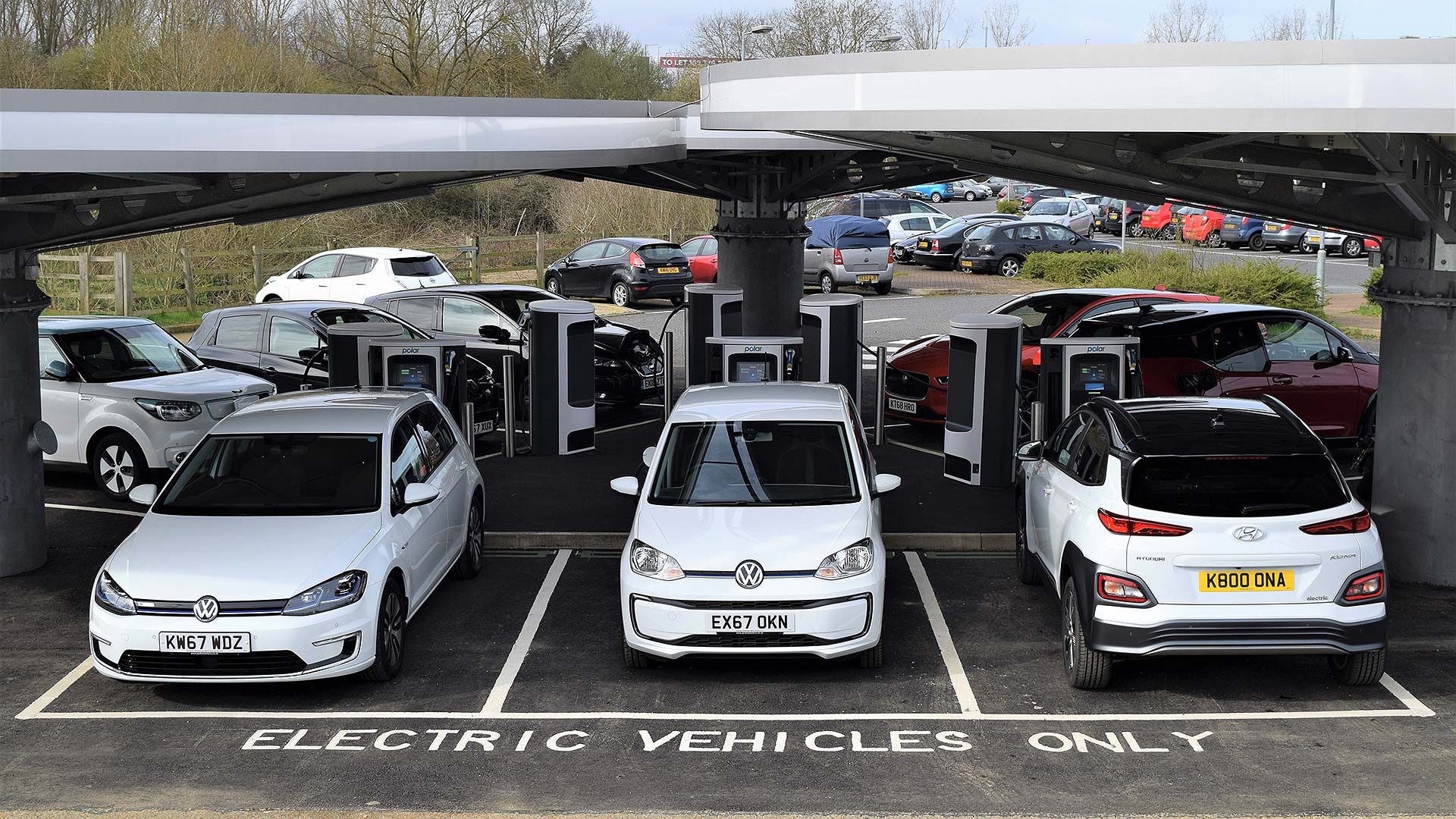
Ford has developed an algorithm that should make it easier to pinpoint the best places to install new rapid charging points.
According to Zap-Map, there are currently 4,826 rapid charge connectors spread across 1,447 different locations, with 180 new connectors installed in the last month alone.
Now, data scientists at Ford have developed an algorithm based on more than one million kilometres of driving data – including where people actually stopped – to pinpoint the best sites for new charging points.
Ford fitted 160 connected vans with a plug-in device to record journey data, generating more than 500 million data points from 15,000 days of vehicle use. Information collected included where vehicles went, where they stopped and how long they stopped for.
The analysis would help drivers integrate charging within their normal journeys, rather than making detours to out-of-the-way locations, Ford says.
Crucially, a great deal could be achieved through deploying a relatively small number of strategically positioned rapid-charging stations, rather than taking a scattergun approach.
‘Make a real difference’
“Being able to harness, analyse and leverage the huge amounts of data that is available through existing vehicle use can make a real difference to how easy we find it to get about in the cities of the future,” said John Scott of Ford Mobility.
“We at Ford are committed to delivering smart vehicles for a smart world – including electric vehicles that will contribute to cleaner, quieter towns and cities. But we also want to try to use data to help improve investment efficiency into the necessary infrastructure to support that approach.”
Rapid-charging stations can provide up to 80 percent battery charge in 30 to 40 minutes, but an improved network is required to support the expected growth in the EV sector.
“Electrification changes the way we drive – and refuel – our vehicles. We realise that charging time and behaviour are fundamentally different for electric vehicles compared with traditional models, where refilling with petrol or diesel may take only five minutes,” said Scott.
“In locating these additional charging points, we’ve attempted to take into account regular driving and stopping patterns so that topping up slots into drivers’ regular day-to-day activities.”
Being “green” doesn’t mean you’re a hippie. Electrification in the automotive world usually translates to increases in efficiency. Sometimes those gains equal better economy and cleaner air, and sometimes they equal raw power.
To celebrate Earth Day 2019, we looked at all the BEV (battery electric vehicles) on the market today and ranked them according to their zero-60 times, using top speed as a tiebreaker when necessary. While this might not be the greenest use of electricity out there, it is ridiculously fun.
More green vehicles from Motoring Research:
Hybrid vs. conventional cars: what are the real savings?
The best new hybrids for 2019
Electric vehicles threaten dealership profits
Green compacts: Non-hybrid small cars that save money
Eco-Loco: The wild and wonderful world of the green car
The 10 best states for EVs
Ford Focus Electric
Starting MSRP: $28,120
Zero-60: 10.0 seconds
Top speed: 84 mph
Ford has abandoned its Focus lineup, but the Electric model is still *technically* for sale. Though the car is well-reviewed, the 143-horsepower drivetrain takes 10 seconds to hit 60 and range is just 115 miles.
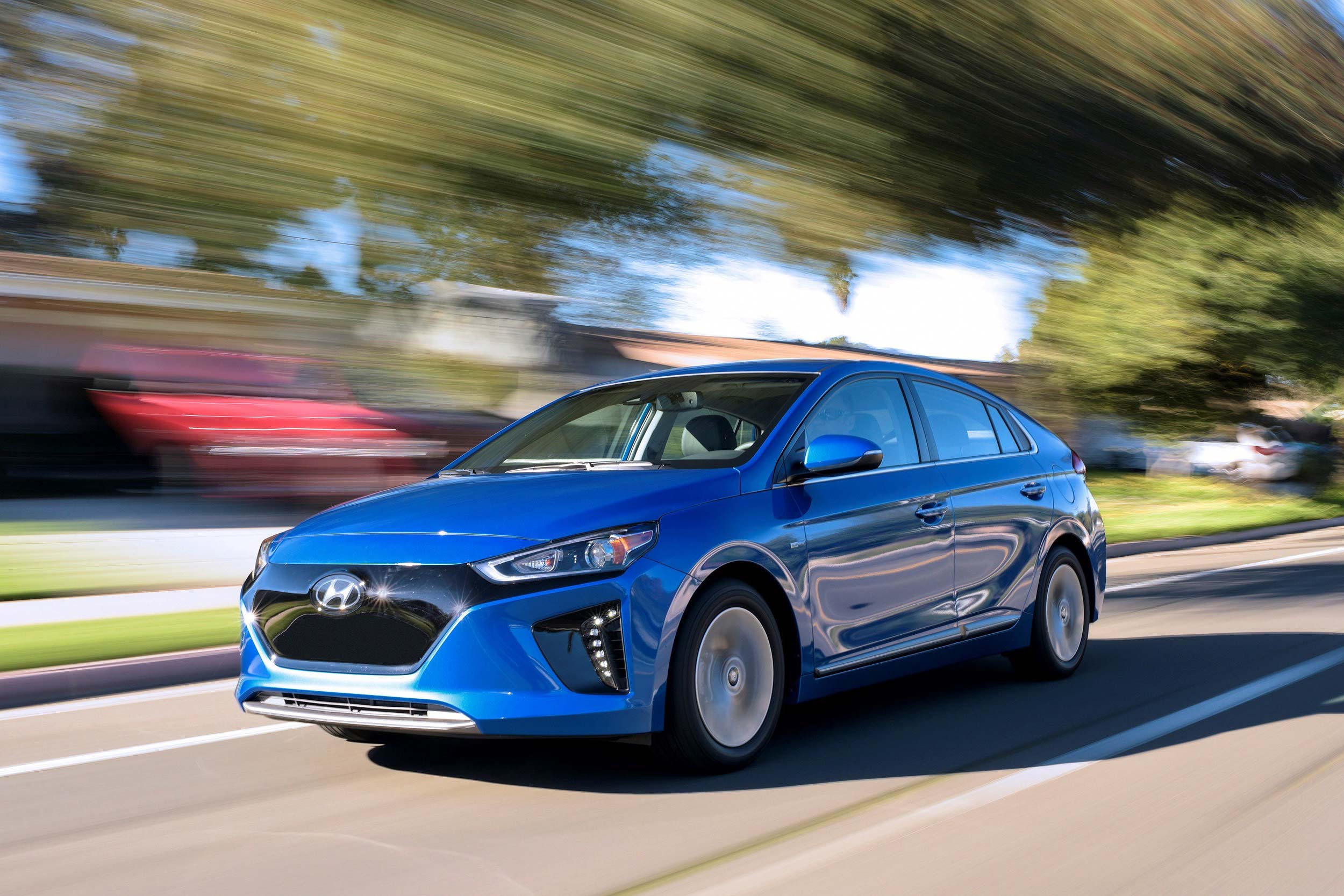
Hyundai Ioniq Electric
Starting MSRP: $29,815
Zero-60: 9.7 seconds
Top speed: 103 mph
The Ioniq Electric has the highest efficiency rating of any electric vehicle in the U.S., a stellar 136 MPGe. Power comes in at 118 horses and 218 lb-ft of torque, while the 28 kWh battery provides 124 miles of range.
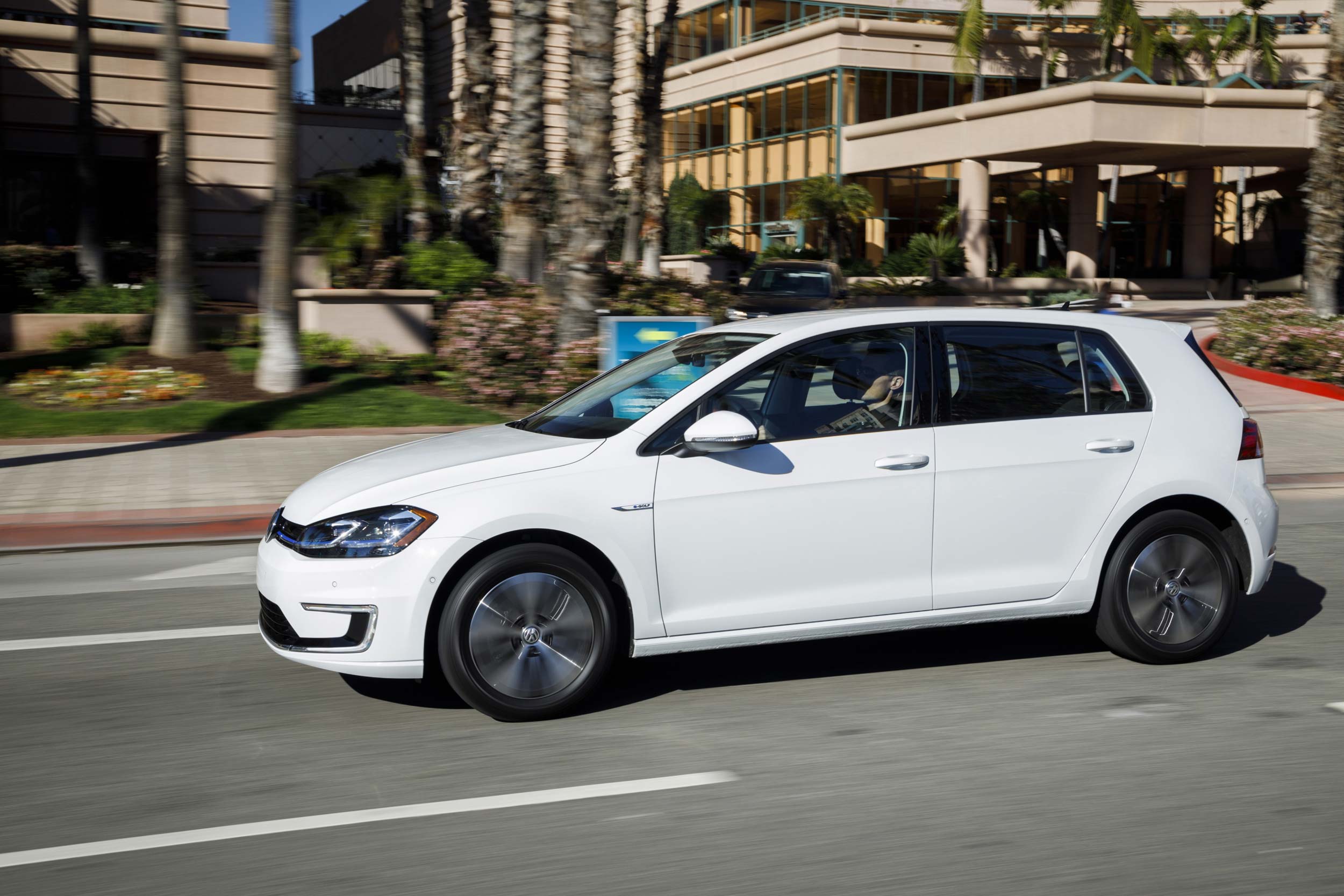
Volkswagen e-Golf
Starting MSRP: $31,895
Zero-60: 9.6 seconds
Top speed: 85 mph
Volkswagen made sure the e-Golf retained its fun-to-drive handling when installing the “e” portion of its name, but it is a tick on the slow side compared to the competition. Range is low by today’s standards at 125 miles from a 35.8 kWh battery. There’s 214 lb-ft of torque to play with, but only 134 horsepower.
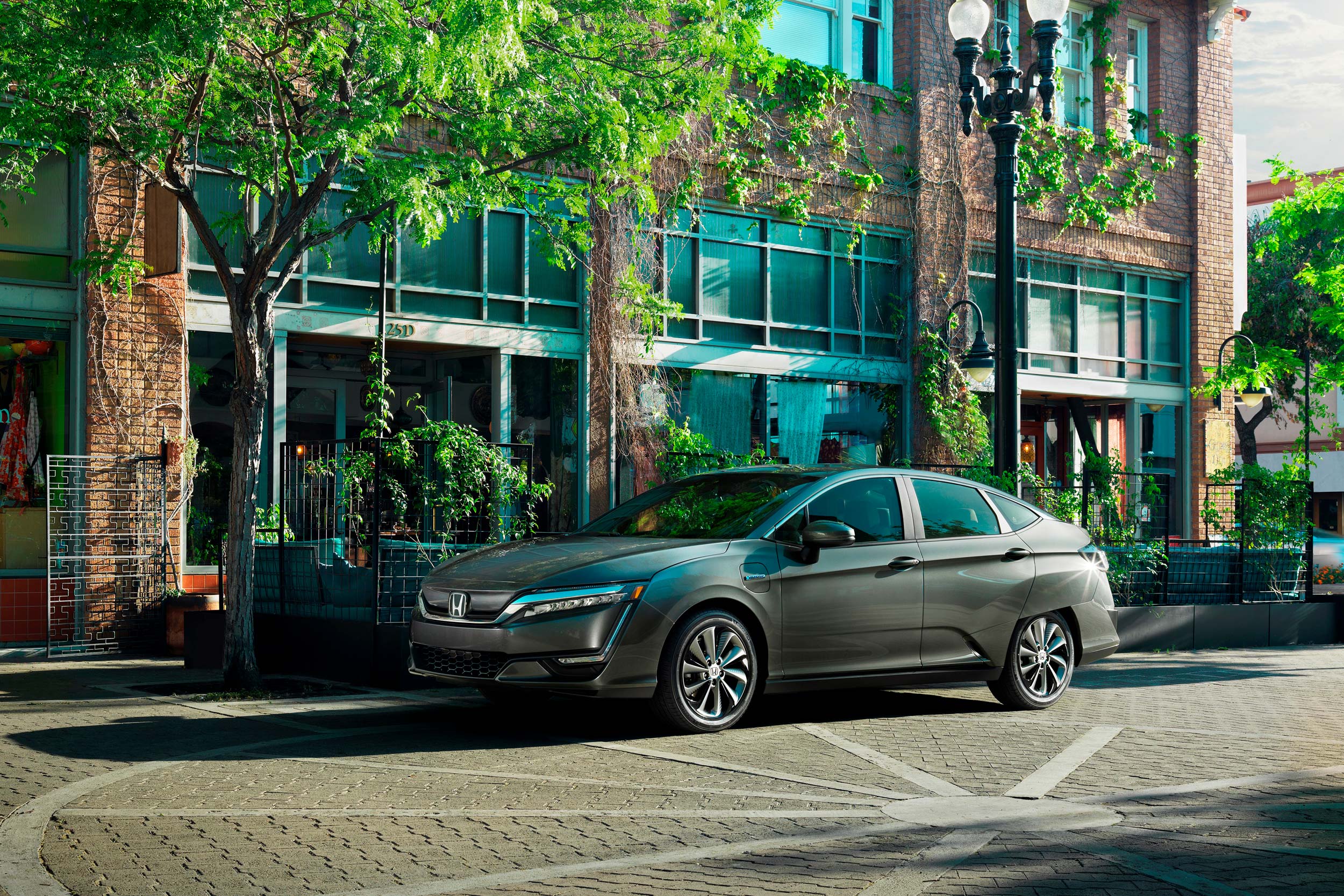
Honda Clarity EV
Starting MSRP: $36,620
Zero-60: 9.4 seconds
Top speed: 94 mph
The Honda Clarity is not actually for sale, but can be leased in California and Oregon (on approved credit, of course). The smallish 25.5 kWh battery is only good for 89 miles, however, so perhaps it’s not such a great loss. Horsepower is 161, torque 221 lb-ft.
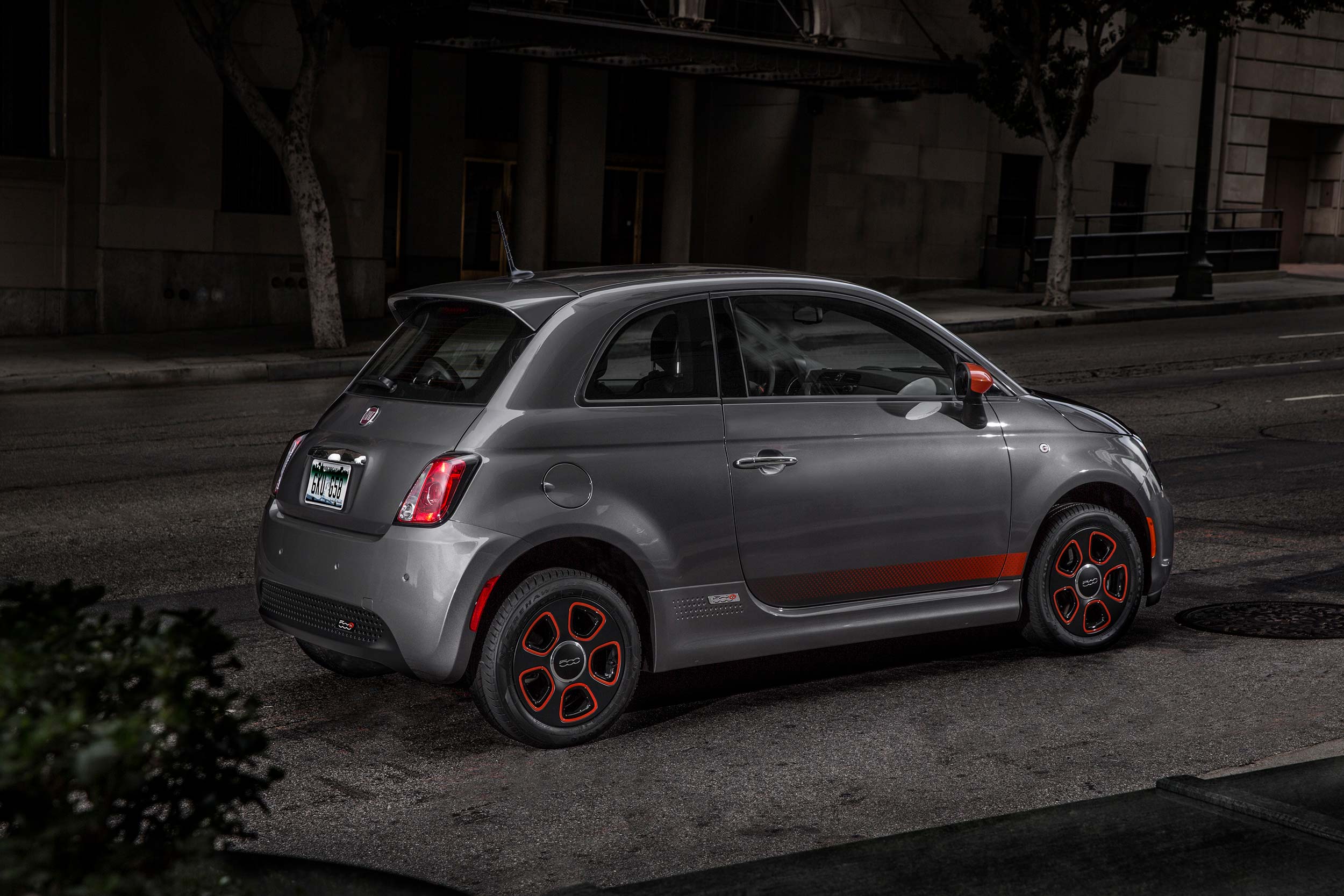
Fiat 500e
Starting MSRP: $32,995
Zero-60: 8.8 seconds
Top speed: 88 mph
The Fiat 500e is undeniably cute, but the current generation was introduced in 2013 and is quite long in the tooth. Performance specs are definitely last-generation EV: 111 horsepower and 147 lb-ft of torque, with a 24 kWh battery providing just 84 miles of range.
Thankfully, an all-new Fiat 500e is expected in 2020.
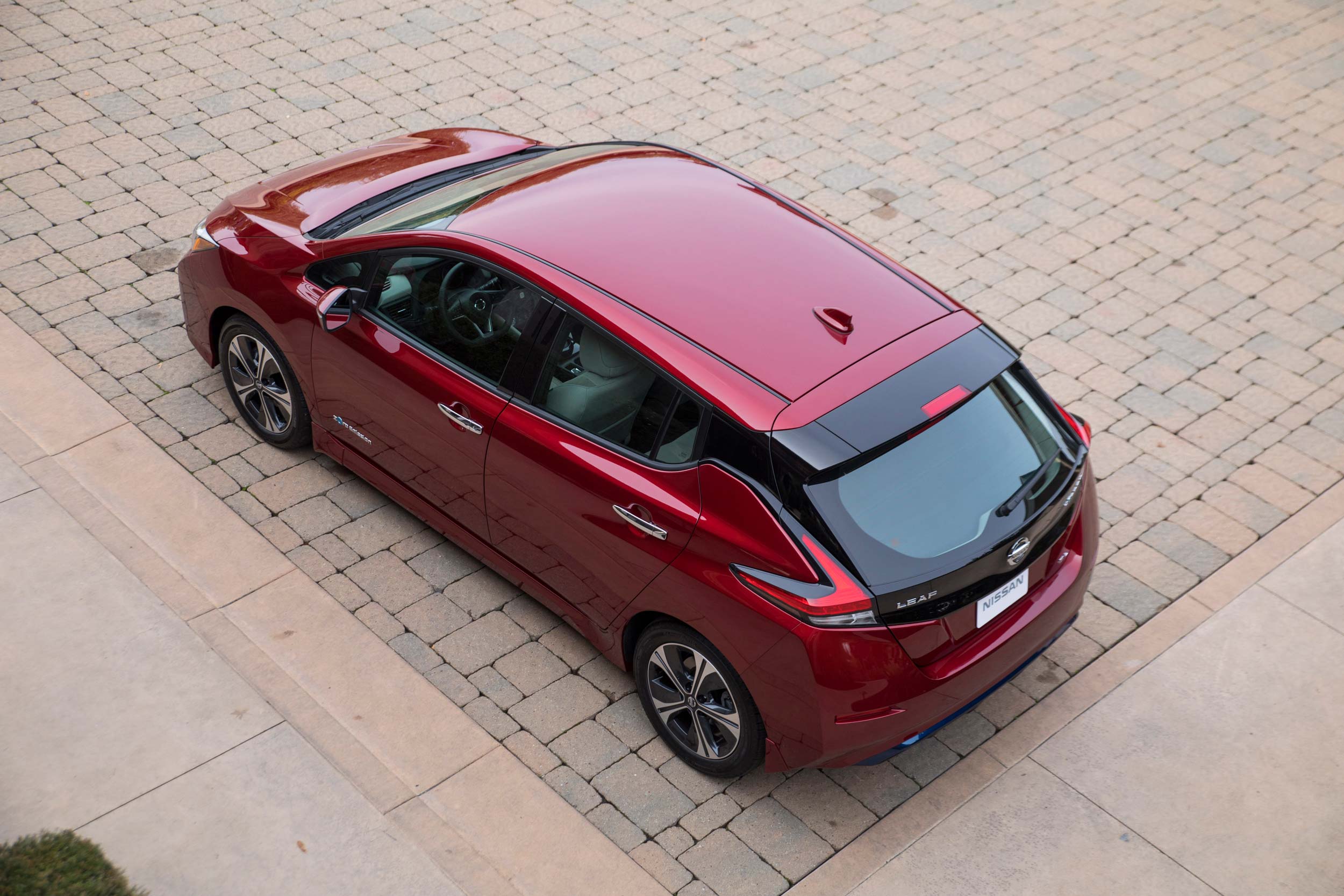
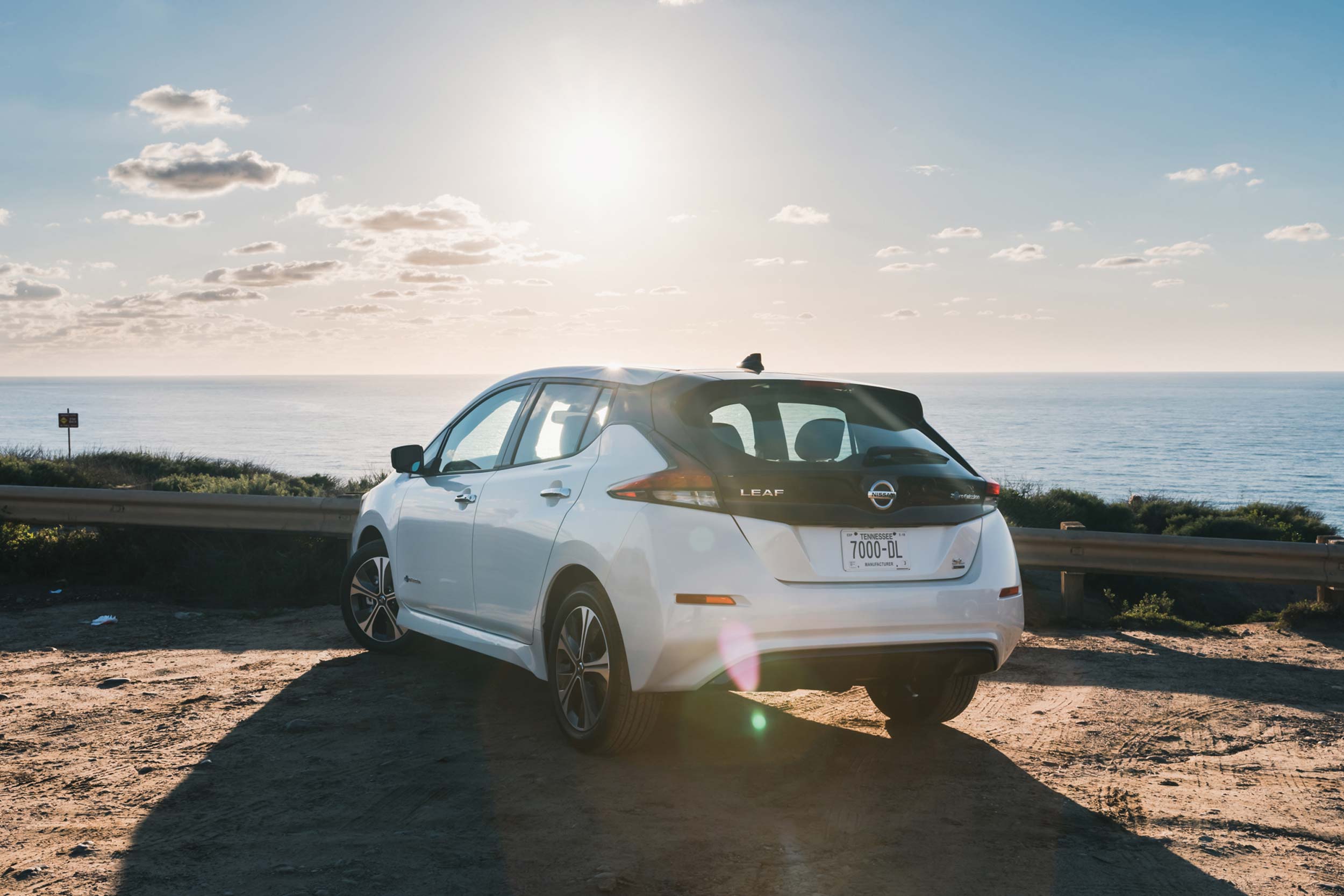
Nissan Leaf
Starting MSRP: $29,990
Zero-60: 7.9 seconds
Top speed: 90 mph
The Nissan Leaf is officially the best-selling EV in the world. Power comes from a 40 kWh battery combined with a 100 kW motor that translates to 147 horsepower and 236 lb-ft of torque. Range is 150 miles.
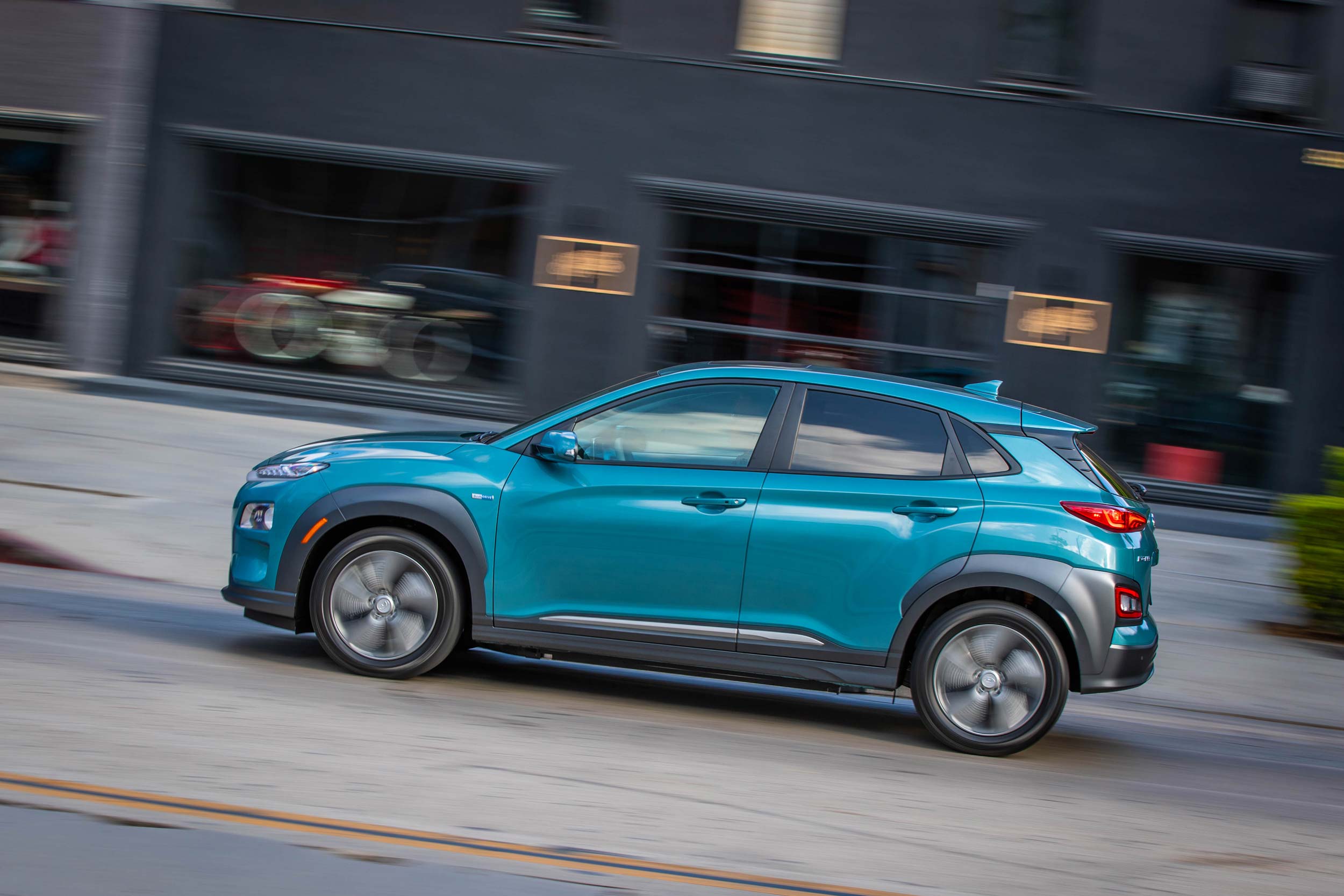
Hyundai Kona Electric
Starting MSRP: $36,950
Zero-60: 7.6 seconds
Top speed: 104 mph
The electric version of Hyundai’s Kona is proving to be a big hit with the press, and in no small part to its peppy handling. There is a stout 201 horsepower and 290 lb-ft of torque on tap from the company drivetrain. Range is 258 miles from the 64 kWh battery stack.
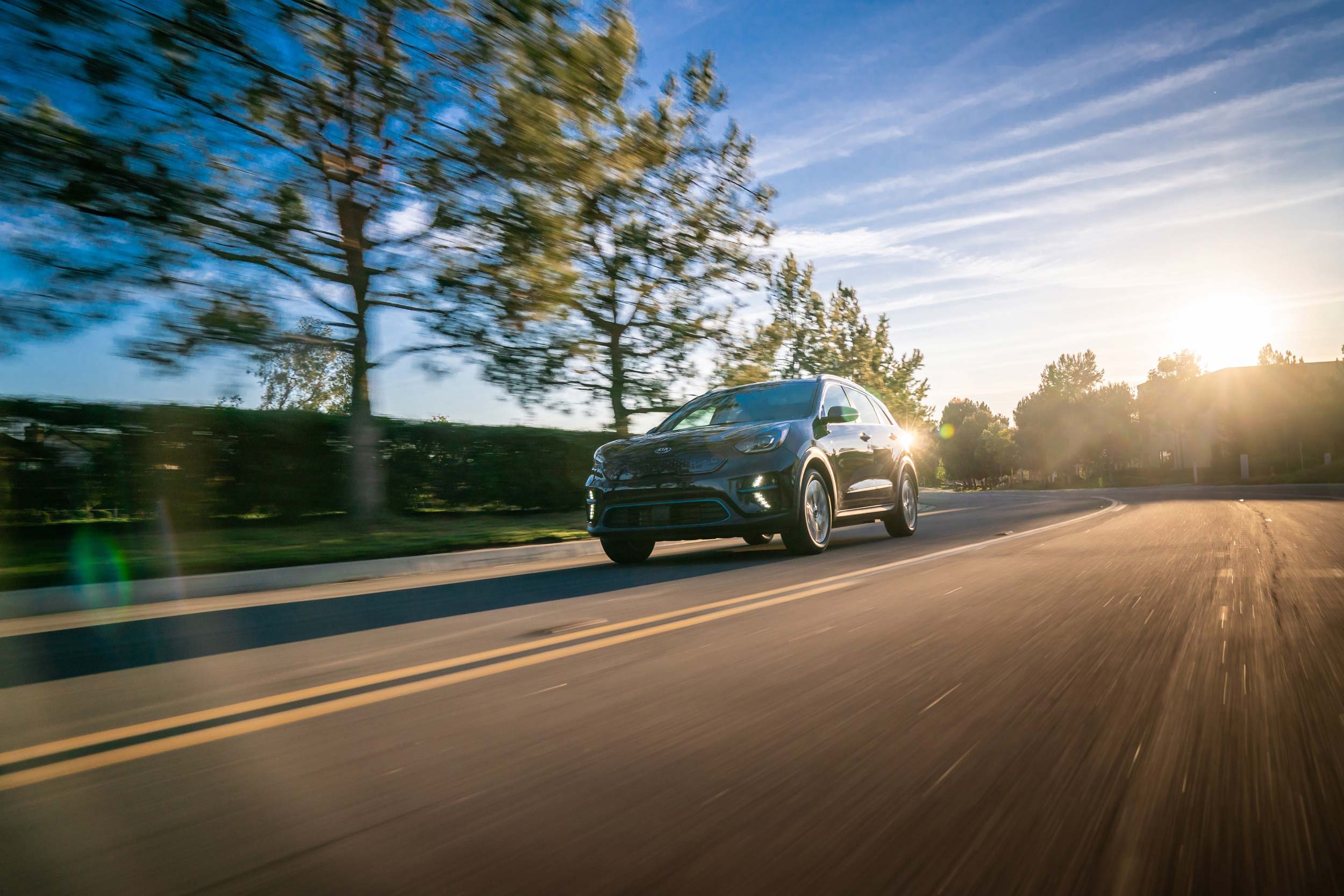
Kia Niro EV
Starting MSRP: $37,500 (est.)
Zero-60: 7.5 seconds
Top speed: 104 mph
Kia unveiled the new Niro EV at the Los Angeles auto show in November last year. A 64 kWh battery is combined with a 150 kW motor. Horsepower comes in a 201 and torque at a large 291 lb-ft. Range is an estimated 239 miles.
The Niro EV will go on limited sale in Spring.
Nissan Leaf Plus
Starting MSRP: $36,550
Zero-60: 7.3 seconds
Top speed: 98 mph
Adding a “Plus” to the Nissan Leaf beefs up the battery to 62 kWh and motor to 160 kW. Horsepower climbs to 214 and torque to 250; range is extended to 226 miles.
The Leaf Plus went on sale in March 2019.
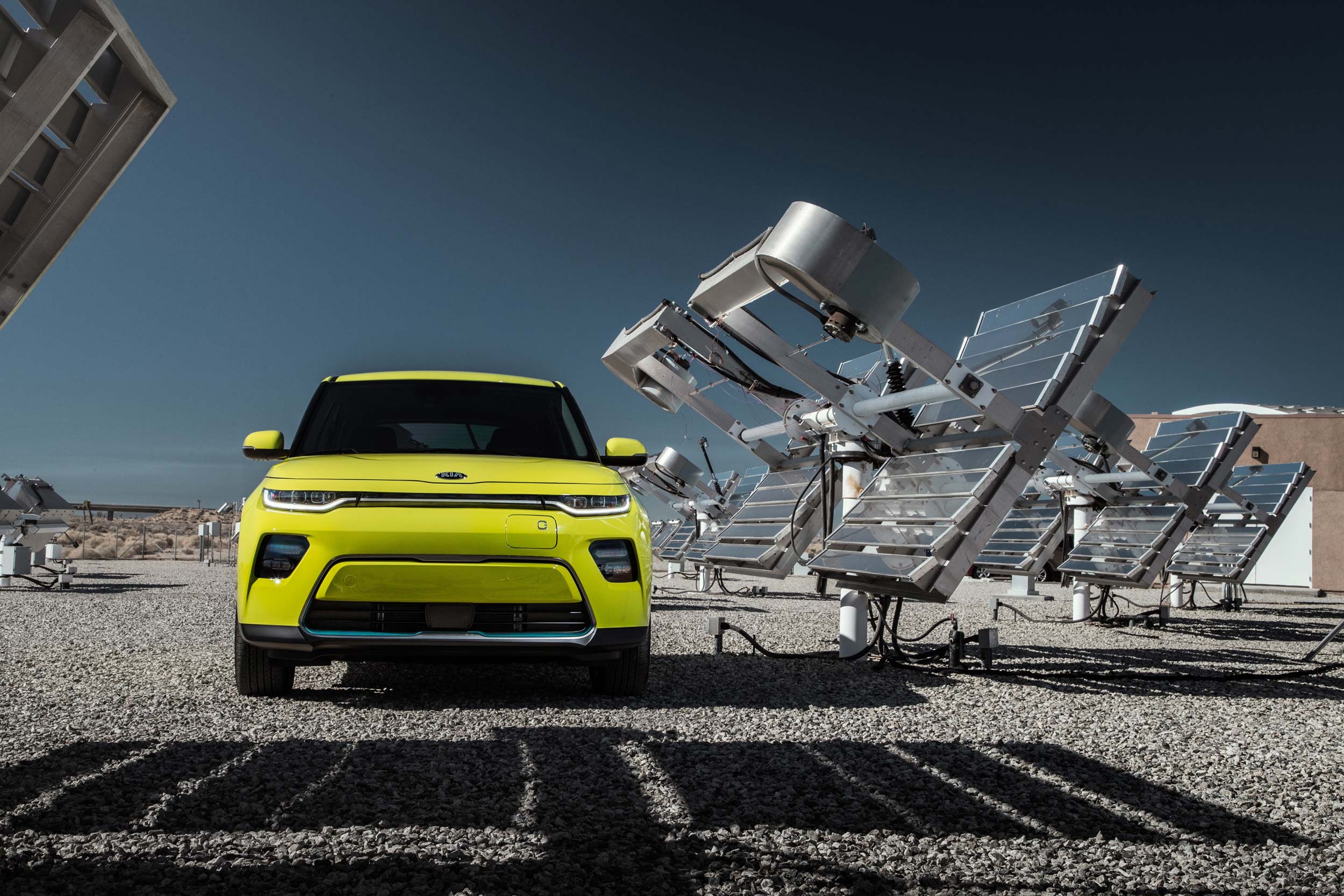
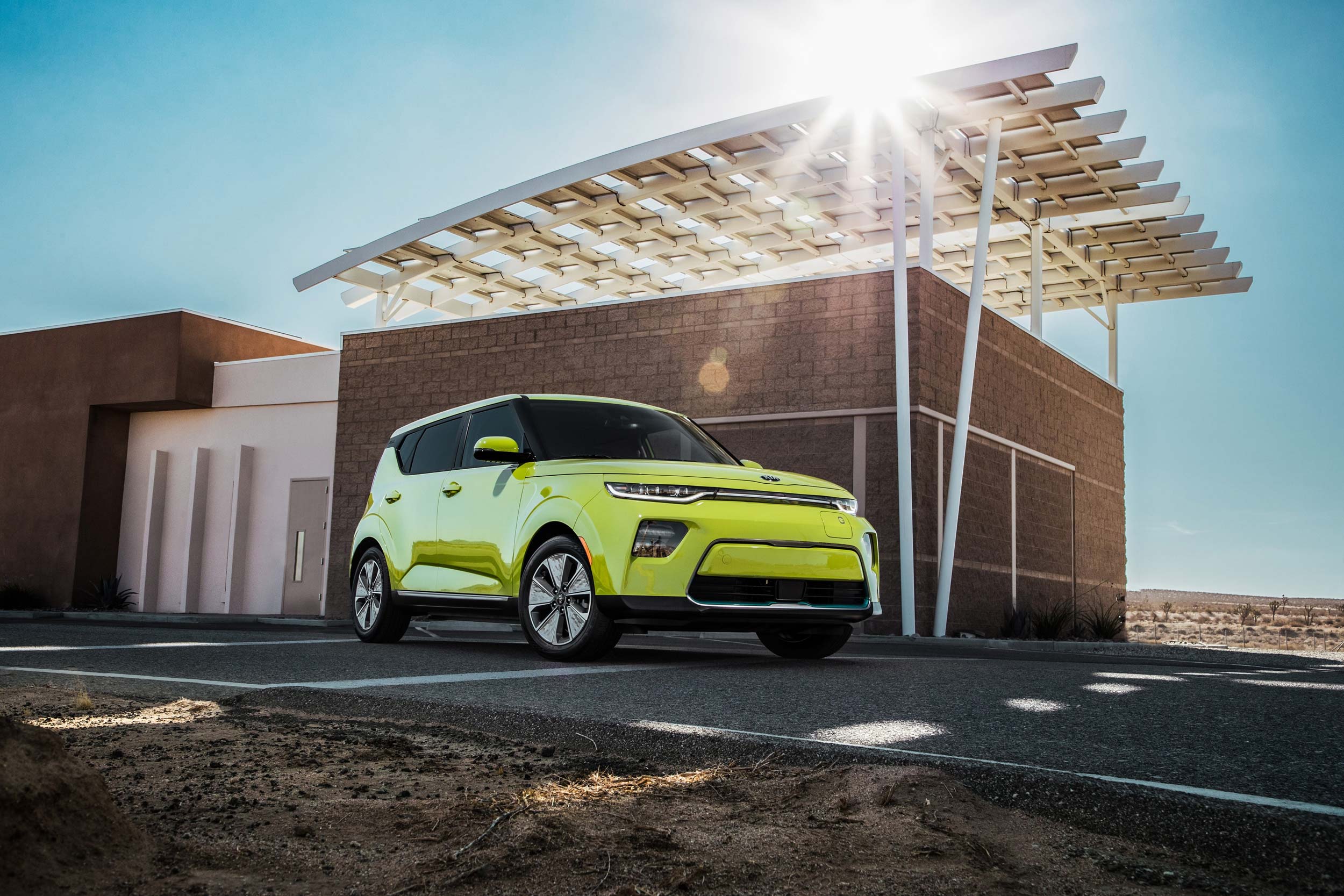
2020 Kia Soul EV
Starting MSRP: $35,500 (est.)
Zero-60: 7.3 seconds
Top speed: 104 mph
Like its Niro cousin, the Soul EV is powered by a 150 kW motor and 64 kWh battery. Horsepower is the same 201 and torque identical at 291. The Soul weighs over 100 pounds less than the Niro, which might account for quicker acceleration.
Range has not yet been announced. The Soul EV will appear in dealerships later this year.
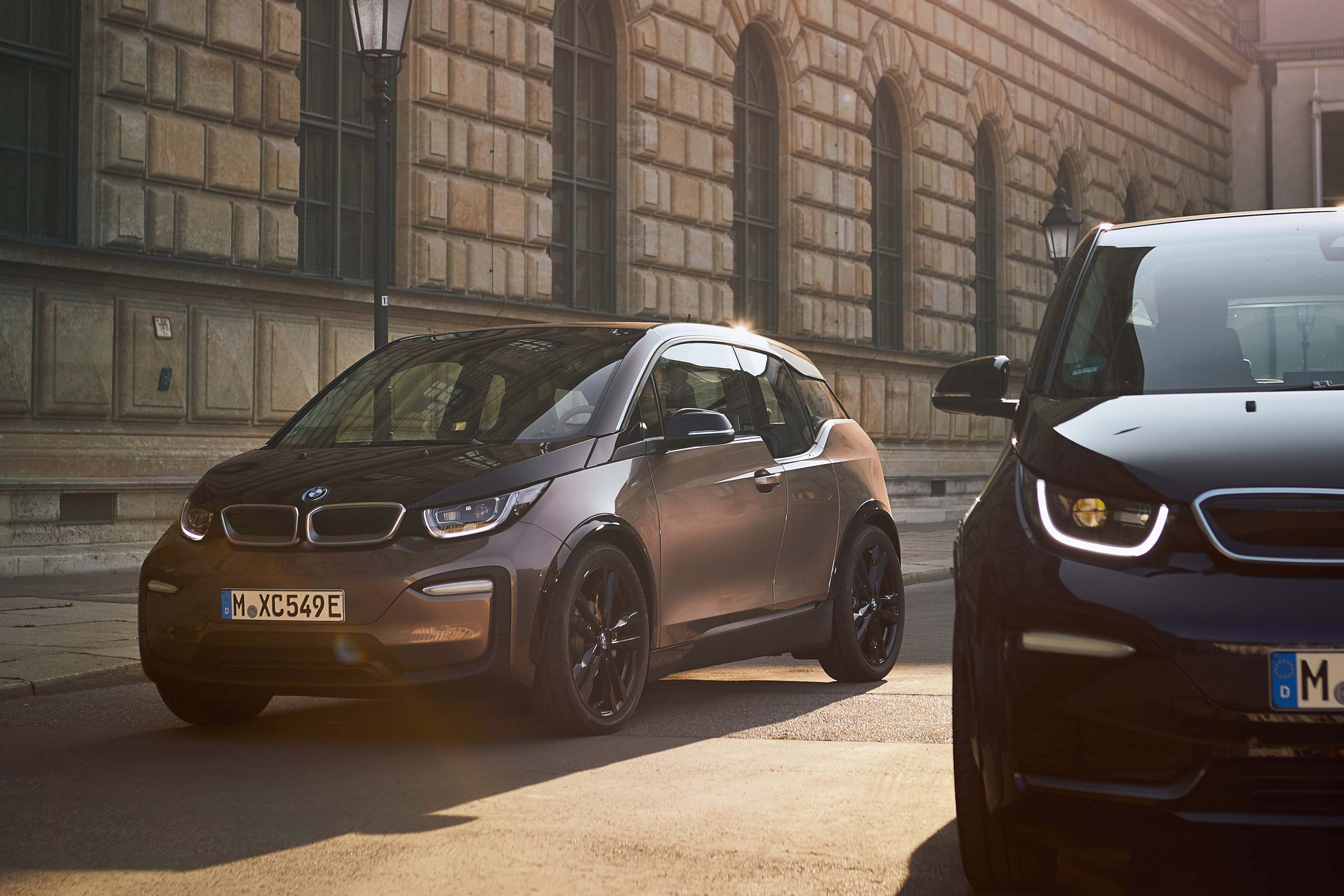
BMW i3 and i3s
Starting MSRP, i3: $44,450 (i3S: $47,450)
Zero-60, i3: 7.2 seconds (i3S: 6.8 seconds)
Top speed, i3: 93 mph (i3S: 99mph)
BMW’s adorable i3 got bigger batteries for 2019 and now offers a full 42.2 kWh, good for 153 miles of range. The standard i3 will sprint to 60 in 7.2 seconds thanks to a 170 horsepower motor, while the sporting i3s has 181 horses on tap and makes the jump in 6.8.
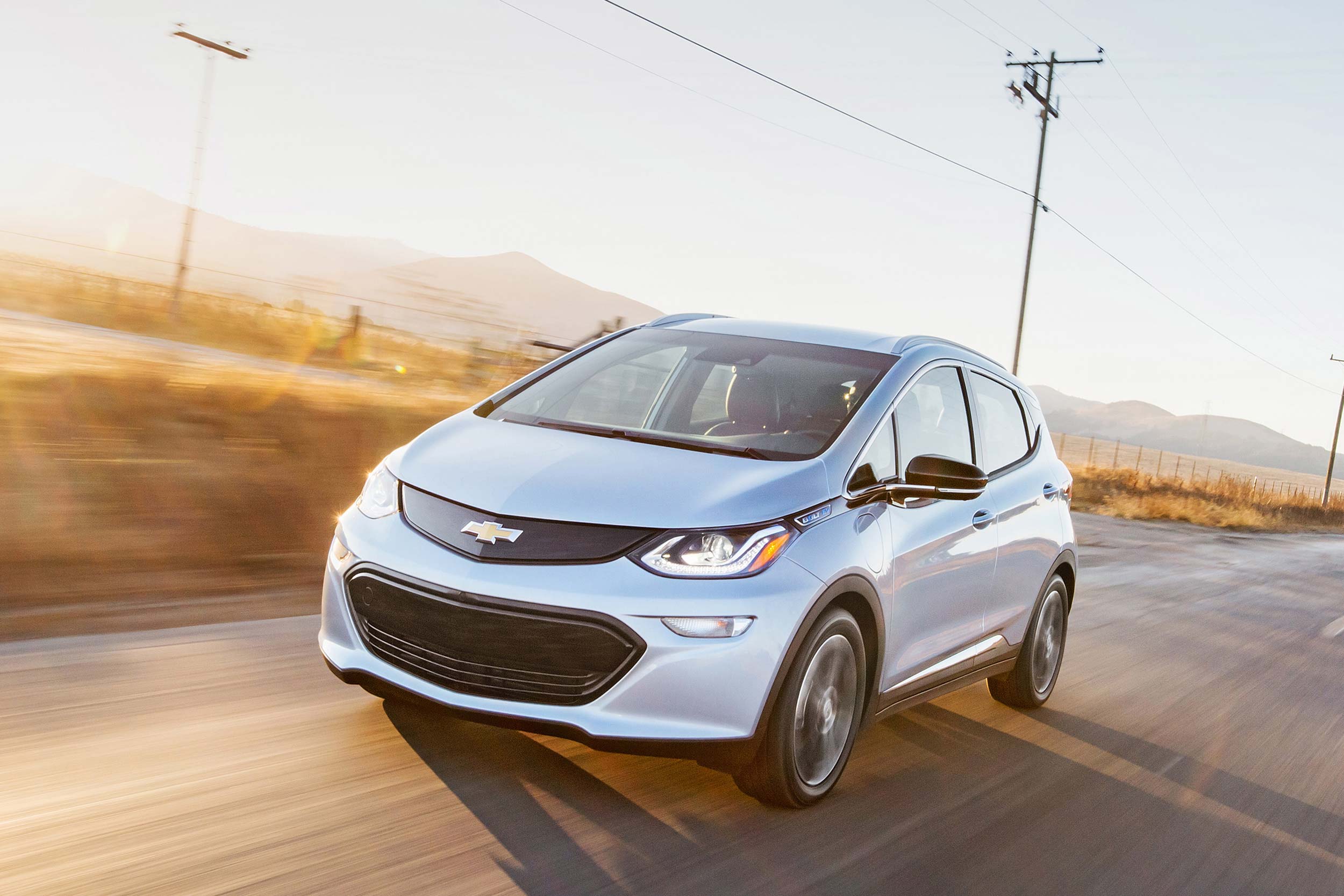
Chevrolet Bolt
Starting MSRP: $37,495
Zero-60: 6.5 seconds
Top speed: 91 mph
The Chevy Bolt was revolutionary when it appeared in 2017. Thanks to its powerful drivetrain with 200 horsepower and 266 lb-ft of torque, 60 mph came up (and still does) in a mere 6.5 seconds—heady stuff in a sub-$40K EV. Range was (and is) 238 miles.
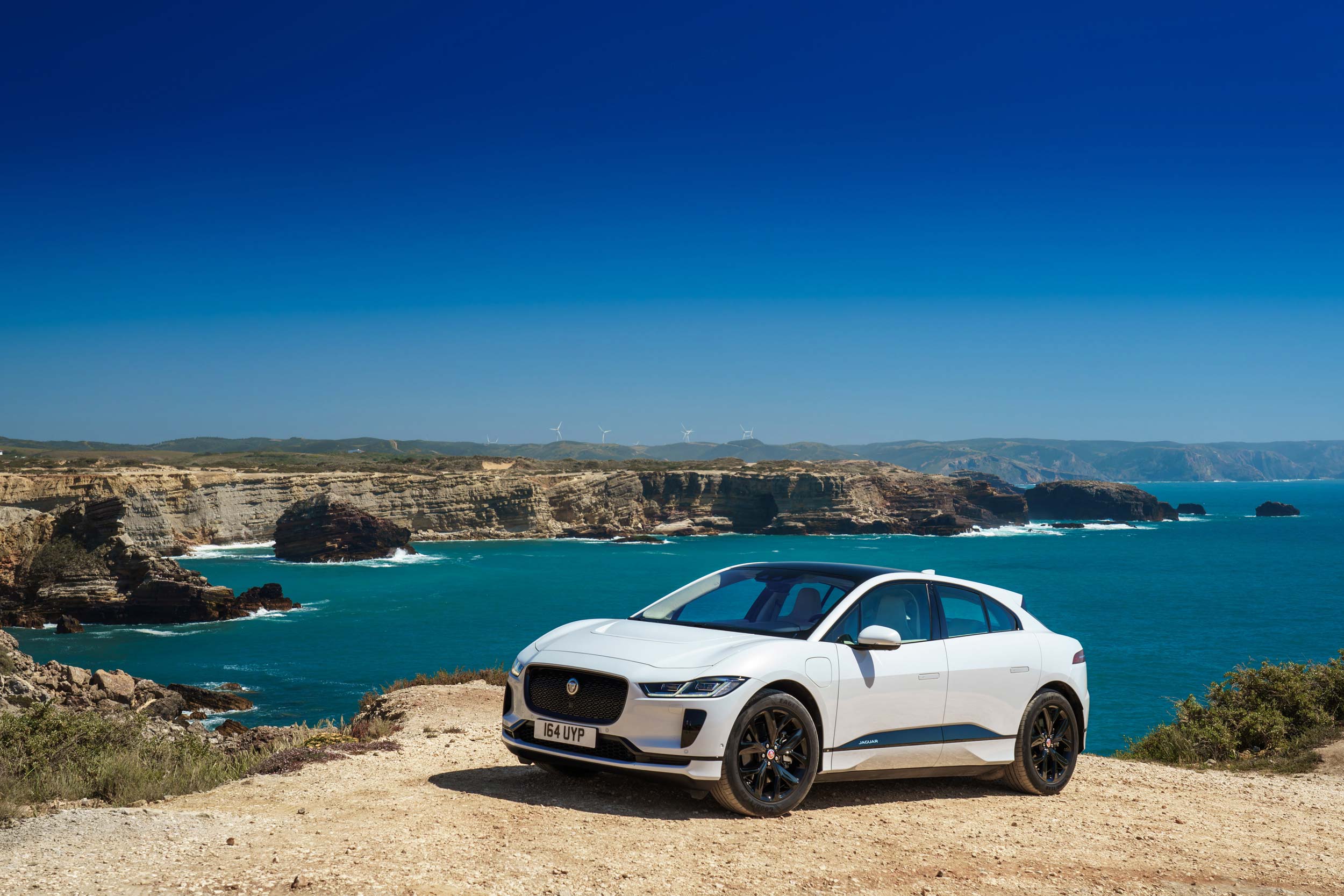
Jaguar I-Pace
Starting MSRP: $69,500
Zero-60: 4.5 seconds
Top speed: 124 mph
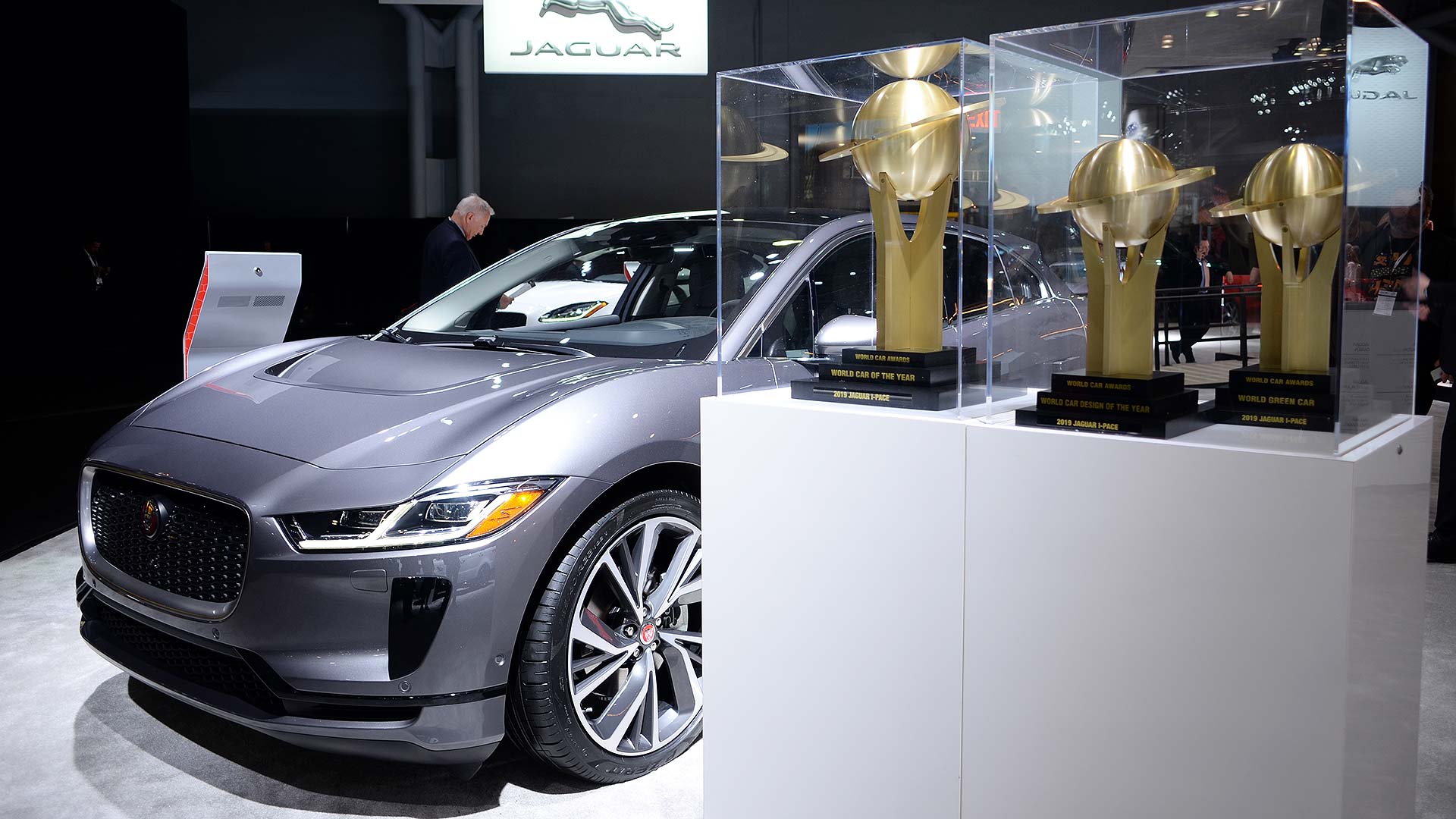
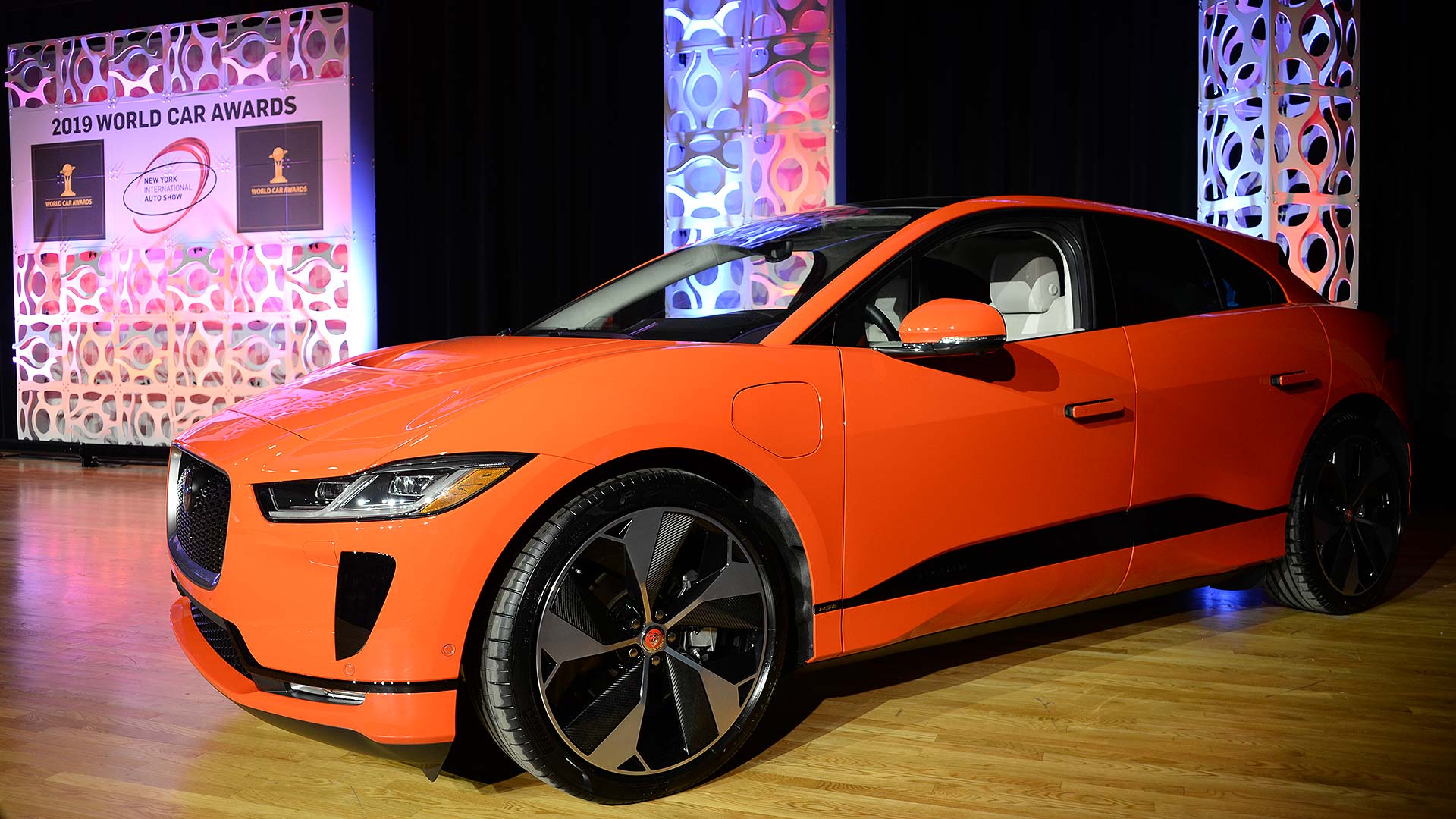
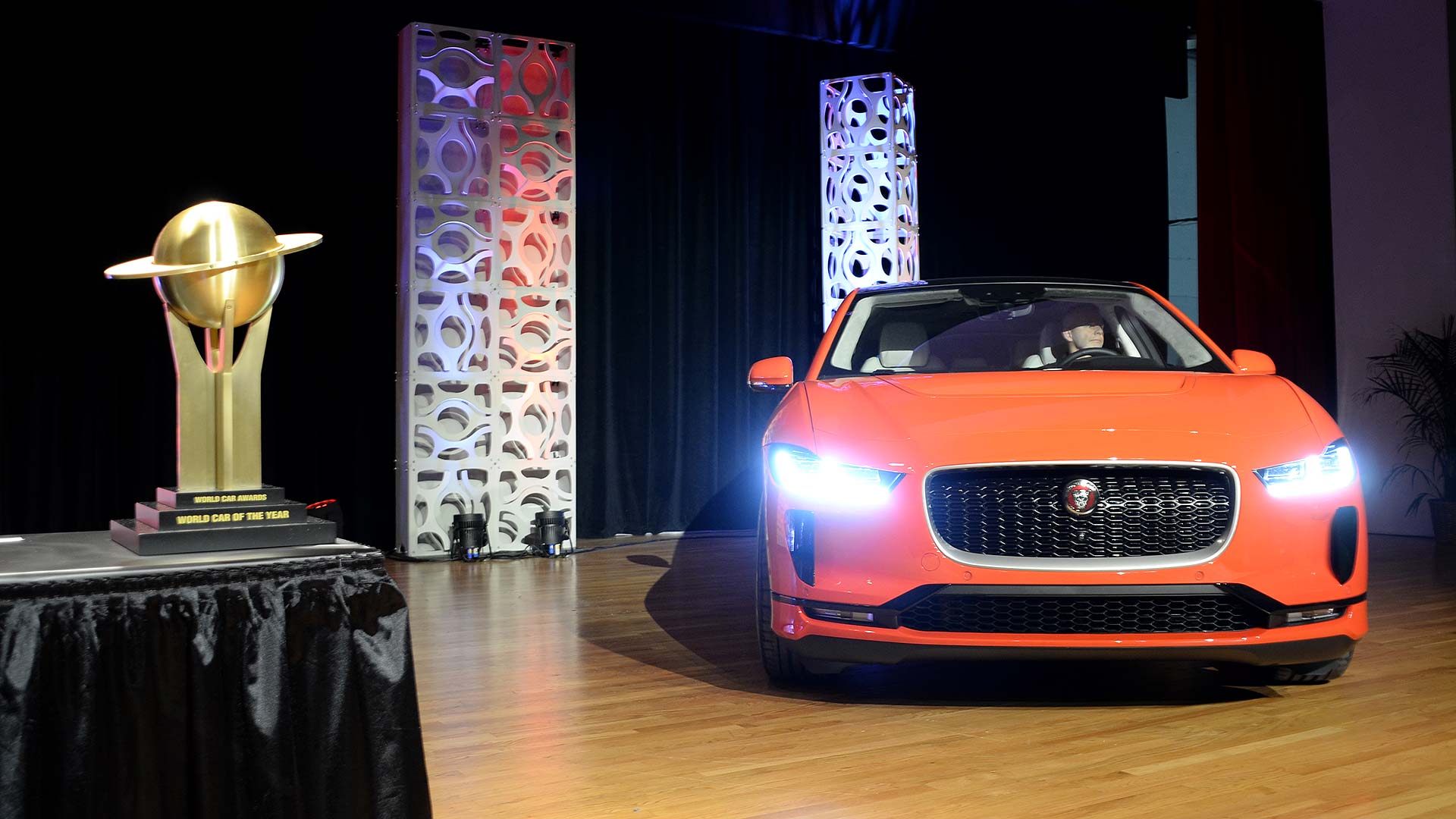
The Jaguar I-Pace just took three major awards: World Car of the Year, World Green Car of the Year, and World Car Design of the Year.
In addition to good looks, there’s also thrilling all-wheel drive performance: 395 horsepower and 512 lb-ft of torque. The powerful 90 kWh battery delivers up to 240 miles of range.
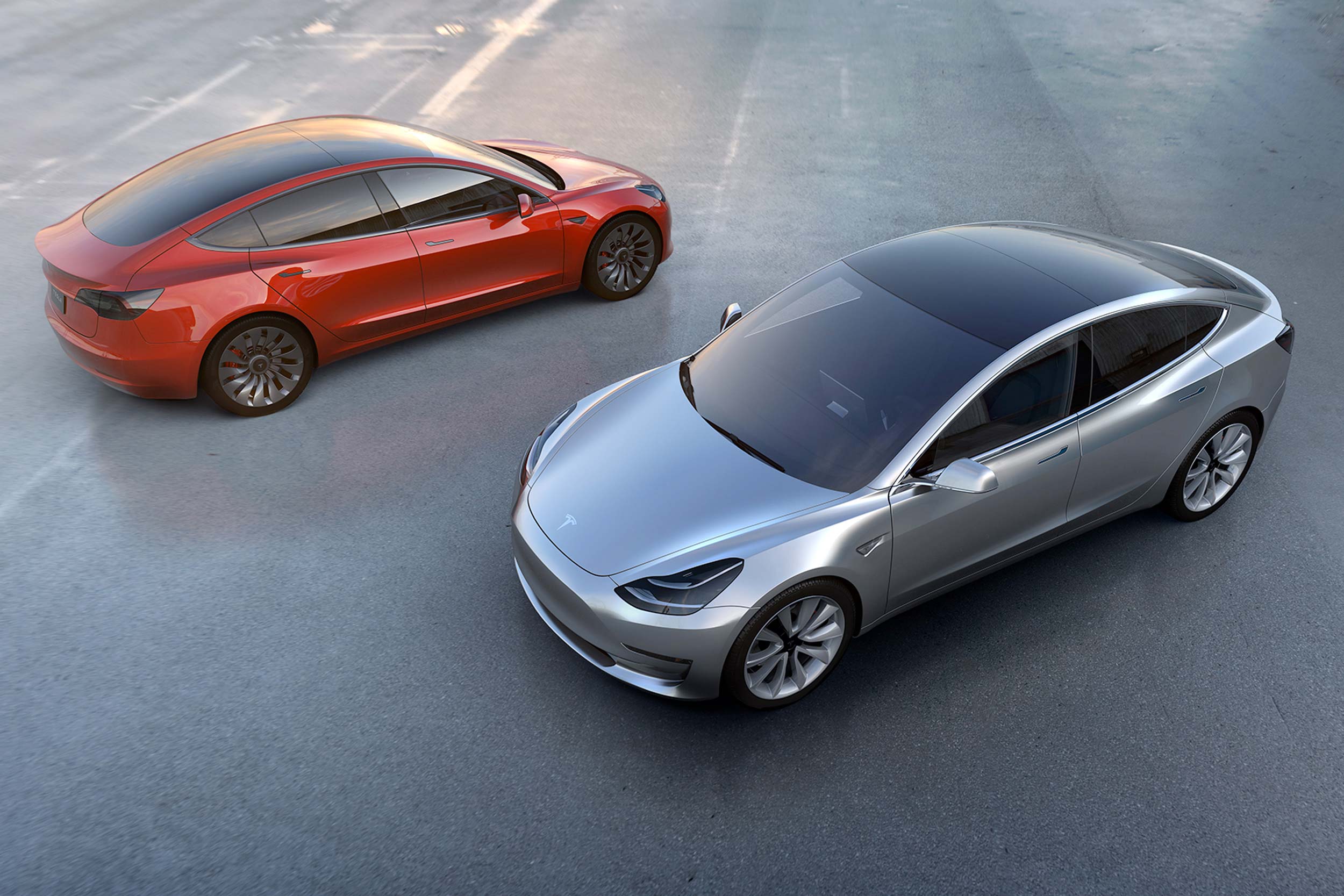
Tesla Model 3 Long Range and Performance
Starting MSRP, Long Range: $46,500 (Performance: $59,500)
Zero-60, Long Range: 4.5 seconds (Performance: 3.2 seconds)
Top speed, Long Range 145 mph (Performance: 162mph)
Tesla’s wildly popular Model 3 has impressive performances numbers thanks to dual motors and all-wheel drive. Range in the two available models is 310 miles.
The Long Range model will zip to 60 in 4.5 seconds and has a top speed of 145.
The Performance model will do the 60 hustle in a blistering 3.2 seconds and cruise on up to a top speed of 162.
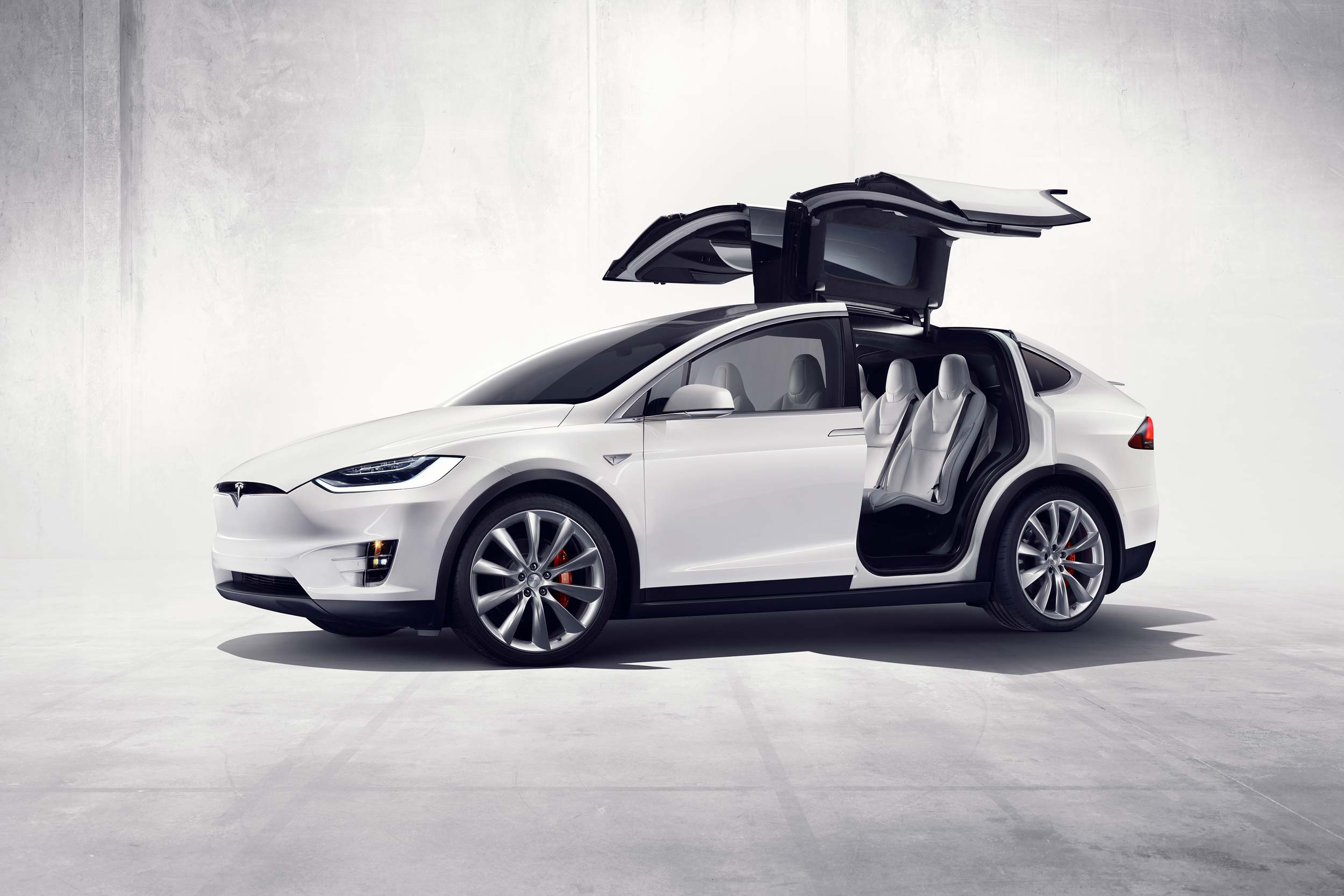
Tesla Model X
Starting MSRP, Long Range: $89,500 (Performance: $104,000)
Idiotic, brash, completely pointless, and utterly desirable, the only way the Tesla Model X could be more American is if it burned coal. The performance of the ultra-luxury SUV speaks for itself.
Ludicrous mode needs to be added to the Performance model to unlock maximum acceleration. The cost? $20,000.
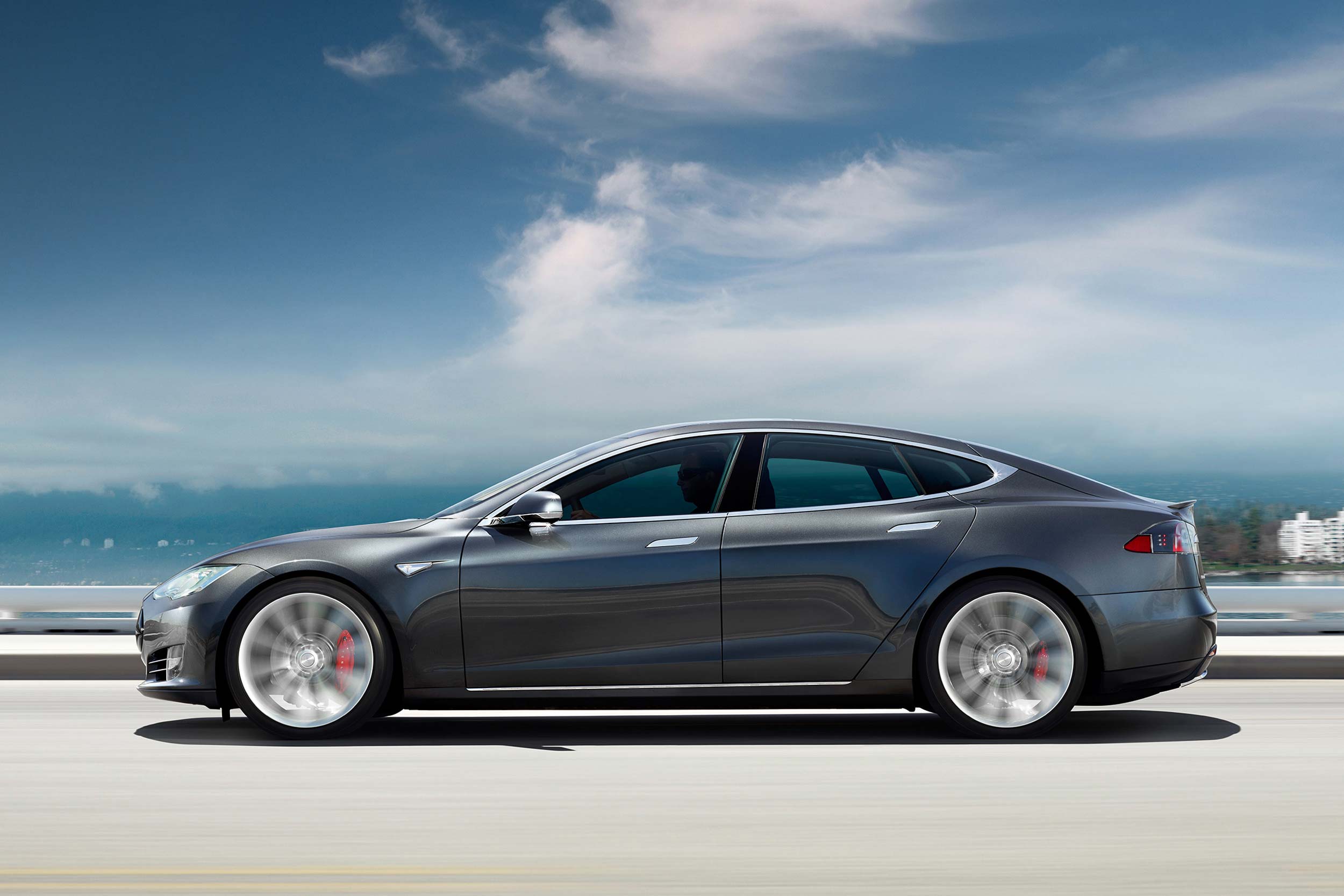
Tesla Model S
Starting MSRP, Long Range: $85,000 (Performance: $99,000)
The Model S could arguably be called the car that started the world trending towards EVs. Its legendary performance combined with an exclusive price tag make it the epitome of eco-luxury.
Adding Ludicrous mode to the Performance model adds $20,000 to the bottom line.
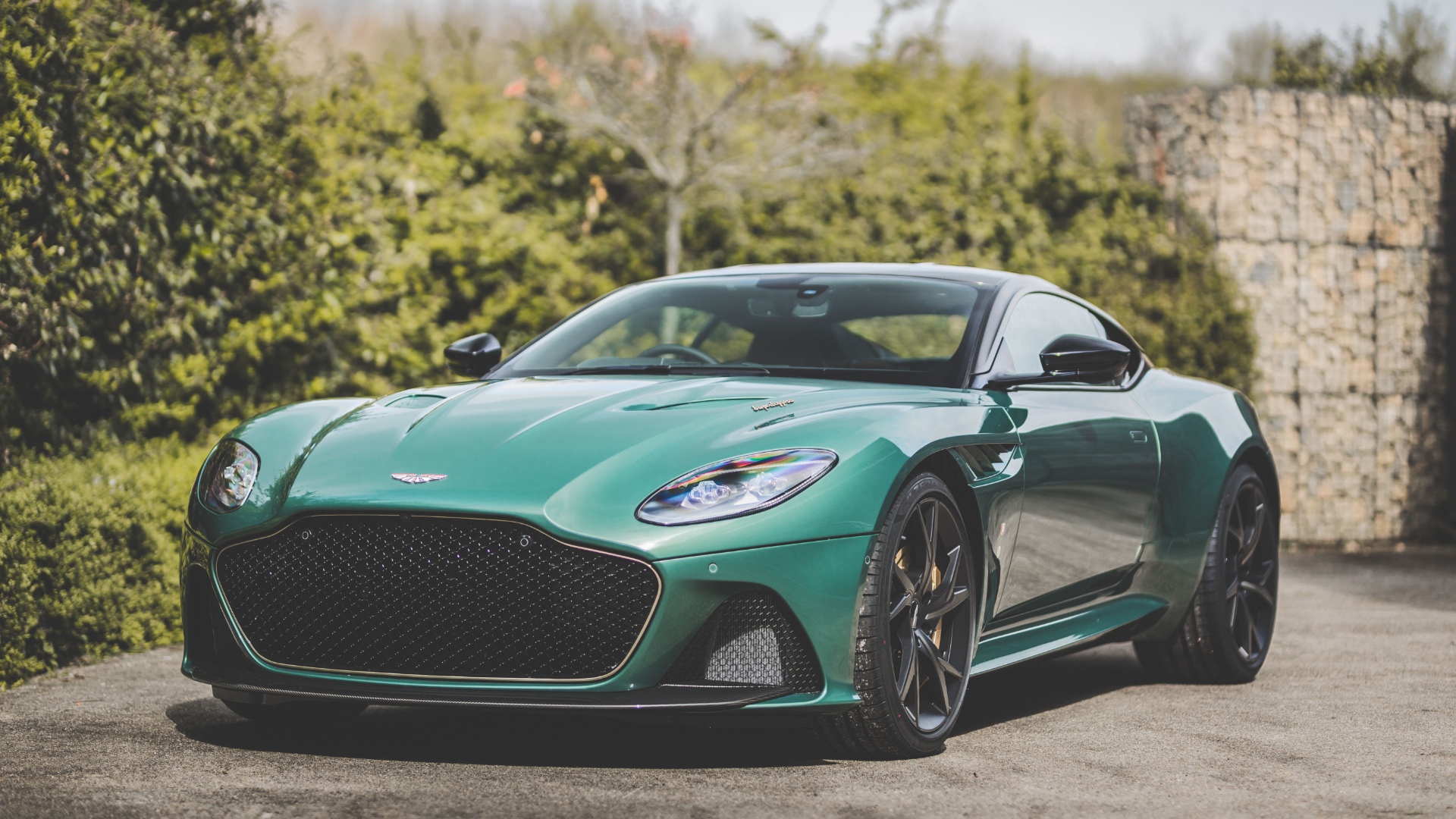
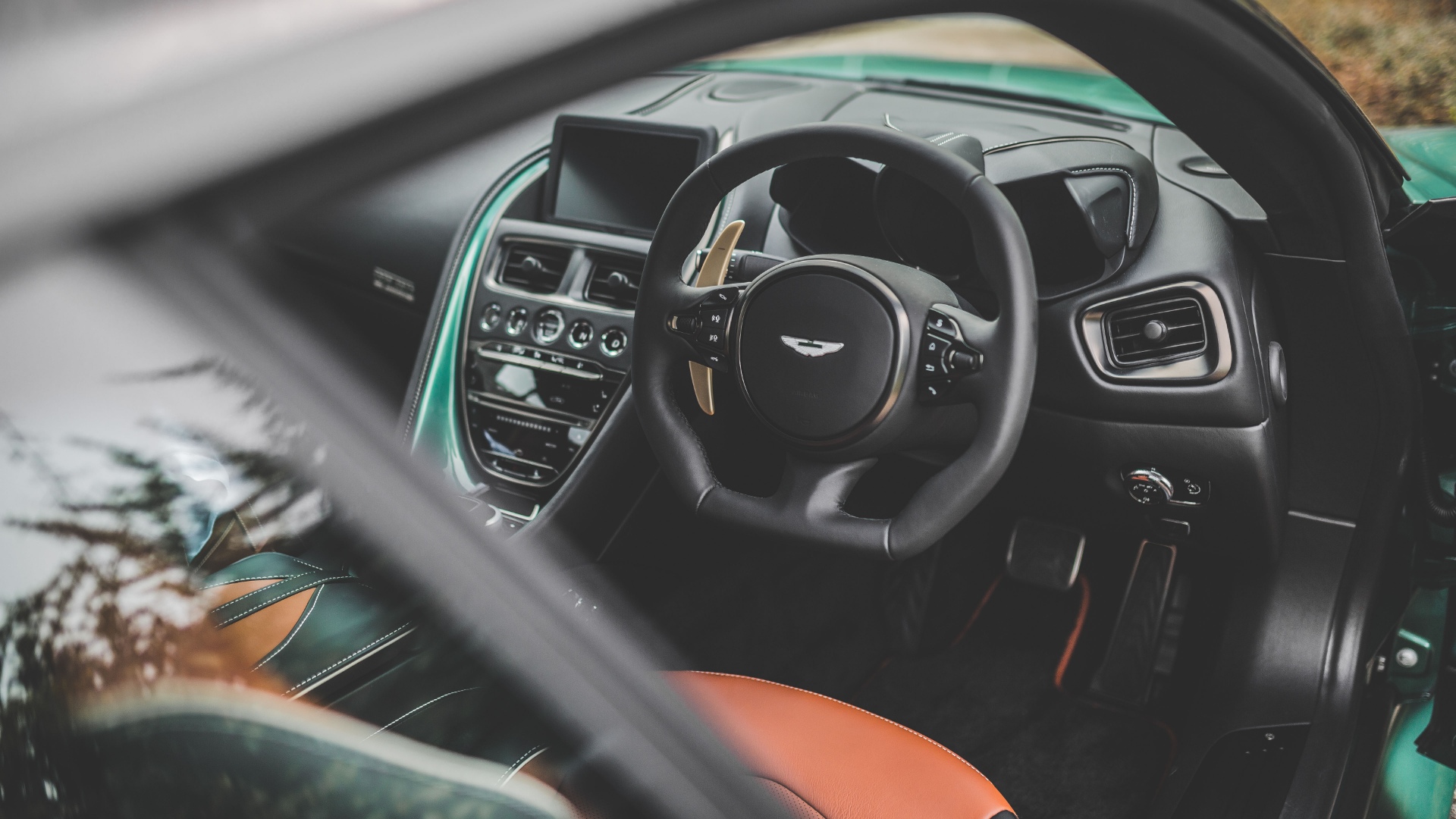
The first in-the-metal images of the Aston Martin DBS ’59’ edition have been revealed.
One thing is certain: this isn’t just any old limited edition. Here’s what makes it a bit special.
Le Mans, 1959
The DBS ’59’ pays homage to the 1959 Le Mans 24 Hours race. Aston Martin scored an historic 1-2 finish with the DBR1, with Carroll Shelby and Roy Salvadori sharing the lead car ahead of Maurice Trintignant and Paul Frére.
It’s now 60 years since that victory cemented Aston Martin as one of the greats of sports car racing – a history upon which subsequent DBR9 and Vantage GTE racers would build.
DBS ’59′ – the devil in the detail
This special project was commissioned by Aston Martin Cambridge and undertaken by Aston Martin’s Q division. Limited to 24 units – one for every race hour at Le Mans – DBS ’59’ features of a number of stunning details. It’s by no means just a spray and trim job.
Paint is, nonetheless, important. It wouldn’t pay homage to the Salvadori DBR1 if it wasn’t Aston Martin Racing Green, a hue also worn by GT racers of the last 15 years.
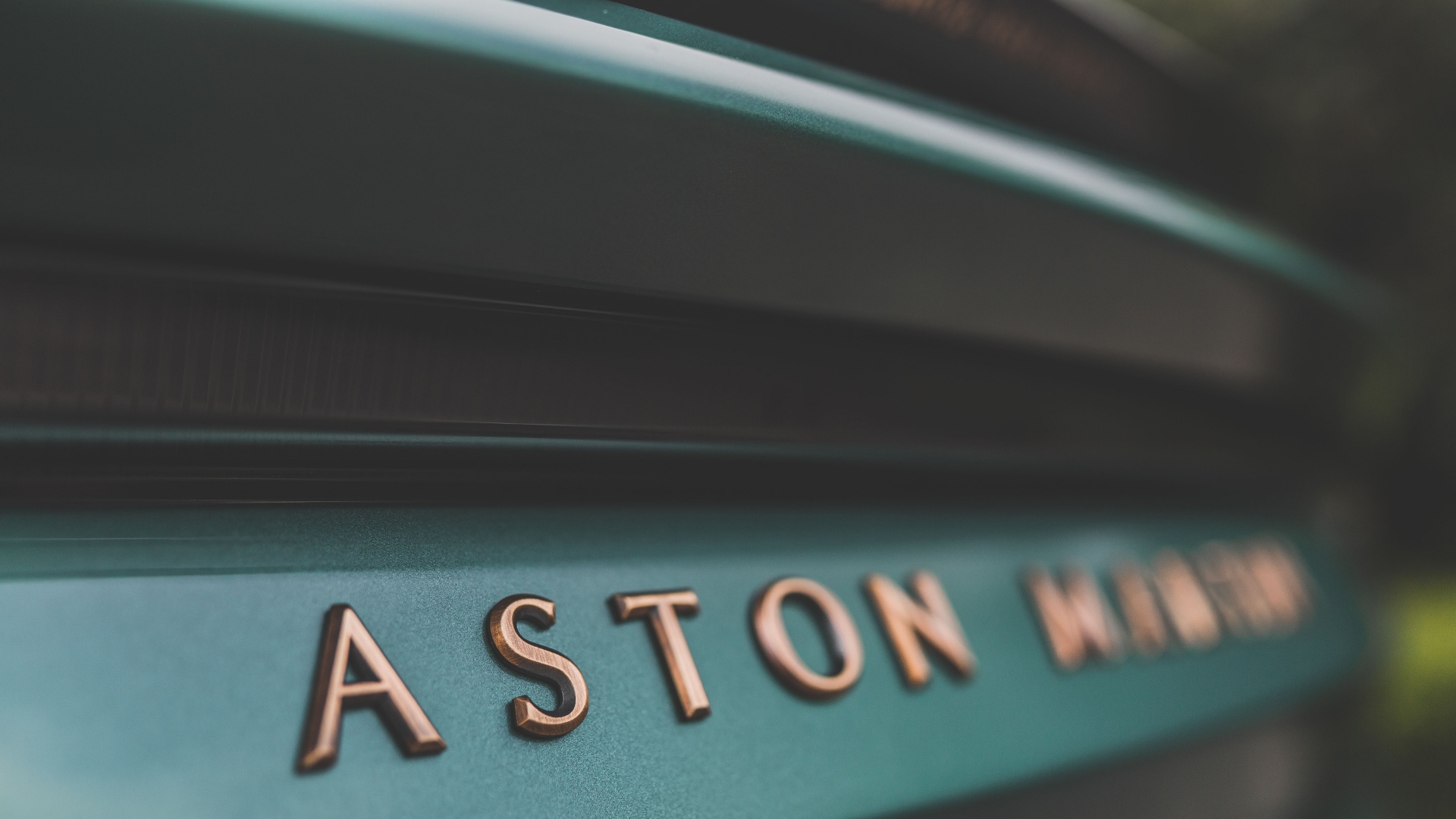
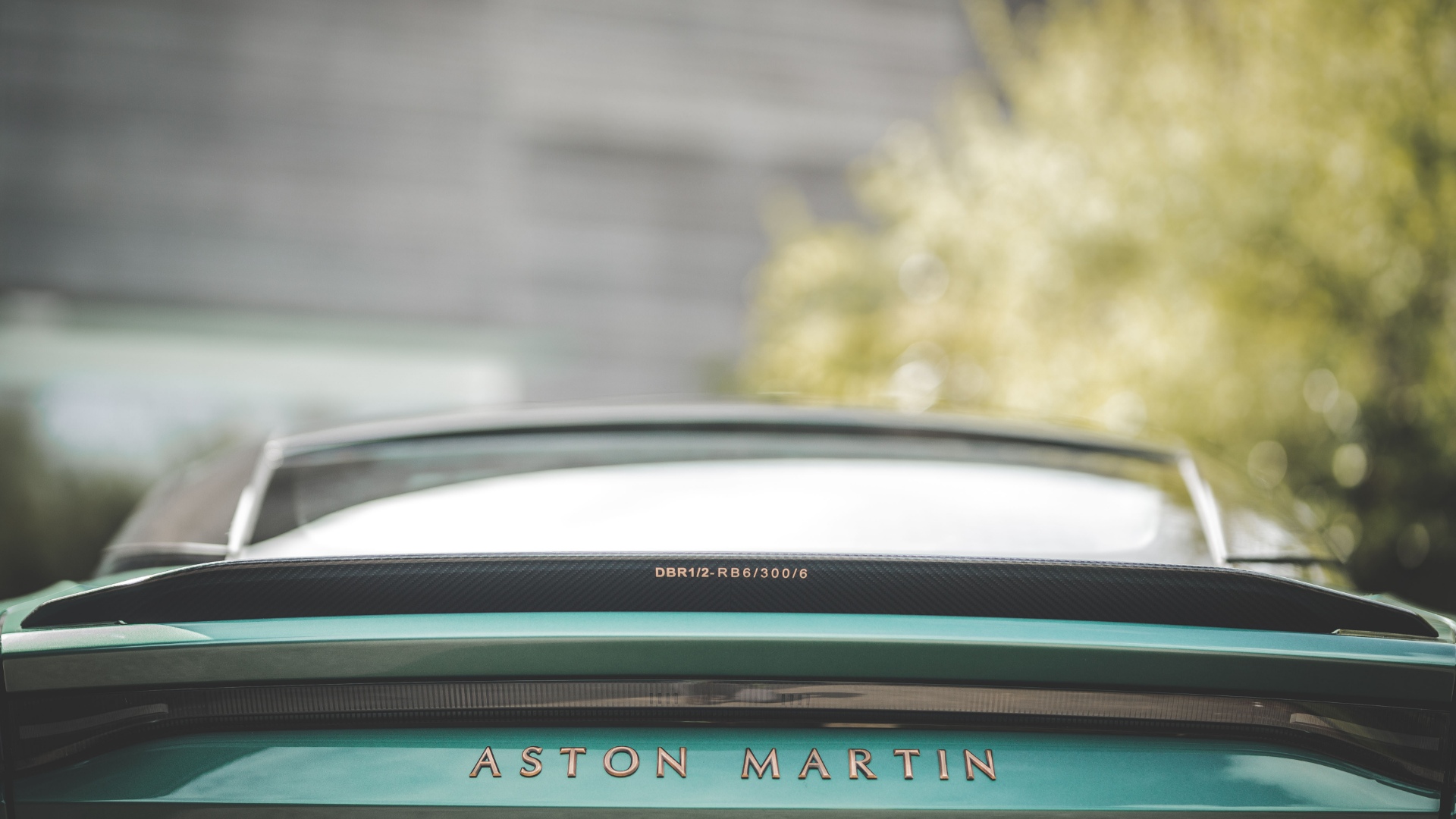
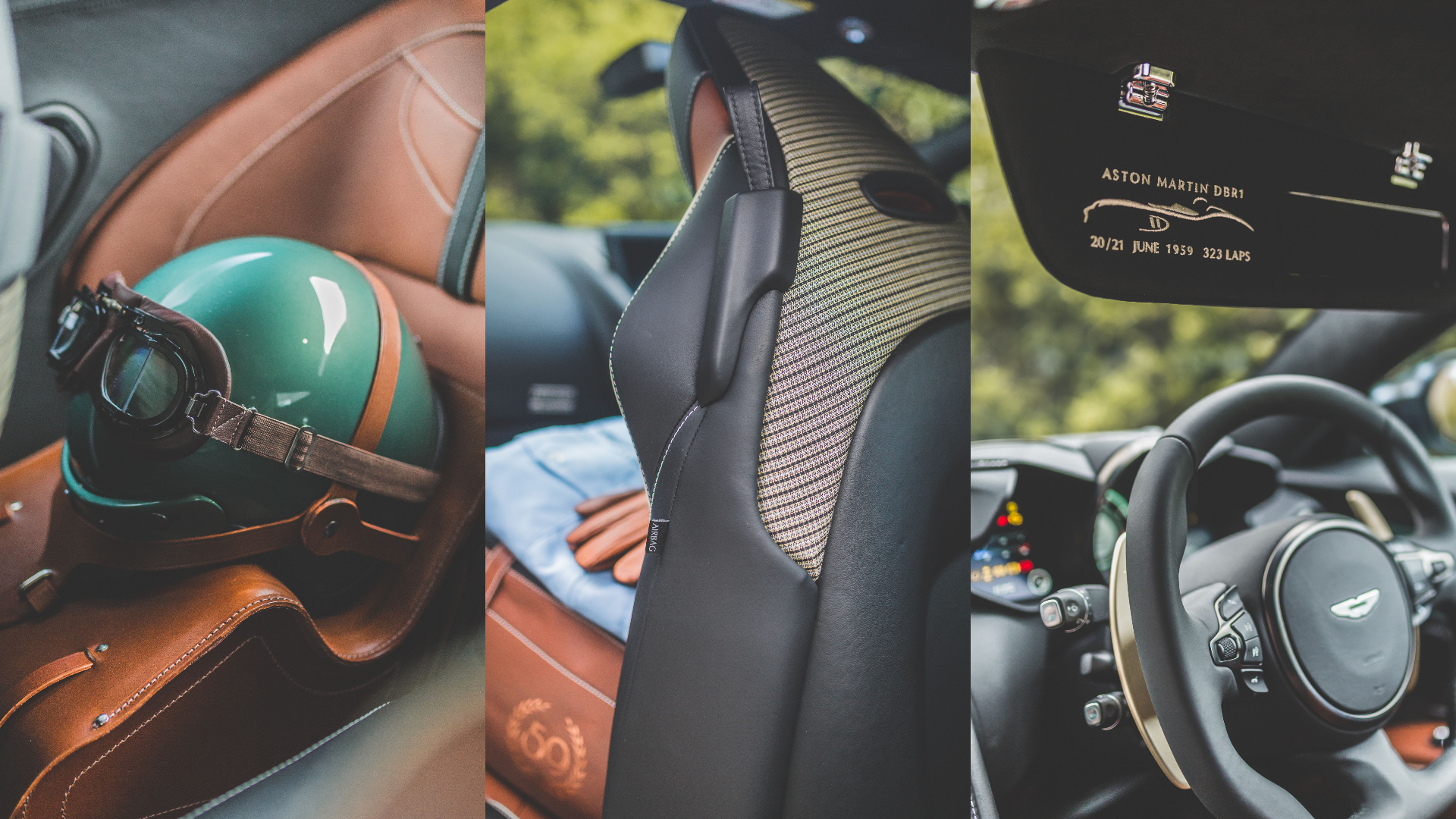
A carbon fibre roof, plus bronze detailing in the brightwork and badging, complete the exterior highlights of the ’59’. There’s also lettering on the ‘aeroblade’ rear spoiler, detailing the chassis and engine number of the Le Mans winner, alongside its silhouette.
Inside the DBS ’59′
The interior is a tasteful tribute to the 1959 Le Mans winner. You’ll find tan-on-black leather and special embroidery on the speaker grilles and sun visor. The bronze detailing continues, too, aping the switchgear from the original DBR1.
Look in the back and you’ll find a colour-coded retro racing helmet, along with blue race suits and replicas of Shelby’s race gloves.
“The ‘DBS 59’ strikes a careful balance between a timeless design that respects our history and a modern take that celebrates our future,” said Simon Lane, director of Q and VIP sales.
“The DBS Superleggera is the most powerful production car ever produced by Aston Martin and so it is fitting that the ‘DBS 59’ special editions have been commissioned to mark 60 years since our iconic 1-2 win at Le Mans.”
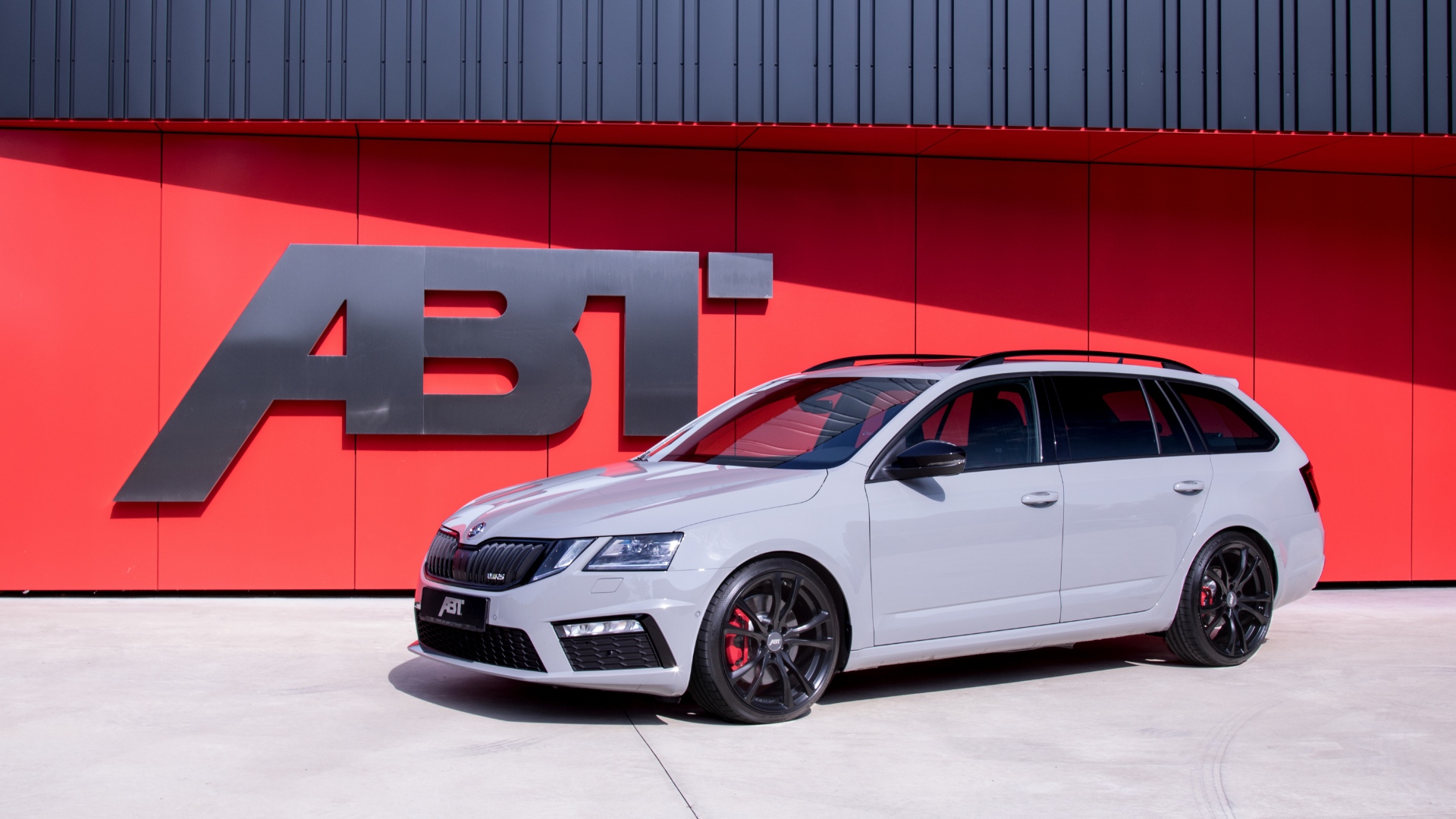
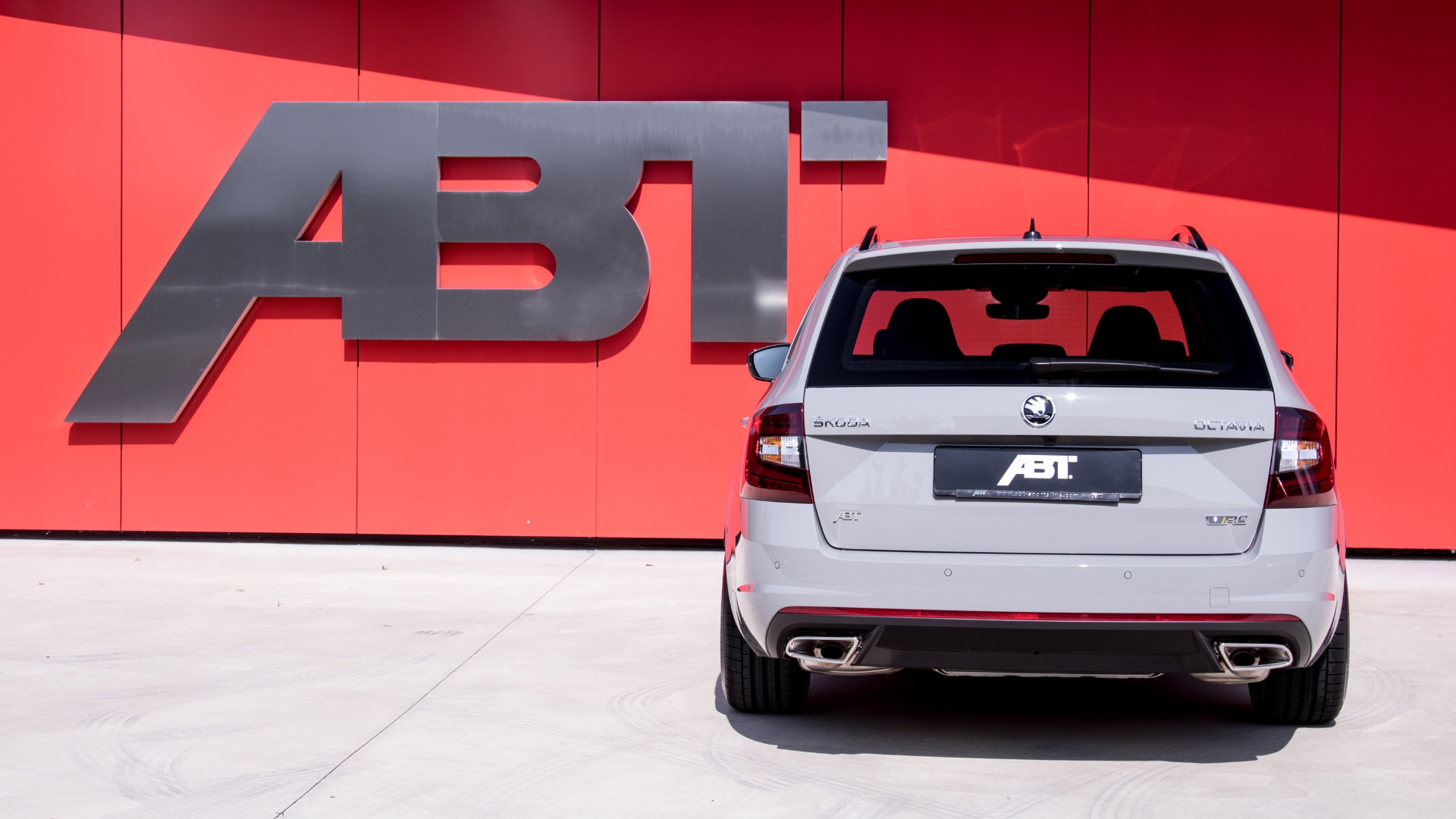
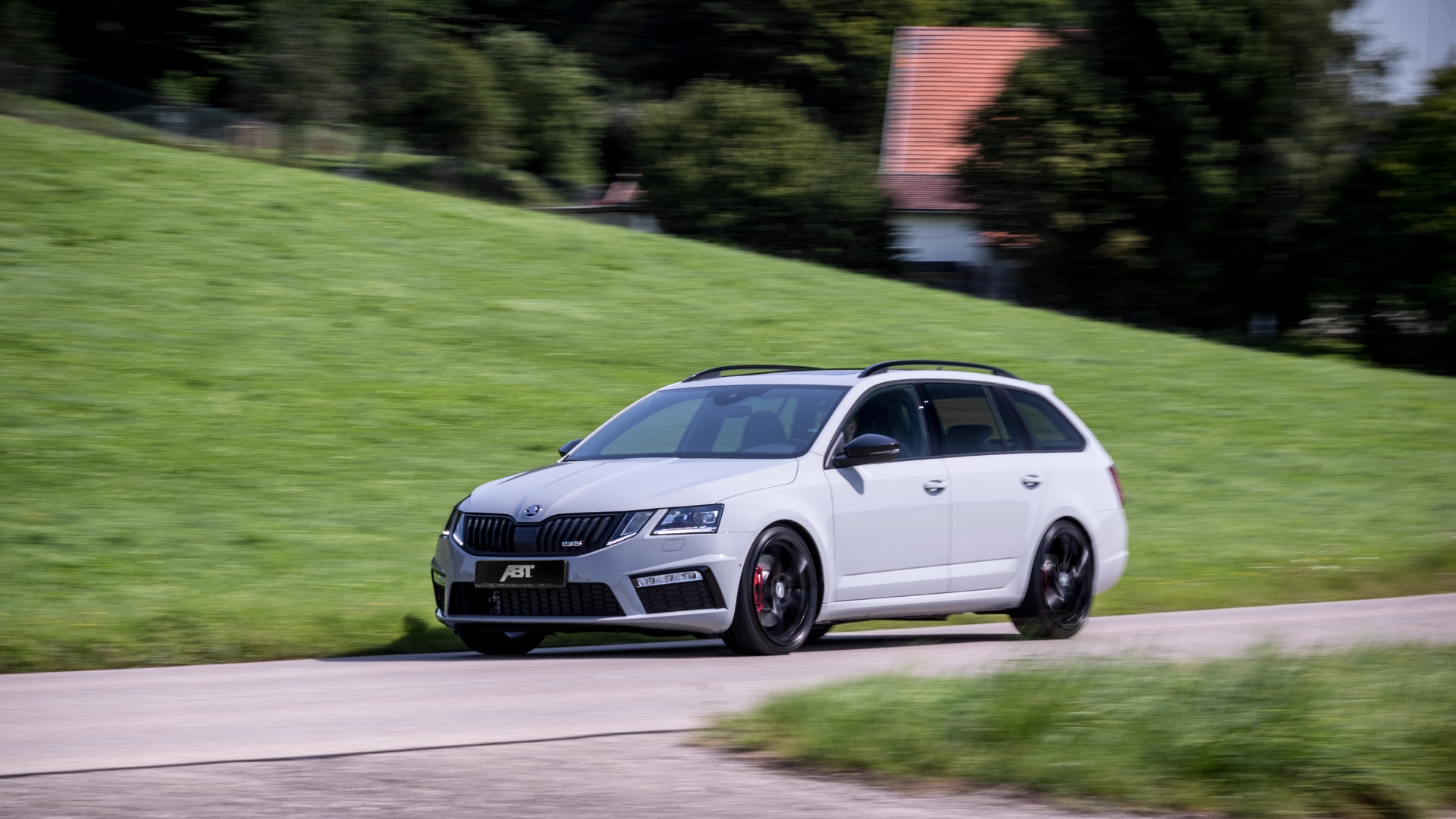
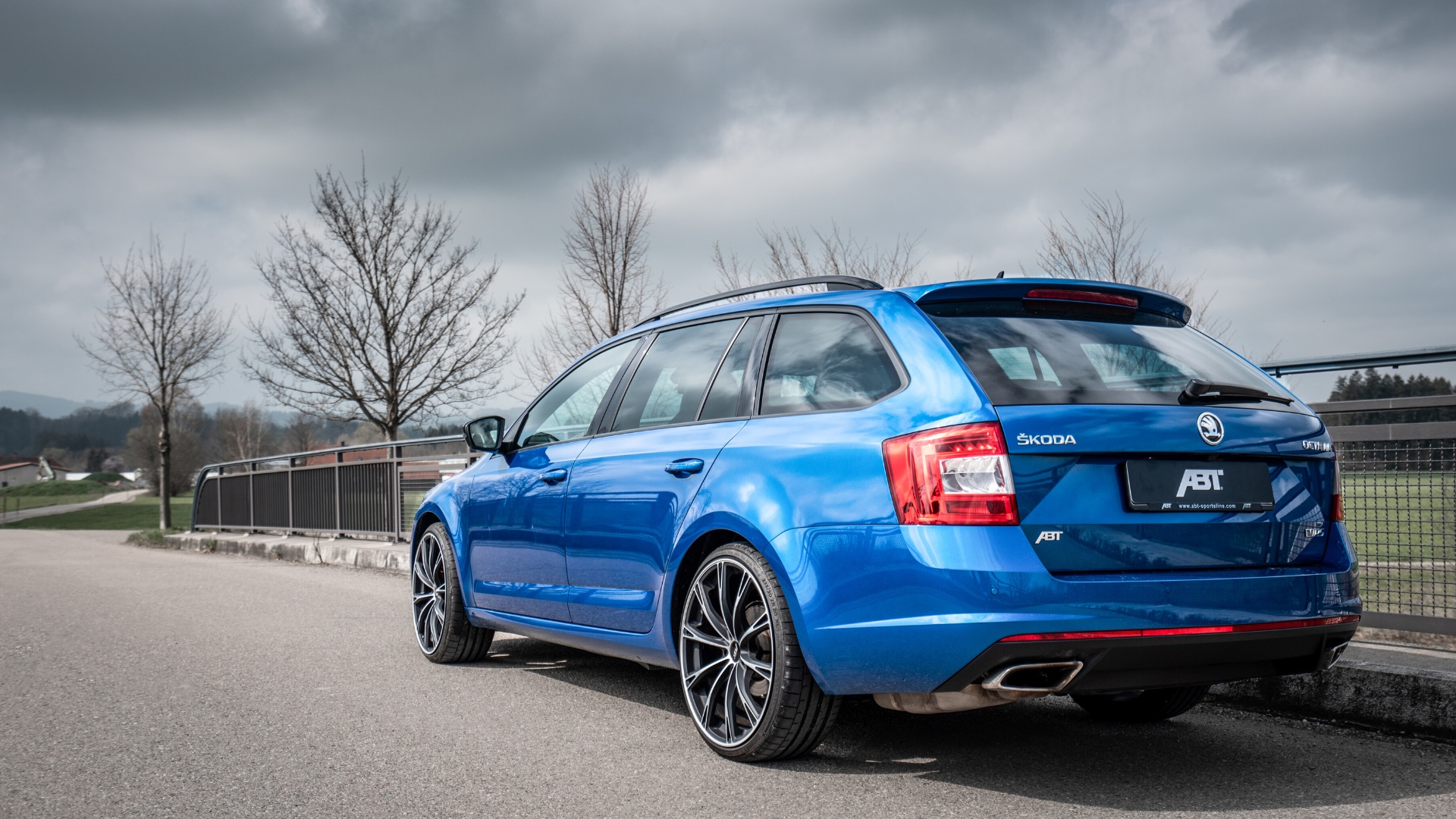
Volkswagen Group tuner ABT has got its hands on the practical Skoda Octavia VRS. And the result is a 290hp Golf R fighter…
Turning the Octavia VRS up to 290
A new ECU is behind the power increase from 255hp to 290hp. Torque is also improved, from 273lb ft to 302lb ft.
The 184hp diesel VRS can be boosted to 210hp, with torque up from 280lb ft to 310lb ft.
“Our auxiliary ABT Engine Control unit adds an extra 45hp to the already quite potent Octavia,” explains CEO Hans-Jürgen Abt. “This allows it to stand up even to much larger vehicles on the freeway.”
As for performance figures, nothing is stated. But with 290hp in your all-wheel-drive Octavia, you’ll be gnashing at the heels of Volkswagen Golf Rs and Seat Leon Cupras.
Putting the hammer down
Extra performance is all well and good, but power corrupts. To prevent that, ABT offers suspension springs to lower the car by 25mm at the front and 30mm at the rear.
An optional ABT anti-roll bar shore ups the dynamics of the VRS still further.
Mouth to match the trousers
It’s rare one gets a performance upgrade without some visual cues, so you can fit your VRS with ABT wheels.
Three options are available, with two in 18- and 19-inch versions, and a third in 20-inch size. The latter is probably only for those with a sturdy spine…
The New York region is one of the most important in North America for new car sales. And the New York Auto show is one of the oldest motor shows in the world. Combine the two and you have a car event not to be missed. We didn’t, and can bring you the star cars from the 2019 New York Auto Show. Roll up your sleeves, auto enthusiasts…
Jaguar I-Pace wins World Car of the Year
There were headlines even before the New York Auto Show had officially opened, when the Jaguar I-Pace electric SUV was named 2019 World Car of the Year. It was an unprecedented hat-trick for the British brand too, with the I-Pace also scooping World Green Car and World Car Design of the Year. Other winners included the Audi A7, Suzuki Jimny and McLaren 720S.
Never before has one car scooped three World Car Awards prizes, including the overall trophy…
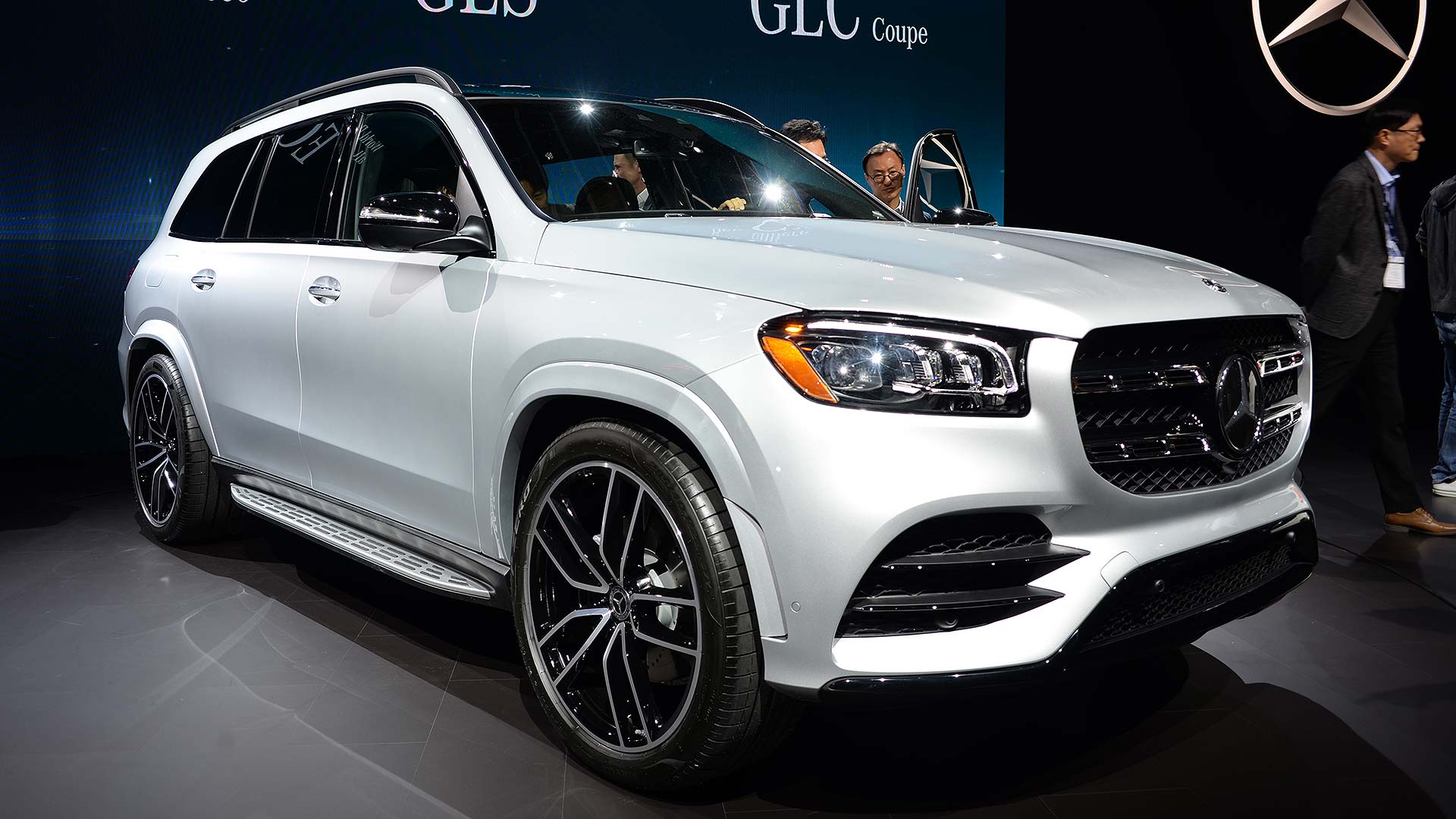
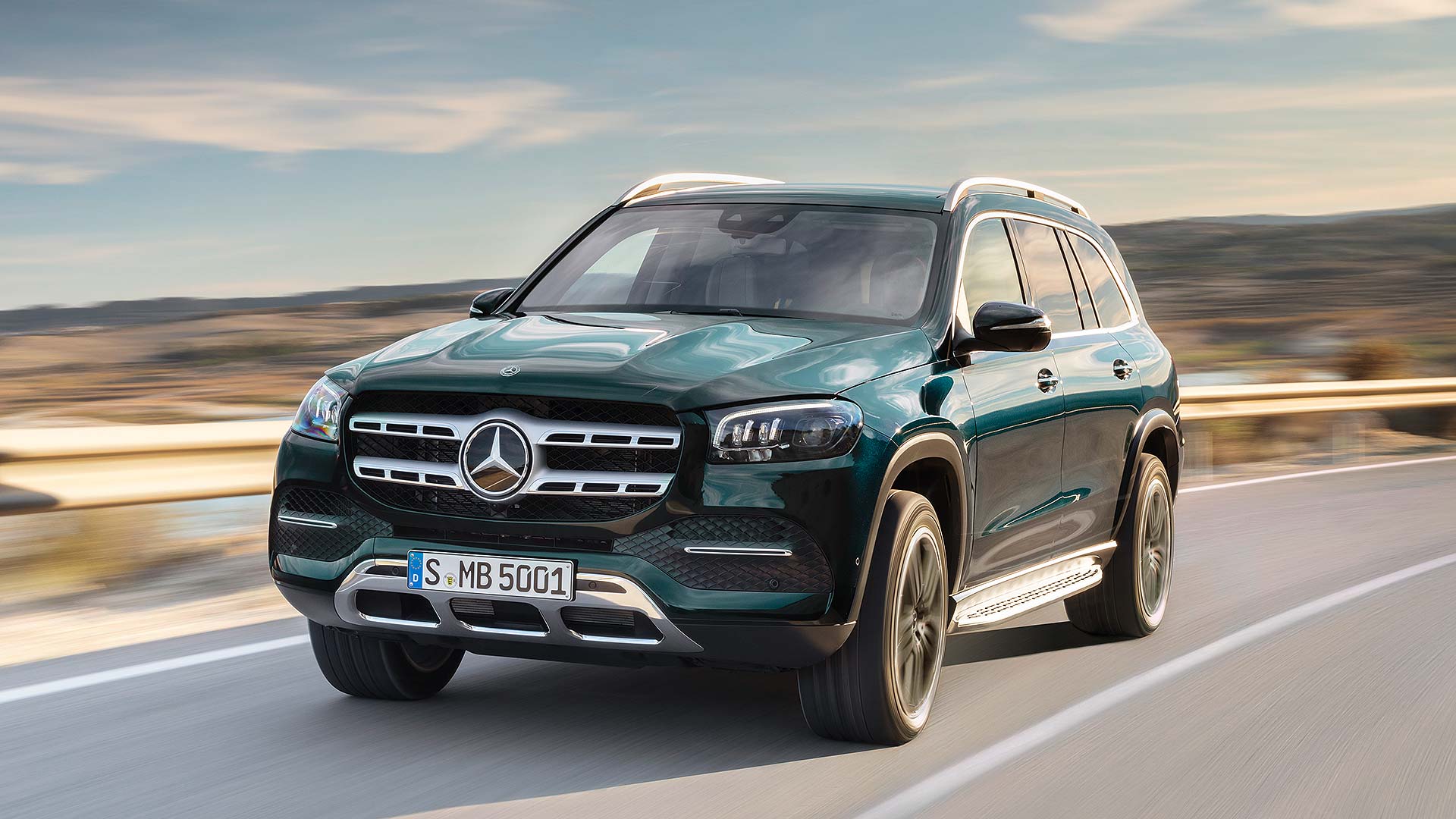
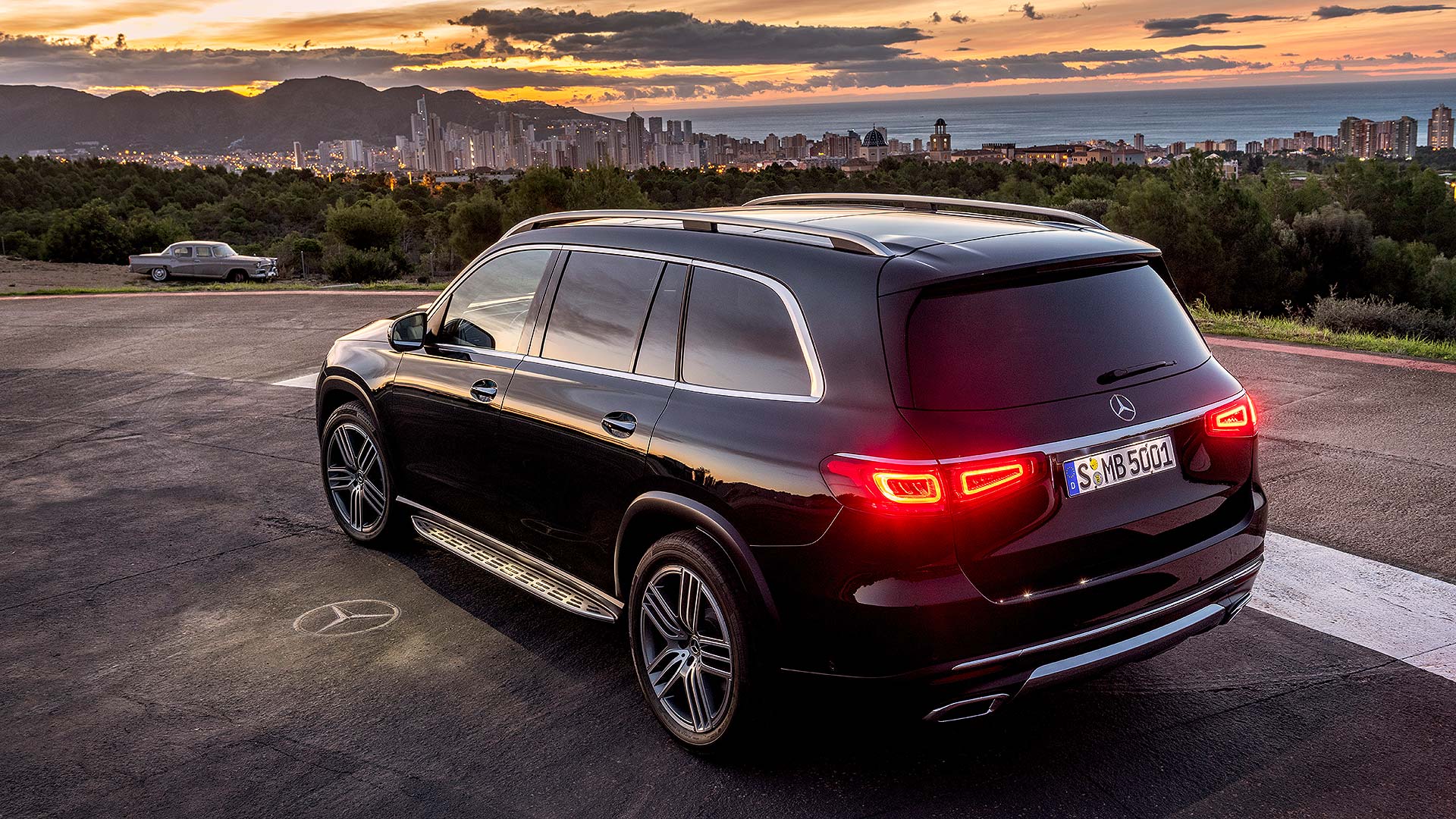
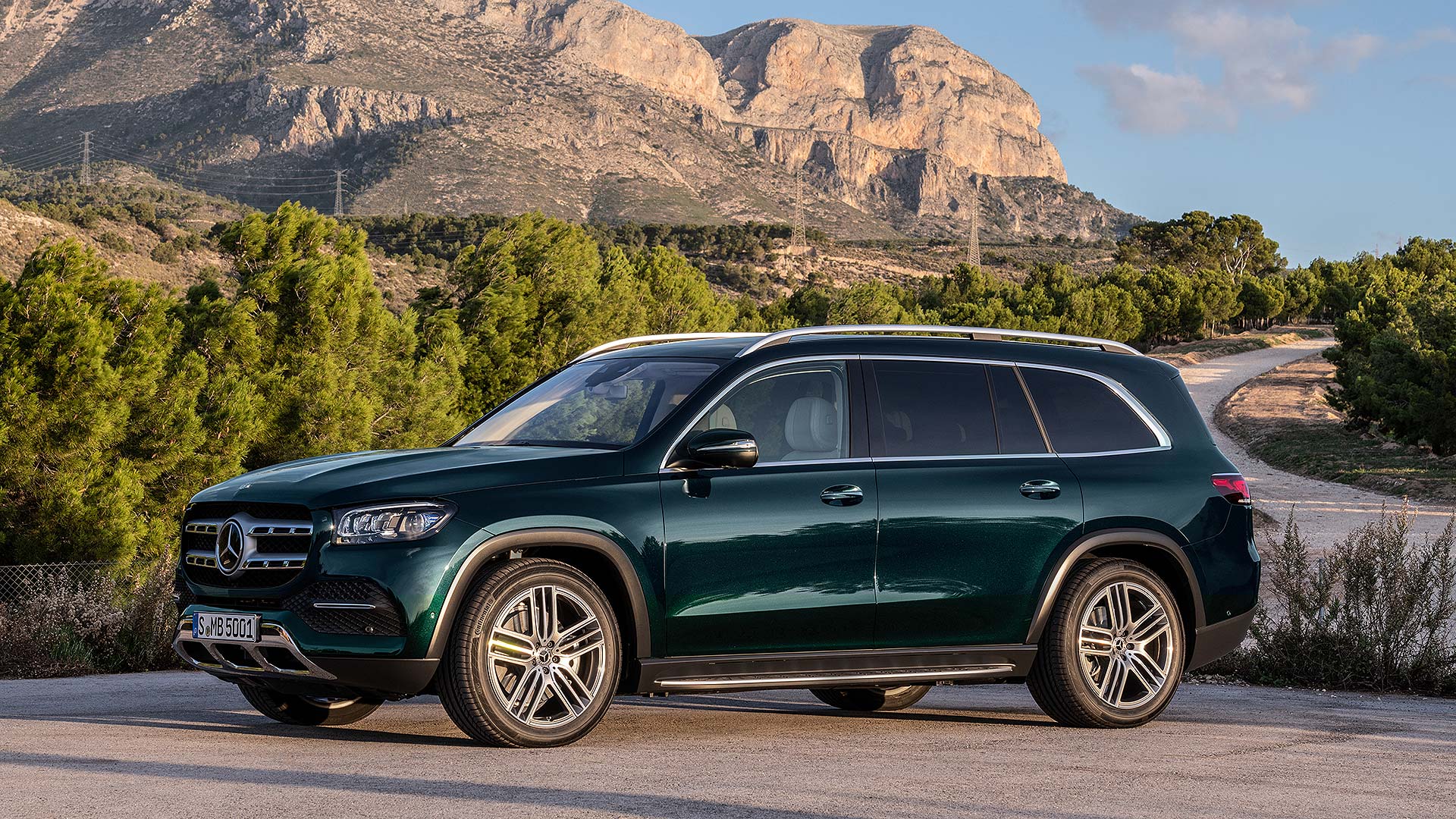
Mercedes-Benz GLS
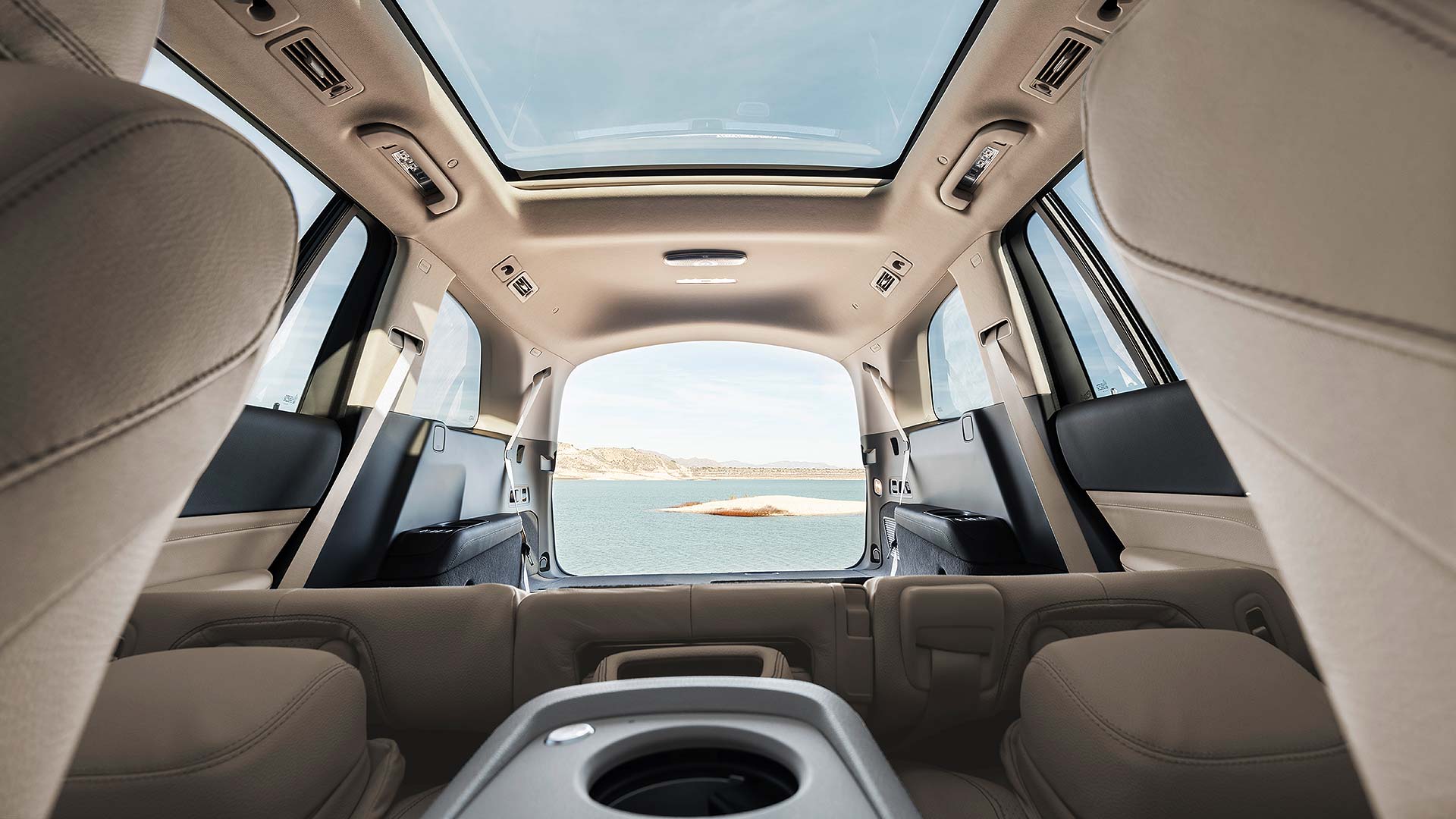
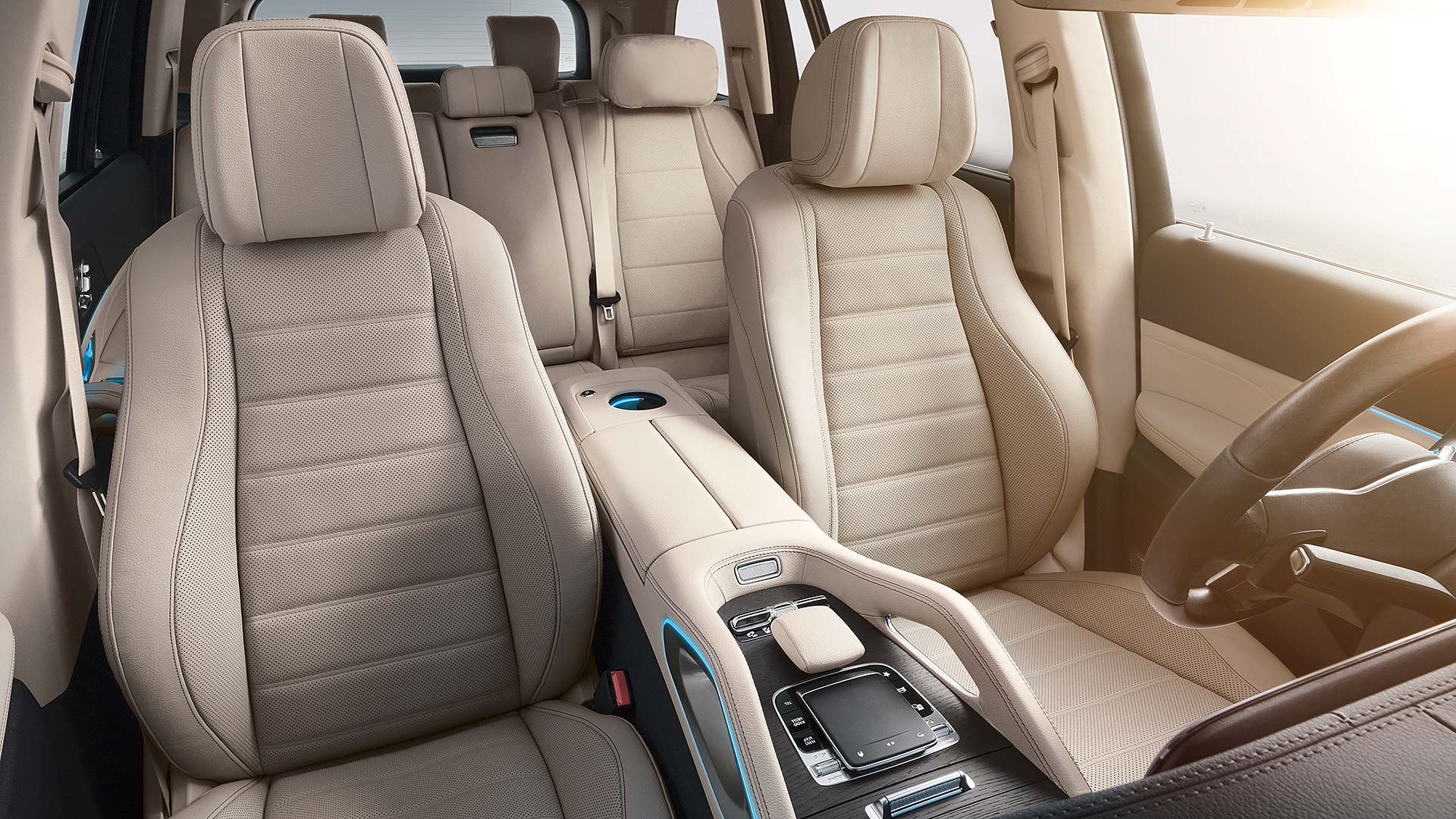
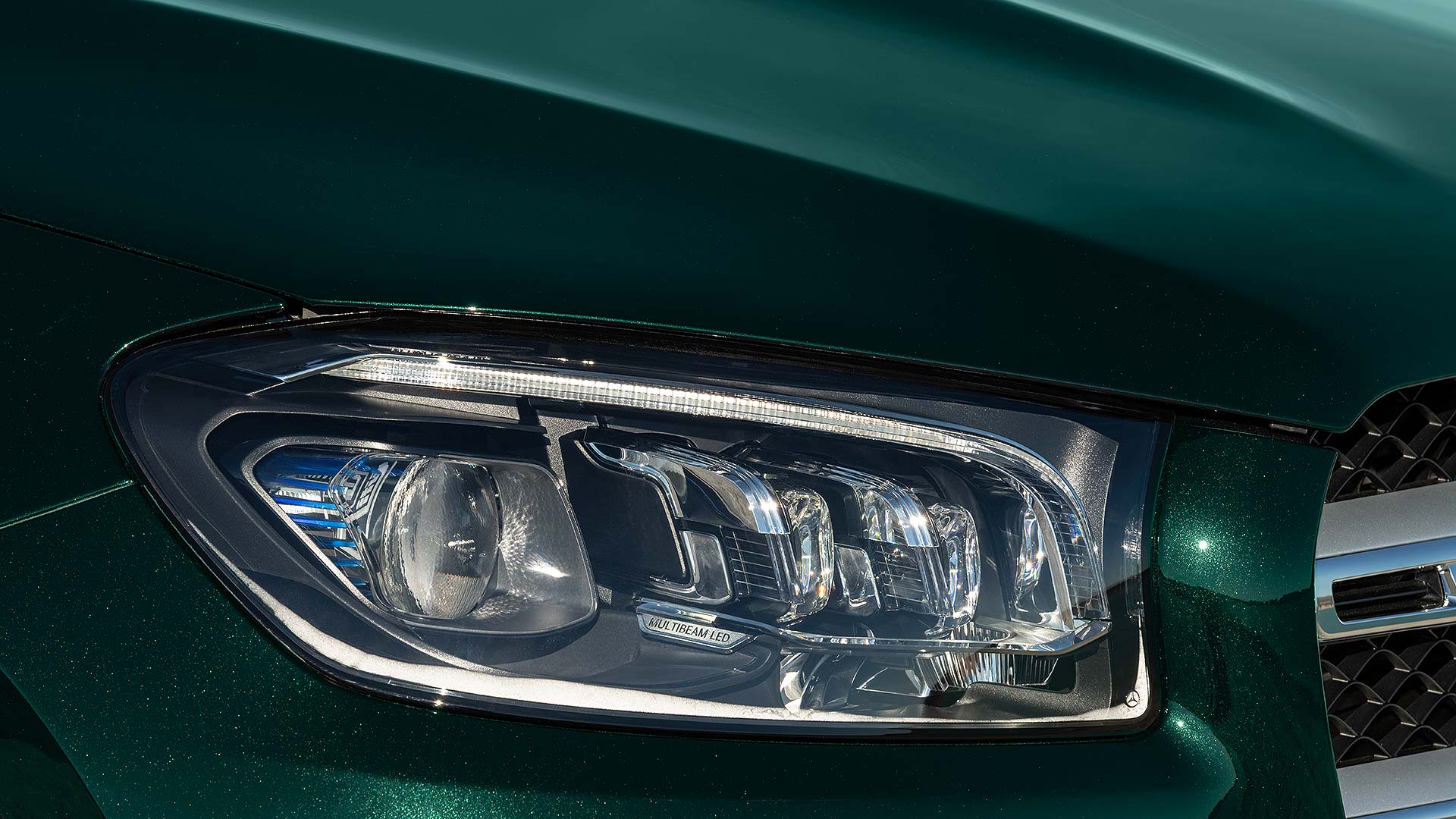
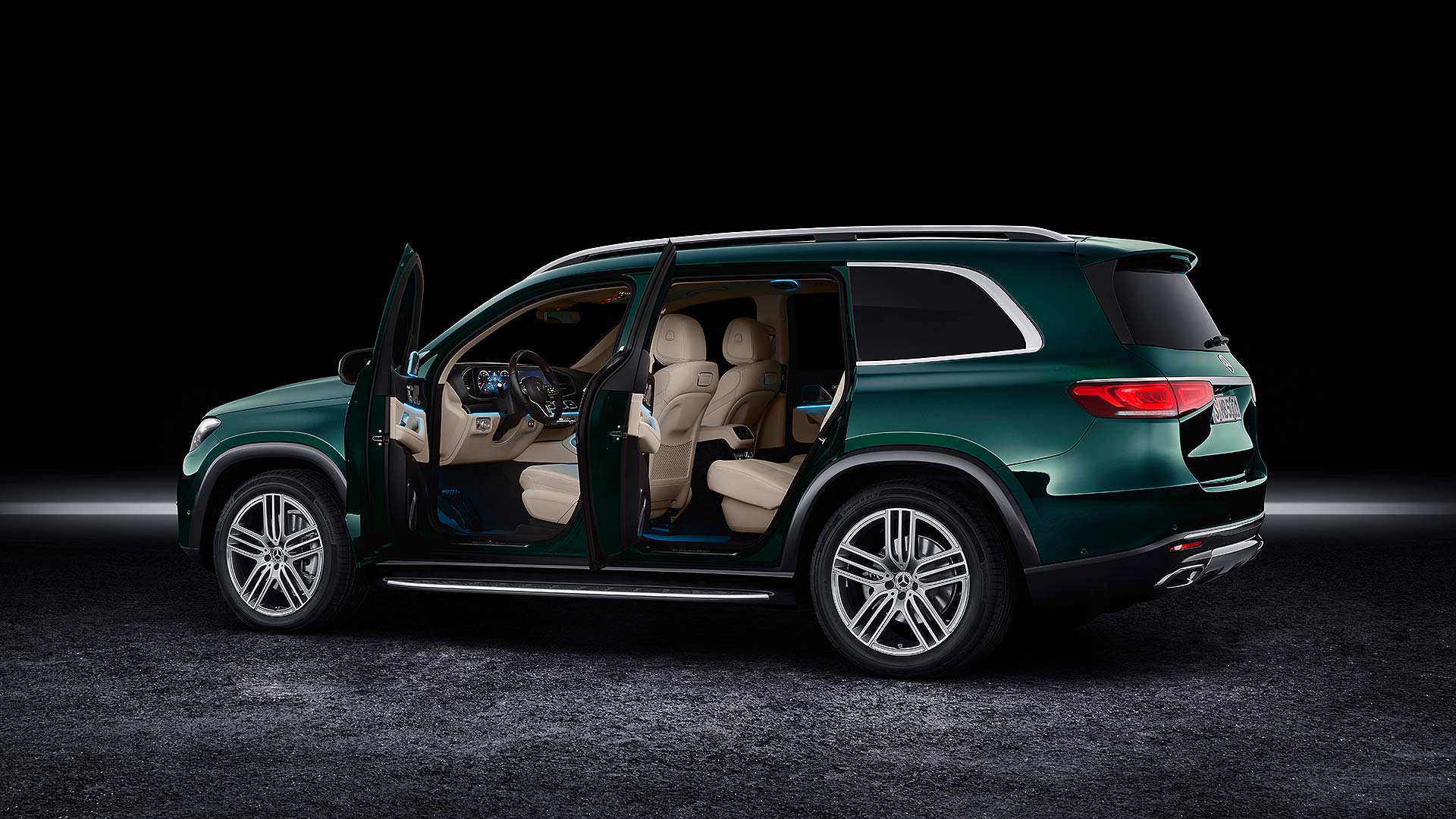
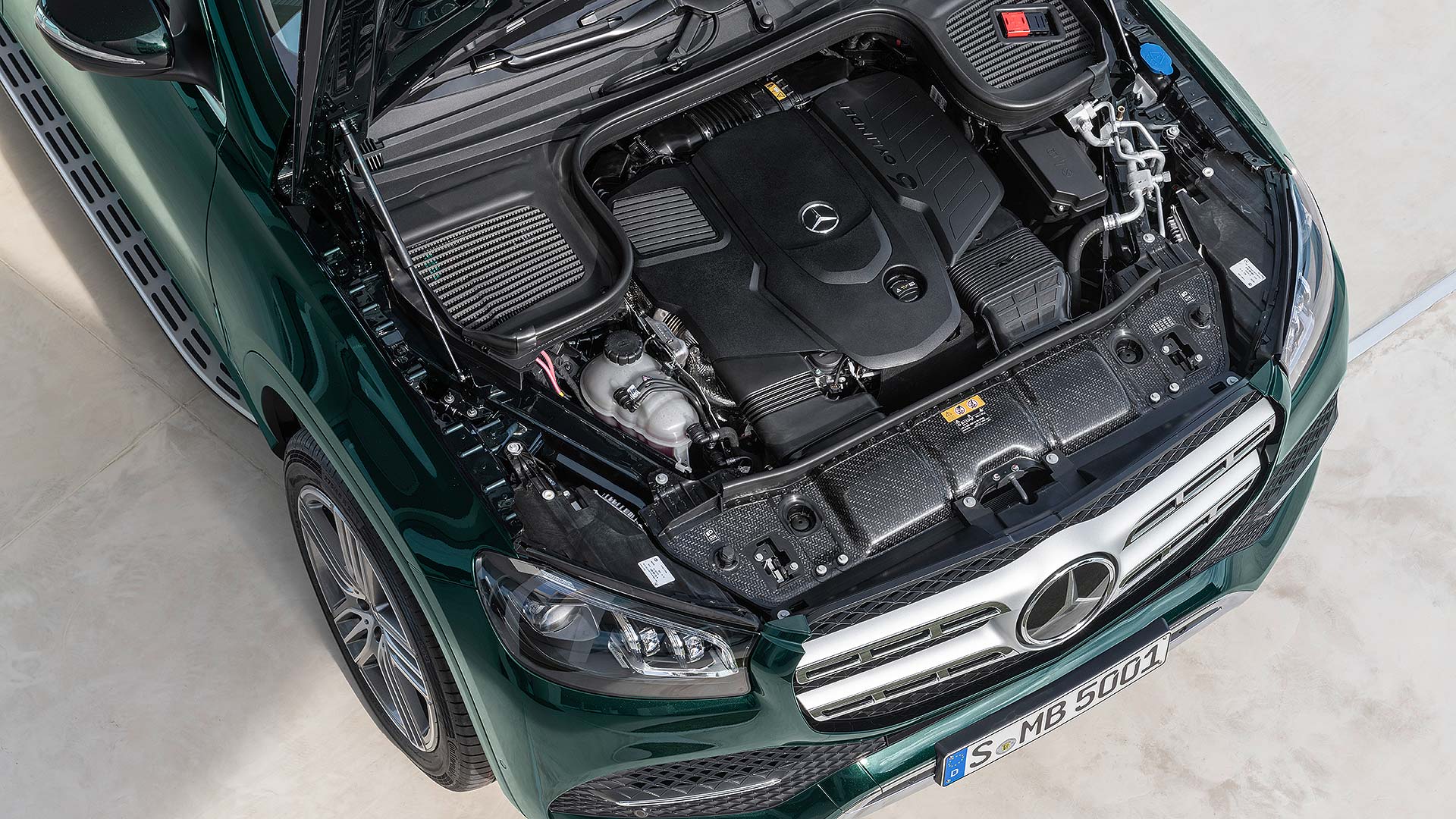
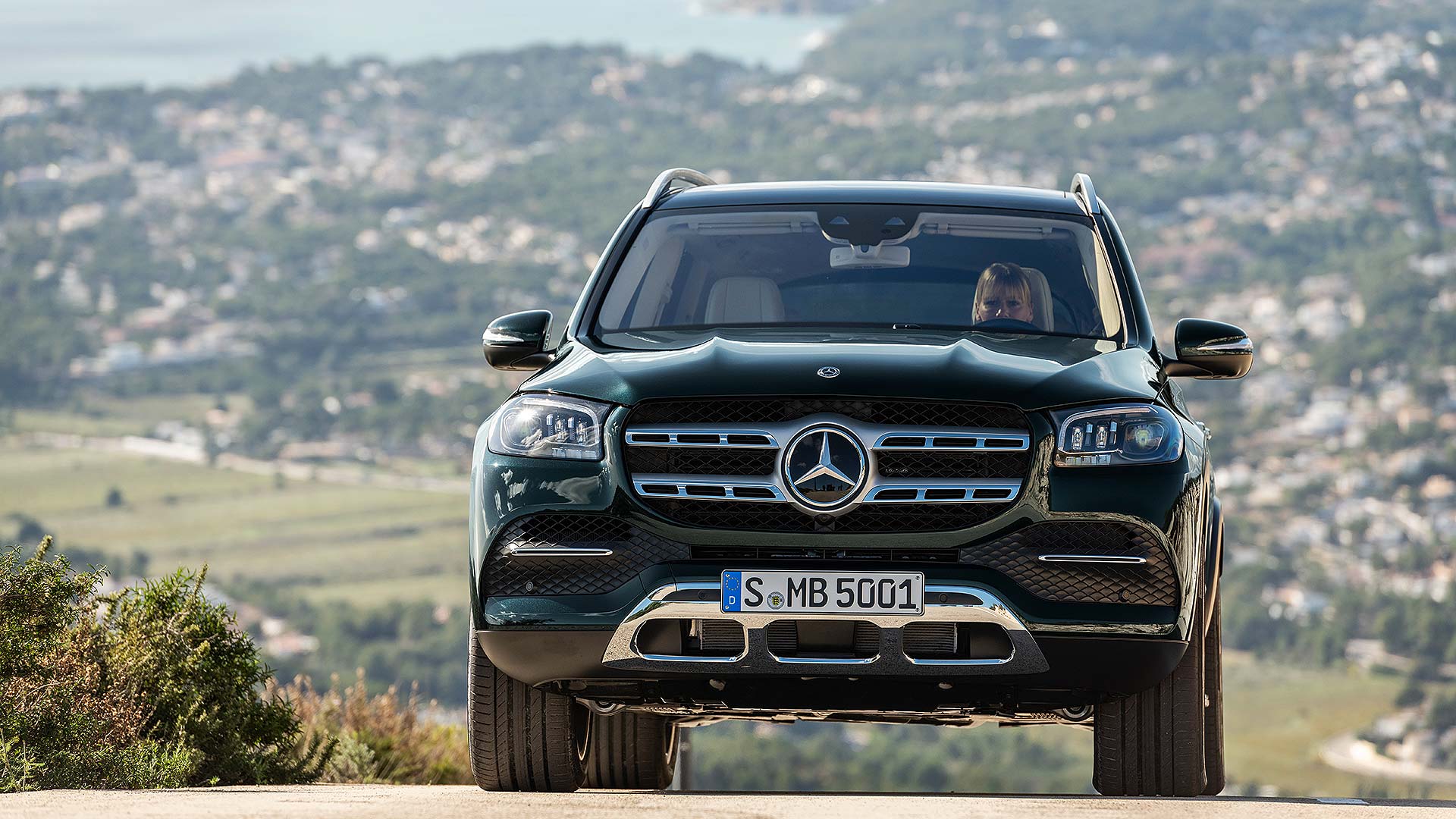
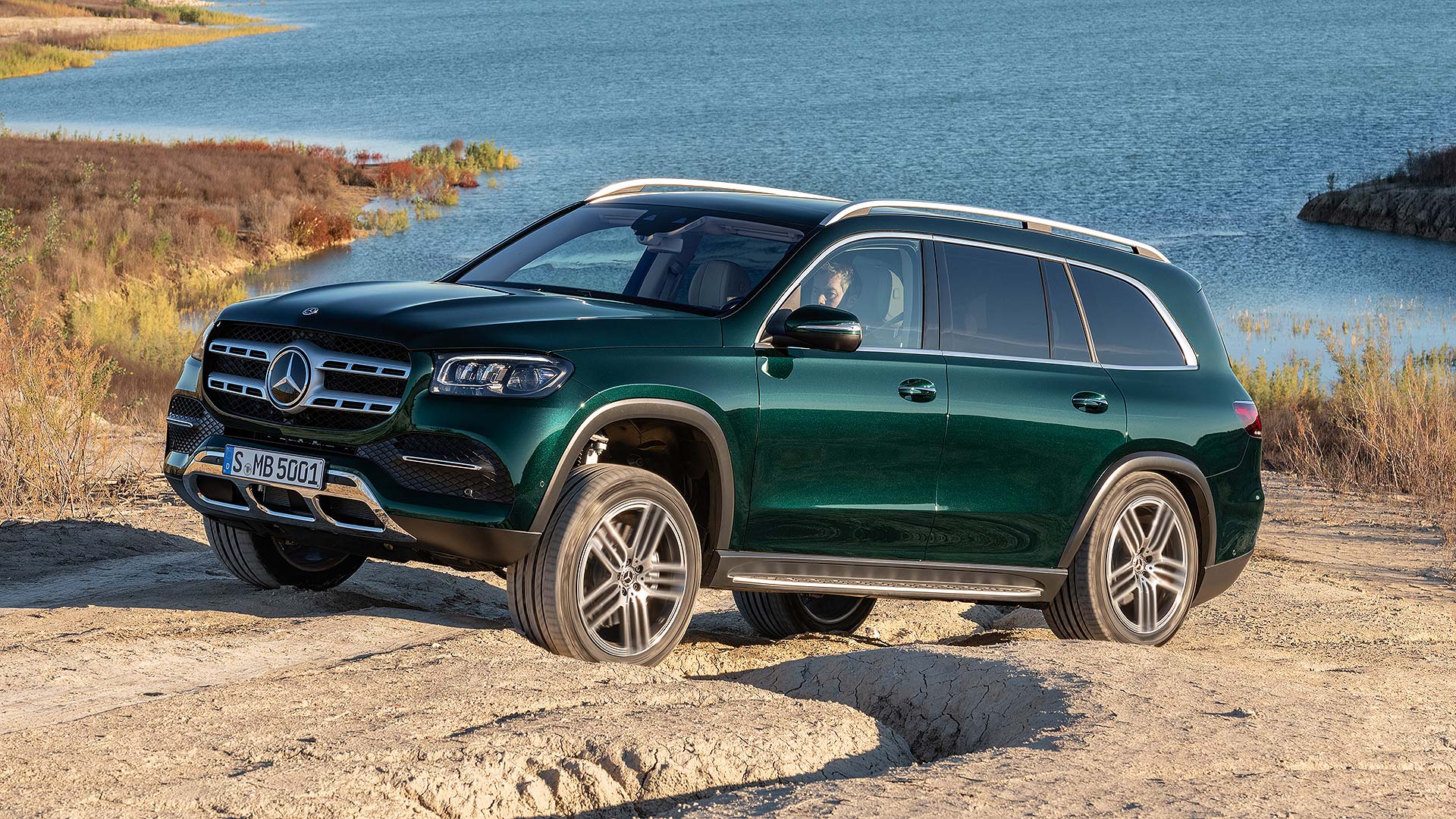
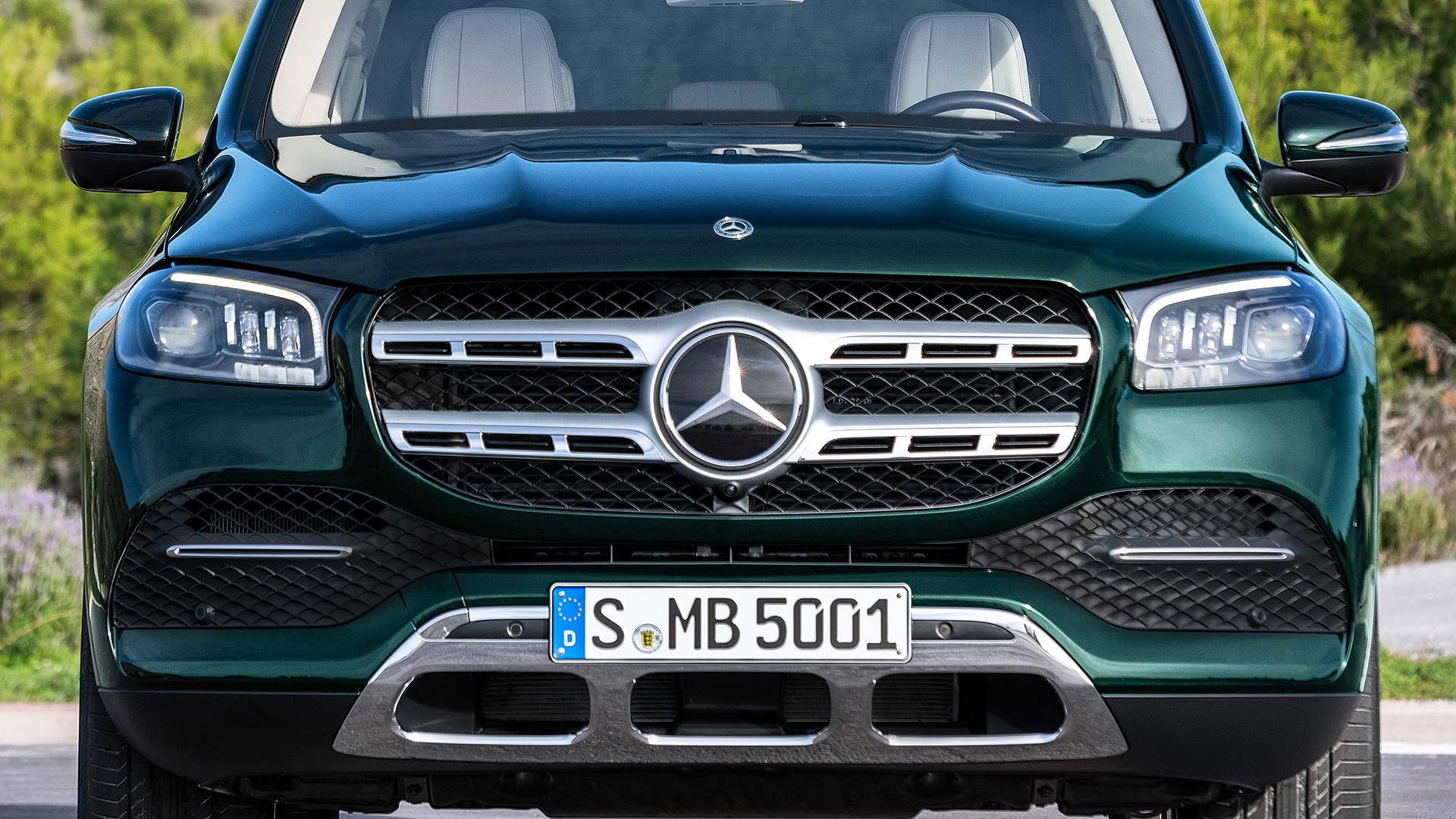
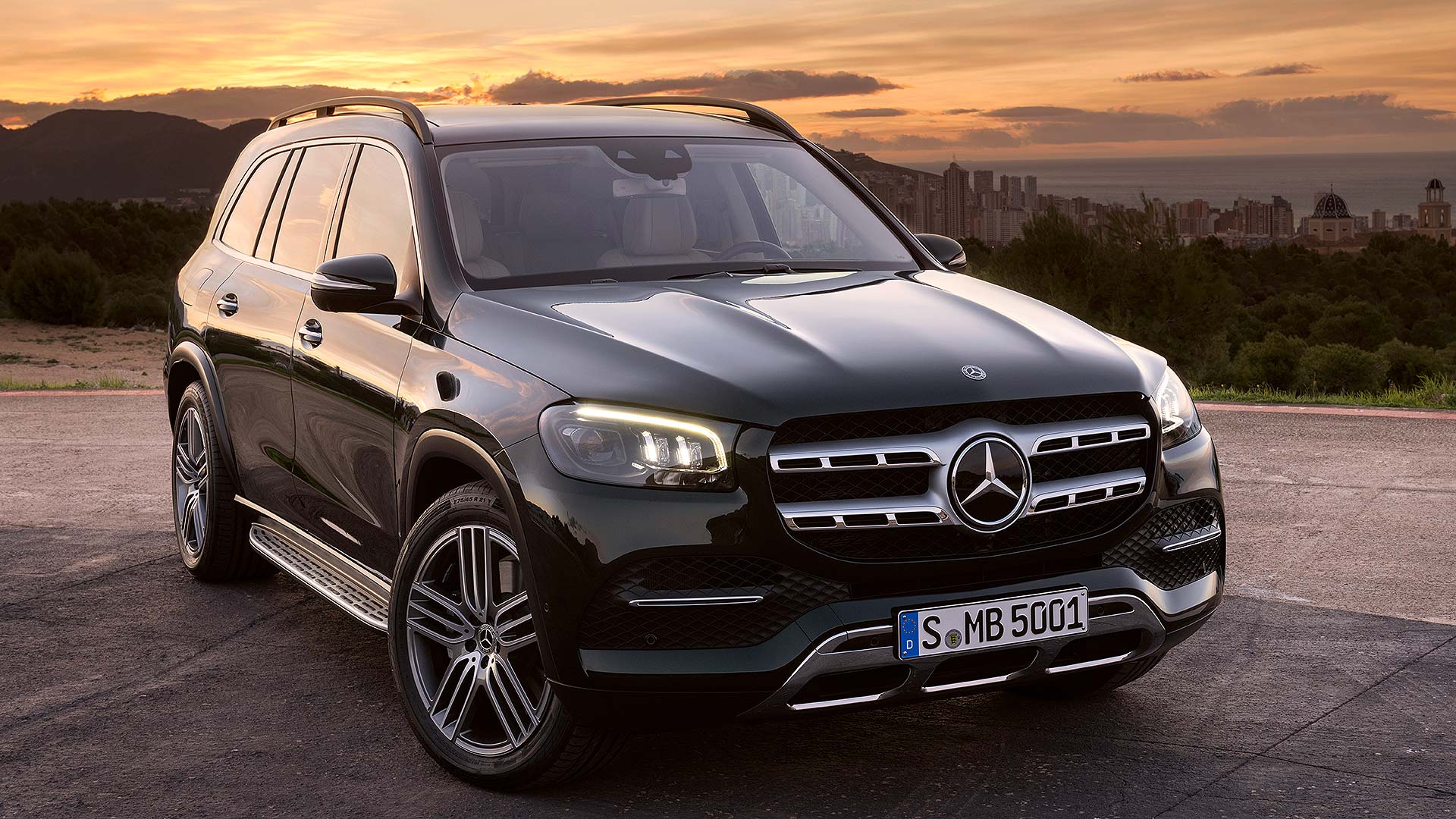
All-new and ready to dominate the luxury SUV sector, Mercedes-Benz is suitably proud of the second-generation GLS. Channeling the four-door S-Class saloon into a upright body has produced a premium product, read to take on the BMW X7 and full-fat Range Rover. Seating seven in leather-clad luxury, the attention to detail in the new GLS can be seen in the fact that each headlight contains 112 individual LEDs. A range of powerful gasoline and diesel engines will be offered, including an intriguing GLS 580 4Matic hybrid version. All will come with four-wheel drive and a nine-speed automatic gearbox as standard.
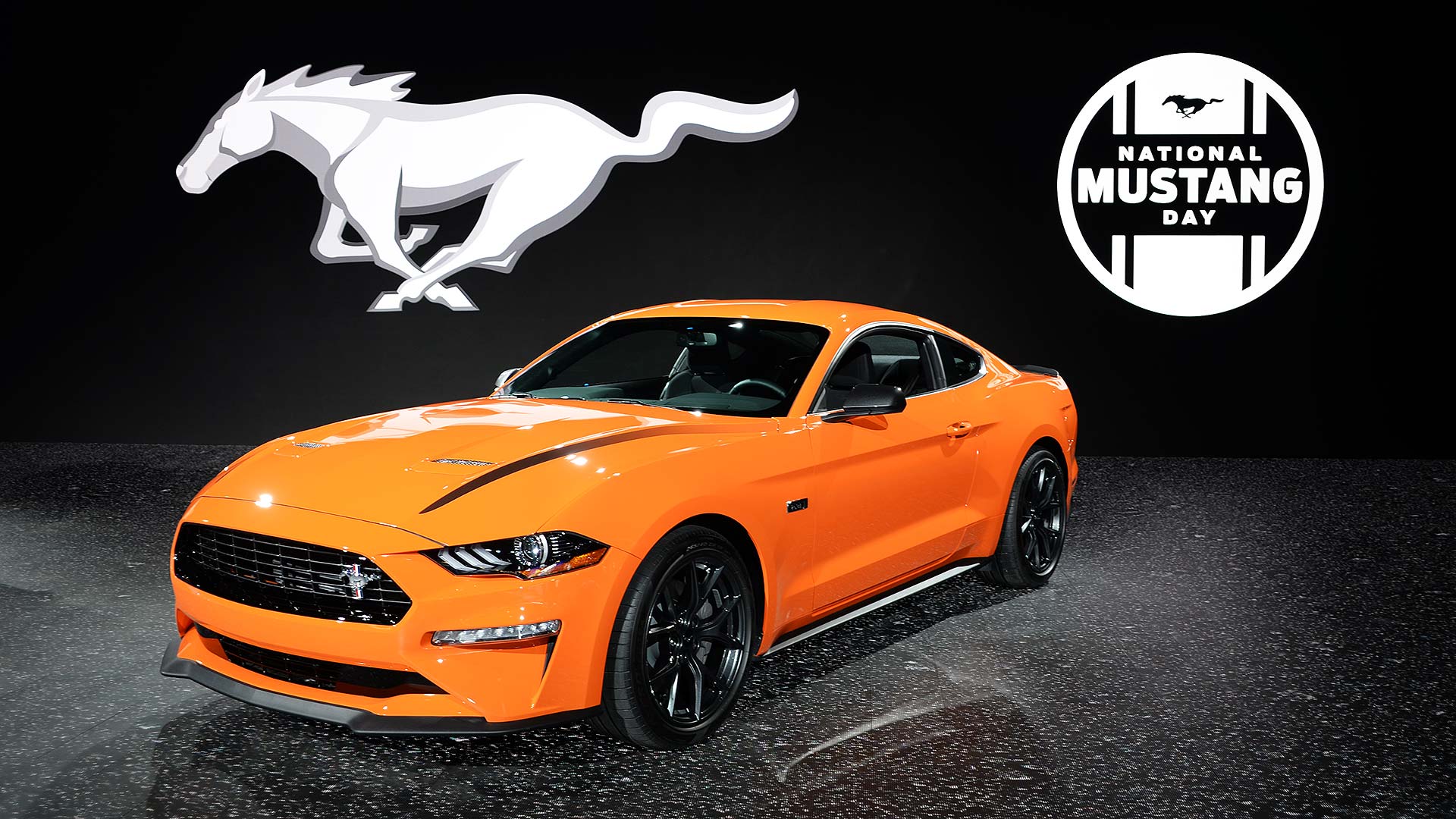
Ford Mustang EcoBoost High Performance pack
The Ford Mustang is 55 years old this week, and the annual National Mustang Day 2019 coincides with the opening of the New York Auto Show. Ford has something special to mark both – an upgraded 2.3-liter EcoBoost four-pot model, using the engine from the old Ford Focus RS. Called the EcoBoost High Performance pack, it takes power up to 330 horsepower, and is marked out by a front splitter, rear gurney, black wheels and bigger brakes, a unique grille and special ‘whisker’ stripes on the hood. Time to start taking note of the non-V8 Mustang?
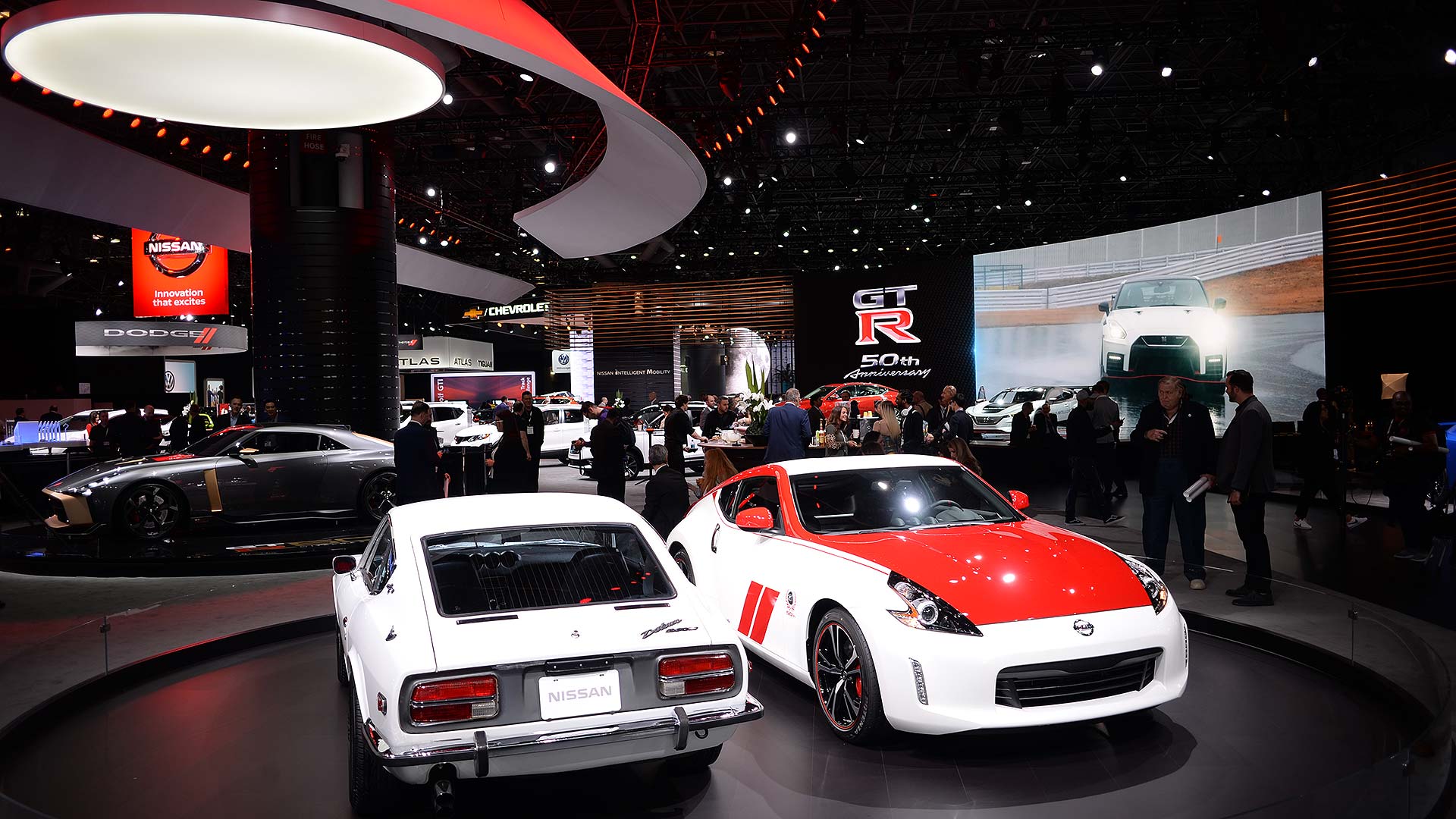
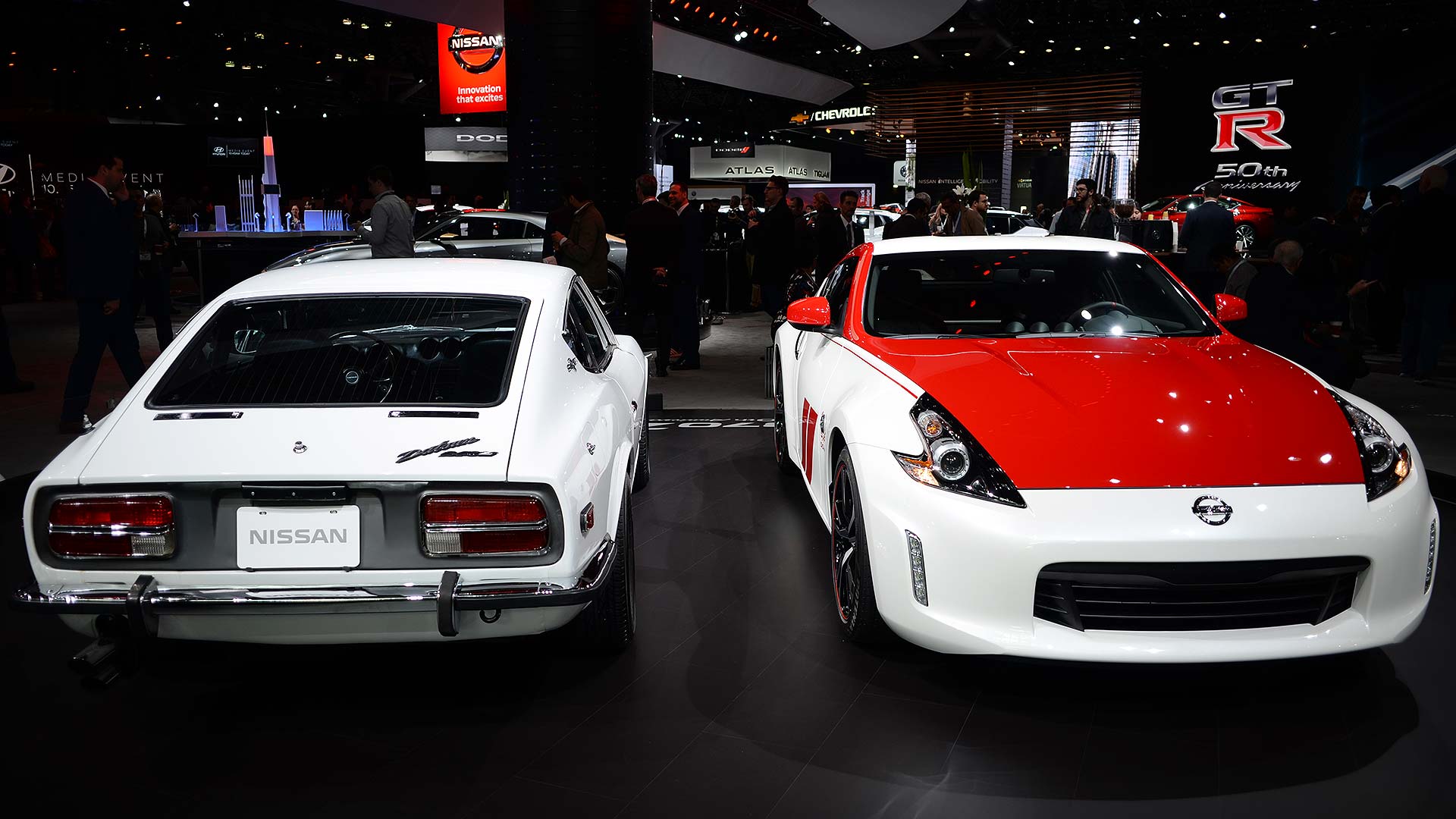
Nissan 370Z 50th Anniversary
The 370Z 50th Anniversary Edition does exactly what it says on the tin. It commemorates the golden jubilee of Nissan’s back-to-basics six-pot coupe, in its sixth generation since the 370 was introduced in 2009. The car’s livery commemorates an early 240Z racing car, specifically the #46 BRE (Brock Racing Enterprises) that won multiple SCCA championships in period. A nice detail is the pinstripe that runs down the side of the car and culminates in a small triangle that was inspired by the C pillar of the 240Z.
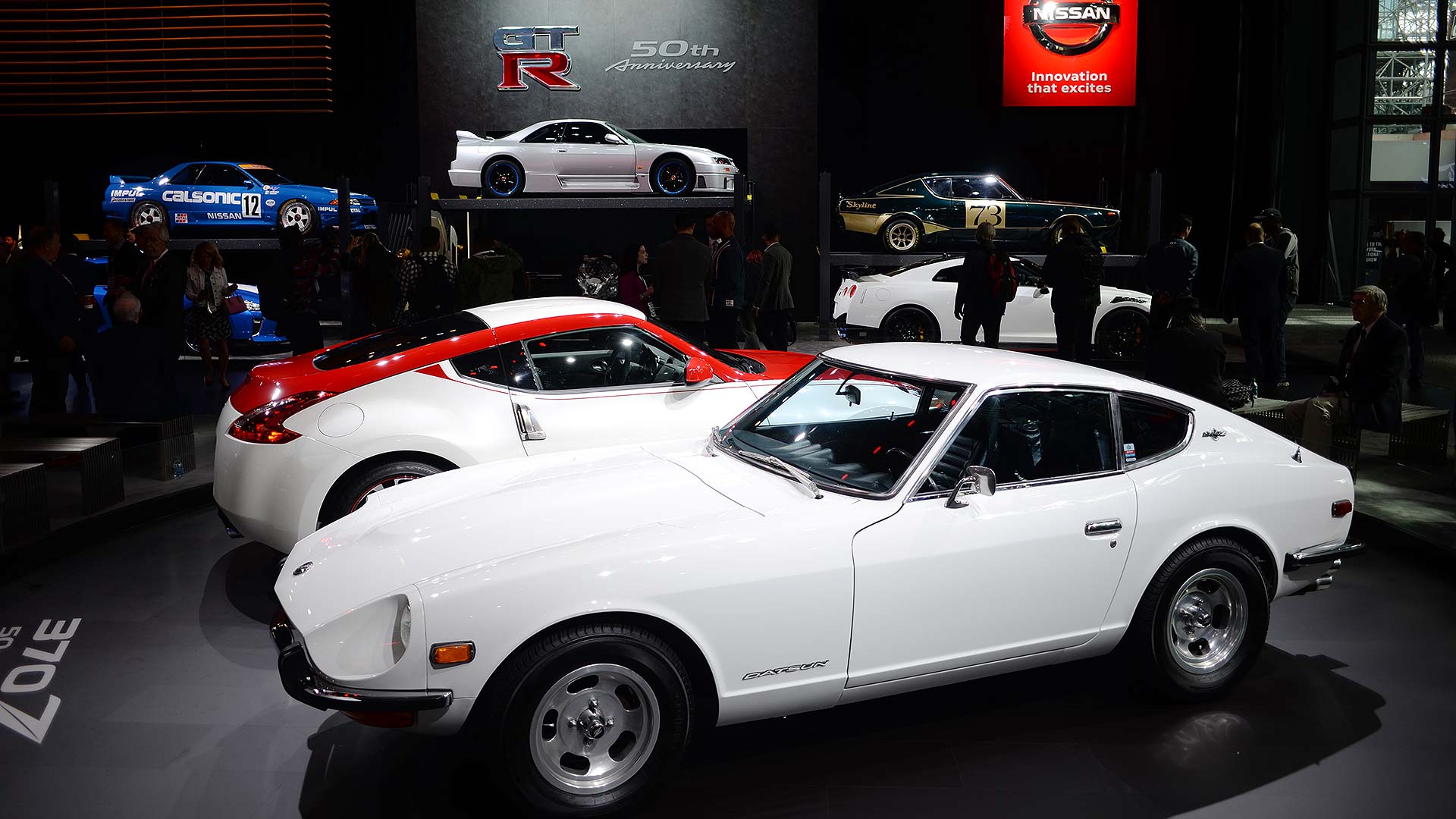
Nissan performance icons
As Nissan celebrates 50 years of the GT-R with the 50th Anniversary Edition R35, connoisseurs of GT-R heritage need only look above the new bayside blue special, to see what is arguably the most important GT-R ever. The Calsonic R32 GT-R quickly earned the Godzilla nickname, which looms over the GT-R to this day. The Group A-spec GT-R demolished Japanese Touring Cars, the Spa 24 Hours and the Bathurst 1000. Never mind the most famous GT-R, it’s one of the most famous racing cars of all time, full stop.
Porsche 911 Speedster
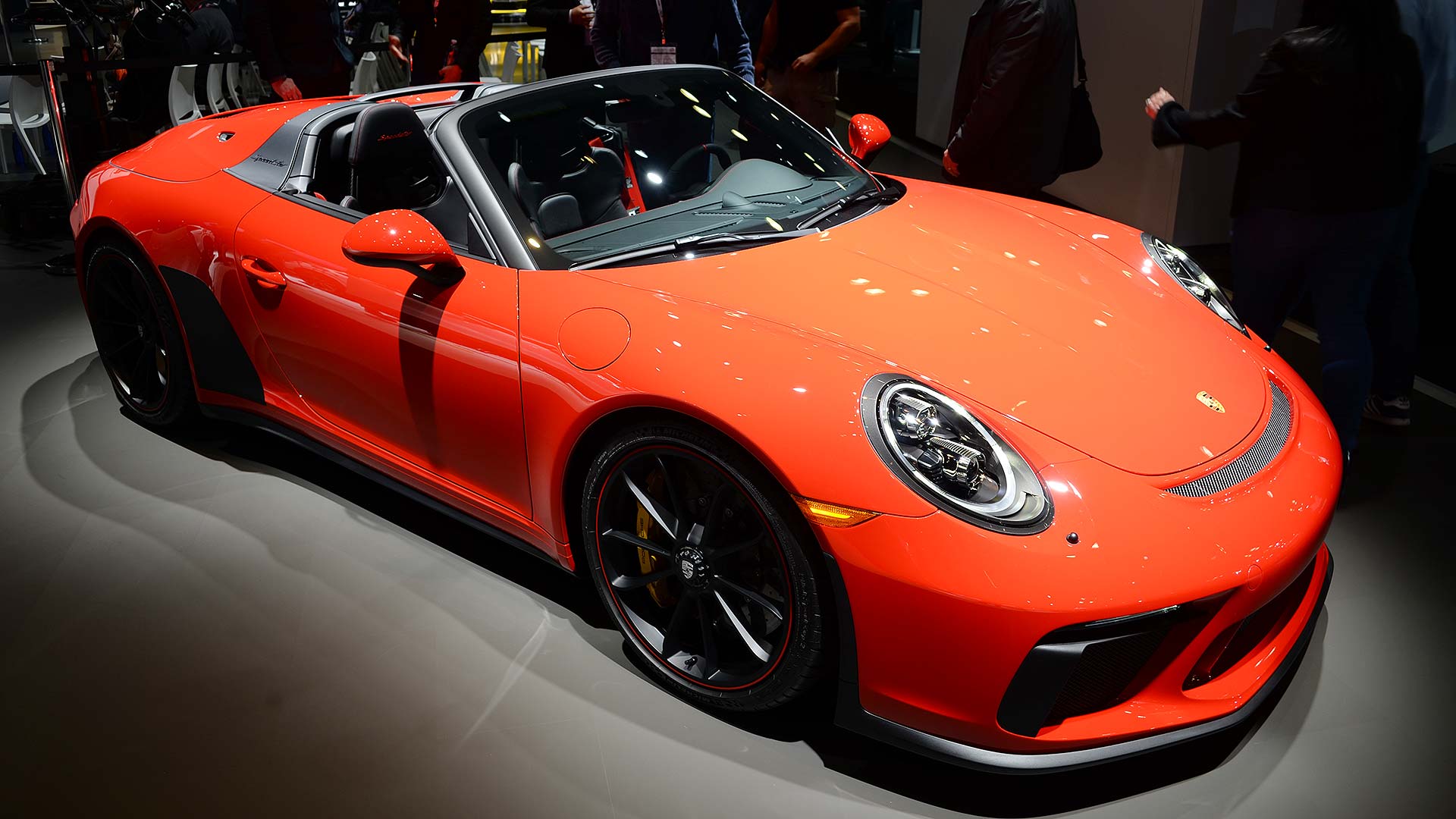
Previously seen at Porsche’s 70th anniversary celebrations, and then later at the Paris Motor Show, the 911 Speedster is making a North American production debut in New York. Based upon the 911 GT3 chassis, the Speedster is powered by the same 4.0-liter flat-six engine as used by the GT3 and GT3 RS models. That means an impressive 502 horsepower, and the ability to rev all the way to 9,000rpm. Most important is the special low-cut front windscreen, paired with the distinctive humps on the rear decklid for those classic Speedster looks.
Kia Stinger GTS drift edition
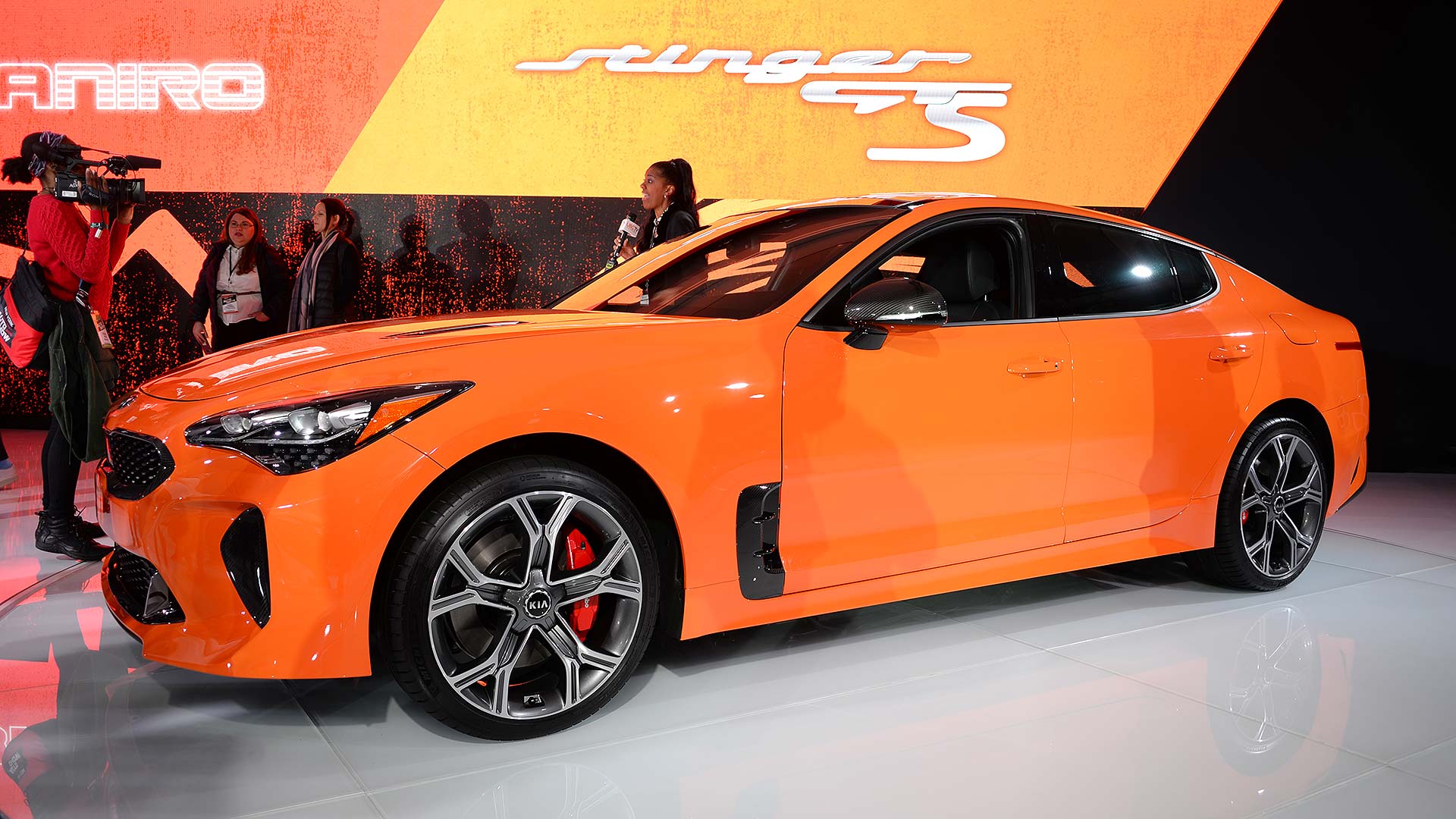
This bright orange Kia Stinger GTS enjoys a retina-searing paint job and has a few more carbon fibre trim pieces than earlier models. So why is it special? Because it’s also a limited-to-800 edition with a built-in drift mode! Called D-AWD, it adds a mechanical limited-slip rear differential, plus software that stops the automatic gearbox upshifting. The result is something sideways-tastic. Ford Focus RS and Mercedes-AMG super-saloons are known for their drifting antics these days. We never thought a Kia would be, too. And we love the fact one now is.
Kia Habaniro
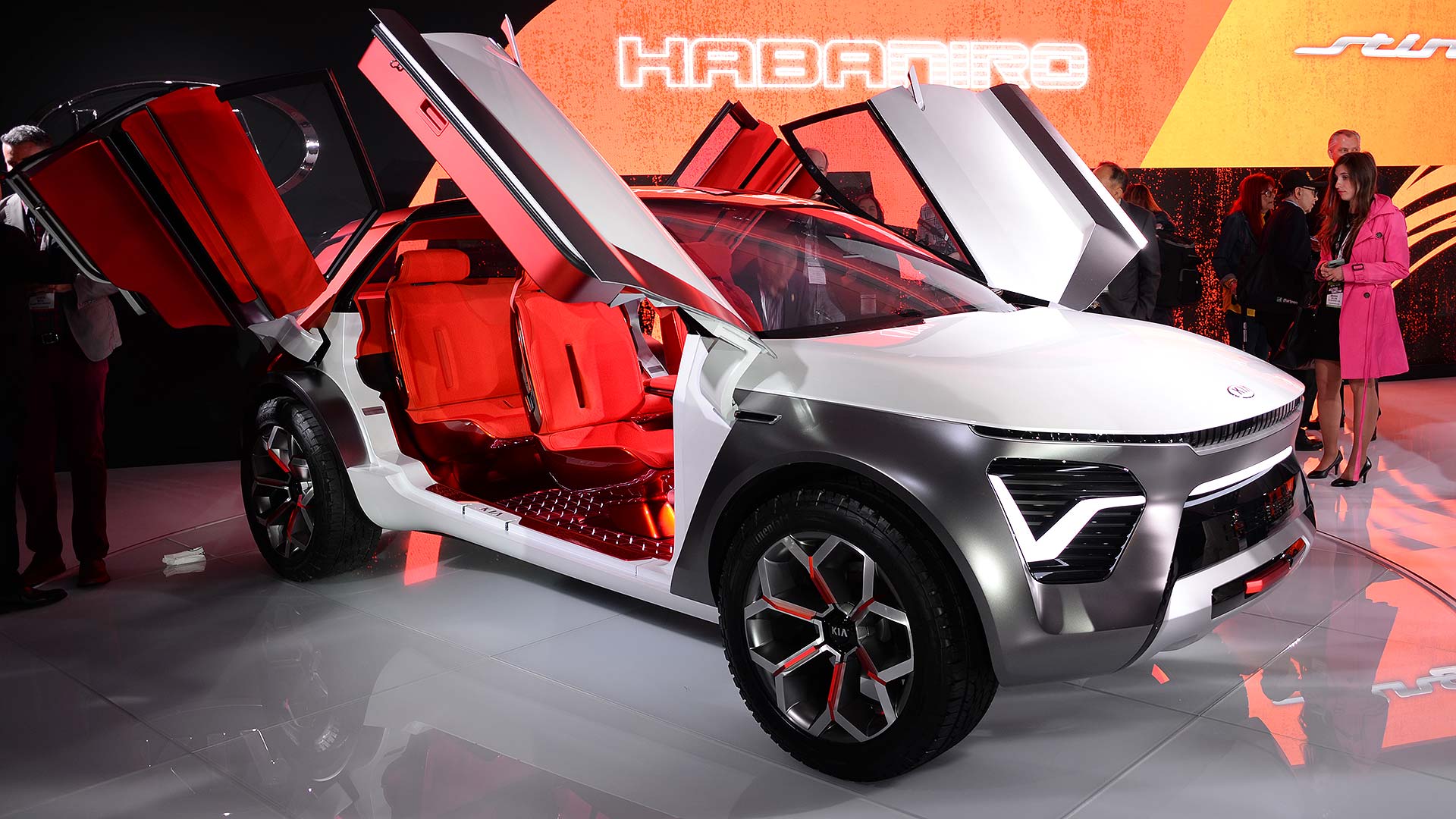
The Kia Niro range of hybrid, plug-in hybrid and electric cars is not quite due for replacement, but the company is starting to turn attention to it. North America leads the Niro project for Kia, so this is its first conceptual look at how the future-generation model could look. Like it? Love it? Loath it? Be sure to tell a Kia person with a touchpad, as the company is fielding feedback right now…
Hyundai Venue
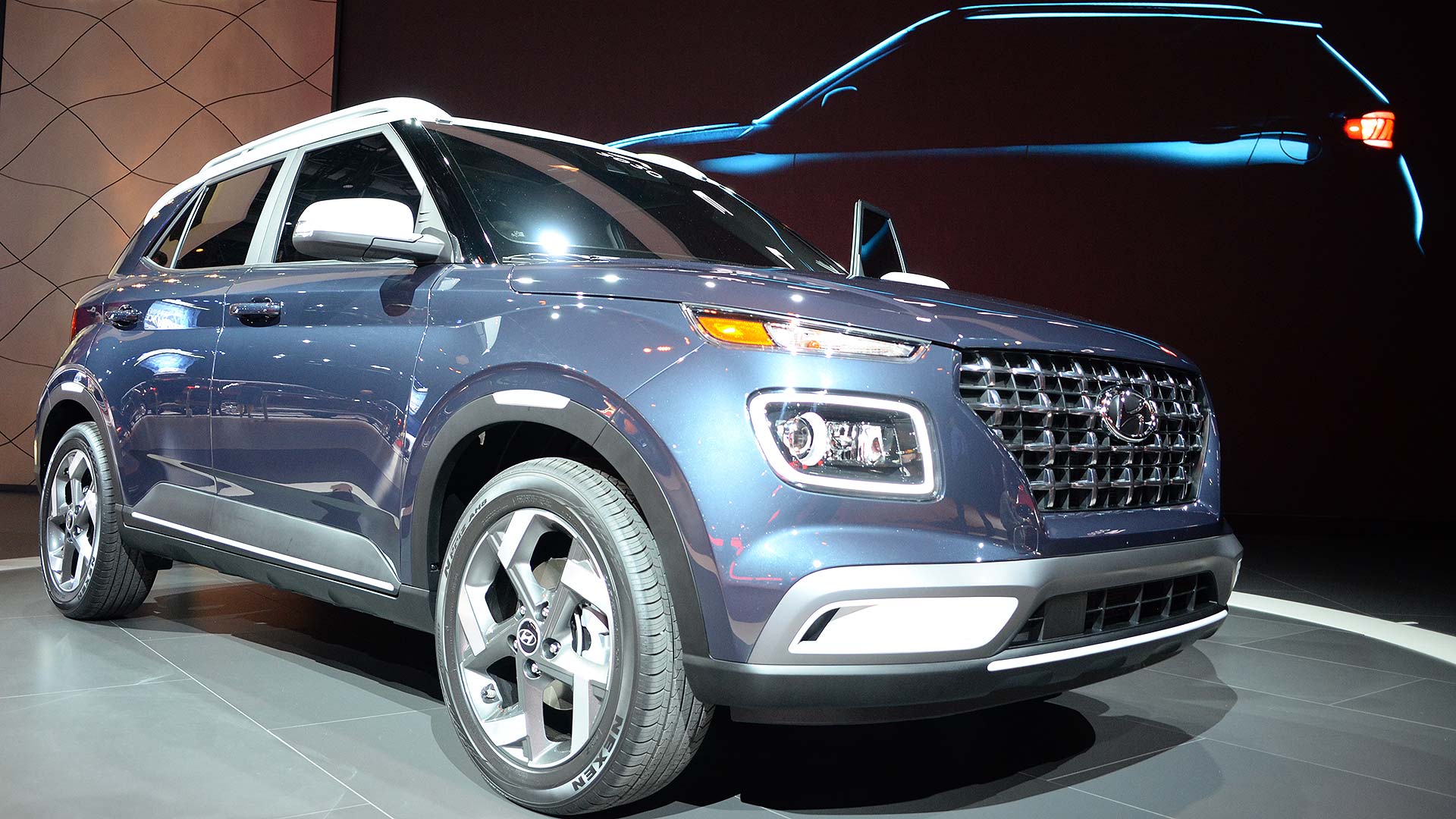
The Hyundai Venue is a small SUV that competes with the Ford Ecosport and Volkswagen T-Cross. Jointly revealed in New York and India, it’s a sophisticated-looking machine, managing to bring some of the richness of larger Hyundais to the small SUV sector. For an entry-level crossover SUV, sitting below (and not replacing) the Kona, it looks promising: here’s hoping it’s as good to drive as it looks.
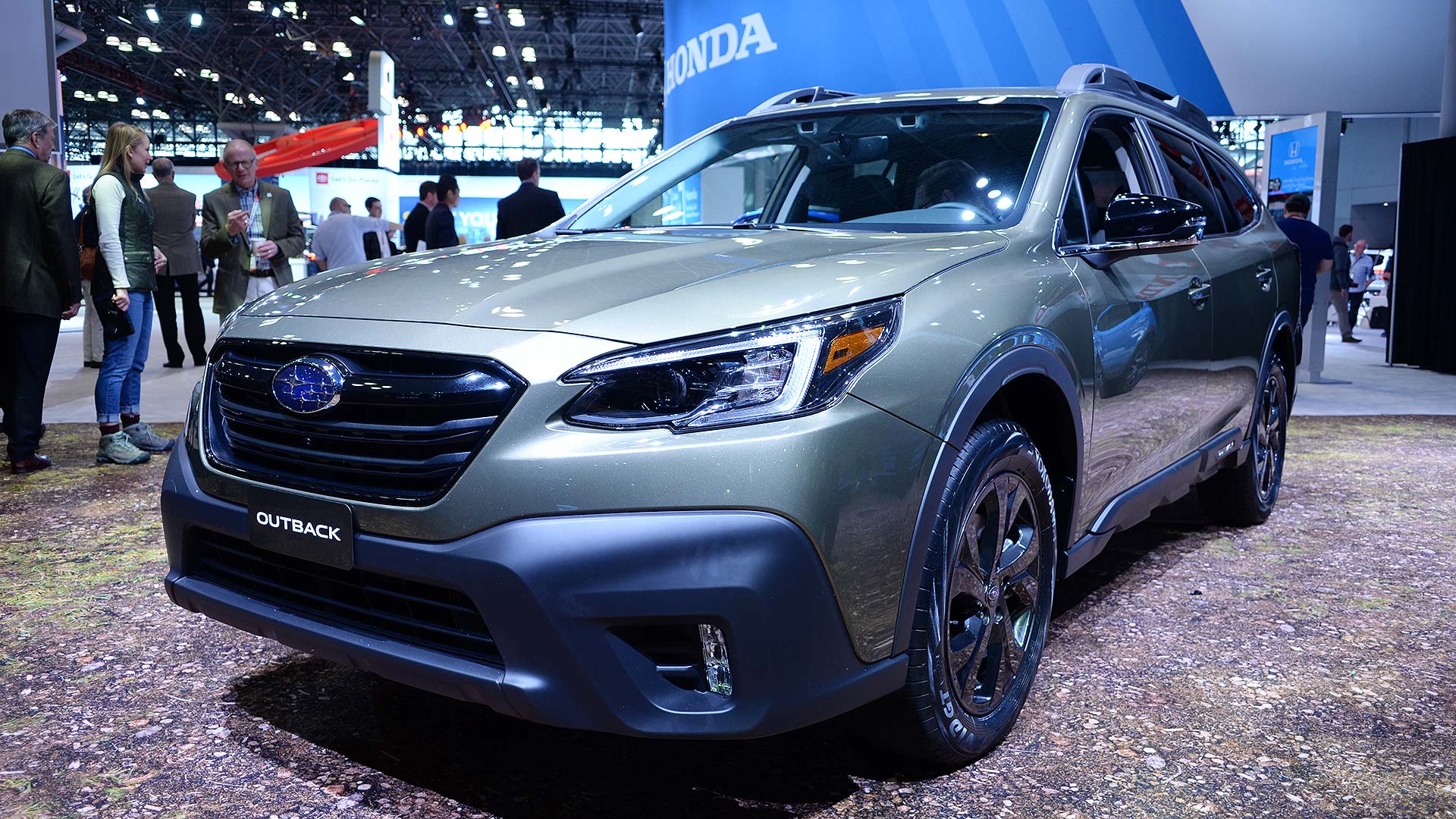
Subaru Outback
This is the sixth generation Outback by Subaru. The styling is evolutionary, but underneath there’s the new Subaru Global Platform that’s made other cars such as the latest XV impressive drives. As tenacious off-road as ever, it’s safer on it, thanks to a suite of active safety tech. A 260-horsepower 2.4-liter boxer turbo engine is a welcome arrival too, as is latest-grade onboard information technology that brings the Outback up to date at last.
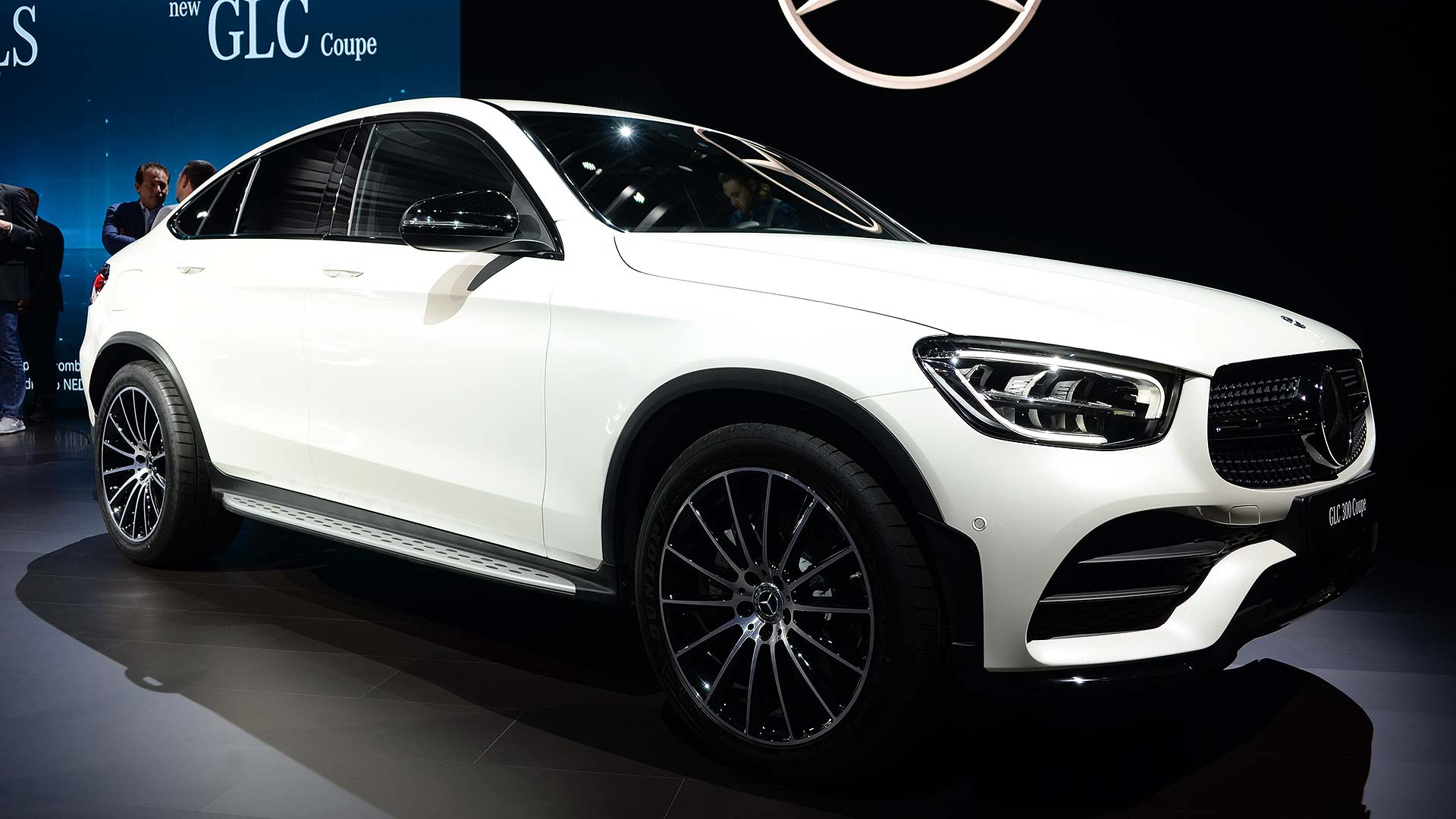
Mercedes-Benz GLC Coupe
Making an official world debut at the New York show, this is the first opportunity for people to get up close with the revised GLC Coupe. The distinctive exterior has received only minor tweaks, with a redesigned front grille and new LED headlights the most obvious updates. Inside is where more progress has been made, with the GLC Coupe gaining the MBUX multimedia system controlled by touchpads or voice command. There is also a new 2.0-liter turbocharged gas engine, producing 255 horsepower and 273 lb-ft of torque, on offer.
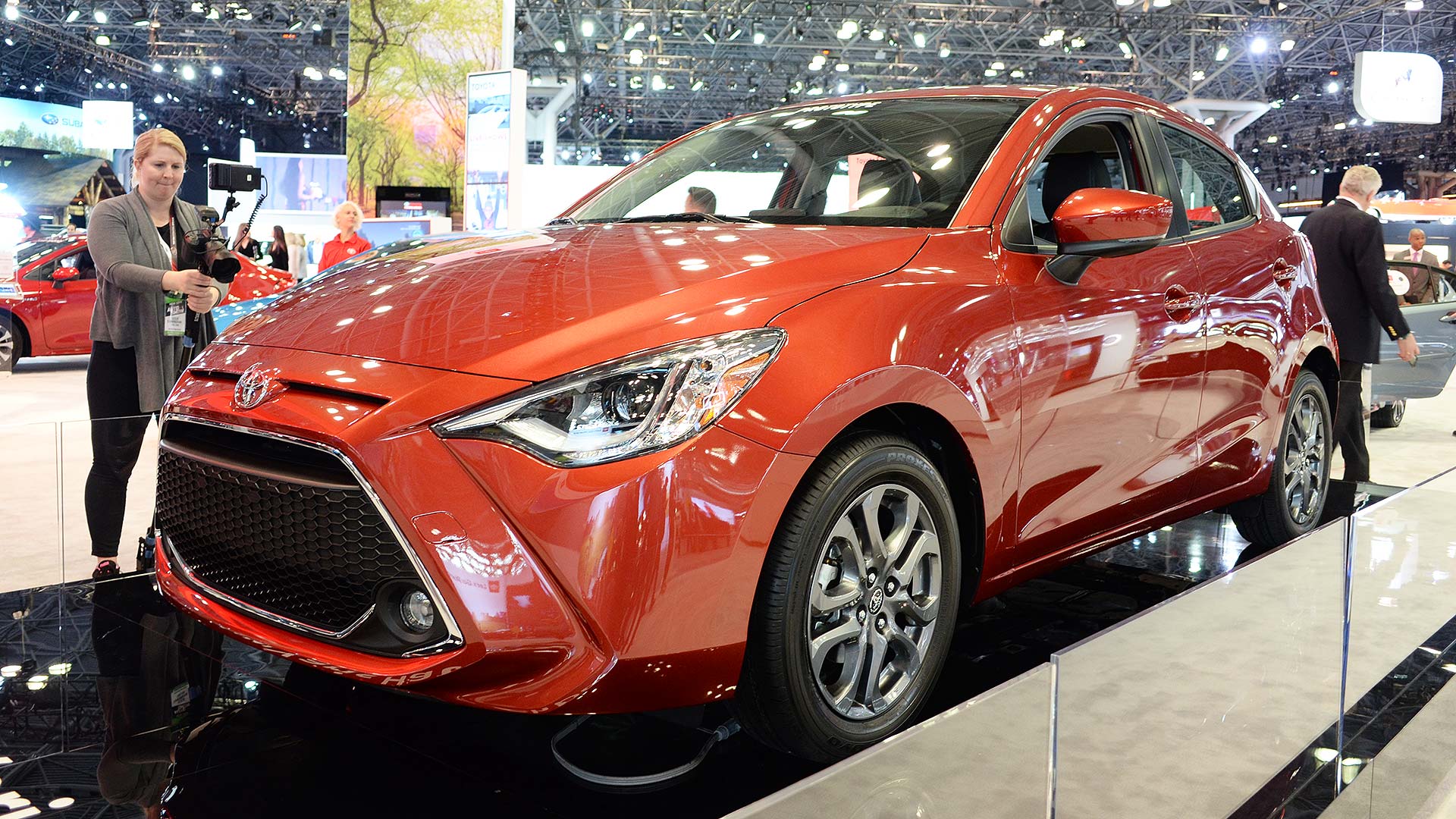
Toyota Yaris
No, your eyes are not deceiving you. This is a Mazda 2 that’s been rebranded as a Toyota. It’s part of the friendly joint venture between the two Japanese brands and has helped Toyota fill that gap at the bottom of its range with one of the best-driving mini cars you can buy.
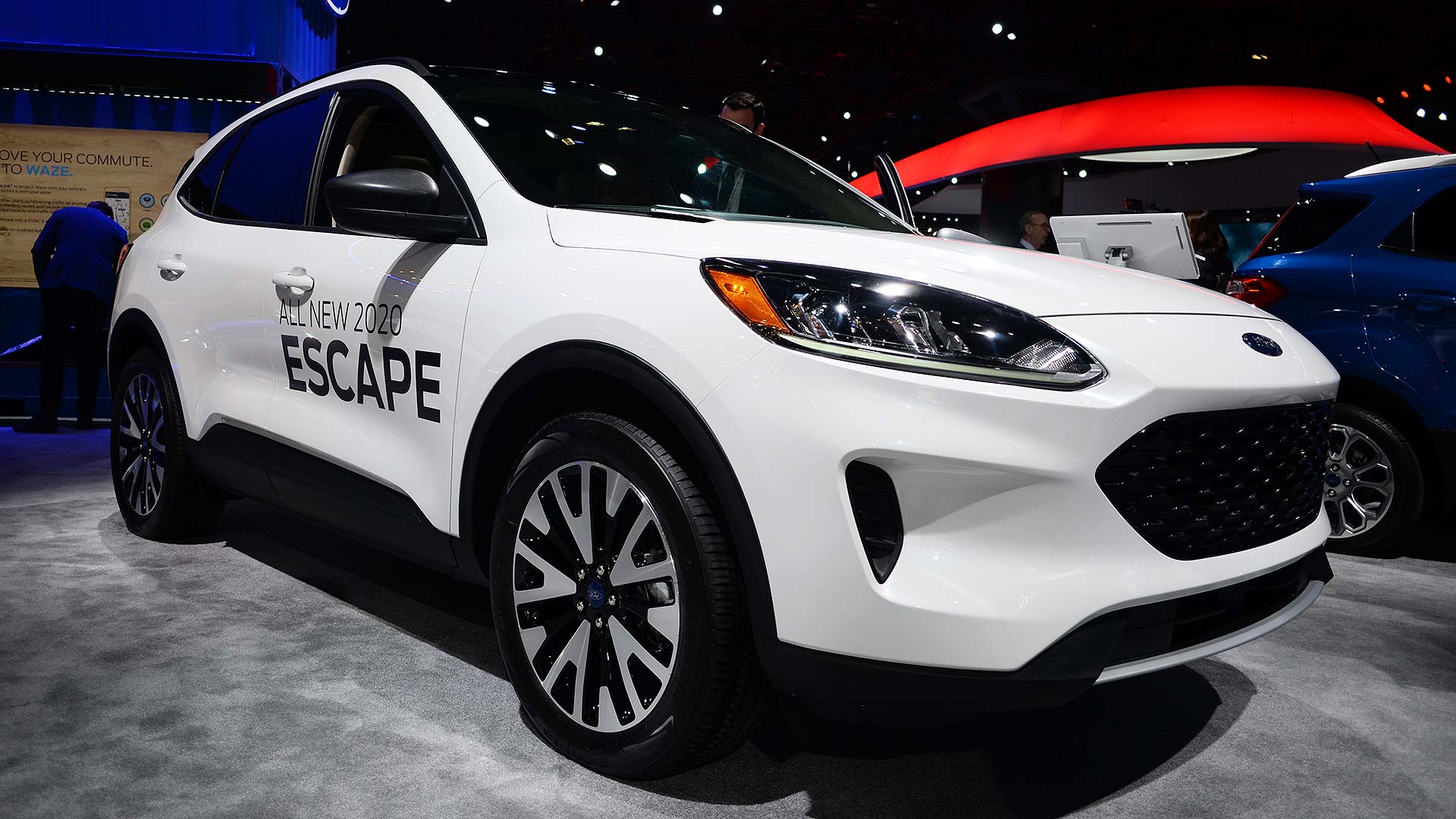
Ford Escape
The new Ford Escape is less 4×4 and more crossover SUV. The angles and ruggedness of the current model has been softened and given a bit of a makeover. Its curves and creases now pay more than a passing nod to the svelte new Focus, while the interior is a night and day improvement. If it drives as well as it looks, Ford could have a hit on its hands.
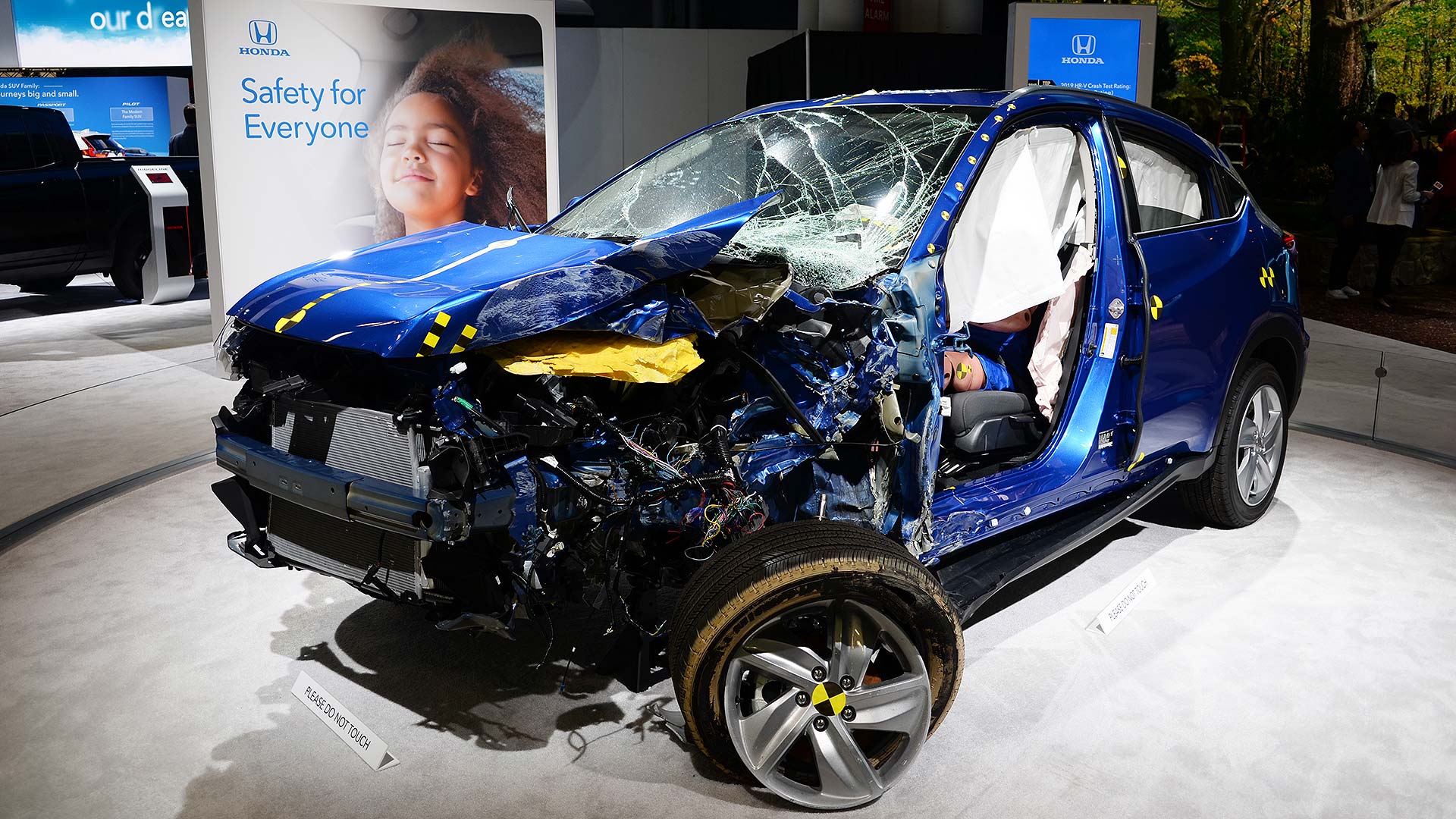
Honda HR-V (crashed)
Nobody has ever brought a crashed car to a major auto show, reckons Honda. But so well does it perform in the U.S. IIHS crash safety tests, it had no qualms booking the latest star performer, the HR-V small SUV, for its New York Auto Show stand. It hopes the exhibit will show visitors just what makes modern cars so safe and secure.
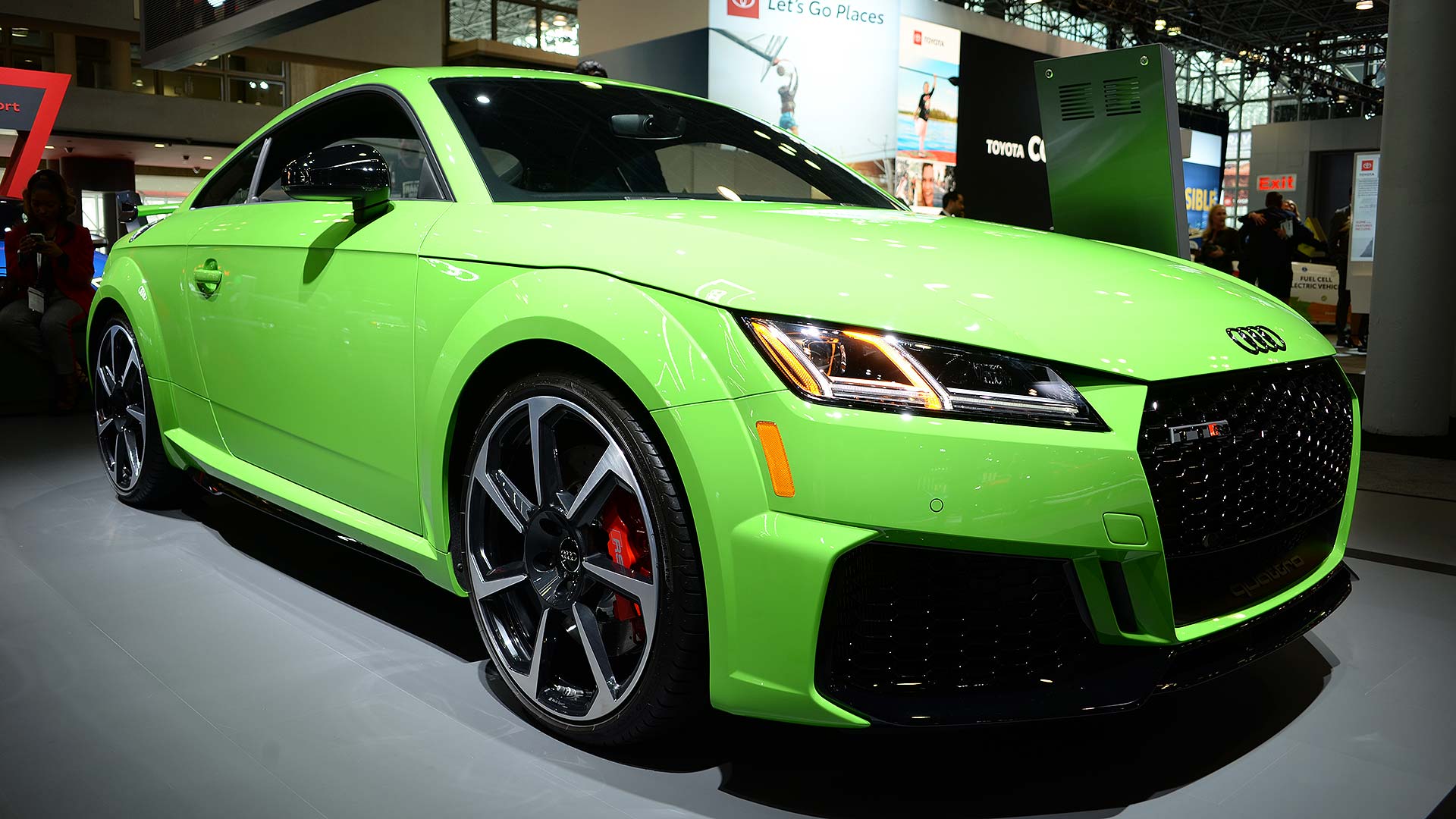
Audi TT RS
The range-topping TT RS has undergone a subtle facelift, and the enhanced car is being displayed for the first time in America at the NYC event. Spotting the changes will be hard even for dedicated Quattro fans, but extra cooling vents in the front bumper are the easiest way to spot the new model. The sonorous 2.5-liter five-cylinder turbocharged engine remains, now producing almost 400 horsepower, and allowing the TT RS to accelerate from 0-60mph in just 3.6 seconds. Wireless smartphone charging is now standard for the interior, along with a 680-watt Bang & Olufsen sound system.
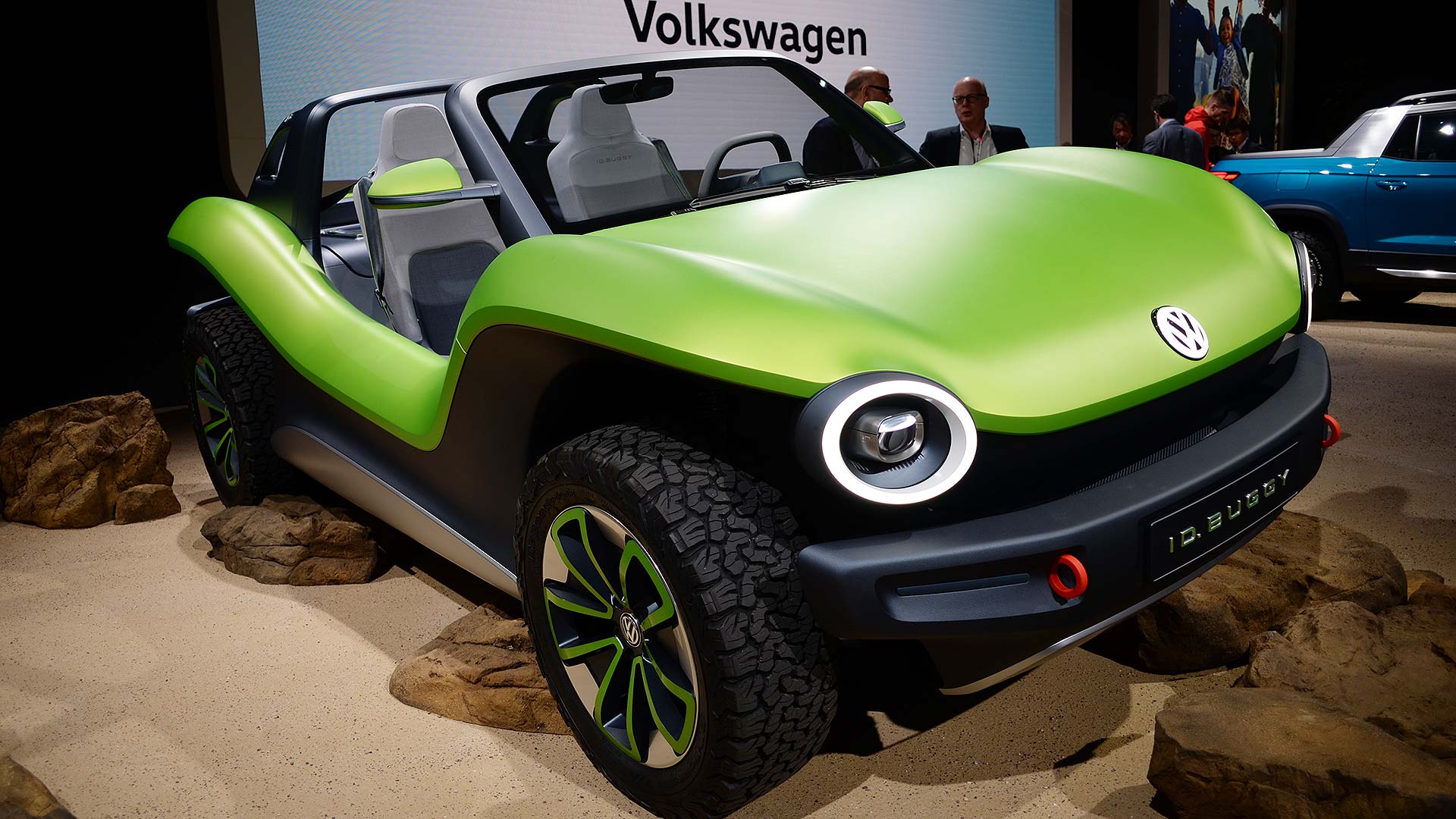
Volkswagen ID Buggy Concept
The ID Buggy proved to be one of the biggest hits at the 2019 Geneva Motor Show, demonstrating the possibilities of Volkswagen’s modular MEB electric car platform with a huge dose of fun. Styled with the original beach buggies from the 1960s in mind, the minimalist ID Concept uses a 62 kWh battery to drive a 201 horsepower electric motor attached to the rear axle. A set of 18-inch wheels wearing BFGoodrich All-Terrain rubber provide genuine off-road ability, with a solid aluminium underbody keeping everything safe in the rough.
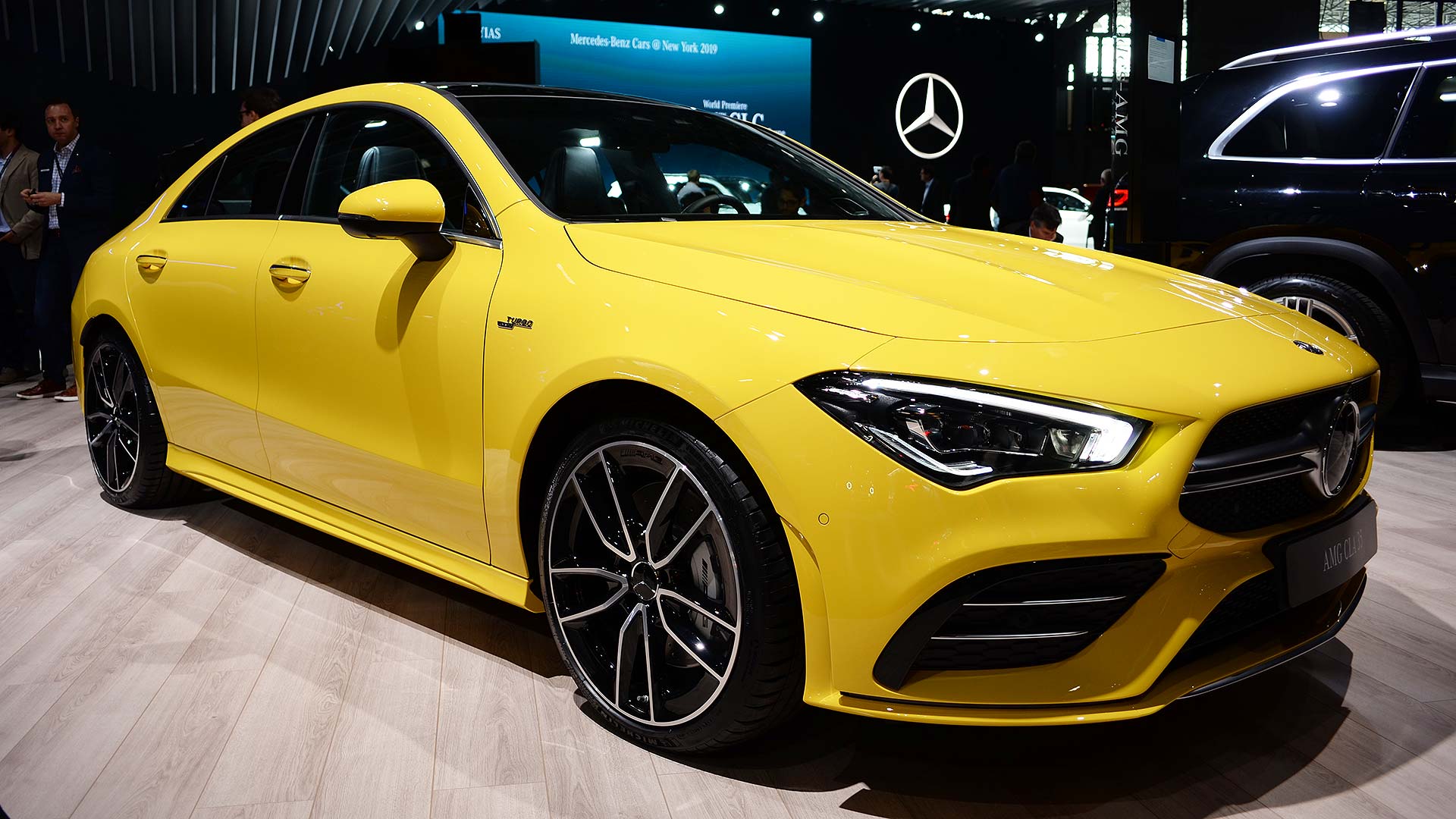
Mercedes-AMG CLA 35
Even just the bottom step on the Mercedes-AMG staircase is not necessarily a bad place to be, especially if it means driving the brand-new CLA 35. The second-generation four-door coupe borrows the mechanical bits from the A-Class hatchback, but covers them in a more stylish body. Performance from the 302 horsepower 2.0-liter turbocharged engine is certainly not entry-level, with the standard four-wheel drive system slinging the CLA 35 from 0-62mph in just 4.6 seconds.
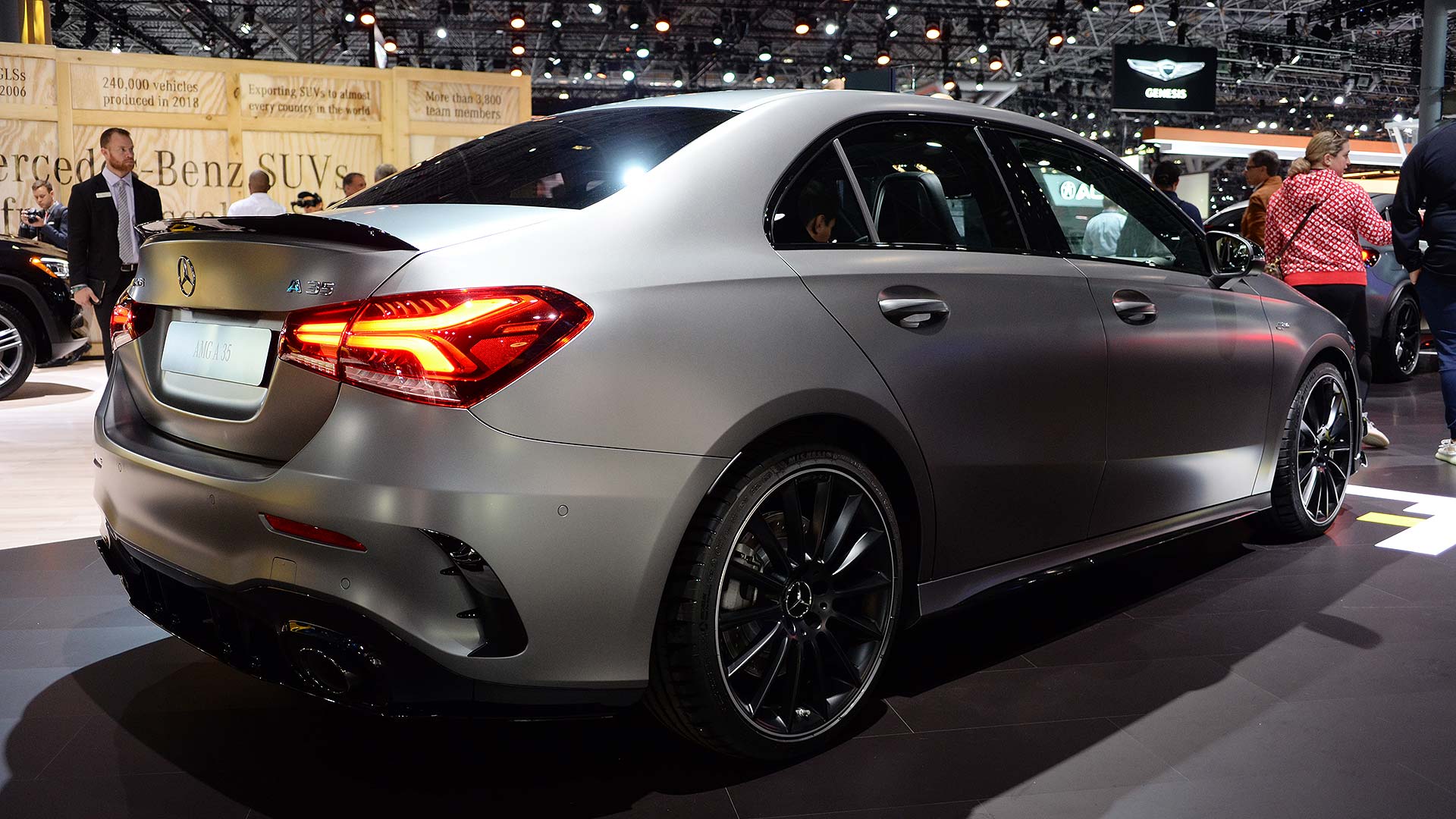
Mercedes-AMG A35 Saloon
It might look very similar to the CLA 35, but Mercedes is keen to stress that this a four-door saloon compared to that four-door coupe. The more truncated rear gives the game away that this is the sedan variant, but the oily bits underneath are all the same. Here, the 302 horsepower engine achieves 0-62mph in 4.7 seconds – something worth considering should you be trying to pick between the two cars.
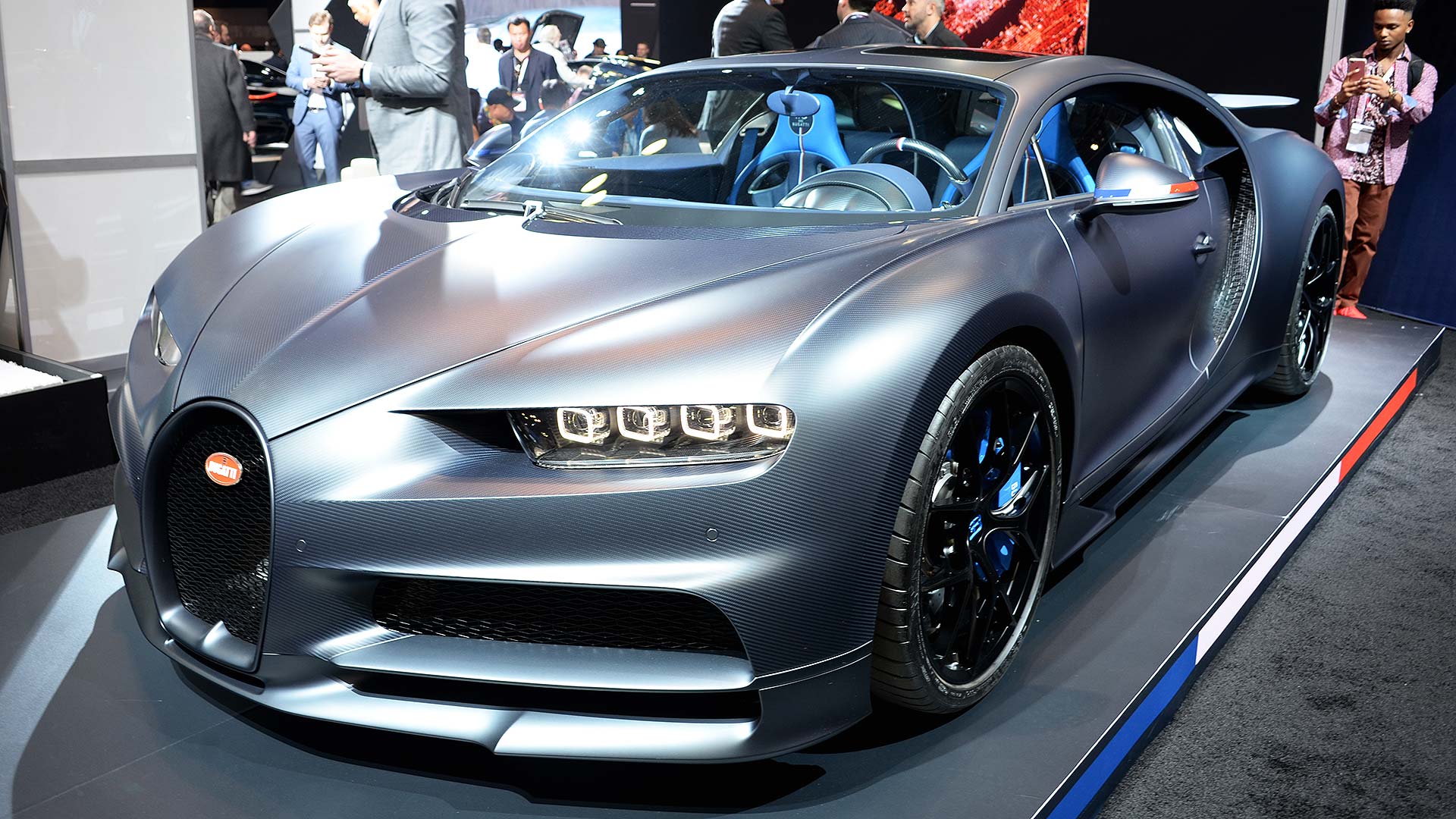
Bugatti Chiron 110 ans
How do you celebrate a 110th anniversary if you happen to be a French hypercar manufacturer? With a special edition version, of course. The Chiron 110 ans takes the already exclusive Sport version of the Chiron, and makes it even rarer. Just 20 examples of the 1,500 horsepower machine will be made, all wearing matte Steel Blue paint and sandblasted aluminium detailing. The real party piece is when the rear spoiler pops up, as it features a French Tricolour flag beheath.
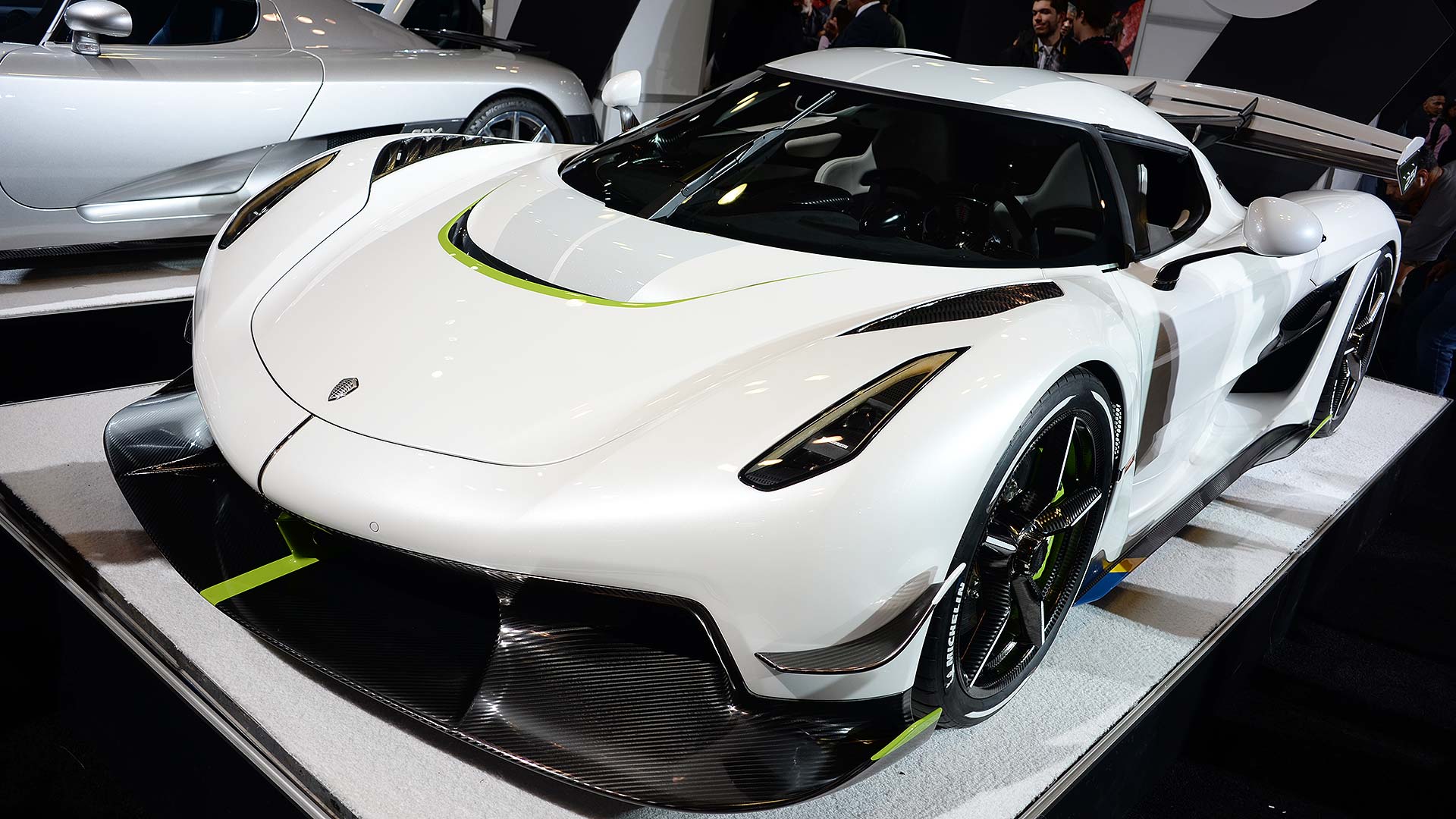
Koenigsegg Jesko
The latest mental hypercar from Koenigsegg has the potential to hit a claimed 300mph, and is able to produce up to 1,600 horsepower from a 5.0-liter turbocharged engine. It also happens to meet all global emissions standards in place until 2026, and costs an incredible £2.2million. There is bad news though – all 125 cars set to be built are already spoken for. In fact, most them sold before the Jesko even made a public appearance at the 2019 Geneva Motor Show. Sorry!
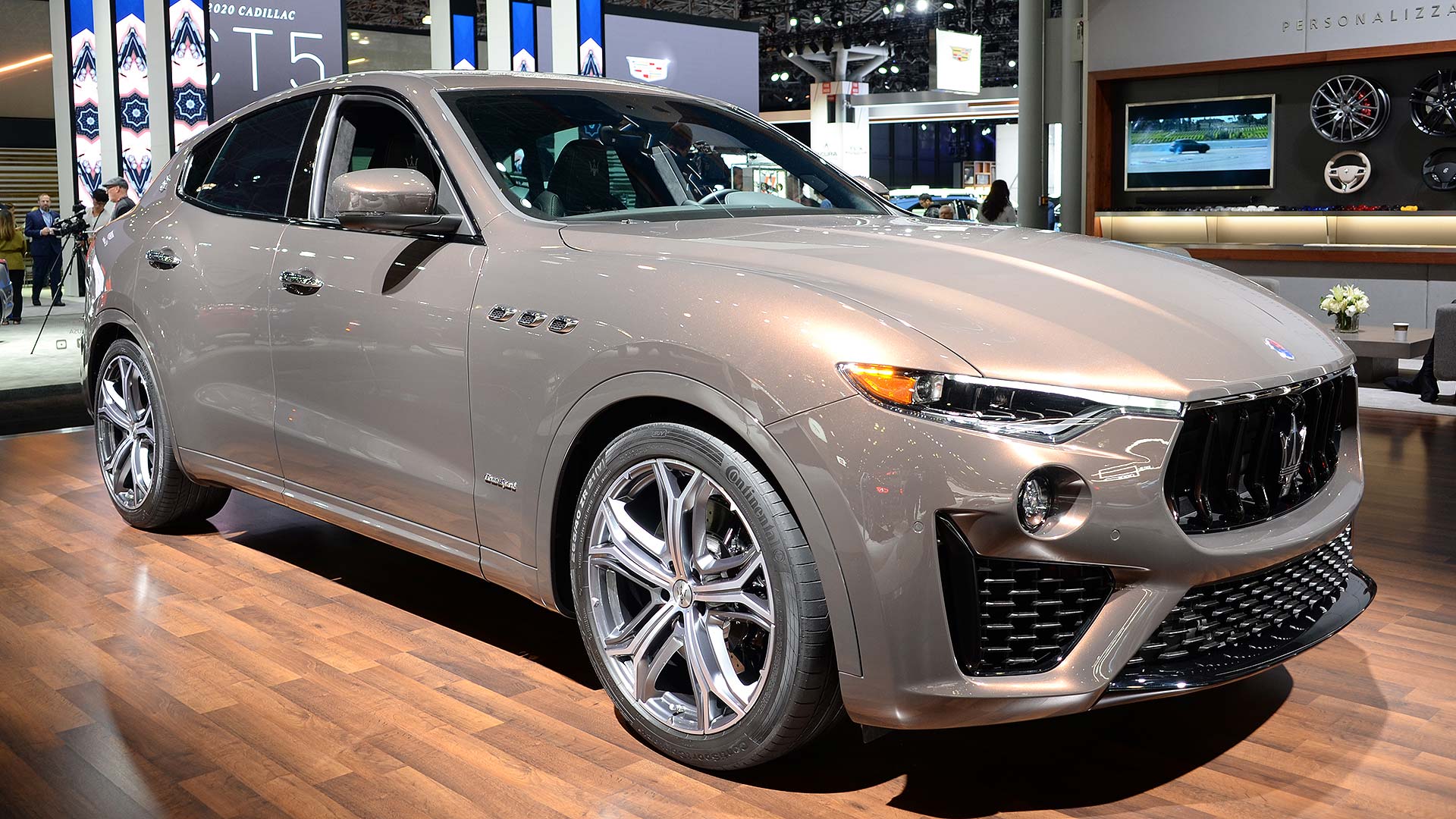
Maserati Zegna Levante S Q4 GranSport
The Levante may have been seen before, but Maserati is keen to demonstrate the artisan Italian craftsmanship available through its bespoke One by One programme. This version of the Levante SUV features a brand-new Pelletessuta interior trim, created by Italian fashion house Ermenegildo Zegna, featuring strips of woven Nappa leather. The trim is exclusive to Maserati, and can be specified on a number of different models from the firm.
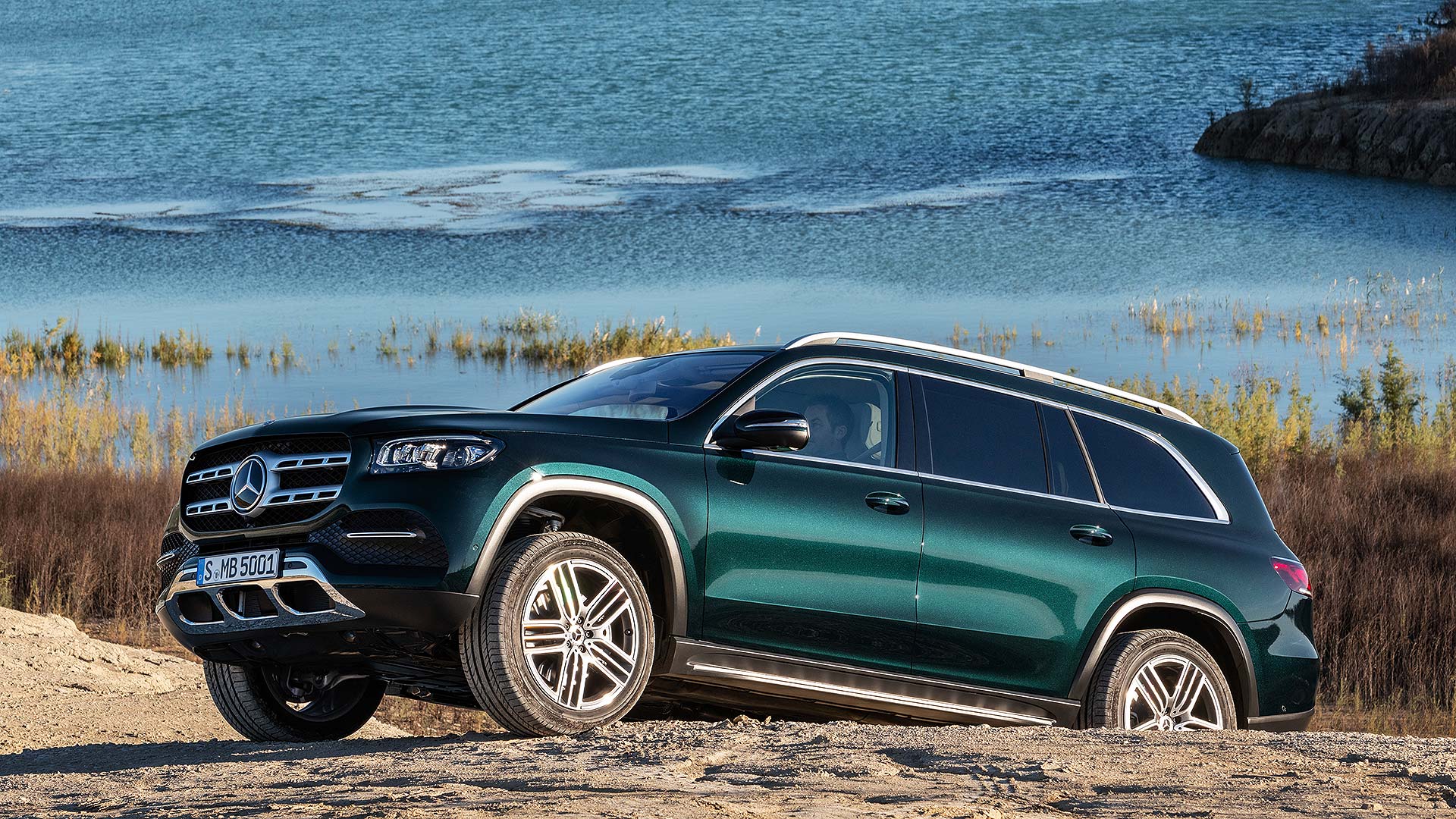
The all-new Mercedes-Benz GLS is built from the ground up to take genuine S-Class luxury into the SUV sector. It has debuted at the 2019 New York Auto Show
The most luxurious Mercedes-Benz SUV ever
The clue is in the name: the new Mercedes-Benz GLS, revealed at the 2019 New York Auto Show, aims to take S-Class luxury and refinement into the large SUV segment. It’s a market currently defined by the Range Rover, and challenged by the new BMW X7.
Range Rover rival
One thing is for certain: the GLS is a damn sight prettier than the brutish BMW. Whether it is as luxurious as the Range Rover remains to be seen. But Mercedes-Benz has been nothing if not exhaustive in its efforts to justify that ‘S-Class of SUVs’ tag.
Bigger than ever
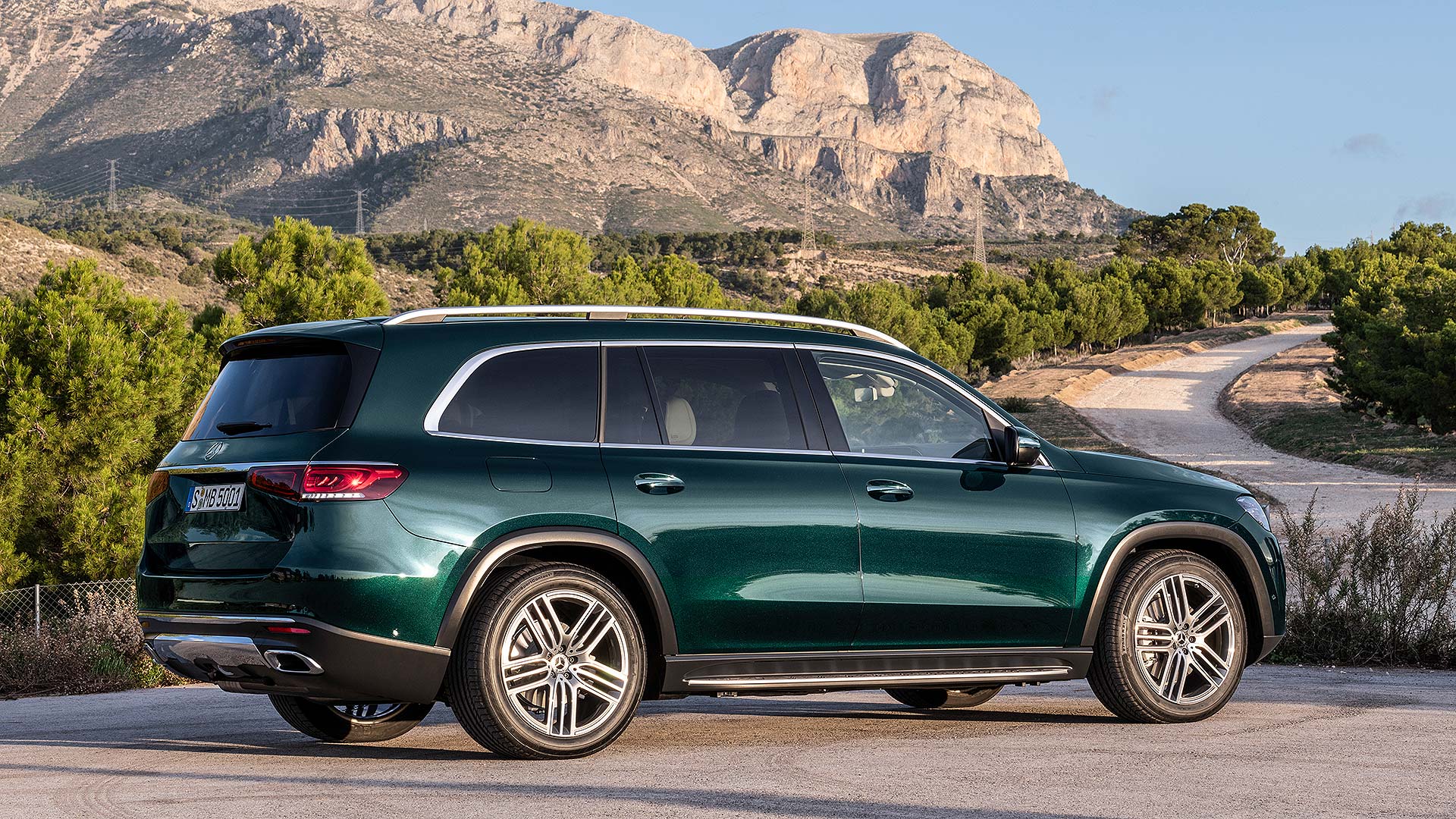
It replaces a car derived from a model belonging to the class below – and that showed. This one also shares parts with other Mercedes, but it’s far less obvious. The fact it’s even larger than before – 77mm (3 inches) longer, 22mm (0.9 inches) wider and with a 60mm (2.4 inch) longer wheelbase – aims to underline its status as the firm’s topmost SUV. The old one was hardly small. This one is now 17 feet long and 6 feet 4 inches wide…
Impersonating a van
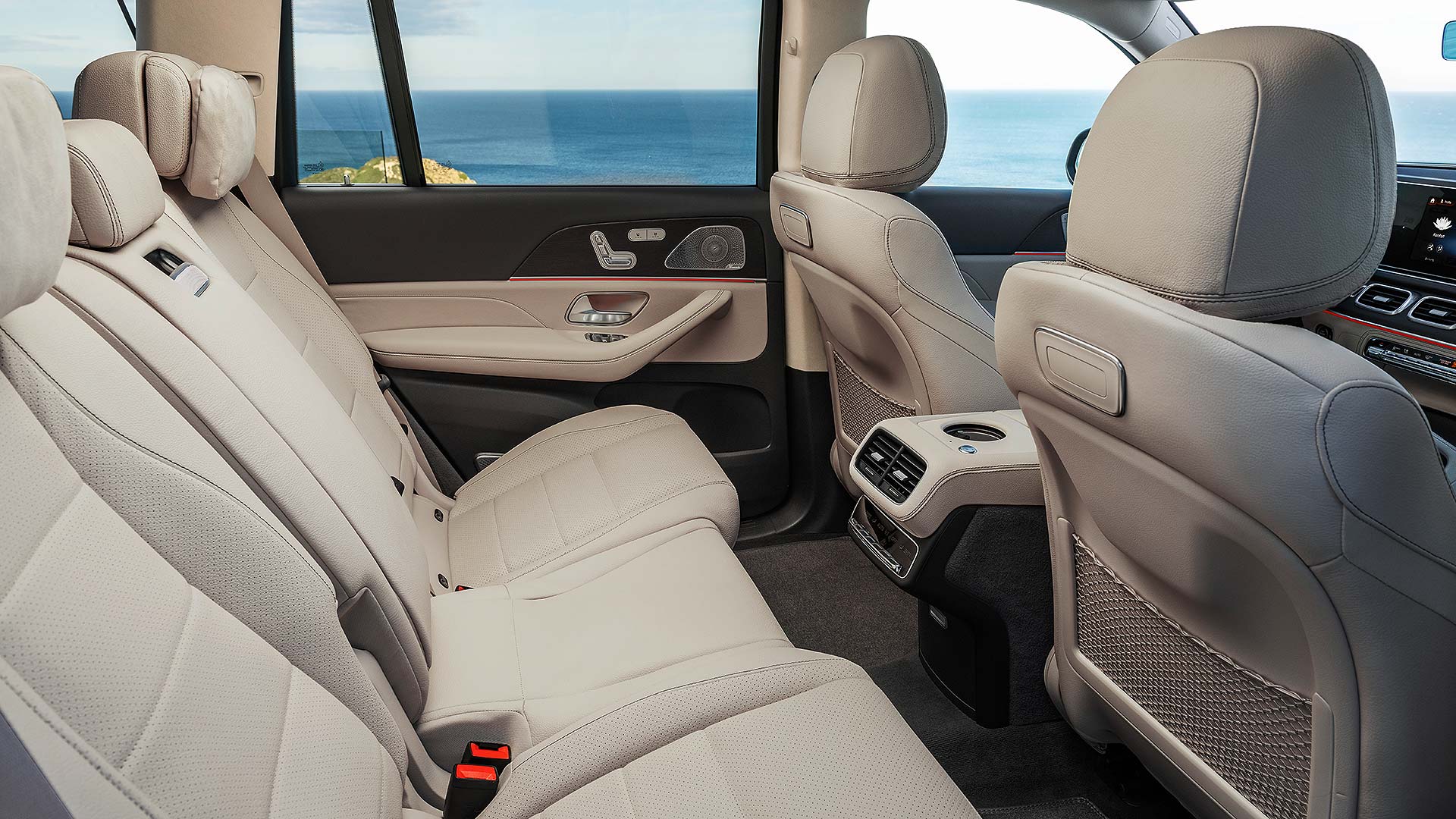
There is more space for those in the middle row of seats, comfier accommodation in the third row and, if you fold all the seats down (at the press of a single button), a 2,400-litre luggage compartment. That’s on par with vans, and way in excess of any estate car. Mercedes-Benz is even offering a six-seat version alongside the regular seven-seater, with middle-row chairs almost as decadent as those in the front.
A tall story
Every seat is electric, seat-heaters extend to the third row and the sixth and seventh seats are ‘fully fledged’ chairs good for people over 6 feet 3 inches tall. Third-row passengers also get USB charging ports and Mercedes-Benz is offering five-zone climate control. So there need never be any argument that it’s too hot or cold, no matter how many people are on board.
An aero SUV
The design follows the Mercedes-Benz ‘Sensual Purity’ idiom: sculpted surfaces replace individual edges and beading. The aerodynamic drag factor bears this out: a Cd of 0.32 is superb for this segment, despite the upright radiator grille and chrome-plated front underguard. Being so slippery also helps reduce wind noise at speed.
112 LEDs per headlight
The GLS’ lights are its jewellery. Multibeam LED headlights are standard; each side packs a staggering 112 LEDs and is as bright as legally permissible. Only beyond 0.4 miles’ distance does the brightness dip below the 1 lux reference value. By day, three LED running light segments mimic the S-Class sedan.
3D LED
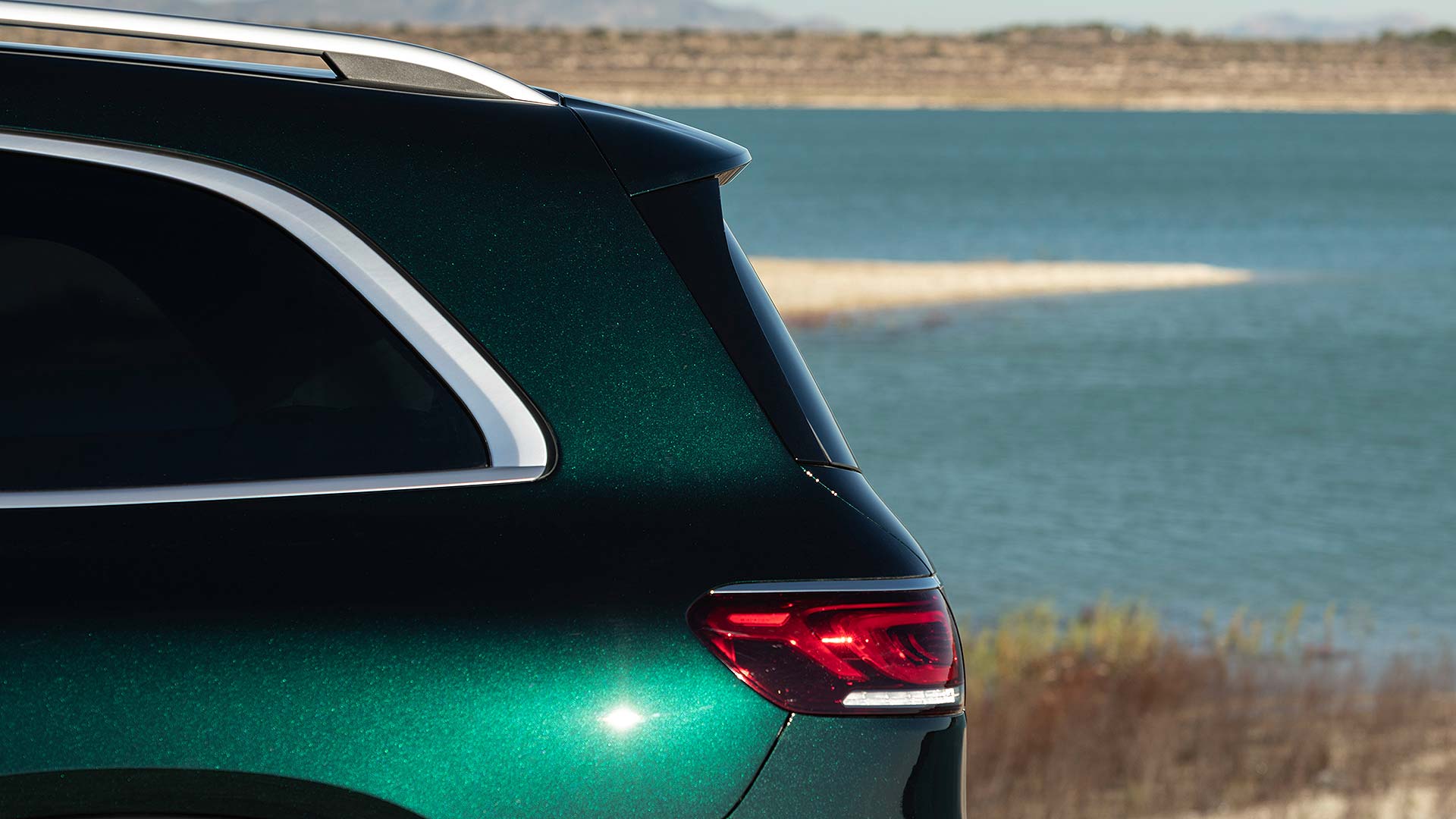
Mercedes-Benz is pleased with the muscular shoulder line on the GLS, which extends from the rear doors into the tail lights. These are two-piece LED units with a 3D look. The mandatory reflectors are located lower down, so the tail lamps can be flatter and more sculptural. Like an expensive piece of jewellery, they are surrounded by a thin chrome strip.
S-Class on steroids
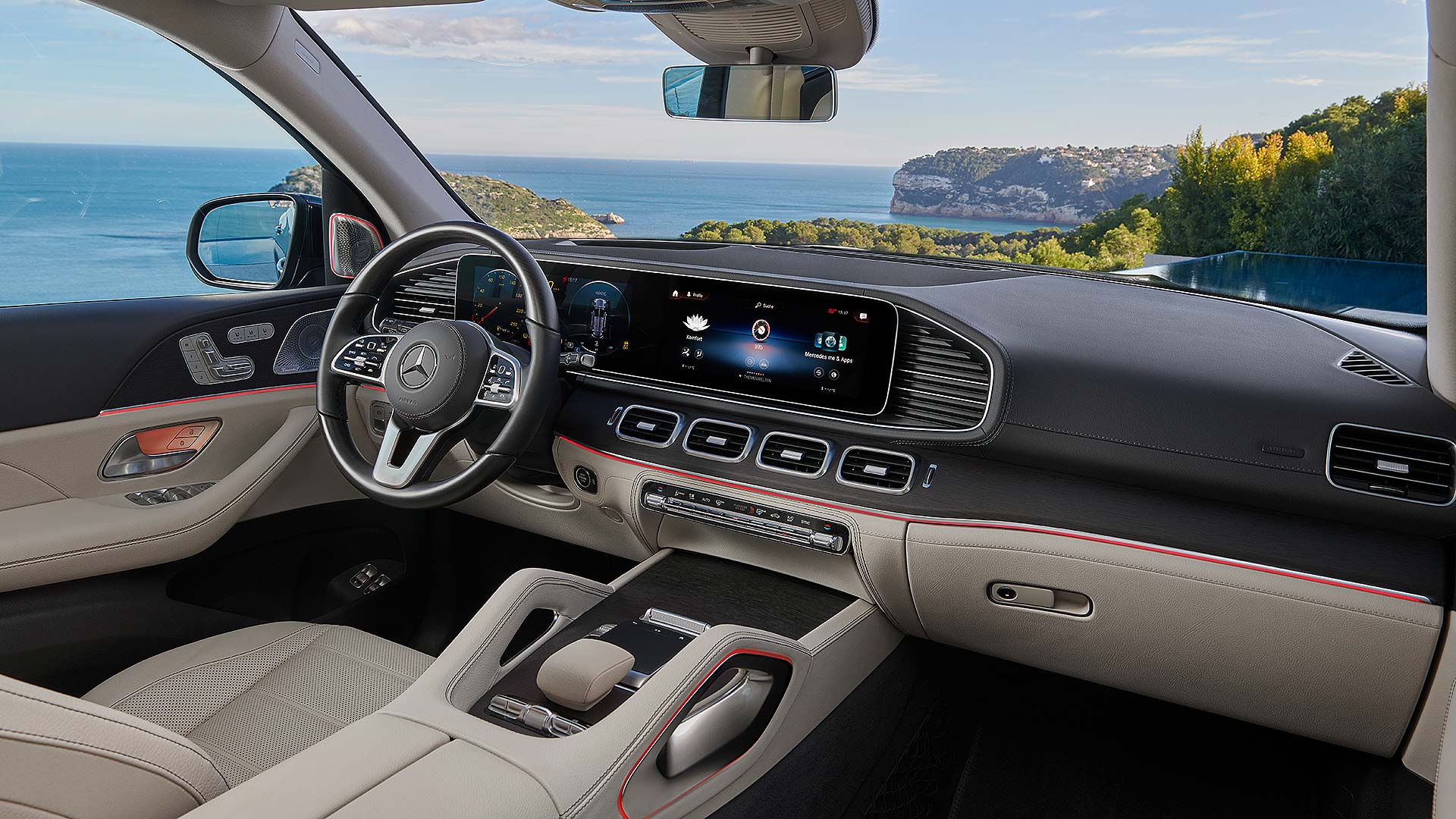
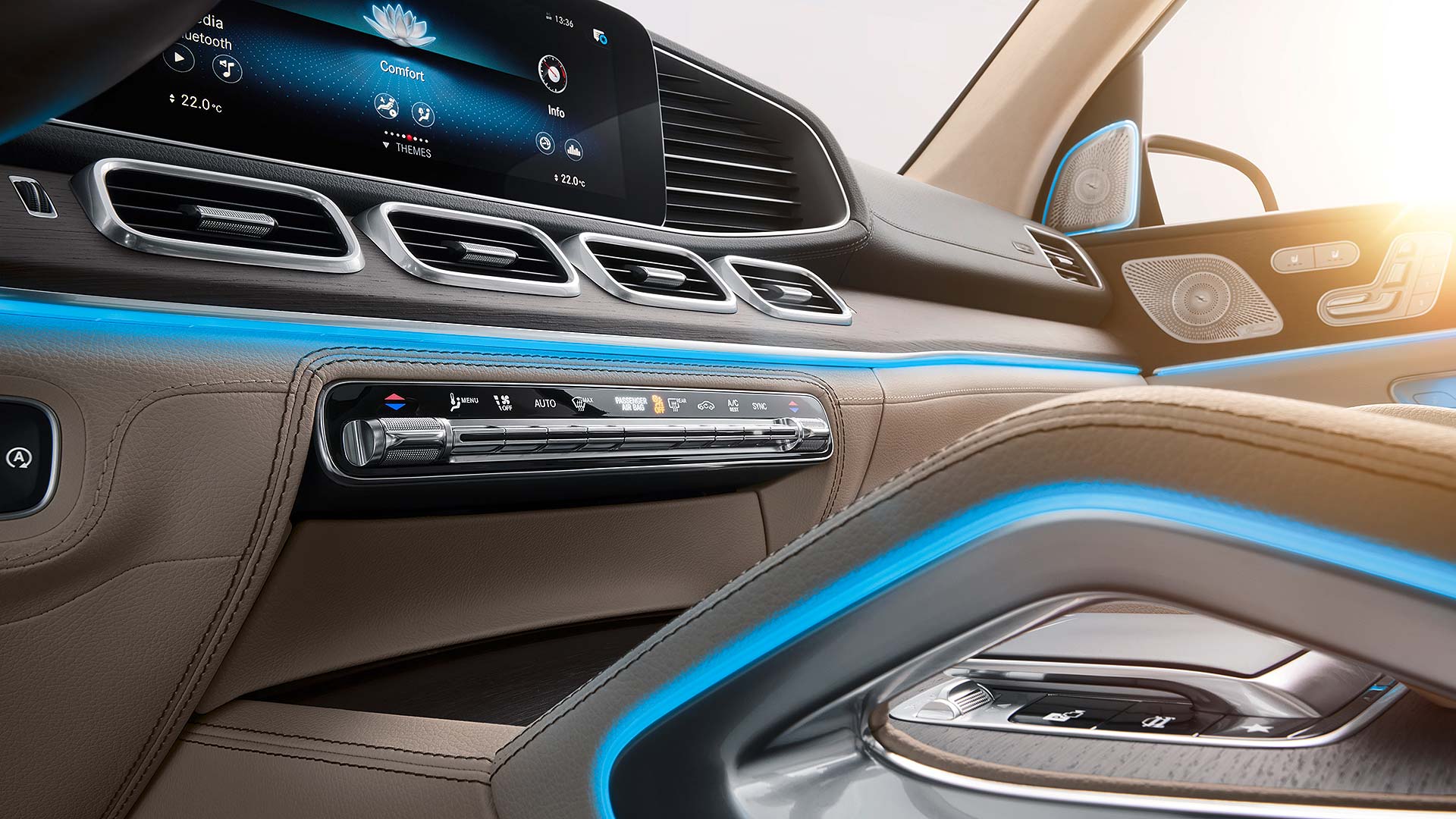
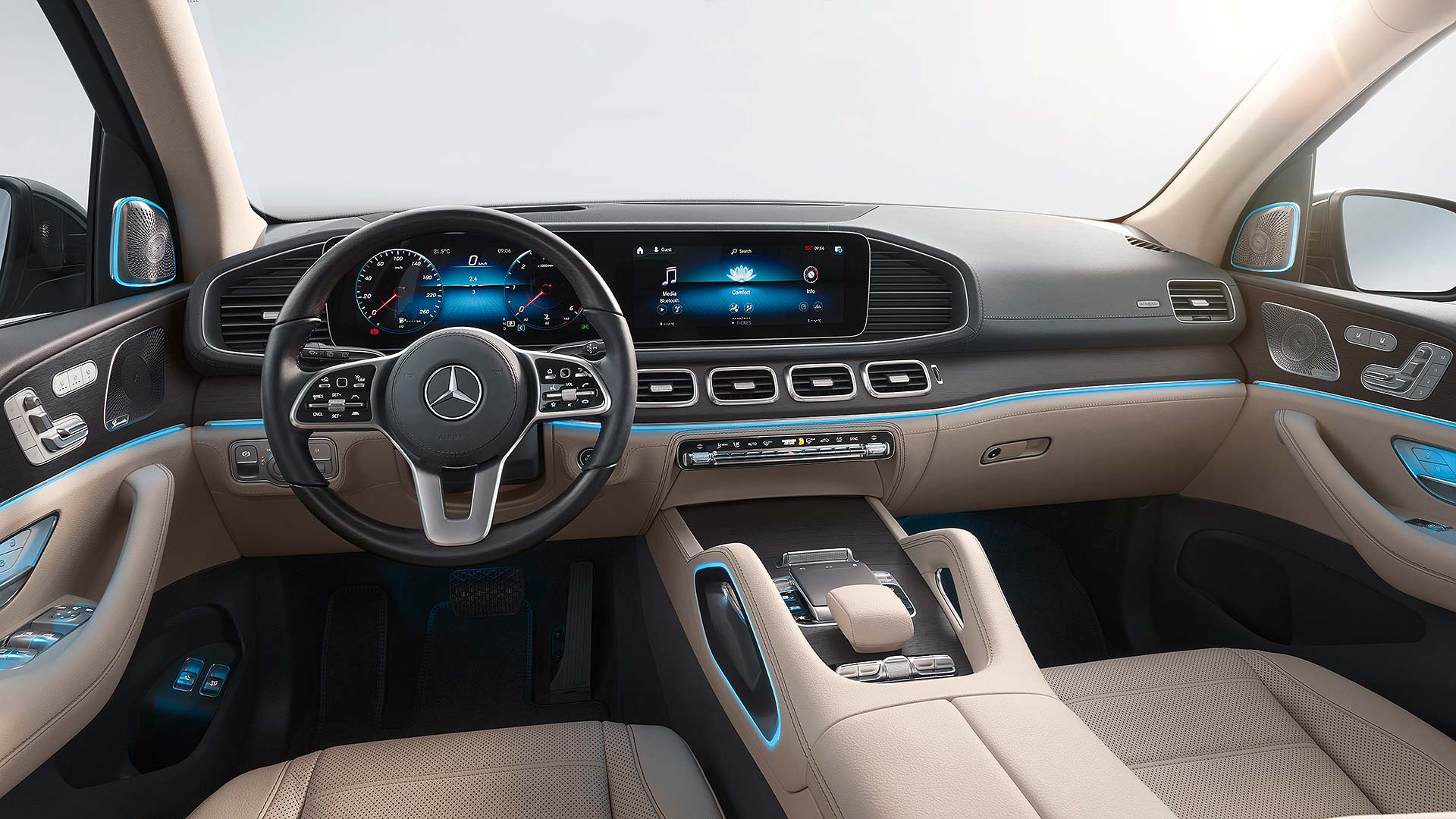
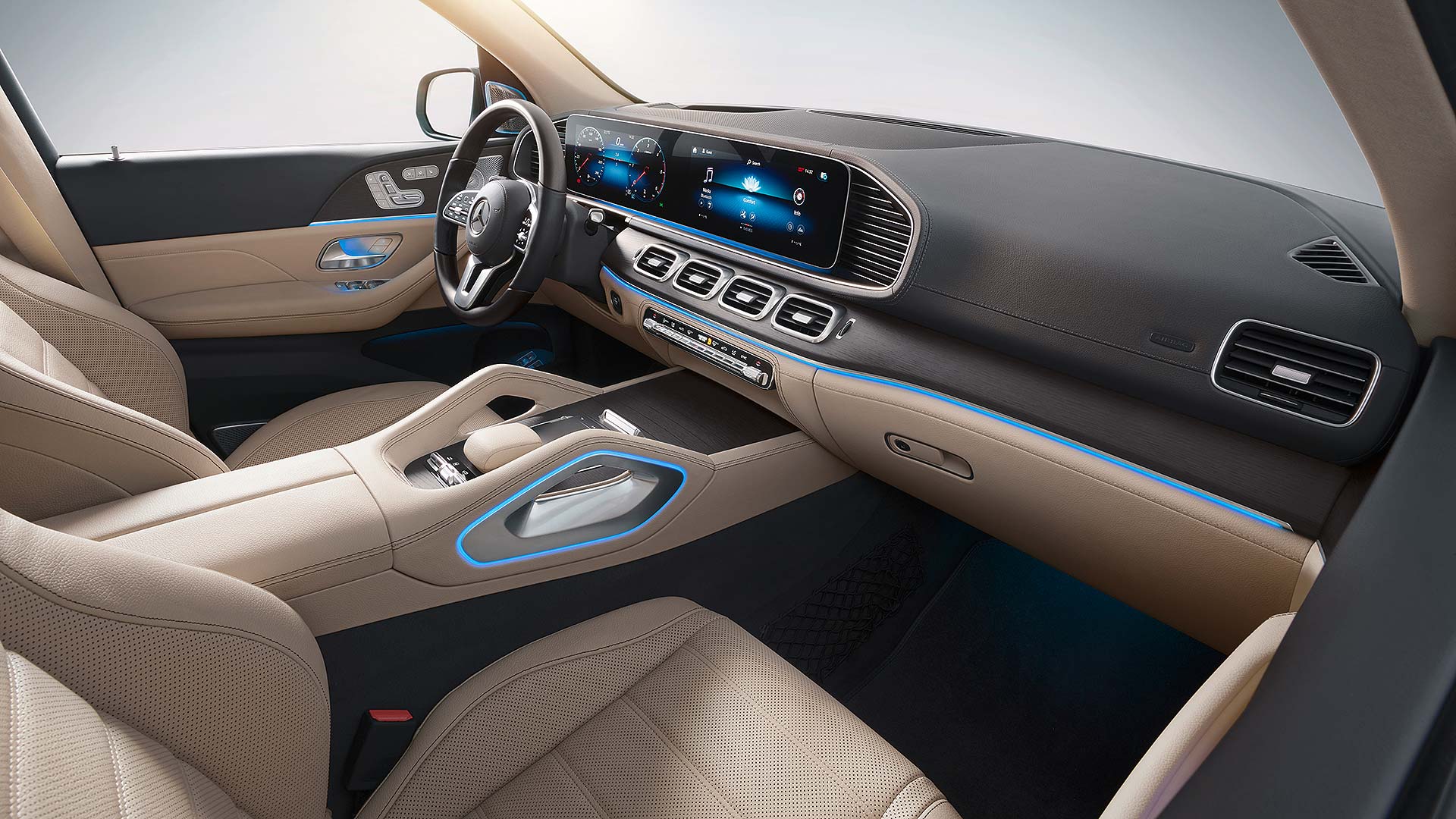
Inside, it’s amazing. Leather-lined and tech-packed, the GLS is like an S-Class on steroids, with a similarly breathtaking appearance (and, at night, ambient light show). Up front, it’s all built around the MBUX infotainment system, with twin 12.3-inch high-res screens, but the detailing is just as noteworthy – from the raised centre console to the chunky SUV-style grab handles.
High-tech rear
It’s high-tech in the rear, too. Order the Rear Comfort Plus Package and a 7-inch Android tablet linked to MBUX is included, with its own docking station in the middle-row armrest. Use it to control radio, TV, media, telephone and a web browser, and also the rear seats themselves and every zone of the climate control system. You’ll also find second-row wireless smartphone charging and a plethora of USB ports.
Club-class entertainment
Want to spoil those in the back? They already have ‘luxury’ head restraints with additional cushions, but they can also have lumbar massage, climate-controlled seats and a further-upgraded MBUX Rear Seat Entertainment System. This has dual 11.6-inch touchscreens that link to the smartphones of each person in the back.
Yes, there are diesel engines
Diesel engines comprise the six-cylinder 286 horsepower GLS 350d 4Matic and the 330 horsepower GLS 400d 4Matic. Markets outside of the EU will get a GLS 450 4Matic, with a 367 horsepower six-cylinder gasoline engine boosted by 48V mild hybrid tech.
Gasoline great
The most interesting model is the GLS 580 4Matic. This arrives shortly after market launch. Another gasoline motor, it produces 489 horsepower from a beefy V8, again boosted by a 48V system. All GLS have a nine-speed 9G-Tronic automatic, and off-road fans can option a transfer case for a low-range gearset.
Intelligent suspension
Airmatic air suspension is standard. E-Active Body Control, a 48-volt active anti-roll system is optional to help keep passengers settled and comfortable. It’s the world’s only tech that individually controls springs and dampers at each corner. ‘The world’s most intelligent SUV suspension’ scans the road for bumps and even ‘leans into corners’, like a motorcycle, to counteract roll. It has a similarly extensive repertoire of tricks off-road, too.
Engage Carwash mode
Oh, and check this: there is an official ‘Carwash function’. Select this and the suspension jacks up to the highest position, which means the carwash can blast out any dirt underneath the wheelarches from off-roading. It also folds in the door mirrors, deactivates the rain sensor, switches the climate control to air recirculation and turns on the 360-degree front camera to help the driver guide the GLS in and out. It’s all automatically deactivated when your speed rises above 12 mph.
From GLA to GLS
The Mercedes-Benz SUV range now comprises, wait for it: GLA, GLC, GLC Coupe, GLE, GLE Coupe, GLS and G-Class. More than five million have been sold since the first Merc SUV, the M-Class, was introduced in 1997.
‘S-Class of SUVs’
“The new GLS is the S-Class of premium SUVs,” stated Daimler AG board member and Mercedes-Benz development boss Ola Kallenius. “It embodies luxury, confidence and intelligence like almost no other vehicle.”
Tough and elegant
Board member for design, Gorden Wagener, reckons it combines the toughness of an SUV with the elegance of a luxury saloon. “The interior is a synthesis of modern, luxurious aesthetics, hallmark SUV practicality, and digital high-tech. In our view, the new GLS, therefore, offers the best of all these worlds.”
New Mercedes-Benz GLS: on sale July
The new Mercedes-Benz GLS, which is built in Tuscaloosa, Alabama, goes on sale in the USA from July 2019, then from Q3 2019 in Europe. Prices will be announced nearer to its market launch.
ALSO READ
Young people are scared of going into car showrooms
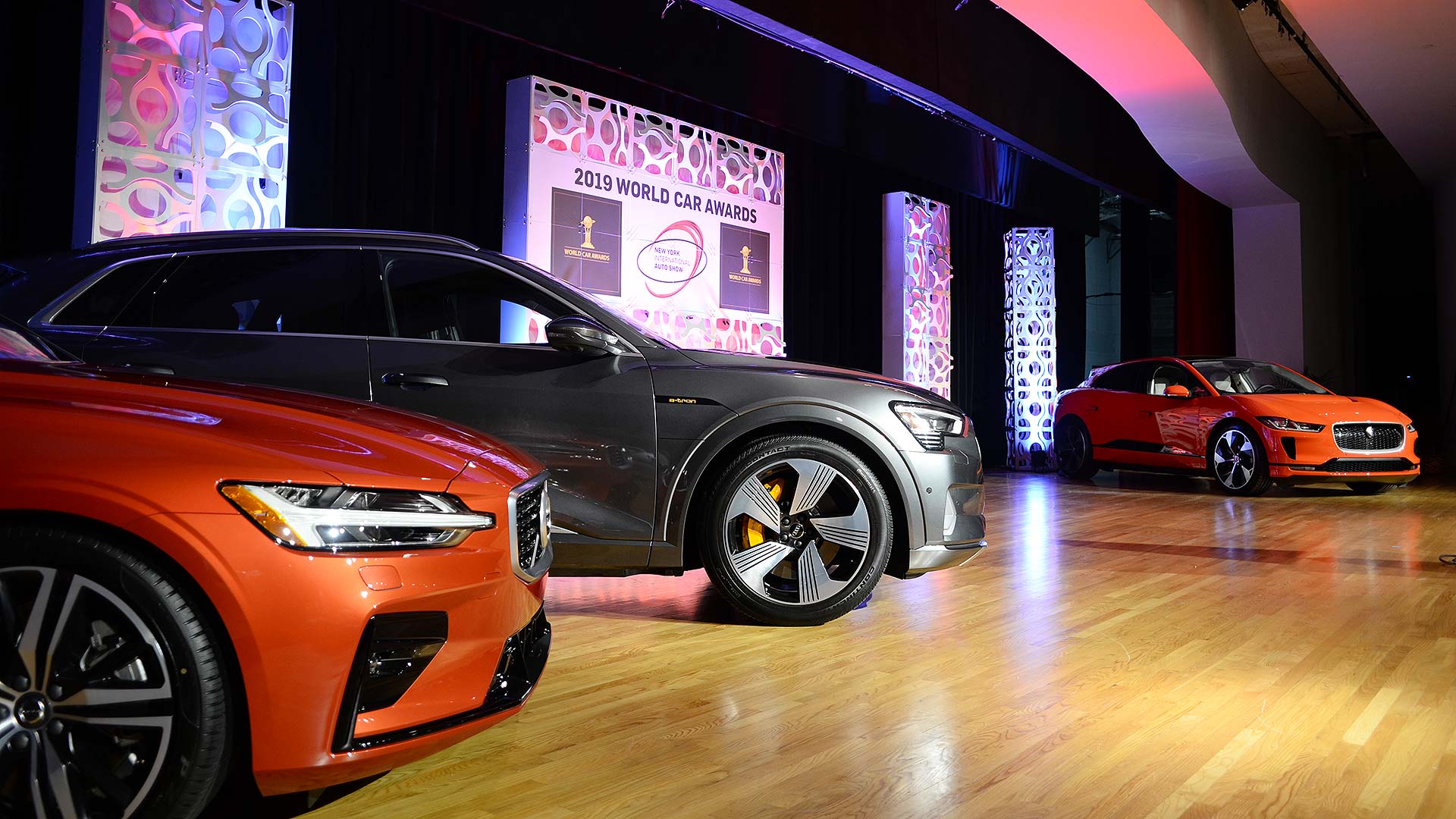
World Car Awards is the biggest automotive awards program on the planet. It has the widest reach across the globe and its 86 jurors from Asia, Europe and North America have been busy voting on the best new cars of 2019.
In the opening ceremony of the 2019 New York Auto Show, the winners were revealed – join us to discover the best of the best… and a headline-grabbing surprise at the end!
Several rounds of judging have led to the 2019 World Car Awards finals in New York. Contenders were revealed at the 2018 Paris Auto Show and the top 10 finalists were announced in February. At the 2019 Geneva Auto Show, the top three contenders in each of the six categories were revealed: that’s Luxury, Performance, Design, Urban, Green and the overall World Car of the Year.
All contenders must be available to buy in at least two continents worldwide.
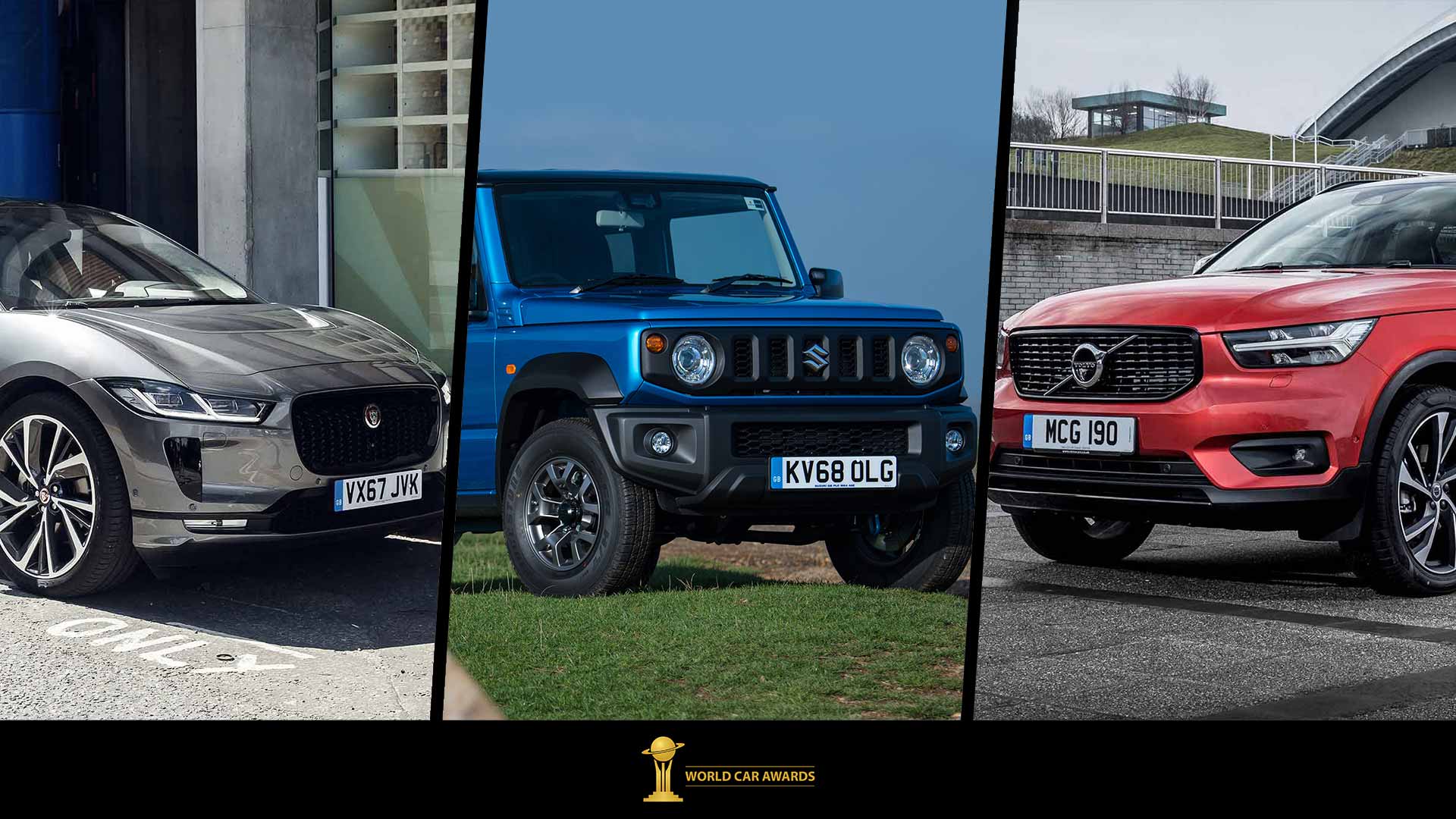
2019 World Car Design finalists
Jaguar I-Pace
Suzuki Jimny
Volvo XC40
The World Car Design is judged by top car stylists both past and present. This year, three very different cars are in the running: the futuristic Jaguar I-Pace, modern-retro Suzuki Jimny and the perfectly contemporary Volvo XC40
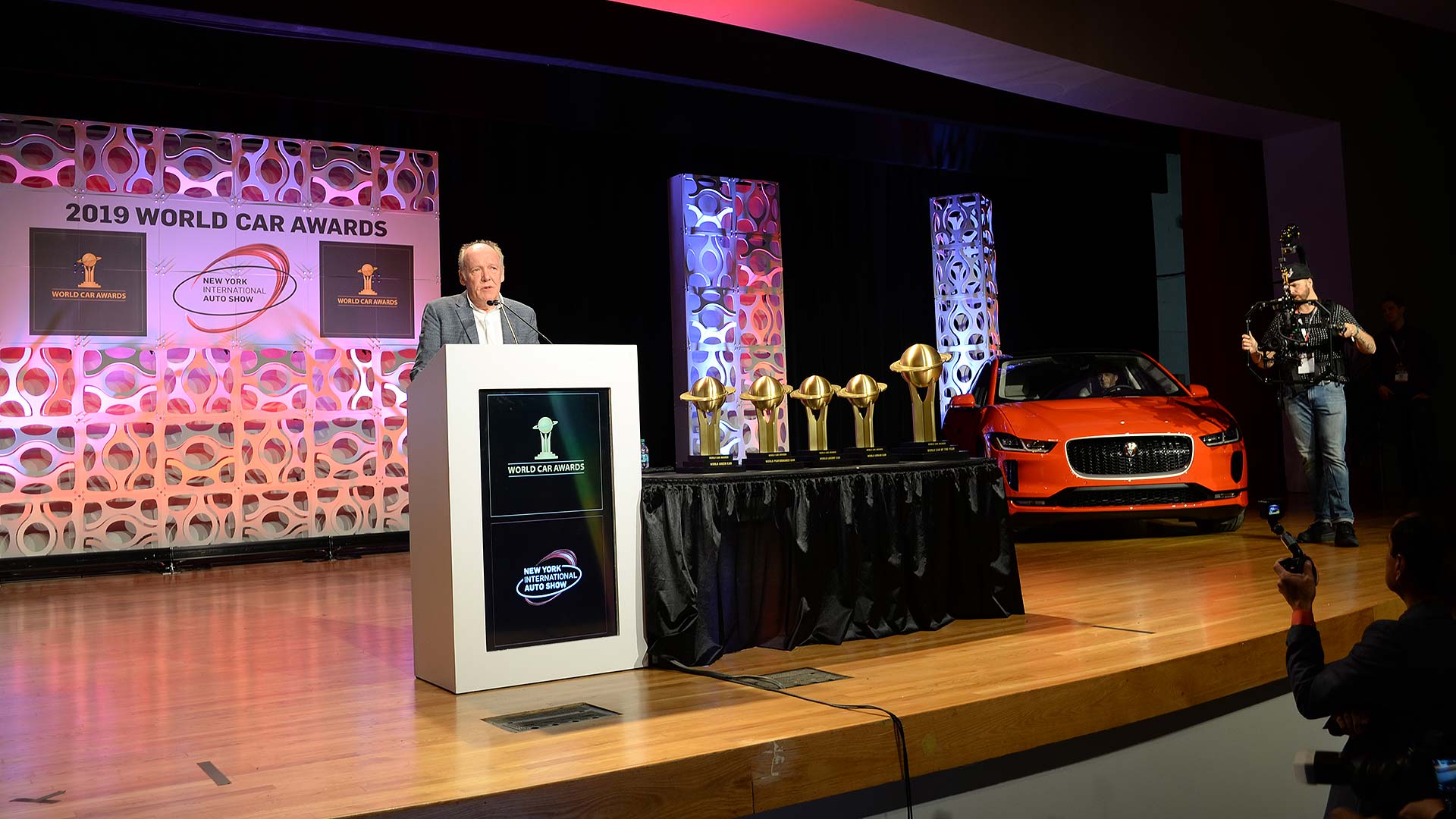
2019 World Car Design winner: Jaguar I-Pace
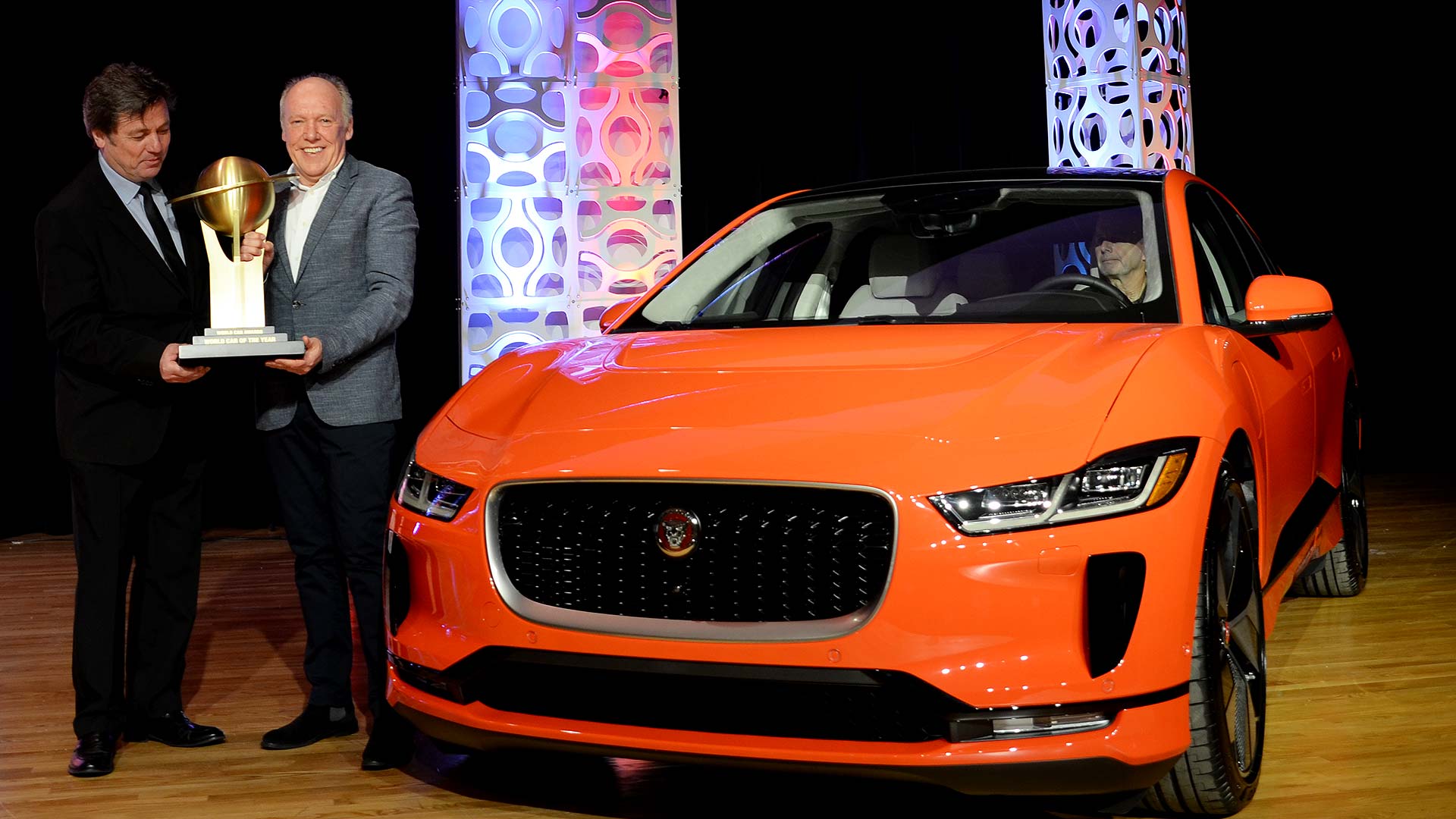
The Jaguar I-Pace secured the first award win of the 2019 World Car Awards, with design chief Ian Callum taking to the stage to collect the award. “Electric cars give us the opportunity to do new things with car design,” he said. “Me and my team are relishing the opportunity.”
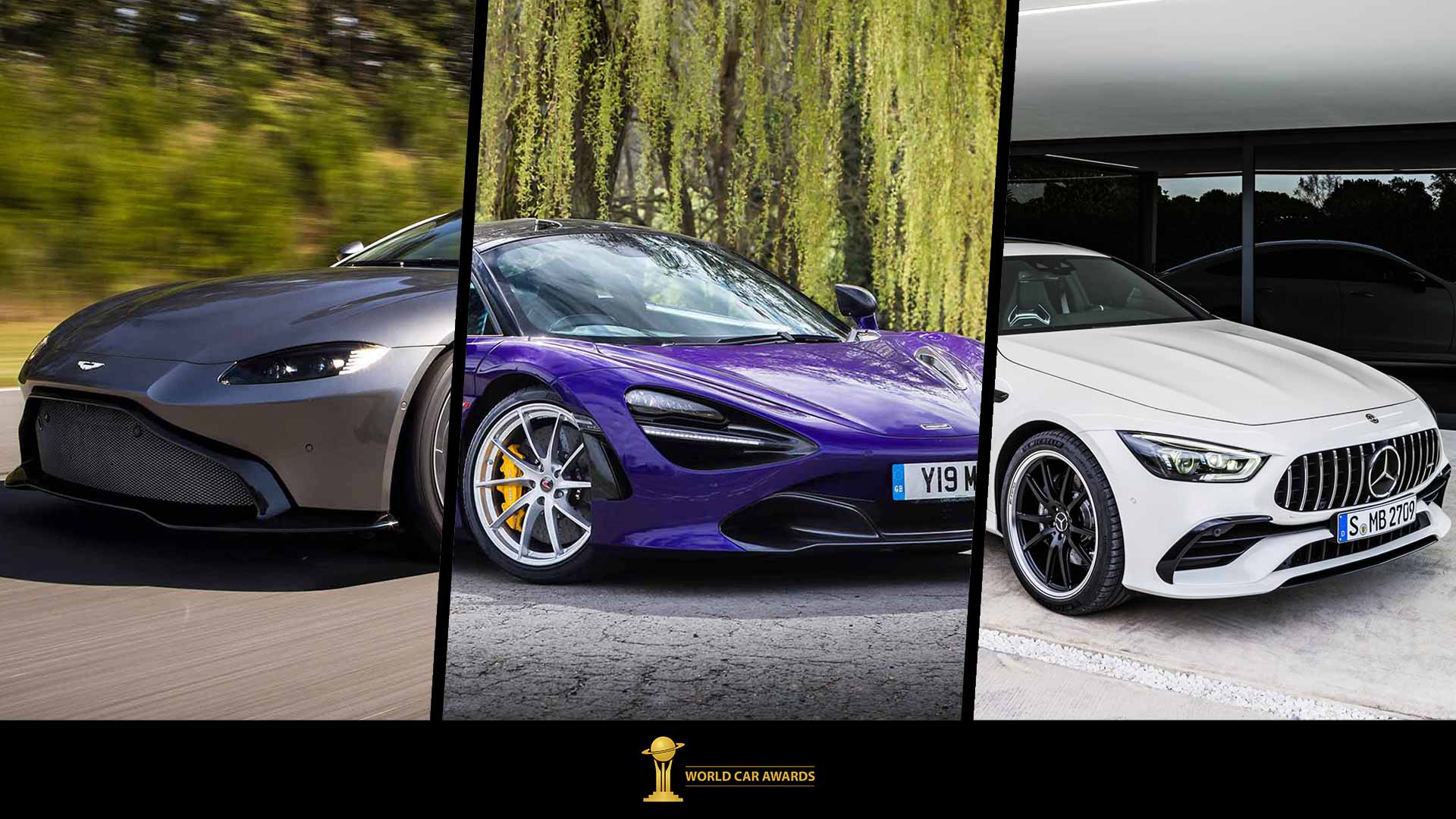
2019 World Performance Car finalists
Aston Martin Vantage
McLaren 720S
Mercedes-AMG GT 4-door Coupe
The contenders in the individual categories are just as exciting. Take the World Performance car: in 2019, it’s the punchy Aston Martin Vantage versus the monstrous McLaren 720S and the bombastic Mercedes-AMG GT 4-door Coupe.
2019 World Performance Car winner: McLaren 720S
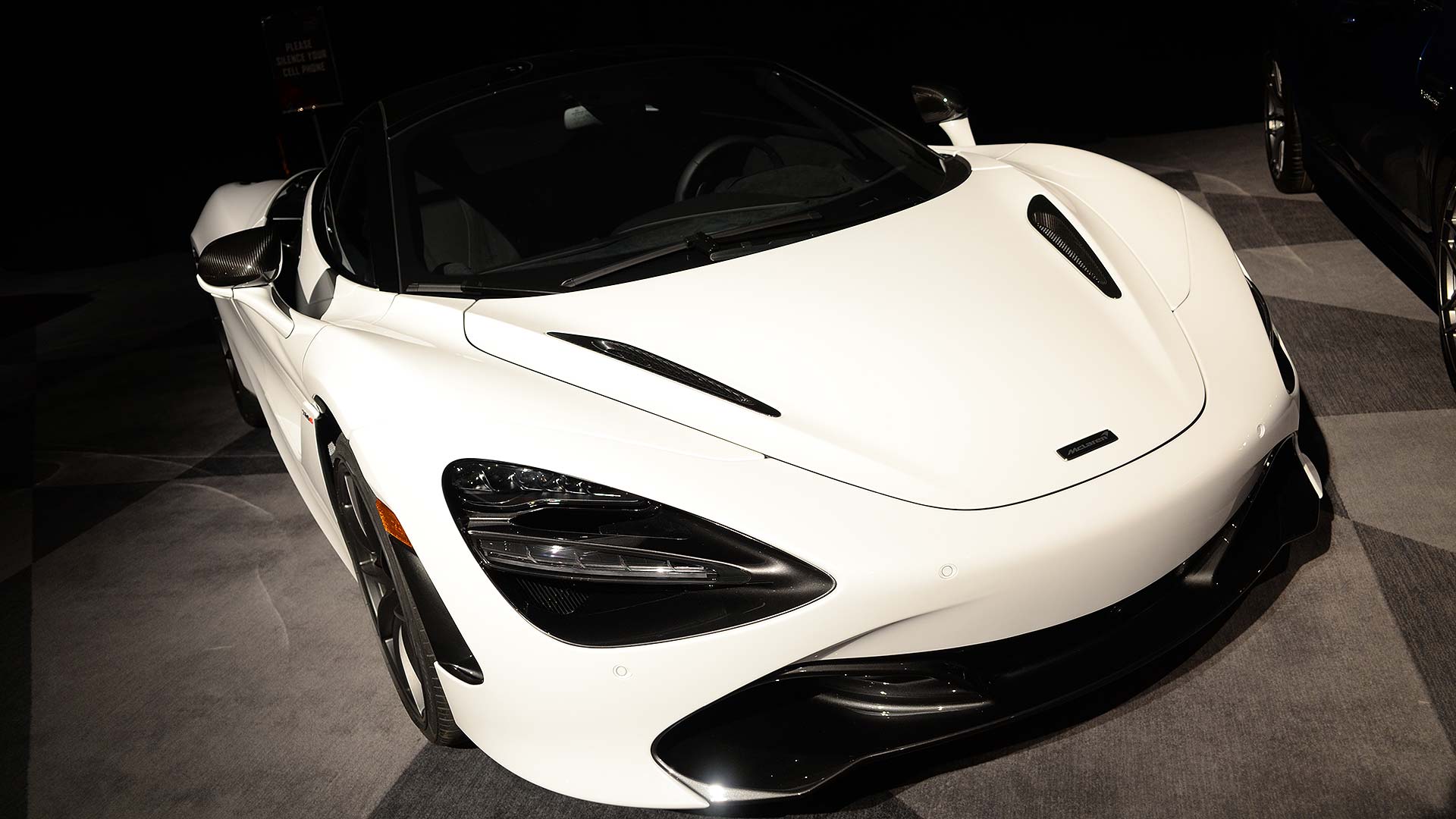
The big Mac won it: the 720 horsepower super-sports car from Woking, England beat its arch-rival from Gaydon, England. Anyone who’s driven this extraordinarily fast and thrilling machine will understand why it’s a deserving performance car victor.
2019 World Green Car finalists
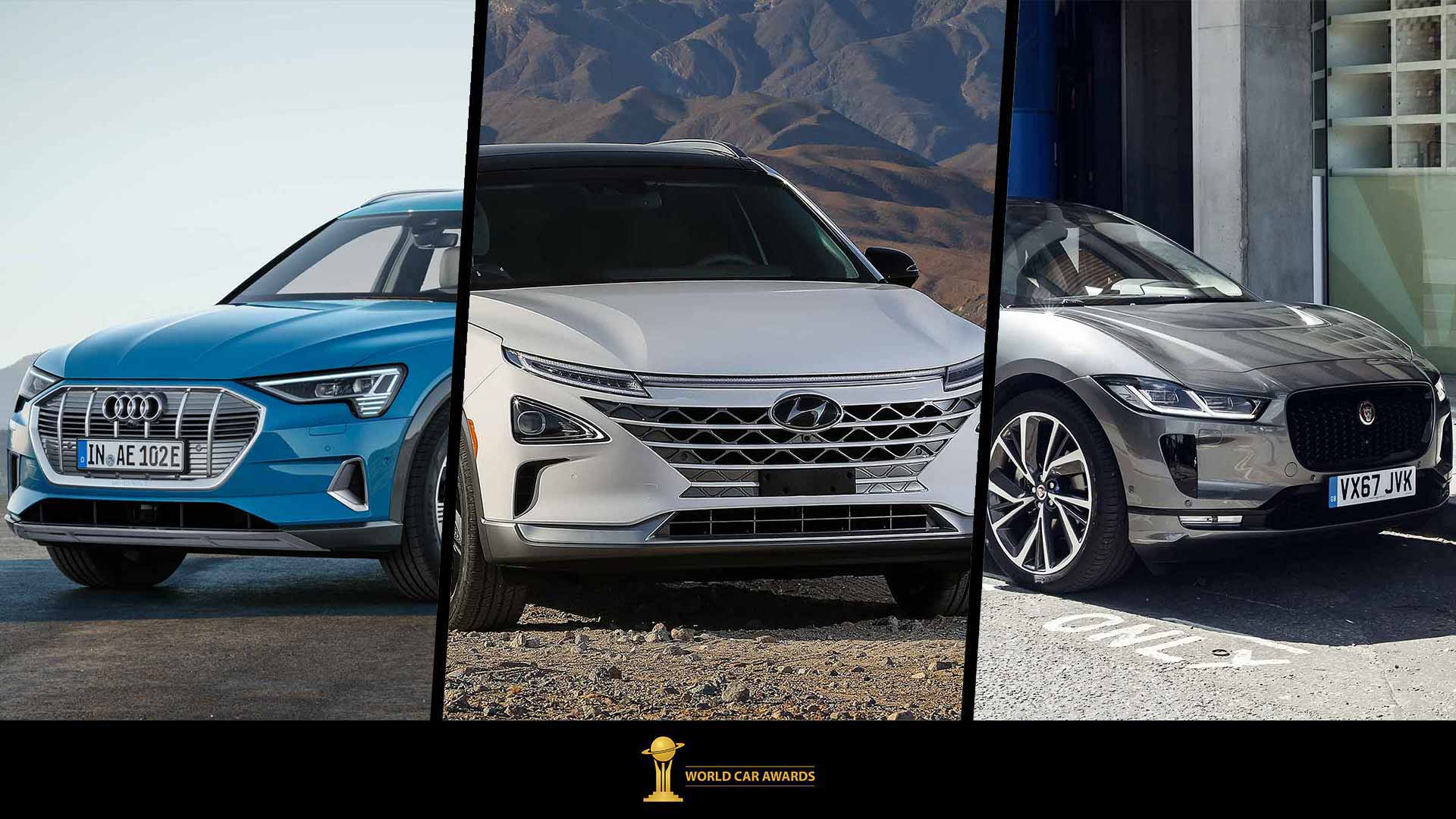
Audi E-tron
Hyundai Nexo
Jaguar I-Pace
Impressively, two finalists in the 2019 World Green Car Awards are also finalists for the overall World Car of the Year gong. The two electric SUVs from Audi and Jaguar are joined by the hydrogen fuel-cell Hyundai Nexo.
2019 World Green Car winner: Jaguar I-Pace
Jaguar did it again! By embracing all-electric motoring, the British firm became the first premium maker to launch a fully convincing SUV EV – beating Audi, BMW, Mercedes-Benz and Porsche to market. Again, Callum took to the stage. “I’m almost running out of things to say!”
2019 World Luxury Car finalists
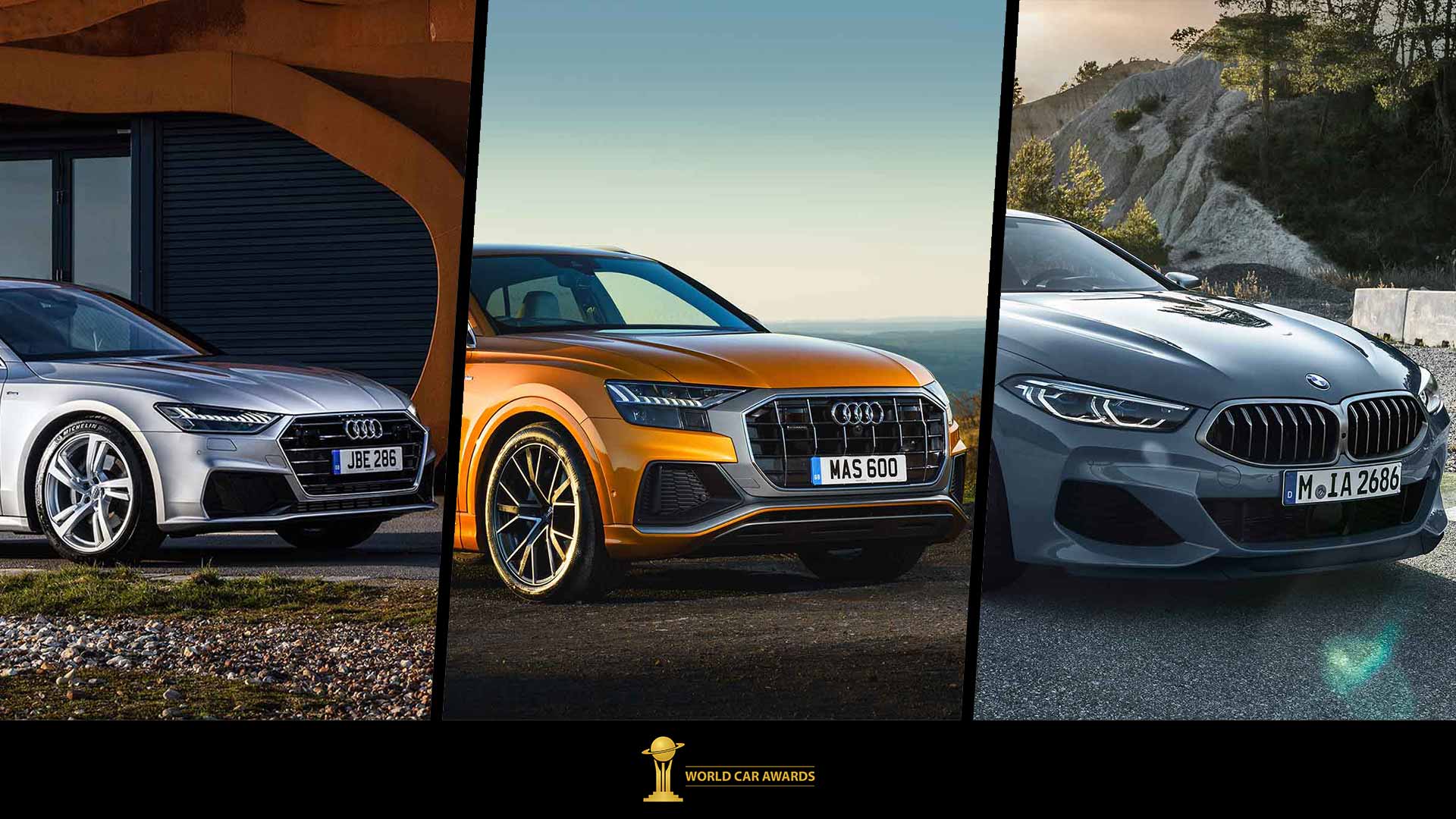
Audi A7 Sportback
Audi Q8
BMW 8 Series
Audi is a key player in the 2019 World Luxury Car prize, with two models, the A7 four-door coupe and Q8 large SUV coupe, taking on the more traditional BMW 8 Series two-door coupe. As in all sectors these days, diversification is the name of the game for luxury buyers in 2019.
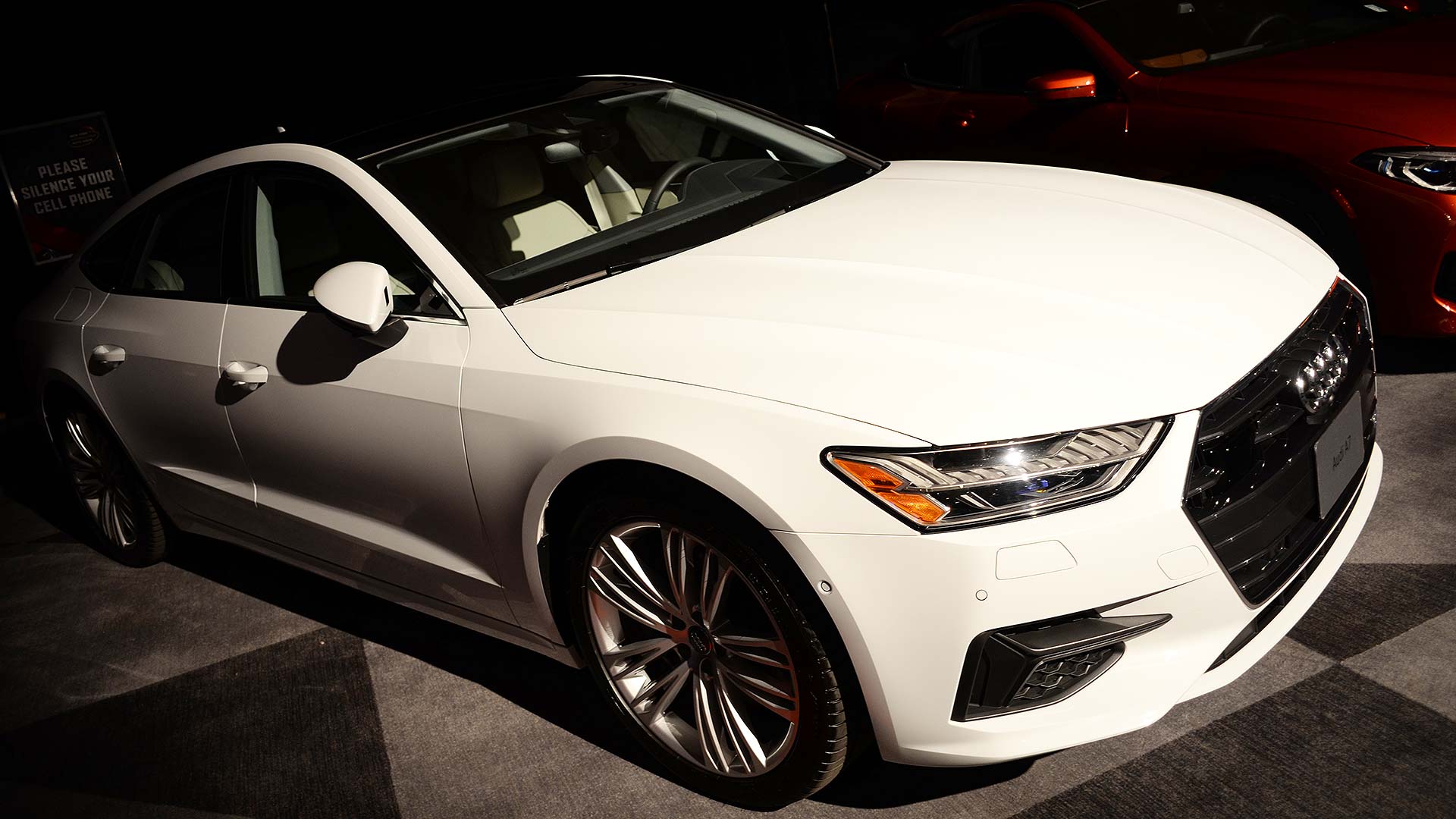
2019 World Luxury Car winner: Audi A7 Sportback
The svelte four-door Audi A7 Sportback took the trophy. Now in its second generation, jurors felt it honed a successful theme, creating a standout luxury car that’s a bit different, and more of a head-turner, than the norm.
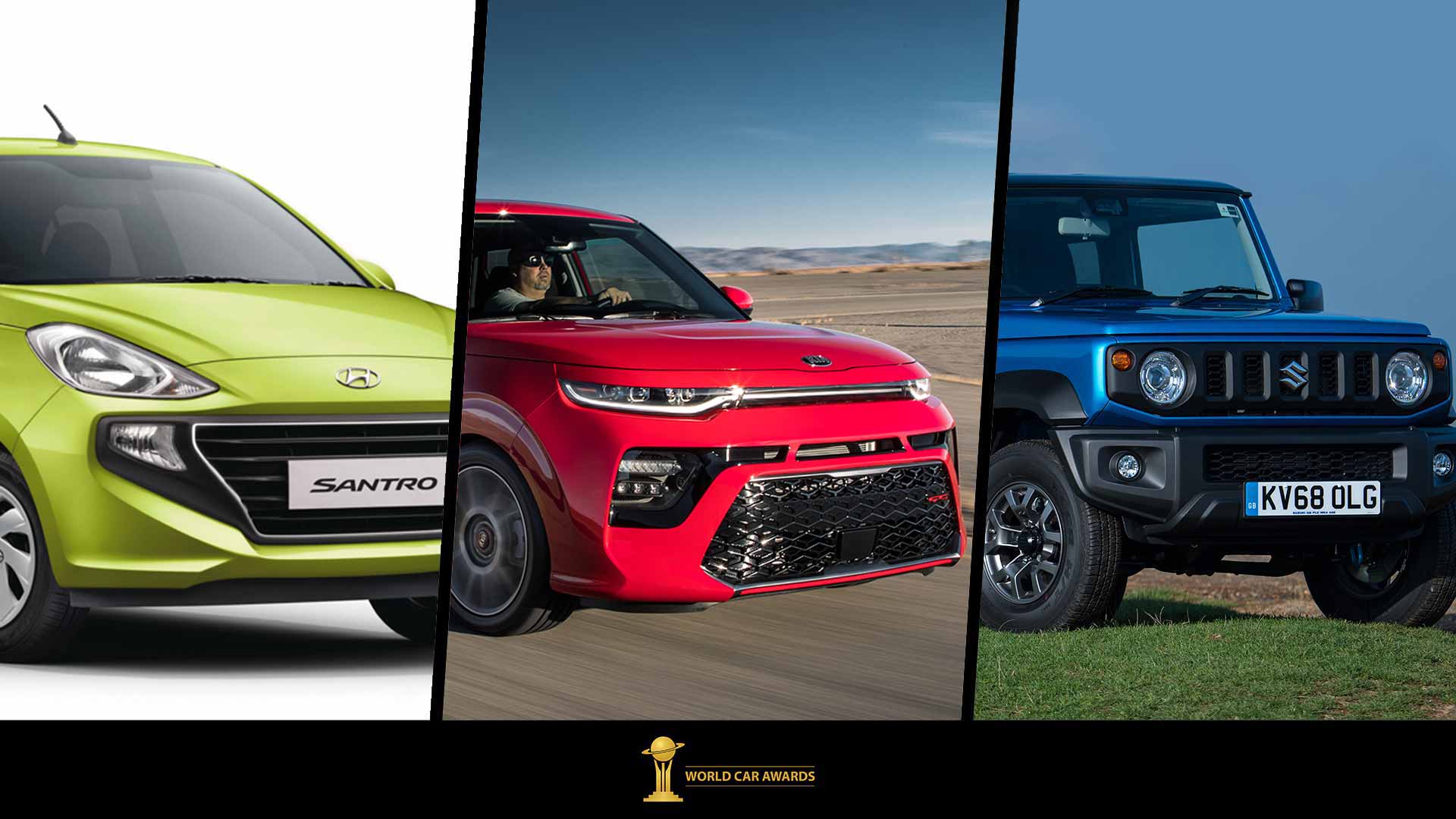
2019 World Urban Car finalists
Hyundai AH2 Santro
Kia Soul
Suzuki Jimny
Diminutive size, a cheeky character and an ability to make light work of tightly-packed city centres make for a top World Urban Car in 2019. This year, the Indian Hyundai AH2 Santro takes on the Kia Soul and Suzuki Jimny.
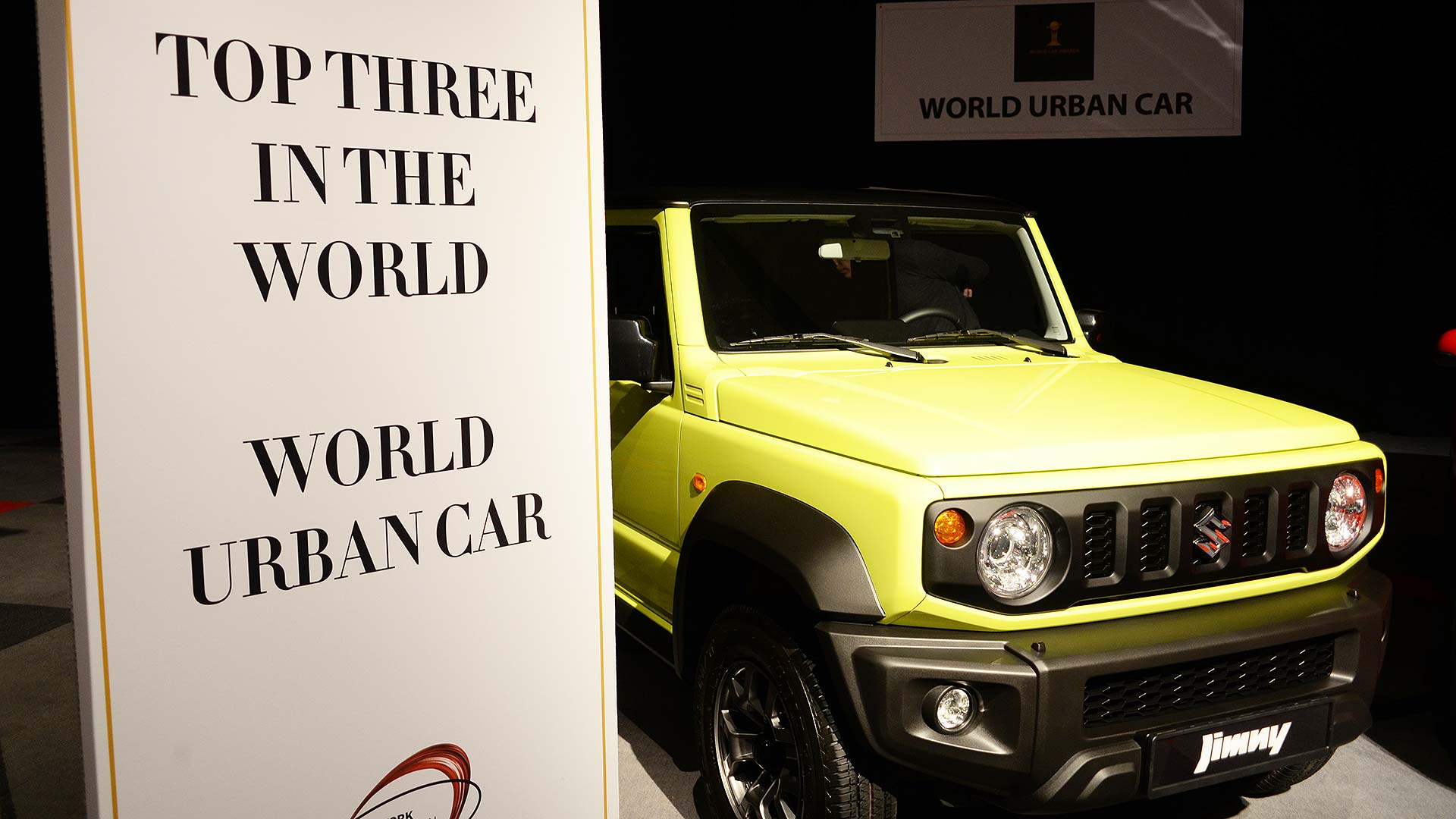
2019 World Urban Car winner: Suzuki Jimny
The brilliant little Suzuki Jimny won, to the delight of the Suzuki team who’d flown over from Japan to see the awards. The car’s chief engineer collected the trophy and his beaming smile said it all – this is a small car that offers a different take on compact urban motoring, particularly in narrow-body Japanese ‘Kei car’ guise. It brings a little joy to city streets, and what’s wrong with that?
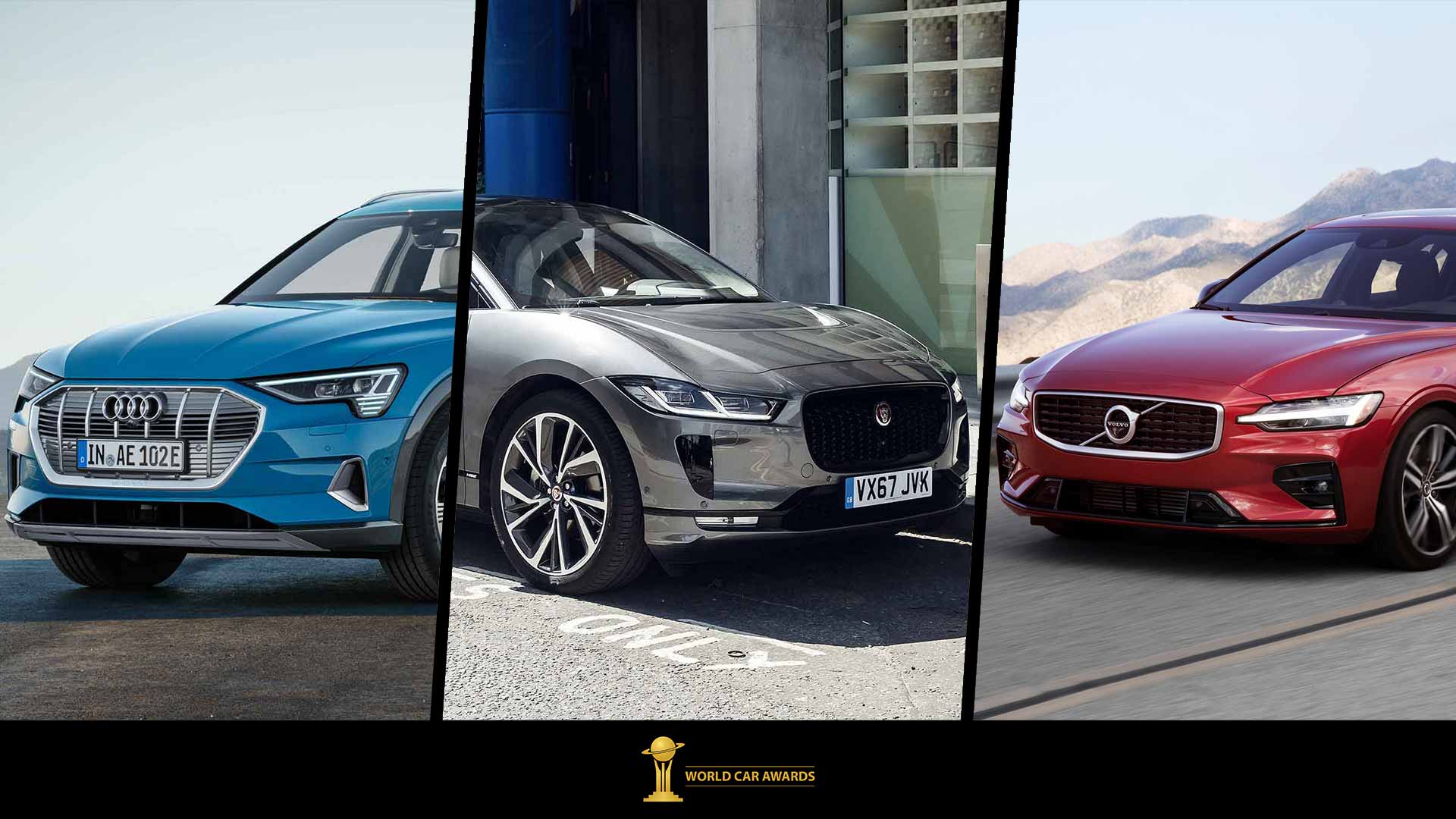
2019 World Car of the Year finalists
Audi E-tron
Jaguar I-Pace
Volvo S60 / V60
The biggest prize of all is the World Car of the Year Award. All three 2019 finalist brands are previous winners – Audi in 2014 with the A3, Jaguar in 2017 with the F-Pace and Volvo in 2018 with the XC60. This year, Audi and Jaguar EV SUVs are going up against a mid-size sedan and estate from Volvo.
2019 World Car of the Year winner: Jaguar I-Pace
Yes, it was a Jaguar hat-trick! The unprecedented haul of trophies was accepted by a slightly overwhelmed Ian Callum. “When we set out to create the I-Pace, I said to my team, ‘Let’s build the best car in the world’. Hey, it looks like we’ve done it!
“I’ve been in this business for 40 years. This is my Oscar moment, and I’m going to relish it – and then do the same with my team back home.”
The victory adds to the Jaguar I-Pace’s success in the European Car of the Year Awards back in March. It becomes the first car ever to win both awards at the same time. Bravo, Jaguar!
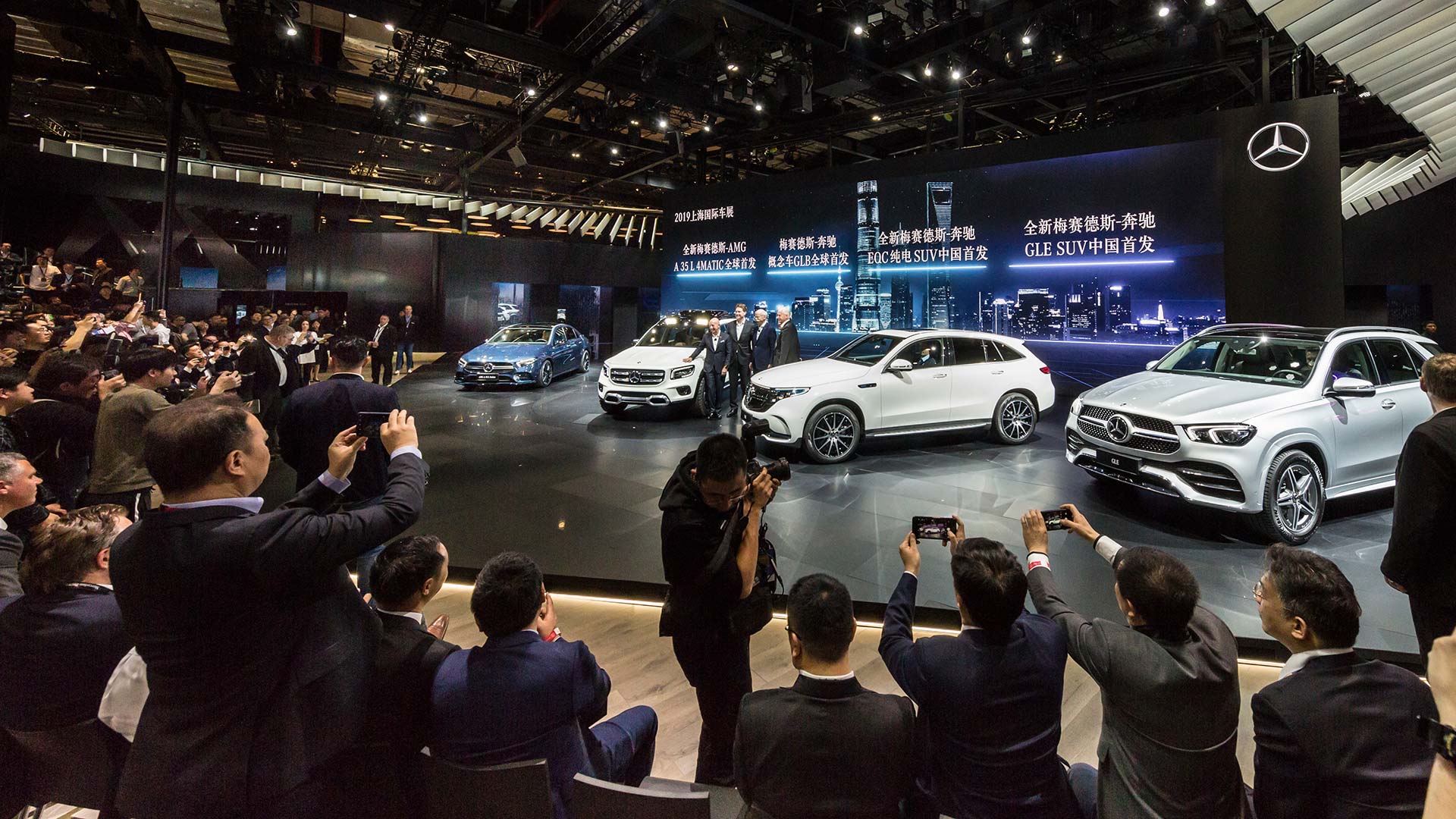
When the Chinese new car market registered a sales drop during 2018 (for the first time in two decades), some suggested that the boom times were over. However, the sheer number of new upmarket cars debuting at the 2019 Shanghai Auto Show makes that hard to believe.
From premium electric vehicles to supercars and stretched saloons, this is our rundown of the high-end cars on show in Shanghai.
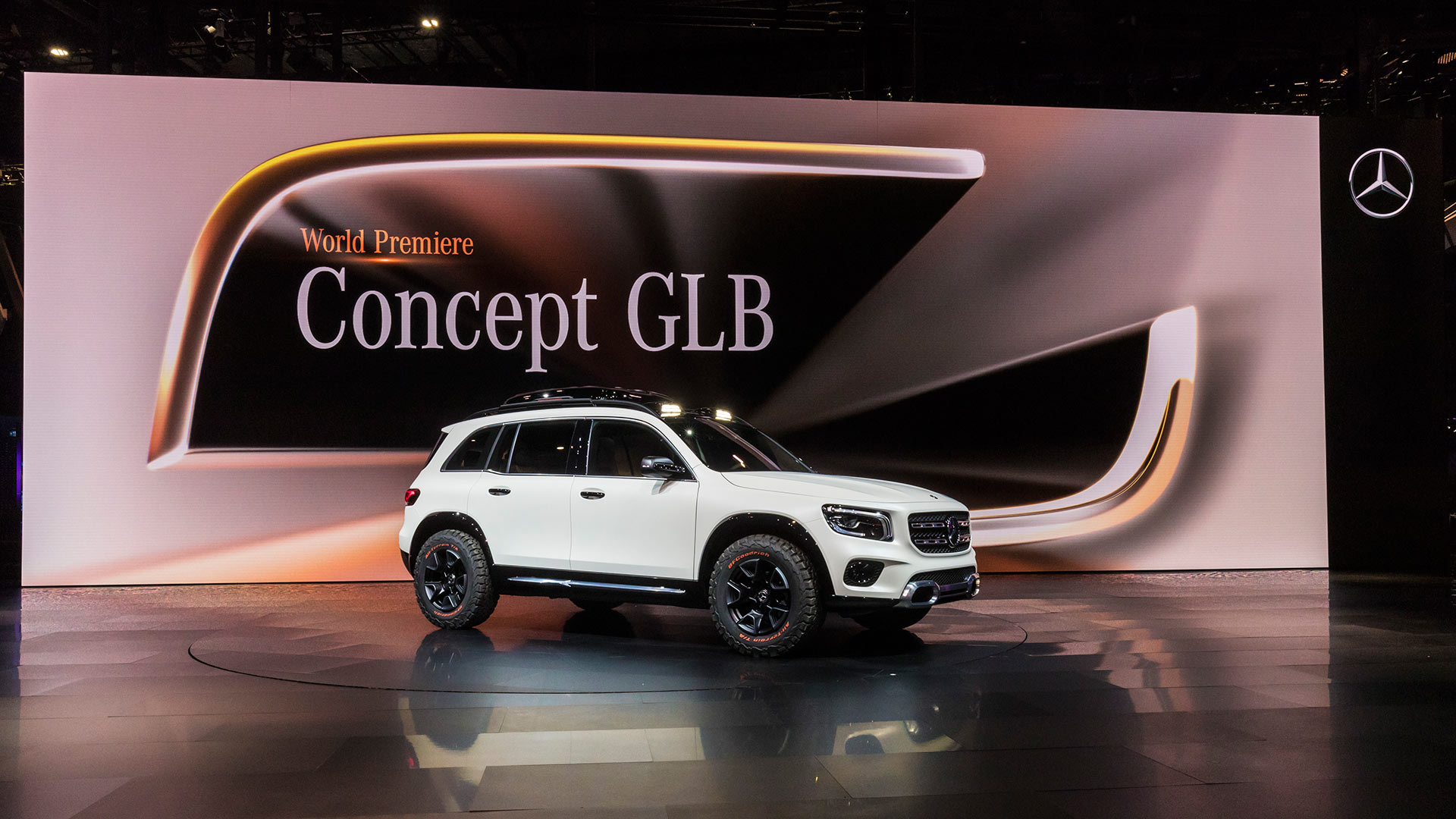
Mercedes-Benz GLB Concept
One of the biggest announcements in Shanghai was the latest compact SUV concept from Mercedes-Benz. Based upon the latest A-Class platform, but with the ability to seat seven and go off-road, it has proved to be a hit.
Although badged as a concept, the GLB looks almost production ready, so don’t expect a long wait before it hits the road. Or muddy forest track…
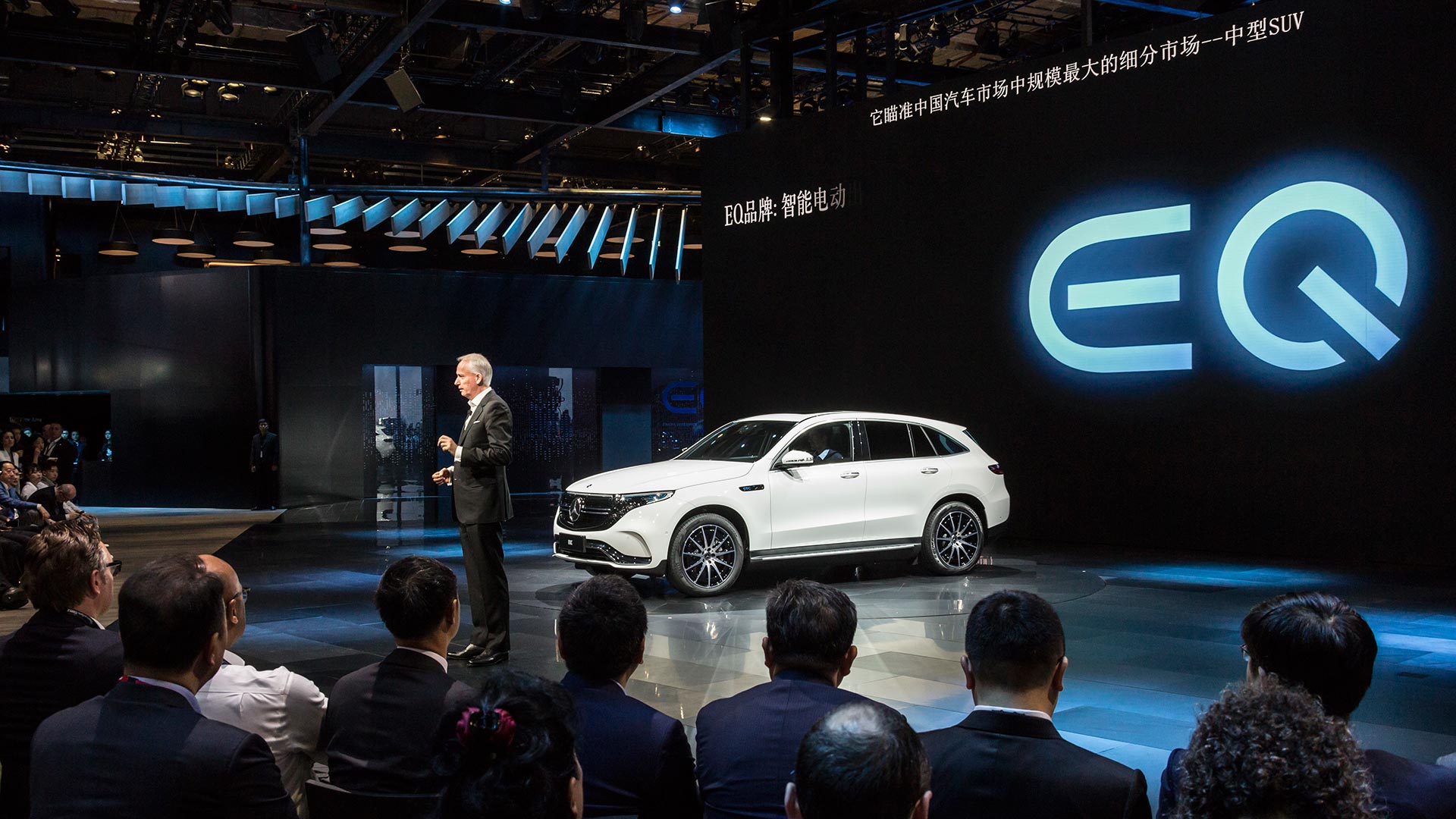
Mercedes-Benz EQC Concept
Along with luxury cars, electric vehicles were another key trend in Shanghai. Mercedes-Benz combined both of these with a local debut for the EQC battery-powered four-wheel-drive crossover.
Set to be the first model in the Mercedes EQ electric family, this sizeable SUV promises the ability to travel up to 275 miles when fully charged. Sales are due to begin this summer, and Mercedes is confident it will prove popular in the Chinese market.
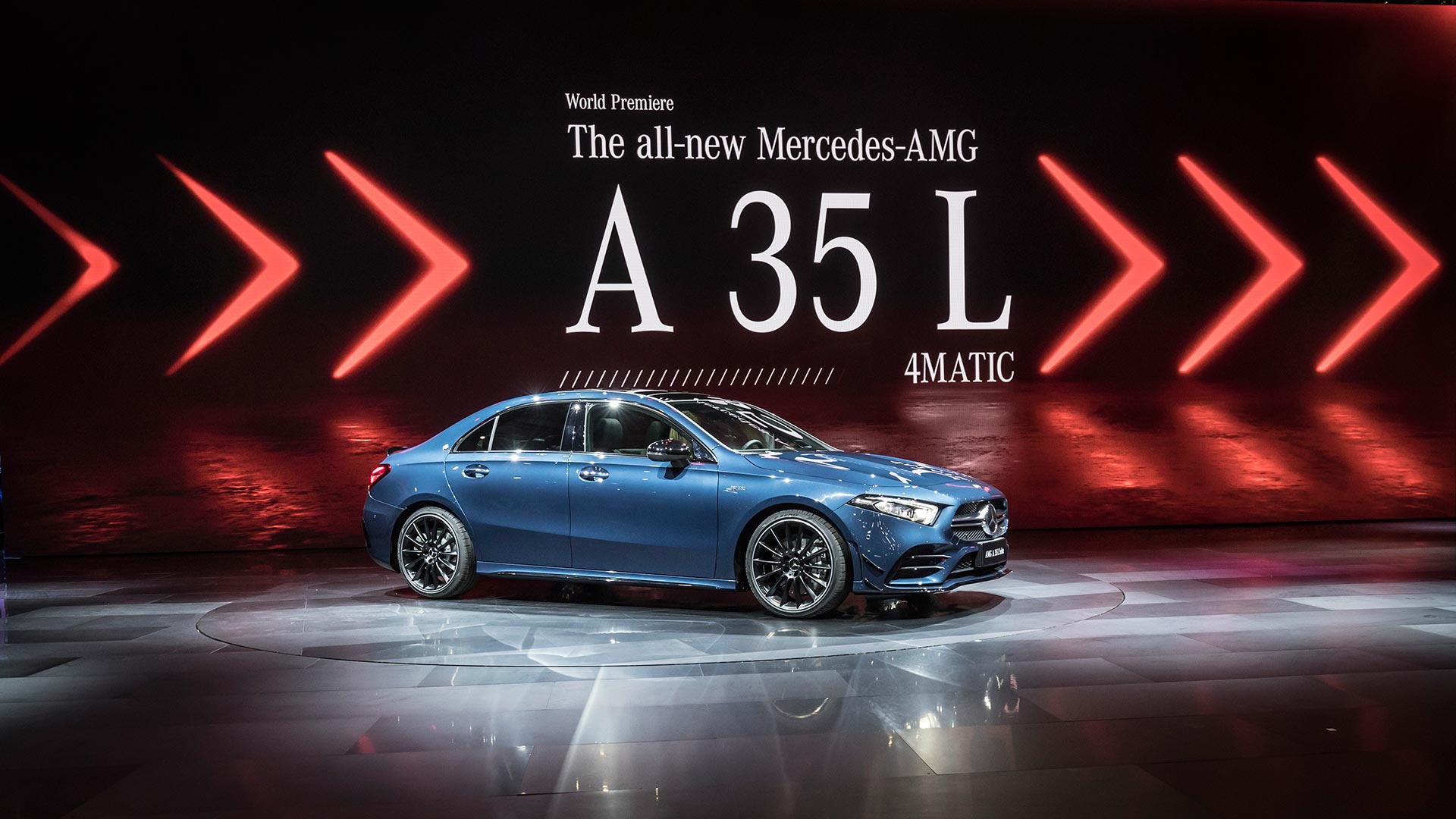
Mercedes-AMG A35 L 4Matic
It might look like the recently revealed A35 AMG performance saloon, but this one is to be made in China specifically for the local market. Not only is this the first 35-series Mercedes to be offered in the country, it also marks the first AMG model to be produced there.
An extra 60mm of space has been added between the axles, turning this into a long-wheelbase compact sedan. The same 306hp 2.0-litre turbocharged petrol engine remains, powering all four wheels through a seven-speed dual-clutch gearbox.
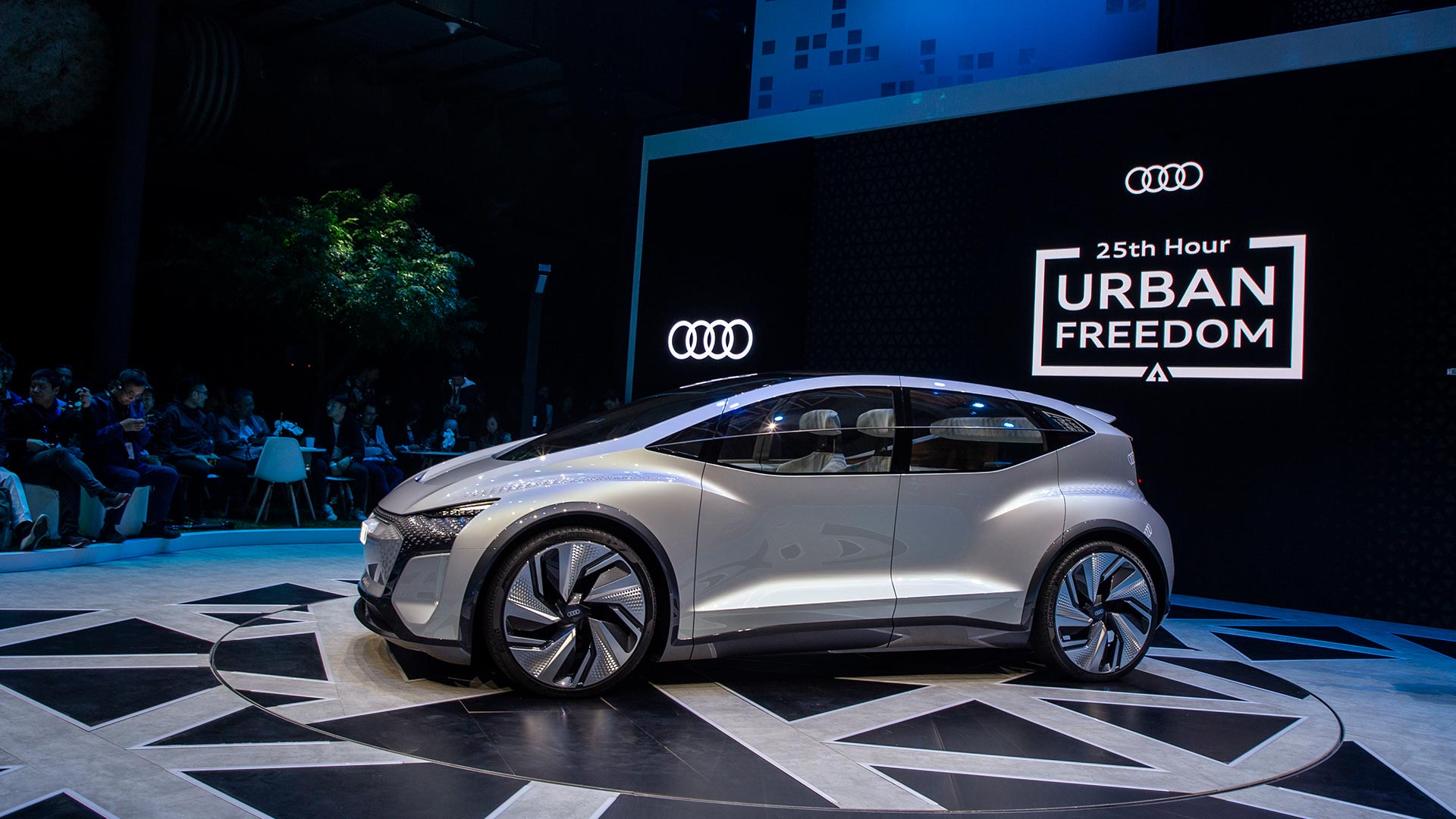
Audi AI:ME
Strictly a concept at present, Audi’s AI:ME is intended to demonstrate the potential for mobility in a megacity like Shanghai. With ‘level 4’ autonomous driving technology integrated into the AI:ME, Audi promises that occupants would have the ‘freedom to do what they like’ whilst onboard.
Luxury and relaxation are core to the AI:ME concept, with the driver even able to rest their feet on an ottoman when the car takes control. VR goggles also allow occupants to watch a movie, or take selfies to share on social media whilst stuck in traffic.
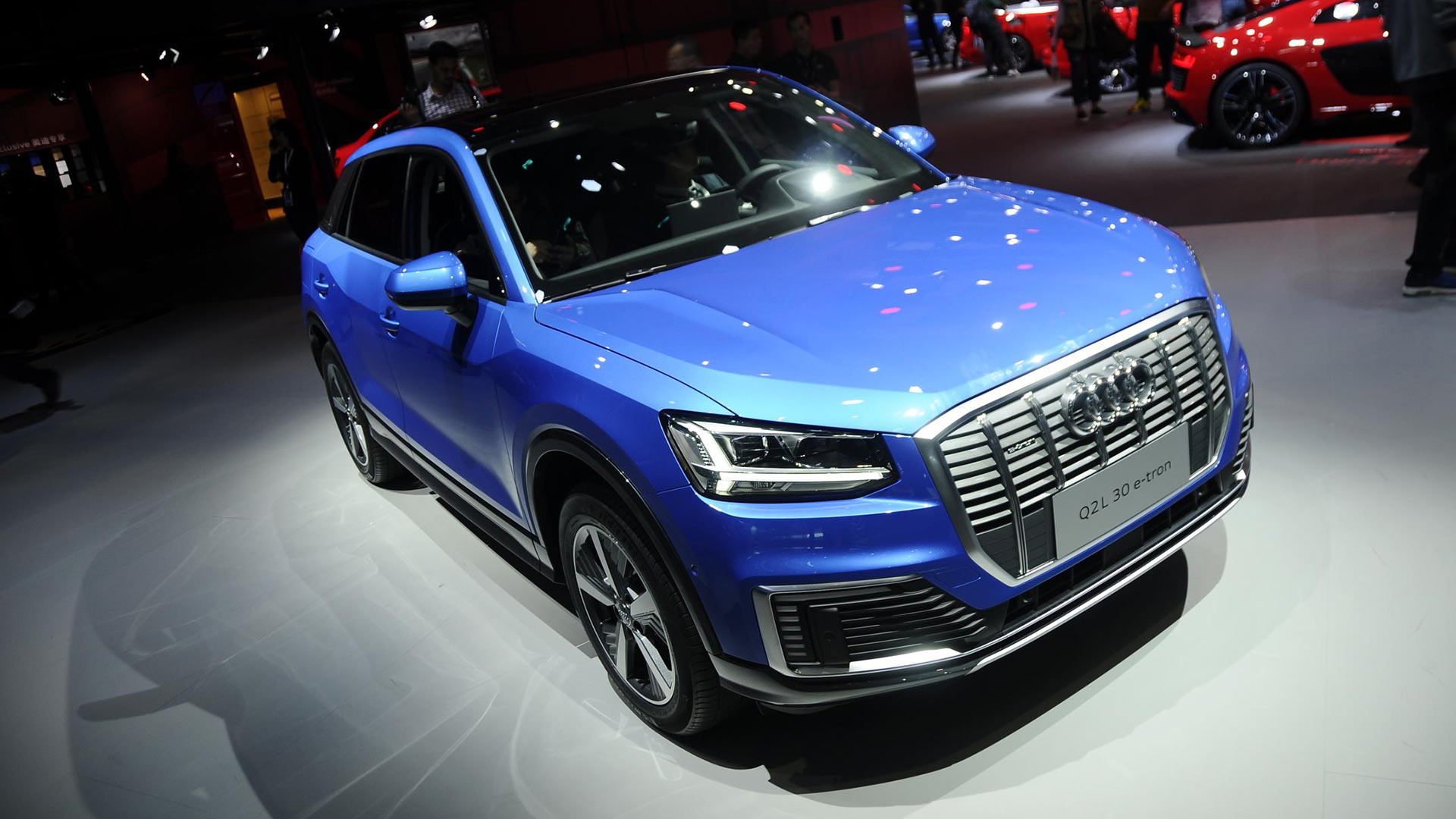
Audi Q2 L E-tron
Unlike the concept-only AI:ME, Audi is also showing off the latest local-market version of the compact Q2 crossover. In common with many of the cars featured here, this SUV has gained some extra metal in the middle.
An extra 33mm of space has been created inside, whilst the E-tron battery technology allows for a range of up to 165 miles. Audi cites China as being its largest and most important market worldwide, and is also displaying the locally-built second-generation Q3 in Shanghai for the first time.
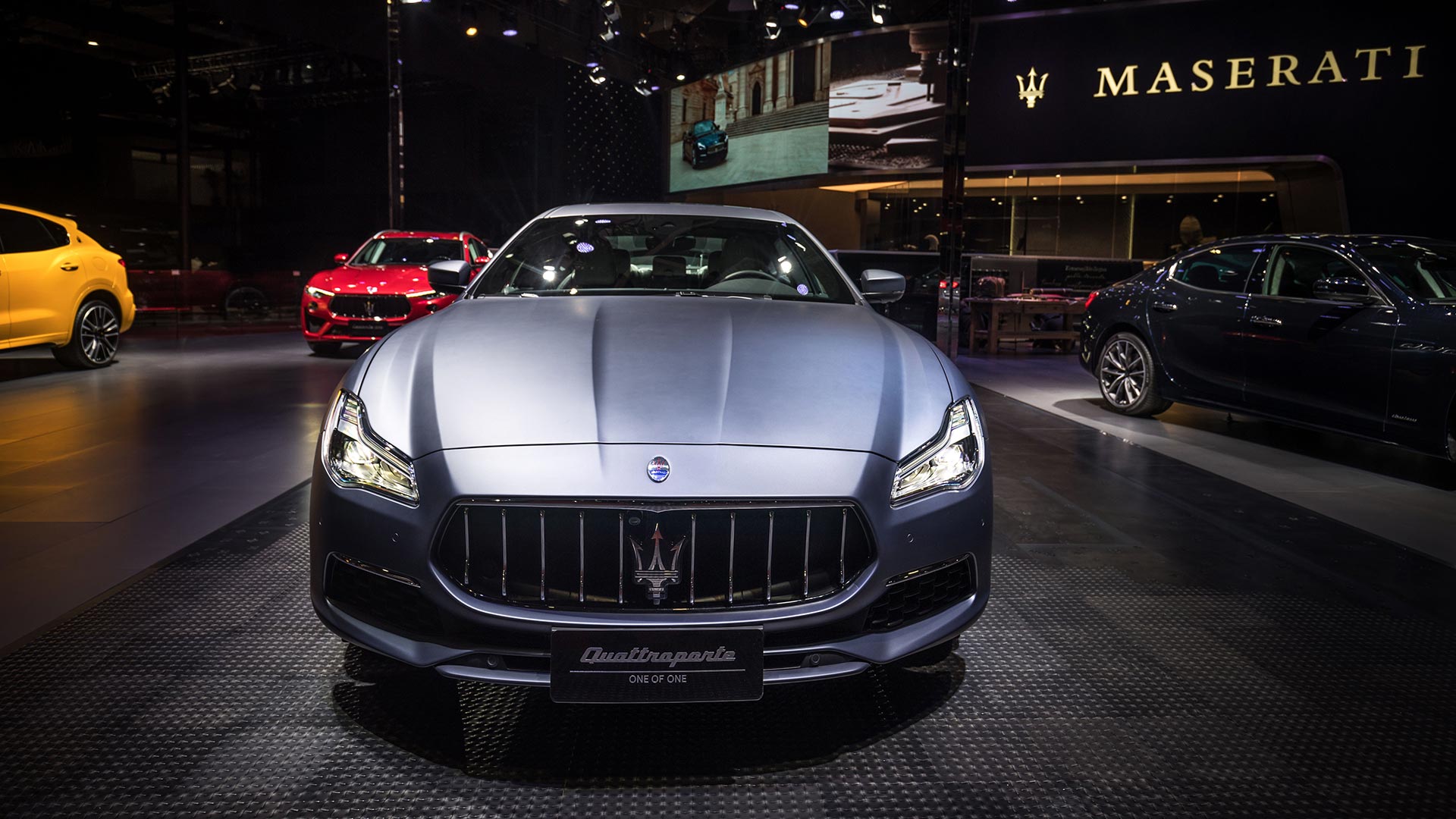
Maserati Quattroporte GranLusso One of One
China is also a key market for Maserati, and the brand hopes to garner new sales with this ultra-luxurious special edition version of the Quattroporte. Built especially for Mr Xuan Fen, Chief Editor of T-Magazine China, the four-door has been completely customised to his taste.
Maserati’s Centro Stile even created a new exterior colour, meant to evoke blue denim, for the ‘One of One’ Quattroporte. Inside, the seats feature vertical stitching inspired by men’s suits, with the dashboard wearing 100% natural burr wood trim.
Mr Feng even gets two sets of special floor mats, depending on whether he wants to coordinate with the interior or exterior colour scheme.
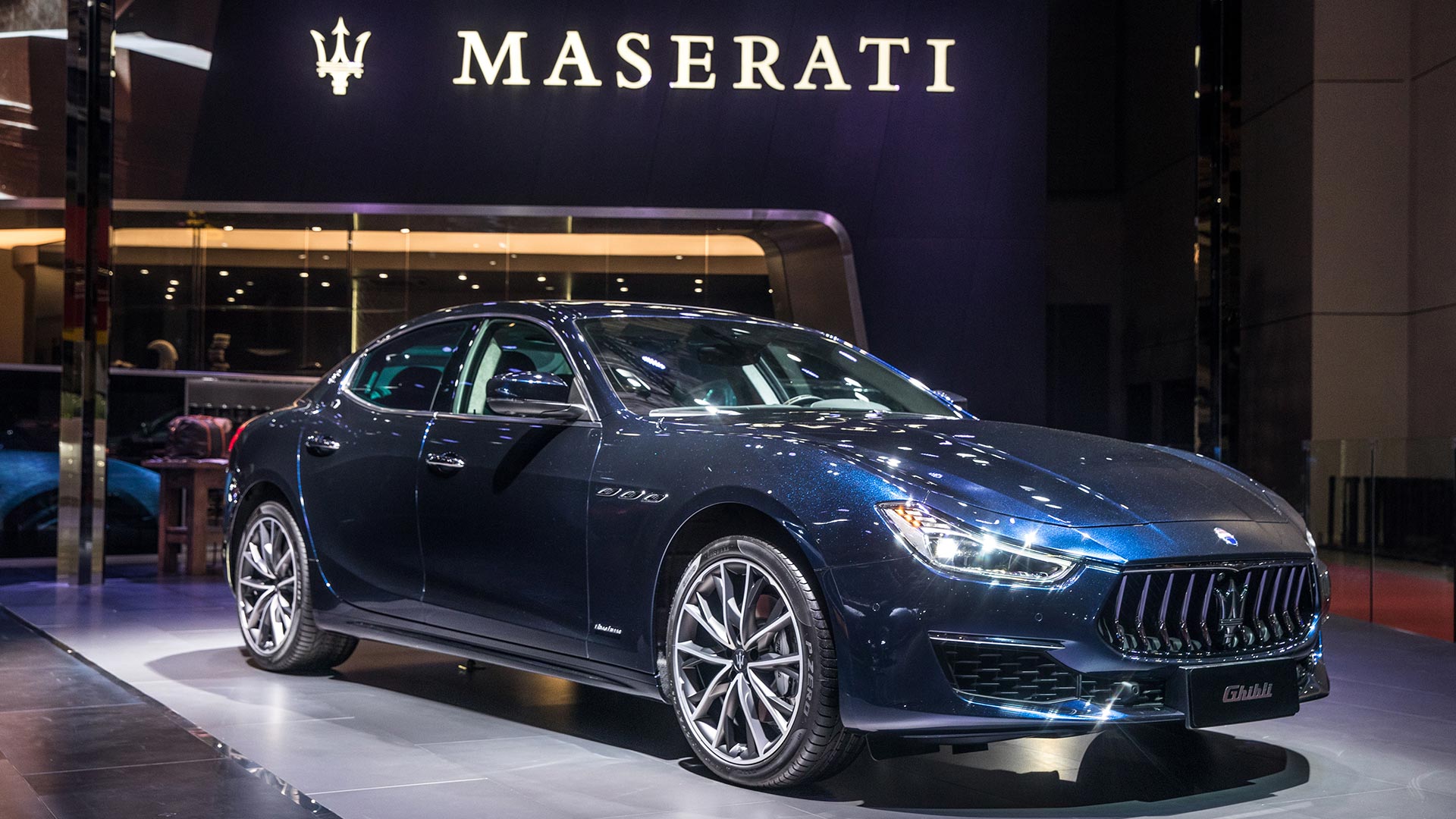
Maserati Ghibli S Q4 GranLusso
Maserati is also displaying a range of latest models, each with interiors designed in collaboration with long-term partner Ermenegildo Zegna.
The famous fashion house has even created a brand-new material for Maserati to use inside its cars, branded as ‘Pelletessuta’. Featuring woven strips of leather, and available in a range of colours, the material can feature on the dashboard and interior door trim.
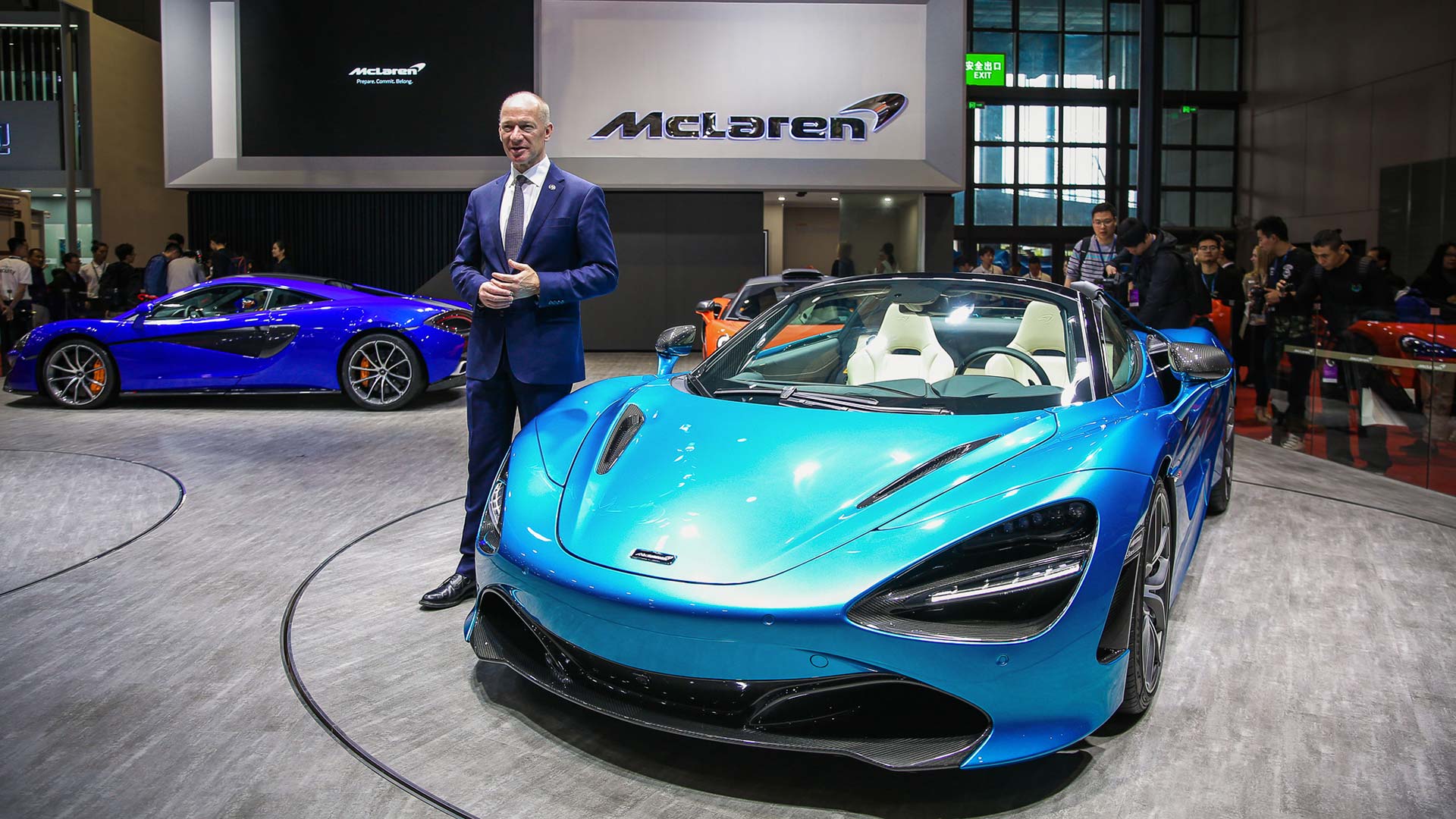
McLaren 720S Spider
British supercar manufacturer McLaren is celebrating five years of success in the Chinese market, with the Woking-based company having sold 1,000 cars in the country during that time.
With 12 dealerships across China, the company has revealed the latest 720S Spider and 600LT Spider models to the country for the first time. McLaren will be keen to maintain the 122.5% growth in sales it saw in China during 2018.
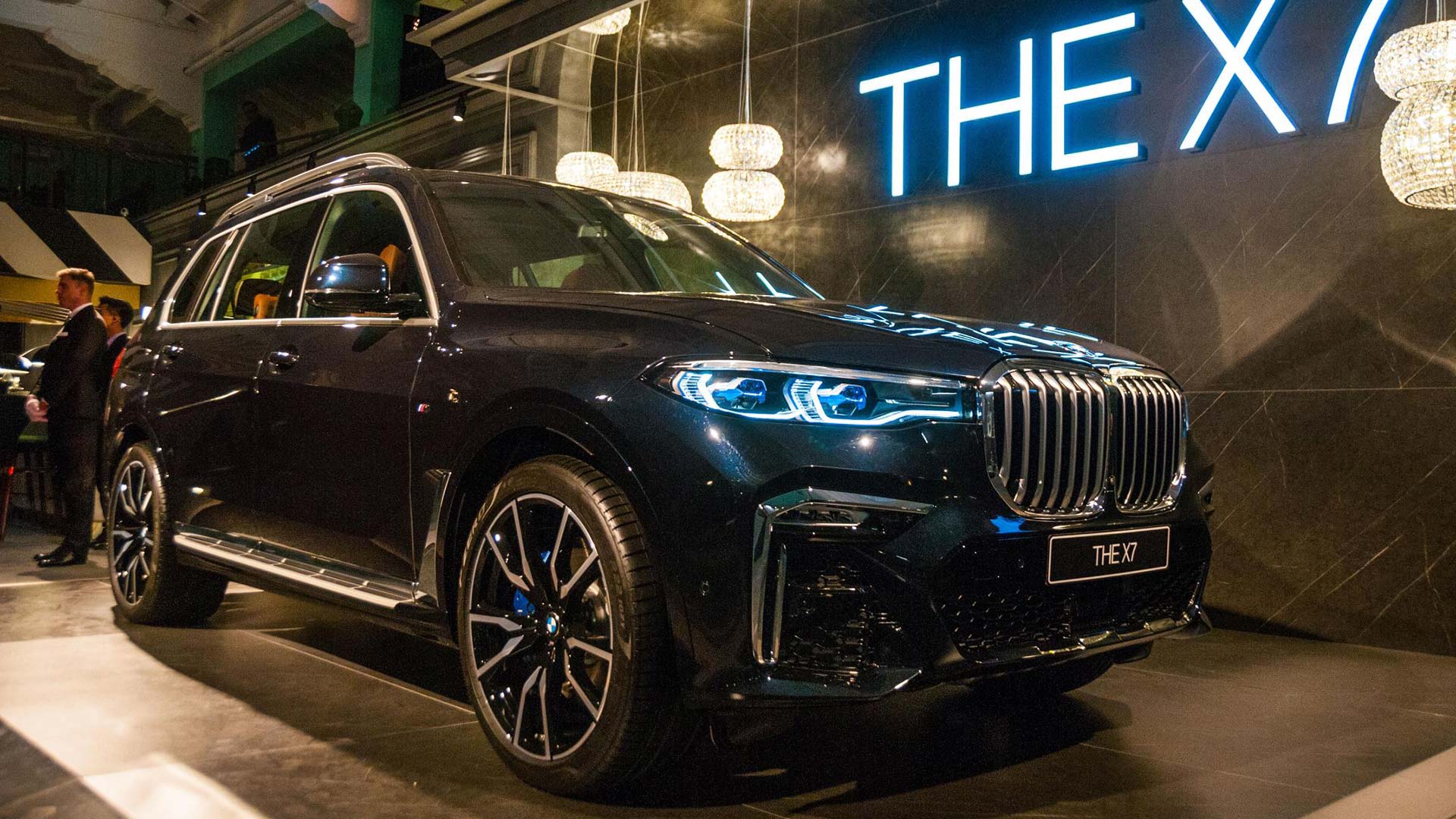
BMW X7
The gigantic kidney grille may have proven too much for some European commentators, but the Chinese market is predicted to go crazy for the biggest BMW SUV to date.
Capable of carrying up to seven, with adult-sized seats in the rear third row, the X7 promises to be as practical as it is controversial. In fact, passengers are important to the X7, with the rear doors longer than the front to make access easier.
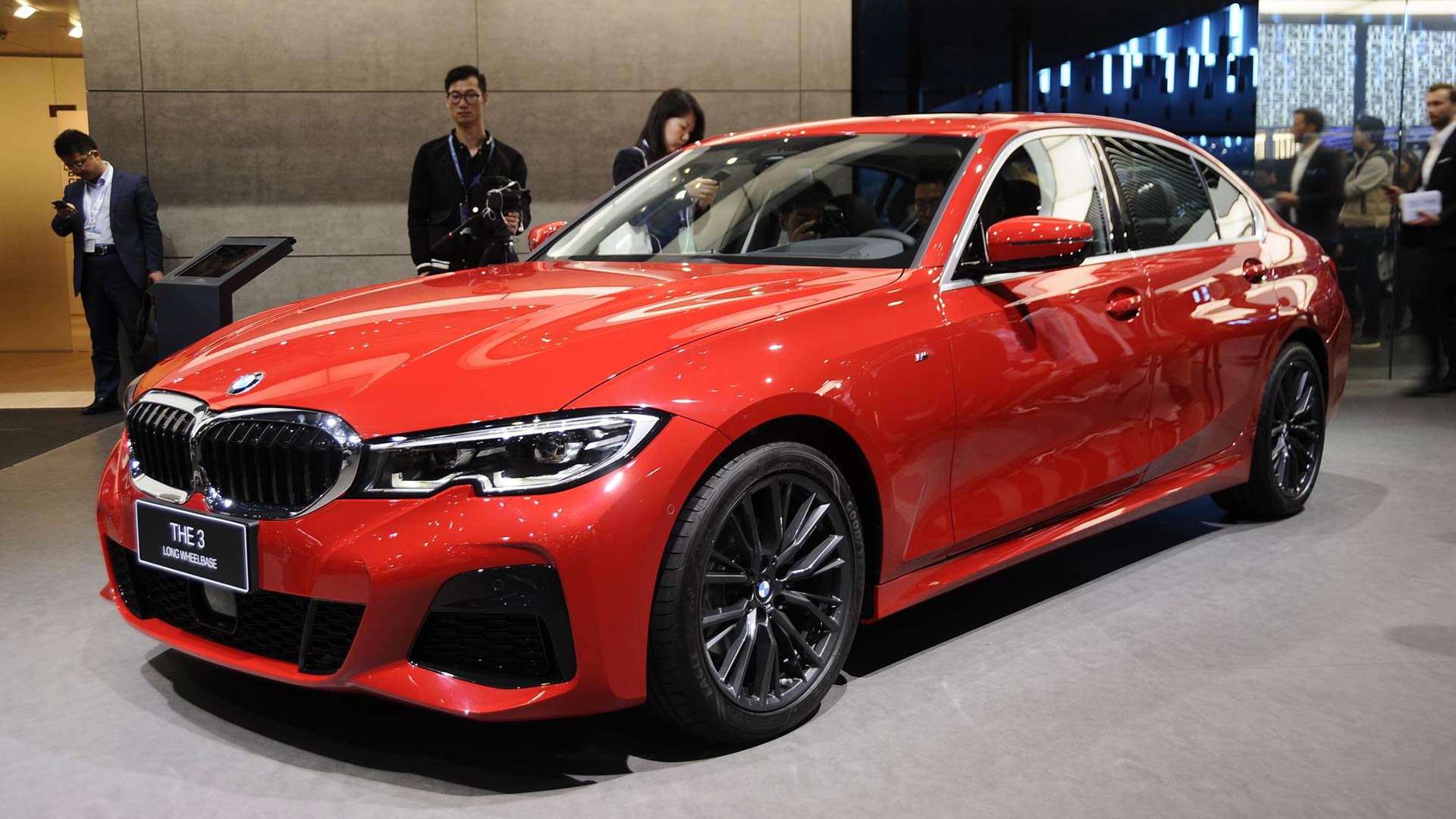
BMW 3 Series Long Wheelbase
Another BMW with a eye on rear passengers is this Chinese market-only stretched version of the new 3 Series saloon. Built by BMW Brilliance Automotive in Shenyang, this is actually the second time the 3 Series has bulked up for China.
The LWB 3 Series has rear doors that are 110mm longer, and sees rear passengers gaining an extra 43mm in legroom. BMW seems to know what it is doing, with the previous generation long-wheelbase car accounting for 80% of 3 Series sales in China.
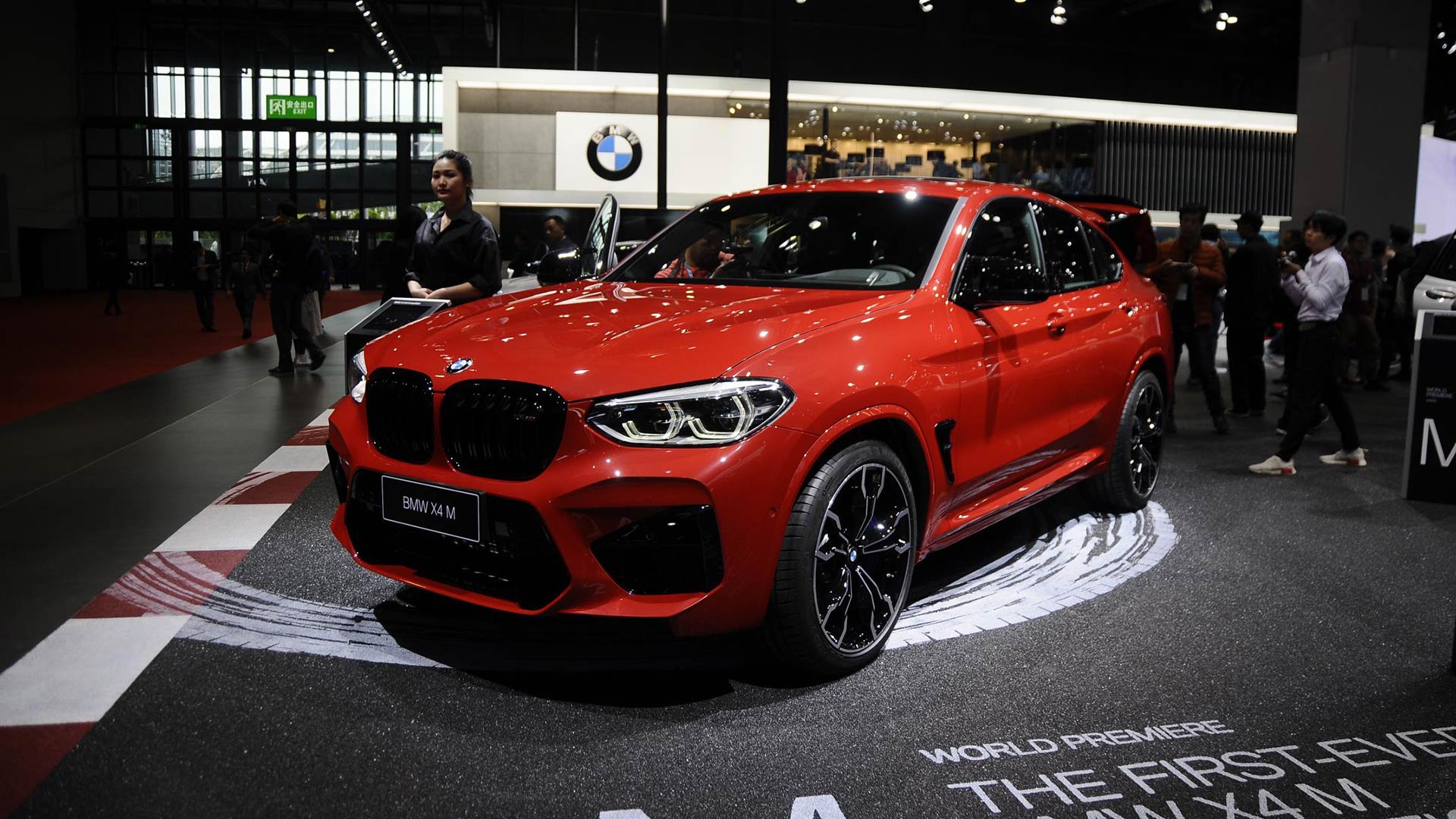
BMW X3M and X4M
Also on display in Shanghai are the latest performance SUV offerings from BMW, making their first official public debuts.
Both the X3M and X4M feature the most powerful production six-cylinder engine created by BMW, pumping out 510hp and 442lb ft of torque in Competition trim. Add in an optional M Driver’s package, and the potential for a 177mph top speed is on offer.
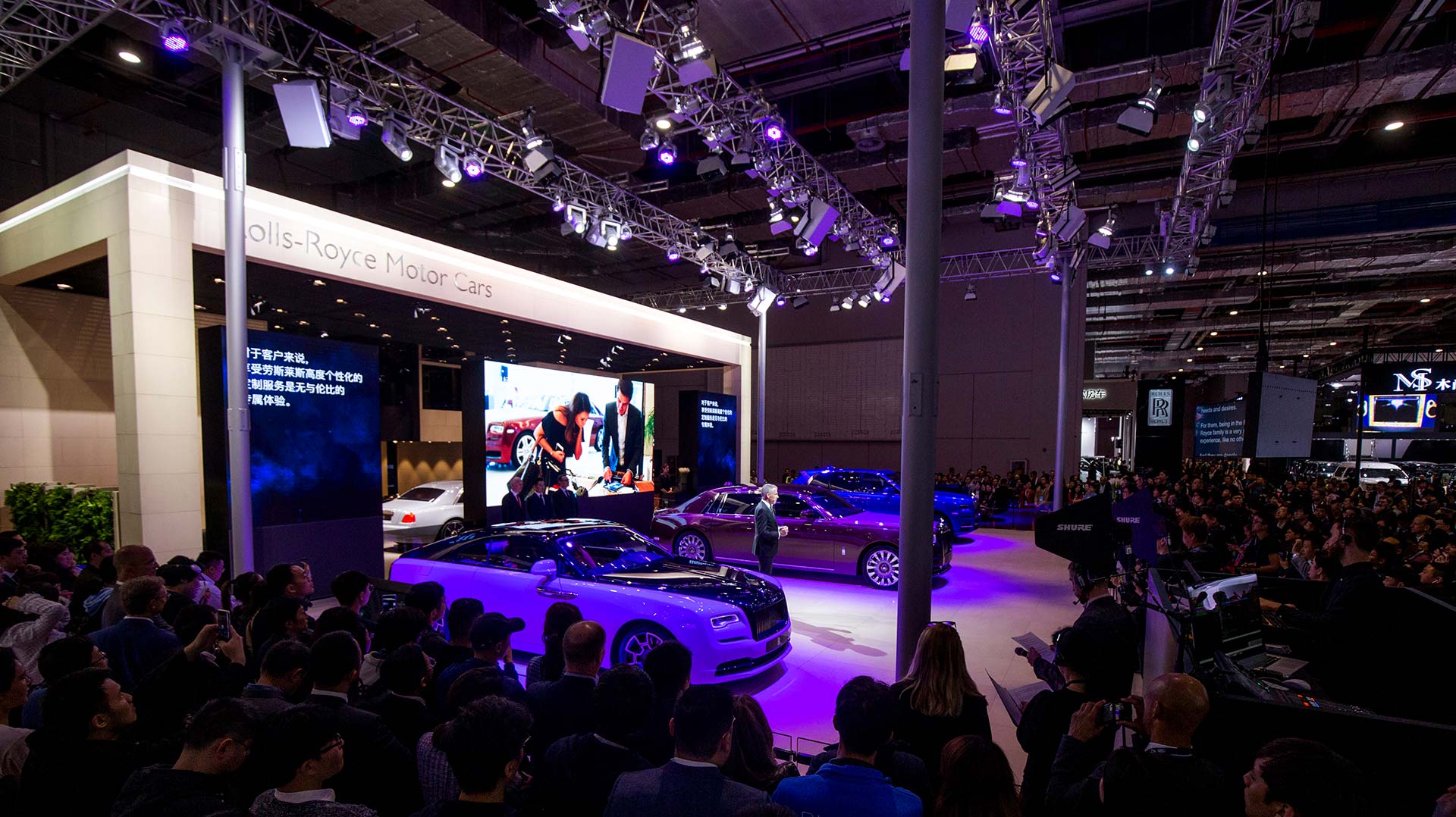
Rolls-Royce Bespoke Ghost Extended Wheelbase
Rolls-Royce is in a buoyant mood in Shanghai, with the company achieving record sales during 2018. China accounted for a substantial proportion of those, which explains the four models on display.
The Ghost is the best-selling Rolls-Royce in China, and this extended wheelbase version demonstrates the potential of the Bespoke service. A Burnout Grey exterior is matched with a coordinating interior, hoping to lure in more ‘entrepreneurs and tastemakers’ to the brand.
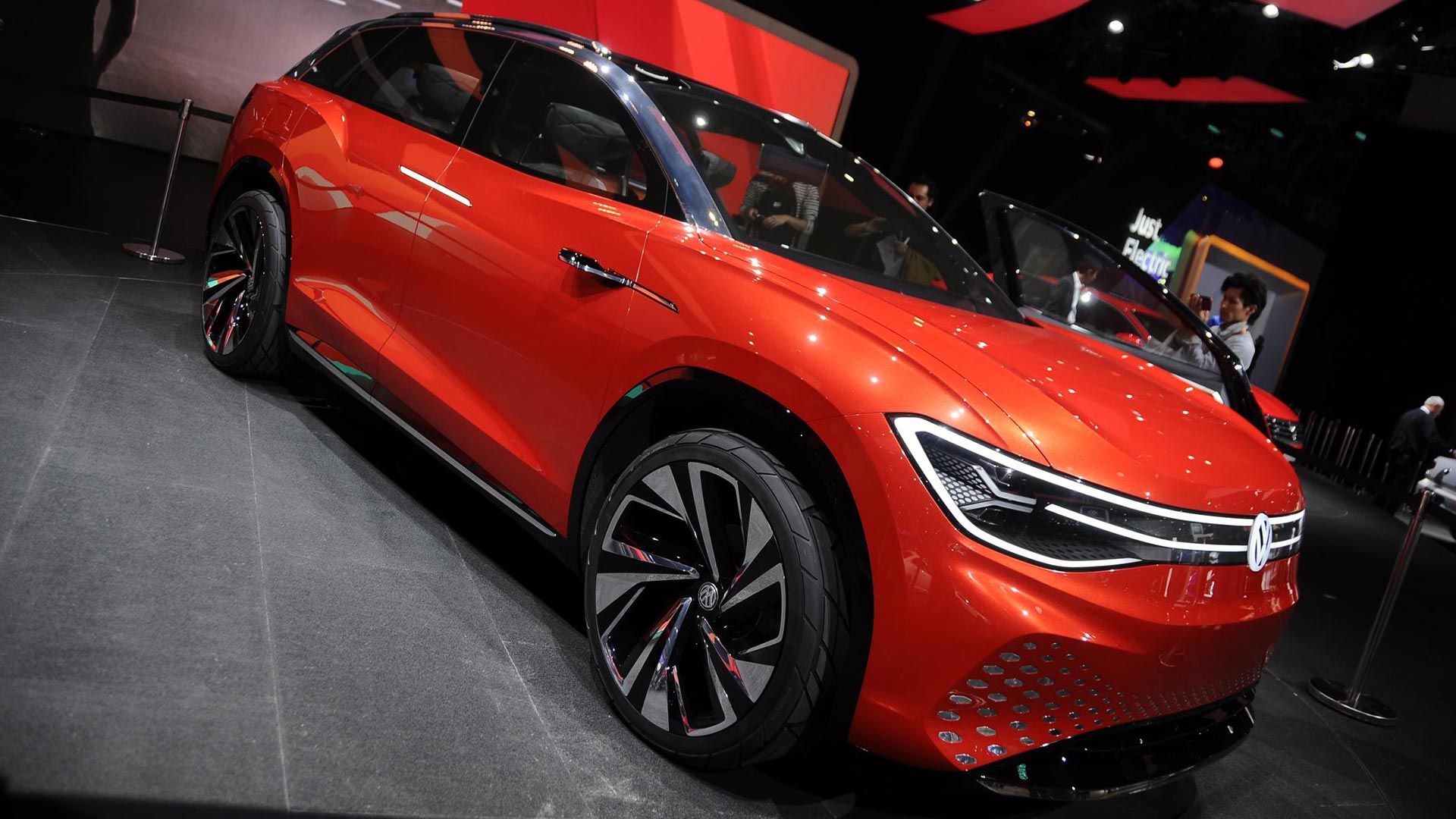
Volkswagen ID Roomzz
Volkswagen launched a ‘product offensive’ at the Shanghai show, with the all-electric ID Roomzz SUV leading the charge. Whilst it may look like a concept, VW promises that a production version will be launched in 2021 for the Chinese market.
Level Four autonomous driving technology features, whilst the steering wheel even has its own digital display. Two electric motors drive can send up to 306hp to all four wheels, whilst a range of up to 295 miles is possible when the batteries are fully charged.
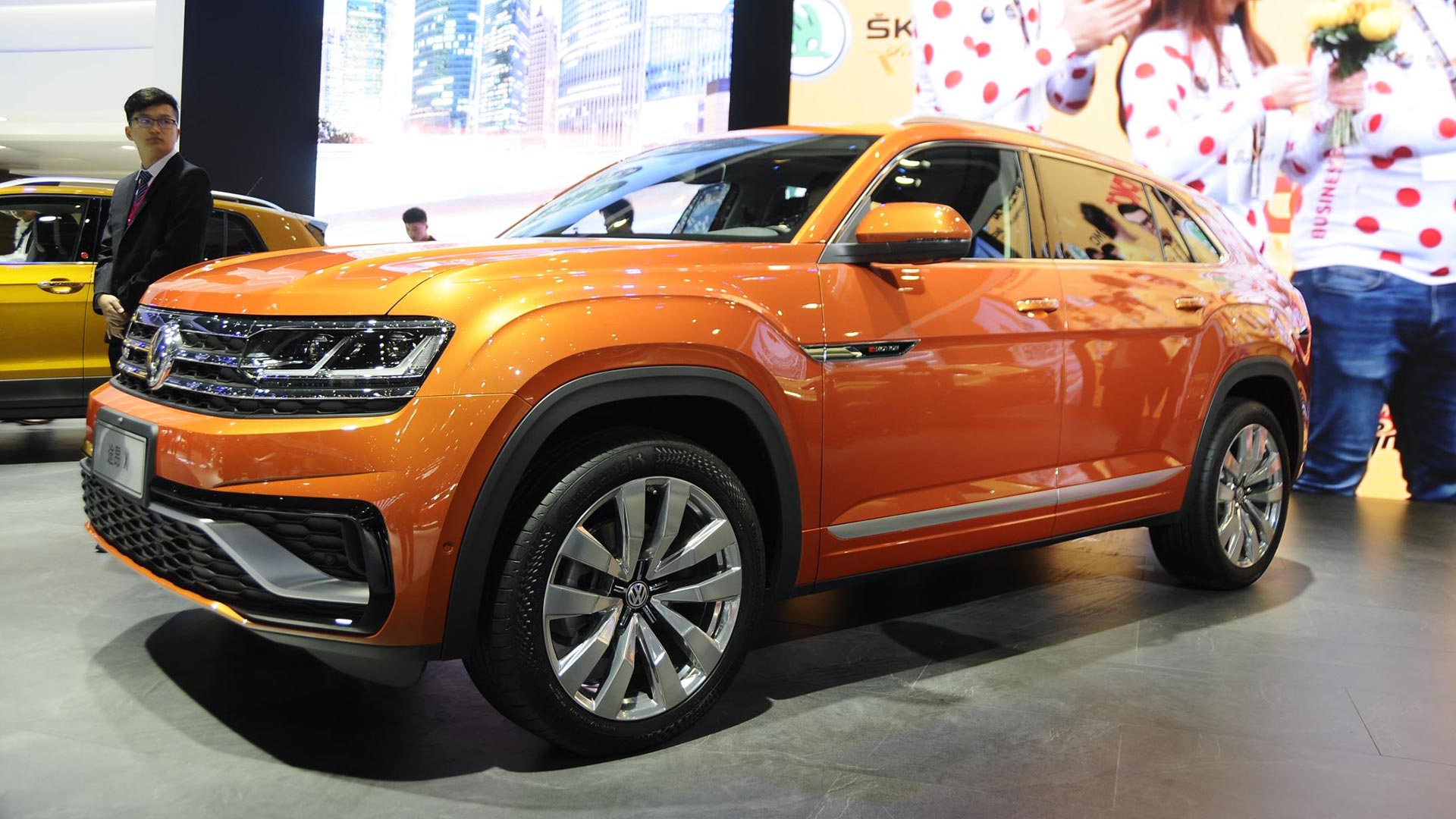
Volkswagen Teramont X
Volkswagen Group China is set to launch eight new SUV models across the country this year alone, so there is no surprise the company’s stand was packed with them in Shanghai.
The Teramont X follows on from Atlas Cross Coupe concept shown at last year’s New York Auto Show, providing seating for five in a swoopier SUV body. Currently billed only for sale in China, don’t be surprised if this also appears in the United States very soon.
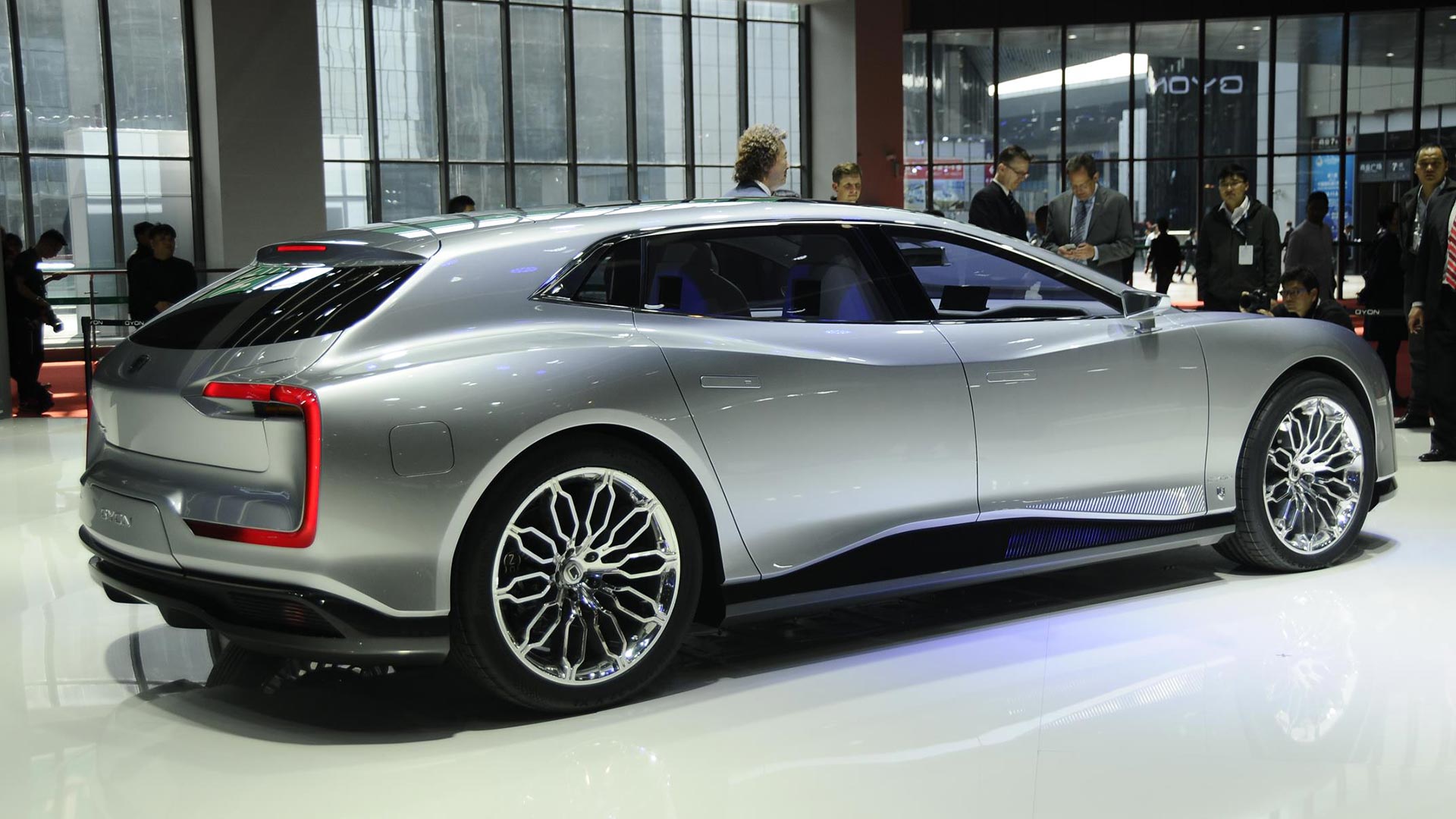
Gyon Matchless Concept
Although badged as a prototype for now, the Gyon Matchless is intended to demonstrate what the Chinese company could hope to offer for sale in the near future.
The biggest talking points are the distinctive C-shaped rear lights, and front grille which features and LED display board. In case you are wondering, the Gyon name stands for ‘Grow Your Own Niche’ which the company seems to be living up to.
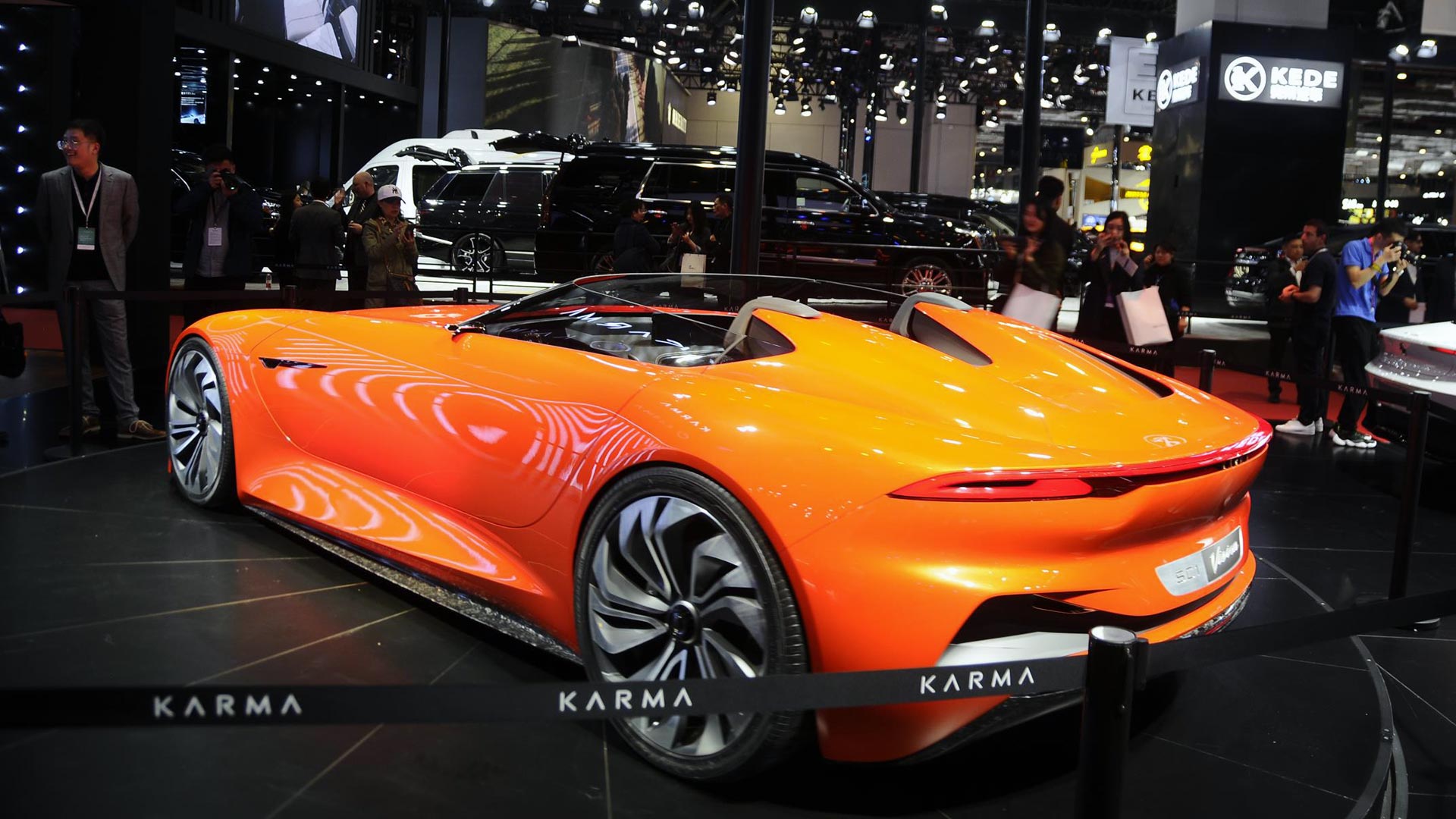
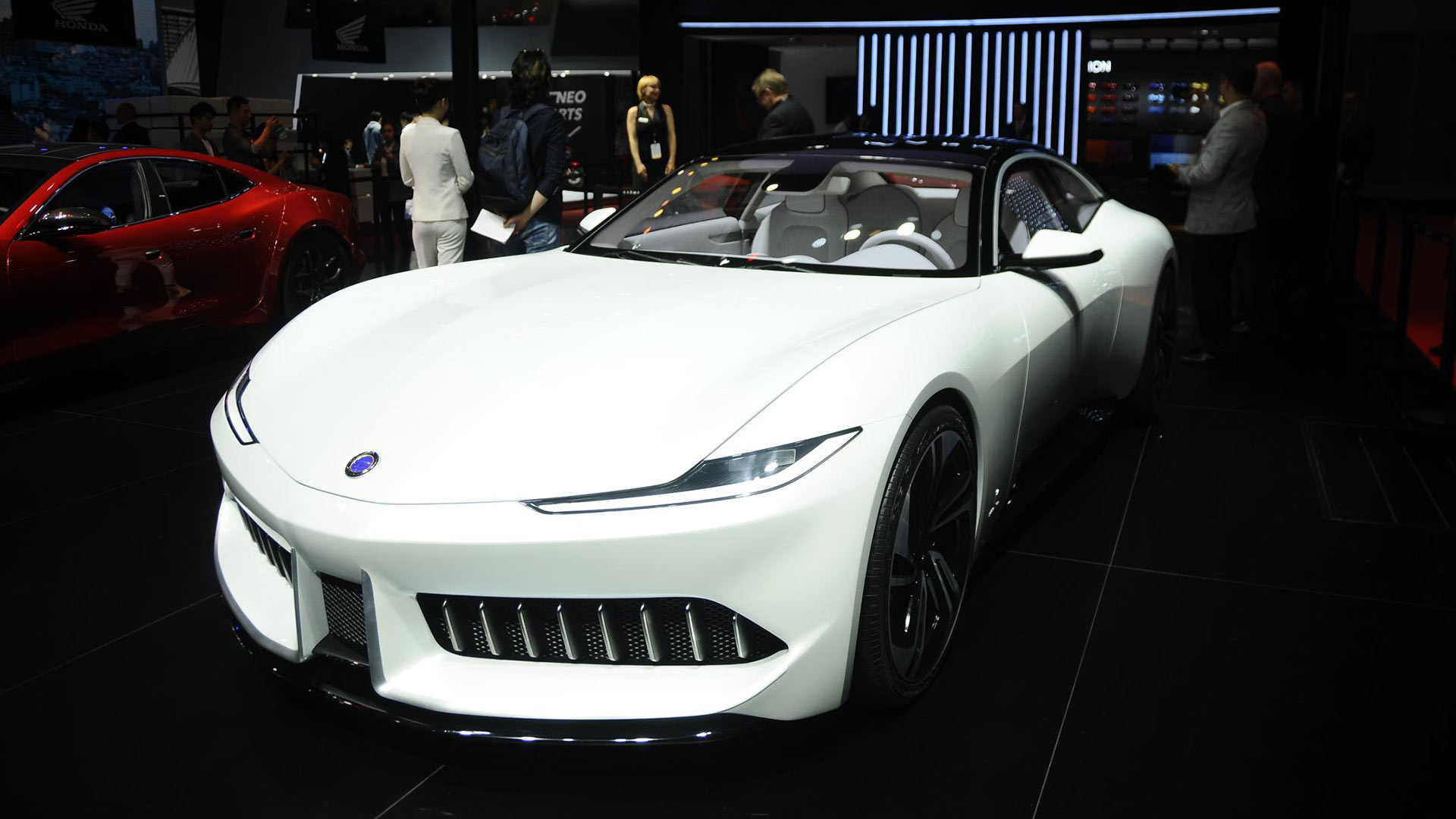
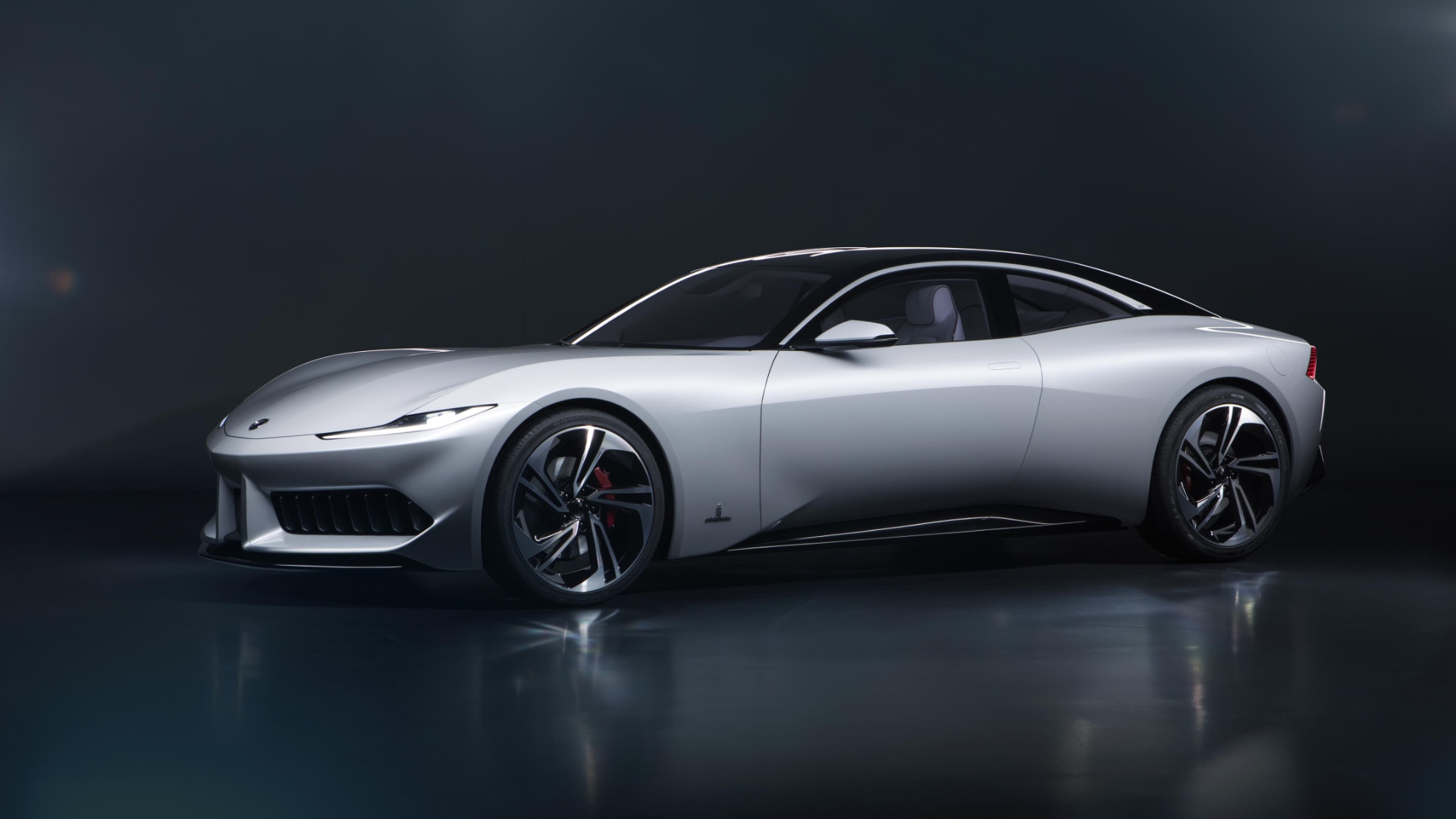
Karma SC1 Vision Concept
Based in California, but owned by the Chinese Wanxiang Group, Karma has used the Shanghai show to set out how the firm plans to move forward.
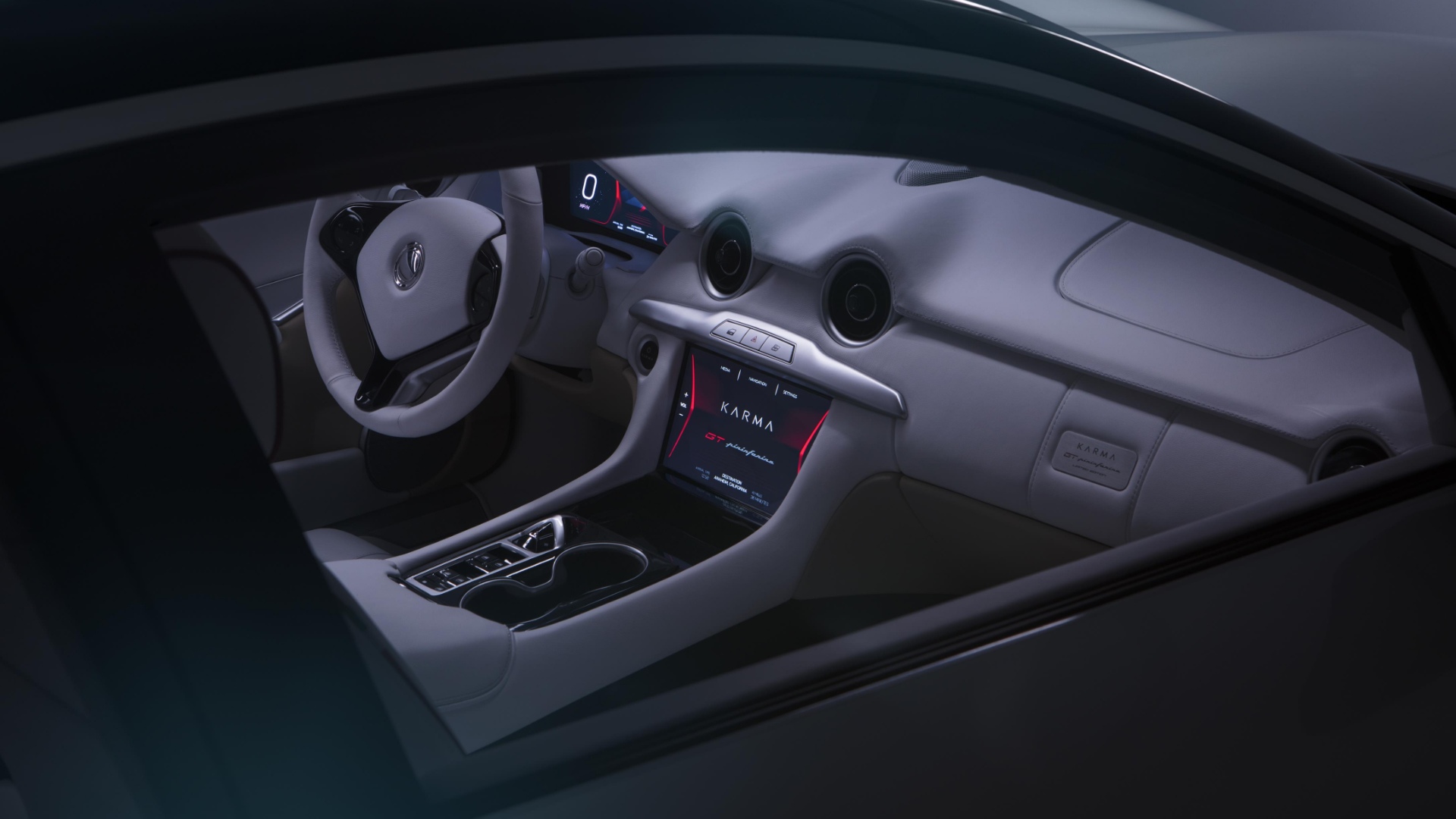
Hopefully it involves turning the stunning SC1 Vision into a production reality. With dramatic vertical-opening doors, LED screens throughout the interior and 5G connectivity, this is very much technology of the near-future.
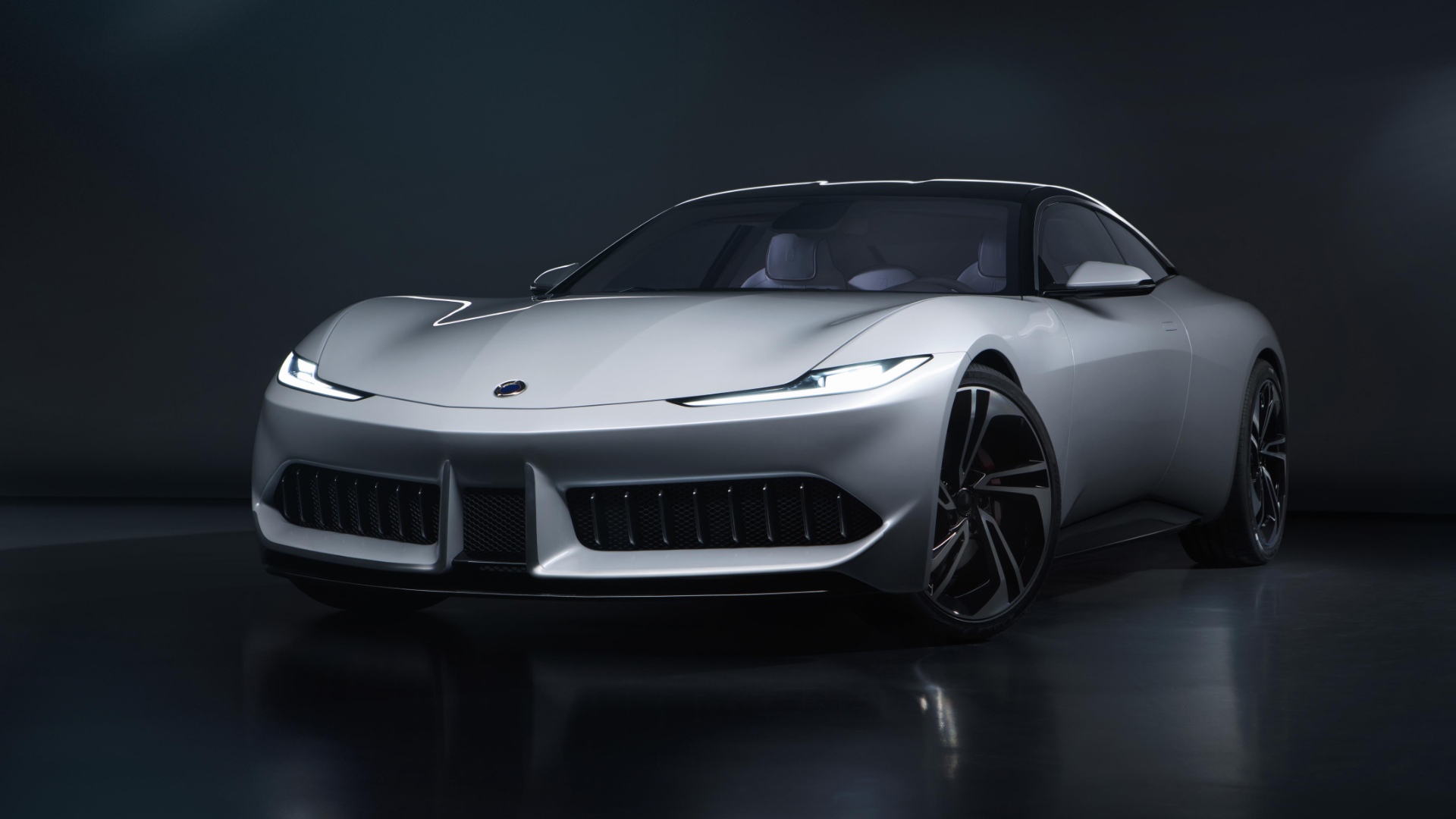
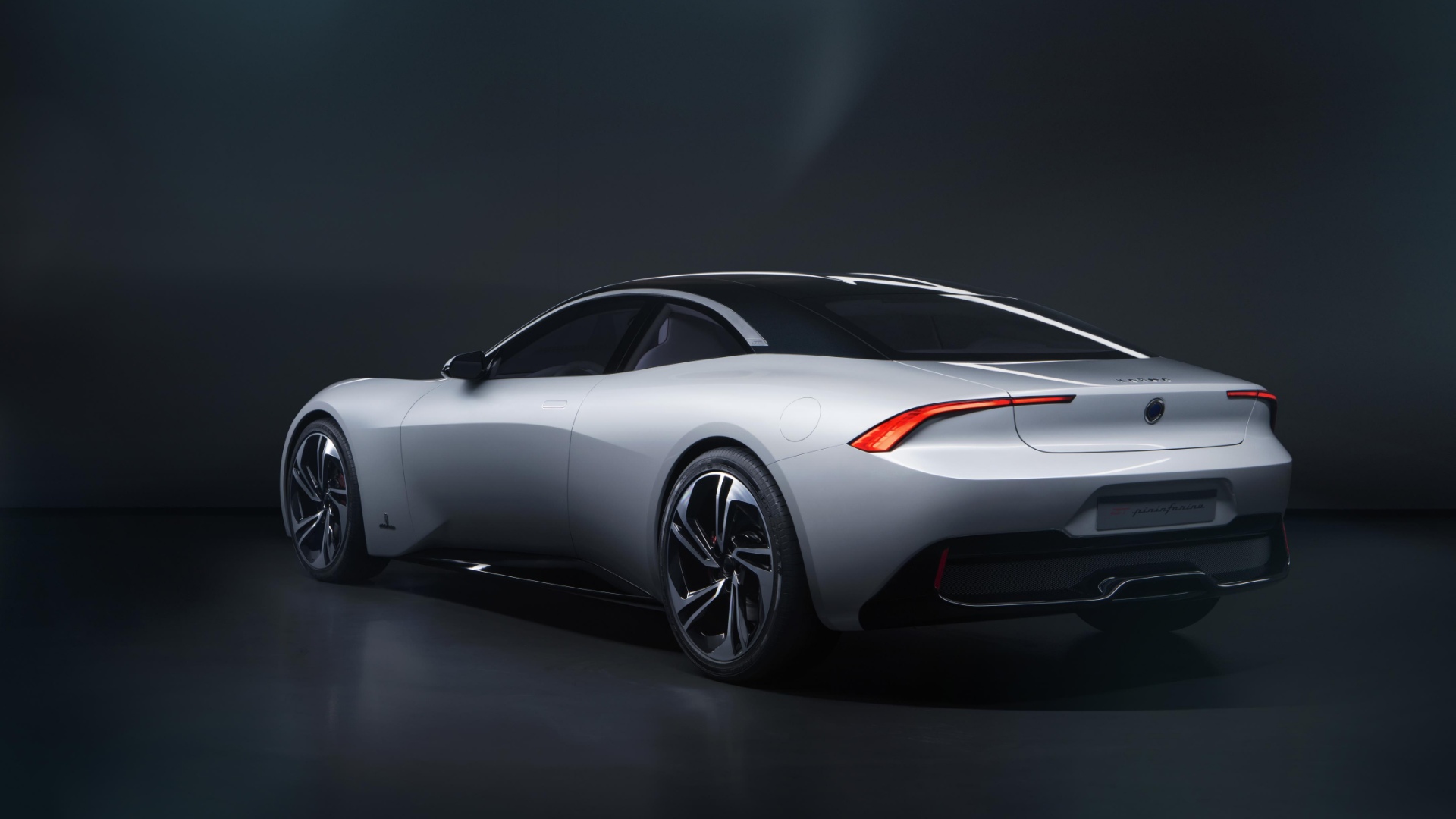
Karma Pininfarina GT
Karma also has this Pininfarina GT on display in Shanghai. As the name suggests, it has been designed by the famous Italian styling house Pininfarina, and is said to mark the beginning of a partnership between the two firms.
Beneath the impressive body is a powertrain taken from the existing Karma Revero GT. This means a BMW-sourced 1.5-litre petrol engine, combined with electric motors, for a total power output of some 535hp.
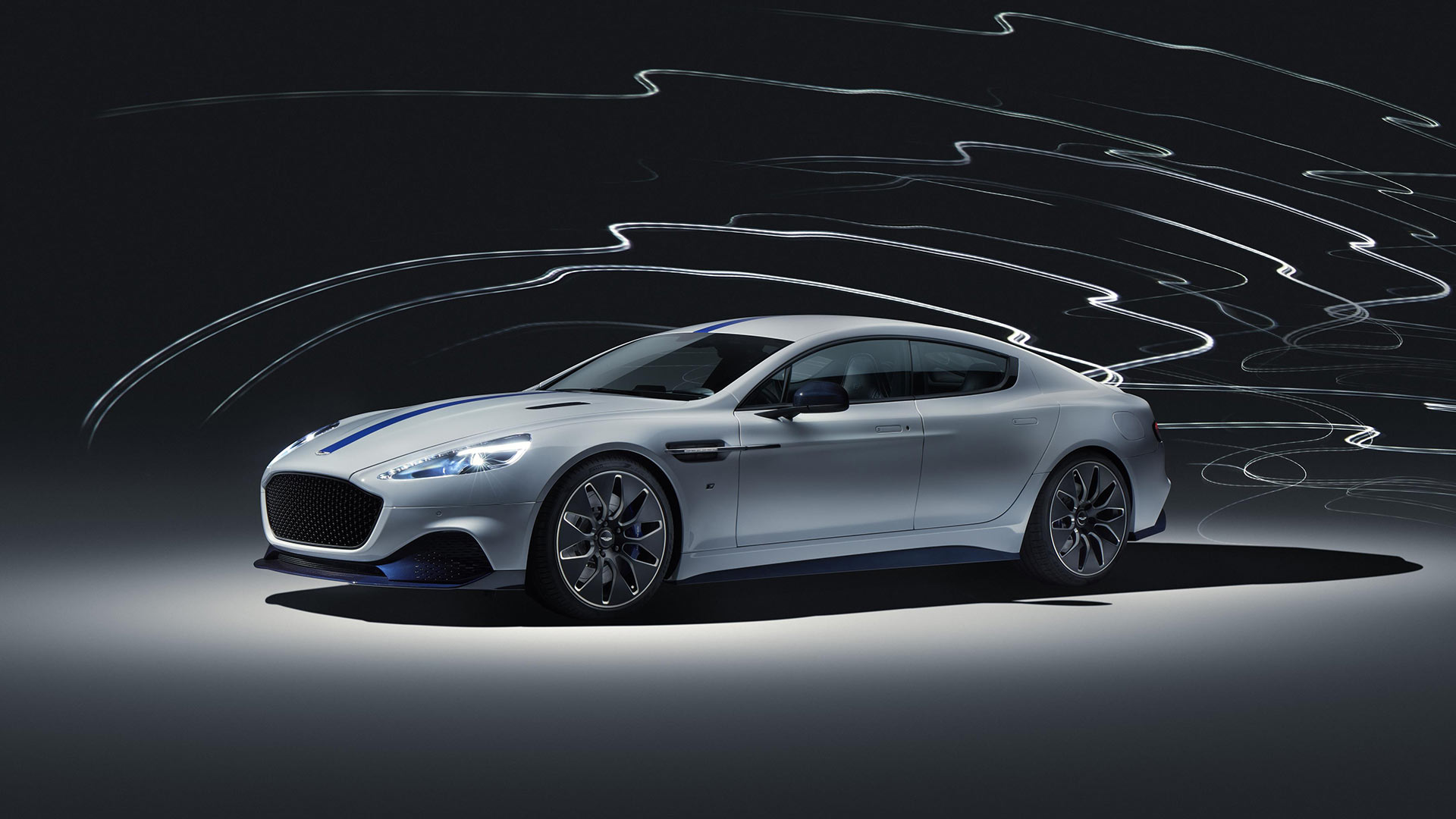
Aston Martin Rapide E
Tellingly, Aston Martin picked Shanghai as the location to launch the very first production electric car in its history. The Rapide E will be strictly limited to just 155 units, and has been built in collaboration with Williams Advanced Engineering.
Twin rear-mounted electric motors generate up to 610hp, whilst the 800kW battery fills the space usually occupied by a V12 petrol engine. Range when fully charged is set to be over 200 miles, and the Rapide E has a top speed of 155mph.
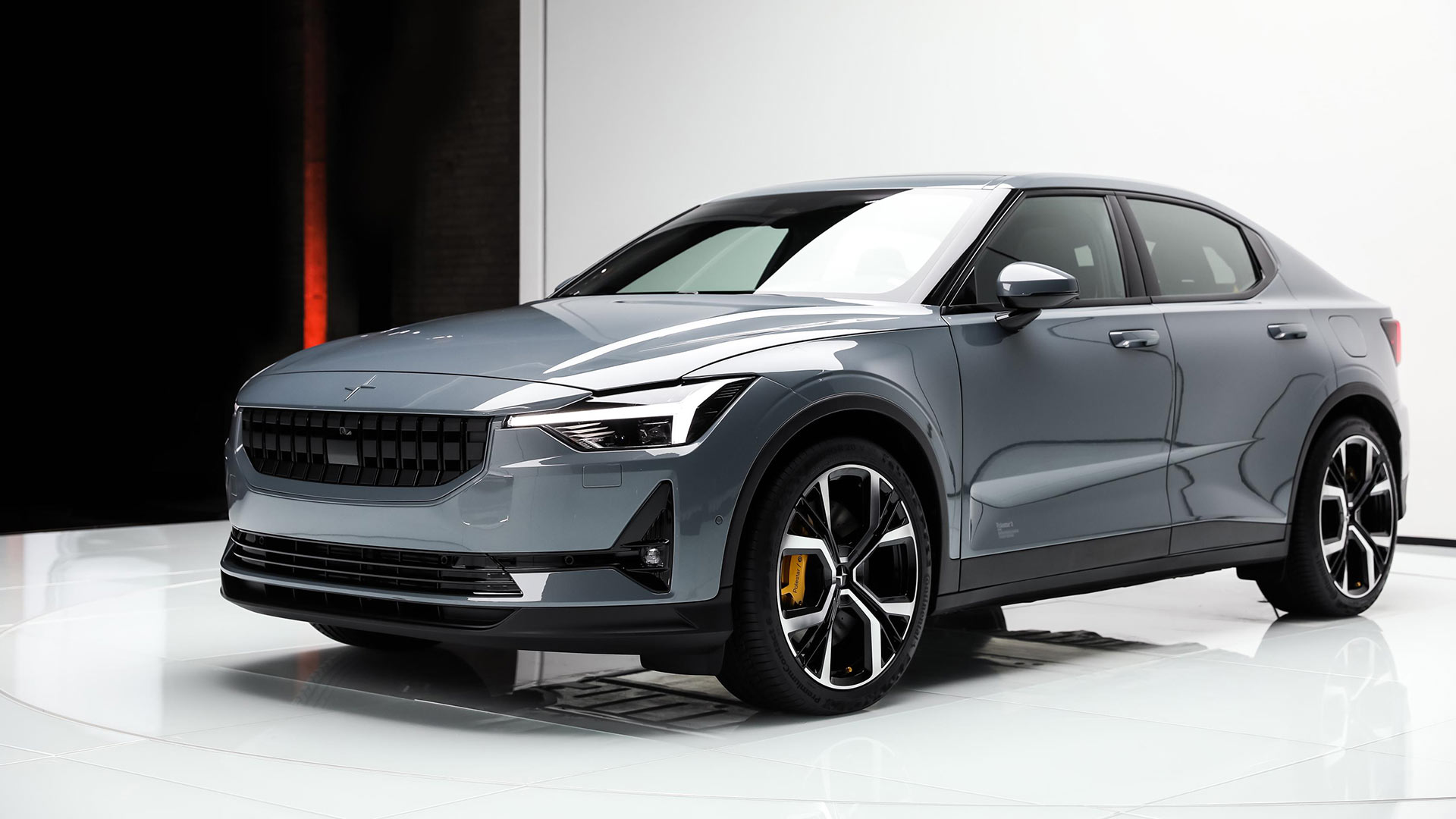
Polestar 2
Polestar may be a luxury spin-off from Volvo but, like the Swedish brand, it is owned by the Chinese Zhejiang Geely Holding company.
Polestar has confirmed that the forthcoming all-electric 2 will be built at the Luqiao production facility in China, alongside a range of other cars for the local market. The company will also open the first Polestar Space retail showroom in China later in 2019.
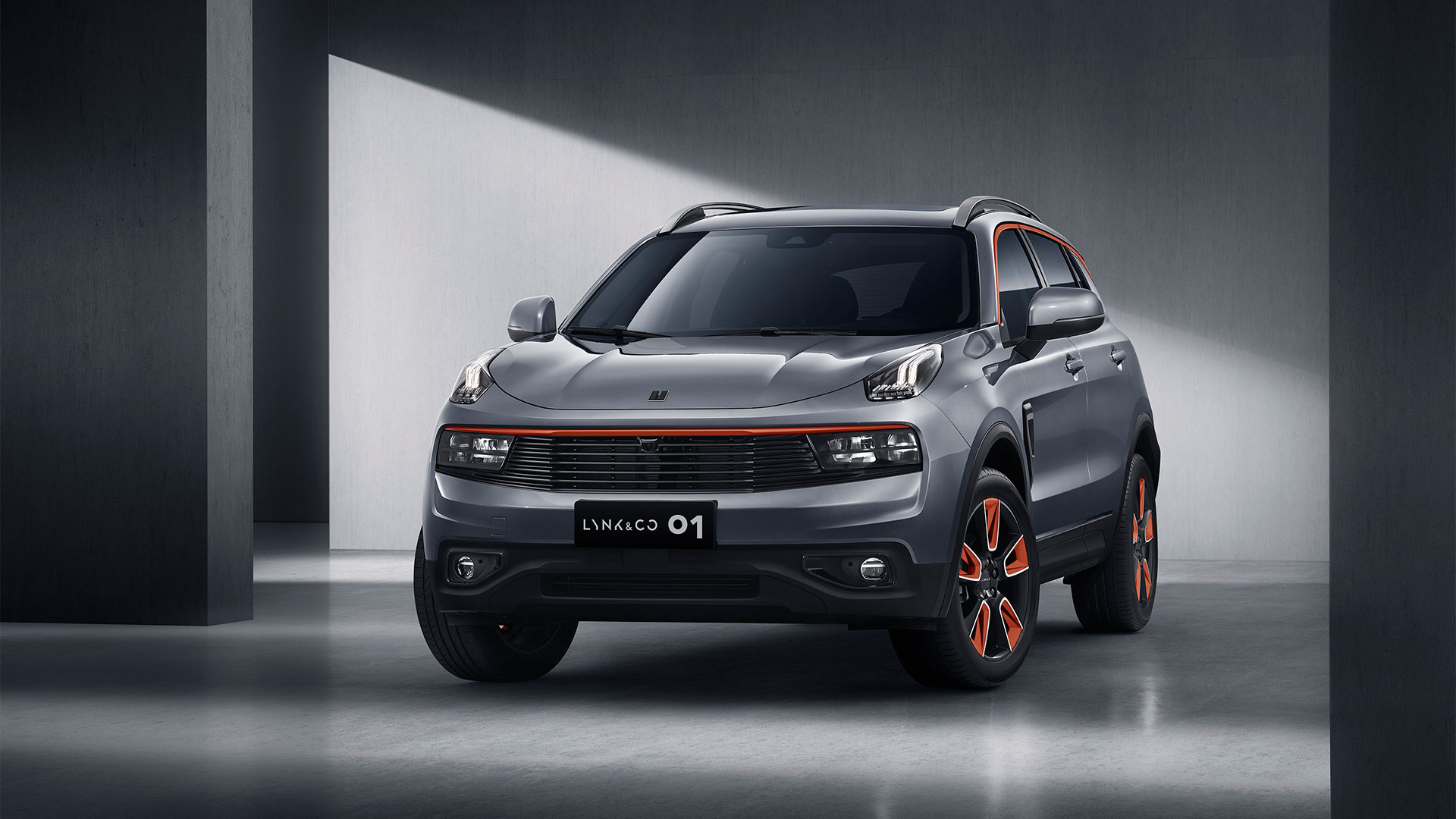
Lynk and Co. 01
Also owned by Geely, the Lynk & Co. brand is aimed at young, urban professionals. The company sold more than 120,000 cars during 2018, and has launched a new updated version of the popular 01 model in Shanghai.
Based upon feedback from more than 110,000 customers, the revised 01 sees a number of minor tweaks. This includes a new design for the front grille, along with interior tweaks. Expect to see more from the brand, as it prepares to enter Europe with gusto in 2020.
Karma Automotive, the phoenix rising from the ashes of Fisker car company, has revealed two concept cars at the Shanghai motor show. There’s an extreme sports coupe called the SC1 Vision, but that’s been completely overshadowed by the gorgeous Pininfarina GT. We genuinely think it’s the most beautiful eco car to date.
We say ‘eco’ because the GT isn’t all-electric. It likely borrows the 1.5-litre BMW three-cylinder engine from the Revero GT production car (the updated Fisker Karma), which is mated to two electric motors for a combined 520hp.
It’s not unlike the Polestar 1, in fact, which itself is a lovely looking car.
Designed by Pininfarina
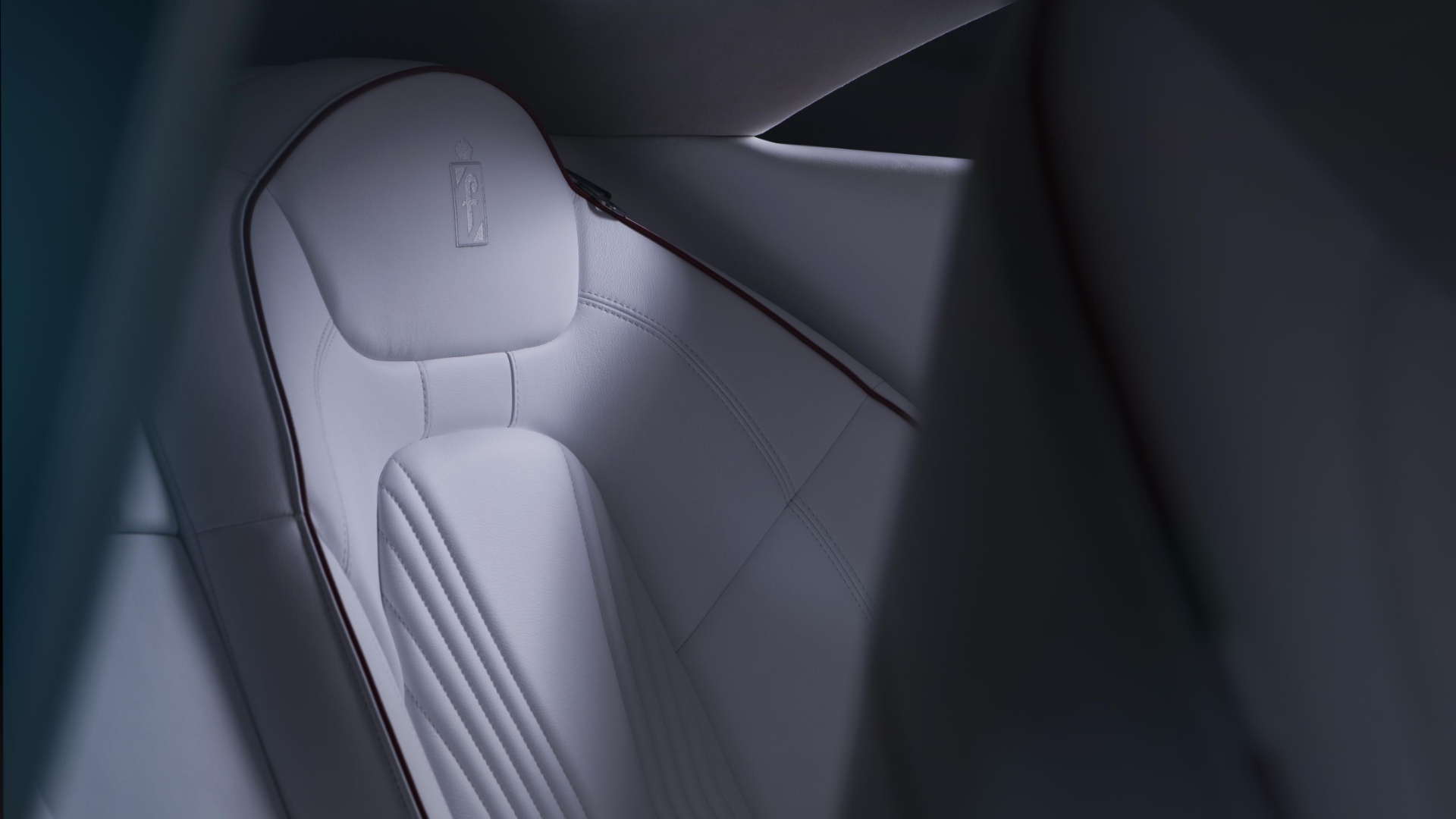
Beauty is subjective, of course, but anything with Pininfarina’s evocative ‘f’ on its haunches and embossed onto its headrests gets off to a flying start.
Pininfarina is perhaps the world’s most revered automotive design house – and has penned some of Ferrari’s greatest cars, among many others .
Henrik Fisker, meanwhile, is an automotive designer with both the 2005 Aston Martin V8 Vantage and the BMW Z8 to his name. Both are considered among the most beautiful cars of the modern era.
And while the Fisker Karma ultimately failed, some elements of its design live on here.
Will they build it?
Karma and Pininfarina are very pleased with this project. Pininfarina reserves the ‘GT’ badge only for its most prized creations, so our infatuation isn’t without some justification.
That also means there’s a good chance Karma will build the GT – assuming there is enough interest from people who can actually afford one.
In a world of homogenous SUVs, the Karma Pininfarina GT is a respite we sorely need, and proof that new cars can still be beautiful.
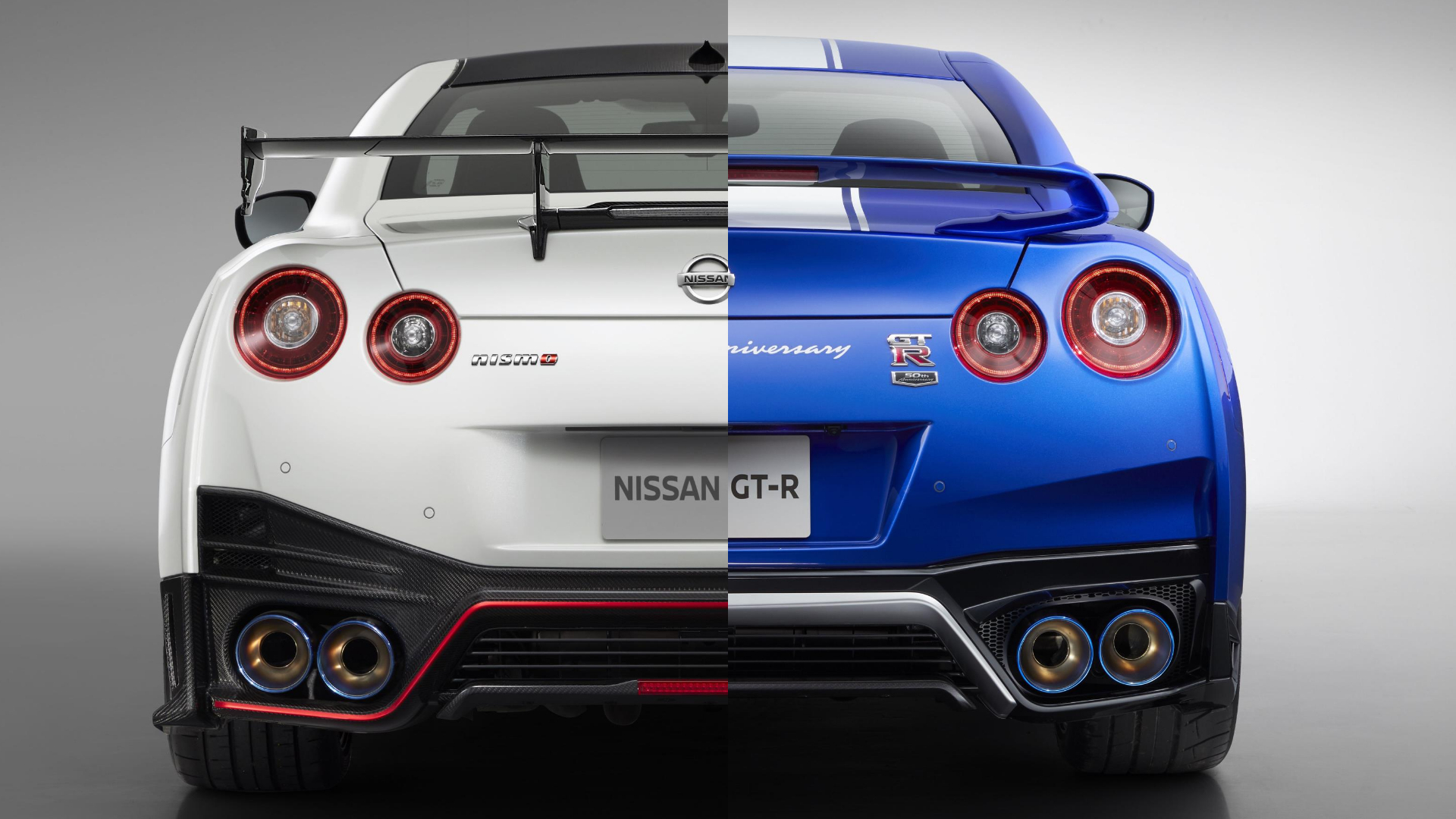
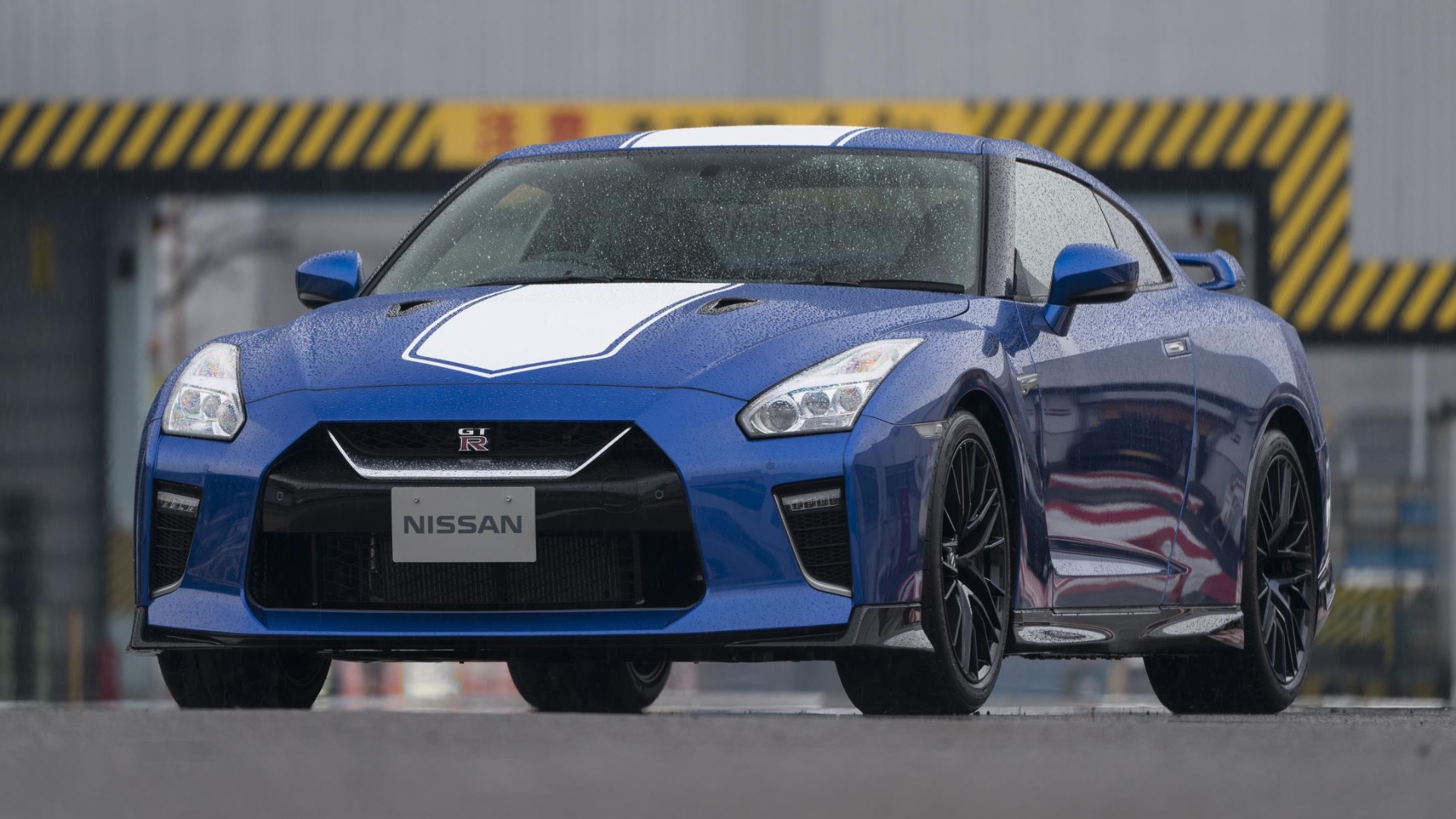
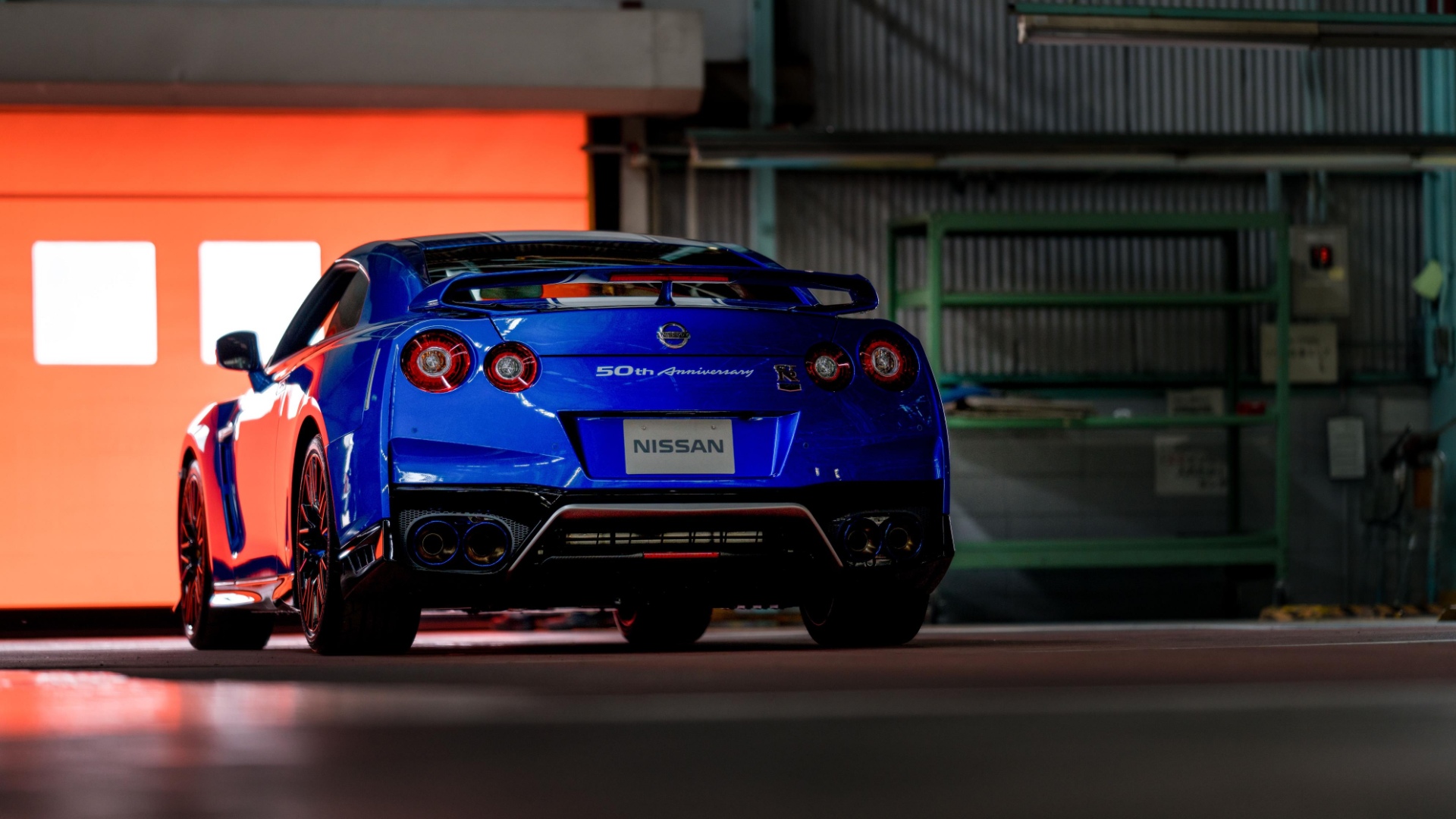
The legendary GT-R badge turns 50 this year, and Nissan is celebrating with a 50th Anniversary Edition GT-R.
It has been revealed at the 2019 New York Auto Show, alongside an updated Nismo version.
50th Anniversary Edition GT-R
You could be forgiven for thinking this 50th Anniversary Edition is nothing more than a stickers-and-paint job, especially after the bespoke, hand-built GT-R50 by Italdesign. You’d be wrong, however.
As is the way with the GT-R, a new version and model-year comes with tangible incremental updates. These include new more refined turbos for better power delivery and efficiency, plus an updated exhaust manifold for ease of servicing and ‘potential tuning’ – their words. There are also new titanium exhaust mufflers, along with upgraded gearshift and suspension software.
As for the 50th Anniversary bits, Bayside Blue, previously seen on the legendary R34 GT-R, makes a return. The livery replicates that used on the original Hakosuka for the Japan GP series. There are more subtle highlights on the inside, including special trim for the shift knob and steering wheel.
“A GT-R is about total balance management,” said Hiroshi Tamura, chief product specialist for the car. “It is not about chasing a power figures, but creating a new GT-R, where no aspect has been overlooked. This is appropriate to celebrate the GT-R 50th anniversary.”
We’re not sure we’d call it ‘new’, but tinkering is always appreciated.
2020 GT-R Nismo: to the extreme
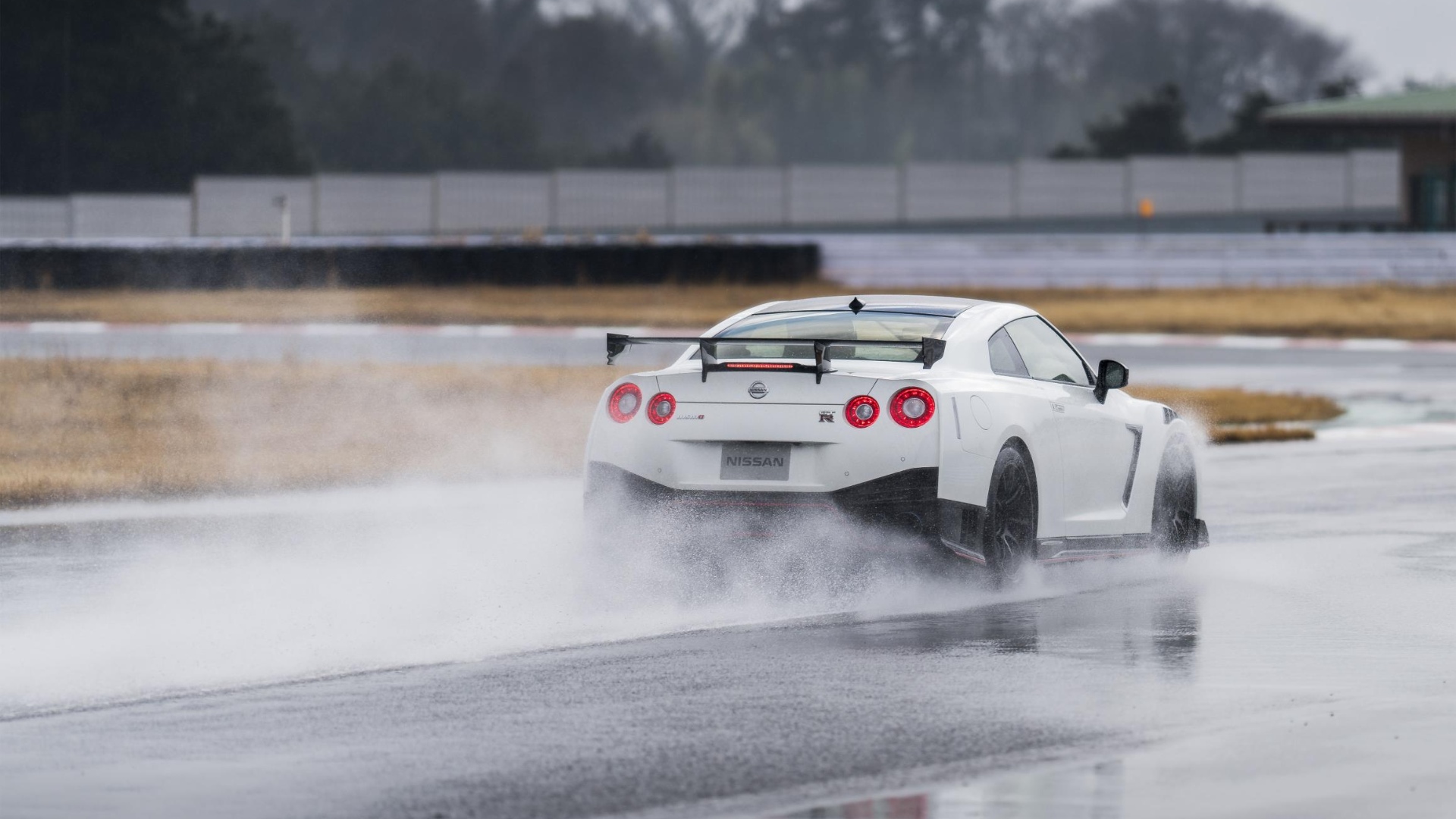
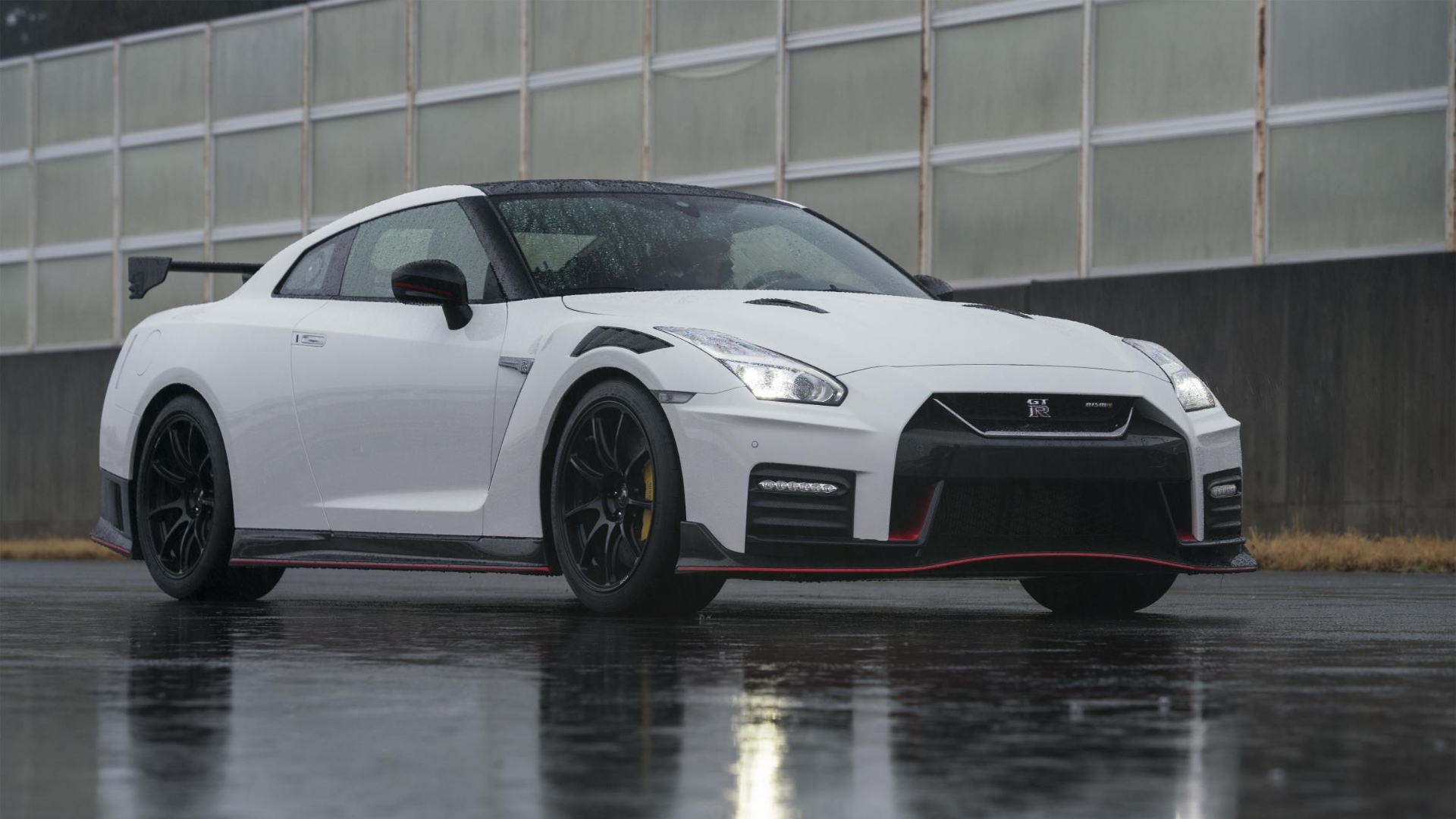
There are updates for the Nismo GT-R, too. The car is around 30kg lighter before, thanks to more extensive use of carbon fibre for the race-inspired bodywork. New Porsche-style vents over the front wheels improve air extraction from the wheel wells and increase downforce.
The Nismo has turbochargers straight off the GT3 car, for a 20 percent improvement in power delivery. Peak power is still 600hp, but you get access to it quicker.
It wouldn’t be a fettled GT-R without a touch of the aftermarket, though. New for the 2020 Nismo are stunning 20-inch forged Rays alloy wheels, wrapped in new Dunlop tyres that increase contact patch by 11 percent. Brembo carbon-ceramic brakes are optional.
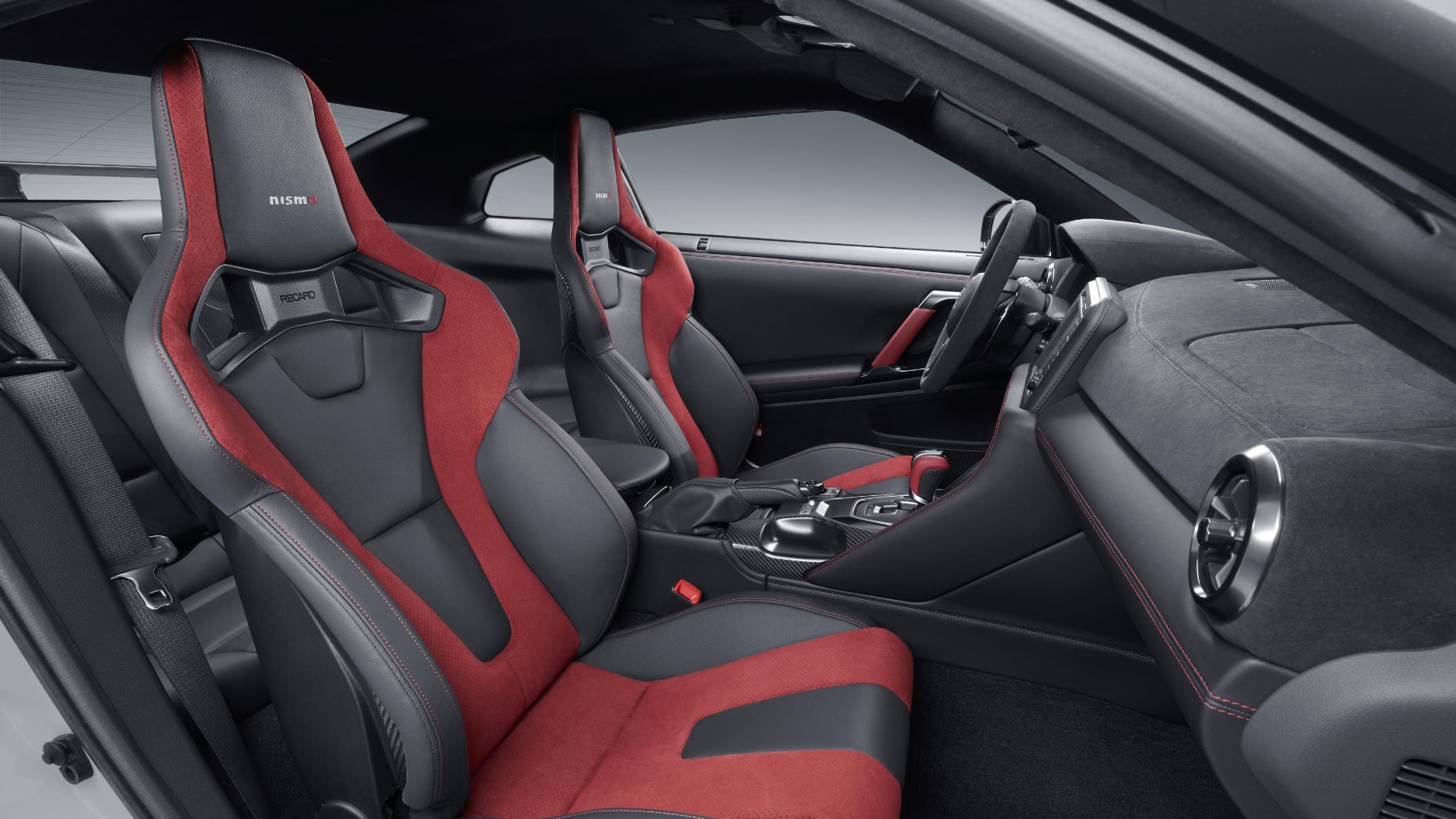
Inside, it’s business as usual. That’s to say, lots of red flashes, Alcantara and some mean-looking bucket seats.

 Being “green” doesn’t mean you’re a hippie. Electrification in the automotive world usually translates to increases in efficiency. Sometimes those gains equal better economy and cleaner air, and sometimes they equal raw power.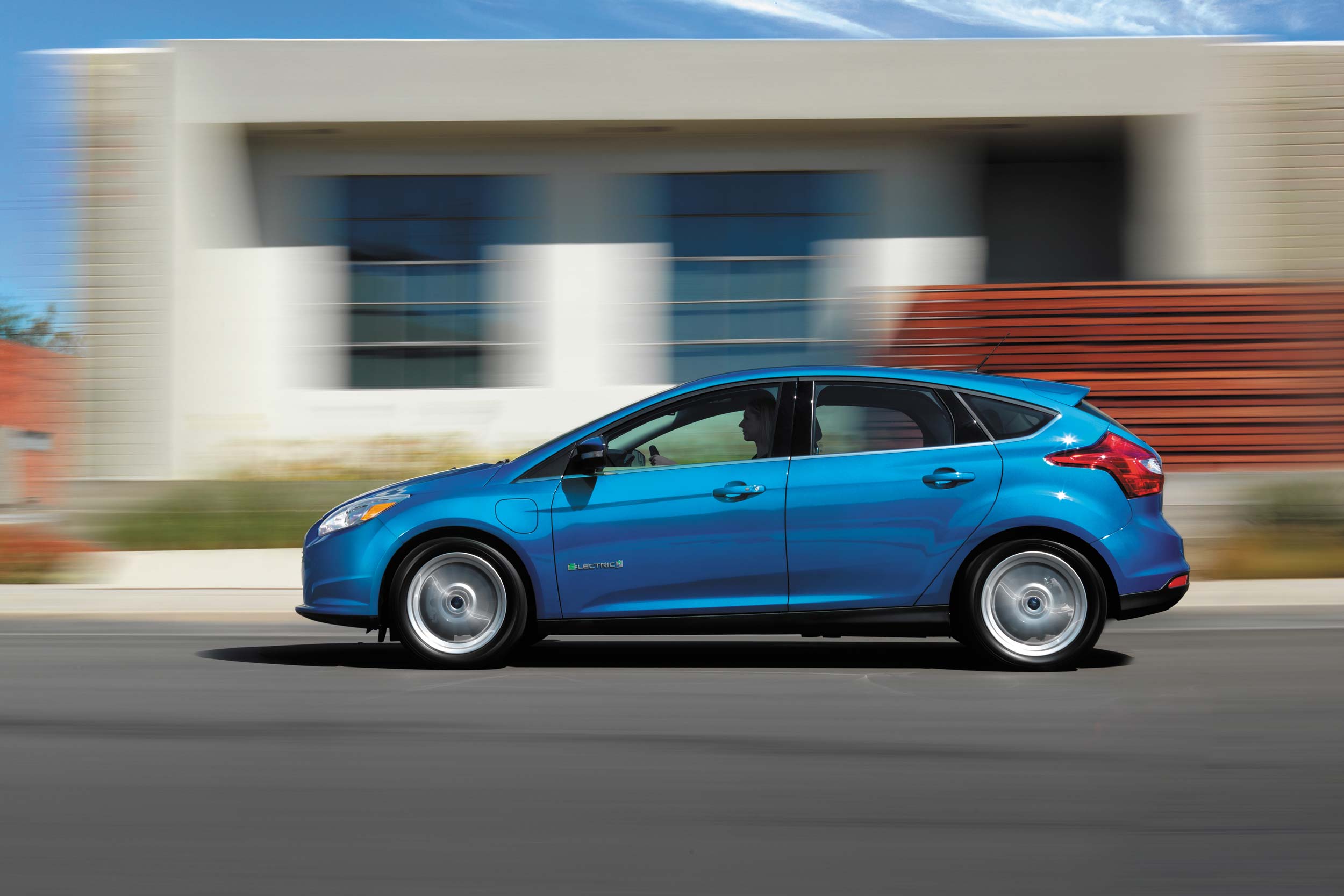
 World Car Awards is the biggest automotive awards program on the planet. It has the widest reach across the globe and its 86 jurors from Asia, Europe and North America have been busy voting on the
 When the Chinese new car market registered a sales drop during 2018 (for the first time in two decades), some suggested that the boom times were over. However, the sheer number of new upmarket cars debuting at the 2019 Shanghai Auto Show makes that hard to believe.